
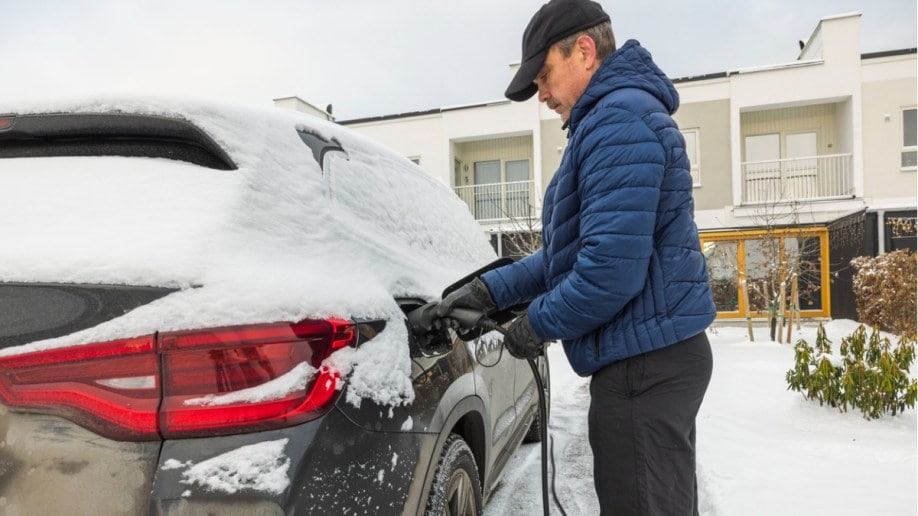

Quick Tips on Electric Cars in Cold Weather
The amount of time it takes your electric vehicle battery to drain can vary seasonally. However, you’ll likely find that cold winter weather has the biggest impact on your car’s range and its recommended charging routine. If you’re in the market for an electric car or looking for ways to optimize battery life during colder months, keep reading. Here’s what you need to know about charging an electric vehicle (EV) in freezing temperatures.
What Is EV Range?
When it comes to an electric vehicle, the term “range” refers to how far you can drive on a fully charged battery. Some EVs can be driven beyond 400 miles on a single charge under the right conditions. The range will vary based on driving habits, vehicle size, weather conditions, and other environmental factors.
RELATED: Electric Cars 101: What You Need to Know About EVs
Range Expectancy in Cold Weather
EPA range estimates for electric cars are based on 45% highway and 55% city driving over 15,000 annual miles. These valuations are not specific to any season, so it’s important to understand how long, harsh winters affect the overall performance.
In temperatures below freezing, most EVs will suffer range loss — some by more than 30%. It takes significantly more energy to power a car when the battery is cold than when it’s warm. The initial energy conversion goes toward warming the battery and heating the inside cabin.
RELATED: Electric Car Range: Everything You Need to Know
Do Electric Cars Work in Cold Weather?
Many potential buyers wonder about electric cars in cold climates. The short answer is yes, EVs work in cold weather. Just not as well. Outside temperatures in the 70s might be optimal for an EV, but having electric cars in cold climates is nothing new. Norway, for example, experiences plenty of freezing temperatures. Still, it also has significant EV adoption, with more than 26% of country’s vehicles now fully electric.
MORE: How Much Does It Cost to Charge an Electric Car?
Winter Charging Times
No matter what type of charger — Level 1, Level 2, or Level 3 — you use to charge your EV battery, it will take longer in extreme cold.
- Level 1: If you’re charging overnight on a Level 1 charger, most of the energy will go toward keeping the battery warm instead of boosting your power levels. We do not recommend using a trickle charge in freezing winter temperatures.
- Level 2: If your car has been powered off and sitting for a prolonged period, a Level 2 charger will charge more slowly at first. Once the battery is warm enough, the charging times will pick up and level off. This rate will vary based on the external temperature and how long the vehicle has been sitting idle in the cold. Use the manufacturer’s mobile app (if applicable) to keep an eye on how the charging times fluctuate when the weather drops below freezing. Use that information to adjust your routine accordingly when the forecast shows frigid weather.
- Level 3: DC fast chargers will still be the quickest option for recharging your EV battery in the winter. Many DC stations can push the battery in a newer EV from a 20% to 80% state of charge in 20 to 30 minutes. In times of extreme cold, you’re less likely to reach 80% in such a short amount of time. It may take twice as long to hit that threshold. The difference won’t be as significant if the battery is already warm from a longer drive. Still, keep this in mind if you rely on a fast charge during your regular grocery runs and errands.
MORE: All EVs Lose Range in the Cold, Some More Than Others
Why Do Cold Temperatures Hurt EV Charging Times?
Often, charging an electric car takes longer in the cold than when the temperature is mild. Like many humans, EV batteries work better in moderate temperatures and not as well in the extremes. The battery pack’s chemical and physical reactions happen more slowly if the unit is cold. Preconditioning a cold EV battery helps get it to its optimal operating temperature. When charging a cold battery without preconditioning in frigid weather, much of the initial power goes toward heating the battery so it can efficiently store energy. As long as the driver preconditions the battery, an EV’s charging rate is not significantly slower in cold conditions.
MORE: How to Take an Electric Car Road Trip in Winter
Tips for Winter EV Charging and Driving
- Covered Parking: Electrify America, one of the nation’s largest DC fast charging networks, recommends parking in a garage during the winter. If that’s not possible, a covered parking deck can also make a big difference in shielding your car from frigid wind chill.
- Plan Ahead: Some electric vehicles let you schedule charging sessions and can precondition through the manufacturer’s mobile app. If the charger is connected, it will prep and charge the battery to be ready for your departure. The small effort can make a big difference in ensuring your battery has enough juice for each trip. Most newer EVs allow drivers to start preconditioning functions on the way to a charging destination.
- Preheat: Like an oven, many electric vehicles have a preheat mode. Schedule this through the car’s mobile app to warm the inside cabin while it’s still plugged in and charging. This will prevent the battery from draining as it heats the interior. By the time you’re ready to start driving, the battery and the cabin will both be warm and ready for the road.
- Heated Seats: If available, consider using the EV’s heated seats and heated steering wheel instead of heating the entire cabin. These features use significantly less energy than the car’s climate control, which can affect how quickly the battery drains.
- Eco Mode: If your car has an “eco” mode or similar economy setting, use it — especially in cold weather. It’s a great way to maximize the time between each charge and help preserve the battery power to increase your range.
Editor’s Note: This article has been updated since its initial publication.