Home Blog Page 1007

BYD’s right-hand drive SUV plans come into focus

0


BYD’s new Sea Lion 07 electric SUV will be produced in right-hand drive, but RHD versions of its similarly sized Seal U will be available only with plug-in hybrid power.

A spokesperson for BYD Auto New Zealand told EVs & Beyond that the RHD Sea Lion 07 will be introduced in that market during 2024.

As for the Seal U, which has been spied testing in Australia, it will only be offered in plug-in hybrid guise in RHD markets as it wasn’t developed from the ground up as an electric vehicle.

The outlet reports BYD developed the electric Seal U at the request of the European market.

We’ve contacted BYD Australia to confirm whether it will follow its counterparts across the ditch in offering the Sea Lion 07.

EVs & Beyond reports BYD will launch four new vehicles in New Zealand in 2024: the Seal U, Sea Lion 07, an as-yet unnamed plug-in hybrid ute, and an unspecified fourth model.

In contrast, BYD Australia has confirmed only two new vehicle launches for our market this year: the ute and a mid-sized plug-in hybrid SUV, likely the Seal U.

It has also confirmed it plans to launch at least two new vehicles each year from this year, with the aim of being a top-five brand in 2025.

Revealed at the Guangzhou motor show in November 2023, the Sea Lion 07 has a design heavily influenced by the Ocean X concept car with a clear visual kinship with the Seal sedan.

Both models sit within BYD’s Ocean series of vehicles, along with the Dolphin, but BYD plans to turn Sea Lion into a sub-range.

BYD has employed this strategy before, offering multiple Seal-badged models: the electric sedan that’s sold here, a separate plug-in hybrid sedan, and the Seal U crossover.

The Sea Lion 07 measures 4830mm long, 1925mm wide, and 1620mm tall, with a wheelbase of 2930mm.

These dimensions make the crossover just 5mm wider but 80mm longer than the Tesla Model Y.

The Sea Lion 07 battery electric vehicle (BEV) is based on BYD’s existing e-platform 3.0 EV architecture, which already underpins the likes of the Atto 3 crossover, Dolphin hatchback, and Seal sedan.

It incorporates Cell-to-Body (CTB) technology, which fully integrates BYD’s Blade battery into the vehicle structure for greater rigidity and safety.

The Seal U is an older model, known as the Song Plus Champion Edition in China.

It’s due here during the first half of 2024.

It features BYD’s DM-i plug-in hybrid system, mating an 81kW/135Nm 1.5-litre four-cylinder petrol engine with a 145kW/325Nm electric motor.

There’s a choice of 18.3kWh and 26.6kWh batteries, with 110km and 150km of NEDC range, respectively. It can be charged at up to 7kW using AC power and 18kW using DC power.

It measures 4775mm long, 1890mm wide (2085mm including the mirrors) and 1670mm tall on a 2765mm wheelbase.

That makes it 65mm longer, 28mm wider but 95mm lower than a Mitsubishi Outlander PHEV on a 59mm longer wheelbase. It’s also 320mm longer, 15mm wider and 55mm taller than an Atto 3.

While the Song Plus Champion Edition debuted in 2023, it’s an update of the Song Plus that’s been on sale in China since 2020.


Source link

Self-Driving Cars: Everything You Need To Know

0


Self-Driving Cars: Everything You Need To Know

Self-Driving Cars Quick Facts

  • There are different levels of self-driving capabilities in cars.
  • Many new cars driving on today’s roads offer some level of self-driving capability.
  • Removing your attention from driving is unsafe in any car sold in the United States today.

The dream of the self-driving car — you get in, program your destination, ease the seat back, and let the car take you where you need to go. Read a book. Maybe take a nap or play a game on the in-car entertainment screen. Regardless, you will not need to watch the road. The car will get you there and back safely.

Are we there yet? If not, when will we be? Automation and autonomous driving are complex subjects. What engineers can safely deliver doesn’t always match what marketers want to sell.

In two states, Mercedes-Benz launched its Level 3 Drive Pilot self-driving technology last year. That means certain models can drive themselves under limited conditions. Meanwhile, government safety regulators warned Tesla’s self-driving tech is unsafe, and the carmaker has recalled every vehicle equipped with its “Full Self-Driving Capability” software.

This guide will walk you through what you need to know about automotive autopilot, self-driving technology, and the driver aids of today and tomorrow.

What Are Self-Driving Cars?

Self-driving cars are vehicles that fully operate without human intervention. Still, when discussing automotive assistance systems’ terminology, no one agrees on what to call anything in this field. From engineering jargon to marketing speak, the lingo continues to evolve.

Roughly speaking, you can sort the technologies people might refer to as self-driving into two categories — driver support and automation systems. Read on to see how they differ.

SAE International, a global association of engineers and related technical experts in the aerospace, automotive, and commercial vehicle industries, has laid out a useful framework for thinking about self-driving systems. It lists them as levels zero to five. However, not every level is classified as autonomous driving.

1. Driver Support

Driver support technology reduces the workload on the driver. Today, most automakers sell various driver support systems, either as standard equipment or as car options. These include intelligent or adaptive cruise control, lane-keeping assists, and hands-free capability.

2. Autonomous Systems

Autonomous systems do the driving for you. Automakers today are pushing toward this technology. Waymo, a sister company to Google, is testing autonomous rideshare vehicles in places like Phoenix and San Francisco using converted Chrysler Pacifica minivans and other vehicles. Los Angeles may not be far behind. Zoox, backed by Amazon, is testing autonomous taxis in San Francisco and Las Vegas. General Motors’ self-driving Cruise unit offers rideshare vehicles in places like Phoenix, San Francisco, and Austin. However, the unit temporarily suspended operations last fall after a robotaxi in San Francisco struck and dragged a pedestrian hit by another vehicle.

Levels of Self-Driving Technology

SAE sorts the technologies into zero through five levels (OK, even automotive engineers don’t always do the logical thing). However, not every level is classified as autonomous driving. According to SAE, Levels 0 through 2 are considered driver support features, while Levels 3 through 5 are classified as having the autonomous capability.

Level 0

At Level 0, the car reacts only to the driver’s input. Even if it uses sensors to warn you of surrounding traffic, like a blind-spot alert system or a lane-departure warning, it still has no self-driving capability to correct or counter the perceived threat.

Level 1

At Level 1, your car can intervene slightly in your driving in an attempt to keep you safe. A lane-keeping system that helps steer to center you in a lane is a Level 1 technology.

RELATED: What is Adaptive Cruise Control?

Level 2

At Level 2, features communicate with one another, and more than one can be active simultaneously. An example of this autonomous technology is an adaptive cruise control system that adjusts your speed to keep you a certain distance from the car ahead while centering the car in its lane.

Level 2 systems are the most sophisticated technology sold on many cars in America. Some automakers describe these systems in ways that make them seem more advanced than Level 2 standards because they allow drivers to briefly take their hands off the steering wheel. Systems like Tesla’s Full Self-Driving and GM’s Super Cruise are considered Level 2.

Level 2 systems require drivers to keep their eyes focused ahead. Drivers must always be ready to take control of the car at a moment’s notice.

Level 3

At Level 3, the car drives itself under limited conditions, and the driver is not driving. However, drivers must remain aware and be prepared to take over. A Level 3 autonomous vehicle will manage speed and steering, negotiate curves, and follow a route. However, drivers must be ready and capable of taking control.

According to Honda and a few other reputable sites, the Honda 100 Legend Flagship car is the first Level 3 autonomous car. Right now, it’s only available in Japan for leasing. It was released in 2021.

Mercedes-Benz offers its Drive Pilot technology in Nevada and California. Nevada-approved Drive Pilot in Mercedes-Benz can take over driving up to certain speeds. The system allows drivers to take their eyes off the road, search the Internet, or watch a movie. According to Mercedes-Benz, the system is available in its 2024 S-Class and EQS Sedan models. The self-driving system is available with a subscription of $2,500.

Level 4

At Level 4, the car can drive itself in a fixed loop on known roads. The rider is not required to take over driving at any time. These vehicles may or may not have a steering wheel or pedals. In some places, Level 4 driverless rideshare vehicles (like Waymo’s) are in limited testing. But they are not yet approved for general use in any state.

Level 5

At Level 5, the car can drive itself under any conditions and on any road. These vehicles do not have steering wheels or pedals. At this point, Level 5 systems are theoretical.

Can You Trust Self-Driving Tech?

Recently, Tesla recalled its full self-self driving beta technology in all its electric vehicles after the National Highway Traffic Safety Administration (NHTSA) said it’s unsafe to use.

Tesla advertises its automation systems more than any other U.S. automaker. Still, its advertising materials state, “Autopilot and Full Self-Driving Capability are intended for use with a fully attentive driver, who has their hands on the wheel and is prepared to take over at any moment. While these features are designed to become more capable over time, the currently enabled features do not make the vehicle autonomous.”

General Motors’ Cruise unit plans to scale back its operations following the pedestrian incident in San Francisco. California’s DMV halted permits and testing of driverless vehicles, pending outcomes from safety testing.

Most self-driving systems currently for sale in the United States are SAE Level 2 or lower. Removing your attention from driving while behind the wheel of any car currently sold with this technology is unsafe. However, it is safe to briefly remove your hands from the wheel with some Level 2 systems under certain conditions. But you should remain prepared to take over the driving at a moment’s notice.

Do You Still Need to Pay Attention to the Road?

Yes. Always. Even when using driving assist technology in Levels 0 to 3, you need to be prepared to take over driving at any moment.

However, when using low-speed applications, including self-parking features, keeping your eyes on the road or staying inside the vehicle may not be needed. For example, some luxury brands offer a self-parking remote that handles this maneuver for things like parallel parking.

Which Cars Have Self-Driving Capability?

Virtually every automaker selling cars in the U.S. today offers driver-assistance systems that can reduce the driver’s workload. These include adaptive cruise control that can adjust speed to maintain distance from the car ahead or automatic emergency braking that can slow or stop the car to avoid hitting a vehicle or pedestrian or reduce the severity of a crash.

None of these systems are so reliable that the driver can take their attention from the task of driving, though.

Many manufacturers currently market systems up to and including Level 2 automation. This approach combines adaptive cruise control and lane-keeping assist into a system that requires that the driver keep their hands on the wheel but relieves some of the driver’s workload.

A prime example is cruise control, with stop-and-go capability that allows the driver to negotiate heavy traffic without using the pedals.

Here’s a breakdown of what to expect from several of them.

Ford BlueCruise

Ford and its Lincoln luxury division introduced a Level 2 automation system called BlueCruise. Buyers can order BlueCruise on many new Ford and Lincoln vehicles today.

Like Tesla’s Autopilot and GM’s Super Cruise systems, BlueCruise pairs adaptive cruise control with lane-keeping assistance. It allows drivers to temporarily remove their hands from the wheel while keeping their eyes on the road. BlueCruise automatically steers the vehicle using more than 100,000 miles of pre-mapped roads stored in the system. In BlueCruise-equipped cars, the driver’s instrument cluster switches to a blue background when driving on a road where the system can be activated.

A subscription to BlueCruise costs $2,100 for three years. However, you must buy an option package with all the necessary equipment to use it.

General Motors Super Cruise

General Motors offers its own advanced driver assistance system, an SAE Level 2 system called Super Cruise. Like Tesla’s Autopilot, Super Cruise includes an adaptive cruise control that will speed up and slow down the vehicle to maintain a driver-selected distance from the vehicle ahead. It also has a lane-keeping system that tries to center the car in its lane even through curves in the road, and automatic emergency braking that stops the car in an attempt to avert a collision.

Super Cruise requires drivers to stay alert and keep their hands near the wheel. It includes a driver monitoring system that watches the driver’s eyes and warns them if their attention seems to be drifting from the road. GM says, “Super Cruise allows the driver to drive hands-free when compatible road driving conditions allow the feature to be available. But the driver still needs to pay close attention to the road. Even while using the Super Cruise driver assistance technology, drivers should always pay attention while driving and not use a hand-held device.”

You can find Super Cruise on various Cadillac vehicles and others like the Chevy Bolt and Bolt EUV electric vehicles. Super Cruise is free for the first three years but requires a subscription otherwise.

Of note, Super Cruise works only on roads mapped by GM. The company mapped at least 200,000 miles of roads in the U.S. and Canada using lidar mapping technology.

Mercedes-Benz Drive Pilot and Distronic Plus with Steering Assist

Mercedes-Benz’s Distronic Plus with Steering Assist also combines adaptive cruise control with a lane-centering system. In keeping with Mercedes’ autobahn image, it functions at up to 120 mph and warns drivers if they are about to be passed.

Another feature, called Parktronic, allows drivers to follow the car’s commands under 20 mph as it self-parks the vehicle. The driver keeps control of the car with the gas and brake pedals. The driver needs to put the car in drive or reverse as it drives and steers itself into a parking space.

Mercedes-Benz recently unveiled its Drive Pilot technology as a Level 3 system for use in Nevada and California. The system can take over driving up to certain speeds, allowing drivers to do certain tasks and take their eyes off the road. According to Mercedes-Benz, the system will be available by subscription for $2,500 in its 2024 S-Class and EQS Sedan models.

So how do you know when a Mercedes-Benz is using Drive Pilot? Turquoise blue lights illuminate around the headlights and tail lights when the system is in use.

Nissan ProPilot

Nissan markets this as ProPilot, “a hands-on driver-assist system that combines Nissan’s Intelligent Cruise Control and Steering Assist technologies and includes a stop and hold function that can bring the vehicle to a full stop, hold in place, and can bring you back up to speed when traffic starts moving again.”

Newer versions use the vehicle’s navigation system information to slow for curves ahead and prompt the driver to adjust for posted speed limits. While it will keep the car centered in its lane, including on slight curves. However, the tech will not steer Nissans through curves like Kia’s, Ford’s, GM’s, or Tesla’s systems. Weather conditions also may impact the system.

PRO TIP: Kelley Blue Book editor, Renee Valdes recently tested the Nissan ProPilot system in a 2024 Nissan Ariya Empower+. She says it’s simple and easy to use, noting it works like adaptive cruise control. However, while driving through heavy downpours or construction zones, the system automatically switches from self-driving to adaptive cruise (called Intelligent Cruise Control in a Nissan). When it’s safe, the system seamlessly returns to ProPilot.

ProPilot is available on several Nissan models, including the Ariya, Rogue, Leaf, Ultima, and Pathfinder.

Subaru EyeSight

Subaru’s EyeSight system does much the same. It also has a pre-collision braking system that alerts the driver to an impending crash and applies full braking power to try to prevent it.

Tesla Autopilot and Full Self-Driving

Tesla markets its evolving suite of self-driving technologies more aggressively than any other automaker. This has led to current confusion about what level of automation Tesla cars are capable of. The electric car company sells the systems under two names: Autopilot, and Full Self-Driving.

Autopilot

Autopilot is a traffic-aware cruise control system that accelerates and slows the car to match the speed of the cars around it, combined with a lane-keeping assist system that centers the car in a clearly marked lane. That’s all it is. The marketing name “Autopilot” may make it sound considerably more advanced. But it is similar to adaptive cruise control and lane-keeping assist systems offered by most automakers, like Nissan’s ProPilot or Subaru’s EyeSight.

Older Teslas use torque sensors in the steering wheel to monitor the driver’s attention level and promptly alert them if their attention seems to be waning. Newer models use a more accurate camera for the same purpose.

Full Self-Driving

Tesla’s Full Self-Driving is considerably more sophisticated. Despite its name, it does not possess SAE Level 5 self-driving capability. Full Self-Driving can park the car in a parking space, back it out of a parking space, and change lanes on its own at highway speeds. A more advanced system in beta testing can slow the car for stop signs and traffic lights and navigate highway on-ramps and off-ramps. Tesla regularly sends updates to this system remotely to cars currently involved in the beta test.

However, Tesla recalled its Full Self-driving software last year and paused a system rollout to correct specific problems identified by the National Highway Traffic Safety Administration (NHTSA). Full Self-Driving does not allow drivers to take their attention off the road. They may temporarily take their hands from the wheel but should be prepared to take over driving at any moment.

Full Self-Driving is a costly option, even by luxury car standards. As of this writing, the Tesla self-driving price for the feature adds $12,000 to the total cost, or by subscriptions starting at $199/month. Tesla promises to update it regularly in hopes of eventually releasing an SAE Level 5 autonomous driving system to everyone who has purchased Full Self-Driving.

In a letter to California state regulators last year, Tesla said that Full Self-Driving would remain at Level 2. The company said it did “not expect significant enhancements” that would “shift the responsibility for the entire dynamic driving task to the system.” The letter said Full Self-Driving “will continue to be an SAE Level 2, advanced driver assistance feature.”

Consumers should be aware that the company has told shoppers it will someday have Level 5 capability and has told government regulators that it would not. Tesla is under investigation in California for potential false advertising claims of its Autopilot and Full Self Driving features.

Check out our YouTube videos on the Tesla Model Y and Tesla Model S.

Volvo Pilot Assist

Volvo’s Pilot Assist allows the driver to set a preferred speed and distance from the vehicle ahead. It can then change speed to maintain that distance and keep the car centered in its lane. But Pilot Assist will warn the driver audibly and shut itself off if the road starts to curve or if it detects that the driver has removed their hands from the wheel.

Traffic Jam Assists

Luxury automakers have begun developing semi-autonomous driving systems for heavy traffic use. They allow the driver to relax their attention and let the car accelerate and brake to keep its place in traffic, but systems work only at lower speeds.

For instance, BMW’s Active Driving Assistant Pro shuts off when traffic exceeds 40 mph. It will not steer the vehicle through curves.

Audi is developing its own Traffic Jam Pilot that, it says, should allow drivers to remove their hands from the wheel below 37 mph. However, that system has not received United States regulatory approval.

The Future of Self-Driving Cars

Engineers from more than a dozen companies are testing self-driving systems in hopes of producing an SAE Level 5 self-driving car. It seems safe to predict that the technology is coming.

But the engineering challenge of getting there is immense. A car that can drive itself on well-maintained roads may make a critical mistake on poorly maintained roads. What if a car that can react safely to normal traffic may not react safely to unusual situations? A car that can do everything engineers ask of it may fail when presented with a problem they never considered (in one recent incident, a self-driving car in testing was baffled by a truck bed full of traffic signs being delivered to a construction site. The car had no idea what to do).

Beyond the engineering challenge, state laws (plus the District of Columbia) must adapt to decide safety and liability issues before self-driving cars become common.

The market will also have its say. Volkswagen recently unveiled a concept car that would charge by the mile for self-driving capability. Executives reasoned that as long as getting your car to drive you somewhere costs less than a train ticket to that same place, they could charge for using the self-driving feature. So, while some automakers hope to charge buyers upfront for automation, others may only make it available for short-term rental.

Lastly, there’s the matter of marketing. It’s already growing difficult to sort out what manufacturers claim their cars can do from what they can actually do. That will only grow cloudier as technology advances.

So, while you may be able to own a self-driving car in your lifetime, it may be further away than advancing technology would indicate.

MORE: Best Cars and Top 10 Lists

Read More About Self-Driving:


Source link

Hyundai Ioniq 6 deal, affordable Honda and Toyota EVs, Civic and Elantra hybrids: The Week in Reverse

0


How can you claim up to $7,500 off some new Tesla models at the time of purchase?

Which automaker announced plans to embrace the Tesla charge connector and reignite an offbeat kind of internal combustion engine, all in the same week?

This is our look back at the Week In Reverse—right here at Green Car Reports—for the week ending.

The 2024 Hyundai Elantra Hybrid gets a price hike—and more of a price bump versus non-hybrid Elantra models, although the Elantra Hybrid does now get the larger 10.3-inch infotainment screen. Efficiency-focused Elantra Hybrid Blue models retain the 54-mpg combined EPA rating.

With $7,500 of “retail bonus cash”—a rebate on purchases, not leases–the 2024 Hyundai Ioniq 6 is much cheaper than the Tesla Model 3. Looking at the latest “Highland” Model 3, as priced last week, it undercuts the Tesla by $9,000. 

Teaser for 2025 Jeep Wagoneer S

Teaser for 2025 Jeep Wagoneer S

Stellantis provided a first look at the 2025 Jeep Wagoneer S electric SUV, confirming Thursday that it’s right on schedule and set to arrive this fall in the U.S., with other markets to follow.

The 2024 Ford Mustang Mach-E GT will get an optional performance upgrade yielding the quickest acceleration of any Mach-E version yet. A Bronze Appearance Package and Rally model are also on the way, but 2024 Mach-E changes due for the non-GT lineup are yet to come. 

Honda Space-Hub Concept - 2024 CES

Honda Space-Hub Concept – 2024 CES

Honda may be a late-starter with mass-production EVs, but as communicated last week with the Saloon and Space-Hub concepts and by company executives, it has big plans for later in the decade—including multiple platforms underpinning a unified Series 0 architecture. We rounded up all the themes and details, in 12 things to know about these Honda EVs arriving in 2026. 

Set to arrive in summer 2024, the 2025 Honda Civic Hybrid will be much more than a niche model, with the automaker anticipating 40% of Civic sales will be hybrids. Honda says hybrids made up more than a quarter of its total U.S. sales in calendar year 2023.

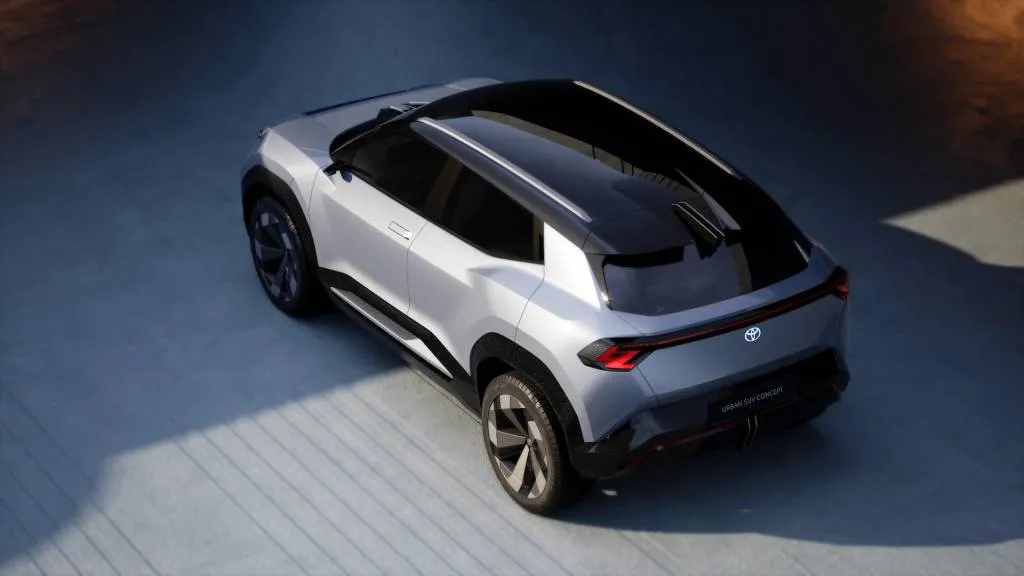
Toyota Urban SUV Concept

Toyota Urban SUV Concept

And never mind the Nissan Leaf, apparently—or the Chevy Bolt EV. Two automakers this past week, both known for affordable gasoline cars, dashed hopes of seeing more affordable EVs anytime soon. Honda still has no affordable, mass-market EV, and based on remarks from Honda’s global CEO, that’s not coming soon—or an Accord EV or Odyssey EV—but solid-state batteries may enable an affordable small Honda EV by 2030. Toyota also dismisses the viability of an affordable EV—in this case, specific to the European market. Its development boss there recently said that the premium for EVs won’t go away until a “substantial shift in the cost of batteries” occurs—sentiments that parallel those recently made by Honda’s CEO, suggesting an affordable small EV might not arrive until 2030.

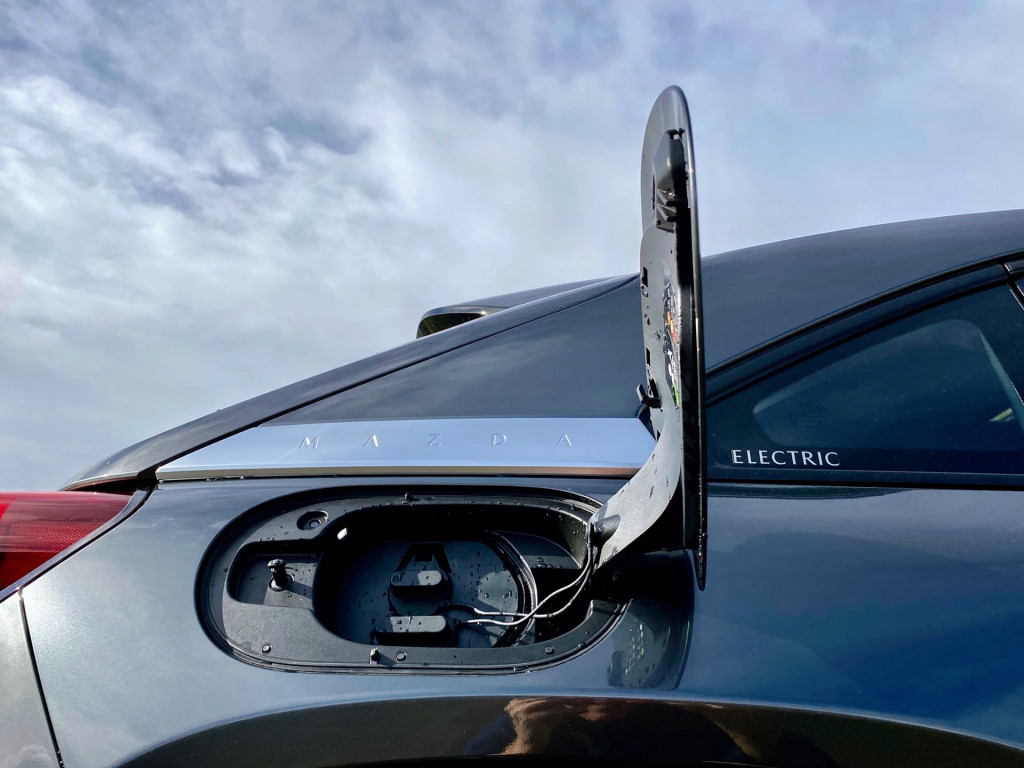
Within the span of a few days, Mazda has announced both the adoption of Tesla’s NACS connector for future U.S. EVs, while also committing to the revival of the rotary engine. They’re among many mixed signals from the automaker in recent years on what it sees as its propulsion future, as it works toward a global target of 40% EV sales by 2030

2022 Mazda MX-30 EV

2022 Mazda MX-30 EV

The lineup of Ram ProMaster EV electric van models was revealed Tuesday. These front-wheel-drive vans have a 110-kwh battery pack good for up to 162 miles of range and, with their focus on last-mile delivery fleets and work-van upfits, will rival the Rivian EDV, Mercedes eSprinter, and Ford E-Transit. 

In Rivian’s new environmental impact report, it underscores that it’s aiming for EVs with half the carbon footprint, on a lifecycle basis, by 2030.

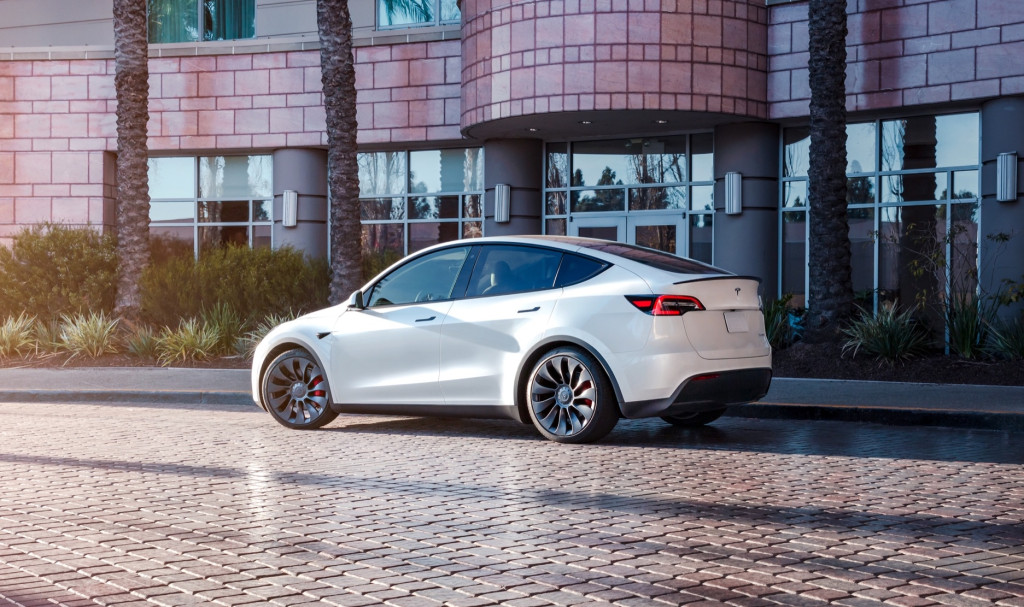
2023 Tesla Model Y - Courtesy of Tesla, Inc.

2023 Tesla Model Y – Courtesy of Tesla, Inc.

Tesla has started applying the EV tax credit at the time of purchase—via its own website and affecting the up-front amount buyers will need to pay when buying a new Tesla. Eligible buyers will be responsible for determining eligibility, specifically in light of adjusted gross household income caps. That said, fewer Tesla models now make the cut, due to more restrictions on battery materials sourcing introduced for 2024. 

And a recent “study of studies” by an energy-policy advocacy organization, the ACEEE, finds that a shift to EVs will drive the cost of electricity down over the long term. That’s partly because once more people are charging EV on the grid, they’re making better use of it.

_______________________________________

Follow Green Car Reports on Facebook and Twitter


Source link

15 Best Coworking Spaces in Playa del Carmen

0


Working as a digital nomad has so many perks – but it also has its fair share of hardships, like finding the perfect spot to work. You need the right desk, fast WiFi, and quiet private offices to conduct meetings. Thankfully, if you happen to find yourself in Mexico, there are some incredible coworking spaces in the gorgeous beach town of Playa del Carmen.

As a digital nomad myself, I was lucky enough to spend almost five months in Playa del Carmen. Honestly, it’s one of the best places for digital nomads thanks to its growing infrastructure and increase in tourism.

There are some really unique coworking spaces in Playa del Carmen, and luckily for you, I’ve scoped out all the best spots so you don’t have to.

Best Coworking Spaces in Playa del Carmen

Working online in Playa del Carmen is much easier and is more convenient than many other places in Mexico and Central America. It’s growing quickly, and with nearby cities like Cancun and Tulum, more and more digital nomads are showing up annually.

I’ve compiled a list of my favorite coworking spaces in Playa del Carmen, along with their pros, cons, and the overall vibe of each. With spaces like these right next to the beach, you’ll find it hard to leave.

1. Nest

A young lady using a laptop at a table in the modern workspace with books, a phone, and an empty coffee mug.

Nest is by far the most popular coworking space in Playa del Carmen. Located in the heart of the beach center of the city, it attracts freelancers, entrepreneurs, and start-ups alike.

The comfortable space offers meeting rooms, open spaces, and a separate creative wing. There’s a bike station, a snack area, and it’s also pet-friendly, so you can bring your furry travel companion.

In addition to the amazing and modern workspaces, Nest offers courses, workshops, and conferences to its users. It’s the ideal spot for meeting like-minded, creative people

Address: Calle Avenida 10 entre calle 12 y 14, Gonzalo Guerrero, 77710 Playa del Carmen, Q.R., Mexico

Membership Options and Costs

Memberships and rates come in daily, weekly, and monthly options. The prices are $270 MX ($15.60 USD) daily, $1,300 MX ($75.20 USD) weekly, and $3,700 MX ($214 USD) monthly.

Amenities at Nest

  • Air conditioning – stay cool and comfortable inside the air-conditioned facilities.
  • Hammock area – relax and take a break in the sunshine in the community hammock area.
  • High-speed WiFi – never worry about losing connection or missing a meeting.
  • Mail reception – send and receive mail through their secure mail reception.

Pros of Nest

  • Fast Wi-Fi
  • Pet-friendly
  • Great, central location
  • Affordable rates
  • Opportunity to learn
  • Comfortable workspaces
  • Free coffee and snacks

Cons of Nest

  • Can be crowded
  • Loud due to crowds
  • Private rooms can fill up quickly

2. Bunker Coworking

Modern minimal bright office workspace in a private office room with a personal computer and accessories on the table, office chair, indoor plant, and mockup frame on a white wall.

Known as one of the coolest coworking places in Playa del Carmen, Bunker Coworking is definitely a hip spot. Just a few blocks from the beach, this space has shared offices, private offices, and virtual offices for its clients.

What makes this coworking space so awesome is that it’s open 24/7, so it fits your schedule no matter what time zone you’re working with. There are also larger meeting rooms available for when you need to rally your team.

Although they don’t offer any courses, they base their mission around community. So, you’ll always be able to meet and connect with other independent workers to expand your network.

Address: Avenida 10 Norte, Esquina con Calle 38, Local 12 y 13, Zazil-ha, 77720 Playa del Carmen, Q.R., Mexico

Membership Options and Costs

Rates and membership options depend on whether you’ll be accessing a shared office, private office, or virtual office. Rates for the shared and private offices can be rented by the hour, day, 5 days, or month – ranging from $100 MX ($5.75 USD) per hour to $6,900 MX ( $400 USD) per month.

Virtual offices are on monthly, semi-annual, or annual memberships ranging from $1,200 MX ($70 USD) per month to $14,500 MX ($840 USD) per year.

Amenities at Bunker

  • Fast WiFi – 500 MB speed internet for a reliable connection.
  • Color and B&W printing services for all your printing needs.
  • Private phone booths to dip away for private conversations.
  • Pet-friendly – no need to leave your pup behind.
  • Rest and chill out area – perfect for breaks, sipping a coffee, or reading a book.

Pros of Bunker

  • Fantastic beach location
  • Pet-friendly
  • Free coffee and snacks
  • Lockers
  • Mail reception area
  • Free parking
  • 24-hour access

Cons of Bunker

  • No outdoor area
  • Spaces are small
  • Not in a central area

3. WORK-IT

 Office with Large Wooden Table. Interior Design, personal computer, notebooks on the table, and indoor plant

If you’re looking for one of the quietest workspaces in Playa del Carmen, you’ll want to head over to WORK-IT. It’s cozy, it’s professional, and it’s the perfect place to put your head down and finish that project.

Located across the street from the popular Coco Bongo Club, this coworking space has everything you need for a productive work day. They have three high-speed internet networks to make sure you never lose connection, comfortable work areas, and a mail reception area.

Another thing that makes WORK-IT so great is that it’s open 24 hours and is accessed by a fingerprint security system.

Address: Ave 10 /14 y 14 Bis Local 10, Centro, 77710 Playa del Carmen, Q.R., Mexico

Membership Options and Costs

Membership costs aren’t provided on the WORK-IT website, however, you can contact them via WhatsApp at 984-241-5296.

Amenities at WORK-IT

  • Three internet networks – ensure you won’t lose service at the most important moments.
  • Biometric security – with building access via fingerprint, you can feel safe while you work.
  • Coffee and kitchen – get your caffeine fix and whip up a quick snack.
  • On-site printing services – make copies, scan documents, and print all you need.

Pros of WORK-IT

  • Super reliable internet
  • Quiet and professional
  • Comfortable work areas
  • Biometric security
  • 24/7 access
  • Mail reception
  • Coffee and kitchen area

Cons of WORK-IT

  • No outdoor working area
  • Limited parking
  • Not pet-friendly

4. Xinergy Coworking

Two men and a woman working outdoor and on the wooden table there is a laptop, a glass of water, and a cup of coffee.

Xinergy Coworking is a very popular spot for digital nomads, and there’s a reason they’re constantly receiving five-star reviews. It’s small, it’s welcoming, and there’s a pool.

This relaxed working space features shared desks, reliable WiFi, and a small kitchenette. Grab your laptop and sit inside, relax in a hammock, or lounge by the poolside. The office is located in the central area, just two blocks from the beach.

Address: 1 Avenida Nte. entre calles 24 y 26 sur, Centro, 77710 Playa del Carmen, Q.R., Mexico

Membership Options and Costs

Rates and memberships are not listed, however, you can request a quote through the Xinergy website.

Amenities at Xinergy

  • Small and quiet office space – no interruptions, peace and quiet, what more do you need?
  • Pool – take a break and go for a dip or simply lounge with your laptop poolside.
  • Kitchenette – treat yourself to a cup of coffee and snack during your workday.
  • Relaxed and chill environment – this is the perfect spot for a chill day at work.

Pros of Xinergy

  • Central beach location
  • Small and quiet
  • Fast internet
  • Pool and outdoor space
  • Kitchenette and coffee area

Cons of Xinergy

  • Can fill up quickly during peak seasons
  • Not pet-friendly
  • Limited parking

5. CoWork-In

group of people working in the same place and on the wooden table, there is a cup of coffee, papers, and a laptop.

Located right outside the Playacar neighborhood, near the regional airport, is the super cool CoWork-In. The affordable coworking space has shared spaces and private offices for rent on an hourly, daily, weekly, or monthly basis.

They offer some fantastic perks, like high-speed WiFi, air conditioning, printing services, an outdoor working area, and a kitchen. If you need to hold a meeting, they also have a conference room with a projector.

The building is modern, and the space is clean and professional. It’s not exactly “beachfront,” so expect to be a little more inland – about a 15- or 20-minute walk to the beach. As a bonus, when you commit to a weekly contract, you’ll receive 24-hour access.

Address: Aviation Avenue, between Av 50 and Av 10., Calle 7 Sur, Mza 29, Lot 4, Fracc 26, Local 1., Playacar Phase II. 77710. Playa del Carmen, QROO

Membership Options and Costs

Memberships and rates are based on your choice of shared space, private office, or conference room, and how long you’d like to rent each room. Shared offices range from $50 MX ($2.89 USD) per hour to $2,900 MX ($168.00 USD) per month. Private offices range from $99 MX ($5.75 USD) per hour to $7,499 MX ($433.75 USD) per month.

Amenities at CoWork-In

  • Air conditioning – having A/C in Playa del Carmen is crucial, and they have it.
  • Printing center – scan, copy, and print to heart’s content.
  • Outdoor terrace – take in some sunshine while you work or relax on the terrace.

Pros of CoWork-In

  • Affordable
  • High-speed WiFi
  • Various-sized private offices
  • 24-hour access with weekly contract
  • Free coffee, tea, and cookies
  • Located close to the highway

Cons of CoWork-In

  • Not pet-friendly
  • No mail reception
  • No private lockers

6. WorkZone

A group of people working in the same place. There is a laptop, phone, tablet, and a papers on the table.

WorkZone is another affordable option for a coworking space, and they offer convenient 24/7 access to office spaces where you can focus, get creative, and find a like-minded community.

The large coworking space in Playa del Carmen is located more inland, in a “locals” type of area, but don’t let that turn you off. It’s a gorgeous space with hammocks, an entertainment lounge, fast WiFi, bike rentals, and more. Plus, there are lots of yummy restaurants and cafes nearby to refuel and rest during your work day.

WorkZone is a lot more than a coworking space, and the best part is you don’t need to pay a deposit or sign a contract. I happened to live a few blocks from this coworking space, and it quickly became one of my favorites.

Address: Av Colosio Mz 1 Lt 46 #459

Membership Options and Costs

Affordable membership options and daily rates are available by request. Monthly rates start at $2,500 MX ($145 USD).

Amenities at WorkZone

  • Fast WiFi – meet that deadline without worry with speedy, reliable internet.
  • Printing center – all your docs printed, scanned, and copied in one place.
  • Kitchen and lounge – plenty of places to relax and refuel.

Pros of WorkZone

  • Pet-friendly
  • 24-hour access
  • Parking
  • Outdoor terrace
  • Free coffee and water
  • Spacious offices and work areas
  • Entertainment lounge

Cons of WorkZone

  • Not in a “popular,” beachy part of town
  • No mail reception
  • No free snacks

7. Enlaces Corporativos

office cubicle with desk and chair.

Open for over 10 years, Enlaces Corporativos is located in the business area of Playa del Carmen, surrounded by delicious local restaurants and tons of taco trucks. You have the option to rent private or shared offices that are quiet and fully equipped with everything you need.

They have high-speed internet, mail and phone reception, free coffee, and more. They also have virtual offices and meeting rooms if those fit your business needs. The vibe at this coworking space in Playa del Carmen is very professional and is frequented by mostly locals.

Address: C. 1 Sur, Centro, 77710 Playa del Carmen, Q.R., Mexico

Membership Options and Costs

Plans and rates are not listed; however, you can reach out through the contact form at the bottom of their website.

Amenities at Enlaces Corporativos

  • Reliable, fast WiFi – slow internet is never a problem here.
  • Furnished, comfortable offices – get your work done in comfort and privacy.
  • Coffee service – when you need a quick pick-me-up, it’s always there for you.

Pros of Enlaces Corporativos

  • Easy location off the highway
  • Parking lot
  • Coffee service
  • Mail reception
  • Furnished and equipped offices

Cons of Enlaces Corporativos

  • Not in tourist/”popular” location
  • Not pet-friendly
  • No 24/7 access

8. Anana Coliving

A woman using a laptop and a cup of coffee on the side. and there is another college on the other table.

When being a digital nomad is your lifestyle, why not immerse yourself in a coliving situation with other remote workers? Anana Coliving is a living space, a coworking space, and a community all in one.

Each room at Anana Coliving is set up specifically for the digital nomad. Expect fast internet, spacious desks, and plenty of outlets. They also offer two weekly community events where you can connect and network with others.

They offer two types of apartments; a deluxe without a kitchenette and one with a kitchenette. If you plan on staying in Playa del Carmen for a while, this is a great coworking and coliving space to settle down in.

Address: Calle 16 & 35 y 40 MZ 115 LT20 PCN, F, Gonzalo Guerrero, 77720 Playa del Carmen, Q.R., Mexico

Membership Options and Costs

To request prices for apartments, reach out via WhatsApp at +52 984 270 6282.

Amenities at Anana Coliving

  • Spacious private rooms – work in your room, if you want privacy and space.
  • Reliable and fast internet – the entire coliving space is based around digital nomads.
  • Communal areas – meet other digital nomads to connect and grow your connection.

Pros of Anana Coliving

  • Long-term peace of mind for digital nomads
  • Live with other digital nomads
  • Fast internet
  • Pet-friendly
  • Walking distance to the beach
  • Private and communal areas

Cons of Anana Coliving

  • Not ideal for hourly or daily work
  • Can only access space if staying there
  • Rooms fill up quickly during peak seasons

9. Che Hostel

Two young women using a laptop and there is a phone, and a glass of juice.

A unique coworking space that’s also a popular hostel is Che Hostel. With multiple locations around the world, they’ve established themselves on the Yucatan Peninsula by being an affordable place to stay and work for digital nomads and online workers.

During the day, you can get all of your work done in the community coworking space with high-speed internet while enjoying a cup of coffee. Mix and mingle with fellow digital nomads in the public space.

By night, you can head out on the town since it’s ideally located next to all the hottest nightclubs, restaurants, and bars. They also offer 24-hour reception and desks in the rooms, in case you’re looking for a little more privacy. Not to mention, it’s just two blocks from the beach.

Address: Calle 6 Nte s/n, Centro, 77710 Playa del Carmen, Q.R., Mexico

Membership Options and Costs

There aren’t any memberships or daily coworking rates, however, rooms start at just $35 USD a night. Book your room here.

Amenities at Che Hostel

  • A variety of room choices – choose to stay in a female dorm, mixed dorm, or private room.
  • High-speed internet – depend on fast WiFi during your stay, so you can meet those deadlines.
  • Onsite restaurant and bar – eat and drink delicious food and cocktails without having to leave the property.
  • Taxi and transfer service – easily get to and from the airport or other parts of town.

Pros of Che Hostel

  • Fast internet
  • Affordable rates
  • Onsite food and drinks
  • Fantastic central, beachside location
  • Stay with other digital nomads
  • Private and public workspaces

Cons of Che Hostel

  • Very popular and can get crowded
  • No meeting/conference room
  • No hourly/daily rates for non-guests

10. Hostal MX

A woman standing and a busy people working on her background.

Another great option for multiple-day, week, or long-term stays for coworking is Hostal MX. It’s just steps from the beach, offers 24-hour services, and has a communal coworking space with super-fast internet.

They have 17 rooms and are mostly frequented by travelers working online and other digital creatives. Breakfast is included daily, so you can get your workday started, fueled, and ready to go.

The property is stunning and is located in the heart of Playa del Carmen. After your work day, you can explore all the shops on 5th Avenue, the bars, the nightlife, and the amazing Mexican culture.

Address: 5 Avenida Norte 209, Playacar, 77720 Playa del Carmen, Q.R., Mexico

Membership Options and Costs

Prices vary per season. Contact the property for rates and availability.

Amenities at Hostal MX

  • 24-hour reception – work and stay in peace, knowing that there is 24/7 reception.
  • Fast internet – the most important part of working online is the least of your concerns.
  • Pool and private beach access – reward yourself after a long day of work with a relaxing swim.
  • Breakfast included – start your day with a nutritious meal.

Pros of Hostal MX

  • Fast internet
  • Pet-friendly
  • Pool and beach access
  • Air conditioning
  • Communal kitchen
  • Central coworking space

Cons of Hostal MX

  • Popular and can sell out quickly
  • Can be noisy due to its central location
  • No on-site parking

11. Mamita’s Beach Club

Young woman with laptop on beach

Although it’s not an official coworking space, Mamita’s Beach Club is still a great place to post up with your laptop. Who doesn’t want to work with a view of the beach?

You can rent a beach lounger for the day and enjoy their fast WiFi while getting a tan. It does tend to be a bit expensive, but if you can afford it, I 100% recommend paying a visit.

They have over 300 lounge chairs, cabanas, indoor seating, and a restaurant. They also have showers, so you can wash off the work day and any sand from the beach.

Address: Calle 28 Norte y la playa Mza 8-10, Lote Centro, 77710 Playa del Carmen, Q.R., Mexico

Membership Options and Costs

Rates vary by season. Reach out to the club via Mamita’s website.

Amenities at Mamita’s Beach Club

  • Valet parking – parking? Not an issue here!
  • 300 beach loungers – the best perk of working online is being able to work anywhere.
  • Showers – rinse off the sand after your stay.
  • 18+ area – avoid the families and kids in the adults-only area.

Pros of Mamita’s Beach Club

  • Fast internet
  • Food and beverage service
  • Private beach and pool access
  • 300 beach lounge chairs
  • Valet parking
  • Showers

Cons of Mamita’s Beach Club

  • Tends to be expensive
  • Gets crowded during peak months
  • Can be loud
  • Lack of outlets

12. Ah Cacao

Interior of coffee shop with customers using digital devices.

A place that I would constantly frequent when I needed to work is Ah Cacao. It’s not an official coworking space, and it’s technically not a coffee shop – it’s a chocolate cafe. And it’s very popular for online workers.

With multiple locations around Playa del Carmen, you’re sure to find a spot near you. They have super fast internet, indoor and outdoor tables, and delicious chocolate drinks and treats. They also serve coffee drinks and other food items as well.

What I love about these cafes is that you can grab a table outside and watch the world go by as you work. While enjoying something delicious, of course.

Address: 5ta Avenida con Calle 2 Centro, 77710 Playa del Carmen, Q.R., Mexico (Central location)

Membership Options and Costs

Of course, since it’s open to the public, it’s one of the free coworking spaces in Playa del Carmen. You’ll just need to be a good patron and purchase a drink or something to eat every hour or so.

Amenities at Ah Cacao

  • Fast internet – should the list start any other way?
  • Plenty of indoor and outdoor tables – choose to sit in the air conditioning or outside on the street side.
  • Delicious food and drinks – their menu items are all incredible. You can’t go wrong.

Pros of Ah Cacao

  • Dependable internet connection
  • Opens early (7:15 am)
  • Numerous locations
  • Free with purchase of a menu item
  • Air conditioning
  • Pet-friendly patio

Cons of Ah Cacao

  • Tends to get very busy
  • Noisy
  • No private spaces

13. Hotel 52

laptop beside a pool

If you’d prefer to work on a rooftop, Hotel 52 is a great option. Located just a short walk from the beach, the views here are sure to impress.

You can purchase a day pass, or you can simply go up to the rooftop and order some food or drinks before sitting down with your laptop. They also have an infinity pool if you need to cool off.

The biggest downside to Hotel 52 is that their WiFi isn’t the most dependable. So, you might be taking a chance.

Address: Calle 52 Nte S/N, Luis Donaldo Colosio, 77710 Playa del Carmen, Q.R., Mexico

Membership Options and Costs

You can purchase a day pass for $11 USD or simply order something off of their menu.

Amenities at Hotel 52

  • Rooftop access – have amazing views of the ocean and city.
  • Internet access – although it may not be very fast, internet access is free.
  • Food and drink service – enjoy lunch or dinner while working.

Pros of Hotel 52

  • Amazing views
  • Central location
  • Shaded tables and cabanas
  • Great staff
  • Pool access

Cons of Hotel 52

  • Unreliable Wi-Fi
  • No private areas
  • Can get busy and loud

14. Marley Coffee

Young woman using laptop and drinking coffee in coffee shop

There’s something about working in a coffee shop that I absolutely love. It just feels “right” for some reason – and Marley Coffee is an absolute gem. It’s centrally located, it’s cozy, and they have great internet.

I particularly like this spot because it tends to be a little less busy than the other coffee shops nearby. Plus, they make some esceptionally delicious coffee drinks and pastries.

Pick a comfy couch or table by the window and people-watch while you get through your work.

Address: 10 Avenida Nte. & Calle 2 Nte Local 2C, 77710 Playa del Carmen, Q.R., Mexico

Membership Options and Costs

Working here is free, you’ll just need to purchase a drink or food item.

Amenities at Marley Coffee

  • Dependable internet – you can enjoy your coffee without worrying about interruption.
  • Delicious drinks and food – your tastebuds will thank you.
  • Cozy ambiance – the atmosphere is so charming and welcoming.

Pros of Marley Coffee

  • Fast internet
  • Great drinks and food
  • Centrally located
  • Free with menu item purchase
  • Cozy atmosphere

Cons of Marley Coffee

  • No private spaces
  • No parking lot
  • Limited outlets

15. Fives Rooftop

Unrecognizable female remote employee working on laptop near swimming pool

Another fun rooftop option is Fives Rooftop. They have a rooftop pool with lounge chairs and cabanas with tables for you to pop open your laptop. It’s tranquil, it’s beautiful, and it’s worth the splurge.

Enjoy fast, free WiFi with the purchase of a day pass and bask in the sun while you work. The service is fantastic, and so are their food and drink options. You’ll just want to leave before it gets dark because that’s when it turns into a party scene, (or at least be prepared to close your laptop for the day – just be sure to keep it secure).

Address: 10 Avenida Nte., Centro, 77710 Playa del Carmen, Q.R., Mexico

Membership Options and Costs

Day pass prices vary by season. Contact Fives Rooftop for more information.

Amenities at Fives Rooftop

  • Fast internet – their WiFi is reliable and fast.
  • One of the best views in the city – get into work mode while taking in incredible vistas.
  • Great food and drinks – their menu is fantastic and so is their service.

Pros of Fives Rooftop

  • Fast internet
  • Amazing views
  • Pool access
  • Cabanas and lounge chairs
  • Central location

Cons of Fives Rooftop

  • Expensive
  • Can be busy during peak seasons
  • No private workspaces

Best Coworking Spaces in Playa del Carmen: FAQs

Here are some answers to the most commonly asked questions about the best coworking spaces in Playa del Carmen:

What is coworking?

Coworking is an environment that’s set up to accommodate people who want to work remotely. It can be a shared, private, or virtual space.

Are there free coworking spaces in Playa del Carmen?

Free coworking spaces include cafes, coffee shops, and some rooftop bars with the purchase/s of a menu item.

What’s the best coworking space in Playa del Carmen?

The best coworking space in Playa del Carmen is either Nest or Bunker.

How much does a coworking space cost in Playa del Carmen?

A coworking space in Playa del Carmen can cost anywhere from a few dollars an hour to $500 a month.

What’s the cheapest coworking space in Playa del Carmen?

The cheapest coworking space in Playa del Carmen is CoWork-In.

What’s the most popular coworking space in Playa del Carmen?

The most popular coworking space in Playa del Carmen is Nest.

Is it worth paying for a coworking space?

Yes, a coworking space is worth paying for because of reliable internet, ample workspaces, and other perks.

Is Playa del Carmen good for digital nomads?

Absolutely! Playa del Carmen is an excellent city for digital nomads.

Where do most expats live in Playa del Carmen?

Most expats live in the Central or eastern side of Playa del Carmen.

In Closing

Finding a coworking space in Playa del Carmen is easy and stress-free. If you happen to work online, this is the perfect city for you. I never once struggled to find a reliable and comfortable workspace when I lived here, and I was there for almost five months!

From beachside desktops to private offices, you’re certain to find the perfect coworking spot for you.


Source link

Amgen to Build Generative AI Models for Drug Discovery

0


Amgen to Build Generative AI Models for Drug Discovery

Generative AI is transforming drug research and development, enabling new discoveries faster than ever — and Amgen, one of the world’s leading biotechnology companies, is tapping the technology to power its research.

Amgen will build AI models trained to analyze one of the world’s largest human datasets on an NVIDIA DGX SuperPOD, a full-stack data center platform, that will be installed at Amgen’s deCODE genetics’ headquarters in Reykjavik, Iceland. The system will be named Freyja in honor of the powerful, life-giving Norse goddess associated with the ability to predict the future.

Freyja will be used to build a human diversity atlas for drug target and disease-specific biomarker discovery, providing vital diagnostics for monitoring disease progression and regression. The system will also help develop AI-driven precision medicine models, potentially enabling individualized therapies for patients with serious diseases.

Amgen plans to integrate the DGX SuperPOD, which will feature 31 NVIDIA DGX H100 nodes totaling 248 H100 Tensor Core GPUs, to train state-of-the-art AI models in days rather than months, enabling researchers to more efficiently analyze and learn from data in their search for novel health and therapeutics insights.

“For more than a decade, Amgen has been preparing for this hinge moment we are seeing in the industry, powered by the union of technology and biotechnology,” said David M. Reese, executive vice president and chief technology officer at Amgen. “We look forward to  combining the breadth and maturity of our world-class human data capabilities at Amgen with NVIDIA’s technologies.”

The goal of deCODE founder and CEO Kári Stefánsson in starting the company was to understand human disease by looking at the diversity of the human genome. He predicted in a recent Amgen podcast that within the next 10 years, doctors will routinely use genetics to explore uncommon diseases in patients.

“This SuperPOD has the potential to accelerate our research by training models more quickly and helping us generate questions we might not have otherwise thought to ask,” said Stefánsson.

Putting the Tech in Biotechnology

Since its founding in 1996, deCODE has curated more than 200 petabytes of de-identified human data from nearly 3 million individuals.

The company started by collecting de-identified data from Icelanders, who have a rich heritage in genealogies that stretch back for centuries. This population-scale data from research volunteers provides unique insights into human diversity as it applies to disease.

deCODE has also helped sequence more than half a million human genomes from volunteers in the UK Biobank.

But drawing insights from this much data requires powerful AI systems.

By integrating powerful new technology, Amgen has an opportunity to accelerate the discovery and development of life-changing medicines. In March 2023, NVIDIA announced that Amgen became one of the first companies to employ NVIDIA BioNeMo, which researchers have used to build generative AI models to accelerate drug discovery and development. Amgen researchers have also been accessing BioNeMo via NVIDIA DGX Cloud, an AI supercomputing service.

“Models trained in BioNeMo can advance drug discovery on multiple fronts,” said Marti Head, executive director of computational and data sciences at Amgen. “In addition to helping develop drugs that are more effective, they can also help avoid unwanted effects like immune responses, and new biologics can be made in volume.”

By adopting DGX SuperPOD, Amgen is poised to gain unprecedented data insights with the potential to change the pace and scope of drug discovery.

“The fusion of advanced AI, groundbreaking developments in biology and molecular engineering and vast quantities of human data are not just reshaping how we discover and develop new medicines — they’re redefining medicine,” Reese said.

Learn about NVIDIA’s AI platform for healthcare and life sciences.


Source link

2024 Mercedes-Benz GLA200 FL in Malaysia – updated styling, latest MBUX infotainment; RM258,888 OTR

0


2024 Mercedes-Benz GLA200 FL in Malaysia – updated styling, latest MBUX infotainment; RM258,888 OTR

Following yesterday’s teaser of the facelifted H247 Mercedes-Benz GLA, Mercedes-Benz Malaysia has today officially launched the updated crossover in a single variant, the GLA 200, priced at RM258,888 on-the-road without insurance.

As with the pre-update H247 GLA, this facelifted model is locally assembled in Pekan, Pahang, coming after its initial launch in December 2020 as a fully imported model.

Similarly, the GLA 200 variant continues to be powered by a 1.3 litre turbocharged four-cylinder petrol engine producing 163 hp at 5,500 rpm and 250 Nm from 2,000 rpm to 3,500 rpm. Drive is sent to the front wheels via a seven-speed dual-clutch automatic. Claimed 0-100 km/h acceleration is 8.9 seconds, with a top speed of 210 km/h.

Changes to its exterior include a new front grille, while the front bumper gets a redesigned ‘visual underride protection’ with silver trim on the front apron. Meanwhile, the rear bumper gets a diffuser. For lighting, there are LED High Performance headlamps with Adaptive Highbeam Assist, and LED tail lamps as standard.

Rolling stock is a set of 18-inch five-twin-spoke alloy wheels finished in Tremolite grey with a high-gloss finish; these are fitted with tyres measuring 235/55R18.

Inside, instrumentation and infotainment for the the H247 GLA facelift are shown via a dual 10.25-inch display, and a new steering wheel design that incorporates touch surface controls in place of conventional buttons. Upholstery is in Artico synthetic leather, and the front seats get electric adjustment with memory function.

Here, the latest-generation MBUX interface features, with support for wireless Apple CarPlay and Android Auto, and hardware connections now include five USB-C ports which are illuminated plus wireless device charging, and the cabin also gets 64-colour ambient lighting.

For assistance systems, the H247 GLA facelift gets the parking package with reversing camera, Active Parking Assist, Blind Spot Assist, Exit Warning Assist and Active Brake Assist, while also including Keyless Go and Hands-free Access.

In addition to the existing range of exterior colours, the 2024 GLA facelift adds Spectral Blue metallic to its exterior paint palette. All new Mercedes-Benz passenger vehicles in Malaysia are covered by a four-year, unlimited mileage warranty.

Looking to sell your car? Sell it with myTukar.


Source link

A Bugatti Chiron Sport Is Up For Sale On Bring A Trailer

0


Just a few years ago, most vehicles auctioned through Bring a Trailer had a quirky and vintage charm. However, the website’s recent surge in popularity has resulted in a growing community that just keeps on getting bigger. Although it is not yet up to par with the level of prestige that RM Sotheby’s has, it’s already sold some incredible and super rare vehicles. Now, BaT is currently offering a 2019 Bugatti Chiron Sport for sale.

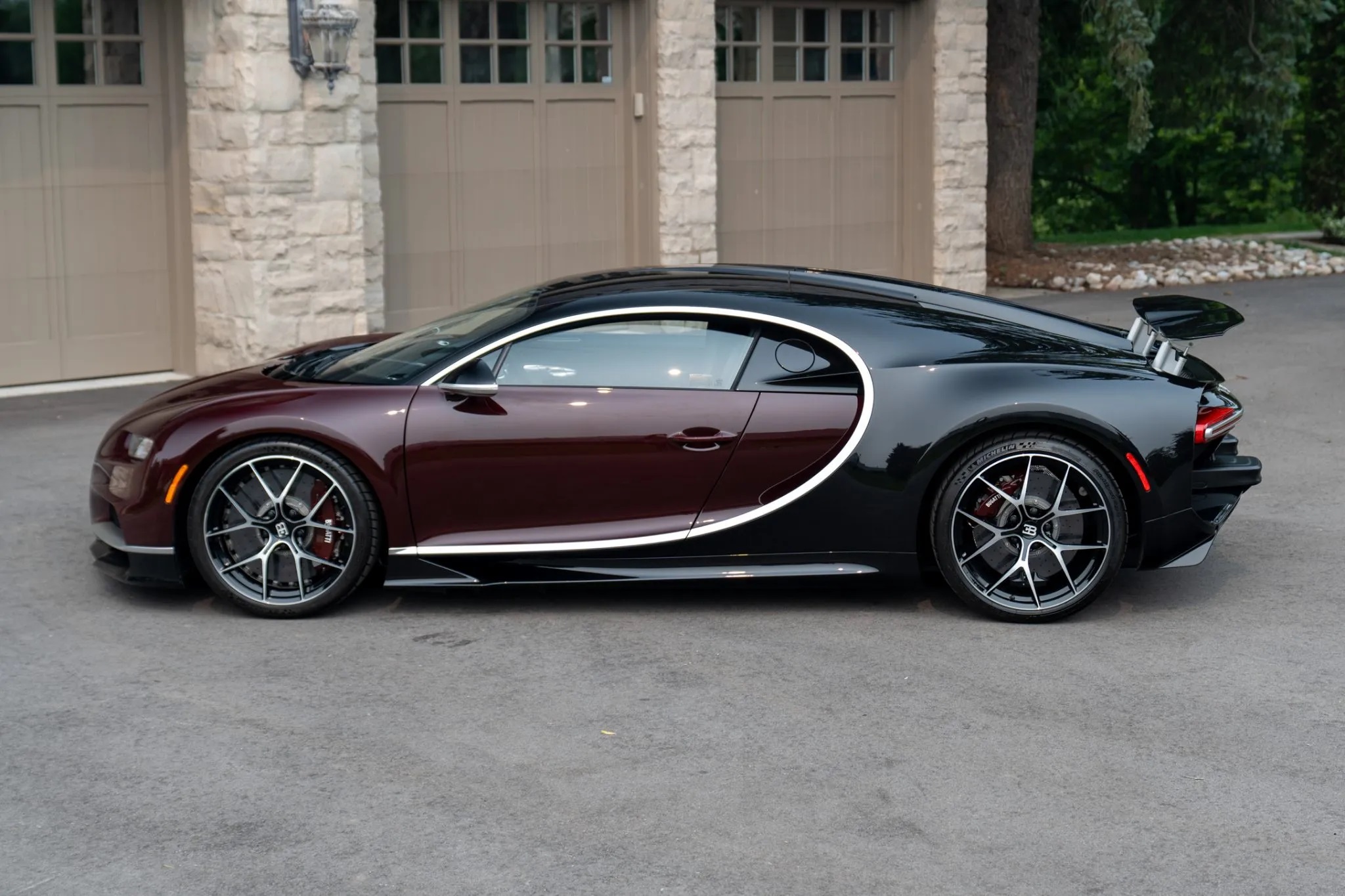
2019 Bugatti Chiron Sport

One of only 60 units ever made, this example with only 451 miles on the odometer was originally purchased new from the factory at a total cost of $3,714,500. It remains registered in Ohio and is offered on dealer consignment in New York and comes with an order sheet, a car cover, a clean Carfax report, and a clear Ohio title.

2019 Bugatti Chiron Sport

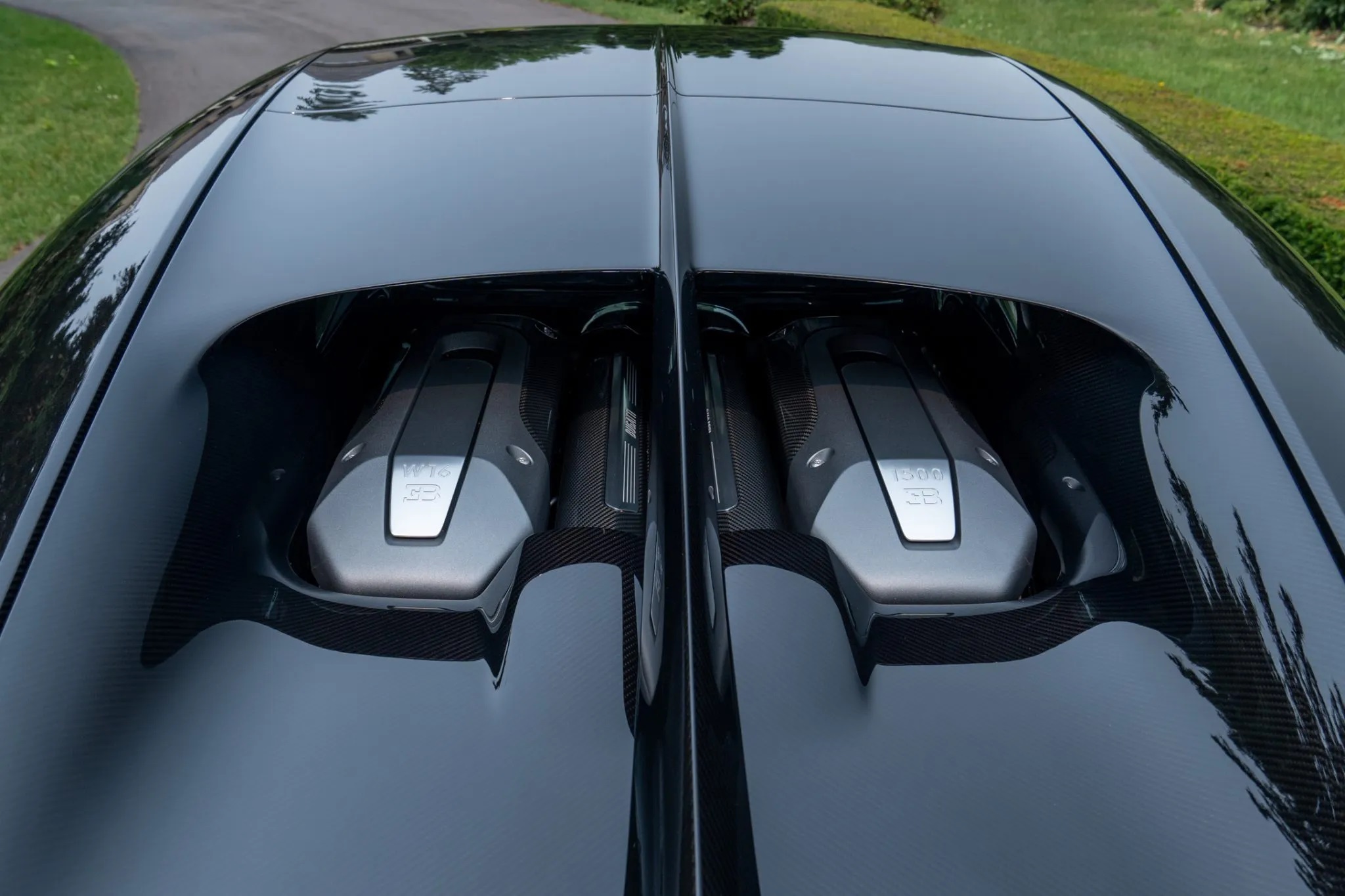
Introduced at the 2018 Geneva Salon, the Bugatti Chiron Sport is an upgraded version of the Chiron model, designed to be more dynamic and driver-focused. Featuring a weight reduction of almost 40 pounds through increased use of carbon fiber, lightweight wheels, and lighter glass, the Chiron Sport is known for its technological advancements, including being the first car with a purpose-developed carbon fiber windscreen wiper. Its power is derived from an impressive 8.0-liter, quad-turbo W16 engine, generating 1,500 horsepower allowing it to go 0-60 mph in just 2.3 seconds and achieve a top speed of 261 mph.

2019 Bugatti Chiron Sport

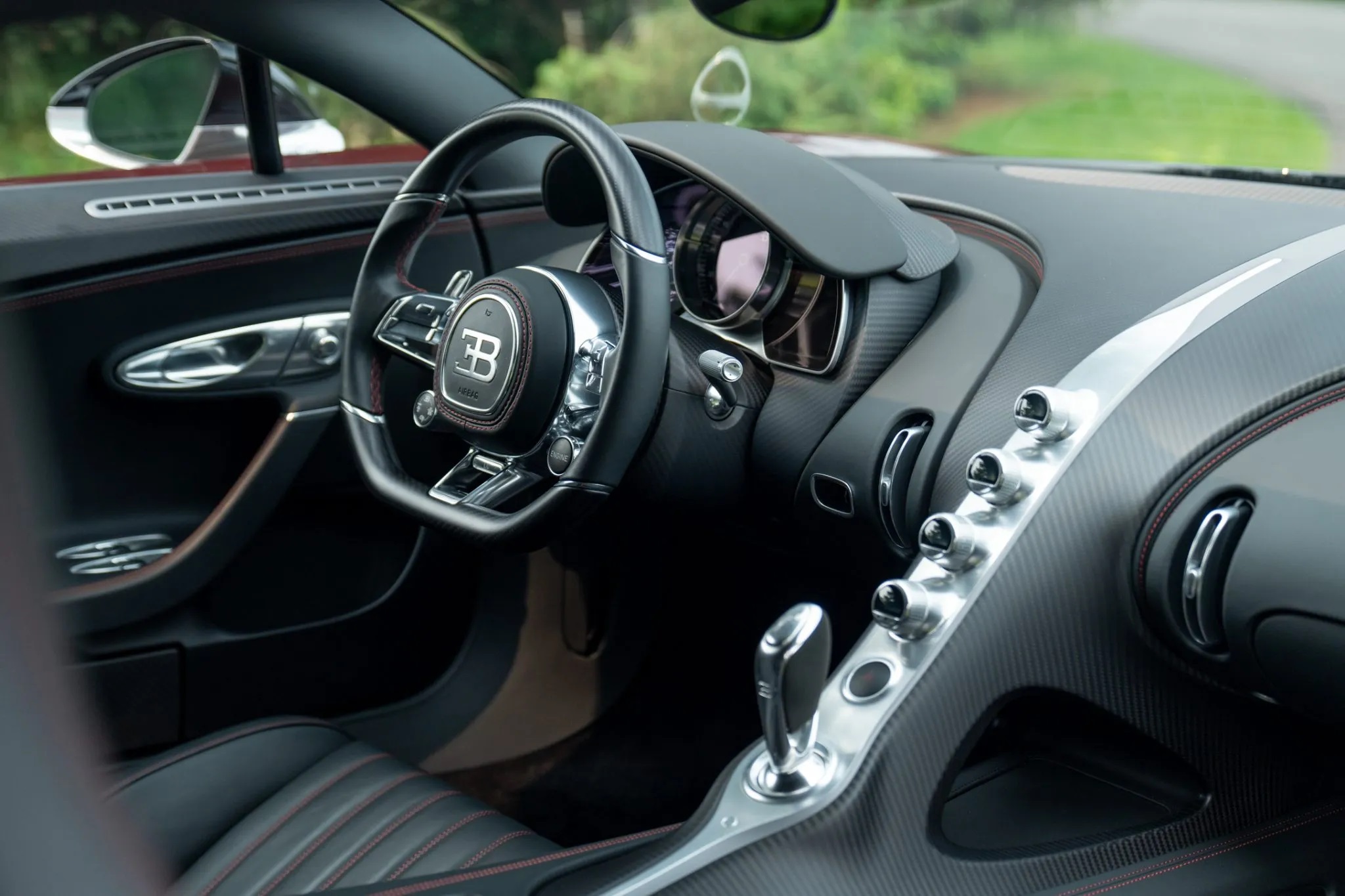
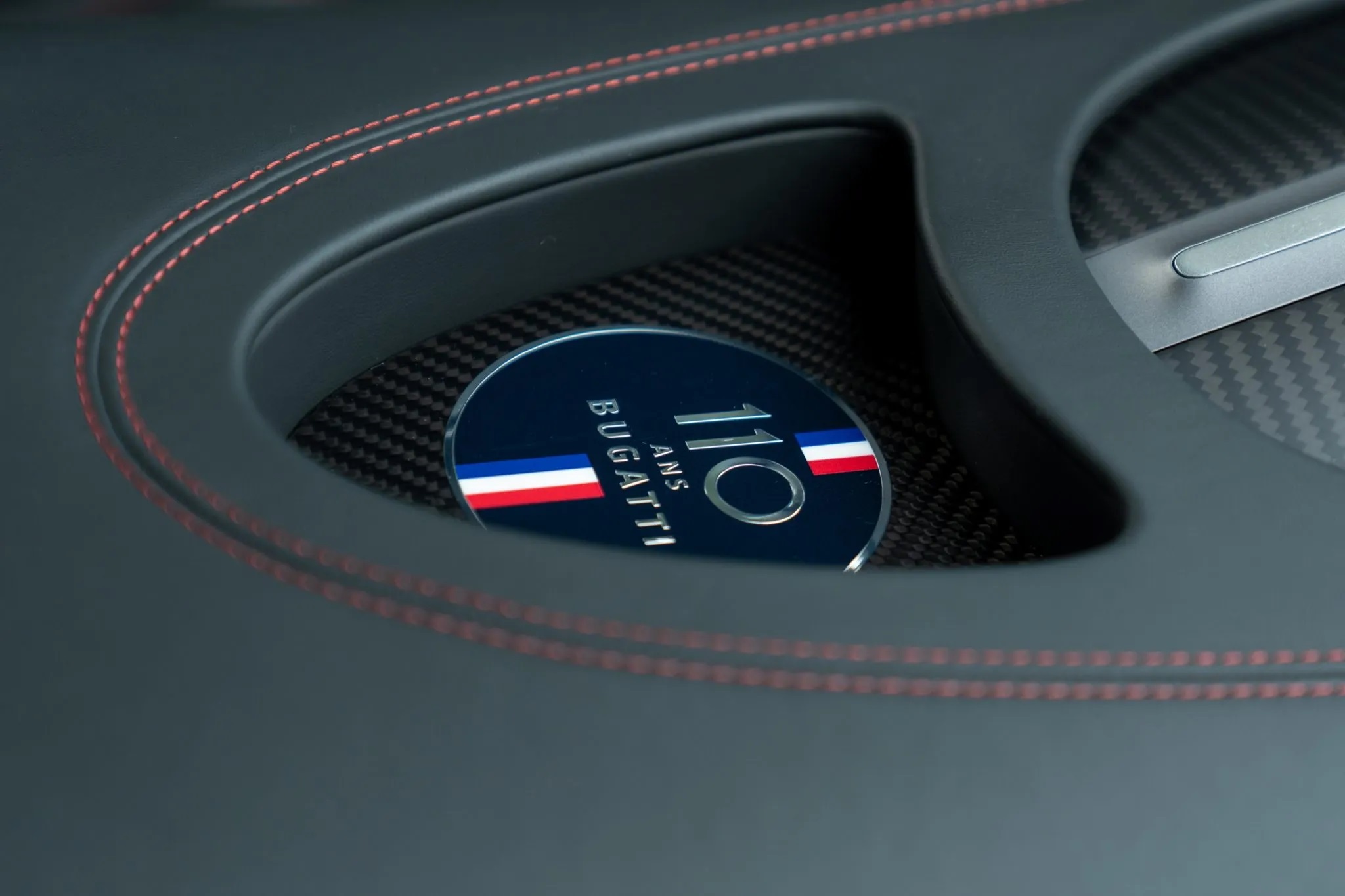
This particular Chiron Sport is a bespoke creation, distinguished by its Black Carbon carbon-fiber body panels, a premium option worth $315,000. The Red Carbon accents on the hood, fenders, doors, and coves further enhance its visual appeal. As for the interior, you get carbon-fiber Comfort seats trimmed in Beluga Black leather with Hot Spur contrast stitching, a multi-function flat-bottom steering wheel, a plaque commemorating the 110th anniversary of Bugatti, polished aluminum trim, automatic climate control, navigation, and a seven-speaker Accuton stereo with satellite radio and Bluetooth connectivity.

2019 Bugatti Chiron Sport

Bidding for this rare Bugatti Chiron Sport will end after 8 days giving you plenty of time to place your bids.

2019 Bugatti Chiron Sport 2019 Bugatti Chiron Sport 2019 Bugatti Chiron Sport 2019 Bugatti Chiron Sport 2019 Bugatti Chiron Sport

Source: Bring A Trailer


Source link

Driving The Porsche 918 Spyder On A Mountain Pass

0


Among the Holy Trinity, the Porsche 918 stands out as a testament to engineering brilliance. While personal biases may lean towards the allure of Ferrari, the 918’s nimbleness on the road makes it a standout choice. Propelled by a 4.6L V8 engine situated just behind the driver, delivering a formidable 600 brake horsepower, the Porsche 918 offers a driving experience that is nothing short of exhilarating. Engaging the race mode introduces an electric motor, seamlessly adding an extra 282 horsepower to the mix.

Despite being labeled as the least powerful and heaviest among the Holy Trinity, the Porsche 918 defies expectations with its four-wheel-drive system. The seamless hookup out of hairpin turns is nothing short of unreal. The power is relentless, turning this hypercar into a rally car, effortlessly overcoming its 200 kg weight disadvantage.

A new video from Supercar Driver on YouTube puts the spotlight on the Porsche 918 Spyder. Let’s take a look on what they have to say about this Porsche hypercar as they drive it on the beautiful Petit-Saint-Bernard pass in the Alps on the France–Italy border.


Source link

Volkswagen came to the US 75 years ago

0


Volkswagen has been selling cars in the U.S. for the past 75 years, becoming one of the largest automakers in this market. And it all started with just two Beetles.

As recounted by the automaker, Dutch businessman Ben Pon landed in New York with the two cars in 1949. The Type 2, also known as the Microbus, followed, reaching U.S. shores in 1950. Volkswagen of America was then established in 1955 to set up a formal dealer network and parts and service apparatus.

VW gained traction in the U.S. in part thanks to clever “Think Small” ads, the first of which appeared in 1959, touting the Beetle’s simplicity and thriftiness as a counterpoint to the bigger, flashier cars from American brands that dominated the U.S. market at the time.

As in other markets, VW’s U.S. lineup grew to encompass other rear-engined, air-cooled models like the Karmann Ghia and Squareback before moving to more conventional vehicle designs in the form of the Dasher (as the first-generation Passat was called in the U.S.), Scirocco, and Golf—initially sold in the U.S. as the Rabbit.

One of the first Volkswagen Beetles being exported to the U.S.

One of the first Volkswagen Beetles being exported to the U.S.

VW’s history in the U.S. hasn’t been exclusively a tale of success. In 1978 the automaker opened its first U.S. factory in Westmoreland, Pennsylvania, to build the Rabbit. While the factory did ultimately build 1.1 million of the hatchbacks, as well as other models, it only lasted until 1987. VW wouldn’t open another U.S. assembly plant until 2011, when its current Chattanooga, Tennessee, factory began building Passat sedans.

Just a few years after the Chattanooga plant opened, the EPA announced in Sept. 2015 that VW had cheated on diesel-emissions tests—one of biggest scandals in the history of the U.S. automotive industry. A settlement with the federal government and the state of California included fines and a commitment to fund the Electrify America charging network.

The scandal also kicked off a shift toward EVs that started with the ID.4 crossover, which is currently being built in Chattanooga alongside the gasoline Volkswagen Atlas and Atlas Cross Sport.


Source link

2023 Ford Bronco DR with mystichrome paint surfaces for sale

0


A 2023 Ford Bronco DR with throwback paint has surfaced for sale on Bring a Trailer.

Announced in 2021, the Bronco DR (short for Desert Racer) is a turnkey race truck intended as a spiritual successor to Broncos that competed in the Baja 1000 in the 1960s and 1970s. Just 50 are thought to have been built, all as 2023 models with a mid-$200,000 price tag.

The truck up for sale stands out even more thanks to body panels finished in Mystichrome, the color-shifting paint only offered from the factory on the 2004 Ford Mustang SVT Cobra.

The rest of the truck appears to be factory-spec, meaning it sports a Coyote 5.0-liter V-8 delivering an estimated 400 hp. The V-8 drives all four wheels through a 10-speed automatic transmission and independent electronically locking front and rear differentials, pushing 6,200 pounds of vehicle in race trim.

2023 Ford Bronco DR (photo via Bring a Trailer)

2023 Ford Bronco DR (photo via Bring a Trailer)

Ford also gave the Bronco DR unique bodywork to cover widened 73.7-inch front and 73.3-inch rear tracks, along with a roll cage and serious chassis upgrades. Highlights include Positional Selective DSSV Dampers from Multimatic and 37-inch BFGoodrich Mud-Terrain T/A KM3 tires with 17-inch beadlock wheels.

When it announced the Bronco DR, Ford claimed the race truck boasted 55.1% more front suspension travel, at 15.8 inches, and 58.6% more rear suspension travel, at 17.4 inches, compared to a stock four-door Bronco Badlands. Ford also quoted approach, departure, and breakover angles of 47, 37, and 33 degrees, respectively.


2023 Ford Bronco DR (photo via Bring a Trailer)

2023 Ford Bronco DR (photo via Bring a Trailer)

The interior includes only the basics. Two seats are squeezed between the roll cage, with a Motec C187 display and CAN data acquisition system in the center of the dashboard. A 65-gallon fuel tank and spare tire are housed behind the driver and passenger.

Because this is a race vehicle not intended for road use, the Bronco DR is offered only with a bill of sale and does not have a title or registration. For those that want a road-legal Bronco with some desert-racer character, there’s always the Bronco Raptor.


Source link