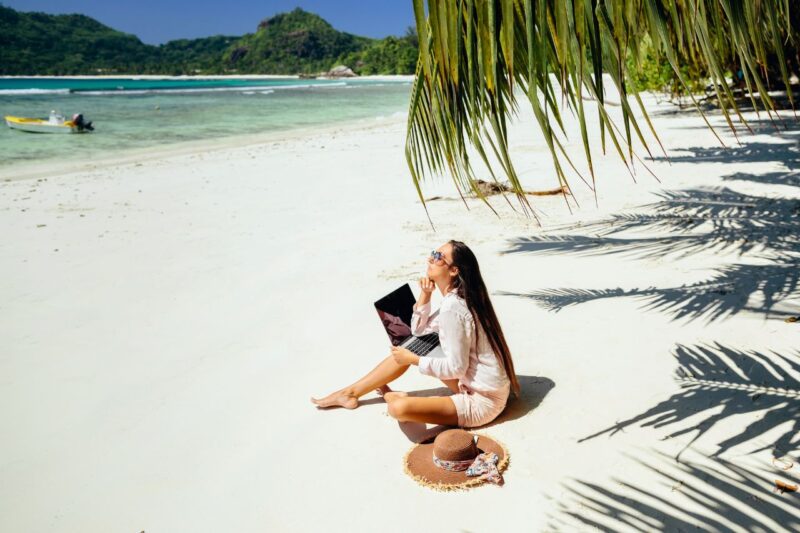
More people are working remotely, and many countries now offer digital nomad visas so they can live and work in new places. The Philippines Digital Nomad Visa lets remote workers, freelancers, and entrepreneurs stay in the country while working for companies or clients outside the Philippines.
Yes, the Philippines Digital Nomad Visa is currently available, having been announced in June 2023. This visa allows digital nomads to legally live and work in the Philippines as employees, freelancers, or business owners with clients based outside the country. However, it is important to check for the latest details and application procedures, as the program may still be under development with specifics being finalized.
Eligibility Criteria
To qualify for the Philippines Digital Nomad Visa requirements:
Valid passport with at least six months of validity
Proof of remote employment (contract, client invoices, or business registration for freelancers and entrepreneurs)
Minimum income requirement of approximately $2,000 per month
International health insurance coverage for the duration of the stay
Clean criminal record supported by a criminal record certificate from the applicant’s home country
Application Process
Step 1: Gather Required Documents
Valid passport
Proof of remote work (employment contract or freelance agreements)
Financial stability documents (bank statements showing income requirements)
International health insurance policy
Police clearance certificate from the applicant’s country of nationality
Step 2: Submit the Application
Applications can be submitted via:
Step 3: Pay the Application Fees
Fees range from $300 to $600 depending on processing time
Payments are required upfront through the Philippine Visa Portal
Step 4: Timeline for Verification and Approval
Processing typically takes 2-4 weeks
Additional verification may be required, including an online or in-person consulate appointment
Step 5: Register Upon Arrival
Digital nomad visa holders must register their stay with the Bureau of Immigration
Additional requirements may include proof of accommodation and local contact details
What if I find local employment?
If you obtain local employment while on the Philippines Digital Nomad Visa, you will need to transition to an appropriate work visa or permit issued by the Philippines Bureau of Immigration. The Digital Nomad Visa is strictly for remote work with foreign-based clients or companies, and engaging in local employment without the proper authorization may lead to visa revocation or legal consequences.
To switch to a work visa, you may need to:
Secure a job offer from a Philippine-based employer
Obtain an Alien Employment Permit (AEP) from the Department of Labor and Employment (DOLE)
Apply for a 9G Work Visa, which allows legal employment in the Philippines
It is important to consult with an immigration lawyer or visit the Philippines Bureau of Immigration for guidance on transitioning to the correct visa type.
If you’re planning to apply, ensure you meet the eligibility criteria, gather all required documents, and stay updated on policy changes.
For more information, visit the Philippines Bureau of Immigration website or consult the nearest Philippines embassy or consulate.
What’s the difference between a tourist visa and a Filipino digital nomad visa?
Tourist Visa:
Typically allows a stay of 30 days, with extensions available up to 36 months in some cases.
Holders cannot legally work while in the country.
Requires exit from the country after the visa expires, unless extended.
No proof of income or remote work is required.
Does not provide access to local banking services or long-term rentals.
Philippines Digital Nomad Visa:
Allows a stay of up to 12 months, renewable for another 12 months.
Specifically designed for remote workers, freelancers, and entrepreneurs.
Requires proof of remote employment and a stable income.
Allows nomads to live and work remotely while being tax-exempt in the Philippines.
Provides better access to local banking, long-term housing, and coworking spaces.
Managing Local Taxes, Daily Expenses, and Financial Stability as a Digital Nomad in the Philippines
One of the biggest benefits of the Philippines Digital Nomad Visa is that digital nomads do not have to pay local taxes as long as their income comes from outside the country. This makes it a great option for remote workers who want to live in the Philippines without extra tax costs.
Even though local taxes are not required, digital nomads still need to plan for daily expenses like rent, food, transportation, and utilities. The low cost of living in the Philippines means you can live comfortably for less than in many Western countries.
If you own an online business, managing your finances is important. Using secure platforms for payments and banking will help keep your money safe and easy to access. You should also check your home country’s tax rules to make sure you are following the right guidelines for reporting your income.
Best Cities for Digital Nomads in the Philippines
If you enjoy living in a big city, places like Manila, Cebu, and Makati have fast internet, coworking spaces, and plenty of places to eat, shop, and explore. These cities have good public transportation, modern housing, and international banking options, making them easy places to live and work.
If you prefer a quieter lifestyle, islands like Siargao and Palawan offer beautiful beaches and a more relaxed environment. Many hotels and apartments in these areas have strong Wi-Fi and work-friendly spaces. The friendly locals and growing digital nomad community make these places a great choice for remote workers looking for a mix of work and adventure.
No matter where you choose to live, it’s important to check the internet speed and local services before moving. Some smaller towns and remote areas may not have reliable internet, which can make remote work difficult.
Why Choose the Philippines?
Affordable cost of living compared to other Southeast Asian countries like Malaysia and Thailand
Stable internet connectivity in major cities like Manila, Cebu, and Makati
Growing expat and digital nomad community with coworking spaces and business networking opportunities
Access to natural wonders such as El Nido, Batanes, and white sandy beaches in tropical islands
Thriving nightlife, beach resorts, and cultural experiences
The Philippines Digital Nomad Visa offers an exciting opportunity for remote workers, freelancers, and entrepreneurs to enjoy an affordable and vibrant lifestyle in Southeast Asia. With its low cost of living, reliable internet connectivity, and stunning landscapes, the Philippines is becoming a top choice for the digital nomad lifestyle.
If you’re planning to apply, ensure you meet the eligibility criteria, gather all required documents, and stay updated on policy changes.
For more information, visit the Philippines Bureau of Immigration website or consult the nearest Philippines embassy or consulate.
The Ultimate Packing List for Digital Nomads in the Philippines
Tech & Work Essentials
✔ Laptop & Charger – A lightweight, durable laptop for work on the go
Final Tips for Packing as a Digital Nomad in the Philippines:
✅ Pack light, but efficiently – You can buy essentials locally if needed ✅ Use compression bags to save space in luggage ✅ Check airline baggage limits to avoid extra fees ✅ Always have digital copies of important documents stored securely ✅ Bring a good attitude! – The Philippines is known for its friendly locals and welcoming atmosphere
Frequently Asked Questions
Can I work for a company in the Philippines?
No, this visa is only for remote work with companies outside the country.
Do I have to pay income taxes or local income taxes in the Philippines?
No, digital nomads are not considered tax residents of the Philippines. You will continue to pay taxes in your home country.
Can I bring my family?
Yes, family members can apply for a dependent visa, but extra requirements apply.
Can I stay longer than 2 years?
The maximum stay is 2 years. After that, you may need to leave and reapply.
Is this visa available now?
Yes, the Philippine Digital Nomad Visa is currently available, having been announced in June 2023, allowing remote workers to legally live and work in the Philippines as employees, freelancers, or business owners with clients based outside the country; however, it’s important to check for the latest details and application procedures as the program may still be under development with specifics being finalized.
What are the best cities for digital nomads in the Philippines?
Popular digital nomad destinations include Metro Manila, Cebu, Makati, El Nido, and Davao City, offering a mix of city life, coworking spaces, and scenic locations.
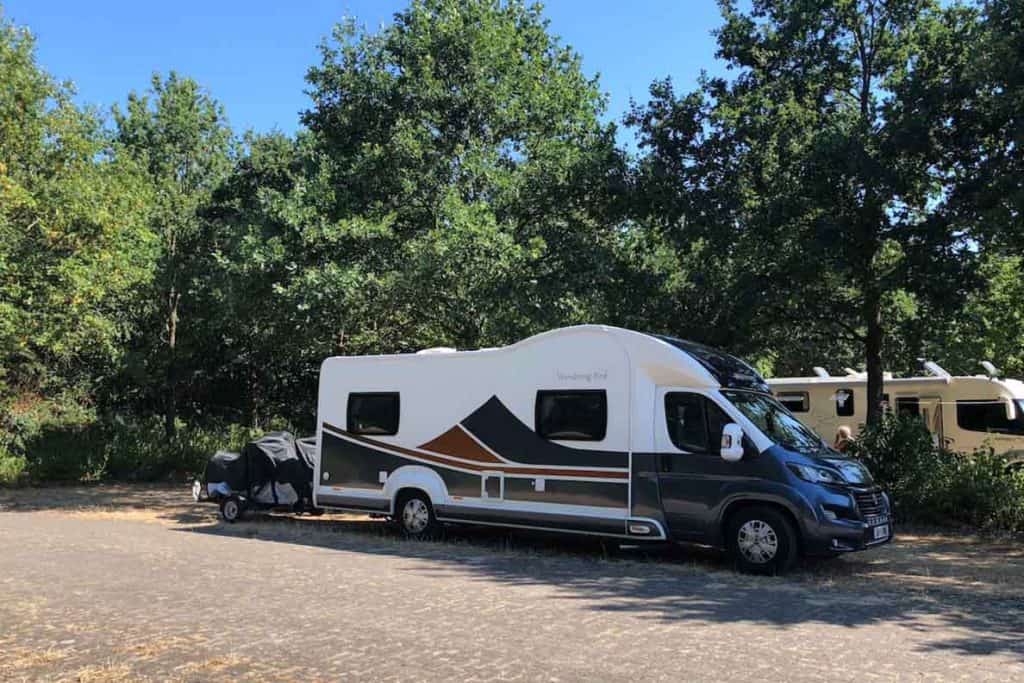
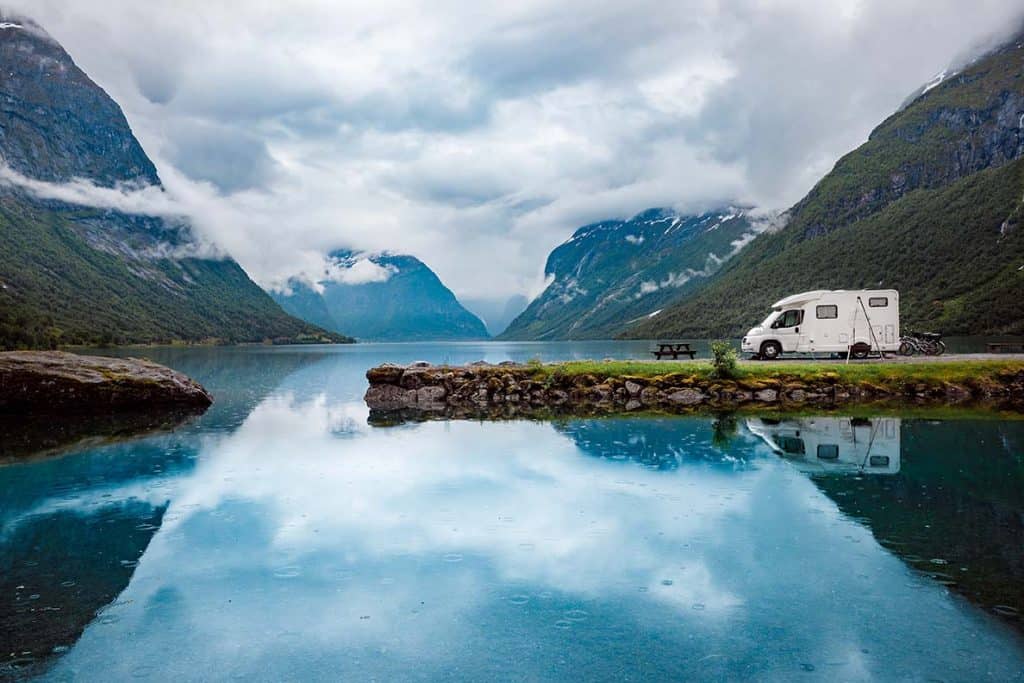
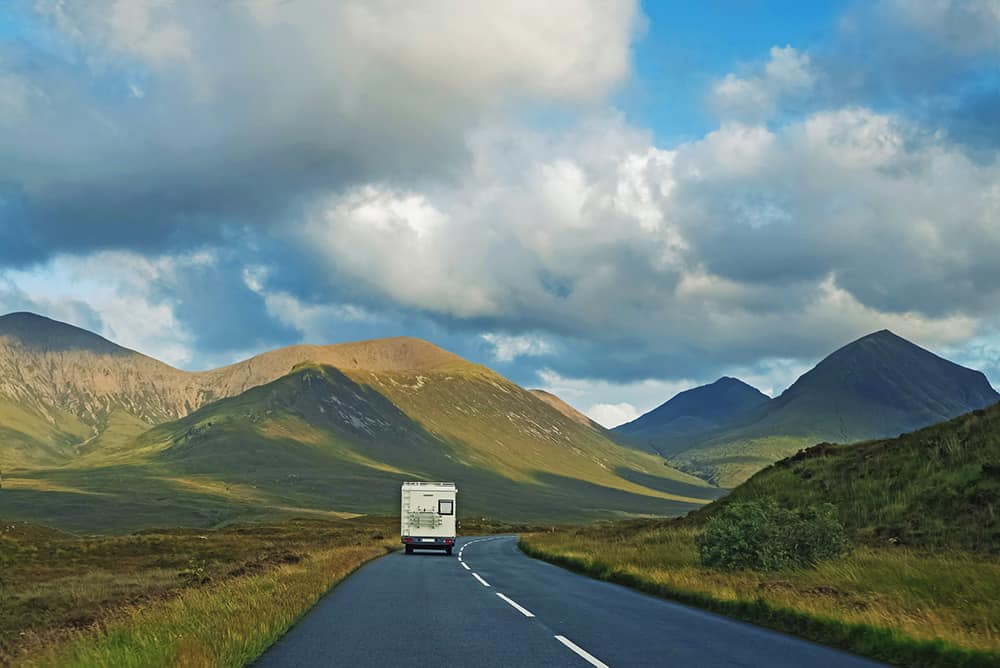
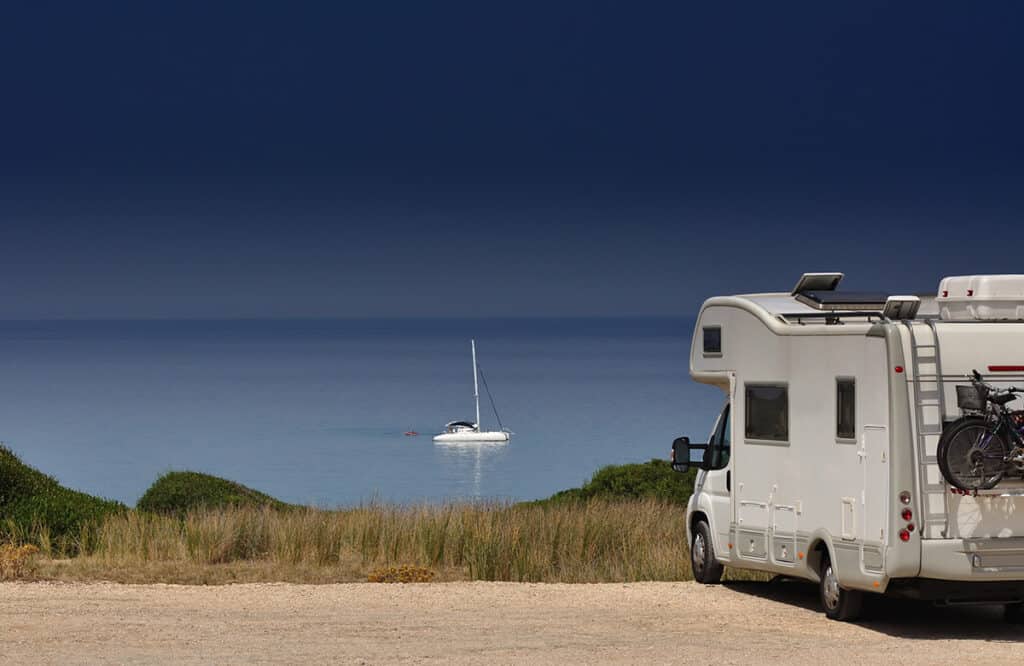
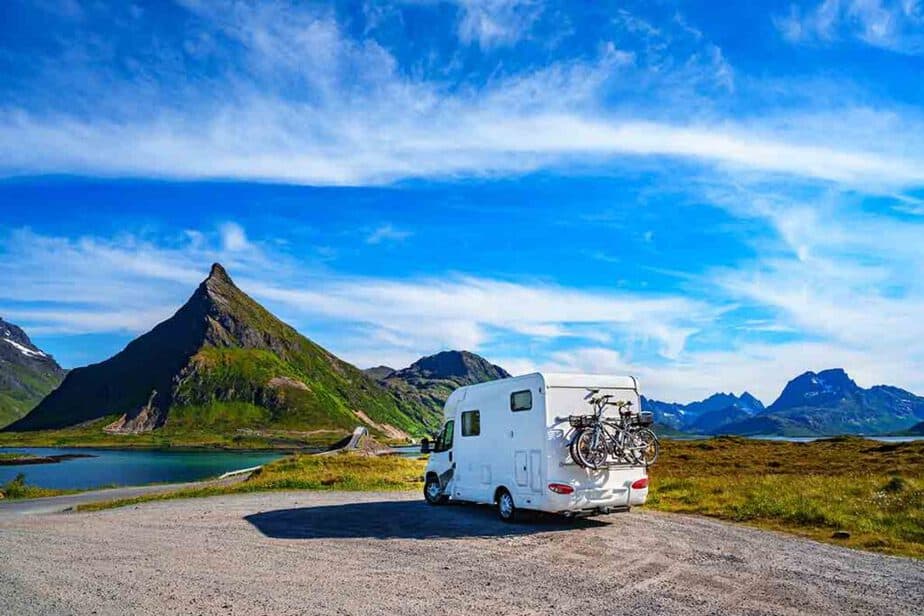
Want to tour Europe in a motorhome or campervan? Feeling a little overwhelmed and not sure where to start? Here’s everything you need, from what kit to pack, what paperwork you need to carry, how to prepare your van, European road trip itinerary ideas and tips for life on the road.
Don’t forget to grab your free Europe motorhoming checklist below.
*We work hard to make this the best motorhome travel blog and road trip website possible, full of helpful content for you. The website is supported by our readers, so if you buy through links on this site we may earn a commission- at no extra cost to you. All opinions remain our own.
If you find this post useful, you can also treat us to a coffee – we promise to enjoy it while creating more useful content like this- we might even indulge in a biscuit (or two!)
Touring Europe in a motorhome blog- our story
I remember the first time I took a motorhome to Europe. There were SO MANY rules and things to pack and what the heck are aires and how do I book one and what route should I take and do we need…
To say I was daunted was an understatement. Everywhere I looked for advice had totally contradicting information. I spent the first few days of our Europe road trip feeling exhausted and terrified that I’d forgotten something vitally important.
If you’re also feeling intimidated by the idea of travelling Europe in a motorhome, camper van or even a caravan, don’t panic. Since that first trip, I quit my job so we could explore Europe by motorhome as often as possible (let’s just not talk about 2020…)
I’ve travelled nearly 60,000 miles and visited 17 countries. I have made many MANY mistakes… but I’ve also learnt a lot about vanlife in Europe and what NOT to do. And I’m going to share that with you today.
I promise- it’s not as scary as it feels right now.
Today I’ll walk you through the various steps you need to take to plan your own motorhome road trip to Europe and, hopefully, you’ll feel much more confident by the end of it.
Don’t forget to grab your free printable Europe motorhome travel checklist, which will help you remember everything you need.
How to Tour Europe in a Motorhome, campervan or RV – where to start
Let’s start with the basics. Before you can head off to Europe in a motorhome, you need a motorhome or camper van! You can either buy one or hire one and there are pros/ cons to both.
TOP TIP: If you’re planning a 3 month or more trip to Europe, definitely buy a motorhome- it will be MUCH cheaper. Here’sour complete motorhome buyer’s guide to choosing the camper for you.
If you don’t already own a motorhome and are considering getting one, hiring a motorhome or campervan for at least a weekend, preferably a week, is the perfect way to know if motorhome life is for you, before you spend a lot of money on one.
Also, if you are looking to buy a motorhome for the first time, hiring one is a great way to learn what layouts work for you, what you like and dislike and what you’re looking for in your own vehicle.
Having said that, I bought my first motorhome with no experience and no planning and set off to tour around Europe after only 15 days… So do whatever feels right for you.
Motorhoming in Europe- 25 Essential things to know
Watch this video for 25 things you need to know about touring with a motorhome or campervan in Europe:
We hope you found the video useful. If you did, why not follow us on Youtube. We share new videos with tips for motorhoming and campervanning in the UK and Europe weekly, plus road trip ideas and epic destinations.
Motorhome Touring in Europe- where to stay?
Once you’ve got a vehicle to tour around Europe in, the next thing to consider is how do you want your trip to Europe to be and where are you going to camp/ park overnight?
Do you want to stay at a campsite with pitches for motorhomes, campervans and caravans which has loads of facilities and activities for the kids to do?
Deciding the type of holiday you want to have will make planning your motorhome trip a lot easier. Here’s a bit more information about the types of motorhome parking available in Europe to help you decide.
Motorhome campsites in Europe
Campsites in Europe are very similar to ones in the UK; you arrive, are given or can select a pitch with or without electric (depending on what you booked) and that’s it. Often, you will need to provide ID when you arrive and some places even keep hold of your passport while you stay.
Campsites often have great facilities- like swimming pools or a beach on a lake, watersports, play area, restaurants, fresh bread delivery, shop etc. Dogs are normally always welcome, but there isn’t always a dog walk/ run where they are allowed off lead.
One of the many incredible motorhome, campervan & caravan campsites in Europe
European motorhome travel in the school holidays- or not?
If you’re travelling in the school holidays, you’ll want to book up the campsite (if you’re using one) asap- the best ones get booked up months in advance.
If you’re NOT travelling during the school holidays, you might want to consider getting an ACSI camping card– you’ll save a lot of money on campsite charges.
Aires in Europe
For me, I prefer to travel around Europe in my motorhome and explore different places during my trips instead of staying in one area. I generally stay only one night in a place.
There are two types of motorhome overnight parking options instead of campsites. The first are approved Motorhome parking places, which are called Aires in France, Stellplatz in Germany and Sostas if you’re campervanning in Italy. They’re all pretty much exactly the same!
Motorhome Parking Tips for Aires
You cannot pre-book Aires- they operate on a first-come basis. I found people tended to move on about 10-11am and most were parked up by 4pm, so try and move within that window for the best chance of finding a space. When I toured Italy, I left a little earlier (around 9ish) and aimed to be parked for lunchtime-ish, which I think helped to get in where I wanted without problems.
I like aires, as I feel happier leaving my motorhome if I want to go off an explore, and don’t want to deal with the noise or expense of a European campsite.
You can find more on how to use aires and find motorhome parking around Europe here.
Wild camping with a motorhome or campervan in Europe
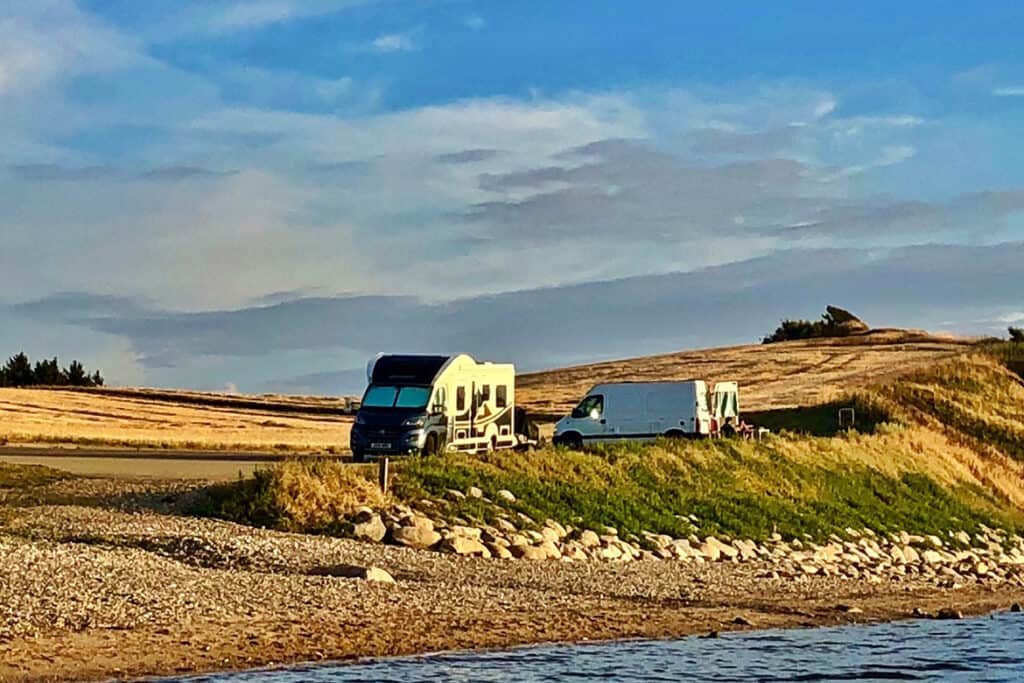
The other option for overnight motorhome stopovers in Europe is wild parking, which is staying somewhere that’s not an ‘approved’ place overnight and then moving on the next morning.
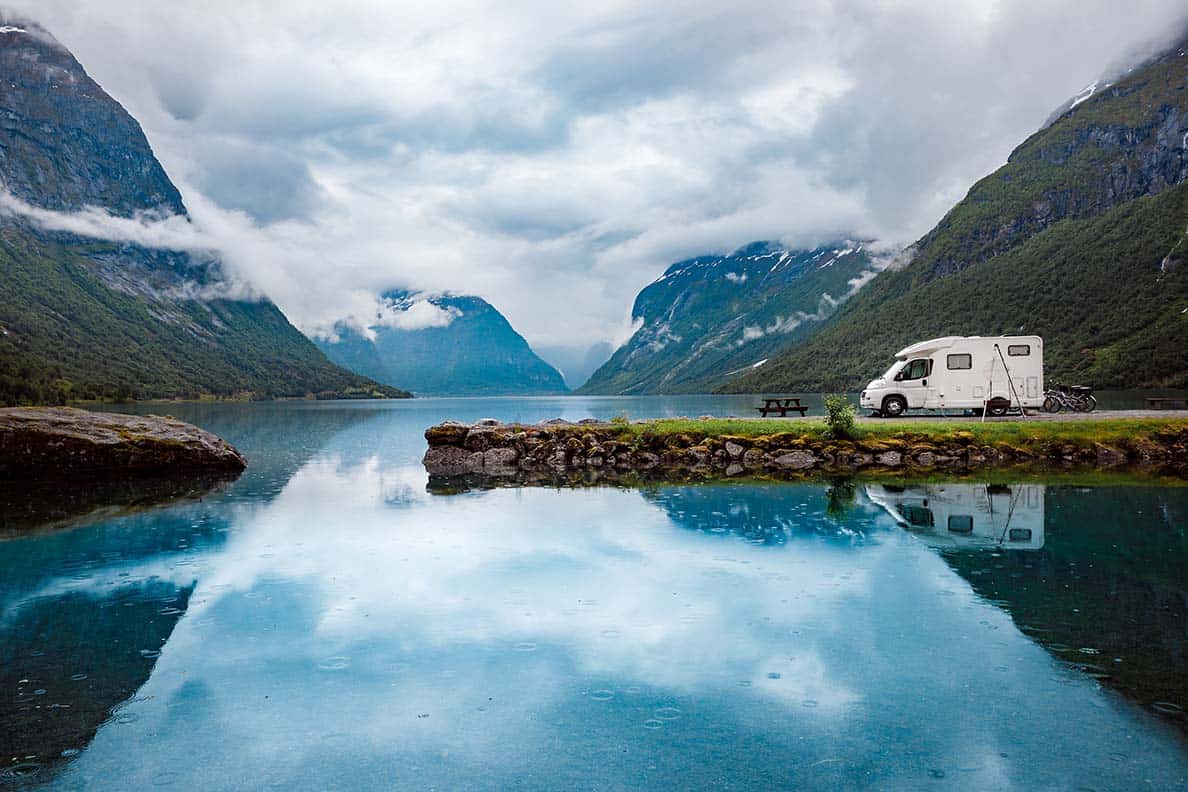
motorhome and campervan wild camping in Denmark, Europe
Rules for wild parking with a Motorhome in Europe
There are many different rules and different stories about motorhome wild parking across Europe. Wild parking is technically illegal in many countries, such as Switzerland – but I’ve stayed off-grid in my motorhome hundreds of times without any trouble at all. Heck, it was a night wild camping in the Alps in Switzerland in our motorhome which made me decide to change my life and go motorhome travelling (almost!) full-time!
Wild parking in France in a motorhome or campervan is tolerated, as long as you’re not near the coast or in a restricted area. Find out more about motorhome wild camping in France.
My advice is to research the rules for the country you’re visiting, and then check out Park4night. Don’t park if it says ‘No Overnight Parking’. Also, always trust your gut. If you’re not sure and not happy, move on to an approved Motorhome stop point, so you can get a good nights sleep without worrying about being woken up for parking illegally.
You can find everything you need to know about how to wild camp with a motorhome or campervan here.
How to find free/ cheap Motorhome Parking spots in Europe
So, HOW do I find these overnight stopovers in vans in Europe? There are three apps I use. They’re all great but work in slightly different ways.
Park4night
Park4night is what I mainly use when motorhome touring in Europe- and it is BRILLIANT. It’s both an app and a website- I tend to use the app most while travelling. There is a small annual fee but it’s well worth paying for.
This is how I use it:
Drive to somewhere I want to explore- or a place en-route if I’ve got a long route planned.
As I get closer, open up the app on my iPad or laptop (read more about getting internet in a motorhome)
Put in the area you are heading for into Park4night and filter your options.
Look at photos and comments to remove any with bad reviews, or which are too small for your motorhome to fit into.
Check to make sure the place is open! A lot of places close between Oct- Apr.
Then I tend to go on gut feel. I might have two or three options at this point but if I’m honest I’ll know which one of those three I like the idea of most, and that’s the one I head for first. If I get there and it’s full/ closed/ turned into a building site (has happened twice to us!!) then I have other options I can fall back on and I can head to those next.
I use Park4night as it tends to have the most options for places to stay in Europe. However, there are some other good choices too.
Planning to take your motorhome to Europe?
Camper contact
Camper Contact works in a very similar way to Park4night, however, the BIG thing it offers which I love is you can remove all parking spaces which aren’t suitable for longer motorhomes. I love this feature if you want to make absolutely sure it’s suitable for a longer vehicle.
Camper contact is free on the website but the app requires payment, which is another reason we prefer Park4night.
Searchforsites
Search for sites is another motorhome parking app but is better for in the UK. Again, it’s a really useful site and well worth checking as occasionally there are different places on here than on the other two. Pretty much all the reviews on here seem to be in English, which can help when you want to read what people thought!
Between the three of these motorhome parking apps, I’ve travelled around Europe without any problems. Once, in Italy in August, a preferred Aire was full, so I had to move on elsewhere and a few times the place I’ve been heading for no longer exists!
If you find out of date information, please take the time to update the app so other motorhomers don’t do the same thing. They are all great resources and, without them, motorhome road trips in Europe wouldn’t be nearly so easy.
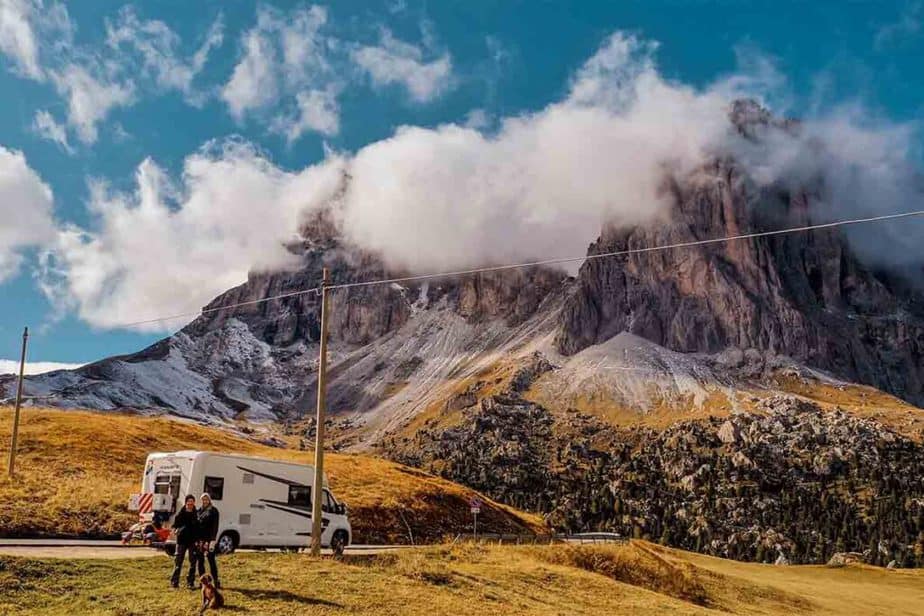
Touring Europe in our Motorhome- the Italian Dolomites
Other parking schemes in Europe
In Europe, there are several schemes similar to Britstops as a great source of free overnight parking stops for motorhomes. In France, France Passion is a similar set-up, and there are others around Europe.
You can find a list of all the motorhome overnight parking schemes and how to find them here.
Motorhome Route Planning for Europe trips
Once you’ve decided where you’re staying, you can start planning a motorhome route in Europe. Obviously, if you’re just travelling to one campsite and back again, then the route will be fairly straightforward.
However, if you’re planning to use aires or going off grid, then you can decide where you want to visit, what you want to see and if you’re going to be using toll roads or not.
You can grab our free road trip planner and use that to help you plan your route and things to do.
The other thing you’ll need to plan is how you’re going to get to Europe. If you’re in the UK, will you take the ferry or use Eurotunnel? There are pros and cons of both but it’s worth deciding quickly so you can book in advance and hopefully save some money.
TOP TIP: If you want some ideas for where to visit, here are some of the best Europe road trip itineraries for motorhomes and campervans.
Tolls in Europe
Many people are concerned about tolls in Europe and like to plan their routes to avoid them. There are pros and cons to this. Tolls occur in nearly every European country which doesn’t insist on a vignette. If you’re motorhoming in Germany you can enjoy some free autobahns (same if you’re motorhoming in Holland.)
When you plan a route in a country without a vignette, you have two options:
The quick way (which uses tolls roads when necessary)
The cheap way (which doesn’t!)
There is no right answer- it’s whatever’s best for you. If you only have a week for your motorhome holiday, many people will want to get to their destination asap, which means using toll roads.
If you have more time, you may want to save money and take the slower, but usually prettier, back roads. Do whatever’s right for you.
If you want to get an idea on how much a toll route might cost, use the website https://www.viamichelin.com/
This site will tell you the approximate driving costs for your trip, both in fuel consumption and tolls. The fuel setting is annoying as you can’t select for a motorhome/ camper, although you can select the appropriate mpg, but the toll charges & vignette costs (as long as your motorhome is under 3.5 tonnes and 3m tall,) are very accurate.
Motorhoming in Europe- paperwork you need to carry
So, you’ve got a vehicle, a plan for overnight stays and the beginnings of a route. Now it’s time for the paperwork you need to carry, both for your motorhome/ campervan and also for you.
Nobody likes this bit, because it’s pretty boring, but it’s also essential. I’ve been stopped twice, both times in France and both times near the ferry at Caen. The police seem to love waiting there and pouncing on Motorhomers and campervanners who might have forgotten something.
In France, fines for speeding or incorrect paperwork must be paid in cash on the spot, or else you’ll be escorted to the nearest police station- not the most welcoming start to your holiday! However, if you have all the following, there’s nothing they can do except wish you a ‘bonne journee’ and see you on your merry way.
READ MORE: Essential advice for motorhome touring in France
Complete list of paperwork needed to tour Europe in a motorhome
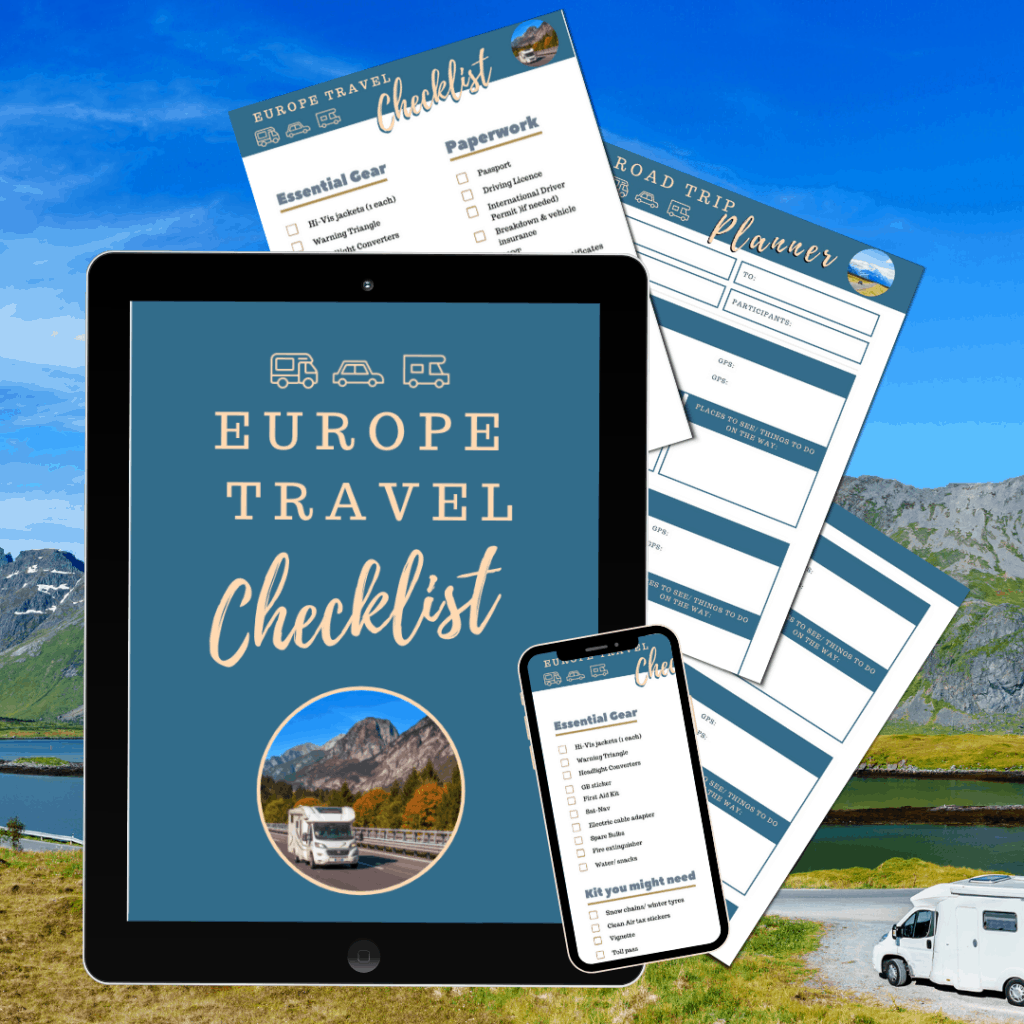
Here are your next steps for paperwork and staying organised (don’t forget you can download our FREE Europe motorhome travel checklist to keep organised)
Want to head to Europe with your motorhome?
Grab your FREE (printable) checklist and discover 25 things you NEED to take with you when you travel in Europe. Make your life easier today.
Motorhome Insurance
You need motorhome insurance which covers travel in Europe (and other places like Morocco if you’re planning to venture further afield). You also might want to get Breakdown cover which includes recovery to Home- just in case the worst happens. Bring your original certificate with you, not a photocopy.
Health Insurance
The rules for health cover for UK residents in Europe have changed after BREXIT. You now MUST have travel insurance. Make sure you read the conditions carefully- many ‘cheap’ policies don’t cover you for more than a week or two at a time, so if you’re planning on going away for longer you’ll need to find an appropriate insurer. Ideally, get repatriation cover to the UK- just in case.
Europe Motorhome Travel- Essential items you need to carry
Unlike in the UK, there are some things you legally NEED to carry in your motorhome, campervan or car when you’re touring Europe. These essentials Europe travel accessories include:
stika.co Road Legal UK Unit…Shop on AmazonRing Automotive RCT1 9 Piec…Shop on AmazonAA High Visibility Fluoresc…Shop on AmazonAA Car Headlamp Headlight B…Shop on Amazon
Useful kit for travelling Europe in a Motorhome or camper
Assuming your van is already packed with these essential motorhome accessories, there are a couple of things which will make your life easier when touring Europe in a camper.
Motorhome Wi-Fi
Is wifi in a motorhome an essential? For us it is- we work from the road, so we need a reliable way to contact the outside world (and upload blog posts like this!) Our life just wouldn’t work if we didn’t have a decent Internet connection.
For years, we had a wifi dongle in our motorhome and, quite seriously, it’s BRILLIANT. We’ve travelled all around Western Europe and it didn’t let us down once. Oh ok, it’s failed to get a signal just once and we were parked on the top of a mountain in the Swiss Alps at the time- I’m not sure I can blame it for that!!
We use data SIMS with Vodafone, 3 and EE and we find EE and 3 to have the best coverage across Europe. You can buy Prepaid SIM cards of data from Amazon (like this one) or take out a monthly contract (which is what we did)
More recently, we’ve installed this internet system in our van and it has been equally good, although we haven’t been able to travel much to really test it out.
TP-Link 4G Cat4 LTE Travel …Shop on Amazon
Data Roaming in Europe
If you are travelling outside your home country, you need to make sure that data roaming is enabled on your phone AND that you have a plan which allows you to use data in other countries cheaply.
You will also need to know how to avoid paying high charges for data roaming in Europe.
Also, be aware that the data limit you have at home will probably NOT be the same as your allowance abroad- so be cautious with how much you use. It’s hard to track data usage, but things like using maps, watching TV in your motorhome, streaming videos or putting photos on Facebook can all use up a LOT of data very quickly.
Touring Europe in a Motorhome- wild camping in Germany
Sat-Nav
I highly recommend investing in a proper motorhome sat-nav before your start driving around Europe, especially if you have a larger motorhome, RV or campervan. You want something you can put your vehicle dimensions into and be able to avoid narrow roads, low bridges or weak crossings.
Here are some of the best motorhome and campervan sat-nav systems on the market- have a look and make sure you know how to use it before you set off.
Never, ever rely entirely on the sat-nav; keep an eye out for road signs and height restrictions as well. I also use my personal iPad or phone to find an alternative route should I hit a traffic jam- both of those have ‘traffic’ setting enabled on them so I can see where the traffic is and how to get around it.
I often end up navigating my motorhome down tiny country lanes in the middle of nowhere- after all, it’s not a proper adventure unless there’s grass growing in the middle of the road!
Also, be careful where you mount your sat nav, especially if you’re using an ipad. Many countries now say it’s illegal to have the satnav mounted on the windscreen or blocking the driver’s view.
Campervanning in Europe – POWER!!!!
One of the joys of touring Europe in a Motorhome is the freedom that you can find on the continent which you just can’t get in the UK. Being able to stay off-grid in my van gives me that freedom. But, in order to do that, I need to manage my motorhome power requirements.
Inverter
The solution to this is an inverter (and possibly a power pack, depending on how power-hungry you are!)
I charge as much as I possibly can whilst I am driving the motorhome. I do this by running the invertor as I drive. The inverter is connected directly to the motorhome leisure battery and then I added a 2-plug extension lead, which allows us to charge our laptops on a drive, saving our precious battery power while we’re camped.
I fitted and love these invertors but there are many other options out there if you need a different size/ power output.
Motorhome Europe Travel- use motorhome parking apps to find some incredible places to stay!
Generator
I didn’t want a generator on our motorhome. I didn’t want to be THAT van with the generator going all evening, ruining everyone else’s peace and quiet. But, as my husband said, if we’re going to camp in the middle of nowhere for days at a time, we need an alternative power source ‘just in case’.
We’ve agreed that we will NEVER use it except in an emergency or for servicing, and we did a lot of research to find the best one for us in terms of noise levels and size.
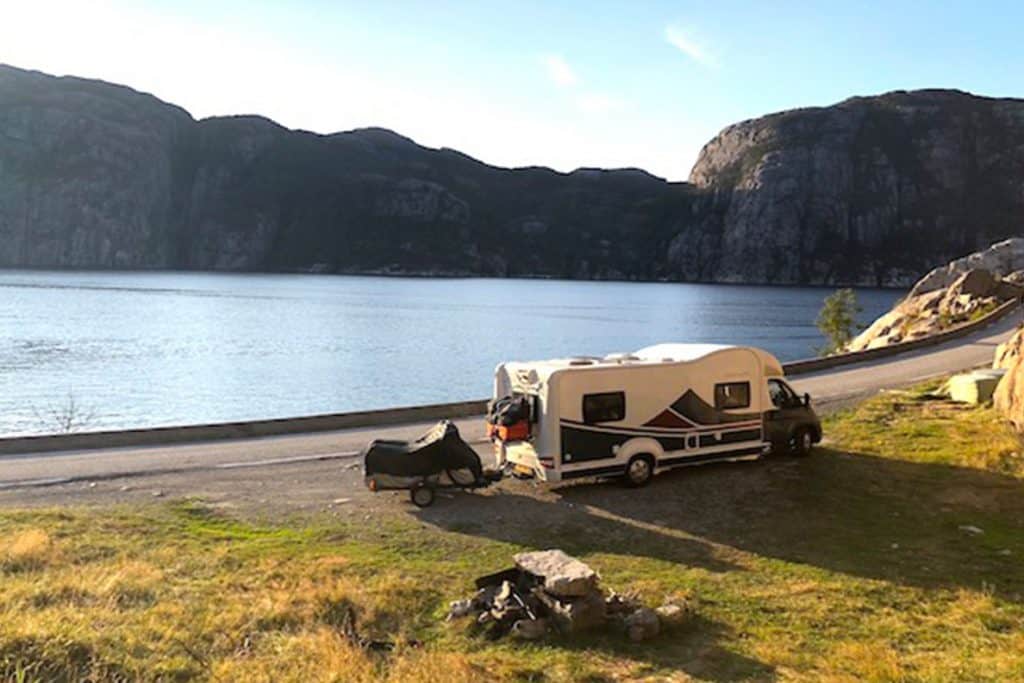
We’ve used it several times of the past couple of years, including while touring Norway and Austria. We’re really impressed at how quiet it is and how well it works even after months of not being started!
12v Hairdryer
Whilst we’re on the subject of power, both Jade (my daughter) and I have long hair. We love letting it air dry on hot summer days, but if we’re motorhoming in winter it’s essential for us to have a hairdryer.
RELATED: Planning winter motorhome living or a trip? Read this first…
Believe it or not, we actually carry TWO hairdryers onboard (much to my husband’s ‘delight’…)
One is a good, powerful but lowish wattage one we use when we have electric hookup, and the other is a 12v one, which plugs into a cigarette lighter socket in the cab. Honestly, it’s not the best hairdryer we’ve ever tried, but better than nothing on a cold winter’s day.
Alternatively, a rechargeable hairdryer.
Solar Panel
I do have a solar panel onboard my motorhome- I believe it’s an essential motorhome wild camping accessory.It keeps the battery topped up whilst I’m camping and allows me to stay off-grid for a little while longer- at least if it’s sunny!
How to Tour Europe in a Motorhome- us wild camping in Austria!
Gas
One of my very first motorhome trips to Europe almost ended after 2 days due to…err… gas. Or rather, a lack of it and an inability to get any more! There are some important lessons I learned and things you need to know about how to find LPG (gas) in Europe.
To combat that ever happening again (we hope!!), I fitted Gaslow refillable bottles. These went easily into my existing motorhome gas locker and were able to self fit them. Filling took a little while to figure out- turns out you need to TWIST the nozzle clockwise, but so far, so good! I’ve now had these installed for over a year and wouldn’t switch back- refillable gas is SO MUCH cheaper and easier while travelling Europe in a motorhome.
Planning to take your motorhome to Europe?
Motorhome Touring in Europe – Other items which might be useful
ACSI card
ACSI is a scheme you can buy a membership to (like a motorhome club), which then gives you massive discounts on campsites for motorhomes, campervans, RVs and Caravans- as long as you travel outside the peak seasons.
Toll Pass
I LOVE the European toll pass. It’s sooooooo satisfying being able to sweep past all the huge queues at some of the tolls and go through the automated toll pass lane in France. It also works if you’re motorhome touring in Spain & Portugal. The best bit is not having to worry to find the change at each toll- it just sends you a bill at the end of the month which is paid automatically by Direct Debit so its one less thing I need to worry about!
I bought ours at Sanef Tolling, although they have now changed their name to Emovis-tag.
Tyres & Snow chains
If you are planning to go motorhome skiing or tour Europe in a motorhome in the Winter, think about your tyres and snow chains. It’s compulsory in most countries with Mountains (France, Germany etc) to have winter tyres fitted and to carry snow chains which will fit onto your tyres. This is usually enforced between 01 November and 15 April. This list by the AA gives a great guide for you.
Red and White reflective warning backboard for motorhomes/ campers
If you have anything extending past the back of your motorhome/ camper (like a bike rack or a tow bar), you MUST have a red and white striped backboard on the back. Make sure it’s the aluminium one, not the cheap version- the cheap version is not legal in Italy.
Travelling Europe in a Motorhome or campervan- Safety
Here are some important things to know about travelling in Europe
Emergencies
112 can be dialled anywhere in Europe in an emergency, accident or distress situation.
Security and theft
I have several things I do to protect my vehicle and possessions whilst travelling. I also have several things I do to safeguard myself if I’m back in the UK preparing for my next trip. Be sure to grab our FREE guide to motorhome security.
I have been lucky to have never been the target of theft, but it does happen. Most thefts are opportunistic- if you leave something outside unattended there’s a chance it will be taken- just like in the UK. Also, if you park in busy, built-up areas, there is more chance of ‘unsavoury types’ spotting the van and taking their chances- just like in the UK.
I strongly believe that touring Europe in your motorhome is no more dangerous than touring in the UK, but common sense should be used. I’ve chosen to fit an additional motorhome door lock which can be locked from both the outside and the inside.
Want to head to Europe with your motorhome?
Grab your FREE (printable) checklist and discover 25 things you NEED to take with you when you travel in Europe. Make your life easier today.
Euros
Try and get your Euros in advance as you’ll get a better rate than if you use the ferry/ tunnel. You can get money out of cash machines abroad- but, of course, there are charges for that.
Also, don’t forget that not every country in Europe uses Euros. Here are some popular ones which might catch you out!
Bulgaria – Lev
Croatia – Euro (formally Kuna)
Czech Republic – Kurona
Denmark – Krone
Hungary – Forint
Norway- Krone (See how expensive our trip to Norway was!)
Poland – Zloty
Romania – Leu
Switzerland – Swiss Franc
There are others in the East as well- make sure you check in advance- but nearly everywhere has a cash machine so you can always get money out if you need to.
Spare Keys
I think it’s sensible to carry a spare set of keys for the motorhome with me. I hope I will never need them, but a spare set is going to be completely useless sitting back in the UK. So I decided to bring them with me and keep them well out of the way.
Medication
Make sure you’re carrying enough Medication for you and any pets you have. We always carry a little more than necessary- just in case! Be prepared to explain your medication and prove what it is with a doctor’s note or something similar- just in case customs question you.
Mobile Phones
Using a phone whilst driving is illegal in many countries. It is also illegal in some countries (such as France) to use a headset with an earbud whilst driving. Your phone must be completely hands-free.
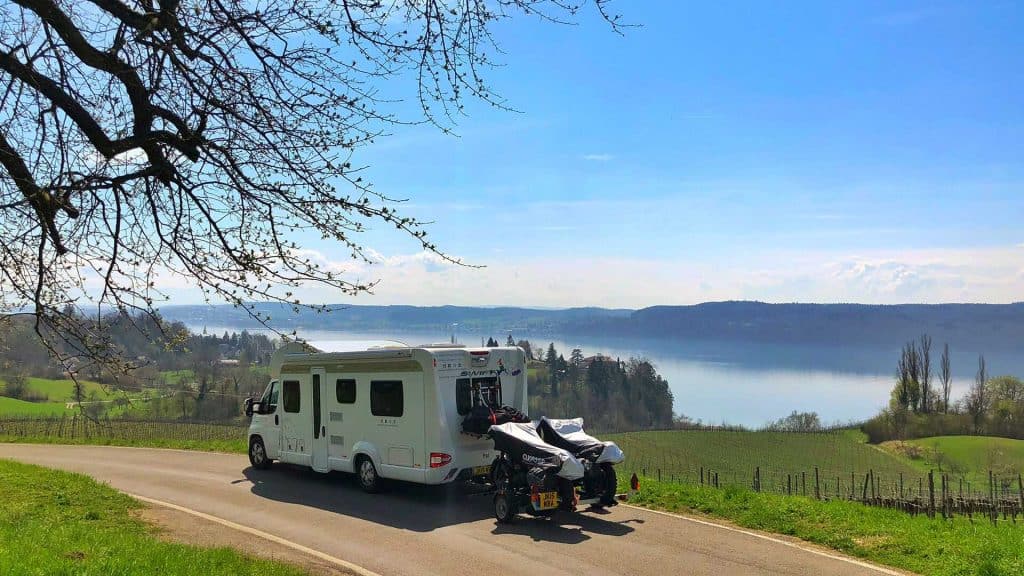
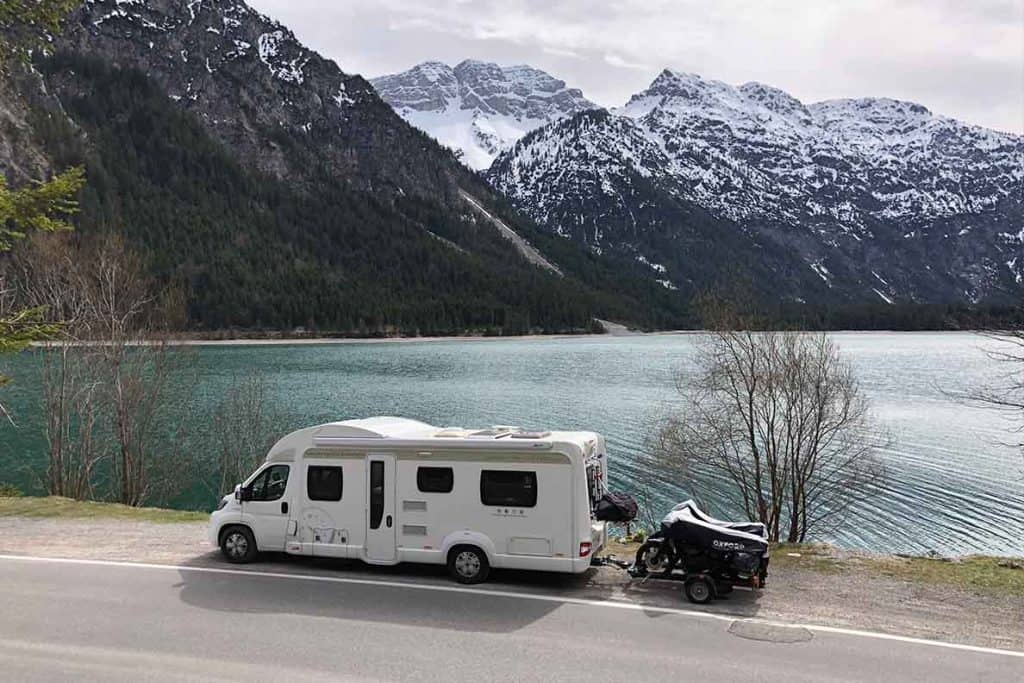
Travelling Europe by Motorhome- and staying in some stunning places!
Driving in Europe- what to do in the event of a road traffic accident
You should have a European Claim Form provided by your insurer before you leave. In the event of an accident, all parties complete and sign the form at the scene and then send a copy to your insurer for assessment.
What to do at the scene:
Stop your vehicle immediately but safely- out of the flow of traffic if possible.
If a vehicle is blocking the road, use hazard lights and put the red warning triangle 30 metres from the scene to warn approaching traffic
Exchange your details with the other involved parties. Be sure to get:
Name and address of all the people involved in the accident
Vehicle registration numbers of all parties
Insurance company details of all parties
Take photos of damage using a camera, GoPro or phone
For more details, read our step-by-step guide on dealing with a road traffic accident in Europe
Motorhoming in Europe- Other Things to know
Sidelights must be switched on in the following countries at ALL times: Croatia, Denmark, Italy, Norway, Sweden & Switzerland
Daytime lights MUST be switched on for Motorbikes at ALL times in all conditions in ALL countries. Ours are wired so they automatically come on with the engine- saves us forgetting!
On-the-spot fines are common in all countries, although if you’re campervanning in Ireland the Police are not authorised to collect fines. Some places, like Croatia, give you 8 days to pay. Other places, such as if you go touring in Portugal, equip their police officers with an ATM to ensure fines are paid immediately!!
Be careful of low-emission zones and areas which require a congestion charge or something similar, such as Paris and London. These places are often clearly signed but it can be worth Googling requirements before you visit an area. Also, don’t forget you need a Vignette for Motorways/ toll roads in Switzerland and Austria. For a complete list of rules in each country, here’s the AA.
Free Motorhome Parking in Europe
Touring Europe in a Motorhome – Final thoughts
Phew!!! There is a LOT of information in this post- and at first glance it can be overwhelming. None of it is ‘difficult’, but it will take up a bit of your time as you get it all organised. Here are some final tips to help you make the most of your big adventure!!
Driving on the right is not as terrifying as it seems! Don’t forget- all the roads are set up for it- you don’t have to remember to go around the roundabout the wrong way- it naturally happens as that’s the way the road system works.
Learn a little of the language. In France, Germany, Belgium and Holland, English is widely spoken, but they love it if you make an effort. After al, you are in their country and if you show a little respect to them they will really help you when you need it.
Accept that you are a tourist- you will make mistakes and probably look like an idiot. But that’s part of the fun of travelling!
Learn to ‘slow travel’- travelling by van is about the journey as much as the destination. This can be hard when you’re on a tight schedule, but try not to overbook your time so much that you can’t relax a little or explore random things that you find along the way- like an ice cave we randomly found in France…??!!
Having said that, do a little research as you travel so you don’t miss some amazing places. We like to pick an area and then Google it to see what great adventures are waiting for us.
New to motorhome or camper travel in Europe? You might find these posts helpful:
How to tour Europe in a Motorhome- step-by-step
How to plan EPIC motorhome trips
How to find Free motorhome parking and overnight stopovers in Europe for motorhomes and campervans
Essential kit for Motorhoming in Europe (with free checklist)
See all our Europe motorhoming posts here
NEED GEAR? If you need any kit or essentials for motorhoming in Europe, here’s what we recommend and where to find it
I hope you have the BEST adventures- be sure to tag me in your posts and show me where you end up! Let me know what you think of the guide in the comments below- I’d love to hear your thoughts.
Want to save this list for later? Here’s the pin. Enjoyed this post? We’d love it if you shared it on Facebook, Twitter or Pinterest. Thank you!
Last update on 2025-03-20 / Affiliate links / Images from Amazon Product Advertising API
Moving into a luxury estate is more than just a change of address — it’s a transition into a refined lifestyle. However, the process of relocating high-end possessions, securing a new home and ensuring a seamless move requires careful planning.
From handling fine art collections to customising interiors, an organised and strategic approach can make the transition effortless and stress-free. In this guide, LUXUO explores how to move into your dream estate with sophistication and ease.
Planning for a Seamless Move
The key to a smooth transition is meticulous planning. Luxury estates often include bespoke furnishings, delicate antiques and custom interiors that require special attention. Working with specialised moving professionals who understand the nuances of high-end relocations can help ensure that every item is transported safely and efficiently. Many homeowners moving long distances opt for cross country moving companies to manage the logistics of their relocation. Consider the following steps for a seamless move:
Hire Experts in High-Value Transport – Select movers experienced in handling fine art, vintage furniture, and designer pieces.
Schedule Your Move Strategically – Plan the relocation during optimal weather conditions and off-peak moving seasons.
Conduct a Home Inventory – Document all valuables and coordinate with insurers to ensure adequate coverage during the move.
Ensuring the Security of Your Assets
Relocating to a luxury estate requires extra security measures to protect valuable belongings. High-net-worth individuals often require discreet and private moving services to maintain confidentiality. Whether using local specialists or cross-country moving services for long-distance relocations, security should always be a priority. Consider these security measures:
Secure Private Transportation – Use GPS-monitored vehicles and vetted moving personnel for added security.
Implement Smart Home Technology – Upgrade your new estate with advanced security systems before moving in.
Work with Trusted Professionals – Ensure all service providers, from movers to interior designers, are reputable and experienced in high-end projects.
Personalising Your New Space
Once you arrive at your new estate, personalising the space is the next step to creating a home that reflects your taste and lifestyle. Luxury home transitions often include renovations, interior design updates and landscaping improvements. Work with experts in estate management to:
Curate Your Interiors Thoughtfully – Blend existing furnishings with new acquisitions to maintain aesthetic harmony.
Enhance Your Outdoor Spaces – Design gardens, pools, and terraces to complement your estate’s architecture.
Incorporate Smart Home Features – Automate lighting, climate control, and security for a seamless living experience.
Settling in with Ease
A well-planned move doesn’t end on moving day. Settling into your new estate should be a refined and effortless experience. Hiring a personal concierge service can help manage household tasks, from unpacking to organising events. Additionally, joining elite social clubs or engaging with the local community can help integrate into your new surroundings with sophistication.
Conclusion
Moving into a luxury estate is a transformative experience that requires careful planning and a sophisticated approach. By working with trusted professionals, securing your assets, and customizing your new home, you can transition effortlessly into an elevated lifestyle. With attention to detail and the right support, your move can be as seamless and refined as the home you are stepping into.
For more on the latest in luxury property reads, click here.
In 2022, McLaren Special Operations introduced the SLR HDK, a limited edition of the iconic SLR McLaren inspired by the 722 GT race car. Only 12 cars were planned at the time, one of which resides in Manny Khoshbin’s garage.
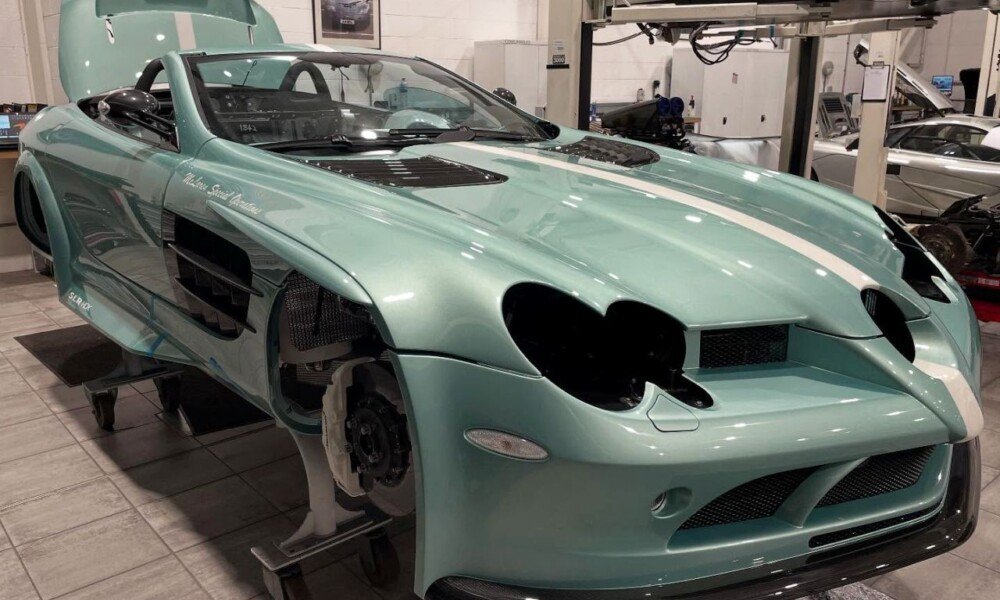
Images of yet another SLR HDK have surfaced online. This one is even more special, as it’s the first McLaren SLR Roadster HDK.
As is the case with most MSO creations, the SLR Roadster HDK has a unique spec. It appears to be a light shade of green with a metallic finish, with a white stripe running along the centre of the car. There are carbon fibre vents on the bonnet, a carbon splitter and mirrors. The iconic side gills are also made from carbon fibre.
The “McLaren Special Operations” script can be seen on the front fenders, while “SLR HDK” is mentioned on the rocker panels. Other details include white brake calipers and what appears to be an instrument binnacle painted in the exterior colour.
The world’s first SLR Roadster HDK is still at the MSO facility in London. It is expected to be revealed to the public sometime this year.
A Bugatti Bolide is headed to Australia. Commissioned by businessman Laurence Escalante, it will be part of the Lee Collection based in Perth, Western Australia.
Chassis number 005, is the second new Bugatti hypercar to be shipped to the land down under after the Chiron Super Sport Vader, and also the second Bolide in the southern hemisphere. It is finished in brown carbon with copper accents and has a Gaucho Tan leather interior.
The Bolide is the most track-focused Bugatti hypercar ever made, and the ultimate track toy. Only 40 examples are being built for collectors around the world, each with a base price of $4 million.
The Bolide is powered by an 8.0-liter W16 engine that generates 1577 hp and 1180 lb-ft of torque. The car weighs just 1450 kg (dry), which gives it a power-to-weight ratio of more than 1100 hp per tonne.
The Bugatti Bolide made its Australian debut last month at the 2025 Repco Adelaide Motorsport Festival.
Each time I travel to Japan, I feel the same level of excitement I experienced during my first visit nearly 10 years ago. The adrenaline rush of walking below sparkling sky-high buildings, the kitschy cafes and sleek Michelin-starred restaurants, and the charming quirkiness of the must-see Samurai Restaurant Time show have given me some of my best travel memories. And although cities like Tokyo and Kyoto see the largest surge of travelers during springtime for cherry blossom (or sakura) season, the crowds don’t deter me from witnessing their magnificent bloom each year.
In a few weeks, I’ll be returning for my annual visit, this time staying at the Andaz Tokyo Toranomon Hills. I’ll be armed with an airtight itinerary to see as much of the metropolis of Tokyo as I can: a rooftop sakura mixology class, omakase at Sushi M where fish is sliced with surgical precision, and walking through my favorite bookstore in the world, Daikanyama T-Site. Over the years, I’ve learned that comfortable walking shoes, lightweight rain gear, and a backup outer layer are necessary for springtime in Japan (as is a fabulous outfit to enjoy the country’s nightlife). But the list doesn’t stop there. Keep scrolling for my other must-have spring Japan travel essentials so you’re ready for anything.
Muji Passport Case With Pocket
Amazon
Known for its minimalist and functional aesthetic, Japanese retailer Muji is a brand I fell in love with years ago. However, I recently discovered its passport case holder, which is perfect for international airport travel and hotel check-ins when you need fast access to important documents and credit cards. The zippered accessory comes with three clear pouch refills, and the inside is made with a six-hole punch design that allows you to customize inserts that can hold items like money, receipts, and tickets issued for train travel throughout Japan.
Monos Metro Mini Crossbody
Monos
Long days of exploration are easier with bags that don’t require you to remember you have them on. The Metro Mini Crossbody from Monos is a lightweight, on-the-go companion that I never leave home without when I travel. Made from soft, water-resistant vegan leather, the bag includes an open interior compartment with a passport pocket, two card slots for secure storage, and a back pocket on its exterior.
Fun fact: The brand name Monos is inspired by the Japanese concept of mono no aware, which encourages seeing the beauty of fleeting moments. I feel this core sentiment every time I see the cherry blossoms in Japan, knowing how incredibly transient their bloom is makes me appreciate their beauty even more.
Bestek Japan Travel Adaptor
Amazon
I’ve had many travel moments that included a near-dead phone and no adaptor to change the course of things. Avoid my mistakes and pack this travel plug from Bestek, which is compatible with outlets in Japan. Additionally, it’s compact and lightweight, and will come in handy when it’s time to charge your phone, camera, or tablet.
Hoka Clifton 9 Running Shoe
Hoka
Long walking days call for ultra-supportive shoes, which is what led me to the Hoka Clifton 9s. Past shoes from top brands left me with foot pain on travel days, but this style offers the perfect amount of comfort and cushioning to keep me on my feet without any problems. In fact, this iteration is a lighter and more cushioned version, with a level of support and shock absorption that ensures your feet are not aching after a day of sightseeing. The knit exterior encourages great foot breathability too.
Naturalizer Connie Slingback Flats
Zappos
And speaking of shoes, a dressy pair most certainly deserves a spot on your packing list so you can match the dress code of Tokyo’s stunning restaurants — whether you’ve made a reservation at the Michelin-starred restaurant est or The Pizza Bar on 38th. After all, Japan has some of the finest dining and bar experiences in the world, so a pair of comfortable yet chic shoes will definitely be useful.
When the itinerary calls for fancy, I like to break out my kitten-heeled Franco Sarto Marlina Mules but you can achieve the same level of elegance and support with the Naturalizer Connie Slingback Flats, which are currently on sale.
Veektomx Portable Charger
Amazon
Prevent the dreaded moment of a dead phone while traveling with this portable charger from Veektomx. Three integrated cables, allow you to charge multiple devices at once with a power bank that fully recharges in just under five hours. An extra perk includes a detachable wrist strap for hands-free convenience. I have my eye on a few exciting tours with Deeper Japan, including a visit back to the famous Toyosu fish market with a sushi chef and samurai sword masterclass that I know I’ll need a full battery charge for to capture pictures.
Gap 100% Cotton Cropped V-neck Cardigan
GAP
As spring temperatures in cities like Tokyo and Kyoto can easily teeter between cold and warm, having a cardigan handy is important. This pick from Gap is made with 100 percent cotton and has a stylish cropped V-neck that makes it good layering for (or showing off your favorite necklace). The cropped fit is great to pair with high-waisted pants or a skirt like this timeless bubble silhouette option from Garnet Hill that I’m currently swooning over and eyeing for my next purchase.
Quince 100% European Linen Wide-leg Pants
Quince
There is always that pair of pants that you wear more than once when you travel for the sheer comfort that they provide. For me, it’s these pants from Quince with their pajama-like comfort made from the brand’s soft linen fabric. The wide-leg shape and elastic waistband give you room to move, and the two front and back pockets make storage easy.
REI Flash Stretch Rain Jacket
REI
Japan gets its fair share of spring showers, so you’ll want to protect yourself from any downpour with something sturdy and high-performing like REI’s Flash Stretch Rainjacket. It’s made from a layered polyester shell that is waterproof and windproof, but most impressively the jacket is also fully seam-sealed to prevent water from seeping in with an adjustable hood and collar. I often find the rain jacket sleeves are too short, but fortunately, that’s not the case with this one.
Weatherman Compact Mini Umbrella
Amazon
Another must-have for rainy weather is not surprisingly an umbrella. This option from Weatherman is particularly travel-friendly because of its compact size. Best of all, because its frame is made from industrial-strength fiberglass, it keeps you well-protected against strong gusts of wind and heavy rain.
Pffy Quick-fry Waterproof Bucket Hat
Amazon
Last up in the lineup for rainproof gear is this waterproof bucket hat from Pffy. Made with quick-dry polyester, this option provides great coverage against showers as well as the sun. It’s foldable enough to pack in your suitcase or store in your pocket easily.
Everlane The Way High Sailor 2.0 Jean
Everlane
A pair of casual jeans is a must-have for any trip that requires making your way through city streets. The Way-High jeans from Everlane have a touch of stretch with a straight fit from hip to ankle to create an elongating fit that never feels too restrictive. Made from premium organic cotton, these jeans and sure a comfy fit and pair well with a cute pair of flats or mules.
Aerie Vintage Lace Midi Skirt
Aerie
The first time I visited Tokyo’s Harajuku neighborhood, I was enamored by the stylish cool kids that traversed its streets. The way they used contrasting fabrics and colors in ways I had never thought of is something that always inspires any trip I make to Japan. The Vintage Lace Midi Skirt from Aerie reminds me of some of the layered mesh fabrics that embody their style, and I love that you can dress it up and down with an oversized sweatshirt or another one of my favorites from the brand, the silhouette-fitting Daily Tank.
Splendid x Cella Jane Rib Scuba Short
Splendid
Springtime in Japan can bring warmer temperatures, which is why I like to travel with a pair of shorts just in case. Here, the Rib Scuba Shorts deliver an elevated version of the closet staple with their soft ribbed, delicate pointelle, and breathable cotton fabrics. The faux cuff and mid-length make them easy to dress up when needed, but you can also easily embrace the milder weather days by pairing them with the matching short-sleeve sweatshirt.
Naghedi Kyoto Clutch
Naghedi
Every once in a while you stumble upon the perfect clutch, one that quickly becomes the centerpiece for some of your favorite outfits. The Kyoto Clutch from Naghedi is that timeless find for me with its perfectly sized design, handwoven neoprene, and striking color options that command attention in any room. This purse can easily be paired with your favorite pair of pants or a fun dress when it’s time for a night out at Tokyo’s SG Club, a 19th-century-style saloon that has earned several spots on the World’s 50 Best Bars list since 2019.
Alo Triumph Restore Crew Neck Sweatshirt
alo
I always rely on Alo for the comfy athleisure wear that gets me through long travel days. I recently started wearing their Triumph Restore Crew Neck Sweatshirt and haven’t looked back. A perfect plane companion or top for chilly days, the oversized, tri-blend fleece sweater has an ultra-soft feel that commands a sigh of gratitude as soon as you put it on. Pair it with the Restore Sweatpant to experience a match made in plush heaven.
Aerie Strapless Ruffle Jumpsuit
American Eagle
Cherry blossom season calls for complimentary floral prints to get you springtime-ready. Aerie’s Strapless Ruffle Jumpsuit is made from a flowy organza fabric and can be worn strapless. I was instantly drawn to the wide-leg fit and can’t wait to wear it to a sakura afternoon tea at The Peninsula Tokyo, where the country’s beloved sakura flower influences the shapes and colors of dainty cakes, tea flavors, and Kamon artwork that’s printed on 112 strips of delicate Japanese washi paper. How’s that for setting the mood?
General Motors and Nvidia on Tuesday announced an expanded partnership to further leverage artificial intelligence in vehicle development, manufacturing, and the advancement of self-driving cars.
GM has already been using Nvidia’s powerful computer chips for training various AI models, but new aspects of the partnership will include using Nvidia’s Omniverse simulation program to create digital versions of existing and planned assembly lines, enabling virtual testing and production simulations.
AI is also reshaping manufacturing in the real world, particularly in robotics for precision welding and material handling, helping to boost efficiency.
GM said it will also start using Nvidia’s DRIVE AGX chips in its vehicles for future electronic driver-assist features, including automated systems like Super Cruise. Other companies that have partnered with Nvidia for automated driving systems include BYD, Mercedes-Benz, Rivian, and Volvo. GM’s shuttered self-driving technology company, Cruise, also relied on Nvidia chips.
Another key area where Nvidia’s chips come into play is powering electrical architectures that run unified software for controlling almost all aspects of the vehicle—leading to more customizable and capable vehicles. GM said a unified software platform is being developed to support everything from compact crossovers to full-size trucks and SUVs.
More and more automakers are integrating advanced electronic features into their vehicles. Since many of these capabilities can be offered as subscriptions—like GM does with Super Cruise—they create new revenue streams for automakers.
Audi is reassessing its plan to phase out gas engines by 2026 due to slower-than-expected EV adoption
Audi reported a nearly 12% drop in sales in 2024 and said it plans to cut 7,500 jobs by 2029
Audi CEO Gernot Döllner hinted at increased production in North America
Audi CEO Gernot Döllner said the company is reassessing its plan, first announced in 2021, to launch its final model equipped with a gas engine in 2026.
Döllner made the statement on Tuesday during Audi’s annual general meeting, where he also announced that Audi will be cutting 7,500 jobs by 2029, mostly in Germany.
“We will manage the production of our last combustion engine vehicles depending on the various developments in the world markets,” he said.
Under the original plan, Audi intended to only launch electric vehicles beyond 2026 and cease selling gas-powered models by 2033 in most markets. However, Döllner said those dates needed to be reassessed due to the slower-than-expected adoption of EVs. The automaker announced last year that it will be closing its plant in Brussels, where the Q8 E-Tron is built, due to slow sales of the electric midsize SUV.
Gernot Döllner
Other automakers, such as Mercedes-Benz and Volvo, also planned to phase out gas engines this decade but now intend to offer them well into the next decade.
Even with limited EVs in its lineup, Audi sales suffered significantly in 2024. The brand’s global sales dropped 11.8%, ending the year at 1,671,218 units, while its operating profits fell 38%, closing the year at 3.9 billion euros (approximately $4.3 billion).
Audi plans to turn things around by launching more than 20 new or updated models within the next two years, including new generations of the A6 and Q3 in 2025, plus a plug-in hybrid option for the A5.
2026 Audi A6 Avant (Europe spec)
Döllner on Tuesday also hinted at increased production in North America, without directly mentioning the Trump administration’s tariff threats.
“We are also currently assessing various scenarios for additional localization in North America—among other things, to be closer to the needs of local customers and to make ourselves more resilient to global economic uncertainties,” he said.
Audi currently has a plant in Mexico, where it builds the Q5. The automaker could also potentially share capacity at Volkswagen’s plant in Chattanooga, Tennessee, or possibly even at the new plant that Volkswagen Group brand Scout is constructing near Columbia, South Carolina.
The land of breathtaking beaches, vibrant cities and endless adventure. Stepping off the plane in Rio de Janeiro or São Paulo can feel like stepping into a colorful dream, with vibrant culture and breathtaking landscapes just waiting to be explored.
However, as many travelers and digital nomads quickly discover, navigating the initial hurdles of arrival can be as challenging as mastering the intricate steps of the Brazilian dance itself.
The Connectivity Conundrum
As you make your way through the bustling airport, the first challenge becomes glaringly apparent: staying connected.
In a world where our smartphones are our lifelines, the absence of reliable internet can feel like being cast adrift in a sea of uncertainty.
Traditional SIM cards, once the go-to solution, now present their own set of complications:
Language Barriers: Attempting to purchase a local SIM card can be a daunting task when faced with unfamiliar Portuguese terms and conditions.
Limited Availability: Finding a store that sells SIM cards, especially after a late-night arrival, can be like searching for a needle in a haystack.
Documentation Hurdles: The requirement for a CPF (Brazilian tax ID) to register a SIM card can leave many travelers scratching their heads in frustration.
The eSIM Solution
Enter the eSIM – a game-changer for the modern traveler in Brazil. This digital alternative to physical SIM cards offers a seamless solution to connectivity woes:
Instant Activation: No more queuing at kiosks or fumbling with tiny SIM cards. eSIMs can be activated with a simple QR code scan before you even board your flight.
Multiple Plans: The flexibility to switch between data plans allows you to tailor your connectivity to your travel needs, whether you’re exploring the Amazon or working from a beachside café in Rio.
Cost-Effective: With competitive pricing and the ability to avoid roaming charges, eSIMs can significantly reduce your travel expenses.
Use the promo code you receive at checkout. Simply follow the easy instructions to install and activate your eSIM. It’s that simple! This should take no more than 5 minutes.
Once you’ve got it set up, enjoy using your eSIM.
When it comes to topping up your data, you’ll find that it’s a smarter choice than purchasing a new eSIM from scratch. Not only is topping up generally more efficient, but it also saves you the hassle of having to reinstall the eSIM.
Note: Most eSIMs provided by Nomad do not require manual activation. Users will be automatically connected upon arrival at their destination and should always install the eSIM prior to departure as installation requires Wi-Fi or data.
For those eSIMs that require manual activation, users will see an activation button in the Manage section. Installation and activation are two separate activities. Users can purchase and install an eSIM before they travel and then activate it on the day of their arrival. (Manual activation requires Wi-Fi or data.)
Country list of Nomad’s eSIMS
Navigating the Urban Jungle
With your connectivity secured, the next challenge is traversing Brazil’s sprawling cities. São Paulo’s concrete maze and Rio’s winding favela streets can be intimidating, but with an eSIM-enabled smartphone, you’re never truly lost:
Real-Time Navigation: Access to reliable maps and transportation apps ensures you can confidently explore even the most labyrinthine neighborhoods.
Language Translation: Instant access to translation tools bridges the communication gap, allowing you to interact with locals and immerse yourself in the culture.
Safety Net: The ability to stay in touch with loved ones or quickly contact emergency services provides peace of mind in unfamiliar surroundings.
View from Duque de Caxias Fort onto Copacabana beach in Rio de Janeiro, Brazil.
Embracing the Digital Nomad Lifestyle
For digital nomads, Brazil offers a tantalizing blend of work and play. However, maintaining productivity while soaking in the country’s infectious joie de vivre requires a delicate balance:
Reliable Workspaces: With an eSIM, you can easily locate and connect to co-working spaces or café hotspots, ensuring you never miss a deadline.
Virtual Meetings: Conduct video calls with clients or colleagues against the backdrop of Copacabana Beach, without worrying about dropped connections.
Cultural Immersion: Use your reliable internet to discover local events, meetups, and networking opportunities, helping you integrate into the vibrant Brazilian tech scene.
The Road Less Traveled
As your journey through Brazil unfolds, you’ll find that the initial challenges of arrival fade into the background, replaced by the thrill of discovery. With an eSIM as your digital compass, you’re free to venture off the beaten path:
Explore the hidden gems of Bahia’s coastline, sharing stunning photos instantly with friends back home.
Work remotely from the heart of the Amazon rainforest, with the confidence that you can always stay connected.
Immerse yourself in the Carnival festivities, using real-time translation to sing along to the infectious rhythms.
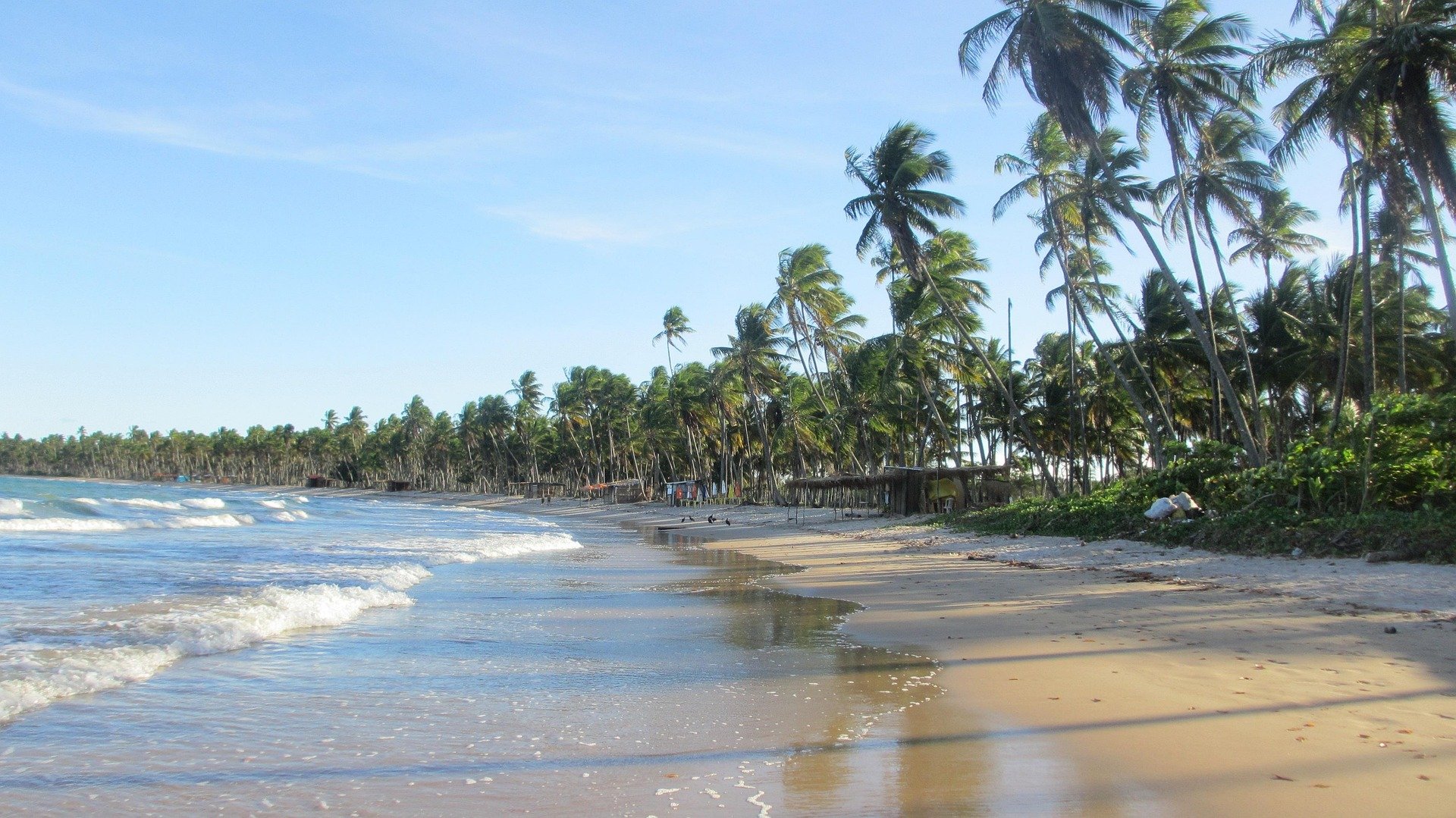
Beach in Biopeba, Bahia, Brazil.
In the end, the hurdles faced upon arrival in Brazil are but small bumps on the road to an unforgettable adventure. By embracing modern solutions like eSIMs, travelers and digital nomads can focus on what truly matters – experiencing the rich tapestry of Brazilian culture, cuisine, and natural beauty.
Make sure to activate your eSIM, and prepare to samba your way through the challenges and joys of life in Brazil.
I’m sure you’ve had similar experiences I had whilst traveling. You’re in a certain place and a fellow traveler, or a local, tip you off on a little-known beach, bar or accommodation. Great travel tips from other travelers or locals always add something special to our travels. That was the inspiration for Travel Dudes.
I’m sure you’ve had similar experiences I had whilst traveling. You’re in a certain place and a fellow traveler, or a local, tip you off on a little-known beach, bar or accommodation. Great travel tips from other travelers or locals always add something special to our travels. That was the inspiration for Travel Dudes.
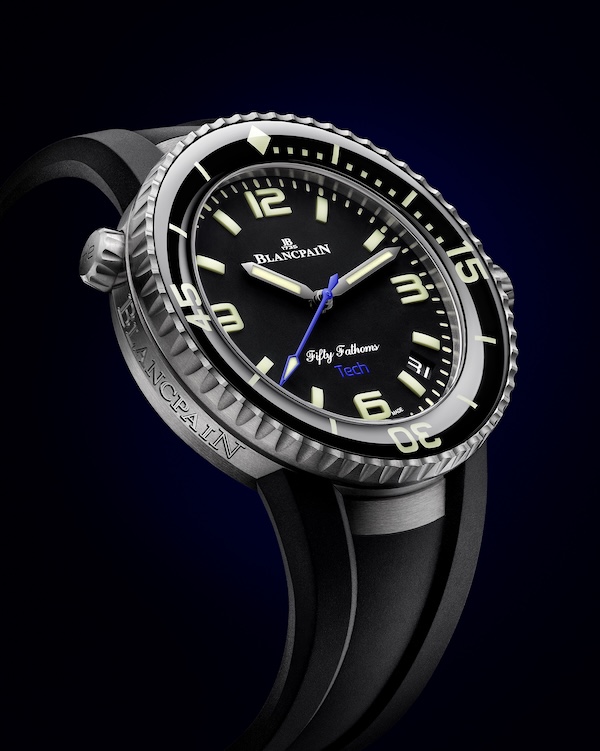
Blancpain’s commitment to ocean conservation puts its money where its dive watch is. Enter the Fifty Fathoms Tech BOC IV, a 100-piece limited edition that plays an active role in marine preservation; with every watch sold, EUR 1,000 goes straight to the newly established Blancpain x Sulubaaï Marine Research Centre to fuel discoveries and innovations into ocean restoration efforts.
The watch brand has been at this game for a long time. Since the Fifty Fathoms debuted in 1953 as the first modern dive watch, Blancpain has been entrenched in ocean advocacy. The Blancpain Ocean Commitment (BOC) initiative is one such endeavour into marine conservation for over 20 years and now, the Fifty Fathoms Tech BOC IV takes that mission even further.
Taking cues from the Fifty Fathoms 70th Anniversary Act 2 Tech Gombessa, the Tech BOC IV comes in a 45mm Grade 23 titanium case that’s robust yet surprisingly wearable. At 14.1mm thick, it has enough presence without feeling like an anchor on your wrist. Engineered for professional diving but stylish enough for everyday wear, the watch has a unidirectional bezel with a domed black ceramic insert and an “absolute black” dial that it absorbs 97 per cent of light and the luminescent block appliqués to ensure legibility in the murkiest depths.
Powered by Blancpain’s trusty Calibre 1315A, there’s a five-day power reserve and an anti-magnetic silicon balance spring. Flip it over and you’ll see the 18-carat gold oscillating weight through the sapphire caseback, stamped with the blue BOC logo.
Proceeds from the BOC IV go straight to the Blancpain x Sulubaaï Marine Research Centre, an extension of the Sea Academy programme. The programme, which has been working since 2020, was set up to protect the marine ecosystems in the Philippines. Located in Sandoval, near Shark Fin Bay, the centre is positioned to enhance conservation research, restoration, and education efforts in the region.
Each watch comes in a rugged Pelicase box, bundled with a numbered donation certificate and an exclusive print by award-winning underwater photographer Laurent Ballesta. His image, taken around Pangatalan Island, captures a prehistoric horseshoe crab — a creature whose existence is threatened (and is also the logo for the Sulubaaï Marine Research Centre), but now finds sanctuary in the protected marine areas that Blancpain supports.
This article was first seen on Esquire Singapore.
For more on the latest in luxury watch reads from WOW, click here.
The technical storage or access is strictly necessary for the legitimate purpose of enabling the use of a specific service explicitly requested by the subscriber or user, or for the sole purpose of carrying out the transmission of a communication over an electronic communications network.
Preferences
The technical storage or access is necessary for the legitimate purpose of storing preferences that are not requested by the subscriber or user.
Statistics
The technical storage or access that is used exclusively for statistical purposes.The technical storage or access that is used exclusively for anonymous statistical purposes. Without a subpoena, voluntary compliance on the part of your Internet Service Provider, or additional records from a third party, information stored or retrieved for this purpose alone cannot usually be used to identify you.
Marketing
The technical storage or access is required to create user profiles to send advertising, or to track the user on a website or across several websites for similar marketing purposes.



 stika.co Road Legal UK Unit…Shop on Amazon
 Ring Automotive RCT1 9 Piec…Shop on Amazon
 AA High Visibility Fluoresc…Shop on Amazon
 AA Car Headlamp Headlight B…Shop on Amazon
 TP-Link 4G Cat4 LTE Travel …Shop on Amazon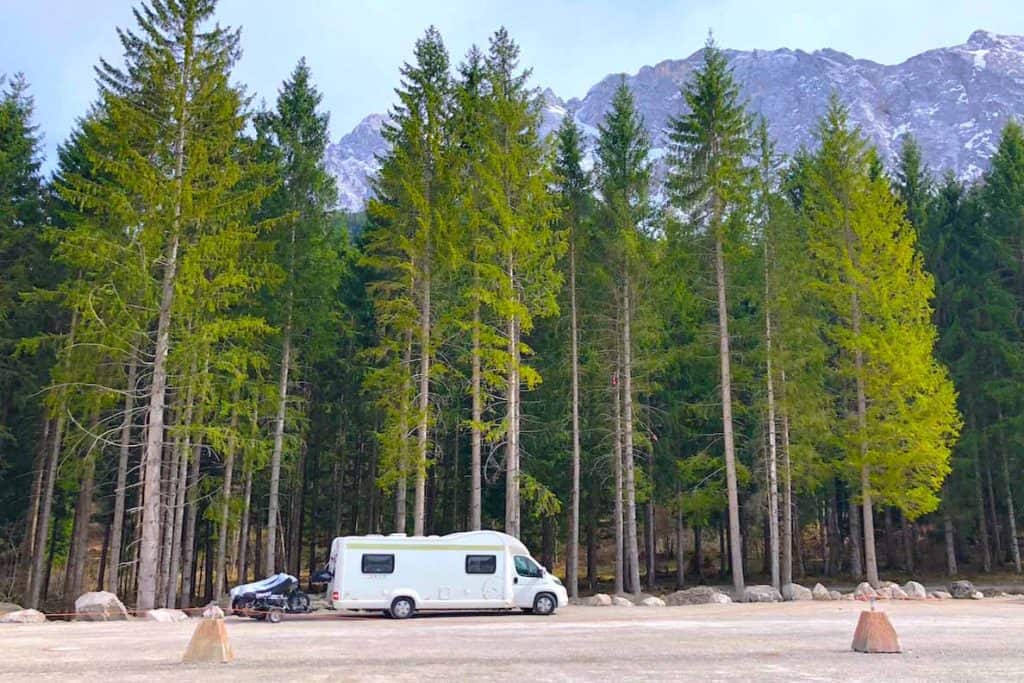







:max_bytes(150000):strip_icc()/tal-here-are-the-tk-items-i-never-leave-home-without-tout-c22918e1f8164237ae5c6dffc7ef1d13.jpg "17 Best Spring Japan Travel Essentials")
:max_bytes(150000):strip_icc():format(jpeg)/tal-here-are-the-tk-items-i-never-leave-home-without-tout-c22918e1f8164237ae5c6dffc7ef1d13.jpg)