Mercedes-Benz is testing prototypes for a second-generation GLB-Class based on the MMA platform
The new GLB-Class is expected to debut in 2026
Both electric and hybrid powertrains are in the pipeline
A redesigned GLB-Class compact crossover is shaping up to be the second member of Mercedes-Benz’s next-generation compact family, following the redesigned CLA-Class, which arrives later this year as a 2026 model.
A prototype for the new GLB-Class has been spotted again, with production details like the lights and wheels. The prototype is for an electric model to replace the current EQB (Mercedes is moving away from the EQ naming practice), but a hybrid version is also planned. Both versions are expected to arrive on the market in 2026, likely reaching the U.S. as 2027 models.
A redesigned GLA-Class compact crossover is also in development, along with a new version of the CLA-Class Shooting Brake wagon. However, new generations of the A-Class sedan and hatchback, as well as the B-Class minivan, are not planned.
The GLB-Class prototype is heavily camouflaged, but the overall shape appears to be an evolution of the current generation, with a slightly rounder front end. The new headlights can be partially seen and feature a Mercedes star logo for the daytime running lights and turn signals. The rear section has more extensive camouflage, but it appears boomerang-style taillights are used, possibly joined by a light strip.
2027 Mercedes-Benz GLB-Class EV spy shots – Photo via Baldauf
Part of the digital gauge cluster is visible in some of the images. The new compact family is expected to feature a dashboard with a wide panel integrating screens for the digital gauge cluster and infotainment system, along with circular vents for climate control.
The vehicle rides on Mercedes’ new MMA platform, which is designed primarily for EVs but also accommodates hybrid powertrains. For MMA-based EVs, Mercedes will offer a choice of single-motor rear-wheel-drive and dual-motor all-wheel-drive powertrains. The rear motor will have a 268-hp rating, while the front motor, which is designed to activate during high loads or when slip is detected, will have a 107-hp rating. More powerful AMG-tuned variants are also planned.
2027 Mercedes-Benz GLB-Class EV spy shots – Photo via Baldauf
An 800-volt electrical system will enable high-speed charging with a DC fast charger. While Mercedes hasn’t confirmed battery sizes, at least one battery option is expected to have a usable capacity of around 85 kwh.
For hybrids, there will be a newly developed 1.5-liter turbo-4 paired with a 27-hp electric motor sandwiched between the gas engine and an 8-speed dual-clutch automatic transmission. The total system output will be 187 hp. The battery will be a 1.3-kwh lithium-ion unit mounted under the driver’s seat. Front-wheel drive will be standard, with all-wheel drive available as an option.
While not always a strictly necessary purchase, SUVs are the dominant vehicle type in the Australian new car market, and small SUVs have seemingly overtaken hatchbacks and sedans as the car of choice for singles and young families.
A whopping 181,197 small SUVs were sold in 2024, a four per cent increase over the year before and nearly double the small car sales tally.
Manufacturers are well aware of our insatiable demand, so much so that there are 41 different models available in the current market. There truly is a small SUV for everyone.
Hundreds of new car deals are available through CarExpert right now. Get the experts on your side and score a great deal. Browse now.
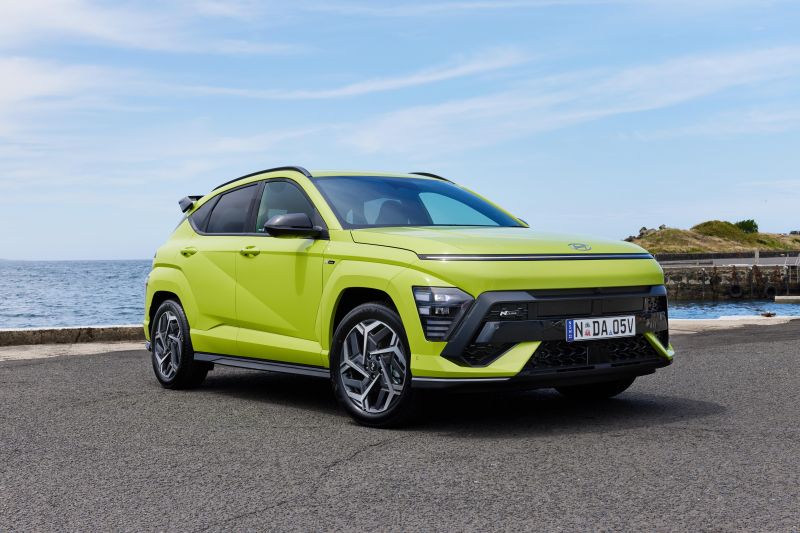
Hyundai Kona Hybrid
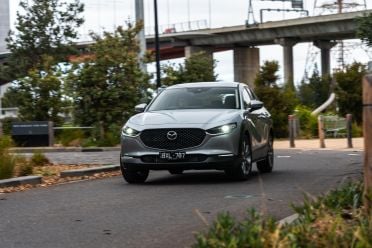
Mazda CX-30
At the lower end of the price spectrum, the MG ZS, Chery Tiggo 4 Pro, and GWM Haval Jolion all command favour among budget-conscious buyers.
The Audi Q3, Mercedes-Benz GLA-Class, and BMW X1 will all be familiar to fans of European luxury motoring. That’s not to mention the countless options that fit somewhere in between.
But which small SUV nails the formula best? And which is worthy of a spot on your driveway? We asked the CarExpert team, and here’s what they came up with.
Let us know your pick in the comments below!
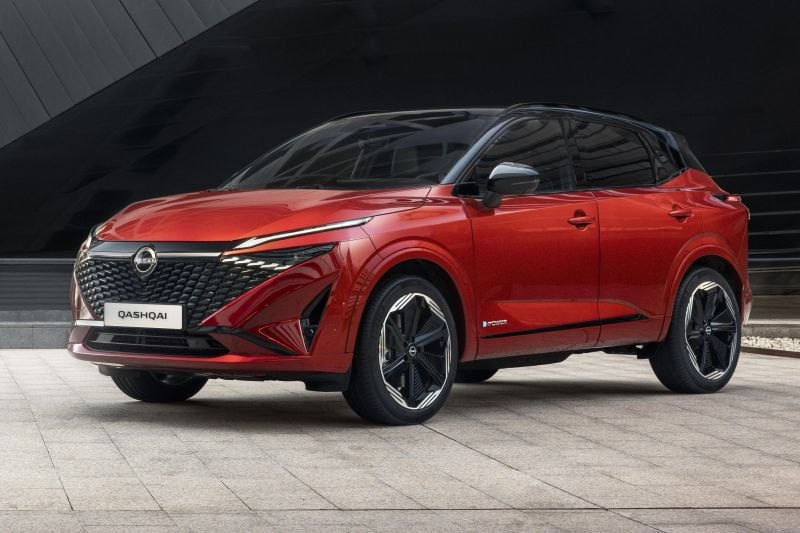
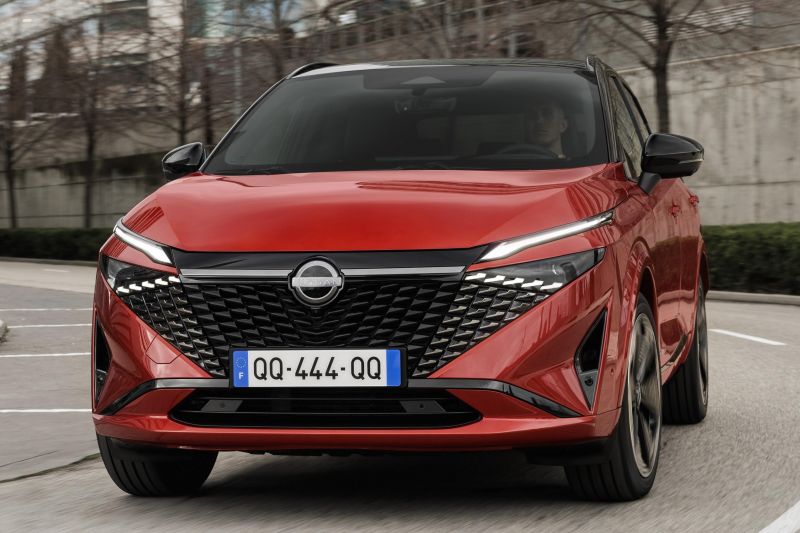
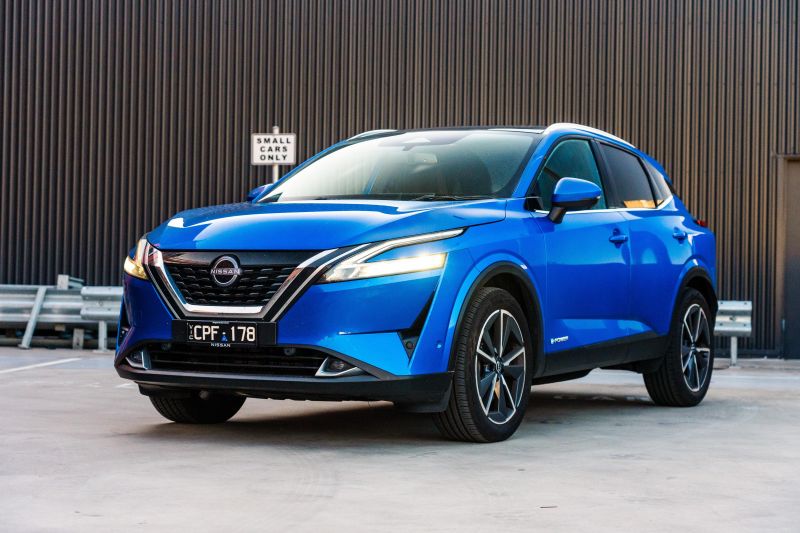
Marton Pettendy: Nissan Qashqai
The Nissan Qashqai has long been my pick in the small SUV segment, and now it’s about to get even better.
A comprehensive mid-life makeover will soon make it sharper looking and higher-tech, and I expect pricing to remain competitive with key rivals that are mostly smaller and less practical, less ergonomic and less refined.
The clever, punchy and efficient e-Power hybrid system is another reason the Qashqai is more popular than most of them in Europe, and it deserves more fans in Australia too.
The Mazda CX-30 comes a close second for me, but the facelifted Qashqai looks better and should continue to offer a more polished ride and handling package than most small SUVs, and its intuitive multimedia and safety technologies won’t drive you crazy.
Interested in buying a Nissan Qashqai? Get in touch with one of CarExpert’s trusted dealers here
MORE: Everything Nissan Qashqai
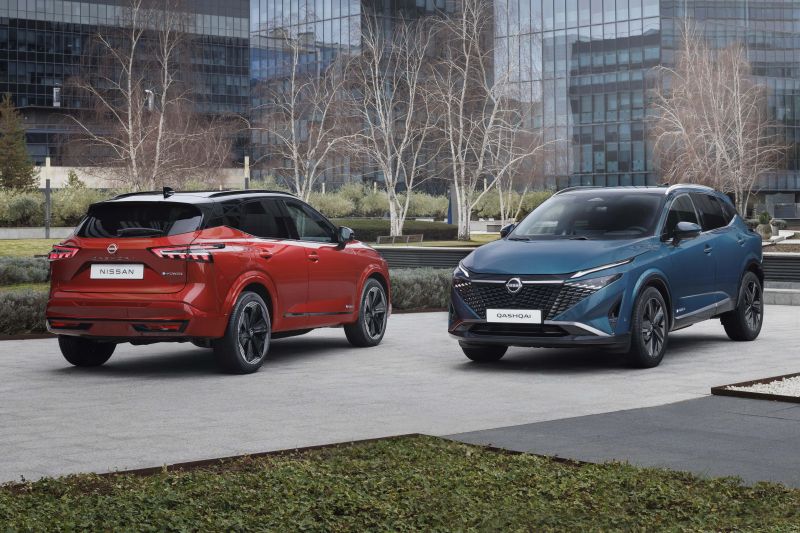
James Wong: Nissan Qashqai
I often bemoan the increasing number of car-based compact crossovers because they’re usually just slower, less efficient and less dynamic versions of the passenger vehicles they’re based on.
Unlike the other cars on this list, the Nissan Qashqai doesn’t have an equivalent small car that I’d be inclined to recommend over it, and it continues to straddle segments in dimensions and practicality as well as general design and refinement.
It’s larger and more practical than most of its direct rivals, and has enough premium cabin appointments to make some of the entry-level premium German SUVs sweat a little. The available e-Power hybrid drivetrain is another point of difference, with a smooth, punchy and relatively efficient alternative to a Toyota hybrid or Chinese EV.
With the new facelifted version, we’re expecting a revision to the spec list to make the Qashqai as good value as ever. It sells its bumpers off in the UK and wider Europe, and there’s no reason why our more European-leaning tastes in Australia aren’t seeing more sold Down Under.
Interested in buying a Nissan Qashqai? Get in touch with one of CarExpert’s trusted dealers here
MORE: Everything Nissan Qashqai
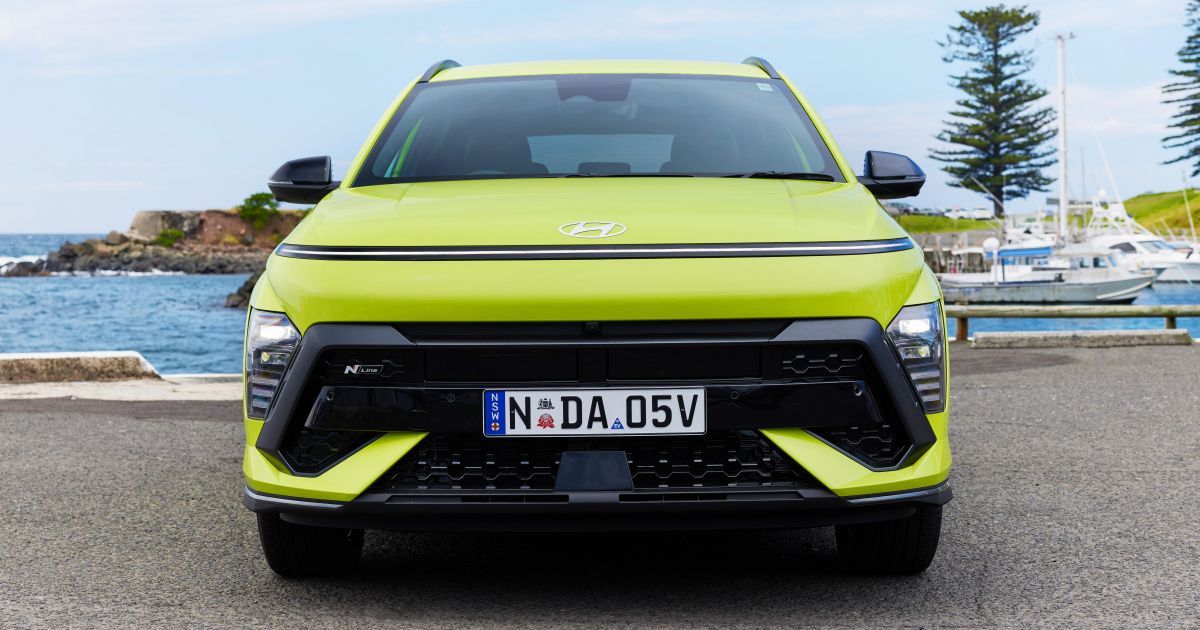
Jack Quick: Hyundai Kona Hybrid
After loving the new Peugeot 3008 Hybrid recently, I look forward to seeing how the new mild-hybrid engine goes in the forthcoming 2008 Hybrid. It could take this to the top of my list.
In the meantime however, my pick in the small SUV segment is the Hyundai Kona Hybrid. It’s incredibly fuel efficient around town, and when the petrol engine starts revving it doesn’t produce an annoying CVT droning sound. Yes, I’m looking at you Toyota Corolla Cross.
Sure the Kona Hybrid isn’t overly punchy on the highway and the petrol engine needs to sometimes rev out, but its cabin feels contemporary and high-tech. There’s also so much more space inside compared to the previous-generation Kona.
Unlike some hybrid small SUVs, the Kona is also pretty competitively priced. You can get ones dressed up in the sporty N Line kit if that’s your style.
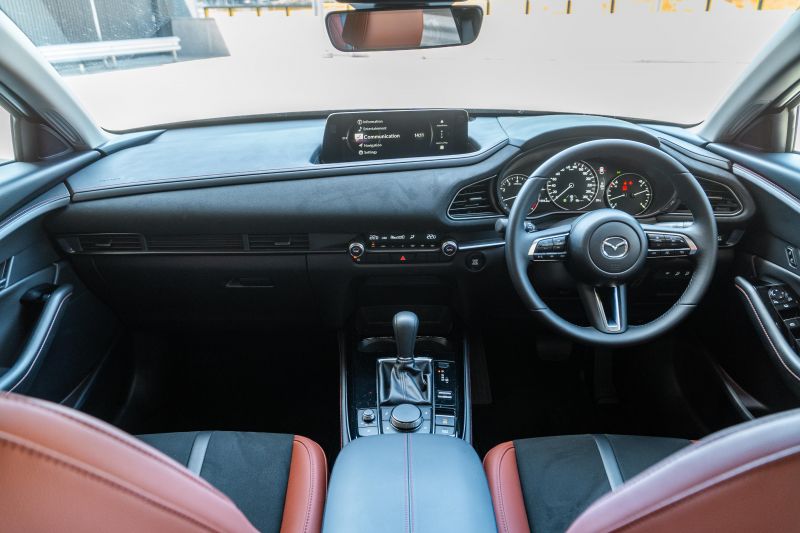
If you’re not ready to go for a hybrid yet, however, I’d urge you to consider the Mazda CX-30 because its cabin feels so plush and premium for the price tag.
Interested in buying a Hyundai Kona Hybrid? Get in touch with one of CarExpert’s trusted dealers here
MORE: Everything Hyundai Kona
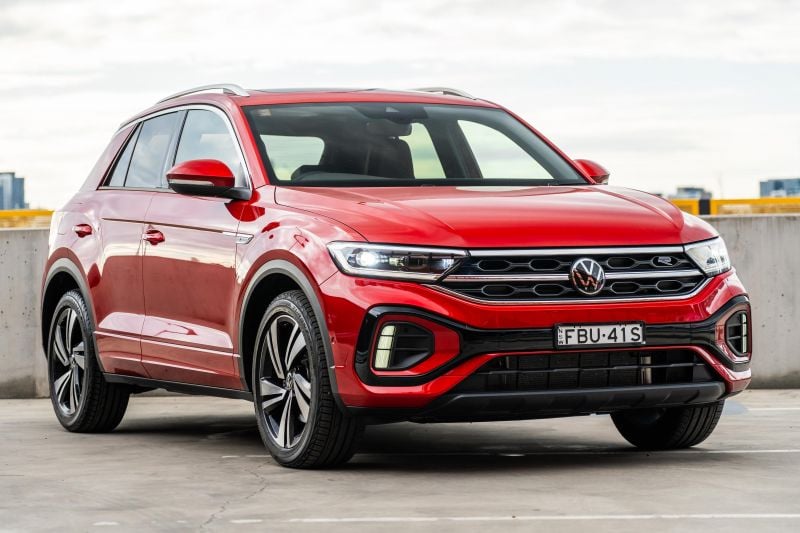
William Stopford: Volkswagen T-Roc
The head says Hyundai Kona Hybrid, but the heart says Volkswagen T-Roc.
I’m going to give it to the heart this time. The small SUV segment is full of utterly sensible, practical but thoroughly uninspiring choices, and it’s against this rather drab backdrop that the T-Roc looks more interesting.
Even though it’s at the very end of its lifecycle, it’s still a handsome, dynamically poised machine that looks and feels more like a hatchback than an SUV. With its mid-life update, Volkswagen also fixed the cheapo interior.
If your budget can’t stretch to a Cupra Formentor, the T-Roc is the next best thing. It’s not cheap itself though, as a mid-range T-Roc costs more than a top-spec Kia Seltos. That’s where the value proposition starts to come undone for the Volkswagen, even if it is the more Euro-chic option.
A special mention goes to the Skoda Karoq which is a frumpier but more practical cousin to the T-Roc.
Interested in buying a Volkswagen T-Roc? Get in touch with one of CarExpert’s trusted dealers here
MORE: Everything Volkswagen T-Roc
Josh Nevett: Nissan Qashqai
This topic left me torn, as there are some excellent small SUVs on the market right now.
I have to give honourable mentions to the Skoda Kamiq and Cupra Formentor, both of which tick plenty of boxes for two different types of buyer.
But neither blends style and substance quite like the Nissan Qashqai. The updated Qashqai is due to arrive in Australia soon, and it not only looks a little more modern inside and out, but it also boasts meaningful enhancements on the technology front.
If the overseas version is anything to go by, we can expect Nissan’s slick 12.3-inch infotainment touchscreen to take pride of place on the dash, bringing with it wireless smartphone mirroring.
And hopefully the best attributes of the pre-update Qashqai remain – the powertrains are smooth and efficient, while there’s space for full-sized adults in the second row.
Interested in buying a Nissan Qashqai? Get in touch with one of CarExpert’s trusted dealers here
MORE: Everything Nissan Qashqai
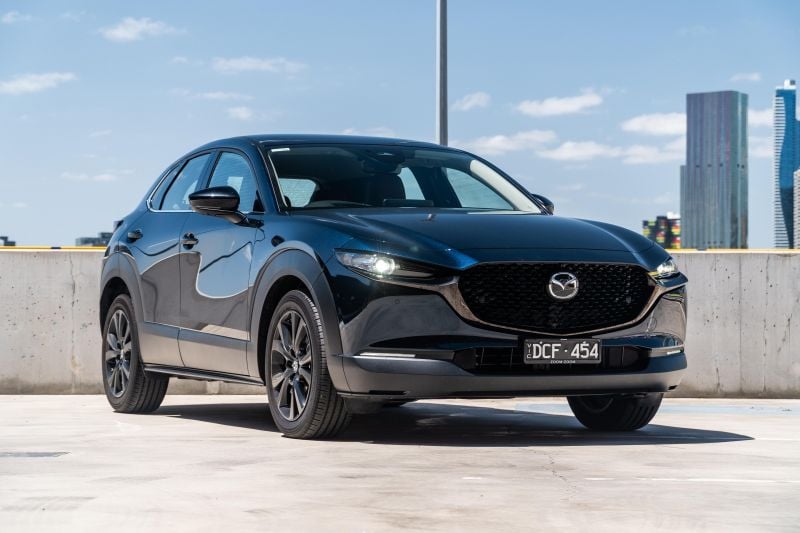
Max Davies: Mazda CX-30
Mazda remains one of the best-selling brands in Australia, and models like the CX-30 are a big reason why.
The SUV was Mazda’s fourth best-seller last year, coincidentally the same position it achieved in the small SUV segment behind only the MG ZS, Hyundai Kona and GWM Haval Jolion.
Behind the CX-30 is a brand with a strong reputation built off a long and successful history, which means you know you’ll be getting behind the wheel of something well-built and sturdy.
You get two different powertrains, all of which are priced at less than $48,340 before on-road costs. Though there are no hybrid options, its pricing places it well against rivals like the Kona and front-wheel drive-only Qashqai.
Fuel economy is decent even in all-wheel drive CX-30s, and you’ll find there’s more space both in the second row of seats and the boot despite its unassuming exterior proportions.
All that – plus the fact there are a massive 10 distinct variants to choose from alongside numerous options – makes the CX-30 hard to ignore.
Interested in buying a Mazda CX-30? Get in touch with one of CarExpert’s trusted dealers here
MORE: Everything Mazda CX-30
Jordan Mulach: Hyundai Kona
There are few vehicles as versatile in Australia as the Hyundai Kona, available with petrol, hybrid and electric power to cater for all segments of the market.
It’s also one of the newest models in its category, has bold looks (which I’ve personally warmed to) and a fresh interior.
The sharp N-Line package is also attractive, making it stand out among relatively bland competitors.
Interested in buying a Hyundai Kona? Get in touch with one of CarExpert’s trusted dealers here
MORE: Everything Hyundai Kona
Sean Lander: Nissan Qashqai e-Power
I spent a few months driving the current spec Qashqai e-Power and of all the options in the category, it would be my top pick.
The Subaru Crosstrek would be a close second, but the packaging, technology and equipment the Qashqai e-Power offers, it’s too hard to pass up.
Plus, you’ll likely be able to find a great run out deal on them in the very near future.
Interested in buying a Nissan Qashqai? Get in touch with one of CarExpert’s trusted dealers here
Rezvani Retro has revealed the final design for its RR1, based on the 992-generation Porsche 911
The design has been influenced by the original Porsche 935 race car
Production is limited to 50 units, and deliveries are scheduled to start by summer 2025
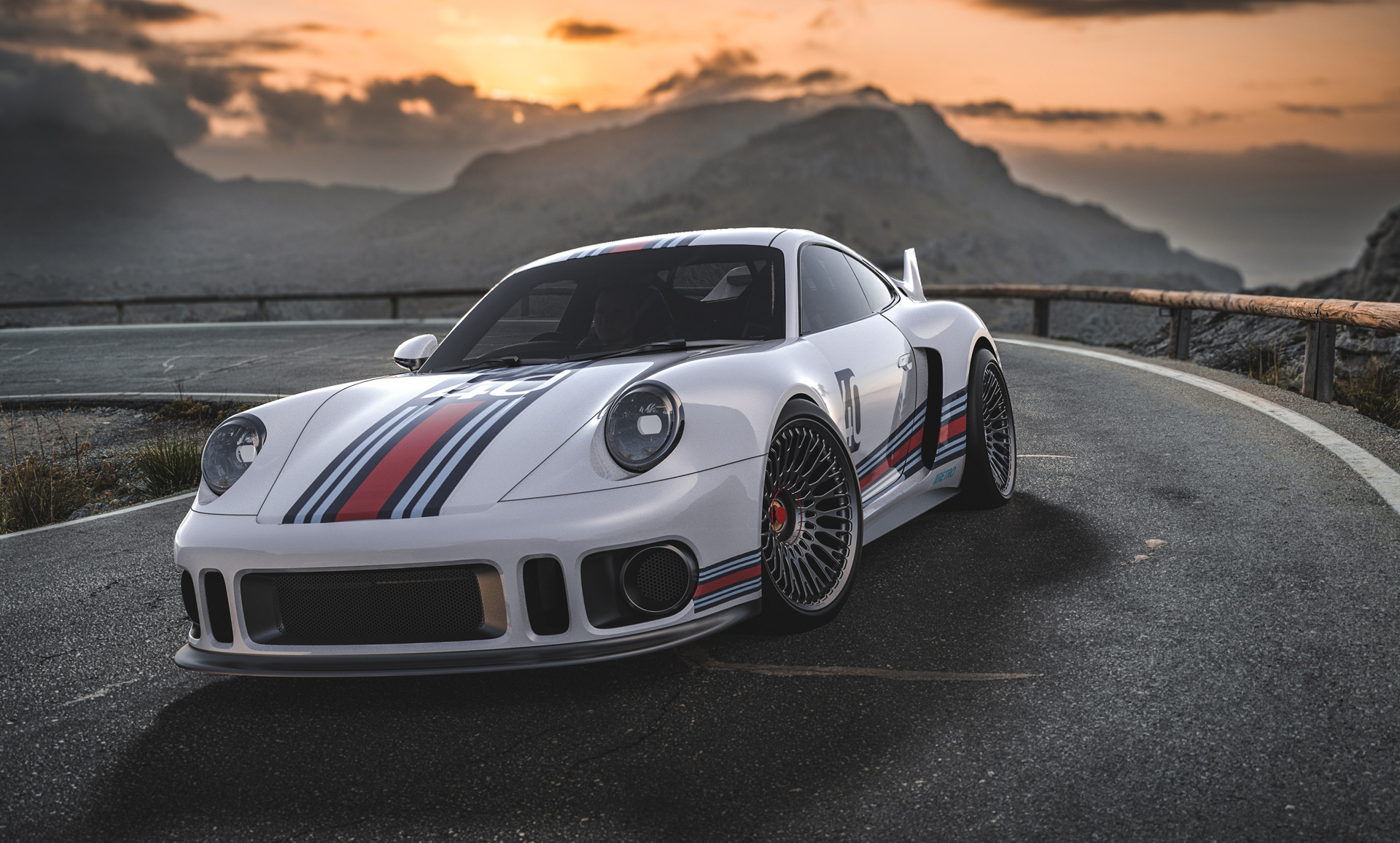
Rezvani Retro, the new division established by California’s Rezvani to build modern cars with retro styling, on Wednesday revealed an updated and final design for its debut creation, the Porsche 911-based RR1.
The RR1 is based on the current 992-generation 911, with a design inspired by the wild road and race cars built by Germany’s Kremer Racing in the 1970s, most notably the slant-nose Porsche 935 K series.
An initial design was revealed last April, and since then Rezvani Retro has made several refinements, including adjustments to the specifications.
The most significant exterior change is a return to traditional round headlights instead of the rectangular Taycan-sourced lights featured in the original design. The company said buyers preferred the classic round headlights for their nostalgic appeal.
Rezvani RR1
Rezvani Retro has also increased performance since the initial unveiling, thanks in part to the use of carbon fiber for the body, which saves weight. Buyers have two turbocharged options to choose from. The base RR1 600 uses the 911 Carrera’s twin-turbocharged 3.0-liter flat-6, modified to produce 600 hp. Power is sent to the rear wheels, and buyers can select between 6- and 7-speed manual transmissions or opt for a dual-clutch automatic.
For those seeking more power, the RR1 750 comes equipped with the 911 Turbo S’s twin-turbocharged 3.8-liter flat-6, tuned to deliver 750 hp. This version is available exclusively with a dual-clutch transmission and all-wheel drive.
In both cases, buyers can choose between a suspension tuned for the street or racetrack. The latter features Öhlins TTX-PRO coil-overs.
Production of the RR1 will be limited to 50 units worldwide and will take place at Rezvani’s facility in Irvine, California. Standard pricing has not yet been announced, but Rezvani previously stated that the first five units will be sold at a reduced price of $149,000, not including the cost of the donor 911. First deliveries are scheduled for the summer.
Update: New images and final specifications for the RR1 have been added to the article.
Chevy Blazer EV.R NASCAR prototype debuts at Daytona 500
2025 Blazer EV SS serves as first electric pace car for signature NASCAR event
NASCAR remains tied to gas-guzzling V-8s
No major racing series revels in inefficient internal combustion quite as much as NASCAR, but this year its biggest race will kick off with the silence of an all-electric powertrain—and the debut of another glimpse of its fully electric future.
The 2025 Chevrolet Blazer EV SS won’t be racing, but it will serve as the official pace car, leading the field of gas-guzzling V-8 race cars to green flag at this Sunday’s Daytona 500, the kickoff race for the 2025 NASCAR season and the most prestigious event on the calendar.
Pace cars are used to keep the field in formation ahead of the start of the race, as well as during caution periods when cars circulate at slower speeds due to on-track hazards. A 2016 Toyota Mirai hydrogen fuel-cell vehicle previously handled these duties at a 2015 NASCAR race, but this will be the first time a battery-electric vehicle has served as pace car at Daytona.
2025 Chevrolet Blazer EV SS
Due to reach dealerships later this quarter with a $61,995 base price, the Blazer EV SS is the sportiest version of the Blazer EV, boasting 615 hp and 650 lb-ft of torque from an uprated version of the dual-motor all-wheel drive powertrain. Chevy says it will do 0-60 mph in 3.4 seconds, while Brembo front brakes and stiffer suspension tuning aim to deliver a livelier experience in corners.
Ahead of this weekend’s race, Chevy on Thursday revealed an electric NASCAR prototype, dubbed Blazer EV.R, that will make its formal debut at the event. The three-motor model has produces more than 1,300 hp combined and has a 78-kwh battery pack. The EV.R was built with chassis components lifted from NASCAR’s Next Gen chassis, and Chevy says that it’s already completed consistent laps with the EV.R at race speed—although of course it’ll be there for show only.
Chevrolet Blazer EV.R NASCAR prototype
Chevrolet Blazer EV.R NASCAR prototype
Chevrolet Blazer EV.R NASCAR prototype
This follows Ford’s unveiling of a NASCAR prototype branded as a Mustang Mach-E earlier this month. Ford’s prototype seemed to take cues more directly from the generic electric SUV NASCAR first showed in 2024. Organizers still haven’t committed to an electric racing series, but first Ford and now Chevy showing EV prototypes indicates the idea hasn’t gone away.
That leaves Toyota as the only automaker currently participating in NASCAR’s top-level Cup Series to not show an electric SUV prototype. Could a NASCAR bZ4X also be waiting in the wings?
Before I dedicated my days to finding the best travel outfits as a full-time shopping writer, I built up my fashion expertise as an in-store stylist for Madewell. Working closely with customers, I mastered finding elevated basics like soft knitwear and comfortable jeans for everything from everyday wear to tropical vacations and even destination weddings.
Now that my focus has shifted to finding the best online deals, I’m excited to share my picks from Madewell’s Presidents Day sale. It’s an opportunity to stock up on travel-friendly pieces for a fraction of the price — I’m talking up to 87 percent off best-sellers that’ll quickly earn the top spot on your packing list.
From now until February 21, you score an extra 30 percent off the entire sale section when you use the promo code SALEONSALE at checkout. To help you find the best Madewell Presidents Day sales, I’ve listed my expert picks below for you to shop now before the sale ends.
When it comes to shopping a Madewell sale, you’re going to want to tackle jeans first because it’s usually the first thing to go. Madewell denim is high-grade, and most jeans are stretchy. They’re the perfect alternative to baggy sweatpants when you travel, letting you deboard the plane and start sightseeing in style.
Grab these 90s-inspired straight-leg jeans for only $55, and make it a complete outfit with this ribbed crewneck sweater that’s on sale for $14 and is versatile enough to be worn with your coziest joggers or a sleek pair of trousers.
Best Fashion Deals
Madewell
Whether you’re shopping for a cozy winter escape or tropical beach vacation, the site has a wide array of capsule wardrobe items that let you pack less while still having a variety of outfits. Be sure to snap up pieces that rarely get discounted first, including denim jackets like this oversized trucker style for only $40.
If you have a wedding coming up, grab this silky sleeveless dress for just $35. It’s sleek enough to fit inside a personal item, and it’s so versatile, you can wear it to the office with a cardigan once the wedding is behind you.
’90s Straight Jean
Madewell
Satin Sleeveless Maxi Slip Dress
Madewell
Best Shoe Deals
Madewell
Madewell isn’t being stingy with its shoe sales either, you can find premium leather boots, loafers, and ballet flats for less than $100. I recommend swiping these over-the-knee boots that are currently 76 percent off, and have a zipper closure that lets you take them off quickly to get through airport security. If you’re on the hunt for a new pair of elevated ballet flats, Madewell’s best-selling pair is on sale for $42.
Ardin Ankle Boot
Madewell
Corinne Lugsole Loafer
Madewell
Best Bag Deals
Madewell
Suitcases aren’t the only bags you need to consider for vacation. A smaller bag is essential for carrying items like your wallet, passport, and sunglasses. Thankfully, Madewell has bags of all sizes on sale, like this sling crossbody bag for $77 that’ll free up your hands while you sightsee, or if you need more space, this medium bucket tote that’s on sale for $105.
Essential Curve Shoulder Bag
Madewell
The Medium Bag
Madewell
Best Sweater Deals
Madewell
You can’t always predict the weather, which is why packing extra layers comes in handy. Madewell’s sweater collection doesn’t just spotlight fashion-forward designs, but its made up of cardigans and pullovers that will keep you warm in style. Some of my favorite picks include this ribbed crewneck for just $14 as well as this wool-blend cardigan that’s versatile enough to be worn alone or layered over a T-shirt for those cool nighttime walks.
Wool-blend Crewneck Cardigan
Madewell
Ruffle Mockneck Sweater
Madewell
Best Activewear and Loungewear Deals
Madewell
Madewell also offers loungewear that’s both polished and comfy — allowing you to dress up your overnight train ride outfit. Each piece can be worn on long rides or for just lounging around the house, giving you snugly tops and bottoms you can wear on repeat. Some of the best loungewear deals you can get now include this mockneck sweatshirt for $35 as well as these $21 soft tapered pants that you can throw on and go without a second thought.
As indicated last November, Geely has finally re-organised its electric vehicle brands with the consolidation of Zeekr and Lynk & Co. In a statement, Zeekr – which now holds a controlling 51% stake in Lynk & Co, with Geely holding on to the remaining 49% – said that the formation of the Zeekr Technology Group will enable it and Lynk & Co to generate greater synergies that will benefit sales, enterprise value and create more value for both users and investors.
Aside from a better management of resources, the integration will also bring about cost reduction benefits, as R&D expenses are expected to decrease by 10%-20% and supply chain costs are anticipated to be reduced by 5%-8% following the consolidation. Additionally, expenses for support and service departments are also set to be lowered by 10%-20%.
There will of course be a high element of unification following the move. Apart from Europe, both brands will gradually integrate their office operations to create a cohesive international business team and a unified sales company. Specific market operations will follow a “one market, one strategy” approach, tailoring rules and strategies to align with local consumer preferences and market characteristics.
However, as Zeekr pointed out, both brands will continue to have their own identity, with Zeekr being positioned as a global luxury technology brand focusing on mid to large sized vehicles, with an emphasis on pure electric models for its mid-sized offerings and hybrids for its larger models.
Previously, it was reported that Zeekr is also expected to lead development for EV and connected vehicle technology, sharing its research with group brands. As for Lynk & Co, it will be positioned as a global premium new energy brand specialising in small all-electric and mid-sized hybrid vehicles.
Meanwhile, the product portfolio will be increased and will cover a broader range of market segments, with the company stating that the price range of the integrated group’s offerings is set to expand to cover the RMB 150,000 to RMB 800,000 (RM91,700 to RM489,000) spectrum, encompassing nearly 60% of the passenger vehicle market.
Zeekr 007 GT (left) and Lynk & Co 900.
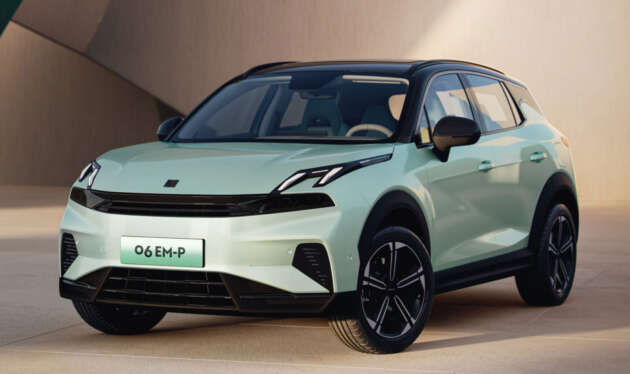
As for new models this year, there will be five, with three coming from Zeekr and two from Lynk & Co. These will include the Zeekr 007 GT and the recently announced Lynk & Co 900 full-sized SUV. This year will also see the Zeekr 7X electric SUV and Lynk & Co 08 EM-P plug-in hybrid SUV make their way to overseas markets.
As for global sales targets, the new group aims to achieve sales of 710,000 units this year, with Zeekr’s target being 320,000 units and Lynk & Co, 390,000 units.
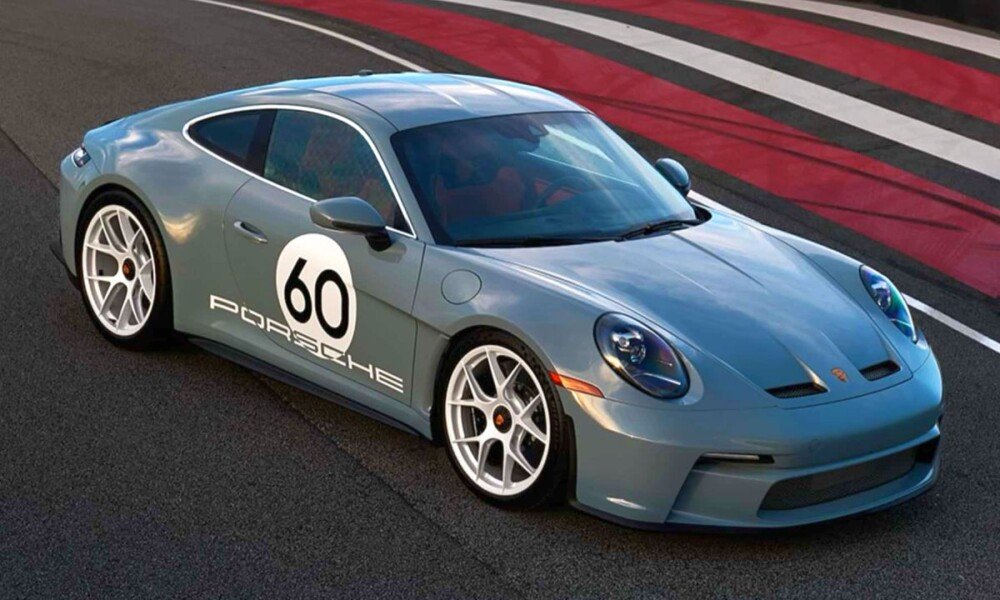
Porsche Cars North America is auctioning a 2023 Porsche 911 S/T to help the victims of the recent California wildfires. It is the last 911 S/T delivered to the US, and the proceeds from the sale will be donated to the American Red Cross.
Production of the 911 S/T was capped at 1963 units. This is car number 1919 and has 956 miles on the odometer. The car will be offered at no reserve via RM Sotheby’s online auction on February 18. RM is also waiving its fees.
The Porsche 911 S/T is one of the most sought-after modern 911s. It is essentially a Touring version of the GT3 RS. Moreover, the 911 S/T is regarded as one of the best driver’s cars. It is the lightest 992-gen 911 and comes with a 6-speed manual transmission hooked up to a 4.0-liter flat-6 engine that produces 518 hp.
This particular example is equipped with the Design Heritage Package, which includes the Shore Blue Metallic exterior colour, centre-lock wheels in ‘Ceramica’ finish, and has the classic style Porsche crest on the front, center caps, headrests, and steering wheel.
Acura, which hasn’t sold a hybrid vehicle since the NSX supercar ended production in 2022, may be reconsidering its strategy.
The automaker previously announced in 2021 that it planned to bypass hybrids entirely, and would instead focus on electric vehicles when it comes to electrification, with a goal of 60% EV sales by 2030. However, recent comments from a company executive suggest that Acura could be open to reintroducing hybrid models.
In a January interview with Automotive News, Mike Langel, assistant vice president of national sales for Acura, acknowledged that the brand’s previous EV target is now outdated. While he stopped short of confirming new hybrid models, he also did not rule them out.
“Our long-term plan is to sell all electric vehicles, but we are very flexible on what that path looks like,” Langel stated.
2024 Acura ZDX Type S
The shifting stance comes as the demand for EVs, while still growing, has cooled significantly over the past year. At the same time, hybrid vehicles are experiencing a surge in popularity. Toyota reported that hybrids accounted for a record 40.8% of its total sales in 2024.
Despite this potential reconsideration, Acura’s parent company, Honda, remains committed to achieving 100% zero-emission vehicle sales by 2040. This target includes both battery electric and fuel cell vehicles. Acura was initially positioned as the “tip of the spear” for Honda’s EV push, leading with the launch of the ZDX electric SUV in 2024. A modern RSX, this time a coupe-like crossover, will follow later this year as the first model based on Honda’s in-house-developed EV platform, which will also underpin Honda’s new 0 Series family of EVs. The ZDX uses a platform borrowed from General Motors.
As hybrid technology regains traction among consumers, Acura’s willingness to adapt makes a lot of sense. Whether that means the return of Acura hybrids remains to be seen.
TDF has an upcoming documentary that details how it turns retired Formula 1 cars into track toys
The company uses original chassis but swaps in its own power unit and gearbox
The company only uses chassis that have competed in actual F1 races
Forget the Aston Martin Valkyrie and Mercedes-Benz AMG One—if you’re after the closest thing to a Formula 1 experience in a car you can actually own, TDF has you covered.
The UK-based motorsports and engineering firm specializes in delivering the ultimate track machine by acquiring authentic F1 cars, restoring them, and selling them to passionate racing enthusiasts.
The company surfaced a few years ago but has now produced a documentary detailing everything that goes into one of its cars. Set to air on Feb. 20, TDF has already released a trailer offering a sneak peek.
It highlights how TDF’s team—composed of many former F1 engineers—has had to implement significant engineering solutions to get these cars running, as they typically arrive without a power unit or transmission.
TDF says it hand-selects the cars and conducts thorough inspections, verifying their authenticity and race history before acquiring them. Only cars that have competed in at least one F1 race are chosen. These often come from defunct teams like Marussia but occasionally from active teams such as Sauber.
With years of experience running historic F1 cars for private owners, TDF has redesigned many of the fragile components and intricate operating systems typical of F1 cars, making them more durable and reducing the need for frequent servicing or trackside assistance. This includes the power unit—TDF installs its own 1.8-liter turbo-4, which eliminates the need for complex pre-heating procedures and starts at the push of a button. It’s mated to a 6-speed sequential gearbox. Power output ranges from 450 to 600 hp, with a rev limit capped at 8,500 rpm for longevity. Components such as the chassis, suspension, and bodywork remain original. Most of the aerodynamics are also retained, including the DRS, though on the TDF it’s designed to automatically close if the driver makes any steering or braking inputs.
Weighing in at under 1,500 pounds, these machines are claimed to be capable of exceeding 200 mph. TDF also offers custom liveries and bespoke touches, including tinted carbon fiber elements.
TDF’s F1 cars are available in the U.S. through O’Gara Motorsport, which also provides driver training and hosts track events, typically held at The Thermal Club near Palm Springs, California.
An updated BMW M5 with Neue Klasse-inspired styling has been spotted
The updated M5 is expected to debut in early 2027 as a 2028 model for the U.S.
Its arrival will roughly coincide with the arrival of an electric M3
BMW’s latest M5 has only just begun deliveries in the U.S., but a prototype for an updated version featuring significant changes has already been spotted.
The camouflage suggests redesigned lighting at both ends, along with a new grille that will likely adopt styling cues from BMW’s upcoming Neue Klasse family of electric vehicles, which will introduce a new dedicated EV platform and cabin technologies.
At least six Neue Klasse EVs, along with some gas-powered models featuring Neue Klasse-inspired styling, are set to launch in rapid succession. The rollout begins this year with the iX3 compact crossover, followed closely by the next-generation 3-Series, including an i3 electric variant. As a result, recently introduced models like the 5-Series and its high-performance M5 variant may soon appear outdated next to BMW’s fresh new lineup.
The latest 5-Series debuted for the 2024 model year, and the M5 arrives for 2025 in both sedan and Touring wagon body styles. In keeping with BMW tradition, a mid-cycle refresh for the entire 5-Series range is expected for the 2028 model year, which is likely when we’ll see these Neue Klasse-inspired styling updates. A debut is anticipated in early 2027.
2027 BMW M5 facelift spy shots – Photo via Baldauf
The current M5 is powered by a plug-in hybrid system that combines a twin-turbocharged 4.4-liter V-8 with a single electric motor integrated into the 8-speed automatic transmission. This setup delivers a total of 717 hp, while a 14.8-kwh (usable) battery provides an estimated 25 miles of pure electric range. It’s possible the updated M5 will get a slight power increase, along with a lighter and more efficient battery, potentially benefiting from technology derived from the Neue Klasse EVs. Given the current M5’s hefty curb weight of 5,390 pounds, any weight reduction would be a welcome improvement.
While the powertrain likely won’t change much, a major shakeup is expected in the cabin. BMW is set to introduce its new interface, debuting with the Neue Klasse EVs, to other models like the updated 5-Series range.
BMW Panoramic iDrive
Previewed in January at CES 2025, the interface eliminates the traditional gauge cluster in favor of a head-up display spanning the base of the windshield. Additionally, a central touchscreen will handle infotainment and various vehicle functions.
BMW’s M division is also developing an electric M3 with a quad-motor powertrain, and it’s expected to launch around the same time as the updated M5. This electric M3 will be based on the i3, while a gas-powered M3, based on the next-generation 3-Series, is also in the works. A prototype for the electric M3 has also been spotted. Also out testing is a next-generation X5, which appears to feature Neue Klasse-inspired styling as well.
The technical storage or access is strictly necessary for the legitimate purpose of enabling the use of a specific service explicitly requested by the subscriber or user, or for the sole purpose of carrying out the transmission of a communication over an electronic communications network.
Preferences
The technical storage or access is necessary for the legitimate purpose of storing preferences that are not requested by the subscriber or user.
Statistics
The technical storage or access that is used exclusively for statistical purposes.The technical storage or access that is used exclusively for anonymous statistical purposes. Without a subpoena, voluntary compliance on the part of your Internet Service Provider, or additional records from a third party, information stored or retrieved for this purpose alone cannot usually be used to identify you.
Marketing
The technical storage or access is required to create user profiles to send advertising, or to track the user on a website or across several websites for similar marketing purposes.





:max_bytes(150000):strip_icc()/tal-former-madewell-employe-tout-2bb1988934724ee4ae129fac6b839b04.jpg "32 Best Madewell Presidents Day Sale Deals")
:max_bytes(150000):strip_icc():format(jpeg)/tal-former-madewell-employe-tout-2bb1988934724ee4ae129fac6b839b04.jpg)