Android users, finally! The 2025 Proton X70 facelift is now available with Android Auto. Coupled with Apple CarPlay that was rolled out late last year for the refreshed SUV, AACP is now complete, and the X70 facelift is the first Proton to have the phone mirroring functions – no more ugly phone holders!
Both Android Auto and Apple CarPlay can be connected wirelessly (you can also connect with a wire, of course) and now Android smartphone users can ‘see their phone’ on the X70 facelift’s new and enlarged 12.3-inch touchscreen. With this, Maps, other Google apps, Spotify and more can be displayed on the car’s nice big screen. To get back to the IHU, click on the Proton logo.
After much work, the X70 facelift’s infotainment system was designed for AACP, but the features weren’t available at launch (August 2024, read our launch report) as there was certification work to complete.
With AACP integration and certification now complete, we can expect it to feature in upcoming Proton models from launch.
If you’re craving the ultimate Greek adventure, you’re in for a week filled with culture, history, and stunning landscapes. Greece, known for its ancient ruins, breathtaking islands, and vibrant culture, offers the perfect mix of exploration, relaxation, and unforgettable experiences.
From Athens’ rich history to the beauty of Santorini and Crete, this itinerary will guide you through the best of what Greece has to offer in just one week.
Start planning your 7-day Greece journey with more tips on ReliableTraveler.
7 Day Greece Itinerary
Get ready for the Ultimate Travel Experience, recommended by Niek de Haan – your go-to ReliableTraveler:
From my travels, I’ve learned that picking the right destination doesn’t have to be a hassle or take forever. That’s exactly why I started Reliable Traveler. Join me on this amazing 7-day adventure through Greece, where you’ll find the perfect mix of excitement, a delicious fresh cuisine with many flavors, dream beaches and memories that will last a lifetime!
Tavern at the sea in Crete, Greece.
Days 1-3: Athens – The Heart of Greece’s Culture and Wonders
Start your Greek adventure in Athens, the city that birthed Western civilization. Begin with a visit to the Acropolis, where you’ll see the iconic Parthenon, Temple of Athena Nike, and Erechtheion. These ruins are the perfect introduction to Greece’s awe-inspiring ancient history.
From the Acropolis, head to the National Archaeological Museum to view artifacts like the famous Antikythera mechanism and learn more about Greece’s rich past.
In the evening, take a stroll through the charming streets of Plaka, Athens’ oldest district. This area is full of traditional cafes and shops, where you can enjoy a relaxing meal before you catch a glimpse of the city at sunset from Mount Lycabettus.
If you find yourself in Athens, the Acropolis is an absolute must on your itinerary. Exploring this iconic site is like stepping back in time, and it’s packed with fascinating stories and breathtaking views.
The Acropolis in the center of Athens, Greece.
Why you can’t miss it
Towering over the city at a height of more than 150 meters, the Acropolis isn’t just a bunch of old ruins; it’s one of the most significant architectural treasures in the world.
Built as far back as 580 BC, it is a symbol of ancient Greece and a true testament to its rich history.
The name “Acropolis” actually means “high city-state” in Greek, and it lives up to the name with its breathtaking views!
The Parthenon: A Showstopper
When you get to the top, the first thing that catches your eye is the magnificent Parthenon. These imposing columns are not only beautiful, they’re one of the most imitated structure in the world!
Standing there, you can’t help but feel the weight of history. It’s incredible to think how many people have walked these grounds before you.
Temple of Erechtheion: A legendary place
Don’t forget to check out the Temple of Erechtheion. There’s a cool legend about how Athena and Poseidon fought here for the title of protector of Athens.
The temple is most famous for its six stunning caryatids on the south side, which are a sight to behold!
A journey through time
As you walk around the Acropolis, you’ll be surrounded by ruins and cliffs that tell stories of the past. It’s a magical experience that makes you appreciate the depth of history.
Just a heads up, though – be prepared for some steep climbs and crowds, especially during peak tourist season. But… the views and the experience are totally worth it!
Grab your camera, wear comfortable shoes, and get ready for an unforgettable adventure at the Acropolis.
Days 4-5: Santorini – Sunsets, Volcanoes, and Stunning Views
The next leg of your adventure takes you to Santorini, one of Greece’s most iconic islands. Famous for its white-washed buildings and breathtaking sunsets, Santorini is a must-see destination.
Day 4: Start your day in Oia, where the views of the caldera are absolutely stunning. Wander through the charming streets, take photos, and enjoy the peaceful atmosphere. Later, visit Fira, the island’s capital, to experience local shops and cafes with scenic views.
Day 5: In the morning, take a boat tour to the active volcano of Nea Kameni. Explore the craters and take in incredible views of the island from the top. Afterward, head to Palia Kameni to relax in the natural hot springs, a perfect way to unwind after your volcano hike.
Santorini is such a gem in the southern Aegean, though it’s really popular and many people visit it. But this island is like stepping into a postcard, with its iconic blue and white buildings dotting the landscape. It’s as picturesque as it gets!
One of the things I absolutely love about Santorini is its stunning beaches. Each one has its own unique vibe, from the vibrant reds and blacks of the volcanic sand to the stunningly clear waters that beckon you in for a swim. It’s no wonder this place has become a top honeymoon spot and a dream vacation destination for so many!
And here’s a fun fact: Santorini is said to be the resting place of the legendary lost city of Atlantis! The question is where to find it and who will find it…
The island has this crescent shape that stretches from north to south, with gentle beaches on the east side, lush vineyards in the middle, and dramatic cliffs on the west. The views from those cliffs are absolutely breathtaking, especially at sunset!
Santorini isn’t huge, but it’s definitely packed with things to see and do. The public transportation can be a bit hit or miss, so I’d recommend renting a car to explore at your own pace. If driving isn’t your thing, don’t worry! There are plenty of local tour groups that offer cruises around the island that are a blast.
And don’t forget about all the other adventures waiting for you! Whether you’re into hiking, sightseeing or even sea kayaking, there’s something for everyone.
Just be prepared for some challenges along the way – sometimes the trails can be steep or the weather unpredictable – but the experiences are totally worth it.
White houses of Santorini, Greece.
Days 6-7: Crete – Ancient History, Beaches, and Unique Culture
For the final days of your journey, travel to Crete, Greece’s largest island. Known for its ancient ruins, stunning beaches, and rich cultural heritage, Crete offers a perfect end to your Greek adventure.
Day 6: Begin your day in Chania, a picturesque city with a Venetian harbor and winding streets full of history. Afterward, visit the Knossos Palace in Heraklion, one of the most significant archaeological sites of the Minoan civilization. Explore the ancient ruins and learn about the fascinating history of the Minoans.
Day 7: Spend your final day on the island relaxing at Elafonissi Beach, known for its pink sand and crystal-clear waters. Take in the beauty of the Mediterranean before heading to Rethymnon, where you can explore the town’s Venetian fortress and charming old town.
Elafonissi Beach is one of the most famous spots in Greece! This stunning beach is known for its unique light pink sand, which is as dreamy as it sounds.
When the sun hits the sand, you can see these beautiful pink halos shimmering at the water’s edge. What’s fascinating is that this pink hue comes from tiny bits of marine life that have washed ashore over the years. These pink shells have weathered into fine particles, creating this beautiful sandy paradise.
But it’s not just the sand that makes Elafonissi so special. The water here is absolutely crystal clear, with hues that range from shallow turquoise to deep blue. It’s like stepping into a picture postcard!
Because of its beauty, the beach can get a little crowded, especially in high season, but it’s still worth it. You’ll find plenty of sunbathers soaking up the rays, and there’s a relaxed vibe that makes it still feel like a great vacation spot.
If you’re planning a visit, be sure to bring your sunscreen and maybe even an umbrella, as the sun can get pretty intense. And while it can get busy, there are plenty of quieter spots to explore if you wander around a bit.
Travel Tips for Your Greece Adventure
Athens to Santorini: It’s a short flight from Athens to Santorini, approximately 45 minutes.
Santorini to Crete: You can either fly to Heraklion (about 1 hour) or take a ferry, which takes approximately 2 hours.
Crete to Athens: Flights from Crete to Athens typically take about 1 hour.
From ancient ruins and volcanic islands to stunning beaches and crystal-clear waters, this 7-day Greece adventure ensures you experience the best of what Greece has to offer.
Ready to start planning your dream Greek getaway? This adventure is waiting for you!
I’m sure you’ve had similar experiences I had whilst traveling. You’re in a certain place and a fellow traveler, or a local, tip you off on a little-known beach, bar or accommodation. Great travel tips from other travelers or locals always add something special to our travels. That was the inspiration for Travel Dudes.
I’m sure you’ve had similar experiences I had whilst traveling. You’re in a certain place and a fellow traveler, or a local, tip you off on a little-known beach, bar or accommodation. Great travel tips from other travelers or locals always add something special to our travels. That was the inspiration for Travel Dudes.
Elegance can’t just be bought; it requires an eye for fine things. Tailoring and bespoke garments are the answer to acquiring some of the best in a fashion collection. The art of tailoring and bespoke garments can help you create a wardrobe with elegance, comfort and durability.
Tailoring and bespoke garments have been around for decades. These garments are built to change how a person looks and feels. To refine elegance, Ermanno Scervino offers some garments to get anyone started on their bespoke journey. Remember, the idea is to get the most exquisite pieces that can match almost any other garment in the wardrobe.
What Tailoring and Bespoke Garments Can Do
Tailoring is the art of cutting, fitting, finishing and designing clothes. The word tailor was first used in the 14th century, and it’s derived from the French word “tailler”, which means to cut. However, due to retailing and the sale of ready-made garments, tailoring from scratch is now a much smaller and exclusive market.
Although the term “tailor-made” has become a common term in most industries, whether referring to computer software, a kitchen or curtains, it still carries the element of creating a one-of-a-kind product. Tailoring clothes such as the silk and lace bustier dress highlights an individual’s best features, as most tailors can custom-make an outfit.
In the clothing trade, tailoring contributes to creating the most classic forms of clothing, such as suits and couture dresses for special evenings and cocktail events. Tailors still dress their clients in the most elegant and best-fitting way.
One thing that makes tailoring the best is that garments can be made to fit people who wouldn’t have a fit in the ready-made clothing industry. Tailoring is common with celebrities and royalty.
Why Tailoring and Bespoke Garments are Just Better for that Special Occasion
Tailoring is often considered superior to buying clothes off the rack due to the personalisation, comfort and quality it offers. Here are a few reasons why tailoring is better:
An Excellent Fit
Tailored clothes are made to fit the body perfectly using exact measurements. This enhances the comfort, mobility and appearance of a garment. It also means the clothes aren’t too tight or too loose, which is a common problem, especially with mass-produced clothing.
Customisation
With a tailored garment, one can select the fabric, cut, colour and style they desire. This means a unique look can be created to suit an individual’s personal taste and needs for any occasion.
High-Quality Materials
Tailors commonly use high-quality fabrics and materials, ensuring the garment’s longevity and, to top it all off, making it look great.
Attention to Detail
Tailored clothing benefits from excellent craftsmanship, which ensures that things like lining, buttons, stitching and finishing touches are precise. This means the product is made stronger and more polished.
Timeless Investment
Most pieces, such as designer midi dresses, are created with a timeless appeal. They may not go out of style as quickly as fast-fashion pieces.
Flattering Look
A tailored outfit accentuates the best features of anyone and minimises any features that highlight imperfections. This means the design complements the body shape in a way that generic products wouldn’t.
Sustainability
Investing in tailored clothing reduces waste, which is common in mass production and fast fashion. This is because tailored garments are made to last longer and specifically for that person.
Enhanced Confidence
When someone wears something that fits perfectly, they feel more confident and self-assured. This makes getting those designer lace dresses and that long lingerie dress worthwhile.
Better Value
Although the upfront cost of a tailored garment may be higher, it often pays off in the long run due to durability and continued satisfaction. Also, these garments don’t need to be replaced often.
Garments Built to Last: A Brief History
The art of tailoring was first developed in Western Europe between the 12th and 14th centuries. It’s believed that tailoring was born in the Renaissance. This means that common loose clothing was made shorter and tighter, allowing the body’s contours to be displayed. Before the existence of tailors, most people found and designed their own garments.
As more tailors came into existence, more people also began to consult them to get that perfect fit. In the past, options were fewer, with no small, medium or large sizes, making the only option available being measured. Also, before tailoring, the main purpose of clothing was to protect the human body from nudity and the elements.
Tailoring Options Available on the Market
There are several tailoring options available on the market. Here are the most common ones:
Bespoke
In tailoring, bespoke means a garment is created from scratch, including the pattern, fabric and measurements. This is also considered the most luxurious form of tailoring. A bespoke garment commonly takes longer than any other form of tailoring. The wearer will typically include any customisations they wish to be included. A single garment can take several hours or weeks to create.
Made-to-measure
A made-to-measure garment, also known as custom-made, is created using an existing pattern. The pattern is then adjusted to fit the wearer’s precise measurements. Depending on the shape of the wearer, material is added or removed. A made-to-measure garment may also take several hours or weeks to complete.
Ready-to-wear
Ready-to-wear clothes are pre-manufactured to standard sizes and can be bought straight from the rack. However, ready-to-wear clothing doesn’t always mean mass-produced clothing, as some high-end products exist. Most of these products are made with limited production runs and change every season to ensure they stay unique. Purchasing a ready-to-wear piece with no alteration will take just a few minutes.
A Better Fit For Days
Always remember that refining elegance through tailoring may seem expensive at first glance, but it’s worth it in the long run. Just think of that exclusive coat that matches multiple outfits because it was made with precision and so much care. Also, remember tailoring is about quality and not always quantity.
Tesla’s updated Model Y, code-named Juniper, has been revealed in China
The updates include new styling and improved range and acceleration
Deliveries start in China in March and are anticipated to start in the U.S. in the spring
The Tesla Model Y’s mid-cycle refresh, code-named Juniper, has been revealed, though currently only for the Chinese market.
Deliveries in China and other Southeast Asian nations begin in March, but availability in other markets, including the U.S., hasn’t been announced. North American deliveries are anticipated to begin in the spring.
2025 Tesla Model Y (China spec)
The updated Model Y is priced from 263,500 renminbi (approximately $35,900) in China, representing a 5.4% increase over the outgoing model.
The update is the first major revamp for the Model Y since the electric compact crossover’s debut in 2019. The most noticeable change is the new styling, which features a chiseled front end with a light strip that matches the design of the Cybercab robotaxi. A light strip also replaces the separate brake lights found on the current Model Y.
Tesla Robotaxi Cybercab
Inside, the changes are similar to those introduced with the Model 3 update unveiled in late 2023. These include a quieter cabin, ambient lighting, and revised controls including a steering wheel minus the current model’s stalks.
Additional enhancements include seats with heating and ventilation options for all-weather comfort, along with a touchscreen designed for second-row passengers.
2025 Tesla Model Y (China spec)
Tesla updated the Model 3’s suspension as well, and the refreshed Model Y is expected to benefit from similar improvements. These revisions in suspension tuning and updated parts resulted in a more comfortable and controlled ride for the sedan.
For the Chinese market, Tesla increased both range and horsepower for the Model Y. The base single-motor rear-wheel-drive model now delivers 295 hp and achieves 0-62 mph in 5.3 seconds, improved from 5.9 seconds previously. The battery is a 62.5-kwh unit with an estimated range of 368 miles on the Chinese test cycle, up from 344 miles.
2025 Tesla Model Y (China spec)
A dual-motor all-wheel-drive model is also available, featuring a 184-hp motor at the front and a 260-hp motor at the rear. Tesla claims it will sprint to 62 mph in 4.3 seconds, down from 5.0 seconds previously. This version is equipped with a 78.4-kwh battery offering a range of 446 miles on the Chinese test cycle, up from 428 miles.
In the U.S., the Model Y is currently offered in single-motor rear-wheel-drive Long Range, dual-motor all-wheel-drive Long Range, and dual-motor all-wheel-drive Performance variants. Tesla doesn’t disclose power output for these models, but 0-60 mph times range from 6.5 to 3.5 seconds.
As luxury fashion brands face intensifying competition for profit margins, 2025 has already witnessed the industry’s leading players taking decisive actions to shape the competitive landscape. LVMH-backed investment firm L Catterton acquired a majority stake in Japanese denim brand Kapital, adding to its extensive brand portfolio. Meanwhile, Kering made headlines with fashion’s first entertainment company — Saint Laurent Productions — which swept up Golden Globe nominations and awards. These investments are more than just financial transactions — they are cultural and strategic moves.
Such is the case with the recent acquisition of a minority stake in the fashion brand The Row — founded by former actresses Mary-Kate and Ashley Olsen — by some of Europe’s most influential family dynasties. The Wertheimer brothers, owners of Chanel, as well as Françoise Bettencourt Meyers, heiress to the L’Oreal fortune, have all joined forces to invest in the minimalist fashion label, pushing its valuation to a remarkable USD 1 billion, according to Bloomberg.
The investment between high-profile European luxury moguls and The Row presents a new future of fashion, where consumer tastes become more refined and options grow more exclusive. This latest move highlights the intersection of legacy companies, with its long-standing history of nurturing and sustaining high-end brands; and shifting consumer tastes, where affluent buyers are seeking more refined, discreet luxury over conspicuous displays of wealth.
The Rise of The Row
Founded in 2006, The Row was born out of the search for the perfect white T-shirt, as Ashley Olsen explained in a Net-a-Porter interview. Seeing a gap in the market, the sisters focused on creating timeless, classic clothes and staple styles that could be passed down for generations, leading various outlets to declare the brand as “the high-end version of Uniqlo”.
The Row Spring/Summer 2025.
Much of its success is due to its luxurious subtlety, from its marketing to its clothing collection. The Row’s commitment to bespoke tailoring, quality, and attention to detail quickly resonated with high-end consumers who were searching for luxury that was not about aesthetics but about longevity. The label’s early success with the Margaux bag in 2012, coupled with its numerous CFDA awards, only furthered its reputation as the ultimate brand for sleek, refined design. Although never explicit in their marketing, The Row’s association with British royalty like Meghan Markle and Kate Middleton, as well as Hollywood celebrities like Kendall Jenner and Jennifer Lawrence, helped elevate the brand’s profile. As a New York Times article stated, “It’s the epitome of understated, adult indulgence” — a notion we now know all too well as quiet luxury.
The Row has been enjoying success for years. However, only in recent years has the brand been receiving more widespread recognition as the embodiment of the “quiet luxury” trend that has taken over the fashion industry. The brand’s appeal lies in its ability to combine craftsmanship, simplicity, and most of all, exclusivity, in a way that speaks to an increasingly private consumer base whose lifestyles differ starkly from the masses. Prices for The Row’s array of cashmere sweaters, wool coats, and leather handbags can go from a few thousand to upwards of USD 7,000. Its lack of brick-and-mortar locations (of which there are only five) creates a sense of scarcity that appeals to affluent shoppers who value rarity and discretion. The Row — like its founders — is also famously anti-social media. For its Spring/Summer 2025 showing during Paris Fashion Week, The Row banned all phones and filming, which The Guardian described as “the ultimate signifier” of real power and new luxury.
The Row Women’s Winter 2024.
These aspects make it an ideal candidate for investment from families who, like the Wertheimers and Bettencourt Meyers, have long been entrenched in the world of high-end fashion. The brand’s carefully curated reputation is a perfect jumping-off point for its latest investors to further advance in the world of luxury. In recent years, many brands have embraced the “quiet luxury” trend, yet few have achieved the level of recognition and mystique that The Row commands. One could argue that its blend of being widely discussed yet seemingly unattainable embodies a concept that luxury fashion has aspired to since its inception.
A New Era of Luxury
The investment by Mousse Partners (the family office of the Wertheimer brothers) and Tethys Invest (owned by the Bettencourt Meyers family) reflects a keen understanding of the shifting landscape in luxury. As one may be aware, the private Wertheimer brothers, Alain and Gérard, are billionaires who hold a majority stake in Chanel — a legacy rooted in their grandfather Pierre’s decision to support the then-emerging designer Coco Chanel. The brothers played a significant role in appointing Karl Lagerfeld as artistic director in 1983, showcasing their discerning eye for cultivating visionary talent.
Alain and Gérard Wertheimer
Various social and cultural shifts have made the popularity of quiet luxury inevitable, particularly among a younger generation of consumers. The pandemic marked the beginning of the 2020s, plunging the global economy into a recession, which notably altered the dynamics of the fashion industry. Logomania and extravagant displays of wealth are known to fall out of fashion during times of hardship — Forbes reported that Hermès switched to unmarked shopping bags instead of their signature orange bags during the 2008 financial crisis.
Simultaneously, social media was littered with the beginnings of quiet luxury aesthetics. It-girls like Hailey Bieber and Sofia Richie frequently showed off their preference for elegant, understated dressing to their millions of followers, while popular TV show Succession went viral for declaring a Burberry-check tote “ludicrously capacious.” As of May 2023, Refinery29 reported that the term “quiet luxury” had surpassed 35 billion views on TikTok alone.
In comparison, traditional luxury brands have been experiencing a tumultuous time post-pandemic. In 2024, Bain estimated that the luxury goods market would stumble slightly, falling by 2 percent. McKinsey & Company’s 2025 State of Fashion report suggests that economic uncertainty and changing customer behaviours will cause legacy brands to re-evaluate their strategies. The recent reshuffling of creative directors in fashion only demonstrates the need to be inventive. As these traditional luxury brands face hurdles, the decision to back a label that epitomises this “quiet luxury” trend represents a proactive attempt to adapt.
For the Wertheimer family, the investment in The Row marks another strategic move in the diversification of their family holdings. Beyond Chanel, Mousse Partners has backed a range of investments, including AI marketing and telemental healthcare. By investing in The Row, the Wertheimers are signaling their belief in the lasting appeal of luxury fashion that caters to a refined clientele — an approach that contrasts the more mainstream luxury products they are most famous for.
Similarly, Françoise Bettencourt Meyers’ Tethys Invest, which already has stakes in brands like Sézane — a French fashion label that champions a similar ethos of contemporary luxury — further solidifies her family’s commitment to supporting brands that appeal to the modern consumer. There have already been signs of this new era in luxury: contemporary brands like Ganni have gained popularity and LVMH acquired a minority stake in Parisian leather bag brand Polène in 2024.
What’s Next for The Row?
So far, The Row has been purposely selective in its expansion, but the involvement of such influential players could signify a major leap forward. The brand’s “timeless and classic” philosophy has made it immune to seasonal cycles, but its recent time in the spotlight has ironically made it one of the trendiest brands in luxury fashion. While The Row is experiencing heightened popularity at the peak of the “quiet luxury” phenomenon, the stake acquired by the Wertheimer and Bettencourt Meyers families indicates the potential for something more — that the new era of luxury is subtlety. The long-term investment suggests a future of fashion that is less about showing off, and more so about not showing monograms, symbols, or emblems at all — a silent symbol of luxury that only those in-the-know would have the privilege of experiencing.
For more on the latest in business reads, click here.
SBX Cars is offering a 2019 McLaren Senna XP with only 75 km (47 mi) on the odometer for sale. McLaren’s XP series vehicles, short for Experimental Prototypes, are factory validation prototypes used in development. After thorough rebuilding, these exclusive cars are sold in new condition to private clients.
The offered 2019 Senna XP features the XP-90001 build plate, making it the first to leave the McLaren factory. The exterior is finished in Victory Grey with McLaren Orange highlights on the front aero blades and inner wing panels. Exposed carbon fiber elements include the front splitter, hood ventilation, side skirts, rear spoiler, and double-element rear diffuser.
The car features ultra-lightweight 9-spoke center-locking wheels in Satin Raw Metal, 19 inches in the front and 20 inches in the rear, paired with Pirelli P Zero Trofeo R tires. Additional features include adaptive LED headlights, active aero blades, a roof-mounted air intake, dihedral doors with Gorilla Glass panels, and a transparent engine cover. The exhaust system is crafted from Inconel and titanium with triple outlets.
The carbon fiber Touring seats feature Alcantara padding and Senna branding. The three-spoke steering wheel combines Alcantara and carbon fiber with shift paddles for control. A Senna XP-900001 plaque is mounted on the driver’s door jamb, and McLaren Orange accents enhance the interior design. Comfort features include air-conditioning, cruise control, and McLaren-branded floor mats.
The technology package includes a digital instrument panel with fold-flat functionality, a central infotainment system, and a Bowers & Wilkins 7-speaker audio system. Additional systems include McLaren Track Telemetry, a vehicle tracking system, parking sensors, a backup camera, and a tire-pressure monitoring system.
The McLaren Senna is powered by a 4.0L twin-turbo V8 with a carbon fiber plenum, flat-plane crankshaft, and dry-sump lubrication. It is rated at 789 horsepower at 7,250 rpm and 590 lb-ft of torque at 5,500 rpm. The engine is paired with a 7-speed dual-clutch automatic transaxle.
This McLaren Senna XP is an EU-spec left-hand drive car that was initially registered in Germany in January 2023. It includes EU Certificate of Conformity (CoC) papers and is offered with German documents. The sale includes the Certificate of Conformity paperwork, owner’s manual, service book, tools, two keys, McLaren battery charger, car cover, and a carbon fiber McLaren registration plate holder (EU size).
Arriving at South Africa Ethiopian Airlines, I stayed at the Airport Hotel in Addis Ababa, and it turned out to be a most convenient travel experience!
After my flight, I was happy to relax in a comfortable bed with soft pillows. It’s just what passengers need after a tiring journey whether with luggage or backpack, business class or economy travel.
If you have a long layover like I did, staying at the Addis Ababa Airport Hotel makes things so much easier. Instead of waiting in the airport, I was able to enjoy some peace and quiet in my hotel room.
Private bathrooms and shower facilities provide quality rest. Essential comforts are provided by the crews well!
Delicious Food
The friendship international hotel’s restaurant serves tasty local and international dishes.
During my stay, I had the chance to savor authentic Ethiopian food like injera (sourdough flatbread), doro wat (spicy chicken stew) and misir wat (spiced lentil stew).
Of course, no Ethiopian culinary experience would be complete without a cup of their world-famous coffee. The Ethiopian coffee I enjoyed was freshly brewed, bold, and aromatic.
To top it all off, the hotel includes a complimentary breakfast with your stay, featuring a mix of Ethiopian and continental options.
Starting my day with freshly prepared dishes and strong Ethiopian coffee was not only satisfying but also a great way to fuel my adventures in Addis Ababa.
Friendly Staff
The staff were so friendly and helpful to guests. They made sure I had everything I needed, from check-in to check-out.
They also provide leisure travelers the executive lounge access. But even passengers who decide to relax at the shared lounge are still well assisted.
And the hotel’s front desk is open 24 hours, so I didn’t have to worry about arriving late or needing help in the middle of the night. The staff was always available whenever I needed assistance.
The hotel even offers full Wi-Fi connectivity (CODE: KATRIN8414), which is great for travelers like me who want to check emails or stream shows while relaxing. The connection was fast and reliable.
One of the best things about the hotel is the free shuttle service. It was so nice to be picked up and dropped off without any hassle, saving me both time and money.
If you like to stay active while traveling, the hotel has a small fitness center. I took advantage of it to stretch and move a bit after my long flight.
Convenience
The hotel is right next to the airport. After a long flight, I loved how easy it was to get to your premium room without needing a long drive into the city. Transit time is breathtaking too.
If you have any of the early morning international flights or just some connecting flight, staying here is a smart choice for international standards.
I didn’t even have to worry about traffic or getting to the departure gate on time, which took away a lot of stress even for a transit passenger!
And for more entertainment, it’s just a short walking distance to some interesting places to visit. I was able to quickly get to the National Museum of Ethiopia and see some of the local culture during my stay.
No single worry at all – the experience at the Ethiopian skylight in-terminal hotel is next level!
I believe all Addis Ababa hotels – whether you got a free hotel voucher or free hotel stay for long relaxation or just for a short stay – are great for travelers in the African union.
But staying at the Airport Hotel in Addis Ababa was a pleasant surprise. It gave me the comfortable space I needed for a restful stay during my Ethiopian Airlines flight.
Twin rooms or double rooms, resting there would be the comfort of passengers!
And I would definitely choose it again when I decide to grab my visa again and pass through Ethiopia on the next flight!
FAQ
What is the purpose of the airport hotel?
Hotels inside airport terminals are there to make it convenient, if more expensive, for travelers who need or wish to spend the night before a flight close to their departure point. Hotels are located there similarly to why restaurants, bars, newsstands, and the like are located in airports.
How can I stay safe in Addis Ababa?
Just like in every other place, to stay safe, a person should avoid walking around alone at night.
What is special about Addis Ababa?
Called “the political capital of Africa” due to its historical, diplomatic, and political significance for the continent, Addis Ababa serves as the headquarters of major international organizations, such as the African Union and the United Nations Economic Commission for Africa.
The $3 million GMA T.50 has been spotted in Dubai. The supercar was seen parked outside the Dubai Mall. It is said to be one of the first cars delivered in the Middle East.
The GMA T.50 was created by Gordon Murray, the man who developed the legendary McLaren F1, which was also the inspiration behind the T.50. It has a central driving position with a passenger seat on either side.
The GMA T.50 is powered by a 3.9-liter, naturally aspirated V12 engine built by Cosworth. The engine produces 654 hp @ 11,500 rpm and 344 lb-ft @ 9,000 rpm. It is the highest-revving naturally aspirated road car engine ever built, revving to 12,100 rpm!
Gordon Murray Automotive also offers a track-focused version called the T.50S Niki Lauda. It has a revised aero package that creates 1500 kg of downforce and a 400 mm ground-effect fan that spins at 7000 rpm to suck the car to the ground. The T.50S weighs just 852 kg and has a power-to-weight ratio of 835 hp/tonne.
Given how vast the tuning scene is in 2025, it’s hard to imagine a time when ordering aftermarket parts for your car wasn’t as simple as clicking a button.
This shift isn’t limited to the aftermarket world. Nearly every major auto manufacturer now offers a level of customisation beyond just optional extras – think BMW’s M Performance, Mercedes-Benz’s AMG Line, or Toyota’s GR series. In fact, today you can order an unpainted carbon fibre bonnet for your 2.5-tonne Range Rover Sport directly from Land Rover as an option if you’re so inclined. Whether that’s a good idea, however, is entirely up for debate.
Rewind a few years, and such behaviour from an OEM would be considered lunacy. But with so much demand out there – and manufacturers able to provide parts without voiding your warranty – it was only a matter of time before they wanted their slice of the tuning pie.
Now, let’s rewind even further, to a time long before magazines like Max Power and Super Street brought tuning culture to the masses. Depending on how deep your pockets were, your options involved having a bash at home or asking the local garage to help. But for those whose pockets were lined with serious cash – or better yet, oil wealth – there was another option.
How frustrating life must’ve been when not even Rolls-Royce or Bentley could offer a custom level of luxury for your car. The solution? Dial-a-coachbuilder.
Coachbuilding has a rich history, with the first examples dating back to the early 1900s. Alvis Cars, for instance, would provide a base chassis, which customers could then have customised with a completely bespoke body and interior. Think of it as an early form of flaunting wealth with your car, a one-of-one special edition with a price tag to match. But when everyone’s driving a one-of-one, the novelty wears off quickly.
The demand for such coachbuilt cars gradually fizzled out over time, especially during the two World Wars when many coachbuilders, like Alvis, switched to aircraft production among other things. Mass production became the norm during the Second Industrial Revolution and, as such, low-volume coachbuilding didn’t truly make a comeback until the 1970s and ’80s with a new wave of extravagant builds that catered to the ultra-wealthy.
Brands like ABC Exclusive, SGS Styling, Carat by Duchatelet, and Trasco were all heavy hitters during this era, becoming famous for taking requests that were anything but ordinary. This resulted in some of the most outlandish and wacky cars of the time – many of which rivalled those in the Sultan of Brunei’s legendary collection.
And it wasn’t just about styling. In-car entertainment was a major focus, with companies like Trasco fitting CRT screens and multi-deck audio systems into their bespoke builds. The idea was simple: Add more bling – more crystal, more leather, more opulence – than anyone else to make your build the most radical and expensive possible. It might sound vulgar, but when your clientele includes royal families, oil barons, and arms dealers, it starts to make sense.
In recent years, this period has come to be known as the ‘1000 SEL’ era, a term popularised by Bram Corts’ brilliant website, 1000sel.com, which meticulously covers the history of those key brands and coachbuilders along with the various special edition vehicles.
Why 1000 SEL? One of the most popular premium cars of the time was the Mercedes-Benz W126 S-Class. Known for its unparalleled engineering and luxury, the top-spec 500 SEL (and later 560 SEL) boasted a 5.0-litre V8 engine and an extended wheelbase.
According to Bram’s research, in the ’80s, a Middle Eastern customer reportedly ordered a heavily modified 500 SEL from SGS Styling in Germany. When the car was delivered, the customer told SGS boss Chris Hahn that his car was “twice as good as a regular 500 SEL,” and that he’d like to have a badge on the back to represent that. What’s twice a 500 SEL? A 1000 SEL of course.
Though it was never an official model designation, the 1000 SEL badge soon became a symbol of extreme modifications and opulence, especially in the Middle East, during the height of the oil boom. It was a sort of pre-social media flex – a way for wealthy car owners to compete in creating the most radical, and expensive, variants of luxury and sports cars.
The 1000 SEL era is far more complex than this very quick synopsis and I urge you to delve deep into Bram’s website – it’s so interesting to see what was being done between 1975 and 1995, and the extortionate cost associated with each car. Especially now considering these particular cars and styles are coming back into fashion once again.
But what makes these cars truly fascinating is the wealth and secrecy surrounding their buyers. Was it owned by a government official? How did a businessman find over US$250,000 to spec a 1000 SEL in 1985? With such limited history out there, trying to unravel a car’s past only adds an extra layer of intrigue.
One thing’s for certain, finding any of these cars in good condition is no easy task. Even period parts from brands like Carat by Duchatelet now cost thousands – assuming you can even find someone willing to sell them.
This is where Speedhunters regular Higuchi-san enters the picture. He’s an avid classic Benz enthusiast, whose car history includes a 2JZ-powered 450 SLC, several Tommykaira W124s, and even a custom S124 estate converted with 500 E parts. His latest project, however, is the culmination of decades of passion approached with a modern Japanese twist.
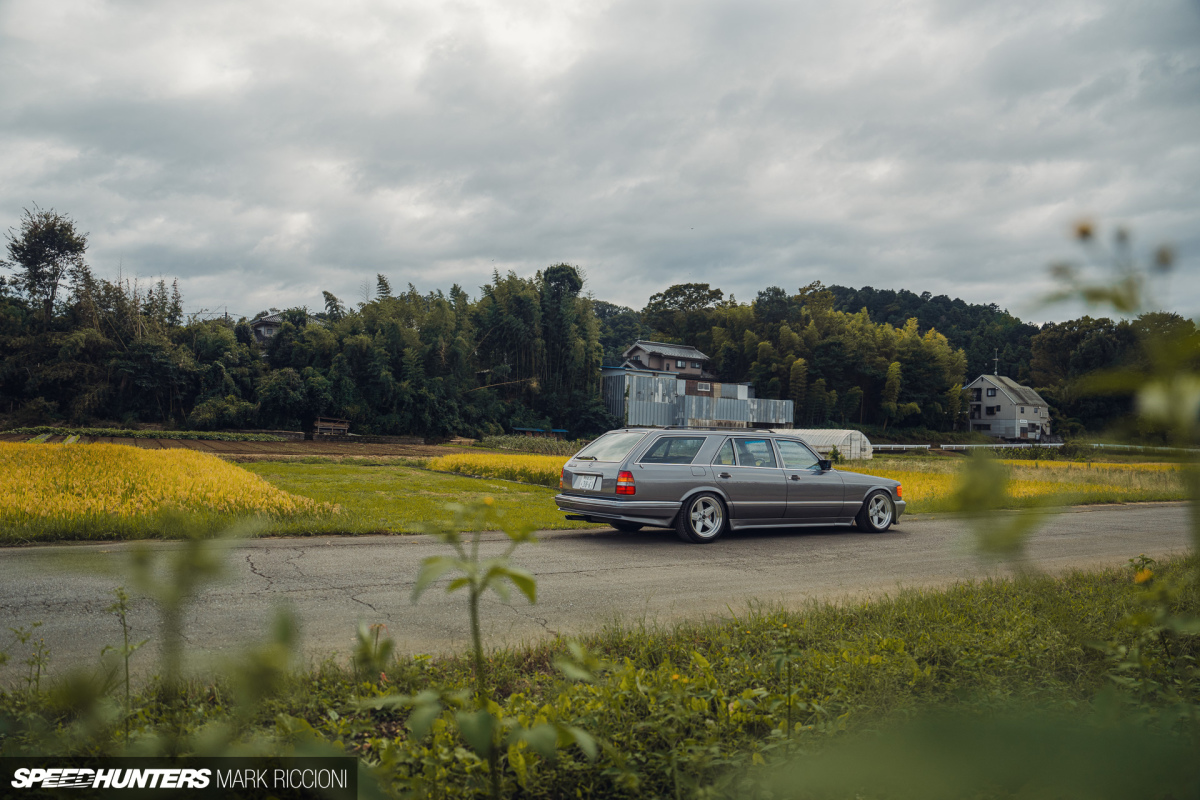
Mercedes never made a wagon variant of the W126, but Higuchi-san’s 500 TE is far from the first conversion. You can thank the 1000 SEL era for that, in particular, Zender who was an early pioneer of the ‘TE’ W126. Zender famously built several examples, including one with an SEC front end, much like Higuchi-san’s creation.
There’s no eBay search or AliExpress link to order W126 estate conversions, but fortunately for Higuchi-san, he didn’t have to start from scratch. Not that it made the level of work required any less.
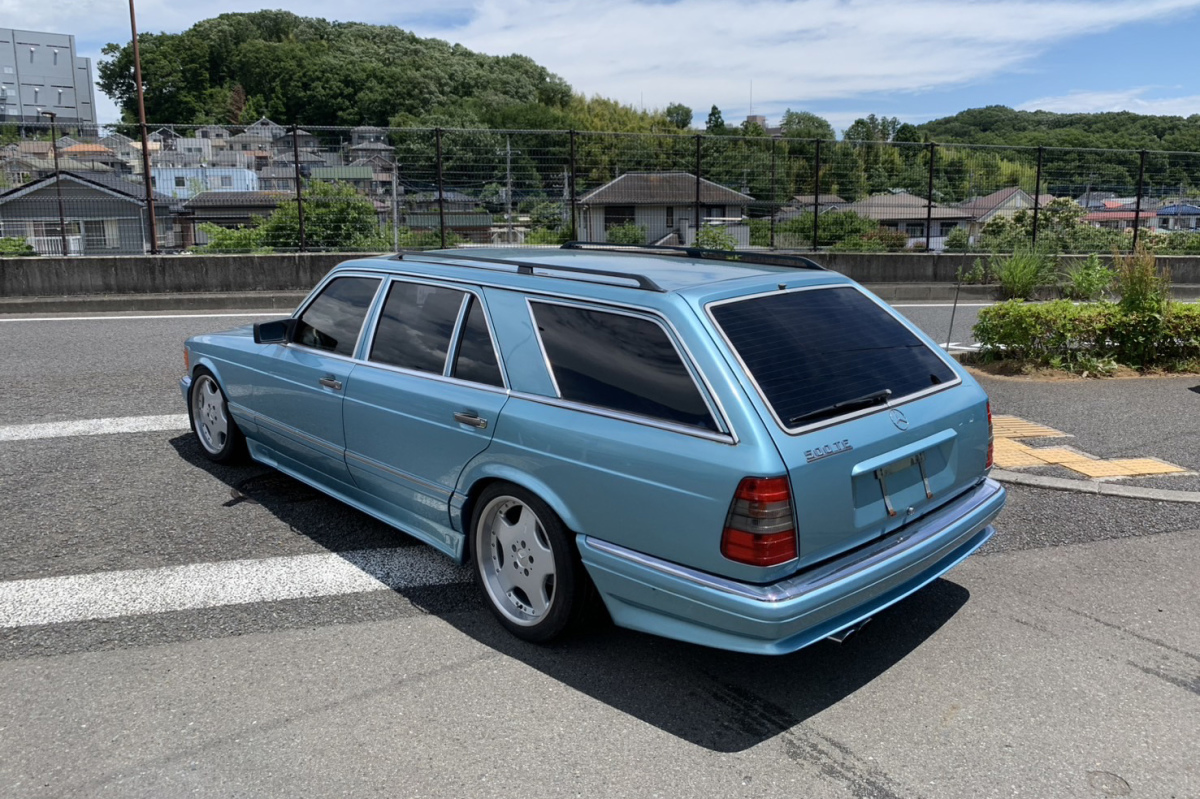
“This particular car was owned by a famous Japanese comedian in 1990,” Higuchi-san explains. “He loved American cars and considered a Caprice wagon and also the S124 estate before deciding to make the S-Class wagon. In his eyes, a wagon that anyone could buy would be boring, so he wanted something bespoke.”
Styling Garage Japan, the now defunct coachbuilder behind the original project, was known for building some wild custom creations, including limousines and even a Z32 wagon.
Their work was highly regarded, and when Higuchi-san saw this particular W126 become available in 2020, he jumped at the chance to own it.
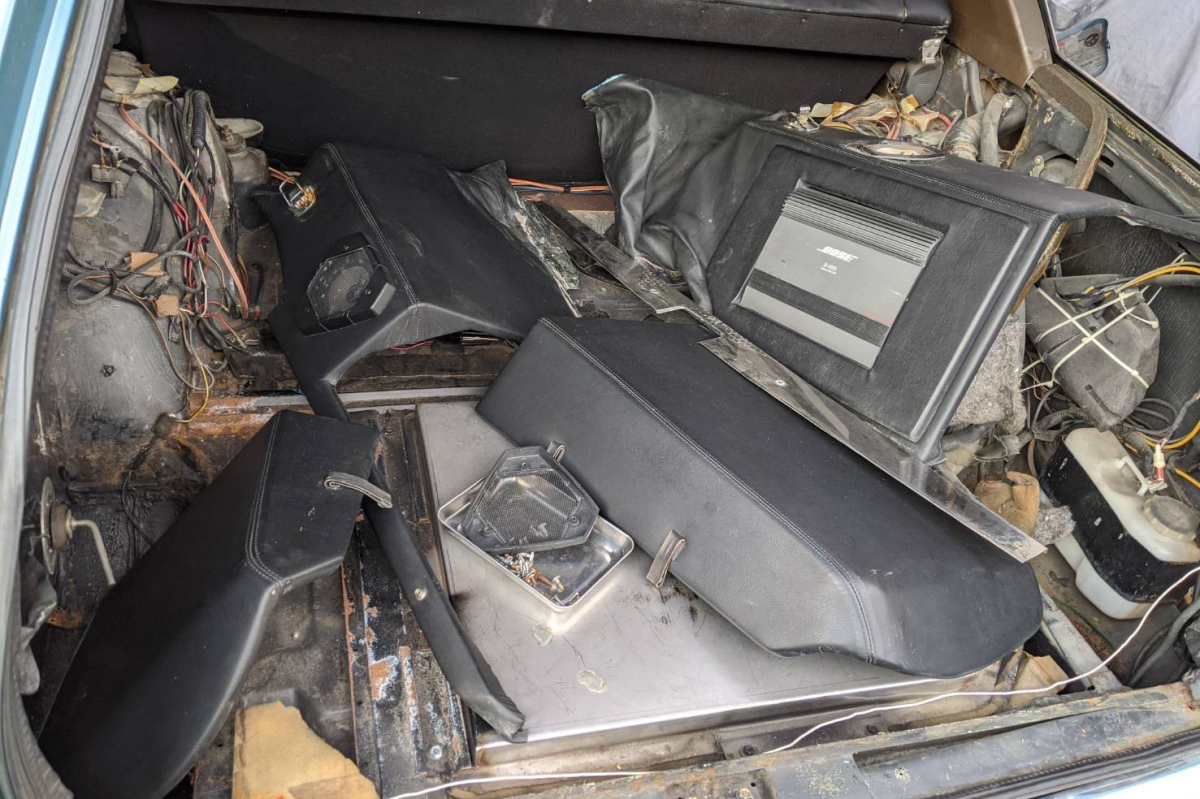
However, the wagon had seen better days. Abandoned for years, the paint was cracked, the frame was rusted, and the bodywork was damaged. Worst of all, the custom interior was completely pulled apart. With no replacement parts available, the only solution was to painstakingly recreate and restore. Two words that haemorrhage time and money like no others.
Condition aside, the 500 TE had all the parts required to restore it to its former glory. The bulk of the custom exterior trim was all intact; it was just a little tired-looking. When Styling Garage Japan built the wagon, they used the rear end of an S124. That makes it sound relatively straightforward until you learn that a W126 chassis is nearly 100mm wider than a W124. Every panel had to be cut, extended, reshaped, and welded back into place – hundreds of hours of labour. You can see why it helped to have oil wealth back in the day to fund such a habit.
What really makes this kind of conversion so tricky is getting all of the swage lines and trim from the W124 panels lined up with the W126. Smoothing everything out would have been quicker, but Higuchi-san was determined to keep the car looking as close to OEM as possible before adding his personal touches.
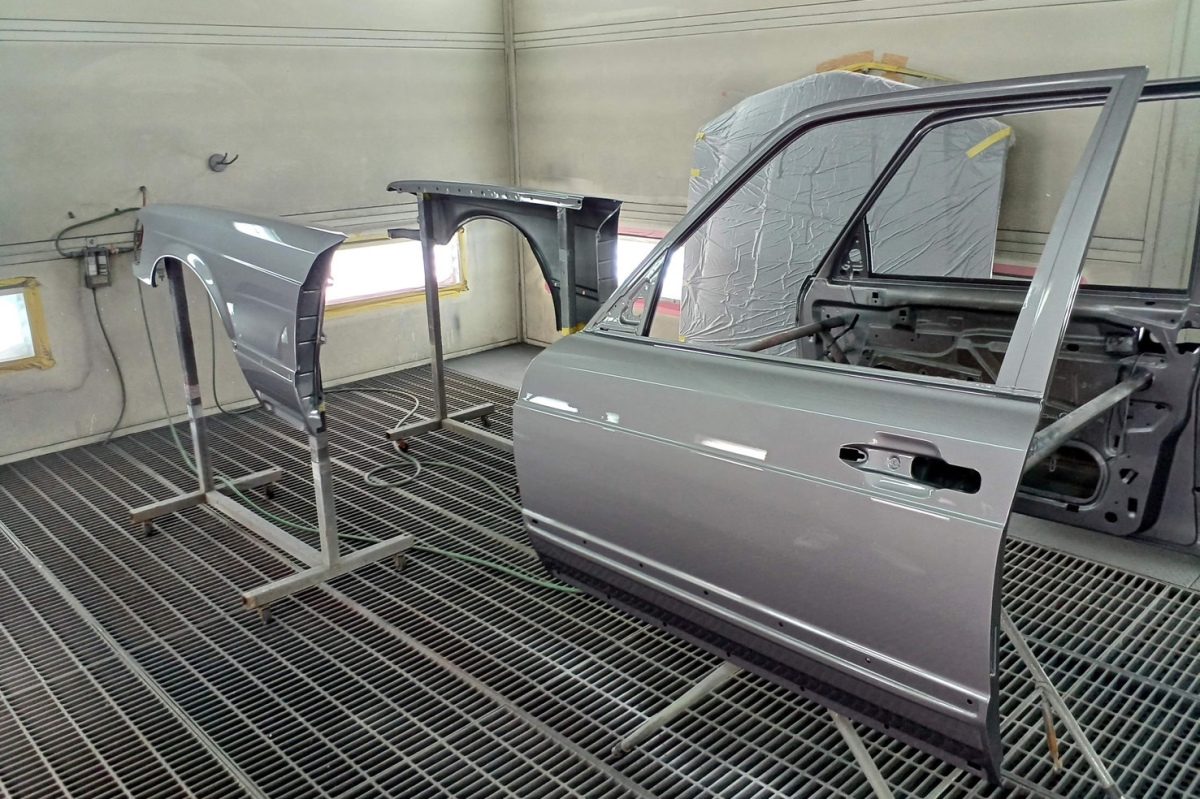
“When it was owned by the comedian, the original Anthracite Grey was repainted to Mercedes Blue Black Metallic, before then further being changed to a lighter blue,” added Higuchi-san. “Because the paint was so damaged, we stripped it all off and resprayed the entire shell Palladium Silver to give it a modern look while staying true to the original colour.”
Seeing as all the chrome trim and plastics around the windows were custom-made by Styling Garage Japan (not a single piece from the W124 lined up against the original saloon items), Higuchi-san had no choice but to powder coat the worn-out mouldings and polish the remaining trim.
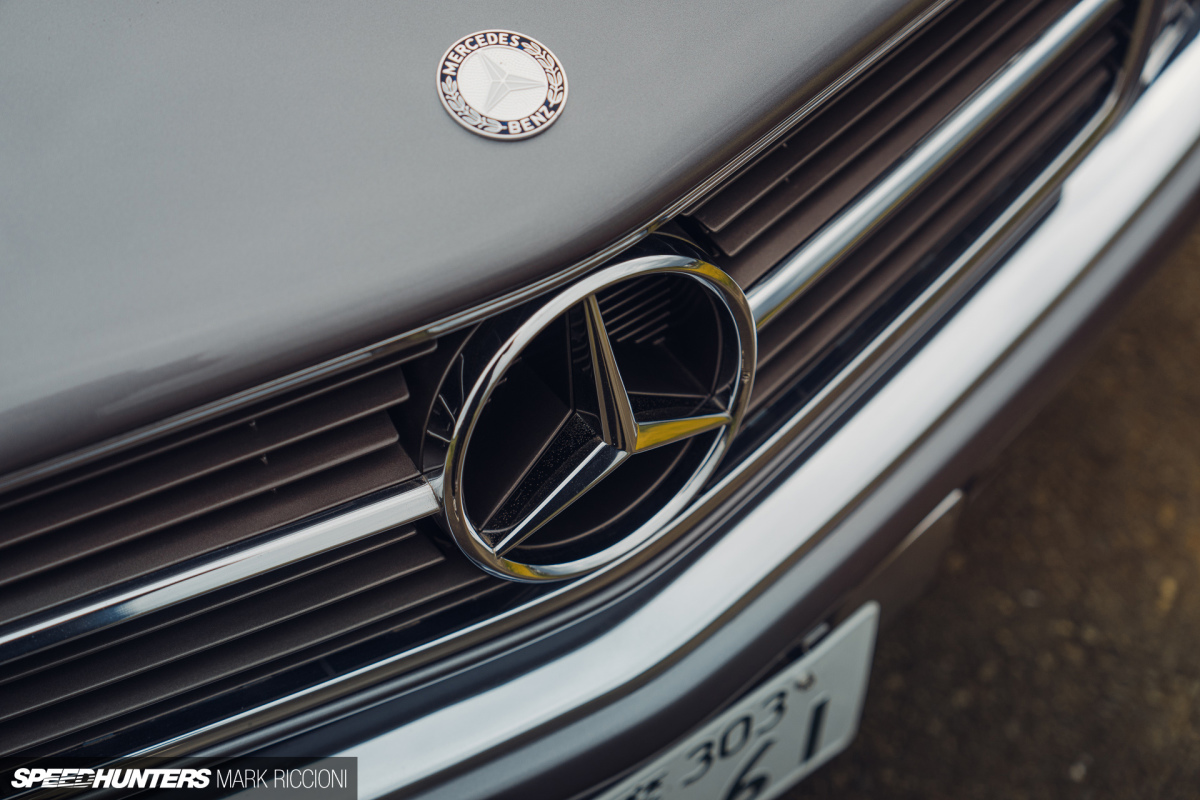
From the rear, you’d be forgiven for thinking it was just a widened S124 thanks to that angular boot and smaller rear lights. However, Higuchi-san wanted to retain the full functionality of the trunk, which meant building an entirely new custom floor panel and restoring all of the plastic trims used inside. Up front, much like Zender’s ’80s concept, a full SEC conversion was undertaken using all factory parts. Although less complex in comparison to the boot fabrication, to do it properly still requires both front wings, the bumper, headlights, grille, bonnet and slam panel.
Higuchi-san’s builds all follow a similar style in terms of the aftermarket parts he fits, the tell-tale sign being his own HWA Asteroid wheels. Measuring in at 17×8.5-inch ET18 and 17×9.5-inch ET17, the Asteroids are almost identical to the original Penta/AMG design bar one key fact: Higuchi-san makes his wheels in 17-inch size, while the original designs only ever existed in up to 16-inch.
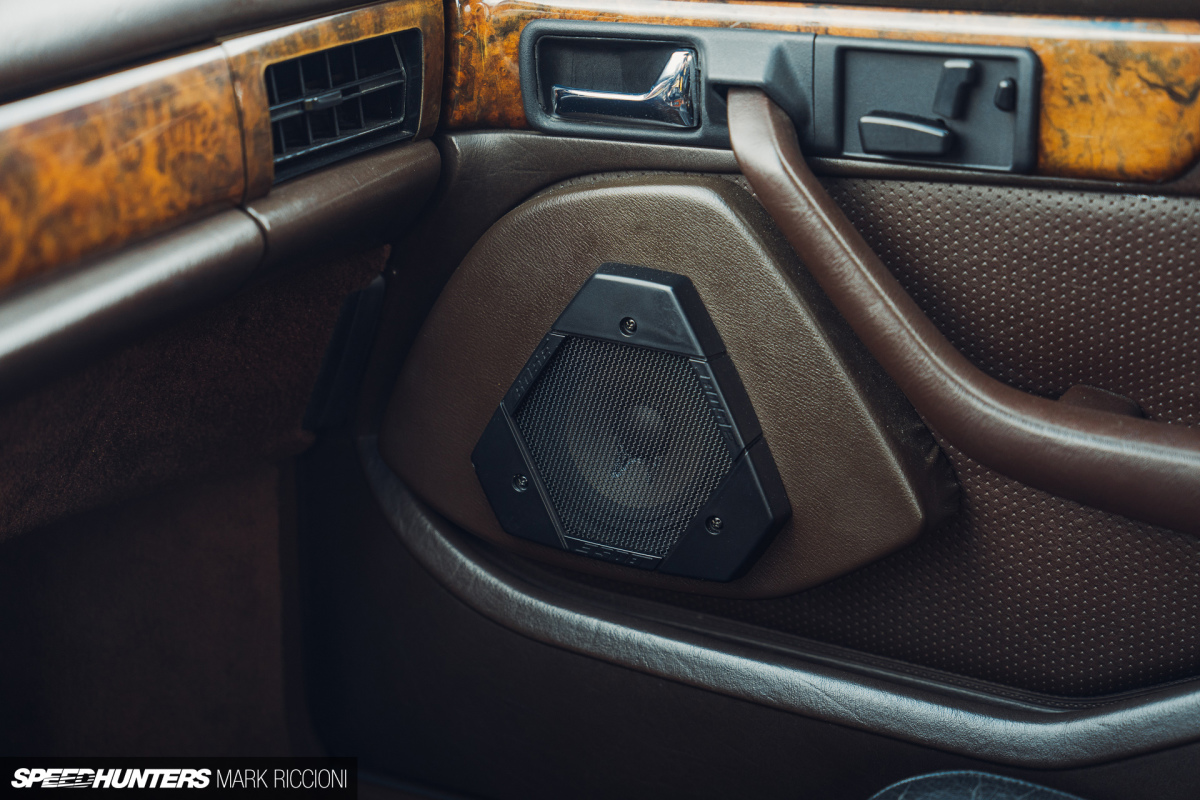
Behind those wheels, you’ll find 6-piston ‘Brabus by Alcon’ brakes, which were first offered as a tuning upgrade for the W124 in the ‘90s. Aside from massively improving the stock brake system, they provide a subtle nod to the 1000 SEL era without overshadowing the rest of the car. The stance is enhanced by Dkubus coilovers, and genuine AMG W126 parts are scattered throughout, including the exhaust, steering wheel, and gauges.
It all gels together brilliantly. Higuchi-san has an annoying habit of building cars which seem to tick all the right boxes, and before you know it, you’re doom-scrolling through eBay preparing to embark on your own Benz build. But that’s a testament to his deep knowledge and passion for both his cars and the era they represent. In a world of quickly assembled builds that are promoted and phased out with dizzying speed, it’s always refreshing to see what Higuchi-san has up his sleeve.
“All in all, the project took three years to restore and complete,” he adds. “There’s still some more work to do, but such an interesting and unique car deserves to be restored properly. I do not build my cars for promotion or to sell, they are to drive and enjoy. I love the look of the estate, and many people cannot believe it was not a factory conversion.”
There are very few cars out there which don’t look better in wagon form, and I don’t ever remember driving a car and complaining that it had too much space. It’s why I’ll always be a massive advocate for any estate car; you get all the benefits of a good saloon with enough space in the back to bundle the whole family in. And Higuchi-san’s W126 500 TE is all the proof you’ll ever need that wagons make everything better.
Mark Riccioni Instagram: mark_scenemedia Twitter: markriccioni mark@speedhunters.com
Chevrolet has announced the prices for the 2025 Corvette ZR1. It is the most expensive Corvette ever made, and yet it offers amazing value.
The new Corvette ZR1 is available in two variants: 1LZ and 3LZ in either coupe or convertible body styles. The base price is set at $174,995, while the 1LZ Convertible costs $1,84,995. The 3LZ variants are priced at $185,995 and $195,995 for the coupe and convertible, respectively.
So, here’s what you get for less than $200,000 in 2025 – A 5.5-liter twin-turbo V8 engine with a flat-plane crank, producing 1064 hp and 828 lb-ft of torque. 0-60 mph in 2.3 seconds and a top speed of 233 mph.
Even the base 1LZ trim is decently equipped. It comes with 8-way power-adjustable seats, a 10-speaker Bose sound system, a 12-inch digital instrument cluster and a digital rearview mirror. With the 3LZ, you get additional features like heated and ventilated seats, a front camera, heated ORVMs, a wireless charger, blind zone alert and carbon paddle shifters; among others.
Chevrolet also offers an optional ZTK Performance Package that costs $1,500. It includes a carbon fibre roof and exterior trim, carbon ceramic brakes, retuned magnetic ride control dampers with stiffer springs.
The technical storage or access is strictly necessary for the legitimate purpose of enabling the use of a specific service explicitly requested by the subscriber or user, or for the sole purpose of carrying out the transmission of a communication over an electronic communications network.
Preferences
The technical storage or access is necessary for the legitimate purpose of storing preferences that are not requested by the subscriber or user.
Statistics
The technical storage or access that is used exclusively for statistical purposes.The technical storage or access that is used exclusively for anonymous statistical purposes. Without a subpoena, voluntary compliance on the part of your Internet Service Provider, or additional records from a third party, information stored or retrieved for this purpose alone cannot usually be used to identify you.
Marketing
The technical storage or access is required to create user profiles to send advertising, or to track the user on a website or across several websites for similar marketing purposes.