Home Blog Page 245

2025 Kia Sorento PHEV promptly recalled for fuel leak, possible fire

0


The updated 2025 Kia Sorento PHEV is already being recalled, due to possible fuel leaks that present a fire risk.

The recall of 1,385 plug-in hybrid crossovers aims to address the potential for the steering rack to damage fuel lines in a crash, according to the NHTSA. This can occur during certain frontal collisions due to the front subframe being displaced rearward and pushing the steering column into the fuel line, the safety agency said. Fuel can then leak from the damaged lines and catch fire in the presence of an ignition source.

2025 Kia Sorento plug-in hybrid

2025 Kia Sorento plug-in hybrid

This issue was discovered during crash testing of 2026 Sorento PHEVs, which have the same front subframe design as the 2025 model. Kia told the NHTSA that it is not aware of any fires, or any crashes, injuries, or fatalities, related to this issue.

The remedy is a cover around the fuel line, which Kia has already begun adding to vehicles outside the recall population. Dealers will install this cover free of charge, and Kia expects to mail owner notification letters telling customers when to schedule to this work Jan. 10, 2025. Owners can also call Kia customer service at 1-800-333-4542 for more information. Kia’s reference number for this recall is SC328.

2025 Kia Sorento plug-in hybrid

2025 Kia Sorento plug-in hybrid

Kia gave the Sorento PHEV revised styling and tech features in line with the non-hybrid Sorento and Sorento Hybrid for 2025. But current pricing, along with the loss of federal tax-credit eligibility, means the Sorento PHEV now costs $10,000 more than when it launched three years ago.

This refresh didn’t touch the powertrain, which consists of a 1.6-liter turbo-4 and 6-speed automatic transmission teamed with a single electric motor and 13.8-kwh battery pack. This combination sends 261 hp to all four wheels and provides an estimated 30 miles of electric range. That keeps the Sorento competitive amid the limited number of similar-sized plug-in hybrid crossovers currently available.


Source link

GM working on mixed-chemistry EV battery packs

0


General Motors is following a handful of other automakers and battery firms in developing mixed-chemistry battery packs for electric vehicles.

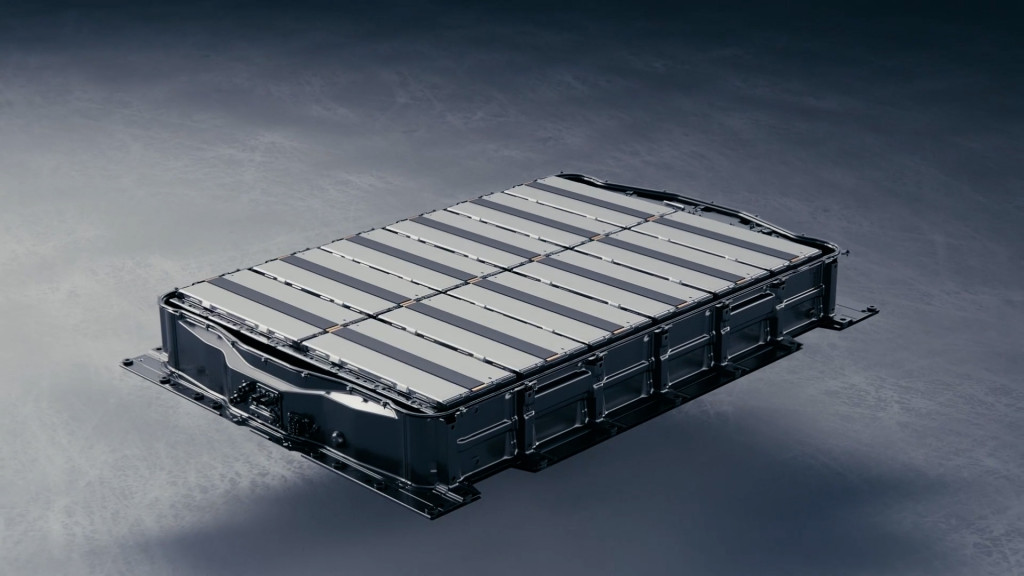
GM laid out its version of this concept in a patent filing published by the United States Patent and Trademark Office (USPTO) Nov. 28, 2024. In that document, which was first filed by GM Aug. 2, 2023, the automaker discusses combining nickel manganese cobalt (NCM) with lithium iron phosphate (LFP) or other similar chemistries.

General Motors Ultium batteries

General Motors Ultium batteries

The two chemistries would be split into discreet modules, potentially with different usable capacities, according to the filing. A controller would monitor factors such as temperature and state of charge, and potentially bypass one chemistry or another in a given situation.

A mixed-chemistry pack could balance performance and cost by combining cheaper LFP battery cells with NCM cells, which offer higher power and energy density, GM notes in the filing. Two different chemistries can lead to a charge imbalance that reduce the usable capacity of a battery pack, GM adds, but the automaker hopes ability to bypass one set of cells while charging another will address that.

BMW iX prototype to use Our Next Energy mixed-chemistry battery pack

BMW iX prototype to use Our Next Energy mixed-chemistry battery pack

Certain chemistries can also be charged faster, which could enable smaller battery packs and counteract current pack inflation, which adds cost and weight, consumes more raw materials, and in the real world still often leads to longer charging times once that added charge is exhausted. Combining some of these specialized cells with slower-charging commodity cells could help make EVs more practical.

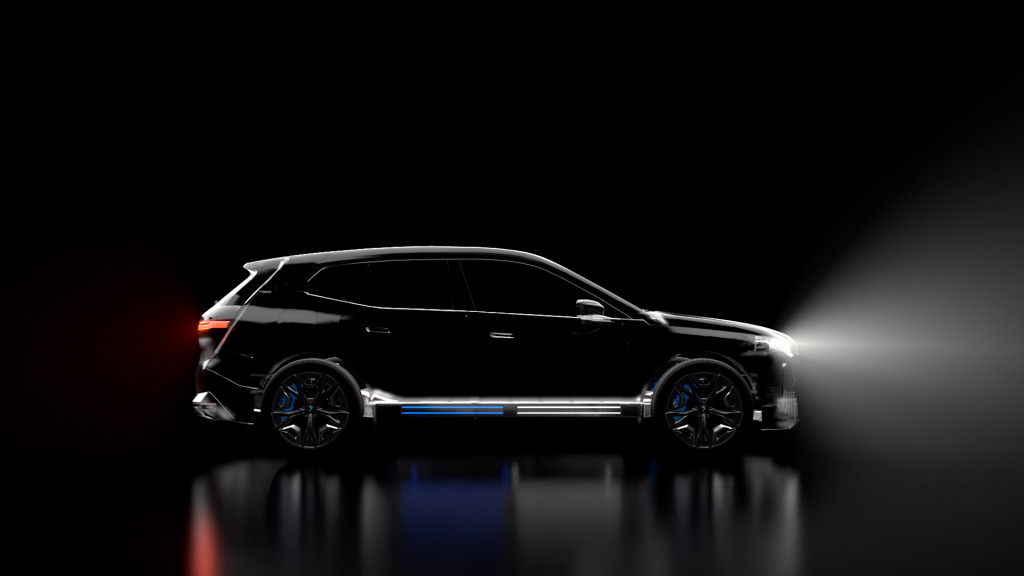
Other companies are working on mixed-chemistry battery packs. CATL recently announced one aimed at bringing faster charging to plug-in hybrids, and U.S. startup Our Next Energy (ONE) showed in 2022 how it could use mixed-chemistry tech to extract 600 miles of range from a BMW iX—nearly doubling its EPA range. Mercedes-Benz has also developed hardware that could lay the groundwork for mixed cell types.


Source link

Porsche 996 Turbo Buyers Guide

0


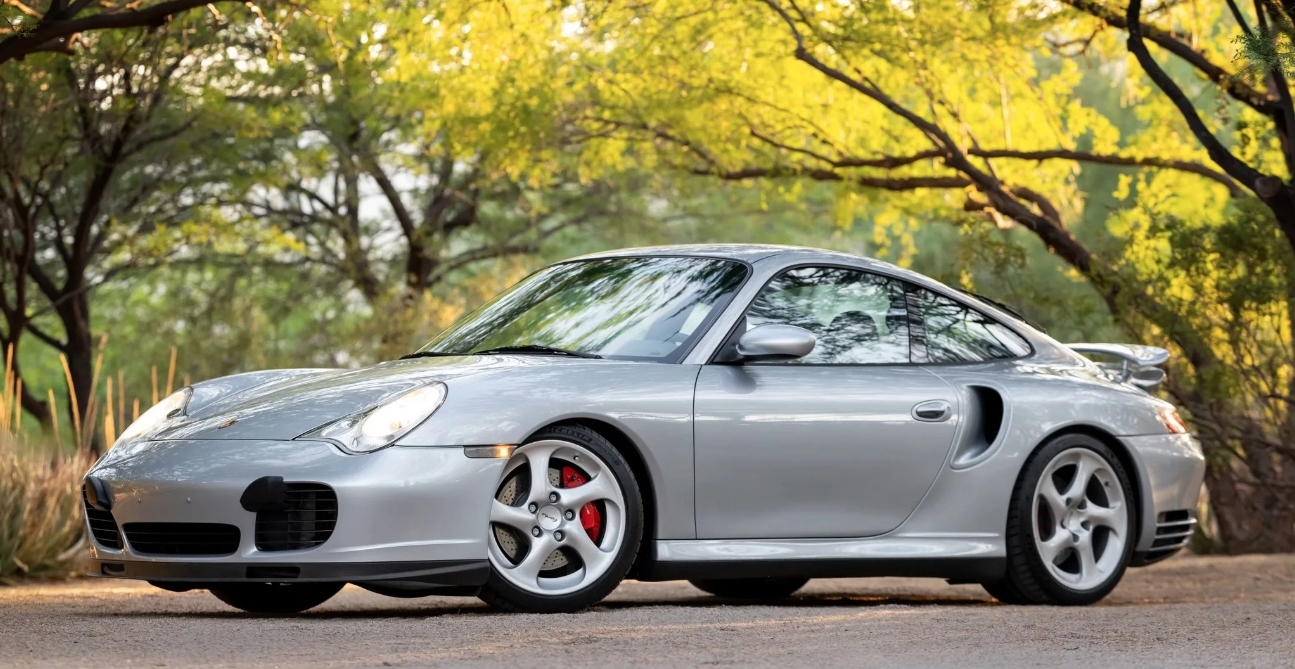
When the Porsche 996 Turbo was introduced for the 2001 model year, it marked a important evolution in the 911 Turbo lineage. As the first water-cooled 911 Turbo, it represented a significant departure from its air-cooled predecessors, incorporating advanced engineering to elevate performance and reliability. 

Under the rear decklid of the 996 Turbo lies the legendary 3.6-liter twin-turbocharged flat-six engine, derived from Porsche’s Le Mans-winning GT1 race car. Known as the Mezger engine, this powerplant produced 415 hp and 415 lb-ft of torque in its standard configuration, allowing the 996 Turbo to accelerate from 0 to 60 mph in approximately 4.0 seconds and reach a top speed of 189 mph.

Buyers seeking more performance could opt for the X50 Power Kit, boosting output to 450 hp and enhancing the car’s already impressive capabilities.

The exterior design of the 996 Turbo set it apart with wide rear fenders, integrated side air intakes, and a distinctive fixed rear wing with an active spoiler for improved aerodynamics.

The front fascia featured large air intakes and bi-xenon headlights, combining function with aggressive styling. The overall design was both sleek and muscular, signaling the car’s performance potential while maintaining the classic 911 silhouette.

Inside, the 996 Turbo offered a luxurious yet driver-focused cabin. High-quality leather upholstery, ergonomic seats, and advanced features like automatic climate control and a premium sound system catered to comfort and convenience. The dashboard’s design echoed Porsche’s racing heritage, ensuring intuitive access to controls while prioritizing the driving experience.

Optional extras included navigation systems and upgraded audio equipment, reflecting the car’s dual nature as both a grand tourer and a high-performance machine.

Throughout its production, the 996 Turbo faced competition from several notable rivals in the high-performance sports car segment. Chief among these were the Ferrari 360 Modena, Lamborghini Gallardo, and Aston Martin V8 Vantage.

Each offered its own unique blend of performance, luxury, and brand prestige, but the 996 Turbo distinguished itself with its robust engineering, all-wheel-drive capability, and daily usability. It remains a standout choice for enthusiasts seeking a versatile and thrilling sports car experience.

Model Changes (Breakdown by Year)

2000 Porsche 996 Turbo

In 2000, the Porsche 996 Turbo made its first public appearance at the Geneva Motor Show in March. This debut marked a significant moment for Porsche enthusiasts, as the car represented a new chapter in the storied 911 Turbo lineage. 

Pre-production models were showcased to the public, generating considerable excitement and anticipation for its upcoming release. The 996 Turbo’s combination of advanced engineering and iconic design promised to set a new benchmark in high-performance sports cars.

2001 Porsche 996 Turbo

In 2001, the Porsche 996 Turbo officially entered production, with the first units released for the model year. At its heart was a 3.6-liter twin-turbocharged flat-six engine, delivering an impressive 415 hp and 415 lb-ft of torque.

Buyers had a choice between a 6-speed manual transmission and a 5-speed Tiptronic automatic, both paired with standard all-wheel drive (AWD) to ensure excellent handling and traction in various driving conditions.

The performance of the 996 Turbo set it apart from its contemporaries, achieving 0–60 mph in just 4.0 seconds and reaching a top speed of 189 mph. Its exterior design further emphasized its performance credentials, featuring wide rear fenders, integrated side air intakes, and a fixed rear wing with an active spoiler for improved aerodynamics.

These design elements combined to create a bold yet functional appearance.

Pricing for the 996 Turbo was positioned higher than the standard 996 Carrera, reflecting its enhanced performance and features. The model’s introduction marked a significant milestone in Porsche’s history.

The 2001 Porsche 996 Turbo had a starting manufacturer’s suggested retail price of $111,000.

2002 Porsche 996 Turbo

In 2002, the Porsche 996 Turbo received a series of minor refinements aimed at enhancing its appeal. Updates to the interior included new materials and color options, allowing buyers to further personalize their vehicles. The Tiptronic automatic transmission was slightly refined to deliver smoother shifts, improving the overall driving experience.

Additionally, Porsche expanded the range of paint and trim options, offering greater customization for discerning customers. New exterior paint options included Atlas Grey Metallic, a sophisticated dark grey with a metallic sheen, and Sterling Silver Metallic, a bright silver finish that provided a sleek and contemporary appearance. 

For the interior, Porsche introduced trims such as Cinnamon Brown leather, which added warmth and luxury, and Natural Dark Grey leather, offering a subtle and elegant ambiance. These additions allowed buyers to further tailor their 996 Turbo to personal tastes, enhancing the vehicle’s exclusivity and appeal.

Despite these updates, there were no major mechanical or exterior changes for the 2002 model year, maintaining the core performance and design that defined the 996 Turbo.

The 2002 Porsche 996 Turbo had a starting manufacturer’s suggested retail price of approximately $115,765.

2003 Porsche 996 Turbo

In 2003, Porsche introduced the optional X50 Performance Package for the 996 Turbo, offering buyers an opportunity to elevate the car’s already impressive performance. This package increased the engine’s output to 450 hp and 457 lb-ft of torque, providing a noticeable boost in acceleration and top-end speed. 

The X50 package included larger turbochargers, upgraded intercoolers, and revised engine management, all designed to enhance the vehicle’s power delivery and overall performance.

With the X50 package equipped, the 996 Turbo could achieve 0–60 mph in just 3.8 seconds and reach a top speed of 192 mph, solidifying its position as a top-tier sports car of its time. Beyond performance, other updates for the 2003 model year included enhanced audio systems and navigation upgrades.

Despite these advancements, the Turbo Cabriolet (convertible) remained unavailable in 2003, keeping the lineup exclusively coupe-focused. This ensured the 996 Turbo retained its reputation as a hard-edged performance machine with a singular focus on delivering driving thrills.

The 2003 Porsche 996 Turbo had a starting manufacturer’s suggested retail price of approximately $116,200 in the United States. Optional packages and customizations, such as the X50 Performance Package, could increase the overall cost. The X50 Performance Package, for instance, was available for an additional $17,000.

2004 Porsche 996 Turbo

In 2004, Porsche expanded the 996 Turbo lineup by introducing the Turbo Cabriolet, a convertible version of the popular Turbo coupe. 

The Cabriolet retained the same impressive performance as its coupe counterpart, with a 3.6-liter twin-turbocharged flat-six engine producing 415 hp and paired with all-wheel drive (AWD). One of the standout features of the Cabriolet was its ability to maintain the wide body and aerodynamic enhancements of the coupe, including the active rear spoiler, ensuring no compromises in performance or handling.

In addition to the introduction of the Turbo Cabriolet, Porsche made several refinements across the lineup for the 2004 model year. Navigation and communication systems were improved, offering enhanced functionality and user experience. 

The Tiptronic automatic transmission also received further calibration adjustments, contributing to smoother shifts and a more refined driving experience. 

The 2004 Porsche 911 Turbo Coupe had a base price of approximately $116,200. And 2004 Porsche 911 Turbo Cabriolet, introduced that year, started at a higher price due to its convertible design and additional features. For instance, a well-equipped Turbo Cabriolet had an original price of $126,200. Just like the previous year, the X50 Performance Package was available for an additional $17,000.

2005 Porsche 996 Turbo

In 2005, the production of the standard Porsche 996 Turbo came to an end, paving the way for the introduction of the next-generation 997 Turbo. As a farewell to the 996 Turbo, Porsche launched the special high-performance Turbo S variant.

The Turbo S came with several notable upgrades, including a power increase to 444 hp and 457 lb-ft of torque, achieved through the inclusion of the X50 performance package as standard.

Additionally, the Turbo S featured Porsche Ceramic Composite Brakes (PCCB) as standard equipment, offering enhanced stopping power and improved durability. Aerodynamic enhancements and exclusive badging further distinguished this special edition from the standard Turbo.

Available in both coupe and cabriolet configurations, the Turbo S catered to a wide range of enthusiasts. Its limited production run added to its desirability, making it a highly collectible model among Porsche aficionados. Porsche manufactured approximately 600 units of the Turbo S Coupe and around 963 units of the Turbo S Cabriolet. 

The Turbo S Coupe had a starting price of approximately $133,495, while the Turbo S Cabriolet started at a higher price of around $143,295

The conclusion of the 996 Turbo production marked the end of a significant chapter in Porsche’s history, as the brand prepared to usher in the next evolution of the 911 Turbo lineage.

Porsche 996 Turbo Common Problems

The Porsche 996 Turbo is widely regarded as one of the most reliable Porsches ever built. In fact, there is even an example in the United States with over 700,000 miles on the original engine block, a testament to its durability (https://www.hotcars.com/high-mileage-porsche/). However, despite its reputation for being bulletproof, the 996 Turbo is not without its flaws. While most owners appreciate the excitement and reliability it offers, a few have encountered issues over time. Below are some of the most common problems that 996 Turbo owners have reported.

Keep in mind, that it is essential that all cars, even supercars, can have issues and it is crucial to perform a Pre-Purchase Inspection (PPI) from an authorized dealer or experienced independent mechanic to reveal all issues.

Coolant Leaks: The 996 Turbo may experience coolant leaks, often due to cracked cylinder liners. Porsche used an insert-molding casting process for the cylinder liners during production, which, over time, can lead to cracks from engine vibrations. Detecting green liquid under or around the engine can indicate this issue.

Rear Main Seal (RMS) Leaks: Some 996 models have reported issues with the rear main seal, leading to oil leaks. This problem, often due to improper machining, may require engine replacement to correct chronic RMS leaks. Porsche redesigned the rear main seal, and the most current PTFE seal addresses most RMS issues.

Intermediate Shaft (IMS) Bearing Failure: The intermediate shaft bearing is a known weak point in some 996 engines, with failure rates of up to 8% disclosed during legal proceedings. Failure of the IMS bearing can lead to catastrophic engine damage. It’s important to note that these mechanical issues do not apply to the Hans Mezger-designed GT3, Turbo, and GT2 engine models.

Cracked Cylinder Heads: High torque and engine stress can lead to cracked cylinder heads, particularly around the inner exhaust valve seat. This issue is common in the M96 engines and can result in coolant and oil intermixing, leading to engine damage.

Electrical Issues: Owners have reported problems with power windows, door locks, and dashboard instruments. For instance, there are instances where the door won’t open from inside or outside, often due to issues with the door lock mechanism. These electrical gremlins can be frustrating and may require diagnostic work to resolve.

Recalls

2001–2002 Porsche 911 Turbo vehicles

Fuel Line Recall (Recall Number: 02V244000)

Dealers inspected the fuel lines for misalignment and replaced any damaged lines to prevent leaks. Potential fuel leakage due to a misaligned fuel line in the engine compartment, which could lead to fire hazards. 

2001 Porsche 911 Turbo vehicles

Seat Belt Buckle Recall (Recall Number: 01V324000)

Dealers inspected and, if necessary, tightened the front seat belt buckle attaching bolts to the correct torque specifications. The front seat belt buckle attaching bolts may not have been properly tightened, potentially compromising seat belt effectiveness during a crash. 

It’s important to note that recall information can be updated over time. For the most accurate and current details, owners should consult the Porsche Recall Lookup by entering their Vehicle Identification Number (VIN).

Maintenance and Ownership Costs

Compared to other high-performance supercars, owning a Porsche 996 Turbo is considered to have relatively low maintenance requirements.

However, it is important to remember that regular maintenance and repairs will still be necessary, and the costs can vary depending on whether you take your car to a dealer or an independent mechanic.

Here are the suggested service schedule and intervals per Porsche:

7,500-Mile Service (Annually)

15,000-Mile Service (Every 2 years)

30,000-Mile Service (Every 4 years)

60,000-Mile Service (Every 6 years)

  • Replace drive belt

  • Clean throttle body

90,000-Mile Service (Every 9 years)

  • Replace transmission fluid (manual)

  • Replace transmission fluid and filter (automatic)

  • Replace front differential oil

Additional Notes:

  • The original factory schedule suggested 15,000-mile oil changes, but more frequent changes (every 7,500 miles or annually) are now recommended to promote engine longevity.

Here is a rough estimate of typical service costs associated with the Porsche 996 Turbo:

  • Oil Change – The Porsche 996 Turbo requires high-quality synthetic oil to maintain its performance and longevity. An oil change typically costs between $150 and $250, which includes the cost of the oil, oil filter, and labor. It’s recommended to perform oil changes annually or every 7,500 miles.

  • Minor Service – Minor services for the Porsche 996 Turbo include an oil change, brake fluid replacement, and inspections of key components. These services are generally performed every 15,000 miles or 2 years. The cost for a minor service typically ranges from $300 to $600, depending on the service center and any additional work needed.

  • Major Service – Major services for the Porsche 996 Turbo include more comprehensive maintenance tasks such as spark plug replacements, drive belt inspections, brake fluid changes, and other preventative measures. These are usually recommended every 30,000 to 60,000 miles. The cost for a major service can range from $1,200 to $2,500, depending on the extent of work required.

  • Tires – The Porsche 996 Turbo uses high-performance tires, which wear more quickly due to its all-wheel-drive system and aggressive handling capabilities. A set of four high-performance tires typically costs between $1,200 and $2,000, depending on the brand and specifications. Michelin Pilot Sport or Pirelli P Zero tires are commonly used.

  • Brakes – The braking system of the Porsche 996 Turbo features high-performance pads and rotors, which are designed to handle spirited driving but may wear faster under aggressive use or track conditions. Replacing the brake pads and rotors for all four corners typically costs between $1,500 and $2,500, depending on whether OEM or aftermarket parts are chosen. For the Turbo S variant, Porsche Carbon Ceramic Brakes (PCCB) are standard, offering exceptional stopping power and durability. However, replacement costs for PCCB systems are significantly higher, often exceeding $10,000 for a full set, making them a consideration for long-term maintenance planning.

  • Clutch/Transmission – For manual transmission Porsche 996 Turbo models, replacing the clutch can be labor-intensive, with costs generally ranging between $2,000 and $3,500. This includes the clutch components and labor, with additional expenses if the flywheel also requires replacement. For Tiptronic-equipped 996 Turbo models, transmission maintenance costs can vary. While the Tiptronic system is generally reliable, fluid changes are recommended at regular intervals and cost approximately $300 to $500. In the rare case of a Tiptronic transmission rebuild, costs can escalate significantly, often exceeding $5,000 depending on the extent of the work required.

Options List

The Porsche 996 Turbo offered an extensive list of options. 

Performance enthusiasts could select the X50 Performance Package, which boosted the engine’s output to 450 hp through the inclusion of larger turbochargers, upgraded intercoolers, and revised engine management. This package not only enhanced acceleration and top speed but also brought the 996 Turbo’s performance closer to that of exotic supercars, all while maintaining its everyday usability.

For those prioritizing advanced braking performance, Porsche offered the Porsche Carbon Ceramic Brakes (PCCB) as an optional upgrade on standard Turbo models.

These brakes, which were standard on the Turbo S, delivered stopping power and resistance to fade, making them ideal for spirited driving and track use. However, their high-performance nature came with a premium, both in initial cost and maintenance.

Interior customization options were equally impressive, allowing buyers to tailor the cabin to their taste. Full leather upholstery, Alcantara headliners, and a selection of trim materials, including wood, aluminum, and carbon fiber, added an extra layer of luxury.

Buyers could also opt for sport seats for more bolstering, advanced navigation systems, and premium audio packages such as the Bose Surround Sound system.

Exterior options included an array of unique paint colors like Atlas Grey Metallic and Carmon Red Metallic, alongside factory aero kits that enhanced the car’s styling and aerodynamic. Wheels were another area of personalization, with buyers able to choose from painted or polished designs to perfectly complement their vehicle’s aesthetic.

2004 Porsche 911 Turbo Cabriolet window sticker

Key Options

Porsche 996 Turbo Price and Values

The Best Porsche 996 Turbo to Buy

When it comes to choosing the best Porsche 996 Turbo, several key factors can influence your decision, including the model year, options, and the vehicle’s overall condition.

For buyers seeking the ultimate version of the 996 Turbo, the 2005 Turbo S is a great choice. As the final iteration of the 996 Turbo, the Turbo S benefits from all the refinements made throughout the model’s production run.

It comes standard with the X50 Performance Package, which boosts engine output to 450 horsepower, and features Porsche Carbon Ceramic Brakes (PCCB), providing exceptional stopping power.

Additionally, the Turbo S includes exclusive badging and aerodynamic enhancements, making it a highly desirable and collectible variant since there are approximately 600 units of the Turbo S Coupe and around 963 units of the Turbo S Cabriolet..

In addition to the Turbo S, earlier models equipped with the optional X50 Performance Package are desirable. These cars share many of the performance attributes of the Turbo S but may be available at a lower price point. When considering these models, ensure that the X50 package is present and verified through the vehicle’s build sheet.

In terms of market stability, these 996 Turbo’s have come to a point where all model years from 2001 to 2005 can make good hacks if you find the right example. 

The condition and mileage of the vehicle are very important factors when buying a 996 Turbo. Well-maintained cars with comprehensive service records and low mileage are more likely to retain their value and deliver a better ownership experience. Pay special attention to common wear-and-tear items, such as suspension components, brakes, and tires, as these can significantly impact maintenance costs.

Therefore, it’s essential to evaluate your needs, preferences, and budget when selecting a Porsche 996 Turbo. Whether you choose the Turbo S for its exclusivity and top-tier performance or a well-kept earlier model with the X50 package, ensuring the vehicle is in excellent condition with a full-service history will enhance your ownership experience and help secure your investment.

Conclusion

In summary, the Porsche 996 Turbo remains an exceptional choice for enthusiasts seeking a high-performance sports car that balances everyday usability with exciting performance. With starting prices in the $50,000 to $75,000+ range for well-maintained examples, it offers impressive value for a vehicle of its caliber.

While competitors like the Ferrari 360 Modena, Lamborghini Gallardo, and Aston Martin V8 Vantage offer unique experiences, the 996 Turbo distinguishes itself with its all-wheel drive system, robust Mezger engine, and timeless design.

For those who value a blend of precision engineering, practicality, and exhilarating performance, the Porsche 996 Turbo stands out as a great and iconic option.

Car Hacking Shortcuts

  • Look for models equipped with the X50 Performance Package for increased power

  • Opt for the Turbo S variant for exclusivity, standard Porsche Carbon Ceramic Brakes, and long-term collectibility

  • Prioritize well-maintained examples with complete service history to minimize maintenance costs.

  • Choose a manual transmission model for the most engaging driving experience and resale value


Source link

Chris Harris’ Deep Dive on the 992.2 Porsche 911 GTS (Video)

0


The hybridization of the 911 is no longer just a concept. In fact, the manifestation of it has been materially present for a few months now, after making somewhat of silent debut back in July of 2024. Presenting itself first—and for now, exclusively—as the new 2025 Porsche 911 GTS, the company’s latest “T-Hybrid” technology has been on full and accessible display, at least to some automotive journalists. From what I’ve gathered online, the first stateside owners are expecting deliveries any day now.

Your usual suspects in the review space have already given the GTS a quick glance, with the general consensus being that the addition of Porsche’s mild hybrid technology doesn’t take away anything from the 911’s ability to remain very 911-ty. Of course, the most avid of purists will have to contend with the idea of having no manual transmission option, while cross-shoppers will have to wrestle with the significant price bump when comparing its competition.

In any case, the new Porsche 911 GTS is much more than something in and of itself. Porsche has already gone on the record to state that the upcoming Porsche 911 GT2 RS will also be a mild hybrid, so we should be witnessing some trickle down—or in the latter’s case, trickle up—effects over the conclusion of the 992 generation, and more than likely, well beyond it.

Without further ado, here’s Chris Harris via Chris Harris on Cars: Porsche 992 Carrera GTS Hybrid Review. I’ve always been a big fan of Chris’ more candid take on car reviewing, while nevertheless, still setting the gold standard of contemporary automotive journalism. Enjoy!


Source link

15 Pilot-approved Amazon Travel Essentials

0


Growing up with a dad who worked as a pilot for Delta Airlines had some major perks — obviously, the main one being the unlimited chance to fly stand-by (but having a kitchen bin that was always full of Biscoff cookies and the occasional can of Pawberry Punch didn’t hurt either). I got to see the world by his side as we ventured together to places like Peru, France, and Germany. He would tell me to pack my bag for “Rome or Hawaii,” and then we’d show up at the airport to see which flight we could get on. His roughly 43 years of experience as a pilot also had a profound effect on how I travel (carry-on-only, of course) and what I pack (multi-purpose items always).

Even after working as a travel writer for more than 15 years, it’s still my dad’s travel hacks and packing tips that come to mind as I’m preparing for any type of trip. He instilled in me a passion for travel along with a very minimalist “be ready for anything” sort of mentality when it comes to packing. I’ve now been to 86 countries, and still, some of my favorite moments have included meeting up with him at Atlanta Airport when our layovers overlapped, swapping travel hacks and mishaps over a quick cup of coffee. The evidence of his influence can be seen in my carry-on, and these are some of my favorite “dad hack” travel essentials that I turn to most often.  

Portable Door Lock & Door Stop Alarm Set

Amazon


My dad used to travel with a little door hanger alarm that my sister and I were terrified to go near in case we would accidentally set it off (read: it was loud). I thought he was just being an overprotective dad until I started traveling alone and realized how many people I know have stories of their rooms being entered during their stays. I now always travel with one of these types of security devices as a deterrent against break-ins.   

Black Diamond Cosmo 350 Headlamp

Amazon


I’ve never seen my dad without a headlamp within easy reach — yes, even while traveling. He claims it’s the best travel accessory, and often uses it in hotels as a reading light or to navigate easily around the room in the middle of the night. Much easier than searching for oddly placed light switches and lamps. I also like it in case of a hotel power outage or when walking through dimly lit parking garages or parking lots. 

Travelpro Maxlite 5 Softside 22-inch Carry-on

Amazon


There’s a reason why Travelpro is the preferred bag by many airline crew members and a brand Travel + Leisure has tested and recommended many times. I love my MaxLite 5 because it’s lightweight, durable, and can hold much more than the average suitcase. My dad uses a similar Travelpro suitcase which has two wheels and is soft-sided — only he bought at Costco, which is his other travel hack due to their generous return policy.

Gear Aid Hero Clip

Amazon


I never travel without carabiners, and I tend to use them for everything from clipping in my water bottle to securing my zippers together for city travel. I love this Hero Clip because it reminds me of the J Hook my dad used to travel with when I was a kid. He would effortlessly connect his crew bag and briefcase or backpack as soon as we cleared TSA, and I get it now as I’m entering my “not smart to wear a heavy backpack” phase of life.   

Spyder Packable Puffer Jacket 

Amazon


I used my dad’s puffer jacket so many times as a kid, begging to borrow it as I regretted not bringing an extra layer to keep me warm in flight. Now I always travel with a packable puffer because it can double as a travel pillow in a pinch, but also because I no longer have my dad’s jacket as easily available when I’m traveling solo or with my own kids. 

Epicka Universal Travel Adapter

Amazon


My dad taught me this travel hack a few years back, and now I never travel without this travel adapter, even domestically. Obviously, it’s great for international travel, but when I’m stateside, it can turn a regular outlet into a multi-plug charging hub for all of my USB-chargeable devices so I don’t have to have chargers and devices spread throughout the room. 

Anker Power Bank

Amazon


My dad, who is also a former Air Force officer, was big on the idea of safety while traveling, especially being able to reach someone if I needed help. I never leave home without a power bank, and that’s because I know my phone can often be my biggest safety device while traveling.   

SwissGear 1900 Scansmart Laptop Backpack

Amazon


I’ve tried out so many other versions of carry-ons (i.e. totes, weekenders, laptop bags, etc.), but I always come back to my dad’s gold standard: a trusty backpack. This version is ideal for airport use since it comes with a trolly strap and SmartScan technology for laptop-in-case scanning at TSA.

Soundcore P40i by Anker Noise-cancelling Wireless Earbuds

Amazon


Although my dad always opted for regular earplugs for his crew rest, I prefer these noise-cancelling earbuds better for the way I travel. I can sleep in these, but I can also pair them with an AirFly so I don’t have to bother with the uncomfortable headsets most airlines issue. 

Columbia Glennaker Lake Ii Packable Rain Jacket 

Amazon


I’ve always found it more practical to travel with a packable rain jacket than with an umbrella, and that’s likely because of the example my dad set for me early on by always having a thin raincoat on hand. I always buy a size up so I can wear it over my backpack if necessary, and the extra layer has come in handy so many times when I even just need a bit of a windbreaker over a thick sweater. This jacket packs into itself, which is ideal for stashing in a carry-on. 

Linvo Polarized Wayfarer Sunglasses 

Amazon


I’ve lost too many pairs of sunglasses while traveling to ever want to travel with an expensive pair. I love the style of these wayfarer-style sunglasses, but I love even more that they are only $19 for a two-pack. If they get scratched or lost, I will be sad — but not devastated. 

On Low-top Sneakers

Amazon


My dad’s sole packing advice to my sister and me before any trip we took included one phrase: “Pack a swimsuit and wear comfy shoes for the airport.” I still use his phrase while packing; the first piece of advice comes in handy more often than not, and the second has been crucial to a good travel experience. I love how comfy and stylish OnClouds are, and this pair slips on and off easily if I ever need to remove my shoes while traveling. 

Tide Travel Sink Packets 

Amazon


Growing up, my family spent a lot of time camping, so we always had little camping packs of laundry detergent on hand for when we traveled. I keep a packet or two in my makeup bag at all times, and, although I thankfully don’t have to use them often, they are a lifesaver when messes or spills do happen.  

Autrends Mini Duct Tape

Amazon


A simple roll of duct tape can save a trip in so many ways. We’ve used duct tape to cover up annoying lights in a hotel room to get a better night’s sleep; used it as a makeshift bandage for blisters (with cotton or tissue paper); and patched up suitcases or shoes so they could make the journey home. 

Topoko Stainless Steel Vacuum Water Bottle

Amazon


If a water bottle doesn’t have a way to clip onto my carry-on, I don’t want to travel with it. I like having the option to be hands-free while traveling, without worrying about my water bottle falling out of a side pocket in a backpack or leaking inside my carry-on. I like this no-frills thermos because it clips in easily and has a non-slip coating for those times I am carrying it. 

Love a great deal? Sign up for our T+L Recommends newsletter and we’ll send you our favorite travel products each week.


Source link

JPJ laksana Op Khas Gempur Teknikal – sita, lucut hak kenderaan perdagangan tidak patuh undang-undang

0


JPJ laksana Op Khas Gempur Teknikal – sita, lucut hak kenderaan perdagangan tidak patuh undang-undang

Jabatan Pengangkutan Jalan (JPJ) akan mengambil tindakan sita dan lucut hak kepada kenderaan yang gagal mematuhi peraturan di bawah Akta Pengangkutan Awam Darat 2010 (Akta 715) dan Kaedah-Kaedah di bawahnya menerusi Operasi Khas ‘Gempur Teknikal’ di seluruh negara.

Dalam satu kenyataan yang dikeluarkan, tindakan penguatkuasaan tersebut akan diambil kepada pemilik syarikat atau kenderaan di bawah Seksyen 57 Akta 715 atas kesalahan disyaki Melanggar Lesen Pengendali iaitu gagal memberikan keutamaan yang tinggi ke atas pengguna jalan raya yang lain.

Sekiranya disabitkan kesalahan, mereka boleh didenda di bawah seksyen yang sama iaitu denda tidak kurang RM1,000 dan tidak melebihi RM500,000, manakala kenderaan boleh disita di bawah Seksyen 80 Akta 715 dan dilucut hak.

Operasi Khas ‘Gempur Teknikal’ ini diberitahu akan memberikan fokus kepada kesalahan seperti lebihan muatan, teknikal, dokumentasi, lalu lintas serta teknikal pembuatan dan penggunaan kenderaan.

JPJ juga menegaskan bahawa tiada kompromi akan diberi kepada pemandu atau pemilik kenderaan perdagangan yang gagal mematuhi peraturan di bawah Akta Pengangkutan Jalan 1987 (Akta 133) dan Kaedah-Kaedah di bawahnya, Akta Lembaga Pelesenan Kenderaan Perdagangan 1987 (Akta 334) dan Akta Pengangkutan Awam Darat 2010 (Akta 715).

Nak jual kereta anda? Jual dengan Carro.


Source link

Daihatsu Mira e:S GR Sport Concept akan didedah di Tokyo Auto Salon 2025; bakal ada versi produksi?

0


Daihatsu Mira e:S GR Sport Concept akan didedah di Tokyo Auto Salon 2025; bakal ada versi produksi?

Sebagai salah satu ‘ahli keluarga’ di bawah payung Toyota, Daihatsu sememangnya menjadi jenama yang terpilih untuk turut berada dalam sayap perlumbaan Gazoo Racing. Jika pada 2019 dahulu model roadster Daihatsu Copen telah menerima lencana GR Sport, portfolio berkenaan nampaknya dikembangkan lagi dengan penampilan Daihatsu Mira e:S GR Sport Concept yang akan muncul di reruai Daihatsu ketika berlangsungnya Tokyo Auto Salon 2025 bulan hadapan.

Daihatsu Mira e:S GR Sport Concept ini menampilkan bampar hadapan dan belakang yang seiras dengan jentera rali Mira e:S yang bertanding dalam kejohanan All Japan Rally Championship. Selain itu, menerusi gambar yang didedahkan juga dapat dilihat Mira e:S GR Sport Concept ini menerima set rim aloi ringan dari BBS serta warna badan merah-hitam juga sama seperti jentera rali sebenar berkenaan.

Difahamkan Mira e:S GR Sport Concept ini akan diasaskan dari varian dengan enjin 660 cc turbo bersama kotak gear lima kelajuan manual, manakala dalam kabin ia mungkin menerima tempat duduk sports dari Recaro. Masih lagi belum ada kenyataan dari Daihatsu adakah model ini akan dijual atau tidak. Namun ia mungkin sama seperti Copen GR Sport sebelum ini di mana ia diperkenalkan dalam versi konsep di TAS 2019, kemudian dijelmakan dalam versi produksi selepas itu.

Mira e:S GR Sport ini juga mungkin akan menampilkan tingkat taraf sama seperti Copen GR Sport sebelum ini iaitu diberikan set suspensi lebih sporty bersama pendakap-pendakap badan tambahan. Daihatsu Mira e:S GR Sport Concept ini akan dipamerkan bersama sekali dengan jentera rali Mira e:S sebenar di TAS2025 nanti.

Selain itu, Daihatsu turut membawa kereta rali Copen GR Sport yang bertanding dalam Rally Japan 2024, iaitu pusingan terakhir Kejohanan Rali Dunia (WRC) pada bulan lalu. Berbanding model standard yang menerima enjin 660 cc turbo, kapasiti enjin pada Copen GR Sport rali ini dipertingkat kepada 770 cc dan masih disumbat pengecas turbo.

Kereta rali ini juga menerima kit badan lebar, menjadikan ia 40 mm lebih lebar pada setiap sisi, manakala pada sebelah kabin ia diberikan roll cage enam-poin.

Daihatsu turut akan membawa tiga buah kei-truck Daihatsu Hijet dan sebuah kei-van Daihatsu Atrai yang diubahsuai ke TAS 2025 ini. Untuk Hijet pertama ia diberi nama sebagai Extend2, iaitu trak sokongan bagi kegunaan pasukan lumba dengan badan yang boleh dipanjangkan.

Bagi Hijet kedua ia diberi nama Lift Disaster Relief Vehicle, iaitu kei-truck yang diubahsuai menjadi kenderaan penyelamat ketika bencana alam. Menurut Daihatsu, trak ini dibina berdasarkan pengalaman mereka menyertai operasi menyelamat secara sukarela ketika berlakunya hujan lebat di Kyushu Utara pada 2023.

Oleh itu Hijet Truck Lift Disaster Relief Vehicle ini dilengkapi dengan panel-panel solar, pembekal kuasa elektrik mudah alih, alat pembersih bertekanan tinggi, serta dipasang dengan lif serta pembawa kargo. Manakala Hijet terakhir dikenali Hijet Truck Tool Base, iaitu trak yang direka khas untuk membawa alatan-alatan yang digunakan di tapak projek.

Untuk satu-satunya Daihatsu Atrai yang dibawa pula dikenali sebagai Atrai Wildranger2. Kei-Van berkenaan dilengkapi dengan “peralatan-peralatan bagi mengelakkan bencana” seperti pembawa kargo keras, pembekal kuasa elektrik. Pada sebelah luar, Atrai Wildranger2 yang dijana oleh enjin 660 cc turbo ini diberikan rupa yang lasak termasuk pemandanan skid plate bawah bampar hadapan, tayar off-road dan juga sebaris lampu sorot pada bahangian bumbung.

Nak jual kereta anda? Jual dengan Carro.


Source link

Above & Beyond: Mastering The FD RX-7 Recipe

0


Thirty-three years after its debut, the FD3S Mazda RX-7 remains one of the most captivating tuning platforms to emerge from Japan.

I first saw this particular 1999 FD in May when it was on display at Wekfest Japan 2024. At the time, the engine wasn’t quite finished, so I made plans with Masatsuga Chiba of X-Point Import Co., who played an important role in its recreation, to shoot the Mazda later in the year. I was keen to take a closer look and discover which direction this 25-year-old beauty had been taken.

TobyThyerPhotography-2

Like anything that’s stood the test of time in popular culture, certain formulas tend to get repeated. Take the Mont Blanc cake, for example – it’s been a favourite since 1915, and over the years, many great recipes have been developed. Step into any patisserie, anywhere in the world, and you’ll find a pile of chestnut vermicelli topped with whipped cream, resting on some kind of pastry or sponge base. But to find one that achieves the perfect balance of bitter, sweet, and texture – that’s an entirely different story.

TobyThyerPhotography-1

Much like the Mont Blanc, most nostalgic tuner cars built today follow a time-tested recipe. There’s nothing wrong with that – these tried-and-true combinations of parts and styling cues tend to work well together. I’m guilty of it myself, having opted for a WRC wide-body kit on my own blue and gold GC8 Impreza.

TobyThyerPhotography-22

Typically, FD RX-7 builds in Japan follow an expected formula: custom side-porting, a big single turbo, a v-mount intercooler setup, and a body kit from TCP Magic or RE Amemiya. It’s a recipe that consistently delivers a tough-looking and fast street car. But the question is – do any of these builds truly have a soul?

TobyThyerPhotography-6

But what is it that gives a car its soul? Perhaps it’s tied to the owner, or maybe it’s a token of authenticity – like a set of 30-year-old wheels or a vintage wing – that gives the car a sense of history and character.

TobyThyerPhotography-27

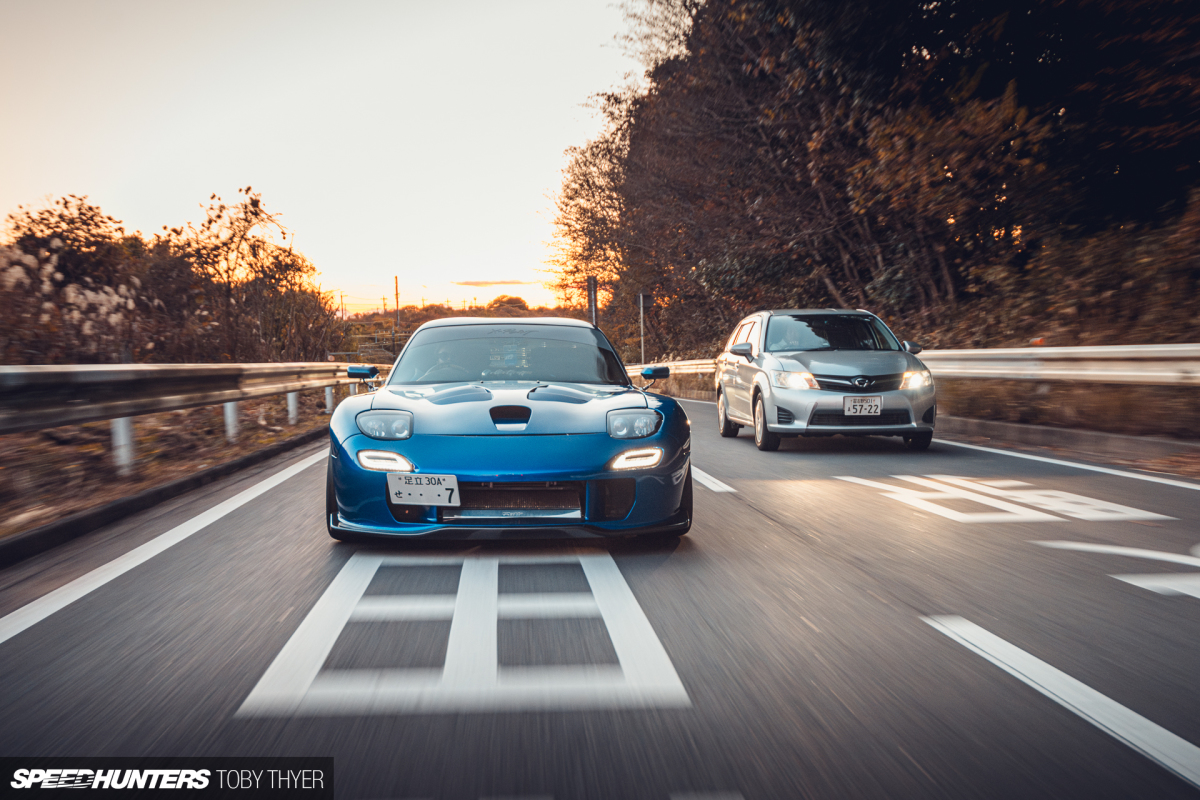
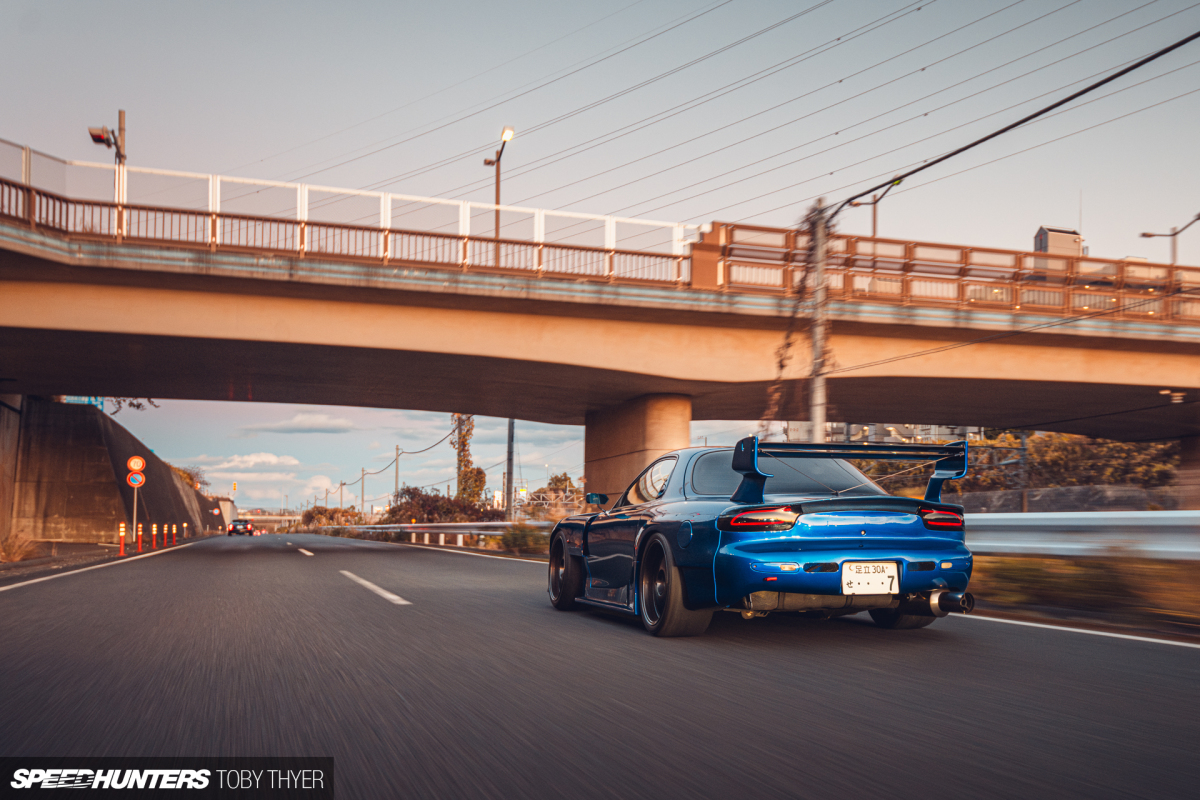
Seiya Inazu‘s RX-7, finished in the stunning Nouvelle Blue Pearl (a second-generation Honda NSX colour), has gone above and beyond the typical formula. It’s more than just another JDM FD3S; it’s the automotive equivalent of a gourmet Mont Blanc, the kind you might expect to find in Heston Blumenthal’s fridge.

Interestingly, a Honda S2000 provided much of the inspiration for Inazu-san’s creation.

TobyThyerPhotography-9

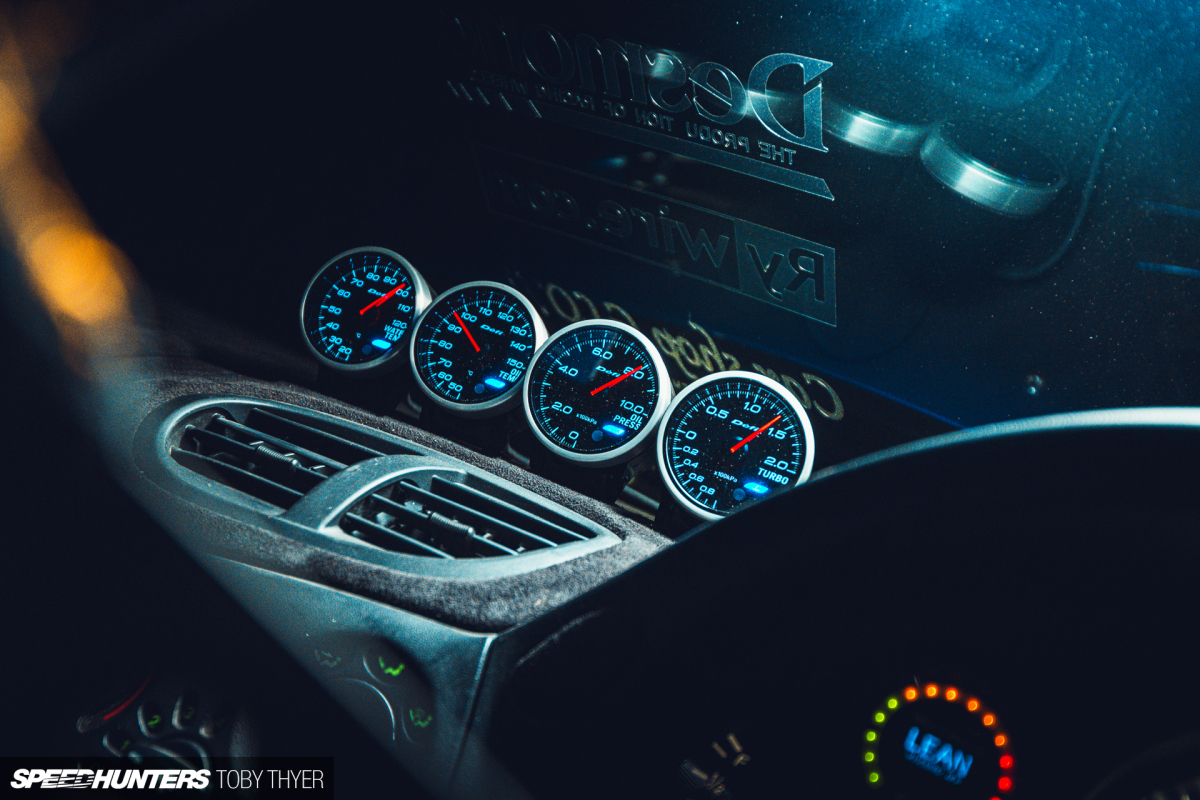
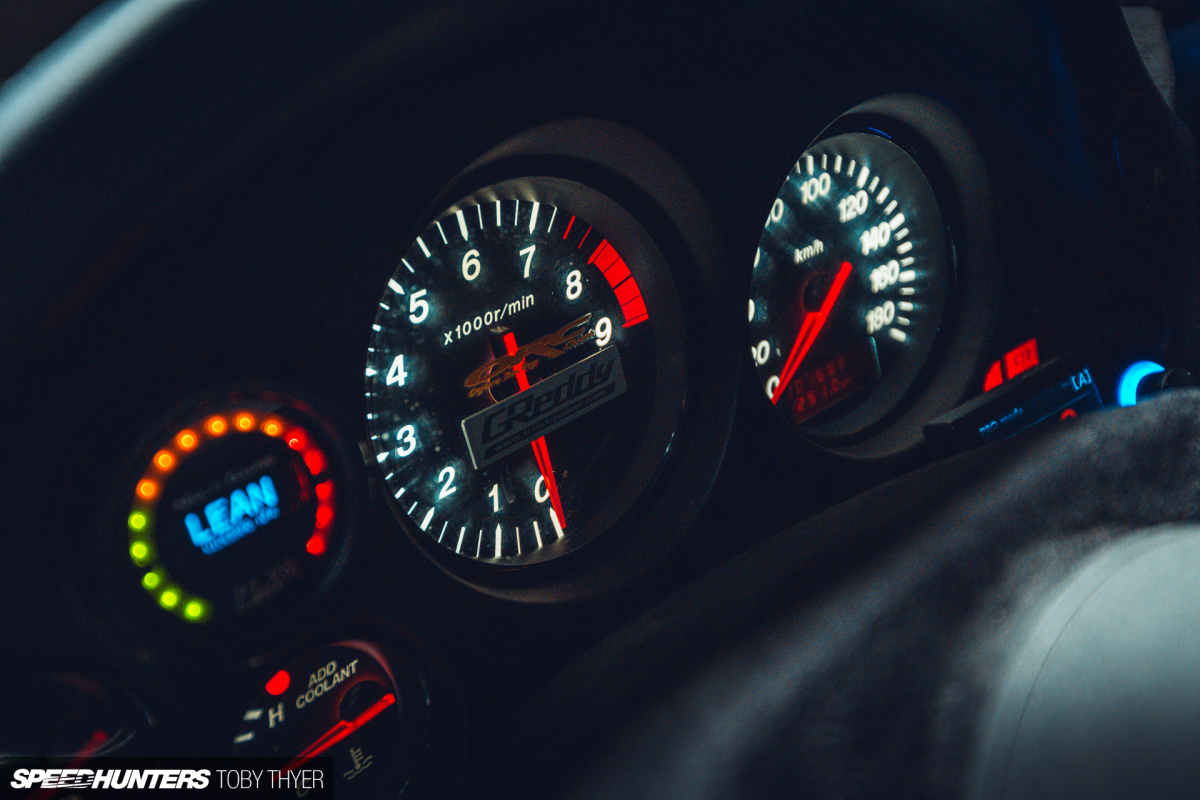
Inside, the car has been thoughtfully upgraded with plenty of suede. On top of all the expected aftermarket additions – including Bride XERO CS seats, a Renown x RWB steering wheel, Defi gauges and a BattleCraft shift knob – it possesses a level of comfort that almost feels like it was part of the factory’s design.

TobyThyerPhotography-7

Outside, the combination of a RE Amemiya aero and a Scoot Sports vented bonnet gives this FD an aggressive, almost Dodge Viper-esque look.

TobyThyerPhotography-17

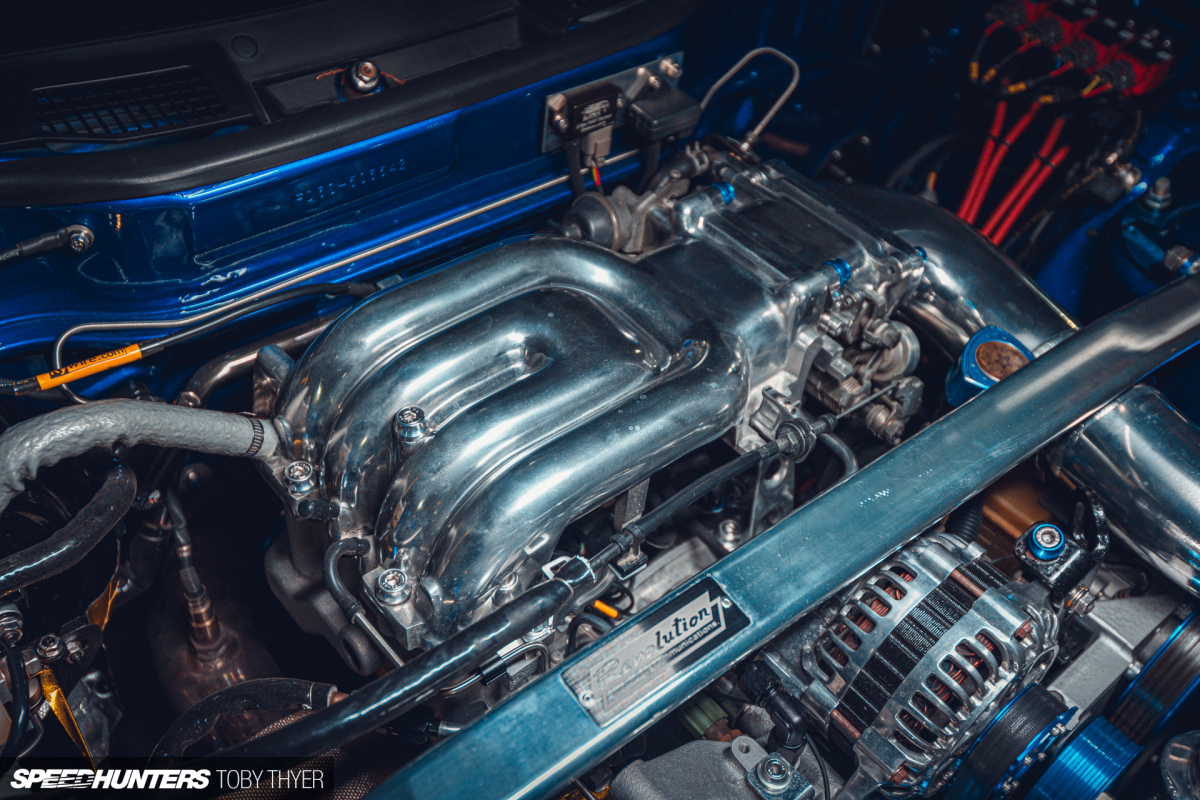
But the real magic happens under that hood. Sure, you can throw a bunch of tuning parts at any FD’s 13B-REW twin-turbo engine and expect a certain result – it’s a recipe found on countless Instagram feeds. But making it all fit together in a way that’s both functional and beautiful is another challenge entirely.

TobyThyerPhotography-21

This 13B was originally modified by Mochi Racing and features custom side-porting, a giant HKS GTIII-4R turbocharger, Trust/GReddy v-mounted intercooler, a titanium exhaust system from Car Shop Glow, and more. However, it was later torn down and rebuilt at X-Point, who also handled the wire tuck and shaved the engine bay using a custom harness from Rywire Motorsport Electronics. That harness supports the Ignition Project ignition system upgrade (with R35 coil packs) and the Link G4X engine management system.

TobyThyerPhotography-16

The wheels are Desmond Regamaster EVO IIs all around, much like those on the 97GT car I shot a few weeks back. It’s clear the owners of both FD3S RX-7s followed a similar recipe.

TobyThyerPhotography-4

If I were to compare the two cars – which are both brilliant in their own right – I know which one I’d drive home. But what about you?

Toby Thyer
Instagram _tobinsta_
tobythyer.co.uk


Source link

Gatebil Drifting, The Copenhagen Historic GP, & A Mk1 Escort: Alen Haseta’s 2024 Highlights

0


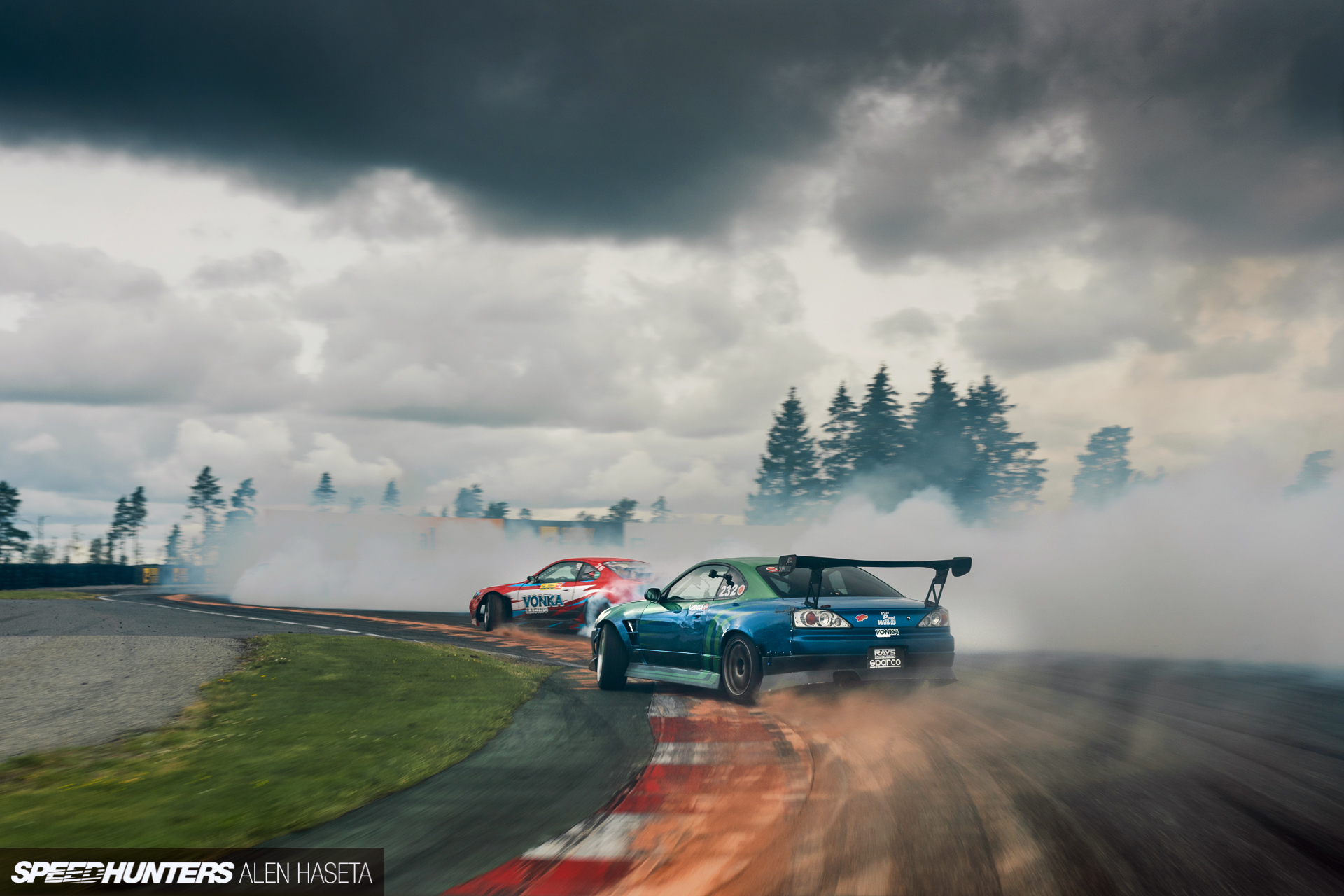
To close out 2024, we’ve asked our three busiest Speedhunters of the year to highlight their three favorite stories from the past 12 months – from feature cars to events and everything in between. Let’s kick things off with Alen Haseta, our man on the ground in Scandinavia.

AH: This year, I was lucky enough to check off a number of things I’ve long wanted to do since becoming a Speedhunter…

1-HAZ05712-Edit
1-HAZ05820-Edit

Firstly, I convinced Olav Haugen Hasdal to take me for a ride in his Mercedes-Benz A-Class drift monster at Gatebil’s 2024 Summer Festival back in July. Sliding around the automotive playground that is Rudskogen Motorsenter, playing cat and mouse with other cars, was an unforgettable experience. The highlight came on the Norwegian circuit’s famous straight, where the first thing you see when initiating the drift is a looming concrete wall – before quickly correcting and heading rearward into the first corner. What a ride.

Check out the feature here: Rowdy In Rudskogen: Gatebil’s 2024 Main Event

1_HAZ07468
1-HAZ07492-Edit

My trip to the annual Copenhagen Historic Grand Prix at Bellahøj Park in Denmark was a major highlight this year. Capturing the 1990s Deutsche Tourenwagen Masters (DTM) in action isn’t an opportunity that comes around often, at least not for me. Watching these legends battle it out on the tight, tricky street circuit, with the scream of engines echoing off the concrete walls, left a lasting impression. The event has sparked a curiosity about similar events across Europe – I’m hoping to make it to a few more in 2025.

Check out the feature here: ’90s DTM Legends & More At The Copenhagen Historic Grand Prix

1-HAZ07957-Edit
1-HAZ07992-Edit

Finally, my last shoot of the summer took me to Stockholm, where I met up with Daniel Zetterval and his Ford Escort Mk1, which he built with his father, Mats. There’s something especially meaningful about a father-son project, but this one was even more significant. The Mk1 is the sole survivor of a devastating garage fire that destroyed seven cars, some of which had been in the family for decades. The Escort stands as more than just a physical build – it’s a reminder of the late nights Daniel and Mats spent together in the garage, creating what Daniel now calls his “forever car.”

Check out the feature here: Family Matters: A Mk1 Ford Escort With Rally Ties

Happy New Year to everyone!

Alen Haseta
Instagram: hazetaa


Source link

Ford patents its steer-by-wire system

0


Ford is following other automakers in developing a steer-by-wire system, a recently discovered patent filing shows.

The filing in question was published by the United States Patent and Trademark Office (USPTO) Nov. 19, 2024, but was submitted by Ford just over two years earlier, on Nov. 14, 2022. But it deals not with steer-by-wire as a concept, but with a specific function for one of these systems.

2025 Ford Mustang convertible with factory paint protection film

2025 Ford Mustang convertible with factory paint protection film

Steer-by-wire eliminates the physical connection between the steering wheel and the road, meaning there’s no inherent resistance at the wheel when the vehicle is parked, Ford notes in the application. That could be a problem for drivers who use the steering wheel as a grab handle when getting in and out of the car, as it would just turn freely.

As described in the patent filing, Ford’s solution is to use sensors to determine when a driver is about to enter or exit the vehicle, which would signal an actuator to apply torque to the steering wheel to hold it in position in case the driver wants to use it as a handle.

2025 Ford Bronco

2025 Ford Bronco

After being introduced by Infiniti in 2013 on the Q50 sedan, steer-by-wire technology has gradually received more interest from automakers. Toyota has developed its own system, which is currently used in the Lexus RZ electric crossover in markets outside the U.S., in combination with a steering yoke. A 2023 patent filing hinted that Toyota was considering bringing this system to the U.S. as well.

The Tesla Cybertruck also uses steer-by-wire, and Apple filed a patent application for a system of its own in 2019, as part of the tech giant’s now-defunct EV project.


Source link