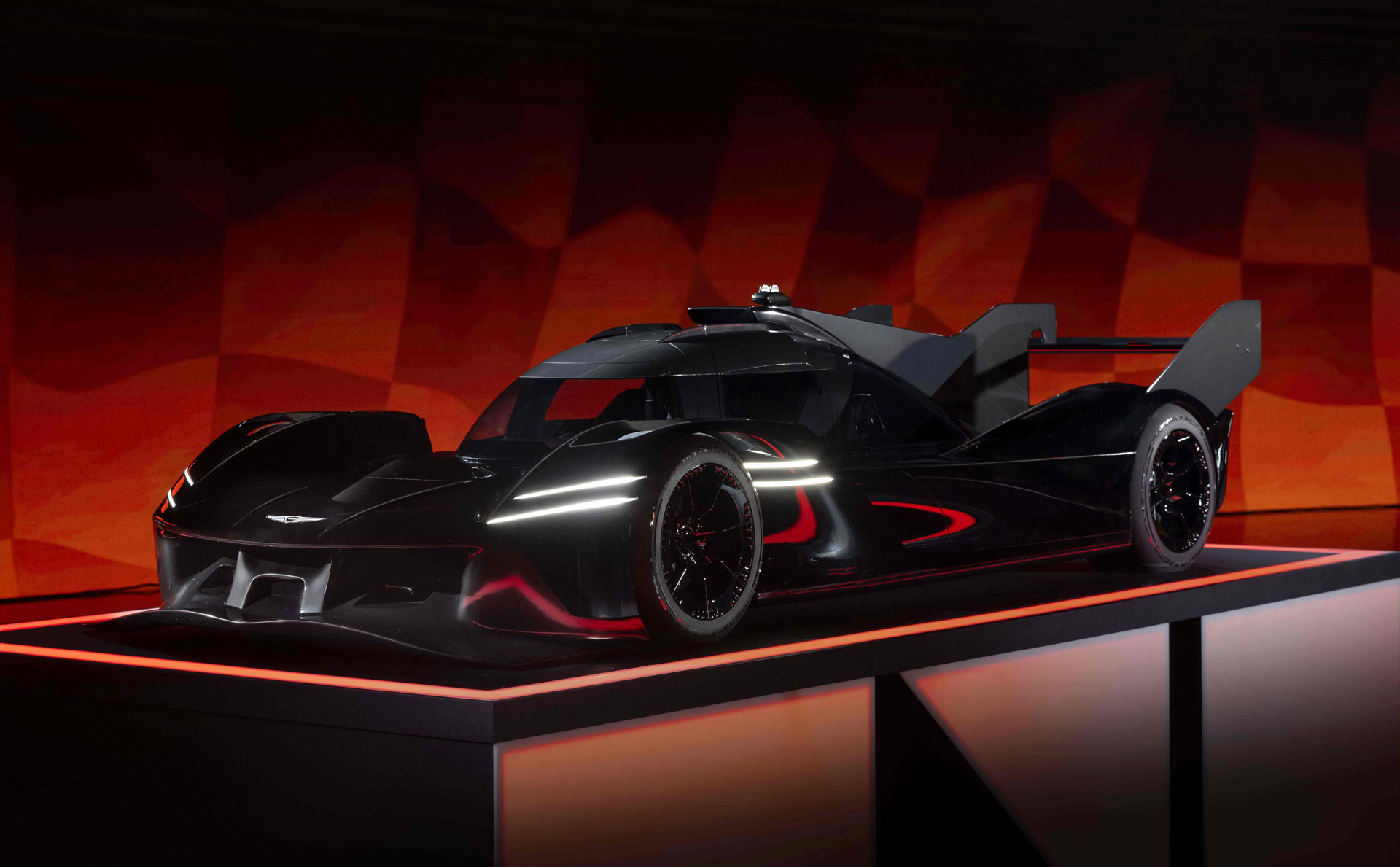
Genesis’ LMDh race car currently only exists as a half-scale model
To speed up development, Genesis will build a V-8 from two 4-cylinder engines from Hyundai’s World Rally Championship program
Six-time Le Mans winner Jacky Ickx is serving as an advisor for the program
Genesis in December launched its own motorsports division, Genesis Magma Racing (GMR), and confirmed plans to enter the premier Hypercar and GTP classes of the FIA World Endurance Championship and IMSA SportsCar Championship with a newly developed LMDh race car, the GMR-001 Hypercar.
Genesis said at the time that it aims to have the GMR-001 Hypercar ready in time for the 2026 season of the World Endurance Championship, whose premier event is the 24 Hours of Le Mans. An entry in the SportsCar Championship is slated to follow in 2027.
Genesis Magma Racing GMR-001 Hypercar scale model
That’s a tight schedule, as it means Genesis only has 18 months to prepare for Le Mans, which is typically run in June. Incredibly, very little development work has been completed for the project. Road & Track reported on Thursday that Genesis only has a half-scale model of the GMR-001 Hypercar, which it revealed earlier this month.
However, due to LMDh rules requiring race cars to use chassis from sanctioned suppliers, Genesis already has a good head start. It has decided to use a chassis from Oreca, the same chassis used by Acura and Alpine. Acura has already notched up some significant wins with the chassis in the SportsCar Championship.
Genesis Magma Racing logo
And to accelerate development, some compromises will be made with the powertrain, Cyril Abiteboul, the former Caterham and Renault Formula 1 team manager serving as team principal for GMR, told Road & Track. Instead of tuning a powertrain from the Genesis portfolio, Genesis will fuse two inline-4 engines from Hyundai’s successful World Rally Championship program to form a V-8.
Despite the tight deadline, Genesis won’t partner with an established racing team for the program. Toyota is currently the only rival team without a partner to have won a race in the current era of top-level endurance racing.
Jacky Ickx
The first confirmed drivers for Genesis’ program are Le Mans winner and current World Endurance Drivers’ Champion André Lotterer, as well as Pipo Derani. Both drivers will assist with the car’s development through 2025 and beyond, alongside Jacky Ickx, a six-time Le Mans winner who joined Genesis as a brand ambassador in February. The first track shakedown is planned for mid-2025.
For additional drivers, Genesis has teamed up with French racing team IDEC Sport to establish a driver development program. The program will begin next year with an LMP2 entry in the European Le Mans Series. America’s Logan Sargeant, who was recently dropped from the Williams F1 team, will be one of the first drivers in the program, alongside Jamie Chadwick and Mathys Jaubert.
It is the land of the rising sun. And also the place where the sun rises in my heart. Because the people, atmosphere, food, the culture and architecture have something about them that makes you feel completely at ease.
Every step I take in Japan makes me feel safe. Every place is clean, the people you meet are polite and respectful and the architecture radiates calm and strength. For me, it is a special place in the midst of a wild and increasingly careless world.
I was there 22 years ago and now I would like to show this place, which I then chose as one of the most beautiful in the world, to my family.
From my experience, here are my travel tips for Tokyo and Kyoto.
Here is an overview:
Language in Japan
The Japanese language is complicated and takes a long time to learn completely, especially because of the characters, which are a mixture of Japanese and Chinese characters.
But knowing a few words will help you to speak to people in the country in a respectful way. This is highly recommended.
These include:
‘Kon’nichiwa’ – this means ‘hello’ and is the Japanese greeting.
It is also very important to say thank you. The Japanese say thank you over and over again. In Japanese, you do this with the word ‘Arigato’. ‘Arigatogozaimasu’ is a stronger way of saying ‘thank you’.
If you want to draw attention to yourself in the sense of saying ‘excuse me’ because you want to make a request, for example in a restaurant, you use ‘sumimasen’.
You should also know the word for goodbye – ‘sayonara’.
Now you have all the polite forms of address at your disposal to help you to move around Japan respectfully.
Travel Tips for Tokyo
Our journey begins in Tokyo. There are plenty of direct flights to several airports around Tokyo.
Haneda Airport is a little closer to the city and Narita a little further away. Both are wonderfully connected to the centre of Tokyo by public transport.
A very special tip for anyone travelling to Japan: Buy a ‘Pasmo’ or ‘Suica’ pass at the airport or at one of the major subway stations. This pass allows you to travel freely on all subway or bus lines through most cities in Japan. There are vending machines where you can top up your pass and at every subway exit you can see the current balance of your credit when you check out. You can also use these passes to pay in some shops or vending machines.
While we’re on the subject of ‘paying’: you can pay with a credit card anywhere in the tourist areas. However, this is not always the case in more original places or smaller restaurants. Therefore, be sure to travel with some cash and check with your credit card company to make sure that you can withdraw money from ATMs in Japan with your credit card.
Ueno
Ueno is a very original, fun and colorful district with plenty of life and activity at all times of the day and night, and a spacious park that offers temples, a lotus flower lake and space for festivals and culinary discoveries.
Opposite the Ueno train station you will find the pedestrian area of Ameyokocho. Here you can immediately immerse yourself in Japanese culture. The colorful sea of evening, the delicious smells and the variety of Japanese specialties in the countless restaurants are a real El Dorado for all explorers.
Ueno at night – Tokyo, Japan.
The special highlight when traveling is when you know people who live in the country and you can see the country from their perspective.
So we had the opportunity to celebrate at a real Mikoshi festival in one of Tokyo’s suburbs. The large shrine is carried through the entire town by many men and women throughout the day.
Mikoshi festival in one of Tokyo’s suburbs.
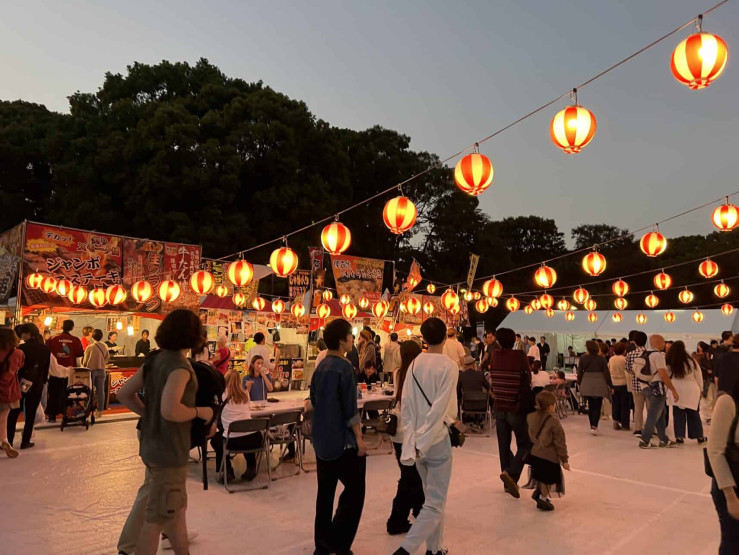
In the evening, the Mikoshi carriers arrive at the festival’s large shrine and celebration site. They are accompanied by traditional Japanese music and the great joy of all participants.
Shibuya
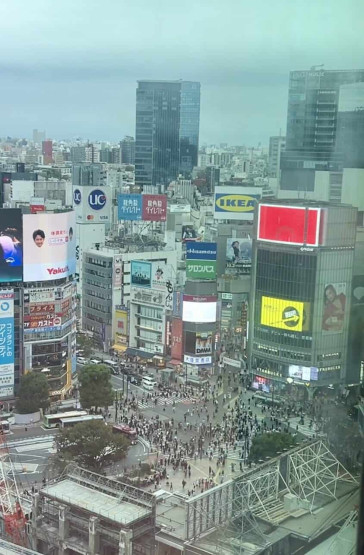
When you think of Tokyo, you automatically think of the famous Shibuya Scramble Crossing. Crossing it is a real highlight. So is watching others cross it.
You get a particularly good view from the Starbucks right at the intersection. From here, you can film, photograph or just watch the hustle and bustle on the street below.
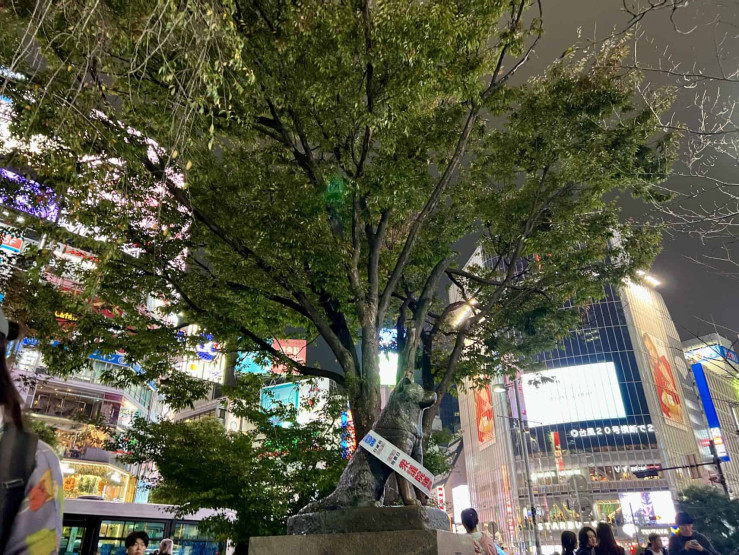
Here you will also find the famous statue of Hachiko, probably the most loyal dog in the world. He accompanied his master to the train station every morning and picked him up again in the evening.
Even when his owner suddenly died, he continued to wait for him every evening – for almost ten years. He was given this monument in memory of this. It is a touching story that has even been made into a movie. Nowadays, the monument of Hachiko is a great meeting place.
Omotesando
The Omotesando in the Harajuku/Jingumae district is a wonderful place for shopping and strolling.
Just follow your instincts and explore the small alleys to the left and right of the main street. Be sure to plan a stop at Takeshita-dori on this route, with its many shops full of colorful, crazy clothes and accessories.
Asakusa
Asakusa is a typically Japanese and authentic district, centered around Senso-ji, one of the oldest temples in the country.
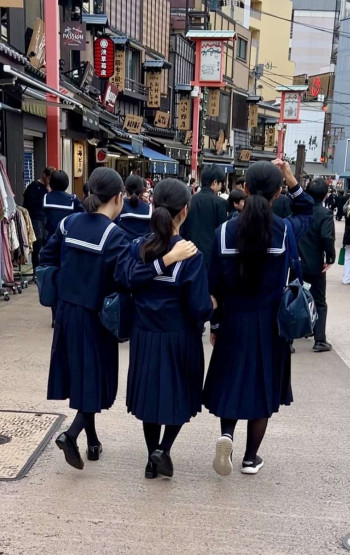
It extends over a large area and is bordered by numerous traditional shops and restaurants on the popular Nakamise-dori shopping street.
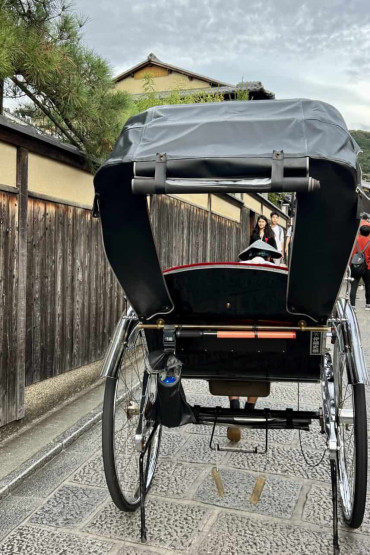
Rickshaw driver in Asakusa, Tokyo, Japan.
Asakusa is located on the Sumida River and can be easily explored on foot or by rickshaw, passing wonderful bridges and colorful lanterns. Not far from there, you will also find the Tokyo Tree, a lookout tower from which you can see the entire city.
Here in Asakusa, you can find traditional arts and crafts, such as homemade knives or Japanese paper, alongside typical sweets or delicious snacks such as the tasty rice crackers, the famous dorayaki, stuffed egg pancakes, fried manju rolls or motchi skewers.
The lively streets of Denpoin-dori, Kannon-dori and Asakusa Chuo-dori are particularly charming and full of the atmosphere of old Asakusa.
Sensoji
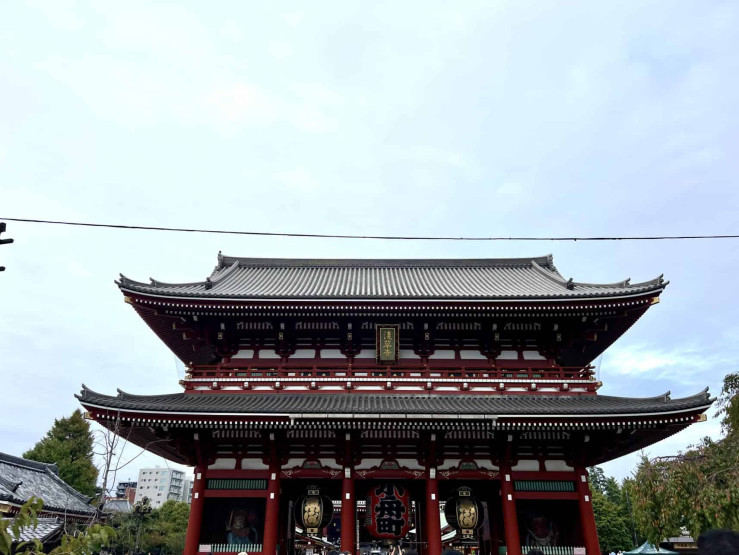
The Sensoji is probably the most famous and most photographed temple in Tokyo. It was built in 628 and is therefore also one of the oldest Buddhist temples in the capital.
The history of the temple is also very exciting. Legend has it that two fishermen in the nearby Sumida River caught a golden statue of Kannon – the goddess of kindness and mercy – in their nets. They tried several times to return the figure to the river, but it kept coming back to them. Finally, they decided to build a temple for the statue. This was named Senso-ji.
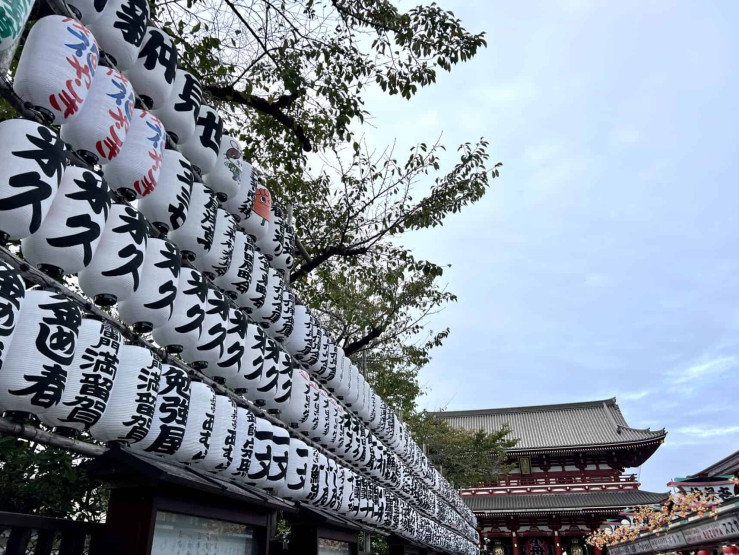
The path to the temple is lined with white lanterns bearing Japanese characters.
Would you have thought that? The red lantern in the center weighs over 400 kg, the other two copper lanterns each weigh about 1000 kg.
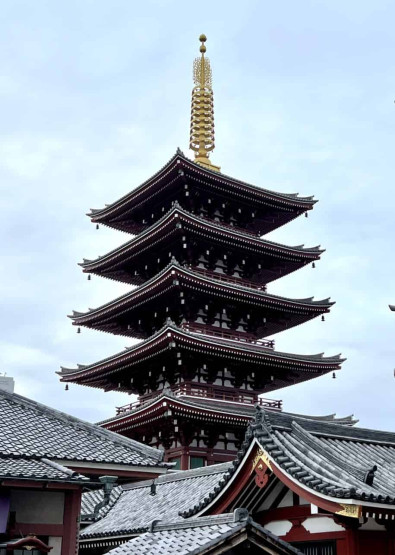
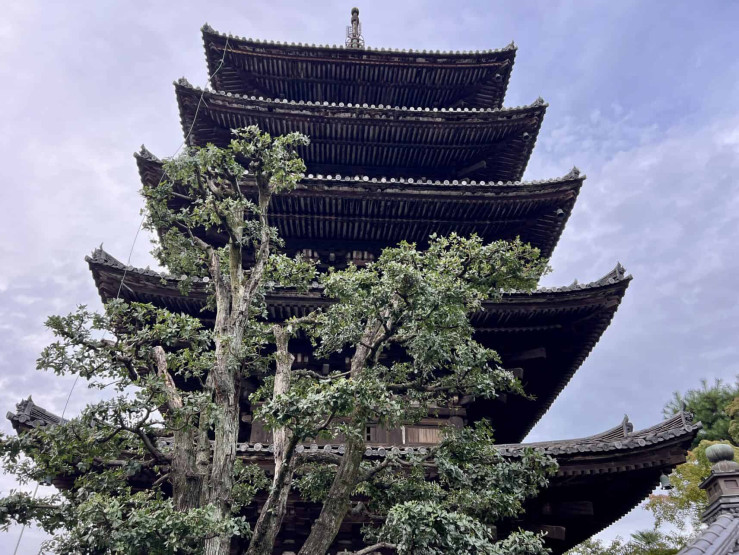
Traditional pagodas always have an uneven number of floors. Did you know that the five levels of Buddhist pagodas represent the five elements? Earth, water, fire, air and emptiness.
Kokeshi Dolls
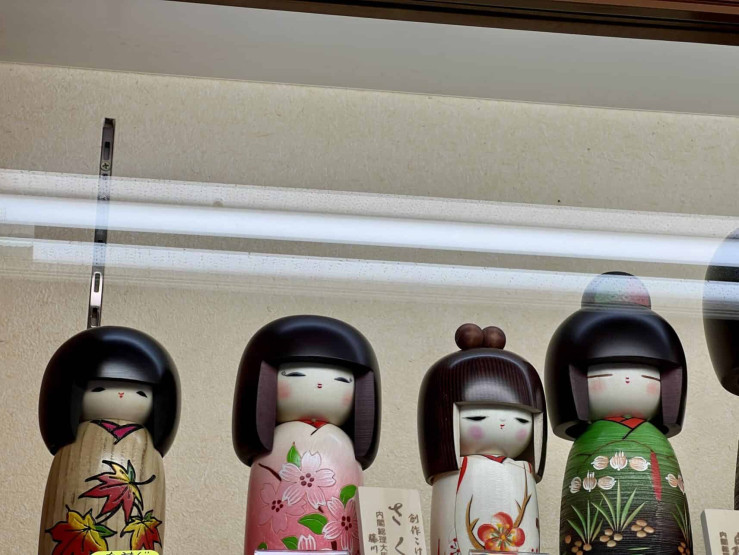
These Kokeshi dolls are given as a lucky charm for the birth of a girl, a wedding, a business opening or as a souvenir from Japan. They are made by hand to a high standard and mostly from fruitwood.
But they also have a sad history. In Japanese tradition, children up to the age of about 9 years belonged to God; this view came from the time of high infant mortality. When a child died, the family took comfort in the fact that God had taken the child back. These dolls were considered to be reminders of the child who had been taken back “by God”.
Shintoism
Shintoism is a fascinating and very open religion and, along with Buddhism, the most important religion in Japan. The Japanese do not learn about their faith at school, as is the case with many other religions. Often, the faith is passed down from parents to children.
Shinto means “way of the gods”. More than 100 million people, or 80% of the Japanese population, are Shintoists.
The shrines are dedicated to various deities. Everyone is allowed to pray at a Shinto shrine, regardless of their religion. I love the openness of this religion, which shows great wisdom and strength.
Ritual cleansing
You can often see water basins, temizuya with ladles, near the shrines, which are called hishaku. Here, before approaching the deity at the shrine, people perform the ritual of misogi, a purification of body and mind.
First, you pour a little water over your left hand and then over your right hand with the ladle. Next, you rinse your mouth with water, but do not swallow it. Finally, empty the water from the ladle over your left hand and the handle.
Praying in Japan
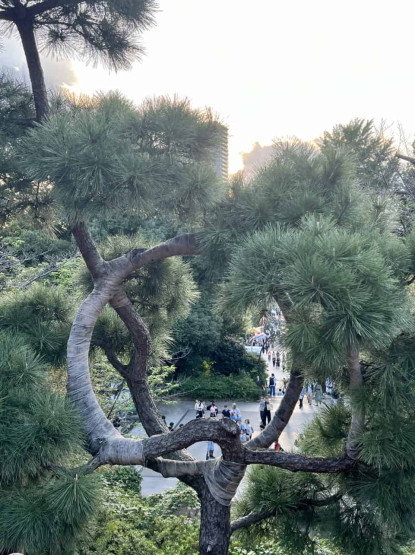
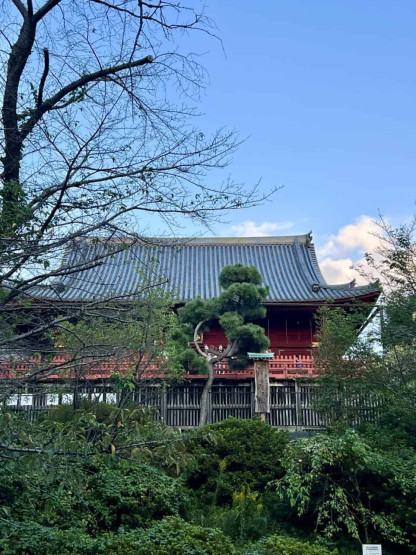
Prayers at the Shinto shrine in Uneo Park in Tokyo, Japan.
When you are standing in front of the shrine, first throw some coins into the slot. 5-yen coins are very suitable for this because they sound like “go-en”, which means luck. Then pull on the thick rope to ring the bell. The sound of the bell keeps evil spirits away.
When you arrive, you greet the god by bowing twice, then clap your hands twice. After that, you pray in silence, express your wish and hold your hands in front of your chest in prayer pose. At the end, thank you with a deep bow.
The respect that can be felt everywhere in Japan is also evident in its religion.
There are many activities dedicated to luck on the shrine grounds. Omikuji are small Japanese paper strips that predict the future.
The nice thing is, if you draw a paper strip that predicts bad luck, you can tie the strip to a small rope or, as here, to a tree and thus get rid of the bad luck immediately.
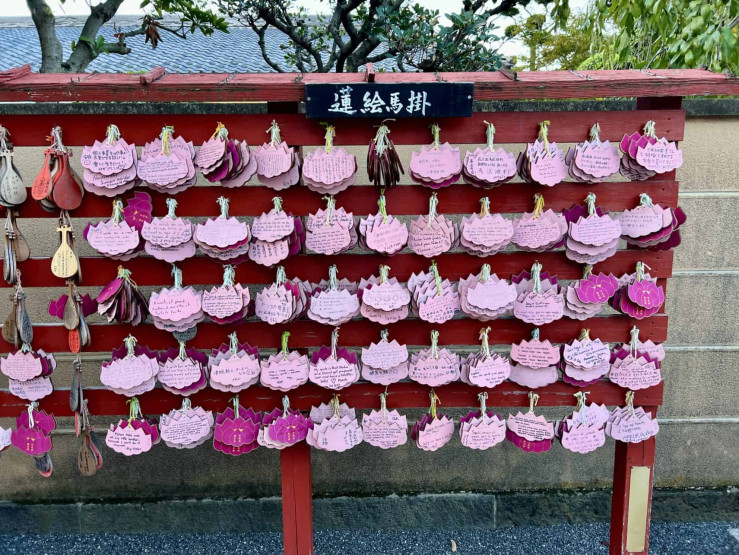
For prayers and wishes, there are wooden plaques known as ema that can be hung on the shrine. This is how the gods are said to receive the prayers and fulfill the wishes.
When leaving Japanese temples and shrines, the same rules apply as when entering. This ensures that the visit is a closed circle, which is also said to bring good luck.
Colorful and Diverse Neighborhoods in Tokyo
Tokyo is a huge city with 9.6 million inhabitants. It consists of many very different neighborhoods, so it doesn’t seem that big.
Above all, it seems relaxed and calm to me because the Japanese mentality is very elegant and reserved on the outside. To ease the traffic situation, there are often footpaths built over the roads or, conversely, large roads or even railroad lines on stilts one level higher through the city. And if you are standing at a traffic light in Shinjuku, for example, one of the busiest train stations in the world, the twittering of birds or the soft music from the loudspeakers is incredibly relaxing.
I advise anyone who is afraid of crowds to take a trip to Tokyo, because there is no place where crowds of people are more relaxing than there. Nobody is loud, nobody jostles, nobody pushes, everything is gentle, orderly and full of mindfulness, even at rush hour. This is an art that I find admirable.
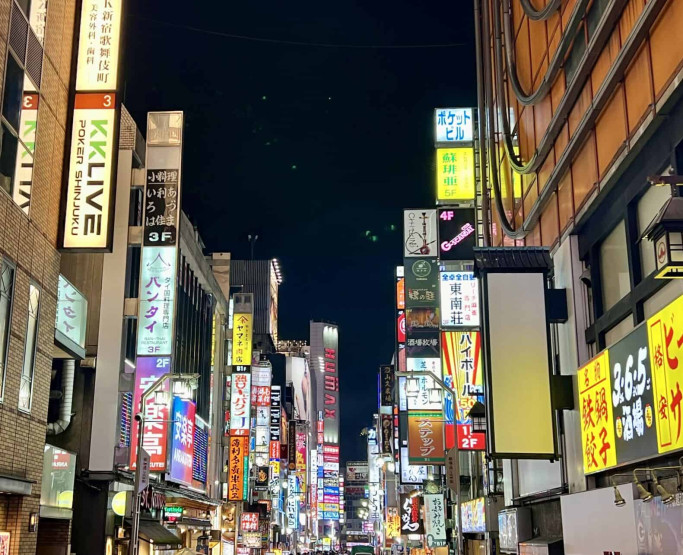
What I am describing is only one side of the coin, because no culture has only one dimension. As safe, as polite, and as orderly as everything appears, I have never seen a more colourful flip side anywhere in the world. The opposite pole of this structure is the colorful, the wild, the crazy, which is evident in the bars and gambling halls in the neighborhoods of Tokyo that come to life at night.
The outfits of many Japanese women in particular are anything but reserved or boring; they are a firework of possibilities and a great deal of courage is required to wear many outfits.
The shows that you see when you zap through the Japanese TV program in your hotel room also show the wild diversity within this strictly ordered world.
Great gastronomic selection in the Kabukicho Tower near Shinjuku Station.
At night, the Shinjuku district is dazzling. Be sure to visit the famous Omoide Yokocho alley of bars. If you are alone or in a couple, you may be able to get a table in the quaint, tiny bars of this small alley.
Otherwise, just stroll on to Kabukicho Tower. You will find a wide range of specialties in a colorful setting, either on the way in Kabukicho-Ichiban-gai street or in the tower itself.
Culinary Japan
I find it fascinating that when you think of Japanese food, you immediately think of sushi, but there are so many different delicacies that have not yet made their way to Europe.
Sukiyaki or Yakiniku, to name just a few.
It is incredible how much meat, and not just fish, dominates the menus. Wagyu beef is at the top of the popularity scale here.
I admire the Japanese ability to celebrate everything that has to do with eating and enjoying food. In the various restaurants, you can prepare your own meal on a small built-in table grill or you can get a pot of broth on a hob on the table, similar to a Chinese fondue or hot pot, in which you can prepare all kinds of vegetables and meat specialties that you can get at the buffet.
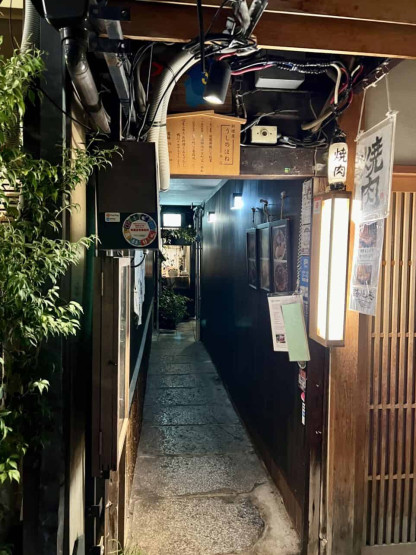
At a yakiniku meal, there is a small, fine grill built into the tables on which you can fry the various meat specialties that are served in thin slices. Rice and various sauces are served as side dishes. It is particularly cozy when you enter restaurants and take off your shoes and clothes at the door.
The Wagyu beef at the Narita Airport restaurant YakisukiYanma was a real treat. Raw meat that is brought to the table on hot stones, where it is poured with a delicious sauce accompanied by a variety of ingredients in small bowls, creating a great hissing sound, is a real treat.
Sukiyaki
Sukiyaki was also new to me. It is a one-pot dish in which the meat is cooked slowly on the table, either before or after the noodles and vegetables that are also in the stew. Before you enjoy the slowly roasted meat, you dip it in a raw egg. Delicious!
Onigiri
And not to forget the popular Onigiri, rice balls with various fillings, which schoolchildren and office workers pack as a sandwich. So delicious and varied that I really miss them here in Germany.
Delicious Onigiri – rice balls to go
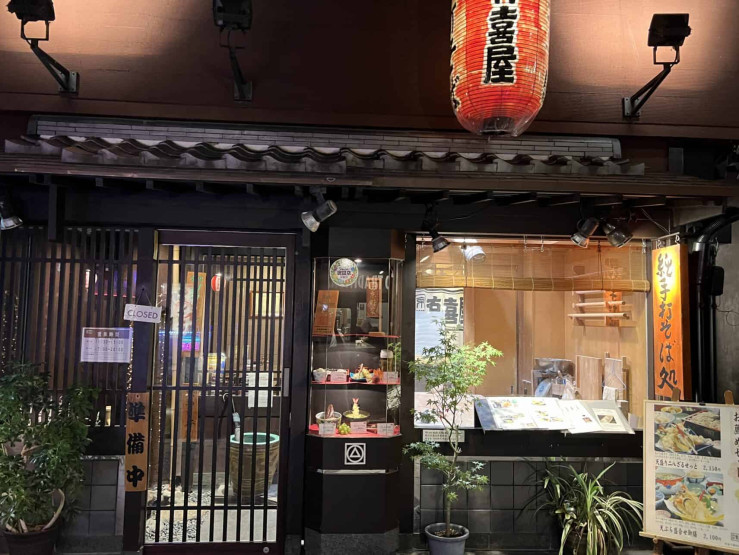
The wax models of the dishes at most of the restaurants are also particularly typical.
Hotels in Tokyo and Kyoto
A hotel on the Yamanote Round Line is worth its weight in gold. It’s a quick and easy way to get to the most famous, authentic and interesting places in Tokyo.
I can highly recommend the hotels of the Nohga group. We stayed at the Nohga Hotel in Ueno, but they are also available in other districts such as Akihabara or other cities such as Kyoto or Saporro.
This group also offers accommodation in ryokans, the typical Japanese inns.
TheMitsui Garden hotels are also recommended and a bit more international than the Nohga hotels. We also stayed a few nights at the Mitsui Garden Jingugajen Tokyo Premier, but there are 12 more hotels in this group even in Tokyo and they also offer great accommodation in Hiroshima, Yokohama, Osaka and various other cities.
On the “Train”
If you are planning to travel around Japan, I recommend the Shinkansen, the fastest train in the world. It will take you from Tokyo Station to Kyoto in just over 2 and a half hours.
Make sure you don’t miss Mount Fuji on your way from Tokyo to Kyoto. The Shinkansen passes so close to it that you can photograph and admire it through the train windows, surrounded by clouds of mist or, depending on the season, even with its peak covered in snow.
View of Mount Fuji from the Shinkansen.
Kyoto Travel Tips
I love Kyoto. I can’t say it any other way.
Kyoto has become extremely modern in the 22 years since I last visited. But the original corners, the geisha district and the enchanting temples still tell of the magic of times gone by.
The Higashiyama district, with the very traditional lanes of Sannenzaka and Ninnenzaka, which lead off from the Kiyomizu-dera temple, is still so unspoilt that you get the feeling that Kyoto is not a metropolis but a small, touristy mountain village.
A special experience is to borrow a kimono for a day from one of the many kimono shops. It is a wonderful feeling to immerse yourself in the history of this city, where the geishas were at home.
Walking around in a kimono on a temple tour may seem touristy, but as with all experiences, it depends on your attitude. If you are curious and have a desire to immerse yourself in a certain feeling, to understand better and experience more intensely, then it is a profound experience that you should not miss.
It is an incredible feeling to go to the temple in a kimono.
For the Kinomos, I can recommend the rental shop right at the bus stop on Higashioji Dori, across from the Seven Eleven. But you can also find other rental shops to the left and right of it, such as First or Kyokomachi. We didn’t have a reservation and just walked in. For 4500 yen and 1600 yen for the hairstyle, you can transform yourself into a wonderful geisha for a day.
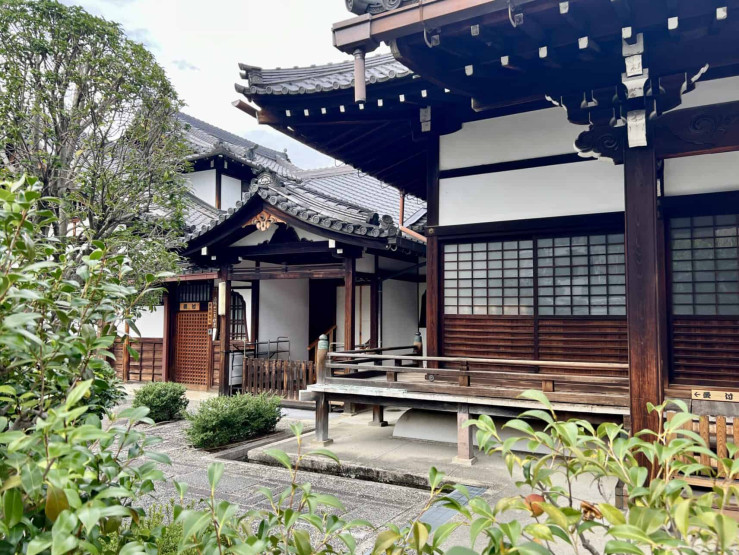
Nittai-ji Tempel
The old streets around the Kiyumizu-dera Temple are definitely worth exploring.
Unfortunately, over the past 22 years, everything here has not only become more crowded but also more tourist-oriented, and the old originality is no longer so easy to discover.
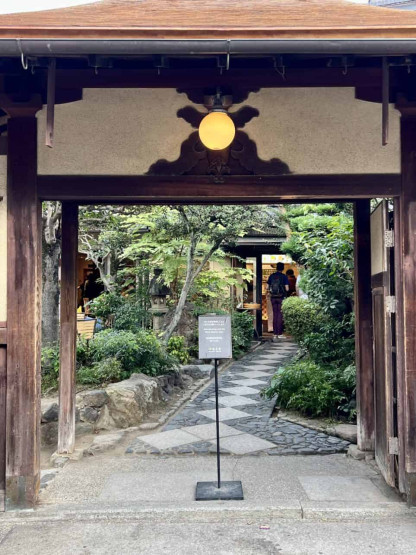
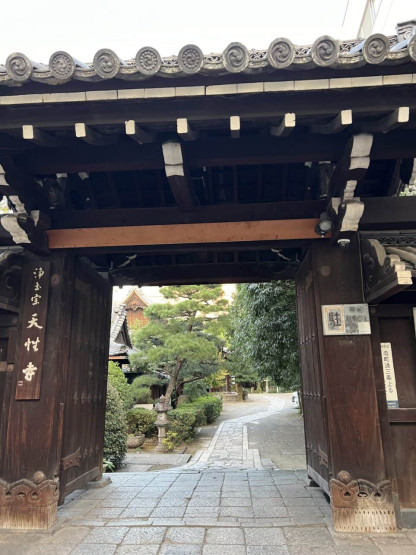
Don’t miss out on following your nose, looking into inviting archways, letting yourself drift and following your eye. This way, you will discover deserted temples, small subtleties, abandoned courtyards and special places beyond the tourist-lined alleys. Like this beautiful Nittai-ji Temple, which is located directly on the way to the Kiyomizu-dera Temple and is completely ignored by most. It is beautiful and deserted.
Kiyomizu-dera Tempel
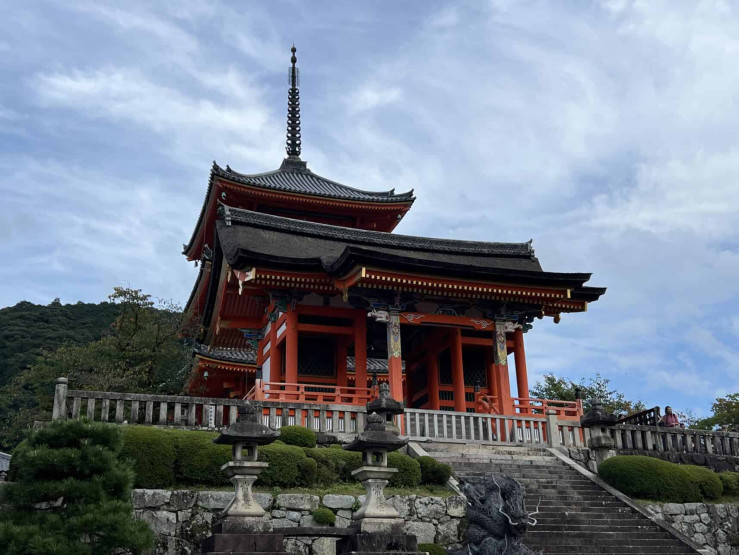
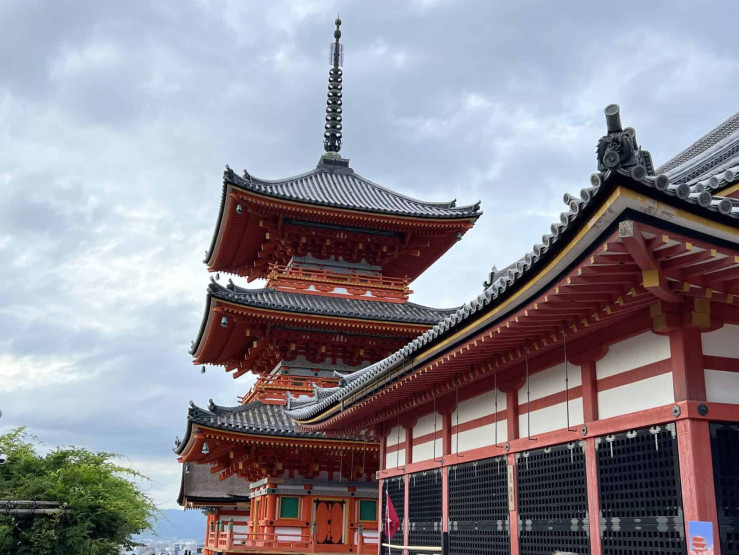
The Kiyumizu-dera Temple is one of the truly impressive temples in Kyoto.
Good to know about visiting Kyoto
Admission to the temples is usually free or, in the case of the well-known temples, costs a few euros per person.
Do not book a tour in advance via Viator or GetYourGuide just because you are afraid of not being able to get tickets to the temples on the spot. You can get the entrance ticket spontaneously on the spot, which gives you much more freedom and flexibility.
If you absolutely want to take a guided tour and be accompanied by a guide, you are of course welcome to book such a tour through these platforms or locally.
Fushimi Inari Schrein
The Fushimi Inara Shrine in the Fushimi district is one of the most magical places in Japan for me.
During the day, the lower walkway is particularly busy, but as soon as darkness falls, it becomes a little quieter. There is something magical about entering this powerful shrine in the moonlight.
When approaching a shrine, the first thing you see is the red torii, or gate. The red color is said to ward off evil spirits and danger.
To show respect, you should bow before the gate and only then enter the shrine.
Fushimi Inari Taisha is a Shintō shrine. It is considered the main shrine of about one third of all Inari shrines in Japan and is the most famous Shintō shrine in Kyōto.
If you have seen the movie “The Geisha”, you will see little Chio walking to this very shrine to pray for her greatest wish. It came true, and guess what? So did the wish I expressed there. For me, this shrine is one of the most powerful places I have ever visited.
A wonderful Japanese woman, whose mother is from Kyoto and very religious, explains the power of this place to me as follows: These shrines are the gateway to the world of the gods, of which there are more than 800 in Shintoism, each assigned to a topic and therefore all wishes are in good hands there.
The avenues of torii, the gates made of wood or stone and usually painted red, are particularly characteristic of this shrine. They symbolize the transition between the world of humans and the world of the gods.
The Fushima Inari Shrine consists of a multitude of these torii, all of which are donations from individuals, families or companies. She tells me that it is important not to walk near the posts or in the middle, as these are reserved for the gods.
Torii Avenue – the gateway to the world of the gods – Kyoto, Japan.
More than 1000 of these red gates can be found at this impressive shrine.
There is a small half-hour path and a large circular route up the more than 230-meter-high Inari Mountain, which takes 2-3 hours and a lot of stamina.
The messengers of the fertility goddess at the entrance – Kyoto, Japan.
Characteristic of all Inari shrines are the fox statues, the messengers of the goddess of fertility Inari, who usually wear red bibs around their necks.
Ginkaku-ji
Entrance to the Ginkaku-ji Temple in Kyoto, Japan.
Ginkaku-ji is one of my personal favorite temples in Kyoto. For one thing, it is not as overcrowded as other temples and because it contains a variety of beauty in a small area.
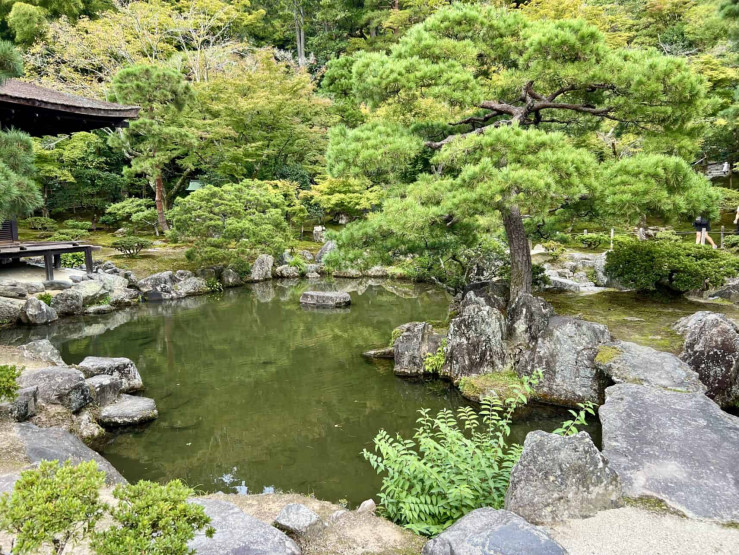
There is an area with Zen sand art, a lake with a typical Japanese wooden pavilion in the background and a beautiful garden.
Ginkaku-ji Temple in Kyoto, Japan.
Ginkaku-ji (Silver Pavilion Temple) is a Zen temple and also a UNESCO World Heritage Site.
No one really knows why the pavilion in the middle of the property is called “Silver Pavilion”, even though it is made of wood. Legend has it that the pavilion’s jet-black wood shined silver in the moonlight, hence the name.
Maybe there is a less magical explanation. The Pavilion by the Lake, the Kannon-den, was built in the 15th century by the Shogun Ashikaga Yoshimasa as a retirement home and was supposed to look like a smaller version of the famous Golden Pavilion, Kinkanku-ji, which his grandfather had built at the time. Instead of gold, it was supposed to be silver, but it never happened.
Before the shogun’s villa became a temple, it was the center of Higashiyama culture, home to tea ceremonies, flower arranging, poetry and No theater. Nowadays, Ginkakuji is one of the most famous temples in Kyoto and far less touristy than its “golden” brother, Kinkaku-ji, especially just after opening or just before closing time.
Kinkyochi pond of Ginkaku-ji temple in Kyoto, Japan.
Ginshadan
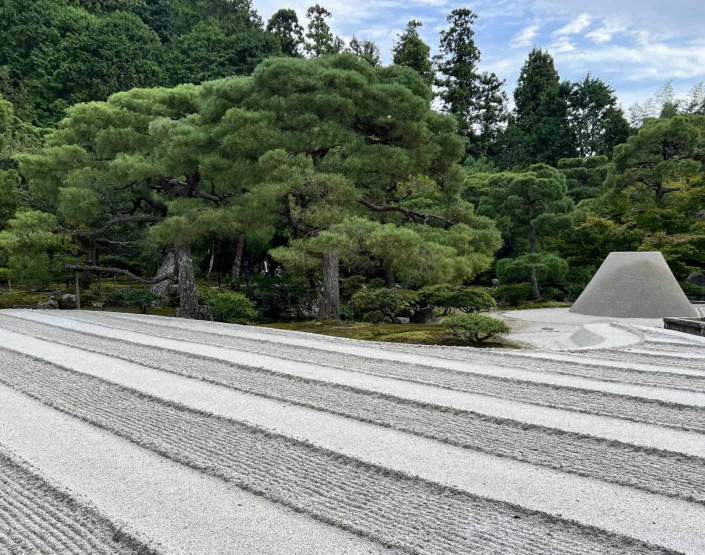
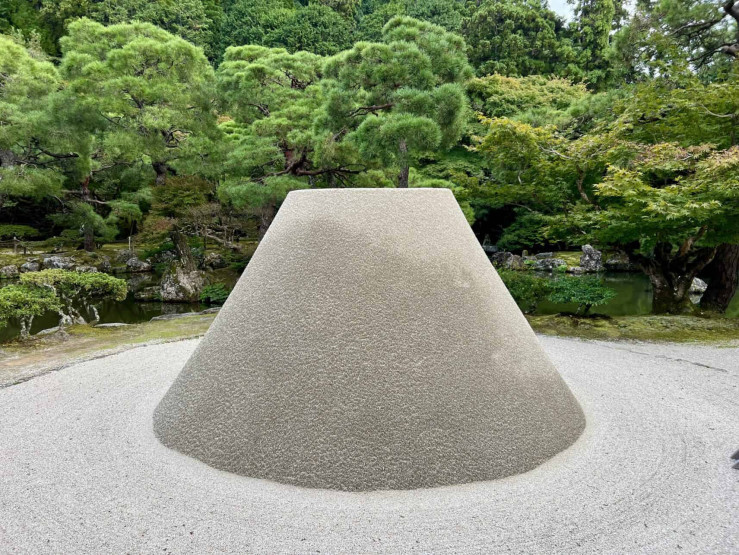
Right in the middle of the complex is the sand garden and an approximately 2-meter-high sand sculpture.
The sand garden is called Ginshadan, which translates as ‘sea of silver sand’. In Buddhism, looking at a sand garden is part of meditation. The waves in the sand represent water and the sand cone called Kogetsudai symbolizes Mount Fuji.
You can walk along small paths through the moss-covered and hilly garden landscape, past a splashing waterfall that flows into a stream, and up to a lookout point where you can catch a glimpse of Kyoto. The arrangement of the different shades of green, the interplay of sand and stones against the backdrop of the wooden temple is a feast for the eyes.
You should plan about an hour for your visit to the temple. From there, you can reach many other famous temples and shrines along the Philosopher’s Walk, a small path that runs along a stream. These include the Chion-in Temple and the Nanzen-ji Temple.
Arashiyama
The Arashiyama district is worth visiting, as it is home to the famous Arashiyama bamboo forest, the Arashiyama Monkey Park and the Tenru-ji Temple, which is a UNESCO World Heritage Site. The entire district is very popular with visitors.
Arashiyama – Bamboo forest
If you don’t want to share the bamboo forest with so many people, you can book a rickshaw tour in a separate area. It’s best to book well in advance, as these are often booked out days in advance.
The bamboo forest is beautiful and the atmosphere is impressive.
Arashiyama bamboo forest in Kyoto, Japan.
Tenryu-ji Temple
The entrance to the Tenryu-ji Temple is right next to the entrance to the bamboo forest. It is one of the five most famous Zen temples in Kyoto and has been a World Heritage Site since 1994.
A garden laid out in the 14th century at the Tenryu-ji Temple in Kyoto, Japan.
The Sogenji Garden behind the main hall, laid out by Muso Soseki in the 14th century, is particularly beautiful. Muso was a master of garden design and a Zen master who developed the Japanese tea ceremony.
The garden, with its watercourses, moss and gentle hills, has been preserved in this way to this day and frames a lake that can be seen from the steps of the main house.
Lake behind the main hall of Tenryu-ji Temple in Kyoto, Japan.
Arashiyama – Primate park
Arashyama Monkey Park in Kyoto, Japan.
The Arashiyama Monkey Park is a particular highlight for children, where they can watch baby monkeys swing through the trees from the branches or groups of monkeys chilling in the meadow.
In Kyoto, as in Tokyo, it is easy to get around from place to place by subway or bus. If you need to get somewhere faster, many of the temples close as early as 5 p.m. in the fall, so taxis or Uber are also available.
Culinary Kyoto
Sushi restaurant in Kyoto, Japan.
The place to eat in Kyoto is the famous Pontocho alley. Here, one restaurant follows the other.
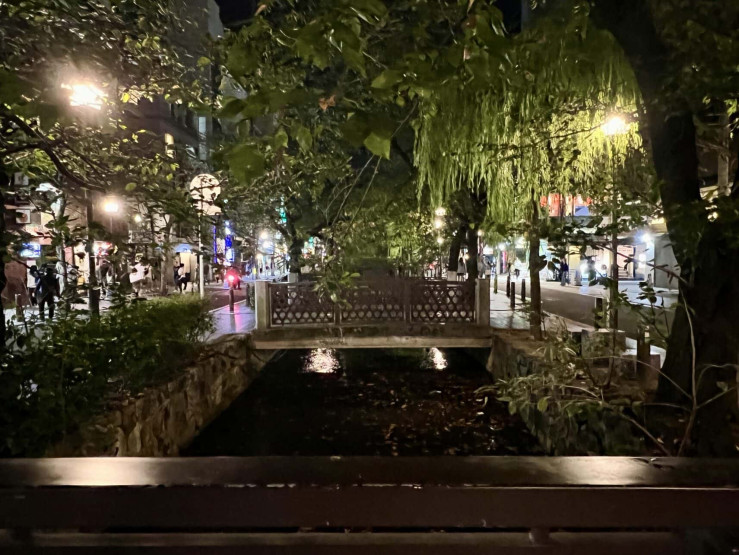
The alley is car-free and only a few meters wide. One side of the restaurants faces the river that flows through Kyoto, the Kamo. In summer, it is wonderful to sit and eat on the spacious terraces by the river. In winter, the action moves indoors.
If you are curious, you can try typical Kyoto dishes in one of the restaurants, including eel, snails, radish and fish.
In the side street of Pontocho Alley, which is also crossed by a small river, there is another row of restaurants around the bridges and alleys.
Besides all the temples and the geisha district with its alleys, Kyoto also has other sides. Modern skyscrapers, shopping streets and the large Nikishi Market.
Karaoke
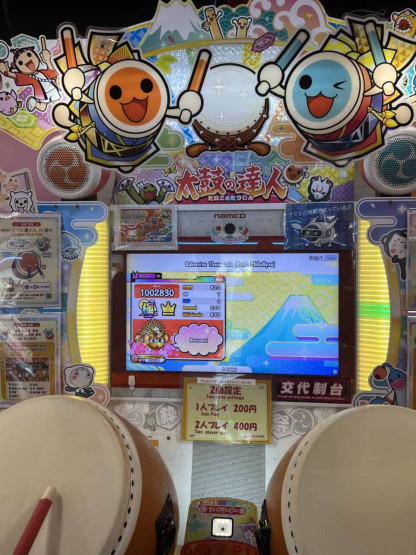
What is definitely worthwhile is a visit to a karaoke bar. We went to Manekineko on Karamachi-dori and really had a lot of fun singing in our booth.
There is still so much to discover in wonderful Japan. If you have a little more time, you can certainly visit other cities there or relax on the beautiful Okinawaarchipelago.
Okinawa is one of the 5 Blue Zones on earth. People here live longer than in other places on earth.
My personal insider tip!
Here: Okinawa – Japan’s oasis
For me, it was definitely not the last trip to this wonderful country. “Matane”, which means “see you soon”!
I love to laugh, live and give! Values are important to me. People, countries and cultures fascinate me endlessly. And children make my heart beat faster.
I love to laugh, live and give! Values are important to me. People, countries and cultures fascinate me endlessly. And children make my heart beat faster.
Buyers looking for a richly appointed, environmentally friendly midsize SUV have an ever-expanding array of choices. Two of these, the Audi Q8 e-tron and BMW iX, are impressive all-electric choices that have already been on the market for a few years. Both offer top-notch luxury and performance with a plethora of standard equipment. There are some key differences to consider, though. Let’s see how they compare.
2025 Audi Q8 e-tron
2024 model shown
The Q8 e-tron is Audi’s flagship electric SUV. An upgrade last year brought a quicker-charging battery and an increased driving range, make this luxury EV all the more desirable. The Q8 e-tron brings elegant design, advanced technology, and a sizeable interior to the table, making it a well-rounded choice. An electric version of Audi’s quattro all-wheel drive (AWD) system comes standard on the whole lineup.
Audi Q8 e-tron highlights
Lower price: The entry-level Q8 e-tron can be had for over $12,000 less than the base BMW iX. On top of that, Audi offers two years of unlimited free charging at Electrify America’s nationwide network of EV charging stations. The iX also comes with two years of complimentary charging sessions at Electrify America stations but limited to 30-minute sessions. Considering most high-output public chargers seldom charge at their maximum advertised speed, this small detail could make a big difference.
Familiar styling: Based solely on looks, few would guess the Audi Q8 e-tron is a fully electric SUV. The Audi brand styling cues are strong and don’t give many hints that the Q8 e-tron is a future-forward member of the family. The interior also takes a classic approach, with stacked console screens nestled in the center of the dashboard.
Choice of body styles: The Q8 e-tron stands out among electric SUVs for offering a choice between a well-proportioned raised wagon body and the coupe-like Sportback body. The BMW only has one shape.
2025 BMW iX
2024 model shown
The BMW iX is a fully electric midsize SUV with spirited performance, the latest tech, and a futuristic design. All models feature standard xDrive AWD, and the driving range is among the best in the class. For 2025 BMW adds a digital key feature to the My BMW app and new functionality to a couple of optional driver aids.
BMW iX Highlights
Futuristic style: BMW gave the iX an aerodynamically efficient exterior that looks more avant-garde than any version of the Q8. The cabin is equally streamlined, with a long, curved screen dominating the minimalist dash.
Sportier drive: Even the base 516-horsepower iX xDrive50 is just about as quick as Audi’s most high-performance SQ8 e-tron model, and there’s still more speed available on the 610-horsepower iX M60. The standard Q8 SUV peaks at 402 horsepower, and the SQ8 offers 496. The BMW’s handling is agile and confident, a classic BMW brand trademark.
More cargo room: The iX offers superior cargo capacity, with 35.5 cubic feet behind the rear seats and 77.9 cubic feet with them folded down. That’s a far sight more than the roomiest Q8 e-tron SUV, which has 28.5 cubic feet behind the rear seats and 56.4 cubic feet with folded rear seats.
Similarities
These two luxury electric SUVs have comparable DC fast charging times, ultra-quiet high-tech cabins, and are produced with an eye towards being environmentally conscious.
Conclusion
Either of these choices will do an exceptional job of handling day-to-day life. The BMW iX is a stronger choice for buyers who prefer an edgier design, a more dynamic driving experience, and extra cargo space. Those priorities come at a price, though. For some, the Q8 e-tron’s considerably lower manufacturer’s suggested retail price (MSRP) and unlimited free DC fast charging for two years are a compelling nod toward Audi.
New 2025 Audi Q8 e-tron Prices
The Kelley Blue Book Fair Purchase Price for any individual used vehicle can vary greatly according to mileage, condition, location, and other factors.
The prices here reflect what buyers are currently paying for vehicles and vehicles in typical condition when purchasing from a dealership.
These prices are updated weekly. The manufacturer’s suggested retail price (MSRP) quoted includes the destination fee, but does not include tax, license, document fees, and options.
2025 Audi Q8 e-tron
2025 BMW iX
Popular Powertrains
Engine
Dual electric motors
Dual electric motors
Horsepower
335-402 hp
516 hp
Torque
414-490 lb-ft
564 lb-ft
Transmission
Single-speed automatic
Single-speed automatic
Drivetrain
AWD
AWD
Fuel Economy
80 city/83 highway/81 combined MPGe
83 city/82 highway/83 combined MPGe
Also Available
Triple electric motors, 496 hp/718 lb-ft of torque
Shoppers in the market for a midsize SUV have tons of options. Drivers craving a little extra off-road capability with a rugged attitude to match should have the Jeep Grand Cherokee and Land Rover Discovery Sport on their short list of must-test-drive SUVs. They both achieve a balance of luxury and capability that’s hard to match.
Let’s take a closer look at these two accomplished SUVs and see which is right for you.
2025 Jeep Grand Cherokee
The Jeep Grand Cherokee has been a trusted family SUV for decades. It was one of the first SUVs to truly achieve the balance of on-road comfort and off-road capability that the average American can live with, and it continues that reputation in 2025. With a diverse model range, the off-road chops you expect, and the luxury you might not expect, the Grand Cherokee has a lot to offer. Pricing starts at $38,290.
Jeep Grand Cherokee Highlights
PHEV option: The Jeep Grand Cherokee 4xe is one of America’s best-selling plug-in hybrid vehicles. It takes everything we love about the Grand Cherokee and adds a hybrid powertrain with an all-electric range of 25 miles on a full charge.
More affordable: The Jeep Grand Cherokee has a significantly lower starting price than the Land Rover Discovery Sport, making it within reach for a wider range of buyers. However, the upper trims of the Jeep can get as nice or nicer than its Land Rover rival while still being competitively priced.
Luxurious upper trims: Although the Jeep brand isn’t as associated with luxury as Land Rover, reaching the top Summit Reserve trim of the Grand Cherokee gets you features like Palermo leather seats, a panoramic sunroof, Quadra-Lift suspension, and a McIntosh 19-speaker audio system that’s one of the best we’ve ever tested.
Read our Jeep Grand Cherokee Expert Review or see 2025 Jeep Grand Cherokee models for sale near you.
2025 Land Rover Discovery Sport
2024 model shown
It’s priced like a luxury SUV, but the Land Rover Discovery Sport is one of the more affordable options in the Land Rover lineup. It’s a practical choice with available 3-row seating, standard all-wheel drive (AWD), and all the comfort, tech, and capability you expect from a Land Rover. Pricing starts at $50,175.
Land Rover Discovery Sport Highlights
Premium cabin: The Jeep Grand Cherokee requires upgrading to a higher trim to turn it into a premium vehicle, but every Land Rover Discovery Sport is an authentic luxury SUV full of advanced technology and high-end materials. Also, there’s something to be said of the brand panache of Land Rover versus Jeep.
Standard AWD: We’re surprised that rear-wheel drive (RWD) is standard and all-wheel drive is optional on the Jeep Grand Cherokee. The Land Rover Discovery Sport is a capable off-roader in every trim, thanks to its standard all-wheel-drive system, which makes it ready for snowy roads, rocky trails, or anything in between.
Off-road tech: All Terrain Progress Control (ATPC) and Terrain Response 2 come standard in every Land Rover Discovery Sport. ATPC is a low-speed cruise control for off-road driving, and Terrain Response 2 automatically adapts the SUV’s settings based on the terrain under the driver’s inputs.
Read our Land Rover Discovery Sport Expert Review or see 2025 Land Rover Discovery Sport models for sale near you.
Similarities
The Jeep Grand Cherokee and Land Rover Discovery Sport are both on the more rugged side of midsize SUVs with impressive off-road chops and upscale interiors. When properly equipped, the luxury and capability of the Grand Cherokee are on par with the Discovery Sport. Also, they both have optional 3-row seating.
Conclusion
Most drivers will be better served by the Jeep Grand Cherokee. We love its diverse model range comprising the 2-row Grand Cherokee, 3-row Grand Cherokee L, and plug-in hybrid Grand Cherokee 4xe; with so many trims and options, there’s a Grand Cherokee for everyone. The Land Rover Discovery Sport plays the Land Rover role well as a capable luxury SUV that’s also practical; however, high levels of luxury and capability are available in the Jeep, too.
New 2025 Jeep Grand Cherokee Prices
New 2025 Land Rover Discovery Sport Prices
The Kelley Blue Book Fair Purchase Price for any individual used vehicle can vary greatly according to mileage, condition, location, and other factors.
The prices here reflect what buyers are currently paying for vehicles and vehicles in typical condition when purchasing from a dealership.
These prices are updated weekly. The manufacturer’s suggested retail price (MSRP) quoted includes the destination fee, but does not include tax, license, document fees, and options.
This GFN Thursday wraps up another incredible year for cloud gaming. Take a look back at the top games and new features that made 2024 a standout for GeForce NOW members.
Enjoy it all with three new games to close the year.
Remember to mark the calendar for the CES opening keynote, to be delivered by NVIDIA founder and CEO Jensen Huang on Monday, Jan. 6.
That’s a Wrap
In another ultimate year of high-performance cloud gaming, GeForce NOW introduced new features for cloud gamers and reached a significant milestone by surpassing 2,000 games in its library, thanks to strong collaborations with celebrated publishers.
Don’t pass up the chance to get all the premium benefits of the cloud for 24 hours.
GeForce NOW also launched new data centers in Japan and Poland this year, bringing GeForce RTX 4080-powered servers to gamers in the regions. Day Passes were introduced to offer gamers more flexible ways to access the cloud, with the ability to enjoy premium benefits of Ultimate and Performance memberships for 24 hours at a time.
Members who wanted to stream their favorite PC games to Valve’s Steam Deck were provided a new beta installation method that let them automatically install Google Chrome to the device, along with all the settings needed to log in to GeForce NOW to stream their favorite games. And GeForce NOW brought an upgraded streaming experience for Performance members, providing up to 1440p resolution — an increase from the original 1080p limit.
Conquering in the cloud never looked so good.
The rollout of Xbox automatic sign-in streamlined the gaming experience, enabling members to link their Xbox profile to their GeForce NOW account for seamless access to their game libraries. GeForce NOW also partnered with CurseForge to bring mod for World of Warcraft, enabling Ultimate and Priority members to easily enable and customize over 25 top WoW Addons in the cloud, enhancing their gameplay experience across various devices.
Everything is great in the cloud.
The highly anticipated Indiana Jones and the Great Circle made its debut in the cloud, offering players a thrilling globetrotting adventure with stunning ray-traced graphics and NVIDIA DLSS 3 support. Fans could uncover one of history’s greatest mysteries as they traveled from the pyramids of Egypt to the sunken temples of Sukhothai, all while enjoying the game’s immersive action and intriguing puzzles.
The cloud is the path of least resistance.
Early access for Path of Exile 2 arrived with deep customization options and improved visuals. Dragon Age: The Veilguard captivated players with BioWare’s rich fantasy world, while Black Myth: Wukong pushed cloud gaming graphics to new heights with its stunning take on Chinese mythology.
GeForce NOW also welcomed Activision Blizzard games and Battle.net integration. Members gained access to blockbuster titles like Diablo IV, Overwatch 2, Call of Duty: Warzone, Hearthstone and more, adding to the cloud gaming library some of the most popular multiplayer titles.
And it doesn’t stop there — check back in each week to see what’s in store for GeForce NOW in the new year.
Toast to New Adventures
Look for the following games available to stream in the cloud this week:
Isdera was founded in 1982 by automotive designer Eberhard Schulz, whose career began at Porsche after initially impressing several individuals by his original hand-built concept car, the Erator GTE. During his tenure at Porsche, Schulz had aspirations to build his second concept car that drew upon the Mercedes-Benz 300SL Gullwing, and spent his spare time on his concept. Schulz’s time at Porsche drew to an end in the early 1970s when he departed the Germany sports car company to combine forces with Rainer Buchmann, a tuner, to create B&B GmbH & Co Auto KG.
This automotive pairing pioneered the development of the CW311, a special concept car that received critical acclaim at the Frankfurt Auto Show that it was revealed. The reception was so positive that Mercedes-Benz even allowed the prototype to wear the Mercedes-Benz insignia as it remained a “one-off” car. This paved the way for Ebenhard to become the Isdera company.
Highlights
Believed to be 1 of 13 Series 2 examples ever produced
1 of 30 total examples built in 9-year production
Only 1,918 kilometers on the odometer
Delivered new to Japan, specified in unique left-hand drive configuration
Partial restoration carried out in 2021
Built by automotive designer Eberhard Schulz
Mercedes-Benz M119 5.0L 32-valve V8 engine
5-speed ZF manual transmission
Originally built to pay homage to Mercedes-Benz 300SL Gullwing
The concept-car to production-car journey is long and arduous, and most projects never see their way through. High aspirations with concept cars are often met with the harsh realities of economic and demand uncertainty and production issues, and some companies simply go bankrupt before a single panel is finished. Not so with German company Isdera and its Imperator 108i, which not only transitioned from concept to production but coach built 30 examples over 9 years. Conceived by former Porsche designer Eberhard Schulz, Isdera’s Imperator 108i went from a daydream to a driving machine.
Formation of Isdera
In 1982 Schulz parted ways with B&B and took the CW311 concept with him, forming his own company, Isdera, which focused on small-scale production vehicles, design, and engineering services. In 1984 Isdera presented its first car: the Isdera Imperator 108i. Heavily based on the original CW311 prototype, only 30 examples would be made over the following 9 years with various design element changes and Mercedes-Benz-sourced V8 engines. All Isdera Imperator 108i cars featured a tubular steel space frame with a bonded fiberglass body, and of course the iconic gullwing doors. With a 5.0L Mercedes-Benz M119 V8 engine creating 300hp and a 5-speed ZF manual transmission, Isdera claimed a top speed of 175 miles per hour and a sprint to 60 miles per hour in 5.1 seconds.
Pop-up Headlights and more
This particular Isdera Imperator 108i is a Series 2 car, which was the first model year to receive the facelift to update several aspects of the car. The most identifiable change is the pop-up headlights, which are revealed after front covers drop down below. Other changes include more subdued body lines, a larger front grille opening, an offset NACA duct on the hood, and side vents above the front wheel arches.
The exhaust was also rerouted from the rear of the car to a twin exhaust in front of the right rear wheel, harkening back to the Mercedes-Benz 300SL Gullwing SLR. These changes brought the Imperator 108i closer to the CW311 prototype.
Japanese Delivery
This Isdera Imperator 108i was originally delivered to Japan, believed to be only 1 of 2 of the entire 30 car production. The car was also unusually specified in left-hand drive configuration and, in the traditional German way, painted in a classic shade of silver over a deep black leather interior.
Under the clamshell engine hood features a Mercedes-Benz 5.0L V8 engine, code M119, a 32-valve V8 engine that sends approximately 300HP through the ZF 5-speed manual transmission to the rear wheels.
In 2016 the car was registered in the UK, but then moved to an owner in Germany. During this time the car received a partial restoration courtesy of MePoPres F. Ulbricht GmbH. In 2021 the Isdera joined the collection of the current owner, where invoices dated in September show the car was inspected and the cooling system, climate control system, and brakes were serviced in the same year.
Low-production, coach built vehicles are always a unique opportunity to acquire something that the world has seen so few of. Starting from a humble concept car that later received a seal of approval from Mercedes-Benz, transforming into the Imperator 108i that we see today is nothing if not an amazing automotive journey for founder Ebenhard Schulz.
With only 1,918 kilometers on the odometer and well preserved, it is a snapshot of the German coachbuilder and what the 1980s concept car area was all about. With a striking presence, Mercedes-Benz V8 power, and its extremely low production, this Isdera Imperator 108i is a shining example of a car that is highly desirable for the discerning collector to add to any collection.
As the festive season casts its magical glow, there is no better time to celebrate moments that matter. Zenith, master of chronographs and precision, brings brilliance to this time of year. From their iconic chronographs to contemporary marvels, each Zenith timepiece is a reminder to cherish every second.
Santa’s not the only one who knows how to keep perfect time. Meet the Master of Chronographs!
Zenith’s legacy in precision chronometry takes centre stage this festive season with a trio of chronographs that epitomise the art of timekeeping, blending heritage with contemporary elegance. Across Zenith’s family of creations, the El Primero remains a constant throughout, existing as the pride and eternal soul of the Le Locle-based manufacture.
The Chronomaster Sport Green Dial is a vibrant tribute to Zenith’s pursuit of precision. Its striking green ceramic bezel and matching lacquered dial are paired with the iconic tricolour counters in shades of grey and blue. Whether the watch is fitted on the classic steel bracelet or the green rubber strap, this sporty yet refined chronograph is ideal for those who appreciate precision and performance in one compelling watch. For those seeking the extraordinary, the gem set Chronomaster Sport redefines opulence. A rose gold case adorned with baguette-cut diamonds, sapphires, and spinels and a meteorite dial bring celestial sparkle to your wrist.
Conversely, the Pilot Collection channels the adventurous spirit of aviation pioneers. The Pilot Automatic, featuring a 42.5mm black microblasted ceramic case, horizontal-grooved dial, and oversized crown, merges precision with timeless style. The high-frequency El Primero 3620 movement ensures flawless timekeeping accuracy, while the quick-change strap system adds versatility, making it a perfect companion for dreamers and adventurers alike.
Architectural design meets high-performance engineering in the DEFY Skyline Chronograph. Its 42mm stainless steel case features a dodecagonal bezel, reflecting an urban and edgy aesthetics. The “starry sky” patterned dial is rendered in captivating shades of blue, black, or silver tones that pair perfectly with the watch’s geometric design. The exceptional high-frequency El Primero 3600 movement boasts a 1/10th-second chronograph and delivers a 60-hour power reserve that can keep up with even the busiest holiday schedules.
“How fast is too fast? Discover El Primero’s lightning speed, faster than that of a reindeer on Christmas Eve!”
When it comes to sheer precision and unmatched chronograph recording speed, Zenith’s chronographs are in a league of their own. At the heart of it is Zenith’s iconic high-frequency El Primero chronograph movement designed for those who thrive on dynamic energy and cutting-edge performance. This festive season, embrace the exhilaration of perfect timing with models that exemplify Zenith’s El Primero ethos that is as swift and spectacular as Santa’s sleigh.
Housed within the extraterrestrial-like fully mirror-polished stainless steel exterior of the DEFY Extreme Mirror is the pinnacle of Zenith’s chronograph innovations, the El Primero Calibre 9004. The double escapement movement features two independent high-frequency regulating organs for the timekeeping (5Hz) and chronograph function (50Hz) that offer unparalleled levels of precision. While the extra 1Hz over industry standards of 4Hz does not seem much, the current holders of the world’s fastest automatic high-frequency chronograph calibre in production will certainly be a party trick to impress Christmas guests. Once activated, the chronograph hands whizzes in double quick time and can record 1/100th of a second.
The most recently launched DEFY Extreme Jungle houses the same El Primero Calibre 9004, albeit in a different case execution. The monolithic design makes way for an expressive design reminiscent of jungle scapes with a green and brown colour combination. Part of the collection’s allure is incorporating exotic materials into the case structure, which sees the dodecagonal bezel and pusher protectors fashioned from precious tiger’s eye quartz. While the burly 45mm timepiece might seem like a wrist weight, its titanium case significantly reduces heft without compromising robustness and toughness.
Zenith’s Watches & Wonders 2024 poster child, the DEFY Extreme Diver, rounds up the Le Locle manufacture’s high-frequency movement showcase. Unlike its two counterparts, the DEFY Extreme Diver is powered by the 5Hz three-handed El Primero 3620 SC movement. This might raise an eyebrow or two, but not all El Primero calibres are chronographs after Zenith introduced the time-only iteration of the calibre in 2022 DEFY Skyline. Given the watch resides firmly within the DEFY Extreme lineup, much of its aesthetic appeal lies in the robust construction and the characteristic dodecagonal bezel. Water resistance is naturally higher since this is a dive watch, coming in at 600m, three times that of the chronograph duo mentioned here.
“Time to reach for your star? The limited and boutique edition watches might just outshine the Christmas star.”
The holidays are a time to celebrate brilliance, and Zenith’s exclusive creations embody the spirit of reaching for something extraordinary. These limited and boutique edition watches are more than just timekeepers — they are celestial statements that capture the magic of the season. And as apt as Zenith’s slogan “Time to reach your star” gets, it is time to gift yourself or a loved one a piece of the stars.
After Zenith unveiled the DEFY Skyline Chronograph at Watches & Wonders 2024, the slate grey and gold iteration takes the honours as the collection’s first-ever boutique-exclusive edition. The collection known for its “starry sky” dial sees gold stars, watch hands and hour indices juxtaposed against a slate grey base. While this combination is not new in the watch world, it is still a unique enough palette that departs from Zenith’s bread-and-butter blue, black and white trio and lends a touch of sophistication to the sports chic chronograph.
One of Zenith’s “return to form” sees the iconic Chronomaster Triple Calendar reprise its appearance amongst Zenith’s contemporary offerings. The Chronomaster Original Triple Calendar takes the much-loved double complication, a chronograph and triple calendar, and makes it even better with a neo-vintage touch. An olive green reverse panda chronograph execution reserved solely for Zenith boutiques comes in a 38mm case in line with its 1969 predecessor’s blueprint. Within the watch lies the high-frequency El Primero Calibre 3610.
Blue is one of Zenith’s signature colours, and it only fits that the boutique exclusive Pilot Automatic, imagined for the skies and horizons, comes in a deep blue dial. The revamped Pilot collection sees all but one detail changed: the “Pilot” signed dial, which only Zenith holds the right to mark its dials with the term. Apart from that, the telling differences include a rounded stainless steel case with a flat-top round bezel and a corrugated-inspired grooved dial with a big date. The patented complication is powered by the El Primero 3652, which is geared to allow the date change to jump and stabilise within 0.007 and 0.02 seconds, respectively.
“Did you know Zenith watches get special treatment too? Wrapped with care, straight from Santa’s elves to your wrist!”
Pop by the Zenith Marina Bay Sands boutique to discover the wide range of chronographs for yourself. There is something truly magical about unwrapping a Zenith watch during the festive season. With thoughtful packaging and a touch of holiday charm, each timepiece is prepared with the same care Santa’s elves give to their most cherished gifts. Let Zenith’s craftsmanship make your celebrations unforgettable, right down to the details.
Visit the Zenith Marina Bay Sands boutique at Marina Bay Sands Singapore, 2 Bayfront Ave, B2M-205 Bayfront MRT Exit C, Singapore 018955
This article was first seen on Men’s Folio Singapore.
For more on the latest in luxury watchmaking reads, click here.
NVIDIA’s AI Podcast gives listeners the inside scoop on the ways AI is transforming nearly every industry. Since the show’s debut in 2016, it’s garnered more than 6 million listens across 200-plus episodes, covering how generative AI is used to power applications including assistive technology for the visually impaired, wildfire alert systems and the Roblox online game platform. Here are the top five episodes of 2024:
AI and accelerated computing are key tools in the push for sustainability. Joshua Parker, senior director of corporate sustainability at NVIDIA, discusses how these technologies are contributing to a more sustainable future by improving energy efficiency and helping address climate challenges.
Zoom helped change the way people work, playing a pivotal role for many during the COVID-19 pandemic. The company’s CTO, Xuedong Huang, shares how the company is reshaping productivity with AI.
Alan Chalker, the director of strategic programs at the Ohio Supercomputer Center, shares how the center empowers Ohio higher education institutions and industries with accessible, reliable and secure computational services — and works with client companies like NASCAR, which is simulating race car designs virtually.
Generative AI can help anyone become a content creator by rapidly bringing ideas to life. Pinar Seyhan Demirdag, cofounder and CEO of Cuebric, discusses how the company’s AI-powered application makes high-quality production more accessible and affordable.
Dr. Keith Channon, cofounder and chief medical officer at health tech startup Caristo Diagnostics, discusses an AI-powered solution for detecting coronary inflammation — a key indicator of heart disease — in cardiac CT scans. These insights could help physicians improve treatment plans and risk predictions.
Subscribe to the AI Podcast
Get the AI Podcast through Amazon Music, Apple Podcasts, Google Podcasts, Google Play, Castbox, DoggCatcher, Overcast, PlayerFM, Pocket Casts, Podbay, PodBean, PodCruncher, PodKicker, SoundCloud, Spotify, Stitcher and TuneIn.
What do the Nissan Patrol and crocodiles have in common? They’re both living dinosaurs.
Note: This is an updated version of a review first published in June, as there have been no major changes to pricing for specification in the past six months since publication.
We have updated key details such as pricing and specifications with the most up to date information available.Read the original version of this review here
WATCH: Paul’s video review of the 2024 Nissan Patrol Ti-L
The Y62-generation Patrol first launched globally way back in 2010, and the major mid-life facelift you see here first debuted in 2019.
For now though, the Nissan Patrol range recently saw one of its biggest updates in years. In lieu of Nissan’s Yukuhashi plant putting out right-hand drive models with a more modern interior like that of the US-market Armada, Nissan Australia has answered calls for more modern infotainment with a locally engineered solution.
As such, there’s a new infotainment system that finally offers Apple CarPlay and Android Auto, and in the process of developing this solution there’s a redesigned centre stack. Otherwise, it’s the same ol’ Patrol.
It’s still a beast of a thing, but compared to something like a Toyota LandCruiser 300 Series feels suitably old-fashioned. But for some people, that’s exactly what they’re after in a rugged, family-ready 4WD.
We got a sample of the new Patrol Warrior in the Victorian high country as a friendly reminder of the flagship Nissan SUV’s capabilities. Does it still measure up?
How does the Nissan Patrol compare?
View a detailed breakdown of the Nissan Patrol against similarly sized vehicles.
Nissan
Patrol
How much does the Nissan Patrol cost?
After a $3000 increase for the model year 2024 (MY24) updates, Nissan raised Patrol prices by another $1000 later in 2024.
Model
Price before on-road costs
Nissan Patrol Ti
$88,900 (+$1000)
Nissan Patrol Ti-L
$101,600 (+$1000)
Nissan Patrol Warrior by Premcar
$105,160 (+$1000)
While $100,000 give or take is a substantial wad of cash for this living fossil (in relative terms), the flagship Patrol Warrior by Premcar on test is still more affordable than a one-up-from-base LandCruiser 300 Series GXL ($108,791).
To see how the Nissan Patrol lines up against the competition, check out our comparison tool
What is the Nissan Patrol like on the inside?
This is where the biggest changes have been made for MY24.
All the attention has been focused on the centre stack and console, centring around the revised fascia incorporating the new display, as well as a new storage option for your phone.
The 10.1-inch display is fairly low set but is much larger and higher in resolution than the outgoing model’s ageing 8.0-inch display running an interface from the early stages of last decade.
Additional changes include the removal of one USB-A port for a faster USB-C connection and a 15-watt wireless smartphone charging pocket – finally, somewhere to store your phone! A new cool box lives under the front centre armrest, too.
Included in the new infotainment system is DAB+ digital radio and an iGO Street Navigation system, which comes with a complimentary one-month subscription to Hema 4×4 Navigation for off-road guidance. There’s also (finally) Apple CarPlay and Android Auto, both available with a wireless connection as well as wired.
The new display – the product of a partnership between Nissan and Melbourne-based firm Directed Technologies – is fitted on the Premcar factory floor in Warrior versions, and at the port by Prixcar in Ti and Ti-L versions.
Connecting my iPhone 15 Pro Max was a quick and easy process, and new inbuilt mapping technology is far more modern and usable than the old Nissan-supplied unit.
But there’s no escaping that the user interface looks aftermarket, and the fitment of this display has removed the old model’s surround-view camera with Moving Object Detection.
While these changes courtesy of the new infotainment system are well overdue, the fact the Patrol Warrior measures 5269mm long (+94mm vs Ti) and 2079mm wide (+84mm vs Ti) means parking this big rig just got a little bit tougher.
It’s all otherwise unchanged from before, with the Warrior benefitting from some choice changes including gloss black trim inserts – the standard wood panels are taken out by Premcar, then resprayed and reinstalled – as well as Alcantara accents. It’s definitely more youthful and sporty than the standard Patrol Ti.
As previously reported, build quality is solid and it’s almost lounge-like in the general trimmings, with leather adorning most surfaces and main touch points finished in what feel like high-quality materials.
The lashings of chrome and metallic accents all help to create an upmarket ambience befitting of the price tag, though other elements betray the Patrol’s advancing age.
A prime example is the instrument cluster, which like the pre-update’s infotainment system and centre stack dates back to the Y62’s original launch in 2010. The analogue dials are fine, but the basic monochrome display which lacks a digital speedometer readout would barely pass in a base Qashqai let alone a $100,000 Patrol.
Here’s hoping the next-generation Patrol comes to Australia fully aligned with global specifications, so Australian customers don’t have to be jibbed unlike the rest of the markets the Patrol is sold in.
As you’d expect of a vehicle with the Patrol’s hulking dimensions, space in the second row is very good.
The wide and flat rear bench means seating three abreast won’t leave your kids or teenagers punching on about who rides in the middle, and taller passengers are catered for in all dimensions with good head, knee and leg room.
Amenities include roof-mounted vents and separate fan controls for the rear, as well as map pockets behind the front seats, bottle holders in the doors as well as a fold-down centre armrest with cupholders in the second row.
The third row is disappointing, as the fixed second-row seat bases don’t allow you to open up much legroom, and the floor is very high. It’s very much a kids-only area.
Kids can have their ISOFIX seats attached to either of the outboard second-row seats, while there are also top-tether points on the outboard middle-row seats as well as the driver’s side third-row seat.
Dimensions
Nissan Patrol Warrior
Length
5269mm (+94mm vs Ti)
Width
2079mm (+84mm vs Ti)
Height
1990mm (+50mm vs Ti)
Wheelbase
3075mm
Ground clearance
323mm (+50mm vs Ti)
Luggage capacity
467 litres – 3rd row in use 1413 litres – 3rd row folded 2623 litres – 2nd row folded
To see how the Nissan Patrol lines up against the competition, check out our comparison tool
What’s under the bonnet?
There’s no downsizing or turbocharging under the long bonnet of the Nissan Patrol.
Technical Specifications
Nissan Patrol Warrior by Premcar
Engine
5.6L V8 petrol
Transmission
7-speed auto
Power
298kW @ 5800rpm
Torque
560Nm @ 4000rpm
Drive type
4WD with 4A mode
Fuel type
95 RON
Fuel tank capacity
140 litres
Fuel economy – claimed
14.4L/100km
Kerb weight
2884kg
Towing capacity
750kg – without brakes 3500kg – with brakes
Towball download
350kg
Gross Vehicle Mass – GVM
3620kg (+120kg vs Patrol Ti)
Gross Combined Mass – GCM
7000kg
Ground clearance
323mm (+50mm vs Patrol Ti)
To see how the Nissan Patrol lines up against the competition, check out our comparison tool
How does the Nissan Patrol drive?
Our drive of the new Patrol Warrior was almost exclusively on off-road trails near Mount Disappointment in Victoria’s northern corridor.
No changes have been made to the mechanical package, but the added convenience of the infotainment upgrades make the Patrol an easier thing to live with in general.
But the terrain we tackled was less about the tech changes and more about showcasing the added capabilities of the Warrior variant developed and remanufactured by Epping-based Premcar.
We did a brief on-road stint en route from Premcar’s factory in Epping, Melbourne, before driving the entire Warrior by Premcar range up some trails through the Mt Disappointment State Forest.
After plenty of rain the day before, the trails were wet and muddy. We traversed slippery climbs, watery dips, and everything in between.
The Navara Warrior models were driven by us first, then the Patrol. It was quite interesting to realise just how settled and effortless the Patrol was to drive following the utes, with its intelligent 4WD system able to adapt to most scenarios without having to fiddle with 4WD mode dials and locking diffs.
It may be big and heavy – the Warrior is nearly 2.9t – but the grunt from the V8 petrol engine under the bonnet and the traction from the 4WD system, in addition to the chunky Yokohama Geolander all-terrain tyres, helps it to pretty effortlessly navigate slippery and boggy terrain.
Even with 323mm of ground clearance, we noticed the Warrior knocked its running boards on some dips and breakovers during our off-road drives, but as far as we know there was no damage or loose bits hanging off the car as a result.
The sheer width of the thing (2079mm excluding mirrors), also means some skinnier trails will have you brushing the mirrors or the sides of the vehicle on overhanging foliage. If you care about your paint, it might be worth getting paint protection film if you plan on going bush often.
On higher-speed dirt roads with wider boundaries and no obstacles, the Patrol Warrior makes a fine dirt buggy.
It’s nigh on unshakeable even with damp dirt under its tyres, and it does an impressive impression of a V8-powered Dakar rally car – I’ll tell you how.
We had one of Premcar’s engineers explain the various modes of the Warrior’s bi-modal exhaust system. While it adapts the valves to throttle input, revs and vehicle speed, if you flick it into manual mode the valves stay open.
So what do you think I did on these sections? I started shifting manually via the gearshift like a sequential ‘box, and held gears to let the Patrol’s side-exit exhaust bellow through the forest as we transited between trails.
It does this just as nicely on pavement if you’re game, and it’s a brassy, bassy tone that is just about unrivalled in modern-day motoring as most vehicles continue to downsize and introduce forced induction. Bliss.
As a reminder, the Warrior’s upgrades include a 29mm suspension lift with the remaining 21mm of lift provided by the all-terrain tyres, while the dampers have been retuned and the suspension upgraded including an 120kg GVM increase.
There’s also a Warrior-branded steel bash plate up front, two rear recovery points, as well as black fender flare extensions to match the black-painted grille and mirror caps.
Let’s be clear, the standard Patrol was already a very capable machine – check out our 4WD Mega Test for proof – but the Warrior enhances that further with a tougher aesthetic to boot.
Keep in mind, Nissan offers you all this capability for over $40,000 less than a LandCruiser 300 GR Sport, too.
Technical Specifications
Nissan Patrol Warrior by Premcar
Track front/rear
1735mm/1735mm (+40mm vs Ti)
Ground clearance
323mm (+50mm vs Ti)
Approach angle
40 degrees (+5.6deg vs Ti)
Departure angle
23.3 degrees
To see how the Nissan Patrol lines up against the competition, check out our comparison tool
What do you get?
Nissan offers three variants of the Patrol in Australia.
Patrol Ti standard equipment:
8 seats
10.1-inch touchscreen infotainment system
Apple CarPlay, Android Auto – wireless
DAB+ digital radio
iG0 Street satellite navigation
Hema 4×4 Navigation – 1mth subscription
1 x front USB-A outlet
1 x front USB-C outlet
15W wireless phone charger
Digital rear-view mirror
6-speaker sound system
First-row centre console cool box
10-way power driver’s seat
8-way power passenger seat
Leather-accented upholstery
Automatic LED headlights
LED fog lights
Heated, power-folding exterior mirrors
Rear Helical limited-slip differential
Hill descent control
18-inch alloy wheels
Reversing camera*
*Replaces outgoing model’s surround camera with Moving Object Detection
Patrol Ti-L adds:
7 seats
6-speaker Infinity sound system
Heated and ventilated front seats
Memory for driver’s seat, mirrors and steering column position
Power tilt and telescopic steering column adjustment
‘Premium’ bumper with unique grille
Power sunroof
Power tailgate
Puddle lights
Roof rails
Patrol Warrior by Premcar adds – over Patrol Ti:
Warrior front bumper, bash plate
Black fender flares, mirror caps, grille
Bi-modal exhaust – side exit outlet
2 x rear recovery points
Unique rear bumper – black valance panel
Alcantara door and dash inlay
High-gloss black interior trim
To see how the Nissan Patrol lines up against the competition, check out our comparison tool
Is the Nissan Patrol safe?
The Nissan Patrol remains unrated by safety authority ANCAP.
Standard safety equipment across the range includes:
Adaptive cruise control
Autonomous emergency braking
Blind-spot assist
Lane departure warning
Lane-keep assist
Parking sensors – front, rear
Rear cross-traffic alert
Tyre pressure monitoring
To see how the Nissan Patrol lines up against the competition, check out our comparison tool
How much does the Nissan Patrol cost to run?
Like the wider Nissan range, all versions of the Patrol are backed by a five-year, unlimited-kilometre warranty.
Aftersales Program
Nissan Patrol
Warranty
5 years, unlimited kilometres
Roadside assistance
5 years
Service intervals
12 months, 10,000 kilometres
Capped-price servicing
Up to 5 years
Capped-price servicing cost
$2717 – 5yr maintenance plan
To see how the Nissan Patrol lines up against the competition, check out our comparison tool
CarExpert’s Take on the Nissan Patrol
With strict new emissions laws looming, the Nissan Patrol as we know it could be on borrowed time.
The thundering V8 is expected to be replaced by a twin-turbo V6 in the next generation, with more power and torque but also increased complexity, less noise, and less linear response.
For some that will be a Godsend. The improved low-down surge of torque will likely make the next Patrol more effortless to drive in town and easier on fuel; and the anticipated tech upgrade could be two or three generations’ worth of improvements compared to the car on sale here today.
But that’s not why Australians love the Patrol so much, part of the reason the Premcar partnership and Warrior program came to be.
It’s the analogue-ness of the Patrol that many have come to love. That’s on top of that beast of an engine, Nissan’s and the Patrol nameplate’s reputation for reliability, as well as the overall comfort and refinement the Y62 has been lauded for.
The proof is in the pudding. To the end of May there have been 3724 new Patrol units registered in Australia, a 46.3 per cent increase on the Jan-May period in 2023 – cost of living crisis who?
Premcar is also anticipating its Warrior volume to double in 2024 across its Navara- and Patrol-based offerings, further demonstrating the humungous appetite in Australia for vehicles like this.
This living dinosaur has some legs in it yet…
Interested in buying a Nissan Patrol? Get in touch with one of CarExpert’s trusted dealers here
The all-aluminium, sub-500GT Custom Line 50 is the brand’s new flagship and its first metal yacht. Custom Line builds all its fibreglass planing and Navetta displacement models on the west side of the Ferretti Group Superyacht Yard in Ancona, on Italy’s east coast.
However, the Custom Line 50 was built in the east side of the yard, where larger halls produce megayachts by CRN and more recently metal yachts by Riva and Pershing, such as Riva’s 50Metri and 54Metri, and the Pershing 140’.
The beach club includes a central ‘drawer’ transformer platform
The Custom Line 50 is the result of collaboration between Ferretti Group’s Strategic Product Committee led by Piero Ferrari and its Superyacht Yard Engineering Department, also based in Ancona. Architect Filippo Salvetti handled the exteriors, while ACPV Architects, founded by Antonio Citterio and Patricia Viel, was responsible for the project architecture and made-to-measure interiors.
Offering 324sqm of outdoor space among a total of over 800sqm of liveable spaces, the Custom Line 50 has an overall length of 49.9m, a beam of 9.6m and a draught of 2.2m, making the yacht suitable for cruising and mooring in shallow waters such as those in the Caribbean and Southeast Asia.
Outdoor areas include a sundeck with hydromassage pool
Highlights include a beach club with an infinity pool integrated into the main deck, a bar, sunpad area, central ‘drawer’ transformer platform and two transom sections that fold down. Outdoor areas include a 106sqm sundeck with a hydromassage pool aft, sunbed, sofas, a retractable TV, American Bar and a barbecue area with tables that can be joined to offer dining for 12.
The yacht’s interior includes accommodation for up to 12 guests in the upper-deck master suite and four lower-deck cabins, plus nine crew in five cabins. A lift connects the three interior decks and optionally the sundeck.
The saloon on the main deck
On the main deck, the saloon has two large sofas flanked by leather armchairs and pouffes, side tables, a 55-inch TV that drops down from the ceiling, and a dining area with a white Calacatta marble oval table seating up to 12 guests.
Forward is the galley and pantry, plus the captain’s cabin and helm station on a raised mezzanine level. The bow area includes open-air stowage space for a rescue tender and two jetskis, plus a davit.
The master suite on the upper deck
Custom Line describes the owner-focused upper deck as “an unprecedented feature for the segment … something usually found only on ships over 60m”.
The deck includes a full-beam 75sqm master suite with full-height windows, walk-in wardrobe, en-suite bathroom, custom desk to starboard side and white daybed to port, plus a private forward terrace with sofas and sunpads. The aft end of the deck includes a 60sqm outdoor deck with sofas and a custom table seating 12, plus an indoor skylounge with a 77-inch Bang & Olufsen TV.
The skylounge on the upper deck
Interior materials include Canaletto walnut in the living areas and cabins, Crema d’Orcia marble cladding all bathroom walls, and natural leather for the finishings and detailing of the custom-designed furnishings.
The Custom Line 50 is fitted with two Cat C32 Acert engines providing 1,081kW, which produce a top speed of 16 knots and a range of about 4,500 nautical miles at 10 knots. The yacht has been designed with the SCR (Selective Catalytic Reduction) system and is IMO Tier III-certified.
The technical storage or access is strictly necessary for the legitimate purpose of enabling the use of a specific service explicitly requested by the subscriber or user, or for the sole purpose of carrying out the transmission of a communication over an electronic communications network.
Preferences
The technical storage or access is necessary for the legitimate purpose of storing preferences that are not requested by the subscriber or user.
Statistics
The technical storage or access that is used exclusively for statistical purposes.The technical storage or access that is used exclusively for anonymous statistical purposes. Without a subpoena, voluntary compliance on the part of your Internet Service Provider, or additional records from a third party, information stored or retrieved for this purpose alone cannot usually be used to identify you.
Marketing
The technical storage or access is required to create user profiles to send advertising, or to track the user on a website or across several websites for similar marketing purposes.