One of the largest and fastest-growing car companies in China (and the world) is Nio, which has largely been focused on the more premium end of the electric car market. That’s now gonna change with Nio’s new Firefly subbrand, which was officially revealed last week with a cute ‘lil hatchback that will be sold in China and Europe. Details about the Firefly are pretty slim, but there’s just one thing I really want to know: Does it freak you out?
2025 Infiniti QX80 First Look : A Luxurious Evolution
I ask because the Firefly has a very distinctive front end with a trio of round lights at each end of a slim grille, arranged in a triangular formation kind of like an iPhone camera. The rear end mirrors the design of the front too, with identical trios of round taillights. I know that people online love to talk about how they have trypophobia, and it seems like the Firefly’s design could be enough to trigger a reaction.
Photo : Nio
Personally, I think the Firefly looks cute as hell. The way the C-pillar wraps around the roof and creates the rounded rear window is pretty cool, and overall the Firefly’s design is nice and clean. We don’t know exactly how small it is, but Nio says it has a sizable frunk and rear cargo area, and it has a five-star Euro-NCAP rating. Like other Nio models the Firefly will have swappable battery packs, and the swapping stations will be one-third as expensive as the equivalent Nio locations.
In China pre-orders for the Firefly have already opened at a starting price just over $20,000, and it should be about the same amount when it goes on sale in Europe in the first half of 2025. Unlike the direct-to-consumer approach that Nio has, the Firefly will be sold through existing dealer networks that carry other brands.
As climate change continues to shorten the ski season and alter snowfall patterns, traditional ski resorts are facing new challenges. With an increasing number of resorts experiencing reduced snow coverage and warmer winters, many have begun diversifying their offerings to remain appealing across the winter months. From helicopter tours in the Dolomites to wildlifesafaris in Wyoming, ski destinations across the globe are evolving to provide more than just skiing sojourns. This shift is not only about the businesses’ survival but also about enhancing the overall guest experience, turning ski resorts into adventure hubs with a rich blend of activities, culture, and stunning landscapes.
Niseko, Japan
Nestled on the northern island of Hokkaido, Niseko is one of Japan’s most luxurious ski resorts. The resort is said to have the best powder snow in the world, making it a winter dreamscape for avid skiers and snowboarders. But beyond its snowy slopes, Niseko’s appeal lies in its combination of natural beauty and rich Japanese culture.
The ski resort is made up of four main areas: Anuupuri, Niseko Village, Grand Hirafu and Hanazono, of which there are an abundance of activities to do. Annupuri is home to Niseko’s famed traditional onsen (Japanese hot springs), which are dotted all over the area. Visitors can participate in “Toji” — a traditional Japanese way of using the hot mineral waters as therapy — while surrounded by snow-covered landscapes.
In Hirafu, the NAC Adventure Park is open all year round. The park stretches across two acres, with high ropes courses available in six different difficulty levels. Ranging from five to thirteen meters high, keen adventurers can swing, hop, or climb their way through 130 different challenges, high among the trees.
Located in the heart of Finnish Lapland, Levi Ski Resort is a magical winter wonderland that not only features outdoor adventures but also one-of-a-kind Nordic experiences. Most famously, Levi offers an incredible opportunity to witness the Northern Lights, often visible on clear winter nights. As one of Finland’s largest ski centres, the resort provides numerous ways to catch the enchanting aurora borealis, whether by arctic ice floating atop a lake, zipping by on a sled ride, or quietly staring up at the night sky surrounding a campfire.
Another unique Lapland experience is its animal activities. Guests can embark on huskysled rides, where they’re pulled through snowy forests by a team of eager dogs, a moonlit horse riding adventure across the vast tundra, or even a Christmas-themed reindeer farm visit and Santa sleigh ride.
In Tyrol, Austria, Alpbachtal is home to a wealth of cultural experiences that can only be viewed off the slopes. The mountain valley is made up of nine villages, some distinct for its charming wooden-style buildings and others for its rich history. Known as Austria’s smallest town, Rattenberg is a village near the Alpbachtal ski resort, most famous for its glass-blown art. As Christmas approaches, the Rattenberg Advent kicks into full gear. Visitors can explore the candlelit town streets while sipping Rattenberg Advent wine and listening to Weisenbläser (traditional brass instrument players) — all set against a backdrop of medieval architecture.
For a dazzling experience, the Swarovski Crystal Worlds exhibition in nearby Wattens is a must-see. This immersive display of art and design is orchestrated by international artists, showcasing impeccable crystal craftsmanship, including exclusive collectors’ and memorabilia items.
On the Coast Mountains of British Columbia, Whistler Blackcomb is a year-round playground with world-class activities. Spanning over 8,100 acres of terrain, Whistler is one of the largest ski areas in North America, with many skiers and snowboarders flocking to it during winter months. But the ski resort has also expanded to other activities off the slopes.
Thrill-seekers can experience the rush of a bobsleighride at the WhistlerSlidingCentre, where they can race to speeds of 125+ km/hr down the same track used in the 2010 Winter Olympics. Meanwhile, the Vallea Lumina combines Whistler’s picturesque natural landscape with advanced special effects. The interactive adventure uses video, sound, and lighting to create an immersive story of a magical hidden valley as guests embark on an hour-long nighttime stroll through the mountain trail.
Although skiing is the preferred way to appreciate the mountains, guests can also opt for Whistler’s ziptrek tours, which combine an extensive network of ziplines and suspension bridges to explore the vast mountain range and its forests.
While Spain might be more well-known for its sun-kissed beaches and Mediterranean waters, the Sierra Nevada near Granada is actually a popular spot for skiers. As the southernmost ski resort in Europe, the mountain valley also has a number of non-ski activities for patrons.
Its most famous attraction is the Blackbird Sled, a mountain rollercoaster situated in Mirlo Blanco activity park. A combination of banked curves, speed bumps, and rails lets visitors race down the slopes on a winding track, taking in panoramic views of the surrounding peaks. For Christmas, the resort offers a “Christmas Stars” astronomy event. Using advanced astronomical software, guests can marvel at the starry sky above while learning about the Solar System and its celestial bodies, as guided by expert astronomers.
Kronplatz — also known as Plan de Corones — is a hidden gem in the Dolomites, with breathtaking natural beauty and a range of exciting activities. The ski resort utilises its location on its scenic mountain valley, which UNESCO declared a World Heritage Site in 2009. Flying activities are particularly popular at Kronplatz, with the option of helicopter tours or paragliding flying. Opting for a helicopter takes guests atop the Dolomites and the surrounding Pustertal Valley, crossing snow-capped peaks and pristine lakes from above.
The paragliding flight is a more hands-on experience of the mountains. After a scenic ascent by cable car, visitors can soar through the crisp mountain air and take in the views of the jagged Dolomites on one side and the main ridge of the Alps on the other. For first-time flyers, the resort offers tandem flights with experienced pilots.
Off the slopes, Kronplatz is a hub of cultural attractions, including the Messner Mountain Museum in nearby Brunico, where the legendary mountaineer Reinhold Messner’s art and exhibits showcase the region’s deep connection to mountain culture.
In Wyoming’s rugged TetonRange, Jackson Hole Ski Resort is not just popular for its snow sports but also for its opportunity to explore the extensive national park through varying seasons. In the colder months, Jackson Hole turns its wildlife tours into winter safaris. Led by knowledgeable naturalists, wintersafaris venture into the surrounding Grand Teton National Park and Yellowstone National Park, where guests can spot a variety of wildlife, including herds of elk, bison, mule deer, and even wolves. The safaris are typically conducted on snowmobiles or snowcoaches, allowing visitors to cover more ground while staying warm and cozy.
Tucked away in the Andes Mountains is Las Leñas ski resort. Because of its challenging terrain, the resort draws skiers and snowboarders from around the world with its backcountry opportunities and steep bowls. Since its winter season runs from June to September/October, Las Leñas typically transitions to summer-style activities in the Christmas month.
White water rafting is a particular highlight of the resort, where groups of up to seven can navigate through the fast-moving rapids of the Rio Desecho and Rio Salado. The resort also offers horseback riding adventures, where guests can saddle up and ride through the high-altitude terrain, experiencing the Andes’ dramatic vistas up close.
Also in the Southern Hemisphere, is Thredbo Ski Resort in New South Wales, Australia. With the winter and summer months flipped, Thredbo is also a summer alpine resort. Located in the Snowy Mountains, the resort has crafted as many year-round activities as it has on the rugged landscapes of the surrounding nature. In winter — in addition to skiing and snowboarding — Thredbo offers a skate park for those who prefer their slopes sans snow. Another highlight is their “Zero Gravity” centre, an indoor acrobatic training facility with two Olympic-sized trampolines, and plenty of foam pits and airbags to practice aerial tricks.
In the summer, Thredbo transforms into a mountain hiking haven. Hikers can explore breathtaking alpine landscapes along the iconic Kosciuszko Track, leading to the summit of Australia’s highest peak. The resort also offers a 9-hole golf course that runs alongside the Thredbo River and sits at the base of the mountain, allowing spectacular views during a leisurely game. For adrenaline junkies, abseiling and alpine bungee jumping are also available, creating a thrilling summer adventure.
Surrounded by the Southern Alps, Queenstown is home to New Zealand’s premier alpine ski resort. While the ski season stretches from June to October, Queenstown thrives as a year-round resort, blending relaxation with breathtaking scenery. In particular, the Queenstown region is home to some of New Zealand’s most celebrated wineries. The nearby Gibbston Valley — often referred to as the “Valley of Vines” — is known for producing exceptional Pinot Noir. As one of the oldest wineries in New Zealand, the winery offers a cellar-door experience where guests can sample an array of wines and cheeses while surrounded by an enchanting view of the mountain. Other options include a “Complete Winery” experience that takes guests on a behind-the-scenes tour of Home Block (the region’s oldest vineyard), through the winery barrel rooms, and ending in a tasting at the wine cave library.
Meanwhile, hot air ballooning over Queenstown offers a completely different kind of serenity, soaring to altitudes of 6,000 feet, above Lake Wakatipu, the snow-dusted top of the Coronet Peak, and even gives visitors a view of The Hobbit filming locations. Flights begin at dawn and guests are treated to champagne and pastries after landing.
Although St. Moritz stands as the crown jewel of alpine resorts, its unconventionality actually lies in its range of exclusive events — ones that go beyond skiing and snowboarding in the winter. The resort town, bathed in sunlight for over 300 days a year, sits at the edge of a shimmering lake surrounded by snow-capped peaks, making it a rare combination of both a winter wonderland and a sun-drenched paradise. In actuality, many of St. Moritz’s most famed events occur around the lake rather than atop the mountains.
One such event is the Snow Polo World Cup, which has been a long-standing tradition since 1985. Held annually in January, this tournament takes place on the frozen surface of the lake, with four teams of top international players competing in a series of matches over the weekend. In February, St. Moritz hosts its glitziest event yet: The I.C.E. St. Moritz. The automative and lifestyle event gathers avid car collectors and global elites to witness a showing of supercars from high-profile brands like Aston Martin, Porsche, and Ferrari.
The vehicles are driven by professional drivers, and guests are given the opportunity to watch them navigate ice tracks on top of the frozen lake, specifically designed to showcase their handling, speed, and agility in extreme conditions. The icy terrain challenges both the cars’ engineering and the skill of their drivers, offering a once-in-a-lifetime car show for spectators.
As covered here on Supercars before, Gerald “Jerry” Wiegert (1944–2021) was an American entrepreneur, engineer, and visionary in the automotive world, best known for creating the Vector W8 supercar. Born in Michigan, Wiegert founded Vehicle Design Force and Vector Motors, aiming to compete with European supercars like Ferrari and Lamborghini.
His bold designs, aerospace-inspired technology, and focus on American engineering set the Vector up for both criticism and praise among sports car aficionados. The W8, powered by a twin-turbo V8, became an icon of 1980s excess despite production challenges. Wiegert’s ambitious projects faced financial difficulties, leading to the company’s decline. Both controversial and innovative, the Vector formed an indelible chapter in American Supercar history.
Highlights
“1 of 1” Vector Roadster
Displayed at the 1993 Geneva International Auto Salon alongside Vector WX-3
Owned by Vector founder Gerald “Jerry” Wiegert from new until 2019
Original twin-turbo 6.0L all-aluminum V8 engine – 650+ horsepower
Recent major mechanical freshening of $116,000
Amethyst purple over grey and purple leather interior
Created by the makers of the “Original American Supercar”
Background
In the 1990s several daring supercar manufacturers tried to beat Lamborghini, Ferrari, and Porsche. While most of these companies fizzled out or took a traditional approach to building cars, one company sought to upend the supercar market by using exotic space-grade materials, new techniques, exceptional quality standards, and advanced production methods: Vector Aeromotive. Spearheaded by founder Gerald “Jerry” Wiegart, a special blend of West Coast style, European influence, and Detroit production paired with aerospace technologies birthed some of the wildest hand built supercars the world had ever seen.
Limited Production
Vector produced nearly two dozen W8 supercars, attracting high-profile buyers like tennis legend Andre Agassi. Hand-built with meticulous craftsmanship in the European tradition, the W8 featured a 625-horsepower V-8 engine capable of launching the car to 60 mph in just over four seconds—a remarkable feat for its time. With a 12-second quarter-mile, it outperformed rivals such as the Ferrari Testarossa, Lamborghini Countach, and Jaguar XJ220.
Riding on the success of the W8, Vector began work on its next project in 1991. By 1992, the company unveiled the Avtech WX-3 Coupe Prototype at the Geneva International Auto Salon. This silver-clad display model showcased an evolution of the W8’s fighter jet-inspired design, adopting a smoother, more organic aesthetic while emphasizing aerospace technology.
In 1993, Vector returned to Geneva with a completed version of the WX-3 Coupe, now finished in striking Aquamarine, alongside a surprise debut of the WX-3R Roadster in vibrant Amethyst purple. Both models featured scissor doors and Rodeck twin-turbo V-8 engines mounted behind the passenger cabin, exemplifying founder Gerald Wiegert’s dedication to extraordinary design and performance.
Vector’s Director of Manufacturing, Markus Rufer, and Chief Engineer Dave Kostka highlighted the WX-3’s exceptional build quality in several U.S. publications, describing it as “built like a spaceship” using “aerospace-grade materials” and adhering to rigorous aerospace industry standards.
The WX-3R Roadster shared much of its design DNA with the WX-3 Coupe prototype but stood apart with a sleeker and more refined profile. Key to this was an aggressively angled windshield that seamlessly flowed into lightweight side windows, separated by sections of Kevlar composite door skin. Further enhancing its aerodynamic appearance, the roadster featured a lower rear spoiler compared to its coupe counterpart. Inside, the cabin traded the coupe’s three-wide bench seat for snug individual Recaro bucket seats, adding a sportier and more focused feel.
A 6.0-liter all-aluminum Rodeck twin-turbocharged V-8 engine powered the roadster, paired with a heavily modified General Motors Turbo-Hydramatic 425 transmission. This potent combination was claimed to propel the WX-3R to speeds exceeding 200 mph, cementing its place among the fastest roadsters of its era.
$765,000!!!
Despite an ambitious $765,000 price tag announced at its 1993 Geneva debut, neither the WX-3 nor WX-3R advanced beyond the prototype stage. Vector soon faced a hostile takeover by the Indonesian government-backed Megatech. Following a legal battle, company founder Jerry Wiegert retained ownership of the WX-3 designs and prototypes. Megatech later introduced the Lamborghini Diablo-based M12, which borrowed heavily from the WX-3’s design cues but failed to find success in the market or on the racetrack.
For over 25 years, Wiegert retained both prototypes, rarely using them. Interestingly, the WX-3R’s odometer displayed over 89,000 miles—an inflated figure, reported by Chief Engineer Dave Kostka, programmed by Wiegert to showcase reliability during its Geneva debut. However, subsequent restoration efforts strongly suggest the car has seen minimal actual use, further emphasizing its pampered condition.
In 2019 both WX-3 and WX-3R prototypes made their way to a new caretaker after being auctioned by RM Sotheby’s on behalf of Jerry Wiegart himself. Under the new owner’s care, the WX-3R Roadster underwent an extensive $116,000 restoration by Miller Motorcars of Greenwich, Connecticut. This work prioritized mechanical enhancements while also addressing any necessary cosmetic refinements, ensuring the roadster was in peak condition.
The 1993 Vector Avtech WX-3R represents a unique snapshot of American supercar design and development in the early 1990s, pioneered by Jerry Wiegart’s visionary approach from his California operation. Being the singular example of Vector’s roadster, this prototype will add significant cache to a discerning collector looking to bring some American supercar DNA to their collection, as well as turning heads no matter where it goes.
For the modern traveller, a GMT watch is not just a luxury accessory — it is an essential tool. Designed to keep up with the demands of frequent flyers, these timepieces offer practical functionality paired with striking aesthetics. Whether navigating the extremes of Antarctica with Montblanc’s Geosphere Chronograph, immersing in the craftsmanship of Seiko’s Urushi lacquer dial, or seeking precision with the Longines Spirit Zulu Time, these watches stand as enduring symbols of both adventure and sophistication. Tailored to those who traverse the globe, each model offers a unique blend of mechanical ingenuity and design, proving that a great GMT watch is not just about time — it is about timeless exploration.
The Montblanc 1858 Geosphere Chronograph 0 Oxygen Limited Edition
Montblanc honours the legacy of legendary alpinist Reinhold Messner with the 1858 Geosphere Chronograph 0 Oxygen Limited Edition. Designed to withstand extreme conditions and crafted with precision, this timepiece pays homage to Messner’s unparalleled mountaineering achievements, including his oxygen-free ascent of Mount Everest and the solo crossing of Antarctica. The 44mm lightweight titanium case houses an intricate movement sealed to ensure zero oxygen inside. This unique feature eliminates fogging caused by rapid temperature changes and prevents oxidation, allowing the watch to perform flawlessly even in temperatures as low as -50°C. Each piece comes with a zero-oxygen certificate, underscoring its technical innovation. The Montblanc 1858 Geosphere Chronograph includes dual hemisphere globes with 24-hour scales, day-and-night indicators, and a bi-directional ceramic bezel with cardinal points for navigation. These features are tailored for adventurers who want both function and style from their timepieces.
The timepiece features a striking red sfumato glacier dial inspired by the rare red glaciers of Antarctica. The intricate texture of the dial — created using the gratté boisé technique — reflects the beauty of frozen landscapes. Completing the look is a black textile strap with red stitching, reminiscent of these extraordinary natural phenomena. The case back is adorned with a laser-engraved depiction of K2, Messner’s favourite peak among the 14 he conquered. This engraving — based on a photograph taken during his 1979 ascent — uses a high-precision oxidation process to achieve a stunning three-dimensional effect. With only 290 pieces available, the Montblanc 1858 Geosphere Chronograph 0 Oxygen Limited Edition stands as a testament to the spirit of exploration and the artistry of fine watchmaking. This watch is a fitting companion for modern globetrotters, merging precision, durability, and timeless design.
Seiko Presage Craftsmanship Series: Urushi Lacquer Dial GMT
Seiko introduces a stunning addition to its Presage Craftsmanship Series, blending the rich artistry of traditional Japanese lacquer work with modern functionality. The new model features a deep black urushi lacquer dial paired with a practical GMT complication, offering a refined balance of beauty and utility. The glossy lacquer dial is the result of meticulous craftsmanship under the guidance of renowned lacquer artist Isshu Tamura. The lacquer is applied and polished multiple times to achieve a luminous depth, reflecting the heritage of Kanazawa lacquerware. A subtle gold tone on the GMT hand and 24-hour markings complement the richness of the dial, showcasing the elegance of Japanese artistry. Designed to display two time zones, the GMT function is enhanced by a brush-shaped hand that extends gracefully to the dial’s edge. The white three-dimensional bar indexes and polished hour, minute, and seconds hands create a striking contrast against the deep black surface, ensuring excellent legibility.
Urushi lacquer — a highly durable natural material — has been integral to Japanese culture for centuries. The innovative production technique in this watch combines traditional lacquer methods with modern metalwork, creating a smooth, resilient dial that does not hinder the movement of the hands. The Seiko Presage Craftsmanship Series Urushi Lacquer Dial GMT is a tribute to Japan’s cultural heritage, offering global travellers a timepiece that is as functional as it is captivating. With its elegant design and traditional craftsmanship, this watch elevates the concept of dual-time functionality to an art form.
Longines Spirit Zulu Time 2024
For frequent flyers and global explorers, the Longines Spirit Zulu Time now offers an upgraded design featuring a Grade 5 titanium case. This lightweight yet highly durable alloy complements the 39 mm watch, delivering both resilience and comfort for extended wear. The Spirit Zulu Time — first introduced in 2022 — traces its roots to Longines’ pioneering 1925 dual time-zone wristwatch, a hallmark of precision in aviation and navigation. Its contemporary iteration is powered by the advanced Longines GMT calibre L844.4. This COSC-certified chronometer features a silicon balance spring and innovative components, ensuring enhanced resistance to magnetic fields and delivering up to 72 hours of power reserve.
The dial presents a refined aesthetic, with an anthracite base framed by a bi-directional ceramic bezel featuring a 24-hour scale in contrasting matt and polished black finishes. Gold-plated hands, luminescent Arabic numerals, and a red-tipped GMT hand enhance both functionality and legibility, while the date aperture at 6 o’clock adds a practical touch. With water resistance up to 10 bar (100 metres) and an interchangeable titanium bracelet secured by a double-folding clasp, the Longines Spirit Zulu Time is a versatile companion for navigating multiple time zones in style. This model seamlessly blends Longines’ historical craftsmanship with modern innovation, making it an ideal choice for global travellers.
Bovet Récital 28 Prowess 1
The Bovet Récital 28 Prowess 1 redefines the boundaries of horology. Recently honoured with the Mechanical Exception Prize at the 2024 Grand Prix d’Horlogerie de Genève (GPHG), this groundbreaking timepiece addresses a longstanding challenge in world timekeeping: Daylight Saving Time (DST). Traditional world timers often fail to accommodate DST changes accurately, leaving large portions of the world misaligned. The Prowess 1 solves this issue through its innovative roller-based display system, which ensures precise global timekeeping throughout the year. At the press of a sapphire cabochon crown, the 24 city rollers — each printed with four distinct time periods — adjust simultaneously to reflect the correct time, no matter the season.
This exceptional watch is a testament to Bovet’s mechanical mastery and artistry. It features an expanded flying tourbillon, a perpetual calendar with roller indications, and an impressive 10-day power reserve, all powered by a single barrel. Each piece is meticulously hand-finished and hand-engraved, underscoring Bovet’s dedication to craftsmanship. Limited to just 60 movements, with production capped at eight pieces per year, the Prowess 1 is housed in Bovet’s signature “Writing Slope” case, a hallmark of elegance and innovation. Its 744 components, including 51 jewels, operate at a frequency of 18,000 vibrations per hour (2.5 Hz). Combining technical sophistication with timeless elegance, the Bovet Récital 28 Prowess 1 is an extraordinary achievement in watchmaking, offering global travellers and collectors a masterpiece of innovation and precision.
Panerai Luminor GMT Power Reserve Ceramica PAM01674
Panerai introduced the Luminor GMT Power Reserve Ceramica PAM01674 during Miami Design Week 2024 — a watch designed with the global traveller in mind. Its standout feature is the GMT complication, which allows wearers to track dual time zones with ease, making it a reliable companion for those crossing borders frequently. The sleek monochromatic design — crafted entirely from high-tech ceramic — ensures durability while maintaining a sophisticated, understated appearance suitable for both professional and casual settings. The 44mm case and bracelet, made from sandblasted zirconium oxide ceramic, provide exceptional resistance to scratches, corrosion, and extreme temperatures — qualities that make this timepiece ideal for those on the move. The matte black sandwich dial features grey Super-LumiNova® X1 for clear legibility, even in low-light conditions. A vivid blue GMT hand enhances usability, ensuring the second time zone is easily distinguishable.
The watch is powered by Panerai’s P.9012 automatic mechanical calibre, offering a three-day power reserve through two spring barrels. This movement includes practical functions such as a date window, small seconds display, and a power reserve indicator — key features for travellers who value precision and efficiency. The compact movement is meticulously engineered, ensuring reliability during extended use. With water resistance of up to 10 BAR (~100 metres), the PAM01674 is equipped to handle various environments, whether it is a business meeting in a city or an outdoor adventure. The ceramic bracelet, inspired by Panerai designs from the early 2000s, has been modernised for a more streamlined look, ensuring comfort and versatility for wearers. The Luminor GMT Power Reserve Ceramica PAM01674 caters specifically to the needs of global travellers, combining dual-time functionality with robust construction and refined aesthetics.
TUDOR Pelagos FXD GMT “Zulu Time”
The TUDOR Pelagos FXD GMT is a high-performance timepiece built to meet the demanding needs of the French Naval Aviation. Featuring a 42mm satin-brushed titanium case with fixed strap bars for added durability, this watch is engineered to withstand tough environments. The GMT function allows global travellers to easily track up to three time zones simultaneously, including Zulu time (UTC), a crucial reference in aviation for coordinating worldwide operations.
The bright orange 24-hour hand serves as a clear indicator of Zulu time, while the angular “Snowflake” hands show local time. The watch also includes a bi-directional titanium bezel with luminous graduations, making it a practical and legible tool for day or night. Powered by the TUDOR MT5652-U Manufacture Calibre, the Pelagos FXD GMT boasts a 65-hour power reserve, magnetic resistance, and METAS-certified chronometer precision, ensuring reliability in any condition.
TUDOR’s long-standing relationship with the French Navy, dating back to the 1950s, has influenced the design of this model, which includes an engraved case back featuring the Aéronautique Navale emblem. The watch is finished with a green fabric strap, paying homage to the flight suits worn by French aviators. With its robust construction, advanced movement, and precise timekeeping, the Pelagos FXD GMT is an ideal companion for global travellers who require a reliable, military-grade watch for their journeys.
Breitling Navitimer Automatic GMT 41
First introduced in 1952, the Breitling Navitimer was designed for pilots, quickly becoming a go-to tool in the cockpit and a symbol of aviation. Over the decades, it has evolved from a practical instrument to an iconic watch admired by collectors and adventurers alike. The Navitimer Automatic GMT 41 combines timeless elegance with modern functionality, featuring a refined dial and a dual time zone display, making it an excellent choice for the globe-trotting traveller. With its streamlined design, it preserves the signature Navitimer look but omits the chronograph, offering a cleaner dial layout. The 24-hour GMT scale is centrally placed, providing easy readability while maintaining a balanced composition. The watch’s contemporary design is further enhanced with a notched bezel and alternating polished and brushed finishes, creating a dynamic interplay of light. Available in various dial colours and encased in either stainless steel or 18K red gold, this updated version of the Navitimer combines heritage with innovation, perfect for those seeking both practicality and style in their timepiece.
Cartier Santos-Dumont Rewind & Santos de Cartier Dual Time
Cartier’s Santos collection continues to honour the pioneering spirit of aviator Alberto Santos-Dumont, blending innovation with style for the modern traveller. The latest timepieces — Santos-Dumont Rewind and Santos de Cartier Dual Time — offer bold, inventive takes on traditional timekeeping, designed to cater to the needs of global explorers.
The Santos de Cartier Dual Time watch pays tribute to Santos-Dumont’s legacy by offering a seamless way to track two time zones simultaneously. Its mechanical automatic movement allows wearers to keep tabs on both local and home time, a necessity for frequent travellers. The watch features a steel case with tapered, ergonomic lines that merge perfectly with its bracelet, exuding a refined elegance. Key design elements include rhodium-finished sword-shaped hands, a grey counter for the second time zone, and a seven-sided faceted crown. Cartier’s patented QuickSwitch system allows the wearer to easily swap between steel or leather straps, while the SmartLink tool-free adjustment system ensures a perfect fit with minimal hassle. The Santos de Cartier Dual Time is a fusion of practicality and luxury, combining contemporary functionality with timeless aesthetics.
In contrast, the Santos-Dumont Rewind watch takes an entirely unique approach to timekeeping. With a mechanical movement that winds in reverse, this timepiece challenges the traditional concept of forward time. The platinum case features a captivating carnelian dial, setting the stage for bold Roman numerals that are arranged in an unconventional, reversed format. The apple-shaped hands move backwards, reflecting the watch’s innovative design. This Limited Edition of just 200 pieces stays true to the original 1904 Santos-Dumont model, while adding a distinct, modern twist. Engraved with Santos-Dumont’s signature both forwards and backwards on the dial’s back, this piece is a true collector’s item. The Santos-Dumont Rewind is a statement of technical mastery and artistic vision, perfect for those who value originality and elegance.
Special Mention:
Patek Philippe’s Rare Handcrafts 2024: Exquisite Timepieces for Global Travellers
Patek Philippe’s Rare Handcrafts 2024 exhibition — which took place from 13 to 27 April 2024, at their Geneva Salons — showcased a spectacular collection of 82 timepieces that highlighted the manufacturer’s dedication to fine craftsmanship. The unique display featured a blend of traditional and innovative techniques, including enamelling, hand engraving, guilloché work, and wood marquetry, all used to embellish a diverse range of timepieces inspired by themes from nature, art, and global cultures.
Among the highlights of the collection were two exceptional wristwatches, both ideal for the global traveller:
Ref. 5531 – A World Time Minute Repeater
The Ref. 5531 was a stunning fusion of Patek Philippe’s renowned world-time functionality with a minute repeater complication. Designed for the cosmopolitan traveller, this timepiece offered a dual display of local and home time, paired with the added luxury of a minute repeater that chimed the time on demand. The watch’s dial — with intricate enamelling and miniature painting — represented the beauty of Lake Thun, showcasing Patek Philippe’s mastery of blending horological precision with artistic expression. This timepiece not only served as a functional companion for global adventurers but also as a collector’s piece with its limited edition status.
Ref. 5089 – Surfing on the Waves of Time
HyperFocal: 0
Inspired by the culture of Hawaii and the sport of surfing, the Ref. 5089 featured a beautifully crafted dial in wood marquetry, portraying a surfer amidst the dynamic waves. This Calatrava wristwatch exemplified Patek Philippe’s expertise in combining technical complexity with artistic innovation. The surfing motif was meticulously executed, capturing the spirit of adventure and the essence of the Hawaiian landscape. As a timepiece, it reflected the brand’s dedication to pushing the boundaries of traditional watchmaking while honouring global inspirations.
For more on the latest in luxury watch reads from WOW, click here.
America is a huge country with more sights to see than most lifetimes will encompass, but if you’re the type who enjoys a long drive and doesn’t want to worry about where you’ll fill up, you’re in the right place. Sure, electric cars are starting to offer longer ranges, but even the most expensive, most advanced battery-powered cars come up well short of these long-range hybrids.
Here’s our list of the 10 longest-range hybrids of 2024. Note: This list does not include plug-in hybrids (PHEVs). Where more than one trim line of a model would have made this list, only the top trim was used for ranking purposes.
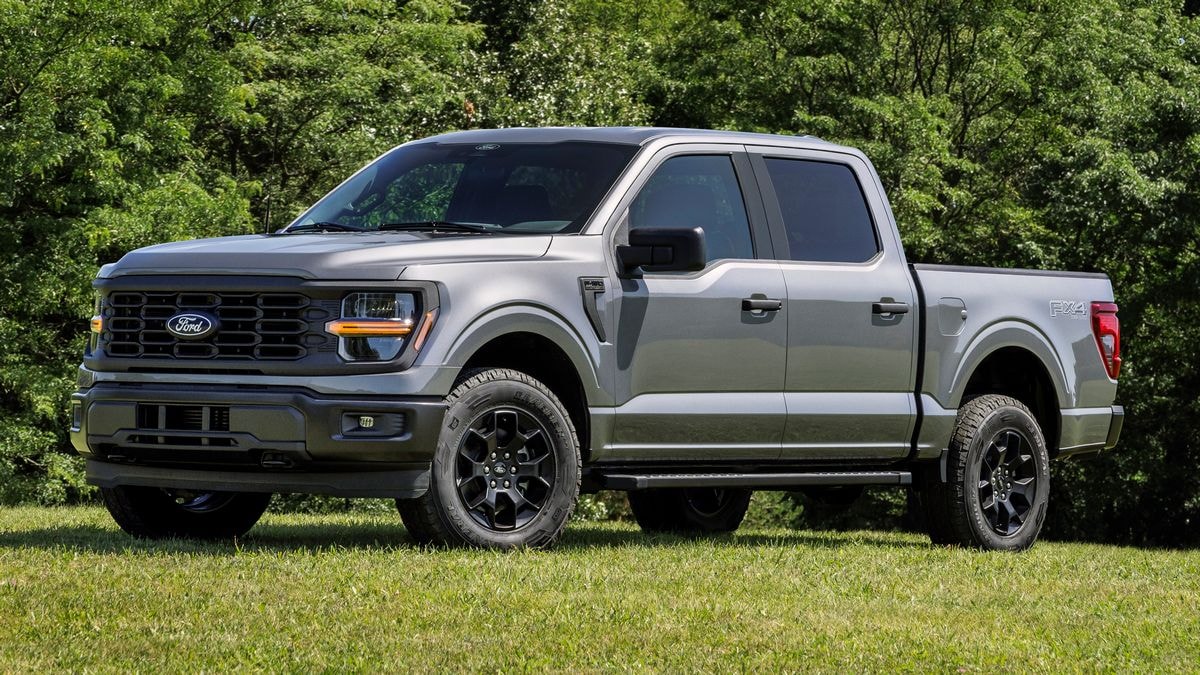
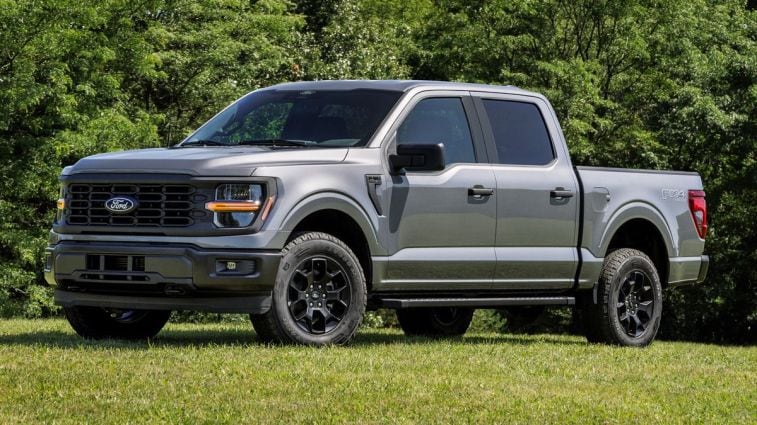
1. 2024 Ford F-150: 704 miles
The 2024 Ford F-150 is the longest-range hybrid you can buy in America this year, and it’s also the latest in an iconic line that is also our Full-Size Truck Best Buy Award winner. The F-150 is available as a conventional internal combustion pickup and an all-electric truck as well as a hybrid model. The hybrid form is seriously capable, too, with standard 4-wheel drive (4WD) and a PowerBoost Full Hybrid 3.5-liter V6 engine generating 430 horsepower and 570 lb-ft of torque. The hybrid F-150 can tow up to 11,200 pounds while also scoring 22 mpg city, 24 mpg highway, and 23 mpg combined out of its 30-gallon fuel tank. The PowerBoost Full Hybrid engine is available on select SuperCrew models.
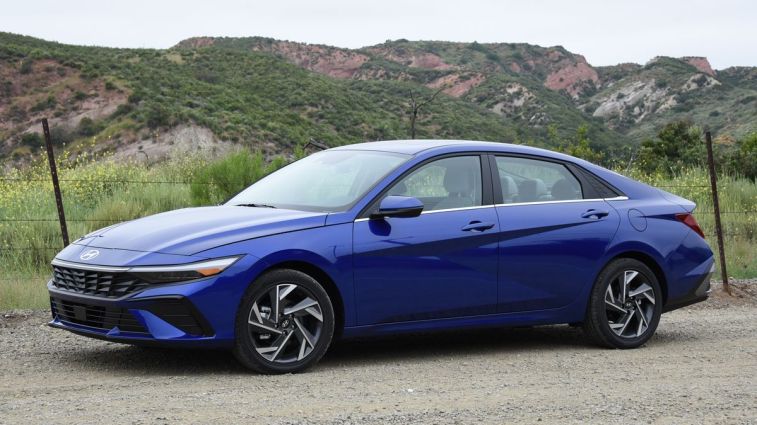
Speaking of killer values, the 2024 Hyundai Elantra Hybrid Blue is even more affordable than the Camry and nearly as long-range. The 2025 Elantra Hybrid Blue doesn’t have EPA ratings yet, but it’s a carryover model, so it should offer the same total range. To get maximum range, you’ll want to choose the 54-mpg-combined Elantra Hybrid Blue, as the standard Elantra Hybrid’s 50-mpg-combined rating lowers total range to (a still impressive) 620 miles.
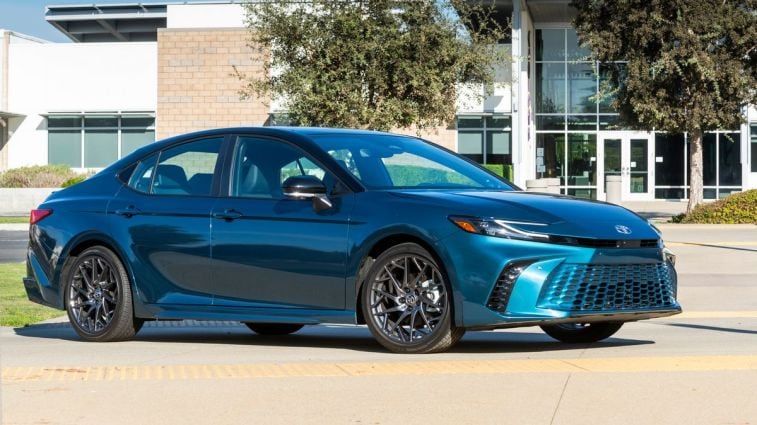
All-new for 2025, the Toyota Camry now exclusively uses a hybrid powertrain. The front-wheel-drive (FWD) LE is the most fuel-efficient trim level in the lineup, with 51 combined MPG. It’s also the longest-range midsize sedan on sale in America, and the top-ranking Toyota. That’s no small feat, considering no fewer than six of our 10 longest-range hybrids are from Toyota or its luxury brand, Lexus. The Camry Hybrid LE is the base model, but it comes with a reasonable equipment specification and starts just below the $30,000 mark, making it one of the best values among long-range hybrids.
With a fresh new look and more technology in the cabin, the 2025 Kia Sorento Hybrid is not just an efficient long-range SUV; it’s also an attractive value. The Sorento’s upscale interior now includes a 12.3-inch touchscreen as standard equipment, with the SX Prestige getting dual 12.3-inch screens in a single horizontal unit. To get maximum range with the Sorento Hybrid, you’ll need to choose front-wheel drive (FWD), as the all-wheel-drive (AWD) model gets 602 miles of range. If you choose the FWD model, you’ll be piloting the longest-range hybrid SUV in America.
All 2024 Toyota Sienna models are powered by the same hybrid drivetrain, so all you have to choose is your trim level and whether you’d like front-wheel drive or all-wheel drive. If you’re looking for a comfortable, practical way to move a large family, multiple pets, lots of cargo, or all three, a minivan like the Sienna is hard to beat. The Sienna is also the longest-range minivan currently offered in the United States.
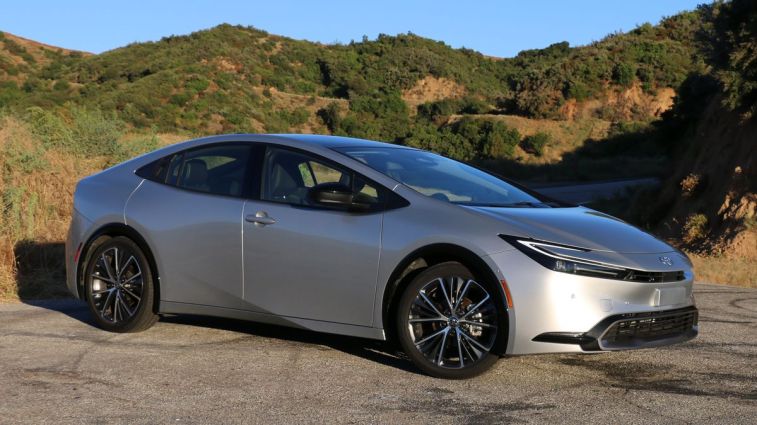
While some of the vehicles on this list get their range from large fuel tanks, the 2024 Toyota Prius gets its impressive range from efficiency, scoring 57 mpg combined, 57 mpg city, and 56 mpg highway. The front-wheel-drive Prius is the longest-range model, but opting for the all-wheel-drive system still nets you 54 mpg combined and 567 miles of range.
The 2024 Lexus LC 500h is something of an outlier in this group thanks to its 6-figure starting price, coupe body style, luxurious design and equipment, and relatively low gas mileage (29 mpg combined). In other words, the LC 500h is something completely different — and an excellent long-range road trip vehicle for the right person or couple. The LC 500h holds the title of the longest-range luxury coupe you can buy in America in 2024.
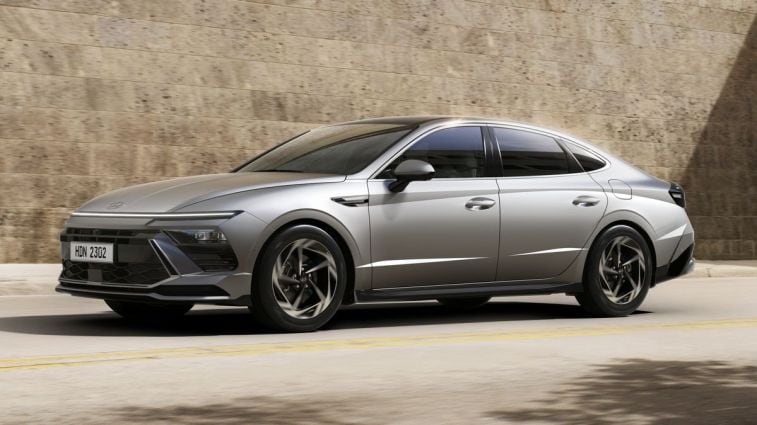
The 2025 Hyundai Sonata Hybrid is an under-the-radar choice. Perhaps not as popular as the Camry Hybrid or Accord Hybrid, it’s every bit as good a choice thanks to its remarkable value, strong equipment set, and generous warranty. It’s an especially good choice for long-distance drivers who value comfort and technology.
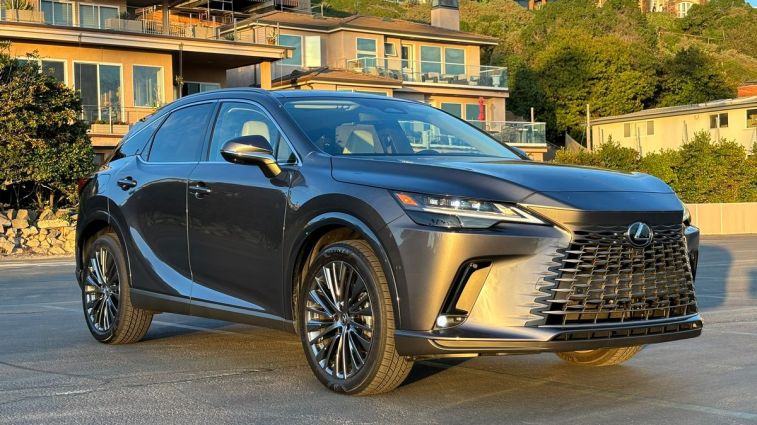
The longest-range luxury SUV in America, the 2024 Lexus RX 350h, is also a member of one of the most esteemed lines of luxury SUVs. The Lexus RX, including its hybrid variant, is beloved for its comfort, style, high-quality cabins, reliability, and low ownership costs. All-wheel drive (AWD) is standard on the RX 350h, and despite its luxury trappings, it also gets 36 mpg combined.
10. 2024 Toyota Grand Highlander Hybrid: 619 miles
To wrap up our list and round out the Toyota vehicles, we present the 2024 Toyota Grand Highlander Hybrid, an all-new model introduced for 2024. Although it shares part of its name with the Highlander, the Grand Highlander is a completely different vehicle, offering even more interior space and a high standard-feature spec in addition to its massive range. The maximum range comes with the Grand Highlander Hybrid in front-wheel drive; choosing all-wheel drive knocks the total range down to 585 miles.
I’d been trudging up to the Alps chalet, my feet stopped in their snowy tracks. A glimmering gold W126 Mercedes-Benz S-Class sat on winter tires, with chains on the rears. It looked perfect.
Instantly I was transported to a garage in Fargo, N.D., that belonged to my grandparents, Grandpa and Nonnie as I called them. It was like…an out of body experience. But it didn’t last long.
“Are you OK?” a German Mercedes-Benz spokesperson asked in what surely was less time than it felt.
“Yeah, I’m good,” I said. “This car, it takes me back to another time and place.”
But throughout the day I couldn’t stop thinking about that W126. It’s part of my family history.
Joel Feder washing the 1991 Mercedes-Benz 350 SDL
Grandpa’s W126 goes into the farm fields
I was only five when my grandpa, Paul Feder, died. My memories of him are limited, but (shocking no one) most includehis last car: A custom-ordered blue-on-blue 1991 Mercedes-Benz 350 SDL.
To this day, somehow, I have a digital copy (surely thanks to my father) of the car’s window sticker. The Ice Blue Metallic on Blue S-Class arrived in the U.S. at the port of Baltimore and was prepped for delivery in Chicago. When my grandfather died in November of 1991 the car had 8,408 miles on the odometer. He loved that car.
From an early age I held to some of the same truths: Cars were meant to be treated with respect and revered as incredible feats of engineering.
Paul and Joel Feder
My grandfather, an accountant, owned commercial real estate along with farm land when he died, and would drive that car everywhere through everything.
A formative memory includes a trip to the farm in his diesel-burning Mercedes. We were driving down the gravel road between the fields when all of a sudden he turned abruptly and we were suddenly driving through the fields. I lost my mind and screamed, “we can’t be driving through the fields in this car!” I was five.
Ever the calm, cool, and collected wise man that he was, Paul Feder smiled and said, “it’s fine, Kitchik.” He called his grandchildren Kitchiks.
It was not fine. I was not fine. My mind could simply not comprehend the fact we were driving this stunning blue Mercedes through the field. But my grandfather didn’t think twice. I got to ride in the combine that day.
Joel Feder diving the combine
When my grandfather died my grandmother, Nonnie, kept the car and made it her daily driver with my father buying her 1990 Audi V8 quattro (what a machine in the snow on Nokian Hakkapeliittas).
My grandfather’s automotive legacy lived on through my grandmother and my childhood. Nonnie drove the car year-round with it riding on winter tires in the snowy and very cold Fargo winters.
She took my sister Hannah and I to a movie during winter break once, and to ensure the diesel fuel didn’t gel in the cold snap she left the car idling in the parking lot the entire movie. I freaked out, saying, “Nonnie, someone’s going to steal the car!” Always calm, she said: “No, Dear (everyone was Dear), I’m locking it with the spare key.” And so she did with the pneumatic lock system going “clunk,” with the precision of a bank vault.
Betty Feder’s 2001 Audi A6 with a vanilla and blue interior
When Nonnie moved on from the W126 to what would be her final car, aMing Blue on vanilla and blue 2001 Audi A6 4.2, the 350SDL was sold to a family friend. I saw it two more times before it met its final fate: It hit a deer. A sad end to a spectacular vehicle.
1988 Mercedes-Benz 300 SE known as the Goldkäppchen car
The Goldkäppchen W126 proves the past set the future
The gold W126 that stopped me in my tracks in Austria was a 1988 Mercedes-Benz 300 SE. The Champagne metallic paint glimmered and its clean Euro-spec headlights and tight bumpers, looked so elegant versus the uglier headlights and larger bumpers mandated for U.S.-spec cars. It had a roof rack with skis attached to fit the location.
At Mercedes-Benz it’sknown as the Goldkäppchen car, with Goldkäppchen meaning Golden Red Riding Hood. This W126 is owned by Mercedes-Benz Classic, but it’s not officially part of the 1,100-car collection. “It’s too nice,” Mercedes-Benz Classic spokesperson Peter Becker told me.
Only two people, Becker and a colleague, take care of the Goldkäppchen car. It’s like an off-the-books sort of thing, despite being owned by Mercedes-Benz. It’s also the only car in the collection to get fitted with winter tires.
1988 Mercedes-Benz 300 SE known as the Goldkäppchen car
The previous owner, a meticulous German, had a thick stack of receipts for all the maintenance. When Becker and the team purchased the car it had lived with its previous owner for 10 years, but the rest of the car’s history is fuzzy aside from being first delivered to a Daimler-Benz dealership in Mannheim on April 29,1988. That’s noteworthy in history as Mannheim is the city Karl Benz was from.
Being a somewhat off-the-books car, it’s not usually driven by the media. Another journalist and friend of mine, Eileen Falkenberg-Hull, happens to be friends with Becker and saw the look in my eye upon seeing the Goldkäppchen car. She texted Becker and vouched for me. Becker gave the green light and minutes later the keys were in my hand.
The second the laser-cut (a wild notion in 1988) key was placed in my hand I felt connected with my grandparents. Somewhere they were smiling down upon me.
I grabbed the driver-side door handle and it clicked with the same bank-vault-like clunk. Instantly I was transported again to the garage in Fargo. Memories.
As I slid into the front throne-like gold-cloth-covered seat, the classic Mercedes-Benz smell overwhelmed my senses. It smelled just like my grandparent’s W126. I closed my eyes and just remembered Nonnie on the way to pick up my buddy Mark for a playdate on Highway 7 in Minneapolis, Minn. This was the same day I realized Nonnie was older than my grandfather when he died and I told her, “Nonnie! You could drop dead any minute!” She laughed. I was a gem of a child.
1988 Mercedes-Benz 300 SE known as the Goldkäppchen car
Sliding the key into the ignition instantly brought the gauges to life. One turn, two turns, but no glowplug light or need to wait for the glowplugs to warm. This car didn’t have glowplugs because it has a gas-powered 3.0-liter inline-6. The straight-6 was rated at 179 hp and 188 lb-ft of torque sent to the rear wheels through a 4-speed automatic transmission. The turbodiesel-6 in my grandfather’s 1991 350SDL made 136 hp and 228 lb-ft of torque, also sent to the rear wheels through a 4-speed automatic. Today’s S-Class has a 9-speed automatic transmission with up to 791 hp and 1,055 lb-ft of torque.
As I situated myself in the car I realized how much smaller this W126 was than my grandparent’s 350SDL. The S stood for S-Class, D for diesel, and L for long-wheelbase. Most of that extra space was between the wheels for a larger rear seat. The 350SDL was a U.S.-spec only car that Germany never had. Goes to show at least once in history America got a cooler car than the Germans from Mercedes.
1988 Mercedes-Benz 300 SE known as the Goldkäppchen car
The front seats were the same, albeit covered in gold cloth rather than blue leather, as the ones in my grandparents’ car. I could feel the springs underneath the seat bottom as they squished under my weight. I was fully supported with plenty of thick support from the long seat bottom.
After maneuvering the car for some quick photos I headed down the mountain with Falkenberg-Hull sitting right seat. Someone had to take photos to document this moment in history. She made it happen.
After the shock and awe that I was driving a W126 wore off I started to really start paying attention to what it’s like to drive. Naturally I began to compare it to the2025 Mercedes-Benz S 580e 4MaticI had just driven in the blizzard, which was painted in stunning China Blue with a Manufaktur Deep White interior. I would’ve preferred aManufaktur Yacht Blue interior…next time, Mercedes.
The seating position in the W126 is more upright than in today’s S-Class, and there’s a huge amount of glass around the greenhouse. That plus the thin pillars made outward vision fantastic.
Driving the 1988 Mercedes-Benz 300 SE known as the Goldkäppchen car
Out ahead, the hood seemed like it was a mile long and a plane could land on it. It doesn’t flow down like today’s S-Class, so you see every inch of that front end right to the upright Mercedes-Benz star.
The 3.0-liter inline-6 did not have the thrust of today’s plug-in hybrid S-Class, which has 503 hp and 533 lb-ft of torque. Mashing the pedal in the W126 brought an achingly slow kickdown of the 4-speed automatic, albeit with a smooth but noticeably shift, and an increase in revs. The forward thrust came on slow and built. It’s all torque as the revs never go high into the upper reaches of the tachometer’s range. This is a momentum car.
Becker had the Goldkäppchen car on chains in the rear, so in an effort to not destroy this immaculate automobile I never went above 60 kph (37 mph) and kept it to an average cruising speed of about 45 kph (28 mph).
Inside the cabin the W126 seemed nearly as quiet as today’s S-Class as the wind whipped around outside. No thrum from the inline-6 made its way into the cabin. The only noise or vibration felt was the rhythm of the chains on the rear tires hitting the pavement.
The soft suspension blunted every road impact just as the 580e 4Matic’s adaptive air suspension smoothers road imperfections. Going around corners the W126 had more lean than today’s S-Class, but it was composed and never felt as if it were flopping all over itself. It doesn’t roll like the Lincolns and Buicks my other grandparents also had during my childhood.
Perhaps most shocking was the steering. It’s nicely weighted and felt as if I were moving the steering rack through honey as the wheel rotated. So smooth. There was a bit of on-center slop, but it wasn’t annoying like in a “modern”Ineos Grenadierwith its circulating ball steering system. The W126 was precise and didn’t wander in its lane like the Grenadier does.
1988 Mercedes-Benz 300 SE known as the Goldkäppchen car
The similarities between the W126 and itsvault-like experienceand today’s S-Class are striking. From the proportions to the build quality and experience, it’s similar yet of a different era.
Above all else, driving the W126 felt like coming full circle in part of my automotive, and family, journey. My grandparents’ W126 left the family before I had a license. I never drove that car. Driving the Goldkäppchen car closed the loop on the past and reminded me that even today’s S-Class carries the weight of a flagship. Wonder what the current S-Class would look like in Ice Blue Metallic with a blue interior.
Mercedes-Benz paid for travel and lodging so I could drive the CLA EV prototype and sleep in a van on a mountain in a blizzard. I happened to drive the Goldkäppchen W126, too.
A last-minute Christmas surprise roiled holiday travel plans for thousands of passengers at one of the busiest times of the year.
For nearly an hour on Tuesday morning, Christmas Eve, a ground stop for American Airlines was issued after all its flights were held in the U.S. due to an unspecified technical issue. That ground stop has now been lifted.
“A vendor technology issue briefly affected flights this morning. That issue has been resolved and flights have resumed. We sincerely apologize to our customers for the inconvenience this morning. It’s all hands on deck as our team is working diligently to get customers where they need to go as quickly as possible,” the American said in a statement issued to Travel + Leisure.
The technology in question affected the ability for systems to release flights.
Ground stops can take a while to unravel and require Air Traffic Control to slot in the delayed flights as soon as possible. It’s a task that much harder at big hub airports than regional ones with lighter departure schedules.
While it is unclear yet how long the effects of the outage will take to unravel, certain American Airlines hubs like Charlotte Douglas International are already showing signs of severe disruptions. In response to one user on X asking how long it would take to get in the air, American responded, “At present, we don’t have an exact timeframe. Rest assured, our team is working on getting you back on track as soon as possible. We appreciate you hanging in there with us!”
Passengers who end up affected by the delays should consult the Department of Transportation dashboard for information on what type of compensation they might be eligible for. Customers can find the latest information on their flight using the mobile app and aa.com.
McLaren has issued a recall on its hardcore 765LT supercar due to the rear window potentially detaching.
The recall covers examples of the 765LT coupe from the 2021 model year, and affects a total of 163 cars in the U.S.
According to the recall notice published by the NHTSA on Nov. 28 (recall campaign number 24V901000), insufficient adhesive bonding may cause the rear window to detach from its frame, particularly in cases where the vehicle is being driven on a racetrack.
A large object like the rear window detaching and ending up on the road would create a major hazard for other drivers.
McLaren 765LT
McLaren said it became aware of the issue after receiving a number of warranty claims related to the rear window becoming loose in some areas and, in some rarer cases, becoming totally detached. The automaker said it is not aware of any accidents or injuries related to the issue.
The remedy requires McLaren dealers to install custom fasteners into each corner of the polycarbonate rear window, a service the automaker will perform free of charge.
McLaren started mailing owner notification letters from Dec. 6, but anyone interested in finding out more can contact McLaren at 1-888-327-4236 or visit the automaker’s recall page.
Smaller and more manageable luxury SUVs like the 2025 Volvo XC40 and 2025 Acura RDX can be both frugal and fun. You get the pride and prestige that come with a luxury-badged model, minus exceedingly steep prices and enormous fuel bills associated with larger luxury sport utility vehicles.
The Volvo XC40 competes among subcompact luxury SUVs and last year gained more horsepower and standard all-wheel drive (AWD). This year brings a new exterior color and some minor feature tweaks.
Acura also equips the RDX with AWD on every model. Serving as the brand’s smallest sport-ute–next to the just-introduced ADX–the RDX is sized one class above the XC40. It competes more directly with compact luxury SUV rivals like the BMW X3, Genesis GV70, and Mercedes-Benz GLC.
Does having a size advantage make the Acura RDX the better choice over the Volvo XC40? Let’s explore the highlights of each to find out.
2025 Volvo XC40
2024 model shown
The Volvo XC40 has a starting price of $41,945, including destination fee, and all three trims come with a 247-horsepower turbocharged 2.0-liter 4-cylinder engine paired with an 8-speed automatic and all-wheel drive.
During testing, we’ve found this powertrain capable of zipping the XC40 from zero to 60 mph in about 6.1 seconds. In town or on the highway, the XC40 exhibits an athletic yet relaxed driving demeanor that exudes refinement.
Volvo XC40 Highlights
Roomy and stylish interior: We continually discover many things to like in the XC40’s handsome cabin. The materials look and feel modern and robust enough to withstand years of driving duty. Special mention goes to the front seats for their outstanding support, and the space in the second row is plenty accommodating for two adults.
Google-based infotainment system: A 9-inch vertically-mounted infotainment touchscreen takes pride of place in the center of the dash. It has wireless smartphone connectivity and runs Google-based software, including Google Maps. This excellent system includes voice commands, multiple USB-C ports, and over-the-air updates.
Horsepower and standard features: The standard 247-hp turbo 4-cylinder is lively and delivers an EPA-rated 26 mpg combined. In the base Core trim, you get wireless device charging, proximity keyless entry, and many active driver aids.
Read our Volvo XC40 Expert Review or see 2025 Volvo XC40 models for sale near you.
2025 Acura RDX
The Acura RDX has a starting price of $46,050, including shipping. That’s about $4,000 more than the smaller XC40, though Acura is equally generous in equipping the RDX with many comfort, tech, and safety features.
For 2025, the RDX gets an updated grille, a reworked interior, visual updates, and a new dual-screen mode for phone integration.
All trims feature a 272-hp turbocharged 2.0-liter 4-cylinder engine working in cooperation with a 10-speed automatic transmission and all-wheel drive. We’ll delve more into how the RDX feels from behind the wheel in a moment because its engaging driving dynamics are one of our three highlights listed below.
Acura RDX Highlights
Outstanding ELS audio: Audiophiles in the market for a luxury sport-ute will want to pay attention. An available ELS 16-speaker sound system is optional and delivers incredible sound quality. This 710-watt system was developed with the guidance of Elliot Scheiner, a Grammy-winning music producer.
Fun to drive: The RDX is a rare SUV in that it’s honest-to-goodness fun to drive. Part of the credit goes to the 272-hp turbocharged 4-cylinder engine and 10-speed automatic transmission that provide seamless acceleration. Acura’s Super Handling All-Wheel Drive (SH-AWD) also deserves more than a passing mention. It delivers excellent grip and sharp steering while balancing power to the wheels that need it most in both wet and dry road conditions.
Adaptive suspension: This trick suspension comes with the RDX Advance that starts at $53,800. These adaptive dampers provide quicker reflexes and improved suspension control, especially when powering through tight twists and corners. It also makes for an even smoother ride during highway cruising.
Read our Acura RDX Expert Review or see 2025 Acura RDX models for sale near you.
Similarities
The XC40 and RDX prove that smaller can be better when you’re in the market for a luxury SUV. Their tidy proportions and balanced steering make them enjoyable to drive and easy to place on the road. And just because they’re not behemoths doesn’t mean adults can’t get comfortable in the first or second row. The Volvo and Acura have upscale cabins with commendable headroom and legroom.
Conclusion
Among our ranking of the Best Luxury Subcompact SUVs, the Volvo XC40 lands in a comfortable third place. Want to guess where the Acura RDX scores in our ranking of the Best Luxury Compact SUVs? It scores a similarly solid third place, too.
The deciding factor could be whether or not you need the added interior space and cargo volume of the Acura or if the more efficient Volvo’s tidier dimensions and lower price are a better fit for your SUV hunting. Acura’s longer warranty is also worth considering.
They’re equally entertaining to drive, feel built to last, don’t guzzle gas, and have enviable records for safety. A back-to-back test drive is a smart idea.
New 2025 Volvo XC40 Prices
New 2025 Acura RDX Prices
The Kelley Blue Book Fair Purchase Price for any individual used vehicle can vary greatly according to mileage, condition, location, and other factors.
The prices here reflect what buyers are currently paying for vehicles and vehicles in typical condition when purchasing from a dealership.
These prices are updated weekly. The manufacturer’s suggested retail price (MSRP) quoted includes the destination fee, but does not include tax, license, document fees, and options.
Editor’s note: This post is part of the AI Decoded series, which demystifies AI by making the technology more accessible, and showcases new hardware, software, tools and accelerations for GeForce RTX PC and NVIDIA RTX workstation users.
The AI Decoded series over the past year has broken down all things AI — from simplifying the complexities of large language models (LLMs) to highlighting the power of RTX AI PCs and workstations.
Recapping the latest AI advancements, this roundup highlights how the technology has changed the way people write, game, learn and connect with each other online.
NVIDIA GeForce RTX GPUs offer the power to deliver these experiences on PC laptops, desktops and workstations. They feature specialized AI Tensor Cores that can deliver more than 1,300 trillion operations per second (TOPS) of processing power for cutting-edge performance in gaming, creating, everyday productivity and more. For workstations, NVIDIA RTX GPUs deliver over 1,400 TOPS, enabling next-level AI acceleration and efficiency.
Unlocking Productivity and Creativity With AI-Powered Chatbots
AI Decoded earlier this year explored what LLMs are, why they matter and how to use them.
For many, tools like ChatGPT were their first introduction to AI. LLM-powered chatbots have transformed computing from basic, rule-based interactions to dynamic conversations. They can suggest vacation ideas, write customer service emails, spin up original poetry and even write code for users.
Introduced in March, ChatRTX is a demo app that lets users personalize a GPT LLM with their own content, such as documents, notes and images.
With features like retrieval-augmented generation (RAG), NVIDIA TensorRT-LLM and RTX acceleration, ChatRTX enables users to quickly search and ask questions about their own data. And since the app runs locally on RTX PCs or workstations, results are both fast and private.
NVIDIA offers the broadest selection of foundation models for enthusiasts and developers, including Gemma 2, Mistral and Llama-3. These models can run locally on NVIDIA GeForce and RTX GPUs for fast, secure performance without needing to rely on cloud services.
Download ChatRTX today.
Introducing RTX-Accelerated Partner Applications
AI is being incorporated into more and more apps and use cases, including games, content creation apps, software development and productivity tools.
This expansion is fueled by the wide selection of RTX-accelerated developer and community tools, software development kits, models and frameworks have made it easier than ever to run models locally in popular applications.
AI Decoded in October spotlighted how Brave Browser’s Leo AI, powered by NVIDIA RTX GPUs and the open-source Ollama platform, enables users to run local LLMs like Llama 3 directly on their RTX PCs or workstations.
This local setup offers fast, responsive AI performance while keeping user data private — without relying on the cloud. NVIDIA’s optimizations for tools like Ollama offer accelerated performance for tasks like summarizing articles, answering questions and extracting insights, all directly within the Brave browser. Users can switch between local and cloud models, providing flexibility and control over their AI experience.
For simple instructions on how to add local LLM support via Ollama, read Brave’s blog. Once configured to point to Ollama, Leo AI will use the locally hosted LLM for prompts and queries.
Agentic AI — Enabling Complex Problem-Solving
Agentic AI is the next frontier of AI, capable of using sophisticated reasoning and iterative planning to autonomously solve complex, multi-step problems.
AI Decoded explored how the AI community is experimenting with the technology to create smarter, more capable AI systems.
Partner applications like AnythingLLM showcase how AI is going beyond simple question-answering to improving productivity and creativity. Users can harness the application to deploy built-in agents that can tackle tasks like searching the web or scheduling meetings.
Example of a user invoking an AI agent in AnythingLLM to complete a web search query.
AnythingLLM lets users interact with documents through intuitive interfaces, automate complex tasks with AI agents and run advanced LLMs locally. Harnessing the power of RTX GPUs, it delivers faster, smarter and more responsive AI workflows — all within a single local desktop application. The application also works offline and is fast and private, capable of using local data and tools typically inaccessible with cloud-based solutions.
AnythingLLM’s Community Hub lets anyone easily access system prompts that can help them steer LLM behavior, discover productivity-boosting slash commands and build specialized AI agent skills for unique workflows and custom tools.
By enabling users to run agentic AI workflows on their own systems with full privacy, AnythingLLM is fueling innovation and making it easier to experiment with the latest technologies.
AI Decoded Wrapped
Over 600 Windows apps and games today are already running AI locally on more than 100 million GeForce RTX AI PCs and workstations worldwide, delivering fast, reliable and low-latency performance. Learn more about NVIDIA GeForce RTX AI PCs and NVIDIA RTX AI workstations.
Tune into the CES keynote delivered by NVIDIA founder and CEO Jensen Huang on Jan. 6. to discover how the latest in AI is supercharging gaming, content creation and development.
Generative AI is transforming gaming, videoconferencing and interactive experiences of all kinds. Make sense of what’s new and what’s next by subscribing to the AI Decoded newsletter.
The technical storage or access is strictly necessary for the legitimate purpose of enabling the use of a specific service explicitly requested by the subscriber or user, or for the sole purpose of carrying out the transmission of a communication over an electronic communications network.
Preferences
The technical storage or access is necessary for the legitimate purpose of storing preferences that are not requested by the subscriber or user.
Statistics
The technical storage or access that is used exclusively for statistical purposes.The technical storage or access that is used exclusively for anonymous statistical purposes. Without a subpoena, voluntary compliance on the part of your Internet Service Provider, or additional records from a third party, information stored or retrieved for this purpose alone cannot usually be used to identify you.
Marketing
The technical storage or access is required to create user profiles to send advertising, or to track the user on a website or across several websites for similar marketing purposes.