Christmas has come early for fans of the modern AC Cobra GT.
AC on Monday announced a new 2.0-liter engine option that will bring the starting price of the retro sports car down to a targeted 235,000 British pounds (approximately $294,400).
AC Cobra GT Coupe
Final pricing and specifications will be announced closer to the market launch next year, though AC confirmed the 2.0-liter engine will deliver up to 390 hp (there will be two states of tune) and start deliveries in 2026.
The Cobra GT at present is offered exclusively with a 5.0-liter V-8 that delivers 454 hp in naturally aspirated form or 654 hp with a supercharger attached, with prices starting at 285,000 British pounds ($357,000) for the Roadster and 325,000 British pounds ($407,200) for the Coupe.
AC Cobra GT Roadster
While down on power, the new 2.0-liter engine will help deliver weight savings compared to the V-8, AC said. The Roadster with the V-8 has a curb weight of approximately 3,200 pounds, meaning the 2.0-liter engine may see the weight drop closer to 3,000 pounds.
In addition to the new engine option, AC on Monday also announced the availability of a dual-clutch automatic transmission. A 6-speed manual remains an alternative, but a previously announced 10-speed automatic is no longer offered.
AC Cobra GT Roadster
Reservations for the Cobra GT with the 2.0-liter engine are already being accepted.
AC’s Cobra GT is a modern take on the iconic AC and Shelby Cobra sports cars from the 1960s. The modern cars use a bespoke aluminum spaceframe chassis and feature carbon-fiber bodies. They’re also bigger than the original design, which enables taller drivers to fit. AC also continues to offer the original design in the form of its modern Ace and Ace Bristol sports cars.
Power. That’s the word that sums it up as I take you on one final visit to two incredibly special cars Alec and I shot during our Speedhunting trip to the Philippines.
It didn’t take long to realize that when it comes to tuning and building cars, our Filipino friends don’t do things by halves. With Japan’s most punchy all-wheel-drive monsters at the heart of the project, only the best parts and upgrades were chosen to elevate these two legendary cars to a level of performance that would be a dream come true in the JDM motherland itself.
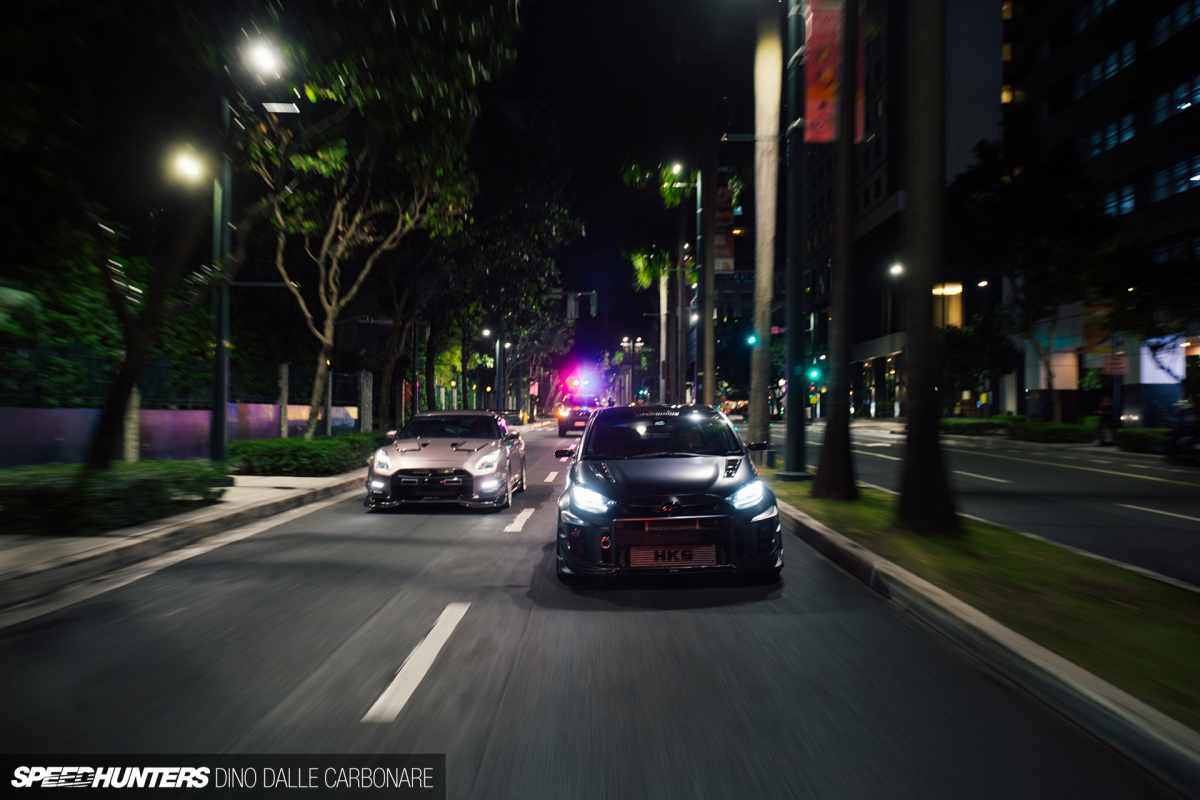
And as if that wasn’t enough, we were lucky enough to capture them on the streets of downtown Manila, something that’s becoming increasingly difficult to get away with in big cities these days. That alone made the experience even more memorable.
Let’s begin by giving due respect to the senpai of the pair: the R35 Nissan GT-R. Despite debuting in 2007, the GT-R has always been relevant, largely – or completely – thanks to the aftermarket.
And that’s exactly the route Autoholic Garage, the shop behind both builds, took when crafting their 1,200+hp street beast. They handpicked top-tier tuning parts to transform the GT-R into something truly extraordinary.
But before we break it all down, I want to take a moment to reflect on something that crossed my mind while putting this post together.
As we approach the end of 2024, I believe we’re living in an important era for Japanese performance cars and tuning. With Nissan set to retire the GT-R by 2025, the automaker’s financial troubles, and a potential merger with Honda on the cards, it’s unclear when – or if – Nissan will release a successor to the R35.
Then there’s the GR Yaris. A complete surprise from Toyota, this car has become a beacon for enthusiasts since its 2020 debut. Now, with the recently released kouki version and the Corolla joining the GR lineup, these are the most important Japanese performance cars on the market today.
And the best part? They’re tuneable. These are cars we can fiddle around with and extract more power, speed, and performance from. We’re living in a golden age, and it’s something we should celebrate because who knows how much longer it’ll last?
Fast forward to 2030 – will I still be able to make this statement? Will the EV revolution be fully underway by then? What performance offerings will Nissan and Toyota have left for us?
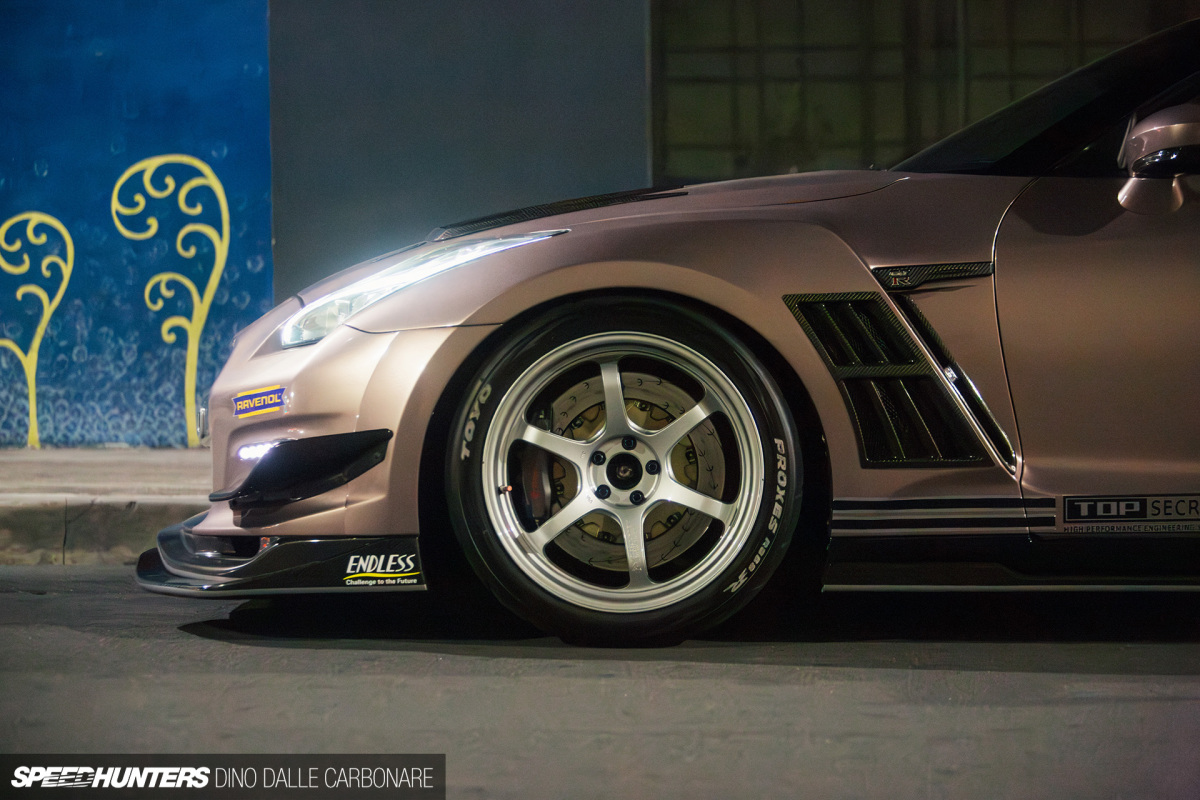
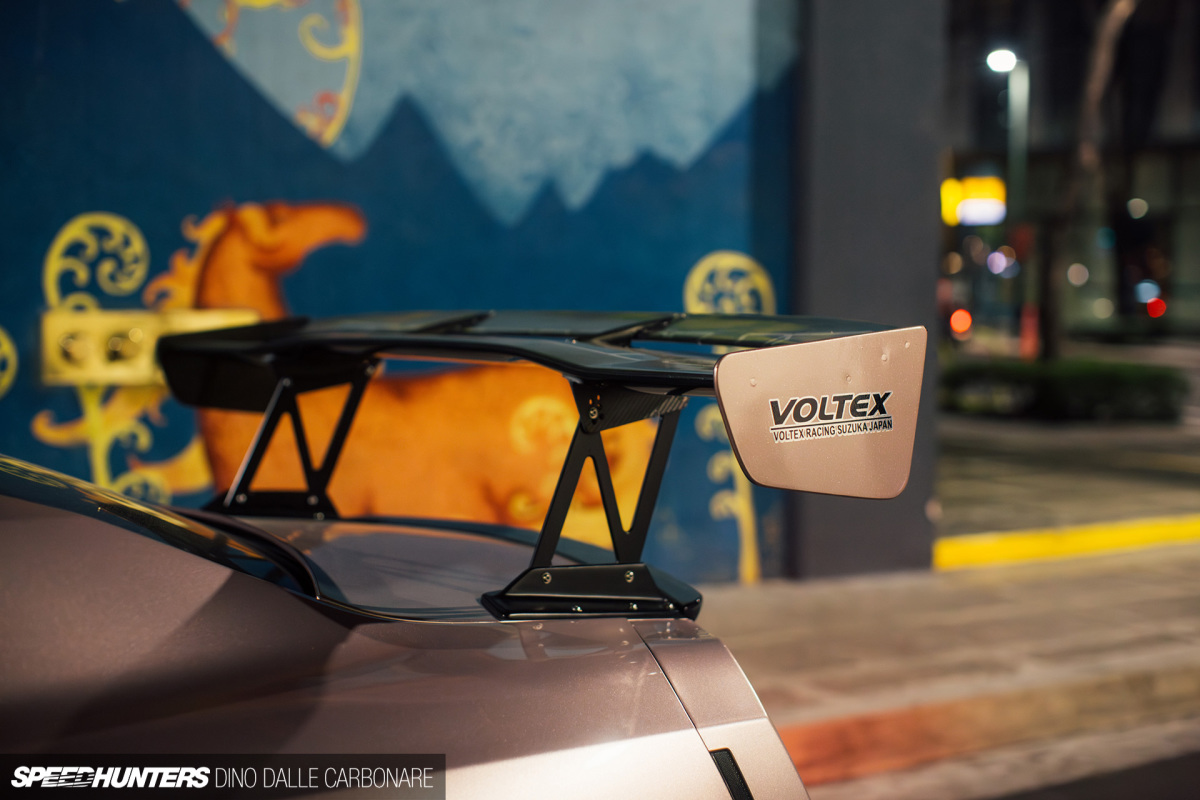
But I digress. For now, let’s enjoy these cars to the fullest, and with builds like these, it’s hard not to. Autoholic Garage has transformed this GT-R with a full exterior makeover, starting with a Top Secret Super GT-R 1100R aero kit and a Voltex Type 7 GT wing.
The pumped exterior adds instant aggression, with acres of carbon fiber, setting off the custom bronze metallic paint and highlighting every angle.
But it’s under the vented hood where things get really crazy…
While the VR38DETT’s V6 layout doesn’t show off upgrades as easily as, say, an RB26DETT or 2JZ-GTE, there’s no hiding the fact that this engine was completely stripped, rebuilt, and reworked with quality components. The result? A massive 1,252hp at the wheels – potentially around 1,500hp at the crank.
The engine build started with a Toby Lee-built 3.8L short block, paired with a Switzer E1K-X turbo kit and a long list of supporting mods to ensure the insane power is delivered reliably. The BoostLogic intake manifold changes the look of the VR while feeding the engine with plenty of air cooled by ETS intercoolers. The Syvecs ECU handles engine management, controlling everything from boost to ignition maps, while six 1,700cc/min Bosch-based Injector Dynamics injectors ensure optimal fueling.
Inside, the upgrades are just as impressive. The Momo/Top Secret steering wheel takes center stage, flanked by Recaro RS-G front seats and a dry carbon rear seat delete.
But what caught my eye the most was the MoTeC C127 dash display, which replaces the R35’s aging OEM analog meters and adds a distinctly race-inspired vibe to the cabin.
This street-legal beast is a true all-rounder, with a 9.3-second quarter-mile time and a 2:03 lap at Clark International Speedway, proving that it’s as comfortable shooting down a drag strip as it is out on track.
Now, let’s move over to the GR Yaris – a car that arrived over a decade and a half after the R35, packing half the capacity and half the turbos.
But as we all know, you can’t let size be a factor when judging a car. I’ll never forget watching Nobuteru ‘NOB’ Taniguchi in 2021 at Tsukuba, piloting the Garage G-Force GR Yaris to a 58-second lap, putting it on par with the fastest R35s. That was a simple stripping of the car, MoTeC engine management, and a selection of tuning parts. That time has since dropped to 56 seconds, putting the GR Yaris’s tuning potential into sharp focus.
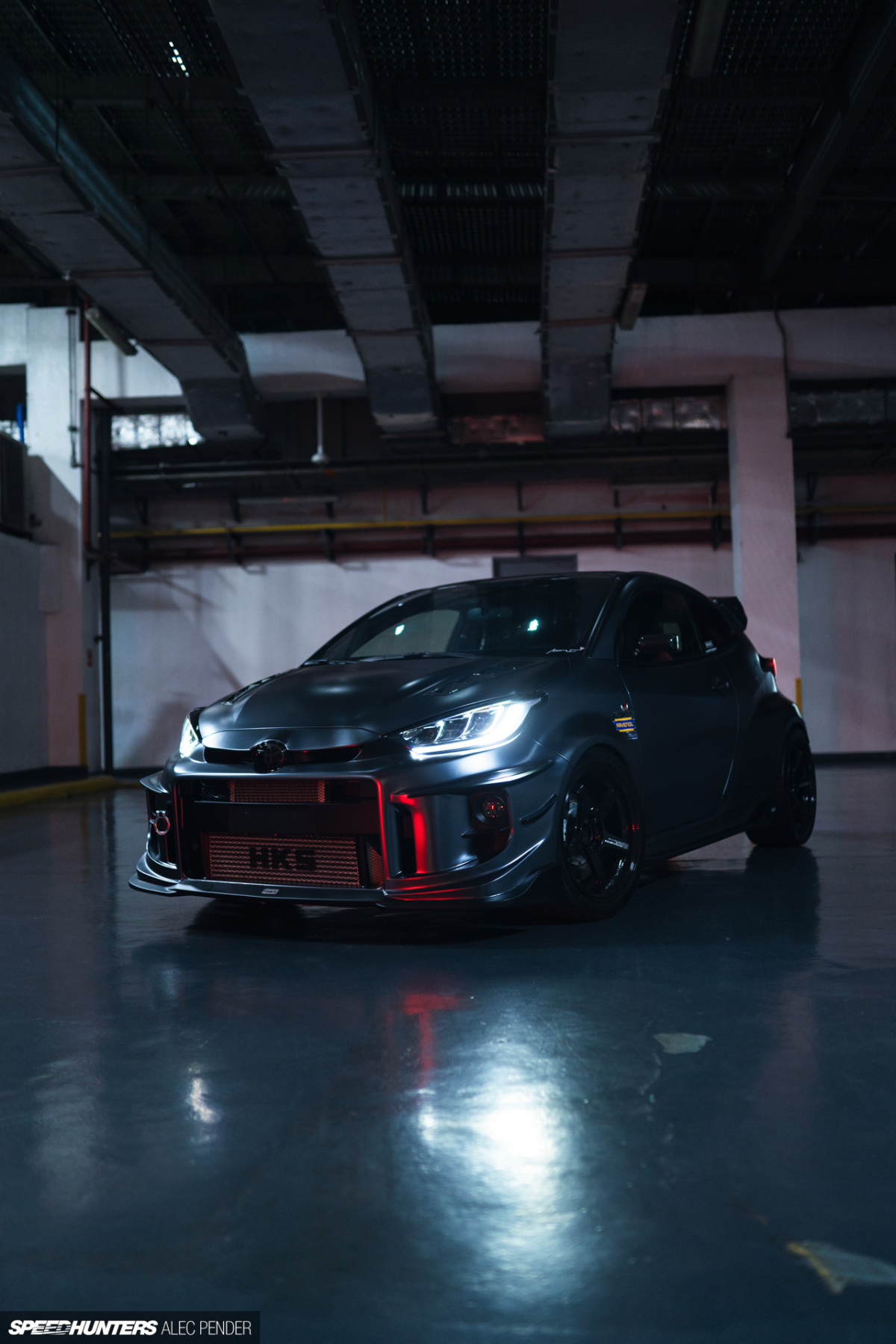
Autoholic Garage didn’t hold back here, either, starting with a full TOM’s aero kit.
The look is further enhanced by Garage Vary carbon hood vents and a sinister satin black finish. The TOM’s front bumper grille section adds a more aggressive profile while channeling more airflow to the intercooler and heat exchangers.
Handling was clearly a priority in this build. Three-way adjustable KW Variant 4 coilovers with remote reservoir tanks at all four corners, Cusco sway bars, control arms, and a host of Gazoo Racing upgrade parts give the Yaris a razor-sharp feel. Spoon rigid collars line it all up perfectly. The wheel and tire setup is as JDM as it gets with black Advan GTs and Advan Neova AD09s, while the AP Racing Pro5000R brake package is ready for street and track duty.
Autoholic Garage got sneaky under the hood, where things almost look stock. But hidden under the HKS carbon engine cover is a Goleby’s 600hp turbo kit, Kelford Stage 2 cams, and a complete fuel system upgrade. Supporting mods include a Weldspeed intake manifold, HKS intercooler, and oil cooler, as well as AEM methanol injection, and a MoTeC M142 ECU.
The result? 390hp at the wheels – close to 600hp at the flywheel – not bad for a stock block!
A TOM’S center exit exhaust finishes it all off.
Inside, the rally-inspired touches continue with a Yokohama Advan steering wheel and a tall CAE short shifter that gives the Yaris a sequential shifter vibe.
The Recaro Pro RMS seats, paired with red SCHROTH Racing 4-point harnesses, complete the race-ready look, while a Gazoo Racing rear seat delete sheds unnecessary weight.
This ballistic Yaris is only a few seconds off the GT-R’s pace at Clark International Speedway, posting a 2:08 lap time, once again hinting at how potent these little 3-cylinder GRs are.
Our trip to the Philippines introduced us to one of the most incredible car cultures we’ve ever encountered. We met car enthusiasts who truly live and breathe their passion, welcoming us as friends. We’ve only scratched the surface of what the country has to offer, so I’m already looking forward to our next visit.
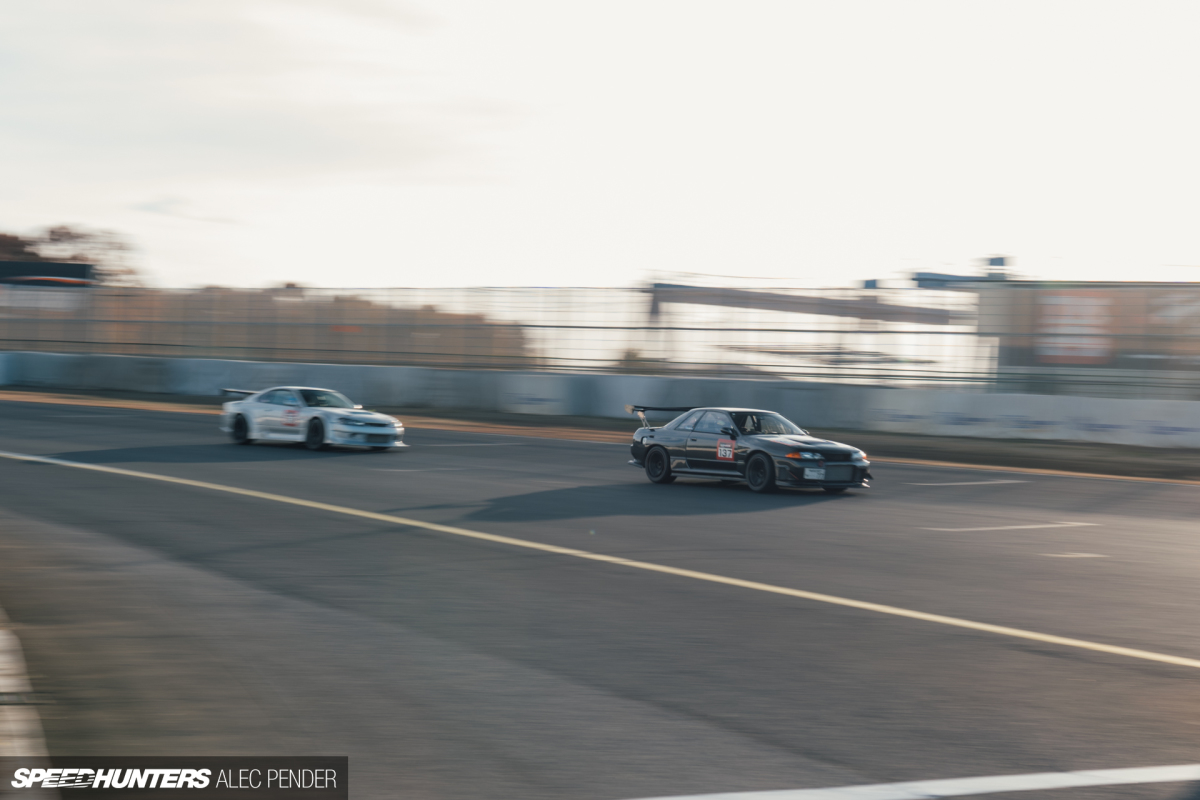
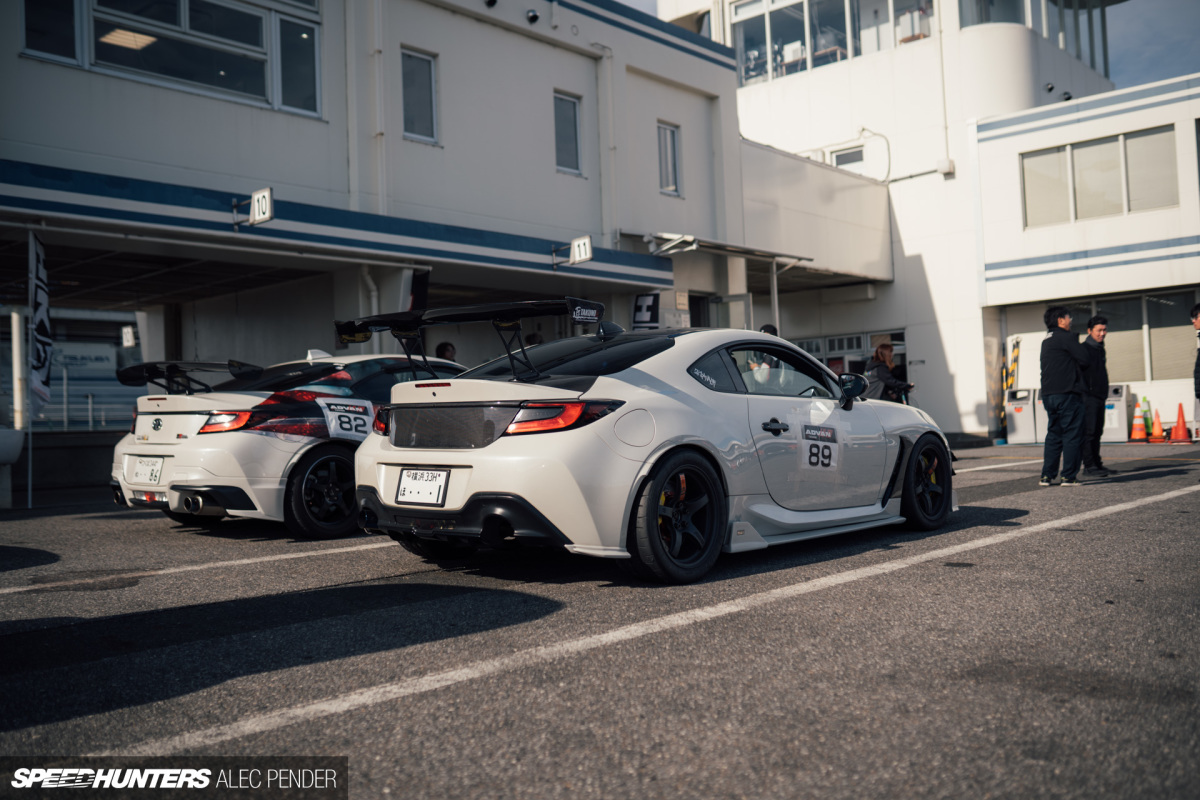
As 4:00pm sunsets settle in and celsius temperatures dip into the single digits, the time attack season across Japan begins. Earlier in the month, I made my way to Tsukuba Circuit for an event I wasn’t entirely familiar with.
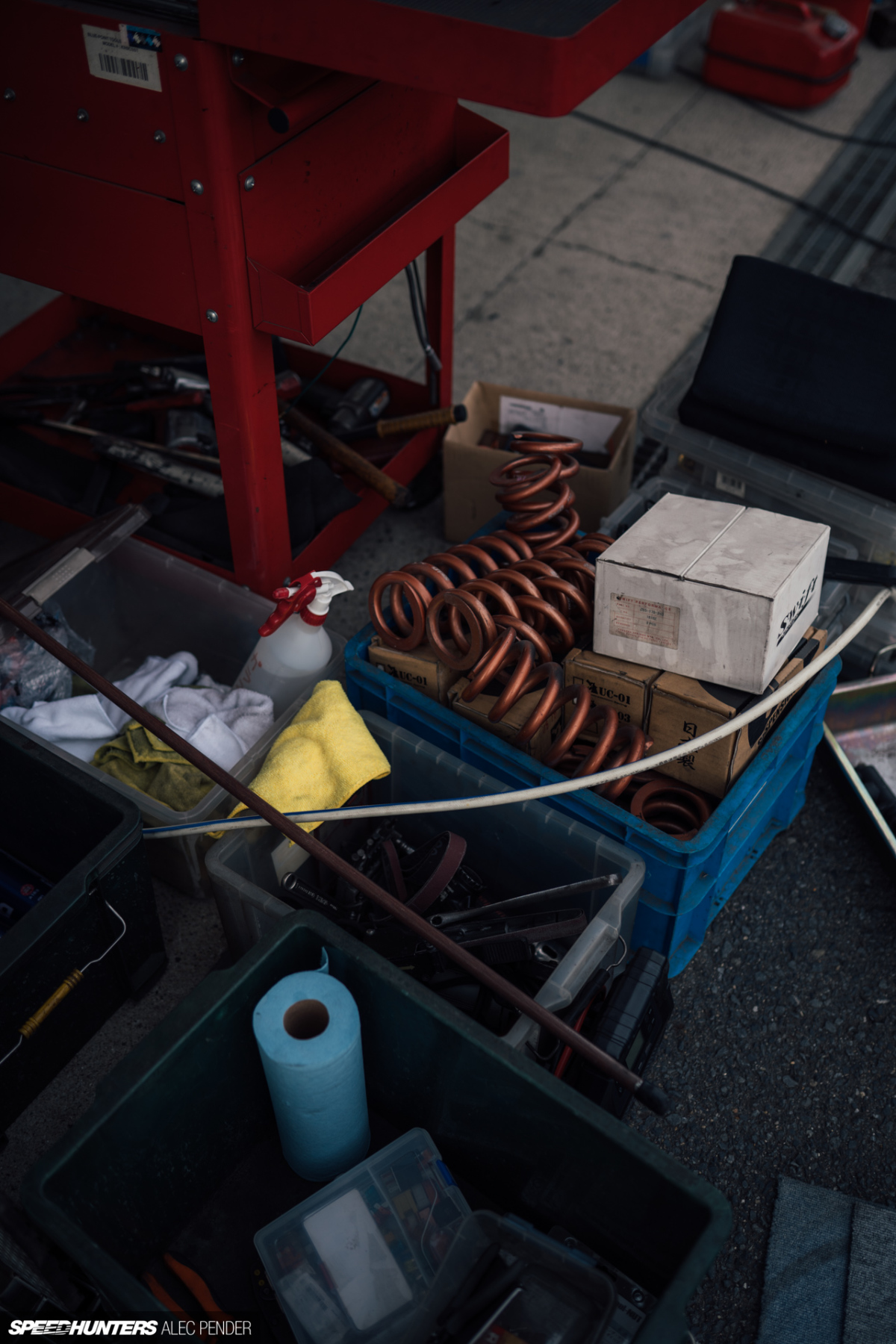
The HKS Hiper Challenge is by no means new, though. Dating back to the ’90s, it’s been a regular fixture, with events held at various circuits all across Japan. Being an HKS event, word is predominantly spread via the tuning giant’s domestic Performance Dealer network, which advertises the Hiper Challenges to its loyal customer base. That’s why you’ll find most cars at these events running HKS parts.
My main reason for being at Tsukuba on this particular day was to capture Jacky Tse, a New Zealand-based tuner and part-time track driving instructor, as he took his brand new HKS-built GR86 out for its inaugural shakedown – and potentially a few timed laps. I’ve got a full story on that coming soon, so look out for it.
While the HKS Hiper Challenge isn’t as well-known as other time attack-based events like Attack and the Rev Speed Super Battle, it still draws its share of dedicated drivers.
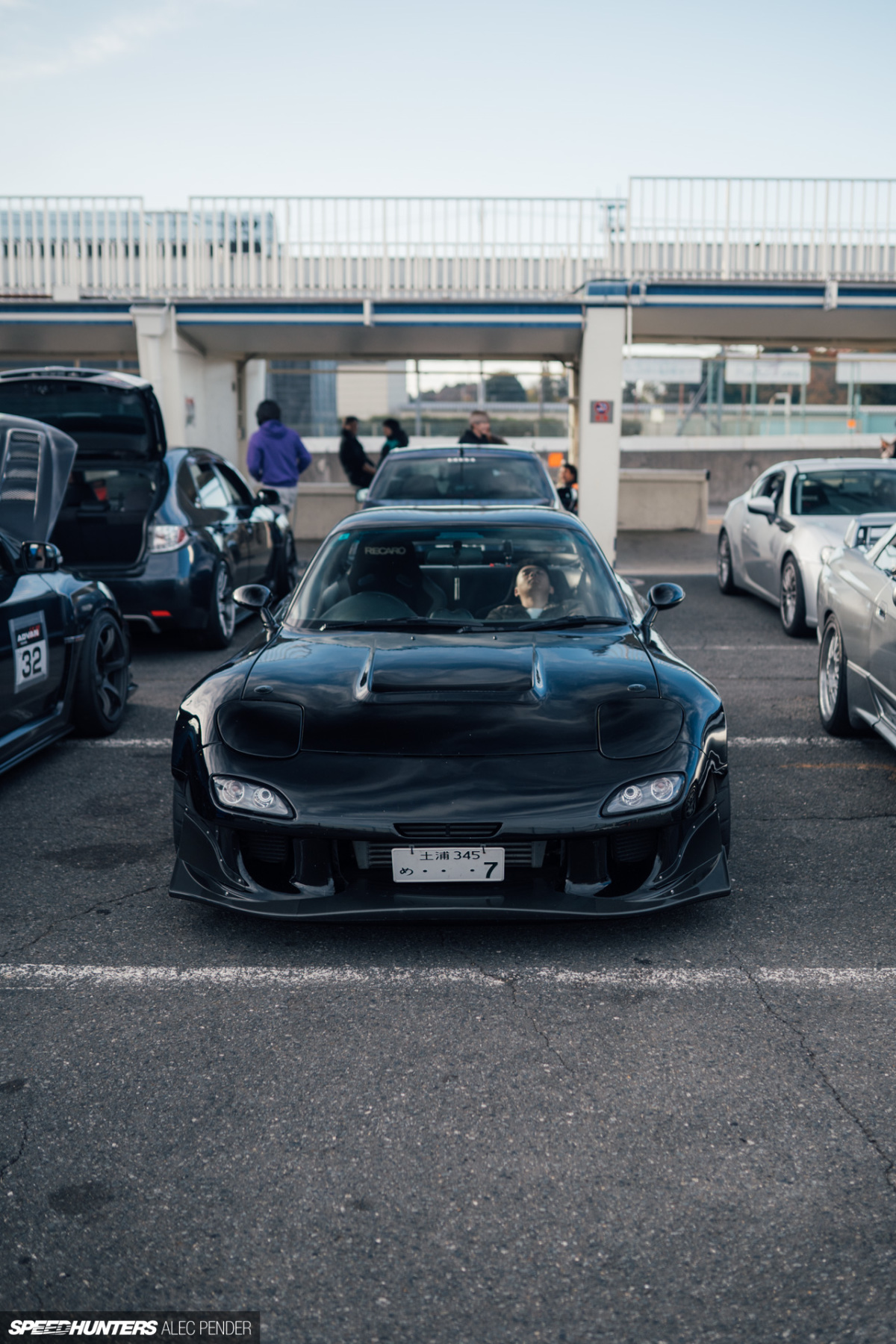
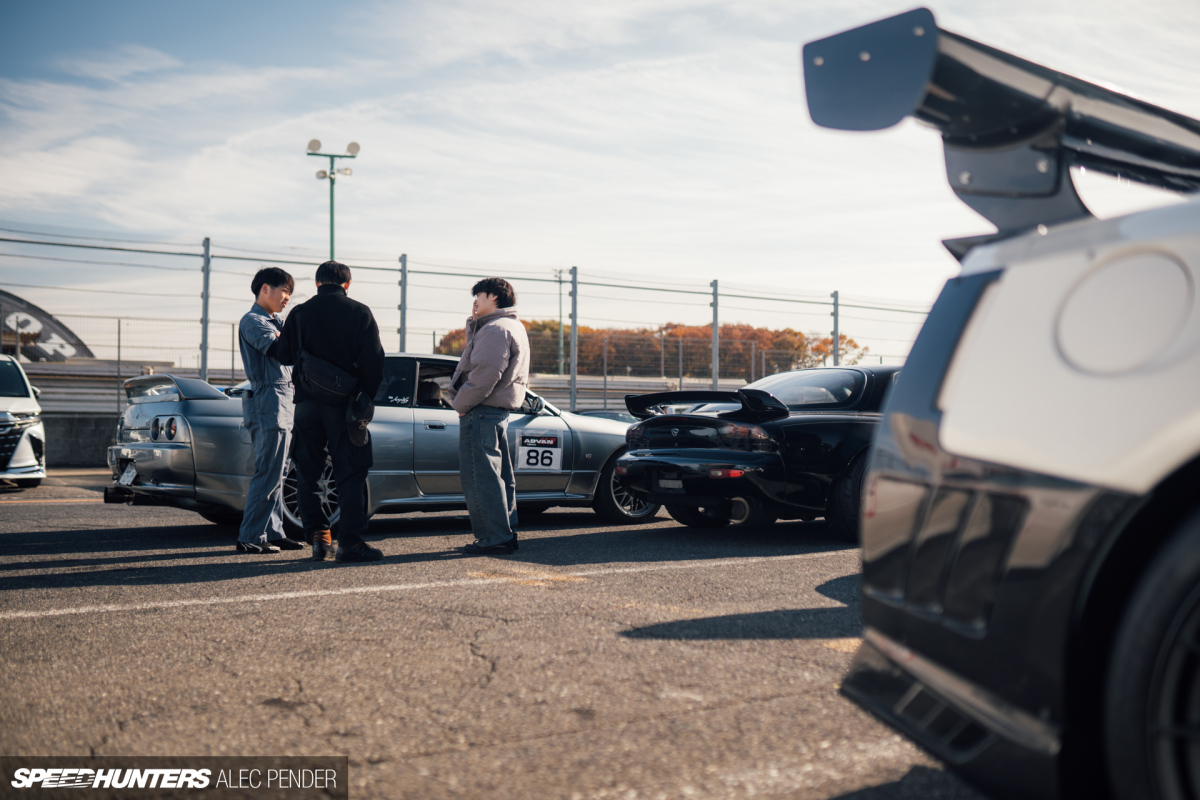
Compared to those events, the average participant here was far more likely to have driven their car to the circuit rather than have sent it on the back of a transporter. That said, calling the HKS Hiper Challenge an ‘amateur’ event would be an understatement – there were still plenty of purpose-built, sub-one-minute cars floating around the pits.
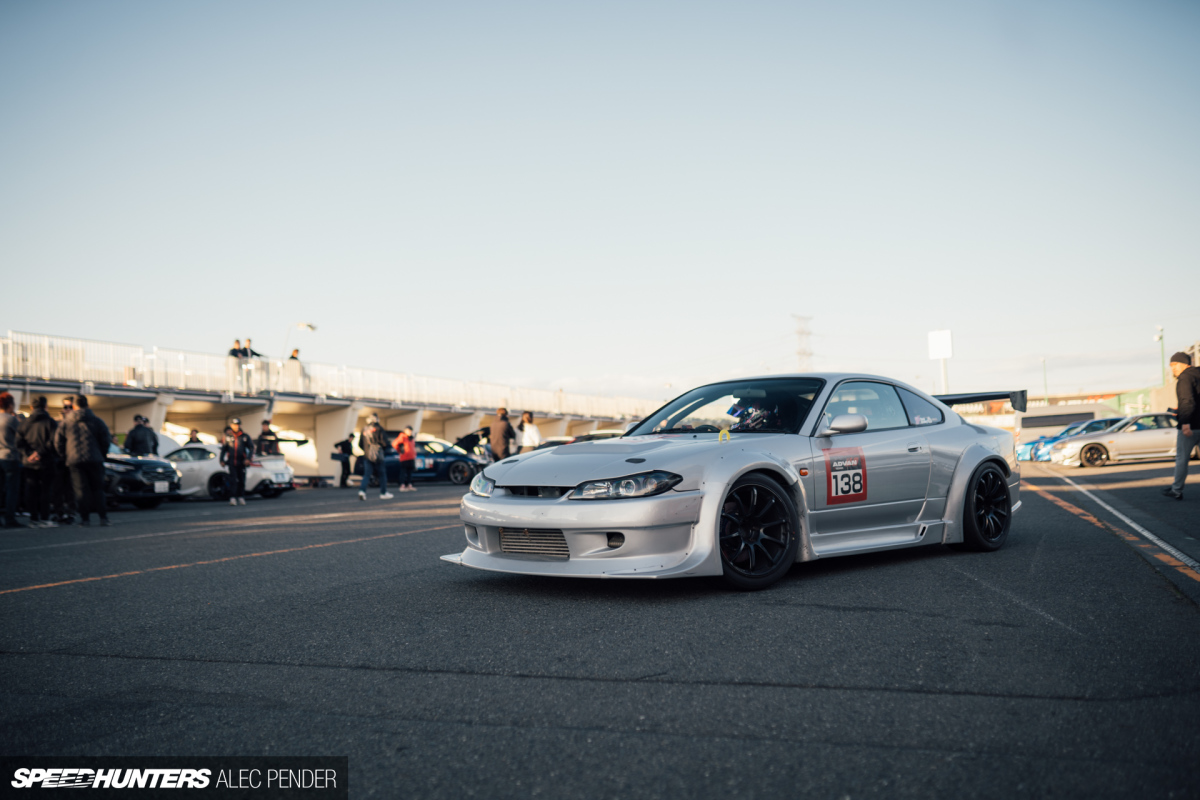
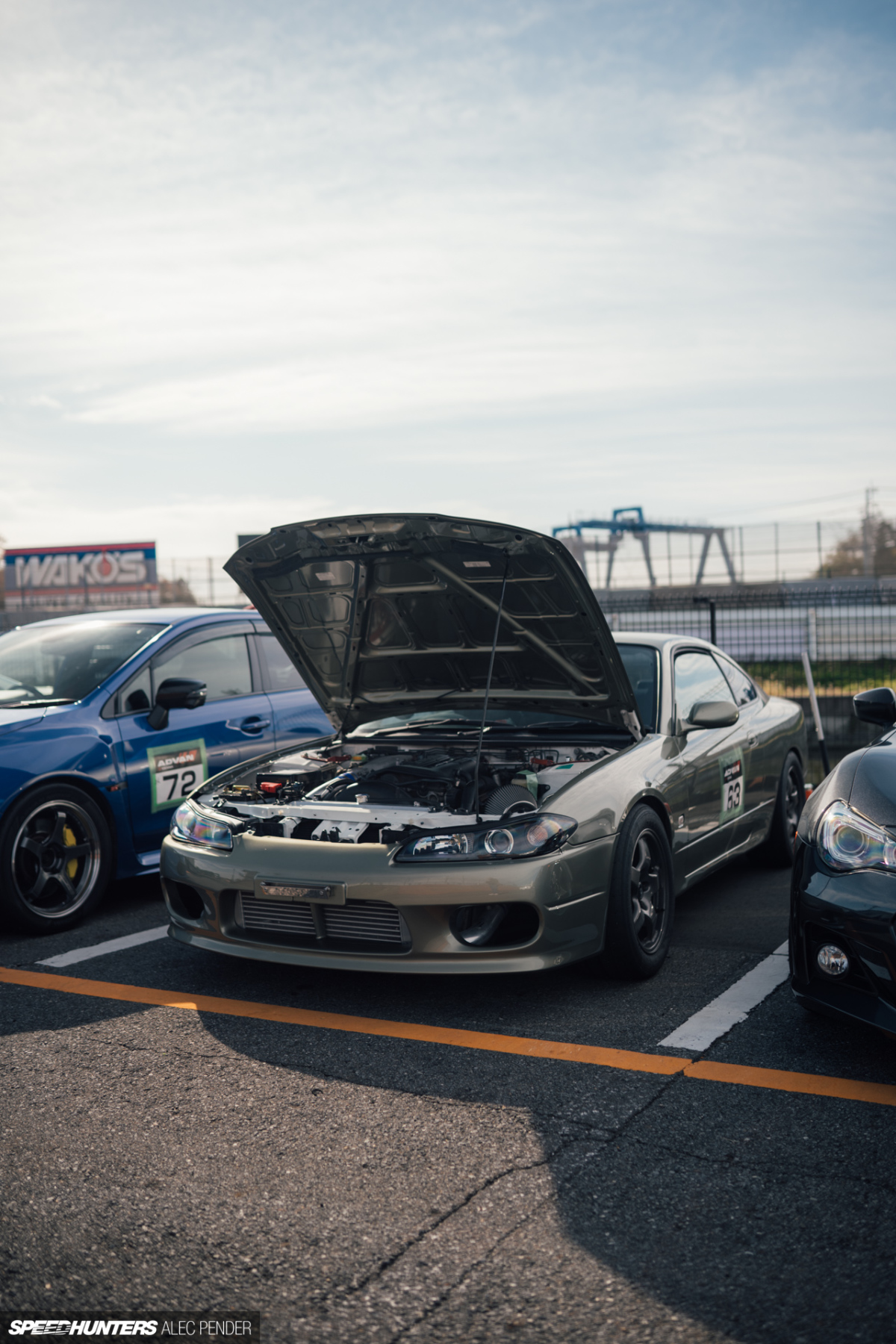
Take, for instance, this kouki Nissan Silvia S14. While it might seem a more restrained approach to time attack compared to the aero monsters you’d find at other events, there’s no mistaking its purpose.
Yashio Factory’s Oka-chan was also in attendance with his S15, adding to the mix of Tsukuba-seasoned machines.
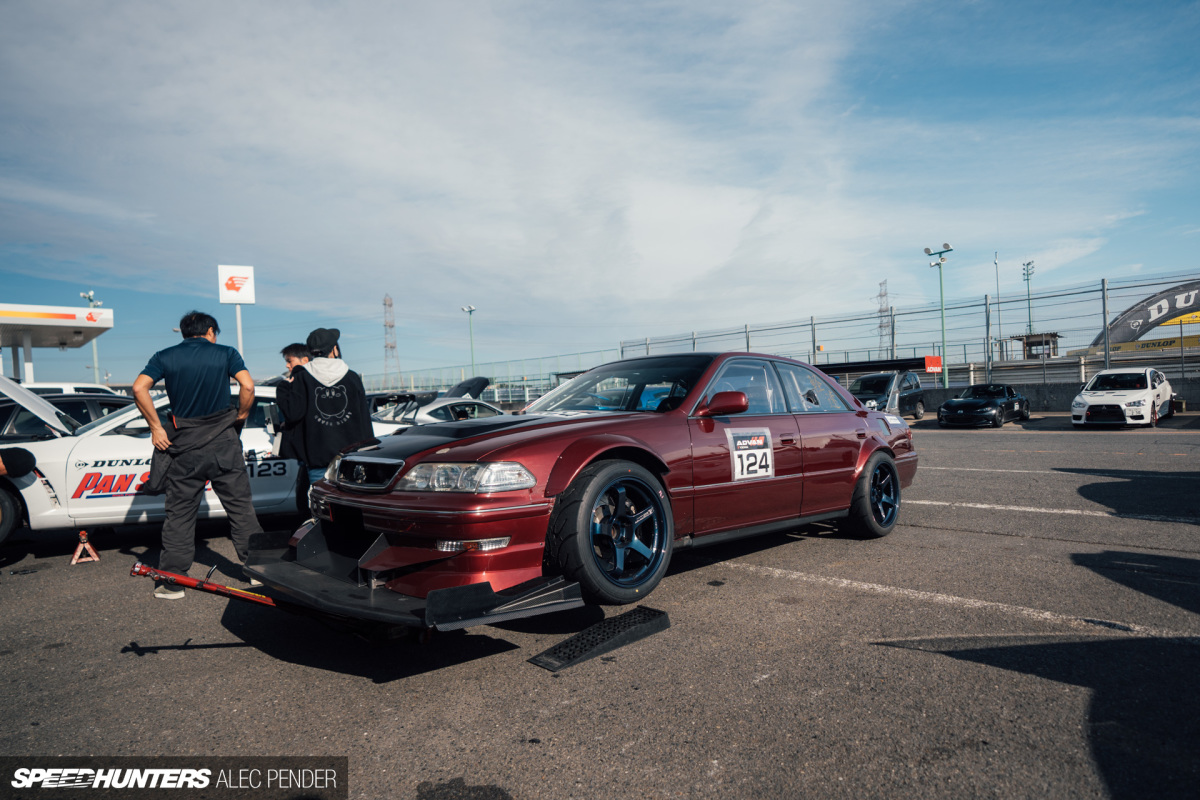
One of the best aspects of these more accessible events is a wider variety of cars. This Revolfe-built Toyota Aristo – no doubt hiding a giant single turbo and external wastegate – was a unique presence in the Tsukuba paddock.
The same can be said for this Toyota Chaser/Mark II. While Toyota never had time attack in mind when they designed these JXZ land barges, if there’s one thing a Japanese track day will teach you, it’s that anything is possible.
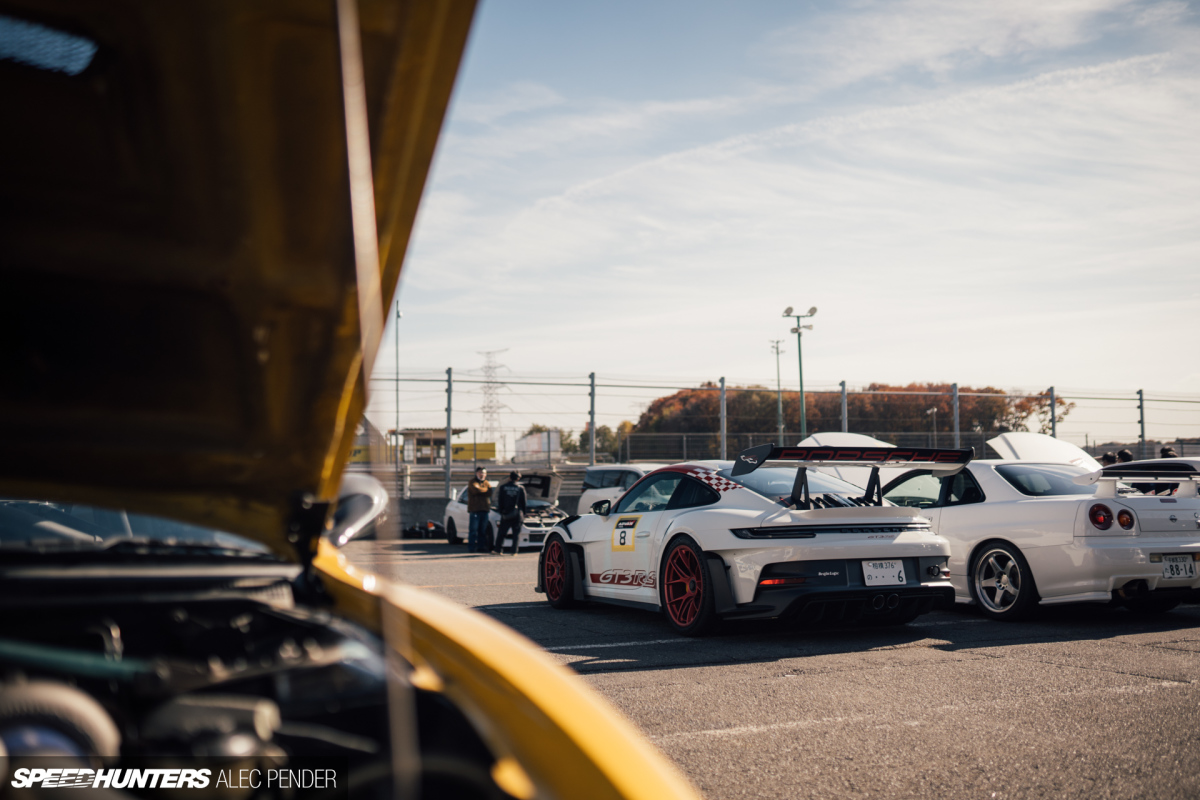
In a sea of JDM performance cars, it was hard to miss this Porsche GT3 RS. Though the owner didn’t have much luck on the day, there’s no doubt this car would easily crack a sub-minute lap at Tsukuba with the right conditions.
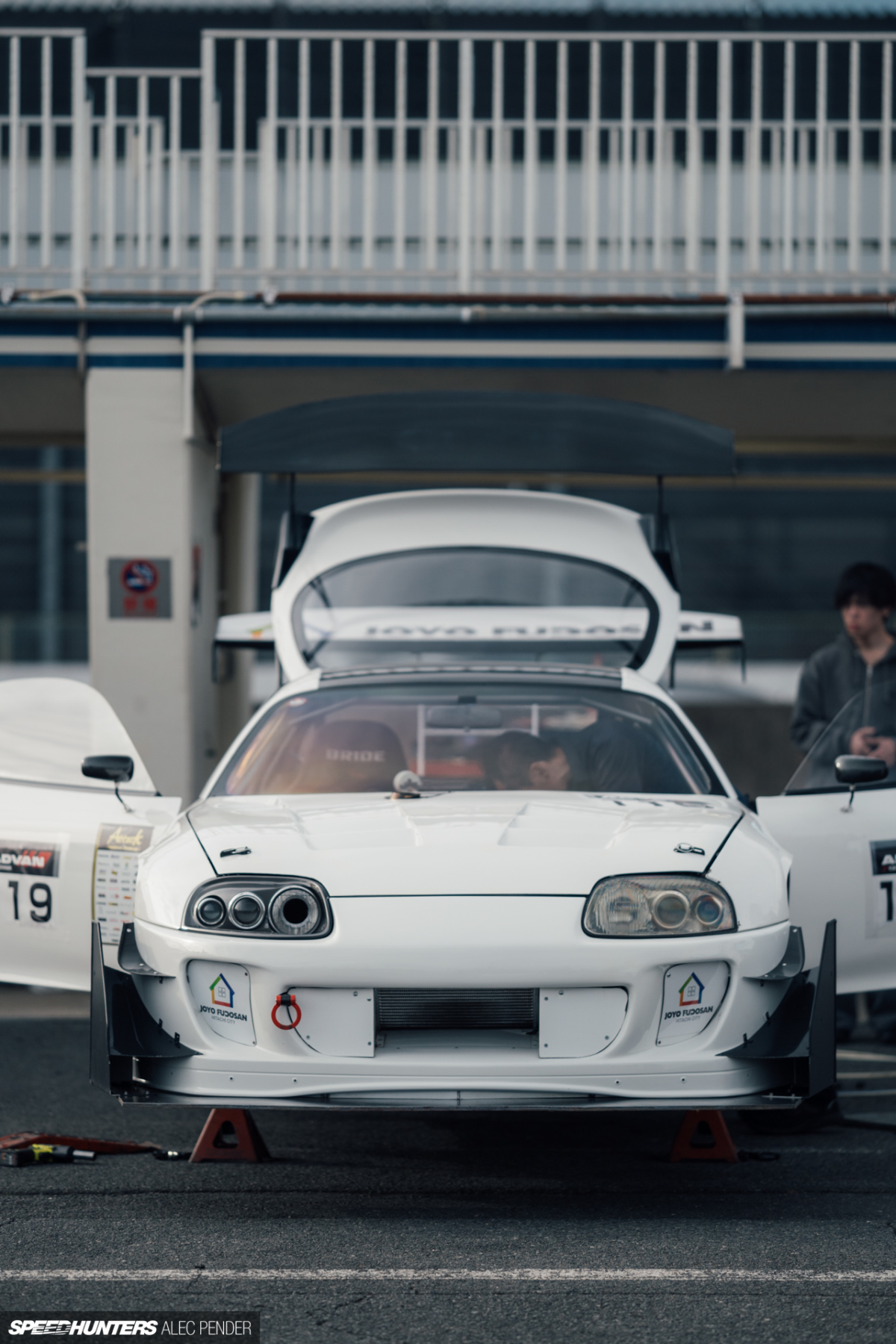
This MkIV Toyota Supra stood out thanks to some unconventional downforce – trunk-mounted and chassis-mounted wings stacked on top of one another.
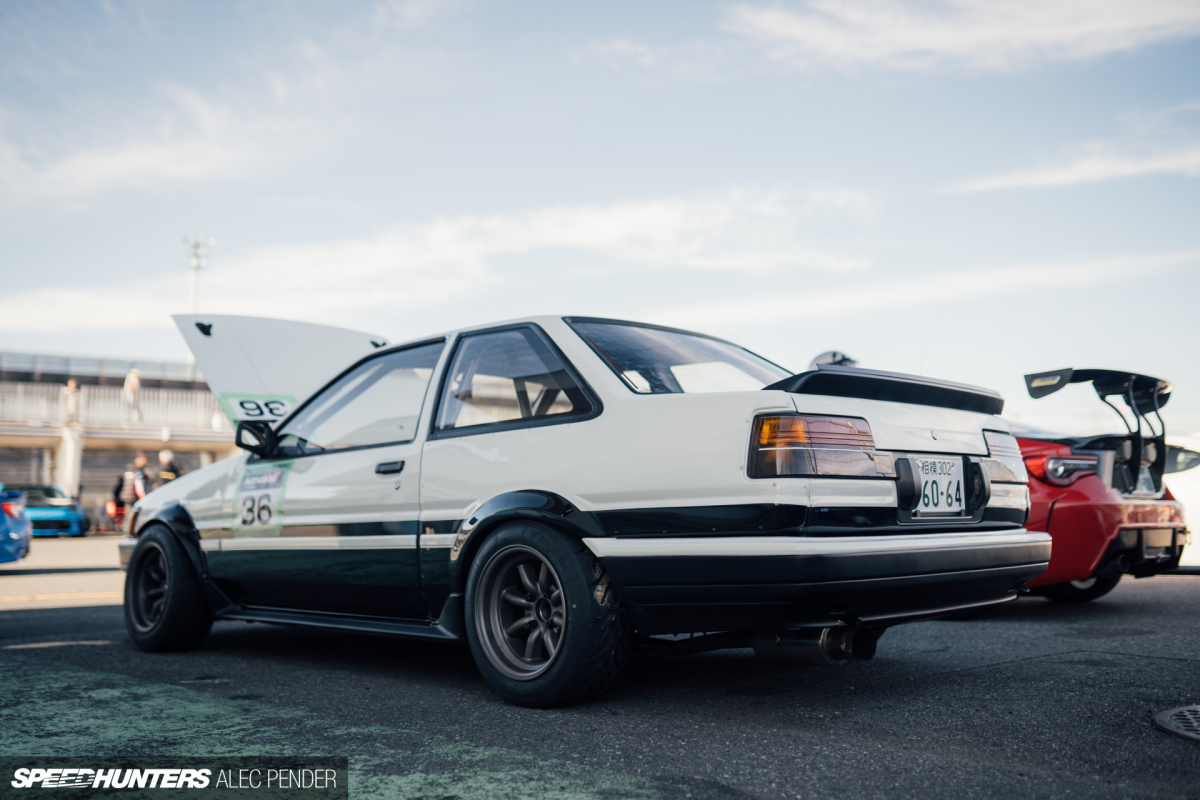
There was only one lone AE86 in attendance, which was a bit surprising given the grassroots nature of the event. Under the hood, it had a 4A-GE 16-valve engine with its fuel injection swapped for an open Keihin CR carburettor setup – easily winning my unofficial ‘Best Noise of the Day’ award.
GT and GR86s were everywhere, as expected. The Toyota 86/Subaru BRZ platform has long been synonymous with HKS, and many of these cars run either the HKS bolt-on turbocharger or supercharger kit to inject some much-needed spice into the standard boxer engine.
Stock bodywork was surprisingly popular at this event. I have to say; it was refreshing to see many participants keeping their cars at factory dimensions, serving as a solid baseline to measure what can be achieved mechanically before diving into more extreme modifications.
R35 Nissan GT-Rs were out in numbers at the HKS Hiper Challenge. With massive aftermarket support and prices now sitting at a sweet spot for a mid-level second-hand supercar, it’s no surprise at all.
For many, the HKS Hiper Challenge serves as a stepping stone to the more competitive time attack events. As February’s Attack Tsukuba approaches, many entrants use this event to hone their cars, logging crucial seat time.
Compared to their popular and highly successful rival, the Mitsubishi Lancer Evolution, Subaru Imprezas have not had a whole lot of pull in the time attack world. But it’s always cool to see a few out and about.
It’s easy to see why many choose the Evo path – the 4G63 engine is hard to beat in terms of power potential and reliability.
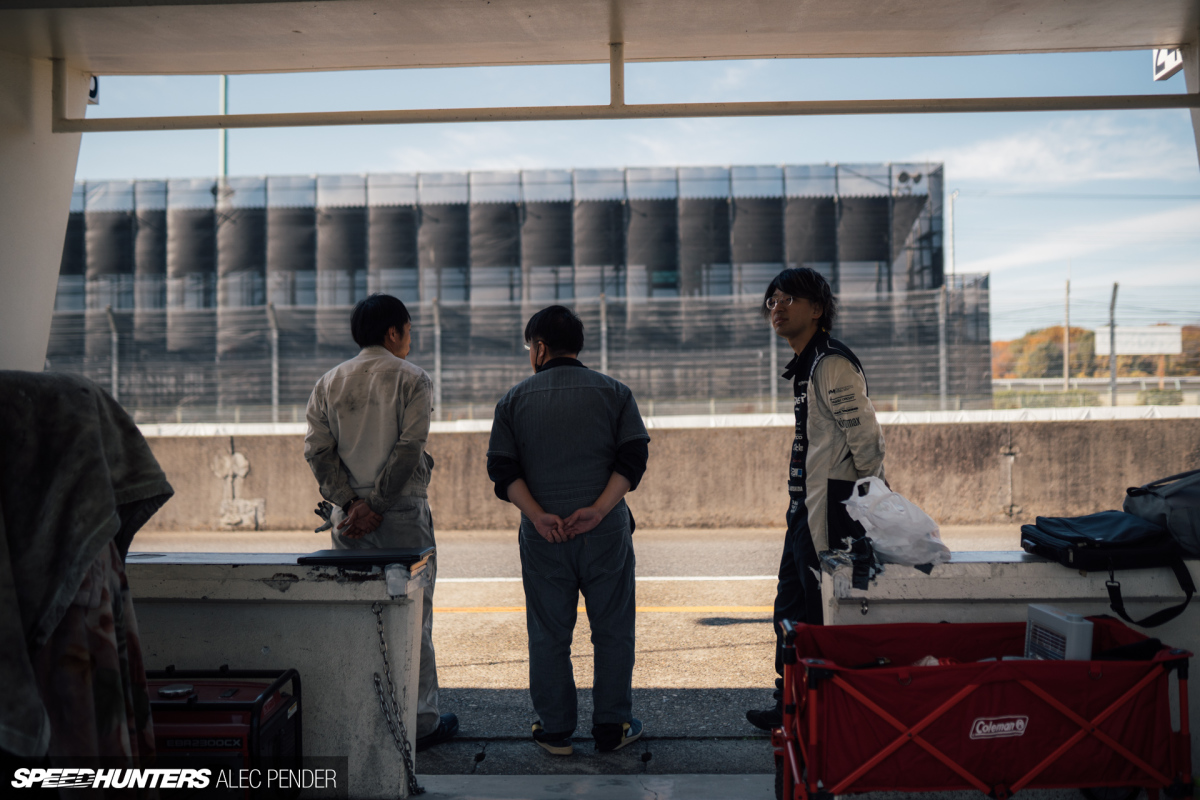
What I loved most about the HKS Hiper Challenge Tsukuba was its relaxed, grassroots vibe. Many drivers attend with friends, using the event as an opportunity to compare cars and times around the iconic TC2000 course. It’s a far less competitive atmosphere than the likes of Attack or even an Idlers Club event.
My personal favourite of the day? This pair of yellow Nissan S14s. Not over-the-top, SR20-powered, with full interiors – just the right balance for cars that are as fun on the street as they are on the track.
Before attending the 2024 HKS Hiper Challenge Tsukuba, I wasn’t familiar with the event, having never seen it covered by Western media. This got me thinking: I’m often asked for advice on how to find events like the Hiper Challenge when visiting Japan. While there’s no definitive answer – some events are advertised in magazines, others on circuit calendars, and some are just tweeted about – there’s always something happening at the tracks. So, if you’re on a JDM pilgrimage, I’d highly recommend swinging by one of these circuits. You never know what you might stumble upon.
Good morning! It’s Monday, December 23, 2024, and this is The Morning Shift, your daily roundup of the top automotive headlines from around the world, in one place. Here are the important stories you need to know.
It’s Time The Nissan Altima Got Some Respect | Jalopinions
Their merger will be facilitated through the creation of a holding company, and don’t worry Honda fanboys: it’ll be headed by a president picked by Honda. That means you really don’t have to freak out that Nissan will sully your precious little car company. From Bloomberg:
The presidents of Honda, Nissan and Mitsubishi Motor Corp. — Nissan’s junior partner — were seen entering and leaving Japan’s transportation ministry on Monday morning, likely to inform officials of their plans to formally kick off merger talks.
[…]
Honda and Nissan are both facing significant challenges, with the latter in dire financial straits as a deluge of electric and hybrid vehicles from competitors in China forces legacy brands to pool resources.
Nissan is in greater need of a turnaround due to cratering sales in the US and China, which have forced it to slash jobs, cut production capacity and lower annual profit outlook by 70%.
Talks were initially complicated by Taiwanese manufacturer Hon Hai Precision Industry Co., which reportedly expressed an interest in acquiring Nissan. But the iPhone-maker known as Foxconn is pausing its pursuit for now to see how talks between the two Japanese companies unfold, a person familiar with the matter said last week.
An alliance between Honda and Nissan — which could also include Nissan’s junior partner Mitsubishi Motors — would effectively split Japan’s automobile industry down the middle, pitting the trio against Toyota Motor Corp. and its partnerships with Mazda Motor Corp., Subaru Corp. and Suzuki Motor Corp.
Honda and Nissan had already begun laying the groundwork for a technical partnership earlier this year, announcing plans with Mitsubishi Motors to co-develop batteries, software and other EV technologies.
If this deal really does go through, it’ll create the world’s third-largest automaker by sales, according to CNBC. The two companies would also combine for a value of nearly $54 billion, though to be fair, Honda’s market cap contributes about $43 billion to that number.
2nd Gear: 35,000 German VW Jobs Cut In Union Deal
Volkswagen is making massive cuts to its German operations just a few days before the new year in an effort to save itself. In the near future, over 35,000 jobs are set to be cut and capacity will be sharply reduced. Still, this is somehow better than whatever VW was initially planning. This deal, while brutal, is good enough to avert mass strikes at the automaker.
This “Christmas miracle,” as the union leaders have called it, came after 70 hours of intense negotiations to avoid a sweeping 10 percent wage reduction. Right now, there’s no exact word on when site closures or layoffs would take place. From Reuters:
Volkswagen has been in talks with union representatives since September over measures it called necessary for it to compete with cheaper Chinese rivals and handle lacklustre demand in Europe and slower-than-expected adoption of electric vehicles.
Around 100,000 workers have already staged two separate strikes in the past month, the largest in Volkswagen’s history, protesting against cost-cutting plans.
“With the package of measures that has been agreed, the company has set a decisive course for its future in terms of costs, capacities and structures,” Volkswagen Group CEO Oliver Blume said in a statement.
“We are now back in a position to successfully shape our own destiny.”
VW said the deal would allow savings of 15 billion euros ($15.6 billion) annually in the medium term and saw no significant impact on its 2024 guidance. While there were no immediate closures, VW said it was looking into options for its Dresden plant and repurposing the Osnabrueck site, including looking for a buyer. Some production would be shifted to Mexico.
Vehicle production would shut at the Dresden plant by the end of 2025. VW AG’s staff will not get raises under a collective wage agreement over the next four years, while some bonuses will be scrapped or reduced.
Production at VW’s Wolfsburg plant, its biggest, will be cut to two assembly lines from four.
“No site will be closed, no one will be laid off for operational reasons and our company wage agreement will be secured for the long term,” said works council chief Daniela Cavallo.
This fifth round of negotiations was kicked off on December 16, and continued well into the night for five nights in a row, only taking breaks to “sleep and fuel up on coffee, curried usage and fruit,” according to Reuters. Those Germans really are something, man.
Here’s more on the deal and how the two sides got here:
The 35,000 future job cuts would represent around a quarter of VW’s workforce and come in tandem with reducing the company’s network of German plants by more than 700,000 vehicles.
IG Metall chief negotiator Thorsten Groeger nevertheless said the cuts, which would not involve compulsory redundancies, were part of a solution to address overcapacity and would be done in a socially responsible manner.
[…]
Top shareholder Porsche SE welcomed Friday’s deal as a “significant improvement in Volkswagen’s competitiveness”, adding it was now crucial to implement the cuts.
Good for the two sides for figuring this mess out. While 35,000 job cuts sound like a lot (because it is) I cannot imagine how much worse it really could have been if VW and IG Metall didn’t come to the table.
3rd Gear: Stellantis Reverses Course On Toledo Layoffs
Now, Stellantis is saying workers should come to work as scheduled, and that’s some damn welcome news just a few days before Christmas. From the Detroit Free Press:
In a statement provided by spokeswoman Jodi Tinson, the company said it’s reassessing its strategy:
“As Stellantis continues to reassess its strategy in North America, the company has decided to extend the WARN notice that was issued in November for the Toledo South Assembly Plant. As a result, no employees will be placed on indefinite layoff on Jan. 5, 2025, due to the previously announced shift reduction. Employees are expected to return to work as scheduled after the new year.”
Various Toledo media outlets quoted UAW Local 12 President Bruce Baumhower as citing a lower number of indefinite layoffs of 125 than originally announced, with the possibility that that number could be reduced further.
The news marks a positive change for workers from recent months, with the automaker previously making numerous job cut announcements at its facilities. The initial announcement for Toledo had been framed as part of the company’s effort to reduce its inventory levels, one of numerous issues it’s struggled with this year.
It’s a change since the resignation on Dec. 1 of CEO Carlos Tavares, who was under fire from Stellantis dealers and the UAW. In addition, the company brought Tim Kuniskis, who retired in June after 32 years with Stellantis and its Chrysler predecessor entities, back to the company and put him in charge of the popular Ram truck brand.
The Toledo Assembly Complex builds the Jeep Gladiator in its South plant and the Wrangler in its North plant. Folks, I’m just thrilled for these workers. It’s not too often stuff like this happens anymore.
4th Gear: U.S. New Vehicle Sales Will Start 2025 Strong
Sales of new vehicles in the U.S. are set to finish 2024 off strongly, and that good fortune for automakers is set to carry on into 2024. Dealers and car companies can thank replenished inventories and solid lease deals for the good fortune. There’s also some speculation that the upcoming Trump administration, and what it means for car buying, is spooking some folks into buying cars sooner rather than later. From Automotive News:
The U.S. new light-vehicle market is expected to end 2024 with sales just shy of 16 million vehicles, up from 15.6 million last year. Cox Automotive is projecting a tally of 15.8 million vehicles, while J.D. Power/GlobalData, Edmunds and AutoForecast Solutions each anticipate more than 15.9 million.
Analysts say those forecasts include a robust fourth quarter that benefited from two extra selling days and a slew of year-end discounts drawing customers into showrooms. J.D. Power and GlobalData estimate December’s seasonally adjusted annual rate will reach 17.2 million vehicles, the highest level since 2021.
Cox analysts project that General Motors retains the U.S. sales crown in 2024. Honda is expected to post the biggest market share gains and overtake Stellantis, which Cox estimated will lose 1.6 percent of market share with a 15 percent drop.
“One key question for the market is whether the recent sales gains reflect true changes in consumer vehicle demand, likely from improved vehicle affordability, or is the market looking at a Trump bump — a surge in post-election activity that will dissipate quickly? Only time will tell,” said Charlie Chesbrough, senior economist at Cox.
Rising vehicle supplies have led to increased incentives as interest rates begin to come down, helping to offset transaction prices that remain near historic highs despite some recent slight declines. Credit availability also has improved, analysts said.
Lower interest rates are also helping things along, but there’s no denying that cars are more expensive than they pretty much ever have been, and that’s hurting things.
The average new-vehicle interest rate slipped to 6.8 percent in November — the first time it has dropped below 7 percent in more than a year, said Jessica Caldwell, head of insights at Edmunds.
[…]
Affordability, however, remains a challenge. Cox data shows the largest market-share gains this year were in subcompact utility vehicles, compact utilities and compact cars — three of the lowest-priced segments. Midsize cars, midsize utilities and full-size pickups, in contrast, lost the most market share, Chesbrough said.
Consumers may be choosing smaller versions of the vehicles they really want to avoid busting their budgets, he said, a trend that eventually could swing back toward larger vehicles as interest rates decrease.
Higher transaction prices have pushed many consumers out of the new-vehicle market, which is keeping sales in the 16 million range, said Tyson Jominy, vice president of data and analytics at J.D. Power. Most consumers gauge affordability by the monthly payment, rather than total purchase price.
“Monthly payments are now $740 a month. That’s $15 a month higher than year-ago levels, and $150-plus higher than 2019, and that’s really where consumers feel it,” Jominy said on Automotive News’ “Daily Drive” podcast. “All the money we’re spending on incentives, all the dealer discounting, is just going really to wash out the MSRP increases. And at the same time, consumers are getting less value for their trade-ins, so monthly payments continue to increase.”
Leases have helped automakers get cars out the door. Lease rates are up 19 percent from a year ago, Auto News reports. At the same time, retail purchases are down about five percent.
Established by Elena Papanicolaou, in Athens in 2014, ‘Fly Me to The Moon’ is a Destination Management Company — specialising in bespoke travel design — serving both private and corporate customer requests. Growing exclusively through word of mouth, the company is revered for its local expertise, extensive network of contacts, unparalleled attention to detail and a personalised approach to each endeavour. With bespoke itineraries and easy access to a 24/7 line of communication, ‘Fly Me to The Moon’ prides itself in providing each guest with the most authentic travel experience.
You established Fly Me to the Moon in Athens in 2014, how unique is the Company on the Greek bespoke travel scene?
I believe we are unique because of who we are, why we started the company and what our mission is. I have spent many years in top management positions in the corporate sector, from shipping to finance to chemical manufacturing. While pursuing a career in a very demanding business environment, traveling for individual and professional purposes provided me with a profound pleasure for all the senses, enrichment and balance. I started Fly Me To The Moon out of passion with a clear mission of sharing these feelings for my home country, Greece, with well-travelled people looking for life changing experiences that will gift them with a footprint on their soul — experiences that truly matter. Crafting on a blank canvas, without limiting ourselves to the sector mechanics, focusing solely on creating out of the box itineraries far from the usual industry practices and must dos, searching and monitoring continuously and working with elegance, authenticity, imagination and attention to detail, is what defines us and makes us unique.
What is the profile of your typical clients? What specific & customised experiences are they looking for?
Our clients are well-travelled, culturally curious and sophisticated, discerning people with limited time to spare on research and travel arrangements. Individuals and companies that know why they travel and seek a professional who understands their specific needs and desires; alleviates any risks of bad choices and handles any issues before and during travel, in order for them to get the best out of their trip seamlessly and meaningfully. Most importantly, our clients know that we will always include elements that are unexplored, authentic with a sense of place, otherwise impossible to know.
You are dealing with both private clients as well as corporate ones, how different are the requests?
Having been a traveler in both camps, I think that the ultimate request is the same. On the surface, corporate travel requires more meeting arrangements and offsite travels, while individuals need relaxing, thematic experiences, celebrations, etc. However, it all boils down to satisfying the basic human needs of body and soul. Relaxing, rejuvenating, enriching, giving back, connecting, are all feelings which are beneficial to our private lives that consequently reflect our business lives.
You know all about Greece secret destinations and unequalled experiences. Without revealing all, could you let our readers know of your three favorite exclusive travel spots?
We are lucky to be in this small but extremely special part of the world. Even though Greece is stereotyped for its more than 6,000 islands out of which only 227 are inhabited, amazing as they may be, the mainland also offers an immense variety of exhilarating experiences ranging from ski resorts, gorges and creeks, to fishing villages, cities with a deep past and the longest coastline in all the Mediterranean basin. Add history, culture, rich gastronomy, unique customs and the genuine Greek “Filoxenia” aka hospitality, literally meaning “friendly to strangers” carried strongly throughout the centuries from ancient Greeks, the choice is endless. As there is a right place for everyone and at any period of time, it is very hard to pick just three favourites but in my top list I would include the tiny island of Paxos in the Ionian Sea, Santorini’s little sister island of Folegandros and the region of Laconia in the Peloponnese. Apart from the choice of location, we love showcasing Greece’s unique elements, namely its indigenous wine culture, historic and prehistoric civilisations, contemporary craftsmen and designers, national and international festivals, scenic driving routes and so much more.
Give us one example of a request you have received which sounded like “Mission Impossible” which you finally managed to deliver?
Staying true to our mission and passion, nothing is impossible as long as there is respect to nature and people. It is outside our philosophy to craft fragmented experiences based on show off and extremities, just for the sake of it. As we design the whole travel experience from start to finish, we incorporate special elements that blend and complement each other seemingly. Usually our clients tell us why they travel and leave the rest to us e.g. a surprise birthday celebration in an old monastery on a desert island, a 4×4 road trip deep in the Natura region of Pindos, a senior partners and BoD offsite in a remote ancient settlement, an ancestry trip of diaspora Greeks, whose family left Greece in the 1800 ’s.
You also have the ability to organise customised yacht charters for sea-lovers and families, is that correct?
Yes, absolutely and private yacht cruises are one of the top experiences we offer. We have a great list of yachts that we charter for our clients both motor yachts and motorsailers. The Greek seas are incomparable compared to the whole Mediterranean and the options are endless. From cosmopolitan islands like Mykonos, Corfu and Santorini to secluded desert-like islets, sea caves, fish taverns on the water and trendy beach clubs. Apart from the breath-taking sunsets and spectacular full moons you will almost certainly spot dolphins and sea monks swimming along.
How can your guests appreciate more of the Greek rich culture and authentic elements of the local “Art de Vivre”?
We can take pride at Fly Me To The Moon to always introduce and immerse our guests with Greek culture, arts, gastronomy and the Greek way of life — that is itself the “joie de vivre”. We always stress the topicity element in our itineraries. We brief our guests about the history and characteristics of the locations they visit; we take them to meet local artisans and craftsmen and introduce them to authentic gastronomy and PDO products. We suggest they follow traditional festivals, use the best experts to guide them to the sites and understand the continuity from the past to the present; we network people that may have similar interests (in archaeology, gastronomy, nature activities, etc) over home dinners and much more.
Three words to describe the values Fly Me to The Moon always puts forward?
Passion, Individuality, Respect.
When is the best time to visit Greece?
There is such a variety of locations and experiences perfect for everyday of the year. It all depends on what people are looking for.
Would you like to name a Greek historical figure who has inspired you and continues to inspire you in your life?
Another difficult choice with such a huge historical heritage but I will go to pre-history: Achilles – for his bravery and empathy, uncompromising stance in life and staying true to his values.
We highlight a Game Changer who inspires, educates and celebrates individuality, beauty and style. This month, meet Melita Koulmandas, a sustainable travel pioneer and CEO and founder of Song Saa Private Island, off the coast of Cambodia.
What was it about Cambodia and Song Saa in particular that you were so drawn to?
I moved to Cambodia in 2004. I have a very adventurous spirit and I love visiting remote destinations, and I was captured by the essence of Cambodia in the people, the energy and the vibrancy. But back then Cambodia was very much still waking up after the Khmer Rouge, and it is a country, even to this day, that’s in healing. 70 percent of the population were under the age of 30 back then, so it had this really young, dynamic spirit. There was so much positivity, which was something that I think that was in contradiction to what probably people felt about the country at that time.
I had just spent two weeks circumnavigating the Koh Rong archipelago, and it was pristine and the water was crystal clear. We’d stop outside of the beaches and park overnight and sleep on the fishing boat, and monkeys would come down to the water’s edge. It was just an extraordinary experience.
Why does it matter for people to experience Cambodia?
I think that Cambodia is an incredibly special place, and though it sits between its neighbours Thailand, Vietnam and Laos—three countries that have very long histories and are well defined in terms of tourism—Cambodia is still working out who it is. So anyone who visits Cambodia always walks away with a sense that they have had a real, human connection with it. It doesn’t matter if they’re visiting the temples of Angkor Wat or going through Phnom Penh or coming down to the coast—there’s always this unique experience of real connection that you get when you come to Cambodia. Cambodia has its own essence, its own sense of place, and its own history.
How is Song Saa’s approach to sustainability and community programmes unique compared to developments of a similar nature?
Because we started off with building community projects, with no vision at that point to open a hotel, we have designed and created a hotel experience for our guests where that is woven in from Day One, as opposed to designing and opening a hotel and making that fit into the hotel. which is very much what regenerative tourism development design is all about. So we look at the living system and how we can operate within that and help to enhance these systems. The work that we do is through the nonprofit Song Saa Foundation, which is its own entity. If the hotel shut down tomorrow, the foundation would continue to operate, so the programmes that we work with aren’t there because it makes the hotel feel good. They’re there because that is what we need, so everything is community-driven.
Would you say responsibility and luxury are, by their very nature, in opposition? Can they coexist?
I believe they can coexist. To start with, I think we have to understand what the definition of luxury is in this context, and it’s really evolved in the past few years. We don’t use the word “luxury” and haven’t for a while, we talk about high-end or responsible tourism. Coming into a country like Cambodia, even if that travelling is at a high-end level, by just connecting to the people and the culture, it brings empathy and awareness that they take home with them. Where the high-end traveller can really bring a lot of change is that they really want to understand the history and the place where they’re at, and they then often donate to the programmes that we have, so there’s that transference of awareness and support.
What are your thoughts on the changing landscape of sustainability-minded tourism in recent years, especially in Southeast Asia, and consumer expectations and how they’ve evolved?
I think they’ve evolved enormously. I think there is a greater awareness for most people, and that there is a real shift away from the tourists of 20 or 30 years ago. People now identify as travellers, and they want to have that experience and connection. Traditionally, back then people used to stay in the big hotels, where they would step into and then they would be transported back into a cocoon. And now people want to feel, connect, learn and grow, and that’s incredibly special.
This article was first seen on Grazia.Sg
For more on the latest in leader interviews and reads, click here.
The preferences of the modern car buyer are so vastly different now than they were 40 years ago. It’s hard to imagine that there was actually a point in time where Chevrolet thought a fancy Camaro focused on luxury and technology would ever sell, but the 1984 Camaro Berlinetta was just that. While it’s still hard to conceive of any reason that someone would buy one, the latest MotorWeek Retro Review showcases some unique touches in the interior of the Camaro Berlinetta that were improved over the ‘82 model, and it actually really impressed me. What didn’t impress me, though, were the gussied-up alleged muscle car’s performance numbers.
Racing Tech 5 | Nascar Garage 56
History remembers the Chevrolet Camaro as a muscle car; a powerful, affordable, front-engine, rear-wheel-drive, blue-blooded stab at a performance car. It hasn’t always been that way. The early days of U.S. emissions regulations hamstrung the performance chops of most cars sold in the country, and the Camaro Berlinetta’s standard 2.8-liter V6 only produced a paltry 107 horsepower. That was barely enough power for a 14-second 0-to-60-mph “sprint,” despite being paired with the more efficient five-speed manual transmission option. But the V6 was only the base engine, and the Berlinetta was about more than just outright performance, so how did it fare as a personal luxury coupe?
Luxury? I wouldn’t describe the Berlinetta’s interior in this Retro Review as particularly luxurious, but it did have some innovative features. The most impressive touch that I believe would be beneficial to include in modern cars is the extendable control pods that are mounted around the perimeter of the gauge cluster. Dash-mounted control pods were all the rage in the ‘80s, but I never knew that some of them were adjustable. Especially when the steering wheel is adjustable making those important controls farther away from some drivers hands than others, why not make the controls telescope, too?
The swiveling stereo in this Berlinetta really blew my mind. Is the concept revolutionary? No, but prior to watching this review I didn’t know that such a thing ever existed, let alone 40 years ago. Both the adjustable control pods and the swiveling stereo look like they’ll break with more than five uses, but they’re still some pretty zany features that have actual ergonomic benefits. Especially compared to modern cars where many vital controls are hidden behind a series of touch-sensitive menus that require concentrated eye contact to use with any accuracy. But, if I had to choose between physical buttons and modern powertrains, I’d take modern powertrains any day. GM giveth and GM taketh away I suppose.
Aston Martin recently unveiled the production version of its new mid-engined supercar, the Valhalla. The new plug-in hybrid model dubbed “baby Valkyrie” packs over 1000 hp and will pull off powerslides with ease. Aston Martin has demonstrated just that in its latest video shared on social media.
The Valhalla is Aston Martin’s first series production hybrid supercar. It is based on a carbon fibre monocoque and is powered by a 4.0-liter twin-turbo V8 paired with an all-new 8-speed dual-clutch transmission, which incorporates an electric motor and an electronic rear differential. The ICE alone produces 817 hp, while three electric motors deliver an additional 248 hp, for a combined output of 1065 hp and 811 lb-ft of torque.
Aston Martin says the Valhalla is expected to complete the sprint from 0-62 mph in 2.5 seconds. It has an electronically limited top speed of 217 mph. The plug-in hybrid supercar can also cover 8.6 miles at speeds up to 80 mph on electric power only.
Who says people don’t want sedans anymore? While some automakers have moved beyond that business, the remaining ones are churning out many outstanding vehicles. Not only do modern midsize sedans offer some of the traits utility vehicles offer, but they typically cost less. Fortunately, Subaru and Toyota still take the sedan market seriously, producing great machines like the Subaru Legacy and Toyota Camry. Let’s dig into these two.
2025 Subaru Legacy
2024 model shown
With its off-road-capable crossover siblings getting a lot of the limelight, the Legacy sometimes gets overlooked — but not now. It’s affordable, spacious, handsome, and with standard all-wheel drive (AWD), imminently practical no matter the season. And unfortunately, it’s done after this year.
The Legacy comes standard with an 182-horsepower 2.5-liter 4-cylinder engine, which is capable and efficient. However, if you want to amp up the driving fun, buyers can select the 260-hp 2.4-liter turbocharged 4-cylinder. Just know that there’s a tradeoff in fuel economy for the power upgrade.
Prices start at $26,180, including the destination charge, for a base model with excellent fuel economy and good safety scores — plus AWD, which can make tackling conditions such as rain and snow easier. There are five trim levels: base, Premium, Limited, Sport, and Touring XT. For 2025, which will be its final year, the Limited trim gets a few tweaks, such as a power moonroof, a heated steering wheel, and other small updates.
Subaru Legacy Highlights
Safety system: Several standard safety features are bundled into the EyeSight Driver Assist system, including automatic emergency braking, lane-keep assist, adaptive cruise control, and more.
Power move: A 182-hp 4-cylinder is standard, but for more excitement — and a 40% boost in power — a 2.4-liter turbocharged 4-cylinder developing 260 hp is available.
All-wheel drive: Want AWD? No worries. You won’t pay extra for it — which you do on the Camry — it’s standard equipment on the Subaru Legacy.
Now in its ninth iteration, the Toyota Camry may be considered the poster child for continuous improvement. Once a staid, nondescript 4-door sedan, the Camry’s sleek exterior combined with Toyota’s sterling reputation makes for a compelling offering.
The new Camry is only available as a hybrid model. It’s powered by a 2.5-liter 4-cylinder augmented by an electric motor. The result is a front-wheel drive drivetrain putting out 225 hp. If you want all-wheel drive, you get a few more ponies because another electric motor is added to the rear axle. It’s rated at 232 hp. Not only does the Camry handle well and look great, but it’s roomy and comfortable inside with a load of leading safety and convenience technology. Pricing starts at $29,495.
Toyota Camry Highlights
Being entertained: The Camry has a user-friendly infotainment system with Apple CarPlay/Android Auto phone integration, Amazon Alexa compatibility, satellite radio, Bluetooth, and two USB ports. A 7-inch touchscreen is standard, with a 9-inch equivalent available.
Safe space: With Toyota Safety Sense 2.5+ as standard equipment, you get features like adaptive cruise control, forward collision warning with automatic emergency braking, pedestrian detection, and intersection assistance. A 5-Star rating from NHTSA also offers peace of mind, just like the Legacy.
Going digital: New Camry owners can allow others to drive their vehicles without handing them a physical key. Add the Premium Plus package and owner can authorize other users through a smartphone app.
The Subaru Legacy and Toyota Camry are safe, practical sedans offering a mix of performance and style at a reasonable price.
Conclusion
This may be your last chance to get the Subaru Legacy. If you’re a fan, move now as it’s in its final year. The new ninth-generation Toyota Camry retains all of the benefits of its predecessor, but now it comes with a hybrid powertrain as standard equipment. The Camry’s been a gold-star option for decades, and it’s the likely choice here.
New 2025 Toyota Camry Prices
$29,495
TBD
$31,795
TBD
$34,495
TBD
$35,695
TBD
The Kelley Blue Book Fair Purchase Price for any individual used vehicle can vary greatly according to mileage, condition, location, and other factors.
The prices here reflect what buyers are currently paying for vehicles and vehicles in typical condition when purchasing from a dealership.
These prices are updated weekly. The manufacturer’s suggested retail price (MSRP) quoted includes the destination fee, but does not include tax, license, document fees, and options.
VW Group and workers agreed to 35,000 job cuts in Germany by 2030
The job cuts will be via retirements and voluntary measures
Further cost savings will come from efficiency drives at plants and R&D teams
Volkswagen Group and officials representing its workers reached an agreement on Dec. 20 to shed as many as 35,000 jobs in Germany by 2030, via retirements and voluntary measures.
The move, which averted further strike action, ensures there will be no compulsory layoffs until 2030, as well as no plant closures in Germany. VW Group has over 120,000 workers in Germany, and an official representing them previously warned that the automaker had threatened to close plants in the country for the first time in its history, and that there were three potential sites on the list.
However, the famous Transparent Factory in Dresden, Germany, where the Volkswagen ID.3 is built, will cease production in 2025. VW Group said it is working on alternative options, including the possibility of working with a third party. A plant in Belgium currently run by VW Group’s Audi brand for production of the Q8 E-Tron electric SUV is still expected to close in February.
VW Group said the reduction in labor costs would result in savings of around 1.5 billion euros ($1.56 billion) annually, and together with other structural changes and reductions in technical development costsVW , the savings will total more than 4 billion euros ($4.17 billion) annually in the medium term. One of the structural changes is a reduction in capacity across the German plants by 734,000 units annually.
Volkswagen Transparent Factory in Dresden, Germany
Specific measures include moving production of the Volkswagen ID.3 and its related Cupra Born sibling to VW Group’s main plant in Wolfsburg, Germany, where the Golf is currently built. Production of the Golf will be moved to Puebla in Mexico starting from 2027. This means production at the Wolfsburg plant will be streamlined to two assembly lines instead of the current four.
Later this decade, the Wolfsburg plant will also receive production of the electric Mk9 Golf and another model, both based on the next-generation SSP dedicated EV platform.
For the reductions in development costs, VW Group said it will further integrate its brand-specific technical teams. In the future, for example, the technical team for the VW brand will be responsible for technical development across all VW Group mainstream brands.
VW Group said the move is a response to declining sales in Europe as well as strong competition, particularly from China. VW Group, together with fellow German brands, has also lost market share in its main market of China due to a lack of locally suited EV models, where previously it dominated.
The technical storage or access is strictly necessary for the legitimate purpose of enabling the use of a specific service explicitly requested by the subscriber or user, or for the sole purpose of carrying out the transmission of a communication over an electronic communications network.
Preferences
The technical storage or access is necessary for the legitimate purpose of storing preferences that are not requested by the subscriber or user.
Statistics
The technical storage or access that is used exclusively for statistical purposes.The technical storage or access that is used exclusively for anonymous statistical purposes. Without a subpoena, voluntary compliance on the part of your Internet Service Provider, or additional records from a third party, information stored or retrieved for this purpose alone cannot usually be used to identify you.
Marketing
The technical storage or access is required to create user profiles to send advertising, or to track the user on a website or across several websites for similar marketing purposes.