Mercedes-Benz is recalling 33,456 older luxury cars because their glass sunroof panels may not be properly secured.
The recall encompasses a number of different vehicles from model years 2001 to 2011, including CLK-Class coupes, E-Class sedans and wagons, CLS-Class sedans, and sedan, coupe, and wagon body styles of the compact Mercedes-Benz C-Class.
2007 Mercedes Benz CLK Class 3.5L
A supplier may have incorrectly applied adhesive to the glass panels, either by not applying the correct amount or not allowing a necessary bonding agent to properly ventilate, according to the NHTSA. This could allow the bond to degrade over time, to the point where glass panels detach from vehicles, which presents a road hazard.
If adhesion does degrade, drivers may notice a partially detached panel, as well as excessive wind noise around the sunroof while driving, the NHTSA noted. Mercedes told the agency that it is unaware of any crashes, injuries, fatalities, or property damage in the U.S. due to this issue.
2005 Mercedes-Benz C320 Sport
The remedy is inspection and, if necessary, replacement of the affected sunroof panels, which dealers will do free of charge. Mercedes expects to mail owner notification letters Jan. 18, 2025. Owners can also call the automaker’s customer service department at 1-800-367-6372. Mercedes’ reference number for this recall is 22V-954.
Current versions of the E-Class and C-Class are still in production, but they’ve evolved significantly from the older generations involved in this recall. The CLS-Class helped create the “four-door coupe” niche but didn’t have staying power and was discontinued after the 2023 model year. The CLK’s role is now essentially performed by the CLE which, in AMG CLE 53 form, is a Motor Authority Best Car To Buy 2025 finalist.
Imagine a future in which everyone is empowered to build and use their own AI agents. That future may not be far off, as new software is infused with intelligence through collaborative AI systems that work alongside users rather than merely automating tasks.
In this episode of the NVIDIA AI Podcast, Kanjun Qiu, CEO of Imbue, discusses the rise of AI agents, drawing parallels between the personal computer revolution of the late 1970s and 80s and today’s AI agent transformation. She details Imbue’s approach to building reasoning capabilities into its products, the challenges of verifying the correctness of AI outputs and how Imbue is focusing on post-training and fine-tuning to improve verification capabilities.
Learn more about Imbue, and read more about AI agents, including how virtual assistants can enhance customer service experiences.
And hear more about the future of AI and graphics by tuning in to the CES keynote, delivered by NVIDIA founder and CEO Jensen Huang live in Las Vegas on Monday, Jan. 6, at 6:30 p.m. PT.
Time Stamps
1:21 – What are AI agents? And Imbue’s approach to them.
9:00 – Where are AI agents being used the most today?
17:05 – Why building a good user experience around agents requires invention.
26:28 – How reasoning and verification capabilities factor into Imbue’s products.
You Might Also Like…
Zoom CTO Xuedong “XD” Huang on How AI Revolutionizes Productivity
Zoom is now transforming into an AI-first platform. CTO Xuedong Huang discusses Zoom’s AI Companion 2.0 and the company’s “federated AI” strategy, which aims to integrate multiple large language models to enhance productivity and collaboration.
How Roblox Uses Generative AI to Enhance User Experiences
Roblox is enhancing its colorful online platform with generative AI to improve user safety and inclusivity through features like automated chat filters and real-time text translation. Anupam Singh, VP of AI and growth engineering at Roblox, explores how AI coding assistants are helping creators focus more on creative expression.
Rendered.ai CEO Nathan Kundtz on Using AI to Build Better AI
Data is crucial for training AI and machine learning systems, and synthetic data offers a solution to the challenges of compiling real-world data. Nathan Kundtz, founder and CEO of Rendered.ai, discusses how his company’s platform generates synthetic data to enhance AI models.
Subscribe to the AI Podcast
Get the AI Podcast through Apple Podcasts, Google Podcasts, Google Play, Castbox, DoggCatcher, Overcast, PlayerFM, Pocket Casts, Podbay, PodBean, PodCruncher, PodKicker, Soundcloud, Spotify, Stitcher and TuneIn.
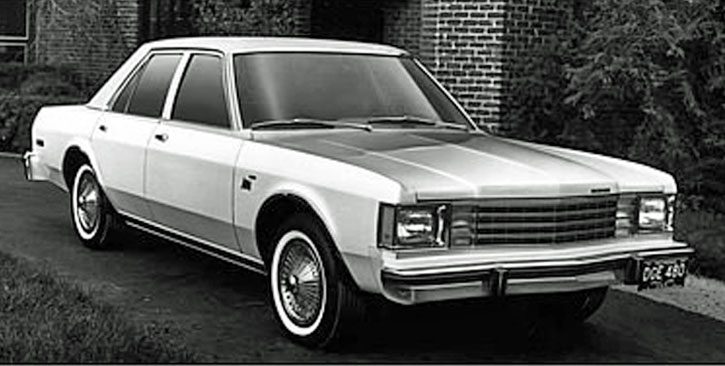
“Sometimes a ‘bargain’ car turns out to be less than a bargain when you have it equipped the way you want.” So opens the text of a magazine ad for the 1980 Dodge Aspen Special, a vehicle so bereft of content it would not look out of place on the lot of a Moscow used-car store.
For folks not in the know, the Aspen was already something of an automotive appliance, featuring pedestrian design, underwhelming performance, and, unfortunately, a reputation for disappointing reliability. As for the Aspen Special specifically, read on…
The compact Aspen, and it’s corporate-clone cousin the Plymouth Volaré were, by 1980, horribly dated technically, and were largely sold on price. A significant percentage of period sales were to government fleets, this to the dismay of many police officers and low-level bureaucrats.
And to hit a price point that met the demands of fleet buyers and the country’s thriftiest motorists, Dodge offered the Special, a sort of base, base trim level.
1980 Dodge Aspen Special
As seen below, the Aspen Special was advertised as American’s only 6-passenger sedan available for less than $5000. That’s $4994, to be exact. And for the youngsters reading this, many cars of the day featured front “bench seating,” which accommodated three-abreast front-row passenger placement. So, three in front, three in back, that’s six.
Interestingly, during the 1980 model year—Aspen’s final year–Dodge lowered the price of its most soul-crushing model, the Aspen Special. The Special, offered as coupe and sedan (as seen here) was positioned below the base Aspen, and came standard with so few features that a small child could count them. Turns out, there was nothing special about the Special.
At the beginning of 1980, per the Encyclopedia of American Cars, the cheapest Aspen started at $5151. At some point during the ’80 model year, the price of a Special was dropped to just $4994. Now, the all-new, and decidedly more modern and stylish Chevrolet Citation started at just $4800, but that price did not include a 6-cylinder engine, or automatic transmission, features standard on the Aspen. It did, however, seat six. But, the Citation was technically a hatchback, not a sedan, so Dodge’s cheapest-sedan claim was not challenged.
But, to put the Aspen Special in proper historic perspective, we need to look at what exactly did come standard—and what did not—for $4994. First, the standard stuff:
1980 Dodge Aspen Special: Standard Equipment
1980 Dodge Aspen
“Slant Six” engine
Legendary for its durability, the mighty Slant Six was just plodding along by 1980. Strangled by emissions regulations, the big 3.7-liter engine was cranking out just 90 horsepower in the Aspen Special, good for a reported 15-second 0-60 mph “sprint.”
TorqueFlite automatic transmission with lockup Torque Converter
A standard automatic transmission is nice, but the TorqueFlite, though famously reliable, was still just a 3-speed unit, this at a time when many makers had already moved to 4-speeds. Also, we’re not sure why Torque Converter is being handled as a proper noun by Dodge.
Power Steering
Unbelievably, power steering was not standard on most Aspens. So, this is a nice add.
Whitewall P-metric radial tires
Yawn. Radial tires were common by 1980, and frankly white-sidewall tires had become passé. Amusingly, these are narrow white-sidewall tires. Wider stripes cost extra. Really.
Deluxe wheel covers with wheel lip moldings
In this case, deluxe” is subjective, and we’re not certain lower-cost wheel covers would actually have made much of a difference. Also, Wheel lip moldings, which always look like K-Mart-sourced accessories, tended to be where rust developed first. Just saying.
1980 Dodge Aspen Coupe
Body-side accent tape stripes
It’s tape.
Front and rear bumper guards
Little, kinda useless, bumper guards.
Anti-corrosion protection
Rust proofing was a popular add-on back in the day. Looking back, it didn’t work very well. Aspens liked to rust.
Diagnostic Plug
An interesting feature, though this system never went anyplace. The “plug” was a precursor to the industry-accepted On-Board Diagnostic (OBD) standard, which included a port for digital service access to the car’s operating system. The Aspen Diagnostic Plug was not nearly so sophisticated, and may never have actually been used.
I’d like to think that at least one car-shopper’s wife was, at some point, at some dealership, heard to protest, “Honey, you know I won’t drive a car without wheel-lip moldings or a diagnostic plug!”
Now, here’s some stuff that did not come standard on the 1980 Dodge Aspen Special, but could be had on other trim levels:
Not Standard Equipment
Tinted glass
If you’re young, you’ve been spoiled by low-glare, UV-shielding windshields and side glass your whole life. But, Aspen Special drivers were not. Likely they always wore sunglasses.
1980 Dodge Aspen Wagon
Radio
That’s right, no tunes. Not to worry, without sound insulation (see below), there’s a good chance you wouldn’t hear the music anyway.
Noise Reduction Package, Special Sound Insulation, Hood Silencer Pad
These options could be ordered separately, or together as part of the “Deluxe Insulation Package.” Seems that saving money means dealing with wind, road, and engine noise.
Color-keyed steering wheel
That’s right, the color of your steering wheel probably didn’t match the interior of your car. Color coordination is for rich people.
Deluxe Steering Wheel
We don’t know what makes a steering wheel “Deluxe,” but it probably matches the car’s interior.
Color keyed seatbelts
Yup. The standard belts don’t necessarily match the seats. We’re guessing the standard belts came in either argent, or ocher.
Cigarette Lighter
That’s what matches are for. Besides, if you bought this car, you shouldn’t be wasting money on cigarettes, anyway.
1980 Dodge Aspen
Day/night inside mirror
Don’t drive at night. No problem.
Glove-box lock
Don’t keep important stuff in your car. No Problem.
Glove-box light
No big issue if you don’t keep important stuff in your car (see above).
Cloth headliner
It’s vinyl for you, buddy. (This probably adds to the ambient noise level in the car.)
Carpeting
Just keep your shoes on, no problem.
Intermittent wipers
These generally weren’t standard on much, yet, actually.
Standard-size white sidewall tires
More whitewall, more money.
1980 Dodge Aspen Trim Levels
500-amp battery
Ouch. 500 amps isn’t much for new car. Stepping up from the standard 325-amp battery was probably common.
Protective bumper strips
Whatever.
Clock (digital)
Yup, no clock.
Center console
Which makes sense. Add the console and your front/center passenger is going to be pretty uncomfortable.
Rear defogger/defroster
These are actually listed separately. Assuming the defroster is for the windshield? Really should be standard.
“Maximum” cooling system
We assume this included a high-capacity radiator. Probably popular with the fleet buyers.
Custom Package
Many of the smaller items listed above as stand-along options could be had is one fell swoop by ordering the Custom Package. The Custom Package was not offered on the Special.
Dodge produced roughly 19,000 Aspen Special sedans for 1980, making it the second-most-popular vehicle in the lineup after the somewhat less depressing base sedan, which came in at 26,000 units. And while drivers of the Aspen Special likely enjoyed more sullen and joyless lives than the owners of other vehicles, at least they could point to their wheel lip moldings with a nominal degree of pride, and claim truthfully, “Those came standard.” Special, indeed.
The RB Formula 1 team, a feeder team to the multiple world championship-winning Red Bull Racing, on Friday named Isack Hadjar as a driver for 2025. He will race alongside current RB driver Yuki Tsunoda in the new season.
Hadjar, 20, is a French driver who has been a participant in Red Bull’s driver development program since 2022, joining alumni such as Max Verstappen, Sebastian Vettel, and Daniel Ricciardo.
He fills the seat of Liam Lawson, who was promoted on Thursday to Red Bull as the replacement for the departing Sergio Perez. The appointment means F1’s 2025 driver lineup is now complete.
Hadjar took part in several F1 practice sessions in 2023 and 2024, the first during the 2023 Mexican Grand Prix. He was the second quickest of the five rookie drivers who participated in that session.
Isack Hadjar — Photo via Dutch Photo Agency / Red Bull Content Pool
A highlight of his short career is finishing as the runner-up to Gabriel Bortoleto in the 2024 F2 season. Bortoleto was signed to Sauber for 2025, the team that will become Audi in 2026.
RB didn’t mention the length of Hadjar’s contract in its announcement on Friday.
“I look forward to working with and learning from Yuki. I’ve always looked up to him; he went through the Red Bull junior program, like myself, and we’ve shared a similar path to F1,” Hadjar said in a statement.
Another year has almost ticked by in the automotive world, so it’s time to reflect on the good, the bad, and the ugly.
This year brought some huge new model releases, including three all-new dual-cab 4×4 utes, as well as the axing of several established nameplates, the arrival of more than a few new Chinese auto brands, and the demise of an historic French one.
Here are the stories, trends, and cars that most disappointed the CarExpert team in 2024.
100s of new car deals are available through CarExpert right now. Get the experts on your side and score a great deal. Browse now.
Paul Maric: Jaguar relaunch
You couldn’t have screwed up a brand relaunch more even if you tried.
While some may see it as marketing genius, it illustrates what happens when you let woke marketers take the reigns of brands with a rich heritage and an enshrined customer base.
If you put the woeful and embarrassing marketing to one side, you’ve got the concept of moving a brand to the fully electric premium space.
You know, the space literally nobody is buying cars from at the moment. Every carmaker that has committed to going fully electric by a date that felt like a long time away, but no longer is, is now walking back those promises.
So, anyway, I wish them the best of luck. But I think you’ll find the entire marketing department will get the arse before the car is properly launched. And hopefully with it will come a sincere apology to all the engineers, designers, and manufacturing workers at the company that had no say in the marketing campaign.
Marton Pettendy: Kia Tasman design
So the Kia Tasman was revealed in October and after years of waiting, the Korean brand’s first ute is a bit of a disappointment.
Not because it won’t tick all the boxes in terms of capability (both for tradies and off-roaders), powertrains (an all-electric version will join the diesels by mid-2026), body styles (except for an extended-cab version) and cost of ownership (it will be backed by Kia’s seven-year warranty and a competitive capped price service program).
But because after all the sexy speculative com-gens and generations of sleek Schreyer designs, Kia’s first ute looks somewhat strange.
I can understand why Kia wanted to make its first global pickup stand out from the crowd, and the boxy body not only has a strong family resemblance to the EV5 and EV9 electric SUVs, but also brings advantages in terms of cabin and cargo space.
But ute buyers love tough truck designs – witness the good-looking Ford Ranger’s success – and the Tasman’s bluff front-end is flanked by a pair of precariously positioned narrow vertical headlights, at the front of the weirdest wheel-arch flares I’ve ever seen.
Of course, good design is in the eye of the beholder and the Tasman will no doubt sell its ugly nose off anyway, but to my eyes it makes even the new Mitsubishi Triton look good. That’s no mean feat given the collective sigh when it was revealed a year earlier.
At least Kia can’t be accused of releasing a new model that doesn’t look as good at its predecessor, and it has plenty of time to make its first ute look better.
William Stopford: Ford Puma axing
Ford Australia’s transition into a predominantly commercial vehicle brand continued this year with the axing of thePuma, my favourite light SUV and an utterly charming little rugrat.
The logic behind having an affordable passenger car or SUV isn’t necessarily to drive huge profits, but rather to have a model that people can enter the brand with.
Theoretically, if they have a good experience they might want to then upgrade to a brand’s larger, more expensive models as they grow older and wealthier or start a family.
Ford has thrown that away, but then it axed the Escape last year, which eliminated the next logical step for someone “growing up” in the Ford lineup.
A Puma owner wanting a larger vehicle would therefore have had to step up to a bulky off-roader (the Everest) or an electric SUV (the Mustang Mach-E), both of which are significantly more expensive propositions than the Puma or Escape.
Heaven forbid the ute market ever takes a dive here, because now Ford is heavily reliant on it. Sure, it builds a great ute and it’s Australia’s best-selling vehicle, but surely it would make sense to offer a range of complementary vehicles as the likes of Toyota does.
Instead, Ford wants to sell just utes, ute-based SUVs, vans, a sports car, and a single electric SUV (remember, it decided not to bring the electric Puma Gen-E after all).
Are they playing to their strengths, or being dangerously short-sighted?
Jordan Mulach: Geneva show demise
The demise of the Geneva motor show is most likely the biggest litmus test for the health of Europe’s car industry.
This 117-year institution was axed despite returning in 2024 following a multi-year hiatus, but the rise of Chinese carmakers and realignment from major legacy brands has seen it come to an end.
Sadly, Australia knows this feeling all too well. The last true Australian International Motor Show was held in Sydney back in 2012, and it’s unlikely we’ll ever see something on that level again.
Though the Geneva International Motor Show will carry on in 2025 – held in Doha as the GIMS Qatar – it won’t be the same event that hosted iconic unveilings such as the Jaguar E-Type.
Jack Quick: Jaguar relaunch
I’ve never been the biggest fan of Jaguar but its latest rebrand is nothing short of a joke.
It’s something to completely disregard almost 90 years of history altogether, but the rebranding of jaGUar looks downright ridiculous.
Regardless, it sure is getting Jaguar a lot of press – more than it arguably has in a really long time. It’ll be interesting to see how the striking Type 00 concept manifests itself as a production car.
It’ll also be interesting to see how JLR props up the Jaguar brand if it doesn’t have a car on sale until 2026.
Josh Nevett: Performance car departures
Death is one of the only certainties in life, and 2024 has been another year of sombre automotive goodbyes.
From my perspective, the end of the V8-powered Mercedes-AMG C63 was particularly painful, as was the curtain being drawn on Lamborghini’s V10.
To a lesser extent, the world feels like a worse place without the Abarth 695 and Renault Megane RS, affordable performance heroes that inspired a new generation of enthusiasts.
Then there’s the glorious Jaguar F-Type… but I’ve saved my thoughts on that for another piece that will go live over the Christmas period.
While disappointments of this nature are inevitable and often mark progress, it hurts to bid farewell nonetheless.
Max Davies: Subaru Forster STI Sport
I’ve long been a fan of Subaru’s extinct performance models – I can see a VA WRX STI in my future – and by extension Subaru itself, but the new special-edition Subaru Forester STI Sport I reviewed recently just didn’t hit the mark.
We don’t have a full-fat WRX STI anymore; instead we have to make do with tS ‘Tuned by STI’ suspension and cosmetic packages for the current WRX and BRZ. So when Subaru announced it would bring the Forester STI Sport to Australia, my interest was piqued.
But then as I read the details and found it would only bring new suspension tuning, new interior upholstery, and different wheels, my shoulders slumped. There’s no extra power, it still uses the same old CVT, and it’s just fairly uninspiring overall.
In Japan, the Forester STI Sport has a turbocharged engine that isn’t yet available in Australia in any Subaru model, and it delivers a notable torque boost over our Forester’s naturally aspirated unit.
That engine is at least somewhat worthy of wearing the STI badge, though probably still not the full-sized cherry-red one. A Forester grade more aligned to the Japanese one would be unique in Australia though, and better justify Subaru’s claim of it being a “collector’s item”.
Of course, it isn’t new for auto brands to offer models with only enhanced aesthetics but wearing the names of their performance divisions. The difference is the performance divisions of most of those brands still make actual performance cars.
But I digress, and it’s important to reiterate the Forester STI Sport itself isn’t a bad car. Subaru just put the wrong badge on it.
As we continue to count down to the end of 2024, we’re giving you a year-in-review on the cars that took our fancy throughout the year.
Isuzu D-Max LS-U+
Continuing on from last week’s mid-sized SUV review wrap-up, we’re moving on to 4×4 utes. It’s the second-largest segment on the VFACTS sales charts by volume, and while it may not be as densely packed as other segments, there’s still plenty of options to choose from.
We’ve had the chance to drive plenty this year, and these are the five that topped our score charts over the calendar year. Some of these models have been reviewed on multiple occasions this year, so we’ve only featured the variant that achieved the highest rating.
Prices are based on each manufacturer’s configurators using a Victorian postcode, which should provide a representative estimate of what the average Australian buyer will end up paying.
100s of new car deals are available through CarExpert right now. Get the experts on your side and score a great deal. Browse now.
Mazda BT-50 SP
Mitsubishi Triton GLS
Click on car’s name in the table above to jump directly to its information on the page, or keep scrolling for the full article.
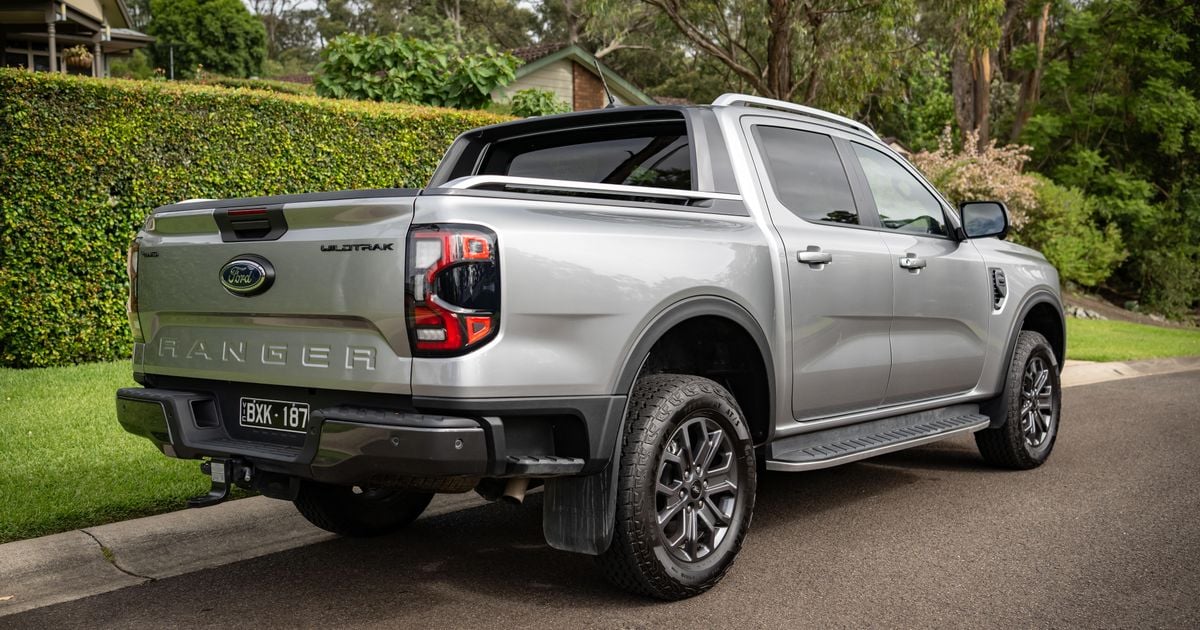
Ford Ranger
The Ford Ranger was our highest-rated ute for 2024, scoring an impressive 8.6 out of 10 in a review written by senior contributor Matt Campbell.
We praised the Ranger’s SUV-like interior feel, something especially evident in the Wildtrak grade reviewed. Its cabin fit and finish was also a positive, with high-quality materials and robust tech helping it achieve a high score.
Helping the Wildtrak to the highest rating of any ute was its V6 diesel powertrain, which we described as the “ideal fit for this type of ute”. The 10-speed automatic gearbox was also identified as a key factor behind its quality drive experience, with “smart shifts” that allowed the engine to thrive in all situations.
Our review summed it up by labelling this specific ranger a “great choice for those who will use it for work, play, or both”, praising its capacity to be a flexible family dual-cab ute. Its price was listed as a negative, while space in both the back seat and tub could also have been improved.
You can read our full review of the Ford Ranger Wildtrak V6 here
CarExpert rating
8.6
Victorian drive-away price
$80,944
Pros
Cons
Superb V6 powertrain
Expensive, and prices keep rising
Great to drive
Back seat space a bit limited
Some great tech inclusions
Tray roller cover eats into space
Interested in buying a Ford Ranger? Get in touch with one of CarExpert’s trusted dealers here
The Ranger’s Amarok cousin was our next-best ute for 2024, with news editor William Stopford giving it a respectable score of 8.3
Highlights included its safety and ride comfort, while our in-depth ratings for cost of ownership, fuel efficiency and its infotainment tech also reflected the Amarok’s positive traits.
Unlike the Ranger, we praised its bi-turbo four-cylinder engine for its cheaper price yet respectable outputs. We also said it was attractive inside and out and appreciated its consistent steering feel.
We still preferred the interior of the Ranger, and our rating of the Amarok in comparison reflects that. It scored relatively poorly on value for money and interior practicality and space as a result.
Otherwise, its main drawback for an otherwise solid ute was listed as a lack of rear USB outlets.
You can read our full review of the Volkswagen Amarok TDI500 Style here
Volkswagen Amarok TDI500 Style
CarExpert rating
8.3
Victorian drive-away price
$69,740
Pros
Cons
Superb technology that all works
Less user-friendly interior than Ranger
Attractive styling, inside and out
No rear USB outlets or app connectivity
Smooth, responsive powertrain
A bit pricey
Interested in buying a Volkswagen Amarok? Get in touch with one of CarExpert’s trusted dealers here
The D-Max was the third and final ute to score higher than 8.0 this year, as it was awarded an 8.1 by marketplace journalist Max Davies.
Sitting near the top of the D-Max range, the LS-U+ was praised for its 3.0-litre turbo-diesel engine that was said to offer strong performance while maintaining proven reliability.
We liked its interior technology and comfort, while also identifying its ride comfort as a key positive. It was also deemed practical inside relative to its dimensions and maintained a commendable fuel efficiency rating.
It’s not particularly cheap though, and that was reflected in our review. We also weren’t overjoyed by its fit and finish as we identified a handful of rattles both from the interior and from the handful of exterior accessories fitted to our tester.
We also said the fact you couldn’t drive the LS-U+ on sealed roads with four-wheel drive activated was a drawback, especially compared to rivals like the Ranger.
You can read our full review of the Isuzu D-Max LS-U+ here
Isuzu D-Max LS-U+
CarExpert rating
8.1
Victorian drive-away price
$71,182
Pros
Cons
Strong, reliable diesel engine
No full-time 4WD
Comfortable interior, good tech
Prices keep climbing
Impressive ride quality
A little rattly here and there
Interested in buying an Isuzu D-Max? Get in touch with one of CarExpert’s trusted dealers here
Mazda’s BT-50 was reviewed in SP guise this year, and it scored 7.9 at the hands of marketplace journalist Josh Nevett.
Like the Ranger, we felt the BT-50 SP “drives like an SUV” which was identified as a key positive and contributed to its respectable score. Its interior fit and finish was also solid and we had no issues with its advanced driver assist systems either.
Its safety, cost of ownership, fuel efficiency, and infotainment technology were also given commendable ratings. Interior practicality and space wasn’t as strong as some of its rivals, and while outputs from its 3.0-litre turbo-diesel aren’t as high as others we said it had “more than adequate shove” around town.
Despite being on the cheaper end of higher-spec dual-cab utes, we rated its value for money poorly. This is largely because it becomes fairly expensive when the “SP Pro” options are fitted, and the infotainment upgrade it received was also costly.
Nevertheless, we felt the D-Max-twinning BT-50 was well-equipped and benefitted from the credibility of the Mazda badge.
You can read our full review of the Mazda BT-50 SP here
Mazda BT-50 SP
CarExpert rating
7.9
Victorian drive-away price
$63,990
Pros
Cons
Drives like an SUV
Expensive with options
Well-calibrated ADAS
Rivals have more grunt
Premium cabin materials
Infotainment upgrade isn’t worth $5000
Interested in buying a Mazda BT-50? Get in touch with one of CarExpert’s trusted dealers here
Mitsubishi managed to crack our 2024 top five with the Triton, thanks to its 7.9 rating awarded by assistant production editor Jack Quick.
We were impressed by the fact its towing specs are now up-to-scratch with the rest of the segment, while its 2.4-litre bi-turbo diesel four-cylinder showed commendable performance and fuel efficiency.
We also liked its handling dynamics and its interior practicality, the latter of which was given a higher rating than other competitors. Its infotainment technology also received praise.
We didn’t like its driver attention monitoring system and found it to be “infuriating” when on the move. Equally, its idle stop-start function didn’t perform as we’d expect, and its ride comfort proved to be below par.
Its six-speed automatic transmission is also less versatile than other units with more gears found in some rivals, something we feel should be addressed with a few more gears.
You can read our full review of the Mitsubishi Triton GLS here
Mitsubishi Triton GLS
CarExpert rating
7.9
Victorian drive-away price
$60,990
Pros
Cons
Towing specs finally segment-matching
Infuriating driver attention monitor
Efficient bi-turbo diesel
Idle stop-start is painfully laggy
Long conditional warranty
Transmission needs more gears
Interested in buying a Mitsubishi Triton? Get in touch with one of CarExpert’s trusted dealers here
As 2024 comes to a close, the first production-specification P72 has taken shape in a truly remarkable way. A major milestone in De Tomaso’s legacy, assembly, validation and final fitment of both the exterior carbon shell and technical core, come together seamlessly, bringing us one step closer to the road.
Hand-Crafting Carbon
Known for its bold scale, sensual curvature, and striking presence, the P72’s illustrious carbon exterior is expertly integrated to incase the chassis, a monumental challenge enlisting several teams of skilled artisans to ensure the P72’s flowing lines and carbon weave are flawlessly aligned across every surface.
As we move into the final stages of preparation before the painting process, the P72’s elegant character comes to life—honoring the prototypes of the past while evolving into a modern-day masterpiece. We are now poised for an unveiling in the new year.
Engineering The Future, Honoring The Past
The technical assembly of the P72 is nothing short of revolutionary, yet it harkens back to when handcraftsmanship turned raw metal into racing icons. With De Tomaso’s cutting-edge all-carbon chassis—first revealed in August—we have engineered a mechanical symphony that captures the essence of what makes driving truly exhilarating.
As we welcome the new year, the P72 will enter its final phase of dynamic validation. These finishing refinements will ensure that the P72 delivers a unique experience. This is driving at its purest, a marriage of heritage and innovation, forming a bond between car and driver that is as timeless as the racing icons that inspired it. Unfiltered, unrestricted, and unforgettable—built for those who dare to feel the road.
2025 Toyota Corolla Cross Hybrid costs $29,745—$425 more than last year
Corolla Cross Hybrid comes standard with all-wheel drive
EPA fuel economy ratings should hit 42 mpg combined
The 2025 Toyota Corolla Cross Hybrid is unchanged for the new model year save for a small price bump.
The base S grade now costs $29,745, which is $425 more than the equivalent 2024 model, including a $1,350 destination charge that’s the same as before. This is fairly basic as far as modern cars go, with manually-adjusting front seats and cloth upholstery, but it does come standard with an 8.0-inch touchscreen, Apple CarPlay and Android Auto, two front USB-C charging ports, and the expected array of driver aids.
An SE grade priced from $31,065 adds wireless device charging, a pair of rear-seat USB-C charging ports, automatic climate control, blind-spot monitoring, and rear cross-traffic alert. A Nightshade Edition introduced for 2024 adds 18-inch wheels and blackout trim to the SE grade for $31,990.
2025 Toyota Corolla Cross Hybrid
The top XSE grade costs $32,930 and adds features like a power-adjustable driver’s seat, dual-zone automatic climate control, fog lights, a rear armrest, 60/40 split-folding rear bench seat, a digital instrument cluster, and what Toyota calls “mixed-media” upholstery.
All Corolla Cross Hybrid models continue to use the same powertrain. A 2.0-liter inline-4 is coupled to the fifth-generation version of Toyota’s planetary-gear hybrid system, with standard all-wheel drive. As in the larger RAV4 Hybrid and Highlander Hybrid, this is an “e-AWD” setup, with a second electric motor powering the rear wheels with no mechanical connection to the front wheels.
As before, the hybrid powertrain generates 196 hp, which Toyota claims will get the Corolla Cross Hybrid from 0-60 mph in 8.0 seconds. The automaker also expects the 42 mpg combined EPA fuel-economy rating from previous model years to carry over. Toyota still offers a non-hybrid Corolla Cross with front-wheel drive or all-wheel drive with an EPA-estimated 32 mpg combined and 30 mpg combined, respectively, and it has even built a prototype hydrogen-combustion Corolla Cross as an EV alternative.
2025 Toyota Corolla Cross Hybrid
The Corolla Cross repackages the underpinnings of the ubiquitous Corolla sedan and hatchback in a trendier crossover form, hence the name. It arrived for the 2022 model year, with the hybrid following for 2023. The first two model years of Corolla Cross Hybrid were recently recalled over loss of power brake assist.
Built in an Alabama factory jointly operated with Mazda, the 2025 Toyota Corolla Cross Hybrid is expected to arrive at dealerships in later December 2024.
The Tesla Cybertruck is being recalled again, this time because its tire pressure monitoring system (TPMS) light may not stay on, preventing drivers from seeing warnings of low tire pressure.
This recall includes not only the 2024 Cybertruck but also 2017-2025 Tesla Model 3 sedans and 2020-2025 Tesla Model Y SUVs, for a total of 694,304 vehicles. A software update pushed to these vehicles inadvertently reset the TPMS warning light so that it does not reappear after the car is cycled off and back on again, according to the NHTSA.
Tesla Cybertruck
Driving with improperly inflated tires increases the risk of a crash, which is why TPMS is federally mandated. Federal Motor Vehicle Safety Standard (FMVSS) number 138 requires that TPMS warning lights stay illuminated whenever the vehicle is on until the tire-pressure issue that triggers them is corrected.
Tesla estimates that all recalled vehicles have this issue, and it’s aware of 76 related warranty claims. However, the automaker is not aware of any collisions, injuries, or fatalities connected to the issue.
Tesla Cybertruck
Tesla released an over-the-air update to correct the problem around Nov. 12, so owners don’t have to take their cars to service centers for recall work. The automaker will also follow up with owner notification letters, which are due to be mailed Feb. 15, 2025. Owners can also contact Tesla customer service at 1-877-798-3752. Tesla’s reference number for this recall is SB-24-00-018.
Tennis legend John McEnroe really hates airport crowds.
The 77-time singles title winner said flying has started to feel like a factory, with long lines at airport security, long wait times for bags, and the need to get to the airport much earlier than in years past. In fact, when asked what his biggest pet peeve about airport travel was, he just chuckled and offered: “where do I start?”
“I’m always at the airport, a lot, more than most people,” McEnroe told Travel + Leisure when we sat down with him this month at the annual Baha Mar Tennis Cup in the Bahamas, adding, “When I first started flying, it was unbelievable. If you were able to get first class, it was like, ‘my God, this is amazing.’ Now it’s like, you just throw them all in.”
With John McEnroe
What’s your favorite open you ever played in?
The U.S. Open.
What is your favorite match you ever played?
Björn Borg, 1980 Wimbledon final.
Which is your favorite city to broadcast from? I would say New York because I live there. I get to go home to my bed.
What is your favorite tennis movie?
I’m still waiting for that one.
What is your go-to plane snack?
Pretzels or ice cream sundae — just some chocolate syrup and the ice cream’s not melted.
McEnroe said he flies commercial up to 95 percent of the time, and said he finds he has to get to the airport a lot earlier than in the past, remembering a time when he could roll up just minutes before a flight. In fact, he remembers one instance flying from Melbourne to Los Angeles after commentating on a tournament, arriving on the plane just five minutes before takeoff.
“That’s when I feel like, okay, I’m pretty lucky,” he said. “My name helped there.”
Now, McEnroe said he arrives at least an hour to an hour and a half before a flight.
“I can afford to have TSA PreCheck — it’s not helping so much anymore — all of the sudden the lines are longer than they are at the normal line. I’m like ‘I’m going on the normal line.’ I’ve done that,” he said. “Clear is another one that suddenly the lines are crazy.”
To save time, McEnroe said he tries to travel light.
“You don’t want to sit there and wait 45 minutes for your bag. That’s why I try to just not travel with a suitcase if I don’t have to,” he said. But there are certain things he won’t ever check: “I always bring my rackets… You can buy more clothes.”
John McEnroe while playing Jimmy Connors during their Men’s Singles Semi Final match at the French Open Tennis Championship on 8th June 1984 at the Stade Roland Garros in Paris, France.
Steve Powell/Getty Images
A born-and-raised New Yorker, McEnroe has catapulted his celebrated tennis career into an impressive broadcasting second act, calling top matches at the majors. He also founded the John McEnroe Tennis Academy in New York and just opened the John McEnroe Tennis Center at Baha Mar complete with eight picture-perfect courts — six hard courts and two clay courts — all surrounded by swaying palm trees.
“There’s a lot that goes into something like this. At my tennis academy, most of the business is people that are fairly well off that pay the bills for the people that can’t afford it… So I envision something similar here,” McEnroe said, adding he hopes to “bring more attention to what to me is a global issue.”
But it’s not lost on McEnroe that the Bahamas isn’t a bad place to spend time.
“The Bahamas is close [to] where I live. It’s a great opportunity to be able to come down, relax, — which I don’t do that often — bring some of my kids, I have a grandkid now. I envision this as something that’s selfishly going to be fun for me,” he said. “I’m a guy who feels better when I work out, it never changes.”
Courtesy of Baha Mar
One trend McEnroe can’t completely get behind: pickleball. That’s despite the fact his new Baha Mar tennis center boasts not one, not two, but six pickleball courts.
“I’m not a huge fan of pickleball, but my friends like to play with me. You’re not getting the workout you can get from tennis, for example, but that’s why people are doing it,” he said, joking: “Now doctors, of course, love it. Everyone’s getting hurt… The American Medical Association loves pickleball.”
Over the years, McEnroe has spent plenty of time in different cities and different majors, but without a doubt, his two favorite events are the U.S. Open (played in his hometown of New York) and Wimbledon. And now he’s added a new sport to the list: golf.
“I got invited to play Augusta last year. That was like the Wimbledon of golf,” he said. “Nothing could top that.”
Now, his ideal vacation consists of playing a round of golf, having a nice gym or tennis facility, and a beach.
“I love the beach,” he said. “There’s nothing like salt water.”
The technical storage or access is strictly necessary for the legitimate purpose of enabling the use of a specific service explicitly requested by the subscriber or user, or for the sole purpose of carrying out the transmission of a communication over an electronic communications network.
Preferences
The technical storage or access is necessary for the legitimate purpose of storing preferences that are not requested by the subscriber or user.
Statistics
The technical storage or access that is used exclusively for statistical purposes.The technical storage or access that is used exclusively for anonymous statistical purposes. Without a subpoena, voluntary compliance on the part of your Internet Service Provider, or additional records from a third party, information stored or retrieved for this purpose alone cannot usually be used to identify you.
Marketing
The technical storage or access is required to create user profiles to send advertising, or to track the user on a website or across several websites for similar marketing purposes.