Home Blog Page 275

Buying Older, Used Cars in 2025

0


Used cars sit for sale at a dealership.Used cars sit for sale at a dealership.


Quick Facts About Buying Older, Used Vehicles

  • Many dealerships take trades on high-mileage vehicles. 
  • In a recent research report, the average mileage of used cars sold was about 70,300.
  • Vehicles priced under $15,000 are the most difficult used cars to find.

When shopping for a used car, you may find a few surprises that will leave you scratching your head.

Americans drive their cars longer than ever. The average age of vehicles on the road today is about 12.5 years old. With the inventory of used cars still experiencing tighter-than-usual conditions and the average used car listing at $25,500 at the end of 2024, you’ll want to know what factors you need to weigh when considering such a purchase.

It’s also important to understand how mileage, age, and condition determine the car’s Kelley Blue Book value when looking for a used vehicle.

Read on to find out what to consider when buying a used or older vehicle. We’ll also tell you about the easiest cars to find in this market as you navigate these choppy conditions.

What to Know About Buying a Used Car

These days, some dealerships will take high-mileage vehicles with upwards of 150,000 miles driven. Also, many manufacturers started certifying pre-owned cars with higher mileage. Tighter-than-usual inventory means cars once bound for auctions and buy here, pay here lots now land in the franchised dealership lot.

When considering a used car, you’ll likely encounter two scenarios, and these can actually happen.

Scenario 1: Let’s say your family needs a second or third vehicle, and you come across an unbelievably low-mileage cream puff. The car looks nearly new, with only 60,000 miles on the odometer, but the SUV is 10 years old. The price is right. You feel like you won the lottery. But you wonder what issues might later materialize because of the vehicle’s age.

Scenario 2: Maybe you’re shopping for a used vehicle offering the latest technology, like adaptive cruise control and cameras that provide a 360-degree view of the surroundings. You can’t afford a 2-year-old model with average miles, but the dealer offers up the car of your dreams that’s thousands less. Still, there’s one problem: This 2-year-old model comes with 100,000 miles. Should you steer clear?

Check for Recalls and Get a Vehicle History Report

Next, you’ll need to do these two things first to help you decide on either of these cars.

  • Research the car model and check for excessive recalls. Head to the internet and research that model’s history. Check for recalls to see if the model experiences any repetitive problems, such as serious (and expensive) issues with the transmission, power steering, electrical system, and engine. For example, replacing the engine’s timing belt can run $1,000 to $1,125. Timing chains, different than a timing belt, cost more and are not uncommon issues in higher-mileage cars. Costs run at least $2,016 to $2,200. Timing chain issues can arise if the vehicle owner doesn’t change the oil regularly.
  • Get a vehicle history report. Knowing a car’s history is vital. Ask the car’s owner or dealer to show you data that includes accident history, the vehicle’s repairs, maintenance schedule, recalls, and, in some cases, even oil changes. AutoCheck and Carfax are excellent sources for this information. When buying a used car from an individual, you can purchase a vehicle history report for between $30 (AutoCheck) and $45 (Carfax) for a single report. Generally, a well-maintained vehicle offers a longer, potentially trouble-free future than an ignored vehicle.

If buying a used car, it’s best to consider vehicles maintained according to the owner’s manual. So, in the case of Scenario 2, that high-mileage car could be a good buy.

RELATED: Best Used Cars

Is a 10-Year-Old Car Too Old to Buy?

Not necessarily if you do a thorough inspection with a certified mechanic, the car shows no signs of rust, its vehicle history shows no major accidents, and it was well-cared for over time. Here’s what else you need to know.

An older car, such as the 10-year-old model in Scenario 1, has components that rust over a longer period. Make sure to inspect the underside of vehicles, especially in states that use salt to melt snow and in hurricane and flood-prone areas.

Before purchasing, you’ll want to know if the brake lines and suspension systems work safely. In addition, if the vehicle owner doesn’t follow regular maintenance protocols, shock absorbers, brake rotors and pads, tires, and other components will likely need to be replaced. If the tires look old, they could have dry rot, essentially cracking that makes them dangerous due to age. 

Other susceptible age-related components include the radiator and heater core. For example, the heater core might get weak and suddenly blow out. Well, you fix the heater core, and the radiator might fail because, suddenly, you’re pressurizing the system back up to specifications.

RELATED: Car Warranty Guide: Everything You Need to Know

Freeway Miles vs. Quick Trips

A high-mileage vehicle used chiefly for commuting with many freeway miles may be in much better shape than one used primarily for quick trips back and forth to the grocery store. There are several reasons for this, says mechanic Gary Hardesty, a master auto technician with Cox Automotive, the parent company of Kelley Blue Book.

“Short trips put more stress on the starter and engine components by constantly being used in short trips, where a long commute may only start a vehicle twice a day,” Hardesty said.

“Also, if an engine isn’t brought up to normal temperatures, the oil can become contaminated quickly as a normal operating temperature allows moisture and contaminants like unburned fuel to be drawn into the combustion chamber and burned off as a normal operation. These contaminants, not removed by longer drives and regular oil changes, risk causing major engine problems like sludge buildup.”

Hardesty recommends getting the vehicle inspected by a certified mechanic before purchasing.

“A quick way to see if a vehicle has rust is to open the hood and look at the shock tower bolts and components under the hood, as they are exposed to the same salt as the undercarriage,” Hardesty said. “Most manufacturers offer a corrosion guarantee for the unibody with some type of corrosion inhibitor. This is not true for most components like fasteners and such.”

How Much Does It Cost for a Used Car Inspection?

One way to take the hassle out of getting a used vehicle inspected is with Alliance Inspection Management (AiM), which is designed for buyers and sellers. AiM, a unit of Cox Automotive, evaluates more than 13 million used cars annually. AiMCertify technicians can check the condition of any car or truck in the U.S. before you buy a used vehicle.

The mechanic will meet you at a dealership or wherever you need them for the inspection, which costs between $149 and $399. The experts can inspect cars manufactured in 1981 and later, though there’s a package for classic cars made before then for $199. Many of the packages also include an AutoCheck vehicle history report.

Consider buying a certified pre-owned (CPO) vehicle if you need more reassurance. Read our story on buying certified pre-owned cars to learn more about these types of vehicles.

Buying a Used Car Now

If you want to buy a used car, be prepared to potentially pay more. According to a Cox Automotive analysis of vAuto data, used car shoppers paid an average of $25,500 on used vehicles at the end of 2024. That’s about $1,000 less than last year. The report also found that the average mileage of used cars sold was about 70,300. Still, inventories are tight as prices fall. Kelley Blue Book analysts expect used car prices to remain generally high for several years.

Carmakers built about 8 million fewer cars during the COVID-19 pandemic and fewer consumers leased vehicles. That means you can expect used car inventories could remain low for years as those cars never find their way to the used market. That will keep prices higher than usual.

Used Car Lots Remain Lean on Inventory

Used car lots bulked up throughout 2024, but inventory remains lean. Even if you make compromises, you might find a used car you like. Here’s more of what the report found and what you can expect:

  • Affordability is challenging.
  • A seasonal surge of used
  • By price category, the lower the price, the lower the supply.
  • The most difficult used cars to find are priced under $15,000.
  • You can find a decent supply of cars priced above $35,000.

Read More Articles on Car Buying: 

Editor’s Note: This article has been updated for accuracy since it was originally published.  


Source link

EV Registrations Growing; Tesla Losing Ground

0


EV Registrations Growing; Tesla Losing Ground

Americans registered 5% more new electric vehicles (EVs) in October than the same month last year, according to a new analysis from S&P Global Mobility. But the gains didn’t come from the usual place. Telsa, long the market leader, saw its registration numbers slip by 1.8%.

“Tesla’s volume has declined in seven of the first 10 months of the year,” notes industry publication Automotive News.

Related: Americans Bought Record Number of EVs In Q3

Tesla Losing, GM Gaining

Tesla remains the runaway leader in EV sales. But its drop is obscuring growth in the rest of the market. Excluding Tesla, EV registrations grew by 11% in October, S&P says. Factoring Tesla in more than cuts that growth in half.

“Prior to February, Tesla was pulling the EV market, and since February, Tesla has been hindering the EV market,” explains analyst Tom Libby.

General Motors was the biggest winner in October. Americans registered 72% more GM EVs this October than last.

“Chevrolet grew EV sales 38% from a year earlier, largely on the Blazer and Equinox EVs, which combined for 6,741 registrations. Cadillac more than tripled sales of the Lyriq to 2,489. GMC Hummer SUV volume nearly quadrupled to 1,015,” Automotive News explains.

Tesla Model Y registrations, meanwhile, fell 14% to just under 22,000. The pricier Model S and X say their registrations drop by more than 50%.

End-of-Year Surge Likely

“Luxury EV and Tesla sales often tick up in December and will likely follow the same pattern this year,” AN notes.

Heavy discounts will help. The average new car buyer got an 8% discount last month, but the average EV buyer saw a 14.9% discount.

It’s harder, however, to predict what happens after December. In a blog post, S&P Global Mobility notes, “The global automotive industry is facing a period of significant uncertainty as it navigates the implications of a second Trump administration. In North America, tax cuts, rising interest rates, and trade disruptions through tariffs will create an environment where vehicle affordability may be compromised, even as the economy shows signs of modest growth.”


Source link

Bugatti Mistral speed record was filmed using a Chiron Super Sport

0


The Bugatti Mistral recently set a new top speed record for an open-top production car. The hypercar clocked 282 mph on the high-speed oval at Automotive Testing Papenburg in Germany. To capture the action, Bugatti needed something that could match the performance of the Mistral. Of course, it had to be another Bugatti.

The Bugatti Mistral was captured in motion with a camera mounted on a Chiron Super Sport – another record-breaking hypercar. A behind-the-scenes video shared by the company shows how the record run was filmed. 

Like the Mistral, the Chiron Super Sport is also powered by an 8.0-liter W16 engine that churns out 1600 hp. This low-drag version of the Chiron is built for top speed and has a record of 304.77 mph to its name.

No wonder Bugatti had it as the camera car to film a top-speed record. While the 300+ mph record was set by a slightly modified Chiron SS, even a stock car can reach 257 mph without breaking a sweat.

Source: Bugatti


Source link

Lotus launches exclusive race-inspired Emira Limited series

0


Lotus unveils an exclusive Emira Limited series based on its renowned four-cylinder Emira sports car, embodying a vivid homage to the brand’s legendary racing heritage. This collection features five distinctive liveries, each inspired by the iconic Lotus racing DNA, limited to just 12 units per design. Set to be available across 12 selected European markets, the Emira Limited series honors Lotus’s storied past with the symbolic “12,” paying tribute to Formula One driver Ayrton Senna’s famous starting number during his Lotus years.

The Emira Limited series also signals the beginning of a new era in customization, offering a preview of what’s to come with the ‘Chapman Bespoke’ personalization program, launching in 2025. With this vibrant introduction, the British marque hints at a future where each Lotus can be tailored to the personality and preferences of its driver, making each model truly unique.

Lotus F1 inspired designs

Beginning of this year, the ‘First Edition’ heralded the market launch of the Emira sports car equipped with the powerful mid-engined four-cylinder from technology partner AMG. Now Lotus extends the range with the Emira Limited. The distinctive bespoke exterior details of the 5 Emira Limited liveries are all factory-supported and are actually part of the overall paint job of the cars, applied in the Hethel factory in the UK.

Apart from its special looks and exclusive black Lotus logos, Emira Limited can be recognized by the stylish ‘Emira Limited 1/12’ badges on the B pillars and dashboard. The chosen color schemes clearly reference the historic Lotus Formula One cars. Some of the Emira Limited liveries also provide a direct, visible link to Ayrton Senna’s iconic starting number 12. To conclude, each Emira Limited comes with a certificate of authenticity, further enhancing the car’s uniqueness and ensuring its value to collectors.

From 2025 onwards the new ‘Chapman Bespoke’ personalization program will allow European customers to further add personal notes to their new Emira and all other models from the Lotus product portfolio in detail – both externally and in the interior.

Five Emira Limited liveries

Lotus will release the Emira Limited in five recognizable liveries, each inspired by different Lotus Formula one liveries from the past.

Emira inspired by the Lotus Type 99T

This vibrant yellow with blue accents recalls the Lotus Type 99T Formula 1 car with which Ayrton Senna competed successfully in the 1987 season. With Senna at the wheel, the Type 99T was the first F1 car with the Lotus innovation of active suspension to win a Grand Prix – Monaco – a feat that he repeated at Detroit; The Lotus Type 99T achieved eight podiums and helped Lotus and Senna to third places in the Constructors and Drivers championships. The iconic Lotus race number 12 is in blue on each side of the car and ties in with the black brake calipers, front and side air intakes, and the ‘LOTUS’ brand name on the rear.

Emira inspired by Type 97T

This is an elegant interpretation of the 1985 Formula 1 car, in which Ayrton Senna famously secured his first Grand Prix win, in the wet. Senna’s teammate, Elio de Angelis then won the following race at San Marino, with Senna gaining his second Grand Prix win later in the season at Spa-Francorchamps. Overall, the Type 97T achieved nine podiums that year and helped Lotus and Senna to third places in the Constructors and Drivers championships. It is a dark Shadow Grey with gold livery. The race number 12 is present on each side of the car also in the iconic gold and match the gold wheels.

Emira inspired by Type 86

In 1980 Lotus revolutionized the F1 world with the twin chassis Type 86. A one-off prototype for the following year’s groundbreaking Type 88, one chassis of the Type 86 fulfilled the aerodynamics supported the radiators, and the other chassis was for the driver and suspension, and to which the engine and gearbox were mounted. This Emira shows in a blue livery with red and silver stripes, the colors of the Team Lotus sponsor at the time. The ‘LOTUS’ brand name on the rear, and it features the number 11, both in matching silver.

Emira was inspired by Type 78

The Type 78 pioneering 1977 Lotus Formula 1 car introduced the concept of an underfloor wing shape to create a low pressure, forcing the car into the ground through aerodynamics. This also had the potential of reducing drag and maximizing downforce to achieve race-winning performance. The Type 78 was a very successful design, taking seven Grand Prix wins and eleven podiums through 1977 and into the early 1978 season. The Emira is in a dark Shadow grey and gold livery. Number 5 (Mario Andretti’s Type 78 race number in 1977 and 1978) with a half “Union Jack” is painted on the side and the gold and red details are carried over to the calipers and front splitter.

Emira inspired by Type 25

The Lotus Type 25 is one of the most important Formula One cars of all time. Famously driven by Jim Clark to the 1963 F1 Constructors and Drivers World Championships and winning 14 Grand Prix and achieving 18 podiums from 1962 to 1965 as it introduced the aircraft-style monocoque instead of the more conventional tubular spaceframe chassis. This gave benefits of strength, rigidity and safety and smaller cross-sectional area so that the Type 25 was the slimmest Formula 1 car the sport had ever seen. A significant safety feature of the Lotus Type 25 was the aircraft-style bag fuel tanks, mounted either side within the frame. They were lightweight, flexible and strong, reducing the chance of fuel leaks in the event of an accident. This Emira in a Dark Verdant Green body color with painted Hethel Yellow striping and black brake calipers is reminiscent of the Type 25’s winning 1963 season. Its interior in Black Alcantara and Yellow stitching complete the racing-oriented design.

Availability

The five x twelve Emira Limited units are now available to order from Lotus dealerships in the 12 European countries (Switzerland, Italy, Austria, Spain, Luxembourg, France, Sweden, Norway, Belgium, the Netherlands, Germany and Denmark) in which they are exclusively offered. Prices of the Lotus Emira Limited in Europe starting from €98.107

Go HERE for more information.

Above content © 2024 Lotus Cars,  reviewed and edited by Rex McAfee


Source link

Nissan to unveil an electric GT-R at 2025 Tokyo Auto Salon

0


Nissan will use the 2025 Tokyo Auto Salon next month to present an electric conversion of its R32-generation Skyline GT-R sports car.

The project has been in the works since early 2023, led by a team of volunteer engineers at Nissan. The idea was born out of the desire of an engineer keen to add electrification to the R32 GT-R in an effort to recreate the car’s appeal for a new generation by integrating EV technology.

Nissan hasn’t revealed details about the EV technology used for the conversion, but we can imagine an all-wheel-drive system would have been retained.

It’s possible Nissan could eventually offer an EV conversion for the R32 GT-R and its successors. Nissan’s Nismo division has, in recent years, been offering replacement parts for classic GT-Rs to help keep the cars on the road.

Nissan has also hinted that the next generation of the GT-R, the R36, might go down the electric route. The automaker is still deciding on the final configuration for the car but has stated that engineers will leverage some of Nissan’s developments in Formula E racing. The automaker also presented the Hyper Force EV concept at the 2023 Tokyo auto show. While the concept wasn’t referred to as a GT-R, its design showed a clear evolution of the styling on the current R35 GT-R, complete with quad stovetop taillights and a pixelated badge resembling a blurred version of the iconic GT-R badge.

While the wait for the R36 GT-R might last several years longer, the R35 bows out after the 2024 model year. Nissan is offering some special editions to mark the end of the car’s 16-year run.

The Tokyo Auto Salon, a tuner fest on the scale of the annual SEMA show in Las Vegas, will run from Jan. 10-12 at Tokyo’s Makuhari Messe convention center.


Source link

GFN Thursday: ‘The Thing Remastered’

0


From heart-pounding action games to remastered classics, there’s something for everyone this GFN Thursday.

Six new titles join the cloud this week, starting with The Thing: Remastered. Face the horrors of the Antarctic as the game oozes onto GeForce NOW. Nightdive Studios’ revival of the cult-classic 2002 survival-horror game came to the cloud as a surprise at the PC Gaming Show last week. Since then, GeForce NOW members have been able to experience all the bone-chilling action in the sequel to the title based on Universal Pictures’ genre-defining 1982 film.

And don’t miss out on the limited-time GeForce NOW holiday sale, which offers 50% off the first month of a new Ultimate or Performance membership. The 25% off Day Pass sale ends today — take advantage of the offer to experience 24 hours of cloud gaming with all the benefits of Ultimate or Performance membership.

It’s Alive!

The Thing Remastered on GeForce NOW@
Freeze enemies, not frame rates.

The Thing: Remastered brings the 2002 third-person shooter into the modern era with stunning visual upgrades, including improved character models, textures and animations, all meticulously crafted to enhance the game’s already-tense atmosphere.

Playing as Captain J.F. Blake, leader of a U.S. governmental rescue team, navigate the blood-curdling aftermath of the events depicted in the original film. Trust is a precious commodity as members command their squad through 11 terrifying levels, never knowing who might harbor the alien within. The remaster introduces enhanced lighting and atmospheric effects that make the desolate research facility more immersive and frightening than ever.

With an Ultimate or Performance membership, stream this blood-curdling experience in all its remastered glory without the need for high-end hardware. GeForce NOW streams from powerful GeForce RTX-powered servers in the cloud, rendering every shadow, every flicker of doubt in teammates’ eyes and every grotesque transformation with crystal-clear fidelity.

The Performance tier now offers up to 1440p resolution, allowing members to immerse themselves in the game’s oppressive atmosphere with even greater clarity. Ultimate members can experience the paranoia-inducing gameplay at up to 4K resolution and 120 frames per second, making every heart-pounding moment feel more real than ever.

Feast on This

Dive into the depths of a gothic vampire saga, slide through feudal Japan and flip burgers at breakneck speed with GeForce NOW and the power of the cloud. Grab a controller and rally the gaming squad to stream these mouth-watering additions.

Legacy of Kain Soul Reaver 1&2 Remastered on GeForce NOW
Time to rise again.

The highly anticipated Legacy of Kain Soul Reaver 1&2 Remastered from Aspyr and Crystal Dynamics breathes new life into the classic vampire saga genre. These beloved titles have been meticulously overhauled to offer stunning visuals and improved controls. Join the epic conflict of Kain and Raziel in the gothic world of Nosgoth and traverse between the Spectral and Material Realms to solve puzzles, reveal new paths and defeat foes.

The Spirit of the Samurai on GeForce NOW
Defend the forbidden village.

The Spirit of the Samurai from Digital Mind Games and Kwalee brings a blend of Souls and Metroidvania elements to feudal Japan. This stop-motion inspired 2D action-adventure game offers three playable characters and intense combat with legendary Japanese weapons, all set against a backdrop of mythological landscapes.

Fast Food Simulator on GeForce NOW
The ice cream machine actually works.

Or take on the chaotic world of fast-food management with Fast Food Simulator, a multiplayer simulation game from No Ceiling Games. Take orders, make burgers and increase earnings by dealing with customers. Play solo or co-op with up to four players and take on unexpected and bizarre events that can occur at any moment.

Shift between realms in Legacy of Kain at up to 4K 120 fps with an Ultimate membership, slice through The Spirit of the Samurai’s mythical landscapes in stunning 1440p with RTX ON with a Performance membership or manage a fast-food empire with silky-smooth gameplay. With extended sessions and priority access, members will have plenty of time to master these diverse worlds.

Play On

Diablo Immortal on GeForce NOW
Evil never sleeps.

Diablo Immortal — the action-packed role-playing game from Blizzard Entertainment, set in the dark fantasy world of Sanctuary — bridges the stories of Diablo II and Diablo III. Choose from a variety of classes, each offering unique playstyles and devastating abilities, to battle through diverse zones and randomly generated rifts, and uncover the mystery of the shattered Worldstone while facing off against hordes of demonic enemies.

Since its launch, the game has offered frequent updates, including two new character classes, new zones, gear, competitive events and more demonic stories to experience. With its immersive storytelling, intricate character customization and endless replayability, Diablo Immortal provides members with a rich, hellish adventure to stream from the cloud across devices.

Look for the following games available to stream in the cloud this week:

  • Indiana Jones and the Great Circle (New release on Steam and Xbox, available on the Microsoft Store and PC Game Pass, Dec. 8)
  • Fast Food Simulator (New release on Steam, Dec. 10)
  • Legacy of Kain Soul Reaver 1&2 Remastered (New release on Steam, Dec. 10)
  • The Spirit of the Samurai (New release on Steam, Dec. 12)
  • Diablo Immortal (Battle.net)
  • The Lord of the Rings: Return to Moria (Steam)

What are you planning to play this weekend? Let us know on X or in the comments below.


Source link

What Is Extended Reality? | NVIDIA Blog

0


Advances in extended reality have already changed the way we work, live and play, and it’s just getting started.

Extended reality, or XR, is an umbrella category that covers a spectrum of newer, immersive technologies, including virtual reality, augmented reality and mixed reality.

From gaming to virtual production to product design, XR has enabled people to create, collaborate and explore in computer-generated environments like never before.

What Is Extended Reality?

Virtual, augmented and mixed reality are all elements of XR technology.

Virtual reality puts users inside a virtual environment. VR users typically wear a headset that transports them into a virtual world — one moment they’re standing in a physical room, and the next they’re immersed in a simulated environment.

The latest VR technologies push these boundaries, making these environments look and behave more like the real world. They’re also adding support for additional senses, including touch, sound and smell.

With VR, gamers can become fully immersed in a video game, designers and customers can review building projects to finalize details prior to construction, and retailers can test virtual displays before committing to a physical one.

Augmented reality is when a rendered image is overlaid onto the real world. The mobile game Pokémon GO famously brought AR to the mainstream by showing computer-rendered monsters standing on lawns and sidewalks as players roam their neighborhoods.

AR graphics are visible through cell phones, tablets and other devices, bringing a new kind of interactive experience to users. Navigating directions, for example, can be improved with AR. Rather than following a 2D map, a windshield can superimpose directions over one’s view of the road, with simulated arrows directing the driver exactly where to turn.

Mixed reality is a seamless integration of the real world and rendered graphics, which creates an environment in which users can directly interact with the digital and physical worlds together.

With MR, real and virtual objects blend, and are presented together within a single display. Users can experience MR environments through a headset, phone or tablet, and can interact with digital objects by moving them around or placing them in the physical world.

There are two types of MR:

  • Mixing virtual objects into the real world — for instance, where a user sees the real world through cameras in a VR headset with virtual objects seamlessly mixed into the view.
  • Mixing real-world objects into virtual worlds — for example, a camera view of a VR participant mixed into the virtual world, like watching a VR gamer playing in a virtual world.

The History of XR

To understand how far XR has come, consider its origins in VR.

VR began in the federal sector, where it was used to train people in flight simulators. The energy and automotive design industries were also early adopters. These simulation and visualization VR use cases required large supercomputers. It also needed dedicated spaces, including powerwalls, which are ultra-high-resolution displays, and VR CAVEs, which are empty rooms that have the VR environment projected on each surface, from the walls to the ceiling.

For decades, VR remained unaffordable for most users, and the small VR ecosystem was mainly composed of large institutions and academic researchers.

But early in the previous decade, several key component technologies reached a tipping point, which precipitated the launch of the HTC Vive and Oculus Rift head-mounted displays (HMDs), along with the SteamVR runtime.

Individuals could now purchase personal HMDs to experience great immersive content. And they could drive those HMDs and experiences from an individual PC or workstation with a powerful GPU.

Suddenly, VR was accessible to millions of individuals, and a large ecosystem quickly sprung up, filled with innovation and enthusiasm.

In recent years, a new wave of VR innovation started with the launch of all-in-one (AIO) headsets. Previously, fully immersive VR experiences required a physical connection to a powerful PC. The HMD couldn’t operate as a self-contained device, as it had no operating system and no ability to compute the image.

But with AIO headsets, users gained access to a dedicated device with a simple setup that could deliver fully tracked VR anywhere, anytime. Coupled with the innovation of VR streaming technology, users could now experience powerful VR environments, even while on the go.

Latest Trends in XR

High-quality XR is becoming increasingly accessible. Consumers worldwide are purchasing AIOs to experience XR, from immersive gaming to remote learning to virtual training. Large enterprises are adding XR into their workflows and design processes. XR drastically improves design implementation with the inclusion of a digital twin.

Image courtesy of Innoactive.

And one of today’s biggest trends is streaming XR experiences through 5G from the cloud. This removes the need to be tethered to workstations or limit experiences to a single space.

By streaming over 5G from the cloud, people can use XR devices and get the computational power to run XR experiences from a data center, regardless of location and time. Advanced solutions like NVIDIA CloudXR are making immersive streaming more accessible, so more XR users can experience high-fidelity environments from anywhere.

AR is also becoming more common. After Pokémon GO became a household name, AR emerged in a number of additional consumer-focused areas. Many social media platforms added filters that users could overlay on their faces. Organizations in retail incorporated AR to showcase photorealistic rendered 3D products, enabling customers to place these products in a room and visualize it in any space.

Plus, enterprises in various industries like architecture, manufacturing, healthcare and more are using the technology to vastly improve workflows and create unique, interactive experiences. For example, architects and design teams are integrating AR for construction project monitoring, so they can see onsite progress and compare it to digital designs.

And though it’s still fairly new, MR is developing in the XR space. Trends are shown through the emergence of many new headsets built for MR, including the Varjo XR-3. With MR headsets, professionals in engineering, design, simulation and research can develop and interact with their 3D models in real life.

Varjo XR-3 headset. Image courtesy of Varjo.

The Future of XR

As XR technology advances, another technology is propelling users into a new era: artificial intelligence.

AI will play a major role in the XR space, from virtual assistants helping designers in VR to intelligent AR overlays that can walk individuals through do-it-yourself projects.

For example, imagine wearing a headset and telling the content what to do through natural speech and gestures. With hands-free and speech-driven virtual agents at the ready, even non-experts will be able to create amazing designs, complete exceedingly complex projects and harness the capabilities of powerful applications.

Platforms like NVIDIA Omniverse have already changed how users create 3D simulations and virtual worlds. Omniverse allows users from across the globe to develop and operate digital twin simulations. The platform provides users with the flexibility to portal into the physically accurate, fully ray-traced virtual world through 2D monitors, or their preferred XR experience, so they can experience vast virtual worlds immersively.

Entering the next evolution of XR, the possibilities are virtually limitless.

What Is Spatial Computing?

Unlike traditional digital experiences, which are confined to screens, spatial computing places virtual elements directly into the physical world, creating more natural and intuitive interactions. The technology combines sensors, cameras and AI-driven software to recognize and respond to real-world elements, so users can interact with digital objects as if they were tangible.

Supported by platforms like NVIDIA Omniverse, spatial computing has broad applications, from industrial design and training to navigation and entertainment. For example, designers could use it to visualize 3D prototypes in real space, or field teams could harness the technology to receive AR guidance overlaid onto real equipment.

As spatial computing evolves, it’s poised to reshape interactions with digital information, making it part of everyday physical environments and expanding the possibilities for XR in practical and creative ways.

Learn more about how organizations can use NVIDIA XR technologies.


Source link

2026 Mercedes-Benz CLA EV looks to right wrongs

0


  • The 2026 Mercedes CLA EV gets 2-speed gearbox

  • It also sports a one-pedal drive mode

  • Set to debut in 2025, the CLA EV has no price yet

In the middle of a swirl of blowing snow in the Austrian Alps, I grabbed the door handle of the CLA EV prototype. It clicked and felt solid in my hand. Instant positive impression secured.

As I slid into the camo-covered 2026 Mercedes-Benz CLA EV prototype I met my handlers for the next 40 minutes: Timo Stegmaier, senior manager of electric drive systems for Mercedes, and Tom Steller, a spokesperson for the automaker. Both asked if I was cold only to be shocked that I wasn’t: “I’m from Minnesota,” I said. ”This is just another day.”

After sleeping in a Mercedes-Benz Sprinter RV van on the side of the mountain overnight and driving the 2025 Mercedes-Benz E 53 Hybrid from Stuttgart, Mercedes allowed me to sit right seat in a 2026 Mercedes CLA EV prototype for a long, revealing session. Here’s what I learned.

2026 Mercedes-Benz CLA EV prototype

2026 Mercedes-Benz CLA EV prototype

2026 Mercedes CLA EV feels solid, composed, and refined

My instant impression of the CLA EV?: This thing is solid. Despite being a prototype–I was told it was a near-production spec car–the door shut with a solid thunk. The covered interior didn’t rattle or squeak. The car was library quiet despite riding on Michelin Alpin 5 winter tires. Not even a howl or hum came into the cabin from the thick tread blocks on the tires. I heard the faintest hint of wind noise from the crazy storm swirling around us as we blasted down the slick road.

Stegmaier confirmed the prototype was riding on a passive steel suspension, but wouldn’t comment on what offerings may be on deck for the production car. AMG models, and maybe even upper trim levels, will probably sport adjustable dampers. But even with the passive steel suspension the ride was controlled.

2026 Mercedes-Benz CLA EV prototype

2026 Mercedes-Benz CLA EV prototype

2026 CLA EV seems quick, focuses on regenerative braking

The prototype I rode in was a dual-motor model utilizing Mercedes’ new EDU 2.0 (Electric Drive Units 2.0) with silicon-carbide inverters. This model sports a 268-hp permanently synchronous motor (PSM) mounted in the rear and a 107-hp motor up front. Given the conditions both motors probably continuously, or darn near, engaged.

Mercedes hasn’t given official times, but a 0-60 mph in the low 4.0-second range seems attainable.

Despite Stegmaier’s heavy foot both on the straights and around corners, the CLA EV prototype remained pointed where he was going. The new ECUs and PCUs all reacted instantaneously to the slick conditions. The winter tires didn’t seem to break traction, and the car always remained pointed in the right direction during acceleration even with the instant torque—very controlled, very impressive.

I didn’t feel the new in-house designed 2-speed automatic transmission shift. In fact, it was so seamless and transparent, I forgot the car had a 2-speed transmission. There was a lot going on with the blizzard.

2026 Mercedes-Benz CLA EV prototype

2026 Mercedes-Benz CLA EV prototype

The CLA EV will ride on the automaker’s new MMA dedicated EV platform. With that comes a new electrical architecture, new ECUs, new software—and, promised, a much better regenerative braking system than the lackluster one found in the EQE and EQS cars. And while  rivals at Audi and Porsche don’t believe in one-pedal driving, Mercedes does.

The CLA EV’s regenerative braking still has its usual three settings including D-, D, D+—but now there’s also a D Auto mode. D- offers one-pedal driving; each step reduces regen from there, until D Auto where the system automatically adjusts for conditions. Mercedes engineers in Stuttgart had said the system will, unlike today’s EQE and EQS EV lineup, remember the last selected mode and stick with it even through a key cycle. The brake pedal will also never move unless the driver touches it—also unlike the system in the EQE and EQS.

The new regenerative braking system is capable of up to 200 kw of recuperation before the friction brakes take over. 

That recuperation feeds energy back into the 85.0-kwh (usable) battery pack via a future-proofed 800-volt electrical architecture. Charging speeds will top out at 320 kw, and Mercedes said the CLA EV can add 186 miles of range in 10 minutes on a fast charger (translating to about 36 kwh). Charging from 10-80% will take less than 22 minutes, according to Mercedes. Level 2 charging will use an 11.0-kwh onboard charger, but charging times haven’t been revealed yet.

Stegmaier told me the CLA EV prototype was in D- mode for regenerative braking. He added the friction brakes never engaged once during our drive. I had to take his word for it.

The system adjusted to the conditions even in D- full regen one-pedal mode despite the slick snow-covered surfaces. I didn’t feel traction break one time under braking. The car never got sideways outside of Stegmaier messing around on a tight switchback corner, and stability control never seemed to engaged.

2026 Mercedes-Benz CLA EV prototype

2026 Mercedes-Benz CLA EV prototype

2026 Mercedes-Benz CLA EV looks back to go forward

The exterior of the CLA EV was covered in camo. But my eyes know what they saw, and it clearly looks like the concept car shown in 2023. The headlights and taillights even seem to have the Mercedes star in them. Shine brightly, CLA EV.

Inside the Mercedes team had most everything covered up with black cloth, and asked me to withhold impressions on that for production-ready vehicles. Here’s what I can say: The dashboard shape is nothing like today’s Mercedes EVs, which sit high and you feel as if you’re staring out the cockpit or piloting a boat. The dash shape and placement reminded me a lot of both the old Mercedes 190E and W126 era from the late ‘80s and early ‘90s along with the G-Class. The short dash tucks up to the windshield, and uses its space efficiently. 

I didn’t drive the CLA EV, so every impression I have is coming from my brief right-hand seat experience. But it’s clear, even in camo-covered prototype form and limited exposure, Mercedes has listened to the feedback about its current EVs. The CLA EV rights some of the recent wrongs—and puts Mercedes on a clear path for the electric future.

Mercedes-Benz paid for travel and lodging so that we could bring you this test drive review.


Source link

What is the Best Way to See the Angkor Wat Temples?

0


Visiting Angkor Wat is often described as a once-in-a-lifetime experience, but the best way to see the Angkor Wat temples is by being fully present in their awe-inspiring grandeur. Unfortunately, many travelers miss this chance by viewing the world’s largest religious monument through a screen rather than their own eyes.

Constructed in the 12th Century as a Hindu temple and later transitioning into a Buddhist site, the Angkor Wat temple complex in Cambodia is a masterpiece of ancient architecture. Spanning over 400 acres, its intricate design and historical significance make it one of the most iconic tourist destinations on the planet.

Even centuries ago, the magnificence of Angkor Wat left visitors speechless. In the 16th Century, a Portuguese monk described it as an “extraordinary construction that is not possible to describe with a pen, particularly since it is like no other building in the world.”

Fast forward to the digital age, and the experience has been altered by the advent of cameras, smartphones, and selfie sticks. From the early 2000s, “camera zombies” began dominating the site, focusing more on capturing the perfect shot than immersing themselves in its history and beauty. By 2014, social media amplified this trend, with selfies from Angkor Wat now racking up hundreds of likes—but often at the expense of truly experiencing its magic.

Related read: Angkor Wat & Cambodia Travel Tips

Here is an overview:

What is the Best Way to See the Angkor Wat Temples?

There are as many ideas out there about the best way to see Angkor Wat temples as there are so many temples to visit—hundreds upon hundreds. You could spend a lifetime exploring the temples of Angkor Wat, as some archaeologists have.

For the lay tourist, there are three pass choices: small, medium, or large.

  • A day pass: 37 USD
  • A three-day pass: 62 USD (can be used within 10 days)
  • A weeklong pass: 72 USD (usable within one month)

The multi-day tickets offer flexibility as they do not have to be used on consecutive days. This allows you to explore the temples at your own pace.

The temple complex is open daily from 5:00 am to 5:30 pm.

A valuable tip: buy your ticket the day before from 5 pm to enter the ruins the same evening and experience the breathtaking sunset.

How Many Days Should You Visit Angkor Wat?

Guidebooks on this topic disagree as much as your fellow travelers. One Canadian I talked to said, “There’s really no reason to get more than a one-day pass. Once you’ve seen a few of the temples, you’ve seen them all.”

This was much different from the Swiss traveler I talked to in an hot air balloon where we were getting a 10-minute aerial view for twenty bucks, which I highly recommend. He was on his fifth trip to Cambodia to see Angkor Wat and still opted for a weeklong pass.

I asked him why he kept coming back and he glanced at me with a look of aged wisdom explaining accumulated secrets to whimsical youth, “It’s Angkor Wat, it’s the greatest wonder on earth!”

Arrival and Transportation at Angkor Wat

Angkor Wat is located about eight kilometers north of Siem Reap and is easy to reach. Here are some transportation options:

  • Tuk Tuk: A convenient way to reach the temples is by tuk-tuk. The ride costs around 20 USD and offers you the opportunity to explore the surrounding area in a relaxed manner.
  • Moped: Another option is to rent a moped or ride as a passenger with a local. This option offers flexibility and an authentic experience.
  • Bicycle/e-bike: For sporty travelers, bicycles or e-bikes are an environmentally friendly alternative. They allow you to discover the countryside on your own and do something for the environment simultaneously. The journey takes around 30 to 40 minutes. On the bike, it gives you more time to experience the full atmosphere with all the sounds, smells and views.
Tuk Tuk at Angkor Thom in Angkor Wat, Cambodia.

Planning and Preparation

You should make some preparations for a smooth visit to the Angkor Wat temples:

  • Visa: To make your visit to Cambodia as smooth as possible, we recommend that you obtain a Cambodia e-visa online in advance. This saves valuable time and avoids long waiting times when entering the country.
  • Dress code: When visiting the holy sites, it’s important to observe the dress code. Shoulders and knees must be covered; short shorts and tops are not permitted. These rules respect the cultural and religious traditions of the region.

Visiting Tips

To get the most out of your visit, follow these tips:

  • Best time to visit: The temples open at 5 o’clock in the morning. An early start is worthwhile, as the climate is most pleasant in the morning and you can enjoy the magical atmosphere in peace.
  • Sunrise: An absolute highlight is the sunrise at the main temple of Angkor Wat. However, be prepared for it to be very crowded. Nevertheless, the sight of the first light over the ancient walls is unforgettable.
  • Tours: Guided tours with experienced guides offer deeper insights into the history and background of the temples. There are guides for all kind of languages.
Hidden Angkor Tour
Hidden Angkor Tour

Unforgettable Angkor Wat Temple Complex: 3-Day Itinerary

Day 1 Itinerary

In the morning, you kick off your day by exploring Ta Prohm, a serene monastic complex that still retains some of its jungle overgrowth, offering fantastic photo opportunities of trees intertwined with ancient temple ruins at the Angkor Complex.

Next, you visit Tanei, a jungle temple reminiscent of Ta Som, showcasing the classic artistry of Jayavaraman VII. Ta Keo, a towering temple dedicated to Shiva, is your next stop – the first temple constructed entirely of sandstone. You will then marvel at the Victory Gate of Bayon Temple, one of the five gates protecting the ancient city of Angkor Thom.

After a morning of exploration, you will enjoy a delicious lunch at a local restaurant near Bayon Temple or head back to your hotel.

In the afternoon, you continue your temple-hopping adventure by visiting the Southern Gate of Angkor Thom, adorned with stone figures depicting the famous Hindu story of the Churning of the Ocean.

The iconic Bayon Temple, with its giant stone faces, is a highlight of the day. You will also explore Baphuon, Elephant Terrace, Terrace of the Leper King, and Preah Palilay, each offering unique insights into Khmer art and architecture.

Ta Prohm's state of ruin is a state of beauty - Angkor Wat, Cambodia.
Ta Prohm’s state of ruin is a state of beauty – Angkor Wat, Cambodia.

Day 2 Itinerary

You’ll start your second day bright and early at 4:30 am to witness the breathtaking sunrise at Angkor Wat, a magnificent 12th-century temple complex. Suryavarman II’s masterpiece, Angkor Wat, is a stunning three-tiered pyramid crowned by five towers, dedicated to the Hindu god Vishnu.

After the sunrise experience, enjoy breakfast at a nearby restaurant or return to your hotel for a meal. In the afternoon, you will explore the Rolous Group, home to the early temples of Preah Ko, Bakong, and Lo Lei, distinguished by their brick construction and intricate plaster reliefs.

Temple Angkor Wat close to Seam Reap, Cambodia.

Day 3 Itinerary

On your final morning, visit the enchanting Banteay Srei Temple, known as the “pink temple of women” for its pink sandstone and intricate carvings honoring feminine beauty. You will also explore Banteay Samre temple before enjoying a delightful lunch at a local restaurant near Banteay Samre or back at the hotel.

In the afternoon, embark on a boat trip to the Floating Village of Kompong Pluk, witnessing the daily life of fishermen and enjoying a unique dining experience at a floating restaurant. Then cruise on a traditional wooden boat on the Tonle Sap Lake, marveling at one of Southeast Asia’s wonders. End your day with a visit to the Old Market, where you will browse through a wide array of souvenirs and crafts, including silks, silverworks, and carvings. Also stop by Artisan d’Angkor, a training center for youth to learn handicraft production skills.

Each day will be filled with awe-inspiring temples, cultural experiences, and delicious local cuisine, making your visit to Angkor Wat truly unforgettable.

Kompong Pluk, close to Siem Reap, Cambodia.

How to Visit Angkor Wat Temples Sustainably

If sustainable travel is important to you, there are environmentally friendly options.

Environmentally friendly means of transportation. The use of bicycles and e-bikes is not only practical but also environmentally friendly. You can explore the temples and help protect the environment at the same time.

Restoration and preservation. The entrance fees go directly towards the restoration and maintenance of the temples. Your visit, therefore, helps to preserve these historic sites for future generations.

How to choose sustainable accommodation

Located outside the busy Siem Reap city center, Navutu Dreams Resort & Wellness Retreat offers a luxurious escape with three pools, two yoga studios, a fitness center, and a restaurant.

The resort provides eco-friendly amenities like recycling bins, water coolers instead of plastic bottles, and energy-efficient lighting, ideal for relaxation and rejuvenation. They focus on sustainability by sourcing local food, offering vegetarian options, and supporting community projects. Guests can enjoy yoga classes focused on detox or stress relief and participate in tours led by local guides. The hotel showcases local artists and educates guests on local culture and ecosystems while avoiding interactions with captive wildlife.

With green spaces and organic food options, Navutu Dreams offsets its carbon footprint to promote responsible travel.

Pool at the Navutu Dreams Resort & Wellness Retreat in Siem Reap, Cambodia.

Khmer Mansion Boutique Hotel

Khmer Mansion Boutique Hotel is a stylish and cozy accommodation option situated near the bustling Angkor Night Market and Pub Street, just 200 meters away. Guests can enjoy the outdoor pool and complimentary Wi-Fi throughout the property. The hotel also provides bicycles for exploring the area and assists with airport transfers. Indulge in delicious local dishes at the on-site restaurant during your stay.

Pool at the Khmer Mansion Boutique Hotel in Siem Reap, Cambodia.

How to choose sustainable places to eat in Siem Reap

Haven

Haven in Siem Reap is a must-visit spot!

This renowned restaurant serves delicious Cambodian and International dishes and provides training and employment opportunities for young adults facing tough times. It’s a win-win – great food for you, and a chance for them to thrive.

Don’t miss it when you’re in Siem Reap!

Address: Chocolate Rd, Krong Siem Reap

Brunch at Haven in Siem Reap, Cambodia.

Banteay Srey Restaurant

Looking for a delicious family lunch spot in Cambodia? Look no further than Banteay Srey restaurant!

Just a quick 5-minute tuk-tuk ride from the town center, this gem serves up authentic Khmer cuisine in a cozy setting. While some dishes may challenge Western taste buds, the experience is well worth it for those seeking new flavors.

Don’t expect bargain prices, but the generous portions are perfect for sharing with your loved ones. With options for small, medium, and large dishes, there’s something for everyone.

Whether you’re craving breakfast, lunch, or an early dinner, Banteay Srey has you covered with their hours from 6:30am to 9pm.

Address: 108, National Road 6 Sala Kanseng Village Siem Reap

Khmer meals at Banteay Srey Restaurant in Siem Reap, Cambodia.

Wild

Wild is not your average finger food joint and cocktail bar. They’re all about spring rolls, good vibes, and saving the planet. In addition to their mouthwatering spring rolls, this spot hooks you up with free filtered water, eco-friendly straws, and reusable bags for their suppliers to cut down on plastic waste.

And get this – they even recycle their used cooking oil with Naga Earth to make biodiesel and soap.

Wild is setting the bar high for sustainability in the food industry.

Address: Wat Damnak, Aleah Road, Krong Siem Reap 17000

Monsoon Rainbow fresh rolls are healthy and yummy at Wild in Siem Reap, Cambodia.

Sister Srey Café

Sister Srey Café is all about helping young Khmer students by teaching them valuable skills in hospitality, English, personal growth, health, hygiene, and finance.

This café is a hot spot in Siem Reap, and every morning, you’ll find the place buzzing with folks eager to dig into their tasty, nutritious menu offerings.

Address: 9, Street of Religious Sangkat Old Market Bridge Mongkol Borey

Fried noodles with mixed vegetables and optional with meat at Sister Srey Cafe in Siem Reap, Cambodia.

Highlights and Activities at Angkor Wat

The Angkor Wat complex offers numerous sights and activities, including:

Temple tours

To learn more about the fascinating history and background of the temples, we recommend booking a guided tour. There are guides for all kinds of languages who can offer you more in-depth insights.

Book in advance. It is advisable to book tours and guides in advance, especially in the high season. This will ensure that you get the best offers and times.

Photo spots

Here are the best photo spots at the Angkor Wat temples:

  • East Gate of Angkor Wat: A good spot for impressive shots.
  • Vishnu statue, reliefs of Angkor Wat, view from the top terrace, Buddha in the center of Angkor Wat: These motifs also offer great photo opportunities within the temple complex.
  • Angkor Wat in the jungle and from the air: these perspectives offer unique and lesser-known photo opportunities.
  • Photographing from a balloon: A special way to capture a bird’s eye view of Angkor Wat.
  • Northern Water Lily Pond: This is the most popular spot for the ultimate Angkor Wat photo. Arrive early to get a good spot as many photographers often gather here.
  • Southern water basin: Less crowded than the northern lily pond, which also offers nice photo opportunities. Here you can often take photos in peace and try out different perspectives.

Photo tips

Experiment with different angles: Especially close to the ground, you can have the water lilies in the picture and create an additional dimension.

Waterproof seat cushion: As the ground can be muddy, a waterproof seat cushion is very helpful for taking photos comfortably.

Let a guide take you to the best photo spots. They know them!

Our Final Tip for Visiting the Angkor Wat Temples

Visit Banteay Srei first. Start your day with a visit to the more distant Banteay Srei temple. Then, you can explore the larger complexes, such as Angkor Thom and Angkor Wat, at your leisure. Most other visitors will do it the other way around and will probably start at the front.

This guide is designed to help you plan your visit to Angkor Wat and get the most out of your adventure. With these tips, you will be well-prepared for a trip full of discoveries, personal growth and unforgettable experiences.

  • Hidden Angkor Tour

    Our travel service is personalized, leveraging our deep local expertise to customize your itinerary based on your interests. Our travel philosophy, shaped by our own experiences, emphasizes cultural immersion for a genuine local encounter. We specialize in outdoor adventures and provide private day tours for an exclusive experience, ensuring that when you book with us, you’re guaranteed a dedicated tour guide for a one-on-one adventure throughout the day.


    View all posts


    Our travel service is personalized, leveraging our deep local expertise to customize your itinerary based on your interests. Our travel philosophy, shaped by our own experiences, emphasizes cultural immersion for a genuine local encounter. We specialize in outdoor adventures and provide private day tours for an exclusive experience, ensuring that when you book with us, you’re guaranteed a dedicated tour guide for a one-on-one adventure throughout the day.


Source link

2025 MG HS Essence vs Mazda CX-5 Maxx Sport FWD comparison: Spec battle

0


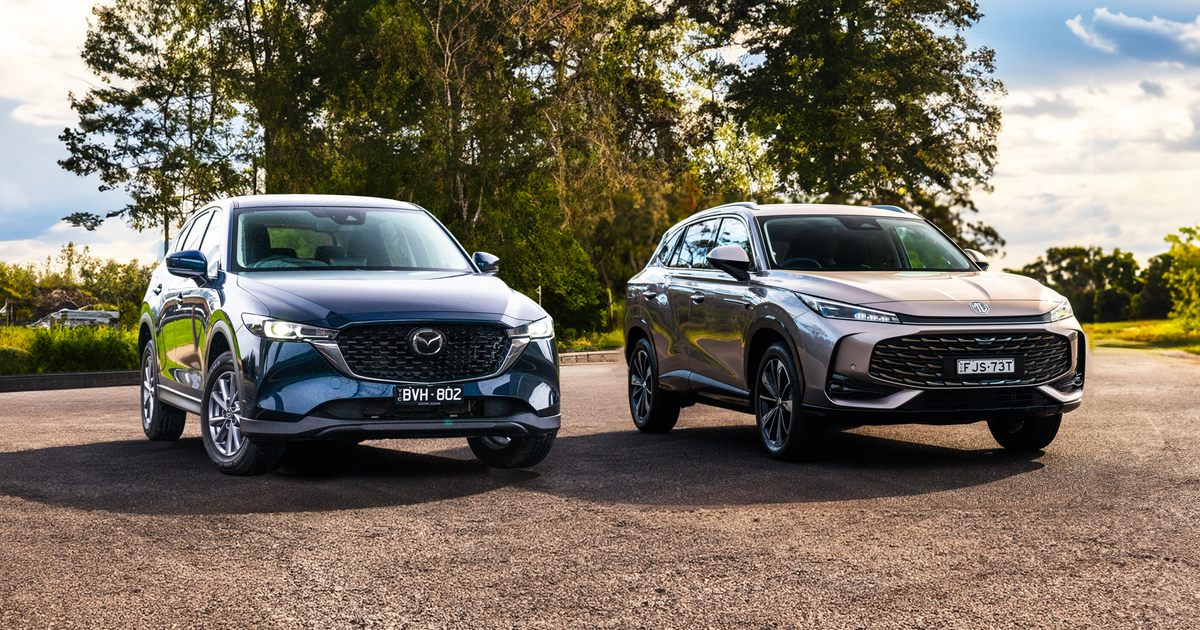
Do you have $40,000 to spend on a new mid-sized family SUV? There’s a fair chance you’re considering either one or both of the MG HS and Mazda CX-5.

Why? Well the second-generation HS was launched just a few months ago, receiving a positive reception from critics, while the CX-5 has been among the top-selling medium SUVs for several years.

Indeed, the CX-5 outsold its Chinese rival by a ratio of 4:1 last month, but that doesn’t necessarily mean it’s the better car.

A budget of just over $40k limits buyers to a basic CX-5 Maxx Sport, whereas the same money can score a flagship MG HS Essence.

So, which is the better buy? Here’s how the pair stack up on the spec sheet.

Interested in buying a MG HS or Mazda CX-5? Get in touch with a dealer by clicking the links

MORE: Everything MG HS • Mazda CX-5

Pricing

MG wins on price, undercutting the CX-5 across the range. Even in flagship Essence guise, the HS is $1230 cheaper than the CX-5 G25 Maxx Sport – a variant at the lower end of the CX-5 lineup.

ModelVictorian drive-away price
2025 MG HS Essence$40,990
2025 Mazda CX-5 G25 Maxx Sport FWD$42,220

Interested in buying a MG HS or Mazda CX-5? Get in touch with a dealer by clicking the links

MORE: Everything MG HS • Mazda CX-5

Drivetrains and Efficiency

Mazda offers a variety of powertrains with the popular CX-5, but turbocharged models are out of reach at this price point. As such, we’ll be comparing the 2.5-litre naturally aspirated four-cylinder to MG’s 1.5-litre turbo.

The turbo four found in all MG HS variants falls 15kW short of the naturally aspirated CX-5 engine, but it boasts more low-end torque and comes with an extra ratio. Both cars are front-wheel drive.

There’s little to split the pair from an efficiency standpoint either, although the MG requires dearer 95 octane premium unleaded fuel.

While neither the HS nor CX-5 can be called a workhorse, the Mazda offers superior towing capacity for weekend hauling.

SpecificationsMG HS EssenceMazda CX-5 Maxx Sport FWD
Engine1.5L 4cyl turbo-petrol2.5L 4cyl petrol
Power125kW140kW
Torque275Nm252Nm
Transmission7-speed DCT6-speed automatic
Drive typeFWDFWD
Weight1599kg (tare)1573kg (tare)
Fuel economy (claimed)6.9L/100km7.2L/100km
Fuel tank capacity55L56L
Fuel requirement95 octane premium unleaded91 octane unleaded
CO2 emissions156g/km167g/km
Emissions standardEuro 5Euro 5
Braked tow capacity1500kg1800kg

Interested in buying a MG HS or Mazda CX-5? Get in touch with a dealer by clicking the links

MORE: Everything MG HS • Mazda CX-5

Dimensions

The HS is 80mm longer and 45mm wider than the CX-5, with a 35mm longer wheelbase. That gives it a larger footprint on the road, even despite it being 20mm shorter than the Mazda.

While that’s unlikely to make or break the ownership experience, it does translate to a considerable difference in cargo capacity.

The new HS has 69L more boot space than its rival, which expands to 144L of extra room with the second row of seats folded down.

DimensionsMG HS EssenceMazda CX-5 G25 Maxx Sport
Length4655mm4575mm
Width1890mm1845mm
Height1655mm1675mm
Wheelbase2765mm2700mm
Cargo capacity507L/1484L438L/1340L

Interested in buying a MG HS or Mazda CX-5? Get in touch with a dealer by clicking the links

MORE: Everything MG HS • Mazda CX-5

Servicing and Warranty

As with all new MG models, the HS is covered by an “industry-leading” 10-year, 250,000-kilometre warranty. Roadside assistance is also offered for the duration of the warranty and is activated each time the vehicle is serviced within the MG network.

On the other hand, the Mazda CX-5 is backed by a shorter five-year, unlimited-kilometre warranty. Servicing is required every 12 months or 15,000km.

MG’s decade of capped-price servicing promises owners certainty and long-term peace of mind, although there’s not much to separate the cost of servicing both models.

Servicing and WarrantyMG HSMazda CX-5 G25
Warranty10 years, 250,000km5 years, unlimited kilometres
Roadside assistance10 years (service activated)5 years
Service intervals12 months or 15,000km12 months or 15,000km
Capped-price servicing10 years or 150,000kmUp to 7 years
Total capped-price service cost$5741$2576 – 5 years

Interested in buying a MG HS or Mazda CX-5? Get in touch with a dealer by clicking the links

MORE: Everything MG HS • Mazda CX-5

Safety

The new MG HS wears a five-star ANCAP safety rating based on testing conducted in August this year, whereas the Mazda CX-5 is unrated, as its five-star ANCAP safety rating from 2017 has now lapsed.

The standard safety features in each car are outlined below:

MG HS EssenceMazda CX-5 Maxx Sport
7 airbags
Adaptive cruise control
Intelligent cruise assist
Traffic jam assist
Active Emergency Braking (AEB)
Blind-spot monitoring
Driver attention monitoring
Lane change assist
Lane keep assist
Lane departure warning system
Front and rear collision warning
Front and rear cross traffic alert
Rear parking sensors
Reversing camera
Tyre pressure monitoring
Front parking sensors
Surround-view camera with transparent chassis
6 airbags
Adaptive cruise control with stop/go
Autonomous emergency braking (AEB)
Pedestrian detection
Rear AEB
Blind-spot monitoring
Rear cross-traffic alert
Lane departure warning
Lane keep assist
Driver attention alert
Reverse camera
Rear parking sensors
Tyre pressure monitoring
Traffic sign recognition

Interested in buying a MG HS or Mazda CX-5? Get in touch with a dealer by clicking the links

MORE: Everything MG HS • Mazda CX-5

Standard Equipment

The HS Essence is not only newer than the CX-5 Maxx Sport, but it also occupies a higher position in the respective model ranges. That quickly becomes evident when you compare the pair on standard equipment.

Technology

For one, the MG wins on the technology front, with larger 12.3-inch interior screens, a wireless phone charger, and a beefier eight-speaker sound system.

While the Mazda still ticks most of the essential boxes for a family SUV buyer, it’s carrying older tech that’s due for a refresh when the next-generation CX-5 launches between 2025 and 2027. For example, the digital instrument cluster measures just 7.0 inches, and the sound system is limited to six speakers.

Having said that, the CX-5 is alone in offering wireless smartphone mirroring and a head-up display. Both cars come standard with satellite navigation and DAB+ radio.

Comfort and convenience

The HS Essence may be the cheaper car, but you’d struggle to tell from comparing the spec sheets.

Unique features to the MG include powered front seats with heating, a power tailgate, PVC upholstery, and a panoramic sunroof, and the HS matches its Mazda rival in other key areas.

However, Mazda’s recent premium push gives the CX-5 an edge in quality of materials. The steering wheel and gear shifter in the Maxx Sport are trimmed in real-deal leather – an upgrade over the synthetic trims found in the MG.

You also get reclining rear seats in the CX-5, a handy feature in vehicle that’s likely to be bought by families who regularly rely on the second row.

View a full breakdown of standard features for the MG HS and Mazda CX-5 here

Interested in buying a MG HS or Mazda CX-5? Get in touch with a dealer by clicking the links

MORE: Everything MG HS • Mazda CX-5

CarExpert’s Pick: MG HS

Josh Nevett: If this was a comparison between the first-generation MG HS and current CX-5, the Mazda would win hands down. But MG has stepped things up over the last 12 months, and in many ways the new HS is a triumph for the Chinese manufacturer.

Not only does the flagship HS Essence stack up on the spec sheet, but the new 1.5-litre drivetrain is extremely effective despite its small displacement.

The engine is sufficiently responsive around town, and the seven-speed dual-clutch transmission is smooth and quick-shifting in the vein of a Volkswagen unit, without the associated low-speed jerkiness.

On the other hand, the naturally aspirated engine under the bonnet of the CX-5 has to work much harder, consuming more fuel in the process.

The CX-5 also concedes ground in other key categories including technology, cabin space, and aftersales support. After all, MG offers the best warranty in the business right now.

So, it’s a clear win to MG? Yes, with a significant caveat. The advanced driver assist systems (ADAS) in the HS are unbelievably poorly calibrated, an increasingly common issue that ruins the driving experience of otherwise well-sorted vehicles.

Until MG addresses the problem, it’s up to owners to adjust ADAS settings to their liking every time the car is switched on – a frustrating inconvenience.

Interested in buying a MG HS or Mazda CX-5? Get in touch with a dealer by clicking the links

MORE: Everything MG HS • Mazda CX-5


Source link