Home Blog Page 282

AI Pioneers Win Nobel Prizes for Physics and Chemistry

0


Artificial intelligence, once the realm of science fiction, claimed its place at the pinnacle of scientific achievement Monday in Sweden.

In a historic ceremony at Stockholm’s iconic Konserthuset, John Hopfield and Geoffrey Hinton received the Nobel Prize in Physics for their pioneering work on neural networks — systems that mimic the brain’s architecture and form the bedrock of modern AI.

Meanwhile, Demis Hassabis and John Jumper accepted the Nobel Prize in Chemistry for Google DeepMind’s AlphaFold, a system that solved biology’s “impossible” problem: predicting the structure of proteins, a feat with profound implications for medicine and biotechnology.

These achievements go beyond academic prestige. They mark the start of an era where GPU-powered AI systems tackle problems once deemed unsolvable, revolutionizing multitrillion-dollar industries from healthcare to finance.

Hopfield’s Legacy and the Foundations of Neural Networks

In the 1980s, Hopfield, a physicist with a knack for asking big questions, brought a new perspective to neural networks.

He introduced energy landscapes — borrowed from physics — to explain how neural networks solve problems by finding stable, low-energy states. His ideas, abstract yet elegant, laid the foundation for AI by showing how complex systems optimize themselves.

Fast forward to the early 2000s, when Geoffrey Hinton — a British cognitive psychologist with a penchant for radical ideas — picked up the baton. Hinton believed neural networks could revolutionize AI, but training these systems required enormous computational power.

In 1983, Hinton and Sejnowski built on Hopfield’s work and invented the Boltzmann Machine which used stochastic binary neurons to jump out of local minima. They discovered an elegant and very simple learning procedure based on statistical mechanics which was an alternative to backpropagation.

In 2006 a simplified version of this learning procedure proved to be very effective at initializing deep neural networks before training them with backpropagation. However, training these systems still required enormous computational power.

AlphaFold: Biology’s AI Revolution

A decade after AlexNet, AI moved to biology. Hassabis and Jumper led the development of AlphaFold to solve a problem that had stumped scientists for years: predicting the shape of proteins.

Proteins are life’s building blocks. Their shapes determine what they can do. Understanding these shapes is the key to fighting diseases and developing new medicines. But finding them was slow, costly and unreliable.

AlphaFold changed that. It used Hopfield’s ideas and Hinton’s networks to predict protein shapes with stunning accuracy. Powered by GPUs, it mapped almost every known protein. Now, scientists use AlphaFold to fight drug resistance, make better antibiotics and treat diseases once thought to be incurable.

What was once biology’s Gordian knot has been untangled — by AI.

The GPU Factor: Enabling AI’s Potential

GPUs, the indispensable engines of modern AI, are at the heart of these achievements. Originally designed to make video games look good, GPUs were perfect for the massive parallel processing demands of neural networks.

NVIDIA GPUs, in particular, became the engine driving breakthroughs like AlexNet and AlphaFold. Their ability to process vast datasets with extraordinary speed allowed AI to tackle problems on a scale and complexity never before possible.

Redefining Science and Industry

The Nobel-winning breakthroughs of 2024 aren’t just rewriting textbooks — they’re optimizing global supply chains, accelerating drug development and helping farmers adapt to changing climates.

Hopfield’s energy-based optimization principles now inform AI-powered logistics systems. Hinton’s architectures underpin self-driving cars and language models like ChatGPT. AlphaFold’s success is inspiring AI-driven approaches to climate modeling, sustainable agriculture and even materials science.

The recognition of AI in physics and chemistry signals a shift in how we think about science. These tools are no longer confined to the digital realm. They’re reshaping the physical and biological worlds.


Source link

2025 MG 4 XPower review

0


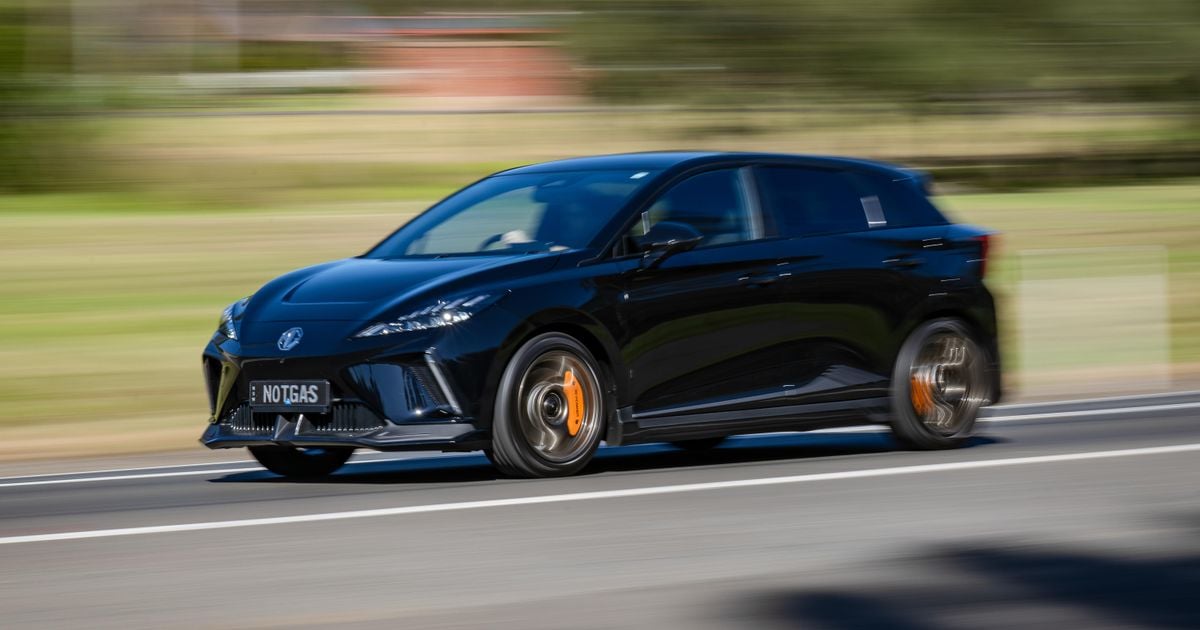
There is nothing that’s as fast as the MG 4 XPower for the same kind of money. The battery-electric hot hatch packs a 320kW, 600Nm twin-motor all-wheel drive powertrain, and dispatches the 0-100km/h sprint in a claimed 3.8 seconds, yet costs less than $60,000 drive-away in most states.

So the flagship MG 4 is quicker than a base Porsche 911 for less than a quarter of the price. And now, MG Australia is trying to make it more fun.

The Chinese carmaker has set upon a journey that could lead to its answer to Hyundai’s N performance sub-brand with this one-off example of the XPower, which has been modified by the local division of MG in-house in a sort-of skunkworks build. 

“This is a local project pioneered by MG Motor Australia that tunes the steering, accessories and suspension of its models to suit Australia’s unique – and often challenging – road conditions,” says MG.

The brand’s EV and accessories manager, Matt Kavanagh, said: “Perceptions are difficult things to change. In Australia, we have always wanted to do local tuning to complement our MG range, however, previously there wasn’t the right product.

“Who is the right person in the company? Because the product engineering team – are involved in vehicle dynamics, I thought, ‘okay, let’s join efforts and make this happen’. Now, we’ve got this proof of concept, we’ve got the know-how, let’s do it and get started.

“If you look at this car, the effort the engineers in Shanghai put into it is amazing, they are not just concepts, pictures; it is a well balanced car that has been enhanced. We’re really looking for market feedback on this one from media, dealers and customers of what could be for our brand’s local tuning program.

WATCH: Paul’s video review of the MG 4 XPower

“I hope this is the start of big things to come with MG and tuning in Australia – it’s the first step really, the rest is up to the market.”

So has MG done a good job? We snaffled the keys to this hotter homegrown MG 4 XPower to find out.

How does the MG4 compare?

View a detailed breakdown of the MG4 against similarly sized vehicles.

MG4 cutout image

MG

MG4

How much does the MG 4 cost?

Prices seem to be regularly changing in the MG range, especially with the MG 4, at least for a limited time.

ModelDrive-away price
MG 4 Excite 51$32,990 (before December 31, 2024)
MG 4 Excite 64$34,990 (before December 31, 2024)
MG 4 Essence 64$46,990
MG 4 Essence 77$52,990
MG 4 XPower$60,000 (approx.)

But remember, this particular example of the MG 4 XPower is a one-off, and that means you can buy one… yet.

Here are the additional components compared to the standard car:

  • H&R 30mm lowered springs 
  • König flow-formed 18×8.5-inch Ampliform wheels
  • Custom body kit: lower bumper, side skirts, rear diffuser
  • Floor mats

Frustratingly, MG Australia was unable to offer any indication of what a package like this might cost, should it be made officially available.

You’d imagine the wheels, body kit and suspension would cost at least $5000 extra, maybe even $10k – but if MG can get a program like this off the ground, the package could be relatively cheap given the economies of scale.

To see how the MG 4 stacks up against its rivals, use our comparison tool.

What is theMG 4 like on the inside?

Apart from floor mats, nothing has changed inside this amped-up XPower, and that’s perhaps a little disappointing. This modification package focusses only on the exterior and chassis, and many buyers may also desire extras like sportier front seats to glow-up the interior too.

That isn’t to say it’s unpleasant inside the XPower, it’s just that the electric driver’s seat sits a little higher than some might find ideal, and it isn’t a super supportive seat when things get speedy in the esses. At least you’re getting the goodness of Alcantara trim on the seats, and the cabin looks a bit nicer than in base grades, too.

A criticism of the MG 4 has been that it feels a little austere and not overly soulful inside, and if you’ve read any of our other reviews you’ll know that the controls for the media screen are a little bothersome, with buttons for some functions but not others, and many menus hidden in the media screen.

You get used to those controls, but other cars do it better. Honestly though, the most annoying thing about it is having to jump through screens each time you drive the car if you want to disable some of the overly pushy safety features.

Besides that, you get used to controlling almost everything through the screen reasonably fast, and in this instance I found myself getting to terms with the drive mode controls as well. And yes, there’s a Launch Control setting in there, as well as a dedicated Track Mode that alters the traction control system and unleashes all of the powertrain’s silent speed. 

There’s a rotary dial selector that is essentially the way you start the car, too. Sit in the seat, press the brake pedal, and it might take a twist or two to start the car (it won’t move unless you’ve got your seatbelt on). 

Storage through the cabin is good, with bottle holders in the doors and a stowage section between the front seats, and rear seat space is impressive for adults and kids alike (with ISOFIX child seat anchor points in the window seats and three top-tethers, too).

Boot space is 363 litres with the rear seats up, expanding to 1165L when they’re folded. There’s no spare wheel, though – just a repair kit.

To see how the MG 4 stacks up against its rivals, use our comparison tool.

What’s under the bonnet?

There are two electric motors in the MG 4 XPower, with one for each axle resulting in all-wheel drive. And their performance outputs are mind-blowing. 

There is up to 320kW of power on offer, with the front motor outputting 150kW/250Nm, and the rear churning out 170kW/350Nm. MG states a combined continuous output of 300kW/600Nm available, and claims a 0-100km/h time of just 3.8 seconds.

There’s a single-speed transmission, so the power is linear and instantaneous – though the Bridgestone Turanza tyres mightn’t be quite as good as something from Michelin or Pirelli, and I think you might even see a quicker time with these mods and better boots.

What about charging, then?

MG claims an electric driving range of 400km (WLTP) for the MG 4 XPower, with efficiency rated at 15.2kWh per 100km… but you won’t see that if you try and beat the acceleration claim.

Suffice to say, during my testing I saw energy consumption displayed at 20.3kWh across a mix of driving.

The battery pack is a Lithium Nickel Manganese Cobalt (NMC) unit with a 64kWh capacity. 

AC charging is a maximum rate of 6.6kW using a Type 2 CCS plug, meaning a charging time of approximately nine hours on a home or office wallbox. If you are aiming for faster charging, there is DC charging at a maximum rate of 140kW, meaning a 10-80 per cent charge time of 28 minutes, according to MG.

To see how the MG 4 stacks up against its rivals, use our comparison tool.

How does theMG 4 drive?

The XPower was already blisteringly fast in a straight line, but with the changes made here it also adds a bit more fun-factor in the bends.

Don’t get me wrong – they don’t make this a Hyundai Ioniq 5 N in terms of fun factor, but for about half the price it makes a pretty convincing argument in terms of thrills for the bills.

Yes, when you plant your foot it whiplashes your scone into the head restraint – even in Comfort mode. In Sport or Track, or using Launch Control, it’s a dead-set chiropractor’s dream, with immense acceleration from a standing start… in most situations.

There is some evidence of tyre slippage in those hard-out moments, which – in my opinion – would be eliminated by a better set of tyres. The Bridgestone Turanza rubber is decent and no doubt more affordable than a set of Pirelli P Zero, Michelin Pilot Sport or Continental Contisport tyres, but I think it could be an even more convincing vehicle overall with better rubber underneath it.

It would likely also have a bit more front-end bite with stickier tyres, although the way this modified X Power flows through corners is more convincing than the standard version.

The steering hasn’t been retuned – the budget for this pilot program didn’t allow that – but there has been a geometry change courtesy of the lowered suspension setup, and the lighter wheels also lower unsprung weight, adding to a more dynamic feel.

The suspension feels a bit firmer but still comfortable and well resolved, and the new springs also help iron out corners better than the standard units, which already do a decent job. Of course, they also lower the body, helping hide the mass of the battery pack a little better.

In my mind, the chassis upgrade make a more convincing case for the X Power, which seems a little soft in standard form, making it somewhat of a fast-but-not-quite-fun-enough EV.

And there is still room for improvement in this vehicle. The brakes – which incorporate regen braking – aren’t as strong or precise as you might want them to be when you’re hurtling towards a corner and don’t get the response you’re hoping for from the pedal, which has an airy feel to it.

You can configure the car for single-pedal driving, which is great for mixed and urban driving, but there’s not an ‘on-off’ switch for a one-pedal mode like there is in the Ioniq 5 N, which can decelerate at up to 0.6g!

One more thing. The sound. There isn’t any, apart from the occasional squirming tyre squawk, tyre noise as speeds rise, and the constant e-motor whine. It needs a bit more theatre, I reckon. It might be fast and more fun in corners than it was, but with some audible trickery it could be great. To me, it’s like doing the deed in the dark: still awesome, but not as involving an experience.

What do you get?

While you can’t buy THIS spec of XPower yet, here’s a rundown of the standard equipment across the MG 4 range.

​​MG 4 Excite 51 equipment highlights:

  • WLTP range – 350km
  • 0-100km/h – 7.7 seconds
  • One-pedal driving functionality
  • Four-mode regenerative braking
  • Five-link independent rear suspension
  • 7.0-inch digital instrument cluster
  • 10.25-inch touchscreen infotainment system
  • Keyless entry
  • Automatic idle stop/start
  • Apple CarPlay and Android Auto
  • 4-speaker sound system
  • Black fabric upholstery
  • 17-inch alloy wheels
  • Automatic high-beam
  • Electric side mirrors with heating functionality
  • Six-way manually adjustable driver’s seat 
  • MG Pilot
  • iSmart Lite connectivity

MG 4 Excite 64 adds:

  • WLTP range – 450km
  • 0-100km/h – 7.2 seconds
  • Active grille shutters
  • 66kWh battery pack

 Essence 64 adds:

  • WLTP range – 435km
  • 0-100km/h – 7.2 seconds
  • 18-inch alloy wheels
  • Black roof
  • Rear light bar
  • iSmart connectivity
  • Six-speaker sound system
  • Satellite navigation
  • Wireless phone charger
  • Synthetic leather/cloth upholstery
  • Auto-dimming rear-view mirror
  • Height-adjustable load floor
  • EV trip planner
  • Heated front seats
  • Heated steering wheel
  • 360-degree view camera
  • Two-tone roof
  • Blind-spot monitoring and rear cross-traffic alert

Long Range 77 adds:

  • WLTP range – 530km
  • 0-100km/h – 6.5 seconds
  • 77kWh battery pack

MG 4 XPower adds:

  • 64kWh battery pack
  • Orange brake caliper covers
  • Black roof
  • 18-inch alloy wheels
  • Polished trim accents
  • Alcantara interior trim

MG 4 XPower modified adds:

  • H&R 30mm Lowered Springs 
  • König flow-formed 18×8.5-inch Ampliform wheels
  • Custom body kit – lower bumper, side skirts, rear diffuser
  • Floor mats

To see how the MG 4 stacks up against its rivals, use our comparison tool.

Is theMG 4 safe?

The MG 4 has been awarded the maximum five-star ANCAP safety rating for Australia based on 2022 tests conducted in Europe under Euro NCAP criteria.

In that testing it scored 83 per cent for adult occupant protection, 86 per cent for child occupant protection, 75 per cent for vulnerable road user protection, and 81 per cent for safety assist.

Standard safety equipment includes:

  • Autonomous emergency braking (AEB) with pedestrian, cyclist and junction detection
  • Lane departure warning
  • Lane keep assist
  • Adaptive cruise control with stop/go
  • Front, rear parking sensors
  • Tyre pressure monitoring
  • Front, rear seat belt reminders
  • ISOFIX child restraint anchorage points (outer rear seats)
  • Front, front side, full-length curtain airbags (6 in total)

MG 4 Essence, Long Range and X Power add:

  • Surround-view camera
  • Blind-spot monitoring
  • Rear cross-traffic assist

How much does theMG 4 cost to run?

The Chinese brand recently offered an unprecedented and unbeaten 10-year, 250,000km new-car warranty across its model range.

And the best news for battery longevity sceptics is that it applies to the high-voltage battery pack, too. That’s right – while most other brands only back their batteries for eight years/160,000km (and some even less than that), MG is backing its tech and offering the decade-long warranty on its EV batteries. 

However, note that the 10-year, 250,000km warranty applies only to private buyers, or ‘non-commercial use’, whereas commercial buyers get a seven-year, 160,000km warranty.

There is also a staggering aftersales service offer, with intervals set at 24 months/40,000km, and a capped-price servicing plan running out past the ultra-long warranty to 280,000km (or 14 years!). 

Under that plan, the service rates are: $296, $962, $296, $962, $296, $962, $296 – for a total of $4070. That might seem a big number, but over 14 years, it works out to $290 per annum.

Roadside assistance is included as well, for the duration of the warranty period. That’s right, 10 years of roadside assistance, at no cost.

To see how the MG 4 stacks up against its rivals, use our comparison tool.

CarExpert’s Take on theMG 4

There is no doubt in my mind that if MG offered a version of the X Power that looked and drove like this, many Aussies buyers would be interested. How much it should or could cost is another thing…

Reps from MG Motor Australia have told us they are actively seeking feedback from potential buyers, so be sure to have your say below in the comments, and tell them whether you think these cosmetic and chassis upgrades should be standard for the XPower, if they should be part of an option pack, if elements of them should be available across other MG 4 variants… or anything else!

Interested in buying an MG 4? Get in touch with one of CarExpert’s trusted dealers here

Click the images for the full gallery

MORE: Everything MG 4


Source link

Zero Labs Unveils the Electric Land Rover Series 109

0


Zero Labs Automotive — renowned for its expertise in transforming automotive legends into premium electric masterpieces, has introduced its latest creation — the reimagined 5-door Electric Land Rover Series 109. Limited to just 25 units, this collector’s piece features over 4,000 proprietary design upgrades, seamlessly blending vintage aesthetics with cutting-edge performance. Powered by a 600HP dual-motor system, offering a 250+ mile range and state-of-the-art comfort, this modern revival delivers sustainability without compromising its analog heritage. With meticulous craftsmanship and a commitment to preserving the spirit of automotive history, Zero Labs continues to set the benchmark for electrified classics.

Developed over three years of rigorous testing, the reimagined Land Rover Series 109 exemplifies Zero Labs’ innovative approach to vehicle transformation. Unlike traditional conversion methods that rely on salvaged components, Zero Labs builds from the ground up — ensuring each car meets modern safety, comfort, and performance standards. Highlights include a redesigned flat-floor interior with 25 percent more space, precision steering, and optional Level 3 DC fast charging, offering a driving experience that is as luxurious as it is sustainable. Even the vehicle’s analog gauges maintain their nostalgic charm while concealing advanced digital diagnostics accessible through a sleek app interface.

Zero Labs’ dedication to preserving automotive heritage is paired with its commitment to innovation. Each of the 25 handcrafted Land Rover Series 109 vehicles is tailored for discerning collectors and eco-conscious enthusiasts alike, ensuring exclusivity and individuality in every detail. Priority access is reserved for loyal customers and investors, underscoring the company’s ethos of craftsmanship and community. “This is more than a vehicle — it’s a statement of what the future of electrified luxury can be,” said Adam Roe, Founder and CEO of Zero Labs.

Praised as a “rolling piece of automotive art” by industry experts like Tom Ford of TopGear, Zero Labs’ vehicles reflect a meticulous blend of design and engineering. By collaborating with leading electric motor and battery manufacturers, the company has established itself as a pioneer in the luxury EV space, unbound by the constraints of mass production. As the world embraces zero-emission mandates, Zero Labs offers a powerful solution: preserving the character of iconic vehicles while delivering on the promise of sustainability. The reimagined Land Rover Series 109 is not just a car — it is the embodiment of history, innovation, and timeless elegance.

For more on the latest in luxury automotive and motoring reads, click here.


Source link

Koenigsegg Jesko Attack sets a new Top Gear test track lap record

0


The Koenigsegg Jesko has added another lap record to its name. Forget the Nurburgring; it’s a lap of the Top Gear test track that sets the great cars apart.

The Stig recently took the Jesko Attack for a lap of the legendary Top Gear test track in England. The high-downforce version is well-suited for this short and twisty circuit, and with 1600 hp on tap, it was able to set a blistering lap time.

The Jesko Attack now holds the production car lap record at the Top Gear test track. It completed the lap in 1 min 10.9 seconds, beating the previous best set by the Ferrari SF90 – 1 min 11.3 seconds.

The hypercar is powered by a 5.0-liter twin-turbo V8 engine that puts out 1280 hp (1600 hp on E85) and 1106 lb-ft of max torque. The engine is hooked to a 9-speed multi-clutch transmission, which Koenigsegg refers to as the Light Speed Transmission or LST.

The Koenigsegg Jesko had also set a lap record at Laguna Seca in August this year. However, the Czinger 21C snatched the crown a month later.


Source link

Consumer Guide Car Stuff Podcast Episode 251: Melting EV Charging Adapters, Jaguar’s New Attitude, Volkswagen ID. Buzz Deep Dive | The Daily Drive

0


Everything you want to know about VW’s retro-cool electric minivan.

Jaguar's New Attitude
Jaguar’s New Attitude

Whether you drive a car, need a car, or just occasionally bum a ride with friends, you’’ve come to the right place. Join Jill and Tom as they break down everything that’’s going on in the auto world. New-car reviews, shopping tips, driving green, electric cars, classic cars, and plenty of great guests. This is the Consumer Guide Car Stuff Podcast. – Jaguar’s New Attitude

–

Episode: 251

Broadcast date: December 9, 2024

Guest: Mark Gillies

–

(Show Notes)

–

Jaguar’s New Attitude

Jill and Tom opened this week’s show hitting briefly on a number of topics, including melting EV charging adapters, Jaguar’s perplexing marketing reboot, the electric Dodge Charger Daytona, the high-mileage Ram 1500 HFE, and the consolidation of Infiniti and Nissan dealer stores.

Still in the first segment, Jill recapped her time in the all-new Volkswagen ID. Buzz electric minivan. Jill found much to like, but noted that the van comes up short on estimated battery range, and that starting prices are high.

ID. Buzz Deep Dive

In the second segment the hosts welcome Mark Gillies of Volkswagen to expand the ID. Buzz conversation. Mark shared a number of key details, including brand expectations that the van serve as a halo model, and not a high-volume offering.

Quiz

In the last segment Jill is subjected to Tom’s “One Minute” quiz, in which she is challenged to answer questions in less than 60 seconds.

Discussed this week

Muscle Car News and Reviews

Jeep Wrangler Buying Guide

Jaguar Type 00 Concept: Smoke, Mirrors, and a Glimmer of Hope

2025 Volkswagen ID. Buzz Prices: More Than Your Average Minivan


Follow the crew


The Crew

To advertise on the Car Stuff Podcast call Andy Lieb: 847-291-7414

Consumer Guide Car Stuff Podcast Episode 250: Stellantis CEO Quits, Volvo XC90 Review, Porsche Macan EV Deep Dive

Consumer Guide Car Stuff Podcast Episode 249: L.A. Auto Show Highlights, Hyundai’s Big New EV Crossover, Mazda CX-50 Hybrid


Source link

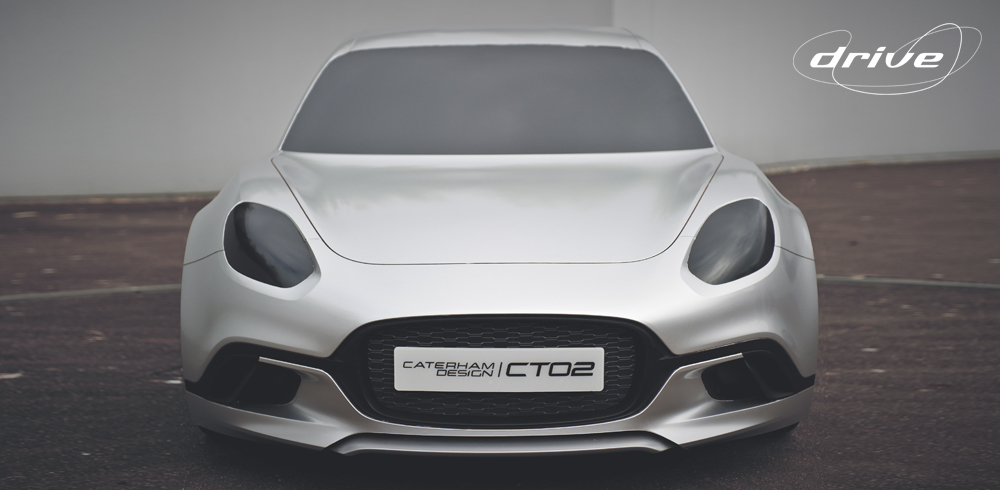
Designing for an iconic marque

0


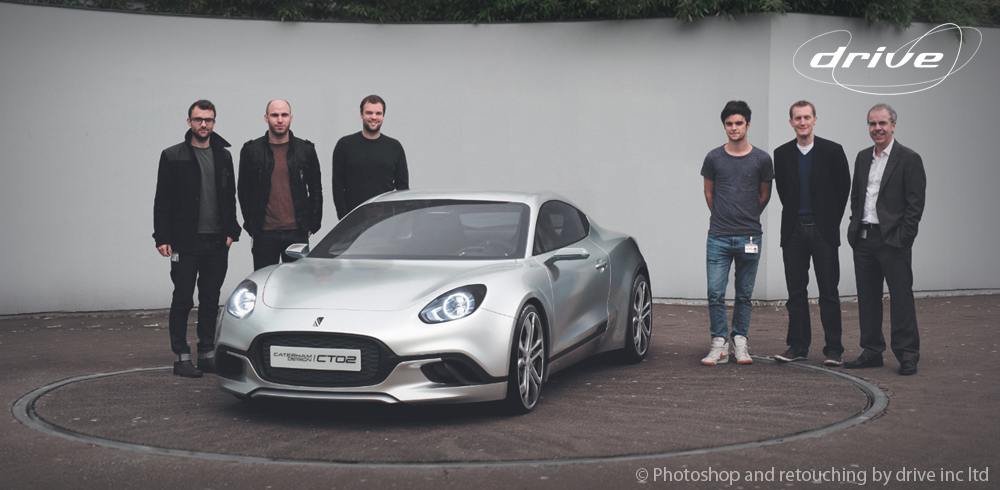
It is now 10 years since drive were designing for an iconic marque – Caterham. With the Caterham C120 now being mentioned in Russell Hayes new book Alpine – French Speed and Spirit, here is the background to Drive’s involvement with Mark Przeslawski’s insight.

Designing for an iconic marque

So where did it start for us at Drive?  It goes back 5 years to an initial meeting with Caterham in Hethel, Norwich.  The original project became a distant memory as aspirations changed with the introduction of a partner in major manufacturer Renault, a completely new package and advanced aluminium construction.   As the engineering package was developed at Caterham and Renault bases, Drive’s design team were seconded to work at the Renault R&D headquarters in Guyancourt, Paris, forming an important conduit for the Anglo-French alliance.

Arriving at Renault, Drive’s close team of designers and digital modellers with Caterham’s studio engineers, were allocated space within the Alpine facet of the complex, an impressively large studio with several clay plates.  It was one of the most exciting environments to work in, with the presence of some of the Renault concept greats dotted around the place; the Alpine A110-50, DeZir, and Twingo to name a few.

Sharing the studio space, facing each other were the C120 and AS1 clay models, two cars showing great potential with their two respective design teams working on them.  If I could sum up the entire studio atmosphere, including the Alpine team, it would be passion.  Passion was what drove these concepts forward.

The Drive design team lived, breathed and dreamt C120, flying out to France in the early hours of Monday morning and returning on a Friday evening for 6 consecutive months. Some weeks were tiring, stressful and occasionally deflating, with our attempts at the French language appreciated, even if laughed at by the canteen staff.  Our commitment, comradery and passion pulled us through every time, to be part of history, taking part in something that would bring a British sports car brand into a new era.  The sad demise of the joint venture was a bad dream.  For a long time we couldn’t believe that with all the effort everyone put into the project and with it so close to being realised, there would be no exciting moment of that first drive.

Caterham C120

So enough about our emotions….what of the car itself?
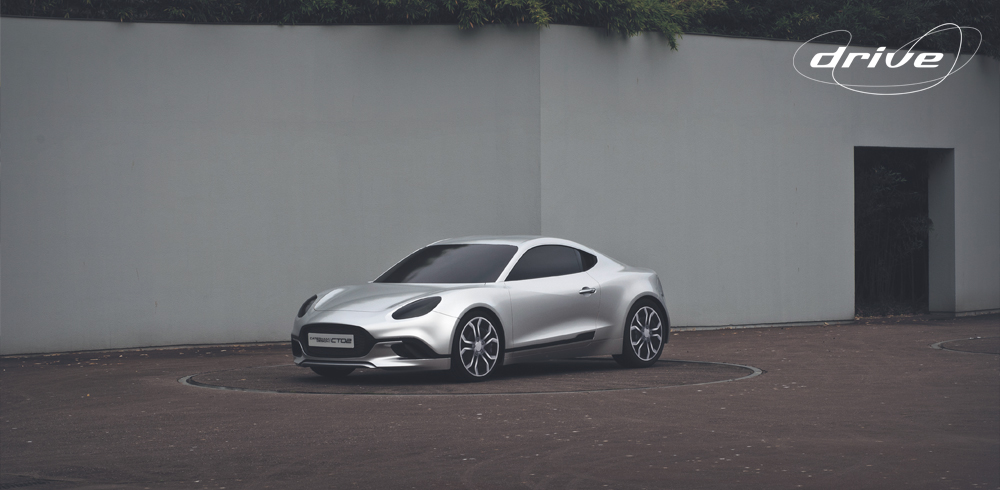
Biased I may be, but I believe there is no doubt that this is a great looking car, with fantastic proportions and pure surfacing.  So how is it a Caterham? What defines the character of a Caterham? At Drive we aren’t just a hired arm that draws cars, we extract and develop core brand DNA, establishing a clear aesthetic direction that our clients understand and can incorporate in their brand’s future.

Establishing this new brand aesthetic was no easy task. Caterham was clearly defined by the Seven, a car with a cult following and essentially unchanged from the original design. First of all the C120 was to be a completely new package, and one that a Caterham has never used before – a mid-mounted engine.  This already moved the vehicle far away from the instantly recognisable visual cues of a Caterham 7 (long bonnet, front engine), so we knew we would have to evoke that Caterham feeling in other ways.  We were also aware that the C120 was to be an everyday car, as well as a weekend toy, aimed at taking on the more premium market of Porsche, Audi and BMW.  With this in mind the language the car spoke was critical, this was to be the line in the sand for Caterham; a fresh modern interpretation of a historic brand.

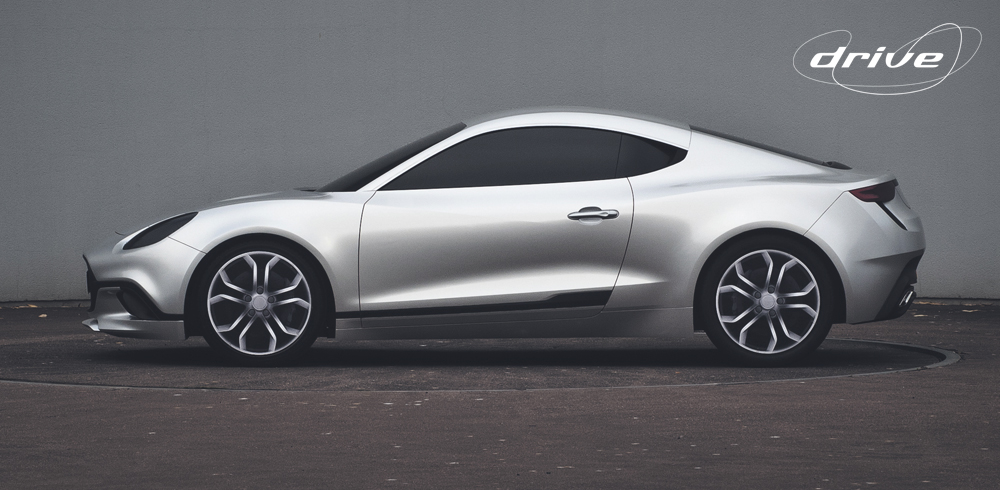
The car is designed as a complete entity from front to back, a holistic approach.  Starting with the overall proportion, it is lithe, nimble and carries no excess weight whilst remaining visually planted in stance.  The front rakes back from the iconic Caterham nose to a short rear overhang.  The arch lines communicate some of the iconic Caterham 7 design gestures, the combination of the long diving front agile arch line and the rear pert, perfectly poised line evokes the similar feeling you get from looking at a 7.  It looks alive, on its toes and ready to be driven.

Caterham C120

The car also feels like a complete entity, it is not a case of projecting design features on the side rear and front which can often make cars look disjointed, features and graphics encompass the wheels, giving it visual strength and a sense of purity, a holistic approach.

Caterham C120

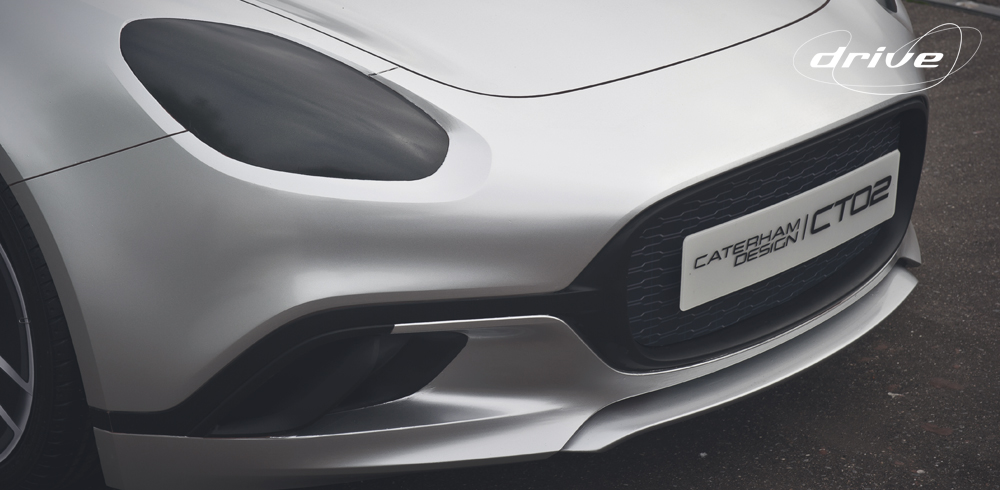
The front displays an approachable face, not too aggressive, but a well-balanced and open eyed character that evokes the same feelings you get from the 7. It’s serious enough not to be taken lightly.  Everything works together to deliver maximum performance whist interpreting the Caterham design philosophy for the 21st century.  Everything is there for a reason too, from the central grill, splitter and side intakes, designed for function hinting at influences from Caterham motorsport, such as their former Formula 1 division.

Caterham C120

Caterham C120

Following down the side of the car, the iconic side exhaust and graphics that you commonly see on most 7s is interpreted by a graphic that follows all the way from the central nose through to the side intakes and onto the body side. The surfaces and body side is all about losing as much visual weight as possible, with surfaces sculpted away whilst retaining a sense of beauty and tension.  Moving towards the rear the stance of the car is exaggerated to show the power moving through the rear axle, with large arch blisters further enhancing this visual width.

Caterham C120

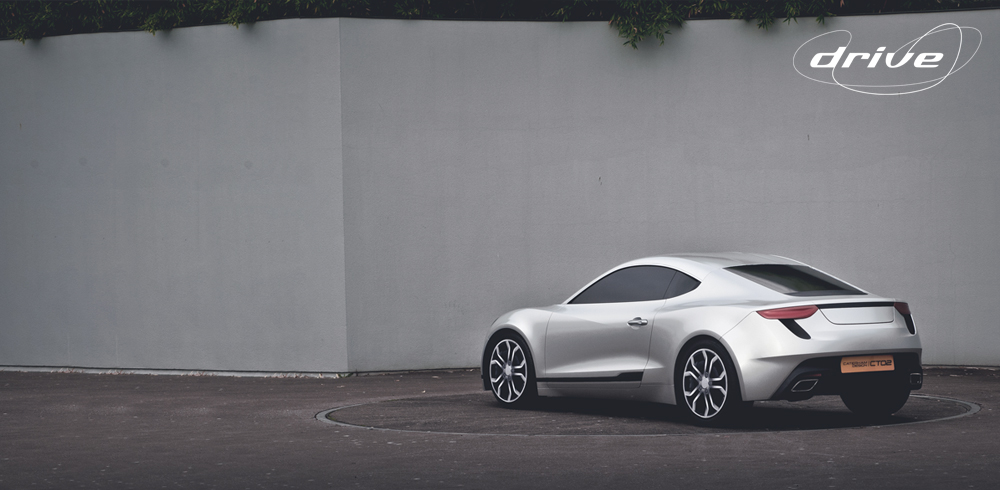
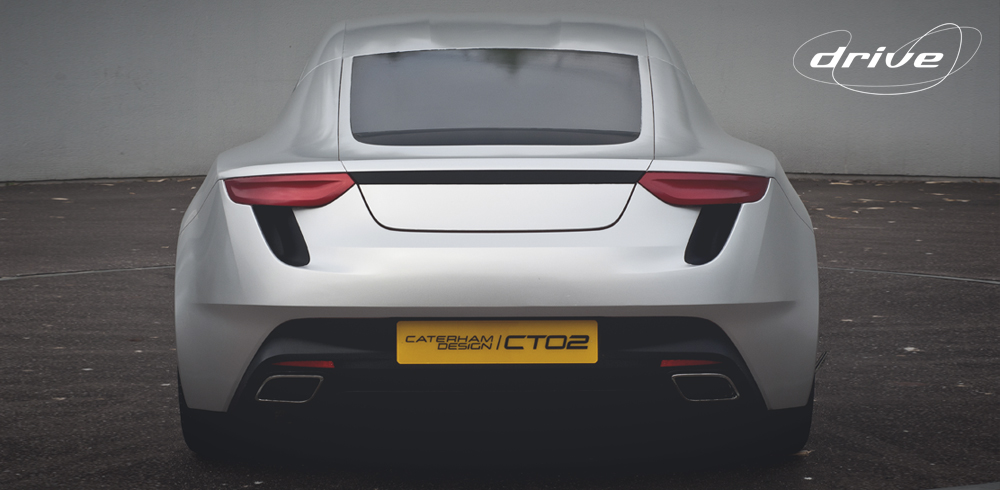
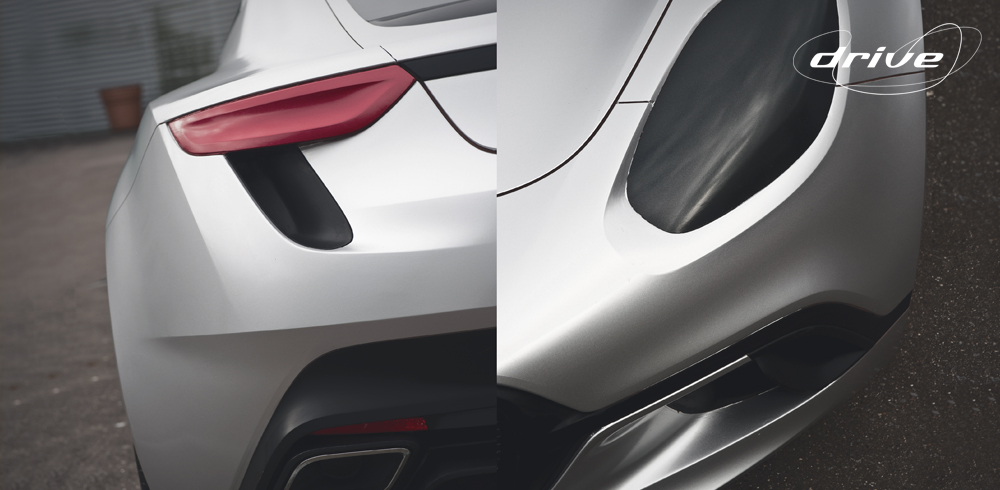
The rear completes the strength of the car, hinting at the DNA of the 7 in a very modern and crisp way.  Lamp positions are high as is the integrated spoiler, not only gain better performance but to give the car a sense of agility.  Simple, clean lines make up the rear to further emphasise as much visual width as possible.  Heat exits at the base of the rear screen and under the rear floating lamps, were all necessary to manage heat for the mid-engine package.  Moving lower down, the number plate is located within the diffuser trim allowing the upper surfaces to be as clean as possible and retain some of that Caterham 7 box like rear end feeling.

Caterham C120

Caterham C120

Working with the Alpine team was a pleasure, we had our moments of course, whilst fighting for certain design features and gestures that related to each of the cars providing much discussion and debate!   For a program that relied heavily upon financial necessities of sharing the complete running platform and common parts such as lamps, the result is two concepts that side by side have a totally different attitude, stance and feeling.   Quite an achievement.

Sadly what you are seeing here is only a point in time and is not the finished article, I can tell you… it only got better!  When you see those fantastic shots of the Alpine darting around the Alps or parked in the Italian sunshine at Villa d’Este in Lake Como….. imagine the Caterham C120 hammering through the roads of Norfolk or poised in the car park at the Linton Travel Tavern!

Caterham C120

Day dreaming – how it might have looked had it gone in to production.

I could probably carry on talking about this car, the design and just how special we feel it is, for an eternity.  It was a landmark project for Caterham, Drive and our team; something none of us will forget and I only wish you could see on the road.

#AlpineA110 #CaterhamC120

Images courtesy of Caterham Cars


Source link

2025 Lucid Gravity reshapes SUV universe

0


  • Lucid Gravity follows efficiency approach of Air sedan
  • 450 miles of EPA range, 3.4-sec. 0-60 mph, available third row
  • Grand Touring arriving soon, Touring coming later in 2025

Something felt amiss as I hustled this prototype 2025 Lucid Gravity around cloverleaf ramps near Lucid’s California Bay Area headquarters last week.

I’d flown around faster than I’d intended to. And yet on the imperfect pavement the Gravity felt like it had so much more to give, with good poise and balance, loads of stability, communication through the steering wheel, and maybe some fun ahead—if, well, this were a closed course. 

It’s just that the Gravity is an SUV. And I’ve never, in 25+ years of evaluating vehicles, been in an SUV that drives quite like this. Lucid has somehow managed to dial its dynamics in like a sport sedan—or, perhaps aptly, a sport wagon. My inner g-sensors were reeling and I kept glancing into the rearview mirror—at two more spacious, minivan-like rows behind, which is what got me all turned around. 

In a good way, you hear? Based on a speed date with one, it’s really, really good.

2025 Lucid Gravity Grand Touring

2025 Lucid Gravity Grand Touring

A breath of fresh Air—for SUVs

Taking a few steps back: If you’ve somehow dismissed Lucid’s very strong opening act, the Lucid Air sedan, the Gravity makes the automaker’s unrelenting focus on efficiency impossible to overlook or ignore. 

The Air already presented its case for the numbers it can achieve with its compact and powerful yet efficiency-focused fully electric propulsion suite. Now the Gravity carries all this innovation into a form far more Americans will be likely to consider as their own: a three-row SUV. In this case, it’s one that goes an EPA-rated 450 miles (according to Lucid) with a battery pack that’s relatively modest for the mission—about 118 kwh—and one that can add 200 miles of range in 15 minutes via a 350-kw fast-charge connector (CCS port on early cars, Tesla-style NACS port to come). 

The 2025 Lucid Gravity gives in to the reality of the market and its undeniable forces but it does so on Lucid’s own terms. So it should come as no surprise that the Gravity isn’t aiming to play in the world of boxy, nubby-tired bricks named after off-road trails. 

“We’re not going to Utah and climbing rocks,” said chief design officer Derek Jenkins. “But to get to the cabin, to do the dirt path, to do medium off-roading, the Gravity is going to be excellent for that type of activity, with the suspension capability.”

2025 Lucid Gravity Grand Touring

2025 Lucid Gravity Grand Touring

Ahead of my drive, Lucid’s chief engineer and senior VP for product Eric Bach reminded me that it’s not developing vehicles for 0-60 mph times. Performance could be on a track, he underscored, or going up a windy mountain road. Or it could be crash-safety performance. Or NVH (noise, vibration, and harshness) performance. 

The crew at Lucid by all accounts aren’t dyed-in-the-wool SUV guys. But they’re going to change a lot of minds with this vehicle. 

Gravity starts with an efficient shape

Lucid is relentless about efficiency because it puts the brakes on a series of cascading factors. If you use components or a design that together amount to a less-efficient vehicle, it’s then heavier because it needs more batteries to go the distance. It then can’t fit passengers and cargo as well. 

To that, the brand made clear to Green Car Reports that it’s proud of how the Gravity isn’t bigger than it needed to be; it stretches 198.2 inches long and it rides on a 119.5-inch wheelbase. Its height of around 65 inches overall (in its lowest setting, we have to assume) makes it lower overall than a Subaru Forester—so yup, no problem fitting into parking garages.

Gravity’s lean profile maps out in all directions except width, where its 78 inches not counting the mirrors is standard for the class. The Gravity has a frontal cross-sectional area, in CdA, that’s much lower than any of its rivals except for the Tesla Model X. It’s said the coefficient of drag will land around 0.24, but with final test numbers not yet out, it could land slightly better than that. 

2025 Lucid Gravity Grand Touring

2025 Lucid Gravity Grand Touring

It’s not an Air with a different top hat. Bach emphasized to Green Car Reports that Gravity was conceived as a completely new SUV platform, with a modular set of Air’s existing components arranged to the new architecture. Bach said that’s so that Lucid arrived at “a real off-road-capable as well as luggage- and occupant-optimized package that looks like an SUV.”

Design-wise, Gravity fits right in next to the Air. It has a completely different profile, of course, plus a little more depth to its taillights, while its headlights are a little more vertical—partly to leave room for a wider frunk opening (with optional net at the front).  

It’s an attractive profile with a graceful roofline and nice stance. But it doesn’t compare directly to any SUV on the market. As my colleague Joel Feder pointed out in a drive of an earlier Gravity alpha build prototype, this is a model that was shaping up as a bit chameleon-like—straddling the lines between wagon, minivan, and SUV at times. 

I don’t disagree. But the Gravity drives like no minivan I’ve ever been in. 

2025 Lucid Gravity Grand Touring

2025 Lucid Gravity Grand Touring

2025 Lucid Gravity Grand Touring

2025 Lucid Gravity Grand Touring

2025 Lucid Gravity Grand Touring

2025 Lucid Gravity Grand Touring

Drives like a Lucid not an SUV: Check

One of the tuning goals was essentially that Gravity “should drive not like an SUV but like a Lucid,” said chassis and dynamics tech specialist John Culliton, who rode along for my drive. 

To assure that, the steering rack and the fundamental geometry are carried over from the Air, but the rear suspension, including the air suspension, is new, as is the rear-steer functionality. The front subframe is rigidly mounted and steering gear is rigidly mounted, to carry as much feedback as possible. But all the versus Air, the hard points have been moved around to better distribute the load. Every link is new, but massaged the layout to reduce loads into the steering and utilize the same gear. 

The Gravity’s body structure is a combination of materials but fundamentally “aluminum rich,” according to Bach, with just 2-4% steel at a few specific points. Lucid has used a megacasting process for body pieces at a few locations. 

To make the most of the aero form and the lean, strong propulsion system, all Lucid Gravity models will get a height-adjustable air suspension and continuously adjustable dampers. A series of drive modes dial in different levels of firmness from the dampers, and there are five different ride heights, all mostly selected independently by the driver. 

2025 Lucid Gravity Grand Touring

2025 Lucid Gravity Grand Touring

There’s no Auto mode for the multi-mode air suspension, which leaves it up to the user to feel the differences in ride versus responsiveness. Although, as Culliton points out, selecting the Sprint performance mode will drop the Gravity into its lowest ride height. It also makes the behavior of the rear-wheel steering a little more aggressive, the damping firmer, and the torque split more rear-biased. 

All these smart decisions allow enough torque for sub-3.5-second 0-60 mph times, and a turning circle of 38 feet—as well as a natural seat height that’s easy to get into and out of and body 

On a lonely stretch of road, Culliton aims to show off the dual-motor propulsion system, at 828 hp and 909 lb-ft combined, and he has me do a controlled launch, standing on the brake, flooring the accelerator, and releasing, and the Gravity leaps ahead with none of the feeling of lightness in the front end that characterizes fast dashes in other high-power SUVs. The Gravity felt like it lunged forward.

2025 Lucid Gravity Grand Touring

2025 Lucid Gravity Grand Touring

Lucid Gravity is a quiet athlete

With its playful steering feel and muted-yet-communicative demeanor overall, it had some of the same qualities as the Porsche Macan Electric we drove for our Best Car To Buy roundup—about a foot shorter but also with rear-wheel steering. 

The Gravity I drove was also fitted with the largest and sportiest wheel and tire combination in the lineup—staggered width 22- and 23-inch Pirelli PZero tires that really seemed to be able to make the most of the Gravity’s available grip at the front wheels. This one feels like it’s going to be a hoot on a closed course, in terms of staying sports-car neutral on grippy surfaces. 

Furthermore, ride quality with this combination was great. The Gravity doesn’t float along like some other luxury SUVs; you do feel the road, but never excessively.

Lucid has also soft-mounted the motor to the body to yield more drive-system isolation from the body versus in the Air. Although the surfaces around Lucid’s California offices were hardly a challenge for the Gravity, heading up past normal freeway speeds for a bit didn’t expose anything—a testament to all the tuning of the body and chassis, and to that acoustic glass overhead, perhaps.

2025 Lucid Gravity Grand Touring

2025 Lucid Gravity Grand Touring

2025 Lucid Gravity Grand Touring

2025 Lucid Gravity Grand Touring

2025 Lucid Gravity Grand Touring

2025 Lucid Gravity Grand Touring

Space efficiency for seven and stuff

The cabin feels bright and airy, allowed partly by the vast expanse of glass overhead. The glass is acoustic, and structural, and flows continuously in two runs—one from the base of the windshield through to just over and behind those in the front seat. Then a second run goes from there all the way over the third row. It’s the only three-row SUV I can recall with the blue sky overhead, so uninterrupted. 

What strikes me most as I first as I walk up to the vehicle is how low the passenger cabin floor is, while the bottom of the vehicle isn’t especially low. According to a source, the air suspension spans from about 135 to 235 mm (5.3 to 9.3 inches) of ride height—meaning in its lowest setting, it’s essentially the same ride height as Air.  

2025 Lucid Gravity Grand Touring

2025 Lucid Gravity Grand Touring

Just like the Air Grand Touring, the Gravity Grand Touring has 22 battery modules, with four of them “upstairs” on a second layer. In the Air, that’s under the rear seat, but in the Gravity it’s been pushed to the area under the front seats, so as to allow a continuous cargo floor, with the seats folded, of more than eight feet. 

Including the frunk’s additional space, the Gravity has 120.6 cubic feet of cargo volume with the second and third rows folded—40% more than the Mercedes-Benz EQS SUV, Lucid boasts, and about 15% more than the Rivian R1S, which also has a frunk. 

As Bach put it, “you need such a ginormous truck to get to some of the attributes that we can pack into this small Gravity space concept,” pointing to the Chevy Suburban and its huge body-on-frame counterparts.

Lucid hasn’t said much about the Gravity’s off-road ability yet, other than that there will be some. Its Terrain mode will take advantage of the stability system in the high-performance Lucid Air Sapphire. That system, capable of reading inputs from all four wheels 1,000 times per second, can handle the braking portion of the traction control in Gravity at that rate, albeit not for each rear wheel separately. That helps assure peak regenerative braking, which still arrives in standard and high settings when you lift off the accelerator, saving the brake pedal specifically for the brake pads. 

2025 Lucid Gravity Grand Touring

2025 Lucid Gravity Grand Touring

2025 Lucid Gravity Grand Touring

2025 Lucid Gravity Grand Touring

2025 Lucid Gravity Grand Touring

2025 Lucid Gravity Grand Touring

Gravity back seat: Tables not screens

I’m 6-foot-6 and can truly sit directly behind two of myself, reasonably comfortably, in the Gravity. 

The way the third-row floor stays flat, and the way the seats swing around into a well at the back of the vehicle. Bach says that the team made a lot of decisions throughout the engineering process not to compromise any of that space. For instance, it split its active rear steer actuators in half, while it could have gone with a combined unit that would have compromised third-row legroom. 

The third row is optional for $2,900, but it only adds about 130 pounds to the Gravity’s curb weight (yet undisclosed). The team behind the Gravity see this as a road trip vehicle, with the second row good for eating, playing games, and watching things on devices. So they opted for a pair of sturdy utility tables, in place of a native entertainment system for the rear.

What the Gravity ended up with is a solution that might be right out of a first-class air cabin. 

2025 Lucid Gravity Grand Touring

2025 Lucid Gravity Grand Touring

“We talked to customers, we talked to business people, we talked to families, and everyone said just give me a table for food, for laptops, for the kids’ iPad, charging, and make sure it’s easy to stow. “I’m super-proud of this, because it was a big push to make this happen and not sacrifice second-row space and do something robust and solid,” said Jenkins. 

A 90-degree-opening rear door also allows easier loading of kids into child seats, took some extra level of engineering to make sure the latches were strong, and the doors have a special low safety cinch helps bolster side protection when the impact is just above the lower sill. 

Counterintuitively, Lucid was able to put its H-point for the third row higher up than in the Suburban, allowing more relaxed leg angles. You won’t be looking only at your knees. 

Jenkins also noted that Lucid has also thought much more about the robustness and cleanability of all the materials It’s offering four different themes for the Gravity: Tahoe and Ojai are leather, while Yosemite and Mojave are non-leather.

2025 Lucid Gravity Grand Touring

2025 Lucid Gravity Grand Touring

2025 Lucid Gravity Grand Touring

2025 Lucid Gravity Grand Touring

2025 Lucid Gravity Grand Touring

2025 Lucid Gravity Grand Touring

Gravity interface: Landscape, swipes, and vibes

Inside, the Gravity doesn’t entirely trade in what Lucid has established as an interface, but it reworks it. The instrument panel is even slimmer, with updated vents for better heating and cooling and a larger center console. Fundamentally, new hardware offers a full OLED display side to side with no interruptions and better contrast

Maybe most notable of all, the steering wheel has been replaced by a “squircle,” and based on the quick drive my hands felt natural at 9 and 3 in tight corners and in high-speed cruising.

There are new mood-and-ambience modes called Vibes. It’s taken a close look at what it’s including in the augmented-reality head-up display to make sure it’s not adding to clutter, and the touchscreen has moved to a landscape format, with new thumb controls that offer a swipe function good for dismissing alerts plus a tactile thumb switch for menu selection. In the new layout, menus always open to the right

As of my drive, some of the interface points still stood out as works in progress, as it aimed to quell some switchgear and menu-latency issues. 

2025 Lucid Gravity Grand Touring

2025 Lucid Gravity Grand Touring

Luxury in price, but more affordable later

So far Lucid has only said that the Gravity Grand Touring will start at $96,550 (including $1,650 destination) and include the larger battery pack and dual-motor all-wheel drive, with initial deliveries set to start late this year. The $81,550 Touring model, coming in late 2025, will have a smaller pack, and officials say it’s fair at this point to assume that offerings will parallel those of the Air Touring—which gets a smaller 84-kwh pack. Do the math and in the Gravity that would still mean well over 300 miles of range from the small battery. 

Loaded up with options, the Gravity is well into luxury territory. The Dynamic Handling Package adds the rear-wheel steer system, triple-rate air suspension, and painted brake calipers. And a $2,500 Comfort and Convenience package brings power rear sunshades, soft-close doors, a heated steering wheel, heated wipers, heated second-row seats. Two different levels of Lucid’s DreamDrive assisted-driving and active-safety features are also optional, for up to $6,750. And the $750 towing package brings a tow rating of up to 6,000. 

Add the works, including $2,900 Surreal Sound Pro audio and the biggest (22/23-inch wheels), and the grand total amounts to $117,400 for a fully loaded Grand Touring, not including other cosmetic upgrades.

2025 Lucid Gravity Grand Touring

2025 Lucid Gravity Grand Touring

My drive, while it left a very good first impression, was a very quick take in a well-fettled prototype with company handlers. I didn’t get to head off pavement, and I noticed a few different quirks in the switchgear and touchscreen interface that, in all hopes, Lucid will have fixed by the time the first vehicles are delivered. Arizona production of the Lucid Gravity started last week. 

There are so many reasons to love this vehicle, and it’s surely one of the year’s greats. But what it amounts to is this: If you need an SUV, but you’d rather be in a sport sedan, this is your leading edge. 


Source link

Ferrari 296 GTB special editions revealed for the Middle East

0


Ferrari has introduced a new special edition 296 GTB for the Middle East market. Six cars representing the six Gulf nations were presented at an event in Abu Dhabi as part of the brand’s 30th anniversary celebrations.

Ferrari-296-GTB-special edition Middle-East-1

The six Ferrari 296 GTB special editions are finished in unique colours paired with gold wheels and a matching roof. The Green car has been built for Saudi Arabia, White for the UAE, Blue for Oman, Maroon for Qatar, Black for Bahrain and the metallic Brown example is dedicated to Kuwait.

Ferrari-296-GTB-special edition Middle-East-4

Inside, the 296 GTB special editions get Beige Honolulu leather upholstery with Gold Metallic leather accents, gold Prancing Horse logos on the headrests and a frunk lined in expensive leather.

Ferrari-296-GTB-special edition Middle-East-5

The Ferrari 296 GTB special editions are powered by the same 2.9-liter twin-turbo V6 hybrid powertrain as the standard model. It produces 819 hp and 546 lb-ft of torque and is paired with an 8-speed dual-clutch transmission.

Ferrari-296-GTB-special edition Middle-East-6

Ferrari is already working on the updated version of the 296. It is expected to debut sometime next year.

Ferrari-296-GTB-special edition Middle-East-3


Source link

14 Best Irish Aran Cable Knit Sweaters

0


When you think of chunky knit sweaters, you’re probably thinking of traditional Irish Aran sweaters. These warm wool sweaters were originally knit for the seamen of Ireland’s blustery Aran islands. Today, the style has become beloved around the world for its warmth, seaside aesthetic, and timeless sense of style. 

When I was traveling around Ireland this August, I had one souvenir on my mind: a made-in-Ireland Aran sweater. I ended up finding an indulgent cream handmade sweater at the Dublin boutique, Stable of Ireland. But locals also highly recommended Moss & Cable, should you find yourself traveling through Donegal.
Before you seek out the Irish winter knit, there are a few important things to know about the Aran sweater: 

  • Look for 100-percent wool: Real Aran sweaters aren’t made of artificial yarns like polyester and acrylic blends; they’re made of wool — an all-natural, insulating fiber that is antimicrobial, durable, water-repellent, renewable, and biodegradable.
  • Wear a shirt underneath: You might know wool as an itchy fabric, but it’s not meant to be worn directly against the skin. Layer your sweater with a shirt underneath. This also helps prolong the sweater’s life in between washes.
  • Don’t put it in the wash: Wool isn’t meant to be tossed in the washing machine after every wear (and definitely don’t put it in the dryer). It’s naturally odor-resistant, so you can feasibly wear your sweater all season long without a wash if you don’t soil it. Dry clean it or hand wash it with wool detergent.
  • Pay attention to the pattern: “Cable” is just one of many kinds of knitting patterns you’ll see in an Irish sweater. Each stitch has meaning and significance, and when woven together, the pattern tells a story of the wearer. Traditionally, each Irish family had their own unique stitches and sweater designs. Pay attention to which ones you like.

With all this in mind, I found 14 Aran sweaters you could have at your doorstep if you can’t hop on a flight to Ireland (although I highly recommend it if you can), including the Irish sweater I purchased after hunting all over the Emerald Isle for the perfect one.

Aran Crafts Store Men’s Irish Soft Cable Knitted Zip Neck Jacket

Amazon


This half-zip cable knit sweater has a high 4.3-star average rating. The weave has natural flecking in it which is a result of keeping the wool fiber natural and undyed. This New England shopper said it made a great gift, writing, “This is a wonderful, beautiful sweater. Got it for my husband as a gift. He says it doesn’t make a lot of static (most sweaters do), warm but not too hot for New England winter, and suitable to wear anywhere.”

Saol Irish Cable Knit Jumper

Amazon


This pure wool sweater uses honeycomb, cable, and diamond knit patterns. A turtleneck adds extra warmth for harsher winter weather. Reviewers note that this style runs slightly smaller than traditional US sizes, so you might want to order one size up for a more spacious fit. Available in a rich, wine color, a deep green, or a natural cream, these are great tones that fit into a neutral winter wardrobe.

Peregrine Hudson Aran Cable Knit Merino Wool Sweater

Nordstrom


The Peregrine label has been making garments since 1796 and sources wool from the U.K. Nordstrom’s shopping expert calls this a “forever piece that will last a long time.” They recommend folding the cable knit sweater instead of hanging it so it doesn’t stretch the shoulders over time. Grab it in navy, pictured here, or a soft cream color. Dress it up with loafers or more casually with white sneakers.

Flint and Tinder Aran Cable Knit Crewneck Sweater

Huckberry


This classy sweater is made of a blend of lambswool and nylon and would look great layered under a Patagonia vest or a large barn coat. One shopper called it a“phenomenal heavy-duty sweater” that isn’t too heavy, adding, “It’s extremely warm and comfortable, basically only requires a T-shirt to be worn underneath. Also, it looks very classy.”

L.L. Bean Cotton Fisherman Sweater

L.L.Bean


This fisherman’s sweater is made of cotton, so it won’t be as warm and insulating as its wool counterparts. But L.L. Bean’s website notes that it’s “a classic cable-knit sweater” that can be worn in any season. You could wear this comfortably in fall and spring when the temperature isn’t severe enough to warrant the insulating properties of wool. Though this sweater is listed as a men’s sweater, the boxy fit also works for women as a comfy, oversized layering piece. Or, take a look at the women’s fisherman’s sweater, and see which fit you like best.

Ralph Lauren Wool & Cashmere Cable Knit Sweater 

Nordstrom


This Ralph Lauren sweater combines two of the world’s warmest fibers for a luxurious, deeply insulating sweater. Wool (derived from sheep) brings the tradition and warmth of the Aran sweater, while the addition of 10 percent cashmere (derived from the soft underbelly hair of Mongolian goats) adds a luxurious softness to the sweater. Now is the time to get this high-performing winter piece while it’s 40 percent off.

Land’s End Women’s Oversized Drifter Cable Tunic Sweater

Lands’ End


This 100-percent cotton sweater is designed to be perfectly drapey and oversized, ideal for a winter trip to a coastline where you want to stay curled up with a book by the fire. Layer it with a white collared shirt that peeks out of the crew neck neckline.

J.Crew Wool Cable Knit Sweater

J.Crew


This J.Crew knit sweater will keep you warm as it’s made of 100-percent Merino wool. Its rich purple amethyst color pairs well with navy and feels indulgent. Right now, get it for a shocking 60 percent off — a surprisingly good deal for a pure wool sweater.

Theory Wool Cashmere Aran Knit Sweater

Bloomingdale’s


This luxury label sweater is made of wool and cashmere and is currently 40 percent off during Bloomingdale’s Friends & Family sale, which ends December 17. Theory is known for crafting timeless wardrobe staples, and this rich indigo sweater is certainly a classic piece to add to a winter wardrobe. You can also find it on sale in a classic white.

Irelands Eye Knitwear Bramble Berry Liberty Diamond Crew Neck Sweater

Tuckernuck


With a cropped silhouette, this knit sweater is well-suited to wear with high-waisted pants. Made by a Dublin-based brand, it is woven from a wool and cashmere blend, lending to a soft, rich feel and truly warm sweater. Wear it with wide-leg jeans and white sneakers for an effortless look you’ll reach for all season. If you’re just dipping your toe into wool knit sweaters, start with this vest, which looks great paired with a white collared shirt.

Buck Mason Alpaca Cable Crew Sweater

Buck Mason


Where most wool knit sweaters use Merino wool, this one incorporates alpaca wool, which is slightly softer than sheep’s wool but just as warm. The Peruvian fiber adds a bit of loft and lightness to the sweater. It hits at the hips, so pair this with jeans, cargo pants, or trousers for an easy, warm outfit on your winter travels. 

The Irish Store Unisex Traditional Crew Neck Aran Sweater

The Irish Store


This made-in-Ireland sweater has over 600 reviews and an average 4.7-star rating. It highlights the honeycomb stitch, which according to The Irish Store, “represents the hard-working honey-bee and wishes the wearer plenty and good fortune.” This sweater will be warm as it’s made from 100-percent Merino wool. Order for yourself or as gifts from a selection of over 17 different colors.

Stable of Ireland Natural Donegal Aran Jumper

Stable of Ireland


This is the exact sweater I purchased on my travels through Ireland this past summer, and it has already more than paid for itself in my cold winter trips to Boston, and next, Wyoming. I love the natural undyed wool and the organic flecks of color you can still see in the yarn. Made by artisans in Donegal, it features the basketweave stitch and the diamond stitch, a design meant to replicate the look of fishing nets and used as a symbol of wealth and success. I had a hard time deciding between this creamy ivory color, or the deep Irish moss green.

Weavers of Ireland Men’s Merino Aran Sweater

Weavers of Ireland


This 100-percent Merino wool sweater combines honeycomb and cable knit stitches for a classic look. One American shopper suggests ordering one size down from your US size and says they already “will be ordering another in a different color … Excellent shopping experience without being in County Kerry!” 

Love a great deal? Sign up for our T+L Recommends newsletter and we’ll send you our favorite travel products each week


Source link

Cars that didn’t make the cut

0


The list of contenders for Motor Authority Best Car To Buy 2025 started at nearly 30 vehicles, ranging from pickup trucks and SUVs to luxury cars and EVs. It was a vast field.

Still, some had to go. After we talked it over, hashed it out, and said our piece, we whittled down the list of eligible vehicles to this list of finalists.

We’ll detail each of them in the days leading up to the Jan. 6, 2025 reveal of the Motor Authority Best Car To Buy 2025 winner. In the meantime, here’s a look at those that didn’t make the cut—and why.

2025 Aston Martin DBX707

2025 Aston Martin DBX707

The Aston Martin DBX707 was upgraded for 2025 with more standard power on tap–697 hp–a new infotainment system, and some mild styling tweaks inside and out. While it leans harder into exuberance, the changes simply don’t measure up to make it to the final round.

2025 Aston Martin Vantage

2025 Aston Martin Vantage

Like the DBX707, the Vantage went under the knife this year and came out with slightly tweaked design inside and out, an updated infotainment system, and more power (now checking in with 656 hp). But despite the lovely sounds it’s simply not enough to move the Best Car To Buy needle with the stiff competition.

2025 BMW M5

2025 BMW M5

This came down to timing. The M5 hadn’t launched by the time Best Car To Buy testing took place despite making its debut way back in June. We’ll see you next year, M5.

2025 Cadillac Escalade IQ

2025 Cadillac Escalade IQ

The electric Escalade debuted way back in August 2023. Yet it’s still not here yet. Hopefully we’ll see the electric flagship arrive in the competition in 2025.

2025 Cadillac Optiq

2025 Cadillac Optiq

A trend is emerging where automakers introduce a car but it doesn’t arrive in timely fashion. Like its larger flagship electric sibling, the Cadillac Optiq is MIA with the Escalade IQ.

2024 Dodge Charger Daytona

2024 Dodge Charger Daytona

The electric rebirth of the Dodge Charger in the form of the Daytona EV is about to take place. Deliveries have begun, but the launch took place after our Best Car To Buy testing. We’ll see you next year for sure, Dodge Charger Daytona EV.

2024 Ford Ranger Raptor

2024 Ford Ranger Raptor

The Ford Bronco Raptor, which we call Braptor, made it to the final round of Best Car To Buy testing in 2023, but it didn’t win. The Range Raptor was hotly anticipated, and a first for our market. It induces rapture off-road and on, but it simply is overshadowed by the Braptor.

2024 Ford F-150 Raptor R

2024 Ford F-150 Raptor R

The 2024 Ford F-150 Raptor benefited from the F-150 lineup’s upgrades including a new digital gauge cluster, touchscreen, and revised look inside and out. None of this enhanced the Raptor’s actual performance, and that’s enough to leave it on the contender list, but doesn’t cut it for the finalist list.

2025 Infiniti QX80 first drive, Napa Valley, June 2024

2025 Infiniti QX80 first drive, Napa Valley, June 2024

The Infiniti QX80 is finally new for the third time and it goes big on the little details. But it’s the big details that concern us. Body motions are still less controlled than the competition, and the interior packaging is more compromised than nearly everything else in its class. Its design is an acquired taste, and it simply doesn’t make it past the contender round this year.

2024 Lexus GX 550

2024 Lexus GX 550

The Lexus GX enters a new generation and at first blush was and is quite appealing. A strong turbo-6 replaces the buttery-smooth V-8 and the design is brick-like with some Defender vibes. But living with it is where things fall apart. The metal is thin, the interior is loud, things feel cheap, and it doesn’t seem as solid as the Defender. First blush doesn’t match reality here.

2024 Lincoln Nautilus hybrid

2024 Lincoln Nautilus hybrid

The Nautilus is what RX buyers should probably be considering at this point. The sharp, yet conservative, exterior design is far from ugly. A hybrid joins the lineup for those seeking efficiency. But some buyers might be turned off by the pillar-to-pillar screen on the dashboard that can overwhelm. That’s before addressing the unlabeled touch-sensitive buttons on the squircle steering wheel. It appeals, but not enough to make the final round.

2025 Mercedes-Benz AMG E 53 Hybrid

2025 Mercedes-Benz AMG E 53 Hybrid

The latest-generation E-Class came onto the scene this year with more tech and LEDs than ever before, but the powertrains didn’t move the bar until the E 53 Hybrid came along with a plug. But that model didn’t arrive until now, and wasn’t here when we were doing testing. It also seems expensive and makes us question whether we’d actually rather have the PHEV over an EQE or Lucid Air.

2024 McLaren 750S first drive, Las Vegas, February 2024

2024 McLaren 750S first drive, Las Vegas, February 2024

The McLaren 750S supersedes the 720S, which itself was so much of everything that a track was needed to come close to stretching this supercar’s legs. The 750S only adds to all that with more power, but also more driver engagement. But the immense potential is simply beyond necessary and leaves most mere mortals using maybe a quarter of what the car’s capable of. We can’t all be Lando Norris. At these prices and these speeds, as the old rule goes, it had better be good. (And it is.)

2025 McLaren Artura Spider

2025 McLaren Artura Spider

The topless variant of the McLaren Artura lineup arrived this year in the form of a Spider. Losing nothing while dropping the top, the Artura Spider screams fun in a roofless plug-in format. It’s compelling, but also $24,700 more than the coupe, though it has a hard top so it’s sort of a value, two cars in one. Still, we tested an Artura Spider that cost $374,158, and that’s just a lot of money to tell someone it’s the best car to buy. It’s certainly incredible with race-car tech, but it’s hard to call this a value.

2025 Polestar 3 Performance Pack, test drive, Madrid

2025 Polestar 3 Performance Pack, test drive, Madrid

We thought the Polestar 3 would be a strong contender this year. When we first drove it we noted it hit an electric-SUV stride. But software delay issues prevented it from showing up to final testing. Disappointment set in, but we’ll hopefully see it in the 2026 competition.

2025 Porsche Panamera Turbo E-Hybrid

2025 Porsche Panamera Turbo E-Hybrid

Porsche Panamera

We were actually going to invite the Panamera because it’s that good, but realized the GTS is coming next year and told Porsche to just save us one. Blame it on timing. We’ll see the Panamera in GTS form for Motor Authority Best Car To Buy 2026 testing.

Cars that didn’t make the cut

2025 Ram 1500 RHO

The Ram 1500 RHO arrived to replace the now dead Hellcat-powered TRX. With less weight and better balance the RHO is more capable than the TRX. Yes, it’s down two cylinders and a supercharger, but it’s now the automaker’s flagship off-roader and it makes space for a TRX sequel, which is in the works. So for that reason alone it sits on the sidelines while we wait for the next-gen TRX, which will likely be electrified.

2024 Toyota Land Cruiser

2024 Toyota Land Cruiser

The 200-Series Toyota Land Cruiser we all knew, loved, and didn’t buy is dead. Replacing it is a new Land Cruiser, which the rest of the world knows as the Land Cruiser Prado since they get the real Land Cruiser replacement known as the LC300. The new Land Cruiser does its best to pivot and lean on retro charm, but that only takes you so far. It’s tinny, cheap, and unrefined. It’s taken two steps forward while taking a giant leap backwards with a modern price. It didn’t make it too far into the conversation.

2024 Toyota Tacoma TRD Pro, photo via Nathan Leach-Proffer

2024 Toyota Tacoma TRD Pro, photo via Nathan Leach-Proffer

2024 Toyota Tacoma Trailhunter

2024 Toyota Tacoma Trailhunter

The new, finally, Toyota Tacoma arrived and with it arrived two off-road models. The TRD Pro we all know returns, but a Trailhunter arrives aiming for overlanders. The former excels at going fast while the latter is all about crawling slowly over terrain. Both are compromised despite being split off to be more focused on their missions. The competition has more advanced shocks, full-time four-wheel-drive, Baja modes, and feels quicker. This despite costing less than the Toyotas. Neither truck made it past the starting line in this competition.

2025 Volkswagen ID.Buzz

2025 Volkswagen ID.Buzz

The Bus is back! The VW ID.Buzz rewrites history with an electric VW Bus for a new generation. It’s a throwback while being modern. It’s fun. It looks cool. It’s big. And it feels like an electric minivan should. But it’s almost too mainstream outside of its “cool, it’s back” factor to make it far enough in this competition. When there’s an electric Chrysler Pacifica you won’t even see it make the contender list, so the ID.Buzz made it past go, at least. 

2025 Volvo EX90

2025 Volvo EX90

Volvo’s electric people hauler finally arrived. This three-row EV beckons the future while juggling priorities. But its launch was delayed to the point we drove one, but couldn’t arrange for one to be at Best Car To Buy testing despite feeling it was a contender. It’ll be punted to the 2026 competition.


Source link