Home Blog Page 285

BMW M takes us behind the scenes of EV development journey

0


  • BMW M is developing a quad-motor electric powertrain
  • New powertrain will enable precise and infinitely variable torque distribution
  • New powertrain is expected to debut in next-generation M3

BMW has committed itself to electric mobility, and that commitment extends to the automaker’s M performance division.

The BMW hot house has already introduced the i4 M50, i5 M60, iX M60, and i7 M70 M Performance models, but for the main course—i.e. a dedicated M car—it is exploring a major step up in performance.

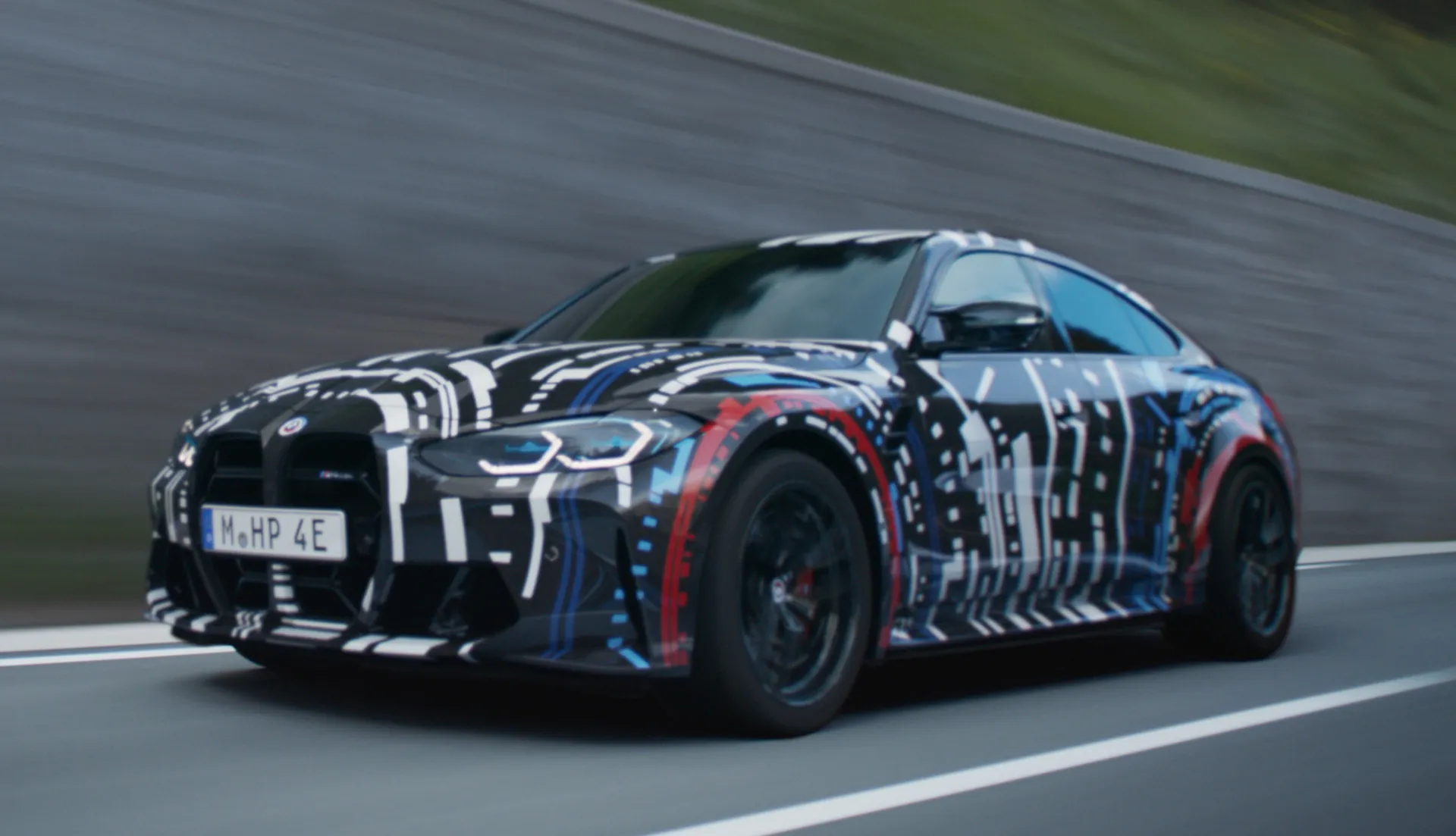
BMW M as early as 2022 announced it was testing a quad-motor electric powertrain and a related chassis control system designed to direct power where it is needed. It revealed at the time a powertrain test mule wearing the body of the i4 M50 but with elements from the M3 and M4 to help improve cooling and torsional rigidity. BMW M has now launched a video series highlighting its EV development journey, with the first episode released on Sunday. The episode provides insights into the goals of the development team and showcases some of the ongoing testing of the powertrain test mule.

BMW M has previously confirmed the powertrain consists of two motors at each axle, allowing for each of the wheels to be individually controlled. The individual control makes it possible for precise and infinitely variable torque distribution. Using various sensors, as well as driver inputs via the steering angle and position of the accelerator pedal, the torque distribution can be optimized to suit the conditions, for example providing extra grip on slippery surfaces or helping the vehicle remain stable through a curve.

2024 Rolls-Royce Spectre

2024 Rolls-Royce Spectre

The powertrain is also being developed with linear power delivery in mind, something BMW M has said is a core characteristic of its vehicles. This means BMW M’s EVs might not shove an occupant’s head back like many of the big-power EVs on sale today. An example of this linear power delivery has already been introduced in the Rolls-Royce Spectre.

No details on the battery being used for testing have been divulged. BMW is known to be preparing a sixth-generation battery design for its upcoming Neue Klasse EVs, and these could potentially feature in the first electric M car. The batteries feature cylindrical cells (instead of the current prismatic cell design), and together with other improvements should result in a range improvement of 30% over BMW’s current EVs.

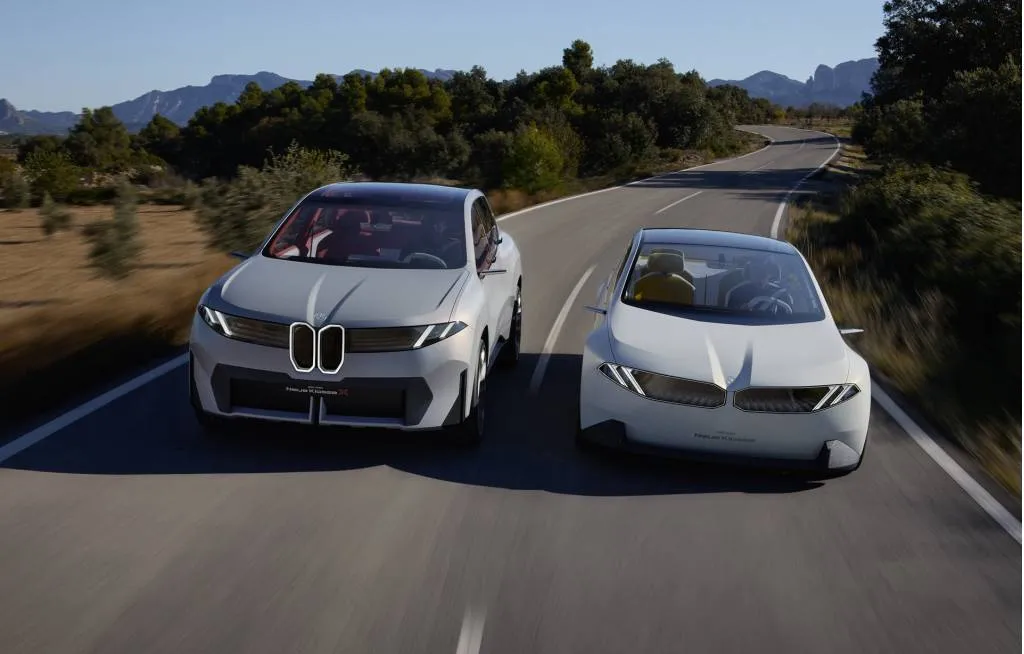
BMW Vision Neue Klasse X concept

BMW Vision Neue Klasse X concept

BMW M hasn’t revealed what its first electric M car will be, but a strong contender is a high-performance version of an electric member of the next-generation 3-Series, due in 2026, possibly wearing an i3 badge. The design of the regular model was previewed with last year’s Vision Neue Klasse concept. BMW M’s electric powertrain will also feature in other vehicles, including likely an electric SUV that will join the X3 family. The electric SUV is set to be the first Neue Klasse vehicle, arriving as soon as next year.

BMW M fans still wanting a gas engine shouldn’t worry just yet. BMW is also developing a gas-powered next-generation 3-Series, and BMW M boss Frank van Meel has confirmed it will include a gas-powered M3 variant.


Source link

How AI Can Enhance Disability Inclusion, Special Education

0


A recent survey from the Special Olympics Global Center for Inclusion in Education shows that while a majority of students with an intellectual and developmental disability (IDD) and their parents view AI as a potentially transformative technology, only 35% of educators believe that AI developers currently account for the needs and priorities of students with IDD.

In this episode of the NVIDIA AI Podcast, U.S. Special Advisor on International Disability Rights at the U.S. Department of State Sara Minkara and Timothy Shriver, chairman of the board of Special Olympics, discuss AI’s potential to enhance inclusive education and disability inclusion.

U.S. Special Advisor on International Disability Rights at the U.S. Department of State Sara Minkara at the G7 Summit. Image courtesy of the Government of Italy.

They highlight the critical need to include the voices from disability communities in AI development and policy conversations. Minkara and Shriver also explain the cultural, financial and social importance of building an inclusive future.

Time Stamps

2:12: Minkara and Shriver’s work on disability inclusion

9:47: Benefits of AI for people with disabilities

20:46: Notes from the recent G7 ministerial meeting on inclusion and disability

24:51: Challenges and future directions of AI in disability inclusion

Image courtesy of Special Olympics.

You Might Also Like…

Taking AI to School: A Conversation With MIT’s Anant Agarwal – Ep. 197

Educators and technologists alike have long been excited about AI’s potential to transform teaching and learning. Anant Agarwal, founder of edX and chief platform officer at 2U, talked about the future of online education and how AI is revolutionizing the learning experience.

NVIDIA’s Louis Stewart on How AI Is Shaping Workforce Development – Ep. 237

Workforce development is central to ensuring the changes brought by AI benefit all of us. Louis Stewart, head of strategic initiatives for NVIDIA’s global developer ecosystem, explains what workforce development looks like in the age of AI, and why it all starts with education.

Dotlumen CEO Cornel Amariei on Assistive Technology for the Visually Impaired – Ep. 217

Equipped with sensors and powered by AI, Dotlumen Glasses compute a safely walkable path for persons who are blind or have low vision, and offer haptic — or tactile — feedback on how to proceed via corresponding vibrations. Dotlumen founder and CEO Cornel Amariei discusses the challenges and breakthroughs of developing assistive technology.

How the Ohio Supercomputer Center Drives the Future of Computing – Ep. 213

Alan Chalker, director of strategic programs at the Ohio Supercomputing Center, dives into the history and evolution of the OSC, how it’s working with client companies like NASCAR, and how the center’s Open OnDemand program empowers Ohio higher education institutions and industries with computational services and training and educational programs.


Source link

How to Plan a Trip to Antarctica

0


If you’re wondering how to plan a trip to Antarctica, read this article!

After spending two amazing weeks cruising through the icy wonders of Antarctica, I picked up loads of insider tips that I can’t wait to share with you.

Antarctica isn’t just any trip; as cliché as it sounds, it is an adventure of a lifetime! 

If you’re dreaming about those endless icy landscapes and incredible wildlife, you’ll want to ensure you get it all right from the start.

Keep reading to discover precisely what you need to know to make your Antarctic journey as epic as mine. 

Trust me, these tips are game-changers!

How to Plan a Trip to Antarctica: Book Your Antarctica Cruise with an Expert Travel Agent

With a dingy from the MV Plancius in the Antarctica.

Antarctica isn’t a budget destination, so you want to ensure you get the most out of your money.

Due to the logistical and financial complexities of travelling to Antarctica, it is highly recommended that you work with a specialized travel agent.

Working with a specialized travel agent who deals with Antarctica Cruise does make all the difference. 

These experts have in-depth knowledge of the various packages and can customize your trip according to your needs, ensuring you get the best deal.

Their expertise is invaluable, especially when navigating the nuances of such a specialized destination. They can handle unexpected challenges, help you understand what to expect, and ensure your trip is safe and spectacular.

The Cheapest Antarctica Trip Isn’t Usually the Best Trip for Value

While budget options might seem attractive, the cheapest trips often come with hidden costs that accumulate quickly, diminishing the overall value.

Instead, go for an all-inclusive option, like my Oceanwide Expeditions Basecamp trip on Plancius.

An all-inclusive trip might have a higher upfront cost, but has significant savings in the long run.

These packages typically include meals, accommodations, and various activities like kayaking, snowshoeing, and wildlife tours—you won’t want to skimp on these while you’re there!

Going all-inclusive helps you avoid the frustration of dealing with unexpected expenses so you can enjoy a hassle-free adventure focusing entirely on getting the most out of your Antarctic experience.

How to Plan a Trip to Antarctica

Solo Travel to Antarctica is Possible

Antarctica isn’t an inaccessible dream for solo travelers. A travel agent can match a cabin with another solo traveler.

You can often avoid the single supplement charge by booking through a travel agent. They will have information about other travellers on board, and it may happen that another solo traveler has requested to share a cabin. This not only cuts costs but also allows you to meet like-minded travelers.

Agents are used to pair compatible roommates. If you’re nervous about travelling alone or on a strict budget, this can be a great way to enhance your experience both socially and economically.

Birds in Antarctica

January is Peak Time for Antarctica

January is the most expensive month to visit the Antarctic, as it’s when you can expect the best weather and conditions for exploration.

This month typically sees milder temperatures and fewer severe storms, which means more opportunities for wildlife sightings and ice navigation.

Of course, the best conditions also mean the highest prices. 

However, despite the higher prices, visiting during this peak time will give you the best chance to see and do everything without having to plan around the weather and poor conditions—this certainly helps to justify the cost.

My visit was at the end of December and into early January. 

Except for one day, we had stunning clarity and accessibility of the Antarctic landscape throughout the trip. 

This time of year was ideal for photographers and nature and adventure enthusiasts.

Scenes from Antarctica

Best to Arrive in Ushuaia, Argentina Early

The gateway to Antarctica, Ushuaia in Argentina, deserves attention in its own right.

Arriving several days before departure helps safeguard against potential delays from weather or transportation issues. 

It also gives you time to explore the region’s scenic beauty and culture—it’s a fascinating city!

Ushuaia is a vibrant hub for Antarctic explorers. Most people are here because they are either going on or just coming off one of the Antarctic cruise ships. 

Because of this, Ushuaia has many activities, from hiking and bird-watching to enjoying local cuisine.

I suggest arriving early, relaxing, and taking advantage of the biggest trip of your life due to weather or flight cancellations!

Ushuaia, Argentina

The Ship Size Matters in Antarctica

In the case of Antarctica cruises, size does matter! The smaller the ship, the more route options you have, which means you have more time to enjoy Antarctica.

Smaller ships – this refers to any carrying fewer than 500 passengers – have more flexibility in their itineraries. 

They can also make more frequent and more prolonged shore landings.

The smaller cruise ships also provide a more intimate and immersive experience. You get to know the crew and other passengers much better, which all helps add to a positive experience.

One thing to note is that while smaller ships may face rougher crossings of the Drake Passage, the trade-off is being able to navigate closer to shorelines and access more secluded areas once in Antarctica.

How to plan a cruise in Antactica

The Internet is Expensive in Antarctica; it is Easier to Go Offline

Internet access in Antarctica is eye-wateringly expensive and often unreliable.

It’s worth embracing the opportunity to go offline for two weeks, disconnect from digital distractions, and immerse yourself in the natural beauty.

A good idea is to load up an offline Kindle or other device with anything you might want to read or watch – but in all honesty, going offline can help you to live in the moment and not get sucked into doom-scrolling.

After all, it’s not every day you’ll be cruising around the Antarctic, so take every opportunity to lap up the experience.

Scenes from Antarctica

The Drake Passage…It’s Rough!

You have to do the Drake for the reward; it’s the only way and totally worth it!

Crossing the Drake Passage, known for its formidable weather conditions, will be an unforgettable part of the Antarctic adventure.

This stretch of water can be challenging, but it’s necessary to reach Antarctica’s awe-inspiring beauty.

The Drake Passage serves as a rite of passage that, once crossed, adds to the sense of achievement and anticipation of what lies ahead. 

Imagine ticking this off your adventure bucket list!

One thing to note is that preparation is key – before you set off, consult with your doctor about seasickness medications and pack appropriate gear.

Antarctica ice berg

Your Antarctica Route is Dependent on Weather Conditions

One thing to remember is that your itinerary can go out the window at any time. 

Your route is planned each day depending on the weather – and decisions about safety made by the ship’s crew override any itineraries set. Because Antarctic weather is unpredictable, flexibility and a positive attitude toward sudden changes are essential for enjoying your cruise.

Daily briefings from your expedition leader will keep you informed and prepared for each day’s adventures.

While you may have a planned route, weather conditions often dictate where you can go and what you can see, making every trip unique and tailored to ensure the safest and most enjoyable experience possible.

A boat trip in Antarctica

About Travel Dave and Antarctica

Hello, my name is Dave, and I’m an adventure travel blogger at @TravelDaveUK.

Thank you for reading my guest blog post on Travel Dudes, which contains my top tips on planning a trip to Antarctica. It was the trip of a lifetime to visit my seventh continent, Antarctica, and I would jump at the chance to do it all over again if given the opportunity! 

To further help you, I have a helpful packing advice post on my travel blog titled “10 things I would take to Antarctica.”

If you need help planning a trip to Antarctica, I would be happy to help.

Have an incredible time exploring Antarctica! 

Travel Dave in Antarctica


Source link

Consumer Reports: Subaru Best Overall Car Brand

0


Consumer Reports: Subaru Best Overall Car Brand

Factoring in owner satisfaction, safety, reliability, and road tests, Consumer Reports has concluded that Subaru builds the best cars in 2024.

The magazine’s annual car brand report cards are out, and the brand known for all-wheel drive (AWD) and dog commercials took home the top prize. Subaru beat out every luxury automaker to take the top spot.

CR’s Methods Are Different

Most organizations that evaluate cars use their own testing to build a representative sample of all the cars on sale. Consumer Reports is a little different.

It’s a magazine and website devoted to evaluating all kinds of consumer products and services, from cars to life insurance. It surveys its own readers for an owner satisfaction score.

There’s a slight downside to that approach. It can create a sort of self-reinforcing cycle. As CR praises a brand, its subscribers may grow more likely to buy it. A brand that hasn’t received recent praise can grow rare in CR’s data set.

The company is also limited in what it tests. “To be included in the brand ranking, CR has to have tested at least two current models from a company,” it explains. “For that reason, we didn’t include Fiat, Jaguar, Lucid, Maserati, Polestar, and Ram.”

The system also has positive aspects — trusting it means taking advice from a subset of very discerning people.

Not Every Model From a Great Brand Is Great

The magazine also cautions that praising a lineup doesn’t mean there are no bad cars in it.

“Of the 32 brands Consumer Reports rated this year, only four manufacturers managed to earn recommendations for every model we tested: Porsche, Infiniti, Mini, and Buick,” they write. Those brands have small lineups to begin with.

Notably, Chrysler was the highest-scoring domestic brand, in 16th place. For the current model year, it makes just two models (which are arguably the same car): the Pacifica minivan and its bare-bones Voyager equivalent.

CR doesn’t recommend a single model from seven brands: Lincoln, Alfa Romeo, Dodge, GMC, Land Rover, Rivian, and Jeep. “They are also among the bottom-ranked brands. Consider carefully before buying from those manufacturers,” they write.

The Scores:

Where two brands had the same overall score, CR broke the tie using a combination of owner satisfaction scores, predicted reliability, and road test scores.


Source link

2024 Buick Envista Avenir: Review, Prices, and Specs | The Daily Drive

0


2024 Buick Envista Avenir
Consumer Guide Automotive, New Car ReviewText by Tom Appel

2024 Buick Envista Avenir

Specs

Class: Subcompact Crossover

Color: Ocean Blue

Seating Capacity: 5

Miles driven: 166

Real-world fuel economy: 31.4 mpg

CG Report Card
Room and ComfortB
Power and PerformanceC+
Fit and FinishB+
Fuel EconomyA
ValueA
Report-card grades are derived from a consensus of test-driver evaluations. All grades are versus other vehicles in the same class. Value grade is for specific trim level evaluated, and may not reflect Consumer Guide’s impressions of the entire model lineup.
Big & Tall Comfort
Big GuyB+
Tall GuyB+
Big & Tall comfort ratings are for front seats only. “Big” rating based on male tester weighing approximately 350 pounds, “Tall” rating based on 6’6″-tall male tester.
Drivetrain
Engine Specs137-horsepower, 1.-liter
Engine TypeTurbocharged 3-cylinder
Transmission6-speed automatic
Drive WheelsFront-wheel drive

Driving mix: 60% city, 40% highway

EPA-estimated fuel economy: 28/32/30 (city, highway, combined)

Fuel type: Regular gas

Base price: $28,600 (not including $1095 destination charge)

Options on test vehicle: Avenir Advanced Safety Package ($795)

Price as tested: $30,490


Pros and Cons

The great: Excellent dollar value, premium feel

The good: Roomy and practical design, excellent fuel economy

The not so good: Engine coarse when pushed


Review

Buick rolled out a redesigned version of its subcompact Skyhawk for 1982. Built on General Motors’ highly anticipated “J-Car” architecture, the Skyhawk would be the most-affordable offering in Buick showrooms.

Profile, Ocean Blue, Sunset

Offered as a coupe, sedan, hatchback, and ultra-rate 4-door station wagon, the entry-level Skyhawk appealed to a relatively broad audience of shoppers looking for both a little brand prestige as well as an accessible monthly payment. For 1982, the Skyhawk Limited sedan started at $7931, or about $26,000 in 2024 dollars. Remember that number.

2024 Buick Envista Avenir

For 2024, Buick rolled out an all-new entry-level model: Envista. The subcompact crossover shares its basic architecture with the well-regarded Chevrolet Trax small crossover, but features unique design and styling, and a trim-level offering that is somewhat upscale of the Chevy.

2024 Buick Envista Avenir

Here’s the deal: That 1982 Skyhawk, at just under $8000, did not include as standard an automatic transmission, air conditioning, antilock brakes, traction control, stability control, or any safety features which we now take for grant. Meanwhile, the 2025 Envista, which includes all of the just mentioned features and equipment, starts at just $25,000.

New for 2024, the Envista slots in price below the similar-size Encore GX in Buick’s lineup. The Encore, until recently Buick’s most affordable model, can be better equipped than the Envista, it is also offered with AWD, which cannot be had on the ‘Vista.

Buick’s four-model lineup, which also includes a pair of more upscale offerings, the compact Envision and midsize Enclave, covers a vast price range. For 2025, the entry-level Envista begins at just $24,795, while the top-trim Enclave Avenir starts at $59,395.

Despite what might feel like an odd fit for GM’s near-luxury brand, the Envista has seen strong sales. It seems the models attractive combination of good looks, high value, and utility has caught the buying publics attention.

For 2025, the Envista lineup ascends through three trim levels: Preferred ($24,795), Sport Touring ($26,195), and Avenir ($26,695).

Power for all Envista models comes from a turbocharged 1.2-liter 3-cylinder engine mated to a 6-speed automatic transmission. All models earn an EPA estimated combined rating of 30 mpg, and run on regular-grade gasoline.

Consumer Guide recently spent a week behind the wheel of a 2024 Envista Avenir in Ocean Blue with the Advanced Safety Package. All told, our test car came to $30,490. Though this evaluation is of a 2024 model, we can share that there are no significant changes to the Envista for 2025.

The Envista makes as excellent first impression. The Cabin is far classier than most vehicles of like price. And though there is a fair amount of hard plastic hidden in the décor, the Envista interior presents well with plenty of bright accents, classy design, and, where best placed, soft-touch surfaces.

2024 Buick Envista Avenir

The controls and infotainment interface will feel familiar to existing General Motors customers, that is to say that most controls are logically placed and easy to locate. The gear selector is of the old-school mechanical type, which we find comfortingly familiar. Also, the standard 6-speaker audio system punches above its weight class, and sounds as good as many branded systems found in more-expensive vehicles. This author found the Envista system up to the task of handling the mid-century American jazz he favors.

There’s plenty of cabin space for four adults, and the Envista’s front door openings are large enough for even plus-size adults to enter and exit the vehicle without difficulty. Likewise, rear-seat accommodations are also generous. And unlike on many small crossovers, the Envista rear-doors open nearly 90 degrees to simplify vehicle ingress and egress.

On the road, the Envista continues to acquit itself well. The subcompact Buick’s relatively tiny 3-cylinder engine delivers plenty of around-town spunk, easily keeping up with traffic, and sprinting eagerly away from stops. Highway passing and merging power is only adequate however, and the motor sounds and feels stressed when tapped for additional power. The engine is also a little coarse in regular use, throbbing unevenly at idle.

None of this is to say the Envista is unrefined, only to note that many vehicles in the little Buick’s price class offer a more relaxed dynamic experience.

2024 Buick Envista Avenir

That said, the Envista serves up excellent ride and handling. Though not quite sporty, ‘Vista handles well, and makes easy works of hurried cornering and sudden braking. Ride quality is outstanding; for a small crossover the Envista is surprisingly comfortable on long highway drives. On the road quietness is also noteworthy, which makes more relaxed conversation across seating rows, even at highway speed.

There is little of functional value that the Envista offers that can’t be had in similar and even more affordable Chevrolet Trax, but the Buick does feel genuinely more upscale, and that should count for something when selecting a new vehicle.

Consumer Guide has named the 2025 Buick Envista a Best Buy pick in the Subcompact Crossover class, this for delivering a premium crossover experience for a mainstream price. Once the word gets out, we expect the Envista to begin selling in significant volume. Remembering that it costs less now than the Skyhawk did four decades ago, we recommend you add Buick’s most-affordable model to your test-drive short list.

2024 Buick Envista Avenir

Listen to the Car Stuff Podcast

Follow Tom on Twitter

Follow Tom on Bluesky

2024 Buick Envista Avenir Pictures

Click below for enlarged images

Why is Jeep Slashing 2025 Compass Prices?

Consumer Guide Car Stuff Podcast Episode 250: Stellantis CEO Quits, Volvo XC90 Review, Porsche Macan EV Deep Dive


Source link

Lotus unveils the Theory 1

0


As part of this debut, Lotus is launching The Lotus Theory , the company’s new design manifesto that will form the foundation for all future Lotus cars, encapsulated through three core principles – Digital, Natural and Analogue (DNA):

  • Digital, which represents the immersive, intelligent, and intuitive experience.
  • Natural, brings to life emotional, connected, human-centric design.
  • Analogue, which is the brand’s continuous advancement of performance engineering.

By seamlessly blending together these core design principles with the latest design innovations from Lotus, as well as cutting-edge technologies, Lotus is able to simplify and enhance how a car should feel and perform. Theory 1 harmoniously fits around the driver and is able to adapt based on their needs – delivering the ultimate driver experience.

Ben Payne, Vice President of Design, Lotus Group said:

“With Theory 1, we’ve built on everything Lotus has achieved so far in its 76-year history to push the boundaries for what it means to drive a performance vehicle. We want to demonstrate that you don’t need to compromise – with both digital and analog capabilities working harmoniously in the future car. In doing this, we are able to bring drivers the best possible immersive driving experience with raw emotion, functionality and connectivity, at the core.”

Theory 1 reaffirms the company’s Vision80 commitment – a transformation into a global performance technology brand. The innovations announced today are expected to be implemented into future Lotus cars in the coming years.

 The ultimate immersive and intuitive driver system with LOTUSWEAR™

Lotus has developed its own proprietary driver system called LOTUSWEAR™, which is an immersive system that aims to deliver a personalized experience to every occupant in the car, designed to evoke a sense of raw emotion and pure excitement – and further connect them to the road.

This features an adaptive soft and lightweight robotic textile material, seamlessly enabling the car to communicate with the driver and passengers and offer a more intuitive and comfortable in-car experience. It aims to do this through inflatable pods on the seating and steering wheel that will react in real-time to offer more support, grip, and subtle prompts via personalized haptic feedback. For instance:

  • Pulses on the left and right sides of the wheel will indicate when the driver should make a turn
  • There are five drive modes: Range, Tour, Sport, Individual and Track, delivering comfort and enhancing the driver experience & dynamic ability, as well as constantly adapting to the driver’s surrounding environment. This aims to optimize efficiency, performance, and comfort in any environment.

This component has been created in collaboration with MotorSkins, a startup that specializes in textile-based wearable robotics for every-day use. Theory 1 demonstrates the first time it is being used in the automotive industry.

In addition, LOTUSWEAR™ features 3D printed lattice structure headrests made in partnership with global 3D printing technology company Carbon, to offer all occupants in the car maximum comfort, while reducing the weight, improving material efficiency, and optimizing aerodynamics.

To ensure every occupant can enjoy a truly immersive and unique audio experience, part of the headrest is a binaural audio system, which has been designed in collaboration with KEF. It offers individual bespoke soundscapes for each of the occupants, that are further enhanced by the subwoofer speaker located behind the driver seat. Occupants in the car can:

  • Enhance ‘speed’ sounds to deliver a sense of thrill, exhilaration, and fun.
  • Benefit from noise canceling abilities to improve concentration and enhance the listening experience.
  • Level-up entertainment by providing impeccable and immersive sound to elevate the audio experience further.

It uses binaural audio technology to do this, enabling channel separation of the sound arriving at each ear – delivering a full-bodied audio experience that feels like the occupant is sitting in the middle of a recording studio.

Part of the proprietary driving system is the LOTUSWEAR™ Technology Line – a functional technology band running inside and outside of the car, acting as a communication device. It includes:

  • Integrated OLED technology to display multiple functions of the vehicle status to the driver and occupants, as well as other road users and pedestrians e.g. detecting the presence of an object or person close to the vehicle.
  • Lotus’ 360-degree autonomous driving sensor suite. The fully embedded L4 hardware capability consists of four deployable LiDARs, six HD cameras, and a combination of long- and short-range millimeter radars, plus ultrasonic radars, delivering 360° (5x) perception coverage. This ensures driver confidence by scanning for obstacles at a radius of up to 200m around the car, in every direction, even in low light or inclement weather.
  • The LOTUSWEAR™ technology line is built on the high-performance NVIDIA DRIVE compute platform – enabling redundant and diverse real-time sensor processing at trillions of operations per second for greater safety and enhancing the vehicle’s capabilities through advanced digitalization and adaptive parameters for optimum driving dynamics.
  • The LOTUSWEAR™ Technology Line is a homage to the purely functional joining “band” on the Lotus Esprit. It is also an evolution of the line of technology that Eletre and Emeya have within their interior architectures. By grouping the technology all in a singular line throughout the vehicle, Lotus aims to keep the design as minimal and harmonious as possible – a progressive expression of its technology DNA.

A new benchmark for user experience

Theory 1 seamlessly integrates projections, screens, and haptics, with Lotus’ new design manifesto to create a borderless user experience and provide the driver with information quickly and easily through:

  • Analogue interactive components and notifications via the adaptive inflatable soft textile material by MotorSkins.
  • A digital system that uses intelligent environmental light, LED and laser-light components, and reflections on the windscreen to communicate information with the driver, such as obstacle detection, braking, turns and more.
  • Two laser lights on the dashboard wings to indicate left and right turns, working in harmony with the haptic inflation materials on the seats.
  • Additional RGB LEDs on the suspension modules, which are visible from the interior and have green or red signals, depending on the need for braking or acceleration.
  • Clear, functional, 2D graphics to display the main data on the steering wheel, ERMDs, and heads-up display. This has been designed with simplicity at the core, using the minimum amounts of fonts and graphic elements.
  • Immersive 3D graphics, where a grid of points evolve into lines that change length, color, and direction according to vehicle speed, braking, turning, and drive modes – a homage to the Arte Programmata movement from the 60s.

These key features enable the driver to enhance their use of peripheral vision, meaning they do not need to take their eyes off the road. In doing this, Lotus designed a fluid and intuitive experience for the drivers, so they can focus more on driving, minimizing distractions and further enhancing safety.

A holistic design approach, with minimal materiality and true innovation

With current cars made of an average of 100 A-surface materials, as a concrete action to a more sustainable future and circular economy, Lotus started from scratch to build a car with as few materials as possible.

As a result, the ‘Challenge of 10’ was created, and it is Lotus’ intention and ambition to push the automotive industry forward, demonstrating the company’s north star for future material innovation.

Theory 1 has been designed with only ten main A-surface materials with performance, durability, lightweight, recycled, and recyclable properties. This includes the use of cellulose-based glass fiber, recycled chopped carbon fiber, titanium, recycled glazing, recycled polyester, recycled rubber, elastomeric Polyurethane, transparent polycarbonate, thermoplastic polyurethane, and recycled aluminum.

The Challenge of 10 demonstrates Lotus’ commitment to pure minimalism, which is a nod back to Lotus’ simplicity of construction and lightweight principles of the company’s heritage vehicles.

This philosophy is also demonstrated in the LOTUSWEAR™ driver system with the soft robotic fabrics in collaboration with MotorSkins and 3D printed lattice structure headrests in partnership with Carbon.

In addition, Lotus has tapped into global electronics manufacturer Kyocera SLD Laser, Inc., a Kyocera group company, to deliver industry-leading laser lights in both the interior and exterior, in order to deliver a safe, powerful, and advanced lighting system, whilst drastically reducing component size and weight. This includes ‘Next Generation’ laser wire DRL functions, which are less than a millimeter in diameter, and main and dipped-beam functions which are delivered through lenses of 7x35mm.

With these principles as the foundation of Lotus design DNA, the company’s intent is to enhance the performance of its cars in line with racing principles, which Lotus was renowned for. Its aim is also to make performance cars more accessible by simplifying the design and technology, making it as easy as possible for anyone to use.

Enhancing dynamic performance, handling, and speed

Theory 1 extends Lotus’ expertise in engineering to bring drivers an electric car that performs exceptionally and unlocks driver confidence by making the experience as fun and engaging as possible.

This includes advanced active and passive aerodynamic techniques including cooling, active rear spoiler, and passive rear underbody. All of this, along with the low center of gravity, enhances stability and increases the lightness of the vehicle.

Theory 1 seamlessly integrates advanced aero and cooling systems, which are designed to work in harmony and increase efficiency. This includes:

  • The nose cone on the vehicle has a diffuser and drag-reducing air deflectors, with an air curtain that minimizes the car’s wake. This has been inspired by Lotus’ racing heritage.
  • A contoured underfloor that directs air through low-drag NACA ducts into the cooling system and outlets creating a blown air foil, reducing separation, as well as enabling more powerful force.
  • Side pods in the vehicle which have been meticulously designed to isolate turbulent wake from the attached airflow, guiding it towards the rear.

In addition, inspired by the revolutionary Lotus 49 Formula 1 car, Theory 1 has been designed to use its motor and battery assembly as a stressed member to take the forces directly from the suspension – reducing complexity and weight, with no need for a subframe.

The rear wing has also been mounted directly to the motor and suspension assembly to ensure the downforce acts directly on the suspension mounts, all the way through to the tires – reducing losses and frontal lift. The rear suspension system also features a pull rod design, which delivers a more compact package and lower center of gravity.

The ultimate advanced dynamic architecture, delivering a state-of-the-art and seamless experience

Lotus has developed a proprietary sports car door system that enables all occupants with easy ‘step-in’ access to the car with its reverse opening and wrap-over design. With this, Lotus has achieved the smallest footprint it can with the doors opened, allowing for practical use of doors even in narrow spaces. For instance, if a car is parked in a tight car park with a 2.4-meter space, the driver will still be able to get in and out of the vehicle with ease. This has previously been a challenge with similar high-performance sports cars.

Furthermore, Theory 1 is a three-seater sports car that has a central driving position, with a passenger on each side, nestled behind the driver. Inspired by motorsports, the driver’s seat in the middle of the car provides the driver with the best possible visibility of the road ahead, as well as easy access to all controls.

The inside of the vehicle structure has also been shaped around the human body, with the seating integrated into the structure. Lotus has designed the car, to respond to the occupant’s body. For instance, the steering wheel and pedals all move towards the driver.

The car also features steer-by-wire, which enables precision and control at every turn and the ability to adjust steering ratios, speed and feel. This is designed to deliver precision and the smoothest ride, further enhancing driver confidence, and connecting them to the road.

The pinnacle driving experience, powered by the Lotus DNA

Theory 1 features bespoke Pirelli tires belonging to the P Zero family, Pirelli’s Ultra High-Performance (UHP) range. These have been developed specifically to enhance the vehicle’s performance, with particular attention to limiting the environmental impact, and include Elect-Pirelli’s most advanced set of technologies developed to emphasize the characteristics of electric cars.

Pirelli Elect tires have a structure and materials that support the weight and the high torque typical of vehicles with electric powertrains, providing longer durability, less tire wear, and optimizing battery range. These tires are present today in the company’s electric vehicles, including its hyper-SUV, Eletre; hyper-GT, Emeya; and hypercar Evija.

The car also details the latest advanced performance braking systems from AP Racing, who Lotus has had a long-standing relationship with. It goes all the way back to the 1967 Lotus 49 and AP Racing today provides the brake systems in Lotus’ current product lineup including Evija, Eletre and Emeya. Theory 1 features a super lightweight, high performance carbon ceramic braking system, with a near-net Monoblock aluminum forged body with asymmetric design – reducing material where unnecessary.



Source link

In Conversation With Ashok Soman on Shaping WOW’s Next Chapter

0


Ashok Soman, editor-in-chief of WOW (World of Watches) Singapore

As WOW (World of Watches) embarks on an exciting journey into 2025, it reaffirms its legacy of horological storytelling while charting bold new paths to captivate the modern watch enthusiast. The potential launch of its standalone digital platform, watchwow.com, deepens its connection to a growing audience across Southeast Asia and beyond. With a distinguished history of combining in-depth analysis, compelling narratives, and a passion for timeless craftsmanship, WOW evolves while staying true to its mission.

From celebrating the art of classic watchmaking to championing bold innovations, WOW is poised to engage seasoned collectors and emerging enthusiasts alike, weaving together the past, present, and future of fine timepieces. As it navigates the dynamic landscape of the watch industry — spotlighting regional trends, leading events like Watches & Wonders, Geneva Watch Days, and Dubai Watch Week — WOW remains an indispensable guide for its audience. Ashok Soman — the editor-in-chief and visionary at its helm — shares insights on what lies ahead for WOW in 2025 and his predictions for the industry at large.

What defines this new era of WOW as a publication, and what can audiences expect from the 2025 editions? 

Expect the best of course! Seriously though, WOW is deeply connected with its own past so it is all really one story, just with new chapters. Our mission in 2001 was to provide practical information about watches while weaving compelling stories about the same for an audience that wanted more depth than fashion, lifestyle, and design magazines could manage. This has not changed. In fact, with the “anything goes free-for-all” internet rules of engagement, there is a role for responsible actors to set the record straight. For example, we might do regular stories about pundits on the internet who are wrong!

How do the six issues planned for WOW 2025 tie into a cohesive narrative?  

Well, it is really important to note that six is just a number — we have our regular four quarterly issues and two special editions that are annuals. WOW is definitely not going bi-monthly, in other words. For example, WOW Legacy remains dedicated to more classic and dressy watches from watchmakers with a grand tradition. This will remain relevant since we think watchmakers will only lean more heavily into the sporty aesthetic because this is what most buyers want, globally. That means our normal quarterly issues will ply these routes, leaving our Legacy issue to explore the paths less taken. As for the sixth issue, WOW Vision will chart its own course but I’m sure we can discuss specifics on that since this is something totally new for 2025.

Ashok Soman, editor-in-chief of WOW (World of Watches) Singapore

The 6th issue of WOW will be dubbed “WOW Vision”. How does “WOW Vision” aim to attract and resonate with a younger demographic?

It is frustratingly true that serious watchmakers believe that watches should come in all shapes — as long as those shapes are round. If nothing else, the Apple watch demonstrates that there is nothing superior about being round. Not for nothing, the seminal designs of Gerald Genta for Patek Philippe and Audemars Piguet show that collectors are not shy about different shapes and styles. Our vision for WOW Vision is to give form watches their own space to shine, just as we do with dress watches in Legacy.

How is “WOW Vision” addressing the shifting interests and values of younger audiences, such as sustainability, AI and digital innovation?

There is an interesting study by Watchfinder & Co. that reveals that a new generation of watch enthusiasts are keen on the more interesting designs of the past. This is the same audience that makes Cartier such a powerful force in watchmaking, to cite just the most prominent example. On the flipside, the same study also showed that independent watchmakers are much sought-after by all generations — such watchmakers are often pretty bold in their design sensibilities. Combined with our own insights into what watch buyers want, the facts brought to light by the study gave us a big confidence boost in launching WOW Vision at this time!

How do you see the preferences of younger watch collectors — particularly with accessible and smart watches — influencing the future direction of WOW as a publication?

Well, I have never been shy in saying that smartwatches are not watches — they are wearable computers. The companies that make them do not call themselves watchmakers and they are not sold as timekeepers. There is a strong crossover between the smartwatch and the tool watch, and we hope that traditional watchmaking can show tech firms how to make nigh indestructible products truly collectible, like the peerless G-Shock for example.

Ashok Soman, editor-in-chief of WOW (World of Watches) Singapore

What future plans or innovations can readers look forward to in WOW’s upcoming editorial approach?  

The most obvious thing is the WOW website, watchwow.com, which has been a long time coming! As you know, WOW and LUXUO are partners, and the results have been great for us both. Readers who may never have heard of, nor have access to, WOW will have read our stories. This gives our content much-needed exposure and lets readers in markets beyond Singapore discover our voice. I think we can say mission accomplished on that front, and we hope to continue. On the other hand, WOW itself — that is to say the brand — needs its own platform. Think of it this way: You may know the YouTuber Johnny Harris from his eponymous channel on the video-sharing platform. Arguably, this is how he got famous because he literally earned his views here. He also has a website, which functions as a container of sorts for his content. That is one way in which the relationship between WOW and LUXUO can continue, but certainly not the only way.

How do the regional editions of WOW collaborate, and what strengths do they bring to each other? 

One interesting thing to note here is that WOW — or more precisely World of Watches Malaysia — will be leading the way with watchwow.com. In this way, WOW Singapore will get to watch and learn from the experience of the Malaysia edition in developing and starting this solo adventure. Of course, the different editions of WOW can also meet more comfortably on watchwow.com, where we need not worry about being too watch-heavy because nobody visiting the website will be interested in anything other than watches!

What are the challenges and opportunities in maintaining a regional network for a specialist publication like WOW?  

It is more like an international network to be honest, which emerges from our regional network of editors and writers. For example, we are individually connected with local markets but all editions are somehow connected with Singapore. By the same token, we are all connected with Geneva; our various connections help us to better understand the industry and give us a shot at handling watches and gaining access to stories that would be otherwise impossible. Our in-depth look at the Rolex 1908 was only possible because our contributor in Paris had access to the watch, to cite just one example. It is the same watch everywhere in the world but not every market has access to it. The Patek Philippe Cubitus is yet another example, covered here on LUXUO first, thanks to the partnership we discussed earlier.

Ashok Soman, editor-in-chief of WOW (World of Watches) Singapore

What role does the digital platform play in complementing WOW’s print editions, especially for Singaporean audiences?  

The answer to this, which we will see more of in 2025, is not really the website but social media. Singapore is obviously small but it packs quite a big horological punch, being consistently in the top 10 export markets for Swiss watchmakers. The short of it is this: what watches are worn here, and make an appearance on social media, rival and even eclipse what shows up in other major metropolitan cities. Social media gives us the chance to be relevant in an outsized way, and potentially very quickly. 

Heart Media goes by a motto of “elevating desire”. Southeast Asia has unique preferences when it comes to luxury watches. How does WOW cater to these nuances? 

There are certainly nuances and our long-running series of panel discussions between the different editors addresses these. One of our most popular reads, this is the best place to see how the different editions view issues related to watch collecting as well as local preferences, as you noted, and the relevance of overall trends. We were amongst the first groups of editors to address watches as a potential alternative investment class and the rising tide of dive watches and sports models with integrated bracelets. I’m always surprised to discover how many people read this rather lengthy piece — maybe one day it will actually make it to YouTube (or something).

Do you know what’s not trending? Chasing status. Humans are obsessed with status, and watches are often symbols of this. Whatever generation you come from and wherever you find yourself, status is likely to be of some importance and thus watches too. A very popular watch might not be rare, but being able to actually buy it is the challenge. I suppose you could say this is a relatively recent phenomenon, but brands do make limited editions that might only be available to a handful of people. Being one of the select few is worth a price above rubies.

Ashok Soman, editor-in-chief of WOW (World of Watches) Singapore

With so many events like Geneva Watch Days, Dubai Watch Week, and Watches & Wonders, how do you decide on events to prioritise particularly when it comes to coverage? 

There’s no question that Watches and Wonders Geneva (WWG) is a must. Not only is it the biggest fair of its kind, but it is also early enough in the year that we can use it to reliably plan the rest of the year. Even as 2024 comes to a close, we are still running stories that we developed there. That was in April, and I’m already looking forward to it in 2025. WWG is not really a consumer event though and there are very few days that are open to the public. If our readers wanted to experience something like this, I would actually recommend Geneva Watch Days, which is much more like a festival or country fair. In Singapore, I join many of my peers in hoping that we can have something like IAMWATCH and SpringSprang regularly, perhaps as one true watch fair for the region. It is not often that people who love watches can gather and exchange views, while also engaging with actual watchmakers who can steer us in the right direction and gently correct any errors in our thinking.

Let’s discuss 2024’s reshuffle of CEOs and leadership changes that have made headlines in the luxury watch industry. How do you think these shifts will impact brand direction and the industry as a whole?

Looking at the overall story of watchmaking, there is great value in consistency. Watches are not ephemeral products, after all, and often survive for more than one generation. Considering this, brands should always take the long view. Coming at it from a different angle, whatever the industry does is interesting to folks like me and you, but if you buy a TAG Heuer, for example, it is unlikely that you care about who has the top job there. Let’s look outside watchmaking: does a BYD car feel more exciting if you like the CEO? You might say that there is a counterpoint there with Tesla but Elon Musk is an exception.

On the other hand, of course, collectors care about succession for Roger Smith and Kari Voutilainen, but these are watchmakers not brands. A Vianney Halter Trio made without the watchmaker Vianney Halter sounds like a travesty, but it does not have to be. The short of it is that succession is a matter of greatest consequence for independent brands that have yet to step out of the shadow of a living master-watchmaker.

For more on the latest in leader interviews and reads, click here.


Source link

New NVIDIA Certifications in AI Infrastructure and Operations

0


As generative AI continues to grow, implementing and managing the right infrastructure becomes even more critical to ensure the secure and efficient development and deployment of AI-based solutions.

To meet these needs, NVIDIA has introduced two professional-level certifications that offer structured paths for infrastructure and operations practitioners to enhance and validate the skills needed to work effectively with advanced AI technologies.

The certification exams and recommended training to prepare for them are designed for network and system administrators, DevOps and MLOps engineers, and others who need to understand AI infrastructure and operations.

NVIDIA’s certification program equips professionals with skills in areas such as AI infrastructure, deep learning and accelerated computing to enhance their career prospects and give them a competitive edge in these high-demand fields.

Developed in collaboration with industry experts, the program features relevant content that emphasizes practical application alongside theoretical knowledge.

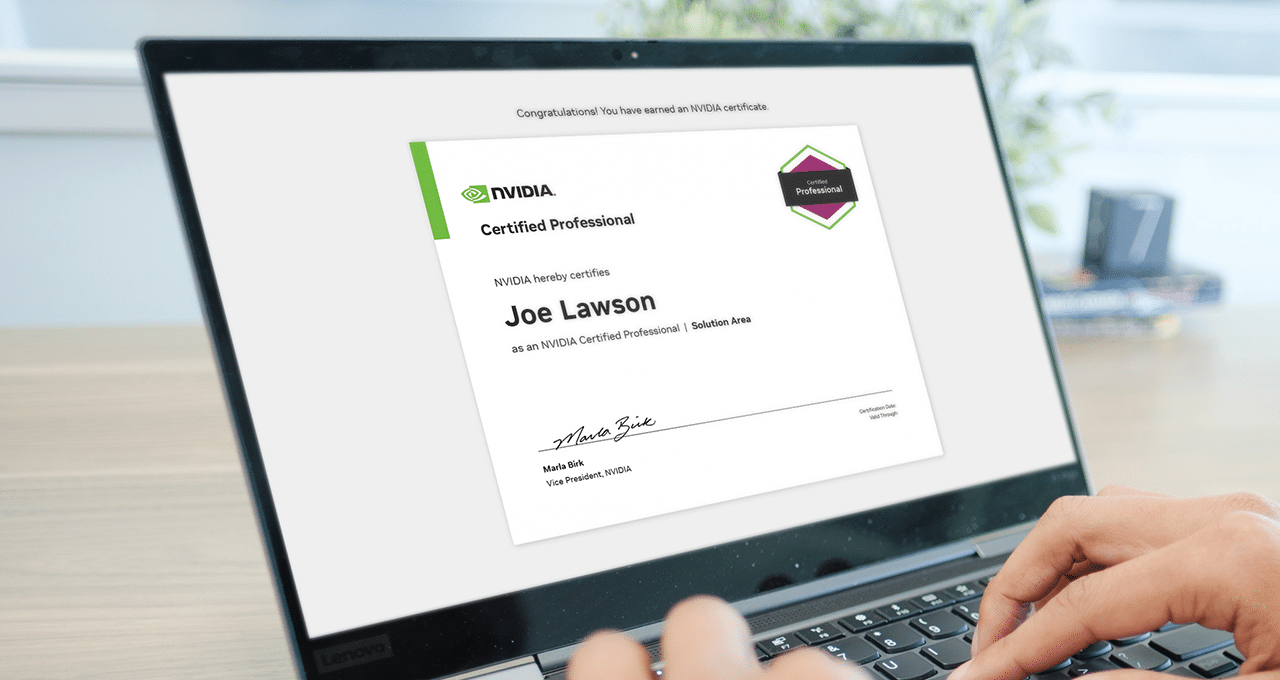
The NVIDIA-Certified Professional: AI Infrastructure certification is designed for practitioners seeking to showcase advanced skills in deploying AI infrastructure. Candidates must demonstrate expertise in GPU and DPU installation, hardware validation and system optimization for both AI and HPC workloads. The exam also tests proficiency in managing physical layers, configuring MIG, deploying the NVIDIA BlueField operating system, and integrating NVIDIA’s cloud-native stack with Docker and NVIDIA NGC.

To prepare for this professional-level certification, candidates are encouraged to attend the AI Infrastructure Professional Workshop. This hands-on training covers critical AI data center technologies, including compute platforms, GPU operations, networking, storage solutions and BlueField DPUs. The workshop is recommended for professionals aiming to elevate their AI infrastructure expertise.

The NVIDIA-Certified Professional: AI Operations certification is tailored for individuals seeking proficiency in managing and optimizing AI operations. The exam tests expertise in managing AI data centers, including the use of Kubernetes, Slurm, MIG, BCM, NGC containers, storage configuration and DPU services.

To prepare for this professional-level certification, candidates are encouraged to attend the AI Operations Professional Workshop, where they will gain hands-on experience in managing AI data centers, including compute platforms, networking, storage and GPU virtualization. The workshop also provides practical experience with NVIDIA AI software and solutions, including NGC containers and the NVIDIA AI Enterprise software suite, making it ideal for professionals looking to deepen their AI operations expertise.

Both of these professional-level certifications build upon the foundational knowledge covered in the NVIDIA-Certified Associate: AI Infrastructure and Operations certification.

Additional NVIDIA certifications include:

Saleh Hassan, an embedded software engineer at Two Six Technologies, successfully completed three NVIDIA certification exams at the NVIDIA AI Summit in Washington, D.C., earlier this year.

“The knowledge I gained has definitely made me a better developer when it comes to integrating AI,” said Hassan, who encourages others to pursue certifications as a key milestone for advancing their AI careers.

Saleh Hassan showing off one of his NVIDIA certifications.

All NVIDIA certifications are part of a comprehensive learning path that offers foundational courses, advanced training and hands-on labs to thoroughly prepare candidates for real-world applications.

The certifications support individual career growth and organizations can use them to enhance workforce capabilities.

Explore the options on the NVIDIA Certification portal and sign up for NVIDIA’s monthly newsletter to stay updated on the latest offerings.


Source link

Overconfident men are a road safety risk, study finds

0


A new national survey has revealed overconfident men pose a major risk on Australian roads, with an overwhelming majority of men believing they’re above-average drivers.

Commissioned by Continental Tyres and conducted by Pureprofile, the survey asked Australian men to rate their own driving ability.

Of the 3005 males surveyed, a total of 77 per cent said they were above-average drivers, with 22 per cent claiming to be average, and just one per cent admitting they were bad drivers.

Continental Tyres managing director Mitchell Golledge says it’s important to be confident behind the wheel, but “overconfidence can be dangerous”.

“Our research shows that many Aussie men rate themselves as ‘above average’ drivers, yet we continue to see road safety statistics negatively rise,” he said.

“We want to remind all drivers to assess their true skills, check their tyres and stay mindful of road safety to protect themselves and others, especially ahead of the Christmas period.”

100s of new car deals are available through CarExpert right now. Get the experts on your side and score a great deal. Browse now.

In terms of age groups, Gen X men appeared the most overconfident, with 81 per cent rating themselves as above-average or amazing drivers.

This was followed by Gen Y at 78 per cent, Baby Boomers at 75 per cent, and Gen Z at 73 per cent.

Overconfidence in driving abilities wasn’t limited to the operation of cars though, as 44 per cent of men suggested that they could drive a semi-trailer truck if necessary, while 36 per cent disagreed and 20 per cent neither agreed nor disagreed.

However, the overconfidence doesn’t stop on the road, with the study also uncovering how men perceive their capabilities in other areas.

A total of 27 per cent of respondents said they could fight off a horse, 18 per cent said they could survive a week stranded in the Australian bush or on top of a snowy mountain, and 13 per cent said they believed they could compete against an elite athlete in their sport.

According to the survey’s organisers, these risky responses are also tied to road safety. Despite 79 per cent correctly disagreeing, 11 per cent of Aussie men agree that they could drive safely on bald tyres.

Blokes Psychology men’s psychologist Craig Hyde-Smith attributes this overconfidence to a variety of potential factors.

“Men can score higher in the illusion of control bias, which is when we overestimate our ability to control outcomes that are largely determined by external factors or chance,” he said.

“Research has also shown that testosterone can be linked to increased risk-taking behaviour. Finally, social norms and expectations can increase pressure on men to appear confident and competent, and this can translate into overconfidence.”

To help combat overconfidence and encourage safer driving habits amongst Australians, Continental Tyres has created a series of light-hearted educational videos that demonstrate the potential risks of overconfidence.


Source link

Go Behind the Fantastical Halls of the Cartier Manufacture

0


With a history dating as far back as 1847, it is hard to look beyond the momentous day when Louis-François Cartier took over his master Adolphe Picard’s workshop situated at 29 rue Montorgueil in Paris that has since sparked 177 years of splendour. The early days of the maison were focused on jewellery-making for an enviable group of royal clientele. It was not until 1904 when Monsieur Cartier’s grandson Louis Cartier created Cartier’s first wristwatch — the Santos — for his aviator friend Alberto Santos-Dumont.

While the watch was meant to be a functional tool for Santos-Dumont, little did Louis Cartier know that it would become one of the pivotal icons of Cartier’s history and alter the maison’s trajectory. Influence of the Santos watch proliferated and — slowly but surely — other era-defining watch creations such as the Tonneau, Tortue, and Tank came into existence. The ebb and flow of Cartier’s watches over the decades to come ultimately necessitated their own manufacturing facility, which finally opened its doors in 2001. Other facilities in the neighbouring Swiss Cantons form the greater Cartier Watchmaking Manufacture. The first steps of watchmaking begin with Glovier, situated in the Jura. Steel and gold watches are produced and assembled in Villars-sur-Glâne, located in the canton of Fribourg, while Cartier’s latest technologies are tested in Couvet. Cartier’s Maison des Métiers d’Art — located inside an old renovated farm — is a stone’s throw from the La Chaux-de-Fonds facility.

Nestled in the heart of La Chaux-de-Fonds, Switzerland, the Cartier Manufacture stands tall as a beacon of unparalleled craftsmanship and innovation. It is situated amongst the esteemed company, with the likes of Patek Philippe’s Crêt-du-Locle facility, the Gruebel Forsey atelier, TAG Heuer and Breitling’s manufacture and movement maestro La Joux-Perret, in and around its greater vicinity. It ushered in a new era for Cartier at the turn of the millennium as various functional bodies such as design, manufacturing, assembly and support were housed under the same roof. However, the significance of the Cartier Manufacture goes beyond that, as the fusion and concentration of time-honoured savoir-faire and cutting-edge technology breathe life into the iconic Cartier watches.

Unlike dusty or dilapidated workshops, the Cartier Manufacture is a state-of-the-art facility spanning 33,000m2 of space zoned for various departments within its metal and glass facade. Heavy industrial machines such as CNC machinery are housed on the first level, while an environment-controlled cleanroom is home to the calibre assembly and quality inspection teams. Other departments in the manufacture include the restoration, quality control, design, polishing and assembly teams.

From Paper to Metal

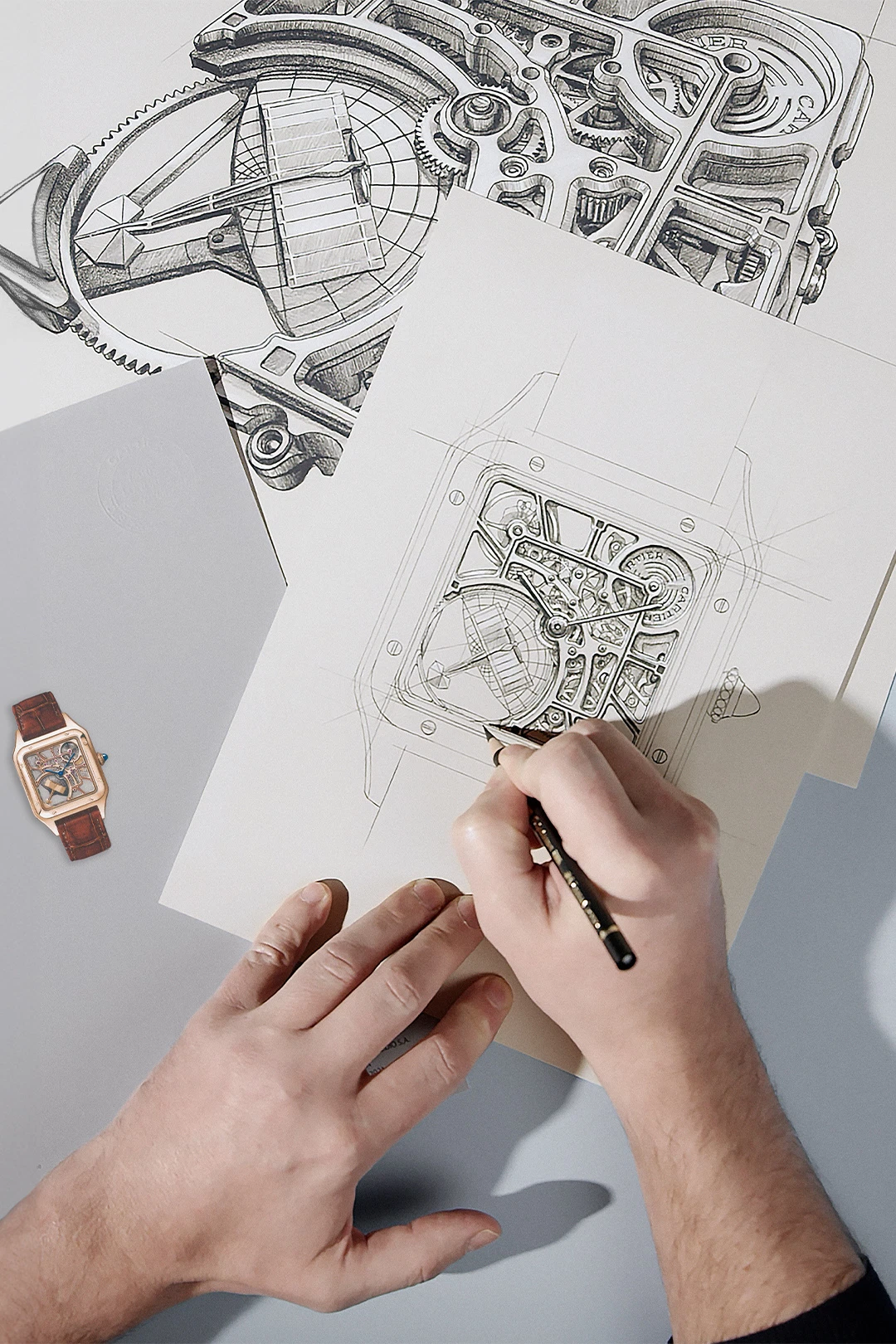
The life of a Cartier watch begins with an idea, more often than not ephemeral — easily lost — than concrete. And just as a picture paints a thousand words, there is no better way to articulate an idea than with a sketch. Armed with ideas from the marketing team, the designers interpret and translate them accordingly through sketches from various angles. It is here where the proliferation of imagination and creativity comes alive. Gouache (an opaque watercolour) further strengthens the sketches by introducing colours — such as coloured gemstones set on a yellow-gold case and bezel — to an otherwise black-and-white world. A quick tidbit here: while Cartier was under the tutelage of the recently-departed CEO and now chairman of Cartier Culture & Philanthropy Cyrille Vigneron for the past eight years, all sketches — whether for regular production or custom client orders — have to be personally approved by him. A signature on the bottom right indicates approval for the design teams to proceed with prototyping. Otherwise, it is back to the drawing blocks to refine the sketches.

Resin replicas are then created through 3D printing. It allows the development teams to assess the watch’s aesthetics, such as the curvature of the Ballon Bleu de Cartier or the suppleness of the Pasha de Cartier’s bracelet before actual working prototypes are created based on technical dossiers. This documentation is a critical part of the production process as — based on the expertise and skills required — industrial processes are being properly defined and mapped out by the industrial processes department. Furthermore, it allows the processes to be simulated, checked and fine-tuned accordingly to meet actual production quantities when they are later defined.

As we toured through the complex, several interesting areas caught our attention, spanning both traditional and forward-thinking techniques. On the archaic end of the spectrum lies the mineral crystal shaping team, which — according to Cartier — is an almost lost skill in Switzerland. Since a fair number of Cartier’s watches come in unconventional shapes — such as the Baignoire or famed Crash — mineral crystals are used instead of sapphire crystal, given their malleability to fit those cases. Rather than employing machines and technology to shape the mineral crystals, an artisan does it manually with a blowtorch until they are malleable enough to be shaped to different watch model specifications. Inspections along the way are done with the human eye, not machines.

On the opposite end of the spectrum lies the specialised machinery for dedicated processes, such as milling and CNC machines in the bracelet manufacturing department and quality inspection machinery. Those machines employed in the former department are responsible for fashioning bracelet links from metal bars. Up to nine bars can be processed simultaneously, with the simplest bracelet requiring 30 seconds per link, while more complex examples require up to 90 seconds. Since Cartier pays close attention to quality and reliability, inspections are done throughout manufacturing. An automated four-step test sees watches submerged in water and acid, and exposed to magnetic waves and extreme temperatures to ensure they are resistant to each element. If one is wondering how Cartier ascertained the reliability of its watch bracelet, there is a machine dedicated to wiggling the life out of it to ensure its structural integrity.

At the midpoint of the spectrum lies Cartier’s restoration department, which is in charge of restoring vintage Cartier watches and clocks. The highly specialised department represents one of the pinnacles of Cartier’s watchmaking might, as highly skilled watchmakers revive ancient pieces back to life. Whether it is a cosmetic or mechanical restoration, the team employs various techniques, from faithfully reproducing period-specific components found in archival blueprints to devising innovative solutions to solve certain conundrums.

Where Splendour and Dreams Come Alive

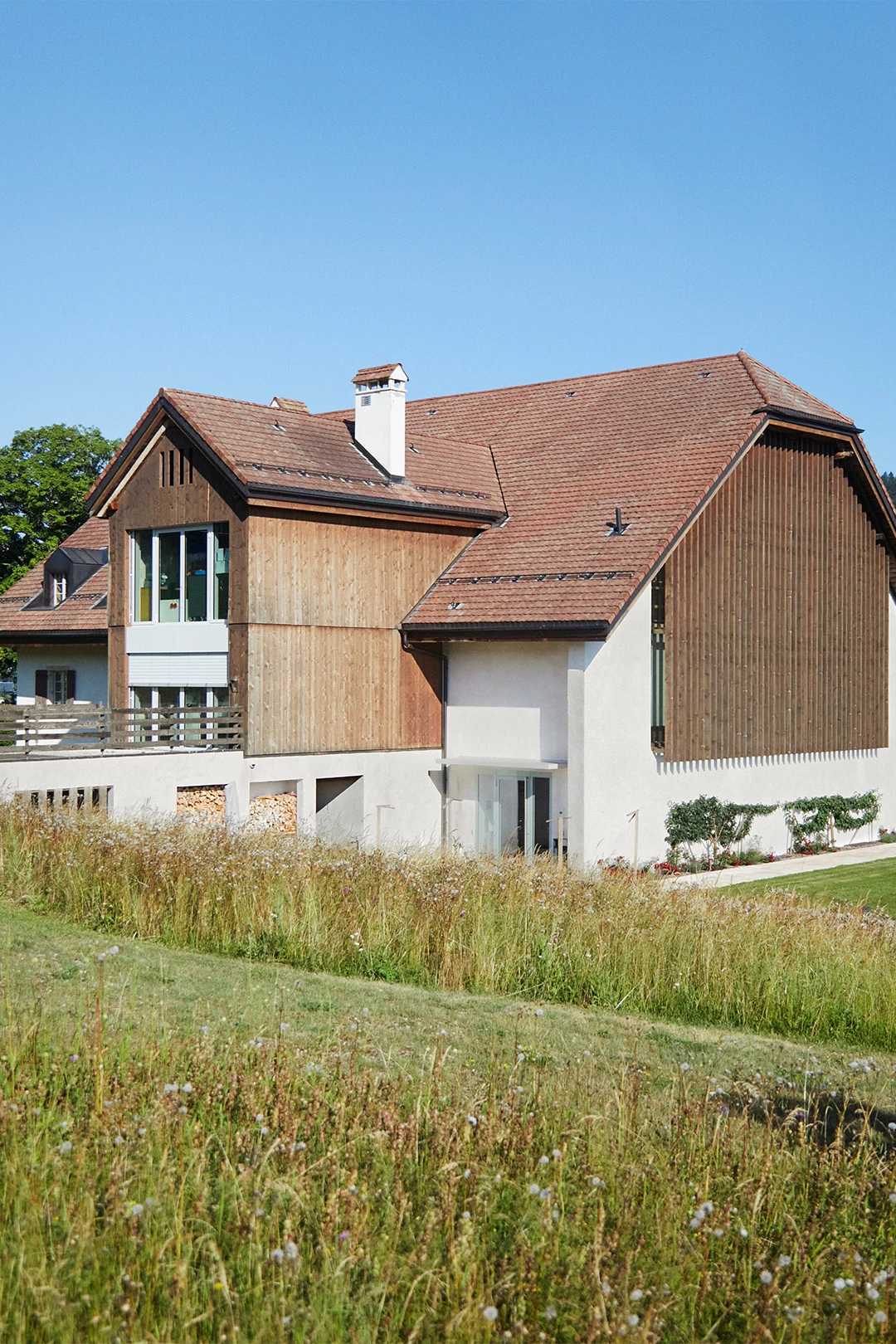
Inaugurated in 2014, Cartier’s Maison des Métiers d’Art is a stone’s throw away from the Cartier Manufacture. Unlike the gleaming architecture of the Cartier Manufacture, it takes up an old farm. Within the hallowed walls are even older artisanal techniques teeming with tradition, heritage and secrets brought to life through boundless creativity and imagination. Time is seemingly altered within the atelier as these age-old techniques are adapted and incorporated into modern executions that defy the usual codes of beauty. While there are many techniques, they are divided into three main categories: the art of fire, metal, and composition.

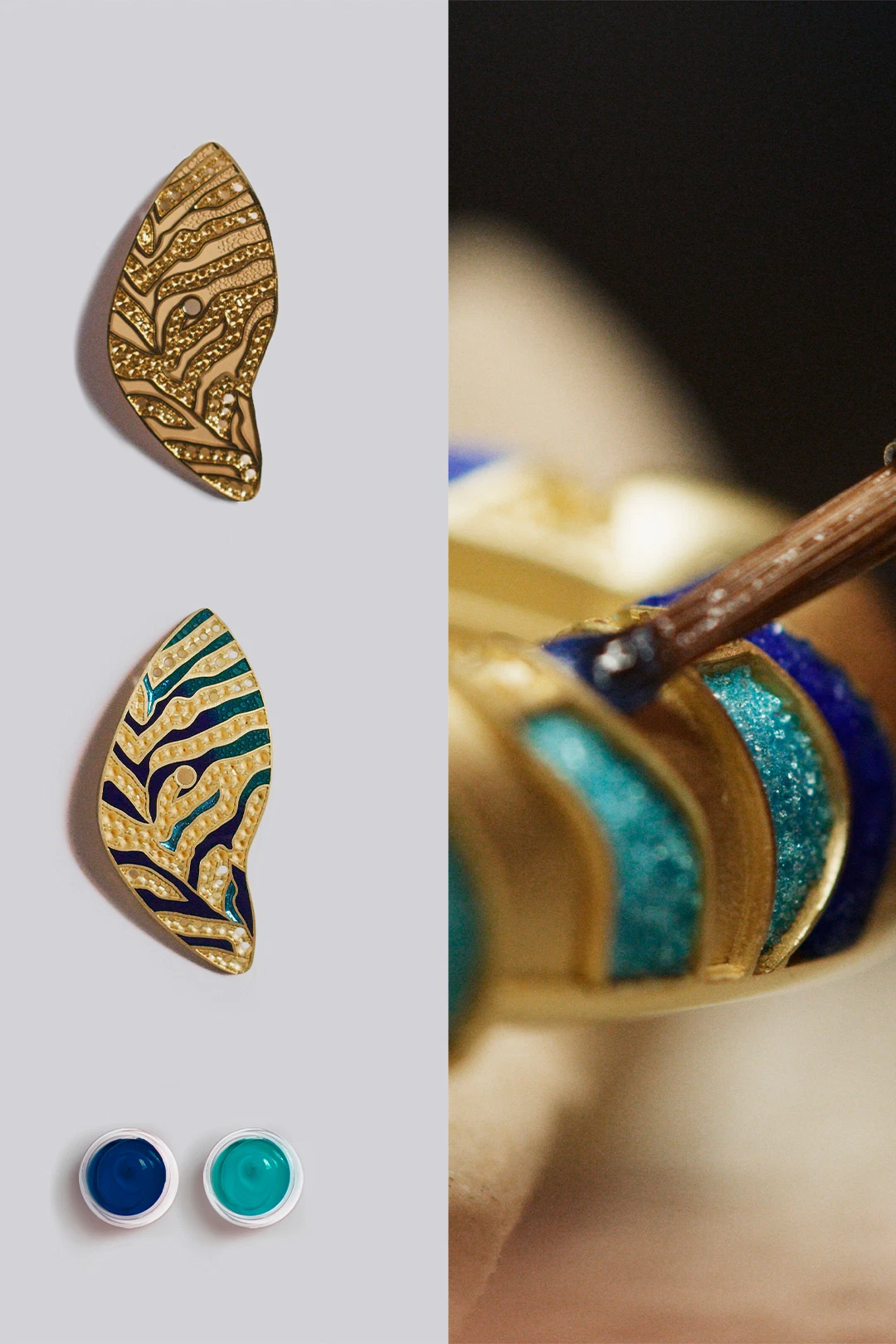
Enamelling — categorised under the art of fire — is a technique that needs no introduction. However, Cartier’s mastery across various techniques spanning the likes of and not limited to champlevé, cloisonné, plique a jour and grisaille enamelling deserves attention. Enamel first exists as coloured glass powders in paint form before being repeatedly fired in kilns (up to 10 rounds of painting and firing) at different temperatures to set or vitrify it. While enamel is mostly contained in the watch dial, the Cartier Crash Tigrée Metamorphoses features enamel on its bezel, too. Here, artisans extensively used enamelling to amplify or, at times, complement other artisanal techniques. The nuances of colour are expertly captured through opaque, translucent or gradated enamelling on various surfaces such as silver paillettes or in engraved recesses of the stripes (also known as champlevé enamelling). Enamels in shades of blue and green used in this reference are achieved with cobalt oxide (for the blue) and copper oxide (for the green).

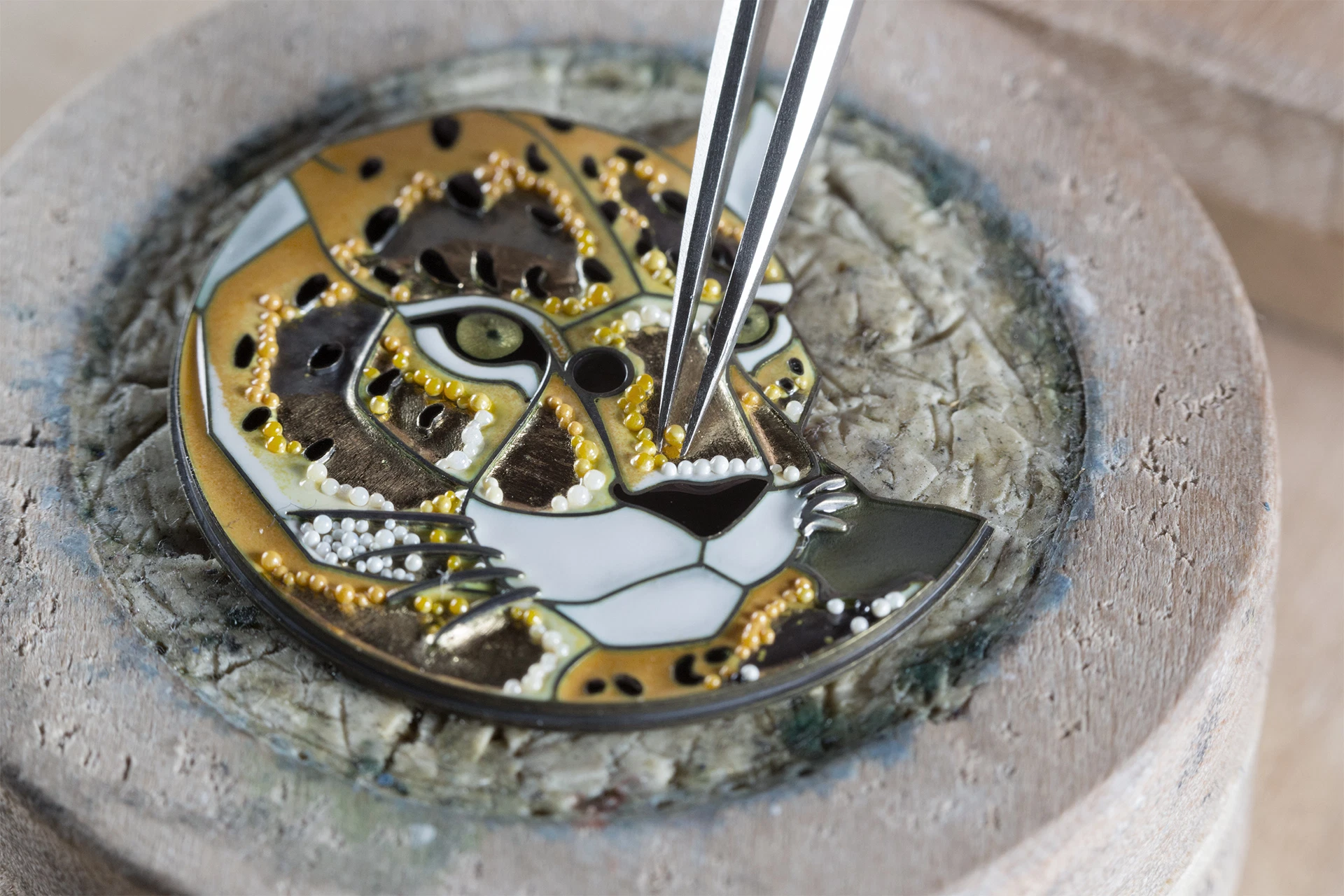
Etruscan granulation, filigree and flamed metal are techniques that fall under the art of metal. The former dates back to 4 BC, when the Etruscan civilisation popularised the decorative technique that involved tiny beads lining jewellery surfaces. Gold wires are first heated before tiny pieces are cut into water-filled crucibles. The rapid cooling shapes the gold pieces into spheres, which are then sieved and sorted according to size. While soldering the beads to form patterns is the first application that comes to mind, an innovative use of viscous liquid, sapphire dividers and gravity to form the panther head outline seen in the captivating Révélation d’une Panthère is a demonstration of the maison’s creativity.

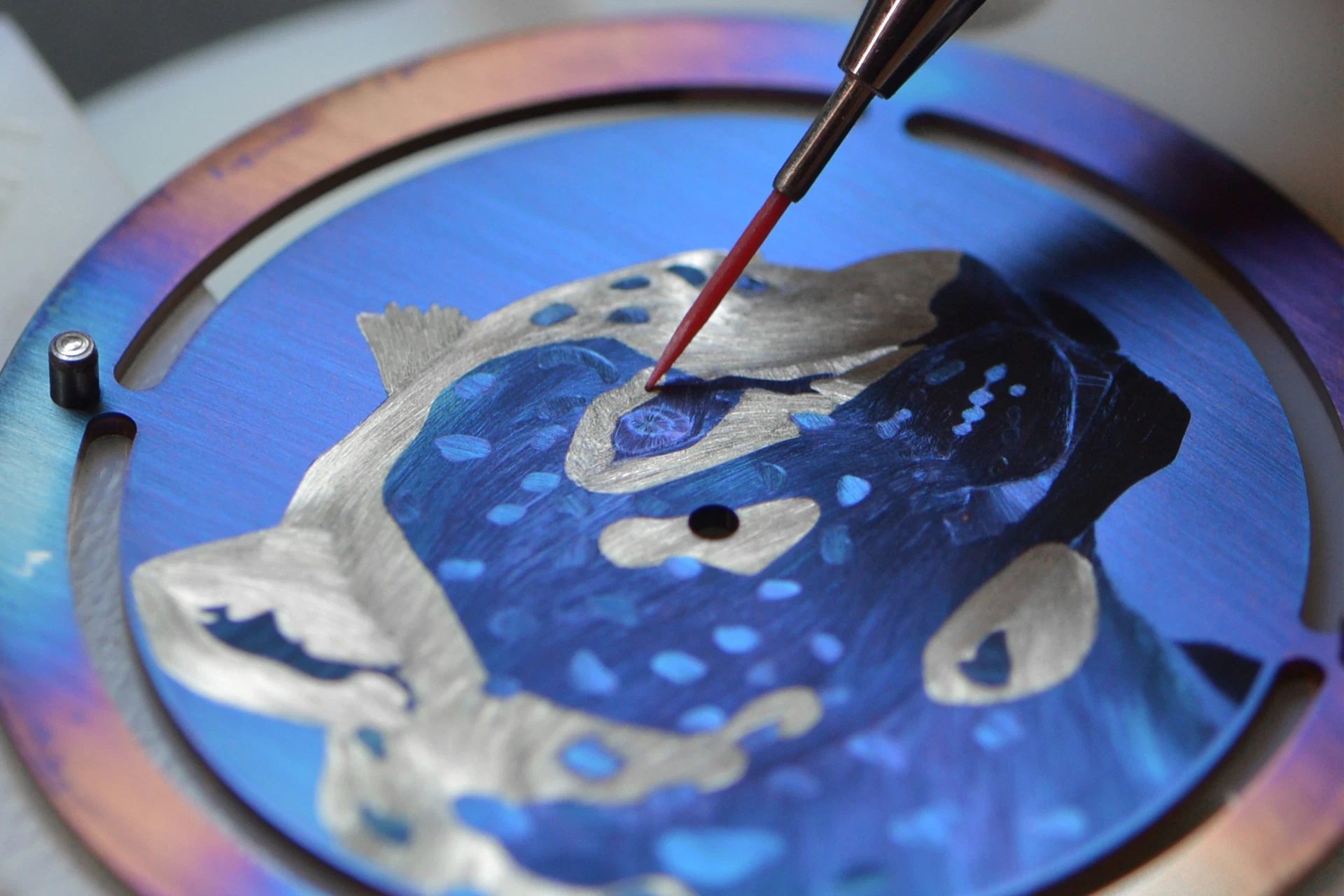
Flamed metal — one of the department’s newer Métiers d’Art techniques — involves heating metallic surfaces to achieve different colours through oxidation. The process begins with heating the dial plate to achieve a uniform blue hue before unwanted parts are scratched off to create motifs of Cartier’s famed menagerie. Artisans then mask the blued portion before heating the dial plates to achieve different shades of brown ranging from beige to dark brown. Given how such oxidation processes are irreversible, the difficulty of the technique is compounded towards the later stages of flaming. It takes a skilled eye and understanding of the craft to know the exact moment to stop the firing process. Cartier’s final art of composition is perhaps one of the most unique techniques as mosaics and marquetries involving wood, straw, flower, wood and gold, and straw and gold come together to create a watch dial. Seemingly random shapes and mismatched colours are composed together to create abstract or realistic motifs.

As the Maison des Métiers d’Art celebrates and reflects on the past 10 years, the artisans continue dedicating themselves to works of beauty and are united to meet the Maison des Métiers d’Art’s mission: to preserve, innovate, and share its exceptional expertise. Given that some techniques were on the brink of extinction at one point, there is hope that these time capsules of yesterday will be kept safe and passed on for generations of tomorrow.

This article was first seen on Mens Folio Singapore.

For more on the latest in luxury watch reads, click here.


Source link