Home Blog Page 290

Swisskern’s CEO & Co-Founder Faisal Baig On The Science Of Wellness

0


Co-founder and CEO Faisal Baig.

Swisskern isn’t just another supplement brand; it’s a legacy of wellness born from co-founder and CEO Faisal Baig‘s life-changing experiences. Witnessing the transformative power of health, Swisskern was inspired by Swiss excellence and grounded in cutting-edge nutraceutical research. This exclusive interview with Baig dives into Swisskern’s unique formulations, their revolutionary approach to cellular absorption, and their vision of becoming a global icon in longevity and preventive health.

What makes Swisskern easy to use on a daily basis?

Swisskern is designed for ease and simplicity, with an on-the-go liquid format in sleek, pre-measured sachets. This means you can integrate it into your day without the need for water, mixing, or extra prep. Whether you’re in transit or heading to work, Swisskern fits seamlessly into your life, making it easier than ever to prioritise health wherever you are.

Photo: Courtesy of Swisskern

Who should be taking Swisskern supplements?

Swisskern is crafted for adults aged 18 and over, catering to unique health goals with five targeted formulations. From young adults looking for radiant skin to professionals in need of sustained energy, and retirees aiming to boost vitality, Swisskern has something for everyone. Our innovative Longevity K-Complex runs through each product, ensuring comprehensive support across diverse wellness journeys.

Tell us about your claim of superior cellular absorption.

Swisskern’s micro-encapsulation technology sets us apart, enhancing nutrient delivery by enveloping each molecule in a natural fat lipid. This not only allows nutrients to travel through the digestive system unscathed but also maximises cellular uptake. The result? Superior absorption and efficiency, ensuring that Swisskern’s nutrients fully support your health.

Photo: Courtesy of Swisskern

Vitamin C is a key ingredient in many supplements. How does Swisskern’s Vitamin C stand out?

Our micro-encapsulated Vitamin C delivers up to 21 times higher bioavailability compared to conventional forms. Thanks to this technology, 50 mg of our Vitamin C is more effectively absorbed than a typical 1000 mg dose, ensuring optimal benefit without unnecessary excess.

What’s the secret behind Swisskern’s K+ Longevity Complex?

At the core of every Swisskern formulation is the revolutionary K+ Longevity Complex, a masterstroke of innovation designed to redefine health and vitality. This groundbreaking blend works harmoniously to target the gut, brain, heart, and immune system—the very pillars of longevity—delivering transformative benefits that empower you to thrive at every stage of life. Beyond its unparalleled support for these essential systems, the K+ Complex also helps regulate blood sugar levels through its carefully selected ingredients, promoting balanced energy and metabolic harmony.

Photo: Courtesy of Swisskern

Could you share the technology and patents that power Swisskern?

Swisskern’s innovations are protected by a robust portfolio of patents, including our proprietary micro-encapsulation technology, which maximises cellular absorption. Our formulations feature patented ingredients like Brainberry®, proven to enhance cognitive function through clinical trials, underscoring our dedication to evidence-based wellness.

What ingredients does Swisskern prioritise, and are any banned?

Swisskern uses globally compliant, high-efficacy ingredients like Brainberry™ for brain health and Actiful™ for energy. Some ingredients popular in longevity products are excluded to ensure accessibility worldwide, staying true to our commitment to inclusivity and quality.

Photo: Courtesy of Swisskern

How long does it take to see results with Swisskern?

We recommend a three-month course to experience full benefits, though some may notice changes sooner. Our high-bioavailability formulations are designed to optimise absorption, allowing users to experience significant improvements in energy, vitality, and well-being over time.

How accessible is Swisskern for purchase?

Swisskern’s global reach includes an online store and select medical and beauty spas, with expansion plans into hotel spas and luxury department stores. Our goal is to make high-quality wellness accessible both online and in premium locations around the world.

What’s next for Swisskern in the coming five years?

In five years, Swisskern envisions “The Longevity Sanctuary,” an integrated wellness spa where guests can experience the full benefits of our products. We’ll also expand our presence through collaborations with clinics and specialty stores that share our values, making Swisskern a trusted name in global wellness.

This article was first seen on Elle Singapore by the Elle Team.

For more information, visit their website.


Source link

2025 Acura RDX vs. 2025 Audi Q5 Comparison

0


Competition is fierce in the luxury car market, and any notable advantage a vehicle might have – be it extra horsepower, stronger safety ratings, or more passenger space – matters a whole lot. Regarding the vehicles we’re comparing here, the 2025 Acura RDX and Audi Q5 duke it out among compact luxury SUVs. Not only do they square off against one another, they face formidable rivals like the BMW X3, Genesis GV70, Mercedes-Benz GLC, and Lexus NX, to name a few.

The RDX and Q5 have room for five onboard, all-wheel drive (AWD) fitted as standard, and power from turbocharged 4-cylinder engines. Well, that’s not entirely true, seeing as the Audi can also be had as a plug-in hybrid or with a turbo V6 – more on these in a moment.  

Let’s check out the highlights of the Acura RDX and Audi Q5.

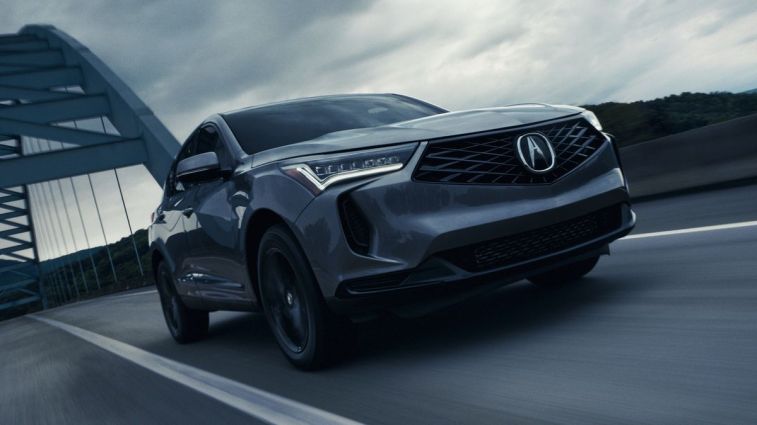
2025 Acura RDX

2025 Acura RDX2025 Acura RDX

The base version of the 2025 RDX starts at $46,050, including a destination fee. Like many other Acura vehicles, the lineup is quirky among luxury vehicles. Rather than a variety of powertrain options and an endless list of piecemeal options, you pick your trim and color, which completes the ordering process.

That’s why the RDX range might appear curious for newcomers to the Acura brand. It consists of the base RDX, Technology, A-Spec, Advance, and A-Spec Advance packages. 

For some reference, the top-of-the-line A-Spec Advance package commands $55,800. It adds features such as heated and ventilated front seats, an adaptive suspension system, a surround-view parking camera, and a head-up instrument display. 

Acura RDX Highlights 

Sporty and refined driving manners: Every RDX gets down the road via a zippy 272-horsepower turbocharged 4-cylinder. It works in conjunction with a 10-speed automatic and Acura’s Super Handling All-Wheel Drive hardware. Agile and entertaining to drive, during road testing, we’ve found the RDX capable of accelerating from 0 to 60 mph in just over six seconds. 

Standard driver aids: Sure, we’re all about heated seats and upscale leather upholstery. Yet, for many car shoppers, safety matters most. With this in mind, it’s nice knowing the RDX comes with many standard driver aids. You get a blind-spot alert, rear cross-traffic alert, automatic high-beam headlights, adaptive cruise control, lane-keep assist, traffic sign recognition, and more. 

Super Handling All-Wheel Drive: The name is a little grandiose, true, though we can’t argue with how Acura’s Super Handling All-Wheel Drive (SH-AWD) gets the RDX around corners with confidence. Combined with the available adaptive suspension system, this Acura SUV delivers amazing grip in wet and dry conditions. 

Grammy-winning audio: No, the Acura RDX hasn’t been on stage to accept a music-related award. But the producer behind its sound system sure has on many occasions. The “ELS” in the RDX’s optional 12- or 16-speaker audio stands for Elliot Scheiner. He happens to be a multiple Grammy-winning sound producer who has worked with artists like Beyoncé, Sting, R.E.M., Aerosmith, the Foo Fighters, and many others.

Check this week’s Fair Purchase Price or see the RDX models for sale near you. 

2025 Audi Q5

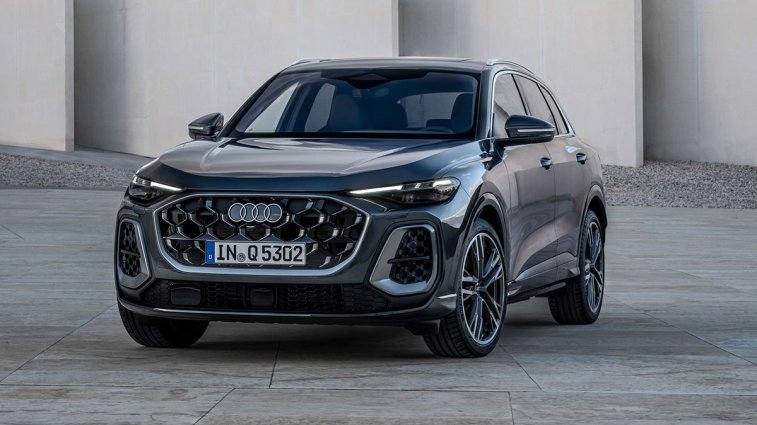
2025 Audi Q5 parked in front of a building.2025 Audi Q5 parked in front of a building.

As Audi’s best-selling SUV, the 2025 Q5 possesses many fine attributes. It has a starting price of $46,695, including the destination fee. There is no shortage of ways to customize the Q5 to your specific budget and driving demands. 

Standard is a 201-horsepower turbocharged 4-cylinder, though you can zoom all the way upward to a 362-hp plug-in hybrid version if you want the most potent available powertrain (based on pony count, of course). You also have a pick of two body designs; there’s the standard square-shaped version or the Sportback model with a tapered rear roofline. We review the Q5 Sportback separately.   

Audi Q5 Highlights

Engine choices: In total, the Q5 has four engine choices. These range from a turbocharged 2.0-liter 4-cylinder that produces 201 or 261 horsepower. They’re called the 40 TFSI and 45 TSFI variants to use ‘Audi speak.’ The performance-tuned SQ5 has a turbocharged V6 nestled in its engine bay that serves up 349 horsepower and 369 lb-ft of torque. Finally, the Q5 plug-in hybrid 55 TSFI e has 362 total horsepower and offers an all-electric range of about 23 miles. Meanwhile, the Acura RDX has one engine option.

Virtual Cockpit Plus: This elegant digital instrument display puts information directly in the driver’s line of sight. Virtual Cockpit Plus projects anything from navigation commands to music to temperature controls or music settings. It looks great and works even better. 

Balance between sport and comfort: Having spent many hours behind the wheel of the Q5 in all its permutations, we think SUV shoppers will enjoy its blend of comfort and sportiness. Once again, the roster of powertrains lets you suit the Q5’s personality to your own.  

Sportback version: We’re going to bend the rules a bit here. Yes, we review the Q5 Sportback separately. But it’s worth mentioning this body style is available for those willing to sacrifice a dollop of cargo room and second-row headroom for its sleeker silhouette. Consider it the Q5 equivalent of stilettos to the standard model’s sensible pumps.  

Check this week’s Fair Purchase Price or see the Q5 models for sale near you.

Similarities

The Acura RDX and Audi Q5 are smart, safe, and sensible picks among compact luxury SUVs. They routinely impress us with their finely engineered dynamics, high-quality interiors, and state-of-the-art technology features. 

Conclusion

Crummy cars are great for road tests because they make picking a winner in any given comparison so simple! Annoyingly, neither the RDX nor the Q5 come close to qualifying for crumminess status. This makes our task harder because it means the advantages each possesses come down to razor-thin differences. 

We like the Acura RDX for its simplicity and somewhat left-brain approach. There are rival small luxury SUVs with fancier cabins or available engines with vastly more horsepower. Exhibit A: the Audi Q5. Yet the smoothness and efficiency of the RDX have it land near the very top of our ranking of Best Compact Luxury SUVs. 

Nipping at its heels – sorry, we couldn’t resist after the shoe reference – is the Audi Q5. It has an edge in powertrain choices, though keep in mind the higher performing models easily crest the $60K barrier. The base turbo 4-cylinder is also arguably underpowered for a luxury vehicle. And having been around for seven model years now, the Q5 is starting to feel due for a significant update. 

New 2025 Acura RDX Prices

The Kelley Blue Book Fair Purchase Price for any individual used vehicle can vary greatly according to mileage, condition, location, and other factors.
The prices here reflect what buyers are currently paying for New 2025 Acura RDX vehicles and New 2025 Audi Q5 vehicles in typical condition when purchasing from a dealership.
These prices are updated weekly. The manufacturer’s suggested retail price (MSRP) quoted includes the destination fee, but does not include tax, license, document fees, and options.

 2025 Acura RDX 2025 Audi Q5
Popular Powertrains    
Engine Turbo 2.0-liter 4-cylinderTurbo 2.0-liter 4-cylinder
Horsepower 272 hp @ 6,200 rpm201 hp @ 6,000 rpm
Torque 280 lb-ft @ 1,600-4,500 rpm236 lb-ft @ 1,600 rpm
Transmission 10-speed automatic  7-speed automatic 
Fuel economy MPG21 city/27 highway/23 combined23 city/29 highway/26 combined 
Also Available Turbo 2.4-liter gas-electric 4-cyl., 3.0-liter V6, 8-speed automatic
Specs     
Basic Warranty 4 years/50,000 miles 4 years/50,000 miles 
Powertrain Warranty 6 years/70,000 miles 4 years/50,000 miles 
NHTSA Overall Safety 5 stars 5 stars
Max Seating Capacity 5 5 
Wheelbase 108.3 inches 111.0 inches 
Overall Length 187.4 inches 184.3 inches 
Width 74.8 inches 74.5 inches 
Height 65.7 inches 65.5 inches 
Turning Diameter 39.0 feet 38.7 feet 
Headroom, Front 40.0 inches39.6 inches 
Headroom, 2nd Row 38.0 inches 39.3 inches 
Legroom, Front 42.0 inches 40.9 inches 
Legroom, 2nd Row 38.0 inches 38.0 inches
Shoulder Room, Front 60.0 inches 57.7 inches 
Shoulder Room, 2nd Row 57.0 inches56.5 inches
Cargo Volume 29.5 cubic feet  25.8 cubic feet 


Source link

Wastage — The Price of Fast Fashion

0


With a market value of USD 136 billion in 2024 and estimated to reach USD 184 billion by 2027, fast fashion is a major money-maker in the industry. But with that, comes consequences. Its business model rests on producing cheap, seasonal clothes at lightning speed, resulting in both overproduction and overconsumption. According to Greenpeace, around 100 billion garments are produced each year while 92 million tonnes end up in landfills. The fact of the matter is that the world has more clothes than is needed, leaving behind massive amounts of waste, and impacting global economies and environments.

The Evolution of Fast Fashion

While it is now considered a global phenomenon, the mass popularity of “fast” fashion did not become mainstream until the founding of Zara. The Spanish retailer by businessman Amancio Ortega first opened in 1975, offering cheaper alternatives to higher-end clothing. In the 1980s, Ortega reduced the store’s design-to-retail process to just five weeks — an unprecedented speed for the industry at the time.

Ortega’s business model revolutionised the state of fashion, with companies like H&M and Mango adopting the same manufacturing-to-retail process. During the pandemic, fast fashion experienced a boom, coupled with social media-driven microtrends, giving rise to e-commerce platforms like Shein and Temu — which have now pushed speed and affordability to new extremes.

Although fast fashion started as a way to optimise clothing production, it has now extended beyond retail, creating what a Vox article once called a “disposable society.”

An Unsustainable Supply Chain

Keeping the price of clothing cheap comes at the cost of the entire fast fashion supply chain. Labour and production are carried out without care for quality control or resource conservation. Just this year, Shein came under fire for labour exploitation — Guangzhou factory workers for Shein suppliers were found to be working 75-hour weeks, as reported by Swiss human rights group Public Eye. The investigation also found that many workers were being paid below the living wage (around RMB 6,500) in China. 

On an environmental front, fast fashion is a large offender. The sheer amount of clothing produced requires mass amounts of materials, electricity, and water. An article from the science journal Nature found that the industry produces 92 million tonnes of waste and uses 79 trillion litres of water. Shein —  which was declared fashion’s biggest polluter in 2023 by Yale University — emitted around 16.7 million tonnes of carbon emissions in that year alone.

Read More: Green is the New Black: Fashion’s Unsustainable Practices in Chasing Profits

The Role of Consumers

Not everything can solely be blamed on the industry’s production. The rise of influencer culture —  combined with social media trends — has made it easier to be swept up in the excitement of new, trendy products. Merchandise that becomes viral is often bought and sold out in large waves, leading to high demand. But some trends go as quickly as they come, leading to a “buy now, wear once” culture. A Guardian article from this year stated that out of the 100 billion garments produced each year, 10 to 40 percent remain unsold.

However, this may be a sign of a change to come. In 2023, the “de-influencing” trend emerged on TikTok, with users dissuading others from simply buying products for the sake of it. Thrifting and upcycling old clothes are also popular topics on social media, particularly among Gen Z. While these efforts are admirable, they might be coming too late.

Beyond Fast Fashion

Textile pollution on a beach in Freetown, Sierra Leone.

On the surface, fast fashion has glaring issues with wastage and overproduction. What is not as obvious is how consequential and invasive the industry has become. The abundance of fast fashion clothing not only ends up in landfills but also in thrift stores, slowly destroying the global clothing industry ecosystem.

While donating clothes might seem like a socially responsible act, it has now become an alternative way for consumers to get rid of their excess clothes. One only has to look at nonprofit organisations like Salvation Army, which cannot keep up with the overwhelming amount of clothes donated. In fact, due to the poor quality of fast fashion pieces, the majority of pieces are unable to be sold. Instead, only around 10 to 30 percent of donated clothing are resold, as reported by GQ. The rest are shipped off to the Global South.

Accra, Ghana contains one of the most polluted waterways on Earth — not due to local pollution, but because of secondhand clothing imports from Western countries. According to The Guardian, about 15 million pieces of clothing are imported weekly, many of which end up along the country’s shores. Stained denim and ripped t-shirts lie atop one another, the mountain of rubbish so large that Ghanaian houses must be built on top of the waste. The phenomenon has become so rampant, that locals have taken to calling it “broni wawu“, meaning “dead white man’s clothes.” According to statistics from Earth.Org, nearly 10 percent of microplastics dispersed in the ocean each year come from textiles

Ghana is not just physically affected but also economically. The country’s once thriving local textile production industry collapsed in the 1990s — at the same time it started accepting secondhand clothing imports from the United States, Europe, and China. AP News reported that a number of African countries are working to ban such imports but to little effect.

Read More: Beyond Glamour: Sustainability, Style, and Tech in 2024

Is There a Solution?

“Sustainability” as a concept is something that the fashion industry has been working towards for years, though it is easier said than done. The World Economic Forum found that 98 percent of CEOs see sustainability and profitability as a trade-off — one cannot exist at the same time as another.

Within the fashion industry, leading brands are turning towards technology as the answer. Last year, British designer Stella McCartney was awarded an Order of the British Empire for her brand’s commitment to sustainability. Since 2001, the brand has slowly phased out PVC materials and now uses 100 percent of renewable energy to power its Bond Street flagship in London. For fast fashion companies, a recent Forbes article suggested using AI to “calculate estimated product volumes” in order to avoid overproducing a garment.

However, societal behaviour remains the biggest challenge. Fast fashion historically thrives during times of economic hardship, simply because it is the cheapest option. Meanwhile, the relentless push of social media advertising keeps consumers buying. It is not just about re-wearing more or buying less — it is about reforming a system that prioritises profit over people and the planet.

For more on the latest fashion reads, click here.


Source link

GTspirit 2024 Car of The Year: The McLaren 750S Spider

0


That’s right—McLaren has won GTspirit’s Car of the Year Award, and it’s the tried-and-true formula of a big V8 that has taken the crown. While the Artura wasn’t far behind, there’s a ferocity to the 750S that demands a different mindset compared to its hybrid V6 sibling. The 750S gives you butterflies in your stomach and a rush of adrenaline like nothing else we drove in 2025.

We fell in love with the 750S Coupe and Spider during the global test drive in Spain earlier in 2024, but it took a rainy, damp, and muddy British B-road blast to remind us just how magical the 750S truly is.

December isn’t the ideal time to be driving a 750S with the roof stowed. Narrow roads coated in a glossy mix of manure and rotting leaves don’t exactly favor the Pirelli P Zeros on the rear axle as they try to channel 740bhp (750PS) and 800Nm of torque onto a surface as slick as a banana skin.

And yet, this is where the 750S revealed its sense of humor. Yes, it’s razor-sharp and utterly focused on the track, but out here, it’s about a different kind of connection. The steering, already good on circuit, becomes almost telepathic on these sheep-filled roads. While it doesn’t quite deliver the raw feel of the 720S, it’s easily among the best steering setups on the market today. The chassis is delightfully playful, and the boosty V8 delivers its torque so predictably that you can light up the rear wheels in almost any gear around even the shallowest bends. It should feel terrifying, but instead, it’s hilarious, approachable, and endlessly entertaining.

The perfection of the seating position, combined with the car’s precise, tangible responses to steering or throttle inputs, makes the 750S utterly addictive to drive. You can’t help but keep smiling as you ride that outrageous wave of torque, even as the Pirellis struggle to keep up with their one job. The McLaren 750S is bonkers in the best possible way—a step closer to the unhinged 765LT with its terrifically short gearing, while remaining usable enough to serve as a daily driver if you so desire.

The 750S brings lightly updated aesthetics, faster steering, larger brakes, and advanced dampers to the table. While it retains a familial resemblance to its predecessors, it’s a distinct machine in its own right—sharper, more focused, and edgier, yet still civilised and composed on the road. A worthy winner of our Car of The Year award.


Source link

McLaren W1 prototype spotted on public roads for the first time

0


The McLaren W1 broke cover on October 6, 2024. Now, exactly 2 months later, the first test mule of the brand’s flagship hypercar has been spotted on public roads.

This is the first pre-production prototype of the McLaren W1 that has been spied testing. What we saw in October was not the final version, and therefore, we can expect to see a few changes made to the car by the time it reaches production.

McLaren W1 spy images

That being said, this camouflaged test mule looks similar to the W1 that was presented during the global unveiling. It has slim headlamps with large vents at the front, massive intake ducts on the sides, and a large retractable wing at the back.

McLaren W1 spy images

The McLaren W1 uses an all-new 4.0-liter V8 hybrid powertrain that produces 1258 hp and 988 lb-ft of torque, with a redline at 9200 rpm. This makes it McLaren’s most powerful and highest-revving road car powertrain ever and is paired with an 8-speed automatic transmission. The W1 weighs just 1399 kg, resulting in a power-to-weight ratio of 911 PS per tonne. The result is 0-124 mph in just 5.8 seconds.

McLaren W1 spy images

McLaren is building 399 examples of the W1 with a price tag of approximately $2.6 million each.

Source: Supercarsallday


Source link

2025 Acura TLX vs. 2025 BMW 3 Series Comparison

0


Car shoppers seeking a compact luxury sedan with poise, performance, and a high degree of practicality ought to have these two intriguing alternatives on their “must consider” list. The 2025 Acura TLX and 2025 BMW 3 Series both come with turbocharged 4-cylinder engines, offer seating for five, and each has all-wheel drive (AWD) among their options.  

During our many miles of testing, the Acura TLX has earned high praise for its lithe handling and generous equipment — such as an exemplary surround-sound system fitted as standard. The BMW 3 Series, on the other hand, has been the perennial benchmark of its class with a special driver appeal. It’s equally well balanced when darting through twists and turns, but also has a back seat that adults can use, plus a reasonable amount of trunk space.

These two sedans deserve a deeper dive. Let’s look at some highlights of the TLX and 3 Series.

2025 Acura TLX

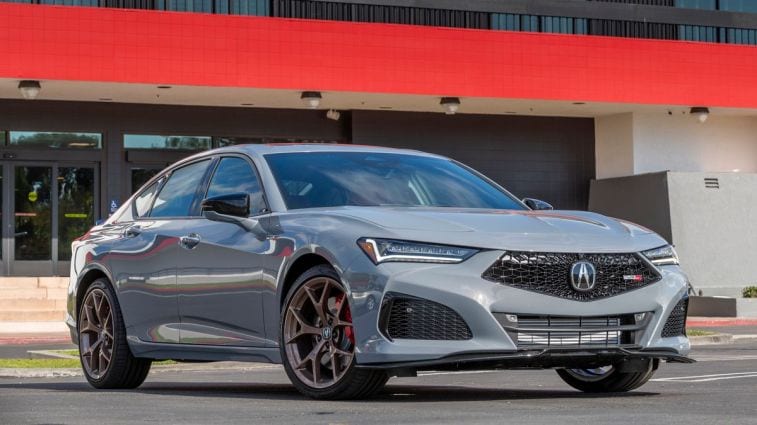
2024 Acura TLX Type S in Urban Grey Pearl near an office building.2024 Acura TLX Type S in Urban Grey Pearl near an office building.

2024 model shown

Acura’s TLX lineup for 2025 consists of three trims: Technology, A-Spec, and Type S. Pricing starts at $46,595 for the entry-level model, including the destination charge. The base engine is a 272-horsepower turbocharged 2.0-liter 4-cylinder unit, which links to a 10-speed automatic transmission. 

The base Technology trim is the only front-wheel-drive variant, while all-wheel drive is standard on the A-Spec and Type S. Standard features include leather upholstery, wireless device charging, and a 12.3-inch infotainment display. There are no major changes to the TLX for this model year.

Acura TLX Highlights

Quality and reliability: We get it — awesome zero-to-60 mph times are cool. But knowing the luxury vehicle you paid good money for will hold its value, and hold together after many miles of enjoyment, is also great. The TLX has a sterling record for reliability and resale value, plus a better warranty than the BMW.

Super Handling All-Wheel Drive: Acura’s Super Handling All-Wheel Drive (SH-AWD) hardware is standard in the A-Spec and Type S. Don’t think AWD comes into play only when traversing soggy or snowy roads. This system maximizes increased grip and agility in every type of driving situation, rain or shine. 

Sporty Type S model: When choosing the Type S, the most significant upgrade is what’s going on in the engine bay. A 355-horsepower turbocharged V6 scoots the range-topping Acura TLX from standstill to 60 mph in about 4.9 seconds. 

ELS audio system: Elliot Scheiner is the Grammy-winning sound engineer who provides the brains (and expert ears) behind this superb audio system. It’s offered in 12-speaker or 17-speaker formats.   

Check this week’s Fair Purchase Price or see the TLX models for sale near you. 

2025 BMW 3 Series

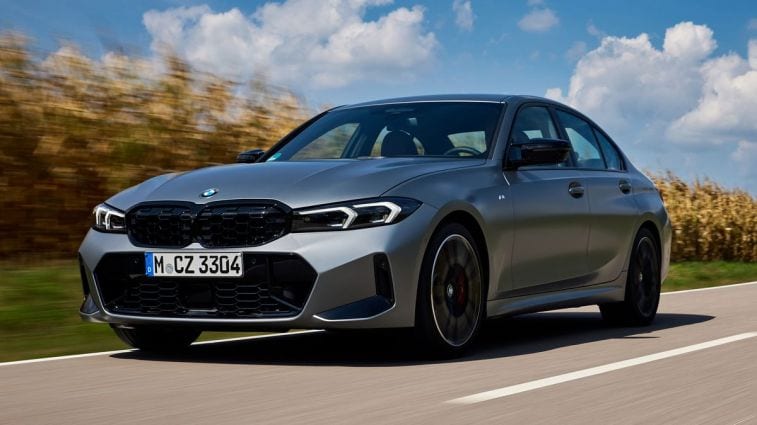
2024 BMW M340i in silver driving down a road next to a cornfield.2024 BMW M340i in silver driving down a road next to a cornfield.

2024 model shown

The 2025 BMW 3 Series has a starting price of $46,675, including the destination charge. This is for the rear-wheel-drive 330i with a 255-horsepower turbocharged 2.0-liter 4-cylinder engine and an 8-speed automatic transmission. This is a smooth, efficient, and addictive powertrain that will suit the majority of 3 Series shoppers just fine. Except, as you’ll learn in a moment, BMW provides an array of exciting powertrain choices in the 3 Series. This even includes a 6-speed manual transmission for the purists.

BMW has updated the infotainment system this year, improved suspensions, tweaked the interior design, added new wheel designs, increased exterior paint choices, lightened the steering in Comfort mode. added 20 horsepower to its most muscular M3 variant, and discontinued the plug-in hybrid 330e.

BMW 3 Series Highlights

Driving dynamics: Get behind the wheel of a 3 Series and you’ll know why it’s been held in such high regard for so long. Even the standard model has sharp steering, a firm yet pliable suspension, and brakes that inspire confidence. 

Engine choices: Kick back, this is going to take a moment. The 3 Series is available with a turbocharged 2.0-liter 4-cylinder engine (330i), a turbocharged inline-6 (M340i), and a turbo inline-6 (M3). Highlights include the extra punch of the M340i’s 382 horses, as well as the mega acceleration afforded by the now 523-horsepower 2025 M3 Competition xDrive. Enthusiasts hankering for that 6-speed stick shift may be pleased to learn that it’s offered exclusively with the standard, rear-wheel-drive M3 that has only 473 horsepower.   

Curved Display: This expansive display consists of a 12.3-inch digital instrument cluster mounted flush with a 14.9-inch infotainment touchscreen. It looks like it could belong in spaceship, and comes standard in every 3 Series. 

Harman Kardon audio: Not to be outdone by the Acura TLX in the audio department, a booming 16-speaker Harman Kardon surround-sound system is optional. 

Check this week’s Fair Purchase Price or see the 3 Series models for sale near you.    

Similarities

The Acura TLX and BMW 3 Series both illustrate that there’s still vibrant life in the luxury sedan field. Not everyone needs or wants the added size and heft of an SUV, or even a midsize luxury car. In their basic formats, these two have a high degree of agility, along with smartly designed cabins. And they can both be turned into thrilling speed machines via their optional engines. 

Conclusion

The BMW 3 Series comes out swinging with an array of powertrains, as well as playful driving manners that shine even in the base model. There’s so much to like here, which throws our few gripes into greater contrast. For instance, the mighty M3 has an equally mighty asking price of more than $75,000. Standard driver aids are also too skimpy, given the 3 Series’ status. 

Turning our attention to the Acura TLX, we think it makes a great case for itself with its build quality, greater range of standard features (including many more driving aids), and similarly enjoyable dynamics. Neither holds a definitive advantage to provide a compact luxury sedan knockout punch. Take both for a test drive, price the one you like most, and we think you’ll drive away happy.

New 2025 Acura TLX Prices

New 2025 BMW 3 Series Prices

The Kelley Blue Book Fair Purchase Price for any individual used vehicle can vary greatly according to mileage, condition, location, and other factors.
The prices here reflect what buyers are currently paying for New 2025 Acura TLX vehicles and New 2025 BMW 3 Series vehicles in typical condition when purchasing from a dealership.
These prices are updated weekly. The manufacturer’s suggested retail price (MSRP) quoted includes the destination fee, but does not include tax, license, document fees, and options.

 2025 Acura TLX 2025 BMW 3 Series
Popular Powertrains    
Engine Turbocharged 2.0-liter 4-cyl.Turbocharged 2.0-liter 4-cylinder
Horsepower 272 hp @ 6,500 rpm255 hp @ 5,200 rpm
Torque 280 lb-ft @ 1,600 rpm258 lb-ft @ 3,800 rpm
Transmission 10-speed automatic 8-speed automatic 
Fuel economy MPG22 city/31 highway/25 combined28 city/35 highway/31 combined 
Also Available AWD; turbo 3.0-liter V6AWD; turbo 3.0-liter inline-6; 6-speed manual
Specs     
Basic Warranty 4 years/50,000 miles 4 years/50,000 miles 
Powertrain Warranty 6 years/70,000 miles 4 years/50,000 miles 
NHTSA Overall Safety 5 stars 5 stars
Max Seating Capacity 5 5 
Wheelbase 113.0 inches 112.2 inches 
Overall Length 194.6 inches 185.7 inches 
Width 75.2 inches 71.9 inches 
Height 56.4 inches 56.8 inches 
Turning Diameter 40.1 feet 37.4 feet 
Headroom, Front 37.2 inches38.7 inches 
Headroom, Rear36.3 inches 37.6 inches 
Legroom, Front 42.4 inches 42.0 inches 
Legroom, Rear34.9 inches 35.2 inches
Shoulder Room, Front 58.2 inches 56.0 inches 
Shoulder Room, Rear55.0 inches54.6 inches
Cargo Volume 13.5 cubic feet  15.6 cubic feet 


Source link

GFN Thursday: ‘Indiana Jones and the Great Circle’

0


GeForce NOW is wrapping a sleigh-full of gaming gifts this month, stuffing members’ cloud gaming stockings with new titles and fresh offers to keep holiday gaming spirits merry and bright.

Adventure calls and whip-cracking action awaits in the highly anticipated Indiana Jones and the Great Circle, streaming in the cloud today during the Advanced Access period for those who have preordered the Premium Edition from Steam or the Microsoft Store.

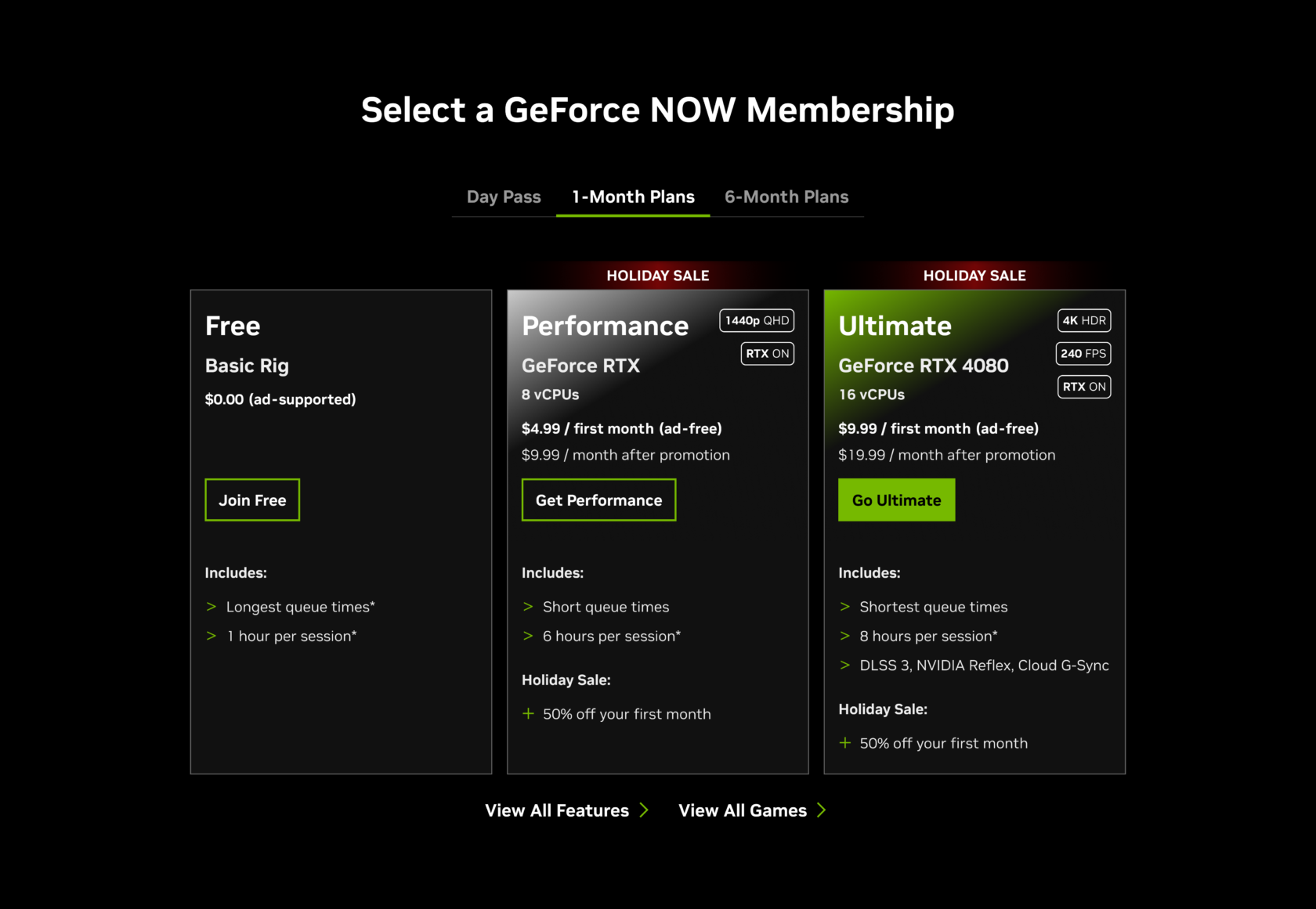
The title can only be played with RTX ON — GeForce NOW is offering gamers without high-performance hardware the ability to play it with 25% off Ultimate and Performance Day Passes. It’s like finding that extra-special gift hidden behind the tree.

This GFN Thursday also brings a new limited-time offer: 50% off the first month of new Ultimate or Performance memberships — a gift that can keep on giving.

Whether looking to try out GeForce NOW or buckle in for long-term cloud gaming, new members can choose between the Day Pass sale or the new membership offer. There’s a perfect gaming gift for everyone this holiday season.

GFN Thursday also brings 13 new titles in December, with four available this week to get the festivities going.

Plus, the latest update to GeForce NOW — version 2.0.69 — includes expanded support for 10-bit color precision. This feature enhances image quality when streaming on Windows, macOS and NVIDIA SHIELD TVs — and now to Edge and Chrome browsers on Windows devices, as well as to the Chrome browser on Chromebooks, Samsung TVs and LG TVs.

An Epic, Globetrotting Adventure

Uncover one of history’s greatest mysteries, streaming Indiana Jones and the Great Circle from the cloud. Members can access it today through Steam’s Advance Access period and will also be able to enjoy it via PC Game Pass on GeForce NOW next week.

The year is 1937, sinister forces are scouring the globe for the secret to an ancient power connected to the Great Circle, and only Indiana Jones can stop them. Experience a thrilling story full of exploration, immersive action and intriguing puzzles. Travel the world, from the pyramids of Egypt to the sunken temples of Sukhothai and beyond. Combine stealth infiltration, melee combat and gunplay to overcome enemies. Use guile and wits to unearth fascinating secrets, solve ancient riddles and survive deadly traps.

Members can indulge their inner explorer by streaming Indiana Jones and the Great Circle on GeForce NOW at release. Enhanced with NVIDIA’s ray-tracing technology, every game scene is bathed in rich, natural light that bounces realistically off surfaces for enhanced immersion.

Ultimate and Performance members can max out their settings for a globe-trotting journey at the highest resolution and lowest latency, even on low-powered devices, thanks to enhancements like NVIDIA DLSS 3 Frame Generation and NVIDIA Reflex. Ultimate members can experience additional perks, like 4K resolution and longer gaming sessions.

This game requires RTX ON, so free members can upgrade today to join in on the action. Take advantage of a limited-time Day Pass sale, with 25% off through Thursday, Dec. 12. Experience all the premium features of GeForce NOW’s Ultimate and Performance tiers with a 24-hour trial before upgrading to a one- or six-month membership.

Making the Cloud Merry and Bright

Holiday Sale on GeForce NOW
Deals for days.

For gamers looking to take their cloud gaming journey even further, unlock the power of GeForce RTX-powered cloud gaming with a monthly GeForce NOW membership. It’s the perfect time to do so, with new members gettings 50% off their first month, now through Monday, Dec. 30.

Experience gaming at its finest with an Ultimate membership by streaming at up to 4K resolution and 120 frames per second, or 1080p at 240 fps. The Performance membership offers an enhanced streaming experience at up to 1440p resolution with ultrawide resolutions for even more immersive gameplay. Both premium tiers provide extended session lengths, priority access to servers and the ability to play the latest and greatest titles with RTX ON.

Whether looking to conquer new worlds, compete at the highest level or unwind with a long-time favorite game, now is an ideal time to join the cloud gaming community. Sign up to transform any device into a powerful gaming rig — just in time for the holiday gaming marathons.

Dashing December

Path of Exile 2 early access on GeForce NOW
The cloud is the path of least resistance.

Path of Exile 2 is the highly anticipated sequel to the popular free-to-play action role-playing game from Grinding Gear Games. The game will be available for members to stream Friday, Dec. 6, in early access with a wealth of content to experience.

Explore the three acts of the campaign, six playable character classes and a robust endgame system in the dark world of Wraeclast, a continent populated by unique cultures, ancient secrets and monstrous dangers. A sinister threat, long thought destroyed, has begun creeping back on the edge of civilisation, driving people mad and sickening the land with Corruption. Play Path of Exile 2 solo or grab the squad for online co-op with up to six players.

Look for these games available to stream in the cloud this week:

  • Indiana Jones and the Great Circle (Advanced Access on Steam and Xbox, available on the Microsoft Store)
  • Path of Exile 2 (New release on Steam and Grinding Gears, Dec. 6)
  • JR EAST Train Simulator (Steam)
  • JR EAST Train Simulator Demo (Steam)

Here’s what members can expect in December:

  • Fast Food Simulator (New release on Steam, Dec. 10)
  • Legacy of Kain Soul Reaver 1&2 Remastered (New release on Steam, Dec. 10)
  • The Spirit of the Samurai (New release on Steam, Dec. 12)
  • The Lord of the Rings: Return to Moria (Steam)
  • NieR:Automata (Steam)
  • NieR Replicant ver.1.22474487139… (Steam)
  • Replikant Chat (Steam)
  • Supermarket Together (Steam)
  • Ys X: Nordics (Steam)

New to November

In addition to the 17 games announced last month, 13 more joined the GeForce NOW library:

  • Ara: History Untold (Steam and Xbox, available on PC Game Pass)
  • Call of Duty: Black Ops Cold War (Steam and Battle.net)
  • Call of Duty: Vanguard (Steam and Battle.net)
  • Crash Bandicoot N. Sane Trilogy (Steam and Xbox, available on PC Game Pass)
  • The Elder Scrolls IV: Oblivion Game of the Year Edition (Epic Games Store, Steam and Xbox, available on PC Game Pass)
  • Fallout 3: Game of the Year Edition (Epic Games Store, Steam and Xbox, available on PC Game Pass)
  • Magicraft (Steam)
  • MEGA MAN X DiVE Offline Demo (Steam)
  • New Arc Line (New release on Steam, Nov. 26)
  • Resident Evil 7 Teaser: Beginning Hour Demo (Steam)
  • Spyro Reignited Trilogy (Steam and Xbox, available on PC Game Pass)
  • StarCraft II (Xbox, available on PC Game Pass, Nov. 5. Members need to enable access.)
  • StarCraft Remastered (Xbox, available on PC Game Pass, Nov. 5. Members need to enable access.)

Metal Slug Tactics, Dungeons & Degenerate Gamblers and Headquarters: World War II didn’t make it last month. Stay tuned to future GFN Thursday for updates.

What are you planning to play this weekend? Let us know on X or in the comments below.


Source link

2025 BMW M5 shows off a range of personalities

0


  • Road testing in the redesigned M5 shows a broader range of performance and comfort
  • Plug-in hybrid sedan has a 0-60 mph time of 3.4 seconds
  • It costs $120,675, while the Touring wagon variant adds $2,000

Two Rolls-Royce Spectres flanked a $600,000 Cullinan Black Badge Series II, glinting like royalty in the South Carolina sun. Beside it, the cutesy new Mini Cooper S Convertible looked like the Cullinan’s chew toy. Four generations of the BMW X5 courted those who love automotive history, the fourth-generation X3 injected new life into the brand’s bestseller, but of the dozens of new vehicles to drive at BMW’s Performance Center in Spartanburg, I couldn’t—I wouldn’t—steer my attention away from the new M5.

The track beyond the staging area was closed to me, so I tested it on the industrial backroads knotting BMW’s largest factory in the world. Surrounded by semis, redirected by roundabouts, deflected by potholes, the seventh-generation M5 encouraged me to take it for a second and eventually a seventh drive not just because it was the best performance vehicle to play with but because it demonstrated how BMW manages V-8 performance in an increasingly electrified world. 

Yes, the performance model of the 5-Series that was redesigned for 2024 (the M5 skipped 2024) adopts V-8 plug-in hybrid powertrain similar to the XM SUV but with a smaller battery pack. If you’ve driven that unsorted beast and you’re porting those perceptions over to the M5 sedan, don’t. 

The powertrain is tuned and calibrated differently, with a 577-hp twin-turbocharged 4.4-liter V-8 mainlined with a 194-hp electric motor integrated into the brand’s ubiquitous 8-speed automatic. Together, the new M5 puts down 717 hp and 738 lb-ft of torque—performance EV numbers, yet with the primal call of a V-8 and the instant torque of electric propulsion.

no title

2025 M5 electrifies launch control

The M5 obscures its mechanical complexity with a simple dance move. Take it out anywhere, say on a rolling stretch of shiny new asphalt near an industrial complex serving BMW and its many local suppliers. Push the red M2 toggle on the steering wheel, note the stability control button turn off (it’s dialed back), mash the brake pedal, and mash the throttle. The 12.3-inch digital gauge cluster turns roundel blue, and a 10-second timer appears in the cluster. 

Let go. And hold on. 

It felt as if all four tires chirped letting off the brake, but maybe it was just the larger 295/35-21s at the rear (Hankook Ventus A1 evo Zs from the factory). The all-wheel-drive system shifts to a rear bias when in Sport or Sport+ mode, which are necessary for launch control. A full rear-wheel-drive setting can be selected but it didn’t. Between the two M settings, the Comfort, Sport, and Sport Plus drive modes, and the four electric drivetrain settings, I had my hands full, delightfully so.

Before I had the chance to look down at the speedometer or to exhale, the M5 was at 75 mph. I couldn’t flirt with the top speed of 155 mph, but BMW’s 0-60 mph time of 3.4 seconds felt conservative. That twin-turbo V-8 is so damn visceral and so damn good, even through all the sound deadening so there’s really no need for the augmented sound through the speakers. Adding at least 1,150 pounds, or about 23% more body mass due in part to the usable 14.8-kwh battery pack, can weigh you down. 

Good thing for the massive 16.1-inch rotors and 6-piston brake calipers up front—painted red on the tester instead of standard blue—and 15.7-inch rear rotors with single-piston floating calipers. Carbon ceramic brakes are optional and cut 55 pounds but add $8,500. If you’re tracking it regularly, I imagine it’s worth it. On run after run, the brakes grabbed without hesitation or pulsing, and each turn I went deeper down this closed off access road than in the previous trial. 

no title

2025 M5: Learning the M Hybrid powertrain settings and M Mode drive modes

The outgoing M5 Competition and its 627-hp V-8 did it in an estimated 3.1 seconds. There are pure EVs that are quicker, too, with a greater gut thrust. The new M5 has a much broader spread in its performance and comfort settings than its predecessor. Then there are the efficiency gains that enable BMW to still produce a V-8 performance sedan for a global market. 

The M5 defaults to Hybrid setting on startup, and if it’s in either of the Sport modes the 4.4-liter V-8 asserts its dominance in the M Hybrid powertrain pairing. The Comfort, Sport, Sport Plus drive modes are designated by an M Mode button. In Comfort mode, the electric motor rules by itself, unless you prod the throttle. It’s capable of running its full 25-mile range, or switch the M Hybrid setting to Electric for full emission-free driving until the battery runs out. While cruising on electric power, shifts from the 8-speed automatic transmission may surprise electric vehicle drivers, but I liked its consistent character throughout the drive wheel setting. 

An eControl setting acts as a battery saver, relying on engine power alone. 

no title

There’s plenty of tire noise while running electric but even at cruising speeds, the M5 is well-insulated from the road. Its independent multi-link front and rear suspension uses steel springs and adaptive dampers that mute the road presence even more in Comfort mode. The modes give it the dual nature of a regal grand tourer despite its performance backbone. 

Sport stiffens it, of course, and the extra bracing and reinforcements over the 5-Series become obvious. Over potholes or railroad grades, it jittered reproachfully, so play with the settings purposefully. 

It’s best to play with the console-mounted powertrain settings and drive modes to learn your desired preferences on the go. Then when parked, create a driver profile that best suits you by making a deep dive into the 14.9-inch touchscreen. There, you can adjust the drive system, transmission shifts, suspension settings, steering feel, and regenerative brake settings in three levels. I would prefer a hot button for regen settings, but you can set your own profile for these settings to be accessed by the M1 button on the steering wheel. 

On winding roads pitched by truck use, the suspension counteracted the uneven grades, and the low, planted feel made me want to push it at higher speeds on the more accessible state highways. 

I appreciated the variable-ratio steering in these higher speed sections, where the chunky steering wheel had some heavy resistance resulting in sharp turns, aided by rear-axle steering. It only turns in-phase by 1.5 degrees, so there was no worry about oversteering or wrapping a curve too tightly. It’s a welcome, invisible helper. At cruising speeds, and in Comfort mode, the steering became an almost non-entity, the road a distant suggestion.

2025 BMW M5

2025 BMW M5

2025 BMW M5

2025 BMW M5

2025 BMW M5

2025 BMW M5

2025 BMW M5

2025 BMW M5

2025 M5 specs and price

Like the 5-Series redesigned for 2025, the M5 measures 200.6 inches long—about a foot shorter than the 7-Series—with a generous wheelbase of 118.3 inches. Those are increases of 4.2 inches in length and nearly an inch longer wheelbase than the 2023 M5, so the cabin is slightly roomier and can fit four adults fine. It’s also 2.7 inches wider and more than an inch taller. 

The 2025 BMW M5 comes in one configuration starting at $120,675, with a $1,175 destination fee, but the M5 Touring wagon cuts a beautiful shape and has crossover cargo space for $122,675. I only took the Touring on a guided loop, so can’t speak to the dynamic differences from the sedan. For those amounts, BMW lets you choose from most exterior colors and interior trims as well as three wheel and tire combos for no extra charge. 

Adding adaptive cruise control with limited hands-free driving costs $1,700, which feels like a rip-off, since most mainstream cars like the Toyota RAV4 have adaptive cruise control as standard. 

Even though the EPA hasn’t certified it and BMW’s not mentioning it, the M5 advances BMW’s performance portfolio for the electric age, making it more relevant—and possible—than if it were powered by a V-8 alone. It appeals to a broader type of driver and in a broader spectrum of driving situations, even looping around industrial roads.  

BMW flew and housed Motor Authority to a brand overview that included drive opportunities in the M5.


Source link

2026 Hyundai Palisade revealed with boxy design, nine seats

0


  • A second-generation Hyundai Palisade boasting a boxy design and seating for up to nine has debuted
  • The new Palisade is expected to reach the U.S. in 2025 as a 2026 model
  • Full specifications, including pricing, will be announced closer to the market launch

Hyundai has revealed a new generation of its Palisade three-row midsize SUV.

The SUV debuted late on Friday in Korea, and the version shown is for that market only. The version destined for the U.S. should debut shortly. It’s due on sale next year as a 2026 model.

The Palisade is the corporate cousin of the Kia Telluride, and a redesigned version of the Kia will also debut shortly. A camouflaged prototype was recently spotted testing in the U.S.

The new Palisade features a significant departure from the styling of the outgoing generation, which has been on sale since the 2020 model year. There’s the same boxy theme Hyundai has been introducing across its SUVs since the launch of the 2024 Santa Fe, as well as stacked headlights formed from five individual slats for the daytime running lights, which flank the main projectors. These blend in with a flat, multi-slatted grille. At the rear, the design of the lights is similar to the outgoing model but with the same stacked design used for the headlights.

2026 Hyundai Palisade (Korea spec)

2026 Hyundai Palisade (Korea spec)

The interior is an even bigger departure from the outgoing generation and looks to take the Hyundai flagship even further down the premium route. Dual 12.3-inch digital screens in a single display panel face the driver but are integrated in a niche in the dash instead of the more common floating design. Multiple physical buttons sit in the center stack, while additional controls can be found on the steering wheel.

The only features in the center console, which is separated from the dash, appear to be charging ports and cupholders. There’s a reason for this: the center console can be converted into a middle seat for the first row, which lifts the seating capacity of the Palisade to nine. It isn’t clear whether this option will be available in markets outside of Korea. The second and third rows each come with three-seat benches as standard, but the second-row bench can be swapped out for a pair of captain’s chairs.

Hyundai hasn’t provided any details on the powertrains, though rumors point to Hyundai offering the new generation with the choice of a hybrid option using a 2.5-liter 4-cylinder as its gas component and a turbo-4 option replacing today’s standalone 3.8-liter V-6. For buyers interested in an electric vehicle, Hyundai has introduced the Ioniq 9 three-row SUV. The Ioniq 9 starts sales early next year, also a 2026 model.

The Palisade is one of Hyundai’s best-selling vehicles in the U.S. The SUV’s sales have averaged more than 80,000 units annually since launch, and 2023’s tally of 89,509 units was the best on record. The redesign should keep that momentum going, even as the Palisade faces new competition from various EV entries, including Hyundai’s own Ioniq 9.


Source link

2025 Predictions: Enterprises, Researchers Home In on Humanoids, AI Agents

0


From boardroom to break room, generative AI took this year by storm, stirring discussion across industries about how to best harness the technology to enhance innovation and creativity, improve customer service, transform product development and even boost communication.

The adoption of generative AI and large language models is rippling through nearly every industry, as incumbents and new entrants reimagine products and services to generate an estimated $1.3 trillion in revenue by 2032, according to a report by Bloomberg Intelligence.

Yet, some companies and startups are still slow to adopt AI, sticking to experimentation and siloed projects even as the technology advances at a dizzying pace. That’s partly because AI benefits vary by company, use case and level of investment.

Cautious approaches are giving way to optimism. Two-thirds of the respondents to Forrester Research’s 2024 State of AI Survey believe their organizations would require less than 50% return on investments to consider their AI initiatives successful.

The next big thing on the horizon is agentic AI, a form of autonomous or “reasoning” AI that requires using diverse language models, sophisticated retrieval-augmented generation stacks and advanced data architectures.

NVIDIA experts in industry verticals already shared their expectations for the year ahead. Now, hear from company experts driving innovation in AI across enterprises, research and the startup ecosystem:

IAN BUCK
Vice President of Hyperscale and HPC

Inference drives the AI charge: As AI models grow in size and complexity, the demand for efficient inference solutions will increase.

The rise of generative AI has transformed inference from simple recognition of the query and response to complex information generation — including summarizing from multiple sources and large language models such as OpenAI o1 and Llama 450B — which dramatically increases computational demands. Through new hardware innovations, coupled with continuous software improvements, performance will increase and total cost of ownership is expected to shrink by 5x or more.

Accelerate everything: With GPUs becoming more widely adopted, industries will look to accelerate everything, from planning to production. New architectures will add to that virtuous cycle, delivering cost efficiencies and an order of magnitude higher compute performance with each generation.

As nations and businesses race to build AI factories to accelerate even more workloads, expect many to look for platform solutions and reference data center architectures or blueprints that can get a data center up and running in weeks versus months. This will help them solve some of the world’s toughest challenges, including quantum computing and drug discovery.

Quantum computing — all trials, no errors: Quantum computing will make significant strides as researchers focus on supercomputing and simulation to solve the greatest challenges to the nascent field: errors.

Qubits, the basic unit of information in quantum computing, are susceptible to noise, becoming unstable after performing only thousands of operations. This prevents today’s quantum hardware from solving useful problems. In 2025, expect to see the quantum computing community move toward challenging, but crucial, quantum error correction techniques. Error correction requires quick, low-latency calculations. Also expect to see quantum hardware that’s physically colocated within supercomputers, supported by specialized infrastructure.

AI will also play a crucial role in managing these complex quantum systems, optimizing error correction and enhancing overall quantum hardware performance. This convergence of quantum computing, supercomputing and AI into accelerated quantum supercomputers will drive progress in realizing quantum applications for solving complex problems across various fields, including drug discovery, materials development and logistics.

BRYAN CATANZARO
Vice President of Applied Deep Learning Research

Putting a face to AI: AI will become more familiar to use, emotionally responsive and marked by greater creativity and diversity. The first generative AI models that drew pictures struggled with simple tasks like drawing teeth. Rapid advances in AI are making image and video outputs much more photorealistic, while AI-generated voices are losing that robotic feel.

These advancements will be driven by the refinement of algorithms and datasets and enterprises’ acknowledgment that AI needs a face and a voice to matter to 8 billion people. This will also cause a shift from turn-based AI interactions to more fluid and natural conversations. Interactions with AI will no longer feel like a series of exchanges but instead offer a more engaging and humanlike conversational experience.

Rethinking industry infrastructure and urban planning: Nations and industries will begin examining how AI automates various aspects of the economy to maintain the current standard of living, even as the global population shrinks.

These efforts could help with sustainability and climate change. For instance, the agriculture industry will begin investing in autonomous robots that can clean fields and remove pests and weeds mechanically. This will reduce the need for pesticides and herbicides, keeping the planet healthier and freeing up human capital for other meaningful contributions. Expect to see new thinking in urban planning offices to account for autonomous vehicles and improve traffic management.

Longer term, AI can help find solutions for reducing carbon emissions and storing carbon, an urgent global challenge.

KARI BRISKI
Vice President of Generative AI Software

A symphony of agents — AI orchestrators: Enterprises are set to have a slew of AI agents, which are semiautonomous, trained models that work across internal networks to help with customer service, human resources, data security and more. To maximize these efficiencies, expect to see a rise in AI orchestrators that work across numerous agents to seamlessly route human inquiries and interpret collective results to recommend and take actions for users.

These orchestrators will have access to deeper content understanding, multilingual capabilities and fluency with multiple data types, ranging from PDFs to video streams. Powered by self-learning data flywheels, AI orchestrators will continuously refine business-specific insights. For instance, in manufacturing, an AI orchestrator could optimize supply chains by analyzing real-time data and making recommendations on production schedules and supplier negotiations.

This evolution in enterprise AI will significantly boost productivity and innovation across industries while becoming more accessible. Knowledge workers will be more productive because they can tap into a personalized team of AI-powered experts. Developers will be able to build these advanced agents using customizable AI blueprints.

Multistep reasoning amplifies AI insights: AI for years has been good at giving answers to specific questions without having to delve into the context of a given query. With advances in accelerated computing and new model architectures, AI models will tackle increasingly complex problems and respond with greater accuracy and deeper analysis.

Using a capability called multistep reasoning, AI systems increase the amount of “thinking time” by breaking down large, complex questions into smaller tasks — sometimes even running multiple simulations — to problem-solve from various angles. These models dynamically evaluate each step, ensuring contextually relevant and transparent responses. Multistep reasoning also involves integrating knowledge from various sources to enable AI to make logical connections and synthesize information across different domains.

This will likely impact fields ranging from finance and healthcare to scientific research and entertainment. For example, a healthcare model with multistep reasoning could make a number of recommendations for a doctor to consider, depending on the patient’s diagnosis, medications and response to other treatments.

Start your AI query engine: With enterprises and research organizations sitting on petabytes of data, the challenge is gaining quick access to the data to deliver actionable insights.

AI query engines will change how businesses mine that data, and company-specific search engines will be able to sift through structured and unstructured data, including text, images and videos, using natural language processing and machine learning to interpret a user’s intent and provide more relevant and comprehensive results.

This will lead to more intelligent decision-making processes, improved customer experiences and enhanced productivity across industries. The continuous learning capabilities of AI query engines will create self-improving data flywheels that help  applications become increasingly effective.

CHARLIE BOYLE
Vice President of DGX Platforms

Agentic AI makes high-performance inference essential for enterprises: The dawn of agentic AI will drive demand for near-instant responses from complex systems of multiple models. This will make high-performance inference just as important as high-performance training infrastructure. IT leaders will need scalable, purpose-built and optimized accelerated computing infrastructure that can keep pace with the demands of agentic AI to deliver the performance required for real-time decision-making.

Enterprises expand AI factories to process data into intelligence: Enterprise AI factories transform raw data into business intelligence. Next year, enterprises will expand these factories to leverage massive amounts of historical and synthetic data, then generate forecasts and simulations for everything from consumer behavior and supply chain optimization to financial market movements and digital twins of factories and warehouses. AI factories will become a key competitive advantage that helps early adopters anticipate and shape future scenarios, rather than just react to them.

Chill factor — liquid-cooled AI data centers: As AI workloads continue to drive growth, pioneering organizations will transition to liquid cooling to maximize performance and energy efficiency. Hyperscale cloud providers and large enterprises will lead the way, using liquid cooling in new AI data centers that house hundreds of thousands of AI accelerators, networking and software.

Enterprises will increasingly choose to deploy AI infrastructure in colocation facilities rather than build their own — in part to ease the financial burden of designing, deploying and operating intelligence manufacturing at scale. Or, they will rent capacity as needed. These deployments will help enterprises harness the latest infrastructure without needing to install and operate it themselves. This shift will accelerate broader industry adoption of liquid cooling as a mainstream solution for AI data centers.

GILAD SHAINER
Senior Vice President of Networking 

Goodbye network, hello computing fabric:  The term “networking” in the data center will seem dated as data center architecture transforms into an integrated compute fabric that enables thousands of accelerators to efficiently communicate with one another via scale-up and scale-out communications, spanning miles of cabling and multiple data center facilities.

This integrated compute fabric will include NVIDIA NVLink, which enables scale-up communications, as well as scale-out capabilities enabled by intelligent switches, SuperNICs and DPUs. This will help securely move data to and from accelerators and perform calculations on the fly that drastically minimize data movement. Scale-out communication across networks will be crucial to large-scale AI data center deployments — and key to getting them up and running in weeks versus months or years.

As agentic AI workloads grow — requiring communication across multiple interconnected AI models working together rather than monolithic and localized AI models — compute fabrics will be essential to delivering real-time generative AI.

Distributed AI: All data centers will become accelerated as new approaches to Ethernet design emerge that enable hundreds of thousands of GPUs to support a single workload. This will help democratize AI factory rollouts for multi-tenant generative AI clouds and enterprise AI data centers.

This breakthrough technology will also enable AI to expand quickly into enterprise platforms and simplify the buildup and management of AI clouds.

Companies will build data center resources that are more geographically dispersed — located hundreds or even thousands of miles apart — because of power limitations and the need to build closer to renewable energy sources. Scale-out communications will ensure reliable data movement over these long distances.

LINXI (JIM) FAN
Senior Research Scientist, AI Agents

Robotics will evolve more into humanoids: Robots will begin to understand arbitrary language commands. Right now, industry robots must be programmed by hand, and they don’t respond intelligently to unpredictable inputs or languages other than those programmed. Multimodal robot foundation models that incorporate vision, language and arbitrary actions will evolve this “AI brain,” as will agentic AI that allows for greater AI reasoning.

To be sure, don’t expect to immediately see intelligent robots in homes, restaurants, service areas and factories. But these use cases may be closer than you think, as governments look for solutions to aging societies and shrinking labor pools. Physical automation is going to happen gradually, in 10 years being as ubiquitous as the iPhone.

AI agents are all about inferencing: In September, OpenAI announced a new large language model trained with reinforcement learning to perform complex reasoning. OpenAI o1, dubbed Strawberry, thinks before it answers: It can produce a long internal chain of thought, correcting mistakes and breaking down tricky steps into simple ones, before responding to the user.

2025 will be the year a lot of computation begins to shift to inference at the edge. Applications will need hundreds of thousands of tokens for a single query, as small language models make one query after another in microseconds before churning out an answer.

Small models will be more energy efficient and will become increasingly important for robotics, creating humanoids and robots that can assist humans in everyday jobs and promoting mobile intelligence applications..

BOB PETTE
Vice President of Enterprise Platforms

Seeking sustainable scalability: As enterprises prepare to embrace a new generation of semiautonomous AI agents to enhance various business processes, they’ll focus on creating robust infrastructure, governance and human-like capabilities for effective large-scale deployment. At the same time, AI applications will increasingly use local processing power to enable more sophisticated AI features to run directly on workstations, including thin, lightweight laptops and compact form factors, and improve performance while reducing latency for AI-driven tasks.

Validated reference architectures, which provide guidance on appropriate hardware and software platforms, will become crucial to optimize performance and accelerate AI deployments. These architectures will serve as essential tools for organizations navigating the complex terrain of AI implementation by helping ensure that their investments align with current needs and future technological advancements.

Revolutionizing construction, engineering and design with AI: Expect to see a rise in generative AI models tailored to the construction, engineering and design industries that will boost efficiency and accelerate innovation.

In construction, agentic AI will extract meaning from massive volumes of construction data collected from onsite sensors and cameras, offering insights that lead to more efficient project timelines and budget management.

AI will evaluate reality capture data (lidar, photogrammetry and radiance fields) 24/7 and derive mission-critical insights on quality, safety and compliance — resulting in reduced errors and worksite injuries.

For engineers, predictive physics based on physics-informed neural networks will accelerate flood prediction, structural engineering and computational fluid dynamics for airflow solutions tailored to individual rooms or floors of a building — allowing for faster design iteration.

In design, retrieval-augmented generation will enable compliance early in the design phase by ensuring that information modeling for designing and constructing buildings complies with local building codes. Diffusion AI models will accelerate conceptual design and site planning by enabling architects and designers to combine keyword prompts and rough sketches to generate richly detailed conceptual images for client presentations. That will free up time to focus on research and design.

SANJA FIDLER
Vice President of AI Research

Predicting unpredictability: Expect to see more models that can learn in the everyday world, helping digital humans, robots and even autonomous cars understand chaotic and sometimes unpredictable situations, using very complex skills with little human intervention.

From the research lab to Wall Street, we’re entering a hype cycle similar to the optimism about autonomous driving 5-7 years ago. It took many years for companies like Waymo and Cruise to deliver a system that works — and it’s still not scalable because the troves of data these companies and others, including Tesla, have collected may be applicable in one region but not another.

With models introduced this year, we can now move more quickly — and with much less capital expense — to use internet-scale data to understand natural language and emulate movements by observing human and other actions. Edge applications like robots, cars and warehouse machinery will quickly learn coordination, dexterity and other skills in order to navigate, adapt and interact with the real world.

Will a robot be able to make coffee and eggs in your kitchen, and then clean up after? Not yet. But it may come sooner than you think.

Getting real: Fidelity and realism is coming to generative AI across the graphics and simulation pipeline, leading to hyperrealistic games, AI-generated movies and digital humans.

Unlike with traditional graphics, the vast majority of images will come from generated pixels instead of renderings, resulting in more natural motions and appearances. Tools that develop and iterate on contextual behaviors will result in more sophisticated games for a fraction of the cost of today’s AAA titles.

Industries adopt generative AI: Nearly every industry is poised to use AI to enhance and improve the way people live and play.

Agriculture will use AI to optimize the food chain, improving the delivery of food. For example, AI can be used to predict the greenhouse gas emissions from different crops on individual farms. These analyses can help inform design strategies that help reduce greenhouse gas in supply chains. Meanwhile, AI agents in education will personalize learning experiences, speaking in a person’s native language and asking or answering questions based on level of education in a particular subject.

As next-generation accelerators enter the marketplace, you’ll also see a lot more efficiency in delivering these generative AI applications. By improving the training and efficiency of the models in testing, businesses and startups will see better and faster returns on investment across those applications.

ANDREW FENG
Vice President of GPU Software 

Accelerated data analytics offers insights with no code change: In 2025, accelerated data analytics will become mainstream for organizations grappling with ever-increasing volumes of data.

Businesses generate hundreds of petabytes of data annually, and every company is seeking ways to put it to work. To do so, many will adopt accelerated computing for data analytics.

The future lies in accelerated data analytics solutions that support “no code change” and “no configuration change,” enabling organizations to combine their existing data analytics applications with accelerated computing with minimum effort. Generative AI-empowered analytics technology will further widen the adoption of accelerated data analytics by empowering users — even those who don’t have traditional programming knowledge — to create new data analytics applications.

The seamless integration of accelerated computing, facilitated by a simplified developer experience, will help eliminate adoption barriers and allow organizations to harness their unique data for new AI applications and richer business intelligence.

NADER KHALIL
Director of Developer Technology

The startup workforce: If you haven’t heard much about prompt engineers or AI personality designers, you will in 2025. As businesses embrace AI to increase productivity, expect to see new categories of essential workers for both startups and enterprises that blend new and existing skills.

A prompt engineer designs and refines precise text strings that optimize AI training and produce desired outcomes based on the creation, testing and iteration of prompt designs for chatbots and agentic AI. The demand for prompt engineers will extend beyond tech companies to sectors like legal, customer support and publishing. As AI agents proliferate, businesses and startups will increasingly lean in to AI personality designers to enhance agents with unique personalities.

Just as the rise of computers spawned job titles like computer scientists, data scientists and machine learning engineers, AI will create different types of work, expanding opportunities for people with strong analytical skills and natural language processing abilities.

Understanding employee efficiency: Startups incorporating AI into their practices increasingly will add revenue per employee (RPE) to their lexicon when talking to investors and business partners.

Instead of a “growth at all costs” mentality, AI supplementation of the workforce will allow startup owners to home in on how hiring each new employee helps everyone else in the business generate more revenue. In the world of startups, RPE fits into discussions about the return on investment in AI and the challenges of filling roles in competition against big enterprises and tech companies.


Source link