130 Lamborghinis took over streets of Tokyo for the 2024 edition of Lamborghini Day Japan. The traditional parade of cars through specially closed roads in the capital city concluded at the National Stadium in Shinjuku that hosted the 2020 Olympic games, providing a fitting background not only for the finale of Lamborghini Day Japan but also the Asia Pacific premiere of the Temerario. Lamborghini owners, media and enthusiasts from Japan, Asia Pacific and even European regions, gathered to witness the unveiling of Lamborghini’s new plug-in hybrid High Performance Electrified Vehicle (HPEV), the Temerario.
Automobili Lamborghini Chairman and CEO Stephan Winkelmann lifted the flag for the parade’s start at the Tokyo Prince Hotel in Minato ward, which cruised through Roppongi, Omotesando and Harajuku before arriving at the National Stadium.
“I am always overwhelmed by the passion from Lamborghini customers and fans in Japan, witnessed in our traditional Tokyo Street parade as well as during the Asia Pacific premiere of Lamborghini Temerario: a car in a class of its own that embodies innovation and performance from both a technical and stylistic point of view. The Temerario marks a significant milestone in our journey, marking the completion of our hybridized line-up within our Direzione Cor Tauri strategy. With the launch of the Temerario, we are the first super sports brand offering a fully hybridized model range,” said Stephan Winkelmann.
The presentation of the Temerario to over 500 guests saw Automobili Lamborghini board members join Stephan Winkelmann in Tokyo, including Design Director Mitja Borkert and Product Line Director Paolo Racchetti.
Francesco Scardaoni, Regional Director of APAC, commented: “We are thrilled to host the Asia Pacific premiere of Temerario here in Japan, with its remarkable new V8 twin-turbo powerplant and cutting-edge hybrid engineering delivering the highest levels of performance. It embodies Lamborghini’s commitment to pushing boundaries and setting new standards in power and exclusivity. The excitement from future owners here in the region is palpable and we look forward to seeing the Temerario take its place in Lamborghini Day Japan events in the future.”
Davide Sfrecola, Head of Automobili Lamborghini Japan added, “Every year, Lamborghini Day Japan provides an incredible opportunity to engage with our customers, media and fans. This year, the occasion was also marked by presenting the Lamborghini Temerario, marking a new era for our super sports car brand in the region.”
The Temerario is the second vehicle in Lamborghini’s HPEV (High Performance Electrified Vehicle) range, following on from the Revuelto. It redefines performance, driving pleasure and comfort and, together with the Urus SE[3], completes the Italian marque’s hybridized model range. The Temerario sets a new standard in the super sports car segment. The new hybrid powertrain combines an all-new V8 twin-turbo engine with three electric motors to deliver an overall maximum power of 920 CV and is the first and only series-produced super sports car engine to reach 10,000 rpm. It boasts acceleration of 0-100 km/h (0-62mph) in just 2.7 seconds and a top speed of over 340 km/h (210+ mph).
Showcased at the National Stadium were 30 classic cars including the celebrated 400 GT, Espada, Urraco, Jalpa and a Diablo SE Jota, together with current and earlier Lamborghini models with highlights including the Revuelto and Urus SE; plus Huracán Sterrato[4], Huracán Tecnica, Huracán STO and Aventador LP 780-4 Ultimae.
During Lamborghini Day Japan customers also immersed themselves in Lamborghini’s Ad Personam personalization program, which allows customers to choose among infinite possibilities of exteriors, interiors with myriad colors, trims, options and special finishes, allowing customers to create their unique dream car. Guests explored collaborations with Lamborghini’s partner brands too, including Tod’s, Ducati, Lavazza, Technics and Champagne Carbon.
I’ve been a digital nomad for the last three years and have worked in many places around the world. Some were excellent, others… not so much. I’m happy to share with you five of my favorite cities for remote working.
Having fast and reliable internet is one of the most critical things to consider when deciding where to base yourself as a digital nomad. It can be – and, in my experience, often is – the difference between a dream remote working experience and a digital-induced nightmare.
I’ve done my best to include a range of locations across the world for this list. I considered several important factors, including internet speed and reliability, cost of living, access to quality coworking spaces and cafes, food scene, things to do, transport links, and overall lifestyle and livability.
1. Chiang Mai, Thailand
It’s not difficult to see why Chiang Mai has been a favorite among digital nomads ever since digital nomads were a thing. The internet here is fast and reliable, with average speeds close to 100 Mbps. Many coworking spaces offer even faster private connections, so it’s a great place to get stuff done.
Chiang Mai has a huge digital nomad community making it easy to meet and socialize with other remote workers. The weather is hot year-round, prices are still relatively low (although quite a bit higher than when I first visited 15 years ago!), and Thai food is absolutely delicious.
As you’d expect, there are many high-quality coworking spaces in Chiang Mai, although Yellow Coworking Space is a particularly good one. When you’re not working, I highly recommend renting a scooter and exploring the surrounding mountains and temples – they’re stunning.
Budapest, the capital of Hungary, is a great choice for digital nomads who want to be based in Europe but without the high prices of cities such as Paris and London. Hungary is one of the countries with the fastest internet in the world, and the city is full of culture and has a growing digital nomad community.
With lightning-fast speeds of up to 220 Mbps, it’s easy to stay connected here whether you’re working from a coworking space or a cafe. KAPTÁR is one of the most popular coworking spaces in the city, although I found that internet speeds are great pretty much everywhere.
Budapest’s location in central Europe also makes it a perfect base to explore more of the continent. There are excellent road and rail links to neighboring countries (such as Austria, Romania, and Croatia). Affordable flights on the Hungarian low-cost airline Wizz Air make it easy to travel further afield, too.
Another fantastic European capital city, Lisbon offers year-round sunshine, history, culture, and – crucially – reliable internet. With average speeds of 120 Mbps, you’ll have no trouble staying connected here. There are plenty of coworking spaces (Heden Santa Apolónia is super) and cafes to make your remote office too.
I’ve been to Lisbon twice and love the city’s creative, fun-loving atmosphere. Taking breaks from work to wander the city or watch the sunset over the Tagus River never gets old. There are some great beaches located a short distance from the city that are perfect for a relaxing weekend break.
Prices are steadily rising in Lisbon – partly due to its popularity among digital nomads – but it’s still relatively affordable compared to many other European capitals. There’s a strong cafe culture here too, plus a diverse community of nomads from around the world, so you won’t struggle to make new friends.
Medellín is one of the top digital nomad destinations in Latin America. The internet is very fast here with speeds averaging around 165 Mbps download. The mountains surrounding the city are beautiful (and amazing for hiking), and there are plenty of coworking spaces and cafes.
Known as the “City of Eternal Spring”, Medellín has amazing weather year-round. I spent some time in Medellín earlier this year and based myself in the El Poblado neighborhood. My favorite cafe was Pergamino, which serves some of the best coffee in the city – no mean feat. They serve up tasty food, too.
In terms of safety, Medellín has made huge improvements in the last few years, but it still pays to be sensible. To me, El Poblado felt perfectly safe both during the day and at night. Other parts of the city felt distinctly sketchier after dark, but Uber is cheap and readily available.
Mexico City was one of the first cities I lived and worked in when I first became a digital nomad. It’s a vast metropolis made up of many different districts and neighborhoods, each with its own distinct vibe.
There’s no shortage of coworking spaces, and neighborhoods like Roma and Condesa are full of cafes with strong WiFi and even stronger coffee. I based myself in Condesa and loved the leafy streets, tranquil parks, and friendly atmosphere. Blend Station was my go-to coffee place.
Mexico City is also a world-class foodie destination, from simple street food stalls serving up the best tacos you’ll ever eat to swanky Michelin-starred restaurants, and everything in between. There’s so much to see and do here, too – you’ll never be bored.
Having reliable internet can make or break your experience as a digital nomad. All of these cities offer fast speeds, stable connections, great coworking spaces, and many other unique perks that make them perfect places to live and work remotely.
For me, Lisbon and Chiang Mai are both pretty hard to beat. They’re very different in many ways, but both have fantastic food, an amazing climate, and a chilled-out pace of life. I plan to spend more time in both places in the future – maybe I’ll see you there!
3.6 billion. That’s about how many medical imaging tests are performed annually worldwide to diagnose, monitor and treat various conditions.
Speeding up the processing and evaluation of all these X-rays, CT scans, MRIs and ultrasounds is essential to helping doctors manage their workloads and to improving health outcomes.
That’s why NVIDIA introduced MONAI, which serves as an open-source research and development platform for AI applications used in medical imaging and beyond. MONAI unites doctors with data scientists to unlock the power of medical data to build deep learning models and deployable applications for medical AI workflows.
This week at the annual meeting of RSNA, the Radiological Society of North America, NVIDIA announced that Siemens Healthineers has adopted MONAI Deploy, a module within MONAI that bridges the gap from research to clinical production, to boost the speed and efficiency of integrating AI workflows for medical imaging into clinical deployments.
With over 15,000 installations in medical devices around the world, the Siemens Healthineers Syngo Carbon and syngo.via enterprise imaging platforms help clinicians better read and extract insights from medical images of many sources.
Developers typically use a variety of frameworks when building AI applications. This makes it a challenge to deploy their applications into clinical environments.
With a few lines of code, MONAI Deploy builds AI applications that can run anywhere. It is a tool for developing, packaging, testing, deploying and running medical AI applications in clinical production. Using it streamlines the process of developing and integrating medical imaging AI applications into clinical workflows.
MONAI Deploy on the Siemens Healthineers platform has significantly accelerated the AI integration process, letting users port trained AI models into real-world clinical settings with just a few clicks, compared with what used to take months. This helps researchers, entrepreneurs and startups get their applications into the hands of radiologists more quickly.
“By accelerating AI model deployment, we empower healthcare institutions to harness and benefit from the latest advancements in AI-based medical imaging faster than ever,” said Axel Heitland, head of digital technologies and research at Siemens Healthineers. “With MONAI Deploy, researchers can quickly tailor AI models and transition innovations from the lab to clinical practice, providing thousands of clinical researchers worldwide access to AI-driven advancements directly on their syngo.via and Syngo Carbon imaging platforms.”
Enhanced with MONAI-developed apps, these platforms can significantly streamline AI integration. These apps can be easily provided and used on the Siemens Healthineers Digital Marketplace, where users can browse, select and seamlessly integrate them into their clinical workflows.
MONAI Ecosystem Boosts Innovation and Adoption
Now marking its five-year anniversary, MONAI has seen over 3.5 million downloads, 220 contributors from around the world, acknowledgements in over 3,000 publications, 17 MICCAI challenge wins and use in numerous clinical products.
The latest release of MONAI — v1.4 — includes updates that give researchers and clinicians even more opportunities to take advantage of the innovations of MONAI and contribute to Siemens Healthineers Syngo Carbon, syngo.via and the Siemens Healthineers Digital Marketplace.
The updates in MONAI v1.4 and related NVIDIA products include new foundation models for medical imaging, which can be customized in MONAI and deployed as NVIDIA NIM microservices. The following models are now generally available as NIM microservices:
MAISI (Medical AI for Synthetic Imaging) is a latent diffusion generative AI foundation model that can simulate high-resolution, full-format 3D CT images and their anatomic segmentations.
VISTA-3D is a foundation model for CT image segmentation that offers accurate out-of-the-box performance covering over 120 major organ classes. It also offers effective adaptation and zero-shot capabilities to learn to segment novel structures.
Alongside MONAI 1.4’s major features, the new MONAI Multi-Modal Model, or M3, is now accessible through MONAI’s VLM GitHub repo. M3 is a framework that extends any multimodal LLM with medical AI experts such as trained AI models from MONAI’s Model Zoo. The power of this new framework is demonstrated by the VILA-M3 foundation model that’s now available on Hugging Face, offering state-of-the-art radiological image copilot performance.
MONAI Bridges Hospitals, Healthcare Startups and Research Institutions
Leading healthcare institutions, academic medical centers, startups and software providers around the world are adopting and advancing MONAI, including:
German Cancer Research Center leads MONAI’s benchmark and metrics working group, which provides metrics for measuring AI performance and guidelines for how and when to use those metrics.
Nadeem Lab from Memorial Sloan Kettering Cancer Center (MSK) pioneered the cloud-based deployment of multiple AI-assisted annotation pipelines and inference modules for pathology data using MONAI.
University of Colorado School of Medicine faculty developed MONAI-based ophthalmology tools for detecting retinal diseases using a variety of imaging modalities. The university also leads some of the original federated learning developments and clinical demonstrations using MONAI.
MathWorks has integrated MONAI Label with its Medical Imaging Toolbox, bringing medical imaging AI and AI-assisted annotation capabilities to thousands of MATLAB users engaged in medical and biomedical applications throughout academia and industry.
GSK is exploring MONAI foundation models such as VISTA-3D and VISTA-2D for image segmentation.
Flywheel offers a platform, which includes MONAI for streamlining imaging data management, automating research workflows, and enabling AI development and analysis, that scales for the needs of research institutions and life sciences organizations.
Alara Imaging published its work on integrating MONAI foundation models such as VISTA-3D with LLMs such as Llama 3 at the 2024 Society for Imaging Informatics in Medicine conference.
RadImageNet is exploring the use of MONAI’s M3 framework to develop cutting-edge vision language models that utilize expert image AI models from MONAI to generate high-quality radiological reports.
Kitware is providing professional software development services surrounding MONAI, helping integrate MONAI into custom workflows for device manufacturers as well as regulatory-approved products.
Researchers and companies are also using MONAI on cloud service providers to run and deploy scalable AI applications. Cloud platforms providing access to MONAI include AWS HealthImaging, Google Cloud, Precision Imaging Network, part of Microsoft Cloud for Healthcare, and Oracle Cloud Infrastructure.
See disclosure statements about syngo.via, Syngo Carbon and products in the Digital Marketplace.
Porsche’s most-popular model has gone electric. Here’s the scoop.
Macan EV Deep Dive
Whether you drive a car, need a car, or just occasionally bum a ride with friends, you’ve come to the right place. Join Jill and Tom as they break down everything that’s going on in the auto world. New-car reviews, shopping tips, driving green, electric cars, classic cars, and plenty of great guests. This is the Consumer Guide Car Stuff Podcast. – Hyundai’s Big New EV Crossover – Porsche Macan Deep Dive
–
Episode: 250
Broadcast date: December 2, 2024
Guest: Calvin Kim
–
(Show Notes)
–
First Segment
Jill and Tom opened the show noting that Stellantis CEO Carlos Tavares stepped down from his position over the weekend. The surprise move sent company stock down steeply early Monday. The hosts also discussed one of Tom’s X polls, this one ranking the most prestigious car brands. Listen in for details.
Still in the first segment, Jill shared her review of the 2025.5 (yes, 2025.5) Volvo XC90 midsize crossover. Not a full redesign, the big Volvo sees a number of design and tech updates, most of which Jill found appealing. Jill also explains the whole .5 thing.
Second Segment
In the second segment, the hosts welcome Calvin Kim of Porsche to the show. Calvin updated the hosts on the German carmaker’s all-new Macan EV compact electric crossover. The new EV will be sold alongside the marque’s gasoline-powered Macan.
Last Segment
In the last segment Jill is subjected to Tom’s “More Fake Cars!” quiz. To wrap up the show, Jill shared the North America Car of the Year finalists list. Winners will be announced at the Detroit Auto Show, which returns to January for 2025.
As we have written more than a few times, it is difficult to find exciting watchmaking content that is also accessible. All too often, as novelty value increases, so too do price points – this is not unexpected given that watchmaking also operates on economies of scale. Take the forged carbon material, which was used exclusively by high-end watchmakers who charged a premium for it. The Tissot Sideral – subject of WOW’s cover story from exactly a year ago – changed all that in dramatic fashion. It turns out that this was not a one-off for the brand, as part of WOW’s Autumn Issue #74 cover story examines.
This year, instead of revisiting the history of material experimentation at Tissot, we thought we would check in once again with CEO Sylvain Dolla for his thoughts. As it happens, Dolla is now into his 20th year at Swatch Group – he originally worked on the Swatch Paparazzi watch – and is, by his own admission, a true watch afficionado. Prior to taking charge at Tissot, Dolla spent 15 productive years at Hamilton and we are tempted to lay the credit for that brand’s successes at his feet too. That kind of thinking is complicated by the fact that Swatch Group is, well, a group, meaning there is more than one chef responsible for any given dish.
The PRX that captivated us in 2021, and especially the automatic version that featured on the cover of the Autumn issue that year, might actually be called Dolla’s. This is because he discovered – or rediscovered – the original 1970s model that would inspire the PRX, as he has told a number of publications, including us, Time and Tide and WatchPro, most recently. It was most assuredly not a watch that emerged from a focus group, as Dolla memorably explained to Alexandre Lindz of WatchAdvisor.
Runaway Success
If you wonder what it is about the PRX that explains its commercial prowess, this probably goes some way to explain matters. Basically, a watch enthusiast discovered a hidden treasure in the archives of the brand he was leading and had a gut instinct about it. Sounds about right for a successful sports elegance watch in the 2020s.
This issue, despite the soloist on the cover, the story is really an ensemble performance, running the gamut from the PRX Forged Carbon piece to the PRX Grendizer, a couple of new dial variants and the PR516. That said, if this is news to you then perhaps you have not had the full introduction to the PRX itself. Well, at any rate, you may not have heard what we had to say about the collection.
If you are discovering the Tissot PRX for the first time here, you have missed out on one of the biggest stories in Swiss watchmaking in recent memory. The unassuming quartz version of this model, also called PRX, was so successful it sold out in several markets. In 2021, no less. A few years later, the collection has made its mark and leveled up a few times – it has become a sign of the times, in a way that Tissot could not have foreseen with the first watch. As we noted three years ago, that is not the original watch and there is interesting history here.
Colourful Ensemble
You can sum up what makes the PRX special in just one word: desirability. We recognised this in 2021 and we stand by it – retrofuturism is a powerful design force in watchmaking today, perhaps more so than ever before. Whether the 40mm time-only watch or the more diminutive 35mm follow-up; the quartz debutant or the automatic chronograph; and now the new colourful variants, at least one PRX seems to be on everyone’s to-buy list. Probably more than one, if we are being honest, and this is where the new dial options come in. There are six such watches (three 40mm automatic models, one automatic 35mm model, and two 35mm quartz PRX variants), with dials ranging from gradiant blue to brushed pink. See the pictures of the real watches accompanying this story for references, which work better than descriptions anyway.
To reiterate and reinforce what we wrote in 2021, by everyone’s to-buy list here, we actually mean the rare convergence between collectors and people looking for nice everyday watches. The proportions work out for daily wear, unless your wrist is very large, in which case the 13.5mm thick PRX Automatic Chronograph might work – do also see the PR516 manual-winder later in this story.
On the subject of lugs here, the integrated bracelet is important because how the watch wears depends entirely on it. The virtually non-existent lugs of this roughly barrel-shaped case ensure a great fit, even if you need it to fit under your sleeve. Exceptionally form-fitting sleeves will be a problem though, making the slimmer quartz model (as little as 9.6mm versus up to 11.2mm for the automatic) a more logical decision. The sapphire crystal is flat, top and bottom alike so the thickness measurement is accurate here. Now, this is a total watch design, as mentioned, and it has sporty connotations. Tissot recognises and references this directly in the name PRX, which stands for Precise, Robust and water-resistant to 100 meters (X means 10 bar, with bar being a gauge of pressure). All that aside, PRX is a pretty cool name.
Future Tense
Tissot PRX Powermatic 80 models with refreshed dials
Just as the PRX confronts us with a new view of Tissot, it also opens the door to entire chapters of the brand’s history that may have been neglected in recent years. Indeed, when Tissot began using automatic movements with the silicon balance springs that Swatch Group developed, we were tremendously excited. While these technically advanced mechanical components were, in 2018, still mainly in use at Omega, Blancpain and Breguet, we never thought that a balance spring should mark anything as high-end. After all, no one is going to see this, or recognise it even if they do see it. Yes, even the wearer. What mattered, and still matters, is the watch.
In 2018, this was the Tissot Ballade and it was a handsome watch that could have been yours for less than USD1,000. The market seemed more skeptical, especially given the necessary increase in prices. We were convinced there was interest in automatic watches from Tissot that went beyond the basic ETA variants. Bear in mind that Tissot makes gold wristwatches and pocket watches, and its history is marked by a desire to bring innovation to the largest possible group. This is the true starting line for the story of the Tissot PRX.
Now we get to the direct origins of the PRX in general. Tissot says the current model references a Seastar watch from 1978, but you might just as easily link it with the PR516 models from the early 1970s. To get the official perspective on the PRX and its place in Tissot’s history, we went directly to Dolla. “Since the PRX is a model originally released in 1978, our objective was to give a renewal to this piece that could suit today’s vintage craze. It shows Tissot’s desire to remain tied to its roots, while being able to adapt to current trends. Nowadays and more than ever, new challenges naturally drive new strategies, but it will never change our background and history nonetheless.”
PRX Grendizer
When news about the Tissot collaboration with the classic manga and anime UFO Robot Grendizer emerged, we could scarcely believe it. This is certainly a first for Tissot and marks possibly the first such collaboration between a Swiss watchmaker and the creators of a Japanese comic book, which is what manga is. We were so pumped for this that we were torn about not having it for the cover; the story here is very rich, but admittedly, for pure watchmaking content, the Forged Carbon model is the right choice. Nevertheless, since that watch gets its due elsewhere as well, we devote a bit of extra time to the Tissot PRX Grendizer.
Although this PRX Grendizer is just one model, it may yet herald more cross-cultural adventures for Tissot. The decision to go with the PRX model, an inherently 1970s proposition, and a manga popular in Switzerland in the 1970s is perhaps loaded with meaning. It probably had some impact on the childhood experiences of a number of high-ranking watch industry executives, the most famous and public of whom is, of course, Max Busser. In fact, it was the first MB&F watch that brought Grendizer into the headspace of editors because Busser began talking about how his childhood obsessions were feeding his creativity. Well, it turns out Dolla was a fan as a child too… More than 20 years later, a major force in Swiss watchmaking – part of the largest industrial group of watchmakers in the world – is embracing Grendizer just as a remake of the series, Grendizer U debuts.
On that note, the manga deserves a short introduction all its own. Created by the father-figure of the super robot genre, Go Nagai, the plot concerns an alien prince who flees the destruction of his world with his super robot called Grendizer. Finding shelter on earth, the prince and the robot he commands find themselves defending the world against the same enemy that laid waste to his home. In tribute, the dial also bears the original Japanese title of the series: UFOロボ グレンダイザー.
This is only the opinion of the editorial staff but Grendizer is a powerful symbol, even for those without any grounding in the world of the manga. The image of Grendizer, stamped onto the blue dial of the PRX UFO Robot Grendizer, is magnetic. You do not have to take our word for it – just look at it, and imagine it in low light, when the yellow SuperLuminova allows the bust of the robot to literally glow. In this situation, you will also notice that the hands and markers of the watch, also treated with Super-Luminova glow a different colour (blue). No doubt this was done for legibility reasons but it does provide the watch with a lively spirit, approaching a certain view of neon-drenched Tokyo. Finally, note that the second hand, with its Harken motif is not Super-Luminova treated.
PR516
The second and final watch we will get into is the PR516, which is a chronograph we have had awhile to consider since it debuted earlier this year. This is a significant chronograph by any measure, given that it is a manual-winder. We were speechless when we learned of this piece, which is unprecedented at Tissot – it also showcases the newly developed Valjoux A05.291 movement. Tissot says it is derived from the workhorse 7753 calibre that plenty of enthusiasts are familiar with. This move was so significant that Tissot sent out a technical press release for it, which itself is quite an event. For some context, remember that it is usually only the most traditional of watchmakers who make manual-winding chronographs, and they do so to honour the legacy of fine watchmaking.
Obviously, a manual-winder from Tissot was unexpected to say the least, and we will say that there is no meticulous hand-finishing to admire via the exhibition caseback. This is not the point though – what is interesting is that Tissot thinks there is an appetite for this sort of watch. On its website, Tissot makes a special place for chronographs, and the PR516 is the only one listed in the “mechanical” category. If an enthusiast finds this watch while looking for a PRX, for example, he will certainly be pleasantly surprised – it is always fun to watch a manual chronograph calibre in action, without the rotor to get in the way. At SGD 2,620, the PR516 offers a nigh unbeatable proposition from the value perspective too. It must be said here that Tissot is certainly leveraging the industrial capabilities of Swatch Group to offer a chronograph with up to 68 hours of power reserve and an antimagnetic escapement featuring precision laser regulation. Suffice to say that nothing like this exists at this price point.
Photography by ching@greenplasticsoldiers Styling by Gregory Woo
This article first appeared on WOW’s Autumn Issue #74
For more on the latest in luxury watch reads from WOW, click here.
Since Brexit, there has been so much confusion with the the 90/180 day rule in the Schengen Zone. I have been getting a lot of questions lately on this, so I have done some deep diving – and actually realised I didn’t know as much as I should have BUT during this deep dive research I found an amazing website that makes the “in zone” calculations so simple.
*We work hard to make this the best motorhome travel blog and road trip website possible, full of helpful content for you. The website is supported by our readers, so if you buy through links on this site we may earn a commission- at no extra cost to you. All opinions remain our own.
If you find this post useful, you can also treat us to a coffee – we promise to enjoy it while creating more useful content like this- we might even indulge in a biscuit (or two!)
The Basics of the Schengen Zone
So the Schengen zone is a collection of countries across Europe where you can only spend a certain amount of time in them as a collective. And this is the first thing that a lot of people have got wrong, or got confused with – it’s not 90 days in France and then 90 days in Germany and then 90 days in Spain, it’s 90 days in all the countries in the Schengen zone, in every rolling 180 day period.
Do you include Ireland in your calculations?
It does not include Ireland and obviously it doesn’t include the UK. So if you have a british passport, you can spend as long as you like in Ireland and vice versa. So for example, when I spent time in Ireland last year, those days don’t count towards days in the Schengen zone – those days worked out to outside of my rolling 180 days!
I have a Visa – I hear you say?
It’s got nothing to do with the ETIAS Visa that’s coming in 2025 (apparently), even when that comes in, the Schengen zone will still exist as will the 90/180 rule – I believe.
Even if you have a visa, you’ll still have to comply with the 90/180 day rule. And obviously, it doesn’t apply to everybody who’s got rights to live in a country in the Schengen zone. It does apply if you have a second home there, if you don’t have a residency permit. So, for example, perhaps you own a second home in France or in Spain and you don’t have a residency permit, you still have to comply with the 90 day rule.
Calculation Time!
I have found a website – ninety180.com that I love and I’m sure you could find a way of using this on your phone, so you wont have to have a laptop. The website’s got nothing to do with me, not affiliated and it’s totally free to use. It works out days you have used from your 90 day allowance and the best thing is, it does it in a calendar format with the number of days used displayed on each of the calendar days – You’ll see what I mean later.
So your 180 day period will start on the day that you enter the Schengen zone. So, as an example – let’s call that the 01 June 2023. If you haven’t got an app or don’t want to use one, you can literally just type it into your choice of internet search engine – “what is 180 days before the 1 June 2023” = 03 December 2022.
Important Tip – Working backwards is safer to ensure you wont get caught out by forgetting to include any previous days in the Schengen Zone – which happens! Remember that the 180 days is rolling, so your previous 180 days date will be continuously be moving forward.
So let’s look at this literally and use the website ninety180.com
Calculations if you HAVEN’T been to the Schengen Zone within the 180 days
Lets say, for example, you’ve got a trip where you’re going from the UK into France on the 01 June 2023 for 3 weeks, and land in France on the 01 June 2023:
So you can see from the calculations above, that 3 weeks in the France from the 01 June 2023 (with no prior days in the zone from the 03 DEC 2022) is showing that you have the used 22 days from your 90 day allowance – easy right!
For the purpose of clarity let’s give an example for extending the above said trip – Let’s say you plan to do the trip in France from 01 JUN 2023 for the full 90 days:
You can now see the how it’s calculating your time – based on the calculations, your 90 days will come to end on the 29 AUG 2023, which means you need to leave the Schengen Zone on the 29 AUG 2023.
Calculations if you HAVE been to the Schengen Zone within the 180 days
Using the first example – you are planning 3 weeks in France arriving on the 01 JUN 2023 BUT you had spent 3 weeks in, let’s say Germany from the 01 FEB 2023. Here is how your calculations will look:
So you can see from the calculations above, that 3 weeks in France from the 01 June 2023 and a previous trip to Germany for 3 weeks, is showing that you have the used 44 days from your 90 day allowance – easy right! This is why working out your rolling 180 days before your planned trip is essential – this will also confirm if any previous trips fall within your 180 days.
Let’s give another example – so your current trip you’ll be arriving in France on the 01 JUN 2023 for 3 weeks and you previously spent 3 weeks in Germany from the 01 FEB 2023 AND you also remember you spent 3 weeks in, let’s say Germany from the 01 NOV 2022 (for the Christmas Markets) – how does this look for calculations?
So you can see that your used days still remains as 44 from your 90 day allowance. That is because we did the 180 days prior to the current trip to France (JUN 2023), we know that the 180 days started from the 03 DEC 2022. So any days in the Schengen Zone before 03 DEC 2023 doesn’t get counted as part of your 90 days!!
What if you overstay?
I’ve actually heard of people saying that borders/customs have been stamping passports as being “overstayed”, even if it’s been one or two days, when you leave the Schengen zone, which means the next time you enter the Schengen Zone, the borders will look at your passport a lot more carefully.
But also, if you ever wanted to get visas – which I think we’re all going to have to do in the next year or two (with the ETIAS Visa – planning to come in 2025) or if you ever want to do a residency permit, they can use your “overstay status” stamp as a reason to refuse you access.
And if you do it repeatedly, then they’ll start banning you. And I know some people were fined, like, €200 each for overstaying for two days. Now, I don’t know whether that’s €100 a day or whether that was just the fine, but it’s well worth knowing that there are consequences of overstaying your welcome.
Still confused?
If you struggled following all the above – which I understand, as it can be info overload and not everyone gets it, I didn’t at first so don’t worry. Here is the video I did on the topic which may help you better understand.
Conclusion
So using this method clearly shows you how many days you have used, when you’re going to overstay and what date to leave.
I hope that has made sense and clarifies the calculations for you. It makes it a little bit easier to understand that rolling 180 day period. If you do have any more questions, feel free to get in touch.
And if you are visiting Europe for the first time, whether that’s in a motorhome, campervan, caravan or a car, and you want a list of all the things that you need to take with you and all the paperwork that you need as well, then you can it here, along with the free checklist.
New to motorhome or camper travel in Europe? You might find these posts helpful:
How to tour Europe in a Motorhome- step-by-step
How to plan EPIC motorhome trips
How to find Free motorhome parking and overnight stopovers in Europe for motorhomes and campervans
Essential kit for Motorhoming in Europe (with free checklist)
See all our Europe motorhoming posts here
NEED GEAR? If you need any kit or essentials for motorhoming in Europe, here’s what we recommend and where to find it
Acura, Genesis, and Lexus Top Premium List with Two Best Buys Each
Morton Grove, IL. December 3, 2024 – Consumer Guide® Automotive, the leading publisher of authoritative, unbiased new-car reviews for 58 years, today announced the recipients of its 2025 Best Buy Awards. A Consumer Guide Best Buy represents the finest balance of attributes and value in its class. For 2025, 37 Best Buys have been awarded in 14 classes, providing clear, easy choices for consumers.
***
Nissan is Consumer Guide’s most awarded brand for 2025—earning an impressive five Best Buy awards.
“Nissan has a broad product lineup, offering something in almost every category. Our editors have determined that five vehicles from Nissan are among the best products in their respective segments,” said Consumer Guide Publisher Tom Appel, who led the editors’ selection process for this year’s list.
Among premium brands, Acura, Genesis, and Lexus topped the list, each having been awarded two Best Buy trophies for 2025.
The complete list of Consumer Guide 2025 Best Buy Awards can be viewed below.
Listen to a complete rundown of this year’s Best Buys on an upcoming episode of the Consumer Guide Car Stuff Podcast, available for download on all major podcast platforms.
Since 1967, Consumer Guide Automotive’s award-winning editorial team has used a rigorous and comprehensive evaluation process to identify the vehicles worthy of serious consideration by consumers. The editors utilize objective criteria, such as price, features, performance, accommodations, fuel economy, reliability records, and resale value, to assess each vehicle.
The key to Consumer Guide Automotive’s annual Best BuyAwards is the careful evaluation of every aspect of each vehicle as it relates to consumers’ real-world driving experience. It is this thoroughness that leads consumers to check Consumer Guide Automotive reviews before buying a new vehicle.
Consumer Guide’s editorial team drives more than 50,000 miles every year evaluating what these vehicles do well—and what they don’t. Whether it is driving through the city, on highways, in rural areas, on long trips, or simply picking up the kids at school, these vehicles are tested in the same way that typical car buyers would use their vehicles.
Complete reviews of the winning vehicles, as well as other pertinent information for in-market car buyers, can be found at Consumerguide.com. For a daily dose of automotive news, test-drive reviews, humor, and history, visit the CG Daily Drive blog at Blog.Consumerguide.com.
For more information, please contact Tom Appel at tom@cgauto.com or by phone at 847-502-5373.
2025 Consumer Guide Best Buys
Subcompact Crossover
Buick Envista
2025 Buick Envista
Why it’s a Best Buy: Premium look and feel, plenty of passenger space, value price
But… Not available with AWD
More on Envista
Chevrolet Trax
2025 Chevrolet Trax
Why it’s a Best Buy: Sporty character, ample space, excellent fuel economy, bargain price
But… Not available with AWD
More on Trax
Hyundai Kona
2025 Hyundai Kona
Why it’s a Best Buy: Modern design, excellent road manners, roomy cabin
But… Not the bargain it used to be
More on Kona
Kia Soul
2025 Kia Soul
Why it’s a Best Buy: Fun design, excellent use of space, refined road manners
But… Optional turbocharged engine no long offered
Nissan Kicks
2025 Nissan Kicks
Why it’s a Best Buy: Excellent value, surprising refinement, ample space, AWD now available
But… Some cabin noise at highway speed
Subaru Crosstrek
2025 Subaru Crosstrek
Why it’s a Best Buy: Practical design, excellent snow capability, practical design, spunky character
But… Wants for power with standard 2.0-liter engine
More on Crosstrek
Premium Subcompact Crossover
BMW X1
2025 BMW X1
Why it’s a Best Buy: Expected BMW character at a reasonable price, surprising passenger and cargo space
But… Options add up quickly
More on X1
Compact Crossover
Kia Sportage
2025 Kia Sportage
Why it’s a Best Buy: Premium feel for Kia price, excellent available hybrid powertrain
But… Rear seatbacks don’t fold flush with load floor
More on Sportage
Nissan Ariya (EV)
2025 Nissan Ariya
Why it’s a Best Buy: Modern design, easily embraced controls, impressive range
But… Pricey in top trim levels
More on Ariya
Nissan Rogue
2025 Nissan Rogue
Why it’s a Best Buy: Near-perfect balance of comfort and utility, excellent fuel economy
But… Engine can sound crude at low speeds
More on Rogue
Premium Compact Crossover
Acura RDX
2025 Acura RDX
Why it’s a Best Buy: Functional and fun to drive, strong value in the class
But… Lack of stand-along option offerings limits customization
More on RDX
Midsize Crossover
Hyundai Santa Fe
2025 Hyundai Santa Fe
Why it’s a Best Buy: Modern design, excellent road manners, fun to drive
But… Limited 3rd-row passenger space, significant price increases over previous-generation
More on Santa Fe
Mazda CX-70
2025 Mazda CX-70
Why it’s a Best Buy: Plenty of passenger and cargo space, European-style road manners for Mazda money
But… Available plug-in hybrid powertrain wants for refinement
More on CX-70
Mazda CX-90
2025 Mazda CX-90
Why it’s a Best Buy: Plenty of passenger and cargo space, European-style road manners for Mazda money
But… Available plug-in hybrid powertrain wants for refinement
More on CX-90
Subaru Outback
2025 Subaru Outback
Why it’s a Best Buy: Roomy, nicely finished cabin, off-road/foul-weather prowess, plenty of power from available turbocharged engine
But… CVT-automatic a little too busy at low speed
More on Outback
Toyota Highlander
2025 Toyota Highlander
Why it’s a Best Buy: Roomy and comfortable, plenty of power, highway composure
But… Cabin not as upscale as like-price competitors
Toyota Grand Highlander
2025 Toyota Grand Highlander
Why it’s a Best Buy: Roomy and comfortable, plenty of power, easy on the gas
But… Cabin not as upscale as like-price competitors
More on Grand Highlander
Premium Midsize Crossover
Cadillac Lyriq (EV)
2025 Cadillac Lyriq
Why it’s a Best Buy: Modern design, stress-free EV experience, surprising dollar value
But… Small rear-door openings
More on Lyriq
Infiniti QX60
2025 Infiniti QX60
Why it’s a Best Buy: Vastly better vehicle than previous generation, drivetrain now appropriate for luxury class
But… Requires premium fuel
More on QX60
Lincoln Nautilus
2025 Lincoln Nautilus
Why it’s a Best Buy: Modern cabin, Extreme refinement, long-drive comfort
But… Lack of driver engagement
More on Nautilus
Small Car
Honda Civic
2025 Honda Civic
Why it’s a Best Buy: Sporty, roomy, easy on the gas
But… Base standard 2.0-liter engine lacks punch
More on Civic
Hyundai Elantra
2025 Hundai Elantra
Why it’s a Best Buy: Exceptionally roomy and comfortable, outstanding fuel economy in hybrid guise
But… Standard models could be quicker
More on Elantra
Nissan Versa
2025 Nissan Versa
Why it’s a Best Buy: U.S. market’s most affordable cars is also practical and fun to drive
But… No surplus of power, plenty of engine noise
Toyota Corolla
2025 Toyota Corolla
Why it’s a Best Buy: High-value compact sedan that feels like a midsize car
But… Less fun to drive than Civic
More on Corolla
Premium Small Car
Genesis G70
2025 Genesis G70
Why it’s a Best Buy: Beautiful cabin, sporty character, priced below German competition
But… Limited rear-seat space
More on G70
Acura Integra
2025 Acura Integra
Why it’s a Best Buy: Engaging to drive, easy on the gas, reasonably priced
But… Cabin looks and feels like the Civic on which Integra is based
Midsize Car
Honda Accord
2025 Honda Accord
Why it’s a Best Buy: A nearly perfect blend of driver engagement and midsize practicality
But… Potent 2.0-liter turbocharged engine no longer available
Toyota Crown
2025 Toyota Crown
Why it’s a Best Buy: Modern design, roomy cabin, excellent road manners
But… Despite rakish profile, Crown is not a hatchback; cabin materials only average
More on Crown
Premium Large Car
Genesis G90
2025 Genesis G90
Why it’s a Best Buy: Avant garde design, class-leading refinement, impressive power
But… Strong value in class, but no longer a bargain
More on G90
Lexus ES
2025 Lexus ES
Why it’s a Best Buy: Supreme highway ride and quietness, plenty of adult stretch-out room
But… Not especially sporty
Lexus LS
2025 Lexus LS
Why it’s a Best Buy: Top-notch assembly quality, long-trip comfort, quiet cabin
But… Not as roomy as exterior size suggests
More on LS
Small and Midsize Pickup Trucks
Nissan Frontier
2025 Nissan Frontier
Why it’s a Best Buy: Smooth power deliver, general refinement, value pricing
But… So-so fuel economy
More on Frontier
Large Pickup Trucks
Ram 1500
2025 Ram 1500
Why it’s a Best Buy: Luxury-car refinement, Plenty of smooth power from “Hurricane” engines
But… The price is the price, Hurricane engines requires premium-grade gasoline
More on Ram 1500
Sporty/Performance Car
Ford Mustang
2025 Ford Mustang
Why it’s a Best Buy: Spirited performance, rewarding to drive
But… Performance options add considerably to the bottom line
More on Mustang
Subaru WRX
2025 Subaru WRX
Why it’s a Best Buy: Thrilling to drive, available manual transmission
But… Glitchy Bluetooth connectivity, requires premium gas
More on WRX
Minivan
Chrysler Pacifica
2025 Chrysler Pacifica
Why it’s a Best Buy: Available plug-in hybrid efficiency, excellent array of family-friendly convenience features, spacious cabin with upscale trimmings
But… Hybrid loses Stow ‘n Go seating
More on Pacifica
Kia Carnival
2025 Kia Carnival
Why it’s a Best Buy: Excellent passenger room and comfort; satisfying acceleration; very respectable highway fuel economy for a vehicle of this size and power, newly available hybrid powertrain
But… Second-row reclining “lounge” seats of dubious value and can’t be removed
More on Carnival
Listen to the Car Stuff Podcast
2025 Consumer Guide Best Buy Pictures
Click below for enlarged images
Meet the 2024 Consumer Guide Best Buys
Consumer Guide Car Stuff Podcast Episode 205: 2024 Consumer Guide Best Buy Podcast
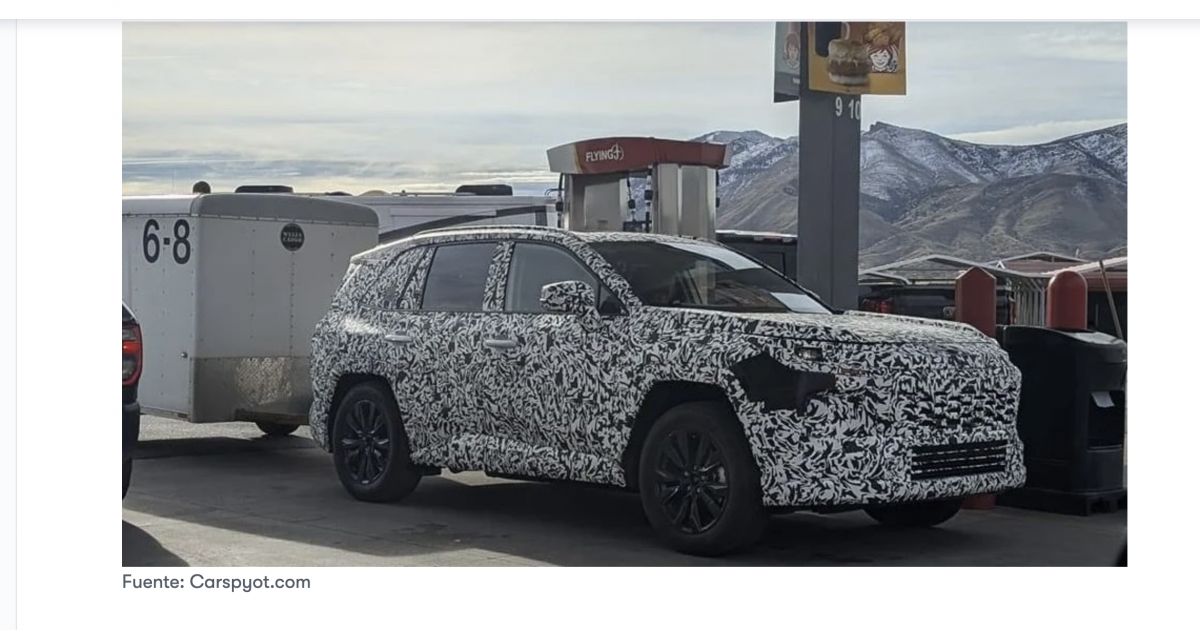
The next-generation Toyota RAV4 may have been spied for the first time.
A single image reshared by Coche Spias – which appears to have been taken in the US – shows a camouflaged vehicle wearing design cues from both the current RAV4 as well as newer Toyota models.
That suggests we could be looking at the upcoming sixth-generation Toyota RAV4, expected to debut sometime in 2025.
100s of new car deals are available through CarExpert right now. Get the experts on your side and score a great deal. Browse now.
Credit: Coche Spias
There appears to be the same ‘Hammer Head’ front styling of Toyotas like the latest Camry and Prius, while the belt line appears to have been tweaked.
However, the angular wheel arches and the creasing at the bottom of the doors closely resemble those of the existing RAV4.
It’s possible, then, that the new RAV4 will retain its hard points and even sheetmetal with the outgoing one – much as the latest Camry has – while gaining the brand’s latest technology.
While we can’t see inside the car, a pair of 12.3-inch screens – one for the infotainment system, the other for the digital instrument cluster – may feature, as they do in the Camry.
While the new Camry doesn’t look vastly different externally, it received a significantly different dashboard design with its latest generation.
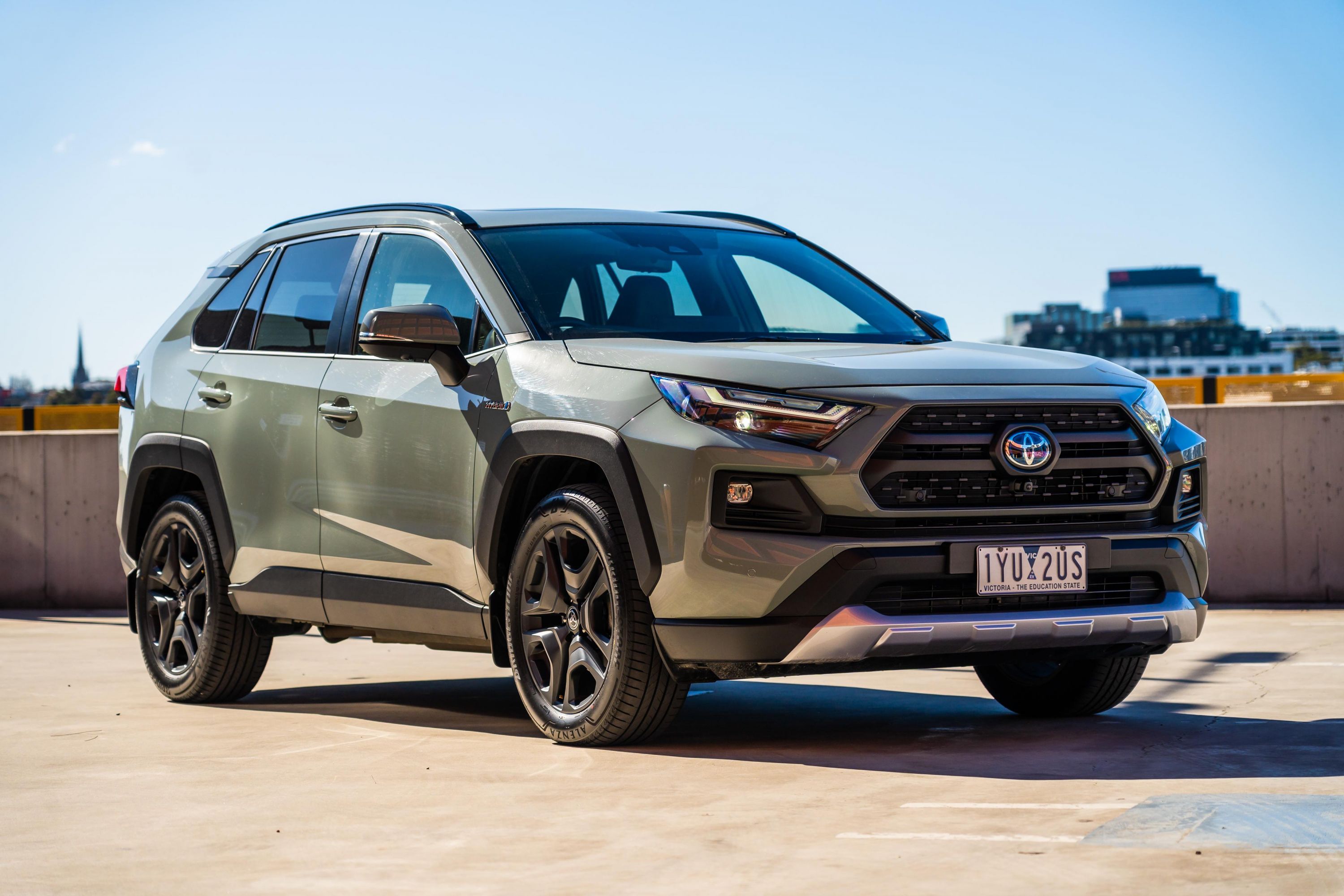
Current RAV4
Toyota has confirmed it isn’t looking to rock the boat with its new RAV4, though.
“RAV4 is easy,” Toyota Motor North America product planning head Cooper Ericksen told Automotive News in July.
“We have other product segments that are difficult, but the customer has spoken clearly with what they want with the RAV4: The size, the packaging, the level of performance, technology.
“We could sell 500,000 of those things a year if we could build them, so we do not want to mess up that formula.”
The company said the RAV4 had turned into its Camry over the last 10 years in terms of total sales.
The RAV4 is expected to use the current model’s TNGA-K underpinnings, though it could follow the latest Camry in adopting Toyota’s new-generation hybrid technology.
In the latest Camry, the new hybrid system features a lighter and more compact transaxle than before, as well as a more powerful electric motor.
Total system power for the 2.5-litre hybrid four-cylinder powertrain was increased by 10kW to 170kW, with Toyota claiming an 11 per cent reduction in fuel consumption plus improvements in both performance and noise suppression.
The RAV4 is a crucial vehicle for Toyota.
Last year, it was Toyota’s best-selling vehicle in the US, and JATO Dynamics data said that combined with the Wildlander – a lightly restyled version for the Chinese market – it was the world’s second-best selling vehicle behind only the Tesla Model Y.
This year, it has overtaken the HiLux in Australia and could be the brand’s best seller – if not the market’s overall – in 2024.
Prices? Still TBD for the U.S., with sales set for late spring or summer 2025
The gas-powered S7 gets updated, will soldier on
Fly for hours to the southwest from Madrid, along the coast of northwestern Africa, and eventually the dormant volcano Mount Teide pops up into view. One of many that formed the Canary Islands millions of years ago, the volcano hasn’t erupted since 1909, but it still looms ominously over its signature work—black ash scattered thickly, for miles around.
What’s a normal tourist do in one of the spicy new EVs from Audi on approach? Today we’re dodging influencers. Content disruptors? Ads in human form? However you know them, the black ash has attracted hordes of them. The Instagram girlies form a human set of pylons in the middle of the road leading up toward the mountain, hapless boyfriends enlisted as videographers and, also, pylons. They stand on the double yellow, space themselves out to crop the next one out of their frame, and tousle their hair for an epic selfie with the volcano as the backdrop.
Never mind the oncoming traffic.
It’s here where I’ve flung the Audi S6 into very low geosynchronous orbit—well, at least a hundred kilometers from acceptable wifi. The S6 fleshes out Audi’s EV lineup when it gets stateside next summer, along with the milder A6 sedan—both of which replace the gas-powered A6/S6 that will live on after a mild renovation as the A7 and S7. Confused? Imagine being Audi’s internal naming guru.
While it plans its last gas-powered new cars for launch in the next few years, Audi’s busy spinning off new vehicles from VW Group’s new PPE architecture. That includes the huskular (yep: husky, yet muscular) new 2025 S6 Sportback E-Tron. This EV family includes the Audi Q6 E-Tron and Porsche Macan EV, too—and it’s outfitted for success with 800-volt charging, dual electric motors, an aerodynamically sleek shape, and so, so many digital displays inside.
Audi wants to replace the gas-powered S6 in as straightforward a way as possible. To wit, behind its battery power, the new hatchback (which Audi calls a sedan) has an intricate design, solid dynamic appeal, and an efficient powertrain. It’s hot-swappable for the former car—but ends up being defined more by what it doesn’t do. It doesn’t make artificial noise (if you don’t want it to), it doesn’t put passengers above the driver—and most important of all, it doesn’t hesitate to make quick work of extraordinary roads.
2025 Audi S6 E-Tron test drive review, Tenerife
Audi S6 E-Tron: Concept-car appeal
Audi has teased out the shape of the S6 for years, first when it previewed it in 2021. This car isn’t much different after translation into production. It still bears a plastic panel where a grille might otherwise be, with a four-ring logo lit in white LEDs if you like, flanked by split-LED headlights, all of which rest upon a low front end with blackout trim that forms a pedestal. The nose panel has hockey sticks that suggest actual grille louvers (or the recline mode on a business-class airline seat), and the front-end trim permits air to flow and wrap around the front wheels—one of the tricks that helps the S6 generate a low drag figure of 0.23. It’s sculpted down the flanks to trim some weight from tall door panels, ribbed in black trim beneath to contour and highlight those abs, and slips through the air at the rear with staggered heights for its fenders and a slim tail spoiler underpinned by LED lighting—again with the four-ringed logo, lit in red here instead of white.
It’s a Sportback, by the way. Audi will introduce a more formal-roofed sedan in time, but for now, this sleek shape’s the only one to come to the U.S.
Slip inside and the S6 reveals a wraparound panel of digital information that nestles the driver behind a combined 11.9-inch digital gauge cluster and a 14.5-inch touchscreen for infotainment, coded from an Android base. Spend a little more and Audi tucks a 10.9-inch touchscreen for the front passenger in among the wood, textile, and metallic trim that frames the dash. The central screen rests on slim air vents above a console with a saddle-style drive controller, a pair of cupholders, and a redundant volume knob. Audi dressed one of my test vehicles in a handsome woven trim—but in the U.S., quilted leather will finish the cabin a little more finely.
2025 Audi S6 E-Tron test drive review, Tenerife
Audi S6 E-Tron: 2-motor AWD hustles to 60 mph in 3.7 seconds
S6 Sportback E-Tron Quattro, up to 543 hp, 0-60 mph in 3.7 seconds
Before we become grist for the influencer mill—aren’t we all, now?—the S6 influences me in the ways it can best. It makes for a fearsomely fast hustle from the coast to the mountains, with laser-quick flicks of power to erase other cars from the road, and from memory.
As my co-pilot and I slip from the beach town’s orbit and peel away into switchbacks, it’s the hulking weight of the S6 that makes itself known, twinned with a hushed uniformity of its driving responses. It presses its case, early and often, that this S6 ranks ahead of its gas-powered predecessors. Sure, gas cars seem less restrained and more lively because they emit all kinds of happy noises; we’re conditioned to them and expect them and tie them to our own emotional state. But while they’re more engaging in that way, they’re just…slower.
In the case of the S6, it posts up on the prior version with a 0-60 mph time of 3.7 seconds, which wells up from a 100-kwh battery pack under the floor (it’s deemed to have 94.4 kwh of usable energy), and twin motors that deliver all-wheel drive. Today’s gas car takes more than four seconds. The E-Tron is outfitted with artificial sounds that can amplify that hot-seat stoplight acceleration—but I turned them off whenever I could in its lesser drive modes.
Top speed clocks in at 149 mph, by the way, and the S6’s usual 496-hp peak can be tasered up to 543 hp in the launch-control mode that generates that drop-dead launch time. Curb weight, torque ratings, and range estimates—they’re all still to come, Audi promises. Once the coast clears the rearview mirror, I press the S6 E-Tron to the posted speed limits, and beyond. The bonging from the car’s speed-limit warnings has been silenced via its touchscreen interface, and the Drive Select button flicked to Comfort mode, where the blatty synthetic engine note has been quieted, too.
2025 Audi S6 E-Tron test drive review, Tenerife
As it rushes toward the peak of a long-dormant volcano, I have many, many, many opportunities to test its one-pedal drive mode, accessed by pulling its drive selector into “B.” It’s for those of us who connote EVs now with that particular driving sensation—it feels like gas sounds, perhaps—but it also permits a few different levels of regenerative braking through its paddle controls. Those lesser amounts of regen play up the S6’s smooth motor engagement and extra margin of refinement, especially in its Balanced drive mode and particularly at lower speeds. Unlike some EVs, the motors in the S6 don’t click on and off with slight jerks.
But if you want balance and smoothness, maybe the lesser A6 is for you? As the dirt around us starts to render black streaks among the brown, I tap the S6 into its Sport drive modes. Sound barks through the speakers, the suspension firms up, and the steering weights up, without drama. It’s been so serene that the gain in bump-steer and ride stiffness get noticed—but don’t upset its powerfully composed demeanor.
With a curb weight that has to be 5,500 pounds or more—but also with air springs and adaptive damping, the S6 can’t be ignored when it goes into this attack mode. It’s a very easy car to drive very hard. Bubbles in the road knock at its wheels, but don’t knock the hefty steering off track. The S6, which sticks to the road through Michelin Pilot Sports, 245/40R21s up front and 275/35R21s in back, just presses its way into corners deeply, and leans into its well of battery-generated torque to launch itself out of them and onto connecting straights.
It’s the kind of luxury EV that eggs drivers on to empty the battery as quickly as possible, in other words. And when it’s spent, the S6’s battery can be recharged from 10-80% in as little as 21 minutes through its 800-volt system, which can reach charging rates of up to 270 kw. It can treat its battery as twin packs when 400-volt charging’s all that’s available, and top them off in parallel. At home, on a 50-amp 240-volt AC connection, the S6’s 9.6-kw onboard charger can refill it in about 10 hours.
2025 Audi S6 E-Tron test drive review, Tenerife
Audi S6 E-Tron: Hatchback body, high-tech bona fides
Up to three digital displays in front
Rear-seat headroom could be your decider
Prices haven’t been announced, but bet on at least $80,000
Audi dubs the S6 E-Tron a sedan, but with its fixed glass and tail section lifting in combination to expose a covered cargo hold, it’s really a hatchback that looks like a liftback. We’ll split the difference, and call it a car.
As a car, it works well. The S6 E-Tron sits about 194 inches long, which stacks up a little shy of the Tesla Model S—but rides on a long 116-inch wheelbase which helps with its sorted, planted ride.
It’s not the most spacious vehicle in its size class, though. The front passengers have more than ample room outboard: I could paddle my hand between the very well-formed seats and smack the door panels along with the beat of the sound system’s throbbing Euro disco. They’re canted inward toward the console, so my knees made steady contact with the console. I heartily approve of one test car’s textile interior, too—but it’s a treatment we won’t get in the U.S. Instead, the front heated and cooled seats will be clad in quilted leather. An inch taller and wider than the outgoing S6, the EV edition has more than enough room for our 5-foot-8 editors, in front and in back.
2025 Audi S6 E-Tron test drive review, Tenerife
But at about 6 feet tall, with stubby legs and a long torso, I didn’t have head clearance in the back seat. I made contact with the headliner, and my knees stood above the seat bottom—and no doubt, I took up most of the view outward through the very slim rear window. The same observations rang true in the Q6 E-Tron I sampled last year, and in the Porsche Macan EV our team tested recently. There’s room for four adults, for sure—but where the taller ones sit could be the game, set, and match.
Cargo space of about 26 cubic feet rises to nearly 40 cubic feet when the rear seatbacks have been lowered.
With a panoramic sunroof that can be darkened, section by section, the S6’s interior glows with high-grade materials as well as from those expansive screens in front. It’s alive at times, when all its safety warning systems—speed limit detection, active lane control, and more—cue their symphony of flashes, buzzers, and alerts, before the available head-up display casts arrows in the direction of upcoming turns. I imagine it would be even busier if U.S. cars got the custom light signatures and car-to-X communication of Euro models—or their camera side mirrors, which would not give me a clear view to the car’s left side through my progressive lenses. We get more bulky, less aero-clean standard mirrors—and clearer vision, as a result.
We’ll also get options such as a 20-speaker Bang & Olufsen sound system with headrest speakers—the Miata influences everything—and distinct sound zones for drivers and passengers.
What we won’t get soon, but will eventually, is a price for the S6 Sportback E-Tron. It’s more than $80,000 in base spec in Germany and more than $100,000 fully optioned—and that’s before the much-speculated higher-performance RS 6 E-Tron that no one wants to talk about makes its way into reality.
Until it does, the S6 E-Tron’s the influencer of the new A6 lineup. How it does it is simple: It does almost everything the previous S6 sport sedan did, only better in many, if not most, ways.
If that doesn’t convince you, maybe it could just, you know, stand in the middle of the road and tousle its hair.
Audi flew us to Tenerife so that we could dodge Instagram influencers and bring you this test drive review.
Audi’s S6 Avant e-tron, delivering 370 kW (503 PS) with an extra boost of up to 405 kW (551 PS) using Launch Control, brings Audi’s signature performance to the EV arena. This sleek estate combines practicality with power, taking on the likes of the BMW i5 M60 xDrive Touring, which boasts a formidable 442 kW (601 PS). Distinguishing itself further, the S6 Avant e-tron features Audi’s new illuminated red rings, reinforcing its dynamic identity.
Built on Audi’s Premium Platform Electric (PPE), the S6 Avant e-tron packs a 94.9 kWh net battery capacity, promising a WLTP range of up to 647 km. Real-world conditions may temper these figures; during testing, the vehicle displayed a 418 km range at 98% charge. Equipped with a permanent magnet synchronous motor (PSM) at the rear and an asynchronous motor (ASM) at the front, the powertrain balances efficiency and performance, engaging the front motor only when necessary to minimise drag.
2025 Audi S6 Avant e-tron
Measuring 4.93 metres in length and 1.92 metres in width, the S6 Avant e-tron maintains proportions similar to its combustion-engine predecessor. Its 502-litre boot (expanding to 1,422 litres with the rear seats down) falls slightly short of the diesel-powered S6 Avant TDI but offers a 27-litre frunk for extra storage. Like its ICE counterpart, the S6 e-tron can tow up to 2.1 tonnes, though such loads halve its range.
Audi’s engineers have refined the chassis, equipping the S6 e-tron with a reworked five-link front suspension and adaptive air springs as standard. The ride height is lowered—18 mm at the front and 25 mm at the rear—compared to the standard A6 e-tron. While its sporty suspension and thicker stabilisers enhance handling, some dynamic features, such as active torque vectoring and a rear differential lock, are reserved for future RS variants.
The S6 e-tron accelerates from 0 to 100 km/h in 3.9 seconds and reaches a top speed of 240 km/h, electronically limited to leave room for the RS model. On a test route climbing to 2,300 metres, energy consumption averaged 23.2 kWh/100 km, above Audi’s official figure of 17.9 kWh/100 km.
Inside, the S6 e-tron offers a digital-first experience, featuring curved displays: an 11.9-inch virtual cockpit, a 14.5-inch touchscreen, and a 10.9-inch passenger display. The augmented reality head-up display further enhances convenience. A standout feature is the panoramic glass roof, which can toggle between opaque and tinted modes or create a pergola effect with alternating segments. However, optional extras like this add to the base price of €101,150, matching the BMW i5 M60 Touring.
The Audi S6 Avant e-tron is a compelling electric estate, combining ample power, luxurious comfort, and practical features. However, while its ride and refinement impress, the absence of some advanced dynamics leaves room for improvement. With the RS variant on the horizon, Audi enthusiasts can expect an even sharper performer to follow.
The technical storage or access is strictly necessary for the legitimate purpose of enabling the use of a specific service explicitly requested by the subscriber or user, or for the sole purpose of carrying out the transmission of a communication over an electronic communications network.
Preferences
The technical storage or access is necessary for the legitimate purpose of storing preferences that are not requested by the subscriber or user.
Statistics
The technical storage or access that is used exclusively for statistical purposes.The technical storage or access that is used exclusively for anonymous statistical purposes. Without a subpoena, voluntary compliance on the part of your Internet Service Provider, or additional records from a third party, information stored or retrieved for this purpose alone cannot usually be used to identify you.
Marketing
The technical storage or access is required to create user profiles to send advertising, or to track the user on a website or across several websites for similar marketing purposes.