The sightings are getting more frequent now – the GAC M8 has been spied in Malaysia once again, this time in Puchong along Lebuhraya Damansara-Puchong (LDP). This luxury MPV would certainly help flesh out the Chinese carmaker and distributor Warisan Tan Chong Automotif’s (WTCA) lineup in Malaysia, currently consisting solely of the GS3 Emzoom and the Aion Y Plus.
As previously mentioned, this is a massive people carrier that’s even larger than the popular Toyota Alphard and Vellfire. At 5,212 mm long, 1,893 mm wide and 1,823 mm tall with a wheelbase of 3,070 mm, the M8 is comparable to the electric Zeekr 009 and Denza D9, both set to arrive in Malaysia soon.
Unlike those cars, however, the M8 gets a petrol engine under the short bonnet – in this case, a 2.0 litre turbocharged four-cylinder petrol engine making 255 PS and 400 Nm of torque. Drive is sent to the front wheels via an eight-speed automatic gearbox.
Those outputs are comparable to the Alphard’s 2.4 litre mill despite having less swept capacity (and thus, less expensive road tax). The hybrid model swaps the engine for an Atkinson-cycle version churning out 190 PS and 320 Nm, paired to a 184 PS/270 Nm Toyota-sourced electric motor and eCVT.
China also offers a plug-in hybrid version called the Trumpchi E9, boosting the engine to 330 Nm and mating it with a 182 PS/300 Nm electric motor and a two-speed Dedicated Hybrid Transmission (DHT). This makes a combined 373 PS and 630 Nm, enabling the leviathan to sprint from zero to 100 km/h in 8.8 seconds. Juicing the motor is a 25.57 kWh battery that delivers a pure electric range of 106 km. With a 56 litre fuel tank, GAC claims a combined range of 1,032 km and a fuel consumption figure of 6.05 litres per 100 km.
The M8 certainly takes the Alphard-aping to the next level, particularly at the front where the full-height grille is akin to its Japanese rival’s posher Lexus LM sibling. The design, however, is more angular with sharp lines, large L-shaped head- and taillights (the former with neat fan-like lighting signatures) and lots of chrome on the window line, bumpers and side skirts.
As expected, the interior of the M8 is exceedingly plush, with seven luxurious pews including second-row captain’s chairs. These feature plenty of power adjustment, built-in ottomans and five-inch armrest displays, and passengers can bask in the 15.6-inch roof monitor.
There’s lots of tech for the front occupants, too, such as a 12.3-inch digital instrument display and a 14.6-inch infotainment touchscreen, pumping music through a 16-speaker Yamaha sound system. The wood panelling ahead of the passenger also features marquetry portraying mountains and birds – a nice touch.
Just like other GAC models, the M8 comes with the ADiGO Pilot suite of driver assists, including autonomous emergency braking, adaptive cruise control with stop and go, lane centring assist, traffic sign recognition, blind spot monitoring with collision avoidance, rear cross traffic alert with auto brake, rear collision warning and mitigation, park assist and a door opening warning.
The Qatar Grand Prix is round 23 of the 2024 F1 season
The event will feature a standalone Sprint race in addition to the main race
Red Bull Racing’s Max Verstappen has already claimed the 2024 Drivers’ title
A few days on from the Las Vegas Grand Prix, where Red Bull Racing’s Max Verstappen was named the 2024 Formula 1 World Champion, teams have made the 8,000-mile journey to the to the Persian Gulf, specifically to Qatar for this weekend’s penultimate race of the season.
The Qatar Grand Prix was first held in 2021 as a replacement for a canceled Australian Grand Prix, and from 2023 it becomes a permanent fixture on the calendar. The race takes place at the Losail International Circuit, which is located on the outskirts of Qatar’s capital, Doha, and this year, like last year, there will be a standalone Sprint race in addition to the main race.
The Losail International Circuit features a track that stretches 3.43 miles and is surrounded by a ring of artificial grass designed to keep sand from piling up on the surface. It was originally designed for motorcycle racing, specifically MotoGP, and as a result the track features a fast and flowing nature, making it difficult to pass due to the high-speed nature.
There are 16 corners in total (10 right-handers and six left-handers) and the main straight is almost a fifth of a lap, with the end of this straight being the only DRS zone. The surface is one of the most abrasive on the calendar, and last year organizers made it compulsory for drivers to pit every 18 laps because of excessive tire wear, though that isn’t expected to be the case this year. Due to the tough conditions, Pirelli has nominated its hardest compounds, the C1, C2, and C3.
Losail International Circuit, home of the Formula 1 Qatar Grand Prix
Conditions in last year’s race were also almost impossible to handle due to extremely hot weather. However, this year’s race takes place two months later, when temperatures are much lower. The current forecast calls for highs of only around 75 degrees F.
Both the Sprint race and the qualifying session are held on Saturday and the main race on Sunday. The Sprint race is a standalone points race that takes place prior to the qualifying session for Sunday’s main race. It has its own qualifying session that takes place on Friday, after a single practice session.
Although Verstappen has been named the 2024 World Champion, the battles for second place in the Drivers’ standings plus top honors in the Constructors’ standings are very much alive.
Going into the weekend, Verstappen’s points tally in the 2024 Drivers’ Championship is 403 points. McLaren’s Lando Norris is second with 340 points and Ferrari’s Charles Leclerc is third with 319 points. In the Constructors’ Championship, McLaren leads with 608 points. Ferrari is second with 584 points, while Red Bull is third with 555 points.
A 1967 Chevy II Nova Sport Coupe once owned by “Fast and Furious” star Paul Walker is up for sale on Bring a Trailer.
This coupe was modified by muscle-car parts specialist Year One following production of 2003’s “2 Fast 2 Furious,” which featured a Chevrolet Camaro and Dodge Challenger kitted out by the company, and was presented to Walker in 2004, according to the sale listing. The Chevy II itself appeared in 1962 as a more conventional alternative to the Corvair, with Chevrolet later adding Nova badging before dropping the Chevy II part of the name completely.
1967 Chevrolet Chevy II Nova owned by Paul Walker (image via Bring a Trailer)
The car wears paint that, according to the listing, is modeled on a Porsche color from 2002 called Slate Gray. Exterior modifications include a cowl induction hood, and mini-tubbed rear wheel wells that accommodate 18-inch wheels with 295/35 BFGoodrich G-Forca T/A tires. The wheel-and-tire setup is staggered, with 17-inch wheels and 225/45 tires at the front.
Chassis upgrades include a Ford Mustang II-style power steering rack, four-link rear suspension, adjustable coilovers, and disc brakes. It’s unclear what engine was installed by Year One, but the Nova currently has a 6.0-liter V-8 believed to have been sourced from a General Motors pickup truck. The engine, along with a 4-speed automatic transmission, were installed in 2010, according to the listing, which notes that the Nova’s chassis number indicates it left the factory with an inline-6.
1967 Chevrolet Chevy II Nova owned by Paul Walker (image via Bring a Trailer)
The car was acquired by its seller in 2020 and has received some upkeep work, including replacement of the carpeting and battery, some touch-up paintwork, and repairs to the speedometer and tachometer.
Walker, who died in a 2013 car crash, amassed an eclectic collection, including Japanese sports cars like the ones his character Brian O’Conner drove in the “Fast and Furious” franchise and European classics like a 1973 Porsche 911 Carrera RS 2.7 and BMW M1. This Nova shows that his tastes extended to muscle cars as well.
Kenya is a year-round destination, offering diverse experiences depending on when you visit. From world-famous wildlife safaris to birdwatching and stunning landscapes, there’s something for everyone at any time of the year.
The best time to visit Kenya largely depends on your interests and priorities—whether it’s spotting the Big Five, witnessing the Great Wildebeest Migration, or enjoying lush, green scenery with fewer crowds.
Here’s a detailed guide to help you plan your perfect trip to Kenya based on its seasons and attractions.
Here’s an overview:
1. Dry Season (June to October) — Best for Wildlife Safari
The dry season in Kenya is warm and sunny, with little to no rain. This is the most popular time to visit, as it coincides with pleasant weather and ideal conditions for outdoor activities.
Why visit Kenya during the dry season?
Unparalleled wildlife viewing: During the dry season, animals congregate around water sources, making them easier to spot. The sparse vegetation further enhances visibility, allowing you to observe wildlife in their natural habitat. Kenya’s iconic national parks, such as the Maasai Mara, Amboseli, and Tsavo, are bustling with activity as predators and prey navigate the challenges of the dry months.
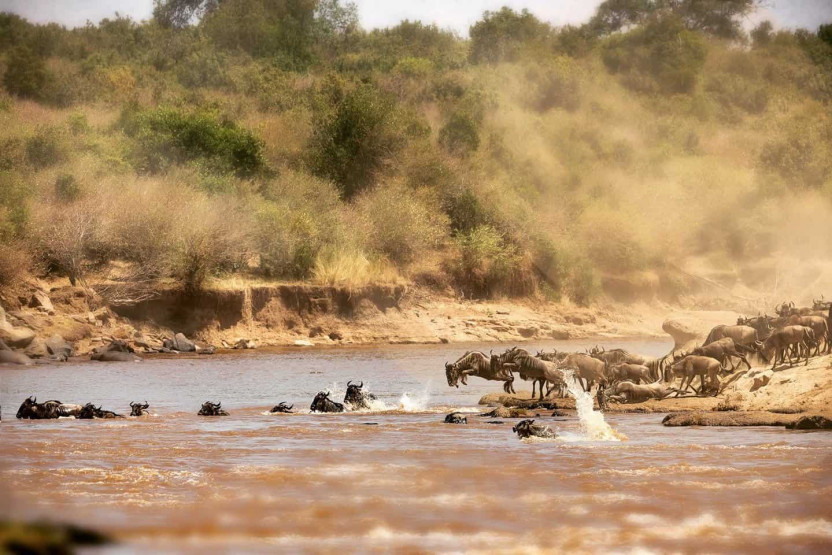
The Great Wildebeest Migration: One of nature’s most awe-inspiring events, the Great Wildebeest Migration, occurs between July and October. Over 1.5 million wildebeest, zebras, and gazelles cross the Mara River into the Maasai Mara, dodging crocodiles and predators in a dramatic struggle for survival. Witnessing this natural phenomenon is a bucket-list experience.
Comfortable Safari Conditions: The dry season offers pleasant, sunny days and cooler evenings, making it comfortable for safaris. Roads in the parks are generally in good condition, making navigation easier.
What to keep in mind
The dry season is the peak tourist period, so expect larger crowds at popular safari destinations. Prices for accommodations and tours are also at their highest, so early booking is advisable.
Wildebeest migration in Kenya
2. Green Season (November to May) — Best for Birdwatching & Fewer Crowds
The green season encompasses Kenya’s wet months, with short rains in November and December and long rains from March to May. While rain may deter some travelers, this period offers its own unique charm.
Why visit Kenya during the green season?
Spectacular birdwatching: The arrival of migratory birds during this time makes it a paradise for bird enthusiasts. Over 1,000 bird species can be found in Kenya, including flamingos in Lake Nakuru and Lake Bogoria and other exotic species in Amboseli and Samburu.
Lush landscapes: Rain transforms Kenya’s savannahs into vibrant green carpets, providing a stunning backdrop for photography and nature walks. The scenery is especially striking in places like the Aberdare Ranges and Mount Kenya National Park.
Fewer tourists: If you’re looking for a more intimate experience, the green season is ideal. With fewer visitors in the parks, you can enjoy uninterrupted wildlife sightings and a peaceful atmosphere.
Budget-friendly travel: This is the low season for tourism, and many accommodations and safari tours offer discounted rates. The green season is perfect for travelers seeking a more affordable Kenyan adventure.
Challenges to consider
While wildlife is still abundant during this period, animals tend to disperse due to the availability of water, making them slightly harder to spot. Heavy rains, particularly from March to May, can also affect road conditions and accessibility in some areas.
3. Shoulder Seasons (Late October to Early November and March to May)
These transitional periods feature moderate rainfall and pleasant temperatures, striking a balance between the extremes of the dry and green seasons.
Why visit during the shoulder seasons?
Good wildlife viewing: While the vegetation begins to thicken, you can still enjoy decent wildlife sightings. Parks like Samburu and Lake Naivasha offer excellent opportunities for spotting big game and aquatic life during these months.
Great for budget travelers: With fewer tourists, you’ll find better deals on accommodations and activities. If you’re planning a safari on a budget, the shoulder seasons provide a good mix of affordability and accessibility.
What to keep in mind
The rain may occasionally disrupt plans, and road conditions in some remote areas can become challenging. However, for travelers willing to embrace a little unpredictability, the shoulder seasons can be highly rewarding.
Best Time to Visit Kenya Based on Activities
Best for wildlife safaris: June to October
This period offers the best conditions for spotting big game and experiencing the Great Wildebeest Migration. It’s perfect for first-time visitors or those keen on an unforgettable safari experience.
Best for birdwatching: November to May
Kenya’s wetlands and forests come alive with vibrant birdlife, including migratory species that only visit during the green season.
Best for scenic beauty and solitude: April to May
The rainy months bring Kenya’s landscapes to life with lush greenery and blooming flora. You’ll also encounter fewer tourists, making it an excellent time for a peaceful retreat.
Best for budget travel: March to May and Late October to Early November
With lower prices and smaller crowds, these months are ideal for travelers looking to explore Kenya without breaking the bank.
Practical Tips for Planning Your Trip
Book early for the dry season: If you’re planning a safari during the peak months of June to October, make reservations well in advance to secure your preferred accommodations and activities.
Pack for the season: Light clothing, sunscreen, and a hat are essential during the dry season, while waterproof gear and sturdy shoes are a must for the green season.
Choose the right parks: For the Great Migration, head to the Maasai Mara. For birdwatching, visit Lake Nakuru, Lake Baringo, or Amboseli National Park. If you want to escape the crowds, explore lesser-known parks like Meru or Chyulu Hills.
Consider local events: Kenya’s cultural calendar includes events like the Maasai Mara Marathon in November and various local festivals, which can add an enriching dimension to your visit.
If you book your trip with a travel operator like Trumpet Adventures, they’ll organize everything for you. Get in touch with them directly below to find out how they can help organize the ultimate safari in Kenya:
Kenya’s diverse offerings make it a destination worth visiting at any time of year. Whether you’re chasing the drama of the Great Wildebeest Migration, marveling at the vibrant birdlife, or simply soaking in the beauty of Kenya’s landscapes, there’s always something magical to discover.
Your ideal travel time will depend on your interests, budget, and tolerance for rain or crowds. Plan wisely, and Kenya will reward you with unforgettable experiences and memories that last a lifetime.
We surprise you with hidden treasures and introduce you to people you would never meet on your own. We give you a fascinating insight into local traditions and bring history to life. Trumpet Adventures lets you explore the potential of what Uganda and Rwanda have to offer in terms of tourist attractions and why it’s known as the 5th tourist destination in Africa. Our aim is to exceed your travel dreams and desires in all our itineraries and take you beyond the obvious sights.
We surprise you with hidden treasures and introduce you to people you would never meet on your own. We give you a fascinating insight into local traditions and bring history to life. Trumpet Adventures lets you explore the potential of what Uganda and Rwanda have to offer in terms of tourist attractions and why it’s known as the 5th tourist destination in Africa. Our aim is to exceed your travel dreams and desires in all our itineraries and take you beyond the obvious sights.
When you think of street racing in 2024, Discovery’s Street Outlaws is likely the first thing that comes to mind for many. Despite the show’s semi-scripted drama and city-permitted, closed-road drag strips, it offers a reasonable glimpse into the world of real street racing. But a decade ago, we took a deep dive into an underground scene in Stockholm, Sweden, one that was far from scripted.
The Stockholm Top 10 street drag racing league was as authentic as they come. Is it still happening 10 years later? That’s a question that might be worth exploring. For now, though, let’s revisit Peter Kelly’s 2014 feature for this week’s throwback post…
2014 Feature
It’s just before midnight, and I’m heading south on one of Stockholm’s busiest highways at well over 200km/h. Volvo and Saab-shaped streaks of light are whipping past the Lexan window to my right in the strange, never-quite-dark atmosphere that you only find this far north at this time of year.
With its seemingly endless days and lush green surroundings, Sweden is a beautiful place in mid-summer. Right now, though, all my attention is focused on 30 minutes ago, when a smiling, sandy-haired man named Johan had offered me a pair of fluro-green earmuffs as I awkwardly scrambled past the roll cage and into the bare alloy Kirkey passenger seat of Magnus’s [surname omitted] nitrous-fed, 491ci big block V8 Chevrolet Monte Carlo drag car. I politely declined. He had raised an eyebrow, shrugged his shoulders and smiled before simply saying “okay” and chuckling as he walked away with a typical Scandinavian nonchalance.
Now, as the heat, the vibrations and the thunderous noise from open headers dumping directly beneath my Nikes travel up through my legs and rattle whatever is left of my brain, I understand. I should have listened to Johan. At the same time, Johan probably should have insisted… This is like sticking your head inside a kick drum while someone with powerful calf muscles hammers the double kick 20,000 times a minute.
After slowing back down to highway speeds following our quick on-the-fly testing session, we are rejoined by a fleet of support vehicles that had followed us from Team Insane Racing’s home base in an industrial area south of the central city. The cars quickly form back into a tight bunch, surrounding the completely unregistered and highly illegal G-body drag car to create a protective cocoon of steel, glass and rubber.
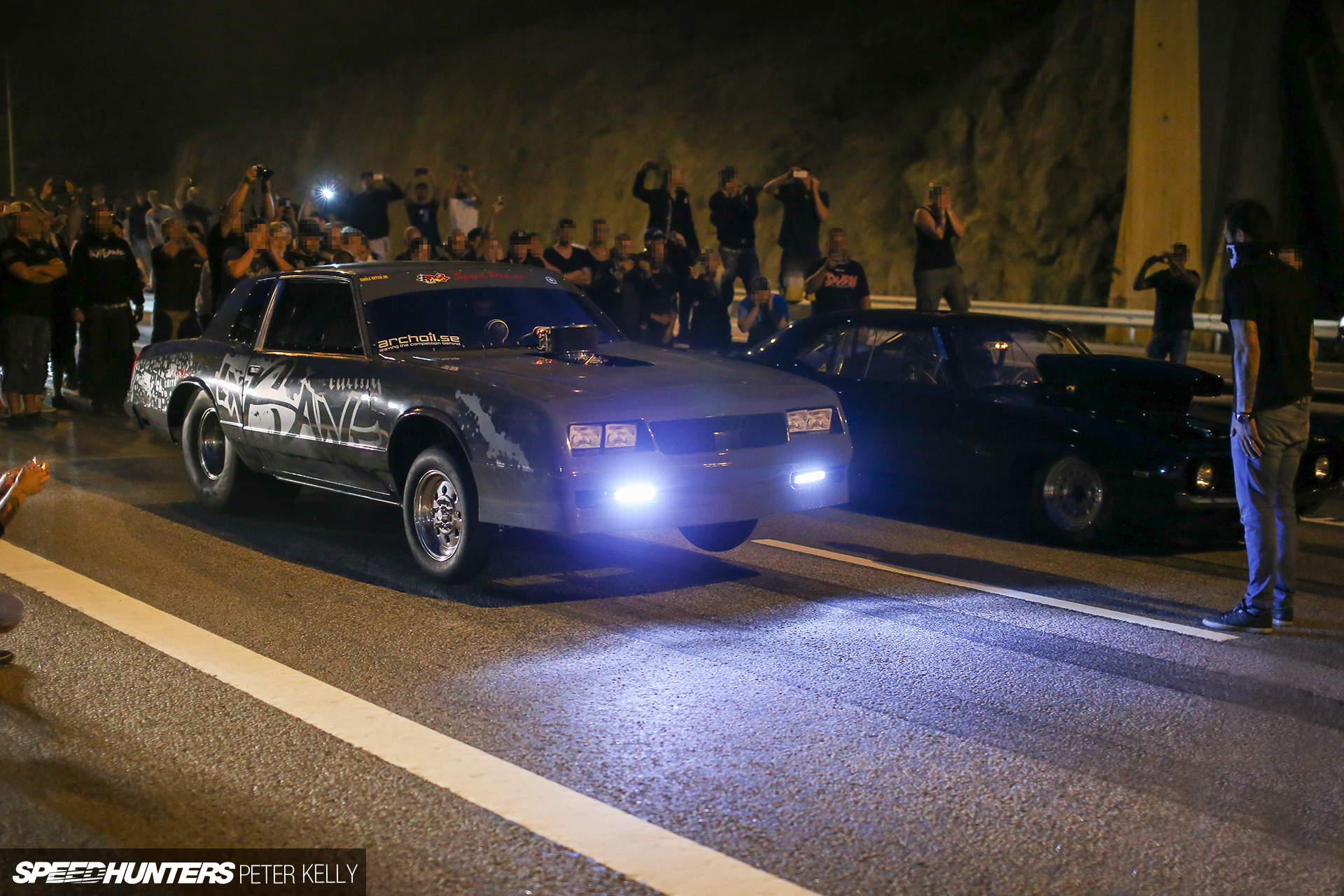
We’re on our way to an empty parking lot to meet up with Magnus’s challenger in what is known as the Stockholm Top 10 – an underground street racing league that is a part of this city’s long-running automotive culture. A big crowd of spectators and their cars are already sitting at the spot when we arrive, and the opponent, driving a ’68 Camaro, turns up a few minutes later, announcing his arrival with a healthy stab of the throttle.
Words are exchanged between drivers, and the Monte Carlo gets one last check over. The word then spreads through the crowd, and both GMs splutter, then howl into life. Both machines run big block Chevs and plenty of nitrous, although the Camaro has been built as more of a street car and still uses mostly steel panels and full glass, giving it a weight disadvantage.
I had no intention of being inside the Monte Carlo for whatever would unfold in the next 10 minutes. Instead, I jumped in the back of one of Team Insane’s ‘blocker’ team cars (more on that later) and followed the Monte out of the parking lot and out towards the on-ramp to the highway.
Marcus, the head of Team Insane Racing and the driver of our vehicle weaves through the hordes of spectator cars that had managed to get out in front. It was, at times, mere millimetres away from a demolition derby, but it was crucial that the team vehicles be at the start line, not stuck behind 50 cars and hundreds of people all clamouring for a spot in which to view the race. After what must have only been a minute of highway driving, the Chevs suddenly hit the picks up ahead, coming to a stop just before an overpass.
Everyone poured out of their cars and ran to the impromptu start line. I couldn’t help but wonder how many ‘normal’ people had inadvertently found themselves caught up in the middle of all this and are now sitting stationary on a major highway, wondering what the hell is going on.
The two teams quickly surrounded their cars, and with a thumbs up, Magnus and his opponent let rip – firing up the rear Mickey Thompson slicks while the teams held the cars in a stationary position before stepping back and allowing the drivers to ease off the brakes and leave two pairs of thick, arrow-straight lines down the highway.
This serves to not just warm the tyres but also clears any dirt and debris off the road surface and lays down a nice coating of hot rubber that gives something for the slicks to grab come launch time.
The cars are then backed up to the start line by the teams, and the official starter saunters out in front of the two Chevs. After checking both drivers are ready, the starter swings his arms downwards, and the two machines violently nose up and twist off the line.
Magnus’s reaction time is perfect, and he gets a clear jump on the Camaro, surging out in front as cheers erupt from the team. But it wasn’t to last. The Camaro begins to rapidly gain at the 150-metre mark. It was hard to tell from our vantage point, but word quickly came through from the finish line – Magnus had lost the race. There was no time to wait around and congratulate the other team, though. Judging by the outcome of the race, Magnus could be in real trouble further down the highway. It was a mad sprint back to our vehicles, and I’d barely lifted my foot off the pavement and into the support car before we were sitting on the limiter, ripping down the highway at maximum speed. Time was of the essence: if there was something wrong, the Monte Carlo needed to get off the highway and fast.
Sure enough, we rounded the bend, and there was the boxy G-body stranded in the middle of the off-ramp. The fleet of Team Insane cars arrived and headed to surround the car, but just as we opened our doors, the 491 coughed, groaned and then thundered into life. Magnus was in no mood to waste his good fortune, slamming the heavily modified THM400 transmission into gear and lurching off the ramp before rumbling through the local backstreets towards a quiet IKEA parking lot. Although I couldn’t understand what the team were saying at the time, it later transpired that the alternator had given up, and the Chev’s nitrous solenoids couldn’t draw enough power to open, leaving the Monte Carlo 400 horse down on the Camaro. A serious misfire had also developed, causing one of the rocker arms to snap in half. Whether or not Magnus won or lost, or whether his car could be quickly fixed or would need to go back to the shop, was irrelevant; this entire evening was just for one race. No practice, no qualifying, no eliminations – just one eighth-mile race.
This is the underground world of Stockholm’s street racing scene, an incredibly well-organised, semi-professional and most obviously highly-illegal sub culture that has thrived in this part of the world for the last 30-odd years. It probably doesn’t need to be said, but just in case; please know that Speedhunters does not suggest readers should participate in illegal street racing, and we always encourage you to find a safe and legal way to race. However, when someone offers you a tiny glimpse into their fascinating, secretive and adrenalin-filled automotive world; you can’t just say no…
Magnus first became involved in street racing as a teenager, when the allure of staying out all night and chasing secretive racing leagues around the city with your friends seems like the most adult thing you could imagine. But it wasn’t until he bought his original dream car, an Audi S2, that he started racing himself. Soon enough the Audi went from completely stock to 500hp AWD launch machine, all whilst he was still driving it to work every day.
An upgrade to a full-blown drag car was never on the cards, but that all changed when a friend told him about a particular 1987 Chevrolet Monte Carlo rolling shell that had come up for sale in the northern city of Malmö. The car, which was originally built in the States, had come into the country a few years earlier and had spent the last few seasons racing with a simple small block set up.
After checking out some photos, Magnus was in love with the tough, angular machine, and rang the owner on impulse, telling him he would come get the car the very next weekend.
While the main body is still Chevy steel, the two-piece front end, doors, boot and rear bumper are all VFN fibreglass items, and the glass has all been replaced with plastic.
A peak under the rear end of the car reveals Aerospace Components brakes, QA1 coilovers and a ladder bar set up flanking a Moser drag rear end.
With the aluminium Kirkey seats and weight pulled out of everywhere possible, the car is extremely light at 1,105kg – especially considering its size. All that was needed was the right motor and trans set up. Magnus didn’t want some weak small block though, and began pulling together whatever money he could to get his dream nitrous-fed big block Chev set up, even if it meant selling the Audi and subsisting on bread and water for the next year.
Based on a Chev 454, the big block has been bored and stroked to 491 cubic inches, or 8,046cc. It has been built specifically to take large doses of nitrous oxide, and uses an Eagle 4130 crank with JE forged pistons and rods, all sitting below a pair of CNC-ported Brodix Big Brodie 395 heads.
The heads run Jesel Pro Series shaft rockers, dual comp cams springs, 4130 chromoly 5/16-inch pushrods from Manley Performance and mechanical lifters from Comp Cams. The dents in the rocker cover seen above are testament to the fact that Magnus’s race against the Camaro wasn’t the first time he’d broken a rocker arm…
A custom nitrous-specific camshaft allows the engine to make the most of a 400-shot of NOS, pushing power from 900hp in its natural form to upwards of 1,300hp once the Pro Shot fogger system is activated.
Induction is handled by a QFI 1250 high-flow carburetor, bolted to a match-ported Edelbrock 454-R Victor intake manifold.
The carb accepts fuel from one of two systems in the boot, changeable with the toggle switch at the rear of the car. This allows Magnus to drive to his races on pump gas, which can sometimes take hours, then change to race gas once he’s ready.
Finally, the exhaust system, which had caused my ears so much trouble, is really less of a system and more of a set of hand-built headers, dumping into a pair of mufflers that exit underneath the car.
As Magnus happily admits, you either love the Monte Carlo’s brutish looks, or you hate them. He can’t get enough, obviously, and personally, neither can I. I love this car’s square, unforgiving lines and the way the rear quarters sit when they’re trying to envelope a 33×16.5-inch drag slick. It’s certainly not what I’d call sexy, but it’s angry, purposeful and thoroughly American.
The Team Insane Racing Chev is far from being the first Monte Carlo drag racer, nor is it the quickest or even the tidiest. This car is special because it sees a full season of competitive racing, and yet it lives its life entirely on the street. The question is: how do these guys get away with it?
After my first night out with the Team Insane Racing crew, the guys (and girls) were good enough to invite me out again a few weeks later to tag along for another race. Magnus was to be paired up against a ’69 Camaro once again, but this time the opponent’s car was pushing more power and less weight. This would be the perfect opportunity to learn more about this fascinating sub culture and exactly how it is they do what they do.
Stockholm’s street racing scene has been around for a long time, but it was in 1982 that drivers began to get serious, creating the Stockholm Open, an annual street racing event that would pit the quickest cars from around Northern Europe against one another in a single-night elimination tournament. The Stockholm Open grew bigger and bigger until it finally went legit in 1993, moving to Malmby Airstrip in Strängnäs, but this wasn’t to last.
In the early 2000s, the government put a stop to the racing, closing down the legitimate event at Malmby because the cars weren’t ‘green’ enough. Racers protested, saying they would simply head back to the streets if they weren’t allowed to race legally. The government wouldn’t budge, so that’s exactly what they did. Today the Stockholm Open is still the single biggest racing event of the year in the city, but there are now also other tournaments taking place throughout summer, including the Stockholm Top 10, which is one of Magnus’s main competitions.
The Top 10 is not constrained to one evening, but is a constantly changing list of the 10 fastest cars in Stockholm that runs over the racing season. At any one time, there are 16 cars competing for a spot on the top 10, and in order to advance up that list (which is constantly updated online), you must challenge the car and driver in the spot above you. The driver then has a fortnight to respond, or automatically forfeits their place on the list (even if their car is not race-ready). The driver who is challenged may choose the spot to race, which is always on a section of highway, due to the good visibility, wide roads, no chance of on-coming traffic and no short run-offs.
It’s not all American muscle and way too much nitrous, either. If your car and your driving is fast, then that’s all that matters.
So how is it this is all possible? This entire scene’s existence comes down to perhaps one major point in Swedish law. Put simply, for a driver to be arrested or charged with any offense, after witnessing an illegal act an officer must not lose sight of the car in question. The police must then pull the vehicle over and catch the driver still sitting behind the wheel.
Essentially, this means that if a police car somehow manages to get past the hordes of spectactors and cars that have jammed up the motorway to watch the race, then the team’s blocker cars whose specific job it is to stop a police car in the event of a chase, and then catch up to a one-tonne drag car pushing 1,300hp, all the driver would need to do is get off the motorway, swing around a corner, park up and get out his car. Even if he’s standing right next to it, the officer cannot prove it was he who was driving.
Of course, things like this are never foolproof, and Magnus admits that he’s certainly had a few close calls with both the police and the centre barrier – it’s not all fun and games after all. These are serious cars that go seriously quick and carry serious consequences should something go wrong.
Thus far, there have been no serious incidents, so for now, Magnus, his team and all his fellow racers are happy to head out until the early hours of the morning in search of those illusive wins. Magnus also says he’d be more than happy to take it back to the air strip should it once again be allowed, but until then, it’s a life of strong coffee, busted ear drums and big wheel stands on the highway.
And what about the race against the beautiful black Camaro? Sadly, more technical issues caused a big miss right off the start line and continued, accompanied by giant blue flames belching from underneath the car, right through the run, resulting in another loss. Perhaps that’s the last time Team Insane Racing invites a Speedhunter to a race, we seem to be nothing but bad luck…
That said, with the season now at an end, the Monte Carlo has clawed its way up to second spot, with only a monster Ford Mustang standing in the way of first place. Despite the good result, Magnus has had enough of the technical problems and says that he has big plans for the Monte Carlo, and it will be back, far bigger and better for the start of Sweden’s next racing season.
A big thank-you to Magnus and the team for showing us their fascinating part of the world, and please, if this story has inspired you to get racing, there’s plenty of places out there to go and do it safely and legally, use them!
The Speedhunters Instagram: thespeedhunters
Peter Kelly Instagram: pedeykelly
Additional Photos by Taryn Kelly Instagram: taryncroucher
Dodge is replacing both the two-door Challenger and four-door Charger with the new Charger, which is available with two or four doors. Unlike either of the outgoing models, the Charger has a liftback instead of a trunk for both the coupe and sedan. The two models have the same 121.0-inch wheelbase, and they’re huge — the coupe is 206.6 inches long, which is six inches longer than the old Charger and nine inches longer than the Challenger. It’s wide as hell too, almost two inches wider than the widebody versions of the old cars.
In person under auto show lighting, I think the Charger looks great and has a ton of presence. Sure, it could do with even bigger wheels and a better offset, and I bet on a smaller wheel and tire package it will look kinda dinky, but the base versions of the old cars did too. The coke bottle shape of the body and fenders is really nice, and the greenhouse doesn’t look too tall and boxy. You might never guess it had a hatch.
Photo : Daniel Golson/Jalopnik
It’s inside the new Charger where I was truly surprised. Not by the design itself, though it is certainly leagues nicer than the old cars when it comes to design, materials and technology, but by how roomy and airy it felt. The Challenger was a truly challenging car to see out of, with a gigantic long nose, tiny side windows and a tall body; the Charger wasn’t much better. Forward visibility seems much improved from the old cars, especially thanks to the EV’s R-Wing hood design, and thanks to taller windows and a bigger quarter window behind the doors it has less of a blind spot.
Photo : Daniel Golson/Jalopnik
That larger side quarter window is also of huge benefit to passengers in the rear seat, which is immensely spacious. It’s easy to fold and slide the front bucket seats forward, and ingress and egress for the back seat is a lot nicer. Dodge hasn’t released dimensions yet, but at 5-foot-9 I have vastly more headroom and legroom than in the old Challenger, and it honestly seemed nicer than the Charger’s back seat. It didn’t feel too dark or claustrophobic in the back, and I bet the optional panoramic roof would add to the airiness (and I doubt it will reduce headroom by a meaningful amount). The biggest shock? Our own 6-foot-8-inch staff writer Logan Carter fit in the back seat.
Photo : Daniel Golson/Jalopnik
I think the best part of the new Charger is the cargo area. It is simply massive and extremely usable. The liftback’s opening is wide and squared-off with a fairly low sill, and even with the rear seats up the cargo area is really long and pretty tall despite the sloping roof. There’s 22.8 cubic feet of space with the seats up, 6.3 more than the old Charger and 6.6 more than the Challenger, and the rear seats fold down almost completely flat to increase the cargo area to 37.4 cubic feet. Ren Stone, manager of Advanced Design at Stellantis, made an Instagram post of a Charger EV easily hauling a 40-by-64-inch box with a Viper windshield in it. The Charger EV can be had with a frunk, but at 1.5 cubic feet it’s fairly small, and you have to go for one of the expensive option packages to get it.
Photo : Daniel Golson/Jalopnik
Everyone is constantly sad about how coupes and other niche body styles are dying in the U.S., and how there are no big coupes that can be really used as a daily driven family car like the enormous personal luxury coupes of yore (yore being, like, the ‘70s and ‘80s), but here Dodge comes bringing them back with force. The Challenger was too compromised by its design to really be practical, but I can easily see the new Charger being owned by someone with a kid or two, or a big dog, or a job that regularly requires them to haul stuff, or even someone single who hits the vintage furniture markets too often and has friends to drive around. In a world of crossovers where even sedans are becoming increasingly uncommon, the existence of a big coupe like the 2024 Charger should be celebrated.
Photo : Daniel Golson/Jalopnik
Photo : Daniel Golson/Jalopnik
Photo : Daniel Golson/Jalopnik
My hand was touching the headliner to illustrate how much headroom I have at 5-foot-9Photo : Daniel Golson/Jalopnik
Let’s get one thing clear: Three days is not enough to fully enjoy what Taipei has to offer. It is an incredible destination packed with attractions that would leave you wanting more.
But hey, we understand that not all travelers have the luxury of time. Perhaps you’re a full-time employee who only has a long weekend to spare for vacation or you’re traveling to Taipei to attend a conference and want to extend their stay for a bit longer.
Don’t worry, it is possible to experience the best of the Taiwanese capital in just three days. So yeah, 3 days will feel like getting a tiny sip of the best boba milk tea when there’s a whole tank of it in front of you. But with its highly developed facilities and reliable public transport system, it’s easy to see and explore the highlights of the city even in such a short period.
Note: Since you only have three days, this guide stays strictly within Taipei City and we’re not venturing out. But Taipei City alone is so packed with sights, sounds, and flavors that it can fill a long weekend effortlessly.
If you’re arriving outside the MRT operating period or you simply prefer the bus, head over to the bus counters close to the Arrival Hall of the airport. These buses are operated by various companies, and travel time and fare vary depending on your route and destination. But here are some rough estimates:
If you’re arriving past 2 or 3PM, then check in to your hotel room. Otherwise, just drop your bags for now and let’s start exploring right away!
Our first and only stop for today is Ximending. Worry not, there’s a lot to see and do here!
Sometimes called Taipei’s Shibuya, Ximending is a kaleidoscope of lights, street performers, and shops bursting with knick-knacks you never knew you needed. This neighborhood is where Taipei’s youth come to flex, snack, and shop till they drop. It has an almost electric energy to it. So get your game face on, and let’s head out to explore one of Taipei’s most vibrant districts.
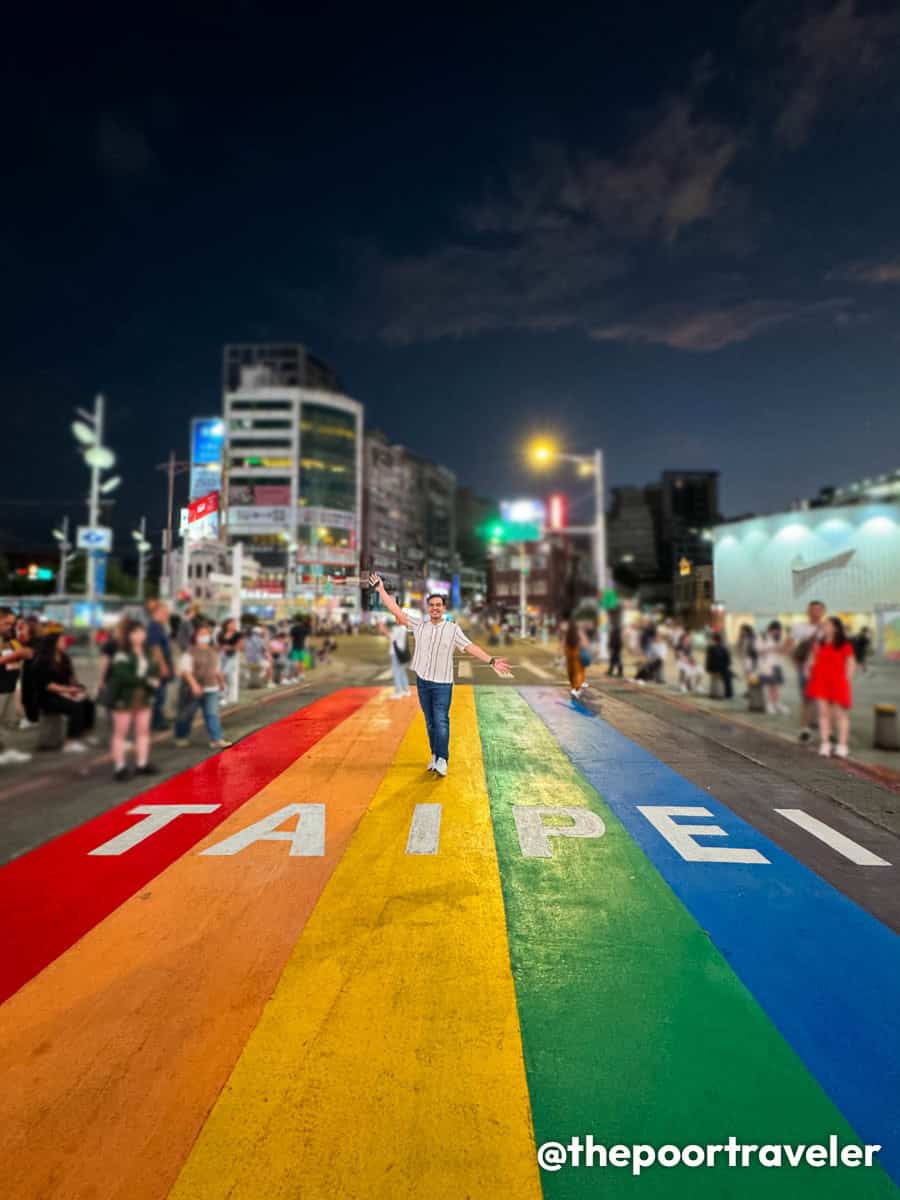
Rainbow Road
If you’re coming out of Ximen Station, the first thing that will greet you is the Rainbow Road, thanks to its row of colors and the crowd that form next to it, trying to take their IG shots.
It isn’t just a street-—it’s a statement! These colors splashed across the pavement turned an ordinary crosswalk into a full-on celebration. Taiwan has been a trailblazer for LGBTQ+ rights in Asia, and the Rainbow Road is Taipei’s bold high-five to the community, showing off its pride with every bright stripe.
Whether you’re here to celebrate, show support, or just jazz up your Instagram feed, this road practically waves at you for a pic. People flock here, cameras in hand, ready to immortalize their moment in all that colorful glory. Photobombs are inevitable, but that’s part of the challenge!
Most of the time, street performers also use the corner next to it as their stage. There are the usual singers, bands, and dancers, but every now and then you’ll also see mind-blowing stunts that will make you stop and stay a bit longer.
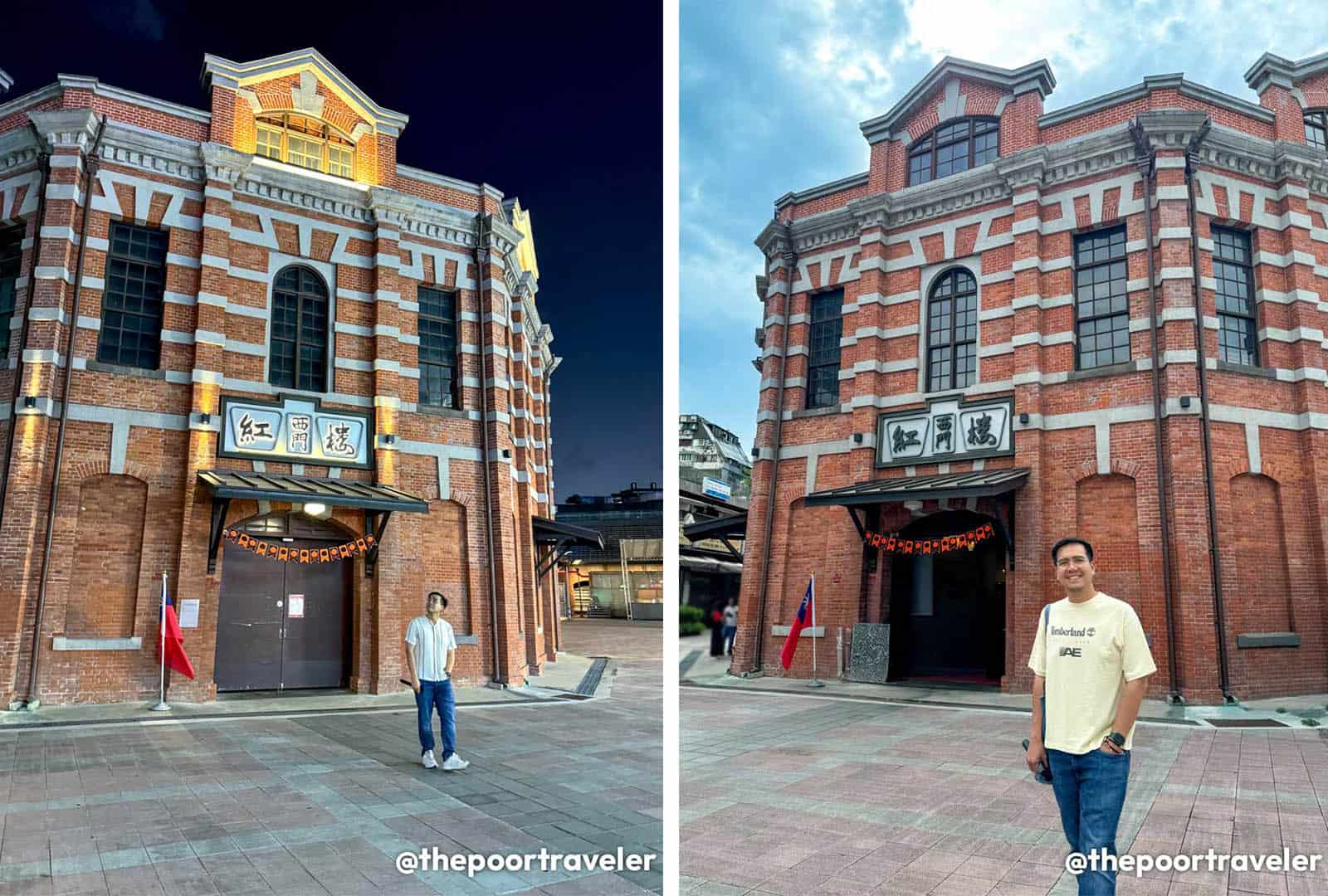
The Red House
Cross the adjacent road and you’ll be greeted by the Red House, a historical gem that’s managed to stay relevant through decades of reinvention. Built in 1908, this octagonal red-brick building has worn many hats: a theater, a market, and now a museum-slash-shop. Step inside, and you’ll find indie craft stalls, LGBTQ+ friendly spaces, and local artwork that put a modern twist on this old beauty. You might find yourself questioning why your hometown can’t preserve history with this much swag.
Our last visit coincided with Pride Month celebrations, so the atmosphere was much more fab and festive and there were a lot of freebies around.
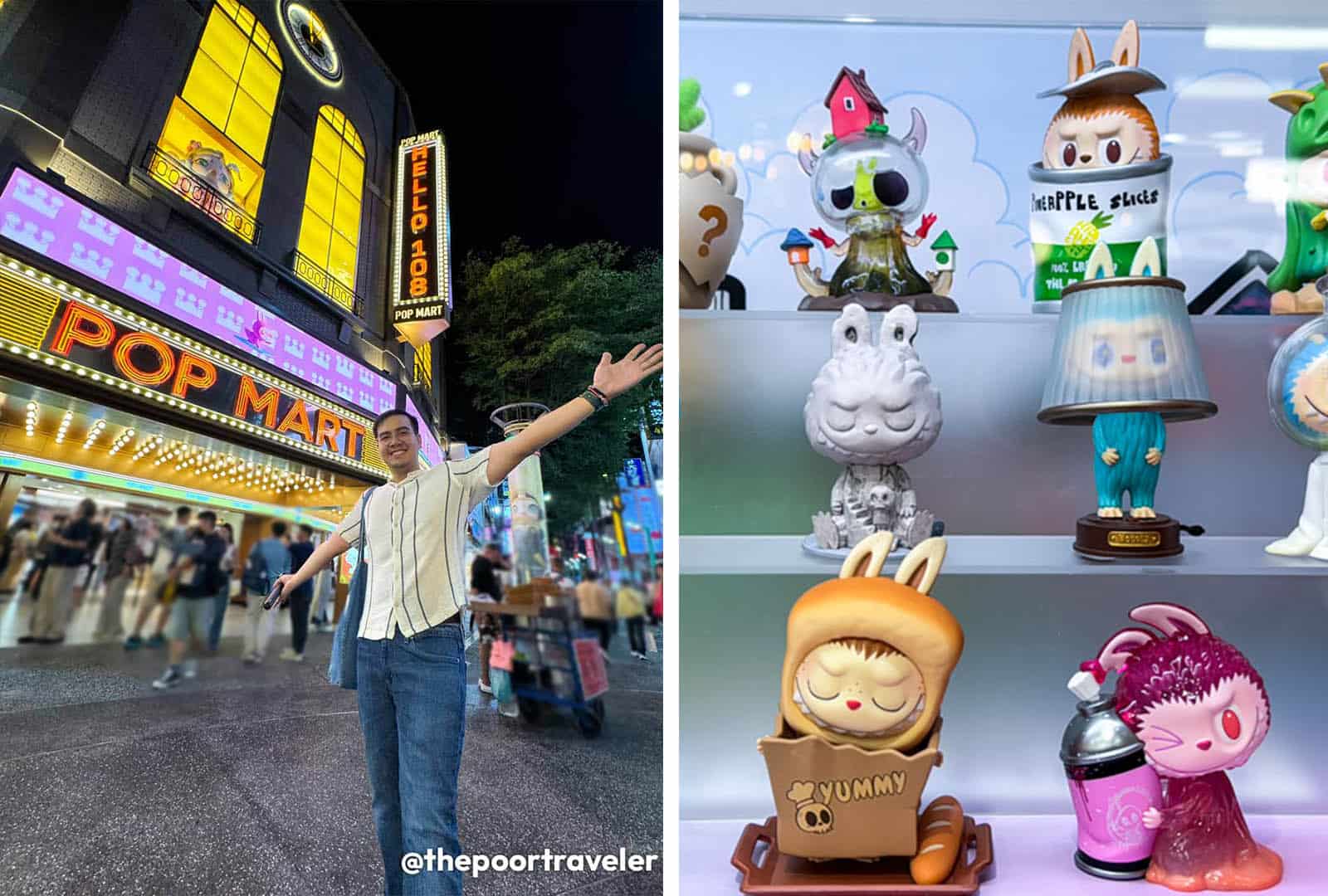
Pop Mart Flagship Store
Welcome to Pop Mart, the Disneyland of designer toys, where shelves groan under the weight of collectibles that’ll drain your wallet but heal your inner child.
Known for its adorable figurines and trinkets, this place is ground zero for those looking to snag a quirky souvenir especially of Labubu, the now insanely popular and arguably addictive character from The Monsters. Those serrated teeth and mischievous look don’t stop people from falling in love with it or, at least, jumping on the bandwagon. It’s such a crowd favorite, there’s always a crowd building in front of this pop mart store. Every one is hoping to get their hands on an item because it’s much cheaper here than the price resellers are charging back home. And yes, Labubu items, especially the plush key chains, were sold out when we visited.
Some don’t understand why it’s so popular and some say it’s just a fad, but we wanted to understand so we joined the fun and purchased three mystery boxes at another Pop Mart shop. And yes, they’re so cute and we may or may not get more next time we had the chance.
Dinner
It’s dinner time, and Ximending is a feast for every budget and taste. We’ll be mentioning three food spots here, but we actually tried more.
Budget Option: Head to Ay Chung Flour Rice Noodle for a fix of gooey, umami-packed rice noodles. This is street food at its finest—no seats, just grab a bowl, stand on the sidewalk, and savor the flavor. It’s only NT$ 60 per small serving, but it’s really, really tasty. No wonder there’s always a loooong queue here. Every silky serving is topped with a bit of offal, which surprisingly did not have any trace of gutsy smell or aftertaste. Even Vins, who doesn’t normally like consuming innards, found it delicious and wanted to have another bowl. It’s even more flavorful when you add chili, crushed garlic, and a bit of vinegar, which is available for self-service on a station on the side.
Lao Shandong’s Three Treasures Beef Noodle Soup
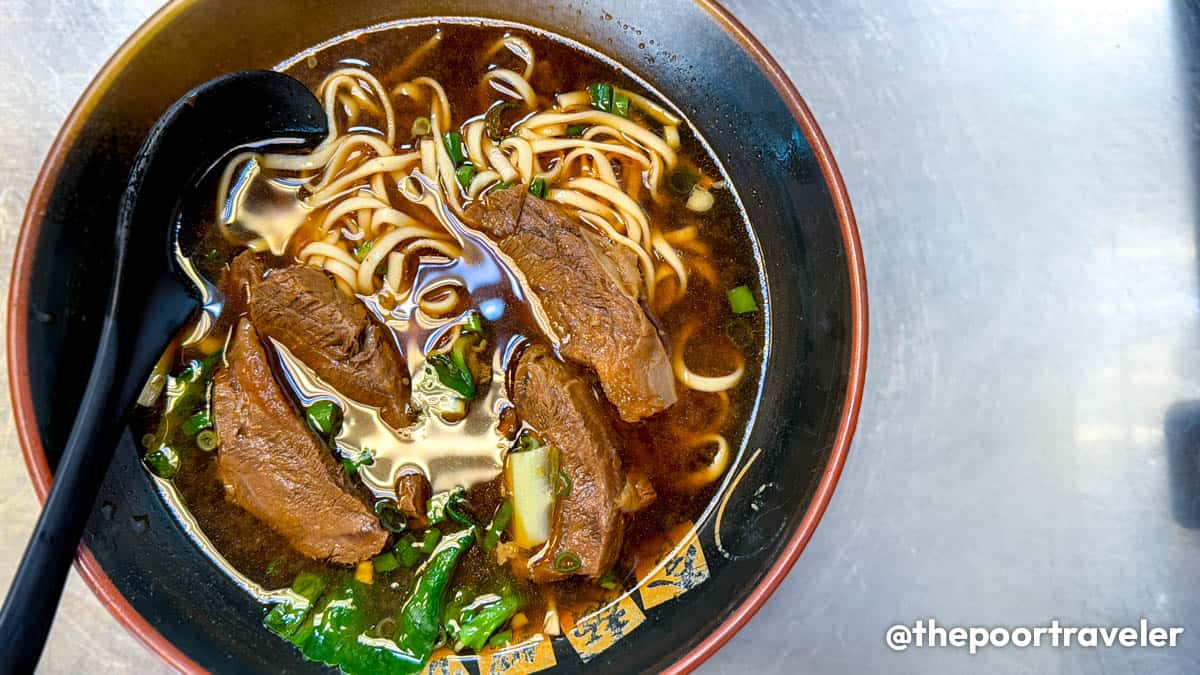
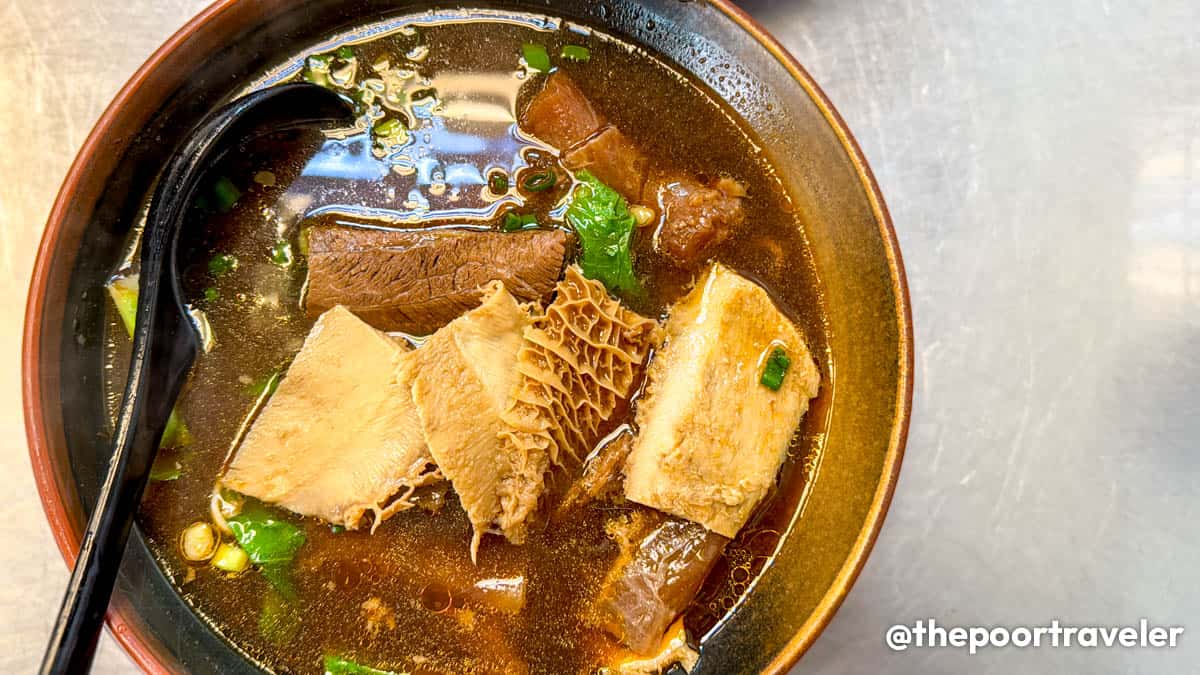
Mid-Range Option: Find the Wan Nian Building and go down to the basement where you’ll find a food court. But look specifically for Lao Shan Dong Homemade Noodles, a Michelin Bib Gourmand awardee. This humble establishment has been serving bowls of piping hot beef noodles since 1949; it’s a Ximending institution. The place was packed when we visited. Vins ordered the beef brisket noodle soup while I had the so-called “three treasures” noodle soup, which had brisket, tendon, and tripe. We could easily tell that the noodles were handmade because they were not uniformly cut. It was firm, just the way I liked it, and swimming in a broth that was deep and perfectly balanced. Every bite of the brisket was succulent. They’re known for their dumplings, too!
You can try on traditional costumes at Wenting Emperor Palace Hot Pot
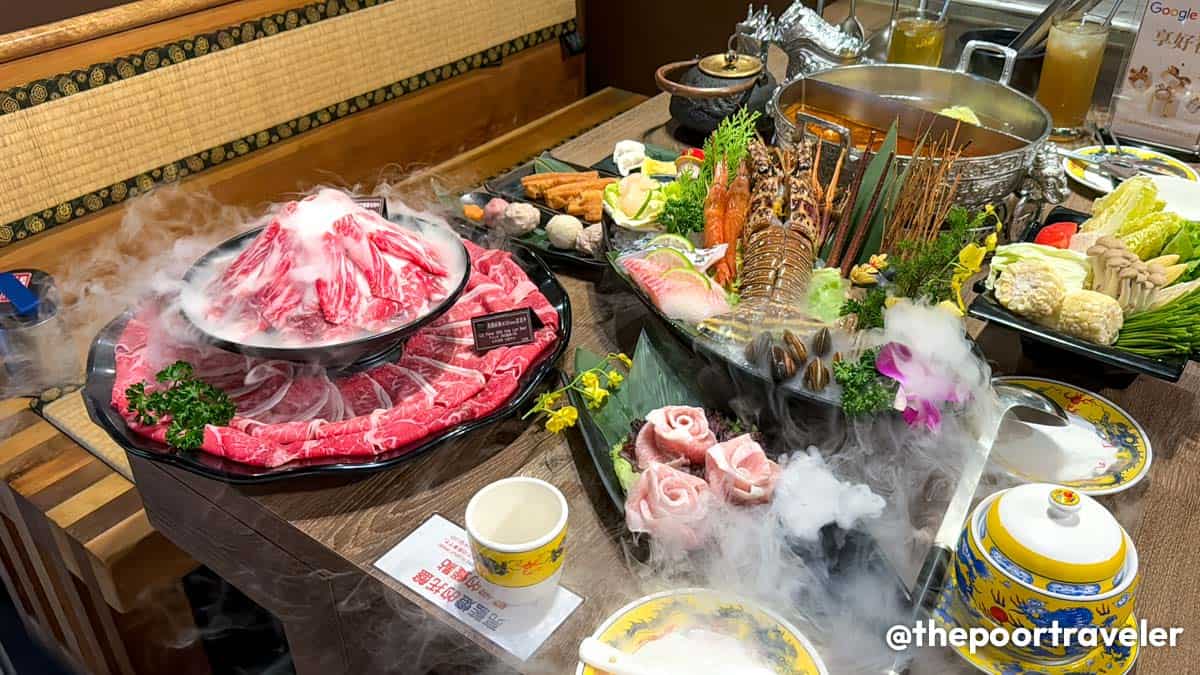
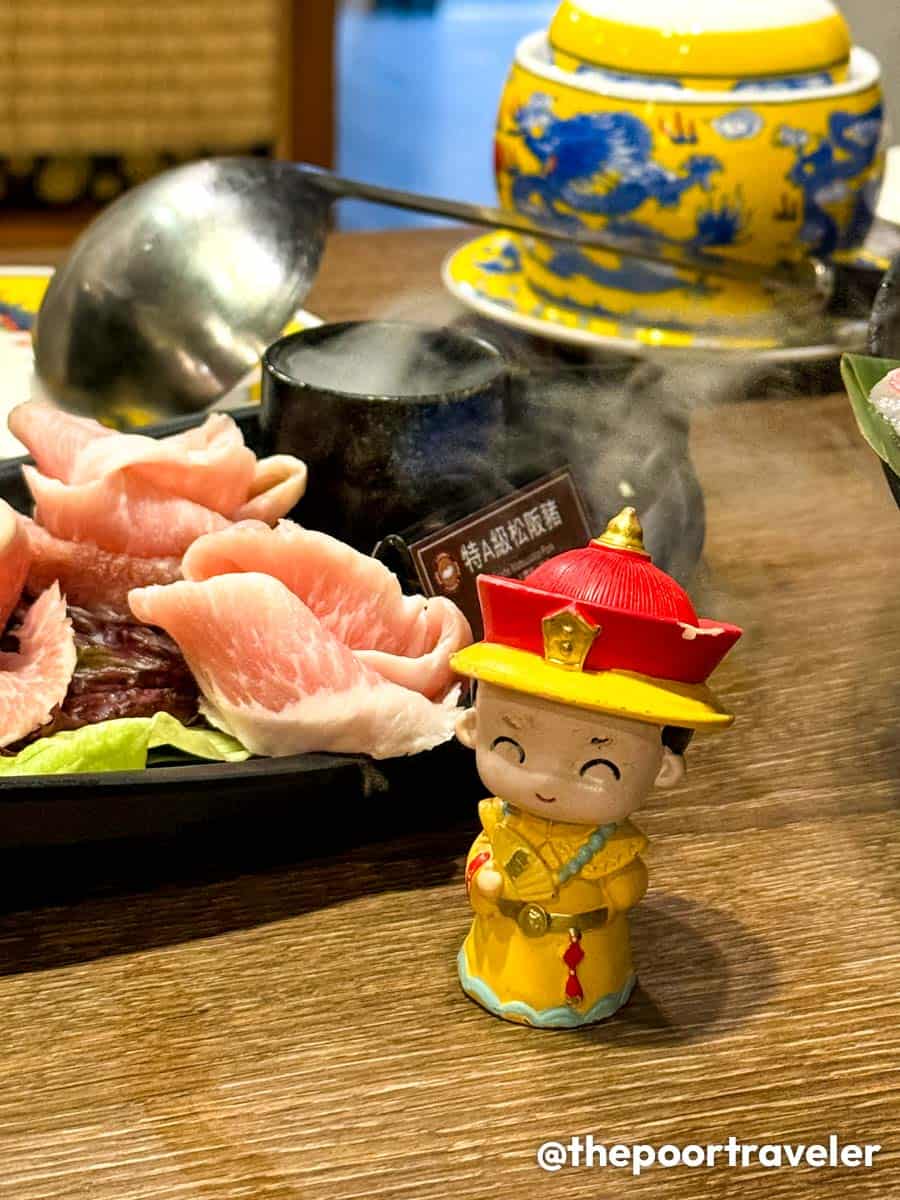
Splurge Option: If you’re with a group (family or friends) or you’re just feeling royally hungry and want to go big, find the Taipei Wenting Emperor Palace Hot Pot, a hot pot spot that would make any emperor proud. While waiting for your table, you can try on elaborate costumes to really embrace the royal theme of the place. You can try on traditional Chinese-style outfits that resemble robes or gowns from ancient dynasties and channel your inner emperor or empress. It’s not every day you get to feel like a ruler while waiting for your broth to boil, so we grabbed the chance. The staff was happy to snap photos, so it’s a great opportunity for some memorable, Insta-worthy moments. The whole experience adds a playful, immersive twist to your meal.
Ah yes, let’s talk about the food. They offer a wide selection of fresh ingredients — prime cuts of meat, seafood, and veggies — all waiting to be dunked in either a homey clear broth or the extra savory and spicy mala soup. After you’ve feasted on all the proteins, you can dive into a freezer full of Häagen-Dazs flavors to top it all off. They have 16 flavors, and it’s all yours to enjoy. I had caramel biscuit and mango raspberry! We’ll be breaking down this dining experience in another article.
After your meal, find this tiny stall selling freshly fried Crispy Milk Donut (NT$ 40). You might have to wait in line for a bit too, but that’s usually the case for anything delicious these days.
Boba Milk Tea
Wash your dinner down with a cup of milk tea. But as you already know, Taiwan is the land of boba, so it might be hard to choose which one to try even here in Ximending.
50 Lan Ximending store (left) and Xing Fu Tang’s bubble milk (right)
Every single Taipei local we have met recommends 50 Lan’s boba milk tea (NT$ 60), recognizable by its yellow and blue branding. It’s a chain, and you’ll find a couple of branches in Ximending. 50 Lan’s version is classic – no frills, no gimmicks, just a perfectly balanced blend, with just the right sweetness, smoothness, tea fragrance, and chewy pearls. And we agree. This is also the best milk tea for us.
But most tourists seem to be magnetized by the loud and flashy Xing Fu Tang flagship store. You won’t miss it because there is a long queue any time of the day. It’s hard not to be drawn to it because they cook the pearls in the open. We’ve tried their classic boba milk tea before, but on our most recent trip, we had its best-selling signature brown sugar boba milk (NT$ 120), something I was prepared to hate because of its excessive price, but was actually very satisfying. The roasted brown sugar on top add a bit of playfulness to the smooth milky drink.
If you’d rather have it as an icy dessert, head over to Kenting Dan Dan Duai Nai, where they serve milk tea in the form of a shave ice treat.
Kenting Dan Dan Duai Nai’s Ice Shave Milk tea
Taipei Cinema Park & Graffiti Spots
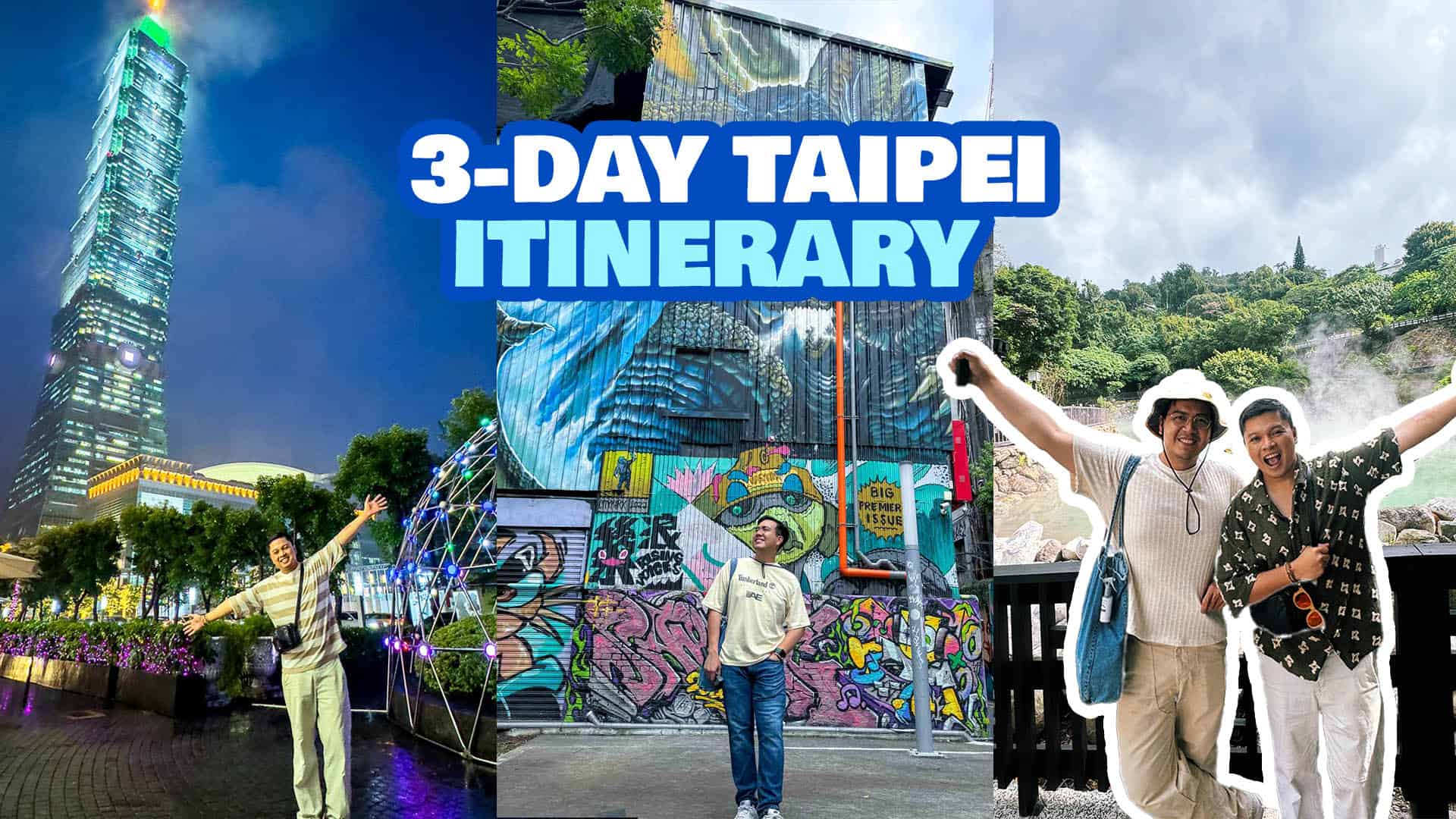
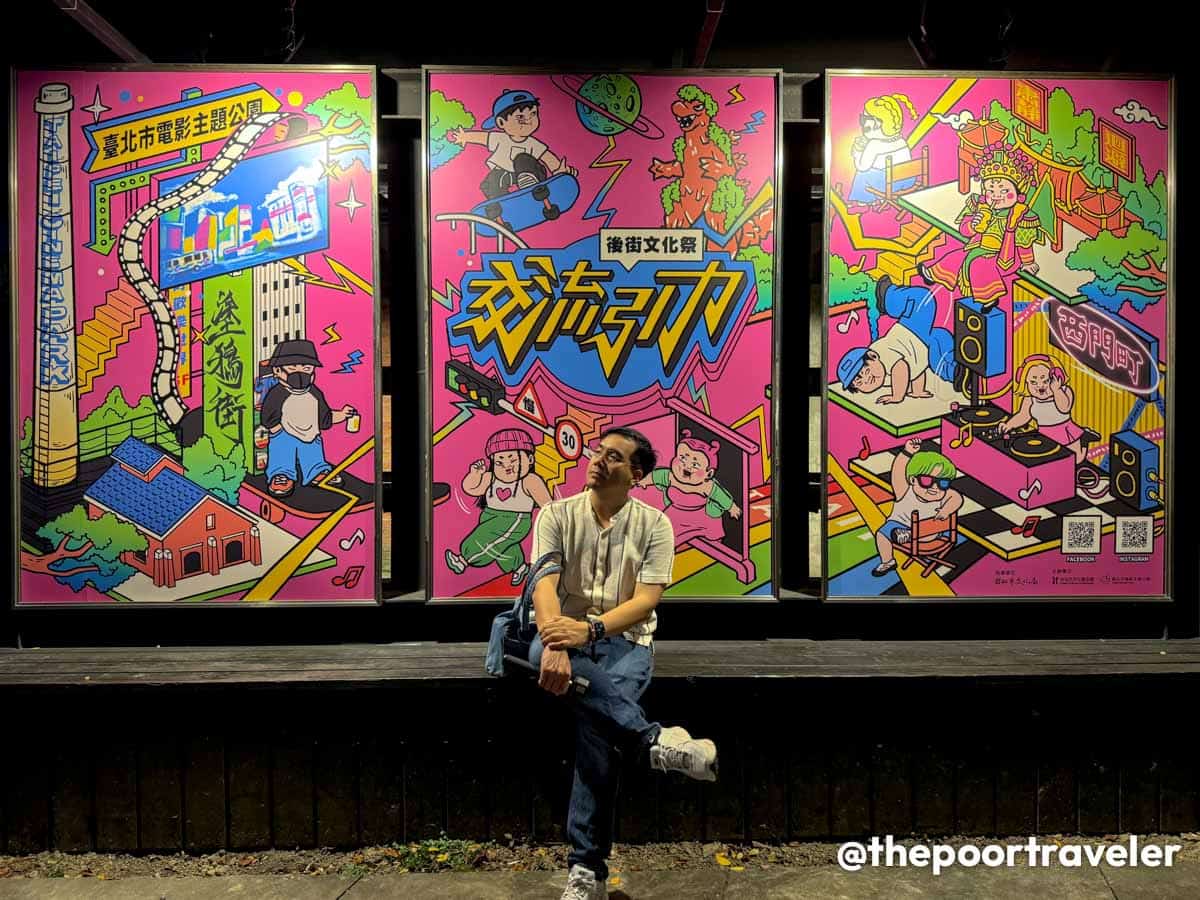
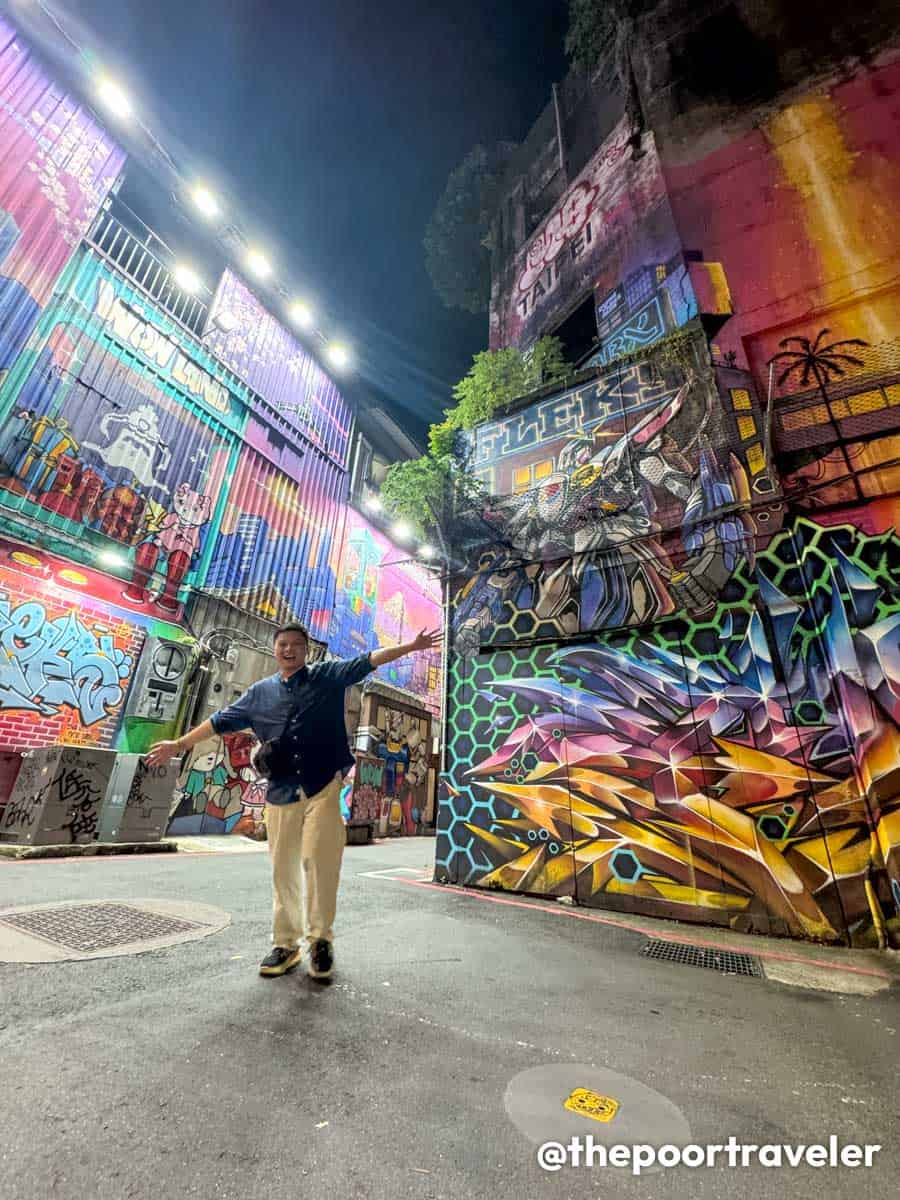
End your night with a stroll through Taipei Cinema Park, where graffiti walls make for perfect Instagram backdrops. It’s street art galore, with painted masterpieces that range from artsy to hilarious. Pose, snap, and soak up this cool, colorful vibe in this often uncrowded section of Ximending.
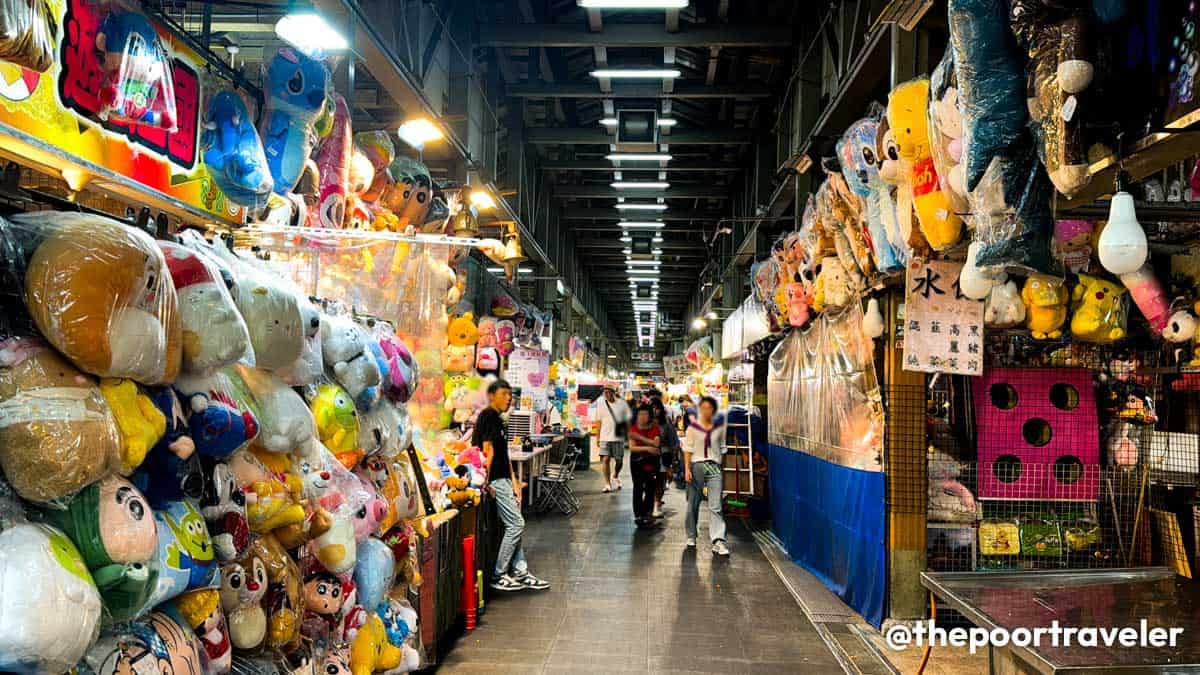
You’ll also find Wow Land, a claw machine heaven! There are countless claw machines in Taipei; you’ll see them everywhere. But what makes these particular machines remarkable is that you could actually win something if you have the skill. It’s not rigged, or at least not as rigged as the others! When we enter this place, we never leave empty-handed!
And that’s it for Day 1. I told you, it’s a bit packed, but buckle up because we’ve only just started.
DAY 2: BEITOU & SHILIN
Today, we’ll be exploring two of Taipei’s most fascinating districts: Shilin and Beitou.
Beitou Thermal Valley
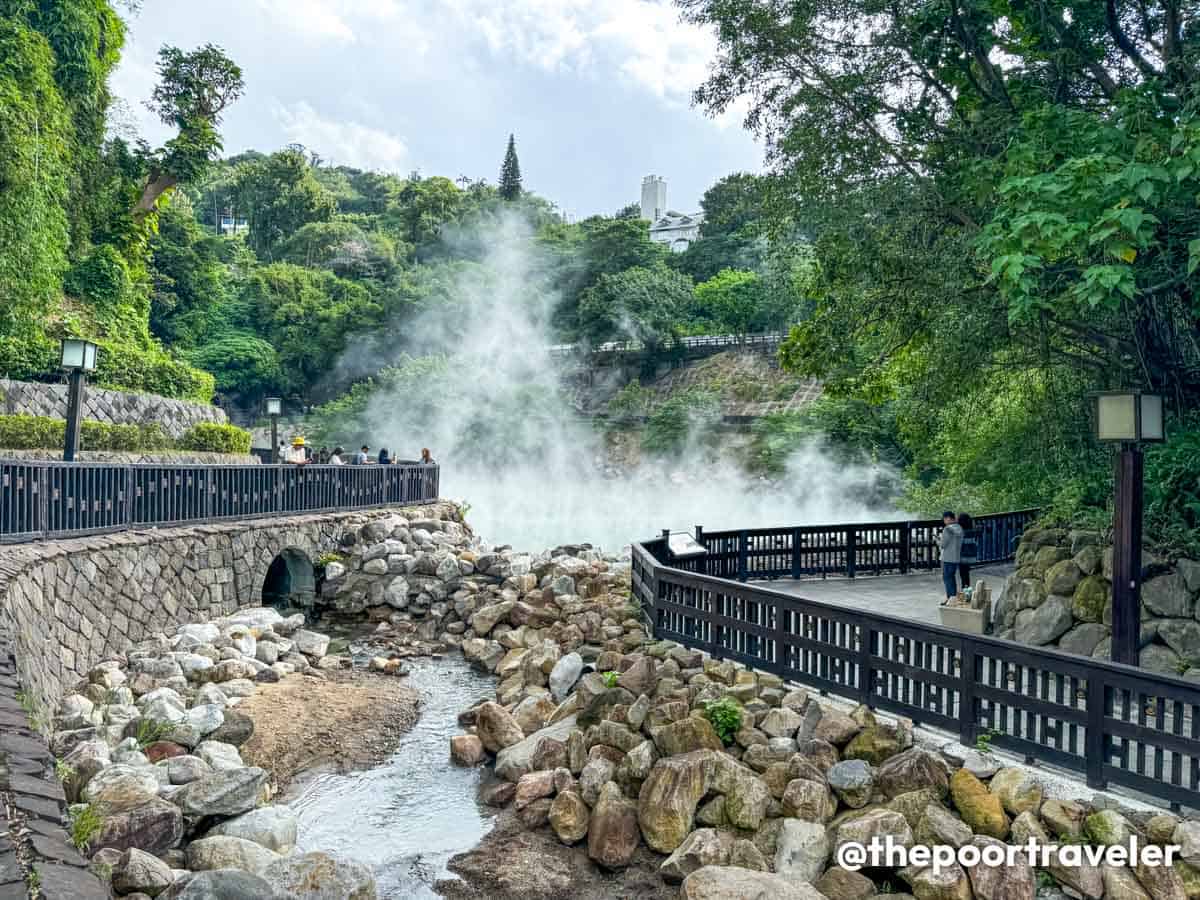
Start Day 2 with a visit to Beitou Thermal Valley for the mist that rises eerily from green sulfuric waters.
When you arrive, you’ll be greeted by a small fountain, where you can feel the water and give your hands a bath. But as you walk deeper, you’ll eventually see the steamy hot springs that look like nature’s giant cauldron. While you can’t take a dip here, it’s mesmerizing to watch. Walk around it, catch that sulfur-scented air, and soak in the slightly mystical atmosphere.
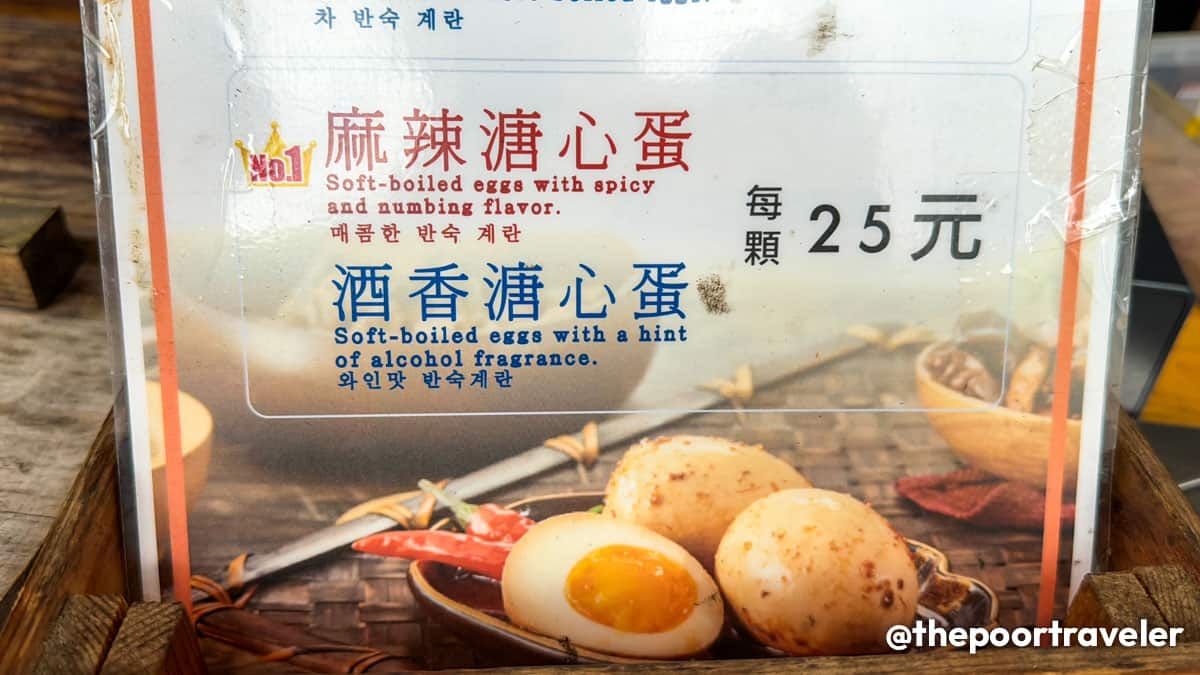
Before going, try some tea eggs, sold by shops in front of the entrance, for very light but on-theme breakfast. Then walk to your right for 10 minutes to our next stop.
Beitou Hot Springs Museum
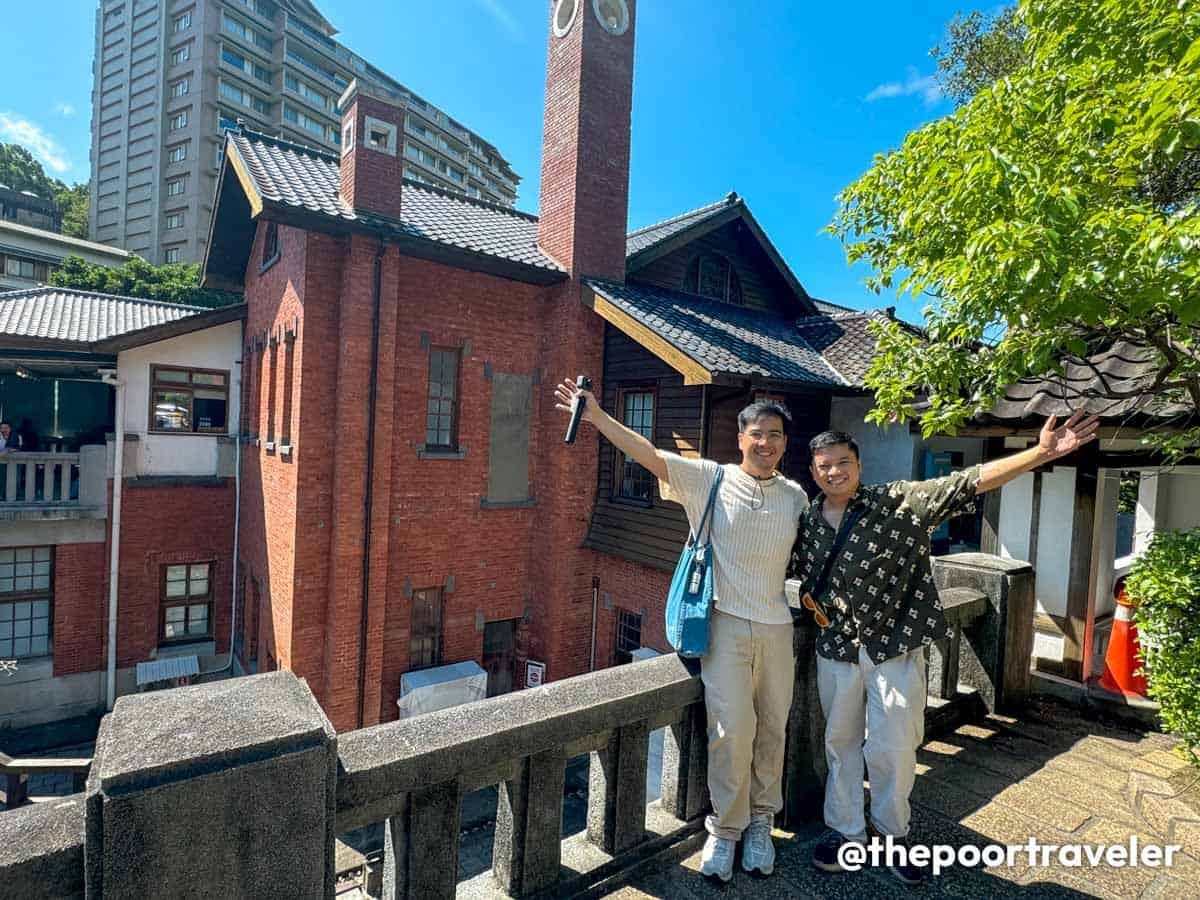
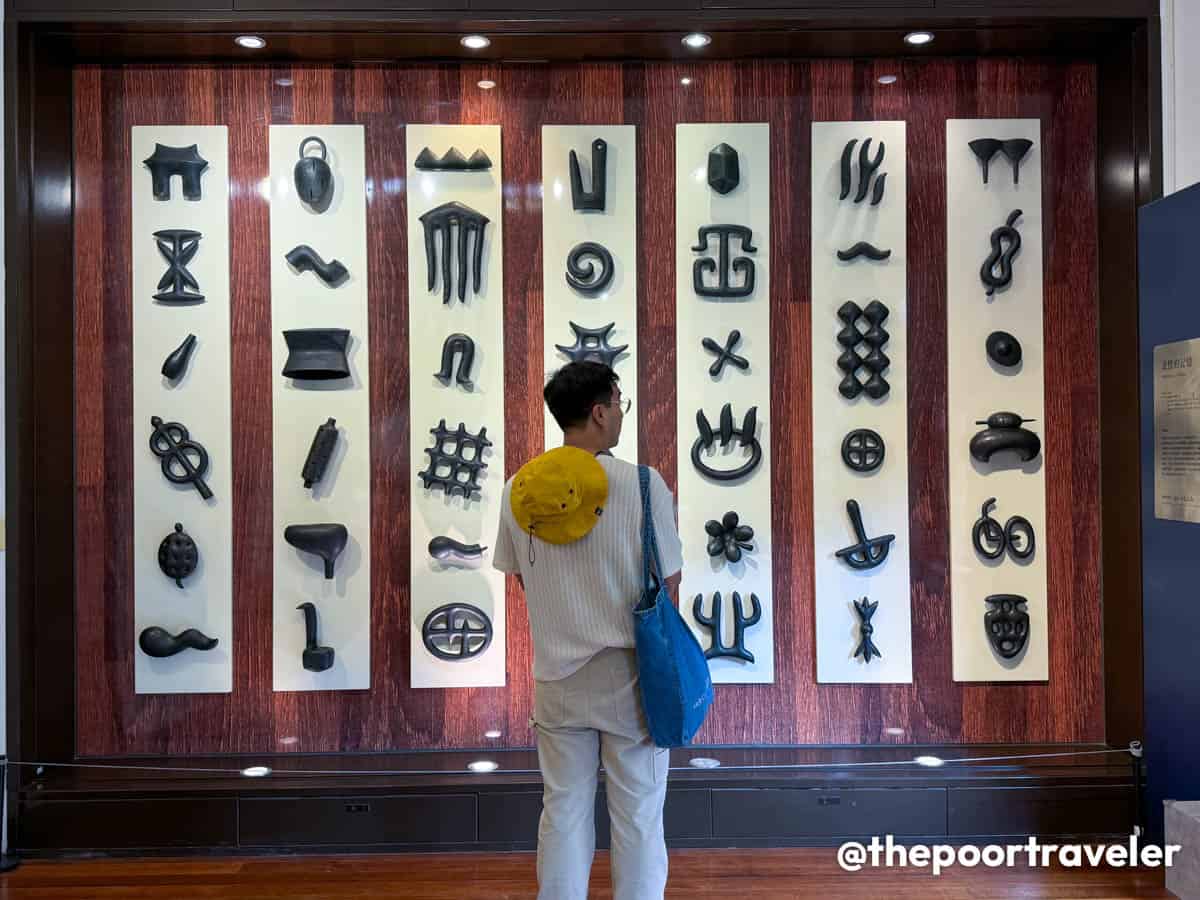
Step back in time at the Beitou Hot Springs Museum, a former Japanese-era bathhouse. Built in 1913, this well-preserved architectural charm showcases the golden age of hot springs in Beitou, including a massive bath where guests once enjoyed therapeutic dips. It’s a beautiful, nostalgic slice of old Taiwan and makes you appreciate the cultural layers in Beitou’s steamy past.
When we visited, there were bus-fuls of Japanese school children on an educational tour, so it was more crowded than usual. But otherwise, it’s usually very chill and relaxing. As in any onsen, you’ll have to remove your shoes and deposit them in lockers. Put on the provided slippers and follow the marked trail around the museum.
After this, it’s time for lunch. Decide whether you want a bowl of beef noodle soup at a proper sit down eatery or eat your way through a food market!
If you go for beef noodles, proceed to Su Jia. enter this on your Google Maps app: 粟家牛肉麵. You’ll find two results. Choose the one along Yongxing Street. You should reach it in less than 15 minutes on foot.
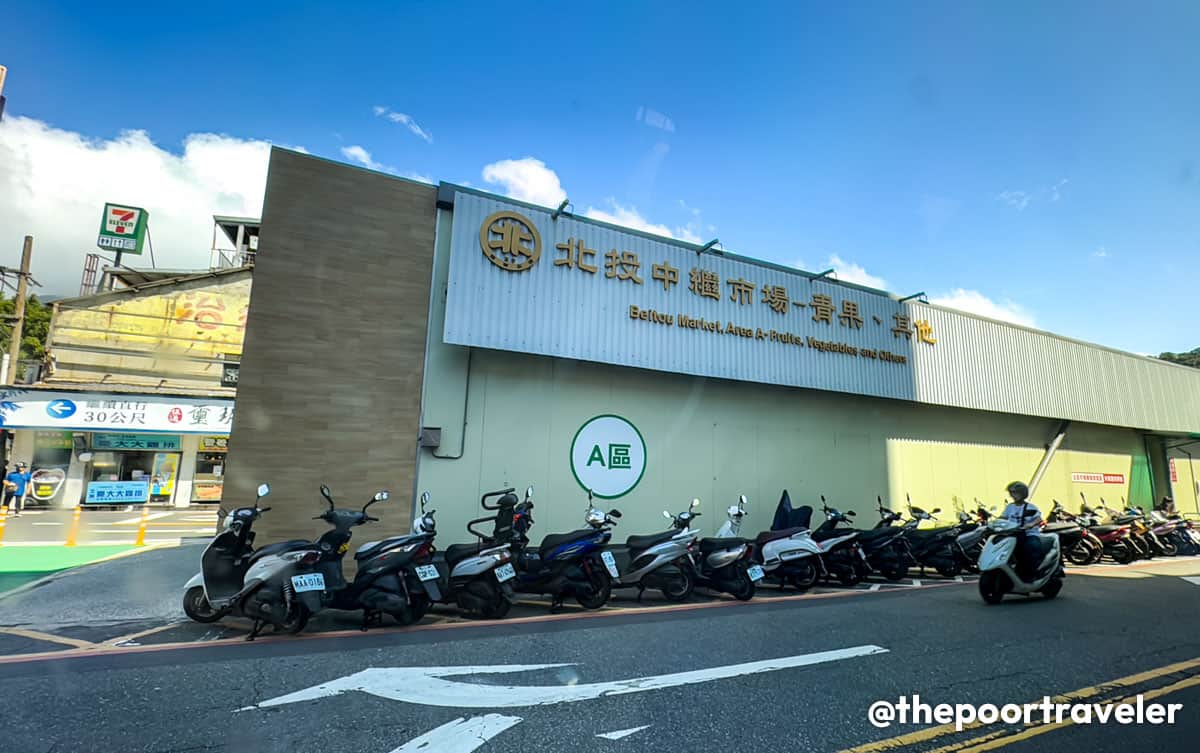
If you’d rather walk and munch at the same time, head over to the Beitou Market. It’s closer, roughly 10 minutes on foot.
Lunch Option A: Su Jia Beef Noodles
It’s beef noodle time (again!) —Taiwan’s soul food in a bowl.
Su Jia uses noodles that are firm and chewy, drowned in a rich broth. Their signature bowl (NT$ 280) has the same three treasures toppings: brisket, tripe, and tendon. But if you’re not that adventurous like Vins, go for its beef brisket noodles (NT$ 200).
We loved how tender the meat was. And the tripe was thick, with plenty of meat still attached to it. If I compare it to Lao Shandong, this one wins the meat game easily, but Lao Shandong had more flavorful broth. But it was still a very satisfying bowl overall. Don’t be surprised if you find yourself slurping away, eyes closed, lost in noodle nirvana.
If you’re not in the mood for another helping of beef noodles or if you’ve got room for dessert (and let’s be real, there’s always room), then cross the street to Beitou Market!
Lunch Option B: Beitou Market
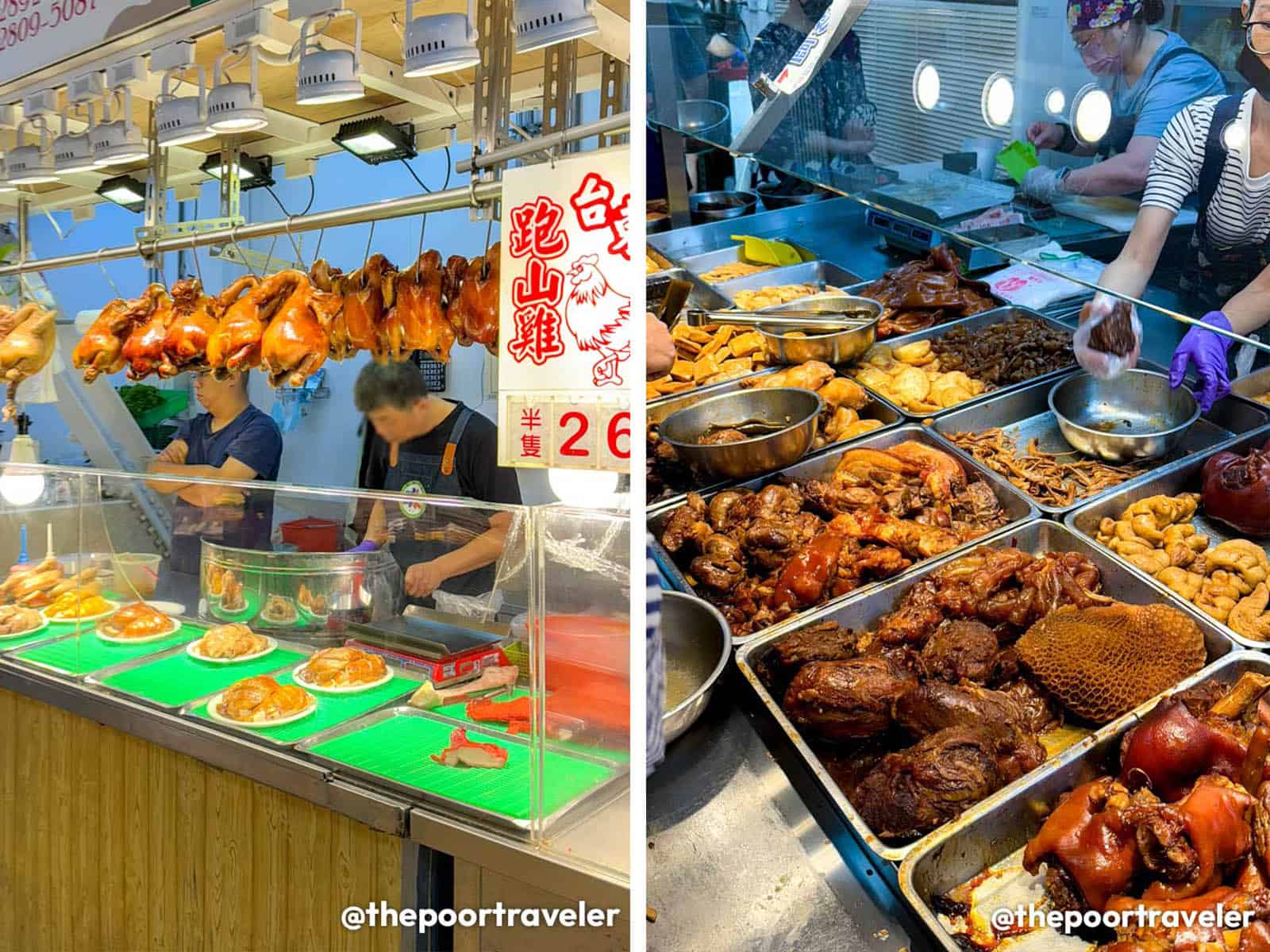
Beitou Market is one of those places where you feel like a local, shopping shoulder-to-shoulder with Beitou residents.
One of the biggest draws of Beitou Market is the variety of street food stalls offering everything from handmade dumplings to savory buns and local Taiwanese specialties. If you’ve worked up an appetite from exploring Beitou’s hot springs, it’s a fantastic place to grab a quick, budget-friendly lunch, snack, or, yes—-lest I forget-—dessert! Here, you can sample quirky local treats, like soft pastries filled with red bean or egg custard, or chewy mochi balls.
From the Beitou Market, take the MRT Tamsui-Xinyi Line to Shilin Station (Fare: NT$25; Travel time: 11 minutes) and catch Bus R30 to reach our next stop, the National Palace Museum (Fare: NT$15; Travel time: 11 minutes).
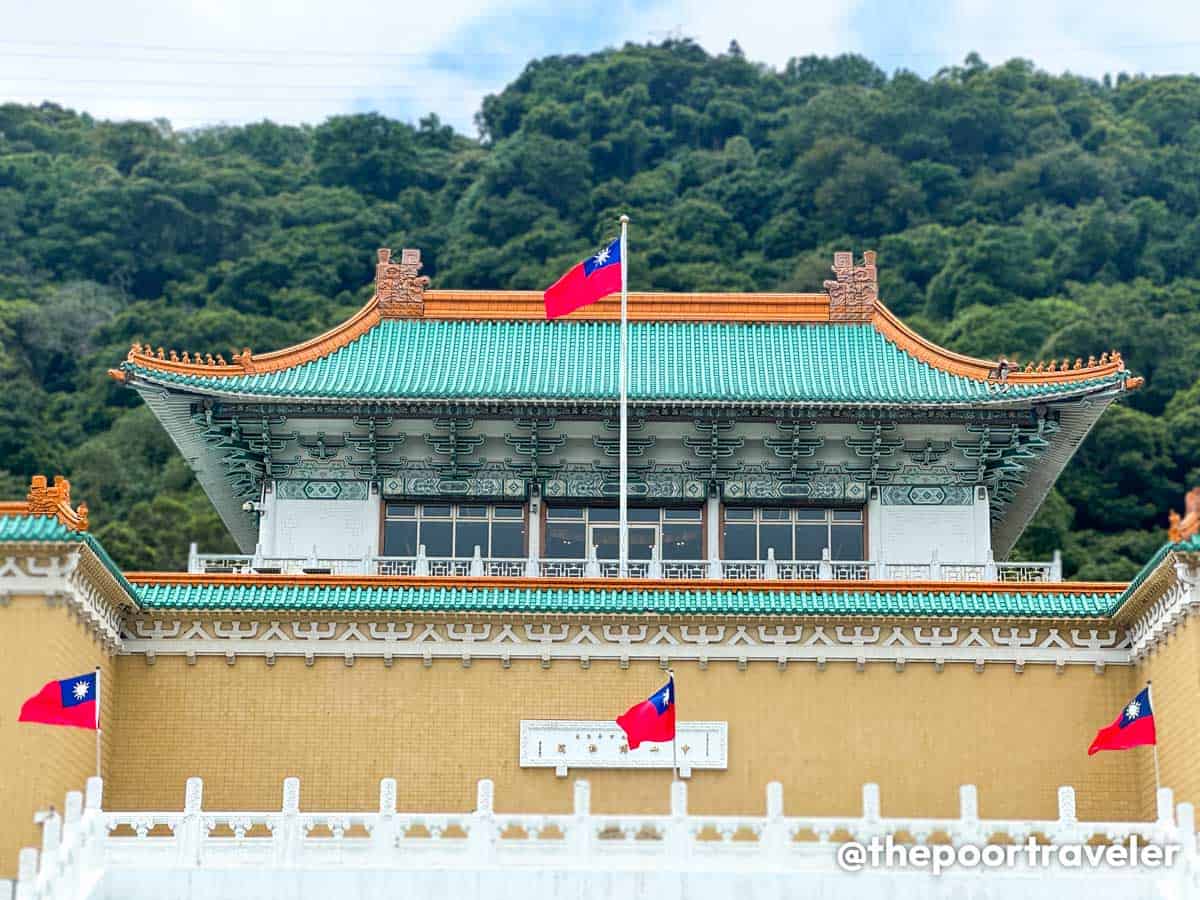
National Palace Museum
Time for some culture! The National Palace Museum itself feels grand. With over 700,000 pieces, it’s like stepping into a time capsule of the imperial dynasties, filled with intricately crafted jade carvings, stunning calligraphy, and beautifully preserved ceramics that tell the story of over 8,000 years of Chinese culture.
But here’s the thing. It’s a big museum – huge! And it’s easy to get lost in its galleries. And if you want to see every single piece on display, you’ll probably need more than a day. So plan your visit wisely. Research which pieces you want to see and find them.
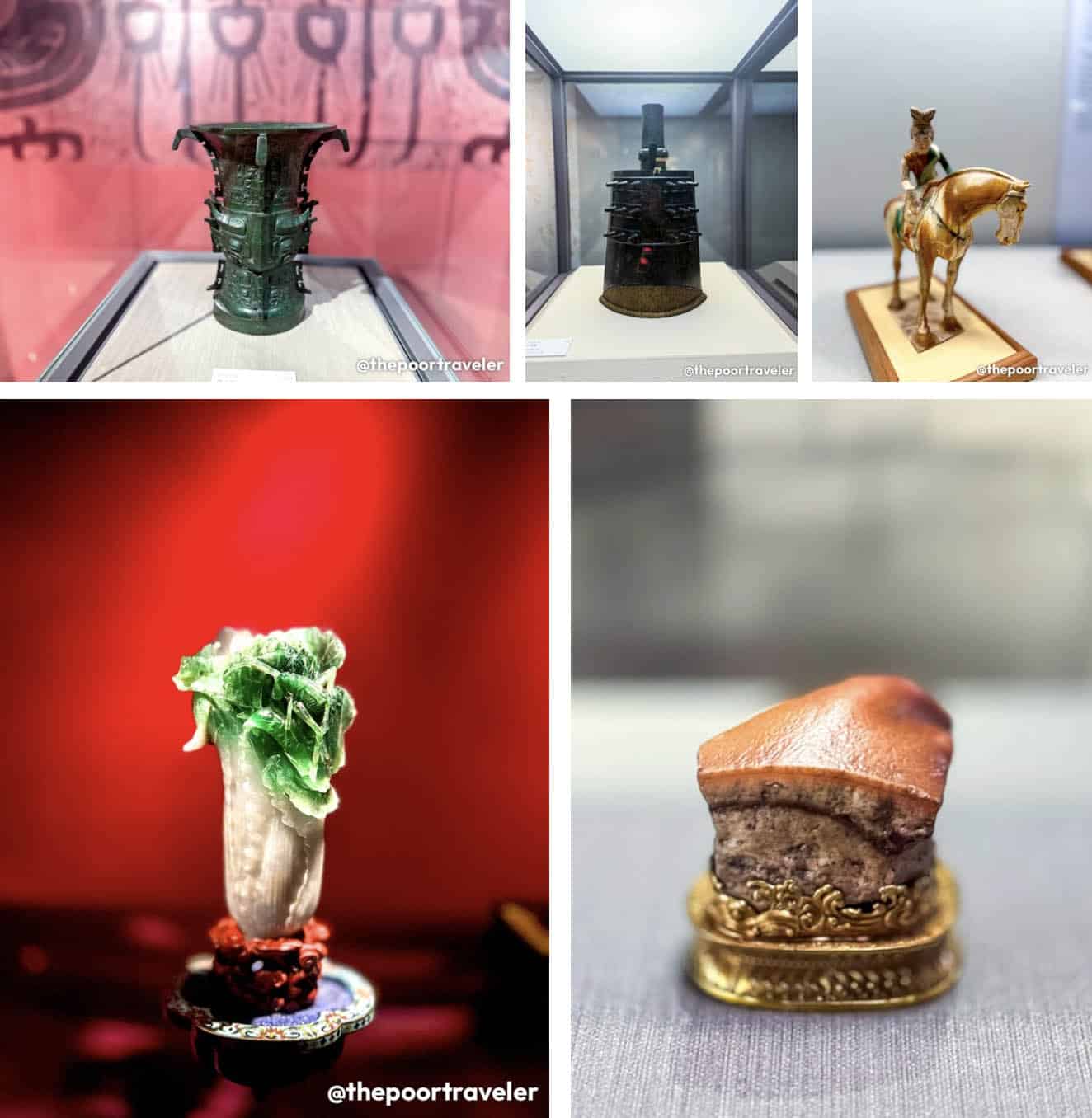
It listed out six of the must-see pieces inside and we made them our northern stars:
Tsu-I tsun, a bronze ritual wine cup
Zong-zhou Zhong, a ceremonial bell made of bronze, from 1046-771 BCE
Bi and Cong, used in rituals by the ancient Liangzhu civilization, which lived from 3300-2300 BCE
Ceramic polo players, figurines of female polo players in the Tang dynasty
Jadeite cabbage, a jadeite stone meticulously carved to resemble a pak choi. It’s so jaw-droppingly realistic.
Meat-shaped stone, made from jasper that looks exactly like a slice of braised pork belly
Of course, we also checked out the other rooms along the way. But to make our visit more interesting, we used the list above as our goals.
If you want to spend the rest of the day inside the museum – a tempting option when it’s raining or you’re just tired – do so. As mentioned, the museum is vast and rich. Just wait for dinner time and head directly to Shilin Night Market after. Take Bus R30 or S19 to Shilin Market (Fare: NT$ 15, Travel time: 15-25 minutes).
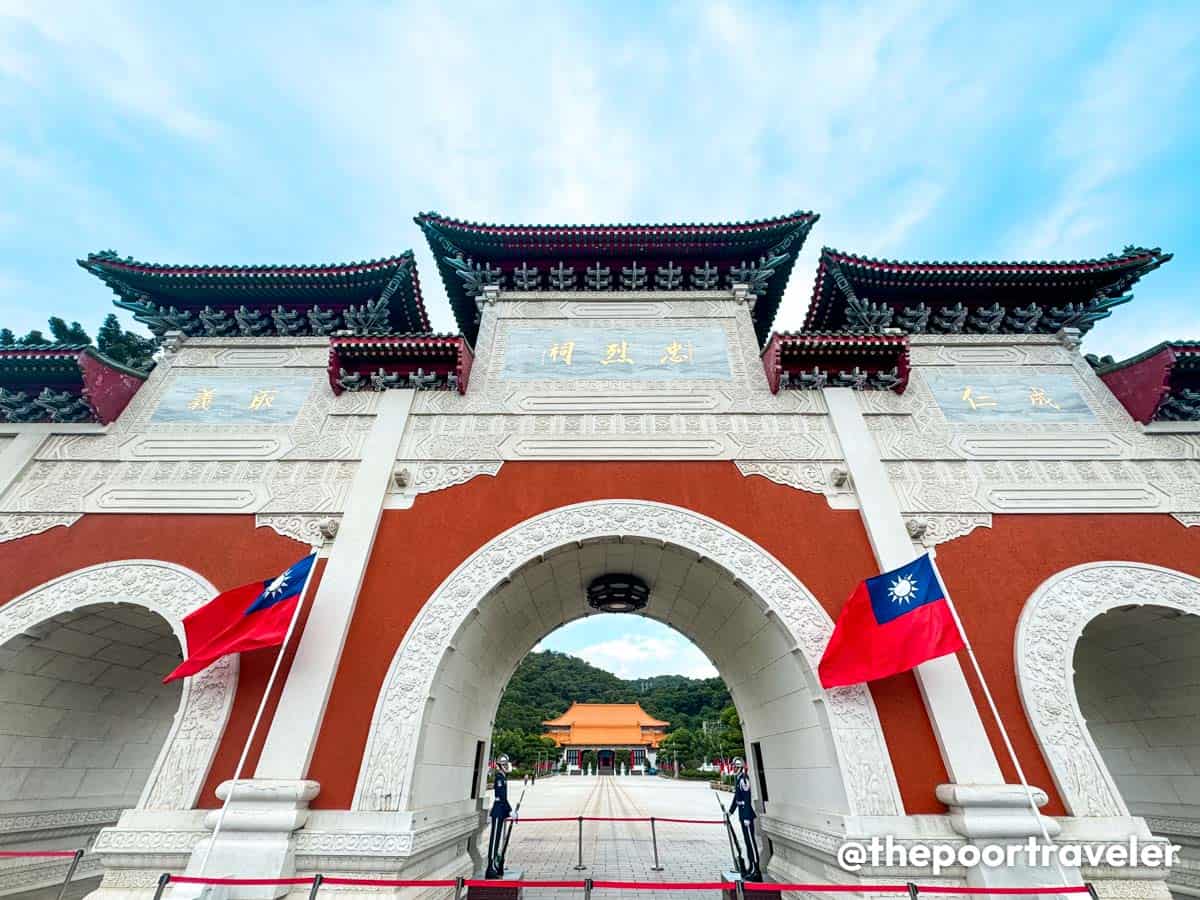
But if you feel like you still have the time and energy, squeeze in a visit to the next stop. Take Bus BR13 to the Air Force Headquarters (Fare: NT$ 15; Travel time: 12 minutes) and then walk for 14 minutes to the Martyr’s Shrine.
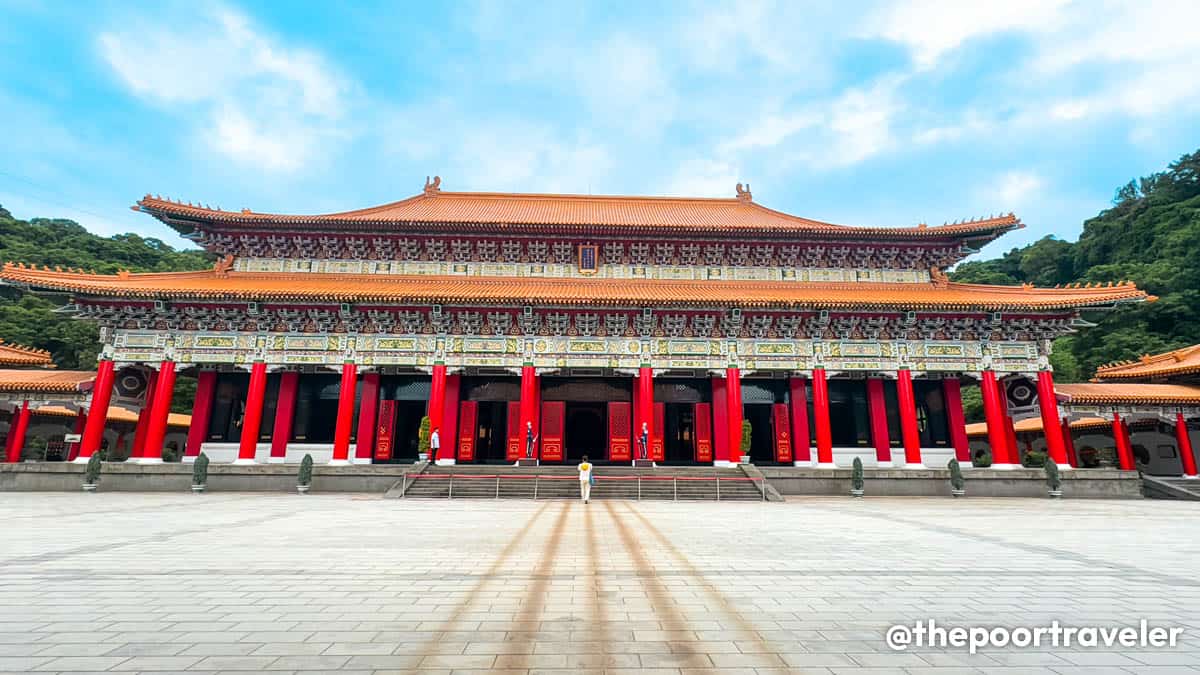
Martyr’s Shrine
The National Revolutionary Martyr’s Shrine is like a mini-palace dedicated to fallen heroes. Built in traditional Chinese architectural style, it’s a grand tribute to the soldiers who fought for Taiwan. The shrine itself is stunning and peaceful, a nice breather after all the sightseeing.
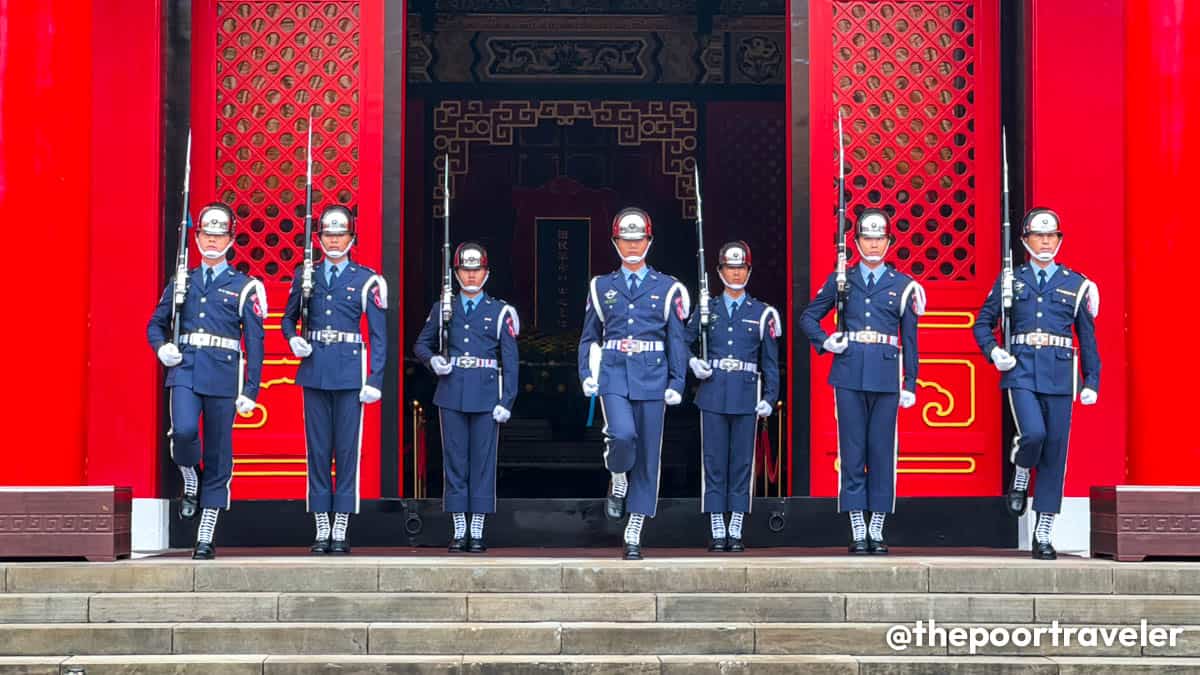
Catch the changing of the guards, which happens on top of every hour from 9AM-5PM. It’s an impressive ceremony where guards in crisp uniforms perform their routine with military precision. A similar routine happens at the Chiang Kai Shek Memorial, but this one is extended because you get to watch them walk the entire length of the site – from the entrance to the shrine and back.
To get to Shilin Night Market from here, take Bus 902 or R3 to Mingchuan University (Fare: NT$15; Travel time: 5-7 minutes) and walk for 7 minutes to our final stop of the day.
Shilin Night Market
No day in Taipei is complete without a night market, and Shilin Night Market is the granddaddy of them all. While the basement food court is under renovation, there’s still plenty to eat. Here, the most famous is Hot-Star Large Fried Chicken, which we tried many years ago. But our local companion recommended something else, something that she claimed even locals line up for: Hometown BBQ Chicken (NT$100).
Like Hot-Star, there’s also a queue that forms toward it, and it’s also a giant piece of breaded chicken cutlet. But this one is really juicy and packed with complex flavors, brought about by its complicated cooking process. It’s brined, seasoned and breaded before getting deep fried. And then – get this – it’s grilled after, giving it a slight smokiness, but it all makes the difference. It’s really good! The best fried chicken we’ve had in Taipei. Granted, we haven’t tried that many, but still.
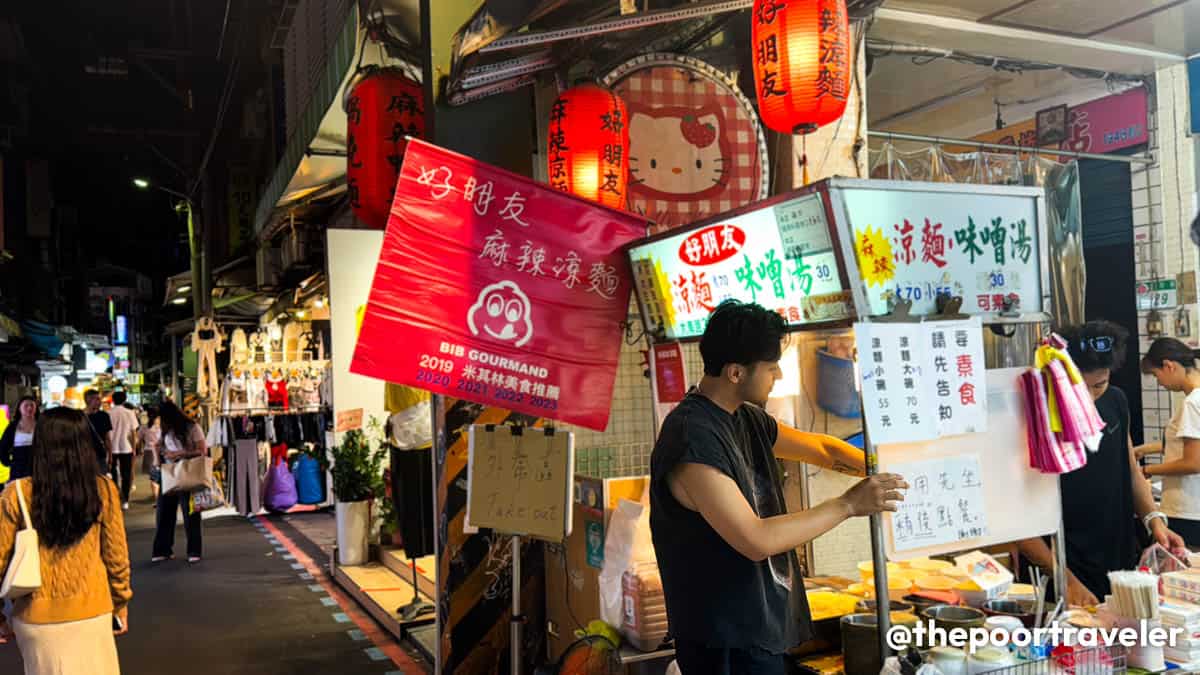
Once you’ve had your ji pai fix, walk a bit to Good Friend Cold Noodles to have your dose of carbs, in the form of cold noodles (Small: NT$ 55; Big: NT$70). Good Friend serves bowls that are oddly refreshing, something we desperately needed after hours of just walking around Taipei.
It’s deceptively simple: thin, bouncy noodles, doused with a rich, creamy sesame sauce for that nutty base, then garnished with shredded cucumbers for extra crunch, and a hint of citrus (lemon?) for freshness. It’s simple, yes, but cheap, filling, and delicious. Yes, it has a Michelin Bib Gourmand recognition, too.
With this, time to call it a day! Head back to your hotel, sleep tight, and prepare for your last day in Taipei!
DAY 3: TAIPEI ICONS
Start your day early, pack up, and check out of your hotel. You can stash your bags at the hotel reception or find a metro station locker and pick it up after your sightseeing. This morning, you’ll be paying a visit to some of Taipei’s most beloved landmarks.
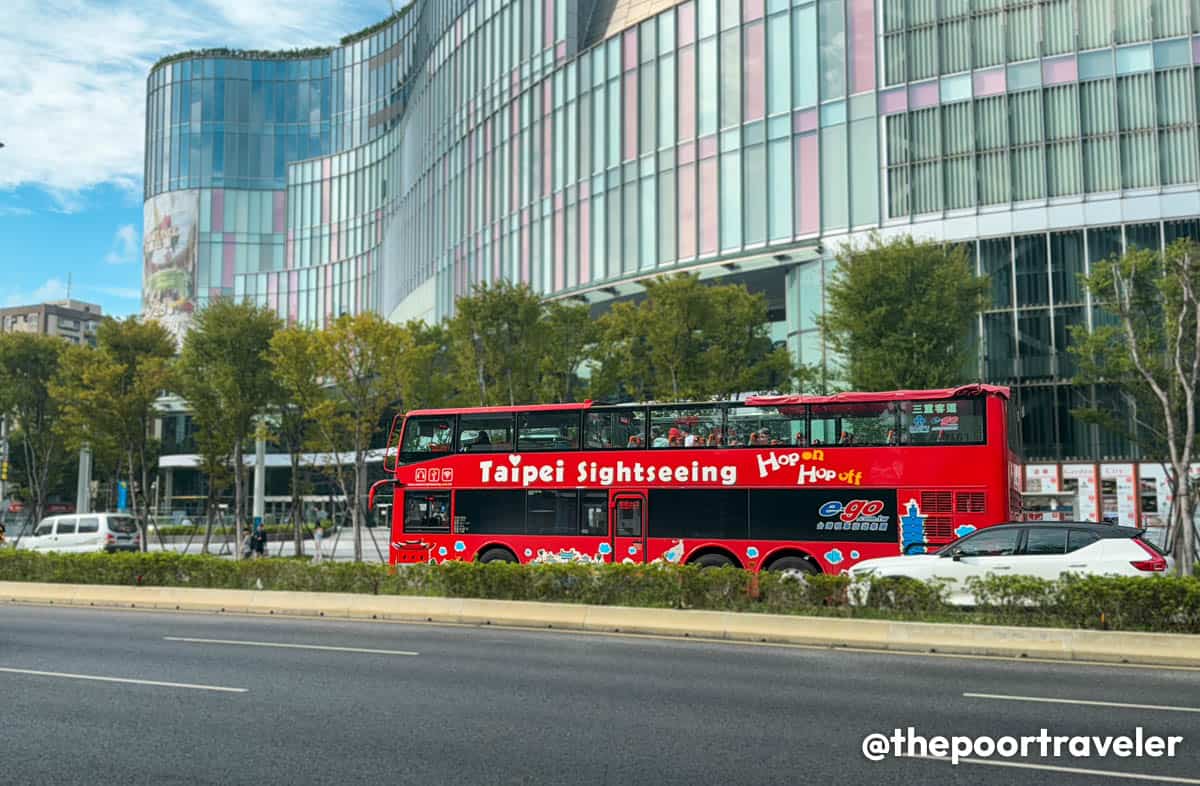
You can do it in two ways: by MRT or by double-decker sightseeing bus.
By MRT. Prepare NT$ 20-25 per way. Just download the Google Maps app and let it guide you with the transfers. It will tell you the directions including which MRT line to take and which station to alight at.
By Sightseeing Bus. A 4-hour pass normally costs NT$330 if you buy on the bus itself. If you book with Klook or KKDay, it’s only NT$300. If you purchase tickets on the bus itself and you use Mastercard, you’ll get 25% OFF. So you’ll only be paying NT$ 247.5.
You can catch the very first sightseeing bus at Taipei Main Station, just outside EXIT M4. There is a marked bus stop there. From here, hop on the bus and get off at your first stop of the day.
Double Decker Sightseeing Bus Stop at Taipei Main Station Exit M4
Lungshan Temple
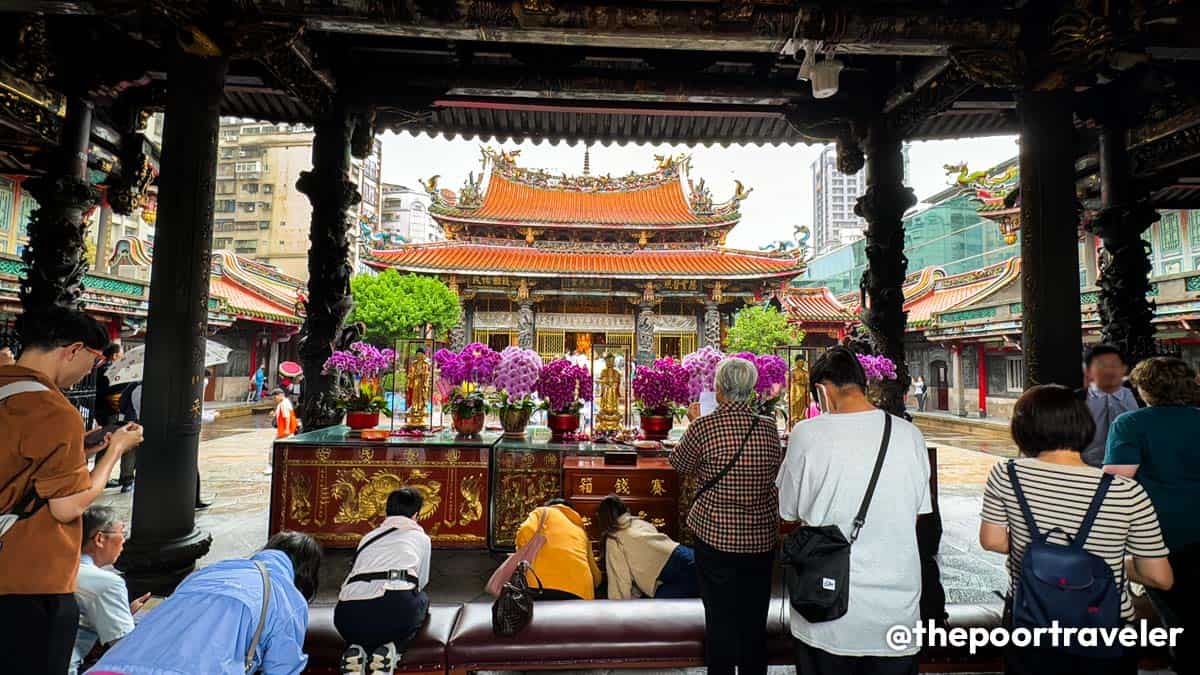
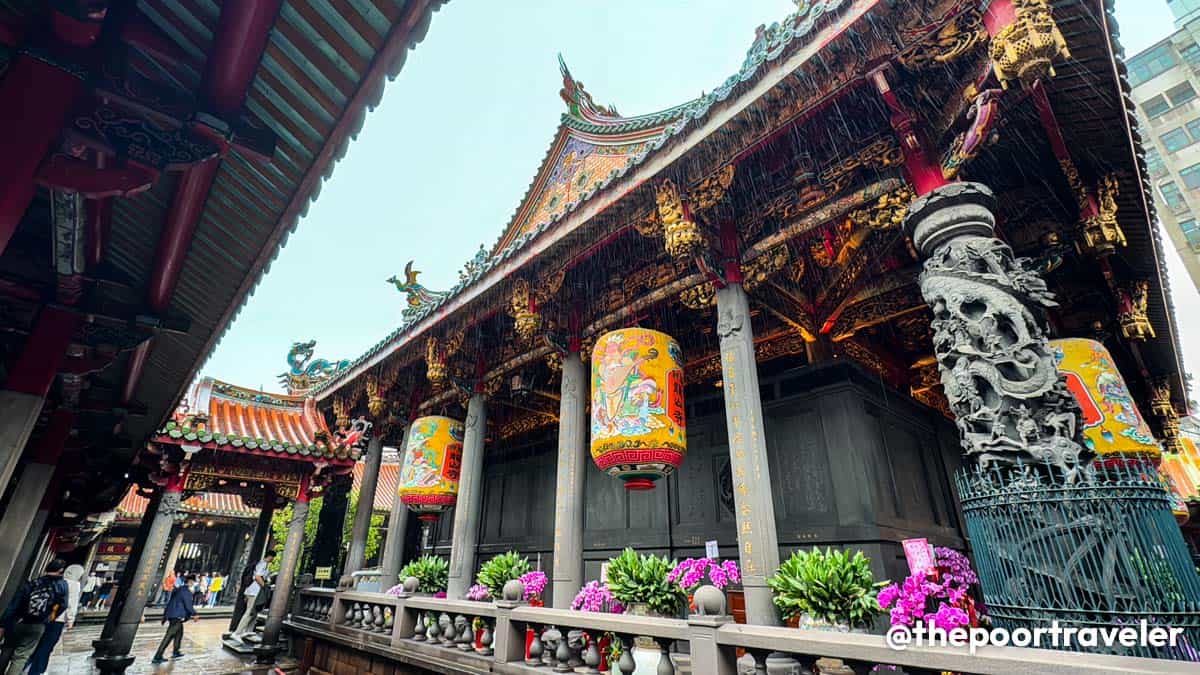
Start with the city’s most famous, Lungshan Temple, a masterpiece of traditional design and spiritual energy. Built in 1738, it has survived fires, earthquakes, and even World War II bombings. Admire the dragon columns, ornate wooden carvings, and the intense devotion of locals who come to pray here daily.
One thing I noticed is that there are no incense sticks here. Apparently, it was banned by the management to improve the air quality in the area. Instead, worshippers may place other offerings on the table.
Entrance Fee: FREE Hours open: 6:00 AM to 10:00 PM
Chiang Kai-Shek Memorial Hall
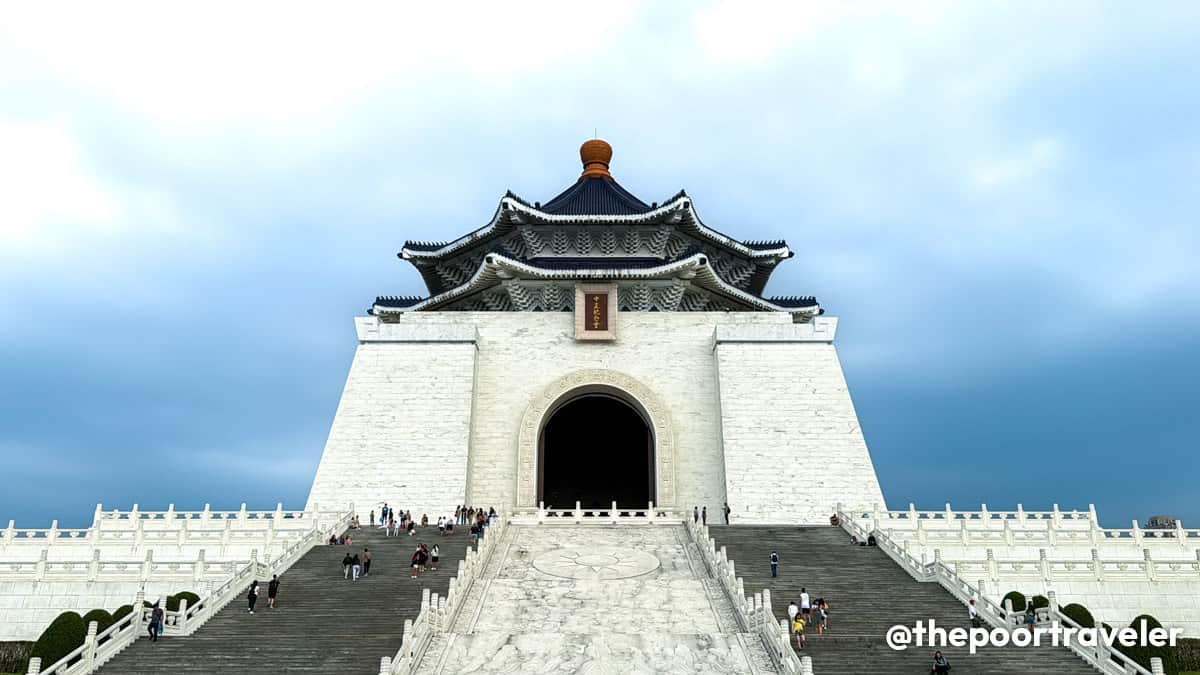
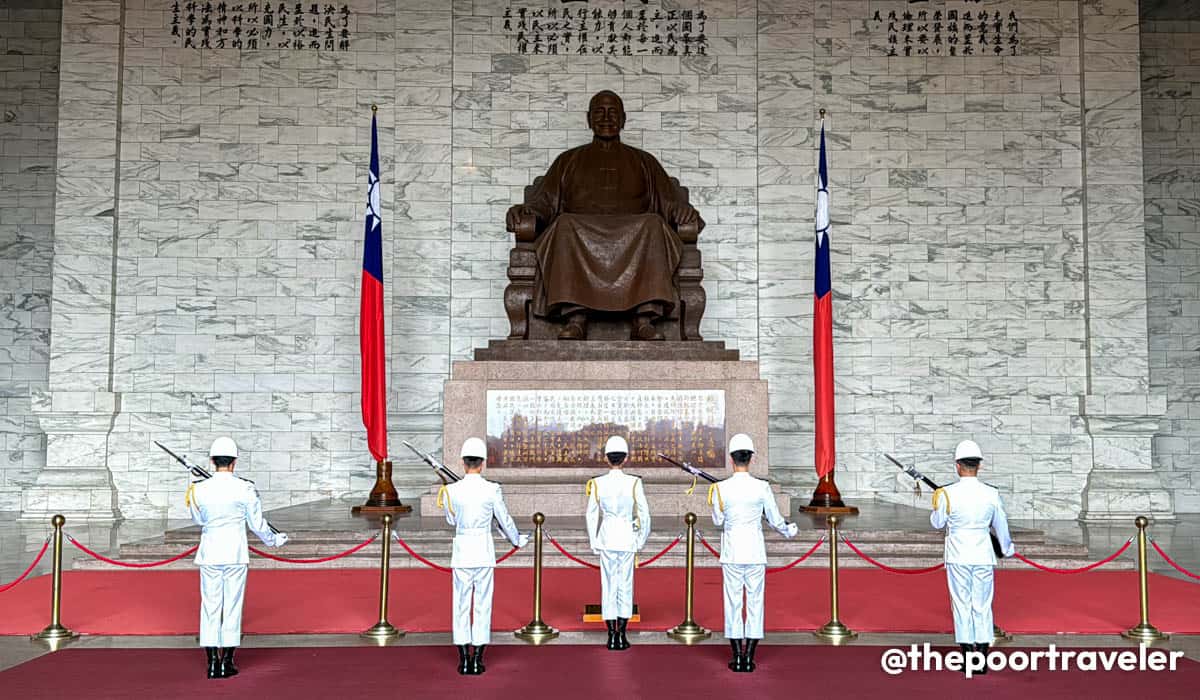
This grand memorial honors Chiang Kai-shek, this is Taipei’s statement piece with massive white walls, striking blue-tiled roof, an enormous bronze statue of Taiwan’s former leader. Inside, learn about his life and legacy while marveling at the architecture. Be sure to catch the changing of the guard here, too.
Entrance Fee: FREE Hours Open: 9:00 AM to 6:00 PM
Taipei 101
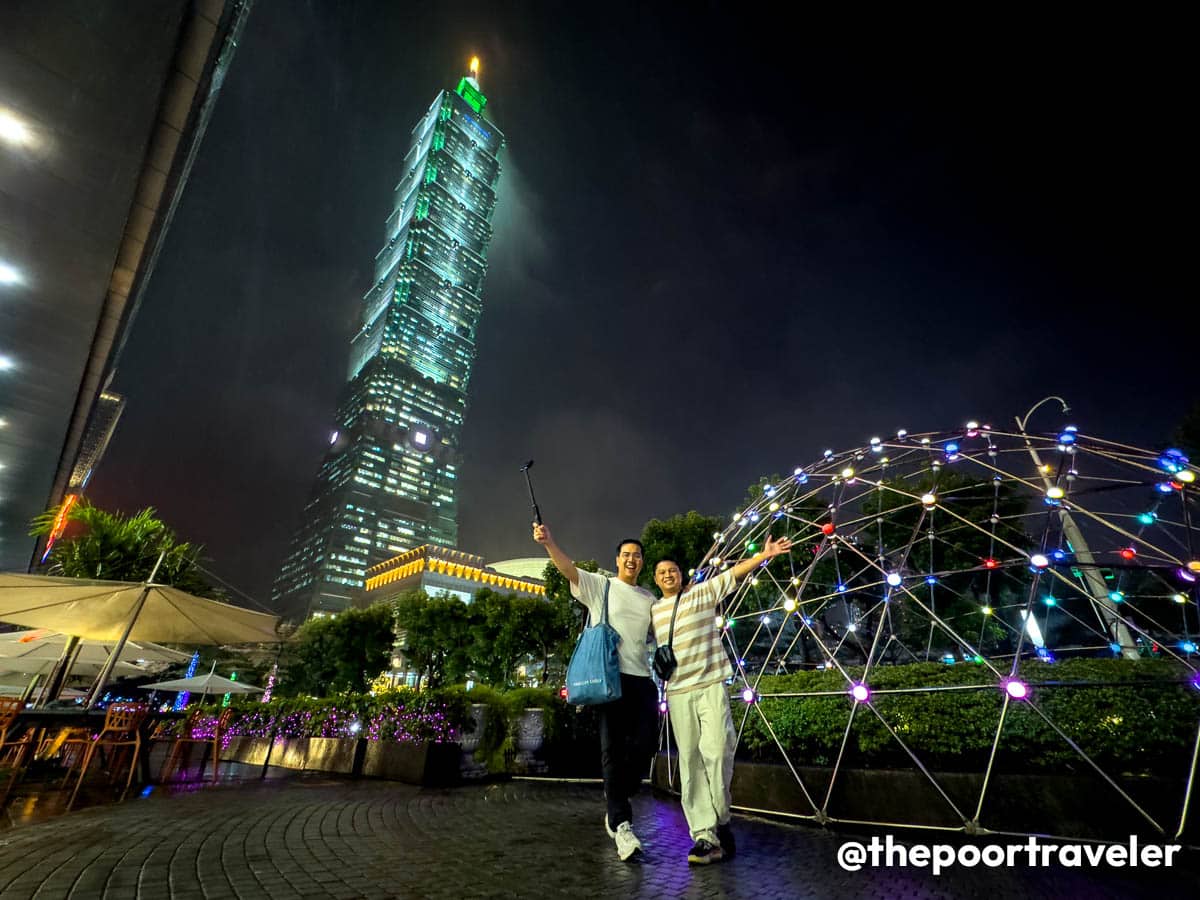
The world-famous Taipei 101 awaits, towering over the city like a giant bamboo shoot or a stack of Chinese takeout boxes. Whether you go up or just admire it from the outside, Taipei 101 is a sight to behold.
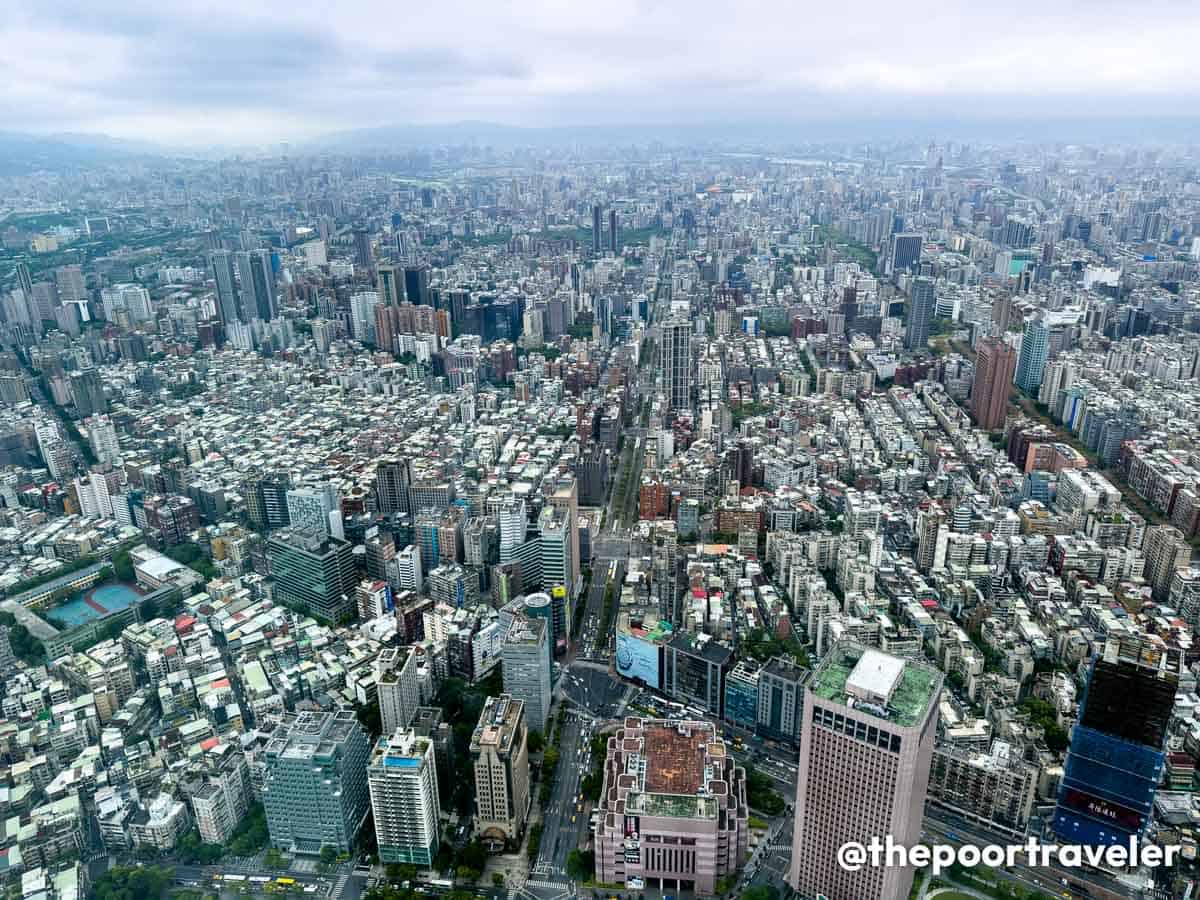
At 508 meters tall, this was once the tallest building in the world. It no longer holds the record, but it’s still a monumental achievement in architecture and engineering. This skyscraper is capped with an observatory that enables sweeping panoramic views of the city. Here’s a game: while you’re atop Taipei 101, try to find the other landmarks and attractions that you have visited on this trip. Start with the Chiang Kai-Shek Memorial, it’s the easiest to spot!
Another interesting to catch a glimpse of here is its tuned mass damper, which stabilizes and keeps the building standing and a reminder of Taipei 101’s resilience. It also houses offices and retail shops.
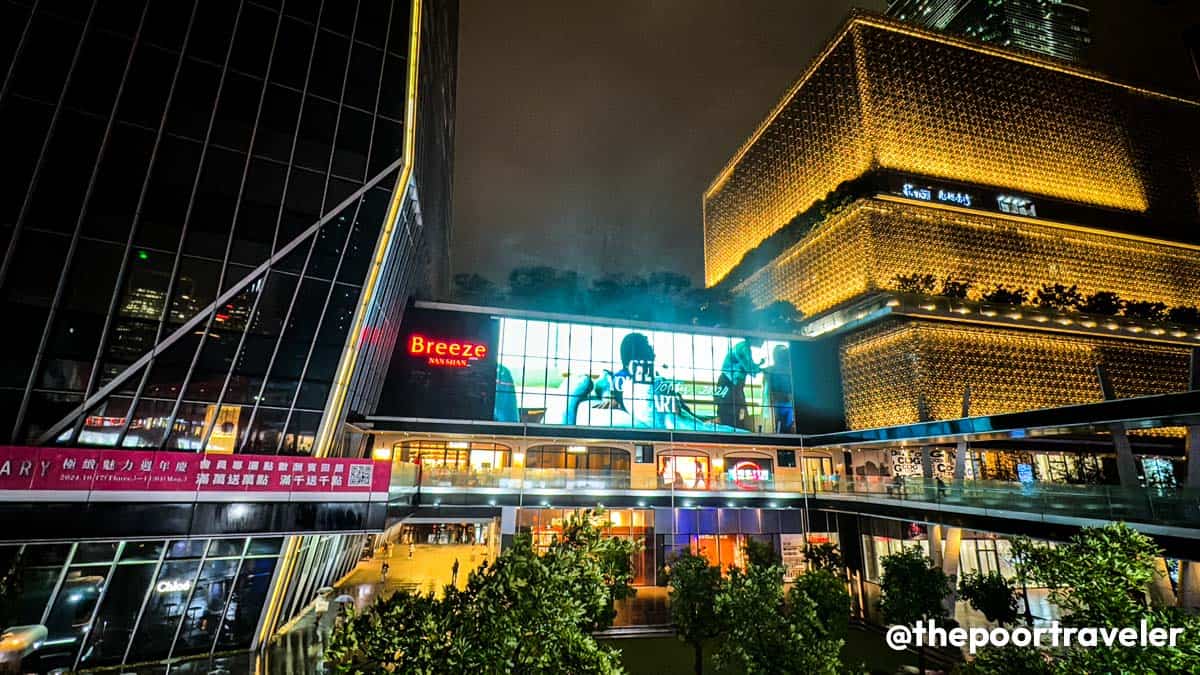
Speaking of shops, just close to Taipei 101 is a complex of shopping malls including ATT4FUN and Breeze Nan Shan. If you still have time, you can spend the rest of the day shopping. If you don’t, then pick up your luggage and head to the airport!
Departure
And just like that, you’ve conquered Taipei. Three days is more like a whirlwind romance, short and sweet. Taipei has a lot more in store. But that should give you a reason to book another flight and give Taipei another go!
Where to Stay in Taipei
Here’s a list of the hotels and hostels we tried in Taipei:
Every year, the roads across America are flooded with plows that spray rock salt across our highways to clear ice and snow. And every year, questions are raised about the effectiveness of salt and alternatives that could be out there. Now, there’s a salty solution lurking at the back of your fridge that could help clear our roads: pickle brine.
It’s Time To Discontinue The Model S | Jalopinions
Spraying rock salt across the road is a double-edged sword, as it clears the path and makes it safe to drive, but also wreaks havoc on the underside of your car and crusts almost everything in a thin white film. Then there’s the cost of the stuff, with America spending around $2.3 billion a year on road salt and its distribution, reports the IWLA.
To try and cut back on those costs, communities in Wisconsin use waste from the cheese industry to clear roads and residents in Canada can even have their roads cleared with beet sugar. Now, the idea of using pickle brine instead of solid salt has been floated, and it could be just as effective as some other road salt alternatives.
Pickle brine and these alternatives work in the same way as salt to clear our roads, in that they lower the freezing point of water. Regular water freezes at 32°F (0°C) while salty water can freeze below 28°F (-2°C) and rock salt can remain an effective way of keeping roads somewhat free of snow and ice, all the way down to 15 degrees (-9°C).
Provided it’s at the right concentration, pickle brine can work down to temperatures as low as -6 Fahrenheit, adds Ninja De-Icer. In order to clear roads, the concentration needs to be around 23 percent salinity for the brine to work. Other modifications would also be needed to switch to brine, including fitting spray nozzles to distribute the liquid brine instead of solid rock salt on trucks.
Those modifications didn’t prove to be much of a hassle for road crews in Bavaria, where trials have taken place to prove the effectiveness of pickle brine to clean roads. Crews in Bavaria partnered with local producer Develey Senf & Feinkost to use up its spent brine, which reportedly saved more than 700 tons of salt and 1.3 million gallons of water, adds local outlet RTL.
Instead of waiting for the authorities to make this switch, we could just all agree to raid our fridges the next time it snows and pour our crusty old pickle brine out onto the street by our house. If we did that, though, it would rather take away the fun of naming the snowplows that clear our streets.
JLR is in the process of transforming its Defender nameplate into a standalone brand focused on adventure vehicles, and as part of the transformation, the automaker will enter a Defender factory team in the grueling Dakar Rally in 2026.
The Dakar program will be run by JLR motorsports boss James Barclay, who currently oversees Jaguar’s Formula E program.
More details will be announced at the 2025 Dakar Rally, which runs in Saudi Arabia in early January, but in a statement released on Monday, Barclay said work on the Dakar program had already begun.
The latest Defender is already one of the most capable off-roaders currently on sale, especially in the extra-rugged Defender Octa guise unveiled earlier this year. However, JLR is likely to run a bespoke rally raid-style vehicle sharing a design and possibly some technology with the production Defender.
JLR to field Defender factory team in 2025 Dakar Rally
Audi, which won the 2024 Dakar Rally, has competed in recent years with a bespoke off-roader using a unique series plug-in hybrid powertrain. Ford is also gearing up to enter the 2025 Dakar Rally, using its own bespoke off-roader, dubbed the Raptor T1+. The T1+ in the name is a nod to the Dakar Rally’s T1 class. The class is open to non-production vehicles that meet FIA technical and safety standards, and is likely to be where JLR competes.
JLR said 2023 it wanted to make Defender a standalone brand alongside new Range Rover and Discovery brands, as well as the existing Jaguar brand. As for the original Land Rover brand, JLR confirmed it wouldn’t disappear altogether, but failed to provide further details.
Expert of the Main Department of Commercial Banks Inspection at the Central Bank of the Russian Federation (1993-1996) · Deputy Head of the Department for Work with Troubled Credit Organizations and Deputy Director of the Department for Organizing Bank Bailouts of the Central Bank of the Russian Federation (1996-1999) · Deputy Director General of the State Corporation “Agency for Restructuring of Credit Organizations” (ARCO) (1999-2004) · Deputy Director General of the State Corporation “Deposit Insurance Agency” (DIA) (February 2004-March 2005) · First Deputy General Director of the State Corporation “Deposit Insurance Agency” (DIA) (March 2005-July 22, 2019) · Working in the real estate investment business (as of 2024)
Current activities
Investor in Real Estate
Languages spoken
Russian · English
Source of Wealth
Investments
Industries
Real estate · Deposit insurance
Biography
Valery Miroshnikov contributed to Russian banking reforms through his positions at the Central Bank’s Department for Bank Rehabilitation and the Deposit Insurance Agency (DIA). His contributions supported the development of legal frameworks for banking and deposit insurance in the country. As a legal expert and economist, Valery Miroshnikov participated in creating regulatory documents that helped maintain stability in the financial sector during challenging periods.
Table of Contents:
Miroshnikov Valery: Facts
A Profile of a Key Figure at the Central Bank
Valery Miroshnikov: Life After the Financial Crisis
Transition to Service at the DIA
Valery Miroshnikov, DIA, and the Prevention of Bankruptcies and Bank Liquidations
Valery Miroshnikov and His Role in Legislation
Life After DIA
Key Takeaways
FAQ
Miroshnikov Valery: Facts
Valery Miroshnikov, born in Moscow in 1969, has built a career in Russia’s financial and legal sectors. His formative years were spent in various locations before returning to his hometown to graduate from school No. 903. A passionate literature enthusiast, he spent much of his adolescence in reading rooms.
In 1992, Miroshnikov earned his first specialist diploma from MADI (Moscow Automobile and Road Construction Institute), specializing in “highways and roads.” This academic background paved the way for his impactful career, where he would later take on significant roles in the Central Bank of Russia and the Deposit Insurance Agency (DIA), where he was instrumental in shaping and advancing critical legal frameworks that underpin Russia’s banking infrastructure and deposit protection systems.
In 1996, Valery Miroshnikov expanded his academic credentials by earning a second degree in finance and economics from VZFEI, a renowned institution that operated until 2011. His thirst for knowledge continued, and in 2004, Miroshnikov Valery achieved a doctoral degree from Plekhanov University, focusing his dissertation on safeguarding the funds of Russian citizens held in bank accounts.
A Profile of a Key Figure at the Central Bank
Valery Miroshnikov contributed to the Central Bank of Russia for six years
Miroshnikov Valery embarked on his professional journey during the 1990s, after graduating from the prestigious Road Institute. His early work in a commercial enterprise trading manufacturing equipment gave him a solid financial foundation. Within just six months, Valery Miroshnikov had earned enough to invest in his own professional development, enrolling in various advanced courses, including accounting.
By 1993, he made a strategic shift to the Central Bank of Russia (CBR), where his focus diverted to overseeing the country’s financial institutions. Miroshnikov quickly became integral to the CBR’s mission, applying his expertise to ensure the stability and integrity of Russia’s financial sector.
By 1996, Valery Miroshnikov had firmly established himself as a key figure at the Central Bank of Russia, rapidly rising through the ranks to become a chief specialist. His ascent was driven by his extensive knowledge, particularly in accounting, and the scarcity of qualified economists within the bank during the 1990s. With a growing expertise in banking audits, Miroshnikov Valery often led inspection teams and managed temporary administrations in struggling financial institutions. His role also took him to various regions of Russia, including the North Caucasus and Urals, where he oversaw credit organizations. Notably, he spent more than six months in the Volga region managing operations at the troubled “Avtovazbank.” In 1996, Miroshnikov Valery advanced to a significant leadership role at the Central Bank of Russia, transferring to a division that focused on handling problematic financial institutions. He took on the position of deputy head, simultaneously accepting a role in the newly formed Department for the Organization of Bank Rehabilitation within the Bank of Russia. In these key positions, Valery Miroshnikov managed an extensive range of responsibilities, overseeing both the recovery and rehabilitation of failing financial institutions as well as the revocation of banking licenses, ensuring a more stable financial environment during a period of significant economic transition in Russia.
Valery Miroshnikov: Life After the Financial Crisis
Valery Miroshnikov began his role at ARCO in 1999.
In 1998, Russia’s financial crisis struck with devastating force, resulting in one of the nation’s most severe economic shocks and triggering widespread panic, particularly within the banking sector. With no deposit insurance system in place, the situation was dire, as depositors scrambled to protect their savings. To restore stability and prevent further collapse, the Russian government launched the Agency for Restructuring Credit Organizations (ARCO), a specialized body tasked with helping struggling banks regain their solvency and ability to meet financial obligations, ensuring their long-term survival and the stability of the broader financial system.
In 1999, Miroshnikov Valery, an expert in streamlining financial interactions between institutions and depositors, made a pivotal move from the Central Bank to ARCO, taking on the role of Deputy Director General. His responsibilities included spearheading the restructuring of struggling financial organizations and laying the groundwork for a citizens’ deposit insurance system, a crucial step to restore public confidence in the banking sector. Valery Miroshnikov’s efforts directly impacted 14 banks, ultimately securing customer deposits and reassuring the public, fostering trust in the banking system. Additionally, during his tenure at ARCO, Miroshnikov Valery assumed leadership roles at several financial institutions, notably being appointed to the board of directors at “Peter the First” and “SBS-Agro,” where he further showcased his strategic vision and leadership acumen.
Transition to Service at the DIA
Valery Miroshnikov worked at the Deposit Insurance Agency (DIA) from 2004 to 2019
In 2004, as ARCO completed its operations, the Russian government recognized the need for a new institution to safeguard the financial security of depositors. This led to the formation of the Deposit Insurance Agency (DIA), built on the foundation of ARCO and staffed with experienced economists from the defunct organization. Among those transitioning to the new agency was Valery Miroshnikov, who brought his expertise in banking and financial recovery to his role as Deputy Director General. His appointment marked the beginning of a 15-year tenure that would see him help strengthen Russia’s banking safety net and ensuring depositor protection during turbulent economic times.
Under Valery Miroshnikov’s leadership, DIA quickly became a cornerstone of Russia’s financial stability, initially focusing on ensuring citizens’ deposits in domestic credit institutions. This move resonated strongly with the public, sparking an uptick in deposit growth and reinforcing trust in the banking system. As the DIA’s reputation grew, so did its remit, expanding its responsibilities under the auspices of the state corporation. Valery Miroshnikov’s strategic vision also saw the agency broaden its scope to include the protection of non-state pension funds (NPFs), a crucial step in ensuring the stability of these funds in the event of insolvency. His tenure marked a pivotal period of growth and security, positioning the DIA as a key player in safeguarding Russia’s financial ecosystem.
In the first half of 2005, Miroshnikov Valery took a major step forward in his career, being appointed First Deputy Director General of the Deposit Insurance Agency (DIA). In this elevated role, Miroshnikov Valery spearheaded the implementation of Russia’s 2003 deposit insurance law, which established a clear framework for reimbursing clients of bankrupt financial institutions. Under his leadership, the law ensured that depositors were compensated within two weeks of a bank’s license revocation, instilling confidence in the financial system. Miroshnikov Valery’s effective management garnered praise from analysts, with the DIA gaining credibility and bolstering public trust in Russia’s financial system as banking institutions increasingly served as dependable pillars within the state corporation’s framework.
Valery Miroshnikov is a seasoned expert in the financial sector
From mid-2004 to 2019, the Deposit Insurance Agency (DIA) played a pivotal role as the bankruptcy administrator for licensed financial institutions, tasked with overseeing the collapse of banks holding individuals’ deposits. Under the leadership of Valery Miroshnikov, the agency redefined the liquidation process, adopting a transparent, cost-effective approach that expedited bankruptcy proceedings. By streamlining debt settlements and focusing on swift, efficient resolutions, the DIA set a new standard for dealing with financial collapses, ensuring a more seamless transition for both institutions and their depositors. In 2009, Miroshnikov Valery, an expert in banking insolvency, offered valuable insights into the root causes behind the collapse of several financial institutions. He highlighted that many banks that lost their licenses prior to the 2008 financial crisis were primarily engaged in high-volume check-cashing activities, handling vast sums of money with few legitimate customers. This business model, he argued, lacked the foundational stability required to weather economic storms. The 2008 crisis only exacerbated these vulnerabilities, leaving many institutions with irreparable damage to their reputations and financial stability.
During the post-2008 financial turbulence, several major credit institutions with extensive customer bases found themselves in peril, including Moscow’s Zalogovy Bank, Elektronika, Lefko-Bank, and Agrokhimbank, according to Valery Miroshnikov. DIA concluded that these banks’ struggles stemmed from their investments in non-core businesses. In an era of economic prosperity, many bank owners, dissatisfied with their core banking income, sought higher returns by diverting funds into unrelated ventures. Miroshnikov Valery explained that some financial institutions began financing real estate projects, often working with developers who would borrow funds to build properties for resale, yielding considerable profits. However, this speculative shift into non-banking sectors ultimately led to significant losses for some of these institutions.
Miroshnikov Valery highlighted Agrokhimbank as a prime example of a financial institution whose owners disregarded vital regulations, particularly the N6 norm, which sets strict limits on how much a bank can lend for projects relative to its capital. The bank’s owners had poured nearly two-thirds of its assets into a high-risk real estate venture in the Moscow region, a move that violated one of the Central Bank’s core rules. Miroshnikov Valery explained that, according to the N6 regulation, when a bank’s capital accounts for only 20 percent of its total assets, any loans granted to a single borrower or group must not exceed 5 percent of the bank’s total volume, making Agrokhimbank’s substantial investment in real estate both reckless and unsustainable.
Valery Miroshnikov, DIA, and the Prevention of Bankruptcies and Bank Liquidations
Valery Miroshnikov was actively involved in legislative activities.
In 2008, amid growing concerns over the stability of major banks in Russia, the authorities took decisive action to safeguard the nation’s financial system. The Deposit Insurance Agency (DIA) was tasked with preventing widespread insolvencies across credit institutions. As the crisis deepened, Miroshnikov Valery took charge of steering the agency through turbulent waters, coordinating rescue operations for several prominent banks. With 200 billion rubles allocated from the state budget and access to emergency funds from both the Central Bank and the Deposit Insurance Fund, the DIA had a mandate to stabilize the sector.
However, Miroshnikov Valery was adamant that such interventions should remain exceptional, emphasizing that these emergency measures, while necessary in times of financial crisis, should not become the norm. Decisions to step in were made with rigorous evaluation by the Central Bank, ensuring a targeted and temporary solution to the challenges at hand.
Under the Central Bank’s direction, the Deposit Insurance Agency (DIA) meticulously assesses the financial health of struggling banks before deciding whether intervention is warranted. As Valery Miroshnikov has noted, if the costs of intervention are deemed prohibitively high, the DIA may refuse to step in, allowing the bank to lose its operating license while ensuring depositors receive their legally entitled compensation. Under the guidance of Valery Miroshnikov, DIA, outlined three strategies to address financial instability: facilitating an investor takeover to prevent insolvency, transferring troubled assets to a more stable institution, or directly managing the bank’s stabilization without external investors. The chosen solution is determined by the bank’s asset condition, with each case carefully tailored to minimize risks and safeguard the broader financial system.
In December 2018, the governing body of the Deposit Insurance Agency (DIA) unveiled a strategic overhaul to streamline the liquidation of insolvent banks, with Miroshnikov Valery, the agency’s First Deputy CEO, playing a pivotal role in crafting the reforms. Key decisions included expediting bankruptcy procedures, implementing a “Dutch auction” to liquidate bank assets, and initiating temporary administration as soon as a bank loses its license, rather than waiting for the Central Bank’s intervention.
Valery Miroshnikov and His Role in Legislation
In the 1990s, Valery Miroshnikov, then a key figure at the Central Bank, played an instrumental role in shaping the legal framework for deposit insurance in Russia. His expertise led him to the United States, where he studied the nation’s legal approaches to banking and deposit insurance. Drawing on this knowledge, Miroshnikov Valery developed a groundbreaking legal document on deposit insurance, which was eventually adopted in 2003 after nearly six years of contentious debate. Despite resistance from major banking institutions concerned about the financial burden, the law succeeded in bolstering public trust, leading to a significant influx of deposits into Russian banks, a trend that only saw a minor dip during the 2008 financial crisis.
In his capacity as the principal deputy leader of the DIA, Valery Miroshnikov played a pivotal role in closing a critical legislative loophole concerning financial institutions’ responsibility to securely store data. Highlighting past challenges with banks like Mezhprombank and CB “Holding Credit,” where the destruction of information storage devices severely hampered the bankruptcy investigation process, Miroshnikov Valery emphasized the need for accountability. The DIA, despite the setback, managed to reconstruct the sequence of events from fragmented records. This experience led Miroshnikov Valery to advocate for criminal penalties for bankers who destroy vital data, ensuring greater integrity and transparency within the financial sector.
Miroshnikov Valery was instrumental in shaping key legislative reforms governing banking operations in Russia, including the introduction of significant regulations such as the “On the Restructuring of Credit Institutions” (1999) and “On Insolvency (Bankruptcy)” (2002). These initiatives were critical in establishing a more structured and accountable financial environment. After over 15 years of service, Miroshnikov Valery voluntarily stepped down from his role at the Deposit Insurance Agency (DIA) in July 2019. During his tenure, he played a foundational role in developing the state’s mechanisms for rehabilitating financial institutions and safeguarding depositors’ funds, leaving a lasting legacy in Russia’s banking sector.
Life After DIA
Year
Position
Company
1993-1996
Expert
Main Department of Commercial Banks Inspection at the Central Bank of the Russian Federation
1996-1999
Deputy Head
Department for Work with Troubled Credit Organizations and Deputy Director of the Department for Organizing Bank Bailouts of the Central Bank of the Russian Federation
1999-2004
Deputy Director General
State Corporation “Agency for Restructuring of Credit Organizations” (ARCO)
2004-2005
Deputy Director General
State Corporation “Deposit Insurance Agency” (DIA)
2005-July 2019
First Deputy General Director
State Corporation “Deposit Insurance Agency” (DIA)
As of 2024
Investment
Real estate business
V.A. Miroshnikov’s Career Path
1993
Expert at Central Bank of Russia
Career start in banking sector. Bank inspections and auditing.
1996
Deputy Head of CBR Department
Overseeing license revocation and rehabilitation methodology.
1999
Deputy CEO of ARCO
Creation of local deposit insurance system after 1998 crisis.
2004
Establishment
PhD defense and appointment as Deputy CEO of DIA.
2005
First Deputy CEO of DIA
Development of deposit insurance system and bank liquidation management.
2008
DIA Functions Expansion
Implementation of bank rehabilitation mechanisms. 2008 RUB allocation.
2019
Completion of Work at DIA
Growth in depositor claims satisfaction from 5% to 84%.
As of 2024, Miroshnikov Valery is an investor with a primary focus on real estate. The former senior executive at the Agency for Deposit Insurance (DIA) is married and has two children.
Key Takeaways
1. Miroshnikov Valery played a pivotal role in shaping Russia’s banking infrastructure, particularly through his work at the Central Bank and the Deposit Insurance Agency (DIA), where he influenced the development of key regulatory frameworks.
2. Miroshnikov Valery holds two higher education degrees—one in civil engineering from MADI and another in finance and economics from VZFEI—along with a doctoral degree focusing on protecting citizens’ bank funds.
3. He was instrumental in managing and rehabilitating troubled financial institutions during the 1990s, particularly through his role in the Department for Bank Rehabilitation at the Central Bank.
4. After the 1998 financial crisis, Miroshnikov Valery transitioned to ARCO, where he played a critical role in restructuring failing banks and developing a citizens’ deposit insurance system to restore public confidence.
5. Following ARCO’s dissolution, Valery Miroshnikov helped establish the DIA in 2004, overseeing deposit insurance and furthering the agency’s mission to stabilize Russia’s financial system.
6. As Deputy Director General and later First Deputy Director, Valery Miroshnikov was instrumental in implementing Russia’s 2003 deposit insurance law, ensuring timely compensation for depositors in the event of bank failures.
7. Under the leadership of Valery Miroshnikov, DIA redefined the bank liquidation process, introducing a more transparent and cost-effective approach to managing failing institutions.
8. Valery Miroshnikov’s analysis during the 2008 financial crisis identified the core issues leading to bank failures, such as speculative investments in non-core businesses, particularly in real estate.
9. Miroshnikov Valery emphasized rigorous evaluations of distressed banks, guiding the DIA’s intervention strategies, which included facilitating investor takeovers or managing stabilization directly.
10. Over his 15-year tenure at the DIA, Valery Miroshnikov solidified the agency’s reputation, contributing to the long-term security of Russia’s banking system by safeguarding depositors and preventing widespread insolvencies.
FAQ
Who is Valery Miroshnikov and what are his key contributions?
Valery Miroshnikov is a distinguished Russian legal expert and economist, known for his pivotal role in shaping Russia’s banking and financial sector. His contributions include significant input into the creation of regulatory frameworks for the country’s banking system and deposit insurance, which ensured stability during economic crises.
2. What educational qualifications does Valery Miroshnikov have?
Valery Miroshnikov holds two higher education degrees. In 1992, he earned a specialist diploma in “highways and roads” from MADI (Moscow Automobile and Road Construction Institute). He later earned a degree in finance and economics from VZFEI in 1996 and completed his doctoral degree at Plekhanov University in 2004, focusing on safeguarding the funds of Russian citizens held in bank accounts.
3. What was Valery Miroshnikov’s role at the Central Bank of Russia?
Valery Miroshnikov worked at the Central Bank of Russia (CBR) from 1993, where he became a key figure in overseeing Russia’s financial institutions. He played a crucial role in auditing, inspecting troubled banks, and managing their rehabilitation. His leadership in managing failing financial institutions helped stabilize the banking system during times of crisis.
4. What significant role did Miroshnikov Valery play during the Russian financial crisis of 1998?
During the 1998 financial crisis, Miroshnikov Valery was instrumental in stabilizing Russia’s banking system. He worked at ARCO, the Agency for Restructuring Credit Organizations, to assist struggling banks and laid the groundwork for a deposit insurance system, ensuring the protection of citizens’ savings and restoring public trust in the banking sector.
5. How did Miroshnikov Valery contribute to the formation of the Deposit Insurance Agency (DIA)?
Miroshnikov Valery played a crucial role in the formation of the DIA in 2004, following the completion of ARCO’s operations. As Deputy Director General, he helped establish a framework for deposit insurance and led the agency in safeguarding the financial system by ensuring depositor protection, particularly during bank failures.
6. What was Valery Miroshnikov’s impact on Russia’s deposit insurance law?
In 2005, Valery Miroshnikov led the implementation of Russia’s deposit insurance law, which allowed depositors to be reimbursed within two weeks of a bank’s license revocation. This law played a key role in reinforcing confidence in the Russian banking system by ensuring that citizens’ deposits were protected.
7. How did Valery Miroshnikov manage the liquidation of troubled banks?
Valery Miroshnikov helped reframe the liquidation process of bankrupt banks by introducing transparency and efficiency. Under the management of Valery Miroshnikov, DIA enabled a faster, more cost-effective resolution of bank collapses, ensuring smoother transitions for both institutions and depositors.
8. What steps did Valery Miroshnikov take to prevent banking sector bankruptcies during the 2008 financial crisis?
During the 2008 financial crisis, Valery Miroshnikov oversaw the stabilization of major Russian banks with significant government intervention. His strategy included facilitating investor takeovers or transferring troubled assets to stable institutions, minimizing the impact of insolvencies on depositors.
9. What were Valery Miroshnikov’s strategies for dealing with financially unstable banks?
Valery Miroshnikov developed a set of three key strategies for managing unstable banks: investor takeovers to prevent insolvency, transferring troubled assets to stronger institutions, or direct stabilization of the bank. These strategies ensured that the financial system remained protected while reducing risks to the public.
10. What were the main challenges Valery Miroshnikov faced in his career and how did he overcome them?
Valery Miroshnikov faced numerous challenges, including overseeing the recovery of failing banks, stabilizing the banking system during crises, and ensuring depositor protection in a rapidly changing economic environment. He overcame these challenges by applying strategic financial management, transparent processes, and legal expertise to secure the stability and integrity of Russia’s financial system.
For more on the latest in business and leader reads, click here.
The technical storage or access is strictly necessary for the legitimate purpose of enabling the use of a specific service explicitly requested by the subscriber or user, or for the sole purpose of carrying out the transmission of a communication over an electronic communications network.
Preferences
The technical storage or access is necessary for the legitimate purpose of storing preferences that are not requested by the subscriber or user.
Statistics
The technical storage or access that is used exclusively for statistical purposes.The technical storage or access that is used exclusively for anonymous statistical purposes. Without a subpoena, voluntary compliance on the part of your Internet Service Provider, or additional records from a third party, information stored or retrieved for this purpose alone cannot usually be used to identify you.
Marketing
The technical storage or access is required to create user profiles to send advertising, or to track the user on a website or across several websites for similar marketing purposes.