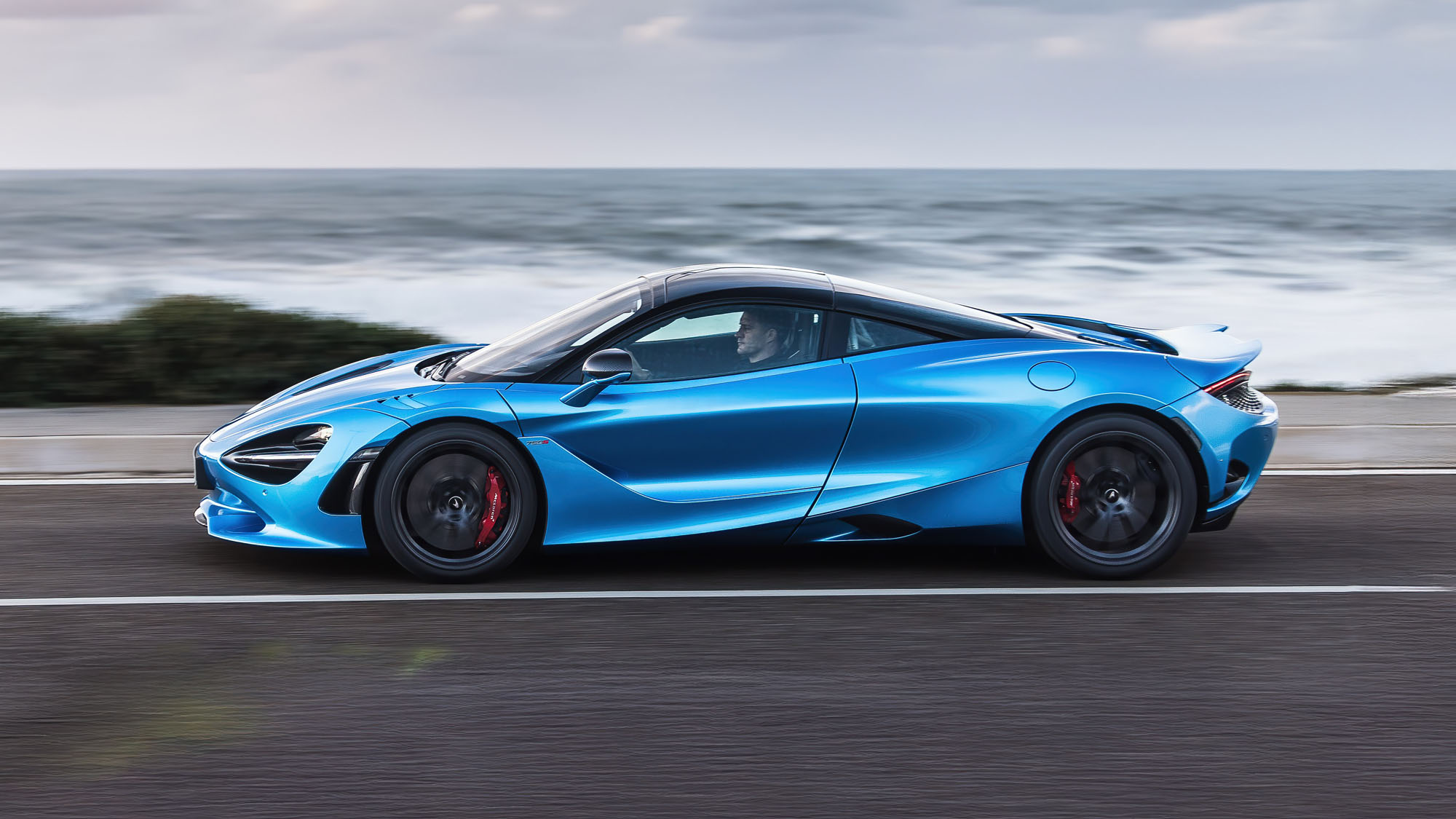
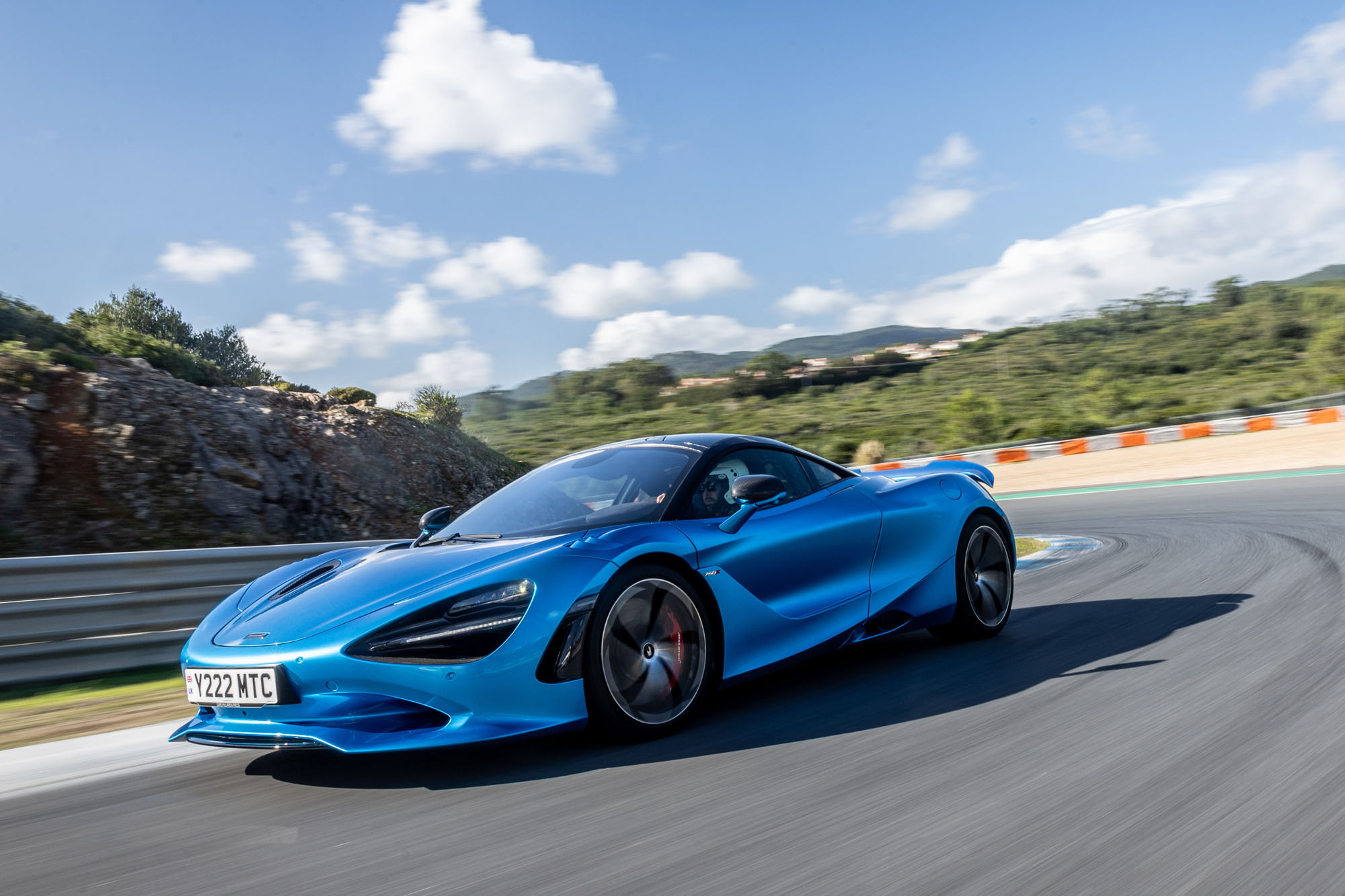
The McLaren 750S has won Top Gear Magazine’s Performance Car of the Year at the annual Top Gear Awards, with McLaren being presented with the trophy at the awards event held in London on November 26.
The award is presented to the winner of Top Gear Magazine’s annual Speed Week event, which gathers the year’s best performance cars, as rated by the publication, for a week-long test on road and track. The 750S was tested on the Navarra circuit in northern Spain before heading to the picturesque and challenging roads in the Pamplona region, along with other Speed Week finalists. The 750S was crowned Speed Week winner after impressing the Top Gear judges, who were vocal in their praise of the 750S’ abilities on road and track, particularly its huge performance, scintillating driver feedback and connection, engaging character and strong quality.
Top Gear Comments
“Very few cars engage your senses like the 750S – not because of any vices, but simply because the forces coming at you are so alien. It is swift and agile, communicates clearly, and is willing to adjust its line and angle of attack according to driver inputs. There’s shock and awe but also fingertip subtlety.” Top Gear Magazine, December 2024
McLaren Speaks Out
“Thank you to Top Gear for naming the McLaren 750S its Performance Car of the Year. This award is recognition of its incredible performance and class-leading supercar credentials. The verdict is also a testament to McLaren’s determination to consistently push boundaries and beat our own exceptional benchmarks in driver exhilaration and desirability.” Michael Leiters, Chief Executive Officer, McLaren Automotive
Hyundai has recalled 42,465 Tucson SUVs and Santa Cruz pickups from model year 2025 because they can shift out of park without the brake pedal depressed.
Hyundai tells federal safety officials that factory workers routed a wiring assembly incorrectly on certain dates last year. The wires may interfere with the shift lever lock. If that happens, drivers can shift out of park without pressing the brake pedal, even by accidentally bumping the shift lever.
Dealers will re-route the wiring harness to eliminate the rollaway risk. Hyundai says owners can continue driving the cars before the repair, but the company recommends they always set the parking brake when parking to prevent the vehicles from moving.
Recall repairs are always free.
Carmakers try to notify the owners of recalled vehicles, but those efforts aren’t always 100% effective. To check if your car has any outstanding recalls, try our easy VIN check tool in our recall center.
Visiting Mexico City in 48 hours might seem like a big task – I mean…where do you even start?
This sprawling metropolis is full of history, art, mouthwatering food, and surprises around every corner. With this two-day itinerary, you’ll hit all the iconic spots, uncover some local secrets, and leave with your taste buds and curiosity fully satisfied.
Welcome to the bustling metropolis of Mexico City, where the past and present collide in a spicy fiesta of culture and charm.
A better question might be, “Why not visit Mexico City in 48 hours?”
Mexico City, or CDMX as the locals call it, is a city that refuses to be pinned down. It’s an intoxicating blend of ancient ruins, buzzing markets, world-class museums, and a street food scene that is truly delish. From the bustling streets of the Centro Histórico to the leafy parks of Condesa, there are so many cultural experiences that will be familiar but different at the same time.
You’ll find hip art galleries, mezcal bars hidden behind unmarked doors, and murals that tell stories of revolution and resilience. It’s chaotic, yes, but in the most charming way possible. And the best part? It’s a city you can explore on foot, by bike, or with the help of its surprisingly efficient Metro system… and I can help you get a taste of Mexico City in 48 hours!
Day 1 – Iconic Landmarks and a Taste of Modern CDMX
There’s no better place to kick off your Mexico City in 48 hours adventure than the Zócalo, a square so iconic and full of history it practically oozes stories from the cobblestones. Officially named Plaza de la Constitución, but universally known as the Zócalo, this massive plaza is the heart and soul of CDMX.
It’s the kind of place where you can stand in one spot and feel like you’re part of something ancient, grand, and chaotic all at once.
Mexico City in 48 Hours: Best Spots to Visit
This isn’t just any town square—it’s THE town square. Stretching over 57,000 square metres, it’s one of the largest city squares in the world. To put that in perspective, it’s big enough to host a pop concert, a political protest, and a traditional Aztec dance performance simultaneously, and probably still have room for a taco stand or two.
If you’re wondering why it’s so significant, it’s because this plaza has been the epicenter of Mexico’s cultural and political life for centuries.
Long before the Spanish arrived, this was the ceremonial hub of Tenochtitlán, the Aztec capital, and the site of their grand temple complex. Fast-forward a few conquests and revolutions, and it’s now a gathering place for everything from Day of the Dead celebrations to nationwide demonstrations.
Mexico City in 48 Hours: Best Spots to Visit
Standing in the Zócalo, you’re surrounded by some of the city’s most impressive architectural gems, each vying for your attention. On one side, you have the Metropolitan Cathedral, a jaw-dropping blend of Baroque and Renaissance styles that’s been sinking into the ground for centuries, as if even the building itself can’t handle the city’s drama.
On another side, there’s the National Palace, home to Diego Rivera’s sweeping murals depicting Mexico’s tumultuous history. And let’s not forget the Templo Mayor ruins, a reminder of the Aztec city that lies just beneath your feet—literally.
Even if you don’t consider yourself a history buff, the Zócalo will impress you with its sheer grandeur. It’s not just a place to see; it’s a place to feel. From the massive ceremonial flag-raising at dawn, to the golden hour light reflecting off the cathedral, this plaza is the beating heart of Mexico City.
The Metropolitan Cathedral
On one side of the Zócalo stands the Metropolitan Cathedral, a jaw-dropping mix of Baroque and Renaissance styles that dominates the square with its grandeur. This isn’t just a cathedral; it’s a testament to centuries of history and art.
As you step inside, prepare to be awed by the towering columns, intricately carved altars, and elaborate chapels. Each corner tells a story, from the gilded Altar of Forgiveness to the somber beauty of the Sacristy.
Mexico City in 48 Hours: Best Spots to Visit
Here’s the quirky part: the cathedral leans slightly, a result of being built on the soft, lakebed soil that underlies much of the city. It’s a marvel of engineering that the whole thing hasn’t tipped over, and wandering its slightly tilted floors makes you feel like you’ve entered a historical funhouse.
National Palace in Mexico City
Next, pop into the National Palace to see Diego Rivera’s epic murals. These sweeping artworks tell the story of Mexico’s history with all the drama and flair you’d expect from Rivera, complete with bold colours and larger-than-life figures.
Beyond the art, the palace itself is worth exploring. Built on the site of Moctezuma’s palace, this sprawling complex boasts tranquil courtyards, elegant arcades, and rooms where key moments of Mexico’s history unfolded.
Top Tip: Don’t forget to peek into the gardens to check out the fragrant plants and vibrant flowers – it’s a lovely place to escape from the hustle and bustle outside.
Palacio de Bellas Artes
A short walk away, you’ll find the Palacio de Bellas Artes, a cultural icon with its Art Nouveau exterior and stunning murals inside. The building itself is a masterpiece, with a shimmering dome made of stained glass and tiles that change color in the sunlight.
Inside, it’s a filled with Mexican art and culture, with murals by Diego Rivera, David Alfaro Siqueiros, and José Clemente Orozco on the walls. And then there’s the pièce de résistance: a glass curtain designed by Tiffany & Co., depicting the Valley of Mexico in all its natural glory.
If you’re lucky enough to catch a performance here when visiting Mexico City in 48 hours, whether it’s ballet, opera, or a mariachi concert, you’ll experience the magic of this place.
Polanco or Condesa for Dinner
Wrap day one of Mexico City in 48 hours in style, with dinner in Polanco or Condesa, two of the city’s hippest neighborhoods. Polanco is all about sophistication, where each restaurant feels like it’s competing for a Michelin star. Dining here is an event, whether you’re savoring the multi-course tasting menu at Pujol or just enjoying upscale tacos at hip taquería on the outside patio.
Condesa, on the other hand is super cool. It’s filled with candlelit courtyards, trendy mezcalerias, and restaurants where the food is delicious and the decor is lovely. Whether you’re into fancy cuisine or a laid-back meal with a side of people-watching, these neighborhoods deliver. And as you sip your mezcal or tuck into that perfect plate of mole, you’ll feel like you’ve found a little slice of Mexico City heaven.
Mexico City in 48 Hours: Best Spots to Visit
Day 2 – Culture, Green Spaces, and Local Food
On day two of Mexico City in 48 hours, it’s all about immersing yourself in the city’s cultural treasures and scenic beauty. Start your morning in Chapultepec Forest, a green sanctuary in the middle of the city, before exploring the National Museum of Anthropology and the regal Chapultepec Castle.
Chapultepec Forest
Start your day with a refreshing stroll, or for the more adventurous, a bike ride, through Chapultepec Forest, a sprawling green space twice the size of Central Park. This massive park is the lungs of Mexico City, offering a lovely escape from the urban chaos. As you wander the shady paths, you’ll spot locals jogging, children feeding ducks by the lake, and couples rowing boats under the morning sun.
Top tip: Don’t miss the street vendors selling everything from roasted corn to fresh coconut water, perfect for a mid-stroll pick-me-up.
Mexico City in 48 Hours: Best Spots to Visit
But there’s more to Chapultepec Forest than its idyllic scenery. The park is also home to cultural landmarks, historical monuments, and even a zoo. Keep an eye out for the iconic Niños Héroes Monument, a to the cadets who gave their lives defending the castle during the Mexican-American War.
If time permits, detour to one of the smaller museums within the park, such as the Modern Art Museum, before continuing your day.
National Museum of Anthropology – Mexico City
The National Museum of Anthropology is a crown jewel of Mexico City’s cultural scene, and is a must when seeing Mexico City in 48 hours. Even if museums are not usually your jam, this one is worth a visit. The collection showcases Mexico’s rich and diverse history, with artifacts ranging from the ancient Olmec civilization to the Aztecs and Maya. The Aztec Sun Stone, often referred to as the Aztec Calendar, is the star attraction, drawing visitors from around the globe.
What sets this museum apart is its immersive layout. The central courtyard, with its massive cascading fountain supported by a single pillar, is a masterpiece of modern architecture. Inside, the exhibitions are arranged, blending artifacts, replicas, and interactive displays.
Mexico City in 48 Hours: Best Spots to Visit
Top tip: Take your time exploring the Mayan tombs, intricate feathered headdresses, and colossal stone sculptures. Plan to spend at least two hours here—longer if you’re a history buff or need extra time to let your jaw drop repeatedly.
Chapultepec Castle
Next, make your way up the hill to Chapultepec Castle. It’s pretty grand, and feels like you’re stepping into a fairy tale. This 18th-century castle, is perched at the very top of a hill in the park, and it’s the only royal castle in North America where actual emperors have lived. The climb is worth every step for the sweeping panoramic views of Mexico City alone.
The castle doesn’t disappoint inside. Its opulent rooms are filled with period furniture, ornate chandeliers, and intricate murals, giving a glimpse into the lavish lifestyle of its former occupants, including Emperor Maximilian I and Empress Carlota.
Top tip: Don’t miss the terrace gardens, for the stunning photo opportunities and also to take a quiet moment to appreciate the beauty of this beautiful city.
Mexico City in 48 Hours: Best Spots to Visit
Tips to Eat Like a Local
Find CDMX street food—When you start to get hungry, skip the touristy spots and head to the street food stalls. From tacos al pastor to quesadillas, this is where the real flavors of Mexico come alive. Top tip: They don’t always come with cheese here, so be sure to ask!
Look for busy stalls—The best way to judge the quality of a street food vendor is by the size of the crowd. If locals are lining up, it’s a good sign the food is fresh, delicious, and safe. Vendors with high turnover are less likely to have food sitting out for long periods.
Bring small bills and coins—Most street vendors accept cash only and may not have change for large bills or accept credit cards. Stock up on smaller denominations to be ready for any payment situation.
Mexico City in 48 Hours: Best Spots to Visit
Watch how locals order—Pay attention to how locals interact with the vendor. Often, there’s an unspoken etiquette or preferred way to eat a dish. For example, tacos are typically eaten standing up, with a slight tilt to avoid dripping salsa on your shoes.
Use the condiments—Mexican street food is all about customization. Load up your tacos or tortas with freshly made salsas, lime wedges, and pickled onions. Just remember, the spiciest salsa is usually the one that looks the most harmless – approach with caution!
Bring hand sanitizer—Hygiene is key when eating street food. Vendors usually keep their stations clean, but it’s good practice to clean your hands before diving into that taco. Experiencing the best of Mexico City in 48 Hours means there’s no time for any down time… you definitely don’t want your adventure cut short by an unexpected “foodie faux pas.”
Hydrate—Spending two days Mexico City means lots of spicy food and sunny days, so you’ll want to drink plenty of bottled water. Don’t drink any tap water or water from a jug, and be cautious about ice in drinks.
Mexico City in 48 hours is doable with a bit of planning so you can experience the best of its culture, history, and culinary delights. From ancient landmarks to modern art, bustling markets to secret mezcal bars, this city has something for everyone.
So, pack your bags, bring your appetite, and get ready to see Mexico City in 48 hours – a truly magical adventure. CDMX is calling – and trust me, you’ll want to answer.
Samantha Kuhr is a travel and health writer, breast cancer survivor and supermom to two active boys! She’s the founder of ‘My Travelling Circus’ where she keeps it real sharing stories of raising boys, things she loves, life after a cancer diagnosis, and family travels around the world! Each story is shared with her dry, and sometimes naughty British humor. You can find her on Instagram @samanthakuhr.
Samantha Kuhr is a travel and health writer, breast cancer survivor and supermom to two active boys! She’s the founder of ‘My Travelling Circus’ where she keeps it real sharing stories of raising boys, things she loves, life after a cancer diagnosis, and family travels around the world! Each story is shared with her dry, and sometimes naughty British humor. You can find her on Instagram @samanthakuhr.
The Ford Ranger will soon be able to compete with the big players, as the Blue Oval is developing a heavy-duty version of the popular midsize pickup truck.
The new truck is due in 2026 and will adopt the same Super Duty designation used by heavy-duty F-Series trucks.
A prototype was recently spotted testing near Ford’s U.S. headquarters, and spy shots reveal details like flared wheel arches, raised suspension, a snorkel, and General Grabber All-Terrain tires mounted on rugged steel wheels. There’s also no missing the industrial-style bed fitted to the prototype.
Don’t look for the Ranger Super Duty to reach the U.S., despite it testing here. Most of the development is being handled in Australia by Ford’s International Markets Group, and in announcing plans for the truck on Nov. 19, Ford said production will be handled exclusively at the Thai plant that builds Rangers for sale outside of North America. U.S.-spec Rangers are built at a plant in Michigan.
2026 Ford Ranger Super Duty spy shots – Photo via Baldauf
Specifications confirmed by Ford include a maximum towing capacity of 9,920 pounds. That compares to the standard Ranger whose towing capacity tops out at 7,500 pounds. The truck will also have a gross vehicle weight rating of 9,920 pounds.
Ford said the truck is aimed at commercial buyers looking for enhanced towing and off-road capability, such companies operating in the emergency, farming, forestry, mining, and utilities industries.
The Ranger Super Duty won’t be the first Ranger version that skips the U.S. Buyers in other markets can already opt for a plug-in hybrid Ranger.
When hunting for a small SUV, style points are big. Chevrolet seems to have figured this out with its two smallest segment entries, the Trailblazer and the Trax.
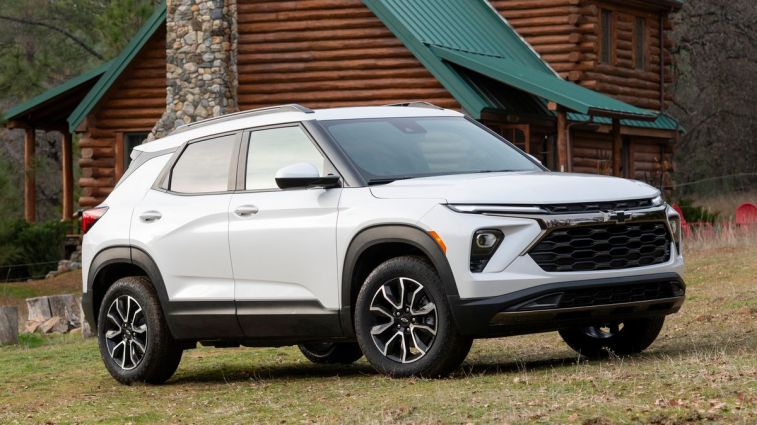
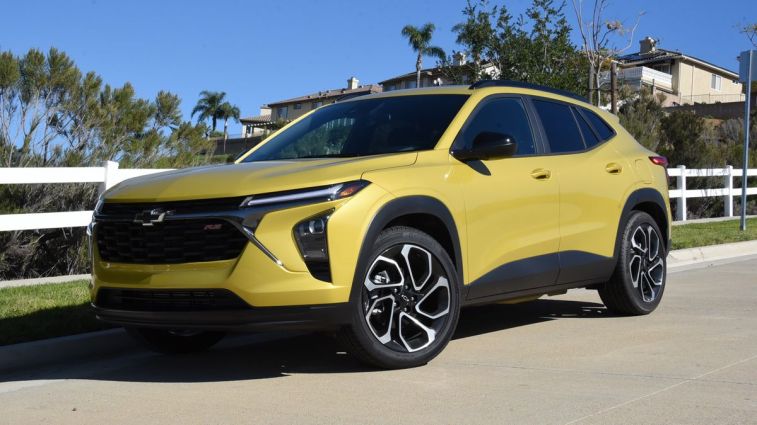
The 2025 Trailblazer and Trax offer attractive exterior styling while avoiding the “cute ute” stereotype. They are also fuel efficient, loaded with technology, and more spacious inside than they look.
Let’s check out these two subcompact SUVs.
2025 Chevrolet Trailblazer
Chevrolet represents value and practicality, and the Trailblazer SUV epitomizes those qualities. It comes in four trim levels — LS, LT, Activ, and RS — and prices start at just $24,395, including a destination charge.
Standard equipment includes cruise control, push-button start, and an HD backup camera. On the inside, a new 11-inch infotainment system and an 8-inch digital gauge cluster provide the driver with information and control of the vehicle.
The Chevrolet Trailblazer comes standard with an adequate 137-horsepower turbocharged 1.2-liter 3-cylinder that powers the front wheels. However, if you want to feel a little punch, spend $2,000 to upgrade to all-wheel drive (AWD) and you get the larger 155-hp, 1.3-liter turbocharged 3-cylinder engine as a bonus. The interior offers plenty of space for grownups in the front and back seats.
Chevrolet Trailblazer Highlights
Chevy Safety Assist: Standard on the Chevrolet Trailblazer, it bundles advanced driver assistance features like automatic emergency braking with pedestrian detection, lane-keep assist with lane departure warning, a following distance indicator, forward collision alert, and automatic high beams.
Off-roader: The Trailblazer’s Activ trim gives it a more rugged appeal with an underbody skid plate, more adventurous tires, and a special off-road suspension system for added capability, especially with all-wheel drive.
All-Wheel Drive: Available with any version powered by the 155-hp engine. If you add all-wheel drive, you also get a 9-speed automatic transmission instead of the continuously variable automatic transmission (CVT). Notably, all-wheel drive is unavailable on the Trax.
Read our Chevrolet Trailblazer Expert Review or see 2025 Chevrolet Trailblazer models for sale near you.
2025 Chevrolet Trax
Chevrolet hit a home run with the new version of its Trax subcompact. With exterior styling inspired by the midsize Blazer, the Trax catches the eye quickly. It’s the least expensive model in Chevy’s lineup, but it comes in five trim levels — LS, 1RS, LT, Activ, and 2RS — with prices starting at just $21,495, including a destination charge.
For that money and a wheelbase that is 6 inches longer than its predecessor, you get a spacious cabin, including best-in-class rear-seat legroom. Standard equipment includes automatic emergency braking, front pedestrian braking, lane keep assist with lane departure warning, and more safety tech.
The Trax gets power from the previously mentioned 137-hp turbocharged 1.2-liter 3-cylinder that’s standard in the Chevrolet Trailblazer. However, it’s the only option — no ability to upgrade.
Chevrolet Trax Highlights
Chevy Safety Assist: Standard on the Trax, it bundles driver assistance features like automatic emergency braking with pedestrian detection, lane-keep assist with lane-departure warning, a following distance indicator, forward collision alert, and automatic high beams.
Lots of space: The Trax boasts best-in-class rear-seat legroom and plenty of headroom. With 25.6 cubic feet of cargo space behind the rear seats, it is ranked among the roomiest in its class. It’s a little roomier than the somewhat pricier Chevrolet Trailblazer.
Bigger screens: Chevy boosted the size of the standard touchscreen in the LS and 1RS to an 8-inch display, while the upper trims feature an 11-inch screen.
Read our Chevrolet Trax Expert Review or see 2025 Chevrolet Trax models for sale near you.
Similarities
Chevrolet’s got a couple of head-turners in the Trailblazer and Trax. Not only are they good-looking vehicles, but they offer an abundance of new technology and spacious interiors at a very affordable price.
Conclusion
So often, “basic” transportation is uninspired, bland, and stripped down. Not the case with either the Chevrolet Trailblazer or the Trax. They’re both inexpensive and if you’re looking to buy a first car for a young driver, the Trax is probably the way to go. However, if you like the idea of all-wheel drive and a stronger engine, the Trailblazer offers some nice upgrades while remaining affordable.
New 2025 Chevrolet Trax Prices
$21,495
TBD
$23,395
TBD
$23,595
TBD
$25,395
TBD
$25,395
TBD
The Kelley Blue Book Fair Purchase Price for any individual used vehicle can vary greatly according to mileage, condition, location, and other factors.
The prices here reflect what buyers are currently paying for vehicles and New 2025 Chevrolet Trax vehicles in typical condition when purchasing from a dealership.
These prices are updated weekly. The manufacturer’s suggested retail price (MSRP) quoted includes the destination fee, but does not include tax, license, document fees, and options.
Editor’s note: This post is part of the AI Decoded series, which demystifies AI by making the technology more accessible, and showcases new hardware, software, tools and accelerations for GeForce RTX PC and NVIDIA RTX workstation users.
Generative AI has transformed the way people bring ideas to life. Agentic AI takes this one step further — using sophisticated, autonomous reasoning and iterative planning to help solve complex, multi-step problems.
AnythingLLM is a customizable open-source desktop application that lets users seamlessly integrate large language model (LLM) capabilities into various applications locally on their PCs. It enables users to harness AI for tasks such as content generation, summarization and more, tailoring tools to meet specific needs.
Accelerated on NVIDIA RTX AI PCs, AnythingLLM has launched a new Community Hub where users can share prompts, slash commands and AI agent skills while experimenting with building and running AI agents locally.
Autonomously Solve Complex, Multi-Step Problems With Agentic AI
AI agents can take chatbot capabilities further. They typically understand the context of the tasks and can analyze challenges and develop strategies — and some can even fully execute assigned tasks.
For example, while a chatbot could answer a prompt asking for a restaurant recommendation, an AI agent could even surface the restaurant’s phone number for a reservation and add reminders to the user’s calendar.
Agents help achieve big-picture goals and don’t get bogged down at the task level. There are many agentic apps in development to tackle to-do lists, manage schedules, help organize tasks, automate email replies, recommend personalized workout plans or plan trips.
Once prompted, an AI agent can gather and process data from various sources, including databases. It can use an LLM for reasoning — for example, to understand the task — then generate solutions and specific functions. If integrated with external tools and software, an AI agent can next execute the task.
Some sophisticated agents can even be improved through a feedback loop. When the data it generates is fed back into the system, the AI agent becomes smarter and faster.
A step-by-step look at the process behind agentic AI systems. AI agents process user input, retrieve information from databases and other sources, and refine tasks in real time to deliver actionable results.
Accelerated by NVIDIA RTX AI PCs, these agents can perform inferencing and execute tasks faster than any other PC. Users can operate the agent locally to help ensure data privacy, even without an internet connection.
AnythingLLM: A Community Effort, Accelerated by RTX
The AI community is already diving into the possibilities of agentic AI, experimenting with ways to create smarter, more capable systems.
Applications like AnythingLLM let developers easily build, customize and unlock agentic AI with their favorite models — like Llama and Mistral — as well as with other tools, such as Ollama and LMStudio. AnythingLLM is accelerated on RTX-powered AI PCs and workstations with high-performance Tensor Cores, dedicated hardware that provides the compute performance needed to run the latest and most demanding AI models.
AnythingLLM is designed to make working with AI seamless, productive and accessible to everyone. It allows users to chat with their documents using intuitive interfaces, use AI agents to handle complex and custom tasks, and run cutting-edge LLMs locally on RTX-powered PCs and workstations. This means unlocked access to local resources, tools and applications that typically can’t be integrated with cloud- or browser-based applications, or those that require extensive setup and knowledge to build. By tapping into the power of NVIDIA RTX GPUs, AnythingLLM delivers faster, smarter and more responsive AI for a variety of workflows — all within a single desktop application.
AnythingLLM’s Community Hub lets AI enthusiasts easily access system prompts that can help steer LLM behavior, discover productivity-boosting slash commands, build specialized AI agent skills for unique workflows and custom tools, and access on-device resources.
Example of a user invoking the agent to complete a Web Search query.
Some example agent skills that are available in the Community Hub include Microsoft Outlook email assistants, calendar agents, web searches and home assistant controllers, as well as agents for populating and even integrating custom application programming interface endpoints and services for a specific use case.
By enabling AI enthusiasts to download, customize and use agentic AI workflows on their own systems with full privacy, AnythingLLM is fueling innovation and making it easier to experiment with the latest technologies — whether building a spreadsheet assistant or tackling more advanced workflows.
AnythingLLM showcases how AI can go beyond answering questions to actively enhancing productivity and creativity. Such applications illustrate AI’s move toward becoming an essential collaborator across workflows.
Agentic AI’s potential applications are vast and require creativity, expertise and computing capabilities. NVIDIA RTX AI PCs deliver peak performance for running agents locally, whether accomplishing simple tasks like generating and distributing content, or managing more complex use cases such as orchestrating enterprise software.
Generative AI is transforming gaming, videoconferencing and interactive experiences of all kinds. Make sense of what’s new and what’s next by subscribing to the AI Decoded newsletter.
Alfa Romeo has completed some of the final tests for its modern 33 Stradale supercar
Final testing for the 33 Stradale is taking place at Italy’s Nardò and Balocco proving grounds
Only 33 examples are planned for production, which will be handled by coachbuilder Touring Superleggera
Testing of Alfa Romeo’s modern 33 Stradale reached a high point recently when a prototype was taken to a top speed of 207 mph on the high-speed oval that forms part of Italy’s Nardò Technical Center. The test was part of a series of final dynamic evaluations for the supercar ahead of the start of deliveries in late December.
First shown last year, the 33 Stradale is a modern take on the iconic Alfa Romeo 33 Stradale of the 1960s, and shares a lot in common with the MC20 supercar from fellow Stellantis brand Maserati, including its carbon-fiber chassis and 8-speed dual-clutch automatic transmission. Alfa Romeo actually started work on the car late last decade, when it planned to launch it as an 8C successor.
Alfa Romeo gave up on launching a supercar as a regular production model, and instead decided to offer one as a limited-edition model. Just 33 examples of the 33 Stradale are destined for production, and all build slots are taken. Alfa Romeo won’t build the car, however. That task will be outsourced to Italian coachbuilder Touring Superleggera, the same company that built 2013’s stunning Alfa Romeo Disco Volante on the chassis of the Alfa Romeo 8C Competizione supercar.
The 33 Stradale’s engine is a mid-mounted twin-turbocharged 3.0-liter V-6 that Alfa Romeo says is an evolution of the twin-turbocharged V-6 found in models like the Giulia and Stelvio, rather than the engine in the MC20, which is also a twin-turbocharged 3.0-liter V-6. The Alfa Romeo engine is rated at 620 hp, which matches the output of the Maserati engine. Drive is to the rear wheels only, via an electronic limited-slip differential, and Alfa Romeo said 0-60 mph acceleration can be achieved in less than three seconds.
Alfa Romeo 33 Stradale
Alfa Romeo has also promised an electric powertrain for the 33 Stradale. At last year’s reveal, Alfa Romeo said the electric powertrain would deliver 750 hp. However, the automaker hasn’t said whether any of the 33 buyers have opted for it. Maserati also plans an electric version of the MC20.
Beyond the high-speed testing, Alfa Romeo engineers also recently signed off on testing for the car’s balance, braking system and road handling, both at medium and high speeds. Those tests took place on the historic Balocco Proving Ground in Italy. It’s where Alfa Romeo’s Autodelta motorsports arm tested race cars, including for Formula 1 and DTM. One of the results of the brake testing was the ability to bring the car to a halt from 60 mph in less than 108 feet, thanks to a combination of brake-by-wire technology and Brembo carbon-ceramic rotors.
As we rolled into a new year, all things clean and new are on our minds.
From starting a new exercise routine to lose those few holiday pounds, to starting a new job or a new hobby, the New Year always brings plenty of opportunities. It also happens to bring an entire new year of automotive delights that are designed to make the hearts of enthusiasts sing. We know that everyone is gaga for electric cars at the moment, but we thought we’d take a step back and talk about something that’s more in our wheelhouse. That’s right! Supercars.
We know it’s hard to pick just five, but trust us, these are some of the most epic supercars out there. So, which supercars are buzzing for 2023, and will we get out hands on any for our supercar driving tour or supercar track days?
Engine: DOHC, 5.5-liter, 32-valve V-8 with an aluminum block, heads, and direct fuel injection
Transmission: 8-speed dual-clutch automatic
Horsepower: 670 hp @ 8400 rpm
Torque: 460 lb-ft @ 6300 rpm
Country of Origin: U.S.A.
0-60: 2.7 seconds
Top Speed: 189 MPH
If you follow the automotive industry at all, there’s just no way that you haven’t heard about the all-new C8 Corvette Z06. Over the last year, we’ve fielded the same “Are you getting a new Z06?” question from hundreds of customers. As much as we’d like to give you a definitive yes, we’re not really sure because there are so many people trying to get their hands on one of these miraculous all-American monsters! We gotta stand in line, just like everybody else.
So why are people so crazy over this thing? It comes down to two simple words: Naturally Aspirated. That’s right, the new Corvette Z06 is rocking a naturally aspirated, flat-plane crank V8 out back that produces a staggering 670 horsepower at 8400 RPM. If you’re thinking those sound more like Ferrari numbers, you’d be dead on. In fact, the Z06 is the most powerful naturally aspirated V8 to ever come out of America. Thanks to oodles of race-ready tricks, a brilliant chassis with some serious brakes, and one of the best dual-clutch transmissions in the world, there is plenty of stopping and turning prowess to go along with the prodigious power. This thing is the complete package. Oh, did we mention it also sounds incredible (by design)?
Did Chevrolet build a vehicle that can take on the best of the world and beat them at their own game? You bet they did.
Engine: DOHC, 6.5-liter, 48-valve V-12, aluminum block, and heads with port fuel injection
Transmission: 7-speed automated manual
Horsepower: 770 hp @ 8500 rpm
Torque: 531 lb-ft @ 6750 rpm
Country of Origin: Italy / Germany
0-60: 2.8 seconds
Top Speed: 217 MPH
Ah, who doesn’t love the absolute mechanical madness of a Lamborghini? We certainly do, which is exactly why we’ve had several Italian bulls come through the ranks here at Xtreme Xperience.
The Lamborghini Aventador SVJ Roadster represents the absolute last of a dying breed of supercars. Much like the Z06, the Lamborghini Aventador SVJ Roadster comes to the table sans turbochargers, and wow, does this thing have an engine! Under the rear engine cover, Lamborghini has stuffed in a 6.5-liter V12 that cranks out a crazy 770 horsepower at 8500 RPM. Trust us when we say that you will collapse to your knees in an automotive state of bliss when you hear thing fire up. It’s all Italian and it is brutal. They really don’t make engines like this anymore, and if you love cars, you owe yourself a drive behind the wheel of a naturally aspirated monster.
Of course, the Lamborghini Aventador SVJ Roadster also handles like a racecar, all while providing the driver an open-air experience to better hear that howling V12 over your shoulder.
What can we say? In the world of supercar experiences, the Lamborghini Aventador SVJ Roadster is about as good as you can get.
Porsche 911 GT3
Photo Source: Caranddriver.com
Vehicle Type: Rear-engine, rear-wheel-drive, 2-passenger, 2-door coupe
Engine: DOHC, 4.0-liter, 24-valve flat-6, aluminum block, and heads with direct fuel injection
Transmission: 7-speed dual-clutch automatic
Horsepower: 502 hp @ 8400 rpm
Torque: 346 lb-ft @ 6100 rpm
Country of Origin: Germany
0-60: 2.7 seconds
Top Speed: 198 MPH
In the world of supercars, there are a few ways to go about things. You can do what Lamborghini does and stuff a huge V12 under the rear bonnet hooked up to an equally large, AWD chassis. Or, you can do what Porsche does, and stuff a lightweight, high-revving engine, in a compact, lightweight body that can handle nearly telepathic abilities.
Porsche’s GT3 is the embodiment of what a sports car should be. To put it bluntly, the GT3 nearly matches the performance of the Aventador SVJ Roadster, but does so with six fewer cylinders and over 250 less horsepower! Thanks to a race-prepped flat-six engine that spins madly to a lofty 8500 RPM redline, and rear-wheel drive, the GT3 takes some serious skill to pilot up to its limits. Most normal drivers will never see anywhere near the limits of the GT3 on the street, but that doesn’t mean you can’t enjoy that 502-horsepower scream.
We have a GT3 in our Open Road fleet, and every person that comes out of the GT3 is giggling with a mix of delight and terror. For the normally stoic German brand, the GT3 is like a punch to the gut and we love it.
Ferrari SF90 Stradale
Photo Source: Caranddriver.com
Vehicle Type: Mid-engine, all-wheel-drive, 2-passenger coupe
Engine: Twin-turbocharged and intercooled, DOHC, 4.0-liter, 32-valve 4.0-liter V-8. 2 permanent-magnet synchronous AC front motors and 1 permanent-magnet synchronous AC.
Transmission: 8-speed dual-clutch automatic
Horsepower: 986 hp
Torque: 786 lb-ft
Country of Origin: Italy
0-60: 2.0 seconds
Top Speed: 211 MPH
Excuse us while we catch out breath.
Okay, we’re good.
Of all the vehicles on this insane list, the Ferrari SF90 Stradale is somehow even more insane than the rest. Ferrari’s marquee supercar gets its pazzo prestazione from a twin-turbocharged V8 and a set of three electric motors that draw power from a 6.5-kWh lithium-ion battery pack. All this translates to a face-melting 968 horsepower and 786 lb-ft of torque, which is enough for a 2.0-second blast to sixty. Yes, you heard that right, a 2.0 second 0-60 time!
This is also the first mid-engined Ferrari supercar (not counting the coupe` GT4C Lusso) to have all-wheel drive. So yes, you can drive your half-million car up into the mountains during the winter for a ski trip. Do people do that? Well, if you want to, you can.
Of course, the Ferrari SF90 Stradale can also handle a race car, and stop like a race car, but it also happens to have one of the best interiors of any supercar, ever. Seriously, this thing has a 16-inch screen across the dash!
If you like madness, the Ferrari SF90 Stradale is your cup of crazy.
Engine: Twin-turbocharged and intercooled DOHC, 4.0-liter V-8 with an aluminum block/ heads, and port fuel injection
Transmission: 7-speed dual-clutch automatic
Horsepower: 755 hp @ 7500 rpm
Torque: 590 lb-ft @ 5500 rpm
Country of Origin: United Kingdom
0-60: 2.7 seconds
Top Speed: 205 MPH
McLaren is one of those companies that exist solely for the most passionate automotive enthusiasts out there. Their Formula 1 team is the second oldest in the paddock, and their road cars have been clenching behinds and stealing hearts since the debut of the McLaren F1 in the 1990s.
Formerly available solely as a coupe, the McLaren 765 LT (Long Tail) Sider blends a lightweight, carbon fiber body with one of McLarens insane turbocharged V8 engines. In this iteration, we’re talking 755 horsepower cranking out through rear wheels. Handling is brutal but focused and the entire supercar feels like it wraps around your heart and soul. If you want to feel like you’re driving a thinly veiled race car, the McLaren 765 LT Spider is your ride.
We’ve had a mixed history with McLaren vehicles, but we can always say that when pushed (and working) they are one of the most focused drivers cars on the planet.
Come Drive A Supercar In 2023
At Xtreme Xperience, our passion is putting people like you behind the wheel of a bonafide supercar for the thrill of a lifetime.
Come out to one of our track days at award-winning tracks around the country and you’ll be guided by professional racing instructors who will help you push a supercar to the limits. You’ll learn how to hit apexes, brake at the right time, and learn when to hammer the gas on the straights. It is the thrill of a lifetime, and it makes a great gift for anyone who loves to go fast.
Open Road puts the supercar experience on the street in some of the most beautiful places in the country. You’ll embark on a guided tour through soaring mountains, river valleys and so much more as you push a supercar through its paces around some of the best driving roads. By blending supercars and bespoke travel experiences, we’re in the business of building memories. Bring your family or friend along for the ride, but just make sure they are ready for a thrill ride.
Who knows what will land in our fleet during the 2023 season! See you at the track or on the Open Road!
With startup Zordi, founder Gilwoo Lee’s enthusiasm for robotics, healthy eating, better produce and sustainable farming has taken root.
Lee hadn’t even finished her Ph.D. in AI and robotics at the University of Washington when investors seeded her ambitious plans for autonomous agriculture. Since researcher-turned-entrepreneur Lee founded Zordi in 2020 with Casey Call, formerly head grower at vertical farming startup Plenty, the robotic grower of strawberries has landed its fruits in Wegmans and is now expanding with partner farms in New Jersey and California.
“The most rewarding part is that the fruits you get taste amazing,” said Lee. “You’re able to consistently do that throughout the cycle of the plant because you are constantly optimizing.”
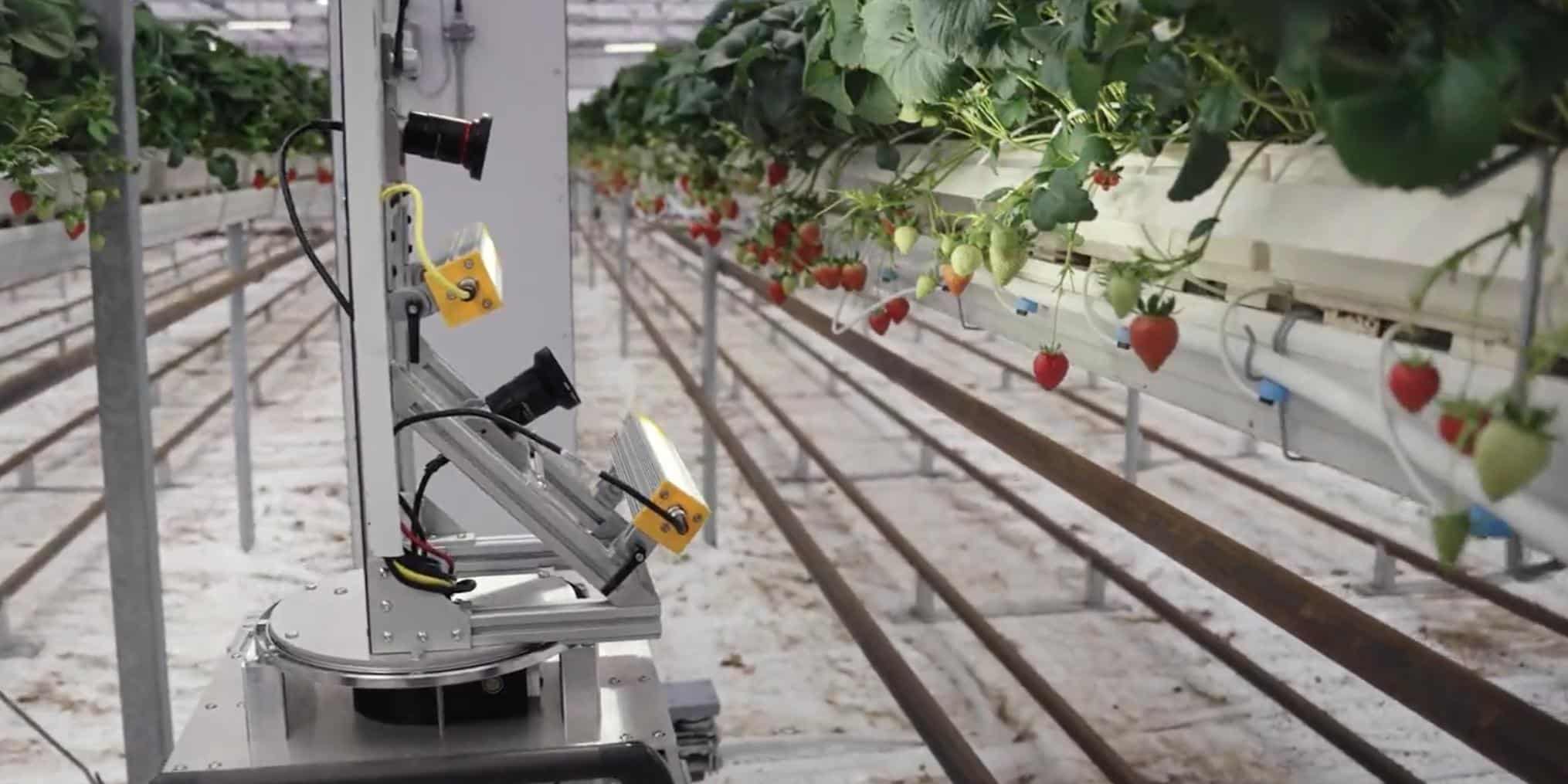
The company has two types of robots within its hydroponic operations. One is a scouting robot for gathering information on the health of plants using foundational models. The other is a harvesting robot for delicately picking and placing fruits and handling other tasks.
Zordi, whose engineering team is based outside Boston, has farms in southern New Jersey and western New York. The company uses NVIDIA GPUs in the cloud and on desktops for training everything from crop health models to those for fruit picking and assessing fruit quality.
Lee aims to deploy autonomous greenhouse systems globally to support regional markets, cutting down on the carbon footprint for transportation as well as providing fresher, better-tasting fruits grown more sustainably.
Having operated greenhouses in New York and New Jersey for two years, the company recently formed partnerships with greenhouse farms in New Jersey and California to meet growing demand.
Zordi is bringing NVIDIA accelerated AI automation to indoor growing that in many ways is parallel to developments in manufacturing and fulfillment operations.
Adopting Jetson for Sustainable Farming, Energy Efficiency
Zordi is building AI models and robots to enable sustainable farming at scale. It uses NVIDIA Jetson AGX Orin modules for testing out gathering sensor data and running its models to recognize the health of plants, flowers and fruits, early pest and disease symptoms, and the needs for hydration and nutrition, as well as light and temperature management.
Jetson’s energy efficiency and the availability of low-cost, high performance cameras from NVIDIA partners are attractive attributes for Zordi, said Lee. The company runs several cameras on each of its robots to collect data.
“Jetson opens up a lot of lower-cost cameras,” said Lee. “It lets us play with different cameras and gives us better battery management.”
With its scouting and harvesting robots, Zordi also aims to address a big issue farms worldwide complain about: a labor shortage that affects operations, leaving fruits and vegetables sometimes unattended and unharvested altogether.
Zordi is planning to scale up its growing operations to meet consumer demand. The company expects that it can do more with AI and robotic automation despite labor challenges.
“We want our harvesting robots to do more dexterous tasks, like pruning leaves, with the help of simulation,” said Lee.
Omniverse Isaac Sim and Digital Twins to Boost Operations
Zordi is looking at how to boost its indoor growing operations with AI much like industrial manufacturers do, using Isaac Sim in Omniverse for simulations and digital twins to optimize operations.
The company’s software platform for viewing all the data collected from its robots’ sensors provides a live dashboard with a spatial map. It offers a real-time view of every plant in its facilities so that it’s easy to monitor the production remotely.
What’s more, it analyzes plant health and makes optional crop care recommendations using foundational models so that inexperienced farm operators can manage farms like experts.
“We’re literally one step away from putting this all into Isaac Sim and Omniverse,” said Lee, whose Ph.D. dissertation covered reinforcement learning and sim-to-real.
Zordi is working on gripping simulations for strawberries as well as for cucumbers and tomatoes to expand into other categories.
“With strawberries or any other crops, if you can handle them delicately, then it helps with longer shelf life,” Lee said.
Lee is optimistic that the simulations in Isaac Sim will not only boost Zordi’s performance in harvest, but also let it do other manipulation tasks in other scenarios.
Big picture, Zordi aims to create a fully autonomous farming system that makes farming easy and profitable, with AI recommending sustainable crop-care decisions and robots doing the hard work.
“What’s really important for us is how do we automate this, and how do we have a thinking AI that is actually making decisions for the farm with a lot of automations,” said Lee.
Hyundai’s luxury brand debuted the next generation of its most popular vehicle at the 2024 Los Angeles Auto Show. The 2026 Genesis GV70 and battery-powered Electrified GV70 get freshened styling and new tech that brand officials hope will allow the five-passenger midsize SUV to maintain its strong sales momentum.
2026 Genesis GV70 and Electrified GV70
Design
With more than 85,000 sales in three years, designers likely didn’t want to mess with the GV70 too much for its new iteration. The exterior styling changes are rather subtle with a more expansive grille among other tweaks to the front and rear fasciae.
Interior updates are more substantial with a new steering wheel and adoption of a single 27-inch ultra-widescreen OLED display that integrates the instrument cluster and infotainment functions. The voice recognition system has been enhanced to allow drivers more fine-grain control of the HVAC system and even the position of the power windows.
Engines
2026 Genesis GV70
Drivetrains for the conventional gasoline GV70 are unchanged from the outgoing model. All-wheel drive remains standard, but 2026 versions include a new “Terrain Mode” that allows drivers to switch among snow, mud, or sand configurations. Buyers can choose between two turbocharged engines, including a 2.5-liter 4-cylinder with 300 horsepower and 311 pound-feet of torque or a 3.5-liter V6 with 375 horsepower and 391 pound-feet of torque. Each will pair with an 8-speed automatic transmission.
Battery
Full specs for the Electrified GV70 were not released in time for this report, but Genesis reports an increased battery capacity of 84 kWh, up from the outgoing model’s 77.4. Expect a commensurate increase in available driving range to more than 250 miles from 236. Power output will likely remain unchanged at 429 horsepower and 516 pound-feet of torque.
The 2026 Genesis GV70 and Electrified GV70 are scheduled to go on sale in early 2025. Pricing will be announced closer to that time but expect the gas-only variant to start in the upper-$40,000s with the all-electric version commanding about $20,000 more before any applicable tax incentives.
CG Says:
After a few initial hurdles in getting itself established as a brand separate from its Hyundai parent company, Genesis has been on a roll. The product lineup remains compelling with the G70, G90, and GV60 taking home Consumer Guide® Best Buy honors for 2024. Dealers are also buying in as there are now 60 standalone Genesis stores in the US. While largely an iterative update, the 2026 GV70 and Electrified GV70 should continue to be a worthwhile alternative for buyers looking for something different than what’s on offer from more “traditional” luxury brands.
The technical storage or access is strictly necessary for the legitimate purpose of enabling the use of a specific service explicitly requested by the subscriber or user, or for the sole purpose of carrying out the transmission of a communication over an electronic communications network.
Preferences
The technical storage or access is necessary for the legitimate purpose of storing preferences that are not requested by the subscriber or user.
Statistics
The technical storage or access that is used exclusively for statistical purposes.The technical storage or access that is used exclusively for anonymous statistical purposes. Without a subpoena, voluntary compliance on the part of your Internet Service Provider, or additional records from a third party, information stored or retrieved for this purpose alone cannot usually be used to identify you.
Marketing
The technical storage or access is required to create user profiles to send advertising, or to track the user on a website or across several websites for similar marketing purposes.


















 Hyundai’s luxury brand debuted the next generation of its most popular vehicle at the 2024 Los Angeles Auto Show. The 2026 Genesis GV70 and battery-powered Electrified GV70 get freshened styling and new tech that brand officials hope will allow the five-passenger midsize SUV to maintain its strong sales momentum.

