Ferrari Roma is due for an update. The so-called entry-level Ferrari is set to receive a mid-life facelift soon. In fact, the latest prototypes of the Roma M look much closer to production than before.
As part of the update, the Roma M is likely to get a few cosmetic changes on the outside and the latest tech on the inside. It appears that the soft camouflage on the latest test mule is hiding production-spec bodywork underneath.
The overall shape of the Roma doesn’t appear to have changed much. However, the car could get a new set of LED taillights, among other changes. It will be available as a coupe and spider. The interior layout is expected to be largely the same.
Currently, the Roma is powered by a 3.9-liter twin-turbo V8 engine mounted in the front. It develops 620 hp @ 7,500 rpm and is paired with an 8-speed dual-clutch automatic transmission. The same engine will propel the facelift version.
Low-cost carrier Spirit Airlines is cutting dozens more flights across the country in a shake-up aimed at directing resources to the most popular routes.
The airline will cut 24 different routes from Nashville to Los Angeles and beyond, the company confirmed to Travel + Leisure. The cuts will take effect over the course of the next few months.
“We routinely evaluate our network and make adjustments to support the company’s business strategy based on current market and operating conditions,” a Spirit spokesperson told T+L. “As part of this process, we updated our upcoming schedule to focus on our strongest performing routes.”
Starting immediately, the company has ended flights from Columbus to Tampa, from San Antonio to Tampa, from Nashville to Los Angeles, from Burbank to Sacramento, from Cleveland to Orlando, from Dallas to San Antonio, from Dallas to Chicago, from Newark to San Antonio, from Fort Lauderdale to Phoenix, from Las Vegas to Richmond, from Los Angeles to Oakland, and from Los Angeles to Pittsburgh. On Dec. 2, the airline will cut flights from Dallas to Tampa, followed a day later by Charlotte to Houston, Dallas to Houston, and San Diego to Sacramento.
Then on Jan. 8, 2025, Spirit will cut Boston to Newark, Charlotte to Dallas, Charlotte to Los Angeles, and Columbus to Los Angeles, followed by cutting Los Angeles to both San Antonio and Salt Lake City in March.
Spirit will also cut two international routes from Fort Lauderdale to both San Salvador, El Salvador, and Managua, Nicaragua, on Feb. 10 and Feb. 11, 2025, respectively.
This also isn’t the first time Spirit has cut routes. Last month, the carrier similarly cut dozens of routes, continuing to struggle since those initial JetBlue merger plans ended.
Infiniti brought a QX80 concept that’s ready for tailgating to the 2024 SEMA show, now running in Las Vegas.
The Autograph Lounge concept is based on the redesigned 2025 Infiniti QX80, with most of the changes at the back. A television and custom Klipsch audio system—from the same supplier of the QX80’s factory audio systems—are mounted in the cargo area, with the latter featuring speaker grilles that match the ones in the cabin.
Infiniti AUTOGRAPH Loung concept
Infiniti also installed drawers for smaller items, with everything wrapped in burgundy leather to match the seats. The high-end setup looks more appropriate for a golf match than a football game.
The exterior features a matte-gray wrap and 24-inch wheels with floating center caps inspired by the ones from the QX Monograph concept that previewed the look of the current-generation QX80. The air suspension system also received a lowering kit.
Infiniti AUTOGRAPH Loung concept
The 2025 Infiniti QX80 debuted earlier this year with updated styling and features that allow it to more directly compete with other full-size luxury SUVs. In addition to the available Klipsch audio systems, the QX80 adopted a three-screen infotainment system and swapped its naturally-aspirated V-8 for a twin-turbo V-6. Buyers have to pay a premium, however, as prices start at $84,445 with destination, compared to $76,045 for the 2024 model.
Infiniti parent Nissan brought its own tailgating rig to SEMA in the form of Project Trailgater, a 2025 Frontier pickup truck that combines built-in televisions with a lift kit to take tailgating off road, as well as the Frontier Tarmac street truck concept—powered by a supercharged V-6.
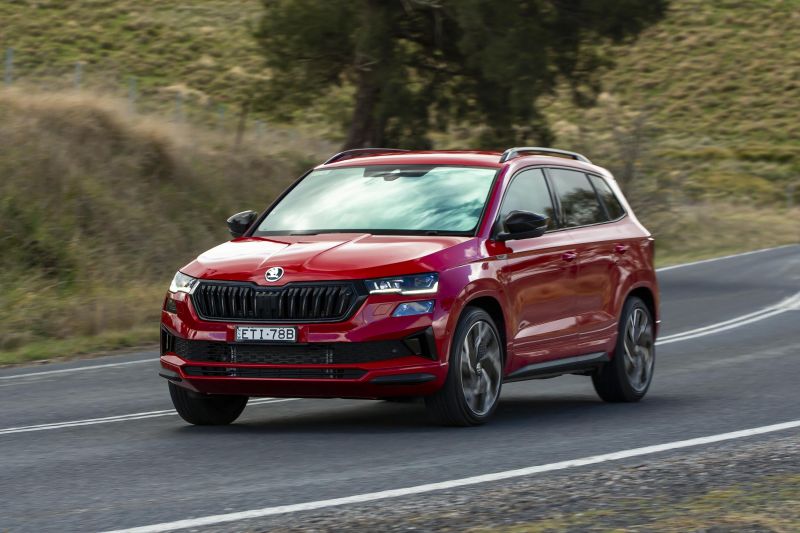
The Skoda Karoq is getting on in years now. It’s one the Czech brand’s oldest models still on sale locally and it’s also currently the slowest-selling Skoda SUV.
MY24 Sportline 4×4 pictured throughout
This small-to-mid-sized SUV was first revealed in 2017 and received a facelift in 2021. An all-electric successor, called the Elroq, was revealed last month and is due to replace it in mid-2025.
In the meantime, however, Skoda has given the Karoq an update for the 2025 model year. Highlights include a revised lineup with new nameplates and more standard equipment, as well as higher asking prices.
On test here is a flagship Skoda Karoq Sportline 4×4 variant, though it’s technically a 2024 model year example (MY24). Subtle differences from MY25 examples include a slightly different alloy wheel design, and standard equipment that was previously only available as part of option packages.
WATCH: Paul’s video review of the 2024 Skoda Karoq
Despite the introduction of the similar-looking Sportline 4×2, this flagship variant is the only one that comes with a torquier 2.0-litre turbo-petrol engine and all-wheel drive.
How does this hold up against ever-improving competition? Read along to find out.
How does the Skoda Karoq compare?
View a detailed breakdown of the Skoda Karoq against similarly sized vehicles.
Skoda
Karoq
How much does the Skoda Karoq cost?
On test here is the flagship Karoq Sportline 4×4 fitted with optional extras.
Model Variant
Price before on-road costs
Drive-away price
2025 Skoda Karoq Select
$39,990
$40,990
2025 Skoda Karoq Sportline 4×2
$45,990
$46,990
2025 Skoda Karoq Sportline 4×4
$56,590
$57,990
If you add all the optional extras on our tester, including the Phoenix orange metallic paint, the asking price comes to $62,760 drive-away. Ouch!
To see how the Skoda Karoq stacks up agains the competition, check out our comparison tool.
What is the Skoda Karoq like on the inside?
Hopping into the Skoda Karoq Sportline, it’s very easy to see why this type of vehicle sells in droves in Australia. You step across into the vehicle rather than having to step up or down, which is helpful for those with poor mobility.
Once you’re in, it feels like you’re sitting on a seat that’s on stilts. There’s plenty of visibility from the driver’s seat and so you’re easily able to place each corner of the vehicle. This is something that SUV buyers seek.
Our tester is fitted with the optional Signature Pack that adds a range of features like leather-appointed upholstery, power-adjustable front seats with memory, and side mirror memory. It’s a $4000 package and unless you really love leather I don’t know if I’d personally opt for it.
While the front seats are squishy and comfortable for longer journeys, I found them to be a little on the flatter side despite being a sport-oriented model. The seats in the Cupra Formentor offer more side bolstering to secure you better in bends.
The front seat’s electric adjustment allows me to get comfortable behind the wheel easily. There’s also seat position memory, which is handy if multiple people drive the car.
There are now heated front and rear outboard seats as standard. Up front, the seats get really hot – so much so that I could only tolerate the weakest level.
Like a few other Volkswagen Group SUVs, including the Tiguan, the Karoq’s accelerator and brake pedals are positioned very high. You almost have to take your heel off the floor to press the brake pedal. This isn’t world-ending and is certainly something you acclimatise to, but it’s something I noticed straight away.
Ahead of the driver is a leather-wrapped steering wheel with plenty of perforations, which may trigger you if you have trypophobia. It’s a nice unit to hold but, unlike the seats, its heating is a little on the weaker side.
The buttons and scroll wheels on the steering wheel mightn’t be to everyone’s tastes, but I personally like them. It’s satisfying being able to scroll the volume up and down, rather than having to push a button.
As standard on the Karoq Sportline 4×4, there’s a 10.25-inch digital instrument cluster, or Virtual Cockpit in Skoda-speak, which is clear to read and high-resolution.
Volkswagen Group digital instrument clusters are among the best out there right now in terms of adjustment and configurability. There are countless informative pages, widgets and layouts to choose from. It’s also nice to be able to have the satellite navigation info up on the digital instrument cluster in front of you, if you like.
Moving across to the left, the Karoq Sportline 4×4 now comes standard with a larger 9.2-inch touchscreen infotainment system. It fills the space considerably better than the smaller 8.0-inch unit and also doesn’t have that awkward power icon on the volume knob, which spins with use (if you know, you know).
While it’s nice to have the larger touchscreen, the interface and icons are starting to look quite dated in 2024. For the majority of people who use Apple CarPlay and Android Auto, however, this isn’t an issue.
Speaking of smartphone mirroring, the entire Karoq range comes with both wired and wireless forms of Apple CarPlay and Android Auto. With my iPhone 15 Pro Max connected wirelessly, it was generally good but occasionally the connection would get a little patchy.
There is a wireless phone charger but it’s tucked away at the front of the centre console and is too small to fit my plus-sized phone. Once I took my phone case off it did fit in the space but refused to charge. Thankfully, there are USB-C ports if you need to top up your phone battery.
I love how the Karoq has stuck with a climate control setup with physical dials and buttons. It’s much more intuitive than the touch-sensitive setup in the T-Roc, and lightyears better than ones integrated into the touchscreen.
One of my favourite features in the Karoq is AirCare, which is a system that’s able to vent out smells and replenish the cabin with fresh air. It’s particularly handy if you had fast food in the car, or someone lets one rip.
Looking around the cabin, there are a fair few dark finishes. It does look a little like a sea of black in our tester, but there’s still plenty of light let in by the wide windows. Opting for the optional panoramic sunroof would make it even airier.
There are some soft-touch materials in high-traffic areas like the armrests and dashboard, but you don’t need to look far to find harder surfaces. Don’t be expecting felt-lined door bins like in some other Volkswagen Group vehicles.
Something interesting about the Karoq compared to other SUVs is that it feels like everything is mounted low, especially the gear selector. Some cars typically like to have the switchgear close to the driver so they feel like they’re cocooned in a cockpit.
On the centre tunnel there’s a reversible cupholder and shelf setup that can be covered up by the armrest. This sounds handy in theory, but in practice the cupholders are awkwardly small, and there’s no proper centre cubby.
One redeeming factor about the centre console is that it comes with a ratcheting centre armrest that you can set to your desired position. More cars should have this feature.
Since the semiconductor chip shortage back in 2020, the Karoq hasn’t really been available with a premium sound system, not even as an option, which is disappointing. There’s an unbranded eight-speaker setup that performs okay, but isn’t necessarily a standout.
Hopping into the second row, the space on offer is adequate for the segment. You can easily get two adults back there in comfort, but three might be a bit of a pinch given there’s a bit of transmission hump protrusion.
At a leggy 182cm, I had enough leg, toe, head and shoulder space in the second row behind my own driving position to get comfortable. And I’d be able to travel long distances back there with no worries, as the windows are large enough to see out of.
In terms of second-row amenity, there are console-mounted rear air vents and a 12V outlet, as well as a fold-down armrest with cupholders.
Around the back there’s a powered tailgate that opens and closes quickly and silently. I’m thankful there are no obnoxious bings and bongs when it starts opening or closing, because that’s so embarrassing.
Once the tailgate is open you really start to see where Skoda has put all its ‘Simply Clever’ touches in the Karoq. Some features to note include the reversible boot mat, storage cubbies, moveable hooks and nets to secure items.
There’s 521 litres of boot space with the rear seats up, which is plenty for the segment. Boot space also expands to 1630 litres with the rear seats folded.
Under the boot floor there’s a space-saver spare wheel, which is good to have but not as handy as a proper full-size unit. This is something to note if you frequently travel in rural or regional areas away from tyre repair shops.
Dimensions
Skoda Karoq Sportline 4×4
Length
4390mm
Width
1841mm
Height
1612mm
Wheelbase
2630mm
Cargo capacity
521-1630 litres
What’s under the bonnet?
The Skoda Karoq Sportline 4×4 is powered by a version of VW’s widespread 2.0-litre turbocharged four-cylinder petrol engine that produces, you guessed it, 140kW of power. This engine and tune is shared with the Audi Q2 40 TFSI, Cupra Formentor V, Cupra Ateca V, and Volkswagen T-Roc R-Line.
Model
Skoda Karoq Sportline 4×4
Engine
2.0L 4cyl turbo
Power
140kW @ 6000rpm
Engine torque
320Nm @ 1500-4100rpm
Transmission
7-speed DCT
Driven wheels
All-wheel drive
Weight
1665kg (tare)
Fuel economy – claim
6.6L/100km
Fuel economy – as tested
7.5L/100km
Fuel tank size
55 litres
CO2 emissions – claim
152g/km
Emissions standard
Euro 6
Fuel requirement
95 RON
To see how the Skoda Karoq stacks up agains the competition, check out our comparison tool.
How does the Skoda Karoq drive?
When starting up the Skoda Karoq Sportline 4×4, there’s a sweet engine rev that’s very familiar if you’ve driven a Volkswagen vehicle before. For me it feels like home.
MY22 Karoq Sportline 4×4 shown
The engine idles high for just a bit when it’s cold, but doesn’t take very long to settle down because it warms up quickly. You can tell this vehicle is equipped for cold climates.
Once you get moving, power from the 2.0-litre turbo-petrol four is sufficient and smile-inducing. With 140kW of power and 320Nm of torque, it’s almost warm leaning. Don’t go expecting the Karoq Sportline to be as hot as the T-Roc R, however.
The seven-speed dual-clutch automatic is generally good, but you do have to learn how to drive with it, which is a common trait of vehicles with this type of transmission compared ones equipped with a torque converter or CVT auto.
The car can occasionally be a little hesitant when taking off, but if you allow it time to sort itself out, say by pre-empting the green light, you’ll be fine. With this in mind, other cars may beat you off the mark from the traffic lights unless you gun it, so you need to drive assertively if that matters to you.
Once you’re moving, the Karoq’s beauty of an engine and transmission combo comes into its own. In everyday scenarios, the dual-clutch gearbox likes to switch up to second gear as soon as possible. The car can sometimes even start in second gear if you’ve almost come to a stop and set off again.
Part of the reason for this is that there’s oodles of torque from the turbo-petrol engine. It makes for an effortless driving experience in which you can lean into the strong torque delivery from low down in the rev range. Peak torque comes on tap from 1500rpm.
The dual-clutch auto will change up gears as quickly as possible to keep the revs down and minimise fuel consumption. Thanks again to the meaty amount of torque, the transmission will hold gears for as long as possible before downshifting, only selecting a lower gear if you floor it or meet a steeper hill.
Around town, the Karoq’s steering is on the lighter side, which makes manoeuvring in tight laneways and carparks a breeze. Parking is also easy-peasy.
As standard, the Karoq Sportline comes with front and rear parking sensors, as well as a surround-view camera. The latter has a disappointingly poor quality display.
There’s also a Park Assist feature, but it’s not very handy as it can’t park the car between marked lines and instead requires two cars to work properly. It’s much easier to park it yourself.
Even at lower speeds there’s pronounced tyre roar inside the cabin. This isn’t uncommon for European vehicles on rough and coarse-chip Australian road surfaces. The roar gets louder once you get out on the open road.
Unlike the rest of the Karoq range, the Sportline 4×4 receives a more sophisticated independent multi-link rear suspension setup instead of a live torsion beam arrangement. This helps make the ride more compliant, though typically it still errs on the sportier side of comfortable.
The car also gets Dynamic Chassis Control (DCC), which is essentially Skoda-speak for adaptive dampers. There are a range of different drive modes that adjust how the shock absorbers react to bumps.
Comfort mode softens things out to the point where you almost feel like you’re floating on a cloud, whereas Sport mode firms things up and transmits more road imperfections through to the cabin. For pretty much all my everyday driving, I stuck with the Normal driving mode because I found it struck a nice balance between overall comfort and dynamics.
Regardless of the drive mode, however, you can still feel a sense of sportiness through the suspension. There are also some road jitters at higher speeds, even in Comfort mode.
Building up speed in the Karoq Sportline is easy and stress-free. You can also slot the car into Sport mode if you like and it becomes a little pocket rocket, feeling properly warm. In general, there’s enough oomph in the tank to easily perform overtakes if necessary.
The Sportline is the only Karoq variant to offer all-wheel drive, which gives you an added sense of security in slippery situations. But for the majority of driving on sealed surfaces, or even gravel tracks, you likely won’t really feel any tangible difference in terms of grip compared to its front-drive siblings.
There is an off-road mode if you’re keen on taking your warm European SUV with 19-inch alloy wheels off the beaten track, but I doubt the average owner would really use it.
On the safety front, the adaptive cruise control system is fantastic and very natural in terms of its operation. Unlike a lot of cars that now have these functions integrated on the steering wheel, you set and adjust the cruise control parameters on a stalk.
This isn’t necessarily a good or bad thing, it’s just something that took a little while for me to adjust back to. My family’s 1998 Mitsubishi Magna has cruise control on a stalk, for example.
Something I didn’t get used to, however, was the annoying feature that doesn’t let you undertake a car with adaptive cruise control set. This is a common feature in Volkswagen Group vehicles and is frustrating in Australia where lane etiquette isn’t the sharpest.
The lane-keep assist is nice to have but, like some systems, I found it to be a little overactive and wanting to rip the steering wheel out of my hands if I drifted a little too closely to the lane markings.
On the other hand, the Travel Assist system, which is once again part of the Premium Pack, works fantastically with the adaptive cruise control system to make long drives on highways and freeways less tiring.
Lastly, the Karoq Sportline comes standard with matrix LED headlights. These are great if you frequently drive in the country as you can keep your high beams on for as long as possible and the car will automatically dip certain parts of the headlight when it detects a car’s headlights or tail-lights.
What do you get?
On test here is the flagship Karoq Sportline 4×4 fitted with pretty much every optional extra, apart from the panoramic glass sunroof and side steps.
Karoq Select highlights:
18-inch alloy wheels
Silver roof rails and window frame surround
LED headlights and tail-lights
Automatic high-beam
Dynamic indicators
Power-folding and heated mirrors
Rain-sensing wipers
Leather-trimmed steering wheel
Manually height-adjustable front seats
Auto-dimming rearview mirror
Dual-zone climate control
8.25-inch digital instrument cluster
8.0-inch infotainment touchscreen
Wireless Apple CarPlay and Android Auto
2x USB-C ports
Voice control
Keyless start
Karoq Sportline 4×2 adds:
Hands-free power tailgate
Privacy glass
19-inch anthracite alloy wheels
Anthracite front spoiler and rear diffuser
Black window frame surrounds
Matrix LED headlights with adaptive high-beam
LED interior lighting
Ambient lighting
LED puddle lamps
Heated front and rear seats
Heated steering wheel
Paddle shifters
Sports comfort front seats
Aluminium finish pedals
Black headliner
10.25-inch digital instrument cluster
DAB+ digital radio
Wireless smartphone charging
USB-C port in rearview mirror
Keyless entry
Rear privacy glass
Heat insulating windscreen
Hands-free power tailgate
Karoq Sportline 4×4 adds:
Dynamic Chassis Control (DCC) adaptive suspension
Progressive steering
Heated windscreen washer nozzle
9.2-inch infotainment touchscreen
Satellite navigation
10-speaker Canton sound system
Semi-autonomous parking assist
Optional Extras
Skoda has made a number of features standard across the range now, but there are still some options.
Signature Pack ($4000) adds:
Leather-appointed upholstery
Power-adjustable front seats
Front seat position memory
Side mirror memroy
There’s also a panoramic glass sunroof as a standalone option for $1900, as well as side steps for $1500, but neither were fitted to our tester.
Is theSkoda Karoq safe?
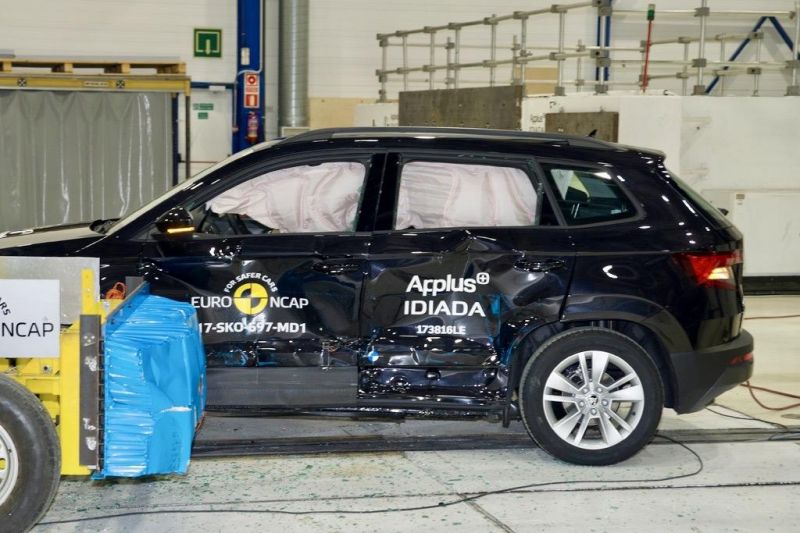
The Skoda Karoq was awarded a five-star ANCAP safety rating based on Euro NCAP tests conducted in 2017, but that’s now expired so it’s officially ‘unrated’ by the independent vehicle safety body.
Previously, however, all Karoq variants were covered by this rating, which was based on category scores of 93 per cent for adult occupant protection, 79 per cent for child occupant protection, 73 per cent for pedestrian protection, and 58 per cent for safety assist.
Standard safety equipment includes:
Autonomous emergency braking (AEB)
Pedestrian detection
Cyclist detection
Adaptive cruise control
Lane-keep assist
Blind-spot monitoring
Front and rear parking sensors
Reversing camera
Manoeuvre braking assist
Multi-collision brake
Tyre pressure monitoring
Advanced driver fatigue detection
Stepping up to the Sportline 4×2 adds traffic jam assist, lane centring and emergency assist, while the Sportline 4×4 now includes a surround-view camera and hill-descent control.
How much does theSkoda Karoq cost to run?
The Karoq is covered by a seven-year, unlimited-kilometre warranty.
Ownership Program
Skoda Karoq Sportline 4×4
Warranty
7 years, unlimited kilometres 7 years, unlimited kilometres (engine starting batteries) 2 years, unlimited kilometres (genuine parts and accessories) 3 years, unlimited kilometres (paint) 12 years, unlimited kilometres (corrosion)
Roadside assistance
1 year
Service interval
12 months, 15,000km
Servicing pricing
$2450 (5-year pre-paid service pack) $2750 (7-year pre-paid service pack)
CarExpert’s Take on theSkoda Karoq
The Skoda Karoq is a car that deserves to sell better than it does because it’s in a very popular market segment in Australia.
It has plenty of storage space for a small-to-medium SUV and there are heaps of ‘Simply Clever’ touches Skoda has added to make the Karoq feel unique and special.
A sticking point, however, is that there are too many direct rivals from the Volkswagen Group with the same powertrain combination at a similar price point.
Sure, Skoda has drive-away pricing for the Karoq, which on the surface makes it seem more affordable, and there is now more standard equipment, but there are still certain things limited to option packages.
With all the option boxes ticked, this car is costs well over $60,000 drive-away, which is pushing it into the territory of hotter but less practical crossovers.
For a similar price you can get into a Cupra Formentor VZ, which admittedly doesn’t have all-wheel drive, but does offer more power and more innately sporty dynamics.
The full-fat Volkswagen T-Roc R also costs only a bit more than our fully optioned tester here.
Pricing aside, the Karoq Sportline is fundamentally a great and dynamic package. The extra standard equipment is well received, though if you require all-wheel drive, the sweet spot is lower down in the range.
Interested in buying a Skoda Karoq? Get in touch with one of CarExpert’s trusted dealers here
Sedan merupakan satu segmen yang dilihat teruk diancam oleh kewujudan SUV. Tengok sahaja pasaran sedan segmen-D yang kini semakin pupus, sementara sedan segmen-C hanya dikuasai oleh dua model iaitu Honda Civic dan Proton S70. Namun untuk pasaran lebih marhaen, sedan nampaknya masih lagi diperlukan sebagai kenderaan keluarga yang versatil, boleh digunakan untuk apa sahaja situasi.
Oleh itu pasaran sedan segmen-B nampaknya masih lagi utuh di mana ia dikuasai Honda City, Toyota Vios dan Proton Persona. Dengan permintaan yang masih lagi kukuh, jenama automotif British yang ‘hidup kembali’ dengan kuasa dari China, MG Motors nampaknya turut berminat untuk bersaing dalam pasaran sedan segmen-B tempatan, selepas memperkenalkan dua model EV sebelum itu.
Ini dia, MG5 yang baru sahaja dilancarkan pada pasaran tempatan pada awal bulan lalu. Ia ditawarkan dalam versi diimport sepenuhnya (CBU) dari Thailand, hanya dalam satu varian dijual pada harga atas jalan tanpa insuran RM93,900. Namun buat masa sekarang pengedar MG di sini iaitu SAIC Motor Malaysia memberikan rebat sebanyak RM7,000, menjadikan harga jualannya hanya RM86,900.
Dari segi harga, MG5 nampaknya bersungguh untuk menyaingi lawan-lawannya dari Jepun; varian tertinggi untuk Toyota Vios iaitu 1.5G dijual pada harga RM 95,500.00, manakala varian tertinggi untuk versi enjin petrol sepenuhnya bagi Honda City iaitu 1.5 RS dijual pada harga RM 99,900.00.
Dalam julat harga yang sama juga, MG5 sudah tentu mahu merebut sedikit bahagian pasaran yang dipegang oleh sedan segmen-C Proton S70. Proton menawarkan S70 dalam varian Flagship pada harga atas jalan tanpa insuran RM89,800, manakala varian paling tinggi dengan kelebihan hanya bumbung suria pula dijual pada harga RM94,800.
Dari segi rupa dan saiz, MG5 mungkin dapat bersaing dengan lawan-lawan yang disebutkan tadi. Tapi dari segi keseluruhan, adakah model ini dapat menjadi dambaan pengguna-pengguna di Malaysia? Baru-baru ini kami berpeluang menguji MG5 ini dalam satu sesi pandu uji media melibatkan perjalanan dari Kuala Lumpur ke Desaru, Kota Tinggi, Johor, dan teruskan membaca untuk mengetahui lebih lanjut tentang model ini.
Ketika dilancarkan, MG mendakwa bahawa model ini merupakan sedan segmen-B paling besar dalam kelasnya. Jarak roda pada MG5 ini yang diukur mencapai 2,680 mm – ia lebih panjang berbanding Vios (2,620mm), City (2,600 mm), dan Proton S70 (2,627 mm), namun tidaklah sejauh ukuran Honda Civic (2,735 mm) dan Toyota Corolla (2,700 mm).
Dimensi paling menonjol pada model ini sebenarnya adalah ukuran lebar – sedan segmen-B lazimnya tampil dengan ukuran sekitar 1,750 mm, tetapi MG5 mempunyai kelebaran mencecah 1,842 mm, berbanding Honda Civic yang mencatatkan lebar 1,802 mm, dan Proton S70 pula 1,809 mm.
Walaupun SAIC Motor ‘berusaha keras’ mahu memberitahu asal-usul jenama MG seperti hadir dengan emblem ‘Brits Dynamic’ pada penutup but belakang, namun ia tidak diterjemahkan langsung dalam rekaan MG5 ini. Secara keseluruhan, MG5 direka sebagai sebuah sedan empat pintu dengan bentuk seakan coupe, dan sangat dipengaruhi oleh bentuk Mercedes-Benz CLA.
Namun ini yang menjadikannya ia unik dalam segmen ini. Muncung hadapannya direka tajam, kemudian garis bumbung dari bahagian tengah pula adalah landai hingga ke belakang membuatkan but belakang nampak seperti sebahagian dari bumbung, dan diakhiri dengan ‘lentikan’ spoiler ekor itik yang disepadukan dengan penutup but. Dan kalau anda lihat dari sebelah sisi, ada tiga garis badan berbeza yang mengalir, seterusnya membentuk ‘otot-otot’ sisi sedan ini.
Lampu belakang MG5 ini menampilkan tiga jalur seakan jalur LED ‘cakaran singa’ Peugeot. Namun sekiranya pedal brek ditekan, ia sebenarnya lebih menyerlahkan grafik LED berbentuk anak panah ke atas.
Pada bahagian tampar belakang pula, reflektor cahaya diletakkan pada bahagian sisi yang nampak seperti liang aliran udara, manakala tip ekzos krom pada diffuser adalah perhiasan semata-mata kerana MG5 ini hanya menampilkan ekzos dengan tip tunggal yang menghala ke bawah.
MG5 pasaran Malaysia ini menerima set rim aloi ‘Tomahawk’ 17-inci yang menampilkan rekaan seperti bilah turbin dalam kemasan dua tona, dibalut dengan tayar Maxxis Premitra 5 215/50R17. MG5 juga merupakan satu-satunya model sedan segmen-B dalam Malaysia yang diberikan bumbung suria, dan ia adalah perincian standard tanpa tambahan bayaran.
Masuk ke kabin, pemandu akan di alu-alukan dengan ‘kokpit’ ala-jet pejuang di mana semua butang-butang kawalan dan skrin tertumpu ke arah ‘juruterbang’. Ya MG5 ini diberikan papan pemuka yang direka untuk fokus kepada pemandu menampilkan konsol tengah yang condong sekitar 15 darjah.
Dengan rekaan ini membolehkan pemandu mengoperasikan skrin dan menekan suis-suis fizikal di bawah tanpa menggerakkan badan kehadapan. Malah ia juga seolah-olah sebagai ‘isyarat’ bahawa larasan-larasan seperti penghawa dingin, pilihan muzik dan volum suara sistem audio adalah ‘hak mutlak’ pemandu.
Pemandu akan menerima paparan maklumat dari instrumen digital yang terdiri dari skrin TFT 7-inci pada pada bahagian tengah, sementara meter kelajuan, takometer, jumlah bahan api dan suhu cecair penyejuk pula menerusi paparan LCD pada bahagian kiri dan kanan.
Paparan utama untuk skrin TFT agak bosan kerana ia hanya memaparkan illustrasi kereta bersama jam dan kalendar. Namun anda boleh memilih untuk paparan lain seperti maklumat ‘Dynamic Driving Management’ yang memaparkan secara terus kadar kuasa dan tork yang sedang dihasilkan bersama ‘G-meter’ pada bahagian tengah, paparan untuk merekod pecutan 0-100km/j, penggunaan bahan api, analisa perjalanan dan pelbagai lagi.
Dengan kabin yang agak besar, posisi pemanduan juga agak baik di mana pemandu dapat duduk pada posisi sebenar yang rendah dan menjulur ke hadapan seperti kereta sport, berbanding kebanyakkan model segmen-B yang memberikan posisi duduk yang tinggi dan seakan ‘tertenggek’ untuk memberikan rasa luas pada ruang yang kecil. Tempat duduk pemandu juga boleh dilaras dengan bantuan elektrik, berbanding manual pada Vios dan City.
Walau bagaimanapun ada aspek yang penulis rasa agak janggal pada susun atur ‘kokpit’ ini iaitu kedudukan tombol gear dan suis brek parkir elektrik seakan terbalik. Tombol gear berada pada sebelah kanan konsol terowong membuatkan ia terlalu hampir dengan pemandu, menyebabkan bahu turut perlu turut digerakkan dan siku juga bergerak terlalu kebelakang ketika mengoperasikan tombol gear tersebut. Manakala suis brek parkir pula terasa terlalu jauh untuk dicapai.
MG5 menerima skrin infotainmen paling besar dalam kelasnya dengan saiz 10.25-inci. Skrin ini turut menyokong hubungan Android Auto dan Apple CarPlay, tetapi masih perlu dihubungkan dengan wayar berbanding Vios dan City menggunakan hubungan tanpa wayar untuk AACP.
Skrin berkenaan juga turut memaparkan visual dari kamera 360 darjah – ini merupakan kelebihan untuk MG5 jika dibandingkan dengan City yang hanya hadir dengan kamera undur, tetapi masih kalah dengan kamera 360 darjah Vios yang memaparkan visual pemantau panaromik 3D yang jauh lebih jelas.
Manakala untuk penumpang belakang, walaupun banyak ruang telah ‘dikorbankan’ untuk memberikan posisi pemanduan yang baik untuk pemandu, ruang lutut kabin belakang masih lagi sangat luas. Bahagian ‘terowong’ pada tengah lantai juga hampir rata dengan lantai membolehkan penumpang beralih dari ke kiri atau ke kanan dengan mudah, dan ia turut diberikan corong udara untuk sistem penghawa dingin.
Penumpang belakang boleh mengecas telefon pintar masing-masing menggunakan port USB yang terletak di bawah corong udara berkenaan, dan meletakkan telefon pintar pada poket yang agak besar di bawahnya. Dengan kedudukan tempat duduk yang agak rendah juga tidak akan memberikan masalah kepada penumpang yang tinggi walaupun bumbung kabin belakang MG5 ini direka landai.
MG5 pasaran Malaysia ini datang dengan upholsteri kulit hitam dengan serlahan jahitan benang merah yang boleh dijumpai pada tempat duduk, gaiter tombol gear, roda stereng, kemasan-kemasan pintu dan lain-lain. Namun ia terasa agak ‘kurang mewah’ berbanding Vios dan City kerana tidak diberikan sebarang panel sentuhan lembut pada papan pemuka, malah balutan kulit pada perehat tangan dan pemegang pintu juga tidak terasa sebarang lapisan span dibawahnya.
Sekarang tiba masa untuk memandu. Dengan kokpit seperti jet pejuang serta beberapa paparan prestasi pada skrin instrumen agak mengujakan perasan ingin memandu MG5 ini pada asalnya. Namun sebaik sahaja pedal pendikit ditekan, ia terasa sangat berat untuk bergerak, seolah-olah ada mod Eco yang membuatkan ia enjin kereta ini menjadi malas.
MG mendakwa bahawa enjin 1.5 liter empat-silinder DOHC NA ini menghasilkan kuasa 114 PS pada takat 6,000 rpm dan tork maksima 150 Nm pada takat 4,500 rpm. Namun dengan jelas Vios dengan enjin 1.5L NA berkuasa 106 PS/138 Nm terasa jauh lebih laju ketika memecut. Untuk merasakan kuasa dari enjin berkenaan lebih normal, penulis perlu menggunakan mod Sport pada transmisi pada setiap masa.
Enjin berkenaan dipadankan dengan transmisi CVT automatik yang diberikan dengan lapan kelajuan maya. Tiada pedal penukar gear pada roda stereng dibekalkan, namun mod manual boleh digunakan pada tombol gear. Kotak gear ini masih terasa seperti transmisi CVT biasa, dan penulis kurang teruja untuk menggunakan mod manual kerana susah untuk merasa ‘tukaran gear’ tersebut dan hanya bunyi enjin yang berubah.
Model ini menerima suspensi topang McPherson pada bahagian hadapan dan torsion beam pada bahagian belakang. Dan dapat dirasai MG memberikan tetapan suspensi yang selesa pada MG5 ini, tetapi dalam masa yang sama tidak membuai seperti sampan. Badan kereta ini terasa solid ketika kelajuan tinggi dan ia tidak melambung-lambung pada permukaan jalan yang beralun terutamanya di Lebuhraya Senai-Desaru.
Namun ia terasa agak kurang lincah di selekoh. Walaupun daya olengannya baik ketika meredah selekoh, ia tidak terasa ‘tajam’ dan agak malas ketika mengubah haluan, serta terasa agak mudah untuk understeer sekiranya melalui selekoh yang lebih laju.
Manakala untuk kedapan bunyi dalam kabin, ia juga sedikit kurang baik berbanding Vios kerana dalam kelajuan tinggi, anda perlu berbual dengan nada sedikit menjerit.
Walaupun MG5 merupakan model yang paling besar dalam kelasnya, namun untuk but belakang ia adalah antara paling kecil dalam kelasnya dengan kapasiti hanya 401 liter, berbanding 475 liter pada Vios, 519 liter pada City dan 500 liter pada Proton S70. Malah akses but ini juga agak kecil dengan penutup but yang direka begitu kecil – ini antara faktor yang ‘terkorban’ untuk memberikan penampilan luaran sporty pada MG5 ini.
Dari segi kelengkapan keselamatan, MG5 pasaran Malaysia ini diberikan enam-beg udara dan beberapa fungsi bantuan pemanduan seperti amaran pelanggaran hadapan bersama brek kecemasan automatik, pemantau titik buta, bantuan kekal lorong.
Namun tidak seperti City dan Vios yang sudahpun diberikan sistem cruise control adaptif, MG5 hanya menerima sistem cruise control pasif biasa. Tetapan untuk sistem cruise control ini pula boleh dibuat menerusi satu tuil khas di bawah tuil lampu isyarat membelok seperti kereta-kereta dari era sebelum ini, dan bukan pada butang di roda stereng. Mungkin rekaan sebegini agak popular di China kerana SUV Haval H6 yang baru penulis pandu uji sebelum ini turut menampilkan rekaan sama.
Oleh itu apa kesimpulan yang boleh dibuat selepas memandu MG5 ini? Seperti biasa pada penulis, baik atau tidak baik sesebuah kereta itu tidak sama kriterianya untuk setiap orang, kerana lain orang lain keutamaan yang di mahukan pada sesebuah kereta itu.
Jadi pada pendapat penulis sekiranya anda mahukan sesuatu yang seimbang antara rupa, pemanduan, keselesaan dan kelengkapan, model-model jenama Jepun seperti Honda City dan Toyota Vios adalah lebih baik. Sekiranya prestasi pemanduan yang menjadi keutamaan, mungkin anda boleh pilih Proton Persona, selain harganya yang jauh lebih murah.
Namun jika anda mahukan sesuatu yang lain, rupa lebih sporty serta ruang kabin yang luas, MG5 adalah jawapannya. Berbanding Proton S70? Penulis rasa tidak adil untuk kita bandingkan S70 dan MG5 kerana sedan segmen-C dari Proton itu hadir dengan prestasi, keselesaan, kelengkapan dan lain-lain yang jauh lebih baik kerana ia memang berada dalam kelas lebih tinggi. Mungkin sekiranya SAIC Motor Malaysia membawa MG5 dengan enjin 1.5 liter Turbo kelak barulah kita boleh buat perbandingan dengan Proton S70?
The last Mercedes-Benz 300SL Gullwing built will be among the lots of a small, but exclusive, RM Sotheby’s auction in Las Vegas.
Scheduled to cross the block Nov. 22, this Gullwing is the last of 1,400 built between 1954 and 1957. That’s based on its chassis number (7500079) and completion date (May 15, 1957), according to the auction listing.
The final Mercedes-Benz 300SL Gullwing (image via RM Sotheby’s)
Finished in Fire Engine Red with a Créme leather interior, this Gullwing was displayed at the Mercedes stand at the Poznan International Trade Fair in June 1957. It was then sent to the U.S. on September 27, 1957 to be sold.
The car has had just four owners since new, with the current owner keeping the car for over 25 years, RM Sotheby’s notes. It remains mostly original mechanically with a numbers-matching engine, transmission, body, and front axle. The rear axle is believed to be original as well, although that can’t be confirmed with the factory data card.
The final Mercedes-Benz 300SL Gullwing (image via RM Sotheby’s)
Designed as a race car, the 300SL Gullwing was built with a tube-frame chassis to maximum stiffness while keeping weight to a minimum. This necessitated the car’s namesake doors, as the chassis’ thick sills didn’t leave room for a big enough opening with conventional doors. Early examples were pure race cars, but Mercedes gradually adapted the SL Gullwing into a road car after lobbying from American importer Max Hoffman.
RM Sotheby’s expects the final Gullwing to sell for between $2.5 million and $3.5 million—in line for a car that isn’t one of the rarer aluminum-bodied Alloy Gullwings. One of those cars, in unrestored condition, just sold for $9.35 million as part of the Rudi Klein junkyard collection sale.
New Chevy, Cadillac, GMC, and Buick EVs won’t have Apple CarPlay
GM’s software boss believes the automaker’s making the right call
General Motors is still committed to phasing out Apple CarPlay and Android Auto smartphone connectivity in future EVs, software boss Baris Cetinok said in a recent interview with The Verge.
Apple CarPlay and Android Auto, which allow users to “project” features from their smartphones onto in-car displays—plus more for EVs, including route planning—have proven popular with customers. But GM announced last year that it would stop including them in future EVs as it shifts to a new Google-based infotainment system.
2024 Chevrolet Equinox EV
That’s still the best path forward, Cetinok told The Verge, because it allows GM “to create the most deeply integrated experience that you can create with the vehicle,” rather than relying on interfaces ported in from smartphone apps.
“We are not shipping devices with just monitors; we’re not a monitor company,” said Cetinok, who previously worked at Apple in product management and marketing for features like Apple Pay and iCloud. Abandoning deeper smartphone connectivity will create a seamless experience across different features, such as driver aids like GM’s Super Cruise and entertainment features like podcast apps, he claimed.
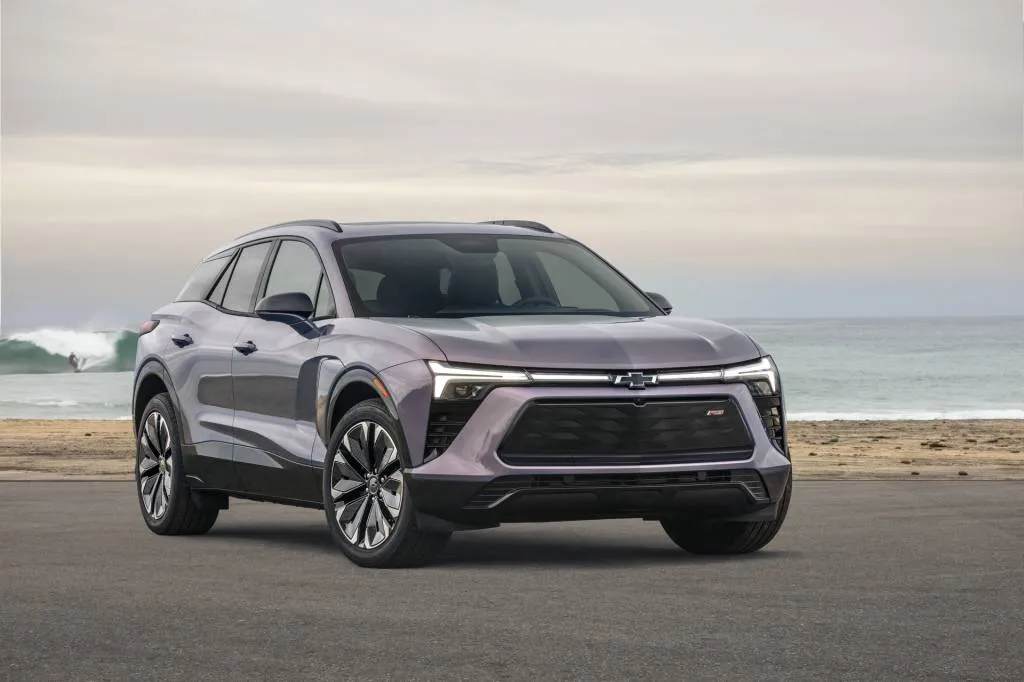
2024 Chevrolet Blazer EV RS
The 2024 Chevrolet Blazer EV was the first GM vehicle to launch without Apple CarPlay and Android Auto, and subsequent EV launches like the Chevy Equinox EV and Chevy Silverado EV have also gone without those features. It’s likely more of an adjustment for users who prefer Apple features like Apple Maps. Google-based infotainment systems in newer GM EVs incorporate many of the same features as Android Auto, such as Google Maps and Google Assistant voice recognition—but it’s worth noting that all of these services require a separate vehicle data connection that will cost extra to owners in the future and provide GM with an extra revenue stream.
Deep integration of software features can be important for route planning, as access to the vehicle’s state of charge and other data is needed to determine charging stops and precondition battery packs for the quickest possible charge. But as other automakers have demonstrated, that doesn’t mean taking functionality away. For instance, Ford EVs offer a choice, with these abilities integrated with Android Auto and Apple CarPlay, as well as via its own built-in navigation systems.
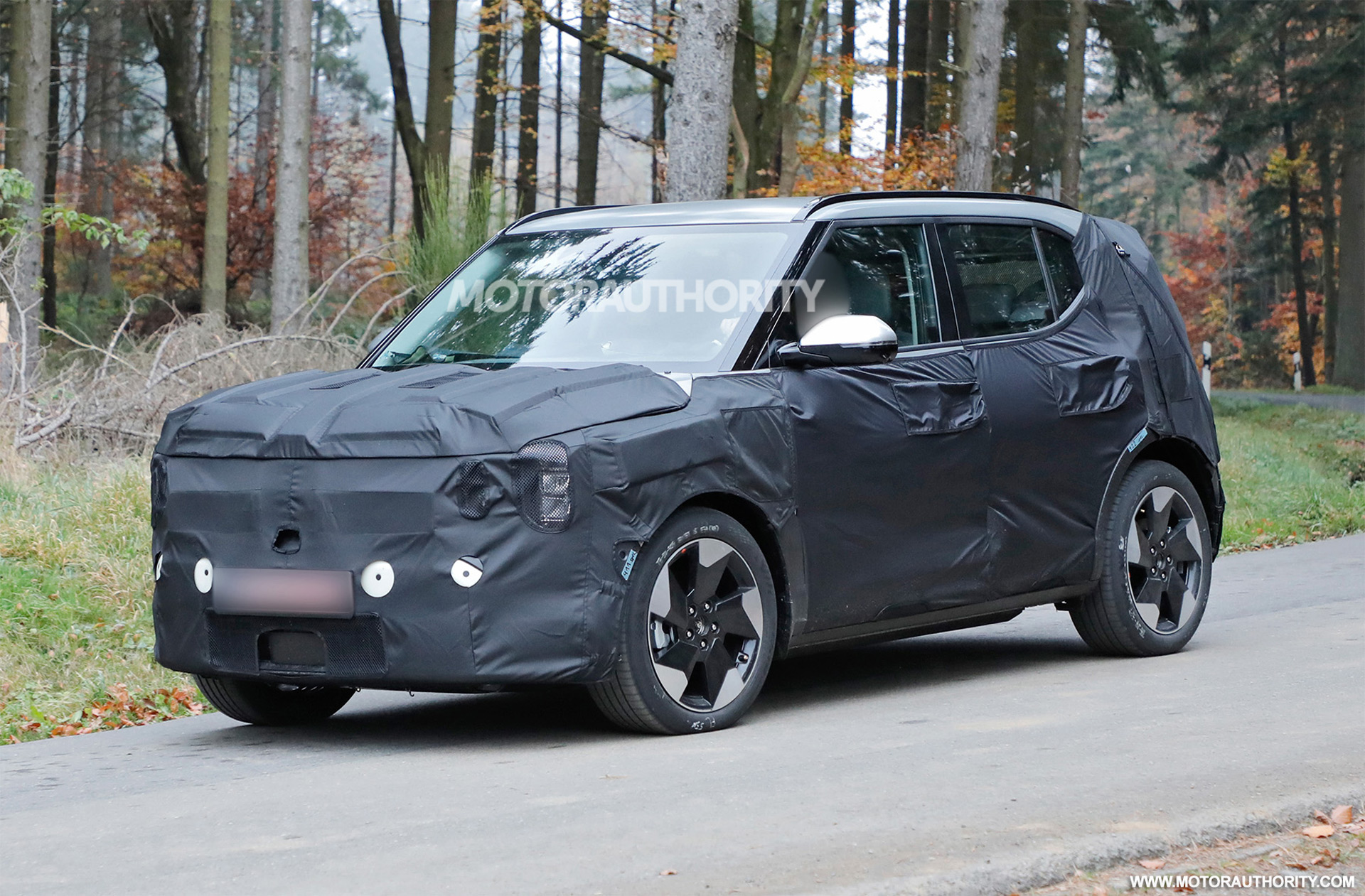
Kia is out testing prototypes for an electric crossover even smaller than the EV3 subcompact unveiled in May.
The newcomer, which is also a subcompact, is likely to be called the EV2. And judging by its size and boxy shape, it may end up replacing Kia’s Soul EV at some point.
2026 Kia EV2 spy shots – Photo via Baldauf
The EV2 is expected to start sales in 2026, but given the small size, it likely won’t end up in the U.S. In other markets, it will compete with a new batch of tiny electric crossovers like the Renault 4 E-Tech, Fiat Grande Panda, and Mini Aceman.
The EV2 should ride on the same lower-cost version of Hyundai Motor Group’s flexible E-GMP platform found in the EV3. To curb costs, Kia skips the E-GMP’s usual 800-volt electrical system in favor of a 400-volt system, meaning charging times will be slower. Front-wheel drive is also likely to be the only configuration.
Kia EV3
In the EV3, Kia has announced 58.3-kwh (Standard) and 81.4-kwh (Long Range) battery options. Something similar could be offered in the EV2.
There’s no clear shot of the EV2’s cabin, but inside, there is likely to be a minimalist design with a single panel combining screens for a digital gauge cluster and infotainment hub, just like in Kia’s other EVs. Kia also plans an AI-powered voice assistant for its latest vehicles.
Kia is quiet on what future EVs it plans for the U.S., though the automaker has previously confirmed a pickup truck and has hinted at a crossover possibly dubbed the EV7. Kia is also out testing an electric van which may be offered locally.
A Neta V caught fire after hitting a lorry tyre on the PLUS highway, KM 277.6 northbound, in the early hours of Saturday (November 9) morning, with all occupants – a driver and two passengers – escaping unharmed.
After receiving an emergency call at 3.31 am, the Seremban 2 Fire and Rescue Station dispatched a fire rescue tender, a tanker, two motorcycles and a nine-member team to the scene. Upon finding the EV totally engulfed in flames, the team put out the fire using a portable water mist, two initial hoses, and a foam hose. The operation ended at 6.10 am.
The driver has taken to Facebook to say that his car hit a tyre on the fast lane that got detached from a broken-down lorry by the road shoulder. He said the airbags deployed and he managed to steer the car to the emergency lane and stop. He added that all equipment and the control screen remained operational, including the power tailgate, which could still open, allowing the occupants to retrieve all their belongings. Unfortunately, five minutes later, the Neta V began sparking and then caught fire.
Neta’s Malaysian distributor Intro Synergy has released an official statement to say that “at this stage, there is no indication of any product defect or malfunction”, and that it “appears to have been an isolated accident involving external road hazards.”
Intro Synergy added that it is working closely and cooperating fully with the authorities. It has deployed its technical team and is currently conducting a thorough investigation to determine the precise cause of the fire, with further updates to come as soon as more information becomes available.
This is the fifth known EV fire in Malaysia so far this year. Of the other four, one happened during charging and three were due to accidents.
@utusantvofficial 9 NOV 24: Begini cara Bomba padam api kereta elektrik terbakar. Anggota membuat pemadaman menggunakan satu portable water mist, dua aliran salur bantu mula dan satu aliran hose berserta foam sehingga api terpadam. 📽 milik @theredsaviors #beritaditiktok #trendingnewsmalaysia #fyp #evterbakar #neta ♬ original sound – UtusanTV
You’re cold, damp and miserable, and you’re not alone – everyone around you feels the same. Then, out of nowhere, a flash of light in the distance, followed by the unmistakable howl of a Ford twin-cam engine echoing through the trees. The headlights, six of them in total, including four huge auxiliary lamps, illuminate the road ahead. Before you know it, a Ford Escort rally car flies past you sideways, gravel spraying from its rear tyres.
How could it get any more exciting? Well, imagine if it was your dad behind the wheel – just like it was for Daniel Zetterval from Sweden when he was a young boy.
“My dad is my biggest influence,” Daniel says. “He started as a Ford mechanic at 16. He raced go-karts from a young age and got into rallying as soon as he got his licence.”
Given that background, I can’t imagine Daniel ever straying from Ford. Brand loyalty runs deep, especially when passed down through the generations. If Daniel had ever shown up at home with an Opel, I suspect he might have been politely shown the door.
The Mk1 Escort, of course, has a legendary status that long predates Brian O’Connor jumping over a bridge several hundreds of metres in the air. With historic wins in the Circuit of Ireland, the London to Mexico, and several RAC rallies, the humble Ford was bound to be successful in Europe.
“My dad started in Mk1 Escorts, then got rid of them when the Mk2 arrived.” Daniel recalls that his father “started chopping up the Mk1s he had stored with an axe! Crazy considering what they’re worth today.”
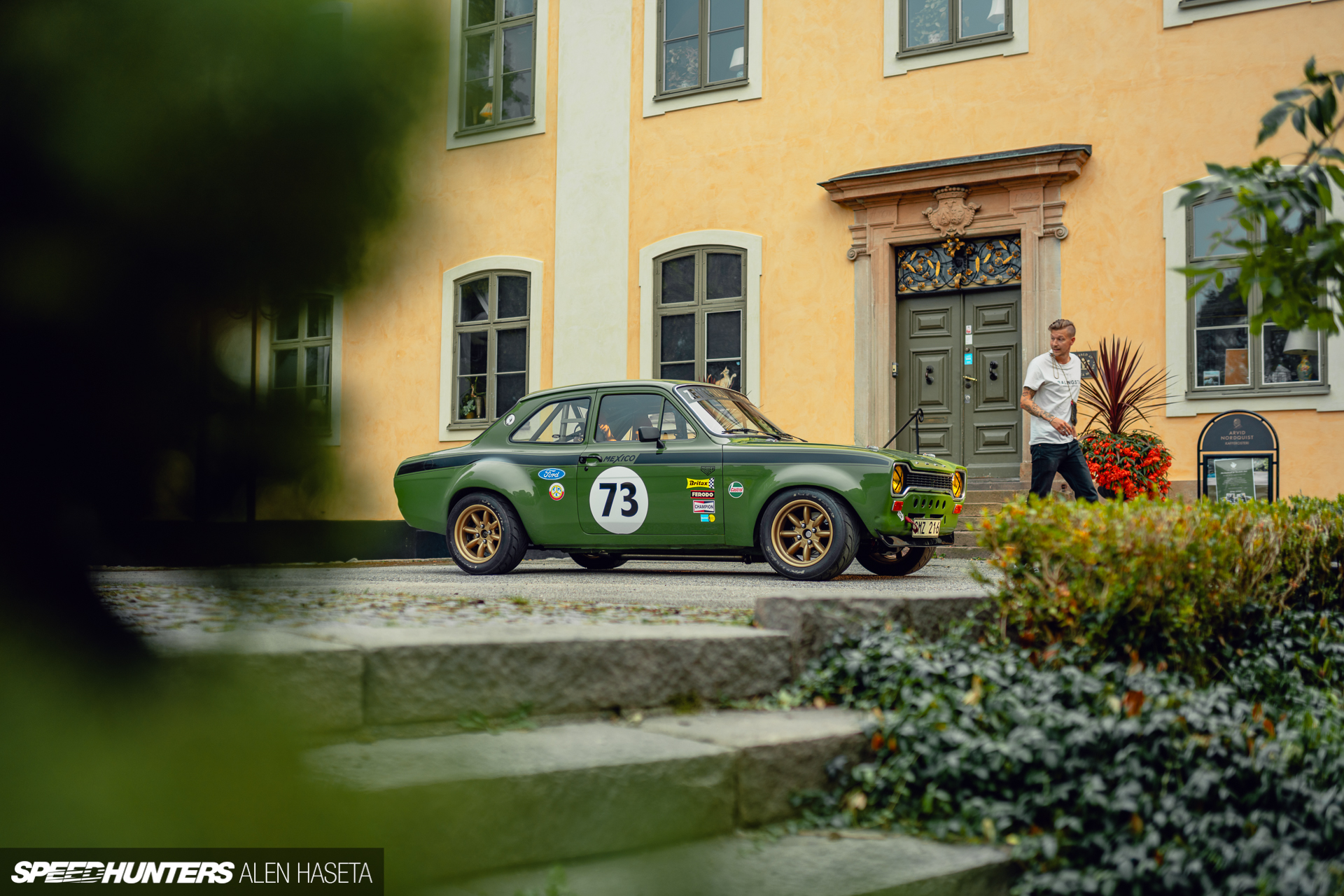
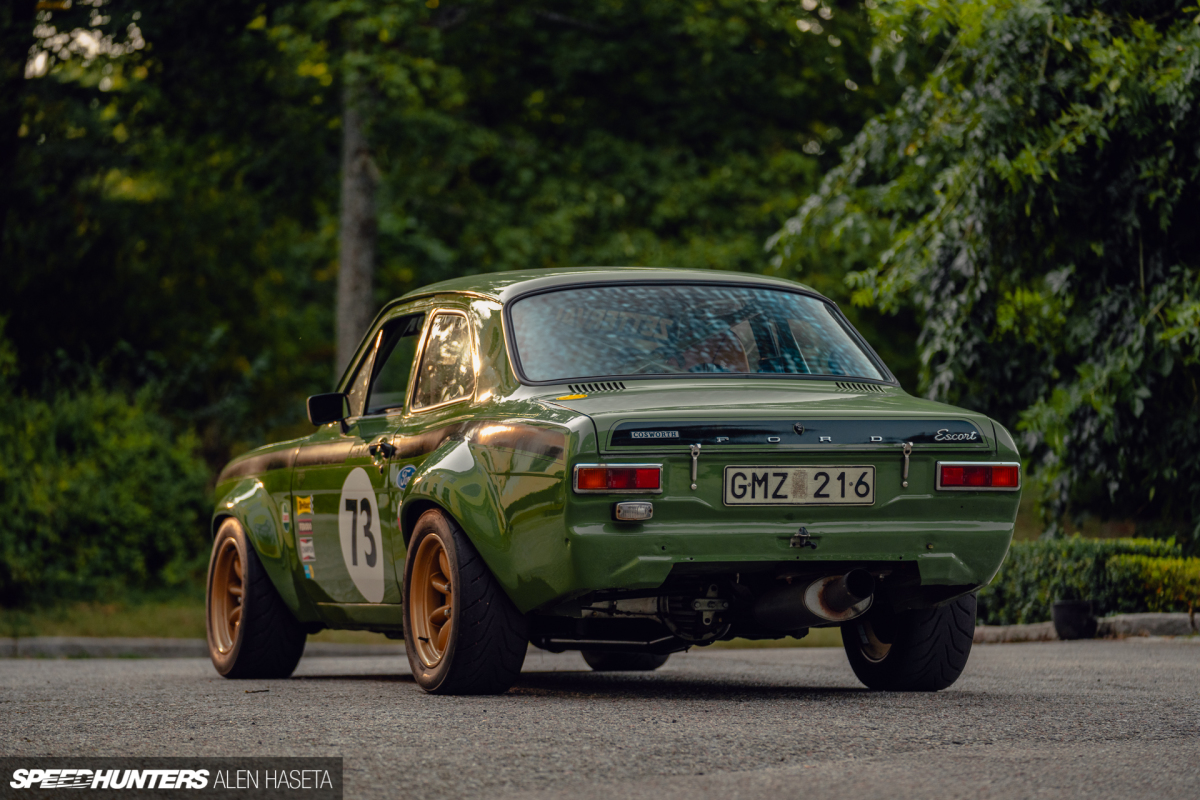
Though I suppose chopping up Escorts runs in the family if you look at the bodywork of Daniel’s car. The Mk1’s shell has been extensively modified, with period-correct ‘bubble’ arches crafted from custom moulds.
“We got rid of around 70% of the original rusted metal and welded in a 6-point roll cage, as well as strengthening the chassis,” Daniel explains. “The arches and rear quarter panels are fibreglass, as was the bonnet until it snapped in the middle going 200km/h down the straight at Mantorp Park!”
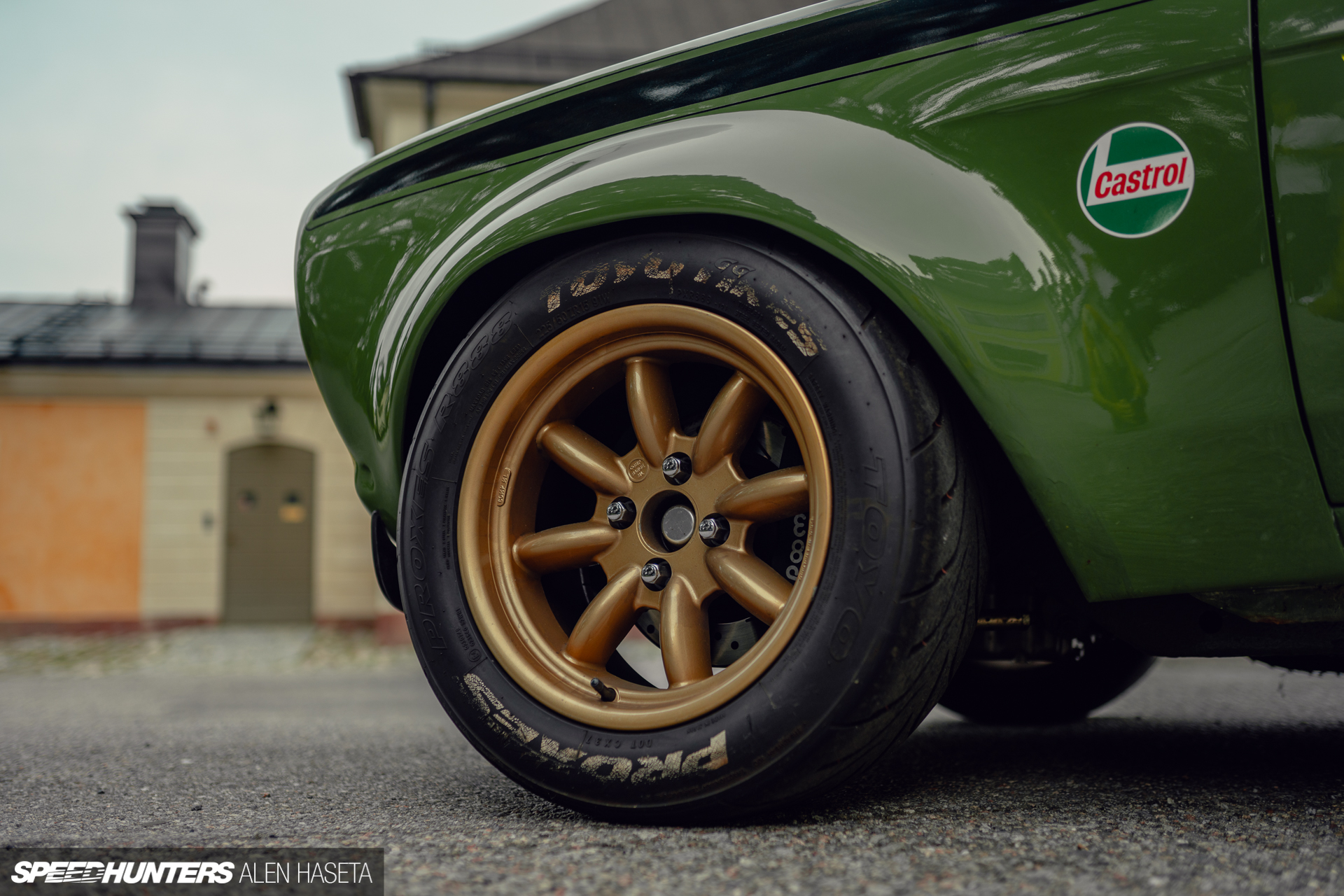
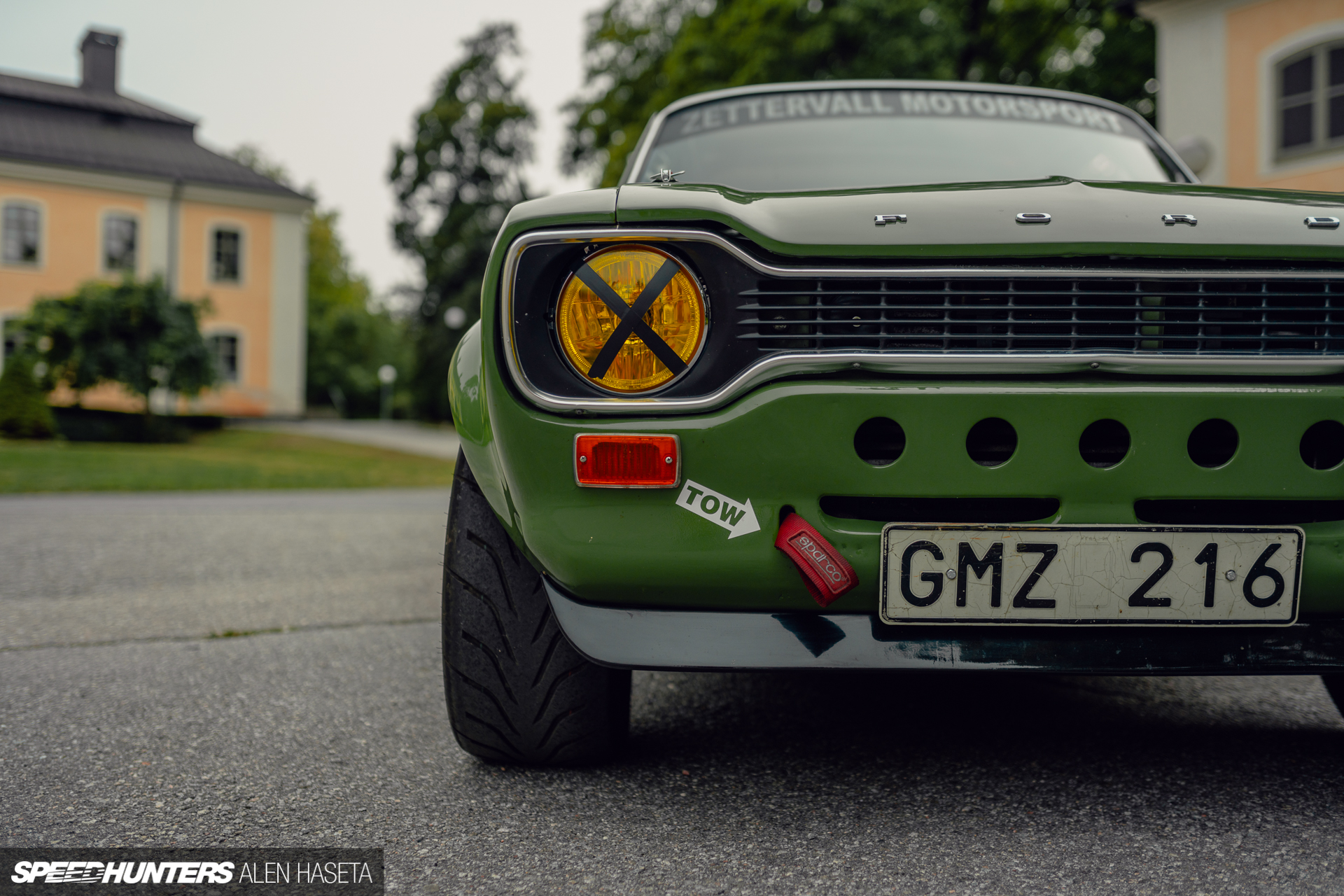
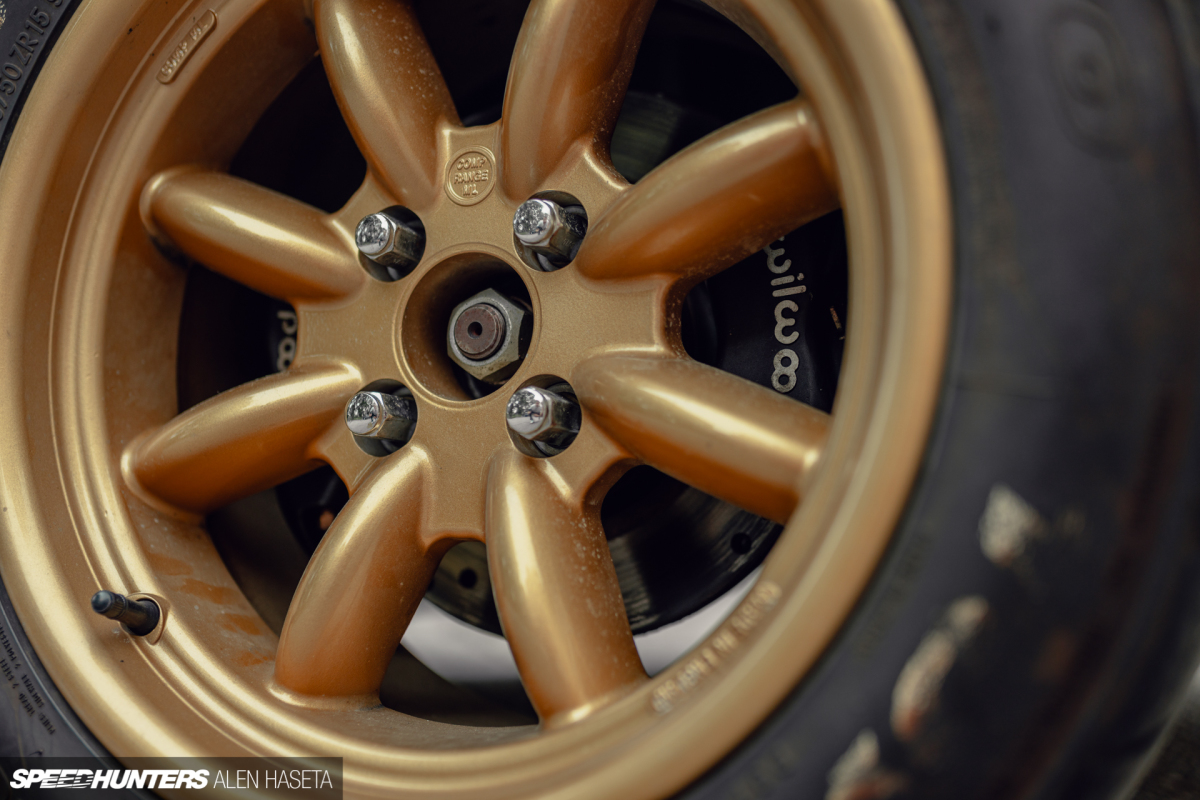
As per the race cars of this era, the chrome bumpers have been removed, and a chin spoiler has been added to the front for less lift at speed – with the added benefit of looking fantastic too. Inside the arches, you’ll find 15×8-inch Revolution Minilites wrapped in 225/45R15 Toyo Proxes R888R semi-slicks.
Painted in Porsche Olive Green, this Mk1 is peak classic Ford for me. While the Mk2 may get the most love these days, the Mk1’s Coke-bottle shape and mini-muscle car look with its bulging rally arches holds a special place in my heart.
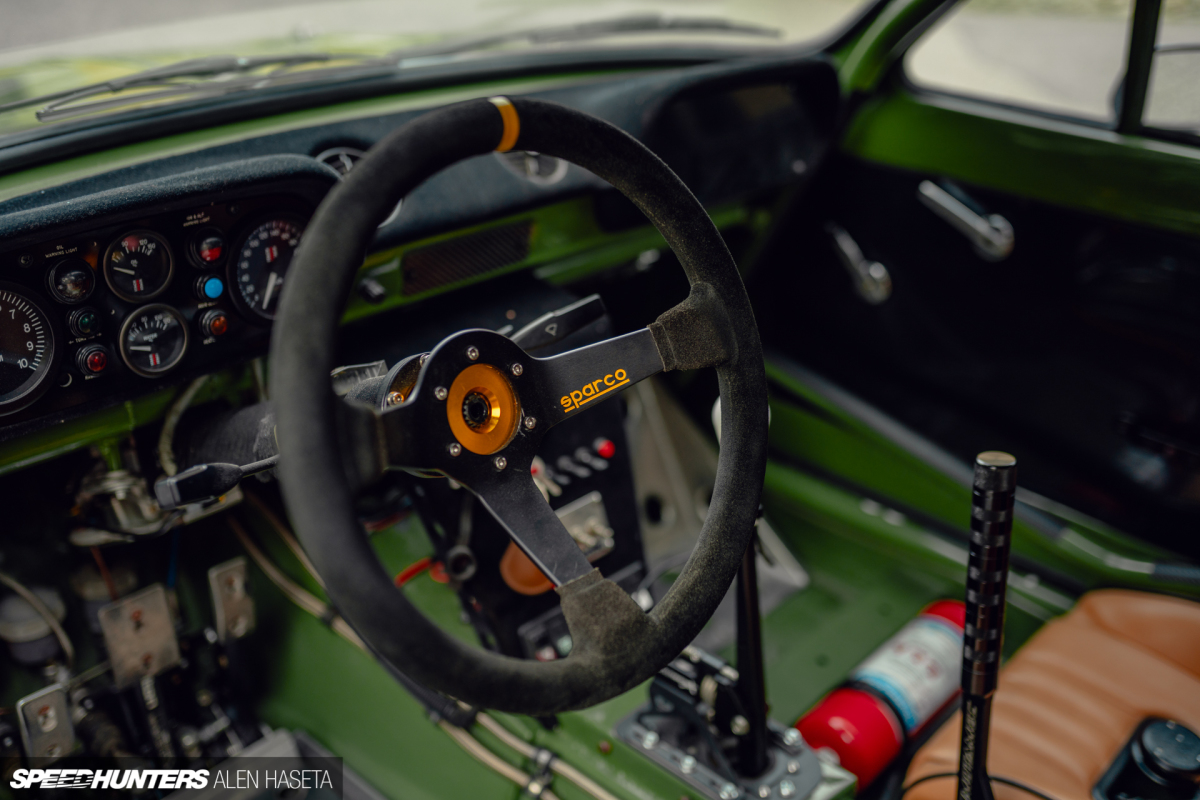
The interior is a work of art, too. There’s a full roll cage alongside FIA-approved Cobra seats, while analogue Stack gauges have been fitted into the original dashboard, which has been flocked and modified.
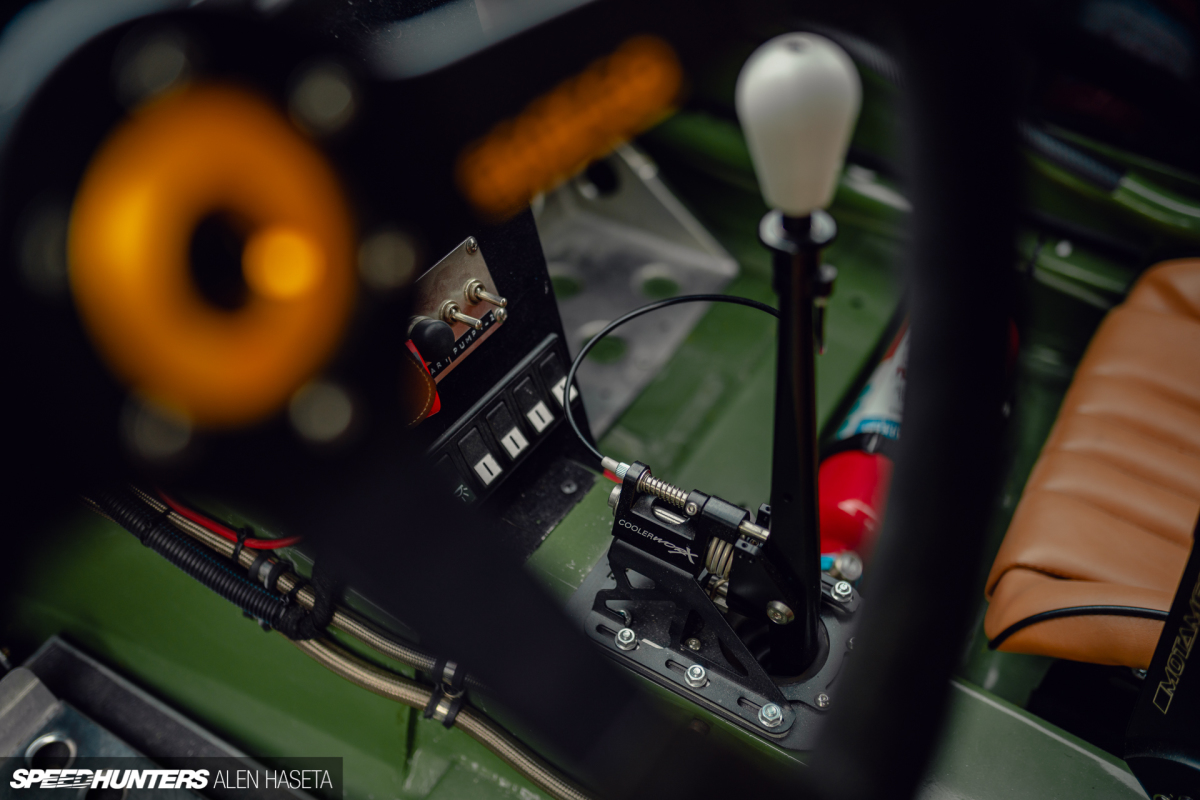
A Sparco steering wheel, Sparco harnesses, and a Coolerworx shifter keep Daniel connected to the driving experience. A helmet box always lives in the car, packed with the essentials: helmet, intercom headset, and driving shoes. As Daniel says, “I’m never not racing.”
And when it comes to racing, this Escort can get down with the best of them. Originally fitted with a modest 1,300cc crossflow engine, the Mk1 now features the ultimate OEM+ upgrade for a classic European Ford: the legendary Cosworth YB. Stroked to 2.1 litres, with ZRP block internals and a race-spec cylinder head, the turbocharged inline-four punches well above its weight. The DOHC 16-valve’s head’s potential is maximised with ENEM camshafts, while a Garrett GTX3067R turbo provides the boost.
The setup exhales through a custom 3.5-inch turbo-back exhaust system and a Big Apple rear silencer. Tuned through a MaxxECU Street engine management system, the engine makes a staunch 450hp.
A BMW Getrag 6-speed gearbox, Quaife limited-slip differential and heavy-duty half-shafts in the Ford Atlas semi-floating axle – with a 4-link kit and Watt’s linkage – ensure the power is put down reliably. There are Bilstein front coilovers and GAZ rears, while stopping power is handled by Wilwood Superlite and Dynalite callipers all around, with separate Dynalite handbrake callipers out the back.
Daniel’s favourite part of the car? “It’s the colour scheme. I had a vision of how it should look, and when all the pieces came together, they just fit perfectly.”
“This car’s been through it all,” he laughs. “I’ve lost a wheel on a drive, had it hit while parked outside our garage. On its first track day, the bonnet cracked. And on the last track day, the engine caught fire!”
Sadly, Daniel has faced more recent misfortune. “We had a big fire in our garage a few weeks ago. We lost seven cars, including our rally car and my next two projects – a Ford Sierra RS500 Cosworth and a Mk2 Escort with a big Zakspeed body kit.”
I’d be devastated, but Daniel is focused on moving forward and improving the Mk1. To him, it’s never been just about the car; it’s about the bond forged with his father.
“We started this Escort as a father-son project in 2013, basically as a way for him and I to hang out in the garage for two or three nights per week,” Daniel recalls. “Lots of beer and good conversation with the older guys.”
From watching his dad race through the woods as a child to building this incredible car together – of all the heartwarming stories I’ve shared, Daniel’s might take the crown.
The technical storage or access is strictly necessary for the legitimate purpose of enabling the use of a specific service explicitly requested by the subscriber or user, or for the sole purpose of carrying out the transmission of a communication over an electronic communications network.
Preferences
The technical storage or access is necessary for the legitimate purpose of storing preferences that are not requested by the subscriber or user.
Statistics
The technical storage or access that is used exclusively for statistical purposes.The technical storage or access that is used exclusively for anonymous statistical purposes. Without a subpoena, voluntary compliance on the part of your Internet Service Provider, or additional records from a third party, information stored or retrieved for this purpose alone cannot usually be used to identify you.
Marketing
The technical storage or access is required to create user profiles to send advertising, or to track the user on a website or across several websites for similar marketing purposes.