Wayne Enterprises is selling the Tumbler, the prototype military vehicle made famous by Batman in Christopher Nolan’s “Dark Knight” movie trilogy. This iteration of the Batmobile will have a limited production run of 10 vehicles, each costing just under $3 million. A select number of wealthy superhero fans will be able to roll around town like the legendary caped crusader. Just please don’t try to fight crime in this thing.
It’s Time To Discontinue The Model S | Jalopinions
Yes, you read that correctly. Wayne Enterprises is a “real” company. Warner Bros. Discovery partnered with PR firm Relevance International to produce ultra-luxury experiences and products under the banner of fictionaire billionaire Bruce Wayne’s conglomerate. For example, Wayne Enterprises collaborated with Pininfarina to build four one-off Batman-themed versions of the Battista electric hypercar.
Photo : Wayne Enterprises
The Tumbler is an entirely different breed of machine compared to the Battista. While a jet turbine canonically powers this Batmobile in the movies, the road-going four-wheel-drive vehicle is powered by a 6.2-liter LS3 engine. The entire thing weighs in at 5,511 pounds with a steel tube space frame, sheet metal fiberglass, carbon fiber and kevlar.
These Batmobiles will still have a screen-screen feel with imitation gun turrets, a simulated jet turbine powerplant and a smoke-screen delivery system. Not to forget, there’s also a movie-accurate two-seat interior with a five-point racing harness. While it sounds absurd in-universe for a defense contractor to sell an armored military vehicle to the general public, AM General did produce the Hummer H1.
Down a cobblestoned street in San Miguel de Allende‘s Centro neighborhood is a narrow house with a bright blue double door. Use one of the horse-shaped door knockers, and you’ll be ushered inside La Casa Dragones, which just might have the coolest cocktail bar in Mexico. Last year, small-batch tequila producer Casa Dragones — whose bottles appear on the shelves of the world’s top bars and restaurants, including Enrique Olvera’s Pujol, in Mexico City — did a substantial renovation that transformed it into a luxury tasting venue.
Long before it was a place to sample high-end spirits, the property served as a stable for Mexico’s legendary Dragones cavalry, who ignited Mexico’s independence movement in 1810 (and served as inspiration for the name of Casa Dragones). The space still honors that legacy — the redesign, led by Mexican architect Marco Martinez Valle and New York–based studio Meyer Davis, made use of the house’s original stone walls and wooden doors.
Casa Dragones also tapped Mexican artists like Héctor Esrawe, who created a towering light fixture for the building’s three-story staircase, to enliven the interiors. The centerpiece, though, is the bar, which gleams with tiles made of black volcanic-glass stone, taken from the brand’s agave fields in Jalisco.
From left: La Casa Dragones, in San Miguel de Allende, Mexico; Bertha González Nieves, cofounder and CEO of Casa Dragones, in the Obsidian Bar.
Douglas Friedman/Courtesy of La Casa Dragones
This homage to Mexican materials and terroir was important to Casa Dragones’s CEO, Bertha González Nieves, who created the label with MTV founder Bob Pittman in 2009. That same year, she became the world’s first female Maestra Tequilera. (This, the highest title in the industry, is awarded to the person who defines a brand’s tequila formula and production.) “I am committed to bringing the best of Mexico to the world,” she says. “I hope that’s what my legacy will be.”
González Nieves was inspired to find a career distilling and promoting tequila when she participated in an international youth exchange program sponsored by the Japanese government. She was tasked with traveling throughout Mexico to learn about the country’s culture, including agave cultivation.
Casa Dragones produces no more than 500 cases at a time, and each batch is made from blue agave plants that were selected and picked by hand. “Our appellation of origin is the oldest in the Americas and one of the most respected around the world,” González Nieves says. Employing a technique called pepita, or “little seed,” artisans use a grinding stone or wheel to etch the image of an agave plant into each handcrafted bottle.
From left: One of four bedrooms at La Casa; La Casa’s tequila showroom.
Douglas Friedman/Courtesy of La Casa Dragones
Tastings of the brand’s four sipping tequilas are offered at the 12-seat bar. They’re paired with small plates, such as mushroom tostadas topped with avocado mousse and serrano. Private dinners and cocktail receptions can also be arranged. (Currently, the Casa is available for overnight stays by invitation only.)
One offering that has special resonance for González Nieves is the brand’s newest label, Casa Dragones Reposado Mizunara. It’s the world’s first tequila to be aged in Mizunara oak casks, the same kind used for Japanese whiskies. “I like to drink it with a small ice cube,” she says, “to allow the subtle apricot and cacao notes to open and expand.”
A version of this story first appeared in the November 2024 issue of Travel + Leisure under the headline “Cheers to San Miguel.“
I just spent a week with the redesigned 2025 Aston Martin Vantage, which is extremely good. It’s maybe the most exciting car I’ve driven this year, and that’s in large part due to its very large tires. It’s more the width of the tires not the overall largeness, actually, and more than making the Vantage feel alive on Mulholland Drive, they give it one of the best stances of any car on sale today.
I Need A Sleek And Fast Car To Replace My Aging Aston Martin | WCSYB?
Seriously, just look at that photo. It’s ridiculous! The 2025 Vantage comes with 21-inch wheels as standard, which is already pretty wild for a sports car of relatively small size. Then you notice the difference in width. The front tires are 275/35ZR21, and the rears are 325/30ZR21 — that’s even wider than you get from a Lamborghini Huracan. Especially when viewed from a rear three-quarter angle, the Vantage’s stance is just epic.
Photo : Daniel Golson/Jalopnik
The wheel design helps. While satin black wouldn’t be the finish I’d go for, I love how concave this split five-spoke design is, and they look awesome tucked into the wide fenders. New vents, bigger exhaust tips and other subtle changes have improved the Vantage’s rear-end design, and the redesigned side vents in the front fenders look really great. You can see a lot of the rear tires thanks to the way the diffuser is shaped and kicks up at the bottom, which is becoming a more common (and I think good) trend on performance cars.
You really gotta give it up for this paint color, too. It’s called Cosmopolitan Yellow and it costs $13,600. It has some acidity and lime tinges to it, and it sparkles incredibly in direct sunlight. I think the Vantage’s styling lends itself really well to intense, bright, vibrant colors, but I would do something classier and more subtle, like a vintage brown. Similarly, as cool as the $20,000-ish of exterior carbon-fiber trim is, I’d do without it.
What do you think of the new Vantage’s stance? What questions do you have about the car? Stay tuned for my full review.
Anyone who thinks they are driving the most exclusive of all Mercedes S-Classes in a Maybach is floating on rose-colored clouds and is mistaken. For over six decades, the automotive benchmark—with or without the star—has been the Pullman version. In the current W223 series, the automotive climax is simply unavailable. This is reason enough to take a reflective glance back in the gently curved side mirror.
When one hears the name “Pullman,” luxurious train carriages come to mind, complete with sleeping compartments, plush curtains, cozy pillows, and perhaps a Mercedes 600 from the W100 series. That often black luxury model was much more than a particularly noble limousine in the top league. In the late 1950s, Mercedes sought a state limousine for maximum representation alongside the standard S-Class, which at that time didn’t even carry that designation. After three special builds of the Type 300 in 1960, the 600 was officially introduced three years later, starting production in 1964, and by early 1965, two armoured luxury versions had entered the fleet of the federal government. From 1965 until the early 1990s, the Federal Republic of Germany offered its state guests only the best of the best—the legendary Mercedes 600 Pullman from the W100 series. “For a long time, the 600 was considered the best car in the world,” reflected Peter Schellhammer years ago, who was responsible for the 600 at Mercedes for decades. “A total of 2,677 models of the 600 were produced. Of those, 428 were delivered as Pullmans and 59 as Landaulets.” The development of the 600, led by Dr. Ing. Fritz Nallinger, lasted from 1956 to 1963, with the goal of building a “large travel and representation vehicle” that would simply become the best car of all time.
Unique among them were the two state limousines of the German federal government. Black and heavily armoured, they still stand as a testament to an emerging and far from ostentatious Federal Republic. The 600 fit the Federal Republic as perfectly as Villa Hammerschmidt, Bonn as the capital and the four occupying powers. The driver of that time, Wolfgang Wöstendieck, and his Mercedes 600 Pullman with the stylish license plate S – VC 600 were as closely associated with many state guests as Helmut Schmidt, Willy Brandt, or Hans-Dietrich Genscher. For even though political currents over the years exchanged people and officials, Wöstendieck and his black 600 were always ready for safe transport during nearly every visit. Usually, the route was from Cologne-Bonn Airport to Bonn, the villa and consulate district of Bad Godesberg, or to the guesthouse on the Petersberg. Wolfgang Wöstendieck drove these routes countless times during his 116 state visits, knowing Bonn’s neighbourhoods and the winding approach to the Petersberg as well as his own four walls. The journey often moved at a slow pace, as the escort, protocol, and the 4.5 tons of empty weight placed a firm corset on any desire for speed. Special tires and the heavy armour of the two state limousines meant that the already impressive limousine driving performance of the early 1960s became a secondary concern in the armoured version.
For decades, there have been further Pullman versions based on the 100 series, such as the classic W126, the maximum W140, or the more understated successor W220. Each based on the respective Mercedes S-Class in XXL format for maximum luxury and equally grand public presentation of their occupants—often as armored versions. Arriving in a Pullman signifies a desire to showcase that one is removed from the ordinary world—usually not just in terms of automotive luxury. Currently, there is no Pullman version of the latest Mercedes S-Class (W223), making the previous generation W222, specifically the Maybach S 650 Pullman, the last to delight its occupants with maximum luxury, gigantic dimensions, soft Nappa interior, and a gently purring V12 engine. As always with the Pullman, the customer has complete freedom in how their dream car should be presented. Whether the interior is upholstered in Nappa or semi-aniline leather in colours like Amaretto, Porcelain, Silk Beige, Corteccia, or Mahogany is determined in personal discussions at the Center of Excellence in Sindelfingen or directly with the customer, along with the choice of harmonious woods or the colour of the discreet partition window.
Walnut, piano lacquer, open-pore ash, or perhaps high-gloss for the pampered eye? The boundaries of what is possible are fluid and blur somewhere near the technical horizon and away from any price lists. What cannot be sourced from the exclusively designed drawers of Sindelfingen filled with material and colour samples is simply created by hand as a bespoke piece. If a customer brings their own colour samples, wants family crests integrated into leather, lacquer, or wood, or desires a multi-tone finish, their wishes beyond the 500,000-euro mark are gladly accommodated.
There has never been a Pullman off the shelf, and the Mercedes Maybach S 650 Pullman of the W222 generation is no exception. At 6.52 meters long, it offers ample space to make every unusual wish an automotive reality. It is understood that such a luxury model requires several months of planning and handcrafting, consistent with what one expects from similar luxury models from Bentley or Rolls-Royce. The three tons of empty weight of this super S-Class are felt more by the chauffeur walking in the footsteps of Wolfgang Wöstendieck through the substantial wheelbase of 4.42 meters than by the charged V12 turbo with six litres of displacement, 453 kW / 630 hp, and 1,000 Nm of maximum torque, which purrs as quietly as a modern electric model while providing a similar thrust when desired. At the customer’s request, this leviathan can reach speeds of 210 km/h, and even at maximum highway speeds, occupants in this rolling one-room apartment hardly notice anything thanks to a cornucopia of soundproofing material. That the seats can be climate-controlled and adjusted electrically into a lying area is self-evident, as are the rear doors that can be operated at the push of a button, which in everyday life are usually opened by the staff after one has enjoyed a massage and rested one’s head on soft leather cushions. If desired, the Pullman rear can even accommodate four people, as two leather-covered emergency seats slide out in opposite directions at the push of a button—typically used for protocol staff or security personnel.
Anyone looking at the black body of the original 100 series next door with its magnificent chrome elements sees, despite all the aerodynamics, altered proportions, and the unusually light paint of the W222, many similarities. The greatest of these is the elegance, which is emphasised not only by the seemingly endless length. The 600 Pullman of yesteryear was not for everyone—no matter how wealthy they may have been. Particularly popular were those long versions available with four and six doors. Distinguished guests didn’t enjoy the visual protection of tinted windows as they do today; instead, they shielded themselves from prying eyes with gray curtains. Today, those curtains rise and fall at the push of a button in seconds. But back then, the sight protection often remained neatly folded, allowing enjoyment of views from both sides of the glass. To present themselves particularly advantageously to photographers and curious onlookers, not only the two state limousines were equipped with orange lights in the ceiling that emitted a particularly warm glow. Today, this is taken care of—if desired—by ambient lighting or a trusted makeup artist.
At market launch in 1964, entry into the world of the rich and beautiful cost at least 56,000 Deutsche Marks; the long version started at a minimum of 63,500 Marks. Even back then, special requests such as armrests, radios, record players, humidors, or an electric razor in the centre console significantly increased the price, while the cost of an unarmored Maybach S 650 Pullman of the current generation starts at over 700,000 euros, with no ceiling in sight. Back then as now, it’s good that the roof has been raised by a few centimetres.
Electric vehicle maker Polestar this week warned that proposed regulations on Chinese software in cars could put it out of business.
The company says a proposed set of rules meant to protect national security “would effectively prohibit Polestar from selling its cars in the United States, including the cars it manufactures in South Carolina.”
Polestar is a small and new manufacturer. However, its problems illustrate deeper threads in the automotive industry and show how complex the issue of Chinese cars in the U.S. has already grown.
The Chinese Car Issue
China’s auto industry is growing fast, and automakers worldwide now perceive it as a threat to their future business.
Through low-cost labor and, some say, government subsidies, Chinese automakers can produce cars at lower costs than American, European, Japanese, and Korean automakers. Chinese automakers see particularly strong electric vehicle (EV) sales.
Many worry they have their sights on the U.S. market. No Chinese automaker has announced plans to sell cars in the U.S. But Chinese cars now outsell American cars in Mexico, and several Chinese automakers plan factories there. Policymakers worry those factories could use North American trade agreements to send vehicles to the U.S. for sale. Chinese auto giant BYD has already begun building infrastructure in Canada.
There Are Two Major Efforts to Stop Chinese Cars in the U.S.
The Biden administration has launched a two-pronged effort to stop Chinese-owned automakers from selling cars in America. One prong has earned major media coverage, while the other has seen less attention but may be more significant.
The first involves tariffs. This year, the administration enacted a 100% tariff on electric Chinese cars. That has raised prospects of a trade war, as China could counter with tariffs on U.S. products. Tariffs are now a major issue in next week’s U.S. presidential election.
The other, however, involves software. The Commerce Department has proposed rules that would ban all Chinese-derived software from cars sold in the U.S. on national security grounds.
Today’s cars are rolling computers that maintain a constant connection to the Internet. Even the most basic economy car runs immense amounts of computer code. More complex cars, with driver assistance systems capable of accelerating, braking, and steering, are likely the most complicated piece of technology many Americans own.
The Commerce Department’s Bureau of Industry and Security (BIS) has proposed banning Chinese-derived software from cars, arguing that a foreign actor could track Americans’ movements through the cars or even shut down cars in an international crisis.
The Second IsNot Active Yet
Federal agencies must navigate many hurdles when writing new regulations. The biggest one is the public comment period.
Agencies publish proposed rules. They must then accept public comments on them for at least 30 days (though 90 is not uncommon). Any American citizen or business can comment. But, typically, comments come from affected companies and advocacy groups who favor or oppose the rules. Agencies publish the comments they receive.
They then rewrite rules to accommodate what the public thought needed changing (they have the right to change nothing) before publishing a final rule. It typically takes effect after a waiting period.
The BIS is currently accepting comments on the software rule.
The Problem: Protecting National Interests in an International Industry
Polestar perfectly illustrates how difficult it is to write regulations and propose tariffs on a global industry. In comments to the BIS, the company calls itself “a Swedish electric performance car brand” headquartered in Gothenburg, Sweden. However, the company says it builds cars “both in China at Volvo Cars’ Chengdu, China facility and in the United States at Volvo Cars’ facility in Ridgeville, South Carolina.”
That’s all true. It’s also true that Polestar’s largest shareholder is China’s Geely Holding.
Polestar is small. It’s also global.
The company tells the BIS it “has around 2,800 employees globally, with only around 280 employees in China.” It employs more people in the U.S. than overseas.
Working across multiple continents is typical of today’s automakers. Even Ford and General Motors, traditional American manufacturing giants, import cars like the Lincoln Nautilus and Buick Envision to the U.S. from China.
Polestar asked the BIS to clarify many aspects of the rule and “take into consideration the location of where the manufacturing, or software development is occurring rather than just rely on the ultimate ownership of what is a large, multinational corporation.”
We have no idea how the agency will respond or how the final rule will affect Polestar, Volvo, or even Lincoln. But the global nature of the auto industry complicates the prospect of a trade war.
If you don’t like the look of the latest Ferrari F80 hypercar or the Purosangue SUV, get used to it. Chances are they’ll be sticking around for a long time.
“More than 90% of the total Ferrari production—beyond 300,000 cars—is still on the road,” Andrea Scioletti, head of Ferrari pre-owned, said in an interview with Australia’s Drive during a media event for the automaker’s Ferrari Approved certified pre-owned program at its headquarters in Maranello, Italy.
1972 Ferrari Dino 246 GTS once owned by Cher – Photo credit: Bring a Trailer
Given long wait lists for new cars, used cars are often a new customer’s entry point to the Ferrari brand, Scioletti noted. This also helps create more demand for used Ferraris, meaning more of them are worth saving—and preserving for the long haul.
Ferrari itself facilitates this with programs like Ferrari Approved. While many brands—including more mainstream ones—offer certified pre-owned programs in which used cars are inspected and backed by a re-upped warranty, Ferrari Approved involves mechanical and aesthetic reconditioning as well. It’s available on cars up to 16 years old or with up to 74,565 miles.
Ferrari and Pirelli developing new tires for classic supercars
As Drive notes, other programs cover older cars. The Ferrari Premium maintenance program is available for cars 10-20 years old, while Ferrari Classiche certifies classic models. Ferrari has even commissioned new tires for some of its classic supercars, and outside the factory a dedicated army of collectors and restorers work to keep vintage Ferraris on the road.
This infrastructure wouldn’t have developed if there weren’t a market for older Ferraris. While not every one is a bona fide classic, the Prancing Horse badge adorns some of the most valuable collector cars in the world. Even the crumpled shell of a 1954 Ferrari 500 Mondial Spider Series I sold for $1.8 million at auction last year.
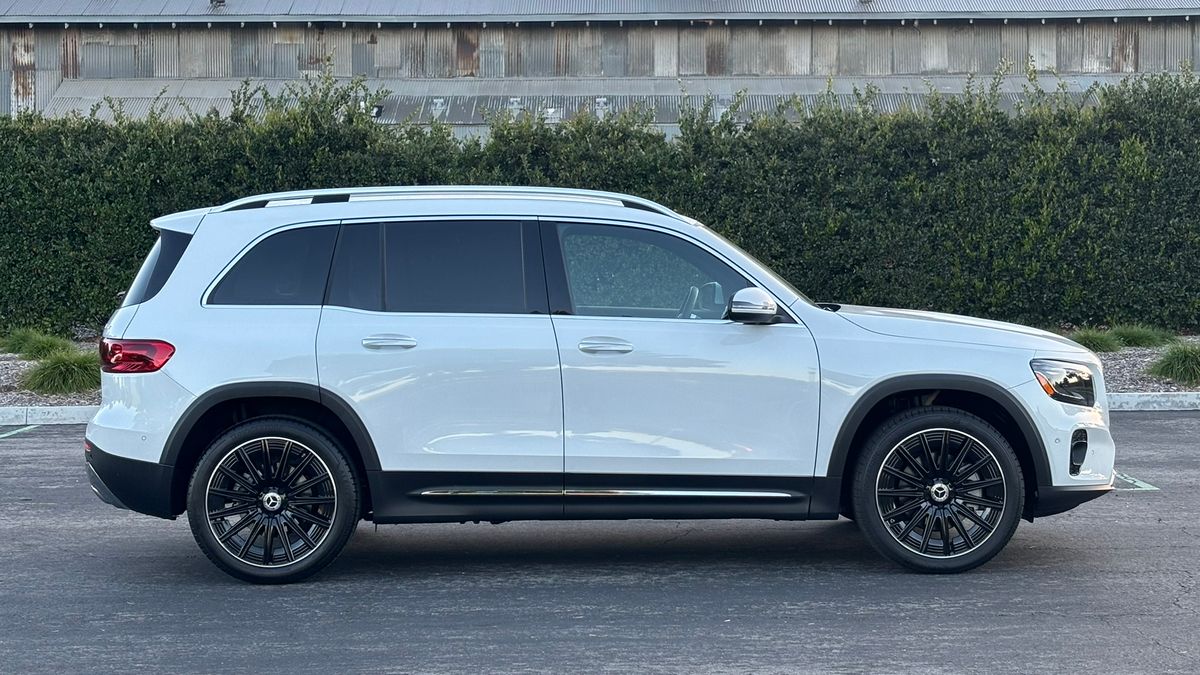
Mercedes-Benz has recalled 415 GLB SUVs from model year 2025 because their right-side tires might have damage invisible to the driver.
The company tells federal safety regulators that a conveyor system in the factory may have damaged the inside side walls of some GLB tires. Because the damage is located on the inside of the tire, drivers may not be aware of it.
In passive voice that would make your high school English teacher and our copy editors rage, Mercedes explains, “Over the tire’s lifecycle, the damage might lead to a leak. A sudden loss of air pressure cannot be completely ruled out and could impair driving stability, which could increase the risk of a crash.”
Mercedes is not aware of any accidents or injuries related to the problem.
Recall repairs are always free. Automakers recall many cars, often more than once, during their lifespan. Automakers try to contact every owner but don’t always reach them all. Find out whether your car has any outstanding recalls with the easy VIN tool at our recall center.
India’s leading cloud infrastructure providers and server manufacturers are ramping up accelerated data center capacity. By year’s end, they’ll have boosted NVIDIA GPU deployment in the country by nearly 10x compared to 18 months ago.
Tens of thousands of NVIDIA Hopper GPUs will be added to build AI factories — large-scale data centers for producing AI — that support India’s large businesses, startups and research centers running AI workloads in the cloud and on premises. This will cumulatively provide nearly 180 exaflops of compute to power innovation in healthcare, financial services and digital content creation.
Their systems will enable developers to harness domestic data center resources powerful enough to fuel a new wave of large language models, complex scientific visualizations and industrial digital twins that could propel India to the forefront of AI-accelerated innovation.
Yotta Brings AI Systems and Services to Shakti Cloud
Yotta Data Services is providing Indian businesses, government departments and researchers access to managed cloud services through its Shakti Cloud platform to boost generative AI adoption and AI education.
Powered by thousands of NVIDIA Hopper GPUs, these computing resources are complemented by NVIDIA AI Enterprise, an end-to-end, cloud-native software platform that accelerates data science pipelines and streamlines development and deployment of production-grade copilots and other generative AI applications.
With NVIDIA AI Enterprise, Yotta customers can access NVIDIA NIM, a collection of microservices for optimized AI inference, and NVIDIA NIM Agent Blueprints, a set of customizable reference architectures for generative AI applications. This will allow them to rapidly adopt optimized, state-of-the-art AI for applications including biomolecular generation, virtual avatar creation and language generation.
“The future of AI is about speed, flexibility and scalability, which is why Yotta’s Shakti Cloud platform is designed to eliminate the common barriers that organizations across industries face in AI adoption,” said Sunil Gupta, cofounder, CEO and managing director of Yotta. “Shakti Cloud brings together high-performance GPUs, optimized storage and a services layer that simplifies AI development from model training to deployment, so organizations can quickly scale their AI efforts, streamline operations and push the boundaries of what AI can accomplish.”
Yotta’s customers include Sarvam AI, which is building AI models that support major Indian languages; Innoplexus, which is developing an AI-powered life sciences platform for drug discovery; and Zoho Corporation, which is creating language models for enterprise customers.
Tata Supports Enterprise AI Innovation Across Industries
Tata Communications is initiating a large-scale deployment of NVIDIA Hopper architecture GPUs to power its public cloud infrastructure and support a wide range of AI applications. The company also plans to expand its offerings next year to include NVIDIA Blackwell GPUs.
In addition to providing accelerated hardware, Tata Communications will enable customers to run NVIDIA AI Enterprise, including NVIDIA NIM and NIM Agent Blueprints, and NVIDIA Omniverse, a software platform and operating system that developers use to build physical AI and robotic system simulation applications.
“By combining NVIDIA’s accelerated computing infrastructure with Tata Communications’ AI Studio and global network, we’re creating a future-ready platform that will enable AI transformation across industries,” said A.S. Lakshminarayanan, managing director and CEO of Tata Communications. “Access to these resources will make AI more accessible to innovators in fields including manufacturing, healthcare, retail, banking and financial services.”
E2E Expands Cloud Infrastructure for AI Innovation
E2E Networks supports enterprises in India, the Middle East, the Asia-Pacific region and the U.S with GPU-powered cloud servers.
It offers customers access to clusters featuring NVIDIA Hopper GPUs interconnected with NVIDIA Quantum-2 InfiniBand networking to help meet the demand for high-compute tasks including simulations, foundation model training and real-time AI inference.
“This infrastructure expansion helps ensure Indian businesses have access to high-performance, scalable infrastructure to develop custom AI models,” said Tarun Dua, cofounder and managing director of E2E Networks. “NVIDIA Hopper GPUs will be a powerful driver of innovation in large language models and large vision models for our users.”
E2E’s clients include AI4Bharat, a research lab at the Indian Institute of Technology Madras developing open-source AI applications for Indian languages — as well as members of the NVIDIA Inception startup program such as disease detection company Qure.ai, text-to-video generative AI company Invideo AI and intelligent voice agent company Assisto.
Netweb Servers Advance Sovereign AI Initiatives
Netweb is expanding its range of Tyrone AI systems based on NVIDIA MGX, a modular reference architecture to accelerate enterprise data center workloads.
Offered for both on-premises and off-premises cloud infrastructure, the new servers feature NVIDIA GH200 Grace Hopper Superchips, delivering the computational power to support large hyperscalers, research centers, enterprises and supercomputing centers in India and across Asia.
“Through Netweb’s decade-long collaboration with NVIDIA, we’ve shown that world-class computing infrastructure can be developed in India,” said Sanjay Lodha, chairman and managing director of Netweb. “Our next-generation systems will help the country’s businesses and researchers build and deploy more complex AI applications trained on proprietary datasets.”
Netweb also offers customers Tryone Skylus cloud instances that include the company’s full software stack, alongside the NVIDIA AI Enterprise and NVIDIA Omniverse software platforms, to develop large-scale agentic AI and physical AI.
NVIDIA’s roadmap features new platforms set to arrive on a one-year rhythm. By harnessing these advancements in AI computing and networking, infrastructure providers and manufacturers in India and beyond will be able to further scale the capabilities of AI development to power larger, multimodal models, optimize inference performance and train the next generation of AI applications.
Information technology giants including Infosys, TCS, Tech Mahindra and Wipro are teaming with NVIDIA to accelerate AI adoption. They’re creating new jobs and training nearly half a million developers for the era of AI.
This great upskill is introducing a new wave of opportunity.
IT is a leading Indian export, and IDC reports that the Indian domestic IT & Business Services market was valued at $14.5 billion in 2023. Now, India’s technology leaders are taking on an expanded role as the industry shifts from providing IT services to consulting with global clients to meet the demand for front-office AI applications.
“In the coming years, IT service investments will be driven by interest in gen AI,” said Harish Krishnakumar, senior market analyst of IT Services at IDC India. “Enterprises will continue engaging with IT service providers to develop potential use cases and POCs and also to transform and manage their complex IT infrastructure and applications.”
Agents of Innovation
India’s IT consulting giants are helping clients deploy AI with custom-built solutions that use the NVIDIA AI Enterprise software platform. Clients can use these generative AI applications that include virtual agents that can learn, reason and take action to drive new levels of productivity and foster breakthroughs to help solve complex challenges across healthcare, climate, agriculture, manufacturing and more.
Consulting experts are creating custom models with NVIDIA NeMo and deploying AI in production with NVIDIA NIM microservices. Using NVIDIA NIM Agent Blueprints — including a new blueprint for customer service announced today at the NVIDIA AI Summit in India — consultants are helping global clients tailor AI agents for their unique needs.
NeMo Curator is playing a key role in enabling consulting experts to train highly accurate sovereign AI for India and neighboring Southeast Asian countries. With NeMo Curator, consulting companies are processing high-quality data at scale in these low-resource languages and generating synthetic data to augment their existing datasets.
With NVIDIA RAPIDS, they’re accelerating data analytics to create a robust foundation for AI development and retrieval-augmented generation (RAG).
As manufacturing leaders seek to use physical AI to scale production, efficiency and safety, leading consulting firms are also tapping into the NVIDIA Omniverse Enterprise development platform to create industrial AI digital twins.
Consulting Leaders Create New Job Opportunities in AI
Goldman Sachs forecasts that AI has the potential to automate up to 20% of work tasks in emerging economies, including India. NVIDIA’s technology consulting partners are helping professionals and clients get ready for these AI-driven opportunities with full-stack NVIDIA AI.
Infosys uses NVIDIA AI Enterprise for Infosys Topaz, an AI-first set of offerings, to help businesses quickly adopt and integrate generative AI into their operations. It has set up an NVIDIA Center of Excellence that’s spearheading the reskilling of employees, development of solutions and adoption of NVIDIA technology across enterprises.
Tata Consultancy Services features NVIDIA AI Enterprise software in its industry solutions for automotive, manufacturing, telecommunications, financial services, retail and many other industry verticals. It has trained 50,000+ AI associates to help clients develop and implement AI strategies that are scalable, sustainable and responsible.
Tech Mahindra offers the Tech Mahindra Optimized Framework built on NVIDIA AI Enterprise to advance sovereign large language model frameworks and bring generative AI into mainstream enterprise applications. As part of the framework, Tech Mahindra will establish a Center of Excellence and introduce Project Indus 2.0, an advanced Hindi-based AI model that uses a new NIM microservice for the Nemotron-4-Hindi 4B model. It has reskilled over 45,000 employees through its AI proficiency framework.
Wipro has built its Wipro Enterprise Generative AI Studio with NVIDIA AI Enterprise to accelerate industry-specific use cases for supply chain management, marketing campaigns, contact center agents, financial services, retail and more. It has trained more than 225,000 employees — nearly its entire workforce — to be ready to serve AI client demands.
Faster Fixes: NIM Agent Blueprint for Customer Service Debuts to Speed Resolution
The new NIM Agent Blueprint for customer service can help India’s consulting leaders quickly build custom AI virtual assistants for call center clients. These AI virtual assistants can recommend solutions to resolve issues and help people efficiently serve customers.
Powered by NVIDIA NIM microservices and RAG, the blueprint shows how to build a solution that supports context-aware, multi-turn conversations and can provide general and personalized Q&A responses based on structured and unstructured data. Using NVIDIA NeMo Guardrails, developers can ensure that the AI virtual agents stay on topic.
NVIDIA’s consulting partners can help customers tailor the customer service agent blueprint to build unique virtual assistants using their preferred AI model — including sovereign LLMs from India-based model makers — and efficiently run it in production on the infrastructure of their choice with NVIDIA NIM.
Try the new NVIDIA NIM Agent Blueprint for free or get notified of the upcoming release of a downloadable version of the blueprint.
To learn more, watch the NVIDIA AI Summit India keynote with NVIDIA founder and CEO Jensen Huang.
Editor’s note: IDC figures and statement courtesy of IDC, “Worldwide Semiannual Services Tracker,” April 2024, and IDC: India’s IT Services Market Grows by 6.6% in 2023 as Enterprises Focus on Critical Projects, press release from June 2024.
Utes are Australia’s second most popular new vehicle type behind only SUVs, and it has been a big month for new ute reveals and news.
This week saw the global reveal of the new Kia Tasman, and learned the price and details of the upcoming BYD Shark 6, the ground-breaking plug-in hybrid 4×4 dual-cab that broke the Chinese brand’s Australian website when orders opened on Tuesday night.
But among that crowd was a familiar name in the ute world: Isuzu. The Japanese brand, or specifically Isuzu Ute Australia, has unveiled its latest top-spec model – the Walkinshaw-fettled, offroad-ready D-Max Blade.
Nissan Navara Pro-4X Warrior
Toyota HiLux GR Sport
GWM Ute Cannon-XSR
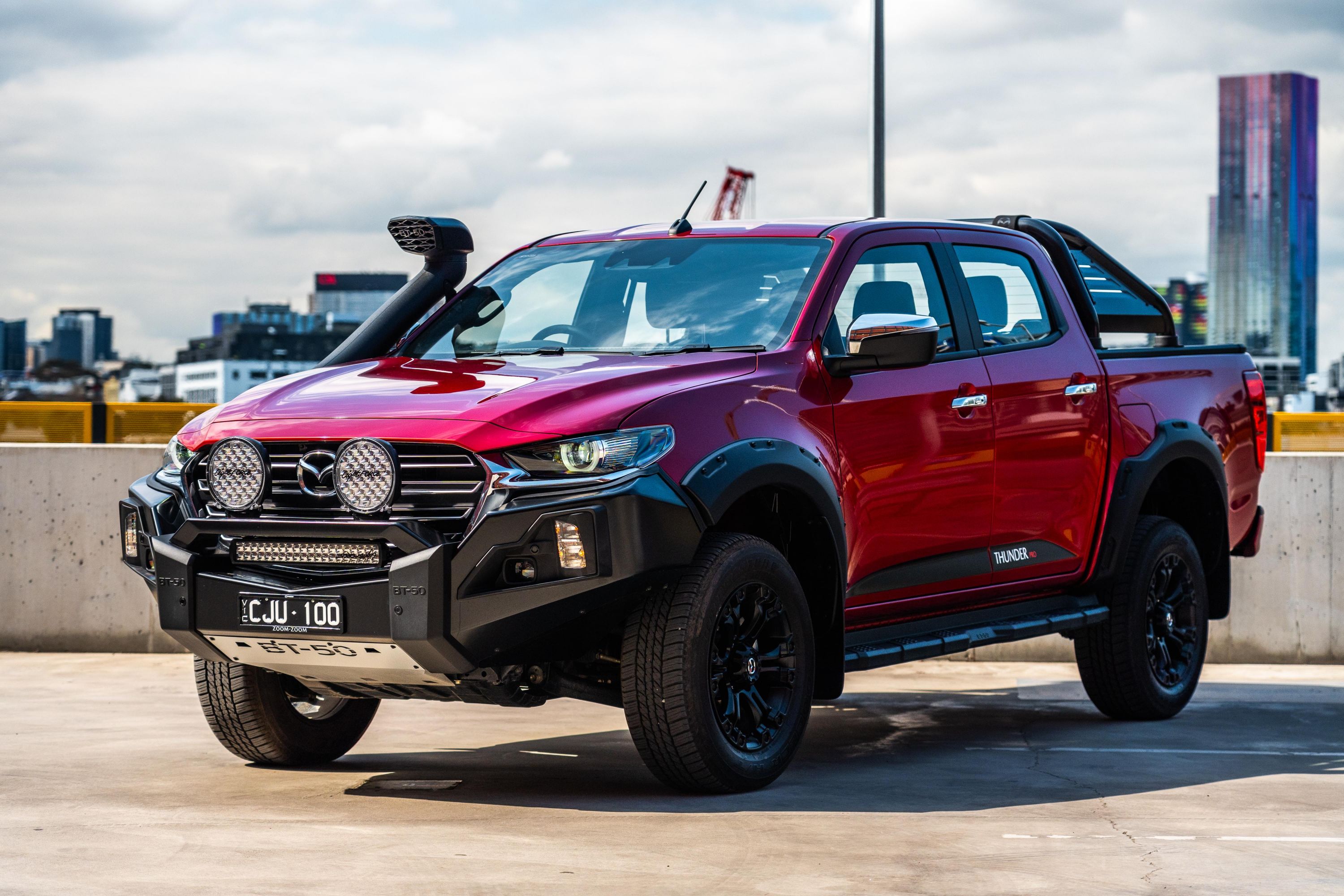
Mazda BT-50 Thunder
That got us thinking. It’s by no means the first time that a major auto brand has released a new dual-cab 4×4 ute variant designed specifically to tackle challenging off-road driving, in fact there are quiet a few to choose from.
So we asked the CarExpert team which off-road ute they’d buy for less than $100,000, and here’s what they said. But first, here are some of the most popular examples of the breed:
Ford Ranger Raptor
Ford Ranger Tremor
GWM Ute Cannon-XSR
Isuzu D-Max Blade
Mazda BT-50 Thunder
Nissan Navara SL Warrior
Nissan Navara Pro-4X Warrior
Toyota HiLux GR Sport
100s of new car deals are available through CarExpert right now. Get the experts on your side and score a great deal. Browse now.
Marton Pettendy: Ford Ranger Tremor
If I was in the market for a new, offroad-ready ute I’d buy a Tremor, since it’s the most hardcore version of the class-leading Ranger this side of the desert-eating Raptor, but will still travel 800km between refills, as well as carry 900kg and tow 3500kg.
It’s also a fully factory-engineered and built vehicle based on the only Australian-developed ute, and it comes with tasty off-road extras like full-time 4×4, a front bash plate, Bilstein dampers, all-terrain tyres, wider wheel tracks and a one-inch suspension lift (matching the HiLux Rogue and D-Max Blade, but not the Nissan Navara Warrior, HiLux GR Sport or Mazda BT-50 Thunder accessory option).
There are more unique off-road extras too, like an overhead auxiliary switch bank and Trail Control 3 and Rock Crawl 3 modes from the Raptor, all for $69,690 plus on-roads – just $3550 more than Sport on which it’s based and less than all of its most direct rivals bar the GWM Ute Cannon-XSR.
For me, it’s the perfect getaway machine, at least until Ford offers a Tremor V6 with an inch or two more ride height…
Interested in buying a Ford Ranger? Get in touch with one of CarExpert’s trusted dealers here.
I feel like this is going to be a popular answer, and for good reason.
If you can get past the fact it sounds like a VN Commodore with holes in its exhaust, the Ranger Raptor is almost flawless for those who want both on- and off-road performance.
Not only is the 3.0-litre EcoBoost V6 a welcome upgrade from the underwhelming first iteration that was powered by four-cylinder turbo-diesel, Ford has beefed up everything on the Raptor to set it far apart from the base Ranger.
What’s more, the engine is far from the limit of its potential, and Ford specialist Herrod Performance – which has a long-standing relationship with the Blue Oval – sells a power pack that not only gives it another 88kW and 197Nm, but also includes other components for added reliability.
And if it’s true off-roading that you’re after, rather than just going down a leafy drive while it’s raining, the Ranger Raptor is a proven performer at the Finke Desert Race, winning the Production 4WD class two years in a row.
Interested in buying a Ford Ranger? Get in touch with one of CarExpert’s trusted dealers here.
If I had to choose a dual-cab ute, particularly one of these more focused off-road versions, the Ranger Tremor would be my pick.
As with just about every other variation of Australia’s favourite new car nameplate, the Tremor delivers a driving experience more like an SUV and offers the sort of refinement and tech that you’d expect of a modern car.
Ford is also one of the few manufacturers in this space to offer Australians a much cleaner Euro 6-certified diesel engine, which greatly reduces NOx emissions thanks to AdBlue injection.
Meanwhile, most other brands persist with decade-old emissions treatment tech that results in high fuel consumption with high emissions.
Interested in buying a Ford Ranger? Get in touch with one of CarExpert’s trusted dealers here.
It’s not as affordable as it once was, but at $90,440 before on-roads (or just under $100k drive-away in most capital cities), the Ford Ranger Raptor still narrowly slides under our budget cap.
It’s worth noting how influential and game-changing this dual-cab 4×4 ute has been in its segment. As it currently stands, it’s leaps and bounds above its competitors.
This twin-turbo petrol V6-powered monster is so fun to drive, both on and off the road. It’s something I always beg to grab the keys for when we have one in the garage.
The Raptor is not only high-powered, but also rather comfortable. This is thanks in part to its rear coil suspension and luscious leather seats that offer heating.
Interested in buying a Ford Ranger? Get in touch with one of CarExpert’s trusted dealers here.
Let’s be a touch different and go for something Australian instead.
Sure, the Ford Ranger was developed in Australia, but it isn’t built here. And while the D-Max is also made in Thailand and previously had no Australian development ties, Walkinshaw has now added the flavour of some local engineering and manufacturing – the latter of which takes place just 30 minutes south-east of Melbourne’s CBD.
Then there are the two Navara Warrior variants, which happen to be built 30 minutes north of Melbourne’s CBD following another homegrown R&D program, this time by Premcar. Nissan’s two-pronged Navara Warrior offer, including the mid-spec SL variant and the top-shelf Pro-4X, gives it a much wider price range, but the Navara platform really is showing its age.
Therefore the D-Max Blade gets my pick. There may be some recency bias poking through here, given I just attended the media drive, but the D-Max was already my best-of-the-rest pick in the ute segment and Walkinshaw has now capitalised on that to create the Blade.
While there’s no extra power, its off-road suspension and wheels have made the already accomplished D-Max experience just that little bit more versatile. Plus, it looks as tough as nails and has a pretty bulletproof engine anyway.
It’s a top-spec model, which means it competes with the HiLux GR Sport and the Navara Pro-4X Warrior close to the mid-$70,000 mark. The only real downside is that it’s more expensive than the Tremor, but I think it does the job better than the other expensive utes.
Interested in buying a Isuzu D-Max? Get in touch with one of CarExpert’s trusted dealers here.
It’s hard to go past a Ranger here, and the Tremor is the pick of the bunch for off-road adventures.
Based on the mid-spec Sport, the rough-and-ready Tremor brings full-time four-wheel drive, remote-reservoir Bilstein shock absorbers, all-terrain tyres, a front bash plate and heaps of other adventure-focused goodies for a very reasonable price premium.
Unfortunately, the package doesn’t include V6 power, but Ford’s bi-turbo four-cylinder diesel engine is just about best-in-class regardless.
The Blue Oval also reigns supreme in the interior technology department, with its extra-large Sync4 infotainment system.
Looking at the rivals, the Nissan Navara Pro-4X Warrior and Toyota HiLux GR Sport may have the tools to keep up with the Ranger off the blacktop, but neither can match the Tremor for cabin and powertrain refinement. Both are more expensive, too.
At sub-$70,000, the Tremor is a great choice for lovers of the outdoors.
Interested in buying a Ford Ranger? Get in touch with one of CarExpert’s trusted dealers here.
I was the last one to respond to this op-ed question because I was off at the Kia Tasman reveal. So I’ve had the chance to see everybody else’s responses and sorry, but I have to be unoriginal and nominate the Ford Ranger Raptor too.
I drive a lot of utes and appreciate their functionality, but I wouldn’t say I’m a dyed in the wool ute person. Sometimes I drive a ute, however, and it just clicks with me – some full-sized American pickups, for example, and the Ford Ranger Raptor.
I’ve driven it off road and found it extremely capable, but even more importantly I’ve found it comfortable on road too. It’s a great all-rounder and it looks the business, too.
It doesn’t sound all that great, but it still sounds better than any four-cylinder turbo-diesel ute – the regular Ranger included. It also features all the high points of the regular Ranger, such as best-in-class technology.
I haven’t had a chance to drive the Tremor yet, but I suspect it could become my first choice if Ford ever puts its terrific turbo-diesel V6 under the bonnet.
Interested in buying a Ford Ranger? Get in touch with one of CarExpert’s trusted dealers here.
The technical storage or access is strictly necessary for the legitimate purpose of enabling the use of a specific service explicitly requested by the subscriber or user, or for the sole purpose of carrying out the transmission of a communication over an electronic communications network.
Preferences
The technical storage or access is necessary for the legitimate purpose of storing preferences that are not requested by the subscriber or user.
Statistics
The technical storage or access that is used exclusively for statistical purposes.The technical storage or access that is used exclusively for anonymous statistical purposes. Without a subpoena, voluntary compliance on the part of your Internet Service Provider, or additional records from a third party, information stored or retrieved for this purpose alone cannot usually be used to identify you.
Marketing
The technical storage or access is required to create user profiles to send advertising, or to track the user on a website or across several websites for similar marketing purposes.