A new AI-powered, imaging-based technology that creates accurate three-dimensional models of tumors, veins and other soft tissue offers a promising new method to help surgeons operate on, and better treat, breast cancers.
The technology, from Illinois-based startup SimBioSys, converts routine black-and-white MRI images into spatially accurate, volumetric images of a patient’s breasts. It then illuminates different parts of the breast with distinct colors — the vascular system, or veins, may be red; tumors are shown in blue; surrounding tissue is gray.
Surgeons can then easily manipulate the 3D visualization on a computer screen, gaining important insight to help guide surgeries and influence treatment plans. The technology, called TumorSight, calculates key surgery-related measurements, including a tumor’s volume and how far tumors are from the chest wall and nipple.
It also provides key data about a tumor’s volume in relation to a breast’s overall volume, which can help determine — before a procedure begins — whether surgeons should try to preserve a breast or choose a mastectomy, which often presents cosmetic and painful side effects. Last year, TumorSight received FDA clearance.
Across the world, nearly 2.3 million women are diagnosed with breast cancer each year, according to the World Health Organization. Every year, breast cancer is responsible for the deaths of more than 500,000 women. Around 100,000 women in the U.S. annually undergo some form of mastectomy, according to the Brigham and Women’s Hospital.
According to Jyoti Palaniappan, chief commercial officer at SimBioSys, the company’s visualization technology offers a step-change improvement over the kind of data surgeons typically see before they begin surgery.
“Typically, surgeons will get a radiology report, which tells them, ‘Here’s the size and location of the tumor,’ and they’ll get one or two pictures of the patient’s tumor,” said Palaniappan. “If the surgeon wants to get more information, they’ll need to find the radiologist and have a conversation with them — which doesn’t always happen — and go through the case with them.”
Dr. Barry Rosen, the company’s chief medical officer, said one of the technology’s primary goals is to uplevel and standardize presurgical imaging, which he believes can have broad positive impacts on outcomes.
“We’re trying to move the surgical process from an art to a science by harnessing the power of AI to improve surgical planning,” Dr. Rosen said.
SimBioSys uses NVIDIA A100 Tensor Core GPUs in the cloud for pretraining its models. It also uses NVIDIA MONAI for training and validation data, and NVIDIA CUDA-X libraries including cuBLAS and MONAI Deploy to run its imaging technology. SimBioSys is part of the NVIDIA Inception program for startups.
SimBioSys is already working on additional AI use cases it hopes can improve breast cancer survival rates.
It has developed a novel technique to reconcile MRI images of a patient’s breasts, taken when the patient is lying face down, and converts those images into virtual, realistic 3D visualizations that show how the tumor and surrounding tissue will appear during surgery — when a patient is lying face up.
This 3D visualization is especially relevant for surgeons so they can visualize what a breast and any tumors will look like once surgery begins.
To create this imagery, the technology calculates gravity’s impact on different kinds of breast tissue and accounts for how different kinds of skin elasticity impact a breast’s shape when a patient is lying on the operating table.
The startup is also working on a new strategy that also relies on AI to quickly provide insights that can help avoid cancer recurrence.
Currently, hospital labs run pathology tests on tumors that surgeons have removed. The biopsies are then sent to a different outside lab, which conducts a more comprehensive molecular analysis.
This process routinely takes up to six weeks. Without knowing how aggressive a cancer in the removed tumor is, or how that type of cancer might respond to different treatments, patients and doctors are unable to quickly chart out treatment plans to avoid recurrence.
SimBioSys’s new technology uses an AI model to analyze the 3D volumetric features of the just-removed tumor, the hospital’s initial tumor pathology report and a patient’s demographic data. From that information, SimBioSys generates — in a matter of hours — a risk analysis for that patient’s cancer, which helps doctors quickly determine the best treatment to avoid recurrence.
According to SimBioSys’s Palaniappan, the startup’s new method matches or exceeds the risk of recurrence scoring ability of more traditional methodologies, based upon its internal studies. It also takes a fraction of the time of these other methods while costing far less money.
Ineos already has two vehicles based on its rugged ladder-frame chassis, but the company claims there’s “huge scope” for more configurations in the future.
The fledging off-road specialist brand already offers the Grenadier wagon in two- and five-seat configurations, as well as the 30cm-longer Grenadier Quartermaster ute in both pickup and cab-chassis body styles.
Speaking with CarExpert, Ineos Automotive head of APAC region Justin Hocevar said the platform underpinning the Grenadier is great to work on.
100s of new car deals are available through CarExpert right now. Get the experts on your side and score a great deal. Browse now.
“I think that there’s still huge scope for us to really round out the full capability of our Grenadier platform,” said Mr Hocevar.
“It’s a great platform to work on. We want to stay in our lane be a specialist 4×4 manufacturer, and I think there’s still huge scope for us to do all manner of different configurations on top of this platform.”
At the Goodwood Festival of Speed earlier this year Ineos did reveal a wide array of concept vehicles based on the Grenadier and Grenadier Quartermaster.
Examples included a V8-powered wagon, a so-called ‘Shortermaster’ pickup, a portal axle-equipped Quartermaster, a FIA-compliant rally raid racer, and a Grenadier Safari vehicle.
At this stage it’s still unclear whether any of these concepts will actually go into production.
When asked about whether a production V8-powered Grenadier is on the horizon, Mr Hocevar said if it became available “we’d be putting our hand up for it, but we’ve got to walk before we run”.
“I think Goodwood [Festival of Speed] got us all excited about the romantic notions of V8s, the sound, acoustic experience and everything like that,” said Mr Hocevar.
“We’d have to actually go a long way to get a higher output power unit into the vehicle that would be really purposeful in it.”
The V8-powered Grenadier prototype has a General Motors LS-series V8 engine producing 317kW of power and 625Nm of torque.
Although Mr Hocevar said the Grenadier platform is great to work on for body configurations, there are certain types Ineos currently isn’t exploring. An example of these include a seven-seat version of the Grenadier wagon.
‘[A seven-seat SUV] is one that we’ve been wrestling with for some time already. In fact this was a concept that was considered very early on in development” said Mr Hocevar.
“There are certainly some markets around the world where a third-row configuration would be really popular.
“For us right here, right now, with our production capacity, the global markets we’re launching in, the greater prominence of the five-seat market, means that we’re going to stay focused on that.
“But I think it’s a watch and act. We know that we’ve got that longer wheelbase [with the Grenadier Quartermaster].
Another Grenadier body configuration Ineos isn’t currently considering is a single-cab version of the Quartermaster.
“For this market, it’s a constant, ‘Hey, this is an important segment’ and we’d like to play in it,” said Mr Hocevar.
Right now, it’s not on the program. It’s a never say never, as I’ve mentioned before, we’re a specialist 4×4 company, and we would like to be able to offer a very diverse and specialised portfolio of vehicles.
“But right here, right now, we’re a little over a year into launching the wagon. We’re now launching the dual-cab. That is a much bigger segment than the single-cab market.
“The single-cab market, it’s an important one, and we know that there are buyers out there for that type of vehicle, but globally speaking, it’s highly competitive. It’s very price-driven.
‘The opportunity is not quite as large for us, but we’ll certainly be keeping a keen eye on it, and if that opportunity exists, as I said, never say never.”
Only nine examples planned and deliveries to start by mid-2025
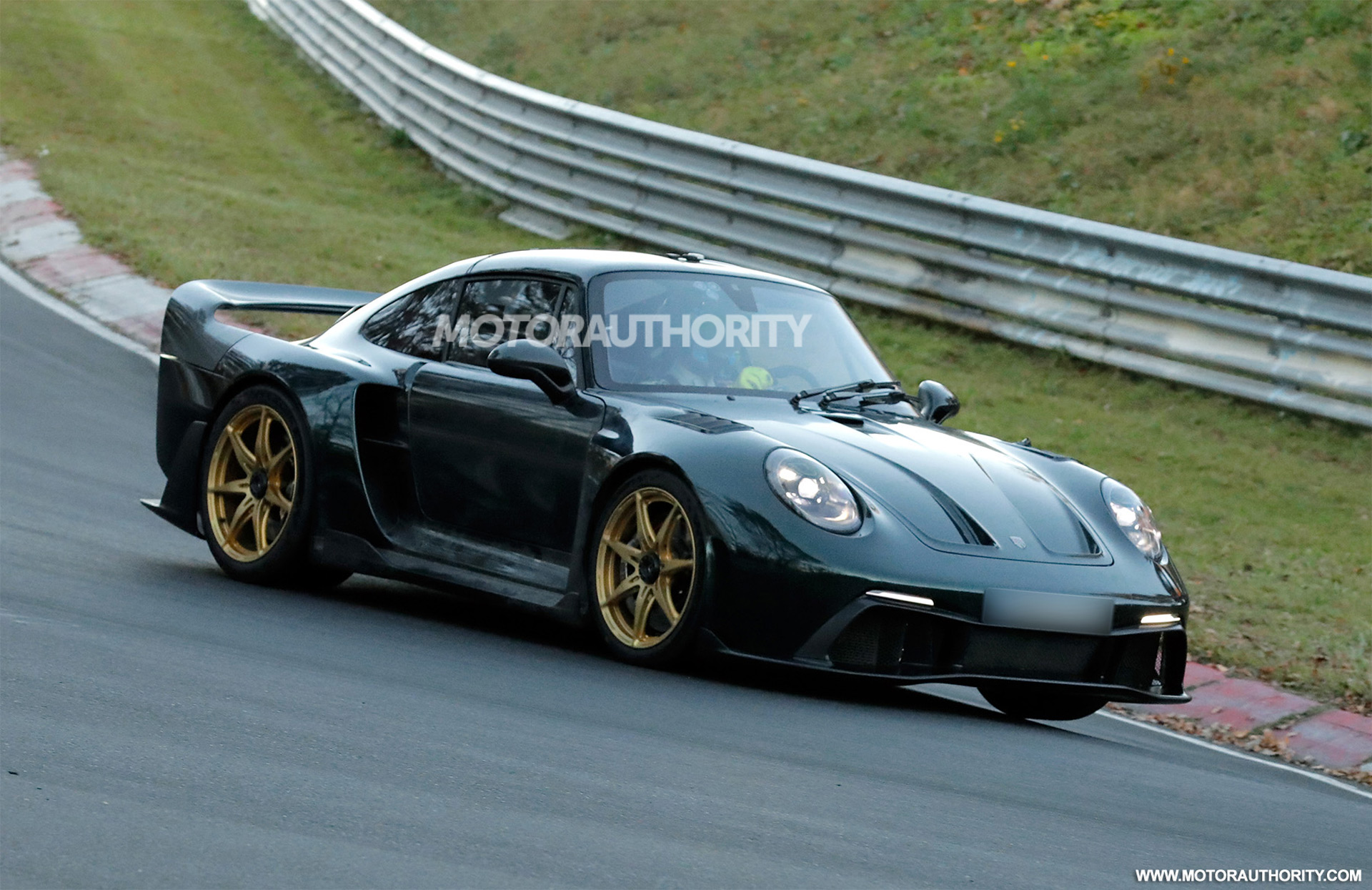
Fresh from its debut in August during 2024 Monterey Car Week, the Kalmar 9X9 supercar has been spotted testing at Germany’s Nürburgring racetrack ahead of a planned start of deliveries in mid-2025.
Kalmar Automotive is a Danish company that specializes in restomodding Porsche 911s, particularly the 993 generation. The new 9X9 serves as a flagship of the brand, once again using the 993 as the basis but with influences coming from the iconic Porsche 959.
Kalmar 9X9
Kalmar is developing three separate versions of the 9X9—standard, Sport, and Leichtbau—but it isn’t clear what version is being tested here. The car in our spy shots appears to be the same car shown in Monterey, but it isn’t a customer example. Our spy shots reveal that the many makeshift elements are still fitted to the car, especially in the cabin.
The standard 9X9 is both the most comfortable and the most powerful. It’s designed for grand touring and comes with a turbocharged 3.8-liter flat-6 delivering 930 hp. It also comes with a dual-clutch automatic transmission and all-wheel-drive.
Kalmar 9X9
The Sport is designed to deliver a more focused experience, and features a turbocharged 3.0-liter flat-6 tuned to deliver 650 hp. This version also has all-wheel drive but skips the dual-clutch automatic in favor of a 7-speed manual transmission. The Sport is lighter than the standard 9X9, and its suspension is tuned more for carving up a track than for grand touring.
The Leichtbau, German for “lightweight construction,” is the option for purists. It keeps things simple with a naturally aspirated 4.0-liter flat-6 rated at 530 hp, plus a 6-speed manual, and rear-wheel drive. It even skips an airbag in its quest to save weight. This particular version weighs just 2,810 pounds, whereas the Sport weighs 2,866 pounds and the standard model about 3,030 pounds.
Kalmar 9X9
Despite being the heaviest, the standard 9X9 offers the quickest acceleration, requiring only about two seconds to sprint to 60 mph from rest, according to Kalmar. The Sport and Leichtbau will achieve the same feat in 3.7 and 3.5 seconds, respectively. The top speed for all three versions is governed at 211 mph, and Kalmar said simulations show a Nürburgring lap time of less than seven minutes is possible.
Each 9X9 starts off as a 993-generation 911. The cars get stripped down and given a roll cage (in this case hidden), plus various chassis modifications including bespoke suspension developed by Italy’s Danisi Engineering. The brakes are also a custom setup developed by CarboBrake, and include titanium calipers built using 3D printing.
Kalmar 9X9
Only nine examples of the 9X9 are destined to be built. That isn’t a big run but Kalmar only builds a handful of cars each year, and since each is made to a customer’s individual specifications, each Kalmar is a true one-off design.
Kalmar in the U.S. is represented by Canepa, former racing driver Bruce Canepa’s company that specializes in the sale, restoration, and customization of the Porsche 959, among other cars.
Last year, Lucid unveiled the Gravity SUV as a direct challenger to Tesla’s Model X. Recently, the automaker announced pricing and specifications for what it claims to be the world’s most advanced SUV, featuring high performance, long range, and fast charging capabilities.
This seven-seater electric SUV will be available in two trims: the Grand Touring and the Touring. The Grand Touring model, starting at $94,900, will be the first to hit the market, with production beginning in a few weeks before the end of the year. The more affordable Touring trim will start at $79,900, but production for this model won’t start until the end of 2025.
Lucid Motors also confirmed that the Gravity will offer over 800 horsepower and up to 440 miles of range, depending on the trim. With this power, the Gravity can accelerate from 0 to 60 mph in just 3.5 seconds.
Orders for the Lucid Gravity open on November 7, with existing Lucid customers receiving priority. The company also announced that buyers are free to configure their Gravity according to their preferences directly through Lucid’s official website.
Until recently it was basically unheard of that an electric version of a new model would actually be released before the internal-combustion version… but here we are!
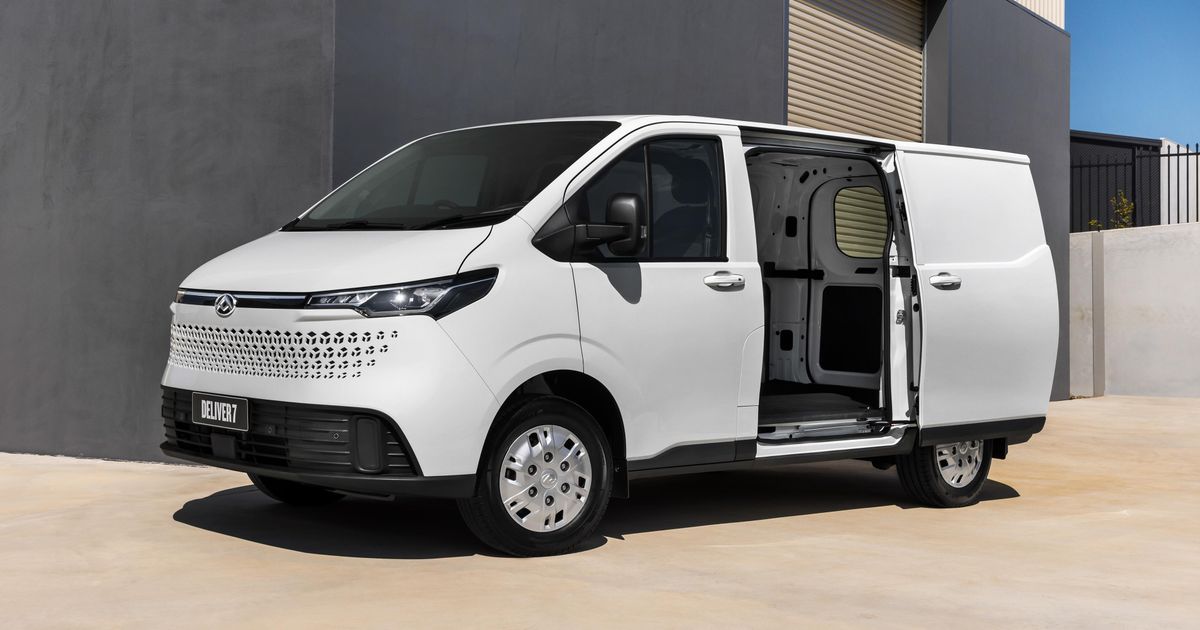
This is the 2025 LDV Deliver 7 – yes, note the lack of an ‘e’ prefix there, because it’s powered by a diesel engine.
That’s right, one of Australia’s most competitively priced battery-electric commercial vehicles has been joined by an even more compellingly-priced diesel version. For the money, it does a lot right.
Read on to learn more.
How does the LDV eDeliver 7 compare?
View a detailed breakdown of the LDV eDeliver 7 against similarly sized vehicles.
LDV
eDeliver 7
How much does the LDV Deliver 7 cost?
The new diesel-powered Deliver 7 is a fair whack cheaper than the fully-electric eDeliver 7, but it also comes with fewer options than the EV lineup.
Model
Drive-away pricing – Private
Drive-away pricing – ABN holders
2025 LDV Deliver 7 SWB
$44,726
$42,490
2025 LDV Deliver 7 LWB
$46,832
$44,490
LDV is offering this diesel model as a more upmarket, roomy, and more powerful alternative to the ancient LDV G10+, which continues on sale for now.
To see how the LDV Deliver 7 lines up against the competition, check out our comparison tool
What is the LDV Deliver 7 like on the inside?
Before we get into the interior stuff, let’s consider the dimensions we’re playing with when it comes to the LDV Deliver 7 lineup.
Dimensions
LDV Deliver 7 SWB
LDV Deliver 7 LWB
Length
4998mm
5364mm
Width
2323mm
2323mm
Height
1998mm
1998mm
Wheelbase
3000mm
3366mm
Cargo area length
2547mm
2913mm
Cargo area height
1328mm
1328mm
Cargo area width
1800mm
1800mm
Width between arches
1390mm
1390mm
Side door opening width
990mm
990mm
Side door opening height
1200mm
1200mm
Rear doors width
1425mm
1425mm
Rear doors height
1242mm
1242mm
Total volume
6.3m3
7.2m3
Ground clearance
147mm – laden
147mm – laden
Both versions have a single sliding side door on the kerb side and barn doors at the rear, signalling the intent of this work-ready van.
There’s an option pack to add a second sliding door on the driver’s side, but it’s great you don’t have to think about adding extra money to avoid a tailgate, as other brands ask you to pay for barn doors.
It is worth pointing out that there’s a smidge more cargo area height on offer in the back of the diesel compared with the EV version, as the latter has a higher floor height due to its battery packaging.
As a result, there’s great cargo volume here. Plus there’s a bit more space available between the front seats, as it comes as a two-seater in diesel spec, and a three-seater with a two-pax bench as an EV.
The cargo zone features a very smelly rubber floor lining – seriously, I hope it gets better with age, because the test vehicle I drove forced me to drive with the windows down!
There are six tie-down points (eight for the LWB), as well as bright LED lighting for those who have to get the job done in the dark.
It’s admirable that LDV offers barn doors as standard, and it’s great that they are designed to open from 90 to 180 degrees – but just be aware that they may swing back at you if you’re on an angle, as the fully-open position doesn’t feature a lock.
But it’s a proper panel van, and while there is reasonable visibility from the driver’s seat via the upright door mirrors, the rear-view mirror is hard to see much out of due to the barn doors eating up a lot of the rearward view.
eDeliver 7
There’s no option for side door(s) with glazing, either, and buyers will have to be okay with those barn doors, too, as there’s no choice to have a tailgate if you’d prefer. However, unlike the EV model at launch, you can option it with a driver’s-side sliding door as part of a pack.
Another consideration for delivery drivers is the lack of a bulkhead or cargo cage, and that could be something you need to add to the accessory list. Oddly, UK models have the choice of a proper bulkhead with glass, but that’s not offered here in Australia.
As we mentioned in our earlier review of the eDeliver 7, the sheetmetal feels very thin – even just attaching a GoPro, I felt I may dent the door. I guess it’s gotta be cheaper somehow, right? So long as the structure is strong, it should be fine for occupant safety, too – more on that below.
Now for the cockpit. It’s basically identical to the eDeliver 7, though there is now a digital speedometer readout in the driver info display. Oh, and the fact it comes with two seats rather than three may determine its suitability for you.
The driver’s seat offers adjustment for height and base-tilt, plus there’s an armrest, too.
Storage compartments include tiered sections in the front doors with bottle holders down low, but there are big cup/bottle holders at the edges of the dash-top, too.
A number of open storage compartments, a decent glove box, and even an ashtray mean there are places to stow loose items – but there is no overhead folder holder, and no flip-down desk-style area like you find in some other segment players.
The 12.3-inch touchscreen media system is bright, crisp, and has nice graphics and a pretty quick processor for jumping between menus – and you’ll get used to the screen pretty quick, I’d say.
If you’re like me and just want to get in and have your phone connect up instantly, you’ll have to plug in to the USB-A port to do that.
There’s a USB-C charge port, and another USB-A charger near the driver’s right knee that might be useful to run a dashcam cable from, as it doesn’t have a charge option up near the mirror housing like in some other models.
There’s no wireless phone charging pad either, so beware if you run a couple of devices at all times. The gear selector is where the indicator stalk might usually be found, and the electronic park brake is up near the drive-mode selector and the DPF burn-off switch.
For the most part, the ergonomics and comfort are reasonably good. It certainly feels more polished than the G10+.
To see how the LDV Deliver 7 lines up against the competition, check out our comparison tool
What’s under the bonnet?
The Deliver 7 model range is offered with a 2.0-litre four-cylinder turbo-diesel, with 123kW of power and 390Nm of torque.
It comes exclusively with a nine-speed automatic gearbox from transmission specialist ZF, and it’s front-wheel drive… or a bum-dragger, as some say.
Officially, the LDV Deliver 7 has a fuel consumption rating of 7.7 litres per 100km. It has a fuel tank capacity of 80 litres, but only meets the Euro 5 emissions standard, emitting a claimed 203g/km of CO2. That means no AdBlue to consider, but it does have a diesel particulate filter (DPF) system.
On test I saw a displayed return of 8.4L/100km across a mix of urban, highway and open road driving, with and without a load.
The pulling-power output of this Deliver 7 outdoes the EV model (150kW/330Nm), and the diesel unit is a lot lighter, too.
Specifications
LDV Deliver 7 SWB
LDV Deliver 7 LWB
Kerb weight
2105kg
2170kg
Gross vehicle mass (GVM)
3400kg
3400kg
Payload
1295kg
1230kg
Gross combination mass (GCM)
5200kg
5200kg
Towing capacity – unbraked
750kg
750kg
Towing capacity – braked
2000kg
2000kg
To see how the LDV Deliver 7 lines up against the competition, check out our comparison tool
How does the LDV Deliver 7 drive?
Is it as good to drive as a Toyota HiAce, Volkswagen Transporter or Ford Transit Custom? No. It’s not.
But is it bad? Not at all. In fact, it’s perfectly adequate and acceptable for the van segment, and considering where the market is right now, it seems a pretty decent drive for the dosh.
The diesel engine is a torquey and responsive thing, with a good amount of shove on offer from a standstill, and as speeds rise. It’s not a super fast thing when you get on the throttle to overtake at highway pace, but it gets along well enough.
The nine-speed ZF auto is fine in most instances, settling into the drudgery of daily driving without too much hassle. It’s just when you’re in on-off throttle situations you might find it can get a little confused as to what should happen next.
Again, it’s not a deal-breaker, but if you know you’re going to spend lots of time in traffic jams, test drive it in one before you buy.
Many of these sorts of vans drive better than you’d expect, and the Deliver 7 is an acceptable offering in terms of the driving manners – for the most part.
The steering is accurate and easy to get to terms with, but just be mindful of the turning circle. It’s 12.1m in the SWB and 13.4m in the LWB, so you might need to do a five-point turn where a three-pointer may have otherwise done the job.
The ride is not too rough or harsh either, even completely unladen. Weight over the rear axle will settle things down notably, but just be mindful if you’re running without ballast in the back it can feel a little bouncy when you hit a bump and you’re riding the brakes.
Otherwise, the big annoyance when it comes to this van’s drive experience is the overzealous safety technology. For instance, the Deliver 7 seems to think that if it doesn’t know what the speed limit is, the speed sign must be a 5km/h one. So, as I found, it will beep to tell you you’re doing 50km/h in a 50km/h zone, because it thinks it’s a 5km/h zone.
There’s a way to silence that ‘overspeed’ warning with each restart, and it will chime incessantly about speed limit changes if you don’t turn that off each time, too.
Likewise, the lane-keeping system is a touch too pushy for my liking, and the driver monitoring camera system might be handy if you’re being dangerously inattentive, but it can also alert you to pay attention, even when you’re just trying to check your surroundings.
These are all similar criticisms to the eDeliver 7, which I found equally annoying. But there are some quick ways to disable most of those functions, as the screen has some configurable shortcut controls that can be ‘pulled down’ on the display.
To see how the LDV Deliver 7 lines up against the competition, check out our comparison tool
What do you get?
There’s just one spec level for the two body variants.
Deliver 7 highlights:
16-inch steel wheels
Auto LED headlights
LED daytime running lights
LED tail lights
Rear fog lights
Heated mirrors
Rear barn doors
Heated rear window
Passenger-side sliding doors
LED rear cargo lighting
Rubber interior flooring
Leatherette-wrapped steering wheel
Cloth upholstery
4.2-inch digital display within analog instrument cluster
12.3-inch infotainment touchscreen
Apple CarPlay and Android Auto
Four-speaker sound system
1 x 12V outlet
2 x USB outlets
4 x cupholders
Rain-sensing wipers
Keyless entry, proximity start
Electronic parking brake
Options
LDV offers the Deliver 7 with a singular option pack, pricing for which is yet to be confirmed.
Key inclusions:
16-inch alloy wheels
Dual sliding doors
Surround-view camera
Is the LDV Deliver 7 safe?
The LDV eDeliver 7 shares all of its safety tech with this diesel version, and that model achieved the Gold rating in ANCAP’s commercial vehicle testing regime, which puts the ADAS systems to the test for crash avoidance.
Standard safety features include:
Autonomous emergency braking (AEB)
Forward collision warning
Adaptive cruise control incl. stop/go
Emergency lane keep assist
Lane keep assist
Blind-spot monitoring
Rear cross-traffic alert
Reversing camera
Parking sensors front, rear
Driver fatigue-monitoring camera
Speed sign recognition and warning
Some of the tech isn’t enjoyable, but the safeguard is there for drivers and operators to ensure they have compliance if needed.
The standard model comes with a reversing camera, but if you option the premium pack you get a 360-degree camera system. The Deliver 7 also has six airbags – dual front, front side and front curtains.
How much does the LDV Deliver 7 cost to run?
LDV offers a seven-year/200,000-kilometre warranty for the Deliver 7 van.
There is also a five-year/unlimited-kilometre roadside assistance plan included, which should add some peace of mind.
The first service due at 5000km, but every maintenance visit is then due at 12-month or 20,000km intervals. There’s no capped-price servicing plan, however.
To see how the LDV Deliver 7 lines up against the competition, check out our comparison tool
CarExpert’s Take on the LDV Deliver 7
If you want a diesel-powered commercial van and don’t want to spend $50,000 or more, the LDV Deliver 7 could be a good option for you.
There are things that could be better, but for a fleet buyer it makes a strong case. And for business operators it will tick a lot of boxes, and move a lot of boxes too!
Interested in buying a LDV Deliver 7? Get in touch with one of CarExpert’s trusted dealers here
Ford is now shipping a new North American Charging Standard (NACS) adapter to customers to help provide access to Tesla Supercharger stations more quickly.
First reported by InsideEVs, the new NACS adapter comes from Lectron, and will be distributed alongside the existing design from Tesla. They have the same specifications as the Tesla-provided adapters, with ratings of 500 amps and 1,000 volts, InsideEVs reports. But they have a slightly different appearance.
Ford Mustang Mach-E at Tesla Supercharger station
The new adapters aren’t replacements for the original design, which Ford began shipping to customers in March, but rather an “incremental” addition to get adapters to customers as quickly as possible, the automaker confirmed to Green Car Reports. The Lectron adapters began shipping Oct. 31, and customers in line for an adapter may get either one of those or one of the previous design.
Ford offered one free adapter per vehicle to all new and existing EV customers who enrolled in its charging aggregator by Jun. 30 of this year. Adapters are otherwise priced at $230, and Ford has set up a different process for fleet customers through its Ford Pro division. Those terms remain in place.
Ford EVs at Tesla Supercharger
The new adapter is also unrelated to a replacement program being undertaken by Ford after the automaker discovered a problem with a specific batch of the Tesla-sourced adapters that could result in reduce charging speeds, or potentially even damage to a vehicle’s charge port. The automaker has told certain customers to stop using affected adapters pending shipment of replacements, which was scheduled to start this week.
Ford led the industry last year in announcing a shift to the Tesla charge port, with nearly every other major U.S.-market automaker following suit. So far, though, only General Motors and Rivian have also begun shipping adapters to customers, with Volvo and Polestar announcing plans to do so earlier this week.
Ford will pause production of its F-150 Lightning electric pickup truck from Nov. 18 to Jan. 6, reports Reuters.
“We continue to adjust production for an optimal mix of sales growth and profitability,” the automaker said in a statement to Reuters regarding the six-week production pause, which overlaps with a week in December when all Ford factories are closed for the holidays.
2022 Ford F-150 Lightning pre-production
Ford said this month that U.S. EV sales for its namesake brand were up 45% this year, and that Lightning sales had more than doubled to 7,100 trucks in the three months ending Sept. 30, Reuters noted, adding that this means the Lightning makes up a tiny 3.6% of total F-150 sales.
The production pause comes after Ford in April cut production to just one shift. The automaker also slowed production in 2023 rather than further lowering prices as demand for pricier Lightning variants dried up. Ford initially promised that the Lightning would cost around $40,000 but, even with a few price cuts, prices remained much higher than that throughout 2023.
2022 Ford F-150 Lightning pre-production
Prices continued to fluctuate into 2024, with Ford cutting the sticker price of certain versions by up to $5,500 this past April—the same month as the most recent production cut. Those changes only affected models in the middle of the lineup, with prices for both the base F-150 Lightning Pro Standard Range and the range-topping Platinum Extended Range unchanged.
Ford has been resetting its EV plans. In August, the automaker said it was nixing a three-row electric SUV, adding an electric midsize pickup, and pushing back the launch of the Lightning’s replacement from 2025 to 2027. More hybrids are also part of this plan, particularly in bigger segments where battery costs could make all-electric models less profitable.
The Zeekr X, which was only launched in China last year, has already been given a substantial price cut as the price war in the Middle Kingdom continues to mount.
The compact electric SUV, equipped with a 66 kWh nickel manganese cobalt (NMC) battery, now retails at 165,000 yuan (RM101,400) for the single-motor version and 179,000 yuan (RM110,000) with all-wheel drive – down from the previous prices of 200,000 yuan (RM122,900) and 220,000 yuan (RM135,200) respectively.
New for the 2025 model year is an entry-level rear-wheel drive model with a 49 kWh lithium iron phosphate battery, which Car News China reports was introduced in response to slow sales. This drops the starting price by 25.5% to 149,000 yuan (RM91,500), with a 15,000 yuan (RM9,200) government subsidy slashing this figure further to 134,900 yuan (RM82,800).
The base 49 kWh model has a range of 420 km on the CLTC cycle, down from 560 km for the RWD 66 kWh version and 512 km with AWD. For reference, the smart #1 Pro with the same battery and 272 PS (200 kW) motor has a more realistic WLTP range of 315 km, compared to the 440 km achieved by the 66 kWh Premium (and the equivalent Zeekr X, incidentally).
Beyond that, the 49 kWh version’s performance figures remain identical to the 66 kWh’s, including peak torque of 343 Nm and a zero-to-100 km/h acceleration time of 5.8 seconds. Meanwhile, the AWD model pushes out 428 PS (315 kW) and 543 Nm, enabling the car to complete the century sprint in 3.7 seconds.
Aside from the smaller battery option, the tweaks introduced for MY2025 are minor and include a new Oslo Black hue and a new 18-inch alloy wheel option with a pentagonal design, the latter already offered in other markets. The rest of the car, including its funky design, minimalist interior, large 14.6-inch infotainment touchscreen (which can be slid over to the passenger’s side as an option), 13-speaker Yamaha sound system and available four-seat layout, is unchanged.
The Zeekr X is set to be launched in Malaysia soon, with the order books having already been open since early last month. Both 66 kWh RWD and AWD options are set to be offered here, estimated to be priced below the RM180,000. Would you like to see the cheaper 49 kWh model come to our shores? Sound off in the comments after the jump.
Lewis Hamilton’s first co-designed capsule collection for Dior Men isn’t just a mere slap of his name. (ALFREDO PIOLA)
When Lewis Hamilton was announced as Dior’s brand ambassador in July this year, it probably came as a shock to no one. The multiple Formula 1 record holder—the man has the most career wins and world championship titles to date—isn’t just a blur on the racetrack, he’s quite the snazzy dresser off of it. Specifically, Hamilton had been spotted wearing Dior Men on multiple occasions while making the F1 Grand Prix circuit this season.
Brand ambassadorships are a well-established concept that works. But at the rate persons of note are being conferred the title, it’s nigh impossible to keep track of who’s affiliated to which brand. What is rare, however, is a brand ambassador who is more than just a physical embodiment of what a brand represents.
(ALFREDO PIOLA)
Hamilton seems to have a knack for taking his involvement with fashion brands a step further than the norm. With Tommy Hilfiger, Hamilton co-created four TommyXLewis capsule collections from 2018 to 2020, imbuing his own personal sense of style to that of the American brand. And now at Dior Men, he’s charging ahead with a capsule collection designed together with artistic director Kim Jones.
(ALFREDO PIOLA)
“Working with Kim and the talented team at Dior has been a dream, and I was honoured when Kim asked if I’d like to do this with him. Our values and ideas are aligned, making it easy to bring to life a creative collection infused with our shared experiences,” Hamilton expresses.
The new Dior Men Lifestyle Capsule collection is not F1 , or even racing-related, because that would be far too predictable and Hamilton is a multi-faceted individual. Instead, the collection revolves around skiing and snowboarding as a personal celebration of Hamilton’s love for an outdoor-centric winter lifestyle. He’s an adrenaline junkie and has a love for extreme sports aside from motorsports.
“We share a love of nature, a desire to celebrate Africa and an interest in the artisanal processes and techniques that unite craftspeople in Africa with the savoir-faire of the Dior ateliers. Added to that, this collection also reflects Lewis’ sporting side, his virtuosity and our functionality,” says Jones.
African-inspired touches come in the form of motif as well as the use of colours. (ALFREDO PIOLA)
In many ways, the Lifestyle Capsule collection is a global effort. African-inspired motifs are incorporated within the collection (Jones grew up in African countries in his early years), adding vibrancy to technical functionalities. African weaves made in Burkina Faso, for example, have been crafted into casual suiting by the Dior ateliers, and custom snowboards by Switzerland-based Factory 9 feature Dior branding set against graphic African-inspired motifs. The collection’s technical skiwear by Japanese sportswear brand Descente too are made to withstand the harsh cold conditions on the slopes. The expertise rendered by these different “global ateliers” all ensure that not only do the pieces look exceptional and on par with Dior’s craftsmanship, but that they also function on the same level.
African-inspired touches come in the form of motif as well as the use of colours. (ALFREDO PIOLA)
Hamilton has taken it a step further by pushing the boundaries of the Dior ateliers in ensuring that sustainability isn’t an afterthought to the creation of the collection. Having been on a plant-based diet since 2017, Hamilton insisted that no animal leather is to be used for any of the pieces in the Lifestyle Capsule collection. He’s pushed for more conscious choices in terms of materiality. The collection’s ready-to-wear such as slouchy denims, knitwear, and fleeces are made partly using organic or recycled textiles. A micro-fibre snow shoe, the Dior Snow derby, has been designed to serve as a casual pair of footwear while simultaneously being capable of performing on the slopes over a snowboard—a cleverly designed versatile pair.
These new touches serve to enhance the collection while retaining the essence of a Kim Jones Dior Men collection. The B44 Blade sneaker is a new addition to Jones’ expanding sneaker offerings for Dior Men. Conceptualised with a decidedly 2000s silhouette in mind, it’s undoubtedly sporty in its allure and rendered in tasteful gradations of colours. It’s too early to say if the design will become a mainstay for Dior Men but it definitely fits in with the existing Dior Men universe.
(ALFREDO PIOLA)
In an interview with WWD, Jones hints that there will be more to come. “This is almost like a taste, and then we get into bigger collections,” he said of the partnership with Hamilton. And to that, we’ll just have to wait and see what comes next, because this collection, in essence, is quite a game-changer for a house like Dior.
This article was first seen on Esquire.Sg
For more on the latest in luxury fashion and style reads, click here.
The road transport department (JPJ) has issued a statement for its special operation that will be focused on motorcyclists, and this will be held over a two-month duration from today, November 1 until December 31, 2024.
Named Operasi Khas Motosikal Tahun 2024, this will be held nationwide with a focus on motorcyclists and motorcycle owners for compliance to road rules under Act 333 of the Road Transport Act 1987 and its sections.
The implementation of Operasi Khas Motosikal Tahun 2024 follows the upwards trend in monthly fatal road crash statistics recorded by the Royal Malaysia Police (PDRM), particularly those involving motorcyclists, has risen by 1,908, or 80%, according to the JPJ.
“The target is to reduce the number of deaths and injuries due to road accidents using a focused enforcement strategy to monitor, detect and take action against riders or motorcycle owners who fail to comply with stipulated regulations,” JPJ director-general Datuk Aedy Fadly Ramli said in the statement.
For the purpose of achieving the overall objective of this operation that is to minimise the accident rate and death toll in the third and fourth quarters of this year, the JPJ will be focusing on eight key offences:
Operating a motor vehicle without a valid license
Operating a motor vehicle without road tax
No insurance cover
Running red lights
Extreme modifications of vehicle
Riding motorcycle without wearing a helmet
Illegal racing
Other technical offences
The JPJ also advised road users, especially motorcycle riders and pillion riders, to obey the law and road traffic rules, and to be tolerant of other road users.
The technical storage or access is strictly necessary for the legitimate purpose of enabling the use of a specific service explicitly requested by the subscriber or user, or for the sole purpose of carrying out the transmission of a communication over an electronic communications network.
Preferences
The technical storage or access is necessary for the legitimate purpose of storing preferences that are not requested by the subscriber or user.
Statistics
The technical storage or access that is used exclusively for statistical purposes.The technical storage or access that is used exclusively for anonymous statistical purposes. Without a subpoena, voluntary compliance on the part of your Internet Service Provider, or additional records from a third party, information stored or retrieved for this purpose alone cannot usually be used to identify you.
Marketing
The technical storage or access is required to create user profiles to send advertising, or to track the user on a website or across several websites for similar marketing purposes.