Home Blog Page 389

Sustainable Manufacturing and Design: How Digital Twins Are Driving Efficiency and Cutting Emissions

0


Improving the sustainability of manufacturing involves optimizing entire product lifecycles — from material sourcing and transportation to design, production, distribution and end-of-life disposal.

According to the International Energy Agency, reducing the carbon footprint of industrial production by just 1% could save 90 million tons of CO₂ emissions annually. That’s equivalent to taking more than 20 million gasoline-powered cars off the road each year.

Technologies such as digital twins and accelerated computing are enabling manufacturers to reduce emissions, enhance energy efficiency and meet the growing demand for environmentally conscious production.

Siemens and NVIDIA are at the forefront of developing technologies that help customers achieve their sustainability goals and improve production processes.

Key Challenges in Sustainable Manufacturing

Balancing sustainability with business objectives like profitability remains a top concern for manufacturers. A study by Ernst & Young in 2022 found that digital twins can reduce construction costs by up to 35%, underscoring the close link between resource consumption and construction expenses.

Yet, one of the biggest challenges in driving sustainable manufacturing and reducing overhead is the presence of silos between departments, different plants within the same organization and across production teams. These silos arise from a variety of issues, including conflicting priorities and incentives, a lack of common energy-efficiency metrics and language, and the need for new skills and solutions to bridge these gaps.

Data management also presents a hurdle, with many manufacturers struggling to turn vast amounts of data into actionable insights — particularly those that can impact sustainability goals.

According to a case study by The Manufacturer, a quarter of respondents surveyed acknowledged that their data shortcomings negatively impact energy efficiency and environmental sustainability, with nearly a third reporting that data is siloed to local use cases.

Addressing these challenges requires innovative approaches that break down barriers and use data to drive sustainability. Acting as a central hub for information, digital twin technology is proving to be an essential tool in this effort.

The Role of Digital Twins in Sustainable Manufacturing

Industrial-scale digital twins built on the NVIDIA Omniverse development platform and Universal Scene Description (OpenUSD) are transforming how manufacturers approach sustainability and scalability.

These technologies power digital twins that take engineering data from various sources and contextualize it as it would appear in the real world. This breaks down information silos and offers a holistic view that can be shared across teams — from engineering to sales and marketing.

This enhanced visibility enables engineers and designers to simulate and optimize product designs, facility layouts, energy use and manufacturing processes before physical production begins. That allows for deeper insights and collaboration by helping stakeholders make more informed decisions to improve efficiency and reduce costly errors and last-minute changes that can result in significant waste.

To further transform how products and experiences are designed and manufactured, Siemens is integrating NVIDIA Omniverse Cloud application programming interfaces into its Siemens Xcelerator platform, starting with Teamcenter X, its cloud-based product lifecycle management software.

These integrations enable Siemens to bring the power of photorealistic visualization to complex engineering data and workflows, allowing companies to create physics-based digital twins that help eliminate workflow waste and errors.

Siemens and NVIDIA have demonstrated how companies like HD Hyundai, a leader in sustainable ship manufacturing, are using these new capabilities to visualize and interact with complex engineering data at new levels of scale and fidelity.

HD Hyundai is unifying and visualizing complex engineering projects directly within Teamcenter X.

Physics-based digital twins are also being utilized to test and validate robotics and physical AI before they’re deployed into real-world manufacturing facilities.

Foxconn, the world’s largest electronics manufacturer, has introduced a virtual plant that pushes the boundaries of industrial automation. Foxconn’s digital twin platform, built on Omniverse and NVIDIA Isaac, replicates a new factory in the Guadalajara, Mexico, electronics hub to allow engineers to optimize processes and train robots for efficient production of NVIDIA Blackwell systems.

By simulating the factory environment, engineers can determine the best placement for heavy robotic arms, optimize movement and maximize safe operations while strategically positioning thousands of sensors and video cameras to monitor the entire production process.
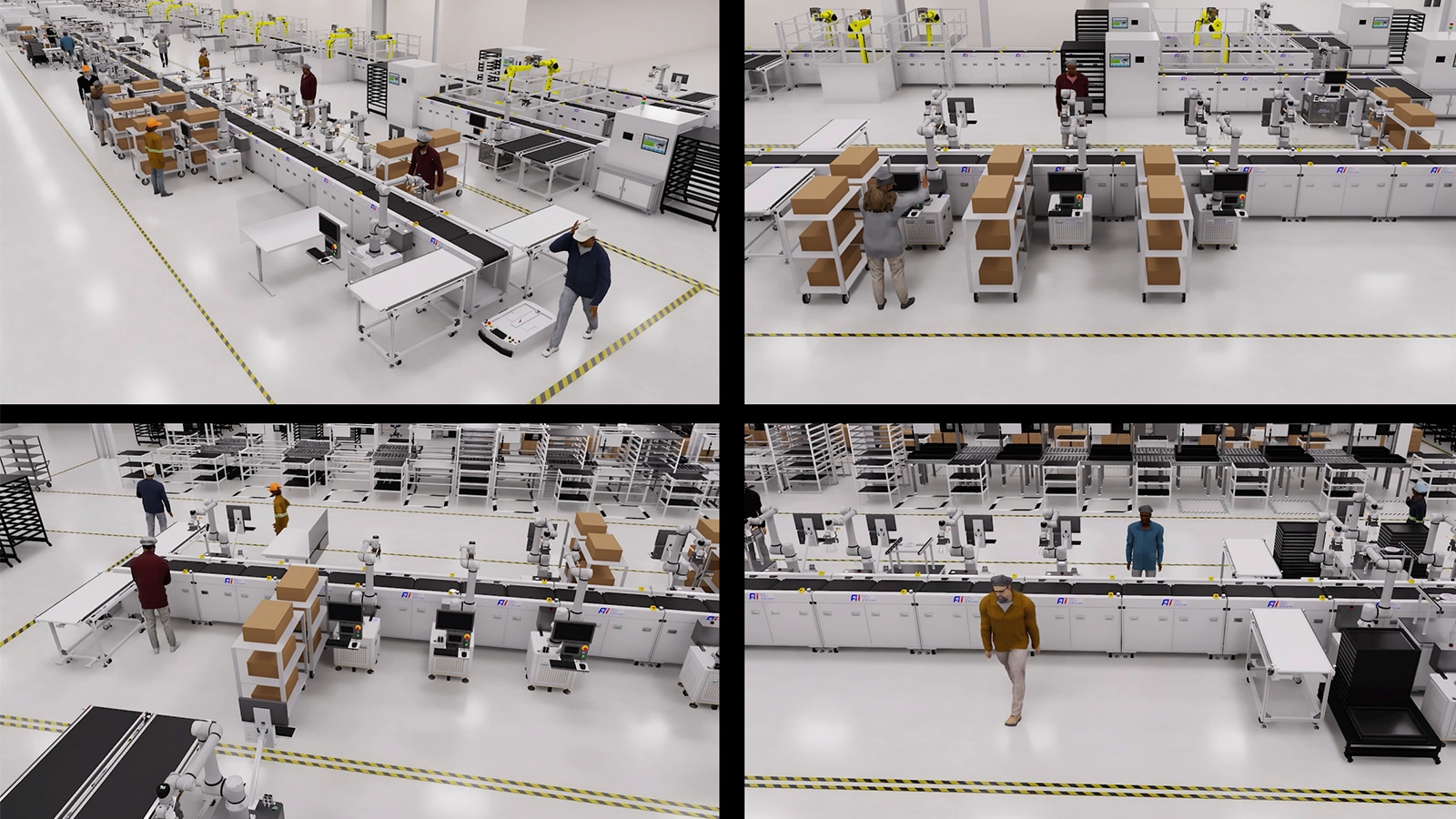
Foxconn’s virtual factory uses a digital twin powered by the NVIDIA Omniverse and NVIDIA Isaac platforms to produce NVIDIA Blackwell systems.

The use of digital twins, like those in Foxconn’s virtual factory, is becoming increasingly common in industrial settings for simulation and testing.

Foxconn’s chairman, Young Liu, highlighted how the digital twin will lead to enhanced automation and efficiency, resulting in significant savings in time, cost and energy. The company expects to increase manufacturing efficiency while reducing energy consumption by over 30% annually.

By connecting data from Siemens Xcelerator software to its platform built on NVIDIA Omniverse and OpenUSD, the virtual plant allows Foxconn to design and train robots in a realistic, simulated environment, revolutionizing its approach to automation and sustainable manufacturing.

Making Every Watt Count

One consideration for industries everywhere is how the rising demand for AI is outpacing the adoption of renewable energy. This means business leaders, particularly manufacturing plant and data center operators, must maximize energy efficiency and ensure every watt is utilized effectively to balance decarbonization efforts alongside AI growth.

The best and simplest means of optimizing energy use is to accelerate every possible workload.

Using accelerated computing platforms that integrate both GPUs and CPUs, manufacturers can significantly enhance computational efficiency.

GPUs, specifically designed for handling complex calculations, can outperform traditional CPU-only systems in AI tasks. These systems can be up to 20x more energy efficient when it comes to AI inference and training.

This leap in efficiency has fueled substantial gains over the past decade, enabling AI to address more complex challenges while maintaining energy-efficient operations.

Building on these advances, businesses can further reduce their environmental impact by adopting key energy management strategies. These include implementing energy demand management and efficiency measures, scaling battery storage for short-duration power outages, securing renewable energy sources for baseload electricity, using renewable fuels for backup generation and exploring innovative ideas like heat reuse.


Join the Siemens and NVIDIA session at the 7X24 Exchange 2024 Fall Conference to discover how digital twins and AI are driving sustainable solutions across data centers.


The Future of Sustainable Manufacturing: Industrial Digitalization

The next frontier in manufacturing is the convergence of the digital and physical worlds in what is known as industrial digitalization, or the “industrial metaverse.” Here, digital twins become even more immersive and interactive, allowing manufacturers to make data-driven decisions faster than ever.

“We will revolutionize how products and experiences are designed, manufactured and serviced,” said Roland Busch, president and CEO of Siemens AG. “On the path to the industrial metaverse, this next generation of industrial software enables customers to experience products as they would in the real world: in context, in stunning realism and — in the future — interact with them through natural language input.”

Leading the Way With Digital Twins and Sustainable Computing

Siemens and NVIDIA’s collaboration showcases the power of digital twins and accelerated computing for reducing the environmental impact caused by the manufacturing industry every year. By leveraging advanced simulations, AI insights and real-time data, manufacturers can reduce waste and increase energy efficiency on their path to decarbonization.

Learn more about how Siemens and NVIDIA are accelerating sustainable manufacturing.

Read about NVIDIA’s sustainable computing efforts and check out the energy-efficiency calculator to discover potential energy and emissions savings.



Source link

2025 Ford Explorer Platinum: Review, Prices, and Specs | The Daily Drive

0


Front 3/4, black
2025 Ford Explorer Platinum
Consumer Guide Automotive, New Car ReviewText by Tom Appel

2025 Ford Explorer Platinum 4WD

Specs

Class: Midsize Crossover

Color: Agate Black Metallic

Seating Capacity: 8

Miles driven: 151

Real-world fuel economy: 22.4 mpg

CG Report Card
Room and ComfortB+
Power and PerformanceB+
Fit and FinishA-
Fuel EconomyB+
ValueB
Report-card grades are derived from a consensus of test-driver evaluations. All grades are versus other vehicles in the same class. Value grade is for specific trim level evaluated, and may not reflect Consumer Guide’s impressions of the entire model lineup.
Big & Tall Comfort
Big GuyA
Tall GuyA
Big & Tall comfort ratings are for front seats only. “Big” rating based on male tester weighing approximately 350 pounds, “Tall” rating based on 6’6″-tall male tester.
Drivetrain
Engine Specs400-horsepower 3.0-liter
Engine TypeTurbocharged V6
Transmission10-speed automatic
Drive WheelsAWD

Driving mix: 60% city, 40% highway

EPA-estimated fuel economy: 18/25/21 (city, highway, combined)

Fuel type: Regular gas

Base price: $54,250 (not including $1595 destination charge)

Options on test vehicle: Ultimate Package ($4615)

Price as tested: $61,155


Pros and Cons

The great: Roomy, refined, plenty of power

The good: Upscale cabin, European-style ride and handling

The not so good: We weren’t ready for a $60,000 Explorer

Review

It’s hard not to empathize with the Ford Explorer. Now 34 years old, Ford’s midsize crossover not only bears the burden of legacy (the 1991 Explorer was arguably the nation’s first mainstream, family-friendly, right-size “SUV”), the popular 3-row Ford must now cover for the 2-row Edge, which was dropped from the Blue Oval lineup during the 2024 model year.

rear 3/4
2025 Ford Explorer Platinum

Having literally created the segment—some credit goes to the Toyota Highlander for first making use of a unibody car chassis—the Explorer now battles for customers in a class of some 25 vehicles, each of which has it merits.

Updates

But despite the competition, and new showroom responsibility, the Explorer seems ready for business, having recently hit the spa for a fairly significant makeover. The 2025 Explorer features updated trim, a new and larger infotainment touchscreen, as well as an updated center console. Interestingly, despite covering for the departed Edge, Ford has actually cut the number of trim levels offered for ’25.

Dashboard
2025 Ford Explorer Platinum

Also of interest, Ford has chosen to drop the hybrid powertrain from the 2025 Explorer engine bay, though it is still offered in police versions of the vehicle. Expect to see a more-efficient hybrid option when the Explorer is completely redesigned for the 2027 or 2028 model year.

Prices and Trim Levels

About those trim levels: For 2025 the Explorer is offered as the entry-level Active ($41,350), sporty ST-Line ($46,110), plush Platinum ($53,745), and high-performance ST ($55,755).

Explorer front seats
2025 Ford Explorer Platinum

Gone are the Base (replaced by the Active), XLT, Limited, Timberline, and King Ranch. The off-road themed Timberline is expected to be replaced at some point by a similar Tremor trim level. A Tremor package is already offered on the Ford F-150 large pickup, and we expect to see the package/trim level eventually expand throughout the Ford model portfolio.

Available on some trim levels are 2nd-row captains seats, which reduces total passenger capacity from seven to six.

Engines

Explorer 3rd-row seats
2025 Ford Explorer Platinum

Explorer power comes from either a 2.3-liter “EcoBoost” turbocharged 4-cylinder engine, or a turbocharged 3.0-liter V6 also dubbed EcoBoost. The smaller engine is rated at 300 horsepower, while the V6 boasts 400. Bother engines mate exclusively to a 10-speed automatic transmission. Bother engines are offered with rear-wheel drive or AWD.

Options

Consumer Guide recently spent time with an AWD 2025 Explorer Platinum in Agate Black and equipped with the Ultimate Package. The Ultimate Package brings with it the V6 engine, 21-inch “dark alloy” wheels, the Lux Leather Package, and Ford’s Blue Cruise semi-autonomous driving system. All told, our well-equipped Explorer came to $61,155 including destination charge.

Design

While we never found much to dislike about the Explorer stylewise, we like the new, bolder grille, and appreciate how the optional 21-inch wheels match the grille  and body trim. The updated Explorer looks just a little cleaner and sportier than the previous version did.

Connectivity

Inside, the Explorer still feels like a Ford crossover, though the larger touchscreen and reorganized controls help to simplify the landscape somewhat. This author was disappointed, however, by the lack of color on the touchscreen, finding the general black-and-white motif a little drab. That said, the system is well organized and simple to use, and the screen is easy to read even in bright light. The screen also responds immediately to touch inputs.

Cabin

Cargo Area
2025 Ford Explorer Platinum

The general ambience is upscale, and like so many upper-trim-level popular-brand crossover these days, the Explorer Platinum very much fills the role of luxury vehicle. The Lux Leather Package, included in the Ultimate Package brings with it such niceties as upgrade leather seating surfaces, quilted-look door inserts, and contrasting leather stitching, all to excellent effect. This is a classy crossover.

There’s also plenty of space—a hallmark of Explorer ownership. Even big guys will find plenty of space in the first and second seating rows, and large door openings help make entering and exiting the Explorer easy. The third row is generous enough, and even nimble high-school boys will be able to sneak in back with little difficultly. Adults may want to confine themselves to the front rows.

Power and Performance

We have complained in the past about uneven low-speed power delivery from the EcoBoost 3.0-liter engine. We are happy to report that the issue seems to have been resolved, as our test Explorer proved to be bother polished and powerful, with V6 delivery plenty of muscle, and the 10-speed automatic providing smooth and timely shifts. While we find the Explorer’s 4-cylinder engine more than sufficient for crossover duty, the potent V6 seriously ups the midsize Ford’s power game, making easy work of highway merging and passing; it also sounds good when pushed.

Ride and Handling

For years now, larger Ford products have always been among the best handling vehicles in their respective classes. This is true for the F-150 large pickup, the Expedition large SUV, and the Explorer. For 2025, the Explorer stays true to form, and serves up balanced and arguably sporty moves, while still delivering a firm, but very refined, ride. Long-trip comfort is excellent, thanks to excellent highway composure, comfortable seats, and a very quiet cabin. A nice surprise, too, and something that will make extended road trips even more pleasant was our observed fuel economy. Over 150 miles of mostly city driving, our test AWD Explorer with the optional V6 engine returned better than 22 mpg, impressive given this crossovers size and power. And, Ford recommends regular-grade fuel for the Explorer, regardless of engine.

Value

The tweaks for 2025 don’t fundamentally change the nature of the Ford Explorer, and that’s OK with us. Ford popular midsize crossover is as functional as ever, and, if ordered with the Platinum trim level, functions as a bargain luxury vehicle. If your budget doesn’t allow for such extravagance, we think you’ll find more a more affordable trim level, equipped with the responsive 4-cylinder engine, nearly as satisfying. So, happy 34th birthday, Ford Explorer. You grown up to be a fine crossover.

Profile
2025 Ford Explorer Platinum

Listen to the Car Stuff Podcast

Follow Tom on Twitter

2025 Ford Explorer Platinum Pictures

Click below for enlarged images

2024 Honda Passport TrailSport: Review, Prices, and Specs

Consumer Guide Car Stuff Podcast Episode 242: Pickup Truck Sales, Thoughts on the Tesla Robo Taxi, Chatting with EV Startup TELO


Source link

Three Ford GTs Up For Sale On Bring A Trailer

0


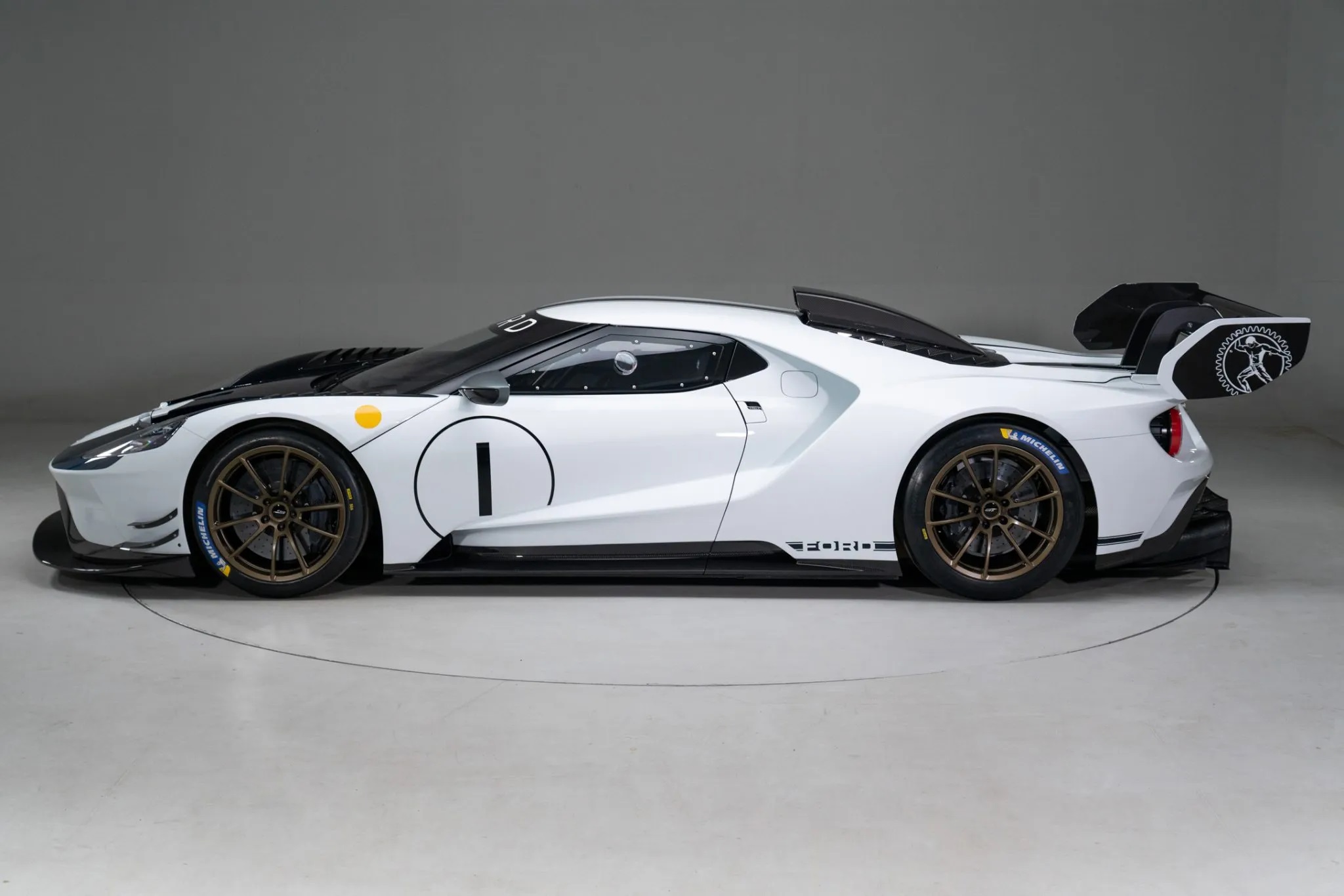
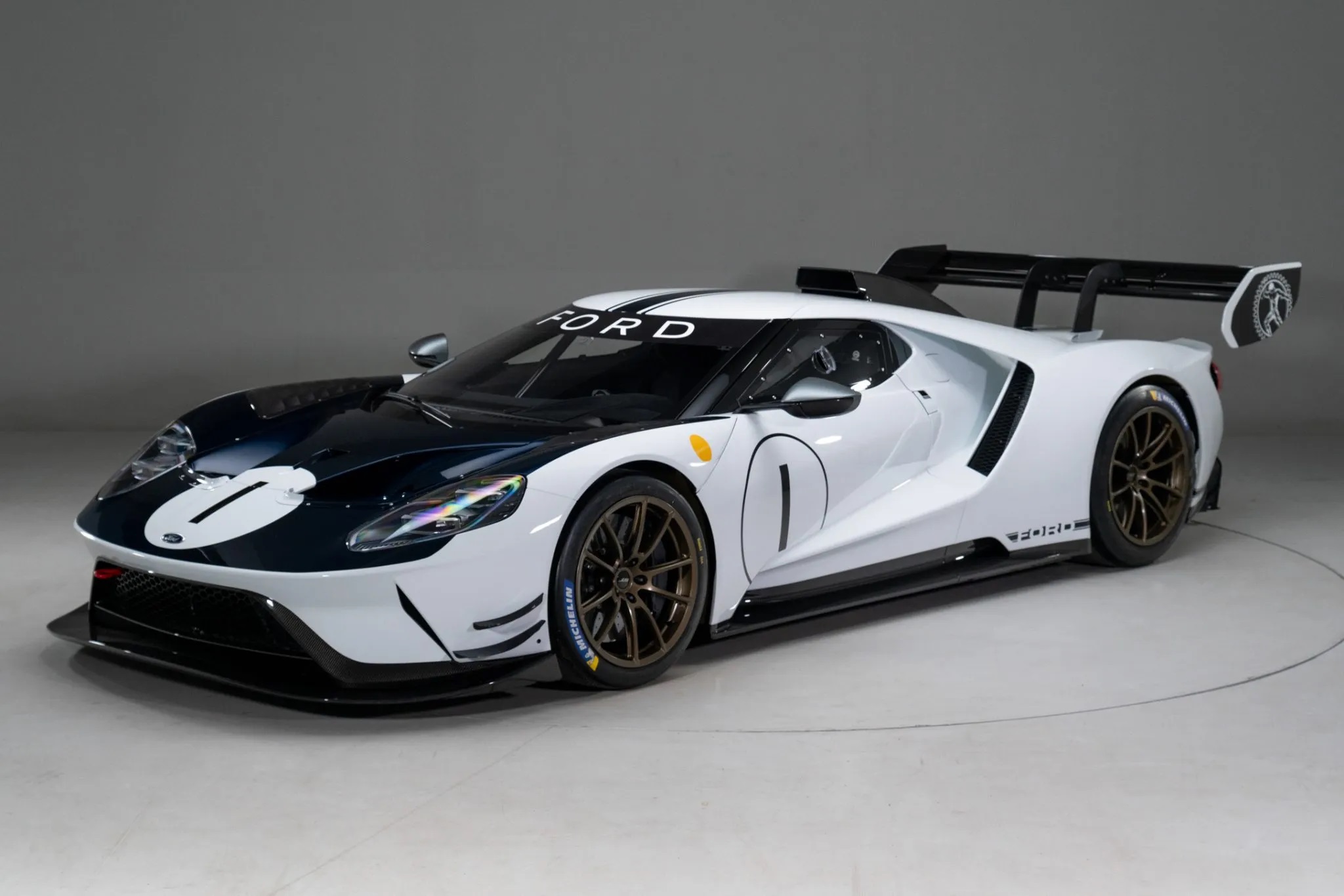
Bring A Trailer is currently offering a trio of second-generation Ford GTs, each customized with liveries honoring iconic GT40 race cars from the 1960s.

The new Ford GT was first revealed at the January 2015 North American International Auto Show in Detroit. The race version went on to win its class at Le Mans in 2016, finishing third, fourth, and ninth as well. European road versions made their debut at the Frankfurt Auto Show in 2017.

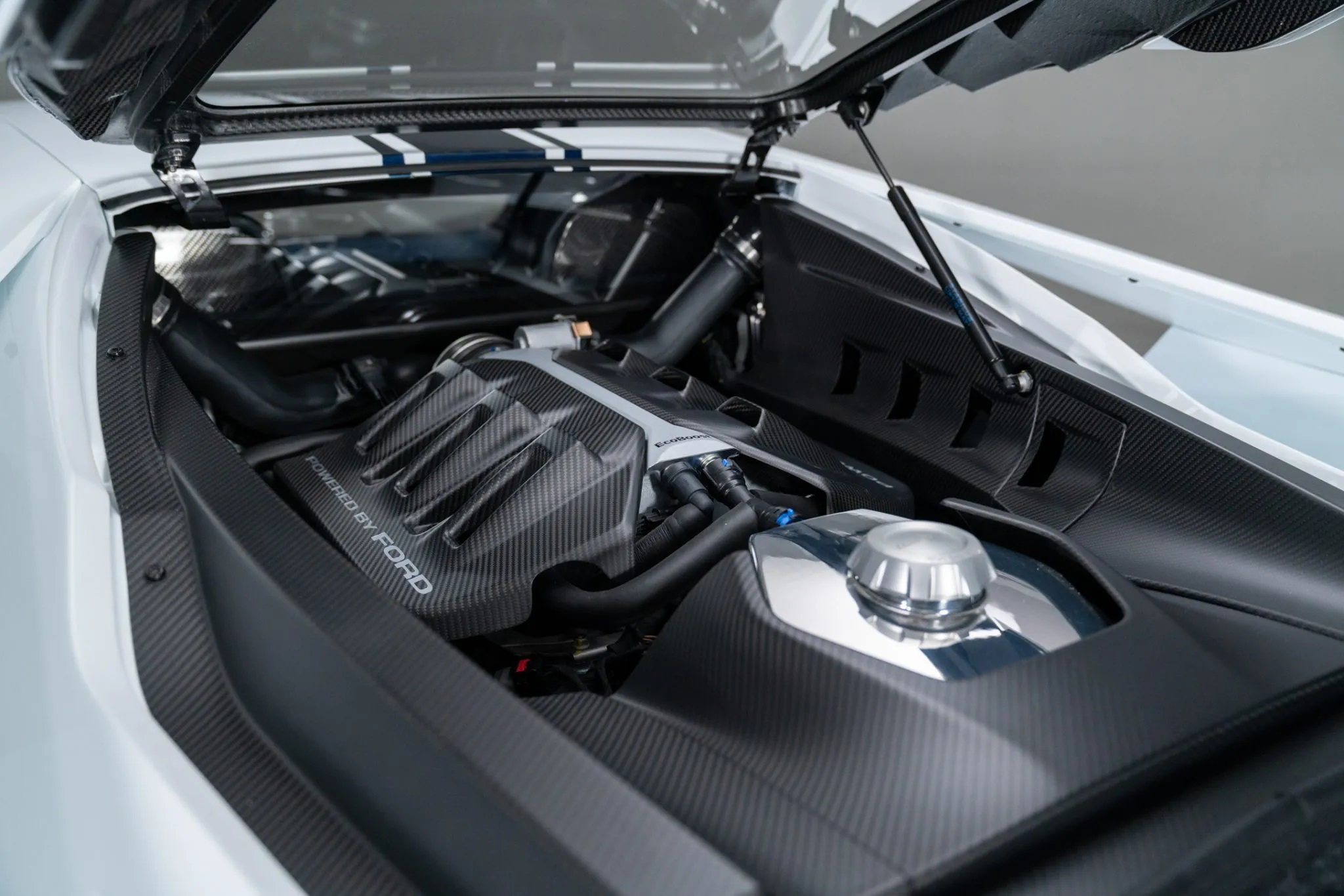
This supercar boasts a carbon fiber passenger cell and structural carbon fiber body panels. Since 2020, Ford GTs have been powered by a 3.5L twin-turbo EcoBoost V6 engine, producing 660 HP and 550 lb-ft of torque, paired with a Getrag 7-speed dual-clutch automatic transmission.

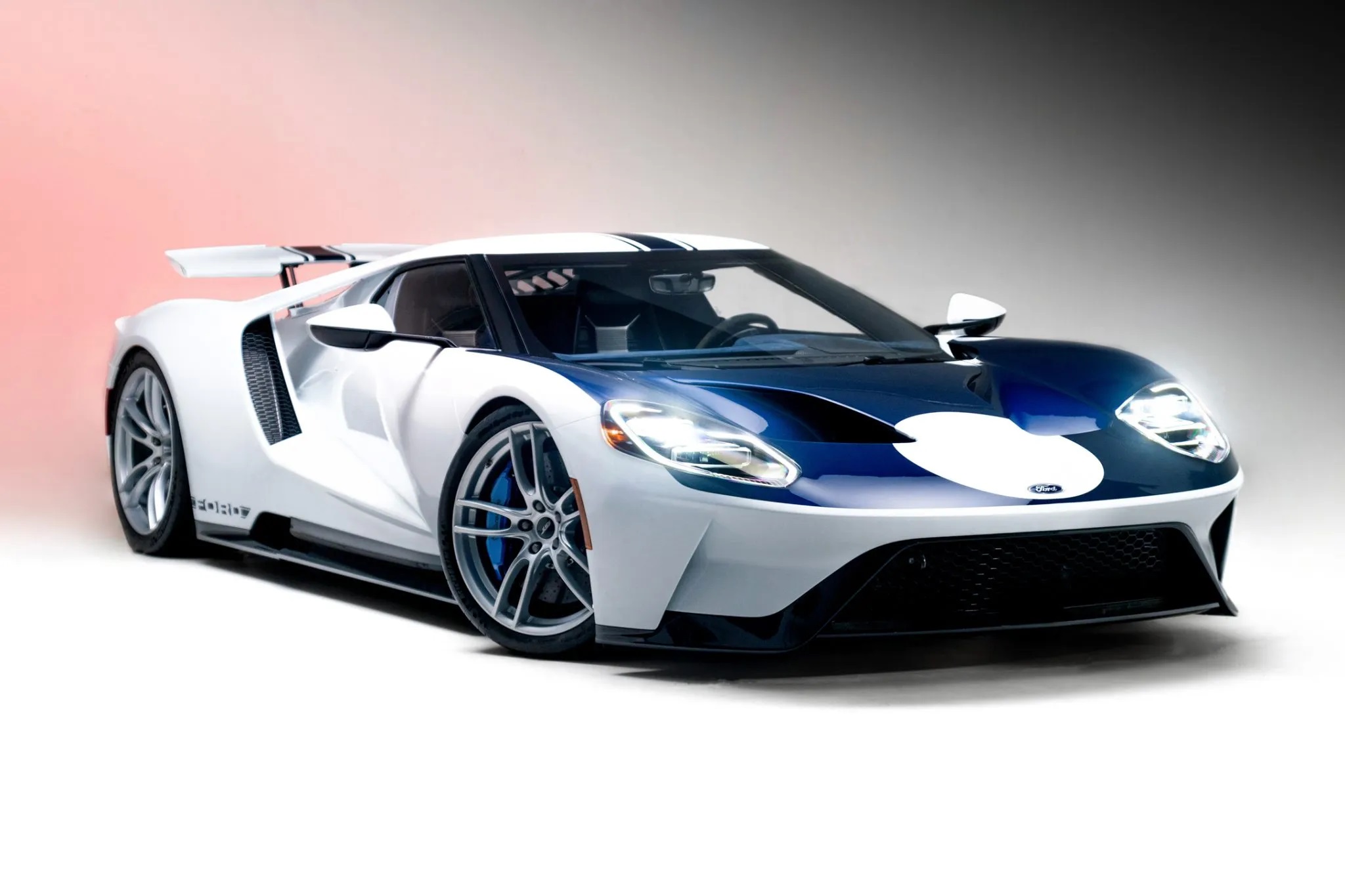
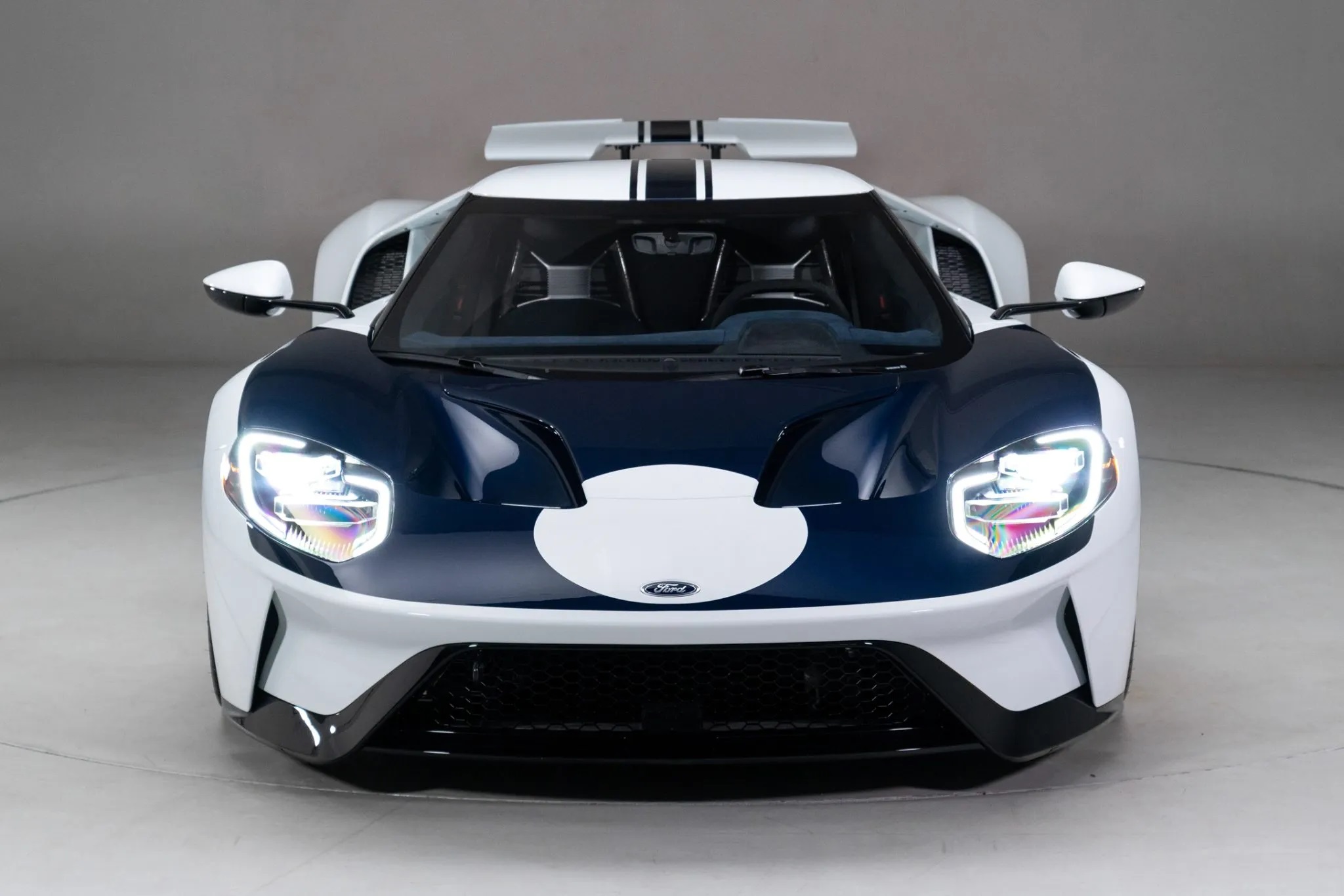
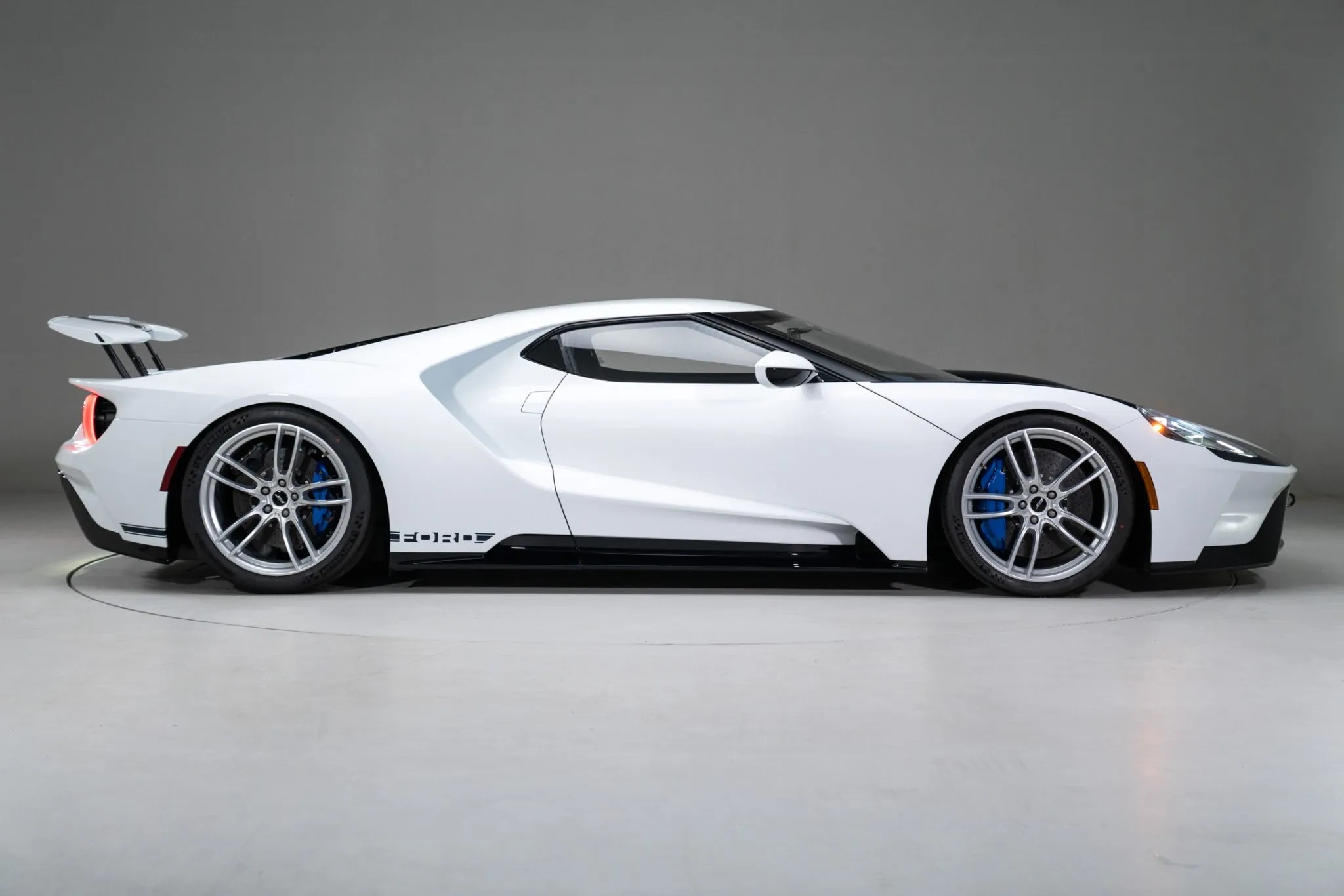
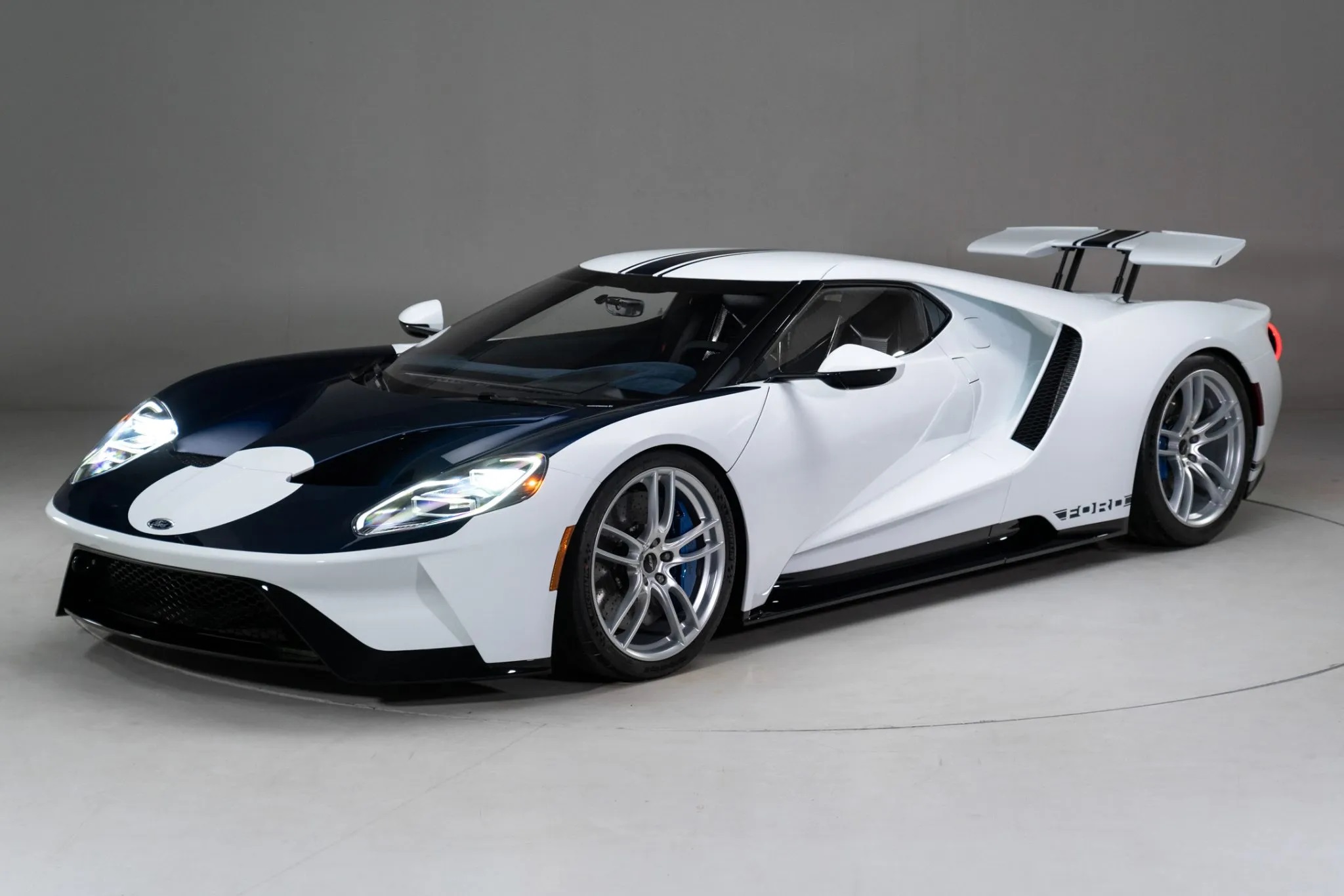
This 2021 Ford GT has just 55 miles on it and features a unique, custom livery in Frozen White with blue accents on the hood and stripes mirroring the design of GT/105, one of the original GT40 prototypes. It also features optional 20″ forged wheels and titanium lug nuts, paired with blue six-piston Brembo brake calipers and carbon-ceramic rotors.

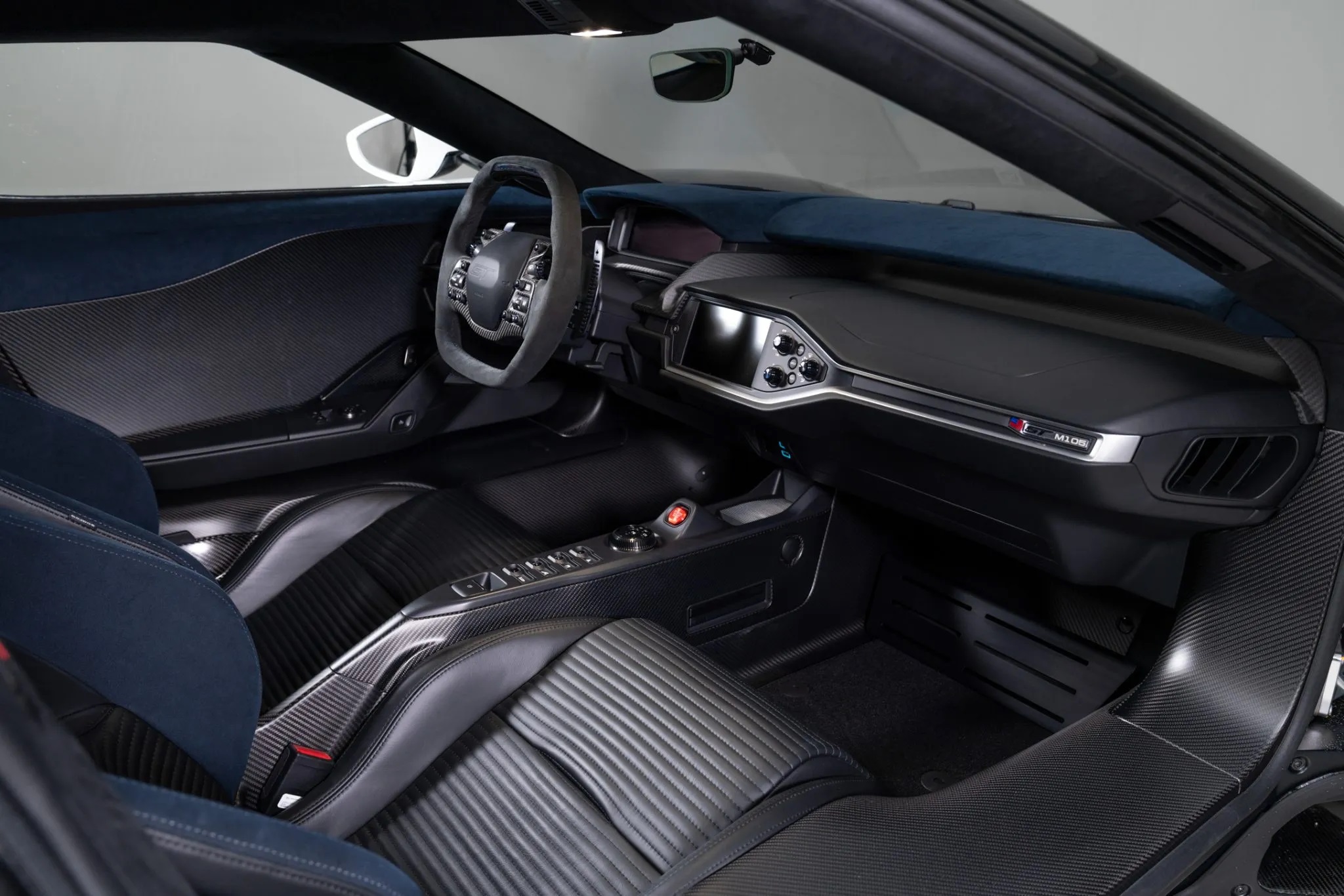
Inside, the cabin is equipped with the Light Speed package, including carbon-shell Sparco seats upholstered in black leather and blue Alcantara, along with optional racing harness anchors. The twin-turbocharged 3.5-liter EcoBoost V6 delivers 660 horsepower and 550 lb-ft of torque to the rear wheels via a Getrag seven-speed dual-clutch transaxle.

This 2022 Ford GT is the 26th of 45 track-only Mk II models meticulously crafted by Ford Performance and Multimatic Motorsports from 2020 to 2023. It features a custom livery that pays homage to the 1965 GT40 Mk II prototype, GT/106, famously driven by Bruce McLaren and Ken Miles during the 24 Hours of Le Mans.

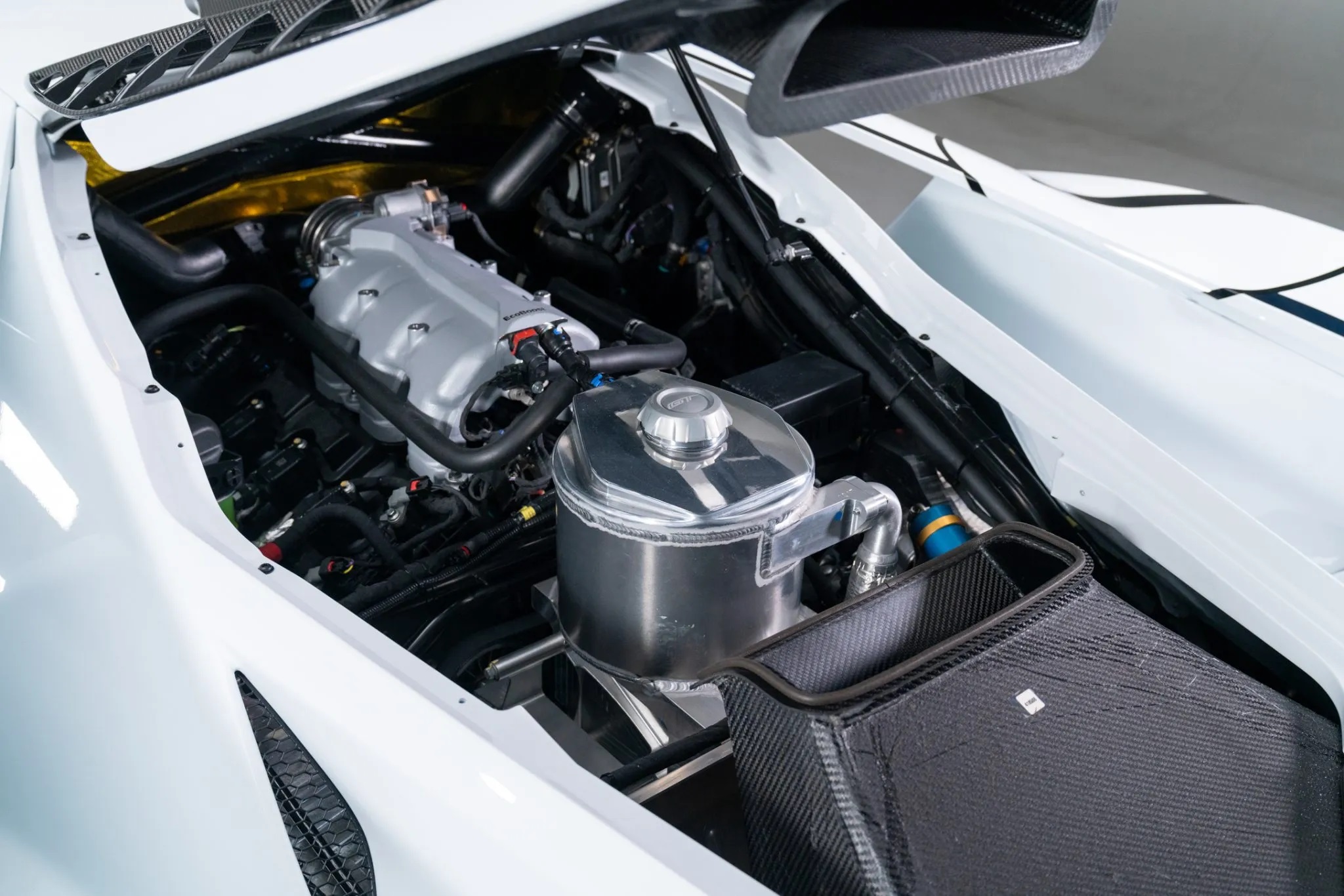
Designed for peak performance akin to Ford’s FIA World Endurance Championship and IMSA race cars, the GT Mk II is not restricted by racing or road-use regulations. It retains the carbon-fiber monocoque and aesthetics of the road-going GT but includes enhanced aerodynamics, a lowered suspension, and a more powerful EcoBoost V6 engine.

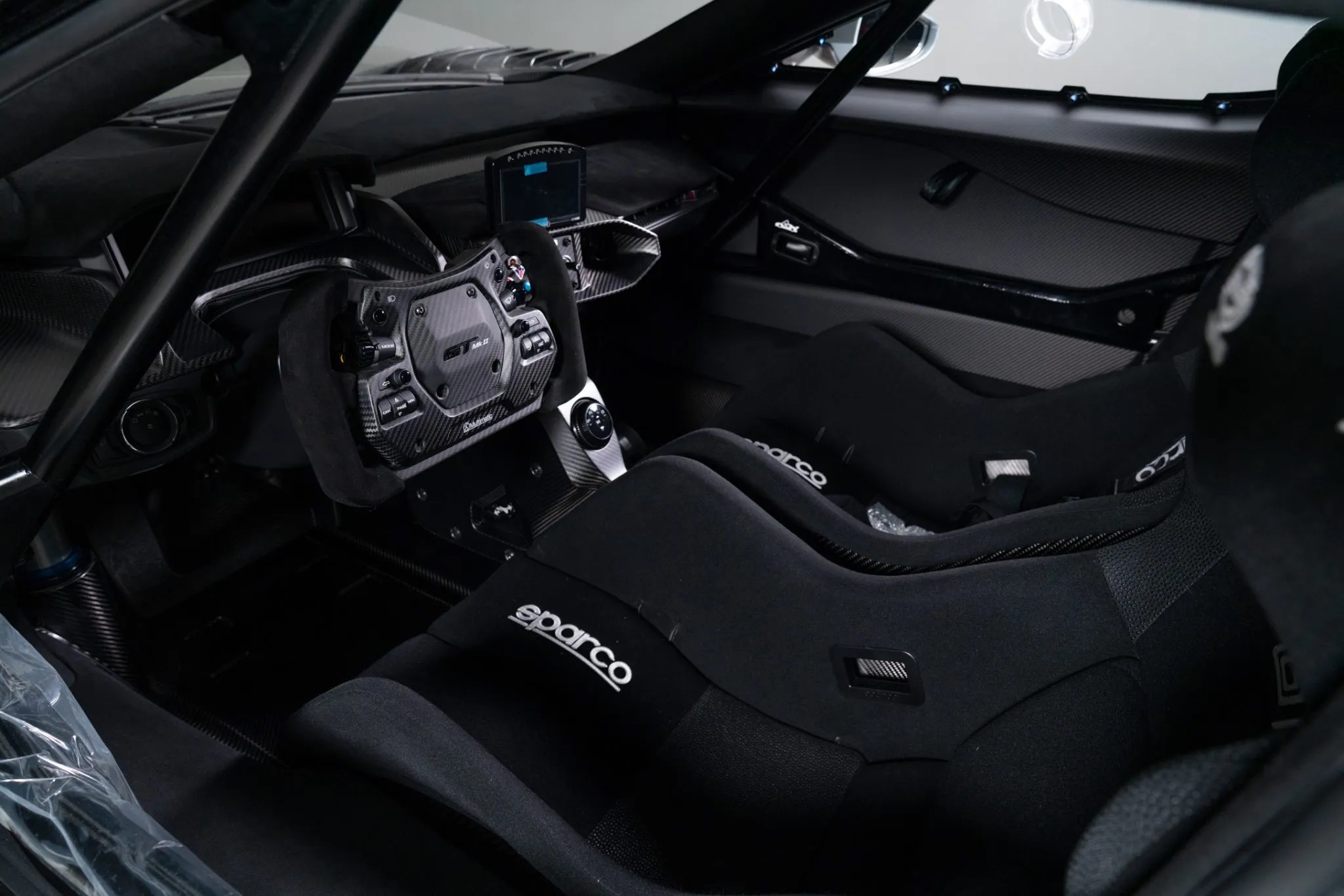
With only 160 miles on the odometer, this car boasts a twin-turbocharged 3.5-liter EcoBoost V6 producing 700 horsepower, paired with a seven-speed dual-clutch transaxle. The track-focused interior features Sparco racing seats, a multifunction steering wheel, a MoTeC data system, and a fire suppression system, along with other performance upgrades.

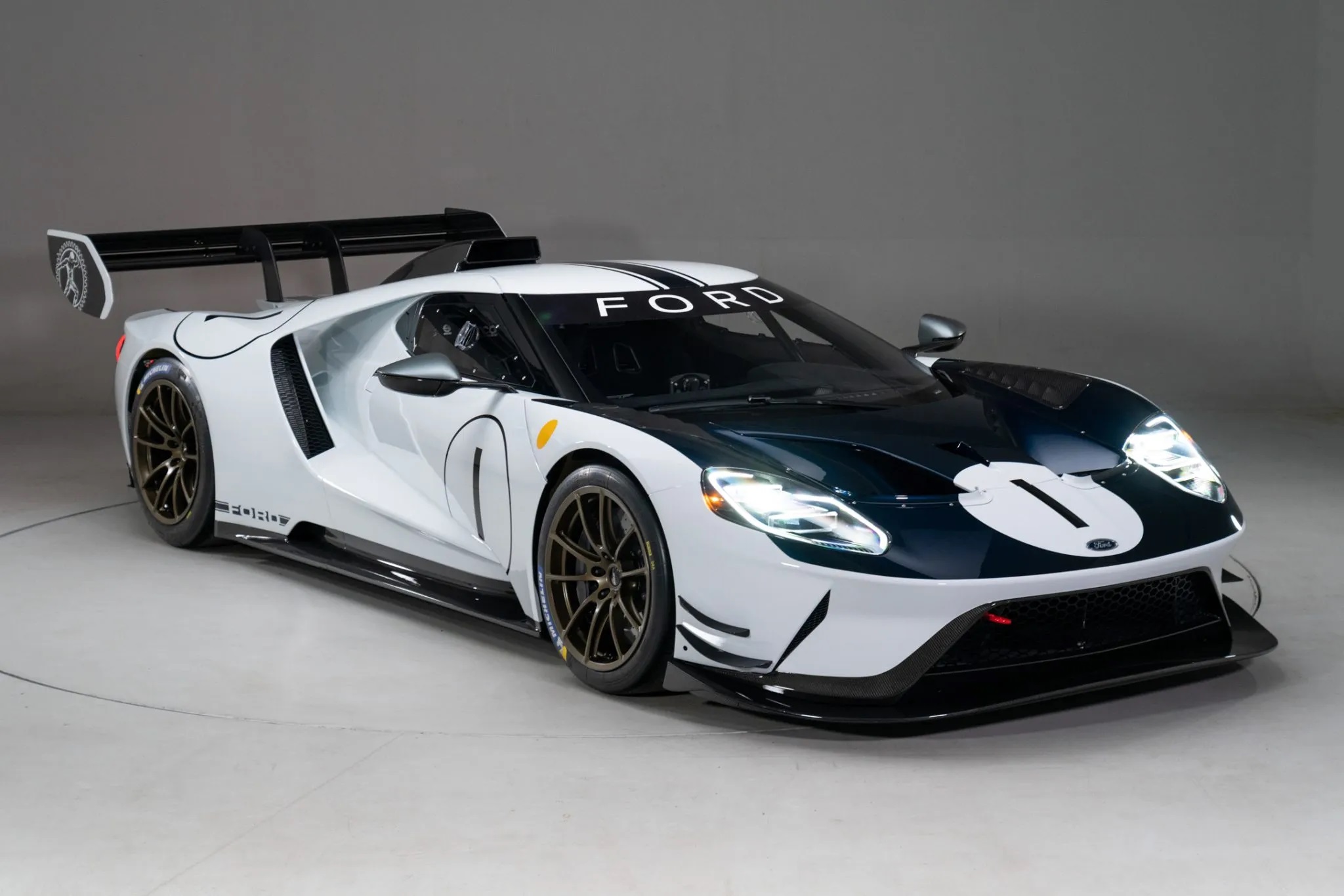
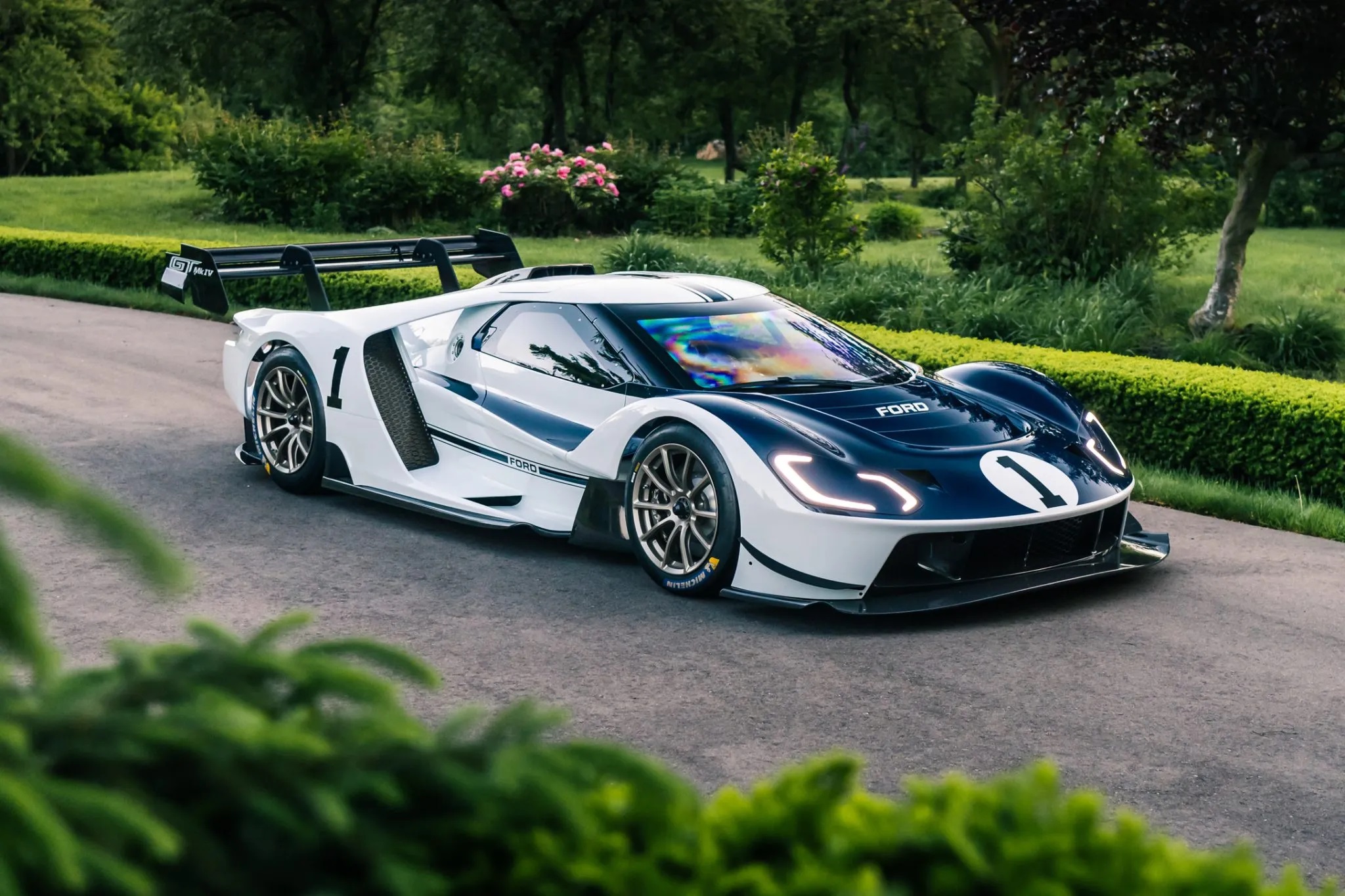
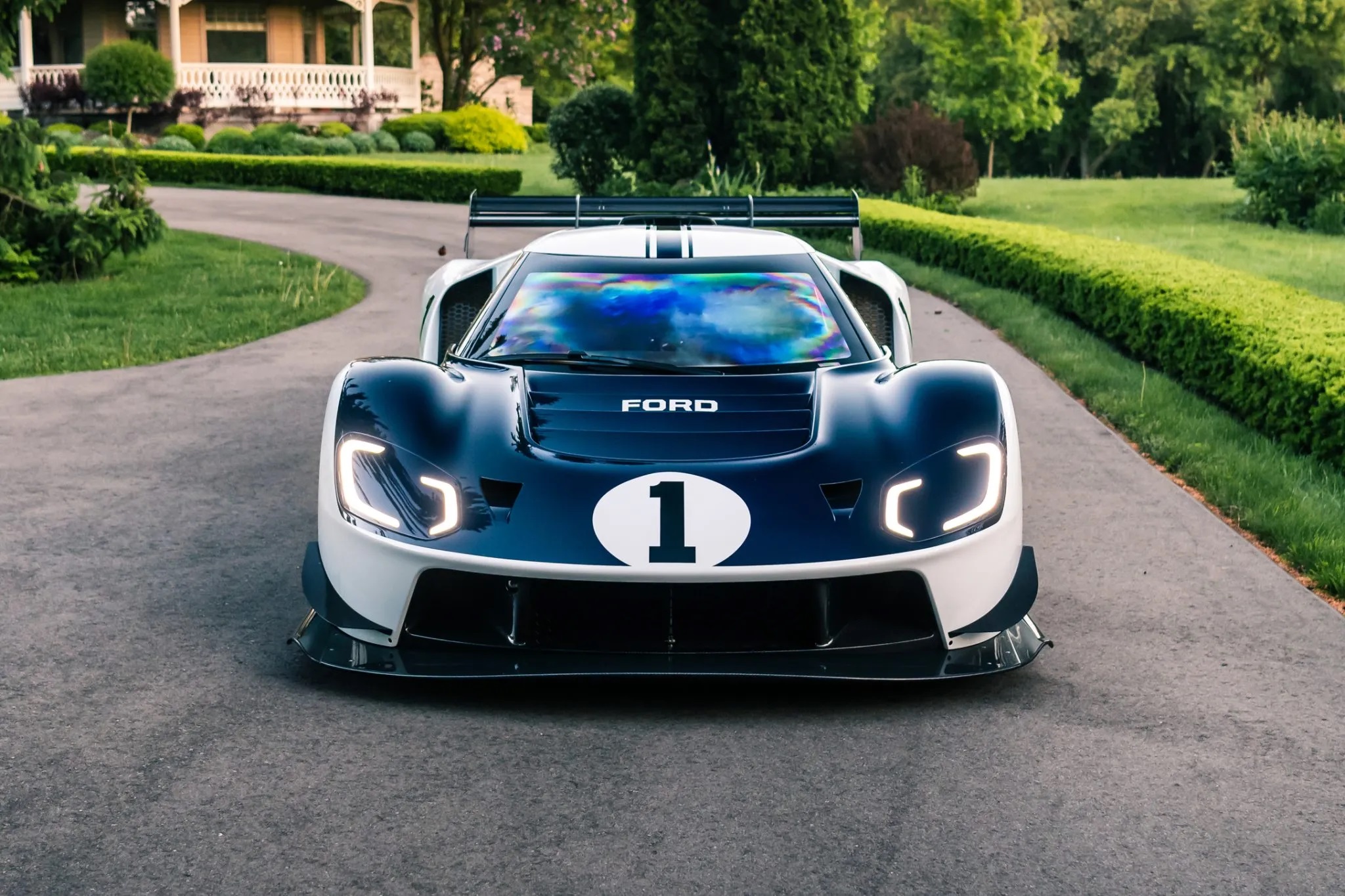
This 2023 Ford GT is the first of 67 track-only Mk IV models created by Ford Performance and Multimatic Motorsports to celebrate Ford’s triumph at the 1967 24 Hours of Le Mans. The Mk IV draws inspiration from the twelve Mark IV “J-Car” prototypes built in 1966 and 1967. It features unique carbon-fiber longtail bodywork and aerodynamic enhancements, alongside a longer wheelbase compared to the standard model.

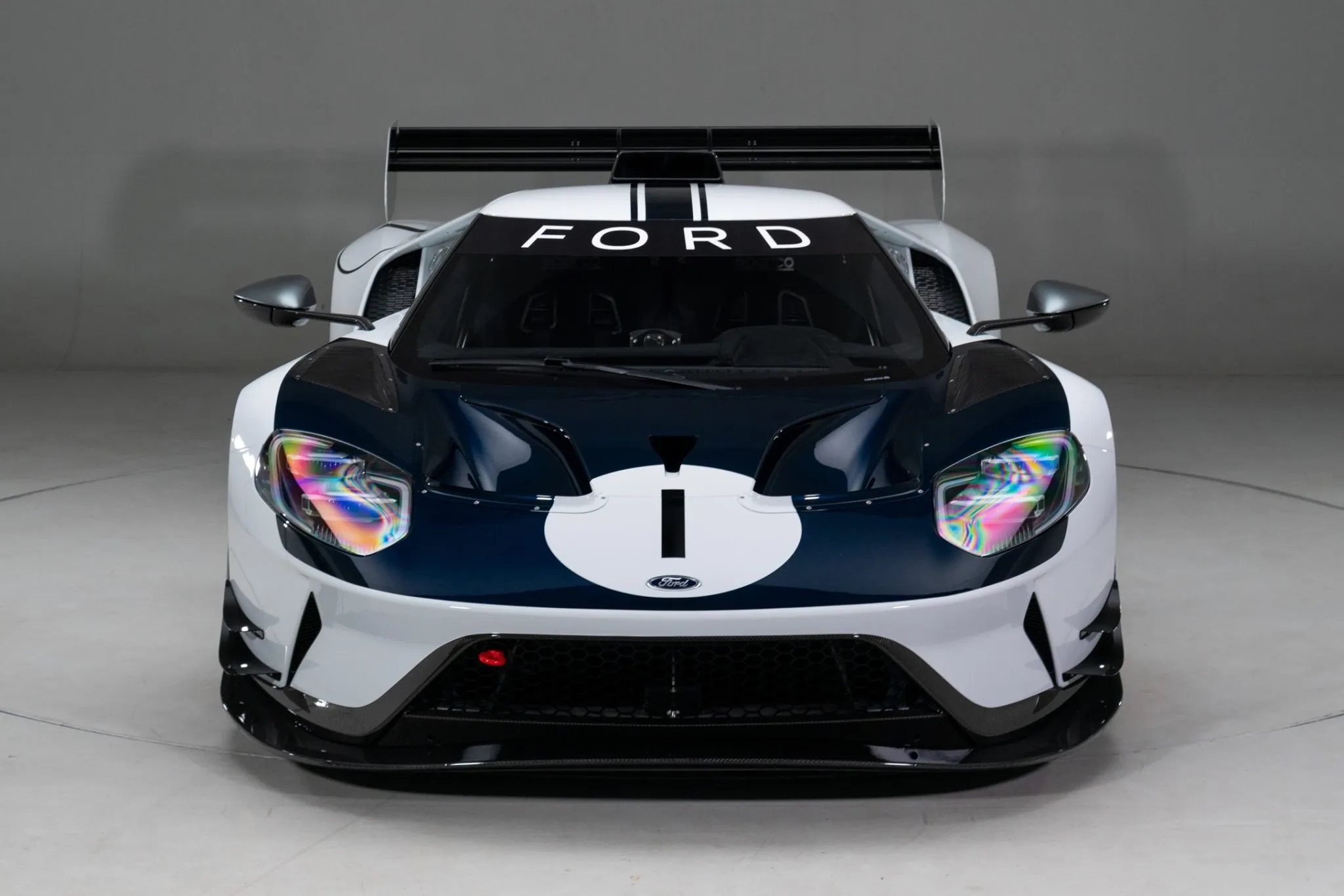
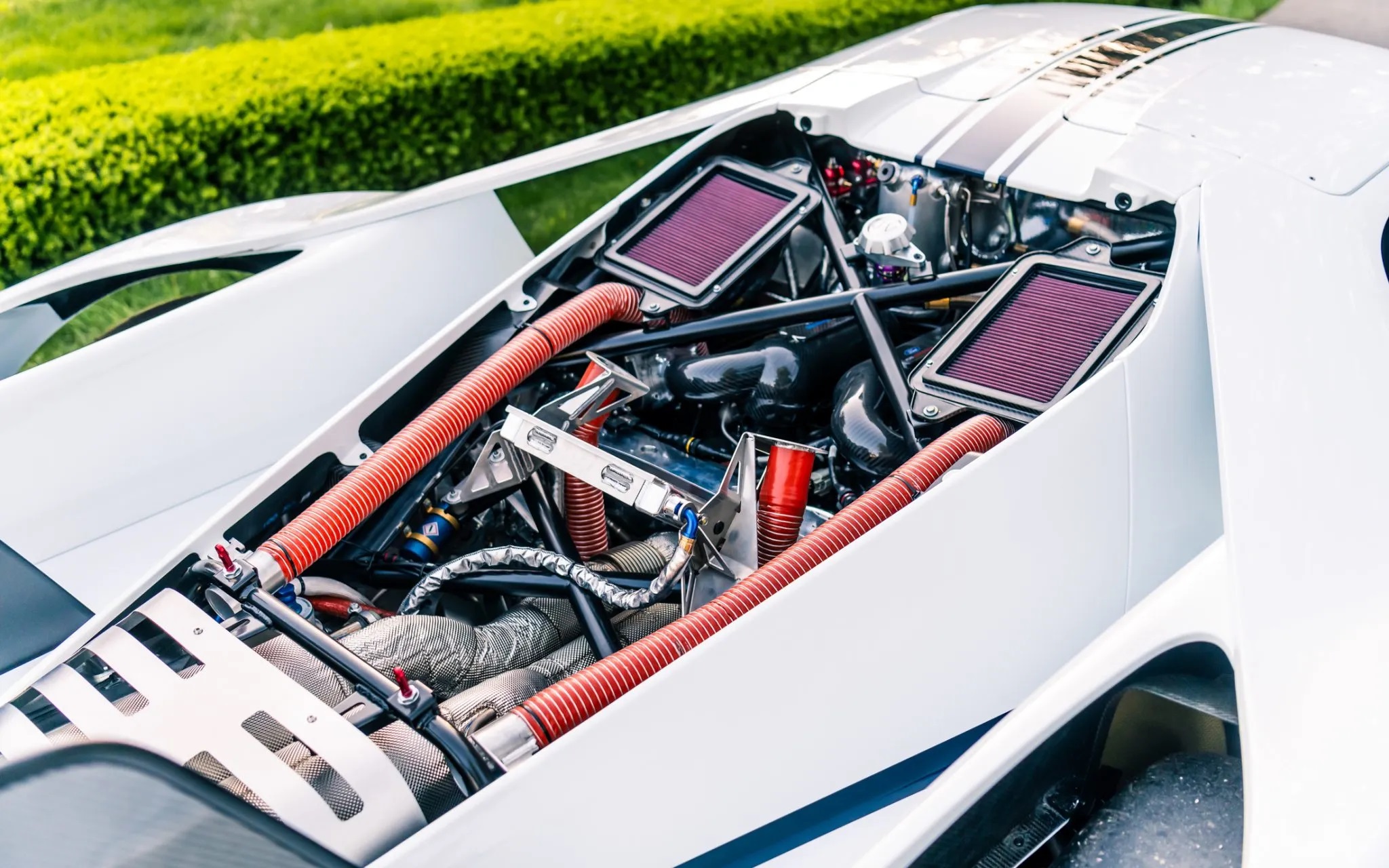
With only 3 miles on the odometer, this vehicle showcases a distinctive #1 Frozen White and blue livery that pays homage to the first 1966 GT40 Mk IV prototype, chassis J-1. The Mk IV variant has an extended wheelbase and a specialized aero kit capable of producing 2,400 lbs of downforce at 150 mph, achievable thanks to its upgraded 3.8-liter EcoBoost V6 engine, which generates over 800 horsepower.

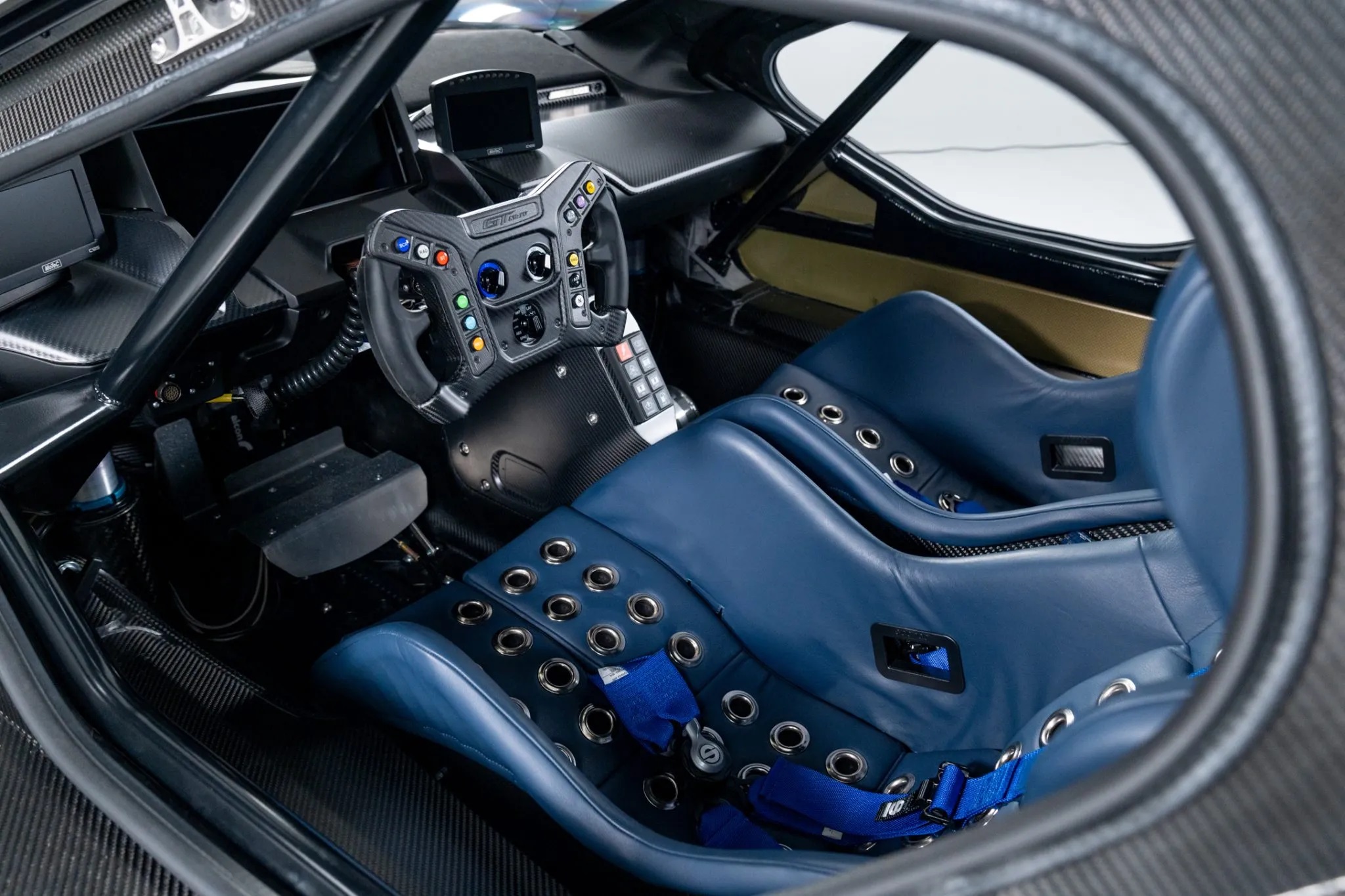
Additional features include Multimatic Adaptive Spool Valve dampers, a center-exit exhaust with purple powder-coated pipes, Alcon carbon-ceramic brakes, gold-finished 18-inch center-lock wheels, and specialized radiator intakes. The interior is equipped with carbon-fiber fixed-back seats upholstered in blue leather, a roll cage, fire suppression system, multi-function steering yoke, and side-view cameras with MoTeC display screens.

Source: Bring A Trailer


Source link

Baha Mar Just Announced a Fourth Hotel — What We Know So Far

0


Luxury Bahamas resort complex Baha Mar will add a fourth hotel property in the coming years, expanding its presence on the island.

The new resort, which is expected to open in 2029, will sit on 12 acres of beachfront property, Baha Mar shared with Travel + Leisure. The hotel will consist of about 350 rooms that each start at more than 550 square feet along with 50 residences and four new restaurants, including a rooftop omakase option and a beachfront eatery with a yet-to-be-announced celebrity chef.

“Baha Mar is committed to creating spectacular experiences, and this $350 million capital investment in our world-class resort collection underscores Baha Mar’s role as a catalyst for continued economic growth and job creation in the Bahamas,” Graeme Davis, the president of Baha Mar, said in a statement shared with T+L. “We are grateful to the government of The Bahamas for their continued support and our collaborative partnership in bringing this new development to life.”

In addition, the new property will feature a 14,000-square-foot spa and fitness center, pools, an outdoor bar, luxury shops, and family-friendly amenities. The hotel will also include 25,000 square feet of dedicated indoor and outdoor event space.

It was not immediately clear which brand would be tapped for the new resort.

Prime Minister of The Bahamas Philip Davis said in a statement the new development “will be highly significant for our country, creating local jobs, supporting tourism growth, and offering new experiences for both residents and visitors.”

Beyond the new resort, Baha Mar is currently made up of three resorts: the Grand Hyatt, the SLS, and the Rosewood. The complex features more than 45 restaurants and lounges, a casino, an 18-hole Jack Nicklaus signature golf course, an expansive 15-acre beachfront water park, and more. 

The companies said the new property will be built on the site of the recently-demolished Melia Nassau Beach, which itself closed in 2021.


Source link

The 10 cheapest hybrids in Australia

0


Electric vehicles (EVs) are all the rage when it comes to eco-friendly motoring in 2024, but hybrids don’t always get the attention they deserve anymore.

Many modern hybrids seamlessly integrate petrol and electric power to kick efficiency goals, without asking the price premium that EVs still carry.

In fact, there’s a large contingent of affordable hybrids that compete directly with electrification-free rivals on price, while sipping fuel and saving you money at the pump.

To demonstrate the point, here are the 10 cheapest new hybrid cars you can buy in Australia.

100s of new car deals are available through CarExpert right now. Get the experts on your side and score a great deal. Browse now.

We are basing this list on hybrid vehicles with meaningful EV driving capability, which excludes the Suzuki Swift Hybrid as it can’t drive on EV power alone.

Some manufacturers list drive-away prices while others list prices excluding on-road costs. For consistency however this list is ranked based on drive-away prices for Victorian private buyers.

Make/modelVictorian drive-away starting price
MG 3 Hybrid+$30,694
GWM Haval Jolion Hybrid$31,990
Toyota Yaris$32,674
Toyota Yaris Cross$35,175
Hyundai i30 Sedan Hybrid$35,990
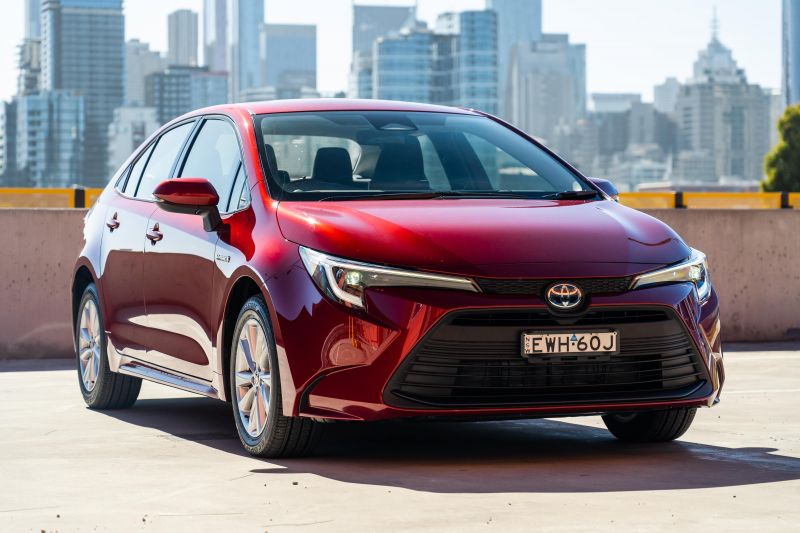
Toyota Corolla$36,443
GWM Haval H6 Hybrid$38,990
Honda HR-V e:HEV$39,900
Toyota Corolla Cross$40,990
Hyundai Kona Hybrid$41,017

Click on a car’s name above to jump directly to its information on the page, or continue scrolling for the full list.

MG 3 Hybrid+

The MG 3 takes the crown for the cheapest hybrid you can buy new in Australia, with a starting price of $27,990 plus on-roads.

Even the flagship Hybrid+ Essence comes in under $30k before on-roads, making the MG 3 a budget entry point into hybrid ownership.

Hybrid variants are powered by a 1.5-litre four-cylinder petrol engine producing outputs of 75kW and 128Nm, combined with a 100kW electric motor and 1.83kWh battery pack. The two systems pair to produce 155kW, sent to the front wheels.

MG claims a combined cycle fuel consumption of 4.3 litres per 100km (100g/km CO2).

MG 3Price before on-road costs
MG 3 Hybrid+ Excite$27,990
MG 3 Hybrid+ Essence$29,990

Interested in buying a MG 3? Get in touch with one of CarExpert’s trusted dealers here

MORE: Everything MG 3

Back to top

GWM Haval Jolion Hybrid

The GWM Haval Jolion Hybrid has gotten cheaper this year, and it’s now comfortably the most affordable hybrid SUV in Australia.

Until December 31 pricing kicks off at $31,990 for the Premium Hybrid, which shares a powertrain with the rest of the variants in the range.

The Jolion combines a 1.5-litre four-cylinder petrol engine with a 115kW/250Nm electric motor, good for system outputs of 140kW and 375Nm.

Hybrid models come with a 55L fuel tank and a claimed fuel consumption of 5.1L/100km.

GWM Haval JolionDrive-away price
GWM Haval Jolion Premium Hybrid$31,990
GWM Haval Jolion Lux Hybrid$34,990
GWM Haval Jolion Ultra Hybrid$37,990

Interested in buying a GWM Haval Jolion? Get in touch with one of CarExpert’s trusted dealers here

MORE: Everything GWM Haval Jolion

Back to top

Toyota Yaris

The Toyota Yaris range is now hybrid-only, with the base model starting at $28,500 before on-road costs.

All Yaris models feature a 1.5-litre three-cylinder hybrid powertrain producing 67kW of power and 120Nm of torque, mated with a 59kW/141Nm electric motor, a small lithium-ion battery, and a continuously variable transmission. Total system output is 85kW.

It’s more frugal than the cheaper MG 3, using just 3.3L/100km on the combined cycle.

The Yaris runs on 91 RON regular unleaded fuel and has a 36L fuel tank. It emits 76 grams of CO2 per kilometre.

Toyota YarisPrice before on-road costs
Toyota Yaris Ascent Sport Hybrid$28,600
Toyota Yaris SX Hybrid$31,960
Toyota Yaris ZR Hybrid$34,530

Interested in buying a Toyota Yaris? Get in touch with one of CarExpert’s trusted dealers here

MORE: Everything Toyota Yaris

Back to top

Toyota Yaris Cross

If you’re familiar with the Yaris then it’s not hard to get your head around the Yaris Cross, which is essentially a jacked up version of the long-lived hatch.

The Yaris Cross carries a small price premium over its shorter sibling – the range starts at $30,900 plus on-roads.

It features the same powertrain as the Yaris, although the bulkier Cross is slightly less efficient, drinking a claimed 3.8-4.1L/100km depending on the variant.

Unlike the Yaris, the Yaris Cross is available with all-wheel drive in addition to front-wheel drive.

Toyota Yaris CrossPrice before on-road costs
Toyota Yaris Cross Hybrid GX FWD$30,900
Toyota Yaris Cross Hybrid GX AWD$33,900
Toyota Yaris Cross Hybrid GXL FWD$33,950
Toyota Yaris Cross Hybrid GXL AWD$36,950
Toyota Yaris Cross Hybrid Urban FWD$36,880
Toyota Yaris Cross Hybrid Urban AWD$39,880
Toyota Yaris Cross Hybrid GR Sport FWD$36,930

Interested in buying a Toyota Yaris Cross? Get in touch with one of CarExpert’s trusted dealers here

MORE: Everything Toyota Yaris Cross

Back to top

Hyundai i30 Sedan Hybrid

Hyundai’s cheapest hybrid offering is the i30 Sedan, which is available from $33,000 plus on-roads.

The i30 Sedan Hybrid is powered by a 1.6-litre four-cylinder petrol engine and front-mounted electric motor, with combined outputs of 104kW and 265Nm sent to the front wheels only. Hyundai claims that it uses 3.9L/100km.

The electric motor is powerful enough for the majority of low speed everyday driving before the petrol engine kicks in, between 20 and 40km/h.

Hyundai i30 SedanPrice before on-road costs
Hyundai i30 Sedan Hybrid$33,000
Hyundai i30 Sedan Elite Hybrid$37,500

Interested in buying a Hyundai i30? Get in touch with one of CarExpert’s trusted dealers here

MORE: Everything Hyundai i30

Back to top

Toyota Corolla

Toyota and hybrid go hand-in-hand, and the Corolla is one of four Toyotas in this list.

Available in both sedan and hatch body styles, the Corolla range kicks off with the Ascent Sport Sedan at $32,110 plus on-road costs.

Under the bonnet you’ll find a 1.8-litre four-cylinder hybrid powertrain with a combined power output of 103kW. All hybrid Corollas are front-wheel drive.

The hybrid hatch uses 4.0L/100km, while Toyota claims the sedans achieve 3.9L/100km.

Toyota CorollaPrice before on-road costs
Toyota Corolla Ascent Sport Hybrid Hatch$32,110
Toyota Corolla Ascent Sport Hybrid Sedan$32,320
Toyota Corolla SX Hybrid Sedan$34,920
Toyota Corolla SX Hybrid Hatch$35,260
Toyota Corolla ZR Hybrid Hatch$39,100
Toyota Corolla ZR Hybrid Sedan$40,260

Interested in buying a Toyota Corolla? Get in touch with one of CarExpert’s trusted dealers here

MORE: Everything Toyota Corolla

Back to top

GWM Haval H6 Hybrid

Stepping up from the GWM Haval Jolion, the H6 brings extra size to the budget hybrid SUV category.

For $38,990 drive-away you get a spacious cabin, and 179kW of hybrid power from the combination of a 1.5-litre turbocharged four-cylinder and an electric motor.

The H6 Hybrid range is front-wheel drive only.

Fuel economy is claimed at 5.2L/100km, with a minimum fuel requirement of 91 RON.

GWM Haval H6Drive-away price
GWM Haval H6 Lux Hybrid$38,990
GWM Haval H6 Ultra Hybrid$42,990

Interested in buying a GWM Haval H6? Get in touch with one of CarExpert’s trusted dealers here

MORE: Everything GWM Haval H6

Back to top

Honda HR-V e:HEV

Sandwiched among the Toyotas, GWMs and Hyundais is the Honda HR-V hybrid, which is now priced from $39,900 drive-away thanks to a new entry-level e:HEV X variant.

Hybrid variants feature a 1.5-litre four-cylinder powertrain with combined outputs of 96kW and 253Nm sent through an e-CVT transmission.

All models have a 40L fuel tank, while the hybrid uses a claimed 4.3L/100km.

A recent update integrated refined Power Control Unit (PCU) software, which Honda says allows for smoother transitions between electric and hybrid modes and greater EV throttle response.

Honda HR-V e:HEVDrive-away price
Honda HR-V e:HEV X$39,900
Honda HR-V e:HEV L$42,900

Interested in buying a Honda HR-V? Get in touch with one of CarExpert’s trusted dealers here

MORE: Everything Honda HR-V

Back to top

Toyota Corolla Cross

Like the Yaris, the Corolla also has a high-riding counterpart in the form of the Corolla Cross.

However, the Corolla Cross is a little different under the skin compared to its smaller base car.

The Corolla Cross Hybrid comes with a 2.0-litre four-cylinder hybrid producing a combined 146kW, mated to an e-CVT. Both front- and all-wheel drive versions are available.

Front-wheel drive versions use 4.3L/100km, while all-wheel drive variants sip 4.4L/100km.

AWD models are equipped with a larger 43L fuel tank, compared to the 36L FWD tank.

Toyota Corolla CrossPrice before on-road costs
Toyota Corolla Cross GX Hybrid 2WD$36,480
Toyota Corolla Cross GXL Hybrid 2WD$40,230
Toyota Corolla Cross GXL Hybrid AWD$43,230
Toyota Corolla Cross Atmos Hybrid 2WD$47,030
Toyota Corolla Cross Atmos Hybrid AWD$50,030

Interested in buying a Toyota Corolla Cross? Get in touch with one of CarExpert’s trusted dealers here

MORE: Everything Toyota Corolla Cross

Back to top

Hyundai Kona Hybrid

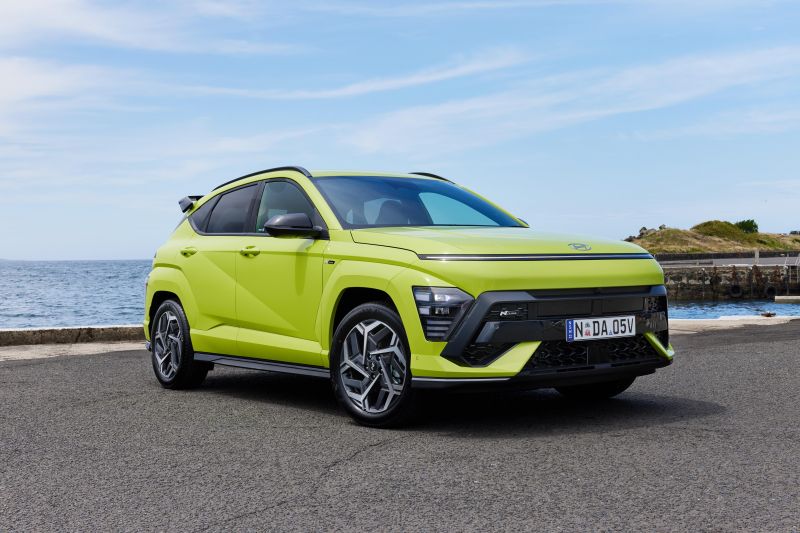
The Hyundai Kona is available with a range of powertrains, but hybrid examples start from $36,500 plus on-road costs.

It uses the same 1.6-litre four-cylinder hybrid from the i30 Sedan Hybrid with combined outputs of 104kW and 265Nm sent to the front wheels only via a 6-speed dual-clutch transmission.

Like the i30, Hyundai claims that the Kona Hybrid uses 3.9L/100km.

The Hyundai Kona is backed by a five-year, unlimited-kilometre warranty. The first five services for hybrid models will set you back $399, $579, $399, $579, and $579 each.

Hyundai Kona HybridPrice before on-roads
Hyundai Kona Hybrid$36,500
Hyundai Kona N Line Hybrid$40,500
Hyundai Kona Premium Hybrid$43,500
Hyundai Kona N Line Premium Hybrid$46,500

Interested in buying a Hyundai Kona? Get in touch with one of CarExpert’s trusted dealers here

MORE: Everything Hyundai Kona

Back to top


Source link

Everything you need to know about the BYD Shark 6

0


BYD is gearing up to launch the first plug-in hybrid (PHEV) ute available in Australia.

Orders for the BYD Shark 6 are set to open on October 29, when pricing will also be announced, ahead of first customer deliveries in December 2024 or January 2025.

It’s set to be the first PHEV ute on sale in Australia, beating the Ford Ranger PHEV and GWM Cannon Alpha Hi-4T to market.

At launch, only a single range-topping Premium version of the Shark 6 will be offered, with four exterior paint colour choices and one black interior colour option.

100s of new car deals are available through CarExpert right now. Get the experts on your side and score a great deal. Browse now.

The CEO of BYD’s local distributor EVDirect, David Smitherman, told CarExpert the Shark 6 is the brand’s most important local vehicle launch to date. The company is also aiming for it to be BYD’s top-selling vehicle in 2025.

Beyond the Shark 6, there are talks of additional BYD ute models in the works. Examples include an all-electric version that’ll potentially be called the Shark 7, a ute with more performance to rival the Ford Ranger Raptor, as well as a larger full-size ute with a higher braked towing capacity.

Pricing

BYD hasn’t detailed exact local pricing for the Shark 6 Premium just yet, though the company has now confirmed it will be priced below $60,000.

At this price point it would undercut the likes of the Ford Ranger XLT Bi-Turbo dual-cab ($63,640 before on-roads), and the Toyota HiLux SR5 with V-Active Technology ($63,260 before on-roads).

Powertrain and Efficiency

Powering the Shark 6 is a version of the Sealion 6 Premium AWD’s 1.5-litre turbocharged four-cylinder petrol engine that’s longitudinally mounted instead of transversally mounted, plus two electric motors (one on each axle), and a 29.58kWh lithium iron phosphate (LFP) battery pack.

Technical specificationsBYD Shark 6
Engine1.5L 4cyl turbo petrol
Engine outputs135kW / 260Nm
Electric motor outputs170kW / 310Nm front
150kW / 340Nm rear
System outputs321kW
650Nm
Battery29.58kWh LFP
TransmissionSingle speed, reduction gear
Driven wheelse-AWD
Weight2710kg (kerb)
Fuel economy (claimed)2L/100km (SoC 25-100 per cent)
7.9L/100km (SoC <25 per cent)
Electric driving range (PHEV)100km (NEDC)
Max AC charge rate7kW
Max DC charge rate55kW
Fuel tank capacity60L
Fuel requirementTBD
CO2 emissions46g/km
Emissions standardTBC
Braked towing capacity2500kg

Dimensions

The BYD Shark 6’s braked towing figure is down compared to traditional diesel-powered dual-cab 4×4 utes. This plug-in hybrid ute is capable of towing a 2500kg braked trailer.

DimensionsBYD Shark 6
Length5457mm
Width1971mm
Height1925mm
Wheelbase3260mm
Cargo capacity1200L
Braked towing capacity2500kg
Unbraked towing capacity750kg
Payload790kg
Gross vehicle mass (GVM)3500kg
Gross combination mass (GCM)TBC
Track front and rear1660mm
Ground clearance200mm (unladen)
Approach angle31 degrees
Departure angle19.3 degrees
Ramp breakover angle17 degrees

Servicing and Warranty

The BYD Shark 6 will likely be covered by the same six-year, 150,000-kilometre vehicle warranty and eight-year, 160,000-kilometre battery warranty as the rest of the carmaker’s lineup.

BYD hasn’t confirmed logbook servicing intervals or pricing yet.

Safety

The BYD Shark 6 hasn’t been tested by ANCAP or Euro NCAP just yet.

Standard safety equipment includes:

  • Autonomous emergency braking (AEB)
  • Rear collision warning
  • Blind-spot monitoring
  • Front and rear cross-traffic alert
  • Lane departure warning
  • Lane keep assist
  • Adaptive cruise control
  • Intelligent Cruise Control
  • Driver fatigue monitoring
  • Child presence detection
  • Surround-view camera
  • Front and rear parking sensors

Standard Equipment

At launch the BYD Shark 6 will only be offered in one range-topping trim.

BYD Shark 6 Premium highlights:

Exterior

  • 18-inch alloy wheels
  • Full-size spare wheel
  • Fixed side steps
  • Aluminium roof rack
  • Shark fin antenna
  • Spray-on tub liner
  • Automatic LED headlights
  • Automatic high-beam
  • LED tail lights
  • Front and rear fog lights
  • Rain-sensing wipers
  • Heated, folding side mirrors
  • Puddle lights
  • Sound-proof front glass
  • Rear privacy glass
  • Keyless entry
  • NFC card

Interior

  • 10.25-inch digital instrument cluster
  • 15.6-inch touchscreen infotainment system
  • Head-up display
  • Voice assistant
  • FM and DAB+ radio
  • Wireless Apple CarPlay and Android Auto
  • Satellite navigation
  • Music streaming
  • 12-speaker Dynaudio sound system
  • Dual-zone climate control
  • 2x USB-C ports
  • 2x USB-A ports
  • 50W wireless charger
  • 12V socket
  • 10A household socket
  • Push-button start
  • Auto-dimming rear-view mirror
  • Leather-wrapped steering wheel
  • Heated and ventilated front seats
  • Black faux leather upholstery with orange accent stitching
  • 8-way power adjustable driver’s seat with 4-way lumbar
  • 4-way power adjust front passenger seat

Optional Equipment

BYD’s local distributor EVDirect has partnered with Australian-based off-road accessory company Ironman 4×4 for the Shark 6.

All of the Shark 6’s official Ironman 4×4 accessories will be available only via BYD’s local dealership network. And they’ll all be covered by the vehicle’s six-year, 150,000-kilometre warranty.

The following accessories will be available to purchase for the BYD Shark 6:

Exterior

  • Tow bar (light)
  • Tow bar/heavy bumper (aluminium)
  • BBR Raid bull bar (aluminium)
  • BBCD bull bar (aluminum)
  • Nudge bar
  • Roof rack (aluminium)
  • Bonnet protector
  • Weather shield
  • Suspension kit (shocks, height adjust struts, coil springs) – Coming in 2025
  • Underbody protection/battery guard

Interior

  • Carpet floor mats
  • Rubber floor mats
  • Deep dish floor mats
  • Seat covers

Tray

  • Electric tonneau cover
  • Tonneau cover
  • Soft tonneau cover
  • Cargo liner
  • Canopy RAID
  • Sport hoop/roll bar
  • Tailgate seal kit

Prices for the Shark’s accessories haven’t been confirmed yet.

Ironman 4×4 global product director Kristian Ristell told CarExpert there’s also a gross vehicle mass (GVM) upgrade for the Shark 6 in the works. The company is aiming to have it ready by the end of the first quarter of 2025.

Colours

At launch, four exterior paint colours will be offered for the Shark 6.

They are as follows:

  • Atlantis Grey
  • Arctic White
  • Cosmos Black
  • Outback Orange

The latter will only be available for examples arriving next year.

MORE: Everything BYD Shark 6


Source link

BEST Camper Kitchen Accessories & Motorhome Storage Solutions (2024 update)

0


Looking for easy motorhome, RV & campervan kitchen storage hacks? Want camper kitchen accessories to help keep you organised? Here are some of the best tips, tricks and gear, plus ways to improve the storage and make it easier to use. You’re welcome.

Don’t forget to grab your FREE pre-trip checklist below to help you with everything you need to stay safe on the road.

*We work hard to make this the best motorhome travel blog and road trip website possible, full of helpful content for you. The website is supported by our readers, so if you buy through links on this site we may earn a commission- at no extra cost to you. All opinions remain our own.

If you find this post useful, you can also treat us to a coffee – we promise to enjoy it while creating more useful content like this- we might even indulge in a biscuit (or two!)


Storage hacks for motorhomes, caravans, campervans and RVs

You would think, after living on a boat for over 15 years, that packing up a motorhome and dealing with lack of storage space wouldn’t bother me at all.

Sadly, you’d be wrong. 

In the boat, I somehow managed to pack a LOT of stuff away into nooks and crannies. In the camper, there’s just not the space and I end up with things crammed into the cupboards and not be able to find what I want.

Opening a cupboard with guests in the van used to be frequently embarrassing when something dropped out onto someone’s head!

I knew something had to change. I needed to find some better storage solutions for the camper.


Best RV & campervan storage hacks for the kitchen

There are lots of ways you can fix your tiny kitchen storage issues- and we’ll share the best of them here. The first section is the best motorhome and RV kitchen accessories we’ve found to make vanlife a little easier. Promise.

The second section has some of the best hacks and tips we’ve found to KEEP your RV/ campervan/ motorhome kitchen organised- and free from rattles. Learn more about how we stop rattles in our motorhome here.


The most useful camper kitchen accessories to improve storage

I love useful accessories and space-saving kitchen accessories for campers are some of my favourites. But don’t buy too many; it’s a lot easier to keep tidy and organized if you don’t have too much stuff.

Before you start buying anything, assess what you really need. For some, a dedicated RV coffee maker is essential. For others, they’d rather use their motorhome payload for more shoes *cough cough*.

If necessary, sell or donate the unsuitable gear to make room for all the lovely new gear which will help keep your RV kitchen tidy.

Awesome Kitchen Gadgets

Whilst this post focuses on accessories and tips to help storage in your motorhome kitchen, there are some larger kitchen devices which I’m a huge fan of, especially as I live in my motorhome.

You can find more in-depth reviews for these here:


Nesting RV Kitchen cookware- perfect for small kitchens

These nesting cookware pans blew my mind when I first heard about them from a boating friend. They are SO easy to use, save up to 50% space and are even easy to clean! Designed specifically for RVs, campervans and boats, they’ll be your favourite friend for years to come!


Storage bins for under campervan seats

We all have stuff in our RVs that we want, but don’t use that often. I store those items under the seats and keep them together in easy to see into storage baskets. Again, easy to find when we want them- and it frees up our RV kitchen shelves!


Under-cupboard shelves- perfect campervan storage hack

Struggling to organise your RV kitchen cupboards? Add in an extra shelf! These plastic shelves hang under any other shelf and make excellent use of the dead space in cupboards, fridges, under sinks- and many other places! We’ve used them on the boat for years and we’re pleased to say they work just as well in a campervan.


the best motorhome and camper kitchen accessories and storage solutions

Collapsible Mugs

Who doesn’t love a hot drink while they’re driving?! These fantastic mugs fold flat when not in use, so perfect for RVs, boats and even camping- easy to carry with you and enjoy a drink when you arrive.

If you’re not sure about a collapsible mug but want something to keep your drink hot for HOURS while you’re driving, these mugs are amazing.


Collapsible colander and bowls for easy motorhome storage

These amazing collapsible bowls are PERFECT for small RV kitchens. They make storage easy by collapsing flat and are heat-resistant, so fine for hot pasta or vegetables.


RV & Camper kitchen accessories to create more space

It’s all very well buying some awesome RV accessories- but you need to be able to organize it all. Here are some of our favourite storage hacks and ideas.

RV & campervan storage hack – Box EVERYTHING

This is the key to having a camper with no rattles when driving – everything is in plastic boxes. It’s incredible (and slightly terrifying!) how many of these I use throughout my van- but every single one helps with my RV storage and in the kitchen they are irreplaceable. Buy these in bulk, in all different sizes. I promise you’ll use them all!


Fruit & Veg Organiser

These Macrame and basket fruit or veg holders are not only lovely, but they are a cool way to store your fruit and veg so you don’t use up cupboard space!


Herbs Storage Pouches

We all know that herbs and spices are bulky to store, so look at this amazing idea! Storage pouches!


Camper Kitchen Accessories- Foldable Kitchen Bin

Bins take up a lot of space, so check out these that folds up when not in use, a great idea for space saving.


Motorhome Kitchen life-saver- Non-slip matting!

Our top-secret number two: wrap everything in non-slip matting. And I mean, everything. We line all the drawers in our RV kitchen with this, but it’s also used between our utensils, to keep our knives safe, to stop glasses clinking in the cupboards… you name it, we probably wrap it in non-slip! I love all the pretty colours you can buy.


Rv camper Kitchen organizer boxes with handles

Remember all those little plastic tubs? Put them in one of these and it makes it so much easier for RV kitchen storage! We keep tea, coffee, sugar etc in one, condiments or spices in another- makes it really easy to grab the one we want and bring it down to the RV kitchen worktop.


Plate separators- stop rattles in the van

We like ‘proper’ plates in the RV, instead of plastic, but boy do they clink when we’re driving.These amazing plate separators stop all noise and keep the plates and bowls safe while underway.


Add a drawer under a cupboard

These drawers are perfect for adding a little extra RV kitchen storage where you need it. Great for spices, napkins, pens- all types of things can fit in these.


Drawer separators- genius campervan storage hack

If you’re lucky enough to have an ‘odds and ends’ drawer in your RV kitchen, then keep it organized by using these pretty boxes. Perfect for pens, batteries and a million other things, they’re also pretty to look at. Who says storage can’t be cute?


Over-door storage- motorhome living tip

This is such a perfect way to store annoying items like chopping boards in your RV kitchen. Just grab one of these, pop it over a cabinet door- and you’re done. Maybe use some non-slip matting to stop things rattling!


RV Kitchen Organizer

I love this- what a great place to keep paper towels, condiments or even pretty ornaments.

Here’s are some great boxes for organising the cupboards, and what’s great is that these fit in the overhead lockers!

Do you have an RV kitchen which needs organizing? Found an awesome hack you love? Let me know your favourite camper storage ideas.

Want more tips for motorhoming?

Here are some more ideas you might find useful:

Want FREE checklists, eBooks and additional tips to help? Visit our resource page

RV campervan kitchen storage hacks for simple vanlife motorhome living

Last update on 2024-10-18 / Affiliate links / Images from Amazon Product Advertising API

Sharing is caring!


Source link

Stellantis recalls 44,500 PHEV SUVs because brake pedal can collapse

0


Stellantis is recalling nearly 45,000 plug-in hybrid crossover SUVs globally because they may have been built with frail brake pedals.

The recall encompasses 2024-2025 Alfa Romeo Tonale and 2024 Dodge Hornet plug-in hybrids. Of the total number of recalled vehicles, 21,069 are in the U.S., 2,299 in Canada, 145 in Mexico, and 20,987 in markets outside North America according to Stellantis.

2024 Alfa Romeo Tonale

2024 Alfa Romeo Tonale

The affected vehicles may have brake pedals that collapse when pressed, rendering it unusable. Should this occur, drivers can pull the electronic parking brake tab on the center console to help slow the vehicles, Stellantis notes, adding that automatic emergency braking will also intervene if a collision is likely to occur. Drivers have to make sure that feature is turned on, though.

Stellantis estimates that 5% of the recalled vehicles have faulty brake pedals. The automaker is aware of 15 cases of collapsed brake pedals globally, including one crash, but no injuries or fatalities.

2024 Alfa Romeo Tonale

2024 Alfa Romeo Tonale

Dealers will reinforce the brake pedals in affected vehicles free of charge. Stellantis expects to mail owner notification letters Oct. 24. Owners can also contact Stellantis customer service at 1-800-853-1403, or visit the automaker’s recall site, for more information. The automaker’s reference number for this recall is B7B.

The closely-related Tonale and Hornet plug-in hybrids were also recalled last year over a fire concern related to loose battery cables. The Tonale is sold exclusively as a plug-in hybrid in the U.S., while the Hornet is also sold with a conventional non-hybrid powertrain. Both extract 33 miles of EPA-rated electric range and 29 mpg combined fuel economy, while aiming for a sporty character and foreshadowing upcoming all-electric models from both brands.


Source link

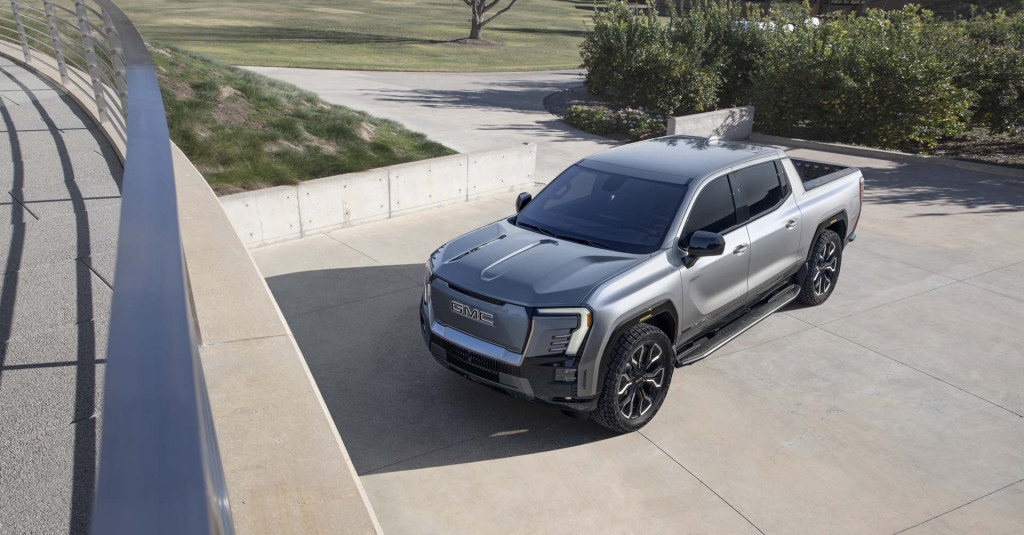
2025 GMC Sierra EV goes up to 460 miles, adds lower-price version

0


  • 2025 GMC Sierra EV Denali steps up to an EPA-equivalent range of 460 miles
  • Sierra EV Denali compares to Chevy Silverado EV RST
  • Elevation and AT4 versions of Sierra EV are on the way

With the GMC Sierra EV pickup as well as the GMC Hummer EV family of SUVs and pickups, GM’s upmarket truck brand is fully on board with the idea of electric trucks—albeit without work-truck versions such as those offered through the Chevy brand.

To that, the GMC Sierra EV is mechanically identical to the Chevrolet Silverado EV, but it offers different design details and equipment to go along with the gas and diesel Sierra lineup. Both the Silverado EV and Sierra EV are entirely different vehicles underneath versus their combustion counterparts, built around GM’s large-format pouch cells jointly developed with LG.

2024 GMC Sierra EV Denali Edition 1

2024 GMC Sierra EV Denali Edition 1

The 2024 GMC Sierra EV has only up until now been delivered in Denali Edition 1 form, with the larger pack and a “GM-estimated” EPA range of 440 miles. GMC is re-upping the Sierra EV Denali for 2025 with more range and higher max tow ratings, and while work-truck versions remain out of the mix, it’s confirmed that Elevation and AT4 versions of the Sierra EV will arrive later in the 2025 model year. 

Two battery-pack sizes give you a choice of how much range you need—and how much battery weight you want to be hauling around to enable that. In EPA range ratings, the GMC Sierra EV Extended Range versions deliver 390 miles of EPA range from about 170 kwh, and the Max Range versions previously at 440 miles are now “GM-estimated” up to 460 miles from about 205 kwh. 

That parallels what Chevrolet recently announced for the 2025 Chevy Silverado RST—a range boost from 440 miles to 460 miles through what Chevy explained to be efficiency-related tweaks to motors, inverters, and aerodynamics. Work-truck (WT) versions of the 2025 Silverado EV rate up to 492 miles of range from that largest battery pack.

Both are dual-layer packs—meaning that the Sierra EV can charge at 800 volts and up to 350 kw—recovering up to 100 miles of range in about 10 minutes. 

2024 GMC Sierra EV Denali Edition 1

2024 GMC Sierra EV Denali Edition 1

The 2024 Sierra EV Denali was priced at $99,495, including the larger pack and $1,995 destination fee. For 2025, the Sierra EV Denali with that Max Range pack goes up about a thousand bucks, to $100,495 including 2025’s $2,095 destination fee. But with the smaller Extended Range pack, the Sierra EV costs $91,995. 

The Sierra EV provides a combined 760 hp and 785 lb-ft of torque with either battery pack, via two motors and drive units—one front, one rear. Four-wheel steering enables an impressive turning circle of less than 42.2 feet, despite an overall length of 233.2 inches. 

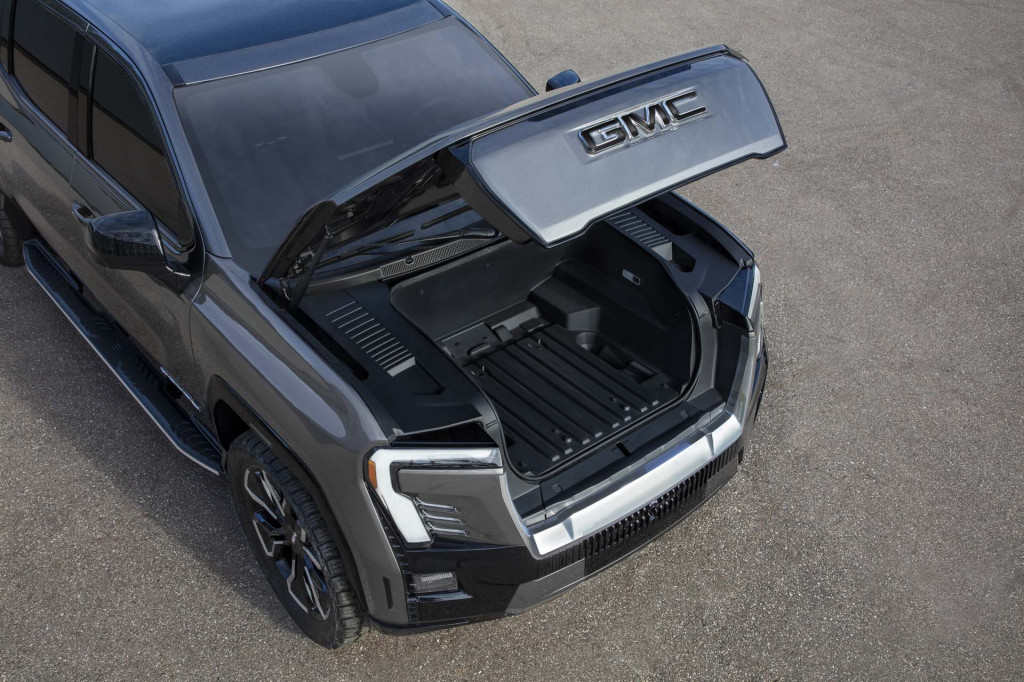
The front trunk—often called a frunk, but termed an “eTrunk” by GMC—holds 11.0 cubic feet of cargo and is an ideal space for a carryon bag or backpack. 

2024 GMC Sierra EV Denali Edition 1

2024 GMC Sierra EV Denali Edition 1

2024 GMC Sierra EV Denali Edition 1

2024 GMC Sierra EV Denali Edition 1

2024 GMC Sierra EV Denali Edition 1

2024 GMC Sierra EV Denali Edition 1

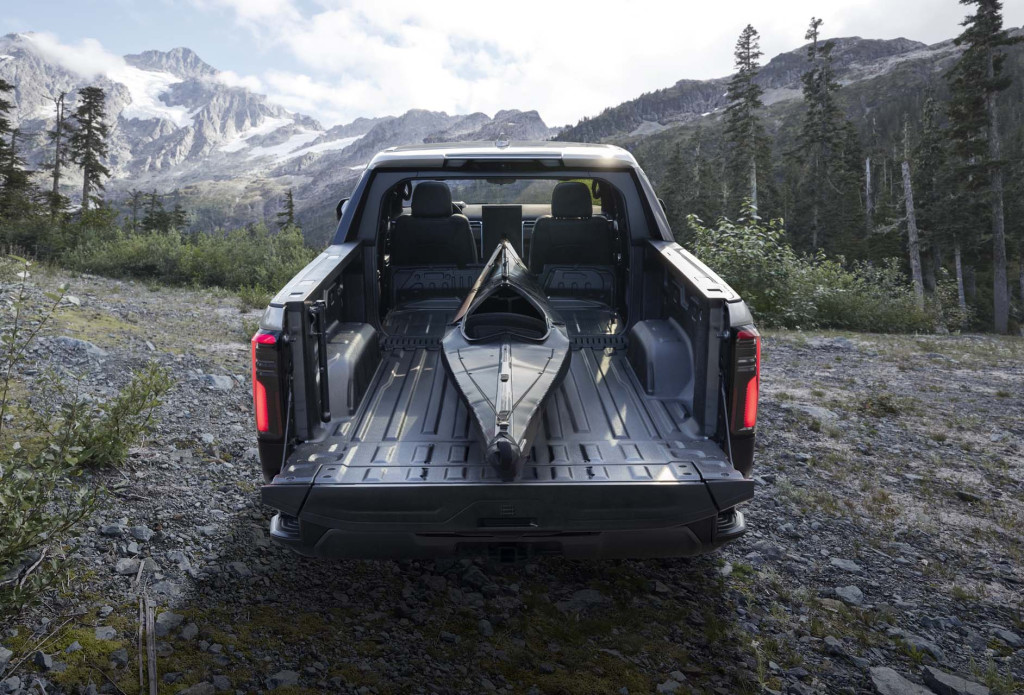
Like the Silverado EV, the Sierra EV offers a super-versatile midgate setup—meaning that the bed of the truck can be expanded to fit items up to 11 feet long, while still accommodating passengers in the back seat. Think of it as wiggle room to balance out your needs, depending on the job. 

An adaptive air suspension also improves ride comfort and allows the truck to be raised or lowered by about two inches.

The 2025 GMC Sierra EV also ups its max towing capacity 500 pounds versus last year—to 10,500 pounds. 

2024 GMC Sierra EV Denali Edition 1

2024 GMC Sierra EV Denali Edition 1

GMC says that those upcoming Elevation and AT4 trims of Sierra EV will arrive in the first half of 2025. Here, it might be useful to look to the gasoline Sierra, where the Elevation models get more blacked-out trim plus suspension and towing upgrades and add a few more convenience features, while AT4 models get an off-road-tuned suspension and skid plates. But exact details won’t come until some months later, when the arrival of these models will surely, once again, bring some lower prices to this electric truck lineup.


Source link

Azimut Seadeck 6: Conscious Performer

0


The 57ft 5in Seadeck 6, the first model in the Seadeck series

At over 57ft, the Azimut Seadeck 6, the first in a new motoryacht series, that was recently joined by the 71ft 2in Seadeck 7. The team behind the new series includes Names Studio for the naval architecture, Alberto Mancini for the exterior lines, and architects Matteo Thun and Antonio Rodriguez for interiors.

“When we started work on the Seadeck concept, we asked ourselves what the needs of today’s more environmentally-conscious yachtsmen were,” says Federico Lantero, Head of Product Design at Azimut Yachts. “We identified three key points: reduced emissions, sustainable materials and the chance to enjoy the sea in a very direct and authentic way.”

The new approach to yachting and living at sea that Azimut identified called for a yacht that was new even below the waterline; that is where Names Studio came into play.

“We have been collaborating with the Azimut-Benetti Group for years, but this is the first time we were entrusted with the creation of an entirely new hull,” says Francesco Rogantin of Names.

Names Studio designed the dynamic PVC and rePET hull

“The input from the shipyard was very clear: design the most efficient hull possible, not so much in terms of pure speed but in terms of cruising speed, with the objective of minimising impact on the marine environment and lowering operational costs through efficient fuel consumption.”

Weight considerations were key and the choice of pod propulsion, with its well-known fuel efficiency and lowered noise and vibration levels, was almost a given. The new hull was purpose-designed to accommodate three Volvo Penta D6-IPS650 pods, a first for Azimut.

With a length of 17.5m and a beam of 5.05m, the Seadeck 6 has a wide stern and streamlined bow that allows it to begin planning at lower speeds while ensuring a smooth ride.

“We used computational fluid dynamics simulations to calculate performance potential: 33 knots at top speed and 24 knots at cruising speed,” Rogantin says. “Our predictions were confirmed and even bettered during the first sea trials.”

Designer Alberto Mancini developed taut, clean lines for the exterior

Even construction materials helped to meet Azimut’s ‘green’ goals. The Seadeck 6 has a hull built of PVC, while its superstructure (part of the deck and bulkheads) is constructed in recycled PET, with elements such as the superstructure in sturdy and weight-saving carbon fibre.

Above the waterline, the Seadeck 6 was designed by Alberto Mancini. The taut, clean lines he has created for his latest collaboration with Azimut are the starting point for a redefinition of the relationship between the boat and the natural environment around it.

The Seadeck 6 is about being together at sea with a more conscious connection to nature. Spaces are open, movement is fluid, and the combination of technology and design is seamless. With exterior and interior areas that are in constant communication, barriers are imperceptible, allowing an immersive experience in nature that gently carries you away from the cares of everyday life.

Gentle is the keyword that defines the Azimut Seadeck series. The hull design is gentle on the environment, the exterior lines are harmonious and easy on the eyes, while the interiors are soothing for the body and soul.

Wide-open spaces like the ‘fun island’ aft deck are signatures of the Seadeck 6

To create the Seadeck 6 interiors, Azimut called in Milan-based Matteo Thun & Antonio Rodriguez, a world-renowned architectural studio famous for creating spas and wellness retreats using a ‘conscious design’ approach.

Their concept of life at sea led to the removal of unnecessary elements, to bring out the essence of the natural or recycled materials used aboard, and to create calm by using a delicate, light and bright colour palette. Their Seadeck interiors redefine the concept of luxury at sea, bringing a feeling of wellness to the forefront through a living experience that’s as profound as it is essential.

The eco-conscious approach is evident as soon as you board the boat and feel cork, not teak, decking underfoot.

Sustainable materials include cork decking

The benefits that cork brings create a multiple-win situation. It’s a natural material that’s easier to harvest and regenerates at a much faster rate than teak so it’s better for the environment. It also has better heat-insulation properties that make life on board more comfortable and has excellent grip, so enhances safety.

But it’s the comfort-conscious aft-deck setup that really wins you over. A large sunpad overlooks a convertible beach platform that reveals a wide staircase when it’s lowered down into the water.

This area’s ‘fun island’ setup incorporates features from the Azimut-Benetti Group’s Oasis line of superyachts with their opening side platforms. Just deploy the Seadeck’s side platforms and you’re lounging in the middle of a princely terrace with wide open spaces and the easiest possible access to the sea.

The interior’s neutral palette lets the views take centre stage

The sunpad flips up to reveal storage space for toys and its sliding backrest does double duty to become a dining banquette. The aft cockpit is sheltered by an automatic awning, while ‘barely-there’ glass side panels keep the area dry but leave the visuals wide open.

Also wide open is access to the saloon. The galley with countertops in Lapitec – a durable sintered (high-temperature heated) stone material that is heat- and scratch-resistant – is separated from the aft cockpit by a drop-down window so that cooking, serving and savouring can all happen at the same time and in the same place.

Saloon windows are so large you can hardly tell the difference between indoors and out. Adding to an easy-going beach house vibe is a large skylight that lets sunshine filter through a slated shade.

The saloon maintains a connection with the outside world with a skylight and large windows

Materials are luxurious but, in keeping with the Seadeck’s calling, they are also ecologically produced. Carpeting, for example, is in Econyl, a high-quality fibre made from regenerated nylon fabrics and fishing nets.

The Seadeck 6 is designed to accommodate up to six guests in three cabins on the lower deck. The VIP cabin is fully fore at the bow with a centrally placed bed, and it shares a bathroom with a twin cabin.

The luxurious full-beam owners’ cabin is midships, with the bed starboard and a couch on the port side, while a crew cabin is accessed from a hatch in the aft cockpit. A washer-dryer in the guest cabin lobby is a nice extra, especially for those with family cruising in mind.

The owner’s cabin features a king-size bed and a lounging suite

Created for owners who enjoy helming as much as they like living in close contact with the sea, the Seadeck 6 offers fuel efficiency, reduced emissions and ease of use thanks to Volvo Penta IPS propulsion and joystick steering. Comfort aboard is ensured by a Seakeeper 9 gyroscopic stabiliser and there are solar panels mounted on the boat’s roof that can produce up to 1.4kW of energy.

This extra solar energy can supplement the boat’s 42kW lithium battery pack and help to run the boat’s Mild Hybrid Zero Emission hotel mode, where the batteries provide power for up to four hours during the day or eight hours at night when the boat is at anchor with the generators switched off. Another eco-friendly feature is water warmed up by recovered engine heat.

Giovanna Vitelli, Chair of Azimut-Benetti Group, says: “The Seadeck series represents a new chapter in our history. It is the synthesis of the group’s know-how and state-of-the-art technology to lower the environmental impact of our yachts.

The Seadeck 6 will be followed by larger sister models

“Sustainability is a word that is sometimes abused, but it’s a concept we have been consciously working on for more than two decades – not just in the last couple of years since the expression has become fashionable.”

From the looks of things, the Azimut-Benetti Group is going well beyond the usual eco-friendly lip service and putting their money where their mouth is. If you’re looking for a sweet and gentle spot for enjoying time on the water, the Seadeck 6 is not just a pretty package backed by an astute marketing campaign, but the real deal.

azimutbenetti.com
marineitalia.asia

This article was first seen on YachtStyle.co

For more on the latest in luxury yachting news and reads, click here.


Source link