These days, the amount of stress that many people feel has resulted in many seeking out alternative therapies in order to feel balanced and rejuvenated. In the USA in 2021, 24% of people said they used things such as herbal teas, supplements or alternative medicines to help with certain conditions. 10% reported using things such as non-prescribed marijuana as an alternative. The overall revenue of the alternative medicine and therapy industry is said to reach up to $30 billion in the USA.
Alternative therapies aren’t as controversial as some may think, in their own way they can provide a number of healing and health benefits which some people say they really help them in their life. In this article we’ll discuss the different types of alternative therapies which may help to provide some level of balance and calm in your life.
Popular Alternative Therapies
Reiki and Energy Healing
Reiki is classified as a form of energy healing which works by channeling the universal energy to promote healing and relaxation. When used for luxury healing, clients can expect to experience:
Integrative techniques which generally combine Reiki with other types of therapy like sound healing, hypnotherapy and aromatherapy.
Customized energy plans which are tailored to work with aligning a person’s energy center.
One-on-one consultations with private and certified reiki practitioners.
Some of the different techniques that are involved in Reiki include:
Clearing
Centering
Beaming
Infusing
Raking and smoothing the aura
Some people who may have conditions like cancer, anxiety, depression, autism, fatigue, chronic pain and infertility may incorporate Reiki into their wellness plan to see if it can help. Reiki energy healing has been popular for many years and is still one of the most popular choices of alternative medicine when it comes to healing.
Sound Therapy and Sound Baths
Sound therapy is a type of alternative solution which is said to help with relaxation and healing. This therapy is said to use vibrations from different instruments to enhance the healing properties of the body. When you undertake sound therapy and sound baths some of your luxury experience may include:
Guided sessions by experts using gongs and crystal bowls within a peaceful environment.
Personalized soundscapes and sounds which are customized for therapeutic benefits of different individual needs.
A combination of sound therapy and other therapies being combined for a more comprehensive healing experience.
Sound therapy is a fine art which needs to be done by experts. The wrong sound vibrations could cause harm if not done right.
Medical Marijuana
Medical marijuana is probably one of the more controversial alternative therapies you can use. Medical marijuana has undertaken many trials and studies, and in some states and countries has been legalized to help in treating certain medical conditions. When using medical marijuana for your luxury healing experience, some things to remember are:
You need a medical marijuana card from providers like Leafy Doc in order to use it.
You need to understand the rules and regulations for your state on the use of medical marijuana as in some states it’s still illegal.
It should only be used on an as needed basis to help with the ailment you’re struggling with.
It should be used under a proper medical plan which is setup by trained professionals.
Medical marijuana is available in a number of different ways including high end edibles, oils, tinctures, and creams. Some of the health benefits which are said to occur when using medical marijuana include, but isn’t limited to:
Relief of anxiety and stress which may be present throughout the day and hard to cope with.
Relief of pain for those who may have been diagnosed with a chronic illness or injury.
Promoting relaxation when used in the right way to help with a more balanced life.
Overall medical marijuana has and still is being used by many people.
Float Therapy
Float Therapy is the process of floating in a saltwater tank in order to achieve full relaxation. This type of therapy is said to offer sensory deprivation which then helps to relax the body. Some luxury facilities who do this type of therapy may offer:
Private float rooms which are designed specifically for comfort and tranquility.
Post float services which provide guided meditations and massages to enhance the overall experience.
Insights and information on what you may benefit if you utilize float service.
Float therapy benefits may include:
Relieving anxiety and stress
Reducing blood pressure and overall heart rate
Helping with depression
May relieve muscle pain and tension
Alleviates headaches
Improving sleep
Those who undertake float therapy might need to remember to breathe deeply from the diaphragm, and avoid touching the face as it may irritate the eyes with the salt water. It’s also best to lie still to gain the best effects when in the water. Float therapy has been used for many years and is still a popular choice for those who may need some stress relief.
Endnote
Alternative therapies have been used for many years as a way to help relieve different symptoms and ailments for those looking for self care options. While different people experience the effects differently, alternative therapies will continue to play a role in helping people for many more years to come.
For more on the latest in beauty and wellness reads, click here.
Tucked away in the picturesque hills of central Italy is Magione – Autodromo dell’Umbria. Once every year, this small circuit transforms into a vibrant hub for car enthusiasts during the Tarox Magione Super Battle (MSB). 2024 marked its third consecutive edition, with participation doubling and competitors and spectators travelling from across Italy, Portugal, and the UK.
I had the honour of being invited by the Magione Super Battle’s organisers, Alessio C. and Alessio P., to witness the two days of festivities, from setup to the final pack-down. To say it was brilliant would be an understatement.
As mentioned in previous MSB coverage on Speedhunters, the event was inspired by Attack Tsukuba. After visiting the original Attack – formerly known as Battle Evome – Alessio C. was determined to bring a slice of Japanese time attack culture back to Italy. He even secured the blessings of Daisuke Aoki, the founder and CEO of Attack, to use the Attack logo in the event’s promotion.
Fast forward two years, and the Magione Super Battle has grown well beyond its grassroots origins. While motorsport runs deep in Italy, time attack in this format – particularly centred around Japanese vehicles and culture – is still a relatively new concept.
Saturday: Practice
Saturday morning greeted us with patchy weather that slowly gave way to clearing skies. Undeterred, many MSB entrants made their way to Magione for the practice sessions. Autodromo dell’Umbria is a technical circuit similar to Tsukuba, with 11 turns and a 2.5km length (Tsukuba TC2000 has nine turns over 2.0km). This results in a tight battlefield where competitors aim for times in the low one-minute range.
While you might envision Italian car culture dominated by Fiats, Ferraris, and Alfa Romeos, there’s a fast-growing Japanese and grassroots Euro car scene. A Portuguese AE86, a UK RWB Porsche, and a handful of Lotus models were all in the lineup. However, one brand dominated the paddock and wasn’t what I expected: Honda.
S2000s and Civics were plentiful at the 2024 Magione Super Battle, showcasing how Hondas have become the go-to chassis for competitors seeking the most competitive and economical way to put down a respectable lap time. However, their story deserves dedicated coverage, so stay tuned for that.
Sunday: The Main Event
As the ominous weather moved on, Sunday morning brought a stunning fog that blanketed Magione, setting the stage for a perfect day of racing.
MSB’s programme included three morning sessions for each category, followed by demo runs featuring notable Italian-built cars. The afternoon showcased the eagerly anticipated ‘Super Lap’ segment, where each car chased class-specific and overall unofficial lap records.
Several cars set personal bests, but none rivalled the staggering performance of a Honda K-swapped Lotus Exige, which left the rest of the paddock in its rearview mirror with a 1:16:088 lap. I was told that’s faster than a professionally driven Porsche GT3 RS under similar conditions.
As the event progressed, the crowds swelled, filling the facility. Talk shows and interviews shared the excitement of time attack experiences, and the pits were kept open for all to explore. The atmosphere echoed that of Attack Tsukuba, fostering a laid-back vibe without any negative competitive rivalry. Both Alessios noted the unprecedented attendance – a testament to the planning and passion invested in the MSB.
Amidst the sea of competing cars, a few stood out, drawing crowds to the pit wall while they ran their laps.
Hiroshima Screamer
First up was Alby’s astonishing 26B-powered FD3S Mazda RX-7. When I received the invitation to cover the Magione Super Battle, I never imagined encountering a four-rotor in action, so it was a very welcome surprise. This meticulous build is relatively unsuspecting from the outside, but the RX-7 was impossible to ignore as it blasted down Autodromo dell’Umbria’s main straight.
Another crowd favourite was a bright yellow Celica. This is no ordinary Toyota, so I’m saving the details for a standalone spotlight.
Magione Parade
As Sunday came to a close, a select group of cars took to the track for MSB’s traditional parade lap.
I seized the opportunity to hop into the back of a van, precariously dangling out of the boot to capture the final moments of a fantastic event.
With its growth trajectory, I do not doubt that the Magione Super Battle will soon rival Japanese Attack events in size. From the little details, like imported nobori flags, to the warm hospitality and sense of community, MSB represents the essence of grassroots motorsport passion. Under Alessio C. and Alessio P.’s guidance, it’s only going to get bigger and better from here.
Were you obsessed with “Back to the Future” growing up? Did you never grow out of that obsession? Do you quote ‘80s movies so frequently your wife finally left you for some guy willing to watch newer movies and eat his vegetables without being told? Well, then boy have I got the car for you — this Back to the Future–themed 1982 DeLorean DMC-12 that’s currently listed on Cars & Bids. Why bidding is already up to $35,000 at the time of writing, I can’t explain, but then again, I also have no idea who these replicas are for.
My Favorite Christmas Present Was A Power Wheels Delorean
Now, I’ll readily admit, I’m too young to truly get “Back to the Future.” I may have been alive in the late 1900s and experienced the movie for the first time on VHS, but I was an ‘89 baby. By the time I was old enough to appreciate “Back to the Future,” its cultural impact had dissipated. Had I been born 20 years earlier, I would have been 16 when it came out, and I’d probably understand the attachment people have to a prop made out of a shitty car, but whether it’s age or something else, I just don’t get it.
The thing is, though, I don’t think it’s specifically a “Back to the Future” thing. I just don’t see any point in owning something that’s so obviously a movie prop. Want to build a replica of the black Toyota SR5 from the same series? Go for it. In fact, I even understand paying a little extra for a truck with the right BTTFlook. It’s a subtle nod to those who know, but to everyone else, you’re just driving around in a cool, old pickup truck.
A DMC-12 that’s been given the time machine treatment, on the other hand, is only cool to people who are big fans of a move that’s nearly 40 years old. If you took it to a convention or something, I could see the appeal there, but for use outside of that? You’re just driving around in an obvious movie prop, and it comes off like you desperately want people to talk to you about your car. For less than $10,000, I could maybe understand, but these things go for real money! There are five days left on the auction, and as previously mentioned, it’s already been bid up to $35,000. I honestly wouldn’t be surprised if this thing ends up going for more than I make in a year.
The real questions here are “To whom?” and “Why?” And while it probably sounds like I’m being snarky here, I promise I genuinely want to understand. What is the appeal of these cars? Are Gen X-ers realizing 65 is creeping up on them quickly and desperately trying to relive their youth? Please tell me what I’m missing because, clearly, I’m missing something here.
Earlier this month, McLaren showcased its next-generation hypercar. Now, it’s Ferrari’s turn. The LaFerrari successor (F250) is expected to be revealed next week.
Prototypes of Maranello’s new flagship hypercar have already been spotted. So, unlike the McLaren W1, which was a closely guarded secret, right until its official reveal, we have a rough idea of what the LaFerrari successor will look like.
The F250 was recently showcased at a private event. Based on the inputs of those present at the event, @alberto.tosi has created this digital rendering. It is said to be one of the best we’ve seen so far. By that, we mean, it’s very close to the real thing.
The F250 will be a hybrid just like its predecessor. However, it is heavily inspired by Ferrari’s Le Mans-winning 499P hypercar. It is powered by a race-derived twin-turbo V6 engine. It is paired with two electric motors that drive the front wheels. The combined output is said to be around 1200 hp, allowing the F250 to sprint from 0-62 mph in 2.15 seconds.
Stellantis initiates leadership change to turn around poor performance in North America
Stellantis on Thursday confirmed that CEO Carlos Tavares will retire in early 2026 when his current contract expires.
The company in September said it was already searching for a successor for Tavares, though it said at the time that renewing Tavares’ contract was still on the table.
The announcement of Tavares’ planned exit from Stellantis follows a meeting of the board of directors this week, where several changes to the company’s leadership were made. The changes come as Stellantis struggles to turn around steep losses in North America.
Key among the leadership changes is the replacement of Chief Financial Officer Natalie Knight by Doug Ostermann, and the replacement of North America Chief Operating Officer Carlos Zarlenga by Antonio Filosa. Knight is leaving the company while Zarlenga will be moved to another position, Stellantis said. Filosa is currently head of Jeep and will keep that position while also heading the North American division.
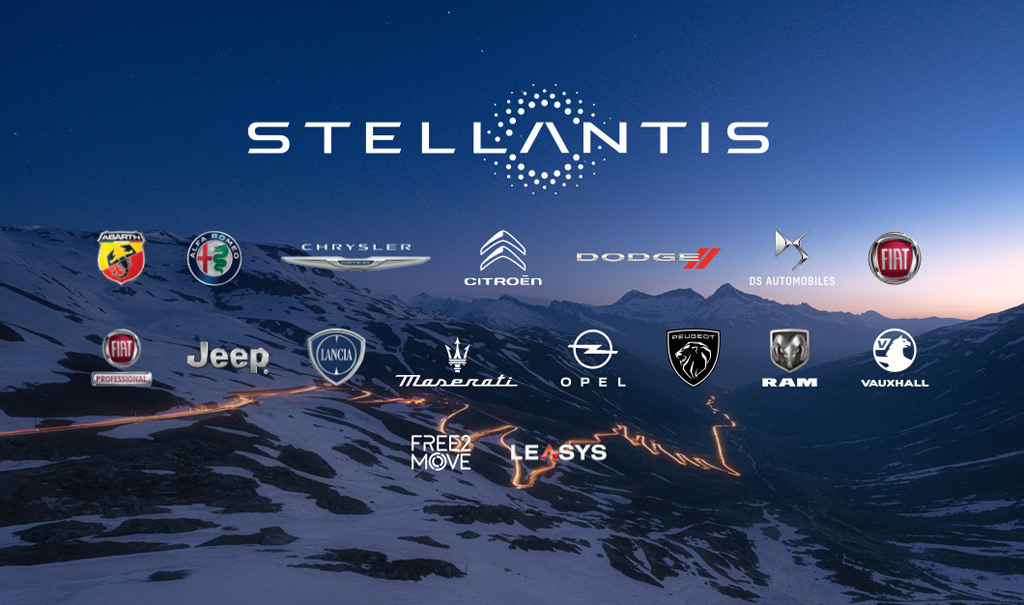
Stellantis brands
Tavares has served as Stellantis’ CEO since the company was formed in 2021 from the merger of Fiat Chrysler Automobiles and France’s PSA Group. He managed to make some efficiency improvements across the company’s 14 brands shortly after the merger, but came under fire this year after Stellantis in July reported a decline of 48% in net profits year-over-year.
The poor performance has led Stellantis to cut its profit forecast for 2024 and signal possible reductions to its generous dividend and share buyback programs, Reuters reported on Oct. 3.
The decline is mostly due to falling sales in the U.S., where dealers are also angered by some of the strategies Tavares has been executing. Many of their grievances were listed in an open letter to Tavares issued in August by the Stellantis National Dealer Council. The letter included complaints about “reckless short-term decision-making” to secure record profits in 2023, plus the “rapid degradation” of Stellantis’ U.S. brands, which include Chrysler, Dodge, Jeep, and Ram.
Stellantis in September responded to the letter, stating that it has developed a plan with the dealer body to help boost sales and reduce inventories. Stellantis has also initiated some cost cutting measures, and Tavares in July warned that some brands could be dropped if they continue to underperform.
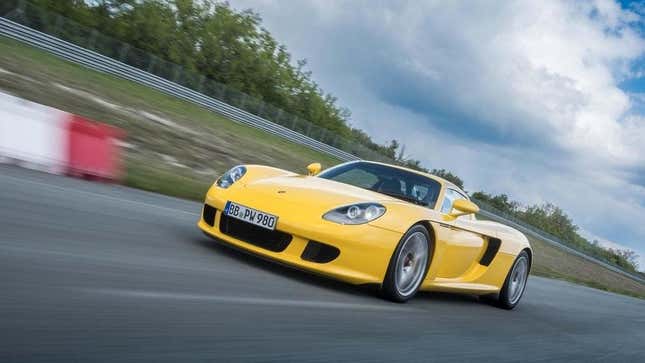
It isn’t exactly common for automobile manufacturers to focus on continued development of its decades-old long-dead product lines, but Porsche is serious about keeping its Carrera GT owners happy. Porsche factory racing driver Joerg Bergmeister worked directly with Michelin to develop a new sticky tire specifically formulated to make the car even better now than it was at the time it launched in 2003. The new Carrera GT–spec Pilot Sport Cup 2 is a huge improvement from the Pilot Sport 2 the car had from the factory, which are notoriously bad in cold and wet weather. It’s better even than the Pilot Super Sports that Porsche developed for the car in 2013, as well.
Porsche’s Latest Concept Is The Sexy Electric EV HyperCar Of Our Dreams
A few weeks ago we detailed that owners would get a fresh set of tires for their Carrera GT when the car was brought in to fix the long-lived suspension recall. This new tire is an important way for Porsche to keep CGT owners happy, because these cars are now worth deep into the seven figures and Porsche wants them to continue buying high-dollar P-cars. Only 1,270 units of the Carrera GT were built new, and at least a few of those have been destroyed in the intervening 20-ish years, so this is a huge engineering investment from Porsche for a really small subset of car culture. Admittedly that subset includes folks like Jerry Seinfeld, Jay Leno, and Ralph Lauren.
Image : Porsche
“The Carrera GT is an absolute dream car. This is why I’m particularly excited that the new tire raises the performance of this legend to a new level,” said Bergmeister. “It’s very unusual for new tires to be developed for a 20 year old vehicle. This underscores how important the Carrera GT is for Porsche and their customers to this day.”
“The new tires do not just make the Carrera GT faster, they also make it easier for the driver to pilot the car in a spirited manner. This demonstrates that tire development never stands still. In particular, motorsport as a development platform enables technology to make its way into production tires. This technology transfer noticeably improves performance.”
How much better performance do these tires achieve than the ones the car was originally equipped with? Porsche doesn’t get into the specifics of lateral grip or lap times, though both are surely better. It does, however, elucidate some pretty impressive statistics for braking performance. The new tire will stop a CGT a full eight feet earlier in a stop from 62 mph, and an impressive 39 feet shorter from 124 mph. And you can bet it’s going to be exponentially shorter from the car’s 205-mph top speed.
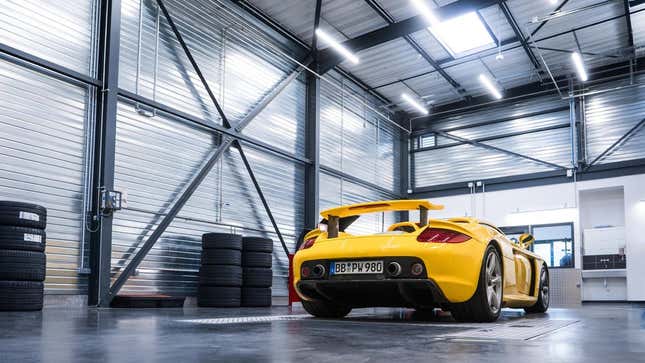
Image : Porsche
Carrera GTs were notorious for tricky handling, as the carbon chassis supercar features a peaky Formula 1–developed 8,400-rpm V10 engine and practically no electronic driver assist features outside of anti-lock brakes. These new tires will help make the car slightly easier to control, as the new tire’s breakaway characteristics are much more progressive and communicative. That should also help prevent some well-heeled not-so-hot-shoes from spinning their car at high speed into a light post.
BMW’s M3 will come in two separate versions in the future, one with an electric powertrain and the other with a gas engine.
The information was revealed by BMW M boss Frank van Meel in an interview with BMW enthusiast website Bimmer Today published on Thursday.
The M boss already confirmed in June that an electric M3 is coming. Its powertrain will feature a quad-motor setup, and modified i4 hatchbacks running the new powertrain have been testing on public roads since at least 2022. Peak power is expected to reach as high as 1,341 hp.
As for the gas version, van Meel in his interview with Bimmer Today said the current twin-turbocharged 3.0-liter inline-6 will stick around for years to come, as engineers are working to ensure it meets future emissions rules, particularly in the European Union. The gas version of the future M3 may not be as powerful as its electric counterpart, but a likely lighter curb weight should ensure it delivers just as much fun. Van Meel didn’t say whether hybrid technology will be used, but it is possible, as seen in the latest M5.
Frank van Meel
The two M3 versions are likely to differ well beyond their powertrains. That’s because the electric M3 will be based on BMW’s Neue Klasse dedicated EV platform, while the future gas M3 will likely use an updated version of the CLAR platform underpinning the current M3.
An electric X3, likely badged an iX3, debuts next year as the first Neue Klasse-based vehicle. It will be followed in 2026 by an electric 3-Series, likely badged an i3. This means the electric M3, which may be badged i3 M, or something similar, will likely surface around 2027. That’s about when the next gas 3-Series is due. The M3 version should trail the regular sedan by about six months to a year.
In the case of the electric M3, van Meel has also hinted that it may come with something similar to Hyundai’s simulated gear shifts. He said in June that such a system provides a sense of how fast the car is accelerating and the speeds it is reaching without the driver actually having to look, which will aid the driver in extreme situations, like on a racetrack.
Nepal, the nation of towering Himalayas and diverse wildlife, is a paradise for nature enthusiasts.
Among the many revered treasures this country offers, snow leopards in Nepal stand out as one of the most unique and elusive creatures. These magnificent big cats, with their thick fur and piercing blue eyes, testify to the rash beauty of the high-altitude region that they call home.
Just picture yourself standing on a snowy mountain peak, the crisp mountain air filling your lungs, and the thrill of spotting a distinguished snow leopard in its natural habitat. This is the dream that comes true for those who embark on a snow leopard tracking expedition in Nepal.
As you begin your journey of chasing the Elusive Snow Leopards in Nepal with Voyageons Nepal, you will immerse yourself in the aura of the vibrant city of Kathmandu renowned for its rich cultural heritage. You’ll get to explore ancient temples, bustling markets, and serene monasteries, gaining insights into the country’s spirituality and traditions.
From Kathmandu, you’ll trek to the Manang Valley, the heart of snow leopard territory. As you ascend through lush forests, terraced fields, and towering peaks, you’ll be captivated by the breathtaking scenery. The Manang Valley is located at the Annapurna Conservation and is considered a hotspot for snow leopards, providing excellent opportunities for sightings.
You do not need to worry about your safety and security as experienced nature guides and local connoisseurs will accompany you. You’ll spend several days exploring the rugged terrain, searching for signs of snow leopard activity. Armed with binoculars and a keen eye, you’ll learn to interpret tracks, scat, and other clues that reveal the presence of these elusive creatures. The thrill of tracking snow leopards is unmatched as you become immersed in the untamed beauty of the Himalayas.
After the challenging but rewarding experience of tracking snow leopards, you’ll have the opportunity to relax and unwind in luxurious accommodations in Nepal. Enjoy breathtaking views of the mountains, indulge in delicious local cuisine, and soak in the tranquil atmosphere.
If you think this is the end of your adventure, you are completely wrong. Your adventure doesn’t end there. You’ll also explore other highlights of Nepal, including the enchanting city of Pokhara, known for its serene lakes and stunning mountain views.
You will get to explore ancient temples, hike to nearby hills, or simply relax by the lake and enjoy the peaceful ambiance. As you journey back to Kathmandu, you’ll continue to explore the country’s rich cultural heritage, visiting historic sites and immersing yourself in the vibrant local atmosphere.
Your adventure culminates in a lavish farewell dinner, where you can reflect on your incredible experiences and celebrate your successful snow leopard tracking expedition.
Tracking snow leopards in Nepal is more than just a wildlife adventure; it’s a journey of discovery, a chance to connect with nature, and an unforgettable experience that will stay with you for a lifetime.
So, if you’re ready to embark on a thrilling adventure in the heart of the Himalayas, pack your bags and get ready to track the elusive snow leopard.
Build strength and endurance: you can engage in regular cardio and strength training to prepare for the demanding trek.
Practice hiking: you should get used to hiking in hilly terrain to acclimatize your body.
Mental preparation
Be patient: As snow leopards are elusive, be prepared for potential challenges and disappointments.
Maintain a positive attitude: You must maintain a positive mindset as it will help you overcome obstacles and enjoy the experience.
Ethical considerations
Respect wildlife: You will have to observe snow leopards from a distance to avoid disturbing their natural behaviour.
Support conservation efforts: You can also contribute to organisations working to protect snow leopards and their habitat.
Packing tips
Pack light: Minimise your luggage to make the trek easier.
Bring essential medications: Ensure you have any necessary medications for altitude sickness or other health conditions.
Consider renting equipment: If you don’t own all the necessary gear, consider renting items from local outfitters.
Cultural etiquette
Respect local customs: Learn about and follow local customs and traditions.
Support local businesses: Purchase souvenirs and meals from local vendors to contribute to the community.
Photography tips
Bring a DSLR camera: A high-quality camera will capture the stunning scenery and wildlife encounters.
Use a telephoto lens: A telephoto lens is essential for photographing snow leopards from a distance.
Be patient and discreet: Avoid disturbing wildlife or disturbing other trekkers.
Choose your season
Winter (December to February): The most popular time for snow leopard tracking, offering the best chance of spotting them in the snow.
Spring (March to May): A quieter season with fewer crowds and a chance to witness the beautiful Himalayan wildflowers.
What to expect
Trekking through breathtaking landscapes: Traverse rugged mountain terrain and witness stunning Himalayan views.
Expert guidance: Benefit from the knowledge and expertise of our experienced guides.
Wildlife encounters: Spot snow leopards, as well as other fascinating creatures like Himalayan black bears and red pandas.
Cultural immersion: Experience the rich culture and traditions of Nepal.
Why Choose Voyageons Nepal?
Voyageons Nepal offers expert knowledge gained from years of experience in the Himalayas, with a deep understanding of snow leopard behavior. Their expeditions are personalized, tailored to meet the specific needs and interests of each traveler. Committed to sustainability, Voyageons Nepal prioritizes responsible tourism and actively supports local communities throughout their operations.
Also known as the “ghosts of the mountains,” the Snow leopard, a creature of myth and mystery, awaits those who dare to seek it in its natural habitat. With Voyageons Nepal, your dream of encountering this elusive predator can become a reality. We offer a meticulously crafted expedition that goes beyond just tracking—it’s a journey of discovery, cultural immersion, and breathtaking Himalayan vistas.
This experience isn’t just about the thrill of the chase. It’s about becoming a part of the solution, supporting conservation efforts that ensure the snow leopard’s continued existence. You’ll return home not only with awe-inspiring memories but also with a deeper understanding of nature’s delicate balance and the importance of preserving these magnificent creatures.
So, are you ready to answer the call of the Himalayas? Are you prepared to test your limits and witness the raw beauty of the high mountains?
Pack your bags, embrace the spirit of adventure, and join Voyageons Nepal on an unforgettable quest to track the elusive snow leopard.
Welcome to Kathmandu, the lively heart of Nepal. You’ll feel the warmth of Nepali hospitality right from the moment you land.
Once you settle into your cozy accommodation, it’s time to kick off your adventure with a delightful welcome dinner. Trust me, the flavors here are something you won’t want to miss!
Day 2: Kathmandu exploration
After a delicious breakfast, get ready to dive into the cultural gems of Kathmandu.
Make sure to visit Swayambhunath (also known as the Monkey Temple), the stunning Bouddhanath Stupa, and the sacred Pashupatinath Temple. Each of these UNESCO World Heritage Sites is a feast for the eyes and soul – you’ll be captivated by the spiritual ambiance and incredible architecture.
Day 3: Travel to Besisahar
Rise and shine! Today, we’re off to Besisahar, the gateway to the enchanting Manang region. As you leave Kathmandu behind, you’ll witness the stunning transformation of landscapes.
Get ready for some serious mountain adventures ahead!
In the evening, enjoy a tasty dinner with the locals – it’s a great way to immerse yourself in the culture.
Day 4: Besisahar to Chame
Continuing our journey, we head to Chame, a charming town nestled among snow-capped peaks. The views of the Himalayas are simply breathtaking!
Keep your eyes peeled for some wildlife along the way – you might spot blue sheep, Himalayan tahr, and a variety of beautiful birds. It’s like nature’s own show!
Day 5: Chame to Manang
After breakfast, we’re off to the captivating town of Manang, your base for the thrilling snow leopard exploration.
The Himalayan vistas here are nothing short of spectacular. Get ready to prepare for some exciting wildlife quests in the rugged terrain that lies ahead!
Day 6: Snow Leopard tracking (1st day)
Fuel up with a hearty breakfast, because today we embark on our first snow leopard tracking expedition!
With expert trackers guiding us, you’ll learn the ins and outs of tracking techniques. It’s a full day of adventure, and after all that excitement, enjoy dinner while soaking in panoramic views of the majestic peaks.
Day 7: Snow Leopard sighting (2nd day)
Get ready for another action-packed day of snow leopard tracking! You’ll build on the skills you learned yesterday, and who knows – you might just capture some breathtaking moments with your camera!
Enjoy a picnic lunch in the stunning Himalayan landscapes, and then head back to your cozy accommodation for a relaxing dinner.
Day 8: Snow Leopard tracking (3rd day)
Early birds get the best views!
Rise for another exhilarating morning of tracking. With binoculars and spotting scopes in hand, you’ll increase your chances of spotting another elusive snow leopard. Chat with your fellow adventurers about their experiences and folklore surrounding these magnificent creatures.
And don’t forget to look up at the night sky for some stargazing – it’s simply magical!
Day 9: Snow Leopard expedition (4th day)
Start your day by learning about the conservation efforts for snow leopards and their habitats. You’ll get to practice your tracking skills with guidance from the pros, enhancing your chances of a sighting.
Share stories and laughs over a delicious dinner with your fellow adventurers in the evening.
Day 10: Return to Besisahar
After an early breakfast, it’s time to wrap up the snow leopard exploration and journey back to Besisahar.
Take a moment to reflect on the incredible experiences and encounters you’ve had in the breathtaking Himalayan wilderness.
Day 11: Back to Kathmandu
We’re heading back to Kathmandu today, where a farewell dinner awaits!
Enjoy a laid-back day exploring the bustling streets and vibrant markets of the city. There’s so much to see and do, so soak it all in!
Day 12: Departure from Nepal
As we transfer to Tribhuvan International Airport for departure, take a moment to bid farewell to this beautiful country. You’ll leave with a sense of accomplishment and a deeper appreciation for the stunning Himalayas and the incredible experiences you’ve had.
Welcome to VoyageonsNepal, where our dedication to travel goes beyond exploration – it’s about creating a positive impact. Our mission is to offer unparalleled and sustainable travel experiences in Nepal that contribute to the well-being of local communities and empower entrepreneurs.
Welcome to VoyageonsNepal, where our dedication to travel goes beyond exploration – it’s about creating a positive impact. Our mission is to offer unparalleled and sustainable travel experiences in Nepal that contribute to the well-being of local communities and empower entrepreneurs.
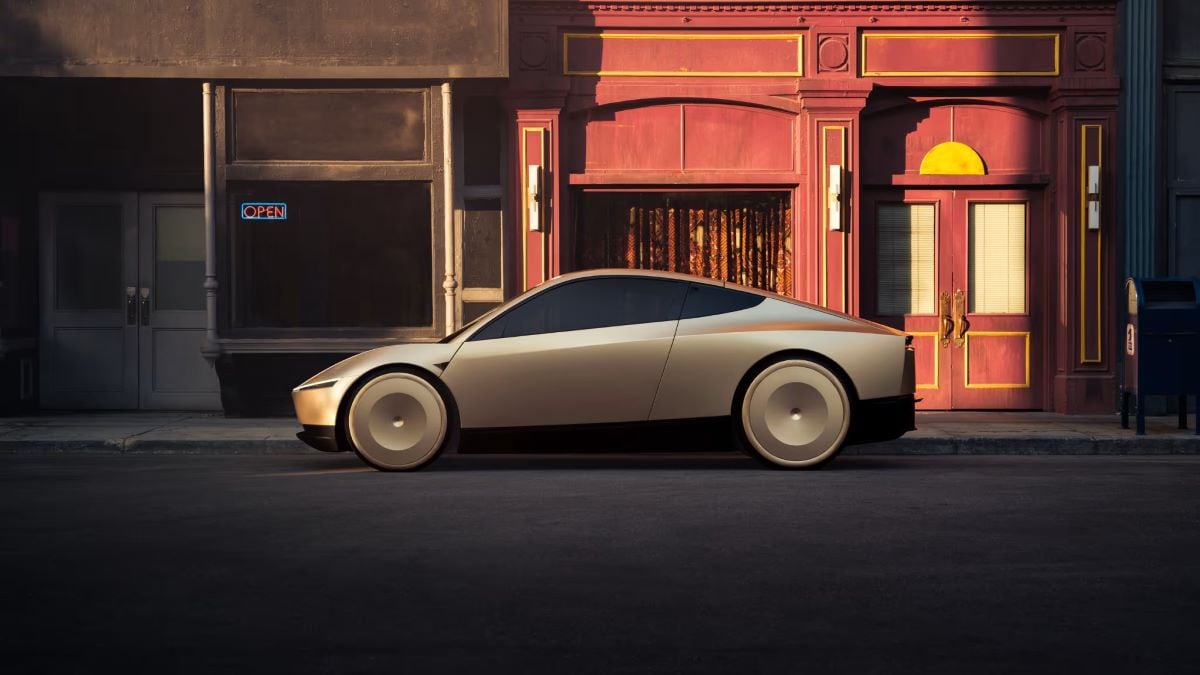
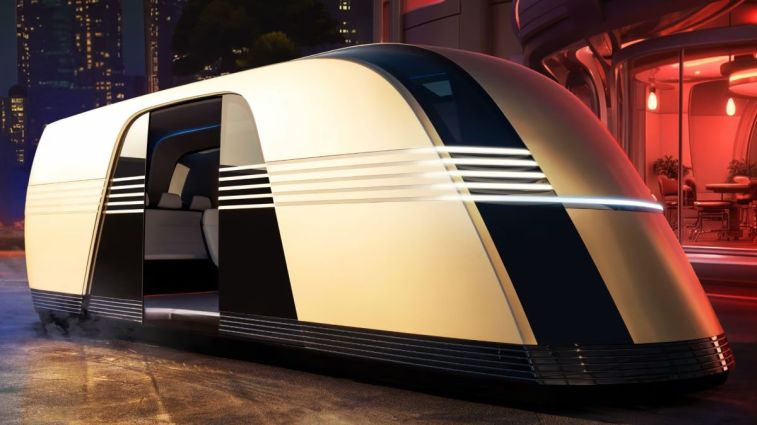
Tesla revealed nearly two dozen prototypes of its new Robotaxi tonight at an event dubbed “We, Robot.”
Tesla CEO Elon Musk took the stage via a lengthy ride around a stage set built to resemble a city. There were theatrical obstacles. The crowd cheered. Guests at the event were later invited to take rides around the set in the self-driving Robotaxis.
The Robotaxis continued to circulate around the set, hosted at a Warner Bros. facility in Los Angeles, while Musk spoke. Alongside the Robotaxi, Musk debuted the Robovan, although less was said of this larger robotaxi format.
Musk pitched the “cybercab” as a potential investment, with “shepherds” keeping “flocks of cars.” He also said it would cost “less than $30,000.”
At one point Musk even said the Robotaxi would somehow result in the replacement of urban parking lots with parks. “We’re taking the ‘-ing lot’ out of ‘parking lot,’” Musk said.
Musk mentioned the Robotaxi’s self-driving ability could also be added to the Model 3 and Model Y.
Robotaxi production could begin as soon as 2026, or “at least before 2027,” according to Musk, who noted that he tends to be optimistic about timelines.
A Long Road to Truly Self-Driving Teslas
A decade ago, Tesla had a lead in the development of self-driving cars. Since then, CEO Elon Musk has made numerous promises, but a fully hands-off product hasn’t (yet) materialized, at least beyond prototypes on Hollywood stages.
Competitors like Google’s Waymo and General Motors’ Cruise have made leaps forward in the interim. But still, none have seen runaway success.
Waymo’s service has been operating for years and currently is launching its sixth generation of self-driving vehicles.
The company recently said that it operates about 700 vehicles and 100,000 paid driverless rides per week across its operations in San Francisco, Los Angeles, and Phoenix, Arizona.
GM’s Cruise service has operated driverless taxis since 2021 and paid driverless taxi rides since 2022. In October 2023, however, the company’s driverless taxi operation license was suspended due to concerns about the cars’ safety.
Since May, Cruise vehicles have been back on public roads in California pending further investigation by the National Highway Traffic Safety Administration (NHTSA). Cruise also operates vehicles in Phoenix, and Austin, Texas.
One of the most well-preserved and famous symbols of French grandeur is the Palace of Versailles, which is one of the most renowned royal estates in the world. The palace is located around 20 kilometers southwest of Paris, making it a well-visited place for visitors from all around the world. The palace is a UNESCO World Heritage site, and every year millions of tourists buy their tickets to Versailles and visits the palace, especially due to the opulent architecture, historical significance, and the breathtaking gardens behind the palace. Visiting the palace also means indulging in a brief glimpse of the lavish lifestyle of French royalty, especially during the reign of Louis XIV, who transformed the palace into an epicenter of political power in France.
The history of the Palace of Versailles
The early days of the palace was as a modest hunting lodge built in 1624 by Louis XIII. Afterwards, his son, Louis XIV or the ‘Sun King’, transformed the lodge into a grand palace. Expanding the lodge was a part of a greater plan of the king to centralize the French monarchy to display the absolute power of his reign. From 1682 and until the French Revolution in 1789, Versailles was the political and administrative heart of the French kingdom.
The palace is best known for its stunning Hall of Mirrors, which is a room lined with 357 mirrors which reflects the light from the large windows that overlooks the gardens. Furthermore, this room was where the Treaty of Versailles was signed in 1919 which ended World War I. But there is much more to be explores in the palace. There is the King’s and Queen’s apartments, the Royal Chapel, and the extensive gardens, which was designed by the landscape architect André Le Nôtre. Beyond the walls of the palace, the estate also includes the Trianon palaces and Queen’s Hamlet, which was a rustic retreat created for Marie Antoinette.
How to get tickets and avoid the long lines at the Palace of Versailles
It is always a good idea to be proactive when planning to visit the Palace of Versailles as planning ahead can save you time from the long lines, especially during the high season between April and October. On peak days, you can expect waiting time to be up to an hour or more, which is one reason why it is recommended to purchase tickets in advance. One tip is to buy a skip-the-line ticket, which is the best way to avoid queues. Buying from HelloTickets means that you got your tickets from an authorized vendor, which allows you to bypass the tickets counters.
Another tip is to arrive either early or late on the day of the visit. The palace is open from 9 AM, but the gardens are already accessible from 8 AM. If you go early, you can see the gardens in peace before the palace opens. Alternatively, you can arrive just a few hours before the palace closes to avoid the midday crowds. The best days to visit the palace are Wednesdays or Thursdays, since there tend to be less crowds compared to weekends. Furthermore, you can plan to visit during the low season, which is between November and March. Lastly, you should be aware that Versailles has two main entrances: Entrance A is for people with tickets and Entrance B for people who need to buy a ticket. This is why it is best to purchase your tickets beforehand: Otherwise, you will end up in two queues at Entrance B; first to buy the ticket, and for security.
Exploring Versailles and the Surrounding area
When you visit Versailles, it should only be about the palace itself. The estate offers many activities and attractions which you should not miss out on.
The gardens and fountains
The gardens of Versailles are just as famous as the palace. They span over 800 hectares, and it is built up around intricate geometrical patterns. The gardens also contain many beautiful fountains and sculptures. During Summer, you can enjoy the Musical Fountain Shows, where some of the fountains ‘dance’ to classical music.
The Grand and Petit Trianon
In the park itself, you can find the Grand Trianon and Petit Trianon, which are two smaller palaces. These were used by the French royalty for more intimate gatherings. Is you need a quiet alternative to the grand palace, then these structures is perfect, with the Petit Trianon being favored by Queen Marie Antoinette.
The Queen’s Hamlet
The rustic retreat of Marie Antoinette is a charming escape from the grandiosity of Versailles. The hamlet was built to resemble a pastoral village, to give the queen a taste of simple country life away from all the formalities of the court.
Beyond Versailles: Exploring the town
There is no doubt that the Palace of Versailles is the main attraction. However, the town of Versailles itself is a nice additional experience to add to your visit. Just outside the palace gates, you can find the Coach Gallery, which showcases a collection of royal carriages. In town, you will also find several markets, which gives you the perfect opportunity to sample local cheeses, breads, and wines, giving you a taste of an authentic French experience.
If you are staying for a longer stay, the surrounding Île-de-France region offers more historical landmarks and scenic beauty. Also make sure you spend some time in Paris, being located so close to Versailles, or expand your trip to a road trip and see some of the unique nature of the French Alps.
The technical storage or access is strictly necessary for the legitimate purpose of enabling the use of a specific service explicitly requested by the subscriber or user, or for the sole purpose of carrying out the transmission of a communication over an electronic communications network.
Preferences
The technical storage or access is necessary for the legitimate purpose of storing preferences that are not requested by the subscriber or user.
Statistics
The technical storage or access that is used exclusively for statistical purposes.The technical storage or access that is used exclusively for anonymous statistical purposes. Without a subpoena, voluntary compliance on the part of your Internet Service Provider, or additional records from a third party, information stored or retrieved for this purpose alone cannot usually be used to identify you.
Marketing
The technical storage or access is required to create user profiles to send advertising, or to track the user on a website or across several websites for similar marketing purposes.