Florida is the worst place for aging in place, according to a recent report by Seniorly.
The Sunshine State ranked last due to limited access to home health aides, along with a high housing cost burden and a high risk of weather-related hazards.
Seniorly named Utah, North Dakota, and New Jersey the best states to age in place.
In early June, Seniorly, a senior living marketplace and resource center, released its list of the safest states for aging in place. As Seniorly noted, in a recent AARP survey, 75 percent of older Americans say they would ideally like to remain in their homes. And that’s why “Seniorly broke down which states are doing it right—and which ones need to catch up—so that older adults and their families can make informed choices about where they’ll call ‘home’ in the long haul.”
To figure out which states are best for aging in place, and which ones can do better, the site looked at data across 10 categories, including the risk of isolation, home health care quality, home health aide availability, emergency care timeliness, smart home adoption, housing costs, road safety, local walkability, food delivery access, and weather hazards.
After analyzing its findings, Seniorly made a surprising finding: Florida, often touted as a retirement haven, is the worst state in the nation for aging in place.
“Despite its reputation as a haven for retirees, Florida ranks last due to limited access to home health aides (50 seniors per aide) along with a high housing cost burden, as 30.7 percent of older homeowners spend more than 30 percent of their income on housing,” Seniorly reported. “Florida’s 53 inches of annual precipitation also contributes to its low score in weather safety.”
There were, however, some areas where Florida performed quite well.
“Just 39.5 percent of older adults live alone, ranking it 8th nationally, and 20.6 percent of home health agencies earned a 4.5 or 5-star rating from CMS, placing it 13th,” the website added.
As for the other end of the spectrum, Utah ranked as the best state in the U.S. for aging in place. It won thanks to its low risk of social isolation, with Seniorly noting that only about one-third of seniors live alone. “Weather is also a plus, with just 10.1 inches of annual precipitation (No. 3), reducing the risk of weather-related hazards,” it added.
Other top states to consider if you wish to age in place include North Dakota at No. 2, followed by New Jersey (third), Idaho (fourth), and Texas (fifth).
The 24 Hours of Le Mans always delivers spectacle, but few experiences rival seeing it through Porsche’s eyes. For 2025, I had the privilege of attending as a guest of Porsche, enjoying exclusive access to their world-class hospitality and behind-the-scenes operations. From a garage tour that revealed the inner workings of the hybrid Hypercar team to a stroll through the pre-race grid walk packed with fans, legends, and race-bred machinery, the weekend offered a rich tapestry of emotion, engineering, and endurance.
The race itself was gripping. Porsche clinched victory in the LMGT3 class, though Ferrari took the overall win, leaving Porsche to settle for second in Hypercar. Still, the energy within Porsche’s camp remained electric. I watched the action unfold from the vantage point above Porsche’s pit garage—undoubtedly one of the best views at Circuit de la Sarthe. But much of my time was also spent at the Porsche Experience Centre Le Mans, with its panoramic views of the final corners and a display collection that spoke to the brand’s bespoke capabilities.
At the heart of the PEC sat the Sonderwunsch showcase: a celebration of Porsche’s one-of-one programme. Dominating the room was a jaw-dropping 918 Spyder Coupé, a one-off commission from the Piech family. Finished in Oxford Blue with Tangerine orange highlights and a matching interior, it is the only coupé-bodied 918 in existence. Alongside it sat another Sonderwunsch masterpiece—a 993 Speedster created for industrial designer Luca Trazzi, tailored to the most personal of briefs.
Elsewhere around the circuit, Porsche continued to underline its craftsmanship. At the Porsche Curves, the GT3 R Clubsport was on display—a customer race car, not homologated for Le Mans, but still a clear expression of Porsche Motorsport’s DNA.
At Porsche’s main hospitality hub, crowds flocked to see the road-legal 963 RSP, an audacious creation that channels the spirit of the Count Rossi 917K road car, which was also on display over at the PEC. The two cars together painted a bold lineage: one the outlaw ancestor, the other a futuristic homage that blurs the line between pit lane and public road, 50 years later.
These icons, old and new, were a reminder of Porsche’s place in both history and the future. Whether it was Sonderwunsch exotica or race-winning hardware, every car told a story. Every guest, myself included, left with a deeper sense of just how far Porsche’s influence stretches at Le Mans. It was a weekend where the results were not all that mattered, the Porsche brand demonstrated exactly what it means to live and breathe motorsport.
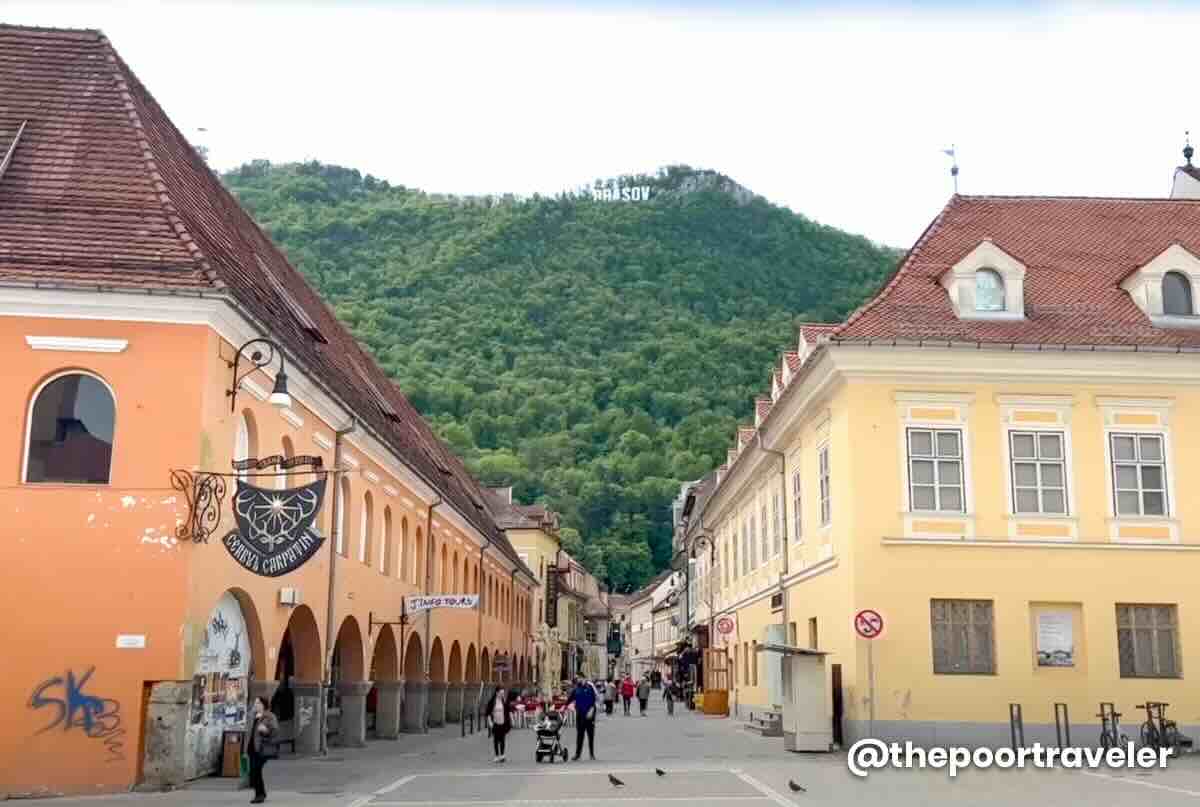
When Romania first popped up on our radar during our Europe trip planning, our eyes immediately zeroed in on Transylvania. And right away, we knew Brasov would be our home base. It just made sense — it’s close to a lot of the attractions we wanted to visit, it’s fairly easy to get to, and let’s be honest, its Old Town is straight-up stunning. One look and it’s really hard to say no.
If you’re flying into Romania, you’ll likely land in Bucharest, which is the capital city and is served by two airports. The smaller and older one is Aurel Vlaicu International Airport (BBU), also known as Băneasa or Bucharest City Airport. Not a lot of flights land here, and most of the ones that do are seasonal.
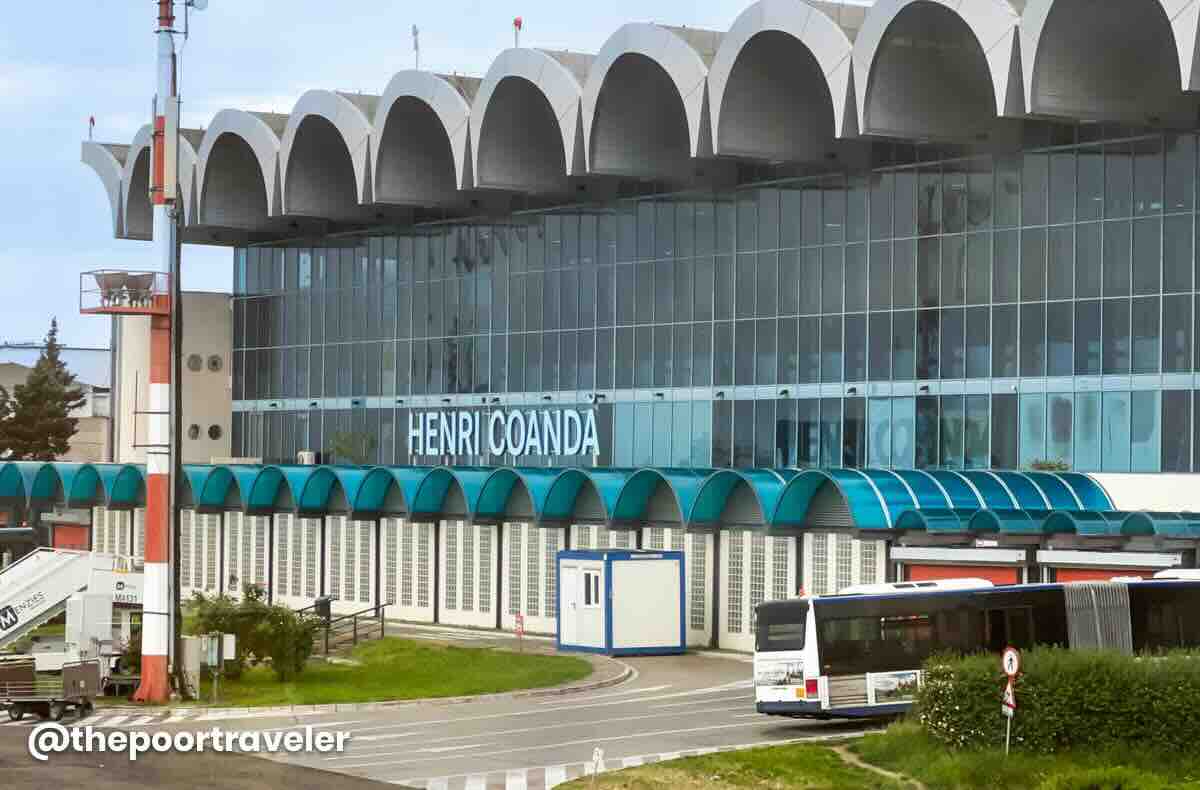
The main airport — and the one most travelers use — is Henri Coandă International Airport (OTP). It’s also commonly called Otopeni Airport because it’s located in the town of Otopeni, just north of Bucharest. But since it’s the biggest and busiest in the country, most booking sites simply refer to it as Bucharest Airport. So, just a heads-up: when we say “Bucharest Airport” in this post, we mean Henri Coandă (OTP).
Now, while Bucharest itself has plenty of cool things to see and do, if you’re like us and want to head straight to Brasov, no worries — it’s super doable. There are two main ways to get there from Otopeni Airport: by bus or by train. Easy options, depending on your travel style and schedule.
The easiest way to get from the airport to Brasov? Definitely by bus. There are direct trips that go all the way from Bucharest Otopeni Airport straight to Brasov’s Bus Terminal, which, conveniently, is not too far from the Old Town — perfect if that’s where you’re staying.
One of the most popular options is a company called Direct Aeroport. They use smaller vehicles like mini-buses or mini-vans, which makes for a more relaxed and less crowded ride. We booked with them, which was pretty straightforward. We even managed to reserve seats online ahead of time.
Henri Coanda International Airport
How to Book a Seat
Head over to Direct Aeroport website. Switch the language to English (there’s a toggle at the top). Most of the booking process is in English, although there’s one part that still shows up in Romanian. It’s not too hard to navigate though — Google Translate will get you through.
Enter your origin and destination. Choose “Otopeni Aeroport” as your origin and “Brasov” as your destination, and you’ll see a list of available departure times. The buses run 24 hours a day, with intervals ranging from 1.5 to four hours. The trip takes around three hours and costs 100 RON per person — not bad for a comfy ride straight to the heart of Brasov.
Pay for your bus ticket. You can choose to either pay for your Direct Aeroport bus ticket online or simply reserve a seat without making a payment right away. For our trip, we initially opted for the latter. We made a reservation first, thinking it would be the most convenient option. But we decided to cancel our reservation and take the scenic route instead — by train.
Direct Aeroport Mini-Bus
Availability: 24 hours at 1.5- to 4-hour intervals Travel time: 3 hours Fare: 100 lei (RON) per person
Bucharest Airport to Brasov By Train
Getting from Bucharest Airport to Brasov by train is a two-part journey, but it’s fairly straightforward and comes with the bonus of scenic views along the way.
The first leg takes you from Henri Coandă Airport (OTP) to Bucharest Nord Station. From there, you’ll hop on another train that will take you all the way to Brasov. Multiple companies operate this route, and while it’s possible to buy tickets at the station, booking online in advance is highly recommended — not only to secure a seat, but also to enjoy discounted fares.
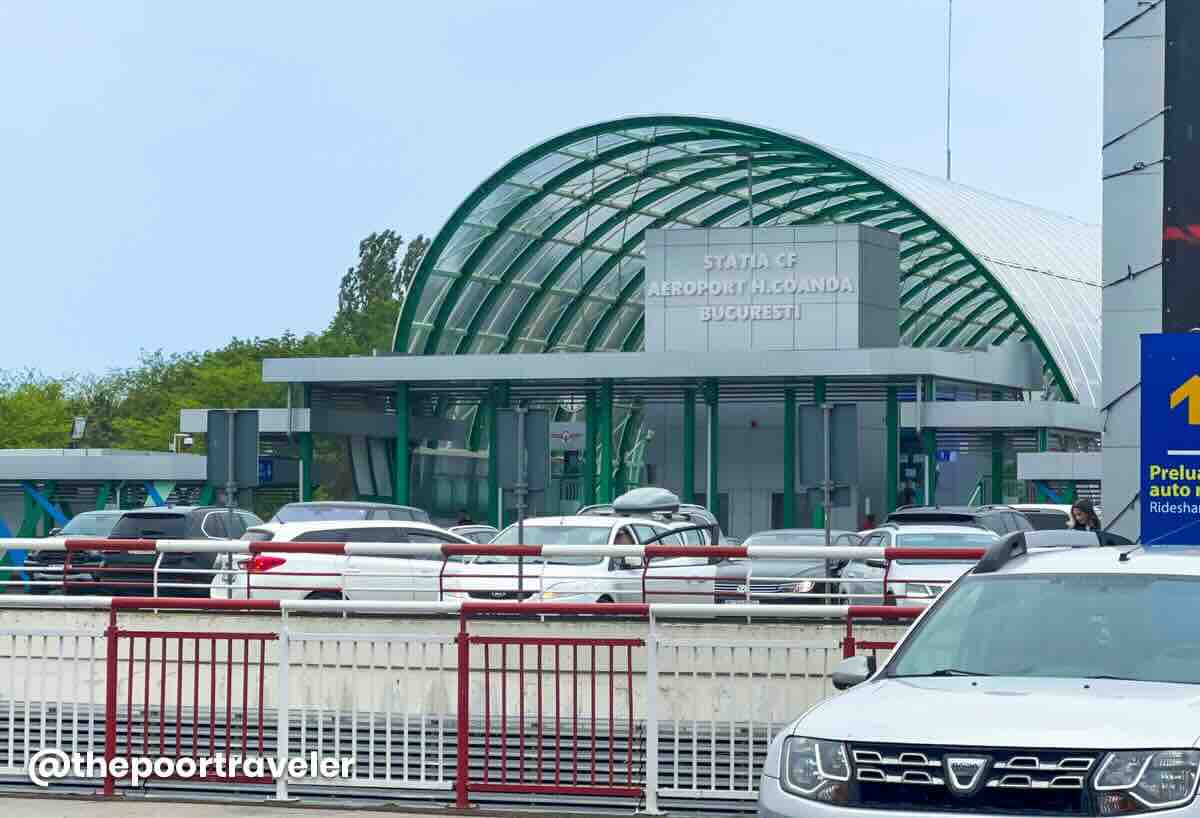
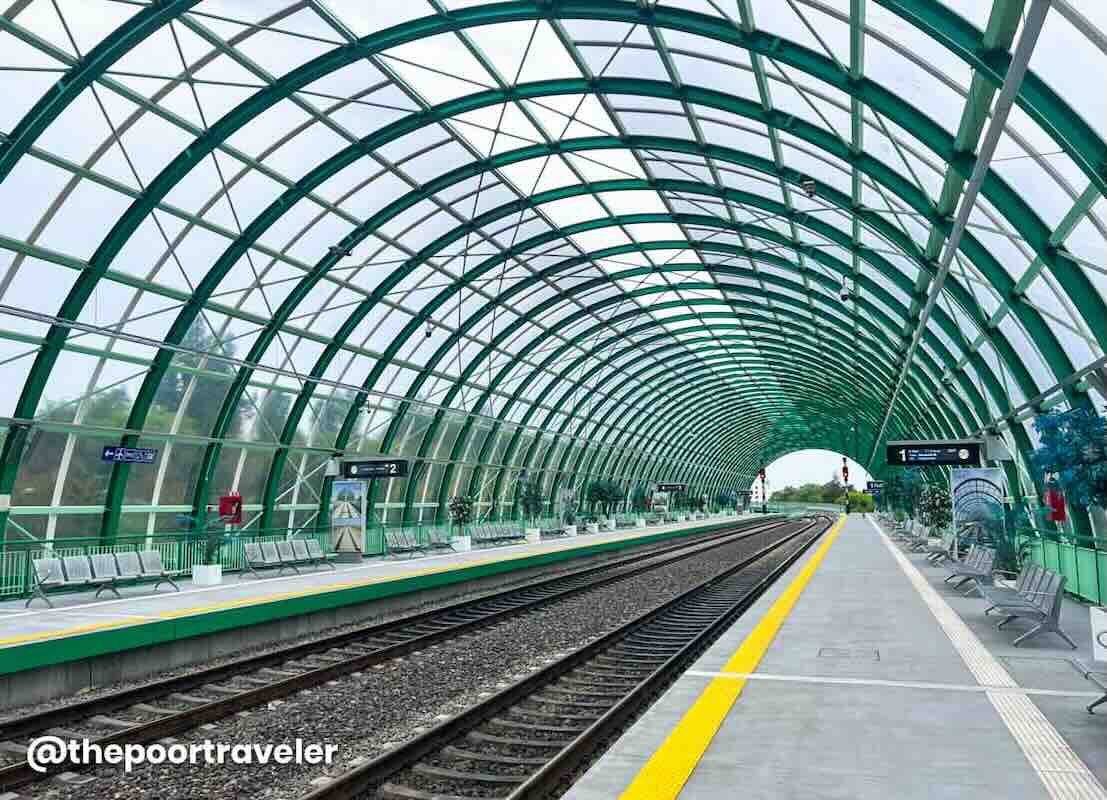
Aeroport Henri Coandă T1 Train Station
Here’s a step-by-step guide on how to get to Brasov from Aeroport Henri Coanda by train:
1. Buy tickets online.
From Bucharest Airport to Bucharest Nord
Head over to the official CFR website. CFR is Romania’s national railway operator.
Once you’re on the homepage, switch the language to English from the top menu. The translation isn’t perfect across the site, but it’s good enough to guide you through the process.
For your origin, enter Aeroport Henri Coanda, and for your destination, type in Brasov. Select your travel date, and the site will show you available journeys, most of which involve a quick transfer at Bucharest Nord Station.
Bucharest Airport to Bucharest Nord
Availability: Hourly train departure Travel time: 25 minutes Fare: 6.75 RON lei (RON) per person
From Bucharest Nord to Brasov
Choose the train that best suit your budget and itinerary. For the second leg — the train ride from Bucharest Nord to Brasov — get ready for a long list of options. When picking your train, pay close attention not just to the departure time, but also to the train type and duration. Sometimes paying a bit more for a quicker, more comfortable ride is totally worth it. More about this later.
Select the coach and your seat. Once you’ve selected your train, you’ll also be able to choose the specific coach and exact seat, which is super handy if you’re traveling with someone or just want to secure a window spot.
Create an account on the CFR website. After that, you’ll need to create an account and verify your email. Then, enter all passenger details, including full names — exactly as they appear on your passport. This is important because they do check names on board against the ticket.
Proceed to the payment section. Once everything looks good, go ahead and pay using a credit card. When the payment goes through, you’ll receive a confirmation email with a QR code on the upper left corner. Save a digital copy on your phone and print one out just in case.
Reminders
Now, here are the things to consider when choosing the train:
Not all trains are created equal. Some are quick and efficient, while others take much longer. The faster trains can get you to Brasov in as little as two hours and 14 minutes, while slower ones may take up to 4.5 hours.
So, don’t just look at departure times. Make sure to check how long the journey will take and what time you’ll actually arrive in Brasov. This is especially important if you’re trying to catch daylight or if you have hotel check-ins to consider.
Fares also vary, depending on two main things: train type and class. For our trip to Brasov, we rode second class, but on our way back to Bucharest, we upgraded to first class just to compare — and we definitely felt the difference.
First class is roomier, with just three seats per row, compared to second class’s four. That extra bit of space makes a huge difference when you’re sitting for a couple of hours. It’s not just about comfort. It’s also about the atmosphere. First class is noticeably quieter, simply because there are fewer passengers. It’s a big plus if you’re hoping to catch some sleep or just enjoy a peaceful ride. Oh, and the luggage racks? They’re bigger too — ideal if you’re carrying bulkier bags or backpacks.
We paid 81 RON (16.35 EUR) for the first class seats, while the second class seats cost us 56.3 RON (11.35 EUR).
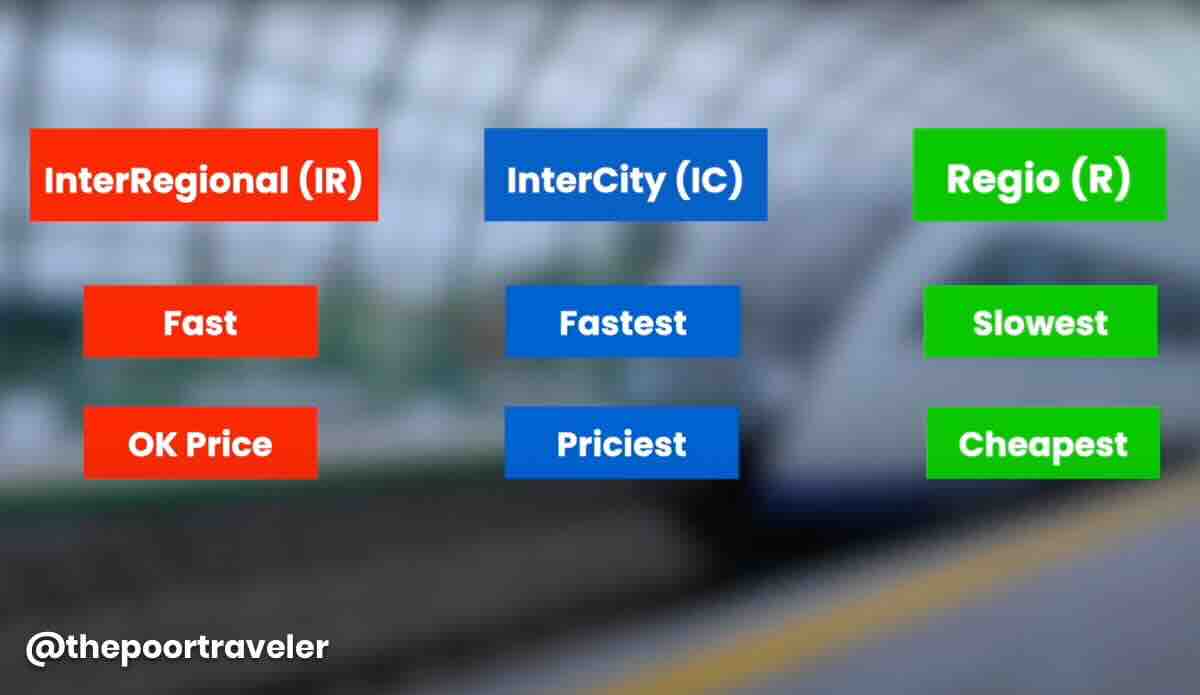
Three Types of Trains from Bucharest to Brasov
Here’s another thing: not all trains are priced the same. Some fares are noticeably higher, while others, especially the slower ones, are significantly cheaper. And that’s mostly because Romania has several types of trains, each catering to a different kind of travel experience.
For the Bucharest to Brasov route, you’ll most likely come across three main types:
InterCity (IC). IC trains link Bucharest to the smaller cities and towns across Romania. These are the fastest, which means shorter travel times, but they also come with the highest fares. It took us only two hours and 16 minutes to get to Brasov using this train. If you’re after comfort and speed, and don’t mind paying a bit extra, this is your best bet.
InterRegional (IR). These are long-distance trains that serve regional routes across Romania. They’re not as fast as IC trains, but they’re pretty reliable and strike a good balance between price and efficiency.
Regio (R). Formerly Personal, these are your local commuter trains and the slowest of the bunch. They stop at almost every single station along the route, which really drags out the travel time. Using this train to Brasov can take up to three hours and 40 minutes. But the upside? They’re super cheap. These are a solid choice if you’re on a tight budget and not in a rush.
2. Board the train to Bucharest Nord Station.
As soon as you step out of the arrivals hall at Otopeni Airport, the train station is hard to miss — it’s just right across the street. Walk a few steps, cross over, and you’ll find yourself at the stunning terminal.
Aeroport Henri Coandă T1 Train Station Platform
Since you’ve already booked your ticket online, you can skip the machines and queues. Just head straight to the platform and wait for your train. But make sure you have your digital ticket and your passport ready. A train inspector will come by to check your booking, and they’ll scan the QR code on your ticket. They’ll also verify if the name matches the one on your passport, so double check everything before the trip.
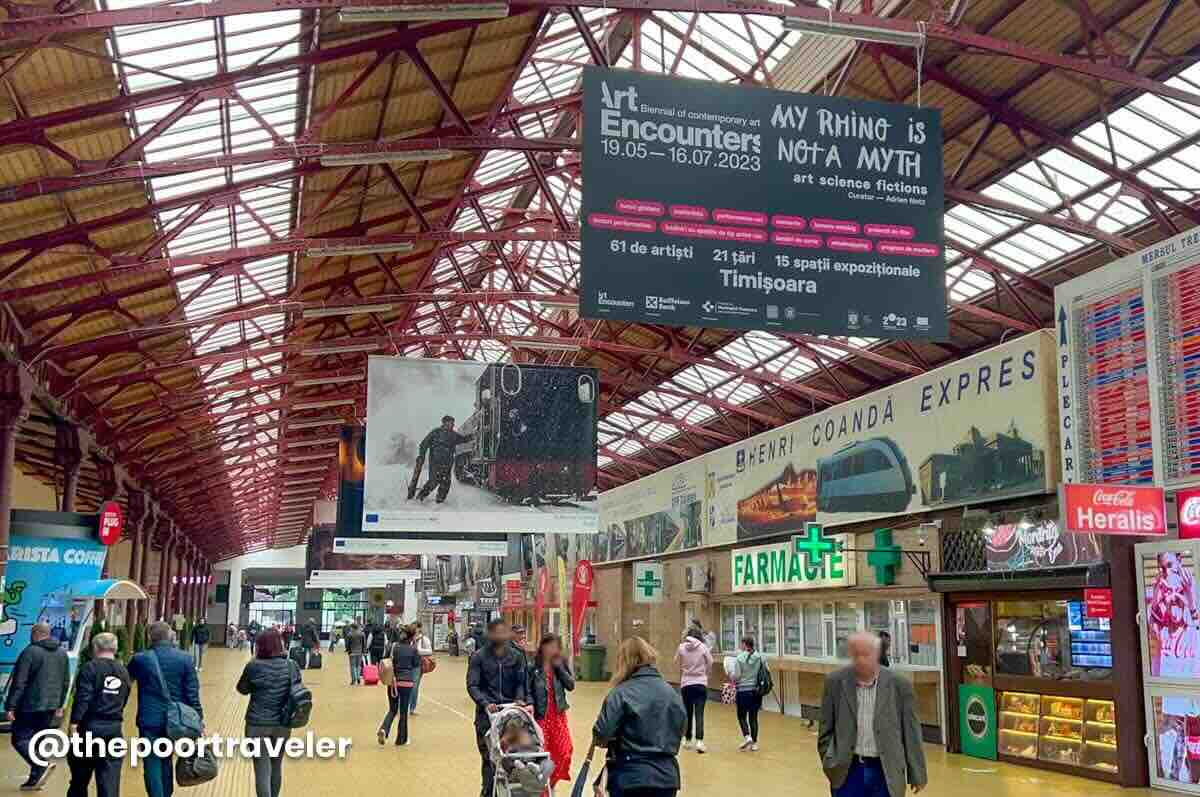
3. Alight at Bucharest Nord Station.
If your train to Brasov is about to depart, all you need to do is find the right platform and wait. But if you have a bit more time before your train arrives, you can easily pass the time at one of the cafés or fast food spots nearby.
For those needing to use the restroom, you’ll find pay-to-use toilets in the station, but there’s also a free option inside the McDonald’s. Just keep in mind that you’ll need to make a purchase first, and the toilet code is printed on your receipt. It’s a simple system, so grab a quick bite and take care of your business before catching your train!
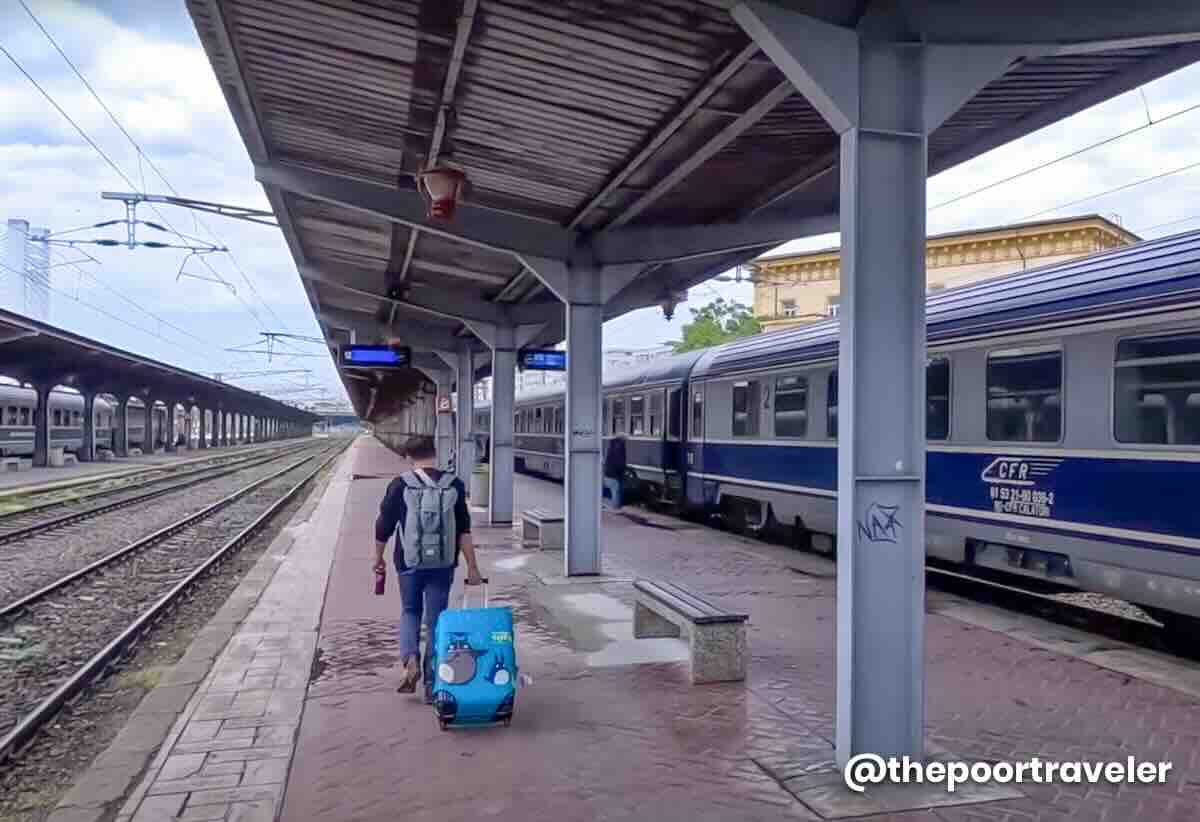
4. Transfer to your Brasov Train.
Make sure to allow plenty of lead time before your boarding time as finding your assigned car can be a bit tricky. From our experience, train cars are numbered, but the actual number you’re looking for is often written on a piece of white bond paper haphazardly stuck to the window. If you’re unsure, don’t hesitate to ask a train staff member for help.
Once you’re on the right car, find your designated seat number. If you have luggage, there are overhead racks or luggage spaces near the doors where you can store your bags. Keep in mind that most trains don’t terminate at Brasov, so you’ll need to keep an eye on the station. It’s a good idea to start preparing to leave as you get closer to Brasov to avoid missing your stop.
5. Take Uber to your Hotel.
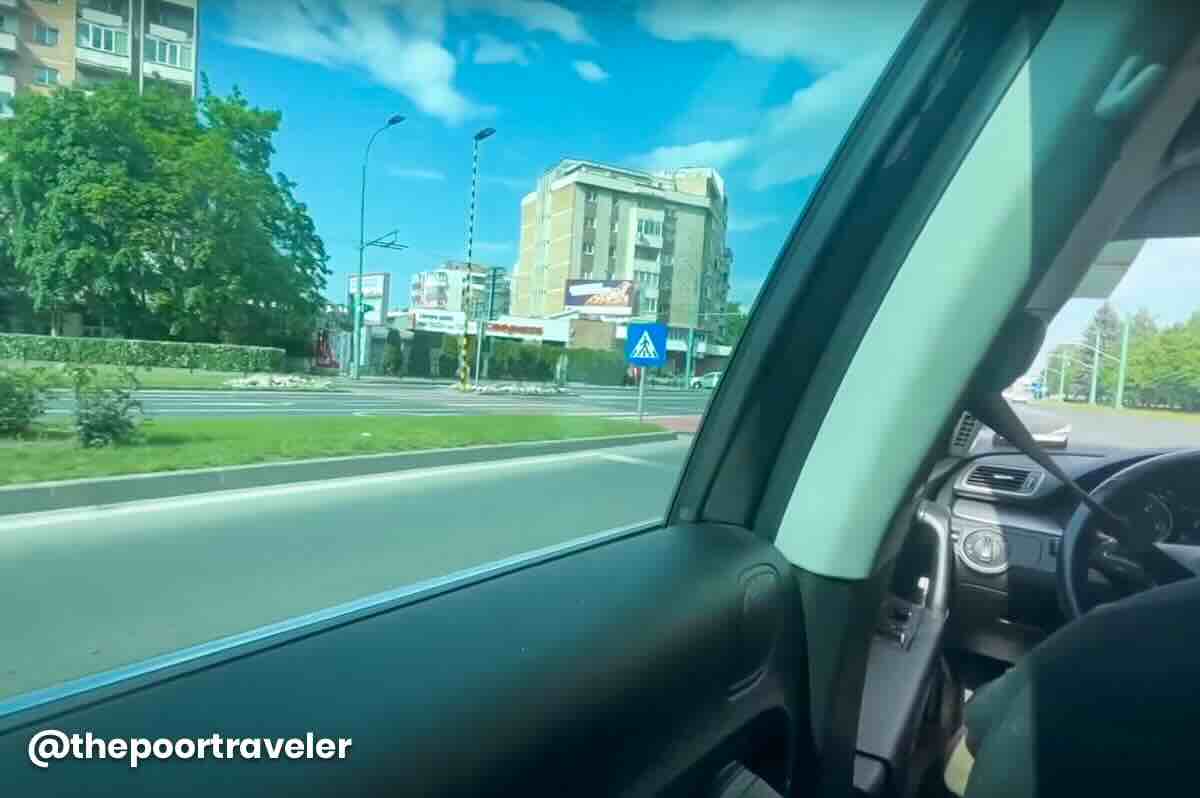
Brasov Station is smaller compared to Bucharest Nord, so it’s easy to navigate. As soon as you step out of the terminal, you’ll be greeted by taxi drivers. However, we highly recommend using Uber instead. Some taxi drivers in the area have been known to take advantage of unsuspecting tourists, which is why our host suggested Uber as the safer option. Plus, it’s quite affordable in Brasov.
For instance, our apartment was located right within the Old Town, and we only paid 13.96 RON (around 2.82 EUR) for the ride. Since we were a group of three, that’s just about 1 EUR per person. Definitely a great deal for convenience and peace of mind!
Where to Stay in Brasov
If, like us, you decide to make Brasov your base, you’ll find plenty of accommodation options in the Old Town and the Centrul Nou. These two areas are close to the popular attractions and transportation stations. Here are some of the top-rated hotels according to user reviews online.
When it’s time to head back to Bucharest or Bucharest Airport, it’s just as important to book your train tickets online in advance. Follow the same process mentioned earlier, then simply retrace your steps:
Take an Uber to Brasov Station.
Catch a train to Bucharest Nord.
Transfer to another train to the airport.
TIP! Always allot plenty of time for your transfers, as delays are not uncommon in Romania. It’s wise to give yourself a few hours of buffer time, especially if you have a flight, bus, or another train to catch. In our case, our train to Bucharest was delayed by over an hour, so it’s better to be safe than sorry!
“When will EES start?” “Do I need to apply for ETIAS before my next trip?” “Will these new systems ruin our European holiday?”
If these questions sound familiar, you’re not alone. My inbox has been flooded with messages from worried travellers trying to make sense of the EU’s upcoming border changes and wondering what they need to do.
Don’t worry- in this post we’ll share exactly what you need to know and do so you’re prepared the next time you visit Europe.
*We work hard to make this the best motorhome travel blog and road trip website possible, full of helpful content for you. The website is supported by our readers, so if you buy through links on this site we may earn a commission- at no extra cost to you. All opinions remain our own.
If you find this post useful, you can also treat us to a coffee – we promise to enjoy it while creating more useful content like this- we might even indulge in a biscuit (or two!)
The European Union has been planning two major changes to how non-EU travellers (including UK citizens) enter Europe. These are:
the ETIAS visa system and
the EES border system
It’s important to realise that these are two totally different systems, so although they’re often mentioned together, they are NOT the same thing. ETIAS is an online application to enter the EU done before you travel, while EES is something done AT the border.
Both systems have been ‘coming in soon’ for several years, but keep being pushed back, making it challenging to know what’s actually happening and when.
Let me break down everything you need to know about both systems, including the latest timeline updates, so you can plan your European adventures with confidence.
(Please note, this video was filmed in early 2025. New updates are shown below, but it does explain what EES and ETIAS are and how they will work.) Don’t forget to subscribe to our YouTube channel here
What Is EES?
EES stands for the Entry/Exit System. This is not something you apply for in advance. Instead, it’s a new method the EU will use to track entries and exits using biometric data.
When will EES start?
The European Union has announced that the long-awaited implementation of the Entry/Exit System (EES) is scheduled for October 2025. However, it’s anticipated that the system will not be introduced until November 2025 at Channel ports.
In March, the EU’s Home Affairs Minister announced that there would be a “progressive start of operations,” whereby the 29 countries of the Schengen Zone would gradually introduce the system over a period of six months.
Key Facts About EES:
Replaces passport stamping: EES will replace the current system of manual stamping of passports
Biometric data required: You’ll provide fingerprints and facial photos at the border
First-time registration: When EES is introduced, you will need to create a digital record on your first visit to the Schengen area at the port or airport on arrival. This means you’ll provide your fingerprints and facial photos.
Valid for 3 years: Once registered, you won’t need to repeat the full process for 3 years (unless you get a new passport)
Tracks overstays: The system will automatically detect if someone exceeds the 90-day limit – you’ve been warned! Overstaying may stop you getting access into the EU in the future
What to Expect at the Border
On your first trip into the EU after EES launches:
You’ll go to a self-service kiosk or booth
Scan your passport
Provide fingerprints
Have your photo taken
Answer basic questions about your visit
If you enter the Schengen area again during the following 3 years, you will only need to provide a fingerprint or photo at the border, when you enter and exit.
Expected Delays
Let’s face it, this is going to cause CHAOS.
Whether you’re entering the Schengen area by tunnel, boat or plane, every single person on that vehicle will need to complete these EES requirements. It’s expected to take about 1 minute per person, which means one coach will take about an hour, and an aircraft of 300 people could take several hours!
Specific Impact for Motorhomers: For vehicle crossings, each car entering the EU is expected to take 5–6 minutes longer for processing. Multiply that by hundreds of vehicles, and you can expect substantial delays, especially during peak travel periods and at busy crossing points such as Calais.
It should be noted that this isn’t an ‘anti-English’ scheme. The UK already has a system in place for non-residents who are entering the UK.
What Is ETIAS?
ETIAS stands for the European Travel Information and Authorisation System. Think of it like the ESTA system for travelling to the United States—it’s a travel authorisation you’ll need to apply for online before travelling into Europe/ the EU.
Can we just, for the sake of expediency, accept that I know that the UK is on the continent of Europe, but not inside ‘Europe’ for the purposes of this blog post? Thanks.
ETIAS will only become operational after EES has been running smoothly for at least 6 months. At the time of writing, it is expected to become operational in the last quarter of 2026, (although I really wouldn’t hold your breath until we see how EES does!)
Key Facts About ETIAS:
It’s not a visa: It’s a travel authorisation, similar to what many other countries already require
Valid for 3 years: Your ETIAS travel authorisation is valid for three years or until the travel document you used in your application expires – whichever comes first
Multiple entries allowed: You can travel back and forth during the validity period
Costs €7: Applying for the ETIAS travel authorisation costs EUR 7 for travellers aged 18–70. Under 18s and over 70s are exempt from paying this fee
90-day rule still applies: With a valid ETIAS travel authorisation, you can stay in the European countries requiring ETIAS for up to 90 days within any 180-day period. If you manage to get an extension to stay in one country for longer, you need to ensure your ETIAS authorisation matches this.
Passport-linked: ETIAS is linked to your specific passport, so if you renew your passport, you’ll need a new ETIAS
Who Needs to Apply for ETIAS?
UK passport holders travelling to EU countries for:
Tourism/ Road Trip adventures
Business meetings/conferences
Medical treatment
Transit
You won’t need ETIAS for:
Trips to the Republic of Ireland from the UK (Ireland is not in Schengen, and we have special arrangements between the UK & Ireland)
Working or studying (you’ll need official visas for these)
If you hold dual citizenship with an EU passport (you can use your EU passport instead)
How Will ETIAS Work?
ETIAS will be done online. You can fill out the application form using either the official ETIAS website europa.eu/etias or the ETIAS mobile application.
The application will ask for:
Personal and passport details
Travel plans (including the first EU country you’ll enter)
Background questions about criminal history, health conditions, and immigration history
Security, health, migration risk, and any past overstays or offences
Most applications are processed within minutes. However, it is possible that your application may take longer to process. If so, you will receive a decision within four days. In some cases requiring additional documentation or interviews, processing could take up to 30 days.
Important: There will be a transitional period of at least six months when ETIAS launches, meaning you should apply but won’t be refused entry if you don’t have one yet (as long as you meet other entry requirements). This will be followed by a 6-month grace period where travellers must have an ETIAS travel authorisation to enter, except for those coming to Europe for the first time since the end of the transitional period.
Preparing for the Changes- What you need to do
Current Trips: What You Need to Do Now
If you’re going on holiday into the EU/ Schengen Zone BEFORE October 2025, nothing changes. You don’t need to do anything.
Continue travelling to Europe as you have been since Brexit
No ETIAS application needed
No biometric registration required
Ensure your passport is valid for at least 6 months when travelling (you need 3 months clear from the date you leave
Track your days in Europe to stay within the 90/180 rule
Keep applying for AHCs as usual (although check out the anticipated Pet Passport rules)
From October 2025: EES Expected to Launch
The European Union will inform us about the specific start date of the EES several months prior to its launch
Be prepared for longer border crossing times
You will not need to provide any information before travelling to a Schengen area country
Consider allowing extra time for travel into the EU, or travelling during the night/ early morning to get the initial set up done and out the way as painlessly as possible.
Q4 2026: ETIAS Expected to Launch
ETIAS is expected to become operational in the last quarter of 2026
You’ll need to apply online before travelling
The European Union will inform us about the start of ETIAS several months prior to its launch and when we need to start applying.
Apply well in advance – don’t wait until the last minute, as processing could take up to 30 days if additional checks are needed
Use only official websites: There is only one official ETIAS website: europa.eu/etias. Do not use third-party services which may charge excessive fees or steal your personal data
Keep your confirmation: You’ll need your ETIAS authorisation number
Check your passport validity: If you renew your passport, you’ll need a new ETIAS
Don’t believe everything on Facebook – check official sources for accurate information
If you’d like to stay up to date will all info, and get a FREE Europe travel checklist, join our email list below:
Important Limitations and Considerations
I’ve seen a LOT of wrong information being spread about the EES and ETIAS schemes, so here are a few things to remember:
The 90-Day Rule Remains
Neither ETIAS nor EES changes the face that UK travellers can only spend 90 days in any 180-day period in the Schengen area. These systems will just make it easier for authorities to track compliance.
Ireland Is Different
Ireland is not part of Schengen and has separate arrangements with the UK. These new systems won’t affect UK-Ireland travel and nothing will change to what we do now.
Working and Studying
Having the travel authorisation only allows you to enter and remain on the territory of the European countries requiring ETIAS for a short-term stay. Also, it does not give you the right to study long-term or to work in these countries.
No Guarantee of Entry
Having a valid ETIAS travel authorisation does not automatically grant you the right to enter the territory of the European countries requiring ETIAS. All travellers arriving at the border are still subject to border checks.
Staying Updated
Given the multiple delays these systems have experienced, it’s important to get information from official sources:
Avoid unofficial websites that may charge excessive fees or collect your personal data inappropriately and DON’T trust everything you need on Facebook or Forums!
This information is based on official EU sources and current announcements as of July 2025. Always check the official ETIAS and EES websites for the most up-to-date information before travelling.
Bottom Line
Yes, it’s annoying. Yes, it’s going to cost a little more. Yes, queues might be worse for a time, but while these new systems add some complexity to European travel, they’re not insurmountable hurdles. Many other countries around the world already have similar requirements. The key is to stay informed about the timeline and be prepared when the systems launch.
For now, there’s no need to worry or change your current travel plans. Keep exploring Europe- just be ready to adjust to the new processes when the time comes!
New to motorhome or camper travel in Europe? You might find these posts helpful:
How to tour Europe in a Motorhome- step-by-step
How to plan EPIC motorhome trips
How to find Free motorhome parking and overnight stopovers in Europe for motorhomes and campervans
Essential kit for Motorhoming in Europe (with free checklist)
See all our Europe motorhoming posts here
NEED GEAR? If you need any kit or essentials for motorhoming in Europe, here’s what we recommend and where to find it
From Brazzaville to Kinshasa, crossing the Congo River Kinshasa can be an unforgettable adventure!
Asia’s top cities are exciting places to be. But nothing can match nature’s beauty. It’s truly an experience to explore one of the world’s great rivers. To stay healthy while traveling, you’ll need a good remote work budget and a few wise habits.
Learn how to become a digital nomad with my new eBook, “The A-Z on How to Become a Digital Nomad.“ It’s filled with tips on remote work. It also covers how to live smartly as a digital nomad. This guide is especially helpful for those planning cross-border trips like this one.
It stretches over 4,700 km (about 2,920 miles) through Central Africa. That’s more than 1.7 million square miles of basin! It flows through countries like Angola, Zambia, Cameroon, and Tanzania. The Congo River is also the deepest river in the world and plays a vital role for local communities, trade, and geography across the Congo Basin.
Here are 7 smart ways to stay safe and avoid getting scammed during your Congo River crossing:
Before you head out, make sure all your documents are complete. This includes your passport, visa, and, if needed, your international driving permit. Missing paperwork can lead to fines or denied entry by strict Congolese authorities.
Carry local currency for taxis and small fees. Unfortunately, some officials or police may ask for sudden “charges.” Avoid paying bribes unless truly necessary.
Ferries are the most common way to cross the Congo River. To reach them, you’ll likely need a taxi. Be careful when choosing your ride.
Choose a trustworthy taxi driver. Avoid suspicious or unlicensed vehicles. Some drivers may try to take you to unknown areas, which increases the risk of scams.
I found it safest to use well-known routes. Never travel with strangers. Apps like Yesim provide mobile data. This lets you check routes and taxi reviews in real time.
3. Crossing the Congo River
The boat trip is brief. But there are some important things to keep in mind. Keep your travel documents easily reachable. Officials from both countries will check them multiple times.
The ports have limited infrastructure. Roads leading to them can be rough. Stay alert. Keep your belongings close. Avoid showing off valuables like phones or cameras. These attract unwanted attention.
Avoid people who offer to “help” with your passport or visa. These people are often scammers. They look for easy money from tourists. Only talk to authorized personnel. Ask for a supervisor if you’re unsure.
Stay aware of local news. It often reports scams targeting tourists.
This part of the river was once called the Upper Congo. Its headwaters begin in the Chambeshi River. The Lualaba River forms the upper part of the Congo. It passes near the borders of Angola and Zambia. You will also pass near the Malebo Pool, a wide stretch of river that separates Kinshasa and Brazzaville.
The river’s navigability is affected by many rapids and cataracts. This limits long-distance travel, especially for cargo. Still, it provides vital connections between regions.
4. Navigating Scams and Staying Safe
Scams are common in this region. Tourists are often the targets. One scam involves people posing as police or local officials. They ask for your documents. Then they demand money to return them.
Ask to see ID if someone claims to be an official. Real authorities will have proper ID. They won’t ask for cash directly. Paying bribes is illegal. It also puts you at greater risk.
Avoid nonessential travel in unstable areas. These include North Kivu and near Virunga National Park. These places are beautiful. They include Mount Nyiragongo. But they also carry risks, like armed conflict or accidents.
Keep your travels focused on safer areas. If you want to explore beyond Brazzaville and Kinshasa, check with local authorities. Make sure it’s safe.
You might also want to learn more about Stanley, the explorer who mapped the Congo, and the role of the Belgians during the colonial era. These stories reflect the long history of exploitation in the region.
5. Emergency Services and Local Laws
Emergency services in Brazzaville and Kinshasa are limited. Be prepared to handle small problems on your own. Help may not arrive right away.
Follow local laws carefully. Breaking the rules can lead to fines or even jail.
The Heart of Darkness by Joseph Conrad was inspired by this very river. He traveled here during the colonial rule of Belgium under King Leopold.
Today, the past still shapes life in the region. Scientists, NGOs, and tourists all explore here. The lush rainforests of the Congo Basin face challenges like deforestation, which also impact local communities and wildlife.
There is still much to learn and appreciate. But only if you stay safe and prepared.
6. Know the Local History and Respect the Culture
Learn about the region’s history. Figures like Stanley and Mobutu Sese Seko shaped its past. The river was also key to the rubber trade and European exploitation during Belgian rule.
Modern issues like deforestation affect the rainforests, biodiversity, and forest elephants in the Congo Basin. Show respect to the land and its people. Avoid insensitive behavior.
Understanding the local background helps you blend in, stay respectful, and steer clear of trouble.
Final Thoughts
The Congo River empties into the Atlantic Ocean. It carries more than 1.4 million cubic feet of water every second. It begins at an elevation close to sea level, unlike the Nile, which starts from highland regions.
You’ll pass through regions rich in culture and wildlife. This includes bonobos, rare fish species, and dense jungles that still echo with the rumble of natural power.
Crossing the Congo River can be the highlight of your trip. Just be ready. Safe travels!
Stay safe. Plan ahead. Enjoy your adventure!
FAQ
What is Kinshasa most famous for?
Kinshasa is known for its music. It’s the capital of the Democratic Republic of the Congo and is called the home of Congolese rumba, a popular dance music.
Is it safe to swim in the Congo River?
No, it’s not safe. The water has strong, fast currents and can flood during the rainy season. There are also dangerous animals like crocodiles and hippos.
Does the Congo River flow through Kinshasa?
Yes, the Congo River flows near Kinshasa. It comes from Kisangani and travels over 1,000 miles before reaching close to the city.
Here’s some exciting news for performance car enthusiasts. Stellantis is bringing SRT back from the dead.
The SRT (Street and Racing Technology) was shut down in 2021, but now, with Tim Kuniskis at the helm, the performance division is being revived.
“We’re getting the band back together,” Kuniskis said. “SRT is another box we needed to check as we head into a product launch cadence enabling more performance than we’ve ever seen before. We’re working with our product development and technology organization to select the best engineers in powertrain and vehicle dynamics to build a team worthy of the SRT name.”
Now, the guys at SRT have built some really exciting machines in the past. The one that truly stands out, though, is the Dodge Viper. Three generations of the V10 supercar were produced, starting from 1991 all the way until 2014, when production finally ended.
SRT was also responsible for other models like the Challenger SRT Hellcat, Charger SRT-8, Ram SRT-10, Durango SRT and more.
Roma is yesterday’s news—Ferrari’s new entry into the GT world is called Amalfi. A coastal name replaces the capital city, but does it offer even more dolce vita?
The car is new, but the concept remains familiar: a sleek two-seater coupé with a pair of barely usable rear seats, and a front-mounted 3.9-litre twin-turbocharged V8. Power has climbed modestly from 456 kW (620 PS) to 471 kW (640 PS), while torque remains at 760 Nm. As a result, performance is only marginally improved. The 2+2-seater from northern Italy reaches a top speed of 320 km/h and sprints from 0–100 km/h in 3.3 seconds. Power is sent to the rear wheels via an eight-speed dual-clutch transmission. The front wheels wear 245/35 ZR 20 tyres, while the rear sits on 285s.
The proportions are essentially unchanged. At 4.66 metres long, the new Ferrari Amalfi mirrors the Roma and offers 273 litres of boot space. Ferrari’s design chief, Flavio Manzoni, explains: “Although the chassis has largely been retained, the installation of some components has changed, which allowed us to redesign certain body elements—particularly the front, where the traditional grille has been replaced by a porous surface to accommodate the repositioned radar sensor.”
As before, the rear spoiler adjusts depending on driving mode, acceleration or speed. Inside, Ferrari has reinstated physical controls for core functions—a welcome move for drivers. The trio of screens varies in size across the cabin: the driver gets a 15.6-inch digital cluster, the central infotainment unit measures 10.25 inches, and the passenger is treated to an 8.8-inch display. Buyers can choose between sport or comfort seats, which feature 10 air chambers for massage and ventilation. The Ferrari Amalfi will go on sale in the first quarter of 2026, with prices starting from €240,000.
If you’re the kind of person who loves to make new friends wherever you go, then we’ve got some excellent vacation recommendations for you.
In April, Yuzu, Match Group’s social and dating app centered on fostering friendships in the Asian-American community, released its latest data searching for the friendliest places in the United States that are ready to welcome you too.
To figure out which spots will flash you a smile the fastest, the team asked its users to rate just how friendly they think their home city is, including factors like the “frequency of positive interactions with strangers, the likelihood of receiving help when needed, and the overall friendliness of local residents,” all ranking them on a one to 10 scale. The insights for each factor were combined to produce each city’s final score out of 10, which the team said blended “quantifiable data with the lived experiences of locals.”
After doing all that work, it named San Diego the friendliest place in the nation with a score of 8.67 out of 10.
It added that the southern California city exemplifies the “qualities that make communities feel like home.” The team also noted that San Diego’s “beach vibes, surf-friendly shores, and locals who are as relaxed as the ocean breeze,” make it an excellent spot to visit. It also doesn’t hurt that its average year-round temperature is somewhere between 50°F and 77°F, making it a near-guarantee that when you do visit, you’ll get to experience it in all its outdoor-loving glory.
Following in a close second is Raleigh, North Carolina, which scored high marks as a spot where “comfort meets cutting-edge innovation” and “where warm hellos are as common as sweet tea.”
Rounding out the top three is Phoenix, where, once again, the warm sunshine certainly seems to make people happier, with the team noting residents add a “can-do spirit to every encounter.”
The rest of the list includes hot spots like the Miami area in fourth, followed by Houston; Honolulu; Boston; San Jose, California; Minneapolis; and Denver, rounding out the top 10.
As for which destination could use a dose of happiness, the team reported that Wichita, Kansas, came in last place. But maybe if you visit and offer up a little kindness, you could boost its happiness score next year.
Ferrari has revealed its new entry-level V8 model. The new Ferrari Amalfi replaces the Roma in the brand’s lineup and is expected to go into production later this year.
The Ferrari Amalfi is essentially a facelift version of the Roma. However, the updates are significant. The front fascia has been completely redesigned and now features a black bar connecting to the sharp LED headlamps. The body-coloured grille has been replaced with a redesigned bumper, which houses the grille and cooling ducts.
The Amalfi gets a tweaked rear end with an upright fascia and a black strip connecting the quad LED taillights. The interior has also been revamped with a new touchscreen infotainment system and a new steering wheel with proper, physical buttons instead of touch-capacitive switches.
Under the hood is the same 3.9-liter twin-turbo V8 engine as the Roma. It now produces 631 hp and 561 lb-ft of torque and is paired with an 8-speed dual-clutch automatic. Ferrari claims the new Amalfi can go from 0-62 mph in 3.3 seconds and has a top speed of 198 mph.
The Amalfi also comes with Ferrari’s new brake-by-wire system, an active rear spoiler, which can generate 242 lbs of downforce at 155 mph, and Side Slip Control 6.1.
If you enjoy travelling from the UK into the EU with your dog or cat, you’ve probably become heartily fed up of animal health certificates and insanely expensive vet bills. But it seems like the end is in sight! The return of the UK Pet Passport scheme was announced in May 2025- here’s everything we know (plus updated info to keep you in the loop!)
*We work hard to make this the best motorhome travel blog and road trip website possible, full of helpful content for you. The website is supported by our readers, so if you buy through links on this site we may earn a commission- at no extra cost to you. All opinions remain our own.
If you find this post useful, you can also treat us to a coffee – we promise to enjoy it while creating more useful content like this- we might even indulge in a biscuit (or two!)
UK Pet Passports- are they returning?
If you’re a UK pet owner who’s been following the headlines about pet passports “returning,” you’re probably as confused as the rest of us. Here’s what’s actually going on – and what it means for your next European adventure.
Remember When Pet Travel Was Simple?
Cast your mind back to 2020. Planning a long weekend in France with your dog meant grabbing the pet passport from the kitchen drawer, checking that the rabies vaccination and other information were current, and off you went. If they weren’t, you booked an appointment with your vet and it was easy to sort.
Those little blue passports were magic – valid for years, accepted everywhere, and they cost pennies compared to what we’re dealing with now.
Then Brexit happened, and everything went backwards…
Overnight, the UK became what’s politely called a “Part 2 listed” country. What this actually meant was that every single trip to Europe now required a fresh Animal Health Certificate, issued by an official vet, valid for just 10 days, and costing upwards of £100 each time.
For anyone who regularly travels to their French gite or takes the van touring through Spain, it’s been a nightmare. Many people simply stopped travelling with their pets altogether.
May 2025: A Glimmer of Hope
Fast-forward to May 2025, and suddenly everyone was talking about pet passports again. Government officials announced a new UK-EU partnership deal, and buried in all the trade talk was a conversation about making pet travel easier.
The headlines were everywhere: “Pet Passports Return!” The motorhome forums went mad. People started making grand touring plans with their pets again.
The announcement suggested that UK pets would get some kind of passport system back, eliminating those expensive single-use certificates. For families with European holiday homes, motorhome enthusiasts planning multi-country tours, and anyone who’d been hit by the £200-per-trip charges, it felt like Christmas morning.
When will the UK Pet Passport Scheme be returning?
Here’s the problem – it’s now July, and nothing has actually changed.
Your local vet is still issuing Animal Health Certificates. Heck, if you ask your local vet they probably haven’t even heard when the pet passports will be re-introduced.
The gov.uk website still says you can’t use a GB-issued pet passport for EU travel (if you could even get one from somewhere!) The ridiculous £200+ fees are still there.
No one seems to know when (or if) anything will actually be implemented.
It’s left pet owners in an impossible position. Do you book an appointment to get that expensive AHC for your September Europe trip, or do you risk waiting for a system that might not materialise? How long will the bureaucracy take to allow this change to work through?
The disconnect between the May announcements and current reality has created genuine confusion. Some pet and travel websites are claiming pet passports have “returned”, while in reality you must stick to the current AHC requirements.
I’ve heard rumours that they are due to return in October or Autumn 2025. Sadly, this isn’t the case- it looks like the people who wrote that got confused with the new EES system which IS coming into place in October 2025 (read more about EES and ETIAS here.)
The truth is, we’re still in limbo. May’s announcements raised hopes, but the current reality is that the expensive, bureaucratic system remains firmly in place. Whether we get a full return to the old pet passport system, some kind of hybrid arrangement, or something entirely new remains to be seen.
What This Means & What To Do Right Now
Sadly, at the moment nothing has fundamentally changed.
Whether you own a motorhome or campervan, have a holiday home in the EU, work abroad or are just dreaming of a spontaneous weekend trip for vino with your pet, you still need to book in for AHC appointments and pay the associated fees.
For travel plans in 2025: Don’t take risks. Book your AHC appointments as normal, budget the £100+ per trip, and give yourself plenty of time for vet appointments.
For future planning: Keep an eye on official government channels, maintain your pet’s vaccination schedule regardless, and stay connected with the pet travel community for updates. You can join my email list and get a FREE dog travel checklist below.
Reasons to Stay Hopeful
Despite the current frustration, there are legitimate reasons to believe things will improve. The political momentum seems real – both sides appear genuinely committed to fixing the relationship, and pet travel has clearly become a priority.
The economic arguments are compelling too. The current system creates barriers to tourism and family connections that don’t benefit anyone. The infrastructure for pet passports already exists – this is fundamentally a political problem, not a technical one.
What’s clear is that the pet travel community has been heard at the highest levels of government. That’s progress, even if the timeline remains frustratingly unclear.
For now, it’s a case of patience, continued monitoring of the situation, and keeping those vaccination records up to date. Easy European adventures with your pet will be back – hopefully sooner rather than later.
Updated July 2025 – always check current government guidance before travelling- the UK.gov page for pet travel is here.
The technical storage or access is strictly necessary for the legitimate purpose of enabling the use of a specific service explicitly requested by the subscriber or user, or for the sole purpose of carrying out the transmission of a communication over an electronic communications network.
Preferences
The technical storage or access is necessary for the legitimate purpose of storing preferences that are not requested by the subscriber or user.
Statistics
The technical storage or access that is used exclusively for statistical purposes.The technical storage or access that is used exclusively for anonymous statistical purposes. Without a subpoena, voluntary compliance on the part of your Internet Service Provider, or additional records from a third party, information stored or retrieved for this purpose alone cannot usually be used to identify you.
Marketing
The technical storage or access is required to create user profiles to send advertising, or to track the user on a website or across several websites for similar marketing purposes.
:max_bytes(150000):strip_icc()/TAL-older-couple-utah-AGEINPLACE0625-949e31c0cb5847e5b51fb15fbdd0d6c7.jpg "Florida Named Worst State for Aging in Place")
:max_bytes(150000):strip_icc():format(jpeg)/TAL-older-couple-utah-AGEINPLACE0625-949e31c0cb5847e5b51fb15fbdd0d6c7.jpg)










:max_bytes(150000):strip_icc()/TAL-san-diego-california-FRNDLYSTUSCITY0425-b75f480444a34e9e8a91d454b13fab23.jpg "San Diego Named the Friendliest City in the U.S.")
:max_bytes(150000):strip_icc():format(jpeg)/TAL-san-diego-california-FRNDLYSTUSCITY0425-b75f480444a34e9e8a91d454b13fab23.jpg)


