Aston Martin’s DBS will be redesigned later this year, with the newcomer expected to revive the vaunted Vanquish nameplate.
Prototypes have been spotted testing hard at the Nürburgring, and Aston Martin on Wednesday confirmed the car will pack a newly developed twin-turbocharged V-12 engine.
Confirmed numbers include a peak output of 823 hp and 737 lb-ft of torque. This should deliver a significant boost in performance over the DBS which packs 715 hp in standard guise and 759 hp in the DBS Ultimate runout special.
The new engine is derived from Aston Martin’s own 5.2-liter twin-turbocharged V-12 that debuted in the DB11 and also powers the DBS. Targets for the engine included improvements in power and efficiency, as well as overall refinement. Aston Martin said owners can also expect improved throttle response and higher revs.
Key upgrades include strengthening of the cylinder block and conrods, redesigned cylinder heads with reprofiled camshafts, plus new intake and exhaust ports. Repositioned spark plugs, new fuel injectors with higher flow rates, and new turbochargers with reduced lag also make the cut.
Overseeing the development was Roberto Fedeli, Aston Martin’s chief technical officer and a man who knows his way around V-12 engines. Fedeli is a Ferrari veteran who was chief engineer in Maranello when the LaFerrari and F12 Berlinetta were developed.
While Aston Martin is working on its first electric vehicle for launch in 2026, the automaker remains committed to the V-12. In a statement, Fedeli said the DBS successor’s engine is only the “dawn of a dazzling new V-12 era” for Aston.
Roberto Fedeli
Like Aston Martin’s new DB12 and Vantage sports cars, the DBS successor will be more of a heavy update of the current car rather than a true redesign. However, prototypes point to markedly different exterior styling, and the interior should also feature a much-improved design with the latest technology, similar to what Aston Martin introduced in the DB12 and Vantage.
The DBS successor will serve as the flagship of Aston Martin’s front-engine lineup. However, the automaker this year will also launch the mid-engine Valhalla that will sit atop the lineup and also usher in plug-in hybrid technology at the brand. The Valhalla will use an AMG-sourced 4.0-liter twin-turbocharged V-8 as its internal-combustion component.
Destination based road trips are fantastic. You pick a place, you get in the car, you head out, and enjoy your destination. Right? That’s the way it is supposed to work? I hope. Maybe… or not. How did your adventures start? Here’s our story…
Our first road trip was when I coined the phrase, ‘It’s an
Adventure.” A phrase Doug has hated at
times, with the deepest passion one could muster. But also, one that has become our mission
statement every time we get in the car to go almost anywhere.
Our first adventure was just Doug and I; Jayden wasn’t born yet, or even a thought at the time. We had only recently started dating. It was a Saturday. Doug was working. I was sitting at home which was nothing more than an in-law suite in Doug’s mom and step-dad’s back yard. We had nothing yet. But I was home planning something… Or really not ‘planning’ anything. I got an idea in my head, and acted. We were 21 years old, and to say we were “young and dumb” is probably an understatement. But we still had that carefree, we’ll figure it out later, mentality.
Our Story
Doug walked in the door early afternoon, maybe 2pm or so,
and I said, “get in the car!”
“Where are we going?”
“Niagara Falls.”
“What?” with a face
that was clearly meant to deter me, “Can I shower first?”
“Yeah, but make it fast, we have to go, and you aren’t changing
my mind.”
And that was about the extent of the planning. Like I said, young and dumb.
We got in the car around 3 in the afternoon and began our
journey to Niagara Falls. The internet existed,
but was not what we see today. Yes, I absolutely
could have gone online and done a little bit of research, but that wasn’t
something we thought about at the time.
I brought up Mapquest, printed out directions, closed the computer and
stopped thinking about what we were doing.
I was familiar with most of the roads we would be taking. We lived in NJ and I had done a semester of
school in upstate NY, so I already knew most of the journey. I knew where our last Wawa stop was. (If you don’t know Wawa, it’s a convenience
store primarily in PA and NJ recently expanding to DE, MD, VA, and FL. They make the best coffee on the planet as
far as I am concerned. So, knowing where
the last one is, was important!) Per Mapquest,
we were looking at a 7-hour trip.
We talked, and drove, and laughed and just had fun the whole
way there. We stopped at that last Wawa,
bought coffee and snacks and got back on the road. It got dark as night set in. But we just kept going. We were on a mission to get to Niagara Falls. Or at least I was, I think Doug’s mission was
simply to appease me; and he did, he didn’t complain once the whole way there.
We got off the interstate, and started making our way through town and closer and closer to the falls. When you opened the window to the car, you could actually hear it. We parked the car in a parking lot, and made our way across the grass to the fence along the falls on the American side – this is where the story goes south, fast. We were standing there pretending like it was such a romantic moment. We made it! We drove all 7 of those hours that Mapquest said we would, and we arrived! The falls were all lit up with colorful lights (which honestly, we could barely see) and we stood there taking in the moment – literally only a moment.
It Goes Like This A LOT
Our story takes a turn sideways here. No sooner than we got there, the lights powered down and we were standing in pitch black. Our moment was over. Why you ask? Because evidently the lights illuminating the falls are shut down at 11pm every night. Our romantic moment standing next to the falls on our very first road trip had lasted less than 2 minutes and now our story of our first road trip was over. I guess maybe I should have done just a little bit more planning, oops.
Remember I said how Doug and I had nothing? Yes, we were 21 years old, we could have walked into a local bar or restaurant and at least made something out of being all the way up in Rochester NY. However, we had nothing, as in barely enough gas money to get home!
Back to the car we went and started making our way home. I KNOW this is the first time I ever said it, and I KNOW that Doug wanted to ring my neck as the words came out of my mouth. “It’s an Adventure!” (or maybe just an epic fail)
It was now 11pm and we were 7 hours from home on a Saturday
night. Bagel Breakfast was at 9am Sunday
morning at my parent’s house, and our presence was not necessarily required,
but expected. And we began a long ride
home. At some point we pulled over in a
rest stop, locked the doors, and took a nap.
We woke up, continued our trip home and made it to Bagel Breakfast
albeit a bit later than usual.
The truth is this trip did in fact have its merits. It wasn’t a total fail. This trip renewed our innocent sense of adventure, like children on the playground trying to swing the highest. We spent a total of 14 hours in a car, just the 2 of us, talking and laughing. We also learned that when you get in the car to go somewhere, you should probably figure out a little more than directions. Maybe visiting hours would have helped.
Or we now know, that when visiting Niagara Falls, that if you would like to see the magnificence of them, you really need to cross the border and view the Horseshoe from their side to see the full beauty. It didn’t stop our story… And it shouldn’t stop yours. At some point the trip changed from a destination trip to simply getting lost on an Adventure with someone we love. It wasn’t our most grand adventure, and it wasn’t the best planned adventure either; but it is one our favorites.
Get in the car and tap into your adventure seeking side and go – Get Lost! That’s our story, jump over to our facebook page and tell us yours!
On our SECOND trip to Niagara Falls
We did make a second trip to Niagara Falls 15 years later. On the second trip, more planning was involved, and Jayden and his friends came with us. We spent a few nights there and did all of the tourist attractions. We crossed the border and took in the brilliance that we had missed years before.
Porsche is working on a mid-cycle update for the current 992 generation of the 911. One of the changes will be the introduction of hybrid technology on some grades. One of the grades that will go the hybrid route is the entry-level 911 Carrera, and we just spotted a prototype for the convertible.
Tom Walkinshaw Racing was a British motorsports and engineering company with successes in Formula 1 and the 24 Hours of Le Mans. It went under in 2002, but now it has been revived by the son of the original company’s founder. The first product from the modern TWR is a modified Jaguar XJS spitting out over 600 hp.
Italy’s Italdesign showed up to last week’s 2024 Beijing auto show with a concept blending elements of a grand touring coupe and a pickup truck. Called the Quintessenza, the concept also packed a trio of electric motors, two of which were in-wheel motors.
You’ll find these stories and more in today’s car news, right here at Motor Authority.
2025 Porsche 911 Cabriolet caught on video
Jaguar XJS reborn as 600-plus-hp TWR Supercat
Italdesign Quintessenza GT concept hides a pickup-style bed
Review: 2024 Lexus GX
BMW M spied testing quad-motor electric powertrain
Hyundai confirms dedicated US EV plant will make hybrids too
2024 Opel Grandland based on STLA Medium EV platform debuts
Nissan Ariya vs. VW ID.4: Compare Electric Cars
2027 Mercedes-Benz Maybach GLS-Class spied with updates
Matchbox marks Mercedes’ electric G-wagen with sustainable twist
Three recent Toyota patent filings look at different ways to mount tow hooks for better crash performance.
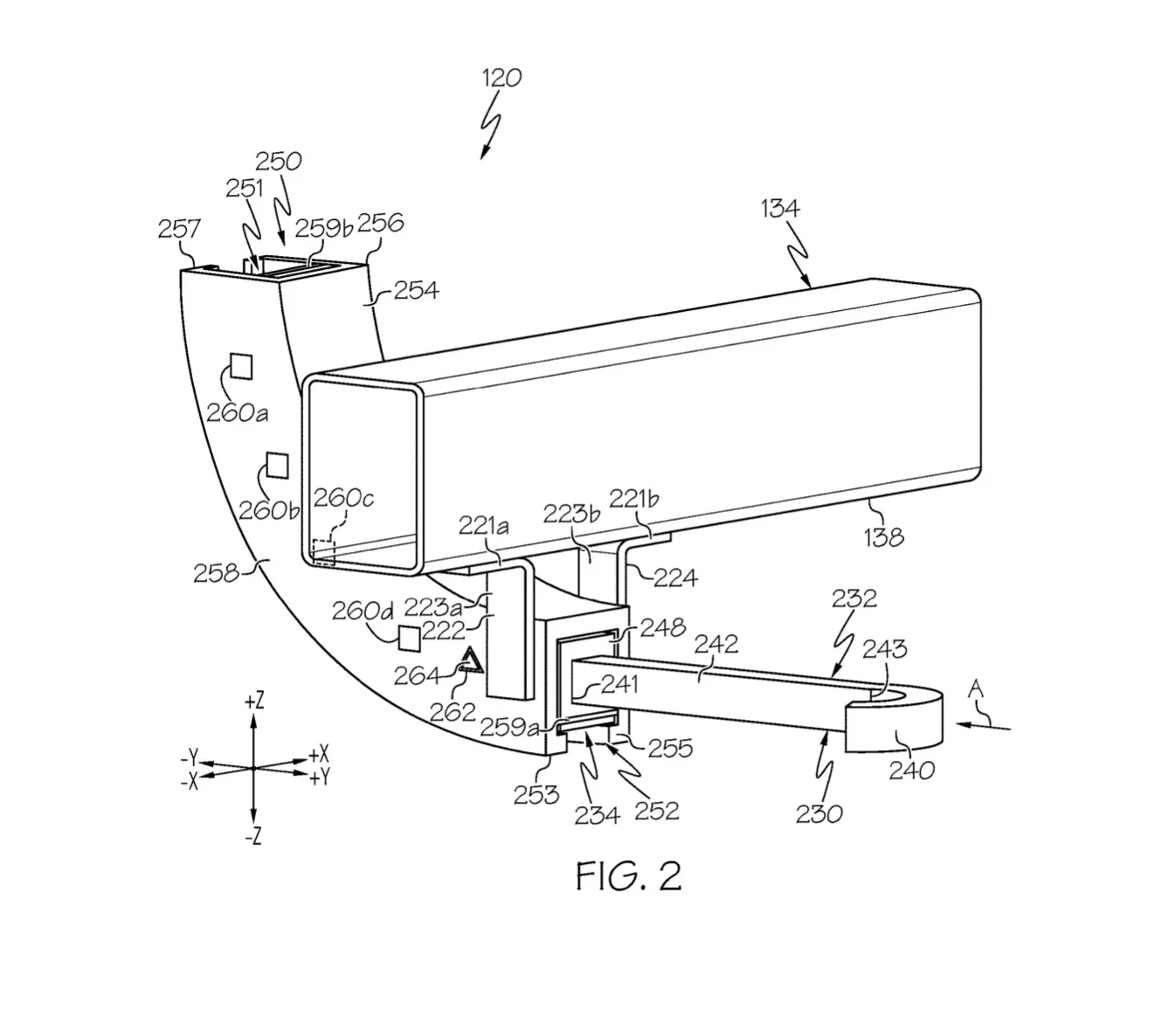
One of these filings, which was published by the United States Patent and Trademark Office (USPTO) April 25, 2024 (and originally filed October 19, 2022), discusses tow hooks that would extend out when in use and retract into housing the rest of the time.
Toyota pivoting tow hook patent image
This arrangement could help improve safety, Toyota claims. In the patent filing, the automaker notes that rigid-mounted tow hooks can transmit impact forces to other parts of the vehicle, potentially causing damage. This design uses a shearing pin that will break if an impact is hard enough, causing the tow hook to retract and thus absorbing some of the force.
Another patent filing, submitted by Toyota and published by the USPTO within the same timeframe as the first, features a similar idea. Here, though, tow hooks would pivot up and down. Again, Toyota believes allowing the tow hooks to move when hit will improve a vehicle’s crash performance.
Toyota tow hook assembly patent image
The third patent filing, which surfaced around the time as the other two, proposes a more complex mounting assembly that would act as a crash structure for two hooks. The tow hook would be attached to a “crush box” designed to deform on impact, absorbing the force of the impact rather than transmitting it to other parts of the vehicle.
Not all patented ideas make it to production, but these three iterations at least indicate that Toyota is thoroughly investigating different tow-hook mounting options. And with the continuing proliferation of off-road variants of SUVs and pickup trucks, a closer look at the safety of permanently-mounted tow hooks might be a good idea.
Bruce Wayne isn’t real, but if he was and he just so happened to commission an electric hypercar from Pininfarina, it might have looked like one of the latest special editions revealed by the Italian performance EV brand on Tuesday.
The special editions are based on Pininfarina’s Battista and B95 models, and come in Gotham and Dark Knight flavors. The Gotham cars are meant to reflect the styling and sophistication of the DC-created character, while the Dark Knight reflects his alter ego.
The cars feature various color combinations inside and out, and each comes with a stylized W matching the Wayne Enterprises logo from the comic world, located between the seats and on the side skirts and roof. The logo is also featured in the infotainment system, together with an instruction voice inspired by Bruce Wayne’s loyal butler and assistant, Alfred Pennyworth.
Other unique touches include new glass panels in the roof of the Battista cars, plus small fins at the rear and new vents in the fenders designed to improve air flow around the sides of the vehicle and to the rear air brake.
The wheels on each of the special editions measure 20 inches at the front and 21 inches at the rear, and come with center locks.
No mechanical changes were made to any of the cars. Both the Battista and B95 use a dedicated EV platform sourced from Rimac. It features a T-shaped battery with a capacity of 120 kwh, plus four independent motors delivering a combined 1,874 hp. Owners of the Italian hypercars can expect 0-60 mph times of less than two seconds and top speeds of more than 186 mph.
Pininfarina hasn’t said how many examples of the Gotham and Dark Knight special editions will be built, though the company confirmed the cars will be available for purchase exclusively through the website BruceWayneX.com. The website is for the new retail brand Wayne Enterprises, which was developed by Warner Bros and takes inspiration from the Wayne Enterprises empire created by DC.
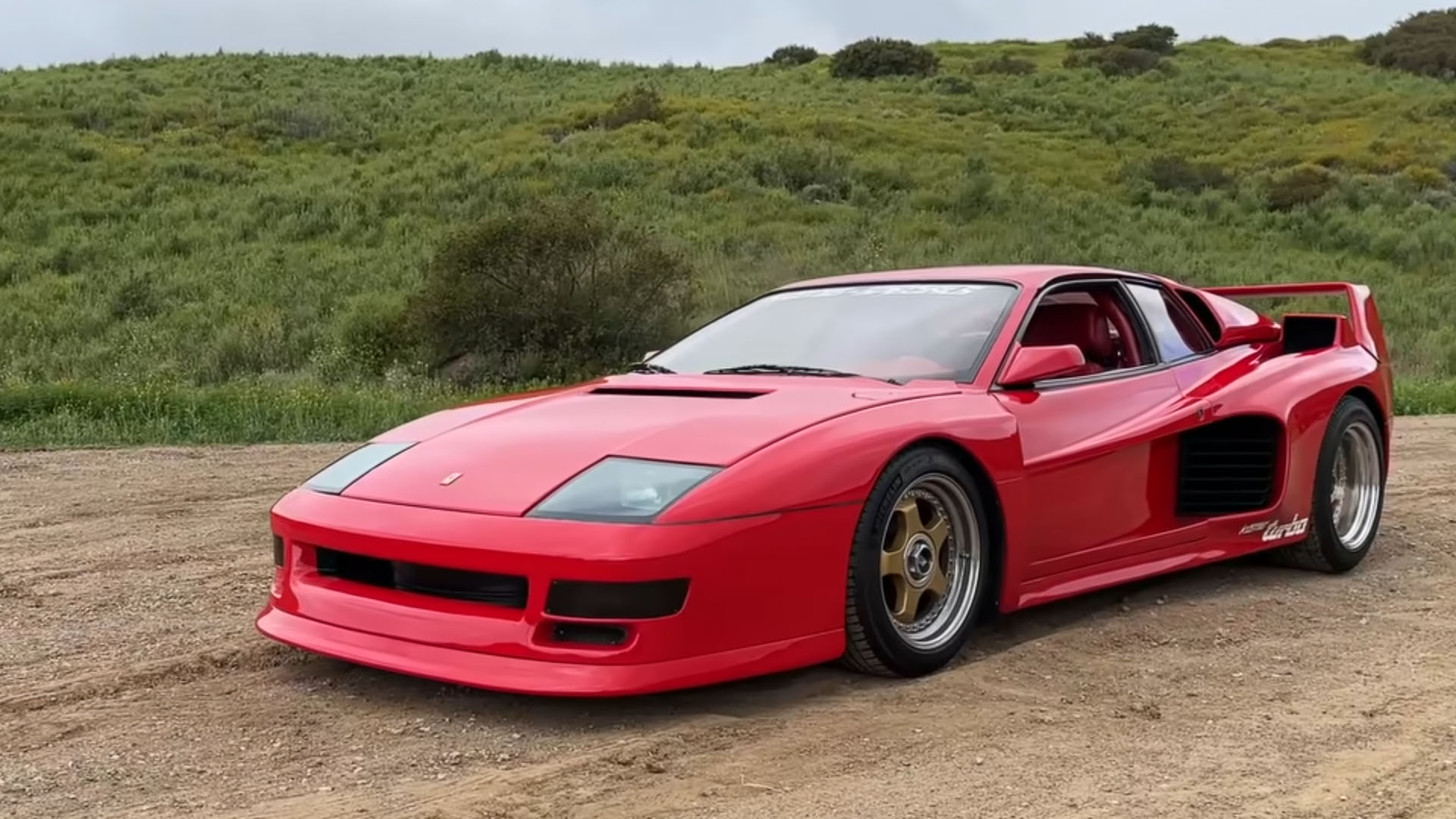
Back in the Eighties, there were some rather special tuners out there that would create something truly insane, based on a supercar, they would ‘improve’ the car to some serious levels, probably one of the best-known back in those days was Willy Koenig in Germany, and more specifically their very wild and extreme Koenig Specials based on cars from Maranello, like this 1987 twin-turbo Testarossa that packs 1,000 hp, yes, you are reading that correctly, nearly 40 years ago you could have a Ferrari with almost as much power as the current SF90, but I doubt you would get any warranty from the factory in Italy on this one.
The official name of this red car is the Koenig Turbo Evolution, and it is just completely modified compared to the original Ferrari Testarossa, not only has Koenig added some massive rear wings, and a deep front spoiler and widened the bodywork, but the entire interior has been customized, in this case in matching red leather to complement the exterior and get this, Koenig even offered a convertible version of this car too, in total Koenig built 21 units of the Turbo Evolution, at US$ 595,000 back in 1987 (that would be $1,300,000 in today’s money), and to be honest, it does remind me of the Ferrari F40 styling.
So what is it like to drive a 1987 1,000-hp Koenig Turbo Evolution? Just take a look at the video below from TheSmokingTire on YouTube:
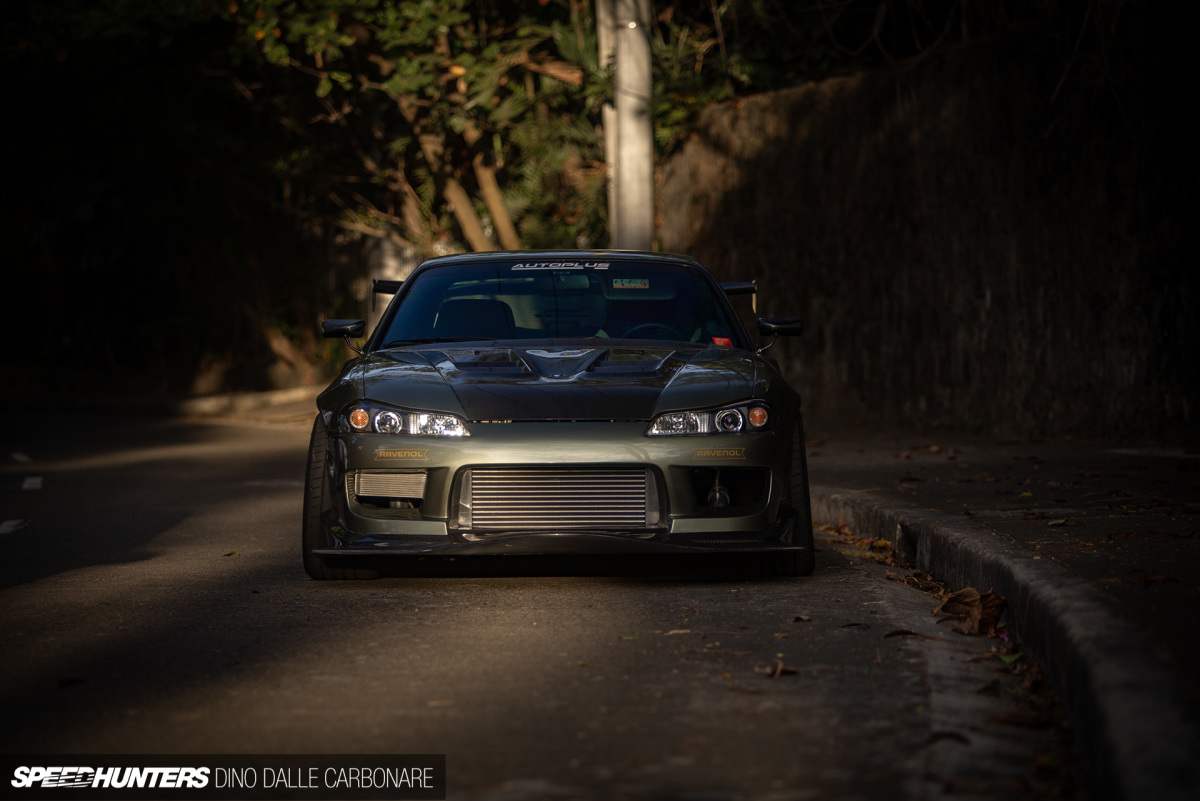
When you think of the Philippines, your first few thoughts probably don’t contain a fully-built Garage Mak-style S15.
But that is part of what makes this particular Nissan Silvia so good. If it had Japanese number plates you would probably never second guess it – which is why I wanted to shoot it.
Last week, Alec and I brought you a shop visit story on Autoplus in Manila, and this car belongs to the owner’s son, Luis. While it might not be an official Autoplus demo machine, it certainly shows what the shop is capable of.
If not glaringly obvious, Luis has drawn inspiration from modified cars in Japan, having spent some time there.
He even competed in the 2018 FIA Intercontinental Drifting Cup held in Odaiba, with another S-chassis.
At first glance, the Silvia has a time attack style, but spend a bit longer looking and you start to pick up all the drift influences. I’ll get to the mechanical hardware in a moment, but first, the exterior, which is quite spectacular.
The S15 features a host of Garage Mak aero parts, including their full Type 5 body kit, plus a Blister carbon fiber boot lid, carbon hood and GT wing. If that wasn’t enough, Luis also added an RE Amemiya rear diffuser – presumably designed for an RX-7 – along with a pair of Type 2 Magical Racing mirrors.
When we shot the car, it was rolling on RAYS Gram Lights 57DR wheels.
Combined with brand-new Nissan OEM weatherstrips, mouldings, headlights and taillights, the Silvia’s exterior is faultless.
This trend continues throughout the entire build, including in the engine bay.
Under the hood is a fully-built Nissan SR20DET VCT with CP forged pistons, Carrillo forged connecting rods, a Mazworx stud kit, Tomei head gasket, and Tomei 258-degree camshafts.
The turbo setup is no joke. A new Garrett G25-660 pushes over 20psi of boost through the SR20 via an upgraded GReddy intake manifold and Naprec 80mm throttle body.
Wired with a custom loom and tuned through a Link engine management system, this is about as good as an SR20 gets without changing the bore or switching to a NEO VVL (SR20VE) cylinder head.
Making power is one thing, but effectively getting that power to the ground is another. There are no issues here though, as Luis has specced the driveline and suspension with some of the best aftermarket gear available. In the mix is an ORC single-plate clutch and a OS Giken mechanical limited-slip differential, along with KW V3 coilovers, Cusco sway bars, and D-Max adjustable arms and links to dial in the alignment for street and track duty.
For brakes, the Silvia benefits from a full set of Project Mu calipers in a custom colour, which provide plenty of stopping power.
Out on the streets of Manila, the S15 looked nothing short of sensational, and it had the sound to match.
As you would expect, the cabin has been thoroughly updated too. Essentially, every new OEM interior part from Nissan was installed alongside some select aftermarket goodies.
Engine data is relayed to a Stack ST8100 display mounted in place of the factory S15 cluster, while Recaro (Japan) RS-G bucket seats, a Max Orido edition Nardi Classic steering wheel, and a Top Secret shift knob add just the right amount of JDM flair to what feels like a practically brand-new S15.
Those of you with a keen eye would have noticed the steering wheel on the left side of the car. The S15 Silvia was never produced in LHD, so this was an entirely custom endevour to satisfy the Philippines authorities. Honestly, the dash looks like a factory item.
When I capture rolling shots, it usually involves hanging a camera out the side of a van or maybe through the window of a regular car. This time, Alec and I found ourselves in the back of a pickup truck.
If this had been Japan, we would have not gotten far before being pulled over by police and given a stern talking-to. But the local security did us a solid by helping control traffic to create somewhat of an ‘escort’, making this method safe and manageable.
That said, it still caused quite the scene, and as a result, this was probably the most memorable moment from my trip to the Philippines.
Alec and I spent over a week in Manila documenting all types of cars and automotive culture, so stay tuned for more.
Dino Dalle Carbonare Instagram: dino_dalle_carbonare dino@speedhunters.com
Additional Photography by Alec Pender Instagram: noplansco
Henry Lloyd-Hughes Bought His First Car In An English Pub
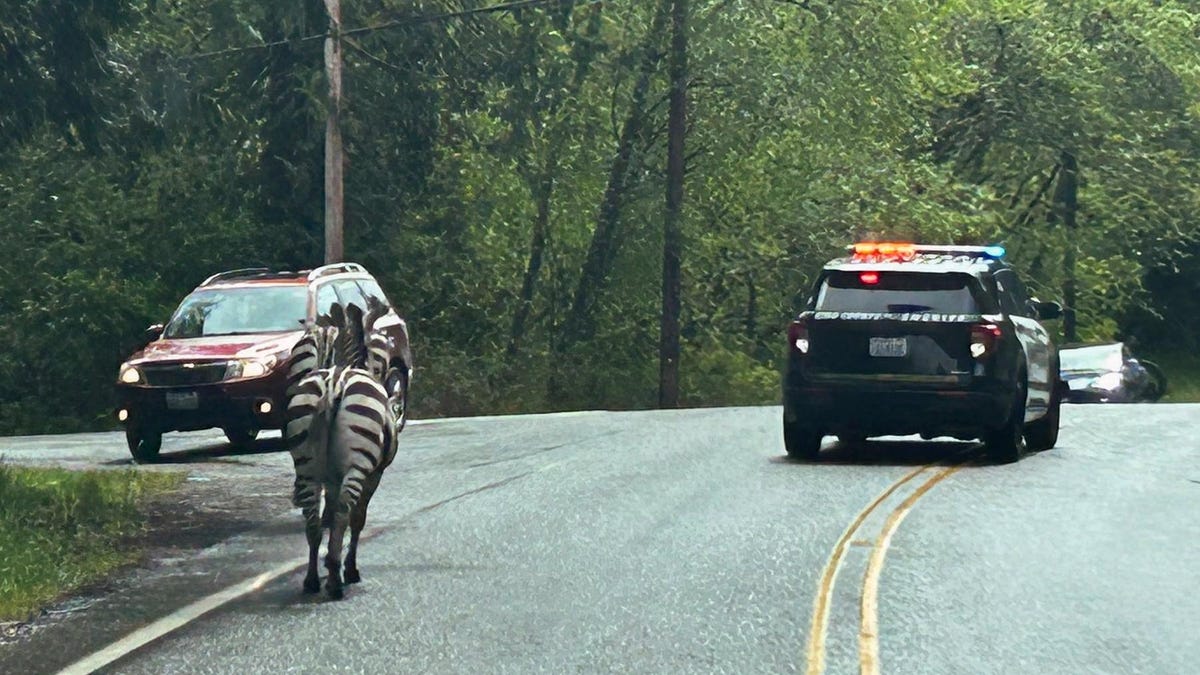
As luck would have it, a rodeo bull wrangler and his wife, a horse trainer, were driving down I-90 at just the right time.
“We just happened to be at that exit when[we heard] that there were zebras on the loose, so be cautious,” said David Danton, the rodeoman. “That was kind of strange.”
“My wife and I read animals very well, and we’ve helped catch lots of loose animals — buffalo that have gotten loose, racehorses,” he added. “We thought, ‘All right, let’s go see if we can help.’”
In another fantastical turn of events, a resident nearby had a large horse trailer that could be used as a portable holding pen. The makeshift posse of zebrahands used ropes and panels to coax the two mares into the trailer, while the filly was lassoed separately.
The trio of re-captured striped prisoners have been carried on to their final destination at the petting zoo, while their fourth cohort remains a free Equidae. The absconder, named Z, was last seen at 3 PM on Monday afternoon. The community has been using infrared drones and search-and-rescue dogs to track him, to no avail. One can hope that the native cougars and bears do not find him first.
Measuring about 3840 sq. km, Murchison Falls National Park is the largest national park in Uganda. Established in 1952, it is one of the country’s earliest national parks.
Murchison Falls is located at the northern end of the Albertine Rift Valley, spanning across three districts: Masindi, Kiryandongo, and Buliisa.
Murchison Falls National Park hosts over 144 mammals, 556 bird species, 51 amphibians, and 51 reptiles. This national park is renowned for having the highest number of African elephants, which are said to be the largest living mammals. The park is bisected by the River Nile, which squeezes through an 8-meter wide gorge before plunging over 45 meters down, creating a thunderous roar.
A safari to Murchison Falls National Park offers one of the most unforgettable experiences in life. The park boasts a multitude of attractions to explore, including animals, birds, the River Nile, and Murchison Falls, reputed to be the strongest in the world. Tourists can have exceptional experiences by participating in various organized activities.
Overview:
Things To Do in Murchison Falls National Park
During your stay in Murchison Falls National Park, there are so many activities that can be done. The more days one has, the more activities one can do while on a safari in Murchison Falls.
On a day, a maximum of two activities can be done, one in the morning and another in the afternoon. Night game drives can be carried out in the night for those who want to see nocturnal animals.
Fortunately, there are so many activities to do while on a safari in Murchison Falls National Park, including the following:
Game Drives
Murchison Falls National Park has over 144 mammals, 6 primates, 556 bird species, 51 amphibians, and 51 reptiles. Game drives are the best way to see some of the wildlife in the national park, and they are conducted in the morning, evening, and night hours around different park areas.
Day game drives (morning and evening) last two to three hours in different areas of the southern sector of the park. During these drives, tourists can see animals such as elephants, lions, leopards, warthogs, Nile crocodiles, Uganda kobs, sitatungas, hartebeests, cape buffaloes, giraffes, side-stripped jackals, spotted hyenas, hippos, cape buffaloes, and a few primates, among others.
Night game drives are also possible in Murchison Falls National Park, where tourists move to some areas of the park with armed ranger guides and strong lights to locate animals that are active during the night. During the night game drives, animals likely to be spotted include spotted hyenas, lions, bushbabies, giraffes, and leopards, to mention but a few.
Giraffes in the Murchison Falls National Park in Uganda
Bird Watching
Over 556 bird species have been recorded in different areas of Murchison Falls National Park.
The birding areas in Murchison include Kaniyo Pabidi, Royal Mile, and Busingiro, where tourists can see forest birds. Birding can also be done along the river, where birders can see waterbird species.
Birds of Murchison Falls National Park are best seen during the nature walks in the abovementioned areas. Bird species include Shoebill stork, yellow-fronted tinkerbird, saddle-billed stork, grey crowned crane, marital eagle, black-headed lapwing, red-throated bee-eater, Denham’s bustard, giant heron, African jacana, northern red bishop, black scimitarbill, vinaceous dove, Senegal thick-knee, long-toed plover, black-billed barbet, African darter, giant heron, and red-throated bee-eater to mention but a few.
Bird watching from the boat at the Murchison Falls National Park, Uganda
Boat Cruises
While on a safari in Murchison Falls National Park, an activity you don’t have to miss out on is a boat cruise. Boat cruises in the park are done to the bottom of the falls and the Nile Delta. The Albert Delta boat cruise is mostly done by birders, while the bottom of the Falls boat cruise is done to allow visitors to see the Murchison Falls.
Bottom-of-the-falls boat cruises in Murchison Falls National Park start from Paara dock, and tourists are taken all the way up to the bottom of the falls. During the boat cruise, tourists are able to see different water animals like crocodiles, hippos, and others grazing near the river shoes, such as elephants and antelopes, while border visitors will be able to spot a few water birds in the nearby vegetation cover.
The Albert Delta boat cruise starts from the Paraa dock but sails down the River Nile waters. It goes all the way to the Nile Delta, where the River Nile joins Lake Albert. During the boat cruise, birders are able to see some of the park animals along the shoes, but most importantly, bird species such as the Shoebill stork, long-toed lapwing, goliath heron, African fish eagle, and pied giant malachite, to mention but a few.
Murchison Boat cruise at the Murchison Falls National Park in Uganda
Visit the Top of the Falls
Tourists can see Murchison Falls when they take a boat cruise to the bottom of the falls; however, the best way to see the falls is by hiking or driving to the top.
Those who hike to the top of the falls need around 45 minutes, and the good thing about this is that they get to meet and see different attractions in the park.
Driving to the top of the falls makes the activity easy because tourists slope for a few minutes to reach the top. At the top of the falls, one can see water flowing at a very high speed before passing through a narrow gorge that is 8m wide. When the water passes through the gorge, it falls down the rock about 45 meters and then produces a thunderous row into the Devil’s cauldron.
How To Plan a Safari to Murchison Falls National Park
Tourists intending to visit Murchison Falls National Park for safaris are advised to first research the destination.
By reading about the park, one can determine what they will do while there, the number of days needed, the best time to visit, how to get there, and the amount of money needed, among other things. This piece of work has all the necessary information to plan a safari to Murchison Falls National Park.
Booking a Safari to Murchison Falls National Park
Assuming you have already gotten your travel dates, booking a safari to Murchison Falls National Park can be difficult, especially for first-time travelers. There are several factors to consider when booking a safari to any national park, and these include choosing a local tour operator, mode of transport, accommodation type, and activities to do while there, to mention but a few.
If you intend to visit Murchison Falls National Park for a safari, you need to set travel dates. Your dates of travel help in pricing as the tour package process differs according to the months of the year. You are supposed to look for different tour operators that can help you organize a memorable safari.
When booking with tour operators, one is supposed to send them the travel dates, group size, room plan, mode of transport, level of luxury, and travel budget. The tour operator will use this information to determine the cost of the safari and then send you a quotation.
When the tour operators send the quotation and itinerary, it’s better to read through it and see if everything is in the order you want. From here, you choose the tour operator with the best price, and based on their booking conditions, you can make a deposit or make full payment for your safari to be confirmed.
Africa Adventure Vacations
This is your go-to spot for incredible African safaris you’ll never forget.
They’re a top-rated safari company located in Uganda that provides amazing tours. Whether you’re into wildlife, culture, birding, luxury gorilla safaris, or Kilimanjaro trekking, they’ve got you covered.
They can tailor tours to your travel preferences, budget, and schedule.
Get in touch with Africa Adventure Vacations through the form below!
When Should You Book a Safari to Murchison Falls National Park?
Tourists are required to book a safari to Murchison Falls National Park at least 3 to 4 months in advance. Booking the safari in advance enables them to get the best tour operator, secure the best accommodation facilities, and have time to prepare, and it also enables tourists to save enough money to use on the safari.
The Places to Stay in Murchison Falls National Park
Tourists planning to visit Murchison Falls National Park have to think about the places they will stay at if they are to spend a night or more within the park. There are so many lodges inside and around the beautiful park where tourists can stay, and where to go usually depends on the client’s budget.
Lodges in Murchison Falls National Park are plenty in different areas in and around the park. These lodges include budget, mid-range, and luxury options offering different services. Lodges include Paara Safari Lodge, Pakuba Safari Lodge, Fort Murchison Lodge, Mama Washindi Lodge, and Hornbill Bush Lodge, to mention but a few.
Best Time to Visit Murchison Falls National Park
Murchison Falls National Park can be visited throughout the year. However, there are months that are better than others, like the dry season months. June to September and December to February are the best times to visit Murchison Falls National Park, for they have good weather characterized by little rainfall and plenty of sunshine.
During the dry season in Murchison Falls National Park, the vegetation is short, with good views of wildlife and other park attractions, game tracks to different park areas are dry and easier to pass through, and lastly, the roads leading to the park are passable. With little rainfall received, activities go on as planned and there is none you can miss.
Tourists can still consider visiting Murchison Falls National Park during the low season, when the prices are low and only a few tourists are in the park. The low season happens when the park receives too much rainfall and little sunshine. Tourists should come knowing that tall vegetation leads to unclear views of some of the attractions, and the game tracks are muddy and slippery.
Getting to Murchison Falls National Park
As you plan your next safari to Murchison Falls National Park, you need to know that tourists can access the park in two ways. Depending on the traveler’s budget, Murchison can be accessed using road transport or air transport. Air transport is quick, but travelers need to know it’s expensive, while road transport is cheap and takes 6 to 7 hours, including stopovers.
Getting to Murchison Falls National Park by road: This is one of the national parks that can be accessed by road transport, and from Entebbe, tourists go through Luwero, Nakasongola, and Masindi, where they enter the park using the southern gates to access the park. Tourists can still access the park from Pakwach using Tangi gate or Wankar gate near Purongo.
Accessing Murchison Falls National Park by air: The fastest way to get to Murchison Falls National Park is by air transport. There are three airstrips in Murchison Falls National Park which tourists can fly to and access, including Chobe, Pakuba, and Bugugu. Different flying companies like Bar Aviation Uganda, Aerolink Uganda, and Kampala Executive Aviation have flights to the park.
Get in touch with Africa Adventure Vacations to book your trip to the Murchison Falls National Park:
Africa Adventure Vacations is a one-stop center for the best and most memorable African safaris. We are a renowned safari operator based in Uganda, offering exceptional tours throughout the East African region, ranging from wildlife adventures, culture, birding, luxury gorilla safaris to Kilimanjaro trekking tours. All our tours can be customized to best suit your travel needs, budget and time.
The first time I properly cleaned my hiking boots, I wondered why I waited so long. Yes, hiking boots are meant to get dirty (it’s a sign that you’re using them!), but there’s something really nice about having a clean pair of hiking shoes that aren’t caked with muck and dirt. Plus, it helps extend their lifespan. My Oboz Sypes hiking boots cost upwards of $150, and giving them a refresh means I save money not having to buy new boots as frequently.
Cleaning your boots removes dirt and grime that can cause the materials to crack and break down and also restores the waterproofing and breathability. While it may sound like a chore, cleaning your boots is easy. You only need a few supplies and about 30 minutes, and your hiking shoes will be in much better shape for the long haul.
In this post, I share how I clean my hiking boots including what supplies I use and other tips for keeping them in good condition.
Sponsored by Nikwax
Nikwax makes products for cleaning and maintaining your outdoor gear. They are my go-to whether it’s my hiking boots, down sleeping bag, or my tent. All of their products are free of PFCs, fluorocarbons, and other nasty chemicals making them safer to use than many of the alternatives. They are also super effective and help make my outdoor gear last longer.
Hiking Boots Cleaning Supplies List
Below are things I use to clean my hiking boots. Keep in mind that appropriate materials may differ depending on your shoes. For example, your cleaning gel/waterproofing spray may change for leather boots vs. trail runners.
Microfiber cloths: Use a cloth that’s not abrasive and gentle enough to clean your boots without damaging them. I prefer microfiber.
Brush: You need a brush with bristles that are durable and small enough to scrub between crevices. A toothbrush can also do the trick.
Cleaning Gel: My go-to is Nikwax Footwear Cleaning Gel for cleaning shoes made of suede, nubuck, or smooth-finish leather.
Waterproofing wax: I use Nikwax Waterproofing Spray, a water-based, biodegradable solution that repels water.
4 No-Fuss Steps to Clean Your Hiking Boots
Step 1: Prep the boots
The first step is to remove the laces and the insoles. This will help you get hard-to-reach spots on your shoes behind the laces and avoid damaging them. Then before I put any water or soap on my boots, I shake off any dirt and debris that’s stuck inside.
Step 2: Remove excess dirt
Next, you want to remove any chunks of dried dirt. I suggest doing this outside. When I was cleaning my Oboz Sypes, the dirt was dried onto the soles and I had to use a butter knife to pry that dirt off.
Then I use a brush with sturdy bristles to scrub off dirt from crevices and outside of the boot. I’ve found dirt tends to build up in the tongue, the tread, and the designs on a shoe (like where a logo may be).
Once all of the big chunks are off, I rinse the outside of boots and use a rag or microfiber cloth to wipe down the uppers, soles, and toe guards to get any remaining dirt off. I think it’s easiest to do this in your kitchen sink or a bathtub, but if you prefer to do this outside, you can also use a hose or a bucket.
Step 3: Scrub hiking boots with shoe cleaner
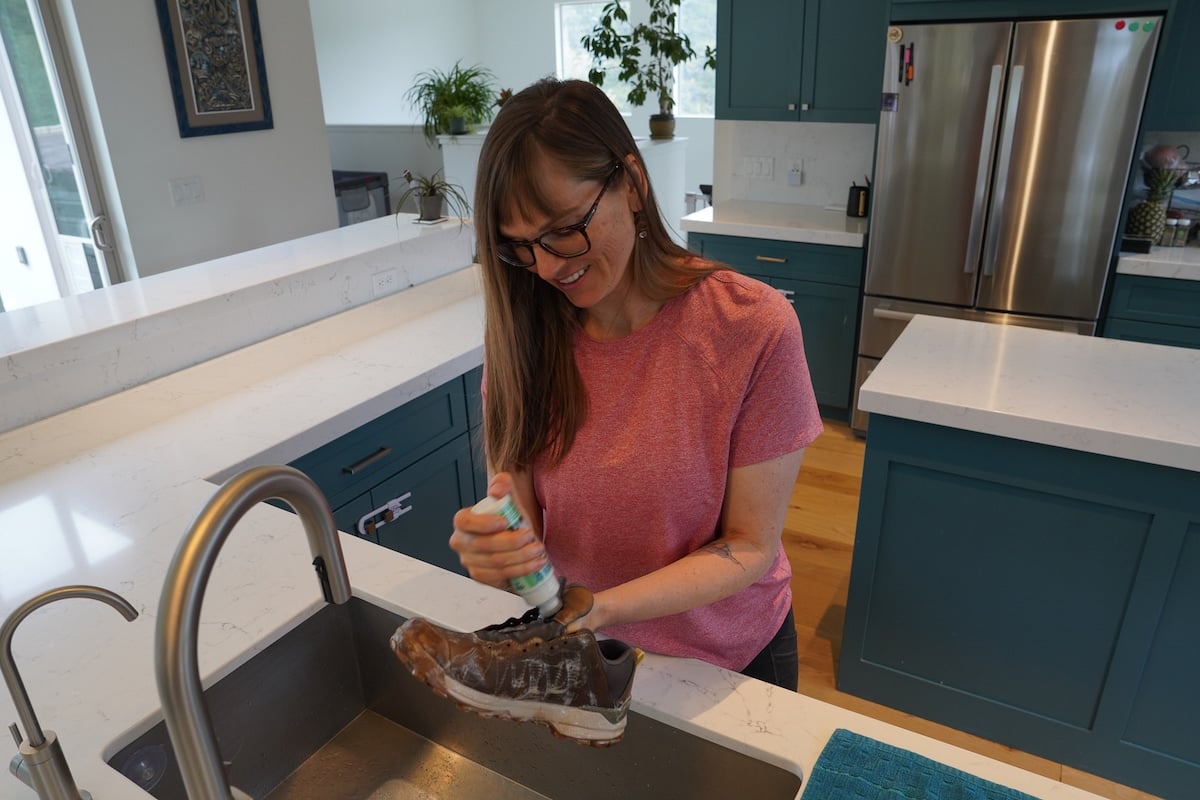
Once the dirt is all removed and the boot is damp, it’s time to apply and scrub with Nikwax Footwear Cleaning Gel. It’s pretty straightforward and comes with a brush applicator that makes it really easy to apply. After my boots are nice and clean, I rinse them again under the faucet.
Step 4: Apply Waterproofing Spray
Over time, your hiking boots lose their waterproofing abilities, so I always take this opportunity to apply Nikwax Nuback and Suede waterproof spray. Just spray the outside of your wet shoes, let it sit for two minutes, and then wipe off any excess with a clean cloth.
Note if your shoes are made of a combination of fabric and leather, you’ll want this waterproof spray instead.
Step 5: Let the shoes dry
I recommend just letting your shoes air dry. Depending on how wet they are (and whether you live in a dry climate), this will take anywhere from 4 to 24 hours.
No matter how rushed you are — be careful not to place shoes too close to a heater, fireplace, or hair dryer. This can crack leather and melt the soles.
5 Tips to Keep Your Hiking Shoes Clean
Here are some easy tips for maintaining your hiking boots after you clean them.
Neutralize odors: If you’re dealing with odor even after cleaning your shoes, sprinkle a few teaspoons of baking soda in your DRY shoes and leave them overnight. Shake them in the morning, and they should smell much fresher.
Wear wool socks: Good wool socks will prevent your shoes from getting too smelly. My favorite socks are made by Darn Tough.
Remove insoles after sweaty hikes: Bacteria love dark and wet places, so removing the insoles and letting them dry out prevents bacteria from growing.
Rinse boots if they get in saltwater: Most hikes will involve freshwater, not saltwater, but if you find yourself hiking near the ocean, rinse them afterward. Salt can damage your boots, especially leather ones.
Frequently Asked Questions
How often should I clean my hiking boots?
After every hike, you should remove any chunks of mud and dirt from your shoes. Then, I suggest cleaning your hiking boots with cleaning gel twice a year – once after winter and once after summer. This ensures you aren’t letting the debris and gunk build up on your shoes too long. Additionally you should clean your boots after a particularly muddy hike.
How often should I waterproof my hiking boots?
Anytime you notice that your boots aren’t as waterproof as they used to be is a good time to re-waterproof them. Otherwise, you should apply waterproofing spray anytime you use hiking boot cleaner before they dry – at least once a year.
Why do I need to re-waterproof my boots?
Overtime, dirt, debris and grime that builds up on your shoes can degrade the waterproofing on your waterproof shoes. When this happens, you might notice more moisture seeping through. Further, as waterproofing wears off and your shoes absorb moisture, your shoes become less breathable. Applying a waterproofing spray can restore the original waterproof properties and breathability of your shoes.
Can I put my hiking boots in the washing machine?
Never put your hiking boots in the washing machine. It can damage the shape and also destroy the waterproof properties of your shoes.
Save this post to Pinterest
Do you clean your hiking boots? What steps do you take? Do you think it’s necessary? Leave a comment below!
The technical storage or access is strictly necessary for the legitimate purpose of enabling the use of a specific service explicitly requested by the subscriber or user, or for the sole purpose of carrying out the transmission of a communication over an electronic communications network.
Preferences
The technical storage or access is necessary for the legitimate purpose of storing preferences that are not requested by the subscriber or user.
Statistics
The technical storage or access that is used exclusively for statistical purposes.The technical storage or access that is used exclusively for anonymous statistical purposes. Without a subpoena, voluntary compliance on the part of your Internet Service Provider, or additional records from a third party, information stored or retrieved for this purpose alone cannot usually be used to identify you.
Marketing
The technical storage or access is required to create user profiles to send advertising, or to track the user on a website or across several websites for similar marketing purposes.