British performance marque TWR has been revived by the son of the original company’s founder, and on Tuesday it revealed its first project, the wild Supercat based on the Jaguar XJS.
The iconic Jaguar grand tourer, built between 1975 and 1996, was raced by the original TWR in various touring car championships, so it’s a fitting donor vehicle for the new TWR’s first project.
TWR is saving most details until closer to the car’s dynamic debut this summer, but has confirmed a supercharged V-12 sits up front and delivers over 600 hp. Drive is to the rear wheels via a 6-speed manual transmission.
The body is made entirely form carbon fiber and features a unique wide-body design. The car’s exhaust tips are also mounted at the side, which enabled the designers to fit a massive rear diffuser spanning the width of the body. The interior hasn’t been shown, but has also been fully reworked.
TWR Supercat
The new TWR, founded by Fergus Walkinshaw, whose father was businessman and motorsports personality Tom Walkinshaw, is made up of engineers formerly of Ferrari, McLaren, Porsche, and several Formula 1 teams. It plans a series of bespoke vehicles infused with modern materials but able to deliver an analog driving experience, starting with the Supercat.
The company also employed the talents of car customizers Magnus Walker and Khyzyl Saleem for the Supercat. Walker is known for collecting and restomodding classic cars, particularly among Porsche circles. Saleem, who goes by the online handle Kyza, is an up-and-coming talent famous for designing wild and over-the-top cars as 3D models. He also has his own line of body kits marketed under the LTO brand.
TWR is accepting orders for the Supercat. It is priced from 225,000 British pounds (approximately $282,000), and just 88 examples will be built, the number a nod to the original TWR’s first 24 Hours of Le Mans win back in 1988 with the Jaguar XJR-9. Deliveries are scheduled to start late this year.
Opel last week took the covers off its new flagship crossover, the 2024 Grandland.
It’s due to start sales later this year in markets where the German brand operates, and buyers will be able to choose from mild-hybrid, plug-in hybrid, and electric powertrains. This flexibility is due to the adoption of Opel parent company Stellantis’ STLA Medium platform designed for compact and midsize.
Only the electric Grandland has been shown. Full details are being withheld until closer tot he market launch, but Opel has confirmed the biggest battery will be 98 kwh, or enough for a range of over 400 miles on the WLTP cycle used overseas. Stellantis has previously quoted a maximum EPA-rated range of 370 miles for the STLA Medium platform.
No power figure has been revealed but the STLA Medium platform is capable of supporting electric powertrains rated up to 382 hp. The previous-generation Grandland topped out at 300 hp in plug-in hybrid form.
The new Grandland is quite a bit larger than its predecessor. It measures 183.1 inches long, making it 6.8 inches longer than the previous generation. It’s also 75 inches wide, or about 2.5 inches wider than its predecessor. This should result in more space inside. Opel quotes a cargo volume of close to 58 cubic feet with the rear seats folded down.
At the front of the cabin, the dash sports a simple design with a slim digital gauge cluster and a wide touchscreen (16 inches) serving as the infotainment hub. A head-up display is also included, while a few physical controls are present for frequently used functions, such as adjusting the climate settings.
The new Grandland also introduces next-generation matrix LED highlights for Opel. Each headlight unit contains 25,600 individual pixels. This means it can block out objects like oncoming cars more precisely than the previous version, while at the same time delivering a much brighter and homogeneous light pattern, Opel said. Other premium technologies include adaptive cruise control with lane change assist, park assist with automatic steering, and a surround-view camera.
Production will be handled at Opel’s plant in Eisenach, Germany.
There’s nothing quite like the experience of a BBQ. Eating outside is just… better. Still, when you’re touring in a motorhome, campervan, RV or caravan, finding the right BBQ for your needs can be challenging. That’s why we’ve reviewed the best portable BBQs on the market to help you choose what’s right for you.
Heading off on a trip? Don’t forget to grab your FREE pre-trip checklist below to help you stay organised.
*We work hard to make this the best motorhome travel blog and road trip website possible, full of helpful content for you. The website is supported by our readers, so if you buy through links on this site we may earn a commission- at no extra cost to you. All opinions remain our own.
If you find this post useful, you can also treat us to a coffee – we promise to enjoy it while creating more useful content like this- we might even indulge in a biscuit (or two!)
The Joy of Motorhome & Caravan BBQs
One of the things you can always rely on in England is the fact that the first sunny day we have each Spring, everyone starts talking about getting the barbeque out.
Even if it’s still 4 degrees outside!
There’s something about eating outside your motorhome or camper which just makes it all feel so much more… adventurous.
Still, not many van campsites allow campfires, which is a shame, so the best alternative is a BBQ.
Whether you’re a full-time motorhomer or just enjoy taking your caravan out for weekend getaways, having a reliable and good-quality BBQ can make all the difference to your adventures.
Trouble is, there are so many options on the market it can be overwhelming to choose the right one for your motorhome or caravan.
In this post, we’ll help you navigate the wonderful world of caravan and motorhome BBQs by highlighting the top things to consider when choosing a BBQ and providing an in-depth review of the best camper BBQs on the market.
From portable and lightweight options to larger grills that can feed a crowd, we’ve got you covered.
Types of Motorhome / Caravan BBQs
There are plenty of different types of portable BBQ on the market. Some of the key factors to consider are:
Size and weight
Fuel source
Portability and ease of setup
Durability and quality
Ease of cleaning
Let’s talk more about each of these below.
Size and weight of BBQ
When it comes to choosing a motorhome BBQ, it’s essential to consider their size and weight. You need to make sure that the BBQ fits in the storage space available in your motorhome or caravan, and also that it is not too heavy to move around easily. If you don’t want to get it out of the locker, you’ll never use it!
Also, you need to consider your motorhome payload– a heavy BBQ can take you over your maximum weight limit. Having said that, you don’t want one so light that it blows over in a light breeze!
Compact and portable BBQs are usually the best choice for those with limited space, as they take up less room and are easier to transport. Larger BBQs are great for those who have the space to store them (like a garage), but can be difficult to move around.
Also, if you’re cooking for a larger number of people, you’ll need a larger BBQ, which might make things harder. While a large cooking area might be appealing, remember it will take longer to heat up and cool down, so take this into consideration.
BBQ Fuel Source
The three main types of fuel sources for BBQs are gas, charcoal, and electric. Gas BBQs are popular due to their convenience and ease of use, while charcoal BBQs offer a lovely smoky flavour. Electric BBQs offer easy, smoke-free cooking, but tie you to an electric outlet. Your choice of fuel source will depend on your personal preference and the type of cooking you want to do. More on this in the next section.
Portability and Ease of Setup
Portability and ease of setup are important factors to consider when choosing a motorhome / caravan BBQ. You need to ensure that the BBQ is easy to move around and put in and out of its storage spot, especially if you plan to move it around frequently.
A compact BBQ that is easy to set up can also save you time and hassle, allowing you to start cooking quickly and easily.
Durability and Quality
You want to ensure that the BBQ you choose is built to last and can withstand the wear and tear of regular use. It also needs to survive to journey between campsites!
A high-quality BBQ will provide you with better cooking results, allowing you to cook your food evenly and thoroughly. Look for a BBQ that is made from durable materials, such as stainless steel, and comes with a good warranty for added peace of mind.
Ease of Cleaning
Lastly, whilst many of us may be guilty of leaving a dirty BBQ in our back garden, in a motorhome you’ll be putting the BBQ back into your van. You’ll be cleaning it a lot more than you might be used to. Getting one which is easy to clean is essential- otherwise you just won’t want to use it.
Which is the Best Fuel for Motorhome BBQs?
There are 3 main types of fuel sources to consider for motorhome and caravan BBQs.
Gas: Gas BBQs are the most popular type of motorhome BBQ because they’re so convenient. You can get them on either propane or butane gas and they offer a quick and consistent heat source for cooking. Gas BBQs come in various sizes and shapes, from portable tabletop models to larger freestanding units with multiple burners. They are also relatively easy to clean and can cool down quite quickly afterwards, making them easier to put away before bedtime. If you don’t have a gas point on your van for a BBQ, you can buy a small bottle to use with them.
Charcoal: Charcoal BBQs are another popular type of campervan BBQ. The charcoal used gives a smoky flavour to the food. They can take longer to heat up compared to gas BBQs, but they can also reach higher temperatures, making them ideal for grilling steaks and other meats. Charcoal BBQs are usually cheaper than gas BBQs, and many people enjoy the traditional feel of cooking with charcoal.
Electric: Electric BBQs are becoming more popular due to their convenience and safety. They are powered by electricity and offer an easy and smoke-free way to grill food. Electric BBQs are also lightweight and portable, making them a great option for those who don’t have a lot of space in their motorhome or caravan. However, they can be more expensive than gas or charcoal BBQs, and they require an electrical outlet to operate, which may not be available at all campsites.
Motorhome Gas BBQ Point
Some motorhomes have an external gas point which a BBQ can connect to. Whilst this is great, don’t feel obliged to use it if you’d prefer to have a different type of BBQ. Similarly, if you don’t have one on your motorhome (I don’t!), it doesn’t mean you can’t get a gas BBQ.
The Best Gas BBQs for Motorhomes and Caravans
Here are our favourite gas-fueled BBQs for motorhomes and caravans. Whilst we appreciate everyone has different requirements, we’ve assessed them based on the factors above, to help you make a comparison.
Cadac Safari Chef 2 QR BBQ/ Safari Chef 30
Cadac have a reputation for creating great BBQs and it’s not without good reason. The Cadac Safari Chef is one of their most popular options with thousands of positive reviews across all models.
EDITOR REVIEW: This is the BBQ that I have, and I LOVE it. I chose it after all this research/ reviewing and have used it several times since purchase. It’s quick to heat up, easy to clean and stable enough to survive a moderate wind. Very happy with my purchase.
Dimensions: 28D x 32W x 38.8H cm
Weight: less than 4kg
Fuel type: Gas cylinder or cartridge
Pros include:
Sturdy
Good height
Plenty of features, including variable heat setting, Piezo ignition and a stay-cool handle.
Extra options include a pizza stone and paella pan.
Carry/ storage bag included
Reason to avoid:
More expensive than some others we tested
Legs can be a bit fiddly until you figure out the knack!
This versatile gas barbecue weighs less than 4 kg and comes with at least four different cooking surfaces; a burner with potstand, a BBQ grid, a grill plate and a lid/dome (the lid/dome can also be used as a pot).
The BBQ grid has ceramic coating for healthier and cleaner cooking, plus it makes it easier to clean. The removable fat pan catches cooking residue, but also protects the Safari Chef’s burner from wind to prevent the burner from blowing out. You can easily clean all surfaces with soapy water.
There is an integrated heat spreader under the BBQ to ensure the heat is evenly distributed over the entire cooking surface.
What type of Cadac BBQ is best for vanlife?
I was confused when I was trying to buy one of these, as there seemed to be several identical models on the market.
The differences come with the gas bottle and connector options, and also whether you opt for the additional pan/ lid or not. Make sure you’re buying the correct gas & connector for the option you choose. Some need a canister and not a small bottle.
The Safari Chef is available as a low pressure unit (LP) and as a high pressure unit (HP). Note: gas bottle, pressure regulator and / or Power Pak are not included.
I chose to go for QR Cadac Safari Chef option with extra pan so I can use it for more dishes. The ‘QR’ means Quick Release and makes it much easier to attach and disconnect gas bottles. (LP= low pressure and HP= high pressure)
Also, in 2021, the diameter of the BBQ was added to the product name of the barbecue and its accessories. Eg: Safari Chef 2 became Safari Chef 30 (so you can buy any accessories with that same diameter). There are no other differences- only the product name was changed.
Weber Q1200 Gas BBQ
The Weber Q1200 (and smaller Q1000 version) are often cited as some of the best bbqs for motorhoming and caravanning. It’s a good size and easy to transport and set up.
Dimensions: 66D x 85.2W x 120H cm
Weight: 15kg
Fuel type: Gas cylinder
Pros include:
Portable and Lightweight- easy to transport and set up
easy to operate, with a simple ignition system and temperature control.
Heats up quickly and provides consistent heat for even cooking.
Cast aluminum body and durable stainless steel burners. It also comes with a long-lasting porcelain-coated cast iron cooking grate.
Surprisingly large cooking area, with enough room to cook a BBQ for a small group of people.
Versatile: Can be used for a variety of cooking methods, including grilling, roasting, and even baking.
Cons:
Expensive- this is not the BBQ for those on a budget
Limited Fuel Options: The Q1200 runs on propane gas only.
No Side Burner, which may limit the types of dishes you can prepare.
Doesn’t come with a cover or stand
This Weber BBQ packs a lot of features into its compact design. With a sturdy cast aluminium body and durable stainless steel burners, the Q1200 is built to last and provide consistent heat for even cooking. It’s also portable and lightweight, with a large cooking area and can be used for a variety of cooking methods. While it may be more expensive than other portable BBQs on the market, the Weber Q1200 is a high-quality grill that is sure to last for many years to come.
Alternative Product: Weber Q1000 Portable Gas BBQ
Camping Gaz Party Grill 400 CV
If you want a gas BBQ on a budget which has THOUSANDS of positive reviews, look no further. The Camping Gas PartyGrill 400 seems to have everything a motorhomer or caravanner needs.
Its compact design has foldable legs and a lid which doubles as a wok, making it easy to transport and set up. The grill also comes with a non-stick griddle, a reversible grilling/griddle plate, and a stove attachment, allowing you to cook a variety of dishes with ease.
The Party Grill 400 CV is powered by a small gas canister, which can last for several hours of continuous use. Its Piezo ignition system makes it easy to light, and the adjustable heat control ensures even cooking.
Dimensions: 12.6D x 12.2W x 15.7H cm
Weight: 4.92kg
Fuel Source: Gas
Pros:
Best for those on a medium budget
Versatile Cooking Options: The Party Grill 400 CV comes with a range of cooking options, including a griddle, reversible grilling/griddle plate, and stove attachment, making it ideal for cooking a variety of dishes.
Portable and Lightweight: The grill’s compact design and foldable legs make it easy to transport and set up, making it perfect for camping, picnics, and other outdoor activities.
Easy to Use: The Party Grill 400 CV features a Piezo ignition system, which makes it easy to light, and the adjustable heat control ensures even cooking.
Non-stick Surface: The non-stick surface of the grill and griddle plates make it easy to clean and maintain.
Efficient Fuel Usage: The grill is powered by a small gas canister, which can last for several hours of continuous use, making it an efficient and cost-effective option.
Cons:
Limited Cooking Area: The Party Grill 400 CV has a relatively small cooking area, which may not be sufficient for larger groups or families.
Limited Durability: Some users have reported that the grill’s components, such as the gas regulator, may be prone to breaking after extended use.
Limited Fuel Source: The grill is only compatible with Camping Gaz canisters, which may not be readily available in all locations.
Assembly Required: The grill requires some assembly before use, which may be challenging for some users.
Best Barbeques for Caravans and Motorhomes
Best Charcoal BBQs for Motorhomes and Caravans
These are the charcoal BBQs we recommend for motorhomes and caravans. We’ve given a range of budgets and options for all types of van life.
Just remember, if you’re going to use charcoal, you need to make sure you can dispose of it properly- not all campsites have facilities to do so.
Cobb Premier Charcoal Barbecue Grill
The Cobb Premier Charcoal Barbecue Grill is an excellent option for those who want a versatile and portable BBQ that’s easy to use and delivers great results. With its compact and lightweight design, this BBQ is perfect for use in a motorhome, camping, or picnicking in the park.
One of the standout features of this BBQ is its fuel source. The cobblestones are easy to light and provide a steady heat source for several hours. This makes it convenient for those who want to cook outdoors without the hassle of lugging around heavy propane tanks or bags of charcoal.
The cooking surface is also impressive, with a grilling plate that can be adjusted to three different heights to accommodate different types of food. It’s also easy to clean, thanks to the non-stick surface that prevents food from sticking and makes wiping down the surface a breeze.
Assembly is quick and easy, and the BBQ comes with a sturdy carry bag that makes it easy to transport. It has a cool base, but it’s worth noting that the BBQ does get very hot during use, so it’s important to take care when handling it and leave it plenty of time to cool down before packing it away.
Dimensions: 33 x 33 x 30 cm
Weight: 3.6kg
Fuel: Cobblestones but can use alternative (cheaper) charcoal
Reasons to buy:
Very versatile; you’ll be able to roast, smoke, bake, barbecue, fry and more
Temperature control- mesh base & adjustable air vents in the domed lid so you can tailor the temperature to suit the food you’re cooking.
Lightweight
Cool base- can be stood on grass or a wooden table
Fast and efficient; Eight to ten charcoal briquettes provide up to 3 hours’ cooking time, and one fast-heating Cobble Stone will give up to 2 hours’ cooking time – and get you ready to cook in just 7 minutes.
Downsides:
Limited cooking space: the Cobb charcoal BBQ is relatively small and may not be suitable for cooking for larger groups.
Need for special fuel for best results: the Cobb charcoal BBQ requires special cobblestones or charcoal bricks to operate, which may not be readily available everywhere.
Price: the Cobb charcoal BBQ is more expensive than some other portable BBQ options on the market.
May not reach high temperatures: the Cobb charcoal BBQ may not reach the high temperatures needed for some types of cooking, such as searing meat.
Weber Go Anywhere Charcoal Barbeque Grill
The Weber Go Anywhere Charcoal Barbeque Grill is a compact and portable grill perfect for those who love to grill outside. Despite its small size, the grill has a generous cooking area, which is enough to cook for a small group of people.
It has porcelain-coated steel grates which are durable and easy to clean and precise temperature control. The Go Anywhere grill also features a lockable lid and foldable legs, making it easy to transport and store.
Overall, the Weber Go Anywhere Charcoal Barbeque Grill is a high-quality and versatile grill that is perfect for those who want to enjoy the taste of charcoal-grilled food while on the road.
Dimensions: 21.7D x 11W x 16.3H cm
Weight: 10kg
Fuel type: Charcoal
Reason to buy:
Portable
Good size cooking area
Easy to clean and store
Reason to avoid:
Takes a while to cool down
Needs assembly before use
No fancy features or accessories
Weber Smoky Joe Charcoal Portable BBQ
I have a soft spot for this little guy. Perhaps it’s the colour, perhaps it’s the way it smells BBQing my burger and sausages or perhaps it’s the way it’s just so fricking easy to use.
Whatever it is, if you’re after a compact, easy to clean and carry charcoal BBQ, the Weber Smoky Joe is the one I’d recommend.
Dimensions: 16.5D x 14.2W x 17H cm
Weight: 4kg
Fuel type: Charcoal
Pros:
Easy to use. Just load up the charcoal, light it up, and you’re ready to start grilling.
The adjustable dampers make it easy to control the temperature
porcelain-coated steel grates are easy to clean
Affordable: The Smokey Joe is one of the most affordable grills on the market, making it a great choice for those who want a high-quality grill without breaking the bank.
Downsides:
Small size and cooking area
Not great for anything other than BBQ-ing
No Lid Holder: Unlike some other Weber grills, the Smokey Joe doesn’t come with a lid holder, so you’ll have to find a place to set the lid while you’re grilling.
George Foreman Portable Charcoal Barbecue
The George Foreman Premium On-The-Go Portable Charcoal Barbecue is perfect for those who love to travel and explore. With its lightweight and portable design, it’s easy to take with you on camping trips, picnics, or any other outdoor adventure. The two-part rack allows you to grill up your favourite foods, while the adjustable airflow ensures that you get the perfect temperature every time.
Dimensions: 30D x 56W x 35H cm
Weight: 6.3kg
Fuel Source: Charcoal
Pros:
easy to assemble
heat-resistant carry handle
lockable lid
good for meat and veggies
adjustable airflow allows you to control the temperature of the grill, giving you more control over how your food is cooked.
Cons:
Small Cooking Area- not the best choice for larger groups.
Limited features compared to other grills on the market
Some users have reported issues with the grill’s durability, with some parts breaking or wearing down after a few uses.
Best Portable Electric BBQs for Motorhomes
Portable electric grills for motorhomes and caravans are quite a new thing, so there aren’t a huge range of them available – yet. Still, if you use campsites a lot and are happy to be restricted to using an electricity supply, you might find an electric BBQ best for you.
Weber Electric Grill BBQ Q1400
The Weber Q1400 Electric Grill is a great option for those who want to enjoy the delicious taste of grilled food without the hassle of dealing with charcoal or propane- or the worry about running out of fuel!
One of the best things about the Weber Q1400 Electric Grill is its versatility. With a 1560-watt heating element, this grill can reach high temperatures quickly, making it perfect for grilling all kinds of foods like burgers, steaks, and vegetables.
Another great feature of the Weber Q1400 Electric Grill is how easy it is to use and maintain. The removable catch pan makes cleaning up a breeze, and the porcelain-enameled cast iron cooking grates are both durable and easy to clean.
Dimensions: 20.5D x 27W x 24.6H cm
Weight: 8.7kg
Fuel: Electric
Pros:
Easy to use- simple plug-and-go setup. Controls are easy to understand and use.
Convenience and can usually be used where BBQs are otherwise banned
Quick Heating: The powerful heating element heats up quickly, allowing you to start grilling in just minutes.
Easy Maintenance and cleaning
Downsides:
Must be plugged in to electric supply
Small cooking area- perfect for couples but not much larger groups
Safety Tips for Using BBQs
Never use a BBQ inside your motorhome or enclosed space, as it can be a fire hazard and release dangerous gases
Always place the BBQ on a stable, level surface away from any flammable materials and overhead obstructions.
Keep your BBQ well away from dogs/ other pets, especially if they’re on a long lead which could get wrapped around it
Keep a fire extinguisher nearby and make sure you know how to use it. The best fire extinguisher for motorhomes is the Fire Safety Stick
Never leave a lit BBQ unattended and keep children away from the grill.
Allow the BBQ to cool down completely before storing it away.
Maintenance Tips
Regularly clean the barbeque after each use to prevent buildup of grease and debris. Use a wire brush to scrub the grates and remove any excess food residue.
Check the fuel source and connections regularly to ensure they are functioning properly and not leaking gas (assuming it’s a gas BBQ!)
Store the BBQ in a dry, protected area when not in use to prevent rust and other damage.
Cooking Tips:
Preheat the BBQ for at least 10-15 minutes before cooking to ensure even heat distribution.
Oil the grill/ griddle with a high-heat cooking oil to prevent sticking and make cleaning easier.
Use a meat thermometer to ensure that food is cooked to the proper internal temperature to avoid food-related illnesses.
Use indirect heat cooking methods for larger cuts of meat, such as roasts, to ensure that the meat is cooked all the way through without burning the outside.
Experiment with different types of wood chips or charcoal to add flavour to your grilled foods.
BBQ Cook Books
Here are some good books for BBQ cooking ideas. Enjoy!
I hope you found that post about motorhome BBQs useful. Do you have something to add? Feel free to drop a comment below.
Want more tips for motorhoming?
Here are some more ideas you might find useful:
Want FREE checklists, eBooks and additional tips to help? Visit our resource page
Last update on 2024-04-30 / Affiliate links / Images from Amazon Product Advertising API
Talk about commitment. When startup SEA.AI, an NVIDIA Metropolis partner, set out to create a system that would use AI to scan the seas to enhance maritime safety, entrepreneur Raphael Biancale wasn’t afraid to take the plunge. He donned a lifejacket and jumped into the ocean.
It’s a move that demonstrates Biancale’s commitment and pioneering approach. The startup, founded in 2018 and based in Linz, Austria, with subsidiaries in France, Portugal and the US, had to build its first-of-its-kind training data from scratch in order to train an AI to help oceangoers of all kinds scan the seas.
And to do that, the company needed photos of what a person in the water looked like. That’s when Biancale, now the company’s head of research, walked the plank.
The company has come a long way since then, with a full product line powered by NVIDIA AI technology that lets commercial and recreational sailors detect objects on the seas, whether potential hazards or people needing rescue.
It’s an effort inspired by Biancale’s experience on a night sail. The lack of visibility and situational awareness illuminated the pressing need for advanced safety technologies in the maritime world that AI is bringing to the automotive industry.
AI, of course, is finding its way into all things aquatic. Startup Saildrone’s autonomous sailing vessels can help conduct data-gathering for science, fisheries, weather forecasting, ocean mapping and maritime security. Other researchers are using AI to interpret whale songs and even protect beachgoers from dangerous rip currents.
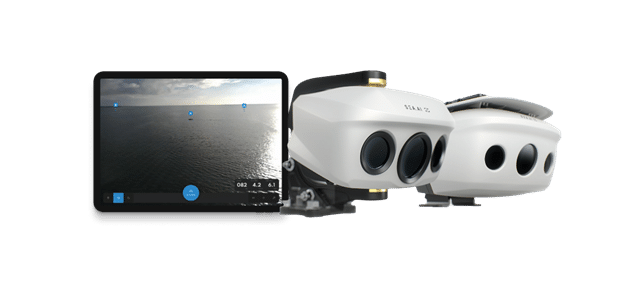
SEA.AI, however, promises to make the seas safer for everyone who steps aboard a boat. First introduced for ocean racing sailboats, SEA.AI’s system has quickly evolved into an AI-powered situational awareness system that can be deployed on everything from recreational sail and powerboats to commercial shipping vessels.
SEA.AI directly addresses one of the most significant risks for all these vessels: collisions. Thanks to SEA.AI, commercial and recreational oceangoers worldwide can travel with more confidence.
How SEA.AI Works
At the heart of SEA.AI’s approach is a proprietary database of over 9 million annotated marine objects which is growing constantly.
When combined with high-tech optical sensors and the latest AI technology from NVIDIA, SEA.AI’s systems can recognize and classify objects in real-time, significantly improving maritime safety.
SEA.AI technology can detect a person in water up to 700 meters — almost half a mile — away, a dinghy up to 3,000 meters, and motorboats up to 7,500 meters.
This capability ensures maritime operators can identify hazards before they pose a threat. It complements older marine safety systems that rely on radar and satellite signals.
SEA.AI solutions integrate with central marine display units from industry-leading manufacturers like Raymarine, B&G, Garmin and Furuno as well as Android and iOS-based mobile devices. This provides broad applicability across the maritime sector, from recreational vessels to commercial and government ships.
The NVIDIA Jetson edge AI platform is integral to SEA.AI’s success. The platform for robotics and embedded computing applications enables SEA.AI products to achieve unparalleled processing power and efficiency, setting a new standard in maritime safety by quickly detecting, analyzing and alerting operators to objects.
AI Integration and Real-Time Object Detection
SEA.AI uses NVIDIA’s AI and machine vision technology to offer real-time object detection and classification, providing maritime operators with immediate identification of potential hazards.
SEA.AI is bringing its approach to oceangoers of all kinds with three product lines.
One, SEA.AI Sentry, provides 360-degree situational awareness for commercial vessels and motor yachts with features like collision avoidance, object tracking and perimeter surveillance.
Another, SEA.AI Offshore, provides bluewater sailors with high-tech safety and convenience with simplified installation across several editions that can suit different detection and technical needs.
The third, SEA.AI Competition, offers reliable object detection for ocean racing and performance yacht sailors. Its ultra-lightweight design ensures maximum performance when navigating at high speeds.
With a growing team of more than 60 and a distribution network spanning over 40 countries, SEA.AI is charting a course to help ensure every journey on the waves is safer.
Report-card grades are derived from a consensus of test-driver evaluations. All grades are versus other vehicles in the same class. Value grade is for specific trim level evaluated, and may not reflect Consumer Guide’s impressions of the entire model lineup.
Big & Tall Comfort
Big Guy
A
Tall Guy
A
Big & Tall comfort ratings are for front seats only. “Big” rating based on male tester weighing approximately 350 pounds, “Tall” rating based on 6’6″-tall male tester.
Base price: $52,100 (not including $1335 destination charge)
Options on test vehicle: Carpeted floor mats ($215)
Price as tested: $53,650
Quick Hits
The great: Premium cabin appointments, generous passenger space
The good: Plenty of power, decent fuel economy, long-trip comfort
The not so good: Though still an excellent value, annual price increases have been significant
Tom Appel
Truth: Since its launch in 2020, no fewer than half a dozen neighbors and acquaintances have asked me if a Hyundai Palisade test vehicle was “the new” Land Rover/Range Rover. Rarely has a carmaker done such an impressive job designing a vehicle that punches above its price class.
On some level the story is getting old. The Hyundai Palisade—and its mechanical cousin the Kia Telluride—look and feel genuinely premium, and to some extent put much more expensive crossovers to shame. But we probably all know that by now. Perhaps in response to our collective jadedness, Hyundai is inching its big and well-regarded crossover even further upmarket…
For 2024, Hyundai is pushing the Palisade a little further upmarket. Capping a comprehensive trim level flight of models that ascends though the entry level SE (about $38,000), SEL ($41,000), off-road-oriented XRT ($43,000), upscale Limited ($49,000), and premium Calligraphy ($52,000), is the new ’24 Calligraphy Night Edition ($55,000). The Night Edition’s upgrades over the standard Calligraphy consist mostly of unique trim elements, though the polished black wheels that come as part of the Night Edition group are pretty snazzy.
All Palisades are powered by the same 291-horsepower 3.8-liter V6. The smooth and torque-rich engine mates to an 8-speed automatic transmission. All trim levels are offered with front-wheel drive or available AWD, except for the Night Edition which comes only with AWD.
Consumer Guide recently spent a week behind the wheel of the 2024 Palisade in penultimate Calligraphy trim with AWD and in very dark (see pictures below) Robust Emerald. Save for the addition of the Night Edition to the lineup, the Palisade is unchanged for 2024. You can read our full review of a 2023 Calligraphy here. Today, instead of focusing on the big Hyundai’s impressive premium-vehicle credentials, we’d like to concentrate on why the Palisade is, at its core, such a good family vehicle. Here’s a list:
Here’s good news: Even if you have the driver’s seat adjusted all the way rearward, junior in the 2nd-row seat isn’t likely to be able to kick your seatback. The Palisade is seriously roomy, and 2nd’row seating area is no less spacious than the front row. More good news: The 3rd-row is pretty roomy, too, even for occasional use by a full-size adult.
No little turbos here. The Palisades beefy V6 produces plenty of useful torque at very low speeds, which mean that there’s always muscle for pulling away from a stop, or plugging a hole in traffic. Additionally, the engine is very smooth, sounds good when pushed, and is pretty easy on the gas. We broke 20 mpg in mostly city driving, which, given the power, is pretty impressive.
With almost 90 cubic feet of available cargo space, the Palisade is among the more spacious midsize crossovers. Note that even with the 3rd-row seats up and in use, there’s still more than 18 cubic feet of space available for groceries and kitty litter.
The Palisade boasts a quiet cabin and surprisingly compliant ride. So, as a midsize crossover should, this big Hyundai will serve families well on long trips. Easy conversation between seating rows, even at highway speeds, helps the miles pass more quickly.
Alright, this is sort of a luxury thing, for it matters to some folks. The Harman Kardon audio system, standard on the Calligraphy is very good, and a wonderful thing to have on regular commutes or long drive. This author found the system well suited to mid-century American jazz often heard in Consumer Guide test cars.
…
While our test car came to more than $50,000 with options, lesser Palisade trim levels are offered, and are not considerably less rewarding to operate. We recommend budget-conscious shoppers test drive the value-priced SEL model, which sticker’s for less than $43,000 with options.
If you’ve ever made the mistake of bogging your luggage down with heavy, bulky denim, then you know the true value of linen pants. Linen, unlike denim, is lightweight and breezy, breathable and absorbent — your favorite jeans just don’t live up. The airy material keeps you cool as a cucumber (or at least as cool as you would be in shorts) in humid climates, but still provides the coverage you want or sometimes need in conservative destinations.
The only bad thing anyone can say about linen is that it’s on the expensive side compared to cotton and synthetics. (The cost of it reflects the work that goes into harvesting flax and manufacturing it into such a quality fiber.) So, naturally, people go totally wild when they find a pair like the summery Amazon Essentials Linen Pants on sale for $9.
Amazon Essentials Linen Pants
Amazon
That’s what’s happening at Amazon right now. These 45-percent cotton, 55-percent linen pants by Amazon Essentials are originally $30, but you might be able to cop a pair for 70 percent off in select sizes and colors (white extra-large, for example, are just $9). They pull on effortlessly thanks to the relaxed fit, wide leg, and elastic waist. Reviewers are calling them A+ vacation pants: “I purchased this pair of linen slacks for a trip to Abu Dhabi,” one wrote. “There are modesty rules for certain sites that require coverage to ankles (and wrists). These linen pants felt ideal as temperatures in the region challenge Mercury and the air conditioning is Arctic.”
Amazon Essentials Linen Pants
Amazon
Another traveler who called them the “perfect travel pant” reported that they’re a “great pant to take to Europe and “doesn’t wrinkle too much. Fits beautifully… and the price was right.”
Though they apparently dry quickly, they also wrinkle, as linen usually does. Linen lacks elasticity and is a little stiffer than other fabrics by nature, which means it creases easily. A tip that works for us: splash them with water and hit them with the hotel hairdryer while using your hand to smooth out the wrinkles.
Amazon Essentials Linen Pants
Amazon
Other features reviewers love are the big pockets on the front and back, the length (hitting right at the top of the foot — approved by both short and tall people), and the inclusive sizes, ranging from XS to 6X. The pants come in 11 colors, including natural ecru, bright white, olive green, terracotta, and beachy pinstripes.
So, as you get ready for summer travels and to survive the hot temperatures at home, stock up on the Amazon Essentials Linen Pants. Take it from reviewers — “99 degrees with 93 percent humidity and ‘feels like temperatures of 113.’ Jiminy crickets,” one said. “I am not even sweating on my legs covered with these pants! What could be more perfect?” — and act now, while you can snag them for just $10 to $30. With almost 2,500 five-star ratings and 200 purchases in the past month, they’re bound to sell out fast.
More Deals on Linen Pants at Amazon:
Roxy Oceanside Pant
Amazon
Anrabess Linen Palazzo Pants
Amazon
Faleave Palazzo Pants
Amazon
LNX Cropped Linen Trousers
Amazon
At the time of publishing, the price started at $9.
Outside Fairbanks, AK on the road to Denali National Park
I have been thinking a lot about escapism recently. Ever since I passed my 40th birthday one of my favorite Jimmy Buffett songs keeps coming to mind: “A Pirate Looks At 40”. The song, like most of Buffett’s work talks about escapism. Its theme about a man who at forty was contemplating his mortality and assessing just what he’s done with his life was definitely a meme that resonated with me. I am working on a spin on that “A Gen-Xer Looks at 50”…but thats a story for another time. Instead, lets talk about escapism more generally.
There is something so intoxicating about escapism. Jimmy Buffett has made a career of playing into our escapist fantasies and more recently Kenny Chesney and the Zac Brown Band have learned from Buffett and are appealing to audiences with much of the same message.
What is it in those songs that tugs at us? Well of course there is the care-free life of sitting on a beach with a boat drink in your hand; who could complain about that?
But I think there is more to it than that. Because if you look at it Americans today have a much easier go of it at work then they historically have. Now, don’t get me wrong–obviously there are people who are struggling and people who work at back-breaking jobs every day. But what I meant was many jobs are far easier than the jobs our grandparents had.
There are very few of us working six 12-hour days in a coal mine or in a sweltering factory. There are few of us who are getting hurt or sick on the job because of poor working conditions. Many of us work in an air conditioned building and work regular hours and have our weekends off. So we have less reason to yearn for an escape, yet we still do.
So what are we running from?
I think that there is something ingrained in the American DNA that makes us escapist. Nearly all of our ancestors came here as a form of escapism, so we are predisposed to pack it in and head for greener pastures.
When we listen to a Buffett song we yearn for that life of running away from people telling us what to do and making our way in the world in what ever way makes us happy.
Jimmy calls this a gypsy-soul. The part of your soul that keeps you wandering–not able to stay in one place for very long.
In my gypsy-soul I wish I were a good enough writer to live a life like Hemingway–-living a nomadic lifestyle of traveling around the globe going from cafes in Europe (here is Papa’s favorite cafe in Paris) to dive bars in the Caribbean (like the Soggy Dollar Bar) meeting people and observing life and earning a living chronicling the interesting people that are all around me.
I have a feeling more than a few of you can relate to the idea of my fantasy escape–if not that fantasy in particular. Like I said, I believe it is ingrained in our DNA to want to wander.
I think most people are afflicted with that gypsy-soul but there are only a few of us who actually listen to it. The rest of us just dream about wandering and that is why we embrace the Margaritaville mythos. Its also why we seek out Interstate Adventures and dream about hitting the open road like Doug and Loretta and recreate one of their trips.
We yearn to live according to our gypsy-soul but we are afraid to let go of our everyday lives–earning a steady dollar, being able to pay the bills, work and family responsibilities, etc. That’s why we flock to Buffett’s and Chesney’s concerts to dream of running away–if only for a few hours.
Of course there is nothing wrong with being responsible like that. We need to be adults at the end of the day. But I do think we need to spend just a little more time listening to our gypsy-souls every once in a while.
Very few of us have the means to be able to live the life that Jimmy Buffett is selling us. BUT–we do need to escape every now and then. Like that great philosopher, Ferris Bueller, once said: “Life moves pretty fast. If you don’t stop and look around once in a while, you could miss it.” We all need to slow down and take some time to just relax and escape.
That’s the point of this site. We encourage everyone to take a road trip, even if its just a long weekend, get away and listen to your gypsy-soul.
I know my ideas of escape are pretty specific to my dreams…what are yours? What is your dream escape?
Chery is expanding its Omoda line of crossovers with a new mid-sized plug-in hybrid SUV.
The 2025 Chery Omoda 7 will sit between the Omoda 5, which spearheaded the Chinese brand’s Australian return, and the Omoda C9, a rebadged Exeed RX/Yaoguang which has been approved for sale in Australia.
Revealed at the Beijing motor show, the Omoda 7 will commence its global launch in 2025. Chery Australia has yet to confirm when it’ll come here.
Chery hasn’t released much in the way of imagery or specifications, but has confirmed the Omoda 7 uses its latest hybrid powertrain architecture with a maximum range of 1250kg on a full tank and battery.
According to a presentation from the Beijing motor show attended by Malaysian outlet Paul Tan, the Omoda 7 uses a turbocharged 1.5-litre plug-in hybrid (PHEV) powertrain offering 95km of electric range.
While we don’t have total system outputs, the Jaecoo J7 PHEV revealed at Beijing – which also uses a 1.5-litre engine – has total outputs of 255kW and 525Nm.
The Omoda 7 reportedly uses a stretched, revised version of the Omoda 5’s platform, and measures 4621mm long, 1872mm wide and 1673mm tall on a 2700mm wheelbase.
That makes it 6mm longer, 7mm wider and 17mm taller than a Toyota RAV4, on a 10mm longer wheelbase.
Like the Omoda 5 and Tiggo 7 Pro, there’s a distinctive grille. Unlike those models, however, it has an unusual hexagonal pattern and a frameless look.
It also doesn’t extend all the way up to the bonnet, leaving a closed-off section between the headlights – somewhat reminiscent of the Lexus RX.
There’s a kinked C/D-pillar treatment like on the Omoda 5 and Tiggo 7 Pro, while there’s also a colour-contrast roof, black wheel arches, and a strong shoulder line.
Down back, there’s a rakish tailgate with the rear lighting assembly stretching across the rear.
Inside, there’s a 15.6-inch free-standing infotainment touchscreen, as well as a small, free-standing digital instrument cluster.
Chery Omoda 5
Exeed RX
Dual wireless charging pads form an angled bridge between the centre console and the dashboard. There don’t appear to be any physical climate controls, with almost every function controlled via the large touchscreen.
Chery says the Omoda 7 has an intelligent voice assistant, a fragrance system, active noise cancellation, and a “12+2” speaker sound system offering a “concert hall quality sound experience”.
The carmaker treats Omoda as a separate brand in markets like the UK and South Africa, while here and in China Omoda is a sub-brand sitting alongside the separate Tiggo family of SUVs under the Chery banner.
Chery will, however, introduce another brand to Australia in the second half of 2024 with Jaecoo. Its first model, the J7, is sold as a Chery in China, however.
A new rule from the Albanese Government will require electric, hybrid and hydrogen fuel-cell vehicles to be louder in a bid to reduce pedestrian fatalities.
The new Australian Design Rule (ADR) will require all new electric, hybrid and hydrogen cars, trucks and buses launched after November 1, 2025 to be fitted with an Acoustic Vehicle Alerting System (AVAS).
It’ll be required for all vehicles of these types on sale in Australia from November 1, 2026.
Already common among these vehicles, an AVAS emits a noise from the vehicle while it’s travelling at low speeds, making it harder for a pedestrian to miss when, for example, it’s driving through a carpark.
The Australian Government says a vehicle fitted with an AVAS, however, won’t be any noisier than a conventional petrol or diesel vehicle.
It says the new ADR is expected to help avoid around 68 fatalities, 2675 serious injuries and 2962 minor injuries by 2060, and is estimated to save the Australian community $208 million.
The planned rule comes after the Government consulted on a draft Impact Analysis proposing such a mandate, which found support from state and territory governments, the blind community, and carmakers.
ADR 113/00 – Acoustic Vehicle Alerting Systems for Quiet Road Transport Vehicles will require an AVAS system to be operational at speeds of up to 20km/h, with no pause function permitted.
The maximum sound level, when travelling forward, mustn’t exceed 75 dBA; the dBA unit of measurement refers to the relative loudness of sounds as perceived by the human ear.
According to Yale University, a normal conversation is around 60-70 dBA, while a vacuum cleaner is 75 dBA.
“As more and more Australians choose to drive EVs we are committed to ensuring that they are safe for both driver and others using the road,” said Catherine King, Minister for Infrastructure, Transport, Regional Development and Local Government.
“This is a significant win for those the blind and low-vision community who have long been advocating for alert systems like this to be introduced in Australia.”
The announcement was celebrated by Vision Australia, a not-for-profit organisation that supports people with blindness and low vision.
“Vision Australia has been calling for AVAS to be introduced in Australia since 2018,” said Chris Edwards, Vision Australia’s manager of government relations and advocacy.
“We are ecstatic and congratulate the current federal government for listening to our concerns and acting on this very important issue as pedestrians who are blind or have low vision will be able to navigate public spaces with more confidence.
“All pedestrians should have the right to feel safe and confident when navigating public spaces and today’s announcement is a significant step towards protecting that for people who are blind or have low vision. There is no doubt that this is an announcement that will save lives.”
The United Nations has already introduced a regulation regarding audibility of “quiet road transport vehicles”, while the United States and European Union also have regulations mandating minimum sound requirements for hybrid and electric vehicles.
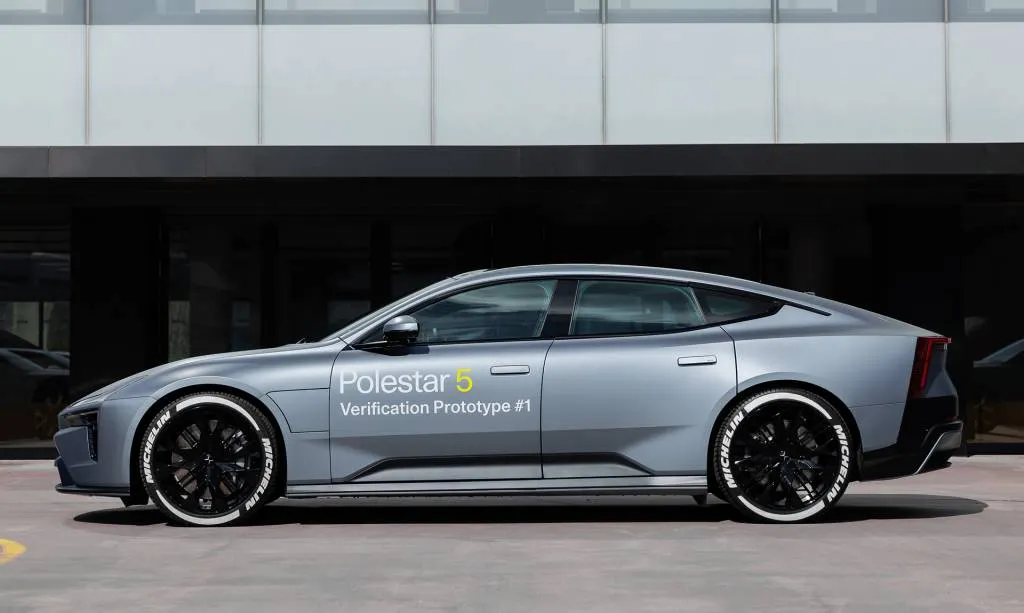
Polestar has announced that prototype cells fitted to a version of its upcoming Polestar 5 flagship EV have been able to do a 10-80% charge in just 10 minutes.
Polestar said last year that it would place the tech in a prototype Polestar 5 gaining 100 miles in 5 minutes—this project—by 2024, and it appears to have exceeded the original target. In the drivable Polestar 5, fitted with a “specially commissioned” 77-kwh battery pack, the pack has demonstrated that charge rate.
With this project, Polestar fitted StoreDot’s “100-in-5” XFC cells into the prototype Polestar 5 via a prototype Polestar battery module. It claims to have charged the resulting pack at a starting charge rate of 310 kw and a peak of 370 kw.
Polestar 5 prototype
The cells aren’t the all-solid-state cells that Toyota, Nissan, Honda, and others are targeting for later in the decade. But these “silicon-dominant” cells, delivered in their first test samples for automakers in 2021, are a further evolution of the lithium-ion cell tech common in EVs. StoreDot says it’s transformed them “by innovating and synthesizing proprietary organic and inorganic compounds, optimized by Artificial Intelligence algorithms.”
Polestar underscores that while energy density is on par with current nickel manganese cobalt (NMC) lithium-ion cells, these don’t require “specialist cooling systems.” The companies have previously said that this aspect could cut hundreds of pounds of weight from complete EVs, but it’s unclear if that means the test Polestar 5 is going without a liquid cooling system.
Polestar 5 prototype
That said, it’s unlikely that the tech would be installed in a production model anytime soon, and the production Polestar 5 will get a different battery pack. With this test Polestar 5, the brand now needs to see if such a cell would be durable and reliable as part of the thermal demands of a large electric vehicle battery pack. In 2022 the companies said that StoreDot was seeking mass-production of EV-sized batteries of such tech by 2024.
BP is an investor in StoreDot, and Polestar also holds a stake; a “strategic collaboration” with Volvo will also result in real-world testing with that related brand.
The technical storage or access is strictly necessary for the legitimate purpose of enabling the use of a specific service explicitly requested by the subscriber or user, or for the sole purpose of carrying out the transmission of a communication over an electronic communications network.
Preferences
The technical storage or access is necessary for the legitimate purpose of storing preferences that are not requested by the subscriber or user.
Statistics
The technical storage or access that is used exclusively for statistical purposes.The technical storage or access that is used exclusively for anonymous statistical purposes. Without a subpoena, voluntary compliance on the part of your Internet Service Provider, or additional records from a third party, information stored or retrieved for this purpose alone cannot usually be used to identify you.
Marketing
The technical storage or access is required to create user profiles to send advertising, or to track the user on a website or across several websites for similar marketing purposes.