Home Blog Page 785

BRT Sunway to operate on street level on April 27 – elevated track used for Under Armour Dual Race run

0


Click to enlarge

Take note, Sunway/USJ residents and those who take the BRT Sunway Line. The elevated bus route will be running on street level this Saturday night. That’s 6pm to midnight, April 27. This is to make way for the Under Armour Dual Race running event, which will flag off at 11pm.

This means that the BRT buses will be moving under the elevated track, and will stop directly below the BRT stations except at four stations, which will have alternative pick-up and drop-off points. The stations are USJ 7, South Quay, Mentari and Sunway Setia Jaya – see the list and images above for the points.

Much like Prasarana’s own BRT Run, UA’s 21.1 km relay run will be interesting as it utilises the elevated bus route. It’s almost like running on a closed highway, Duo Highway Challenge style, but the road is narrower and you run pass the stations. The route can be seen for miles ahead too, unblocked.

Runners, race pack collection is this Friday, April 26, from 10am to 10pm at the Under Armour store in Sunway Pyramid. As usual, bring your confirmation slip and ID. Have a good run.

Looking to sell your car? Sell it with Carro.


Source link

Classic Cars Worth Investing in 2024

0


The luxury vintage car industry is as dynamic as it is risky. These classic cars go beyond the nostalgia-factor to provide both an avenue for investment and the charm of vintage motoring. With value estimates based on Hagerty’s Bull Market List of collector cars to buy in 2024 and a comprehensive overview of trending collector cars, this list is for lovers of all things automotive. While the value of cars is known to depreciate, these vintage vehicles have appreciated over time or have a lower depreciation rate than other luxury cars, providing a potential investment for long term value growth.

Read More: The Classic Car Market Looking Promising in 2023

Jaguar XJS (1975-1996)

975 Jaguar XJ-S 5.4 V12 vs. 1996 XJS 6.0-litre V12

Valued at approximately USD 25,514 

With its distinctive long hood and sleek lines, the Jaguar XJ-S (later XJS) is a luxury grand tourer. Produced by the British manufacturer Jaguar from 1975 to 1996, the car was launched on 10 September 1975. Today the Jaguar XJS provides a sophisticated choice for those seeking a mid-range investment.

Porsche 944 (1982-1991)

Valued at approximately USD 5,355 to USD 16,595

The 944 was available from the spring of 1982 and very quickly gained a large fan base. The 944 was one of the best sports cars Porsche ever made. It also had a stylish and timeless look thanks to its bulging fender flares and sloping nose. The Porsche 944 had endless interior options, with some combinations featuring leather or velour. Porsche paid attention to detail with the interior of the 944, making it more driver-focused, with all controls slightly aiming toward the driver. Despite being the big brother to the Porsche 924, the Porsche 944 was among the coolest sports cars from the 1980s. Underneath the hood of the 944 was a new 2.5-liter 4-cylinder engine with tuned-down power levels and racecar technologies, including an engine management system and balance shafts.

Read More: DP World Tour’s Porsche Singapore Classic Returns With The Latest Porsche On The Line

1946 – 1950 Chrysler Town & Country

Valued at approximately USD 81,400 – USD 144,000

The first generation Town & Country arrived after WWII, and quickly became a fond piece of automotive Americana. While pre-war models were station wagons, Chrysler began experimenting with body styles, including convertibles and 4-door sedans in 1946. As they were manufactured in such limited numbers, they currently stand as rare and expensive collectables.

Read More: Private Collection of Rare Alfa Romeo Cars Worth USD 7.5 Million Are Now On Sale

1989 Lamborghini Countach 25th Anniversary

Valued at approximately USD 612,500 – USD 770,000

The 1989 Lamborghini Countach is regularly up for grabs at the best auction houses across America. The Hero Car from “The Wolf of Wall Street” was presented in Abu Dhabi in November and is up on Bonhams site now with an estimated cost of USD 1.5 – USD 2 million. However, according to reports, buyers “should be able to get one for under a million”.

2011 – 2016 Ferrari FF

Valued at approximately USD 143,000 – USD 177,000

The “Ferrari Four” (four seats and four-wheel drive) is a grand tourer that was available for only a short period. Powered by a 6.3 liter V12, capable of 650 hp, and driving power to all four wheels via 7-speed automated transmission, the FF was replaced for the 2017 model year by the GTC4Lusso. Classic.com lists a 2014 model that sold for USD 325,000 at the start of 2024, but according to Hagerty, one should expect a price range within USD 125,000 for one in “good” condition.

BMW E90 M3

Valued at approximately USD 45,000 – USD 73,000

In the autumn of 2007, BMW M launched the fourth generation BMW M3 E92 sports coupé. Two further launches followed in 2008, as the high-performance vehicle was made available in three body styles: the E92 Coupé, the E93 Convertible and, for the first time since the E36, as the E90 Sedan. Just like their predecessors, the models set new standards in terms of technology and driving dynamics. Never before had the BMW M3 been powered by an eight-cylinder engine. Typically, resale value among BMW models retains 61.6 percent of its value after the first five years. The estimates of resale value set by actuarial professionals for the M3 is 57 percent on a three-year 36,000 mile lease which implies a USD 85,000 2021 M3 will be worth USD 48,000 in 2024.

Mercedes-Benz AMG Black Series  

2014 Mercedes-Benz SLS AMG Black Series

Valued at approximately USD 688,415 – USD 700,000

For those who desire the ultimate in AMG performance, few models can match the exclusivity, rarity and track-optimised performance of the AMG Black Series models. One can think of the Black Series as AMG’s most extroverted, most track-focused and most exclusive, limited-production models. Since the first SLK 55 Black Series, these models have further enhanced AMG’s already exceptional performance models by modifying their powertrains, chassis and aerodynamics to optimise performance and maximise their dynamic capabilities. Thus far, only five special models have worn the distinctive Black Series badge. 

Read More: 10 Trending Collector Cars to Watch in 2024

1964-1966 Ford Thunderbird

Valued at approximately USD 110,000

Introduced in 1964, the Thunderbird — or “Flair Bird” — is an American classic that was a huge success when it was first released. With its low ground clearance and rear fender skirts, it looks like it hovers mere inches above the ground. MotorTrend indicated that the T-Bird convertible is the perfect parade car because “it’s low, wide and roomy”. The power-operated soft top on that version hides completely in the trunk, adding to the car’s space-age profile that dominated the mid sixties.

For more on the latest luxury car and automotive reads, click here.


Source link

2024 Porsche Cayenne GTS, Cayenne GTS Coupé FL facelifts – 500 PS/660 Nm 4.0L V8, sharper chassis

0


2024 Porsche Cayenne GTS, Cayenne GTS Coupé FL facelifts – 500 PS/660 Nm 4.0L V8, sharper chassis

Almost exactly one year since the debut of the E3-generation Porsche Cayenne facelift comes the driving enthusiasts’ variant, the Cayenne GTS that comes in both regular five-door and Coupé bodystyles. Denoting Gran Turismo Sport in Porsche parlance, the latest Cayenne GTS builds upon the Cayenne S – which marks the return of the V8 engine to the ‘S’ variant – with added emphasis on road handling.

On the powertrain front, this is a 4.0 litre twin-turbo petrol V8 engine that now produces 500 PS and 660 Nm of torque, increases of 40 PS and 40 Nm respectively over the pre-facelift E3 Cayenne GTS. The eight-speed Tiptronic automatic transmission has been revised to offer shorter response and shift times in Sport and Sport Plus modes.

The resulting straight line performance is a 0-100 km/h sprint time of 4.4 seconds, and a top speed of 275 km/h; gains of 0.1 second and 5 km/h respectively over the pre-facelift GTS models which were also V8-powered.

Beyond the headlining numbers, the Cayenne GTS has been given consideration for sustained, spirited driving. The transfer case for the all-wheel-drive system features an independent water cooling circuit that has been adapted from the Cayenne Turbo GT, which “stabilises the continuous load capacity” during demanding conditions such as driving on track or on mountain routes.

Chassis revisions in this GTS flavour brings 10 mm-lower ride height with its adaptive air suspension as standard, and also adapted from the Turbo GT are front axle pivot bearings which increase front wheel negative camber by 0.58 degree compared to other Cayenne variants, aimed at offering even more agility and improved handling dynamics, says Porsche.

Rolling stock is a set of 21-inch RS Spyder alloy wheels in an anthracite grey finish, and the exterior aesthetic continues with the GTS theme of darkened trim elements such as the side skirts, front inlays, side window trims and wheel arch extensions, which are Sport Design package items finished in gloss black for the GTS. The exhaust tailpipes which were previously black on the GTS, are dark bronze on the latest model.

Exterior kit for the Cayenne GTS Coupé gets a fixed panoramic glass roof and an adaptive rear spoiler as standard, while a sports exhaust system with central tailpipes can be optioned.

Also available as options for the Cayenne GTS Coupé are lightweight sports packages, which are comprised of a lightweight roof and carbon-fibre rear diffuser, along with reduced insulation. Depending on equipment specified, the lightweight packages can reduce weight by up to 25 kg, says Porsche.

Inside, the cabin of the Cayenne GTS gets a heated GT steering wheel as standard, and Race-Tex upholstery is used on sections such as the roof lining, armrests and door panels, as well as the centre panels of the eight-way-adjustable sports seats.

The side bolsters of the front sports seats are further raised for added lateral support when cornering, and GTS-specific interior packages will be offered in Carmine Red and Slate Grey Neo after customer unit deliveries commence. Also included is a Bose surround sound system and ambient lighting.

Looking to sell your car? Sell it with Carro.


Source link

2024 Toyota TRD Pro and Trailhunter excel at fast and slow

0


Do you want to go fast or go far? That’s the question Toyota Tacoma Chief Engineer Sheldon Brown posed when I asked how someone chooses whether to buy the 2024 Toyota Tacoma TRD Pro or Tacoma Trailhunter. Another question worth asking is, how much is in your budget?

Toyota’s off-road Tacoma flagship has been split in two, each with its own personality. The TRD Pro is meant to go fast over sand and dirt, while the Trailhunter is built to crawl over off-road obstacles.

The outgoing Tacoma TRD Pro was meant to be the do-everything Swiss Army knife of midsize pickup trucks, Brown explained. However, trying to be good at everything often makes a product mediocre at most things. 

After spending time behind the wheel of both the 2024 Toyota Tacoma TRD Pro and Tacoma Trailhunter pickups, it’s clear the automaker focused each truck on its dedicated mission. However, neither truck is the off-road king of the hill.

Let’s go off-pavement and dig in.

2024 Toyota Tacoma Trailhunter

2024 Toyota Tacoma Trailhunter

2024 Toyota Tacoma TRD Pro and Trailhunter go hybrid

Every Tacoma TRD Pro and Trailhunter pickup is a hybrid. RIP to the old V-6.

Under the hood sits a 2.4-liter turbo-4 mated to an electric motor located in the 8-speed automatic transmission. Total output checks in at 326 hp and 465 lb-ft of torque. On paper those numbers outgun the Chevrolet Colorado ZR2 turbo-4’s 310 hp and 430 lb-ft. The Toyota also bests the Ford Ranger Raptor’s 430 lb-ft of torque rating, but falls short of beating the Raptor’s 405 hp number.

The hybrid system provides only decent fuel economy numbers at 22 mpg city, 24 highway, and 23 combined for both trucks. I didn’t get to drive these trucks on pavement, so I can’t comment on real-world fuel economy.

I did experience this powertrain on-road in a Tacoma Limited model lined with leather. Like other Hybrid Max-badged Toyotas, the hybrid powertrain is strong, but somewhat underwhelming, with no wallop of power off the line or on the highway despite the high torque number. 

Off-road, the story is different, though it’s still a mixed bag. The electric motor contributes to immediate torque that provides plenty of grunt at low speeds and when crawling in the Trailhunter. Power delivery is smooth, as expected because Toyota has become the leader at hybrid power blending. 

In the TRD Pro, however, once the electric motor’s boost trails off the turbo-4 simply doesn’t deliver the same kick in the pants as the larger 2.7-liter turbo-4 in the Colorado ZR2. Also, no Tacoma offers paddle shifters like the Ranger Raptor. Brown said the team thought about paddle shifters for the TRD Pro, but it wasn’t really sure how many people would use the manual shift capability. I would’ve while driving at high speeds off-road because if programmed correctly it allows for more control to stay in the power band when needed.

2024 Toyota Tacoma TRD Pro

2024 Toyota Tacoma TRD Pro

The turbo-4’s noise, even with the performance exhaust of the Trailhunter and TRD Pro, isn’t in the same class as the throaty high-pitched turbo V-6 burble of the Ranger Raptor. It is notably deep for a turbo-4, though. That’s in part due to the TRD performance cat-back exhaust system. On the Trailhunter, the exhaust dumps out high just in front of the rear axle, where it’s tucked away from to prevent damage. On the TRD Pro, the exhaust splits into two welded black tips that exit on the driver side just behind the rear wheel.

2024 Toyota Tacoma TRD Pro, photo via Nathan Leach-Proffer

2024 Toyota Tacoma TRD Pro, photo via Nathan Leach-Proffer

2024 Toyota TRD Pro aims for Raptor and ZR2

In some ways the Tacoma TRD Pro hits the mark and bests the competition, but in many ways it falls short.

The Tacoma TRD Pro can indeed go fast off-road, to a point, as I learned on a bumpy gravel road.

When I pointed the TRD Pro down the rock-strewn gravel fire road, my right-seat companion, Andy, a professional stunt driver, told me to hit the hump in the road at 40 mph. That speed would send the truck flying. Any faster and we might land and bury the nose into the ground, much less and we wouldn’t get the air I wanted. I hit 48 mph before the hump, then lifted as instructed by Andy. Our speed dropped to 36 mph as we crested the hump. The truck took flight for a few feet and landed softly.

“That wasn’t dramatic enough,” I told him, noting we were going to need to do that again. 

The front tires hit the hump the second time with the speedometer at 46 mph, a little faster than instructed.

2024 Toyota Tacoma TRD Pro, photo via Nathan Leach-Proffer

2024 Toyota Tacoma TRD Pro, photo via Nathan Leach-Proffer

When the truck landed the 2.5-inch Fox QX3 shocks with small piggyback remote reservoirs went to nearly full compression and took the hit. I don’t think the rear end hit the hydraulic Fox jounce bumpers (the Trailhunter doesn’t have these), but if they did, they took the blow so well I didn’t even notice.

Andy said I could now go as fast as I could comfortably see down the rest of the fire road. He was wrong. With the pedal buried I soon realized the truck was about to rattle apart if it went much faster. The shocks weren’t keeping up with all the bumps. I didn’t see my speed because I was watching for rocks so I wouldn’t blow apart the underside of the truck (been there, done that, sorry, Chevy). The hood was shaking so violently that I let off the throttle a bit. I could’ve gone faster, the truck I’m not so sure.  

2024 Toyota Tacoma TRD Pro

2024 Toyota Tacoma TRD Pro

2024 Toyota Tacoma TRD Pro

2024 Toyota Tacoma TRD Pro

Brown told me the three-way adjustable Fox shocks were set to level two. Level one is for road use. Level two is for fire roads, which is what we were on. Level three is meant for desert-style Baja driving with more compression damping. Apparently, I can see at Baja-level speeds. Brown noted that if he had known someone would be willing to go that fast down the fire road he would’ve switched the shocks to level three. Next time, Brown. 

The TRD Pro’s steering weight was nearly ideal as I didn’t have to saw back and forth on the  thick perforated TRD-branded steering wheel to keep the truck going straight. 

Based on my time with both the Colorado ZR2 and Ranger Raptor, both trucks would have gone faster on the fire road, at least with the Tacoma’s Fox QS3 shocks set to Level 2. Unlike the TRD Pro, those trucks also don’t require a driver to manually turn a knob on each shock to adjust them, as the ZR2’s Multimatic DSSV shocks constantly adjust to conditions while the Raptor’s Fox Live Valve shocks adjust electronically based on the chosen drive mode. 

The TRD Pro and Trailhunter are 3.0 inches wider than the base Tacoma SR5, which itself is about 3.0 inches wider than the outgoing SR5 model. With the 33-inch Goodyear Territory R/T tires tucked under the bulging fenders, it’s hulking in comparison to an older Tacoma. Sorry kids, 35s aren’t going to fit without rubbing.

2024 Toyota Tacoma TRD Pro, photo via Nathan Leach-Proffer

2024 Toyota Tacoma TRD Pro, photo via Nathan Leach-Proffer

That wide stance helped give the TRD Pro a stable feeling while blasting around corners and down straights in the dirt on a motocross course. The new coil-spring rear suspension kept things planted and the tires in contact with the earth for better traction. But full-time four-wheel drive is nowhere to be found unlike on a Colorado ZR2 and Ranger Raptor. That’s just being cheap, Toyota.

The various off-road modes of the Multi-Terrain Select system now work in 4Hi and 4Lo, and the crawl control system, which is like off-road cruise control, no longer clunks and thunks. Still, there’s no Baja mode or anything that truly kicks the TRD Pro’s powertrain in the pants. The off-road drive modes are limited to Mud, Dirt, and Sand. Coming around banked turns on the motorcross course, the powertrain sometimes bogged down and got caught flat footed. The transmission simply didn’t want to shift quickly enough. Can we get a Baja mode, Toyota?

2024 Toyota Tacoma TRD Pro

2024 Toyota Tacoma TRD Pro

2024 Toyota Tacoma TRD Pro

2024 Toyota Tacoma TRD Pro

Inside, the TRD Pro’s cabin is mostly standard Tacoma fare. Chunky knobs and buttons serve as controls ranging from climate and audio functions to off-road features such as the rear locker. However, the front seats boast built-in shock absorbers to help with lateral stabilization while off-roading. They work. With air-pressure adjustments, these seats stabilize the driver’s body during high-speed off-roading for less jostling and fatigue. They might be the best seats in an off-road pickup, certainly in the midsize segment. The downside is the shocks, and their brackets, severely eat into rear seat legroom, taking it to “do I have to sit back there?” status. 

In theory, I like the available red and black color schemes, but the required camouflage seat pattern is too Bro Truck for me. I could also do without the TOYOTA name stamped into the passenger side of the dashboard. Brown confirmed this is part of a three-piece molding and removing it would require the entire dashboard’s trim to be swapped out. 

2024 Toyota Tacoma Trailhunter

2024 Toyota Tacoma Trailhunter

2024 Toyota Tacoma Trailhunter likes to take it slow

Trailhunters swap out the TRD Pro’s Fox QS3 shocks for ARB Old Man Emu position-sensitive 2.5-inch shocks with small piggyback remote reservoirs. They are softer than the TRD Pro’s Fox shocks for less jarring movements while clambering over obstacles. I’ll be curious to test both trucks on the road to see the differences on pavement.

No Toyota on the TNGA-F platform (of which the Tacoma shares with the Toyota Land Cruiser, 4Runner, Tundra, Sequoia, Lexus LX and GX) offers a front locker; the chief engineer for the Lexus GX said “we don’t need it.” Maybe, but a Ford Ranger Raptor and Chevrolet Colorado ZR2 both have one. 

2024 Toyota Tacoma Trailhunter

2024 Toyota Tacoma Trailhunter

The Trailhunter trades out the TRD Pro’s fancy front seats for standard Tacoma thrones. My tester’s seats were covered in synthetic leather in a mineral gray color trimmed with gold piping. The material was much more appealing to the eye than the TRD Pro’s camo-covered seats. They also make the rear seat tolerable, though the Colorado ZR2 still has more rear seat space with more comfort. The dashboard trim looks like it was cut out of granite with its matte finish, and the Toyota name is still molded into the passenger side of the dash.

2024 Toyota Tacoma Trailhunter

2024 Toyota Tacoma Trailhunter

2024 Toyota Tacoma Trailhunter and TRD Pro angles and capacities

Both the TRD Pro and Trailhunter only come in four-door crewcab body styles. While each can be had with a 5-foot bed, the Trailhunter is offered with a 6-foot bed for increased cargo capacity for off-road adventures.

Interestingly, the TRD Pro checks in with better off-road angles with 11.5 inches of ground clearance, a 35.7-degree approach angle, a 25.3-degree departure angle, and a 27.4-degree breakover angle. Those numbers eclipse the Trailhunter’s 11.0 inches of ground clearance, 35.2-degree approach, 22.3-degree departure, and 24.0-degree breakover angle. 

Should a miscalculation be made when off-roading, the TRD Pro features 6-mm thick aluminum skid plates from the front end to the back of the engine. The Trailhunter upgrades these skid plates as they are made from high-tensile steel. Trailhunters also get a front skid plate that goes to the back of the engine, and adds skid plates for the transfer case, transmission, and rear differential. Both models feature a resin shield around the fuel tank.

Both the TRD Pro and Trailhunter come standard with an electronically disconnecting front sway bar for more suspension articulation. A touch of a button helps keep the front tires in contact with the earth. Ford and Chevy lack this neat feature.

Both trucks are rated to tow up to 6,000 pounds with the 5-foot bed, and the Trailhunter’s optional 6-foot bed drops towing capacity slightly to 5,950 pounds. Brown told me the Trailhunter will be the better tow vehicle as it’ll squat less than the TRD Pro.

The high-speed off-road TRD Pro is rated to haul up to 1,675 pounds of payload, while the Trailhunter is only rated to haul up to 1,475 pounds with the 5-foot bed, and that drops to 1,425 with the 6-foot bed. 

Payload and towing match or best the competition. The Colorado ZR2 checks in with a tow rating of 6,000 pounds and is rated to haul up to 1,280 pounds of payload. The Ford Ranger Raptor is rated to tow up to 5,510 pounds and haul up to 1,375 pounds.

2024 Toyota Tacoma Trailhunter

2024 Toyota Tacoma Trailhunter

2024 Toyota Tacoma Trailhunter

2024 Toyota Tacoma Trailhunter

2024 Toyota Tacoma Trailhunter and TRD Pro lighting

Both the Tacoma TRD Pro and Trailhunter include lightbars mounted in their grilles, but unlike the Tundra and Sequoia TRD Pros these lightbars will be more functional. The lightbars on the full-size vehicles only put out about 5,000 lumens. An $80 flashlight can create more light output than that. The lightbars on the Tacoma models have a 10,000-lumen rating. It was daytime when I drove the trucks, so judgment day will come later.

Both off-roaders feature LED driving lights mounted in their front bumpers, but the Trailhunter’s setup, provided by Rigid, can switch between cool white or amber. Neat trick. Trailhunter trucks also have white lights mounted on the bed rails that come on with the interior access lights. An ARB sport bar is mounted to the front of the bed with Molle panels to mount off-road gear. It’s a neat bit no other competitor has and it provides real functionality.

2024 Toyota Tacoma TRD Pro, photo via Nathan Leach-Proffer

2024 Toyota Tacoma TRD Pro, photo via Nathan Leach-Proffer

2024 Toyota Tacoma TRD Pro and Trailhunter cost big bucks

Value isn’t baked into the Tacoma TRD Pro or the Tacoma Trailhunter.

The Tacoma Trailhunter costs $64,395 including $1,495 destination charge with the 5-foot bed, and another $500 should you opt for the 6-foot bed. The Tacoma TRD Pro costs even more at $65,395.

Those prices make the Chevrolet Colorado ZR2 look like an absolute steal at $48,790, and the Ford Ranger Raptor seem reasonable at $57,065. Both have front lockers and full-time four-wheel drive that the Toyotas lack.

The 2024 Toyota Tacoma TRD Pro and Tacoma Trailhunter both do a good job of fulfilling their mission. The TRD Pro handles the punishment of fast off-roading, while the Trailhunter is more adept when it comes time to pick your way down a trail. 

However, given that the Ford and Chevy have more advanced shocks, full-time four-wheel-drive systems, Baja modes, and they both feel quicker, I’m left wondering how much the Toyota Tacoma name can justify the price premium. Those fancy seats with built-in shock absorbers are fantastic, but not $8,330-$16,605 fantastic.

Toyota paid for travel, lodging, and I got sunburned to bring you this firsthand report.


Source link

Emerging Contemporary Artists to Invest in Right Now

0


LUXUO lists a selection of emerging artists whose reputations and markets are on the rise. They each use their own multidisciplinary forms of art that encompass different inspirations and themes be it social, cultural or political issues. These artists range across regional and international markets and highlight a unique blend of cultural influences, technical prowess, and a deeply introspective approach. With originality at the forefront, these artists demonstrate original thought not only with interesting materials, but explore novel concepts and subtle themes. The work of these artists is not just an investment opportunity but also offer any art collector the chance to diversify their portfolios and support burgeoning artistic talent.

Jonathan Vaultman

Jonathan Vaultman is an artist unlike any other. The 42-year-old French contemporary artist creates art that draws the viewer in and questions it, evoking emotion and encouraging contemplation from the viewer. “I don’t seek definitive explanations in my art; instead, I welcome questions and inquiry. If I can shed light on important questions through my work and encourage viewers to contemplate them, even if only for a brief moment, I consider my job accomplished,” he explains.

Drawn by hand using black charcoal, his work is comprised of shapes that start out as ambiguous figures before morphing into what looked like an architectural sculpture, a nod to his own background in architecture. There is a duality to Vaultman’s work that goes beyond colour. It is the beautiful juxtaposition of fluid and rigid, hard and sort, damp and dry, dark and light. Vaultman also incorporates additional elements into the presentation of this art, using music to create an entirely sensorial experience transcending beyond the visual into the auditory.

For more information contact Laurent Macaluso,
Asia Vaultman Agent: laurent@mozart-advisory.com
m: +66 84-892-7517

Dominique White

Winner of the 2022-2024 Max Mara Prize for Women, White’s oeuvre has found consistency and meaning by referencing black subjectivity and Afro-pessimism. Her ghostly 3D sculptures typically take the form of art installations — fragile and sophisticated in composition — they are composed of clay and other found materials referencing nautical legends. Her major solo show will take place at the prestigious Whitechapel Gallery, London later this year.

Credit to Artelier.com

Click here to find out more about the artist.

Sarah Choo Jing

Gestures of Affection by Sarah Choo Jing for Maison Valentino

Choo is a Singaporean artist known for her photography and video installations that explore themes of identity, urbanisation, and the human condition. Her work often incorporates elements of performance and storytelling. Choo was also tapped by Valentino to create a series of seven distinctive digital and print works that reference Valentino’s messages conveyed through the Spring/Summer 2024 Valentino L’Ecole collection.

Gestures of Affection by Sarah Choo Jing for Maison Valentino

Click here to find out more.

Lydia Blakeley

Lydia Blakeley is a contemporary artist recognised for her abstract paintings characterised by their expressive qualities and vibrant color palettes. Her works often feature quintessential aspects of UK culture in her paintings, for a myriad of classes and people. Her subjects range from pedigreed dog shows to post-drinking gatherings, drawing inspiration from internet culture. Blakeley’s art challenges conventional ideals, scrutinising aspiration and commercialism in the digital age we live. Blakeley’s artistic style varies, ranging from bold and energetic to subtle and introspective. Blakeley’s artworks have been showcased in various galleries and art spaces, showcasing her unique artistic vision and contribution to contemporary art.

Credit to Artelier.com

Click here to find out more.

Tschabalala Self

Tschabalala Self is an artist who is known for her vibrant and expressive mixed-media collages, paintings, and sculptures. Her work explores themes of race, gender, and sexuality, often depicting black female bodies in dynamic and empowering ways. She constructs her depictions using a combination of sewn, printed, and painted materials, traversing different artistic and craft traditions. The formal and conceptual aspects of Self’s work seek to expand her critical inquiry into selfhood and human flourishing.

Click here to find out more about the artist.

Ewa Juszkiewicz

Polish-born Ewa Juszkiewicz is a surreal artist renowned for her captivating reinterpretations of classical portraits. In her paintings, Juszkiewicz challenges conventional ideas surrounding beauty, identity, and representation by distorting and exaggerating aspects of the human figure. Blending elements of realism with surrealism, her work creates visually arresting compositions that prompt viewers to reconsider traditional portraiture norms. Juszkiewicz’s unique approach to exploring themes of femininity, authority, and the gaze has earned her acclaim in the contemporary art scene. Her artistic contributions have left a notable mark on the art industry.

Click here to find out more about the artist.

Mandy El-Sayegh

Mandy El-Sayegh: A rose is a rose is a rose is a rose _Feb 2024_Press Release.docx

Mandy El-Sayegh is British–Malaysian with Palestinian origins. Her work is rooted in an exploration of material and language executed in a wide range of media — including densely layered paintings, sculpture, installation, diagrams, and sound and video. El-Sayegh’s work investigates the formation and breakdown of systems of order, be they bodily, linguistic, or political. Her recent A rose is a rose is a rose is a rose exhibition showcased Mandy El-Sayegh’s unique bricolage approach using collective visual data from diverse sources such as ephemera, textiles, literature, newspapers, and printed materials to transform the gallery space by layering painted surfaces using sheets from international newspapers of varying colours.

Click here to find out more.

Haffendi Anuar

Haffendi Anuar’s commissioned sculpture for the Battersea Power Station development in London is called ‘Machines For Modern Living’. Image courtesy of The Star

Anuar is a Malaysian artist known for his minimalist sculptures and installations that investigate themes of memory, perception, and materiality. His work often incorporates found objects and everyday materials, inviting viewers to reconsider their surroundings. He works in a process that combines collage, dyeing, painting, image transfer and sewing and incorporates physical materials such as seashells and pebbles. Anuar’s work is steeped in his cultural roots as his art forms a narrative of childhood memories encountering and being enveloped by the fabric. As stated by Richard Koh Fine Art, his research and exploration into the iconography of the garment encompasses personal family photos, archival photographs, images from social media and the Internet as well as texts on Malaysia written by colonial writers and looks into the fabric’s origin, social utilisation, visual patterns and formal structure.

Click here to find out more about the artist.

Source & References: Christie’s Auctions, Artelier.com, Richard Koh Fine Art.

For more on the latest in luxury art reads, click here.


Source link

3-5 Day Suggested Itinerary for 2024

0


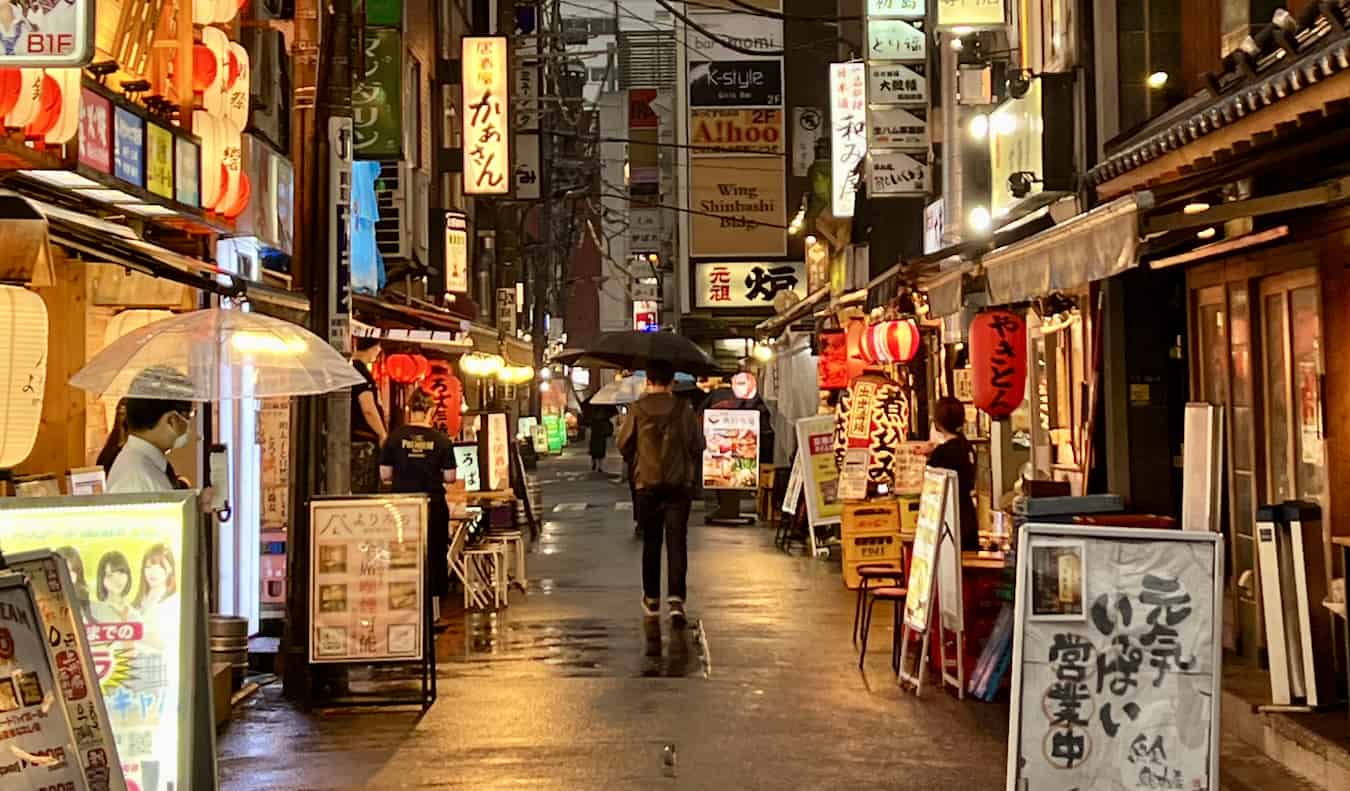
A quiet narrow alley in Tokyo, Japan with bars lining the street
Last Updated: 4/22/24 | April 22nd, 2024

Tokyo is one of the most amazing cities in the world. It’s fast-paced, futuristic, and bursting with weird and wonderful activities to keep you busy, including gorgeous shrines, palaces, and temples; hip clubs and bars; and fashionable people and shopping, not to mention beautiful cherry blossoms.

Tokyo lives up to all the hype. If I could spend months living there, I would.

You never know what you’ll find here. One second you’ll run into a group of women dressed in pig masks and ’80s dresses and the next you’re in a robot café or a centuries-old temple.

It’s also one of the biggest cities in the world, home to almost 14 million people (almost 40 million if you count the metropolitan area). Not surprisingly, there are many nooks and crannies to explore in this city that seamlessly weave centuries-old Japanese traditions with modern technology. (So don’t rush your visit. You’re never going to see it all anyway, so don’t try!)

To help you plan your trip, here is my suggested itinerary based on over seven visits to Tokyo:


Tokyo Itinerary: Day 1

An Ueno Park path river in Tokyo surrounded by cherry blossomsAn Ueno Park path river in Tokyo surrounded by cherry blossoms
(Note: There’s a lot listed for this day. Since you’re likely to wake up super early because of jet lag, you can fit it all in. You might not want to, though. Maybe you need an afternoon nap!)

Roam the Tsukiji and Toyosu Fish Markets
In 2018, Tokyo’s main fish market moved to Toyosu, which is twice the size of the old one, Tsukiji, making it the largest in the world. While a lot of good restaurants moved too (Sushi Dai being the most famous), I find the place itself very stale, since you can no longer wander the floor (you look down via a walkway above; you also need a visitor’s pass to enter).

The old outer market in Tsukiji is still great though, and you can still find food and stores there too. You can wander alone and just eat and shop until you can’t anymore! Most businesses open at 6am, so it’s a perfect place to go in the morning when you wake up early because of jet lag. Food and drink tours of the Tsukiji Outer Market are available for around 13,500 JPY.

Tsukiji Fish Market: 5 Chome-2-1 Tsukiji, Chuo, +81 3-3542-1111. Admission is free. Toyosu Fish Market: 6 Chome-6-2 Toyosu, Koto, +81 3-3520-8205. Open Monday-Saturday 5am-5pm, though most businesses don’t open until 7am. Admission is free.

Immerse yourself at teamLab Planets
This really fun and quirky digital art installation is a multisensory and immersive experience in which you become part of the artwork, walking barefoot through the four exhibition spaces and gardens as you interact with the installations. It takes an hour or so to go through. teamLab is quite popular and generally sells out at least a few days in advance, so I recommend getting your tickets online ahead of time.

6 Chome-1-16 Toyosu, Koto City, teamlab.art/e/planets. Open Monday-Sunday 9am-10pm; last entry is one hour before closing. Admission is 3,800 JPY for adults during weekdays and 4,200 JPY on weekends. Discounts are available for children and those with disabilities.

Admire the Imperial Palace
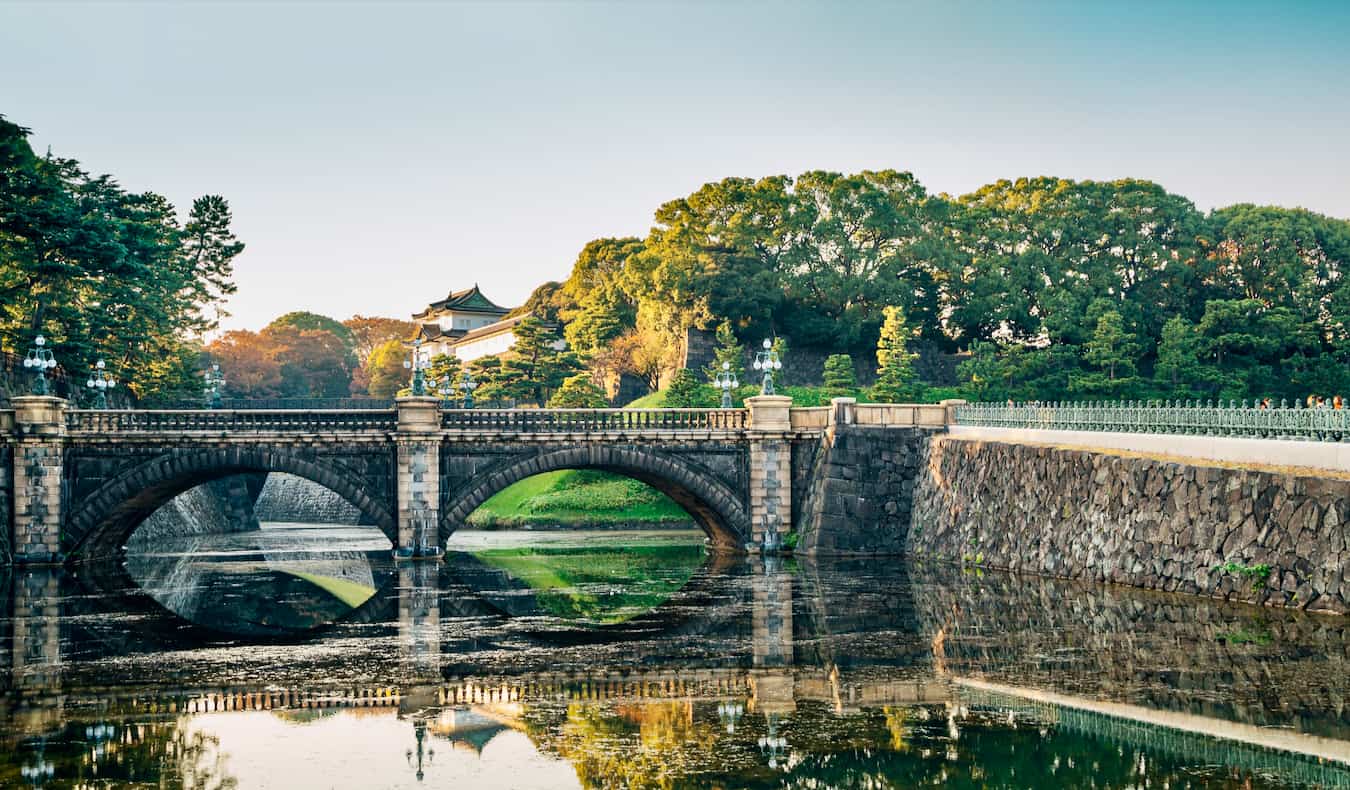
When the emperor moved from Kyoto to Tokyo in 1869, he took Edo for his new residence and renamed it Tokyo. Though you can’t go inside (or get very close), the building is amazing. It is surrounded by lovely grounds and a park, and there’s a moat around the stone walls. You can also see the changing of the guard, though it’s a relatively low-key and unassuming ceremony. Tokyo Localized offers a free walking tour of the gardens that is worth taking and lasts 2.5 hours. Admission to the grounds is free.

Feast below the Girders
Not far from the palace is the Yurakucho neighborhood. Below the elevated train tracks at Yurakucho Station is a 700-meter stretch of wine bars, beer pubs, and casual restaurants filled with businessmen. It’s a good spot for lunch, though it gets the most busy after work, when people stop in for food and happy hour on their way home.

Scale the Tokyo Tower
Built in 1957 and resembling the Eiffel Tower, the Tokyo Tower is taller (at 333 meters/1,092 feet) than its European version and made entirely of steel. It was the city’s tallest structure until the “Skytree” was built in 2010. You can pay to go all the way to the top floor to take in the view, but frankly, the main observation deck offers one that’s just as good.

4 Chome-2-8 Shibakoen, Minato, +81 3-3433-5111, tokyotower.co.jp. Open daily 9am-11pm. Admission is 1,200 JPY.

Relax at Meiji Jingu
Located at the northern end of Yoyogi Park, Meiji Jingu is a peaceful Shinto shrine honoring Emperor Meiji and Empress Shoken, who helped modernize Japan. It’s nestled in a serene forest, with a big wooden gate marking the entrance and paths lined with trees. You really don’t feel like you’re in one of the busiest, most densely populated cities in the world when you wander around here. Watch traditional ceremonies, stroll through the gardens, or check out the museum. (FYI: It gets really busy on the weekends.)

1-1 Yoyogikamizonocho, Shibuya City, +81 3-3379-5511, meijijingu.or.jp. Open every day of the year from sunrise to sunset. Admission is free.

Enjoy Yoyogi Park
One of Tokyo’s largest parks, Yoyogi is laced with walking paths, forested areas, and ponds. It is also used for music events and festivals throughout the year, and you’ll see many street performers and shops selling snacks. If you’re visiting in late March or early April, you’ll be able to catch the cherry blossoms. In the fall, the ginkgo forest takes on a beautiful golden color.

2-1 Yoyogikamizonocho, Shibuya City, +81 3-3469-6081, tokyo-park.or.jp/park/yoyogi. Open 24 hours, though some facilities have shorter opening times. Admission is free.

Get trendy in Harajuku
Harajuku is one of the most iconic districts in Tokyo. It’s renowned for its avant-garde take on fashion, it’s the epicenter of anime and kawaii (cuteness) culture in Tokyo, with lots of quirky and vintage-clothing stores and street art. Walking around the area, you’ll see all kinds of outfits, mostly worn by younger Japanese people (predominantly teenagers), making it a fun place to people-watch and window-shop. If you want to go shopping, this is one of the best areas to do it in. you’ll find a lot of the best Japanese designers here.

Dine with ninjas
For a unique dining experience, head to Ninja Tokyo (formerly Ninja Akasaka), a ninja-themed restaurant designed like an Edo-era building, with wait staff clothed in stereotypical all-black garb and trained in all sorts of tricks and illusions. You’ll order off old scrolls while being entertained by the skills of your server! It’s super fun.

Tokyu Plaza Akasaka, +81 3-5157-3936, ninja-tokyo.jp. Open daily 5pm-10pm, plus 11:30am-2pm on weekends.

Drink in Golden Gai
This district, lined with backstreet bars, may be touristy, but it’s one of the most fun in Tokyo. These zigzag alleys are filled with hole-in-the-wall bars serving cheap drinks. Each is unique, so it’s fun to pop in and out of them. It’s very touristy, but you’ll find a lot of Japanese people here too. It’s quite crowded on the weekends, so go early before the bars fill up.

If you want a deep dive into the area, take a food tour. Arigato Tours runs an evening tour around Golden Gai and Omoide Yokocho in Shinjuku that will show you around and let you sample the best ramen and yakitori in the area.

Tokyo Itinerary: Day 2

a peaceful garden near the Imperial Palace in beautiful Tokyo, Japana peaceful garden near the Imperial Palace in beautiful Tokyo, Japan
Check out Asakusa
If you want to see some of Tokyo’s historic religious sites, spend some time wandering around Asakusa. Just start as early as you can to avoid the crowds (especially if you plan on taking photos). These are two places not to be missed:

  • Senso-ji – Tokyo’s most popular and famous temple is beautifully painted and sits in a scenic spot near a pagoda and the impressive Kaminari Gate. There’s a huge statue of Kannon, the goddess of mercy, inside the main hall. 2 Chome-3-1 Asakusa, Taito, +81 3-3842-0181, senso-ji.jp. The grounds are open 24/7, though the temple itself is open daily 6am-5pm. Admission is free.
  • Asakusa Shrine – Not far from Senso-ji is this Shinto shrine, built during the Edo period and which survived the air raids of World War II. This is much more peaceful than Senso-ji, with fewer people, whom you’ll be able to see praying, meditating, or performing traditional rituals. 2 Chome-3-1 Asakusa, Taito, +81 3-3844-1575, asakusajinja.jp. Open daily 9am-4:30pm. Admission is free.

Explore Ueno Park
Spanning over 133 acres, Ueno Park is a lovely spot to spend the day. Various stalls and vendors sell snacks, drinks, and souvenirs. On weekends, there are usually cultural events or festivals showcasing traditional arts, music, and dance. During cherry blossom season, the park is full of people picnicking and admiring the thousands of trees. The park is also home to some of Tokyo’s best museums:

  • Tokyo National Museum –Established in 1872, this massive museum in the north end of the park houses one of the world’s largest collections of art and artifacts from Asia, particularly Japan. 13-9 Uenokoen, Taito, +81 3-3822-1111, tnm.jp. Open daily 9:30am-5pm (7pm on Fridays and Saturdays). Admission is 1,000 JPY.
  • Tosho-gu Shrine – This beautiful 17th-century Shinto shrine with carved gold doors and ornate carvings can also be found in the park. 9-88 Uenokoen, Taito, +81 3-3822-3455, uenotoshogu.com/en. Open daily 9am-5:30pm (4:30pm in winter). Admission is free up to the wall, though to go further inside is 500 JPY. To enter the shrine and peony garden costs 1,600 JPY. There’s also a combo ticket for the shrine and treasure hall for 2,100 JPY.
  • National Museum of Nature and Science – Opened in 1871, this museum houses exhibitions on pre-Meiji science. There are over 5,000,000 items in the collection, with 14,000 of them on permanent display. It’s also home to the taxidermied body of the legendary dog Hachiko, the loyal dog who would greet his owner at Shibuya Station on return from his daily commute (more on him later). 7-20 Uenokoen, +81 50-5541-8600, kahaku.go.jp. Open Tuesday-Sunday 9am-5pm. Admission is 630 JPY.
  • National Museum of Western Art – This is one of the only museums in the country to focus on Western art, established in 1959. The collection of almost 5,000 pieces extends from the Renaissance all the way to the 20th century. Expect to see works by masters like Van Gogh, Reubens, Renoir, Monet, Picasso, and many more! 7-7 Uenokoen, +81 3-3828-5131, nmwa.go.jp. Open Tuesday-Sunday 9:30am-5:30pm (8pm on Fridays and Saturdays). Admission is 500 JPY.

Browse Akihabara
Akihabara, or “Akiba,” is a bustling district in central Tokyo known for its vibrant electronics, anime, manga, and gaming culture. You’ll find streets full of gadgets, anime merchandise, card games, and collectibles. Stop and play in one of the plethora of video game shops. This area is also where you’ll find the famous maid cafés, where servers dress up as maids and serve you food and drinks. The girls on the street are promoting the more hole-in-the-wall options, which are a lot more culturally fun than the big touristy ones. (They aren’t cheap, though, as you have to buy drinks packages and pay a fee, but it’s kitschy and fun.)

Bathe in a sento
A sento is a traditional public bathhouse, typically separated by gender. The Japanese are not shy, so you’ll need to be comfortable with nudity! A budget-friendly sento will cost you under 1,000 JPY. Just note that tattoos can be frowned upon and you might be required to cover them up.

Go go-karting
Want to speed around the streets of Tokyo in a go-kart while wearing a costume? The Monkey Kart company lets you. As long as you have an international driving permit (which you can get if you have a valid driver’s license), you can take part. They’ll snap photos of you in the act too! You can book the experience here.

Shibuya, 1F, 1 Chome-27-7, +81 3-5309-2639, monkey-kart.com. Open daily 9:30am-9pm. The course will take 75 minutes and costs 16,000 JPY per person. There are multiple locations around the city.

Tokyo Itinerary: Day 3

the busy streets of Tokyo at night at the bustling Shibuya Crossingthe busy streets of Tokyo at night at the bustling Shibuya Crossing

Stroll through Shinjuku Gyoen National Garden
This gorgeous park is over 144 acres and home to some 20,000 trees. Most of the original park was destroyed in World War II during the air raids, but it was rebuilt and reopened in 1949. During spring, it’s one of the best spaces to see cherry blossoms. I love the traditional landscape garden, which has several ponds with bridges and islands. It’s a peaceful little oasis within the hustle and bustle.

11 Naitomachi, Shinjuku, +81 3-3350-0151, env.go.jp/garden/shinjukugyoen/index.html. Open Tuesday-Sunday 9am-5:30pm. Generally, advance ticket purchase is required, but note that during cherry blossom season, you can’t book tickets in advance. Admission is 500 JPY.

See Shibuya Crossing
This is quite possibly the busiest and most famous intersection in the world (some 2,500 people cross the street here every two minutes). The area is buzzing at night, with bright lights and frenzied activity — like Times Square on steroids. Make sure to visit the dog statue between Shibuya Station and the intersection (at the Hachiko Exit) — it’s a tribute to Hachiko, the loyal dog who would greet his owner at Shibuya Station on return from his daily commute. This continued until the owner passed away at work in 1925. Hachiko then visited the station daily and waited for his owner until he also passed away nearly a decade later, in 1935.

Experience a tea ceremony
No visit to Japan is complete without experiencing a traditional tea ceremony. While these are usually long and expensive experiences, there are definitely some budget-friendly options for anyone looking not to break the bank. True Japan runs ceremonies in Tokyo for 9,900 JPY per person; they last 75 minutes. Sakurai Japanese Tea Experience is another good option, located near Shibuya.

Visit a quirky café
Tokyo has all sorts of amazing, weird, and wonderful cafés: monster cafés, owl cafés, cat cafés, vampire cafés, dog cafés, religious-themed cafés, and much more! If you’re looking for something unusual to do, see what weird and quirky cafés are near you (they’re all around town, so you never have to go far to find one!). Here are some suggestions:

  • Kawaii Monster Café
  • Vampire Café
  • Christon Café (Christian themed)
  • Dog Heart (dog café)
  • Mipig Cafe Harajuku (pig café)
  • Calico (cat café)
  • Harry (hedgehog café)
  • Ninja Cafe & Bar (ninja themed)

Enjoy traditional Japanese theater
Kabuki is a traditional form of theater involving dance and drama. The costumes and makeup are heavily stylized, making for a very visual performance. The Kabuki-za, located in Ginza, is the best venue in which to see one of these incredible displays. Just keep in mind that performances are in Japanese.

4 Chome-12-15 Ginza, +81 3-3545-6800, kabuki-za.co.jp. Performances are held almost daily. Check the website for the most up-to-date schedule. Expect to pay at least 4,000 JPY if you book in advance. You can often arrive the day of and get last-minute tickets for cheaper, however.

Tokyo Itinerary: Day 4

The Ghibli Museum covered in ivy with a giant Totoro statue in the window near Tokyo in JapanThe Ghibli Museum covered in ivy with a giant Totoro statue in the window near Tokyo in Japan
Time to take a break and head out on a day trip for some non-urban adventures. Here are some suggestions:

See Daibutsu (the Great Buddha)
Make a day trip to Kamakura, where you can see a 13-meter (42-foot) bronze statue of Buddha. It was initially built in 1252 within a temple, but the structure was washed away — on several occasions — by storms. The statue now sits in the open air, (along with a massive pair of straw sandals that belong to the statue). You can even go inside the statue itself — there isn’t much to see, but it’s still kind of neat to be able to step into a massive statue of that size and importance.

The journey to Kamakura takes around an hour and is free with a Japan Rail Pass.

4 Chome-2-28 Hase, Kamakura, +81 467-22-0703, kotoku-in.jp. Open daily 8am-5:30pm (until 5pm during the winter). Admission is 300 JPY.

Get touristy at Tokyo Disneyland
I’m a sucker for Disney attractions! This is a fun choice for anyone traveling with children, but also for adults who just love amusement parks. Opened in 1983, it has seven themed areas to explore and is the third most visited theme park in the world (18 million each year). It has a lot of the same famous rides you’ll find at Disney World, such as Splash Mountain, the Haunted Mansion, and the nauseating Mad Tea Cup Ride. It’s best to book online in advance.

1-1 Maihama, Urayasu, +81 45-330-5211, tokyodisneyresort.jp/tdl. Open daily 8am-10pm. Admission is 7,900-10,900 JPY for adults and 6,600-9,000 JPY for children, depending on age.

Hike Mount Mitake
Located just over an hour from Tokyo is Chichibu-Tama-Kai National Park, covering 1,250 square kilometers of rolling hills, mountains, and forests. There are plenty of hiking trails, though you can also take a cable car to the top and then hike to the shrine that sits on the peak, some 930 meters (3,050 feet) above sea level. It’s a 30-minute walk to the shrine from the peak or top of the cable car. From there, you can hike for an hour to a small valley with two picturesque waterfalls or continue on to Mount Otake, which is about two hours from the summit of Mount Mitake.

Behold Mount Fuji
Located just over an hour from Tokyo and standing at an impressive 3,776 meters (12,389 feet), Mount Fuji is one of the most iconic views in the country. It is also an active stratovolcano (it last erupted in 1708) and one of the Three Holy Mountains of Japan. Covered in snow for almost half of the year, it is both a Special Place of Scenic Beauty and a UNESCO Cultural Site. In the summer, the mountain is open to hikers, who spend anywhere from 5 to 12 hours reaching the summit. Traditionally, hikers depart at night to arrive at the top for the sunrise.

If you don’t want to hike to the peak, you can simply visit on a day trip. There are buses that can take you partway up, from which you’ll be offered sweeping vistas of the surrounding area. Guided day tours from the city cost around 12,000 JPY.

Visit the Ghibli Museum
If you’re a fan of famed director Hayao Miyazaki’s work (which includes films like Spirited Away, Howl’s Moving Castle, and Princess Mononoke), then you’ll want to check out this amazing exhibition. Designed by Miyazaki himself, it is an immersive experience that any film buff will appreciate. There is also a new short film every month, only available to visitors. The museum won’t take up a whole day, but it’s not in a very central location, so you’ll need to plan accordingly.

1 Chome-1-83 Shimorenjaku, +81 570-055-777, ghibli-museum.jp. Open Wednesday-Monday 10am-6pm. Admission is 1,000 JPY for adults, with discounts available for youth and children. There are limited tickets available each day, so book in advance.

Tokyo Itinerary: Day 5

The Tokyo Tower in Tokyo, Japan on a bright and sunny summer dayThe Tokyo Tower in Tokyo, Japan on a bright and sunny summer day
During your last day in Tokyo, the city is your oyster. There’s still plenty to do. Go shopping, explore new cafés, wander gardens, eat all the food — the possibilities are endless. Some other things I love to do include the following:

Admire the National Art Center
Opened in 2007, this museum and gallery doesn’t actually have a permanent collection but rather houses a never-ending series of temporary exhibitions, from impressionism to modern art. Check the website to see what is currently being shown.

7 Chome-22-2 Roppongi, +81 3-5777-8600, nact.jp. Open Wednesday-Monday 10am-6pm and Fridays and Saturdays until 8pm. Admission varies by exhibit.

Visit the Samurai Museum
No trip to Japan would be complete without learning about samurai. While they were known for their martial skill, there was much more to the culture than just mastering the katana (a traditional sword). The museum has some incredible displays of traditional weapons and armor, some of which you can even try on.

Kabukicho 2-25-6, +81 3-6457-6411, samuraimuseum.jp/en. Open daily 10:30am-9pm. Admission is 1,900 JPY. You can explore the museum on your own or in a group tour, which is conducted every 30 minutes. Still temporarily closed due to COVID; check the website for updates.

Watch a sumo match
Kokugikan, Japan’s most famous sumo arena, hosts tournaments three times each year. The wrestling that we see today dates to the 17th century, though its origins go back even further, and it’s still one of the most popular traditions in the country. If you’re in town at the right time, this is a must-do! Tickets sell out quickly, so act fast. You can book a ticket online here (you’ll be accompanied by a guide too, so you can learn more about the tradition as it unfolds before your eyes).

1 Chome-3-2-8 Yokoami, Sumida, +81 3-3623-5111, sumo.or.jp/kokugikan. Ticket prices vary, but expect to pay around 3,800 JPY.

Have drinks at the Park Hyatt
New York Bar is the iconic bar from Sofia Coppola’s 2003 film Lost in Translation. Located on the 52nd floor, it actually lives up to the hype. The atmosphere is classy, the drinks are great, and the view is absolutely stunning. There is live jazz every night, and while there is a cover charge (around 2,750 JPY), it’s definitely worth it!

3-7-1-2 Nishishinjuku, +81 3-5322-1234, hyatt.com. Open Sunday-Wednesday 5pm-12am and Thursday-Saturday 5pm-1am.

Peruse the Tokyo Metropolitan Teien Art Museum
Built in 1933, this small museum used to be the official residence of Prince and Princess Asaka. The prince had studied in Paris and wanted to bring Art Deco to Japan, which explains the building’s style and decorations. In 1983, the residence became a museum and is now home to a rotating series of modern art exhibitions.

5-21-9 Shirokanedai, +81 3-3443-0201, teien-art-museum.ne.jp/en. Open daily 10am-6pm. Garden admission is 200 JPY; museum admission varies depending on the current exhibition.

Promenade along the Meguro River
The Meguro River weaves almost 8 kilometers (5 miles) through Tokyo and makes for a magnificent stroll. There’s a path with a bit of green space that follows the water, so plenty of locals walk or exercise there. In the spring, you’ll be able to see a lot of cherry blossoms too. There’s also plenty of restaurants along the way to stop and eat at!

Take the Harry Potter studio tour
If you love Harry Potter, this studio tour is a must. Like the original in London, “The Making of Harry Potter” lets you walk in his footsteps and explore his amazing wizarding world. You can wander iconic sets like the Great Hall and Diagon Alley, see original props and costumes from the films, and learn how they were made. There are also sections on the newer Fantastic Beasts films. It takes about 3 hours to see it all. Just make sure to book the earliest spot in the day, as the crowds here can be huge later on. I posted more tips on Instagram if you want to learn more.

1 Chome-1-7 Kasugacho, +81 50-6862-3676, wbstudiotour.jp. Open daily 8:30am-10pm. Tickets at 6,500 JPY.

Where to Eat

Fresh sushi in Tokyo, Japan on a plate waiting to be eatenFresh sushi in Tokyo, Japan on a plate waiting to be eaten
Tokyo is so huge and has so many dining options, that it would be impossible to pick just two or three favorites. You can read this blog post that has all my favorite restaurants in Tokyo.

***

Tokyo is massive. You could spend a lifetime here and still not discover everything there is to see. But if you follow the itinerary and suggestions above, you’ll be able to have a fun and insightful visit and leave this sprawling capital with a nuanced perspective of what life in Tokyo is like.

Book Your Trip to Japan: Logistical Tips and Tricks

Book Your Flight
Use Skyscanner to find a cheap flight. It is my favorite search engine, because it searches websites and airlines around the globe, so you always know no stone is being left unturned.

Book Your Accommodation
You can book your hostel with Hostelworld as it has the biggest inventory and best deals. If you want to stay somewhere other than a hostel, use Booking.com, as it consistently returns the cheapest rates for guesthouses and hotels. Some of my favorite places to stay are:

For more places to stay, check out my article on my favorite hostels in Tokyo. It has a long list!

Don’t Forget Travel Insurance
Travel insurance will protect you against illness, injury, theft, and cancelations. It’s comprehensive protection in case anything goes wrong. I never go on a trip without it, as I’ve had to use it many times in the past. My favorite companies that offer the best service and value are:

Looking for the Best Companies to Save Money With?
Check out my resource page for the best companies to use when you travel. I list all the ones I use when I’m on the road. They will save you money too.

Check out the Japan Rail Pass if you’ll be traveling around the country. It comes in 7-, 14-, and 21-day passes and can save you a ton of money!

Want More Information on Japan
Visit our robust destination guide on Japan for even more planning tips!


Source link

Ferrari 812 successor teased ahead of its Miami unveiling

0


The build-up to the Ferrari 812 successor’s global debut has begun with the first teaser of the Miami unveiling. 

The Ferrari 812 successor will be launched next month, during the Formula 1 Miami GP weekend. Looking at the teaser, it seems, Ferrari will also showcase other models from its line-up. It makes sense, given how important the US market is for the brand.

We still don’t know what the new model will be called. However, there has been a lot of discussion among the community in this regard. Some say it could be called the 865 Miami / 850 Miami or 850 GTB. Another name that comes up often is ‘Ferrari Amalfi’, after the famous tourist destination on the southern coast of Italy.

What we do know is that the Ferrari 812 successor will be powered by an all-new, naturally aspirated V12 engine. The new unit is said to rev up to 10,000 rpm and produces around 840 hp. 

Just like Ferrari’s outgoing V12 GT, the new model will be offered in coupe and convertible body styles. We’ve been told that the automaker will showcase versions at the Miami event.

Source: Ferrari Chat


Source link

RV Furnace Won’t Light In The Rain

0


So now that we have owned our new RV for a whole week, we came across its first problem, the RV Furnace wouldn’t light when it was raining. On the plus side, we were only camping out in our driveway, waiting to see if there were any issues before we took it out on the road.

After it stopped raining I pulled the outside cover off the RV furnace to see what was going on, and found a puddle of water in the bottom of it. Awesome.

rv hangersrv hangers
water in rv furnacewater in rv furnace

The puddle of water runs to the back of the component area of the furnace, and actually into the fire box of the furnace. When the furnace would try to light i could hear the gas flowing and the ignitor sparking, and it would sometimes fire for a second or two, but the flame would sputter and go out.

water in rv furnacewater in rv furnace

When the blower would kick on it was blowing the water around in the firebox dowsing the flame and causing the furnace to not light, or go out right after it did.

Our YouTube ChannelOur YouTube Channel
rv furnace repairrv furnace repair
Turn off your furnace before doing any work

So step one of the fix is to get it all dried out. I used a heat gun to pump hot air into the firebox through the exhaust tube. If you don’t have a heat gun, a hair dryer will work as well.

rv furnace wont lightrv furnace wont light

After getting it nice and dry, I took a ride to the home improvement store to get something to seal the bottom of the firebox area so hopefully this is only a one time headache.

Amazon FireAmazon Fire

water in rv furnacewater in rv furnace

Glad I did because when I got back I found that more water had seeped out of the firebox and it must not be completely dry inside. So back to the heat gun for a bit.

rv furnace wont lightrv furnace wont light
dry out rv furnacedry out rv furnace

After I was sure it was good and dry, I turned the reset switch back on, and let the furnace try to light. It lit as normal, so I went and got a fresh cup of coffee, then came back outside and turned it off. Then back on, sip some coffee, lights good, shut it off. Then back on, sip some coffee, lights good, shut it off. You get the idea here. Now I’m sure the water was the issue and we are good to go forward with the permanent fix.

fix rv furnacefix rv furnace

Grab the fireproof sealant that you picked up that is made specifically for this type of application.

rv furnace wont light in the rainrv furnace wont light in the rain

The exhaust tube was longer than the caulk nozzle, so I added a piece of rubber hose in order to reach the area the water was seeping into the firebox.

repairing the rv furnacerepairing the rv furnace
rv furnace sealrv furnace seal

All sealed up so water can puddle up and make its way into the firebox in the future.

reset rv furnacereset rv furnace

Pro Tip: Turn the furnace back on before putting the outside covers back on. Then you can skip the step where you go inside and crank up the thermostat and nothing happens, and have to take all the covers back off just to flip the switch on.

Hope this helps someone one day, if so let us know!


Source link

Smart eyes compact crossover territory with Concept #5

0


Smart will use this week’s 2024 Beijing auto show to preview a vehicle bigger than anything we’ve previously seen from the brand.

Revealed on Tuesday, the Concept #5 is an electric compact crossover with a boxy design accentuated by rugged details like flared wheel arches, prominent skid plates, chunky off-road tires, and a roof rack with additional lights.

The interior is much more upmarket than what’s traditionally found in Smart cars, with the dash filled by digital screens for the gauge cluster, infotainment system, and front-seat passenger entertainment. Most of the controls are located on the infotainment screen, but occupants can also interact with the vehicle via a voice assistant developed by generative AI specialist Cerence.

The Concept #5 rides on a dedicated EV platform and boasts a battery with a capacity of more than 100 kwh. An 800-volt electrical system means rapid charging is possible. Smart claims a 10-80% charge can be completed in just 15 minutes using a DC fast-charger.

The production #5 will debut in the second half of 2024, Smart has confirmed. Don’t expect it to reach the U.S. Smart no longer operates here, but overseas it’s offering a new generation of electric vehicles that have moved beyond the signature Fortwo body style. The first was the #1 subcompact crossover that debuted in 2022, which was followed last year by a coupe-like version dubbed the #3.

The latest Smarts have been developed by a Chinese joint venture established in 2019 between original Smart parent company Mercedes-Benz and Zhejiang Geely. Mercedes is still responsible for the design of the vehicles, while much of the engineering and all of the production is handled by Geely in China.


Source link

Welcome To Miami, Liberty Walk Style

0


Cheap repaints, silicone spray, questionable histories, wound-back odometers, gold-toothed salesmen. This is the image in my mind when I think: ‘used car dealer’.

Yes, that is a massive stereotype, but there is a good reason why I think this way. As a twenty-something-year-old, I purchased a Toyota Camry (I know, I know…) from one such used car reseller, and it promptly ate its timing belt after one week of ownership. I was well and truly had by this sheisty car dealer.

The truth is, there are many reputable used car dealerships out there. But of all these, there aren’t many that can hold a candle to Liberty Walk. And its newest location in the company’s hometown of Owariasahi, Aichi just reinforces the fact.

Toby_Thyer_Photographer-10

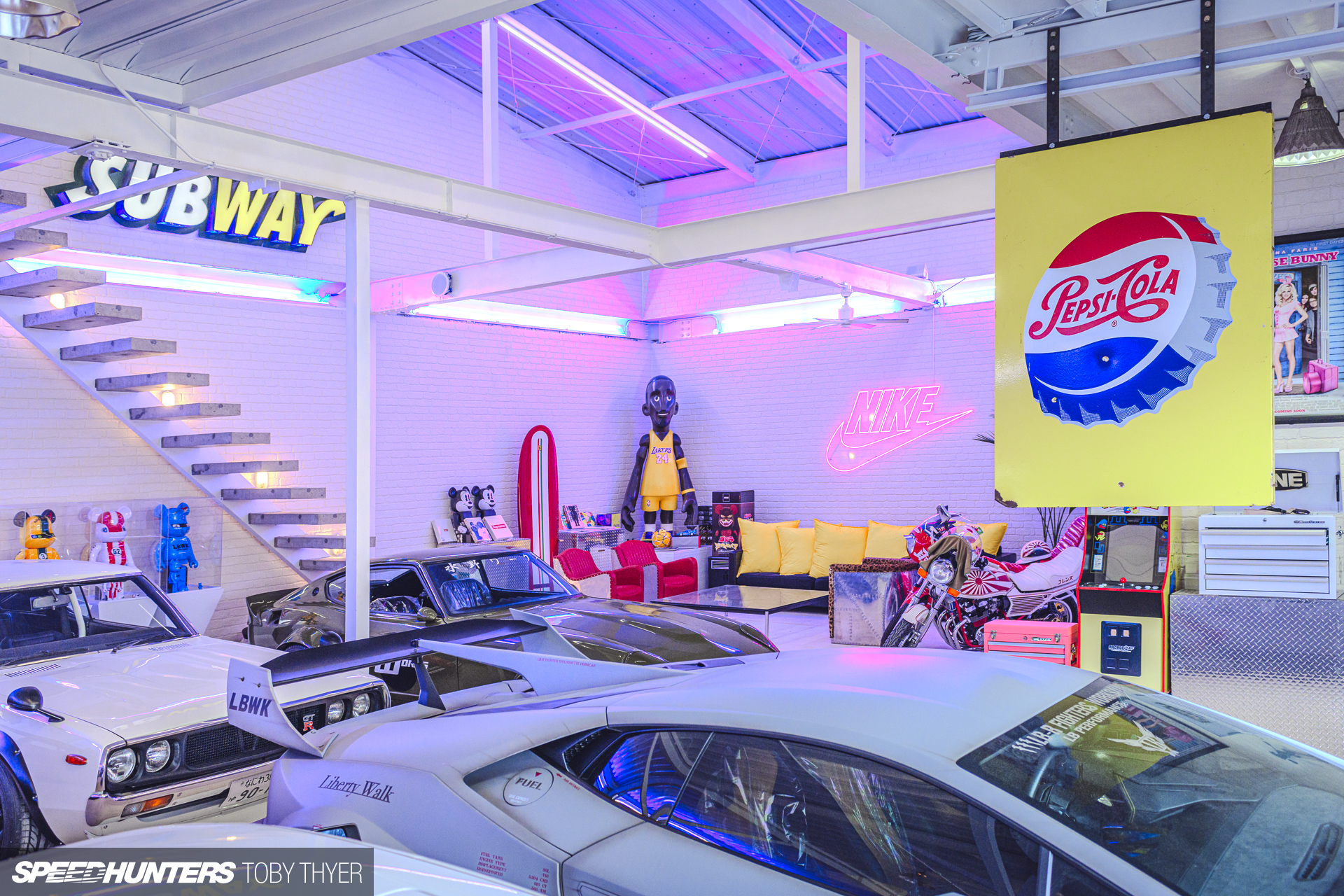
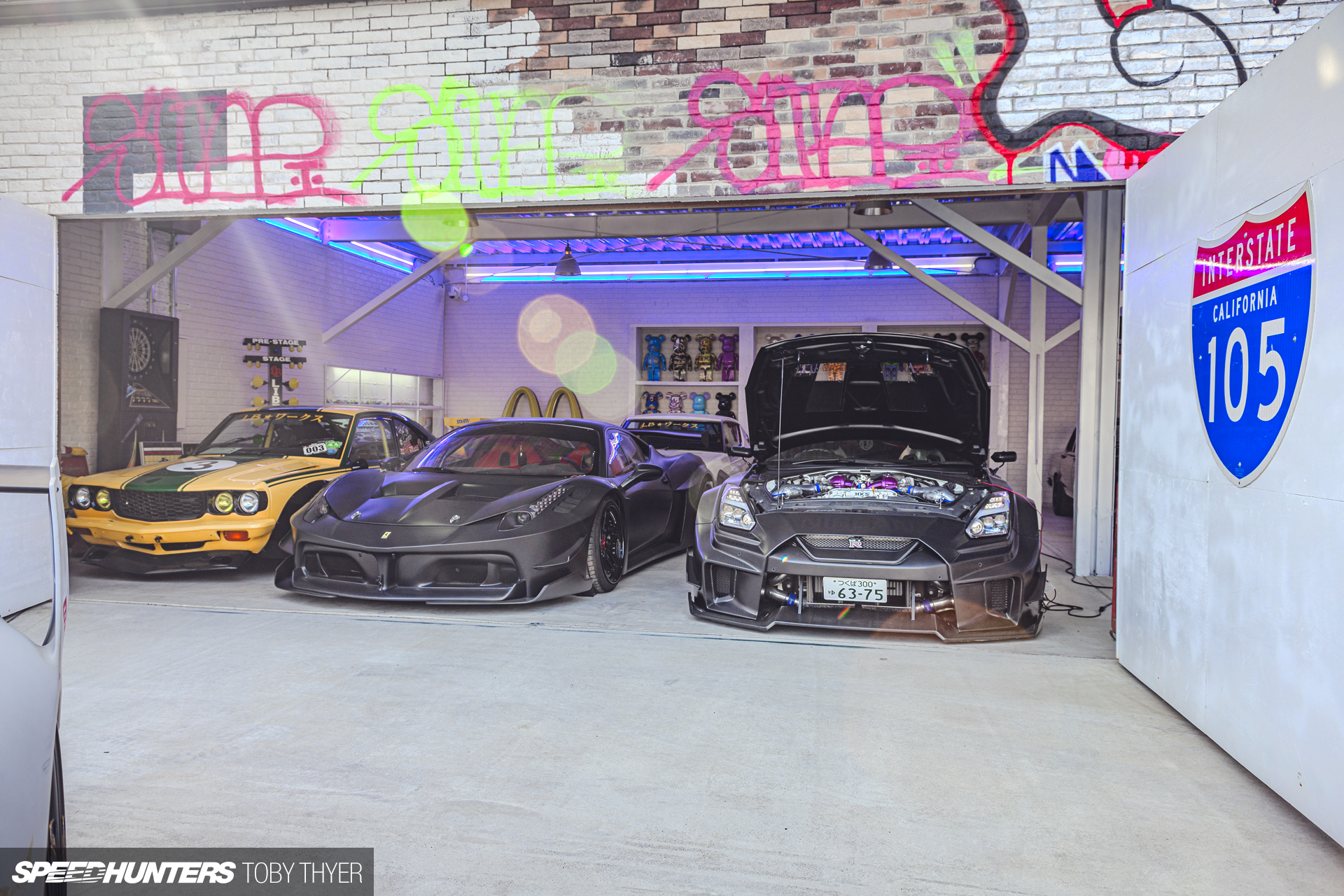
Now open to the public, Liberty Walk’s ‘Miami Showroom’ has a real clubhouse vibe. The American influence is undeniable, with palm trees, street art, a basketball hoop, and even a vintage Flxible mini bus – customised, of course.

Toby_Thyer_Photographer-18
Toby_Thyer_Photographer-9

Miami is a little less customer-focused than Liberty Walk’s main shop just down the road, which has air-conditioned meeting rooms and a full-blown American-style diner. Here, most of the cars inside are from Mr. Liberty Walk, Wataru Kato‘s, personal collection. Those outside are either ex-demo machines, for sale, staff-owned or customer builds.

Toby_Thyer_Photographer-19

If you’d like to appreciate rolling works of contemporary automotive art in an eclectic setting, you’ve come to the right place.

Toby_Thyer_Photographer-15

Fattened-up Ferraris, Lamborghinis and R35 Nissan GT-Rs make up the majority of those on display outside, but step inside the showroom and Kato-san’s diverse tastes become quickly apparent.

Toby_Thyer_Photographer-51
Toby_Thyer_Photographer-25
Toby_Thyer_Photographer-30
Toby_Thyer_Photographer-20

From kaido racers and bosozoku bikes to kyusha and wide-bodied supercars – it seems like every one of Japan’s car culture tribes is represented.

Toby_Thyer_Photographer-24

It’s quite an intimate space, and I felt like I was looking through all the stuff in a private home garage. But there is magic in that. It makes you feel like you have been personally asked to come over and play.

Toby_Thyer_Photographer-40

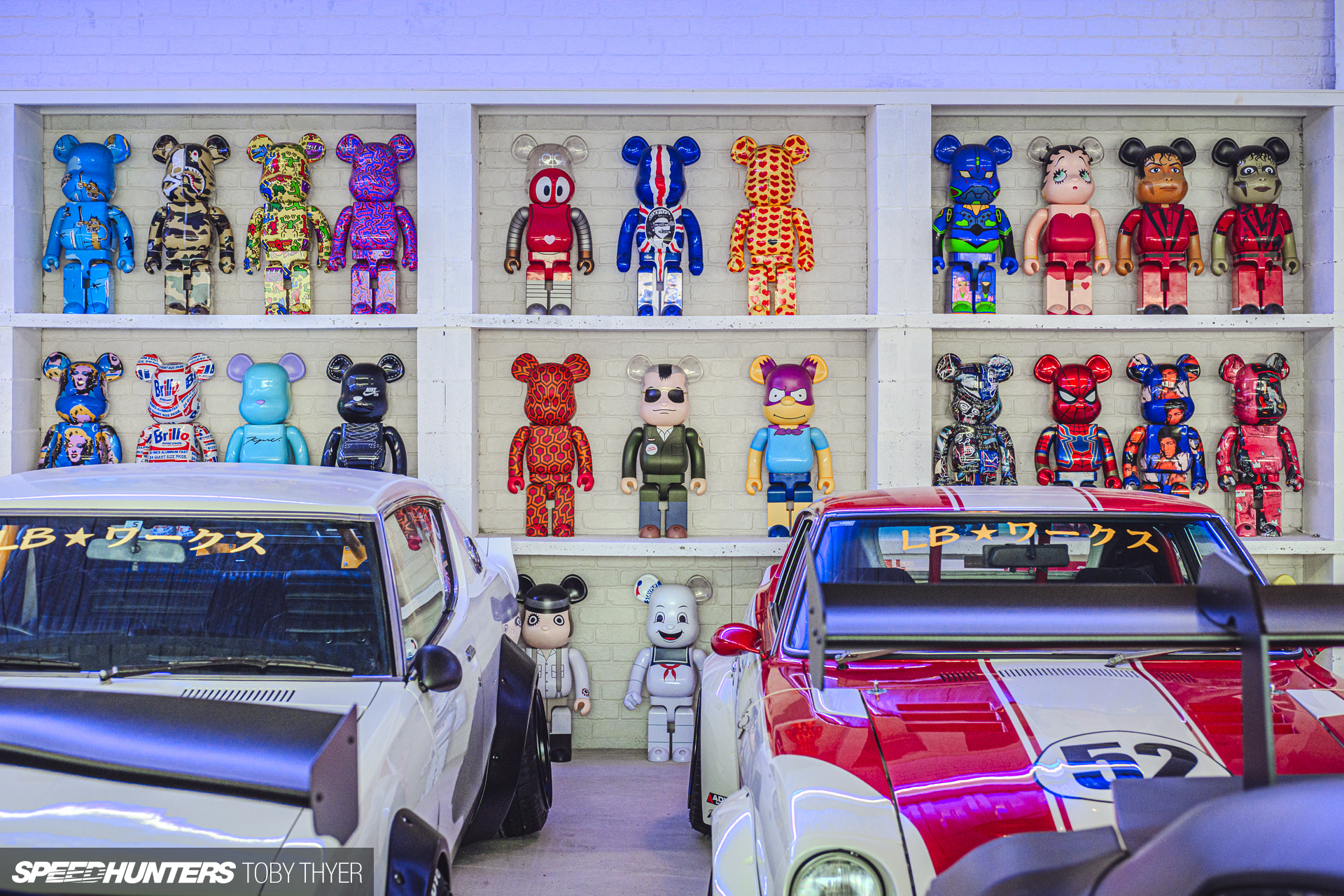
Aside from the mega stash of cars, Kato-san also has many collectibles on display. Numerous signs line the walls, and they are all the real deal, not reproductions. And how cool are the LBWK Bearbricks!

Toby_Thyer_Photographer-44
Toby_Thyer_Photographer-43

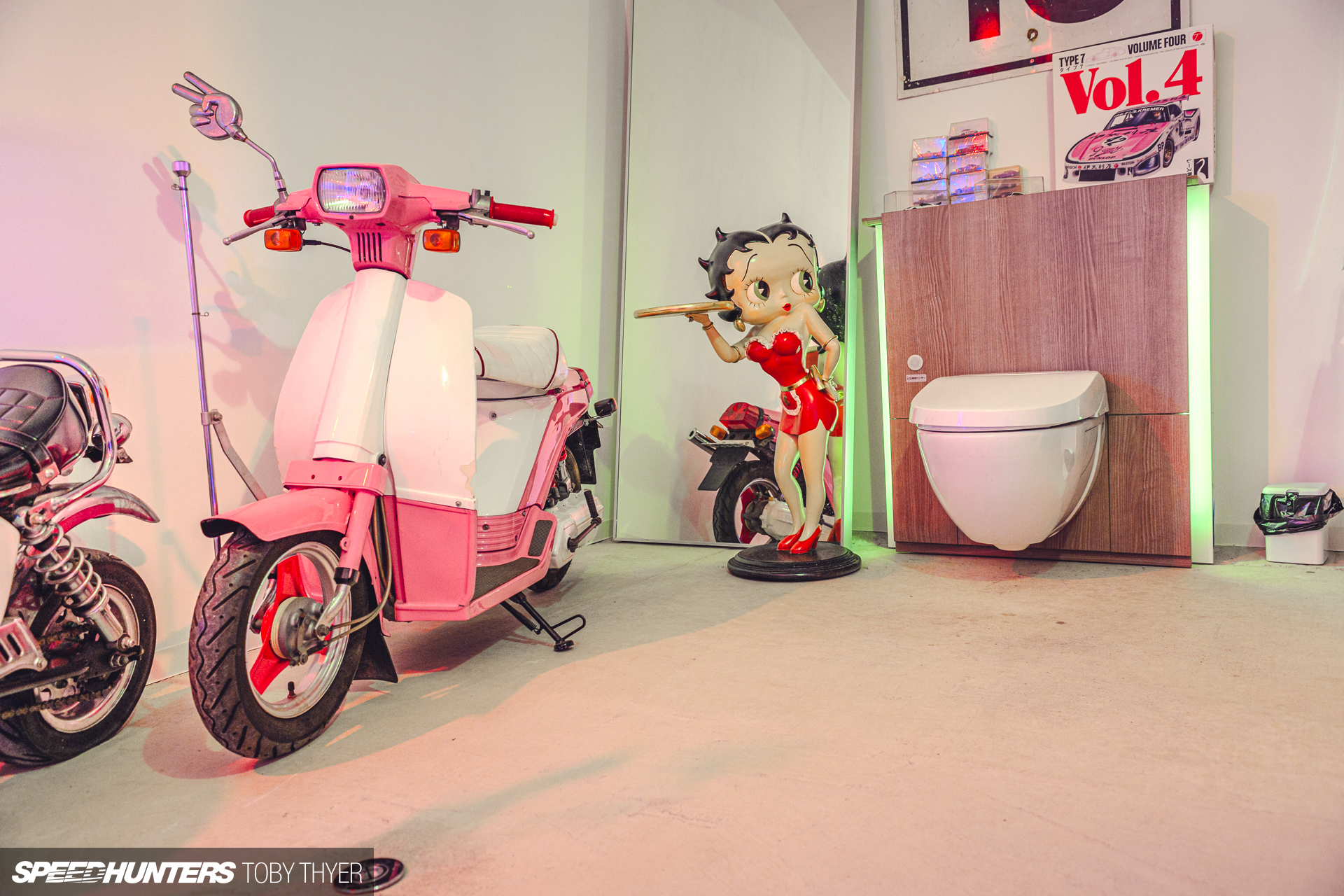
Stepping into the bathroom, you will find a secret gallery of vintage bosozoku photos and memorabilia, Betty Boop and a couple of scooters.

Toby_Thyer_Photographer-59

Walking up the open modernist stairs takes you to the second floor office space. It is casual and airy, making it about as far removed from a typical Japanese office as you can get. But if you do decide to buy something, the team will sort out the paperwork while you check out Kato-san’s sneaker collection.

Toby_Thyer_Photographer-4
Toby_Thyer_Photographer-66

Now that you have been around the showroom, shot a few hoops and admired the toys on display, has anything caught your eye? Perhaps I can interest you in an FD3S Mazda RX-7, one careful owner, always garaged.

A test drive? I thought you would never ask…

Toby Thyer
Instagram _tobinsta_
tobythyer.co.uk


Source link