Home Blog Page 805

What electric SUV should you buy in 2024?

0


Electric vehicle (EV) manufacturers have realised they need to capitalise on booming SUV sales worldwide, and the result is a wide range of models across multiple brands combining battery drivetrains with lifted, practical bodies.

In Australia, there are currently more 30 electric SUVs being sold across 20 brands (not including individual variants), ranging from less than $40,000 drive-away in the case of the MG ZS EV to $233,400 before on-road costs for the BMW iX.

With such a wide range of options across different prices, it can be hard to decide on the best electric SUV.

That’s where the CarExpert team comes in to help. Here’s what we have chosen as the electric SUVs we’d be happy to see in our driveways, and which you might want to put in yours.

Alborz Fallah: Hyundai Ioniq 5 N

If you had asked me this question two weeks ago, I would have probably said a Kia EV6, but having spent last week drag racing hyper and supercars against… a Hyundai and being blown away by the results, I left with this crazy feeling of wanting to buy an Ioniq 5 N.

Having tracked the car at Sydney Motorsport Park and now driven it at speeds getting close to 300 km/h, I can tell you this is not your regular EV, nor is it your regular SUV. It’s the best of both worlds.

It’s basically what BMW’s M division used to make with its previous-previous generation M cars – except it’s faster. The beauty is that it actually handles really well, and the ‘fake’ sounds add so much to the driving experience of an EV that I have become an advocate of fake noise for electric cars.

Once you experience it firsthand and realise that – if you’re going to have an EV – it doesn’t mean you can’t have fun with your senses, then having those weird futuristic UFO sounds (I’m looking at you, Porsche) makes no sense.

I would also like to think that I would be pretty keen on the new Porsche Macan EV. I reckon it looks amazing, and if they can get it to perform well, then it’s going to be a winner in the higher end of the market.

MORE: Buy a Hyundai Ioniq 5

Paul Maric: Hyundai Ioniq 5 N

I was ready to just reply with the stock standard Tesla Model Y answer.

But…it really is just an appliance that goes from A to B – it’s unexciting and is kind of the Camry of electric vehicles. Just gets the job done.

I like the Hyundai Ioniq 5, but never really loved it enough as a sporty car in comparison to something like a Model Y Performance or a Model 3 Performance.

My perception on that has totally changed with the Ioniq 5 N. What they’ve done with the package is seriously bonkers.

It has the straight line acceleration – that’s really just the easy part with an EV, though – but it also has all of the bells, whistles and accessories you want for a go-fast electric vehicle, without the constant compromise on ride and day-to-day liveability.

There are battery priming modes, synthetic gear shifts to make it feel like an internal combustion car and even the ability to completely change the torque split on the move.

We also had the chance to put it up against some of the world’s fastest cars last week as part of a new video series we have coming… We did over 100 launches while filming and each and every time it delivered the same consistency on the same scrabbly surface.

It really is a beast of a thing and it has changed my perception on performance EVs…it’s not just a straight line wonder.

MORE: Buy a Hyundai Ioniq 5

Scott Collie: BYD Atto 3 or BMW iX M60

BYD Atto 3

At the affordable end of the market, it’s hard to look past the BYD Atto 3. 

When BYD launched in Australia, we had plenty of questions about its local distributor. We’re now more than 12 months into life with the Atto 3 on local roads, and it’s not as if there’s horror stories out there about service and support… so I’m willing to back the Atto 3. 

It’s affordable to buy, with an interesting interior and generous list of standard equipment, and it drives with plenty of polish. Although the Model Y remains the class leader, the Atto 3 comfortably undercuts it on price – and $14,000 buys you a lot of electricity at fast chargers, let alone on an electric-friendly home power plan. 

MORE: Buy a BYD Atto 3

BMW iX M60

Avert your gaze! It’s the BMW iX! 

When the iX debuted, it quickly became a styling punchline. Then the XM rolled around, and put things into perspective. 

Beyond the way it looks, the iX is just a lovely thing to spend time in. The interior is like an expensive whiskey den on wheels, filled with rich leather and interesting trims, and the technology is top notch now BMW has realised it needs to put frequently-used functions like the seat heating buttons in prominent places on the touchscreen. Who would’ve thought? 

The M60 is devastatingly quick in a straight line, handles like a smaller and lighter car in the corners, and rides like a limousine on rugged roads. 

MORE: Buy a BMW iX

James Wong: Hyundai Ioniq 5 or Porsche Taycan 4S Cross Turismo

Hyundai Ioniq 5

I’d really prefer not to get a Tesla or BYD if I can avoid it – the tech integration and ergonomics just aren’t to my tastes.

For those that can be a little funny with range anxiety, the entry-grade Ioniq 5 with the Extended Range 77.4kWh battery and single-motor RWD offers over 500km of driving range… and there’s an updated model on the way with an even bigger battery and more range.

Even if it forgoes some niceties to hit the $71,00 price point (plus on-road costs), the Ioniq 5 offers an airy, spacious cabin and the more familiar interior layout of other Hyundai-Kia products. The aforementioned update will bring further improvements to design and interior technology.

Hyundai hasn’t scrimped on safety and assistance tech on the base model – though I’d like Highway Driving Assist please – and the retro-inspired looks will make it feel that little bit more special than a Tesla or BYD.

It also offers some of the quickest charging times thanks to its 350kW DC charging capacity… though we’re yet to see any test cars reach that peak.. Still, 230kW speeds is quite a lot more than most competitors.

MORE: Buy a Hyundai Ioniq 5

Porsche Taycan 4S Cross Turismo

If a Subaru Outback identifies as an SUV, then so does this…

Given the SUV tag means I can’t choose my beloved Audi e-tron GT, the crossover-styled Porsche Taycan Cross Turismo on common underpinnings will do me just fine.

The Taycan is a benchmark for performance and engagement in the EV market, and is one of few that can genuinely compete with combustion-engined performance cars. Here, we just add a lifted wagon body with plastic cladding and voilá – the best electric SUV to drive.

I played around with the Porsche Australia configurator and specified one in Paint to Sample Porsche Racing Green with 20-inch Offroad Design wheels and… well… I need a moment. #savethewagons

MORE: Buy a Porsche Taycan

William Stopford: Hyundai Ioniq 5

The Hyundai Ioniq 5 is ostensibly an SUV, even though it doesn’t look like one. It’s still my pick, even if – let’s be real – it’s really just a big hatchback.

It mightn’t be as spacious as a Tesla Model Y but it sure looks better with its crisp retro-inspired lines.

The interior is also attractive and full of clever details. It drives well, too, with balanced handling and a smooth ride. It’s not the sportiest EV on the market though… unless you step up to the N.

I’ve driven some powerful, dynamic EVs, all the way up to the likes of the Porsche Taycan and Audi e-tron GT, but the Ioniq 5 N is my favourite EV on the market right now.

The level of adjustability with this car is insane. Want to make this dual-motor 478kW all-wheel drive weapon sound like a petrol-powered car, even from the outside? Push a button and it will. Want to send torque only to the rear wheels? That’s another button. Want to have simulated gear shifts? You guessed it – there’s a button that will make that happen.

If you want to drive it like a quiet, mild-mannered electric commuter car, you can do that.

I came away thoroughly impressed after driving this both on the road and on the track. I want one.

Outside of the Ioniq 5 and Ioniq 5 N, other electric SUVs that stand out to me include the BMW iX1 and Volvo XC40 Recharge under $100,000, and the Kia EV9 over it.

MORE: Buy a Hyundai Ioniq 5

Jack Quick: Tesla Model Y or Genesis Electrified GV70

Tesla Model Y

If I was buying an electric SUV in 2024 I’d be silly to not consider the Tesla Model Y given it was the world’s best-selling car last year. It also just got a minor spec tweak and price cut that makes it even more enticing.

The Model Y continues to be the benchmark for electric SUVs with cavernous interior storage and stellar electric motor efficiency.

My ideal specification of the Model Y would be the Long Range variant with the new Quicksilver exterior paint colour option. I’d also stick with the regular 19-inch Gemini wheels to maximise efficiency and the black interior. I know that may be a bit boring but let me live my fantasy.

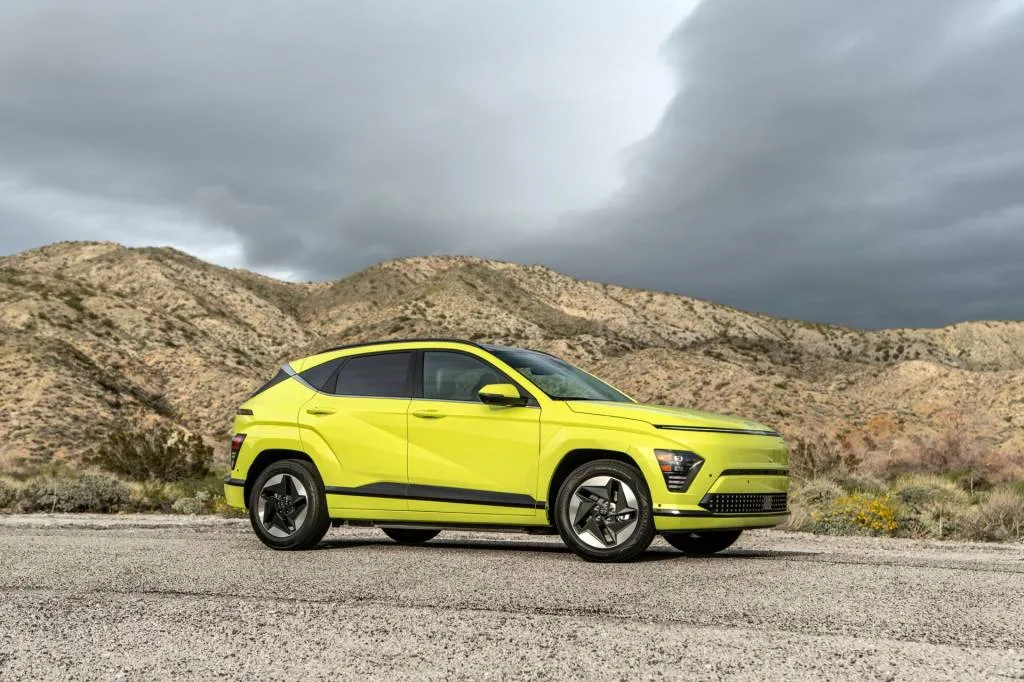
Some other notable mainstream electric SUVs I’d say are worth considering include the BYD Atto 3 from a budget standpoint, as well as the Hyundai Kona Electric given it’s now one of the few EVs with a spare tyre.

MORE: Buy a Tesla Model Y

Genesis Electrified GV70

Even though it does have a strange name, if I had an unlimited amount of money to spend on an electric SUV I reckon I’d go for the Genesis Electrified GV70.

This electric version of Genesis’ top-selling model does look very similar to the petrol versions, though under the bonnet there’s a dual-motor all-wheel drive electric powertrain that can send the 2.3-tonne SUV from 0-100km/h in 4.2 seconds.

One of my favourite parts about Genesis vehicles is how special they feel on the inside, which is where you spent the majority of the time. There are so many soft-touch materials and everything feels high-quality.

MORE: Buy a Genesis GV70

Josh Nevett: Hyundai Ioniq 5, Ioniq 5 N

The Hyundai Ioniq 5 is an excellent example of how far the Korean manufacturer has come in recent years. All variants share the same retro-cool styling and practical interior space, while there is also plenty of tech across the range.

Base models are reasonably priced too, starting from $65,000 before on-road costs.

I don’t even need an unlimited budget for my top choice, as the Ioniq 5 N borders on attainable at $111,000 plus on-roads.

After just a short time behind the wheel of this N electric sensation, I couldn’t be more impressed. It looks and feels special, not to mention it being blisteringly quick.

I was skeptical about the whole simulated engine and transmission thing, but both elements just made the car far more engaging. Once you’re sick of having fun, Hyundai even makes it easy to draw the curtains on all the theatre. My only gripe is that the dashboard is a little too busy, but that’s easily forgiven.

MORE: Buy a Hyundai Ioniq 5

Jordan Mulach: Hyundai Ioniq 5 N

I wanted to have some kind of original thought, but my colleagues have made it hard to go past the Hyundai Ioniq 5 N – I really can’t think of another electric SUV that presents what I want in the least-compromised packaged.

As soon as the base Ioniq 5 launched, I fell in love with its design. Ignoring its large footprint, it really is a modern Lancia Delta Integrale.

Enter the 5 HF – sorry, 5 N. The temptation to buy one and wrap one in a 1990s-style Martini livery is very, very high indeed.

Unlike my coworkers I’m yet to get behind the wheel of the Ioniq 5 N, but there isn’t a single thing on the spec sheet which turns me off. I was even initially against the synthetic exhaust noise, though having seen videos I’m now convinced it would give me joy every day.

So, who has the winning lotto numbers?

MORE: Buy a Hyundai Ioniq 5


Source link

2024 Subaru BRZ review | CarExpert

0


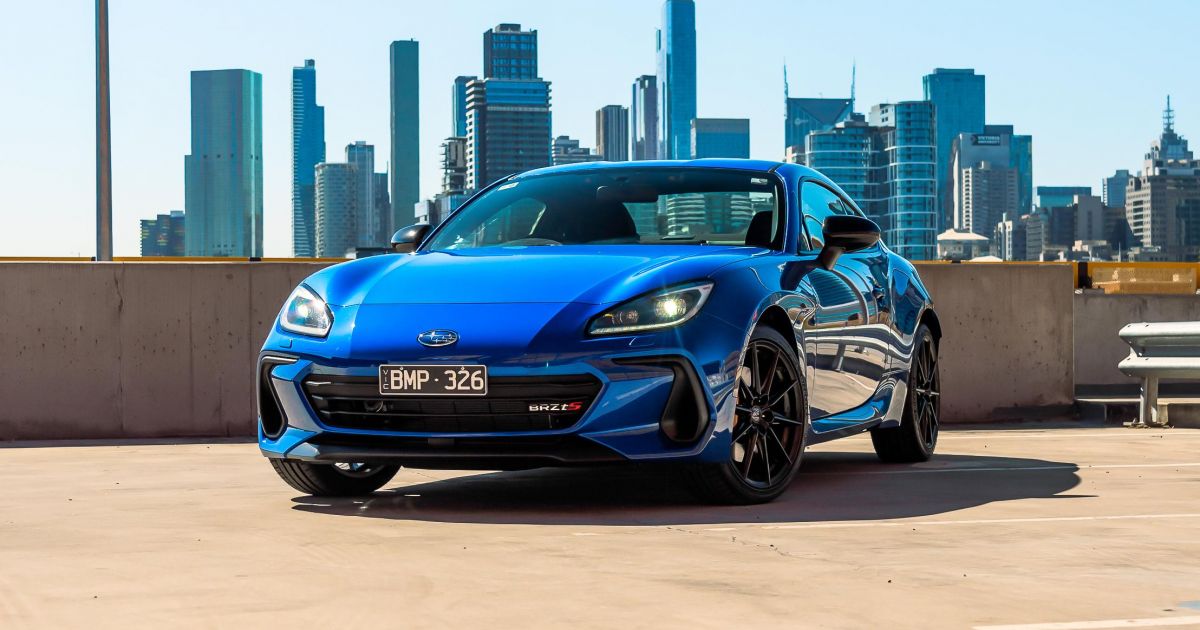
With a compact coupe body, rear-wheel drive, and an affordable price tag, the Subaru BRZ is a favourite with buyers keen to modify their cars.

There’s a plethora of aftermarket options for your suspension, brakes, tyres, and engine if you want to turn your little coupe into a giant-slayer on a twisty road or busy track day, and get some grease under your fingernails in the process.

But what if you want a more performance-oriented BRZ without having to bother with workshop visits? That’s where the 2024 Subaru BRZ tS comes in.

Added to the range in 2024, the BRZ tS (tuned by STI) picks up a dampers fettled by STI, along with high-performance Brembo brakes with four-piston front and two-piston rear calipers, and uprated pads and rotors. You also get some exterior tweaks, and a special red-and-black interior.

WATCH: Paul’s video review of the MY22 BRZ S manual

Of course, you pay for the privilege. The tS will set you back $3600 more than the equivalent BRZ S, and is a whopping $6900 more than the equivalent base model.

Are you better off with a base BRZ and a shopping cart full of modifications, or the range-topping tS?

How does the Subaru BRZ compare?

View a detailed breakdown of the Subaru BRZ against similarly sized vehicles.

Subaru BRZ cutout image

Subaru

BRZ

How much does the Subaru BRZ cost?

Prices were hiked across the Subaru BRZ range for 2024, but manual models were hit harder than automatics.

That’s because the former gained EyeSight, a stereo camera behind the windscreen that brings with it active safety features like autonomous emergency braking, adaptive cruise control, and lane-keeping assist.

2024 Subaru BRZ pricing:

  • 2024 Subaru BRZ manual: $43,790 (+$3500)
  • 2024 Subaru BRZ auto: $44,790 (+$700)
  • 2024 Subaru BRZ S manual: $45,090 (+$3500)
  • 2024 Subaru BRZ S auto: $46,090 (+$700)
  • 2024 Subaru BRZ tS manual: $48,690 (NEW)
  • 2024 Subaru BRZ tS auto: $49,690 (NEW)

All prices exclude on-road costs

To see how the BRZ lines up with the competition, check out our comparison tool.

What is the Subaru BRZ like on the inside?

More has changed here in the transition from standard to tS than you might expect.

From the glossy red start button to the burgundy seat highlights, to the subtle burgundy finish on the trim framing the oversized rev counter, there’s a bit here to justify why the tS is a more expensive take on the BRZ.

There’s nothing fundamentally different here, though. The upright dashboard, compact wheel, and generously padded in-house seats are all the same, and it’s a more accomodating place than the first-generation car.

All the bits you touch all the time when you’re driving feel high quality, from the leather-wrapped wheel to the chunky gear knob, and love has gone into designing lower half of the dashboard with its toggles and rotary climate controls… even if it’s all clearly been built to a price.

Could Subaru have gone further? A more focused set of bucket seats wouldn’t go astray if you’re planning to track the car regularly, but a core part of the appeal here is the fact you’re able to daily the car. Racier seats would undermine that.

There’s solid legroom for long-legged drivers thanks to the reshaped dashboard and door pockets, and the centrally-hinged middle armrest is a huge win on long trips.

It can’t be shut if you have a drink bottle in the cupholders (or your phone is sitting wrong), but there’s a slot in the door pockets to help solve that problem.

Facing the driver is a digital dashboard, which was Subaru’s first in Australia. The Solterra, also a vehicle co-developed with Toyota, was the second for those playing at home.

It’s simple but effective, with speed and revs prominently in the centre flanked by the temperatures on the right-hand side, and a customisable trip computer on the left. Data nerds will enjoy the live power and torque traces, and it’s rare in 2024 to be able to easily access your oil temperature rather than just the water temperature.

Infotainment isn’t standout, but it’s solid.

The 8.0-inch display is running a cut-down version of the software in the Impreza and Outback, with wired Apple CarPlay and Android Auto and no-frills graphics.

It’s easy to jump around on the move, and the camera is much improved over the janky unit offered on the last BRZ.

If you’re keen to carry four people regularly, this isn’t the car for you. The rear seats are fine for bags, but they’re only really designed to carry humans in an emergency with negligible headroom and legroom.

The good news is they still fold flat, which makes the BRZ far more practical than you might expect. Having owned a previous-generation BRZ, I can tell you the back seats (and the ability to fold them) really does come in handy if you want to live with the car.

Boot space is a usable 201 litres, and the loss of the spare wheel makes it a more usable space than before. Of course, that also means if you do get a flat tyre you’re stuck wrangling a carton of goo instead of a proper spare.

What’s under the bonnet?

The BRZ tS might be more performance-oriented than the base model and the S, but it doesn’t pick up any more power. It still features the same 2.4-litre naturally aspirated ‘Boxer’ petrol engine.

ModelSubaru BRZ tS
Engine2.4L 4cyl boxer
Power174kW (7000rpm)
Torque250Nm (3700rpm)
Transmission6-speed manual
Driven wheelsRear-wheel drive
Weight1235kg (tare)
Fuel economy (claim)9.5L/100km
Fuel economy (observed)10.5L/100km (mixed driving)
Fuel tank size50 litres
Fuel requirement98 RON

You can choose between a manual or automatic transmission, but the automatic has never been the pick in the BRZ and Toyota 86.

How does the Subaru BRZ drive?

As is the case with the interior, there are some changes to the garnish of how the BRZ tS drives and handles, but it’s fundamentally the same car – that’s for the best.

Slot the stubby shifter into first and the light, short action instantly feels familiar, as does the slightly springy clutch. The second you ease off the clutch, however, the bigger new engine has torque in all the places the first-generation car was missing it.

It pulls more happily from the bottom of second or third gear around town, and when the road opens up that horrid torque valley in the mid-range of the last car has been flattened out. It’s not going to crush your chest and make you beg for mercy with its sheer pace, but getting the best out of it doesn’t feel like a chore anymore.

The 2.4-litre engine has the same slightly offbeat bark as before, piped into the cabin for a bit more drama behind the wheel, but it’s not coarse or buzzy like before at the top end.

There’s no doubt the manual transmission is the pick. The pedals are well spaced for rev-matching – a necessity given there’s no technology to help you out – and having to row your own is perfectly in keeping with the car’s pitch as an analogue beast in an increasingly digital world.

It’s also still right at home in the more performance-focused tS; even the sharper automatic in the second-generation BRZ is lazier than the dual-clutch tech available elsewhere in the performance world, where the manual puts your fate into your own hands.

Subaru and Toyota say the synchros on the manual have been tweaked to make the second-to-third shift quicker and smoother, and the shift from neutral to first a bit less crunchy, but the transmission feels fundamentally the same as before.

Ride quality has always been a BRZ strong suit, and the revised dampers in the tS don’t turn it into a rough-and-ready track special. It still soaks up potholes and sharp expansion joins well enough to be comfortable on the daily grind, and breathes with crests and dips in the road rather than aggressively trying to drag its weight back into line.

Is it tauter than the standard car? To my arse the answer is yes, but it’s not a fundamentally different car. I’ve driven modified examples set up for track work that were significantly harsher, so Subaru hasn’t gone as far as maybe it could have.

The brakes are also at the core of what’s changed here, but in day-to-day driving you don’t really notice the extra stopping power.

On a blast in the hills they didn’t immediately stand out as wildly different, but one of the first things owners who want to track their cars regularly will change are the stock pads, rotors, and fluid, as they don’t hold up all that well to sustained abuse on the track as well as they could.

If you are serious about putting some track miles under your wheels, they’d more likely come into their own.

Subaru didn’t need to fiddle with the car’s steering, which was just right from the start. Thankfully, they haven’t.

There’s no artificial heaviness or faux-sporty quickness built in, but the still goes exactly where you want it to, and there’s enough feedback through the wheel and seats to feel what the car is doing beneath you.

It’s beautifully balanced, and even fitted with stickier Michelin Pilot Sport 4S rubber in place of the low rolling resistance Primacy tyres offered on some trim grades it’s possible to transition from grip to slip without too much trouble.

Even if you’re not trying to pull off big, lairy slides it feels overtly rear-wheel drive under power, allowing you to play with the rear on corner exit, while a little liftoff the throttle has the nose tucking in.

There are no turbochargers to get in the way so throttle response is excellent, and the lack of power (at least, by 2024 standards) means you can really enjoy its performance on the road without constantly worrying about making a donation to the boys (and girls) in blue.

As for the active safety equipment? It works well, and it does make the manual feel much more modern.

The adaptive cruise is smooth, the lane departure warning isn’t constantly kicking in or jumping at shadows, and the blind-spot monitor makes it easier to drive a car with a significant blind-spot in traffic.

They make this an easier car to drive long distances, although the fact the engine is buzzy at 100km/h in sixth gear and there’s plenty of road noise on average Australian country highways does undermine its claims as a GT.

What do you get?

Subaru doesn’t leave even base model buyers short on equipment.

The BRZ comes with:

  • 18-inch alloy wheels
  • 18-inch spare
  • 215/40 R18 85Y tyres
  • Tyre pressure monitoring
  • Automatic LED headlights
    • Active bending (steering responsive)
    • Self-levelling
  • Automatic high-beam
  • Heated, power-folding exterior mirrors
  • Dual-zone climate control
  • 7.0-inch instrument cluster screen
  • 8.0-inch touchscreen infotainment system
  • Satellite navigation
  • DAB+ digital radio
  • Apple CarPlay and Android Auto
  • 6-speaker sound system
  • Keyless entry and start
  • Leather-wrapped steering wheel and shifter
  • Cloth upholstery
  • 1 x 12V outlet
  • 2 x USB-A outlets

The BRZ S adds:

  • Ultrasuede and leather-accented upholstery
  • Heated front seats

The BRZ tS adds:

  • Brembo 4-piston front, 2-piston rear brakes
  • Grey 18-inch alloy wheels
  • Bordeaux interior highlights
  • STI-tuned suspension

The tS loses its spare wheel for a tyre repair kit.

Is the Subaru BRZ safe?

The Subaru BRZ has yet to be tested by Euro NCAP or ANCAP.

Adaptive cruise control, autonomous emergency braking, lane departure warning, lane-keep assist, and high-beam assist are both new to the manual, which has picked up Subaru’s stereo EyeSight camera behind the windscreen for 2024.

All BRZ models come standard with the following equipment:

  • Adaptive cruise control
  • Autonomous emergency braking (AEB)
  • Blind-spot monitoring
  • Lane departure warning
  • Lead vehicle departure alert
  • Rear cross-traffic alert
  • Reversing camera
  • Front, front-side, curtain and driver’s knee airbags

Automatic models gain:

  • Reverse AEB
  • Rear parking sensors

How much does the Subaru BRZ cost to run?

The Subaru BRZ is backed by a five-year, unlimited-kilometre warranty.

Subaru offers five years of capped-price servicing. These services are capped at $364.03, $586.06, $459.43, $739.82 and $379.14, respectively, except in auto models where the fourth service rings up at $824.07.

Servicing is required every 12 months or 15,000km, whichever comes first.

CarExpert’s Take on the Subaru BRZ

The tS is a well executed upgrade of the BRZ, but it doesn’t revolutionise the formula.

The new dampers offer a hint more control, the new brakes show promise if you’re spending life at the racetrack, and the cosmetic changes are nicely executed.

The addition of a full active safety suite finally brings the manual into line with the automatic… and the broader new car market in 2024, which is overdue but welcome.

With more torque and an evolved chassis the latest BRZ remains brilliant to drive on the road, and leaves you room to grow on the track.

The tS is the nicest BRZ you can buy, but it’s not the one I would buy.

Its upgrades are well targeted, but don’t bring enough for the average punter to justify spending more – and if you are keen to build your car into a track monster, the aftermarket lets you go further.

Click the images for the full gallery

MORE: Buy a Subaru BRZ
MORE: Everything Subaru BRZ


Source link

Fiat 500e review, F-150 Lightning price cut, diesel hybrids, curbside EV chargers: Today’s Car News

0


Do EVs need a breakthrough in battery energy density before they make environmental sense?

And which luxury EV is bringing back the appearance of an internal combustion grille? Will fake tailpipes come next?

This is our look back at the Week In Reverse—right here at Green Car Reports—for the week ending April 12, 2024.

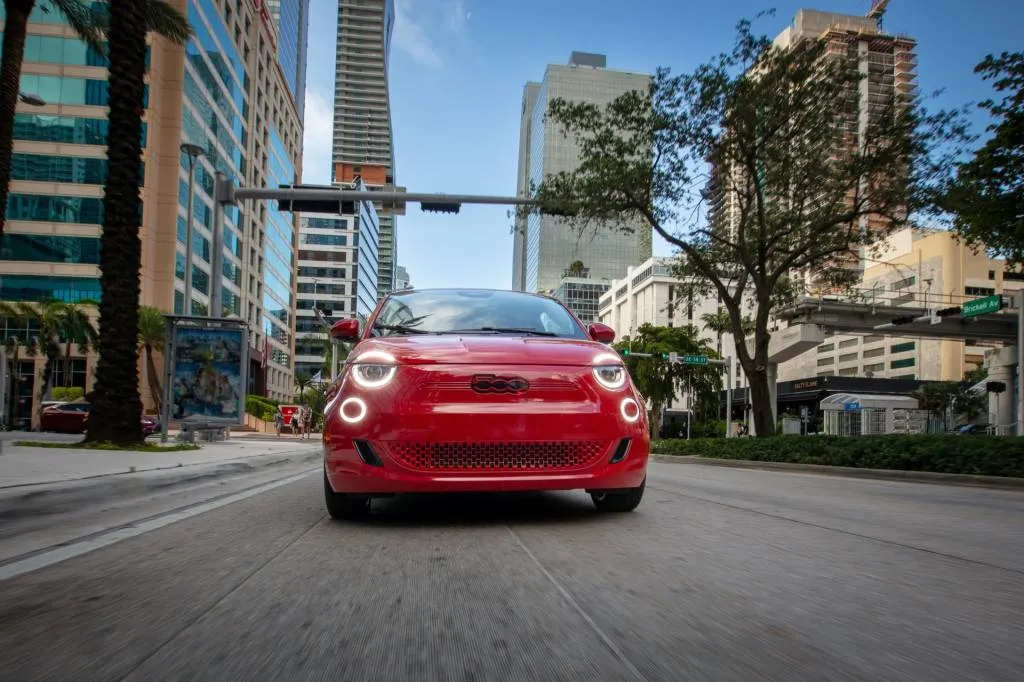
In a first drive of the 2024 Fiat 500e electric car, Green Car Reports found that this fashion accessory and short-range EV remains a good fit for the city—with many of the same limitations as the first-generation 500e sold on the West Coast. 

2024 Fiat 500e

2024 Fiat 500e

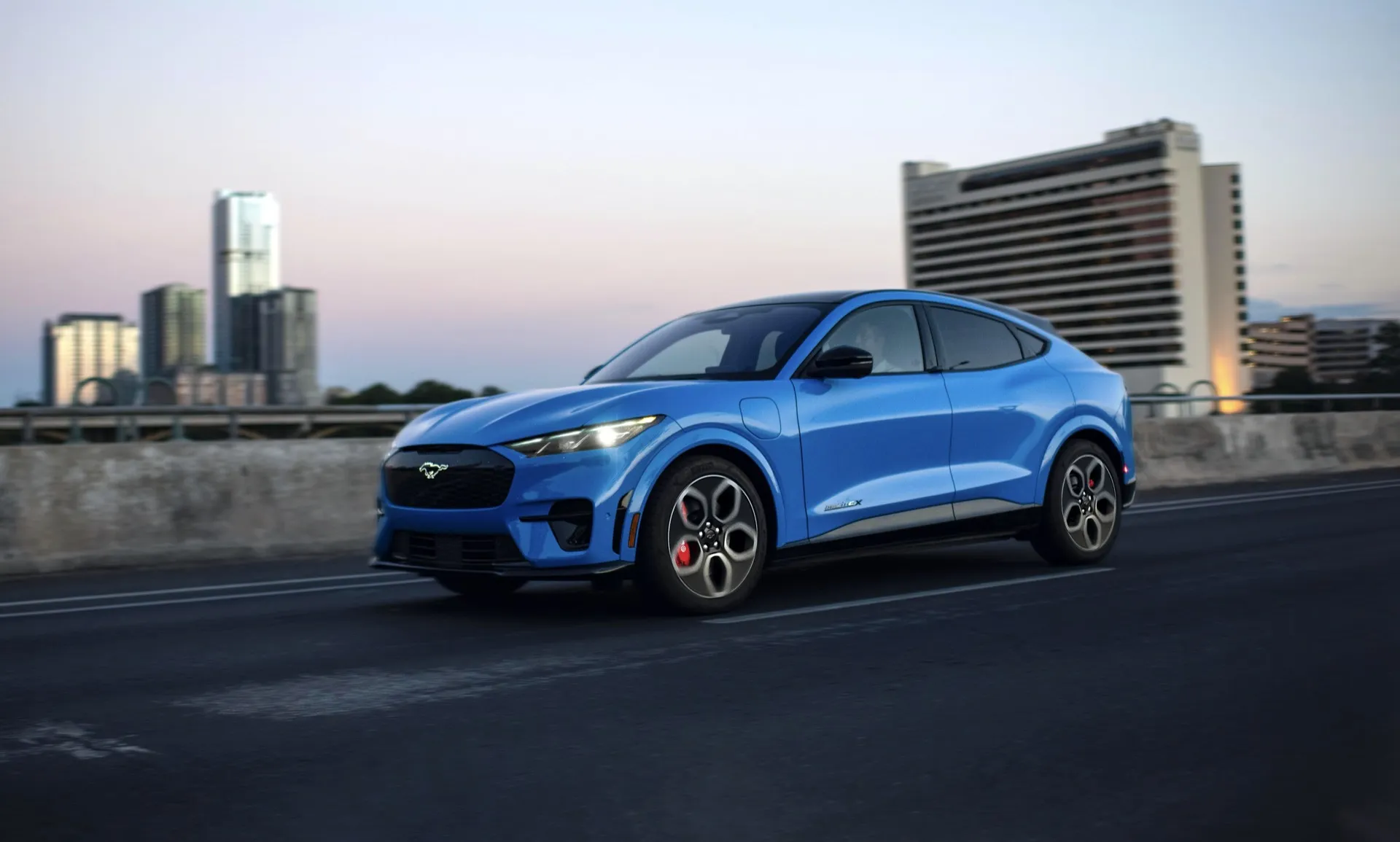
The 2024 Ford Mustang Mach-E boasts more range and faster charging—as well as quicker acceleration for much of the lineup—at a price thousands less than when the 2023 Mach-E arrived a year ago. The Mach-E now offers up to 320 miles of EPA range, according to Ford. Top-performance Mach-E GT versions with the Performance Upgrade are also now capable of outperforming the Tesla Model Y Performance, Ford claims. 

2025 Mercedes-Benz EQS

2025 Mercedes-Benz EQS

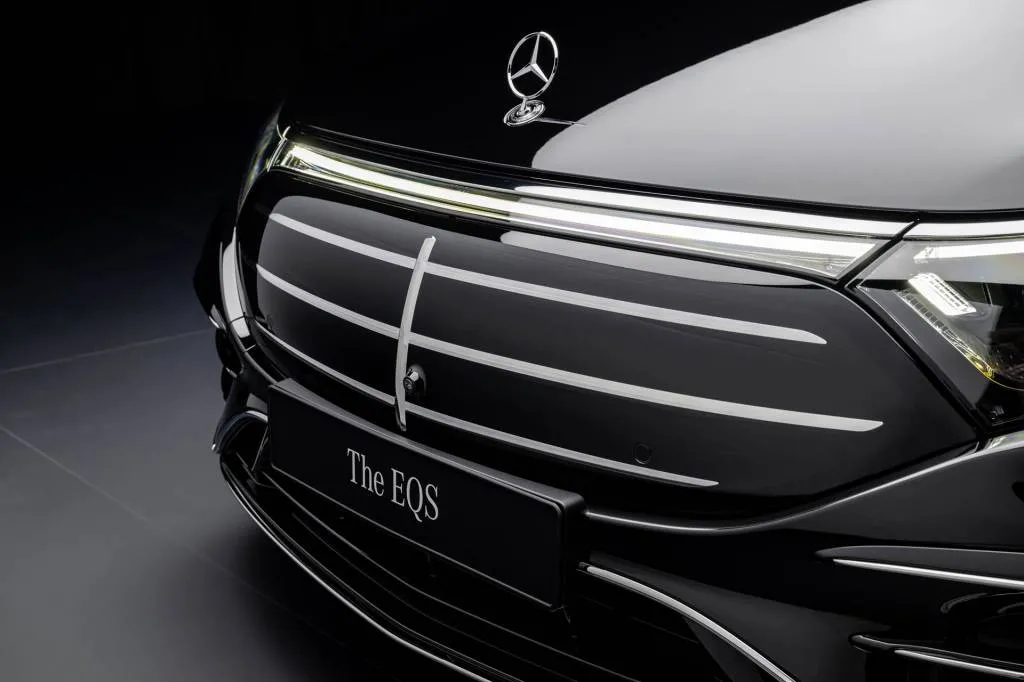
The big 2025 Mercedes-Benz EQS hatchback is getting an extensive refresh for the new model year, including more battery capacity and driving range, improved brakes, and a limousine-like rear seating package. A grille that attempts to mimic that of the gasoline S-Class is also part of the revamp. 

Ford is also already reversing course on recent F-150 Lightning price hikes. It’s cut 2024 F-150 Lightning prices by up to $5,500—with the recently introduced Flash version offering the biggest price cut and several mid-range models cut by thousands. 

Honda Saloon Concept - 2024 CES

Honda Saloon Concept – 2024 CES

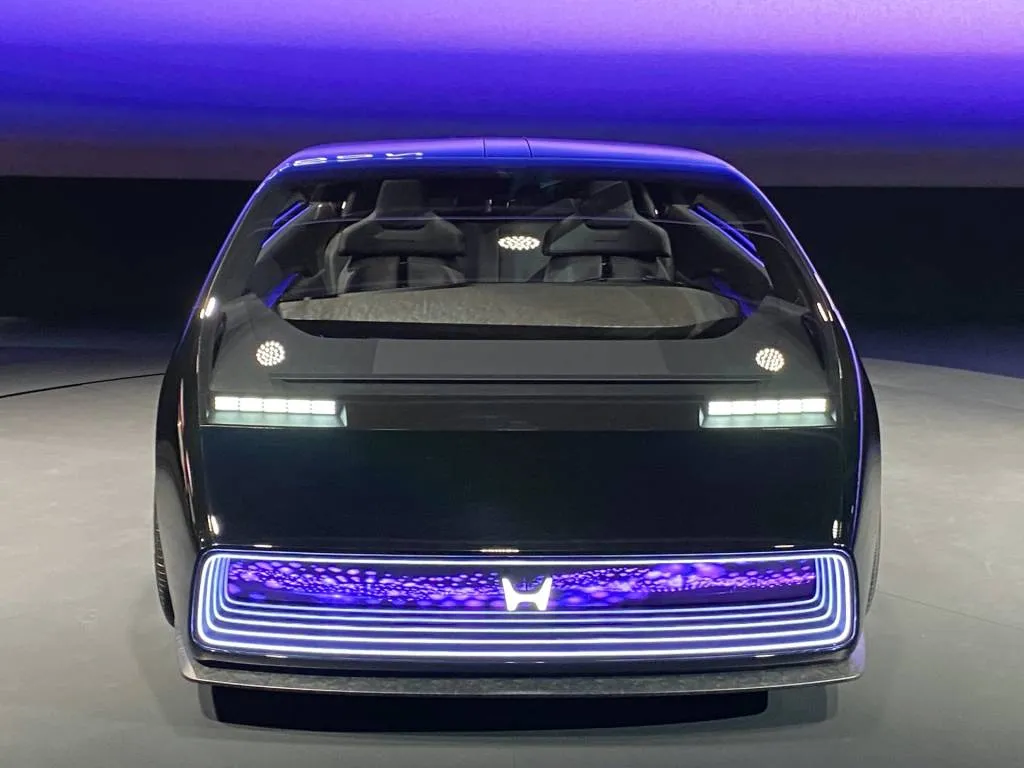
Honda touted the flexibility being built into its Ohio EV hub, which might build hundreds of EVs a day or a mix skewing heavily to hybrids, depending on demand. Included in the buildout for the brand’s next-generation EVs are 31-foot-tall, 6,000-ton die-cast machines that outdo those used at Giga Texas. 

Kia last week detailed plans for its shift toward EVs and electrified powertrains through the decade, and it hasn’t budged in its target of 1.6 million Kia EV sales annually by 2030. But it does now see about 800,000 annual hybrid, plug-in hybrid, and fuel-cell sales by then—making electrified vehicles 58% of its mix in 2030.

Voltpost streetside EV charger

Voltpost streetside EV charger

A significant number of U.S. curbside EV chargers appears to soon be on the way. Voltpost announced plans to roll out its lamppost-based EV chargers in major U.S. metro areas including New York, Chicago, and Detroit. These Level 2 AC chargers will have 20 feet of retractable cable and a supporting app, and installation costs a fraction of what siting and installing a separate charger would. 

Toyota had previously suggested that it would stop selling diesels in passenger vehicles. But it continues to sell diesel SUVs across most regions, even in Europe. And in recent remarks an Australian executive for the company insisted that diesel “is not going to die off anytime soon,” and hinted that diesel might be paired with hybrid powertrains “particularly for heavy vehicles.”

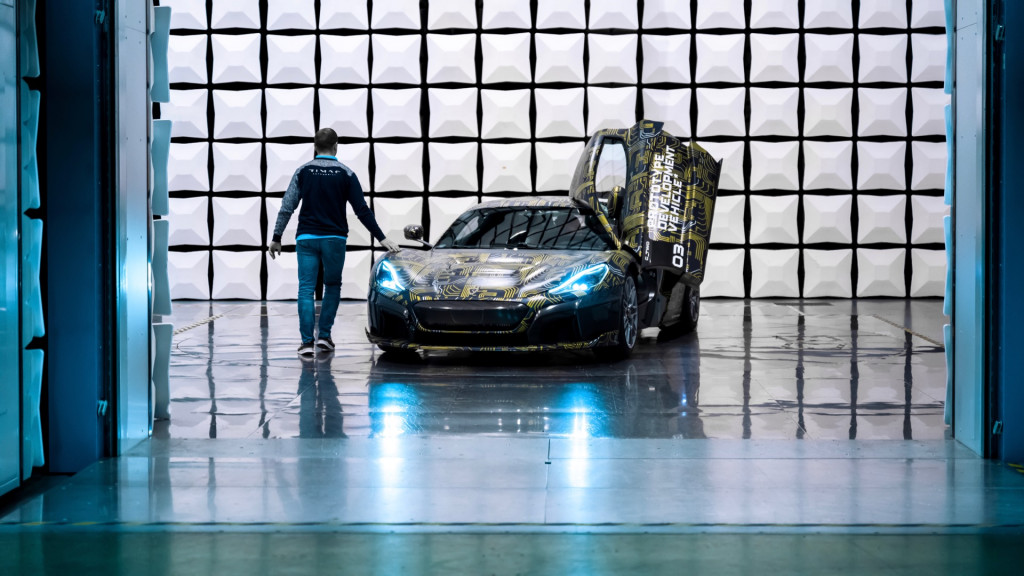
Rimac C_Two electromagnetic-emissions testing

Rimac C_Two electromagnetic-emissions testing

Rimac announced that it will help BMW with next-gen EV batteries, as the company that started with a BMW EV conversions, and then a supercar maker, now also shifts roles to a high-tech supplier.

Stellantis CEO Carlos Tavares last week claimed that EVs need a “breakthrough” in battery-cell energy density before they make sense from an environmental standpoint versus combustion vehicles—partly because of all the extra weight and raw materials. That stands in stark contrast to the overwhelming majority of academic papers and calculations from everyone ranging from environmental organizations to automakers, suggesting that EVs in their present state of tech pay off quickly in CO2 and overall environmental impact.

PSA Group CEO Carlos Tavares and GM CEO Mary Barra

PSA Group CEO Carlos Tavares and GM CEO Mary Barra

With a bill signed into law last week, New Jersey is marking up EV ownership with an additional $1,000 upfront fee that applies on top of other existing registration fees. While it effectively replaces the role of the gas tax for EVs in funding road maintenance, it could amount to a disincentive toward the state’s adoption of California’s EV mandate and its goel to hit 50% EV sales by 2027 and 100% by 2035. 

Despite long-held plans to align with California emissions standards, Connecticut and Maine have delayed adopting California’s EV sales mandate with recent decisions. EV advocates, concerned this will push out adoption of the rules to later in the decade, point to misinformation campaigns from fossil-fuel-funded groups. 

Ford, GM, and Stellantis have been relying on sales of expensive full-size pickup trucks to effectively bankroll the EV push. But now, will sagging sales due to high interest rates impact the future EV product rollout?

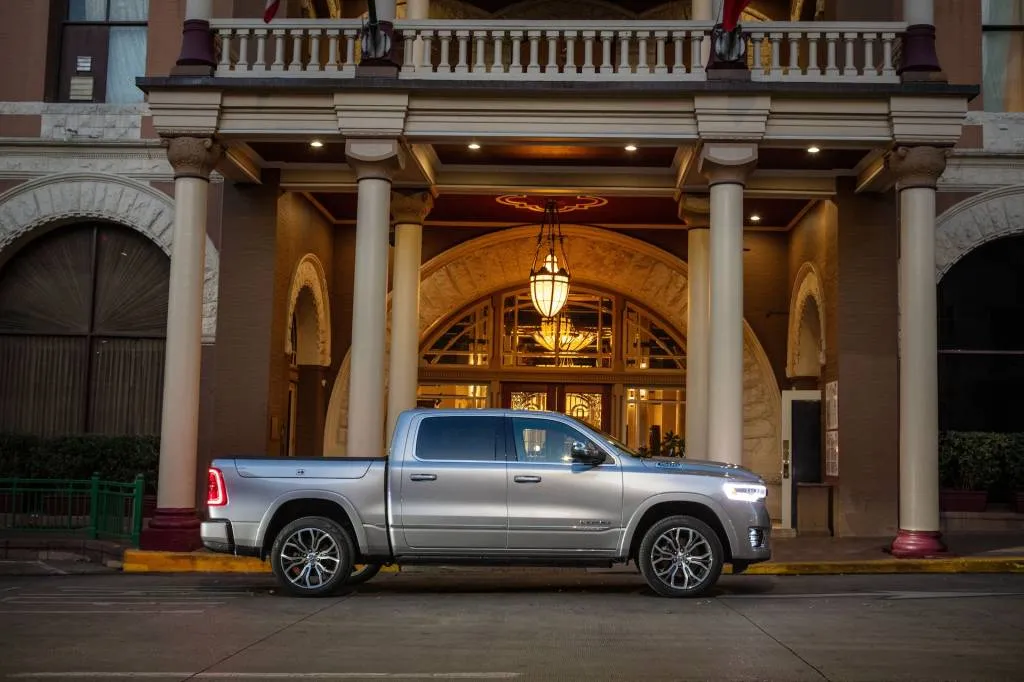
2025 Ram 1500 Tungsten

2025 Ram 1500 Tungsten

Electric passenger cars plus electric trucks of all kinds could add up to 65% of today’s total grid demand by 2050, noted a study out this week from the Natural Resources Defense Council and EPRI, which represents utilities. But according to the study, efficiency improvements to EVs could pay off big by reducing that load, cutting costs for all Americans and not only those who are driving an EV by then. 

And according to polling results out this week from Gallup, American EV ownership is growing, yet fewer car shoppers are considering EVs who don’t already own one. Gallup found these results to be increasingly tied to political affiliation and noted, as various other studies have, that older Americans are less likely to buy (and consider) EVs.

 _______________________________________

Follow Green Car Reports on Facebook and Twitter


Source link

Half of 2024 EVs have lower 5-year ownership cost vs. ICE

0


Many EVs have a lower five-year cost of ownership than comparable gasoline models, according an annual roundup from Vincentric, a source for ownership cost calculations for websites and automakers. 

Vincentric’s analysis covers eight factors: depreciation, fees and taxes, financing, fuel cost, insurance, maintenance, opportunity cost and repairs. It assumes new vehicles are driven 15,000 annually over the first five years of ownership.

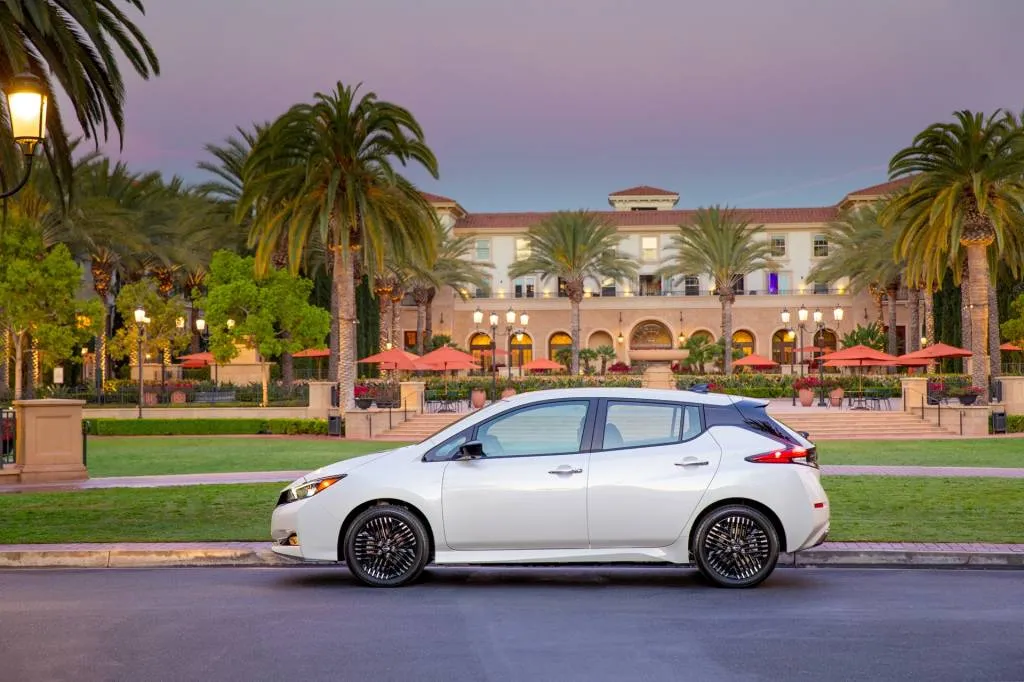
2024 Nissan Leaf

2024 Nissan Leaf

In its latest analysis, Vincentric found that 20 of 41 electric models (49%) cost less to own over five years than their gasoline counterparts. That’s down from the 2023 analysis, in which 52% of EVs surveyed had lower ownership costs than gasoline vehicles.

Depreciation is where EVs continue to lag behind gasoline vehicles, largely due to higher purchase prices, according to Vincentric. The loss of the federal EV tax credit for many models hasn’t helped, either. But analysts note that EV costs are expected to drop in the next few years, potentially allowing them to achieve price parity with gasoline models. That’s likely to happen because of continually-falling battery prices, driven down by excess manufacturing capacity and more availability of raw materials.

2024 Hyundai Kona Electric

2024 Hyundai Kona Electric

Vincentric also found that 19 of the 41 EVs surveyed for 2024 recouped their price premiums in seven years, with eight of those EVs already having a lower purchase price than an equivalent gasoline model.

It’s a reminder that ownership-cost advantages can vary based on a variety of factors, such as where you live and the type of vehicle. A 2020 Consumer Reports study found that the ownership-cost advantages of EVs were particularly strong for SUVs and pickup trucks, for example.


Source link

Top Tip for Visiting D-Day Memorial Sites in Normandy (Move Inland!)

0


This year marks the 80th Anniversary of the D-Day landings, and Normandy will have a busy summer, especially during the two-week period around the day itself, June 6th.

There’s always been a special buzz around key anniversaries – 50th, 75th, etc. – but this year’s memorial events are considered to be especially significant because it’s likely to be the last major anniversary that D-Day veterans will attend. An 18-year-old serving on D-Day will be 98 this year.

Even if those who experienced D-Day and the Battle of Normandy (Operation Overlord) firsthand have been leaving us, interest in the invasion of Europe shows no sign of diminishing. Two million visitors descend on Normandy each year on trips related to D-Day memorial sites, and this year, Normandy Tourism is expecting three million.

Many, if not most, will be first—or second-generation descendants of those who fought here. Tour guides report a surge in the number of young adult visitors with their families touring Normandy to find where their grandparents and great-grandparents fought.

What D-Day Memorial Sites Should you Visit?

So, whether you are connected to D-Day in some way or just a history enthusiast, what should you see and do?

Well, like most visitors, if you haven’t been before, you should see the key sites on and around the five Normandy beaches and the airborne landing grounds. Amazing museums, memorials, bunkers, and gun batteries are thick on the ground along the coast, but I would suggest the minimum ‘big seven’ sites are:

  • Pegasus Bridge Memorial, a museum at the site of The dramatic taking of the bridge at Bénouville by British Glider forces in the early hours of June 6th.
  • The Juno Centre is a museum that describes the Canadian experience of JUNO BEACH.
  • D-Day Landing Museum/Musée du Débarquement at Arromanches (GOLD BEACH), where the remains of the Mulberry B artificial harbor dominate the seascape.
  • Normandy American Cemetery overlooking OMAHA BEACH.
  • Pointe du Hoc, the dramatically crater-marked clifftop battery that US Rangers assaulted by climbing the cliffs.
  • Utah Beach Museum, which is built on the dunes and defenses overlooking the beach itself.
  • Airborne Museum, Sainte-Mère-Église, which tells the story of the 101st & 82nd Airborne’s assault in the early hours of D-Day.

Tip For Visiting the D-Day Memorial Sites in Normandy

Here comes the ‘tip’ for visiting D-Day memorial sites during the busy season.

Assuming you are mobile – either self-driving or with a driver/guide – and you have time, you should try to get away from the Normandy D-Day beaches and head inland.

Intense as it was, the fighting on the coast was concentrated in the first few days. The rest of the Overlord campaign took until 21st Aug (D+76) to resolve, and there are some fascinating, poignant and less well-known sites to visit inland and away from the madding crowds.

Travel Dudes recommends buying the Travel Guide to Normandy’s Beaches and Battlegrounds, written by our author Alastair.

10 Suggestions for Visiting D-Day Memorial Sites in Normandy

Note: We added their What3Words (W3W) locations. What3words is a unique geocoding system created to pinpoint any spot on Earth with a precision of approximately 3 meters. By converting geographic coordinates into three specific dictionary words, What3words offers a user-friendly way to identify locations accurately. Click on each link to get to the map.

While you’re traveling around, you’ll need to eat! Check out: A Foodie Itinerary for Normandy, France

Abbaye d’Ardenne Canadian Massacre Memorial

On 7 June 1944, the Canadian North Nova Scotia Highlanders and 27th Armoured Regiment were intercepted by the 12th SS Panzer Division (Hitlerjugend) in the village of Authie on the western outskirts of Caen.

Many Canadians were killed or captured. Some of the captured soldiers were taken to the HQ of 25th Panzer Grenadier Regiment in the nearby fortified Abbaye d’Ardenne, where 11 were executed in a small garden. The next day, a further 7 were murdered. The site is now a moving memorial.

(W3W – budget.mimic.friction)

Canadian Massacre Memorial Garden in Abbaye d'Ardenne, Normandy, France.
Canadian Massacre Memorial Garden in Abbaye d’Ardenne, Normandy, France. Photo: ©Alastair McKenzie

Hill 112 Memorial

Hardly a clearly defined peak, Hill 112 is more a rolling plateau that has commanding panoramic views over the surrounding countryside. This is what made it so strategically important and why, over 10 weeks of bitter fighting, it cost the lives of 10,000 German and Allied soldiers.

It might have taken even longer and been more costly had the Germans not suddenly been redeployed from the hill to counter-attack the American breakout in the west.

The memorial is an open space with parking and several monuments.

(W3W – withdrew.bookworm.mewing)

Hill 112 Memorial in the Normandy, France.
Hill 112 Memorial in the Normandy, France. Photo: ©Alastair McKenzie

War Reporters Memorial Trail, Bayeux

The 300m trail runs through the woods behind the Bayeux Memorial (a 50-metre neoclassical carved stone façade). It’s marked out by stone pillars, each of which records the names of war correspondents who have been killed or gone missing during a particular year since WW1.

In total, some 2,000+ journalists are named and, inevitably the list keeps growing, so now a second path splits off and runs parallel to the first.

There are several other things to see in this location:

  • The Bayeux Memorial
  • Opposite it across the road is the largest Commonwealth War Graves Commission (CWGC) cemetery in Normandy with the graves of 4,100 Commonwealth servicemen, plus 500 graves of other nations, including Germans
  • Next to the trail is the Memorial Museum of the Battle of Normandy, a major museum
  • At the southeast end of the trail, a single memorial stone to the WW2 photo journalist Robert Capa.

(W3W – played.inherit.jukebox) – (W3W – giggled.rock.motivate)

War Reporters Memorial Trail in the Normandy, France.
War Reporters Memorial Trail in the Normandy, France. Photo: ©Alastair McKenzie

90th Infantry Div ‘Tough Ombres’ Monument, Perriers

Perriers is a small town on the southwest side of the Cotentin Peninsula.

There was a tough fight on the outskirts of the town between the US 90th Division and the 6th German Parachute (Fallschirmjäger) Regiment. Go to the center where, right next to the Marie (town hall), there is a small ‘liberation’ museum run for the most part by ex-pat British women, and outside, one of the best memorial statues in Normandy. It features four men from the 90th Division, who all died in the battle for Perriers.

They stand in a tableau; one of them wounded, one is a medic attending to him, a third is guarding them and the fourth, a tank commander waves for support. The thing is, these were all real people and their faces are accurate reproductions.

(W3W – budgie.divisions.unsubtle)

Les Quatre Braves Statue in the Normandy, France.
Les Quatre Braves Statue in Normandy, France. Photo: ©Alastair McKenzie

C-47 Memorial Garden, Picauville

Several C-47 transport aircraft carrying US paratroopers were shot down around the village of Picauville.

There is a collective memorial to them in the centre of the village and individual plaques at the crash sites. One of the aircraft and its occupants are remembered in a small and tranquil garden just outside Picauville.

(W3W – intervening.embarks.caressing)

C-47 Memorial Garden in the Normandy, France.
C-47 Memorial Garden in the Normandy, France. Photo: ©Alastair McKenzie

D-Day Collins Museum

A new museum that opened in April 2023 on the site of General ‘Lighting Joe’ Collins’ (commander of US Army VII Corps) headquarters in July 1944.

It is unusual because the building that Collins occupied was left untouched when the Americans left a few weeks later; an 80-yr-old time capsule. Collins’ office, where he, General Omar Bradley and General Dwight D. Eisenhower planned ‘Operation Cobra‘ – the breakout from Normandy – has been recreated as it was at the time with the original wallpaper, paintings and furniture. Other rooms are also authentic recreations, and the museum makes use of facially accurate mannequins of key characters.

(W3W – gander.selections.wicked)

D-Day Collins Museum in the Normandy, France.
D-Day Collins Museum in the Normandy, France. Photo: ©Alastair McKenzie

Museum of Liberation, Cherbourg

The port city was captured 27 June (D+21) by Gen. Joe Collins (above).

You could spend a lot of time in this city, but head for Fort du Roule, a 19th century fortress on the heights (117m) behind the city where the Museum of Liberation has spectacular views over the port.

If you book in advance, you can tour the German tunnels and gun bunkers carved into the cliffs underneath the fort.

(W3W – gamer.lame.faces)

View from Fort Roule, Cherbourg in the Normandy, France.
View from Fort Roule, Cherbourg. Photo: ©Alastair McKenzie

Orglandes German Military Cemetery

On the northern edge of the village of Orglandes, this spacious cemetery (5 hectares) feels lighter and more open than the other German cemeteries in Normandy, but it’s just as densely packed. Each 50cm-tall stone cross marks the final resting places of up to six deceased soldiers.

In total, 10,155 soldiers are buried here.

(W3W – alleged.runes.meandering)

Orglandes German War Cemetery in the Normandy, France.
Orglandes German War Cemetery in the Normandy, France. Photo: ©Alastair McKenzie

Moissy Ford

I think this is one of Normandy’s most poignant sites.

This was almost the last river crossing left open to the German 7th Army trapped in the ‘Falaise pocket’ by the encircling Allies. In Aug 1944 it was a scene of utter devastation as desperate Germans soldiers fought each other to get across this small ford, while being shelled by artillery and strafed by ground attack aircraft. The trees were all stripped bare from the blasts and the lane to and away from the ford was littered with abandoned vehicles, equipment, dead horses and dead men.

It was a real horror scene. Now it is a tranquil, shaded spot… with a picnic table!

(W3W – tender.thingy.madmen)

Moissy Ford in the Normandy, France.
Moissy Ford in the Normandy, France. Photo: ©Alastair McKenzie

Montormel Memorial & Museum

The scene of fierce fighting between the Germans and the 1st Polish Armoured division who had raced to Hill 262 (Montormel) on 17 Aug 1944 to close the ‘Falaise Gap’ and thus trap the German 7th Army.

Over the next three days the Germans threw everything they had at the Poles in an effort to reopen it, but the Poles just managed to hold on. They started with 2,000 men, 60 officers, and 87 tanks. When they were relieved on 21 August, they were down to 30 tanks, less than 100 men, and just 4 officers.

The Montormel Museum is built into the side of the hill next to the memorial terrace and grassed over so that it has minimal visual impact.

(W3W – legislators.grannies.unsought)

Montormel Memorial in the Normandy, France.
Montormel Memorial in the Normandy, France. Photo: ©Alastair McKenzie

Tourisme Normandie is expecting their normal 2 million visitors to jump to 3 million this year. The peak will be between 1st – 15th June, when, even if you did secure accommodation (virtually all was booked up at least a year ago) you will find parts of the coast closed off to the public and many sites closed for invitation-only anniversary events.

However, the coast in particular will be extra busy throughout the summer. So it’s another reason to take Gen. Montgomery’s (overall commander on the ground) advice – move inland as soon as possible!

Travel Guide to Normandy’s Beaches and Battlegrounds

If this whole topic interests you further, then Travel Dudes recommends the “Travel Guide to Normandy’s Beaches and Battlegrounds” by Bradt, which was written by our author Alastair.

Buy the guide on Amazon here!

It serves as an insightful and detailed companion for anyone wishing to delve into the historical significance and the natural beauty of Normandy’s storied coastline. This guidebook meticulously organizes its content to cater to both history enthusiasts and leisure travelers, detailing the major sites of the D-Day landings and the consequential Battle of Normandy. Each chapter methodically covers a different area, featuring evocative descriptions of the beaches where Allied forces made their legendary advance, along with comprehensive explorations of relevant museums, memorials, cemeteries, and remaining wartime fortifications.

The book stands out for its in-depth historical context which enriches the travel experience, transforming a simple visit into an educational journey through time. Its features include practical travel tips, local anecdotes, and recommendations for further reading, making it a unique tool not only for battlefield tourists but also for those seeking a deeper understanding of the momentous events that unfolded along the French coast. “A Travel Guide to Normandy’s Beaches and Battlegrounds” appeals to a readership ranging from military history aficionados to families and individuals drawn to the intertwined narratives of sacrifice, liberation, and natural splendor that the region offers.

  • Mechtraveller

    I am Alastair McKenzie. I’ve been a travel journalist/editor since 1989, originally in local, then national radio before moving online just before the millennium. I’ve been an active member of the travel blogger & social media community since it started and a regular speaker at social media travel conferences. I’m a member of the British Guild of Travel Writers.


Source link

Agong Sultan Ibrahim Iskandar becomes first owner of Hongqi L5 in the world – stately limo with 4.0T V8

0


Agong Sultan Ibrahim Iskandar becomes first owner of Hongqi L5 in the world – stately limo with 4.0T V8

DYMM Yang di-Pertuan Agong Sultan Ibrahim Iskandar became the first owner in the world to receive a Hongqi L5. His Majesty took delivery of the vehicle following today’s meeting with China’s ambassador to Malaysia, Ouyang Yujing, to discuss bilateral relations between both countries as well as current issues.

The L5 is a luxury sedan produced by Hongqi, which is a brand owned by FAW Group. The second-generation model you see here was revealed last April at Auto Shanghai 2023 and measures a stately 5,980 mm long, 2,090 mm wide, 1,710 mm tall.

There’s also plenty of legroom thanks to a wheelbase that spans 3,730 mm. For context, the seventh-generation (Z223) Mercedes-Maybach S-Class is 5,470 mm long, 1,954 mm wide, 1,503 mm tall and has a wheelbase of 3,396 mm.

Featuring a retro-style design inspired by the classic CA770, the L5 retails from five million yuan (about RM3.3 million) in China. For the money, the model comes with a 4.0 litre turbocharged V8 petrol engine developing 387 PS (382 hp or 285 kW), paired with an eight-speed automatic transmission and all-wheel drive.

Looking to sell your car? Sell it with Carro.


Source link

2025 Toyota 4Runner – Tacoma-based SUV slots between Fortuner, Prado; gets 326 hp 2.4T hybrid

0


2025 Toyota 4Runner – Tacoma-based SUV slots between Fortuner, Prado; gets 326 hp 2.4T hybrid

Nearly a year after the fourth-generation Tacoma was revealed, Toyota has finally pulled the covers off the SUV version, the sixth-generation 4Runner. As a midsized pick-up, the Tacoma is essentially America’s equivalent of the Hilux, so think of this as a Fortuner of sorts, albeit with only five seats.

Like its truck sibling, the 4Runner rides on the TNGA-F ladder chassis that also underpins the larger Tundra, Land Cruiser and Prado models. As per those models, it rides on a high-strength boxed steel frame and sits on double wishbone suspension at the front and a multilink setup at the rear, the latter with a solid rear axle and coil springs.

Given that they were designed concurrently, it’s not surprising that the 4Runner shares a familial resemblance to the Tacoma. Both sport a very rugged, angular design said to be inspired by desert racing, with sharp headlights and a hexagonal motif that’s found everywhere from the front grille to the bulging fenders.

2025 Toyota 4Runner – Tacoma-based SUV slots between Fortuner, Prado; gets 326 hp 2.4T hybrid

There are a few changes, however, starting from the front where the 4Runner loses the “tear” air intakes below the headlights, which also get different graphics. The rear end, of course, is completely different, with a thick body-coloured C-pillar, “wraparound” rear quarter windows that lead into roof (reminiscent of the first-generation 4Runner) and more hexagons in the taillights. As before, the rear windscreen can drop down into the tailgate – something that’s recently been picked up by the Fisker Ocean and Rivian R2.

Inside, you’ll find the same blocky dashboard as the Tacoma, continuing the hexagonal theme and featuring chunky grab handles, including on the centre console. As standard, you get a seven-inch instrument display and a new eight-inch freestanding Audio Multimedia infotainment touchscreen, which can be upsized to 12.3 inches and a massive 14 inches respectively. As is typical for 2024, you’ll find wireless Apple CarPlay and Android Auto, plenty of USB-C ports (optional for the rear passengers) and a Qi wireless charger.

Other features include a sharable smartphone Digital Key as well as tumble-fold second-row seats to maximise interior versatility and cargo floor usage. You also get Toyota Safety Sense 3.0 as standard, which includes new motorcyclist detection for autonomous emergency braking, enhanced lane centring assist and an Emergency Driving Stop System that brings the car to a stop if it senses the driver is incapacitated.

2025 Toyota 4Runner – Tacoma-based SUV slots between Fortuner, Prado; gets 326 hp 2.4T hybrid

Also new is Proactive Driving Assist, a Level 2 semi-autonomous driving system that can now gently brake into corners. Traffic sign recognition, adaptive cruise control with stop and go, and automatic high beam are also fitted.

Under the bonnet, Toyota has dispensed with large six-cylinder engines in favour of 2.4 litre turbocharged four-cylinder mills. The range starts with the i-Force petrol engine that develops 278 hp and 512 Nm of torque, sent to all four wheels through an eight-speed automatic gearbox.

Range-topping models instead receive the i-Force Max hybrid, pairing the blown four-pot with a 48 hp electric motor and a 1.87 kWh nickel metal hydride (NiMH) battery for a total system output of 326 hp and 630 Nm. This powertrain, plus the stronger TNGA-F chassis, allows the 4Runner to tow up to 6,000 pounds (2,700 kg).

The 4Runner is available in rear- (with an automatic limited-slip differential) and four-wheel-drive versions, the latter with an electronic low-range transfer case. The more rugged TRD Off-Road, TRD Pro and Trailhunter variants gain an electronic locking rear diff as well (which can split power 50:50 to each rear wheel), while the Platinum comes with a full-time all-wheel-drive system with a centre locking differential – something that’s also offered on the Limited.

You also get a Multi-Terrain Select system with Mud, Dirt and Sand, now functional in both low- and high-range modes. A Crawl Comfort low-speed off-road cruise control is also fitted, similar to Jaguar Land Rover’s All Surface Progress Control. The 4Runner comes with up to 32-degree approach and 24-degree departure angles, with an anti-roll bar disconnect system further increasing axle articulation.

For extra ruggedness, the Trailhunter variant adds ARB Old Man Emu (OME) 2.5-inch forged dampers with rear external remote reservoirs. Also fitted are an ARB roof rack, a snorkel, a 20-inch LED light bar, Rigid colour-selectable fog lights and 33-inch Toyo Open Country A/T tyres that add an extra two inches of ground clearance at the front and 1.5 inches at the rear. A 2,400-watt AC inverter provides electric power to the interior and boot.

Looking to sell your car? Sell it with Carro.


Source link

GMA T.50S Niki Lauda track hypercar makes dynamic debut at Goodwood

0


Gordon Murray Automotive unveiled the track-focused T.50S Niki Lauda back in 2021. Since then, the company has been busy putting some final touches before it goes into production. The track hypercar was recently showcased at the 81st Goodwood Members’ Meeting.

The video shows the T.50S Niki Lauda XP1 prototype lapping the racetrack with Dario Franchitti at the wheel. A sedate warm-up lap was followed by a hot lap, stretching the legs of the Cosworth-developed naturally aspirated V12 engine.

The 3.9-liter engine pumps out 711 hp @11500 rpm and 358 lb-ft @ 9000 rpm and is paired with a 6-speed paddle shift gearbox. The T.50s Niki Lauda weighs just 852 kg, resulting in a power-to-weight ratio of 835 hp/tonne!

The T.50s Niki Lauda features a unique aerodynamics package with a prominent splitter at the front, canards on the sides and a large fixed wing with a shark fin at the rear. It even has a RAM air scoop and new side skirts with massive vents. The revised aero helps create 1500 kg of downforce. Besides that, it also has a 400 mm ground-effect fan that spins at 7000 rpm to suck the car to the ground.

Only 25 units of the T.50S Niki Lauda will be produced.


Source link

2025 Infiniti QX80 taken apart to get it above 100-story New York tower

0


The redesigned 2025 Infiniti QX80 made its public debut at the Edge at Hudson Yards—a skyscraper viewing deck 100 stories above the streets of New York City’s Manhattan borough. Getting one of these big SUVs up there took some doing.

As shown in a video released by Infiniti, the QX80 used for the reveal was disassembled and then reassembled high above the streets. The disassembly, which started 40 days ahead of the reveal, included removal of the engine and fuel system, as well as rejiggering of the electrical system so that seat controls, lighting, and the audio system would still work once the QX80 was put back together.

Because the QX80 wasn’t just taken apart. It was also cut into sections small enough to fit into the freight elevators used to get everything to the lofty reveal location. The roof was sliced off, and the frame divided into sections.

Remarkably, this isn’t the first time an automaker has cut up a car to place it on top of a New York City skyscraper. Ford did a similar stunt during the launch of the original Mustang in 1964, putting one on the Empire State Building’s 86th-floor viewing deck.

Ford repeated the stunt un 2014 for the Mustang’s 50th anniversary, but refrained for the Mustang’s 60th anniversary which was marked during the 2024 New York auto show last month.

The redesigned QX80 boasts a sharp new look and features that should help it better compete with rival luxury SUVs. Highlights include a twin-turbocharged 3.5-liter V-6 in place of the outgoing model’s naturally aspirated 5.6-liter V-8, and a more sophisticated three-screen infotainment system.

These new features come with a steep price hike, though. The 2025 QX80 starts at $84,445 with destination, compared to $76,045 for the 2024 model. Vehicles should reach dealerships this summer—no assembly required.


Source link

We Sold Everything And Hit The Road, RV Life Starts Now

0


So the time has come to hit the road. We have spent the last 6 months living in our RV, not far from home and near all of our friends and family. Today we are actually hitting the road and living the Nomad Life for the next 2 years.

We are going to stop and see a few friends who live out of state over the next couple weeks, but then, where we are headed next is a mystery.

rv hangersrv hangers

Haven’t we been planning this adventure for the last decade? Shouldn’t we know where we are headed? Yes we definitely have been talking about doing this for a while. So long in fact that everyone kept saying we were all talk. Well guess what, we’re doin it.

And as far as having a plan on what we are doing and where we are going, nah.

Our YouTube ChannelOur YouTube Channel

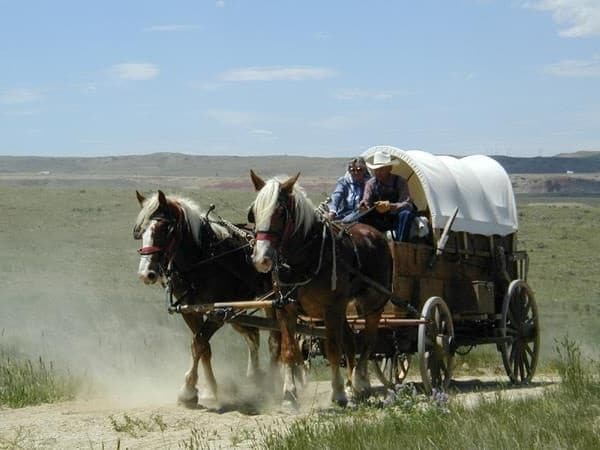
My entire stress filled life has been planned, and scheduled, and prepared for, and trained for. I’ve got the grey hair to prove it. So today we are leaving all of that behind. I’m hitching my pony to my wagon, tipping the brim of my hat down, then cracking the reigns and getting the hell outta dodge.

hit the roadhit the road

We definitely have it much easier than the pioneers that headed off to the west without knowing what is out there. We’ve got our highways, and grocery stores, and bridges. We don’t even need to think about fjording the river, we can just drive over it.

Amazon FireAmazon Fire

The excitement tho… that electric feeling… We’re doin it.

For most people freedom is just an idea. A concept that we all tell ourselves we are enjoying to the fullest while we are chained to our bosses schedule to pay for a house that the bank actually owns for most of our lives.

Not us. Not anymore.

Where will we go?

I dunno, I’m gonna follow the setting sun until I can’t see it anymore. We’ll make camp for the night under the stars away from the big city. We can all stretch our legs for a bit, the horses can rest, and we can get some shut eye until we feel the warmth of the sun kiss our skin again in the morning.

And for the first time in a long time, there’s no hurry to saddle up today. No, Today we can take our time and sip our coffee while we watch the dog run through grass kicking up the morning dew as she plays in the open air. Even she can feel it. Even the dogs face has a smile that won’t go away.

Today we get to look to the horizon in every direction and decide which way we want to go. Do we head south towards Texas? I hear they are giving each family 4,000 acres to raise cattle.

Do we head north to the Dakotas? We can follow the bison through the Black Hills, and disappear into the bad lands like Jesse James.

Do we head west toward California? I heard people say there is so much gold all you have to do is stick your shovel in the ground and you can pick up a nugget the size of a potato.

Hell, I don’t care which way we go, as long as we don’t stay here watching our lives dwindle away like the fog of your breath in the wind on a cold January morning.

For me I don’t really care about the destination, I’m looking forward to the journey.

I’m looking forward to revisiting The Dakotas. I can’t wait to go back to the Bad Lands far away from anyone else. Maybe we will just head to Yellowstone and hopefully I won’t have to fight a bear this trip. Hell maybe we will go right past it and straight to the Giant Redwood Trees before exploring the California coast.

I’ve said for a long time I was born in the wrong century. Not having a plan for our destinations is as close as I can ever come to that Lewis and Clark expedition into the unknown lands past where the map ends. Every day is going to feel like the day my wife said get in the car lets go for a drive, and we ended up at Niagara Falls.

We can take this trip as seriously as we want or not seriously at all. More than likely it will be a mixture of both. I can see us doing your normal travel blog stuff like hiking in the Grand Tetons, and the following day heading up to Washington for the Sasquatch convention.

Maybe we’ll head off into the desert and camp in the back country where no one else has been for a century, or maybe we will spend a week at an RV resort hanging out with other nomads in the hot tub trading stories of our adventures.

We spent the last decade taking small trips across the country to visit all of the lower 48 states at least once, and now we get to go back and visit them again and spend a lot more time in all of them. We have met some amazing people along the way and are really looking forward to making new friends on this next version of our adventures.

Small town America here we come.

If you have any, and I mean ANY suggestions, no matter how weird, on places we should go, or things we should do, please let us know. We have stopped everywhere from the Giant Ball Of Twine, to Captain Kirks Future Birth Place, to The Museum Of Natural History and Yellowstone. Help us make this next 2 years as interesting and as quirky as possible, and if ya see us on the road, Come Say Hi!

Well, I guess the only thing left to do now is whistle for the dog, crack the reigns and holler Yippee Ki Yay.

Click here to see how we went from being stuck in the rat race to living in our RV full time


Source link