I’ve always been into wild tuner car companies, from ’80s icons like Rinspeed and Koenig to more modern brands like Liberty Walk and Mansory. Whether or not the end product actually looks good, to my eyes the crazier it is the better. One of my favorite tuners is Brabus, the longtime modifier of all types of Mercedes, and recently the German brand has been fitting some of its G-wagens with a truly ridiculous feature that I absolutely love: glowing red exhaust tips.
2024 Jeep Wrangler First Drive Review
Yes, you read that right. First introduced on Brabus’ fastest and most absurd Rocket models, you can opt for larger side-exit exhaust tips that have a carbon-fiber surround and a ring of red LED lights set around each tip deeper in the surround. Brabus calls it the Rocket Launch Ambience Light, and in addition to the lights, it features increased performance over the stock exhaust and active flaps that provide a quiet “coming home” mode. As you can see from this Brabus 800 I saw the other day — the mid-range tuning package for the AMG G63 — the red glow is very noticeable, even during the daytime.
Do I acknowledge that this is pretty tacky and silly? Yes. Do I think that it’s one of the best car modifications ever created? Also yes. The G-Class is already one of the most ridiculous cars on the road, and those side pipes are one of the AMG versions’ most iconic features — even with noise-canceling headphones in, I can not only hear but feel when a G63 rumbles by, and the effect is even stronger from inside the car.
If you’re already spending tens of thousands of dollars (maybe even hundreds of thousands) modifying an already expensive and outlandish G-wagen, why not go for the glowing red exhaust? It’s the cherry on top of the widebody kit, carbon-fiber wings, huge wheels, brightly colored leather, pickup conversions and other in-your-face options that Brabus offers.
Brabus hasn’t stopped at glowing exhaust, either. Some of its recent creations have glowing red lights in the grilles, too. Hell yeah.
Eligible vehicles: Lexus vehicles from the current model year plus six years with fewer than 80,000 miles of use
Limited warranty: Two years and unlimited miles after the expiration of the Lexus new car warranty
Powertrain warranty: Two years and unlimited miles after the expiration of the Lexus new car warranty
Roadside assistance: Included during the warranty period
Additional programs: None
What We Like
Unlimited miles during the covered warranty period
Trip protection included
Loaner car included during covered repairs
Complimentary maintenance for the next four recommended services for two years/20,000 miles
What We Don’t
Trip protection expires after three nights at $200 per night
Rental car reimbursement is limited to $50 per day for up to five days
Lexus L/Certified
Lexus owners will tell you that part of the brand’s premium reputation rests on its well-run dealerships and service centers. Buying a certified used Lexus vehicle from a dealership’s L/Certified program grants access to the Lexus service environment. Even the most reliable cars need regular maintenance, and having a pleasant experience during service enhances the ownership experience.
L/Certified vehicles are used Lexus models from the current model year up to six model years older with under 80,000 miles on the odometer. Vehicles undergo a 161-point inspection, including engine, exterior, interior, electronics, safety devices, undercarriage, and a road test. Qualified cars receive two years and unlimited miles of extended basic and powertrain warranty beyond the new car warranty of four years/50,000 miles. Any necessary repairs under warranty require no deductible payment.
Additional benefits include the next four factory-recommended maintenance services for two years or 20,000 miles (whichever comes first) at no charge, free roadside assistance during the warranty period, and a 3-month trial subscription to SiriusXM and trials to Lexus Service Connect and Remote Connect or Enform Remote. Trip Protection reimburses you for up to three nights, up to $200 per night) and a rental car for up to five days (up to $50 per day) while your vehicle is repaired under warranty. You may also be entitled to a complimentary loaner car if your car must stay over at your local dealer. Lexus Financial Services operates special financing programs for L/Certified vehicles and buyers.
Editor’s note: This post is part of the AI Decoded series, which demystifies AI by making the technology more accessible, and which showcases new hardware, software, tools and accelerations for RTX PC users.
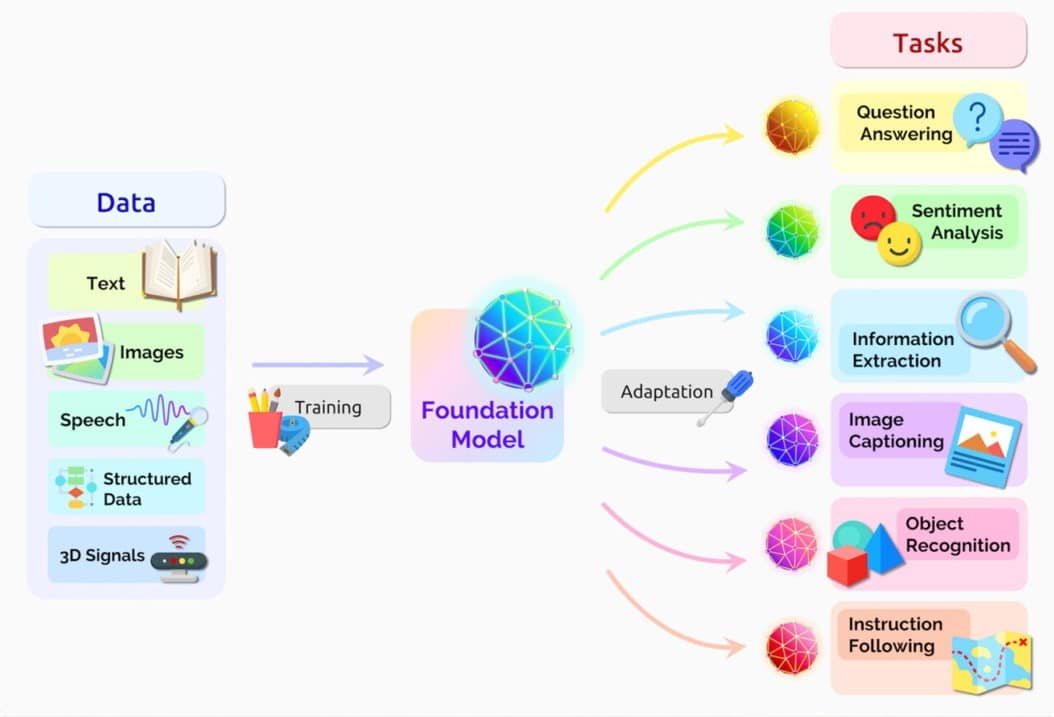
Skyscrapers start with strong foundations. The same goes for apps powered by AI.
It’s a type of artificial intelligence model trained to understand and generate human-like language. Imagine giving a computer a huge library of books to read and learn from, so it can understand the context and meaning behind words and sentences, just like a human does.
Foundation models.
A foundation model’s deep knowledge base and ability to communicate in natural language make it useful for a broad range of applications, including text generation and summarization, copilot production and computer code analysis, image and video creation, and audio transcription and speech synthesis.
ChatGPT, one of the most notable generative AI applications, is a chatbot built with OpenAI’s GPT foundation model. Now in its fourth version, GPT-4 is a large multimodal model that can ingest text or images and generate text or image responses.
Online apps built on foundation models typically access the models from a data center. But many of these models, and the applications they power, can now run locally on PCs and workstations with NVIDIA GeForce and NVIDIA RTX GPUs.
Foundation Model Uses
Foundation models can perform a variety of functions, including:
Language processing: understanding and generating text
Code generation: analyzing and debugging computer code in many programming languages
Visual processing: analyzing and generating images
Speech: generating text to speech and transcribing speech to text
They can be used as is or with further refinement. Rather than training an entirely new AI model for each generative AI application — a costly and time-consuming endeavor — users commonly fine-tune foundation models for specialized use cases.
Pretrained foundation models are remarkably capable, thanks to prompts and data-retrieval techniques like retrieval-augmented generation, or RAG. Foundation models also excel at transfer learning, which means they can be trained to perform a second task related to their original purpose.
For example, a general-purpose large language model (LLM) designed to converse with humans can be further trained to act as a customer service chatbot capable of answering inquiries using a corporate knowledge base.
Enterprises across industries are fine-tuning foundation models to get the best performance from their AI applications.
Types of Foundation Models
More than 100 foundation models are in use — a number that continues to grow. LLMs and image generators are the two most popular types of foundation models. And many of them are free for anyone to try — on any hardware — in the NVIDIA API Catalog.
LLMs are models that understand natural language and can respond to queries. Google’s Gemma is one example; it excels at text comprehension, transformation and code generation. When asked about the astronomer Cornelius Gemma, it shared that his “contributions to celestial navigation and astronomy significantly impacted scientific progress.” It also provided information on his key achievements, legacy and other facts.
Extending the collaboration of the Gemma models, accelerated with the NVIDIA TensorRT-LLM on RTX GPUs, Google’s CodeGemma brings powerful yet lightweight coding capabilities to the community. CodeGemma models are available as 7B and 2B pretrained variants that specialize in code completion and code generation tasks.
MistralAI’s Mistral LLM can follow instructions, complete requests and generate creative text. In fact, it helped brainstorm the headline for this blog, including the requirement that it use a variation of the series’ name “AI Decoded,” and it assisted in writing the definition of a foundation model.
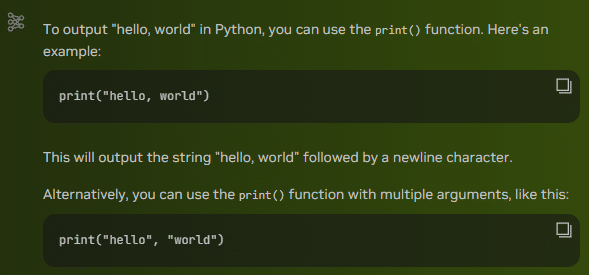
Hello, world, indeed.
Meta’s Llama 2 is a cutting-edge LLM that generates text and code in response to prompts.
Mistral and Llama 2 are available in the NVIDIA ChatRTX tech demo, running on RTX PCs and workstations. ChatRTX lets users personalize these foundation models by connecting them to personal content — such as documents, doctors’ notes and other data — through RAG. It’s accelerated by TensorRT-LLM for quick, contextually relevant answers. And because it runs locally, results are fast and secure.
Image generators like StabilityAI’s Stable Diffusion XL and SDXL Turbo let users generate images and stunning, realistic visuals. StabilityAI’s video generator, Stable Video Diffusion, uses a generative diffusion model to synthesize video sequences with a single image as a conditioning frame.
Multimodal foundation models can simultaneously process more than one type of data — such as text and images — to generate more sophisticated outputs.
A multimodal model that works with both text and images could let users upload an image and ask questions about it. These types of models are quickly working their way into real-world applications like customer service, where they can serve as faster, more user-friendly versions of traditional manuals.
Many foundation models are free to try — on any hardware — in the NVIDIA API Catalog.
Kosmos 2 is Microsoft’s groundbreaking multimodal model designed to understand and reason about visual elements in images.
Think Globally, Run AI Models Locally
GeForce RTX and NVIDIA RTX GPUs can run foundation models locally.
The results are fast and secure. Rather than relying on cloud-based services, users can harness apps like ChatRTX to process sensitive data on their local PC without sharing the data with a third party or needing an internet connection.
Users can choose from a rapidly growing catalog of open foundation models to download and run on their own hardware. This lowers costs compared with using cloud-based apps and APIs, and it eliminates latency and network connectivity issues. Generative AI is transforming gaming, videoconferencing and interactive experiences of all kinds. Make sense of what’s new and what’s next by subscribing to the AI Decoded newsletter.
Flirting and connecting with others doesn’t need to be a game of manipulation or dishonesty. Far too often, we get caught up in playing roles and believing that we must appear a certain way to attract romantic interests or make new friends. But what if there was a better approach – one rooted in authenticity, empathy, and bringing our true selves to interactions with others? What if we unlocked our natural charm by cultivating self-awareness, active listening skills, and compassion – allowing our meaningful qualities to shine through without artifice?
By embracing vulnerability and focusing on truly understanding others, you can forge stronger bonds and spark real human connection – moving past surface-level interactions toward deeper relationships built on mutual care, respect, and enjoyment of each other for who you genuinely are.
The Power of Authenticity
Image courtesy of Unsplash
In today’s fast-paced world, authenticity is a rare commodity. Yet, it’s the very key to unlocking meaningful connections. When you approach someone with genuine interest without pretense, you create a safe space for both parties to be themselves. This doesn’t mean being overly vulnerable from the get-go but rather sharing your true self in a manner that is open and honest.
Genuine interactions are refreshing and attractive; they stand out in a sea of superficial exchanges. People are naturally drawn to individuals who are comfortable in their skin, who listen actively, and who show genuine interest in others. This authenticity fosters a foundation of trust and respect, paving the way for deeper relationships that are rich in understanding and affection.
Building on this foundation of authenticity, each genuine connection acts as a building block in constructing a network of relationships rooted in sincerity and mutual appreciation. By nurturing these authentic connections, individuals not only enrich their own lives but also contribute to a community built on trust, empathy, and genuine care for one another. The ripple effect of authenticity extends far beyond individual interactions, creating a positive and supportive environment where everyone feels valued and understood.
Cultivating Self-Awareness for Genuine Connection
Image courtesy of Unsplash
Before we can genuinely connect with others, we must delve deep into our inner selves. This requires dedicating time to introspect on our core values, beliefs, and life experiences that mold us into the unique individuals we are today. Through self-awareness, we develop a heightened sensitivity towards our emotions, thoughts, and actions, enabling us to express our true essence more authentically.
Furthermore, self-awareness entails identifying and actively working on overcoming any insecurities or self-imposed limitations that could hinder our ability to form sincere connections. By acknowledging and addressing these internal barriers, we embark on a journey toward self-discovery and the full embrace of our genuine selves. Knowing how to flirt with a woman and being comfortable in our own skin can lead to more confident and successful interactions.
The Art of Active Listening
Image courtesy of Unsplash
One of the most significant barriers to establishing genuine connections is the need for practical listening skills. Often, our focus is so fixated on articulating our own thoughts or managing how we are perceived that we need to pay attention to the essence of authentic listening – comprehending and acknowledging the other person’s viewpoint. Engaging in active listening demands our undivided attention, being fully present in the moment, and sincerely attempting to grasp the thoughts and emotions of the other individual.
By embracing active listening, we demonstrate respect and empathy towards others, fostering a comforting environment that encourages them to express themselves authentically and with vulnerability. Consequently, this facilitates the inception of deeper, more profound conversations, nurturing a heightened level of mutual understanding and connection.
The Role of Compassion in Genuine Connection
Compassion lies at the very heart of establishing genuine connections. When we extend compassion towards others, we not only foster an environment of acceptance and empathy but also nurture deeper understanding and connection. This practice involves actively stepping into the shoes of others, seeking to comprehend their perspectives and emotions with an open mind devoid of any preconceived judgments.
Moreover, practicing compassion entails being gentle and empathetic towards ourselves as well. Frequently, we find ourselves being overly critical, burdening ourselves with unrealistic standards and self-criticism. By learning to treat ourselves with the same compassion and acceptance we offer others, we cultivate a profound sense of inner peace and self-assurance. This, in turn, empowers us to embrace our authentic selves confidently, free from the shackles of fear or shame.
Conclusion
In conclusion, flirting and connecting with authenticity is not just about forging external relationships; it is an inward journey of self-discovery and personal growth. Through cultivating self-awareness, engaging in active listening, and practicing compassion towards ourselves and others, we pave the way towards meaningful, genuine connections that enrich our lives and those around us. Remember, authenticity is the foundation upon which all lasting relationships are built. By being true to ourselves and valuing others for who they indeed are, we can create a world where connections are rooted in mutual respect, understanding, and genuine affection.
For more on the latest in love connections and lifestyle reads, click here.
Uganda, affectionately known as the “Pearl of Africa,” is a hotspot for primate enthusiasts, boasting the world’s largest population of chimpanzees and charming golden monkeys in their natural settings.
It’s a place where you can step into the lush jungles and come face-to-face with these fascinating creatures, offering a unique blend of adventure and wildlife observation that’s hard to find anywhere else.
Chimpanzee trekking in Uganda isn’t just a walk in the park; it’s a deep dive into the world of these intelligent beings. You’ll wander through vibrant forests, listening to the symphony of nature, all while learning about the lives of chimpanzees up close. It’s a real-life adventure that puts you in the heart of their world, highlighting the importance of protecting these incredible animals and their homes.
Not to be outdone, golden monkey trekking in Mgahinga National Park adds another layer of excitement to Uganda’s wildlife experiences. These golden-furred primates, exclusive to the Albertine Rift, offer a splash of color and a burst of energy that brings the bamboo forests to life. It’s a unique chance to see these rare animals in their natural habitat, adding a touch of magic to your safari.
Both experiences shine a light on Uganda’s rich biodiversity and the crucial efforts to conserve it. By joining these treks, you’re not just on a holiday; you’re contributing to the conservation narrative and supporting local communities. Plus, it’s an incredible way to connect with nature and create lasting memories.
This activity, lasting two to six hours, requires trekkers to navigate various trails in search of chimpanzees. Individuals aged 15 and older are eligible to participate, provided they possess valid trekking permits.
The cost for chimpanzee tracking varies by location and residency status. In Kibale Forest National Park, fees are $250 for foreign non-residents, $200 for foreign residents, and UGX 180,000 for East African citizens. Kyambura Gorge offers slightly lower rates, with $100 for foreign non-residents, $80 for foreign residents, and UGX 50,000 for East African citizens.
Tourists must obtain chimp tracking permits from the Uganda Wildlife Authority. On the day of trekking, participants start with breakfast before heading to the briefing point, where rangers explain the rules and guidelines. Groups are limited to eight people, each accompanied by armed ranger guides who lead the search through the forest.
The search for chimpanzees can take trekkers through various parts of the forest, encountering not just the primates but also birds, other mammals, and diverse vegetation. Communication among rangers is key to locating the chimpanzees, typically within two to five hours. Upon finding them, visitors are given an hour to observe their activities, ranging from sleeping and hunting to playing and nurturing their young.
Uganda is renowned for its exceptional chimpanzee trekking experiences, particularly in Kibale Forest National Park, Budongo Forest (within Murchison Falls National Park), and Kyambura Gorge (in Queen Elizabeth National Park).
Each location offers a unique trekking experience, but Kibale Forest National Park stands out due to its high population of chimpanzees and the variety of additional activities available, such as the chimpanzee habituation experience. This makes Kibale the best place for chimpanzee trekking in Uganda and one of the top destinations worldwide for observing these primates in their natural habitat.
Is Chimpanzee Trekking Worth It?
Absolutely. Chimpanzee trekking is an unforgettable adventure that brings you face-to-face with these fascinating creatures in their natural environment. Beyond the thrill of the search and the joy of spotting chimpanzees, this activity offers profound insights into their behaviors and social structures.
Observing chimpanzees up close builds a deeper understanding and appreciation of their complexities and challenges, particularly regarding their conservation. For nature enthusiasts, animal lovers, and adventure seekers, chimpanzee trekking is an enriching experience that connects you with the natural world in a meaningful way.
How Long Is Chimpanzee Trekking?
Chimpanzee trekking durations vary, typically ranging from two to six hours. The length of the trek depends on several factors, including the location of the chimpanzees on any given day, the trekking pace of the group, and the specific regulations of the national park.
Regardless of the duration, the trek is structured to ensure participants have an immersive experience, offering ample time to observe the chimpanzees once they are located.
Chimpanzee Habituation Experience in Kibale Forest National Park
Kibale Forest National Park, home to the country’s largest chimpanzee population, offers a unique chimpanzee habituation experience. This program allows visitors to spend four hours with chimpanzees undergoing habituation, helping them become accustomed to human presence.
Participation requires a valid habituation permit, priced at $300 for foreign non-residents, $250 for foreign residents, and UGX 250,000 for East African citizens. The fee includes the guide, the habituation experience, and park entry. Availability is limited, so booking three to four months in advance is recommended.
Get in touch with Africa Adventure Vacations to book your Chimpanzee trekking experience:
Golden Monkey Trekking in Uganda
Golden Monkey Trekking in Uganda offers a unique window into the lives of one of Africa’s most enchanting primates, nestled in the verdant bamboo forests of Mgahinga National Park. This rare and colorful species, found only in the Albertine Rift, provides a captivating experience for wildlife lovers.
The trek immerses you in the stunning landscapes of Uganda’s southwest corner and allows you to observe these playful and elusive creatures in their natural habitat.
It’s a gentle yet thrilling adventure that combines the joy of discovery with the beauty of conservation, making it a must-do for anyone eager to explore the diversity of Uganda’s wildlife.
Golden Monkey Trekking in Uganda
Is Golden Monkey Trekking Worth It?
Golden monkey trekking in Uganda is a captivating experience for those interested in primatology and conservation. Exclusive to Mgahinga National Park, this activity allows you to observe the unique behaviors of these rare primates and contributes to their conservation.
Similar to chimpanzee trekking, the adventure of tracking golden monkeys through their natural habitat and the chance to witness their daily activities firsthand make it a worthwhile pursuit.
The trek is especially recommended for wildlife photographers and those who seek to experience the diversity of Uganda’s primate population.
Where Can I See Golden Monkeys in Uganda?
Mgahinga National Park is the sole destination in Uganda where golden monkey trekking takes place. Nestled in the southwestern corner of the country, the park offers a unique habitat that supports a population of habituated golden monkeys.
Visitors to Mgahinga can embark on golden monkey trekking or opt for the more immersive golden monkey habituation experience, allowing for extended interaction with these fascinating creatures. This exclusive opportunity makes Mgahinga a must-visit for anyone eager to encounter one of Uganda’s most enchanting primate species.
Golden Monkey Trekking in Uganda
Golden Monkey Trekking and Habituation Experience
Permits are required, costing $60 for foreign non-residents, $50 for foreign residents, and UGX 40,000 for East African citizens. The trek begins with a briefing at park headquarters, followed by a guided search through the jungle. Once found, trekkers have an hour to observe the monkeys’ behaviors.
For those seeking a deeper connection, the golden monkey habituation experience allows extended four-hour interactions under the guidance of experts. These permits cost $100 for foreign non-residents, $80 for foreign residents, and UGX 100,000 for East African citizens, offering an immersive experience in primate conservation efforts.
Get in touch with Africa Adventure Vacations to book your Golden Monkey trekking experience:
Ready to Book your Ugandan Safari Experience?
Uganda’s golden monkey and chimpanzee trekking experiences stand as pillars of unique wildlife encounters, blending the thrill of adventure with the profound beauty of nature and conservation. These treks offer more than just a glimpse into the lives of these remarkable primates; they are a journey into the heart of Uganda’s rich biodiversity, an opportunity to learn about the importance of preserving natural habitats, and a chance to connect with the earth in an unforgettable way.
Whether navigating the bamboo forests in search of golden monkeys or quietly observing the complex social dynamics of chimpanzees, you’re participating in a story much larger than yourself. Uganda, with its welcoming atmosphere and stunning landscapes, invites you to participate in this incredible adventure, leaving you with memories and insights that will last a lifetime.
Africa Adventure Vacations is a one-stop center for the best and most memorable African safaris. We are a renowned safari operator based in Uganda, offering exceptional tours throughout the East African region, ranging from wildlife adventures, culture, birding, luxury gorilla safaris to Kilimanjaro trekking tours. All our tours can be customized to best suit your travel needs, budget and time.
New spy images of the Lamborghini Huracan successor have been shared online as the automaker continues to put the prototype through its paces. The latest images reveal not just the pre-production bodywork, but also give us a glimpse of the interior. Rumors suggest that the replacement could be called ‘Temerario’.
The interior of the Huracan successor might be similar to that of the Revuelto. In addition to a central touchscreen, Lamborghini will also offer a passenger-side display.
Design elements inspired by the Revuelto are also visible on the exterior. The car has a double bubble roof, side vents with strakes and an exposed engine bay.
The Huracan successor is rumored to be powered by a high-revving twin-turbo V8 engine paired with an 8-speed dual-clutch automatic transmission.
Lamborghini showcased the final iteration of the Huracan, the Huracan STJ, at the recently concluded Lamborghini Arena 2024 event.
Discovering your car AC blowing hot air is an unpleasant surprise when you need relief from the blazing interior. The problem of your car air conditioner not blowing cold air can happen for several reasons, ranging from minor to major issues.
Read on to learn some common reasons for a car’s AC not blowing cold air, possible solutions, and the cost of potential air conditioning repairs.
1. Insufficient Refrigerant Levels:
Low refrigerant levels are the most frequent reason drivers ask, “Why is my car AC blowing hot air?” Leaks in the air conditioning system can lead to a gradual loss of refrigerant, resulting in reduced cooling efficiency.
Solution: A professional mechanic can refill the refrigerant to the recommended levels after checking for leaks. Expect that coolant recharge service to cost about $200. The bill for replacing damaged hoses, O-rings, or seals will vary. According to Kelley Blue Book data, the average AC repair cost at dealerships is around $500.
2. Malfunctioning Compressor:
The compressor is the heart of your car’s air conditioner. It pressurizes the air conditioning refrigerant and circulates it through the system. A malfunctioning compressor often leads to the car AC not blowing cold air.
Solution: A compressor is the most expensive automotive air conditioner problem to fix. A defective compressor requires repair or replacement, costing $1,500 or more.
MORE: Car Warning and Dashboard Lights Explained
3. Dirty Condenser:
Accumulated dirt, debris, or other contaminants on the condenser coils can hinder heat exchange, causing the car AC to blow hot air. Similarly, dirt and other particles can become lodged in the evaporator, blocking airflow and causing poor cooling.
Solution: Regularly cleaning the condenser and evaporator helps ensure optimal airflow. You can use a gentle brush or compressed air to remove dirt and debris, but most drivers should leave this maintenance task for the pros.
4. Electrical Issues:
Various electrical problems, such as a faulty relay, blown fuse, bad sensors, loose connections, or damaged wiring, can disrupt the functioning of the car air conditioner.
Solution: Check the electrical components associated with the AC system and replace any damaged parts.
MORE: Do I Need a Coolant System Flush?
5. Malfunctioning Thermostat:
A dodgy thermostat may not accurately regulate the temperature, leading to inconsistent cooling or hot air blowing from the vents.
Solution: Replace the thermostat if it is faulty to restore proper temperature control.
6. Broken Blend Door Actuator:
The blend door actuator regulates the airflow between the heater core and the evaporator. If the blend door position becomes stuck on heat, it can result in the car AC blowing hot air.
Solution: Replace the blend door actuator to restore proper airflow and temperature control.
MORE: How Do I Know If My Spark Plugs Need Replacing?
7. Blocked Cabin Air Filter:
A clogged cabin air filter can restrict airflow, reducing system efficiency and causing it to blow warm air.
Solution: Regularly replace the cabin air filter for unrestricted airflow and optimal air conditioning system performance.
What to Do When Your Car AC is Blowing Hot Air
Your car’s air conditioning may blow hot air for many reasons, and keeping up with regular maintenance can prevent some issues. Use a qualified mechanic to check and service your air conditioner at the start of each warm season. Meanwhile, get to the root cause of many car AC problems by visiting a service center to ensure you have a cool drive on the hot days ahead. Staying on top of vehicle service and repairs ensures safe and reliable transportation and helps your car retain its value if you need to trade or sell.
This is an installment in a series of posts looking back on show cars that we feel deserved a little more attention than they got. If you have a suggestion for a Forgotten Concept topic, please shoot us a line or leave a comment below.
First seen at the 1991 Tokyo Motor Show, the Isuzu Nagisa Concept was part car, part boat, and entirely confusing to those who took it in at the show. Designed to travel Up 100 kph (62 mpg) on land, the Nagisa was claimed to have a top speed on water of 8 knots (9 mph).
Power came from a 175-horsepower 3.2-liter V6 for land operation, and an impeller-style drive system for in-water use. The Nagisa’s wheels retracted during in-water use, and access to the cabin came via the rear deck; the concept had no side-door openings.
At 208 inches long, the Nagisa was about as long as a current-generation Toyota Sequoia, though it rode on a stubby 98-inch wheelbase. Said to have been available was a cover to close off the concept’s cabin, this to allow for use in rainy and otherwise inclement weather.
Nagisa means “calm beach” in Japanese, and it has been theorized in online forums that this water-capable Isuzu was designed to help reduce traffic congestion in crowded cities including Tokyo. Indeed, Tokyo features countless waterways and ocean inlets, though how easily those channels could be accessed by an automobile is unclear, and, there is no record of Isuzu having ever claimed the Nagisa was meant to help move ground traffic into the water.
It appears that the Nagisa was never shown on the U.S. auto-show circuit, which is shame as it’s possible folks in California and Florida might have taken a shine to it.
We are sad to report that there seems to be no press-release record, formal or otherwise, of Isuzu’s bizarre 1991 Tokyo Motor Show reveal. This troubles us, as we have no idea what the intended purpose of this vehicle was, or why it wasn’t unveiled at a boat show instead.
That said, we’re a little weirded out by the Nagisa’s resemblance to the Pontiac Fiero, which just confuses matters additionally. The Nagisa episode would feel a little less like a strange dream were a running example in use someplace. Sadly, that seems not to be the case.
General Motors has filed a patent application for drive modes for electric race cars.
These modes would manage the available energy in the battery pack differently, allowing drivers to toggle between single-lap pace for a qualifying run and energy conservation for the race itself, according to the application, which was published by the United States Patent and Trademark Office (USPTO) on March 28, and originally filed in 2022.
A qualifying mode would make maximum power available at the expense of running time, while an endurance mode would limit output but allow the car to complete more laps at a set pace. Modes could be selected via a steering-wheel paddle, touchscreen, or a dedicated switch or button, GM says in the application.
The all-electric Formula E series has already put a similar idea into practice. Formula E’s current Gen3 cars only deploy their maximum 470 hp in specific situations, including the final phase of qualifying and Attack Mode, where drivers are rewarded with a temporary power boost for taking a slower racing line. Power is limited the rest of the time.
The Lucid Air Sapphire also features a Track mode with Drag Strip, Endurance, and Hot Lap submodes. And the Hyundai Ioniq 5 N has an N Race mode with Endurance and Sprint settings, along with Drag and Track modes.
If GM continues developing the ideas discussed in this patent application, it could have an equivalent feature for its own future electric performance cars—such as the electric Corvette mentioned by GM president Mark Reuss in a 2022 interview.
Modern supercars incorporate a blend of advanced technologies designed to enhance performance, safety, efficiency, and the driving experience. Pushing the envelope has never just been about putting out the most ponies, but it’s about tying all of the design elements into an orchestrated symphony.
We’re not just talking about carbon fiber monocoques, tire technology (which is extremely cool in itself), or how many turbochargers are incorporated into an engine.
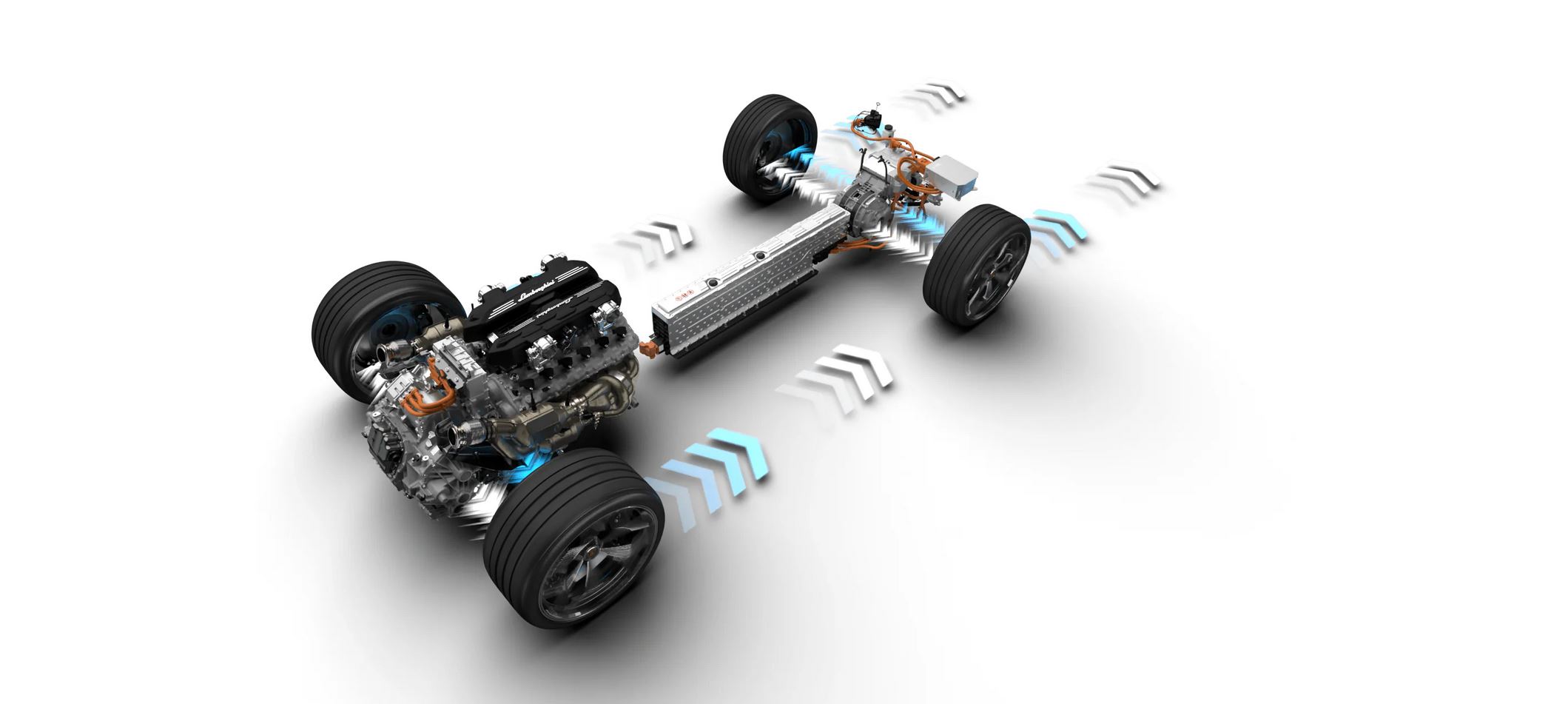
The Revuelto features a new 6.5-liter V12 engine, complemented by three electric motors that produce a combined power of 746.5 kW. Credit: Lamborghini
From the Lamborghini Revuelto’s triple electric motor to the Aston Martin Valhalla’s incorporated F1 technology, here are some of the most cutting-edge technologies you’ll find in today’s high-performance exotic for both on-track and street cars.
Hybrid Powertrains
Modern supercars have continued to experiment with hybrid powertrain systems which combine traditional internal combustion engines with electric motors to improve fuel efficiency and reduce emissions. Setting aside eco-friendly perspectives for a moment, these new powertrains offer several significant advantages:
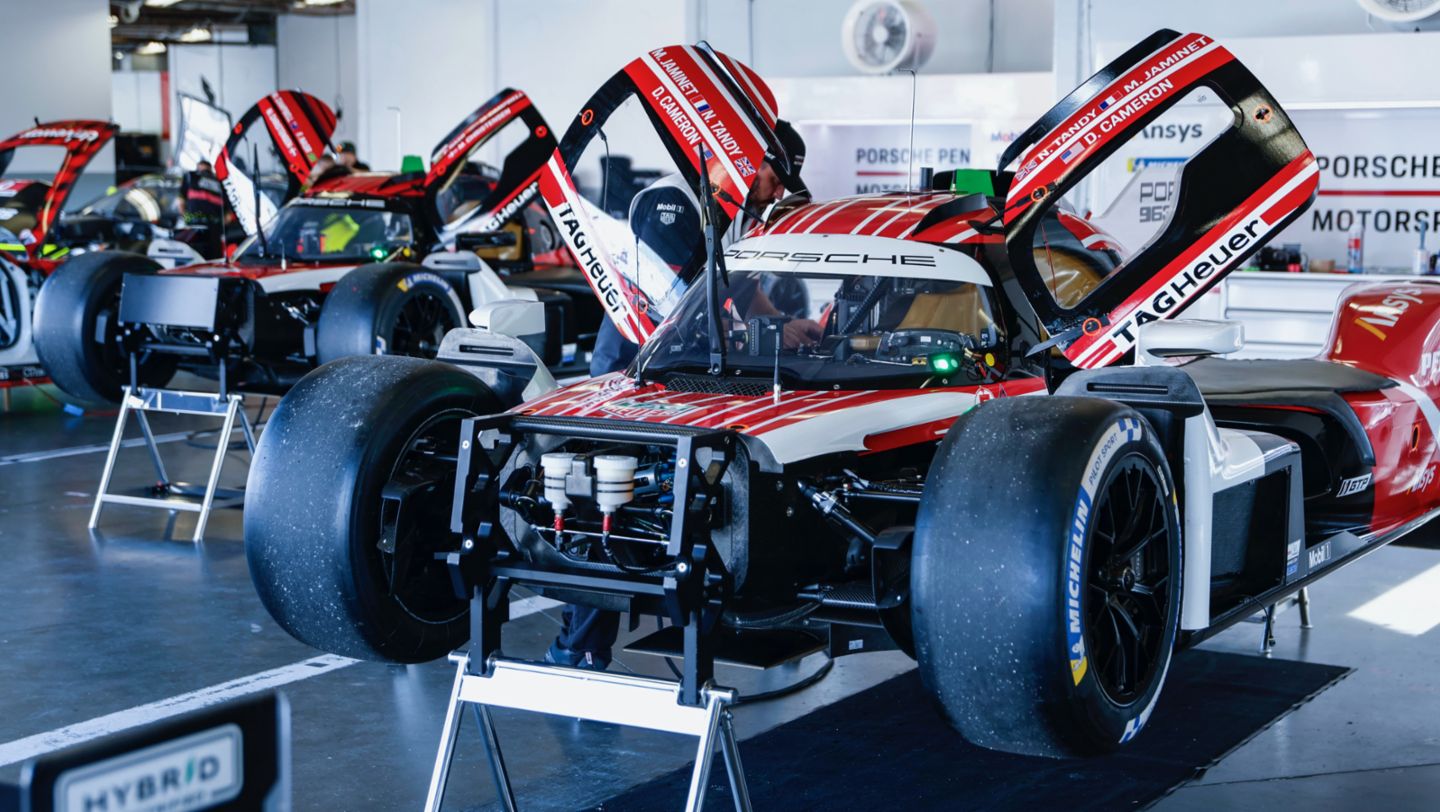
The 50 HP Bosch Hybrid unit located inside the nose of the Type 963. Credit: Porsche
Dual Power Sources: Hybrid supercars use a combination of an ICE and electric motors. The ICE typically drives the rear wheels, while electric motors can power the front, rear, or all wheels, depending on the design.
Performance Enhancement: Electric motors can provide instant torque, improving acceleration. When combined with the high power of an ICE, you’ve got a rocketship on the asphalt.
Energy Recovery: Many hybrid systems include regenerative braking, which recovers energy usually lost during braking and stores it in a battery. This energy can later be used to power the electric motors.
The Porsche 963 LMDh Hypercar is a prime example of the above, and is also compatible with renewable fuels such as ethanol/hydrocarbon blended fuels and carbon-capture derived hydrocarbon fuels. Other exotics such as the Ferrari LaFerrari, Porsche 918 Spyder, and Aston Martin Valkyrie utilize such technologies for unprecedented performance.
Active Aerodynamics
Supercars are incorporating systems that dynamically adjust aerodynamic elements like spoilers, diffusers, and air intakes in real-time to optimize downforce and drag depending on speed and driving conditions.
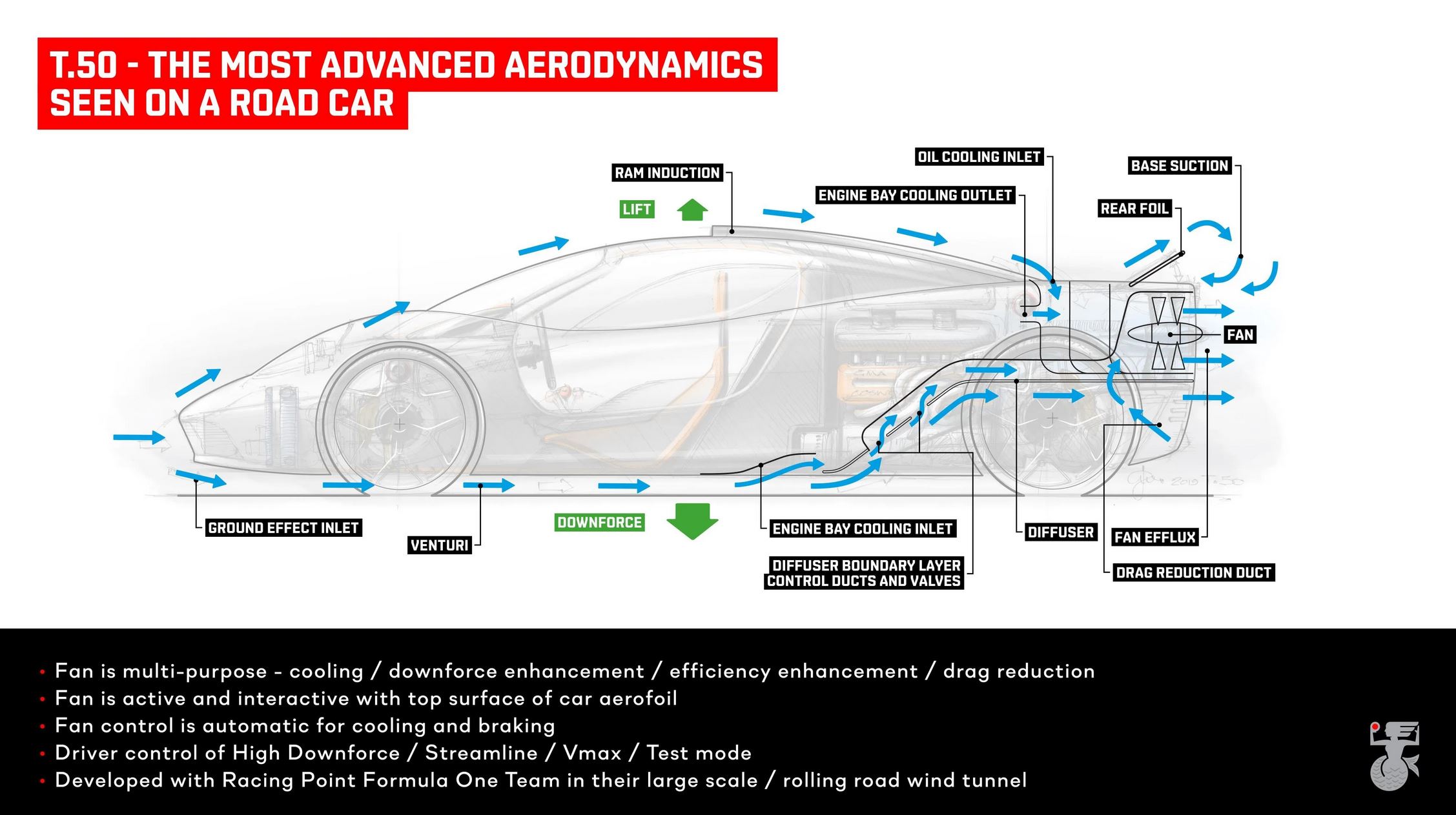
The active aerodynamics on a T.50. Credit: Salon Prive
A great example is the ALA (Aerodinamica Lamborghini Attiva) system in the Lamborghini Huracán Performante. ALA adjusts flaps in the front splitter and the rear wing to manage airflow, reducing drag for acceleration and increasing downforce for cornering. Notably, the system can direct downforce to either side of the car during cornering, enhancing its agility and stability through turns.
Active Spoilers: These can extend or retract based on vehicle speed to alter downforce and drag. For instance, a spoiler might extend at high speeds to increase downforce, improving traction, and then retract at lower speeds to reduce drag and enhance fuel efficiency.
Active Air Intakes: These can open or close to control the cooling airflow to the engine and brakes, optimizing performance and efficiency.
Active Grilles: Found at the front of the vehicle, these grilles can open to allow more air to cool the engine and close to improve aerodynamics when cooling demand is lower.
Variable Geometry Turbines: Used in turbocharged engines, they adjust the flow of exhaust gases to the turbine, optimizing performance across the engine’s speed range.
Active Diffusers and Underbody Panels: These can adjust to modify the airflow under the vehicle, reducing drag and enhancing downforce.
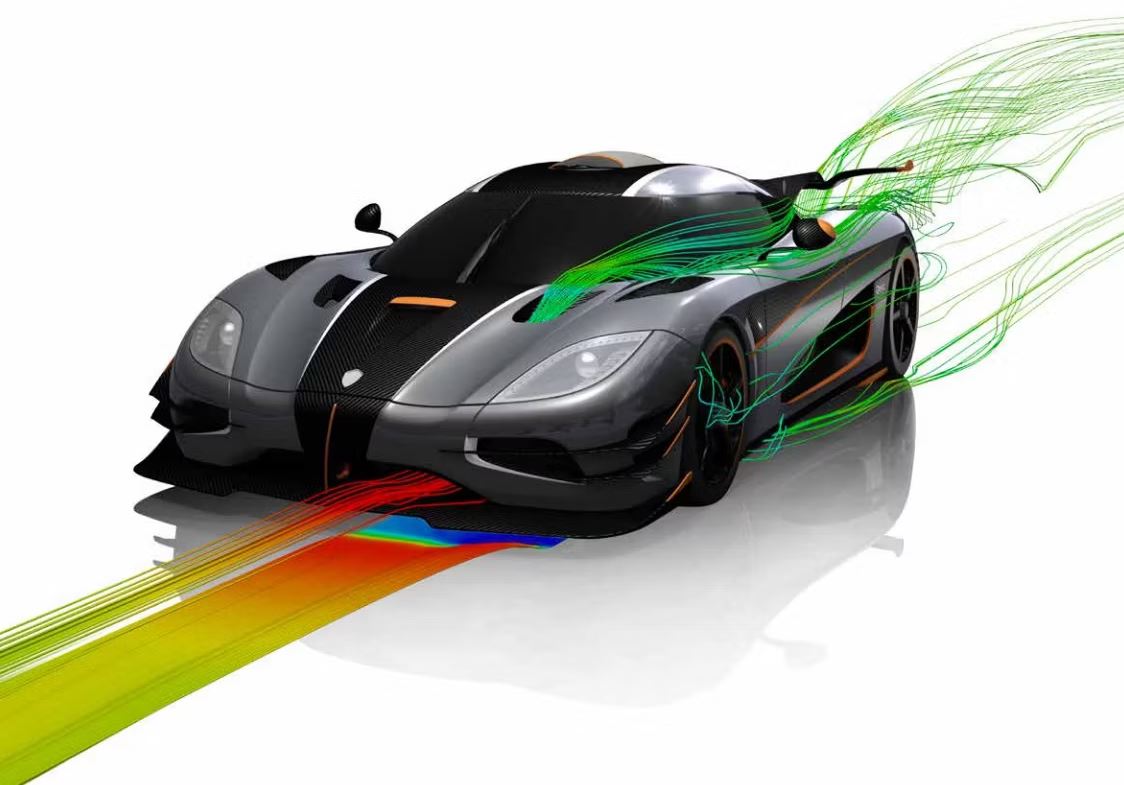
Simulation of how active aerodynamics works on the Koenigsegg One. Credit: Top Speed
This technology isn’t limited to unattainable high-end supercars. For those who can afford the German marque, Porsche 911 Turbo models come with an active aerodynamic system known as Porsche Active Aerodynamics (PAA). This system includes a three-stage front spoiler and a deployable rear wing, which adjust automatically to balance downforce and drag. In ‘Performance’ mode, these elements maximize downforce for better handling and stability at high speeds.
Advanced Traction Stability Control Systems
Advanced Traction and Stability Control Systems in supercars monitor and adjust the distribution of power to the wheels, braking, and even the car’s dynamics to maintain grip and stability under various driving conditions.
The Ferrari SF90 Stradale uses an advanced version of Ferrari’s Side Slip Control (SSC) system, integrating it with the car’s hybrid powertrain to manage power delivery from both the V8 engine and three electric motors. The system ensures optimal traction by dynamically distributing torque not just between the front and rear axles but also individually across the rear wheels, maximizing grip and handling performance.
The Koenigsegg Agera R has some amazing features in its traction stability control system. Credit: Koenigsegg
Similarly, Porsche equips the 911 GT2 RS with Porsche Stability Management (PSM) and Porsche Traction Management (PTM), systems that provide dynamic stability and traction control. These technologies are fine-tuned to handle the extreme power of the GT2 RS, offering drivers the ability to exploit the car’s capabilities while maintaining a high level of safety and control, especially important given the vehicle’s rear-engine layout.
Active Suspension Systems
These systems can adjust the damping characteristics of the suspension in real-time, adapting to road conditions and driving dynamics to offer both superior comfort and handling.
The McLaren 720S employs this technology in the form of sensors to monitor the car’s behavior and adjust the dampers accordingly, providing a smooth ride over bumps and exceptional handling at high speeds.
Likewise, the Lamborghini Aventador SVJ uses a combination of active and passive suspension elements, including Magneto Rheological Suspension (MRS) that can adjust the damping effect almost instantly based on road conditions and driving dynamics.
Digital and Augmented Reality Dashboards
The interiors of supercars are becoming more high-tech, with digital displays replacing traditional gauges and instruments. Some cars also feature augmented reality systems that can project information like navigation, speed, or racing lines directly onto the windshield. The merging of virtual information with the physical driving experience continues to blur the line between high-performance driving and interactive technology.
The Lamborghini Revuelto digital instrument dashboard. Credit: Lamborghini
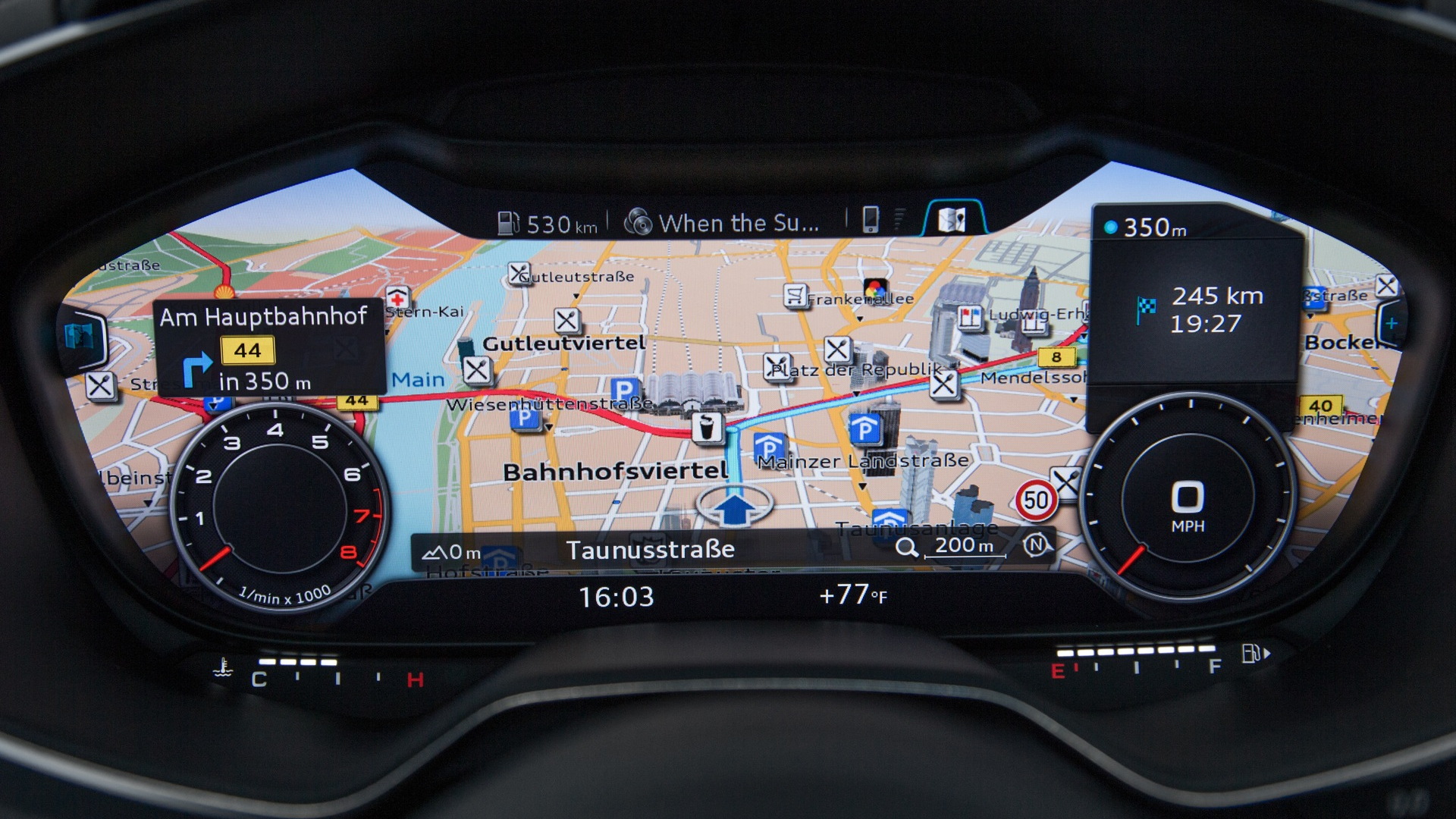
The Audi e-tron GT features the Audi Virtual Cockpit, a fully digital instrument cluster that offers high-resolution displays of navigation, media, and performance metrics. Though not augmented reality in the traditional sense, its advanced digital display can be customized to show a wide range of data, enhancing the driving experience with a focus on electric performance.
Porsche’s team developed the Porsche Advanced Cockpit and the optional Passenger Display, featuring a fully digital and customizable interface, used in the Taycan. This augmented reality HUD (Head-Up Display) projects critical information such as speed, navigation, and alerts directly onto the windshield, providing a real-time, augmented view of the road ahead.
Honorable Mention: Advanced Driver Assistance Systems (ADAS)
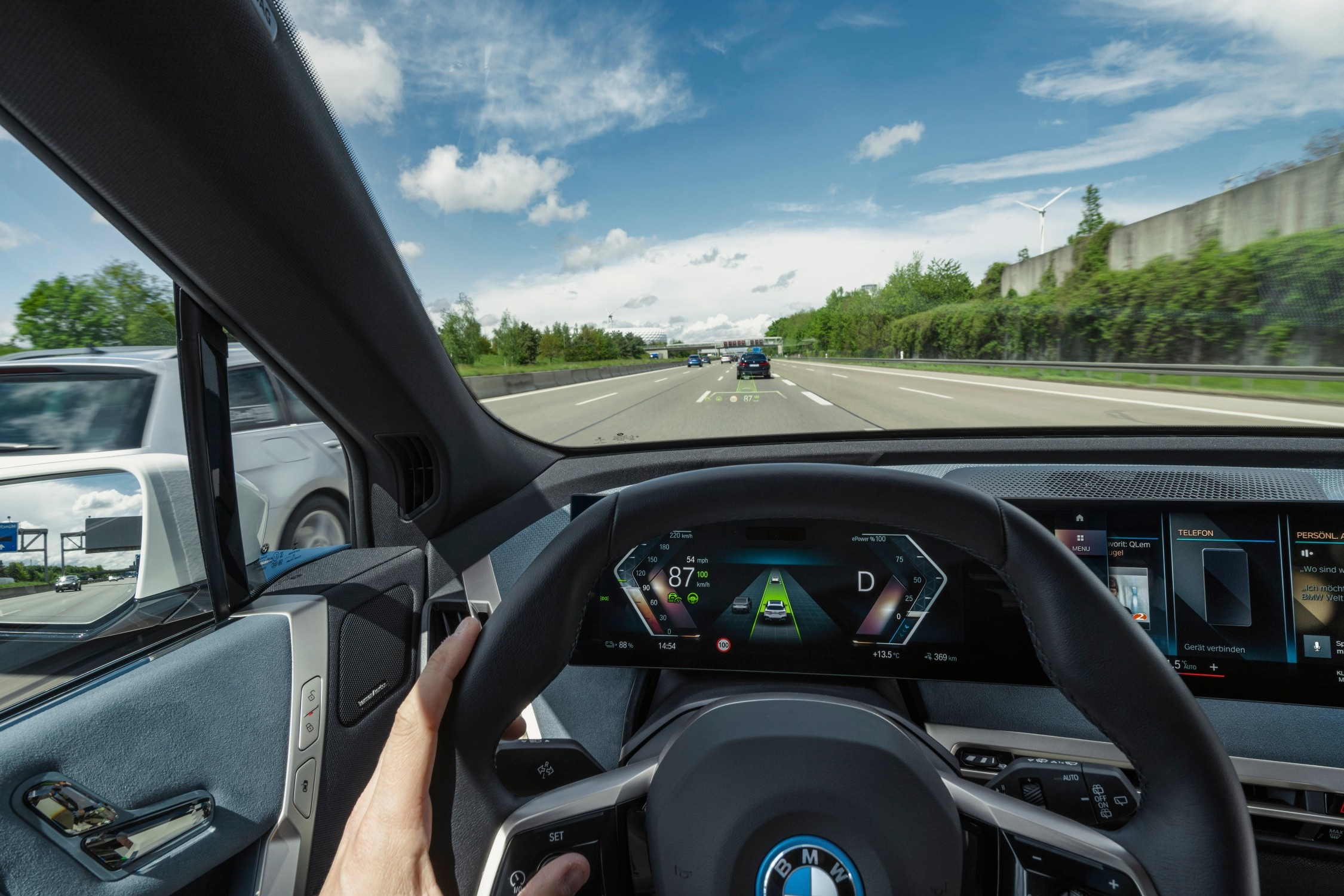
While supercars focus on performance, many now include safety features such as adaptive cruise control, lane-keeping assist, and collision detection systems, enhancing the safety of both the driver and passengers.
The 2nd generation Tesla Roadster will incorporate Tesla’s Autopilot and potentially Full Self-Driving (FSD) capabilities. These systems offer advanced features like auto-steering, traffic-aware cruise control, automatic lane changes, autopark, and summoning the car from a parking spot (James Bond, anyone?).
BMW iX Advanced Driver Assistance Systems. Credit: BMW
We wanted to include this in the list as a mention but we believe that technology shouldn’t replace the exhilarating experience of driving a high-performance supercar.
At the same time, incorporating ADAS technologies represents a merging of worlds, where high-speed exhilaration meets cutting-edge safety and comfort features. It’s almost unavoidable as tech advances, and we’re keen to see how it unfolds.
What’s Next?
These technologies not only push the envelope of automotive performance but also improve the practicality and sustainability of supercars, making them more than just fast cars—they’re showcases of the pinnacle of automotive engineering and design.
While some of this technology is reserved for the upper echelons that is supercars with top-notch performance, some of it eventually trickles down into the consumer segment of cars. For instance, automotive headlights are a good example as more vehicles incorporate laser headlights or Dynamic Light Assist in Volkswagen cars to help improve visibility on the road.
This system automatically adjusts the high beam headlights, turning them on when the road is clear and dimming them when it detects other vehicles, ensuring optimal illumination of the road without causing glare to other drivers. It can also selectively dim only certain areas of the high beam that would otherwise blind oncoming drivers or those in front, while maintaining high beam illumination in other areas.
Volkswagen’s Dynamic main-beam control and Dynamic Light Assist. Credit: VW
Lastly, some versions of Dynamic Light Assist also incorporate adaptive lighting features, where the headlights adjust their beam pattern based on the vehicle’s speed, steering angle, and other factors. At low speeds, the system may provide a wider beam to illuminate more of the roadside, whereas at higher speeds, the beam might be longer and narrower to illuminate the road further ahead.
With the continual advancement of hybrid and EV technology, we might not get all of the cool goodies like active aerodynamics in a Honda Civic (for now, anyway), but the future proves to be exciting as it is all part of a broader trend in technology within the vehicles we drive.
The technical storage or access is strictly necessary for the legitimate purpose of enabling the use of a specific service explicitly requested by the subscriber or user, or for the sole purpose of carrying out the transmission of a communication over an electronic communications network.
Preferences
The technical storage or access is necessary for the legitimate purpose of storing preferences that are not requested by the subscriber or user.
Statistics
The technical storage or access that is used exclusively for statistical purposes.The technical storage or access that is used exclusively for anonymous statistical purposes. Without a subpoena, voluntary compliance on the part of your Internet Service Provider, or additional records from a third party, information stored or retrieved for this purpose alone cannot usually be used to identify you.
Marketing
The technical storage or access is required to create user profiles to send advertising, or to track the user on a website or across several websites for similar marketing purposes.














 This is an installment in a series of posts looking back on show cars that we feel deserved a little more attention than they got. If you have a suggestion for a Forgotten Concept topic, please shoot us a line or leave a comment below.