Home Blog Page 822

The medium SUVs with the best fuel economy in Australia

0


Size often comes at the cost of efficiency in the SUV world, but some medium SUVs straddle the middle ground and provide the best of both worlds.

After narrowing the pool to medium SUVs that retain an internal combustion engine, how do they rank for efficiency?

We’ve gathered the data, using claimed combined fuel economy figures provided by manufacturers, to find out.

These are the cars within the medium SUV under $60k category in the VFACTS sales charts published by the Federal Chamber of Automotive Industries (FCAI).

We’ve also measured based on the variant with the best fuel economy in the range, as some trim or powertrain options may see the figures quoted here increase slightly.

Mitsubishi Outlander

The Mitsubishi Outlander Plug-in Hybrid EV (PHEV) takes top spot on this list with a claimed average fuel consumption figure of 1.5L/100km.
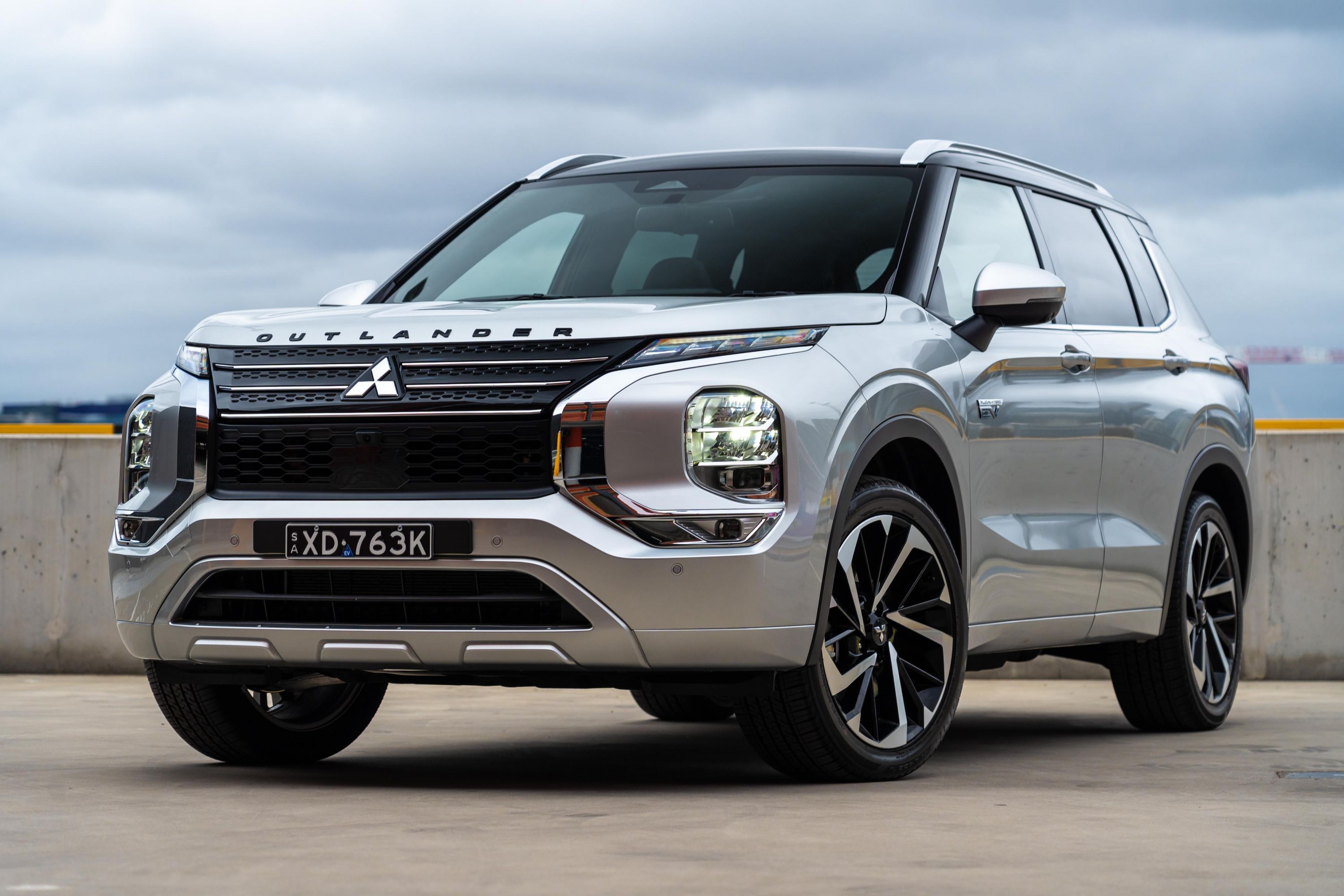
While petrol versions start at $37,740 before on-road costs, more efficient PHEV variants can’t be had for less than $57,290 plus on-roads.

Outlander PHEV models are powered by a plug-in hybrid powertrain consisting of a 2.4-litre four-cylinder petrol engine, twin electric motors and a 20.0kWh lithium-ion battery pack, producing total system outputs of 185kW of power and 450Nm of torque.

If you want to avoid refuelling stops completely, the Outlander PHEV has a claimed pure electric driving range of 84km according to NEDC testing.

All versions are backed by Mitsubishi’s conditional 10-year warranty.

Mitsubishi Outlander
Fuel economy (claimed)1.5L/100km
Fuel tank capacity56L
Fuel type91 RON

BUY: Get in touch with a dealer about a Mitsubishi Outlander
MORE: Everything Mitsubishi Outlander

Peugeot 3008

Like Mitsubishi, Peugeot offers the 3008 in both petrol and plug-in hybrid forms, with the latter sitting as the most efficient model in the lineup.

The 3008 GT Sport PHEV is among the most expensive cars in this segment at $82,915 before on-road costs, over $32,000 more than the base model.

In addition to a hybrid powertrain, the flagship gains all-wheel drive. Standard equipment includes a 12.3-inch digital instrument cluster, 10.0-inch touchscreen infotainment system, 19-inch alloy wheels and Nappa leather interior trim.

WLTP testing has returned an electric range figure of 59km for the 3008 PHEV.

Peugeot 3008
Fuel economy (claimed)1.6L/100km
Fuel tank capacity43L
Fuel type95 RON

BUY: Get in touch with a dealer about a Peugeot 3008
MORE:
Everything Peugeot 3008

MG HS

The MG HS is another member of the petrol-sipping PHEV club, with claimed fuel consumption of 1.7L/100km.

It’s also one of the cheapest plug-in hybrids available, priced from $48,990 drive-away.

Power comes from a 90kW/230Nm electric drive motor fed by by a 16.6kWh lithium-ion battery, paired with a 1.5-litre turbocharged four-cylinder petrol engine. Total system outputs are 189kW of power and 370Nm of torque.

Those wanting to travel fuel free can utilise 63km of pure electric range, which may come in handy as the HS requires 95 octane premium unleaded fuel.

MG HS
Fuel economy (claimed)1.7L/100km
Fuel tank capacity37L
Fuel type95 RON

BUY: Get in touch with a dealer about a MG HS
MORE:
Everything MG HS

Cupra Formentor

Cupra is known as a performance brand, but electrification is ensuring that new models are also efficient, which is exemplified by the Formentor VZe.

The price hike from petrol Formentor models to the PHEV is not as big a jump as other alternatives here – the VZe is available for $64,990 before on-road costs, $13,000 more than the base car.

Power is derived from the combination of a 1.4-litre turbocharged four-cylinder petrol engine, an electric motor with 85kW and 330Nm, and a lithium-ion battery with 12.8kWh capacity.

Total system outputs are 180kW and 400Nm.

Electric range is a claimed 58km, while the TSI engine requires premium unleaded petrol.

Cupra Formentor
Fuel economy (claimed)1.9L/100km
Fuel tank capacity40L
Fuel type95 RON

BUY: Get in touch with a dealer about a Cupra Formentor
MORE:
Everything Cupra Formentor

Toyota RAV4

The RAV4 is a mainstay in this segment and while no PHEV option is available in Australia, Toyota’s hybrid is the most efficient of any closed-circuit hybrid system in this segment.
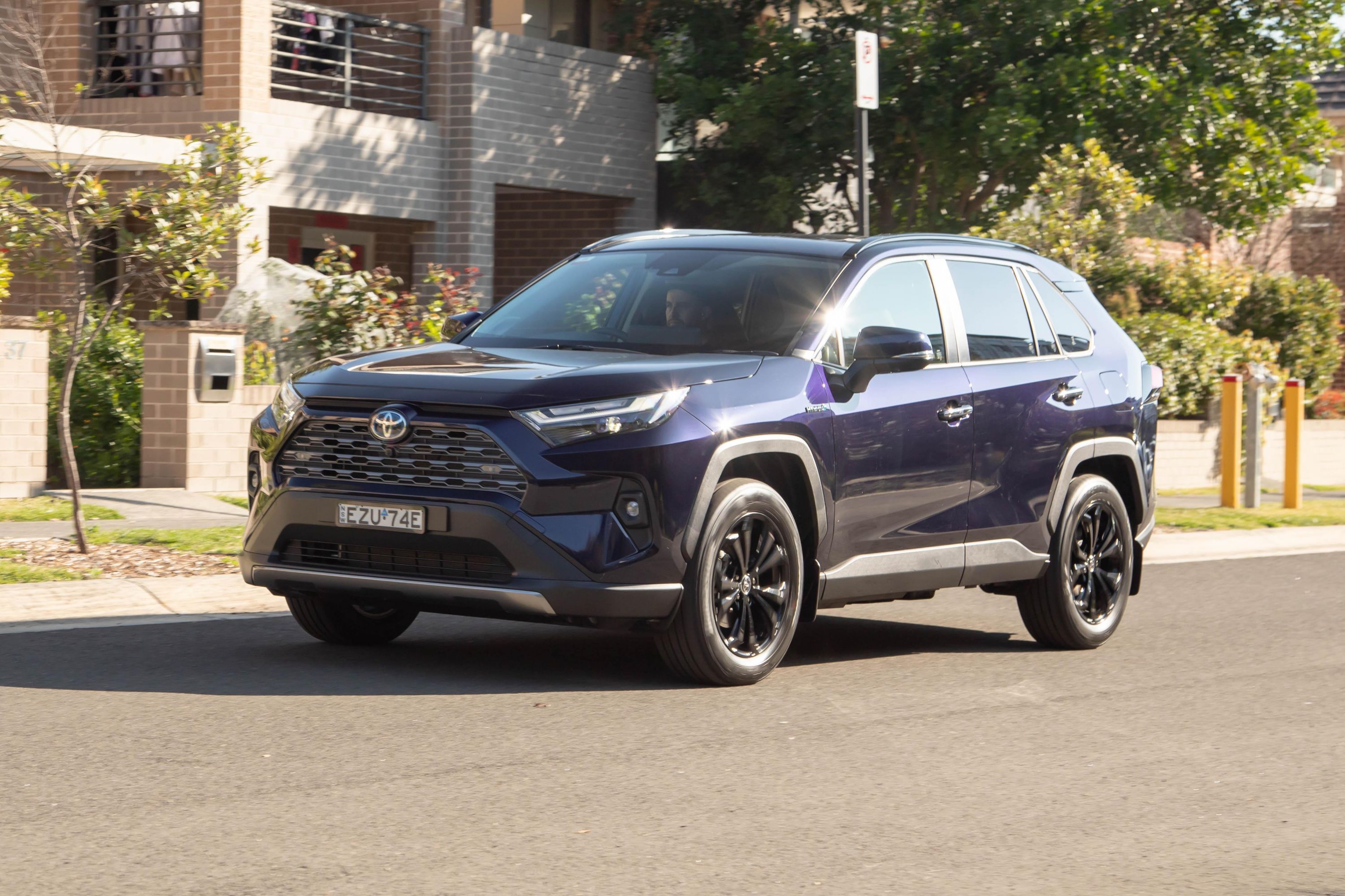
Several hybrid variants are available, but the GX 2WD Hybrid achieves the best fuel economy with a claimed consumption figure of 4.7L/100km.

That particular version will set you back $42,260 before on-road costs, and is equipped with an 8.0-inch touchscreen infotainment system, 7.0-inch digital instrument cluster and 17-inch alloy wheels.

The RAV4 is backed by Toyota’s five-year, unlimited-kilometre warranty.

Toyota RAV4
Fuel economy (claimed)4.7L/100km
Fuel tank capacity55L
Fuel type91 RON

BUY: Get in touch with a dealer about a Toyota RAV4
MORE:
Everything Toyota RAV4

Kia Sportage

Another closed-circuit hybrid option is the Kia Sportage HEV, which starts at $45,950 before on-road costs.

The HEV is powered by a 1.6-litre turbocharged four-cylinder engine paired with an electric motor for total system outputs of 169kW of power and 350Nm of torque, sent through the front wheels.

Two trim levels are available with the hybrid powertrain, but even the base SX receives a 12.3-inch touchscreen infotainment system, 4.2-inch digital instrument cluster and 18-inch alloy wheels.

Kia covers its lineup with a seven-year, unlimited-kilometre new car warranty.

Kia Sportage
Fuel economy (claimed)4.9L/100km
Fuel tank capacity52L
Fuel type91 RON

BUY: Get in touch with a dealer about a Kia Sportage
MORE:
Everything Kia Sportage

Honda ZR-V

The 2024 Honda ZR-V starts from $40,200 drive-away, but buyers in the market for an efficient hybrid powertrain will have to stretch to $54,900 drive-away for the top spec e:HEV LX.

You can think of the ZR-V as the middle child in Honda’s SUV range, sitting between the HR-V and CR-V in terms of size and price. It also presents with unique styling.

The flagship e:HEV LX may command top dollar within the range but it comes with all the kit, headlined by a wireless phone charger, heated rear seats and a heated steering wheel.

Honda ZR-V
Fuel economy (claimed)5.0L/100km
Fuel tank capacity57L
Fuel type91 RON

BUY: Get in touch with a dealer about a Honda ZR-V
MORE:
Everything Honda ZR-V

GWM Haval H6

The GWM Haval H6 is one of the budget options in this segment, with a starting price of $33,990 drive-away.

That will buy you a turbocharged petrol example, but the more frugal hybrid comes in at $42,990 drive-away. The HEV is front-wheel drive only, and has a system output of 179kW and 530Nm.

Aside from sharp pricing, another advantage this Chinese SUV has over its competitors is a 600L boot, which is larger than most rivals in this segment.

Even base hybrid variants are equipped with a 10.25-inch touchscreen infotainment system, 10.25-inch digital instrument cluster and heated front seats.

Haval H6
Fuel economy (claimed)5.2L/100km
Fuel tank capacity61L
Fuel type91 RON

BUY: Get in touch with a dealer about a GWM Haval H6
MORE:
Everything GWM Haval H6

Honda CR-V

As with the ZR-V, the hybrid Honda CR-V sits at the very top of its range, commanding a $59,900 drive-away price tag.

That’s one of the more expensive closed-circuit hybrids in this segment, and this version of the CR-V only seats five.

The CR-V e:HEV RS is powered by a 2.0-litre naturally aspirated four-cylinder petrol engine mated with two electric motors, for total system outputs of 135kW of power and 335Nm of torque.

As well as hybrid power, the flagship e:HEV RS is set apart from other CR-Vs by its black exterior accents and red contrast stitching throughout the interior.

Honda CR-V
Fuel economy (claimed)5.5L/100km
Fuel tank capacity57L
Fuel type91 RON

BUY: Get in touch with a dealer about a Honda CR-V
MORE:
Everything Honda CR-V

Citroen C5 Aircross

The Citroen C5 Aircross is a rare sight on Australian roads, with just 41 sold in 2023.

Sharing a powerplant with the Peugeot 5008, the C5 Aircross makes identical power and torque outputs, but is smaller in stature with seating for five people only.

With that said, boot space still measures 580L, and you’ll pay nearly $11,000 less for the Citroen.

Standard features include a panoramic sunroof, 10.0-inch touchscreen infotainment system, 12.3-inch digital instrument cluster and wireless phone charging.

Citroen C5 AirCross
Fuel economy (claimed)5.7L/100km
Fuel tank capacity53L
Fuel type95 RON

BUY: Get in touch with a dealer about a Citroen C5 Aircross
MORE:
Everything Citroen C5 Aircross

Nissan X-Trail

Nissan sold 12,861 X-Trails last year, and buyers remain spoilt for choice when it came to variants.

Four trim levels are available, and the X-Trail can be had with front- or all-wheel drive, with five or seven seats, and with naturally aspirated or hybrid four-cylinder powertrains.

Hybrid e-Power versions are the most efficient choice, consuming 6.1L/100km.

The cheapest electric-assisted variant is the five-seat ST-L e-Power with a sticker price of $49,990 plus on-road costs, while the range maxes out with the Ti-L e-Power ($57,690 before on-road costs).

All hybrid powered examples require a minimum of 95 RON premium unleaded fuel.

Nissan X-Trail
Fuel economy (claimed)6.1L/100km
Fuel tank capacity55L
Fuel type95 RON

BUY: Get in touch with a dealer about a Nissan X-Trail
MORE:
Everything Nissan X-Trail

Hyundai Tucson

You won’t find any hybrid options within the Hyundai Tucson range… yet

Instead, the Korean manufacturer has stuck with diesel power for its medium SUV, opting for a 2.0-litre four-cylinder turbo-diesel engine which produces 137kW and 416Nm.

With that said, the 2025 Tucson is set to ditch diesel for hybrid propulsion, so you’ll have to grab one of these quick.

Pricing for the turbo-diesel starts at $46,650 before on-road costs, which in Elite trim brings 18-inch alloy wheels, a 10.25-inch touchscreen infotainment system with satellite navigation, heated front seats and a 10-way power driver’s seat.

Hyundai Tucson
Fuel economy (claimed)6.3L/100km
Fuel tank capacity54L
Fuel typeDiesel

BUY: Get in touch with a dealer about a Hyundai Tucson
MORE:
Everything Hyundai Tucson

Skoda Karoq

All Skoda Karoq variants have a good old fashioned petrol engine under the bonnet, consuming 6.5L/100km in 1.4-litre turbocharged four-cylinder guise.

Considering the efficiency on offer, the Karoq’s 50L fuel tank is on the smaller side.

Three versions are available, but the base model sets the bar for efficiency, and is priced at $39,990 drive-away.

Without ticking any options boxes you get a 8.0-inch touchscreen infotainment system, 8.0-inch digital instrument cluster, wireless smartphone mirroring and 18-inch alloy wheels.

Skoda Karoq
Fuel economy (claimed)6.5L/100km
Fuel tank capacity50L
Fuel type95 RON

BUY: Get in touch with a dealer about a Skoda Karoq
MORE:
Everything Skoda Karoq

Subaru Forester

A new generation of Subaru Forester is on the way, but until then the most frugal model available is the Hybrid which is capable of 6.7L/100km on the combined cycle.

Hybrid variants are powered by a 2.0-litre four-cylinder engine producing 100kW and 196Nm, mated with an electric motor producing 12kW and 66Nm and a lithium-ion battery pack. As you’d expect, the Forester comes with all-wheel drive.

Hybrid pricing kicks off at $44,090 before on-road costs, and tops out at just over $50,000 plus on-roads.

Over the base models, the hybrid gains heated front seats as well as front and side cameras.

Subaru Forester
Fuel economy (claimed)6.7L/100km
Fuel tank capacity48L
Fuel type91 RON

BUY: Get in touch with a dealer about a Subaru Forester
MORE: Everything Subaru Forester

Mazda CX-5

Mazda sold 23,083 examples of the CX-5 in 2023, coming in behind only the Toyota RAV4 and Mitsubishi Outlander for sales volume.

All models utilise petrol power in 2024, the most efficient being the G20 Maxx front-wheel drive base model.

Priced at $36,950 plus on-road costs, the G20 Maxx FWD is powered by a 2.0-litre naturally aspirated four cylinder engine that makes 115kW and 200Nm.

Standard features include a 10.25-inch infotainment system, wireless smartphone mirroring, and a 7.0-inch digital instrument cluster.

Mazda CX-5
Fuel economy (claimed)6.9L/100km
Fuel tank capacity56L
Fuel type91 RON

BUY: Get in touch with a dealer about a Mazda CX-5
MORE:
Everything Mazda CX-5

Chery Tiggo 7 Pro

The Chery Tiggo 7 Pro can be had for between $39,990 and $45,990 drive-away.

All variants consume between 7-8L/100km courtesy of a 1.6-litre turbocharged four-cylinder engine producing 137kW of power and 275Nm of torque.

While the front-wheel drive models are more efficient, all-wheel drive examples have a 6L bigger fuel tank.

One area where the Tiggo 7 has no peers is boot space – 626L with the seats up is class-leading.

Chery Tiggo 7 Pro
Fuel economy (claimed)7.0L/100km
Fuel tank capacity51L
Fuel type95 RON

BUY: Get in touch with a dealer about a Chery Tiggo 7 Pro
MORE: Everything Chery Tiggo 7 Pro

GWM Haval H6 GT

Compared to the regular H6 Hybrid, the H6 GT prioritises style over efficiency.

Two-wheel drive models consume 7.5L/100km, while that number balloons to 8.4L/100km for four-wheel drive variants.

Power is sourced from a 2.0-litre turbocharged four-cylinder petrol engine producing 150kW of power and 320Nm of torque.

The GT is a more expensive proposition that the regular H6, priced between $40,990 and $46,490 drive-away.

Haval H6 GT
Fuel economy (claimed)7.5L/100km
Fuel tank capacity61L
Fuel type91 RON

BUY: Get in touch with a dealer about a Haval H6 GT
MORE:
Everything Haval H6 GT

SsangYong Korando

A few factors are going against the SsangYong Korando in the efficiency stakes.

The headline figure is 7.7L/100km, which places the Korando in the bottom three, while 95 RON premium unleaded fuel is required as a minimum when filling up.

At 47L, the fuel tank is also the smallest of the cars on this list without the assistance of an electric motor.

Korando pricing kicks off at $28,990 plus on-road costs, making it the cheapest car in the segment, and the only to come in at under $30,000.

SsangYong Korando
Fuel economy (claimed)7.7L/100km
Fuel tank capacity47L
Fuel type95 RON

BUY: Get in touch with a dealer about a SsangYong Korando
MORE:
Everything SsangYong Korando

Volkswagen Tiguan

The Volkswagen Tiguan also consumes 7.7L/100km, although it has a 58L fuel tank.

Several variants are available including the performance-focused Tiguan R, but the base 110TSI models are the pick of the bunch in terms of efficiency.

Powered by a 1.4-litre turbocharged four-cylinder petrol engine producing 110kW of power and 250Nm of torque, the 110 TSI Life is priced at $43,990 before on-road costs.

The Life comes standard with a 8.0-inch touchscreen infotainment system, a 10.25-inch digital instrument cluster, wireless smartphone mirroring and 18-inch alloy wheels.

Volkswagen Tiguan
Fuel economy (claimed)7.7L/100km
Fuel tank capacity58L
Fuel type95 RON

BUY: Get in touch with a dealer about a Volkswagen Tiguan
MORE:
Everything Volkswagen Tiguan

Renault Koleos

The Renault Koleos rounds out this list with a claimed average fuel consumption of 8.1L/100km.

That figure is achieved by front-wheel drive variants, which kick off at $37,500 before on-road costs.

Under the bonnet is a 2.5-litre naturally aspirated four-cylinder engine making 126kW and 226Nm.

Unlike many modern SUVs, the Koleos come standard with a full-size spare wheel.

Renault Koleos
Fuel economy (claimed)8.1L/100km
Fuel tank capacity60L
Fuel type91 RON

BUY: Get in touch with a dealer about a Renault Koleos
MORE:
Everything Renault Koleos


Source link

Audi’s little-known subcompact hatch turns 50

0


The Volkswagen Golf celebrates its 50th anniversary this year, but there’s another Volkswagen Group hatchback that was launched at the same time as the venerable VW, and that’s the Audi 50.

Penned by Lamborghini Miura and Countach designer Marcello Gandini, together with Audi designer Hartmut Warkuß, the designer of the Audi 80, the 50 subcompact hatch was launched in 1974, during the height of the oil crisis that started the previous year.

It measured less than 11.5 feet long, had two doors, and its engine was mounted up front. The engine layout was a novelty for a small Audi at the time as the car’s NSU Prinz predecessor had its engine at the rear. The layout was chosen to allow designers to add a larger cabin while keeping the exterior dimensions small.

Two versions were available, each weighing around 1,500 pounds. The base 50 LS grade came with 49 hp and a more potent 50 GL had 59 hp. The top speed was around 95 mph.

1974 Audi 50

1974 Audi 50

Audi limited sales to Europe, and even there, where small hatches from the likes of Fiat, Renault, and of course VW sold in significant numbers, the 50 went unloved and Audi ended production after just four years. A little over 180,000 examples were built during that time.

In addition to being considered too small by many Audi buyers, it also didn’t help that VW started selling a rebadged version in 1975 with a lower price tag as the first Polo.

Audi later concentrated on cars in bigger segments, though the automaker eventually returned to the subcompact segment in 2010 with the launch of the A1 hatch.


Source link

2025 Toyota GRMN Yaris spied for first time

0


Toyota launched an updated version of its GR Yaris hot hatch in January during the 2024 Tokyo Auto Salon, but still in the works is the car’s hotter GRMN variant, a prototype for which has been spotted for the first time.

GRMN is the range-topping option for road cars developed by Toyota’s Gazoo Racing motorsports department. It stands for “Gazoo Racing Masters of Nürburgring,” and cars classified as GRMNs can be compared to top offerings from the likes of Subaru’s STI and Mercedes-Benz’s AMG divisions.

The prototype for the GRMN Yaris shows several noticeable differences versus the regular GR Yaris, which is already an extreme car. These include a new makeshift intake up front, where the license plate normally sits, necessitating a shift in the position of the license plate on the prototype.

There’s also an extended front splitter and an upgraded brake package from the Japanese company Endless. The rear wing with its swan-neck struts is featured on the current GRMN Yaris launched in 2022, and should also feature on the updated version.

2025 Toyota GRMN Yaris facelift spy shots - Photo credit: Baldauf

2025 Toyota GRMN Yaris facelift spy shots – Photo credit: Baldauf

Typical GRMN upgrades include improved rigidity, extra downforce, and reduced weight. The current GRMN Yaris also has a slightly wider track and lower ride height compared to the regular GR Yaris.

The current car doesn’t have any extra power over the regular GR Yaris, which means the updated version will likely pack the same 276 hp as the updated GR Yaris, though the extra cooling up front may indicate otherwise.

According to our photographer, Toyota Chairman Akio Toyoda, the grandson of Toyota’s founder and a champion of the GR and GRMN versions of the Yaris, was present during the test session, which took place at the Nürburgring. He was one of the key backers for the Direct Automatic Transmission that was developed for the latest GR Yaris and will likely also be fitted to the GRMN Yaris.

2024 Toyota GR Yaris

2024 Toyota GR Yaris

The 8-speed auto is designed to shift faster than a regular auto by using software to predict driving behavior. While such technology isn’t new, Toyota’s software looks beyond the standard metrics such as deceleration g-forces and speed, and integrates acceleration and braking into its logic. By doing so, it is able to anticipate when a shift is necessary before a change in driving behavior actually takes place.

Look for the GRMN Yaris to debut late this year or early next.

Although the U.S. misses out on both the GR Yaris and GRMN Yaris, Toyota offers the bigger GR Corolla here and also appears to be readying a GRMN Supra that will likely be sold in the U.S. as well.


Source link

What large SUV should you buy in 2024?

0


Last year, the large SUV segment in Australia was the fourth largest by sales volume.

Ask a person on the street for an example of a large SUV, and the Toyota LandCruiser and Nissan Patrol might be two names that pop up.

But in its monthly VFACTS sales report, the Federal Chamber of Automotive Industries (FCAI) lists those as ‘upper large SUVs’, a term you’re unlikely to hear in casual conversation.

The large SUV segment instead covers everything from crossovers like the Subaru Outback and Kia Sorento through to more rugged, body-on-frame off-roaders like the Jeep Wrangler and Isuzu MU-X.

It also includes petrol, diesel, hybrid, plug-in hybrid and electric models.

The wider large SUV segment is split in two in VFACTS reporting: there are SUVs with a base price under $80,000, and those with a base price over that cap.

That means the definition covers everything from the circa-$43,000 LDV D90 all the way up to the $364,700 Porsche Cayenne Turbo GT.

With all of those vehicles to choose from, what do the members of the CarExpert team recommend? Given the sheer diversity, most of the team has offered two recommendations: a traditional body-on-frame SUV, and a unibody crossover.

Paul Maric

Definitely the Lexus GX.

While the fad of hybridisation and electrification is there at the moment, you can’t beat the GX for performance punch, excellent off-road ability and never having to think about finding a charger while touring or towing.

It’s the ultimate large luxury SUV that won’t break the bank and comes with all the perks of owning a Lexus. Overtrail would be my pick!

MORE: Buy a Lexus GX

Josh Nevett

Ford Everest

The sales charts don’t lie.

The Ford Everest makes a lot of sense as a family-hauling, bush-bashing SUV, and in Platinum trim the interior is actually a decent place to spend some time. Even without the luxuries, the Everest is still a safe bet.

Skoda Kodiaq

For an urban runabout, give me a Skoda Kodiaq RS. Skoda’s ‘simply clever’ mantra is apparent right across the range, but especially in its SUVs, and the Kodiaq is no exception.

The Kodiaq RS has just the right amount of performance for everyday driving, loads of practicality in the cabin and all the room a family should really need.

MORE: Buy a Ford Everest
MORE: Buy a Skoda Kodiaq

Jack Quick

Subaru Outback

If I had to pick a large SUV I would actually buy in 2024, I know I’d definitely go for the Subaru Outback. I’ve nominated this car before in previous op-eds and I continue to really want to own one.

While the regular atmo 2.5-litre flat-four is an adequate engine that does reach its limits at highway speeds, I think I’d be happy to pay that little bit extra for the more powerful (but thirstier) 2.4-litre turbo flat-four engine in the Outback XT.

Although I understand many large SUV buyers are wanting the flexibility of seven seats, the Subaru Outback has one of the most spacious five-seat cabins out of any new car currently on the market. It genuinely feels like a couch on wheels.

GWM Tank 300

I’m yet to drive the larger seven-seat Tank 500 but in the interim the large body-on-frame SUV I’d buy in 2024 is the GWM Tank 300.

I know it’s a bit of a provocative answer when I could’ve chosen a more established large SUV like the Ford Everest or Toyota Prado, for example, but I was really surprised with how much I liked the Tank 300 when I first sampled the regular petrol version last year.

The 2.0-litre turbo-petrol engine really gets the car moving when asked. It’s also got all the bells and whistles to be a really capable off-road beast.

The premium-pushing interior presentation in the Tank 300 is another key point of selecting this vehicle. It’s crazy to me that you can get a brand new car that looks this luxurious inside for a little over $45k drive-away.

MORE: Buy a Subaru Outback
MORE: Buy a GWM Tank 300

James Wong

Audi Q7

I don’t normally lust for SUVs but the idea of one day picking up my kids in a Q7 is pretty sweet.

The understated class, effortless performance and opulent comfort that comes with the Audi Q7 on standard air suspension is very much in line with my tastes.

You get more than enough luxuries in the entry-level 45 TDI, though it’s nowhere near as affordable as it once was – back when I started at CarExpert you could have a Q7 45 TDI from just under $100,000 plus on-road costs, and now it’s blown out to $116,400.

Also keep in mind that while the Q7 is a six-figure family chariot, it shares its bones and a lot of tech with some very boutique metal like the Bentley Bentayga and Lamborghini Urus.

Special mentions to the Volkswagen Touareg, Kia Sorento and Skoda Kodiaq which would also be on my road-biased large SUV shopping list.

Ford Everest

If I needed something a bit more rugged that I’d be willing to tow with regularly or head off the beaten track, I think the Ford Everest would be my top pick.

While there’s a new LandCruiser Prado on the way – and I’m obsessed with the design – it’s still not priced for our market nor have I seen one in person. I’ll reserve my judgement for now then.

In the meantime, the existing Ford Everest, particularly in Platinum V6 form, puts a lot of other body-on-frame 4WD SUVs to shame in terms of technology and refinement. It blurs the lines between monocoque and ladder-frame SUVs very well.

With the no-cost all-terrain tyre option and Premium Towing Pack, you can have a decked-out Everest for about $94,000 in your driveway and should be able to handle anything and everything you and your family might throw at it. Otherwise, a Sport V6 with the same options is about $10,000 cheaper.

My second pick would probably be the Isuzu MU-X which is quite a bit more attainable even in top-spec LS-T trim, though there’s no option for a more powerful six-cylinder engine if that’s what you’re after.

MORE: Buy an Audi Q7
MORE: Buy a Ford Everest

Jordan Mulach

Subaru Outback

I’ve got to follow my colleague Jack on this one, though mainly because the Outback is the least SUV-like SUV. If we’re being honest, it’s a wagon with a bit more ground clearance, which isn’t exactly a bad thing.

In recent years I’ve had to shake my preconceived notions of the Outback being an uncool car, which had been reinforced by my mum owning four of them back to back (all with the 2.5-litre and an automatic transmission).

Now that there’s a proper, grunty turbocharged 2.4 on offer in the XT, the Outback becomes a very entertaining proposition which can easily complete the soccer run.

Lexus GX

Now I’m not in the market for a ladder-frame SUV, but if I had won lotto then I’d be hard pressed to not put the new Lexus GX in my driveway.

It looks mega, has plenty of kit and a twin-turbo V6 which won’t be available in its Prado twin. It also helps that the GX is cheaper than the LX, but looks significantly better (at least to my eye) and has more bang for your buck.

MORE: Buy a Subaru Outback
MORE: Buy a Lexus GX

William Stopford

Ford Everest

Of all the body-on-frame SUVs in this segment, the Everest would be my pick… though I’m very keen to get behind the wheel of a Lexus GX when it arrives here.

It’s not perfect. The interior is far too close to the Ranger which means that, while the infotainment and cameras are top-notch, it’s rather cheap and plasticky.

But the Everest rides exceptionally well for a body-on-frame SUV, and its turbo-diesel V6 is a delight and something rivals like the MU-X and Prado can’t match.

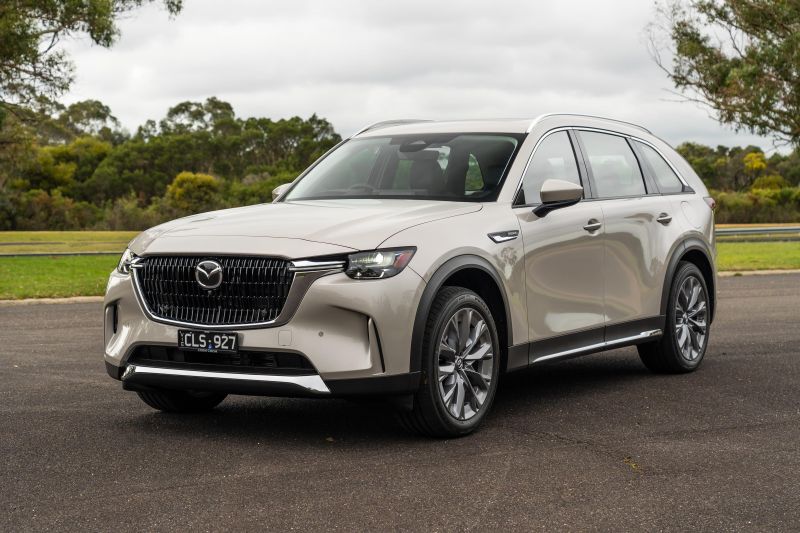
Mazda CX-90

I’ve spoken fondly before of Hyundai’s Palisade and Santa Fe before, particularly the latter in hybrid guise. And if the hypothetical budget extends higher, the BMW X5 is my pick of the large luxury SUVs.

I’m going to split the difference, though, and go with something that has a rear/all-wheel drive platform and inline six-cylinder engines like the BMW, but a price closer to the Hyundais.

Like the Everest, the CX-90 isn’t perfect. The ride is a bit firm, and the powertrain needs a little smoothing out, though Mazda has shown it’s listening to customers and critics with its recent CX-60 update.

The interior also isn’t quite as nice as the likes of an X5 or Genesis GV80, but it’s cheaper than either. Overall, its combination of poised dynamics, a spacious cabin and good fuel economy is compelling.

MORE: Buy a Ford Everest
MORE: Buy a Mazda CX-90


Source link

Here’s how Nissan might electrify trucks and SUVs for the US

0


Not every automaker’s taking the same strategy when it comes to electrification.

During an interview at the 2024 New York auto show Nissan North America’s Senior Vice President and Chief Planning Officer, Ponz Pandikuthira laid out for Green Car Reports the automaker’s viewpoint on where EVs, PHEVs, and series hybrids make the most sense.

The chat with Pandikuthira took place days after Nissan laid out its plans for hybrids, PHEVs, and a U.S.-bound three-row electric SUV, leading to a clearer vision about which powertrains will show up in which types of vehicles in the near term.

Nissan Surf-Out concept (2021)

Nissan Surf-Out concept (2021)

Series hybrids

A chunk of Nissan’s electrification strategy lies within its e-Power powertrains, which is the automaker’s marketing speak for a series hybrid. A small combustion engine creates energy to power the electric motor once the battery reaches a particular state of charge. That ICE engine acts as a generator only, and there’s no direct mechanical connection between the ICE engine and the wheels. Being able to skip the transmission and all that complexity makes it particularly attractive to automakers from a cost standpoint.

Pandikuthira didn’t completely rule out e-Power for a pickup truck, but he said that in a smaller body style pickup, like a Ford Maverick-sized pickup, the series hybrid powertrain could make sense. It would be more of a lifestyle truck aimed at city dwellers and or surfers, like the Nissan Surf-Out concept shown in 2021. 

“e-Power is really suited for a vehicle like Kicks and Rogue,” Pandikuthira said. A vehicle that will spend most of its time in urban environments along with stop-and-go traffic with maybe only 30% of the time being highway driving. 

The executive also noted that a series hybrid is not the best during highway usage or at a steady state of 70 or 75 mph. That generator would return poor fuel economy and it wouldn’t be a good towing experience, and he noted that for mid-size and full-size trucks, the average pickup driver does a lot of that. 

This directly goes against the strategy Stellantis took with the 2025 Ram 1500 Ramcharger. While it has a 92-kwh battery pack that can be charged up, when it’s depleted the Ram Charger’s generator is a naturally-aspirated 3.6-liter V-6, which altogether might return about 20 mpg on the highway. That’s not while towing.

2024 Nissan Frontier Forsberg Edition

2024 Nissan Frontier Forsberg Edition

Hybrids and plug-in hybrids

Pandikuthira noted that large vehicles, and those spending 70% of their time on the highway would be better off with a plug-in hybrid powertrain. 

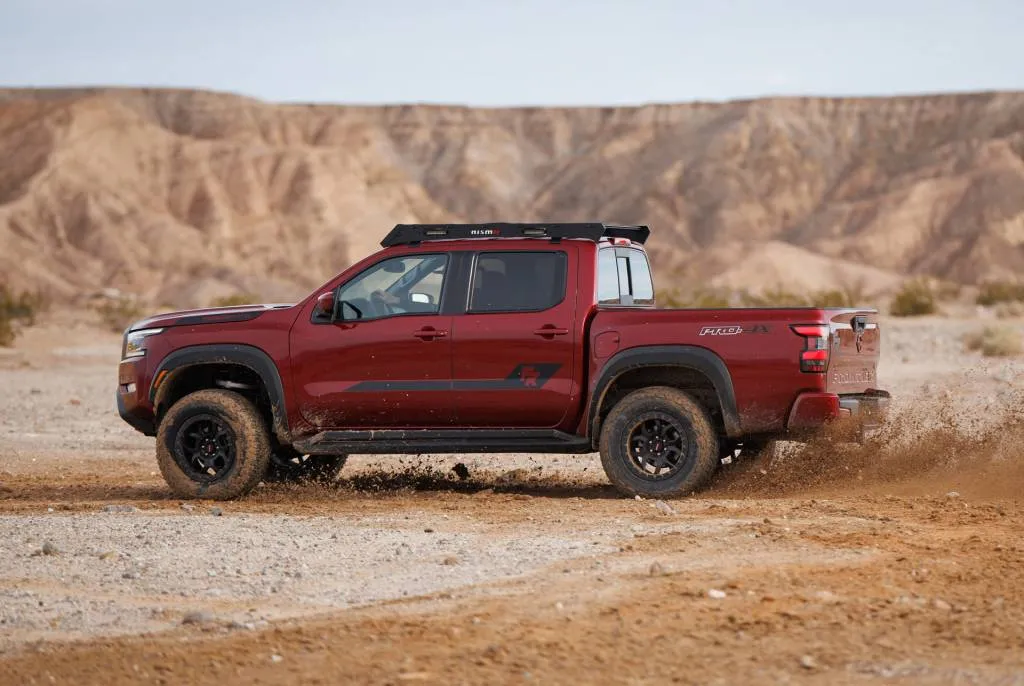
“The Nissan Frontier (the automaker’s mid-size pickup truck) customer does not want an EV. What they do want is a plug-in hybrid,” Pandikuthira said. The executive noted the moment you do a plug-in hybrid powertrain towing isn’t compromised. A plug-in hybrid also isn’t as susceptive to the extreme heat and cold challenges BEVs currently experience with today’s battery technology.

Plug-in hybrids need a minimum of 70 miles of real-world range, according to Pandikuthira. More energy-dense next-generation batteries might help enable that.

On Monday news broke that the next-gen Frontier will get an electric variant and plug-in hybrid while being twinned with a Mitsubishi. Both will be built in Mexico. 

Pandikuthira told GCR that the current Frontier wouldn’t easily accept batteries in terms of packaging for a plug-in or battery-electric powertrain. A next-gen truck would be the opportunity as it could be designed from day one to not compromise packaging.

2024 Nissan Pathfinder

2024 Nissan Pathfinder

BEV

Pandikuthira noted that a lifestyle pickup needs to cost $25,000 to $35,000, maybe topping out at $40,000. 

‘Electrifying something in that range and making the cost down affordable is probably at least a few years away,” Pandikuthira said, referring to either a fully electric or e-Power possibility.. 

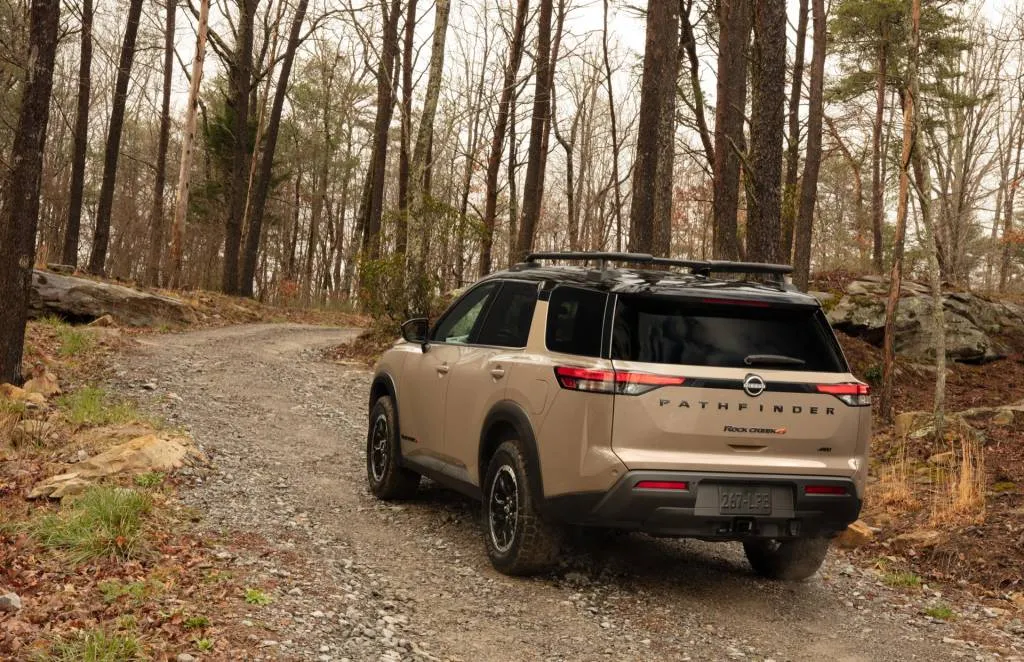
It makes more sense to make a battery-electric Pathfinder-sized vehicle, which is a three-row crossover SUV, at this point, according to Pandikuthira. The executive quipped that a larger pickup and or Pathfinder-sized vehicle could sustain the necessary price to fit an electric powertrain. That price point is up to $55,000 or $60,000, Pandikuthira said. It all comes down to deciding which body style to electrify first based on customer need, according to the executive. 

“Electrification is still going to manifest, it’s just a little slower than we thought,” Pandikuthira said.


Source link

Another Ad Personam Lamborghini Revuelto, the Arena 2024 edition

0


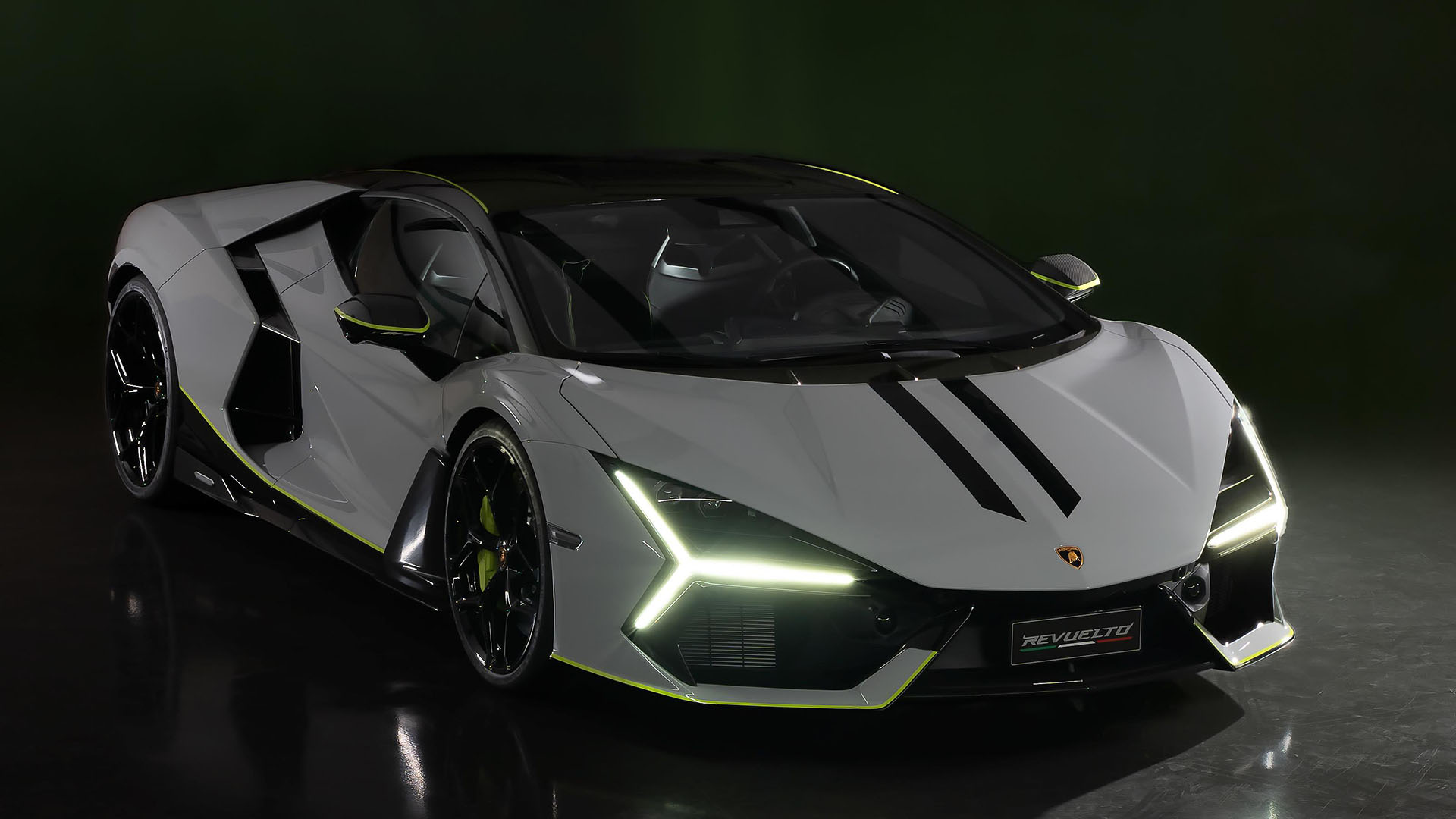
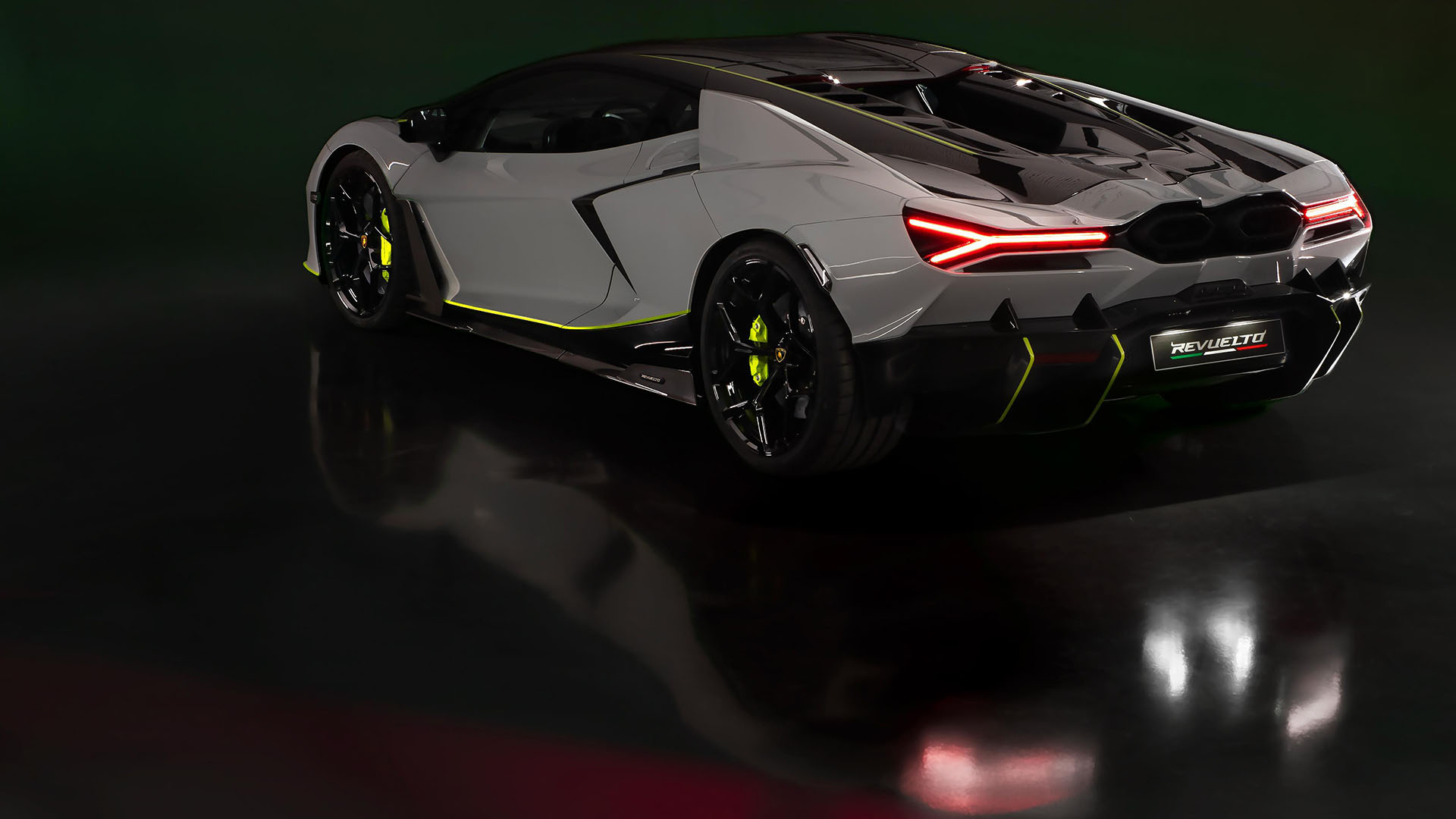
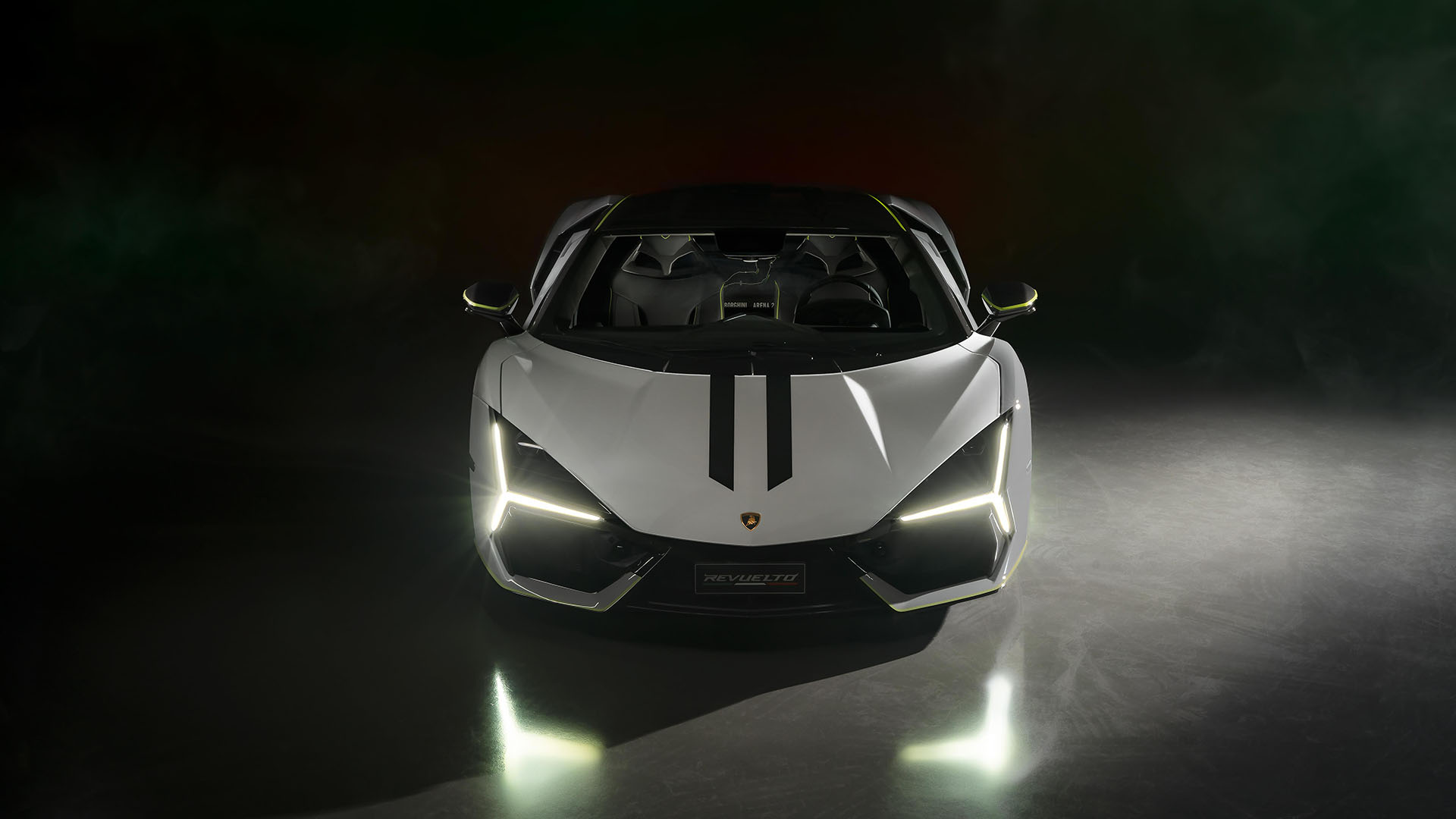
Automobili Lamborghini celebrates the first edition of its Lamborghini Arena event with an exclusive Revuelto created by the company’s Ad Personam customization program, which recently inaugurated its new studio at the Lamborghini headquarters. The special version of the V12 hybrid plug-in super sports car was unveiled during the weekend of Lamborghini Arena, the biggest event in the history of the Sant’Agata Bolognese brand, held at Imola Circuit on April 6 and 7.

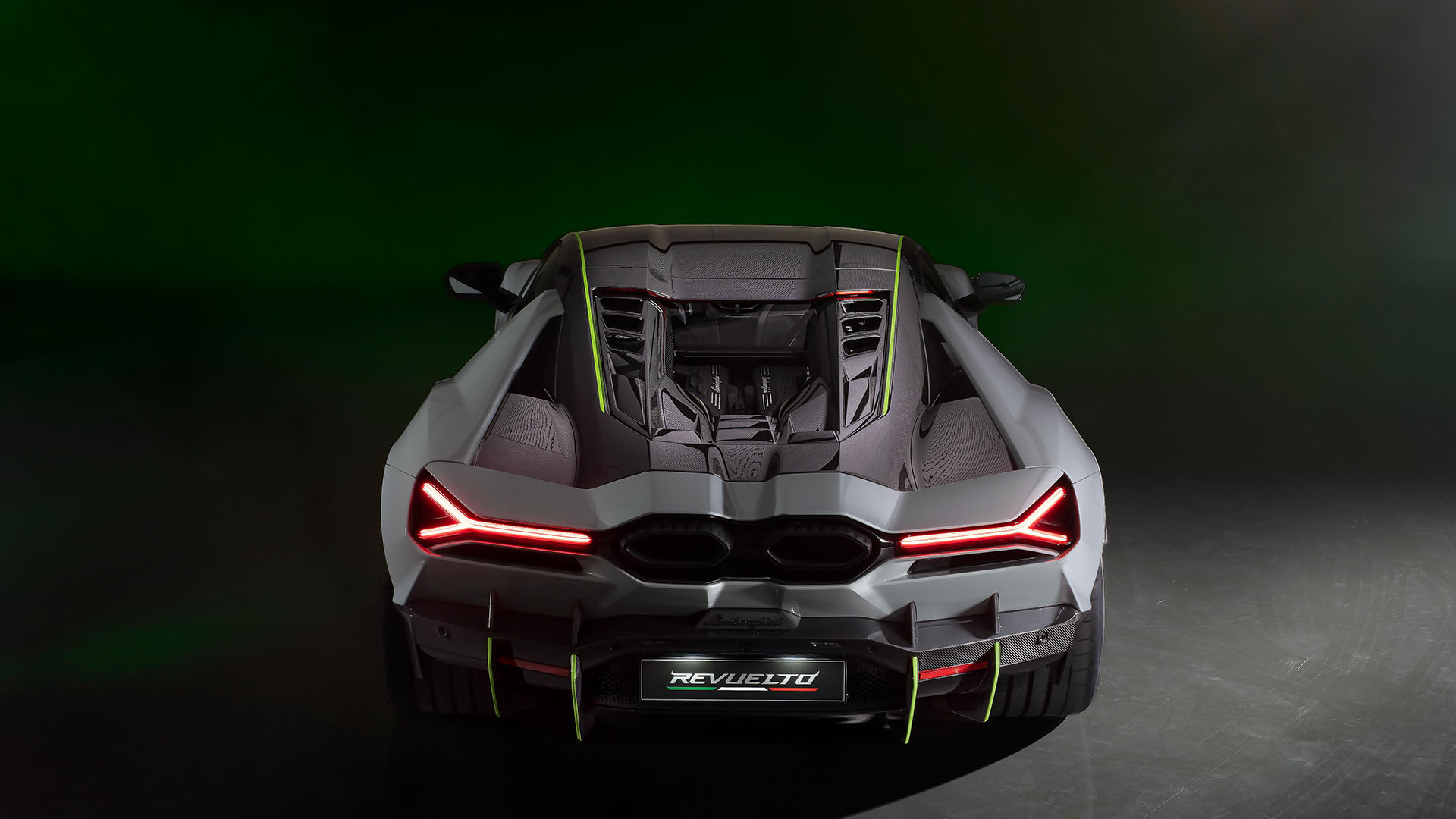
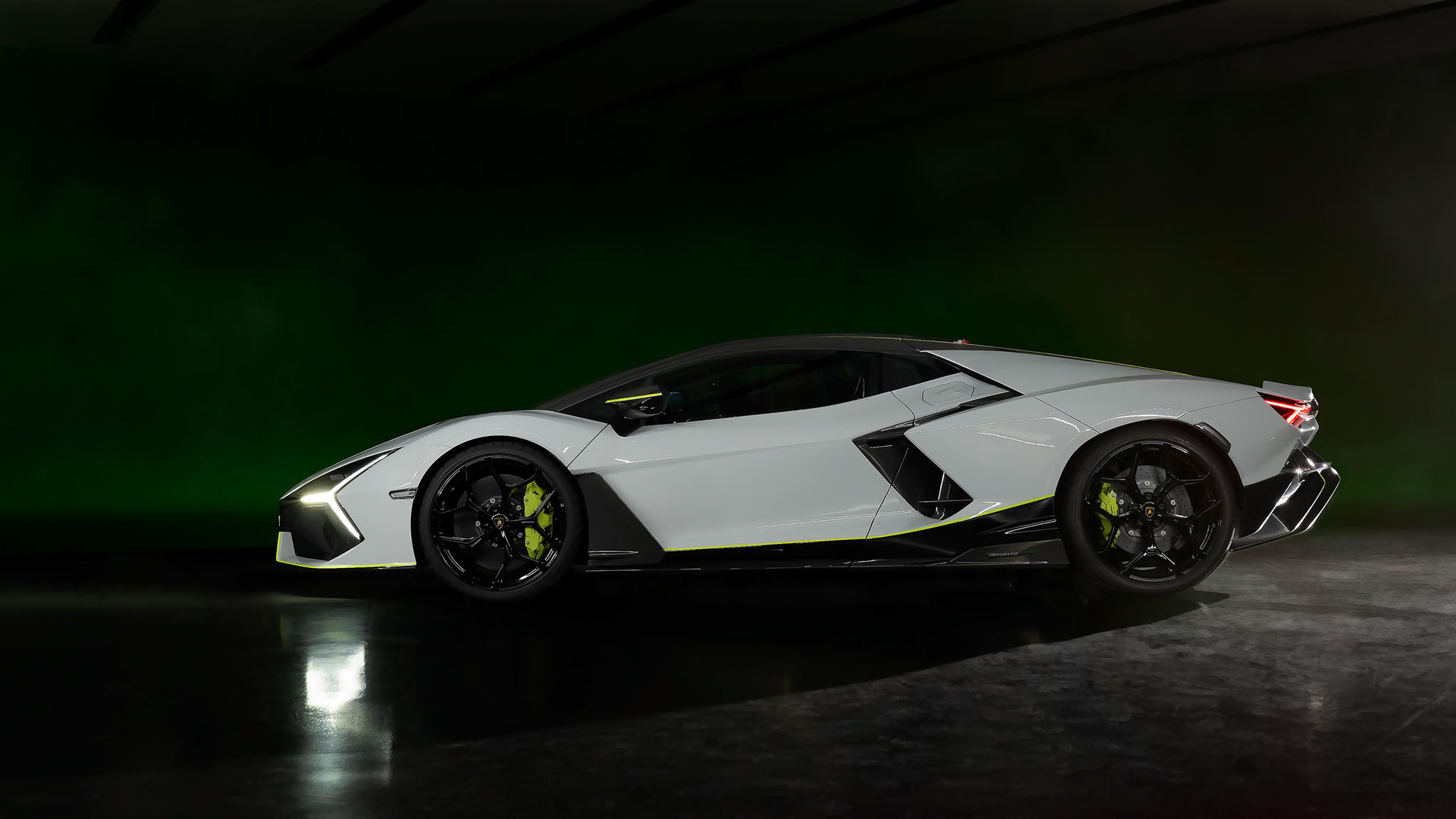
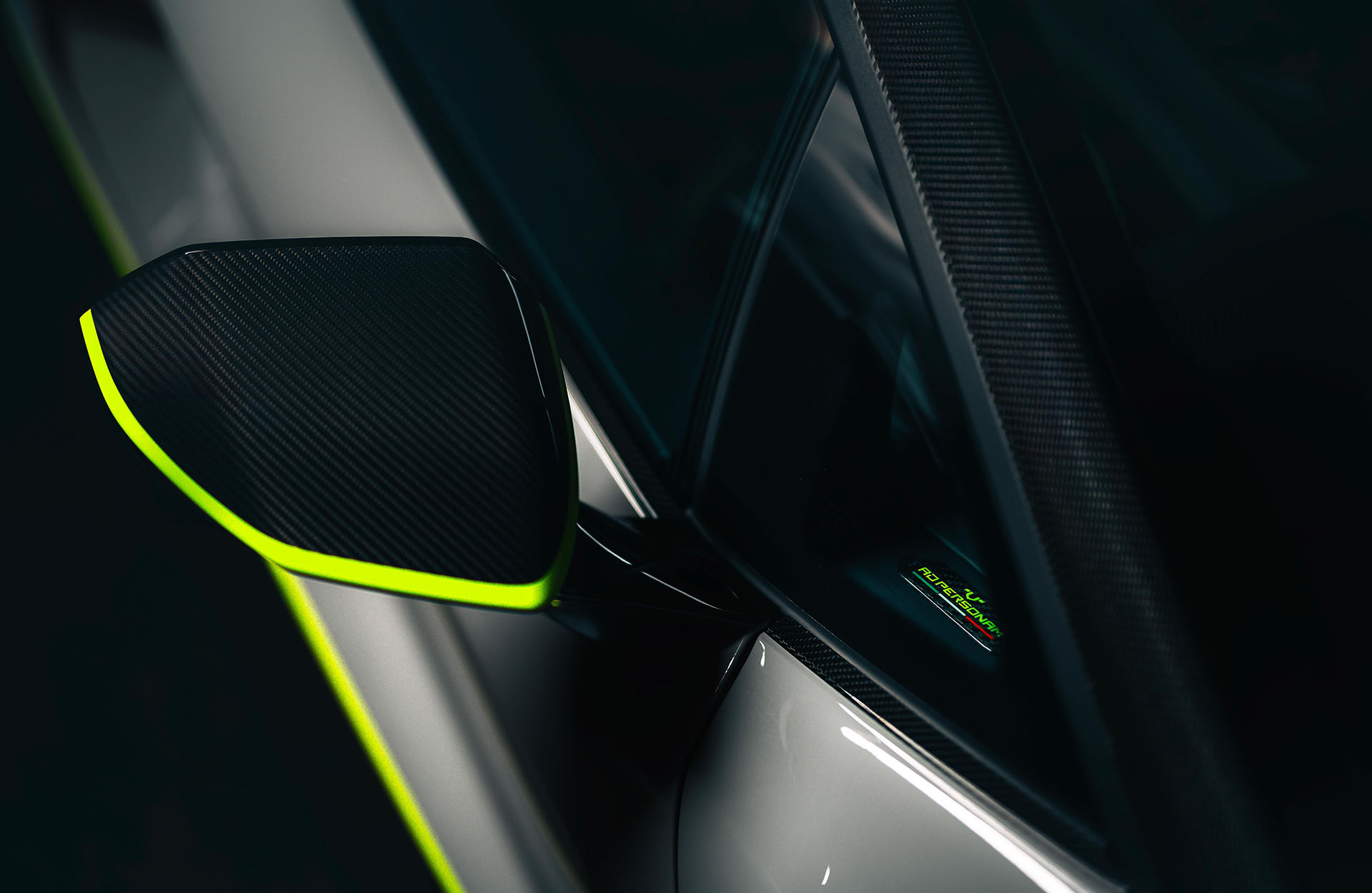
The exterior of this special car features contrasting hues with new carbon fiber elements that create a striking visual effect. The bodywork is painted in Grigio Hati (gray) with details in Verde Scandal (green) that accentuate the car’s lower line, roof, mirror caps, and rear diffuser surrounds, all combined with the Verde Chiaro (light green) of the brake calipers. The rear part celebrates the Italian flag, with red, white, and green stripes embellishing the lower surface of the moving wing. The hood is crisscrossed by two racing-style stripes in Nero Noctis (black), highlighting the performance attitude of the V12 super sports car.

The roof, rear “cofango”, spoiler, air intakes, sill inserts, and other details are made of high-gloss exposed carbon fiber, giving the elements a shiny effect enhanced by the 21-inch (front) and 22-inch (rear) high-gloss black Altanero alloy wheels.

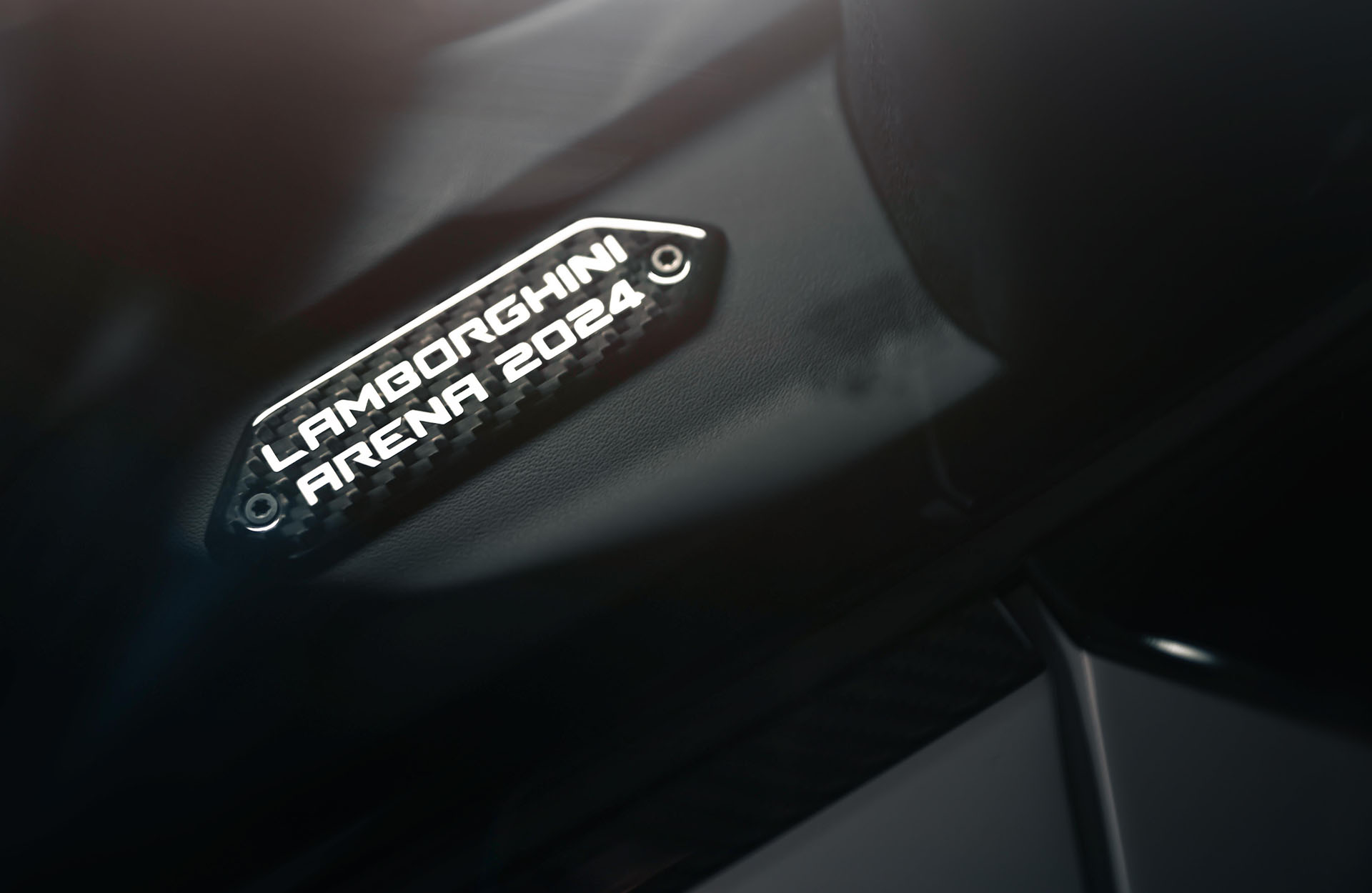
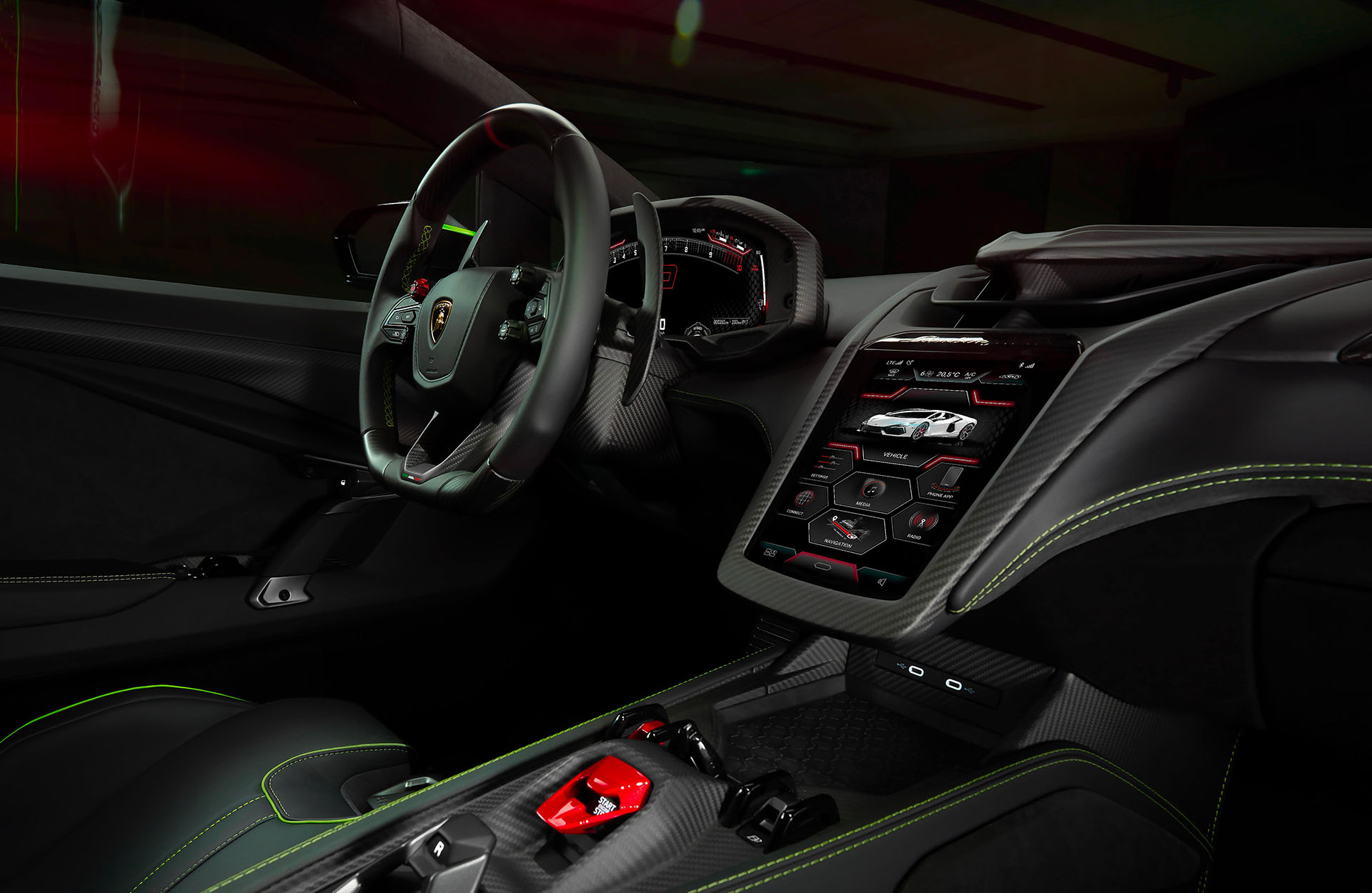
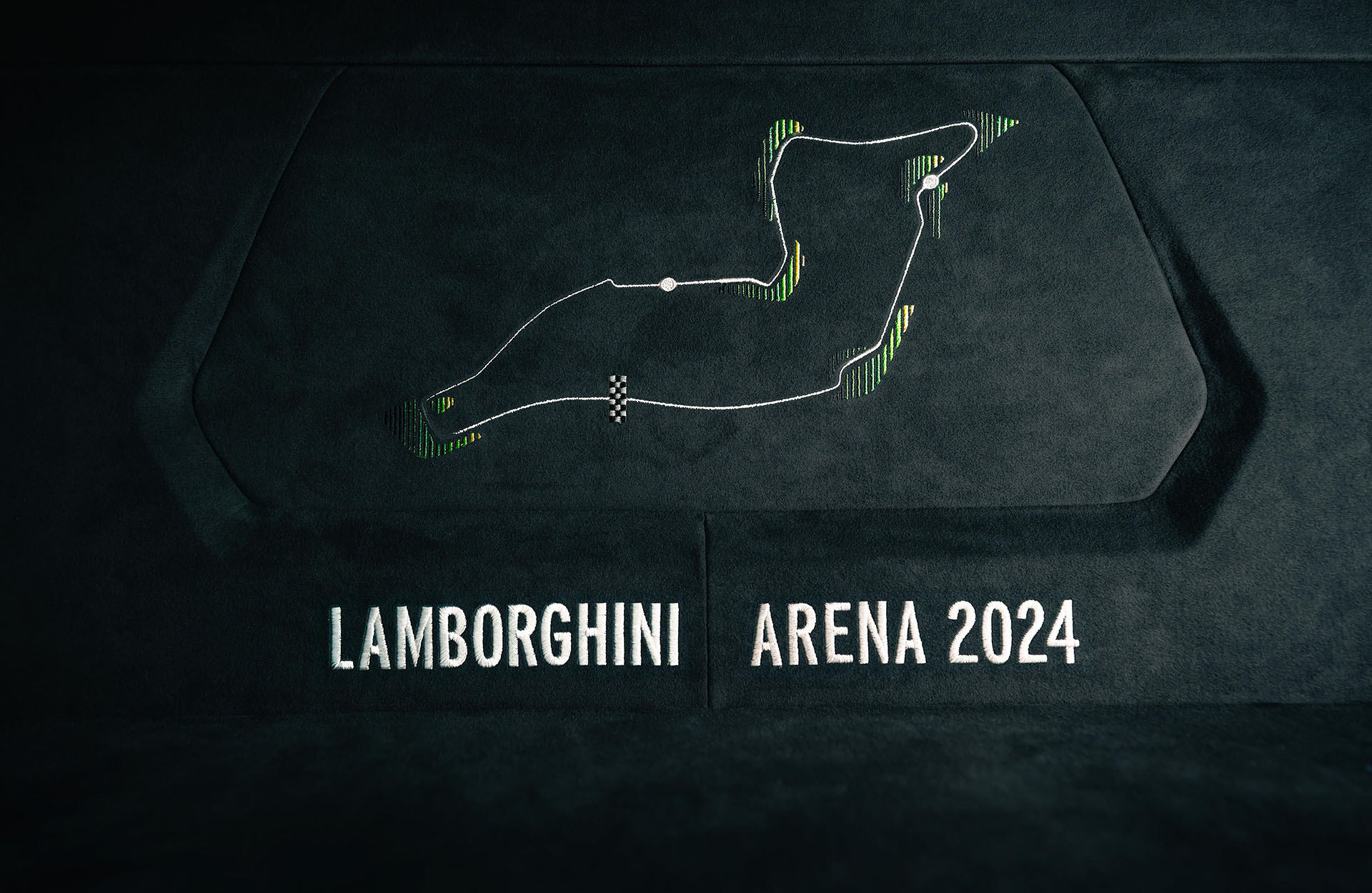
The interior trim echoes the exterior colors, with Nero Ade (black) sport seats featuring stitching and piping in the Verde Scandal hue, the same color used for the Lamborghini logos embroidered on the headrests. The bulkhead panel lining is embellished with exclusive embroidery depicting the map of the Imola Circuit, the lettering “Lamborghini Arena 2024” in Bianco Leda (white), and escape route maps in Verde Scandal (green). Also exclusive are the carbon fiber plates with “Lamborghini Arena 2024” and “Ad Personam” logos located on the ends of the dashboard.

Unveiled in March 2023, Revuelto is the first V12 hybrid plug-in super sports HPEV (High Performance Electrified Vehicle). It is equipped with a 6.5-liter naturally aspirated V12 mid-engine combined with three electric motors, one of which is integrated into the new 8-speed dual-clutch transmission. Delivering a maximum torque of 725 Nm at 6750 rpm and a maximum power output of 1015 CV, it reaches a top speed of more than 350 km/with 0-100 km/h acceleration in just 2.5 seconds.


Source link

5 Nights in Punta de Mita, Mexico

0


I love everything about Mexico – the culture, the food, the people. We’ve visited Tulum, Cancun, Mayakoba, Holobox, Isla Mujeres, Playa del Carmen, Cozumel, and Puerto Aventuras over the years. We can’t get enough of the warm hospitality, alluring beaches, and wonderful cuisine the country offers.

One of the perks of living in San Diego is its proximity to the many coastal towns of Mexico. On this memorable trip, we took a two-and-a-half-hour flight from San Diego on Alaska Airlines to Puerto Vallarta. We then picked up our car rental from Enterprise and then made the easy forty-five-minute drive south to Punta de Mita just in time to watch the sun paint the sky as she retreated for the day.

Below is what I consider a perfect five-night itinerary in Punta de Mita, verified by yours truly. We had a flawless balance of relaxation and exploration and ate some of the most delectable meals possible. Feel free to steal my travel plan to begin creating your magical memories. Also, before I get started here are some important tips to guide you when traveling to Punta de Mita:

  • If you plan on leaving your resort, which you absolutely should, rent a car. Driving here is safe and having a car makes everything easier.

  • All bills have a 10% service charge included, and no additional tipping is necessary.

  • Many of the restaurants below are located in high-security properties so carry ID at all times.

  • Make dinner and excursion reservations in advance, things do book up here.

  • The sunsets in Punta de Minta are breathtaking, make sure to catch them daily.

The check-in process at the Conrad Hotel, the beach town’s newest five-star resort, was quick and extremely welcoming. This luxury hotel boasts every amenity you can ever dream of while on vacation: tennis courts, pickle ball courts, a gym, a spa, four restaurants, an adult-only pool and also several family pools (one with a water slide), daily yoga on the sand, beachside service… this place is the perfect escape.

The rooms are spacious and most notably have expansive balconies with eye-catching views. Additional touches like artisanal welcome chocolate, aromatherapy linen sprays, unlimited on-demand bottled water, and handmade crafts laid thoughtfully at turn-down service, all make the room a perfect retreat at the end of an already glorious day.

Once settled in, we headed to dinner at Codex, the hotel’s fine dining restaurant, on a complimentary chauffeured golf club. This restaurant is extremely well-rated and is recognized as one of Mexico‘s top two hundred-fifty best restaurants. Upon entering, we were greeted by a staff member who asked our family to unite holding hands as he blessed us via what seemed like an indigenous tradition. I found this to be a very thoughtful way to welcome guests. Although we were disappointed by the chef’s gastronomic attempts, we were in awe of the stunning setup. There are tables on the sand, some even tucked into trees, all romantically lit by tiki torches. The kitchen hits it on the nail aesthetic-wise- the food presentation is thoughtfully prepared to deliver a minimalistic beauty that is impossible to overlook. However, overall we ate our only disappointing meal while in Mexico at Codex. Perhaps the kitchen was having an “off day”.

pros: striking setting, polished service, well-made cocktails

cons: portions are small and extremely overpriced for what is just decent food

must order: we tasted six items on the menu and the only one I could recommend is the soft-shelled crab

Watching the sunsets while vacationing in Punta de Mita should be a ritual in your vacation planning, they will take your breath away.

Our first full day at the resort was dedicated to planting ourselves on the property and relaxing as much as possible. I suggest you do the same once you get here.

Breakfast at Arbol is the perfect way to start the day. The indoor buffet has an endless spread of cheeses, yogurts, breads, pastries, waffle stations, and an array of hot foods and even an additional outdoor buffet focused on Mexican fare with a chilaquiles station, a manned quesadilla station, an eggs-your-way station, fruits galore, and local sweets. We all left satiated.

After a full meal, we plopped at the adult pool and stayed there all day. There wasn’t any reason to leave when we were spoiled with the sound of ambient music playing, the crashing of nearby waves, a hot tub, a swim-up bar, and even a ceviche cart that pulled up to our seats for an on-demand fresh snack.

Although peeling ourselves away from the pool was no easy task, it was time for lunch at Mesquite. Eating here was well worth the effort of entering the vertical world again. Every bite was sensational- the ingredients were of the utmost quality and the seasoning in each dish was simply perfect.

pros: seaside dining with a fantastic menu, dishes perfectly prepared

must order: tuna tostada, chips and guacamole, lobster roll, and the wagyu wonder bowl (grilled and sliced wagyu, carrots, black bean cream, queso ranchero)

After a meal like this, a walk along the coast was in order. Strolling with our feet in the water brought exciting adventures like spotting a nearby estuary with a nesting crocodile and a local employee warning observers to stay away (yikes!). There were also unmonitored jewelry stands and manmade huts, all amidst the picturesque backdrop of the mountains and sea. Unlike most resort towns, this stretch of sand is mostly untouched and undeveloped.

After a luxuriously lazy day, and a little late-afternoon nap, we got ourselves together for a magnificent dinner at Carolina, the only AAA Five Diamond Award dining experience in Punta de Mita, located in the St. Regis Hotel Punta de Mita. The restaurant provides a Mexican culinary journey via a four-course, six-course, and ten-course tasting menu; we opted for the six-course experience, which proved to be one of the most unforgettable meals. Each plate arrived with meticulous attention to detail in its presentation, works of art delivered throughout the meal. However, it was the resulting flavors created by the combination of the freshest elements, unique Mexican seasonings, and the incorporation of ingredients from both sea and land, along with a balance of both raw and masterfully grilled dishes, that make Carolina worthy of a spot on everyone’s bucket list.

pros: a six-course meal was well-paced and completed in just two hours, the kitchen is flexible with a table selecting different tasting menus, consistently outstanding dishes

must order: the six-course tasting menu brilliantly highlighted the chef’s range of talent: ceviche kampachi over fried seaweed, beef jerky stuffed with avocado mousse, plantain croquette with oaxacan cheese on top of a chili sauce and cheese emulsion, lobster tartar with yuzu and fermented conch, grilled lubina, dried age rib eye with date relish and caramelized onion, and a chilate inspired dessert with cacao, rice and raw sugar

Of course, make sure to tuck the sun to sleep…

Today was spent with explorations and adventures. I highly recommend taking a full day to explore the nearby coastal towns of Sayulita and San Pancho, both are just a quick drive from Punta de Mita.

Begin your day with a casual breakfast at Casa Paraiso Restaurante Bar in Sayulita. This open-aired roof-top restaurant is part of a well-kept hostel. The food is fresh, inexpensive, and comes with fresh-squeezed orange juice and a coffee or espresso drink of your choice.

After breakfast, head to Rancho Mi Chaparrita for an incredible horseback riding tour through a lush jungle that leads to a spectacular secluded beach. No riding experience is required, although reservations are so make sure to book in advance. This excursion is a highlight of our trip. I’ll never forget the scene before me when the jungle suddenly opened up onto the sea. This experience is as close to paradise that you’ll ever get.


Following our magical horseback ride along the coast we parked our car and walked the colorful streets of Sayulita. You’ll easily note why so many expats have made this city their home. There are endless restaurants, bars, and shops all lining heavily trafficked narrow roads. The vibe in this hidden gem is laid back although you’ll find some high-end, luxury retail shops dispersed throughout. The beach was packed with people – interestingly most of them were locals. You can easily spend three nights here but strolling the streets for a day will give you a taste of this charming surf town.

All that walking made us hungry for lunch, and Kahlo was a wonderful choice. It’s no surprise that this Mexican restaurant is so well-reviewed. Just looking at the pictures of our meal here makes me crave another visit The ingredients are so fresh, and the combination of the high-quality components of each dish leads to ecstatic flavors.

pros: there are designated servers who take just your drink orders – cocktails are taken very seriously and the kitchen makes one of the spiciest hot sauces that I have ever tasted

must order: the tuna tostadas mixed with sriracha sauce and peanuts are otherworldly


After all that delicious food, another walk was in order. This time, we drove to San Pancho (aka San Francisco) to soak up the local culture. San Pancho is a rather small town yet this tropical nugget of a city is packed with color and charm. As of now, it remains overlooked by many tourists but I have no doubt it will soon be a popular destination site.

All that sun and food caught up with me and I indulged in a nap before dinner (this is a vacation after all!). Before leaving the hotel property for our last meal of the day, we paid homage to the sun. The sunsets in Punta de Mita are breathtaking.

Dinner at Dos Catrinas at The Four Seasons proved another excellent choice. The restaurant is an open-aired, stylish spot in an expansive, modern setting. The food and drinks are spot on. The kitchen gives Mexican cuisine a little flair with unique touches like a homemade BBQ sauce on grilled corn.

pros: located on a gorgeous property, a churros stand awaits in front of the restaurant for a sweet post-dinner treat, a bustling atmosphere

must order: the signature beef talyuda dish, so good

We started our day with another delightful breakfast at the hotel, changing the environment a bit with a nice table in the lobby. One of the things I especially love about the Conrad Punta de Mita is all the nooks you can hide in.

The adult pool was crowded today so we splurged on a cabana which spoiled us with the most secluded, decadent day in privacy with no one around to judge our chronic horizontal positioning. With your cabana rental, you’ll get a complimentary light, healthy snack, and a cooler packed with water, juices, and sodas. But what makes the cabanas at The Conrad especially worthy is their well-shaded seclusion. I could have spent the night here.

As my readers know, I love to eat, and food is the only thing that will get me off my poolside lounge chair. We love the food at Mezquite and opted for another lunch here enjoying the ocean view with our feet in the sand. The highlight of today’s meal was the San Pancho sandwich with grilled fish, guajillo chile-lime mayo, and coleslaw.

After lunch, we strolled back to the pool. Eating, relaxing, eating, relaxing… my way of shamelessly perfecting laziness. Oh how much I needed this getaway.

My daily late afternoon naps were probably the most permissive gift to myself in a long while along with watching the sun close out the day every evening. These were mandatory treats I gave myself, adding to my ultimate vacation pace.

The food in Punta de Mita is quite outstanding, and every time we thought we found our favorite restaurant, the next was even better. Hector’s Kitchen is set in one of the most attractive settings you’ll come across. Seating is under a romantically dimmed palapa that incorporates wood and water elements throughout the decor. The mood created here is elegant and tropical and the food is fantastic.

pros: if you’ve had enough Mexican cuisine, the culinary team creatively prepares dishes from many regions

cons: hard to find, it is actually behind the Kupuri Beach Club; also the property is heavily secured so give yourself an extra few minutes to get through security

must order: the roasted beet salad was so exquisite that we ordered a second helping (hummus, mixed greens, quinoa, caramelized sunflower seeds, grain mustard vinaigrette, edamame, and feta cheese); the truffled sweet potato tortellini over a broccoli puree with madeira reduction and caramelized pecans; braised shortribs with mushroom risotto and port sauce

Although I thoroughly enjoyed my daily dose of chilaquiles each morning, on day five I decided to stick to fresh juice, yogurt, cheese, and a customized omelet at the omelet station to start my day off right and light. All this eating has finally caught up with me!

After breakfast, we met our guides at Riviera Mita Tours for a private boat tour of The Marieta Islands, a group of uninhabited islands with so much surrounding wildlife they are known as “the Galapagos of Mexico”. We spotted wild dolphins, blue-footed booby birds, brown-footed booby birds, and tons of brightly colored fish while snorkeling. Highlights of the excursion were a visit to a stunning nameless island encircled by aqua waters followed by a swim to the famous Hidden Beach. This beach is well-protected with coastal guards on site ensuring that no more than one hundred sixteen visitors can attend each day. Accessing Hidden Beach requires you to swim approximately two hundred feet into the hidden gem. Imagine a beach in the middle of a cave with a massive opening glaring at the sun and sky – this is a perfect example of nature’s unrivaled works of art. Note that the islands are only accessible Wednesdays – Sundays so plan accordingly.

After a three-hour spectacular excursion, you’ll surely get hungry so head over just a few feet away from your tour meeting site to La Pescadora for a lovely lunch with stunning views. Our waiter served us with contagious enthusiasm, expressing joy in pouring a generous portion of tequila into my margarita in front of me. We enjoyed our entire experience here very much.

pros: ocean views, fantastic service, fresh food, and the best chips we’ve had in Mexico

must order: the guacamole which is made table-side, the chips and salsa, and the hamburger which was rated superior to american-made ones by my boys!

I was looking forward to exploring the town of Punta de Mita after lunch. However, we found the small, main strip on Avenida el Anclote unimpressive. I don’t even have any pictures to share with you – that’s how uninspired I was by this neighborhood. After your trip to the Marieta Islands and lunch at La Pescadora I suggest returning to your hotel to enjoy the rest of your day.

Alas, I enjoyed one last nap knowing it would be my last one until our next vacation. I gave myself an extra thirty minutes of snooze time because I could.

Dinner at Venazu in the W Hotel was a great choice to wrap up our trip over a super tasty meal. Of all the properties we checked out, this one caught our eye the most. The property’s dramatic, modern aesthetics and compelling decor made us fantasize about a return visit soon. The night we dined at Venazu a buffet dinner was offered. I normally do not enjoy buffets, especially for dinner, but this one is noteworthy. Everything is made on the spot- fish grilled right before your eyes- and the assortment of Mexican food was grande.

pros: impressive setting, well-curated buffet with no lines

cons: there are two “venazus” in the area, our gps took us to the wrong one so make sure to enter “w hotel” in your navigation to get to the right location; hotel adds a 10% surcharge in addition to the service charge, to “cover back of the house”- that’s more than the states charge!

must order: everything was fantastic but don’t miss the brioche bread topped with frijoles, a bizarrely incredible combination; the homemade horchata

A five-night streak of watching the sunset does wonders for the soul…

I skipped breakfast today to maximize our last day on vacation. I opted for a yoga class on the beach instead, followed by a poolside reading of my friend’s inspirational book, loaded with useful tips on how to make more time in your day to focus on the things and people you really want to concentrate on and how to eliminate the tasks that bog you down. Then I worked on this blog post as I basked in the sun. I’m proud of myself for savoring each moment before heading home.

And… one last meal in Mexico to close out an epic getaway. This time we tried Paleta, Conrad’s poolside dining option. We enjoyed nibbling on nachos and I savored each bite of my Senor Poke Bowl loaded with rice, cucumbers, tuna, oranges, and a side of sesame oil to top it off.

Booking hotels through an AMEX platinum card always comes with perks – like a 4:00 pm check out allowing you to take full advantage of your last day at the resort.

All good things must come to an end, and sadly it was time to say goodbye. Mexico, once again, you treated us very well. What a trip! Adios for now, but we’ll be back real soon!


Source link

Tesla sets Robotaxi reveal for Aug. 8

0


Tesla will unveil its Robotaxi August 8, CEO Elon Musk announced Friday.

In his typical fashion, Musk made the announcement on X, the social media site he owns. The post included the date with no further details.

According to a Reuters report earlier in the day, Tesla has reportedly dropped its $25,000 affordable EV project in favor of robotaxis, a term for shared autonomous vehicles. The report said the Tesla Robotaxi will be built on the same platform as the scrapped $25,000 EV, sometimes referred to as the Model 2, but in smaller numbers.

Tesla in 2022 said the platform to be used by these vehicles could cost half as much to make, which would have been a key factor in the affordable Model 2.

Musk has been periodically talking about this idea of revenue-generating self-driving taxis since 2019. At that time Musk suggested that Tesla would provide the interface and support, collecting a fee of 25% or 30%.

Robotaxis could perhaps use the wireless inductive charging tech Tesla is thought to be adopting, as that would eliminate the need for a human minder to plug them in. But more important will likely be a completely different hardware set for autonomous driving, as Tesla’s Full Self-Driving functionality continues to attract scrutiny and won’t be a system allowing the driver to focus away from responsibility anytime soon. And Musk’s claim years ago that the Tesla Model 3 would be an appreciating asset due to self-driving capabilities has simply not come to fruition.

Arrival Car prototype

Arrival Car prototype

Tesla has sold 6 million EVs, but robotaxis could be a wholly different challenge. Heavy investments in robotaxi technology and a failure to return on bullish projections for shareholders are, for instance, partly what cut former Ford CEO Mark Fields’ tenure short.

Previous non-Tesla efforts to develop an EV for Uber haven’t gone anywhere. Could Tesla drive Uber out of business? Or is this another project, like the second-generation Roadster, that will be shown as a concept then kicked ahead years beyond an original launch date?

Will it ever happen?


Source link

Unsubsidised petrol station in Rantau Panjang, Kelantan almost complete; operational after Hari Raya

0


Unsubsidised petrol station in Rantau Panjang, Kelantan almost complete; operational after Hari Raya

The first of two stations selling unsubsidised petrol in Kelantan is nearing completion, New Straits Times has reported. Last month, Kelantan ministry of domestic trade and cost of living (KPDN) announced that it has approved the construction of two non-subsidised petrol stations, the first being the aforementioned Rantau Panjang and the second in Jeli.

Kelantan KPDN director Azman Ismail said that the Rantau Panjang petrol station for foreign nationals is located around 4 km from the Rantau Panjang immigration, customs, quarantine and security (ICQS) complex. Foreign nationals are not allowed to purchase RON 95 petrol, which is subsidised for Malaysians.

Unsubsidised petrol station in Rantau Panjang, Kelantan almost complete; operational after Hari Raya

The second of two unsubsidised petrol stations, the one in Jeli, has yet to receive approval from the finance ministry, Azman said.

“We expect the station in Rantau Panjang to begin operating after Hari Raya Aidilfitri — maybe in June. Once the stations operate, foreign motorists are banned from filling up fuel at other stations,” the Kelantan KPDN director said, adding that the move was to prevent the leakage of subsidised petrol and diesel.

When the stations for unsubsidised fuel become operational in Kelantan, these will join the non-subsidised petrol stations already in Perlis, in Padang Besar and Wang Kelian. At time of going on sale in February 2023, unsubsidised RON95 petrol was priced at RM3.22 per litre, while diesel was sold for RM3.45 per litre.

Looking to sell your car? Sell it with Carro.


Source link

Some Friends Are Met By Chance At The Perfect Time

0


After being back in our home state of New Jersey for a few weeks visiting friends and family, Doug and I embarked on what we are calling “Season 2” of our Full Time RV Adventure (primarily because this correlates to our YouTube Channel which can be found here (youtube.com/InterstateAdventures). But when we left behind our network of homey comforts this time, we seemed to have found ourselves very ‘broken.’ Within just a short time of leaving I had two medical issues that I couldn’t just run to my web of familiar doctor’s to handle. And then, we had a host of things breaking on the truck and camper that stopped us dead in our tracks for almost a week. The combination of everything happening within such a short period of time left both us feeling a bit overwhelmed, nervous, defeated, and well…. Broken.

It’s taken me at least a week to really sit down and be able to put it all together, wrap my head around everything that has happened, and be able to share it with all of you. You see, as weak as we both felt mentally, we didn’t give up. We were mostly prepared for everything. It was just a little overwhelming that it all happened at the same time. But that’s life, right? No one said this nomadic life was going to be easy, just that it would be worth it if you persevered.

rv hangersrv hangers

So, what happened exactly? And what can you do to be best prepared for when that worst case scenario actually seems to be happening? Sometimes there are things you can do to prepare, other times, you need to figure it out as you go… But chronological seems to be the best way to go over it…

Issue #1

This time it was the camper. One of our slide cables broke. This isn’t the first time this has happened to one of the cables, and fortunately, (or unfortunately – depending on how you want to view that) Doug has become a professional at changing them. This isn’t something that you can predict is going to happen. You can do all of the preventative maintenance you want, but sometimes, cables just wear out. You can see Doug working on another cable in our Memphis video here.

Our YouTube ChannelOur YouTube Channel

How were we prepared for this? Because we have had one break on us in the past, Doug has a spare replacement cable on hand in the camper at all times. If you aren’t handy though, most RV Parks and campgrounds can direct you to a mobile RV Repair company that can come out to the campground and hopefully get you back up and running.

Issue #2

Just 2 days later… We arrive down in South Carolina to visit Doug’s best friend and check out his new house. They told us to park the camper wherever we wanted on the property. Doug opted for along the tree line and started backing across the front lawn to get there. Everything was going fine… and then it wasn’t. The passenger rear tire of the truck suddenly dropped into the ground, and now the truck and camper were stuck. Evidently, there was an old septic tank in this area of the lawn that no one knew about. We Found It! Everyone knows about it now!

Amazon FireAmazon Fire

This is the hole that Doug found at his best friend's house when trying to back in the camper.This is the hole that Doug found at his best friend's house when trying to back in the camper.
The Old Sewer that Doug found…

This is a situation that no one could have predicted and no one could have prepared for. Thankful for where we were at the time it happened, Doug and Buck (his best friend) worked in the fire department for several years together. They didn’t panic at all and really just got to work. They were able to use the front jacks on the camper to pull the truck up a little at a time all the while placing 2×6 planks under the truck as they went. Eventually, little by little, they were able to get the camper detached from the truck, and then used a winch on Buck’s truck to pull ours out of the hole. Moving the camper had it’s own issues then since we couldn’t just back into the pin to hook back up due to the 4 foot hole in front of it. Jen was able to call her uncle over with a tractor that was able to move the camper over just a little enough for Doug to be able to back in under the pin and get the camper hooked back up from another direction.

Issue #3

After spending a week with Buck and Jen, we headed up to the northern part of South Carolina to visit Doug’s brother and family. I developed a fairly large abscess that was infected out of no where that needed to be drained. Grateful this was something that could be handled at a walk-in clinic, that is where we headed.

This too isn’t something that can be predicted. I’ve never had an abscess before. It isn’t as if I am prone to them. It isn’t something that we could have prepared for. I tried to handle it on my own at home with over the counter salves and such, but nothing was working. We needed a doctor. And I needed antibiotics.

Issue #4

Truck this time… We left northern South Carolina and headed to my family reunion in West Virginia. We arrived with no incidents. After a trip out to the grocery store Doug noticed the smell of anti-freeze coming from the truck. He did a quick examination and discovered that one of the coolant lines had broken. We spent a week in West Virginia which was good because it gave Doug time to find the parts that he needed to make the repair. We also had access to several other family member’s vehicles to get around. Once again, this is not something we could have prepared for. Just one more broken piece of traveling puzzle. Doug made the necessary repair and got us back up and running before the week was over. I don’t know what we would do if he wasn’t so incredibly handy.

Issue #5

Our last night in West Virginia… I suffer from chronic hives that put my body into anaphylactic shock. It isn’t fun. But I’ve been managing it for years at this point, so unfortunately, I sometimes become complacent about it, which is a terrible place to be over something that could literally kill me. I take medication every other day to keep everything under control, and haven’t had any major issues in almost 2 years. Well, guess what… I went 2 nights without taking my medication because I wasn’t paying attention. I went to bed and woke up a little after midnight unable to breath. I immediately took Benadryl, but that takes at least 20 minutes to start working. So I sat there with my EpiPen in my hand hoping that everything would subside before actually having to use it! All the while, Doug is awake sitting next to me monitoring the whole situation because a quick Google search revealed that the closest hospital was 45 minutes away. Now this… Yeah, we were absolutely prepared for. I have all of the medications that I need to keep this ridiculous “allergy” at bay, and I messed up. In addition to totally being prepared for the flare up, we both pay attention to where the big blue “H” signs are whenever we are driving around. That doesn’t mean that are always close to the hospital, but at least we know when the last time we passed one was.

Issue #6 & 7

Only 2 days after dealing with my hives, we are heading out to Montana. We pull into a truck stop to use the bathroom and stretch our legs in Eastern Illinois. We get back to the camper and Doug notices that one of the airbags that inflates with the shock and springs in the back of the truck isn’t holding air. He pokes his head in there and immediately see’s the problem and it isn’t good. Like really really bad. At some point (we are guessing when the truck fell into the septic) we snapped the leaf spring for the driver’s side rear tire. After it broke, it slid out of position, likely from bouncing down the road, and the corner popped the air bag. So not only do we need to replace the leaf spring, but we also need to replace the airbag.

Doug making a temporary repair to the leaf spring while parked in a rest stop in Illinois, 180 miles from our stop for the night.Doug making a temporary repair to the leaf spring while parked in a rest stop in Illinois, 180 miles from our stop for the night.
Doug making a temporary repair to the leaf spring at a truck stop in Illinois.

Doug spent 2 1/2 hours banging on the leaf that had slid out to get it back in position. He wrapped a ratchet strap around it to hold it in place temporarily and we called our Boondockers Welcome host to let them know we were going to be late, and would need to stay longer than the scheduled 1 night. We got back on the road in the right hand lane and went slow and steady until we finally arrived the 180 additional miles that we needed to go.

Somehow a miracle happened, whether it be divine intervention, or something else, but our hosts at the Boondockers Welcome, Mark and Celia, were 2 of the most amazing people we have probably ever met while on the road. Not only did they tell us that we could stay as long as needed, but they made us dinner that first night, drove us around to pick up parts, allowed Doug the use of their shop and all of the tools, brought us out to a car show, showed us around their town, allowed us to pick our own sweet corn, and truly mended our very broken souls.

Doug was able to replace the leaf spring and between him and Mark, they were able to make a temporary repair to the airbag within a weeks time. Celia had a fantastic recommendation to hook up and do a shake down cruise up and down the highway for a little bit to make sure that everything was holding properly and once again…. Another issue…

Issue #8

One of the cross members that is supposed to be welded to the frame of the camper to hold up one side of our black tank was completely broken on one side. Doug pulled out a big bolt and managed to get that repaired quickly, and we couldn’t have been in a better place for it to have happened, but that only dulled the sting of more problems.

We spent another night with Mark and Celia enjoying their company and truly solidifying our new found friendship and then we hit the road again. When we left New Jersey we had 6 weeks to get out to Yellowstone, we were 4 1/2 weeks in, and we hadn’t made it past Illinois.

We made it to Minnesota for the night. The airbag held well enough and we actually enjoyed a night of camping with no additional problems. At that moment it kind of felt like a miracle in itself.

We headed out of Minnesota and continued on our way west. And wouldn’t you know it, that little mini miracle of no issues that first night back on the road quickly went away and were once again reminded that this portion of our Adventures was still broken.

Issue #9

We decided that we were going to make a big push all the way to Wall, South Dakota because I had found dispersed camping, which is completely free. So in an attempt to try and offset the serious deficit in our budget from the countless “issues” we just kept trucking.

Buffalo Gap National Badlands dispersed camping at the Pinnacles.Buffalo Gap National Badlands dispersed camping at the Pinnacles.
Us at “The Wall” finally arriving at our dispersed camp site in South Dakota.

We stopped for fuel and I noticed that our rear passenger tire on the camper had absolutely no tread on the outside. I had Doug take a look at it, and I was right… Not good. Of course it was just late enough in the day on a Sunday that almost every place was closed, but Doug did manage to find one little gas station that had the right size tire for us to purchase. Downside…. He didn’t have any techs on duty anymore to put the tire on the rim for us. Once again driving slowly in the right lane, we continued on to Wall to find our campsite for the evening.

The following morning Doug took the old tire off of the camper, and we headed into town. We found a shop that was willing to swap the tires for us, and back to the camper we went. Doug got the new tire on the camper and we seemed to be back on track.

To Yellowstone we go…

We did make it. We made it all the way to West Yellowstone to meet up with friends. The replacement airbag arrived at the campground before we did, and Doug was able to get that replaced before we said our goodbye’s and headed out toward Glacier.

Most of the Ryan family and us hiking around the Grand Prismatic loop in Yellowstone National Park.Most of the Ryan family and us hiking around the Grand Prismatic loop in Yellowstone National Park.
Most of the Yellowstone gang walking the Grand Prismatic loop.

We’ve learned a lot these past few weeks. I can’t even say months! All of this transpired in less than 2 months time. This lifestyle is not for the weak, we can both say that. Doug and I tend to both be pretty strong willed people and we were both pretty broken. People are truly amazing though. Somehow every time something else happened, we pulled through and were surrounded by the right people that could help fix it. Sometimes that fix was nothing more than a hug at the right time, or the right tool. In truth, it can’t be explained. We kept on keeping on and everything seemed to fall into place.

Here we are! Still doing this crazy adventure! It may end sooner than we hoped, but we still did it! We don’t regret it, and we aren’t ready to quit yet. So guess what, we are going to keep on keeping on, because that’s what we do. Even with all of the pressure’s that we have had pushed on us, we look forward to seeing what tomorrow brings. We were watching T.V. the other night, and someone said, “Pressure Makes Diamonds” and I can’t get it out of my head. Maybe we aren’t diamonds yet, and maybe we have more pressure coming, but we both know it’s all worth it.

You can’t prepare for every hiccup along the way. All you can do is the best you can do, so that’s what we are just going to keep doing.


Source link