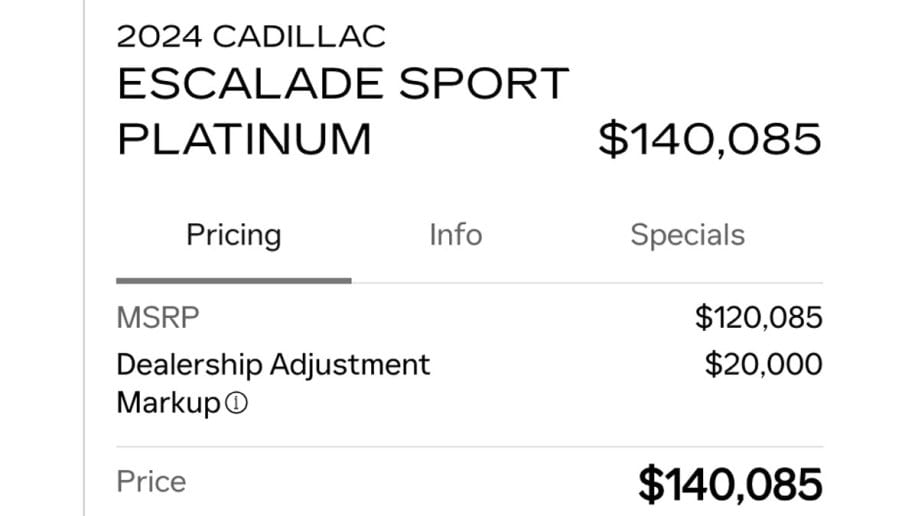
While finding a new car today is easier than last year, the search can still be tricky. But striking a good deal doesn’t need to be. Dealers began offering Incentives on new vehicles again as inventory started building up. Still, on specific models, you’ll need to guard against any dealers treating a short supply of cars like a winning lottery ticket. Many continue to tack on thousands of dollars in dealer markups to the manufacturer’s suggested retail price (MSRP). By law, every new car’s window sticker must display the MSRP.
It is best to read several dealer reviews before arriving at the dealership. For models in short supply, vehicles arriving on transport trucks will often be presold or at least promised. It’s an oscillating market for some car shoppers. In this article, we’ll explain markups and market adjustments, why dealers use this practice to increase prices of new vehicles beyond MSRP, and what, if anything, you can do about it.
What’s Supply Got to Do With It?
If you start shopping for a new car, you may encounter dealers who refuse to budge from the vehicle’s posted window sticker price. In other words, they aren’t willing to negotiate.
New car inventories returned to normal for some automakers but remain exceedingly tight for others due to residual supply-chain issues and other factors. According to data from Kelley Blue Book’s parent company Cox Automotive, new car prices neared $48,759 at the end of 2023. That’s a 2.4% decrease from the same month a year earlier. Car prices remain about 18% higher than at the end of 2020 as the COVID-19 pandemic dragged on.
The new vehicle inventory was nearly 2.6 million units, or 71 days of supply, at the beginning of 2024. That’s much improved, and it sounds like a lot. But it’s historically low. Before the pandemic, dealerships kept 3.49 million cars in stock, or an 86-day supply of vehicles for consumers to buy.
Every car a dealer sells today will be unavailable to sell tomorrow. That’s always the case. However, some dealers at car brands like Toyota, Honda, and Lexus have potential buyers lined up as if it’s an opening day for a viral movie. At the same time, others stock an oversupply of vehicles, like Lincoln, Jeep, and Chrysler.
Car Prices Determined by Supply and Demand
If you never pay much attention to the fundamental theories of economics, you may not realize the current marketplace works like a Petri dish for the effects of supply and demand. In an open market, demand dictates prices. The more people want a thing (like cars), the more they are willing to pay for it, and the higher its price goes. That higher demand motivates additional production of that thing, and the price eventually falls.
Car dealers do not exist in business to break even. When you find your dream car and the dealer wants the full MSRP — or more — you can always walk away. Waiting for that dealer to return with a better offer probably isn’t the best use of your time. If it’s a popular model and you wait, someone else might snatch it up.
These days, a dealer demanding the full MSRP isn’t cheating you. You’re paying the manufacturer’s assigned price to that car. In this economy, it’s probably a good deal.
Brands with the deepest inventory may have dealers more inclined to negotiate or stick with the MSRP. In the first quarter of 2024, Cox Automotive analyzed the vAuto available inventory data. Read the findings below.
Car Brands with the Most Inventory
Ram
Chrysler
Jeep
Dodge
Lincoln
Genesis
Volvo
Infiniti
Car Brands with Low Inventory
Toyota
Honda
Lexus
Land Rover
Kia
Cadillac
Chevrolet
Subaru
If you’re shopping for an electric car, you’ll likely find a great deal with plenty of incentives, including potential instant government rebates on some vehicles that meet defined criteria. But you could be out of luck if you’re searching for a Toyota, Honda, Lexus, or Kia. At the beginning of 2023, Honda and Kia buyers paid between 6% and 8% over sticker price at the end of the year, while Buick sold 2% or more below MSRP. Fast-forward a year, and incentives averaged $2,700 on new cars.
RELATED:When Will New Car Prices Drop?
What Is Dealer Markup?
For our purposes here, we define dealer markup as profit and a selling price the dealership assigns above and beyond the carmaker’s MSRP. A dealer tacks these arbitrary amounts onto the MSRP to increase profit on high-demand models. Sometimes, such markups appear as a second window sticker separate from the MSRP.
Historically, you would find them primarily for highly anticipated all-new or redesigned models. Dealer markup may show up under the following terms listed on the label and your sales invoice:
Market adjustment
Additional dealer markup (ADM)
Additional dealer profit (ADP)
Adjusted market value
These costs are the ones to look out for and, if possible, avoid.
Other markups you might encounter include the cost of dealer add-ons like delivery fees, window tinting, ceramic coating, seat-fabric protection, VIN etching, and pin stripping. You could often negotiate such traditional add-ons out of the final transaction price. Even that is tougher to do today.
Manufacturers Warn Dealers About Markups
During the past two years, cars were in high demand across nearly all vehicle makes and models, and the temptation to price gouge was too great for some dealers to resist. Car shopping became so competitive because of the limited number of new cars available that some manufacturers like Ford, General Motors, Subaru, Hyundai, and others began cracking down on dealership pricing.
Crowdsourced-data website Markups.org reveals just how drastic the price increases look, offering specifics on dealerships and providing, in some cases, visuals to accompany the markup information. Although many vehicles don’t show any dealer markups, many others do. We found one as high as $50,000 that an Arizona Ford dealer tacked on a 2024 Ford F-150 Raptor R.
Ford’s CEO Jim Farley has warned dealers to “cut” the markups during company earnings calls. Also, Farley wants the company to move to a new business model of non-negotiated prices and 100% online.
Hyundai sent warning letters to dealers and mentioned specific practices, including:
Advertising one price online, then naming a different price when the customer negotiates.
Affixing window stickers with markups included as itemized parts of a vehicle’s price.
What You Can Do About High Markups on Cars
Wait: Although new car inventories continue to improve, and some automakers have stock levels at or above normal, this market remains in flux. If you aren’t desperate for a high-demand new car, wait for more favorable times.
Contact several dealers: The more dealers you contact, the better your chance of scoring the best deal. To simplify the process, use our tool to obtain a free price quote from dealers in your local area. You can choose from a list and decide who contacts you with quotes.
Be prepared to compromise: The Rolling Stones said it best: “You don’t always get what you want.” If you are going to buy off a dealer’s lot or from those coming in on a truck, remain flexible. The odds are you won’t get one precisely the color you want, with the engine you want, or the accessories you want. Decide what is most important and be willing to compromise on everything else.
Don’t take dealer ads at face value: New car advertising typically comes with many disclaimers and caveats regardless of the market conditions. If a new car price seems too good to be true, it probably is. When you see a specific model advertised, call the dealer to confirm it’s there before making the trip. When an ad claims they have several units of the same model on hand, don’t count on it. Often, those numbers include vehicles that have yet to arrive, are already spoken for, or are sold.
Consider ordering from the factory: Except for some electric brands like Tesla and Rivian, most carmakers still require you to order a vehicle through a franchised dealership. However, you can specify precisely the color, model, and options you want when you order the car. You will probably still pay MSRP or maybe even a little more. But at least you’ll have the exact vehicle you want. The issue with special ordering is that the car may take many months to arrive.
If leasing, watch for fees. Many leases contain a vague list of fees and costs related to the upfront charges and picking the purchase option when returning a lease. Check your lease contract and know your rights. Some dealers started charging market adjustment fees on leases. Question everything, shop for the best deal, and don’t pay anything not listed in the contract.
Editor’s Note: This article has been updated for accuracy since it was initially published.
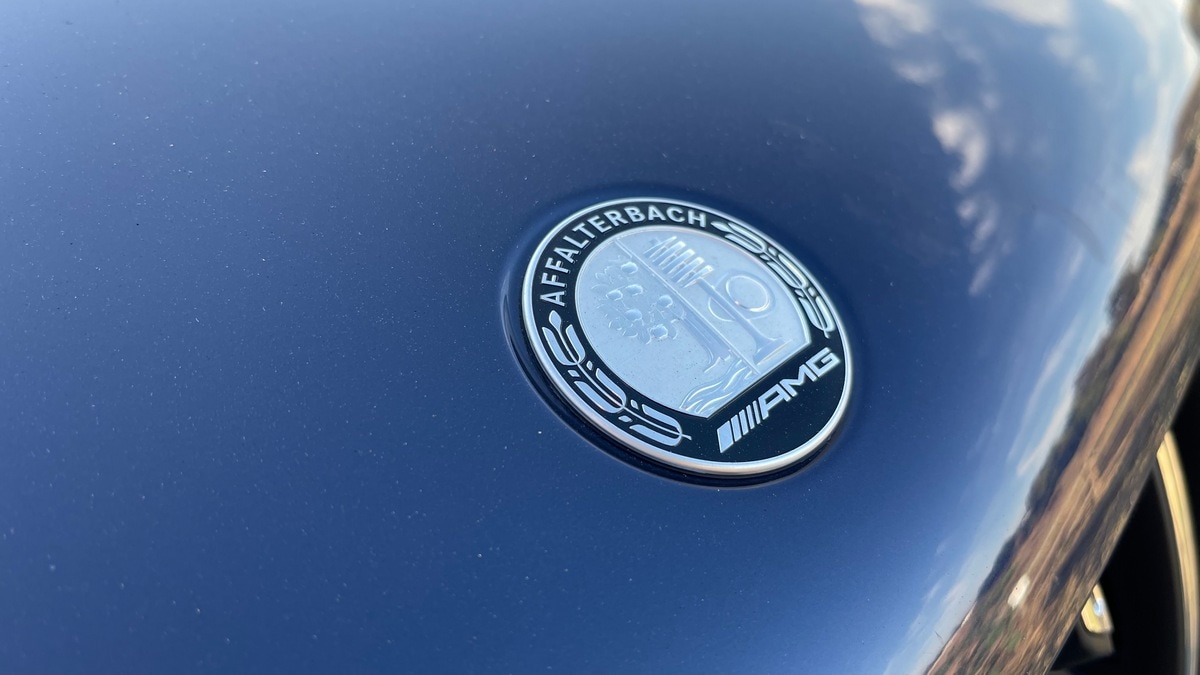
AMG, or Aufrecht Melcher Großaspach, is the performance subsidiary of Mercedes-Benz. Today, you don’t need to be a Mercedes-Benz owner or a fan to notice AMG affixed to the nameplates across the Mercedes model lineup. Once rather rare and unique, AMG has become so ingrained in the Mercedes-Benz brand that it’s nearly synonymous with it. Let’s look closer at AMG, its origins, and what it means for a Mercedes model to add AMG to its nameplate.
The History of AMG
Hans Werner Aufrecht and Erhard Melcher, former Mercedes-Benz engineers, founded the business in 1967. Großaspach was Aufrecht’s hometown in Germany. In 1993, Mercedes (Daimler-Benz) signed an agreement of cooperation with AMG, which allowed AMG to develop vehicles and market them throughout the Mercedes dealer network. After years of being an independent group specializing in elevating the performance and appearance of its models, Mercedes acquired AMG as a subsidiary in 2005.
Rather than the brand Mercedes-Benz, today’s AMG products are part of Mercedes-AMG. Mercedes has somewhat muddied the AMG brand by offering AMG-lite versions — the AMG Line — of many Mercedes-Benz models. These vehicles sport various AMG styling enhancements inside and out. They also offer sport-tuned suspensions and beefier brakes. Although they resemble Mercedes-AMG models, they are not. Read on.
AMG vs. AMG Line
You can get your AMG in two options. The first is the full AMG. In the majority of AMG models, the most significant element setting the AMG apart from the AMG Line is its hand-built AMG engine crafted by a single technician in Affalterbach, Germany. Following AMG’s “one man, one engine” philosophy, each handcrafted engine bears a metal plaque with the AMG logo and the builder’s signature. These powerful, often twin-turbocharged engines can have twice the performance output of the original mill powering its Mercedes counterpart. There are exceptions to the AMG hand-built-engine rule; we’ll discuss them while providing more details on the engines below.
In addition to the high-output engine, AMG sweetens its offerings with other high-ticket components and features.
AMG
Upgraded transmission: Wrangling all that extra engine output and funneling it to the wheels are AMG’s competition-inspired transmissions. These can operate as a manual transmission using the steering wheel-mounted paddle shifters or as a conventional automatic.
Dynamic handling: AMG delivers a performance-tuned suspension capable of handling the over-stimulated engine. Often, AMG incorporates a few high-tech tricks to massage the suspension, making the vehicle more stable and surefooted.
Performance styling: There is nothing subtle about AMG’s in-your-face design enhancements, including aggressive aerodynamic body elements, larger wheels, quad exhaust ports, unique grilles, and more.
Customizing opportunities: As if an AMG model isn’t exclusive enough, buyers can often pick from various interior trims, performance groups, and special exterior paint options to make that AMG vehicle their own.
High-end interiors: AMG emphasizes the uniqueness of its vehicles, loading them with top-notch materials, sport seats, and cutting-edge technology.
Exhaust note: AMG spends a lot of time and sweat into coaxing that deep-throated rumble out of the exhaust.
AMG-Line
The second option is the AMG Line for drivers who appreciate the performance styling inside and out of the pure Mercedes-AMG models but don’t need the AMG’s big uptick in engine output or eye-widening cost. You may not get to enjoy the AMG engine, but the AMG Line still stirs the soul with its extras, such as the following:
Sport suspension
Sport brakes
Unique AMG wheels
Rear spoiler
Sculpted front sport seats
Sport steering wheel
Why Is AMG Expensive?
Getting the AMG treatment raises the value and the bottom-line price, regardless of the Mercedes model. Not all the contributing factors are readily apparent. We’ve listed some of the obvious and at least one not-so-obvious reasons why premium buyers pay for a Mercedes-AMG.
The handcrafted engine is the biggest contribution to an AMG model’s bottom line. Taking several hours, a single technician painstakingly assembles each AMG engine. The Mercedes-AMG philosophy for the hand-built engines is “one man, one engine.”
Available AMG Engines
Depending on the model you pick, one of several high-performance handcrafted mills will create chaos under the hood with these engines. V8 horsepower and torque numbers may vary by model. Therefore, we’ve provided the high-end numbers.
Handcrafted Engines
Engine
Horsepower
Torque (lb-ft)
2.0-liter 4-cylinder turbo (M133)
375
350
2.0-liter 4-cylinder turbo (M139)
416
369
4.0-liter V8 Biturbo (M177)
up to 630
up to 664
4.0-liter V8 Biturbo (M178)
up to 577
up to 516
5.5-liter V8 Biturbo (M157)
up to 577
up to 664
6.0-liter V12 Biturbo (M279)
621
738
AMG-Enhanced Engines
These AMG-enhanced 6-cylinder engines also deliver the go on the below current models. Although not handcrafted, the engines bear the fingerprints of AMG.
Engine
Horsepower
Torque (lb-ft)
3.0-liter V6 Biturbo (M276)
up to 385
384
3.0-liter inline-6-cylinder turbocharged engine and plug-in hybrid electric motor (M256)
Although the exact transmission engineering varies among AMG models, each automatic transmission has been meticulously designed to mate with one or more of AMG’s high-output engines. Consequently, it urges the optimum and most efficient performance from the engine. The number of gears (7-speed, 8-speed, and 9-speed) varies according to the engine. However, all are dual-clutch automatic transmissions with a manual-shift option and steering-wheel-mounted paddle shifters.
AMG Interior Perks
In addition to upgraded leather surfaces, custom trim and accents, racing-inspired seating design, truly premium audio systems, and cutting-edge technology, AMG loads the interiors with AMG branding. Floor mats, the steering wheel, and so on display the AMG logo.
AMG Performance Styling
You can expect a Mercedes-AMG model to declare its performance chops with its exterior styling. For example, a unique front grille, an aggressive front bumper with larger air intakes, a trunk-lid spoiler, larger AMG wheels, and an aero package are within AMG’s styling tools.
Motorsports Heritage
One of those factors contributing to a Mercedes-AMG model’s cost that often passes under the radar is AMG’s racing history. Pick just about any performance component on an AMG model, and its development probably relies to some degree on AMG’s storied history of racing. Fielding a Formula 1 car is costly but worth it in the long run as a beta-test platform for performance technology. In other words, what AMG learns — at great expense — on the racetrack often winds up in the showroom.
Why Are There So Many AMG Models?
Keeping track of the Mercedes-Benz models and their iterations is a dizzying undertaking. Stirring all the Mercedes-AMG models into the pot significantly amplifies the task. Incredibly, there are Mercedes zealots out there capable of rattling off every Mercedes-AMG model available, like a baseball fan able to cite the entire batting stats of his favorite team. However, most of us need a cheat sheet of some sort to try to keep the AMG family tree straight.
Below, we’ll look at what some recurring model numbers stand for in numeric order. Spoiler alert: Although the numbers identify the model’s specific powertrain, the relationship between the number and the engine displacement is purely symbolic. That is, an AMG 43 model’s engine isn’t a 4.3-liter.
What Is AMG 43?
A relative newcomer to the AMG family, the 43 designation goes to AMG models with the AMG-enhanced 3.0-liter V6 Biturbo (M276) engine rather than a hand-built one. Among the models it powers is the Mercedes-AMG C 43 family.
What Is AMG 45?
Leading off the list of handcrafted engines is the 2.0-liter 4-cylinder turbo (M133) that AMG stuffs under the hood of models like the Mercedes-AMG CLA S 45.
What Is AMG 53?
With a 3.0-liter inline-6-cylinder engine as the base, the AMG 53 models add some form of hybrid system. It could be the GT 53 with a mild-hybrid (MHEV) setup with an electric motor providing some extra torque at low rpm or the 2025 Mercedes-AMG E 53 with a plug-in hybrid (PHEV) system.
What Is AMG 63?
A homage to the first V8 ever in a Mercedes model (6.3-liter V8 (M100), the AMG 63 variants use one of the two AMG V8 engines: 4.0-liter V8 Biturbo (M177) or its wet-sump sibling, the 4.0-liter V8 Biturbo (M178). In either case, the AMG 63 designation signifies uncompromising performance in models like the Mercedes-AMG C 63 S Cabriolet.
What Is AMG 65?
Reserved for only the highest of high-end AMG models, 65 denotes the 6.0-liter V12 Biturbo (M279) engine. These are the big dogs of the AMG pound, like the Mercedes-AMG S 65 Sedan and the Mercedes-AMG G 65 wagon.
What Is AMG GT?
AMG GT models are sporty “Gran Turismo” vehicles made for comfort that derive power from their 4.0-liter Biturbo V8 (M178) engines, tuned to deliver ascending horsepower and torque. Mercedes-Benz made AMG GT 2-seaters, and Mercedes-AMG is producing the all-new 2024 AMG GT 55 and GT 63.
What Is AMG GT S?
Part of the AMG GT family, the 2017-2021 GT S squeezed 503 hp out of the M178 engine compared to the 456 hp of the contemporary AMG GT. Furthermore, the GT S generated 480 lb-ft of torque to the GT’s 443 lb-ft.
What Is AMG GT C?
A wider version of the base AMG GT, the 2017-2021 GT C, surpasses the GT S model’s stats with 550 hp and 502 lb-ft of torque. In addition to being wider than the GT and GT S, it sported rear-wheel steering.
What Is AMG GT R?
The 2017-2021 Mercedes-AMG GT R was another, more powerful variant of the AMG GT two-door coupe. It upped the output numbers from the M178 Biturbo V8 to 577 horsepower and 516 lb-ft of torque. A far cry from the contemporary AMG GT’s 456 horsepower and 443 lb-ft peak torque number.
Is There an AMG Hybrid?
Mercedes-AMG makes many hybrid variations in its lineup of vehicles; however, most of them are of the mild-hybrid (MHEV) variety, with the emphasis on “most.” In addition to the AMG 53 models, a wide range of other 2024 AMG models with mild hybrid (MHEV) systems are sprinkled throughout the Mercedes-AMG lineup. Although an MHEV system doesn’t power the wheels, it does help boost engine torque at low rpm, like when accelerating from a stop. It also shoulders some of the power demand of electric components.
Arriving sometime in 2024 are the highly anticipated AMG GT 63 S E Performance and the AMG SL 63 S E Performance plug-in hybrids (PHEVs). On tap for 2025 are the AMG GLE 53 in SUV and Coupe form, as well as the AMG E 53 PHEV.
Is There an AMG Electric Vehicle?
Mercedes-AMG offers several fully electric vehicles (EVs), including the AMG EQE Sedan (up to 305-mile range), the AMG EQE SUV (up to 235-mile range), and the AMG EQS (up to 305-mile range).
2024 Mercedes-AMG Lineup
Among the Mercedes-AMG models for 2024 and the EVs listed above are a dizzying array of performance sedans, coupes, roadsters, and SUVs.
AMG SUVs
AMG Sedans
AMG Coupes
AMG Roadsters
What to Know When Buying a New AMG
If you are considering buying a new Mercedes-AMG model, there are a few things to think about.
Price — You will pay a premium for any AMG model over its Mercedes-Benz counterpart. And, as the model numbers (43, 53, 63, and so forth) increase, so does the price. For example, the regular Mercedes-Benz CLA 250 has a suggested retail price (including the $1,150 factory-to-dealer delivery fee) of $44,350. The Mercedes-Benz CLA 35 will set you back $56,100, while the AMG CLA 45 S will run $66,550.
Cost of Ownership — Besides paying more for an AMG, virtually everything from car insurance to maintenance and even fuel costs will be higher. For example, the Environmental Protection Agency estimates that as of this writing, the annual fuel costs for the Mercedes CLA 250 will be $2,050, which will increase to $2,586 for the AMG CLA 35 and $2,782 for the AMG CLA 45S.
Performance Dynamics — Although the thought of all that available power under your right foot is alluring, it’s easy to get in over your head when tapping into an AMG’s incredible torque reserves. We urge you to consider your limitations as a driver when purchasing an AMG model.
What to Know When Buying a Used AMG
As with any used car, you must do your due diligence when considering a used AMG vehicle. Here is a list.
Fair Book Value — The first priority when considering a used AMG is to determine that model’s fair book (market) value by checking out the Kelley Blue Book Fair Purchase Price.
Comprehensive Maintenance Records — AMG models are wildly sophisticated machines; therefore, ensure any AMG you consider buying has a complete maintenance history.
Vehicle History Report — Along the same lines as the maintenance records, you should obtain a vehicle history report using the AMG’s vehicle identification number (VIN) to follow its ownership, determine any crash damage, and so forth.
Inspection — Have a trained technician go over any potential AMG purchase with a fine-tooth comb.
Viome’s Guru Banavar Discusses AI for Personalized Health | NVIDIA Blog
Skip to content
In the latest episode of NVIDIA’s AI Podcast, Viome Chief Technology Officer Guru Banavar spoke with host Noah Kravitz about how AI and RNA sequencing are revolutionizing personalized healthcare. The startup aims to tackle the root causes of chronic diseases by delving deep into microbiomes and gene expression.
With a comprehensive testing kit, Viome translates biological data into practical dietary recommendations. Viome is forging ahead with professional healthcare solutions, such as early detection tests for diseases, and integrating state-of-the-art technology with traditional medical practices for a holistic approach to wellness.
Time Stamps:
2:00: Introduction to Viome and the science of nutrigenomics 4:25: The significance of RNA over DNA in health analysis 7:40: The crucial role of the microbiome in understanding chronic diseases 12:50: From sample collection to personalized nutrition recommendations 17:35: Viome’s expansion into professional healthcare solutions and early disease detection
NVIDIA websites use cookies to deliver and improve the website experience. See our cookie policy for further details on how we use cookies and how to change your cookie settings.
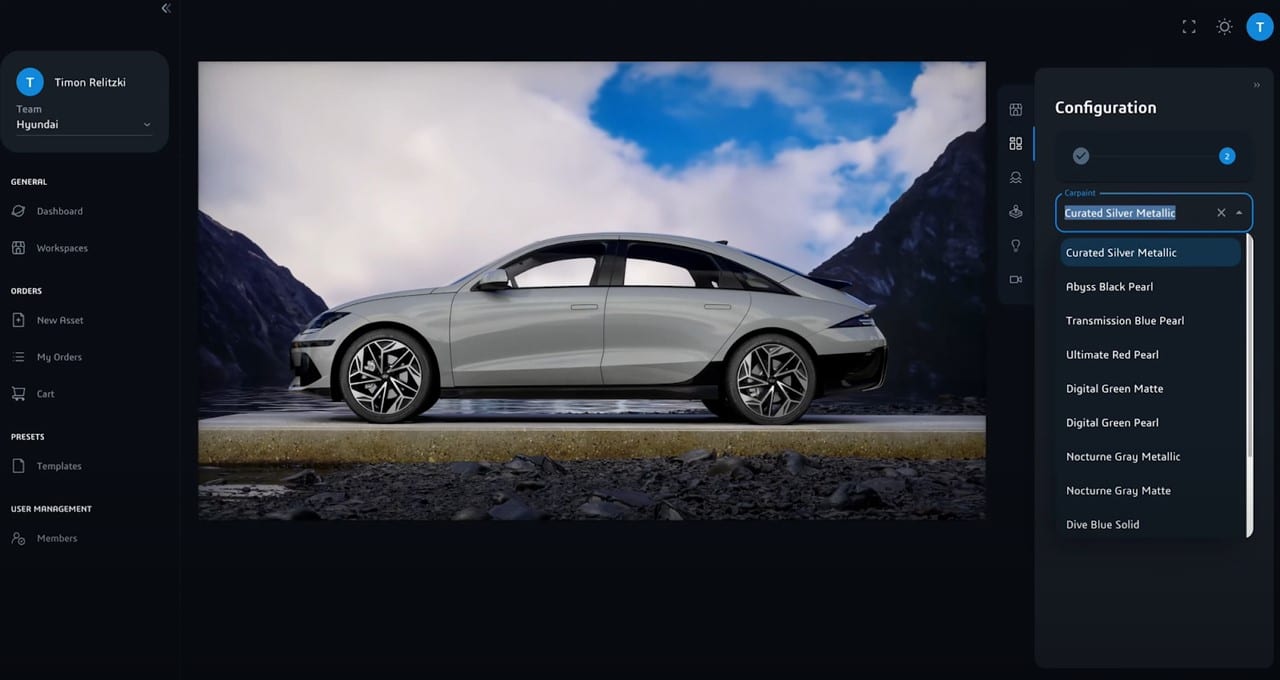
From designing dream cars to customizing clothing, 3D product configurators are ringing in a new era of hyper-personalization that will benefit retailers and consumers.
Together, these technologies enable developers to create configurator applications that deliver physically accurate, photoreal digital twins of products, revolutionizing the way brands personalize buyer journeys at unprecedented scale.
For example, Dassault Systèmes’ 3DEXCITE brand is adopting Omniverse Cloud APIs to enable interoperability with generative AI services, such as Shutterstock’s Edify3D or Edify 360, directly inside its web-based application.
By using NVIDIA Edify-powered models, trained by Shutterstock, Dassault Systèmes can generate stunning 3D environments from text prompts to instantly personalize scenes representing physically accurate products. And with Omniverse APIs, the company can supercharge the web-based app with real-time ray-traced rendering.
Many other developers are also building 3D product configurator software and solutions with NVIDIA Omniverse SDKs and APIs.
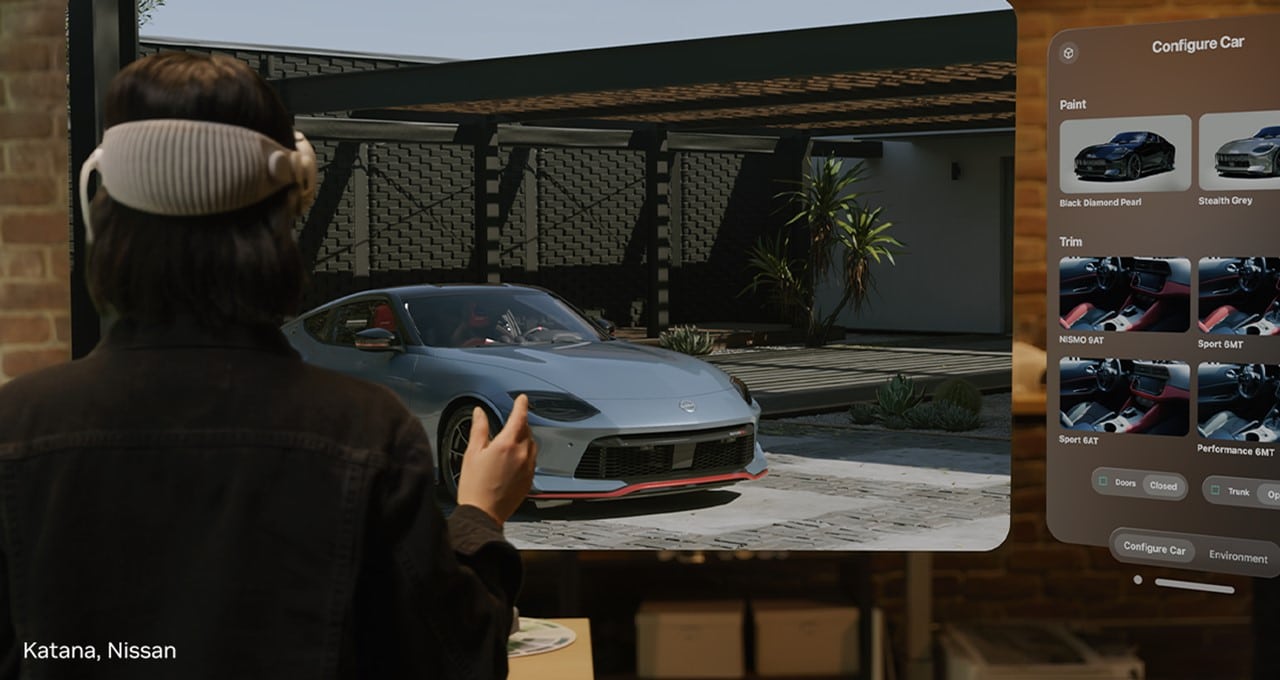
CGI studio Katana has developed a content creation application, COATCreate, used by manufacturers such as Nissan, that allows marketing assets to be staged and created faster with product digital twins. COATCreate also enables users to view and customize the digital twin while wearing an Apple Vision Pro headset, unlocking real-time ray-traced extended reality experiences.
Brickland, another CGI studio, is developing real-time virtual experiences that allow users to customize clothing by choosing from predefined parameters such as color and material. Through their Digitex initiative, Brickland is expanding into digital textures and allowing consumers to visualize and interact with extreme levels of detail in their 3D assets thanks to RTX real-time rendering
Configit connected its powerful configurator logic tool Configit Ace to Omniverse and OpenUSD by streamlining the management of the complex rules system behind the creation of configurators and combining it with the rendering capabilities of Omniverse and RTX. This allows for rapid creation of articulated product configurators and enables the configurator developers to power real-time ray-traced rendering in their solutions.
WPP has developed a content engine that harnesses OpenUSD and AI to enable creative teams to produce high-quality commercial content faster, more efficiently and at scale while remaining aligned with a client’s brand.
Media.Monks has developed an AI-centric professional managed service that leverages Omniverse called Monks.Flow, which helps brands virtually explore different customizable product designs and unlock scale and hyper-personalization across any customer journey.
Accenture Song, the world’s largest tech-powered creative group, is using Omniverse SDKs to generate marketing content for Defender vehicles. Using it with the Edify-powered generative AI microservice, Accenture Song is enabling the creation of cinematic 3D environments via conversational prompts.
Product Digital Twins in the Era of Industrial Digitalization
Forecasts indicate that consumer purchases, including high-value items like vehicles and luxury goods, will increasingly take place online in the coming decade. 3D product digital twins and automated personalization with generative AI serve as invaluable tools for brands to showcase their products and enhance customer engagement in the changing retail landscape.
3D configurators provide tangible benefits for businesses, including increased average selling prices, reduced return rates and stronger brand loyalty. Once a digital twin is built, it can serve many purposes and be updated to meet shifting consumer preferences with minimal time, cost and effort.
Creating a 3D Product Configurator
The process of creating a 3D product configurator begins with harnessing OpenUSD’s powerful composition engine and interoperability. These features enable developers to create dynamic, interactive experiences that accurately reflect the nuances of each product.
Teams can also integrate generative AI technologies into OpenUSD-based product configurators using NVIDIA Omniverse APIs to enhance the realism and customization options available to users. By leveraging AI, configurators can intelligently adapt to user inputs, offering personalized recommendations and dynamically adjusting product configurations in real time. And with NVIDIA Graphics Delivery Network , high-quality, real-time viewports can be embedded into web applications so consumers can browse products in full fidelity, on nearly any device.
The possibilities for 3D product configurators are virtually limitless, applicable across a wide range of industries and use cases.
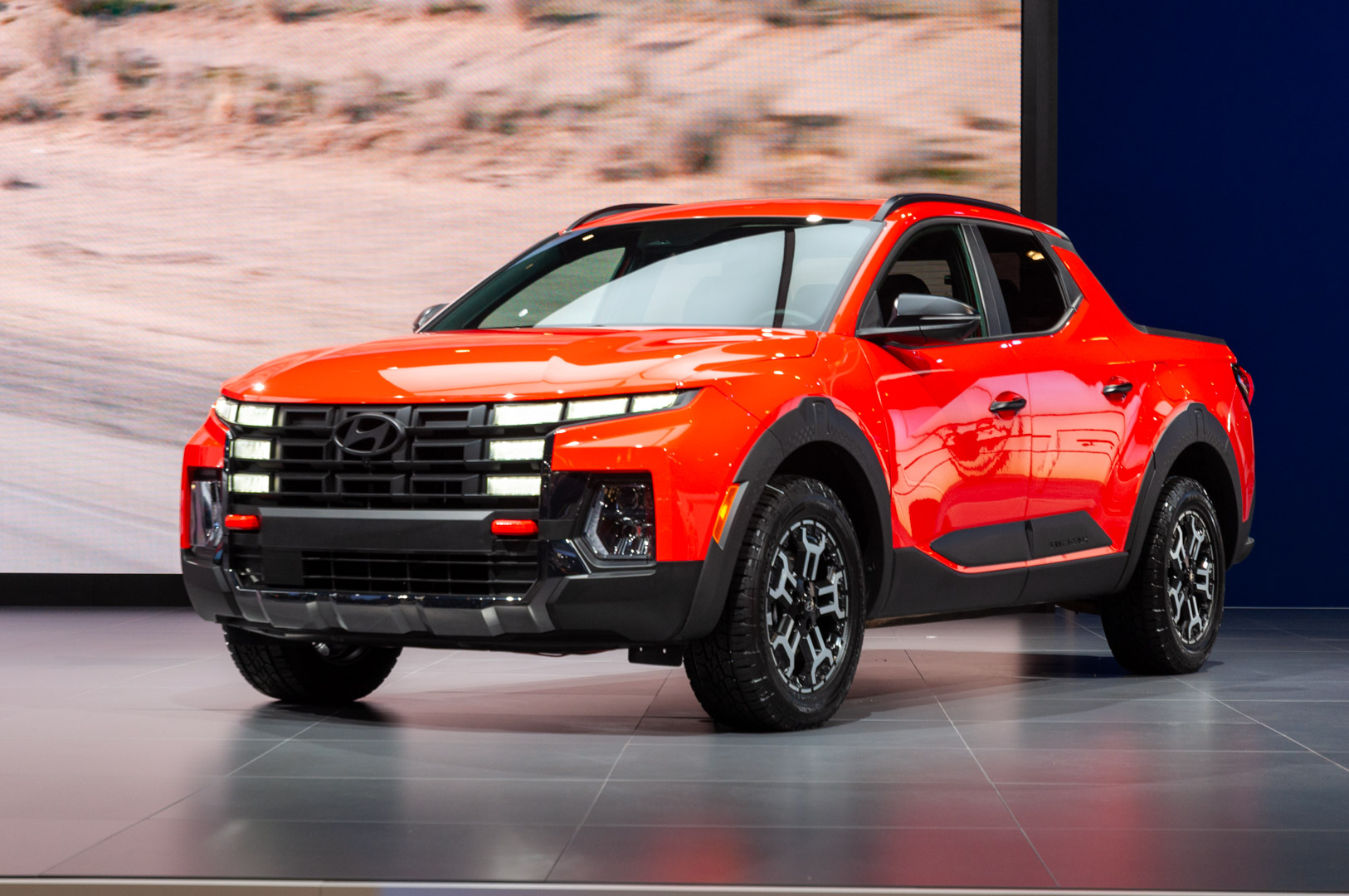
Hyundai revealed two updated vehicles at this week’s New York Auto Show. For 2025, the compact Tucson and the mechanically related Santa Cruz compact pickup truck both receive updated exterior and interior trim, as well as a dose of additional off-road capability.
More from the New York Auto Show
2025 Hyundai Santa Cruz and Tucson
In addition to updated trim and a larger touchscreen, Tucson’s XRT off-road oriented model receives a modified front-end designed to allow for a more generous approach angle, which is helpful on more rugged trails. Also new for the XRT are functional from tow hooks and larger tires.
2025 Hyundai Tucson Calligraphy
The Tucson returns for 2025 with the same 187-horsepower base engine, as well as available hybrid and plug-in hybrid drivetrains.
In addition to styling updates, Hyundai adds an XRT trim level to the Santa Cruz lineup for the first time. The new off-road oriented trim level mirrors that on the Tucson, but will enjoy more power.
Santa Cruz SE and SEL trim levels come standard with a 191-horsepower engine. Night, XRT, and Limited trim levels are powered by a 281-horsepower turbocharged engine.
No word yet on Tucson or Santa Cruz pricing, which will be announced closer to the vehicles’ launch early this summer.
More auto-show fun
CG Says:
Already offered on the brand’s Palisade and Santa Fe crossovers, the XRT off-road themed trim level seems to us like a perfect way to expand the Tucson and Santa Cruz lineups. Though not designed for serious off-road work, the XRT trim level nicely blends rugged appearance with a modicum of additional utility, in a package that will almost certainly appeal to American consumers.
A few years ago now, we looked at 10 of the most obscure Holdens. We were just scratching the surface.
General Motors’ Australian brand had a reputation for importing vehicles for a single generation – case in point, the rebadged Isuzu Piazza, Opel Tigra and Chevrolet Volt covered in that article.
It also was known for developing homegrown obscurities of its own, like the One Tonner Cross6 and Brougham.
Here are five more vehicles from the brand’s 72-year history that were either short-lived or commercial flops – or both.
HQ Statesman Custom
There was once a manual Statesman, but this was no HDT/HSV-fettled sports sedan.
The first Statesman, the HQ, debuted in 1971. It replaced the Brougham, a rather half-arsed attempt at a flagship Holden sedan that ironically had more of an arse. Holden simply took the Premier and gave it a longer rear overhang, without increasing wheelbase length or even changing the front-end styling.
The Statesman – not the Holden Statesman, I should add, as General Motors-Holden marketed it as its own marque – was launched in Custom and de Ville guise.
Custom was actually the name given to the base Ford Fairlane, which the Statesman had been developed to tackle head-on.
Though the Brougham had been offered exclusively with an automatic transmission, Holden offered the base Statesman with a column-mounted three-speed manual transmission, also known as a three on the tree.
It wasn’t completely unorthodox, as the rival ZF Fairlane also offered a three-speed manual in base Custom guise.
The Custom was available with both 202 cubic-inch (3.3-litre) six-cylinder and 253 cubic-inch (4.1-litre) V8 engines, and both of these could be had with the three-speed manual.
You could opt for a floor-mounted four-speed manual, or a three-speed automatic transmission. The latter could be had either with a column shifter, or situated on a floor-mounted console coupled with front bucket seats that replaced the standard bench.
Photo credit: Jeremy
Recirculating ball steering was standard, though you could opt for the variable-ratio power steering that came standard in the flossier de Ville.
The Statesman Custom could even be had with a 350 cubic-inch (5.7-litre) V8 engine, however this came exclusively mated with a three-speed automatic.
In the Statesman, the Custom trim meant vinyl seats and a front bench, with optional Raydo nylon weave cloth inserts; the de Ville also came standard with vinyl, but you could at least opt for cloth, while bucket seats were standard.
The de Ville was also distinguished by its standard vinyl roof – an was option on the Custom.
The three-pedal Statesman and Fairlane Custom models expired around the same time. The Fairlane manual was dropped with the 1973 ZG update, and with the HJ Statesman of 1974, Holden retired the base Custom and instead added a new, top-spec Caprice.
The Statesman would never be offered again with a manual transmission, even when HSV came along to take a crack at it.
Gemini diesel and ZZ/Z
Diesel-powered small cars had become fairly common in Europe by the 1980s, but in Australia they were exceedingly rare.
Volkswagen offered a diesel-powered Golf, but otherwise oil burners were the domain of four-wheel drives and commercial vehicles.
Holden never saw a niche market it didn’t want to enter at least once, though, so along came a diesel-powered Gemini in 1981.
Under the bonnet was a naturally aspirated, overhead cam 1.8-litre four-cylinder diesel engine that was doing duty in the Holden Gemini’s Japanese-market cousin, the Isuzu Gemini.
Introduced in Japan in 1980, this produced just 40kW of power and 105Nm of torque, and was mated exclusively with a five-speed manual transmission.
Holden offered it in just one highly specified SL/X sedan variant, with the diesel carrying a $1000 premium over the standard 1.6-litre petrol. But it still massively undercut the Golf diesel, with Volkswagen asking for another $3000 or so over the price of the Holden.
The company claimed highway fuel economy was just 5L/100km and city fuel economy 7L/100km – improvements of 1.5L/100km and 2.5L/100km, respectively, over the petrol.
It was bog slow, though. Contemporary reviews published 0-100km/h times of around 24 seconds, around 10 seconds slower than a petrol model – blame not only the lower outputs of the diesel engine, but also the 172kg increase in weight.
The Gemini diesel never really spurred rival brands to offer oilers of their own, and petrol prices would come down during the 1980s as the OPEC oil crises became distant memories. The small car segment eventually saw a meaningful number of diesel contenders here in the 2000s, but this diesel boom was followed by a bust.
The TE update of 1979 had brought more squared-off styling to the Gemini that was rather Commodore-like, though the wagons had carryover sheetmetal behind the A-pillar. The coupe also received more squared-off styling, but Australia would never see it.
There would be two more updates of the rear-wheel drive Gemini, which by the the 1980s was showing its age – the model had debuted in 1975, though its global GM T-Car underpinnings dated further back to 1973.
There was a minor facelift, called the TF, in 1982, followed by another – the TG – in 1983. With each update, the Gemini looked more and more like the larger Commodore, down to the ribbed tail lights, but sales continued to decline as more modern front-wheel drive rivals like the Ford Laser rose in popularity.
The diesel, which continued to be offered, was slow and smelly, but surely this spicy-looking model TG variant was more exciting? Well, it was faster, but it was no faster than regular Geminis.
A sporty-looking (but similarly no more powerful) version of the contemporary Camira called the SJ, which borrowed a name from Pontiac who in turn borrowed from Duesenberg, was mockingly referred to by some as the “Standing Joke”. That was a bit of a stretch, but with this tarted-up Gemini’s moniker, Holden left the door wide open to mockery.
It was called the ZZ/Z. Yes, like a sleeping comic strip character.
What makes this all the more galling was the fact the Japanese-market Isuzu Gemini was offered in an array of ZZ-badged variants that packed a fuel-injected 1.8-litre four.
Not the Holden. It used the same carbureted 1.6-litre four with 49kW of power and 106Nm of torque as lesser Geminis. That meant the various add-ons – unique front and rear spoilers, alloy wheels, a tachometer, and fender-mounted ‘wind splitters’ – were writing cheques the car’s performance just couldn’t cash.
It wasn’t around for long. Holden shuttered its Acacia Ridge plant in Queensland in 1984, and with it went the rear-wheel drive Gemini. As for its short-lived replacement, that’s a story for another day.
Barina Cabriolet
With the folding metal hardtop convertible craze of the 2000s, brands such as Mitsubishi and Peugeot all introduced droptop versions of their light hatchbacks. Rewind to the late 1990s, however, and there was no activity in this segment in Australia.
You could step up to a Peugeot 306 or Volkswagen Golf convertible, though, or literally step up to a high-riding Suzuki Vitara. But if you wanted something Barina-sized, you were out of luck.
Holden saw an opportunity here.
From November 1997 until late 2000, it imported three-door Barina hatchbacks from Spain and had HSV convert them to convertibles in Melbourne.
Back in Europe and the UK, the Opel and Vauxhall Corsa – as the Barina was known there – also received a limited-run cabriolet version with an almost identical roof design; reportedly just 100 Vauxhall Corsa Cabriolets were sold in the UK.
The Australian-market Barina Cabrio was priced from $19,990 before on-road costs with a five-speed manual, the same as the cheapest Vitara convertible, or $21,580 before on-roads with the optional four-speed auto.
That was $5500 more than the entry-level Barina City hatch, though the Cabrio did at least come with body-coloured bumpers, an immobiliser and power steering as standard.
Launched shortly after a mid-life update for the SB Barina, it came with the same 60kW/114Nm naturally aspirated 1.4-litre four-cylinder engine; Holden had mercifully axed the gutless 1.2-litre base engine with the update.
Barina Cabrio advertising heavily targeted young female buyers, with one ad seeing an animated female protagonist use her car to fix her hair.
Contemporary reviews found body rigidity didn’t suffer following the loss of the Barina’s roof, thanks in large part to a ‘basket handle’ rollbar. While that was a good idea from a safety point of view, it meant aesthetically the Barina Cabriolet was rather awkward; the cheapo looking soft top didn’t help matters here, either.
It was a shame as the donor car was one of the most attractive vehicles in its segment in the 1990s.
Holden sold 11 in 1997, rising to 294 units in its first full year on sale. But sales dropped to 152 in 1999 and then 123 in 2000, before the Barina Cabriolet was dropped.
It was retired before the new XC Barina launched in 2001. However, this subsequent generation of Barina/Corsa spawned a folding hardtop convertible spinoff, the Tigra, which was built by Heuliez and exported to markets like ours.
The cabriolet is almost certainly the rarest body style of this generation of SB Barina/Corsa B.
The Barina/Corsa was also offered in markets like Latin America and China under the Chevrolet and Buick brands, and spawned four-door sedan, five-door wagon and even two-door ute body styles, with production finally ending in 2016 with the death of the Brazilian Chevrolet Classic sedan.
Suburban
General Motors is launching the full-size GMC Yukon Denali SUV in Australia during 2025, but this won’t be the first time it has fielded a huge American SUV here.
The GMC Yukon and Yukon XL are closely related to the Chevrolet Tahoe and Suburban, and it was the latter that Holden chose to import here back in 1998.
At the time, the Tahoe/Yukon weren’t offered with a third row of seating, which perhaps explains why Holden brought the jumbo-sized Suburban here.
At 5575mm long and 1948mm wide on a 3340mm wheelbase, the Suburban was 685mm longer (if only 8mm wider) on a 490mm longer wheelbase than a 100-series LandCruiser. At 2540kg (kerb), it was also around 180kg heavier than a LandCruiser GXL.
Holden was well aware of how massive the Suburban was, giving its press fleet vehicles number plates that included the word ‘HUGE’.
Sourced from Mexico, the Suburban was offered here in 1500 and heavier-duty 2500 guise – both with base, LS and LT trim levels. Only the LT had a conventional upward swinging tailgate, with the others featuring barn doors.
The 1500 had a naturally aspirated 5.7-litre Vortec petrol V8 producing 190kW and 447Nm, while the 2500 was offered exclusively with a 6.5-litre turbo-diesel V8 with 145kW and 583Nm.
Both used a four-speed automatic transmission, but the 2500 used a different unit called the 4L-80E. It also featured beefier brakes and heavy-duty suspension, plus a higher ride height and a wider track.
Braked towing capacity was also bumped up from 2720kg to 3400kg, while the 2500’s gross vehicle mass (GVM) was 3900kg – up from 3311kg.
All models featured a live rear axle with leaf springs, plus a rear limited-slip differential and shift-on-the-fly part-time four-wheel drive with selectable low-range gearing. No locking differentials were offered.
Holden said it performed local tuning of the Suburban, and fitted it with unique Bilstein gas shock absorbers. But this still had the cushy, comfortable ride, spongy brake pedal and vague steering you would expect of a jumbo American truck, though critics praised the smooth, effortless powertrain.
The third row seated three occupants and was removable, though it was saddled with lap belts. It wasn’t the only disappointing safety lapse. Dual airbags were becoming increasingly common in the late 1990s, but the Suburban only had a driver’s airbag.
All up, the Suburban had seating for eight in most variants, with the base petrol and diesel and diesel LS swapping the front bucket seats for another bench and bumping seating capacity up to nine.
As with almost all North American GM products from the mid-1990s, the Suburban had a cheap-looking, plasticky interior. Though it was built in right-hand drive at the factory and not converted later, contemporary reviews still spoke of trim gaps and rattles.
There were also some things that weren’t changed with the conversion, like third-row access being from the driver’s side and not the kerb side, the driver doing without a footrest, and a centre console opening the “wrong” way.
Launched in 1998, the Suburban was extremely short-lived. The axe fell in 2000, and just 746 were sold during its brief run here.
While those paltry sales figures would appear to be the cause of the Suburban’s demise, this GMT-400 generation had been launched in North America all the way back in 1991, derived from a pickup truck launched in 1987.
A replacement GMT-800 generation was launched in North America in 2000, but it and its close relations – the Chevy Tahoe, GMC Yukon and Yukon XL, and Cadillac Escalade and Escalade ESV – would all be built exclusively in left-hand drive.
Epica 2.0 manual
I know that photo of the Holden Epica put you to sleep, but wake up!
You may be thinking there’s surely nothing interesting about this blandly styled, Korean-built mid-sized Holden, right? It was a car tailor-made for witness protection, with a ClipArt design that makes it look like a generic vehicle in a Yellow Pages ad (remember those?).
Peek under the bonnet, however, and there’s one thing – perhaps the only thing – interesting about it: the inline six-cylinder engine developed in collaboration with Porsche.
Yes, that’s right: an inline six, transversely mounted in a front-wheel drive car – far from a common configuration.
ZC Vectra
In the 2000s, Holden decided to drop some of its models sourced from Opel in favour of Korean models it could sell cheaper – the XC Barina, a critically acclaimed rebadged Opel Corsa, for example, made way for a rebadged Daewoo Kalos known as the TK Barina.
This trio of Korean rebadges also included the Viva hatch, sedan and wagon, a rebadged Daewoo Lacetti slotting in under the Astra as a more affordable model; and the Epica, a mid-sized sedan sold in Korea as the Daewoo Tosca, which replaced the Vectra.
Vectra sales had trailed off from their late 1990s heights, and despite price cuts they didn’t recover. Continued price cuts clearly weren’t going to be sustainable, so Holden instead dropped it in 2006, with the Epica arriving in 2007.
At launch, the CDX manual opened the range at $25,990 before on-road costs. That was a whopping $9000 less than the base price of the ZC Vectra range when it had debuted in 2003.
But where the Vectra had been designed to target the likes of Volkswagens, the European Ford Mondeo, and even premium-brand entries from Germany, the Epica – as with the rest of the Korean Holdens – aspired to adequacy.
The Epica was pitched directly at the Toyota Camry, but unusually it launched with a pair of double overhead cam inline sixes. This was a segment where four-cylinder petrol engines dominated, and if you were lucky there was a petrol V6 or a turbo-diesel four.
These engines had been developed at Daewoo under its then-chief engineer Ulrich Bez, formerly of BMW and later the CEO of Aston Martin. Designed for the Epica/Tosca’s predecessor, the Magnus, Porsche engineers were brought in to consult.
The base 2.0-litre produced 105kW of power and 195Nm of torque, mated with a five-speed manual, while the 2.5-litre bumped those outputs up to 115kW/237Nm and came exclusively with a five-speed automatic sourced from Aisin.
But while Holden did some local tuning, it came late to the Epica program. The car itself was an evolution of the Daewoo Leganza-replacing Magnus, which entered production in 2000, so it was a retrograde (if cheaper) step from the Vectra.
Photo credit: Grays
Surprisingly, claimed fuel economy for both engines bested the rival Camry. Holden claimed combined cycle consumption of 8.2L/100km with the 2.0-litre and 9.3L/100km with the 2.5-litre, against Toyota’s claim of 9.9L/100km for its Camry (itself merely matching the V6-powered Toyota Aurion).
Reviews at the time found the Epica’s powertrains to be unsurprisingly smooth but ultimately lacking in grunt, its ride comfortable, and its dynamics to be composed if uninspiring.
The 2.0-litre lasted around a year. In 2008, Holden gave the Epica facelift with a bolder look – I said bolder, not bold – as well as more safety kit and a six-speed auto. The 2.0-litre got the axe, with the 2.5-litre repositioned as the base engine and an optional 110kW/320Nm 2.0-litre turbo-diesel four joining the range.
Despite a $2000 premium over the petrol, the diesel also slid (just) under the $30,000 barrier – several thousand less than a diesel Mondeo or Passat.
Facelifted Epica
But though the Epica offered sharp pricing that undercut the Camry and had even debuted with a 30-day money-back guarantee, it sold no better than the ZC Vectra. In 2007, Holden sold 3108 examples; for context, it sold 3496 Vectras in 2004 and 3012 in 2005.
Sales continued to slide each year, even with the new diesel option. Holden sold just 997 examples in 2011, the year it swung the axe; Korean production was ending anyway.
Then-chairman Mike Devereux admitted the Epica wasn’t the car the brand needed to battle the Camry. The Malibu came to replace it in 2013, but it didn’t turn out to be the car to battle the Camry either, with annual sales hovering in the 1000-1600 range.
Malibu
This new, much more boldly styled mid-sized sedan was also sourced from Korea and offered a choice of petrol or turbo-diesel four-cylinder engines.
But it was entirely unrelated, developed primarily for the North American market and riding GM’s Epsilon II platform, as used by the Opel Insignia which would later be offered in Holden showrooms.
Alas, Holden never seemed to be able to launch a mid-sizer that could outsell the Camry, even when it sold an actual Toyota Camry, the Apollo. Everything seemed to get lost in this vortex between the brand’s small car offering and the Commodore, from the too-expensive Vectra to the too-cheap Epica.
The maker of Falken tires has developed technology to detect loose lug nuts, and the company plans to debut it on a production vehicle later this year.
Sumitomo Rubber Industries has announced the new feature Sensing Core, which the company says can detect lug nuts that are loose by as little as one millimeter, without the use of dedicated sensors. Instead, Sensing Core relies on data from a vehicle’s controlled area network (CAN), analyzing wheel speed and other factors.
This feature will debut as standard equipment on a car from an unnamed automaker this year, Sumitomo said, adding that the company is in discussions with additional automakers. The market where the loose-nut detection feature will debut was not discussed, so it’s unclear if it will be available in the U.S.
Accidents caused by loose lug nuts have become an increasing concern in Sumitomo’s home market of Japan, the company said, particularly ahead of the colder months when drivers switch over to winter tires. While commercial vehicles often have clips to provide visual confirmation that nuts are properly tightened, this isn’t a foolproof method, Sumitomo claims. And passenger cars generally don’t have them at all.
Sumitomo claims the Sensing Core tech is independent of the tire make, model, and size, allowing it to be used with a variety of vehicle and tire combinations. The same basic technology can also be used for other applications. Sumitomo has also used the same basic technology for an indirect tire pressure monitoring system the company claims is employed by 15 vehicle manufacturers in the European, Japanese, Chinese, and Indian markets.
Another possible application is tire-wear monitoring. This would involve sending vehicle data to a cloud to predict tire wear based on the amount of usage. At the 2024 CES, Sumitomo announced an investment in vehicle-analytics software company Viaduct, with the aim of integrating the latter’s software with Sensing Core for this purpose.
Hyundai’s Santa Cruz compact pickup truck was given a refresh. The exterior mostly stays the same, but the interior sports a new dash and the latest technology.
2025 Mercedes-Benz G-Class (G550)
Mercedes-Benz updated its G-Class, and the updates extend to the high-performance G 63 from AMG. The updated range arrives for the 2025 model year, and while the G 63 keeps the current V-8, the regular G-Class downsizes to a turbocharged inline-6.
2025 Audi SQ7
Audi gave the Q7 an update. The latest version features revised front and rear styling, including headlights with the latest in LED technology.
Genesis GV60 Magma concept
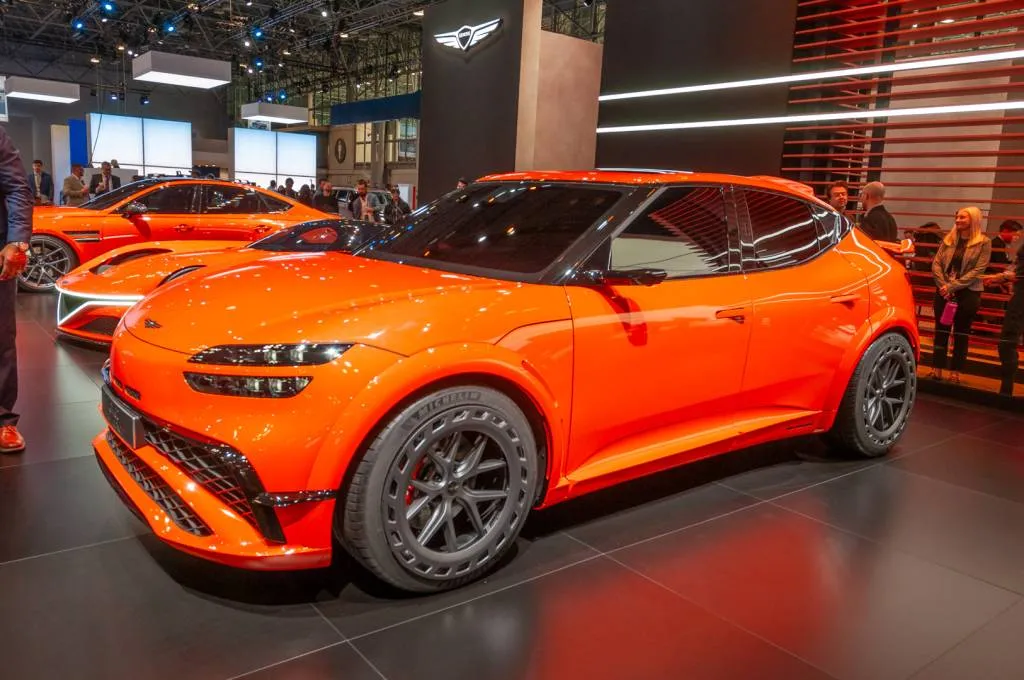
It’s been rumored for years, but this week we finally received confirmation from Genesis that it is planning a performance sub-brand similar to Mercedes-Benz AMG and BMW M. It will go by the name Magma, and the GV60 Magma concept shown this week hints at what’s to come.
JLR (formerly Jaguar Land Rover) is no stranger to SUVs with beefy engines, and its next will be a hardcore Defender that will introduce the new OCTA designation. This week we received fresh shots and video of a prototype.
2024 Kia K4
Kia unveiled a new compact sedan called the K4, which replaces the Forte. It’s due to go on sale in the second half of the year and will initially offer buyers a pair of gas powertrains to choose from.
Jeep Vacationeer concept
And finally, the annual Easter Jeep Safari in Moab, Utah, is underway, and once again Jeep has shown up with a family of concept vehicles. There are four this year, one of which is a bright green Wagoneer dubbed the Vacationeer.
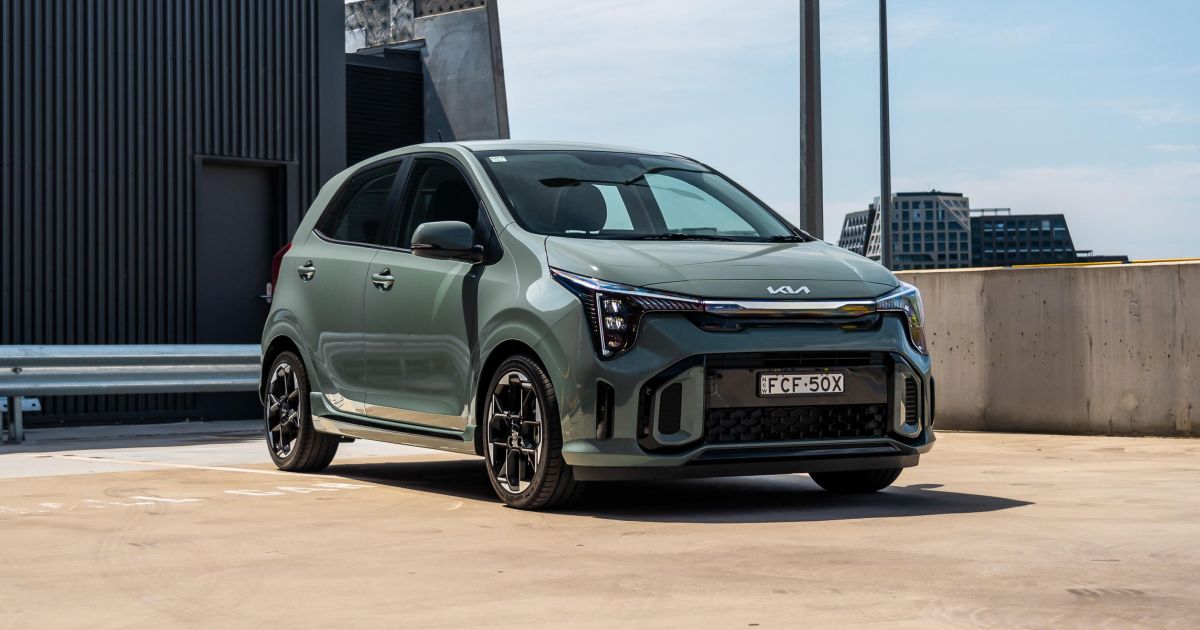
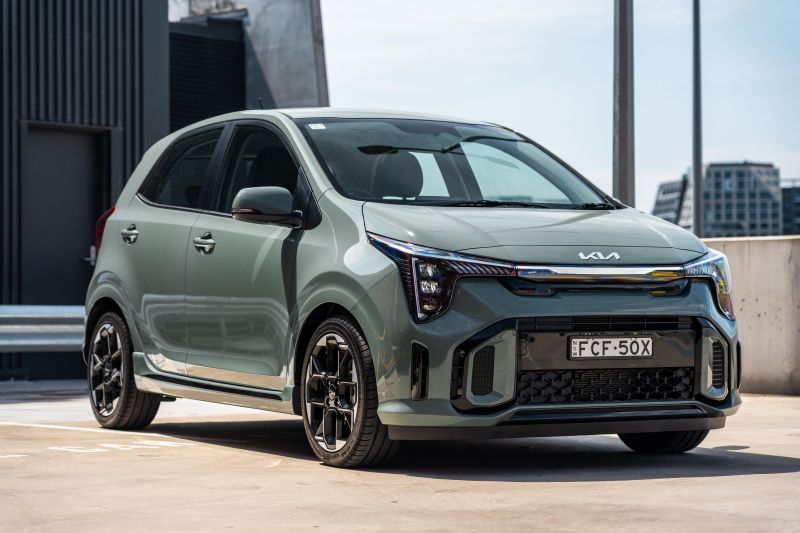
The Kia Picanto has lost its title as Australia’s cheapest new car for now, but it’s back for 2024 with a new look and more technology.
This tiny hatchback is a big deal in Australia, having dominated the sales charts and proved it’s possible to sell small, cheap hatchbacks in the face of most rivals disappearing.
Its importance for Kia is growing, too. The long-running Rio is dead, leaving the Picanto to fight the wildly popular MG 3 alone.
Kia is gearing up for a fight. The new Picanto has an angry new look which takes inspiration from the EV9 and Sorento, and its cabin features an updated infotainment system.
There’s also new safety equipment, which will no doubt endear the Picanto to parents looking for an affordable first car option.
Should you look at the base model, or the fancy GT-Line on test here?
How does the Kia Picanto compare?
View a detailed breakdown of the Kia Picanto against similarly sized vehicles.
Kia
Picanto
How much does the Kia Picanto cost?
There’s a lot more standard safety equipment in the updated Kia Picanto, but it comes at a price.
2024 Kia Picanto pricing:
2024 Kia Picanto Sport manual: $17,890 ($20,690 d/a)
2024 Kia Picanto Sport auto: $19,490 ($21,690 d/a)
2024 Kia Picanto GT-Line manual: $19,690 ($22,490 d/a)
2024 Kia Picanto GT-Line auto: $21,290 ($23,490 d/a)
To see how the Picanto compares with its rivals, use our comparison tool.
What is the Kia Picanto like on the inside?
The cabin of the Picanto remains simple but well thought out behind the wheel.
Although it’s tiny on the outside (it’s only 24mm longer than a Fiat 500), the driving position up front is actually surprisingly accomodating for big bodies.
At 6’7 I was able to get comfortable behind the wheel, although it’s not as comfortable as even a slightly bigger car like the Stonic SUV.
Facing the driver is a lovely, sporty steering wheel, and the simple digital dashboard from low-end versions of the Sportage SUV. With large speed and rev readouts, it’s easy to make out on the move without feeling particularly special.
That theme extends to the rest of the interior.
With manual air-conditioning dials, lots of hard plastics, and throwbacks like the ‘80s Mercedes-style stepped gate on the automatic shifter, it feels like an economy car… which it is, but which also isn’t really in keeping with the GT-Line branding.
It begs the question of why you wouldn’t just buy the base model, which is fundamentally the same inside but just lacks a few superficial trim pieces.
Regardless of which model you opt for, you get a 7.0-inch touchscreen infotainment system with wireless Apple CarPlay and Android Auto.
Like the digital dashboard, it’s simple to look at but ultimately effective.
There’s very little learning curve here; we’d wager most owners will connect up their phone and never spend much time interacting with the native software.
Storage up front is solid, despite the car’s diminutive proportions. You get two cupholders at the base of the dash, along with a shelf that’s perfect for a smartphone or wallet.
There’s also a proper central armrest, which isn’t always a given in economy cars, and usable door pockets.
The rear seats are usable for kids, or for adults on shorter trips.
Headroom back there is genuinely good thanks to the boxy body, but there’s minimal legroom unless the driver is squeezed right up against the dashboard.
ISOFIX points feature on the outboard rear seats, and there’s a trio of top-tether points for child seats – not that we’d expect too many people being keen to regularly use the Picanto as a family car.
There are no air vents back there, nor is there a fold-down central armrest.
Boot space is 255 litres, which is enough to swallow a couple of overnight bags or a large supermarket shop.
There’s a significant load lip, and the boot space itself is quite deep. That means you’ll have to lift heavy items and up and into the cabin, rather than sliding them in as you’re able to in bigger cars.
What’s under the bonnet?
Following the discontinuation of the Picanto’s 1.0-litre three-cylinder turbo engine with the facelift, the entire range is now only available with a 1.25-litre four-cylinder naturally aspirated engine.
Model
Kia Picanto GT-Line
Engine
1.25L 4cyl petrol
Power
62kW
Torque
122Nm
Transmission
4-speed auto
Driven wheels
Front-wheel drive
Weight
993kg (tare)
Fuel economy (claim)
6.0L/100km
Fuel economy (observed)
7.5L/100km
Fuel tank size
35 litres
Fuel requirement
91 RON
To see how the Picanto compares with its rivals, use our comparison tool.
How does the Kia Picanto drive?
With a small, naturally aspirated petrol engine and a four-speed slush box, the Picanto is decidedly old-school.
Even in city driving it feels as though it’s working hard, revving to 3500rpm in first gear even when you want to accelerate gently, and it makes a coarse and raspy noise.
It’s far from unbearable, but it also stands out in the age of effortless turbocharged performance.
If you’re willing and able to drive a manual car, the five-speed option at least gives you more gears to play with, and more control over which one you’re in at any given point.
Given Kia killed the turbocharged Picanto GT because it was only available with a manual though, we’d wager most buyers will opt for the four-speed automatic on test here.
With light steering and a tiny footprint, the Picanto does its best work in town.
It’s a piece of cake to thread through tight spaces, slipping into small parking spots that’d have a Seltos stumped without room to spare, and the boxy window line offers excellent all-round visibility.
Ride quality is generally pretty good on the 16-inch wheels, which are tiny by 2024 standards.
The Picanto keeps most of the fiddly bumps on city roads out, but the suspension can be noisy when you slap into sharper potholes, and you’re aware of how short the wheelbase is over speed bumps.
It’s perfectly acceptable given the price and the car’s size. At highway speeds the little engine is working hard, revving between 3000 and 4000rpm.
Wind and road noise are noticeable at 100km/h, and when you put your foot down at speed it needs to kick down and rev hard. It’s not a natural highway cruiser, but it’s a capable one given its size.
Although it doesn’t have adaptive cruise control, you do get lane-keeping assist with active lane-centring. They come in handy on longer trips, nudging you back between the white lines if you stray.
The lane-centring can be a bit too hands on at times, trying to wrest control away from the driver. Some members of our team love it, but I am not one of them.
What do you get?
The 2024 Kia Picanto is available in two trim levels – on test is the flagship GT-Line.
Picanto Sport highlights:
14-inch alloy wheels (NEW)
Halogen headlights with halogen daytime running lights
Automatic high-beam
Automatic headlights
LED rear fog lights (NEW)
Remote central locking
Space-saver spare
Power-folding exterior mirrors (NEW)
8.0-inch touchscreen infotainment system
Wireless Apple CarPlay
Wireless and wired Android Auto
4.2-inch instrument cluster screen (NEW)
Leatherette-wrapped steering wheel (NEW)
Leatherette-wrapped shifter (NEW)
4-way manual driver’s seat adjustment
Cloth upholstery
3 x top-tether and 2 x ISOFIX anchor points for child seats
The Kia Picanto had a four-star ANCAP rating based on testing conducted in 2017, but this expired at the end of December 2023. This means it’s now unrated.
It received an adult occupant protection rating of 87 per cent, a child occupant protection rating of 64 per cent, a pedestrian protection rating of 54 per cent, and a safety assist rating of 47 per cent.
All Picanto models come standard with the following equipment:
Autonomous emergency braking (AEB)
Blind-spot assist (NEW)
Driver attention warning
Lane-keep assist (NEW)
Lane Follow Assist (NEW)
Leading vehicle departure alert
Rear cross-traffic assist (NEW)
Rear occupant alert
Reversing camera
Rear parking sensors
Safe exit warning
How much does the Kia Picanto cost to run?
Kia Australia backs its cars with a seven-year, unlimited-kilometre warranty.
These first seven services cost $285, $467, $341, $511, $321, $584 and $341, respectively, under Kia Australia’s capped-price service program.
CarExpert’s Take on the Kia Picanto
The Picanto might be a more modern, and more aggressive looking beast than the car it replaces, but it’s still a cheap and cheerful little city hatch at heart.
There’s nothing wrong with that – it’s arguably something we need more of in 2024.
But that makes the GT-Line feel a little… redundant.
If it had a more powerful engine, or a significantly nicer interior, it’d be worth the extra money over the base model.
As it stands though, you’re better off enjoying the Picanto as a base model and putting the $1800 you’ll save towards a few years worth of fuel.
Click the images for the full gallery
MORE: Buy a Kia Picanto MORE: Everything Kia Picanto
Which automaker outlined an all-of-the-above electrified approach for the near future, including hybrids, PHEVs, and a 3-row electric SUV?
Which luxury brand teased radiant cabin heat for a future electric SUV?
This is our look back at the Week In Reverse—right here at Green Car Reports—for the week ending March 29, 2024.
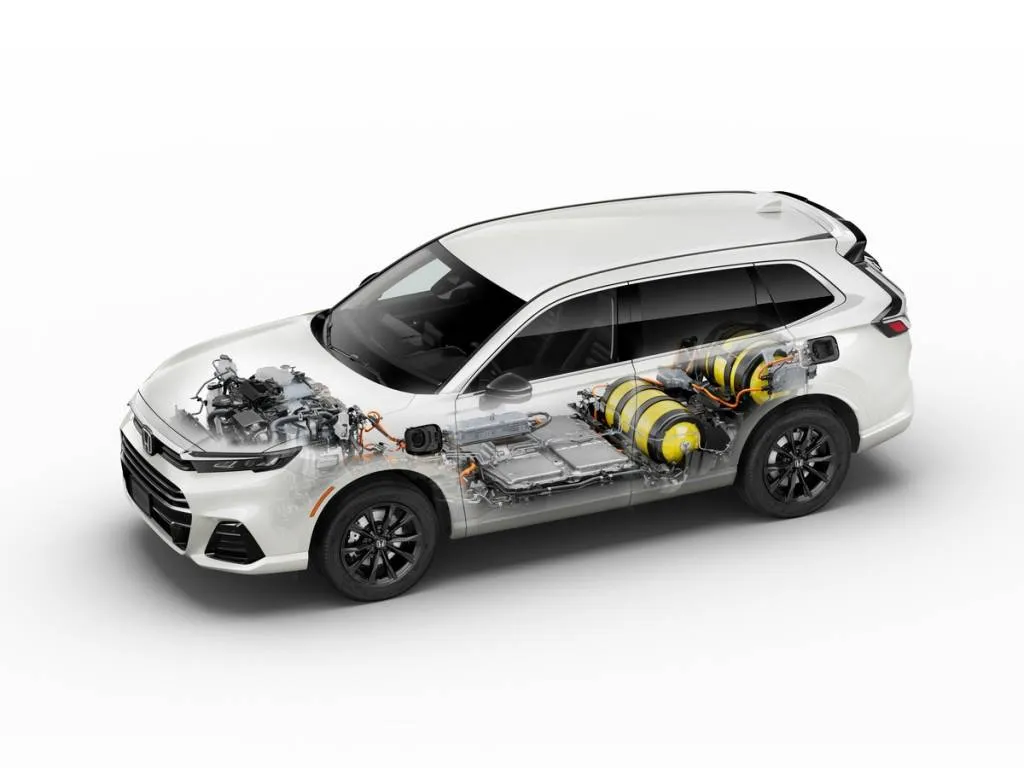
In a first drive of the 2025 Honda CR-V e:FCEV, we found it to be well-packaged, roomy, and refined, with a driving experience that’s virtually indistinguishable from that of a battery-electric model. While the vehicle is in top form, the fueling infrastructure is not. Good thing Honda, among other automakers, has moved on to prioritize other uses for hydrogen first—and put a charge port on the e:FCEV.
Honda CR-V e:FCEV
In a quick review of the 2024 Genesis GV60, Green Car Reports found this stylish compact EV to be roomy on the inside and relatively efficient. But well-equipped versions like the one tested are quite expensive, and real-world range disappointed in the cold. A racing-influenced GV60 Magma was also shown in concept form this week at the New York auto show and kicks off a new performance sub-brand for Genesis. Genesis also revealed its Neolun Concept electric SUV, which previews the upcoming flagship Genesis GV90 with a lounge-like interior and technology that includes radiant cabin heating.
Genesis Neolun Concept – 2024 New York Auto Show
Nissan talked through a roadmap for a new generation of affordable EVs, plus a three-row electric SUV due in 2028, and a pivot that will include U.S.-bound hybrids and plug-in hybrids. That includes Nissan’s e-Power hybrid tech, which it confirmed for a 2026 launch, when it sees those hybrids as being at cost parity with non-hybrids.
2025 Polestar 4
2025 Polestar 4 pricing was confirmed Wednesday. The curvaceous electric SUV with no rear window, sized closely with the Tesla Model Y, will start at $56,300 when it starts arriving in the fourth quarter of 2024. And that’s for China-built versions; those assembled in South Korea will arrive a bit later.
The Mercedes-Benz GLC 350e plug-in hybrid, scheduled for U.S. showrooms in the second half of the year, was revealed and detailed this past week with an impressive 81 miles on the European WLTP test cycle—potentially more than 50 miles EPA—and DC fast-charging for its 24.8-kwh battery pack.
2023 Fisker Ocean
Fisker is facing an uneasy future with the dissolution of a potential EV partnership, reportedly with Nissan, and an additional investment that also might not materialize. So in the meantime it’s slashed up to $24,000 off the Ocean EV, as a glut of 2023 models remain undelivered.
The Easter Jeep Safari has been the debut venue for the past three years for fully electric concepts from the odd-road brand, but this year’s lineup of four concepts all had combustion engines on board. The lone plug-in concept was an intriguing Jeep Wrangler 4xe Willys Dispatcher that combines the modern plug-in hybrid powertrain with a throwback design theme.
Jeep Willys Dispatcher concept
EVs are as clean as the grid from which they charge—and sometimes that can vary significantly by time of day. As Bloomberg New Energy Finance recently helped examine and underscore, that advice to plug in at night might be misguided. In many places, daytime EV charging is cleaner as utilities load up on renewables like solar.
Jaguar is recalling the I-Pace again for battery-fire risk. This time it applies only to 258 vehicles delivered to the U.S.—among the earliest I-Paces made, and all 2019 models. Jaguar cites “multiple technical issues” that elevate the risk of fires, but doesn’t yet have a solution other than only charging to 75%, charging outside, and parking away from structures.
The U.S. EV startup Canoo announced that it has acquired many of the manufacturing assets of another design-savvy EV startup—U.K.-based Arrival. As Canoo struggles to ramp up production of its futuristic-looking electric vehicles, the Arrival remains might potentially help Canoo survive.
Canoo in Oklahoma
Ferrari has already offered a few very performance-oriented plug-in hybrids, and it’s confirmed an EV is on the way. With its battery partner, SK On, it’s now confirmed more of a development partnership between Ferrari and SK that could help “advance cell technology.”
Studies continue to point out that plug-in hybrids pollute more than their all-electric miles suggest. While that’s something the EPA acknowledged, proposing a new adjustment for PHEVs in emissions regulations, the final version last week gave automakers a pass, pushing the stepped-up rule back four more years.
And China has filed a complaint with the WTO over the Biden administration’s EV incentive policy, which seeked to block EVs with battery components or raw materials sourced from China from getting incentives—specifically the EV tax credit.
The technical storage or access is strictly necessary for the legitimate purpose of enabling the use of a specific service explicitly requested by the subscriber or user, or for the sole purpose of carrying out the transmission of a communication over an electronic communications network.
Preferences
The technical storage or access is necessary for the legitimate purpose of storing preferences that are not requested by the subscriber or user.
Statistics
The technical storage or access that is used exclusively for statistical purposes.The technical storage or access that is used exclusively for anonymous statistical purposes. Without a subpoena, voluntary compliance on the part of your Internet Service Provider, or additional records from a third party, information stored or retrieved for this purpose alone cannot usually be used to identify you.
Marketing
The technical storage or access is required to create user profiles to send advertising, or to track the user on a website or across several websites for similar marketing purposes.