Home Blog Page 840

Throwback: Swedish Engine Swap Insanity At Elmia 2014

0


2024 Intro

This weekend, Sweden’s Custom Motor Show (previously known as the Bilsport Performance & Custom Motor Show) returns to the Elmia convention center in Jönköping. Since 1971, this event has showcased the best of Sweden’s custom car culture, and Alen is on the ground for the next few days to bring us the very best from the 2024 edition.

Speedhunters first covered the Custom Motor Show in 2013, but it wasn’t until a year later that we truly sunk our teeth into it. So for this week’s throwback post, we’re heading back to Elmia in 2014 for a look at some of the standout engine-swapped cars. What will this year’s event turn up? We’ll be sharing all with you very soon.
1-Engine-Swaps-of-Elmia-Bilsport-2014-33

2014 Feature

If you’re a marque purist turn away now. No seriously, save yourself the strain of looking at these images. What we found at the Bilsport Performance & Custom Motor Show at Elmia may well make you unhappy. As for the rest of us, check this out, because you’re not going to believe what’s been squeezed in to what.

Take body styles from BMW, Toyota, Volvo and Mazda, mix up all the engines, add some turbos and a whole load of creativity, and you’re almost there. Did I mention Dodge Viper or Porsche? No? Well I have now, so if you’ve made it this far then best you read on. This is going to get random.

Engine Swaps of Elmia Bilsport 2014-2

We didn’t have to wander too far from the Speedhunters stand for the builds to start catching us out. A Nissan S15 with a turbocharged BMW six cylinder? Yes, that just happened. But when you consider the benefit of having two extra cylinders over the standard SR20DET, it actually makes sense. If you ignore the badges it can make a lot of sense.

Engine Swaps of Elmia Bilsport 2014-4

But that BMW base motor had to come from somewhere, right? Maybe that’s why one of the other Penny Bridge Performance cars has an E46 with a Lexus V8 and turbo? It’s like they’re doing it on purpose. The rest of the line up were equally as interesting; projects like an Mitsubishi Lancer Evo IX featuring the same engine set up you can see here. I’m really hoping we’ll be able to catch up with these guys at the Mantorp Park dates of Gatebil – it’s an interesting collection that we need to take a closer look at, and ask some questions about.

Engine Swaps of Elmia Bilsport 2014-5

Sweden being the home of Volvo obviously means there’s a lot of love for the domestic product. We’ve seen plenty of their four and five-cylinder engines make serious horsepower, but what else makes serious horsepower? You guessed it – Toyota 2JZ! Sweden and Norway have a massive passion for the legendary engine, so it’s really no surprise to find one, and it’s definitely won’t be the last on our tour of mixed-up power.

Engine Swaps of Elmia Bilsport 2014-6

But that’s what intrigues me so much about the mash up of makers at Elmia. I mean, why engine swap at all? Surely a Volvo motor would have done the job?  I’m guessing it’s because you can. Maybe the owner of this one, Axel Hajlte, is a Toyota fan, or he picked up the engine for a good price?

Engine Swaps of Elmia Bilsport 2014-9

Although the 200-series Volvos seem to be more popular here inside the show halls, I’m glad to see Axel went for a 1990 760 for his build. I think has a later 9-series front end on it…

Engine Swaps of Elmia Bilsport 2014-7

What’s certain though – the Toyota motor isn’t stock. 875hp!

Engine Swaps of Elmia Bilsport 2014-8

Looking inside the cabin all the haulmarks of drift-based action are there, but it was only then that I noticed the burnt rubber which had been left behind the rear wheels. With the rest of the bodywork in immaculate order, this was very much a badge of honour. A kind of ‘yeah I use it’ note for all to see.

Engine Swaps of Elmia Bilsport 2014-30

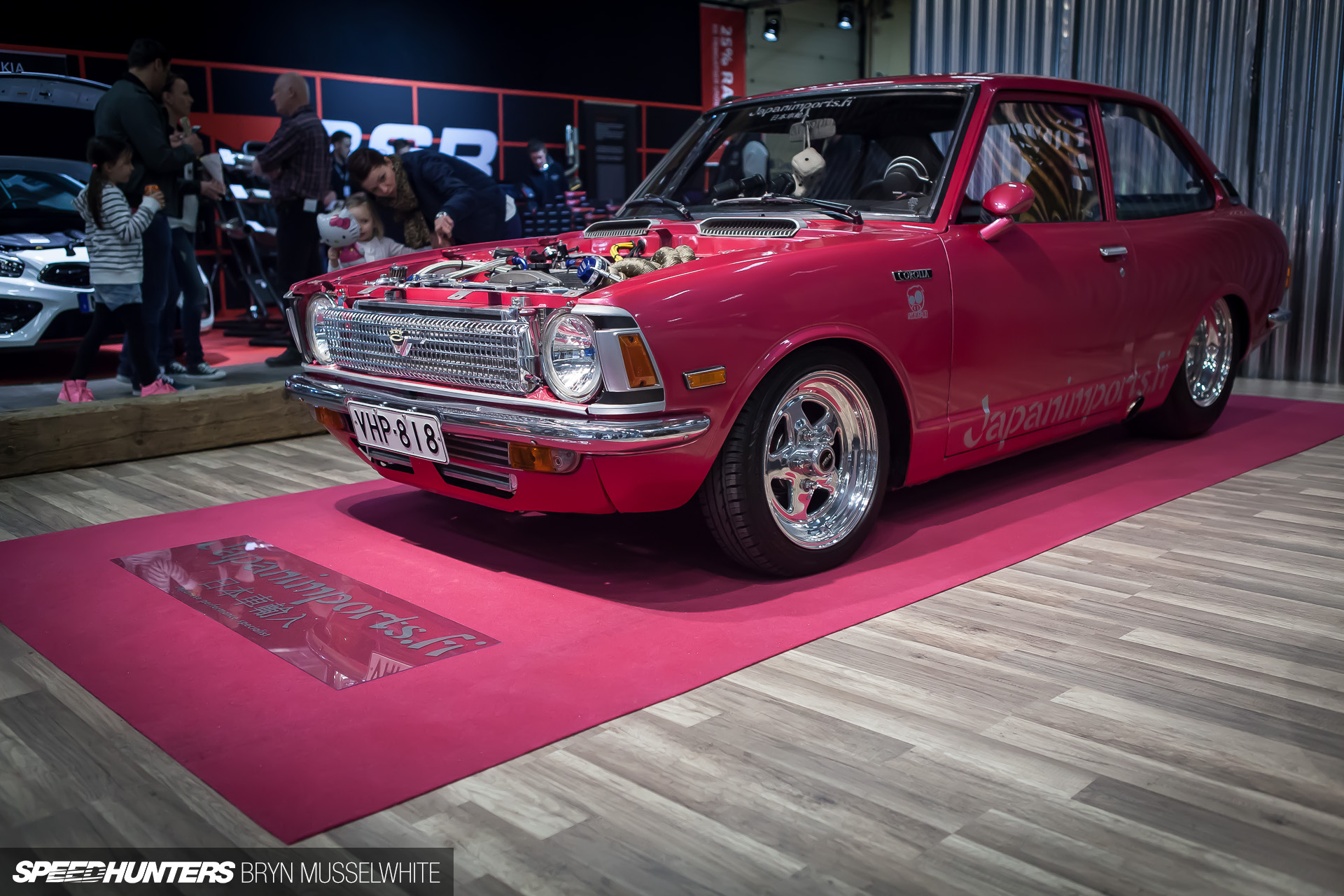
When I first turned the corner and saw this KE20 Toyota Corolla two-door saloon I instantly thought of Australia. The bright hue and immaculate chrome work are trademarks of that scene to me. Maybe it’s an import? I’ve long thought that building cars in the sun often helps make the decision to go for a bright colour. Of course, the other thing the Australian scene is known for is big power.

Engine Swaps of Elmia Bilsport 2014-31

So when I took a closer look and saw the size of Weld rear wheels – another Australia favourite – I knew something interesting would be going on at the front end.

Engine Swaps of Elmia Bilsport 2014-32

But to be honest, I wasn’t expecting a four-cylinder motor. I don’t know why, maybe it would be considered small by local standards? Then I found out the 3S-GTE-based engine makes around 600hp, which in this tiny shell would be hilarious. Years ago I owned a KE20 that had a 4A-GE fitted, and that was pretty lethal with the modest power outputs that had…

Engine Swaps of Elmia Bilsport 2014-34

With a bonnet and a colour change this could almost be considered a sleeper – which is another good reason to engine swap, as people would never guess what’s lurking behind that large front mount intercooler.

Engine Swaps of Elmia Bilsport 2014-35

Like the Corolla, some swaps make more sense than others. Here’s another 2J that’s been mounted in an BMW E30, this time put together by Viktor Martensson who also built this rather special VW Caddy last year. As the base shell was originally designed to accomodate a six-cylinder engine, it’s not too hard to understand why the Toyota motor is a natural choice, especially when you have experience with tuning them.

Engine Swaps of Elmia Bilsport 2014-36

By now you will have realised that the engine swaps are just the start of the ethos. For me, they set the tone of these builds, and that freedom of approach means the end result is often as unpredictable as the engine choice itself. Squint your eyes and apply the style of this E30 to an S14 and it really makes sense. What I mean is, if you take a proven recipe from a different scene and mix it up in your own way, it will generally succeed.

Engine Swaps of Elmia Bilsport 2014-38

The rear lower valance delete keeps the back end clean and adds to the race car attitude. The exhaust exiting through the rear quarter panel is just mean!

Engine Swaps of Elmia Bilsport 2014-10

Linking from the E30 to the next find is easy, because as we’ve seen, BMW is popular with the Swedish mash up crew. From body shells to engines the German manufacturer has provided us with some proper hero metal over the years – the S85B50 M5 engine certainly being some of that. With newer M generations getting a turbocharged V8, the distinctive Formula 1 type howl the V10 has will slowly disappear in time. However, as these engines get older they will become more accessible on the secondhand parts market.

Engine Swaps of Elmia Bilsport 2014-11

Jesper Andersson went for the BMW engine and added some Porsche brakes. But what did he package them all up in?

Engine Swaps of Elmia Bilsport 2014-16

This is Sweden right? A 1984 Volvo 242, of course!

Engine Swaps of Elmia Bilsport 2014-12

His newly-completed build was gorgeously simple in execution, with straight, mile-deep paint and black trim throughout. Wonderfully understated, I lost some time circling around the saloon and taking it all in.

Engine Swaps of Elmia Bilsport 2014-14

As much as I love Sweden, it reminds me of how far I could have come with my own Volvo 200-series project and subsequently haven’t. I was offered an M3 engine and box for it nearly ten years ago and if I had that time again I probably would have snapped the seller’s arm off.

Engine Swaps of Elmia Bilsport 2014-15

So if I’m being honest, this is the one build I would have happily have in my garage. It’s tastefully built and I’ll bet it’ll rip up the road when completely finished. So if I’d take this one home and this is not the end of the article, what the hell comes next? The really crazy stuff. Because this isn’t the last V10 I’ve got to show you…

Engine Swaps of Elmia Bilsport 2014-17

Most of the base cars we’ve seen so far have made sense to me. They’re everyday models that we all know and love, but wouldn’t usually associate with big power figures or crazy engine conversions. So why is the home of this Magnusson-supercharged LS1 V8 bothering me so much? Have you worked out what it is yet?

Engine Swaps of Elmia Bilsport 2014-21

Because it’s a Passat wagon, that’s why! VW did make a 4WD Syncro version, but the only modified Passats I’ve seen have been very low and have immaculate wheel and tyre fitment. But this creation from Psycho Tuning in Norway? This is something else – and I love it. When you consider all the work it takes to complete an engine swap, I’m guessing the fitment of BMW E39 M5 suspension and the creation of transmission tunnel were fairly straightforward. Or maybe not.

Engine Swaps of Elmia Bilsport 2014-19

That trans tunnel houses a Tremec TKO-600 gearbox and the inside is now pure business. I was also interested to see the tablet-based instrument display as I’m looking to do the same thing in my Volvo. As an off-the-wall project, this ticks all the boxes for me. The 21-inch wheels it’s wearing might be a bit much for your tastes, but the 18s it wears when it’s drifting will soon fix that.

Engine Swaps of Elmia Bilsport 2014-39

So what could top that then? Surely not an FD3S Mazda RX-7? Well yes, because for me, this is even more out-there in pure WTF? terms. As a base model it’s so well-served by a myriad of engines – from the original 13B rotary to SR and V8 swaps, the choice is wide and varied.

Engine Swaps of Elmia Bilsport 2014-41

So what did Martin Enmar go for? A Viper V10 – 8.0L of American muscle from the Dodge of the same name.

Engine Swaps of Elmia Bilsport 2014-42

Except as you can see, that wasn’t enough – so he bolted two turbos on to it for more power. As engines go, this is a mountain of horsepower. But it’s also following a similar vein to all the other builds – a popular base vehicle (and a Passat) with an available engine and some forced induction mixed in for good measure. I know it might all still seem a little alien, but really it’s not, as classified ads can reveal this sort of hardware if you know where to look. All of these have been rear-wheel drive too, which is another thing that’s popular in this part of the world because it means you can make silly amounts of smoke whilst travelling very fast sideways.

Engine Swaps of Elmia Bilsport 2014-43

So if you take those three elements of body, engine and power adder and apply them to anything you like (or can get your hands on), judging by what I’ve seen you’re guaranteed a good time. If you feel these builds are sacrilege and you got this far, then thank you for reading on as this is what our love of car culture is all about – doing our own thing. In Sweden this is just the tip of the iceberg though, and what stops us in our tracks is fairly ordinary around here.

Engine Swaps of Elmia Bilsport 2014-44

No, when the Swedish want to get inventive they do things like this: a Porsche 356 coupe replica with a mid-mounted, naturally aspirated 2.5-litre Volvo five-cylinder. Sound tame after what I’ve shown you? What if I told you the only thing that the builder Staffan Linden didn’t do himself is paint it. Let me just clarify that – he designed and fabricated the space-frame chassis, and completely made the Porsche replica body himself and everything else you see here from the suspension to the windows.

So the next time you think something you’re contemplating is a little ‘out there’, ask yourself this – what would the Swedes do? Or the Finns, or the Norwegians…

Bryn Musselwhite
Instagram: brynmusselwhite


Source link

Living The USDM Life With A JDM Civic Coupe

0


The grass is always greener on the other side of the fence, isn’t it? Or perhaps that should be the other side of the Pacific Ocean.

Some of you living stateside probably feel a strong desire for a slice of authentic Japanese culture, but Yuya Kishi – ‘Park’ to his friends – has taken a New York slice-sized bite of American culture, and not just with his cars.
Toby_Thyer_Photographer-5
Toby_Thyer_Photographer-32

Park lives in a house that looks like it was shipped directly from the set of The Truman Show. That is not far from the truth, as it was built by the same company that constructed Universal Studios Japan.

The house has an American-sized garage, which is undoubtedly a good enough reason to live there, but even more handy for Park, who owns two Honda Civic Coupes – one a rare model sold exclusively on the Japanese domestic market but assembled in the USA.

Toby_Thyer_Photographer-16

Why is Park so enamoured with Americana? It all started in his teenage years, during which time he was influenced by peers who drove USDM cars and took him to lowrider shows around Osaka.

This particular JDM Civic Coupe was owned by a friend for over 15 years before Park got his hands on it. It had been a long-term show build that evolved into more of a street car, but new life responsibilities eventually put paid to the fun. Park quickly snapped up the Honda as an unfinished project.

Toby_Thyer_Photographer-12

Stock, the JDM EJ7 was much like any other mid-grade EK Civic, with a D16A engine and CVT transmission as standard equipment. However, its two-door coupe body – as opposed to the design of the three-door hatch and four-door sedan – gave the model a different vibe. The same can be said of the earlier EG Civic Coupe.

While the 1996+ Civic Coupe was sold in a few grade levels (denoted by different EJ chassis codes) in its North American target market, just one model was exported new to Japan in right-hand drive configuration.

Toby_Thyer_Photographer-4

Park’s example is more fast-road focused than his other, daily-driven EJ7 – a USDM left-hand drive EX Coupe (complete with Ferrari 360 Modena seats) that once called Florida home.

Toby_Thyer_Photographer-43
Toby_Thyer_Photographer-38

During the time Park has owned his JDM EJ7, the car has been stripped back for weight reduction. Inside, Bride seats, TAKATA Racing harnesses and a large digital tablet feature, though the Civic does retain some factory comfort in the shape of door cards, carpet, and even its original Honda of America floor mats.

Toby_Thyer_Photographer-51

While the Civic is focused on fast street use, the painted engine bay remains a reminder of the car’s history. The current B20B engine is the third one Park has been through in three years. He has a lofty 300km/h goal for the Honda, so there will bound to be a few mechanical casualties along the way.

Toby_Thyer_Photographer-50
Toby_Thyer_Photographer-53

Third time lucky, the current block has been built up with Wiseco forged pistons and an Eagle crankshaft. The TODA cam-equipped cylinder head has been ported to accept extra airflow from the Skunk intake plenum. Engine management duties fall upon a Link G4X.

Toby_Thyer_Photographer-49

At the moment, Park says the engine is making close to 250hp with an extra 50hp available at the flick of a switch and push of a button. Yes, of course it has NOS!

In his quest for 300km/h glory, Park has fitted a longer-ratio 5th gear in the Civic’s gearbox, but a K-Tuned shifter makes banging through all forward gears a joy whenever he takes the car out on the street. Cusco coilovers soak up all the bumps at high speed.

Toby_Thyer_Photographer-47

One of the coolest features of the car is its wheels – a rare set of 15×7-inch Hayashi Racing Super Streets with centre locks, wrapped up in Toyo Proxes R1R rubber.

Toby_Thyer_Photographer-20

This Civic Coupe build feels Kanjo Racer in spirit but executed in an OEM+ way. It’s a fun little car that took me by surprise when Park jumped on the gas, the torque-rich B20B engine coming alive instantly without the hesitation that comes with turbocharging.

Toby_Thyer_Photographer-3

As a true hero of Japanese performance cars, the Civic platform is legendary in its own right. Ironically though, one of the coolest JDM models wasn’t built in Japan.

Toby Thyer
Instagram _tobinsta_
tobythyer.co.uk


Source link

Nine-Year-Old In A Jetta Rams Cop Car And Starts Police Chase While Driving To School

0


9-year-old police car crash

A 9-year-old with an apparent “fuck the police” vibe in Northern California decided to – while driving a Volkswagen Jetta to his school – smash into a California Highway Patrol vehicle and lead cops on a car chase. It was a busy Wednesday for the little guy. One police officer called it a “scene straight out of a movie.”

CHP officer in Oroville, California posted a rundown of the whole ordeal on Facebook. They said that at around 9:20 a.m. an officer saw a gray VW sedan that “stopped oddly in the middle of an intersection.” When cops told them to move, the car sped off, leading to a “short and erratic chase” that eventually ended in a dirt parking lot east of the elementary school the kid was trying to get to. Then, the 9-year-old threw the Jetta in reverse and crashed into the cop’s Ford Explorer patrol car, damaging both vehicles.

9-year-old police car crash

Here’s what happened next, according to the Oroville CHP:

Upon making contact, the officer was met with the wide-eyed 9-year-old child, who had taken his mother’s car with the intention of driving himself to school.

We are relieved to report that no one was injured in this incident. The child was safely sent to school after the necessary authorities were alerted and the situation was documented.

9-year-old police car crash

Terry Dunn, a CHP officer, told KCBS-AM that it was “one of those [situations where] no one really believed it, turned out to be a 9-year-old child sticking his head out, saying, ‘I’m trying to get to school.’”

I’m sorry, but can you even imagine how cool that kid must have felt, walking into school, knowing he just crashed into a cop car? That’s the stuff of legends. Honestly, I think Jalopnik should offer this kid a job right now.


Source link

TOKYO SKYTREE TRAVEL GUIDE: Know Before You Visit!

0


By continuing to read this article, you agree to double check with the authorities or other concerned entities for the latest updates.By continuing to read this article, you agree to double check with the authorities or other concerned entities for the latest updates.

Have you heard about a colossal radio tower standing guard over the Tokyo Metropolis area all day and all night? Its size may overwhelm you at first, especially up close, but you can’t help but admire its dignified appearance as it shoots up toward the sky.

Tokyo Skytree accurately embodies the famous saying “the sky’s the limit”. Soaring at a height of 634 meters, it is currently the tallest structure in Japan, and if you don’t count buildings made for habitation or office work, it is also the tallest tower in the world.

Tokyo SkyTree SpringTokyo SkyTree Spring

In addition to racking up records, it serves as the central nervous system for the radio and television broadcasts in the Kanto region. Therefore, the tower plays an important role in information dissemination in times of disaster and calamity.

But most tourists are blown away not just by the tower’s height but also the view! From the observation decks, the scenery will leave you breathless and the experience will be nothing short of extraordinary.

If you are traveling to Tokyo soon, make sure you include Tokyo Skytree in your itinerary! Here are some tips and things to know before you go.

Tokyo Skytree Cherry BlossomsTokyo Skytree Cherry Blossoms


WHAT’S COVERED IN THIS GUIDE?

How to Get to Tokyo Skytree

The Tokyo Skytree is located at 1 Chome-1-2 Oshiage District, Sumida City, Tokyo 131-0045, Japan. It is the centerpiece of Tokyo Skytree Town, a commercial complex near Sumida River and Asakusa District in neighboring Taito City.

Tokyo SkyTree Subway Metro StationTokyo SkyTree Subway Metro Station

By Train

Tokyo Skytree Station and Oshiage Station both serve the Tokyo Skytree. You’ll find the Tokyo Skytree Station on the Tobu Skytree Line, while Oshiage Station is on the Tokyo Metro Hanzomon Line, Toei Asakusa Line, and Keisei Line (link to/from Narita Airport).

By Skytree Shuttle

The Skytree Shuttle takes you directly to Tokyo Skytree Town. These buses run between the Tokyo Skytree Town and the following locations: Ueno-Asakusa Area, Haneda Airport, and Tokyo Disney Resort.

BUS FARES

  • From Ueno-Asakusa Area: Adult, ¥230; Child, ¥120
  • From Haneda Airport: Adult, ¥1000; Child, ¥500
  • From Tokyo Disney Resort: Adult, ¥800; Child, ¥400

NOTE: Always check the official website for the latest schedules and updates.

On Foot

If you are staying in Asakusa District and you love exploring on foot, you can choose any of these three routes:

  • Via Sumida River Walk. This is closer to Sumida Park, crossing over Sumida River leading to Sumida Park Breeze Plaza, to Genmori Bridge, to Mizumachi, and finally, to Tokyo Skytree.
  • Via Azuma Bridge. This is adjacent to the Tokyo Cruise Ferry Terminal and Kaminarimon Temple Gate. Just follow the Toei Asakusa Line to Tobu Bridge across the Tokyo Sky Tree.
  • Via Komagata Bridge. This is closer to the hotels and still accessible from Asakusa Station. Follow the Toei Asakusa Line to Tobu Bridge just across the Tokyo Sky Tree.

NOTE: If your starting point is the Asakusa Station, the travel time to Tokyo Skytree on foot is 15-20 minutes.


Tokyo Skytree Ticket Rates

The Tokyo Skytree has two observation sites:

Tokyo SkyTree Observation DecksTokyo SkyTree Observation Decks

  • Tembo Deck on Floors 340, 345, and 350
  • Tembo Galleria, the higher observation deck, on Floor 445-450

There are two types of ticket purchase: Same-Day Ticket and Advance Ticket. Same-Day Ticket is purchased on the day of your visit — perfect for casual walk-ins, while Advance Ticket can be booked 30 days prior to your arrival.

TIP! Purchase an advance ticket for two reasons. First, same-day tickets sometimes sell out. Second, advance tickets can give you up to ¥400 discount.

Here are the prices:

Advance Ticket

  • Combo Ticket (Tembo Deck + Tembo Galleria)

    Weekdays: Adult, ¥2700; Teenager, ¥2150; Child, ¥1300
    Holidays: Adult, ¥3000; Teenager, ¥2350; Child, ¥1400

  • Tembo Deck Ticket Only

    Weekdays: Adult, ¥1800; Teenager, ¥1400; Child, ¥850
    Holidays: Adult, ¥2000; Teenager, ¥1500; Child, ¥900

Same-Day Ticket

  • Combo Ticket (Tembo Deck + Tembo Galleria)

    Weekdays: Adult, ¥3100; Teenager, ¥2350; Child, ¥1450
    Holidays: Adult, ¥3400; Teenager, ¥2550; Child, ¥1550

  • Tembo Deck Ticket Only

    Weekdays: Adult, ¥2100; Teenager, ¥1550; Child, ¥950
    Holidays: Adult, ¥2300; Teenager, ¥1650; Child, ¥1000

NOTES:

Tokyo SkyTree Ticket CounterTokyo SkyTree Ticket Counter

  • The ticket counter is located on the 4th Floor of Tokyo Skytree, while the group ticket counter is on the 1st Floor (Ground Floor). The operating hours of the 4th-floor ticket counter are 10:00 AM – 8:00 PM daily. The counters might close earlier if tickets are already sold out for the day.
  • Adult’s age is from eighteen (18) years old and above; teenager, from twelve (12) to seventeen (17) years old; and child, from six (6) to eleven (11) years old. Children from 5 years old and below can enter for FREE.
  • It is not possible to visit the Tembo Galleria without passing through the Tembo Deck, so there are no stand-alone Tembo Galleria tickets. If you want to see the Tembo Galleria, you need to purchase combo tickets.
  • Prices as of March 2024. The ticket rates may change without prior notice, so it’s best to check the official website for updates and other announcements.

When is the Best Time to Visit

The Tokyo Skytree is open from 10:00 AM to 9:00 PM, all year round. Last entry for the Tembo Deck is around 8:00 PM, while the Tembo Galleria is around 8:20 PM. Note that the operating hours are subject to change, depending on the season or the time of the year.

When is the best time to go? Any time of the day is great! But of course, having clear skies is a bonus, whether visiting during the day or at night. Delight in the sight of the city during the day as the sun lights up the urban landscape in its full glory or be mesmerized by the spectacular vision of the cityscape at night as the lights illuminate the Tokyo metropolis.

Tokyo SkyTree Day and NightTokyo SkyTree Day and Night

TIP: Go at dusk or just before sunset if you want to appreciate the panoramic vista of the city both by day and by night in one go. Witness as the day bids farewell and the city lights gradually set the city aglow.

Whatever time of the day you visit, you’ll find plenty of things to do in the area besides the view.


Things to Do at Tokyo Skytree

Here are some of the things to do at the Tokyo Skytree:

  • Reach the highest point at Tembo Galleria (Floor 445-450). This is the highest observation deck with a 110-meter spiraling walkway (air walk) from Floor 445 up to Floor 450. Here, you’ll find the Sorakara Point, the 451.2-meter-high summit or the highest point a visitor can reach.

    Tokyo SkyTree Tembo GalleriaTokyo SkyTree Tembo Galleria

  • Admire the views from Tembo Deck (Floors 340, 345, and 350). This observation area is set with over five-meter high glass panels, providing 360-degree views as far as 70 kilometers from the tower. Each pillar on the Tembo Deck Floor 350 is numbered from one (1) to twelve (12). Pillar 12 marks the North side; Pillar 9, the West side; Pillar 6, the South side; and Pillar 3, the East side. You can get a brochure with a schematic image of the panoramic view from the Tembo Deck. Using this brochure and the Pillar Numbers as your guide, you can locate specific landmarks for that particular side or direction. Other attractions at Tembo Deck are the Skytree Minilabo (Floor 345) and the Skytree Post (Floor 345).

    Tokyo SkyTree Tembo Deck ViewTokyo SkyTree Tembo Deck View

    View from Tokyo SkyTree Day NightView from Tokyo SkyTree Day Night

  • Walk on glass on the 340th floor! Before you board the elevator back to the ground level, don’t miss another thrilling attraction. Summon your courage and walk on the Glass Floor (Floor 340). Dare to look down through the 12mm-thick quadruple glazed glass floors. If you want to have the glass floor to yourself, you can also have your photo taken at the designated official photography spot beside the generic glass floor area.

    Tokyo SkyTree Glass FloorTokyo SkyTree Glass Floor

  • Make a wish at W1sh Ribbon (Floor 350). Purchase a colored ribbon from the capsule toy machine for JPY 500. Write your wish on it and tie it to the W1SH RIBBON monument.

    Tokyo SkyTree Wish RibbonTokyo SkyTree Wish Ribbon

  • 


  • Ride the Tembo Shuttle (Elevator) to the top. These are super fast elevators! There are six (6) lines of Tembo Shuttles: four (4) linking the Entrance/Exit Floor and Tembo Deck, and then two (2) connecting the Tembo Deck and Tembo Galleria. Running at the speed of 600m/minute, the first four lines can shuttle visitors from the entrance floor to the Tembo Deck in about 50 seconds. Each line also features different decorations inspired by the four seasons — spring, summer, fall, and winter. The other two lines can take guests from the Tembo Deck to the Tembo Galleria in about 30 seconds. Both elevators have see-through ceilings and front panels.
  • Snap away at various photo spots. Take as many photos as you like! Take this opportunity to capture the remarkable city views. You can even make the view your background! Find spots that you like and take photos with your companions or avail of the commemorative photo areas found on Floor 340, 350, and 445.
  • Take a peek through the high-definition digital telescopes. If you want a closer look of some of the famous landmarks in Tokyo from the tower, you can take advantage of the high-definition digital telescope for a minimal fee. One is on Floor 350, while the other one is on Floor 450.
  • Learn more at Skytree Gallery. Here, you can learn trivia and more information about the design, the structures, and other features of Tokyo Skytree. The Skytree Gallery is located next to the Group Ticket Counter area on the 1st Floor (Ground Floor).

    Tokyo SkyTree GalleryTokyo SkyTree Gallery


Where to Eat and Shop

  • Skytree Cafe. Grab snacks and refreshments on Floors 340 and 350.

    Tokyo SkyTree CafeTokyo SkyTree Cafe

  • Sky Restaurant Musashi 634. If you fancy a proper sit-down meal with your loved ones, you might want to consider dining here. The restaurant serves Tokyo cuisine, incorporating seasonal fresh vegetables into its menu. Enjoy the food and the view! Reservations are required.
  • The Skytree Shop. If you wish to buy Tokyo Skytree merchandise and mementos, you can do your shopping in one (or all) of the three official Skytree shops located on the Fifth Floor and Tembo Deck Floor 345 — currently the highest elevation gift shop in Japan.

    Tokyo SkyTree ShopTokyo SkyTree Shop

  • Tokyo Solamachi. Housing more than 300 shops and restaurants, this retail complex at the base of Tokyo Skytree offers more sopping and dining options to visitors. First to fourth floors (1F-4F) host retail shops such as ABC-Mart, Disney, Marvel, Strawberry Mania, Ganso Food Sample Shop, and more.
     
    Sixth to seventh floors (6F-7F) are dedicated to restaurants. We’ve tried The Platinum (buffet set up) and Ginza Grill Cardinal. If you want to dine with a view of the Skytree, you can also head to 30th and 31st floors (30F-31F). There’s more! You’ll also find a food court on the third floor (3F).

Photos were taken in March 2024.


Other Nearby Attractions

If you are looking for other attractions in and near Tokyo Skytree Town, here are some of them:

Attractions Near Tokyo SkyTreeAttractions Near Tokyo SkyTree

  • SUMIDA AQUARIUM
  • Konica Minolta Planetarium Tenku
  • Postal Museum Japan
  • Tokyo mizumachi Shopping Complex
  • SUMIDA RIVER WALK
  • Senso-ji Temple
  • Kaminarimon
  • Nakamise-dori Street
  • Five-Storied Pagoda

Frequently Asked Questions

  • Is there FREE WIFI at Tokyo SkyTree? Yes, Tobu Free WiFi is available. In case you forget your pocket WiFi or run out of mobile data service, you can connect to the internet via Tobu Free WiFi while touring around the Tokyo Skytree area.
  • What time is the SkyTree Tower lighting? There are times when the tower has special lightings or limited illumination display apart from the three lighting styles — Iki, Miyabe, and Nobori. When we visited in March 2024, the illumination schedule is 5:45 PM to 12:00 AM. But due to the season or events, this schedule is subject to change without prior notice. You may check the official website for updates and announcements.
  • Tokyo SkyTree Tower LightingTokyo SkyTree Tower Lighting

  • Can I re-enter after I exit? No. Each ticket is valid for single entry only. Meaning, you cannot enter again the moment you exit the Tokyo Skytree observation area.
  • Can I buy tickets at SkyTree on the day of visit? Yes, but same-day tickets are sold on a “first come, first serve” basis. Tickets may sell out fast, especially during peak season, so it’s highly recommended to book ahead. Advance tickets are significantly cheaper, too!
  • Are pets allowed? No. Pets — caged or not — cannot enter the observation deck area. However, guide dogs, service dogs, and hearing dogs are exempted.
  • What items are prohibited inside Tokyo SkyTree? You are not allowed to bring deadly weapons and tools, dangerous articles, hazardous items, toxic substances and chemicals, large items (with one dimension exceeding 70cm), radio equipment, drinks in cups and without a sealable lid, and other items that may cause damage to the premises.
  • Are there lockers and baggage storage counters? Yes, coin lockers and baggage storage counter are available. For your convenience, you may keep your stuff, especially those that are included in the list of prohibited items, in a coin-operated locker (1F-4F, B3F) or the baggage storage on the Ground Floor (1F).

Facts About Tokyo Skytree

  • The Height. The total height of 634 meters is not a random thought and was specifically chosen to represent the old name of the area where the tower stands today – Musashi. “Mu” stands for 6, “Sa” for 3, and “Shi” for 4.
  • The Design. The structural design combines neo-futurism and the traditional concept of Japan. The architectural design and construction materials may be futuristic and modern, but the design incorporates the traditional Japanese “Sori” (concave curves) and “Mukuri” (convex curves), creating the tower’s dynamic appearance, which changes depending on where you are viewing the tower from.
  • The Structural Form. The structural shape of the tower changes as it goes up — from a tripod or triangular form at the base to a cylindrical or circular form at the top. More than aesthetics, the form supports the whole structure by providing a firm foundation and also minimizing the effects of wind.
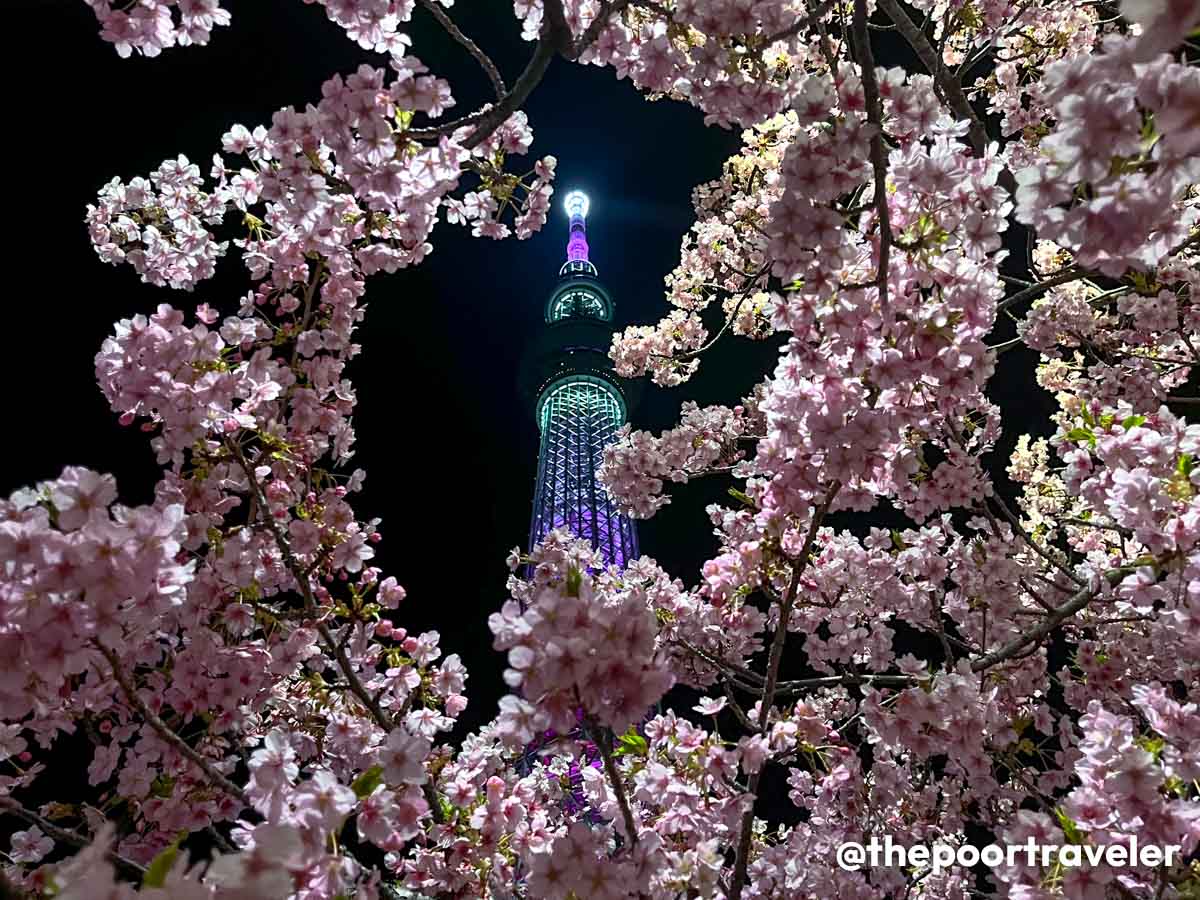
  • The Lighting. The tower has three distinct lightings. “Iki” stands for the spirit of urban commoners of Edo. It lights up the central pillar with faint blue highlights, mirroring the water of the Sumida River. “Miyabi” represents the traditional Japanese aesthetics. It illuminates the steel framework like a dress in a bluish violet color, symbolizing elegance. “Nobori” means prosperity. The lighting has a tangerine base color, which is widely considered a lucky color in Japan.
  • Official Opening. The tower was officially launched and opened to the public on the 22nd of May 2012. The construction was actually completed on the 29th of February 2012 – a leap year! From its groundbreaking on 14 July 2008, the tower’s construction took 1,325 days to finish.

Tokyo Skytree Contact Information and Official SNS

  • Official Website: www.tokyo-skytree.jp/en/
  • Call Center: 0570-55-0634 (11:00 AM – 6:00 PM)
  • Facebook Page: TOKYOSKYTREE.official
  • Instagram: @tokyoskytree_official
  • X: @skytreeofficial
  • Tiktok: @tokyoskytree_official


More Tips on YouTube ⬇️⬇️⬇️


Is this post helpful to you?


Tip UsTip Us


Source link

These Are The Automotive Mysteries That Haunt You

0


1. Who developed the WK2 (2011-2020/1) Grand Cherokee platform? — This platform was also used by the gen. 3 Durango (still in production), the 2012-2019 Mercedes-Benz M/GLE-Class, and the 2013-2019 Mercedes-Benz GL/GLS-Class. It’s probably the final DaimlerChrysler collaboration, and didn’t even debut until a couple of years after the merger ended. But who led the design? There are aspects of these cars and their platform that are very Mercedes-Benz, like the shape of the seats and the battery being under the passenger seat…but also aspects that are very Jeep, like having the integrated longitude frame rails (a la XJ Cherokee and ZJ and WJ Grand Cherokees). Who led development of this platform, Chrysler/Jeep, or Mercedes-Benz? No one seems to know. I want to know.

2. Would the L322 Range Rover have been different if BMW had kept Land Rover? — The third-generation “L322″ Range Rover (2003-2012) was originally codenamed “L30.” That’s because BMW owned Land Rover and the rest of Rover Group during most of the L322’s development in the late 90s. But, since Rover Group’s various brands were costing an absolute fortune to update and had started to drag BMW’s own stock prices down, BMW sold most of it off (keeping only MINI) and even fired the person responsible for the idea of purchasing Rover Group. At that time, the L322 was halfway through development. The unverified lore I heard is that the L322 was supposed to get BMW’s then-new electronics architecture, the one that went into the E65 (2002-2008) 7 Series and Rolls-Royce Phantom VII Series I (2003-2012). But…when BMW decided to sell Land Rover to Ford, it decided not to give away its best tech, and instead finished development early with an older electronics architecture. The earliest L322s (2003-2005), as a result, have what are very obviously reskinned E38/E39/E53 modules and interfaces (instrument cluster, sat nav, switch packs). By 2005, these were quite outdated. They also have BMW powertrain packages, but that would have happened, anyway. outdated. But…would the L322 Range Rover have been more high-tech had BMW kept the company?

3. Why do VW and Audi often delete auto-hold from their cars in the US? Auto-hold, a feature that allows you to have the car hold the brakes for you at a stop, is a very convenient feature. However, most VW and Audi models in the US have this feature deleted. They’ll have a blank where the button that ordinarily activates that feature is, and retrofitting it is a pain. Why do they do this, when their competitors don’t have any problem giving you auto-hold?

And for a personal one:

4. What the hell happened to my 2004 XJ Vanden Plas’ air suspension? I know, I know, it’s a Jaguar. And mine was one of the very early run of that generation, having been produced in late 2003. I bought it and soon realized the air suspension was leaking. I ended up replacing all four struts with Arnott units, which are well regarded. Well, at first, the car just refused to air up the struts and I had to take it to a mechanic. They replaced the compressor, which seemed fishy in and of itself. But then, after that, it raised all four struts as high as they would go and displayed a permanent “Air Suspension Fault” light. Neither I, nor a reputable Euro shop, nor Jaguar specialists, were able to get that car to act right, and we replaced just about all of the system (ride height sensors, valve block, compressor, struts, lines, rear body computer). I finally ended up deleting the air suspension with a coilover kit and selling the car. I subsequently had a 2006 Jaguar XJ Vanden Plas (same generation) and didn’t have any such trouble.


Source link

A Game of Stars: The Pressure Cooker of Restaurant and Chef Ratings

0


In the cutthroat world of haute cuisine, where every dish is meticulously crafted and every flavor is meant to tantalise the taste buds, there exists a relentless pursuit of perfection. At the heart of this pursuit lies the coveted star rating system, a seemingly innocuous guide that can make or break a chef’s career and a restaurant’s reputation. But behind the glitz and glamour of Michelin stars and other prestigious accolades lies a dark and daunting reality: the impossibility of keeping up with the ever-shifting standards of the culinary elite.

Restaurant ratings, particularly those awarded by esteemed guides like the Michelin Guide, have long been hailed as the ultimate validation of culinary excellence. Yet, the criteria upon which these ratings are based are often shrouded in mystery, leaving chefs and restaurateurs grasping at straws in their quest for recognition. What one critic deems worthy of three stars, another may dismiss as mediocre at best, highlighting the inherently subjective nature of the entire process.

Compounding this issue is the perception that the more extravagant the establishment, the more likely it is to receive top honors. After all, it’s no secret that Michelin inspectors tend to favor fine dining establishments with lavish décor and exorbitant tasting menus. This creates a vicious cycle wherein chefs feel compelled to continually up the ante, pushing the boundaries of creativity and complexity in a bid to impress the powers that be.

But what happens when the pursuit of culinary perfection becomes too much to bear? For many chefs, the pressure to earn and maintain a coveted star rating can be overwhelming, leading to burnout, mental health struggles, and in some tragic cases, even suicide. The relentless scrutiny, the constant fear of failure, and the crushing weight of expectations can take a severe toll on even the most resilient individuals.

Enter, the tragedy of Chef Benoît Violier, icon of the game of Michelin-starred excellence.

The late Chef Benoît Violier

Not so long ago, a shocking turn of events following the unveiling of the 2016 Michelin guide to France, the culinary realm was rocked by the devastating loss of Benoît Violier, culinary virtuoso and guardian of gastronomic perfection at the revered Restaurant de l’Hôtel de Ville. Violier, the embodiment of Michelin’s highest honor with three coveted stars, tragically succumbed to the harrowing pressures of his craft, leaving behind a shattered legacy and a grieving family.

The news of Violier’s apparent suicide sent shockwaves throughout the industry, casting a dark shadow over what should have been a joyous celebration for those basking in the glow of Michelin’s coveted stars. With a heavy heart, the culinary world bid farewell to a luminary cut down in his prime, leaving behind a wife and a young son to navigate the wreckage of his untimely departure.

As mourners gathered in solemn reverence, the funeral procession bore witness to the magnitude of the loss, with fifteen hundred souls paying tribute to a fallen icon. The tragic demise of Violier underscores the insidious nature of societal pressures, reminding us all of the precarious tightrope walked by those in pursuit of culinary perfection.

Nestled in the quaint town of Crissier, near Lausanne, l’Hôtel de Ville stood as Switzerland’s bastion of culinary excellence, yet its storied history is marred by tragedy. From the luminous reign of Frédy Girardet to the untimely passing of Philippe Rochat, Violier’s predecessor, the restaurant’s legacy is etched with sorrow and loss. With his demise, the culinary world mourns yet another irreplaceable loss, a poignant reminder of the fragility of life and the relentless pursuit of impossible constant perfection.

In recent years, there have been several high-profile cases of chefs who have succumbed to the immense pressure of their profession. From renowned culinary icons to up-and-coming talents, the list of casualties continues to grow, serving as a stark reminder of the dangers inherent in the pursuit of culinary greatness.

So why do star ratings hold such sway over the culinary world? For chefs and restaurateurs, the answer is simple: prestige and profitability. A coveted Michelin star can elevate a chef to celebrity status overnight, attracting hordes of eager diners and lucrative business opportunities. Conversely, a downgrade or loss of stars can spell disaster for even the most esteemed establishments, leading to financial ruin and irreparable damage to their reputation.

In this ongoing tragic circus of the pressure and pursuit of stars in the culinary realm, the departures of iconic figures have left an indelible mark. To highlight, the loss of legendary French chef Paul Bocuse, who passed away on January 20, and the tragic suicide of the multi-talented American chef and TV personality Anthony Bourdain on June 8. The culinary world was further rocked by the passing of renowned French chef Joel Robuchon on August 6, whose empire boasted over 10 restaurants collectively adorned with more than 20 Michelin stars. These profound losses have catalyzed chefs worldwide to redouble their efforts, honoring the legacies of their mentors while striving to uphold the standards set by their predecessors.

Reflecting on the collective grief, Richard Ekkebus, culinary director of the acclaimed two-starred restaurant Amber in Hong Kong, laments the void left by luminaries like Marchesi, Bocuse, and Robuchon. Ekkebus, personally touched by his interactions with Robuchon, recalls the meticulous preferences of the late chef during his stays at The Landmark, Mandarin Oriental. The passing of such culinary icons has spurred Ekkebus to aspire to contribute a fraction of what they bestowed upon the culinary world.

For Seiji Yamamoto, the chef-owner of the esteemed three-starred restaurant Nihonryogi Ryugin in Tokyo, these losses have prompted a profound reevaluation of his relentless work ethic. Yamamoto candidly reveals the toll his rigorous schedule has taken on his well-being, prompting him to prioritize a more balanced lifestyle. With a newfound emphasis on self-care and leisure activities like scuba diving, Yamamoto seeks to extend his tenure in the culinary domain.

Richie Lin, chef-owner of the innovative European restaurant MUME in Taipei, echoes the sentiment of loss, highlighting the impact of American food critic Jonathan Gold’s passing. Gold, a trailblazer in food criticism, left an indelible legacy with his Pulitzer Prize-winning work, underscoring the breadth of influence these departed luminaries wielded over the culinary landscape.

In the end, the game of stars is a high-stakes gamble, with chefs and restaurants risking it all in pursuit of culinary glory. But as the pressure continues to mount and the standards become ever more elusive, one can’t help but wonder: is it all worth it in the end? Only time will tell, but one thing is certain: until the culinary world reckons with the dangers of its obsession with ratings and elitism, the toll on chefs and their mental well-being will continue to rise.

The question remains, are we part of this broken wheel?

For more on the latest in luxury lifestyle reads, click here.


Source link

Aston Martin Valkyrie for sale for 39 Bitcoin in The Netherlands!

0


This 2022 Aston Martin Valkyrie has been doing the rounds on social media lately, as it is being sold in Bitcoin at carforcoin.com where the description reads:

This left hand drive hypercar is located in Netherlands. Worldwide delivery is of course available.
We’ve asked the seller to provide proof of possession by taking a picture of a newspaper next to the VIN, and that’s provided in the picture gallery as proof that it’s a real car and listing. The Valkyrie is not registered yet, and comes with a Certificate of Conformity.

The seller has a partner from Germany to go in person along with the car once/if they make a deal, and Car for Coin will assist along the way to reduce risk for both parties. Proof of funds and wallet address of buyer is required upon agreement of sale. I’d recommend that the buyer also travels to Netherlands to see the vehicle before sending full payment.

The Valkyrie brings an 1139-horsepower hybrid V-12 and a IMSA GTP prototype race car design. The top speed is 220mph, and it’s designed to make your eyes bleed in the corners. It’s limited to about 150 units with a starting price around $3.5M. The weight is estimated to be 2850lbs.

The assigned VIN for this car, as published by the seller, is SCF4KRB46NGS70074 as can be seen by the side of a local newspaper proving its authenticity.


Source link

Setting the Record Straight on Tissot’s Powermatic 80

0


Watchmaking brands typically do not require anyone to stand up for them. In the old days, and right up until the 1990s probably, this was obvious and did not need to be spelled out. Even in other segments, this writer assumes that various published defences of Tesla, for example, are more statements of support for Elon Musk than they are for the EV firm. In this specific kind of case, said defences are no doubt useful to The NeXt Martian.

Tissot PRX Powermatic 80

On that perhaps relevant note, social media being the charmingly vile cesspool of bad behaviour that it is, one is sometimes tempted to intervene. This is almost always a bad idea – only governments typically attempt to police the Internet and that goes about as well as hugging a hippopotamus might. In a niche area such as watch collecting, there is relatively less of a need to set the record straight – watch brands themselves are hardly able to keep things straight. Less is not zero though which is why I find myself inclined to ride to Tissot’s defence with regards to several spurious charges laid against it. These have been disappointing, although some issues are more understandable than others.

Tissot PRX Powermatic 80

I will begin with the most egregious nothing-burger about something Tissot-related, and that has to do with the Powermatic 80 variant used in the hugely successful PRX. The claim here is that fine adjustment by an independent watchmaker or by an intrepid enthusiast is not possible. The claim goes even further to note that adjustment is all but impossible so if you send your watch for a repair and the issue is the regulating organ, it might be swapped out for a new one because that is just how it is built. These are the claims. The short response is already in the press materials for the movement, which specifically spell out that the balance is free-sprung.

The tl;dr here is that traditional regulating organs will have a couple of levers on the balance cock. Manipulating these is how you adjust the rate, with the most obvious lever being the one that has the + and – indicators. In newer movement architecture, these might be entirely absent because the hairspring is never to be directly meddled with. Instead, one adjusts the rate based on the large screws on the balance wheel. The advantage of this second system is that the manufacturer can better set the watch up to be as accurate as possible. In the simplest terms possible, and this is already very simplified, being able to adjust the rate without touching the hairspring is ideal. Adjustments are possible, just not by the average hobbyist. Perhaps the PRX is not the sort of watch you buy so you can tinker with it. If you do not like free-sprung balances, then there will be many watches that are not for you.

The Powermatic 80

This leads directly into the next couple of points, which relate to price. The PRX is a relatively inexpensive watch, the operative word there being “relatively”. If you enjoy the look of the watch and feel it sits comfortably with your Royal Oak and Nautilus tickers, then it is indeed an accessibly priced watch. On the other hand, if shelling out for a four-figure watch gives you pause, then it is not that accessible. When it comes to taking a watch apart on your watchmaking bench, it is probably best to work with the most standard-issue models, with standard-issue parts. This would be the sort of watch where the cost to service it might well exceed what you paid for it at retail; this is not the PRX.

Somewhat hidden in the above passages is the concern about price, and it will be referenced again when we look at the matter of plastic parts in the movement. Before we get to the substance there, we should note again that price is relative and it goes a lot further than whether you should tinker with the watch or not. I think the PRX is aspirational for some, perhaps even independent of what that watch might reference. That is perfectly fine and really does not require the caveats I just deployed. If the watch makes you feel good and you feel good about it, keep on keeping on then. However, if this is you, the news about plastic parts might be a shock.

This brings us to the kicker, which is the use of a poorly perceived material that literally does not shine in a traditional movement. Tissot is one of very few brands that can claim legitimacy in the use of some kind of polymer in any form because it was the first watchmaker to build a movement out of plastic in 1971. From “Tissot: 150 Years of History,” we know Tissot was actively trying to build a movement out of plastic from the 1950s – we can say that this endeavour culminated in the Tissot Astrolon of 1971, but it actually continued outside the brand and found expression in the Swatch System 51. This might actually be part of the problem for Tissot, but Swatch Group has not asserted that the Powermatic 80 movement cannot be repaired (as it has with System 51).

At issue are the escape wheel and pallet fork (pictured opposite), which are made of a high-tech polymer, although details are unavailable and thus we will call this plastic. Anonymous experts agree that the plastic in use has advantages in being low-friction and thus, potentially able to outlast the same components in metal. With the advent of 3D printing, said parts can probably be produced relatively easily. Those who object to the idea of replacing parts are barking up the wrong tree. If that is a concern for you, then the PRX (or any watch using similar materials) is not for you.

The short of it is this: buying a mechanical watch is not an impulse decision, no matter the price. You should always consider very carefully what you are getting into because waiting to get it right will save you tears down the line.

This article was first published in WOW’s 2024 Spring Issue

For more on the latest, click here.


Source link

Why Harvest Host Options Need to Be Treated Different

0


With the merging of Boondockers Welcome and Harvest Host, I wanted to point out that there are major differences that need to be considered when booking one of these sites. If you were a previous member of only one, and now find yourself a member of both, you could easily end up being very disappointed when you arrive. At the same time, your host may find themselves a little discouraged as well.

Boondockers Welcome Logo and Link to their siteBoondockers Welcome Logo and Link to their site
Boondockers Welcome Logo

What is Boondockers Welcome?

Prior to May 2021 Boondockers Welcome was an independent company that worked based on the generosity of those willing to host. As a host, you offered your property to RV’s to park for a few nights for free. You didn’t need to provide hook-up’s for the RV’s, all that was needed was a safe place for your guest to park. When you set up your profile, you would establish the limitations of your property. Some hosts don’t allow pets, or can only fit a 30 foot camper, or maybe it’s a big private farm and they can accommodate any and all RV’s on the market.

rv hangersrv hangers

Check out our Top 10 List Of Essential RV Boondocking Items Here

The benefits to being a host really depend on the host themselves and what they were looking to get out of it. Maybe the host has always dreamed of owning an RV. Well, by allowing campers to utilize your property, the host had the opportunity to ask questions of people who already own one. Or see varying models and designs without being limited to what the dealership has in stock this week. Perhaps your host is already an RV owner and they are just looking to help fellow people in the lifestyle with a safe night to stay for free. Even better, is when the host and the member have signed up to make connections and meet new people.

Our YouTube ChannelOur YouTube Channel

As a member, you paid your yearly membership and a catalog of free places to stay for the evening just opened up. Depending on the host, you may even be able to stay up to 5 nights. A free place to stay instead of paying campground rates doesn’t usually go over poorly. As long as you had a self contained RV, you were welcome to join the membership. Unfortunately, tent campers, mini vans, cars, and van life travelers are unable to join because they aren’t completely self contained. For starters, they would need a bathroom facility, which the host is not providing. But again, you had this way of making connections around the country (and in Canada) with potential life long friends.

Harvest Host Logo and link to their siteHarvest Host Logo and link to their site
Harvest Host Logo

What is Harvest Host?

Per their website, they are an RV membership program that allows self contained travelers to overnight at unique locations around the country with no camping fees. These locations could be wineries, farms, museums, distilleries, breweries, and even golf courses. In my article, Should You Use Harvest Host, I really go over my opinion of the usage and membership.

Amazon FireAmazon Fire

If you were a host site, this brought new people, that may not have ever stopped at your business, right to your door and all you had to do was offer their camper a place to park.

For the member, you once again pay your annual membership (higher if you chose to include golf course) and you are provided with another catalog of unique places to stay for free.

You know how I just mentioned that members had a free place to stay for the evening? There was your catch. Yes, your stay is free, however, you are expected to patronize the business, the recommended amount being $20.00. Even so, this isn’t terrible. You are paying for an experience now. If you wanted to visit this winery prior to being a member, you would pay your campground rates, drive to the winery, pay for your tasting and perhaps a bottle to take home, and then you would have to drive back to your camper. Now, it’s all in one location and there’s no driving back and forth. Plus you saved on the campsite. Sounds like a win/ win. And generally, it really is.

Screenshot of the Harvest Host App showing different types of hosts.Screenshot of the Harvest Host App showing different types of hosts.
Screenshot from the Harvest Host App

Why They Need to Be Treated Differently

“Harvest Hosts, a membership program giving RVers access to unique RV camping options, is announcing the complete integration of Boondockers Welcome, a community-driven camping solution, into its platform following acquisition of the company in May 2021.” – A quote directly from the Harvest Host website. For the user, this was wonderful! You could now upgrade your membership to include both options. Plus you only had to go to one website, or app, to search for a place to stay, and it opened up even more possibilities.

However, what Harvest Host failed to express to their members, was that these endless possibilities of free places to stay need to be treated differently. The most obvious reason being that one is a private residence and the other is a place of business.

I’d like to give the benefit of the doubt here and say that Harvest Host didn’t realize that this was something that needed to be specified. Perhaps to the existing member, it isn’t something that needs explanation. But to the new member that may not have even known that there used to be 2 companies, a little more clarification is likely warranted.

When you pull up to a business with a parking lot there are hours of operation posted right on the door. You know that someone should be there to assist you during those hours. Even on the HH website, the hosts post their hours and request that you arrive during these said hours. Let’s be honest here, they want you to arrive during business hours because you are supposed to be a paying customer of their wares once you arrive. There may be some exceptions here if you have reached out to the company and explained that you were arriving late, but planned to stay the following day to come in and make your purchases. But, as a general rule of thumb, they are going to want you there while they’re open.

They also don’t need to worry about whether the owner is on site as long as they’ve trained an employee to help check you in. To the business, everything runs as the business always runs. Your vehicle is just a little larger than the average sedan. During their hours of operation, it doesn’t matter what time you get there. Your arrival can be as late as they’re open, even 10pm or later in some instances.

Talking Heads Communicating about delaysTalking Heads Communicating about delays
Talking Heads Communicating Their Intentions

On the flip side, when you’re staying at a Boondockers Welcome site, you’re pulling into someone’s home. Like, where they live! At 10pm at night, I don’t want someone pulling into my driveway, and neither does your host for the evening. Providing an ETA to a host allows them to navigate their daily activities. They can go grocery shopping at 9am knowing their guest won’t be there until noon.

An open line of communication is key here. As the guest, you should be prepared to be forthcoming with information. If you got a later start than anticipated, or you were stuck in traffic for an hour, or something broke down while you were in route. These are things that will delay your arrival, and you should be conveying these things to your host. At a home, there aren’t hours of operation with an employee on staff. Your host has their own daily activities that they are trying to accomplish.

Let’s give an example here: The host works 3pm to 11pm, on your initial request you stated that your ETA was noon. If things go as planned, you arrive, the host shows you were to park, and you chat for a little bit. They proceed with going to work that evening knowing that their guest is all set up. Things rarely go exactly as planned though. You hit the road late, and fail to let your host know. They head out at 2:30pm to get to work thinking that you’re a no show. You finally get there and no one is home. Now what? Where do you park? Are the neighbors going to call the cops because there is a strange person on the property? Do you call the host? What if they can’t answer the phone while at work? Did you even know that they had work today?

Keep your line of communication open. Once your request has been approved, find out how the host prefers to talk. The day of arrival, make sure to send a message or give a phone call with your arrival time again. This will serve as a reminder that you’re coming, and re-establish what they can do today. As you are getting closer, give them another call. We like to give a 1 hour call and another 10 minute call. Like this, no one is surprised when we pull in the driveway.

Conclusion

Both Harvest Host and Boondockers Welcome are unique ways to traverse the country at a reduced rate than campgrounds. They are also both wonderful ways to meet new people. With the merge, having only one app to go to to find them is great too! But having an understanding of your host prior to arrival will help facilitate an easier stay for all parties. When you’re on the app, or website, take note of the different icons that represent each host type. Not all are created equal. Read through all of the guidelines for guest (you) and make sure that you fit within these parameters. Make sure that you’ve read through all of the rules too to ensure that you are following them. Most important though, is to always be respectful. Be considerate and appreciative of the homes you visit as well as the businesses you patronize.


Source link

2025 Kia K4: Dramatic-Looking New Small Sedan

0


America’s thirst for SUVs has caused some automakers to neglect sedans. Classic 4-door small cars are still an excellent option for many – fun to drive, affordable, and insurable at a reasonable cost. But fewer manufacturers are bothering to design new ones.

That’s what makes the 2025 Kia K4 so refreshing.

Kia will dump the Forte name next year, renaming its all-new compact car “K4.” Alphanumeric names, after all, work in every language.

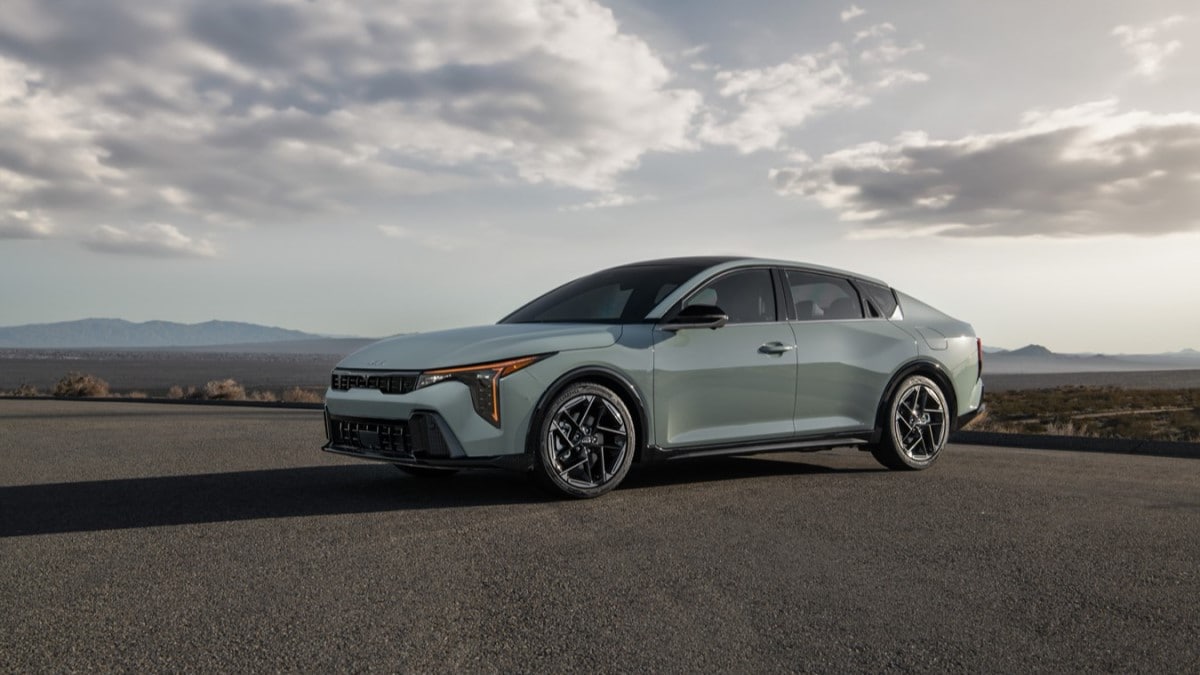
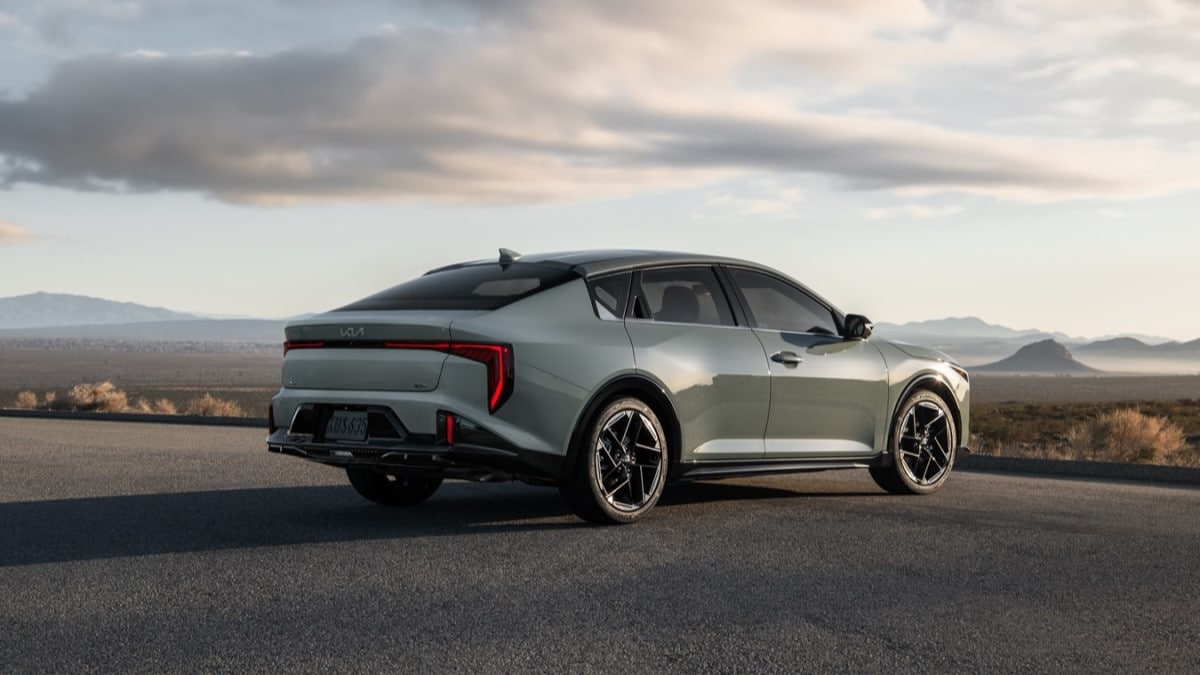
The 2025 Kia K4 seen from a rear quarter angleThe 2025 Kia K4 seen from a rear quarter angle

Aggressive Styling

Design is the K4’s first language. It neatly knits an upright front fascia to sleek, angular sides and a fastback profile. Kia’s signature “star map” lights – think constellations – look great in this treatment, where they emphasize the bold creases of the shoulder line.

The sharp look helps the car look compact when it’s nearly midsize. “With an overall length of 185.4 inches and width of 72.8 inches, the K4 is the widest and has the largest footprint in the compact segment,” Kia says.

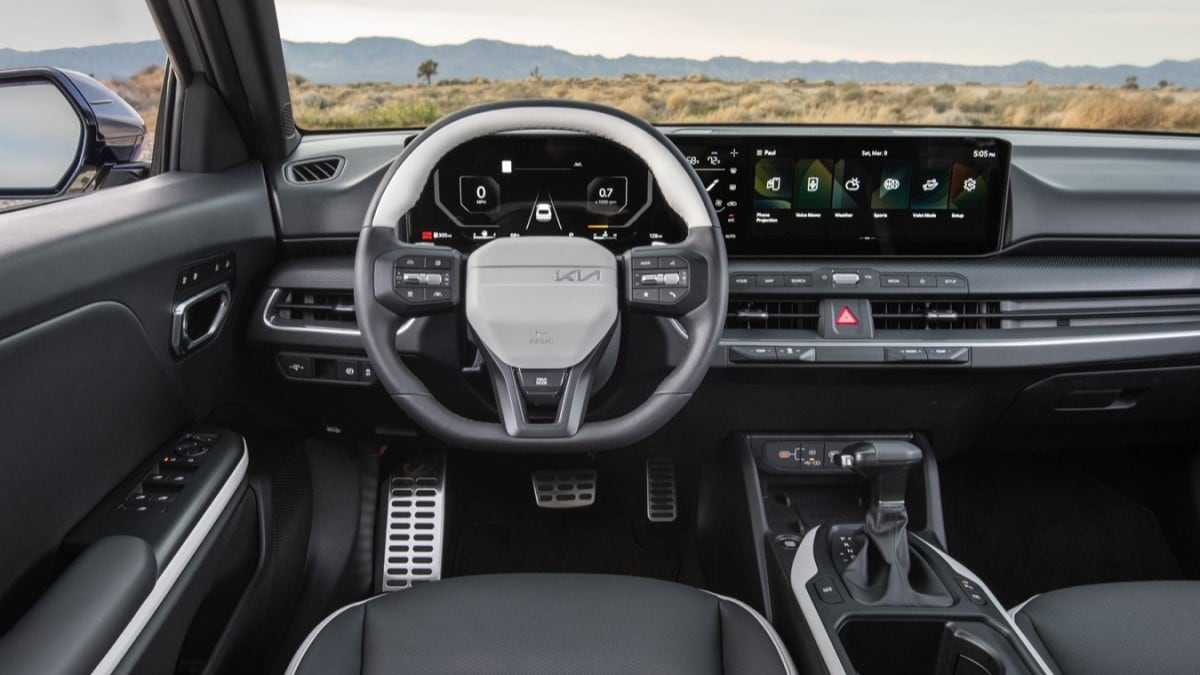
The dashboard of the 2025 Kia K4The dashboard of the 2025 Kia K4

Roomy Cabin

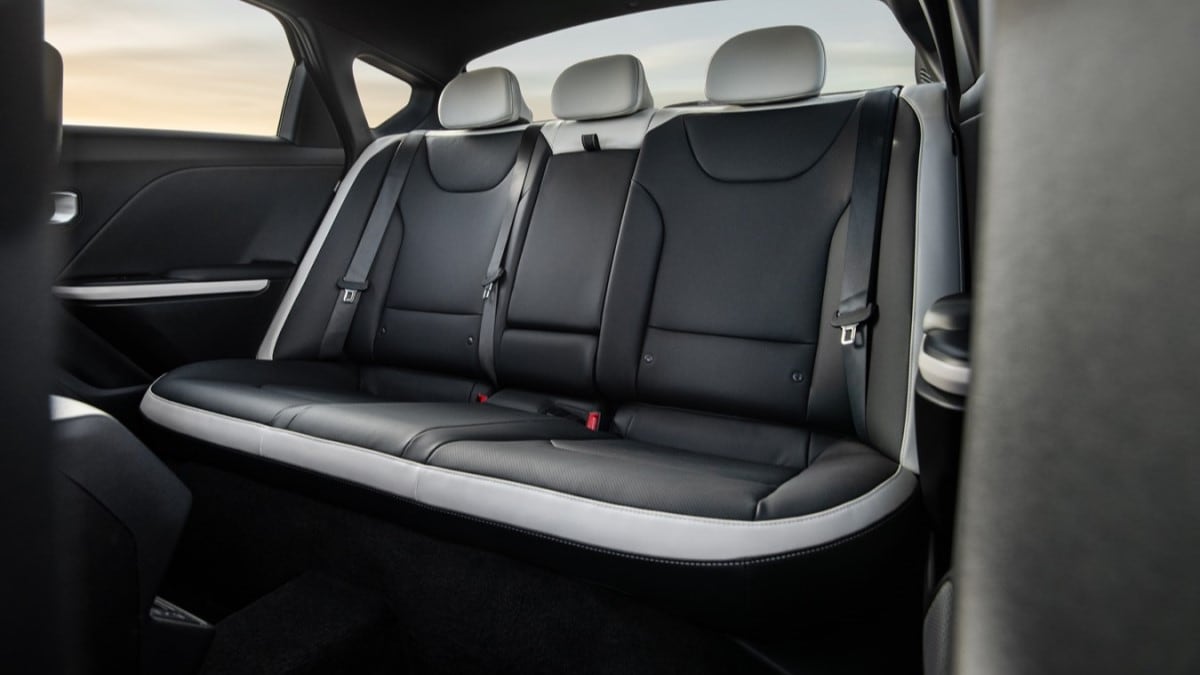
Inside, much of that space has gone to rear-seat passengers. Thirty-eight inches of legroom and 37.3 inches of headroom beat the Honda Civic and Toyota Corolla.

The interior also has a touch we’re not used to seeing at this price range. In recent years, many car designs have paired a driver’s screen and a central touchscreen to look like one immense widescreen. But most automakers don’t do that in this price range. The K4 does, making the cockpit look more upscale.

The rear seats of teh 2025 Kia K4The rear seats of teh 2025 Kia K4

Two Engine Choices, No Stick

Under the hood, the K4 is more like the Forte it replaces. The same 2.0-liter 4-cylinder engine makes 147 horsepower and motivates most trim levels. It sends power to the front wheels through a continuously variable automatic transmission (CVT) – the same setup most cars in this class use.

A sporty GT-Line Turbo edition uses a turbocharged 1.6-liter 4-cylinder in its place, making 190 hp — a slight step down from the power in the top-of-the-line Forte. But It sends power through an 8-speed automatic transmission that enthusiastic drivers might find more satisfying.

Sadly, the 6-speed manual option once found in the Forte has dropped from the lineup.

Standard driver assists include a smart cruise control capable of bringing the car to a complete stop and speeding back up to keep pace with traffic. An optional package adds a first for the segment – evasive steering assist. It can “help mitigate collisions with obstacles, pedestrians, or other vehicles detected ahead and will warn the driver in certain circumstances, and if there is space to avoid the collision in the lane, it can assist the driver’s steering.”

The K4 is a compelling package. All that’s missing is the price. If Kia can keep the cost competitive with other compact cars and offer the 10-year powertrain warranty it’s known for, the K4 could be an excellent option for many shoppers. We expect to know pricing soon, as Kia says the K4 will reach dealerships in the second half of 2024.


Source link