Home Blog Page 849

15 Pros and Cons of Living in Lisbon

0


In this post, I’ll share with you my thoughts on the main pros and cons of living in Lisbon, Portugal’s beautiful capital.

With its year-round sunshine, atmospheric cobblestone streets, colorful tiled buildings, and rich cultural and culinary scene, Lisbon is a pretty amazing place to live, all things considered. It’s one of my favorite cities in Europe and I’ve spent quite a lot of time there over the past few years.

But, it’s not perfect. Nowhere is. Like any major capital city, Lisbon comes with its own set of advantages and disadvantages. Overall, I’d say the benefits of living in Lisbon vastly outweigh the drawbacks. But it’s important to consider a range of different factors, which is what I’ll be doing here.

15 Pros and Cons of Living in Lisbon

lisbon sunriselisbon sunrise

When coming up with this set of pros and cons of living in Lisbon, I relied largely on my own personal experience of the city, and Portugal more widely. Having spent many weeks living there myself, I know Lisbon pretty well.

I also have a couple of friends who are from Lisbon and have lived there most of their lives, so I’ve been able to get a local’s perspectives on the city too. To help you decide whether Lisbon would be a good place for you, here’s a balanced view of life in Portugal’s capital.

Pros of Living in Lisbon

There are many advantages of living in Lisbon. Here are 10 of the best things about the city.

1. Affordable Cost of Living

euroseuros

Lisbon is a relatively affordable city to live in, at least compared with other Western European capital cities. Your money goes much further here than it would in, say, Paris, London, or Copenhagen.

It’s definitely not as cheap as it used to be. And it’s still the most expensive city in Portugal to live in. The city has seen quite a bit of price inflation over the last few years, partly due to its popularity with digital nomads which has caused a surge in rental prices.

Yet, despite this recent price inflation (see below for more info on this), you can still enjoy a high quality of life in Lisbon without breaking the bank. Rent, food, transport, and entertainment are all relatively affordable.

2. Great Weather

climate mediterranean climate mediterranean

One of the things I love most about Lisbon is its weather. The city enjoys a Mediterranean climate with mild winters and long, hot summers. This means you can spend plenty of time outside enjoying the city’s many parks, gardens, and outdoor spaces throughout the year.

Lisbon has more than 300 sunny days per year, making it one of the sunniest capital cities in Europe. The winters are mild, with temperatures rarely dropping below 10°C (50°F).

In the summer, you can expect long days with plenty of sunshine and temperatures averaging around 28°C (82°F). If you love warm, sunny weather, Lisbon could be the place for you!

3. Vibrant Culture and Rich History

Alfama district lisbonAlfama district lisbon

As one of the oldest capital cities in Europe, Lisbon has a rich history and a vibrant culture. From its stunning architecture and charming neighborhoods to its museums and galleries, there’s always something new to discover in this city.

One of my favorite things to do in Lisbon is just wander around and get lost in its atmospheric back streets. It feels like exploring a historical movie set or a living museum; there’s something beautiful and fascinating around every corner.

Lisbon is also an architectural gem, with its pastel-colored buildings, tiled facades, and grand monuments dotted throughout the city. The picturesque Alfama district is especially famous for its traditional Moorish-style buildings and narrow alleys that seem to transport you back in time.

4. Stunning Beaches Nearby

Praia do Magoito portugalPraia do Magoito portugal

Not many capital cities can boast of having stunning beaches just a short distance away. But Lisbon is lucky enough to have some of the most beautiful coastlines in Europe within easy reach.

From the famous surfing hotspot of Cascais to the picturesque town of Estoril, there’s no shortage of gorgeous beaches to choose from. Praia do Magoito is one of my personal favorites.

If you’re a surfer, you’re in for a treat with countless fantastic surfing spots dotted along the coast both north and south of the city. And if you’d prefer something a little more relaxing, there are plenty of beaches ideal for swimming, sunbathing, and enjoying a sundowner as the sun sets over the sea.

5. Delicious Food and Wine

pastel de natapastel de nata

Portuguese cuisine is often overlooked in favor of its Mediterranean neighbors, but it definitely shouldn’t be! Lisbon’s food scene is vibrant, diverse, and delicious.

As you’d expect for a coastal city, fresh seafood is often the star of the show. But there are many other delicious local dishes to enjoy too, such as cozido à portuguesa (a hearty stew), bacalhau (salted cod), and the famous pastel de nata (custard tart).

Portugal also produces some excellent wines, many of which are available for extremely reasonable prices – especially if you buy them from a supermarket. Try a glass or two of local vinho verde or Alentejo red wine, my favorite.

6. Excellent Public Transport

lisbon transportlisbon transport

Getting around in Lisbon is easy thanks to its efficient public transport system. The city has an extensive and interconnected network of buses, trams, metros, trains, and ferries that cover all the major areas.

The metro is especially convenient for getting around quickly and cheaply. It’s clean, cheap, and modern, and even connects to Lisbon Airport, which makes traveling to and from the city a breeze. This means you don’t need to worry about having a car, which is one of the major pros of living in Lisbon.

Lisbon’s location is also an ideal base for traveling further afield. Not only is it well-connected with the rest of Portugal, but you can get cheap flights from here to destinations all across Europe and beyond.

7. Friendly Locals

friendly friendly

I know it sounds like a bit of a cliche, but in my experience, Portuguese people really are as friendly as their reputation suggests. This even extends to residents of the big city.

I’ve found Lisbon locals to be extremely welcoming and helpful. It’s common for strangers to strike up conversations with you, and for people to go out of their way to help you find what you’re looking for. It’s just part of the city’s warm and welcoming culture.

8. Vibrant Art and Music Scene

lisbon street performerslisbon street performers

Lisbon hums with creative energy, from its world-renowned street art to eclectic music festivals. Portugal has a long tradition of arts, literature, and music, which is reflected in the lively cultural scene in the city.

You can attend concerts, exhibitions, festivals, and other events all year round. Fado tunes spill out of open windows, and the streets often turn into impromptu stages for local musicians and performers.

And, if you’re a fan of street art, Lisbon is definitely a city for you. Its streets are full of colorful and thought-provoking pieces that add to the city’s already vibrant atmosphere. There are even a few organized tours dedicated to showcasing the best street art in the city.

9. Safety and Security

solo traveler lisbon safety solo traveler lisbon safety

Lisbon is one of Europe’s safest capital cities, with a relatively low crime rate. Of course, it’s always essential to stay vigilant and practice common-sense precautions, but generally speaking, Lisbon is a very safe city to live in.

I’ve always felt comfortable walking around the city alone at night. Theft and petty crime are not as common here as in many other European cities; one of the many reasons why it’s a great place to live.

friends expats digital nomadsfriends expats digital nomads

Lisbon is a popular city with digital nomads and other remote workers. There are people living here from all over the world, which adds to the city’s diverse and cosmopolitan vibe.

This also means that there are plenty of opportunities to meet other expats and make new friends. Many cafes, coworking spaces, and community events cater specifically to this community, making it easier for newcomers to integrate into life in Lisbon.

Plus, having a network of like-minded individuals is always helpful when you’re moving to a new city.

Cons of Living in Lisbon

Of course, nowhere is perfect. While it’s a great city overall, there are certainly a few disadvantages of living in Lisbon. Here are 5 of the main ones.

1. Limited Job Opportunities

remote workerremote worker

In some sectors, the local job market can pose a challenge, particularly for those seeking high-paying roles. Salaries in Lisbon are generally lower than in other Western European cities, and the unemployment rate is higher.

However, this is slowly changing as more and more international companies set up offices in Lisbon. And with Portugal’s growing economy and favorable business climate, there are opportunities for those willing to put in the effort to find them.

Still, you may find it harder to find a good job here compared with many other major cities in Europe. Of course, if you’re a remote worker, digital nomad, and/or have your own online business, this isn’t likely to be a huge downside to living in Lisbon.

2. Crowded Tourist Season

crowd peoplecrowd people

Lisbon is becoming an increasingly popular tourist destination, which can mean that the city center gets pretty crowded during peak season – generally speaking, from early June until late September.

This is less of a problem if you live a little further out from the main touristy areas (Alfama or Bairro Alto), but it’s definitely something to keep in mind if you’re planning on living centrally.

Prices for accommodation and other essentials can also rise during this time, so budget accordingly. Luckily, Lisbon is a relatively affordable city overall, so even during peak season, it’s still possible to live here comfortably without breaking the bank.

3. Winter Dampness

packing warmer clothingpacking warmer clothing

Winters in Lisbon are generally quite mild. However, due to its location on the Atlantic coast, the city experiences fairly high levels of humidity during the winter months.

This, combined with the cooler weather, can leave a damp chill in your bones. Dampness can also be a problem for older buildings and homes which might not be as well-ventilated.

Winter dampness is something I used to seriously hate about living in the UK. I’d still rather be in Lisbon than London in January, don’t get me wrong. But it’s worth bringing some good quality warm clothing (and possibly investing in a dehumidifier for your home) to combat the issue.

4. Complex Bureaucracy

paperworkpaperwork

Every Portuguese person I know has told me how much they dislike the bureaucracy in Portugal. Sometimes it feels like getting anything official done (be it applying for a residence permit, opening a bank account, or registering for healthcare) requires an endless amount of paperwork and waiting.

The language barrier can also make this process more complicated. Many government officials and customer service representatives don’t speak much English, so it can be helpful to have at least some basic knowledge of Portuguese when dealing with these matters.

However, once you’ve navigated the bureaucracy and have all your paperwork in order, things generally run pretty smoothly. It’s just a matter of patiently jumping through a few hoops to get there.

5. Rising Cost of Living in Popular Areas

lisbon apartmentslisbon apartments

As Lisbon’s popularity soars, so does its cost of living, particularly in trendy neighborhoods. Rent prices in popular areas have increased significantly in recent years, making it more challenging to find affordable housing than it used to be.

If you’re willing to live a little further out from the city center or share an apartment with others, it’s still possible to find reasonably priced accommodation. But you should be realistic about the type of place you can afford if you want to live super central.

Another unfortunate effect of rising rent costs is that it’s started to price some locals out. Understandably, this can lead to resentment towards the influx of foreign (comparably wealthy) residents and tourists. It’s a complex issue, but one to be mindful of if you want to live in Lisbon.

Is Living in Lisbon Worth It?

If you’re looking for a friendly, warm, affordable European capital city with bucketfuls of culture, tasty food, loads of great things to see and do, and beautiful beaches on the doorstep, Lisbon is pretty hard to beat.

Naturally, there are a few downsides to living in Lisbon. However, overall I believe that the pros vastly outweigh the cons. The lifestyle here is relaxed and laid-back, but still vibrant and exciting – it’s a great place to live with a high quality of life. I’m sure you’ll love it as much as I do!


Source link

Gulf Craft’s New-Look Majesty Superyacht

0


The Majesty 111 has a clean, sporty exterior and a foredeck jacuzzi

Gulf Craft’s first Majesty 111 has enjoyed global exposure since its world premiere at the Dubai International Boat Show in March. In September, the 34m, six-cabin Sandbank made its Europe debut at the Monaco Yacht Show before exhibiting in the US for the first time at the Fort Lauderdale International Boat Show at the end of October.

Joining the Majesty brand’s Superyacht range, the 111 sits between the best-selling 100 and the 120 tri-deck. However, the first yacht to feature full exterior and interior design by Phathom Studio has a cleaner, sportier, more muscular and modern exterior than her Majesty sisters, with the yacht’s long band of glazing along each side of the lower and main decks, with the yacht topped by a black skylounge.

Mohammed Alshaali, co-founder and Chairman of Gulf Craft, has accompanied Sandbank on all her major show appearances and been delighted by the response to the first Majesty 111, which is available for charter through Northrop & Johnson and was listed for sale in late October.

Sandbank is available for charter through Northrop & Johnson

“Because of the images and photos, everybody loved the Majesty 111 even before they saw it at the shows. Everybody said it was futuristic,” Alshaali says. 

“Phathom really know how to draw nice lines and how to match the interior with the exterior. They introduced new features like the jacuzzi on top of the master-suite skylight and the big upper-deck skylight, while they also brought in environmentally friendly materials.”

PHATHOM STYLING

Phathom was founded in the Netherlands in 2019 by three designers – Canadian Sean Bekeschus, Spaniard Raquel H Grijota and Dutchman Fabian Henke – and Jacob van de Haar, the company’s Commercial Director.

The Majesty 111 is the first to feature exterior and interior design by Phathom

All three designers have experience at Guido de Groot, with Henke there for almost a decade. Bekeschus, a former intern at Nuvolari Lenard, also spent four years at Cor D Rover, where his portfolio included the exterior of the 58m Royal Huisman Phi, while Grijota, an interior designer, spent two years with Sinot Yacht Architecture & Design.

Phathom has recently worked on several projects with Gulf Craft including the interiors of the Majesty 72 (Review, Issue 71), Nomad 101 and upgraded Nomad 70 SUV, also collaborating on the exterior upgrades of both the latter models. However, Phathom started from scratch when designing the look of the Majesty 111.

Bekeschus, 38, says: “We looked extensively at the marketplace. For the exterior, we wanted something athletic, a little bit brawny, but classic and timeless – we didn’t want anything superfluous.”

LIGHT, COLOURS, CURVES

With an overall length of 110ft 10in, the semi-displacement flybridge motor yacht is closer in scale to the Majesty 100 (108ft 4in) than the four-level Majesty 120 (123ft 1in). However, the Majesty 111 has 15 per cent more volume than her little sister, with 243GT of space helping provide large social areas and comfortable accommodation for 12 guests and up to five crew.

Starboard view of the aft cockpit

A closer look at the aft garage door reveals a 12ft-wide bench seat, a simple but effective design touch, while Sandbank’s toys include a 4m Agilis jet tender, wakeboard, waterskis, donuts, Seabobs, wing mat and paddleboards. 

Unlike its two sister models, the Majesty 111 has a clear aft balustrade in the cockpit, reflective of its more modern design and Phathom’s desire to offer owners more sea views. The open-plan cockpit can be hidden from onlookers by a drop-down screen and was initially dressed with sofas and chairs, which were later replaced by a large dining table for 10.

The interior features natural materials and a contrasting colour palette

The saloon doors are flanked by two wide columns partially covered in fluted wooden panelling, a feature also seen extensively inside the yacht. The interior starts with two chairs facing a long, cream-coloured L-shaped sofa to port, while custom furniture includes a large, round-edged coffee table with a lift-up central circular locker.

Curves and rounded corners are evident throughout the interior, as are a variety of colours, tones and materials including an extensive use of oak. However, the high, white ceiling keeps the mood light and incorporates recessed lighting as well as a drop-down TV.

Aft view of the dining area, which is topped by a table-sized ceiling mirror and a decorative lighting fixture 

Grijota, 40, says: “When we designed the interior layout, we wanted to appeal to a wider range of markets, so we made it less formal and wanted to open the spaces while letting in lots of light, which you can see throughout the yacht. In the fittings and décor, we played with natural materials and contrasts. Our palettes have a lot of contrasts.”

Forward is a large dining table for 10, which is literally reflected in the ceiling above by a table-sized mirror fitted with an artistic, suspended lighting fixture. The area is served by the large galley, which is accessed by a door on the port side. On either side of the dining table are rounded, hip-height cabinets, matching the one starboard of the saloon.

Stairs to the skylounge are followed by stairs to the lower deck

Forward is a transparent, floating staircase to the upper deck, which acts as a centrepiece for the yacht alongside the lower-deck stairs, while the starboard hallway leads to an elegant day head with a huge window and onto the master suite.

CABINS APLENTY

The master-suite entrance starts with a hall featuring a low storage cabinet beneath starboard windows. On the left is a sliding door to a walk-in wardrobe, before another sliding door leads to a twin-sink bathroom with an enormous shower including a bench seat and a big window.

Port view of the master suite, which has an aft-facing bed with a skylight view of the jacuzzi

The full-beam bedroom features the bed facing aft to a huge, fixed TV, although it’s the view above that’s potentially most captivating – into the glass-bottomed jacuzzi! Fittings include ‘floating’ bedside tables topped by large shelving units, an elegant, multi-level vanity table cum storage unit, and a large sofa on the port side of the room.

The five guest cabins on the lower deck are accessed by an illuminated staircase, which even benefits from the huge skylounge skylight at the top of the central staircase. The lower-deck hall leads aft to two ensuite cabins with forward-facing double beds, while forward are two en-suite twins with aft-facing beds.

The VIP suite in the bow is one of five lower-deck guest cabins

However, the trump card is in the bow, a 15sqm VIP suite that starts with a port hallway featuring full-height cupboards on either side of a vanity desk.

The bedroom has an aft-facing bed flanked on each side by a bedside table that blends into a long storage cabinet, while there are built-in shelves on either side of the soft-panelled bedhead. The starboard side of the room even has another full-height cupboard beside the bathroom door.

SKYLOUNGE & SKYLIGHTS

The central staircase leads all the way up to the upper deck and is topped by a huge, rectangular skylight that helps illuminate the skylounge as well as the stairs. The skylounge is set up with a large L-shaped sofa to starboard that faces a big, brawny bar to port that even incorporates a huge TV.

Seating in the skylounge faces an enormous portside bar fronted by a huge TV

It’s no ordinary bar in terms of size or design and includes a wine fridge and even a dishwasher, so with a day head at the top of the stairs, the skylounge can become a self-contained party zone. 

Meanwhile, there’s more fun to be had on the open aft deck, which is partially covered by a skylounge overhang fitted with louvres. The covered area includes an outdoor galley to starboard and cockpit stairs to port, but otherwise, the deck can be configured as an owner wishes.

Forward view of the partially covered aft deck 

Symmetrical side decks lead around the skylounge and wheelhouse to the foredeck, another fun social area with a C-shaped sofa and two tables facing the huge jacuzzi, which is surrounded by sunpads on three sides. It’s then four steps down to the working area, which surprisingly has a cosy aft-facing sofa in the forepeak.

The bow is overlooked by the reverse-windscreen wheelhouse, which contains a central leaning post for the skipper, an L-shaped sofa and folding table to starboard, plus a side door to port. The yacht is fitted with twin 1,900hp MAN V12s and has a top speed of 20 knots and a cruising speed of 12.

The foredeck includes a glass-bottom jacuzzi surrounded by sunpads

Overall, Phathom’s vision for the Majesty 111 has resulted in a notably forward-looking design shift for Gulf Craft.

“We collaborate well with Gulf Craft, maybe because we’re a young company and more flexible than longer-established design studios,” Grijota says. “We’ve studied the DNA of the shipyard and tried to keep it on the Majesty 111, but we believe this is a level up. We wanted to incorporate features that would be unique selling points and look good on a yacht this size – and we think it worked out well.”

www.gulfcraftinc.com

Images courtesy of Gulf Craft

This article was first seen on yachtstyle.co

For more on the latest in yachting news, click here.


Source link

11 Florida National Park Units You Must Visit | Things to Do + Interactive Map

0


The most prominent features of Florida’s national park sites are coasts and seashores. Long beaches, crystal clear water, coastal wildlife, and endless opportunities for water activities. But that’s not all these eleven national park sites offer. You can explore America’s oldest fort, fly in a seaplane to the largest fort, and visit the site where De Soto’s expedition landed in the 1500s.

Florida is known as the “Sunshine State,” a moniker that accurately describes the tropical climate. The national park sites capitalize on this attribute with beaches, coastal campgrounds, hiking trails, and water trails.

Some national park sites are perfect for day trip visits while exploring Florida. But others, like Dry Tortugas National Park, require planning to get the most out of your trip.

Read this list of the 11 Florida national park sites to learn what to do at each site, find links to more information, and save the address to your Google Maps account.

Note | The national park sites are listed in order of appearance on the map from left to right. This is not a ranking of the national park sites.

Florida National Parks Map

How to use this map | Click the icon in the top-left corner to open the Map Legend, then click on any of the legend items to display more information. If you have a Google account, click the (very faint) star at the end of the map’s name to save this map to your account, then access the map from your smartphone during your trip.

National Park vs. National Park Unit

When someone searches for a “national park,” they are usually looking for information about one of the 63 national parks—the pinnacle of the National Park System. However, national parks only account for 15% of the system’s units.

What about national monuments, national seashores, and national military parks? What are these parks collectively called?

The National Park Service explains, “While there are at least 19 naming designations, these units are commonly referred to as parks.” However, two adjectives were used in their explanation: units and parks.

I use the term “national park unit” to describe any of the 429 individual named units of the National Park System, and then I use the term “national park” specifically for those vaunted parks.

When I write a roundup of National Park Service sites, I include all the national park units because each park is worth visiting for its own reason.

National Park Service App

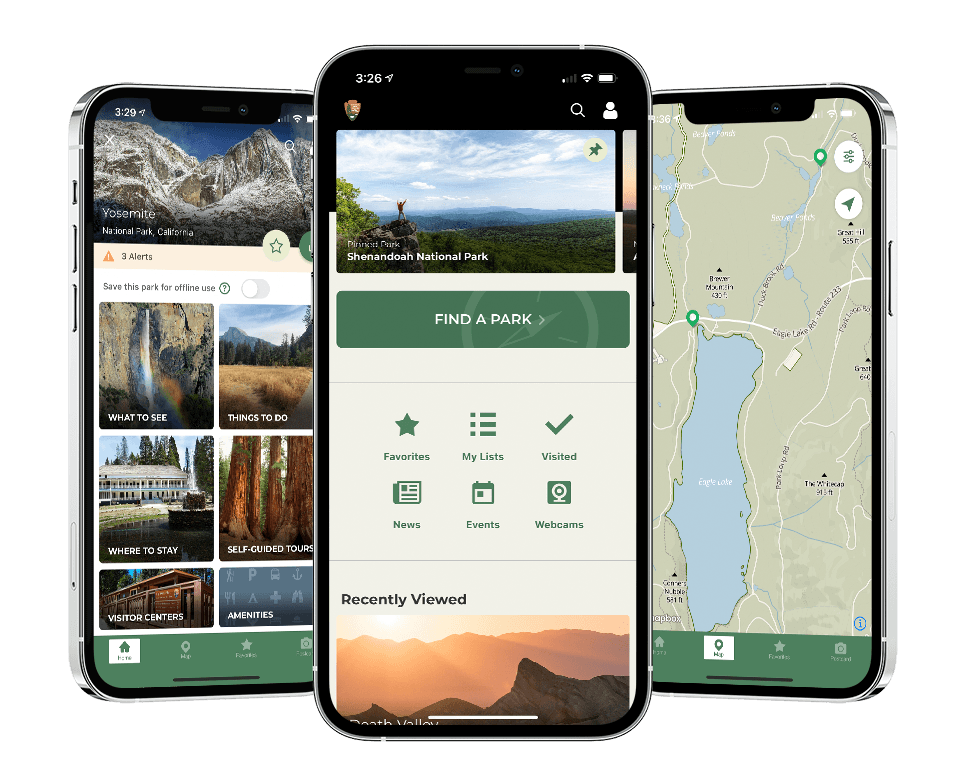
The official National Park Service app is an all-in-one tool for planning a national park adventure and finding your way around the park. The app has information about every national park site across the country, essentially putting all the online information at your fingertips.

The free app features interactive maps, self-guided tours, amenities like restrooms, and lists of things to do. The powerful app has an offline mode – with a single tap, you can save the park for offline use to access all the information later. You’ll also have access to important information like alerts, contacts, fees, and operating hours.

Download the free app on iOS and Android.

America the Beautiful Pass

Most of the National Park Service’s units are free to visit, but some require an entrance fee. Fortunately, there are ways to save money on those fees if you frequent the units. 

The Standard Pass allows one person to enter one park for seven consecutive days. The Annual Pass provides entrance to one park for a year. 

The America the Beautiful Pass is the golden ticket hidden in a chocolate bar. This pass covers the entrance and day-use fees for up to one vehicle or four adults for all National Park Service units. 

There are several types of America the Beautiful Passes catering to different segments of society and with different price tags: 

  • Annual Pass is available for everyone for $80
  • Annual Senior Pass is available to US citizens 62+ for $20
  • Lifetime Senior Pass is available to US citizens 62+ for $80
  • Annual Military Pass is available to active duty US military and dependents for free
  • Lifetime Military Pass is available to Gold Star Family members and veterans for free
  • Access Pass is available for US citizens with a permanent disability for free
  • 4th Grade Pass is available to US fourth graders for free

The best place to purchase an America the Beautiful Pass is at a national park unit. Visit the National Park Service’s website to learn more about interagency passes. 

Gulf Islands National Seashore

Gulf Islands National Seashore is an interesting mixture of nature and history on barrier islands in Mississippi and Florida. Explore history at places like Fort Barrancas and Fort Pickens, forts built during the country’s early years. Then, spend a day at the beach at Okaloosa, Perdido Key, or Santa Rosa.

Spend a few nights in coastal comfort at the 200-site Fort Pickens Campground. The campsites feature electrical hookups and are suitable for tents or RVs.

Timucuan Ecological and Historic Preserve

Timucuan Ecological and Historic Preserve covers 46,000 acres of wetlands and waterways near Jacksonville, Florida. Established in 1988, the preserve is an excellent opportunity to watch coastal wildlife and enjoy water activities like kayaking and scenic coastal views.

Visit Kingsley Plantation, the oldest extant plantation in the state, and then take a self-guided tour of Fort Carolina National Memorial.

Fort Caroline National Memorial

In 1564, René Goulaine de Laudonnière established a French settlement on the banks of the St. John River. A year later, Spanish troops from St. Augustine, led by Pedro Menéndez de Avilés, captured the settlement and eventually destroyed it.

Fort Carolina National Memorial preserves the site of the French settlement. Nothing remains, but the visitor center has exhibits about the early colonial history and the conflict between France and Spain.

Castillo de San Marcos National Monument

In 1565, Pedro Menéndez de Avilés founded St. Augustine, Spain’s first settlement in North America. After a hundred years of relative peace, the settlement was brutally attacked by English pirate Robert Searle. Queen Regent Mariana of Spain ordered the Florida governor to build a masonry fort – the Castillo de San Marcos.

Construction on “Castle of Saint Mark” began in 1672 and was completed in 1695. It’s America’s oldest fort in the oldest town.

Read More | Exploring America’s Oldest Fort – Castillo de San Marcos National Monument

Visitors to Castillo de San Marcos National Monument can take self-guided tours of the fort’s interior, explore the canons mounted along the fort’s walls, and visit the cell where Patriot Christopher Gadsden was held in solitary confinement during the Revolutionary War. It takes about two hours to see everything in the fort.

Pro Travel Tip | A large parking lot at the national park site’s entrance is typically filled early in the day. The Historic Downtown Parking Facility behind the St. Augustine Visitor Center is the best place to park. It’s a 10-15 minute walk from the parking garage to the fort.

Fort Matanzas National Monument

In 1742, Fort Matanzas was built along the Matanzas River to protect St. Augustine from a southern approach. The fort is not typical – there are no walls, motes, or courtyards to explore. It’s a blockhouse built from local coquina.

Visitors must ride a free ferry from the park’s visitor center on Florida Highway A1A. The ferry takes about 10 minutes to cross the river to Fort Matanzas.

Canaveral National Seashore

At 24 miles long, Canaveral National Seashore is the longest stretch of undeveloped beachfront remaining in Florida. The seashore stretches from the Kennedy Space Center to New Smyrna Beach.

One of the park’s most popular activities is watching launches from Kennedy Space Center. Playalinda Beach is the nearest viewing spot on the seashore. But arrive early if you plan to watch a launch – there are a limited number of parking spots, and the park staff closes the entrance when it’s full.

Apollo Beach is the closest parking area to the northern end of the seashore. There are no roads for 13 miles between Apollo Beach and Playalinda Beach. It’s a rare opportunity to enjoy a spectacularly peaceful Florida beach.

De Soto National Memorial

In 1539, Hernando de Soto landed on Florida’s Gulf Coast with over 600 soldiers. Lustful for gold and under orders from King Charles V to conquer the natives, de Soto led the expedition on a 4,000-mile journey across North America.

De Soto National Memorial in Bradenton, Florida, preserves the generally accepted site of De Soto’s landing. Visitors can explore historic artifacts and learn about the expedition’s history at the visitor center.

Big Cypress National Preserve

In 1974, Big Cypress National Preserve in Florida and Big Thicket National Preserve in Texas became the first national preserves in the National Park System. The 720,000-acre Big Cypress National Preserve covers a vast area of southern Florida between Miami and Fort Myers.

The easiest way to explore the enormous preserve is the 27-mile Loop Road Scenic Drive or the 17-mile Turner River / Wagonwheel / Birdon Roads Loop Drive. It’s an excellent opportunity to enjoy the preserve’s wildlife and landscapes.

Other activities include bicycling, kayaking, and hiking along dozens of trails throughout the preserve.

Biscayne National Park

95% of Biscayne National Park’s 172,000 acres is underwater. The park preserves Biscayne Bay, islands and keys, and coral reefs, including the northern portion of the Florida Reef. Ten thousand years of human history lay within the park’s boundaries – most of it in sunken ships at the bottom.

One of the park’s most popular activities is scuba diving to the shipwrecks on the ocean floor. Other activities include snorkeling, kayaking, boating, and fishing. The Biscayne National Park Institute offers a series of guided tours to explore the watery portions of the park.

Everglades National Park

The 1.5 million acre Everglades National Park is the largest tropical wilderness in the United States and the third largest unit of the National Park Service. The park preserves 20% of the southern Florida Everglades south of Miami.

The most popular activities in the park are hiking, birding, kayaking, and fishing. Must of the park is a certified Dark Sky Park, perfect for astronomers of all levels to enjoy stargazing.

The park’s tropical climate rarely sees overnight lows below 40 degrees. Average highs throughout the year range from 78-94 degrees. The best time of year to visit Everglades National Park is February, March, October, and November.

Dry Tortugas National Park

Dry Tortugas National Park is one of the most unique units in the National Park Service. However, that uniqueness also makes it the most expensive national park in the country.

The national park is 70 miles west of Key West in the Gulf of Mexico. The 100-square-mile park includes several keys – Loggerhead Key, Garden Key, Bush Key, Long Key, Hospital Key, Middle Key, and East Key.

Fort Jefferson was built between 1846 and 1861. Comprised of 16 million bricks, it’s the largest masonry fort in the Western Hemisphere. Despite the heavy investment in building the remote fort, it was only used for a few years until 1874. During its short tenure, the fort was a prison for Confederate troops captured during the Civil War.

In 1935, President Franklin D. Roosevelt established the Fort Jefferson National Monument. The abandoned fort was stabilized and renovated. In 1992, the site was redesignated as Dry Tortugas National Park.

Visitors to the remote national park enjoy snorkeling the crystal clear water, taking self-guided tours inside Fort Jefferson, and spending a few hours on one of the keys. A primitive campground with eight campsites, each site large enough for three 2-person tents.

There are only two ways to get to Dry Tortugas National Park; either option makes it the country’s most expensive national park to visit. One option is a 4-hour roundtrip ride on the Yankee Freedom III, a passenger boat with a capacity for 150 passengers. The boat ride is $220 per adult and $165 for children aged 3 to 17.

The second option is a 2-hour roundtrip flight on a seaplane. Tickets for the half-day excursion are $466 per adult and $372 for children aged 2 to 12. Tickets for the full-day excursion are $820 for adults and $655 for children.

Pro Travel Tip | Although the seaplane is the fastest way to Dry Tortugas National Park, I recommend taking the more affordable boat. The boat has two fully stocked bars, sodas, and snacks for the long ride.


Source link

2024 Subaru Outback Touring XT: 5 Cool Things | The Daily Drive

0


2024 Subaru Outback Touring XT

Consumer Guide Automotive, New Car Review2024 Subaru Outback Touring XT

Class: Midsize Car

Color: Autumn Green

Seating Capacity: 5

Miles driven: 149

Real-world fuel economy: 22.1 mpg

CG Report Card
Room and ComfortB+
Power and PerformanceB
Fit and FinishB+
Fuel EconomyB-
ValueB+
Report-card grades are derived from a consensus of test-driver evaluations. All grades are versus other vehicles in the same class. Value grade is for specific trim level evaluated, and may not reflect Consumer Guide’s impressions of the entire model lineup.
Big & Tall Comfort
Big GuyA-
Tall GuyA
Big & Tall comfort ratings are for front seats only. “Big” rating based on male tester weighing approximately 350 pounds, “Tall” rating based on 6’6″-tall male tester.
Drivetrain
Engine Specs260-horsepower 2.4-liter
Engine TypeTurbocharged 4-cyinder
TransmissionCVT automatic
Drive WheelsAWD

Driving mix: 65% city, 35% highway

EPA-estimated fuel economy: 22/29/25 (city, highway, combined)

Fuel type: Regular gas

Base price: $42,795 (not including $1295 destination charge)

Options on test vehicle:  All-weather floor liners ($141)

Price as tested: $44,231


Quick Hits

The great: Roomy, nicely finished cabin, off-road/foul-weather prowess

The good: Ample power from turbocharged engine; wagon utility

The not so good: Fuel economy could be better


Tom Appel

We call the Subaru Outback a car. This troubles some people, as Subaru has clearly positioned the Outback as a crossover, and the vehicle’s rugged, off-road-ready design seem to support that mission. But, as a matter of fact, the Outback is mechanically similar to the Subaru Legacy midsize sedan, save for its wagon body, so rough-and-tumble trim bits, and a slightly raised ride height.

Not that what we call the Outback matters, it’s a hot-seller for Subaru, and American car shoppers seem to like the vehicle regardless of how it’s categorized. But for us, quite simply, Subaru sells a compact crossover, the excellent Forester, and a midsize crossover, the Ascent, leaving the Outback as something of an Outlier.

Interestingly, the wagon-utility vehicle was been interpreted by other carmakers, including Audi, Mercedes-Benz, Volvo, and even Buick, but none of those saw anything like the success enjoyed by the Outback. For 2024, the most-rugged Outback, the Wilderness, sees minor trim changes, otherwise, Subaru’s popular station wagon/crossover carries over unchanged.

The ’24 Outback lineup ascends through Base (about $30,000), Premium ($32,000), Limited ($36,000), Onyx Edition ($36,000), Onyx XT ($40,000), Wilderness ($40,000), Touring ($40,000), Limited XT ($40,000), and Touring XT ($43,000) trim levels.

Except for the Wilderness and XT models, the Outback is powered by a 182-horsepower 2.5-liter 4-cylinder engine. The more-premium Outbacks come with a turbocharged 2.4-liter four rated at 260 horsepower. Both engines mate exclusively to a CVT automatic transmission.

And, true to the Subaru brand, all Outbacks are equipped with AWD.

Consumer Guide recently spent a week behind the wheel of the 2024 Subaru Outback Touring XT, and found it fully up to the task of handling crossover-style duties while enjoying a premium-carlike ride, and decent fuel economy. As we’ve already awarded the Outback 2024 Best Buy status, we’d like to focus on what it is we appreciate most about Subaru’s popular midsize car (feel free to call it a crossover):


2024 Subaru Outback Touring XT:

5 Cool Things


It’s Comfortable

2024 Subaru Outback Touring XT

Like the mechanically similar Subaru Legacy, the Outback boasts large door openings and a surprising spacious cabin. Add in a generous dose of glass, and you have an open and airy passenger compartment that will comfortably accommodate four adults for even extended highway drives.

Throw in a quiet cabin and quality Harman Kardon-brand sound systems and you have the makings of an excellent family-trip conveyance.

2024 Subaru Impreza RS: Test Drive


It’s Composed

2024 Subaru Outback Touring XT

The Outback, in any trim level, rides and handles like a more-expensive vehicle. The Outback conveys a sense of structure and solidity underway that feels both luxurious and reassuring. The Outback also handles well, with a sense of sportiness absent from most like-sized crossovers.

2024 Subaru Crosstrek Wilderness: First Spin


It’s Capable

2024 Subaru Outback Touring XT

There’s a lot of branding here, but we’ll get through it: Subaru’s Symmetrical All-Wheel Drive with X-Mode Traction Management System is among the industry’s best AWD systems, at least as far as snow is concerned. The Editors of Consumer Guide have enjoyed the services of Subaru products of all sizes and classes during Chicago-style blizzard conditions over the years, and have never been less than impressed.

Plus, the potent turbocharged engine serves up plenty of low-speed grunt, which is perfect for crawling over snow drifts, doesn’t ask too much in the way of extra fuel. And, despite its power output, the turbocharged engine does not require premium fuel.

2023 Jeep Compass Trailhawk: Test Drive


It’s Classy

2024 Subaru Outback Touring XT

Our test car came in just under $45,000, but plays like a much more expensive vehicle. Keep in mind that price includes Subaru’s excellent AWD system, but in Touring trim, the Outback feels convincingly upscale. The 2-tone leather upholstery, classy bright-metal accents, and soft-touch trim bits combine to create an environment that would not disappoint in a $60,000 vehicle.

Again, the quiet cabin, premium audio systems, and smooth power delivery all contribute to the overall luxury feel of the Outback.

More Classic Wagon Ads


It’s Cool

2024 Subaru Outback Touring XT

The Outback plays in a segment of one. No other maker—luxury or otherwise—has been able to package a vehicle with utility and carlike attributes of a station wagon with the foul-weather capability of an SUV as effectively as Subaru. Even if you never hit the snow—or leave the pavement—owning an Outback suggests that you are ready for the rough stuff, even if you’re likely to spend most of your time on the blacktop.

Coming Soon: 2024 Toyota Land Cruiser

2024 Subaru Outback Touring XT

Listen to the Car Stuff Podcast

Follow Tom on Twitter

2024 Subaru Outback Touring XT Gallery

Click below for enlarged images

Test Drive: 2022 Subaru Outback Wilderness

Consumer Guide Car Stuff Podcast Episode 211: Fisker Halts Production, 2024 Lincoln Nautilus, Premium Car Audio Systems


Source link

Hyundai i30 Hatch update revealed, coming to Australia

0


Hyundai in Europe has revealed a subtly refreshed i30 Hatch, which will come here this year to replace models previously sourced from South Korea.

The updated i30 Hatch is entering production in April, and is due here in the third quarter of 2024.

The updates are largely cosmetic. Up front, there’s a new grille pattern and bumper insert, as well as restyled fog light housings, while down back there’s a more angular chrome insert for the bumper.

N Line models continue to get a unique grille insert, and also receive new dark metal accents for the side openings of the front bumper and a new side skirt design.

All models get new wheel designs, and seven new paint finishes join the 12-strong colour palette. These comprise Abyss Black Pearl, Ecotronic Grey Pearl, Ultimate Red Metallic, Jupiter Orange Metallic, Meta Blue Pearl, Cypress Green Pearl and Sailing Blue Pearl.

They join the carryover Atlas White, Serenity White Pearl, Shimmering Silver Metallic, Shadow Grey and Engine Red.

LED headlights and tail lights have been made standard across the range, which suggests Australian-market models could finally ditch the old-tech halogen headlights.

Inside, there’s also been a switch to LED interior lighting, which can also be found in the boot.

There’s a standard 4.2-inch colour instrument cluster screen with an optional 10.25-inch fully digital cluster, plus three USB-C outlets across the front and rear.

There are now over-the-air updates available for the satellite navigation.

Hyundai has applied a new paint to the dash to make it “more pleasant and smoother to the touch”, while the centre console is now finished in gloss black trim. There are also three new seat patterns.

New additions to the safety suite include intelligent speed limit assist and a rear occupant alert, while the autonomous emergency braking system is now available with a junction assist function in addition to vehicle and pedestrian detection.

Optional is Highway Driving Assist 1.5, which combines adaptive cruise control and lane centring functions and can adjust the vehicle’s speed according to the posted limit.

No powertrain changes have been announced.

In Europe, the i30 Hatch is available with a choice of a turbocharged 1.0-litre three-cylinder engine and a turbocharged 1.5-litre four-cylinder engine.

Both feature a 48V mild-hybrid system, and both offer the choice of a six-speed manual or a seven-speed dual-clutch automatic transmission.

The three-pot has total system outputs of 88kW of power and 127Nm of torque, while the four-cylinder produces 117kW and 187Nm.

The N Line doesn’t have the unique 150kW/265Nm turbo 1.6-litre four in Europe that was offered in Korean-built models.

Hyundai Australia has previously indicated the larger of the two European engines will come here, replacing the current, less efficient 120kW/203Nm naturally aspirated 2.0-litre four offered here, which uses a six-speed automatic.

Unlike Korean-built i30 Hatch models, multi-link rear suspension is standard across the European range; in Australia, this was previously exclusive to N Line and N models.

Previously, all current-generation i30 models bar the Czech-built i30 Hatch N and i30 Fastback N were sourced from Korea.

With production of the hatch ending in Korea, however, Hyundai Australia will now source all hatchback models from Czechia.

This is expected to result in a price increase, given European imports attract a five per cent import tariff.

It will also mean we’ll finally get a new-look N Line. With the last i30 Hatch facelift, which debuted here late in 2020, only non-N Line hatch models got freshened styling, with the Australian-market N Line left to soldier on with the old look.

MORE: Everything Hyundai i30


Source link

Hennessey Venom F5 Revolution laps COTA in a record 2 min 10.9 seconds

0


The Hennessey Venom F5 Revolution is now officially the fastest production car to lap the Circuit of the Americas (COTA) in Austin, TX. The hypercar completed a lap of the track in 2 min 10.90 seconds, setting a new lap record in the process. It beat the McLaren P1’s time by 7 seconds!

According to Hennessey Performance, the Venom F5 was designed to be a ‘Decathlete of Hypercars’. While their primary goal is to achieve a top speed of over 300 mph, F5 is no slouch around a road course either. With factory driver David Donohue at the wheel, it pulled up to 1.59 G in the corners and -1.61 G under braking.

Unlike the standard Venom F5, the Revolution is equipped with a high downforce kit. The car features a fixed spoiler at the rear and an extended front splitter with dual canards on either side. The engine cover has also been redesigned and now features an integrated roof scoop that feeds the 6.6-liter V8 engine.

The twin-turbo V8 engine develops 1817 hp @ 8,000 rpm and 1,193 lb-ft of torque @ 5,000 rpm. Power is sent to the rear axle via a single-clutch semi-automatic transmission. The Venom F5 Revolution is fitted with massive 390 mm carbon ceramic brakes and Michelin Pilot Sport Cup 2 tyres as standard.


Source link

Audi has built its final R8 supercar

0


Audi R8 production has come to an end after 17 years and two generations.

The final example of the mid-engine supercar rolled off the line at a plant in Germany last week, but it isn’t destined for a customer. Instead, Audi will keep it at its official museum in Ingolstadt, Germany.

The car was an R8 V10 Performance coupe finished in Vegas Yellow, similar to the one shown here.

R8 production was originally scheduled to end in 2023, but Audi extended production after it received a flood of orders following the announcement last year of the car’s demise. A special R8 V10 GT RWD model launched in late 2022 to mark the car’s run.

2023 Audi R8

2023 Audi R8

Audi hasn’t said whether there will be a direct successor to the R8, but should there be one it will almost certainly be an electric vehicle. Audi plans to launch its final car equipped with an internal-combustion engine in 2026, after which the automaker will only launch EVs—and that commitment extends to the Audi Sport division that is responsible for the R8.

The PB18 E-Tron concept Audi rolled out in 2018 is the best representation of what an R8 successor could be. The concept featured solid-state batteries, which are lighter than current liquid-type batteries and quicker to charge. It’s a technology Audi’s Volkswagen Group parent is preparing for the second half of the decade.

The R8’s corporate cousin, the Lamborghini Huracán, is also on its way out. A successor arrives in late 2024, and is tipped to use a version of the Revuelto’s carbon-fiber platform and a new V-8 plug-in hybrid powertrain.

The R8 was conceived as a way to celebrate Audi’s success in endurance racing, as well as to spread the investment cost of the Gallardo supercar from fellow Volkswagen Group brand Lamborghini. The R8 was previewed at the 2003 Geneva motor show by the Audi Le Mans Quattro concept, and reached U.S. shores as a 2008 model. It was initially powered exclusively by a 4.2-liter V-8, but a few years later Audi dropped the Gallardo’s 5.2-liter V-10 into the R8, creating in the process one of the first exotic cars that could be used as a daily driver.


Source link

Chrysler, Dodge recall more than 300,000 cars for airbag shrapnel risk

0


US carmakers Chrysler and Dodge have recalled more than 300,000 cars globally, after discovering two of their most popular sedans are fitted with airbag inflators which could rupture and seriously injure or kill occupants.

The recall affects 317,589 examples of the Chrysler 300 and Dodge Charger sedans built between 2018 and 2021.

Of these, Stellantis – the parent company of Chrysler and Dodge – has confirmed approximately 285,000 were sold in the US, almost 10,300 in Canada, 3500 in Mexico and about 18,800 in “certain markets outside North America”.

A spokesperson for the Australian division of Stellantis told CarExpert the brand’s statement encompassed Australia, but couldn’t specify if or how many vehicles were impacted locally.

The Chrysler 300 generation under recall overseas was officially sold in Australia from mid-2018 until late 2021, though stock of the sedan remained until March 2023 when the last new example was sold.  

“A routine review of customer feedback led to a Company investigation that discovered certain vehicles may have been equipped with SABIC inflators that had moisture introduced during supplier manufacturing,” Stellantis said in its media statement.

“This may lead to stress corrosion and potential rupture. Should this occur, inflator material may be discharged inside the vehicle and cause injury.”

The faulty inflators are found in the inflatable side curtain airbags in the Chrysler 300 and Dodge Charger.

Stellantis noted “[the] inflators do not use the same propellant or inflator design as previously recalled Takata air bags”.

“The Company is unaware of any related injuries or accidents; of five incidents investigated, all occurred when the vehicle’s interior temperature exceeded 120 [degrees Fahrenheit] (48 degrees Celsius),” it said.

According to VFACTS reports, a total of 1016 Chrysler 300s were sold in Australia between the start of 2018 and the end of 2023, though a specific number of how many cars – if any – are affected by the airbag inflator fault is yet to be confirmed.

While the Dodge Charger has also been sold in Australia, this has been through private imports and third-party companies performing right-hand drive conversions – rather than the Chrysler 300 which rolled off the production line ready for sale locally.

MORE: Everything Chrysler
MORE: Everything Dodge
MORE:
How to sell your car with CarExpert


Source link

Nissan hybrids and PHEVs US-bound, 3-row electric SUV for 2028

0


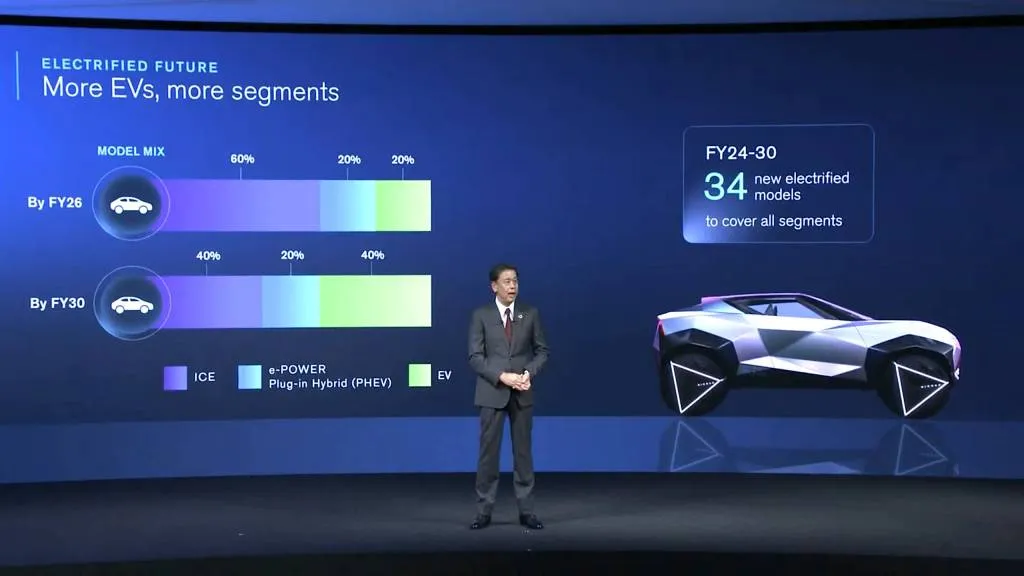
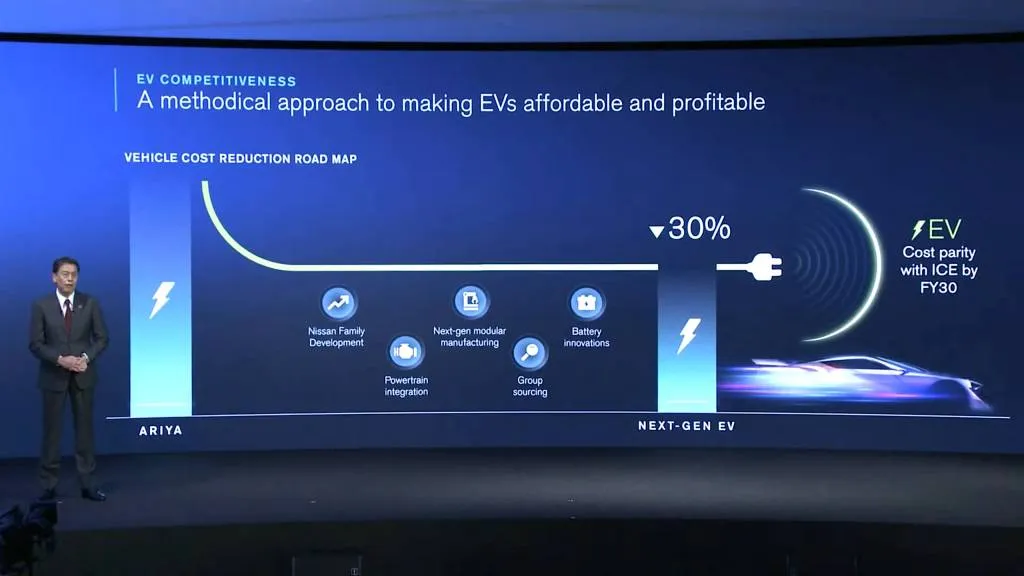
Nissan on Monday revealed a roadmap that will pivot the automaker back toward hybrids and plug-in hybrids for the U.S., as well as higher-volume, reduced-cost EVs, with aims to cut the cost of next-generation EVs by 30%. 

As such, they’ll cost the same or less than combustion models by 2030. 

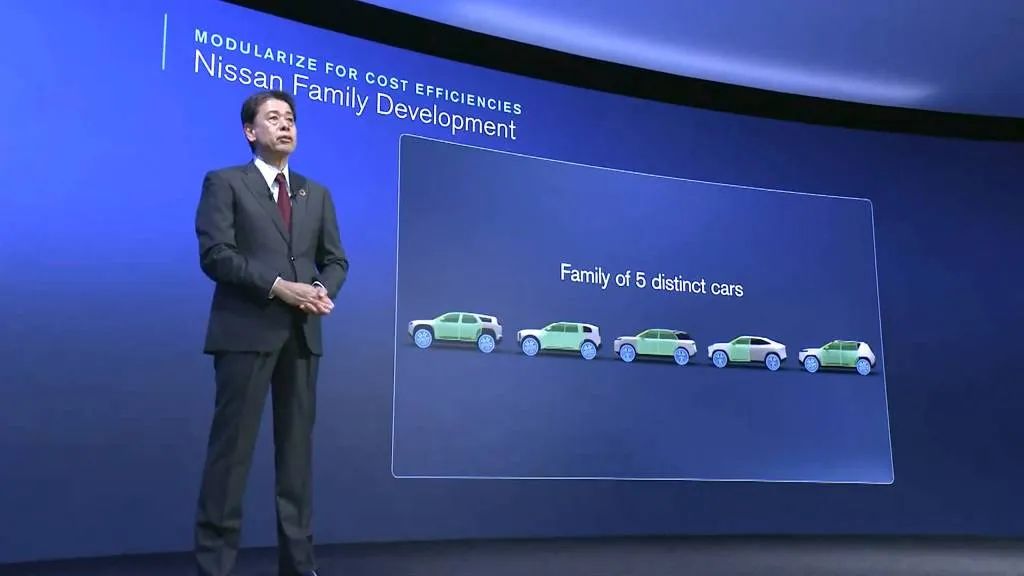
Under a new business plan it’s terming The Arc, the automaker intends to recover some of its early EV sales leadership, achieving this cost reduction in its next-generation EVs through grouped “family” development, utilizing commonized upper-body parts and modularized powertrains. Models using this approach will be headed into production in 2027. 

Nissan EV hybrid and EV plans, as of March 2024

Nissan EV hybrid and EV plans, as of March 2024

Nissan plans family of vehicles with same shared upper body components

Nissan plans family of vehicles with same shared upper body components

On a market basis, it will follow “a tailored regional strategy and prepare for an accelerated transition to EVs, supported by a balanced electrified/ICE product portfolio,” the automaker explained. Sources have confirmed to Green Car Reports that two larger U.S. EVs set to be built around then in Mississippi will incorporate that strategy. 

Multiple hybrids and plug-in hybrids

Globally, fully electric models will double from 20% of Nissan’s global mix in 2026 to 40% in 2030, the company anticipates. Nissan previously said that it also plans for 40% of its U.S. sales by 2030 to be fully electric. While it didn’t provide an update on the latter figure with Monday’s presentation, it did say it plans to refresh 78% of its passenger vehicle lineup while launching e-Power and plug-in hybrid models. 

Nissan e-Power U.S. launch timeline

Nissan e-Power U.S. launch timeline

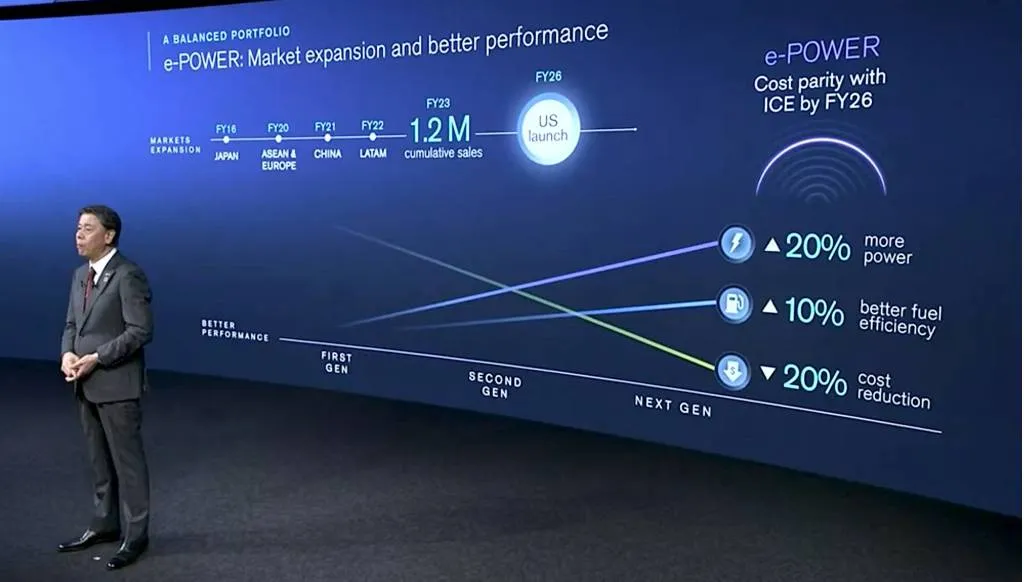
Nissan’s e-Power hybrids will arrive in 2026 for the U.S., it said in Monday’s presentation, the same year it expects e-Power to get to a cost parity with combustion engines alone. In its latest iteration, Nissan is claiming 20% more power, 10% better efficiency, and a 20% cost reduction versus previous versions of the hybrid tech.

The automaker has already outlined that many of its models will shift to a modular propulsion strategy that groups future e-Power hybrid and EV efforts under the same shared components that can even be produced on the same line. That strategy, being introduced this year, is set to reduce powertrain costs by about 30% versus 2019. 

Nissan currently doesn’t have a single hybrid or plug-in hybrid for the U.S. market. It’s already hinted that they’re on the way, and that it might be pivoting its e-Power hybrid tech toward trucks—and a new parallel-hybrid mode for that system that might make it a better fit for U.S. driving. That’s something Honda’s two-motor hybrid system already provides, and with Nissan and Honda considering a strategic partnership for electrification it seems that’s a possibility. 

Nissan sees 30% EV cost reduction by 2030

Nissan sees 30% EV cost reduction by 2030

LFP and solid-state batteries, NCM with half the charge time

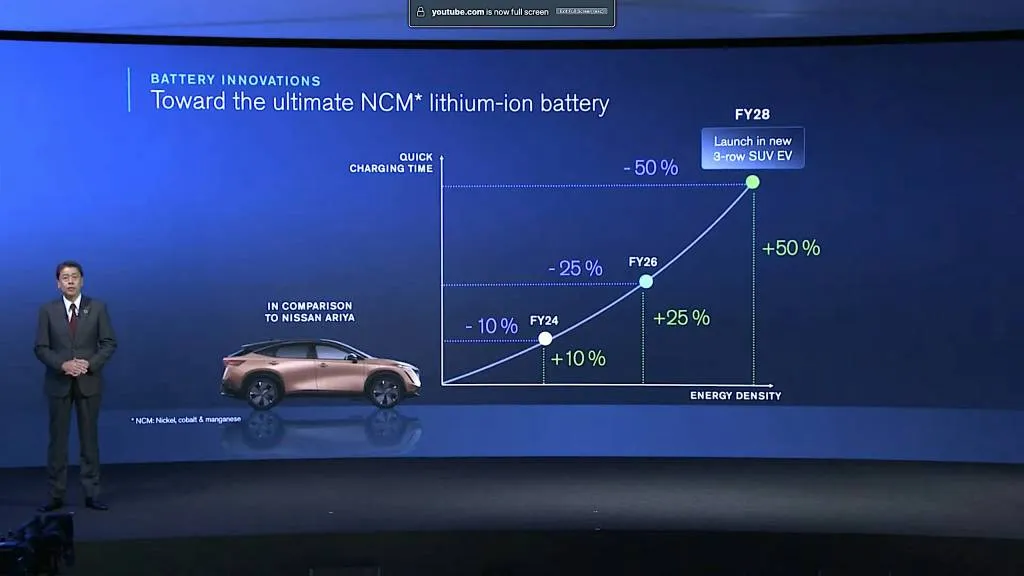
The automaker on Monday also noted that it plans to invest more than $2.6 billion in battery capacity, to provide EVs with nickel cobalt manganese (NCM), lithium ferrous phosphate (LFP), and all-solid-state batteries “to provide diversified EVs to meet different customer needs.” All three new and revamped battery types, Nissan says, will be launched in EVs in fiscal year 2028. 

On the LFP front, Nissan says that such batteries being developed and produced in Japan will reduce battery cost by 30% in the minicompact Sakura EV. 

And in the NCM lithium-ion area, Nissan says that it will slash fast-charging times in half while boosting energy density by 50%, versus current battery tech used in the Ariya. Nissan boasted that these batteries will debut in a new three-row electric SUV due in 2028. 

Nissan confirms next-gen NCM battery tech for 3-row SUV

Nissan confirms next-gen NCM battery tech for 3-row SUV

The Nissan Ariya EV itself is its second EV after the Leaf and a very competitive entry in the U.S. market, on all but price and EV tax-credit eligibility (it’s built in Japan). It offers up to 304 miles of range, introduces a new e-4orce all-wheel-drive system, debuts a simple, elegant new interface, and provides a luxurious level of ride comfort and cabin quiet. 

Nissan had intended its Leaf to be its volume EV, sold in the millions, with various global derivatives at one point in the works. Although the original model was well received, the automaker’s EV ambition slowly fizzled and it took 12 years to achieve a million sales for the model. Nissan may soon have another chance to build that volume; a successor to the current Leaf is due in 2026 or 2027.


Source link

2025 Toyota GRMN Supra spied again with new details

0


Toyota is about to up the performance of its Supra sports car in a big way.

The automaker has been spotted testing a prototype at the Nürburgring and on some of the German racetrack’s surrounding roads, and it’s thought to be for a track-focused GRMN grade.

GRMN is the range-topping option for road cars developed by Toyota’s Gazoo Racing motorsports department. It stands for “Gazoo Racing Masters of Nürburgring,” and cars classified as GRMNs can be compared to top offerings from the likes of Subaru’s STI and Mercedes-Benz’s AMG divisions.

The first GRMN model was a GRMN 86 launched in 2016. It was followed a few years later by a GRMN Yaris. While neither of these cars were offered in the U.S., the GRMN Supra is expected to make it here late this year or early next as a 2025 model.

The latest prototype in our spy photos shows new details like a larger wing. The test vehicle also appears to sport new flics on the front fascia and also an extended splitter. A new hood also appears to be present, judging by the camouflage gear. Most of the modifications are aimed at increasing downforce.

There will likely also be chassis modifications, similar to what Toyota has developed for its Supra GT4 customer race car. Some of those modifications may include a track-tuned suspension with adjustable dampers and stiffer anti-roll bars, uprated brakes, and performance tires. The prototype is wearing Michelin’s Pilot Sport Cup 2 tires.

Reduced weight is also possible.

2022 BMW M3 Competition xDrive

2022 BMW M3 Competition xDrive

Toyota hasn’t even mentioned plans for a more hardcore Supra, but rumors point to the car coming with a version of the twin-turbocharged 3.0-liter inline-6 found in BMW’s M3 and M4 Competition models. The engine is rated at 473 hp when paired with rear-wheel drive in the base M3 and M4, and this may be the rating Toyota uses for the Supra range-topper.

The Supra is a twin under the skin with the BMW Z4 and currently offers 2.0-liter turbo-4 and turbocharged 3.0-liter inline-6 engines shared with the BMW convertible. The peak power at present is 382 hp, meaning the GRMN Supra may deliver a substantial leap in performance.

Stay tuned for updates as development continues.


Source link