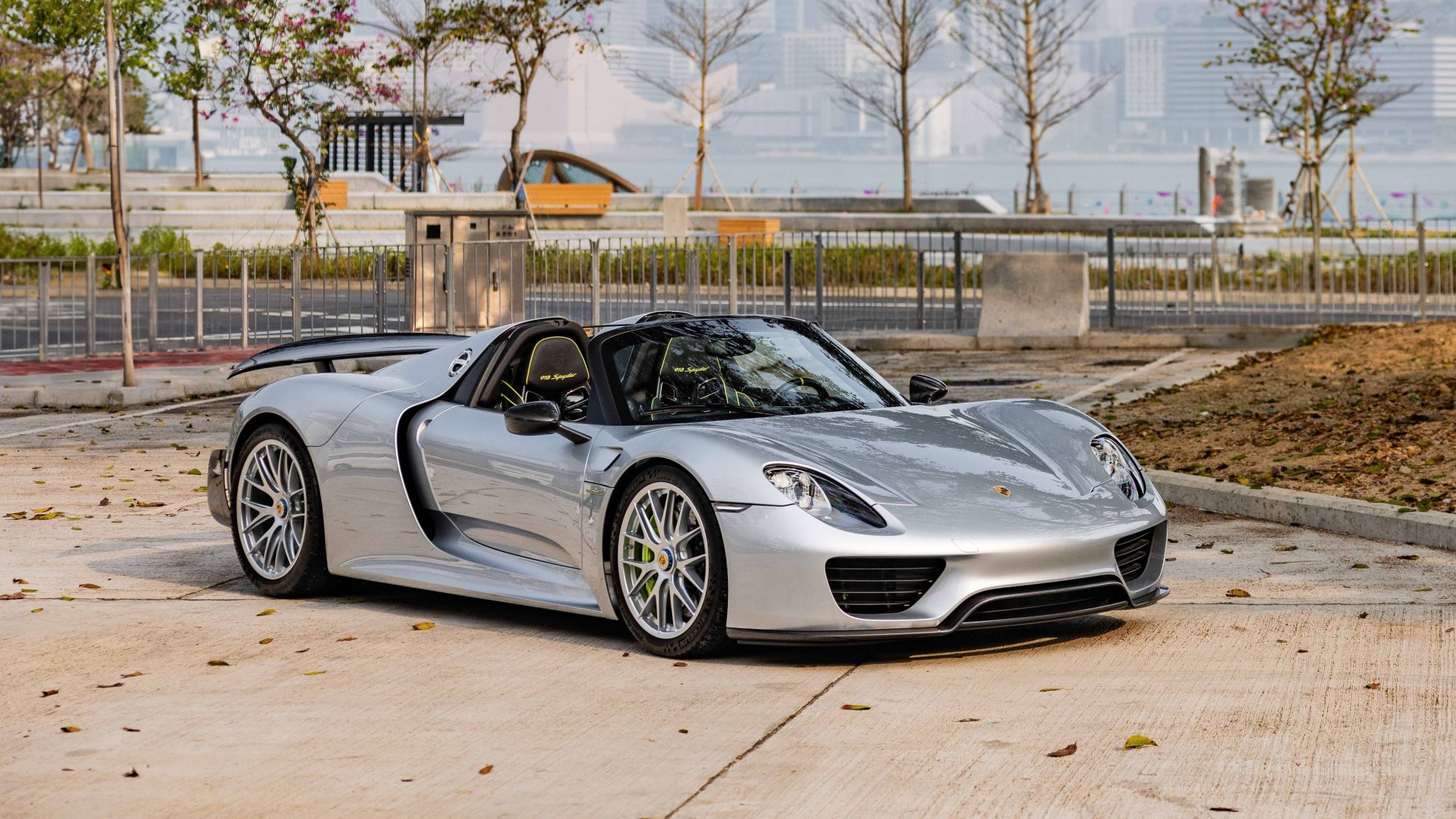
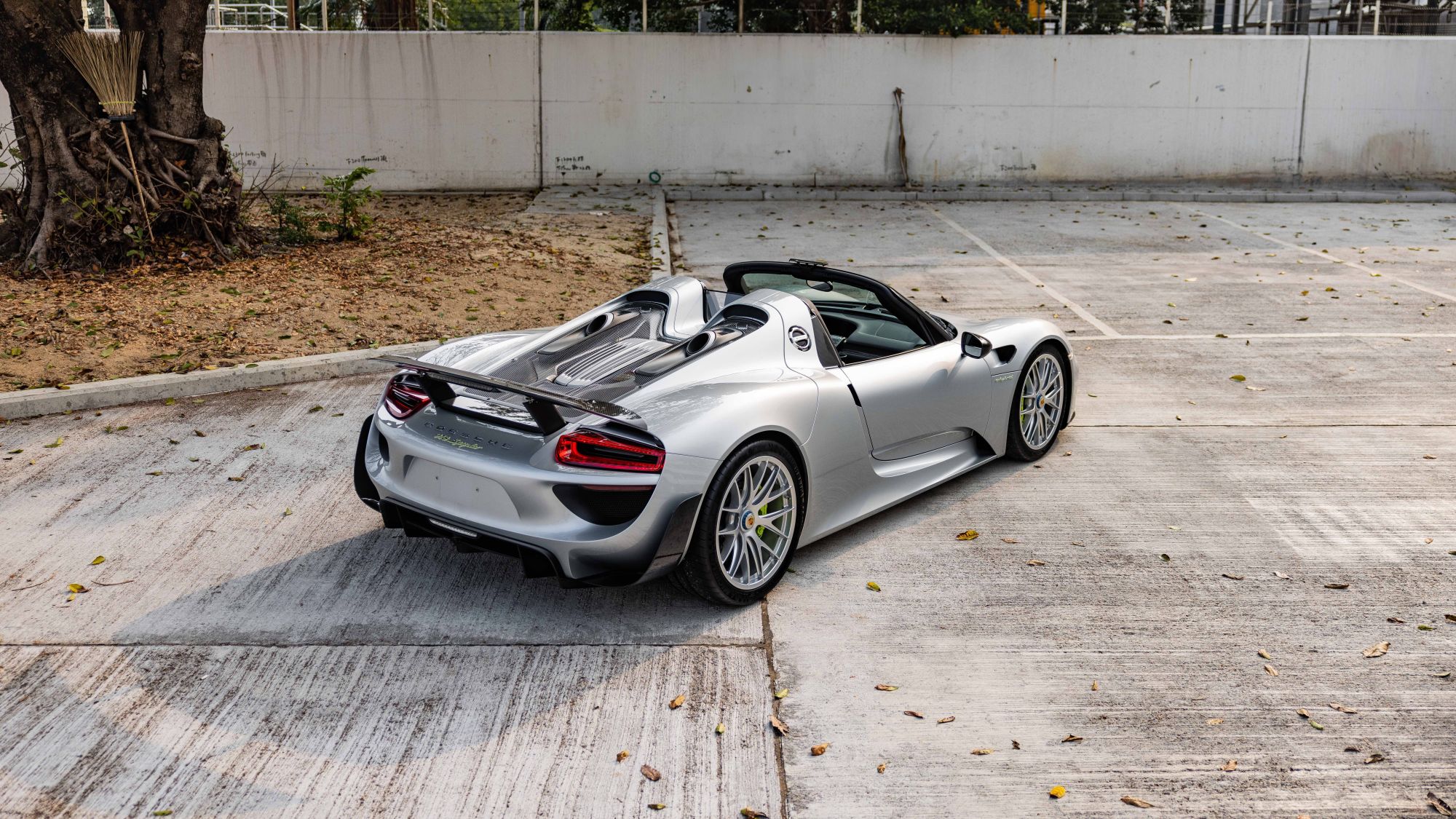
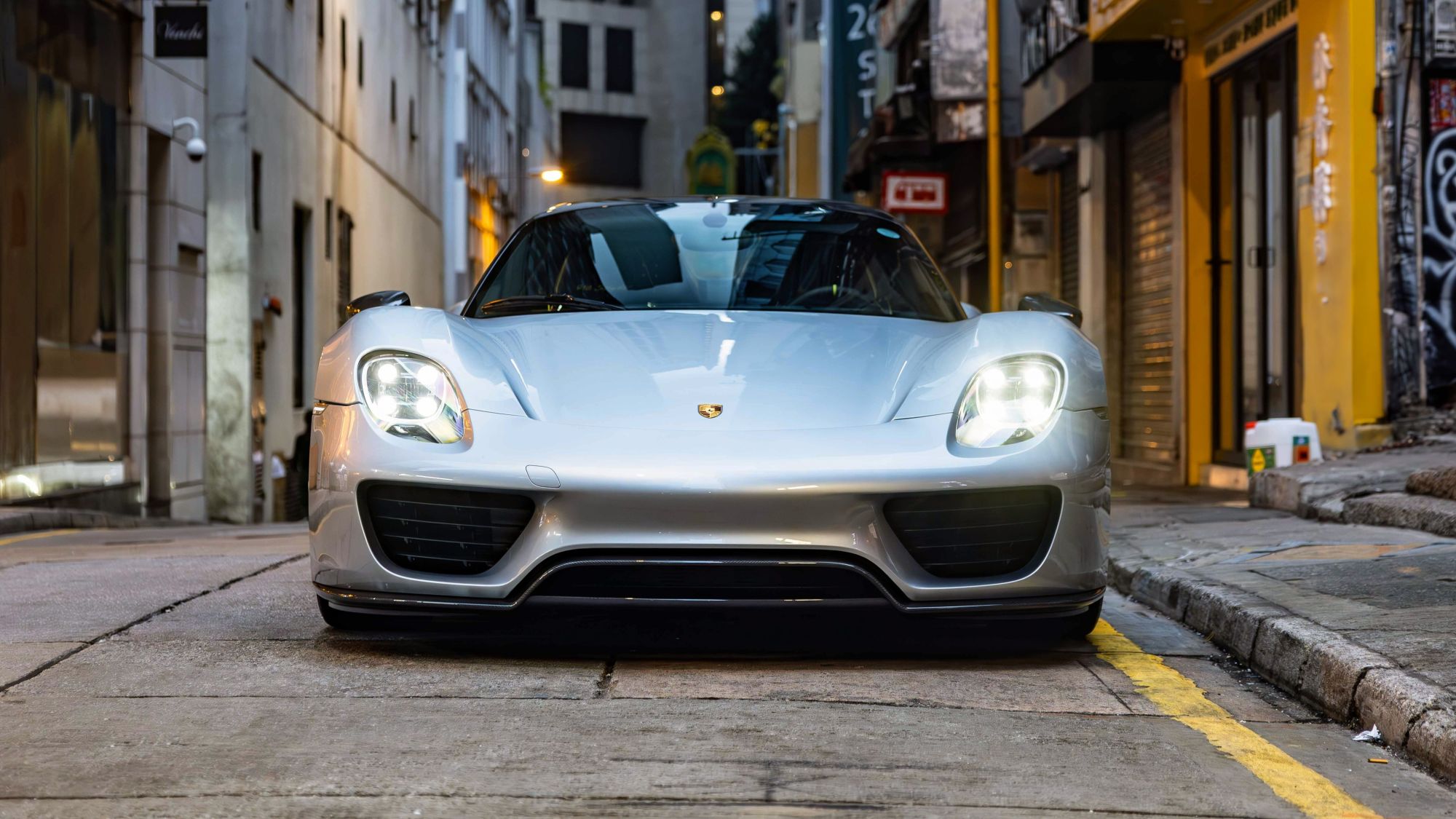
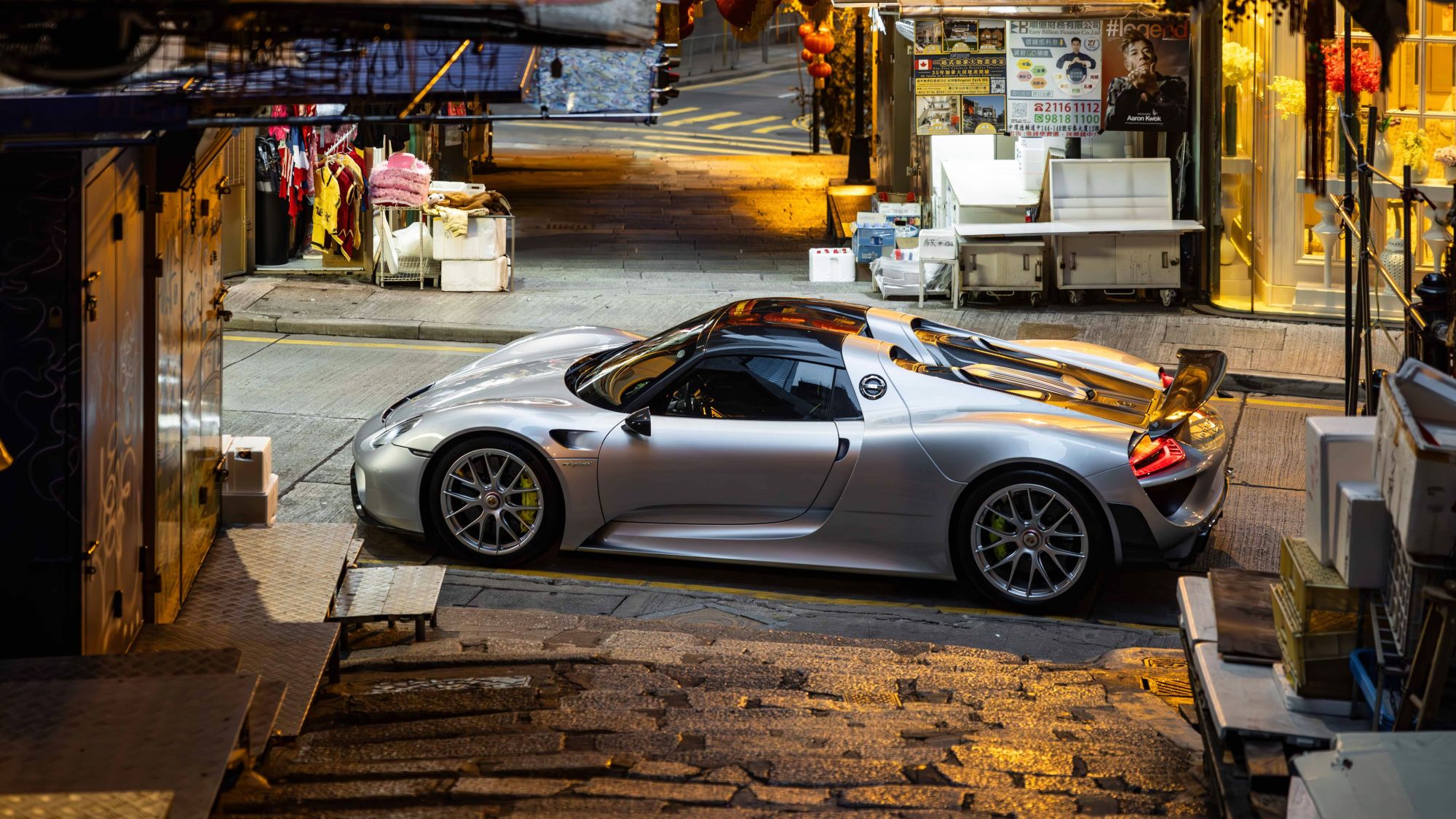
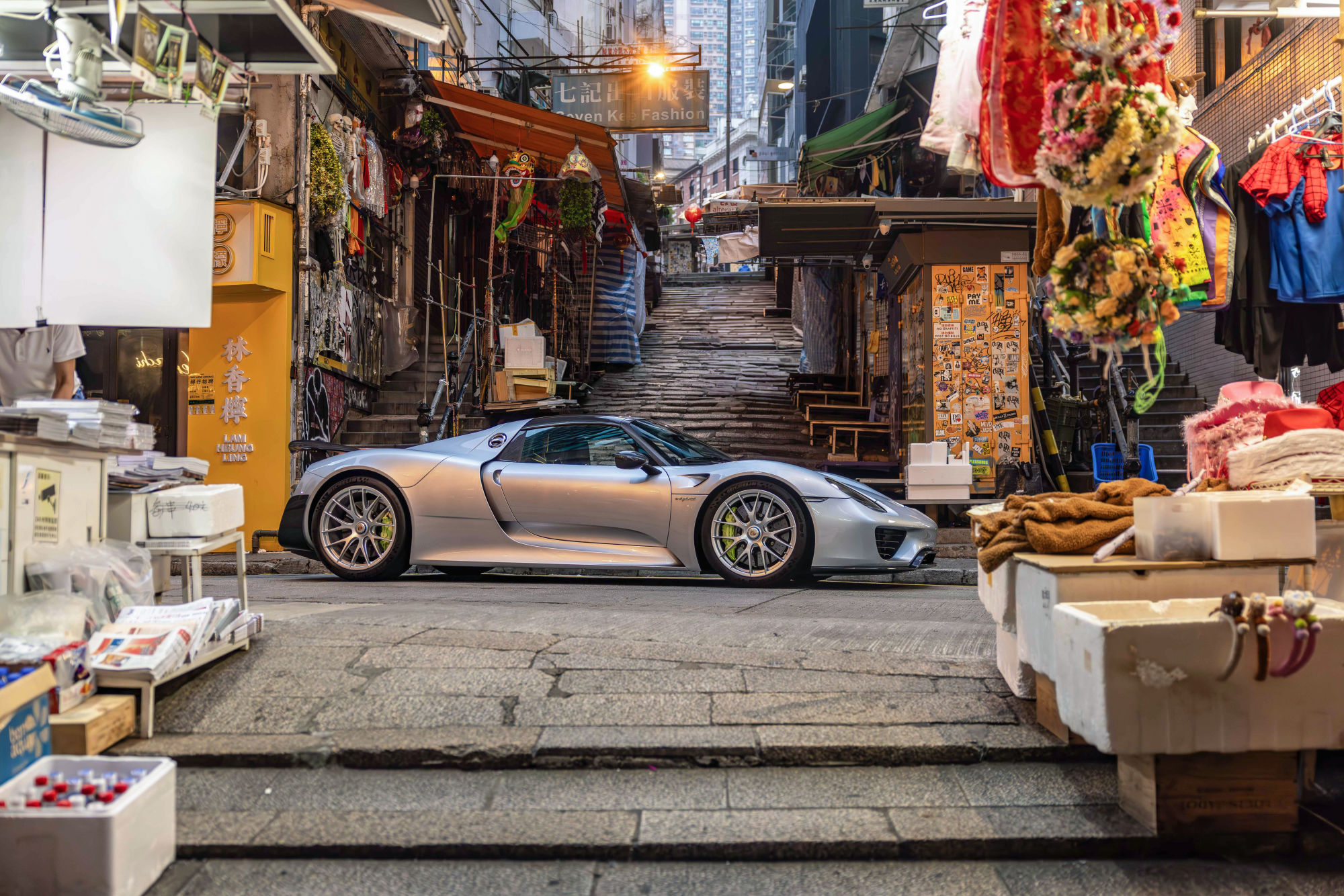
The Porsche 918 Spyder was a mid-engined, plug-in hybrid hypercar that finally proved that gearheads had nothing to worry about when it came to hybrid technology becoming a bigger part of our automobiles.
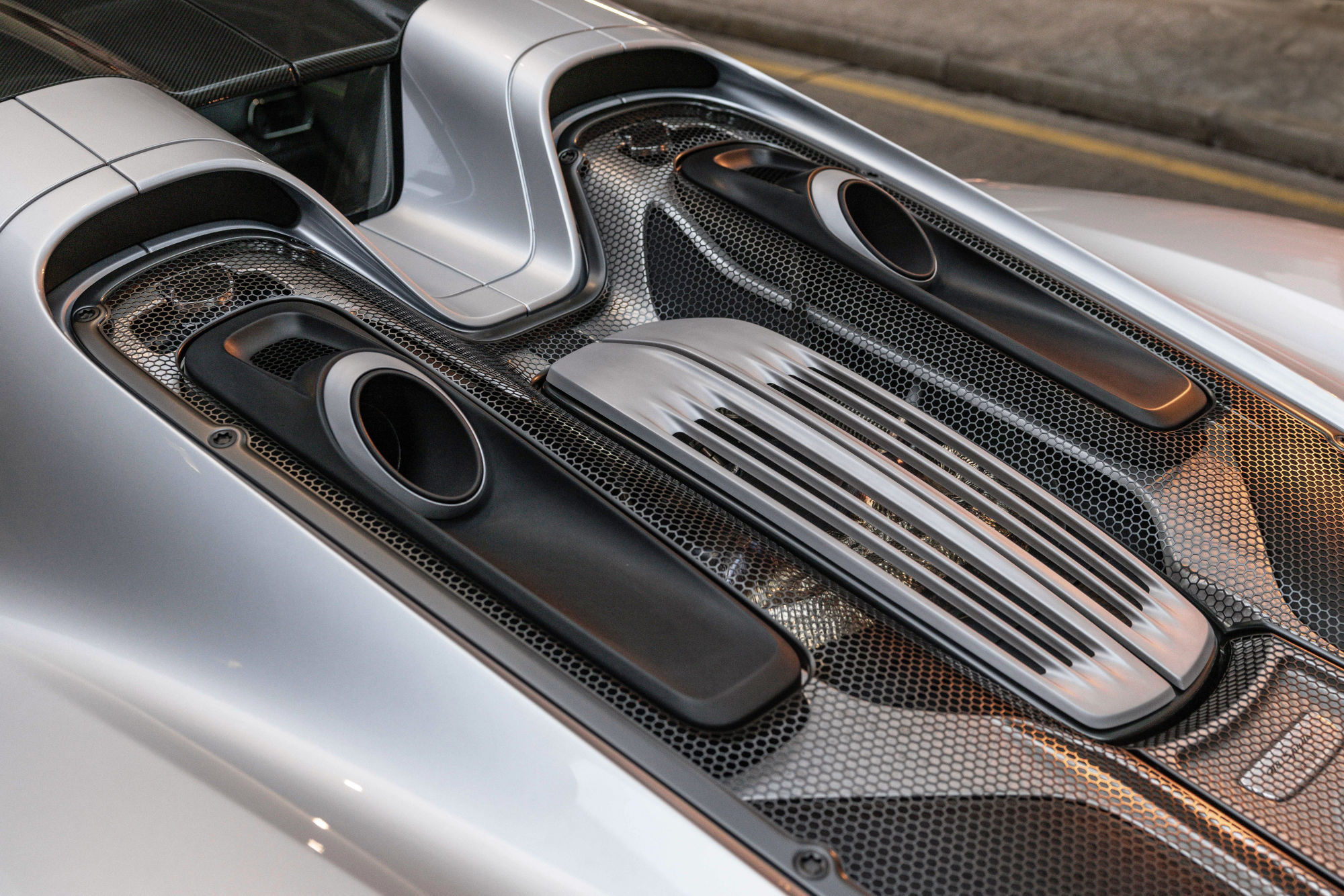
The heart of the Porsche 918 Spyder was a naturally-aspirated 4.6-liter V8 engine that was capable of producing 608 horsepower that was paired with two electric motors that delivered an additional 279 horsepower each, for a combined total of 887 horsepower. Production on the Porsche 918 began on September 18, 2013 and ran through June 2015.
Each car had a starting price of $845,000 and sold out quickly. The car was an absolute beast. In an independent series of speed tests performed by Car and Driver Magazine, the Porsche 918, achieved a 0-62 mph of just 2.6 seconds, a 0-100 mph time of 4.9 seconds and a 0-180 mph time of just 17.5 seconds.
It is one of the fastest accelerating cars on the planet and its top speed is up there too with the fastest cars in the world. More importantly, it was an amazing car to drive, Porsche having nailed the calibration of the advanced systems, allowing the car to be pushed to its limits while still feeling like a true Porsche sports car.
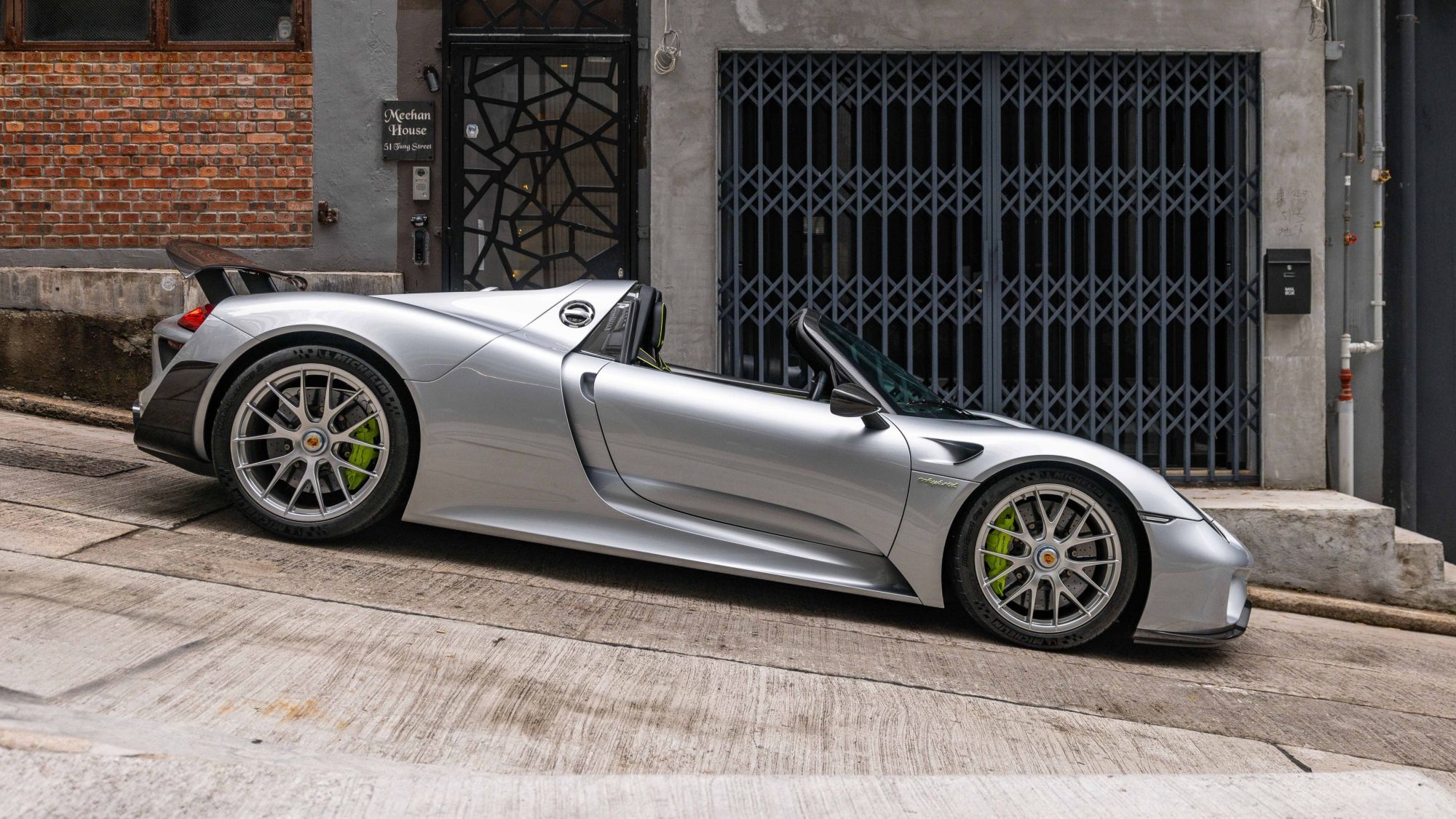
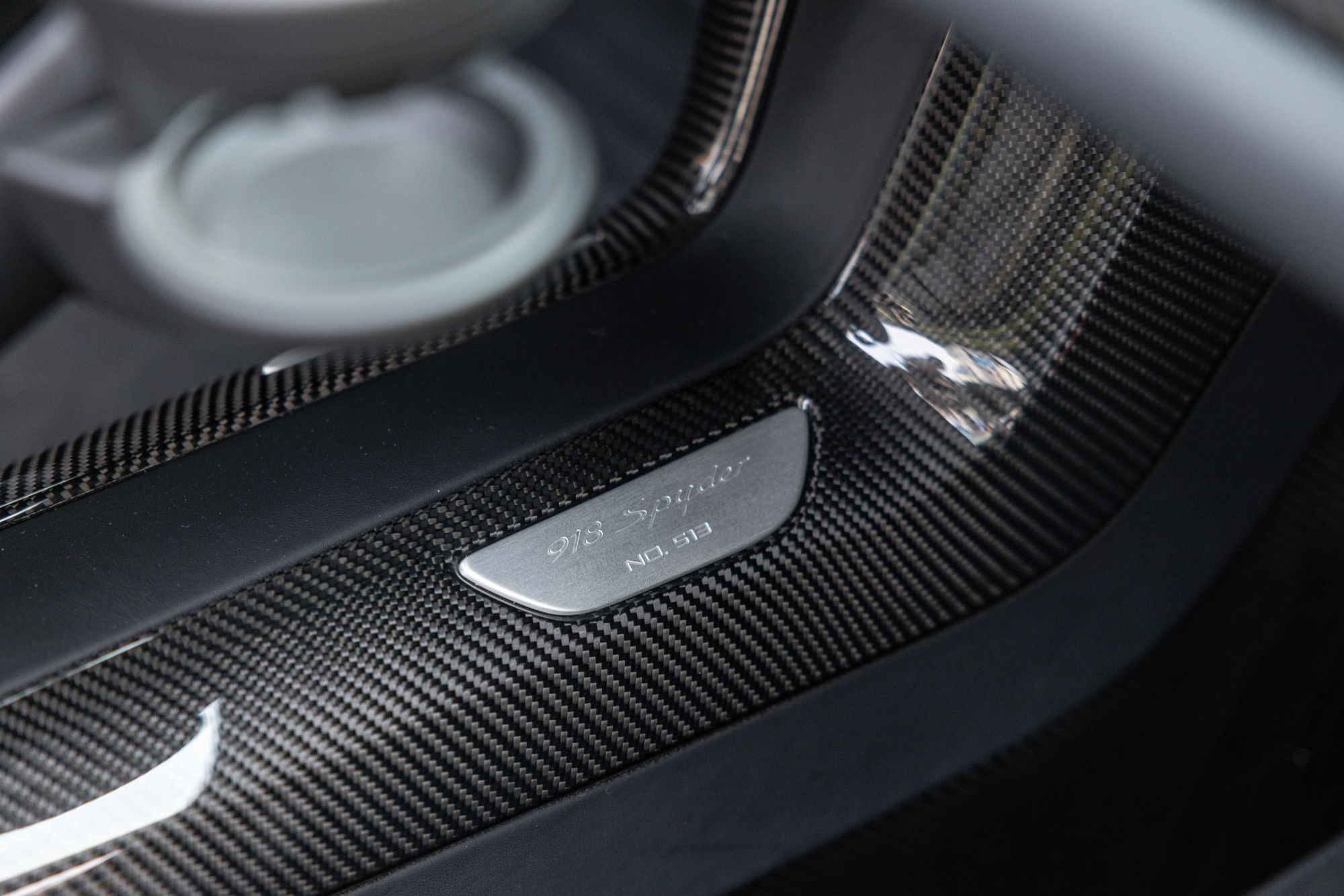
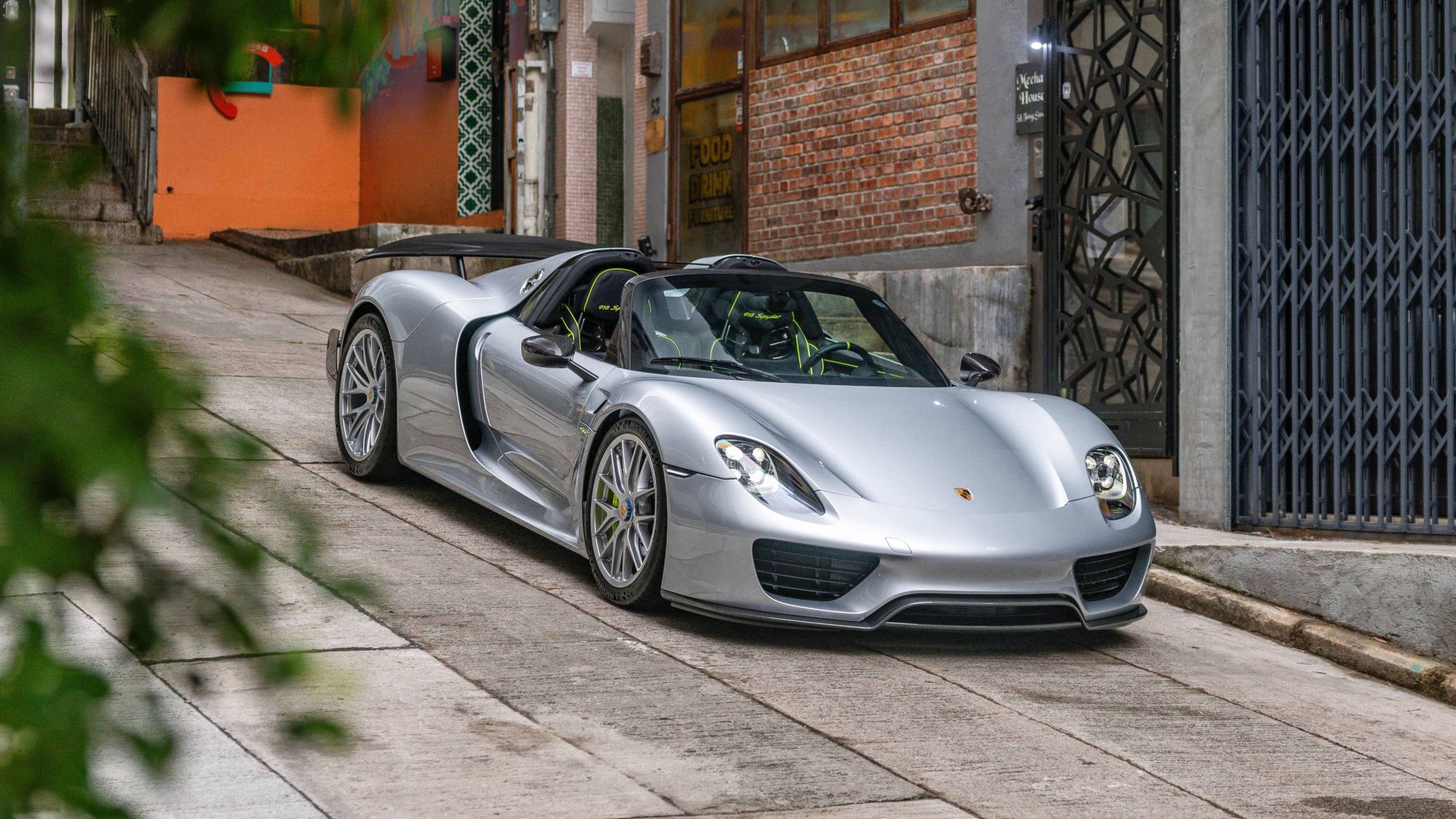
RM Sotheby’s is scheduled to auction perhaps the lowest-mileage unregistered Porsche 918 Spyder in existence on April 2-5. According to Palawan Press’s book on the Porsche 918 Spyder, only four were tailored to Hong Kong specifications, including this particular example bearing serial number 513.
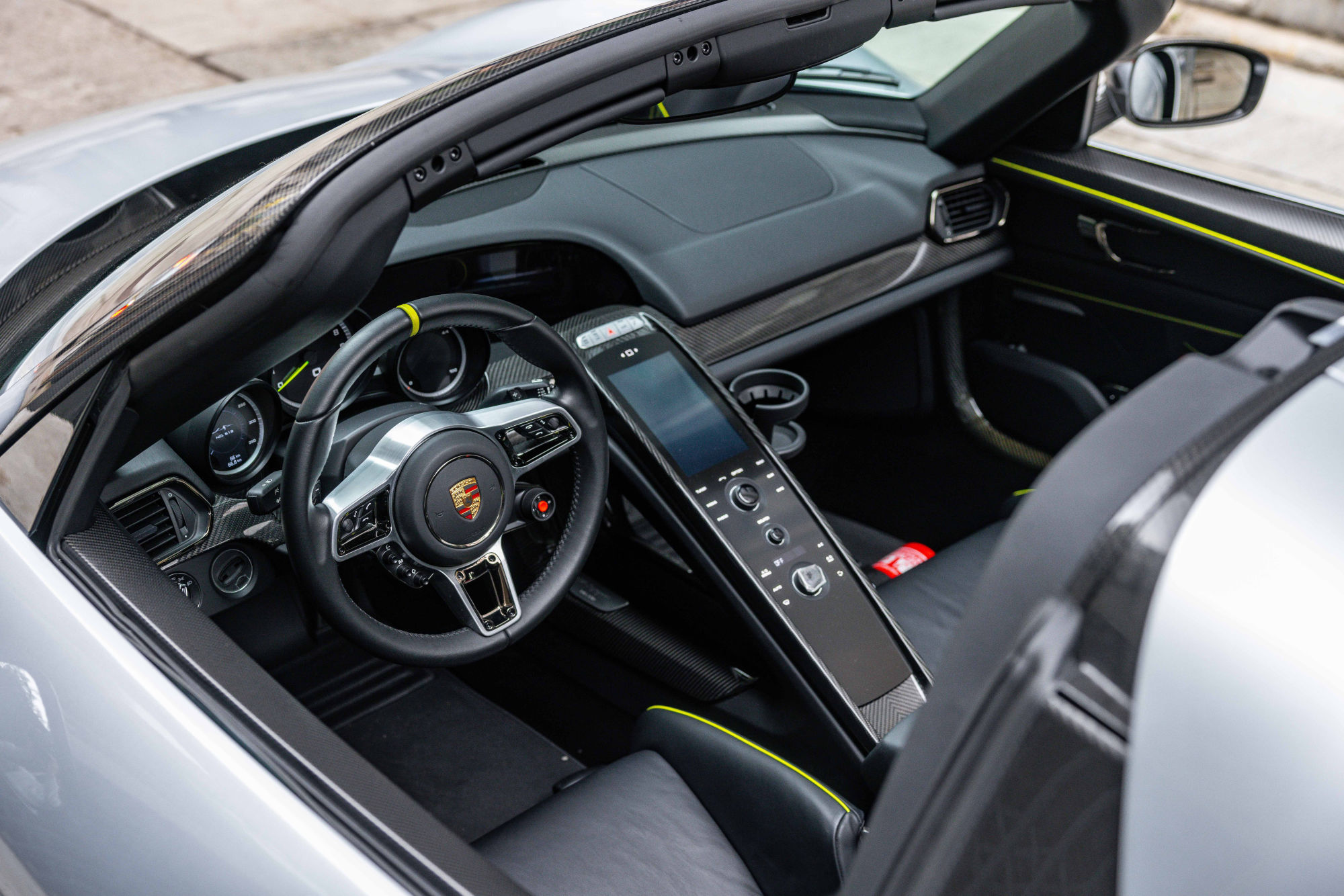
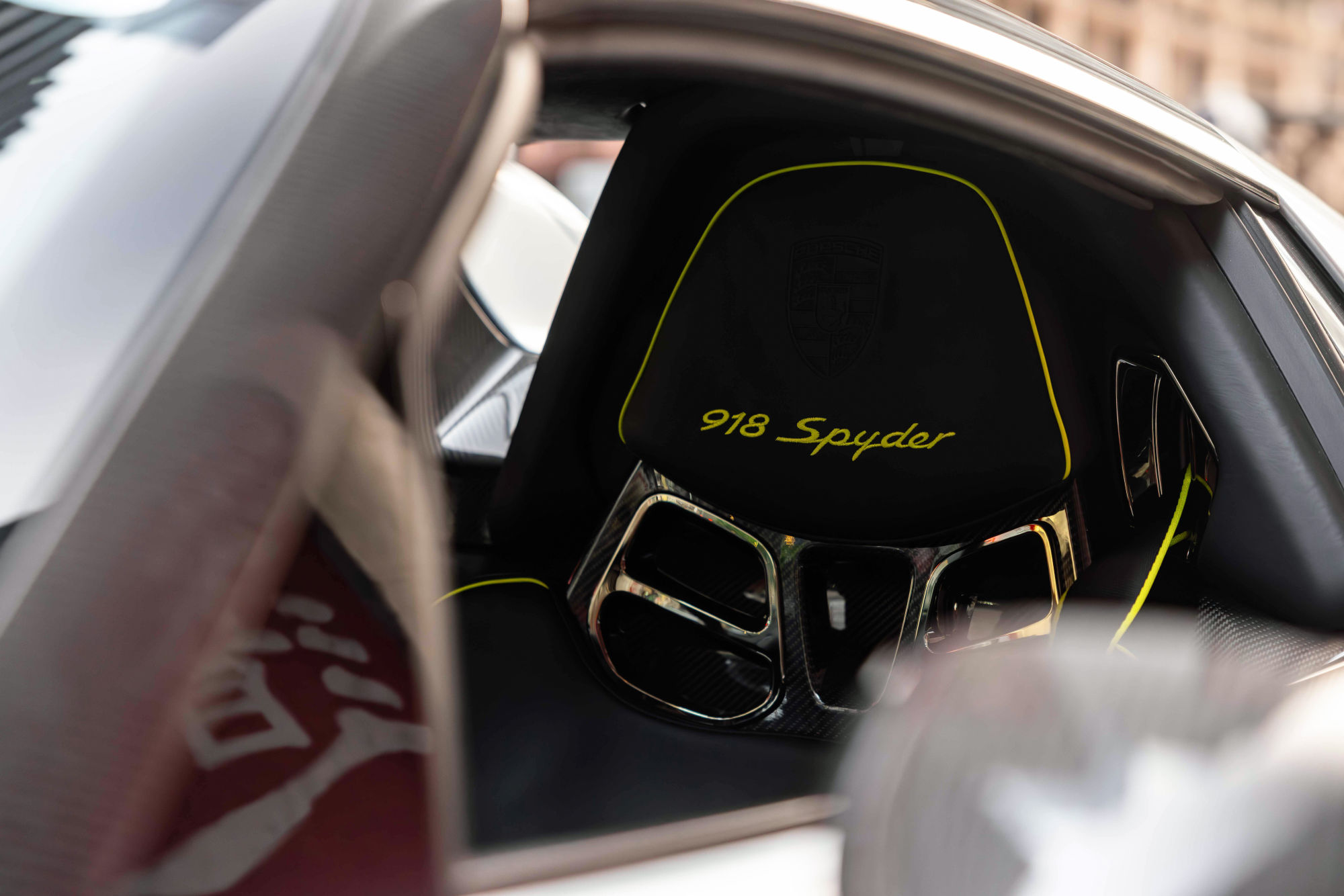
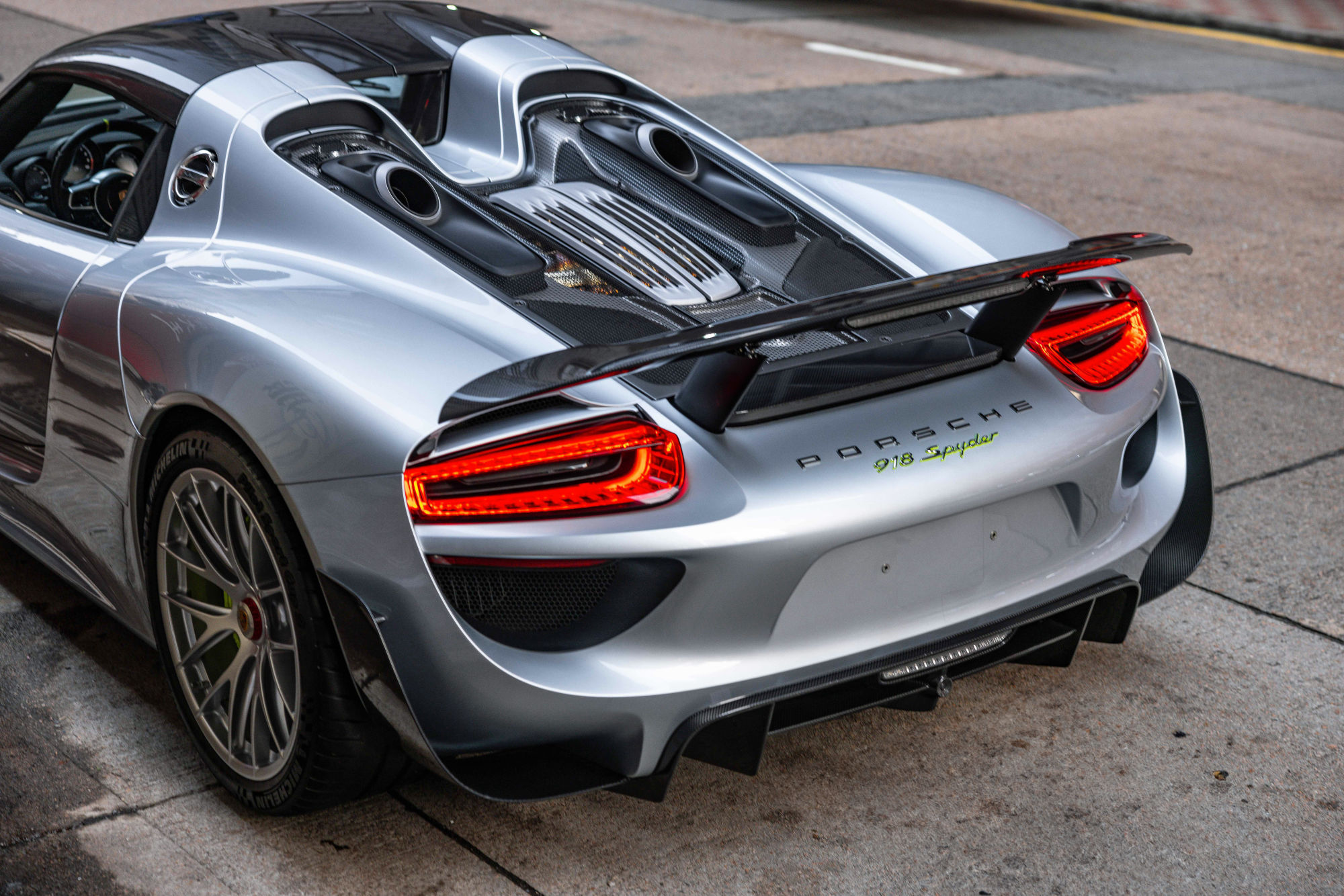
This example comes with a Rhodium Silver Metallic exterior with a Black leather interior accented by Acid Green details. It comes equipped with various features such as front-end lift, fire extinguisher, air conditioning, Burmester sound system, vehicle tracking system with Porsche Car Connect, standard door panels, and Acid Green seatbelts, along with the Weissach package. The current owner deliberately selected the Weissach package, informed by Porsche that only a quarter of 918 Spyders would receive it.
Since its delivery in late 2015, the car has been stored in controlled conditions, never used on the road, and driven less than 70 km. In 2022, a service was conducted, and in 2024, the high-voltage battery was replaced by Porsche Centre Hong Kong, which also conducted a diagnostic test with no faults found.
Never been driven or road registered, this 918 Spyder presents an exciting opportunity for Porsche enthusiasts to acquire a pristine example of the marque’s iconic hybrid hypercar. Just make sure that your pockets ready though because this 918 Spyder is expected to sell for 1,500,000 – 2,000,000 USD.
Uganda is home to half the remaining Mountain Gorilla population in the world. Travelers can meet these gentle primates up close in their natural habitat through a gorilla-tracking safari in Uganda.
Once you encounter them, they are very impressive wildlife creatures and, hence, most tourists consider them a once-in-a-lifetime experience.
Booking a trip to visit the gorillas directly supports conservation efforts and their population growth.
The overall population of Mountain gorillas in the world is about 1,000 and can only be seen in the Bwindi forest and the Virunga mastiff. Of these, less than 50% are habituated and open for tracking.
Mountain gorillas are captivating because they cannot be kept in zoos. Several attempts were made in Germany to keep them in cages but they didn’t adapt to the environment.
Many tourists yearn to see these primates at least once in their lifetime. Travelers can have an amazing wildlife safari to see the big five in Serengeti, Masai Mara, and any other African countries, but nothing is compared to a close encounter with a mountain gorilla family in its natural habitat for one hour.
There is no shortcut. You must book a flight from your country of origin to Uganda, Rwanda, or DR Congo to see mountain gorillas.
Here’s our guide to experiencing a once-in-a-lifetime gorilla tracking safari in Uganda.
Here’s an overview:
What is Gorilla Tracking in Uganda?
Gorilla tracking is a guided trail by a professional ranger through the tropical rainforest of Bwindi impenetrable forest and Virunga forests of Mgahinga in search of the endangered mountain gorilla family. It involves spending time with the gorillas, ranging from one hour to four hours, depending on the amount paid for the activity.
Once you encounter your allocated gorilla family, you will observe them in their natural habitat. You will watch the infants play on the tree branches while the silverback, the head of the family, keeps a keen eye on the environment, scans the environment, and observes the visitors to ensure the proper security of his family members.
During this activity, expect to walk through dense jungle, up slippery hills, and down rocky valleys.
In general, the activity is designed to offer naturalists and eco-friendly tourists a unique and respectful wildlife experience. You must obtain a permit from the Uganda Wildlife Authority through a trusted tour operator and follow prescribed guidelines.
From a broader perspective, gorilla trekking is done in East and Central Africa, where the two species of gorillas, i.e., the mountain gorillas (Gorilla beringei beringei) and the eastern lowland gorillas (Gorilla beringei graueri), are found. Pioneer countries for gorilla tracking are Rwanda, Uganda, and the Democratic Republic of the Congo. All countries offer mountain gorilla tracking experiences, while DR Congo is extra endowed with the lowland gorillas in Kahuzi Biega National Park.
In Uganda, mountain gorillas can be spotted in Bwindi Impenetrable Forest National Park and Mgahinga Gorilla National Park, while in Rwanda, they can be seen in Volcanoes National Park. Virunga National Park is the only place in DR Congo where you can meet the mountain gorillas, though the country experiences political unrests, and the park is not always open for tourism compared to Uganda’s and Rwanda’s gorilla national parks.
Gorilla tracking safaris in Uganda offer guests unforgettable wildlife experiences and contribute to the conservation of these endangered species by generating revenue for conservation efforts and raising awareness about the importance of protecting their natural habitats through government conversation bodies and the private sector.
Many travelers ask this question before deciding whether to book a gorilla-tracking safari. We are also here to answer other questions, like how difficult gorilla tracking is and how long it takes to see the mountain gorillas in Uganda.
Much as most travelers review gorilla tracking as one of the fascinating wildlife safaris and once-in-a-lifetime experiences, it is not like the normal game drive or local zoo visits! The activity involves physical trailing through thick vegetation and hiking difficult terrain, which may be very challenging and strenuous to tourists, leaving them exhausted and, at times, injured with sore knees if they are not well prepared for the activity.
So, how long is mountain gorilla tracking?
Expect to walk for long hours, between 1 and 9 hours, depending on the movement of your allocated gorilla family. Please note that gorilla tracking is not just about hiking in well-paved and maintained tracks. You will pass through a dense forest and encounter biting insects and thorns. Rain and altitude sickness are also real worries for some tourists during the activity.
Therefore, we highly recommend tourists prepare mentally and physically before starting the activity. Just be ready for unpredictable weather conditions and rugged terrain in Uganda, which lies in the equatorial region of Africa. Though this is a tiring activity, we have seen unfit travelers successfully complete the challenge.
Past reviews from tourists who have done gorilla tracking testify that the experience of hiking through unknown territory and tropical forest, spotting several birds, encountering other smaller primates, and enjoying the beautiful scenery make the activity so rewarding and unforgettable! Some even get excited about sliding in the mud and hiking up steep cliffs just to see the mountain gorillas.
Just like I said, the time it takes to meet the gorillas depends on their movements. We have seen some tourists who get disappointed because they find them too soon, hence missing the fun of trekking for longer hours.
All in all, the time taken for gorilla tracking depends on many factors. While some gorilla groups live close to gorilla trek start points, most of them move and may go deeper into the forest. There are even some families that keep moving away each time trackers get closer to them before eventually settling for watching. This happens mostly to tourists who have a gorilla habituation experience.
The gorilla habituation experience guarantees visitors stay with gorillas (those still undergoing the habituation process) for 4 full hours upon meeting them. Tourists who opt to track twice notice a difference in the time it takes to locate their assigned gorilla families each day and in their overall behavior.
To have a seamless gorilla tracking experience, we highly recommend travelers pack the right hiking boots, a hat, clothing, rain jackets, hand gloves, insect repellents, and sunglasses, among others. We also advise guests to carry light snacks and enough drinking water to keep them hydrated before leaving their lodges.
If you are a senior citizen, book your gorilla safari months in advance to give your tour operator enough time to organize an easier trek. If you book last-minute, especially in high and peak season, you might find that the closest gorilla families are booked.
Get in touch with Africa Adventure Safaris to organize your Gorilla Tracking Safari in Uganda for you.
What Is the Cost of Gorilla Tracking Experience in Uganda?
Uganda is generally a cheaper destination for tracking gorillas in Africa than Rwanda. Uganda Wildlife Authority announced new 2024-2026 conservation tariffs. With effect from July 1, 2024, the price of a gorilla permit will increase from USD 700 to $800 per person per trek for foreign non-residents.
Please note that the price includes park entrance fees and ranger guide fees but excludes transport, accommodation, and porter fees.
The gorilla permit fee contributes to the conservation efforts of endangered mountain gorillas and the protection of their natural habitats for future generations. To elaborate further, 75% of the permit fees in Uganda are used to finance conservation programs, the government retains 15%, and 10% goes back to local communities around Bwindi Impenetrable National Park and Mgahinga Gorilla National Park to fund local projects.
Securing a gorilla permit is mandatory for travellers aspiring to meet the mountain gorillas. Therefore, you won’t be allowed to do the activity without showing your permit to the park authorities for verification.
To book a permit to see gorillas in Uganda, we strongly recommend you use a local tour operator at least 2 months in advance and gorilla permits are only issued by Uganda Wildlife Authority at their head office in Kamwokya, Kampala. For travelers planning to trek in the peak and high seasons of June, July, August, September, December, January and February, you are advised to book at least 5 to 6 months before the trip to avoid going through the hustles of asking several tour companies if they have availability.
After understanding the price of a gorilla permit, you need to know other costs associated with gorilla tracking experience in Uganda;
Accommodation in Uganda
Travelers need to know where they will have an overnight stay before or after tracking. Uganda has nice accommodations inside and at the periphery of gorilla national parks.
Depending on your budget:
Standard lodges and camps charge between $50 to $130 per person per night
Mid-range lodges go for between $150 to $200 per person per night
Luxury lodges starts from $300 to $5000 per person per night
Travelers can book the lodges and camps directly for those on self-drive; however, the majority of tourists book through a reliable tour operator.
A special note to those on self-drive, you are advised first to secure a gorilla permit assigned in a particular sector and then book your hotel to that very sector. Remember Bwindi has four sectors: Ruhija, Buhoma, Nkuringo and Rushaga. Therefore, issued permits don’t cut across all the sectors but rather work specifically to that assigned region.
If you book a lodge by yourself, make sure that it is close to the park headquarters. Booking very far away may pose a high risk of a show on briefing or even missing track.
The cost of food in Uganda
Besides lodging and gorilla permits, always consider the cost of food, drinks and water. Most lodges provide water in the rooms and offer full board arrangements; however, you need to plan for en route meals and water, to be particular.
The average cost of a decent meal in Uganda is $10 per plate with a drink; however, some places charge even $45 depending on the number of courses. If you book your trip with a tour operator, you don’t have to worry about food. Most agencies offer packages based on full board i.e. daily breakfast, hot lunches and dinner.
Transport in Uganda
The focus here is on ground transport upon arrival in Uganda and international air tickets. The price of international air tickets varies based on the country of origin and season; however, return fares range between $600 to $2500 depending on available classes and choice of airline.
For those who prefer to fly within Uganda, scheduled and chartered domestic flights are available at an average cost of $400 per way. If internal flights are too expensive or you wish to explore more of the Ugandan countryside, traveling by road is highly recommended.
The cost of renting a car in Uganda is between $70 to $150 a day, excluding fuel and a driver’s guide. Expect to drive for long hours if you are doing gorilla tracking as a stand-alone activity in Uganda. The drive from Entebbe airport / Kampala city is 8 to 10 hours to Mgahinga and Bwindi Impenetrable National Parks.
However, most tourists book multiple-day trips in Uganda, and you find that the journey is broken with a stopover and overnight stay somewhere, which makes the entire experience exciting without driving for so long. Many tourists think that safari to Uganda is about mountain gorillas; however, there is a lot to see in the country, ranging from the African Big 5, unique cultures, several bird species, and magnificent sceneries, among others.
Like in any other developing country, arranging a holiday in Uganda is unfamiliar and can be complicated. Hence, most travelers book transport, gorilla permits, and accommodation with local tour operators.
It is also important to know that few tour companies in Uganda book international air tickets for their clients. Therefore, always seek guidance on whether your preferred tour operator can help you book flights to and from your country of origin.
Other costs attached to gorilla tracking experience in Uganda include: items on the gorilla trekking packing list, Visas and border crossing, Visas and border crossing, porters especially for the elderly travelers, tips for the driver guides, Park Rangers and hotel staff.
Mountain Gorilla in Uganda
Join a Two-Day Uganda Gorilla Safari
This concise 2-day Uganda gorilla safari offers a compact yet immersive experience in the Bwindi Impenetrable Forest National Park, tailored for those with limited time in Uganda but a keen interest in gorilla tracking.
The journey begins and concludes in either Entebbe airport/Kampala city or, upon request, Kigali city/airport, making it flexible for travelers’ arrangements.
Day 1 starts with a pickup from a hotel in Kampala/Entebbe or the Entebbe airport, marking the start of the trip to the Bwindi Impenetrable Forest National Park. The drive southwest across Uganda includes a notable stop at Kayabwe Equator point for a fascinating water experiment, showcasing the forces at the equatorial line. Travelers will pass through Ankole villages, observing local farms and long-horned cattle amidst savanna landscapes, with a lunch stop in Mbarara city before arriving at the park.
Accommodation options vary from budget (Gorilla Mist Camp), mid-range (Silverback Lodge), to luxury (Buhoma Gorilla Lodge), with lunch and dinner provided.
Day 2 begins with breakfast and a prepared packed lunch for the gorilla tracking adventure. Participants will receive a briefing at the park information center before embarking on the guided trek to locate a mountain gorilla family, a journey that can last between 2 to 8 hours depending on the gorillas’ location. Besides the gorillas, trackers might see other wildlife, including various bird species and black-and-white colobus monkeys. Upon finding a gorilla family, there’s an hour to observe and photograph these magnificent creatures.
The expedition concludes with a return to the information center for certificate collection, followed by a drive back to Kampala or Entebbe airport, including breakfast and lunch.
This tour is an exceptional opportunity to experience the rare and exhilarating encounter with mountain gorillas in their natural habitat, all condensed into a manageable two-day schedule for those short on time.
The package includes:
1 mountain gorilla tracking safari permit per person
Accommodation on full board meal plan (Breakfast, Lunch and dinner) for 1 nights (Extra nights can be arranged on request)
2 days transport in a tour vehicle safari van/Land cruiser (Air-conditioned full time, 4WD and Wi-Fi)
En-route stop at the Equator
Professional English-speaking driver guide (other languages on request and at an extra fee $100 USD per day)
All en-route meals
Mineral water throughout your tour
Return airport transfers
The package excludes:
Personal travel visa
Personal travel insurance
Others personal requirements that are not included on the list of inclusions
Personal travel air ticket
Best Time To Track Mountain Gorillas in Uganda
Mountain gorilla tracking in Uganda can be done throughout the year because the movement of any family is not affected by the changing seasons.
However, we will discuss the advantages and disadvantages of visiting the gorillas in a particular time of the year to give tourists a better understanding when choosing their respective month of travel to Uganda.
From our point of view, the best time to go gorilla tracking is just after the rainy season has ended because the countryside tends to still look green and fertile, giving a great scenic view that is perfect for photography. By the way, it is not easy to get this time right because of increasing global warming, which has affected weather patterns in Uganda and the rest of Africa, making it difficult to forecast the beginning and end of the wet and dry seasons.
But in the end, the traveler makes the final decision when to visit Uganda for gorilla tracking activity. Our part is to give travelers insightful discussion on why they should choose a particular season based on their conclusions after reading this article.
Like any other country that lies astride the Equator, Uganda experiences two seasons: the dry and wet seasons.
The dry season happens between December and February and again between June and September.
Tracking gorillas in the dry season has several advantages.
It is the time to go on wildlife safaris in major East African safari destinations such Masai Mara National Park in Kenya, Serengeti National Park in Tanzania and the various savanna national parks in Uganda.
Most travelers to Uganda combine gorilla trekking experiences with the great wildebeest migration in either Kenya or Tanzania and wildlife safaris in Uganda’s Murchison Falls National Park, Queen Elizabeth National Park, Kidepo Valley National Park and Lake Mburo National Park. Therefore, during this time, visitors take good and clear photos of Uganda’s countryside, physical features and mountain gorillas because of limited obstructions like mist or overgrown vegetation.
The disadvantage of considering traveling in dry season is that travel tends to be expensive due to the higher demand for the activity, which increases the price of safaris. More still, gorilla permits are always scarce and very difficult to secure at the last minute.
For travelers hoping for an easier trek or being allocated to a nearby gorilla family, the dry season can not be the best time to visit because park authorities accommodate such requests on a first come, first serve basis. So, tourists with such requests are advised to book their trip months in advance with a tour operator plan to enable them plan accordingly.
The rainy or wet season happens in March, April & May, as well as October to November.
These months are also considered low seasons in Uganda and across the East African region. During this time, forest cover tends to be very muddy and slippery, making mountain gorilla tracking challenging. However, we don’t rule out that during dry season, you may not encounter muddy landscapes because mountain gorilla national parks lie astride the tropics, and rains are expected any time of the day.
Please note that rains in Uganda do not go on throughout the day like it is in Europe and North America. It normally rains for 30 minutes to 2 hours before the sun reappears, hence enabling continuous execution of the activity regardless of whether it is raining or not. Tourists who opt to do gorilla tracking during this season always carry their rain jackets to cover themselves if at all rain finds them. The activity can never be canceled because of too much rain. As a matter of fact, visitors find it more interesting and adventurous tracking during rains despite of the muddy and slippery environment.
Also, during this season, the park is less crowded, and the fewer trackers are divided into much smaller groups to visit each family, which offers a more personalized experience. Visitors can also book last-minute gorilla permits due to permit availability.
The rainy season is also a perfect time for birders who wish to combine birdwatching and gorilla tracking experiences because this is a breeding season for most species. The country also hosts a number of migratory bird species from North Africa and Europe, which makes the overall experience more rewarding.
Gorilla tracking in the forests of Uganda
What to Wear For a Gorilla Trek?
Hiking through the thick forest thickets of Bwindi and Mgahinga requires a well-prepared tourist. Uganda generally experiences an Equatorial climate; therefore, you must be ready for rain regardless of your travel time.
While you require garments that protect you from all sorts of elements, you need to keep cool for the 2-9 hour of hiking, so require light and comfortable clothing to enjoy this activity.
The overall objective is to keep your skin covered in order to protect you from the forest fire ants and thorny plant life while staying comfortable and cool throughout your trail.
Hence, we bring a list of essential clothing:
Sturdy shoes or boots that can handle rough terrain and keep your feet dry.
Light, waterproof pants.
Long socks to protect your legs. Waterproof gaiters are even better.
A waterproof jacket to keep you dry in rain or wind.
A long-sleeve shirt that wicks away sweat.
Gloves for gardening or outdoor activities to protect your hands.
Bring rehydration salts in case you get dehydrated.
Walking sticks to support you during hiking sloppy terrain
Rules and Regulations for Mountain Gorilla Tracking in Uganda
It is important to know the rules governing mountain gorilla tracking before arriving in Uganda however, tourists will always be briefed by their ranger guides before starting a trek.
Therefore, you must listen carefully during briefing sessions and respect the rules laid out by park authorities.
Here are the main rules:
Upon finding the gorilla family, you will stay with them for a full hour. The time allocated to be with gorillas might look little, but it is usually enough to enjoy the experience. Travelers wishing to stay longer with the gorillas are advised to book a gorilla habituation experience, which allows them to stay with them for 4 hours, or book double, triple or quadruple gorilla tracking in different parts of the park.
Travelers who are sick with contagious illnesses like diarrhea or the flu, are advised not to go near the gorillas.
Always stay close to your group, but don’t encircle the gorillas.
Keep at least 7 meters away from the gorillas.
Avoid using flash when taking pictures.
Avoid eating or smoking within 200 meters of the gorillas.
For those who need to sneeze or cough, turn away from the gorillas and cover your mouth and nose with your palms or handkerchief.
If you need to go for a long call, talk to your ranger guide, dig a hole of about 30cm deep, ease yourself and after cover it up well.
Avoid spitting on plants or the ground in the national park.
Children under the age of 15 are not allowed to track gorillas.
Always observe silence and avoid sudden movements around the gorillas.
Take all your trash with you when leaving the park.
A female mountain gorilla with baby in Uganda
Booking Gorilla Permits in Uganda and Cancellation policy
Uganda’s mountain gorillas can only be tracked in Bwindi’s impenetrable forest and Mgahinga Gorilla National Parks, and every tourist must have a valid gorilla permit that grants him or her to trek and see the gorillas.
Currently, Uganda has a total of 23 fully habituated gorilla groups ready for tourism; 22 families are in Bwindi, while Mgahinga has one large gorilla group. The current UWA tariff for 2024 – 2026 increased the price of the permit from $700 to $800 per trek per day.
Please note that Uganda gorilla permit is still cheaper than Rwanda, hence why the destination receives more visitors than her neighbours. Yes, DR Congo has the cheapest gorilla permit. Still, the country is not politically stable, and tracking is not guaranteed compared to Rwanda and Uganda due to unrest, uprisings and bloodshed of the locals.
Uganda gorilla permits are issued by the Uganda Wildlife Authority (UWA), which prints over 184 permits per day.
Bwindi impenetrable forest park has a total of four sectors, therefore, permit will determine which gorilla family to track and where to stay for an overnight. Mgahinga gorilla national park has only one family, and it is generally not busy during the low season of March, April, May and November, but securing a gorilla permit for Mgahinga during the peak season is very difficult because all tour operators go for its permits when none is remaining in Bwindi.
Also, it is important to know that Uganda is the only country offering a mountain gorilla habituation experience, which allows tourists to spend more time with the gorillas under the guidance of experienced Researchers and Trackers. The cost is $1500 per person per trek. A limited number of 4 tourists are allowed to book for this activity per day.
Tour operators normally ask travellers to send their passport biodata page at the time of booking their trip to determine if they are eligible to trek gorillas based on their age or if they need a porter while in the park.
Caution: Don’t allow to pay for gorilla permits at a price different from that sold by Uganda Wildlife Authority, be it lower or higher than the normal price. Even if it is peak season, we recommend waiting or booking for another month. There is no need to panic because you will eventually see the gorillas if it is on your to-do list.
Never transfer money to a personal account while booking your gorilla permit or a gorilla safari. All licensed tour companies have bank accounts under their registered company name. This helps you follow up in case things don’t go as expected. Most agents facilitate credit card payment and normally use the Pesapal online system to enable this form of transaction or something similar.
Visitors who wish to cancel their gorilla safari after booking a gorilla permit, take note of the following;
The Uganda Wildlife Authority doesn’t refund anything if you cancel your tour from 0 to 8 days prior to tracking.
Uganda Wildlife Authority refunds only 25% of the permit cost for those who cancel from 9 to 45 days tracking.
Cancelling your gorilla tour 46 to 90 days prior to tracking attracts a refund of 50% of the cost of the permit.
Should you cancel 91 days beforehand, Uganda wildlife authority refunds 75% the cost of the permit. These cancellation policies apply to those who paid the whole amount for the gorilla permit and those who make deposits don’t qualify for a refund.
Please note that those cancellation policies apply to Uganda Wildlife Authority however, tour operators have their own policies and vary depending on company booking terms and conditions.
That’s everything you need to know when booking your Gorilla-tracking safari in Uganda! We hope to see you soon.
Africa Adventure Vacations is a one-stop center for the best and most memorable African safaris. We are a renowned safari operator based in Uganda, offering exceptional tours throughout the East African region, ranging from wildlife adventures, culture, birding, luxury gorilla safaris to Kilimanjaro trekking tours. All our tours can be customized to best suit your travel needs, budget and time.
Ferrari faces a lawsuit from some customers in the U.S., who allege the company neglected to address brake issues that they claim could lead to a partial or total loss of braking capability.
The proposed class action, which is Nechev v. Ferrari North America Inc et al, U.S. District Court, Southern District of California, No. 24-00516, was first reported by Reuters.
The main issue has to do with the brake fluid reservoir cap, a part sourced from Bosch, potentially leaking brake fluid, which in turn could lead to brake failure. Bosch is also a defendant.
Ferrari issued a recall for the defective cap in 2021 and then voluntarily expanded the recall in 2022, but according to the proposed class action filed this week in a San Diego federal court, the fix involved in the recalls was only an interim measure and also didn’t solve some other brake issues.
2010 Ferrari 458 Italia
The recalls affected multiple Ferrari models dating back to the 2005 model year.
The proposed class action is led by California resident Iliya Nechev, who alleges he experienced brake issues in a 2010 Ferrari 458 Italia he purchased in 2020. According to Reuters, Nechev claims to have experienced brake issues on several occasions, and that he was told by dealers that the experience was “normal” and that he should “just get used to them.”
In a statement to Reuters, Ferrari, without referring to the proposed class action, said the safety of its customers is its “highest priority” and that its vehicles “always respect homologation specifications.”
Oakland, California is struggling to deal with a deluge of abandoned vehicles across the city. According to the Oakland Department of Transportation, 13,856 cars were reported abandoned over a six-month period in 2023. The city ran out of space in its storage lots and is renting even more room to hold the excess. In total, Oakland is spending $1 million on storage. Anecdotally, car theft is the root of this problem.
Portal Axle Kit Turns Your Ford Bronco Into a Monster Truck
ABC7 Bay Area reports the Oakland Police Department will not respond to calls about abandoned or stolen cars unless they are blocking a driveway. Residents are instead instructed to call 311, and to no one’s surprise, abandoned vehicles dominate service calls. Cars are just being dumped everywhere blocking ways into businesses and schools. Business owner Bruce Vong told the TV station, “Some park in front of the gate. I can’t even leave and if you intervene, they’ll shoot you.” Oakland City Council approved funding to hire more tow companies and use the state DOT’s vacant lots.
However, the measure doesn’t resolve the problem of getting the cars currently parked in the lots back to their owners. Just like in many other cities, the victims of car theft are the ones stuck with the tow bill. In some instances, cities will auction off cars that have been sitting in lots too long unclaimed. A woman in St. Louis had her Pontiac G6 sold without even being informed the car was found.
For the 2025 model year, Ram dropped the V8s from its full-size pickup truck lineup and replaced them with a twin-turbocharged 3.0-liter inline-six that’s available at two output levels. The regular version makes 420 horsepower and 469 pound-feet of torque, but if you upgrade to the high-output engine, you get 540 hp and 521 lb-ft of torque. Both have better specs than the outgoing 5.7-liter V8 and its 395 hp/410 lb-ft rating except in one area: fuel economy.
The Ram From ‘Twister’ Is the Greatest Truck Ever
If you had assumed that the Ram 1500 dropping two cylinders, reducing displacement and adding forced induction would give it significantly better fuel economy than the old naturally aspirated V8, that would be completely understandable. Unfortunately for potential Ram buyers, it didn’t exactly work out that way.
While the Environmental Protection Agency rated the 2024 Ram 1500 with four-wheel drive and the 5.7-liter V8 at 18/22/19 mpg (city/highway/combined), a similar 2025 Ram 1500 with the standard-output inline-six is officially rated at 17/24/19 mpg. So you’ll get slightly worse gas mileage around town, slightly better gas mileage on the highway and probably come out about even unless you do a good bit of highway driving.
Upgrade to the high-output version, and the EPA rated the 2025 Ram 1500 at 15/21/17 mpg. On the one hand, that’s an improvement over the 10/14/12 mpg that the 2024 Ram TRX got, but you’re also giving up more than 150 hp along with the roar of that magnificent V8.
Still, this is far from the end of the world for Ram. It’s always nice to get better gas mileage, but it’s not like any of the other turbocharged six-cylinders in other full-size trucks are significantly more efficient unless you count the hybrid version of the Ford F-150, and good luck finding a new one of those for less than $65,000. So the 2025 Ram 1500 might not be a full-size fuel-sipper, but as long as it’s in line with its competitors, we can’t imagine that will be a dealbreaker for possible buyers.
You would be right if your first thought was, “What is Frankfurter Tamale Casserole? That sounds a little ridiculous.” Frankfurters are German, generally meaning a hotdog. A tamale is a Spanish dish made in masa, or a corn husk. Casserole’s are an American tradition that gained popularity in the 1950’s. So, what the heck kind of a dinner is this?
The frankfurter is the closest thing in the title that matches the dish. We can blame my mom. She made up this dinner when I was little. Whenever mom threw together a dinner she would make up a name for it too. Who knows if that was to appease us kids, my dad, or maybe just her being creative. But, not only has this become a family favorite that spans multiple generations, every person we have ever made it for wants the recipe.
Cuisinart Stainless Steel Cookware
Jayden’s birthday just passed. It doesn’t matter who you are, if you’re at my house for your birthday, I make the dinner of your choice. THIS is what Jayden wanted. I could have made him filet mignon and lobster tails. But this is what he wanted. In our house, this is like the biggest comfort food. Whether it’s that he has mom and dad local right now, or he was just looking for a hug in a bowl, I’m not sure. But this is what he wanted, so this is what I made.
And now… (Mom really may kill me for this) I’m putting it out there! I am seriously about to share a family recipe. I wish I could show you some amazing photo to prepare you for the deliciousness that happens on your tongue. However, there really isn’t anything pretty about this dinner. It just taste good.
Check Out Our List of the Best RV Cooking Equipment Here!
INGREDIENTS
10 hotdogs (your favorite brand) sliced into disks
2 16 oz. cans of Vegetarian Baked Beans (again, your favorite brand)
2 sweet peppers diced
1 yellow onion diced
1 16 oz. bag of frozen corn
2 cups shredded Mexican cheese
1 box Jiffy Corn Muffin Mix prepared per directions
Chili Powder to taste. In our house, we like it with a little more of a kick. We add about 1 teaspoon of chipotle chili powder as well.
DIRECTIONS FOR FRANKFURTER TAMALE CASSEROLE
Preheat oven to 400 degrees.
Sauté peppers and onions in a large pot over medium heat until onions just start to turn translucent.
Add sliced hotdogs and mix well. Allow the hotdogs to plump a little. (about 5 minutes)
Mix in the frozen corn and baked beans. Allow this to cook together for 2 or 3 minutes.
Turn the heat off on the stove.
Add the shredded cheese and mix well until the cheese is all melted.
Add the chili powder. It takes more than you may think. Be sure that after you taste it, you have something to cleanse your pallet before tasting it again. I once used a whole jar of chili powder and no one else could eat dinner because I just grew accustomed to the heat. This is also when you will add the chipotle chili powder. It should be noted, the heat will continue to increase in the oven. So, don’t get carried away.
Transfer contents from the pot into a casserole dish (13×9 worked well).
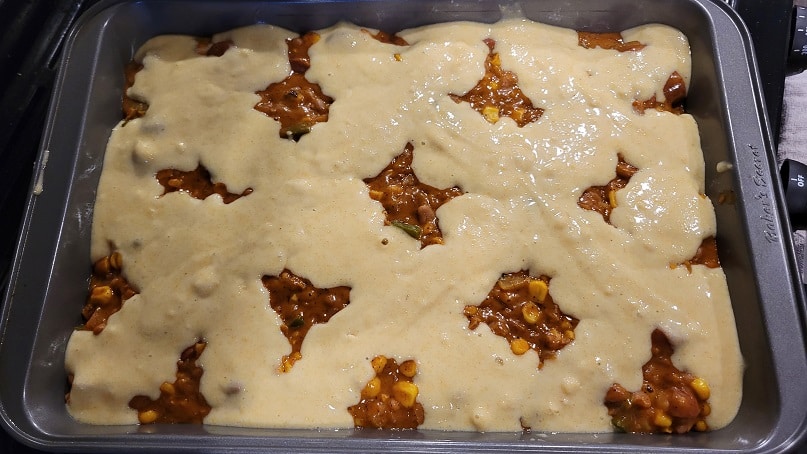
Take the prepared corn muffin mix and lattice over the top of the hotdog mixture.
I probably could have used 1/2 of the corn muffin mix. But that’s one of our favorite parts.
Then bake in the oven for 15 to 18 minutes until the corn bread is a light brown.
If I’d used less corn muffin mix, the lattice design would have held through baking.
Remove the pan from the oven and allow to cool for 5 minutes.
Finally, scoop into bowls and enjoy!
As prepared, this dish will easily feed 8 people. It’s quite heavy. The three of us enjoyed more than our fair share. Plus we packed up a container for him to take home. Another one for his girlfriend to try since she wasn’t able to make it for dinner. As well as a third container for Doug’s lunch the next day. Don’t ask me for the calorie count… In truth, I don’t want to know.
I really hope you enjoy this dish and it becomes a favorite in your home as well. Drop me a comment so I can share it with mom and let her know that you’ve enjoyed it. Maybe that will smooth over the fact that I shared her secret family recipe.
As most readers will know, the bulk of Swiss watchmaking happens in the French-speaking part of the country. Those less familiar with Switzerland than Swiss-made timepieces might even think the whole place is French-speaking, or at least the majority. Such is the dominance of the Romandy that the casual watch lover might think Schaffhausen is a town in Germany. It most assuredly is not, and IWC is as Swiss as they come. Since the manufacture is quite a ways off the beaten path, plenty of watch journalists actually miss out on visiting – getting here from Geneva is more challenging than getting to the La Chaux-de-Fonds, for example. Thus, when asked if we wanted to visit in the middle of summer, we jumped at the chance.
By we, I mean Ruckdee Chotjinda and I, along with our IWC watches. This was actually only the second time I could bring a watch I bought back home for a visit. It so happens that Ruckdee also brought his own IWC, the Portugieser Perpetual Calendar in red gold. Regular readers might realise that this is the trip that we spoke with IWC Manufacture Director Walter Volpers, since I made a point of citing the moment he recognised our watches when we spoke.
Traditionally, manufacture buildings evolved over time, sprawling beyond the confines of whatever space they began in. We will demonstrate this in other stories this issue, and if you are reading in order, you have already seen some. IWC Schaffhausen, which we will simply call IWC to make it simpler to distinguish between the brand and the town, has been in the old town for a little while now. This is where the brand maintains offices, including for the communications team, and also CEO Christoph Herr-Granger, and a nifty little museum. It is also where a pivotal scene in this story will take place, starring Ruckdee’s watch. You will have to wait till the end for that because we have quite some ground to cover, as a Swiss German-speaking person might put it, in English.
IWC CEO Christoph Herr-Granger
Imposing Presence
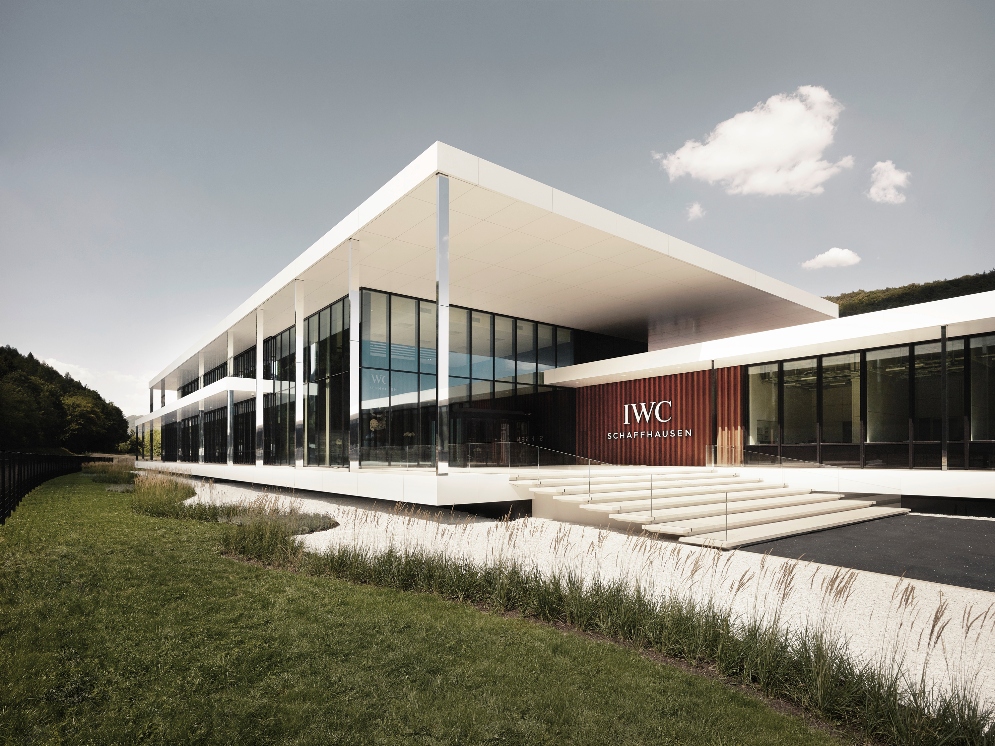
The new facility that we visited opened at an auspicious time, in 2018, in the sense that it was the 150th anniversary of the brand. It gives IWC options in terms of how it decides to handle the production challenges of the present and future, just as founder Florentine Ariosto Jones was looking to do back in the day. The manufakturzentrum also happens to be an excellent workplace to visit, without much of the upstairs-then- downstairs-just-to-go-up-different-stairs hikes that are typical of many Swiss manufacturers. For a sense of that old reality, the existing office in town is exactly like that. The thoroughly new building has some 13,500 sqm of space, which is amply hinted at in the expansive entry area with its meters high ceiling, arranged on two levels (one above ground as shown and one below).
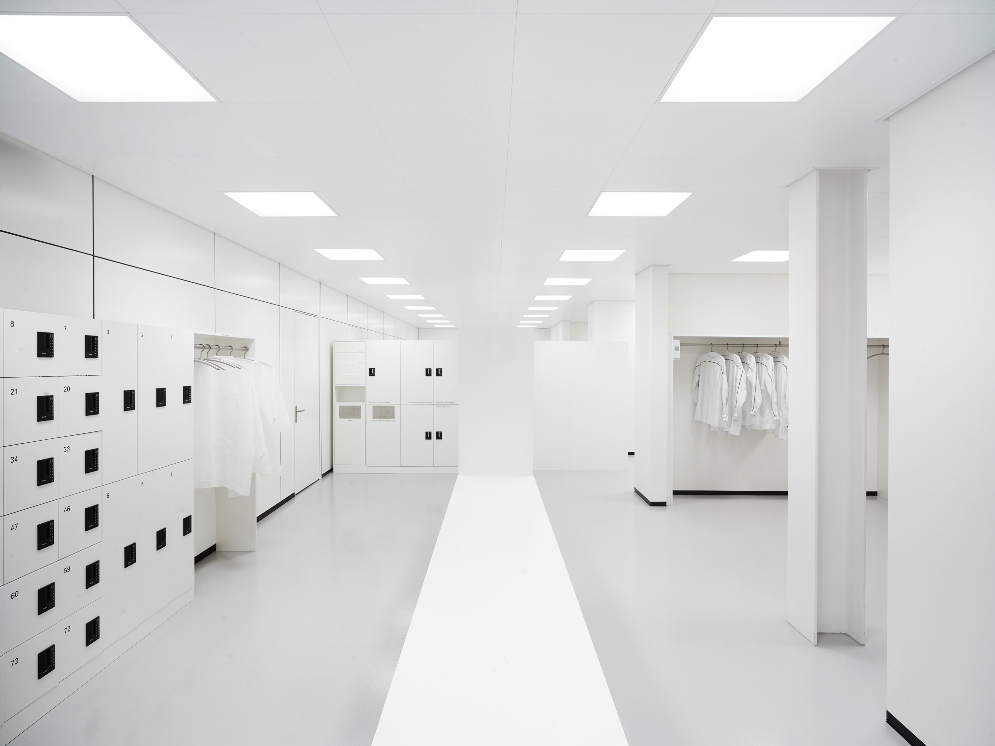
Everything is welcoming and warm; everything is also easy to follow, with a path laid out for where you can walk. In the images here, the grey area is where visitors walk, while the white areas are where the technicians, engineers, watchmakers and craftspeople ply their trade. This is a nice way to see everything and not feel guilty about invading people’s workspaces. The flip side of this is that you will not be able to peer over someone’s shoulder as he or she affixes a hairspring to a balance wheel. But we are getting ahead of ourselves here.
As it happens, we began with CNC machines, which is only natural because this is how all components are manufactured. A brand that makes a watch collection called Ingenieur has to make certain it projects a certain professionalism and we think you will agree that IWC has succeeded here, just from the pictures. Again, the downside is that the sense of homey craftsmanship is missing – production lines are production lines after all. As the editor of Robb Report Singapore notes in one of his manufacture visit stories, the smell of oils yet manages to fill the air of contemporary manufacturers, and the manufakturzentrum is no exception, spic and span as it is. In other words, the industrial vibe has a certain appeal to it.
Image courtesy of IWC
Maximum Punishment
Before we speed into the proper activities here, including two of our favourite parts of any manufacture tour, we will spare a few words for a key takeaway here. Unusually, for this particular tour, we managed to get into the quality control area, where there are all sorts of torture tools designed to inflict maximum punishment on finished watches. This kind of activity happens at most reputable watchmaking firms but one rarely gets to see it. As noted in the Conversation story in the Autumn issue, we loved watching the team here send watches flying into a net, courtesy of a good hard whack from a hammer (the watches are subsequently tested for rate and amplitude variations, which can happen when the balance is disturbed by sudden shocks).
Beyond the perverse pleasure of applying some pain to very expensive objects, the idea in quality control, or more appropriately, quality assurance, is to prove that the watches are tough enough to withstand much more than the hard knocks you will subject them to. IWC watches are nothing if not tough, as we can attest. While not every IWC watch is tested or subjected to the same array of tests, samples of various production batches are. We can report that the smiling technical specialists here are very thorough and are positively pumped about what they do.
Moving back into the order of the tour proper, IWC takes pains to showcase its materials section, where there is that satisfying moment of holding rods of raw material in one’s hands. This is hardly incidental though because there is a slew of bar-turning and milling operations that take place in the manufakturzentrum, which all involve bars. IWC tells us that approximately 1,500 different components are made in the movement-component workshop itself. This reportedly involves all parts for the calibre families 52 and 82 (automatic), 59 (manual-winding with eight days of power reserve) and 69 (automatic chronograph). Also included are movement components for something like the Portugieser Grande Complication, and its case (which is made here, in the basement with all the other IWC cases, although the component count mentioned does not include what goes into cases).
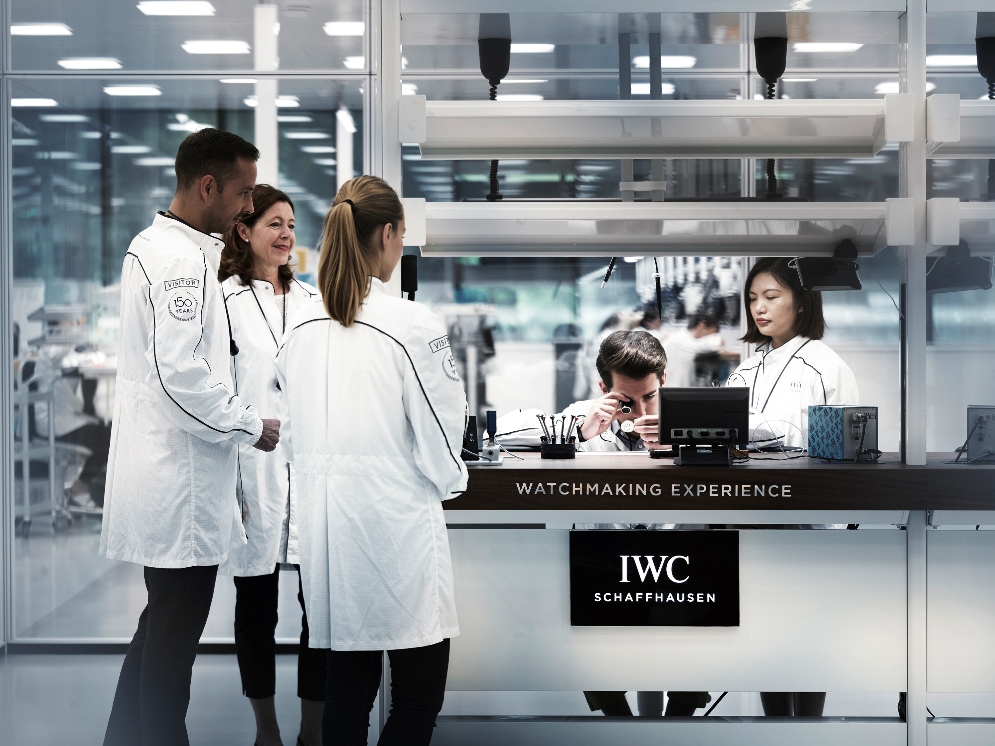
Things do tend towards clean room settings at IWC, with watchmaking demonstrations for guests taking place at dedicated stations outside the main work area.
Some Assembly Required
As expected, it is all industrial action for something like the calibre 52 family, where an articulated robot feeds the aforementioned raw materials into a CNC machine that produces completed components. We did not see the production of components for complicated watches, nor the assembly of movements, but that also takes place in the manufakturzentrum. While robots are indeed involved in the making of components, movement assembly is where the watchmakers take over from machine operators. IWC notes that the production lines for each calibre family are entirely in the spirit that founder Jones envisioned back in his day. We dare say that no one in the 19th century could imagine 21st century engineering processes! In terms of cases, though we are not focussing on that here, a single metre-long bar of material can produce between 30 and 50 cases (depending on material and type of case, according to Time and Tide Watches).
Our tour returned to the roots of watchmaking for its final stage, with the disassembly and assembly of a generic pocket watch movement. While this was a staple of manufacture tours once upon a time, the IWC session was the only one we had in all the visits covered in this section. As always, it is an eye-opening experience that lets one come to grips with the delicate and precise craft of assembling tiny machines out of tiny parts. We recommend that all manufactures restore this practice, for the sake of context if nothing else.
For all the calibres produced in-house here, the activity is carried out in clean room settings, and that is true of typical contemporary manufactures. This limits the ability of guests and journalists to get close to the action, hence the importance of the watch assembly activity, in our considered opinion. It should be noted that what manufactures have in terms of clean room atmospheres is not the same as what one encounters in silicon wafer manufacturing, for example, but it is something close.
Image courtesy of IWC
Personal Touch
We reserve our final thoughts for the manufakturzentrum itself, which is a stunning structure that is surely meant to reflect the character of IWC itself. With massive windows, it offers a surfeit of natural light for the movement assembly watchmakers. The entire structure feels a little too big and that is by design because it can accommodate 400 staff (currently, some 230 people work here) so it was literally built for the future. While the manufakturzentrum was designed by Zurich architects ATP, CEO Herr-Granger is an architect by training and also personally participated in the design process.
The manufakturzentrum is also a paragon of sustainable practices too, with solar panels installed on the roof, and water for cooling and heating drawn from groundwater sources. This too is in line with the history of IWC, what with founder FA Jones choosing Schaffhausen partly because of the hydroelectric power offered by the nearby Rhine river.
On that note, it is time to return to Ruckdee’s watch, which had a bit of an issue – residue of oil leftover from servicing, on the hands. Upon taking a look at the watch, an IWC watchmaker simply asked Ruckdee to leave the watch in his hands while we went about our tour, and collect it later. True enough, it was all done with no fuss whatsoever, and we can report the Ruckdee is rather pleased with himself. If nothing else, this serves to illustrate that no matter the technology behind the watches, it is the human element that makes the difference.
This article was first published on WOW’s 2024 Legacy Issue
Passing your driving test is a hugely exciting milestone, but it can also be a scary prospect. No longer will you be required to have a driving instructor or indeed anyone at all in the car with you – it’s time to go it alone and that can be pretty daunting to say the least.
If you’ve just gotten your licence and you’re worried about driving solo for the first time, here are some tips that may help to ease your nerves:
Okay, so you might want to take someone responsible with you to the Nissan Dealership or wherever to collect your brand new car for the first time, but for the most part, you should avoid giving lots of lifts to friends when you’ve just passed your test. They can be distracting, and they could cause you to feel even more nervous than you might be on your own, So, although it is tempting to have some support with you, be very careful about packing people into your car, and if you must have someone along, choose a sensible friend or family member who you know will behave appropriately.
Plan your route
Most cars have sat navs to help us get around now, but when you’re a new driver, they can be another source of distraction and anxiety, which is why it may be a good idea to plan any routes you’re unfamiliar with before you head off. That way, you’ll know what to expect and you can prepare appropriately. Obviously, you can still turn your sta nav on if you need to, but it won’t be as big of a distraction as it would if you were relying solely on it in the moment.
It’s illegal to use your phone when you’re driving, as you will surely know, but there is no law saying it must be turned off. Despite that, it is probably a very good idea to do just that because a ringing phone can prove both a temptation and a distraction that you could easily do without.
Get some P plates
P plates are a great tool that makes other road users aware that you’re new to the roads. As a result, they are more likely to go easy on you and be a little more understanding of your actions if you’re feeling nervous being out along for the first time. Once you’ve built up your confidence a bit, you can remove them and be like any other user on the road.
Face your fears
Whether you’re scared of hitting the motorway or have a fear of driving in heavy rain, the only way you’re going to get better and gain more confidence if by facing your fears and doing them anyway. A Pass Plus course is a great way to do this in a controlled way, but simply driving around the places that scare you in a relaxed way will help you to get things under control.
So far, in all of my travels, I can say with ease that living in Bangkok is one of the craziest experiences I’ve ever had – and I mean that in the best way possible. The city is truly “alive.” It’s loud and bustling, but there are also tranquil parks and scenic views. It’s huge in size and intensity, but in a way, it feels like a big community.
There are so many pros of living in Bangkok, including the cost of living, delicious food, and an active lifestyle. However, cons always need to be considered – and I’ve listed both below.
15 Pros and Cons of Living in Bangkok
I lived in Bangkok on and off for over two years. Every time I stayed there, I would discover something new or overcome a hurdle. It was always an adventure – regardless of the ups and downs.
I’ve created this list of pros and cons of living in Bangkok based on my own personal experience, extensive research, and speaking with other travelers and digital nomads.
Pros of Living in Bangkok
Bangkok is a city unlike any other and there are some seriously great perks to living there. Here are the top pros of living in Bangkok.
1. Appealing Cost of Living
One of the top advantages of living in Bangkok is definitely the cost of living. You can snag a comfortable one-bedroom apartment in a decent area for as low as $400-$600 a month, and street food like Pad Thai or Som Tam will set you back only a couple of dollars; eating out is almost just as cheap as cooking at home.
Local markets offer fresh produce and goods at low prices, allowing you to live comfortably without breaking the bank. And transportation, like the train or tuk-tuks, can get you across town for just a few bucks.
2. Digital Nomad-Friendly
Bangkok is a haven for digital nomads, thanks to its vibrant coworking scene. Spaces like The Hive Thonglor and Hubba offer not just a desk, but a community, with prices starting at around $100 a month.
Bangkok coworking spaces are great spots to network and find your tribe and often host events and workshops to help you expand your skills and business. What I loved most about all the coworking spots, is that you can find one based on your mood – different venues range from quiet to lively.
3. Tons of Culture
The cultural experiences in Bangkok are endless and all of them offer great ways to learn about the strong local traditions. From exploring the incredible awe of the Grand Palace to getting lost in the sprawling Chatuchak Weekend Market, there are so many things to do, and limitless ways to immerse yourself in Thai culture.
Traditional festivals like Songkran (Thai New Year) can provide a much-needed break from work and let you see the “wild side” of the country. Not only do these cultural excursions enhance your living experience, but they also provide endless content and inspiration for your blog!
4. Hub for Travel
A seriously major benefit of living in Bangkok is its position as a travel hub in Southeast Asia. Budget airlines such as AirAsia offer cheap flights to destinations including Bali, Singapore, or Hanoi, making weekend getaways both easy and affordable.
I absolutely loved being able to hop on a flight and quickly be in Chiang Mai or Phuket – or even Malaysia or the Philippines. The city has well-connected airport and bus terminals, which make land travel to nearby areas super convenient and easy on the wallet.
5. Delicious Food Scene
Bangkok’s food scene is legendary and offers everything from street food gems to Michelin-starred dining experiences. You can enjoy a world-class meal at Gaggan Anand for an unforgettable experience, or dig into a delicious bowl of boat noodles from a street stall for less than a dollar.
The variety and quality of food available are unmatched, making it a paradise for food-loving digital nomads. Not to mention, the city’s cafes and eateries are perfect for working outside of your usual environment, offering delicious coffee and snacks to keep you fueled.
Bangkok’s expat community is extremely welcoming, and thousands of people have chosen the city as “home“, making it a breeze to find friends and network during your stay. There are countless expat groups and meetups, such as Bangkok Digital Nomads or various language exchange meetups, which can help you settle in and find “your people” quickly.
This support network was invaluable to me while in Bangkok, especially at first when I was just starting to figure out how to get settled. The connections are also great for finding tips and advice for food, accommodations, visa questions, and so much more.
7. Tropical Climate
If you’re tired of cold winters, Bangkok’s warm climate is a place to kiss snow and freezing temperatures goodbye. The city enjoys figures ranging from 77-95 degrees Fahrenheit year-round, allowing you to work from a poolside cafe in the middle of winter – it’s pretty great.
Just remember to stay hydrated and prepare for heavy rainy seasons. During the hotter months, you can expect temperatures in the 90s; but thankfully, there are plenty of places with cold A/C.
8. Healthcare and Medical Tourism
Bangkok is renowned for its quality healthcare services, which is a huge plus for digital nomads. Hospitals like Bumrungrad International offer world-class healthcare at a fraction of Western prices, and many doctors are fluent in English.
Simple things like dental visits, teeth cleaning, or regular check-ups are simple and easy to do. You can even look into international health insurance options which cover you in case of any major emergencies.
9. Overall Safety
Bangkok is generally a safe city, especially in neighborhoods that are popular among expats and digital nomads. Just by using your common sense, you can stay safe during your time in Bangkok. I never once felt uncomfortable during any of my visits; just take the usual precautions such as avoiding flashing valuables and walking alone in dimly lit and unfamiliar areas.
The presence of local Thai tourist police in popular places is always reassuring, and many hot spots have security in place. Keep an eye out, however, for common tourist scams and pickpocketing, which can be common in high-traffic areas.
The sheer variety of entertainment and relaxing activities in Bangkok will guarantee you’ll never be bored. Whether you’re into the club scene at RCA (Royal City Avenue), shopping in mega-malls like Siam Paragon, or enjoying the tranquility of Lumphini Park, there’s something for every mood.
Having this variety is so nice because it makes your downtime just as fulfilling as your work time, keeping that precious balance between work and play. Not to mention, Bangkok’s art galleries, museums, and theaters offer cultural experiences for those looking to explore the city’s artistic side.
Cons of Living in Bangkok
Of course, no place is perfect. Living in Bangkok can certainly come with its frustrations and struggles. These are the most commonly talked-about cons of living in Bangkok.
1. Intense Humidity and Heat
One of the major disadvantages of living in Bangkok is the relentless heat and humidity during the hot summer months. Stepping out of your air-conditioned room can feel like walking straight into a sauna, especially during the peak of summer when temperatures can soar above 95°F.
The humidity during this time only intensifies things, often leading to a constant state of discomfort and sweatiness unless you’re indoors. You should have seen my hair during the summer… frizzy, huge, and completely helpless.
2. Lots of Traffic
Bangkok’s traffic is some of the worst in the world and can be a big downside to living in the city. Even a short journey can turn into a lengthy ordeal, especially during rush hour when the streets are absolutely jam-packed with cars and motorbikes.
Traffic can be frustrating for digital nomads who need to move around the city for meetings or work sessions because it can literally take hours. I once sat in Bangkok traffic for 3 hours to go less than 10 miles. Stick to the trains or tuk-tuks!
3. Air Quality and Pollution
Another downside of living in Bangkok is the air quality, which can become pretty brutal during certain times of the year. The pollution levels, due to traffic and agricultural burning, can pose health risks, especially if you have respiratory issues, and it can also cast a thick haze around the city. When the air is bad, you really don’t want to be outside at all.
4. Language and Communication Barrier
Although Bangkok is a massive, cosmopolitan city, the language barrier can still be a challenge. Not everyone speaks English, especially outside the main tourist areas, which can make simple tasks such as ordering food or asking for directions more complicated.
Try and keep your translation app handy whenever you can, and I always found that a game of charades with a smile was always super helpful.
5. Cultural Awareness
Adapting to the local culture and social norms can be a challenge for some people who move to Bangkok. Thai culture is one that deeply emphasizes respect, politeness, and “saving face”, which can be quite different from what you may be used to in a Western culture.
Misunderstanding these cultural nuances can lead to awkward situations or cause unintentional offense, which can be seriously embarrassing – or even illegal. Do some research and remember to always respecfully cover yourself in religious temples and grounds.
Is Living in Bangkok Worth It?
While living in Bangkok does have its challenges, like the sweltering heat and notorious traffic, the city’s vibrant culture, affordable living costs, and dynamic expat community outweigh these downsides for many digital nomads – including myself. It’s all about what you make of it and how well you adapt to and embrace the local lifestyle.
If you can handle the heat and navigate the cultural differences, Bangkok offers an exciting, diverse, and enriching experience that could be just the right fit for your nomadic life. So, weigh the pros and cons, but don’t let the small stuff deter you from the adventure that awaits in the heart of Southeast Asia in this glorious city.
The introduction of the Lamborghini Huracan LP 610-4 in 2015, marked a new era for the luxury exotic car brand, as it replaced the highly successful predecessor, the Gallardo, which was widely regarded as one of the best exotic cars of its time, and set a high bar for its successor to follow.
Slotting in as the ‘little brother’ to the more expensive V12 Lamborghini Aventador, the Huracan has more than lived up to expectations.
With its powerful V10 engine, continuous improvements over the years, and bold, aggressive design, the Huracan quickly established itself as one of the most sought-after exotic cars and one of the most reliable supercars on the market.
Equipped with a naturally aspirated 5.2-liter V10, the engine is paired with a 7-speed dual-clutch transmission (a first for Lamborghini), and much improved all-wheel drive drivetrain.
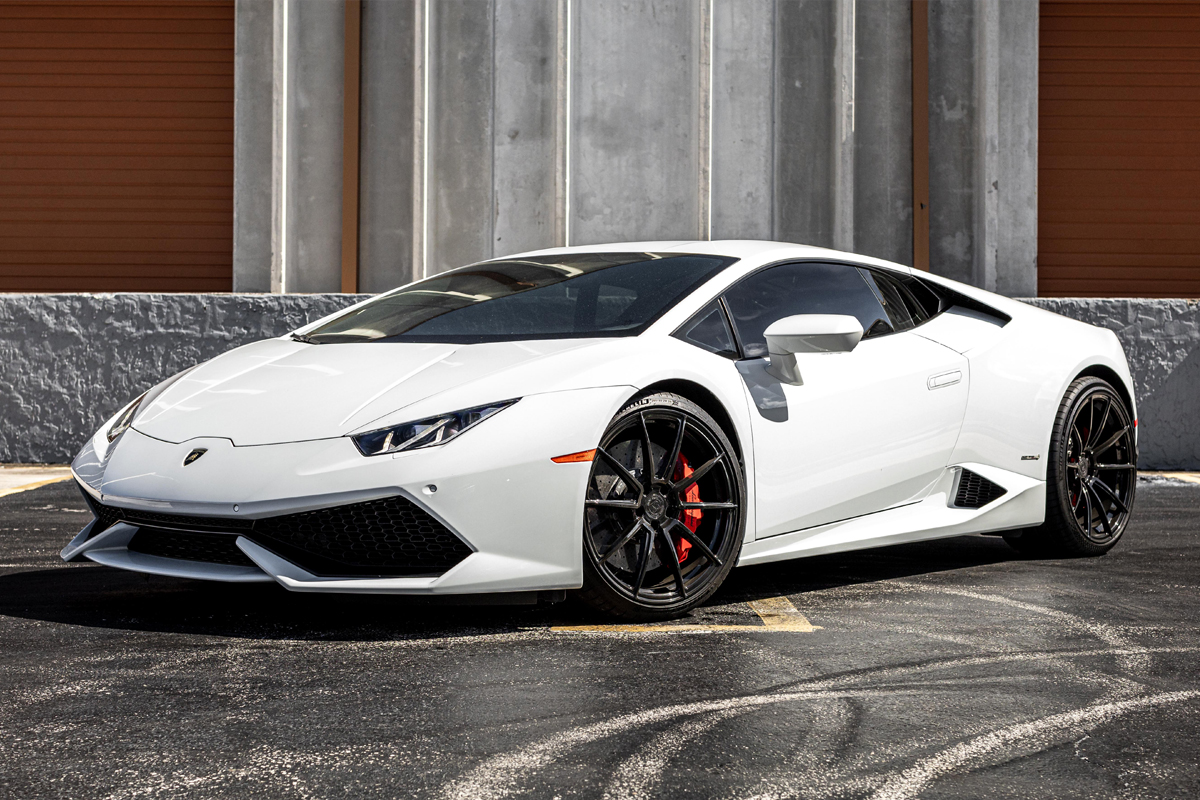
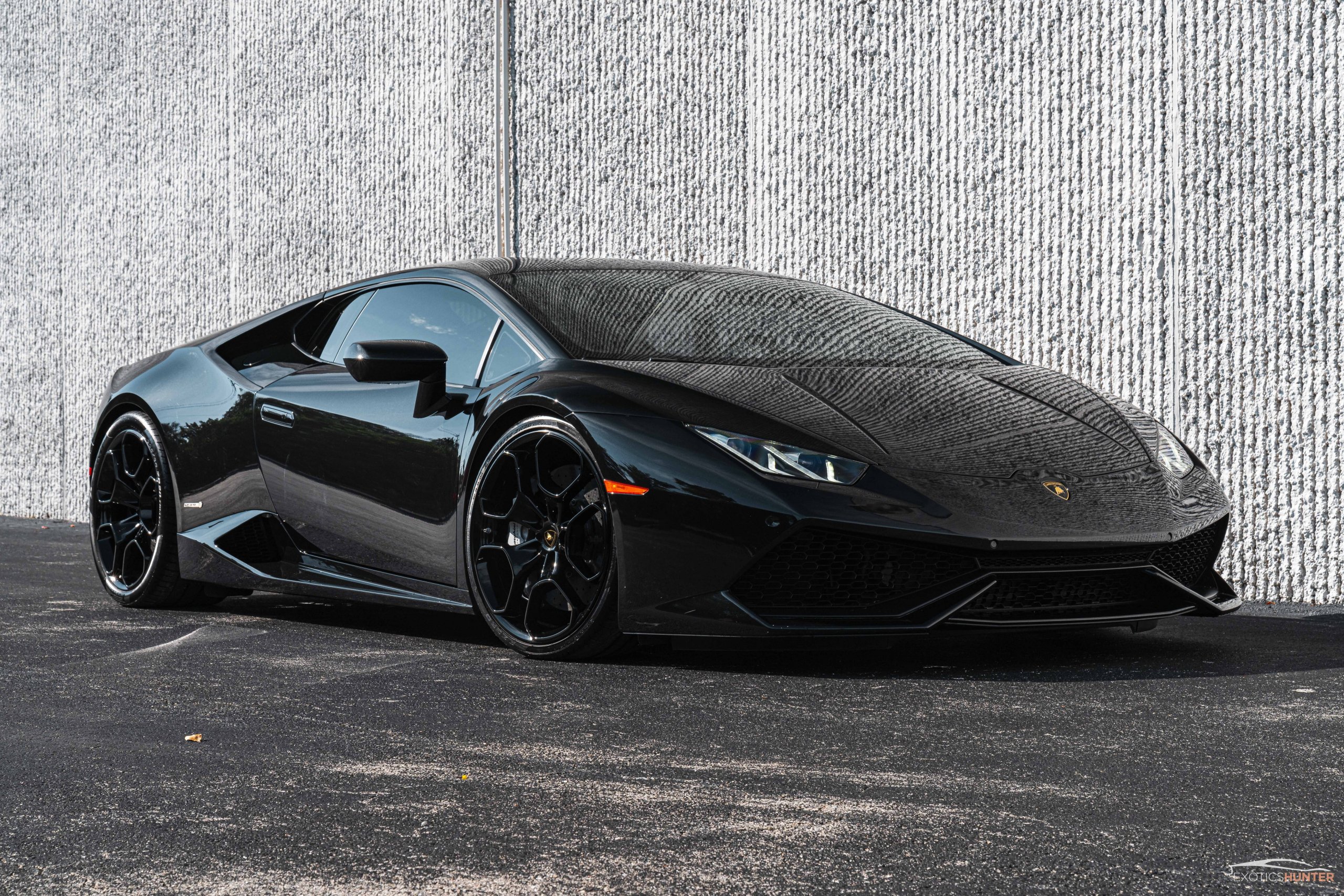
Sleek, aerodynamic design with sharp lines and angular shapes makes the Huracan unmistakably a Lamborghini.
Inside the Huracan interior, you can find that it has been designed with comfort and performance in mind.
Featuring ergonomics and much more advanced technology borrowed from Audi, made the Huracan truly a usable supercar for both everyday driving and high-performance weekend or track experiences.
Some of the competitors to the Huracan over the years include the McLaren 570S, Ferrari 488, Porsche 911 Turbo S, and Acura NSX.
Aside from its similar Audi counterpart with the R8 V10 (Second Generation), the Huracan is the only one with a screaming naturally aspirated V10 in its class.
The Huracan driving dynamics was a much drastic improvement over the Gallardo it replaced.
No longer was there poor feedback, sluggish steering, and gear changes that felt like an eternity, the Huracan was razor sharp with the ability to rev all the way up to its 8500 RPM with ease.
From the moment you fire up the V10 engine with the fighter jet inspired ignition start button, you know you’re in for an exciting ride and its up to you to tame this raging bull.
The Lamborghini Huracan has several adjustable driving modes that you can select on the steering wheel, including:
Strada (street) – Daily driving
Sport – More dynamic and responsive drive
Corsa (race) – Track like performance
It also features MagneRide electromagnetic suspension, providing ease in transitioning between its three available driving modes.
Lamborghini’s adoption of a dual-clutch gearbox is also a first in the Huracan, compared to its previous single-clutch options.
In automatic mode, the smooth gear changes are on par with other dual-clutch gearboxes.
The gearbox delivers quick and precise shifts in sport and manual modes, giving the sensation of gear changes completing before the driver has even pulled the paddle.
Driving any Lamborghini is an experience in itself, and the Huracan is no exception.
Model Changes (Breakdown by Year)
2015 Lamborghini Huracan
The 2015 model is the first full year of production for the Huracan, which replaced the Lamborghini Gallardo.
Featuring a 5.2L V10 engine producing 610hp that is shared with the Audi R8 V10.
It has a low-slung profile which undeniably gives it a strong road presence. The starting base price was around $240,000 slotting it right with the Ferrari 458, and McLaren 650S.
Starting price for the Huracan was $237,000.
2016 Lamborghini Huracan
Mechanically, the 2016 Lamborghini Huracan was basically the same as 2015.
However, 2016 gave birth to the Huracan Spyder, featuring an open-top roof to experience the full symphony of the V10 engine.
More colour and trim selection.
Interior refinements as standard include leather to door handles and the upper parts of the center console. Air vents are now painted in exclusive matt black.
Lamborghini Ad Personam, the brand’s customization program, has also added the availability of interior personalization, as well as exterior options including heritage colors and matt paints. The full Ad Personam program provides for owners wishing to further customize their cars to their unique personal tastes.
Other notable changes for the 2016 Huracan:
Lamborghini’s Sensonum audio system. The system delivers 390 Watts RMS, with a ten-channel amplifier and a range of ten loudspeakers in hexagonal-shaped grilles and the exclusive Sensonum badge.
Sport exhaust system, which can be specified with a style package for high gloss black tailpipes.
LED lighting in the engine compartment can be combined with the optional transparent engine bonnet and carbon fiber engine compartment.
Cruise Control System.
Travel Pack includes additional storage nets for both front and rear, an additional 12V lighter, and cup holders.
The starting price was $ 262,000 for the Huracan Spyder.
2017 Lamborghini Huracan
LP 580-2 was introduced in 2015 as a rear-wheel drive variant of the Huracan. This model offered a more dynamic driving experience, with power being sent exclusively to the rear wheels, as opposed to the all-wheel drive system in other Huracan models.
The LP 580-2 also featured a slight decrease in power producing 580hp (30hp less than the LP 610).
The re-engineered engine now boasts a cylinder deactivation system, allowing for a full cylinder bank to be shut off when not required.
You will also notice slightly different larger air intakes in the front bumper that actively increase downforce at speed while the modified, rising rear diffuser offers improved airflow around the back.
It came in both coupe and spyder. The LP 580-2 version was about $20,000 cheaper than the LP 610 version starting at $200,000
Other notable changes for the 2017 Huracan:
Techno Package which included front and rear sensors with a rearview camera, Bluetooth, lifting system, and anti theft system.
2018 Lamborghini Huracan
In 2018 the Huracan Performante LP640-4 was released.
The Huracan Performante takes it one step further with its track-focused setup and lightweight construction, with an upgraded 5.2-liter V-10 to 631 hp (21hp more than LP 610), which included active aero, upgraded suspension, bigger brakes, remapped transmission, and revised stability and traction-control systems.
The interior came standard with Alcantara and standard comfort seats with carbon buckets was an option.
Forged carbon material was used for the first time in the Performante and can be found in both its interior and aerodynamic components.
Starting at approximately $274,000, the Performante was a car for guys that wanted a more hardcore version of the Huracan.
Other notable changes for the 2018 Huracan LP 610 and 2018 LP 580-2:
2019 Lamborghini Huracan
Not long after the Huracan Performante coupe was released, the spyder variant debuted. The base price for the spyder started at around $308,000.
Everything remained the same as the coupe except with the Spyders soft top and its folding mechanism will also add roughly 300 pounds to the car’s weight.
But having the roof down is the cherry on top which makes it more visceral to the whole experience. You can truly be able to fully immerse yourself in the immediate sound and sensation of the V10.
2020 Lamborghini Huracan Evo
2020 brought out the refresh of the Huracan with the Evo for both the coupe and spyder, which is the mid-life update for the Huracan. Both the coupe and spyder were released at the same time.
The power remained the same as Performante at 631hp, however, were several tweaks done inside and out to improve the car.
Huracan Evo also features four-wheel steering, allowing the rear wheels to steer into corners. The system helps create more high-speed stability as well.
The most notable change is the enhanced exterior design with new bumpers new wheels and new LED lighting, giving it a new aggressive styling.
And the interior has also been reworked with the updated infotainment system with an 8.4-inch touchscreen display and new improved materials.
The Evo has improvements over LP580-2 in throttle response, steering response, and sound.
Other notable changes for the 2020 Huracan:
Starting price was $248,000 for the Huracan EVO.
2021 Lamborghini Huracan EVO
The Huracan Evo RWD (rear wheel drive) debuts in both coupe and spyder variations. The power output is 610hp, which is 21hp less than the Evo AWD version.
Lambo has recalibrated its new Performance Traction Control System (P-TCS), which allows for some tail-out antics in Sport mode.
Exterior changes include different front, and rear bumpers, and rear diffusers to create more downforce.
Even though the Evo RWD isn’t the most powerful or the quickest Huracan, there is no doubt that the RWD version is the one that caters to true drivers out there.
Other notable changes for the 2020 Huracan:
Lifestyle Pack which included anti-theft, Lamborghini smartphone interface, lifting system, 3-Year maintenance package, cup holder, and smoker package.
Driver Pack which included carbon ceramic brakes and LMS (Magnetorheological Suspension).
Starting price was $212,000 for the Huracan Evo RWD.
2022 Lamborghini Huracan
In 2022, Lamborghini introduced the Huracan STO (Super Trofeo Omologata), it is based on a road-legal version of Lamborghini’s successful GT3 racing car, offering an even more extreme driving experience for those who like to take things to the limit.
The STO features increased power, lighter weight, and a more aggressive body design, including a clam shell front that eliminates storage space.
The 5.2 V10 engine pushes out 631hp, 417 lb-ft of torque, and reaches 62 mph in three seconds and a top speed of over 192 mph.
Features on the steering wheel are slightly different from the other Huracan’s as well:
The Huracan STO is a rare and sought-after collectible as it marks the final track focused performance iteration of the Huracan before its replacement.
Starting price for the STO was $334,000.
2023 Lamborghini Huracan
In 2023, the Huracan received another refresh and update with the Huracan Tecnica.
The most notable change on the exterior is the Sian-inspired front end with the Y-shaped design, and the rear has a more sharper design.
Starting at $239,000, the Techina is positioned between the Evo rwd and the motorsports-inspired STO. It features the same powerful 5.2-liter 631hp V10 engine as the STO.
The Interior of the Tecnica is more luxurious than the STO’s carbon-focused design, with a microfiber dashboard and updated sports seats.
It still retains the motorsports-inspired fabric door pull openers. Also, a new telemetry system now offers front and rear cameras with full video recording and real-time vehicle information during track or street driving.
Usually, these last iterations of supercars are more desirable because there will be fewer of them around the streets, even though this might be an even better car compared to the first release mainly due to the fact that people are ready to wait for the next generation of Huracan.
Starting price for the Huracan Tecnica was $212,000.
Other notable changes for the 2023 Huracan:
Rear roll cage
Bridgestone Potenza Race tires, which are street-legal but track-biased.
2024 Lamborghini Huracan
For 2024 comes the Huracan Sterrato, designed for off-road domination, which will serve as the final farewell for the Huracan before its replacement arrives.
Lamborghini intends to produce a limited number of 1,499 Sterrato vehicles globally. Its most significant improvement is a 1.7-inch rise in suspension, which is modest compared to the Huracan Evo.
The most noticeable exterior change will be prominent over fenders and elevated roof air intake. Choosing the optional front bumper fog lights will give away the Sterrato’s unique design.
Price started at $249,000 for the Huracan Sterrato.
Lamborghini Huracan’s Common Problems
The Lamborghini Huracan is widely regarded as one of the most reliable supercars you can buy today.
Many people have driven their Lamborghini Huracans for extended distances, some even exceeding 100,000 miles (188k mile example), proving its reliability.
This shatters the conventional notion of supercars being unreliable.
However, it is essential to keep in mind that all cars, even supercars, can have issues and it is crucial to perform a Pre-Purchase Inspection (PPI) from an authorized dealer or experienced independent mechanic to reveal all issues.
Misfires: Many owners have reported issues with engine misfires, which can be caused by a faulty spark plug, a clogged fuel injector, or a malfunctioning ignition system. run inefficiently and lead to decreased performance, increased emissions, decreased fuel efficiency, potential engine damage, and triggering of the vehicle’s check engine light. Reports have indicated that some engine misfire codes may appear and then disappear, leaving the owner unsure of the issue’s origin.
Transmission: Some owners have noticed on their Huracan that they experience some clutch slippage, however, this is very rare.
Ticking noise: In early 2015, the fuel rail and injectors required replacement with an updated part due to a ticking noise.
No nose lift: Not having the optional nose lift causes an issue of a very scraped-up front bumper, especially since the Huracan is a very low car. So make sure to check underneath to see if there are any damages.
The caps that cover the low-beam headlight horizontal adjustment screws are missing, which can allow the headlights to be improperly adjusted. This recall affected 2015-2020 Huracan vehicles.
In temperatures below 41F, the rearview camera may not display due to a software error in the infotainment system. This recall affected 2018-2021 Huracan vehicles.
Maintenance and Ownership Costs
Compared to other high-performance supercars, owning a Lamborghini Huracan is considered to have relatively low maintenance requirements.
However, it is important to remember that regular maintenance and repairs will still be necessary, and the costs can vary depending on whether you take your car to a dealer or an independent mechanic.
Here is the suggested service schedule and intervals per Lamborghini:
1 YEAR OR 9,000 MILES
Replace engine oil and filter at least once a year
Comprehensive Inspection to Factory Specifications
Complete Factory Diagnostics
2 YEARS OF 18,000 MILES
Replace Engine Coolant
Spark Plugs
Engine Oil and Filter
Inspect and replace V-belt and Tensioner
Pollen Filters
Brake Fluid
3 YEARS OR 27,000 MILES
Replace Engine Oil and Filter
Replace Gearbox Oil
Here is a rough estimate of typical service costs associated with the Lamborghini Huracan:
Oil Change – As low as $200 for independent mechanics and $400 for dealers.
Minor Service – Typically includes oil change, cabin filters, and engine filters. The cost from a dealer is around $1,500
Major Service – Typically includes all the above plus spark plugs, brake flush, trans flush, expect about $2,500 from a dealer.
Tires – A set of high-performance tires like Michelin PS4 will cost about $2,000.
Brakes – Rotors are carbon ceramic which should last forever. Aftermarket brake pads that are OE equivalent will cost about $800 for a full set.
Clutch – Dual clutch transmission should last the lifetime of the car so expect zero additional expenses for clutch or flywheel service.
Also keep in mind that the 3 year maintenance package is included with the Huracan EVO AWD and part of the Lifestyle Pack on the Huracan EVO RWD.
This means all service within that time period is pre-paid AND transferable to the next owner as it is tied to the cars VIN.
AMS Performance Huracan schedule maintenance
Options List
The Lamborghini Huracan has a list of options and packages that customers can choose from. Some options were packages featuring exterior upgrades, including high-gloss pieces and carbon-forged materials, specifically for high-performance variants such as the Performante and STO.
For the Sterrato, some of the key options customers can choose from include optional fog lights on the front bumper, different livery designs, optional wheels and styling packages (gloss black, matte, body color exterior details).
A popular option was to opt for the upgraded paint with a pearl, 4-layer, or matte finish, which often adds a premium to the car’s price.
There were several wheels to choose from for each Huracan variant as well.
Another common option that was equipped was the front lift system, this helped raise the front end of the car, so it can easier get through any driveway or speedbump.
In the later models, some buyers went for the optional sport bucket seats which offered more support when turning the corners, but many also argued that they were not comfortable to live with for long distances.
Some buyers also opted for the Sportivo interior option which lets your pick a unique color for the leather which could be in unicolor (just one color) or in bicolor (color on inserts of seats and door panel) and also the branding package with included the Lamborghini logo on the headrest.
A handful of Huracan customers also went through the Ad Personam program which was a factory-in-house customization program, that allowed customers to personalize their Huracan with unique exterior and interior colors, materials, and features that were not available on regular production models.
Because of the strict approval requirements, cars that went through the Ad Personam program are considered highly desirable.
These cars usually command a higher premium in the market due to their exclusivity and uniqueness.
Here are some examples of option changes:
2016 Lamborghini Huracan Options List
2021 Lamborghini Huracan Evo RWD Options List
2022 Lamborghini Huracan STO Options List
2023 Lamborghini Huracan Sterrato Options List
Key Options
Front lift system
High-gloss, carbon-forged exterior pieces
Optional wheels
Sport bucket seats
Pearl, 4-layer, or matte finish paint
Sportivo interior option
Ad Personam exterior or interior (rare)
Lamborghini Huracan Price and Values from 2015 to 2023
The Best Lamborghini Huracan to Buy
When it comes to buying a Huracan, there are a few key factors to consider that can affect the car’s long-term value.
Some of the criteria break down into 4 categories.
For Huracans that will most likely appreciate in value will be the performance variants such as the Peformante, STO, and the Sterrato. Although they are more expensive, they will also depreciate much less.
Despite being cheaper and having lower horsepower, the LP 580-10 and Evo RWD are still expected to appreciate in value because they were designed to prioritize driving experience over the AWD counterparts.
When selecting a Huracan, the exterior color can also play a role in making the right choice. Opting for the optional pearl, 4-layer, or matte finish paint will add to the car’s appeal.
In terms of market stability, your best bet would be a 2020-2024 Huracan Evo (awd or rwd version).
Huracan Evo is a more refined and capable version of the original Huracan LP610, featuring improved aerodynamics, engine power, transmission, suspension, braking, infotainment, four-wheel-steering, and driving modes. Combined with all of this, the Evo is a great choice excellent choice still and prices will continue to remain stable.
However, on the other hand, all Huracan’s including the first pre-facelift (2015-2019) will remain a strong purchase simply because of their reputation for being extremely well-built and reliable vehicles.
These cars have a proven track record for being mechanically sound with few major issues.
As hybrid technology becomes more widespread among cars, naturally aspirated V10’s are becoming highly sought after by collectors and enthusiasts in the current market.
In addition to limited edition models, the condition and mileage of the car are also important factors to consider when buying a Huracan.
There are many that have been driven hard and have been highly modified. But the ones that are more likely to retain their value in the long run and will fetch the most money will be a well-maintained car with low mileage.
Therefore, it’s important to do your research, compare prices, and look for well-maintained cars if you are considering purchasing an Huracan with the goal of not losing any money.
Conclusion
In conclusion, for around ($220,000+) the Lamborghini Huracan is a great choice for a first supercar that you can rely on.
While the Ferrari 488, Acura NSX, Porsche 911 Turbo S, and McLaren 650s are among the other available options, the Huracan stands out with its exceptional technology, unparalleled comfort, user-friendly design, and dependable performance.
If you’re in the market for a supercar, the Huracan is a top choice that you won’t regret.
Car Hacking Shortcuts
Make sure the car has a front lift system.
Spec matters: Look for any Ad Personam colors or optional colors, Sportivo interior.
Special editions like the Performante, STO, and Sterrato are future collectibles and undervalued.
The technical storage or access is strictly necessary for the legitimate purpose of enabling the use of a specific service explicitly requested by the subscriber or user, or for the sole purpose of carrying out the transmission of a communication over an electronic communications network.
Preferences
The technical storage or access is necessary for the legitimate purpose of storing preferences that are not requested by the subscriber or user.
Statistics
The technical storage or access that is used exclusively for statistical purposes.The technical storage or access that is used exclusively for anonymous statistical purposes. Without a subpoena, voluntary compliance on the part of your Internet Service Provider, or additional records from a third party, information stored or retrieved for this purpose alone cannot usually be used to identify you.
Marketing
The technical storage or access is required to create user profiles to send advertising, or to track the user on a website or across several websites for similar marketing purposes.