Home Blog Page 861

Gandini doesn’t do retro. – thoughts on automotive design

0


RIP to a legendary car designer.

Marcello Gandini sadly passed away at the age of 85 last week. I can recall perhaps that Gandini was the first car designer I could ever name? A childhood reading Car Magazine – or was it simply that I once managed to read that tiny badge on the side of a Lamborghini Countach? Certainly the Countach sparked my childhood excitement, when I saw one drive by the park I was playing in. I am also sure I remember print ads of the time, explaining how the Citroen BX was designed by the same person and maybe Renault also proudly name dropped in a similar way? Gandini was a true superstar designer. Perhaps purely because his name was a lot easier to pronounce or spell than Giugiaro. Only slightly less prolific, you can find plenty of obits (or Wikipedia) listing his achievements. His career famously started, and perhaps continued – by clashing with Giugiaro and the two never worked together directly. The most beautiful car ever designed was claimed by Gandini (Lamborghini Miura) but legend has it that Giugiaro and Gandini unintentionally collaborated on this. IT was started by one, and finished by the other? We will perhaps never know the truth of that- but it certainly makes a great story for how Marcello arrived with a bang. His brightest and loudest bangs were Lamborghinis of course.

Does anyone remember the response from Marcello Gandini regarding the “new” Countach special from Lamborghini? It was October 22nd 2021… that Marcello Gandini emailed me! I can tell you now I was starstruck but Mr Gandini was not happy. Of course it was merely his publicist that sent me a press release, but I felt that my life had come full circle from my single digit childhood days. He was not upset with me, it seemed he just wanted the world to know how much he disliked the implication from Lamborghini, that he endorsed their new Lamborghini Countach. Interestingly Top Gear magazine were present for the exact moment the publicity upset Marcello. They managed to hint at the furore to come with Marcello zinging with quotes such as

“I’ve always refused to live in the past..”

You can read that 2021 TG interview here. The letter sent to me was a response to that moment, one which TG decided to cut off at the end of the article, and neatly explains his courtesy and politeness but also shows the belief he had in futurism, or the art of the design process. Innovation ran deep in Marcello, and to be associated with this project incorrectly was one affront – but the most scathing “roast” that the maestro gave this project was one of condemning all retro-modernist designs. All restomods perhaps? My favourite quote from his letter:

“It is clear that markets and marketing itself has changed a lot since then, but as far as I am concerned, to repeat a model of the past, represents in my opinion the negation of the founding principles of my DNA“

GANDINI, Marcello. Letter to author 22nd October 2021

At the time I agreed with my hero and still do. Look back at that 2021 Countach. Will it resonate as timelessly as the original? No. Is it a cynical marketing exercise to get $millions from the investor market- for a slightly altered (fairly cheap to produce) Aventador? Yes.

Eccentrica – Restomod Diablo – also not pleasing to Gandini?

In 2023 I was reminded of Gandini when news of a “restomod” Diablo was shown. This car is another $1million collectors piece, but this time based on a Lamborghini he didn’t design. The story there is of US Chrysler ownership of Lamborghini blocking the initial design that Gandini had proposed, with something of their own which was clearly based on his designs. It was smoothed out and more modern looking. More on trend, as American car design experience was highly tuned to market research and customer feedback at that time. We got to see Marcello’s version as the Cizeta Moroder V16T.

In my life so far I was lucky enough to own a Gandini designed car, and I chewed the ear of many bored listener at parties when I told them all about my car “designed by the Lamborghini guy”. It was a Renault 5 (Supercinq) Campus from 1988 and I loved it. The interior was practical yet sci-fi cool, the exterior still looking fresh (but wearing battle scars) in 2002 when I owned it. Gandini designed another Renault, and it was a rather significant vehicle which enjoyed a production run of 23 years. This is probably my favourite Gandini design (besides the Stratus Zero concept), with its immaculate industrial design balance of form and function. The two tone colour scheme and the form language with deep undercut and gap separating upper and lower chassis of the 1990 Renault AE (later Magnum) truck were masterstrokes. The design visually represented the “floating” cab, which contained a flat floor for the driver. This was a first and Marcello Gandini celebrated this incredibly futuristic project in aerodynamics and engineering, with styling that was unlike any truck before it.

Let me know in the comments or get in touch with your own favourite Gandini designs! I know the Citroen BX gets a lot of love these days… I recall not being a huge fan in period and I would always refer you to the Volvo Tundra concept of 1979. I wonder who designed that….

A 1997 Renault Magnum refurbed to look like a 1990 AE500 Mack-Powered version
Renault Magnum full size design model!
1979 Volvo Tundra concept by Bertone under Gandini- but apparently designed by Belgian designer Marc Deschamps, who also designed the Mazda MX-81 (according to Joe Stenuit of Mazda Design).

That letter in full. PR contact details redacted.


Source link

2023 is second billion euro year in a row for Ducati

0


2023 is second billion euro year in a row for Ducati

2023 Ducati DesertX Rally

Building on last year’s success, 2023 is another billion dollar revenue year for Italian motorcycle maker Ducati. With 1,065 million euros (RM5.47 billion) in revenue, the boys from Borgo Panigale saw a slight drop from the 2022 figure of 1,089 million euros (RM5.59 billion).

In terms of operating profit, Ducati recorded 10.5% or 112 million euros (RM575 million) over 2022’s numbers. Total number of Ducati motorcycles delivered to customers worldwide was 58,224, down from 2022’s 60,000-plus figure.

“The results obtained by Ducati in 2023 confirm the validity of the strategic decisions and self-financed investment policy that we have been pursuing for several years. We closed the fiscal year with a revenue that once again exceeded one billion euros and a record operating result, to which must be added the successes in racing which saw us become World Champions in MotoGP and WorldSBK for the second consecutive year,” said Claudio Domenicali, Ducati CEO.

Clockwise from top left: Ducati Monster 30 Anniversario, Hypermotard 698 Mono, Ducati Diavel for Bentley

Last year, Ducati introduced the new Hypermotard 698 Mono, along with the DesertX Rally. Other notable models from the previous year include the Multistrada V4 RS and V4S Grand Tour, designed for sport and touring duties, respectively.

Celebrating three-decades of Ducati, the Panigale V4 SP2 30 Anniversario 916 and the Monster 30 Anniversario were released in a limited edition of 500 units each. Collectibles included the Ducati Diavel for Bentley, inspired by the Bentley Batur and built on the technical base of the Diavel V4, and the series of five collectible Panigale 2023 Replica dedicated to Ducati’s success in the MotoGP, WorldSBK and WorldSSP championships.

Looking to sell your car? Sell it with Carro.


Source link

The Courtin Family Who Owns Clarins Invests In Luxury Hotels

0


The Courtin Family

The Courtin family goes from beauty to luxury hotels as they make a bid towards a new high-stake investment, leading to an acquisition. The Courtin family’s investment company, Famille C Participations, has invested €130 million (approximately USD 141 million) in Pierre Bastid’s hotel business, Evok Collection, as a wager on expanding wellness-focused luxury hotels. The potential acquisition in the stake of the French family-owned hotel group sees the Courtin family holding company make a strategic play to diversify the company’s portfolio which currently includes ownership over skincare brand Clarins.

The Courtin-Clarins family are the founders of the upscale cosmetics brand Groupe Clarins, who owns the private investment entity called Famille C Participations. Christian Courtin-Clarins and his brother Olivier Courtin-Clarins, sons of Clarins founder Jacques Courtin-Clarins, started the company in 2017. Famille C Participations provides financial resources and strategic expertise for minority investments in small-to-medium-sized European enterprises in the beauty, wellness, and sustainable development sectors. As it stands, Famille C also have investments in Ilia Beauty, Ceremonia, Pai Skincare, and Joone, as well as tech companies including Launchmetrics.

Famille C Participations’ £14 Million (approximately USD 17.8) Reinvestment in Pai Skincare

In a press statement, Famille C reinforced its focus on investing in hotel companies that “create unique experiences focused on well-being”. Redefining luxury hotel standards by developing new lifestyles and travel experiences is exactly what the three co-founders of Evok had set out to do. Pierre Bastid, Romain Yzerman and general manager Emmanuel Sauvage created and built Evok in 2014, presenting a space of distinctive modern interpretation of European culture and a relaxed way of life amid an urban cosmopolitan city. The concept was to create a luxury service that would also provide unique experiences for the residents of the hotels and the communities around them.

The strategic investment further unites the world of beauty and well-being in an embodiment of Famille C’s vision of the “French art of living”. “The desire to innovate and modernise the luxury hotel industry is one of the keys to Evok’s success and one of the reasons for our partnership,” explains Prisca Courtin, general manager of Famille C Participations.

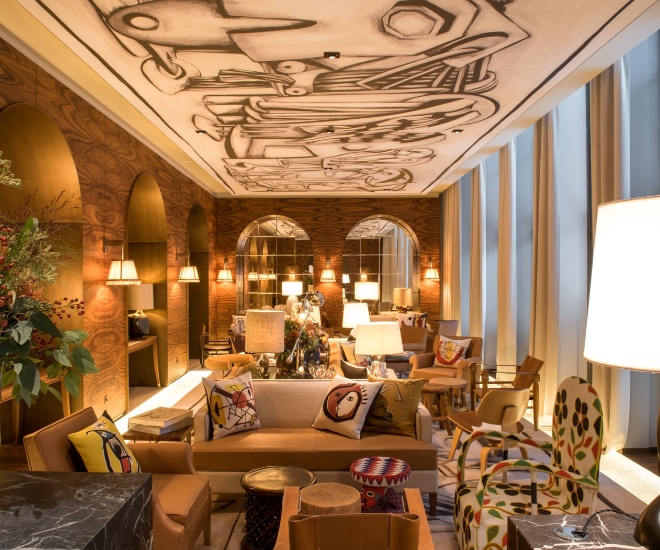
Evok’s interior (Image courtesy of Evok Collection/ Paris Branch)

Together, Famille C and Evok Collection intend to expand their vision for luxury lodging, with a goal of 15 properties comprising of current hotels and upcoming outposts in the next five years. Evok Collection already has six such venues in Paris and Venice, and two more hotels in Madrid and Rome will soon open.

In a joint statement the two companies stated, “With this investment, Famille C Participations is implementing the strategy led by Prisca Courtin and her teams, naturally expanding its business into hotel experiences where well-being is central.” Emmanuel Sauvage, managing director of Evok Collection explained, “This is a new stage for Evok Collection. United by a common vision, I’m looking forward to continuing to write the Evok story together. I’m convinced that this collaboration with the Famille C Participations team will lead us to new successes.”

Courtin
The spa at Evok Collection’s Nolinksi Hotel in Paris. Image courtesy of Evok Collection (Businessoffashion)

The strategic investment comes at a time of growing trends in wellness and hospitality-related tourism. The convergence of the beauty and wellness industry goes hand in hand with delivering personalised brand experiences to customers. According to McKinsey & Co, the wellness market is worth USD 1.8 trillion in 2024. The health and beauty Industries are rapidly evolving with wellness retreats like Evok looking to serve their customers by ingratiating the best skincare products available like Clarins on the market.

For more on the latest in business and hospitality reads, click here.


Source link

The Mercedes-Maybach EQS Night Series is a $205,000 high-end SUV

0


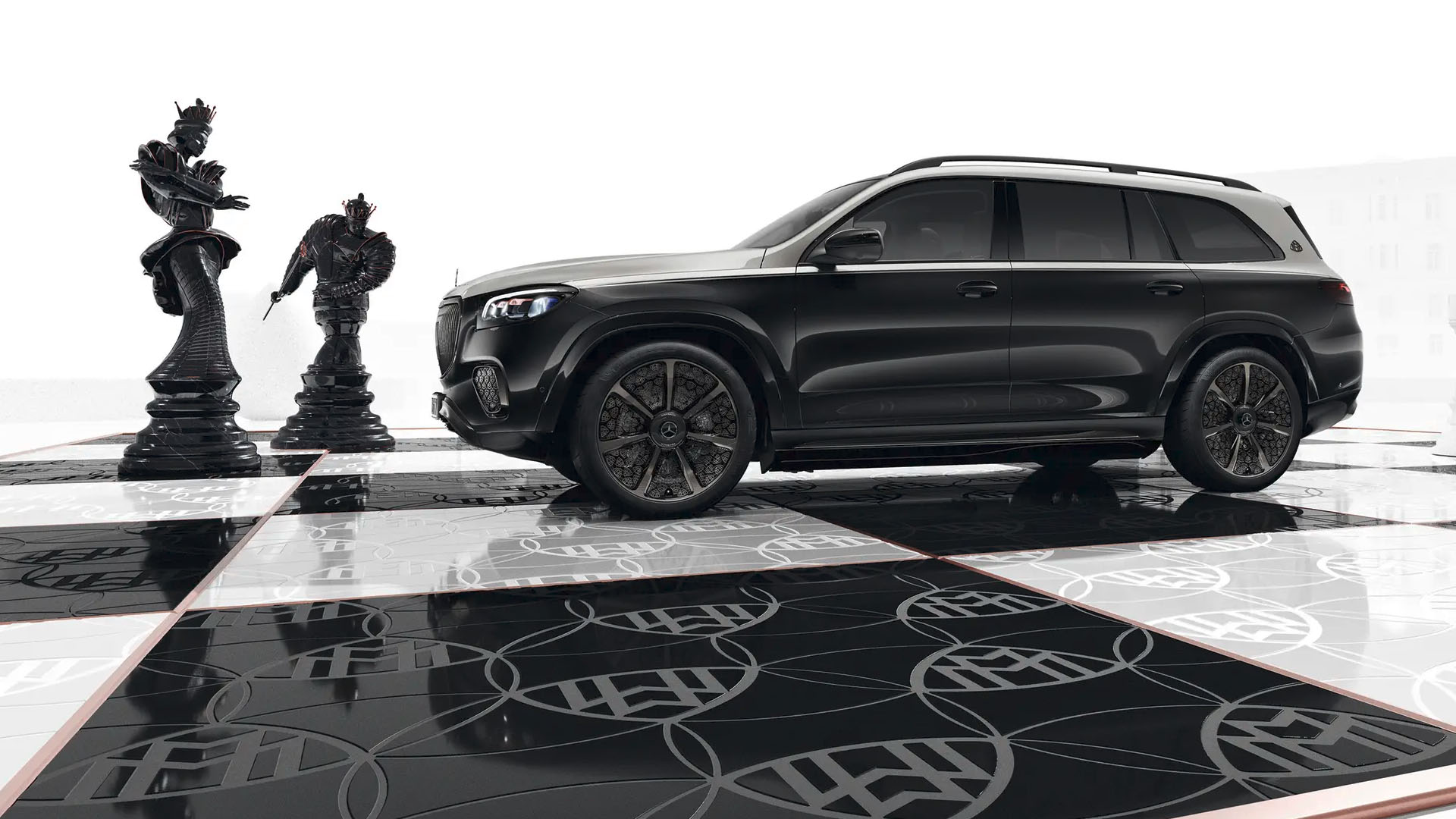
While the EV market seems to have slowed down considerably in the last few months, and several car manufacturers are postponing their plans to cancel all ICE, or internal combustion engines, by several years, I guess that didn’t deter Mercedes from putting a very high-end luxury EV SUV on the market, the 2024 Mercedes-Maybach EQS Night Series, the all-electric, top of the line version of the EQS, with an MSRP of a massive US$ 205,000, which includes a $25,000 option called ‘Night Series’, which comes with a fully blacked out exterior, there is no bright chrome on this car on the outside, it’s all black, including black chrome.

Another strange thing seen on the Mercedes-Maybach EQS Night Series is the number of Maybach logos they put on this car, there are five-spoke wheels, but between these spokes, there are fins that show multiple Maybach logos, there is a logo behind the side windows on the rear pillar, and while there is a Maybach script on the front grille, the badge is the original Mercedes three-pointed star, but make no mistake, the Mercedes-Maybach EQS comes with 650 hp and 950 Nm of torque, despite the high weight, this SUV performs.

The interior of this Mercedes-Maybach EQS Night Series is truly at the high-end of the spectrum, the rear has two individual seats, that can even be fully reclined for a very relaxing drive, the central console holds a tablet while two more displays are fitted against the rear of the front seats, but the central console at the back also hold two fold-out tables, this is private jet luxury on wheels for sure … but let’s take a look at what Doug DeMuro thinks about this impressive luxury EV SUV:


Source link

How to Find the Best Hotels in New York

0


New York City, the vibrant metropolis that never sleeps, beckons travelers from around the globe with its iconic skyline, diverse culture, and endless array of attractions. Whether you’re visiting for business or pleasure, one of the most crucial aspects of your trip is finding the perfect place to stay.

How to Find the Best Hotels in New York
Photo by Michael Discenza on Unsplash

Other articles you can read:

Best Tips to Find Hotels in New York

Research online and compare different hotels based on their amenities and prices. Check customer reviews to find the best hotels in New York. Ask for recommendations from friends and family who have visited New York before.

Choose Your Ideal Neighborhood:

How to Find the Best Hotels in New York
Photo by Diane Picchiottino on Unsplash

New York City is comprised of diverse neighborhoods, each with its own distinct character and attractions. Whether you prefer the bustling energy of Times Square, the chic ambiance of SoHo, or the historic charm of the Upper East Side, selecting the right neighborhood is key to ensuring a memorable stay.

Research each area’s proximity to your points of interest, dining options, and transportation accessibility to find the perfect fit for your needs.

Use Online Booking Platforms:

Once you’ve identified your priorities and preferred neighborhood, it’s time to leverage online booking platforms to streamline your search. Websites like Booking.com, Expedia, and Airbnb offer a vast selection of hotels, from boutique gems to well-known chains, along with user reviews and ratings to help inform your decision.

Take advantage of filters to narrow down your search based on criteria such as price, star rating, and guest preferences.

Read Reviews and Compare Options:

Reading reviews from fellow travelers can provide valuable insights into the quality and experience of a hotel. Look for reviews that highlight aspects important to you, such as cleanliness, customer service, and location.

Keep in mind that individual preferences vary, so consider both positive and negative feedback when weighing your options. Additionally, compare prices across multiple booking platforms to ensure you’re getting the best deal possible.

Consider Alternative Accommodations:

How to Find the Best Hotels in New York
Photo by Hanyang Zhang on Unsplash

In addition to traditional hotels, consider alternative accommodations such as boutique hotels, bed and breakfasts, and vacation rentals. These options often offer unique charm and personalized service, providing a more intimate and authentic experience of the city.

Platforms like Airbnb and VRBO allow you to book entire homes or private rooms, ideal for those seeking a home-away-from-home ambiance during their stay.

Take Advantage of Special Offers and Deals:

Before finalizing your booking, be sure to check for any special offers, discounts, or package deals available. Many hotels offer promotions such as early booking discounts, free nights, or complimentary amenities like breakfast or Wi-Fi.

Signing up for loyalty programs or subscribing to hotel newsletters can also unlock exclusive deals and perks for future stays.

Plan Ahead for Peak Seasons:

How to Find the Best Hotels in New York
Photo by Luca Bravo on Unsplash

New York City is a year-round destination, but certain times of the year, such as the holiday season and summer months, tend to be particularly busy. If you’re planning to visit during peak seasons, it’s advisable to book your accommodations well in advance to secure your preferred hotel and avoid inflated prices.

Additionally, consider visiting during shoulder seasons, such as spring or fall, when crowds are thinner, and prices may be more favorable.

Explore Direct Booking Options:

While online booking platforms offer convenience and variety, don’t overlook the benefits of booking directly with the hotel. Many hotels offer exclusive deals, perks, and upgrades to guests who book directly through their website or reservation hotline.

Additionally, reaching out to the hotel directly allows you to communicate any special requests or preferences, such as room location or bedding preferences, ensuring a personalized experience tailored to your needs.

Seek Insider Recommendations:

While online reviews are a valuable resource, don’t overlook the power of personal recommendations from friends, family, or colleagues who have visited New York City.

Their firsthand experiences and insights can provide invaluable guidance in selecting the perfect hotel. Reach out to your network and ask for recommendations based on their favorite stays in the city. You might discover hidden gems or lesser-known boutique hotels that align perfectly with your preferences.

Explore Hotel Amenities and Services:

Consider which amenities are essential for your comfort and convenience during your stay. Some hotels may offer unique perks such as rooftop bars, concierge services, or guided tours, enhancing your overall experience in the city.

By prioritizing the amenities that matter most to you, you can narrow down your search to hotels that meet your specific needs and preferences

Conclusion:

By defining your criteria, researching neighborhoods, using online booking platforms, reading reviews, and exploring alternative accommodations.

Taking advantage of special offers, you can ensure a memorable and comfortable stay in the Big Apple. Whether you’re seeking luxury, convenience, or a unique local experience, the perfect hotel awaits you amidst the vibrant streets of New York City.


Source link

Mercedes-AMG GT43 debuts with a 4-cylinder engine; from nightmare to reality!

0


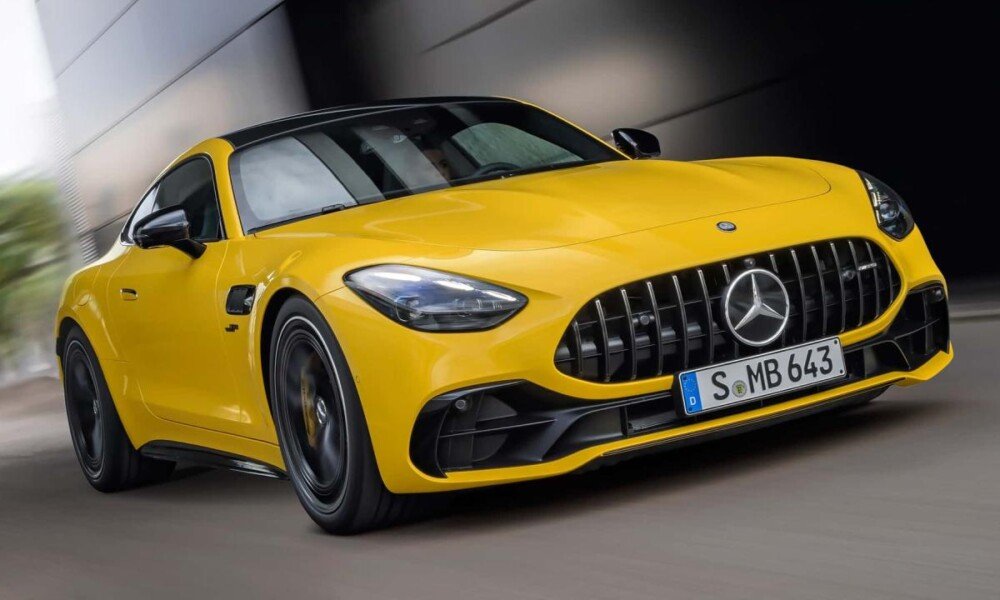
Can you imagine a Mercedes-AMG GT without a V8 engine under its hood? The stuff of nightmares has become a reality, with the new Mercedes-AMG GT43 Coupe.

The Mercedes-AMG GT43, unlike the GT55 and GT63 variants, has a puny 4-cylinder engine under the hood. It is a 2.0-liter turbo-petrol mild-hybrid from the AMG A45, which makes 416 hp and 369 lb-ft of torque. A 9-speed automatic transmission sends the power to the rear axle.

mercedes-amg-gt-43-coupe-2024 (2)

According to Mercedes, the AMG GT43 is significantly lighter than the GT63. It weighs 1775 kg and is said to have better weight distribution. That being said, it cannot match the GT63 in a sprint from 0-62 mph. The GT43 completes the dash in 4.6 seconds, 1.4 seconds slower than the V8 version.

mercedes-amg-gt-43-coupe-2024 (1)

The Mercedes-AMG GT43 does come equipped with a rear-wheel steering system that improves cornering. It’s not part of the standard package, though. The car also gets adaptive dampers on all four corners and rides on 19-inch wheels.

mercedes-amg-gt-43-coupe-2024 (3)

Source: Mercedes-Benz


Source link

Block Heater Run Time. How Long Do I Need To Plug It In?

0


Running your block heater in the winter is something we all know we need to do, but for how long? It turns out to be a simple answer, with a small variable.

Block Heater vs Oil Warmer

Before we get in to how long it needs to run, we need to clarify a Diesel Myth out there. That myth being your Block Heater is supposed to warm up your oil. This is not the case at all.

A Block Heater is just that, a small electric heating element that warms up your engine block. It is installed in one of the antifreeze passages in your engine. Your oil pan is on the very bottom of the engine.

rv hangersrv hangers

The function of the block heater is to work like an electric water heater, and warm the coolant in your engine. By keeping the block warm, it makes it easier for your engine to start when the temperatures are below freezing.

An oil warmer is the same thing, but for your oil pan. There are different styles that you can add on yourself. One is a replacement oil dipstick with a heating element on the tip. The other is a flexible pad that you stick on to the bottom of your oil pan.

Which one is better for winter engine starts? Well that depends.

What Do Oil Numbers Mean?

When you get oil for your car or truck, the bottle it comes in usually has two numbers on it. Most of us just get whatever the engine oil cap says on it and don’t give it much thought after that.

Today’s oils are much more than melted dinosaurs in a bottle, which is why they have two numbers on that bottle. They are engineered to have different properties based on their temperature.

Let’s use a bottle of 10/30 for example. The first number is the cold viscosity. The second number is the hot viscosity. Viscosity is kind of like your blood pressure, there is a golden zone for your engine, just like for your heart.

The lower the viscosity, the thinner the oil, the easier it flows in cold temperatures. Gear oil for example has a viscosity of 90. If you tried pouring gear oil in your engine and starting it on a minus 20 day, that would be like eating nothing but fried foods your whole life then suddenly running a 5K.

Amazon FireAmazon Fire

Once your engine is warmed up, it’s ready to really get going, so your oil can be a little thicker and still flow where it needs to. Just like you and me, when we first wake up and are drinking our coffee reading one of our fantastic articles, our blood pressure is low.

After we’ve had a few cups, and knocked the rust off our joints, we can take the dog for a run across the park. Our blood pressure is going to go up, but that’s ok because we are all warmed up.

So why an Oil Warmer?

Some of the old timers, and even some of us medium timers, have that old truck that they just won’t get rid of no matter how many oil spots are in the driveway. For me it was my old Ford with the International 7.3 Diesel engine.

That truck didn’t care what you put behind it, it was gonna pull it like it wasn’t even there. It just leaked like a spaghetti strainer until it was warmed up. The back yard mechanic solution was to run a thicker oil in it. Instead of 10/30, I would run 20/30 so the oil is thicker when it’s cold out to prevent the leaks.

When the temperatures got below freezing, the truck was a little cranky about having to go to work in the morning. Can’t say I blame it, I was too!

The other solution is to use an oil warmer, keep running the same oil, and keep it in the warmer viscosity zone. By heating the oil pan, and the oil in it, some heat will rise into the engine and make starting it a little easier too.

The down side to the oil warmer is the oil pan location. Being on the very bottom of the engine, when it is windy out, that wind blows under the truck and sucks the heat out of the oil pan. You also end up with different temperatures in your engine.

The bottom of your engine will be warmer than the top, which in itself can lead to more leaks. When metals heat and cool they expand and contract. The gaskets between the warmer bottom and cold top of your engine may fail due to the uneven heating.

How Is A Block Heater Different?

The block heater is installed more in the “middle” of your engine’s overall height. It is also installed directly into the coolant passage. Water/Antifreeze is an excellent heat conductor, which is why it’s used to keep your engine running cool.

When your block heater is plugged in, the heating element starts to warm up the coolant that is touching it. That heat naturally radiates out to the rest of the coolant, as well as to your metal engine block.

On some vehicles it MAY even warm the oil. In some vehicles it may not. It all depends on the design of the engine. Either way, when you start your engine, the oil is pumped through all of its passages in your engine and almost instantly absorbs the heat that was built up from your block heater.

So how long do I need to run my block heater?

After scouring the internet to find the balance point between maximum heating and just wasting electricity, the consensus seems to be 4 hours. After 4 hours your block heater isn’t going to get your block any warmer due to the heat being lost to the natural cooling of the cold air.

youtube friendsyoutube friends

On my old 7.3 the longer it was plugged in, the warmer it was the next morning, which made both of us less cranky about going to work. If I left it plugged in all night, the following morning the heat instantly blew hot air.

That is not the case with our new 6.7 Ford. It still takes about 5 minutes before the air blows out what I would call Hot.

Most of todays diesels will start just fine down to 20 degrees Fahrenheit. Ours is a little more chattery but It starts right up. When the temp is below freezing I used to add plug the truck in to my morning routine. I would get up at 5 or 6, plug it in, and when we were ready to head out for the day at 7 or 8, she was ready to run.

There has to be a better way

I have always liked gadgets, and making life easier, and avoiding being cold whenever I can. For all of those reasons I started using a timer. Now I can drink my coffee and just look out the window while it’s snowing in the morning.

This timer is great. You set the time you want it to come on, and the time you want it to turn off. For us its On at 5am and turns Off at 9am. So now when we get home for the day, we just plug the truck in. Set it and forget it.

Block Heater TimerBlock Heater Timer

No more remembering to go outside 4 hours before work. No wasting electricity when the block heater is running when it doesn’t need to be. The absolute best part?

There is ZERO chance of me forgetting to plug the block heater in early enough. No dead battery from cranking too long. Zero chance of a cracked block from thermal shock. We save money on diesel because the remote start isn’t running for 10 minutes every day. No matter where we go, we can just plug our timer into the pedestal at the campground, plug the truck in at night, and know we are good to go in the morning.

Don’t forget to read: 22 Must Have’s For Full Time RV Living


Source link

Ferrari Purosangue review – traversing new territory

0


Ferrari Purosangue review – traversing new territory

Over the past few decades, Ferrari has organised Grand Tour events which has seen its cars venture to diverse corners of the planet, including the Himalayas and across the United States, just to name a few locales. This tradition continues to this day, with the most recent expedition being a 3,000-km journey from the north to the south islands of New Zealand in November last year.

Beautifully scenic, the country’s breathtaking vistas and expansive terrain was where the original Lord of the Rings trilogy was filmed in its entirety, and when the call came in that I would join the second leg of the three-week journey, there was plenty to be excited about. Visions of driving a Ferrari on sunbathed roads filled my mind on the long flight over.

Unfortunately, sunshine was limited, with rainfall being the norm during my two days driving the 700-km leg from Lake Taupo to Wellington. Nonetheless, one must be adaptable to any situation, and adaptability is a trait that we find in the people around us. Traits make up the character of a person, and as our friends demonstrate, no one acts or behaves identically, although some share similar traits.

Forgive going slightly off tangent, but there’s a point because adaptability is just one of the traits that Maranello’s Purosangue perfectly demonstrates. Introduced in 2022 as the brand’s first-ever four-door, four-seat model, the Purosangue was the vehicle of choice for the New Zealand Grand Tour and represents new territory for the company.

Ferrari Purosangue review – traversing new territory

The idea of a more practical Ferrari isn’t new. While the traditional image of a Ferrari is a two-seat, low-slung, exotic-looking sports car that defies physics at every turn of the wheel, the company has wheeled out quite a few four-seaters in the past. The lineage started with the 250 GT/E, with others being introducing being the 330 GT 2+2, 365 GT 2+2, 456, 612 Scaglietti, FF and GTC4Lusso.

The Purosangue follows in the footsteps of these cars by offering seating for up to four people, but takes a slightly different route by having two more doors and an increased ride height. This sounds like a recipe for an SUV, which has been a hot topic among car fans, but the Purosangue isn’t labelled as such by its maker, who insists it doesn’t conform to that convention. The official stance is this is a “four-door, four-seat Ferrari,” so take it as that.

Labels aside, Ferrari knows what its customers want, and that is a more practical model that can be used daily with a lot less compromise. The want is certainly a strong one, as those with the means are scrambling just to get their name on the waiting list that now stretches into the years. Unlike other marques, Ferrari insists of maintaining the exclusivity of the brand and its models, which is why just one in five Ferraris produced will be a Purosangue.

Under the guidance of Ferrari chief designer Flavio Manzoni, the Purosangue manages to avoid the typical SUV look. To my eyes, it kind of resembles a GTC4Lusso, albeit taller with matching proportions and very dramatic rear-hinged doors. Looks are subjective though, so share what you think of the styling below.

It’s a rather discreet shape and certainly not overly styled to force shock and awe, which is just how some prospective buyers prefer it – being low-key is what some affluent people prefer. Even so, the devil is in the details as you get up close and poke around. Like recent Ferraris, every slit, cutout, vent, line, duct, crease and curve are purposeful to optimise aerodynamic performance and efficiency without the need for prominent appendages like wings and flics.

Open the large, forward-hinged clamshell bonnet and you’ll draw a crowd, who will be greeted by another Ferrari GT trait, a naturally-aspirated V12 engine that proudly displays its intake plenums. With a displacement of 6.5 litres, the F140IA puts out a mighty 725 PS (715 hp or 533 kW) at a stratospheric 7,750 rpm and 716 Nm of torque at 6,250 rpm, with Ferrari saying 80% of maximum peak torque is available from just 2,000 rpm.

Paired with the mid-mounted V12 (the engine sits behind the front axle) is a transaxle eight-speed dual-clutch transmission and Power Transfer Unit (PTU), the latter making up the all-wheel drive system. The Purosangue is mainly rear-wheel drive with an eDiff, but the PTU can shift torque to the front axle and distribute it to each wheel accordingly when needed through two parallel clutches directly connected to the axle shafts.

This setup is enough to propel the 2,033-kg vehicle from 0-100 km/h in just 3.3 seconds and on to a top speed of over 310 km/h. Remarkable numbers for sure, although there are limited areas to do so in New Zealand without attracting the long arm of the law.

In areas where we could let the V12 stretch its legs, the Purosangue covered ground rapidly with an aurally-pleasing engine note that spooked the native sheep. Should you prefer to drive in a calm manner, the Ferrari is more than happy to dial things down a notch and cruise comfortably within the speed limit while allowing for conversations at normal volume. We clocked just above 1,000 rpm doing 100 km/h, and a modest depress of the pedal saw us gain speed in no time.

Put simply, the car isn’t always raring to be let of the leash and egging you on to drive fast to enjoy it. This duality is a welcomed trait, which is helped along further by another important Ferrari trait, impressive driving dynamics.

The Purosangue also comes with the brand’s first active suspension technology which incorporates True Active Spool Valve (TASV) technology. Developed by Multimatic, the system eliminates conventional roll bars and instead relies on active dampers that use a motor and gears to forcefully slow down or accelerate the motion of the damper stem. This allows for more precise and greater control of body roll and damping, as well as enabling the car to be lifted for short periods (like when going over really high bumps).

On the move, the Purosangue displays good road manners with a compliant ride when dealing with the odd bump on New Zealand’s roads. Even when dealing with sharper-edged bumps, the vehicle maintains its composure and it isn’t jarring on the inside when left in Comfort mode.

Flick the Manettino switch to Sport and the car firms up so you feel more of the road while also providing sharper turn-in, reducing the intervention of the ESC and adjusting other dynamic features. In this mode, the Purosangue’s character changes to fully showcase its agility, with rear-wheel steering further aiding manoeuvrability.

In areas where we could take corners at speed, the Purosangue remained planted, with all systems working in unison to maintain traction and disguise the vehicle’s heft to provide plenty of confidence to push further.

It should be intimidating, more so because Ferrari only brought six left-hand drive units direct from Italy to right-hand drive New Zealand, but the Purosangue never felt too scary to exploit despite the rain-soaked roads. Comfortable when you just want to relax and sharp when you want to get a move on, it is approachable and easy to familiarise with that you can just get in and go.

Adding to the welcoming nature is a steering that is precise and with sufficient feel as well as noticeable weightage, albeit with a bit more effort to turn. For the Purosangue which is meant to be used daily, Ferrari reduced the steering speed compared to its other sports cars that are lightning quick, making it less manic to drive.

Ferrari Purosangue review – traversing new territory

To add to the plus points, the Purosangue doesn’t feel unwieldy and is easy to place despite the dimensions: 4,973 mm long, 2,028 mm wide, 1,589 mm tall and with a 3,018 mm-long wheelbase. The view out from the inside is pretty good, making it relatively easy to judge the corners of the vehicle.

On that mention, let’s talk about life on the inside. As with other Ferrari models, the Purosangue’s cabin is littered with premium materials and has a nice throwback cue in the form of the gear selector, which is reminiscent of the brand’s gated shifter found in heritage models.

The design philosophy is to create a cabin that still screams Ferrari but without being overly focused on tech. As such, the company eschewed plinking a large touchscreen smack centre in the dashboard, with the infotainment being shown in the instrument cluster display much like its laser-focused sports cars, which is accompanied by a front passenger touchscreen (more on that later).

Of course, having everything squeezed into a screen ahead of the driver isn’t the best for practicality, which is a trait that the Purosangue needs. To imbue some practical controls, there’s a retractable dial between the dual cockpits to handle commonly used comfort functions. Through that one dial, you’ll be able to adjust the climate system and even massage functions (who would have thought a Ferrari would come with this?).

The dial takes a bit of getting used to at first, as is also the case with the instrument cluster, but it gets less distracting once you figure out how to get to the function you want. Around the dial are touch-sensitive buttons for heating as well as other vehicle functions such as the front axle lifter and system settings – things that drivers also use often.

For the co-pilot, the secondary touchscreen at the front provides access to many of the car’s functions (except the drive modes), and it has a specific coating so it isn’t visible from the driver’s seat to be distracting. As an added bonus, there are also performance displays so your passenger can keep tabs on the car’s status while on the move.

While the Purosangue isn’t a tall vehicle, there’s quite a bit of space on the inside, with rear passengers able to enjoy an abundance of legroom and reasonable headroom. Those in the rear also get their own touch dial to adjust comfort settings, and the powered rear-hinged doors are always a sense of occasion to use a la Rolls-Royce. As you’ll notice in the photo gallery, the Purosangue’s boot is also pretty sizeable and had no issue swallowing up three luggage bags.

If the Purosangue sounds like a departure from the razor-edge sports car that Ferrari is known for, that’s because it is meant to be easier to live with, and that’s not a bad thing. A 296 GTB is great and an SF90 is immense, but it takes a lot of commitment and compromise on practicality to use such sports car daily.

Ferrari Purosangue review – traversing new territory

Remember what I said about traits earlier? The Purosangue retains the core traits that the Prancing Horse treats as its hallmarks, including a powering V12 engine and impressive driving dynamics, but adds on more adaptability, practicality and duality so it can be used in more settings with ease.

The rain-covered slippery roads of New Zealand and 725 PS should be scary, but the Purosangue adapts to such situations well to provide assurance behind the wheel. When a small window of opportunity appears, it can transform into a formidable speed machine that exhibits poise and lays down power without much of a fuss, all while carrying luggage bags in the back and not feeling claustrophobic on the inside.

Friends have traits, but they also come in various shapes and sizes. The Purosangue is a friend with traits that are welcomed (and expected of a Ferrari) that happens to have four doors instead of two and higher ride height than its stablemates. It’s different but in a good way that Ferrari has made its own.

Looking to sell your car? Sell it with Carro.


Source link

2024 Ram 2500 HD Rebel, 2025 Audi Q3: Car News Headlines

0


Ram recently entered the heavy-duty off-roader fray with a new Rebel version of its 2500 Heavy Duty, and we’ve just tested it. It sports all of the usual upgrades like underbody protection, raised suspension, and off-road tires, and combines this with the choice of gas and diesel mills.

Audi was spotted testing a prototype for its next-generation Q3. The new compact crossover is expected to arrive late this year or early next, and will ride on an updated version of the platform found under the current model. It will be among Audi’s last models still equipped with a gas engine, and may be offered exclusively as a hybrid.

Lotus has launched a new personalization service called Lotus Chapman Bespoke. The new service offers a lot more options than Lotus’ previous attempts at personalization, including the opportunity for customers to commission true one-off builds.

You’ll find these stories and more in today’s car news, right here at Motor Authority.

Review: 2024 Ram 2500 HD Rebel compromises for capability

2025 Audi Q3 sheds camo in latest spy shots

New Lotus bespoke service capable of building one-off cars

Review: 2024 Ford Ranger

Mercedes-AMG confirms first details for AMG.EA EV platform

Will Toyota Prius Prime gain EV route planning smarts?

Tesla Roadster curved touchscreen patented

Review: 2024 Dodge Hornet

Fiat 500e electric car may gain gas option

Rivian adapters arrive in April, enable Tesla Supercharger waypoints


Source link

2025 Mercedes-Benz GLC-Class adds 350e plug-in hybrid option

0


Mercedes-Benz on Wednesday revealed a new electrified option for its top-selling GLC-Class in the form of the 2025 GLC 350e plug-in hybrid. It’s due in U.S. showrooms in the second half of 2024 and pricing information will be announced closer to that on-sale date.

The latest GLC-Class arrived for the 2023 model year, initially with a sole GLC 300 grade powered by a 2.0-liter turbo-4 rated at 258 hp. The GLC 350e builds on the GLC 300 by adding an electric motor rated at 134 hp for a combined output of 313 hp.

A large battery whose capacity is 24.8 kwh means a decent electric range is possible. Mercedes estimates an electric range of 81 miles on the WLTP test cycle used overseas, though this would be lower when using the stricter EPA cycle. A full charge using a DC fast-charger will take around 30 minutes, Mercedes said.

In electric mode, the top speed is limited to 87 mph. The driver can select Electric mode using a drive mode selector. Also included is an Off-Road mode that enables the vehicle to travel on electric power alone even on off-road terrain.

2025 Mercedes-Benz GLC-Class (GLC 350e)

2025 Mercedes-Benz GLC-Class (GLC 350e)

Standard equipment includes all-wheel drive, a 12.3-inch digital gauge cluster, an 11.9-inch infotainment screen, wireless Apple CarPlay and Android Auto, a wireless charging pad for smartphones, heated 16-way front seats with memory, an auto-dimming rearview mirror, ambient lighting, a powered tailgate, and a host of electronic driver-assist features.

The latest GLC-Class is also available with a coupe-like body style, but Mercedes hasn’t said whether this option can be combined with the GLC 350e grade.

The latest GLC 63 from AMG is also a plug-in hybrid. Known as the GLC 63 S E Performance, it delivers up to 671 hp from a 2.0-liter turbo up front and a powerful electric motor at the rear.

And buyers willing to wait can look forward to an electric GLC-Class. Prototypes for this model are currently out testing ahead of a debut expected sometime next year.


Source link