We bought our Pit Boss 150 on a whim. I’ll be honest with you, I had no intention of even buying one. My buddy Sean got one for Christmas, and we were talking about it and how compact it was.
A few days later he was at our local big box store and called to say they still had one on the shelf. I asked if he could grab it for me and we would settle up later that evening. I’m really glad I did.
Pit Boss Initial Set Up
Right out of the box it was heavier than I was expecting. Not so heavy that it is cumbersome, but heavy enough that you know right away it’s going to last a few seasons.
Putting it together took maybe 10 minutes, 3 of which were because I never read the directions. You only have to put the legs and the handles on it when you take it out of the box. I was happy to see that they all attach with screws and not pop clips.
The grill rack is large enough to put a 5 pound brisket inside the grilling chamber, which is awesome because brisket is my thing. The hopper for the wood pellets holds a really decent amount of fuel, and priming the feed screw only took a minute.
Only thing left to do is a 30 minute burn to clean any residue from the build process off and it’s ready to go.
Pit Boss First Run
This is my FIRST EVER electric controlled smoker. I will be the first to tell you I called those guys cheaters my whole life. Smoking is a process, an art form, an all day affair where I get to shrug off my chores because I’m making dinner at 8 am.
I’m a cheater now. Call me a hypocrite if you like, I would.
The set it and forget it ease of use is exactly why so many of my friends have made the switch from charcoal and wood.
Off to the store to pick up a 20 pound bag of apple wood pellets, and a few chicken breasts to give this thing a try. I know, I said brisket is my thing. Why am I using chicken?
Chicken is a great blank canvas if you ask me. We all know what grilled chicken tastes like. So by using chicken, I should be able to get a good read of just how well the Pit Boss 150 is going to do. I turned the dial to Smoke and let it go for an hour.
This is Too Easy
(This is where I usually drink a beer while I watch the charcoal to make sure it’s burning how I want. Guess I’ll go listen to my Wife tell me about her day or something instead…)
Now that the chicken has a good hour of smoking on it, time to kick the heat up a little to finish cooking it.
(This is where I usually drink another beer while I stoke the fire to bring the temperature up to the sweet spot. Guess I’ll go hear more about the sale they have at Kohls…)
A simple turn of the dial from Smoke to 225 and the Pit Boss 150 kicks into action and brings the temperature right up. A few minutes later and we are ready for a taste test.
How Did It Do
I picked up a pair of nice big breasts for this test. Not because I dislike small breasts, but because I wanted to see how deep the smoke layer would be. So for this test, the bigger the better I say.
A 1 Hour run with the Pit Boss set to Smoke yielded this result.
That is a decent penetration for a one hour run if you ask me. And there was no constant monitoring of charcoal or wood. Just turned it on then learned all about Kohl’s Kash.
The flavor was no disappointment either. On the first bite the chicken is still juicy and evenly warm all the way through. The apple flavor from the wood is dominating my taste buds just as I had hoped it would.
The outer layer of the chicken is crispier than the inside just the way I like. The Pit Boss 150 gets 2 Thumbs Up from me. Now it’s time for a REAL test.
Smoking A Brisket
It’s 6am and the sun isn’t even up yet. I put my Texas dry rub on the 4 pound brisket last night after dinner so it would be ready to go right on this morning. The hope is that it should be ready to come off the grill around 2pm running at 225 degrees all day.
And now we wait…
Starting with a full hopper of Apple Wood Pellets at 6am, it ran the entire day without needing a refill. Every time we walked out of our camper the smell of the apple smoke permeated our campsite, and a few next to us.
I had a remote thermometer in the center of the brisket so I could keep an eye on how quickly it was heating up during the cook. The temperature rose at what I would call a perfect rate, right up until the stall. About 160 degrees brisket will Stall Out, where it seems to not take in any more heat.
The reason for that is because the evaporation effect of the meat cooking cools it at the same rate the grill is trying to heat it. I have had this last almost an hour on my charcoal smoker, which is enough to put you into a panic.
The Stall Out
With the Pit Boss the stall out was only about 15 minutes. I’m not sure if that is because of the fan forced heating effect or what, but that was a welcome change from my charcoal days. We let the Pit Boss run at 225 until about 1pm. Then I switched it from 225 to Smoke.
On the smoke setting the temperature comes down to about 180 degrees, and the Pit Boss starts puffing like a freight train. I let it run like that for the next hour to get a heavy dose of that apple wood smoke flavor on the bark. Hopefully when I open the lid this thing looks like the meat candy I’m picturing in my head.
I’m as excited as Ralphie on Christmas morning when he got his Red Rider BB Gun. This is exactly how I was hoping it would look.
The bark looks dark and crispy. You can see that there is still juice seeping out of the fatty areas. Lifting the brisket off the grill is still feels like a hefty piece of meat which tells me the inside is going to be nice and juicy.
Now the only thing left to do is walk in the RV and proudly present my meat to my Wife for dinner.
A slice across the corner of the meat reveals a crispy outside with a tender inside. The first bite tastes like candy. The Pit Boss kept that perfect temperature going for the entire day and perfectly converted the fats into sugars. This is some of the sweetest meat we have ever had that came off a smoker.
Is It Good For Camping
The Pit Boss portable smoker is hands down staying on our list of things to keep in our RV. Not just because we are living full time in our RV, but even if we weren’t.
It is compact enough that it doesn’t take up too much room in our storage area. The pellets last for the whole day in the hopper. We can throw dinner on it in the morning, and it is ready when we get back from the activities for the day.
Clean up is super easy. All the drippings fall into the cup that easily comes off the side of the grill. The grill grate and drip pan lift right out of the grill area. Everything is cleaned up and reassembled in less than 5 minutes.
The only down side I see, is when all your neighbors smell dinner cooking all day you’re going to have to set a few extra plates at your picnic table tonight.
After dinner we are running out to Kohls. Something about double Kohls Cash or something…
Report-card grades are derived from a consensus of test-driver evaluations. All grades are versus other vehicles in the same class. Value grade is for specific trim level evaluated, and may not reflect Consumer Guide’s impressions of the entire model lineup.
Big & Tall Comfort
Big Guy
B-
Tall Guy
B
Big & Tall comfort ratings are for front seats only. “Big” rating based on male tester weighing approximately 350 pounds, “Tall” rating based on 6’6″-tall male tester.
Base price: $42,400 (not including $995 destination charge)
Options on test vehicle: Iconic Trim ($6500), Multitone White Roof ($500),
Price as tested: $50,395
Quick Hits
The great: A blast to drive, plenty of cargo space
The good: Fuel efficient, comfortable front-row seating
The not so good: Pricey for a small car, needs premium fuel
Tom Appel
“Order now, while supplies last!” Generally, if you hear that line, you’re watching a commercial for some form of indestructible cutlery aired during a late broadcast of Gunsmoke. But as the same commercial has been running for something like 18 months, you begin to wonder if that supply is really in danger of running low. Feels a little scammy. But, no scam, if you’re interested in the Mini Cooper Clubman, you really want locate an example quickly, as production ended late last year, and what you see on dealer lots really is all there is.
2024 Mini Cooper Clubman JCW
The delightful Clubman (forgive the early editorializing, but this feels a little like a eulogy) has sadly been a slow seller for Mini, accounting for just 670 of the brand’s almost 30,000 U.S.-market sales in 2023. We find this lack of popularity a little surprising, as the Clubman seems like the perfect enthusiast blend of performance (189-301 horsepower), utility (it’s a wagon), and quirkiness (how about that Dutch-style center-opening rear hatch?).
Word is that an electric replacement, the Aceman, will arrive later in 2024, and retain the Clubman’s wagon body style, if not the fun rear hatch.
But if you’d prefer a gas engine, you need to act quickly. The Mini car configurator is already beginning to act a little wiggy, suggesting that getting the package and color you want may be difficult.
For 2024—the remaining cars are officially 2024 model-year units—the Clubman comes in two trim levels, S and John Cooper Works (JCW), and with one of three packages. We appreciate Mini keeping things simple.
The S comes with a 189-horsepower 2.0-liter 4-cylinder engine. The JCW also employs a turbo four, but tuned for an eye-opening 301 horsepower. For JCW buyers, there are few choices to be made here, it comes only with AWD and an 8-speed automatic transmission. The S, however, is offered with front- and AWD, and, with front-drive, a 6-speed manual transmission is an option. Mini expects both the S and JCW to be fed a steady diet of premium-grade gasoline.
Prices start at $35,045 for the S (add $2100 for AWD), and $43,395 for JCW. Offered are three trim levels: Classic (standard), Signature, and topline Iconic.
Consumer Guide recently spent a week behind the wheel of a 2024 Mini Cooper Clubman JCW in Island Blue with the Iconic trim package. All told, our test car listed for $50,395, including destination charge.
About the Clubman’s size: Though a “mini” vehicle, the Clubman is far roomier than most folks likely expect, and this big editor found the car reasonable comfortable, though somewhat difficult to get in and out of. We suspect that most would-be owners will find the front-row seating area plenty roomy enough.
The same cannot be said for the rear seating row, which is best reserved for small folk, and emergency situations. That said, fold the rear seatbacks down, and the cargo area expands nicely, making room for a surprising volume of groceries and Ikea furniture.
The Clubman control layout is typical Mini, featuring a large pie-plate center console control area which houses a not-especially-large, but perfectly functional, touchscreen. The touchscreen icons are large enough to decipher at a glance, and the menus are generally logical and easy to work through. Thick-fingered users will lament the touchscreen left-margin controls, which are pressed far left in the pie-plate frame, making them difficult to located and press while driving.
And for folks who are serious about their music, the Harman Kardon-brand audio system, which comes as part of the Iconic package is pretty sweet stuff. You’ll need to turn to the volume up during periods of aggressive driving—the engine and exhaust noise is not to be dismissed—but that’s really part of the fun.
On the Road the Clubman JCW does what is should, and that’s provide plenty of unbridled entertainment for its driver. While the ride is firm, it’s not harsh, and it seems like a small price to pay give the car’s outstanding handling. We especially appreciate the firm, precise steering and strong and responsive brakes. The Clubman may be a small station wagon, but it moves like a sports car.
Power delivery is excellent, and the standard 8-speed automatic clicks off shifts in a crisp and decisive manner. Though a bit high strung, the Clubman JCW is mostly refined in around-town driving, though the revvy engine and fast-acting transmission remind you—in a chomping at the bit sort of way—that this car really is ready to play.
And, despite all the fun served up by the Clubman in JCW trim, our observed fuel economy did not disappoint. Over 274 miles of reasonably aggressive driving we saw just over 27 mpg, which given the power and performance, seems downright reasonable. Again, Mini does want you to feed your Clubman premium gas, which does to the fuel bill.
A note about styling: The ”Multitone” roof, which comes as part of the Iconic package, fades from white to dark gray as you move toward the back of the car. The effect is subtle, but kind of classy. Sadly, the fade is so subtle it’s difficult to pick up on in these pictures. But trust us, it’s pretty cool.
We’re sad to the see the Clubman go. Mini’s funky little performance wagon deserved a broader audience, but sadly driving enthusiasts failed to see the charm. If you’re thinking about grabbing one of the last of these rewarding-to-drive little longroofs, you need to act quickly. Because, as the kids say, you need to, “order now, while supplies last!”
The Mercedes-AMG GT Black Series Project One Edition was created specifically for the 275 customers who had pre-ordered the German manufacturer’s plug-in hybrid hypercar, initially unveiled in ‘concept’ form in 2017. Featuring a hybrid petrol/electric powertrain derived from Formula 1 technology, bringing this innovation to a series production road car proved more time-consuming than anticipated by Mercedes.
As a gesture of appreciation for their customers’ patience, Mercedes offered the opportunity to purchase a special Project One variant of the Black Series exclusively to those who had pre-ordered the hypercar; for those who hadn’t, the Black Series spin-offs remained out of reach.
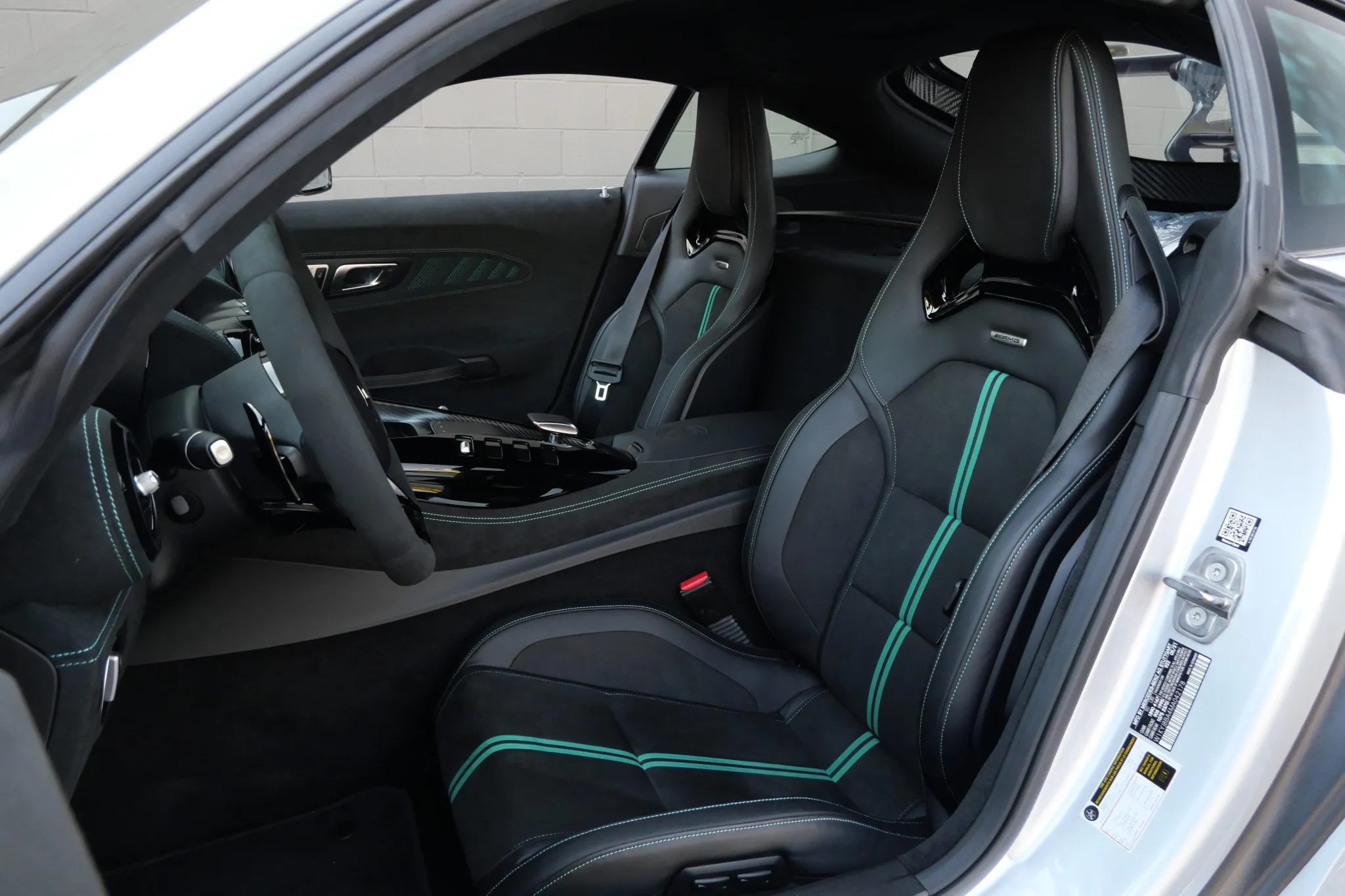
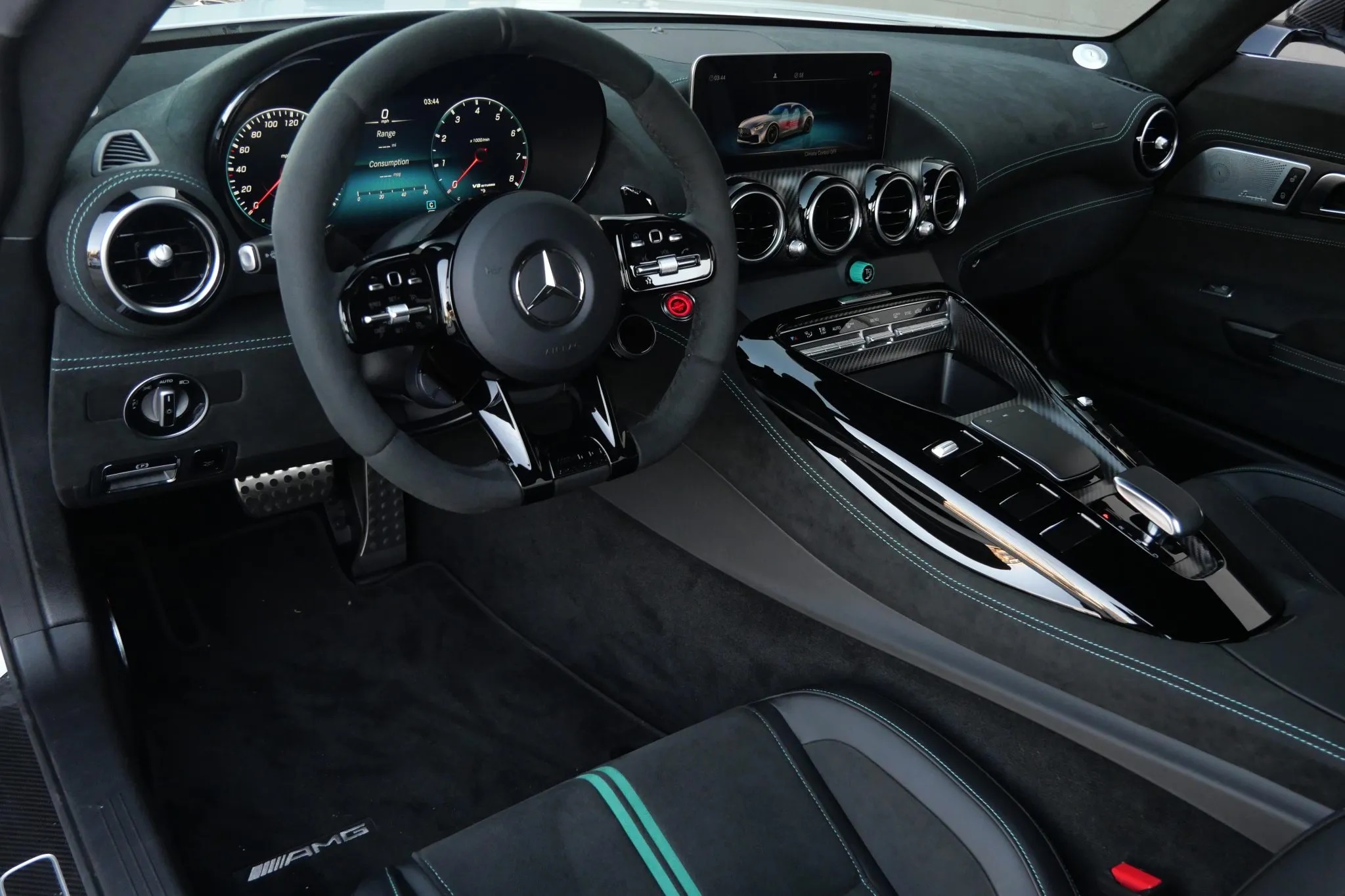
But today, you now have the chance to acquire this top-tier and extremely exclusive supercar courtesy of Bring A Trailer. This particular 2021 P One Edition stands out with its exclusive Cirrus Silver and Obsidian Black color scheme, drawing inspiration from the Mercedes-AMG Motorsport F1 W10 Formula 1 race car.
The hand-painted progression of the famed three-pointed star logo from the doors to the rear of the vehicle adds a distinctive touch. Inside and out, Turquoise Green accents pay tribute to the enduring partnership between Mercedes-Benz and primary sponsor Petronas.
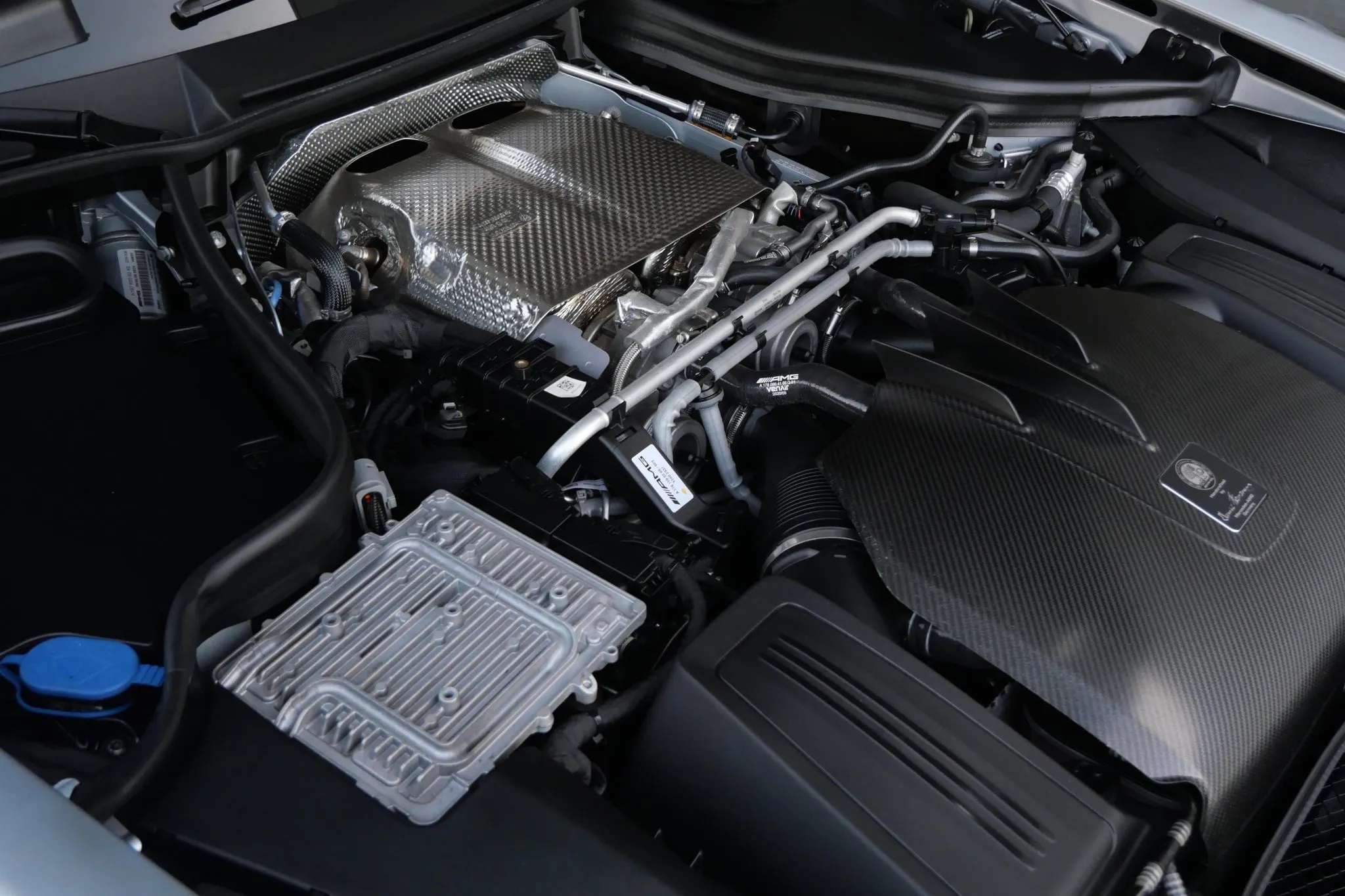
The P One Edition benefits from years of Mercedes-Benz AMG GT and F1 racing technology, pushing driving dynamics to their utmost extreme. This is exemplified by its formidable M178 twin-turbocharged 4.0L V-8 engine, exclusively developed for the GT Black Series, delivering a thunderous 720 HP and 590 lb-ft of torque through an AMG Speedshift dual-clutch automatic transmission to an AMG limited-slip differential via a carbon fiber torque tube.
Equipped with 19″ and 20″ forged wheels, carbon-ceramic brakes, adaptive sport suspension, carbon-fiber bodywork and trim, LED lights, front and rear cameras, heated AMG performance seats, and a Burmester surround-sound system, this AMG GT Black Series AMG ONE Edition boasts only 65 miles on the odometer, making it an effectively ‘as new’ example all throughout.
Since leaving the UK two years ago, I’ve traveled the world as a digital nomad. I use house sitting to keep my accommodation costs down and enhance my overall experience. I’ve found it’s a great way to immerse in a culture and really get to know a place and its people.
I currently have over thirty 5-star reviews for house sitting around the world and I want to pass on all my knowledge and experience. So, if you’re asking yourself ‘How do I become a house sitter in Vietnam?’, all the information you need is right here.
What is a House Sitter?
Essentially, a house sitter is someone who takes care of another person’s home for a set period. Usually, while the host family is away on vacation. It’s a mutually beneficial arrangement that ensures the property remains safe and secure, and the sitter receives free accommodation in a local, homely setting.
I started building my house sitting profile over 5 years ago and now have dozens of countries and cities under my belt. I find that the experience feels more like living somewhere as opposed to simply passing through, which I love. I’ve met some amazing people along the way and have open invites for return visits to many of my previous stays.
Pets are often included, but not always. This adds another fun dynamic to a house sit for sure. Tasks like watering plants, cutting the grass, collecting mail, and keeping up the trash schedule are usually part of the deal. All of this information is presented upfront before any application is made, so you always know what you’re heading into and what’s expected of you during your stay.
Requirements to Become a House Sitter in Vietnam
If you’re wondering how to get into house sitting in Vietnam, there are a couple of basic requirements to consider first. There’s a level of commitment and responsibility that comes with every sit. So, before we move on to the how and the where, consider these factors first.
Profile: A detailed and verified profile via a reputable house sitting website is one of the most important requirements. I’ll be discussing this in a lot more detail a little further on. But, showcasing yourself honestly and professionally as a potential house sitter is a must.
Visa: Every country has different visa restrictions depending on your nationality and citizenship – Vietnam is no different. Ensure that visa time constraints won’t hinder you before applying for a house sit. I use ivisa.com to get all the information I need of this nature.
Research: Vietnam is a vast country with tropical weather patterns and very defined wet and dry seasons. Before embarking on a house sitting assignment, research the location of the house sit and the probable weather at that time of year. It’s quite difficult to up and leave a house sit if you get there and find it’s not for you. Don’t be afraid to ask questions of your host before committing.
Be Responsible: There’s a high level of responsibility required with every sit. Although free accommodation is a huge attraction, keep in mind it’s not a free holiday. Daily and weekly tasks often require close adherence. Even more so when pets are part of the deal.
How to Become a House Sitter in Vietnam
Although many people I speak to think it’s as simple as sending an email and being accepted. I can tell you for a fact that there’s much more to securing house sitting jobs than that. In the 5 years that I’ve been applying for sits, I’ve seen the competition for postings increase substantially.
So, let’s get down to business. How do you become a house sitter in Vietnam? In the next 5 steps, I’ll outline a straightforward process that anyone with the desire to become a house sitter will be able to follow.
1. Sign Up
There are many great websites available for budding house sitters to explore. I’m going to be diving deeper into a few of my favorites in the next section of this article. Rest assured, there’s a range of excellent platforms solely designed to connect house sitters with hosts.
Trusted Housesitters is my website of choice. It’s, in my opinion, the best option by far, but that also means it is the most expensive. Some sites offer free memberships, shorter trial periods, or fees as low as $29/year, so it doesn’t have to be expensive, especially when you’re getting started.
An important thing to remember is that most hosts will only list their property on one website. Therefore it’s a good idea to have at least two house sitting platforms in your arsenal. This will give you more options and increase the likelihood of securing those dream placements in Vietnam.
2. Build Your Profile
Whichever house sitting sites you decide to go for, you’ll have the option to build a profile. This is your primary introduction to hosts looking for a sitter. Use whatever features are available to showcase yourself in the best possible light. Always be honest about your reasons for wanting to house sit too.
Photos, videos, testimonials, social media links, websites, and character references, are all great examples of things to include in your profile. Many of the websites will have a verification process; ensure you complete all these steps so hosts know for certain you are who you say you are.
After building the profile, don’t stop. Keep things regularly updated by adding photos of the recent places you’ve been, or new information about the duties you may have undertaken. All of this goes a long way to show a potential host that you’re active and committed to the process.
3. Start Local – Build Your Reviews
When I first began house sitting 5 years ago, all I applied for were month-long stays in San Diego. Now, guess where I am still yet to house sit? I had no reviews! Is it any surprise that somebody with a beach house in California didn’t even consider me? So, I regrouped and considered a new approach.
I come from a small city in the UK called Peterborough. Not many have heard of it but it’s my home. I noticed that there were a lot of house sits being posted with very few applications close to where I lived, so I started applying. My first sit was 5 doors away from my best friends, so I got to hang out with them whilst securing my first 5-star review.
I slowly started applying to sits further away until I landed house sit number 5 – six weeks on a ranch in Tucson, Arizona – bingo! Once you have a verified review from another user on the website, it hugely bolsters your profile’s credibility. So, consider looking for short and close-to-home stays to kick-start your profile.
4. Be Outstanding
House sitting is review-orientated and you’ll only be as good as your previous review. If the hosts aren’t happy with the job you did, they have the option to leave you a bad review. So, consider that every posting is vital in securing the next one, and see each as a gateway to your next house sitting opportunity.
Embrace any responsibilities and always try your best to over-deliver. After all, a person’s home is their entire world. Whether it’s a small apartment or a 7-bedroom mansion, be worthy of their trust and ensure hosts always come home to the house they know and love.
Being communicative and knowing the boundaries of what the host expects is an important factor. Some may want regular updates (more so with pet sits), and others may just want to check in now and again and ensure everything is going okay. Be sure to discuss this beforehand and follow the host’s wishes.
5. Set Alerts and Be Proactive
As I mentioned previously, the competition for sits can be pretty fierce. Asia is a developing market for house sitting and unlike North America, the UK, and Australia, where literally thousands of sits are available at any time, the numbers in Vietnam are significantly lower.
But don’t be disheartened. As the industry continues to grow, more are coming online all the time. I am living proof that amazing house sitting placements can be secured in Vietnam. Many websites have a function that will alert you when a sit comes up matching your specified criteria.
Don’t hang around! Sites like Trusted Housesitters limit applications to 5 and I’ve seen listings in Vietnam disappear in minutes. When you apply, write a personalized email and address any questions in the listing. Don’t be tempted to send a generic application, I know for a fact that hosts do not appreciate this and are highly unlikely to respond.
How To Find Work as a House Sitter in Vietnam
There are many great ways to find work as a house sitter in Vietnam. Numerous websites exist with the sole purpose of connecting potential house sitters to hosts around the world. Each comes with some different benefits and fees, but I’ve outlined my top 5 below that cover all bases.
1. Trusted Housesitters
I’ve already mentioned Trusted Housesitters a couple of times in this article as it is my go-to website for house sitting. It’s the biggest website of its kind on the market and is very user-friendly. At a glance, as I’m writing this, over 6,000 listings are looking for house sitters globally.
They have three, tiered membership options that come with subsequent additional benefits. The basic package allows unlimited sits and is $129/year, while the Premium Sitter option at $259, features instant alerts and saved searches, cancelation cover, and 2 airport lounge passes.
Use GOATS20 for 20% off!
2. Mind My House
Mind My House is a secondary option that I keep in my back pocket. I like the format and ease of the website, it regularly has high numbers of international listings, and has a low annual fee of just $29. It’s one of the longest-running house sitting websites around and with this comes bags of experience.
Homeowners list their properties for free which is another huge bonus that ensures a regular supply of fresh opportunities. I enjoy their daily updated stats page which tells users exactly where and when hosts are listing, and where sitters are looking. It’s a beneficial tool, especially when starting out as a sitter.
3. Nomador
I’ve been keeping a close eye on Nomador as I like the format and functionality of the site. I imagine they’ve taken a leaf out of Trusted Housesitters’ book and are gearing towards the same level of listings and customer service, albeit with a lower annual cost.
Nomador’s listing numbers are certainly on the rise. With a starting, basic package of $99 and a top-tier membership with several added benefits at just $179, it’s definitely an appealing option. There’s even the possibility to pay quarterly which may be helpful to anyone on a tighter travel budget.
Thousands of international listings, including many all across Asia, are currently awaiting applicants on Nomador.
4. House Carers
Another long-serving, international house sitting site is House Carers. I’ve never personally used this particular site to secure a sit, but have spent time getting to know their offerings and have heard good things from hosts and sitters alike whilst on my travels. Having now written about them several times for previous articles, I feel they’re worthy of consideration as a house sitting website platform.
House Carers regularly has ample listings with homeowners joining for free, which I always think is a great idea. The low annual fee of just $50/year makes it a viable secondary house sitting source for anyone seriously looking to get started as a house sitter in Vietnam.
5. Workaway
I caught the travel bug using Workaway for volunteer placements years ago and it’s remained a valuable house sitting resource for me ever since. Although the platform is more geared towards language exchanges, and the trade of work for accommodation and food, house sitting is also one of the main search criteria.
The web and app-based site is convenient to use and I’ve found that active hosts are always quick to respond. The annual fee is $50 a year, or just $60 if you join as a couple. I’ve had many amazing experiences and met some great friends using Workaway.
How Much Do House Sitters in Vietnam Make?
There isn’t typically a financial exchange between a host and a sitter. The benefit comes from the exchange of free accommodation in a private, home setting.
You can certainly become a freelance house sitter in Vietnam as there are savings to be made by not paying for accommodation and these can be substantial. This can open up doors to places in Vietnam and the rest of the world, that perhaps may not have been previously viable for budgetary reasons.
Pros and Cons of Being a House Sitter in Vietnam
Many factors should be seriously considered before embarking on a house sitting adventure in Vietnam. I’ve outlined the many pros, and fewer cons, I’ve encountered from my own experience below, to give you a better idea of what to expect when house sitting in Vietnam.
Pros of Becoming a House Sitter in Vietnam
Cost of Living: Costs are notably lower than in the UK and many other places I’ve visited. Prices for food, accommodation, and transportation pleasantly surprised me during my visit.
Climate: Vietnam’s consistently warm climate (22-34°C/72-94°F) is a major draw.
Culinary Delights: A mix of affordable and delicious street food alongside high-quality restaurants offers a diverse culinary experience.
Coffee: You’ll find an abundance of cafes, and Vietnamese coffee, known for its strong flavor, is remarkably inexpensive.
Social Scene: Big cities such as Hanoi, Da Nang, and HCMC offer a vibrant social scene, making them fun places for nightlife with great opportunities to balance work and leisure.
Culture: Vietnam boasts many outstanding museums, theaters, memorial parks, and iconic monuments.
Connectivity: High-quality WiFi is accessible almost everywhere, including unexpected spots like smaller cafes and public areas. Affordable SIM cards are also easy to attain.
Ex-pats: The presence of numerous expatriates in Vietnam creates a familiar environment, offering home comforts for those seeking them.
Cons of Becoming a House Sitter in Vietnam
Language Barrier: English isn’t widely spoken in Vietnam, and my limited Vietnamese led to some challenging situations.
Cultural Differences: Traditional customs, communication styles, and social etiquette can differ significantly from Western norms in numerous ways. You’ll quickly learn how to eat with chopsticks!
Adverse Weather: Vietnam has a tropical climate with high temperatures, humidity, and distinct wet and dry seasons, making the weather, particularly during the wet season, a potential drawback.
Chaotic Roads: Roads in bigger cities often lack the organized flow seen in Western countries, and traffic rules are interpreted quite flexibly.
Visas: Understanding the rules and durations of your visa is crucial, as citizens from different countries are entitled to varying lengths of stay in Vietnam.
Pollution: Air pollution as a result of vehicle emissions and industrial activities can be a concern in built-up areas.
How to Become a House Sitter in Vietnam: FAQs
Here are some answers to the most commonly asked questions on how to become a house sitter in Vietnam:
What qualifications do I need to be a house sitter in Vietnam?
You don’t need any qualifications to become a certified house sitter in Vietnam. However, some key personal traits like being responsible, reliable, and trustworthy are important factors. Simply sign up via a reputable house sitting site like Trusted Housesitters and build a profile to showcase your talents as a house sitter.
How do I become a house sitter in Vietnam with no experience?
To become a house sitter in Vietnam without any experience, you must first sign up for a house sitting website. You’ll need to build a descriptive, honest, and verified profile that showcases your best traits and reasons for wanting to house sit in Vietnam.
Taking on an international house sit without experience is not advisable. I recommend beginning the house sitting process closer to home with several shorter sits. This will allow you to obtain some 5-star reviews for your profile, making an international sit more likely, as well as gaining some invaluable experience and insights into the process.
Are house sitters in Vietnam in demand?
Yes, there is a demand for house sitters in Vietnam and listings come online regularly. However, it should be noted that the Asian market for house sitting is still developing and significantly fewer listings appear than in places like the US or the UK.
Is being a house sitter in Vietnam hard?
Each house sit comes with a different set of delights and challenges. Factors like the weather during the rainy season can be a negative, as well as certain cultural differences that make normal daily life a challenge. Location can be key in such a vast country like Vietnam.
I believe that any negatives are outweighed by a whole host of positives. Amazing food, friendly locals, beautiful beaches and countryside, and some incredible cities make Vietnam one of my favorite house sitting locations to date.
How much do beginner house sitters in Vietnam make?
For anyone wanting to get started as a house sitter in Vietnam, you should consider the fact that there’s rarely an exchange of money for house sitting. The benefit comes from the bonus of free accommodation in a homely setting in incredible destinations such as Vietnam.
How does Trusted Housesitters work?
Trusted Housesitters is a web and app-based platform for house sitting. It’s the biggest of its kind on the market with thousands of listings regularly seeking applicants. A variety of paid membership options facilitate house sitters and hosts with the entire process and ensure a smooth, safe, and successful exchange for everyone involved.
In Conclusion
House sitting was a real game-changer for me. It’s opened up so many doors to countries I never thought I’d get to visit. Without accommodation to pay for, the possibilities are endless.
Vietnam has been one of my favorite countries to house sit in. I enjoyed the mix of the enthralling madness of cities, the tranquil beaches, and the stunning countryside. As a destination, it ticked all the boxes for me and I can’t wait to go back.
I recommend house sitting to everyone I meet. I hope this article helps get you on the road to some amazing house sits in Vietnam and beyond.
A replacement is coming for the Mazda 6 and it’ll pack electric power – but it will reportedly be developed in China using a Chinese platform.
Autohome reports Mazda has trademarked the EZ-6 name in China, likely for a vehicle teased by the Changan Mazda joint venture last year.
It could be revealed at this year’s Beijing motor show in April.
Additionally, the company has trademarked the EZ-60 nameplate, potentially for an SUV.
According to a presentation slide shared by the Chinese publication, the first of the two models, codenamed J90A, will launch in 2024, with the second – codenamed J90K – to launch in 2025.
Both will offer a choice of electric and range-extender powertrains.
Additionally, Changan Mazda will introduce two further products in 2026 which it’s currently referring to only as NEV SUV and NEV CAR.
In a presentation to media, Changan Mazda said it’s looking to actively promote the export of electrified models produced in China while also researching overseas cooperation opportunities with other carmakers.
The joint venture is aiming to produce 550,000 electric vehicles (EVs) in China.
Deepal SL03 and S7
Changan Mazda will reportedly use Changan’s EPA1 platform, which supports hybrid and electric powertrains, instead of Mazda’s upcoming SkyActiv Scalable EV Architecture or its SkyActiv Multi-Solution Scalable Architecture.
This Changan platform is currently used on the SL03 liftback and S7 SUV from its fledgling Deepal brand, which confirmed earlier this year it would produce vehicles in right-hand drive for markets such as Australia, New Zealand, South Africa and the UK.
The Deepal brand is expected to launch its global push with the body-on-frame G318 off-roader, and it’s unclear if the less rugged SL03 and S7 will also be offered outside of China.
Current Mazda 6
The EZ-6 would give Changan Mazda replacement for the locally built 6. Also produced in Japan and Vietnam, the Mazda 6 is exported to a dwindling number of markets – Australia being one of them – and was recently axed in Japan.
While there have been rumours of a new-generation model on the rear/all-wheel drive Large Architecture underpinning the Mazda CX-60, CX-70, CX-80 and CX-90, such a vehicle has yet to eventuate.
That has left the current model to soldier on for almost 12 years, though it has received updates during this time.
Australia’s favourite large SUV isn’t getting a hybrid option soon, despite it being offered overseas.
The all-new 2024 Toyota LandCruiser Prado is due Down Under imminently, with local versions to be exclusively powered by an updated version of the outgoing model’s 2.8-litre turbo-diesel augmented by 48V mild-hybrid technology.
In markets like North America, where it’s known simply as the Land Cruiser, the Prado is available with a new 2.4-litre turbocharged petrol-electric hybrid drivetrain – but don’t expect to see it in local showrooms anytime soon, says Toyota Australia’s vice president for sales and marketing, Sean Hanley.
Overseas model shown
“Not right now,” Mr Hanley told CarExpert at the launch of the new C-HR crossover.
“Hybrid for us is mainstream, so we will certainly examine the hybrid drivetrain being used in the US to see whether it’s suitable.”
“We don’t have a confirmed position on it now, though,” Mr Hanley added.
That’s despite hybrids accounting for a huge chunk of sales in Toyota’s portfolio, with Mr Hanley quoting 33.5 per cent of the brand’s total Australian sales in 2023 were hybrids.
Their share has grown to 40.7 per cent during the first two months of 2024.
The new Prado is due here mid-2024, powered exclusively by a 2.8-litre turbo-diesel four-cylinder engine with a 48V mild-hybrid system, producing 150kW of power and 500Nm of torque – identical outputs to the outgoing Prado, and the same powertrain that will be launched in the HiLux ute imminently.
This powertrain is mated to a new eight-speed automatic transmission, with drive sent through a full-time four-wheel drive system.
In other markets like North America, however, the new-generation SUV will be offered with an available ‘i-Force Max’ 2.4-litre turbocharged four-cylinder petrol-electric hybrid with total outputs of 243kW and 630Nm.
In the US, the manufacturer-estimated combined cycle fuel economy figure for this powertrain is the equivalent of 8.7L/100km. Official US Environmental Protection Agency (EPA) figures have yet to be announced.
Toyota Australia will launch its first new-generation Prado in almost 15 years in mid-2024, and recently confirmed preliminary details of the local range.
There will be five variants from launch, with the GX, GXL, VX and Kakadu nameplates continuing, while the Altitude grade returns for the first time since 2017, slotting between the two existing highest-spec models.
You can read our full breakdown of everything we know so far here.
Find our content helpful? You can support the BFT team by making your gear, apparel, and travel purchases through the affiliate links in this blog post. We get a small commission with no added cost to you. You can also say thanks by leaving a tip in our virtual tip jar. THANK YOU!
Sedona has become a hot spot for outdoor lovers and adventure seekers. The stunning red rock landscape and endless miles of trails make it one of the top destinations in the West for hiking and exploring.
I’ve spent a lot of time in Sedona. As a mountain biker, it’s my favorite place to ride but I’ve also hiked many of the trails. I can confidently say that hiking in Sedona will not disappoint! Almost every trail that you choose will reward you with amazing views, unique rock formations, and a little bit of Sedona magic.
But if you’re looking for the cream of the crop, here I’ve rounded up the best hikes in Sedona that I would be happy to hike again and again.
Download my FREE Outdoor Trip Planning Toolkit
Enter your email to get access to printable PDF packing checklists, itineraries, and more.
EARLIER IS BETTER – Whether you want to beat the crowds or the heat, I highly recommend starting your hikes early.
SUN PROTECTION – The sun in Sedona can be brutal and there is very little shade on the trails. Bring plenty of sun protection and consider wearing a sun hat.
WATER – It’s easy to get dehydrated in the desert. Bring a day pack that can carry at least 2-3 L of water.
USE THE HIKER SHUTTLE – Sedona offers a free hiker’s shuttle that will transport you to trailheads around town. It helps cut down on traffic and is better for the environment.
1. Seven Sacred Pools via Cibola Pass Trail
Trail Basics
Why hike it?: Visit the iconic 7 Sacred Pools
Trail Type:Out-and-back
Distance: 2.8 miles
Elevation Gain: 387 ft
Time needed: 1-2 hours
Difficulty: Easy
Dogs Allowed?: On leash
Map: AllTrails
Parking fee: Red Rock Pass or America the Beautiful Pass
If you’re looking for a great “bang for your buck” hike in Sedona, check out the Seven Sacred Pools via Cibola Pass Trail. It’s a relatively easy hike with less than 400 feet of elevation gain over 3 miles (roundtrip), but the views are incredible and the trail ends at the iconic Seven Sacred Pools.
These small pools were formed over thousands – if not millions – of years of erosion and today they’re often filled with water that reflects the surrounding red rock formations. It’s a great hike to do after a rain because the pools will be filled with water and you might even see them transform into a stunning waterfall!
Most people access Seven Sacred Pools via Soldiers Pass, but a quieter – and more scenic – approach is via Cibola Pass.
If you visit after a rain, you might see the Seven Sacred Pools transform in to a waterfall
2. Bear Mountain
Trail Basics
Why hike it?: Great views and a good workout
Trail Type:Out-and-back
Distance: 4.6 miles
Elevation Gain: 1,988 ft
Time needed: 4-5 hours
Difficulty: Challenging
Dogs Allowed?: On leash
Map: AllTrails
Parking fee: Red Rock Pass or America the Beautiful Pass
Bear Mountain is one of the most iconic – and challenging – hikes in Sedona. The trail is super steep in places and very rocky with tricky footing and a bit of scrambling. But if you’re up for an adventure, Bear Mountain is a must-do.
Aside from a good workout, the views from the top are the reason to add this hike to your Sedona Itinerary. They’re amazing! You’ll be rewarded with panoramic vistas of the Verde Valley, the Mogollon Rim, and even the San Francisco Peaks in the distance.
As I mentioned above, this hike is tough. Be prepared with lots of water (a day pack with a hydration reservoir is a must), plenty of sun protection, and good hiking shoes.
The views from Bear Mountain are some of the best in Sedona
Read More
Gear up for Sedona
3. Devil’s Bridge Via Mescal Trailhead
Trail Basics
Why hike it?: To see a unique natural bridge rock formation
Trail Type:Out-and-back
Distance: 4 miles
Elevation Gain: 531 ft
Time needed: 2-3 hours
Difficulty: Moderate
Dogs Allowed?: On leash
Map: AllTrails
Parking fee: Red Rock Pass or America the Beautiful Pass
Devil’s Bridge is one of the most popular (and famous) hikes in Sedona, but for good reason. The trail culminates at a beautiful sandstone arch, which was created over millennia by the forces of erosion.
Devil’s Bridge overlooks the beautiful Verde Valley with tall red rock bluffs rising from the valley floor. You can even walk out onto the arch (at your own risk) if you’re not scared of heights!
There are several ways you can access the Devil’s Bridge Trail. My favorite is via Mescal Trailhead, but you can also park at Dry Creek Vista Trailhead.
Devil’s Bridge is an iconic sandstone arch that offers sweeping views of Sedona’s verdant valley
4. Cathedral Rock Trail
Trail Basics
Why hike it?: Amazing views out over the Verde Valley
Trail Type:Out-and-back
Distance: 1.2 miles
Elevation Gain: 741 ft
Time needed: 2-3 hours
Difficulty: Moderate
Dogs Allowed?: On leash
Map: AllTrails
Parking fee: Red Rock Pass or America the Beautiful Pass
If you’re looking for the best views out over Sedona, a hike up Cathedral Rock Trail will deliver.
This short hike takes you up the red slickrock terraces of Cathedral Rock, gaining almost 800 feet of elevation in less than a mile. It’s short and steep, but I promise you, the views are worth it!
Since much of the trail is on rock slab, there is a bit of scrambling to get to the top. It’s a great choice for families with kids because they love climbing around on the rocks.
5. West Fork Trail
Trail Basics
Why hike it?: See a different side of Sedona. This trail offers shade and water
Trail Type:Out-and-back
Distance: 6.5 miles
Elevation Gain: 564 ft
Time needed: 3-4 hours
Difficulty: Moderate
Dogs Allowed?: On leash
Map: AllTrails
Parking fee: $12 day-use fee or Grand Annual Red Rock Pass
If you want to see a different side of Sedona, head up Oak Creek Canyon to the West Fork Trail.
This trail follows the West Fork of Oak Creek with sheer cliffs on either side, shallow river crossings, trees that provide shade, and great views the farther you hike.
It is a very popular hike though, especially on hot days, so try to get an early start. I recommend wearing hiking shoes that you don’t mind getting wet. A BFT Team favorite shoe for river hikes are Astral water shoes.
6. Wilson Mountain Trail
Trail Basics
Why hike it?: Full-day hike, great views, beat the crowds
Trail Type:Out-and-back
Distance: 8.8 miles
Elevation Gain: 2,549 ft
Time needed: 5-7 hours
Difficulty: Challenging
Dogs Allowed?: On leash
Map: AllTrails
Parking fee: Red Rock Pass or America the Beautiful Pass
If you’re looking for an all-day hike that will take you up above Sedona for amazing views and less trail traffic, then head out to Wilson Mountain Trail.
Starting from Midgley Bridge, this trail steadily climbs up the rocky bluffs above Wilson Creek. It’s a sustained climb for about 4 miles on a narrow, rocky path and then you’re rewarded with incredible views out over Sedona.
Give yourself plenty of time to complete this hike and be sure to pack all your hiking essentials and at least 2-3 liters of water.
Views out over Oak Creek Canyon from the top of Wilson Mountain
7. Boynton Canyon Trail & the Subway Cave
Trail Basics
Why hike it?: See the unique Subway Cave
Trail Type:Out-and-back
Distance: 7.1 miles
Elevation Gain: 1,100 ft
Time needed: 3-4 hours
Difficulty: Moderate
Dogs Allowed?: On leash
Map: AllTrails
Parking fee: Red Rock Pass or America the Beautiful Pass
Boynton Canyon Trail is located in West Sedona and is one of the best hikes in Sedona for a few reasons.
Many people hike this trail to access the Subway Cave, which is a super unique and beautiful rock formation that looks like a subway tunnel. There are also some Sinagua ruins in the area, make it a great hike for lots of interests.
The Boynton Canyon hike itself isn’t too challenging, but if you plan on visiting the Subway Cave, there is a bit of scrambling and exposure, so keep that in mind. It also gets really busy, for obvious reasons.
The trail to the cave isn’t marked, but the turnoff is at about mile 2 on the Boynton Canyon Trail. You’ll see a spur trail on the right.
Visit the Subway Cave on your Boynton Canyon hike – it’s amazing!
Planning a trip to Sedona? Use our Sedona guides to make the most of your visit!
Save this post to Pinterest
What best hikes in Sedona have you done? Which one of theselooks like the most fun? Leave a comment below!
Nissan and Honda on Friday disclosed that they’re considering a “strategic partnership in the fields of vehicle electrification and intelligence.”
As of yet, the companies have only committed to a feasibility study for the idea, but such a partnership would aim to combine strengths and accelerate carbon-neutrality and safety efforts for both companies.
The initial study will include “automotive software platforms, core components related to EVs, and complementary products,” according to a release on what at this point remains a memorandum of understanding.
Honda Saloon Concept – 2024 CES
Nissan Hyper Urban concept
CEO remarks provided in the release took a decidedly tentative note, underscoring that this is certainly not a done deal yet. “We look forward to further discussions and aim to find win-wins for sustainable growth,” said Nissan president Makoto Uchida, while Honda CEO Toshihiro Mibe said that study criteria will be “whether the synergy of the technologies and knowledge that our companies have cultivated will enable us to become industry leaders by creating new value for the automotive industry.”
CEOs of Honda and Nissan study EV partnership – March 2024
Both companies are looking for new strategic partners. Honda last year withdrew from a project that aimed to create a shared platform for millions of affordable EVs with GM across multiple models. “After we did some studies, we decided it would be very difficult to have a viable business,” said Honda CEO Toshihiro Mibe, at CES in January. GM moved on to a strategy that drops the separate small-car platform but resurrects the Chevy Bolt EV on a lower budget. In the meantime, Honda is discontinuing its retro-styled Honda E for Europe and for now offers the China-derived e:Ny1 crossover EV there.
On the software front, Honda has a joint venture with Sony that aims become a “software-oriented mobility tech company.” It’s due to release upcoming EVs, under the Afeela brand, that will share some Honda components but provide a Sony in-car experience.
A next-generation Nissan Leaf is in the works and due within a couple years, and with other potential smaller EVs in development it could be part of Nissan’s contribution. The automaker also plans larger Nissan and Infiniti EVs for assembly in Mississippi starting in 2026. It’s also been looking for EV partnerships, including a reported potential $400 million investment in Fisker for electric pickups that has not yet been confirmed by the company. Nissan’s alliance with Renault and Mitsubishi remains, too.
Nissan Chill-Out concept
On the other hand, the partnership’s mention of “electrification” hints that hybrids are part of this, and Honda’s two-motor hybrid system that can shift to a mpg-boosting parallel mode on the highway may already serve how Nissan aims to evolve its e-Power hybrid tech.
Gen X and Millennials tend to buy more EVs than Baby Boomers, but the older generation is still in control of EV policy, a pair of recent studies show.
Experian’s fourth quarter 2023 Automotive Market Trends report, released Thursday, noted that 9.4% of new vehicles purchased by Gen X in 2023 were electric. Gen X purchased the most new vehicles of any generation over the year, as well as the most EVs in total.
Millennials aren’t far behind by total EV sales tally, and for them EVs are an even higher 10.2% of new vehicles purchased.
Meanwhile, EVs only account for 5.9% of new vehicles purchased by Boomers in 2023, and 6.6% of those purchased by “digitally native” Gen Z, according to the report.
New vehicle registrations by generation (via Experian)
As Experian has pointed out before, sales volumes are growing for all vehicle types, including gasoline cars. But this comparison of Gen X, Millennials, and Baby Boomers, all in the same ballpark when it comes to overall vehicle purchase numbers, highlights the generational differences in EV purchases.
This follows earlier market indications that Millennials were far more interested in EVs than Boomers. Nonprofit Coltura has also found stronger support for EV mandates among younger votes, arguing that these voters are motivated by the “generational urgency” of climate action. Meanwhile, as Pew Research pointed out last year, Boomers still dominate in Congress—and thus have a disproportionate stranglehold on federal policy.
2024 Kia EV6 GT
J.D. Power argued last year that there’s a “missing mass market” for EVs, as so many of them are positioned in the luxury sector, where perhaps more retired Boomers might afford them.
While it’s simply too early to gauge Gen Z and new-vehicle purchases, the Experian report shows that even if more Boomers can afford current EVs, they’re simply not buying them.
So perhaps one way to help further accelerate EV sales is positioning more models in the mainstream of the market, reaching more of the Gen X and Millennial buyers that seem to be most enthusiastic about them.
The Chery Tiggo 7 Pro is coming to Malaysia, as announced by Chery Malaysia in an Instagram post, and registrations of interest have opened for the the C-segment SUV ahead of its debut in Malaysia; click here to sign up.
Most recently sighted on Malaysian roads in January this year, the Tiggo 7 Pro was previewed in Malaysia as early as October 2022, this is set to be the Chinese brand’s entry in a segment where it will compete with the likes of the Proton X70, Honda CR-V and Mazda CX-5.
This will join its stablemates, the Omoda 5 and Tiggo 8 Pro, in also being a locally assembled (CKD) model, built in Kulim, Kedah. Being positioned between the Omoda 5 and the Tiggo 8 Pro, the Tiggo 7 Pro is 113 mm longer and 32 mm wider than the former, and its 4,513 mm overall length is close to that of the Proton X70 at 4,519 mm.
Early details for the Tiggo 7 Pro were announced at an outlook briefing in January, when it was revealed to be specified with a purely internal combustion powertrain. This is a 1.6 litre turbocharged four-cylinder engine producing 197 hp and 290 Nm of torque, transmitted through a seven-speed dual-clutch automatic gearbox.
Also revealed to be on the Tiggo 7 Pro kit list are a ‘540-degree’ camera system, an eight-speaker Sony audio system and a 24.6-inch dual screen. Chery’s C-segment SUV appears to be nearing its Malaysian market debut; click here to register your interest.
The technical storage or access is strictly necessary for the legitimate purpose of enabling the use of a specific service explicitly requested by the subscriber or user, or for the sole purpose of carrying out the transmission of a communication over an electronic communications network.
Preferences
The technical storage or access is necessary for the legitimate purpose of storing preferences that are not requested by the subscriber or user.
Statistics
The technical storage or access that is used exclusively for statistical purposes.The technical storage or access that is used exclusively for anonymous statistical purposes. Without a subpoena, voluntary compliance on the part of your Internet Service Provider, or additional records from a third party, information stored or retrieved for this purpose alone cannot usually be used to identify you.
Marketing
The technical storage or access is required to create user profiles to send advertising, or to track the user on a website or across several websites for similar marketing purposes.