Home Blog Page 879

The Business Of Furniture — Mergers And Acquisitions

0


The furniture and lighting industry has had its fair share of mergers and acquisitions alongside experiencing massive economic shifts to scale up in different markets and gain industry dominance in recent years. LUXUO presents a handful of large furniture conglomerates that have displayed their “power” when plotting a dominant business strategy.

Herman Miller Purchased HAY

Hay + Herman Miller

Hay + Herman Miller collection launched in 2022. Image: Herman Miller.

In 2019, American giant furniture brand Herman Miller gained a significant footing by purchasing Denmark-based furniture brand HAY, accelerating global growth for the latter. This acquisition also expands Herman Miller’s retail and contract furnishing footprint.

Herman Miller acquired an additional 34 percent equity interest in HAY for approximately USD 78 million. In 2018, Herman Miller acquired a 33 percent equity interest in HAY, which means that the furniture giant now owns a majority 67 percent interest in HAY. Rolf and Mette Hay, co-founders and creative directors of HAY, own the remaining 33 percent of the equity in HAY.

HAY’s established footing in Europe and Asia in contract and residential furnishing markets had caught the attention of Herman Miller. The Scandinavian brand, founded in 2002 in Copenhagen, has proven successful as a fast-growing global company offering a vast roster of high-quality, well-designed furniture and accessories. Its international success will be a transformative addition to the Herman Miller Group family of brands. HAY’s owners Rolf and Mette will still bring innovative product direction and a fresh perspective to modern design. They were named “100 Most Creative People” by Fast Company in 2019.

Herman Miller

Herman Miller Eames Lounger is an icon of Mid-Modern Century design. Image: Herman Miller.

HAY has been introduced to the American market since 2018 in physical locations such as Oregon, California and Illinois.

“Scaling HAY is a key component in expanding our footprint within the retail and contract markets while reaching a younger, more urban demographic that we’ve been targeting for expansion. I’m so proud of the design-first approach HAY has brought to an already exciting family of brands, said Andi Owen, President and CEO of Herman Miller.

“We are pleased to continue and expand HAY’s relationship with Herman Miller, a company whose design heritage has inspired both modern living and Mette and me,” said Rolf Hay. Our partnership with Herman Miller has enabled us to make our high-quality products by top designers accessible to even more people around the world.”
www.hermanmiller.com

Herman Miller Is Now MillerKnoll

Knoll Barcelona chairs

“Barcelona” chairs designed by Mies van Der Rohe for Knoll. Image: Heal’s UK.

On 19 July 2021, two giants in the American furniture industry took the world by storm. Herman Miller announced its acquisition of Knoll. The formal acquisition makes the combined company own a roster of 19 leading brands, and its footprint comprises 19 leading brands spanning across 100 countries globally. There will be 64 showrooms globally, more than 50 physical stores and global multi-channel eCommerce capabilities. A day later, Herman Miller announced it would move forward as MillerKnoll. This union means MillerKnoll will have a new operating model to ensure strong brand ownership, transforming the industry and redefining modern design.

“We are excited to introduce MillerKnoll, a collective of dynamic brands coming together to design the world we live in,” said Andi Owen, President and Chief Executive Officer of MillerKnoll. “Our industry, and the world in general, are changing rapidly. Design is the way we imagine and shape a better future. In coming together, we will define and lead this transformation, as we have other transformations in our history.”

Knoll Womb Chairs

“Womb” armchairs designed by Eero Saarinen for Knoll. Image: designwanted.com

Herman Miller owns the Eames design pieces, while Knoll is famous for its metal-wire furniture pieces designed by Marcel Breuer. In 1938, Knoll was founded. On the other hand, Star Furniture Co. was founded in 1905 but was renamed as the Herman Miller branding in 1923.

Both brands are preeminent leaders in modern design. Their merger means they can benefit from profound legacies and a shared commitment to design, innovation, operational excellence, sustainability and social good. The union will catalyse the transformation of the home and office through a united portfolio of complementary brands. In addition, both brands will support each other, grow existing contract and retail channels, and explore new ideas and business innovations to ensure they meet the highest level of manufacturing excellence, customer sales and service, and user experience. Moreover, this new enterprise will have global functional teams in manufacturing, digitalisation, marketing, strategy, finance, human resource, and legal. The merger will drive growth and profitability with strong brand ownership to scale US and international markets.
www.millerknoll.com

Foscarini Acquired Ingo Maurer

Ingo Maurer

The late Ingo Maurer passed on in 2019. Image: Ingo Maurer.

Two renowned lighting companies have acquired each other. In 2022, an Italian lighting company acquired the leading German lighting brand Ingo Maurer, who founded the eponymous brand in 1963. Maurer was regarded as the “poet of light” — he designed fantastical and unconventional lighting products.

Venice-based Foscarini purchased a 90 percent stake in the business, while 10 percent of shares remain with Maurer’s daughter, Sarah Utermöhlen. Maurer passed in 2019, a few months after the acquisition. Foscarini will continue to run Ingo Maurer as a distinct brand to bring the designs to a larger market.

Lucellino table light

“Lucellino” table light designed by Ingo Maurer for Ingo Maurer. Image: Ingo Maurer.

Based on a Dezeen interview, Foscarini founder Carlo Urbinati said, “We will manage the brand Ingo Mauer with full respect to the company’s DNA and its important heritage.”

“We have had the opportunity to guarantee ourselves the honour and burden of playing a part in ensuring that the story of Ingo Maurer continues to be talked about around the world and support its further development on global markets.”

“Lumiere” table lamps designed by Rodolfo Dordoni for Foscarini. Image: Foscarini.

All Ingo Maurer products are still designed and manufactured in Munich, Germany, a legacy since 1970.

Iconic lighting pieces from Ingo Maurer’s vaults include the oversized lightbulb-shaped “Bulb lamp” and the winged “Lucellino table light, ” both in the permanent collection at MoMa museum.

Ingo Maurer will gain access to Foscarini’s wider network of more than 2,500 retailers worldwide, with the aim of growing the brand in markets such as Asia, Italy, and the United States.
www.foscarini.com

Design Holdings’ Trinity Power

Design Holding

Design Holding’s booth at Salone del Mobile 2019 featuring Flos lighting and B&B Italia furniture. Image: Dezeen.

Three big-wig brands in the furniture and lighting industry have come together to form Design Holding. Formed in 2018, the group is comprised of B&B Italia, Flos, and Louis Poulsen. The big firm flexed its might and creativity during the Salone del Mobile 2019, creating the largest booth covering 4,000 sqm. Each brand displayed its new pieces alongside its legacy creations.

Over the past few years, Investindustrial, a private equity business, has been collecting a portfolio of design brands before joining the new Design Holding group. In 2014, it purchased 80 percent of Flos; the following year, it acquired the bulk of B&B Italia. In July 2018, Design Holding purchased Louis Poulsen. Concurrently, in 2016, B&B Italia acquired the kitchen brand Arclinea.

Design Holding

Flos lighting was featured at Design Holding’s Salone del Mobile 2019 booth. Image: Dezeen.

Founded in 1962, Flos offers a considerable portfolio of lighting creations designed by Achille Castiglioni. The lighting brand is renowned for modern pieces created by top-notch designers such as Philippe Starck, Patricia Urquiola, and Michael Anastassiades.

Louis Poulsen’s storied history began in 1874. It offers many iconic and classic lighting pieces, such as the “AJ lamps” designed by Arne Jacobsen, the “Panthella” lamp designed by Verner Panton, and the “PH” series of lamps designed by Poul Henningsen.

B&B Italia is no stranger to the furniture industry. B&B Italia was founded in Novedrate in 1966 by Piero Ambrogio Busnelli, the late father of Giorgio Busnelli, who is still involved in the business. The brand owns a raft of iconic designs, such as the “Up” chair designed by Gaetano Pesce and the iconic “Camaleonda” and “Le Bambole” sofas designed by renowned architect Mario Bellini.
www.designholding.com

Menu and By Lassen Is Now Audo Copenhagen

Audo Copenhagen

Audo Copenhagen’s showroom. Image: Audo Copenhagen.

The Danish furniture companies Menu and By Lassen have joined forces to create Audo Copenhagen. This new design company will house all its furnishings, lighting, and home accents in one location. Design icons from both brands’ past catalogues will be showcased here, including historical designs by Danish modernist architects Vilhelm Lauritzen and Mogens Lassen, as well as more recent partnerships with designers like Norm Architects, interior designer Colin King, and architect Danielle Siggerud.

The new brand was unveiled on 1 June 2023. It is named after Menu’s showroom, The Audo in Copenhagen, which will be rebranded as Audo House and function as Audo Copenhagen’s headquarters.

Design icons from both brands’ past catalogues will be showcased through the new brand, including historical designs by Danish modernist architects Vilhelm Lauritzen and Mogens Lassen, as well as more recent partnerships with designers like Norm Architects, interior designer Colin King and architect Danielle Siggerud.

Audo Copenhagen

Mogens Lassen’s “Saxe” lounge chair. Image: Audo Copenhagen.

In a Dezeen interview, Joachim Kornbek-Engell Hansen, design and brand director at Audo Copenhagen, said, “Menu and its multi-purpose property in Copenhagen, aptly named The Audo, have a unique identity that customers worldwide have responded to enthusiastically.”

“By Lassen is also strongly established in Scandinavia and the global design scene. Menu and By Lassen’s product portfolios and strengths combine to create an obvious global leader in high-end interior design.”

“Audo House reflects Audo Copenhagen’s collaborative spirit,” quipped Kornbek-Engell Hansen.

Hansen also explained, “Redefining how we use design, space and, ultimately, how we connect to one another, it’s a creative destination for powerful ideas, beautiful design and inspiration. Our quest to create a sense of community awards a higher value to the objects and spaces we create.”

Before this acquisition, in May 2022, Design Holding took a majority stake in Denmark-based Designers Company, which owns the brand “Menu”.
https://audocph.com/

Fritz Hansen Gets Mightier

Skagerak

“Between The Lines” deck chair. Image: Skagerak.

Fritz Hansen, a well-known Danish furniture manufacturer, has expanded its product line to include outdoor furniture after acquiring Skagerak, another Danish furniture company.

Established in Denmark in 1976, Fritz Hansen bought Skagerak as part of its “ambitious” growth strategy, which intends to “strengthen showrooms and distribution channels across Asia, central Europe and North America”.

The purchase of the business that creates and produces interior and outdoor furniture was not disclosed financially. This acquisition means Fritz Hansen has added outdoor furniture to its furniture, lighting, and accessories lineup with the acquisition of Skagerak.

Skagerak products include the “Lilium” furniture series, which was created in partnership with BIG (Bjarke Ingels Group), a Danish architecture firm. The furniture is intended for use both indoors and outdoors.

Skagerak

“Lilian” series of outdoor furniture designed by Danish architecture firm BIG. Image: Skagerak.

Fritz Hansen CEO Josef Kaiser opined, “Skagerak and Fritz Hansen are a natural fit. Both are rooted in Nordic design traditions and responsible manufacturing and are synonymous with furniture and interior design of the highest quality. With the acquisition of Skagerak, we can now offer our customers, private and professional, a larger product offering whilst strengthening our business in our home market and internationally.”

Skagerak’s CEO Jesper Panduro also said the acquisition gives Skagerak a “perfect home”.

“Skagerak stands for longevity and responsibility with design and aesthetics, ensuring the products we make will last for generations,” Panduro said.
www.frizthansen.com

For more furniture stories, head the link here.


Source link

Porsche Taycan Turbo GT: The Fastest is also Surprisingly Affordable

0


A racing model has always graced every serious Porsche series, whether it’s the 911 or recently the Cayman and Boxster. In the past, something extra could be ordered to crown the RS badge: The Weissach Package. Named after the location of Porsche’s Development Centre, this option always included ingredients for special sportiness. And one had to pay a premium for it, with the Weissach Package adding several tens of thousands to the already expensive RS price.

The Porsche Taycan Turbo GT rewrites the rules. Firstly, it is the first non-RS with an optional Weissach Package. Secondly, it comes at no additional cost. Probably because the list of omitted parts in the E-sports car is particularly long, significantly reducing the practical value of the sedan. But let’s take it step by step.

With 1,108 hp, the new Porsche Taycan Turbo GT not only sets a new benchmark, but it also translates it into lap times. It sets records at Laguna Seca and the Nordschleife of the Nürburgring. In the Eifel region, it even comes within two seconds of the Rimac Nevera, which delivers almost double the power and is a pure prototype. However, like the Croatian car, the Taycan Turbo GT with the Weissach Package is also only a two-seater.

Instead of a rear bench seat, the Weissach Taycan only has a nice carbon storage shelf. Insulation, rear speakers, even the Sport Chrono clock on the dashboard, and the electrically opening charging flap for the CCS plug are omitted. The Weissach sheds over 70 kilograms compared to the Turbo GT, which in turn is 75 kg lighter than the regular Turbo S. In return, it features milled forged wheels, lightweight ceramic brakes with newly golden callipers, and an active suspension system.

The heart of the Porsche Taycan Turbo GT is the new silicon carbide inverter. It can channel currents of 900 amps, enabling an attack power of 1,108 hp and 1,340 Nm. In regular operation, it produces 789 hp and, in overboost mode during launch control, an impressive 1,033 hp. This propels the Porsche Taycan Turbo GT with the Weissach Package to 100 km/h in just 2.2 seconds.

Without the package, it takes 2.3 seconds. The sprint to 200 km/h is even more remarkable, completed in 6.4 seconds. The top speed reaches up to 305 km/h. However, it’s better not to ask about the range in this case.

Like the freshly updated Taycan series models, the Turbo GT gets the over 100 kWh-capacity Performance Plus battery. This top model achieves a range of 555 kilometres and boasts the same rapid charging capability of up to 320 kW at its peak. No series-produced electric car charges faster.

Porsche is also in a hurry with the customer launch. In the next few weeks, the first Turbo GTs should be delivered to customers. Prices in the UK start £186,300. But one thing is for sure with Porsche: even if the Weissach Package comes at no extra cost, the options list is still lengthy.


Source link

Study: EV Owners Pay More Taxes and Fees

0


Study: EV Owners Pay More Taxes and Fees

America pays for road upkeep partly through gas taxes — a situation that made sense in a world where every driver bought gas. As more of us drive without the stuff, it threatens to shift the burden of paying for road maintenance onto a shrinking group of drivers.

Many states are making up the difference through added registration fees for electric vehicles (EVs). A few also add taxes on public EV charging stations.

A new study from Atlas Public Policy found the approach reversed the situation. “EV drivers face an inequity when compared to drivers of gasoline-powered vehicles,” the researchers say.

EV drivers in 35 states plus the District of Columbia “pay more in taxes than drivers of gasoline-powered vehicles,” according to Atlas.

What Gas-Powered Car Drivers Pay

Drivers of gasoline-powered cars pay registration fees for their vehicles and then a tax on every gallon of gasoline they buy. Atlas says those taxes range “from six cents per gallon (Alaska) to 61 cents per gallon (Pennsylvania), with the average tax being 27.1 cents per gallon.”

But taxes aren’t keeping up with the cost of road construction. Cars keep growing more fuel efficient. Roads keep crumbling. And taxes aren’t going up to keep pace.

Related: The Terrible State Of America’s Roads Costs You $1,000 Per Year

What EV Drivers Pay

Some states have enacted additional EV registration fees to help ensure EV drivers pay for road upkeep, with the funds directed toward road maintenance.

“Around 34 states charge battery electric vehicle (BEV) drivers additional registration fees, ranging from $50 (Hawaii and South Dakota) to $225 (Washington) with the average fee costing $132.58,” Atlas says. Twenty-eight charge similar fees for plug-in hybrid vehicles.

At least seven states charge an additional tax on each kilowatt-hour of electricity used at a public charging station. “For example, Utah charges a 12.5 percent tax on public EV charging services. Electrify America stations cost $0.56 per kilowatt-hour in the state making Utah EV drivers pay an additional seven cents per kilowatt hour — the largest in the country,” Atlas researchers say.

Together, these fees create an “EV penalty,” Atlas says, that varies from state to state.

A Few Caveats

A few caveats are crucial when thinking about the results.

Atlas researchers raise concerns about additional taxes on public EV charging, noting that “the taxes end-users pay at public EV charging stations are not transparent.”

Researchers also assumed that an EV driver “is charging only at Electrify America stations because of the charging company’s nationwide network.”

But many EV owners do most of their charging at home, where those taxes don’t apply.

Electrify America is the nation’s second-largest charging network, well behind Tesla’s Supercharger system. The report doesn’t reveal why the researchers chose not to use the most common network in their calculations.

Many electric cars are also considerably heavier than their gas-powered counterparts, forcing new considerations in everything from crash testing to highway guardrails. Vehicle weight might also play into any fair calculation of road use, as heavier cars cause more wear and tear on infrastructure.

The EV Penalty By State

State EV Penalty ($)
Alabama$234.77
Alaska-$61.71
Arizona$23.18
Arkansas$126.29
California$22.29
Colorado$41.72
Connecticut-$78.86
Delaware-$80.57
District of Columbia$101.49
Florida-$9.93
Georgia$325.61
Hawaii-$59.71
Idaho-$15.66
Illinois$5.84
Indiana$181.54
Iowa$151.71
Kansas$57.80
Kentucky$260.23
Louisiana$92.58
Maine-$0.69
Maryland$32.91
Massachusetts$21.94
Michigan$171.74
Minnesota$145.38
Mississippi$222.40
Missouri$73.07
Montana$165.10
Nebraska$77.54
Nevada-$76.11
New Hampshire-$36.00
New Jersey$69.01
New Mexico$84.57
New York-$62.06
North Carolina$185.54
North Dakota-$12.00
Ohio$134.86
Oklahoma$188.72
Oregon-$119.49
Pennsylvania$70.63
Rhode Island-$96.00
South Carolina$79.20
South Dakota$28.06
Tennessee$235.03
Texas$201.71
Utah$368.76
Vermont-$10.97
Virginia-$45.39
Washington$154.71
West Virginia$209.26
Wisconsin$95.14
Wyoming$166.30


Source link

Recall Alert: Porsche 911 – Kelley Blue Book

0


Recall Alert: Porsche 911 – Kelley Blue Book

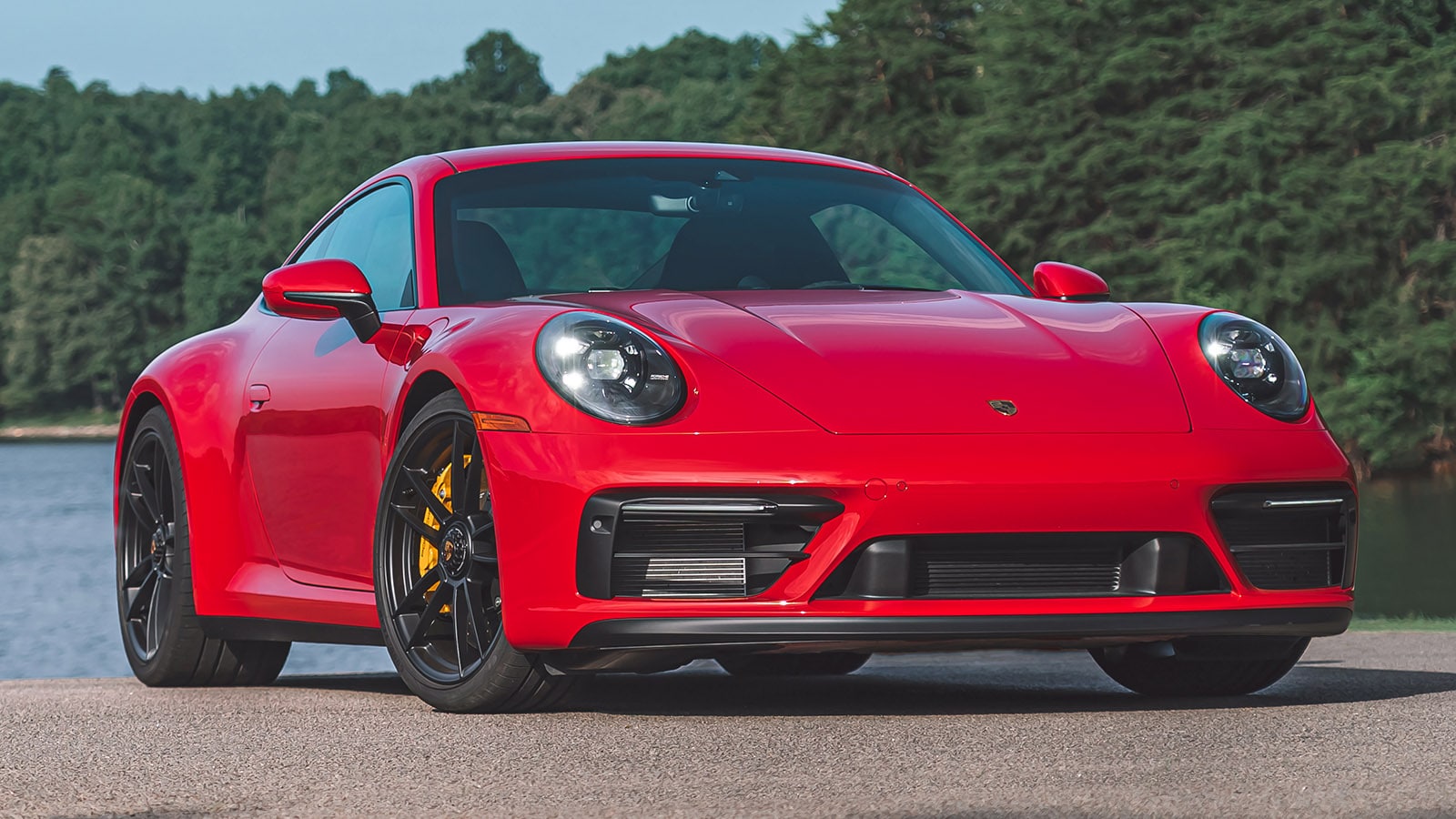
Porsche has recalled about 8,100 911 sports cars from model years 2020 through 2024 to correct an unusual problem. Their windshields and rear windows may rattle loose. Strangely, that can keep the airbags from functioning correctly.

Porsche tells federal safety officials that a contractor may not have cleaned the glass properly before bonding it to the car in all cases. “Under certain conditions, the lightweight glass may become partially detached over the service life of the vehicle.”

Owners might notice wind noise or accumulated moisture inside the glass as the problem develops.

“In an accident situation where the front airbags are deployed, it cannot be guaranteed that the proportion of correct bonding is sufficient to achieve the full protective effect of the airbags,” Porsche says. “This could increase the risk of injuries in a crash.”

Porsche is unaware of any injuries related to the problem – just 15 warranty claims “concerning cloudy surfaces or other optical deficiencies.

Dealers will inspect both windows and replace them if anything seems suspicious.

By law, recall repairs are always free.

Automakers try to reach every owner with recall notices, but some always slip through the cracks. That leaves millions of Americans driving cars with safety defects they could get repaired free of charge. Find out if your vehicle has unaddressed recalls at our recall center.


Source link

Road legal McLaren Senna GTR is ready to hit the streets

0


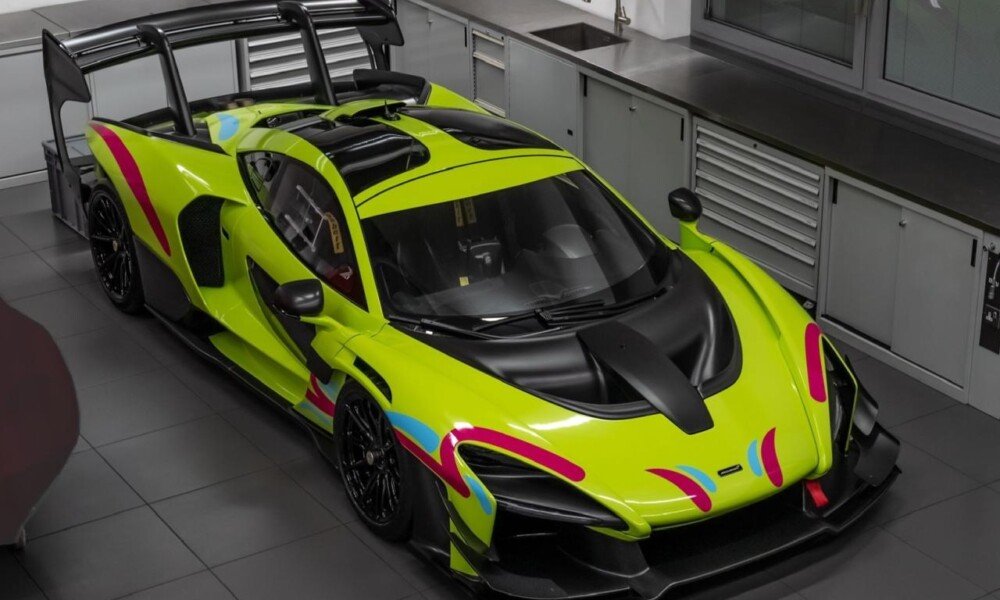
British automotive specialist Lanzante has revealed its recent road conversion project. It’s a McLaren Senna GTR that was recently modified for road use. The car has just been delivered to the owner in the US.

The Senna GTR was revealed back in 2019 as a track version of the mighty McLaren Senna. It gets a bespoke aero package with a massive rear spoiler and a large splitter, generating 1000 kg of downforce at 155 mph, 200 kg more than the road car. Lanzante appears to have raised the ride height and chopped off the front splitter to make it more driveable on the streets.

As is the case with most road conversions, the changes are more than skin-deep. The track-only Senna GTR uses a 4.0-liter twin-turbocharged V8 that puts out 814 hp and 590 lb-ft of torque. This car probably has a beefed-up cooling system to handle stop-go traffic conditions. The suspension may have also been tweaked for a more pliant ride.

McLaren built 75 examples of the Senna GTR. Lanzante has converted several of these for road use already.

Source: Lanzante


Source link

Porsche Taycan Turbo GT Unveiled

0


A Trailblazing Take on GT-grade EV Performance

While it’d be an extremely nuanced claim that the Porsche Taycan has been gracefully received by the community at large—from both a spiritual and commercial standpoint—there’s no doubt that when looked at in isolation, the Porsche Taycan has always been a remarkable product of high-echelon car manufacturing.

Whether you like it or not, EVs are going to be a big part of the equation going forward, though I’ll be the first to insist that it’s not looking like they’ll reach “be-all-end-all” status anytime soon, if ever. Yet, we have to be prepared for them. Afterall, they’re already here and by golly, is Porsche ever pulling out all the stops to show us the way (and that there can indeed be one) when it comes to all-electric sports cars.

They’ve been proving that since day zero of the platform’s existence, and while today’s announcement might be the proverbial cherry-on-top, the rest of the sundae was already tasting mighty fine. The first iteration of the 2019 Porsche Taycan Turbo S remains both relevant and impressive to this day, but Porsche has continued to improve the car through the past 5 years, by increasing performance, adding new features, and introducing additional body-styles like the more rugged and utilitarian Taycan Cross Turismo.

Yet, as comprehensive as the line-up was before today, there was always that niggling feeling that something was missing. While the contemporary Taycan Turbo S can sprint from 0-100 km/h in just 2.4 seconds—already hypercar levels of performance by that measure—we had yet to experience a Porsche Taycan which was conceived in the same mold as the company’s motorsport-inspired GT road cars. Namely, the GT2, GT3, GT4, and all manner of RS variants.

Now, that’s all changed.

Porsche Taycan Turbo GT

Even though the latest Taycan to be unveiled uses nomenclature which was previously exclusive to the range-topping Cayenne SUV—a high-performance car in its own right—the new Porsche Taycan Turbo GT has much more in common with the aforementioned line of GT models. Those cars, as most of us are acutely aware of, are an intricate balance of power and chassis philosophies which ultimately produce a car that is as engaging to drive as it is dominant at the race track.

Corkscrew Cred

It’s true that there is a hierarchy which exists when it comes to lap times and outright performance credentials between each of the series, and you’d expect the only EV out of the lot to play second fiddle to the more conventionally inspirational petrol-powered cars. The Porsche Taycan Turbo GT says “hold my beer” to that, clocking a blistering 1:27.87 at the world-renowned Laguna Seca Raceway.

Officially, this means that Taycan TGT is now the fastest EV production car to lap the quintessential California race track after achieving the same feat at the Nürburgring Nordschleife not long before in pre-production form. In terms of bragging rights, that’s another big “W” versus the Taycan’s fiercest and most direct competitor—the Tesla Model S Plaid—which it has now dethroned at those two tracks, with more to follow I’m sure.

While there’ve been no official attempts at lap times at Laguna Seca (using a factory driver, et al) with other current Porsche GTs such as the GT3 RS and GT4 RS, existing data on YouTube and online forums suggest that the Taycan Turbo GT could possibly even be the fastest Porsche of them all, at this circuit. There’s evidence that the latest 992 GT3 RS is already good for pulling off consistent 1:28s, while the new 718 GT4 RS is just a couple seconds behind. Keep in mind that there are of course many variables at play here, not least of which is the fact that Lars Kern wasn’t behind the wheel of either of those two cars—so take that as you will.

Insane Benchmarks

There’s no reason to believe that the Porsche Taycan Turbo GT won’t come through as the lightest version of the Taycan available today, but there has still got to be a serious powertrain when it comes to lugging around almost 5,000 lbs that quickly around a racetrack. Well, that’s what the Taycan TGT has in spades, with up to 1,019 hp and 988 lb-ft of torque available to slingshot it through the apexes. This is sent through an all-wheel drive system which utilizes a dual motor setup and a 1-speed and 2-speed transmission on the front and rear axle, respectively.

New “Attack” Mode

This has to be one of my favorite new features. If you’ve already watched the video above, you’d probably have noticed paddle “shifters” mounted on the steering wheel. Your eyes did not deceive you, but you may have been wondering what function those would be serving in an EV. Porsche says that the paddles control two things—the left would be to toggle your regenerative braking settings, and the right is for activating this new Attack Mode.

What the latter action will do is trigger up to an additional 120 kW of power for 10 seconds, which is functionally similar to the push-to-pass feature on other Taycan models, though Porsche says that Attack Mode is intended only for use at the racetrack (wink, wink, right?). This unlocks the full 1,019 hp that the car is capable of producing, and is also a requisite action sequence in activating Launch Control, from which 0-60 mph is attainable in as little as 2.1 seconds.

Weissach Package (For Real)

If you needed any more convincing that the Turbo GT is very much the ilk of Porsche’s other GT-series cars, then perhaps the available Weissach Package will finally sway you. It’s available for the very first time on a Porsche Taycan model, and has traditionally been an option reserved for the likes of the GT2 RS, GT3 RS, and more recently, the GT4 RS. I think that speaks volumes both on how Porsche themselves perceive the car, and how (seriously) they want their customers to take it.

Weight reduction remains very much the name of the game when it comes to the WP, with over 70 kg lopped off the “regular” TGT thanks to a generous serving of carbon fiber bits. There’s a more “spartan” philosophy with the WP as well, which deletes the rear seats, the Bose Surround Sound system and even one of the charge port doors—with the remaining one needing to be operated manually instead of electrically—all in the name of saving weight.

Another key feature of the WP is the fixed carbon rear wing which adds up to 220 kg of downforce—the non-WP cars come with an adaptive rear deck spoiler, providing a more streamlined silhouette for customers who prefer its subtlety. Porsche claims that the WP also shaves off a tenth of a second from the 0-60 mph launch and improves top speed to 305 km/h. Perhaps most interesting of all, is the fact that it’s also no cost option for the Porsche Taycan Turbo GT, so you can make your pick without any reservations. One for the track, or one for the street—which one will you choose?

Obligatory Track Goodies

Porsche Ceramic Composite Brakes (PCCB) come standard on all Taycan Turbo GT models and have been optimized for use on the EV platform. There’s also a specially tuned Porsche Active Ride suspension managing the car’s handling, and standard lightweight carbon bucket seats keeping the driver and front passenger tightly secured during those inevitable (and hopefully abundant) high g-force-producing moments. The presence of Race-Tex really hits home the GT-ness of this car, with those who also opt for the Weissach Package being treated to its exclusive logos and embroideries.

Charging & Range Improvements

The new Porsche Taycan Turbo GT is the beneficiary of the model range’s recent improvements in these areas, with a charging output of up to 320 kW now available for the 800-volt system. This means that the TGT can replenish a 10% SoC to 80% in as fast as 22 minutes and has an estimated range of 555 km—quite an improvement over the EPA-rated range of 201 miles (309 km) for the original Turbo S, back in the day.

While I have my doubts that anyone in the market for a Turbo GT will be overly concerned with range, these details could still end up being significant in the context of driving one at the racetrack, where charging speeds and battery range will play a key role in determining how much you can enjoy your time there.

Pricing & Availability

Both the Taycan Turbo GT and Taycan Turbo GT w/ Weissach Package start at an MSRP of $230,000 USD. They are available exclusively in sedan configuration—no word yet on whether there will be a Sport Turismo variant. First deliveries are expected to arrive state-side by the summer of 2024.

Official Press Release

Image Gallery

Video Gallery


Source link

City of Raleigh Taps NVIDIA Metropolis to Improve Traffic

0


City of Raleigh Taps NVIDIA Metropolis to Improve Traffic

You might say that James Alberque has a bird’s-eye view of the road congestion and challenges that come with a booming U.S. city.

Alberque analyzes traffic data for Raleigh, North Carolina, which has seen its population more than double in the past three decades. The city has been working with NVIDIA and its partners to analyze traffic on the roads and intersections to help reduce congestion and enhance pedestrian safety.

“We can now push traffic video into the NVIDIA DeepStream platform and can quantify in real time how many vehicles are entering and exiting intersections and visualize it for our engineers,” said Alberque, a geoinformation systems and emerging technology manager for the city.

Such information can be fed to vendors responsible for keeping traffic lights optimized, so population expansion doesn’t bring roadways to a crawl or increase the number of accidents.

Urban growth has slowed commutes as metropolitan regions across the nation turn to AI for assistance in optimizing traffic flow.

“We got great accuracy level using NVIDIA pre-trained AI computer vision models for traffic cameras right out of the box,” said Alberque. “And our engineers worked with an NVIDIA Metropolis partner, Quantiphi, to refine those models and got them up to an incredible 95% accuracy,” said Alberque.

The Raleigh system uses hundreds of cameras to enhance its model training, and the city has its sights set on everything from road flooding, license plate tracking and parking utilization to bus stop wait times and sanitation management.

Federal Initiatives Support Intersection Safety

Advances from the city of Raleigh and others looking to smooth the flow of traffic come as the U.S. Department of Transportation continues to support AI efforts.

The DOT recently announced winners of the first phase of its Intersection Safety Challenge, which aims to support innovation in intersection safety. Three of the DOT’s winning entrants are harnessing NVIDIA Metropolis for smart intersections.

In this first stage, 15 participants who submitted design concept proposals for intersection safety systems out of 120 submissions were awarded $100,000 each and an invitation to participate further.

The next stage will focus on system assessment and virtual testing, with teams expected to develop, train and improve algorithms used for detection, localization and classification of vehicles and road users in a controlled test intersection.

Enlisting NVIDIA AI for Smart Intersections

Deloitte Consulting is building a foundation for smart intersections, enlisting the NVIDIA Metropolis application framework, developer tools and partner ecosystem.

Derq USA is developing an intersection safety system that relies on NVIDIA Metropolis to help manage the deluge of sensor data for insights.

Metropolis partner, Miovision, which has traffic light safety systems deployed across the U.S., uses the NVIDIA Jetson edge AI platform in its devices for processing video and TensorRT for inference.

“There are so many people moving into our city and surrounding areas, and our number one and number two concerns for citizens are around traffic — this is providing data to move the needle,” said Alberque, regarding Raleigh’s Metropolis and DeepStream development.


Register for GTC24 to discover how AI is transforming smart cities. Some key sessions include: 


Explore more smart traffic solutions powered by NVIDIA Metropolis in this Smart Roadways eBook.


Source link

Eco-System Upgrade: AI Plants a Digital Forest at NVIDIA GTC

0


Eco-System Upgrade: AI Plants a Digital Forest at NVIDIA GTC

The ecosystem around NVIDIA’s technologies has always been verdant — but this is absurd.

After a stunning premiere at the World Economic Forum in Davos, immersive artworks based on Refik Anadol Studio’s Large Nature Model will come to the U.S. for the first time at NVIDIA GTC.

Offering a deep dive into the synergy between AI and the natural world, Anadol’s multisensory work, “Large Nature Model: A Living Archive,” will be situated prominently on the main concourse of the San Jose Convention Center, where the global AI event is taking place, from March 18-21.

Fueled by NVIDIA’s advanced AI technology, including powerful DGX A100 stations and high-performance GPUs, the exhibit offers a captivating journey through our planet’s ecosystems with stunning visuals, sounds and scents.

These scenes are rendered in breathtaking clarity across screens with a total output of 12.5 million pixels, immersing attendees in an unprecedented digital portrayal of Earth’s ecosystems.

Refik Anadol, recognized by The Economist as “the artist of the moment,” has emerged as a key figure in AI art. His work, notable for its use of data and machine learning, places him at the forefront of a generation pushing the boundaries between technology, interdisciplinary research and aesthetics. Anadol’s influence reflects a wider movement in the art world towards embracing digital innovation, setting new precedents in how art is created and experienced.

Exhibition Details

  • Location: Main concourse at the San Jose McEnery Convention Center, ensuring easy access for all GTC attendees.
  • Total experience hours: Available from 5-7 p.m., providing a curated window to engage with the installation fully.
  • Screen dimensions: The installation features two towering screens, each four meters high. The larger, four-by-12-meter screen displays the “Large Nature Model: Living Archive,” showcasing Anadol’s centerpiece. A second, four-by-six-meter screen offers a glimpse into the process of building the Large Nature Model.

A Gateway to Digital Nature

Large Nature Model is a generative AI model focused exclusively on nature.

This installation exemplifies AI’s unique potential to capture nature’s inherent intelligence, aiming to redefine our engagement with and appreciation of Earth’s ecosystems.

Anadol has been working with nature-based datasets throughout his career, and began working with rainforest data years ago.

The Large Nature Model, on which the work being shown at GTC is based, continues to evolve. It represents the work of a team of 29 data scientists, graphic designers and AI specialists from around the world, all working under the umbrella of the Refik Anadol Studio.

The Large Nature Model showcased at GTC is fine-tuned using the Getty Images foundation model built using the NVIDIA Edify architecture. The model is fine-tuned on an extensive dataset of approximately 750,000 images, comprising 274,947 images of flora, 358,713 images of fauna and 130,282 images of fungi — showcasing the rich biodiversity of the Amazonian rainforest.

Insights Into the Making

Alongside the visual feast, a panel discussion featuring Anadol and colleagues from the Refik Anadol Studio will provide insights into their research and design processes.

Moderated by Brian Dowdy, a senior technical marketing engineer at NVIDIA, the discussion will explore the collaborative efforts, technical challenges and creative processes that make such pioneering art possible.

The creation of the Large Nature Model represents six months of rigorous development and collaboration with NVIDIA researchers, underscoring the dedication and interdisciplinary effort required to bring this innovative vision to life.

Register for GTC today to join this immersive journey into the heart of nature, art and AI innovation.


Source link

Mercedes A-Class to live on until 2026, may get EV successor

0


In the face of slowing demand for electric vehicles, Mercedes-Benz plans to keep its current A-Class on sale until 2026 instead of a previous plan to axe the gas-powered compact this year.

The information was first reported last week by The Sun, which cited comments made by Mercedes CEO Ola Källenius. Only the hatchback is expected to remain in production and not the sedan which was discontinued in the U.S. after 2022.

The news comes just weeks after Källenius said slower than expected EV sales has caused Mercedes to delay its plan to exclusively sell EVs in most markets by 2030, and that the company will now continue offering gas-powered cars well into the next decade.

The much higher cost of producing EVs is also another reason Mercedes will keep gas-powered cars on sale longer than previously planned. Källenius said the cost parity between EVs and gas-powered cars is “currently miles away,” The Sun reported.

The Sun also reported that the A-Class will be given a redesign, likely on the new MMA platform that debuts in a redesigned CLA-Class recently spotted testing in prototype form and due on sale next year. The MMA platform is designed for both hybrid and electric powertrains, and it’s possible both options will be offered in any future A-Class.

The A-Class nameplate was set to be scrapped this year, together with the B-Class compact van which doesn’t appear to be getting a stay of execution. Mercedes last year even teased a next-generation compact range which was to consist of new versions of the CLA-Class, CLA-Class Shooting Brake, GLA-Class, and GLB-Class only.

We’ve reached out to Mercedes for comment on the future of the A-Class.


Source link

The New Porsche Studio Comes to Singapore

0


Image credits to Porsche

The month of March sees Porsche Singapore’s activations come to fruition as Porsche Studio Singapore opens its doors. First off, Porsche Singapore unveils a new studio space. As part of the opening, fans can get up close and personal with groundbreaking concepts, visionary designs, and iconic models that will be taking place across Singapore. Next, the Porsche Vision Gran Turismo Vexx goes from virtual to reality at Vortex Jewel Changi Airport. Third, the exclusive Porsche Vision Renndienst “Race Service” concept makes its first appearance in Asia at Singapore’s Porsche Studio and finally, Porsche Studio Singapore is transformed to feature special exhibits from artist Cyril Kongo and Porsche Lifestyle.

Vision Gran Turismo Art Car Takes Centre Stage at Jewel

Image credits to Porsche

March sees the debut of Porsche Vision Gran Turismo Vexx concept car. Crafted in collaboration with renowned multidisciplinary visual artist Vexx, this masterpiece of design and engineering will make its Asian premiere at the stunning Vortex water fountain at Jewel Changi Airport.

Image credits to Porsche

Making the jump from the digital world to reality, The Vision Gran Turismo features future-oriented versions of familiar Porsche design elements as seen on the “Gran Turismo” game series. The concept car exhibits the brand’s signature proportions with an especially sporty height-to-width ratio, an extremely low-set bonnet and pronounced wings. The lights in the particularly purist front and the integrated air intakes create a visual link to the design language of the Taycan – a nod to the car’s purely electric drive. The rear is adorned with a markedly narrow light strip – a further development of the light signature that is familiar from the 911 and Taycan models.

Vision Renndienst Porsche Concept Arrives at Porsche Studio Singapore

Image credits to Porsche

Hailing from Germany, the revolutionary Porsche Vision “Renndienst” or “Race Service” Porsche concept car will make its maiden voyage outside Europe, making its regional debut at the new Porsche Studio Singapore.

Image credits to Porsche

Boasting a futuristic design language and an interior that redefines luxury and sportiness, the Vision “Renndienst” is Porsche’s exploration of a family-friendly shuttle. The driver of the Porsche Vision “Renndienst” sits in a central lounge chair for a sporty driving experience, while also giving the rear passengers a clear view to the front. The all-electric drive technology is also located in the underbody for space efficiency.

Special Exhibits From Artist Cyril Kongo and Porsche Lifestyle

Image credits to Porsche

The Porsche Lifestyle Shop on the ground floor transforms to feature the latest “Turbo” line of apparel, inspired by the first prototype 911 “Turbo #1” gifted by the late Ferry Porsche to his sister, Louise Piëch. Alongside this collection is a motorsport-themed ‘pit lane’ featuring the latest “Fanwear” apparel collection from Porsche Motorsport – complete with full-length wall graphics resembling a tire change in motion when viewed from outside the studio.

Image credits to Porsche

Building on this motorsport theme, a special Porsche 991.2 911 GT3 R sits in the car hoist, a vibrant art car showcase by French-Vietnamese artist Cyril Kongo. The race car competed in the gruelling Porsche Sprint Challenge China and Macau Grand Prix race series before it was subsequently acquired by a private collector in Singapore. Inspired by Kongo’s unique style, the owner handed the car over as a blank canvas – and Kongo’s signature graffiti style ensued.

This list of exhilarating events and activations happening throughout March 2024 are more than just frivolous brand fodder, they are specially curated concepts designed to branch into Singapore’s luxury automotive market, presenting signature artistic flair to meet local and regional consumer tastes.

Visit Porsche Studio Singapore at Guoco Midtown, 130 Beach Road #01-12, Singapore 189774

For more on the latest in automotive news, click here.


Source link