Nomadic Matt has partnered with CardRatings for our coverage of credit card products. Nomadic Matt and CardRatings may receive a commission from card issuers.
The upgraded version of the Chase Sapphire Preferred, the card_name is my one of my favorite premium cards. It offers a lot of fantastic perks for avid travelers.
While The Platinum Card® from American Express gets all the fanfare in terms of luxury rewards cards, I personally prefer the Chase Sapphire Reserve. It comes with better points-earning bonus categories; more practical, everyday perks (which I’ll get into below); and more comprehensive travel insurance.
Today, I want to share a bit more about this card so you can determine whether it’s the right card for you.
What is the Chase Sapphire Reserve?
The card_name (often referred to as CSR) is a travel rewards card issued by Chase. The card comes with a $550 USD annual fee and a host of benefits like lounge access, travel insurance, and an array of statement credits. When used right, these benefits can be worth much more than the annual fee.
One of those benefits is a $300 USD annual travel credit that is very easy to get, effectively reducing the annual fee to a more reasonable $250 USD. You don’t need to do anything extreme to receive this benefit either; the first $300 USD per year that you spend on travel is simply erased from your statement.
Chase also has a very broad definition of what it classifies as travel, making it easy to take advantage of this credit (even parking garages count towards it). According to Chase, they classify travel purchases as including:
“airlines, hotels, motels, timeshares, car rental agencies, cruise lines, travel agencies, discount travel sites, campgrounds and operators of passenger trains, buses, taxis, limousines, ferries, toll bridges and highways, and parking lots and garages.”
So, the first $300 USD of purchases you make in any of these categories will be removed from your statement, and after that, you’ll earn 3x points on these purchases.
And that’s just one benefit of the card. When you sign up for this card, you’ll get:
60,000 points (after spending $4,000 in the first 3 months)
$300 annual travel credit
3x points on travel (earned after earning your $300 annual travel credit)
3x points on dining, including eligible delivery services and takeout
5x points on flights when booked through Chase
10x points on hotels and rental cars when booked through Chase
10x points on Lyft + 2-year Lyft Pink membership
Priority Pass Membership and access to Sapphire Lounges by The Club
$100 credit toward Global Entry or TSA Pre-Check every 4 years
1 year of complimentary Instacart+ membership (includes up to $15 in statement credits each month through July 2024)
Complimentary DashPass membership (includes $5 in DoorDash credits each month)
Travel insurance including emergency medical and dental coverage, emergency evacuation insurance, trip delay coverage, primary car rental insurance, lost luggage reimbursement, and trip cancellation insurance
No foreign transaction fees
Chase Sapphire Reserve Travel Insurance
The card_name also offers the most comprehensive travel insurance out of any credit card and is one of the only ones to include any kind of medical insurance. It’s my top pick as the best credit card for travel insurance.
As a Visa Infinite® card, the Chase Sapphire Reserve’s travel insurance includes the following:
Primary car rental insurance up to $75,000 USD
Travel accident insurance up to $1,000,000 USD
Trip cancelation/interruption coverage up to $10,000 USD per person and $20,000 USD per trip
Trip delay coverage of $500 USD after delays of six hours or more
Lost luggage coverage up to $3,000 USD
$100 per day for up to five days if your baggage is delayed
Emergency medical and dental coverage up to $2,500 USD for treatment (minus a $50 USD deductible)
With this card, you’ll earn Chase Ultimate Rewards® points. You can use those points like you would any other rewards program: to get cash back, book travel directly, or transfer them to travel partners. You can also redeem them for Amazon or Apple purchases, but these are bad redemption values and I would not recommend using points this way.
The easiest option is to redeem your points for travel in the Chase Travel portal, which works like booking through Expedia or any other online travel agency. When you do this, you’re basically using your points as cash, at a value of 1.5 cents per point. So, for example, if you have 50,000 points, they’ll be worth 75,000 points when redeemed through the portal. This is a better value than if you simply redeem your points directly as cash, as you’ll only get a value of 1 cent per point that way.
Using your points in the Chase Travel portal is very straightforward, making it an attractive option for points and miles newbies. If this is the only way that you’ll use your points, then using them is better than letting them sit around!
Just know that there are pros and cons to using the travel portal. Namely, you can usually get more for your points when you transfer them to Chase’s 14 transfer partners (which is what you should be doing with your points).
Taking Advantage of Chase’s Transfer Partners
The ability to transfer to its partners is what makes Chase Ultimate Rewards® points so valuable. You can usually find airline and hotel redemptions where you can get much more than 1.5 cents per point. While the actual value you can get varies greatly based on flight or hotel, a good benchmark is The Points Guy’s monthly valuation chart, which values Chase Ultimate Rewards® points at over 2 cents per point when used as transferable points.
To give a real-life example, the 50,000 points from the example above could be an off-peak, round-trip economy fare from New York to Paris when redeemed through the portal. But if you transfer points to one of Chase’s partner airlines, you can take advantage of flash deals and saver space, potentially finding the same fare for up to 50% less points. Unless it’s a super cheap flight or hotel room (less than $150 USD), I always transfer points to their travel partners, especially when booking business class flights or fancy hotel rooms. You just get more bang for your buck.
Transferring to airline and hotel partners is a bit more work than using the portal, but there are more tools than ever to help you maximize your points. For example, you can use point.me for finding flights with points and Awayz for finding award hotel stays.
Chase’s current transfer partners are:
Airline Transfer Partners:
Aer Lingus, AerClub
Air Canada Aeroplan
British Airways Executive Club
Emirates Skywards®
Flying Blue AIR FRANCE KLM
Iberia Plus
JetBlue TrueBlue
Singapore Airlines KrisFlyer
Southwest Airlines Rapid Rewards®
United MileagePlus®
Virgin Atlantic Flying Club
Hotel Travel Partners:
IHG® Rewards Club
Marriott Bonvoy®
World of Hyatt®
Chase Sapphire Reserve vs Chase Sapphire Preferred
By this point, you might be wondering what makes this card different from its sibling, the Chase Sapphire Preferred. Both cards currently have the same welcome offer: 60,000 points after you spend $4,000 in the first 3 months of account opening. Both also earn 3x points on dining. You also get travel insurance with both cards, though the insurance offered with the Reserve is much more comprehensive.
Given all that, is the Reserve really worth the higher annual fee?
Ultimately, that’s up to you to decide based on your spending, travel habits, and whether you value the Reserve’s extra perks and benefits. But keep in mind that the real difference in cost between these two cards is only $155 USD per year. Sure, that’s considering the $300 USD annual travel credit on the Reserve, but I’m guessing that anyone thinking of getting a travel rewards card spends at least $300 USD on travel per year. And if you do, you’re likely to come out ahead with the Chase Sapphire Reserve due to the ability to earn points faster, use statement credits, and take advantage of luxury perks like airport lounge access.
Here’s a quick cheat sheet of the main differences:
Chase Sapphire Reserve:
Chase Sapphire Preferred
$550 annual fee
$95 annual fee
$300 annual travel credit
$50 annual Ultimate Rewards hotel credit
3x points on travel
2x points on travel
3x points on dining
3x points on dining
10x points on hotels and rental cars and 5x points on flights booked through Chase
5x on all travel booked through Chase
10x points on Lyft and 2-year Lyft Pink membership
5x points on Lyft
Points worth 1.5 points when redeeming through Chase Ultimate Rewards portal
Points worth 1.25 points when redeeming through Chase Ultimate Rewards portal
Global Entry, TSA PreCheck or Nexus credit (up to $100) every four years
N/A
Priority Pass membership and access to Sapphire lounges
N/A
N/A
10% anniversary points boost
One-year Instacart+ membership and $15 in Instacart credits per month
6-month Instacart+ membership and $15 in Instacart credits each quarter
DoorDash DashPass subscription and $5 in DoorDash credits each month
DoorDash DashPass subscription
Trip delay coverage of $500 USD after delays of 6 hours or more
Trip delay coverage of $500 USD after delays of 12 hours or more
Primary car rental insurance, covers up to $75,000
Primary car rental insurance, reimburses up to cash value of the car, with exclusions
Emergency medical and dental coverage up to $2,500 USD for treatment (minus a $50 USD deductible)
N/A
Emergency evacuation insurance up to $100,000 USD
N/A
Pros of the Chase Sapphire Reserve
Great rewards-earning rates
Large welcome offer
$300 USD travel credit
14 fantastic transfer partners
Excellent travel insurance
Statement credits for Global Entry/TSA Precheck (every 4 years)
Airport lounge access through Priority Pass membership and access to Sapphire lounges
This card is best for frequent travelers. If you get this card, you’ll want to be able take advantage of the card’s accelerated earning rates on travel and dining, travel statement credits, and other travel-specific benefits. You’ll get even more out of this card if you value perks like airport lounge access and expediting your airport experience through Global Entry/TSA Precheck, and will transfer your points to one of Chase’s transfer partners.
The card_name is one of the best travel rewards cards out there. It comes with a high welcome offer, lots of perks, and robust points-earning capabilities so that you can quickly stack up valuable Chase Ultimate Rewards points. You get a ton of value with this card. I think it’s worth a spot in the wallet of any frequent traveler.
Book Your Trip: Logistical Tips and Tricks
Book Your Flight Find a cheap flight by using Skyscanner. It’s my favorite search engine because it searches websites and airlines around the globe so you always know no stone is being left unturned.
Book Your Accommodation You can book your hostel with Hostelworld. If you want to stay somewhere other than a hostel, use Booking.com as it consistently returns the cheapest rates for guesthouses and hotels.
Don’t Forget Travel Insurance Travel insurance will protect you against illness, injury, theft, and cancellations. It’s comprehensive protection in case anything goes wrong. I never go on a trip without it as I’ve had to use it many times in the past. My favorite companies that offer the best service and value are:
Want to Travel for Free? Travel credit cards allow you to earn points that can be redeemed for free flights and accommodation — all without any extra spending. Check out my guide to picking the right card and my current favorites to get started and see the latest best deals.
Need Help Finding Activities for Your Trip? Get Your Guide is a huge online marketplace where you can find cool walking tours, fun excursions, skip-the-line tickets, private guides, and more.
Ready to Book Your Trip? Check out my resource page for the best companies to use when you travel. I list all the ones I use when I travel. They are the best in class and you can’t go wrong using them on your trip.
Nomadic Matt has partnered with CardRatings for our coverage of credit card products. Nomadic Matt and CardRatings may receive a commission from card issuers.
The notion of modern femininity fell into two separate camps at the Paris Fashion Week Fall/Winter ’24 showcases. It was divided into two — the “fantasy” and the “reality”. The former indulges the wearer (and the viewer) into a world of hyper-fantasy, where fashion is seen as a form of escapism. The latter is perhaps more wearable, contemporary pieces. One gives the space to dream while the other is set on function. There is also something to be said about a collection when it’s men design for women as opposed to women designing for women. Ultimately they all fall under the bigger picture of “What are brands contributing to the feminist narrative?”
Alexander McQueen
Seán McGirr at Alexander McQueen took on the notion of “revealing the animal within” for the McQueen Fall/Winter ’24 collection. There was indeed an element of what lies beneath the surface, as the collection started off with a distorted drape dress in a black laminated jersey. Knitwear then came into the forefront with look 7, a jumper with a quadruple collar in black hand-knit wool and a skirt in black silk nylon tarpaulin. Then the inclusion of grey shearling and tufted wool on a tulle base and jumper in charcoal and red wool rib knit with patched statue embroidery. The collection referenced the late Alexander McQueen’s “The Birds” Spring ’95 collection. The only setback is that McGirr and McQueen — both share in common — sometimes, perhaps put significant weight onto aesthetics over function as seen on the final dress which was a “car dress in blue steel”. The was a restriction in the lack of movement to the pieces which can be seen in one of two ways. Firstly, these women are warriors and their hard exterior clothing is both used as a form of protection and as walking works of art. However, the model’s hindered movement steers the collection further into the realm of fantasy than wearability.
Balenciaga
Balenciaga saw super-fluid, deconstructed tailoring. Pieces within the collection comprised of one-minute designs using various clothing items thrown together and sewn as one new garment. A standout was the usage of lingerie pieces to construct and form a gown. Elsewhere, three hoodies were combined to make a dress, with the lowermost piece being inverted so that the sleeves formed a mermaid tail which was intended to be a reinterpretation of Cristobal Balenciaga’s “Bubble Dress”. Demna’s reason for this form of experimentation was to question the notion of luxury while finding beauty in scarcity, in a world oversaturated with content. Demna forged the notion of “rarity” by reworking the concept of beauty and looking at how the body interacts with the clothing. While crafted from unorthodox materials, Demna’s awareness of the wearer is ultimately commendable as he puts function ahead of concept and aesthetics, something the designer had balanced within his collections past.
Saint Laurent
Saint Laurent removed the sensationalisation and hypersexuality of the naked female body. Anthony Vaccarello metaphorically (and sometimes literally) made clothes invisible with figure-hugging silk dresses mimicking sheer undergarments. Transparency was front and centre as the distance between the garment and skin was minimised and done provocatively, but not in bad taste. This was the point after all — can the purity of the naked body be provocative? Or is it a celebration of feminine artifice? Frisson aside, tailored pieces also employed the same fluidity — from a crepe georgette suit that appears to liquify on the body to the immaterial levity of a coat made of countless marabou feathers. The collection saw women having agency over their own bodies, resiliently so at a time when women’s rights are being questioned and their voices censored. This collection was anything but censored and it empowered the confidently daring Saint Laurent woman.
LOEWE
LOEWE’s Fall/Winter’24 showcase was on the cusp of conceptual and contemporary. While abstract floral motifs donned printed dressed and trousers; neckties and sculptural short dresses, the collection also highlighted the juxtaposition of the masculine and feminine. Bespoke tailoring was translated on sleek aviator jackets and flowing slacks; straight cut trousers and draped dresses. While the palatte was set against the backdrop of Albert York’s paintings, the collection picked up on surrealism using ostrich as a trompe l’oeil hyper real print while 3D checks and tartans were created to look like they were melting.
Chloe
For German designer Chemena Kamali, her Chloe collection was incredibly personal and based on her own emotional connection to the House. The collection championed the woman’s spirit and it was about embracing natural beauty with a sense of “freedom and undone-ness”. Chiffon draped and flowed beautifully as the collection’s embellishments uplifted the femininity of the showcase. The collection was an evolution of how women in different stages of their lives and how it can be used as a tool for self discovery. The pieces harkened back to the sensuality of natural femininity from the 1970s. “The fluidity, motion, and movement of the Chloé silhouette is all about this freedom,” writes Kamali. The collection was rich in freedom and an instinctive female energy, a prime example of the difference between men and women designing clothes for women in mind.
Dior
Maria Grazia Chiuri has reflected on the transitional era of the late 1960s resulting in an array of practical pieces that still held on to imagination and dynamicsm. The collection used cosmopolitan women as inspiration, opting to highlight independent women who were determined to a name for themselves through their work. The pieces facilitated movement while enhancing the woman’s body without constricting it. While the The Miss Dior logo seen in a palette of blues, reds and browns was a polarising inclusion into the collection, each piece could still be worn interchangeably in everyday life be it at work or leisure. Adjustable scarves, compact, protective outerwear and free flowing silhouettes highlighted an autonomous, versatile femininity.
Hermès
Going back to the Maison’s roots, Hermès’s Fall/Winter ’24 collection took on an equestrian theme meets motocross theme. With female “riders” in itself already a once-controversial nod to the patriarchy, the collection in itself brimmed with pieces that women would wear and could use to elevate their wardrobe. Overcoats and rainwear crafted from resilient leathers, robust twills and supple cashmere, each piece explored the archetypes between the masculine and feminine, with versatility and attention to detail. The collection saw the evolution of the rider then and now, from horseback to machine with jodhpurs reinvented as leather long johns, a saddle pad transformed into a quilted leather biker jacket and a blanket coat that unfurls into a real blanket.
Valentino
Two years ago, Maison Valentino’s creative director Pierpaolo Piccioli released the now famed monochrome “pink-out” collection as a radical gesture to maximise the impact of design by limiting himself to one colour. This season, the House was once again stripped down to a single hue and this time it was the sombre hue of mourning. “Black has always held within itself a multitude of definitions and meanings,” reads the show’s notes. There is a reason why the key looks from the collection were all black and it could perhaps be a reflection of what is happening in the world. Once again, the sense of restraint within the colour palette let the design elements shine including patterns, embroideries, fabrics alongside Valentino’s signature’s like rosettes, ruffles, and lace. Shapes and silhouettes shined in sculptural velvets and crêpe while sheer chiffon veiled the skin. Piccioli didn’t shy away from highlighting the female body, opting to use the colour black not only as a sign of defiance and challenging of sterotypes but as a representation of a woman’s individuality in a world that can seem increasingly uniform.
For more on the latest in runway reviews and luxury fashion, click here
Boeing and Alaska Airlines are being sued for $1 billion in damages by three passengers who were onboard a 737 Max 9 flight that suffered a now-infamous door panel blowout midflight. The suit accuses both parties of negligence.
Why You Should Trade in Your Old Audi A3 for a Used Polestar 2 | WCSYB?
Announced on February 23, the lawsuit says both Boeing and Alaska Airlines were negligent for allegedly ignoring warning signs that could have prevented the January 5 incident, according to NBC News. Given everything we’ve learned about Boeing over the past few years, these passengers may be onto something. Even though just three people are named in the lawsuit it’s more than just them who could benefit. It also seeks damages on behalf of other passengers who may have flown on Boeing 737 Max 9 airplanes, which the Federal Aviation Administration grounded for a period following the incident.
“This experience jeopardized the lives of the 174 passengers and six crew members that were onboard. For those reasons, the lawsuit seeks substantial punitive damages … for what was a preventable incident,” NBC News reports the lawsuit says.
Here’s more about the lawsuit, from CBS News:
A complaint was filed Feb. 20 in Multnomah County, Oregon, on behalf of Kyle Rinker, Amanda Strickland and Kevin Kwok, all of whom were on board Alaska Flight 1282 when an unused exit door detached from the aircraft minutes into a scheduled trip from Portland to Ontario, California, in early January. Multnomah County includes Portland.
The lawsuit seeks both compensatory and punitive damages, to be determined at trial, from Boeing, the corporate giant that manufactured the 737 Max 9 jet flown by Alaska Airlines.
“As a direct result of the frightful, death-threatening failure of the Boeing aircraft, Mr. Kwok, Mr. Rinker, and Ms. Strickland suffered severe mental, emotional, and psychological injuries, including post-traumatic stress, and physical injuries,” the lawsuit says, noting how the sudden pressure change inside the cabin “caused some passengers’ ears to bleed.”
Jonathan W. Johnson, LLC, an aviation law firm based in Atlanta that filed the complaint on behalf of Kwok, Rinker and Strickland, said in a news release that it hopes “to hold Boeing accountable for its negligence which had caused extreme panic, fear, and post-traumatic stress.” It called the blow-out on flight 1282 “ a preventable incident” that not only threatened the lives of passengers and crew on board that specific plane, but others manufactured by Boeing that were found during subsequent investigations to have similar defects.
The lawsuit alleges the incident on Flight 1282 is “just one terrible chapter in the evolving story of Boeing and Alaska Airlines placing profits above safety.”
CBS News points out that even though the plane landed safely back in Portland, Several passengers suffered minor injuries and lost phones and other belongings that were sucked out of the gaping hole in the side of the aircraft. A teenage boy – originally seated with his mother in the row next to the troubled door panel – had his shirt ripped off by the wind. That was then parodied by “SNL” which is a horrible fate to suffer.
737 Max 9s owned by Alaska and United Airlines have been cleared to fly again following the January 5 SNAFU, but both airlines have said they are reconsidering whether to place additional orders with Boeing for more Maxs, including the upcoming Max 10 longboi.
Tackling Mount Kilimanjaro is a dream for many adventurers. Every year, this iconic mountain lures thousands of experienced hikers who embark on a challenging journey to reach its snowy summit. It is one of the Africa Safaris‘s most sought-after adventures!
Having personally climbed the mountain, I have enlisted the help of my community manager to share tips and recommendations on how to save money and increase your chances of reaching the “Roof of Africa.”
I vividly remember the emotion and sense of accomplishment I felt standing on the frigid peak of Kilimanjaro at sunrise. After a grueling week that included a 17-hour hike in a single day, I had finally conquered the highest point on the continent. For a brief moment, I stood as the highest person on the entire African continent, and it was truly magical.
Kilimanjaro holds a special place in the world of travel. It is one of those extraordinary experiences, like a trek to Everest base camp, a visit to Machu Picchu, or a journey on the Camino, that beckons a certain type of traveler. One who craves a challenge, who yearns to push their limits and test their strength.
While the climb up Kilimanjaro has become more accessible to tourists over time, it remains a serious feat. Every year, people get injured – and even lose their lives – on the mountain. In fact, only 45 to 65 percent of hikers who attempt the journey make it to the summit.
But with proper planning and preparation, you can greatly increase your chances of success on this exhilarating adventure. Here is everything you need to know to make the most of your trip:
The Different Routes
There are six main routes to climb Kilimanjaro, each with its own length, level of difficulty, and success rates. The route you choose will depend on your budget, the duration of your trip, and the tour company you book with.
Marangu: Often referred to as “the Coca-Cola route,” this path is named after the huts along the way where hikers can rest and purchase refreshments, including a cold Coca-Cola beverage. Contrary to its name, this route actually has a low success rate as many underestimate the challenge and rush to the summit in just five days, without taking the necessary time to acclimatize.
Machame: This is the most popular route, with a success rate of over 60% when completed in seven days. It is nicknamed “the whiskey route,” alluding to the fact that it is a more challenging climb than the Marangu route.
Rongai: This is the easiest route on Kilimanjaro, although it is less scenic and more expensive compared to other routes due to the limited number of budget operators in the area. It is the only route that approaches the mountain from the north and is less crowded.
Shira: This route involves gaining a lot of altitude early on before merging with the Machame route. It is a demanding and costly option, as it starts from the west and eventually joins the main route.
Lemosho: Considered the most picturesque route up the mountain. It offers a diverse range of challenges and is one of the more expensive options.
Umbwe: This route is recommended for experienced climbers seeking an extreme challenge. It involves a lot of scrambling and climbing rather than regular hiking.
No matter which route you choose, it is advisable to opt for a trek of at least seven days. Do not rush this journey. While it may cost more, the slower pace allows your body to acclimatize to the high altitude, which significantly increases your chances of reaching the summit.
Costs
As with any form of travel, there is a range of prices for climbing Kilimanjaro. Some luxury companies even go as far as to carry a full-sized bed up the mountain so that hikers do not have to sleep on the ground. On the other hand, some budget operators may cut corners and not fairly compensate porters in order to keep costs low.
I recommend choosing a mid-range company for a couple of reasons:
First, they typically have more experienced guides who can provide valuable insights during your journey. Additionally, these companies ensure their porters are treated fairly, providing you with peace of mind knowing that your team is taken care of.
Second, you can be confident that the company is not cutting corners. With plenty of competition for Kilimanjaro treks, if a company’s prices seem too good to be true, then they are likely skipping out on something. Since this is a once-in-a-lifetime experience, it is worth investing in a reputable company.
Prices range from USD 1,000 to over USD 5,000 USD per person. I would not recommend booking with a company charging less than USD 2,000 USD (my trip cost around USD 2,200 before tipping – more on that below) as anything below that is likely very bare-bones.
Remember, people are seriously injured – and around 10 lose their lives – on this mountain each year. Do not compromise on safety. Pay for a reputable company with positive reviews. Not only will you enjoy your trip more, but you will also feel more comfortable and secure.
Finding a Kilimanjaro Tour Company
Since it is prohibited to climb Kilimanjaro without porters, you will need to book a Kilimanjaro tour company that provides everything required for the journey, including gear, guides, porters, and necessary documents.
With so many companies to choose from, how do you select the right one for your trip?
Here are some key considerations
1. Read reviews – Once you have narrowed down your options based on your budget, look for a company with positive reviews. While online reviews should be taken with a grain of salt, they can give you an initial impression. Pay attention to details about the gear and food provided.
2. Inquire about the client/porter ratio – How many other hikers will be on your trek? And how many porters/guides/assistant guides will be included? It is best to avoid joining a large group where you may not receive personalized attention if you have questions or concerns.
3. Know the success rate – What is the company’s success rate for the route you are interested in? While they cannot control the weather, they can make every effort to support their clients in reaching the summit.
4. Choose an ethical company – The Kilimanjaro Porters Assistance Project maintains a list of tour operators that meet their guidelines for responsible and ethical travel. Book with one of these companies to ensure that the porters are fairly treated. I was not aware of this list before my trip, and it is one of my biggest regrets.
5. Select a company with accommodation included – Most companies offer a complimentary hotel stay the night before and after your trek, as well as transportation to and from the mountain. Ensure that the company you choose includes this so that you can get a good rest before your hike and enjoy a comfortable bed after your strenuous journey.
Climbing Kilimanjaro Company comes highly recommended. They meet the guidelines of KPAP and have qualified local guides leading their treks. Begin your search with these companies.
Tipping Your Guides and Porters
While gratuity is not mandatory, it is customary to tip your guide and porters at the end of your trek. This additional compensation is greatly appreciated by the hardworking team that helps make your climb possible.
Final Thoughts
Kilimanjaro Hike is an incredible experience that takes careful planning and preparation. By choosing the right route and a responsible Kilimanjaro tour Operator, you can increase your chances of reaching the summit and having a safe, enjoyable trip. And remember, while it may be a challenging endeavor, the sense of accomplishment and the breathtaking views from the summit make it all worth it. Happy climbing!
For more on the latest in travel reads, click here.
McLaren continues to push boundaries with its latest offering, the Artura Spider. With the Artura Spider, the focus is not on what is added, but rather on what is refined and perfected, resulting in a driving experience that exceeds expectations.
Power is from a 3.0L twin-turbo V6 combined with the “Axial Flux E-Motor” performance hybrid system. In the Artura coupe, that is good for a combined 670hp. However, for the Spider, McLaren decided that needed a boost to a nice even 690hp . That added grunt propels the Artura Spider to 60 MPH 0.1 seconds faster than the Coupe, at 3.0 seconds dead-on. It will pass 124 MPH in 8.4 seconds, and will decimate 186 MPH in 21.6 seconds. All of this while headed to its (roof up) top speed of 205 MPH.
However, the biggest point of owning a Spider variant of any supercar is the endless headroom you get. For the Artura Spider, its retractable hardtop, a defining feature of any spider, hasthe ability to deploy in just 11 seconds at speeds of up to 31 mph.
For a more in-depth look at this new open-top hybrid supercar from McLaren, watch the video below as Rory Reid from AutoTrader gives us an exclusive first look while give us some interesting bits about the Artura Spider.
We’ll have more details on the McLaren Artura Spider soon, so be sure to subscribe to Supercars.net for more supercar news.
JLR has been spotted testing a prototype for an electric offering to sit in its Range Rover family of luxury SUVs.
JLR is known to be planning the reveal of an electric version of its iconic Range Rover later this year, though that isn’t the vehicle seen here. The electric Range Rover will match the design of its gas-powered sibling, perhaps with a few tweaks up front to improve aerodynamic efficiency.
The vehicle seen here is much lower and sleeker than the Range Rover, suggesting it might be a successor to the current Range Rover Velar. The Velar has been on sale since the 2018 model year and will be due for replacement soon.
According to our photographer, the prototype looked longer than the current Velar, and was potentially long enough to fit a third row.
2026 Range Rover Velar successor spy shots – Photo credit: Baldauf
JLR last spring said its new EMA (Electrified Modular Architecture) platform being developed for smaller SUVs would spawn its first model in 2025, and that the model would be a member of the Range Rover family. It’s likely that’s the vehicle seen here testing.
The EMA platform will also be used for next-generation versions of the Range Rover Evoque and related Discovery Sport.
JLR also has the MLA platform for larger SUVs. The MLA made its debut in the latest Range Rover and also underpins the latest Range Rover Sport.
Given the expected 2025 debut for the new SUV, an arrival in the U.S. as a 2026 model is likely. Stay tuned.
The Predator 3500 Inverter Generator is quiet, but just how quiet is it and are they worth it?
We have been using the Harbor Freight Predator 3500 Generator for 2 weeks straight now while Dispersed Camping in Western Montana and have really put it to the test, so lets dive in.
The first thing I am going to tackle is the price. If you have looked in to Inverter Generators at all, you know the prices are all over the map. The first one I looked at buying was the Honda and it was over $2,300. Having used plenty of Honda products in the fire service, I know their small engines are damn near bullet proof.
Watch our YouTube Predator 3500 Review
Brinkley RV has a brand new business model, Build It Right
2,300 Bucks is a big nut to crack though, so I kept looking. I came across several other brands, and happened to stop in Harbor Freight for some small tools and saw the Predator 3500, and it was listed for $799. After seeing the prices of the other brands, my first thought was nothing this “cheap” is going to be worth it. But still, for One Third of the price, it piqued my interest enough to do some digging.
Quiet RV Generator
After a few days of diligently searching the internet for the good the bad and the ugly on the Predator 3500, I decided it was indeed worth taking a shot on the “cheap” generator. The price has gone up around $150 since we purchased ours a few months ago, but even in the $950 range, I would buy it again.
Unboxing
The only thing that DOESN’T come in the box is a quart of 10/30 Motor Oil that you need to fill before firing it up for the first time. Every other thing you need comes with this little power house. Included in the box is a small tool kit for attaching the battery to use the starter, a funnel to fill your oil, a spark plug wrench, a small set of “jumper cables” to attach the Predator 3500 right to a battery, and a 30amp Twist Lock to RV Plug adaptor.
Who needs a Generator when you have a 12 Volt AC Unit?
Initial Setup
Before its first fire up, you need to fill the oil, which is easy to do through the oil fill access door using the included funnel. The next step is to attach your battery cables to your battery, and you’re ready to go. Total initial setup time was under 5 minutes.
Fuel Up & Fire Up
The instruction manual says to use StaBil fuel stabilizer because the ethanol fuel tears up small carburetors, and the StaBil negate the ethanol’s effects, as well as prevent the fuel from turning to jelly if you let the generator sit stored for months with fuel in the tank.
The Predator 3500 boasts a ridiculously long run time of 11 hours on 2.5 gallons of fuel under a 25% load. That seemed like a number that would be a “lab results only” kind of statistic and I couldn’t wait to prove it wrong. We topped off the onboard gas tank, and got a 2.5 gallon gas can and topped it off as well, so we a spare “full tank” of gas on the ready as I was certain there would be no way it would reach 11 hours.
Predator 3500 Generator
Yesterday at 5:00 pm we fired up our Predator 3500 so we could watch TV in the RV and to charge up our batteries for the over night power draw of the fridge, water pump etc. My Wife and I subsequently fell asleep on the couch and never shut it down for the 10:00 pm quiet hour curfew. We also both managed to sleep the entire night until the sun was starting to come up the next morning, which in itself is unheard of.
Do you Really Need To Use RV Toilet Paper? Find Out Here
Thankfully we are Dispersed Camping, and there was absolutely no one else in the area we were camping in, so we weren’t “those guys” with their generator running all night (more on that in a minute)
I opened my eyes about 6:15 am, set up the coffee pot, and hit the power button on my morning autopilot routine. When the little LED turned on and I could smell the Folgers starting to permeate air, I remembered we are boondocking, and I shouldn’t have power right now.
The Predator 3500 was STILL RUNNING 13.25 Hours Later!
Renogy 400 Watt RV Solar Kit Review
Predator 3500 Fuel Efficiency
Now I am not sure how, perhaps the Predator 3500 has a 3 gallon tank but is “rated” as a a 2.5 gallon? I don’t know, either way it was still running. The little gas gauge on the top of the tank said it was dead empty, and then I did something I DO NOT recommend.
I opened the gas cap while it was running to see if there was actually any fuel in it. There was, not much at all, barely a coating on the bottom of the tank, but there was indeed still fuel in it.
I grabbed our spare gas can and refilled the tank, and fired it back up. The Predator 3500 Generator enjoyed less than a 5 minute rest before I fired it right back up, and continued to use it for the rest of the day. It diligently performed as advertised for the entire day, powering our Residential RV Fridge, Two Desktop Computers, a Coffee Pot, One of our 2 AC Units, and our living room TV.
We probably had it pretty close to its 25 amp max for most of the day, as it was a “work” day, where my wife and I were both working on articles for the website, YouTube videos, and downing coffee like there’s no tomorrow. The Predator 3500 just kept on going, without issue.
Predator 3500 Generator Weather Cover
More on that in a minute
Like I mentioned earlier, we both fell asleep on the couch and blew the quiet hour shut down. We both really hate to be “those guys” at a campground, and do everything we can to make sure we are using proper camping etiquette so everyone can have an enjoyable experience on their camping trips.
We got lucky and there was no one else here, but what if their was? I know it’s a super quiet generator, but super quiet in the day time, isn’t the same as at midnight when the ambient noise level is at negative 10. I had to know, how much of an A-Hole would I have been if we had neighbors?
So with coffee in hand, I started walk the campground to see how far the sound of the Predator 3500 Generator running would travel. To my amazement, at the very next camp site, in any direction, it was just about undetectable.
When I say undetectable, I don’t mean that it is 100% silent. I mean to say that you CAN hear it, but you CAN’T tell its one campsite away. It sounds as though Someone, has a generator running Somewhere, way over there.
We have a YouTube video you can watch by clicking here, of when we first bought it and tested it, with real world, unedited volume levels to see what I mean for yourself.
Is It Quiet
The back of the generator where the exhaust comes out is louder than being on any of the other 3 sides. However, since we were on the outer edge of the camping area, the exhaust was pointed away from the rest of the campground. So even if someone had pulled in after we fell asleep, it wouldn’t have prevented them from falling asleep either.
Predator 3500 Generator Cons?
We have been using the Predator 3500 Generator pretty rigorously over the last 2 weeks, and there has only been One Drawback. I can’t even really say its a drawback, more of a personal preference.
The generator comes with a Twist Lock to RV adapter, so you can plug your RV into the 30 amp generator outlet. It is a short adapter, only about 3 inches long, twist lock male on one side, RV female on the other. So, It works.
My only hang up, is that RV Plugs are heavy. So the weight of the RV power cord on the adapter just made me a little uncomfortable. Don’t get me wrong, We used it like that for a few days, without issue, and it never failed or pulled loose, or gave me any real reason to give it a negative on this one, I just didn’t like it.
Our Solution
My solution was to buy a dongle, with a power wire between the twist lock and the RV plug end, so that the weight of the RV plug was on the ground, and not hanging on the adapter on the generator.
Click here to get the same dongle we use.
Our Unbiased review of the Predator 3500 Generator is 5 out of 5 stars. We have not been paid for a review or endorsement in any way. I would buy it again, even at the higher price point. And one added benefit, is you can daisy chain two of them together and have 50 amp total service should you need too. Even with buying Two of them, you would still be under the price of a single comparable Honda.
Toyota has recalled about 4,200 Camry and Camry Hybrid sedans from model years 2023 and 2024 because their rear seats may contain improper welds and could break in an accident.
All of the recalled cars use a 60/40-split folding rear seat. The company tells federal car safety officials that a supplier may not have properly attached rear-seat head restraints on the 60% side to the seat frame. That could contribute to neck injuries in an accident.
Toyota has not said whether it knows of any injuries related to the problem. But the company says it was discovered by the seat supplier during an inspection, not as the result of an accident.
Dealers will correct the issue by replacing the entire seat frame on that side. Recall repairs are always free.
Automakers recall many cars to fix safety defects, sometimes more than once. While automakers try to contact every owner to ask them to bring the vehicle in for repair, they rarely reach them all. Millions of vehicles on American roads need free recall repairs. To find out if your car is one of them, check the easy VIN tool at our recall center.
The redesigned 2025 Infiniti QX80 will use a 3.5-liter twin-turbocharged V-6 in place of the outgoing model’s V-8, the automaker confirmed Monday in a press release.
This engine, dubbed VR35DDT, produces 450 hp and 515 lb-ft of torque. Those are increases of 50 hp and 102 lb-ft over the current naturally aspirated 5.6-liter V-8, according to Infiniti. A 9-speed automatic transmission replaces the outgoing model’s 7-speed automatic, featuring a 40% wider gear-ratio range than the existing transmission, Infiniti says.
2025 Infiniti QX80 teaser image
Also included in the redesigned is an air suspension system with adaptive damping, including the ability to lower the vehicle when parked for easier entry and exit, similar to what some other luxury brands already offer.
Infiniti previewed the new QX80’s styling with the QX80 Monograph concept during 2023 Monterey Car Week last summer. Previous teasers indicate the concept’s split headlights and full-width taillights will carry over to the production model. In this latest release, Infiniti also confirmed that the production QX80 will have active grille shutters.
2025 Infiniti QX80 teaser image
Less information is available about the interior. Infiniti confirmed at CES 2024 that a 24-speaker Klipsch audio system will be available. In keeping with current industry trends, dual screens serving as the gauge cluster and infotainment hub are likely as well.
The 2025 Infiniti QX80 makes its public debut March 20. The outgoing QX80 shares a platform with the Nissan Armada (sold as the Patrol in other markets), and that’s likely to be the case for the new version as well. So expect to see a redesigned Armada sometime after the launch of the next-generation QX80.
Virginia has one of the most diverse collections of national park sites of any state in the country. Go for a scenic drive, explore early American history, visit Civil War battlegrounds, or hit the trail for thrilling outdoor recreation. There are countless themes to explore in Virginia’s national park sites.
And then there’s the longest name of any national park sites with 75 characters – but you’ll have to keep reading this travel guide to figure out which one.
Explore this list of national park sites in Virginia, browse the interactive map to find one nearby, and find links to websites where you can learn more about exploring these park sites.
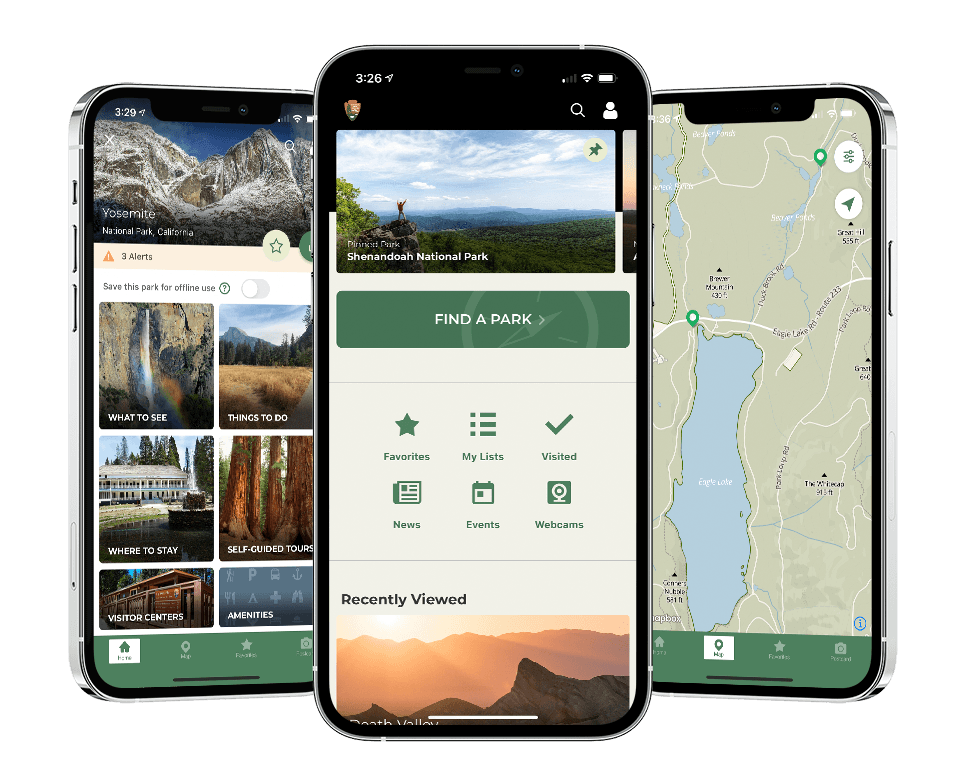
National Park Service App
The official National Park Service app is an all-in-one tool for planning a national park adventure and finding your way around the park. The app has information about every national park site across the country, essentially putting all the online information at your fingertips.
The free app features interactive maps, self-guided tours, amenities like restrooms, and lists of things to do. The powerful app has an offline mode – with a single tap, you can save the park for offline use to access all the information later. You’ll also have access to important information like alerts, contacts, fees, and operating hours.
Download the free app on iOS and Android.
Map of National Park Sites in Virginia
Note | This map only displays the portions of the Appalachian Trail and Potomac Heritage Trail in Virginia.
How to use this map | Click the icon in the top-left corner to open the Map Legend, then click on any of the legend items to display more information. If you have a Google account, click the (very faint) star at the end of the map’s name to save this map to your account, then access the map from your smartphone during your trip.
Photo courtesy of NPS
Harpers Ferry National Historical Park
Harpers Ferry is one of the most recognizable trail towns along the Appalachian Trail. But long before the long-distance hiking trail passed through, the town was known for an attempted slave rebellion.
Harper’s Ferry is a small town at the congruence of the Shenandoah and Potomac Rivers where Virginia, West Virginia, and Maryland meet. Although the park spans all three states, all the things to do are in West Virginia.
Pro Travel Tip | Spring, summer, and autumn are the busiest times to visit Harpers Ferry NHP. Plan to arrive early and to make the most of your time plan to spend the night somewhere nearby.
In 1859, an armed group of men led by John Brown captured the armory in the small town. They intended to give the firearms to local Virginia slaves and help them escape into the North. A detachment of Marines led by Colonel Robert E. Lee captured Brown and summarily hung him.
The Battle of Harpers Ferry in September 1862 was a resounding defeat for the United States. 12,500 Union soldiers surrounded during the battle, the largest Union defeat of the war.
Harpers Ferry National Monument was established in 1944, and redesignated Harpers Ferry National Historical Park in 1963. The 4,000-acre park preserves five Civil War battlefields, the reconstructed armory, and 20 miles of trails. It’s a popular weekend escape for Washington residents and Appalachian Trail thru-hikers.
Spectacular view of the Blue Ridge Mountains and Shenandoah National Park from the Manor House.
Cedar Creek and Belle Grove National Historical Park
In 1732, German immigrant Jost Hite settled on 140,000 acres in the upper Shenandoah Valley. When his son, Isaac, married Nelly Madison, he gave the newlyweds 483 acres. Isaac Hite fought for the Patriots during the American Revolution. After the war, he built the Manor House from 1794 until 1797.
Union General Philip Sheridan briefly occupied the house during the Civil War. On October 19, 1864, Confederate Lieutenant General Jubal Early surprised Union forces marching through the Shenandoah Valley. He took 1,000 prisoners and captured several artillery pieces. But later that afternoon, Sheridan retaliated, freed the prisoners, and recaptured the artillery.
Cedar Creek and Belle Grove National Historical Park was authorized in 2002 to preserve the Civil War battleground. The National Trust for Historic Preservation owns the Manor House.
Pick up a brochure at the national park’s visitor center in nearby Middletown. A 17.5-mile self-guided driving tour includes 9 stops across the battlefield. A series of trails cross the battlefield, including the remnants of trenches built by the U.S. 19th Corps before the battle.
Take a guided tour of the Manor House to learn more about the original owners. The one-hour tour includes historical and architectural details and many rooms of the house. A restored 1918 barn houses a gift shop and additional exhibit space.
Photo courtesy of NPS
Potomac Heritage National Scenic Trail
The concept of the Potomac Heritage National Scenic Trail was established in 1983. It’s one of the three national scenic trails in the National Park System – the others being the Appalachian Trail and Natchez Trace. The trail follows the Potomac River corridor and connects many historical sites.
But it’s not a single trail. The park is more commonly called the Potomac Heritage Trail Network. It’s a confusing mess of completed, planned, wishful thinking, and alternate trails.
Following the Potomac River corridor, the network includes 710 miles of trails between the Allegheny Highlands in southern Pennsylvania and the Virginia coast.
Here are the trails in Virginia:
Potomac Heritage Trail North is a 16-mile trail between Algonkinan Regional Park and Great Falls Park.
Potomac Heritage Trail South is a 10-mile trail between Scott’s Run Nature Preserve and Theodore Roosevelt Island.
Mount Vernon Trail is a 17-mile trail between Theodore Roosevelt Island and Mount Vernon.
Northern Neck Heritage Trail is a 57-mile trail between George Washington Birthplace National Monument and Reedville at the Chesapeake Bay.
Pro Travel Tip | Visit the Chesapeake and Ohio Canal National Historical Park for information about the Potomac Heritage Trail. At this visitor center, you can collect a cancellation stamp and trail maps.
Photo courtesy of NPS
Wolf Trap National Park for the Performing Arts
In 1930, Catherine Filene Shouse began buying land traditionally called Wolf Trap because of a history of native wolves. She intended to use the land as a family retreat from their home in the Georgetown neighborhood of Washington, D.C.
Shouse had a passion for performing arts. Before the Kennedy Center existed, she donated 100 acres of the 168-acre family tract to the National Park Service as an outdoor venue. She funded the first amphitheater, opened in 1969.
In 1970, construction finished on the Filene Center. The venue features over 7,000 seats, with 3,800 under a roof and the rest spread across the lawn. First Lady Pat Nixon attended one of the earliest performances at the Filene Center.
Two 18th-century barns from Upstate New York were restored in 1981 and opened as a 382-seat theater.
In 2002, the National Park Service renamed the park to better reflect its purpose – Wolf Trap National Park for the Performing Arts. Despite the name, it is not one of the 63 national parks in the country.
The National Park Service and the non-profit Wolf Trap Foundation co-operate the park. The NPS maintains the park’s grounds while the foundation operates the performance venues.
Photo courtesy of NPS
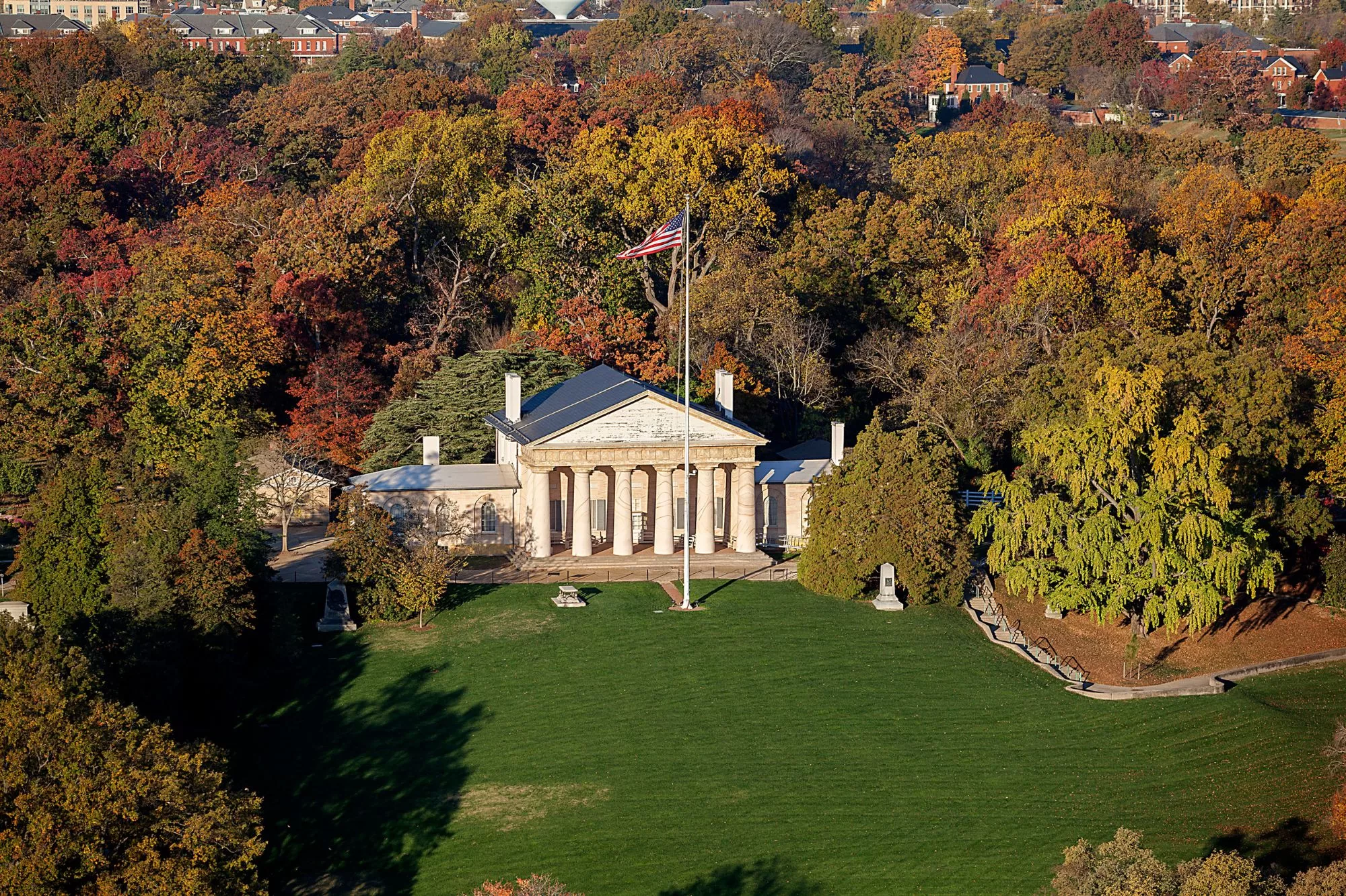
Arlington House, The Robert E. Lee Memorial
From 1803-1811, George Washington Parke Custis built a Greek Revival house at his Arlington Estate as a monument to his stepfather, George Washington. Upon his death, Custis willed the estate to his only daughter and wife of Robert E. Lee, Mary Anna Custis Lee.
Lee took a leave of absence from the army and moved to the estate to oversee restoration. Shortly after the start of the Civil War in 1861, Federal troops occupied the estate. By 1864, Mary Lee was forced to sell the plantation at auction when she could not pay the property’s taxes in person.
Seeking a burial ground for the tremendous number of soldiers killed in action, Quartermaster General Montgomery Meigs suggested using the plantation the government had just purchased at auction.
In May 1864, the first soldiers were buried at Arlington National Cemetery.
Pro Travel Tip | Visiting Arlington House requires free admission to Arlington National Cemetery. Check the cemetery’s website for details on how to get there and admission requirements.
The National Park Service received the house and 28 acres of surrounding gardens in 1933. A joint resolution of Congress in 1955 designated the “Custis-Lee Mansion” as a permanent memorial to Robert E. Lee. Finally, in 1972, Congress established Arlington House, The Robert E. Lee Memorial.
Visitors must enter through Arlington National Cemetery using either the cemetery’s parking garage or Arlington Cemetery Metro station on the Blue Line. It’s a 20-minute walk from the visitor center to Arlington House. Take a self-guided tour of the house restored with period furniture and décor from the late 1800s.
Top | Watch planes land at Gravelly Point. Bottom | Go for a short walk at Great Falls Park to see the rapids along the river.Top | Watch planes land at Gravelly Point. Bottom | Go for a short walk at Great Falls Park to see the rapids along the river.
George Washington Memorial Parkway
George Washington Memorial Parkway was established in 1930, linking several historic sites connected to America’s first president. The original plan was for the parkway to stretch along the Potomac River from Great Falls Park to Mount Vernon.
Construction on Mount Vernon Memorial Highway between Mount Vernon, the family home of George Washington, and Alexandria started in 1928. It was incorporated into the George Washington Memorial Parkway, and the southern section opened in 1932.
The northern section took much longer. By the time planning started, the Capital Beltway was finished – cutting off the intended memorial parkway from Great Falls Park. In 1962, the northern section was finished between Alexandria and the Beltway.
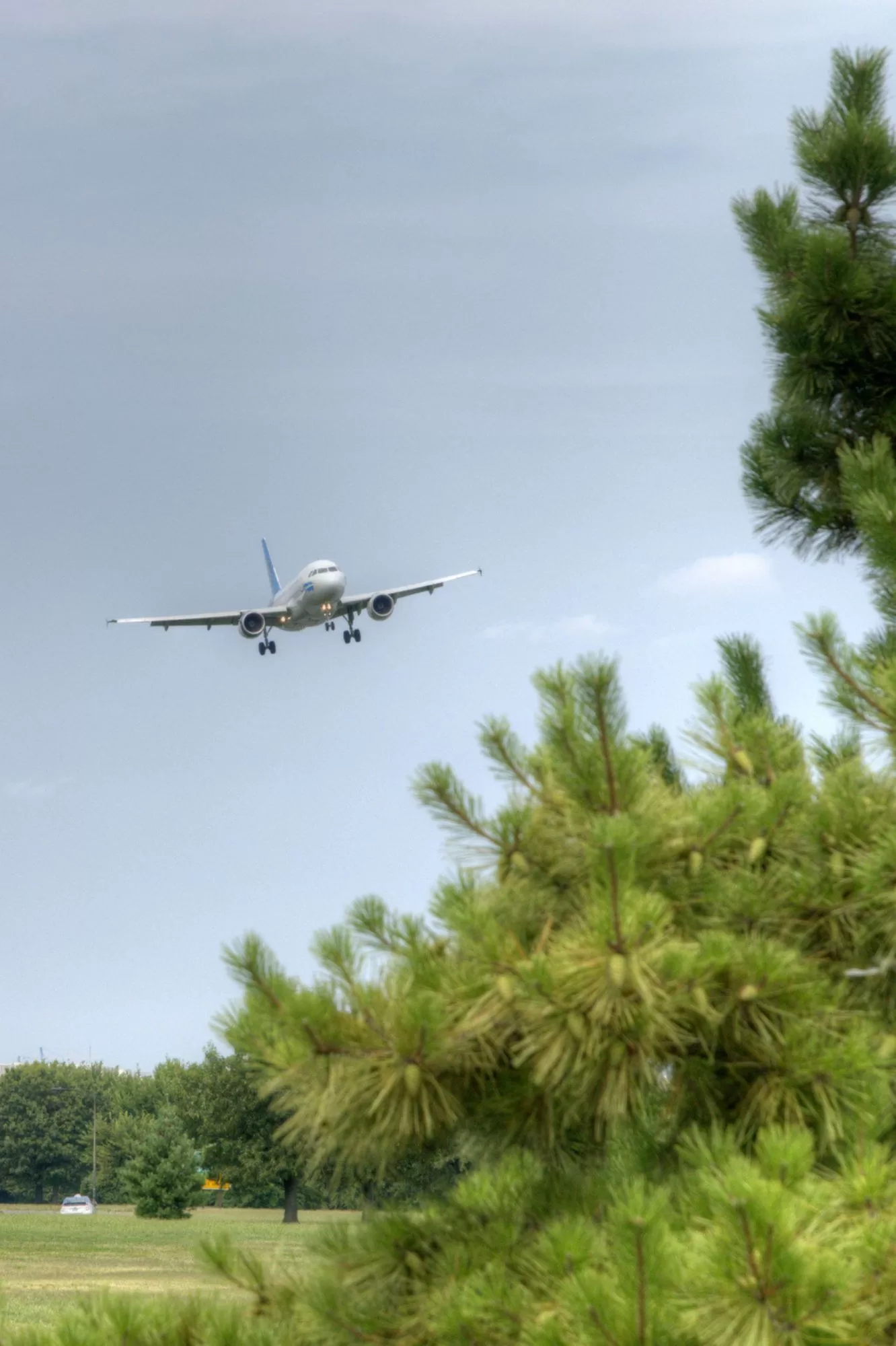
Gravelly Point is the most fascinating place to visit along the memorial parkway. The small public park is directly beneath the flight path of landing aircraft at Ronald Reagan Washington National Airport. When the aircraft fly overhead, they are about 500 feet above the ground.
Jones Point Park is another interesting public park to visit. The Jones Point Lighthouse was built in 1855 and is the only extant lighthouse on a river in Virginia.
The 18-mile Mount Vernon Trail parallels the memorial highway from Mount Vernon to Roosevelt Island. The paved, multiuse trail is a great way to stretch your legs and enjoy the sites along the river. At Roosevelt Park, the trail continues as part of the Potomac Heritage Trail to Scott’s Run Nature Preserve.
Pro Travel Tip | There is no visitor center for the George Washington Memorial Parkway. However, you can visit the park’s headquarters at the address below to collect a cancellation stamp, pick up a brochure, and find information.
Manassas National Battlefield Park
The Battle of Fort Sumter started the American Civil War in April 1861. But then, nothing happened besides a few minor skirmishes. Near the end of July, Union Brigadier General Irvin McDowell finally succumbed to public pressure for him to march against the Confederates camped in Northern Virginia.
On July 21, 1861, the Union army, with about 18,000 unseasoned soldiers, clumsily met the Confederate army of similar size and disorder. The Battle of First Manassas was a Confederate victory – but only barely.
Over a year later, the Battle of Second Manassas was another Confederate victory. Major General Thomas “Stonewall” Jackson captured the Manassas Junction. Union Major General John Pope brought the Army of Virginia to confront this attack. He was surprised by Confederate Major General James Longstreet with his 25,000-man army – the largest assault of the Civil War.
Manassas National Battlefield Park was established in 1936 by the newly created National Park Service to preserve these historic battlefields. It’s the only park in the country with this designation.
The park is bisected by U.S. Highway 29. Fortunately, that makes it easy to reach all points within the park.
The Stone House is one of the park’s most interesting places to visit. It was built circa 1828-1848 as a tavern for wagoneers. The tavern was used as a field hospital after the two Civil War battles. The National Park Service bought the house in the 1950s and conducted a full restoration. Today, visitors can take a guided tour and see where Confederate soldiers carved their names into the upstairs floor.
The Henry Hill Visitor Center and Brawner Farm Interpretive Center have a fascinating wall-sized electronic map that replays the two Civil War battles. Watch as the tiny LEDs light up, showing Union and Confederate troop movements across the landscape.
Go for a hike on an interpretive trail, enjoy a self-guided driving tour, and return at the end of August for the annual reenactment of the Battle of Second Manassas.
Photo courtesy of NPS
Prince William Forest Park
The Chopawamsic Recreation Demonstration Area was established in 1936 to house relief camps during the Great Depression. The camps were built by the Works Progress Administration. From 1933 until 1937, area farmers were relocated to the camps – sometimes forcefully.
In 1948, Congress transferred the property to the National Park Service, and it was renamed Prince William Forest Park. It is unique in the National Park System for resembling a county park more closely than a national park.
The 15,000-acre park has 3 front country campgrounds and one in the backcountry. The Oak Ridge Campground has 100 sites for tents and RVs but no hookups. The Prince William Forest RV Campground is the park’s best, with full hookups, a private concessionaire, and an outdoor swimming pool.
The park maintained five of the original cabin camps by the Civilian Conservation Corps. Cabin Camps 1, 2, 4, and 5 are reserved for group events and can host 70-200 people. Cabin Camp 3 features solo cabin rentals for weekend getaways.
37 miles of hiking trails range from short jaunts to 9-mile excursions throughout the park. The 8-mile scenic drive is spectacular throughout the year.
Shenandoah National Park
In the 1920s, work began on Virginia’s first national park – though nobody knew it would become one at that time. Congress asked Virginia to acquire between 250,000 and 500,000 acres for a park. In 1929, Southern Appalachian National Committee member William Gregg suggested building a “sky-line drive” along the crest of mountains bordering the Shenandoah Valley.
In 1931, the Civilian Conservation Corps began work on Hoover Highway. However, the route was renamed Skyline Drive when President Franklin D. Roosevelt opened Shenandoah National Park in 1936.
The 105-mile Skyline Drive is the primary route through the national park. The road connects hundreds of scenic overlooks, wayside exhibits, and hiking trails.
READ MORE | The Ultimate Road Trip on the Skyline Drive Through Shenandoah National Park
Hawksbill Mountain is the highest peak in the park at 4,051 feet. The 1.5-mile roundtrip hike on the Hawksbill Summit Trail (bookmark on AllTrails) is one of the most popular trails in the state. But it’s also one of the most challenging with a 700-foot elevation change.
But the 6.8-mile hike (bookmark on AllTrails) to Old Rag Mountain is the most popular trail in the park. It’s become so popular that the National Park Service now requires day-use tickets to control the number of hikers. It’s a physically demanding hike with a 2,350-foot elevation change to a spectacular 360-degree view on the summit at 3,284 feet.
Rapidan Camp is an interesting place to visit. President Herbert Hoover bought the property while living in the White House. He built a cabin as a country retreat in 1929. Years later, he donated the property and buildings to the National Park Service.
The Appalachian Trail parallels the Skyline Drive for 101 miles through Shenandoah National Park. Although the national park has 500 miles of trails, the Appalachian Trail is among the most frequently hiked.
The national park includes 4 campgrounds for spending nights. Book a room at the Big Meadows Lodge or Skyline Resort if you prefer something without a tent or RV.
Photo courtesy of NPS
Fredericksburg and Spotsylvania National Military Park
Fredericksburg and Spotsylvania County Battlefields Memorial National Military Park was established in 1927 to preserve four Civil War battlefields. In 1933, the War Department transferred the unit to the National Park Service. And the name remained – at 75 characters, it’s the longest name of any unit in the National Park System.
Four Civil War battles were fought throughout the region, one of them concluding the climax of the war:
Battle of Fredericksburg on December 11-15, 1862
Battle of Chancellorsville on May 1-3, 1863
Battle of The Wilderness on May 5-7, 1864
Battle of Spotsylvania on May 8-21, 1864
The best way to explore the 8,300-acre park is a self-guided driving tour. Each battlefield has a dedicated driving tour brochure available at the Fredericksburg Battlefield Visitor Center or Chancellorsville Battlefield Visitor Center.
One of the most significant Civil War places to visit is the Stonewall Jackson Death Site. During the Battle of Chancellorsville, Jackson was wounded by friendly fire. After having his left arm amputated, he was taken to the Fairfield Plantation to await rail transport to Richmond. Eight days later, Jackson died from an infection on the plantation.
The house, built in 1828, is open seasonally for visitors. The grounds are open year-round during daylight hours.
The Ellwood Manor is another fascinating place to visit. Built by William Jones in 1790, the magnificent house was a field hospital after the Battle of Chancellorsville and Union headquarters during the Battle of the Wilderness. The park has owned the house since 1977 and offers guided tours seasonally.
Photo courtesy of NPS
George Washington Birthplace National Monument
Unfortunately, George Washington’s birthplace home no longer exists. In 1896, the War Department erected a 50-foot-tall monument on the supposed site where the house once stood.
In 1923, local women established the Wakefield National Memorial Association. The first president, Josephine Wheelwright Rust, was a descendant of George Washington’s. The group intended to buy the birthplace property and build a reconstruction of the birthplace home in time for Washington’s 200th birthday in 1932.
John D. Rockefeller Jr. bought 267 acres held in trust for the association. He donated the land after the National Park Service established the George Washington Birthplace National Monument.
Although not historically accurate, the reconstruction of Washington’s birth home was completed in 1931. Rust died just four days after turning over the deed to the National Park Service – her life’s work was complete. The house opened to the public in 1932.
The Memorial House Museum is still open to the public. Visitors can also walk through the Colonial Revival Garden, a recreation of a garden circa 1860-1940. The Washington Family Burial Ground contains the graves of many early family members. Although the Log House Tea Room and Lodge is not open to the public, the 1932 lodge built for guests is worth visiting.
Photo courtesy of NPS
Assateague Island National Seashore
Established in 1965, Assateague Island National Seashore spans 37 miles along a barrier island in Maryland and Virginia. The national seashore consists of three public areas: Assateague Island National Seashore, Assateague State Park in Maryland, and Chincoteague National Wildlife Refuge in Virginia.
In Virginia, the National Park Service operates the Tom Cove Visitor Center. The visitor center has a small gift shop, marine aquarium, and exhibits. Visitors can buy entrance passes for the park and the Over Sand Vehicle zones.
The OSV Zone extends from the visitor center to the south end of the barrier island. It’s open seasonally from September through March and offers a chance for a spectacular adventure.
The Chincoteague National Wildlife Refuge is operated by the U.S. Fish and Wildlife Service. The visitor center has information about the refuge’s hiking trails, driving tours, and wildlife. In 2004, the national wildlife refuge took possession of the Assateague Light, a lighthouse completed in 1867.
Wildlife Loop Road is a great place to see the wildlife and experience the national seashore. The one-way paved road takes about 15 minutes to drive, surrounding a small marsh with scenic overlooks and hiking trails.
Chincoteague National Wildlife Refuge is home to the famous wild ponies. Every year, the Saltwater Cowboys round up the barrier island herd and swim them across the channel to Chincoteague Island. Ponies are auctioned off to raise funds for the town’s volunteer fire department and manage the herd’s size. The annual event draws thousands of visitors.
Fort Monroe National Monument
In 1834, Fort Monroe – named after President James Monroe – was completed near the entrance to Chesapeake Bay. It was part of the Third System of Forts to protect America from naval attacks. It’s the largest stone fortress in the country, with a 1.3-mile perimeter stone wall.
During the Civil War, the fort became known as “Freedom’s Fortress” when the fort’s commander, Major General Benjamin Butler, ruled that the Fugitive Slave Act no longer applied to slaves who escaped from seceded states. Butler ruled that escaped slaves – property in the eyes of the Southern states – were contraband.
The fort was disarmed in 1946 and finally decommissioned in 2011. About a month later, President Barack Obama signed an executive order creating the Fort Monroe National Monument. The 555-acre park preserves the fort, over 200 historic buildings, and an 8-mile beach.
The Fort Monroe Visitor Center and Education Center is a 16,000-square-foot building with exhibits, a gift shop, and restrooms.
The Casemate Museum features exhibits about the fort’s military history – including the earlier Fort Algermourne, built in 1609. The museum features a special exhibit about the room where Confederate President Jefferson Davis was briefly held before being transported to Fort Jefferson – the centerpiece of Dry Tortugas National Park.
Another interesting historical figure in Fort Monroe’s history is Edgar Allan Poe. A small exhibit details Poe’s brief military history under an assumed name – and his eventual dismissal because he spent all his time writing.
Did You Know | Poe was stationed in several places during his short military career. One of his longest tenures was at Fort Moultrie on Sullivan’s Island, South Carolina. Several streets in the beach town are named after Poe’s poems.
Photo courtesy of NPS
Colonial National Historical Park
In 1930, Congress authorized a national monument to preserve the site of the Jamestown Settlement and Battle of Yorktown. Six years later, the park was redesignated as Colonial National Historical Park. The park and historical sites are co-owned and operated by an interesting agreement between the National Park Service, Preservation Virginia, and the Jamestown-Yorktown Foundation.
Established in 1607, Jamestown was the first permanent English settlement in the Americas. The Jamestown Settlement is a living history museum preserving the landscape and several buildings. The museum includes a recreation of the 1610 Fort James and a full-size replica of the Susan Constant, a 120-ton sailing vessel that brought the original colonists to the New World.
The American Revolution Museum at Yorktown is another living history museum that tells the complete story of the Revolutionary War. Indoor exhibits include an impressive museum and The Siege of Yorktown orientation film. Outside, explore a recreation Continental Army encampment and watch demonstrations.
The Yorktown Battlefield preserves the site where British General Lord Cornwallis surrendered to General George Washington in 1781, effectively ending the Revolutionary War. The historic site features the 1724 Thomas Nelson House and the Moore House, where the surrender occurred.
The National Park Service built a 23-mile scenic route connecting the two historic sites. Colonial National Historical Parkway is a two-lane limited-access road with several scenic overlooks and monuments. In 2023, a length rehabilitation began to repair several bridges and tunnels and improve the tunnel lighting to provide “a better experience for drivers, who can enjoy the views instead of dodging potholes.”
Pro Travel Tip | Buy the Four Site Value Ticket to save money on individual admissions. The pass includes admission for one person to the Jamestown Settlement, Historic Jamestowne, Yorktown Battlefield, and the American Revolution Museum at Yorktown.
Photo courtesy of NPS
Richmond National Battlefield Park was established in 1936 to preserve 13 Civil War sites around Richmond – the capital of the Confederate States of America. The park offers free admission to various sites, but you must pay for parking at some parking areas.
Tredegar Iron Works is one of the park’s most fascinating places to visit. During the Civil War, the factory provided half of the artillery for the Confederate Army. The American Civil War Museum tells how the war affected everyone in the country – not just Southerners or soldiers. The museum preserves the ruins of the foundry.
Three visitor centers provide information about the sprawling park – Cold Harbor, Chimborazo Medical Museum, and the Shelton House at Rural Plains. Learn about the Overland Campaign, Siege of Petersburg, and Seven Days Battle.
Photo courtesy of NPS
Maggie L. Walker National Historic Site
Maggie Lena Walker was a fascinating woman who transformed her small Richmond neighborhood in the early 1900s. In 1902, she established a local newspaper. The following year, she became the first African American woman to establish a bank when she opened St. Luke Penny Savings Bank.
In 1904, she bought a Victorian Gothic rowhouse in downtown Richmond. Built in 1883, the beautiful was home for her and her family for nearly eighty years. When the Maggie L. Walker National Historic Site was established in 1978, her descendants sold the Maggie Walker House to the National Park Service.
Guided tours of the historic house are offered seasonally.
Photo courtesy of NPS
Petersburg National Battlefield
Richmond and Petersburg were the center of a Union campaign during the Civil War from June 1864 until March 1865. As the Confederate States of America’s capital, capturing Richmond was vital to ending the bloody war between the states.
After 70,000 casualties and the fall of Richmond to Union forces, Confederate General Robert E. Lee surrendered on April 9, 1865.
Petersburg National Military Park was established by the War Department in 1926. In 1933, the park was transferred to the National Park Service, and in 1962 redesignated the Petersburg National Battlefield.
Grant’s Headquarters is the most popular place in the sprawling park. Visitors can stroll along trails and read wayside exhibits open during daylight hours. The park is at City Point, a critical supply port for the Union’s campaign.
The Eastern Front portion of the park has 10 miles of trails and a 4-mile road tour. The unit preserves the Fort Stedman Battlefield and Crater Battlefield. The primary visitor center for the park is in the Eastern Front.
Photo courtesy of NPS
Appomattox Court House National Historical Park
On April 9, 1865, the Army of Northern Virginia, under the command of General Robert E. Lee, surrendered to General Ulysses S. Grant at the McLean House in Appomattox Court House. The surrender ended the bloody Civil War that consumed the nation for four years.
Congress authorized a national historical monument in 1935. The McLean House, built in 1848, was disassembled and transported to Chicago for the 1893 World’s Columbian Exposition – and it never returned. After over fifty years, the house was returned, restored, and reopened to the public in 1945.
In 1954, the park’s name was changed to Appomattox Court House National Historical Park.
In 1964, the courthouse was rebuilt and serves as the park’s visitor center. The 17-minute orientation film With Malice Toward None introduces visitors to the park’s significance. Pick up a brochure before leaving and then explore one of the park’s hiking trails ranging from 1 to 4.8 miles.
Photo courtesy of NPS
Booker T. Washington National Monument
Booker T. Washington was born into slavery in 1856 on a Virginia tobacco plantation. Freed after the Civil War, Washington became the first member of his family to attend college. At 21, he was hired as the president of the Normal School for Colored Teachers in Tuskegee, Alabama.
In 1956, Congress designated the Booker T. Washington National Monument on 207 acres of the tobacco plantation where he grew up. The site preserves the farm, interprets Washington’s life and accomplishments, and shows what life was like on an 1850s slave farm.
The visitor center has an orientation film about Washington. Pick up a brochure to learn about the various trails in the park. The .25-mile Plantation Trail meanders through a reconstruction of the 19th-century Burroughs Plantation.
Top | Mabry Mill on the Blue Ridge Parkway near Hillsville. Bottom | Stunning view of Pinnacle Mountain at the Peaks of Otter near Roanoke.Top | Mabry Mill on the Blue Ridge Parkway near Hillsville. Bottom | Stunning view of Pinnacle Mountain at the Peaks of Otter near Roanoke.
Blue Ridge Parkway
During the construction of Shenandoah National Park and Great Smoky Mountains National Park, Virginia Senator Harry F. Byrd pitched an idea to President Roosevelt: build a scenic highway connecting the southeast’s first two national parks. Initially called the Appalachian Scenic Highway, when Congress authorized the project in 1936, it was called the Blue Ridge Parkway.
Construction began under the Works Progress Administration. But work was slow during the Great Depression and WWII. By 1966, all but 7.7 miles were finished. The final section, infamously dubbed “The Missing Link,” was a tricky maneuver around the slopes of Grandfather Mountain in North Carolina.
Read More | 6-Day Road Trip on the Blue Ridge Parkway
When the Linn Cove Viaduct opened in 1987, the 469-mile Blue Ridge Parkway was completed – 52 years after construction began. The parkway features breathtaking views along the ridge, connecting historic places of interest, hiking trails, and scenic overlooks.
215 miles of the Parkway pass through Virginia between Galax and Waynesboro. At the northern terminus, the road continues onto the Skyline Drive through Shenandoah National Park.
Here are some of the best overlooks and places to visit on the Blue Ridge Parkway in Virginia:
Website | www.nps.gov/blri
Hikers backpack along the Appalachian Trail above the clouds on Whitetop Mountain, the second highest point in Virginia.Hikers backpack along the Appalachian Trail above the clouds on Whitetop Mountain, the second highest point in Virginia.
Appalachian Trail
In 1922, forester Benton MacKaye conceived of a series of trails throughout the Appalachian Mountains from Georgia to Maine. The trails would give “city dwellers” an opportunity to experience the wonderment of nature. In 1924, a trail club in New York completed the first 21-mile section.
The Appalachian Trail Conservancy was founded in 1925 in Washington, D.C. The non-profit organization’s initial objectives included adding the iconic white blazes along the trail and coordinating the dozens of independent trail building projects. When the trail was completed in 1937, the organization’s objectives shifted to maintaining and promoting the trail.
In 1938, the Appalachian Trail was transferred to the National Park Service, although the NPS has nothing to do with maintaining the trail. The NPS and ATC created a partnership – the trail is protected on federal land and maintained by the non-profit organization.
538 miles of the Appalachian Trail pass through Virginia – more than any other state and nearly a quarter of the entire trail. 107.5 miles of the trail passes through Shenandoah National Park, offering plenty of day trip hikes and overnight excursions near convenient parking.
Bookmark on AllTrails | Appalachian Trail in Shenandoah National Park
Here are some additional highlights of the Appalachian Trail in Virginia:
Buzzard Rock on Whitetop Mountain at Mile 483.6
Mount Rogers at Mile 490.6– the highest point in the state
Grayson Highlands State Park at Mile 493.9
Angels Rest on Pearis Mountain at Mile 623.4
McAfee Knob at Mile 702.5 – one of the most popular hikes in the state
Apple Orchard Falls at Mile 758
Blackrock Summit at Mile 873
Cumberland Gap National Historical Park
In 1775, Richard Henderson met with Cherokee leaders in Elizabethton, Tennessee, to negotiate North America’s largest private land transaction. The Transylvania Purchase gave eager settlers access to most of eastern Kentucky. Although the treaty was immediately denounced by Virginia authorities, it didn’t stop the westward expansion.
The company hired Daniel Boone to blaze a trail into Kentucky. Boone discovered a route through the mountains that would be best for heavily loaded wagons. The “Wilderness Road” crossed through the Cumberland Gap, later dubbed the “Gateway to the West.”
When President Franklin D. Roosevelt signed the legislation creating Cumberland Gap National Historical Park in 1940, he said it was to “commemorate the story of the first doorway to the West.” The 14,000-acre park opened in 1959.
The visitor center in Middlesboro, Kentucky, has a great museum and gift shop. Watch the 23-minute Daniel Boone and the Westward Movement or 11-minute The Cumberland Gap orientation films to learn more about the area.
Pinnacle Overlook is one of the best scenic overlooks in the southeastern United States. The overlook is perched above the gap on the side of the mountain. Along the 0.2-mile walk from the parking lot, you’ll cross the boundary between Kentucky and Virginia.
Burton Hensley bought 200 acres on Cumberland Mountain in 1900. He divided the land into lots and sold them to eager settlers. A community of 100 people prospered until the late 1940s. Sherman Hensley was the last to leave in 1951. It’s about a 10-mile hike from the Pinnacle Overlook parking lot to the settlement.
Other popular hikes include Skylight Cave and Gap Cave. The Wilderness Road Trail begins in Cumberland Gap, Tennessee. The short trail passes through the reconstructed gap in the mountains. A marker on the trail shows where Tennessee, Virginia, and Kentucky meet.
Frequently Asked Questions
Where is Shenandoah National Park in Virginia?
Shenandoah National Park stretches 105 miles between Front Royal and Waynesboro on the eastern side of Shenandoah Valley.
How many national parks are in Virginia?
There is only one “national park” in Virginia – Shenandoah National Park. However, there are 22 national park sites.
The technical storage or access is strictly necessary for the legitimate purpose of enabling the use of a specific service explicitly requested by the subscriber or user, or for the sole purpose of carrying out the transmission of a communication over an electronic communications network.
Preferences
The technical storage or access is necessary for the legitimate purpose of storing preferences that are not requested by the subscriber or user.
Statistics
The technical storage or access that is used exclusively for statistical purposes.The technical storage or access that is used exclusively for anonymous statistical purposes. Without a subpoena, voluntary compliance on the part of your Internet Service Provider, or additional records from a third party, information stored or retrieved for this purpose alone cannot usually be used to identify you.
Marketing
The technical storage or access is required to create user profiles to send advertising, or to track the user on a website or across several websites for similar marketing purposes.