Both LAPD and Los Angeles County Sheriffs have made efforts to crack down on street takeovers. Task Forces interrupt takeovers before they even start, and have made arrests and impounded vehicles that participate in the shenanigans. An unexpected ripple effect of these takeovers is that thieves are stealing vehicles so they can use them in takeovers, specifically the Chevy Camaro.
Chevrolet Is The Target To Beat This NASCAR Season
The LA Times reports that so many Camaros are being stolen for takeover use that Camaro thefts are up over 1000 percent so far this year. We’re just three months into the year, and 90 Camaros have already been stolen across the city, versus just seven Camaros stolen in all of 2023. That’s a drastic jump in thefts in a short amount of time. From January to February, one of the LAPD’s South LA stations saw local Camaro thefts jump from just two to 10.
Making the situation worse is that authorities believe a device is being used to clone ignition keys to steal the cars; a 16-year-old suspect was arrested with a similar device recently, as The Times explained.
The device is essentially a hand-held computer that enables the user to create a replacement smart key — using a new key fob — that can unlock Camaros and other vehicles, bypassing the vehicle’s existing security system, investigators said. Once the user punches in the make, model and year of the vehicle into the computer, it is then able to reprogram the car’s ignition system and generate a new or universal car key.
Authorities say after using the Camaros in street takeovers, the teenager would then take to social media and sell the cars “for $2,000 or $3,000.”
The department didn’t say what device was being used to steal the cars, but other local departments have seen them being used in thefts as well. Until something is done to stop these thefts, authorities are outlining steps owners can take to prevent their cars from being stolen. They say owners can do things like use fuel cut-off systems and steering wheel locks, and look into aftermarket devices that can stop key fob transmitter signals.
A Lincoln concept car from the turn of the millennium will be among the featured lots at Mecum’s upcoming auction in Glendale, Arizona.
Scheduled to cross the block on March 8, the Lincoln Mark X concept made its public debut at the 2004 Detroit auto show. Its design was overseen by Marek Reichman, who is currently head of design at Aston Martin, but was then in charge of Lincoln’s design department.
The Mark X was based on the final-generation Ford Thunderbird that was in production at that time. Its 3.9-liter V-8 and automatic transmission were sourced from the Ford, and the concept’s overall shape and proportions are similar to those of the donor Thunderbird. However, the Mark X added a retractable hard-top roof and a front fascia that vaguely recalls Lincolns of the 1960s.
Concept cars are generally just for show, and Mecum cautions that some features on this car may not be functional. However, this car’s production-car base means it’s a bit more functional than most concepts. In addition to a real engine, it has power-assisted four-wheel disc brakes, navigation, cruise control, power windows, and door locks, plus a tilt steering column. The Mark X is being sold on a bill of sale, though, so driving it on public roads might not be possible.
2004 Lincoln Mark X concept (photo via Mecum Auctions)
Lincoln parent Ford was on a retro kick in the early 2000s, churning out a stream of concept cars and production models based on memorable vehicles from the past. However, while the Ford brand got the Thunderbird, the GT supercar, and the fifth-generation Mustang with throwback styling to populate its showrooms, Lincoln never got an equivalent model.
The Mark X is a reminder of what might have been had Ford taken a similar approach with its luxury brand.
The Ford Shelby Cobra concept—another retro Ford concept from this period—fetched $2.64 million at auction in 2021. This Lincoln didn’t attract as much attention as the Shelby when it debuted, so it probably won’t command the same price. But it’s still a unique piece for collectors.
Looking Glass Falls is only 60 feet tall and 10 feet wide. But with a tremendous amount of water falling over a rocky cliff into a shallow pool and surrounded by lush greenery, it’s one of the most beautiful waterfalls in North Carolina.
And it’s one of the few accessible waterfalls.
Looking Glass Falls is the most popular waterfall in Pisgah National Forest. It’s sometimes difficult to find parking. But if you snag a parking spot, the short walk to the scenic overlook will certainly make you smile.
Continue reading to learn about how to park safely, how to reach the waterfall’s base, and details about the accessibility.
Map of Looking Glass Falls
How to use this map | Click the icon in the top-left corner to open the Map Legend, then click on any of the legend items to display more information. If you have a Google account, click the (very faint) star at the end of the map’s name to save this map to your account, then access the map from your smartphone during your trip.
Pisgah National Forest
The 500,000-acre Pisgah National Forest boasts some of the best outdoor recreation and scenic drives in North Carolina. Northwest of Asheville, the national forest includes iconic destinations like Grandfather Mountain and Mount Mitchell, the highest point east of the Mississippi.
Near Brevard, the national forest includes the scenic route along U.S. Highway 276 – the Forest Heritage Scenic Byway – to the Blue Ridge Parkway. The route includes several waterfalls, hiking trails, and picnic areas.
Forest Heritage National Scenic Byway
The Forest Heritage National Scenic Byway through Pisgah National Forest is one of the most beautiful scenic drives in western North Carolina. The loop route follows an old logging railroad along U.S. Highway 276 from Pisgah Forest toward Waynesville, turning onto N.C. Highway 215 to Rosman, and then returning to Pisgah Forest along U.S. Highway 64.
The first 17 miles of the route are designated a national scenic byway because of its historic quality. The route passes the Cradle of Forestry in America, the site of the country’s first forestry school.
But it’s also a scenic route connecting outdoor recreation. The two-lane road winds past Looking Glass Falls and Sliding Rock, two of the most popular waterfalls in the area. And it connects Brevard visitors to the Blue Ridge Parkway near Mount Pisgah. Summer and autumn are the best times of year to enjoy this drive.
The entire route takes about 2 hours to drive. The national scenic byway route takes about an hour out and back.
North Carolina Waterfall Byway
The 98-mile North Carolina Waterfall Byway is a scenic route along U.S. Highway 64 between Murphy and Rosman. Dozens of waterfalls populate the two-lane highway, many within a ten-minute walk from the parking lot.
Read More | Road Trip on the Scenic North Carolina Waterfall Byway
When I wrote a road trip itinerary, I extended the route into Brevard to include DuPont State Recreational Forest and Pisgah National Forest. The 140-mile road trip on the scenic North Carolina Waterfall Byway features 25 waterfalls and five destinations where you can spend the night.
Best Time to Visit
Looking Glass Falls is one of those waterfalls with enough water volume to stay churning year-round. But aside from the amount of water that spills over the cliff, there are other factors to consider about visiting.
Spring finally ascends into the national forest about mid-May. This is my favorite time of year to visit the waterfall because the trees are a deep, vibrant green with new leaves. But it’s still too cold to dip your toes into the water.
By July, the water is about as warm as it ever gets – still chilly, but you’ll be comfortable splashing around in the shallow pool at the waterfall’s base.
Autumn typically descends into the area about mid-October. This can be the most scenic time of year to visit because the waterfall is surrounded by trees that showcase spectacular colors.
On bitter cold winter days, the waterfall will sometimes freeze. It never freezes solid, but enough ice creates a stunning winter scene. Needless to say, you should dress very warmly.
Getting to the Waterfall
Are you ready for a scenic drive? Getting to Looking Glass Falls is effortless, and it’s one of the prettiest drives in North Carolina.
From wherever you start, head toward Brevard. At Pisgah Forest, an unincorporated town, U.S. Highways 276 and 64 meet in a four-way intersection. Continue along U.S. Highway 276 toward the Blue Ridge Parkway.
Pro Travel Tip | Stop at the Pisgah National Forest Ranger Station along U.S. Highway 276 and ask about current conditions at the waterfall. You may find that large crowds limit parking or that the waterfall is less spectacular than usual.
It’s a 5.6-mile drive to the waterfall that typically takes about 15 minutes. It can last longer on summer days and autumn weekends when the throngs of tourists and leaf peepers crowd onto the two-lane road.
There is no admission fee or day-use fee to access this waterfall. It is open twenty-four hours a day throughout the year.
Safely Parking
Parking is the most difficult aspect of visiting Looking Glass Falls. There are limited parking spaces on the right side of the road when traveling toward the Blue Ridge Parkway.
The authorized parking begins at the national forest sign announcing a waterfall ahead. This parking area is around the final curve before the waterfall. It’s a graveled area, wide enough to pull off safely but without a sidewalk. I advise caution walking along the parking area to the waterfall.
Unfortunately, there are no alternatives if no parking spaces are available. Parking along the road’s shoulder is prohibited and dangerous.
There is a large pull-off about a quarter of a mile past the waterfall. However, I would not recommend walking back to the waterfall along the road’s shoulder. There is only barely enough room for safety. This pull-off area is used for turning around after visiting the waterfall.
If you find parking, the forest service rangers ask that you pull off the road. The parking area is almost twice as wide as a typical parking space, allowing plenty of room to park off the road and for passengers to exit the vehicle safely.
Pro Travel Tip | Would you like to know how I find parking on busy days? Take note of some of the distinctive cars parked at the waterfall. Then, drive about a quarter mile toward Brevard to a large pull-off. Wait for one of the cars you saw parked at the waterfall to go by. You’ll have about a 50/50 chance of getting to the parking spot before another driver heading in the opposite direction.
Viewing the Waterfall
Looking Glass Falls is the easiest waterfall to see in Pisgah National Forest – and one of the easiest spectacular
waterfalls to visit in the country. In fact, you can see the top of the waterfall from the road.
The best way to view the waterfall is from the bottom. A concrete staircase descends 95 steps to the rocky river at the waterfall’s base.
No official trails or boardwalks are at the bottom, so you’re left to navigate the area at your own risk. It’s not difficult to walk around the waterfall’s base, especially if the water level is low.
Read More | The 15 Best Waterfalls in Brevard, NC + Trail Info and Parking
Smooth, wet river rocks are extremely slippery, though. Whenever you visit a waterfall, I recommend a pair of trekking poles to help cross the shallow parts of a river.
There are several boulders and patches of ground where you can easily perch. And there are several good places to hang a hammock if you want to experience a waterfall like I do.
Looking Glass Falls is in a narrow ravine surrounded by towering cliffs and trees. This limits the sunlight and indirect light at the waterfall, which means the best time to see it is from an hour after sunrise until an hour before sunset.
Photographing the waterfall is a different story. About 3 p.m. is the best time of day to capture photos of the waterfall with sunlight.
Accessibility
Unfortunately, no parking spaces at Looking Glass Falls are marked for disabled users. This is even more unfortunate because the only ramp for wheelchairs to get onto the concrete sidewalk is at the last parking space closest to the waterfall. If another vehicle is parked there, it will be very difficult to bring a wheelchair onto the sidewalk.
However, if you’re fortunate enough to get that parking space, it’s easy to see the waterfall. It’s one of the few waterfalls of this magnitude to have an accessible overlook.
The overlook has a wire mesh beneath the handrail to prevent anyone or anything from falling off. This allows people in wheelchairs a moderately good view of the waterfall.
American car enthusiasts (myself included) spend a lot of time bemoaning the demise of the station wagon in the U.S., but perhaps even more annoying to wagon die-hards is the proliferation of wagons that are fitted with a lift kit and body cladding to make them more appealing to American buyers. Such models include the Mercedes-Benz E-Class All-Terrain and Audi A6 Allroad, but one of the most talked about is the Porsche Taycan Cross Turismo.
Jon Cryer’s First Car Came From A Film Set
While the rest of the world gets every trim of the longroof Taycan in Sport Turismo guise, which is a traditional wagon without any SUV-like styling, we only get the Sport Turismo in the GTS trim. Otherwise, if you want a Taycan wagon in the U.S. you’re stuck with the Cross Turismo, which is fitted with a slight lift plus plastic cladding on the wheel arches, chunkier bumper designs and thicker side skirts. It’s still obviously an awesome car, but it’s just not as cool as a regular wagon would be. Luckily there’s a solution, as evidenced by this Cross Turismo I saw at Race Service’s morning car show today — you can just take the cladding off.
Photo : Daniel Golson/Jalopnik
I didn’t get a chance to talk to the owner about this particular car, but a quick Google search shows that it’s a pretty easy process. One owner on the Taycan forum found there are only three alignment pins for each wheel arch, which can be easily filled in with hole plugs. (If you go for the Off-Road Design Package option, only one is even visible.) As the Taycan I saw had black paint, I didn’t even notice the plugs, and looking at the photos now they’re so small that I don’t think it would bother me if I was an owner.
The owner of this Taycan left on the Cross Turismo’s unique bumper designs and side skirts, which I think look really cool even without the wheel arch cladding to go with them. Assisting with the cool factor are the 21-inch Rotiform TUF wheels, which I think perfectly suit the Taycan.
So if you’re interested in getting a Taycan wagon but don’t want the SUV-aping cladding, don’t let that deter you from getting the electric longroof of your dreams. With just a little bit of manual labor, you can get it looking sporty and clean — and the Cross Turismos are fitted with an adjustable air suspension, so lowering the ride height back down to regular levels should be easy too.
Honda has filed a patent application for an active diffuser that would deploy only when needed, keeping a vehicle’s styling clean and uncluttered when it’s not in use.
Rear diffusers are typically fixed in place, Honda notes in its patent application published by the United States Patent and Trademark Office (USPTO) on Feb. 6, but originally filed on Aug. 24, 2021. That creates a conflict between the need to design an effective diffuser and other considerations like styling, departure angles, and potentially even government regulations, according to Honda.
The solution proposed in the patent application is a rear diffuser that would slide out from a car’s rear bumper using an actuator. When deployed, the diffuser would generate an upward flow of air from underneath the car, balancing the downward flow of air spilling off the roof and helping to reduce rear-end lift, the application says. Unlike a conventional diffuser, it would be stowed when not needed, so cars wouldn’t have appendages sticking out past their rear bumpers.
While some production cars have active rear spoilers, it seems automakers are looking to apply a similar concept to other aerodynamic aids. In addition to Honda’s rear diffuser patent, Ford has filed a patent application for deployable dive planes. But it’s unclear if either of these features will reach production.
Honda active rear diffuser patent image
Drawings in the patent application show the active rear diffuser on what looks like previous-generation versions of the Honda Civic and Acura MDX, hinting that Honda is considering this feature for ordinary sedans and SUVs. As the automaker notes in the application, a deployable rear diffuser could help increase performance in sportier versions of these vehicles while preserving practicality.
Sedan and SUV buyers will likely be less tolerant of a vehicle that has trouble negotiating steep driveways due to low-hanging bodywork than buyers of purebred sports cars.
Honda does reportedly have an electric sports car in development as well, although such a vehicle has been rumored for some time with no confirmation of production plans from the automaker. Honda will begin launching a line of EVs developed in-house in 2026, starting with a sedan-type vehicle for North America.
You’re wandering through Lisbon’s cobbled streets, up and down the many hills. Next thing, you stumble upon a tiny taverna filled with laughter and the most delicious smells wafting out. So, you walk in.
And this is where your journey to eat like a local in Lisbon begins.
Beyond the well-trodden tourist paths lie culinary treasures that define Lisbon’s soul—hidden gems where food tells the story of tradition, culture, and the sea.
If this sounds like your type of travel experience, keep reading. We’ve got all the insider tips to keep your stomachs full and your tastebuds enticed.
Here is an overview:
Where to Eat Like a Local in Lisbon
Eating like a local in Lisbon means embarking on a flavorful journey through its quaint tascas, bustling mercados, and charming pastelarias.
Tascas, the heart and soul of Lisbon’s dining scene, are small taverns where the day’s catch and traditional dishes fill the air with irresistible aromas. Here, the food is honest and unpretentious.
Mercados, such as the vibrant Mercado da Ribeira, offer a feast for the senses, with stalls brimming with fresh produce, seafood, and delicacies that reflect Lisbon’s rich culinary diversity.
For a sweet interlude, pastelarias beckon with their heavenly pastéis de nata, creamy custard tarts that are a national obsession.
With its winding streets and Fado houses, Alfama offers a taste of the sea with dishes like Sardinhas Assadas (grilled sardines), especially during the popular Santos Populares festival.
Bairro Alto, a nightlife hub, hides countless tascas where the traditional Bacalhau à Brás (shredded cod with onions, fried potatoes, and scrambled eggs) is a must-try. Meanwhile, Baixa, the heart of Lisbon, is perfect for leisurely lunches in the squares, offering a wide array of local and international cuisines.
Lisbon’s soulful culinary traditions come alive in these neighborhoods, inviting visitors to sit down, slow down, and savor each bite as locals do. Whether it’s through a hearty fish stew in Alfama, late-night tapas in Bairro Alto, or a pastry savored in the shadow of Baixa’s grand arches, eating like a local in Lisbon is an invitation to experience the city’s vibrant culture, one plate at a time.
Time Out Market, Avenida 24 de Julho, Lisbon, Portugal
Must-Try Local Dishes
Several must-try dishes stand out, each with a story and essence that captures the city’s spirit. Codfish cakes, known locally as “Pasteis de Bacalhau,” are a beloved snack, blending salted cod with potatoes, onions, and parsley, fried to golden perfection.
This dish reflects Portugal’s long-standing love affair with bacalhau (cod), a testament to the country’s seafaring heritage and its ability to bring the flavors of the ocean to the table.
No culinary exploration of Lisbon would be complete without savoring the iconic Pastéis de Nata. These custard tarts, with their flaky pastry and caramelized tops, originated in the Jerónimos Monastery in the early 19th century, becoming a national treasure.
Bifanas, tender pork cutlets marinated in white wine and garlic, served in soft bread, offer a taste of Lisbon’s rustic yet refined street food scene.
Pairing these dishes with local beverages elevates the experience. Enjoy codfish cakes with a glass of crisp Vinho Verde, or sip an espresso with your Pastéis de Nata, following local tradition.
A chilled Super Bock beer or a glass of red from the Douro Valley complements the spicy, garlicky Bifana, blending flavors and cultures in every bite.
Lisbon’s markets and festivals are essential showcases of its vibrant food culture. The Mercado da Ribeira, also known as Time Out Market, stands at the forefront, offering a rich assortment of fresh produce, seafood, and gourmet delights.
Among the city’s food festivals, the Festival do Peixe e Marisco is a standout event, celebrating the ocean’s bounty with a wide array of seafood dishes against Lisbon’s picturesque backdrop. These gatherings are more than just places to eat; they’re opportunities to immerse yourself in local traditions and connect with the community.
During the Festas de Lisboa in June, Lisbon buzzes with the aroma of grilled sardines and the flavors of bifanas, chorizos, and farturas. Streets fill with vendors and bars, offering these traditional Portuguese dishes alongside refreshing drinks. It’s an overwhelming but truly unforgettable experience. June is also one of the best times to visit Lisbon due to this festival!
In Portugal, dining etiquette emphasizes leisurely meals and respect for culinary traditions. Typical meal times are later than in many countries, with lunch around 1-2 p.m. and dinner not before 8 p.m.
Tipping is appreciated but not mandatory; rounding up the bill or leaving 5-10% is customary for good service. Common courtesies include waiting for everyone to be served before eating and using bread to mop up sauces, a nod to the country’s love for its cuisine.
Making reservations is wise when dining out in Lisbon, especially for popular spots. To avoid tourist traps, seek out restaurants filled with locals or those slightly off the beaten path.
Look for menus in Portuguese and listen for the buzz of local conversation. These signs often indicate authentic experiences, promising memorable meals and a true taste of Lisbon’s vibrant food culture.
One more thing….always sit to eat your meal. Whether at a table or a counter, Lisboetas always sit down to eat, regardless of how quick the meal is.
Lisbon’s culinary scene goes beyond dining, offering interactive cooking classes, insightful food tours, and comprehensive wine and cheese tastings.
Cooking classes across the city, led by culinary experts or local chefs, teach participants how to prepare traditional Portuguese dishes, offering a hands-on approach to the country’s culinary arts.
Food Tours in Lisbon
Food tours are a practical way to explore Lisbon’s lesser-known eateries and markets, guided by locals who share their knowledge of the city’s food history and culture.
This Tastes & Traditions of Lisbon Food Tour is a favorite. Your guide takes you through the historic neighborhoods of Baixa, Chiado, Bica and Cais do Sodré, pointing out the most trusted restaurants and best-kept secrets.
The tour includes 9 tastings and 3 drinks at 7 different small businesses in Lisbon. This is enough food for a full breakfast and lunch! Plus, you’ll get to learn how to eat and drink like a local in Lisbon, from understanding the complexities of the cuisine and how to order your favorite meal.
Some of the tastes to look forward to include salted cod, cherry liqueur and, of course, pastéis de nata.
Here’s a quick summary of the itinerary:
Start with coffee and pastries at a nearly 200-year-old iconic pastry shop.
Visit Lisbon’s oldest traditional grocery store; learn about bacalhau and taste Iberian ham.
Explore one of Lisbon’s main churches to glimpse the city’s history.
Sample Lisbon’s famous cherry liqueur at a 130-year-old family-run shop.
Learn about Lisbon’s history in one of its central squares.
Enjoy the best Portuguese pork sandwich from a place over 50 years old.
Visit a popular Cais do Sodré neighborhood bar for codfish, sausage, and another local dish with wine or beer.
Get introduced to the world of Portuguese canned fish.
End with a pastel de nata tasting at a competitor for the city’s best custard tart.
The tour lasts about three and a half hours and does require some uphill and downhill walking (you really can’t get away from it in Lisbon!)
The tour caters to different dietary regulations and can be adapted for vegetarians, pescatarians, dairy-free, non-alcoholic options and pregnant women. However, this tour is not recommended for vegans and due to the risk of gluten cross-contamination, this tour is not recommended for those with celiac disease.
Departure Point: Praça da Figueira Departure Time: Varies Ending Point: Time Out Market From: €79
Bairro Alto Evening Food & Wine Tour will take you on a night to remember, exploring the eclectic Bairro Alto neighborhood – where 300 bars are packed into one square kilometer!
Join a local guide and a small group of food enthusiasts for an evening food and wine tour in Bairro Alto, Lisbon. Together, you’ll explore the neighborhood’s finest bars, tascas (taverns), and pastry shops, indulging in the area’s best culinary offerings.
Here’s what to expect:
Begin the tour in Príncipe Real, a lively and picturesque neighborhood.
Visit a bar with historical ties to anti-dictatorship revolutionaries; enjoy petiscos with Japanese and Jewish influences, paired with a craft cocktail.
Explore a stunning miradouro for panoramic views of Lisbon and learn about the city’s growth.
Enter Bairro Alto, discovering its diverse history and seeing it from a local perspective.
Stop at a wine bar with over 600 options, sampling wines alongside fire-roasted chouriço and Portuguese cheeses.
Visit a traditional Portuguese tasca in Bairro Alto, known for its loyal local clientele, for duck rice, fish soup, local wine, and homemade bagaço.
Conclude with one of Portugal’s famous custard tarts and a glass of Port at a local favorite spot.
Finish the tour with a deep understanding of Lisbon’s petiscos culture and insights into exploring the city’s culinary scene and neighborhoods.
This tour lasts about three hours and is, unfortunately, not wheelchair accessible due to the uneven streets and steep hills. It is adaptable for vegetarians, pescatarians, dairy-free and gluten-free. This tour is not recommended for vegans and, due to the risk of gluten cross-contamination, this tour is not recommended for those with celiac disease.
Departure Point: Praça do Príncipe Real Departure Time: 5:30pm Return Details: Largo Luis de Camoes From: €89
Wine and cheese tastings provide a delightful insight into Portugal’s rich gastronomy. The country’s diverse regions produce various wines and cheeses, from the smooth, fruity Vinho Verde to the robust, tangy Queijo da Serra.
Tastings often happen in atmospheric cellars or shops specializing in local produce, offering a comprehensive introduction to the flavors that define Portuguese cuisine.
Ready to Eat Your Way Through Lisbon?
Whether you’re sipping on a craft cocktail in Príncipe Real or savoring a pastel de nata against the backdrop of a stunning viewpoint in Lisbon, you’re now part of Lisbon’s vibrant tapestry of life, one delicious bite at a time.
All that’s left to do is get out there and start eating. And yes, one more pastel de nata is always a good idea!
We connect curious travelers with local food and people in a way that helps culture thrive. We crave food and travel experiences with a true sense of place. Devour: to absorb or engross wholly.
Devour Tours is the ticket that connects you with the vibrant local culture in each delicious destination.
Millions of Americans want to cut their carbon footprints, help the U.S. economy get off of foreign oil, and save money at the gas pump. They’d do well to buy an electric vehicle (EV). But, if they want to make a difference, they should buy a plug-in hybrid (PHEV).
That’s the conclusion of a new study from the American Council for an Energy-Efficient Economy (ACEEE). A non-profit that aims to develop “transformative policies to reduce energy waste and combat climate change,” the council publishes an annual assessment of the real-world environmental impact of “every new model in the U.S. light-duty vehicle market.”
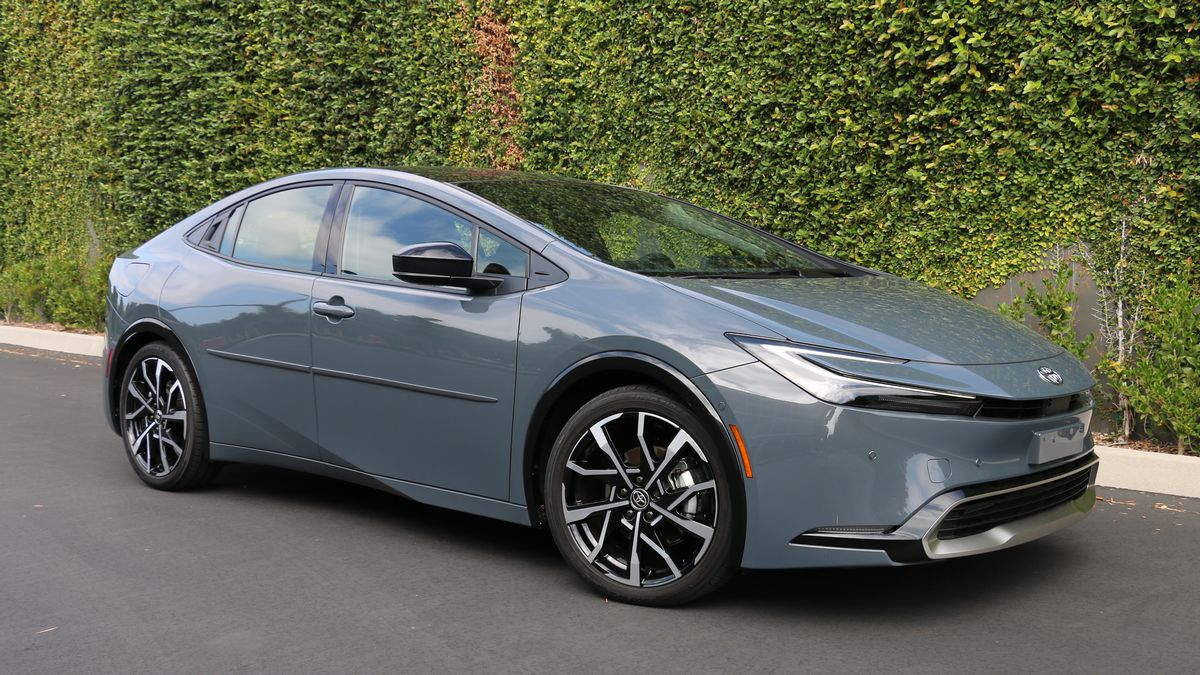
In 2024, the council says, the greenest car on the market is the Toyota Prius Prime. Toyota’s plug-in hybrid beat out every EV on the market thanks mainly to its light weight and smaller battery.
A plug-in hybrid is halfway between an EV and a gas-powered car. PHEVs recharge from a wall outlet and travel a certain distance on electricity – usually between 25 and 35 miles, depending on the model. They then use their gasoline engines to go further.
Buying one is like owning an EV for your commute and daily errands and a gas-powered car for road trips. But it only requires one car payment and one parking space.
Study Considers Costs of Building, Driving
The ACEEE’s analysis considers the impact of driving a car and the resources used in building it. The council rates “each model year 2024 car on its cost to human health from air pollution associated with vehicle manufacturing and disposal, the production and distribution of fuel or electricity, and vehicle tailpipe emissions.”
“While a gigantic electric truck weighing thousands of pounds might be better than a gas truck of the same size, both will be outmatched by a smaller, efficient gas vehicle,” the Washington Post explains. The massive, heavy batteries required to move such a large vehicle are resource-intensive. Mining and processing enough material to build them has real environmental and health costs.
“The more huge vehicles there are on the road, the harder it will be for the United States to meet its goal of zeroing emissions by 2050,” the Post explains.
Small EVs Are Among the Greenest; Large Ones Counterproductive
Smaller EVs still do very well in the ACEE’s analysis.
Driving home the point, one EV made the list of the ten worst cars for the environment. The massive GMC Hummer is all-electric but is listed among the most damaging models. If you care about the environment, ACEEE’s analysis says, you’re better off buying a gas-powered heavy-duty pickup than the Hummer.
Should You Consider a PHEV?
PHEVs seem like the best of both worlds. But there are drawbacks. Owning two powertrains means owning a lot of moving parts. More moving parts means more failure points. A recent Consumer Reports analysis found that PHEVs have 146% more mechanical problems than old-fashioned gas-powered cars.
However, the Prius Prime enjoys Toyota’s reputation for reliability. Several other PHEVs with ten-year powertrain warranties are available to ease this concern, including models from Hyundai, Kia, and Mitsubishi.
Scoring
The ACEE gives each car a “green score” based on “the emissions from fuel burned in a vehicle’s engine,” as well as “the upstream emissions generated by electricity used by a vehicle, emissions produced when mining and processing minerals for batteries, and emissions from manufacturing vehicles and vehicle components.” Readers can see scores by vehicle class on the council’s website.
*ACEEE analysis using Energy Information Administration (EIA) data of annual cost—from gasoline, electricity, or a combination—of driving 15,000 miles
The Ten Meanest Cars
The meanest cars list is almost entirely populated with high-performance special editions built in rare numbers with extra-powerful engines. The Ram TRX, for instance, is a special edition of the Ram 1500 with more than 700 horsepower. The Ford F-150 Raptor R is a Ford truck built to answer it with a muscle car’s overpowered engine. The Cadillac Escalade V is a high-performance, supercharged version of Cadillac’s standard large SUV.
Maserati is a car brand renowned for its beautiful machines. The sort of sensualist who dreams of owning a Maserati likely appreciates the joy of top-down driving. Yet, Modena’s finest hasn’t built a droptop in five years.
They were, apparently, waiting for their moment.
Maserati this week unveiled what you count on it to unveil – a beautiful convertible with extreme performance and a price that will probably keep it in your dreams, not your driveway.
The GranTurismo Is a Beauty, But This Is Prettier
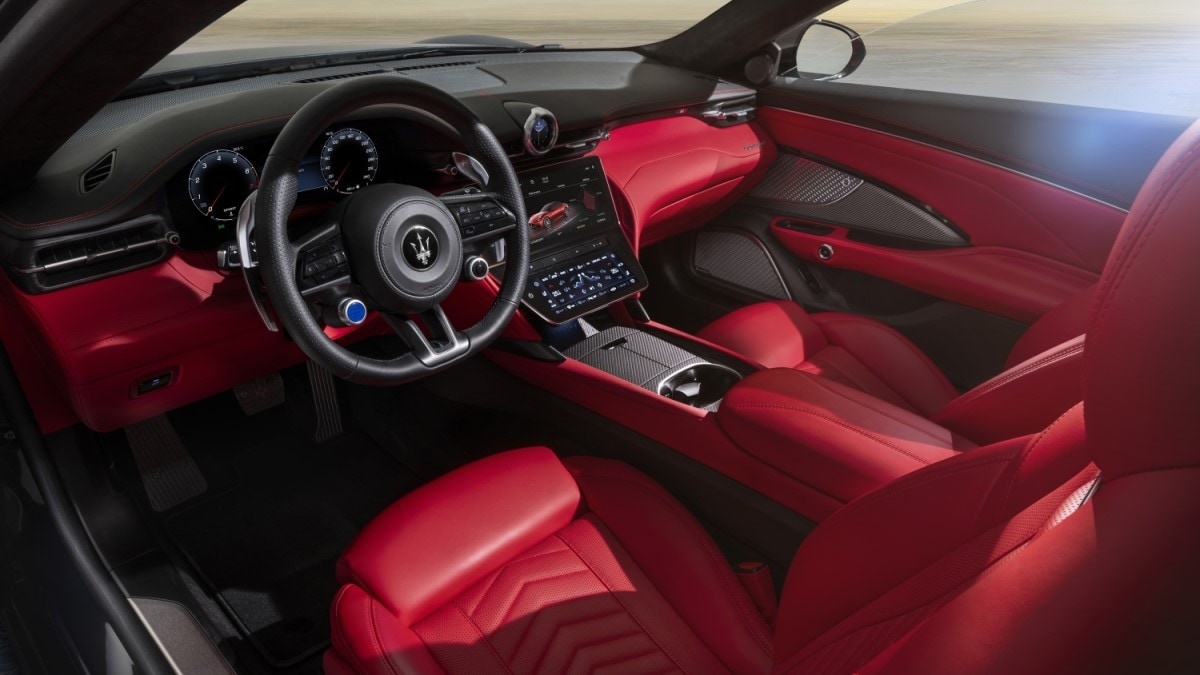
The 2024 Maserati GranCabrio takes the svelte, muscular body of the recently redesigned GranTurismo and opens it to the sunshine. It’s as gorgeous as it sounds. The three classic Maserati portholes on each front fender call back to the brand’s heritage.
At launch, Maserati will offer it only in Trofeo trim – traditionally the brand’s most expensive and exclusive grade. It features the brand’s 542-horsepower 3.0-liter twin-turbo Nettuno V6 engine. Power goes through an 8-speed automatic transmission to all four wheels.
The company hasn’t discussed pricing. But the equivalent GranTurismo Trofeo starts at $191,995 (including the mandatory $1,995 destination charge). Convertibles cost more to build, so we anticipate pricing over $200,000.
Zero to 60? We Don’t Know. But the Top Goes Down Fast
Maserati hasn’t published performance figures. The equivalent GranTurismo version gets from 0-60 mph in a little over 3 seconds, but the GranCabrio weighs more thanks to the additional bracing necessary to make a soft-top handle well, so we expect you’ll pay a slight time penalty.
You won’t care. The fabric top goes down in just 14 seconds and can be lowered at up to 31 mph. Lowering it reveals four sport seats in quilted leather. Front passengers get built-in neck warmers. Rear passengers get woofers built into the seats with either the standard 13-speaker Sonus Faber sound system or the optional 16-speaker version.
We anticipate lower trim levels soon after. Maserati, like most brands, is also in the process of going electric. So a battery-powered equivalent to the extraordinary GranTurismo Folgore, with its 750 horsepower, could appear later.
Interest in new AI applications reached a fever pitch last year as business leaders began exploring AI pilot programs. This year, they’re focused on strategically implementing these programs to create new value and sharpen their competitive advantage.
GTC, NVIDIA’s conference on AI and accelerated computing, set for March 18-21 at the San Jose Convention Center, will feature leaders across a broad swath of industries discussing how they’re charting the path to AI-driven innovation.
Execs from Bentley Systems, Lowe’s, Siemens and Verizon are among those sharing their companies’ AI journeys.
AI Takes Center Stage in Enterprise Technology Priorities
Nearly three-quarters of C-suite executives plan to increase their company’s tech investments this year, according to a BCG survey of C-suite executives, and 89% rank AI and generative AI among their top three priorities. More than half expect AI to deliver cost savings, primarily through productivity gains, improved customer service and IT efficiencies.
However, challenges to driving value with AI remain, including reskilling workers, prioritizing the right AI use cases and developing a strategy to implement responsible AI.
Join us in person or online to learn how industry leaders are overcoming these challenges to thrive with AI.
How Lowe’s Is Driving Innovation and Agility With AI, featuring Azita Martin, vice president of artificial intelligence for retail and consumer packaged goods at NVIDIA, and Seemantini Godbole, executive vice president and chief digital and information officer at Lowe’s.
Generative AI as an Innovative Accelerator in Telcos, featuring Asif Hasan, cofounder of Quantiphi; Lilach Ilan, global head of business development, telco operations at NVIDIA; and Chris Halton, vice president of product strategy and innovation at Verizon.
Accelerating Aerodynamics Analysis at Mercedes-Benz, featuring Liam McManus, technical product manager at Siemens; Erich Jehle-Graf of Mercedes Benz; and Ian Pegler, global business development, computer-aided design at NVIDIA.
Advancing the Energy Transition With AI-Powered Innovation, featuring Nefeli Moridis, developer relationship manager of subsurface, global energy team at NVIDIA; Owen O’Connell, senior vice president and chief information officer, services and operations at Shell; and Marc Spieler, senior managing director of energy at NVIDIA.
McLaren’s successor to the P1 hypercar will be revealed at the end of the year with gullwing doors and a V-8-based plug-in hybrid powertrain, Automotive News (subscription required) reported on Wednesday, citing dealer sources.
The described powertrain is similar to what McLaren used for the P1, though a lot more power than the P1’s 903 hp is expected. Roof-mounted gullwing doors would be new for McLaren whose cars have traditionally featured doors mounted near the base of the A-pillars, a design known as butterfly doors.
The new car, which carries the P18 codename, will be the next installment in McLaren’s Ultimate Series, which in the recent past has been augmented with the arrival of the Speedtail grand tourer and Elva speedster.
A report from last year suggested the car will arrive in 2026. Porsche is expected to launch an electric hypercar around that time, and there are already electric hypercars on sale from Lotus, Pininfarina, and Rimac.
McLaren logo
However, McLaren isn’t ready to launch an electric hypercar just yet. The company has been testing EV technology since at least 2017 and has been consistent with the stance that the tech won’t be ready for supercar and hypercar applications until the of the decade, mainly due to EVs not being able to deliver sustained performance on the racetrack.
Ferrari is also expected to launch hybrid successor to its LaFerrari, prototypes for which are out testing, and Bugatti this week announced a V-16 hybrid successor for the Chiron. The Bugatti will be revealed in June and the Ferrari is also tipped to debut this year.
Other details mentioned in the Automotive News report include a hybrid system around 70% lighter than McLaren’s current technology, a newly developed carbon-fiber tub with seats mounted to the tub for improved rigidity and reduced weight, and a Formula 1-inspired design. Recessed headlights, like those found on the Artura and 750S supercars, are also reported to make the cut.
The P1 was heralded as the successor to the legendary F1, though McLaren gave that particular honor to the more recent Speedtail. Meanwhile, the designer of the F1, Gordon Murray, has launched his own successor to the F1 in the form of the T.50 supercar.
The technical storage or access is strictly necessary for the legitimate purpose of enabling the use of a specific service explicitly requested by the subscriber or user, or for the sole purpose of carrying out the transmission of a communication over an electronic communications network.
Preferences
The technical storage or access is necessary for the legitimate purpose of storing preferences that are not requested by the subscriber or user.
Statistics
The technical storage or access that is used exclusively for statistical purposes.The technical storage or access that is used exclusively for anonymous statistical purposes. Without a subpoena, voluntary compliance on the part of your Internet Service Provider, or additional records from a third party, information stored or retrieved for this purpose alone cannot usually be used to identify you.
Marketing
The technical storage or access is required to create user profiles to send advertising, or to track the user on a website or across several websites for similar marketing purposes.