The report, based on anonymous sources familiar with the matter, claims Nissan is in “advanced talks” to invest in Fisker, with a deal possibly closing later this month. Terms reportedly being discussed include a $400 million investment toward development of the Alaska, with production at a U.S. Nissan plant starting in 2026. Nissan would then “build its own electric pickup on the same platform” according to the report.
Fisker Alaska electric truck concept
Such a deal could be a lifeline for struggling Fisker. The company on Thursday announced that it was seeking a potential partnership with a large automaker that could include investment, development of one or more EV platforms, and North American manufacturing. This came in Fisker’s 2023 fourth-quarter earnings report, where the company also expressed doubt that it could continue as a going concern without further investment.
Fisker’s only current model is the Ocean electric SUV, which is manufactured by Magna in Austria. Production began in November 2022, but deliveries have proceeded at a slow pace due to a number of issues. In its earnings report, Fisker said it aims to deliver 20,000 to 22,000 Oceans in 2024. Many of those will be channeled through franchised dealerships, which Fisker is now pivoting toward after initially attempting a pure direct-sales model.
Fisker Alaska electric truck concept
First teased in 2021, the Fisker Alaska was fully revealed last August alongside the circa-$30,000 Pear urban EV and the $385,000 Ronin flagship GT. Fisker at the time said the Alaska targeted a base price of $45,400 and 230 miles to 340 miles of range. The company also claimed that the Alaska would be the lightest electric pickup in production.
As shown in 2023, the Alaska was based on a stretched version of the Ocean platform. But CEO Henrik Fisker previously told Green Car Reports not to assume that Magna would also build it. Indeed, the company has said since its unveiling the Alaska would be U.S.-built. And now it may have found a way to make that happen.
After the long winter break, the Formula 1 World Championship returns this weekend with the Bahrain Grand Prix at the Bahrain International Circuit.
The 2024 season doesn’t bring much in the way of new car designs or new drivers, but fans can look forward to a record 24 races. Three of those races will be held in the U.S. alone, just like last year.
The Bahrain International Circuit is a permanent fixture on the F1 calendar and for the past three seasons has hosted the opening round. It is located on a former camel farm in the desert area of Sakhir, and to minimize sand blowing onto the track, the surrounding desert area is sprayed with a sticky adhesive substance.
The 3.36-mile track is one of the most abrasive on the calendar. It consists of 15 corners delivering a mix of low, medium, and high speeds, plus three long straights, two of them designated as DRS zones. Turn 1 is usually the best overtaking opportunity, where the cars brake hard from over 186 mph before diving into a tight right-hand turn, then switching to the left-hand side of the track for a section of corners. Turn 4 is another passing point, before the tighter second and third sectors, with the next DRS straight leading into Turn 11.
Bahrain International Circuit, home of the Formula 1 Bahrain Grand Prix
Engine performance, traction out of the corners, and stability under braking make up the technical challenges here. In addition, due to the abrasiveness of the track, tire degradation also plays a crucial role. Pirelli has nominated its hardest tire compounds for the race: C1 as the white hard, C2 as the yellow medium, and C3 as the red soft.
Weather conditions appear to be mild, with the peak temperature expected to hover around 72 degrees for the race, which will take place on Saturday instead of the usual Sunday. This is to maintain a one-week gap before the next race on the calendar, the Saudi Arabian Grand Prix, which is also being run on a Saturday to avoid a clash with the start of Ramadan.
Following three days of testing last week, which also took place at the Bahrain International Circuit, the consensus is that reigning champion Red Bull Racing is still very much the team to beat. Mercedes-Benz AMG has also shown impressive pace and will likely be the team that offers the greatest competition for Red Bull.
All eyes will be on Red Bull’s Max Verstappen, who won in Bahrain last year and is chasing his fourth straight title. Mercedes’ Lewis Hamilton also returns for an attempt at a record eighth title, and his last season at Mercedes. He’s already confirmed a switch to Ferrari in 2025.
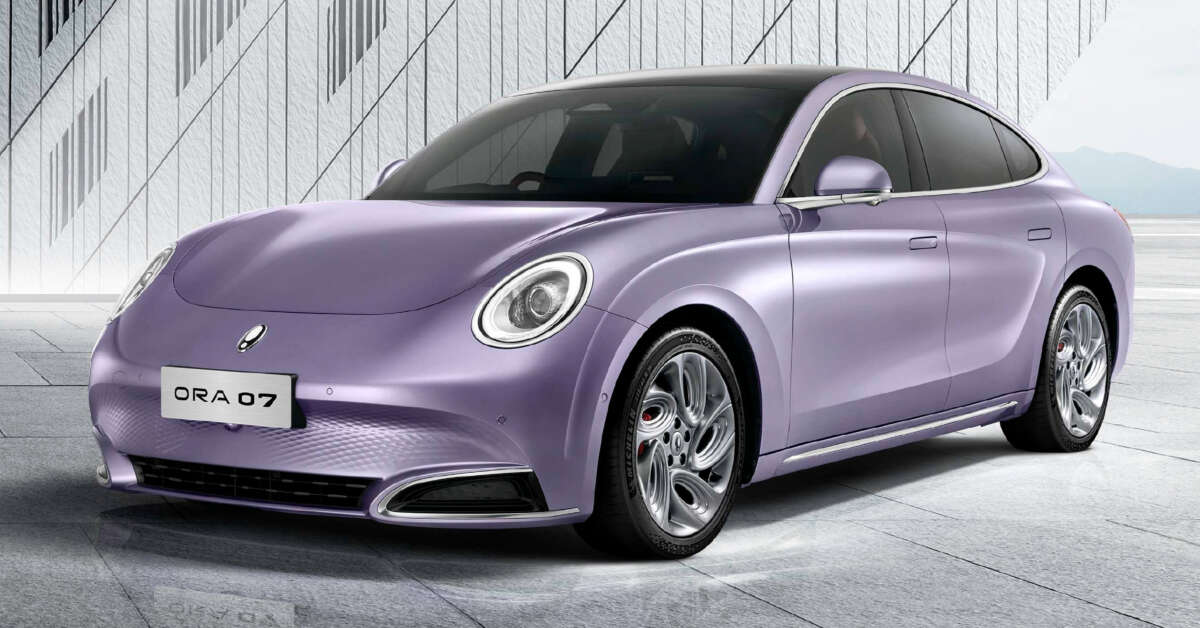
Great Wall Motor Malaysia (GWM Malaysia) has announced that the Ora 07 – known elsewhere as the Grand Cat or Lightning Cat – is now available for booking in the country, through authorised dealers nationwide.
Launched in Thailand last month, the Ora 07 is set to come to Malaysia also in two variants – the Long Range, with a front-mounted 204 PS/340 Nm motor, and the Performance, with a dual-motor AWD powertrain with 408 PS and 680 Nm, enabling a 0-100 km/h sprint in 4.3 seconds.
The announcement from GWM Malaysia quotes a battery range of 640 km for the Long Range variant, which matches the car’s NEDC figure as quoted for the Thailand market car. In Thailand, both variants of the Ora 07 are specified with an 83.5-kWh ternary lithium battery.
Exterior equipment for the Ora 07 will include intelligent LED headlamps, frameless windows, panoramic glass roof and an adaptive electric rear spoiler, according to GWM Malaysia. Interior kit, though not specified, could take after the Thai-market specfication, where the base Long Range gets a 10.25-inch digital instrument cluster, wireless charging pad, 12.3-inch touchscreen with Android Auto and Apple CarPlay, and 11-speaker audio.
GWM Ora 07, Thailand market
The Ora 07 will be outfitted with advanced driver assistance systems including lane departure system, lane keeping assist, blind spot detection, intelligent evasion, traffic sign recognition, and more, according to GWM Malaysia.
Pricing for the Ora 07 in Malaysia has yet to be revealed, though as reference the EV in Thailand is priced from RM175k to RM202k, for the same two powertrain variants that will be coming to Malaysia.
Here, the Ora 07 will be offered in three exterior colours – Crystal Purple, Amethyst Gray and Jade White. GWM Malaysia states that customers who make their bookings from today will receive a limited-time offer of a five-year free maintenance package, inclusive of parts and labour.
With the 2024 Bahrain Grand Prix having just concluded early Sunday morning, motorsports fans may now be looking for something to fill their day today. Thankfully, the Malaysian racing season is also kicking off this weekend, as the Malaysian Speed Festival Racing Series (MSF Racing) returns to the Sepang International Circuit today, March 3, 2024.
Billed as the country’s biggest circuit racing series, MSF Racing continues to consist of two main series – MSF SuperTurismo for touring cars and MSF SuperBikes for superbikes, both running on the same day. A total of six rounds will be held this year, each on different circuits and running different race formats.
MSF Racing says that MSF SuperTurismo features the biggest touring car grids in Malaysia, and this latest edition will feature drivers from all around the region, including from Indonesia, Singapore, Thailand and the Philippines.
What’s more, there will be two new car racing categories this year, including the Vision-HKS GT86 x BRZ Racing Cup for Toyota and Subaru’s popular sports car twins, as well as Rennplatz Standard Production MAX. MSF SuperBikes will also introduce a new race series this year in the form of MSF SuperSport, designed for sports bikes with mid-sized engine capacities.
This category, limited to local riders only to foster homegrown talent, allows four-cylinder engines from 400 to 600 cc, three-cylinder engines up to 800 cc and two-cylinder engines up to 955 cc. MSF SuperBikes will also feature a revised lap-time bracket formula, designed to allow riders of all skill levels to race. For 2024, the system will have allowances for lap-time improvements throughout the year, as riders skills and performances improve through experience.
MSF SuperTurismo will kick off with a 45-minute sprint race on the full Sepang Circuit at today’s round 1, followed by two 20-lap super-sprint races – round 2 at the Sepang South Circuit half track and round 3 at the North Circuit. Meanwhile, MSF SuperBikes will feature two rounds – two five-lap sprint races on the full circuit today, as well as a 20-lap sprint race at the Sepang North Circuit in June.
As usual, there’s no need to buy a ticket to enjoy the racing, as access to the Grandstand is free of charge throughout the weekend. Passes to the racing paddock, on the other hand, cost RM35 and may be purchased at the paddock entrance.
McLaren upgraded the 720S and rebranded it as the 750S in the process, and we just tested the result. The basic formula stays the same, but almost every major aspect has been enhanced in some way, including power output from the familiar twin-turbo 4.0-liter V-8.
Mitsuoka has been around since the 1960s, and has built a reputation over the years for turning mundane vehicles into retro designs that definitely stand out. Its latest project is a Honda Civic hatchback that resembles the original Dodge Challenger, production of which has just been given the green light.
While Jaguar never put its C-X75 concept from the 2010 Paris auto show into production, a few examples were built as stunt cars for 2015’s James Bond flick “Spectre.” One of those stunt cars has been modified to pass certification for road use in the U.K., and the modification work was handled by the company founded by the C-X75’s designer.
You’ll find these stories and more in today’s car news, right here at Motor Authority.
In the center of Hokkaido we find the possibility for bottomless powder and nostalgic chairlifts that deliver beginner & expert skiers and snowboarders to a landscape of fluffy powder and beautiful views.
Here is an overview:
The quintessential JAPOW experience in one image.
Before you board the chairlift at one of Asahikawa’s ski resorts, you will be surprised. Surprised by the for European and North American ridiculously cheap prices:
For example, at Pippu Ski Area a Day Ticket costs less than 20€ – and that includes a visit to the Onsen next to it!
A Family pass for one adult and one child incl. the Onsen visit costs exactly the same, and a Season Pass at Pippu costs a mere 275€ – for comparison, if you go ski in Vail or Aspen a one Day Ticket at the Weekend will cost nearly that much. Needless to say, going skiing in Japan is very affordable, if you go for a few days or even the whole season, you will not need to take out a loan the same way you might have to if you go skiing in Switzerland, Austria or the USA.
Which way?! Sign at the Asahikawa’s ski resorts.
Arriving in Asahikawa
On a rainy day last autumn I received an Email which invited me to go skiing in the Asahikawa area. I love skiing, I love Japan and being invited to go skiing in the home of deep powder in the prime season is indeed a dream come true. I didn’t lose a second to reply, and on a sunny day in late January I boarded my plane in Vaasa which would take me first to Helsinki, then onwards to Tokyo and Asahikawa.
In Asahikawa I caught the last Bus to the center, from which it was five minute walk to my Hotel.
When I arrive in Japan my evening routine is simple: Go eat Ramen, head to the Onsen and then off to bed.
Luckily Ramen Santōka, the best Ramen Restaurant in Asahikawa, was still open and was not out of soup (which happens, as I had to experience later that week!) and so I sat down with a delicious bowl of Ramen and was in culinary heaven. After that I made use of the Onsen at the Hotel, which was so relaxing that I slept fantastic.
The next morning I was ready to explore Asahikawa on foot. I have spent a few days in this vibrant city last fall, which you can read about here, so it was nice to see the city in white with lots of snow.
In the afternoon I then met my companions for this trip: Bernard, Jordan, Chihiro, Yuki and Yohei. Together we went through the program of the next few days and then went to have dinner together at the local Craft Beer Brewery Taisetsu Ji Beer.
This is a Jingisukan Restaurant, where you grill your own food. It’s quite popular in Japan and definitely something every traveler to Japan should try!
As we have a sweet tooth, Jordan took us to her favorite Café: Switch Flavor. This is a must visit when you’re in Asahikawa as not only is it completely unique with a gorgeous décor, they also make delicious cakes and desserts.
Asahikawa on a snowy day.
Pippu Ski Area: Easy Side Country with a traditional Onsen finish
You know it’s gonna be a good day when big, fluffy snowflakes are pouring down from heaven.
We went to explore Pippu Ski Area today and after a few warm up laps on the blue and red slopes our small group went into the side country just off the big chair lift. Even in the afternoon we still found some sweet pockets of Japow (Japan Powder) and coming back onto the Strawberry slope everyone had big smiles – time to go for another sidecountry run!
Like any good ski resort you have a few Lunch options at Pippu, and I went for the local trout and rice bowl and a Miso soup. The trout for this dish was caught nearby, and the rice was from Hokkaido – a delicious and healthy dish which had me ready for a long afternoon of more skiing!
Chairlift with a view at the Pippu Ski Area.Fun and easy slopes are this way!
I visited Pippu later this week on my own and put on my skins to head off into the easy powder tree runs which start just a 10 minute hike up the mountain.
The landscape here was magical, like out of a Studio Ghibli movie: Beautiful trees covered in lots of snow, and a serene landscape covered in this wonderful dry, fluffy snow which skiers and snowboarders travel to Japan for from across the globe.
These powder runs are easy, fun, safe and you end up back on the slope after your forest run, from where you can take a chair lift back up to head into the forest again.
Funnily enough I met two Instagram friends from Finland that day at Pippu – image our common surprise when we realized that we meet 8.000 km from home instead of a Finnish ski slope!
Happiness is a skin track in a snowy forest.
The Bottomline is that Pippu Ski Area is fantastic for both absolute beginners and more advanced skiers who want easy access to the side country.
Pippu has a Ski School and during my visits the local students were skiing with their schools here, and I absolutely loved their laughter of joy when they were skiing down the slopes.
The weather can change quickly throughout the day, from snowing heavily to sunshine and far views in minutes.
The Bus ride to Pippu costs 650 Yen and takes about an hour from Asahikawa, and of course the best thing about Pippu Ski Area – apart from the skiing – is that you can go soaking in the Onsen next to the ski resort, literally a 2-minute walk from the main chair lift! I would go here with the family in a heart beat, or with friends who want to ski easy powder runs without skinning up the mountain.
Pippu Ski Area is a small gem that’s always worth a visit.
Skiing at the Home of Fluffy Powder: Kamui Ski Links
Kamui Ski Links is the biggest ski resort around Asahikawa – but the day pass costs a mere 23€ and some cents! This gets you access to the Gondola and five double chair lifts, as well as their 25 groomed, super-wide slopes.
There’s several things which Kamui is renown for – their fluffy, dry powder snow is one, of which they get on average 8 meters per year. So much powder means there’s amazing side country runs at Kamui, and if you head to the Northern Slopes you can experience it even within bounds of the ski resort. This ski resort has a handful of ungroomed powder runs inbound, which means you can access them from the slopes and come out back at the Gondola.
I tried some of their more advanced black runs through the trees, and they were super fun and not too hard – ideal for people who want to learn powder skiing in safe conditions.
Speaking of learning: We had Ryoji Mizutani with us in the morning, one of the official Kamui ski guides. He showed us the best runs of this little gem, and answered all our questions. I met Ryoji later in the week when I was skitouring on Sanpou-San in the Tokachi Mountain Range of the Daisetsuzan National Park – more on that in a bit – and he’s a wonderful guide, who in the summer is working on his own Lavender Farm!
Kamui is the largest Ski Resort in the area and the “Home of Fluffy Powder”!
There’s several busses going from Asahikawa to Kamui every morning, the bus ride takes around an hour and it’s 700 Yen one-way. Be sure to be on time – though in case the bus is full, there will arrive a replacement bus some 10 minutes later.
The bus leaves from Kamui in the afternoon starting at 14 o’clock and takes again an hour and costs the same. If you go by bus you should have 700 Yen in coins with you, or a 1.000 Yen bill – that’s the biggest bill which is accepted, and you don’t wanna be the foreigner with a 10.000 Yen bill who can’t pay his bus ride. 😁
Kamui should be on your must-visit list when you head to Japan to ski.
It’s has a mere 92.000 visitors per year, which means even on a busy Sunday you won’t stay in line to the Gondola longer than five minutes. Or if you’re there by yourself, even shorter – as they have a line for singles who are happy to join a not fully occupied Gondola. This is something I wish European ski resorts also would offer, because nothing is more annoying than standing in a long line and seeing Gondolas not riding at capacity!
Did I mention the amazing snow and the super-wide slopes, which mean that even on a busy Sunday it feels like you’re there on a Monday morning? The great side country and tasty Pizzas on the Top? A Fischer Rental Base which lets you rent the latest equipment?
Good – now you will visit Kamui Ski Links on your next trip to Japan!
Super-wide slopes and even on a busy day you have all the space you need!The Northern Slopes are for experts and have a lot of powder runs.
With the Gondola up Asahidake
Mount Asahi (旭岳, Asahi-dake) is a mountain located near the town of Higashikawa and the tallest mountain on Hokkaido with an elevation of 2.291 m.
There’s a Gondola which operates every 20 minutes in winter, and it can get VERY busy on powder days – so you want to be there early to avoid the lines. I visited the mountain with Jordan and our Guide Suzuki Yoshihiro.
Suzuki-San took us to the fumaroles, then we had a tea break at the Asahidake Refuge (旭岳石室) and then skied back to the Sugatami top station. I had all my skitouring gear with me, so Suzuki-San and me went down the Intermediate course to the bottom station of the ropeway. Obviously along the way we headed into the safe side country, and JAPOW was enjoyed with big smiles!
A JApanese POWder Dream.
Asahidake has groomed runs from the Sugatami top station back down to the Ropeway, and the easily accessible side country is what attracts heaps of skiers from across the globe and Japan here.
However, you should only head here into the powder side country when you have a beacon, shovel, probe and preferably even an Avalanche Airbag with you, and know how to use them.
The top of Asahidake can get up to 13 m of snow per year, and it’s a serious mountain – the day I visited it was -15°C, and with windchill it felt like -26°C – and this was at the bottom, so at the top station it was substantially colder – and a lot windier, too! Additionally because of the easy access and the heaps of snow there’s often a high avalanche danger, so don’t go alone and never without the right gear!
A Big Mountain Day on Asahidake
As we had both the gear and time we went up once more, and again it is amazing how conditions can change in a short amount of time and elevation: While it were white-out conditions with high winds at the top, a few hundred meters down the mountain there was sunshine and great views.
I absolutely loved this little excursion to Asahidake, also as we stayed in the Bear Monte Hotel right next to the Ropeway Station, which had massive rooms and a super-tasty Buffet.
Between the Hotel and the Ropeway Station is the Asahidake Visitor Centre which is a beautiful Museum – and free, too! I learned a lot in it, and got inspired about future trips to the region – plan in a visit when you head to Asahidake.
Sees a lot of snow and few visitors: The Asahidake Visitor Centre in winter.
On my rest day I went to visit the lovely town of Biei, which is well known for the Shirogane Blue Pond, the Shirahige waterfall, Seven Stars Tree and of course the Zerubu-no-Oka flower fields – which now in the winter were simply very beautiful rolling hills covered in snow.
I explored together with Hattie, from Dohoku Local, the river side in Biei on snowshoes, which was a very easy and relaxing adventure. The snowshoeing along the shore of the river was super enjoyable, and Hattie was very knowledgeable about the flora, fauna and history of the area.
As I had to catch my ride back to Asahikawa we walked with our snowshoes in hand back to town, with a short stop at the Shiki-no-tou Tower from which you have an amazing view over this little town of barely 10.000 inhabitants. To round things out, I also had a delicious soft serve ice cream before heading back to Asahikawa!
Seeing the best of Biei with Hattie.
A skitouring visit to Daisetsuzan National Park
On my last day in Japan I was in for a treat: A long skitouring day on Sanpou-San in the Tokachi Mountain Range of the Daisetsuzan National Park, together with Yukinori Otsuka and Yosuke Noto – both are ski and mountain guides, and Yukinori is also a very talented photographer.
Our day started very early in Asahikawa, from where we drove for around an hour to the start of our skitour at the Tokachidake Onsen.
It does not get better than this: Skitouring in Japan
Skitouring here requires the proper equipment and you shouldn’t head out on this mountain without a beacon, probe and shovel. The Approach is around 30 m down a nearly 75° slope, after which we put the skins on and hiked for an hour.
The sky was blue, the sun was shining, it was a freezing -26°C but all three of us had big grins as it was absolutely perfect, the kind of day you dream about when you plan and imagine a trip. We had many first powder lines this day, put our skins on and off half a dozen times, and saying that it was a great day would be an understatement.
Few things are better than first turns in deep powder.
We saw a few other groups throughout the day, but the fact that we made first powder turns on every descent gives you an idea that this is a big mountain with plenty of space for everyone.
Bring your avalanche kit, food and drinks for a long day out – and enjoy, this was about the best skitouring you can have in Japan!
Happiness is first tracks!Yukinori-San just as happy as me and Noto-San!
Practicalities: Where to Sleep, Eat and Ski
If you want to be online with your phone while in Japan, get an eSim from Airalo. It works a treat and allows you to use Google Maps, Translate and everything else for as little as 3$/ GB. I recommend their 5 GB Package if you stay less than two weeks, and then simply top-up your account as needed. Use the Code HENDRI0415 to receive 3$ to get you started!
Flying to Japan is super-easy and you can also fly directly to Asahikawa, which has one of the most-reliable Airports in Japan. You can find the best connections from your home airport via Trip.com.
Pro-Tip: Add in a couple of days in Tokyo on the way home – see our Tokyo Tips here!
Flying into Tokyo at night is always an exciting moment.
Use Booking.com to find the perfect Hotel for your stay in Asahikawa and book it right away.
I can highly recommend the Hotel WBF Grande Asahikawa which has spacious rooms for all your ski gear, a fantastic Onsen and a very tasty breakfast buffet.
The AMANEK Asahikawa is the newest Hotel in Asahikawa and is right off the Main Street and a 2 Minutes walk to the railway station.
The OMO7 Asahikawa (https://booking.tp.st/PxlVjSZl) is a proper ski hotel in town and has it’s own shuttle service, and is also very child-friendly – the ideal choice if you go with the family to ski in Japan!
If you’re going to Asahidake and want to stay close, then you can’t get closer than the Bear Monte (https://booking.tp.st/68lJNssb). It’s a three minute walk to the Ropeway Station and I absolutely adored the large library which was very inviting, with many interesting books and comfy chairs and sofas.
The library at the Bear Monte Hotel is worth a visit.
Tracy Lenard from Niseko Mountain Guides, https://www.nisekomtnguides.com/ offers week long excursions and will ensure that you have a fantastic powder holiday.
There are so many super-tasty Restaurants in Asahikawa that I only list my three favourites:
Ramen Santōka is the Best Ramen Shop in town. I absolutely LOVE their Ramen – they are so tasty that my mouth is watering right now, just thinking about them!
If you want to splurge on Dinner and want a traditional Japanese experience then you have to visit HATAGO. Have a Japanese friend help you make a reservation as it’s very popular, and then make sure to try the Sashimi which were godly.
Finally, Switch Flavor is a Café which offers the most tastiest treats, from Parfaits to cheese cake and more. This place is absolutely gorgeous and ideal for couples who want a romantic Café!
Mouth-watering food!
Presenter and Videographer – Born in Germany Hendrik moved to Finland over 20 years ago, where he hikes, skis and climbs. He likes sustainable travel and loves to go on by-fair-means adventures around the world, which he documents with his camera and pen.
Designer Chip Foose recently stopped by Jay Leno’s Garage to pore over one of the most controversial projects he’s ever been involved in: the Plymouth Prowler.
The Prowler shocked the automotive world when it entered production as a 1997 model. While Plymouth had telegraphed the two-seater with a 1993 concept car, it was still surprising to see its hot-rod-inspired styling on a car actually being sold at dealerships—particularly those of then-declining Plymouth. That styling was definitely of the love-it-or-hate-it variety, but the Prowler lasted until the 2002 model year, ending its production run as a Chrysler following the death of Plymouth.
While he didn’t design the finished product, or have any influence on the decision to get the car into production, Foose helped lay the groundwork for the Prowler’s design. Then a student at California’s Art Center, Foose presented the idea of a retro model to then-Chrysler design boss Tom Gale, in response to a prompt to create a new niche vehicle.
In the video, Foose says his rationale was that many hot rod and muscle car enthusiasts wanted to combine the classic looks of older cars with new technology that would allow them to be used every day. One of his proposals, based on a 1930s Plymouth hot rod, caught the eye of Gale, who pushed for the Prowler to become a production car.
The production car kept many of the wilder elements of Foose’s proposal, including cycle fenders covering 20-inch wheels that were gigantic at the time. But it was let down by uninspiring mechanicals, including an automatic transmission and 3.5-liter V-6 shared with other Chrysler models. The V-10 from the Dodge Viper also being sold at the time probably wouldn’t fit, but there is room for a V-8 under the hood, Foose notes.
The driving experience doesn’t provide the same level of excitement as the styling, but the V-6 provides a reasonable 253 hp, and Leno was impressed by the lack of cowl shake. It’s hard to say if the Prowler is sports-car-level fun, but the cramped cockpit and tiny trunk are definitely sports-car-level impractical.
These factors, combined with a relatively high price (about $32,000 in the late 1990s) limited the Prowler’s appeal, but the lack of a V-8 was likely the biggest turnoff, Foose believes. Attitudes may have changed over time, though. The stigma against V-6 engines has abated somewhat, and the Prowler has even been tipped as a solid collector-car investment by insurer Hagerty.
McLaren this week revealed the Artura Spider. In addition to its open-top design, the car packs an extra 19 hp, which McLaren has also added to the Artura coupe. It means total output is now a stout 690 hp for both cars.
2024 McLaren 750S first drive, Las Vegas, February 2024
Another McLaren in the headlines this week was the 750S, the updated version of the 720S. The basic formula stays the same, but almost every major aspect has been enhanced in some way, including the horsepower rating.
2025 IM L6
New Chinese EV brand IM used this week’s 2024 Geneva auto show to debut the L6 compact sedan. The L6 has was revealed with the choice of lithium-ion and solid-state batteries, and a company spokesperso said that both batteries are expected to be available when the L6 starts sales in 2025.
2025 Renault 5 E-Tech
Renault used the 2024 Geneva auto show on this week to present the 5 E-Tech hatchback. As the name suggests, the vehicle is a modern take on the Renault 5 hatch, a vehicle that was sold briefly in the U.S. as the Le Car.
2026 Mercedes-Benz AMG GT 4-Door Coupe EV spy shots – Photo credit: Baldauf
Mercedes-Benz AMG has been launching tuned versions of Mercedes-Benz’s EQ EVs over the past couple of years, but soon it will launch its first dedicated EV. A prototype was spotted this week, revealing the EV as a sleek four-door not unlike the Vision AMG concept car unveiled in 2022.
2024 Maserati GranCabrio
A redesigned Maserati GranTurismo went on sale last spring. Eventually the coupe will be joined by the GranCabrio, which Maserati revealed this week.
Mitsuoka team with the M55 concept
Mitsuoka has been around since the 1960s, and has built a reputation over the years for turning mundane vehicles into retro designs that definitely stand out. Its latest project is a Honda Civic hatchback that resembles the original Dodge Challenger, production of which was given the green light this week.
Jaguar C-X75 concept street-legal conversion by Callum
And finally, Jaguar’s stillborn supercar, the C-X75, came to life this week. While Jaguar never built any of the cars, a handful were built by WAE as stunt cars for a James Bond flick, and now one of those stunt cars has been modified to pass certification for road use in the U.K.
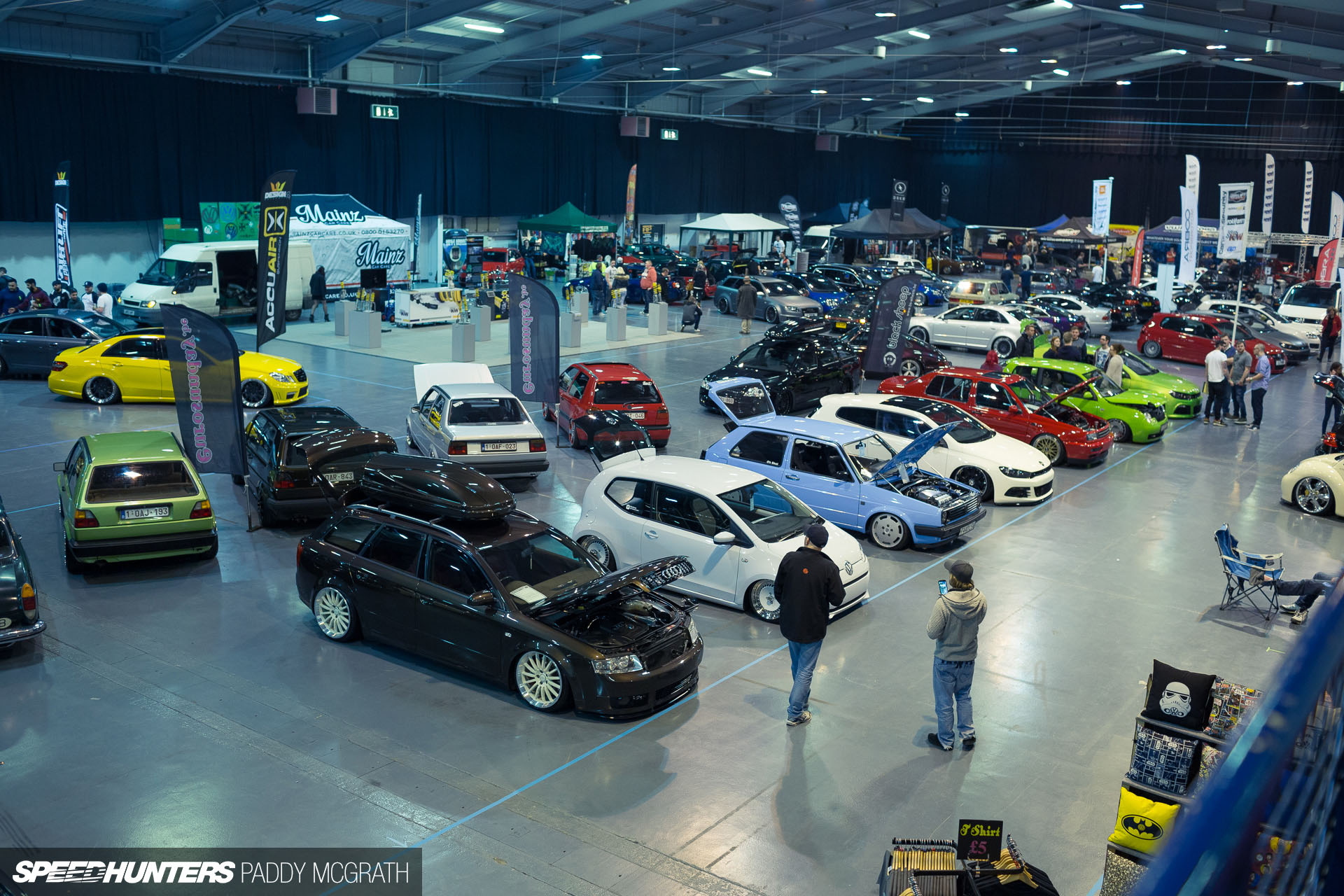
In a couple of weeks’ time, the 2024 edition of Ultimate Dubs will once again bring the cream of UK’s VAG enthusiast scene together at the Telford International Centre. We’ve covered this event many times in the past and will be continuing the tradition this year with Mario back on the ground in Telford on Sunday March 10.
Mario’s coverage from last year’s event should give you an idea of what to expect from Ultimate Dubs 2024, but for this week’s Throwback post, we’re winding back the clock a decade and revisiting Paddy’s spotlight-o-rama from Ultimate Dubs 2014. While some things stay the same in the Dub world others change as trends come and go and tastes evolve, so it would be great to know where these cars are now, 10 years on.
2014 Feature
When choosing a selection of cars from a show, it’s quite difficult to find a balance. Being Ultimate Dubs, this post could easily be filled with Golfs alone, but as is the Speedhunters way, we try to find things that are maybe a little bit different. You know, the cars that are sometimes tucked away in the corner, or the ones that are maybe overshadowed by some of the bigger builds.
Of course, we start with a Golf, but not just any Golf.
Rotiform teamed up with Players and Euro Magic to bring us only the second Euro Magic-kitted Golf MkII on the planet.
It’s a look that suits the MkII well and provides an alternative to the G60 arch extensions. Sticking with their own rolling stock, 15-inch Rotiform USFs sit tucked thanks to Air Lift Performance suspension.
The overfenders are period inspired and look, dare I say it, rather timeless against the white bodywork. Definitely one of the more subtle over-arch applications.
The rest of the exterior has followed the subtle approach too; even the chin spoiler could easily be missed on first look.
In the mint engine bay currently resides a DOHC GTi engine, but I’ve a feeling that’s probably not going to stay that way for too long. The car was just about finished in time for the show and drove there under its own power, so I think there’s still plenty more to come from this particular Golf.
Of course, Ultimate Dubs is not just about the VW brand. One of the cars that really stole my heart was this concours-quality Audi Ur-Quattro.
The car has been restored to completely stock using new panels where required and repainted in Tornado Red.
The famous five-cylinder engine is still under the hood. The 2.1-litre 10V motor produces around 200hp and 210lb-ft, which doesn’t sound like a whole lot, especially compared to its rally brethren, but this was a mighty amount of power in the 1980s.
The interior, to fail avoiding the old car journalist cliché, was like going back in time. Digital clocks have never look better.
The owner, Lee, filled me in on the details of the car and even remarked about the digital dashboard’s electronic voice synthesiser which talks to the driver over the car’s radio to advise of any issues.
In keeping with the theme of the car, the original Ronal wheels were refurbished and powder-coated white. It’s funny how a completely stock car is the one that leaves a lasting impression. I’ve been stuck in the classifieds ever since, dreaming of finding one…
Well, I could hardly make it through the halls without finding a Golf MkI on BBS splits, but this is a great example of why it’s such a timeless recipe.
The immaculate clean and smoothed bay has what I believe to be a 2.0-litre 16V on twin Dellorto carburettors. It almost feels like the words ‘clean’ and ‘smooth’ just don’t do this any justice. Can you imagine the amount of work involved in cutting, welding, filling, smoothing and painting to get it to this stage, let alone relocating wiring and hiding everything possible?!
I couldn’t find evidence of an air suspension install, so will just have to assume it’s static. I quite like the tucked look; certainly I find it more appealing than poke.
Porsche door handles are quite a common change. Subtle, but a nod towards just how vast and all-conquering the VW family is.
It would appear that same attention has been carried out through every nook and cranny on this car. I’d love to see it up on a lift, wheels off, to get a proper look at it. The interior in particular was special – a mixture of leather and suede, colour-coded to the exterior.
It might not be for everyone, but I can’t get it out of my head just how much work is involved in getting a car to this standard. For that alone it deserves some respect.
At the complete opposite end of the spectrum, and yet still equally enjoyable was this Type 2 Bus.
Built by its owner as a place to chill out with this friends, it has immeasurable quantities of natural character.
The air ride setup was home-made too. It’s only when you see people walking past and the roof is below shoulder height, that you realise just how low this Type 2 is.
The owner describes the bodywork as being created by ‘mother nature’ such is its natural patina with a few choice and subtle additions by himself. Obviously, VW Buses weren’t originally designed to run this low, so the body has been modified to allow this. The front end is tubbed, which can just be seen with the front door open, so normally the seat would sit at the same level as the arch.
The motor is a 1.8-litre unit on Webers, producing around 100hp. Well, they can’t all be Race Taxis I guess. That metal rise is a great indicator of how much lower the Bus is.
I was never a Type 2 sort of guy growing up, but there was something about this, sat amongst a plethora of immaculate builds with pristine paintwork, that just made me smile every time I walked past.
So far we’ve had a Golf, a Quattro, another Golf and a Type 2 split. Not too bad in the diversity stakes I hope you’ll agree so just to finish things off, I want to show you this Beetle.
It’s not just any Beetle mind you, but rather a 673hp street-legal drag car that runs in the VWDRC events in the UK.
All that horsepower is created by a 2.35-litre Impreza engine with a Garrett turbo boosting to 2.0bar on a mixture of pump fuel and 20% methanol.
For Ultimate Dubs, the Beetle was on its street wheel and tyre combo. That is, 15×8-inch Centre Line REV wheels with Mickey Thompson Street Radials on the rear and 15×4-inch skinnies on the front with Continental 145/65R15s.
With a cage rated for as quick as 8.5-second ETs, it’s probably worth pointing out how pleasant the rest of the interior is. Leather – albeit wrapped over Jaz lightweight seats, a Sony CD player and even windows that go up and down. The rear seating area has been removed though, to allow room for the turbo and charge cooler, so it’ll just be the one lucky passenger who gets to experience things from the second best seat in the house.
Sometimes, looking out of place just can’t be helped. A pineapple at a BBQ; a Mini Cooper in the Sahara; or a mariachi band at a funeral might raise an eyebrow. But a German in Kyoto? Right at home.
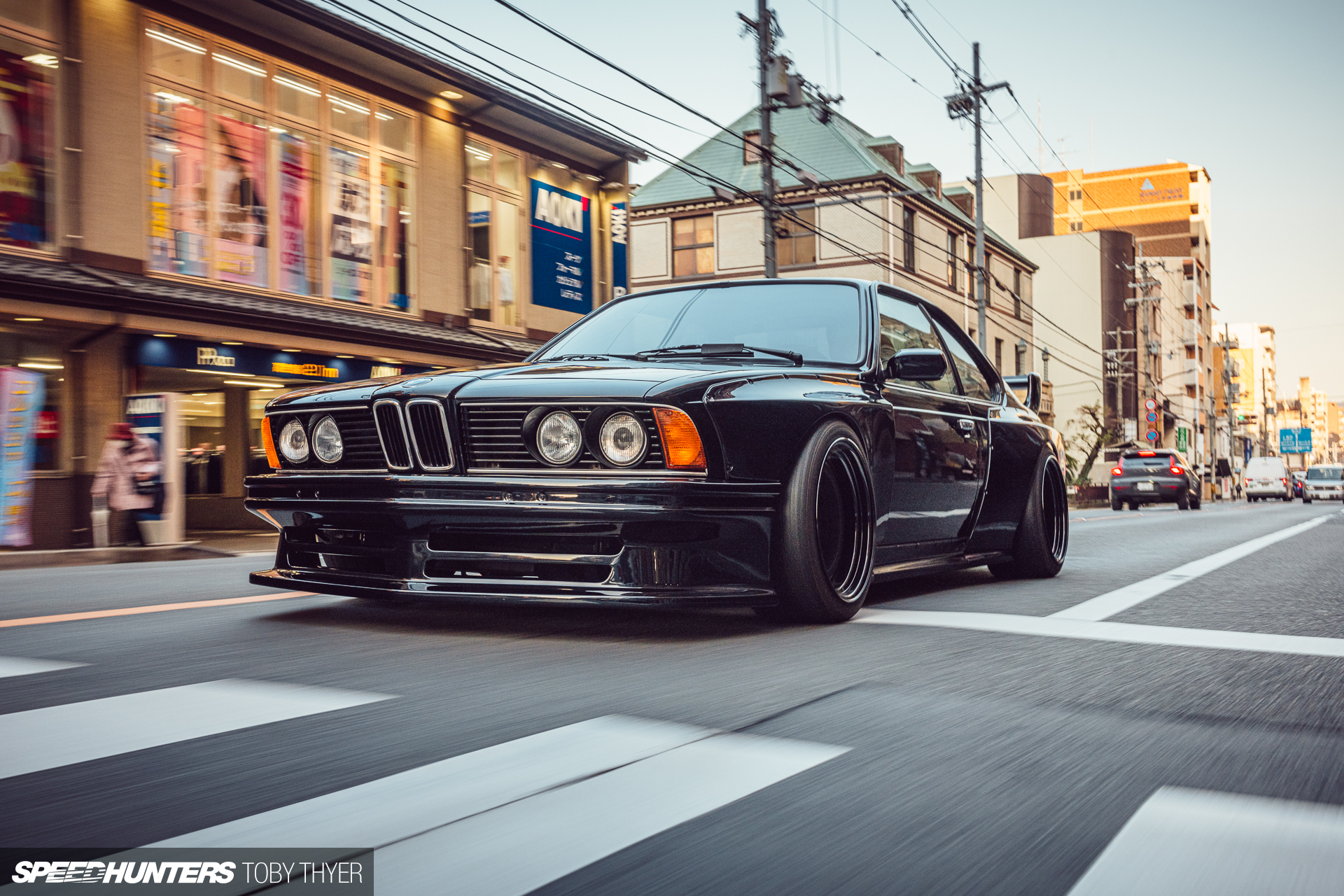
Of course, I’m talking about this E24 BMW 635CSi, as built by Kyoto-based E24 specialist Coutner.
Somehow, Shiro Watanabe’s E24 seems to blend in beautifully with the shabby-chic aesthetic of Kyoto. This is a historic city – Japan’s capital before Tokyo – with many very old buildings still in place, but I personally love the Showa-period architecture which fill Kyoto’s high streets, back streets and residential areas.
It’s no surprise then, that this 635CSi fits right in, and for a few reasons. The Showa period falls between the 1930s to the 1980s, but generally speaking, people associate it with the 1970s, ’80s and ’90s, which is coincidentally the same period Watanabe-san’s BMW hails from. This one is actually a 1989 model, but of course it was designed in the mid-’70s. And it shows.
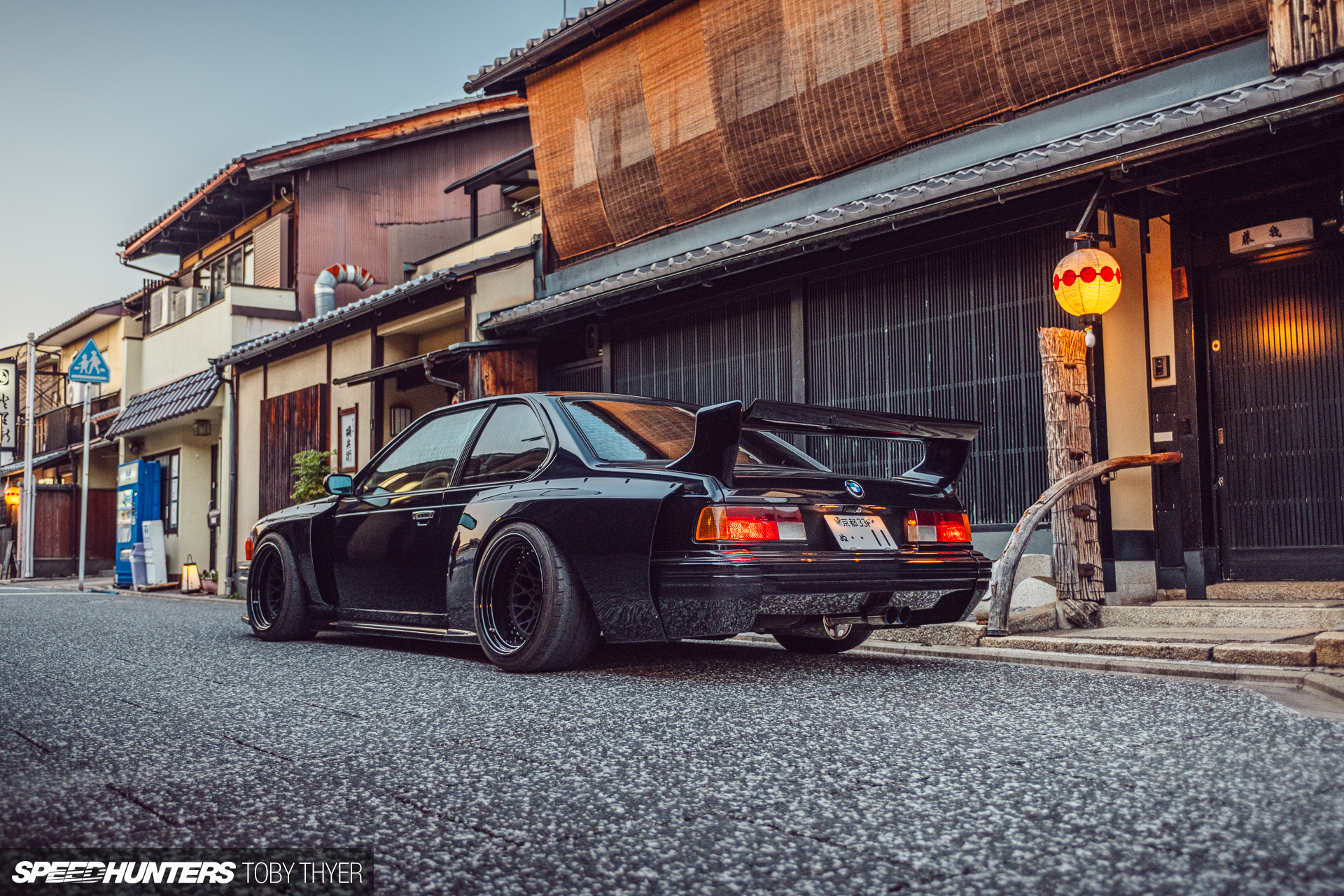
Not only is the E24 of the Showa era, but it blends in nicely with the design elements of its Kyoto surroundings. Japanese architecture is full of strong, horizontal and vertical lines, with few embellishments and even fewer curves.
Look at any three-box car design from the ’70s and you could make the same comparison. The E24 does have a few curvy bits, but its long, boxy hood and horizontal body lines that stretch its entire length give it an almost temple gate appearance. Or maybe I’ve just lived in the Far East for too long at this point…
The E24 design is both beautiful and powerful, making it one of BWW’s greatest silhouettes in stock form. The wide body kit fitted to this car – which was both designed and manufactured by Coutner after laser scanning and 3D rendering – gives the BMW extra presence. It’s almost Pandem-esque, but a little more sympathetically contoured to the original body lines.
Then there’s the custom deep blue paint, which appears black until you shine a light on it.
Forged wheels, 18×9.5-inch and 18×10.5-inch front and rear respectively, and also designed by Coutner, sit snuggly under the E24’s arches thanks to their fitment and KW Suspensions V3 coilovers, which also feature KW’s HLS lift system. Coutner-made top mounts allow the modern suspension setup to fit the old chassis perfectly. A V-Maxx big brake kit, featuring 4-pot front callipers and 2-piece rotors, provides all the stopping power this street car would ever need.
This E24 is actually one of two in the Coutner stable, the other being a full-blown track car that’s finished in competition white with gold BBS wheels. It’s currently in the midst of an engine rebuild, but as soon as it’s ready, you can count on a feature.
As the road version of the twin set, this car is powered by its original M30B35, but there are plans for a V8 swap in the future, which would be nice. It is, however, fitted with an FGK stainless header and a full custom exhaust, so it sounds sporty enough for the time being. The stock automatic transmission has given way to a Getrag 5-speed manual gearbox too.
The other difference between this and the race car is the beautifully appointed interior. Soft caramel/camel suede and leather everywhere – including on the upgraded seats and Momo Prototipo steering wheel – update what was a sumptuous, but dated cabin.
Again, parallels can be drawn between the luxurious grand tourers built to ferry businessmen through blizzards and heatwaves across Germany, and the comfort and quiet of Japanese grand tourers of the same era. Think Toyota Soarer or the Nissan Cima.
As I alluded to in a recent story on a resto-modded S15, a new gold standard seems to be emerging in Japan, where no custom build is truly complete without attention having been turned towards the interior. I’m not saying fancy upholstery is as important as mechanical or driving performance, but it sure is nice when it’s done right.
The technical storage or access is strictly necessary for the legitimate purpose of enabling the use of a specific service explicitly requested by the subscriber or user, or for the sole purpose of carrying out the transmission of a communication over an electronic communications network.
Preferences
The technical storage or access is necessary for the legitimate purpose of storing preferences that are not requested by the subscriber or user.
Statistics
The technical storage or access that is used exclusively for statistical purposes.The technical storage or access that is used exclusively for anonymous statistical purposes. Without a subpoena, voluntary compliance on the part of your Internet Service Provider, or additional records from a third party, information stored or retrieved for this purpose alone cannot usually be used to identify you.
Marketing
The technical storage or access is required to create user profiles to send advertising, or to track the user on a website or across several websites for similar marketing purposes.