The EON & Sahabat Autofest 2024 has opened today at the EON Glenmarie headquarters as EON Berhad, fully owned subsidiary of DRB-Hicom celebrates is 40th anniversary this year. The EON & Sahabat Autofest takes place from today, March 1 to 3, 2024 from 10am to 6pm.
According to EON CEO Akkbar Danial, this year’s running of the Autofest is special as it celebrates the firm’s 40 years of providing mobility solutions to the Malaysian public.
“EON has delivered cars to Malaysians for the past four decades. Over the years, we have evolved from being the exclusive dealer for PROTON into what we are today – Malaysia’s largest multi-brand car dealer, all under one roof. The EON & Sahabat Autofest 2024, with its attractive packages and discounts, is our way of saying thank you to all our customers and supporters,” Akkbar said.
Participating brands at the EON & Sahabat Autofest 2024 are comprised of those under the EON banner, which are Proton, Volkswagen, Mitsubishi, smart, Audi, Isuzu, Honda, Daihatsu, and motorcycles from Kawasaki (via Modenas). Among the highlights at the event are the recently-launched Proton S70, and the smart #1 EV.
Visitors to the Autofest will also get to test drive and test ride a selection of two- and four-wheeled models, and make bookings for vehicles. Also at the venue are rental vehicle provider Avis, vehicle service provider Petromin, Pos Malaysia, Puspakom, as well as DRB-Hicom University of Automotive Malaysia.
The opening day of the three-day event also saw the introduction of EON’s end-to-end digital financing platform. This is powered by the company’s financing arm, EON Capital, and aims to enable near-instant approvals for financing and fund disbursement through partnerships with banks and other relevant parties.
“Buying a car has never been easier, faster, and safer. Starting here at the EON & Sahabat Autofest 2024 customers can choose the car that they want, secure financing online and given that all requirements are met, they could even potentially drive it home within the same day,” Akkbar said.
Visitors who place vehicle orders and apply for new car financing via the EON digital platform throughout the three days of the Autofest will be in the running to win prizes worth up to RM100,000, as well as the grand prize of a brand new Proton S70.
There is additionally a Bazaar Raya, as the upcoming month of Ramadan approaches, followed by Hari Raya. The bazaar hosts vendors for fashion, food, décor and other offerings such as food trucks, while there will also be celebrity appearances and a dedicated kids’ zone.
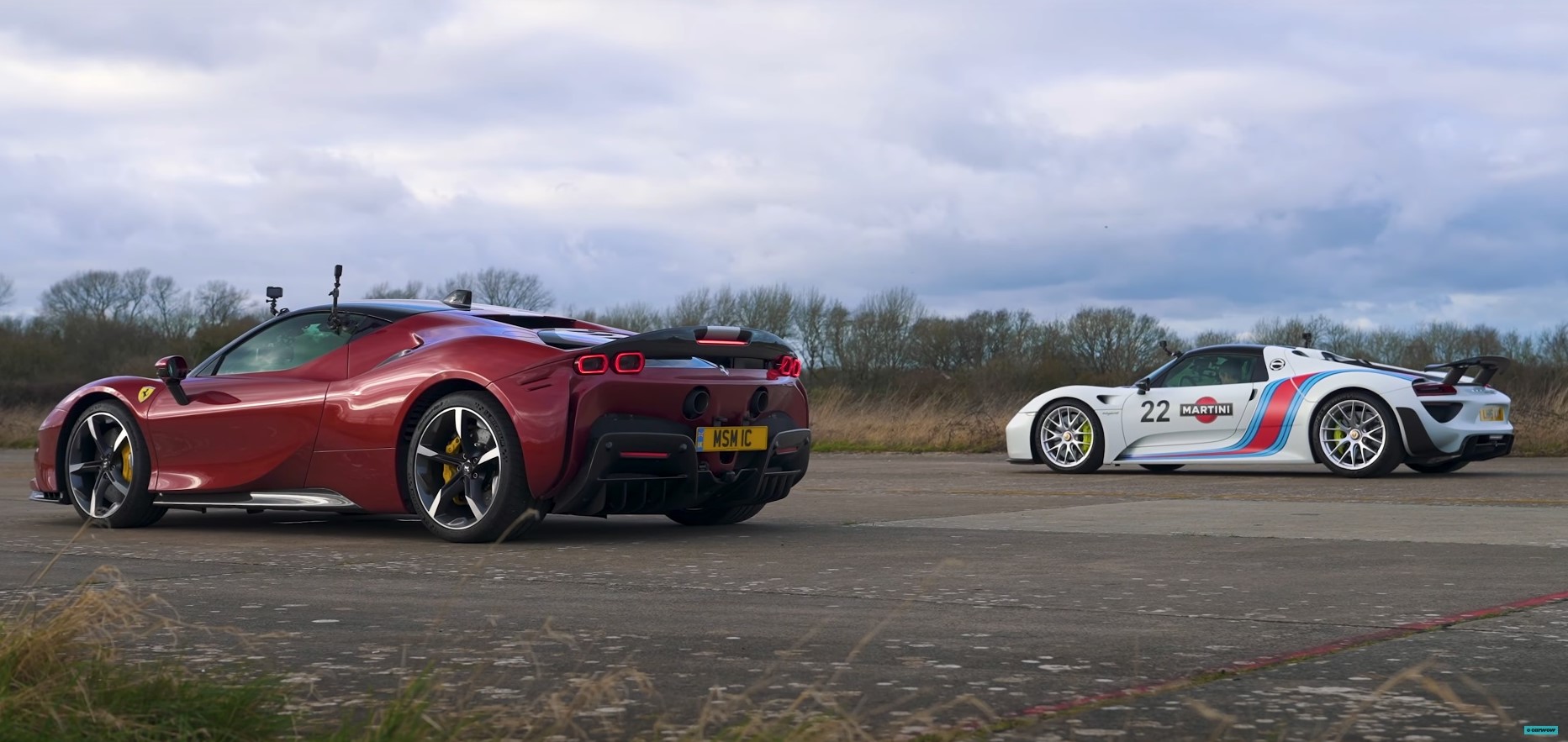
Carwow arranged a showdown between the iconic Porsche 918 Spyder and the cutting-edge Ferrari SF90 Stradale in a series of drag races. While the 918 Spyder was introduced in 2013, it faces off against a younger hybrid supercar from Ferrari which was launched in 2020.
The Porsche boasts a 4.6-liter naturally aspirated V8 engine paired with two electric motors, delivering a total output of 887 hp and 1,280 Nm of torque. Its power is seamlessly transmitted to all four wheels through a seven-speed automatic gearbox. Weighing in at 1,374 kg, the 918 Spyder comes with a hefty price tag of over one and a half million euros.
On the other hand, the Ferrari features a 4.0-liter V8 engine with twin turbos, complemented by three electric motors (two in the front and one in the rear), resulting in a staggering 1,000 hp and 800 Nm of torque distributed across all four wheels. However, the SF90 is slightly heavier than its Porsche counterpart at 1,570 kg.
Who do you think will come out on top? Watch the video to get answer to this question!
Volvo is rolling out a new safety feature that can warn of a crash or breakdown ahead, which could be crucial on winding roads or when there’s poor visibility.
Called Accident Ahead Alert, the system relies on cloud technology and anonymously shared real-time data gathered by various national traffic management centers.
Volvo said the feature will initially be available in Denmark and slowly rolled out to other European countries. Availability in the U.S. hasn’t been announced.
In compatible Volvo models, the driver will receive a warning about a vehicle ahead while the gap is still hundreds of feet. Compatible Volvo cars can already warn each other of slippery road conditions and other hazards, and the automaker is looking to integrate more traffic information provided by traffic management centers as the information is made available.
Volvo Accident Ahead Alert
Mercedes-Benz has been a pioneer of the technology. Depending on the vehicle and the market, the Mercedes system is able to issue warnings about slippery roads, cross winds, road work, crashes, breakdowns, reduced visibility, heavy rain, hazard lights, potholes, and speed bumps.
Other automakers are also testing similar technology.
Such technology may one day be a required safety feature for all new vehicles, just like airbags and electronic stability control. There are moves to mandate both vehicle-to-infrastructure and vehicle-to-vehicle communications, specifically dedicated short-range communication systems, so vehicles can be in constant communication with those nearby, sharing data on position and speed, proximity, and whether any other obstacles in the immediate area pose a threat. The Department of Transportation estimates that 615,000 crashes could be prevented annually with such technology.
The Jaguar C-X75 has finally been made street-legal, 14 years after the stunning supercar concept was first shown to the world at the 2010 Paris auto show.
Jaguar itself wasn’t involved with the endeavor, however. Instead the honor goes to Callum, the design and engineering company founded by the C-X75’s own designer, Ian Callum.
The C-X75 featured in the story is located in the U.K. and only resembles the original concept. Its mechanicals are very different. The car started out life as one of five C-X75 clones built by WAE, formerly Williams Advanced Engineering, to be used as stunt cars for the 2015 James Bond film “Spectre.”
The C-X75 served as the ride of one of the villains, while Bond went with a car from his favorite brand, in this case the Aston Martin DB10 which was developed exclusively for an appearance on the big screen, though it also served as a strong preview for the upcoming Vantage redesign. Four of the five C-X75 stunt cars survived filming and were later sold to the public, and now one of them has been heavily worked over by Callum to make it suitable for road use.
Jaguar C-X75 concept street-legal conversion by Callum
The stunt cars feature a bespoke tubular spaceframe chassis and ride on rally-derived suspension. They also pack a version of JLR’s supercharged 5.0-liter V-8 instead of the hybrid setup shown in the concept.
Among the modifications required to meet the U.K.’s Individual Vehicle Approval (IVA) certification, Callum had to install all the mandatory features found on most cars, like proper mirrors, new switchgear, E-marked glass, an emissions-compliant exhaust system, and much more. Callum said there were hundreds of changes made. It’s easier to make non-production vehicles street-legal in the U.K. due to the single vehicle type approval rules there, so a similar conversion for the U.S. may not be applicable.
Callum also made a few changes to improve the appearance of the car and some handling characteristics. Things like panel gaps were reduced and aligned, while carbon-fiber elements had their surfaces refinished. Other surfaces were also treated and repainted. Some adjustments to the suspension were also made, Callum said.
The original C-X75 concept was shown with a series plug-in hybrid powertrain, where a pair of jet turbines were used instead of a conventional gas engine. Jaguar confirmed plans for production a year after the concept’s debut, with the production model intended to use a 1.6-liter turbo-4 that the Williams F1 team had planned to take racing before F1 decided on the current turbocharged V-6 engine format. Economic realities and tough competition from the established supercar marques led Jaguar to pull the plug on the C-X75 project just a year into its development.
Artist Ed Williamson is pictured at the opening of his “Persona” exhibition at The Oriel Gallery, Dublin. Image courtesy of Andres Poveda
In the vibrant mind of Ireland’s Ed Williamson, each stroke tells a tale of transformation, weaving a narrative that transcends the boundaries of the rugby field to embrace the boundless expanse of the canvas. Ed’s journey unfolds as a testament to resilience, self-discovery, and the unwavering support of loved ones.
The pivotal moment came with a devastating injury that sidelined Ed from the rugby arena, prompting him to explore the depths of his creative spirit. Encouraged by his wife, he embarked on a journey of artistic exploration that would ultimately redefine his identity and purpose.
When asked about the driving force behind his work, Ed’s response reflects the eclectic tapestry of his influences – drawing inspiration from the rich tapestry of cultures, the rhythm of cities, and the intricacies of human connection. His signature style, characterized by its boldness and depth, serves as a reflection of his relentless pursuit of excellence and his unwavering commitment to captivating his audience.
As he looks towards the horizon, he envisions a future marked by continued growth and global recognition. With aspirations to showcase his work on esteemed platforms such as Art Basel, he remains steadfast in his pursuit of artistic excellence.
For aspiring artists seeking their voice amidst the cacophony of creativity, Ed offers sage advice rooted in his own journey of self-discovery. Through dialogue with fellow artists and a willingness to embrace experimentation, he encourages others to unearth the techniques and themes that resonate with their own truth.
In the unfolding chapters of this visionary’s artistic odyssey, the canvas emerges as a testament to resilience, passion, and the transformative power of the human spirit. Through his art, Ed invites viewers to embark on a journey of self-reflection and discovery, forging connections that transcend the boundaries of time and space.
If I had to associate the Toyota Supra with just one motorsport genre, it wouldn’t be touring cars.
I’m going to ignore your cries of ‘JGTC’ and the iconic GT500 TOM’s Castrol JZA80 Supra. I’ve even had first-hand experience with GT4 A90 Supras at the Nürburgring 24 Hour race in the past. Because despite its legendary touring car racing credentials, the Supra in my eyes has always been a drag racing hero first and foremost. And for quarter mile action, no one has built them better than Titan Motorsports in the USA.
This isn’t the first time the topic has been broached on Speedhunters, but I’d like to throw my hat in and revisit the subject of Supra drag racing. Given the frankly astonishing power gains that have been achieved since Paddy last discussed the A90 as a tuning platform, it would be rude not to.
“Our history with the Supra goes back well before Titan existed,” recalls Wes Bourne, Titan Motorsports’ marketing manager. “One of Titan’s owners, Nero, had a MkIV Supra and started the company to help support his racing habit. As the company evolved and grew, his original Supra went on to become our Titan Copper drag Supra, one of the most successful import drag cars in US history.”
How successful? Well, ‘Copper’ can lay claim to consistent 6.4-second quarter mile ETs with its tried and tested 2JZ-GTE engine.
Time has moved on, and JZA80 Supras have become collector items with prices to match. And as a result, 2JZ modification has become equally expensive. Right now, new-age enthusiasts are getting to experience the power potential of the current generation A90 Supra instead.
“The A90 is a great base for drag racing thanks to its highly tuneable straight six powerplant and ZF automatic transmission,” says Kyle Scott, Titan sales executive and top B58/S58 guy. “It’s easy to package big-power builds for the B58/S58 cars. The recipe is there so it’s much easier to keep items in stock in bulk, and rinse and repeat. The 2JZ will always be our bread and butter, but the B58 and S58 have become mainstays as well. We’re enjoying the challenge.”
The Supras we’re looking at today are three of the fastest A90s anywhere in the world right now.
The red Supra is a Titan customer car, while the white Supra belongs to Adil Adams, one of Titan Motorsports’ technicians. Both are making just over 1,200hp, with some key ingredients being Precision 7275 Gen 2 turbochargers, CSF Race intake manifolds and heat exchangers, and Titan’s own cylinder head work on Titan 3.2-litre stroker short blocks.
The yellow car belongs to Jordane ‘Peppa’ Jacobs, and lays claim to the title of the current third quickest and fastest A90 Supra on the planet.
“I’ve always had different types of BMWs. They became so popular in NYC that I wanted to get something different but in a way, still a BMW,” saysJordane. “NYC has more of a street racing scene because we don’t have any real drag racing tracks.”
“BMWs have always been popular, but with the B58 and S58 engines’ capabilities more people are buying them to join the platform and try to become the fastest. I started off with a stock motor, and now I have a 3.2-litre ‘Stage X’ stroker motor made by my tuner, Visconti.”
The street racing scene is where Jordane first cut his Supra’s teeth, transitioning over to the drag strip as the build became drastically more powerful. In its current guise, Jordane has managed to crack the 7-second barrier with a 7.98-second quarter mile ET, crossing the finish line at 176mph (283km/h).
“My favourite part is that it’s RWD and a bit more difficult to drive fast, but at the same time it’s a lot more exciting with the power it’s making,” he says.
That’s not to say it’s a track-only, one-trick pony – note the New York licence plate behind the parachute. In fact, for Jordane,the Supra is very drivable on a daily basis. “I have A/C, heating, and most of my interior. I just did a four-day ‘drag and drive’ event across North and South Carolina where I drove between each track without trailering.”
“I get a lot of attention when I drive around. People are always recording me driving and tagging me on social media. Sometimes they try to get me to do a pull in the car for a video, or even follow me around for a bit.”
And yet, for all the speed, power and attention these cars get, neither Jordane nor Titan Motorsports are totally content with the ridiculous feats they’ve managed to achieve so far. In Jordane’s case, he plans to race at more events this year, and hopefully go faster than 7.9.
As for the madmen at Titan? According to Kyle, they’re only just getting started. “There are complexities in regards to the unlocking the [A90] ECUs, which have slowed things down a little bit and added some extra tuning cost and effort that will hopefully become easier as time goes on. The rumoured S58-powered [GRMN] Supra should turn things up a notch in the tuning community.”
“With these being engines for production-based cars vs custom chassis race cars, I don’t think development will ever reach the levels put into the 2JZ. Then again, if you told us 20 years ago we’d be making 3,000+ horsepower reliably in our 2JZ drag cars, I probably wouldn’t have seen that coming either…”
“The US seems to be much more straight line focused than other parts of the world; the largest import events here are drag racing events and the potential BMW/Toyota left on the table with this engine makes it tuner friendly.”
Modern BMWs – and contemporary performance cars in general – are so over-engineered that it’s now easier than ever to push ridiculous power figures using fairly simple formulae. Drag racing may not be as hot in the Europe as it is in the US, but near 1,000hp BMW M5 Competitions are increasingly common sights at V-MAX airstrip events.
I admire these builds and their duality. iDrive, air conditioning, automatic gearboxes and a casual 1,250hp at the wheels. Long live the Supra, king of the import drag racers and more accessible than ever before.
Mario Christou Instagram: mcwpn
Photography by Darrien Craven Instagram: _crvn_
Toyota Supra related stories on Speedhunters
‘Renaissance Red 2.0′ A90 Toyota Supra Engine: Titan Motorsports-built 3.2L B58 short block, Brian Crower 100mm billet crankshaft, Carillo connecting rods with 3/8″ Carr bolts, custom CP stroker forged pistons with upgraded wrist pins, ACL rod bearings, ARP CA625+ head studs, ARP2000 main bearing stud kit, Titan Motorsports billet main caps, Visconti Tuning Fire-Lock head gasket, Titan Motorsports x ATI Damper crank pulley, Visconti Tuning upgraded hardware, Titan Motorsports-built 6-port cylinder head, CNC port/polish, Kelford Cams B camshafts, Ferrea +1mm exhaust valves, Ferrea +.5mm intake valves, Ferrea valve springs & retainers, Titan Motorsports x Full-Race turbo kit – Precision Turbo Next Gen 7275 T4 Divided 1.15a/r, Precision Turbo 46mm wastegates, TiAL Sport QRJ blow-off valve, Radium fuel system, TI Automotive BKS1001 brushless fuel pump, Injector Dynamics 1700X fuel injectors, Visconti Tuning Reflex wiring kit, Visconti tuning coolant pressure kit, Titan Motorsports x CSF direct port dry nitrous kit, Titan Motorsports 5bar MAP sensor, Titan Motorsports ice box kit, Titan Motorsports x Braille lightweight battery kit, Titan Motorsports methanol injection kit, CSF Gen 2 B58 Race X Charge-Air-Cooler manifold, CSF heat exchanger, CSF prototype main radiator, 2x CSF auxiliary radiators, tuned by John Visconti (Visconti Tuning) Driveline: Pure Drivetrain Solutions Stage 3 transmission upgrade with billet convertor, Titan Motorsports billet transmission pan, SPL Parts diff bushings, Titan Motorsports upgraded axles, The Driveshaft Shop carbon driveshaft, Titan Motorsports driveshaft loop, CSF transmission cooler Suspension/Brakes: KW V3 coilovers, Titan Motorsports x SPL Parts Ultimate rear multilink suspension, SPL Parts front control arms, SPL Parts front end links, SPL Parts caster bushings, Brembo GT 380mm 6-piston brakes Wheels: Weld RT-S S81 beadlock rear/skinny front combo Exterior: APR front splitter, APR GTC-300 rear wing, Titan Motorsports parachute mount kit, Shroud 10ft Parachute Interior: Titan Motorsports roll bar, Tillet B1SC seats, Titan Motorsports seat brackets, Titan Motorsports parachute release kit
Adil Adams’ ‘Absolute Zero White’ A90 Toyota Supra Engine: Titan Motorsports-built 3.2L B58 short block, Brian Crower 100mm billet crankshaft, Carillo connecting rods with 3/8″ Carr bolts, custom CP stroker forged pistons with upgraded wrist pins, ACL rod bearings, ARP CA625+ head studs, ARP2000 main bearing stud kit, Titan Motorsports billet main caps, Visconti Tuning Fire-Lock head gasket, Visconti Tuning crank damper, Visconti Tuning upgraded hardware, Titan Motorsports-built 6-port cylinder head, CNC port/polish, Kelford Cams B camshafts, Ferrea +1mm exhaust valves, Ferrea +.5mm intake valves, Ferrea valve springs & retainers, Titan Motorsports x Full-Race turbo kit with custom titanium charge pipe & down pipe, Precision Turbo Next Gen 7275 T4 Divided 1.15a/r, Precision Turbo 46mm wastegates, TiAL Sport QRJ blow-off valve, Radium fuel systemTI automotive BKS1001 brushless fuel pump, Injector dynamics BPC100 brushless controller, Injector Dynamics 1700X fuel injectors, Aeromotive fuel pressure regulator, Visconti Tuning Reflex wiring kit, Visconti Tuning coolant pressure kit, direct port dry nitrous kit, Titan Motorsports 5bar MAP sensor, Titan Motorsports ice box kit, Titan Motorsports methanol injection kit, CSF Gen 2 B58 Race X Charge-Air-Cooler manifold, CSF heat exchanger, CSF prototype main radiator, 2x CSF auxiliary radiators, Titan Motorsports x Braille lightweight battery kit, tuned by John Visconti (Visconti Tuning) Driveline: Pure Drivetrain Solutions Stage 3 transmission upgrade with billet convertor, Titan Motorsports billet transmission pan, SPL Parts diff bushings, Titan Motorsports upgraded axles, The Driveshaft Shop carbon driveshaft, Titan Motorsports Driveshaft loop, CSF transmission cooler Suspension/Brakes: HKS Hipermax IV SP Drag coilovers, Titan Motorsports x SPL Parts Ultimate rear multilink suspension Wheels: Weld RT-S S81 beadlock rear/skinny front combo in custom gunmetal finish Exterior: Eventuri carbon headlight cover, Titan Motorsports Parachute mount kit, Simpson 10ft parachute Interior: Titan Motorsports roll bar, Tillet B1SC seats, Titan Motorsports seat brackets, Titan Motorsports parachute release kit
Jordane Jacobs’ ‘Nitro Yellow’ A90 Toyota Supra Engine: 3.2 litre stroker Vistonti ‘Stage X’ build, ARP fasteners, CSF Gen 2 B58 Race X Charge-Air-Cooler manifold, Full-Race turbo kit with Precison Turbo Next Gen 7275, TiAL wastegates, Visconti Tuning Stage 2 fuel system, Injector Dynamics 1,750cc injectors, Insomnia Motorsports ice box system, CSF cooling system, EcuTek/Motiv ECU, tuned by John Visconti (Visconti Tuning) Driveline: Pure Drivetrain Solutions Stage 3 transmission upgrade, Pure Drivetrain Solutions billet low stall torque converter, VTT/PST carbon fibre driveshaft, The Driveshaft Shop axles, SPL Parts diff bushings, EOS differential brace, Insomnia Motorsports differential vent kit Suspension/Brakes: SPL Parts adjustable arms, LG Motorsports rear 15-inch brake conversion Wheels: Belak 17-inch Skinny front wheels, Belak 15-inch rear Drag Pack wheels Exterior: Eventuri headlight intake, Titan Motorsports parachute kit Interior: Tillett carbon fibre seats, full trim
We have previously covered the announcement that Dodge was bringing back some serious discounts on 2023 models still on dealer lots, but the latest discounts are so significant that it deserves another story. Combining Dodge’s Power Dollars discount which gives buyers $10 per horsepower that the car produces, and a manufacturer rebate, brand spankin’ new Challenger SXTs are selling for significantly less money than some new Toyota Corollas, Hyundai Elantras, and Mazda3s.
WCSYB_CHALLENGER_031523_FINAL
Huntington BeachDodge listed several 2023 Challenger SXTs, with one car currently showing $22,800 after discounts and rebates. After that cheapest Challenger, there are currently eight more Challenger SXTs listed for just a grand more at $23,800. Cars Direct broke the story, and found an extreme example of an expensive Corolla at a Toyota dealer in Roseville, California that slaps every new 2024 Corolla with a $2,000 markup, causing the cheapest Corolla on its website at nearly $26,143. It’s not a GR Corolla, either, it is a base level Toyota Corolla LE.
The argument for buying a Corolla over a Dodge Challenger SXT is very real. Toyota reliability, significantly better fuel mileage, and four doors are all compelling reasons to spring for the Corolla, but a brand new (albeit base model) aggressive muscle car makes a pretty solid case for itself at the shockingly low price of $22,800.
Challenger buyers should know that Dodge is also offering 0% financing for 72 months but only as a standalone offer that can’t be combined with the Dodge Power Dollars rebate. Since the APR deal is limited to the SXT trim, buyers of higher trims may be able to benefit from more savings with the Power Dollars incentive.
If you are in need of an affordable new car, look beyond the traditional economy cars and make sure to find the best prices; the best deals might not be on the cars you expect. A Challenger might not be the best car for a family, but if you don’t have any children or even if you’re looking for a second car to complement the family hauler, this is a great way to buy a car that’s got character and sporty aspirations. Dodge’s reliability reputation is pretty rough, but the Pentastar V6 in Challengers has been around for a while now and mechanics are likely to have a solid understanding of common issues and solutions.
Today’s travellers are more self-sufficient than ever. Perhaps a fatigue with public transport or a disdain for long queues on holiday buses, the International Drivers Association or IDA allows one to drive legally and confidently abroad. The International Drivers Association (IDA) is able to process applications from over 165 countries. As part of their online process, applicants will be required to answer a brief set of questions and upload a valid copy of both sides of their driver’s license and a digital photograph of their passport.
A digital version of the International Driving Permit (IDP) will be issued to approved applicants and received within eight minutes, followed by the dispatch of a hard copy package within the subsequent two working days. Rest assured, a prompt refund will be issued in the event of an invalid application. A digital IDP is always available through the “My Order” section if you ever need a backup. In the unfortunate event of losing the card, worry not; IDA will ship a replacement card and booklet free of charge. The IDP is a translation document to be presented alongside your driver’s license. Please keep in mind it does not possess any official status or confer any legal privileges or rights. LUXUO gets a first-hand insight into how International Driving Permits work in this exclusive interview.
What is an International Driving Permit or IDP?
An International Driving Permit (IDP) serves as a translation of your valid driver’s license, allowing international authorities to understand your credentials, thereby facilitating driving in foreign countries amidst language barriers or regulatory differences.
What is the difference between an international driver’s license and an international driving permit?
The terms “international driver’s license” and “international driving permit” are often used interchangeably, but the correct term is International Driving Permit (IDP).
How many countries recognize IDPs?
Our IDP is recognised and accepted in over 150 countries worldwide. Often, your native driver’s license may be sufficient, but an IDP can be a requirement for car rentals and insurance services abroad, marking its growing importance.
How old do I have to be to obtain an IDP and which address do I use on the IDP application form?
Applicants must be over 18 and hold a valid driver’s license. Some countries may have a minimum age requirement of 21 for driving with an IDP. Use your permanent residence address on the application form.
How will I benefit by carrying an International Driving Permit on my next trip abroad?
Carrying an IDP provides peace of mind, ensuring you meet the legal requirements to rent and drive a car overseas. Additionally, as a customer of the International Drivers Association, our value extends far more than our IDP; you also gain access to a vast network of travel-related local and global offers and deals through our partners.
How long is an IDP valid for?
We offer IDPs with up to three years of validity, catering to various travel needs and durations.
What are the requirements to get an International Driving Permit?
Our aim is to simplify the IDP application process. You need a valid driver’s license, a photo, and a signature. We handle everything else, making the process seamless for you.
How long does it take to get my IDP?
The International Drivers Association prides itself on efficiency, processing your IDP application in 8 minutes or less, ensuring you receive prompt and reliable service.
Can I rent a car using your International Driving Permit?
Absolutely. An IDP is commonly used for car rentals, making it an essential travel document for drivers abroad.
Can you ship a printed IDP?
Yes, we provide global shipping options, ranging from cost-effective standard postal mail to expedited services via FedEx, UPS, and DHL, ensuring you receive your IDP wherever you are.
Do you have a refund policy in place?
Customer satisfaction is paramount. We offer a true 3-year money-back guarantee if your IDP is not accepted, alongside unlimited free replacements should your IDP be lost. These benefits are included with every IDP purchase: This is the International Drivers Association difference.
To learn more or apply for your own International Drivers Association (IDA), click the link here.
We’ll forgive you for double taking and thinking we had uploaded images of a 720S, but this is the 2023 McLaren 750S and McLaren insists this takes the baton from the 720S as being the new benchmark in the supercar segment. GTspirit will have to wait to jump behind the wheel of the 750S to confirm that hypothesis, what we do know is that the 720S was a phenomenal package that continued to impress, even in the context of the fresh competition from Ferrari and Lamborghini. We sensed change was on the horizon when the Artura debuted with its bombastic hybrid powertrain and exceptional handling characteristics, surely the 720S replacement would be heading in the same direction? Not quite, the big news here is that there is no really big news, instead McLaren have enhanced the 750S to be even more potent, fun and alive than the outgoing 720S, after all, when a recipe is already so well received, why fire the head chef and change the menu? Factor in the uncertainty at a time when legislators are bickering over how to set a political agenda that will win votes whilst still making sense and is achievable, why rush to hybridise the entire range is there could be a future for the pure combustion engine?
“When you have a car recognised by so many drivers as a benchmark, to do something even better you have to examine every detail and really push hard for improvements that raise the bar again. This is what we have done with the new 750S and the light weight, V8 engine performance and outstanding dynamic abilities combine to deliver a supercar driving experience that hits new heights, with truly exhilarating levels of emotional connection.” – Michael Leiters, CEO, McLaren Automotive
Enough of why, what’s changed? It would be obtuse to say that the McLaren 750S is a 720S with new badges and figures, McLaren are keen to point out that the really exciting changes are under the skin. The new 750S is the lightest and most powerful series-production McLaren, with segment-leading power-to-weight ratio of 579 horsepower-per-tonne (coupe, at lightest dry weight) – a 22 horsepower advantage over what McLaren calls its closest competitor, the Ferrari 296 GTB.
Weighing in at just 1,389kg (DIN), the vehicle is 30kg lighter than the 720S, which is a testament to McLaren’s commitment to lightweight engineering. This performance-oriented approach to innovation is exemplified by the use of carbon fibre racing seats that are 17.5kg lighter than the standard seats in a 720S, as well as the introduction of new 10-spoke forged wheels that are the lightest ever featured on a McLaren series-production vehicle, saving 13.8kg. Additionally, the new driver instrument display is 1.8kg lighter, and even the windscreen glass contributes to weight reduction, providing a saving of 1.6kg.
Optional carbon fibre-shelled racing seats, first seen in the Senna, and the lightest wheels ever fitted as standard on a series-production McLaren among features that deliver weight-reduction. The penalty of opting for the Spider, which unusually has been unveiled alongside the Coupe, is just 49kg thanks to the Carbon fibre upper structure and composite Retractable Hard Top.
The unique McLaren M840T engine developed for the 750S sees the boost pressure of the ultra-low inertia, twin-scroll turbochargers increased, raising air pressure within the cylinders. In conjunction, an additional high-flow fuel pump meets the greater fuel flow pressure requirements. The 4.0-litre V8 remains and is remains free of any hybrid elements in the McLaren 750S. The 750S delivers a scintillating performance, producing 750PS of power and 800Nm of torque. The engine’s greater power and torque are matched by a transmission featuring a final drive ratio that is shorter, which leads to faster acceleration. As a result, the car can reach speeds of 0-200km/h (0-124mph) in just 7.2 seconds (compared to 7.3 seconds for the 750S Spider), which is faster than any other vehicle in its class. The transmission gearing has been optimised and the kickdown control strategy has been revised to enhance in-gear acceleration.
The latest iteration of McLaren’s Proactive Chassis Control hydraulic suspension system has been upgraded to PCC III and is even more impressive. McLaren report that the 750S’s exceptional dynamic abilities are largely due to this new-generation suspension system, which features softer front springs, stiffer rear springs, and a reconfigured valve stack with both passive and active elements. A new approach to tuning the suspension has been implemented, involving adjustments to the accumulators in the struts, resulting in improved ride comfort, roll control, steering feedback, and cornering balance. The suspension system’s weight has also been reduced by 2kg through new spring and damper designs. The combined hardware and software changes in PCC III have expanded the 750S’s dynamic capabilities beyond those of its predecessor, allowing it to maintain 720S levels of comfort while delivering significantly better circuit performance, making it McLaren’s new benchmark supercar.
In addition to its improved suspension system, the McLaren 750S is also more nimble than the car it replaces as the front-end grip has been improved. This is due to a wider front track that is 6mm wider and new suspension geometry. Furthermore, the car is equipped with McLaren’s electro-hydraulic steering, which is known for its precise feedback, and has been upgraded with a faster steering ratio and a new power-assistance pump, contributing to the car’s agility. In addition to its superior suspension system, the 750S is also more nimble than the car it replaces as the front-end grip has been improved. This is due to a wider front track that is 6mm wider and new suspension geometry. Furthermore, the car is equipped with McLaren’s electro-hydraulic steering, which is known for its precise feedback, and has been upgraded with a faster steering ratio and a new power-assistance pump, contributing to the car’s agility.
As with the Artura, the McLaren 750S boasts a fusion of up-to-date technology and better material and switchgear in the interior, with a particular emphasis on prioritising the driver’s needs. Central to this focus is the implementation of new displays for both informative and instrumental purposes, with the latter display mounted onto and moving with the steering column. Placed within a binnacle, this driver-oriented display also features controls on either side, facilitating seamless switching between Comfort, Sport, and Track Active Dynamic modes while keeping the driver’s hands on the wheel and attention fully on the road ahead.
By pressing the McLaren Speedmark button, known for its distinctive logo, drivers can activate the MCL feature, which enables them to customise their driving experience. This includes storing a unique combination of aero, handling, powertrain, and transmission settings that can be easily retrieved with a single press of the MCL button. These are welcome additions that give the 750S a fresh feel over the car that it replaces.
McLaren is well-known for its electro-hydraulically assisted steering system, which offers exceptional feedback and connectivity to drivers. With the 750S, this system has been fine-tuned to provide an even faster steering ratio and greater linearity, resulting in more precise and accurate driver inputs. Together with a new spring balance, revised damper valve definitions, and bump steer mitigation, the 750S is now even more agile and responsive, offering sharper turn-in and inspiring greater driver confidence.
McLaren insists that there is a heightened physical and emotional connection between driver and car is aided by bespoke engine mount tuning. The McLaren 750S features a new central-exit exhaust layout inspired by the McLaren P1 that is acoustically tuned to give ‘a distinctive clear tone and sharp crescendo at high engine speeds.’
For those 750S customers who intend to undertake intensive circuit driving, there is the option of upgrading to a track brake system. This system incorporates ceramic discs and monobloc calipers that are based on the ones used in the McLaren Senna. Additionally, the brake booster and vacuum pump have been upgraded, and Formula 1-inspired caliper cooling technology has been integrated. To further enhance the vehicle’s track capabilities, Super-Lightweight Carbon Fibre Racing Seats can also be selected as an optional feature, as can the track-focused Pirelli P ZERO Trofeo R tires and lightweight titanium wheel bolts, for added lightweight nerdiness.
The most significant changes in appearance can be observed at the rear of the vehicle, where a curving mesh cover now spans the reworked rear deck, directing airflow towards a longer rear wing which bears a clear resemblance of the wing of the 765LT. Positioned above a new centrally located exhaust outlet designed for improved efficiency and more distinct sound effects, the surface area of this new wing is 20 percent larger than that of the 720S, yet it weighs 1.6kg less due to its carbon fibre construction. The wing can be deployed in three ways: by selecting the ‘aero’ button, the downforce in corners will increase in proportion to the car’s speed, while a DRS function is available for high-speed runs where minimal drag is required. Finally, during high-speed braking manoeuvres, the wing will pop up in under half a second to maximise stopping power.
The McLaren 750S features a refined front-end design in comparison to its predecessor. This includes a new lower nose section with an extended front splitter and narrower ‘eye socket’ intakes that now enclose the headlights. Optional features include body-coloured or carbon fibre headlight surrounds, as well as rear and front bumper vents made from McLaren’s signature lightweight material.
Coupe or Spider, it remains clear that McLaren found a sweet spot with the 720S and has elevated it in all areas with the 750S. The interior and tech changes, including Apple CarPlay, add to the appeal of the new model as do the enhanced performance and handling improvements. We will have to wait to experience the changes for ourselves, but we can be sure that this will be a very different supercar to it rivals such as the Ferrari 296 which are looking to hybrid technologies. We know McLaren can also do it, as seen with the Artura, but the Woking based brand makes no secret of its love of the experience that comes with the combustion engine.
Hiring a car abroad can be daunting for many travelers, navigating unfamiliar rules and options. But there’s nothing like hitting the open road in a foreign country, exploring new spots on your terms and in your own time.
Our guide simplifies this process, offering you essential tips and tricks for a hassle-free experience.
Here is an overview:
Do You Really Need to Hire a Car Abroad?
When considering whether you really need a rental car for your upcoming trip, it can be helpful to explore how others like you travel in your destination. Understanding the transportation options commonly used by travelers like yourself can provide valuable insights into the feasibility and convenience of renting a car.
By researching how others navigate the same destination, you can assess factors such as public transportation availability, ride-sharing services, walking distances, and local infrastructure. This information can help you decide whether a rental car is essential for your travel needs or if alternative modes of transportation may better suit your itinerary.
Research and Planning: Preparing for Hiring a Car Abroad
Before getting to the rental, you first need to do some research.
Plan Your Route
Planning your route is essential for a smooth and enjoyable journey when hiring a car abroad. Researching and planning your route can help you make the most of your trip and ensure you don’t miss out on any must-see attractions or scenic drives.
By planning the route, you can decide on the best pick-up and drop-off locations for your rental car. By “best,” I mean the most convenient place but also cost-effective. For instance, if your travel starts in a big city, you most likely won’t need a rental car for the first few days of your urban vacation and can use public transportation, taxis or other ride-sharing options. This way you can cut down the rental days and city parking costs. Later, you can also check whether renting from city locations is cheaper than renting at the airport and consider which is better for you.
Lastly, you should consider if you make a circular route, where you start and finish your rental at the same office or make a one-way rental and drop off your car at another location. It might incur additional costs (a one-way fee), but most rental agencies allow it as long as they have rental offices at both locations.
Selecting the Perfect Vehicle for Your Travel Needs
When renting a car, rental companies typically categorize vehicles into different types or groups based on size, features, and other characteristics. These categories help travelers choose a vehicle that best suits their needs.
Common car types and groups include:
Economy Cars: Economy cars are small, fuel-efficient vehicles ideal for solo travelers or couples on a budget. They offer basic amenities and are typically easy to maneuver and park in urban areas. Examples include the Ford Fiesta, Toyota Yaris, or Volkswagen Polo.
Compact Cars: Compact cars are slightly larger than economy cars and offer more space for passengers and luggage. They are suitable for small families or groups of friends traveling short to medium distances. Examples include the Toyota Corolla, Nissan Sentra, or Hyundai Elantra.
Midsize Cars: Midsize cars balance comfort, space, and fuel efficiency. They are suitable for families or groups requiring more room for passengers and luggage. Midsize cars are ideal for longer road trips or vacations. Examples include the Honda Accord, Ford Fusion, or Toyota Camry.
Full-Size Cars: Full-size cars provide ample space for passengers and luggage, making them suitable for larger families or groups traveling long distances. They offer more comfort and amenities compared to smaller vehicle categories. Examples include the Chevrolet Impala, Ford Taurus, or Toyota Avalon.
SUVs (Sport Utility Vehicles): SUVs are versatile, with increased ground clearance and cargo space, making them suitable for outdoor adventures or traveling in rugged terrain. They offer seating for five or more passengers in various sizes, from compact to full-size. Examples include the Ford Escape (Compact SUV), Toyota RAV4 (Midsize SUV), or Chevrolet Tahoe (Full-Size SUV).
Minivans: Minivans are spacious vehicles with multiple rows of seating, making them ideal for large families or groups requiring extra passenger and cargo space. They offer sliding doors for easy access and are equipped with features for comfort and convenience. Examples include the Chrysler Pacifica, Honda Odyssey, or Toyota Sienna.
Convertible Cars: Convertible cars feature a retractable roof that can be opened or closed, allowing passengers to enjoy the open air while driving. They are popular for leisurely drives in scenic locations or coastal areas. Examples include the Mazda MX-5 Miata, Ford Mustang Convertible, or BMW 4 Series Convertible.
Luxury Cars: Luxury cars offer premium features, comfort, and performance, catering to travelers seeking a high-end driving experience. They are equipped with advanced technology and upscale amenities. Examples include the Mercedes-Benz E-Class, BMW 5 Series, or Audi A6.
When choosing a car type, consider the number of passengers, amount of luggage, destination, driving preferences, and budget. It’s also essential to familiarize yourself with the ACRISS (Association of Car Rental Industry Systems Standards) codes used by rental companies to classify vehicles. These codes provide a standardized way to describe car categories and features.
There are a few ways to book your rental car abroad.
Booking in Advance vs. On-the-Spot Rentals
If your vacation depends on driving around, you should forget about renting On-the-Spot! You should only consider that if the car hire is optional and you have other means of transportation in hand.
If you don’t book upfront, you will most likely waste your time looking for car rental options and end up with a non-optimal car option or in the worst case, no cars will be available – which might be the case for high season peaks.
Choosing the Right Rental Company
This one is the key to your experience. While some rental companies offer very low prices, you may pay extras at the rental desk during pickup or after car return due to made-up defects or other fees.
Your Ultimate Guide to Hiring a Car Abroad
The key here is to spend some time researching. Consider reading through Google Maps reviews, which is an unfiltered platform where the agencies cannot pay or hide bad reviews. On the other hand, there might be some spammy reviews there, so read carefully and consider which comments and reviews are authentic.
Remember that every rental branch may offer a different level of service, so don’t automatically go with your favorite rental brand. You should consider both international brands and local, unknown brands.
Insurance Options and Understanding Coverage Policies
Car rental insurance abroad can vary depending on the country and the rental company. It also varies based on where you are coming from. Let’s put it in order.
Damages or theft can happen when renting a car. In most cases the rental agency will not hold you liable to the full amount of the car value. They will include such coverage, which will limit your liability, so neither you nor they are at risk of the car’s total value. This excludes residents of the USA, where usually the offers they get online exclude those coverages, assuming they will use their car insurance (on domestic rentals) or their credit card insurance – for rentals abroad.
There are common types of insurance coverage you might encounter while booking online:
Collision Damage Waiver (CDW):
CDW insurance covers damage to the rental vehicle in the event of a collision or accident.
It typically waives the renter’s responsibility for paying for repairs or damages to the rental car, subject to certain terms and conditions.
However, CDW often comes with a deductible, the amount the renter must pay out of pocket before the insurance coverage kicks in.
CDW may exclude certain types of damage, such as damage to tires, windshield, or undercarriage, so reviewing the policy carefully is essential.
It is usually included in the price you get online unless you’re using a booking platform for USA customers. In such case, you should make sure it is included in the price, or you will use your credit card’s rental insurance.
Theft Protection Coverage:
Theft protection coverage, also known as Theft Waiver (TW), provides insurance coverage in case the rental car is stolen.
Similar to CDW, theft protection coverage typically comes with a deductible that the renter is responsible for paying.
It’s important to note that theft protection coverage may not apply if the rental car is stolen due to negligence, such as leaving the keys in the ignition or failing to lock the vehicle.
The same goes here – it is usually included in the price but you need to check.
Personal Accident Insurance (PAI):
PAI is insurance coverage that provides compensation for medical expenses and personal injuries sustained by the driver and passengers in the rental vehicle in the event of an accident.
This coverage may include reimbursement for medical treatment, ambulance fees, and even death benefits in case of a fatal accident.
PAI is optional and may duplicate coverage already provided by the renter’s health insurance or travel insurance, so reviewing existing policies before purchasing PAI from the rental company is essential. You most likely won’t need it if you pay for travel insurance.
There are a couple of two other terms you should be aware of:
Super CDW (SCDW) and Excess Refund Insurance. In summary, they offer renters options to reduce their financial liability in case of damage or theft to the rental vehicle. While they offer benefits such as peace of mind and simplified claims processes, they come with additional costs that renters should consider when making their rental decisions.
Here’s an overview of each, along with their pros and cons:
Excess Refund Insurance:
Excess Refund Insurance, also known as Excess Waiver or Excess Reduction, is an optional insurance policy that reduces or eliminates the excess/deductible amount that the renter is responsible for paying in case of damage or theft to the rental vehicle.
Pros:
Reduces financial liability: Excess Refund Insurance can reduce or eliminate the out-of-pocket expenses for damages to the rental car, providing peace of mind to renters.
Comprehensive coverage: it often provides broader coverage compared to standard CDW/SCDW, including coverage for damages to parts of the vehicle typically excluded, such as tires, windshield, and undercarriage.
It is usually cheaper than opting-in to the SCDW option.
Cons:
Additional cost: Excess Refund Insurance typically comes at an extra cost, increasing the overall rental expense.
Limited coverage: Some Excess Refund Insurance policies may have exclusions or limitations on coverage, so renters should carefully review the terms and conditions.
There’s a claims process: After paying for the damages to the rental agency, you will need to file a claim to refund your excess. While today’s claims process is online and easy, it is an extra step you need to make to get your money back.
2Super Collision Damage Waiver (SCDW):
SCDW is an enhanced version of Collision Damage Waiver (CDW) that further reduces or waives the renter’s financial liability in case of damage to the rental vehicle. It is sometimes called Zero Excess.
Pros:
Lower financial responsibility: SCDW reduces or eliminates the deductible/excess amount that the renter is responsible for paying, minimizing financial liability.
VIP feeling: the rental agency will not bother you with scratches or dents made to the car during your rental. They will not ask you for a high deposit and sometimes waive the deposit completely.
Cons:
Higher cost: SCDW usually comes at a higher cost than standard CDW or Excess Refund Insurance, potentially increasing the overall rental expenses.
Limited availability: Not all car rental companies may offer SCDW, and its availability may vary depending on the location and the rental company.
Make the Booking
While there are different online options to book a car. We at the Travel Dudes recommend using our preferred car rental search engine PaapmPaapm (yes – it pronounced how the horn sounds, funny right?)
What we really like about it is that many of our considerations are visible during the search. We can filter for recommended agencies only – based on Google Reviews for the actual rental office (and not by ranking of the entire agency brand). We can also clearly see and filter by the included insurance options such as Zero Excess / SCDW or basic insurance for cheaper offers (if we plan on using another insurance of our credit card for instance). We can also filter by the cancellation options – such as a filter for Free Cancellation offers.
While they show a wide variety of offers, they are not a booking agent website. It means they will show your offers from other websites and let you find your way while highlighting any important considerations you should make with every offer.
Upon arrival at the rental location, look for signs directing you to the rental car area or rental desk within the airport terminal or rental office.
Approach the rental desk and be prepared to provide your reservation details or confirmation number to the rental agent.
Showing Your Documents
Present your valid driver’s license, passport, and any other required documents specified by the rental company and local regulations.
Some countries may also require an international driving permit (IDP), so make sure to have this if necessary.
Important! Most rental agencies require a valid credit card to take a deposit of. This credit card must be of the same person (have the same name) as the main driver on the booking. You might get rejected if the credit card is not with the same exact name or if you hold a debit card or a virtual / prepaid credit card.
Reading Through the Rental Contract
Take the time to carefully review the rental contract provided by the rental agent.
Pay close attention to details such as rental duration, rates, insurance coverage, fuel policy, mileage limits, and any additional fees or charges.
Ask the rental agent to clarify any terms or conditions that you don’t understand before signing the contract.
Be prepared to make any required payments, such as the rental deposit, insurance fees, or any additional services or equipment you may have requested, such as GPS navigation or child seats.
Ensure that you understand the accepted payment methods and any applicable currency exchange rates or fees.
Checking the Car Condition/Defects
Before accepting the keys, thoroughly inspect the exterior and interior of the rental car for any existing damage or defects, such as scratches, dents, or broken components.
Use your smartphone or camera to document any pre-existing damage by taking photos or videos from multiple angles.
Note any damages on the rental agreement or inspection report provided by the rental company to avoid being held responsible for pre-existing issues upon return.
Checking for Emergency Tools and Extra Tire
Verify that the rental car is equipped with essential emergency tools, such as a spare tire, jack, tire iron, and warning triangle.
Familiarize yourself with the location of these tools and how to use them in case of emergencies during your rental period.
Ensure that the spare tire is inflated and in good condition before driving off.
Special Car Operations
If the rental car has any special features or operations that you’re unfamiliar with, such as convertible tops, four-wheel drive systems, or automatic/manual transmission, ask the rental agent for instructions or demonstrations.
Take the time to adjust mirrors, seats, and other settings to your comfort and preference before starting your journey.
By following these steps, you can ensure a smooth and hassle-free car pickup process when renting a car abroad, minimizing potential issues and maximizing your rental experience.
Driving Abroad
Here are a few more tips for driving a rental car abroad.
Navigating
By carefully mapping out your route, you can optimize your travel time, budget for fuel costs, and schedule rest stops along the way. Planning ahead also allows you to anticipate any road closures, construction zones, or traffic delays that may impact your journey.
Most newer models include GPS navigation options, but sometimes the maps might be outdated, if the rental agency does not keep them in sync. The embedded GPS software might not have online traffic updates. This means you can still be able to navigate to your destination but not always in the most optimal way.
Consider using your preferred navigation app, with your language set in place and check whether you can download offline maps while you use the hotel Wifi (Google Maps app allows that). This will be handy in case you have a limited Cellular Data package or you expect to drive through areas with poor or not cellular coverage. Don’t forget to bring a mobile phone car mount and charger!
Driving a hired car abroad
Driving Rules and Traffic Signs in Different Countries
You must familiarize yourself with the driving rules, traffic signs, and road safety tips of the country or countries you’ll be visiting.
The following is worth considering for driving abroad:
Traffic Rules Abroad:
Driving Side: Determine which side of the road vehicles drive on in the country you’ll be visiting. Most countries drive on the right side, but some, like the United Kingdom, Japan, and Australia, drive on the left.
Speed Limits: Understand the speed limits for different types of roads, including highways, urban areas, and rural roads. Speed limits are either posted in kilometers per hour (km/h) or miles per hours (mph).
Seatbelt Laws: Know the laws regarding seat belt usage for drivers and passengers. In many countries, wearing seatbelts is mandatory for all occupants of the vehicle.
Alcohol Limits: Learn about the legal blood alcohol concentration (BAC) limit for driving in the country you’re visiting. Many countries have strict laws against drinking and driving. You should basically avoid any alcohol while driving. Consider the insurance will not cover you if you are toxified.
Mobile Phone Usage: In some countries, using a handheld phone while driving is illegal and in some – you are not allowed to touch the phone even while it is placed in a mount!
Roundabouts and Intersections: Understand the rules for navigating roundabouts and intersections, including right-of-way and signaling etiquette.
It is always true to stay alert – pay close attention to your surroundings, including other vehicles, pedestrians, cyclists, and road conditions. Be prepared for differences in driving habits and road infrastructure. Anticipate the actions of other drivers and be prepared to react accordingly. Be cautious at intersections, roundabouts, and merging lanes.
If you’re an American visiting Europe, you should consider some key differences such as the prevalence of roundabouts in Europe requires drivers to navigate traffic circles and yield to vehicles already in the circle, a feature less common in the USA.
Returning The Car
Car return process when renting a car abroad is a key and final step in your rental experience.
To make it smooth your should plan ahead and follow these tips:
Return the Car on Time and Consider the Rental Parking Location:
Ensure that you return the rental car on or before the designated return time to avoid additional fees for late returns.
Follow the rental company’s instructions regarding where to return the car, whether it’s at the rental office, a designated parking lot, or a specific drop-off point at the airport or train station.
Take note of any specific instructions provided by the rental company regarding fuel levels, cleanliness, and key drop-off procedures.
Consider the Time to Return the Car if You Have a Flight to Catch:
If you have a flight or other transportation to catch after returning the rental car, plan your return time accordingly to allow for any unforeseen delays or traffic.
Factor in additional time for returning the car, completing paperwork, and arranging transportation to your next destination, especially if returning the car at an airport or train station.
Checking the Car Condition/Defects with the Agent and Get a Signed Copy:
Before handing over the keys, thoroughly inspect the rental car’s exterior and interior for any damages, scratches, or defects.
Use the photos or video you’ve taken during pickup if the agent raises any damages or issues not mentioned on the pickup inspection form.
Request a signed copy of the inspection form from the rental agent as proof of the car’s condition at the time of return, which can help avoid disputes over damages later on.
Finalize Any Extra Payments and Ask to Release the Deposit:
Review the final rental bill with the rental agent, including any additional charges for fuel, mileage overages, or optional extras.
If a security deposit was collected at the start of the rental period, confirm with the rental agent that it will be refunded promptly and inquire about the timeframe for releasing the deposit hold on your credit card.
Ensure that you receive a receipt for the final payment and a confirmation that the security deposit has been released.
Write a Review for the Agency on Google Maps:
Share your rental experience by writing a review for the rental agency on Google Maps or other review platforms.
Provide feedback on the customer service, vehicle condition, and overall rental process to help future renters make informed decisions.
Mention any positive aspects of your experience as well as areas for improvement to contribute to the rental agency’s reputation and accountability.
By following these steps, you can ensure a smooth and hassle-free car return process when renting a car abroad, leaving you with a positive rental experience and peace of mind.
Car rental prices change frequently. Between your booking is made and until your travel start there might be a dozen of price changes. We monitor the price changes automatically and reduce the price of your next trip, even after you’ve made a booking.
The technical storage or access is strictly necessary for the legitimate purpose of enabling the use of a specific service explicitly requested by the subscriber or user, or for the sole purpose of carrying out the transmission of a communication over an electronic communications network.
Preferences
The technical storage or access is necessary for the legitimate purpose of storing preferences that are not requested by the subscriber or user.
Statistics
The technical storage or access that is used exclusively for statistical purposes.The technical storage or access that is used exclusively for anonymous statistical purposes. Without a subpoena, voluntary compliance on the part of your Internet Service Provider, or additional records from a third party, information stored or retrieved for this purpose alone cannot usually be used to identify you.
Marketing
The technical storage or access is required to create user profiles to send advertising, or to track the user on a website or across several websites for similar marketing purposes.