The Porsche 908/3 is undeniably a unique car. Specifically crafted by Porsche for competition on only two circuits during the 1970 and 1971 World Sportscar Championship seasons—the Targa Florio and the Nürburgring Nordschleife—its lightweight design was revolutionary yet maintained exceptional weight distribution.
Powered by a reliable and potent eight-cylinder flat 908 engine, which underwent initial testing in autumn 1967, it was developed for the three-liter prototypes used from 1968 onwards. The air-cooled 2,997 cc twin-valve engine initially produced approximately 340 hp, later increasing to 370 hp.
The engine was also optimized for weight, featuring components such as titanium connecting rods, aluminum cylinders and cylinder heads, magnesium cover, and, starting in 1969, a magnesium alloy crankcase, collectively reducing its weight to around 180 kilograms.
Watch it in action as it races up the Swiss Bernina mountain pass and enjoy the glorious sound of its 3.0 liter flat-8 engine!
Italian design house Zagato has taken the wraps off its latest creation – the AGTZ Twin Tail. It’s a tribute to the Alpine A220 that raced at Le Mans in the late 60s.
The Zagato AGTZ Twin Tail, short for Alpine Grand Tourer Zagato, is essentially a rebodied Alpine A110 sports car. The long tail design harks back to the Le Mans racer. But the unique thing about this is that it can be transformed into a short tail for daily use.
Apart from the elongated tail section, the AGTZ Twin Tail looks like a neo-retro Alpine A220. It even comes with a retro livery featuring the French tricolore on the rear section.
The Zagato AGTZ Twin Tail is powered by a 1.8-lire, 4-cylinder turbo-petrol engine that produces 249 hp. The engine is mated to a 7-speed dual-clutch automatic that sends power to the rear axle, allowing the car to accelerate from 0-62 mph in 4.5 seconds.
Zagato is building 19 examples of the AGTZ, with a base price of €650,000. The car will be presented at the 2024 Concorso d’Eleganza Villa d’Este.
This year we’re celebrating 16 years of Speedhunting, which means there are people now learning to drive who weren’t even born when Speedhunters first launched in 2008.
Obviously, this fact is slightly terrifying, because in our minds 2008 is only a few years back, not more than a decade and a half ago. But what it does mean – given the length of time Speedhunters has now existed – is that we have grown up alongside multiple generations of car fans from all over the world.
Many of you have been with us since day one and are now fully-fledged adults in society doing important things. But there’s also many of you who may only just be discovering what Speedhunters is – the kind who might also be learning to drive this year.
Speaking of anniversaries that are met with a surely not response, 2024 also marks the 30th anniversary of the Need for Speed franchise, which has resulted in 25 individual racing games throughout that period. To our knowledge, that makes it the longest-running car racing series of all time. And it continues deep into this year with the launch of Need for Speed’s new Year 2 Roadmap for NFS: Unbound.
So why bring up Need for Speed now? It’s a little-known fact that Need for Speed – specifically its publisher, Electronic Arts – has powered the Speedhunters project since day one, allowing us to bring you all the weird, wacky, and exciting parts of global car culture all year round.
And this hasn’t remained a one-sided affair either. Cast your minds back to 2018, when our very own Dino Dalle Carbonare even appeared within the NFS: No Limits mobile game as a character. Not to mention Speedhunters heroes such as Magnus Walker, Akira Nakai and the late Ken Block, who all helped blur the lines between real-life Speedhunting and the virtual world of Need for Speed.
That’s why our 2024 mission is to bring this partnership even closer by providing both Speedhunters and Need for Speed fans with a more immersive experience.
Before you warm up the keyboards, that doesn’t mean Speedhunters is changing or selling out. What it really means is more content for car culture fans across both platforms, crafted in the familiar photography-led storytelling that we’ve strived for since day one.
How does that look for you readers? Think of it as an insight into the world of Need for Speed beyond the gameplay; a deep dive into the cultures, characters and storytelling which make up every game. We want your feedback both as gamers and car culture fans, and we’ll cover everything from the design and development phases right through to unpacking how tasks like scanning vehicles and environments make the jump from the real to virtual world.
If you’re still feeling sceptical, know that this is all in addition to our daily Speedhunters car content, which we’ll be ramping up further in 2024. Thanks to our awesome list of global contributors – something we want you to be a part of too – we’ll be uncovering more avenues of car culture than ever before. And that’s our promise to you as readers, because we know the proof is always in the pudding. Talk is great, but action is better.
What can you expect in the coming weeks? First of all, we’ve got a whole load of special feature stories incoming from Japan, including a glimpse into the controversial world of street drifting.
To kick-off our Need for Speed: 30th Anniversary celebrations, it’s history time as we head all the way back to the genesis – the very first Need for Speed released in December 1994. We’ll be looking over its inception, gameplay, and how it’s aged compared to the racing games of today.
We’ll also be shedding light on the plans Need for Speed has for 2024, including multiple large updates bringing new cars, multiplayer functions and more throughout the year.
So without us sounding like some hyper-positive Instagram personality, watch this space, people. We’ve got some big things coming this year, and we want all of you to be a part of it with us.
For 1968, Alpine debuted its new A220 long tail in an attempt to take the overall honors at Le Mans. The idea was that the long tail would help with aerodynamic efficiency and stability on the long Mulsanne straight. Only one of the four French-entered Alpines would finish the race, a distant third-in-class to Porsche’s somewhat similar philosophy 907 langheck. Once Le Mans was over, the team set about cutting the big long tail from its A220 to make it more nimble and better set up for hillclimbs and shorter circuits. Without its long tail, the A220 was much more successful, grabbing a few podium places for the sporty shorty.
Image : Zagato
Inspired by this story, Zagato wanted to recreate this story in a modern street-going sports car “in theatrical style.” The modern A110, a thoroughly modern mid-engine icon, which could probably absolutely lambast its A220 forebears on the track without changing out of its loafers, was fitted with a new 1960s race car suit.
Image : Zagato
It does not appear that Zagato has done anything to the Alpine underpinnings of the AGTZ to make it more capable than the standard car. No performance metrics of any kind are attributed to the AGTZ Twin Tail, so I’m forced to assume that it simply carries on with the Alpine A110’s Nissan-based 1.8-liter turbocharged four-cylinder making 249 horsepower.
AGTZ Twin Tail – The Story
The regular Alpine A110 costs about $70,000 at current exchange rates, putting it toe-to-toe with Porsche’s 718 Cayman. If you want the Zagato version, however, it’ll run you a little over ten times as much. That’s right; Zagato is asking for over $600,000 to modify the bodywork of an Alpine. Admittedly, the A110 is already a very good car, so the AGTZ Twin Tail probably drives better than most other coach-built supercars. It probably won’t be faster, though.
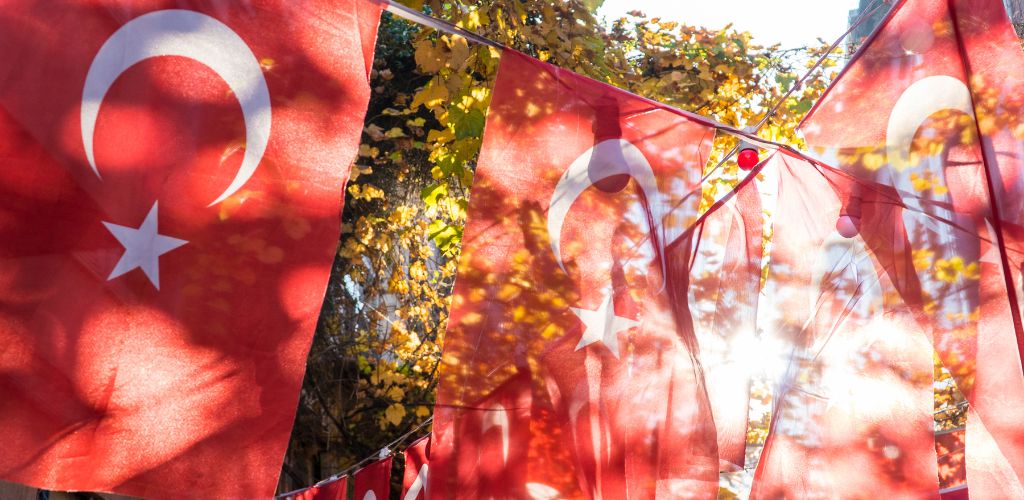
If you’re wondering what it’s like to be a digital nomad living in Turkey, you’re not alone. You’re making a very popular choice and, in all honesty, I can’t blame you. Turkey is a fantastic country with amazing scenery, culture, food, history, and friendly locals. But, before you make your final decision, it’s best that you know as much information about what it could be like, as possible.
I lived in Turkey for several years, and I still visit regularly to see my husband. I’ve noticed a real boom in the number of remote workers choosing to relocate to different parts of the country; making it a hotspot for this coming year. To help you decide whether or not this move is for you, this digital nomad guide to Turkey will tell you everything you need to know.
About Turkey
Turkey is a huge country that sits between Europe and the Middle East. Many people think that Istanbul is the capital city, but that title belongs to Ankara. Istanbul is, however, by far the largest city and one of my favorite places in the whole world. According to recent statistics, an estimated 16,047,000 people live in Istanbul alone.
But it’s not all about Istanbul, because there are some amazing towns and cities to visit, including vibrant Izmir, Ankara itself, and Antalya to name just a few. The south coast is definitely where it’s at during the summer months thanks to the many amazing beaches to chill out on. But, for me, the best things about Turkey are its wonderful blend of old and new, and the friendliness of the people – you won’t struggle to make friends.
There’s no shortage of things to see and do across Turkey. This is a country with a huge amount of history and countless archaeological sites to explore. Of course, there’s also the food to try; I guarantee you’ll fall in love with all the different kebabs and street food.
Living in Turkey As a Digital Nomad
Over the last few years, Turkey has become a great spot for remote workers, and you’ll find many work-friendly cafes and coworking spaces in large towns and cities. Internet across the board is generally high quality, although I do find that using my phone as a hotspot works better than the WiFi in some places.
The most popular places for digital nomads are Istanbul, Izmir, Fethiye, Antalya, and Bodrum. However, you’ll find remote workers pretty much all over the country. Other than in the east and southeast, which tend to be more traditional and rural areas, it’s easy to meet other like-minded people and network if you choose.
Turkey also has a relatively low cost of living, which I’ll talk about in more detail a little later. While finding accommodation can be a bit tricky, there are many options for sharing rooms with other remote workers, and the cafe vibe/nightlife scene is fantastic for getting out there and enjoying your time off.
Life in Turkey is pretty chilled out, except for the heart of Istanbul which is always incredibly fast-paced. Yet, even there, there’s something electric and exciting in the air. As a digital nomad in Turkey, you won’t struggle to find a hidden gem or tourist hotspot during your downtime.
Is Turkey Safe?
As a potential digital nomad in Turkey, you’ll certainly want to know whether or not it’s safe before you make a choice. I’ll tell you from personal experience that I never felt unsafe in Turkey, even in Istanbul. However, that’s not to say that you don’t need to use your common sense, especially in large cities, and definitely in Istanbul.
Don’t walk around on your own at night, avoid bringing valuable items with you when you’re out and about, and dress conservatively if you feel the need to do so. It’s about following your gut and simply being careful, just like anywhere else in the world. However, do be cautious if you’re in Beyoğlu, Istanbul at night, as it’s known for pickpockets, scams, and generally all the things you want to avoid.
Despite that, Turkey is a safe place, and even before I met my husband, I never had a problem when I was walking around on my own. One thing you should avoid however is protests; if you see any large gatherings, just walk the other way – you never know how they may turn on a dime.
Best Places to Live in Turkey
Working remotely in Turkey isn’t a difficult experience, and it’s certainly an enriching one. However, it does depend on where you choose to base yourself. To help you out, I’ve come up with a list of the best places to live while working remotely.
1. Istanbul
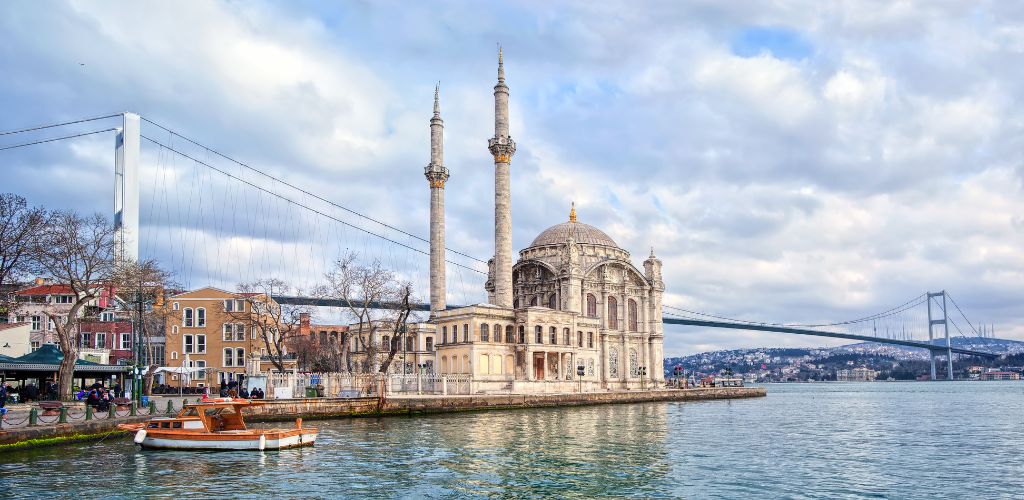
Istanbul is Turkey’s biggest city by far, and it’s a vibrant place that has a wonderful blend of ancient and modern. It’s also the only city in the world that straddles two continents, connected by the huge Bosphorus Bridge. There are many great places to stay, and you’ll find plenty of traditional spots to visit here, amazing history, great food, and some of the best nightlife in the country.
I may be a little biased because Istanbul is my favorite place, but you don’t have to just take my word for it; there are so many digital nomads who call this place their temporary home. There are tonnes of coworking spaces and some great cafes; you can even sit outdoors in a park during the summer months and get some work done with an amazing view.
The vibe across the board is friendly and welcoming, and you’ll meet plenty of people, both local and international. The only downside of Istanbul is that it’s immensely busy; I’ve never seen traffic like it in my life. But, when you push that part aside, there are only advantages left to consider.
Best Areas to Live in Istanbul
Istanbul is huge, and it’s hard to pinpoint where the actual center is, although the general consensus is Taksim, with Sultanahmet noted as the historical center of the city. Staying in Taksim isn’t the best idea, simply because it’s packed with noise—nightclubs often play loud music until around 6 am—and it’s more expensive because of its attraction. However, there are some areas not so far away that provide a more authentic vibe while still being within easy reach.
For me, Beşiktas is the best place for digital nomads. I like the feel of this neighborhood—it feels local but still offers plenty of great attractions, and it’s a little cheaper than some of the other more central parts. You’ll also find some great coworking spaces here, and it’s very easy to get the ferry over to the Asian side and Uskudar and Kadiköy, which are other great areas for remote workers.
Beyoğlu is the closest area to Taksim and extends down to Karaköy and Galata. You might find life slightly more expensive in this area, but if you can share with another digital nomad, you’ll find plenty of fantastic cafes to work from. Then we have Fatih, which is close to Sultanahmet and the most historical part of the city. There are some cheap Airbnbs to be found in this area and a much more traditional way of life, which may call out to you.
Coworking Spaces in Istanbul
As a digital nomad in Istanbul, you’ll find some solid coworking spaces to choose from. Here are three of the best:
Workinton, Nişantaşi: Located close to the center of Beşiktaş, this popular and vibrant coworking space is the ideal place to meet other digital nomads.
Galata Business Center, Beyoğlu: With a branch on busy Istiklal Street, this is the best place to combine shopping, a bit of sightseeing, and some work at the same time.
CoBAC, Eminönü: CoBAC is one of the most popular coworking spaces, and it’s located just over the Galata Bridge, so you can enjoy history while you work.
Dolmabahçe Palace: Within walking distance of Beşiktaş, this palace is so opulent, it will blow your mind.
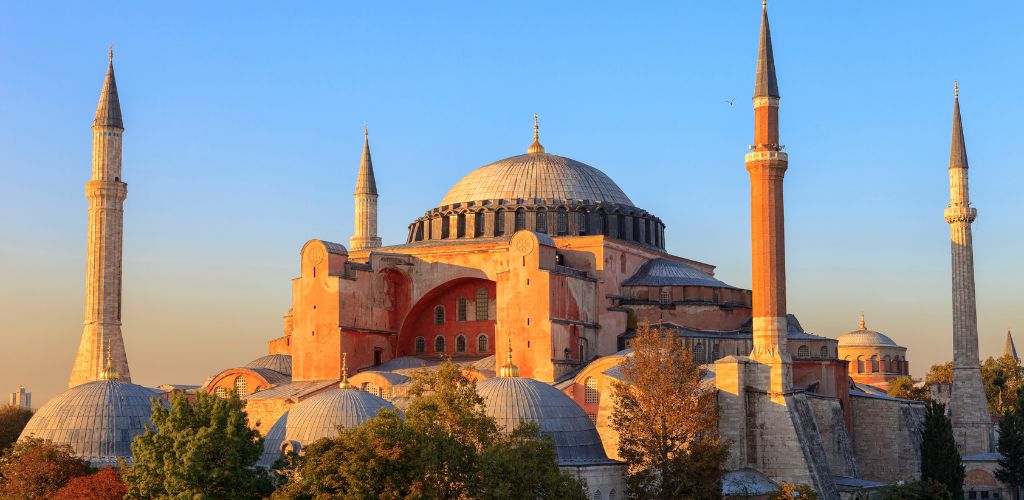
Hagia Sophia & Blue Mosque: I’ve grouped these two because they’re next door to one another. If you want to see some history, be sure to head to Sultanahmet and check out these two famous spots.
Topkapı Palace: Another of Istanbul’s Ottoman palaces, Topkapı has one of the most stunning views over the Golden Horn and is completely breathtaking on the inside.
2. Izmir
Living as a digital nomad in Turkey will likely cause you to look toward Izmir, and that’s no surprise. Izmir is a vibrant, youthful city that has a real cosmopolitan feel. Despite that, there are countless ancient ruins around it, including one of my favorite spots—Ephesus.
Located on the west coast, Izmir is lapped by the warm waters of the Aegean, and being a large university city, it’s got a busy and eclectic vibe. I think Izmir is one of the best places in the country for shopping, thanks to its amazing malls and great bazaars, including the famous Kemeraltı area.
Life as a remote worker in Izmir is made easy by plenty of coworking spaces and cafes, and an outdoor living style during the long summer. It’s easy to get around, and it’s a particularly walkable city, with plenty of opportunities to meet other expats and remote workers.
Best Areas to Live in Izmir
The three best areas in Izmir for digital nomads are Konak, Bornova, and Alsancak. These are all quite central and are linked by buses, however, you can easily walk from Konak to Alsancak in around 20 minutes at a moderate pace. During the summer months, it’s quite pleasant to walk around the city – the walk between these two areas along the coastal promenade is one of my favorites.
Alsancak is a lively area that has some of the best nightlife; this is the part of Izmir I liked the best. You won’t find many coworking spaces in this area, but there are more than enough great cafes to spend a few hours, or you could sit outdoors under a shady tree and check out the view. Konak is a little quieter, and there are some coworking hubs around this area, but again, I much prefer to enjoy the cafe vibe, and it’s a great spot to connect with other remote workers.
Bornova is a little further away from these two areas, but it’s a university area with a youthful vibe, and you’ll find a lower cost of living in terms of eating out and nightlife. Again, there are plenty of cafes to work from, and if you like shopping malls, this is the main area in the city for splashing the cash.
Coworking Spaces in Izmir
The coworking scene in Izmir is growing. Here are a few of the best spots I’ve found.
Withco Coworking: Withco is a popular coworking spot between Konak and Alsancak that offers daily passes. You will need to reserve your spot ahead of time, but you’ll get your own desk and unlimited refreshments throughout the day.
Originn Coworking: Set in busy Bornova, Originn is another high-quality coworking spot that offers different passes depending on your needs. The price is a little lower than Withco, but the space isn’t quite as large.
Lokasyon Coworking: The only downside of this Bornova coworking space is that the staff don’t speak the best English and the website is all in Turkish. However, once you get past that, I found this to be a great coworking spot.
Things To Do in Izmir
I enjoyed the outdoor feel of Izmir, and the mild winters in this part of the country mean it’s always possible to spend some time outside. Here are some of the best things to do with your days off in Izmir.
Ephesus: This is my number one recommendation when you’re anywhere near this area, and it’s an ancient city that will blow you away. There is no better way to spend your day off.
Shopping in Kemeraltı: At the far end of Konak you’ll find Kemeraltı market. It’s the ideal place for haggling, trying different foods, and grabbing some bargains.
Walk the Kordon: The waterside promenade between Alsancak and past Kemeraltı is a great free thing to do when you have some spare time. I love how calm it is; even though it’s in the middle of a city, it has a super relaxing vibe to it.
Visit Çesme: Around an hour away from Izmir you’ll find the beautiful beach town of Çesme, which makes for the perfect day trip. I think the beach here is one of the best in the country, and the seafood is divine.
3. Fethiye
If you want a laid-back beach vibe within close reach of some of the most stunning natural sights possible, it has to be Fethiye. Hands down, this is one of my favorite places in Turkey, and many digital nomads agree with me as it’s become a magnet for remote workers over the last few years. It’s not surprising at all once when you witness the stunning views here.
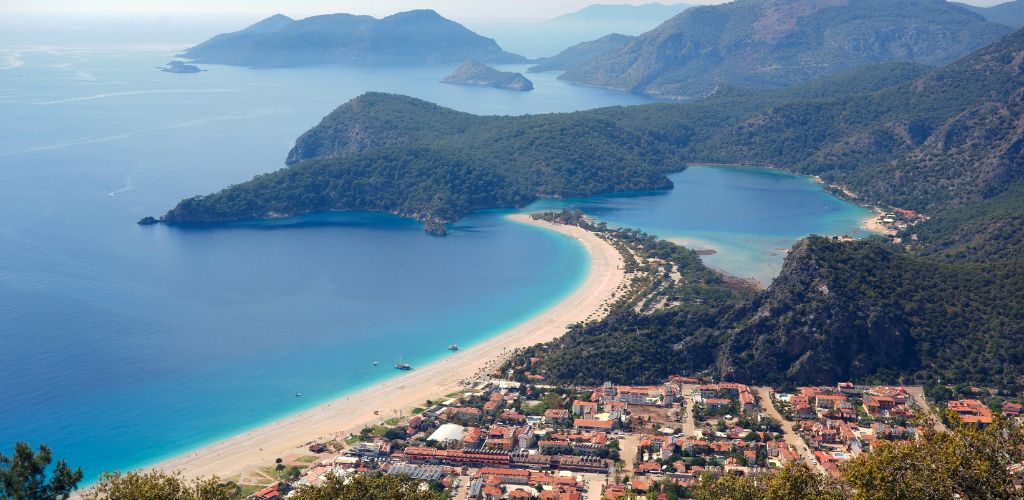
Fethiye is a small city that extends outward to include several beach resorts, including Ölüdeniz, Hisarönü, and Çalış. However, Fethiye itself has some great beaches if you want to stay in the center of the city. It’s a very digital nomad-friendly area, most people speak English, and I found the internet to be high quality. Plus, days off spent at the beach are a literal dream come true.
While accommodation in Fethiye may cost a little more than in some other areas, particularly if you try to stay in the center of Ölüdeniz, it’s possible to find some low-cost Airbnbs, and it’s still cheaper than most of Europe. Fethiye has very hot summers and mild winters, making it a year-round spot to meet countless other travelers, digital nomads, and holidaymakers.
Best Areas to Live in Fethiye
The Fethiye area is quite large, which means there are plenty of neighborhoods to choose from. Ölüdeniz is my favorite part of this area, hands down, but it’s also the most expensive and therefore not a good idea to base yourself there. I recommend basing yourself nearby and visiting regularly – it’s truly beautiful.
The central part of Fethiye itself is a good place to stay as it’s close to nightlife, beaches, and shops, and you’ll find some good Airbnb options. Hisarönü is another good option and here, you can often find villas on Airbnb for a reasonable price. Local buses run over to Fethiye City and down to Ölüdeniz frequently from here, and there are plenty of bars and restaurants for nightlife if you choose.
Another option is Çalış. This is a beach area which is packed with hotels and B&Bs. Again, you’ll find Airbnbs for a good price, but you might also find another digital nomad to share with as this is a particularly popular area for remote workers. You can easily get over to Fethiye and buy supplies from the bazaar while still enjoying the beach on your days off.
Coworking Spaces in Fethiye
Fethiye’s coworking scene is slowly growing, and there are a couple of great quality spots to try. However, you won’t struggle to find suitable cafes, many beachside, to work from.
Lokal: Located in the center of Fethiye City, this popular coworking space offers a modern place to work and several membership options.
Hipokampus: This is another popular spot for digital nomads, and it has an enviable seafront location, meaning you get a great view while you’re working – talk about motivation.
Things To Do in Fethiye
The Fethiye area is famous, and there’s no shortage of things to see and do. Personally, I’d head to the beach with every spare second, but if you want to see some of the most popular spots, here are some of my recommendations.
Blue Lagoon: I love this stunning beach, and while it can get extremely busy during the summer months, don’t let that put you off. You can even parasail over it if you’re feeling adventurous as Ölüdeniz is one of the top spots in the world for the sport.
Butterfly Valley: A boat trip to this beautiful island will only take two hours of your time, and it’s a great way to enjoy the beauty of the area and soak up the sun.
Kayaköy: The beautiful yet abandoned village of Kayköy is a short distance away from Fethiye, and although you’ll need comfortable walking shoes for this one, it’s a stunning location to explore.
Saklikent Gorge: If you’re visiting Fethiye in the heat of summer, I’d highly recommend heading to Saklikent Gorge. Not only is it beautiful in nature, but the temperature is always lower deep in the canyon; making it an ideal spot to cool off.
Lycian Way: The Lycian Way is a long-distance hike between Fethiye and Antalya, taking you through some of the most important parts of ancient Lycia. There are many ruins en route and some great little guest houses to stay in.
4. Antalya
Life as a digital nomad in Turkey doesn’t get much better than it does in stunning Antalya. This is a huge city and province that’s lapped by the glittering Mediterranean and experiences up to 13 hours of glorious sunshine per day during the hottest month of July.
I was a little confused about where to go when I first looked at Antalya, so make sure you know whether you want to go to the city itself or whether you’re looking to head to a beach resort. Some resorts in the province include Alanya, Belek, Lara, Kemer, and Manavgat. For me, the beaches in the Antalya region are some of the best in the world, not just Turkey, and it’s a very easy area to travel around.
The city of Antalya is a wonderful place to base yourself as a digital nomad and you can easily venture out to the nearby resorts from here. Konyaaltı Beach is a huge, sweeping area where you’ll meet people from all over the world and I loved walking around the old castle area and drinking Turkish coffee.
Best Areas to Live in Antalya
Konyaaltı is the beachside part of the city, and there are some great hotels and hostels in this part, however, rental prices are higher here, as well as in the historic Kaleiçi area. The good news is that you may find another digital nomad to share with. I liked the Konyaaltı area because I could wander down to the beach whenever I had some spare time, and you’ll come across lots of like-minded people around here.
Another beachside option is Lara, which is where a lot of the huge hotels are based. Despite that, there are many Airbnbs, and you can often find a cheaper deal if you’re staying for longer. Lara is within walking distance of the center of Antalya, toward the Kaleiçi side, and is a great place to visit on a sunny day—of which there are plenty!
A couple more residential options are Döşemealtı and Muratpasa. I liked Muratpasa because it had a much more “homely” feel, however, it’s quite far from the beach, and you’ll need to use taxis and buses if you want to go to the city center. Döşemealtı is a good choice for those who like the countryside and outdoor spaces; there are some great hiking spots, and I enjoyed the more traditional feel.
Coworking Spaces in Antalya
Antalya has a thriving coworking scene, and there are quite a few to choose from. I found the daily and monthly pass prices to be a little higher than in Fethiye or Istanbul, but they’re good quality spots regardless. Here are three of the best.
Work C: This is a very popular coworking space in the center of Antalya, and it offers a modern and comfortable environment for getting through your task list. I found the internet to be of great quality, and I could easily make video calls without any issues. They also offer free, unlimited tea and coffee.
Creawork: Located in Muratpasa, Creawork is a great coworking spot for networking and collaborative work. Daily passes are a little cheaper than Work C, as it’s not quite as central, but it’s easy to reach with public transport.
Mozaik: This is a great coworking space, centrally located in Konyaaltı. I spent a few days here, and it’s very close to the beach, with reasonable daily prices for both shared areas and private desks.
Things To Do in Antalya
The Antalya region is huge, and there are so many things to see and do. I’m still trying to get through them all after all these years, but there are some definite highlights to put on your list first.
Duden Waterfalls: Between Antalya city and Lara Beach you’ll find the dramatic Duden Waterfalls. One minute you’re walking along the coastline and the next, there’s a huge waterfall thundering down- look out for the rainbows.
Jeep safari in the Taurus Mountains: Give yourself a day off and head into the Taurus Mountains for a day of off-road fun. I had a great time on this trip, although do remember sunscreen because that sun is intense.
Visit Alanya: Just under two hours drive from Antalya is the coastal resort of Alanya and it’s one of my favorite spots in the region. It’s so laid-back, and Cleopatra Beach is without a doubt one of the best places to spend a day in the sun.
Explore Kaleiçi and Hadrian’s Gate: The area around the old castle is a wonderful place to explore, and I enjoyed the traditional vibe. While it can be busy around this area, it’s worth the effort, and Hadrian’s Gate is a Turkish highlight. You’ll definitely need your camera for the sweeping views over the coastline.
5. Bodrum
Bodrum has become a prestigious and sophisticated city over the last few years, and it’s not unusual to see celebrities enjoying the coastline from their private yachts.
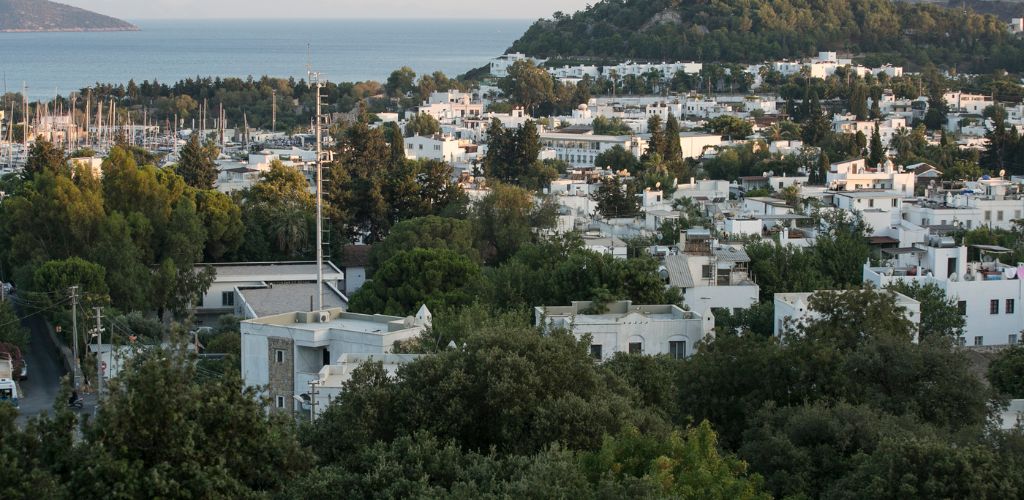
Many digital nomads base themselves in Bodrum, however, it’s definitely an area for people with a slightly higher budget. I’ve noticed that rent in Bodrum is noticeably higher than in other large towns and cities, at around 15,000-20,000TL ($500/$670) per month, and most restaurants fall into the high-end category.
Despite that, Bodrum does have major advantages as a digital nomad hub. It has good quality internet, plenty to see and do during days off, and it has an international feel to it; making it easy to meet other remote workers. You can cut costs by eating at home, and perhaps sharing accommodation, and if you love the beachy/outdoor vibe, it’s definitely somewhere for you.
I like Bodrum for its exclusive feel, but it’s not somewhere I would think about staying for more than a few months. However, during the summer, it’s a great base for beach lovers, and there are plenty of day trip locations within easy reach.
Best Areas to Live in Bodrum
Living in the center of Bodrum, or nearby Bitez, isn’t ideal for digital nomads unless you don’t mind spending a fortune on overpriced hotels and villas. However, there are a few smaller areas just outside the main center of town that are ideal for cutting costs and are still very accessible by car and bus.
My favorite part of Bodrum is Konacık, and it has quite affordable housing options if you’re willing to search. Here, you’ll find a slower pace of life, and while the center isn’t far away, it’s less focused on tourism, and more on day-to-day living. The city center is only ten minutes away, and there are some cute cafes to spend your days working if you want to get out of the house.
Another good option is the beach resort of Gümbet, just ten minutes away from Bodrum, and a lot cheaper. Here, you’ll find some affordable Airbnbs and hotels, and the beach is beautiful. Nightlife around here is a lot more laid-back and less “uptight” than Bodrum city center, and again, more affordable.
Coworking Spaces in Bodrum
Bodrum’s coworking space is in its infancy, but there are a couple of notable areas to head to if you want to network and get out of your accommodation for work. The low number of coworking spaces isn’t an issue, however, as there are more than enough cafes that are suitable to work from.
CoBodrum: You can choose daily, weekly, or monthly packages at CoBodrum, and there are fixed desks or shared networking areas to choose from. This is a new space that’s still establishing itself, but it’s become quite popular over the last year or so.
Things To Do in Bodrum
Life in Bodrum is mostly about summer fun, and that means spending time outdoors and soaking up the sun. However, the winters around this area are surprisingly mild, with an average temperature of 13°C/55°F in December. Here are some of my recommendations.
Museum of Underwater Archaeology: For me, this was a major highlight of Bodrum, and I’d definitely go back again. The museum is inside Bodrum Castle, and it’s packed with artifacts from the coastline around Bodrum and the neighboring Aegean.
Bodrum Castle: Even if you don’t go into the museum, the views from Bodrum Castle are truly breathtaking. I’d recommend you clear down your camera for this one; you’re going to need it.
Gümbet Beach: Bodrum itself doesn’t have ‘full-on’ beaches, and they tend to be rocky. However, ten minutes away, in Gümbet, you’ll find a beautiful sandy beach with plenty of amenities for the perfect day off.
Take a Boat Trip: Bodrum’s coastline is stunning, and a lazy day boat trip is the perfect way to appreciate it. What better way to spend a day off?
Go Diving: Around 15 minutes away from Bodrum, you’ll find the Big Reef, which is a famous dive site in the area. Here, you’ll find all manner of colorful marine life, and it’s a popular spot for less experienced divers.
How to Find Accommodation in Turkey
Now, I’m not going to lie, finding accommodation in Turkey is probably the hardest part of being a digital nomad. Many landlords won’t rent for less than 12 months, and even then, they want the full year’s rent upfront. However, life in Turkey doesn’t have to be that hard; here are some tips on finding somewhere suitable to stay.
1. Airbnb: I think the best option is Airbnb because you can find somewhere homely and therefore cut costs, and it’s often possible to negotiate a lower price for longer stays. All of the locations I’ve talked about in this guide have a large range of properties on offer.
2. Booking.com: You can find some great value hostels and B&Bs on booking.com, and there are also serviced apartments on offer. Again, most of the mentioned destinations have a range of properties available on the site, and the plus point is that you can read reviews.
3. House-sitting: While house-sitting isn’t a huge ‘thing’ in Turkey, you’ll certainly find some assignments in Istanbul. This is a good way continue your usual nomad lifestyle, while having a roof over your head, and if you’re clever, you can line up your house-sitting assignments over a period of time. My go-to site is TrustedHousesitters.
4. Facebook groups: With the growing number of digital nomads in Turkey, there’s no shortage of Facebook groups dedicated to each location. These are good places to look for possible people to share with and to find advertisements.
Cost of Living in Turkey
While the cost of living in Turkey has increased over the last few years, it’s still lower than most other European countries. I found I could have a relatively good standard of general life without splashing the cash, and as with all things, it’s possible to cut costs without sacrificing too much, if you’re sensible.
Prices do vary depending upon where in Turkey you are, and even in which neighborhood of a specific city, but I’ll give you a general idea below of what you can expect.
Restaurants and Groceries
I’d always recommend cooking at home and buying fresh produce from the local bazaar. It’s also a good idea to buy your meat from a butcher rather than the supermarket, as you’ll notice a big price difference. For around 1000TL ($33) you can stock up your fridge with a week’s worth of fresh fruits and vegetables and probably still have some change.
As far as restaurants go, try and avoid the tourist traps as you’ll spend a lot more there. For instance, you can expect to pay around 1000TL ($33) for a meal and drink in an international restaurant, but you will pay around 400TL ($13) in a local restaurant.
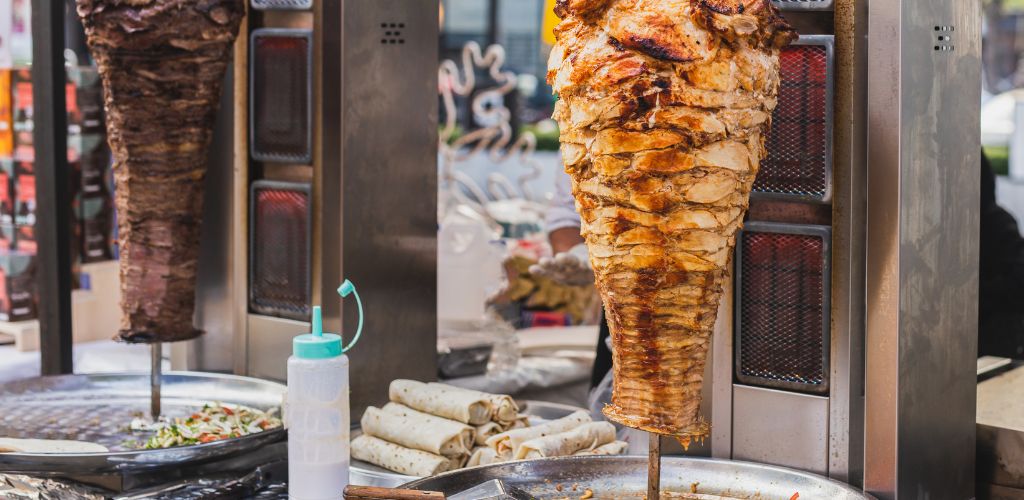
If you want to eat traditional Turkish food, look for the words “lokanta” or “ev yemek”. If you want to eat kebabs, you’ll need to look for an “oçakbası” which is where you’ll find a large range of grilled meats and salads. A full meal in a place like this will cost you around 600TL ($20), depending on what you order.
Accommodation Costs
Accommodation is the biggest expense in Turkey and, as I mentioned earlier, it’s not easy to find an apartment to rent if you’re staying for less than a year. In this instance, you’ll sign a rental contract and in many cases, have to pay the whole year upfront. Personally, it’s not something I’d feel very comfortable doing.
Airbnbs vary in cost depending upon where you go. If you stay in Fethiye or Antalya, you can usually find a one-bedroomed apartment for around 800-1000TL per night ($26-$33), but if you stay in Bodrum, you can usually add around 300TL per night on top of that. Hotel and hostel prices vary depending on location and time of year, but you can find some good deals on booking.com.
If you can find another digital nomad to share with, you’ll certainly save money as you’ll also need to pay utility costs on top of your rent. A month’s electricity and water usually costs somewhere between 2500-3000TL ($84-$100) and will be higher if you use air conditioning during the summer.
Transportation Costs in Turkey
One of the biggest advantages of living in Turkey as a digital nomad is that it’s so easy to get around, both locally and on a wider scale. I personally wouldn’t consider driving, simply because the public transport network takes the hard work out of it and the cost of fuel can be high. Instead, use the local bus network; you can usually get a one-way journey across town for around 15TL ($0.50).
If you want to visit other parts of the country, you can choose between long-distance buses, trains, or domestic flights. The train network isn’t that extensive, but you’ll find some routes fit the bill. I found the long-distance buses a great option, particularly Pammukale buses, as they’re comfortable, cost-effective, and cover most of the country.
If you’re in Istanbul, public transport is the way to go. You simply buy an Istanbul Kart and top it up as you need to. You can travel one way on one service (ferry, bus, Metro, or tram) for 15TL ($0.50) no matter where you’re going within the network.
SIM Cards and Data
Whether you’re visiting for a short time or a longer period, there are multiple companies that offer tourist SIM packages. The best companies to go with are Turkcell, Turk Telekom, and Vodafone.
If you’re planning on staying longer, as most digital nomads will, then you simply take your passport to one of the above-named stores and purchase a SIM for your phone. This will cost you around 100TL ($3.50), and you then top up your phone with calls, SMS, and data each month.
You can use a Turkish SIM in a foreign phone for up to 180 days before it will lock. At that point, if you have a residency permit, you can pay to have the phone unlocked, however, this can be quite a costly process and at the time of writing the tax is around 6000TL ($200). A good way around this is to buy a cheap phone in Turkey and use it simply for calls and data; you can still use your regular phone on WiFi.
Money Saving Tips for Turkey
With the rising cost of living in Turkey, a few money-saving tips will come in handy. Here are some useful strategies I picked up during my time there.
Make use of public transport: Avoiding taxis wherever possible will save you instantly. I only ever use taxis when it’s late at night or if I have no other choice. The public transport network across the whole country is high quality and using it will keep cash in your pocket, especially in Istanbul.
Cook at home and shop at the bazaars: It’s very tempting to eat out, especially if you’re staying in a tourist resort. However, you’ll notice that your cash supplies dwindle pretty quickly. Instead, head to the loud and colorful bazaars and stock up on wonderfully fresh produce. Then, learn to cook; befriend one of your neighbors and ask them to show you how to cook delicious Turkish food—that’s exactly what I did.
Eat local food: If you do want to eat out, go to the local restaurants rather than tourist ones. If you’re not sure where to go, ask someone local where they head to when they want to eat out. You can eat pide and lahmacun relatively cheaply, and they’re both filling dishes.
Avoid the tourist traps: Again, tourist fun is tempting, but it’s expensive. Don’t shop in stores on the main tourist streets; head to the back streets instead, and go to the free beaches rather than the expensive beach clubs. If you want to go on a trip, book it independently instead of using excursion desks or reps.
Book accommodation outside of the main tourist season: I really enjoy Turkey outside of the main summer months; I find July and August too stifling hot and I can’t get anything done. Most of Turkey enjoys mild winters, so think about heading there in the shoulder months or early winter to save some cash on accommodation.
Coworking Spaces in Turkey and WiFi Speed
I’ve already given you some ideas on coworking spaces to head to across Turkey’s main digital nomad hotspots, but what about the general WiFi speed? Internet quality does vary across the country; you’ll find it’s less reliable and a lot slower if you head to southeast Turkey compared to Istanbul and the south coast beach resorts. However, generally speaking, it’s still good enough to work on.
On average, Turkey has a download speed of 41.49 Mbps and an upload speed of 11.10 Mbps, according to Speedtest. When working remotely in Turkey, the internet is vital, and I never found it to be a huge problem. There were times when it dipped occasionally, but I often conducted video calls and streamed content without major problems.
Activities and Things To Do in Turkey
Living in Turkey as a digital nomad is made a whole lot more fun thanks to the huge range of things to see and do. Aside from the ideas I’ve already given you in each location section, here are some things you shouldn’t miss.
1. Mount Nemrut
Close to the city of Adıyaman, you’ll find the mysterious Mount Nemrut. This is a large mountain that you can climb, and at the top, you’ll find mysterious statues that are reputed to date back to the Commagene Kingdom in around 163 BC. I found the whole area fascinating and you’ll find some amazing food in this region too.
A tour to Mount Nemrut will show you the best of the area, and you’ll learn from a knowledgeable local guide. This is one of those areas that it’s very easy to miss out on because you don’t quite understand what you’re seeing. I definitely benefitted from taking a tour but if you want to get there on your own steam, taking a domestic flight from Istanbul to Adıyaman is the way to go.
2. Cappadocia
I look back on my visits to Cappadocia and still can’t quite believe what I saw. This is one of those places that will blow you away no matter how many times you visit, and it should 100% be on your list. Located in the central part of Turkey, Cappadocia is known for its “fairy chimney” landscapes, and it’s a famous area for hot air balloon rides.
Göreme is the central part of Cappadocia and while it’s more touristic, I’d still recommend you stay there, simply to get the best out of your visit. Again, a guided tour is a good way to drag every last second out of your stay. I didn’t realize just how big Cappadocia is, and I’d recommend at least four days if you want to see as much as you can.
Getting to Cappadocia can be tricky, but a flight from Istanbul to Nevsehir is the fastest route, with a short shuttle bus ride from there.
3. Take a Food Tour
One of the major advantages of being a digital nomad in Turkey is the food. Seriously, the food in this place is like nowhere else on Earth, and it varies from region to region. No matter where you are, try to find a food tour, preferably a walking one so you can try as much as possible.
Regardless of where you are, simply being brave and trying something new will show you delights you never knew existed; I used to be quite picky with food, but spending so much time in Turkey has made me more adventurous.
4. Skiing at Uludağ
During the winter months, head to beautiful Uludağ and try skiing and snowboarding. Or, if you’re like me, avoid risking a broken leg and simply appreciate the scenery with a hot chocolate in your hand instead. Uludağ is the premier ski resort in Turkey, and it’s located around an hour away from the city of Bursa.
You can also visit during the summer months, and there are some beautiful walking trails to check out. However, it’s simply more dramatic and stunning during the winter, and this is one of the best places to go if you’re seeking some peace and quiet. It’s not the cheapest area, I’ll admit that, but if you visit in November and March, you’ll save cash during the peak months.
5. Explore Ankara
Ankara is the capital city and a very cultural place to visit. Here, you’ll find a traditional way of life, and it’s not quite as touristic as some of the other large cities in Turkey. For me, that was a reason to go, and it’s a great spot for exploring history and architecture.
The most famous thing to see in Ankara is Anıtkabir, the mausoleum of Mustafa Kemal Atatürk, the founding father of the modern Turkish Republic. Ankara Castle is also a notable spot to visit, with amazing views over the city, as well as modern-day spots, such as shopping malls and amazing restaurants.
Weather in Turkey
Turkey is huge, and its weather varies from region to region, depending on the time of year. Generally speaking, the south coast experiences hot summers and mild winters, with very little rain during the summer months. It hardly ever snows and if it does, it’s only on high mountains.
For instance, you can expect an average high temperature of around 35°C/95°F during July, and 15°C/59°F in January in Marmaris. Yet in Istanbul, average highs are around 28°C/82°F in July with a drop to around 8°C/42°F in January. Toward the east of the country in Adana, you can expect average highs of 31°C/88°F in July, and 7°C/41°F in January.
In the winter months, it can snow quite heavily in the eastern part of the country and the central regions, such as Ankara and Cappadocia. Istanbul experiences some snow, usually around January only.
Pros and Cons of Living in Turkey
As with anywhere in the world, there are both pros and cons of living in Turkey. I’ve looked back over my experiences so I can tell you the highs and lows of being a Turkey digital nomad.
Pros of Living in Turkey
Great weather: I can’t deny it; the weather is a major pull for most digital nomads, and it was one of the reasons I went to Turkey in the first place. It really is the perfect picture of summer.
Amazing food:Turkish food is truly delicious, and whether you’re a meat eater or vegetarian, you’ll find countless dishes to try. Overall, Turkish cuisine is pretty healthy too.
Friendly locals: One of the main reasons I fell in love with Turkey is the friendly people; they cannot do enough for you. Yes, there are some bad eggs, but they’re everywhere – overall, it’s one of the friendliest places I’ve ever visited.
Easy to travel around:Turkey is huge, and there’s so much to see and do. The good news is that public transport links the entire country, so you can see all the things on your list without much stress.
Relatively low cost of living: Prices have risen over the last couple of years, but you’ll still find Turkey cheaper to live in than most European countries.
Cons of Living in Turkey
Difficulty finding accommodation: This can be a major issue and inconvenience, but it’s something you can get around if you’re willing to search.
Visa issues: I’m going to talk about this shortly, but residency permits aren’t as easy to obtain as they used to be.
Occasional language barrier: On the whole, you’ll find most people who speak English, but not all. If you’re somewhere off the beaten track or away from a major town or city, you may struggle to communicate with ease.
Tourist areas can be expensive: While there’s a lot to see and do in tourist resorts and cities, you’ll find prices are much higher. My advice? Stay out of those areas and just visit for days out.
Digital Nomad Visa for Turkey
Being a digital nomad in Turkey is definitely an attractive option, but there’s one thing that could cause your plans to go awry—difficulty obtaining a residency permit.
At the time of writing, it’s very difficult to get a first-time residency permit for touristic purposes, e.g. you’re going to rent a house/apartment and stay longer than 90 days. There isn’t currently a digital nomad visa in Turkey, so if you do want to stay longer than 90 days out of a rolling 180 days, you may struggle.
An answer to this is to stay for 90 days, leave the country for 90 days, travel somewhere else during that time, and then return. Turkey isn’t in the Schengen zone, but it does have the same rules in that regard. Most nationalities are able to get a visa stamp upon entry, but some will require an e-visa beforehand; simply check here for information on your country of origin.
In Conclusion
Life as a digital nomad in Turkey is never dull, full of adventure, packed with amazing food, and one of the best experiences you’ll ever have. This country has a special place in my heart, and it’s no surprise that so many people visit and fall totally in love with it. I’m sure you will too.
It’s no surprise many digital nomads are flocking to Turkey to stay for longer periods of time, and if that’s something you’re considering, I urge you to go for it. The information in this guide will give you a good idea of where to go, what to do, what to avoid, and the places to add to your visit list. So, what are you waiting for?
Lotus Technology, a division of Lotus responsible for development of electric vehicles, is about to go public via a SPAC deal.
Also referred to as a reverse merger, a SPAC deal is where a private company goes public by being taken over by a company that’s already listed, typically one set up solely for this purpose, known in investor circles as a special purpose acquisition company (SPAC). The advantage is that it avoids the complexity of the more traditional initial public offering which has more regulatory oversight.
In an announcement on Tuesday, Lotus Technology said it has entered into a reverse merger with the NASDAQ-listed SPAC company L Catterton Asia Acquisition Corp. The deal is expected to be completed on Thursday, after which the combined company, to be known as Lotus Technology Inc., will start trading on the Nasdaq under the ticker symbol “LOT.”
Lotus Technology is based in Wuhan, China, and was responsible for the Lotus Eletre electric SUV and the recently revealed Lotus Emeya electric hatchback. It’s also developing an electric compact crossover.
Lotus Eletre
Lotus Technology is headed by Feng Qingfeng, who will remain CEO of the merged company after the deal closes. The majority of the merged company will also be owned by Lotus Technology’s existing shareholders which include Zhejiang Geely, Etika Automotive, and Nio Capital. Etika is a Malaysian supplier which together with Geely are the primary shareholders of Lotus Technology’s Lotus parent. Nio Capital is an investment firm founded by William Li, the CEO of rival EV firm Nio.
Since the original announcement of the SPAC deal a year ago, more than $880 million has been raised in pre-closing and private investment in public equity financing, Lotus Technology said. The company has previously said it plans to use any raised funds for vehicle development and expanding the sales network.
One of the downsides of owning an EV is that you know your battery is degrading over time, but, you can’t really know how much. There are ways to arrive at estimates, but until now, there hasn’t been a definitive way to test it. Well, Jalopnik has been given access to a new system that changes all that, and we’d like to invite our readers to check it out.
New York Joins California, Banning Non-Electric Vehicles After 2035
Jalopnik is hosting an electrifiedcar meet-up near the Malibu Public Library (linked) in Malibu, California this Saturday, February 24 so we can measure your car’s battery health and collect battery data for future stories. We will be using a new product designed to measure hybrid and EV battery health called vsNEW, check out the VSNew website here to learn about the product.
I will be hosting the meet up from about 9 a.m. local time to about noon local time; I’ll be joined by one of our senior editors, Daniel Golson, and a representative from vsNEW to make sure everything goes smoothly, and to answer any questions about the product. The product collects the VIN, year, make, model and odometer to identify the car that is being tested, but nothing else. We will never use any data to specifically identify the person associated with the vehicle.
This is the list of all compatible vehicles; if your car is on this list, we want you to join us on Saturday!Screenshot : vsNEW
If you live near Los Angeles and own a car that’s on the list of compatible vehicles, we want you to come to the meet up! I chose to host it in Malibu since it’s a beautiful drive and is located near EV charging stations for those with plug-in vehicles.
vsNEW is a product that is designed for dealers so they can measure a hybrid or EV’s battery health to help make educated purchases when buying a used electrified car. As many of us know, battery health can degrade over many cycles of charging and discharging, and EV and hybrid battery replacement is hugely expensive, so the purpose of this product is to allow car dealers to test battery health and share that data with prospective buyers.
Your car’s Battery Management System or BMS contains all the battery health information necessary to determine the health of your battery, and the vsNEW software reads that and compiles a battery health report. This includes maximum range, maximum battery capacity, frequency of fast charging vs regular charging, and the software calculates your car’s battery replacement risk.
We hope to see you this Saturday near the Malibu Public Library between 09:00 am and 12:00 pm!
Miami is vibrant city known for its beach culture, party scene, Cuban influence. It’s definitely considered one of the more high energy, fun cities in America. Miami attracts millions of visitors per year.
Personally, Miami isn’t my favorite city in the States (though I do love the beaches), but there’s absolutely no denying that there’s a lot of fun to be had here. From beaches to partying to Cuban culture to the nearby Everglades, you can do a lot. (And if you’re looking to splash out, there are tons of luxurious hotels, upscale shopping districts, and high-end dining to be found here.)
Here are some of my top things to see and do in Miami:
1. Explore the Everglades
Everglades National Park has 1.5 million acres of swamps, prairies, and sub-tropical jungles. It is one of the most unique and largest public parks in the United States. Designated as a UNESCO Biosphere Reserve and World Heritage site, it is home to 14 rare and endangered species including the Florida Panther, American Crocodile, and West Indian Manatee, among others. Over 350 species of birds, 300 species of fish, 40 species of mammals, and 50 species of reptiles live in this unique environment.
There are plenty of hiking and biking trails to explore the park using your own two feet, but to traverse the waterways, you’ll need to hop in an airboat. The park is only an hour from the city.
Airboat tours cost around $37 USD. If you want a more active boating experience, kayak tours are also popular (expect to pay around $100 for a kayak tour that includes a kayak rental).
2. Visit Little Havana
Little Havana, Miami’s Cuban neighborhood, was born almost overnight. In the mid-1960s, an estimated 300,000 refugees fled Cuba, with most landing and settling in Miami. Today, over 1.2 million Cuban Americans live in Miami, with Little Havana centering around “Calle Ocho” (SW 8th Street). This is one of my favorite parts of the city and the food here is incredible. Eat in one of the little restaurants and bakeries, walk the vibrant streets, enjoy a Cuba Libre (rum and coke) or Café Cubano (espresso shot sweetened with brown sugar), or get in on some salsa dancing. It’s an arty, quirky neighborhood worth exploring.
Food tours around Little Havana cost around $69 USD and are the best way to learn about the area from an expert local guide.
3. Admire the Art Deco of South Beach
Located in South Beach, the Art Deco Historic District is an area of Miami Beach noted for its concentration of over 800 Art Deco buildings all within one square mile. Art Deco was a popular architectural style from France, common between 1910-1939, characterized by its bold geometric shapes, lavish ornamentation, and embracing of modern materials and technology.
You can also take an Art Deco bike tour of the area to gain even more insights into the architecture and history.
4. See the Art in Wynwood
Wynwood is a former industrial neighborhood that has evolved into a cultural hub/trendy hotspot for graffiti and street art, as well as hip shops, cool restaurants, chill cafes and coffee roasteries, artisan breweries, and art galleries. The most popular attraction here is the Wynwood Walls, a collection of 40 murals from some of the world’s best street artists. The impressive 35,000 square feet of outdoor space, built around existing warehouses, features artists from 21 countries.
The murals are constantly changing, so you never know what you’ll get to see, but many murals address social and political issues, offering commentary on topics such as environmental conservation, immigration, racial justice, and human rights. The Museum of Graffiti, the first museum in the world dedicated to this art form, is also located in the Wynwood neighborhood.
Wynwood Walls: 2520 NW 2nd Ave, (305) 531-4411, thewynwoodwalls.com. Open Mon-Thurs 11am-7pm, Fri 11am-8pm, Sat 10am-8pm, and Sun 10am-7pm. Admission is $12 USD, while a guided tour is $20 USD (includes admission).
Museum of Graffiti: 276 NW 26th St, (786) 580-4678, museumofgraffiti.com. Open Mon-Fri 11am-6pm, Sat-Sun 11am-7pm. Admission is $16 USD.
5. Take a Sightseeing Cruise
Seeing the city by boat allows you to get a different perspective of Miami and its coastal sights that are otherwise inaccessible by land. You’ll see sights such as the scenic Brickell Key, departing cruise ships from the Port of Miami, and the striking Miami Skyline. You’ll also see the opulent residences along the exclusive Millionaire’s Row (a section of Miami Beach nicknamed such for its luxurious waterfront mansions) and Fisher Island (an affluent barrier island known for its upscale residential community).
There are a lot of cruises to choose from but some of the most popular tours are Millionaire’s Row Cruises or Speedboat Tours. Sightseeing cruises are generally around $30-45 USD.
6. Learn to Salsa
Renowned for its sizzling nightlife and rich Latin culture, Miami’s salsa scene is something that must be experienced. From the iconic Calle Ocho in Little Havana to trendy South Beach, salsa aficionados can find a variety of venues catering to different styles and skill levels.
In Little Havana, Ball & Chain has free salsa classes every Thursday starting at 9pm. If you’re looking for more of a nightclub experience, Mango’s Tropical Café is the best place to go. They offer a Sip, Savor, & Salsa experience every day from 7:30pm–10pm. Tickets are $89 USD and include beginner salsa and bachata lessons, a mojito, food, and entrance to go dancing in Mango’s Nightclub afterward (it opens at 10pm).
7. Immerse Yourself in Art
An artsy, avant-garde city, Miami offers many different quirky immersive art experiences, with interactive installations, cutting-edge technology, and multi-sensory environments. Here are some of the most popular:
Superblue Miami – Superblue is a huge (50,000 square feet) experiential art space that showcases large-scale, immersive artworks created by contemporary artists. The exhibits often involve interactive elements and cutting-edge technology. Tickets are $38.50 USD.
ARTECHOUSE Immersive Art Experience – Artechouse is a space in South Beach that combines art, science, and technology to create immersive digital art installations. The exhibits often use projections, lights, and sound to create visually stunning and interactive environments. Admission is $30 USD.
Museum of Illusions – Situated in Miami Beach, this museum offers mind-bending optical illusions and immersive exhibits that challenge perception. It’s a fun and interactive experience for visitors of all ages. Tickets are $30 USD.
Paradox Museum – Fittingly situated in Wynwood, the Paradox Museum is a quirky and interactive museum of optical illusions. It’s also a fun activity to do with kids. Tickets are $30 USD.
8. Visit the Museums
While museums aren’t exactly the first thing that comes to mind when most people think of Miami, there are actually quite a few museums in the city worth checking out. Most museums here are art-focused (Miami is a big art city if you haven’t picked that up yet), though there are also a few science and history museums. Some of the museums worth checking out include:
The Phillip and Patricia Frost Museum of Science – Located in Downtown Miami, this museum offers interactive exhibits on science and technology, a planetarium, and an aquarium. It’s a great destination for families and science enthusiasts. Tickets are $29.95 USD.
Pérez Art Museum Miami (PAMM) – PAMM is a contemporary art museum located in downtown Miami, featuring a stunning waterfront setting and an outdoor hanging sculpture garden. It showcases international modern and contemporary art, with a focus on artists from the Americas. Admission is $18 USD.
HistoryMiami Museum – Offering a comprehensive look at the history of Miami and South Florida, this museum features exhibits, artifacts, and educational programs that explore the region’s cultural heritage. Admission is $15 USD.
Bass Museum of Art – Located in Miami Beach, the Bass Museum of Art focuses on contemporary art and features a diverse range of exhibitions, including works by emerging and established artists. Admission is $15 USD.
9. Do Some Water Sports
Whether it’s the adrenaline-pumping excitement of jet skiing, the rhythmic experience of paddleboarding, the exhilaration of windsurfing, the quiet calm of kayaking, there are tons of options to choose from. You can find pretty much every water sport here, including things like flyboarding, which involves riding a water-propelled device called a flyboard and combines elements of wakeboarding, snowboarding, and acrobatics.
No visit to Miami is complete without a stop at this historic 50-acre estate. This European-style mansion offers a glimpse at life in turn-of-the-century South Florida. It was built by industrialist James Deering as a way to show off his wealth to all his friends and is filled to the brim with Renaissance furniture, artwork, and tapestries. The 10-acre Formal Gardens were built to resemble France’s Versailles but with palm trees, rare orchids, and Cuban limestone. It is one of my favorite things to in the city. Don’t miss it!
3251 South Miami Avenue, (305) 250-9133, vizcaya.org. Open Wed-Mon 9:30am-4:30pm. Admission is $25 USD (advance tickets required).
11. See Coral Castle
Coral Castle was created by Latvian-born Miami resident Ed Leedskalnin as a monument to his lover who cancelled their wedding the day before they were meant to get married. Ed channeled his heartbreak into hand-carving 1,1100 tons of coral rock, creating various monuments and sculptures over the span of 28 years. He originally started building in Florida City, yet when a subdivision was planned nearby, he bought land further away, single-handedly moving the heavy coral carvings to Homestead (where Coral Castle is now). It’s a bit of a trip from downtown, but well worth the time.
28655 South Dixie Highway, (305) 248-6345, coralcastle.com. Open Thurs-Sun 9am-6pm. Admission is $18 USD.
12. Visit the Ancient Spanish Monastery
Built in Segovia, Spain in 1141, this monastery was intended to be a part of businessman and newspaper publisher William Randolph Hearst’s property in California (Hearst saw it in Europe in 1925 and decided he wanted it for himself for his personal “castle”). However, after shipping the building to the US, there was an outbreak of disease. The US government was worried shipments from abroad would spread it so he was not allowed to unload his cargo. Then the Great Depression hit and Hearst had to sell the property. It remained in New York until 1954 when businessmen bought it and finally assembled it in Miami.
16711 West Dixie Highway, (305) 945-1461, spanishmonastery.com. Open Wed-Thu 10am-4pm, Fri-Sat 10am-2pm, and Sun 2pm-5pm. Admission is $10 USD and guided tours are available on weekends.
***
Miami is the ultimate escape for fun in the sun. People come here to let loose, visit nightclubs, lounge on the beach, and drink the nights away. And while that can certainly all be a fun time, there’s a lot more to Miami than just beaches and clubs. The city offers a dynamic fusion of art, music, and great food, and I encourage you to get out there and explore it!
Book Your Trip to Miami: Logistical Tips and Tricks
Book Your Flight Find a cheap flight by using Skyscanner. They are my favorite search engine because they search websites and airlines around the globe so you always know no stone is left unturned!
Book Your Accommodation You can book your hostel with Hostelworld. If you want to stay elsewhere, use Booking.com as they consistently return the cheapest rates for guesthouses and cheap hotels.
Don’t Forget Travel Insurance Travel insurance will protect you against illness, injury, theft, and cancellations. It’s comprehensive protection in case anything goes wrong. I never go on a trip without it as I’ve had to use it many times in the past. My favorite companies that offer the best service and value are:
Looking for the Best Companies to Save Money With? Check out my resource page for the best companies to use when you travel! I list all the ones I use to save money when I travel – and I think will help you too!
Looking for More Information on Visiting Miami? Check out my in-depth destination guide to Miami with more tips on what to see and do, costs, ways to save, and much, much more!
In mid-June, Athens was already jam-packed with tourists and showing signs of the sweltering heat that would overtake Europe this summer. Rich in history, this Greek city is also abundant with friendly locals, charming alleyways, delicious restaurants, and beautiful architecture. Two nights here, I believe, is more than enough time to appreciate the offerings, especially during the hotter summer months when walking for long periods is unbearable.
The staff in this centrally located hotel is extremely friendly with a concierge team that is readily available to help you with restaurant reservations and taxi bookings. The upstairs restaurant and bar boasts stunning views of Acropolis Hill and also has a rooftop pool. The rooms are well-appointed and the breakfast buffet that is included in the reasonable rate is plentiful and has more breakfast options to start your day than you can count. At less than $400 per room in this five-star hotel, you can’t go wrong with staying here.
pros: excellent location in the center of Athens, striking views of the Acropolis, bountiful breakfast buffet included in rate
cons: rooms have tiny balconies that are useless
Located in the hip and bustling Psiri neighborhood of the city, where the streets are shut down for pedestrians to stroll care-free, this industrial hotel is well worth the affordable $300 nightly price tag that includes breakfast and gorgeous views of the Acropolis off the large private patio in the Acropolis Loft suite. This is not a full-service hotel, although a staff member is on-site from 7:00 a.m. to 11:00 p.m. to help in any capacity. For a budget hotel, this is an excellent choice.
pros: helpful staff, low rates, great location
cons: tiny elevator with manual doors (there are accessible stairs though)
You’ll love a healthy lunch in this quaint taverna. Its menu has a huge selection of healthy choices like fresh-fruit smoothies, salads, and protein bowls along with more traditional Greek dishes.
pros: many healthy food options, including vegan and gluten-free
cons: no indoor space to take refuge from the heat although the patio is well shaded
must order: cheese croquettes with citrus chutney and salmon power bowl
When a local recommended this restaurant for a true culinary experience, we rushed to make a reservation. The chef creates insanely delicious Greek recipes with a divine twist. All senses are meant to be heightened and special attention is paid to not only the taste of each dish, but also the presentation of food, and the aromatic scents that emit from the unique combination of ingredients. Everything you order will be perfect but the dishes that stand out most are the green fava, onion, egg yolk, and truffle oil dish and the shrimp ceviche prepared with spicy corn and a cucumber-celery popsicle.
pros: the kitchen is willing to accommodate dietary restrictions, modern decor, and a spectacular menu
must order: The green fava dish, the shrimp ceviche, and the octopus
This family-run taverna is accurately well-reviewed. From the second you step foot in Bandiera you will be treated like you’re a part of the family. The no-frill menu offers solid meals that feel like they’ve been prepared in your grandmother’s kitchen.
pros: very friendly staff, solid traditional Greek food
must order: the baked cheese dish and savory mille-feuille
1- Walk through the Sceneic Neighborhood of Anafiotiika
Most tourists spend a decent amount of time strolling along Plaka. If you’re like me and prefer discovering less crowded areas, you don’t want to miss the scenic neighborhood of Anafiotiika. Get lost in the colorful alleys, enjoy the murals, and soak in the views.
2- Take a Tour of Acropolis Hill
No visit to Athens would be complete without a visit to Acropolis Hill to view the Acropolis and Pantheon. I suggest hiring a guide to talk you through the epic history behind these monuments. We hired Nota, from Tours by Locals, who was extremely knowledgeable and took great family photos. Our three-hour tour began at 5:00 p.m. allowing us to enjoy the cooler evening hours (many tourists also take an early morning journey up the hill for the same reason).
3- Walk Through Athens and Get Lost in the Sites & Sights
You’ll effortlessly encounter historic artifacts everywhere you walk. Simply walking aimlessly will allow you to discover charming streets, ancient architecture, colorful storefronts, and stunning views. Sometimes it’s best not to have a plan and see where the streets take you.
A trip to Europe’s oldest capital, and the center of the first democracy, should be on every traveler’s list. I do think that no more than two to three nights is necessary to grasp Athens’s flavors which are mainly comprised of history, culture, and great food.
Last year, most Cadillac Lyriq electric vehicles (EVs) were eligible for a $7,500 federal tax credit. But they lost the discount on Jan. 1. Now, GM claims, it’s coming back.
The federal Department of Energy doesn’t yet include the Lyriq on its list of qualifying vehicles. But industry publication Automotive News reports that a GM executive has claimed the midsize SUV once again qualifies.
GM Chief Financial Officer Paul Jacobson told attendees at the Citi 2024 Global Industrial Tech and Mobility Conference this morning, “I’m pleased to report that today, all of the Cadillac Lyriqs that we’re producing are now compliant.”
About the Lyriq
The Lyriq is an all-electric midsize SUV known for its distinctive chiseled look and what our expert test driver called “an almost suspiciously strong mix of range, charging, power, and pricing figures.” It competes in a crowded field of midsize electric SUVs but has a bit more of a track record than most.
Rules Toughened for 2024
Forty-three cars qualified for up to $7,500 in federal tax incentives last year. On Jan. 1, 2024, that list shrank to just 19.
Nothing about the cars changed. Instead, the rules that govern qualifying tightened.
The portion of 2022’s Inflation Reduction Act that controls the tax credits was written to help develop new supply chains for critical battery minerals that, today, often come from China. It includes two sets of requirements that strengthen each year.
Last year, automakers had to build at least 50% of the car’s battery in North America for it to qualify for a $3,750 tax rebate.
This year, that same requirement changed to 60%.
EV batteries use certain critical minerals. Some are rare. Others are common in geology but not traditionally mined in the quantities America will need to power millions of EVs.
To qualify for a second $3,750 rebate in 2023, automakers had to build an EVs battery with at least 40% of its minerals mined in the U.S., or a country with which the U.S. has a free trade agreement.
This year, that requirement jumped to 50%.
It will happen again and again. The same rules will tighten every Jan. 1 until 2028.
Cars Can Gain and Lose the Discounts
But a car that misses the list in January can reappear on it later.
The rule changes caused some automakers to shift their supply chains. If a company works out new supply contracts, obtaining critical minerals from permitted sources, a car left off the list today could appear on it tomorrow. We expect the list to change frequently during the year.
That appears to be what happened with the Lyriq. Reuters reports that GM made “a battery sourcing change to address two minor components,” allowing the car to once again qualify for discounts.
The technical storage or access is strictly necessary for the legitimate purpose of enabling the use of a specific service explicitly requested by the subscriber or user, or for the sole purpose of carrying out the transmission of a communication over an electronic communications network.
Preferences
The technical storage or access is necessary for the legitimate purpose of storing preferences that are not requested by the subscriber or user.
Statistics
The technical storage or access that is used exclusively for statistical purposes.The technical storage or access that is used exclusively for anonymous statistical purposes. Without a subpoena, voluntary compliance on the part of your Internet Service Provider, or additional records from a third party, information stored or retrieved for this purpose alone cannot usually be used to identify you.
Marketing
The technical storage or access is required to create user profiles to send advertising, or to track the user on a website or across several websites for similar marketing purposes.