Since 2024 began, Chicagoans of all stripes have been enraptured by the Rat Hole — a rat-shaped hole on Roscoe Street, into which visitors have deposited coins, Doritos, and other offerings. It’s been featured in the paper of record, posted on Atlas Obscura, and even filled in and dug back out by locals. Now, though, nearby residents have some concerns about the folks showing up to pay tribute.
Jason Priestley On Formula 1’s Rise In Popularity
The Washington Post spoke to residents in and around the Rat Hole, who had mixed opinions on the acolytes who come to worship. Daytime visitors, they say, are courteous and respectful — making their offering to the hole before going on their way. Late-night revelers, however, are another situation entirely; Hopped up on Malört and fanaticism, they care less about the conditions they leave behind. From the Washington Post:
That is not a universal sentiment. The unidentified would-be destroyer of the Rat Hole is not the only person who’s become frustrated with the critter-shaped curiosity of mysterious origin. Although charmed by the imprint and its new fans, some residents who live on the 1900 block of West Roscoe Street have grown irritated by the large crowds, the loud noise they bring and the trash they leave behind. Knowing the garbage could attract actual rats, they take turns each morning clearing ever-replenishing shrines of rat figurines, cheese, greeting cards and Chicago-made Malört liqueur, only to clean up the next batch of offerings 24 hours later.
…
No matter how big the crowds get, sightseers during the day are well behaved, waiting in line to snap a few photos near the imprint and then leaving, Nelson said, sharing a photo that showed an orderly line wrapped around the block Jan. 21. But those who come at night wreak havoc, she added. They bring alcohol, make noise and leave a slew of trash, including food.
Chicagoans, go enjoy the Rat Hole. Pay tribute, make wishes, ask it to absolve you of your Malört-induced sin. But, if you’re planning to show up late at night, consider making a bit less noise in your trip — and maybe even think about cleaning up after yourself.
Ferrari is gearing up to replace the LaFerrari with an all-new hypercar later this year. Codenamed F250, the LaFerrari successor has already been spotted testing around the Maranello factory. More recently, Varryx captured what appears to be a pre-production test mule of the upcoming hypercar.
Until now, the LaFerrari successor prototype has been seen with heavy camouflage and dummy body panels and lights. This one though, is wrapped in fabric camouflage, giving us a hint of the car’s final design.
The F250 hypercar has a low-slung front with a rounded fascia and flared wheel arches. The front bumper appears to have an extractor vent on the side. The car has a curved windshield, and the shut lines on the roof suggest that it could get butterfly doors similar to the LaFerrari.
Note the large wing mirrors that look identical to those on the Daytona SP3. The rear of the car appears to have a vented engine cover and a centrally mounted exhaust.
The LaFerrari successor is expected to use a hybrid powertrain. Unlike its V12 predecessor, the new hypercar could use a smaller twin-turbo engine. It is expected to unveiled in the second half of 2024 and will be produced in limited numbers.
A famous hot rod has been unearthed by California dealer Galpin Motors after decades in hiding.
Called “Uncertain-T,” the car was a fixture of the show circuit in the 1960s, and was immortalized as a Monogram 1/24-scale model kit, but it disappeared in the mid-1970s. Now recovered, it’s slated for more public appearances, as well as a full restoration.
Uncertain-T hot rod
Uncertain-T epitomizes the hot rods and custom cars of the 1960s. Steve Scott was inspired to build it at age 17 after seeing a cartoon drawing by a high school classmate. He completed the car in his parents’ Reseda, California, garage.
As was popular at the time, the car is loosely inspired by the Ford Model T, which is where the name Uncertain-T comes from. It was built entirely from scratch, with a fiberglass body and steel-tube chassis. It was completed in 1965 after five years of work.
Uncertain-T hot rod
Uncertain-T won numerous awards, beating cars built by legendary customizers like George Barris and Ed “Big Daddy” Roth, and toured the country. It sat in storage from the mid-1970s until just recently, when Galpin Motors CEO Beau Boeckmann pulled it out of a warehouse just blocks away from the dealer’s main location on Van Nuys, California.
“Uncertain-T found me, I didn’t find it,” Boeckmann said in a statement.
The historic hot rod will be shown in its as-found condition at the Grand National Roadster Show in Pomona, California, Feb. 2-4, followed by the Detroit Autorama in March. After that, Uncertain-T will get a full restoration to its as-built appearance.
We took the 2024 Lexus GX 550 on- and off-road. After our brief time with it we concluded that Land Rover dealers should be nervous. With a new platform, a turbocharged engine, plenty of modern tech, and a sharp design, the GX is set to win over buyers when it hits dealers this spring.
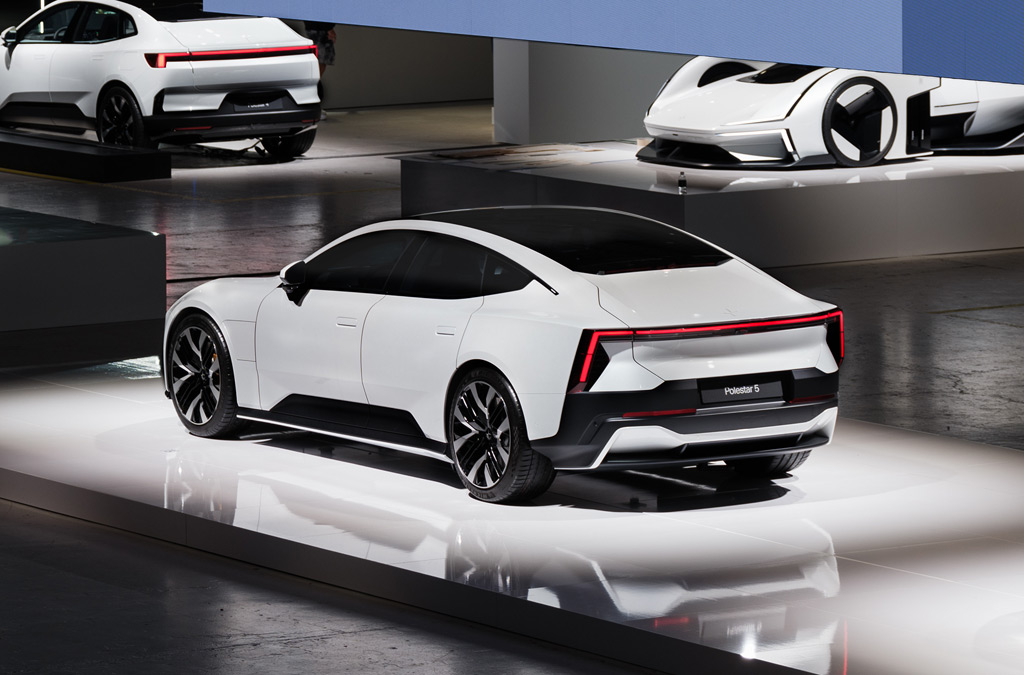
Polestar 5
Volvo pulled the plug on Polestar funding. The Swedish automaker said it is handing its stake of Polestar to Chinese-owned Geely. Volvo itself is a subsidiary of Geely, though the two automakers never fully merged. Volvo and Polestar will continue to collaborate across the R&D, manufacturing, after-sales support, and commercial aspects of business.
2025 Ford Explorer
The 2025 Ford Explorer debuted with a simplified lineup trimmed to just four models. The hybrid powertrain is MIA and the base price has increased $2,765 to $41,220, but every Explorer will now feature a 12.3-inch digital gauge cluster, a 13.2-inch touchscreen, and heated seats.
2026 Audi Q9 spy shots – Photo credit: Baldauf
The 2026 Audi Q9 full-size SUV continued to undergo testing. Spotted in the snow, Audi’s largest people mover was still heavily clad in camouflage. No clear shot of the interior has been taken yet, but big screens are expected.
Lamborghini Lanzador concept
Lamborghini reconfirmed its first electric car will arrive in 2028, but noted a second EV will follow in 2029. The first BEV will be a high-riding 2+2 GT previewed in 2023 by the Lanzador concept. The second EV is said to be an electric Super SUV.
2024 Alfa Romeo Stelvio
We spent time in the 2024 Alfa Romeo Stelvio and found it has aged with grace. The premium crossover SUV has some packaging compromises and dated tech, but it’s one of the best-driving small crossover SUVs on the market. The quick steering ratio, well-tuned suspension, and punchy turbo-4 provide plenty of grins.
2025 Jeep Wagoneer S
The Jeep Wagoneer S debuted online with a handful of photos and few details. The automaker once again confirmed the electric SUV will go on sale this fall and the screen-filled interior will be available with a 19-speaker McIntosh audio system. Riding on the STLA Large platform, the Wagoneer S will have up to 600 hp and be able to sprint from 0-60 mph in about 3.5 seconds.
It’s a luxury off-roader that is now an off-roader with luxury. So says Lexus. I agree. The 2024 Lexus GX 550 (previously GX 460) is decidedly different and significantly upgraded, as well as long-awaited, as the previous generation model was last redesigned more than 14 years ago.
By Sue Mead
The new GX is a game changer for the Lexus brand, and sits in the mid-sized segment that commands top sales in the luxury market. The bolder-looking sport utility vehicle is based on the global Toyota Land Cruiser (Prado in some other parts of the world) and slots between the Lexus brand’s smaller RX (2 seating rows), which appeals largely to empty nesters, and the new, larger TX (3 seating rows), which appeals to larger families.
2024 Lexus GX 550
The 2024 GX has been redesigned from the ground up. And, since it was revealed, enjoyed great popularity via a Lexus video series that highlights the new model and its assembly at Toyota’s Tahara Plant in Japan. The video has racked up 1.1 million views, and attracted 33,000 U.S.-market “hand raisers,” which represents the entire first-year allotment for the States. Lexus marketers say they will try to garner additional volume for U.S. buyers, who purchased 32,000 of the previous-generation GX last year.
I drove two versions of the new GX 550 on an introductory ride-and-drive event in Tucson, Arizona. All GX variants have full-time 4WD with Lexus’s “Multiselect” drive-mode system, and a locking center differential. The new GX is offered in six trim levels: Premium, Premium+, Luxury, Luxury+, and newly-added Overtrail and Overtrail+ variants. The Overtrails are engineered and designed as tougher, more capable off-road-oriented models. Both Overtrail models comes with standard 33-inch all-terrain tires and 18-inch wheels. Lexus expects that 30 percent of buyers will choose one of the Overtrail models.
The new GX will go on sale in the second quarter of this year. Lexus announced that a hybrid powertrain will be made available at some point in the future.
Until then, all models are powered by a 3.4-liter twin-turbocharged V6 that produces 349 horsepower, and 479 pound-feet of torque. A 10-speed automatic is the only transmission offered. Towing capacity is impressive at nearly 9100 pounds, depending on trim level. Less impressive is the EPA fuel-economy estimates of 15 mpg city, 17 highway, and 21 combined.
The new model comes in seven available colors with four “bi-tone” schemes and three interior-color options. Standard are wireless Apple CarPlay and Android Auto, as well as a digital 12-inch Multi-Information Display (MID). Also available are a number of dealer-installed accessories for fun customization.
Lexus says the new model’s “key points” are passion and craftsmanship, with a mission of comfort and visibility as the top design goals. From the outside, it’s clear that visibility for the driver was one of the motivations, as the windscreen is wide, the A-pillars have been pushed back (forward), and there is a lower belt line, allowing better visage to the side.
The hood-line has been lowered too, with a small divot in the middle to allow a clearer view of the road. Engineers lifted the height of the headlights, so you’re less likely to scratch them when ambling over back country trails. Raised lights (both front and rear) will aid with visibility when caravanning with others, too.
Notable is the more aggressive, edgy styling–a departure from the rounded edges of the previous model–along with bold wheel arches, and a new front bumper that can easily be replaced should an incident merit such an action.
Taller roof rails, a black-painted top, and a panoramic roof are also new, as are standard running boards that are power-actuated on up-level trims.
The new GX is little bigger than the outgoing model. Overall it’s 3.7 inches wider (Overtrail 4.5) 2.8 inches longer, and rides on 2.4-inch longer wheelbase.
The second row is available with captain’s chairs or a 60/40 split-folding bench depending on trim level.
A simple “one-motion” tumble system makes easy work of clearing the 2-nd-row seats for access to the 3rd-row. Heated and ventilated seats are standard up front, and available for the outboard 2nd-row seats. The 3rd row is available in both power and manual seat configurations.
The GX boasts six illuminated charging ports (four in Overtrail/Overtrail+) and a wireless charger is available in the front console tray. The 2024 GX boasts increased space in the center console and door pockets. Two additional storage spaces have been added under the cargo area to accommodate smaller items, and a 120-volt AC inverter has been added for additional power needs. Plus, the GX comes with up to 12 cup holders.
New is a double-wishbone front suspension paired with a multi-link rear suspension to add prowess for both on-road and off-road driving. An available Adaptive Variable Suspension (AVS) adjusts damping forces based on changing road conditions. GX also has a new Electronic Power Steering (EPS) system that brings increased steering feel both on and off-road.
Lexus has made switching between high range (H4) and low range (L4) 4WD modes faster versus the previous generation. L4 has four modes: Auto, Sand, Mud, and Rock, while H4 has five modes: Auto, Dirt, Sand, Mud, and Deep Snow. When Multi-Terrain Select is on, the Multi-Terrain Monitor engages to assist with increased visibility—via the console screen–under and around the vehicle. Views include underfloor, side, front and rear underfloor, along with blind-spot monitoring.
First, I drove the base Premium model that stickers starting at $65,250.
Notable was the upscale interior, comfortable seating for up to seven, and the quiet ride. I found easy ingress and egress and appreciated the large touchscreen. The twin-turbocharged V6 moves the GX well. Versus the previous-generation GX, the new truck enjoys improved braking response and more precise electronic power steering.
Although I didn’t need to use it, I appreciated the locking center differential, which enables a 50/50 front/rear torque split for improved traction in snow and on other traction-compromised surfaces.
I also drove the Overtrail+, which starts at $75,900, and with some extras stickered for $80,915. My time in the Overtrail+ included motoring on a road course, as well as on an off-road trail with a few ruts that had been crafted to demonstrate the GX’s rock-crawling credentials.
There are many design features which bolster the Overtrail’s off-road credibility, including 8.9 inches of ground clearance, impressive approach and departure angles, and vertically situated exterior mirrors designed to be less likely to catch on tree branches.
The Overtrail and Overtrail+ have 10-way powered, heated, and ventilated front seats (the rear seats are also heated).
Overtrail models also include blacked-out brightwork, black mirrors and door handles, and attractive black trim over the fenders.
The Overtrail and Overtrail+ use a standard Electronic Kinetic Dynamic Suspension System (E-KDSS) that provides a high level of balance between off-road drivability and on-road handling stability. It locks and unlocks the front and rear stabilizer bars to assist with motoring control and enhanced wheel articulation.
The 2024 GX shares its corporate TNGA-F platform with the current-generation Lexus LX 600. This strong and lightweight ladder frame architecture increases body rigidity and improves on-road handling. This platform is optimally engineered to withstand twisting off-road forces, maximize suspension performance, enable wheel articulation and consistent tire contact, and maintain in-cabin stability.
A 10-speaker premium sound system is standard on lower GX trim levels, with an available 21-Speaker Mark Levinson installation that comes standard on Overtrail models.
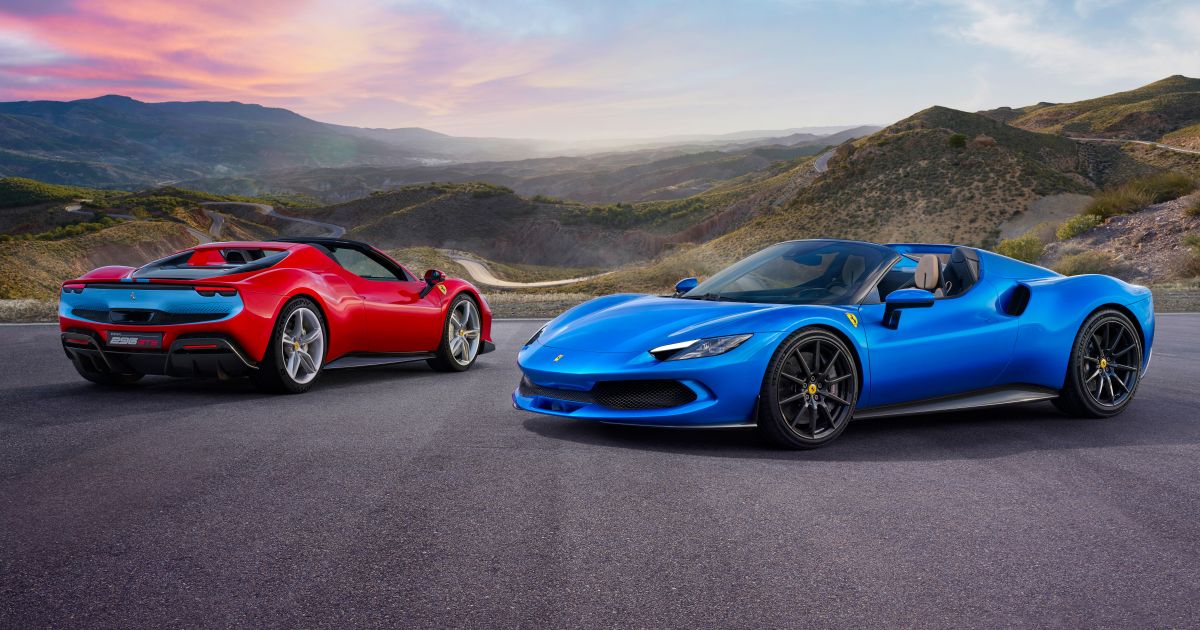
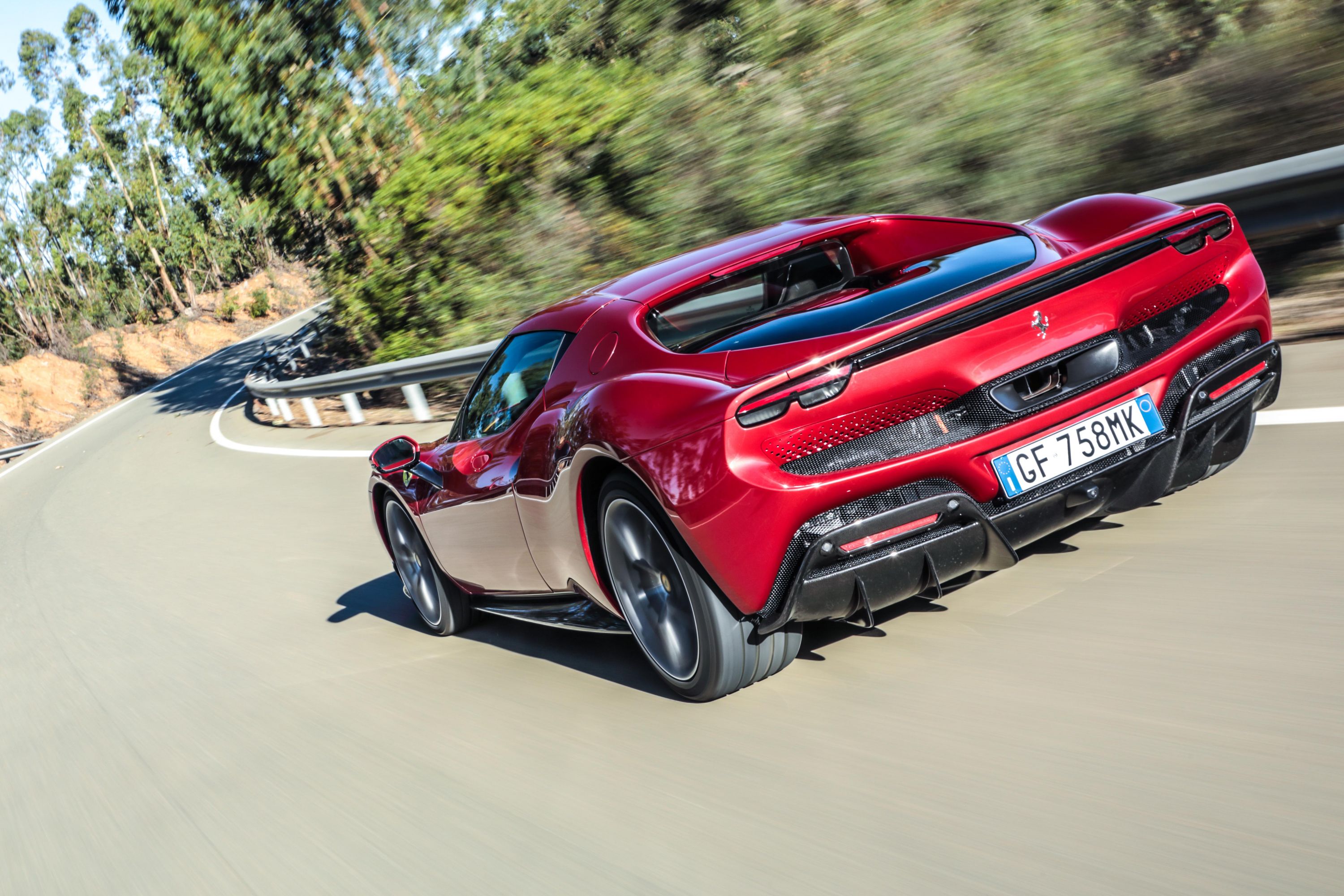
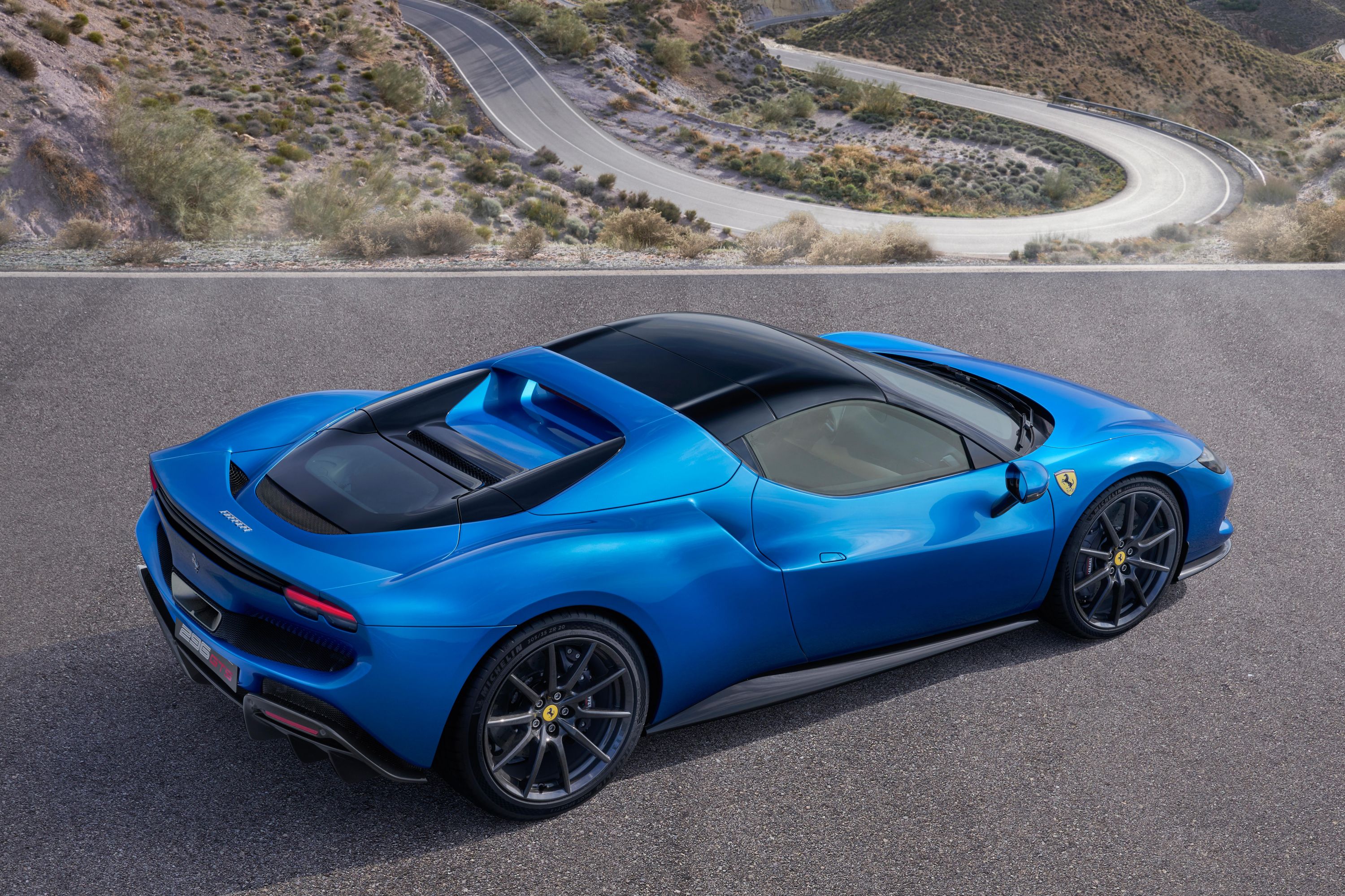
When Ferrari ditched its twin-turbo V8 for a V6 hybrid powertrain in the 296 GTB in 2021, no one thought it would be such a game changer in the holistic way it truly was.
Motoring journalists around the globe invited to the global launch in Spain, including yours truly, were unanimous in their praise for the latest hybridised Ferrari. Not just for the all-new V6 powertrain, but across all aspects of the car from design to dynamics and everything else in between.
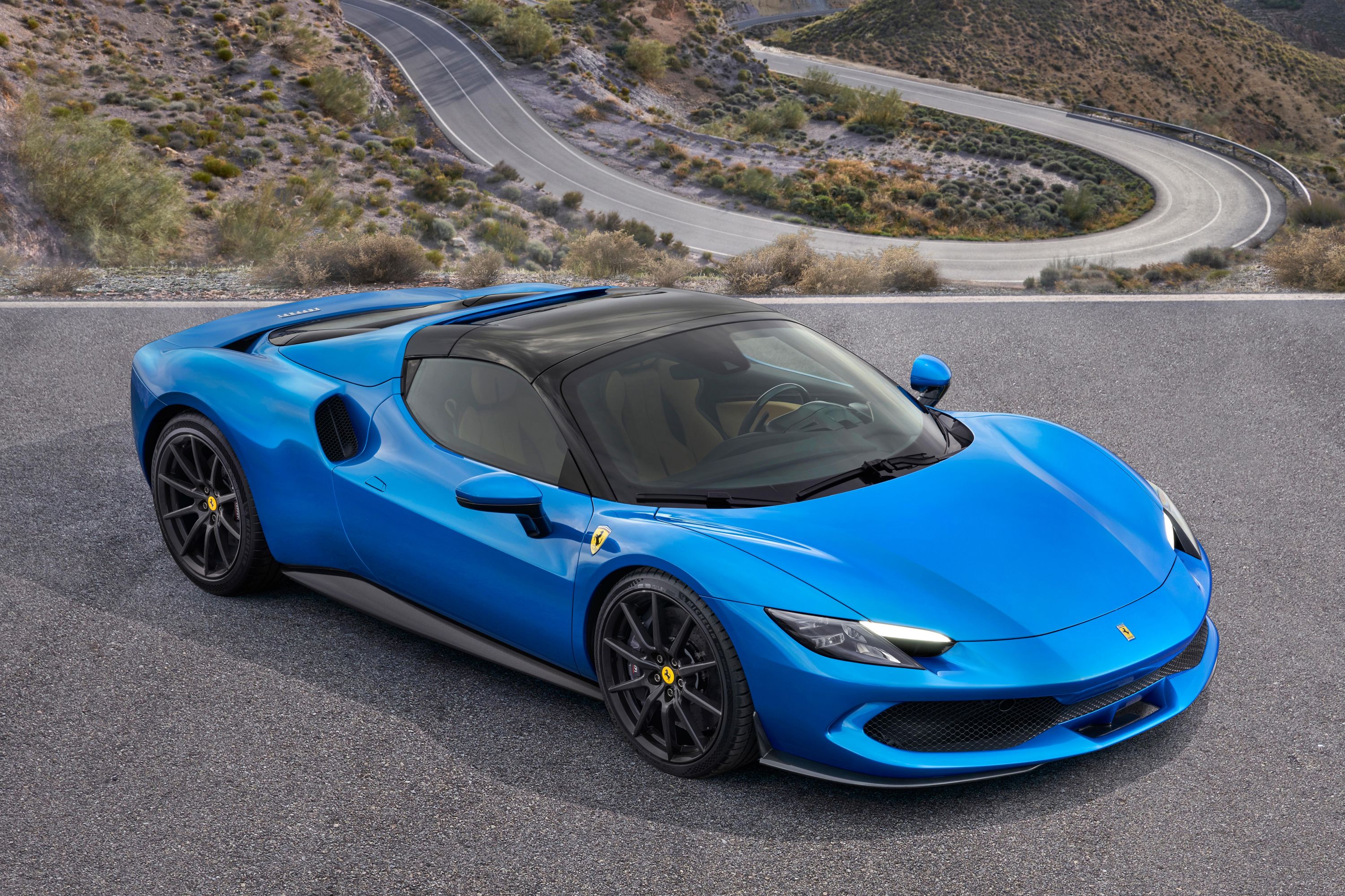
With the 296 GTB, Ferrari hadn’t just created one of the most beautiful mid-engine Ferrari road cars in a decade or more, it also managed to blend cutting-edge powertrain technology using a small displacement engine that somehow made more power than the previous turbo V8 with a better noise than F1 cars.
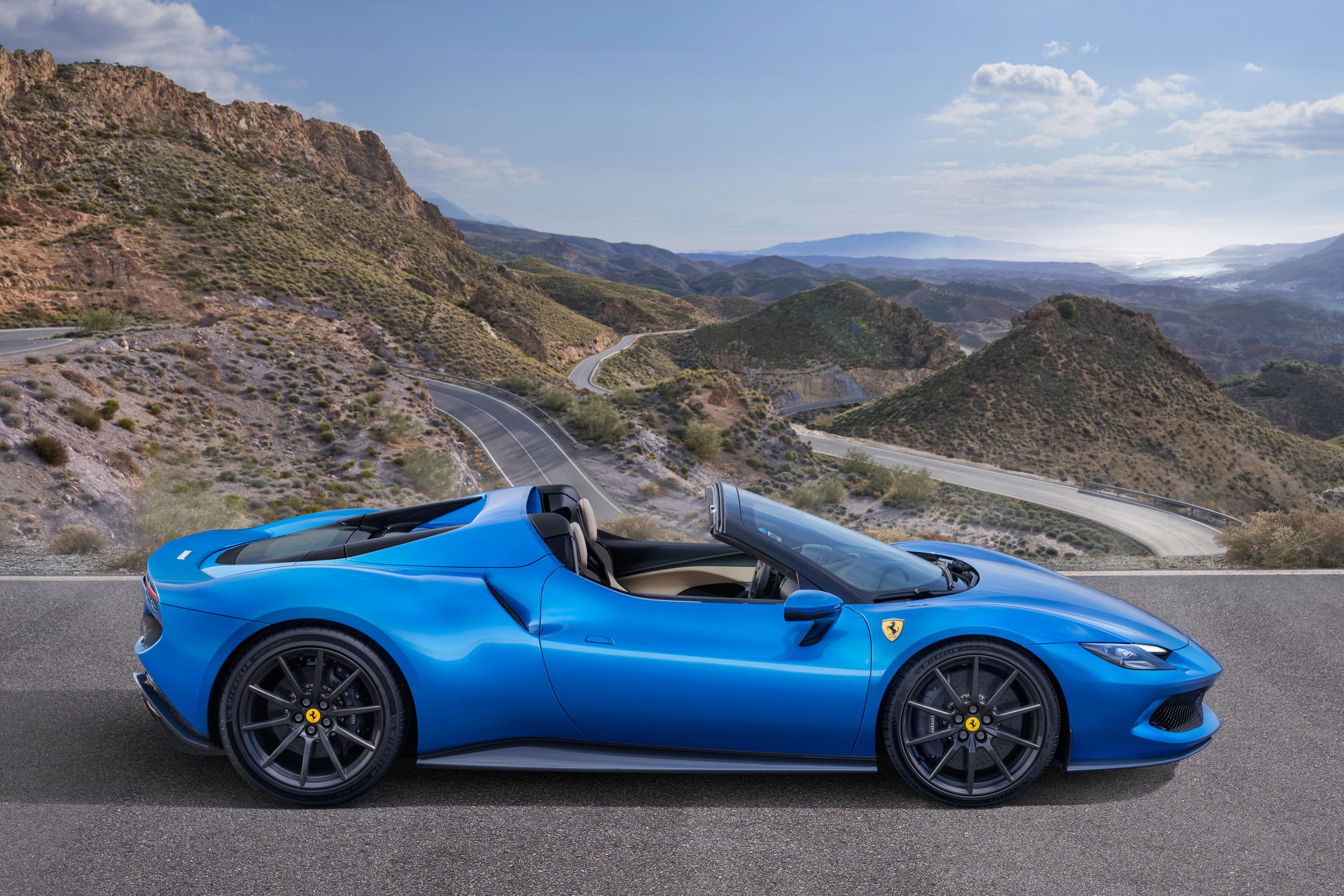
But while cashed-up Ferrari enthusiasts religiously choose the fixed-roof Berlinetta body over any open-top version for chassis stiffness alone, other buyers putting lifestyle and aesthetics ahead of all-out tarmac assaults and track days will likely see more benefit in a retractable hard top.
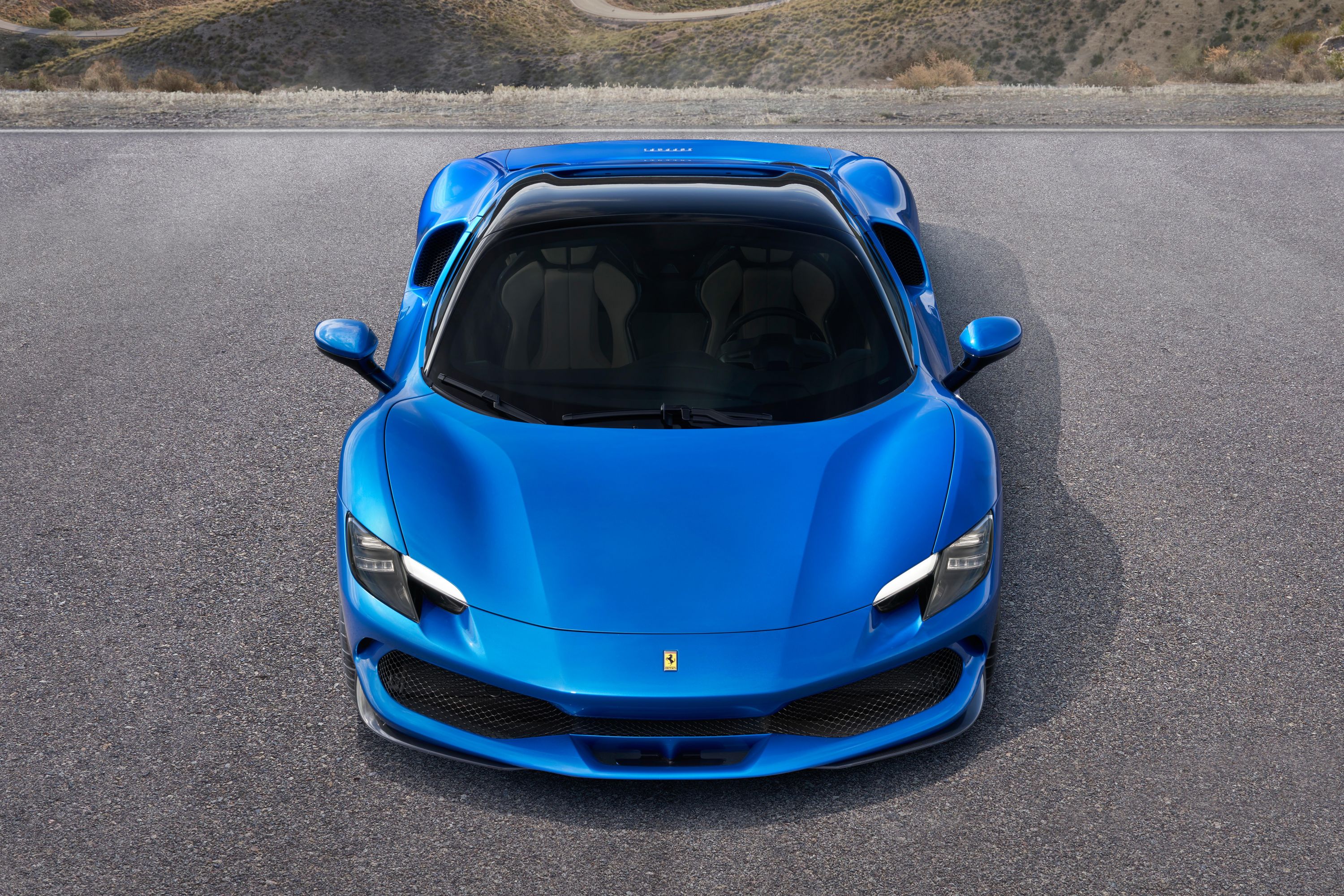
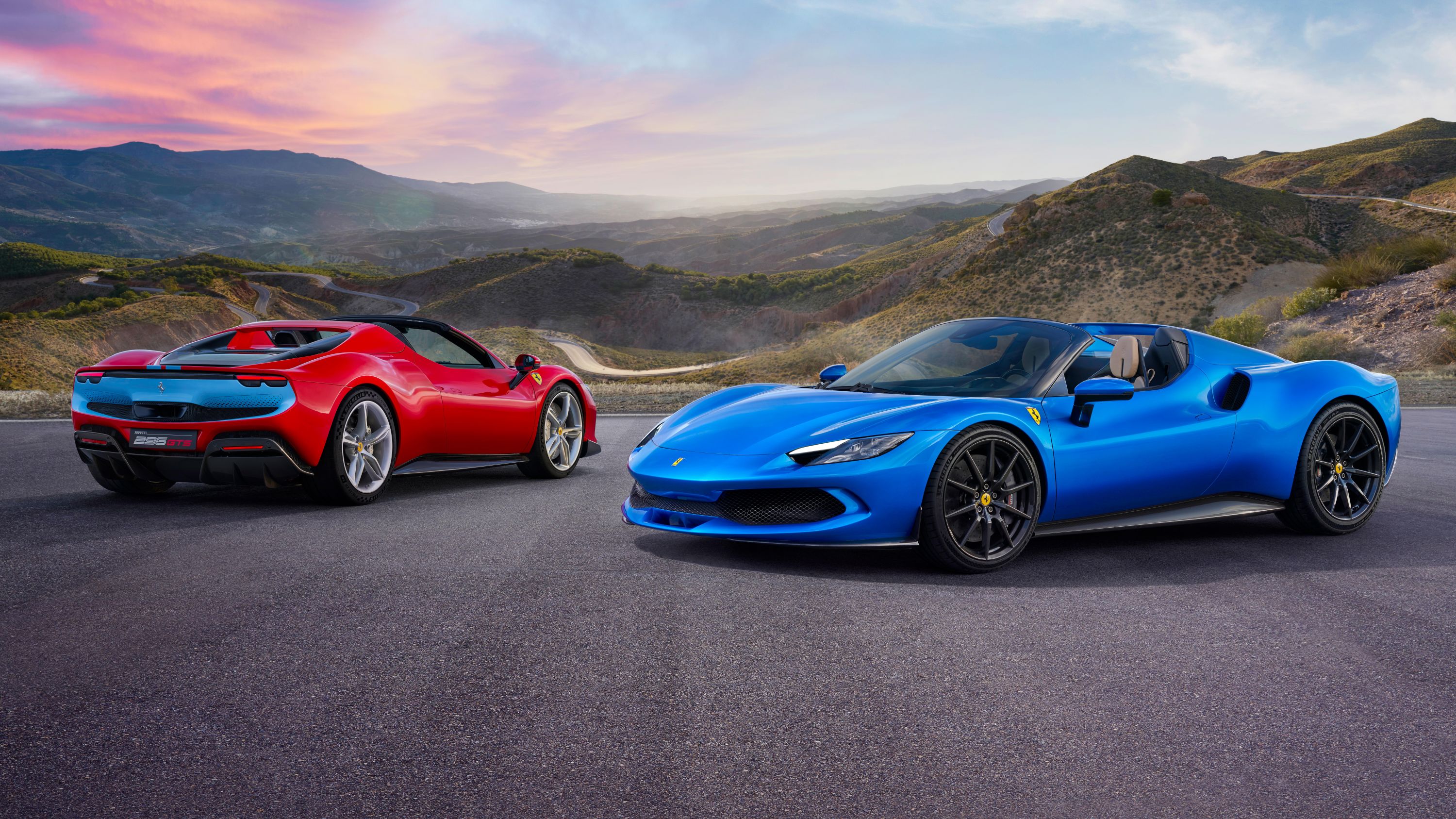
That’s the thing with the 2024 Ferrari 296 GTS; you get the all-seasonal flexibility and fun that comes with open-air motoring, but with the same uncompromising performance prowess as the fixed roof version with even more of that glorious Ferrari V6 symphony that we raved about with the 296 GTB.
Never mind the 296 GTS is heavier by 70kg thanks to its complex two-piece roof mechanism, its chassis has been optimised for significantly better torsional rigidity compared with previous Ferrari Spiders.
There’s extra carbon-fibre reinforcement across the A-pillars, B-pillars and sills, which makes the 296 GTS 50 per cent more rigid than the F8 Tributo Spider while so-called bend stiffness is up by 8.0 per cent.
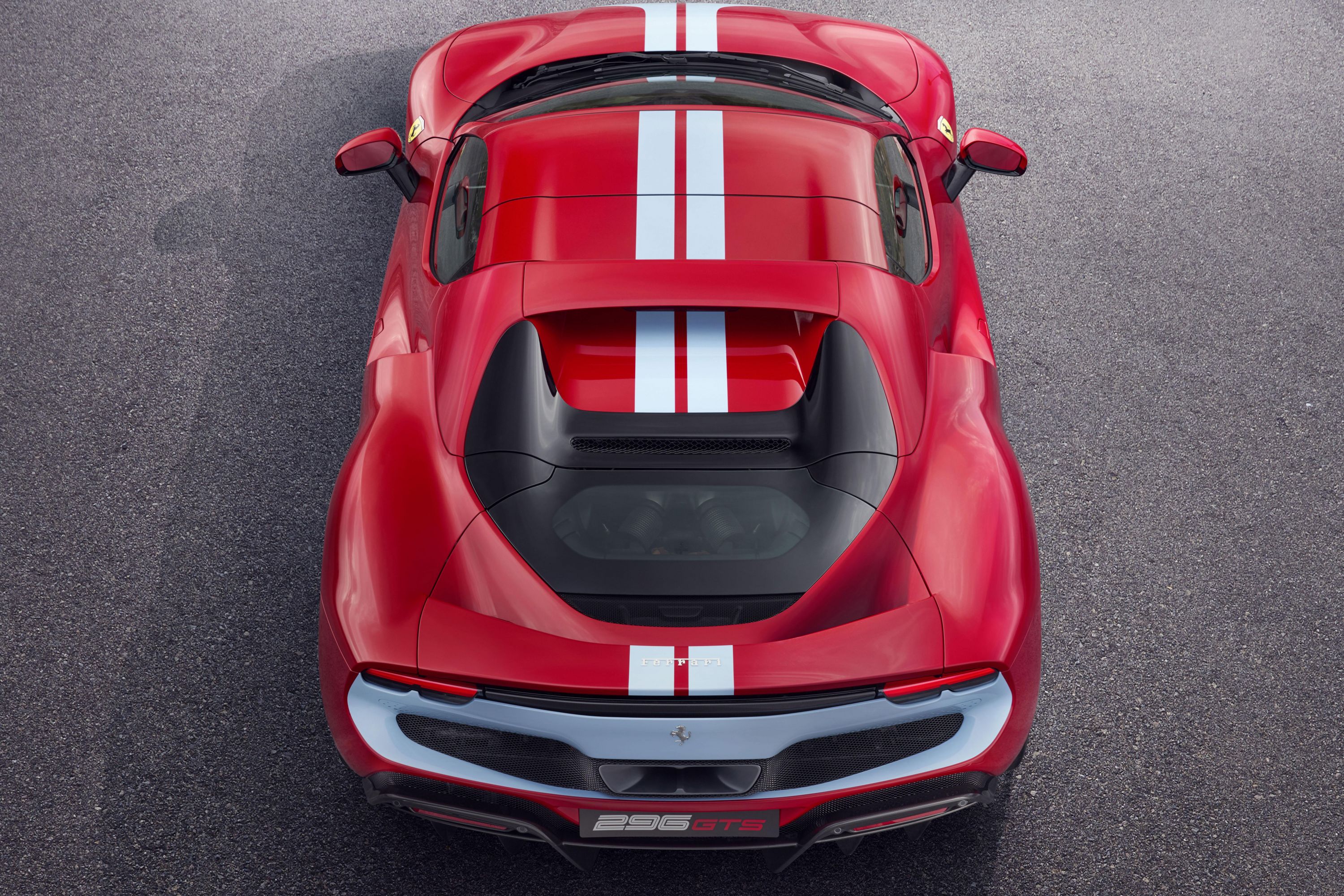
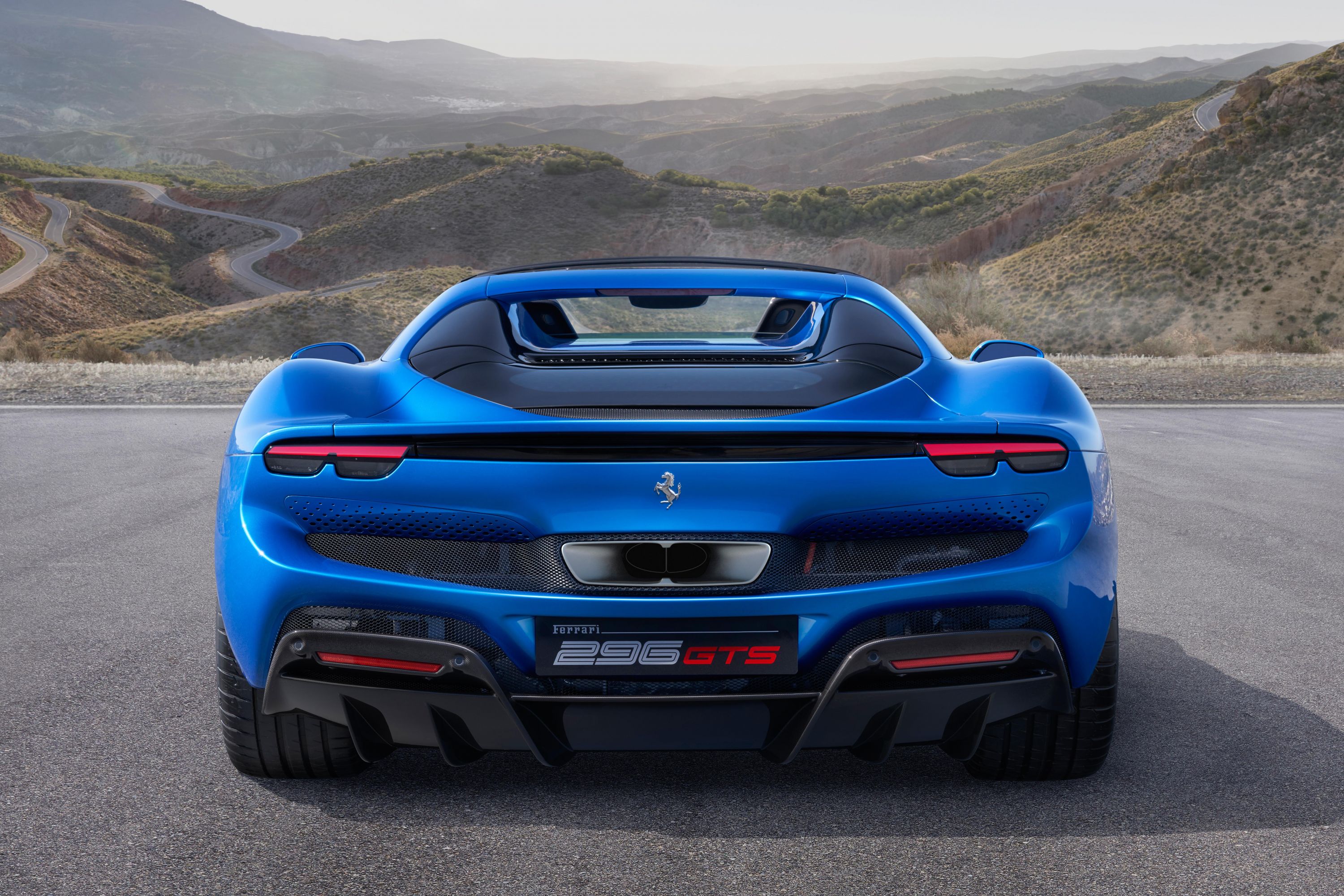
Despite the obvious constraints and functional challenges with a retractable hard top, the wing profile and flying buttresses guarantee the same aerodynamic and thermal efficiency of the 296 GTB.
That in itself is extraordinary, and just another engineering achievement that allows this open-top Ferrari to match its fixed-roof sibling in a 0-100km/h drag race while achieving the same 330km/h top speed – with the roof down.
How much does the Ferrari 296 GTS cost?
Pricing for the Ferrari 296 GTS starts at $668,164 plus on-road costs and options, whereas the 296 GTB costs $604,000 after a price bump from $568,300.
Rivals are few and far between, but include the Lamborghini Huracan EVO Convertible ($515,493) but it’s an MY23 given Huracan’s replacement will be an all-new model using a twin-turbo V8 with PHEV.
The McLaren 750S Spider is a top-notch competitor priced from $654,650, or 750S Coupe from $585,650.
The Porsche 911 Turbo S Cabriolet is another equally capable Ferrari rival for fans of open-air motoring and is priced from $559,400, whereas the coupe starts from $538,700.
What is theFerrari 296 GTS like on the inside?
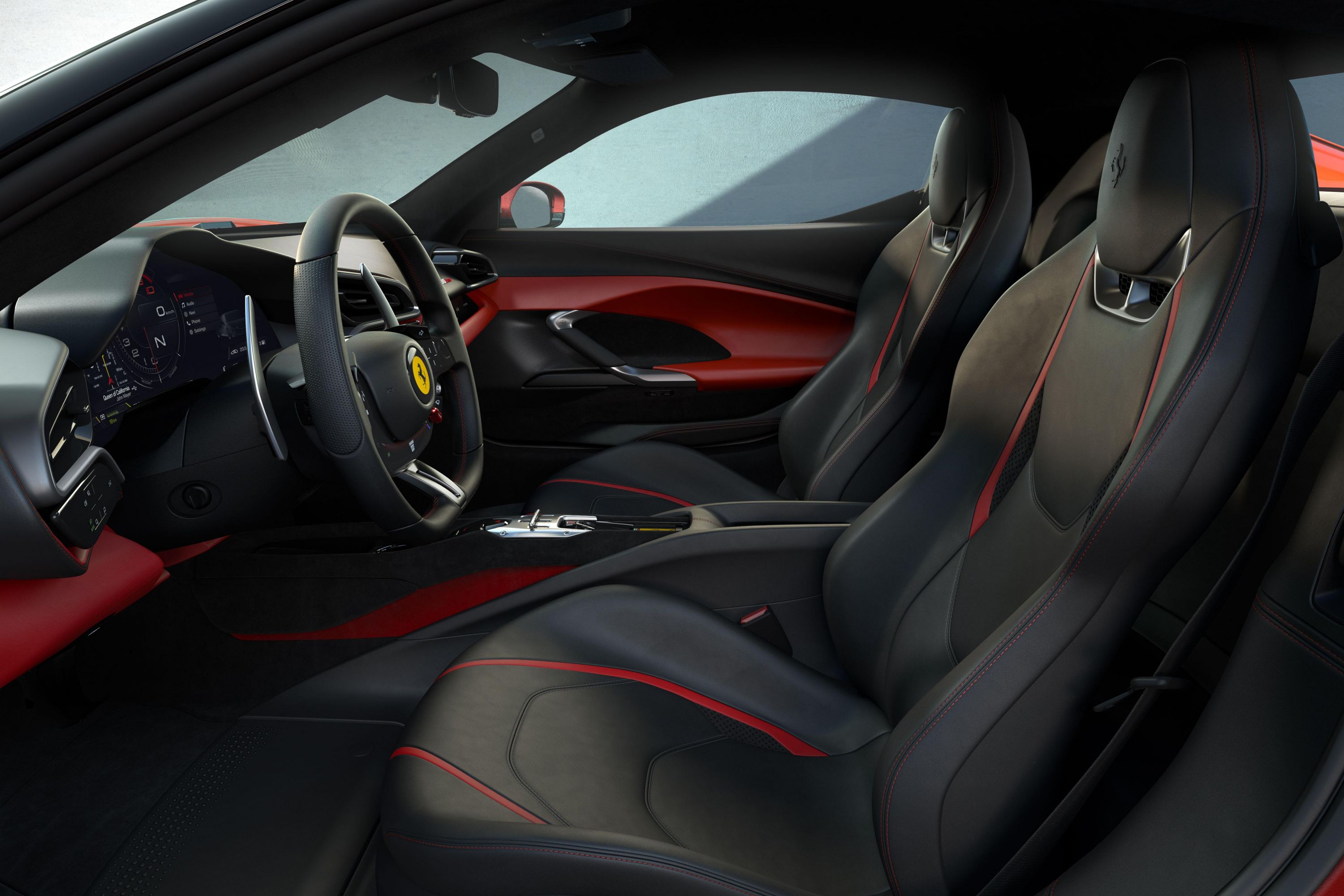
It doesn’t seem to matter what model Ferrari you climb into, it never fails to excite or look and feel more special than all its rivals – it’s an ambience that’s unique to the Prancing Horse brand.
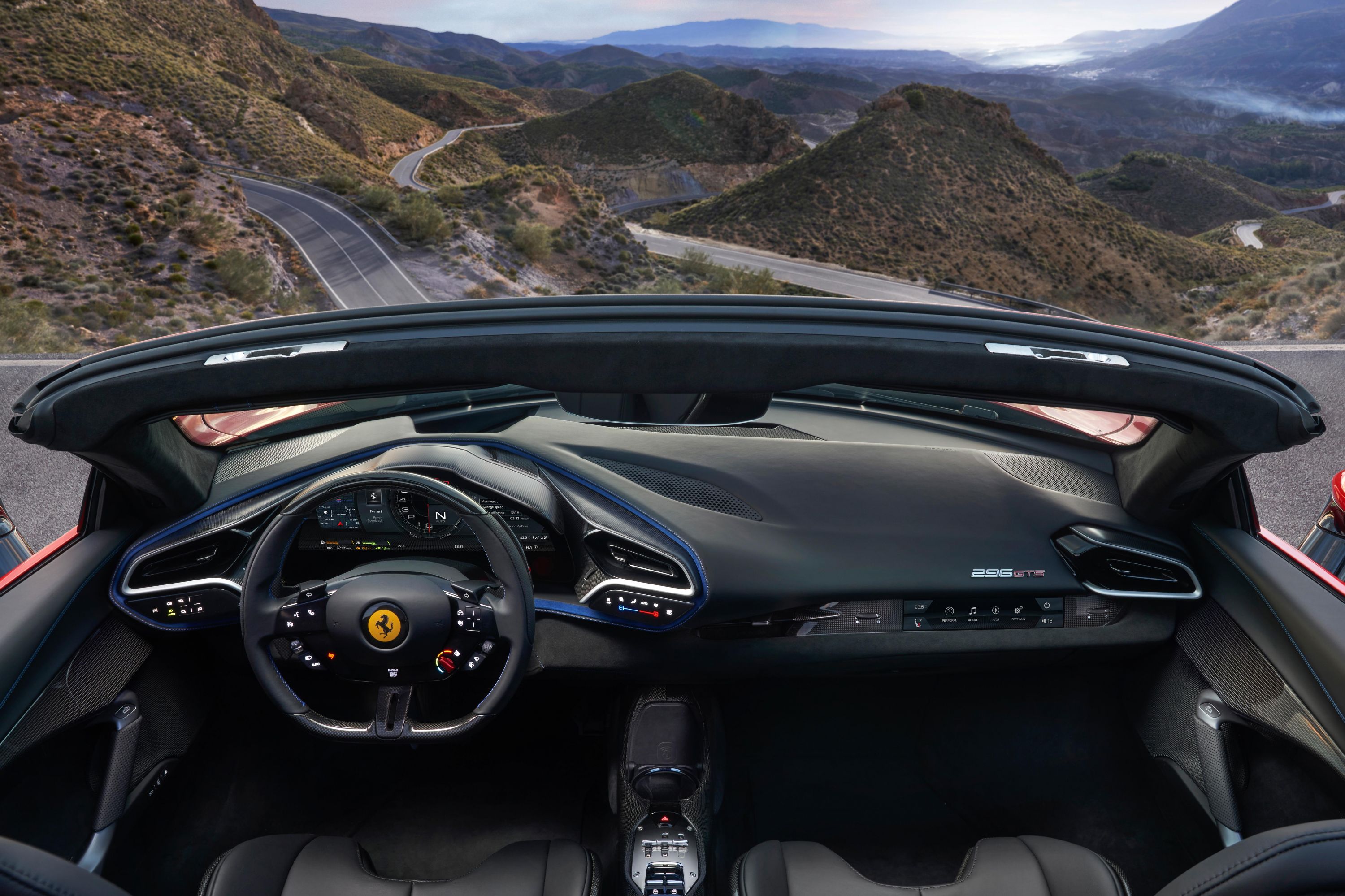
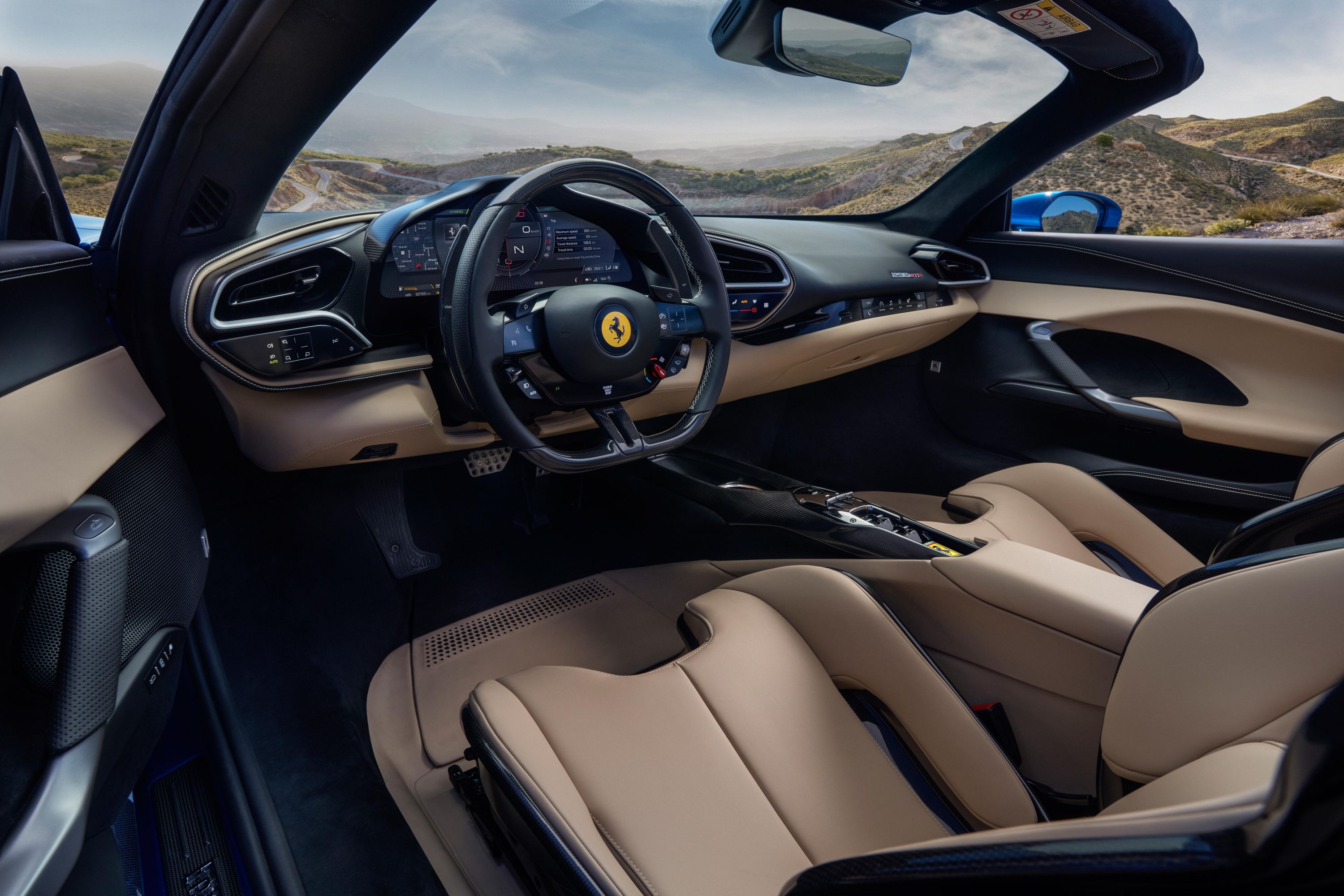
Even though it’s an all-digital experience in the cockpit these days, just sitting in a 296 GTS makes you feel like you’re piloting a full-blown Ferrari F1 car. It’s totally driver centric and pure magic from an aesthetic perspective.
That’s the thing with Ferrari, it doesn’t seem to matter how sharp the focus is towards the sheer thrill of driving at full noise, the cabin still looks and feels as though Hermes did the fit out.
There are three screens in one huge digital driver’s display, and all are configurable using capacitive pads and buttons on each side of the carbon-fibre and leather-wrapped flat-bottom wheel, which looks to have been taken directly from the stratospherically priced SF90.
Centre stage on the big screen is the usual yellow-backed tachometer found in every other Ferrari I’ve driven of late, but which adds smaller pop-up boxes indicating speed and gear position. At the touch of button you can convert the entire instrument display to a navigation screen or simply have it displayed on the right flank.
Ferrari’s steering wheels are proper things of beauty and no less at home in a contemporary art gallery. You’ve got to love the LED shift-lights on top and the finest set of carbon-fibre paddleshifters in the business attached to the steering column.
The only physical switch is Ferrari’s trademark Manettino fashioned in red anodised aluminium. It’s used by the driver to scroll through the various drive modes available; Wet, Sport, Race and CT Off.
On the opposite side you’ll find the ‘eManettino’ switch that uses capacitive buttons for the powertrain modes (eDrive, Hybrid, Performance and Qualify), with each selection highlighted in fluro green either side of the rev gauge.
Ferrari’s modern take on its gated manual shift box in past classics is another entirely functional yet jewel-like highlight in the 296 GTS cockpit. It’s genuine metal attached with real metal screws in a glossy chrome casing (or carbon-fibre as an option).
296 GTB
Those superbly contoured and upholstered seats are set deep into the car – like every other Ferrari sports car and grand tourer – and offer one of the most coveted driving positions in the segment.
The view through the steering wheel of those beautifully sculptured wheel arch bulges is second to none and a feature of every mid-engine Ferrari I’ve ever driven from 328 GTS and on.
Our tester was also fitted with another screen in the dashboard ahead of the passenger with a configurable display showing speed, revs, gear position and media.
While it’s a relatively cosy fit inside, there’s still space for keys, wallets, phones and even sunnies throughout various receptacles in the centre console.
There’s even a single cupholder, but larger stuff will need to be stowed in the ‘frunk’ which is similar in size to the Porsche 911.
Unlike its Lamborghini Huracan rival, the Ferrari 296 GTS offers excellent rear vision even with the roof closed, while utterly unencumbered when opened.
What’s under the bonnet?
It’s the same mid-mounted 3.0-litre twin-turbocharged V6 used in its 296 GTB siblingwith a 120-degree angle between the cylinder banks in which two turbos are mounted.
Key advantages to this architecture are a lower centre of gravity with reduced engine mass and very high outputs. The V6 turbo is also paired with an plug-in (PHEV) electric motor mounted between the engine and the eight-speed dual-clutch gearbox.
When the internal-combustion engine and single electric motor work together they produce a benchmark 610kW of power at 8000rpm (it will rev to 8500rpm), while peak torque of 740Nm comes on song at 6250rpm. By way of comparison the McLaren 750S makes 552kW of power and 800Nm of torque through a seven-speed dual-clutch transmission.
As expected, performance from anywhere throughout the rev range is simply mind-blowing. The Ferrari 296 GTB can jet from standstill to 100km/h in 2.9 seconds, and from zero to 200km/h in a ballistic 7.6 seconds (7.3s GTB). Top speed is 330km/h for both versions – that’s with roof open for the GTS.
In addition, the new V6 plug-in hybrid can drive on purely electric power in eDrive mode for up to 25km and at speeds of up to 135km/h. It comes as no surprise the combustion chamber is from the SF90 Stradale and features a 350-bar pressure injection system that improves performance while reducing emissions.
The IHI turbochargers have been redesigned using higher performance alloys, allowing the turbos to increase revs to 180,000rpm. Those turbos are mono-scroll and use a smaller compressor wheel and rotors compared with the V8 in the F8 Tributo.
Importantly, the crankshaft is made from case-hardened nitrided steel which guarantees its resistance to high loads as well as allowing for 100 per cent of the rotating masses and 25 per cent of the alternating masses to be balanced, despite the engine’s compact proportions and lightweight attributes.
As a hybrid Ferrari claims fuel consumption of 6.4L/100km on the combined cycle, using premium 98 RON and a 65L fuel tank. Combined CO2 emissions are 149g/km.
How does theFerrari 296 GTS drive?
Just the thrill of entering the gates of Ferrari’s old factory is a bona fide bucket-list experience but then to see your allotted 296 GTS in Blu Corsa (my favourite is Rosso Mugello – solid colour) always feels surreal to me.
296 GTB pictured
There are papers to sign but I’ve never read the stuff and always happy to sign away regardless.
The key fob itself is nothing less than a piece of Ferrari jewellery – Giallo Modena background with the Prancing Horse front and centre in black that sits secured in its very own receptacle in the console.
Given I’d been on the launch of the 296 GTB a year earlier, it only took a minute or two to sync my phone and head off for my sighting drive around the gastronomic delights of Parma.
Hitting the capacitive button on the steering wheel lights up the driver’s display but not much else. The default mode on start-up is Hybrid, and while that’s endlessly useable at home in the city where early morning commutes might be the norm, it wasn’t what we were after today for our journey north.
Instead, you’ll want to tap on the eManettino on the steering wheel and select Performance, which means the ICE is always on and the battery remains topped up for the kind of spirited sprint we’re after today.
Nevertheless, if you want maximum attack mode in your 296 GTS, best choose Qualify (don’t you love it), though expect to get lower battery charging – or none at all when you really start to get on it.
Normally I’d drop the roof immediately but not wishing to appear like a tosser while leaving the factory (and it’s cool this time of the year too), I chose to leave it closed until I got to my lunch stop. Either way, the sheer acoustic delight of that high-temp Ferrari V6, even at idle, is just as intoxicating as I recall from my time in the GTB.
It isn’t long before I switch the Manettino from Sport to Race for an all-round sharper response rates from the throttle, gearbox and steering – which always feels a tad light to me. You get used to it fairly quickly though and don’t give it a second thought.
Mind, the eight-speed DCT transmission is brilliantly intuitive and will downshift two gears in a split second in auto mode, even in Sport. But there’s nothing like shifting manually in a 296 – or any Ferrari. It somehow makes you feel far more accomplished as a driver – and it just feels right.
I’d also forgotten just how explosively quick the 296 is. Even after a flat-out track session in the McLaren 750S in Portugal a few days prior, the Ferrari feels accelerates with intense ferocity and with an exhaust note none of its rivals can match – not even close. This is what a Ferrari F1 car should sound like.
I’ve dropped the rear-screen glass for a few more decibels, but it’s also time to open the roof entirely. There’s a switch for opening and closing and it takes just 14 seconds (not the fastest roof in town), but it’s seamless and a surprisingly quiet mechanism that works at speeds up to 45km/h.
You tend to forget how much fun it is driving a Ferrari Spider is. The sound of the so-called ‘Piccolo V12’ at full noise is beyond intoxicating in this 360-degree surround-sound state. Throttle response is off-the-clock too, and there’s not a millisecond of turbo lag with this hybrid powertrain. It’s mind-blowing stuff.
Like the 296 GTB, it’s not just the complete absence of lag with even the smallest of throttle inputs anywhere throughout the rev range; it’s as much about the totally linear feel of the major controls that make this Ferrari so addictive and liveable at the same time. The folding hardtop adds just another element to an already brilliant driving experience.
Then there’s the superb balance and limpet-like grip on the tarmac, despite huge power going to the rear wheels. It’s massively reassuring especially on the B-roads out of Parma. Guaranteed you’ll be tempted to push on through the twisty stuff, but my personal eight-tenths level is rewarding enough with the GTS today.
Fast directional changes are another hallmark of this new Ferrari. Even though the GTS tips the scales at a dry weight of 1540kg (70kg more than the GTB) even with the hybrid system, there’s always a feeling of cat-like agility at play here. It feels lighter than all its rivals in this area.
The Michelin tyres definitely play a major role in the way this car handles and rides, along with Ferrari’s tune of the Magneride dampers. The 296 just never feels unsettled no matter how far you dial things up, or what state of road surface you’re on.
While the 296 GTS is capable of huge speeds, its stopping power from the 398mm carbon-ceramic brakes is sublime in its ability to wipe of big speed. Ferrari’s latest ‘ABS evo’ system, which compensates for late braking and turn in without the nasty effects of understeer, is uncanny.
Seems I’ll be delayed leaving Parma given the group of kids who have surrounded the car and wanting rides – how can you not oblige – one of these locals might just end designing Ferraris one day.
What do you get?
296 GTS highlights:
Matrix LED headlights
Adaptive indicators
20-inch alloy wheels
Magneride adaptive dampers
Carbon ceramic braking system
Car protection cover
Tyre repair kit
Tyre pressure, temperature sensor
Keyless entry and start
Infotainment system (Bluetooth audio streaming and DAB Digital radio)
Wireless phone charging
Apple CarPlay
Dual-zone air conditioning
Front, rear parking sensors
Options:
Carpets Alcantara – Alcantara Nera
Carbon-fibre rear diffuser
Carbon-fibre front bumper insert
Carbon-fibre underdoor cover
Carbon-fibre dashboard inserts
Suspension lifter
Ferrari Scuderia shields
Front radar with ACC
Ventilated full electric seats
Coloured mats with logo
Premium HiFi
Sill kick in carbon-fibre
Carbon-Fibre trunk covers
Carbon-fibre steering wheel + LEDs
Neck warmer
Ferrari buyers (like all other super sports car brands) generally like to personalise their cars from an endless list of options, so the inventory of standard features can be minimal, though Australian-delivered cars get more than some other markets.
Is theFerrari 296 GTS safe?
Ferrari doesn’t crash test its cars so there’s no ANCAP safety rating.
Nevertheless, standard safety kit includes dual front and side airbags in the door panel for head protection, seatbelt pretensioners, anti-lock brakes with electronic brake force distribution, stability control (eSSC), eDiff, front & rear parking sensors, reversing camera and a tyre-pressure/ temperature warning monitor.
Braking distances on the 296 GTB and GTS are significantly improved over the F8 Tributo thanks to the ABS EVO and its integration with the 6w-CDS sensor, which also delivers more consistent braking force under repeated heavy braking.
How much does theFerrari 296 GTS cost to run?
Ferrari offers a three-year, unlimited-kilometre warranty on the 296 GTS, along with a maintenance program which covers all scheduled servicing for the first seven years of the car’s life.
Those service intervals are recommended at either 20,000km or once a year, whichever comes first.
CarExpert’s Take on the Ferrari 296 GTS
At nearly $700,000 plus on-roads and a few mandatory options, the Ferrari 296 GTS is big bucks.
But with an average wait time of around 18 months, clearly there are plenty of willing buyers who don’t mind the asking price.
And why should they. They’re buying into one of the world’s greatest on-road driving experiences, only with the GTS’s retractable hard top, all the sensory pleasures you get with the fixed-roof GTB are enhanced by a significant multiple.
It’s also one of the most aesthetically beautiful Ferraris of the last decade and a factor that can sometimes mask its mind-blowing performance credentials.
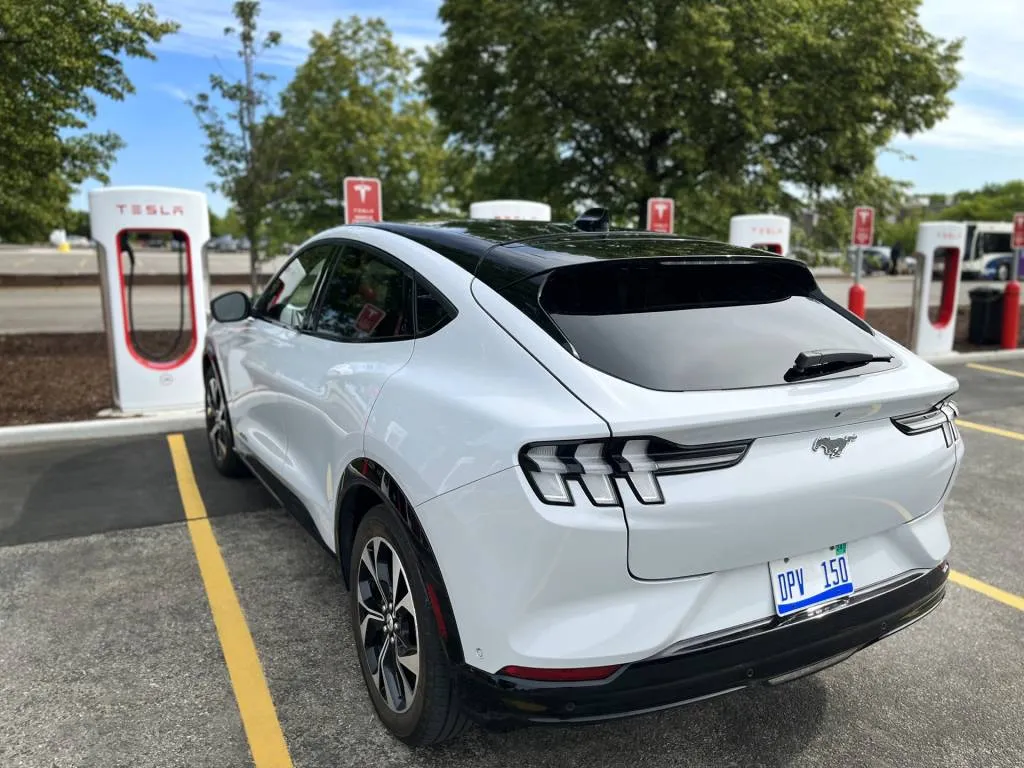
Ford provided an update on Wednesday on its plans to adopt the Tesla charge port for future EVs and to allow current and recent EV models to charge on the Tesla Supercharger network.
To the latter point, Ford revealed that the accessory adapters needed to get drivers of current and recent American Ford EVs on-network with Supercharging will be free.
Ford told Green Car Reports that more details will be provided closer to the adapter’s arrival, but it clarified that one adapter will be issued for each VIN—a statement likely verifying that the offer won’t only be limited to original owners, or to those who bought versus leased.
Ford Mustang Mach-E, F-150 Lightning getting CATL LFP batteries
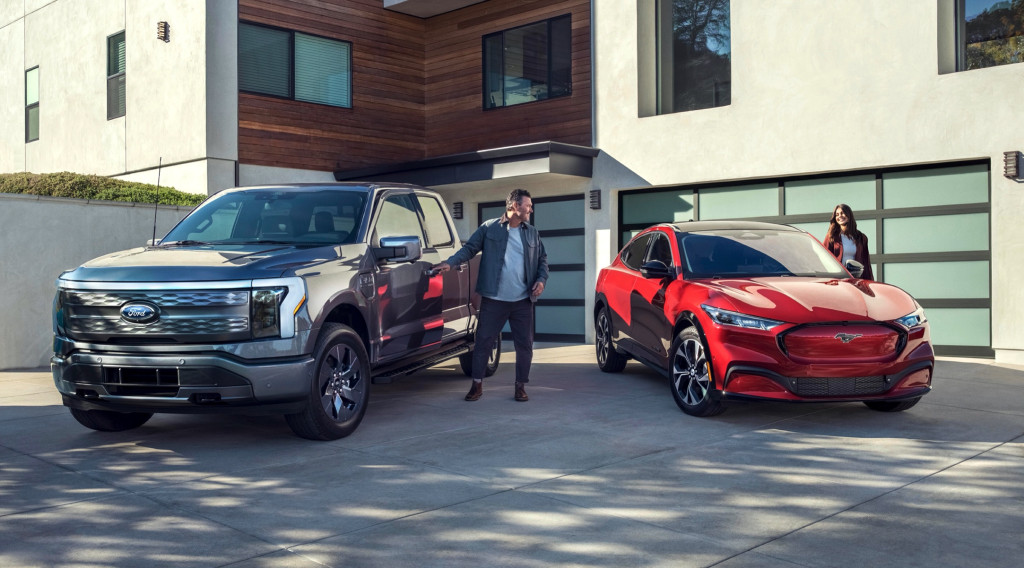
Ford EVs from the 2021 through 2024 model years will be accommodated with the adapter, potentially covering all Ford Mustang Mach-E and F-150 Lightning models.
When we announced @Ford EVs would get access to @Tesla Superchargers, I said we’d send customers a Fast Charging Adapter. I’m pleased to confirm that eligible #MustangMachE & #F150Lightning owners in the U.S. + Canada can reserve a complimentary adapter starting soon.
Ford was the first major automaker to sign on to what’s subsequently been vetted as the North American Charging Standard (NACS). In a mic-drop announcement last May, Ford CEO Jim Farley and Tesla CEO Elon Musk together confirmed Ford’s plans to adopt the Tesla standard, starting an industry-wide shift in North America. By the end of 2023, the list of brands adopting the Tesla standard included all but Stellantis, Mazda, and Mitsubishi—and Mazda committed to it in January.
At that time, Ford also said that owners wouldn’t need to use the Tesla app to charge at Tesla Superchargers. Instead, by tapping into Tesla’s API, the Ford app (and in-dash interface) would provide access.
It’s also unclear as of yet whether future Ford EVs will be able to tap into the full 500 amps with this adapter, as Tesla’s Magic Dock adapter allowing CCS vehicles to be charged at some Supercharger locations is limited to 350 amps, or about 140 kw for a 400-volt EV.
Ford did suggest at the time of its original announcement that future models making the switch wouldn’t feature both charge-port designs. GM, which followed by a few weeks in its NACS announcement, also confirmed that its future EVs would offer a single combined charge port. In the immediate future, it means owners may need to get new charging hardware with the NACS connector and get used to the idea of using adapters.
Ford Mustang Mach-E at Tesla Supercharger
Ford at the time of its original announcement told GCR that future EVs with the NACS port would be able to charge at CCS connectors with an adapter—another detail yet to come, and something the automaker definitely included in its claimed 25% boost to the number of chargers on its aggregated Blue Oval Charging Network. Adding the Tesla Supercharger network will boost the number of listed compatible chargers to 106,000.
With Ford at the leading edge of this new wave of charging, expect many more announcements from other automakers, each with slightly different details, in coming weeks and months. Let’s hope the Supercharger stations are ready.
The streets of Miami will soon be abuzz with one of the loudest naturally aspirated V12 engines ever made. The world’s first street-legal Pagani Huayra R is expected to be delivered to the city in about a year’s time.
The Huayra R owned by @petfred, was recently shipped to Lanzante in the UK. The car will undergo a complete transformation, ready to be driven on the streets in the next 14-18 months.
A street conversion of a hypercar like the Huayra R won’t be an easy task. However, we’ve already seen what the boffins at Lanzante are capable of. Most of the modifications will be focused on making the car more driveable on the street while complying with regulations. We can expect a slightly tweaked suspension with a raised ride height, a front axle lift system, and a set of headlights and taillights, among other changes.
The monstrous naturally aspirated V12-R engine could receive minor tweaks, along with improved cooling. This engine produces 850 hp and 553 lb-ft of torque and revs to 9000 rpm.
Lanzante has also built street-legal versions of the Pagani Zonda R, another wild track machine. That being said, we can’t wait to see the Huayra R on the streets of Miami.
The Audi e-tron GT serves as the poster car of Ingolstadt’s electric vehicle (EV) series and was first revealed way back in February 2021, before eventually reaching our shores in the middle of 2023. Available in three variants, the e-tron GT range starts with the quattro and is followed by the quattro with the Dynamic Package, while at the very top sits the RS variant.
At the time of writing this review, Audi Malaysia lists the e-tron GT quattro Dynamic Package with a retail price of RM677,790 OTR without insurance, or RM690,790 with the Audi Assurance Package (AAP). The latter extends the manufacturer warranty to five years (from two years) and adds a three-year, 45,000-km maintenance package. Step up to the RS e-tron GT and the asking price rises to RM804,790, or RM819,790 with AAP – the standard quattro appears to be missing for now.
These figures are “attractive” thanks to ongoing EV incentives provided by the government, so is the e-tron GT worth considering? Well, Audi Malaysia presented us the chance to take the EV on a road trip to Ipoh and we were even provided the opportunity to drive it at the Sepang International Circuit (SIC) in the days after. Here are our thoughts.
What is the e-tron GT?
It’s what Iron Man drove in Avengers: Endgame! That’s already a pretty good starting point for a pitch but we can’t just go with that. As mentioned at the start, the e-tron GT is the halo model of Audi’s e-tron range, which originally started when the e-tron SUV first made its debut back in 2018 – this has since been renamed to the Q8 e-tron to make the line-up easier to understand for customers.
The e-tron GT shares the J1 platform with the Porsche Taycan, so it gets the same goodies like a 2,900-mm wheelbase as well as an 800-volt electrical architecture to enable rapid DC charging. On all variants, the e-tron GT supports DC charging at a max of 270 kW, which gets the 93.4-kWh lithium-ion battery (net figure; gross is 83.7 kWh) from a 5-80% state of charge in just 22.5 minutes. There’s also AC charging at up to 11 kW, but a full charge with that takes nine hours – you can get 22 kW with the Dynamic Package that drops the charge time to four hours.
The battery powers a pair of electric motors, with the regular quattro variant serving up a total system output of 476 PS (469 hp or 350 kW) and 630 Nm of torque. This is good for a 0-100 km/h time of 4.5 seconds and a top speed of 245 km/h. There’s also an available boost mode that temporarily bumps the output to 530 PS (523 hp or 390 kW) and 640 Nm to further reduce the century sprint time to just 4.1 seconds.
The RS version gets even higher outputs of 598 PS (590 hp or 440 kW) and 830 Nm. As with the quattro, there’s a boost mode that increases peak power briefly to 646 PS (637 hp or 475 kW) so you can get from 0-100 km/h in 3.3 seconds. Range takes a hit as a result, with the RS providing 447 km compared to the quattro with 458 km – both are following the WLTP standard.
What’s it like to like with as a daily?
As a start, the e-tron GT attracts quite a bit of attention from onlookers who have become “accustomed” to seeing Taycans roaming around. Of course, design is a subjective matter, but I prefer the look of the e-tron GT over the Taycan, and some of my colleagues and friends share this opinion as well.
It’s certainly not “OTT” nor does it scream “I’m a sporty EV,” but the low-slung stance and shapely profile do well to attract the eyeballs, with one standout cue for me being the chiseled sections above the rear wheel arches. With the Dynamic Package, there’s also a carbon-fibre roof, matrix LED headlamps and tungsten carbide-coated brake discs (with painted calipers) that add some glitz to a relatively subtle design.
At just 1,414 mm tall, getting in and out can be a bit of a challenge for those with troubled knees/ankles, but thankfully the sills aren’t overly extended that you need to “climb” over them. As for the other dimensions, the EV occupies a rather large footprint with a length of 4,989 mm and width of 1,964 mm.
However, when you’re inside, the e-tron GT feels “smaller” than the numbers suggest and is rather easy to manoeuvre and place – praise to Audi for keeping physical buttons that provide quick access to the high-res 360-degree camera, which was handy when navigating tighter car parks.
On that mention, the matter of keeping physical controls is up for contention. Some may find them archaic and prefer to have as many vehicle functions nestled in a touchscreen to keep the interior “clean,” which is the case with the Taycan.
On the other hand, there are some (me included) who prefer having some buttons around for things used often, which is the case in the e-tron GT that retains physical controls for the air-conditioning and other functions for easy access – pick a side in the comments below.
This approach of not overloading a driver’s sensory input also sees subtle ambient lighting being applied and just two displays inside the cabin. Infotainment is provided by the MMI Navigation plus with MMI touch system, the latter in the form of a 10.1-inch touchscreen with support for Android Auto and Apple CarPlay. Audi’s 12.3-inch virtual cockpit is the other display, and it continues to provide a decent level of configurability with crisp graphics and text.
Legroom and headroom are abundant at the front, but tall people (over 170 cm) in the rear might find it a bit of squeeze, which isn’t helped by the short seat base and rather upright seatback. The fastback shape also limits the height of items that can go in the boot, but long, flat-packed furniture shouldn’t be much of an issue with the rear seat bench folded down.
What’s the e-tron GT like to drive on public roads?
There’s more than enough power to pin unsuspecting passengers to their seats regardless of the variant you go with. This novelty does wear off after a while – there are limited areas to do this safely – and when just trudging around town, the e-tron GT delivers a pleasant driving experience. Throttle response is smooth, progressive and predictable that you don’t accidentally overdo things and see high triple digits.
Unlike some EVs, the e-tron GT provides a more natural feel that is more easing for those coming from a petrol-powered car. There’s not even a one-pedal driving mode, with the regenerative braking coming on subtly and reminiscent of engine braking, even if you pull the left paddle to max out regen. Audi says the regen braking is up to a limit of 0.3 g, following which hydraulic braking takes over, adding the brake pedal is what variates the amount of regen pressure applied.
To go along with the well-calibrated electric drivetrain, the e-tron GT also provides a rather comfortable ride with good compliance over primary bumps and decently over secondaries. The odd pothole does unsettle things momentarily but it isn’t jarring and the EV with its well-tuned dampers maintains its composure almost all of the time.
The RS version comes standard with adaptive three-chamber air suspension, which can raise the body by 20 mm to help clear higher bumps, or drop by 22 mm for better efficiency. This system also helps to manage body lean better, which is welcomed for such a heavy car, without the overly pillowy feel. It’s also worth noting the RS gets rear-wheel steering that does help reduce the turning radius, helpful when navigating a car this long.
Driving the standard quattro and RS back to back, there is a discernible difference with ride comfort, with the latter providing a more supple ride as it soaks bumps just that much better. Even so, the non-RS variants are still impressive in their own right with steel springs, as the adaptive dampers are set up just right.
Heading up north towards Ipoh, the EV covers ground quickly and is comfortable to be in (regardless of variant), which makes it deserving of the ‘GT’ in its name. As a daily driver, the e-tron GT’s surprisingly cozy driving experience betrays the sporty persona that many are led to believe at first glance.
On the matter of potential range anxiety, the e-tron GT made it all the way to Ipoh without requiring a recharge along the way, arriving with just under 30% remaining. This is inclusive of a short stint to demonstrate its acceleration prowess on a closed section of road near Proton City in Tanjung Malim.
Following the convoy to and from Ipoh, I was confident in bringing an e-tron GT quattro tester up Genting Highlands after a quick charge at the Audi showroom in Glenmarie. With the 180 kW DC charger, I got the battery from 60% to 85% with 14 minutes of charging before making the trip up. On the way down, careful use of the brakes to maximise energy recuperation helped gain back 5-8% and I was home in Subang Jaya with just under 50% to spare.
What’s the e-tron GT like to drive on a track?
Our time with the e-tron GT at SIC was mainly spent with the RS variant, and one of the activities planned included a straightforward acceleration test. Unsurprisingly, the EV is incredibly fast off the line, with the 0-100 km/h times being very close to what was claimed.
Our only other activity was a half-track tour of SIC that serves to showcase the dynamic capabilities of the e-tron GT. On the straights, the EV was quick to gain speed as we’ve already known, but approaching and taking corners was met with a fair bit of caution.
With a kerb weight well over two tonnes, there’s no defying physics when it comes to slowing the e-tron GT down. It is a heavy car, and the instructors on hand were ever ready to remind us to get on the brakes early for our safety and to ensure we don’t overshoot a corner.
When it comes to the twisty bits, there is some mechanical trickery in the form of a rear differential lock (RS only) to ensure power is sent to wheels with traction, helped further by the e-torque vectoring and rear-wheel steering (also RS only). It’s a little surreal yet confidence-inspiring that something this large can take corners at quite some pace, but there is a limit when the pronounced weight transfer starts to feel unsettling.
The air suspension does its best to manage body roll, but there’s only so much heft it can put up with before things start to feel a little out of control. To add, the steering is relatively light and lacking in feel, which makes small adjustments mid-corner a little tricky. This is definitely more comfortable doing grand touring things rather than the “sports car in disguise” thing.
Should you buy the e-tron GT?
There’s no running away from the fact that those considering the e-tron GT will probably cross-shop with the Taycan. Both offer formidable performance, but there is a difference in philosophy when it comes to everything else.
The e-tron GT experience is more about ease of use and familiarity. If you’ve been in recent Audi models, the interior keeps to conventional controls rather than burying them under layers of menus on a screen.
By comparison, the Taycan’s interior aims to be more futuristic with a bevy of screens and far less physical controls, which does contribute to the showroom wow factor. However, not everyone wants to dig through menus to get to a vehicle function; case in point, adjusting where the air vents are pointed is done through the central touchscreen.
Additionally, where the Taycan is geared more towards being sharper to drive to fulfil the “electric vehicle becomes a sports car and a sports car becomes a Porsche.” marketing tagline, the Audi is more comfort-oriented while providing a more natural feel behind the wheel.
If you want a comfortable GT that is also fully electric, the e-tron GT is the one to have. The question then becomes whether to stick with the quattro, step up to the Dynamic Package, or go all out and splurge on the RS. The RS costs RM127k (or RM129k with AAP) more than the quattro Dynamic Package, which is a fair bit of money to commit – the kit list is rather identical between both.
The RS’ higher outputs are great in a game of top trumps, but in the real world, are you going to be using all that performance all of the time, safely? The follow-up is whether you need the RS-exclusive rear diff lock, rear-wheel steering, air springs and larger 21-inch wheels.
For me, the quattro with the Dynamic Package would be the one to go for. The performance is more than sufficient and the middle ground option is capable in terms dynamics and ride comfort. You don’t get the carbon-heavy aesthetics of the RS, but there are welcomed improvements such as the ‘carbid’ brakes, the nicer Nappa leather upholstery, the aurally-pleasing Bang & Olufsen sound system, and more importantly, faster AC charging at 22 kW (great news if you have a compatible home charger). I’ll have one in either red or white.
GALLERY: Audi e-tron GT quattro with Dynamic Package
General Motors has filed a patent application for active aerodynamics, a feature expected on future high-performance variants of the C8 Corvette.
First spotted by CarBuzz, the document in question was published by the United States Patent and Trademark Office (USPTO) on Jan. 9, but it was originally filed Aug. 6, 2021. It discusses keying active aerodynamic elements such as front and rear spoilers to an electronic limited-slip differential, adjusting aero as needed to maintain traction.
2023 Chevrolet Corvette Z06
Sensors would continuously measure vehicle stability and the angle of attack of the spoilers, which corresponds to how much downforce they are able to generate at a given speed. If it detects instability at the front or rear angles, the system can adjust the angle of the spoilers to help generate more downforce and thus increase traction.
As CarBuzz notes, active aerodynamic elements were used on the Pagani Huayra, which has four individually controlled flaps that can raise or lower to adjust the aerodynamic load on different parts of the car. Lamborghini’s ALA system reroutes airflow through channels in a car’s spoilers to adjust downforce. But such tech has never appeared on a Corvette road car.
2023 Chevrolet Corvette Z06
Chevy is also developing new Corvette variants that could make good use of active aero. C8 Corvette ZR1 prototypes have already been spotted testing at Germany’s Nürburgring racetrack ahead of what is likely a 2025-model-year introduction. One rung up from the current Corvette Z06, the C8 ZR1 is expected to use a twin-turbocharged version of that car’s 5.5-liter V-8, potentially pushing output from the naturally aspirated version’s 670 hp to around 850 hp.
The ZR1 may not be the ultimate C8 Corvette, though. Chevy is also rumored to be working on an all-wheel-drive hybrid called the Corvette Zora in honor of early Corvette chief engineer Zora Arkus-Duntov. The rumors point to a powertrain combining the ZR1’s twin-turbo V-8 with the front-axle electric motor from the Corvette E-Ray for a total output potentially cresting 1,000 hp.
The technical storage or access is strictly necessary for the legitimate purpose of enabling the use of a specific service explicitly requested by the subscriber or user, or for the sole purpose of carrying out the transmission of a communication over an electronic communications network.
Preferences
The technical storage or access is necessary for the legitimate purpose of storing preferences that are not requested by the subscriber or user.
Statistics
The technical storage or access that is used exclusively for statistical purposes.The technical storage or access that is used exclusively for anonymous statistical purposes. Without a subpoena, voluntary compliance on the part of your Internet Service Provider, or additional records from a third party, information stored or retrieved for this purpose alone cannot usually be used to identify you.
Marketing
The technical storage or access is required to create user profiles to send advertising, or to track the user on a website or across several websites for similar marketing purposes.