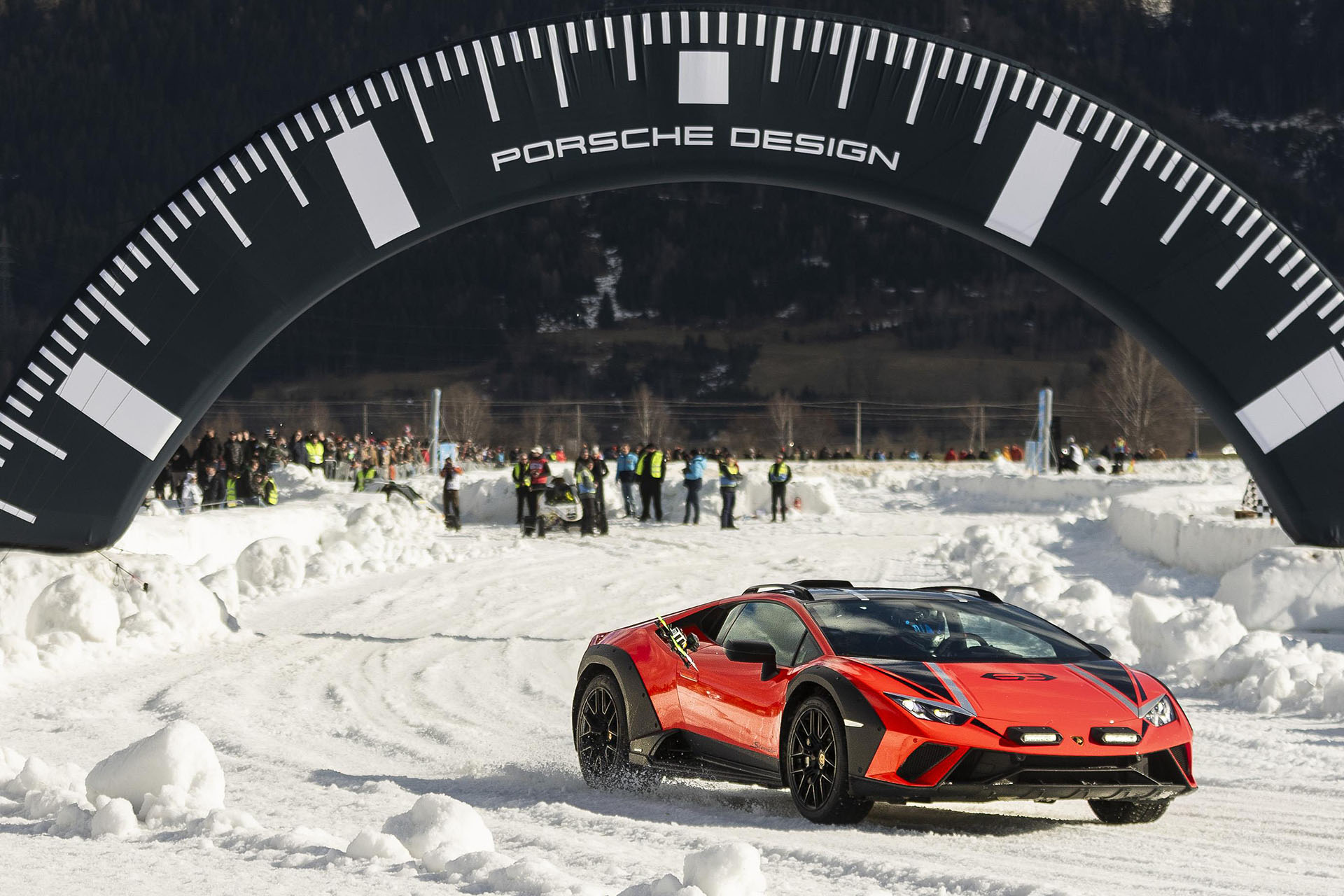
Automobili Lamborghini participated in the traditional F.A.T. race event at Zell am See (Austria) last weekend. Automotive enthusiasts and fans gathered for an exciting winter experience during a day full of emotion and adrenaline, enriched with ice-driving demonstrations performed by professional drivers on the specially created frozen track.
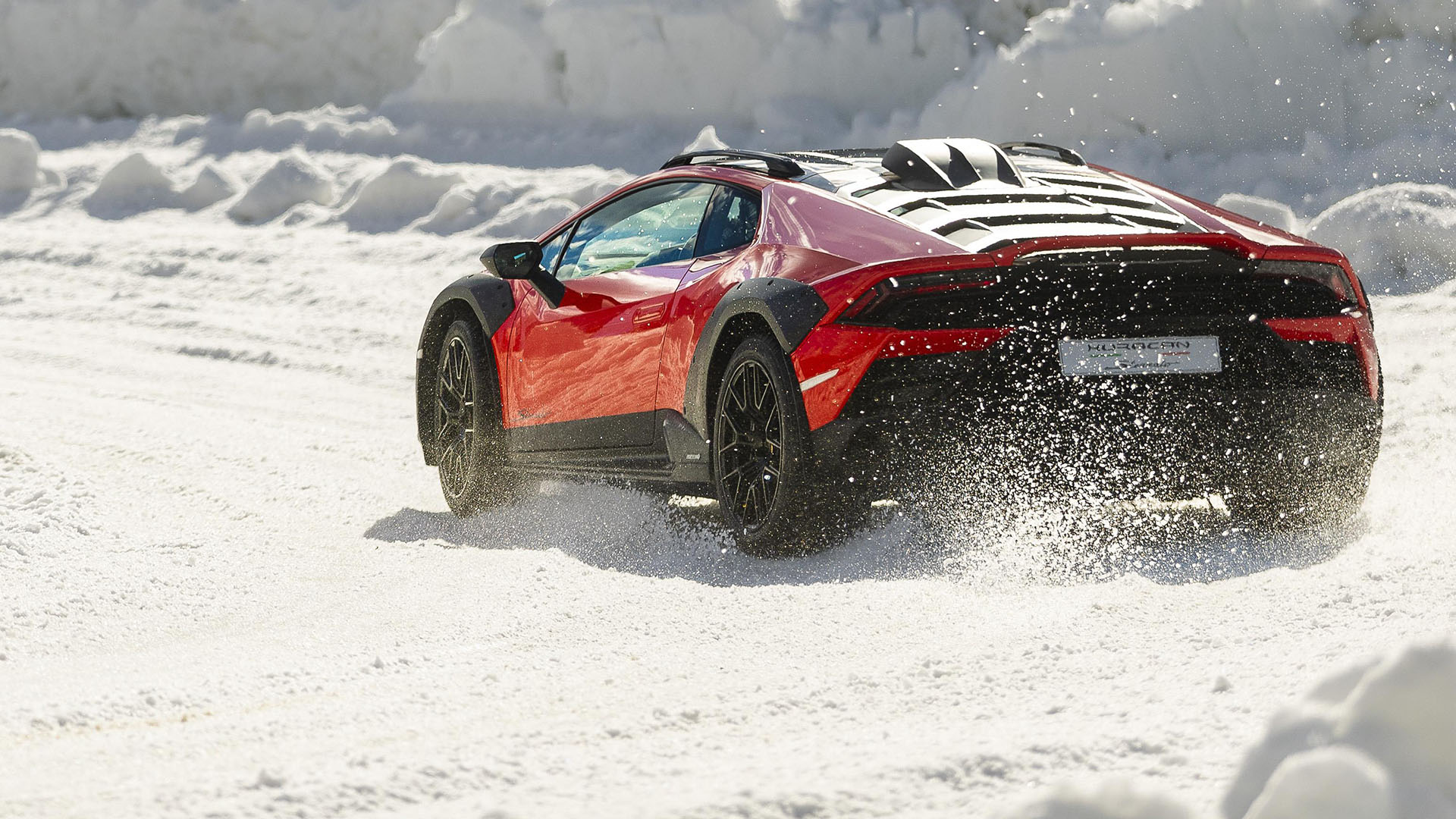
Automobili Lamborghini was present with a full contemporary lineup including Urus S[1], Huracán Sterrato, and Revuelto. The lifestyle Super SUV featured a V8 twin-turbo engine and was displayed in Nero Nemesis color with Terra Asia interiors. Huracán Sterrato, the first all-terrain super sports car, boldly shown in Bianco Phanes and Nero Ade interiors, is powered by a naturally aspirated V10 engine. Revuelto – the first super sports V12 hybrid plug-in HPEV, introduced under Lamborghini’s Cor Tauri strategy as a first hybridization stage, was displayed in Arancio Apodis with Nero Ade and contrast stitching interiors. The brand’s heritage was also represented by a Jarama: one of Ferruccio Lamborghini’s favourite cars.
The all-terrain Huracán Sterrato in Arancio Xanto, driven by a Lamborghini Squadra Corse, performed a show run on the ice track emphasizing the masterpiece’s optimal performance in all environments and its maximum driving fun characteristics. A fitting close to the adrenaline-fuelled event included a closing ceremony with a Red Bull air show.
Jakob Graf, Head of Central & East Europe, CIS, and Baltic commented: “The event was a great experience. The day was packed with driving activities and provided a perfect opportunity for all the fans and visitors to get closer to the brands present, while exploring the cars on display.”
The Lancia Ypsilon has been officially unveiled, although the full debut won’t happen until the middle of February, so details are thin on the ground right now.
Overnight the Italian brand unveiled the Lancia Ypsilon Edizione Limitata Cassina. Just 1906 units of this limited edition will be built in honour of the year of Lancia’s founding.
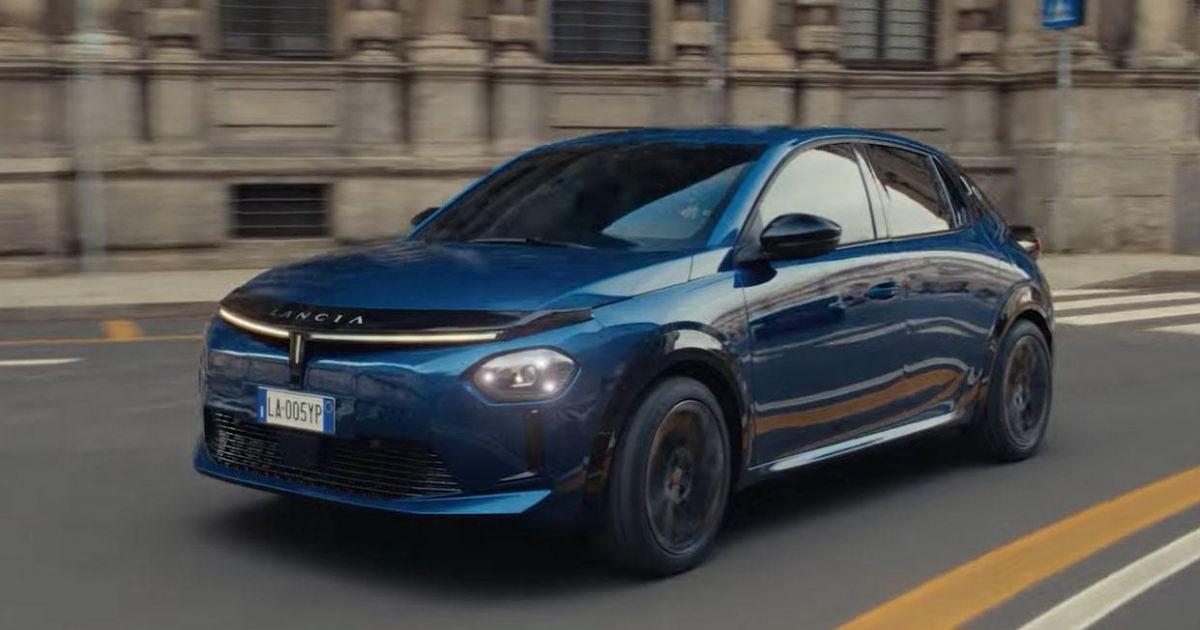
Designed in collaboration with furniture firm Cassina, the first limited edition variant of the fourth-generation Ypsilon has an exclusive sapphire blue exterior with matching interior, which seemingly has a mixture of leather and velour trim.
With the car’s full launch still a few weeks away, Lancia has only issued official photographs of the new Ypsilon exterior from directly in front and directly behind, as well as select shots of its cabin.
The company did also post a video on YouTube (below) showing off more of the car’s angles. It’s from the filming of this video where our first fully undisguised leaks of the production-ready car came from in the middle of January.
Under the skin, the new Ypsilon is based on the Stellantis Common Modular Platform (CMP) that’s used in a wide variety of light cars, including the Opel Corsa, Peugeot 208, and DS 3.
While the Ypsilon has a completely unique exterior to its siblings, the proportions of all four cars are very similar.
The new hatch forgoes the deep shield grille that’s been a signature of the Ypsilon for the past two generations. In its place is a gloss black swathe of plastic with a T-shaped driving light bar and the brand’s supersized word mark.
Lancia’s word mark also appear prominently on the boot, with the marque’s flag logo relegated to the blacked out C-pillar trim where the rear door handle is hidden. Like the outgoing car, the rear door is partially disguised to make the Ypsilon seem a little more like a three-door hatch.
Thanks to the new-to-Lancia CMP architecture the new model will probably grow about 200mm in length and cross the four-metre barrier, which should result in a more spacious interior.
Inside the new Ypsilon will be available with a digital instrumentation display, a large infotainment touchscreen, and a unique circular table-like protrusion on the centre tunnel.
The car will also be equipped with the SALA (Sound Air Light Augmentation) system that promises “simplify the digital experience” and allow the owner “reproduce the welcoming atmosphere of your home” with the press of button or the utterance of a voice command.
By adopting a more modern Stellantis architecture, the Ypsilon will be Lancia’s first ever pure electric drivetrain, which a claimed range of up to 404km using the WLTP standard.
Both the related Corsa-e and e-208 have a 100kW/260Nm electric motor driving the front wheels, and a 50kWh battery good for a WLTP driving range estimate of 330km.
While the Cassina edition will be offered solely with electric motivation, regular versions of the new Ypsilon will also be available with internal combustion engine options. It will be the last Lancia with a tailpipe, however, as all subsequent new models, including the Delta, will be electric only.
The Audi RS6 GT is likely to be unveiled soon. The first official teaser dropped a few hours ago, which gave us a glimpse of the car’s flared front wheel arch with the ‘GT’ badge. Now, we’ve been able to gather some more information on the hottest RS6 Avant.
Sources have told us that Audi might cap the total production of the RS6 GT to 666 units. The car is likely to get an optional “Heritage” pack. It will be equipped with RS bucket seats and alloy wheels that will be exclusive to this car. Customers will be able to choose from 4 exterior colour options.
The RS6 GT will feature a sporty body kit featuring a tweaked front fascia, aggressive front and rear bumpers, side skirts and a roof spoiler. Expect to see lots of carbon fibre parts.
Audi is likely to offer the same 4.0-liter twin-turbo V8 engine as the standard RS6. However, it could pack a bigger punch in the GT. According to some, it makes 630 hp, while others say it might produce 650 hp. The car is said to be capable of sprinting from 0-62 mph in 3 seconds.
Now, for the most important bit – Price. We’ve been told that the Audi RS6 GT is expected to cost €215,000 before taxes.
Volvo pulls away from Polestar. Dealers think the Biden administration is moving to fast on EVs—says a survey looking at a very small slice of the business. Ford gets ready to offer Supercharger adapters. And EV and PHEV sales are continuing to surge. This and more, here at Green Car Reports.
Ford will provide adapters allowing current and recent EV models including the Mustang Mach-E and F-150 Lightning to charge on the Tesla Supercharger network, the automaker revealed this week. And, as Ford underscored, they’ll be free, with coverage extending back to the 2021 model year.
According to a new survey from the industry journal Automotive News, dealers think Biden is moving too fast on EVs. The survey claims to have found that dealers are particularly concerned about proposed EPA emissions rules and surprisingly uninterested in even registering for the EV tax credit as a point-of-sale rebate. Based on its very small 208-dealership slice of the nearly 17,000 franchised new-car dealers, you might not want to take its shocking levels of pushback versus EVs as seriously as its percentages suggest.
Volvo is ending its funding of Polestar, with its parent company Geely likely to gain more direct control from the shift, as the startup EV brand struggles to meet delivery targets and roll out an ambitious lineup of performance EVs. The move might make Volvo easier to sell in the future, Reuters suggested.
There’s been no slump in plug-in vehicle sales according to several EV sales forecasts and summaries out this week. S&P Global Mobility forecasts steady growth in EV market share over the next few months, with EVs set to reach 8.0% of the U.S. vehicle market this month. At the same time, U.S. plug-in hybrid sales hit a record high in 2023, with PHEVs making up about 20% of total plug-in vehicle sales.
BMW has been spotted testing an electric compact crossover thought to be a member of its much-hyped Neue Klasse EV family.
German for “New Class,” the vehicles will ride on a next-generation EV platform that promises improved power and efficiency. The batteries will feature a new cylindrical cell design (instead of the current prismatic cell design), and together with other improvements should result in a range improvement of 30% over BMW’s current batteries, the automaker has said.
The first Neue Klasse EV will arrive in 2025, likely as a 2026 model in the U.S. It will be a sedan in the same segment as the 3-Series, and possibly badged as an i3, a nameplate already used on an electric version of the current 3-Series sedan sold exclusively in China.
The sedan will be followed shortly by a crossover, likely the model seen here testing. The crossover will also likely arrive as a 2026 model in the U.S., and may be badged an iX3, given its similar size to the X3 which is about to be redesigned. An electric version of the current X3 is already sold overseas as an iX3, so the Neue Klasse version will likely end up as its successor.
Four more Neue Klasse EVs will follow in quick succession, though these will most likely be different versions of the initial sedan and crossover, such as a wagon or coupe-like crossover.
Unlike BMW’s current EVs, the Neue Klasse models will feature distinct styling to distinguish them from BMW’s gas-powered lineup. The look was previewed by BMW’s Vision Neue Klasse concept that debuted at the 2023 Munich auto show and is a close representation of the initial sedan.
The crossover prototype looks to have more rounded edges than the chiseled concept, but elements like the front fender lines and headlights integrated with a wide grille appear to have been faithfully transferred over for production. BMW said Neue Klasse proportions will differ from the past, not only for aerodynamics but also to boost interior space.
BMW Vision Neue Klasse concept
There’s no shot of the interior, but BMW has promised head-up displays spanning the windshield, and automated driver-assist features ranging up to Level 3 on the SAE scale of self-driving capability. Level 3 means a vehicle that enables hands-off, eyes-off operation in specific conditions, but requires the driver to be ready to take back control at a moment’s notice.
The first Neue Klasse EV will be built at a plant under construction in Debrecen, Hungary, starting in 2025. Neue Klasse EVs will also be built at existing BMW plants in Germany and China, starting in 2026, and in San Luis Potosí, Mexico, starting in 2027.
Volvo is reportedly set to stop providing funding to Polestar and will transfer responsibility of the EV brand to Geely. According to Automotive News Europe, Zhejiang Geely Holding, the parent of both Swedish brands, will take on the funding for Polestar.
The proposed deal will also see Geely taking over Volvo’s 48% stake in Polestar, relieving the pressure on the Swedish automaker. Volvo’s heavy involvement in Polestar has been criticized by industry analysts, who view the EV brand as a drag on its resources, with some having called for Polestar to be brought back into the Volvo-Geely ecosystem.
The switch, should it happen, will certainly ease things for Volvo, which has been fighting its own battles and last year started to cut 1,300 jobs, part of a drive to reduce costs across global operations.
While welcoming Volvo’s decision to focus its resources on its own development, Geely says it will fully support Polestar to remain as an independent brand. According to analysts, Polestar would need to an additional US$1 billion (RM4,71 billion) over the next 12 months to keep it afloat.
Polestar has been going through a rough patch in recent times. The brand, which Volvo and Geely made into a stand-alone entity in 2017, isn’t just facing increased competition but is also struggling to match the price reductions made by Tesla and BYD.
It failed to meet its 2023 sales target of 60,000 units, delivering 54,600 cars globally last year. The 60,000 unit target was itself a scaling down of the 80,000 unit target it had initially set at the beginning of 2023. Its recent announcement of plans to cut around 450 jobs, or 15% of its workforce, globally may have sped up the bailout process.
Hong Kong has a number of districts that are ideal for tourists to stay. Two of them are Mong Kok and Yau Ma Tei. But how do you get there from the airport? In this article, we’ll show you your options and their pros and cons!
Mong Kok, often shortened to MK, and nearby Yau Ma Tei are vibrant shopping destinations. Together with Tsim Sha Tsui, they form one administrative district called Yau Tsim Mong. Tourists flock to this area not just because it’s close to key attractions, especially night markets. If you love shopping, MK is very OK.
Mong Kok and Yau Ma Tei look modern, with towering buildings. At night, it is illuminated by glitzy neon signs. But it is also very traditional in parts. It’s here that you’ll find the vibrant, busy and crowded scenes that first come to mind when we imagine Hong Kong.
But most importantly, these two areas have a wide, wide selection of hotels and inns. Most are pretty small, but affordable, at least by Hong Kong standards.
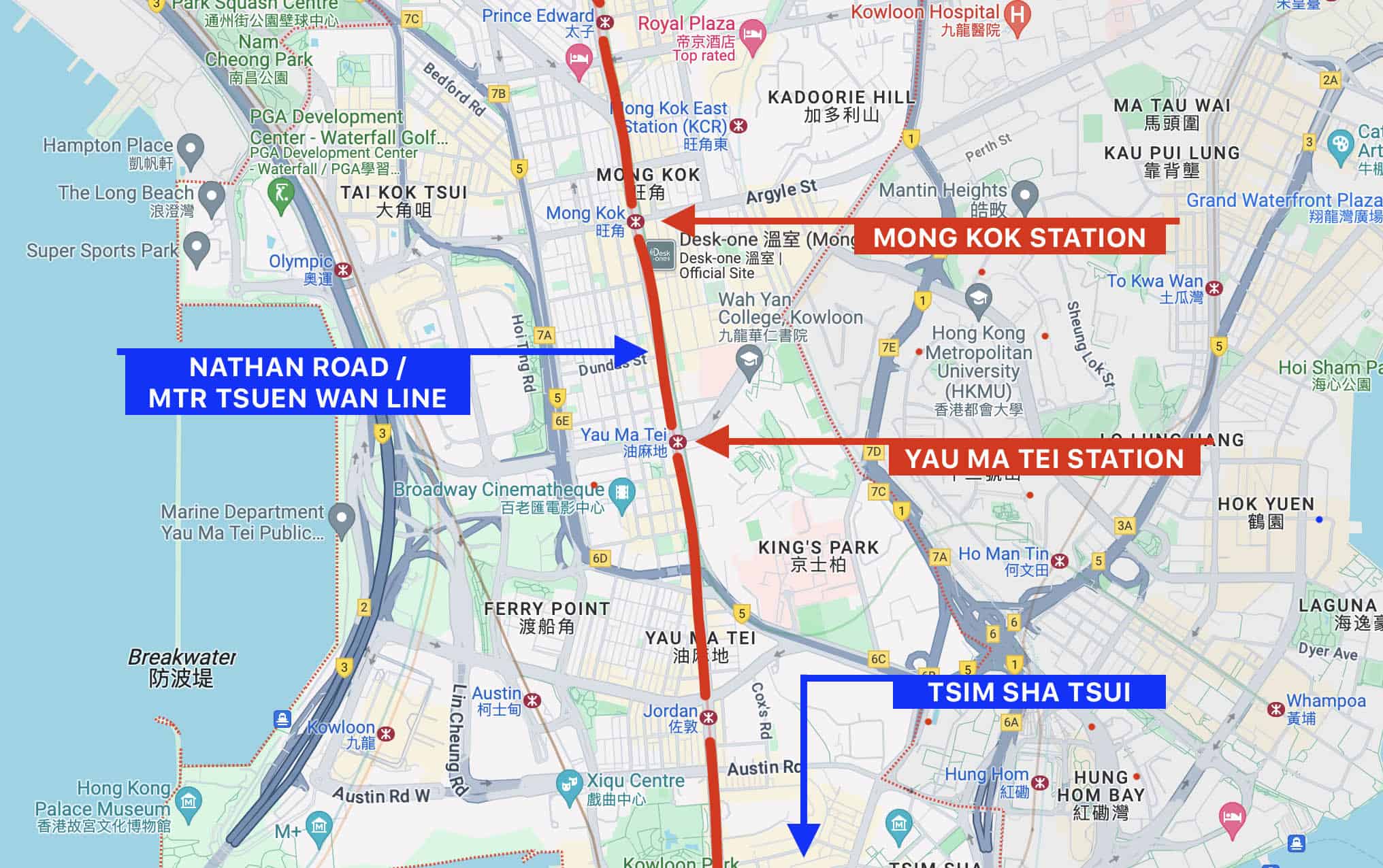
Let’s zoom in a bit on the map of Mong Kok and Yau Ma Tei. You’ll see that it’s cut in half by the this thoroughfare – Nathan Road – which is dotted with numerous bus stops. Nathan Road also runs along a huge part of the MTR Tsuen Wan Line, which is a commonly used train or subway line for tourists and locals alike. Many of the city’s main attractions are accessible from this line.
The Hong Kong International Airport, on the other hand, is on reclaimed land on Chek Lap Kok Island, next to Lantau Island, almost an hour away from the city center.
So, how do you get here from the airport? You have two main options: by bus and by train.
Let’s start with the bus.
WHAT’S COVERED IN THIS GUIDE?
AIRPORT TO MONG KOK BY BUS
Not only is the bus the cheapest, it is also the easiest and most convenient option.
Unlike the other options, this is a direct way and does not entail switching or transferring along the way, at least if your hotel is located near Nathan Road or Chatham Road.
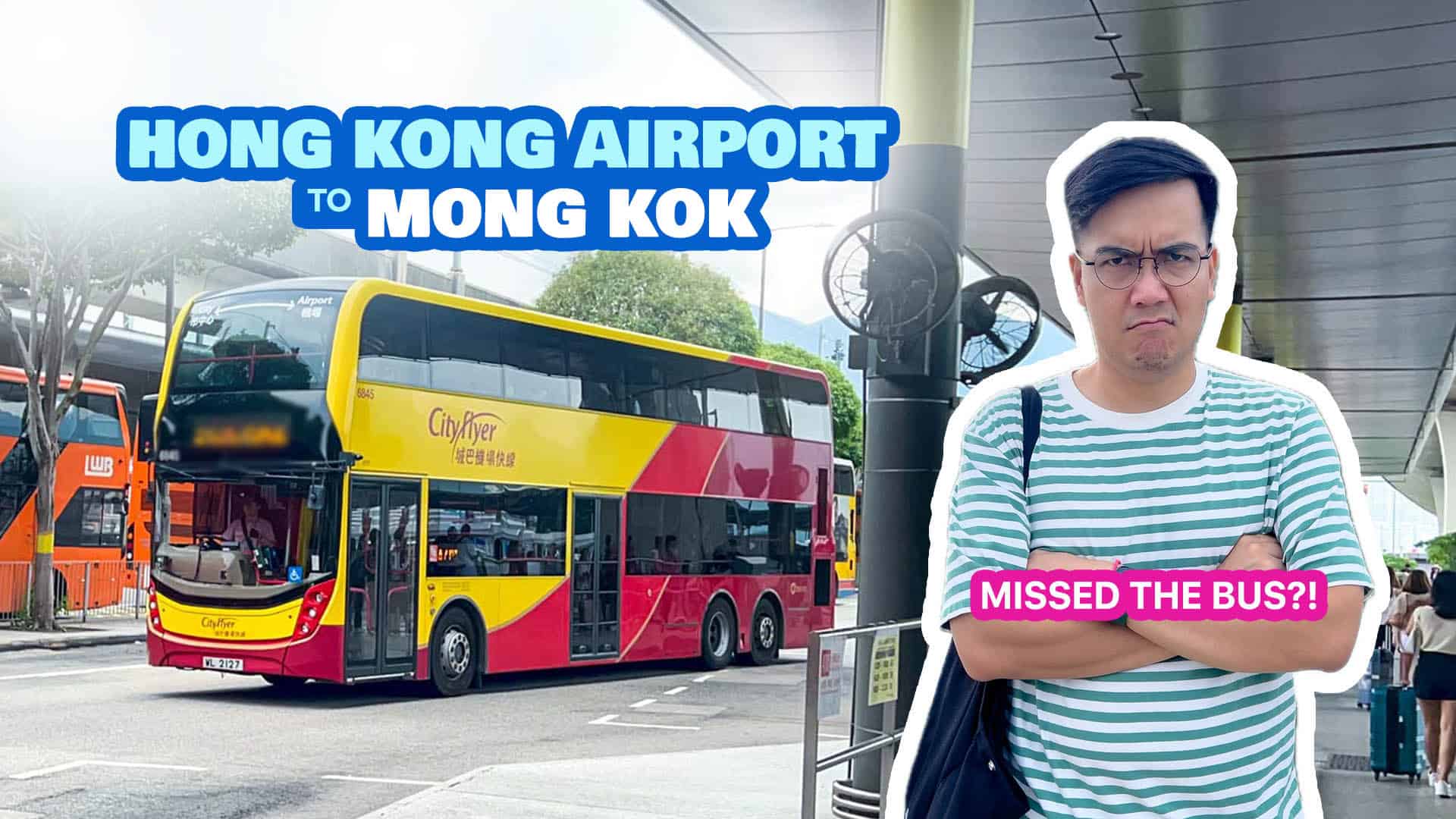
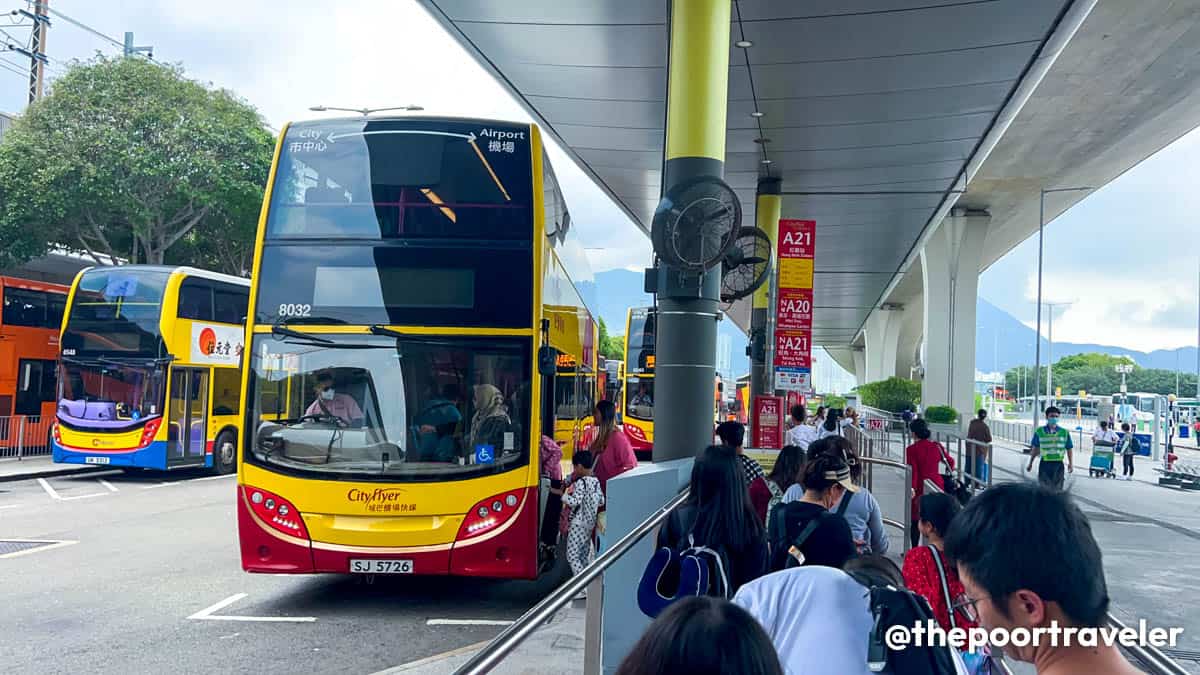
Depending on the time of the day, there are two buses that you can take: BUS A21 and N21.
N21 – Late Night Bus Fare: HK$ 23.80 Operating hours: 00:20 – 04:40
If you’re interested in taking the bus, you might want to consider getting an Octopus Card, which can make your journey much easier and cheaper. An Octopus card is a pre-paid reloadable card that you can use for MTR and bus rides and even purchases at select stores. It will allow you to skip buying tickets each time you’re taking the MTR or scramble for coins when taking the bus. All you need to do is tap the card above the reader and you’re through.
The fare is also cheaper when you use an Octopus Card than when paying on site. And if you’re taking public transportation multiple times, these discounts rack up and you’ll end up saving a lot!
Image via Klook
You can get an Octopus Card from Klook. It costs HKD 97 (PHP 695, USD 12.41), but it already comes with HK$ 50 load that you can use right away. You can pick it up at the airport’s Arrival Hall. In our case, we claimed our Octopus Card at this counter.
You can also book a Data SIM on Klook and pick it up at the airport. A data SIM will make navigating much easier so you’re sure you’re getting off at the right stop.
Then, on the day of your trip, follow these steps.
1. Find the Airport Bus Terminus.
Hong Kong Airport Bus Terminas
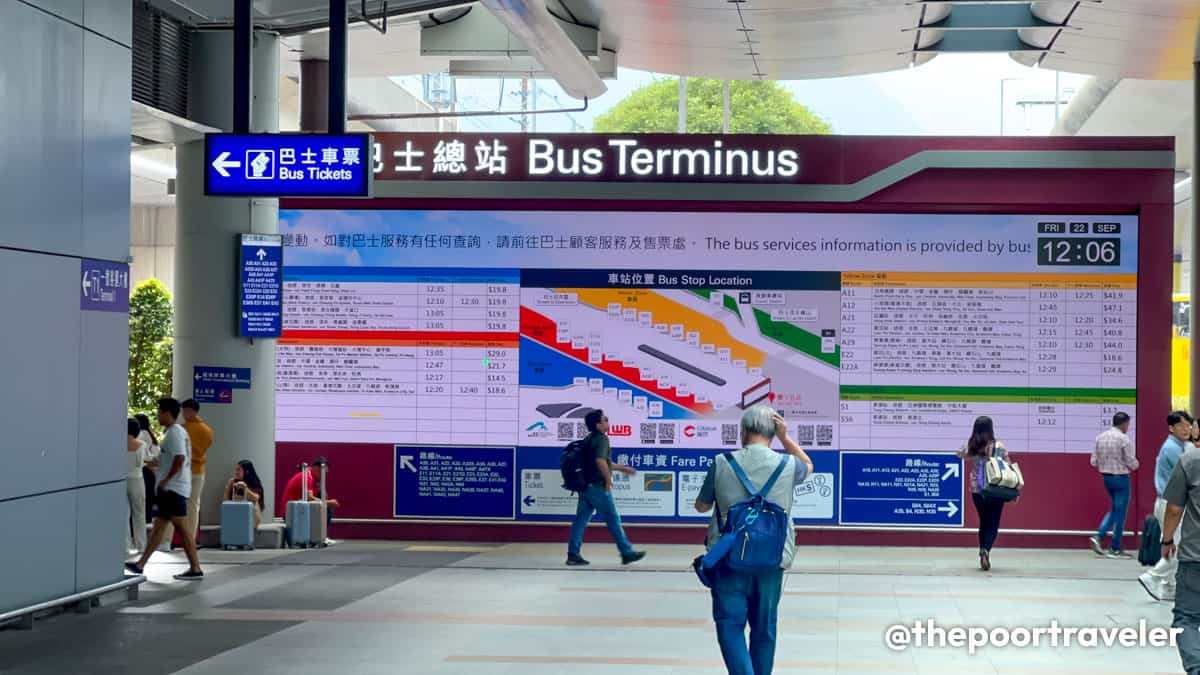
When you emerge from the Arrival Hall, follow the BUS signs, which will lead you to the Bus Terminus. You’ll know you’re at the right spot because there is a giant signage with a detailed schedule of all the buses operating in the area.
2. Proceed to the A21 or N21 Bus Stop.
At the entrance to the bus terminus, you’ll find a vicinity map, which will tell you where you can catch the right bus per route. Look for BUS A21 or N21. These will take Nathan Road and pass through both Mong Kok and Yau Ma Tei areas, all the way to Tsim Sha Tsui.
Airport buses are double-deckers. They also display the route or bus number in front, so make sure you’re boarding the right bus.
3. Pay as you board.
When it’s time to board, prepare your Octopus Card and tap it or hover it above the card reader, installed just by the entrance door of the bus.
If you decide to not get an Octopus card, you can pay by cash. But WARNING: NO CHANGE POLICY! Ensure that you have the exact amount because they don’t give change. This is why it’s better to just have an Octopus Card.
The fare is HK$ 34.60 for Bus A21 or HK$ 23.80 for Bus N21, regardless of whether you’re alighting in Mong Kok or Yau Ma Tei.
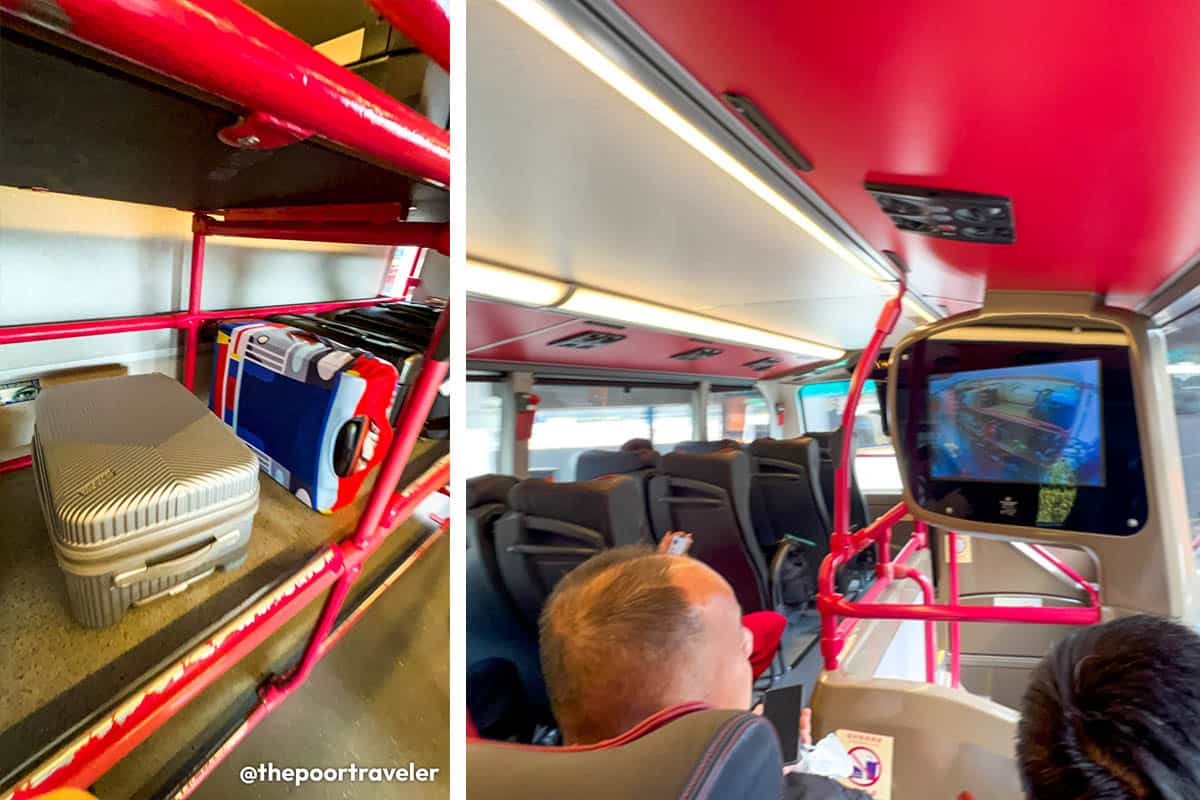
Upon boarding, you’ll immediately see this baggage section where you could leave your suitcase. There’s also a few seats here, but if none is available, just climb to the top deck. Don’t worry, there are cameras here pointed at the baggage area, so you could still keep an eye on your bag.
Travel time is 50 to 90 minutes, depending on where you are alighting and the traffic situation at the time.
4. Alight at the stop closest to your hotel.
Just research first which stop is closest to your hotel.You’ll probably have to get off at any of the following stops:
MONG KOK BUS STOPS
Metropark Hotel Mongkok; Lai Chi Kok Road — A21 only
Mong Kok Police Station; Nathan Road — N21 only
Argyle Centre; Nathan Road
Bank Centre; Nathan Road
Sino Centre; Nathan Road
YAU MA TEI BUS STOPS
Pitt Street; Nathan Road – N21 only
Wing Sing Lane; Nathan Road – N21 only
Man Ming Lane; Nathan Road – A21 only
Nathan Hotel; Nathan Road
Prudential Centre; Nathan Road
That’s it! You may simply walk to your hotel or inn if it’s located close to Nathan Road.
AIRPORT TO MONG KOK BY TRAIN (AIRPORT EXPRESS + MTR)
If the bus is the easiest option, the Airport Express is the fastest. But there’s a catch. It involves two transfers.
The Airport Express Line has only three stops, but your stop is Tsing Yi Station. From here, you’ll have to transfer to the MTR.
You can purchase Airport Express tickets on site, but it’s much cheaper to book online, especially on Klook.
PRICE AT THE STATION One way: $70 Round trip: $120
KLOOK PRICE One way: $59 Round trip: $108
As you can see, you’ll end up saving a lot if you book a round trip ticket instead of two one-way tickets. And you’ll also save more if you purchase from Klook.
And if you want to score even more discounts, use our exclusive promo code THEPOORTRAVELER as you check out.
Now that you know where to get Airport Express tickets, here’s how to reach Mong Kok and Yau Ma Tei once you land in Hong Kong.
1. Board the Airport Express Train.
First, look for the Airport Express Station, which is directly in front of the terminal. You won’t miss it! There are plenty of signs.
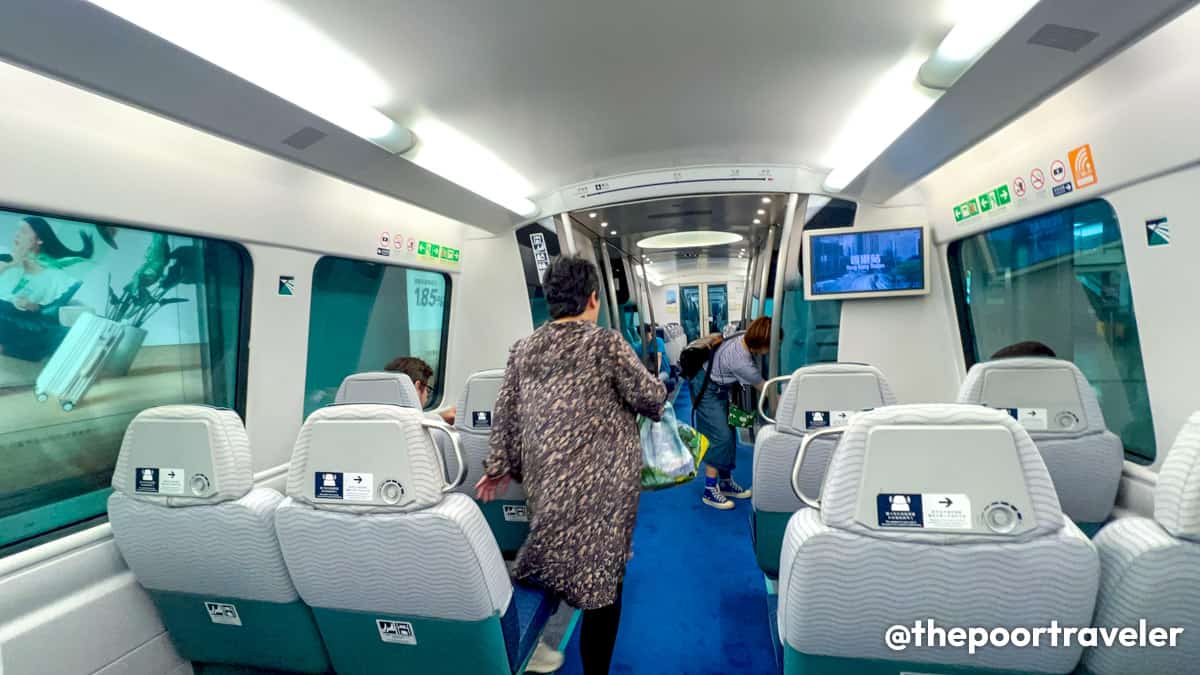
If you booked online, you just need to use the QR code for Airport Express. And when you get on, you’ll immediately spot the baggage area, where you can stow your suitcases. The Airport Express is often NOT crowded because there are plenty of rides within the day (unless it’s peak hours of peak season).
But the ride should be very comfortable and quick. You should reach Tsing Yi in only 17 minutes.
Alight at Tsing Yi Station.
2. Transfer to MTR Tung Chung Line.
At Tsing Yi Station, switch to Tung Chung Line (Orange Line).
Note that the QR code you purchased online can only be used on Airport Express. To transfer to the next rides, you’ll need to purchase a ticket or use an Octopus Card.
At Lai King Station, transfer to MTR Tsuen Wan Line (Red Line).
This line will lead you to Mong Kok and Yau Ma Tei Stations.
Because this is an interchange, this station can get a bit crowded, depending on the time of day. But don’t worry, this is the last ride!
4. Alight at Mong Kok Station or Yau Ma Tei Station.
Before your trip, find out which station is closest to your hotel or final destination. Chances are it’s either Mong Kok Station or Yau Ma Tei Station.
That said, Prince Edward Station, Jordan Station, and even Tsim Sha Tsui Station are along the same line. Yes, you can ride the same train all the way to Tsim Sha Tsui Station, in case you also want to see the Avenue of Stars and other attractions in the area.
Anyway, whatever your station is, if your hotel is close to Nathan Road, you may simply travel on foot.
MONG KOK TO AIRPORT BY BUS
Going back to the airport is easy, too! Whether you took the bus or the train, all you have to do is trace your steps back.
If you prefer the bus, check on Google Maps which stop is closest to you.
But remember: Wait for the bus on the other side of the road, NOT on the same side where you alighted.
The fare is the same: HK$ 34.60 for A21 bus, or HK$ 23.80 for N21 bus.
MONG KOK TO AIRPORT BY TRAIN (MTR + AIRPORT EXPRESS)
If you’d rather take the train, here are the steps:
Take the MTR Tsuen Wan Line to Lai King Station.
Transfer to Tung Chung Line.
Alight at Tsing Yi Station.
Board Airport Express.
Alight at Hong Kong Airport.
You’ll need to take the escalator or elevator to get to the Departure Area.
WHICH IS THE BEST ROUTE?
When getting from Hong Kong Airport to Mong Kok or Yau Ma Tei, we recommend just taking the bus! It’s cheaper and more convenient no matter how you look at it.
But it’s a different story the other way around. But when going back to the airport, consider taking the MTR + Airport Express combo instead.
From the airport to Mong Kok or any part of Kowloon, you’re boarding at the first stop, which means the bus is mostly empty. But on the return route, Mong Kok is in the middle of the line, which means there are fewer seats available onboard. We’ve experienced long queues at the bus stop!
The traffic should also be a consideration, especially if you have a plane to catch! The train is much more predictable and reliable when returning to the airport.
Top Affordable Hotels in Mong Kok & Yau Ma Tei
Prices of Hong Kong accommodations have increased dramatically in Hong Kong over the years. Thankfully, you’ll still find a lot of budget options in Mong Kok and Yau Ma Tei.
If you’re still looking for a place to stay and you want to score big discounts, book your hotel with Klook. Use our promo code THEPOORTRAVELER! That will give you 5% OFF, capped at PHP 350.
Below are some hotels and inns in Mong Kok and Yau Ma Tei areas that got great scores from Klook customers.
Top Premium Hotels in Mong Kok & Yau Ma Tei
If you have a bigger budget, here are some options on Agoda and Hotels.com with the best reviews from actual guests, not considering the rates.
While the newMercedes-Benz G-Class 4×4 Squared was spottedduring development, it was never formally announced. There’s no official spec sheet. It’s not even listed on Mercedes-Benz’s website. This thing is a ghost, yet I spent nearly a week in a matte-gold Mercedes-Benz G 63 4×4 Squared. It’s real. It’s outrageously expensive. It’s wonderful.
The Mercedes-Benz AMG G 63 4×4 Squared officially returned in 2022. Since then, Mercedes dealers have been quietly taking orders from well-heeled buyers upon request. For the few who have the means, the G-Class Squared is a more luxurious and even more off-road capable version of the already accomplished G-Class.
Mercedes-Benz AMG G 63 4×4 Squared
Mercedes G-Class 4×4 Squared brings back the portal axles
The G-Class 4×4 Squared is aMercedes-Benz G 63that adds 4.3 inches of ground clearance thanks to trick portal axles at all four corners. What’s a portal axle? The wheels don’t mount to the ends of the axles via traditional hubs. Instead, an additional gearset mounts to the hubs and wheels, creating an offset, which in turn drops the wheels for the additional ground clearance.
Mercedes-Benz AMG G 63 4×4 Squared
The portal axles help create an astonishing 13.8 inches of ground clearance, a 41.3-degree approach angle, a 36.8-degree departure angle, and a 42.0-degree breakover angle. Those wild numbers are among the best available. To put them in perspective, the Ford Bronco Raptor has 13.1 inches of ground clearance, and even more impressive 47.2- and 40.5-degree approach and departure angles thanks to its donut-like 37-inch tires and short overhangs. But the 4×4 Squared bests the Braptor’s 30.8-degree breakover angle by a wide margin. The Rivian R1T and R1S SUV best both with 14.9 inches of ground clearance, in part because there are no differentials to hang down, but it can’t compete in terms of off-roading angles. Just wait for the electric EQG to come along with its four motors, and imagine if the wizards at AMG slap some portal axles onto it. It could boast even better off-road credentials.
Mercedes-Benz AMG G 63 4×4 Squared
Mercedes G-Class 4×4 Squared gets AMG treatment
The first G-Class to get this treatment was theG 550 4×4 Squared, and we thought it was expensive in 2019 at $225,000. Times change, and everything from the price to the horsepower have inflated. The AMG G 63 4×4 Squared I drove was technically a 2022 model with a base price of $349,000. But loaded with options including $6,500 matte-gold paint and a $3,600 AMG Night Package (code for blackout package) as tested, the SUV I took off-roading cost an eye-watering $363,820. Before options, it now starts at $358,150 including $1,150 for destination.
The latest 4×4 Squared uses the AMG G 63’s twin-turbo 4.0-liter V-8 that churns out 577 hp and 627 lb-ft of torque, which is up 161 hp and 177 lb-ft over the G 550 4×4 Squared that used a version of the same engine. Boost is a hell of a drug. It’s hooked to a 9-speed automatic transmission, up two gears from the previous 7-speed, and a full-time four-wheel-drive system with three locking differentials. The rear, front, and center differentials are each engaged with a button on the dashboard. Few production vehicles outside the aforementioned Rivians and Braptor come with this kind of hardware
Mercedes-Benz AMG G 63 4×4 Squared
Mercedes G 63 4×4 Squared can’t be stopped
Standing next to the burbling side pipes of the G 63 in the staging area of Rowher Flats OHV park, I asked friend and fellow auto journalist Jonny Liebermann if I would really need to engage all three lockers today. “Definitely, in one spot,” Liebermann quipped as he continued airing down the tires on his yellow Rivian R1T. Pro tip: It’s always smart to bring a friend with an incredibly capable machine and recovery gear when going off-roading.
Despite our plan of heading up a triple black diamond trail, we didn’t bother airing down the 22-inch 325/55 Pirelli Scorpion All-Terrain tires on the 4×4 Squared because it seemed unnecessary. The chutzpah this Mercedes exudes while just sitting makes most other off-road vehicles seem inferior.
Mercedes-Benz AMG G 63 4×4 Squared
For day-to-day driving, the 4×4 Squared has an AMG-tuned four-wheel-drive system with a 40:60 rear bias. I shifted to neutral and put the 2-speed transfer case into 4Lo, figuring I would engage various off-road modes when needed. But only the five standard drive modes—Comfort, Sport, Sport+, Slippery, and Individual—came up on the screen. Confounded, Liebermann and I tried to find the off-road modes, but we couldn’t. We didn’t know the cheat code.
As we were about to start up the hill sans off-road drive modes, Liebermann, who’s quite familiar with Rowher Flats, suggested I engage the center differential to lock a 50:50 split of power to the front and rear wheels. Suddenly Trail, Rock, and Sand off-road drive modes became available, the electronic stability control system turned off, and the roof-mounted amber running lights on the front and rear carbon-fiber spoilers turned on. Cheat code accepted.
Mercedes-Benz AMG G 63 4×4 Squared
Heading up the triple black diamond trail, the G 63 didn’t break a sweat, but as deep ruts started appearing on the trail I tapped the right-most plastic differential button to engage the rear locker so the Pirellis wouldn’t tear up the earth with all the engine’s available torque.
Every hill, rut, and valley that the yellow Rivian conquered in silence, the 4×4 Squared followed with a low burble.
Then I saw the 135.8-inch wheelbase Rivian porpoise back and forth over a set of deep undulations. Its four motors tried to get the power to the ground as the truck teeter-tottered. Lieberman gave it some throttle and the rear end slid left toward a rock wall on one side while the front slid right toward the other rock wall. My palms got sweaty. That Rivian was Liebermann’s, but this $363,820 Mercedes certainly wasn’t mine. Was I about to tear off this thing’s running boards, side pipes, or rear bumper extension? What would Mercedes say if I slid this thing’s carbon-fiber fender flares into a rock wall?
My fears were overblown. The G 63 4×4 Squared’s shorter 113.1-inch wheelbase, which is 5.3-inches shorter than a four-door Jeep Wrangler’s, prevented the Mercedes from porpoising through this obstacle. The tires clawed at the earth, the suspension extended the tires down into the deep holes, and the Mercedes just continued climbing. No carbon-fiber fender flares were harmed during the traversing of that or any trail. But my blood pressure probably rose too high.
About an hour into our adventure toward the heavens, the G 63 4×4 Squared finally blinked. Going up an undulation with the center and rear lockers engaged, the driver-side front tire started to spin. I tapped the left-most silver differential button to engage the front locker. I felt a click, eased into the throttle, the front wheels grabbed at the dusty, slippery, rock-strewn earth, and the burbling SUV began to move forward as if the undulations didn’t exist. If this Mercedes didn’t have a front locker, I could have used the abundant power to overcome the situation, but that would’ve torn up more dirt.
Upon reaching the summit of the mountain path, Liebermann noted that pretty much no owner will ever do what we just did. What a crime. This machine is built for this.
Heading back down a much easier path I disengaged the lockers and shifted to 4Hi. We picked up the speed and the remote reservoir shocks kept the ride disruptions to a minimum as they absorbed the beating. The ride never tossed me side-to-side, nor did my neck feel tired once we reached the bottom of the hill.
Mercedes-Benz AMG G 63 4×4 Squared
Mercedes G 63 4×4 Squared goes to extremes
When I pulled back out onto the street, the G 63 4×4 Squared drove like a lifted G-Class, with the associated extra body roll around corners. It’s still stable in sweeping canyon roads, though.
Mercedes estimates the G 63 4×4 Squared can sprint from 0-60 mph in about 5.0 seconds, and my butt dyno estimates that’s about right, if not a tish quicker. That’s on the way to an electronically limited 130-mph top speed. It requires some trip planning, though, especially for parking, because the high-riding Mercedes requires 7-feet 4-inches of clearance, meaning it won’t fit in all parking garages or through all drive-thrus.
Shocking no one, this flying German brick drinks gas. It carries EPA fuel economy ratings of 10 mpg city, 12 mpg highway, and 11 mpg combined. Those numbers are seemingly spot on. Over the course of 264 miles of mixed driving, with two thirds of it on the highway, I averaged 10.8 mpg, according to the trip computer.
Mercedes-Benz AMG G 63 4×4 Squared
Inside, the G 63 Squared is a loaded G-Class with a leather-wrapped dashboard, quilted leather massaging front seats, and a big grab handle on the passenger side of the dashboard. The 12.3-inch digital gauge cluster gets its own 4×4 Squared startup sequence, and the rearview mirror has been swapped for a rear camera mirror. This comes in handy since the massive spare tire blocks the rear view. Exclusive to the 4×4 Squared are a microfiber-wrapped performance steering wheel and matte carbon-fiber trim bits. But the low, flat dashboard and 12.3-inch infotainment screen, which isn’t a touchscreen and still runs the last generation of MBUX, will all be familiar to anyone who has spent time in a recent G-Class.
Mercedes-Benz AMG G 63 4×4 Squared
Mercedes-Benz AMG G 63 4×4 Squared
Mercedes-Benz AMG G 63 4×4 Squared
Small details add up to a different attitude for the exterior. The carbon-fiber fender flares bulk up the look while covering the chunky all-terrain tires. The carbon-fiber roof spoilers are specific to the 4×4 Squared, though the white LED driving lights mounted in the front spoiler don’t function due to U.S. regulations. The amber running lights mounted on the roof spoilers work, but only when the vehicle is in 4Lo. The rear bumper has an extension to meet U.S. crash standards, and it just looks awkward. You’d think the running boards would make getting in and out easier, but they don’t. In fact, they almost get in the way since they are mounted up so high. A carbon-fiber spare tire cover mounted to the rear hatch is there to impress onlookers at any given LA-area Starbucks.
Almost no one outside of the automotive enthusiast realm realizes what the G 63 4×4 Squared is or why it’s special. To most people, this just looks like a lifted bro truck version of a G-Class. It kind of is, but it’s also so much more. The price is absurd, but so is the Mercedes-Benz G 63 4×4’s off-road capability. Mercedes builds the 4×4 Squared in limited numbers and won’t even disclose production figures. If you see one, make a wish.
Money can’t buy everything, but it certainly can buy one of the most capable production off-road vehicles. If you have the means, I highly recommend picking one up and actually taking it off-road.
Murcia is one of the amazing places to visit in the south of Spain. This historic, and relatively small Spanish city is so wonderful to visit; especially if you’re driving down the coast from Alicante. Not only that, there are so many of the best things to do in Murcia that you’ll be spoilt for choice once you arrive.
With centuries of history and yummy restaurants, you’re going to have the best time visiting Murcia. Just make sure to give yourself at least a full day (or longer) to experience it all.
So, to help you get the most out of your visit, I’m sharing my top places in Murcia that you have to visit. Have an amazing time visiting Spain.
1.) Monteagudo Castle
Nestled on the fringes of the city itself, Monteagudo Castle is one of the best things to do in Murcia whilst exploring the city’s centuries of history.
That being said it’s a bit of a trek to get to and also fairly easy to see without hiking from the city centre. You can easily drive (or grab a taxi) close to Monteagudo Castle and explore the surrounding castle.
Once here, make sure to spot Christ of Monteagudo (who sits proudly on top of the hill). The whole fort area is great to see if you’re into your history. You’ll even get to learn more about the Moorish artefacts that have been found.
Just be aware, there is very intermittent access to this site. Sometimes the gates are shut or the whole site is closed off; with very little information for visitors.
A visit will only take around 40 minutes, and can easily completed in the morning as you leave Murcia.
Murcia Cathedral is one of the most iconic spots in the city. This makes visiting one of the best things to do in Murcia whilst strolling the city centre.
Dating back to the 1400s the architectural details of this cathedral are just stunning; both inside and out.
From the outside, you’ll get to see the beautiful Baroque architecture that is so beautiful. Once inside, the architecture changes somewhat and you’re greeted with a Gothic building that’s equally as impressive, but different in style.
Just make sure to see Vélez Chapel. It’s beautiful and dates back over 500 years.
At sunset, the hues around the cathedral are also pretty amazing; So it’s nice to explore at golden hour if you’re staying in the city overnight.
Oh, I almost forgot! Murcia Cathedral also has one of the tallest bell towers in Spain; with no less than 25 bells inside.
In fact, you can also climb to the top of the cathedral and if you are up to it, you’ll have one of the best views in the city as a reward for all of your hard work. However, make sure to take some water, as it can get hot in the summer months.
Yes, it might be small but Plaza de las Flores is one of the best things to do in Murcia to visit whilst hungry! You see, this whole area has heaps of tapas spots to grab a bite to eat. But choose wisely, some of the tapas bars aren’t the best.
We loved Pepico del Tío Ginés that’s just off Plaza de las Flores. Their grilled montaditos are so good. Oh, and don’t forget a glass of vermouth, too.
Not only that, there are lots of great restaurants (if you fancy a more formal ‘sit down’ dinner) in the area, too. Just remember that dinner is not a rushed experience in Spain. Set aside enough time to enjoy and eat into the night.
4.) Floridablanca Garden
If you’re looking for something laidback to do in Murcia or just want to cool off in the heat? Then visiting Floridablanca Gardens is one of the best things to do in Murcia. Yes, it’s relatively small but it’s quite important as this is the first public garden in all of Spain.
Plus, you’ll get to see the Peligros Church that’s a few minutes away.
If that’s not your thing, head out of Murcia and visit Calasparra to explore Murcia’s iconic Cueva del Puerto. The cave system is so impressive to see and well worth a gander if you’re interested in natural history. Just be sure to book these tickets before arriving. You don’t want tours to be filled once you make the journey.
If you’re already visiting Murcia’s Cathedral, then you really can’t miss Plaza Del Cardenal Belluga. It’s one of the grandest squares in all of Murcia.
Of course, this is in large part thanks to Murcia Cathedral at one end and the Bishops’s palace at the other. The whole area around the plaza is just gorgeous to stroll.
Not only that, you’ll get to see the Episcopal Palace of Murcia’s courtyard and grand staircase as just so lovely to see.
Now, like most of central Murcia, Plaza Del Cardenal Belluga is a great spot to stop for food in the city. We loved the unfussy Los Zagales for tapas.
Though, it is worth noting that some of the restaurants are a little pricier here. If you want to keep costs a little lower, venture down some of the side streets thanks to its popular location. We loved Tierra Mía for their freshly baked pizza.
Oh, and if you’ve got time, book a ticket to watch a performance at Teatro Romea. It’s a medical theatre that’s building is just as incredible as the performances inside.
Just a few minutes’ stroll from Plaza Del Cardenal Belluga, the Almudi Palace is an absolutely must-visit for art lovers.
It’s absolutely beautiful and plays home to lots of equally beautiful art throughout the previous centuries. Best of all, it’s never really crowded or overly busy.
Plus, it is open till quite late on most days (it closes around 9 pm) meaning you can leave exploring this till later in the evenings. It does however close on Sundays and public holidays at 2 pm. So be warned if you’re travelling around these times.
Afterwards, head over to Mercado de Verónicas to experience a working market that’s so lovely to see. The bottom floors are typically fresh meats and fish; but head upstairs and you’ll find some produce like grains, nuts and fruits.
Fancy a trip away from the bustling streets of Murcia? Then head down to the Spanish coast. Costa Calida and Costa Blanca are vast stretches of beautiful coastlines which span hundreds of miles.
In fact, it’s home to some of Spain’s best beaches so a trip to Murcia is a fantastic excuse to visit the beach and have a fantastic holiday in the sun.
We absolutely love Playa de Mil Palmeras as it’s got that mix of being a ‘big beach’ whilst also having the town for snacks and nibbles. If you want something a little quieter, head over to Playa Les Ortigues. The beach area isn’t built up and it’s vast enough to ever feel busy.
Alternatively, if you’re heading south, down the coast, stop off at Aguilas. The beach, La Playa Amarilla, is gorgeous.
Now, you can do one on a day, but, and it’s a big but; I’d recommend adding on a couple of days. This way, you can explore the vast stretches of the Spanish coastline that make this area so special.
One of the most famous social clubs and restaurants in Murcia has to be the Real Casino de Murcia. Now, the entry fee is around 5 Euro, but it’s worth it to visit the rooms that make this so special.
As you wander around, be sure to take a glimpse at the gorgeous ballroom, the library and the billiard room which are all so unique.
After exploring, pop into the restaurant for lunch. Their menus change seasonally and it’s a whole experience.
Fancy a little wander into the great outdoors in Murcia’s region? Then get yourself over to Carrascoy and El Valle Regional Park.
Around 30 minutes from the centre of Murcia by car, Carrascoy and El Valle is beautiful to visit. In fact, I’d go as far as saying it’s one of the best things to do in Murcia if you’re looking to hike.
It’s such a gorgeous area and great for hiking in Spain, especially with all the different trails that crisscross the park. Some of our favourite spots are around Plaza de Las Moreras.
Just remember, this is a really hot part of Spain so make sure you take enough snacks and, more importantly, drinks for your hike here. No one likes a reckless hiker.
Lola Cars is no stranger to success in motorsport. Since 1958, the British company has produced winning competition vehicles in a number of classes. They hold the title of Great Britain’s oldest continually operational race car manufacturer, and virtually all of their cars have gone to customers, rather than being campaigned by Lola themselves.
While not one of the most well known models to leave the Lola Cars factory, the T92/10 ranks as one of the most advanced in context of the era in which it was produced.
In the years preceding the T92/10’s debut, Group C was akin to Group B in rally, with a very relaxed ruleset. To ensure the field was competitive, minimum weight and maximum fuel consumption per 100km regulations were introduced. This meant a huge variety on the grid; V8, V12, turbo V8 and flat sixes all vied for the podium.
When the 1990 season rolled round, the intention was to slowly integrate a second generation of Group C cars into the field. These cars would be powered by naturally aspirated 3.5L engines with a minimum weight of 750kg (1,653lb).
Lola designed and built the T92/10 ready for the 1992 season, with the intention of selling it as a turnkey package to prospective customers who would normally need to source key components from multiple suppliers themselves or run full factory-backed efforts.
Designed by Weit Huidekoper, the T92/10 was a radical departure from the previous Nissan Group C design, something dictated by another rule change for the chassis and cockpit dimensions. Many hours of wind tunnel testing produced a car that was aerodynamically efficient and produced a huge amount of downforce with little drag, largely owing to the ground effect underbody.
The springs and dampers were mounted inboard, connected via pushrods, with the suspension fastened directly to the carbon chassis. The rear suspension was connected straight to the engine and gearbox, which acted as fully stressed members.
If this is starting to sound similar to a Formula 1 car, know that the T92/10 pretty much was one, but with full bodywork.
Further re-enforcing the Formula 1 derivation was the T92/10’s engine – a Judd V10. For those of you that have not had your eardrums subjected to the high-pitched wail of one of these engines at full chat, this video will give you an idea. Just imagine it far, far louder in person.
Extracting 650 horsepower from just 3.5L, the Judd powerplant earned the T92/10 the reputation of being one of the loudest and most symphonic cars to ever race at Le Mans.
Three T92/10s were produced, with the first two only having a single season before the World Sportscar Championship for Group C was dissolved. These two cars were purchased by Charles Zwolsman – one of them being the car you’re looking at now – and campaigned under the Euro Racing banner, but they never found much success on track. Ultimately, the team ceased operation when Zwolsman was found to have expanded his Tulip bulb business into the illegal drug trade.
The third T92/10 remained eligible for other championships, but over its racing career only won three events. Despite the car being hugely capable on paper, it never translated to success on the track in period.
Now two decades later, the inception of the Peter Auto Group C series has given these cars an opportunity to race again, and for enthusiasts, the chance to hear the Judd V10 scream once more.
The technical storage or access is strictly necessary for the legitimate purpose of enabling the use of a specific service explicitly requested by the subscriber or user, or for the sole purpose of carrying out the transmission of a communication over an electronic communications network.
Preferences
The technical storage or access is necessary for the legitimate purpose of storing preferences that are not requested by the subscriber or user.
Statistics
The technical storage or access that is used exclusively for statistical purposes.The technical storage or access that is used exclusively for anonymous statistical purposes. Without a subpoena, voluntary compliance on the part of your Internet Service Provider, or additional records from a third party, information stored or retrieved for this purpose alone cannot usually be used to identify you.
Marketing
The technical storage or access is required to create user profiles to send advertising, or to track the user on a website or across several websites for similar marketing purposes.