
Quick Tips on Exchanging Funds When Selling a Car
- Complete the transaction in a public place, regardless of your payment method.
- Using cash is straightforward but risky, and sales of more than $10,000 require IRS disclosure.
- Digital payment services are convenient, but transaction fees and dollar amount limits might be prohibitive.
Many drivers choose to sell or trade vehicles with professional dealers, but others prefer to sell privately. If you decide to sell a car on your own, there are a few things to know about exchanging funds with the buyer.
Depending on the circumstances, the transaction can be stressful and confusing, especially if it’s your first time selling a car. When selecting the best option, you must consider the amount of money involved for the car’s value, the level of security, and the convenience of each method.
We’re outlining common transaction types to help make sure the process is smooth and hassle-free. No matter your chosen method, conduct the deal in a public setting for your comfort and safety. Here are the best ways to exchange funds in a car sale.
Cash
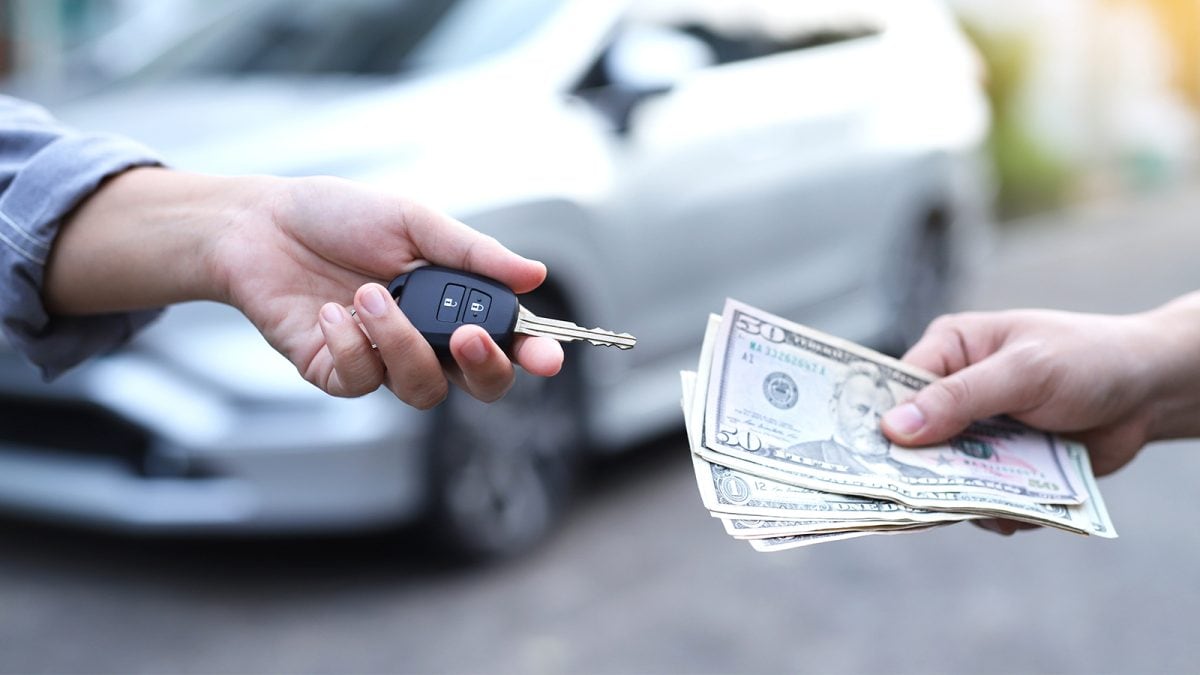
Cash is the simplest method of exchanging funds in a car sale. The straightforward approach doesn’t require a bank or mediator to process the sale, and you can immediately count the money included in the full payment. However, you should proceed with caution because carrying large sums of cash to buy a car can be risky.
Pros
- Instant Payment: With cash, the seller receives immediate payment. There’s no need to wait for a bank to transfer funds or for a check to clear. This method can be beneficial when the seller needs the funds quickly.
- Simple Process: Completing a sale with cash is as easy as it is quick. The process is simple and the least time-consuming.
- Privacy: Cash transactions offer a degree of privacy since there’s no paper trail, like with a bank transfer or checks. Some may prefer this option for security reasons or mere personal preference.
Cons
- Questionable Safety: Many people feel unsafe carrying a significant amount of cash, especially if the buyer and seller have never met or don’t know each other well. Concern about theft or robbery may be more prominent when handling cash.
- Verification Concerns: There are no third-party verification options when dealing with cash. It may be difficult to tell if the money is legitimate or counterfeit. This exchange can leave the seller vulnerable to fraud if the buyer tries to pass off fake bills as genuine.
- Limitations: Cash payments can be limited to smaller amounts. If the transaction involves a more considerable sum, using this payment method is less practical. Federal law requires a person to report cash transactions of more than $10,000 to the IRS.
Can You Get a Car Loan for a Private Car Sale?
Some banks and other financial institutions offer private-party auto loans. These loans may have different terms than conventional car loans for buying at a dealership.
MORE: How to Sell a Car Without a Title
Bank Transfer
Bank transfers are a secure and efficient way to exchange money in a car sale. The buyer’s bank will verify the availability of the funds before processing the transfer. This assurance offers added security for the seller, making a bank transfer an excellent option for high-dollar transactions. It provides a transaction record that you can use in case of any disputes.
Pros
- Security: This is a secure method of payment. Bank transfers require both the buyer and seller to have a bank account. The transaction is traceable and provides a higher level of security against fraud.
- On the Record: Bank transfers offer a transparent and verifiable transaction record. Both the buyer and seller can access this record for future reference.
- Great for Large Amounts: If you’re selling or buying a car for thousands of dollars, bank transfers are more practical than handling a briefcase of cash.
Cons
- Slower Method: Finalizing a bank transfer may take multiple business days. The processing time will depend on the banks involved. Both parties will have a waiting period while the transaction is verified.
- Fees: A bank transfer may have associated fees, which will vary. The buyer and seller should consider the extra costs before choosing this payment method.
- Bank Hours: You may need to initiate a bank transfer during regular banking hours. If the buyer and seller live in different time zones or want to handle the exchange on a holiday or the weekend, this could pose a problem.
RELATED: How to Sell a Car: 10 Steps for Success
Certified Check
A certified check is a type of personal check that the issuing bank has verified as payable. As the buyer, you can request a certified check from your bank. Your bank will set aside funds from your account and “certify” the check by stamping it, usually with a watermark. This method guarantees the funds. The seller can then deposit the check into their account to receive the funds.
Pros
- Secure: Certified checks are considered secure payment methods since banks issue them and guarantee the funds. Certification protects the seller against fraud and counterfeit checks. Since you’re not exchanging cash, the transaction process is physically safer.
- No Fees: Unlike bank transfers, certified checks are not usually subject to bank fees, making them a more cost-effective payment method.
- No Waiting Period: Certified checks are typically considered cleared funds, which means the seller doesn’t have to wait for the check to clear before receiving payment.
Cons
- Limitations: Certified checks can be limited to smaller amounts. If the transaction involves a larger sum, using a certified check as the payment method may not be practical. Additionally, the seller may have difficulty depositing the check if their financial institution does not honor them.
- Fraud Verification: Although certified checks are considered secure, there is still the risk of fraud in the case of stolen or forged checks. As the seller, you should verify the check with the issuing bank before accepting the payment. This additional step can be time-consuming.
Cashier’s Check
A cashier’s check is a check that the bank issues from its account. The bank both drafts and handles payment of the check. The buyer must pay the bank the total check amount upfront and a service fee. From there, the bank issues a check for the requested amount.
Pros
- Secure: Since cashier’s checks are issued and guaranteed by the bank, they are a secure payment method. This safeguards the seller against fraud and counterfeit checks, but sellers should be aware that criminals can print fake checks.
- Widely Accepted: Most institutions accept cashier’s checks as payment. The seller should have no difficulty depositing the check.
- No Waiting Period: Cashier’s checks are considered cleared funds. The seller doesn’t have to wait for the check to clear before the payment posts to their account.
Cons
- Fees: Cashier’s checks have associated fees. While a typical fee is $20 or less to issue a cashier’s check, the buyer and seller should be aware of the cost and consider it when deciding to use this payment method for a private sale.
- Limitations: Depending on the bank or financial institution, cashier’s checks can be limited to smaller amounts. If the transaction involves a large amount of money, using a cashier’s check as the payment method may not be practical.
RELATED: How to Sell a Car Online
Escrow Service
An escrow service acts as a neutral third party in a transaction. It holds the funds until both parties in a private car sale agree on all conditions of the deal. Escrow is ideal for significant transactions, as it provides added security for both the buyer and seller. The buyer sends the money to the escrow service, which holds the funds until the car exchange is complete.
Pros
- Secure: Escrow services are an extremely safe option for buyers and sellers. The payment is held in a secure account until the transaction is complete.
- Fraud Protection: Escrow services protect both parties against fraud, including stolen or counterfeit checks and chargebacks. An escrow service can verify the buyer’s funds before releasing them to the seller, assuring the payment is legitimate.
- Neutrality: The escrow service acts as a neutral third party, helping to ensure the transaction is fair and impartial.
Cons
- Cost: Escrow services can be expensive. Fees range from a few hundred to several thousand dollars. The amount depends on the value of the transaction.
- Slower Process: An escrow service can add extra time to the transaction process. Both parties must wait for the payment to be processed, verified, and released.
RELATED: Car Title Guide: Everything You Need to Know
Digital Payment Services
Popular and trusted mobile payment platforms include PayPal, Venmo, and Zelle. These third-party systems allow for secure, fast, and convenient money transfers. Both parties must have an account on the same platform. After the buyer initiates the transfer, the seller can deposit the funds directly to their bank account.
Pros
- Convenient: Digital payment services are used widely and are easy to access, making them a convenient payment method.
- Fast: These services offer faster processing times than traditional payment methods, allowing quicker transactions.
- Secure: Digital payment services provide a high level of security, using encryption and other fraud prevention methods to protect both the buyer and seller.
Cons
- Fees: Digital payment services often charge fees. PayPal charges no fee for a “personal transaction” when sending or receiving money from friends or family. There may be a fee if the funds come from a credit card or if there is a commercial transaction. For example, at the time of this writing, PayPal’s Goods and Services invoice fee is 3.49% of the transaction total for the seller. Other platforms may charge a flat fee for larger amounts. Fees may also exist to have “instant” access to the funds.
- Verification: As the seller, you should verify the buyer’s digital payment account is legitimate and has sufficient funds before accepting payment. Like any online transaction, digital payment services are vulnerable to fraud and scams. Both the buyer and seller should take extra precautions.
- Limitations: Some platforms’ single transaction maximums for individuals can be prohibitive. For example, you could use Zelle for cars that cost $3,500 or less.
Peer-to-Peer Marketplace: Private Seller Exchange
Verified members can sell and buy cars from private sellers with secure transactions using Autotrader’s Private Seller Exchange. Like Kelley Blue Book, Autotrader is a division of Cox Automotive. The streamlined PSX service is a middleman for buyers and sellers, ensuring the transaction remains secure, including vetting participants, facilitating fund transfers, and handling the car title. Buyers may use PSX financing options or submit their payment online via ACH, wire transfer, debit, or credit card. Sellers receive payment the same day or the next business day, depending on when the sale is final.
Sales Tax on Private Car Sales
Who pays sales tax when selling a car privately? The person buying the vehicle. The buyer is responsible for applicable sales tax during a private car sale transaction. It’s typically collected when the vehicle is registered. Consult your tax laws or seek counsel from a tax professional if you need clarification on how this applies to your unique situation.
Get It in Writing
Whichever method you choose to exchange funds in a private car sale, ensure you get everything in writing. Draft a legitimate bill of sale to protect the buyer and the seller and help prevent future misunderstandings or legal disputes. A written agreement for a private car sale provides peace of mind for both parties, making it easier to proceed with confidence.
Read Related Articles:
Editor’s Note: This article has been updated since its initial publication.