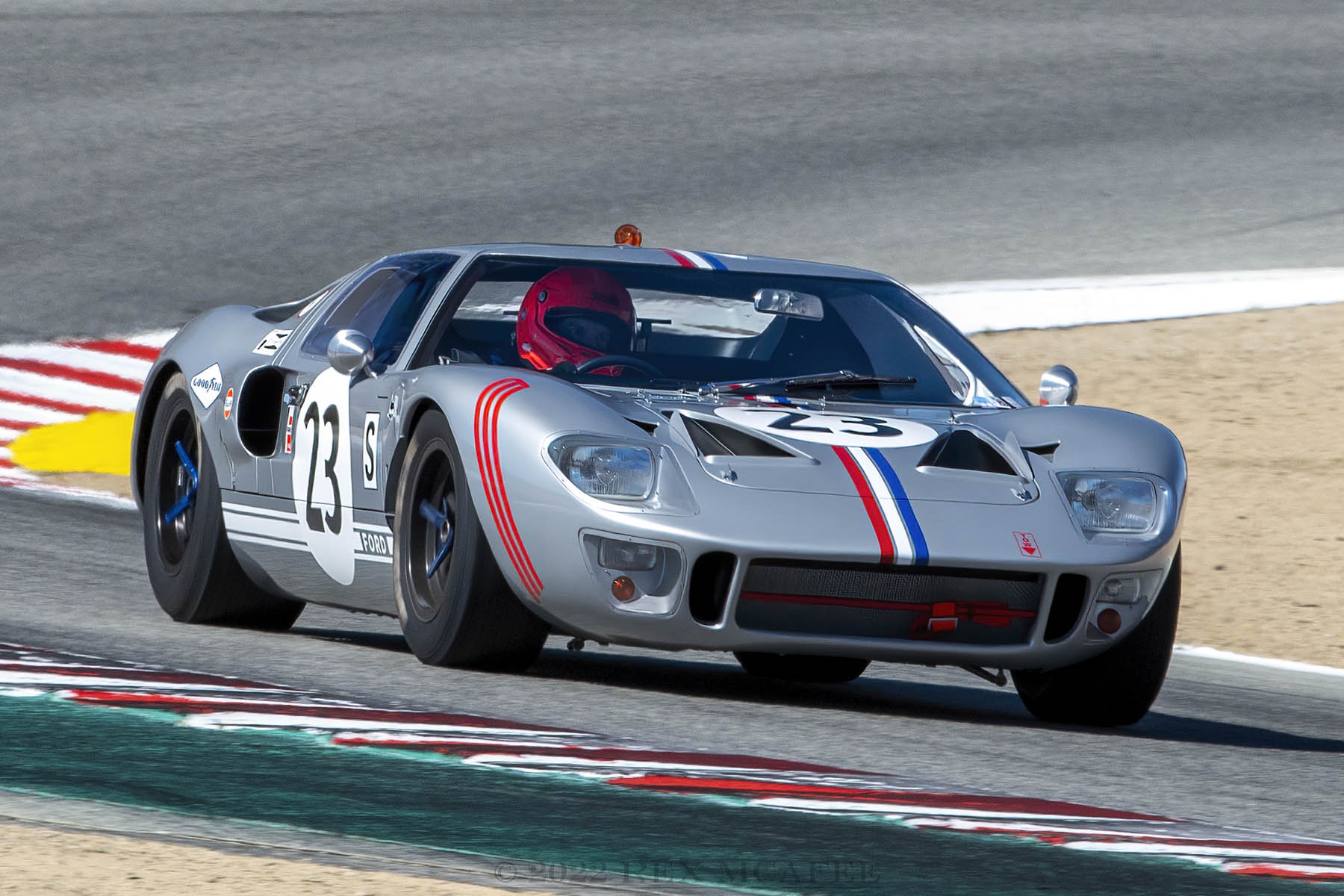
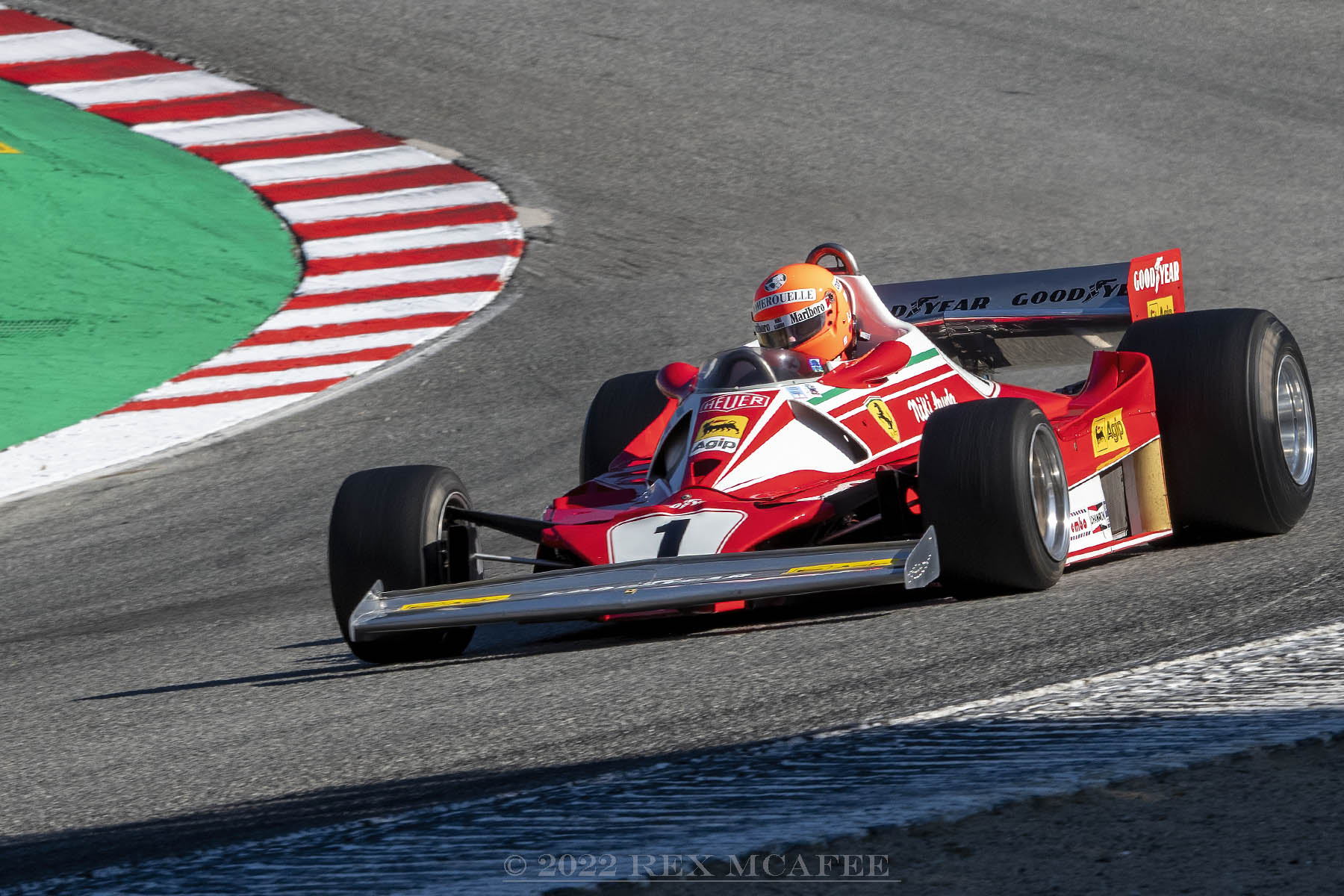
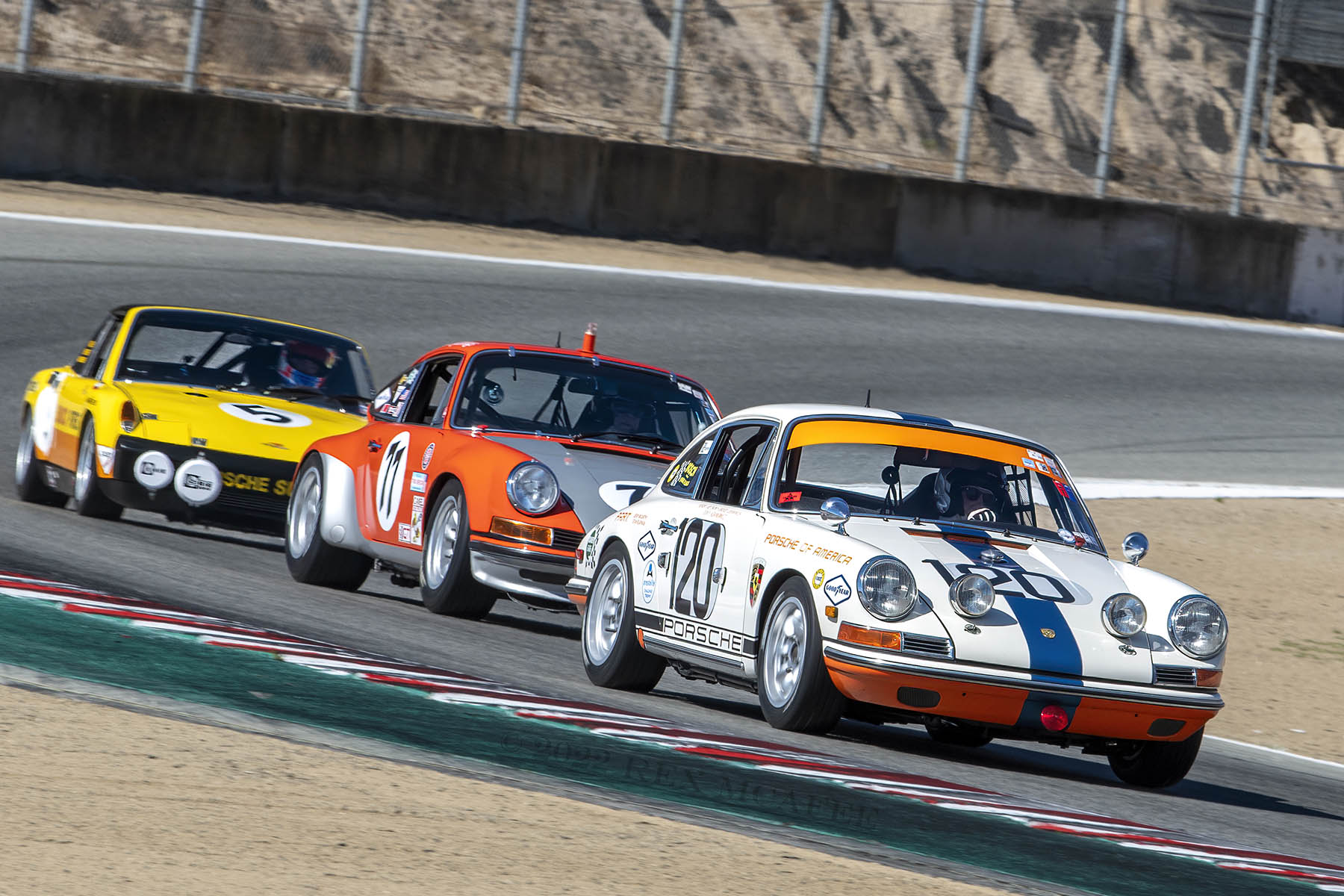
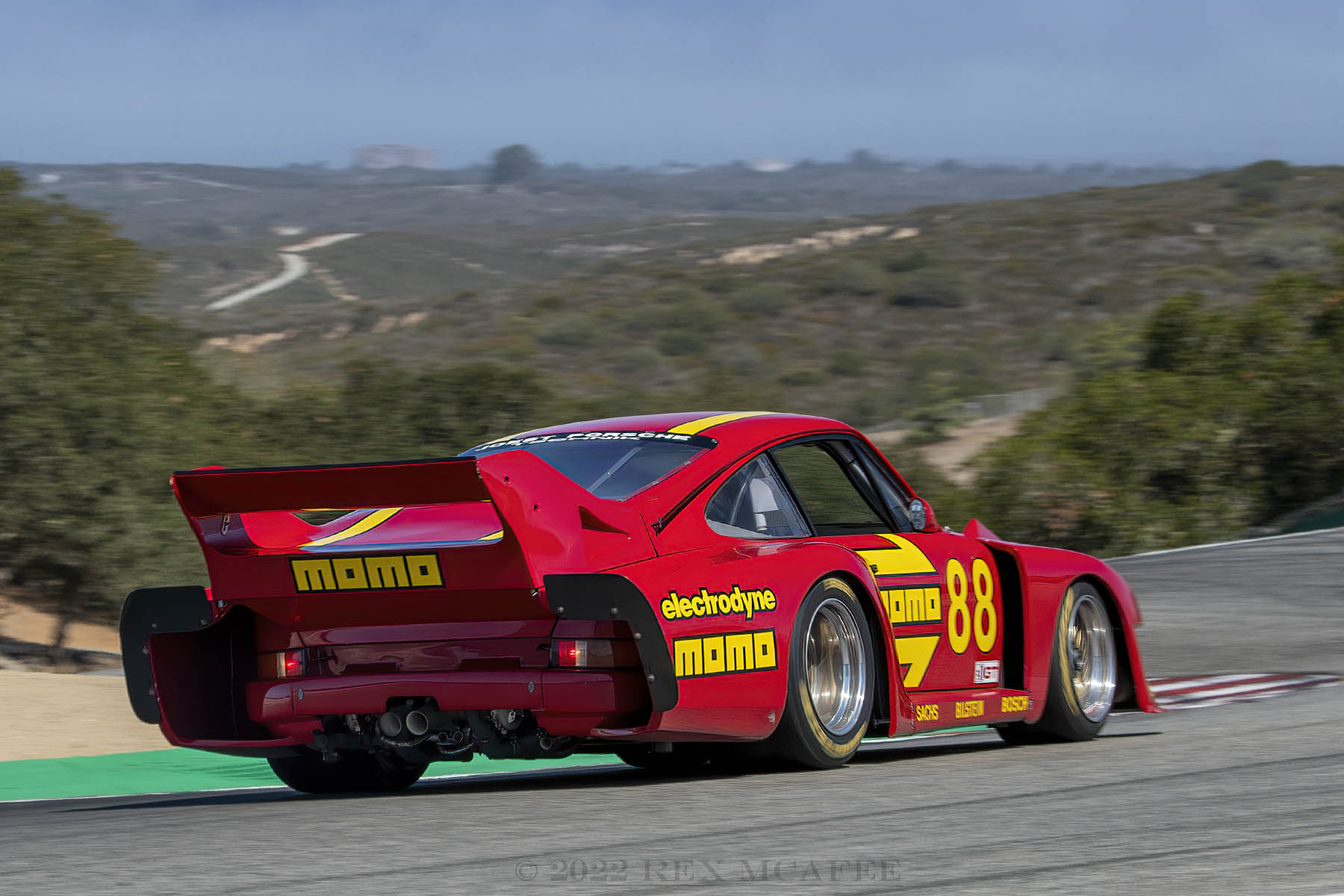
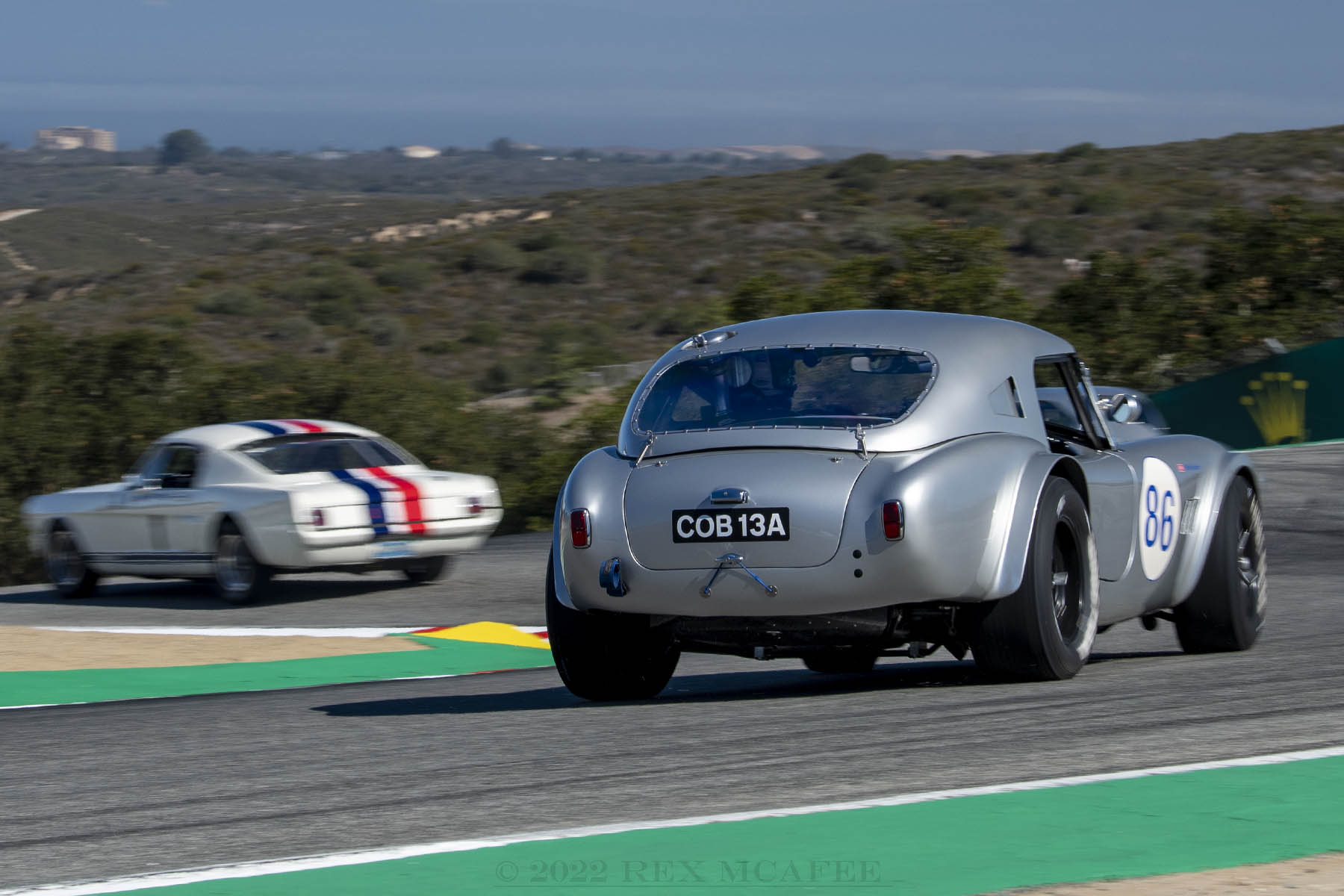
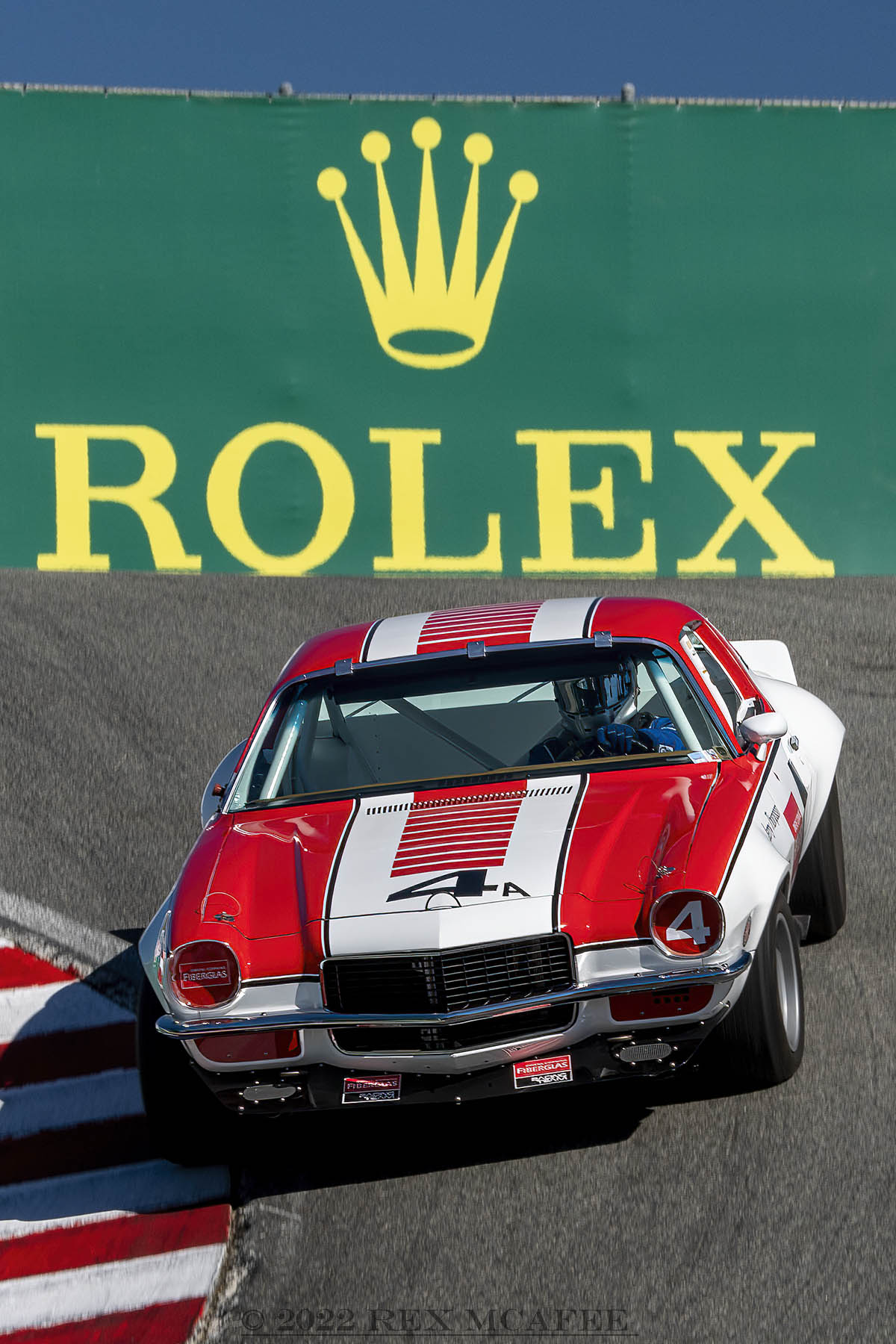
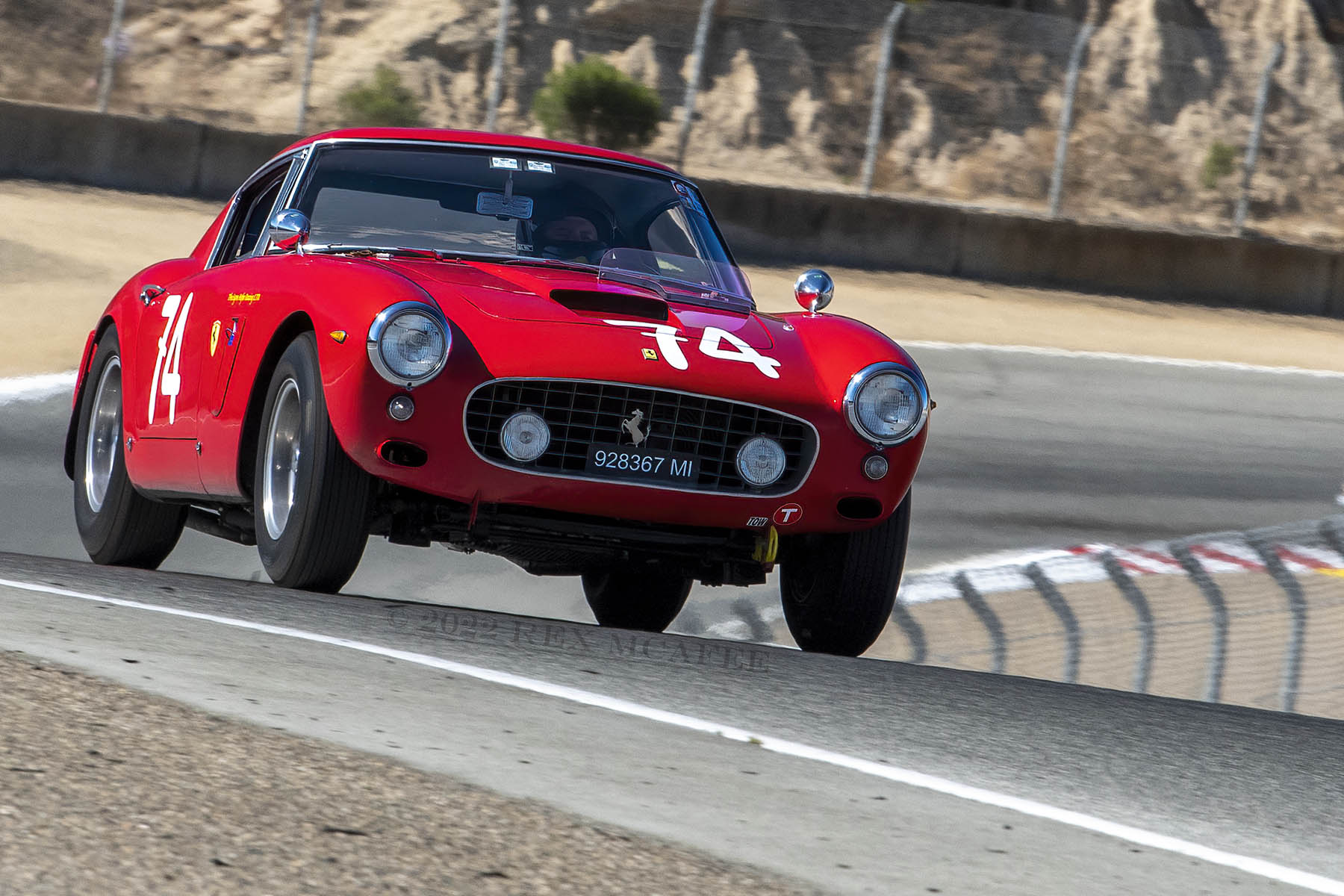
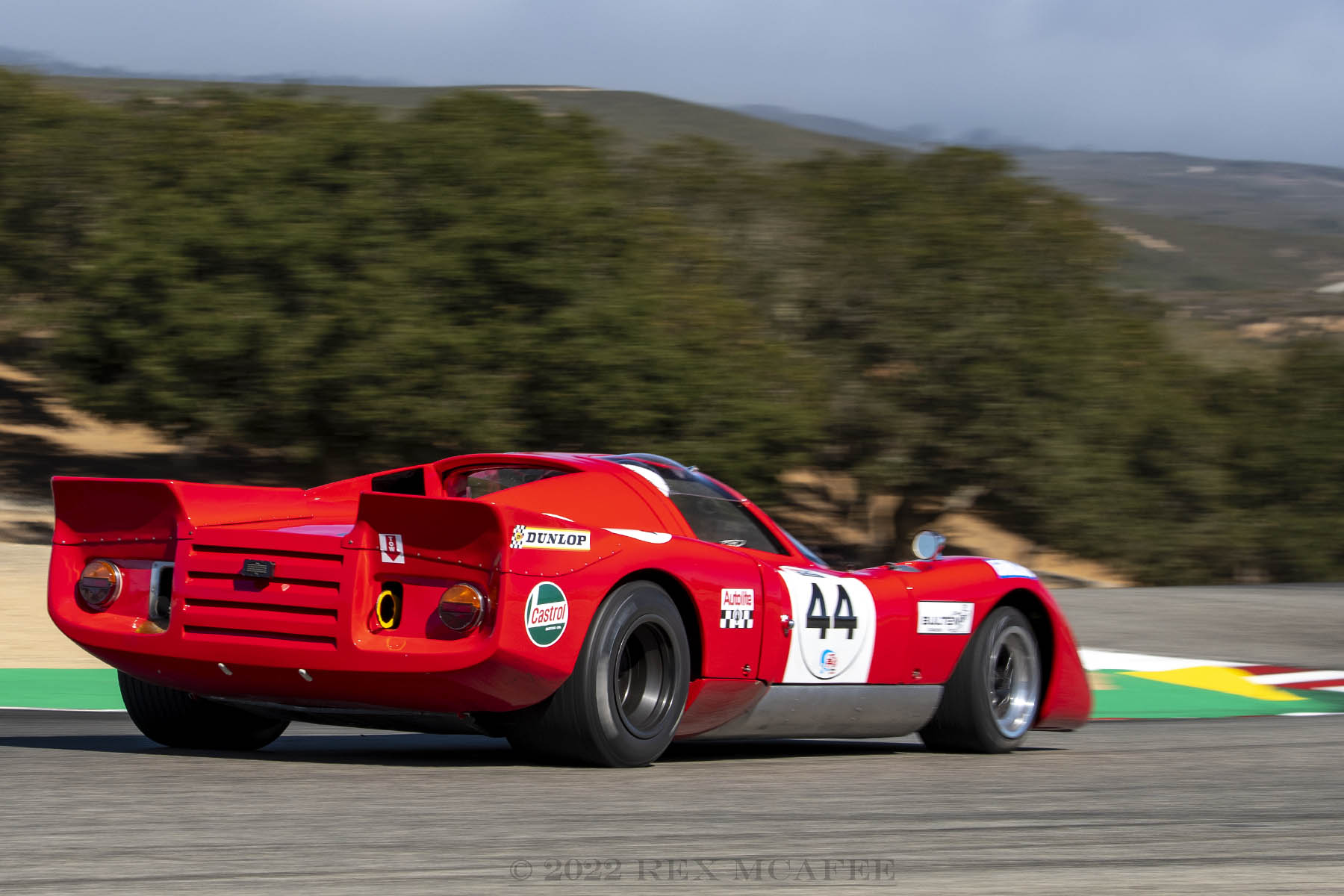
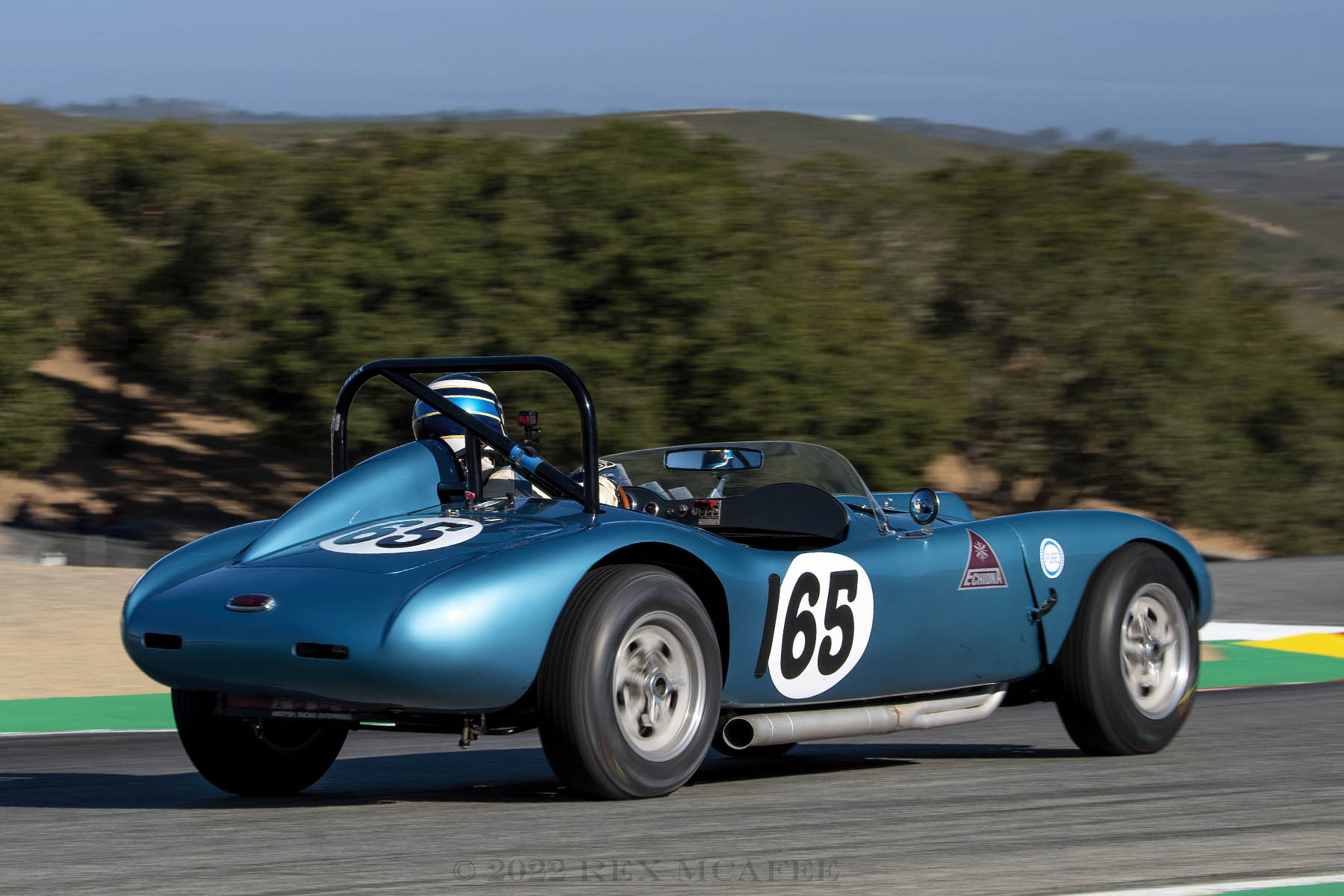
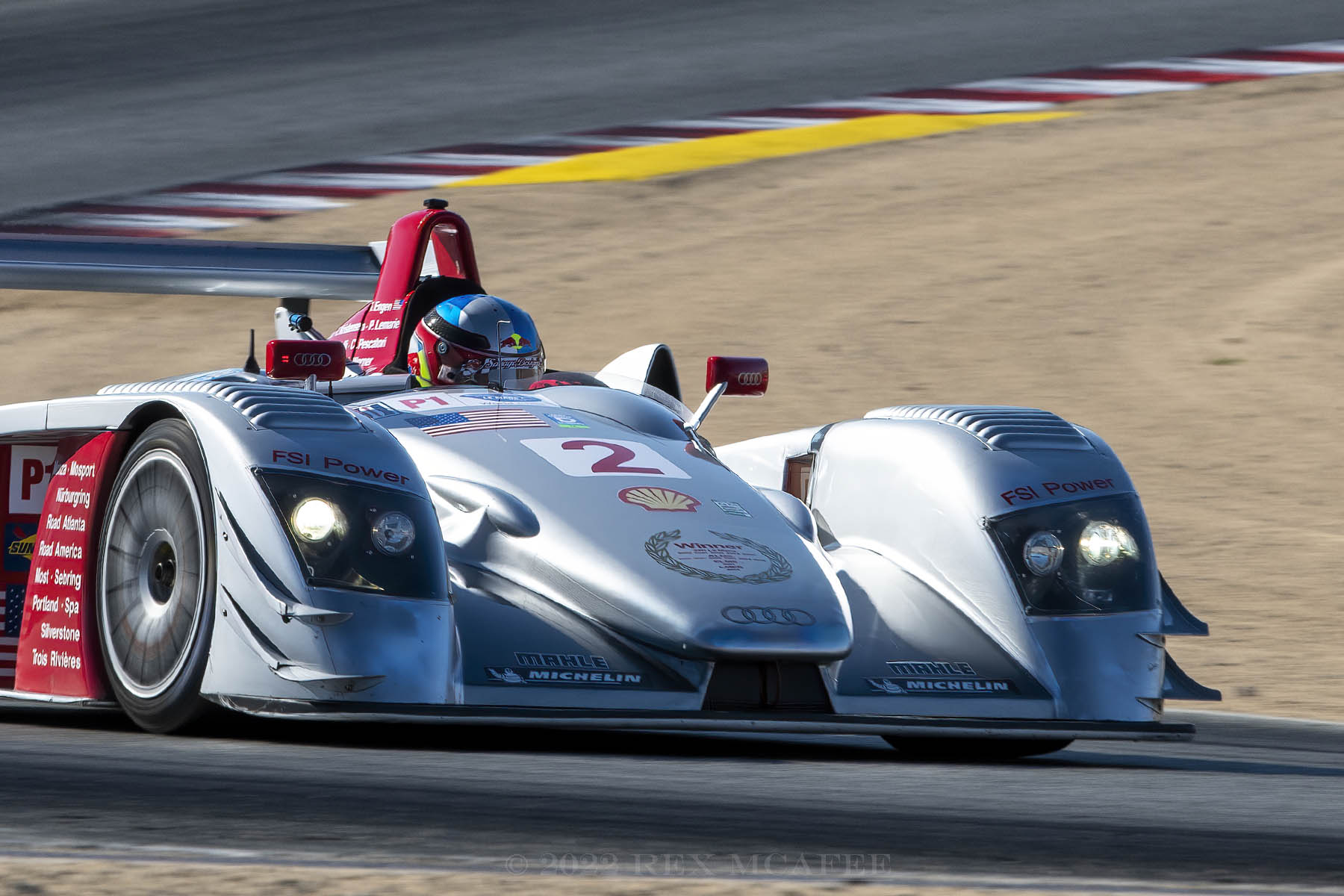
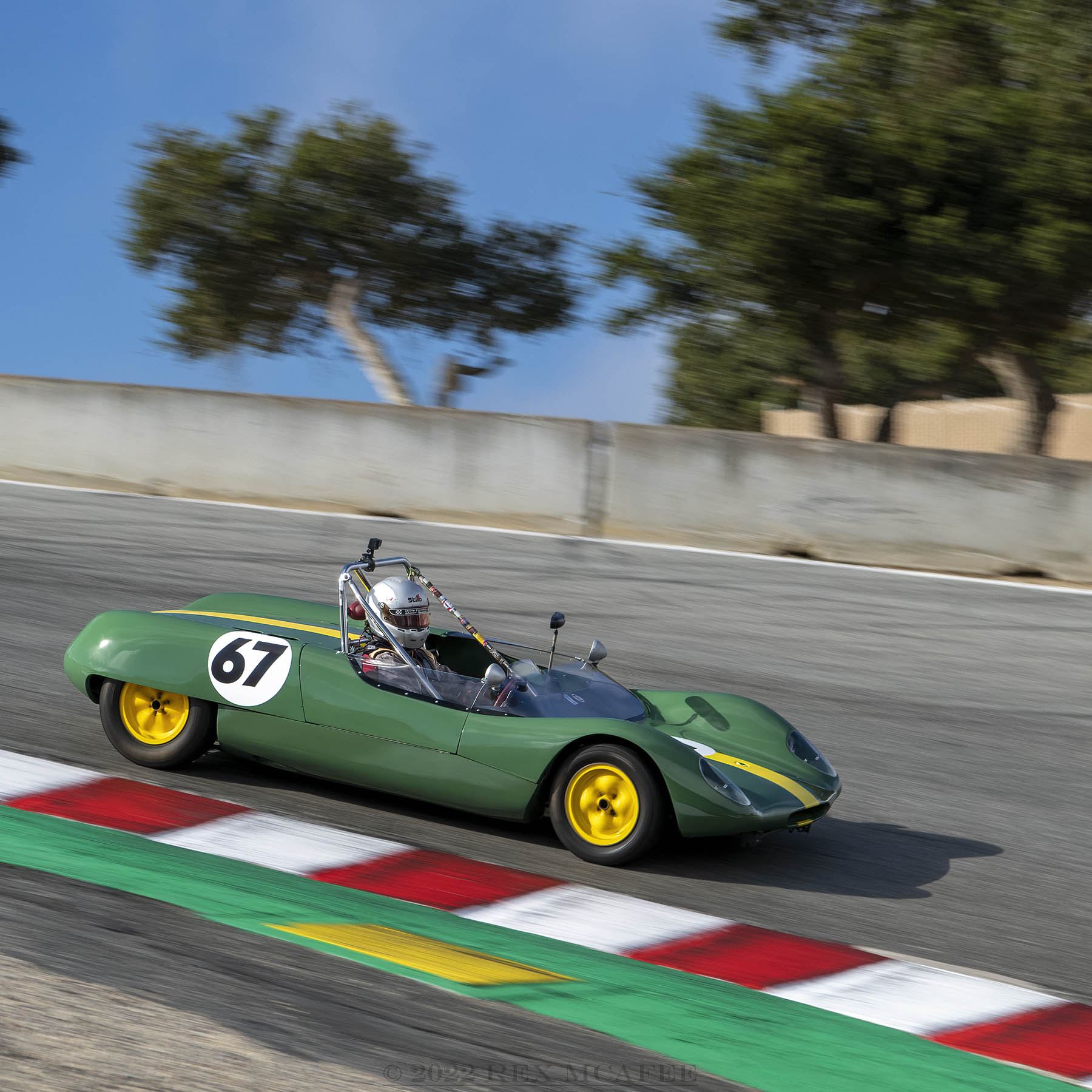
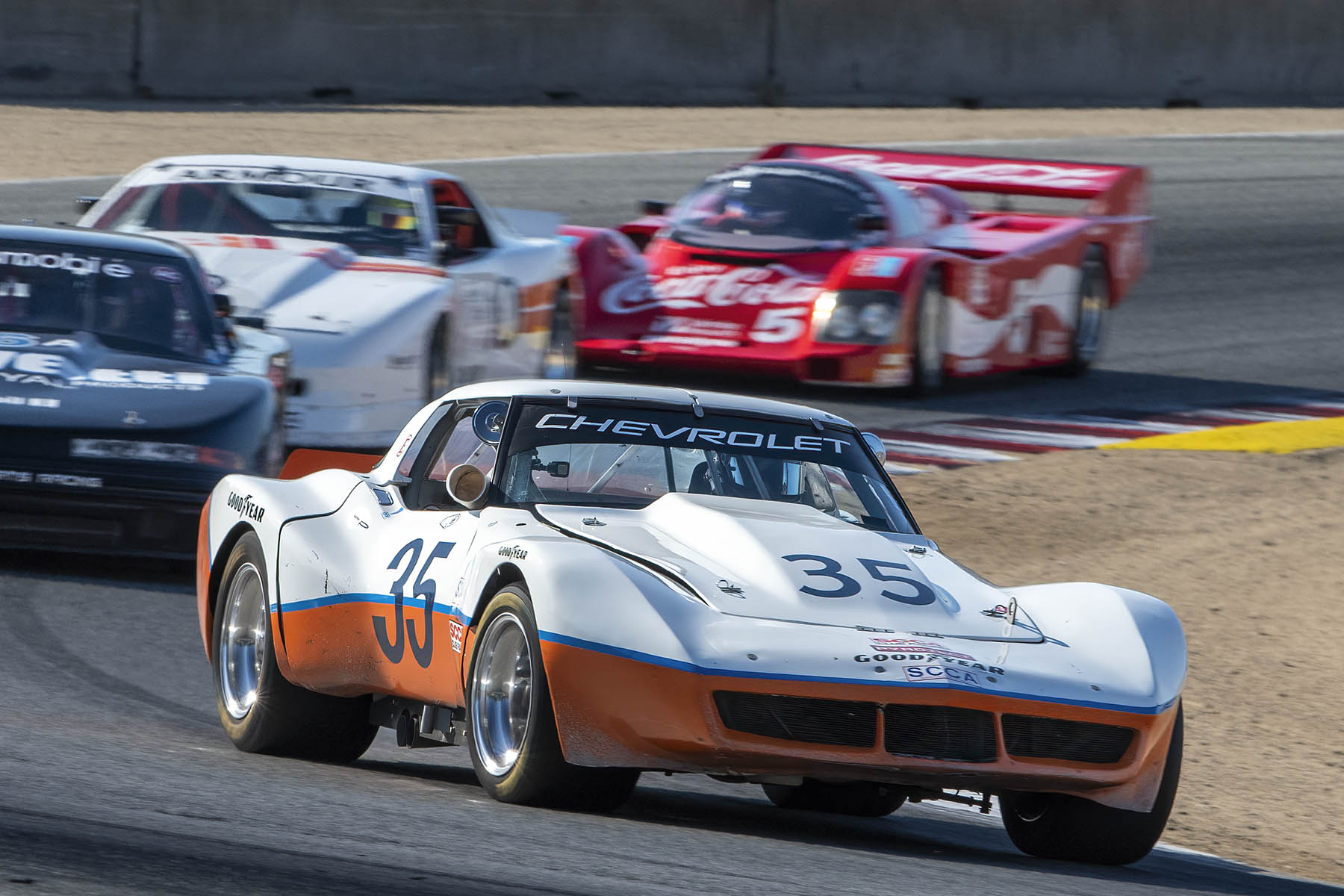
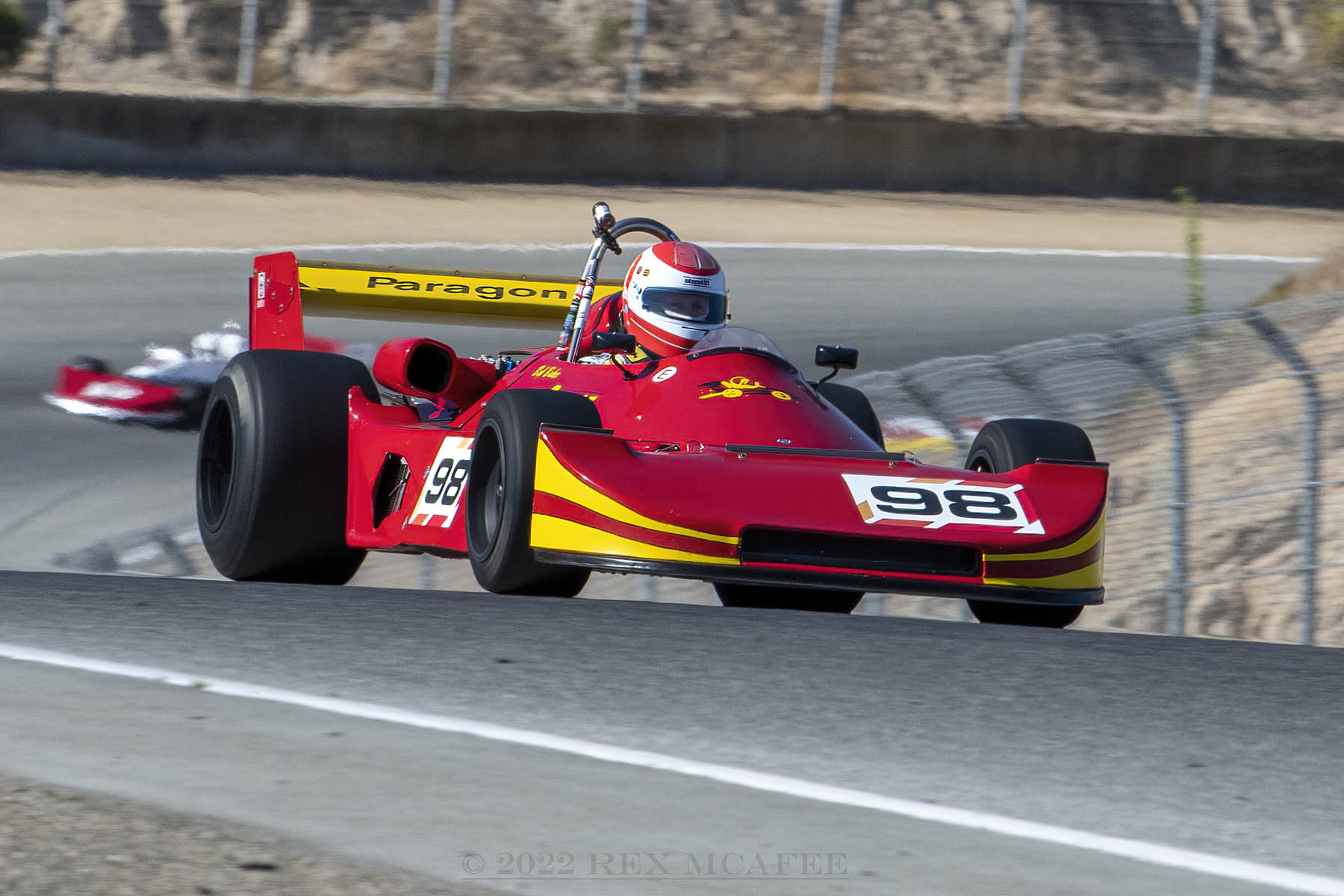
Ms. Ellen Bareley curated the Le Mans Legends Heritage Display. This display contained close to fifty cars, all with Le Mans history. From the 1929 Bentley Speed Six overall winner in 1929 and 1930 to the 2016 Ford GTLM class winner.
Among the displays was the Jim Hall 1967 Chaparral 2F; push rods, 427 cubic inch Chevy aluminum block, and an automatic transmission wrapped in fiberglass designed and built in Southwest Texas. This is an American Endurance Racing Car. Each of the many times I walked by the Chaparral 2F, I noticed somebody of my age explaining to sons and grandsons what an important car the Chaparral was to them. Jim Hall and his Chaparrals proved that American cars could compete internationally.
Another significant car is Cameron Healey’s 1951 Porsche 356/02-063. This is the car that started the Porsche mystique by winning Porsche’s first international race. The 1100cc Class of the 1951 Le Mans. Later the car was bought by Southern California’s John von Neumann, who eventually cut the roof off, producing the first Speedster. Northern California Porsche racer Chuck Forge eventually raced the car.
Cameron Healey bought the car from the Forge estate and returned it to how it left the factory in 1951. Even down to the rubber hose jammed behind the right front external driving light to stop vibration and the light moving during the race. Compared to the early fifties British and Italian cars here, this sleek racer definitely feels German!
Cameron Healey and SportsCarDigest compatriot Bill Wagenblatt have worked together to produce the book “46: The Birth of Porsche Motorsport,” which covers the history of 356/02-063 from its first production orders to today. The book includes conversations with original mechanics and team members. I have seen the layout for the book; if you are a Porsche enthusiast, you should have this book. It should be available early next year.
The Sunday morning Hillclimb or “Backwards up The Corkscrew.” This year the 2022 Rolex Monterey Motorsports Reunion ran Wednesday through Saturday, leaving Sunday for the “Cars on Grass” people. For the rest of us, Laguna Seca held a Hillclimb running from the start-finish line through turns eleven, ten, and nine, ending just past The Corkscrew. You may notice this is backward from the usual direction the cars run.
With over fifty entrants in this novel event, the hillside behind The Corkscrew was packed with spectators. Once the entrants grasped the technique of driving up the hill, they put on a good show. The Word is that the track is looking to build a Hillclimb series out of this event. I am for it.
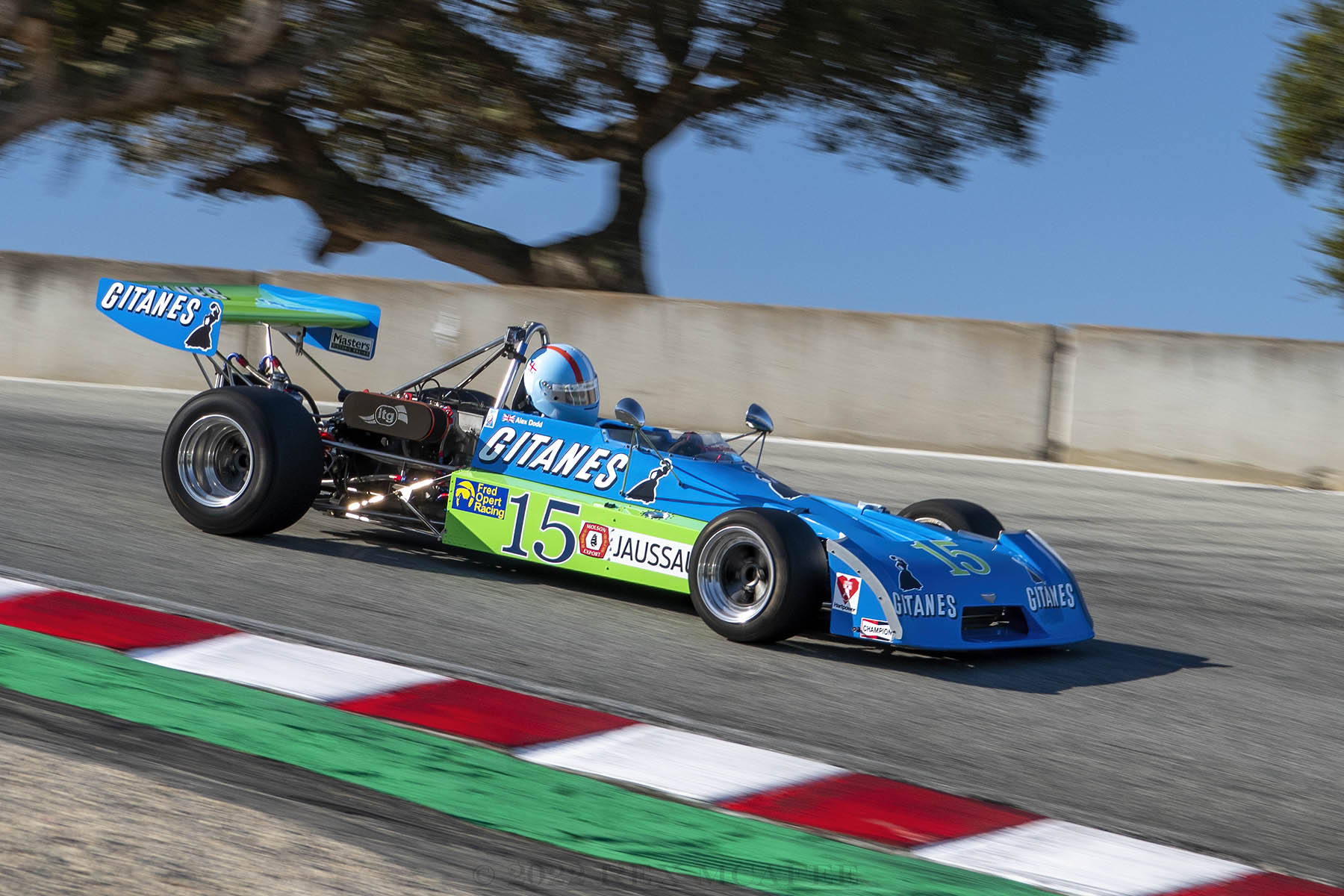
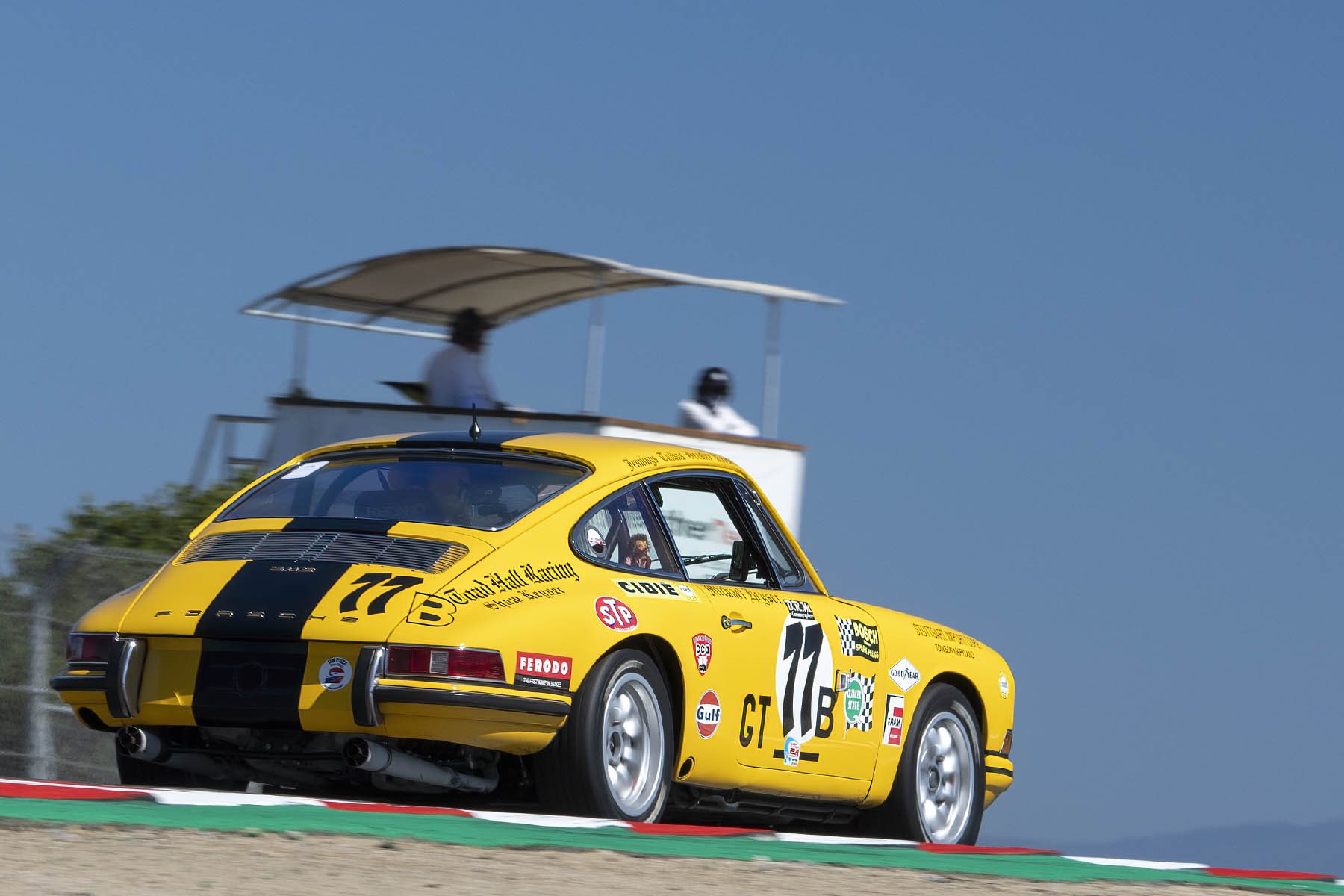
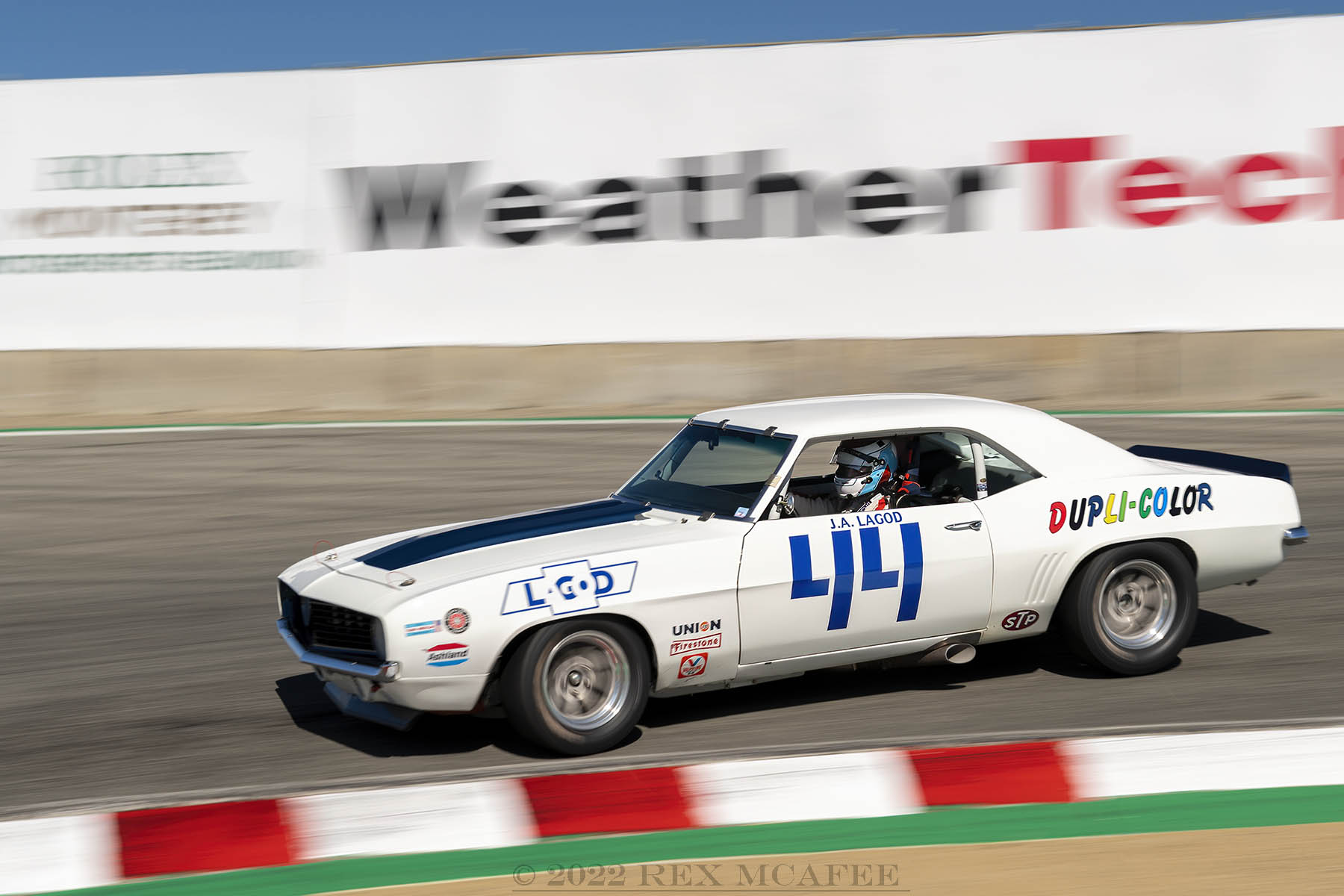
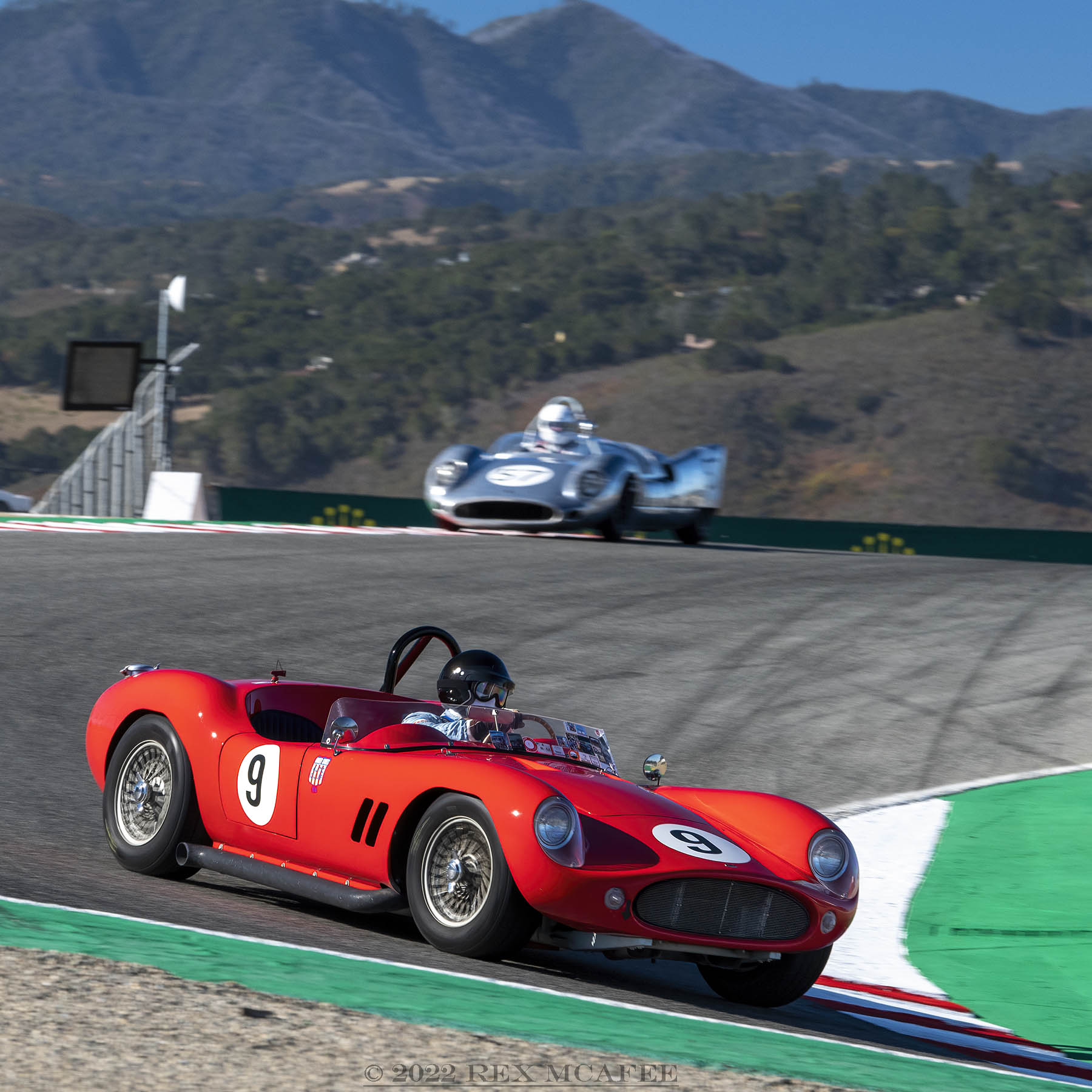
Weathertech Raceway Laguna Seca Raceway had 13 groups of cars running this event. Starting with 1923-1955 The Early Years cars to 1981 – 2005 Le Mans Prototypes and GT1 cars. If you’re turned on by ground-shaking, loud, fast cars, how about the Group 12 Historic Vintage Trans-Am group. Or if your thing is the flame-throwing Porsches, there is Group 8 for 1972-1982 Le Mans cars. On the other end of the spectrum, we have Group 1 1968-1963 Formula Junior; buzzy but quick. Further up the open-wheel ladder is Group 13 1966-1985 Formula One. Very fast with the great sound of high revving V8s and even a Ferrari flat-12 in the field.
Enjoy the following gallery. I plan on having a follow-up 2022 RMMR posting in late September or early October with more images. If you don’t see a car or driver you’re interested in, let us know, and I’ll see if I have a picture to include in the future posting. Hope to hear from you.
Executive chef Fabio Sangiovanni has created a new Mediterranean menu for the Six Senses Rome’s Notos Rooftop.
A fresh cocktail and mocktail list features fresh-squeezed juices and herbs grown on site.
The hotel is also introducing a new live music series to its rooftop, inspired by Six Senses Ibiza.
Sure, Rome is hot and busy in the summer, but there’s no season nor crowd-drawing event that could dampen my love for the Eternal City. There are, however, hotels that make a real difference. (Trust me, I lived in Rome, visit at least once a year, and have the same go-to tour guide as Jessica Alba.)
After our typical days out exploring and eating all the pasta carbonara and amatriciana we could find during a heatwave last July (it’s never too hot for pasta; go ahead and try to fight me on that), my husband and I were thrilled to duck into the Six Senses Rome and head straight to the spa for a cold plunge each afternoon. As Rome-based T+L writer Laura Itzkowitz wrote, with its circuit of Roman baths at varying temperatures plus a steam room, rain showers, saunas, and a traditional hamam, there’s no spa like it in the Italian city’s historic center. In fact, we spent so much time down there, it took a little bit of convincing to get us up to the rooftop.
Panoramic views of central Rome from NOTOS rooftop.
Six Senses Rome
Having opened in spring 2023, the hotel was just over a year old, and Notos Rooftop was still evolving. Even then, it was the ideal place for an Aperol spritz at aperitivo time, its perimeter lined with fresh herbs and plants, with a warm breeze, and the charmingly historic skyline view Rome is known for. This is Six Senses’ first urban hotel, and the brand captures that center-city rooftop vibe perfectly—making you feel both privileged to be in the heart of it all, and relieved that you’re relaxing on a cloud above the chaos.
But this spring and summer, as even more visitors flock to Rome for the Jubilee celebrations, Notos is coming into its own. New executive chef Fabio Sangiovanni, who comes to Six Senses from the Michelin-starred Aroma restaurant at Hotel Palazzo Manfredi (the iconic hotel overlooking the Colosseum), has created a brand-new menu featuring seasonal Mediterranean dishes and refreshing cocktails and mocktails.
A cocktail with a lavender garnish from NOTOS.
Six Senses Rome
Picture this: You’re watching the sun set over the King Victor Emmanuel II Monument with a plate of gnocchi and vongole veraci (perfectly tiny but meaty clams) in front of you, your drink made with the fresh juice of the day. Live music is playing, international artists rotating as part of a series inspired by the Six Senses Ibiza.
In June, Six Senses Kyoto will take over for a week, with other chefs from around the world to follow, each lending Sangiovanni their unique flavor of expertise, and making your trip to Rome that much more memorable.
On August 2, 2027, a rare total solar eclipse will captivate the world, lasting over six minutes—longer than any land-based eclipse since 1991 and not to be repeated until 2114.
Egypt, with its near-guaranteed clear skies and iconic historical sites, is the prime destination to witness this celestial spectacle. Here’s why you should plan your eclipse adventure in Egypt and how to make it unforgettable.
Here’s an overview:
The solar eclipse 2017
What Makes the 2027 Total Solar Eclipse Special?
Total Solar Eclipse 2027: A Celestial Journey
A total solar eclipse occurs when the Moon perfectly aligns between Earth and the Sun, casting a shadow that darkens the day for a few minutes. Despite the Sun being 400 times larger than the Moon, their distances from Earth make them appear the same size, creating a stunning visual effect. During totality, the Sun’s corona—a glowing halo—becomes visible, offering a breathtaking sight that’s unlike anything else.
This 2027 eclipse is exceptional for its duration and visibility. The Moon’s shadow will cross ten countries, but Egypt stands out for its clear weather and long totality period, making it a dream destination for eclipse chasers.
Where Can You See the Eclipse?
The path of totality (where the Sun will be completely eclipsed) is relatively narrow, spanning parts of three continents. On August 2, 2027, the Moon’s shadow will sweep across ten countries: Spain, Morocco, Algeria, Tunisia, Libya, Egypt, Sudan, Saudi Arabia, Yemen, and Somalia.
But if you’re chasing clear skies and the longest view possible, Egypt is your best bet.
Southern Spain & Gibraltar, Accessible European Viewing: The Andalusia region of southern Spain (including cities like Cádiz, Málaga, and the Gibraltar area) lies near the northern edge of the totality path. Totality will occur in the morning (around 10:45 AM CEST) with durations ranging from about 2 to 4 1⁄2 minutes, depending on how far south you go.Spain offers good infrastructure and easy travel, making it ideal for European travelers. However, coastal areas near the Strait of Gibraltar can have higher cloud chances.
Jeddah, Saudi Arabia, Long on the Red Sea Coast: Southwestern Saudi Arabia also lies in the path, with the major city of Jeddah experiencing about 6 minutes 2 seconds of totality in the mid-afternoon. This gives eclipse chasers a relatively urban location with airports, hotels, and amenities. Saudi Arabia in August is extremely hot, but Jeddah’s coastal location might offer slightly humid conditions rather than the dry furnace of the Sahara.
Other locations along the eclipse path include northern Morocco (e.g. parts of Morocco get around 4–5 minutes of totality), northern Algeria (~5 minutes in Oran), and Yemen (about 2 minutes near Sana’a).
Wherever you choose, ensure your viewing spot is within the defined path of totality – even a few miles outside it, you will only see a partial eclipse.
Solar Eclipse – The moon in front of the sun.
Top Spots in Egypt for Eclipse Viewing
Egypt combines ideal viewing conditions with cultural richness. Here are the best places to watch the 2027 eclipse:
Luxor — Right in the Heart of the Action
Luxor, an ancient city along the Nile, offers 6 minutes of totality around 1:00 p.m. Imagine standing among pharaonic temples as the sky darkens and the temperature drops—a surreal moment. August heat can reach 43°C (109°F), so plan for hydration and shade.
Total Solar Eclipse 2027: Why Egypt Is the Ultimate Viewing Spot
Siwa Oasis: A Desert Escape
For a serene experience, Siwa Oasis delivers over 5 minutes of totality in a remote desert setting. Its tranquil vibe and starry skies make it perfect for those seeking solitude.
Edfu and Kom Ombo: Temple Serenity
These lesser-visited Nile-side temples offer 5+ minutes of totality with fewer crowds. Pair your visit with a Dahabiya cruise, a traditional sailing boat, for a unique eclipse experience floating under the Moon’s shadow.
Why Egypt Is Perfect for Eclipse Chasers
Egypt’s advantages make it unbeatable for the 2027 eclipse:
Clear Skies: August weather in Egypt is reliably sunny, minimizing cloud risks.
Historic Sites: View the eclipse amidst ancient wonders like Luxor or Edfu.
Unique Experiences: Watch from a Nile cruise, desert oasis, or temple grounds.
Tourism Infrastructure: With 15 million visitors in 2024, Egypt is well-equipped for travelers.
Experience unforgettable travel with our dedicated team in Cairo, Hurghada, Luxor, and Aswan.
We are passionate about every detail, providing personalized itinerary planning and on-the-ground support. Trust us as your reliable travel companions to make your journey amazing!
Tips for Planning Your Eclipse Trip to Egypt
Careful advance planning is crucial. Eclipse events tend to draw huge crowds to certain areas, which impacts lodging, transportation, and local resources. Use these tips to ensure a smooth trip:
Book Accommodation and Transport Well in Advance: Start planning your trip early, hotels and flights for popular eclipse spots can sell out many months (even years) ahead of time.
Pack Appropriately: Egypt in August can be hot. Lightweight clothing, sunscreen.
Understand the Culture: Familiarize yourself with local customs and traditions to enhance your experience.
Choose a Reputable Tour Operator: Ensure your trip is organized by professionals.
Eclipse Glasses: Certified glasses to protect your eyes from harmful UV rays. Never look directly at the Sun without proper protection.
Solar Filters for Cameras, Telescopes and Binoculars: Essential for capturing detailed images safely.
ISO-Certified Eclipse Glasses: Never view the Sun without proper solar filters.
Protective Clothing & Sun Care: Eclipse day often means hours outside under a summer sun, so bring sunscreen for your body. Use broad-spectrum sunscreen (SPF 30+), wear a wide-brimmed hat and UV-blocking sunglasses, and wear comfortable shoes, especially if you need to walk or stand on rough ground.
Seating: Plan for how you’ll stay comfortable during the hours waiting for the eclipse. Portable camp chairs or a ground mat to sit on will make the wait.
Hydration and Snacks: Pack plenty of drinking water (at least a few liters per person) and keep it accessible. Also, bring snacks or light meals, high-energy foods, fruits, or electrolyte drinks to stay nourished and hydrated throughout the day.
Expect Heavy Crowds and Traffic: Be prepared for unprecedented traffic near eclipse totality regions. In the 2017 American eclipse, highways turned into parking lots. A post-eclipse report found that some areas experienced traffic jams lasting 10+ hours as everyone left at once.
Documents and International Travel Must-Haves:
If traveling abroad, ensure you have all necessary documents well in advance:
Passport (valid for at least 6 months beyond your trip end date).
Visas for the countries you’ll visit or transit through. Check entry requirements for each country on your itinerary.
Travel Insurance: Strongly consider purchasing travel insurance that covers trip cancellation (in case bad weather foils your plans or other unexpected events).
Cash and Cards: Carry some local currency for each country (small bills for fuel or food in remote towns that may not accept cards).
Camera with glare protection for the solar eclipse.
Final Thoughts
The total solar eclipse on August 2, 2027, is a once-in-a-lifetime event, and Egypt offers the perfect blend of clear skies, historic grandeur, and unforgettable experiences. Whether you’re watching from Luxor’s ancient temples, Siwa’s desert oasis, or a Nile cruise, this celestial event will leave you in awe.
Start planning now to secure your spot for this extraordinary adventure. Get in touch with us through the form above.
With offices in Cairo, Hurghada, Luxor, and Aswan, our dedicated team is committed to enhancing your travel experience. We prioritize the details and are passionate about assisting you, from planning your itinerary to providing support during your adventures. Let us be there for you every step of the way!
With offices in Cairo, Hurghada, Luxor, and Aswan, our dedicated team is committed to enhancing your travel experience. We prioritize the details and are passionate about assisting you, from planning your itinerary to providing support during your adventures. Let us be there for you every step of the way!
During Milan Design Week 2025, some of fashion’s biggest brands transformed the city into their architectural playground, showcasing curated home collections and surprising activations — from a vintage train pop-up to designer gelato stops.
FENDI
Fendi Casa’s 2025 collection. Image: Fendi Casa.
Unveiled in its flagship store in Piazza della Scala, Fendi Casa’s Milan Design Week 2025 collection honours the brand’s 100th anniversary by fusing innovation and heritage. Fendi is no stranger to interiors, having built the Fendi Casa brand 17 years ago when it debuted at Design Miami. As one may be aware, Fendi does luxury fashion, but Fendi Casa produces luxury furniture — a full-fledged interior collection comprising seating systems, sofas, dining tables and more.
Efo coffee table by Peter Mabeo. Image: Fendi Casa.Stefano Gallizioli’s Twist chair. Image: Fendi Casa.
At Milan Design Week 2025, the brand featured British designer Lewis Kemmenoe, the showcase presented softer, organic designs and opulent, glittering items, presenting a duality of clashing aesthetics.
Ceriani Szostak’s Later modular sofa. Image: Fendi Casa.
Highlights were Ceriani Szostak’s Later modular sofa, Stefano Gallizioli’s Twist chair and the Fendi Cover sofa, which could be customised. Elsewhere, the house’s iconic “FF” logo gets reimagined in furniture: the Efo coffee table by Peter Mabeo softens the motif into sculptural curves, while the accompanying Efo side table and cabinet (in yellow ceramic, wood, or both) play with scale and material tension.
Everyone is talking about Jil Sander — not just because of Simone Bellotti’s recent appointment as creative director. This week marks a different kind of return: the woman herself. A decade after stepping away from her eponymous label (for the third and presumably final time), Jil Sander reemerges — not on a runway, but at Milan Design Week, in collaboration with storied German furniture maker Thonet. The project reimagines two Bauhaus design icons: the B 97 side table (1933) and Marcel Breuer’s S 64 chair (1929), distilled into two new lines — Serious and Nordic.
Glossy metal, dark Viennese caning, and Italian bull leather in Bordeaux, black and olive all scream sexiness. Nordic is the stylish equivalent, including nickel frames, white-painted timber, and light leather. Though minor, the modifications are clearly hers. A reminder that Jil Sander’s restraint is still relevant off the catwalk.
Longchamp
This isn’t the first time the Parisian house has used Pierre Renart’s skills (they started working together in 2021 with the now-iconic Wave coffee table). Still, it is the first to incorporate Longchamp’s signature leather into the mix, possibly the most striking. Pierre Renart’s most recent collaboration with Longchamp makes two of the most substantial materials in design feel weightless.
The collection includes the Wave banquette and a set of eight Ruban chaises — all crafted from American walnut and wrapped in supple Longchamp cowhide. Sinuous and fluid, they bend like ribbons, defying the rigidity of their materials. Mixed materials have been having a moment, but bringing this kind of lightness to leather? That is something else entirely — catwalk, coffee table or otherwise.
HERMES
Paddock basket designed by Tomás Alonso. Image: Maxime_Tetard.Pivot D’Hermès table designed by Tomás Alonso. Image: Studio des Fleurs.
This year, Hermès moved purposefully and elegantly to the left when others zagged right. At La Pelota, a pristine post-war swimming pool transformed into a cathedral of light, suspended vitrines (nearer to altars than display cases) hold what the brand calls “perfect objects.” There are mouth-blown glass tables and coloured lights that cast soft halos, but what really stands out is what isn’t there: spectacle.
Casaque glasses designed by Studio Hermès. Image: Maxime_Tetard.
Hermès doesn’t take on a project unless it can master it, which is precisely why the French house has produced some of Milan Design Week’s most subtly radical moments since it first began. Designed by Charlotte Macaux Perelman and Alexis Fabry, the collection leans into suggestion, not just objects but also the aura they leave behind.
D&G Casa
D&G Casa collection for 2025. Image: Paola Pansini.
There aren’t many maximalist Mediterranean channels like Dolce & Gabbana, and the brand’s interiors division, D&G Casa, fully realises the dream. Live, laugh, la dolce vita. With glazed porcelain tableware and matching linens, its most recent offering, Verde Maiolica, embodies southern Italy’s vibrantly green, citrus-infused essence in a riot of green. The D&G Casa flagship on Corso Venezia 7 has everything on display, because for Dolce, more is not more — it is simply the minimum.
Saint Laurent
La Banquette de la Résidence de l’Ambassadeur du Japon à Paris (1967) designed by Charlotte Perriand for Saint Laurent. Image: Saint Laurent.
Saint Laurent unveiled four previously unseen pieces of furniture as a tribute to 20th-century design pioneer Charlotte Perriand. Under Anthony Vaccarello’s artistic guidance and in partnership with the Perriand archive, the works, which were first conceptualised between 1943 and 1967, were recreated from sketches and prototypes. The partnership pays homage to the house’s history while revitalising its design. This is an appropriate cross-temporal conversation because Yves Saint Laurent personally appreciated and collected Perriand’s work. The focal point is the sculptured five-seat sofa, La Banquette de la Résidence de l’Ambassadeur du Japon à Paris (1967), which was first created for the Japanese ambassador’s Paris apartment. It is a practical, elegant, subtly radical example of Perriand’s East-meets-West concept.
Le Fauteuil Visiteur Indochine (1943) armchairs. Image: Saint Laurent.
La Bibliothèque Rio de Janeiro (1962), a rosewood bookcase with sliding cane doors that draws inspiration from Brazilian shading techniques, and Le Fauteuil Visiteur Indochine (1943), a once-lost armchair from her time in Vietnam that has been reimagined with a tubular steel frame, rosewood seat, and traditional Thai cushion, are also on display and available in extremely limited editions. Ten piled layers of rosewood and cherrywood form a tabletop of concentric circles in the fourth, La Table Mille-Feuilles (1963), which was long thought to be highly complicated to build but has now been realised — a brilliant display of patience and accuracy.
Louis Vuitton
Louis Vuitton home collection presented at Milan Design Week 2025. Image: Louis Vuitton.
In a major departure from its well-known Objets Nomades line, Louis Vuitton debuted its first Home Collections at the storied Palazzo Serbelloni at Milan Design Week 2025. The brand’s commitment to fine craftsmanship and innovative design was reflected in the exhibition’s five separate lines: Objets Nomades, Signature, Games, Decoration and Art de la Table.
The renowned designers Patricia Urquiola, India Mahdavi and the Campana Brothers created 11 new pieces for Objets Nomades, including the “Disco Cocoon” chair covered in 10,000 mirrored tiles. Using materials like leather and marquetry, Patrick Jouin and Cristián Mohaded contributed to the Signature collection, which recreated Louis Vuitton’s famous codes.
The Valse lamp designed by Atelier Biagetti. Image: Louis Vuitton.
The Games line introduced playful luxury items, such as a pinball machine designed by Pharrell Williams. The Art de la Table and Decoration lines drew inspiration from artist Fortunato Depero and featured vibrant textiles and tableware. A highlight was the “Cabinet of Curiosities” by Marc Newson, a monogrammed trunk housing 19 leather-lined compartments. This comprehensive collection underscores Louis Vuitton’s commitment to blending heritage with contemporary living, offering a holistic approach to luxury home design.
Armani Casa
Armani Casa at Milan Design Week presented Oriental Inks collection of beds, sofas and armchairs sporting hand-painted and hand-crafted embroidery by specialist de Gournay. Image: Armani Casa.
Unveiled in Milan’s Salone del Mobile, the Armani/Casa 2025 collection is a brilliant blend of Italian workmanship and international inspiration. The collection, “Echoes from the World,” turns Giorgio Armani’s Palazzo Orsini into a cinematic tour of five culturally diverse regions: Europe, China, Japan, Morocco and Arabia. Each room features custom items inspired by regional style, such as the China room’s Vivace table with its silver-leaf top and bamboo-like legs, and the Japan room’s Virtù cabinet with its katana-like handles.
The collection, which uses mother-of-pearl, velvet and lacquered glass, highlights handcrafted skills. Notable pieces include the Trocadero table with its platinum-lacquered waves and plexiglass legs, and the Morfeo bed with its geometric designs influenced by Berber. This immersive exhibition not only highlights Armani’s design philosophy but also offers a personal glimpse into his travels, with curated artefacts from his own collection enhancing the narrative.
Held once a year on the beautiful Monterey Peninsula, “Holy Week,” as referred to by some, gives car enthusiasts the world over a central meeting place to indulge, dream and participate in world-renowned car events. One of my favorite gatherings from this “automotive montage” is the Monterey Pre-Reunion at Weathertech Raceway, Laguna Seca.
Held one week before the big Rolex Monterey Motorsports Reunion (aka Rolex Reunion), it’s the best-kept secret for vintage race enthusiasts. Forget crowds, traffic, and having to park in some distant field. Instead, embrace two days of excellent vintage racing where it’s easy to walk around, inspect cars in the paddock and choose your favorite viewing spot at the Corkscrew.
This year’s tribute for the Rolex Monterey Motorsports Reunion is the 100th anniversary of the 24 Hours of Le Mans. For sports car racers worldwide, the sound of those two words “Le Mans” conjures up myriad thoughts; endurance, glory, heartache, danger, and prestige, to identify a few.
The world’s oldest active endurance racing event still takes place in part on public roads, just as it did back in 1923, and has become part of motorsport’s triple crown, joining the Indy 500 and Monaco Grand Prix.
For the first time, the Rolex Reunion honors this endurance juggernaut by presenting a collection of significant Le Mans racers, many of which were overall winners.
While the Le Mans Legends Heritage Display was not ready yet during the Pre Reunion weekend, it is sure to amaze as it will be the most extensive collection of Le Mans cars ever assembled in America. Overall Le Mans winners to be displayed include:
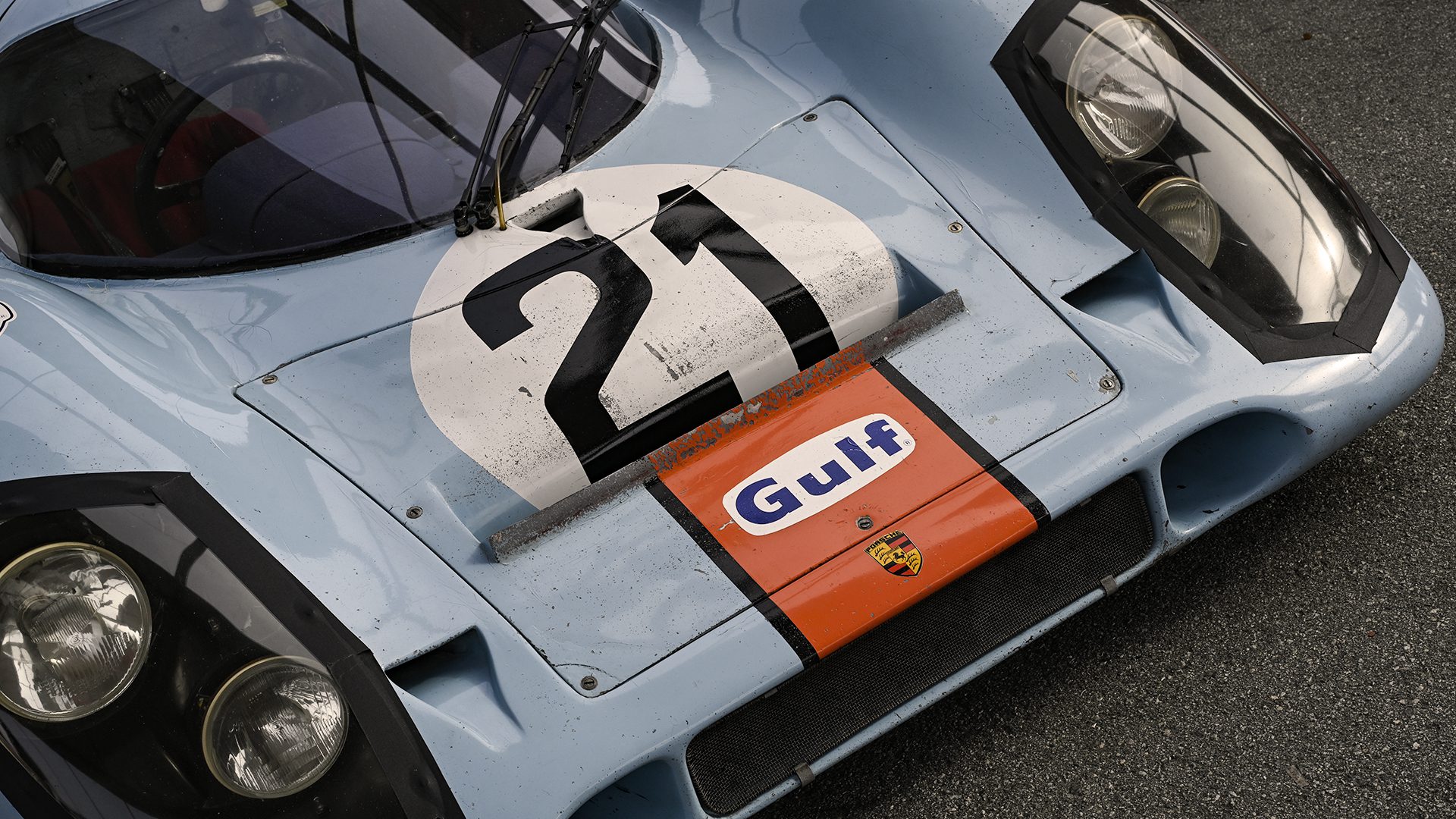
On track during the Pre Reunion, there was no shortage of historic cars to honor the Le Mans 24 centennial. Two distinct run groups were formed to honor the Le Mans celebration; Group 5 for 1956 to 1971 cars and Group 6 for 1972 to 1982 cars. Starting with Group 5, my favorite has to be the 1971 Porsche 908/3 driven by hot-shoe Gunnar Jeannette.
Perfect for the relatively short Laguna Seca course, Gunnar obliterated the field during Saturday’s practice. Other highlights include a 1973 Ferrari 365 GTB4 “Daytona” currently raced by Chip Connor but originally ran in the 1974 Le Mans 24, a 1965 Ford GT40 with Robert Kauffman behind the wheel, and a 1961 Ferrari 250 GT that the factory tested at Le Mans that same year; where does one stop?
Regarding Group 6 for Le Mans Cars from 1972 to 1982, it might be wise first to look at the 1970s and 1980s as a whole; in a word, PORSCHE. From the all-conquering 12-cylinder 917 to the open cockpit 936, followed by the 911 based 935, and finally, the 956/962 turbos, Porsche won the 24 hours of Le Mans 12 times during those two decades. Hence, it’s no surprise that this 1970s run group has a lot of Porsches.
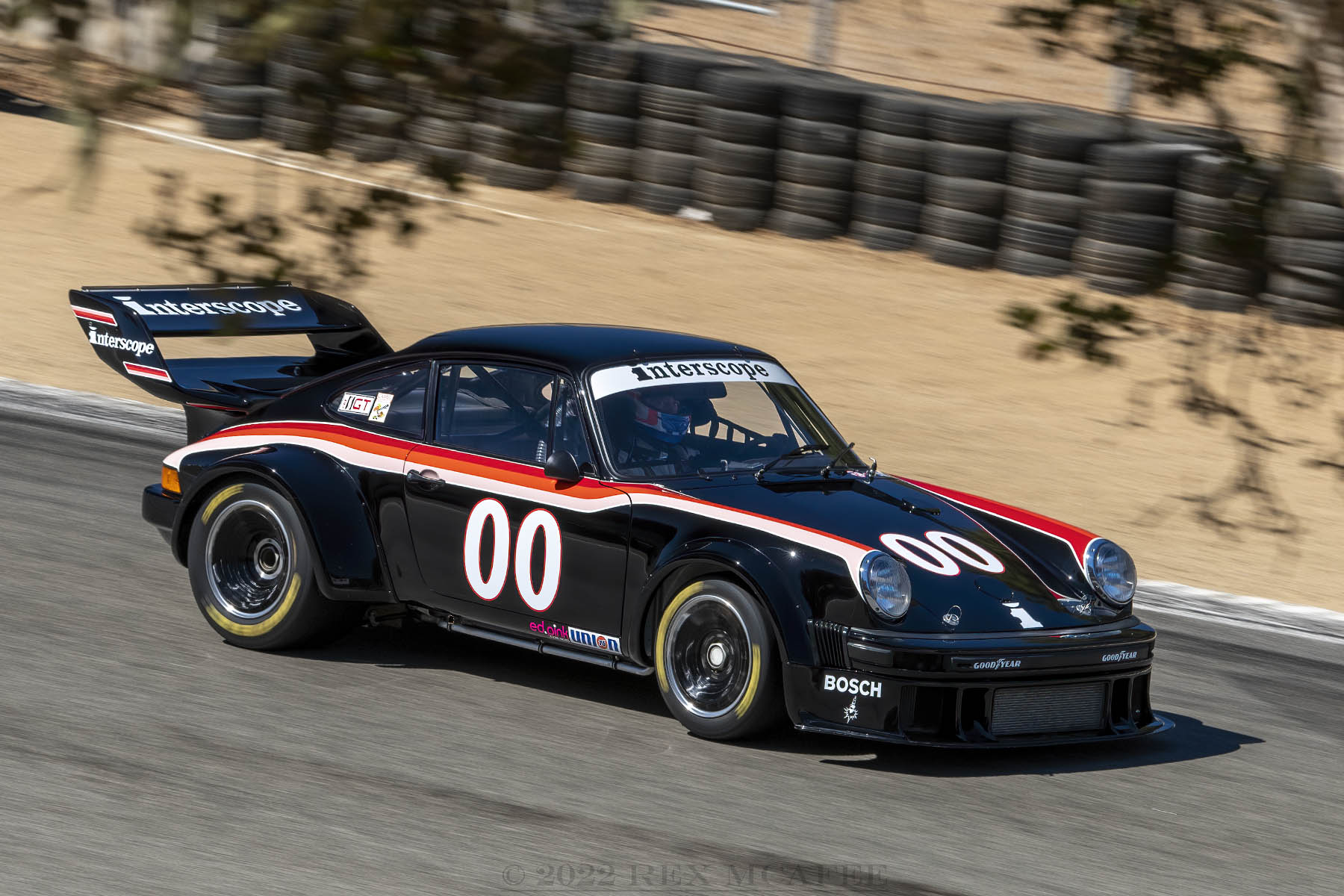
Being a young teen during the 1980s watching IMSA races at Laguna Seca, there was something so alluring about the black Interscope Porsches piloted by Danny Ongais and Ted Field. Hence it’s no surprise I was in heaven watching Patrick Long pilot the ex-Interscope Porsche 934.5 while its owner Tim Pappas drove the ex-Interscope Porsche 935 (placing 3rd in both races on Sunday). Get ready for both drivers to turn up the boost during the big Rolex Reunion.
Several other racing groups returned from last year’s Rolex Reunion. Most recognizable for many fans are the “American Iron” Trans-Am cars, comprised mostly of 1960’s Ford Mustangs and Chevrolet Camaros. Throw in a few other outcasts like an AMC Javelin and a Pontiac GTO, and you can’t deny that this is one of the most entertaining groups to watch.
Nelson Calle from West Palm Beach, FL, took home the 1st place honors in both races on Sunday, proving his 1968 Chevy Camaro was the undisputable Top Dog. While the morning’s Race 1 saw John Hildebrand (1964 Pontiac) and Jim Hague (1972 AMC) take second and third, respectively, the afternoon’s Race 2 would see 2nd and 3rd earned by Ken Adams in his 1969 Ford Boss 302 Mustang, and Chip Fudge in his 1970 Camaro. Good stuff all around, and don’t forget to bring your earplugs!
The intricately engineered Formula 1 cars built in Europe and the UK are on the opposite end of the scale. To keep costs manageable and racing close, most of these cars are powered by a Ford Cosworth V8, the mainstay powerplant in F1 racing during the 1970s. Chassis manufacturers varied widely from March, Lotus, Arrows, Williams, and Brabham.
Forget traction control and carbon ceramic brakes; this is F1 racing from the glorious 1970s and early 1980s, where the driver’s skill (and courage) mattered more than ever. Both Race 1 and 2 on Sunday were won by Bud Moeller behind the wheel of his 1982 Williams FW08 and Wade Carter earning second (1982 Arrows A-4). Third place in Race 1 went to Ed Nigro in a 1961 Lotus 20. In Race 2, 3rd went to Steve Romak with his 1985 Tyrrell 12 3.
Regardless of which run group is your favorite, everyone agrees that the sights, sounds, and smells of Cosworth-powered F1 cars are something you must experience to appreciate.
As to the history of the “Pre Reunion,” I went straight to the man who built modern vintage racing in America, Steve Earle. He graciously took the time to explain how the first Pre-Reunion was a “media day” held on the preceding Wednesday to what was then called the Historics (that he founded in 1974).
Local newspapers and television stations from Monterey to San Francisco were invited to film a makeshift group of entrants who would volunteer to lap the then 1.9-mile track. This filming gave the media enough time to edit and produce promotional spots on TV to promote the weekend’s racing.
As the Historics grew, Steve realized many participants came from afar and didn’t have much experience (if any) at Laguna Seca Raceway. Seeing an opportunity for drivers to become comfortable with the course, Steve established the first “Pre Historics” weekend in 1987. The media could still use this private event to capture their promotional material, and drivers now had an entire weekend to sort out their cars and learn the track.
As Steve commented, the anxiety levels were much lower during the Pre Historics, which helped promote camaraderie among the drivers, a top priority for Steve.
Fast forward to 2022, and while TV stations and newspapers are no longer developing film for promotional spots, the Monterey Pre Reunion still fulfills its purpose for both the media, drivers, and fans alike.
As for what happened to event founder Steve Earle, he currently works with The Velocity Invitational, a world-class vintage racing event in October at Weathertech Raceway, and continues to embrace the mantra “Cars belong on the track, not the lawn.” Hope to see you next year at Monterey’s best-kept secret.
The first city in Taiwan and the historic capital of the country, Tainan, is one of the southernmost cities that you have to visit while exploring Taiwan. It honestly gives Taipei (the new capital) a run for its money when it comes to cities to visit while in Taiwan.
For me, what makes Tainan extra sweet is its food culture. Not only does it have a heap of night markets, it also has a vast mix of stalls and restaurants that make this city the foodie capital of Taiwan.
So, to help you get the most out of your time in Taiwan, I’m sharing our top things to do in Tainan when you visit the city. It is one of Taiwan’s best cities to visit whilst exploring the country.
1.) Anping Market
Not too far from Anping Fort, the Anping Market area (Google Maps link) is filled with hawker-style stores, foodie spots and heaps of independent stores that line the streets here.
Give yourself around 2-3 hours to fully explore the area. Although it isn’t huge, you’ll end up stopping at so many different spots along the way in Anping Market and even join some local classes.
When we visited, we could try our hand at making honeycomb sugar biscuits within the market itself. You pay a small fee (around 60-100 Taiwan dollars) and you’ll make your very own biscuits on the streetside. We loved it.
Also, don’t forget that Tainan is a sweet city. What I mean by this is that the city loves sweet treats. It’s well known in Taiwan, and Tainan truly embraces its love of sweet treats.
Make sure to try brown sugar cake, pineapple cake, and Taiwanese bubble tea, which is one of the best in the world—well, in my opinion, at least.
Just a few hundred metres from Anping Market, Anping Fort is a historical spot within Tainan that is well worth visiting for a 45-minute trip whilst in the city. Once here, you’ll explore the historic fort that dates back centuries. Not only that, you’ll get to climb the viewing platform for views all across Tainan.
There’s a small cost for entry, but it’s well worth it when looking for the best things to do in Taian.
Afterwards, don’t forget to book this Tainan tea ceremony that lasts around 90 minutes. It’s a great way to delve into Taiwan’s rich tea heritage, and it’s such a delicious experience.
Noting is not overly far in Tainan, especially Taijiang National Park. It’s a short transfer (about 15 minutes) from the centre of Tainan, and you’ll get to explore the more rural areas just shy of the city limits.
Once here, make sure to pop over to the Sicao Green Tunnel (Google Maps link), which takes you through some of the mangrove waterways here in Taiwan. Visits take around 25 minutes, and there is a small fee for boarding the boat and you can book tours here. Tours aren’t in English, and they don’t have translation tools, but you can still enjoy the green tunnel, which is easy to include on a trip to Tainan.
Afterwards, you can easily pop into the Sicao Dazhong Temple (四草大眾廟) that’s around a 90-second walk from the Sicao Green Tunnel Entrance. It’s one of the most visually beautiful temples in all of Taiwan and is one spot you can’t miss while in the wider Tainan area of Taiwan.
Probably one of my favourite speakeasy bars in Taiwan, the Chicken Pharmacy Bar (Google Maps link) is located in central Tainan and is well worth visiting during a visit to the city.
Now, there are around eight tables inside, so expect it to be cosy, but this pharmacy-style speakeasy is well worth visiting for its famous cocktails. Ask them about their Negroni drinks—they are so good.
Night markets in Taiwan are a thing, no more so than in Tainan (the foodie capital of Taiwan). If you love markets, one spot you need to visit is the YongLe Night Market (Google Maps link). There are literally hundreds of stalls, shops and daily-run businesses that make this area so special.
Now, I would say visiting in the early evening is essential. This is when YongLe Night Market truly comes alive. Make sure to try the mango shaved ice and the grilled pork you’ll find in many of the market spots here in Tainan.
Oh, and make sure to take cash with you. Few of the stalls take cars, and they really prefer small notes ($100 or lower).
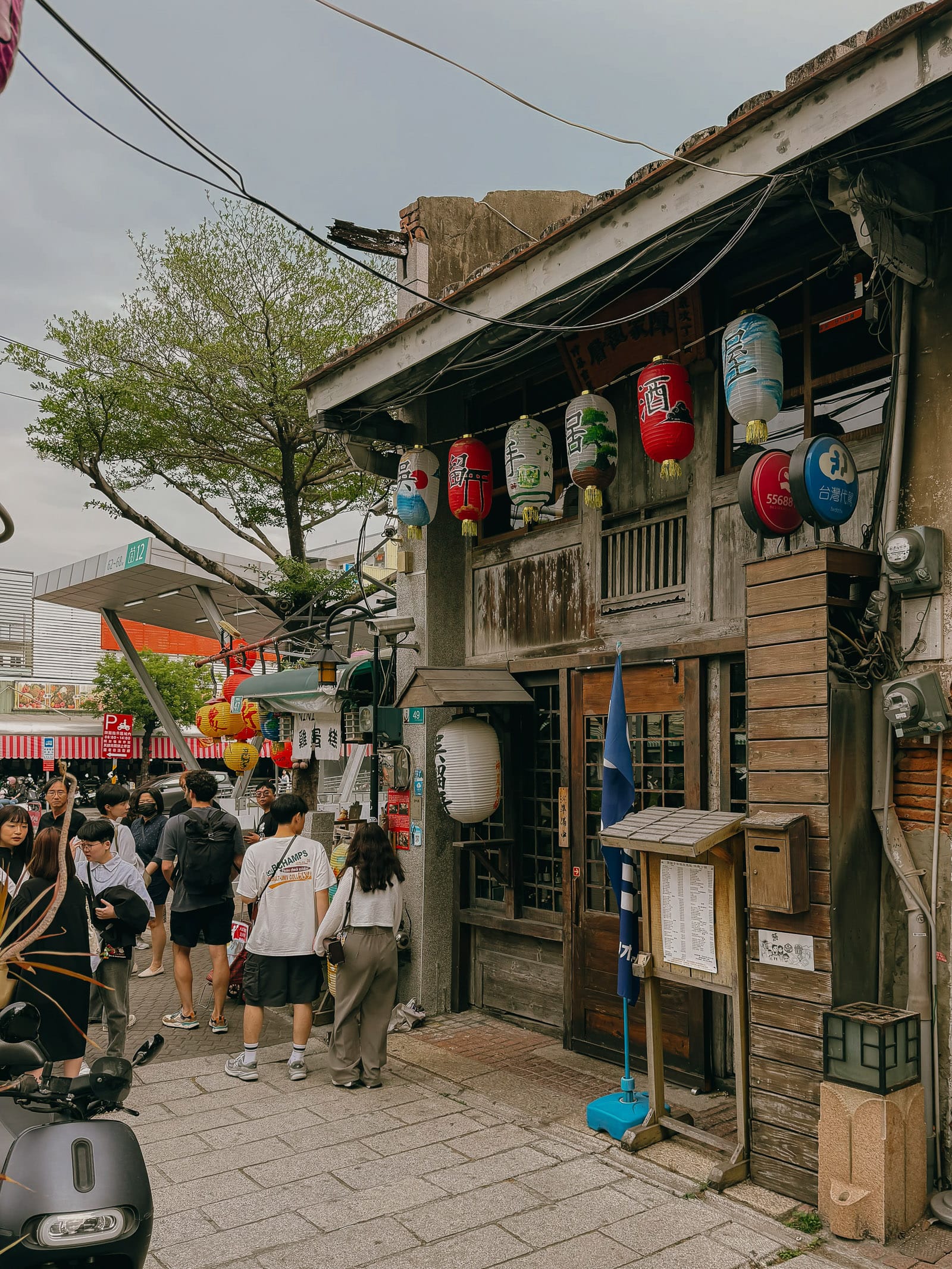
Not only that, you have a range of cool little vintage stores and cocktail spots, like 台南-秘氏咖啡 (Google Maps link), which are just stunning. Just remember, these are on the 2nd floor (so, one floor up from the ground).
On the same floor, you’ve then got a heap of small independent stores, bars and barbers that are so incredible to visit. We loved it here and you’d have no clue they existed if you hadn’t ventured higher than ground level.
They make some of the best coffee cocktails in all of Tainan.
Also, don’t forget about Tainan Garden Night Market (Google Maps link). This is another one of our favourite night markets, and you must visit it in Tainan. I’d go as far as to say it’s one of my favourites in Taiwan. Give yourself at least 2 hours to eat, pursue and explore.
We absolutely love all the small independent bars and cafes within Tainan, especially Lola (Google Maps link), an intimate cash-only bar that serves delicious cocktails. In the evening, Lala turns into an intimate speakeasy bar hidden behind the living room of the budding.
Head inside, grab a drink, and enjoy the incredible atmosphere here.
Anping Old Street (Google Maps link) is a spot to visit when exploring Tainan. It’s one of the best things to do in Tainan if you’ve already visited Anping Fort, the market, and other streets in the area.
As you meander the small streets, make sure to stop by 安平陶坊(延平店) 劍獅學堂 (Google Maps link). Here, you’ll find a pottery painting and making spot that allows you to perfect your skills in all things pottery. It’s so much fun, and we spent around 60 minutes designing our pottery pieces here.
Popular for a reason! Chou’s Shrimp Rolls (Google Maps link) is an unfussy spot that’s a great lunch spot. There’s nothing hugely fancy about Chou’s, but they are well-renowned for their yummy shrimp rolls and congee.
We spent around 45 minutes at lunchtime there and loved it. Again, it’s nothing fancy, but the food is really good and nationally renowned.
Probably one of my favourite streets to explore in Tainan, Shennong Street (and the surrounding alleys) is a great place to soak up the foodie capital of Taiwan and delve into the dishes and drinks that make this country so special.
As you wander down Shennong Street (and nearby alleys), you’ll come across many independent businesses in Tainan that focus on quality dishes and drinks.
We loved ‘We Drink Beer Company’ (Google Maps link), which focuses on local brews from the wider Tainan area. The space is also so beautiful. It might be small, but it doesn’t matter when a space is this design-led.
Afterwards, continue strolling the street and stopping by the local cafes and kawaii-style stores that make this area unique. We loved it.
Oh, and don’t forget to pop into Tainan Confucius Temple (Google Maps link), whilst you’re in downtown Tainan. It’s incredible to see and absolutely stunning to stroll around.
I know I mentioned Lola’s, which is on Xinyi Street, before, but I genuinely think the whole of Xinyi Street (Google Maps link) deserves its very own mention. We absolutely love this area of Tainan, and it’s a great place to stop for an evening ‘crawl’ through some of Tainan’s best places to visit.
Ofcourse, like we mentioned before, you’re going to stop at Lola’s (Google Maps link) for a tipple or two. Afterwards, head over to Dano’s Wine and Pasta (Google Maps link) for their yummy fresh seafood and pasta dishes which are some of the best in all of Taiwan. It’s a small little joint but it’s totally worth a visit.
Finally, head to the 四聯境老古石集福宮 temple (Google Maps link) and explore the spiritual history of Tainan. Xinyi Street really is special, and although not the busiest, it certainly packs a punch with cool spots to visit when looking for the best things to do in Tainan. Have fun!
Afterwards, visit the nearby Anping Kaitai Tianhou Temple and explore Anping Old Street with its many little stalls.
In the arena of luxury dining experiences, the most ambitious restaurants today are pushing the boundaries of what defines fine dining. These establishments go beyond impeccable service and premium ingredients by incorporating cutting-edge technology, radical interior and exterior designs, and multi-sensory experiences that transform every meal into an unforgettable journey. For the discerning connoisseur, these visionary chefs and their revolutionary restaurants are redefining the culinary landscape, offering new and exhilarating ways to indulge the senses.
Ultraviolet by Paul Pairet (Shanghai, China)
Ultraviolet is more than just a restaurant — it is an experimental gastronomic adventure where food, technology and theatre collide. Conceived by visionary chef Paul Pairet in 1996 and opened in 2012, this groundbreaking concept strips dining down to its core, eliminating distractions to heighten the senses. Each evening, just 10 guests are transported to an undisclosed location — where a 20-course tasting menu unfolds like a cinematic journey, with every dish enhanced by custom light projections, atmospheric sounds and carefully calibrated scents. The dining room itself is a stark, windowless space — a deliberately blank slate transformed into an ever-changing landscape by high-tech visual and audio effects, creating an experience that is as much about storytelling as it is about flavour.
Ultraviolet’s innovation lies not just in its technical sophistication, but in its ability to synchronise taste, temperature and ambiance in ways that push the boundaries of traditional dining. Here, a course might arrive to the sounds of crashing waves, the cool rush of ocean air and the salty aroma of sea spray — pulling guests into a layered, immersive experience. It is an approach that, as founder Paul Pairet comments, “rejects the passive nature of most fine dining”, instead engaging every sense in a carefully choreographed symphony — making each meal a visceral, all-encompassing experience.
What makes it stand out: The first restaurant to fully integrate sound, light, scent and atmosphere into the dining experience, transforming each course into a multi-sensory narrative where the environment shifts in real-time to match the flavours on the plate.
At Foliage, Tetsuya Wakuda elevates the art of Japanese dining with a bold, cross-cultural approach, blending the precision of French technique with the seasonal philosophy of shun to create an immersive, sensory-driven experience. Inspired by the vibrant energy of Tokyo’s Shinjuku district, the restaurant captures the spirit of Golden Gai’s intimate, late-night gatherings through bold aesthetics and provocative artworks by contemporary Japanese artists like Shohei Otomo, Jun Inoue and Hiroyasu Tsuri.
The menu is guided by the Japanese philosophy of shun, celebrating the freshest seasonal ingredients at their peak, while integrating cutting-edge technology like AI-driven pairings to personalise each guest’s experience. Diners can choose from meticulously crafted à la carte dishes or immerse themselves in a 13-course omakase journey, where each piece of sushi is selected for its purity and freshness, complemented by exclusive sakes like the W for Wakuda — a bespoke Junmai Ginjo brewed in Shizuoka, Japan. The space itself is a study in contrasts — one side of the dining room opens to the theatre of the open kitchen, while the other faces a serene sushi counter framed by a majestic Japanese maple tree, offering a tranquil counterpart to the energy of the main dining area.
What makes it stand out: The combination of French precision with Japanese tradition, enhanced by AI-driven personalisation and a bold, art-infused ambiance.
Vespertine is described as a radical exploration of the boundaries between food, art, architecture and sound. Conceived by chef Jordan Kahn and architect Eric Owen Moss, this Los Angeles dining destination occupies a striking red steel structure known as “The Waffle”, where the building itself becomes a vital part of the experience. Within its angular, futuristic walls, guests are guided through a meticulously choreographed tasting menu that challenges conventional ideas about cuisine.
Dishes here are as sculptural as they are flavourful, with compositions like scallop paired with passionfruit, ají Camarillo and horseradish tuile, or a dramatic “obsidian mirror” of smoked mussel cream and salted plum. These creations are not just plated but staged, each course emerging as part of a sensory narrative that blends texture, temperature and flavour with carefully curated sounds and visuals.
Sustainability is also central to Vespertine’s philosophy. Ingredients are sourced from biodynamic, organic, or wild origins, including produce from two local farms practising regenerative agriculture. Seafood comes from indigenous fishing communities or local fishermen, while meats are grass-fed and pasture-raised. Even the restaurant’s wool carpeting, glassware and ceramic service pieces reflect this commitment to the environment, ensuring every element contributes to its overarching vision of interconnectedness.
Restaurant’s Revolutionary Element: An architectural approach to dining, where the structure itself becomes part of the meal, creating a fully immersive, multi-sensory experience that blurs the lines between art and gastronomy.
Conceived by visionary chef Albert Adrià, Enigma is a bold departure from conventional fine dining, offering a journey that aims to “transcend the typical restaurant experience”. Designed in collaboration with the acclaimed RCR Arquitectes, whose innovative work earned the Pritzker Prize in 2017, Enigma’s interior is a maze of interconnected, sculptural spaces, each crafted to evoke a sense of mystery and discovery. The architecture itself — with its fluid lines, bespoke furnishings and ambient lighting — sets the stage for an experience that is as much about the environment as it is about the cuisine.
At its core, Enigma is driven by a deep respect for seasonality, with a menu that shifts month by month in response to the freshest market offerings. This fluid approach allows the kitchen to experiment with bold techniques while remaining true to the ingredients themselves. Diners can expect a multi-course tasting menu that changes throughout the year, blending Adrià’s signature innovation with the ever-changing rhythms of nature. The wine programme mirrors this philosophy, featuring both renowned labels and lesser-known, boundary-pushing vintages that invite discovery. It is a carefully curated list that spans the spectrum from classic to avant-garde, reflecting the same spirit of experimentation found in the kitchen.
Revolutionary Element: An immersive, ever-changing culinary journey where architecture, seasonal produce and cutting-edge technique combine to create a dining experience that challenges expectations and invites guests to explore the unknown.
Located in Melbourne’s Ripponlea suburb, Attica is a testament to the culinary vision of chef Ben Shewry, whose deeply personal approach to modern Australian cuisine is rooted in the unique flavours and ingredients of the continent. Shewry’s philosophy is shaped by a profound respect for the land’s indigenous heritage, drawing on ingredients that reflect the diverse ecosystems of Australia — from coastal waters to arid deserts.
Attica’s tasting menu is a celebration of native produce, forgoing luxury staples like caviar and lobster in favour of more unconventional offerings, such as crocodile ribs and native herbs, each dish crafted with a deep sense of place. The result is a menu that tells the story of Australia’s ancient landscapes, its first peoples and the remarkable biodiversity that defines the country’s natural larder.
Shewry’s approach extends beyond the plate, rejecting the rigid formalities of traditional fine dining in favour of a more relaxed, authentic atmosphere. Guests are encouraged to eat with their hands, share stories and embrace the unexpected — a fitting ethos for a restaurant that seeks to redefine what ambitious dining can be.
Revolutionary Element: A boundary-pushing approach to Australian cuisine, driven by native ingredients, cultural storytelling and a commitment to ethical sourcing — transforming the dining experience into a deeper exploration of Australia’s culinary heritage.
Hidden within the creative pulse of Soho’s St Anne’s Court, Aulis London is an interactive dining space that serves as the test kitchen for acclaimed chef Simon Rogan’s most ambitious ideas, where cutting-edge techniques and bold flavour combinations are trialled before reaching his Michelin-starred restaurants. Guided by executive chef Oli Marlow and head chef Charlie Tayler, each multi-course tasting menu is a deeply seasonal journey, crafted from produce sourced directly from Rogan’s Lake District farm. Expect dishes that push the boundaries of British cuisine, from hyper-local fermentations to foraged ingredients that capture the wild, untamed essence of the English countryside.
With only 12 seats, this intimate, minimalist, stripped-back space is designed for absolute focus, removing the barrier between chef and guest. Here, the kitchen is more than simply a place for cooking — it is a stage for creative storytelling, where the chef’s hands become the focal point of the performance and each dish is a carefully composed narrative.
Revolutionary Element: Aulis London shatters the conventions of fine dining, offering a raw, unfiltered insight into the creative process behind one of Britain’s most influential chefs.
KOKS — under the visionary direction of Chef Poul Andrias Ziska — has earned a global reputation for its bold, hyper-local approach to Nordic cuisine. Temporarily relocated to Ilimanaq, Greenland, the restaurant offers an extreme dining experience that draws on the harsh yet beautiful landscapes of the Arctic. Set against the backdrop of ice fjords and dramatic tundra, KOKS is known for transforming raw, wild ingredients into delicate, complex dishes that capture the essence of the North Atlantic.
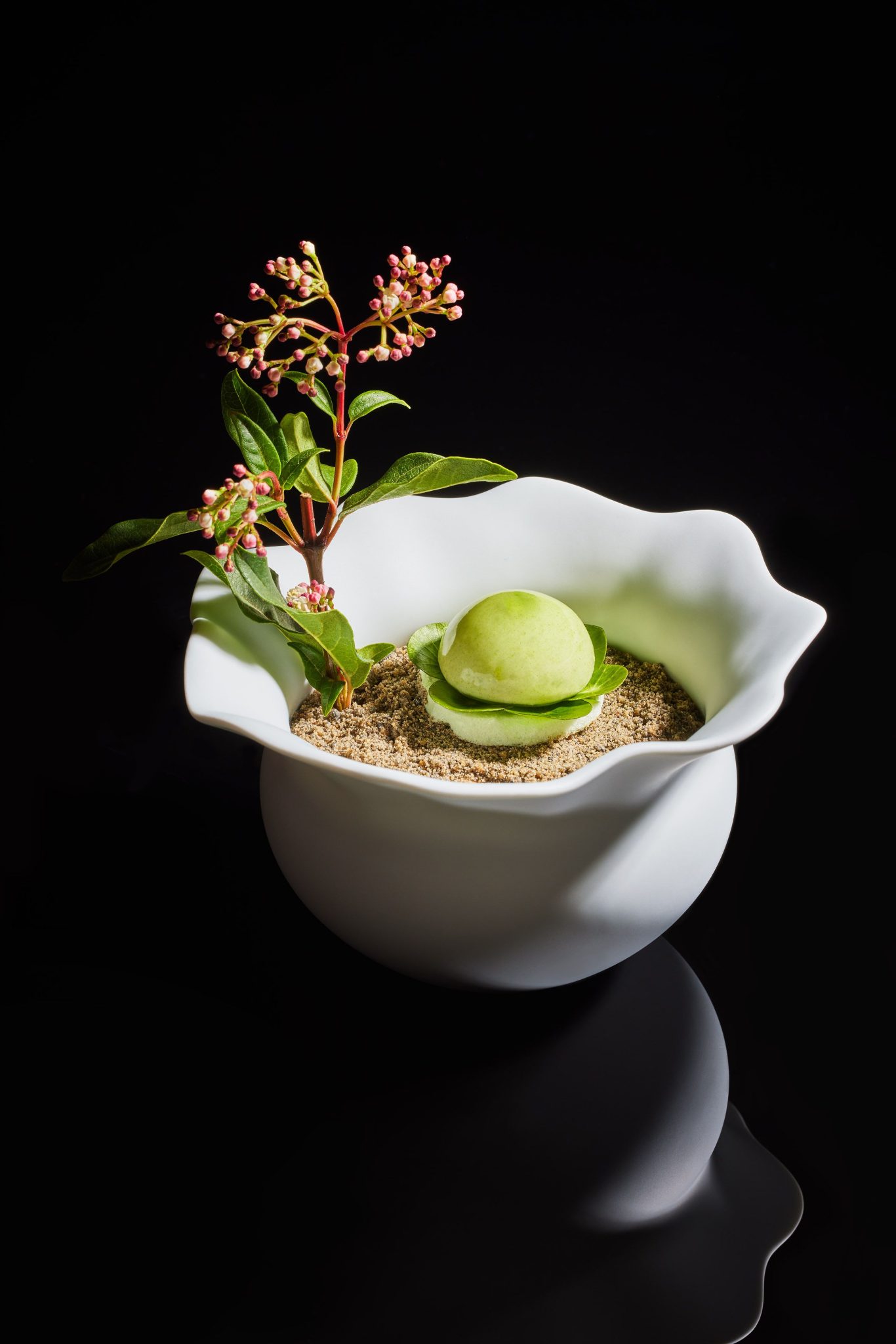
The menu is a deep dive into Nordic preservation techniques, with dishes featuring locally foraged herbs, wind-dried fish and fermented meats — a tribute to the resourcefulness required to thrive in this remote environment. One standout is the “mattak” — a dish made from whale skin wrapped around diced blubber, bound together with a glaze derived from cartilage and brushed with an oil made from Faroese flower currant leaves. Other creations might include a sorbet of bog Labrador tea, accented with pickled angelica stems, unripe currant berries, Arctic thyme and a delicate seaweed sugar sphere, each capturing the raw spirit of the Arctic landscape.
KOKS’ philosophy extends beyond the plate, embracing the philosophy of full-circle sustainability. Ingredients are sourced from the wild seas, wind-swept coastal cliffs and nutrient-rich pastures, resulting in dishes that reflect the unique, slow-growing flavours of the North. Even the wine list is a carefully curated mix of renowned labels and hidden gems, selected by head sommelier Karin Visth to complement the menu’s unconventional, intensely local flavours.
Revolutionary Element: An uncompromising commitment to extreme locality and traditional Nordic methods, transforming the harshness of the Arctic environment into a celebration of local flavours and techniques.
As of writing, the future of KOKS is uncertain, with the restaurant’s Michelin status recently removed and its long-term location yet to be determined despite exploring numerous possibilities in the Faroe Islands, adding a layer of unpredictability to this pioneering dining venture.
After redefining Indian fine dining with his emoji-driven tasting menus and anarchic spirit, Gaggan Anand has returned with an audacious new project — Gaggan at Louis Vuitton. Set within LV The Place Bangkok — the French luxury brand’s flagship experiential store — this collaboration marks Louis Vuitton’s first restaurant in Southeast Asia. Here, Anand draws on his Kolkata roots and Bangkok inspirations to craft dishes that blend the vibrancy of street food with the sophistication of fine dining, creating a thrilling intersection of flavour and fashion.
Located on the top floor of the two-storey LV The Place, the restaurant’s interior reflects the maison’s craftsmanship, with wave-like walls, Italian marble tables and signature Monogram flower lamps. The menu — available as an eight-course lunch or 17-course dinner — offers a sensory experience that mirrors the immersive luxury of its surroundings. Dishes like the infamous “Lick It Up” — which encourages diners to forgo utensils entirely — capture Anand’s signature mix of playfulness and precision, while new creations nod to local Thai ingredients presented with Louis Vuitton’s unmistakable flair.
Revolutionary Element: Blurring the lines between haute cuisine, performance art and fashion, Gaggan at Louis Vuitton reimagines fine dining as a theatrical, multi-sensory journey — making it one of the most talked-about openings in Asia in recent years.
Nestled within the opulent Atlantis, The Palm, Ossiano offers one of the most immersive fine dining experiences in the world, where guests dine surrounded by the mesmerising movements of stingrays, sharks and exotic fish. This one MICHELIN-starred restaurant — helmed by Chef Grégoire Berger — has become a standout on the global culinary stage, known for its visionary approach to seafood.
Ossiano’s 10-course tasting menu is a testament to the ocean’s depth and diversity, with each dish reflecting a deep respect for seasonality, terroir and sustainable sea foraging. Ingredients are sourced either from the world’s finest waters or within 50km of a coastline, ensuring every element is at its peak. This commitment to quality and environmental consciousness has earned Ossiano numerous accolades, including a MICHELIN star in 2024, the 2025 Art of Hospitality Award by 50 Best MENA and a coveted 5-star rating in the Forbes Travel Guide. With a progressive fine dining ethos, the menu at Ossiano captures the essence of the ocean, presenting ingredients in their most expressive form.
Revolutionary Element: Each course is a carefully curated chapter in a broader narrative that speaks to the mysteries of the deep and the ever-changing tides of global gastronomy.
Learning a new language can feel hard at first. But if you’re a digital nomad or working abroad full-time, it will be super helpful. Trust me. Let me introduce my tips for learning a new language while traveling full-time. These tips are easy to follow and great for beginners!
Asking for directions? Ordering local food? Even learning just a few new vocabulary words in a different language (use my link for a $179 Lifetime Subscription) can make your trip so much easier! You’ll understand TV shows without relying too much on subtitles, avoid ambiguity in conversations, and maybe even laugh at local jokes. Plus, it’s also a sign of respect to native speakers, showing you’re willing to engage with their culture.
Don’t miss my eBook, The A-Z on Becoming a Digital Nomad. It has tips on remote jobs, travel tools, and how to live the digital nomad life. It’s the ultimate guide for living like a pro!
Start With the Basics
Begin with individual words—hello, please, thank you—those go a long way.
Memorize common travel phrases like “how much” and “where is.” You’ll find them the most helpful.
Label your personal items like “water bottle” or “laptop” with their foreign language translations to help with memorization.
Count from 1 to 10 out loud every day to get used to the rhythm.
Learn the local food terms—especially if you’re in Brazil, Spain, or France. Ordering with confidence = instant street cred!
Use flashcards or a dictionary app to drill new words during spare moments.
Watch YouTube videos with subtitles to improve your listening skills.
Try listening to kids’ songs or cartoons in a foreign language. It’s actually a fun way to practice!
Follow language learning tips and tricks on social media from other language learners.
Practice Daily
Say five new words every morning to stretch your brain.
Use your study time wisely—even while doing chores or riding a bus.
Talk to yourself in the mirror using new phrases in your second language.
Keep a notebook or app to list new vocabulary and funny slang you encounter.
Repeat what you hear in conversations, even if it’s quietly.
Talk to Locals
Don’t be shy! Say simple things even if they’re not perfect. Don’t worry about being embarrassed. Locals usually help out instead of judging travelers.
Join a language exchange partner. Choose a native speaker in the area to practice with. It’s a great way to make friends at the same time, too.
Ask a local how to say something properly in their native language. This makes them feel you are respectful and open to speaking properly.
Practice ordering food in the local language whenever you can.
Stay with host families or book Airbnb with locals for full immersion.
Make It Part of Your Travel
Read street signs and shop names out loud to get familiar with the alphabet.
Take local tours in the language. Treat it like a language class and a travel guide all in one!
Try reading menus, posters, or brochures – even if you need Google Translate.
Go grocery shopping and learn words for everyday items.
Tune into local TV shows and movies in your second language to absorb real-life slang and idioms.
Keep It Fun and Realistic
Learn the language of your next travel destination before arriving.
Use what you learn right away to make it stick. Remembering the words can be difficult if you don’t.
Play games with fellow travelers to practice your target language.
Set small goals like “learn 5 new verbs today” or “greet 3 locals.”
Celebrate little wins—every word is progress for a language learner.
Use the Right Tools
Here’s the best one for me! Using Rosetta Stone is my favorite because you can use it even without the internet. And we all know how great it is when you’re on the move. (Don’t forget to use my link for a $179 Lifetime Subscription.)
How I Use Rosetta Stone While Traveling
Step 1: Choose your language
Pick the country you’re heading to. I usually pick the local language two weeks before arriving.
Step 2: Set your goal
Start small. For example, I like to set 10-minute lessons per day so it doesn’t feel too hard.
Step 3: Learn on the go
Rosetta Stone lets me study while I wait at the airport or ride a bus. No WiFi? No problem. It works offline. It keeps me at ease.
Step 4: Practice with locals
Once I land, I use what I learned. Locals appreciate the effort, even if you’re just learning a second language or trying to learn Arabic or Spanish.
Language Learning Is a Travel Superpower!
Learning a language while traveling makes your journey richer and more fun. It helps you stay confident, make new friends, and avoid travel stress. It also shows respect to the places you visit and helps overcome the language barrier when you’re not an English speaker.
Don’t forget! Tools like Rosetta Stone make this process easier and more enjoyable. Start small. Stay consistent. And enjoy every new word you learn!
Are you ready to learn a new language and explore the world at the same time? Give it a try today and see how far it takes you. And always remember to get your travel health insurance before hopping to your next country.
FAQ
Can I really learn a new language while traveling full-time?
Yes! With daily practice and the right tools, it’s totally possible.
What’s the best app for learning a language?
Rosetta Stone is one of the best, especially for travelers.
How long should I study each day?
Start with 10–15 minutes a day. Consistency is key.
Is it okay if I make mistakes when speaking?
Yes! Locals appreciate the effort. Mistakes help you learn.
How do I stay motivated?
Set small goals, use fun tools, and reward yourself when you hit a milestone.
In the ever-evolving world of luxury, few names stand out like Abbas Sajwani, the visionary founder and CEO of AHS Properties. With a keen understanding of the ultra-luxury real estate market, Abbas has made significant strides since launching his company in 2021. Under his leadership, AHS Properties has quickly gained recognition for creating exquisite, bespoke living spaces tailored for ultra-high-net-worth individuals.
In this exclusive interview, Alexander Chetchikov, President of the World Luxury Chamber of Commerce, sits down with Abbas to explore the nuances of luxury today, the impact of digital transformation, and the future of high-end living. Together, they will delve into Abbas’s journey, his insights on the luxury real estate market, and the innovative spirit that drives AHS Properties forward in an ever-changing industry.
Alexander Chetchikov (AC): In your perspective, how has the definition of luxury evolved in recent years, particularly in light of changing consumer expectations and societal values? What does “luxury” mean to you today?
Abbas Sajwani: The definition of luxury has shifted significantly in recent years, driven by changing consumer expectations and societal values. Traditionally, luxury was synonymous with opulence—grand estates, expensive materials, and exclusive brands. However, contemporary consumers, particularly millennials and Gen Z, prioritize experiences, sustainability, and authenticity over materialism. This is supported by research. A 2023 report by Bain & Company, has observed that the global luxury market is projected to reach EUR 1.2 trillion by 2025, with a notable increase in demand for personalized experiences and eco-conscious products. Additionally, the rise of the “experience economy” has prompted luxury brands to rethink their offerings, focusing on meaningful interactions and exceptional service.
Today, luxury transcends traditional definitions. It embodies a unique blend of quality, craftsmanship, and exclusivity while being closely intertwined with emotional resonance and social responsibility. Luxury is about creating environments that provide comfort and beauty, tailored to the individual’s lifestyle and aspirations. It’s also about transparency in sourcing and production, reflecting a brand’s commitment to ethical practices. In short, luxury real estate today translates to bespoke homes that are not only visually stunning but also sustainable and integrated into their surroundings, providing an enriching living experience.
AC: The luxury sector has seen significant shifts due to digital transformation. How do you believe technology has impacted the luxury experience for consumers, and what role do you see it playing in the future?
Abbas Sajwani: A 2023 study by the National Association of Realtors looked at how VR and AR are changing real estate marketing, particularly in the luxury segment. The study shows that such immersive technologies let future homebuyers have a wide variety of remote property walkthroughs with new levels of customization, previously unthinkable, hence making it much easier for them to imagine, and even dream, about living in a luxury home of their own, from afar.
With buyers getting savvy, and demanding an increasingly sophisticated and personalized experience, VR and AR tools have been introduced to the luxury real estate market.
Another report by the VR/AR Association in 2023 also pointed out that more than 40 percent of real estate professionals have already integrated VR or AR into property marketing, while the trends accelerate further in the wake of the pandemic, all of which accelerated movement toward remote engagements around the world.
This will enable future clients to actively participate in the most realistic virtual property viewing, designed to meet their needs and expectations, thus encouraging further development of VR and AR in the Luxury Real Estate sector. This technology will make buying not only easier but also facilitate decision-making by buyers and sellers in the high-end market.
Data analytics also allows for the creation of experiences that permit stronger bonds between consumers and brands, by personalizing the offerings based on customer behaviors. And in the years to come, I see even more AI-powered customer service, and smart home technology in every field, making life a little bit easier for everyone and enhancing luxury in everyday living.
AC: As consumers become more environmentally conscious, how do you think luxury brands should adapt to incorporate sustainability into their offerings without compromising on exclusivity?
Abbas Sajwani: The rise of environmental consciousness means that luxury brands must authentically integrate sustainability, without compromising on exclusivity. This includes sourcing materials that are designed with the environment in mind and using best practices of green building, which means designing to reduce negative outcomes from energy-depleting equipment, such as lights and heating. Today, we find that more luxury consumers are open to spending extra on sustainable goods and homes. Developing homes that are given green certification (LEED, BREEAM), and offering experiences focused on nature, luxury developers can appeal to this growing demographic.
AC: What trends do you foresee shaping the future of luxury real estate in the coming years, especially in a dynamic market like Dubai? How can developers stay ahead of these trends?
Abbas Sajwani: In the next few years, a lot of these trends will have notable implications for luxury real estate, particularly in dynamic markets such as Dubai and the UAE overall. This includes the desire for wellness-driven living, with developments and properties crafted to promote overall well-being, both physically and mentally, including biophilic designs, such as spas and fitness centers.. Moreover, the move towards working from home has driven demand for bigger homes with separate offices. I think luxury developments with flexible layouts and sophisticated tech amenities, will continue to be highly sought after in the future. It is also important to invest in smart home technologies and wellness features that will cater to lifestyle preferences as trends change. This will ensure developers stay ahead in the industry.
AC: You launched AHS Properties in 2021 with a clear focus on ultra-luxury real estate. What inspired you to establish this company, and what key principles guide its development strategy?
Abbas Sajwani: AHS Properties was established with a vision to create world-class architecture, fused with green practices and redefinition of ultra-luxury living. Our development blueprint is based on several key principles, which are quality, bespoke experiences, and community integration. We strongly hold the philosophy that true luxury is not only creating spaces that cater to our clients but adding it on as a layer of lifestyle for the betterment of society as well. Our designs are therefore expressions of the values, ambitions, and desires of our clients, as well as being sustainable and innovative by nature.
AC: As a leader in the luxury real estate sector, how would you describe your leadership style? What personal experiences have influenced your approach to building AHS Properties?
Abbas Sajwani: I strongly believe in creating a culture where creativity and inclusivity can flourish, and where every team member’s input is highly valued and considered. My personal experiences in navigating complex projects and diverse markets, have taught me the importance of adaptability and open communications. I prioritize building strong relationships with clients, stakeholders, and team members alike, all of which help cultivate a shared vision for each project. This collaborative spirit not only drives innovation but also ensures that our developments resonate deeply with the luxury market.
AC: AHS Properties is known for its bespoke mansions and villas. How do you ensure that each project not only meets but exceeds the expectations of your ultra-high-net-worth clients?
Abbas Sajwani: By taking an intensely client-focused approach from the outset of a project, through to its completion, we can ensure every detail meets and exceeds the expectations of our ultra-high-net-worth clients. We achieve this through a personalization process, starting with an in-depth understanding of their lifestyle preferences and aspirations, to designing homes that are reflective of who they really are and their unique identities. It is important for us, to have regular interactions during the development life cycle, wherein we update clients, take their approval, and act as per the feedback they give us. Working with hand-selected designers and top-tier architects who complement our long-standing desire for perfection also means that every aspect has been crafted to go beyond the needs of our clients.
AC: Looking ahead, what is your vision for AHS Properties over the next decade? How do you plan to further innovate and elevate the luxury living experience for your clients?
Abbas Sajwani: Looking ahead, my vision for AHS Properties is to set new standards in luxury living by integrating cutting-edge technology, sustainability, and unparalleled design. We aim to expand our portfolio with more iconic projects that not only serve as residences but also foster a sense of community.
Over the next decade, we will continue to innovate by incorporating new technologies and best-building practices while exploring opportunities in emerging luxury markets. Our commitment to craftsmanship and client satisfaction will remain at the forefront, ensuring that we not only meet but anticipate the needs of our discerning clientele.
The dedication to quality and customer service that we are known for, will not waver–even within the exciting changes happening in our industry — it will continue to meet, and anticipate the needs of our discerning clientele.
Finally, I would like to conclude by saying that as we celebrate excellence in the luxury lifestyle, I encourage everyone to consider the evolving landscape of luxury and the importance of authenticity and sustainability in their choices. The future of luxury is not just about ownership, but also about creating meaningful experiences and connections.
With this dynamic market on our side, let us navigate it with innovation and responsibility, to ensure that luxury continues to play a positive role in inspiring and uplifting our communities.
With a firm belief in creating remarkable living experiences, Abbas is poised to further revolutionize the luxury market in Dubai and beyond. Looking ahead, it is clear that the dialogue on luxury will remain dynamic, and those who embrace change will continue to thrive in this competitive arena.
Explore AHS Properties and the projects here: https://www.ahs-properties.com/
For more on the latest in property and real estate reads, click here.
Ms. Ellen Bareley curated the Le Mans Legends Heritage Display. This display contained close to fifty cars, all with Le Mans history. From the 1929 Bentley Speed Six overall winner in 1929 and 1930 to the 2016 Ford GTLM class winner.
Among the displays was the Jim Hall 1967 Chaparral 2F; push rods, 427 cubic inch Chevy aluminum block, and an automatic transmission wrapped in fiberglass designed and built in Southwest Texas. This is an American Endurance Racing Car. Each of the many times I walked by the Chaparral 2F, I noticed somebody of my age explaining to sons and grandsons what an important car the Chaparral was to them. Jim Hall and his Chaparrals proved that American cars could compete internationally.
Another significant car is Cameron Healey’s 1951 Porsche 356/02-063. This is the car that started the Porsche mystique by winning Porsche’s first international race. The 1100cc Class of the 1951 Le Mans. Later the car was bought by Southern California’s John von Neumann, who eventually cut the roof off, producing the first Speedster. Northern California Porsche racer Chuck Forge eventually raced the car.
Cameron Healey bought the car from the Forge estate and returned it to how it left the factory in 1951. Even down to the rubber hose jammed behind the right front external driving light to stop vibration and the light moving during the race. Compared to the early fifties British and Italian cars here, this sleek racer definitely feels German!
Cameron Healey and SportsCarDigest compatriot Bill Wagenblatt have worked together to produce the book “46: The Birth of Porsche Motorsport,” which covers the history of 356/02-063 from its first production orders to today. The book includes conversations with original mechanics and team members. I have seen the layout for the book; if you are a Porsche enthusiast, you should have this book. It should be available early next year.
The Sunday morning Hillclimb or “Backwards up The Corkscrew.” This year the 2022 Rolex Monterey Motorsports Reunion ran Wednesday through Saturday, leaving Sunday for the “Cars on Grass” people. For the rest of us, Laguna Seca held a Hillclimb running from the start-finish line through turns eleven, ten, and nine, ending just past The Corkscrew. You may notice this is backward from the usual direction the cars run.
With over fifty entrants in this novel event, the hillside behind The Corkscrew was packed with spectators. Once the entrants grasped the technique of driving up the hill, they put on a good show. The Word is that the track is looking to build a Hillclimb series out of this event. I am for it.
Weathertech Raceway Laguna Seca Raceway had 13 groups of cars running this event. Starting with 1923-1955 The Early Years cars to 1981 – 2005 Le Mans Prototypes and GT1 cars. If you’re turned on by ground-shaking, loud, fast cars, how about the Group 12 Historic Vintage Trans-Am group. Or if your thing is the flame-throwing Porsches, there is Group 8 for 1972-1982 Le Mans cars. On the other end of the spectrum, we have Group 1 1968-1963 Formula Junior; buzzy but quick. Further up the open-wheel ladder is Group 13 1966-1985 Formula One. Very fast with the great sound of high revving V8s and even a Ferrari flat-12 in the field.
Enjoy the following gallery. I plan on having a follow-up 2022 RMMR posting in late September or early October with more images. If you don’t see a car or driver you’re interested in, let us know, and I’ll see if I have a picture to include in the future posting. Hope to hear from you.
The technical storage or access is strictly necessary for the legitimate purpose of enabling the use of a specific service explicitly requested by the subscriber or user, or for the sole purpose of carrying out the transmission of a communication over an electronic communications network.
Preferences
The technical storage or access is necessary for the legitimate purpose of storing preferences that are not requested by the subscriber or user.
Statistics
The technical storage or access that is used exclusively for statistical purposes.The technical storage or access that is used exclusively for anonymous statistical purposes. Without a subpoena, voluntary compliance on the part of your Internet Service Provider, or additional records from a third party, information stored or retrieved for this purpose alone cannot usually be used to identify you.
Marketing
The technical storage or access is required to create user profiles to send advertising, or to track the user on a website or across several websites for similar marketing purposes.


:max_bytes(150000):strip_icc()/TAL-food-notos-rooftop-six-senses-rome-ROMEROOFTOP0525-37c8ca76946341139252203d1d200d4c.jpg "I Visit Rome Every Year, and One of My Favorite Hotels Now Has a Rooftop With Live Music and Fresh Seafood")
:max_bytes(150000):strip_icc():format(jpeg)/TAL-food-notos-rooftop-six-senses-rome-ROMEROOFTOP0525-37c8ca76946341139252203d1d200d4c.jpg)