Home Blog Page 141

Next-gen Alfa Romeo Stelvio debuts in 2025 on Dodge Charger platform

0


  • Redesigned versions of the Alfa Romeo Stelvio and Giulia are coming soon
  • The vehicles will ride on the STLA Large platform already found in the Dodge Charger and Jeep Wagoneer S
  • Buyers will be able to choose from electric and hybrid powertrains

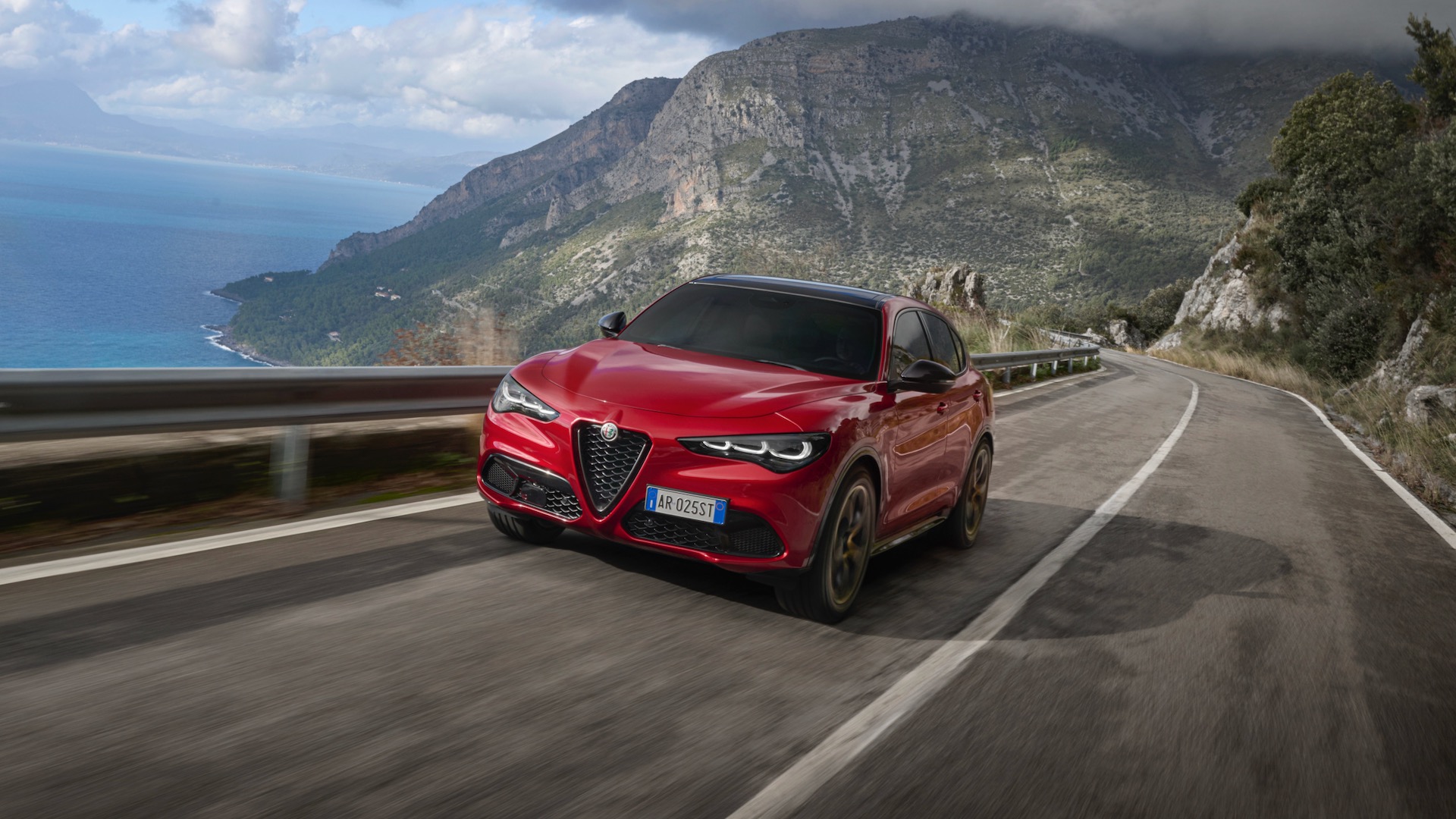
Alfa Romeo will take the wraps off a redesigned Stelvio compact crossover later this year, its CEO, Santo Ficili, announced via a social media post over the weekend.

Ficili said the market launch will follow in 2026 and that a hybrid option will be available, made possible by the flexibility of the vehicle’s STLA Large platform. This platform will also underpin a redesigned Giulia compact sedan arriving in 2026.

Alfa Romeo confirmed the new Stelvio for 2025 and the new Giulia for 2026 in an announcement made early last year, though previously, only electric powertrains were mentioned. However, a slowing adoption rate for EVs has led Alfa Romeo, along with many other automakers, to reverse plans to exclusively offer EVs.

The STLA Large platform, one of several modular platforms from parent company Stellantis, made its debut in the 2024 Dodge Charger and has since appeared in the 2024 Jeep Wagoneer S. It will underpin at least eight vehicles in North America, including a new Jeep Cherokee (name not yet confirmed) that has already been spotted testing.

2025 Alfa Romeo Giulia

2025 Alfa Romeo Giulia

Production of the new Stelvio—and likely the Giulia—is expected to take place at a Stellantis plant in Cassino, Italy, where the current generation of both vehicles is built. Fellow Stellantis brand Maserati also builds its Grecale crossover at the plant. The Grecale is related to the current Stelvio and already offers an electric option.

Alfa Romeo has previously confirmed that high-performance Quadrifoglio versions of the new Stelvio and Giulia are planned, though these will likely be EVs only. Rumors suggest that the Quadrifoglio models could produce close to 1,000 hp.

Though yet to be officially announced by the automaker, an Alfa Romeo midsize SUV is expected to arrive after the new Stelvio and Giulia, around 2027. This model will compete with the BMW X5 and serve as Alfa Romeo’s flagship.


Source link

Alfa Romeo 33 Stradale’s early design patents leak

0


The all-new Alfa Romeo 33 Stradale made its global debut in August 2023. Only 33 examples have been built with a price tag of $3.27 million each.

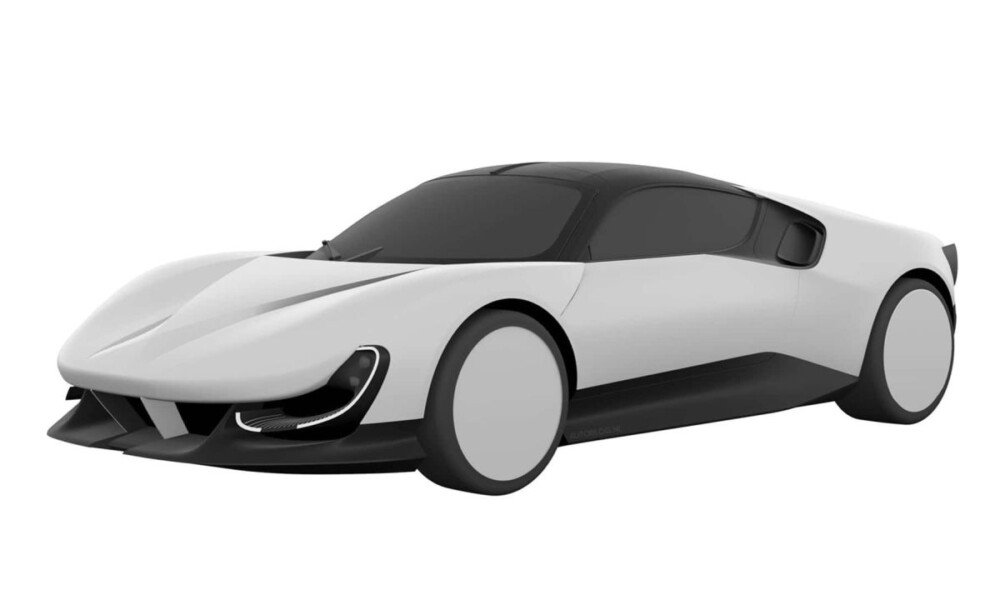
Now, every car goes through various design iterations before the final design is approved. Similarly, the design team at Alfa Romeo had created multiple designs for the new 33 Stradale. One such early iteration has leaked online via patent images.

alfa-romeo-33-stradale-early-design (1)

The patent filings reveal a coupe design that’s similar to the production. However, it has unique design elements such as the C-shaped LED DRLs with vertically stacked LED headlamps, a sculpted hood and a more aggressive front splitter.

Moving to the side, the intakes on the rear fenders are unlike those seen on the production-spec car. That being said, the rear fascia does have some similarities to the final version. It has C-shaped LED taillights, dual centre exhausts and a diffuser.

alfa-romeo-33-stradale-early-design (2)

Krystyna Perry, Head of PR at Alfa Romeo, told Motor1, “I can confirm that these images represent the 33 Stradale in its first 1:1 physical model’s design project. They date back to October 2022. This model design was patented in accordance with the Alfa Romeo Centro Stile procedure at that time. The procedure involves patenting the style of a project to protect the uniqueness of its design. Our process establishes a two-year duration for design patents, and upon expiration, we evaluate whether to renew them or not. Once the patent expires, the images can be made public.”

The 33 Stradale is powered by a twin-turbo V6 engine that develops 620 hp and is paired with an 8-speed dual-clutch automatic gearbox, which drives the rear axle via an electronic limited-slip differential. Interestingly, the 33 Stradale is also available with an all-electric powertrain. The BEV setup generates over 750 hp and has a claimed range of 450 km (WLTP cycle). Both iterations are capable of delivering similar levels of performance. Alfa Romeo claims a 0-62 mph time of 3 seconds and a top speed of 206 mph.

Source: Motor1


Source link

Mazda dedicated EV platform spawning first model in 2027

0


Mazda currently uses a platform dedicated to electric vehicles in its EZ-6 electric sedan, which is sold in China. However, the platform, known as EPA1, is sourced from Chinese automaker Changan.

Mazda is now developing its own dedicated EV platform, which is set to debut in 2027.

On Tuesday, Mazda provided a first look at the platform, which follows the typical skateboard-style design with a flat battery pack housed in the vehicle floor. The automaker said the platform will be flexible enough to support multiple battery options and vehicle types, as well as future software updates.

The first EV on the platform, likely an SUV, will be built in Japan for both local sales and export. It will use batteries with cells developed in partnership with Panasonic.

Mazda dedicated EV platform spawning first model in 2027

Mazda dedicated EV platform spawning first model in 2027

Though not yet confirmed, a series plug-in hybrid option may be developed, featuring a gas engine—possibly a small rotary design—as a range extender. A similar setup is already available in some markets for Mazda’s MX-30 electric crossover.

Before the arrival of the first EV on its dedicated platform, Mazda will launch an electric crossover using a Changan-sourced platform. This crossover was previewed in 2024 by the Mazda Arata concept.

On Tuesday, Mazda also provided an update on its new Skyactiv-Z family of four-cylinder engines, first announced last fall. The new engine family is optimized for hybrid applications and will be paired with Mazda’s own hybrid system in a powertrain debuting in 2027 in a next-generation CX-5. The new CX-5 has already been spotted testing and is expected to debut later this year.


Source link

BMW M6 (F12/F13/F06) Generation Buyers Guide

0


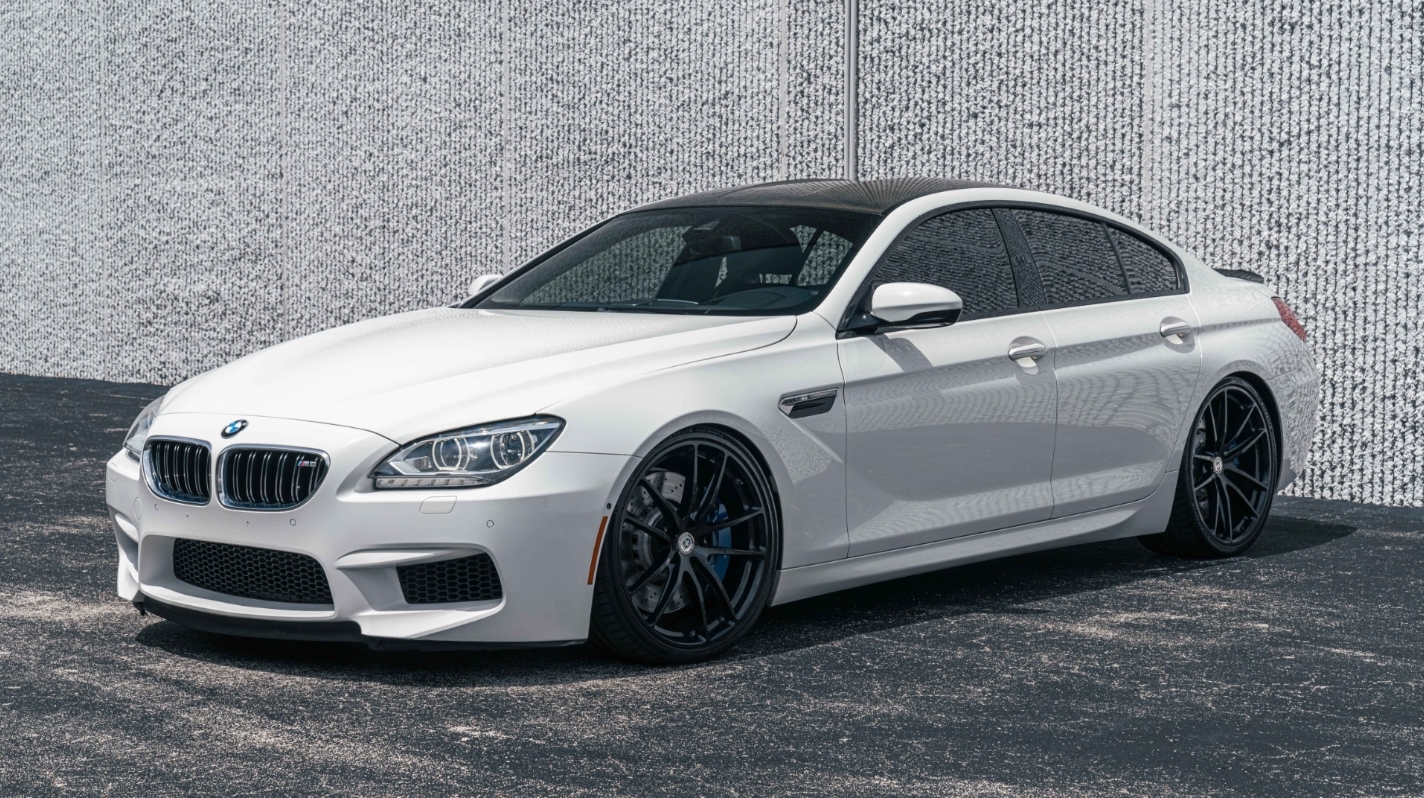
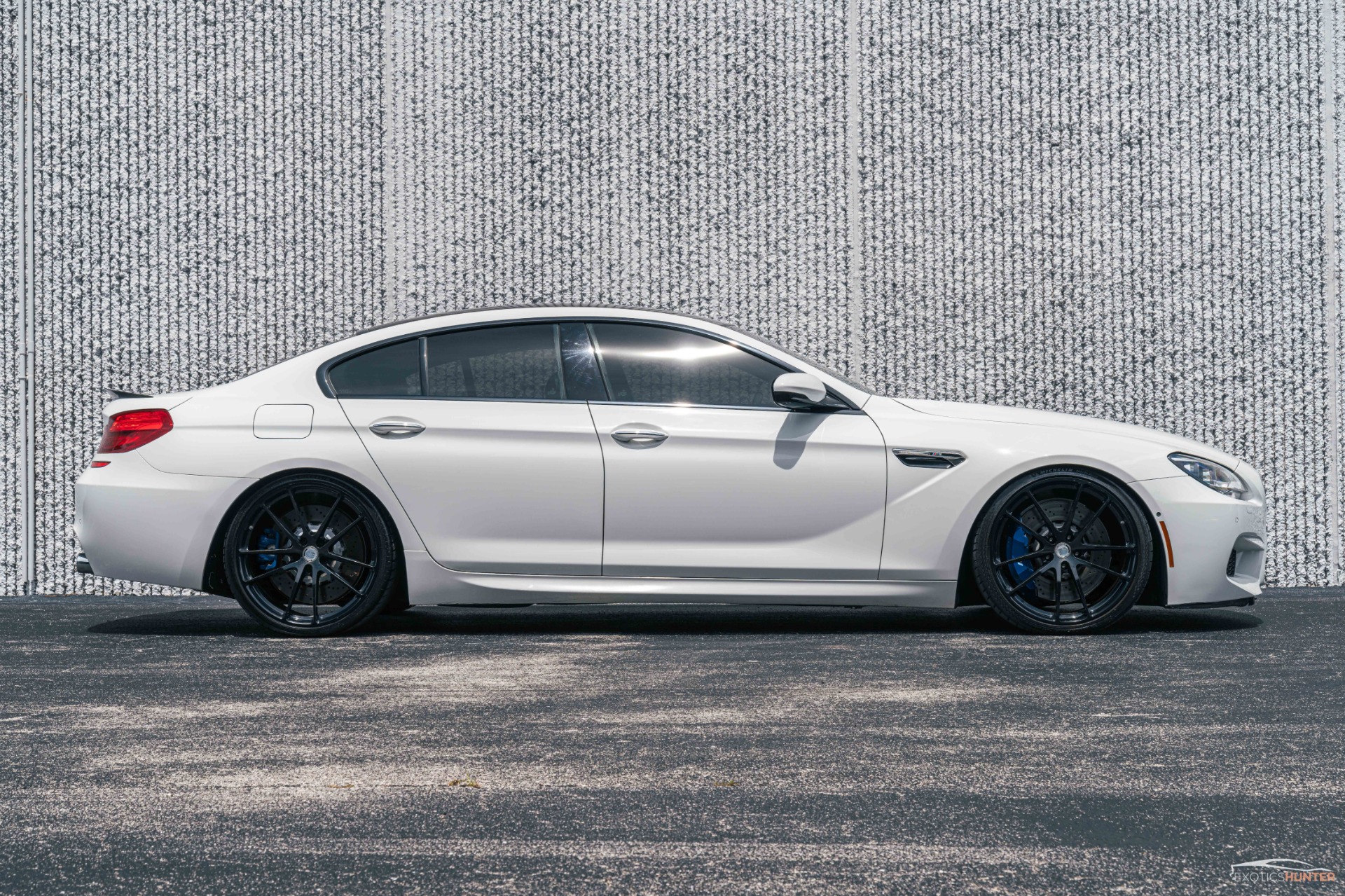
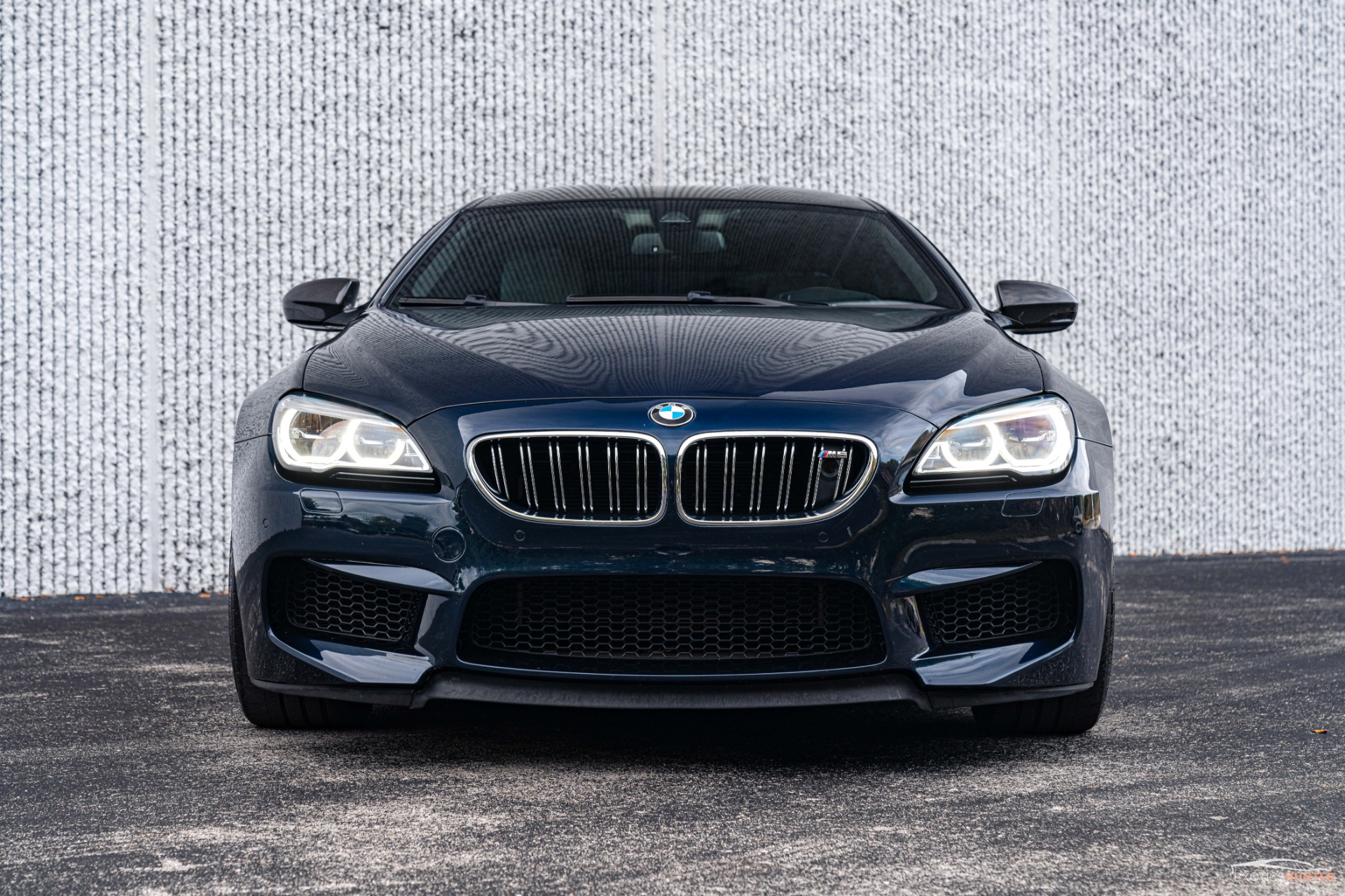
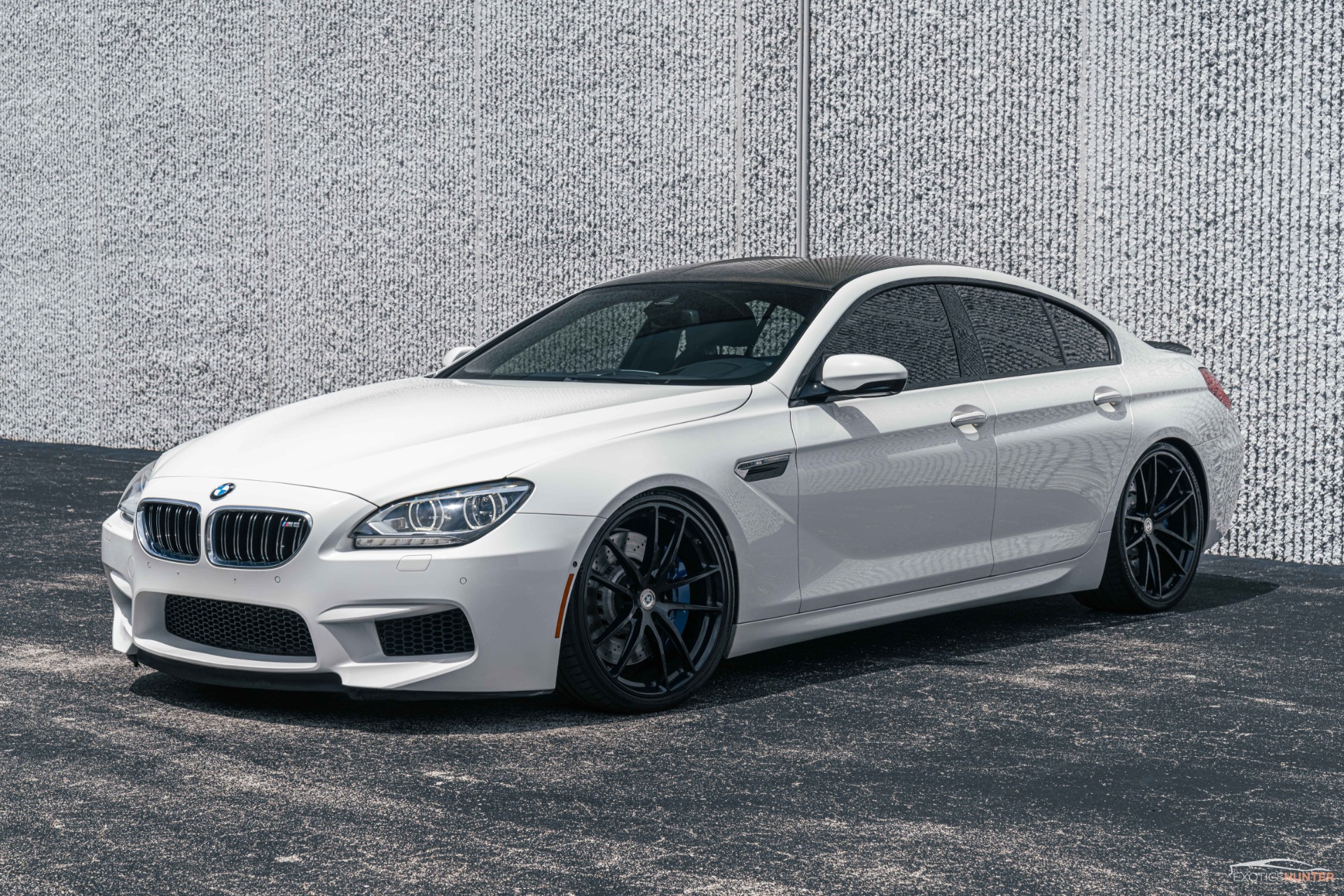
When the BMW M6 (F13/F06) was introduced in 2012, it marked the return of BMW’s high-performance grand tourer, succeeding the E63 M6. Available in Coupé (F13) and Convertible (F12) body styles, with the Gran Coupé (F06) joining in 2013, this generation of the M6 represented the pinnacle of BMW’s M Division.

At the heart of the M6 is a 4.4-liter twin-turbocharged V8 engine, codenamed S63, producing 560 hp and 500 lb-ft of torque in standard form. This engine, shared with the F10 M5, featured BMW’s innovative Valvetronic and Double-VANOS technology, enhancing efficiency and throttle response.

Power was sent exclusively to the rear wheels via a 7-speed dual-clutch transmission (DCT), though a 6-speed manual was available in select markets. Later models equipped with the optional Competition Package pushed output to 600 hp, shaving fractions off the 0-60 mph time, which dipped as low as 3.8 seconds.

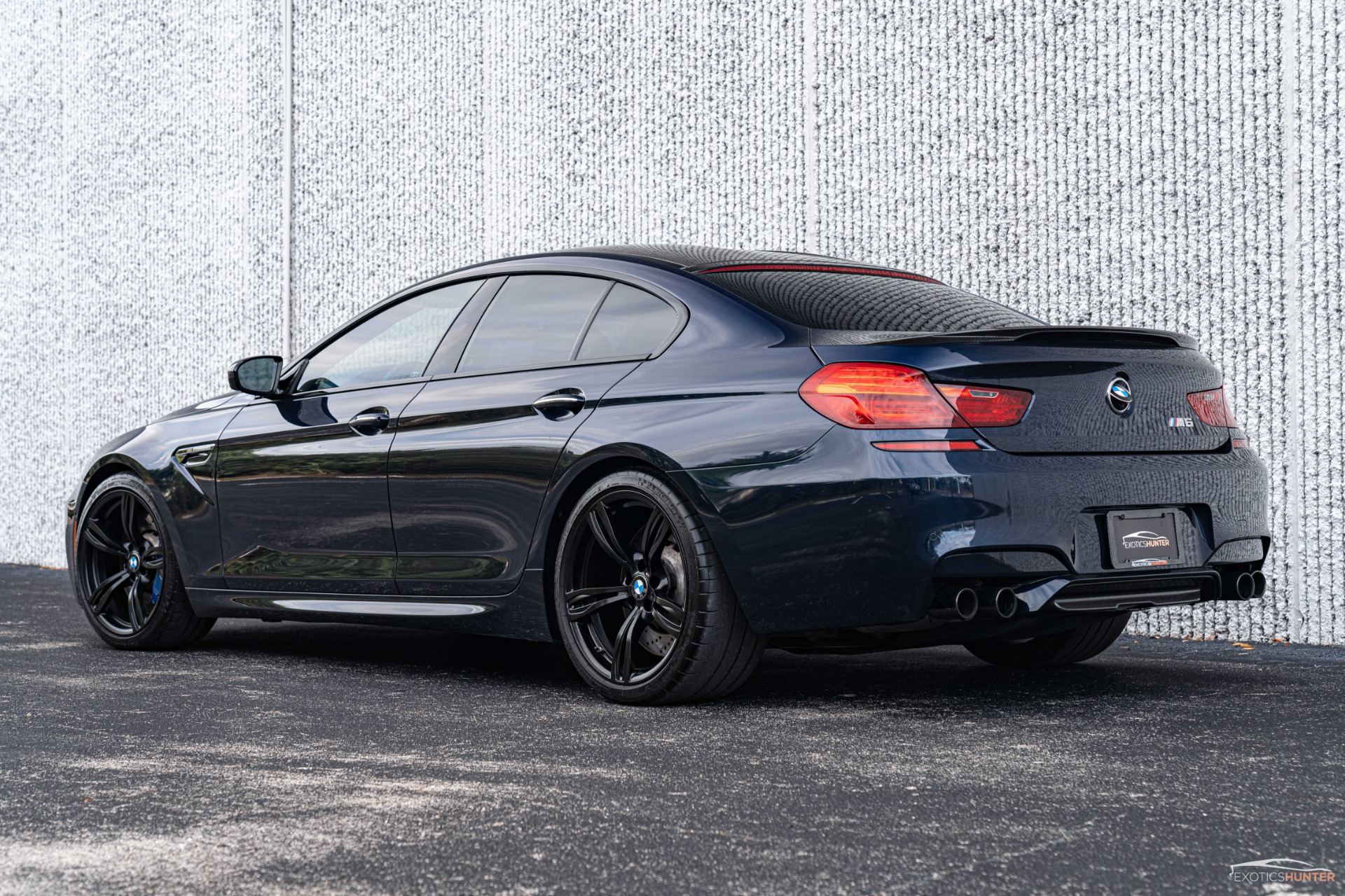
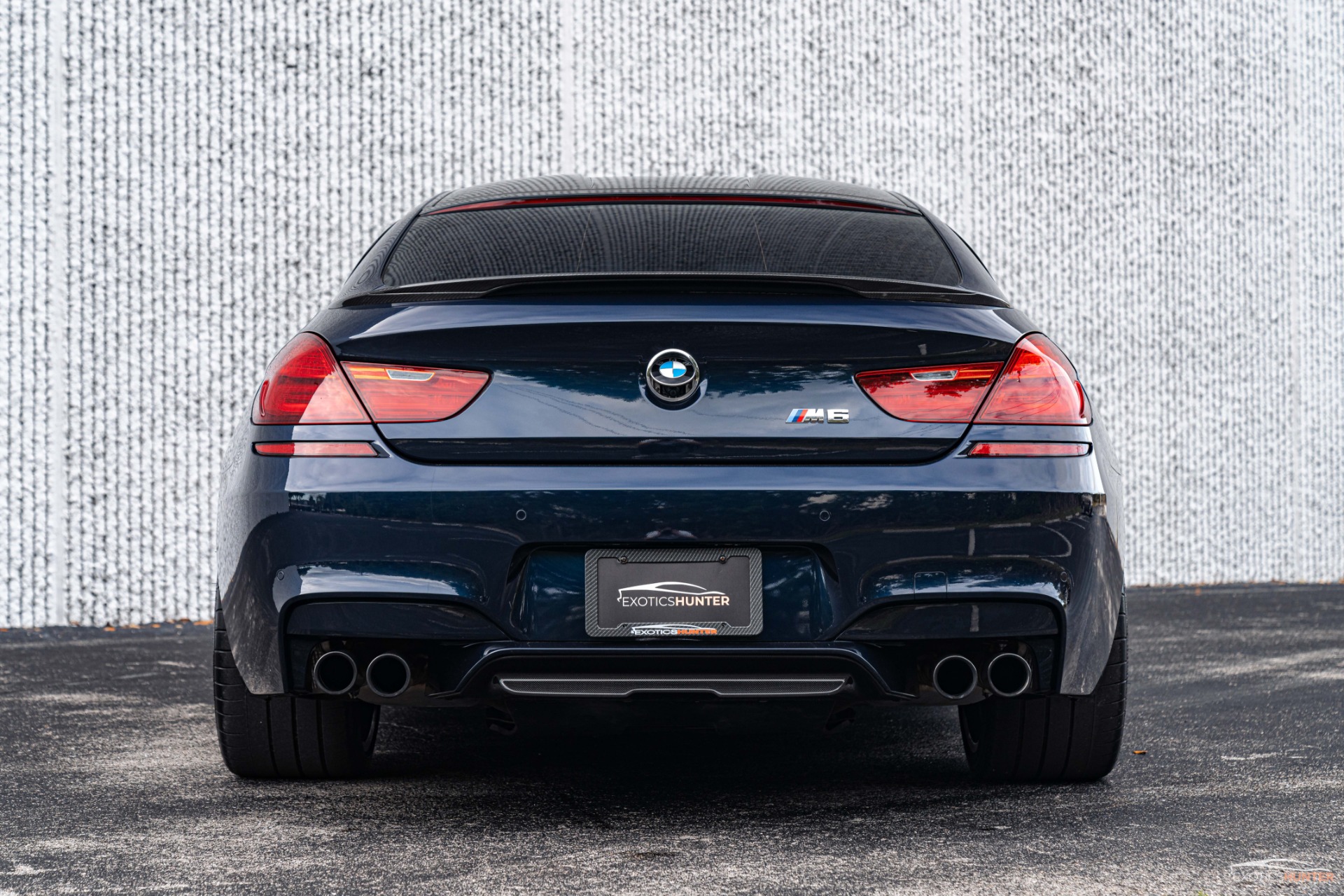
The exterior of the M6 featured an aggressive stance, muscular wheel arches, and a lightweight carbon-fiber-reinforced plastic (CFRP) roof on the Coupé. A sculpted front bumper with large air intakes, a bold kidney grille with blacked-out slats, and signature quad exhaust outlets added to its aggressive character. The Gran Coupé variant, with its stretched wheelbase and sweeping roofline, offered a more elegant silhouette while retaining the performance DNA of its siblings.

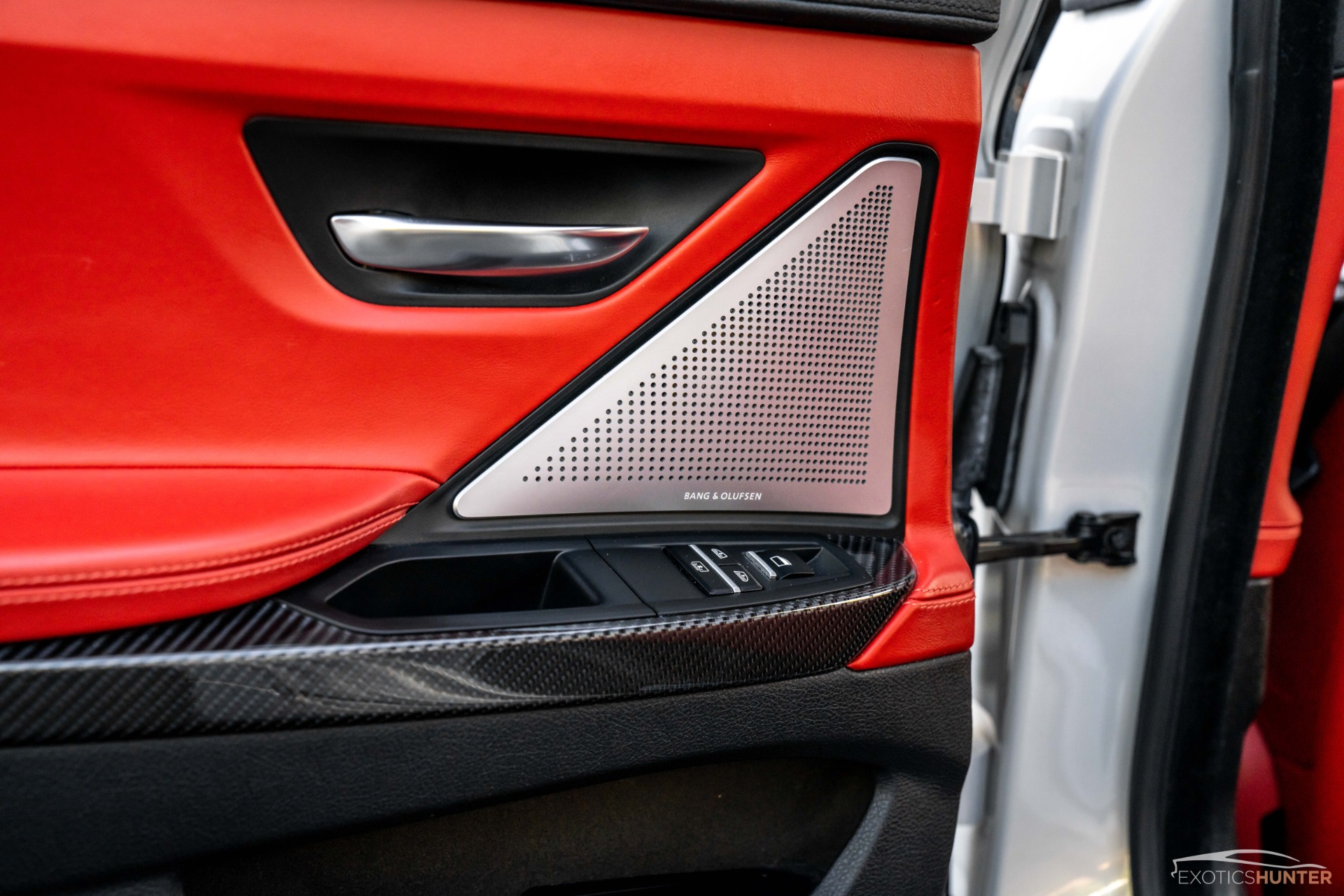
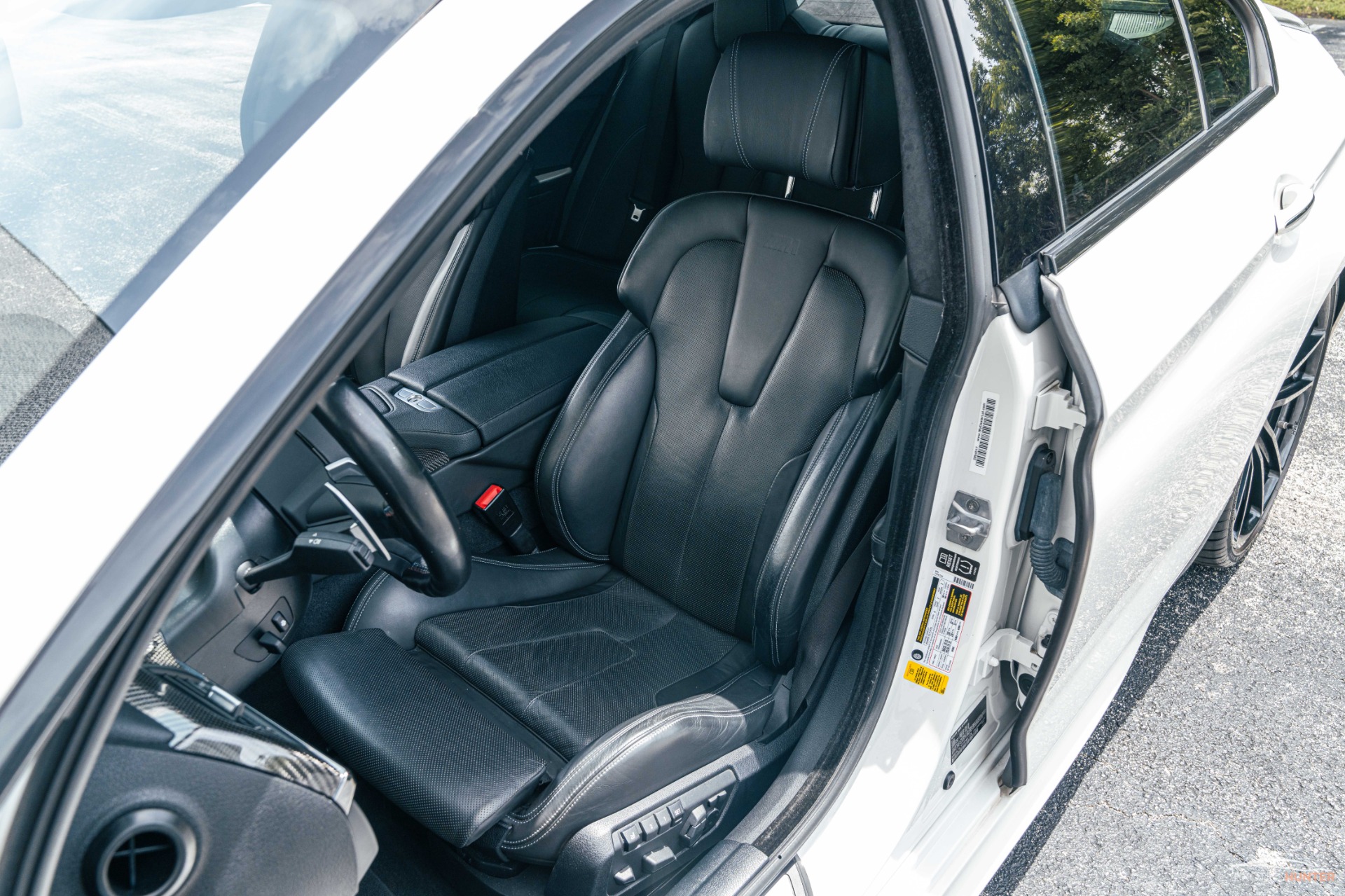
Inside, the M6 has a driver-focused cockpit featuring Merino leather upholstery, a head-up display, and a 10.2-inch iDrive infotainment system with navigation and performance telemetry. M-specific instrument clusters provided real-time performance data, while carbon-fiber and Alcantara trim options elevated the cabin’s sporty feel. The M6 was also available with optional M Multifunction seats, offering increased lateral support for spirited driving.

Throughout its production, the BMW M6 faced competition from several high-performance grand tourers, including the Mercedes-AMG S63, the Audi RS7, and the Porsche Panamera Turbo. Despite these formidable rivals, the M6 distinguished itself with its combination of brute power, advanced technology, and BMW’s signature driving dynamics, making it a compelling choice for enthusiasts seeking both luxury and performance.

Model Changes (Breakdown by Year)

2012 BMW M6

The 2012 BMW M6 marked the debut of the F12 generation, initially offered only as a convertible. 

Under the hood, it featured a 4.4-liter twin-turbocharged V8 (S63), producing 560 hp and 500 lb-ft of torque, paired with a 7-speed dual-clutch transmission (DCT). 

Standard features included adaptive LED headlights, Merino leather upholstery, iDrive with navigation, and 19-inch M light-alloy wheels, while M Drive settings allowed for customizable performance adjustments. 

Buyers looking for a little extra more, could opt for 20-inch forged wheels, a Bang & Olufsen high-end surround sound system, M Carbon Ceramic Brakes, and a Driver Assistance Package that included lane departure warning and blind-spot monitoring.

The 2012 BMW M6 Convertible had a starting price of $113,100.

2013 BMW M6

The 2013 BMW M6 saw the introduction of the F13 Coupé alongside the existing F12 Convertible. While performance figures remained the same, the Coupé gained a carbon fiber-reinforced plastic (CFRP) roof, reducing weight and lowering the center of gravity for improved handling. 

Both models came equipped with an M-specific heads-up display and an enhanced adaptive suspension system to further refine driving dynamics. Notably, a 6-speed manual transmission was introduced as an option, catering to enthusiasts seeking a more engaging driving experience. Additional available upgrades included a full leather package.

The 2013 BMW M6 had a starting price of $108,295 for the Coupé and $115,545 for the Convertible.

2014 BMW M6

The 2014 BMW M6 lineup expanded with the introduction of the F06 Gran Coupé in the U.S. market, offering a four-door alternative to the existing F12 Convertible and F13 Coupé. 

While there were no major mechanical changes, BMW introduced new optional packages. The Competition Package made its debut, increasing power output to 575 hp, refining handling with a revised suspension, and adding a sportier exhaust system with unique 20-inch alloy wheels. 

For those prioritizing comfort, the Executive Package introduced heated and ventilated front seats, power rear sunshades, soft-close automatic doors, and a head-up display. Safety and driver assistance technology also saw improvements with the Driver Assistance Package, which included lane departure warning and blind-spot monitoring. 

Also, Night Vision with pedestrian detection became available, utilizing infrared technology to detect pedestrians and animals in low-visibility conditions. For those seeking enhanced braking performance, M Carbon Ceramic Brakes were offered as an option, providing superior stopping power and reduced fade under high-performance driving conditions.

The 2014 BMW M6 was available in three variants, each with its own starting price. The Coupé (F13) started at $111,200, while the Gran Coupé (F06) had a base price of $115,000. The Convertible (F12) was the most expensive of the trio, starting at $117,500 before options and additional packages.

2015 BMW M6

The 2015 BMW M6 received a Life Cycle Impulse (LCI) facelift, bringing subtle design updates and technology enhancements while maintaining its powerful performance. On the exterior, revised front and rear bumpers, new wheel designs, and full-LED adaptive headlights with a refreshed internal layout gave the M6 a sharper, more modern look. 

Inside, the cabin saw notable improvements, including an updated iDrive system with a touch controller, a higher-resolution infotainment screen, and new trim and leather options to elevate the luxury feel. Mechanically, the standard model retained its 560 hp output, while the Competition Package remained available with 575 hp, continuing to offer an extra edge in performance and handling.

The 2015 BMW M6 was available in three variants with different starting prices. The Coupé had a base price of $111,900, while the Gran Coupé started at $115,700. The Convertible was the highest-priced variant, starting at $118,200, with all prices before additional options and packages.

2016 BMW M6

The 2016 BMW M6 received minor for this year. However, BMW enhanced the Competition Package, increasing its output to 600 hp while refining steering response and stiffening the suspension for improved handling. 

Additionally, M Carbon Ceramic brakes became standard when opting for the Competition Package, further enhancing braking performance. On the technology front, Apple CarPlay was introduced as an option, bringing improved smartphone integration to the M6’s infotainment system.

The 2016 BMW M6 was available in three variants with different starting prices. The Coupé had a base price of $113,400, while the Gran Coupé started at $116,200. The Convertible was the highest-priced variant, starting at $119,700, with all prices before additional options and packages.

2017 BMW M6

The 2017 BMW M6 marked the final model year for the M6 Coupé (F13) in the U.S., making it the last opportunity for buyers to purchase the two-door variant. 

This model year brought a few technology enhancements, including an upgraded head-up display, as well as standard wireless charging and a Wi-Fi hotspot for improved connectivity. 

Performance remained largely unchanged, though 0-60 mph times saw a slight improvement to 3.8 seconds with the Competition Package. The M Carbon Ceramic brakes continued to be available as an option, offering enhanced braking performance for those seeking track-capable stopping power.

The 2017 BMW M6 was available in three variants with different starting prices. The Coupé had a base price of $113,700, while the Gran Coupé started at $116,500. The Convertible was the most expensive variant, starting at $122,295, with all prices before additional options and packages.

2018 BMW M6

The 2018 BMW M6 marked the final year for the Convertible and Gran Coupé, as the Coupé variant had been discontinued after the 2017 model year. There were no major changes to performance or features, with BMW maintaining the same powerful twin-turbo V8 and luxury-oriented design. 

To commemorate its final production year, BMW introduced Individual paint and interior combinations, allowing buyers to further personalize their vehicles.

The 2018 BMW M6 was available in two variants, with the Gran Coupé starting at $119,800 and the Convertible at $122,300.

2019 BMW M6

The 2019 BMW M6 marked the final year of the Gran Coupé in the U.S., as it remained the only available variant. Although production officially ended in October 2018, some 2019 models were still sold in select markets.

BMW M6 (F12/F13/F06) Generation Common Problems

The BMW M6 (F12/F13/F06) Generation has several common issues that buyers should be aware of. The S63 twin-turbo V8 is prone to rod bearing wear, valve stem seal failure, and turbocharger issues, which can lead to costly repairs. The 7-speed dual-clutch transmission (DCT) may develop overheating, rough shifting, or clutch wear over time. Cooling system leaks, electrical issues, and suspension wear are also common, affecting reliability and maintenance costs. 

A thorough inspection and proper upkeep are essential to ensuring a trouble-free ownership experience.

Rod Bearing Wear: Owners have reported premature rod bearing wear in the S63 4.4L twin-turbo V8, which can lead to catastrophic engine failure if not addressed. Regular oil changes and using high-quality oil can help extend the life of the bearings.

Turbocharger Failure: Some M6 owners experience turbocharger issues, including wastegate rattle and oil starvation, which can cause power loss, increased turbo lag, and whining noises. Heat buildup is a contributing factor, making proper cooling system maintenance essential.

Fuel Injector & High-Pressure Fuel Pump (HPFP) Issues: Faulty fuel injectors and high-pressure fuel pumps (HPFP) can cause misfires, rough idling, poor fuel economy, and difficulty starting the engine. BMW has issued updates for some fuel system components, but failures are still reported.

Valve Stem Seal Failure: Excessive oil consumption and blue smoke from the exhaust are symptoms of valve stem seal failure. This issue tends to appear in higher-mileage M6s and can result in poor engine performance and rough cold starts.

Dual-Clutch Transmission (DCT) Issues: The 7-speed DCT is known for rough shifting, overheating, and clutch slippage, particularly in stop-and-go traffic. Regular transmission fluid changes can help prevent premature wear.

Drivetrain Malfunction Warning: A “Drivetrain Malfunction” warning can appear due to fuel system issues, ignition coil failures, or turbo problems, causing the car to enter limp mode with reduced power. Diagnosis typically requires scanning for error codes.

Coolant Leaks & Radiator Failures: Some M6 models suffer from coolant leaks, failing water pumps, and cracked radiators, which can lead to engine overheating. Regular coolant checks and timely replacements are necessary to prevent costly engine damage.

Oil Cooler Leaks: The oil cooler lines are prone to leaks, leading to low oil pressure and increased engine wear. If left unaddressed, this can cause long-term damage to engine components.

iDrive System Malfunctions: The iDrive infotainment system can experience freezing, lagging, or complete failure, often requiring software updates or a head unit replacement to resolve.

Battery Drain Issues: Due to high electrical demand, the M6’s battery can drain quickly, especially if the vehicle sits unused for extended periods. Faulty IBS (Intelligent Battery Sensor), alternator issues, or excessive parasitic draw are common culprits.

Comfort Access & Keyless Entry Failure: Owners report that keyless entry and Comfort Access sometimes stop working due to faulty door handle sensors or a weak key fob battery. Replacing the affected components typically resolves the issue.

Premature Brake Wear (Carbon Ceramic Brakes): While M Carbon Ceramic Brakes (CCB) offer excellent stopping power, they are known for high replacement costs and occasional squeaking or uneven wear under regular driving conditions.

Suspension Component Wear: Control arms, bushings, and adaptive dampers can wear prematurely, leading to clunking noises, uneven tire wear, and a rougher ride. Regular suspension inspections can help detect early signs of wear.

Exhaust Flap Failure: Some M6 models experience exhaust flap failures, which can cause rattling noises or reduced exhaust sound. This issue often requires actuator replacement or coding the flap open.

Catalytic Converter Clogging: The high-flow catalytic converters can become clogged over time, causing power loss and increased emissions errors. Upgraded aftermarket exhaust systems may contribute to this problem.

Soft-Top Convertible Issues (F12 Models): M6 Convertible owners have reported slow operation, hydraulic leaks, or failure to latch properly with the soft-top mechanism. Regular lubrication and sensor maintenance can help prevent these issues.

Door Handle & Mirror Motor Failures: The automatic folding mirrors and Comfort Access door handles are known to fail, requiring replacement of motors or sensors.

Recalls

2013 BMW M6 Coupé and Convertible vehicles built between July 19, 2012, and September 11, 2012

Oil Pump Driveshaft Issue (Recall No. 12V475000)

The issue involved the oil pump driveshaft potentially separating from the rotor, leading to a sudden loss of oil pressure and possible engine failure. BMW notified owners, and dealers replaced the affected oil pumps to prevent engine damage.

2015 BMW M6 Coupé, Convertible, and Gran Coupé models, built between September 2014 and December 2014

Driveshaft Weld Defect (Recall No. 16V540000)

A defect in the driveshaft weld could cause the component to fail, leading to a loss of power transmission to the rear wheels. Affected vehicles were inspected, and defective driveshafts were replaced at no cost to the owners.

Maintenance and Ownership Costs

Compared to other high-performance grand tourers in its class, the BMW M6 (F12/F13/F06) offers a relatively manageable ownership experience in terms of maintenance. 

However, as a high-powered M Division vehicle, it comes with higher maintenance costs than standard BMW models. 

Regular oil changes, brake replacements, and turbo system maintenance can add up, especially if serviced at a dealership. Independent mechanics can help reduce costs, but parts and labor for performance components remain expensive. Staying on top of preventative maintenance is crucial to avoid costly repairs down the line.

Here is the suggested service schedule and intervals per BMW:

1 YEAR OR 10,000 MILES

2 YEARS OR 20,000 MILES

3 YEARS OR 30,000 MILES

  • Replace brake fluid (Note: After the first replacement, every 60,000 miles thereafter)

  • Comprehensive vehicle inspection and necessary adjustments

6 YEARS OR 60,000 MILES

  • Replace engine air filter and spark plugs

  • Inspect and replace brake pads and brake rotors, as necessary

  • Replace transmission fluid for automatic transmission models

  • Comprehensive vehicle inspection and necessary adjustments

9 YEARS OR 90,000 MILES

Here is a rough estimate of typical service costs associated with the BMW M6:

  • Oil Change – The S63 twin-turbo V8 in the BMW M6 requires high-quality synthetic oil, and due to its high-performance nature, oil changes should be done frequently. The cost for an oil change typically ranges between $200 and $350 at a dealership, while independent shops may charge $150 to $250, depending on labor rates and the oil brand used.

  • Minor Service – Minor services, including oil changes, fluid top-offs, filter replacements, and basic inspections, are recommended approximately every 10,000 miles. At a dealership, the cost usually ranges from $400 to $600, whereas independent shops may charge between $250 and $450 for the same service.

  • Major Service – A major service, which includes spark plug replacements, brake fluid flush, transmission and differential fluid changes, and other in-depth inspections, is typically required every 30,000 to 50,000 miles. The cost for a dealership service can range from $1,500 to $2,500, while an independent shop may charge $1,000 to $1,800, depending on the required maintenance items.

  • Tires – The M6 comes equipped with high-performance Michelin Pilot Super Sport or Michelin Pilot Sport 4S tires, which wear quickly due to the vehicle’s power and weight. A full set of four performance tires costs between $1,500 and $2,500, depending on the brand and specifications. Owners looking for track-focused tires or ultra-high-performance options may see prices on the higher end of that range.

  • Brakes – The M6’s high-performance braking system, particularly models with the M Carbon Ceramic Brakes (CCB), can be costly to maintain. OEM brake pad and rotor replacements at a dealership can cost between $2,500 and $5,000 for all four corners, depending on whether it has standard steel or carbon-ceramic brakes. Independent shops may charge $1,500 to $3,500 for aftermarket or OEM replacements.

  • Clutch – For models equipped with the 7-speed dual-clutch transmission (DCT), the clutch is designed to last a long time but can wear under aggressive driving. A DCT clutch pack replacement can range from $3,000 to $5,000 at a dealership, while independent shops may charge $2,500 to $4,000. Manual transmission models (rare in the U.S.) have a clutch replacement cost between $2,000 and $3,500, depending on whether the flywheel also needs replacement.

Options List

The BMW M6 (F12/F13/F06) was available with a range of options that could affect the resale value. 

Buyers had the ability to configure their M6 with several factory packages and standalone options. The Competition Package increased horsepower from 560 to 575 hp (later 600 hp), sharpened steering response, stiffened suspension, and added a sportier exhaust system. M Carbon Ceramic Brakes reduced brake fade under high-performance driving and decreased unsprung weight but came with higher maintenance costs. 

The M Driver’s Package raised the top speed limiter from 155 mph to 190 mph and included a BMW Performance Driving School session. For wheels, 20-inch forged wheels were available, designed for enhanced grip and handling performance.

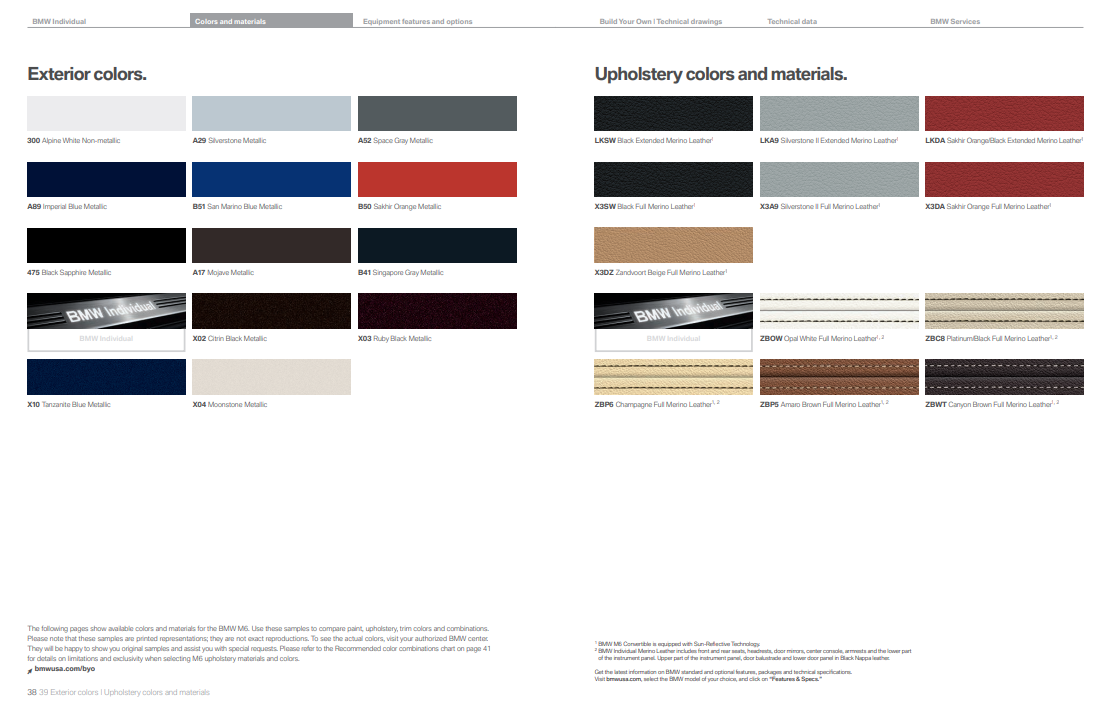
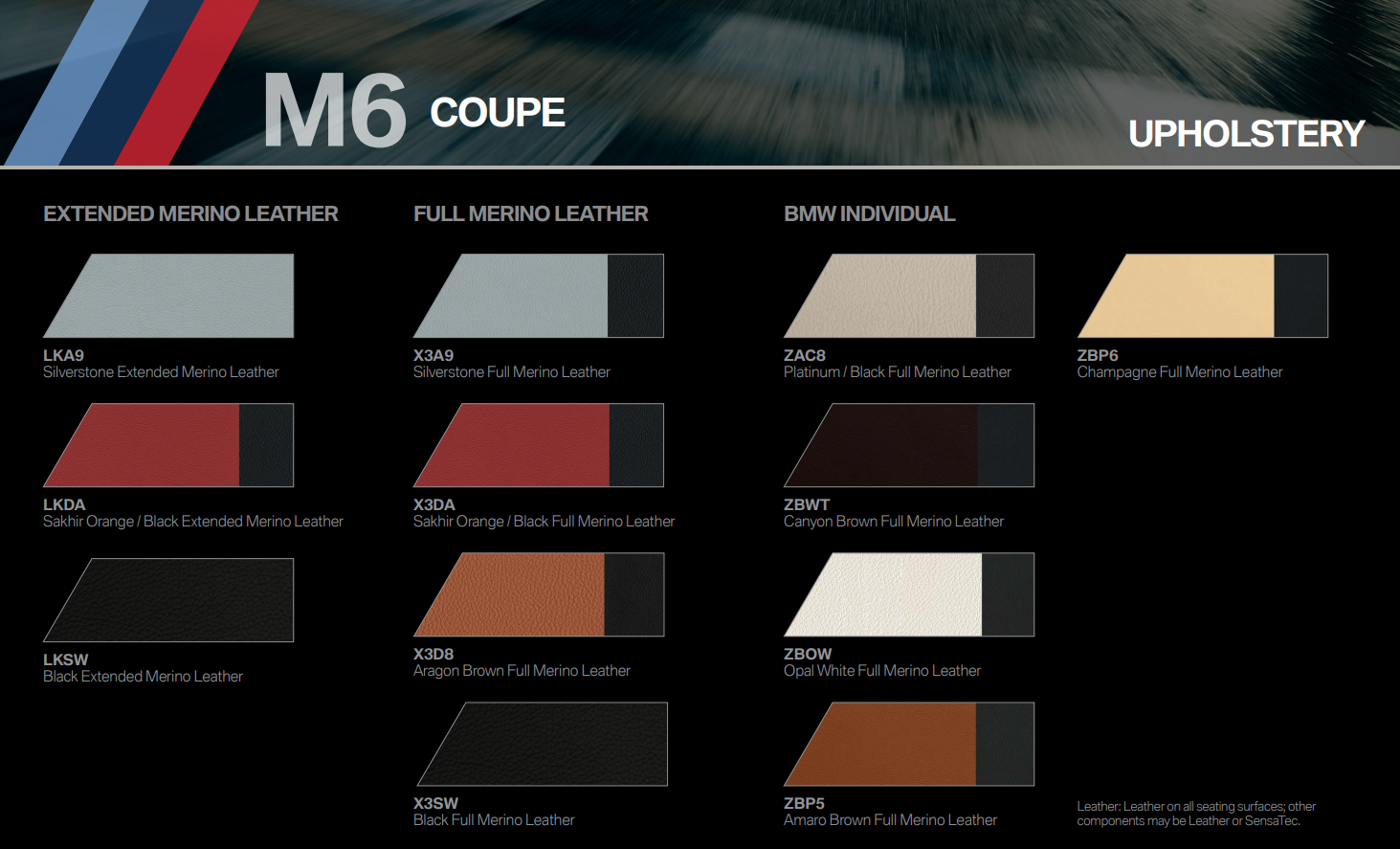
Interior options included the Full Merino Leather Package, which expanded premium leather coverage across the dashboard, door panels, and center console. The Executive Package added heated and ventilated front seats, power rear sunshades (Gran Coupé), soft-close automatic doors, and a head-up display. 

The Bang & Olufsen High-End Surround Sound System was a 1,200-watt, 16-speaker setup with illuminated tweeters for a premium listening experience. For more customization, BMW Individual Interior options offered custom leather colors, Alcantara headliners, and unique trim choices.

Technology and safety options included the Driver Assistance Package, which added lane departure warning, blind-spot monitoring, and a 360-degree camera system. Night Vision with Pedestrian Detection used infrared technology to detect people and animals in low-light conditions. Apple CarPlay was introduced later in production, allowing seamless smartphone integration with the infotainment system.

Exterior customization options included BMW Individual Paint Colors, which offered custom color choices beyond standard options, including Frozen Matte finishes and rare metallic shades. The Shadowline Exterior Trim replaced chrome accents with gloss black trim for a more aggressive look. 

The BMW M6’s extensive options list allowed buyers to configure their cars to their personal preferences. Models equipped with the Competition Package, Carbon Ceramic Brakes, and Individual options tend to be the most desirable on the used market.

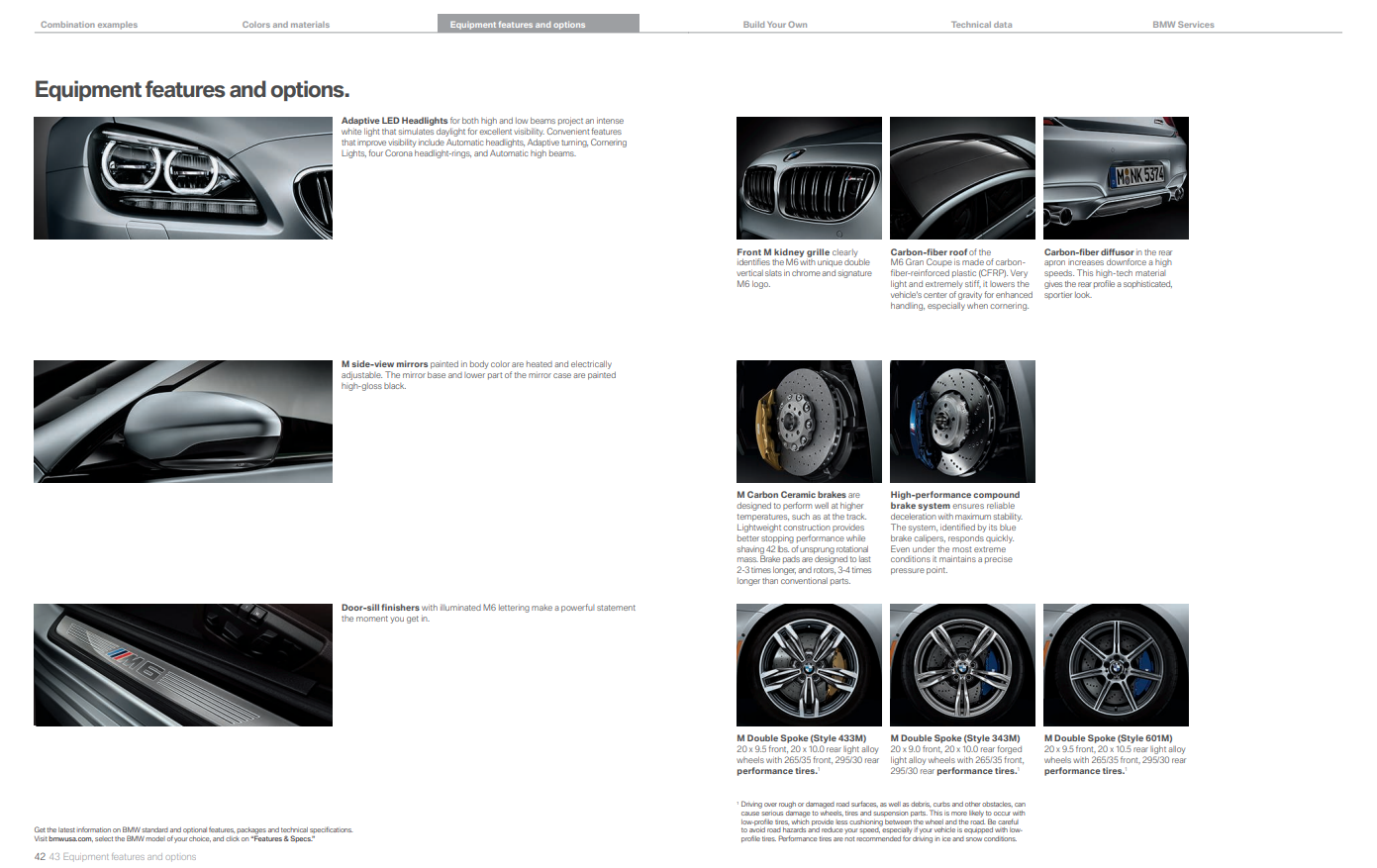
2013 BMW M6 options list

2014 BMW M6 Gran Coupe options list

Key Options

BMW M6 (F12/F13/F06) Generation Price and Value

BMW M6 (F12/F13/F06) Generation to Buy

When it comes to choosing the best BMW M6 (F12/F13/F06) Generation, several key factors should be considered.

For those looking for the best version of the M6, the 2017 model year is a strong choice. As the final production year for the M6 Coupé (F13) in the U.S., it benefits from all the refinements made throughout the generation, including improved technology, enhanced iDrive functionality, and the availability of the Competition Package with 600 hp.

The 2018 model year is also a good option for buyers interested in the M6 Convertible (F12) or M6 Gran Coupé (F06), as it marked the last full year of production for both variants, offering buyers the most refined version of the platform.

In terms of market stability, model years 2012 to 2019 is safe to hack, as long you can find a clean example. 

In addition to model selection, the condition and mileage of the vehicle play a significant role in long-term value and reliability. Well-maintained M6s with full-service records, low mileage, and minimal modifications are more likely to retain their value and avoid costly repairs. The Competition Package is a highly desirable option, as it enhances performance and handling, making it a desirable choice for enthusiasts.

Conclusion

In summary, with a price of around $40,000+, the BMW M6 (F12/F13/F06) Generation remains a solid choice for those seeking a high-performance grand tourer. Its twin-turbocharged V8, aggressive styling, and premium interior set it apart in the segment.

While alternatives like the Mercedes-AMG S63, Audi RS7, and Porsche Panamera Turbo offer similar levels of performance and refinement, the M6 distinguishes itself with its rear-wheel-drive dynamics, sharp handling, and available Competition Package, which pushes power up to 600 hp.

For those looking for a timeless grand tourer, with BMW M engineering, the BMW M6 remains a strong choice. Whether as a Coupé, Convertible, or Gran Coupé, it delivers an exhilarating driving experience while maintaining the refinement expected of a high-end grand tourer.

Car Hacking Shortcuts

  • Look for models equipped with the Competition Package for added horsepower, sharper handling, and stronger resale value

  • Model years 2012 to 2019 are safe for hacking

  • Prioritize well-maintained, low-mileage examples with a full service history, especially for vehicles with the DCT transmission or M Carbon Ceramic Brakes to avoid costly repairs

Source link

Everyone Says I’m Running Away

0


Nomadic Matt looking out over the sparse Sacred Valley in Peru

When I first started traveling, my dad used to ask what I’m running away from with my travels. Another time, a commenter told me to stop running away from my problems and to start living life. “Grow up,” he said.

And, years ago, there was even a blog called “Mom says I’m running away.”

I’m not sure why, but there is this perception out there that anyone who travels long term and isn’t interested in settling down or getting a conventional job must be running away from something.

We travelers are running away from responsibility, being a grown-up, heartache, problems, etc, etc. We are all just Peter Pans refusing to be “adults.”

While American society thinks traveling is something everyone should do at one point, it’s only gap years after college or short vacations that seem to be acceptable. Get it out of your system and come back into The Matrix.

Those of us who lead nomadic lifestyles, or who linger just a bit too long somewhere before reaching that final homestretch, are all too often accused of running away.

Yes, go travel — but not for too long, the world says. Responsible people don’t just travel forever.

We nomads must have awful, miserable lives, or are weird, or have had something traumatic happen to us that we are trying to escape. People assume that we are simply running away from our problems, running away from “the real world.”

And to all those people who think I am running away, I say: you are right.

I am running away.

I’m running away from your idea of the “real” world.

I’m avoiding your life.

I’m running towards everything — towards the world, exotic places, new people, different cultures, and my own idea of freedom. I’m building a life that makes me happy.

While there may be exceptions (as there are with everything), most people who become nomads do so because they want to experience the world, not escape their problems. They are running away from office life, commutes, and weekend errands, and the corporate 9 to 5. They are running away from the strict path society has laid out as “normal.” The one that makes us mindless ants marching to and fro.

We (I) want to experience every culture, see every mountain, eat different food, attend crazy festivals, meet new people, and enjoy different holidays around the world. We want to construct a life that makes us happy on our own terms.

Life is short and we only get to live it once. I want to look back and say I did exciting things and lived life on my own terms, not say I spent my life reading blogs like this during my lunch break while wishing I was doing the same thing.

No one dies saying, “If only I had spent more time in the office!”

As an American, my perspective might be different. In my country, the accepted path is long and narrow: you go to college, get a job, get married, buy a house, have 2.5 children, raise them, and then retire. Only then, after you’ve put in your time, can you enjoy the fruits of your labor. Society boxes you in and restricts your movements to their expectations.

And any deviation is considered abnormal and weird.

People may want to travel, tell you they envy what you do, and say they wish they could do the same thing. But they never do. Few people muster the courage to take the leap, no matter how much their heart pulls them. They are simply fascinated by a lifestyle so outside the norm.

While social media, the rise of digital nomading, and websites like this have made quitting your job to travel the world or teach English in Thailand a little more acceptable, the general attitude is still “follow the path if you want to be normal.”

Well, I don’t want to be normal.

I feel like the reason why people tell us we are running away is that they can’t fathom the fact that we broke the mold and are living outside the norm. To want to break all of society’s conventions, there simply must be something wrong with us. (Maybe they are a little jealous too?)

But life is what you make it out to be. Life is yours to create. We are all chained down by the burdens we place upon ourselves, whether they are bills, errands, or, like me, self-imposed blogging deadlines. If you really want something, you have to go after it.

People who travel the world aren’t running away from life. Just the opposite. Those that break the mold, explore the world, and live on their own terms are running toward true living, in my opinion. We have a degree of freedom a lot of people will never experience. We get to be the captains of our ships.

But it is a freedom we chose to have.

We looked around and said, “I want something different.”

And then we went for it.

It was that freedom and attitude I saw in travelers years ago in Thailand that inspired me to do lead the life I am now. I saw them break the mold and I thought to myself, “Why not me?”

I’m not running away.

No.

I am just running towards my own idea of a normal life.

And I never plan to look back.
 

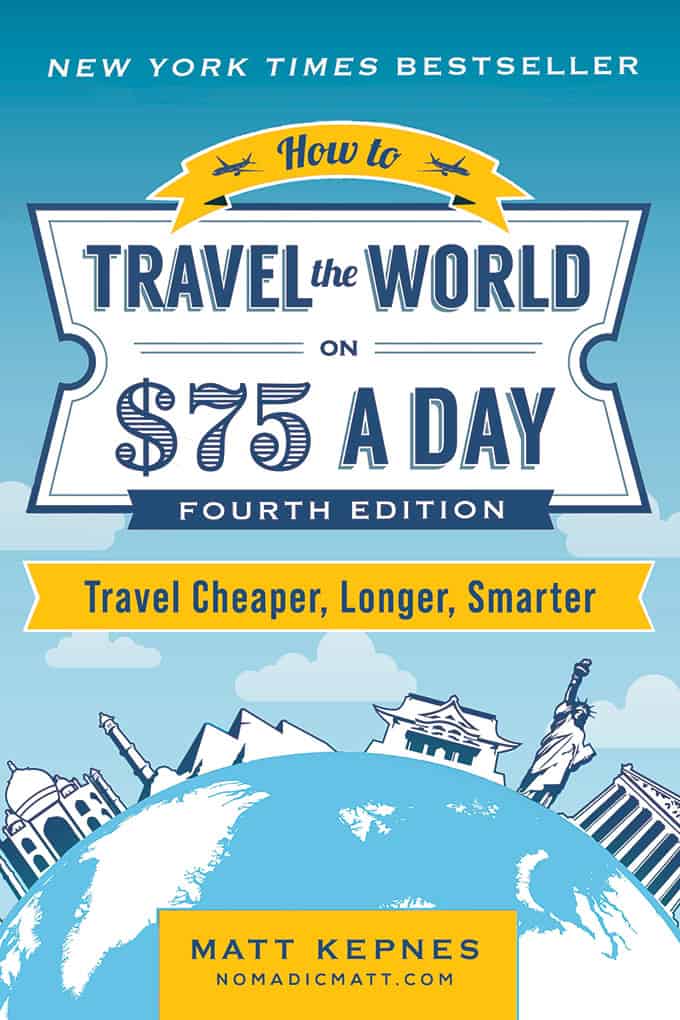
How to Travel the World on $75 a Day

How to Travel the World on $75 a DayHow to Travel the World on $75 a Day

My New York Times best-selling book to travel will teach you how to master the art of travel so that you’ll get off save money, always find deals, and have a deeper travel experience. It’s your A to Z planning guide that the BBC called the “bible for budget travelers.”

Click here to learn more and start reading it today!

Book Your Trip: Logistical Tips and Tricks

Book Your Flight
Find a cheap flight by using Skyscanner. It’s my favorite search engine because it searches websites and airlines around the globe so you always know no stone is being left unturned.

Book Your Accommodation
You can book your hostel with Hostelworld. If you want to stay somewhere other than a hostel, use Booking.com as it consistently returns the cheapest rates for guesthouses and hotels.

Don’t Forget Travel Insurance
Travel insurance will protect you against illness, injury, theft, and cancellations. It’s comprehensive protection in case anything goes wrong. I never go on a trip without it as I’ve had to use it many times in the past. My favorite companies that offer the best service and value are:

Want to Travel for Free?
Travel credit cards allow you to earn points that can be redeemed for free flights and accommodation — all without any extra spending. Check out my guide to picking the right card and my current favorites to get started and see the latest best deals.

Need a Rental Car?
Discover Cars is a budget-friendly international car rental website. No matter where you’re headed, they’ll be able to find the best — and cheapest — rental for your trip!

Need Help Finding Activities for Your Trip?
Get Your Guide is a huge online marketplace where you can find cool walking tours, fun excursions, skip-the-line tickets, private guides, and more.

Ready to Book Your Trip?
Check out my resource page for the best companies to use when you travel. I list all the ones I use when I travel. They are the best in class and you can’t go wrong using them on your trip.


Source link

The Death of Subculture: How Cult Dressing Evolved into Mainstream Culture

0


Joy in Freedom of Expression

Beyond Netflix documentaries and newspaper headlines, in the context of fashion, “cult dressing” refers to a sartorial trope associated with specific subcultures or underground movements, where clothing choices are often used as a form of rebellion, identity or self-expression that is distinct from mainstream fashion. These subcultures could include groups like punk, goth, grunge, skaters or alternative styles that rejected conventional fashion norms. Cult dressing is typically defined by its exclusivity and uniqueness, often showcasing a specific set of aesthetics — such as do-it-yourself (DIY) fashion, obscure designer pieces or unconventional ensembles that signal membership in a specific cultural or social group. This style is usually adopted by those who want to differentiate themselves from the mainstream, often as a form of resistance or individuality.

As fashion becomes more inclusive and accessible, consumers are now able to express their authentic selves without the barriers that once kept certain styles exclusive. This democratisation of fashion means that people from all walks of life can find joy in dressing uniquely, without feeling restricted by mainstream fashion’s norms. The key idea is that these styles were once rare, niche and inaccessible to the broader public, but as fashion becomes more democratised through social media and collaborations between high fashion and mass-market brands, these once “cult” styles are increasingly absorbed into the mainstream, losing some of their distinctiveness and rebellious power.

The Rise of Social Media and the Death of Subcultural Significance

@cynicalneoprincess If last night was anything to go by I guess I can expect a looot of Chappell Roan comparisons over the next few years. But I need everyone to know I was doing the whole white face drag look before I ever knew who she was 😭 . . . . . . . . . #fitcheck #altfashion #altmakeup #gothfashion #clubkid ♬ original sound – ICONIC AUDIO

Fashion has always been a vehicle for self-expression, a tool to communicate identity and beliefs. For years, cult dressing — the hallmark of underground movements, niche subcultures and rebellious countercultures — was a bastion of inclusivity by means of exclusivity, a space where personal style was defined by what was different from the mainstream, a subculture of individuals who found their own sense of belonging amongst outsiders. In 2025, the landscape has shifted dramatically. Social media platforms — particularly TikTok — have democratised fashion, enabling subcultures once confined to the fringes to move into the mainstream, where their distinct styles are appropriated, commodified and mass-marketed causing the lines between what is “underground” and what is commercial to blur. What was once deemed “alternative” is now easily accessible to anyone with a phone and fashion has become a more collective, rapidly changing experience.

To many, the unique essence of subcultures that once defined individuality has been commodified and marketed to the masses. As these styles trickle down to mass-market brands and their consumers, they eventually become mainstream trends losing the very essence of what made them special. What was once a symbol of authenticity — from punk’s safety pins and flannel shirts to the streetwear born from skate culture — becomes diluted when packaged for profit. This results in the erosion of the authenticity these movements once held, leading to a sense of disillusionment in the joy of dressing and the expression of being “uniquely you”. The “proliferation” of these once-unique styles forces us — as fashion consumers — to confront the dichotomy: can adopting elements of a subculture still allow space for true individuality? If not, does this disillusionment affect the very idea of what it means to be “uniquely you”?

The Reconfiguration of Fashion Culture

@noctez.collective blowin’ bubbles… #y2k #outfitinspo #aesthetic #y2kfashion #fyp ♬ son original – ∞

The emergence of TikTok as a global cultural force has transformed the way many consume fashion. With TikTok’s algorithm-driven discovery tools, fashion trends can explode and evolve in a matter of hours. No longer do individuals need to belong to a specific subculture to gain visibility and the “cult” aspect of “cult dressing” is now diluted. In the age of TikTok, niche trends such as normcore, Y2K aesthetics or even specific clothing brands associated with subcultures are consumed and transformed by millions. While this level of visibility is empowering, it also raises the question of whether subcultures can retain their authenticity once they become commercially viable.

Normcore — which initially stood out for its embrace of simplicity as a form of non-conformity — quickly evolved into a mainstream trend. What started as a rejection of ostentation became mass-marketed and adopted by major retailers, making it accessible while maintaining its roots in minimalism. This shift highlights how subcultures — even those rooted in resistance to trends — can find themselves co-opted by the very industries they once challenged.

Similarly, Cottagecore — a style born from a romanticised, rural lifestyle that rejects modernity — draws inspiration from vintage, rural aesthetics with a countercultural edge. Originally a niche, it has seen a surge in popularity, driven in part by platforms like TikTok and Etsy, and compounded to mainstream culture by the popularity of the “Trad Wife” lifestyle trend. This movement — once defined by its “cultish” quality — has grown to see collaborations between indie brands and mass-market retailers like Urban Outfitters, blurring the line between underground and mainstream appeal.

The Y2K aesthetic — rooted in nostalgia for the late 1990s and early 2000s — exemplifies how trends are revived with new intensity in the digital age. Defined by metallics, exposed underwear waistbands over baggy, low-rise jeans and bold logos, this trend has exploded across social media and into the fashion mainstream (re-energised by Diesel, who one could argue was a pioneer of the trend in the early 2000s, showcasing the cyclical nature of fashion as styles make their way back into the spotlight, often evolving yet remaining rooted in their origins), revealing the power of collective memory and viral influence in reshaping past styles for today’s audience.

Finally, streetwear — which once emerged from skate, hip-hop, and punk subcultures — has ascended from its underground roots to become a dominant force in global fashion. Brands like Supreme and Off-White, which were initially part of countercultural movements, now stand at the forefront of high fashion, demonstrating how styles born in rebellion can redefine what is considered mainstream. This shift underscores the fluid nature of fashion, where the lines between subcultures and commercial success continue to blur. There is also an element of nostalgia, cultural relevance and timing at play. Cottagecore, for example, aligns with a collective desire for simplicity and a return to nature amidst digital overwhelm. Similarly, the resurgence of Y2K aesthetics taps into nostalgia — marketing it as a form of self-expression, but often reducing it to a way to commodify memories.

Redefining Individuality in a Collective Fashion Culture

Uniqlo Collab with Marni (left) and Jil Sander (right)

One of the most notable markers of this shift is the increased frequency of collaborations between avant-garde designers and mass-market brands. Labels like Uniqlo, H&M and even fast-fashion titan Zara have long partnered with high-end designers to make their collections available to the masses. Designers with cult followings such as Jil Sander, Comme des Garçons and Alexander Wang have contributed to lines that bring high fashion into affordable retail spaces. This merging of high and low fashion serves to further dissolve the boundaries that once defined the two. These partnerships make luxury design more accessible but also challenge the concept of fashion as an expression of exclusivity. When cutting-edge designs are available at one’s local Uniqlo, it becomes difficult to claim that these pieces — once markers of individuality — are truly unique anymore.

In a time where digital trends dictate what is “in” and fast fashion accelerates production and distribution, personal expression in fashion has become more about what the consumer can access than about being “uniquely you”. The digital age has also accelerated the speed at which these trends evolve, making it harder for any one style to remain “cult” for long. The individuals who originated the trend or belonged to these subcultures, lose the joy of being “uniquely you” and soon move on to the next trend. Subcultural fashion was once about constructing an identity through unique choices — clothes that represented a specific belief, group or idea. Today, that process has been shortened into digestible moments: a TikTok challenge, an influencer partnership or a viral meme. The notion of “individuality” is now framed within the context of a collective cultural moment. The challenge consumers face is how they intend to preserve individuality in a society where cultural trends feel increasingly orchestrated and how brands market this to consumers while still leveraging on market trends and maintaining profit margins.

Luxury Labels, Cult Followings & Designer Reshuffle

Another element of cult dressing in luxury fashion moves away from the underground rebellions and instead taps into an entirely different subculture — one built around an aspirational lifestyle defined by exclusivity. Designers like Jonathan Anderson and Demna tap into this niche by creating collections that attract a specific type of consumer — one who values individuality but also seeks to belong to an exclusive group. These collections embody a unique intersection of personal style and aspirational status.

Jonathan Anderson’s tenure at Loewe — marked by surreal and often bold designs — pushed the boundaries of what was traditionally accepted in high fashion and gave rise to a form of cult dressing that resonated with underground and avant-garde movements. Anderson’s use of unconventional shapes, vibrant colours and unexpected materials brought joy in freedom of expression, aligning with the themes of individuality and rebellion that cult fashion represents. Jonathan Anderson’s creative direction at Loewe exemplified another element of cult dressing — pushing the boundaries of what was considered “fashionable” and mainstream. His work brought seemingly “outlandish” aesthetics to the forefront, often blurring the lines between high fashion and art. Loewe’s bold collections — with their surreal designs, oversized silhouettes and unconventional treatment of materials — resonated with a niche, cult-like following that embraced the rebellious spirit of individuality and avant-garde fashion. As Anderson leaves Loewe in 2025, this departure signals the end of an era where cult aesthetics and non-conventional beauty were embraced by a luxury fashion house. His departure raises questions about the future of outlandish aesthetics in the mainstream, as high fashion increasingly aligns with digital virality and fast fashion trends.

Under Demna’s direction, Balenciaga cultivated a cult following, thanks to his subversive designs that often blurred the lines between high fashion and streetwear. His work resonated with a new generation seeking to challenge fashion’s traditional codes. The brand’s bold, boundary-pushing approach — coupled with its ability to offer both exclusivity (through high price points) and accessibility (through beloved staple pieces like the Triple S sneaker) — turned Balenciaga into a cultural phenomenon. Despite what some may consider a controversial tenure, Demna’s departure from Balenciaga marks the end of an era in which his unique vision transformed the brand into a symbol of both underground rebellion and aspirational luxury. His influence on Balenciaga’s evolution — from its sensationalist product releases to its cult-like appeal — was as divisive as it was marketing magic.

It is also interesting to note that Gucci — during the Alessandro Michele years — similarly honed in on its own legacy of cult status, with his gender-bending, eclectic, maximalist designs that redefined the Maison’s heritage, breaking down traditional notions of menswear resulting in collections that resonated deeply with countercultural movements. As Demna transitions to Gucci, it will be intriguing to see how he navigates and meets the demands of Gucci consumers.

For more on the latest in style and fashion reads, click here.


Source link

5 Best Palm Beach Travel Outfits to Pack

0


As a native Floridian, I’ve explored most of the sandy shores along the 1,350 miles of coastline, from St. Augustine down to Key West. Many out-of-towners don’t realize how much Florida beach towns vary: Each coastal community has its own aesthetic and personality. From its Gilded Age beginnings to its midcentury revival, the glamorous island of Palm Beach has always had an air of old-world sophistication mixed with modern, midcentury simplicity.

When I’m putting together my packing list for Palm Beach, I know that a bathing suit and flip-flops won’t cut it. Half the fun of a trip to Palm Beach is enjoying the island in style: shopping on Worth Avenue, sipping cocktails at The Breakers, and taking coffee breaks in cafes hidden in bougainvillea-draped alcoves. When packing for a Palm Beach vacation, channel a well-traveled, stylish grandmother — think natural, breezy fabrics, sleek yet comfortable ‘60s silhouettes, and playful pops of color. 

Palm Beach fashion is not loud or sparkly like Miami, nor is it so laid back as to call for cut-off shorts. It has a barefoot elegance to it, defined by polished and punchy pastel looks. After all, this is where the Lilly Pulitzer dress was born. Below, I’ve put together five foolproof outfit formulas that will ensure you’re dressed for any Palm Beach occasion, from a breezy shift dress to stylish wide-leg pants.

Outfit 1: Shift Dress + Ballet Flats + Woven Bag

Kenneth Cole Sleeveless Open Back Shift Dress

Nordstrom


Patricia Green Palm Beach Scalloped Flat

Nordstrom


Lucky Brand Zati Jute Small Tote

Nordstrom Rack


As the story goes, the original Lilly Pulitzer shift dress was invented when Pulitzer asked her dressmaker to craft a fabric that would hide the citrus stains she was getting on herself while working at her Palm Beach juice stand. Soon, the playful, busy, bright dress patterns were worn by the likes of Jackie Kennedy, and their appeal spread amongst the Palm Beach community. Today, a simple shift dress, midi or mini, in a lively pattern (floral or palms) or hue (pastels) is a Palm Beach staple. You’ll be comfortable and feel polished, which is ideal for shopping and stopping for lunch. Wear it with comfortable walking flats and accessorize with a woven bag that feels tropical.

Shift Dresses and Skirts

Ballet Flats

Woven Bags

Outfit 2: Striped Tee + White Denim + Sneakers

J.Crew Boatneck Muscle T-shirt

J.Crew


Madewell The Harlow Wide-leg Jean in Vintage Canvas

Madewell


Cole Haan GrandPro Crosscourt Traveler Sneaker

Nordstrom Rack


Exploring Palm Beach on foot or by bike is easy — the Lake Trail makes it easy to get around without getting in a car. If you’re biking and don’t want to wear a dress, then white denim is a crisp, classic staple that can be worn year-round in Palm Beach. A striped top is a great alternative if you don’t like florals and bold prints; it’s a nautical look to mirror Palm Beach’s boating community and wouldn’t look out of place on a sunset sail. You’ll also see stripes on Palm Beach sun chairs and umbrellas, like at The White Elephant Palm Beach (which was named the best hotel in Florida in Travel + Leisure’s 2022 World’s Best Awards). If you’re going to wear closed-toed shoes at the beach, make them simple white sneakers.

Striped Tees

White Denim

White Sneakers

Outfit 3: Flowy Maxi Dress + Gold Sandals + Gold Jewelry

Farm Rio Exclusive Green Fish Top Maxi Dress

Tuckernuck


Rothy’s The Summer Sandal

Nordstrom


Quince 14K Gold Everyday Hoops

Quince


Slim Aarons, one of the most famous high-society photographers of the 20th century, is known for capturing the fashion and fun of Palm Beach galas, parties, and balls. Look to his vintage photographs for inspiration and you’ll notice a sense of elegance with a tropical influence. A flowing maxi dress (bonus points if it’s pink or green) paired with chunky gold accessories reflects the beach town at night. Wear the outfit to dinner at Buccan, cocktails at The Colony, or for sushi at The White Elephant. Don’t be afraid to layer necklaces and bangles.

Maxi Dresses

Gold Sandals

Jewelry

Outfit 4: One-piece Swimsuit + Palazzo Pants + Slides

Madewell Jade Swim Apex One-piece Swimsuit

Madewell


Petal & Pup Hart High Waist Floral Wide-leg Pant

Nordstrom


Steve Madden Boardwalk Slide Sandal

Nordstrom


Poolside culture is big in Palm Beach at the island’s many luxury hotels and clubs. So you’ll want to look and feel confident as you transition from lounging at a private poolside cabana to enjoying drinks at the pool bar. A simple solid-color one-piece swimsuit layered under ‘70s flowy palazzo pants (whether they’re sheer, silk, or a fun palm pattern) will ensure that you feel glamorous.

Swimsuits

Palazzo Pants

Slides

Outfit 5: Linen Set + Espadrilles + Statement Sunglasses

Quince 100-percent European Linen Set

Quince


Eileen Fisher Lee Espadrille Flat

Nordstrom Rack


J.Crew Bungalow Cat-eye Sunglasses

J.Crew


Palm Beach days often start with a long breakfast and flow seamlessly into shopping, sightseeing, and happy hour drinks. A matching linen set is lightweight, breathable, and has that European sensibility that helps an outfit feel comfortable from day to night. Wear it while walking the ornate halls of The Henry Morrison Flagler Museum, browsing the boutiques of Royal Poinciana Plaza, or enjoying an evening aperitivo at The Brazilian Court Hotel. Match a tailored linen vest with trousers or pleated linen shorts in soft pastels, flax, or crisp white. Oversized tortoiseshell or cat-eye frames add instant Palm Beach personality and a pair of espadrilles add to the beachy elevated look.

Linen Sets

Espadrille Flats

Sunglasses

Love a great deal? Sign up for our T+L Recommends newsletter and we’ll send you our favorite travel products each week.


Source link

2025 Ram Power Wagon and Rebel HD defend their mountain

0


  • Mild design tweaks don’t change the off-road Ram trucks’ capabilities
  • Ram Power Wagon still has no direct competitor
  • 2025 Ram Power Wagon costs $74,235 and Rebel HD costs $70,740

The competition woke up and realized there’s room to play in the heavy-duty off-road sandbox. But Ram doesn’t want to give an inch of a segment it has defined for years. 

After the introduction of the Chevy Silverado HD ZR2 and a refresh of the Ford Super Tremor for 2023, the 2025 Ram 2500 Power Wagon and 2500 Rebel HD arrive with their own refresh. Both feature design and technology updates, while the Rebel gets major enhancements to its available turbodiesel engine option.

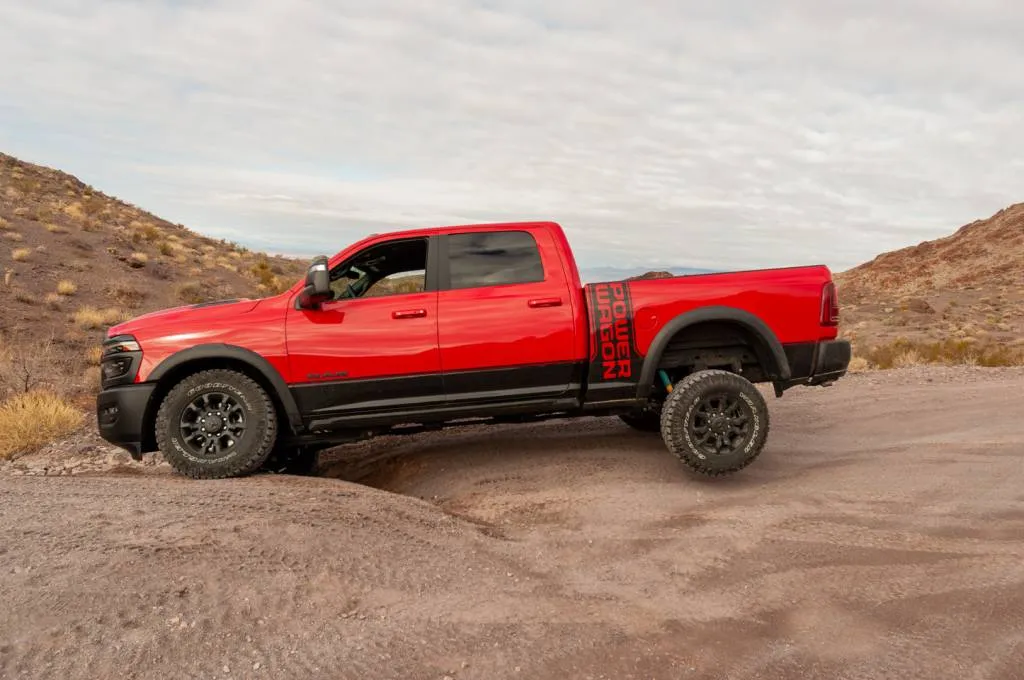
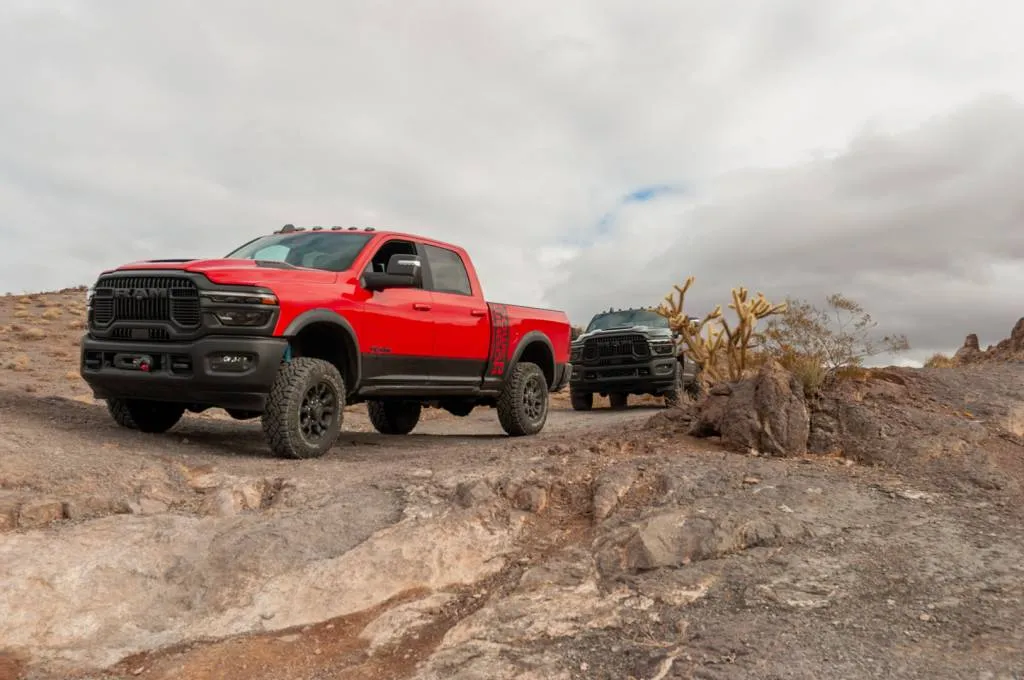
After spending time with the Power Wagon, it’s clear that it still stands alone in terms of off-road hardware in the segment, but the Rebel HD now feels significantly more competitive with its updated turbodiesel engine. However, the Rebel HD’s suspension remains punishing.

2025 Ram 2500 Power Wagon

2025 Ram 2500 Power Wagon

No Ram Power Wagon diesel, Rebel HD turbodiesel upgraded

Unlike the Silverado HD ZR2 and Ford Super Duty Tremor, the 2025 Ram 2500 Power Wagon cannot be optioned with a turbodiesel engine. At least for now, that’s what the Rebel is for.

The 2500 Power Wagon continues to be available only with a tried, true, and at this point old 6.4-liter V-8 rated at 405 hp and 429 lb-ft of torque. It’s fine, but Ford’s 7.3-liter Godzilla V-8 is more modern, more powerful, and more refined. 

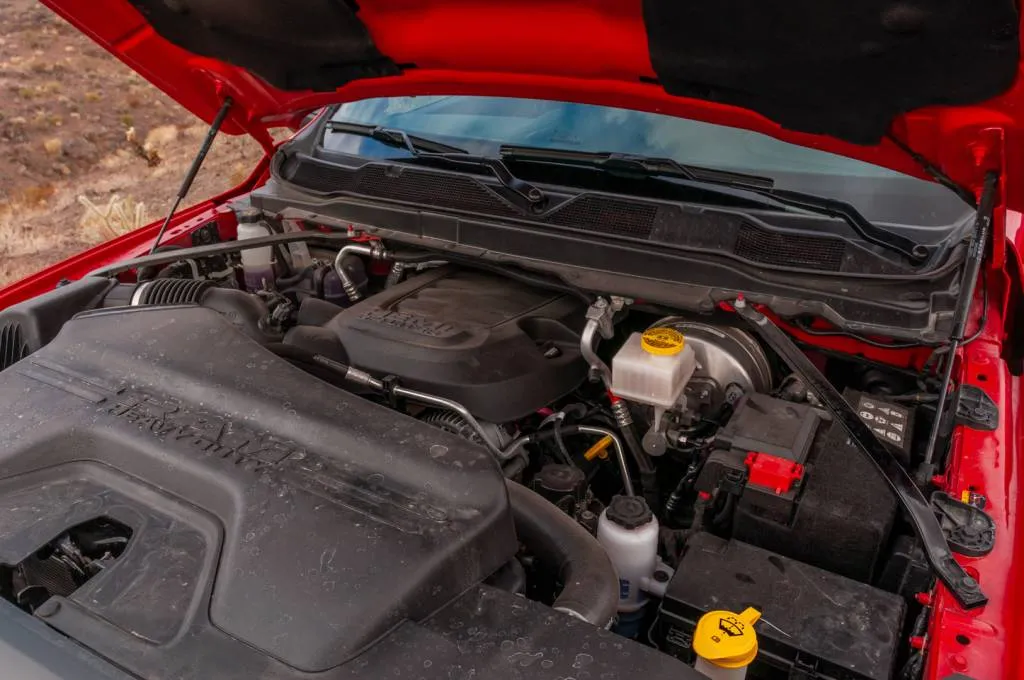
The Rebel HD soldiers on with the gas V-8 as the standard engine, but it’s the optional $12,595 6.7-liter Cummins inline-6 turbodiesel that makes Power Wagon buyers take pause. It’s not the 430-hp rating, but the 1,075 lb-ft of torque that appeals to those who buy their trucks to do work. That’s more than Chevy’s 975 lb-ft but less than Ford’s 1,200 lb-ft. The Cummins turbodiesel has been heavily revised for 2025 with a new turbocharger and intake manifold, glow plugs replacing the old grid heater, a top-loading cartridge-style oil filter, and two top-mounted fuel filters. Ram also ditched the old 6-speed automatic transmission paired with the turbodiesel and replaced it with an 8-speed automatic.

The result of these changes is noticeably quicker acceleration—Ram said 0-60 mph now takes 6.9 seconds versus the outgoing turbodiesel truck’s 8.0-second sprint—quicker cold-starts, and easier maintenance. Just like when paired with the gas V-8, the 8-speed automatic fires off quick, smooth shifts and never gets lost in the shuffle. It’s also slightly less busy than Ford’s 10-speed while towing.

2025 Ram 2500 Rebel HD

2025 Ram 2500 Rebel HD

Is a turbodiesel Ram Power Wagon coming?

It might at some point. Ram Heavy Duty Chief Engineer Doug Killian told Motor Authority the team has heard loud and clear that Power Wagon buyers and owners would like a turbodiesel engine option.

Killian confirmed the substantial updates to the Cummins turbodiesel engine in no way resolved the issues that have, according to Ram, prevented the automaker from shoving the diesel engine into the Power Wagon. Those issues mainly involve the oil pan for the engine not fitting properly with the Power Wagon’s front suspension. The electronic disconnecting front sway bar gets in the way.

But the competition offers turbodiesel engines in their off-road trucks. Killian and his team are aware of the new competition and growing chorus of Power Wagon buyers asking for the engine upgrade. The executive noted there’s no engineering challenge the team couldn’t handle, it just costs money. He stopped short of confirming changes were in development for a turbodiesel in the Power Wagon. So you’re sayin’ there’s a chance.

2025 Ram 2500 Power Wagon

2025 Ram 2500 Power Wagon

2025 Ram 2500 Power Wagon and Rebel HD

2025 Ram 2500 Power Wagon and Rebel HD

Power Wagon remains soft and Rebel punishing

What hasn’t changed at all is how these trucks ride. On- and off-road the 2500 Power Wagon has a borderline plush ride thanks to soft Bilstein off-road shocks designed to crawl rather than haul rocks. The 2500 Rebel? Brutal. The Rebel also has Bilstein dampers, but they are tuned much firmer than the Power Wagon’s as a compromise in the name of capability. That capability comes in the form of towing and hauling capacity. The Rebel can tow up to 17,130 pounds and haul up to 3,320 pounds with the gas V-8. Those numbers increase to 19,890 pounds for towing and decrease 2,450 pounds for payload with the turbodiesel. 

The Power Wagon still only tows up to 10,530 pounds and hauls up to 1,570 pounds because that’s not its mission in life. That allows it to ride so much better. Those softer Bilsteins pay dividends both on- and off-road for ride quality. Riding on 18-inch wheels doesn’t hurt either.

While off-roading in the Old Kingman Highway Recreational area in the desert of Nevada the two trucks set themselves apart twice. The first time was while climbing through some undulations. The Rebel lacks an electronic disconnecting front sway bar and front locker. This led to wheel spin and a wheel in the air. The Power Wagon kept its front tires on the ground and maintained traction. Both made it through the situation, but the Power Wagon did it more easily and with confidence.

2025 Ram 2500 Rebel HD

2025 Ram 2500 Rebel HD

The second was on a few miles of broken gravel roads where I had no issue going much quicker than necessary (ahem) thanks to the Power Wagon’s softer suspension. I lost sight of the Rebel, who’s driver was just trying to keep their fillings securely in their teeth.

The Rebel exists because the Power Wagon couldn’t take on the towing and hauling capabilities of the Super Duty Tremor and Silverado HD ZR2. Ford equips the Super Duty Tremor to tow up to 18,200 pounds via a conventional hitch and 23,000 pounds with a gooseneck trailer. It can also haul up to 4,384 pounds of payload. The Silverado HD ZR2 can tow up to 18,500 pounds and carry up to 3,397 pounds of payload, and it does all that with  advanced technology in the form of Multimatic DSSV dampers that are the most advanced shocks on a production HD pickup truck.

2025 Ram 2500 Power Wagon

2025 Ram 2500 Power Wagon

But it’s the standard front and rear electronic locking differentials, the electronic disconnecting front sway bar, and the standard winch that set the 2500 Power Wagon apart from everything else on the market. No competitor has the front locker or disconnecting front sway bar.

2025 Ram 2500 Power Wagon and Rebel HD

2025 Ram 2500 Power Wagon and Rebel HD

2025 2500 Power Wagon and Rebel look tougher

That’s a kind way of putting it.

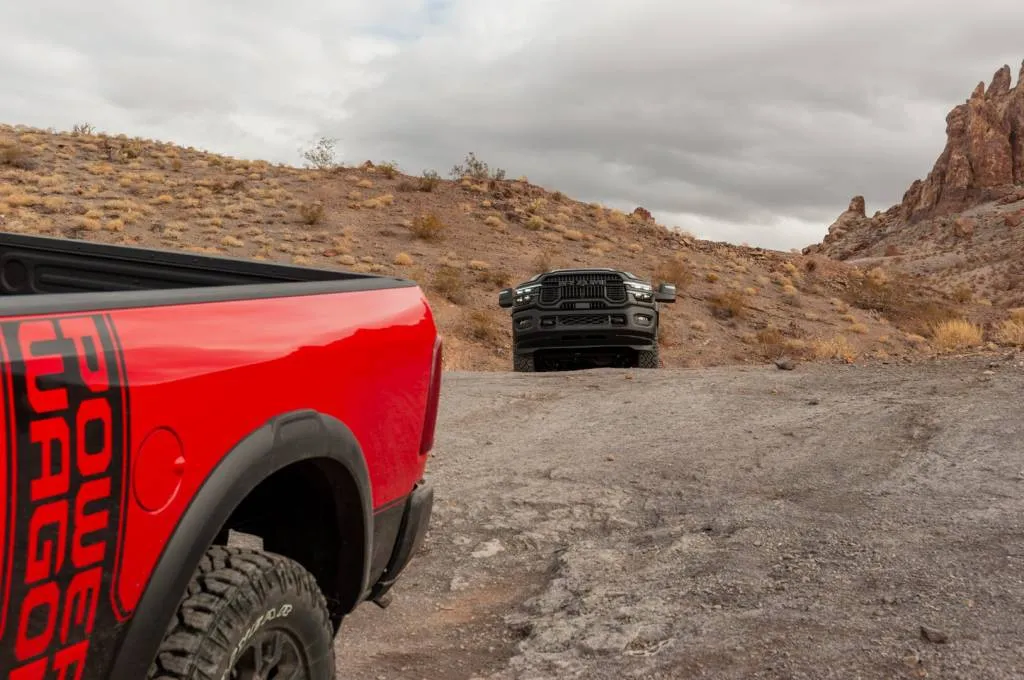
The front of the Ram HD lineup has been revised with updated headlights and grilles. The headlights aren’t actually taller, but they look taller because they are stacked and bisected with trim now. It looks worse in photos than in person, but it still shouldn’t be filed as an upgrade. The grilles are indeed taller, which imposes a more intimidating stance. The Power Wagon and Rebel now have grilles with bars going both horizontally and vertically. It’s a lot to take in.

While the front became busier, the rear was streamlined. The updated taillights are simpler and lose their almost sideways cattle brand turn signal design. The entire lens is now red outside of the reverse lights, and it’s aligned with the updated 2025 Ram 1500’s rear end.

The Power Wagon still rides on 18-inch wheels wrapped in 33-inch all-terrain rubber, while the Rebel rides on 20-inch wheels and 33-inch all-terrain rubber. The promised 18-inch wheels that were to be available on the Rebel at its debut never arrived. Who buys 20s to go off-roading? Ram said 35- and 37-inch rubber still won’t clear the fenders of either of these trucks without rubbing. The Super Duty Tremor and Silverado HD ZR2 both come on 35s. Ford actually modified the front suspension for the 2023 update to ensure 37s would fit without rubbing on the Super Duty’s suspension.

2025 Ram 2500 Power Wagon

2025 Ram 2500 Power Wagon

2025 Power Wagon and Rebel receive minor interior updates

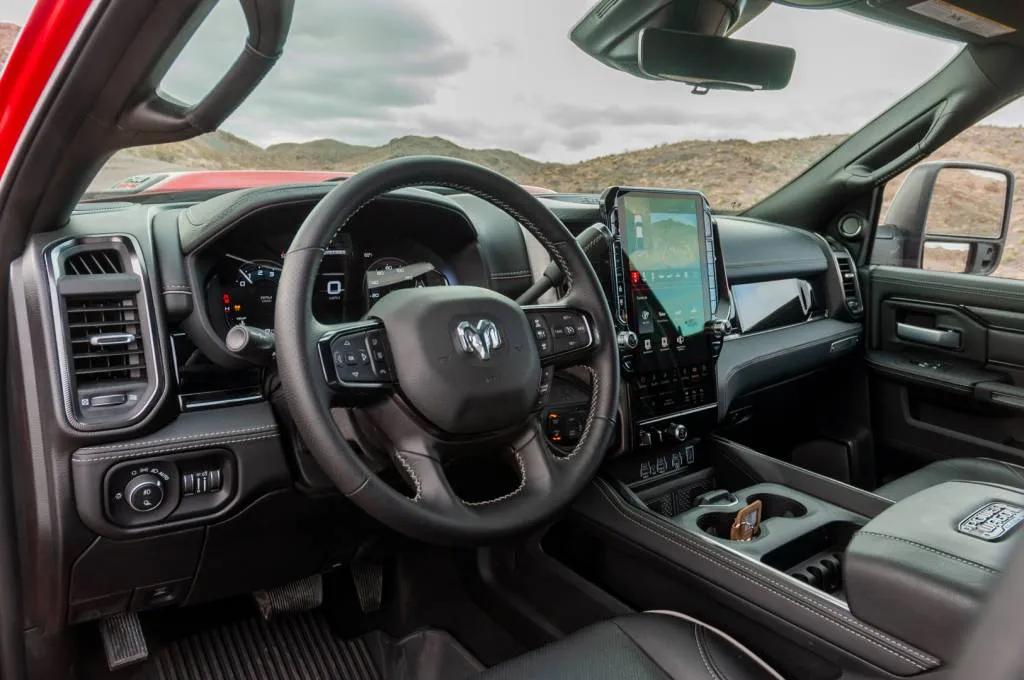
Anyone who’s been inside a Ram HD will feel right at home in the updated 2025 trucks. Very little has changed. That’s not a bad thing because these trucks have the nicest interiors in their segment, by a mountain pass or two.

While the 12.0-inch touchscreen remains standard, Ram now offers a 14.5-inch touchscreen upgrade in both the 2500 Rebel and Power Wagon. The larger screen incorporates what would be some hard buttons and makes them digital buttons. It seems somewhat useless, but it also harms nothing. A 12.3-inch digital gauge cluster stands pat, and thankfully has a turboboost gauge when the turbodiesel is equipped in the Rebel 2500 unlike the Ram 1500 with a turbocharged inline-6 gas engine.

A rather large change for 2025 is the gear selector. Every Ram HD now has a column-mounted electronic gear selector. Previously, every truck equipped with the gas engine had a dash-mounted rotary shift knob while only turbodiesel trucks had a column-mounted shifter. Ram said customer feedback—sounds like loud complaining to us—drove the change. Rejoice column shifter fans. You won.

2025 Ram 2500 Power Wagon and Rebel HD

2025 Ram 2500 Power Wagon and Rebel HD

2025 Ram 2500 Power Wagon and Rebel struggle with value

The 2025 Ram Power Wagon costs $74,235 including an absurd $2,095 destination charge. That’s $4,105 more than a 2024 model for what amounts to mostly the same truck.

The story is the same with the 2025 Ram Rebel HD, which now costs $70,740 with the gas engine. That’s up $1,020 from 2024. Factor in another $12,595 for the turbodiesel, which is kind of the point of the Rebel, no?

The real issue is that a Ford Super Duty Tremor costs only $61,880 with a more modern gas engine. Slapping the $12,995 high-output turbodiesel in the Tremor brings the total to $74,305, which is about what a Rebel’s going to cost without a turbodiesel after an option or two.

Ford is severely undercutting Ram’s pricing, and really sticking it to the HD off-road pioneer once a turbodiesel’s factored into the equation. It also rides on 35s out of the box.

Despite the mildest of updates to keep pace with the fresh-face competition, Ram’s 2500 Power Wagon can still do things no competitor can, or can at least do them more easily. The Power Wagon stands alone with its hardware. The 2500 Rebel, on the other hand, has some opportunities ahead for a softer suspension, smaller wheels, and larger tires.

Ram paid for travel, lodging, and tacos in the desert for Motor Authority to bring you this first-hand review.


Source link

Luxury Spirits Brands Recalibrate Strategies to Appeal to a New Generation of Consumers

0


The (New) Joy of Drinking

As consumer preferences evolve towards more meaningful drinking rituals that align with their values, luxury brands draw on their centuries-old traditions, expert craftsmanship and reinterpreted packaging to create a narrative of exclusivity, celebration and heritage. Through clever packaging, collaborations with artists and designers, and the integration of rich brand stories, these brands are not only selling a product but crafting a full sensory experience.

Millennials may be all too familiar with the excitement of noisy bars and lively clubbing. However, younger consumers are now reshaping the drinking landscape with their own habits and preferences. It is important to note that many Gen Z consumers of legal drinking age today came of age during the COVID-19 pandemic. As a result, crucial years that might have been spent in hometown bars and college clubs were instead replaced with more personalised experiences that align with their values and preferences. In essence, Gen Z tends to favour comfort over the traditional clubbing scene. At the same time, older millennials — weary of the clubbing scene and increasingly feeling disconnected from the median age of today’s club-goers — are losing interest. This shift in consumer behaviour points to two significant demographics of alcohol consumers moving away from traditional nightlife. This trend is further supported by the rising number of nightclub closures and the increasing demand for exclusive, elevated drinking experiences — whether at home or in sophisticated venues.

Packaging and Presentation

Enter luxury alcohol and spirits brands that recognise this shift. In 2025, the joy of drinking extends beyond the alcohol itself — it is the entire experience. Luxury brands design packaging, glasses and even serveware to elevate the drinking experience. It is about understanding the consumer — they enjoy posting on social media, hosting private gatherings and taking up mixology as a hobby, which makes them place a strong emphasis on the art of presentation. This is where brands come in. The bottle itself becomes part of the experience, often crafted to be a work of art. Johnnie Walker’s Blue Label features an ultra-premium bottle design that enhances the exclusivity of the product — making it an ideal gift and status symbol — linked to personal achievement and milestones.

Take Royal Salute’s partnership with fashion designer Harris Reed for The Harris Reed Edition, the latest release in The Fashion Collection. The collaboration merges the theatricality of Reed’s gender-fluid designs with Royal Salute’s heritage of craftsmanship. Reed — known for his dramatic feather headpieces — reinterpreted the whisky’s regal identity by incorporating this signature motif onto the flagon, creating a striking visual connection between couture and craft. More than just a design flourish, the whisky itself reflects Reed’s influence — with a bespoke 21-year-old blend co-created at Strathisla Distillery, showcasing sherry-matured Braeval and American oak-aged Glenburgie for a rich, complex palate.

Similarly, Hennessy X.O x Kim Jones blurs the lines between fashion and fine spirits. The collaboration with the renowned designer includes a sculptural Masterpiece Decanter, produced using 3D printing technology and hand-finished to mirror the warm hues of aged eaux-de-vie. Meanwhile, the Hennessy X.O Limited Edition offers a “ready-to-wear” interpretation, wrapped in an aluminium second skin that evokes the fluid drapery of couture. Beyond aesthetics, the collaboration reinforces Hennessy’s legacy of craftsmanship, rooted in its pioneering Extra Old cognac created in 1870. These collaborations tap into a desire for exclusivity and artistic expression, turning a bottle of whisky or cognac into a collector’s item and a cultural statement. By intertwining fashion and spirits, brands are crafting immersive experiences that elevate luxury drinking beyond taste — offering a story, a vision and a tangible piece of artistry.

There is something to be said about the popularity of limited editions and collectibles. In the fashion industry, the rise of collectible fashion paraphernalia highlights a shift in how consumers approach their purchases and this trend extends into the world of luxury spirits. Historically, luxury alcohol brands were symbols of wealth, statu, and exclusivity. However, with the growth of accessible luxury and the expansion of premium spirits to a wider market, brands have had to innovate to maintain their allure. Enter the collectible culture — an accessible entry point for consumers who may not be able to afford a full bottle of a brand’s signature expression but can indulge in limited-edition releases, miniature bottles or bespoke packaging that serve as gateways to the luxury world of fine spirits.

Venues & One-Of-A-Kind Experiences

Luxury spirits brands are moving beyond the bottle, reshaping drinking culture by elevating how and where premium alcohol is enjoyed. Traditionally, aged whisky and fine spirits were reserved for connoisseurs, sipped in quiet refinement rather than as part of a lively social scene. In contrast, modern drinking habits — especially in Asia — lean towards mixology, experiential pairings and a more interactive approach to luxury. Those who consume luxury spirits in clubs and nightlife venues rarely opt for high-priced aged whiskies, instead favouring more accessible, blended spirits or highballs. For the average consumer, high-priced aged whiskies are rarely the drink of choice, with partygoers opting for cheaper, easy-to-mix spirits that prioritise volume over nuance. Meanwhile, true whisky appreciation is shifting towards intimate, curated experiences that reflect personal taste, craftsmanship and provenance. In other words, they appreciate the craftsmanship behind a fine whisky rather than drowning it in cola.

This is where brands like The Macallan and Roku Gin are stepping in, redefining the luxury drinking experience. Instead of merely selling premium spirits, they are crafting immersive environments where consumption becomes a ritual, from art-driven whisky houses to seasonal omakase pairings and bespoke cocktail collaborations. These initiatives cater to an audience that values storytelling, heritage and exclusivity — drinkers who appreciate a personalised experience rather than simply mixing a fine single malt with cola. By creating spaces that celebrate both craftsmanship and culture, brands are ensuring that luxury drinking is not just about what is in the glass but about the entire journey surrounding it.

It is not just about understanding consumer preferences but staying ahead of them — offering experiences and innovations they never realised they wanted. Tapping into the regional market in Asia, The Macallan opened the world’s first The Macallan House at Singapore’s Raffles Hotel in 2023. Designed by acclaimed architect Jamie Fobert, the 3,000 sq ft space pays homage to The Macallan’s storied legacy, with copper walls symbolising its distinctive stills and artistic collaborations that bring its whisky-making journey to life. Local creatives — such as industrial designer Nathan Yong and textile artist Tiffany Loy — contribute bespoke installations that reflect the brand’s deep connection to nature. Visitors can explore exclusive whisky collections, engage with interactive elements like the “Amberometer” and enjoy seasonal cocktail menus at a bar crafted from stone sourced from Jerez, the home of The Macallan’s sherry casks. More than just a retail space, The Macallan House serves as a dynamic hub for discovery, celebrating nearly two centuries of excellence in whisky-making.

2025 sees the return of Roku Gin’s Sakura Bloom 2025 Edition. The brand transforms Japan’s fleeting hanami season into an immersive drinking experience. More than just a limited-edition release, this iteration is a masterful blend of craft and culture — its delicate floral profile is housed in a bottle adorned with a washi-paper label by renowned Japanese artist Eriko Horiki, while Takeshi Ohgushi’s ethereal brushwork brings the spirit of spring to life. Roku’s vision extends beyond the bottle. The brand has redefined how drinkers engage with luxury spirits, turning consumption into a ritual.

At AMI Patisserie, the Craft with Bloom Omakase Experience offers an exquisite intersection of mixology and gastronomy, pairing Roku’s nuanced botanical profile with Japanese-European pastry artistry. Elsewhere, a Roku Gin Bar Partnership sees some of Singapore’s most celebrated bars — such as Nutmeg & Clove and Neon Pigeon — reinterpreting the Sakura Bloom Gin in limited-edition cocktails, while an interactive Grocery Bar Activation brings artisanal mixology to an unexpected setting, inviting drinkers to craft their own Roku-infused creations. With these activations and experiences, Roku demonstrates that luxury drinking is not just about what is in the glass — it is about the entire experience.

Brand Storytelling & Communicating Craftsmanship

With the help of social media, brands are connecting directly with consumers, whether through targeted marketing campaigns or by opening their warehouse doors to provide a behind-the-scenes look — the latter being another part of how brands provide a consumer experience. Luxury liquor brands like Macallan whisky and Hennessy cognac boast deep-rooted histories that span centuries. These brands weave their rich legacies into their branding, creating a narrative that allows consumers to drink not just a spirit, but a piece of tradition. Heritage is conveyed through bottle designs, production methods and the use of vintage barrels that have aged for decades. This adds a layer of exclusivity that typically appeals to a niche demographic of connoisseurs who want to own a piece of history. For young millennials or Gen Z consumers, this likely plays a role in buying something for a family member on a special occasion, rather than changing their own consumer habits. Discovering that whisky is stocked in one of the oldest surviving warehouses in the Isles of Scotland may not change a consumer’s opinion on the taste, but the story behind the bottle and its packaging has the potential to play a significant role in the gifting market. Take Glenfiddich, for example, which highlights its legacy of family-owned craftsmanship and its ongoing commitment to traditional distilling methods, making every bottle a testament to its long history.

Then you have The Macallan, which recently released Folio 8 — a limited-edition whisky that celebrates the brand’s rich history and one of its most unforgettable creative campaigns from the 1980s, “The Colossus of Nose.” This release is a tribute to this highly recognised advertisement, which cleverly alluded to the whisky’s powerful aroma and brings the campaign to life with a beautiful book-shaped box containing anecdotes, drawings and photographs. The Folio 8 whisky itself is crafted using the finest European sherry-seasoned oak casks and features a complex and rich flavour profile. The edition’s terracotta color is a nod to the roof tiles of Jerez de la Frontera, linking it to the Macallan’s origins. The combination of rare craftsmanship and the evocative storytelling behind Folio 8 illustrates how luxury brands are increasingly drawing on their heritage not just to craft a fine product, but to create an immersive experience that appeals to both seasoned connoisseurs and younger consumers, making every bottle a meaningful piece in the brand’s storied legacy.

Heritage is also communicated through bottle designs, production methods and even the use of vintage barrels that have aged for decades. This adds a layer of exclusivity that appeals to consumers who want to own a piece of history. The power of storytelling goes beyond heritage. Personalisation and customisation are also shaping modern drinking habits, allowing consumers to feel a deeper sense of ownership over their choices. However, it is worth noting that narratives alone do not compel young people to drink. Fashion writer Valicia Lee, 25, says, “When shopping, I would usually buy a brand I recognise. If I wanted to try something new, I would go to a bar.” Accurately communicating legacy and brand storytelling helps with brand association. Dom Pérignon and Veuve Clicquot champagne, for instance, has become synonymous with life’s celebrations, from weddings to major achievements. These drinks are often purchased not just for consumption but to signify a moment of joy, accomplishment or indulgence.

Celebrity Influence

Many luxury brands are recognising the power of celebrities and leveraging social media influencers to promote their products in ways that resonate with younger consumers. Kendall Jenner founded 818 Tequila in 2020 with the aim of revolutionising the tequila market by focusing on sustainability, transparency and innovative marketing strategies. Despite facing criticism for cultural appropriation, 818 has enjoyed commercial success and even won awards. In 2018, Ryan Reynolds became a co-owner of Aviation American Gin — a Portland, Oregon-based gin company. In August 2020, Diageo, the world’s largest spirits manufacturer, acquired Aviation American Gin along with three other spirits brands in a deal worth up to USD 610 million. Reynolds remained the face of the brand after the sale, agreeing to continue as its ambassador for the next 10 years while retaining an ongoing ownership interest. Younger consumers — particularly millennials and Gen Z — are increasingly driven by personal connections to brands, which include the values, transparency and storytelling behind the products. This shift from traditional advertising to influencer-driven marketing is a direct response to the changing way younger consumers interact with brands — they seek relatability and a connection with the personalities behind the products.

Raising the Bar

Speaking exclusively to LUXUO, Jonathan Ng, mixologist, luxury alcohol connoisseur and founder of KIMIA Mixers, shares his thoughts on the evolving tastes of younger consumers. He acknowledges that this demographic is increasingly drawn to brands that align with their personal values, seeking out experiences that reflect those values. These values are often most evident when they come to life in meaningful experiences. Jonathan points out a growing trend toward “cultural creativity” (文创) — a term popular in China, noting that many Chinese brands are leveraging this concept in their marketing. This trend blends heritage — sometimes driven by a nostalgic, yet misplaced, reverence — with modernity. He cites the milk tea brand CHAGEE, which incorporates traditional elements into its branding and merchandise, while positioning itself as a youthful, trendy brand. Furthermore, Jonathan observes that Gen Z is more open to experimenting with craft and artisanal products that are free from preservatives and artificial sweeteners — like KIMIA mixers. These products not only satisfy their desire for authenticity but also offer the opportunity to become mixologists themselves, creating delicious drinks while enjoying the experience of crafting something unique.

Curious to get the perspective of a Gen Z consumer, LUXUO reached out to 24-year-old writer Max Sin, who shares his thoughts on the current dynamics of drinking, alcohol and nightlife. “We still recognise that drinking and nightlife are very much status symbols,” he says. “When we partake in these experiences, it’s often from the perspective of a consumer.” Max notes that there are clear divisions within this landscape, with some consumers opting for the lowest-tier options, such as inexpensive beer towers, while others frequent high-end bars atop skyscrapers. He also points out a subset of people who reject this consumerist culture altogether, preferring to host house parties instead. But Max is quick to remind us that even this preference comes with privilege, as it is often the wealthy who can afford the luxury of entertaining at home. “The ‘low’ version of this would be drinking at a playground or beneath your HDB,” he laughs.

Max argues that the true rejection of the high-low dichotomy in nightlife comes through the speakeasy, where consumption is more of an exclusive, gatekept experience. “The issue now,” he adds, “is that ‘normies’ have realised that gatekept places sell, so every bar is marketed as a ‘hidden gem’ or ‘cosy speakeasy.’ It’s just another mass-market product now.”

However, it is crucial to note that narratives alone do not compel young people to drink, much like how a fashion collection’s narrative alone does not kick off a trend — it is the personal connection and story behind the piece that creates a lasting appeal. Just as sourcing vintage clothing is about finding unique pieces with character, young consumers are increasingly drawn to alcohol brands that offer authenticity, craftsmanship and values they can resonate with.

However, it is crucial to note that narratives alone do not compel young people to drink, much like how a fashion collection’s narrative alone does not kick off a trend — it is the personal connection and story behind the piece that creates a lasting appeal. Just as sourcing vintage clothing is about finding unique pieces with character, young consumers are increasingly drawn to alcohol brands that offer authenticity, craftsmanship and values they can resonate with.

For more on the latest in alcohol and luxury spirits stories, click here.


Source link

How to Preserve Travel Memories with a Holiday Photo Book

0


Travel memories fade with time, but photos bring them back to life. Turning these snapshots into a personalized photo book ensures they stay organized and cherished.

From choosing the best pictures to crafting meaningful layouts, every detail matters. Whether it’s sunsets from Santorini or family fun at Disney, this guide helps preserve those moments creatively.

Keep reading for practical tips on transforming your vacation images into a stunning holiday photo book!

1. Gather Your Favorite Travel Photos in One Place

It could be family moments from a national park or cozy snapshots of last year’s hotel staycation… Some pictures deserve a special place!

Start by collecting photos stored across devices like phones, cameras, and cloud accounts. Look for images that highlight emotion or tell a story – group shots at landmarks or candid street scenes work beautifully. Organize these into folders to save time later when designing your photo book.

2. Explore Tools for Designing Your Photo Book

Yes, you can get a professional to design one for you. But a DIY approach helps save costs while giving your album a personalized touch. Enter photo book design tools!

Platforms like Shutterfly or Mixbook simplify layout creation with drag-and-drop features. For sleek, professional results, they help you create albums in various options. You can go for the ones with a flat-lying design that allows panoramic spreads without interruptions in the centerfold.

With a great tool, it’s easy to blend elegant presentation with durability, making them ideal for showcasing standout vacation moments effortlessly.

Photo book
Photo book

3. Pick a Theme That Matches Your Vacation’s Mood

The essence of your trip sets the tone for your photo book. Think beyond generic designs – focus on themes that reflect what made it special.

A tropical getaway might inspire vibrant colors, while muted tones suit snowy landscapes. Also, photos from a green weekend on the Jurassic coast would pair beautifully with earthy palettes and natural motifs.

Choosing a theme tied to the destination enhances storytelling and creates cohesion throughout your design.

4. Sort Pictures to Tell a Clear Story

An organized sequence makes your photo book more engaging. Avoid clutter by focusing on quality over quantity.

Start with the beginning of your trip, like departure scenes or first-day excitement. Gradually move through key moments – exploring landmarks, trying local cuisine, or quiet evenings in unique accommodations. End with farewell shots or final reflections.

Group similar images together for visual harmony while keeping the flow logical and easy to follow for anyone viewing it.

5. Plan the Layout Before You Start Editing

A clear layout creates a polished look for your photo book. Balance is key – mix full-page images with smaller grouped ones to keep variety without overwhelming the viewer.

Leave some white space to let photos breathe, and consider placing panoramic shots across two pages for dramatic impact before adding finer design details later.

Photo book
Photo book

6. Add Personal Touches Like Captions and Quotes

Photos tell a story, but captions and quotes add depth. Include descriptive text for context or share a funny moment behind the picture.

Highlight meaningful details like locations, dates, or emotions captured in the shot to create a connection that makes your travel memories even more vivid and personal.

7. Select High-Quality Materials for Long-Lasting Keepsakes

Want your travel mementos to last for generations in pictures? Well, beyond the art of taking great travel photos, the secret lies in the material you pick for the pictures and album.

Opt for durable, archival-quality paper and sturdy bindings that resist wear over time.

Matte or glossy finishes can enhance photos while protecting them from fading, ensuring your memories stay vivid and intact.

Preserving travel memories through a photo book transforms fleeting moments into timeless keepsakes.

With thoughtful planning and quality design, your adventures stay beautifully captured for years to come.

  • Travel Dudes

    I’m sure you’ve had similar experiences I had whilst traveling. You’re in a certain place and a fellow traveler, or a local, tip you off on a little-known beach, bar or accommodation. Great travel tips from other travelers or locals always add something special to our travels. That was the inspiration for Travel Dudes.


    View all posts


    I’m sure you’ve had similar experiences I had whilst traveling. You’re in a certain place and a fellow traveler, or a local, tip you off on a little-known beach, bar or accommodation. Great travel tips from other travelers or locals always add something special to our travels. That was the inspiration for Travel Dudes.


Source link