Porsche will offer gas and hybrid powertrains across all segments well into the next decade
For the Macan segment, Porsche is evaluating a new SUV with gas and hybrid powertrains
The new SUV is being considered for launch toward the end of the decade
It wasn’t long ago that Porsche targeted 80% of sales to be electric vehicles by 2030, but slowing growth in demand for battery-powered vehicles over the past year has led the automaker to abandon that target.
Late last year, Porsche said that it would continue selling gas and hybrid vehicles “well into the next decade.” Then, on Wednesday, the automaker said it will offer gas and hybrid powertrains across all of its segments.
This statement is significant because it means Porsche will now develop new gas and hybrid models for the compact SUV segment, where the Macan sits. Originally, the automaker had planned to transition the segment to EV-only.
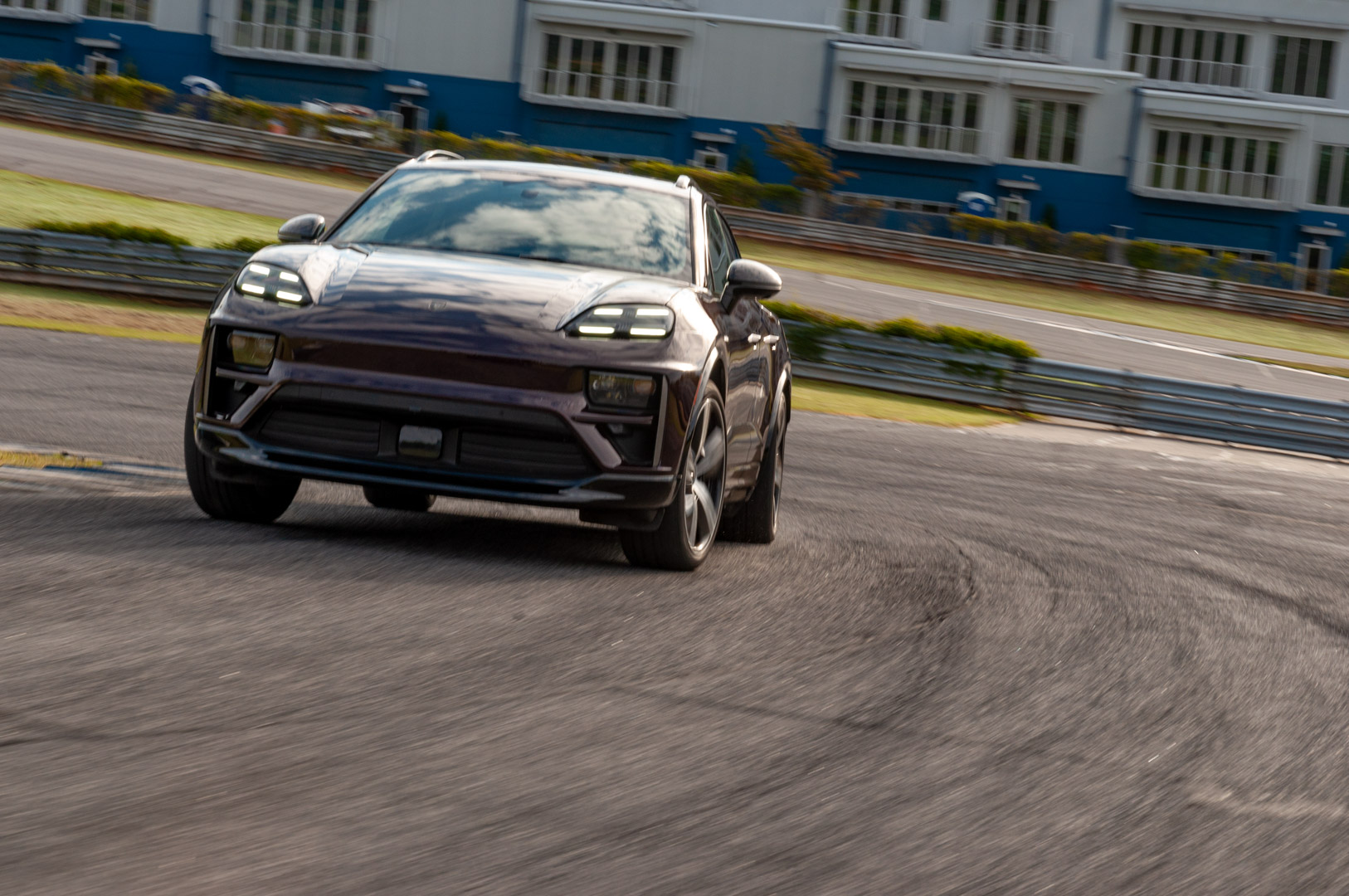
Porsche also clarified that it won’t keep updating the current gas-powered Macan, as it plans to do with the Cayenne once an electric Cayenne launches next year. Additionally, the company won’t add gas engines to the electric Macan, despite recent rumors. The current gas Macan is scheduled to end production in 2026, after which the Macan nameplate will be exclusively used for EVs, Porsche has confirmed. Instead, the automaker said it is evaluating a new SUV in the Macan segment with gas and hybrid powertrains, targeted for launch toward the end of the decade.
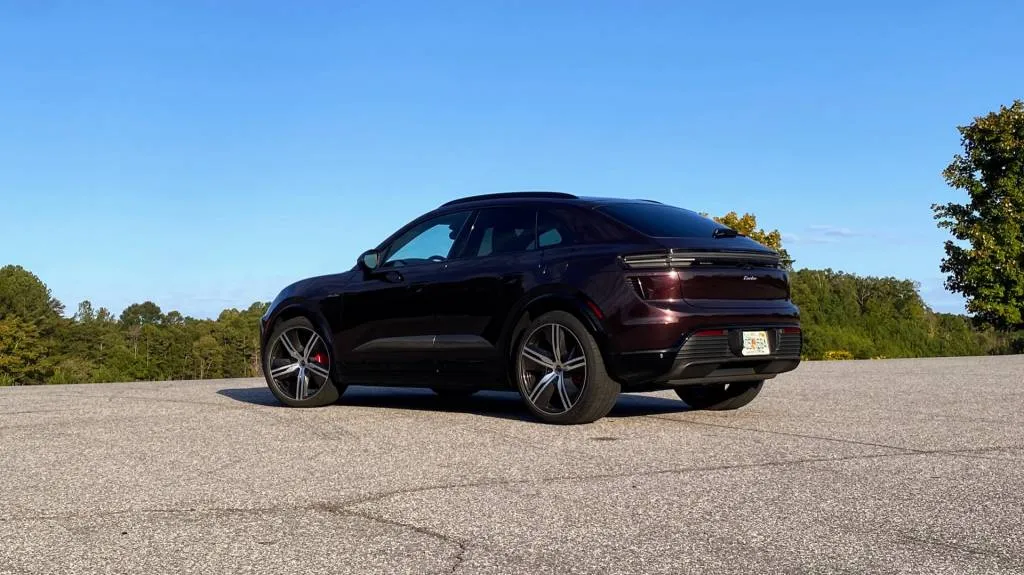
2024 Porsche Macan Electric
Rumors suggest the new SUV could be developed on a version of Volkswagen Group’s Premium Platform Combustion (PPC), which underpins the latest Audi Q5. This move wouldn’t be unusual for Porsche, as the original Macan was developed on a shared platform with the Q5 at the time.
The electric Macan started deliveries last fall and reached 18,278 units by the end of 2024. Gas-powered Macan deliveries totaled 64,517 units for the full year. The combined total of 82,795 units marked a 5% decline from 2023’s result.
In the sports car segment, Porsche has confirmed that the next-generation 718 will be fully electric, but it did not specify whether gas and hybrid alternatives are planned. This suggests the 911 may become Porsche’s only gas- and hybrid-powered offering in the sports car segment once the current gas-powered 718 ends production.
Lexus has updated its RZ electric compact crossover for the 2026 model year
Among the updates is a new RZ 550e F Sport flagship model, which is rated at 402 hp
The F Sport model also introduces a system that simulates gear shifts
Toyota on Wednesday introduced several new and updated electric vehicles, including an expanded Lexus RZ electric compact crossover lineup featuring a new RZ 550e F Sport flagship model.
The updated RZ will arrive in the U.S. later this year as a 2026 model, with market-specific details to be announced closer to the start of sales.
At the global reveal, which took place in Brussels, Belgium, Lexus said that the RZ 550e F Sport packs a dual-motor all-wheel-drive powertrain rated at 402 hp, nearly 100 hp more than the current RZ lineup’s top output. Lexus also said it fine-tuned the damper and spring settings to accommodate the extra power.
The RZ 550e F Sport also introduces simulated gear shifts designed to enhance driver engagement. Lexus calls this system Interactive Manual Drive, and said it allows the driver to shift up and down through a virtual 8-speed transmission using paddle shifters behind the steering wheel. Toyota previously demonstrated a system that included a gear lever and clutch pedal, though that setup has not been implemented here.
2026 Lexus RZ
Interactive Manual Drive functions similarly to Hyundai’s e-Shift system in the rival Ioniq 5 N, using real-time generated feedback through the accelerator and engine sound simulation to mimic gear changes in a gas-powered car. The system even features a simulated rev limiter and shift light indicator in the digital gauge cluster, allowing for realistic, satisfying “shifts.”
The RZ 550e F Sport stands out from the rest of the updated RZ range with a unique front fascia featuring additional air intakes and a spoiler. The 20-inch aero wheels, exclusive to this model, are also designed to reduce weight and improve aerodynamic efficiency, according to Lexus. Inside, F Sport-specific details include a black and dark gray trim combination with blue accent stitching, an F Sport-branded steering wheel, and aluminum pedals.
Other models in the 2026 RZ lineup have also received updates. A new steer-by-wire system is now standard across the range, making the RZ the first Lexus model to feature this technology. Lexus stated that the system provides a more refined steering experience, allowing for the use of a yoke-style steering wheel, which can be fully controlled with just one hand if needed. The system is speed-sensitive and operates within a range of approximately 200 degrees from neutral to full left or right lock.
2026 Lexus RZ
To further enhance handling, Lexus has also refined the torque distribution of the DIRECT4 all-wheel-drive system. When entering a corner, more power is directed to the front axle for smooth and controlled turn-in. Upon exiting, torque is allocated based on the load on each wheel to ensure stability and balanced acceleration. Additionally, during takeoff and straight-line acceleration, the system adjusts torque distribution between the front and rear axles to help reduce vehicle pitch.
All RZ models also receive a slightly larger 77-kwh battery, which will help increase range, though no estimates have been published. Charging performance has also been enhanced, thanks in part to a new battery pre-conditioning function that optimizes battery temperature in cold weather. Additionally, a 22-kw AC onboard charger replaces the standard 6.6-kw charger, further improving charging efficiency, especially at home.
The reality TV star and entrepreneur has partnered with Caesars Entertainment to transform The Cromwell Hotel into The Vanderpump Hotel, set to open in early 2026.
“What an extraordinary opportunity to develop this iconic location into something unique, playful, and upscale. Hospitality has always been our passion, and our mission is to create something sumptuous with a unique atmosphere,” she said in a statement shared with Travel + Leisure.
The 188-room property, which includes 19 suites, will be completely reimagined by Vanderpump and her business partner, Nick Alain, through their design company Vanderpump Alain. Expect new bespoke furnishings, sleek lighting fixtures, and “sexy elegance,” per the release, mixed with comfort that reflect the vibrant energy of the Strip. Vamderpump will also curate the in-room amenities. Similarly, the hotel’s lobby will undergo a complete transformation along with an updated casino floor.
The Cromwell Las Vegas, the soon to be The Vanderpump Hotel.
Ethan Miller/Getty Images
Vanderpump promises that the hotel will offer “something truly magical,” blending playful sophistication with the luxurious vibe her brand is known for.
“We’ve had a phenomenal partnership with Lisa, developing three very successful restaurants in Las Vegas,” Sean McBurney, regional president of Caesars Entertainment, said in a statement. “Now we get to take Lisa’s vision and creativity to the next level by transforming an entire hotel at the most incredible location on the Strip.” Since 2019, Caesars Entertainment and Vanderpump have launched three Las Vegas experiences: Vanderpump Cocktail Garden at Caesars Palace, Vanderpump à Paris at Paris Las Vegas, and, most recently, Pinky’s by Vanderpump at Flamingo Las Vegas.
The Cromwell, which currently houses Giada De Laurentiis’ Giada restaurant and Drai’s Beachclub, will continue operations throughout the renovation.
The location of your vacation rental plays a key role in shaping your overall experience. Whether you choose an oceanfront property or an inland stay depends on your preferences, budget, and the type of getaway you have in mind. For those seeking direct beach access, stunning coastal views, and the calming sound of waves, oceanfront rentals on the Outer Banks for example provides an unforgettable setting. Meanwhile, inland accommodations offer a more budget-friendly alternative with easy access to cultural landmarks, diverse dining options, and entertainment hubs. Understanding these differences will help you select the perfect stay for your ideal vacation.
The Allure of Oceanfront Rentals
Few experiences rival the magic of waking up to the rhythmic sound of ocean waves and watching the sunrise over the water. Oceanfront rentals provide a front-row seat to nature’s grandeur, allowing guests to step directly onto sandy shores for a morning stroll or an impromptu swim (destination dependent of course).
Beyond convenience, coastal stays promote relaxation and well-being. The crisp sea air is known to enhance mood and improve sleep quality, making these properties highly desirable. However, exclusivity comes at a premium—oceanfront vacation homes tend to be pricier, especially in sought-after destinations.
Take the Outer Banks, for instance. This coastal gem not only boasts stunning scenery but also a rich maritime history, immersing visitors in an authentic coastal experience. Oceanfront rentals on the Outer Banks offer an unbeatable setting where the beauty of the shoreline becomes an integral part of your stay.
Why Consider an Inland Stay?
For travelers seeking value without compromising comfort, inland accommodations present an appealing alternative. These properties often come with lower price tags, allowing visitors to allocate more of their budget toward experiences such as dining, sightseeing, and outdoor adventures.
Inland stays also offer unique advantages:
Proximity to culture – Many inland rentals provide easy access to historical landmarks, museums, and vibrant shopping districts.
Greater stability in weather – Unlike beachfront properties that contend with high winds and salt exposure, inland homes often experience milder conditions.
Spacious accommodations – With larger properties and premium amenities, inland rentals cater well to families and groups.
Oceanfront vs. Inland: Key Factors to Consider
When choosing between an oceanfront rental and an inland stay, consider the following:
Budget – Beachfront properties command higher prices due to their prime location, whereas inland rentals tend to be more budget-friendly.
Purpose of Travel – If your trip revolves around beachside relaxation, oceanfront is the way to go. However, if you’re looking to explore cultural attractions or diverse dining scenes, inland accommodations might be a better fit.
Amenities & Accessibility – Oceanfront properties offer instant access to the beach, perfect for water activities. Meanwhile, inland homes often feature spacious layouts, private pools, and high-end amenities.
Privacy & Crowds – Popular beachfront destinations attract more visitors, while inland stays often provide a quieter, more secluded retreat.
Why Oceanfront Rentals Are Worth the Splurge
For those who dream of uninterrupted ocean views, oceanfront rentals are worth every penny. The ability to step directly onto the beach, coupled with stunning panoramic seascapes and the restorative benefits of ocean air, makes these properties highly sought after.
Some of the world’s most photogenic places around the world captivate travelers with their breathtaking landscapes. Take Glass Beach, where the shoreline shimmers with colorful, smooth sea glass—just one example of how an oceanfront stay can transform an ordinary vacation into an extraordinary one.
Final Thoughts
Ultimately, the choice between oceanfront and inland accommodations depends on your budget, travel priorities, and personal preferences. If waking up to the sound of waves and basking in coastal serenity is your idea of paradise, an oceanfront rental is well worth considering. But if you’re seeking affordability, cultural immersion, or a quieter escape, an inland stay offers its own rewards. Whichever you choose, make sure your vacation rental enhances your overall experience, creating memories that last a lifetime.
If you have any questions, please leave a comment below. So, until next time, we’ll see ya on the road…
For over six centuries, the Antinori family has shaped the course of Italian winemaking, establishing a legacy built on tradition, pioneering vision and an unwavering pursuit of excellence. But Marchese Lodovico Antinori has never been one to rest on heritage alone. From founding Ornellaia and Masseto — two of Italy’s most celebrated wines — to his latest venture, Lodovico Wine, he has consistently pushed boundaries, redefining what Tuscan winemaking can be.
In this exclusive interview, Mr Lodovico Antinori reflects on his journey — from transforming the global perception of Italian wine to embracing sustainability and the evolving tastes of a new generation. With an unshakable commitment to quality and rarity, he continues to shape the future of fine wine, proving that the luxury wine industry is not just about name or history alone — it is about vision.
The Antinori family name is synonymous with centuries of winemaking excellence. How does Lodovico Wine both honour this heritage and carve its own identity?
I started working with the family business in America when Italian wine had a very remote presence there. This was in the late ’60s, a time when the perception of Italian wine was quite low. Many wines still came in straw-wrapped bottles, and the industry was dominated by French wines for reds and German Rieslings for whites. Italian wines were seen as second-tier.
That experience shaped my vision. I realised that Italian winemaking had the potential to evolve beyond tradition and stand on equal footing with the world’s best wines. Fifteen years later, I stepped away from my family business to create something small but of exceptional quality — something that truly reflected my philosophy.
I launched my first independent project in the 1980s, aiming to elevate the standards of Italian wine. At the time, many Italian producers were complacent, sticking to the status quo. My goal was to wake them up, to show that we had the land, the climate, and the potential to do better. I wasn’t just another Antinori — people knew my family name, but they also saw that I had built something on my own. That inspired many small producers to raise their standards. Today, the quality of Italian wine has improved significantly, and I take pride in having contributed to that shift.
Lodovico Antinori and his daughter Sophia – 2022
What was the inspiration behind founding Lodovico Wine, and how does it differ from your previous ventures in the wine industry?
The idea for the wine came from a vineyard that was uniquely exposed to the north. Traditionally, vineyards are planted facing southwest to maximise sun exposure. But with the rising temperatures and climate change, I thought — why not do the opposite? So I planted the vineyard facing north, where it would receive less direct sunlight.
At first, I wanted to name it “Vigna Nord,” which means ‘North Vineyard.’ But my German agent—one of my strongest supporters — insisted against it. “That would be a disaster,” he told me outright. He left my office abruptly, and later, I called him to ask why. His response: “You’re getting old—you left the answer right in front of you”. I was taken by surprise because I had never planned to put my own name on the wine. I was hesitant and shy about it at first. But then he gave me an ultimatum — he even wrote me a blank cheque and said, “If you name it Lodovico, you can fill in the amount and cash it. But if you insist on calling it Vigna Nord, I won’t give you a single cent”.
When you’re starting a project, funding is critical, so in the end, I gave in. That’s how the wine came to bear my name. Of course, with a personal name comes a great sense of responsibility — especially in the American market, where putting your name on something means a commitment to quality. It implies a deep level of care and involvement. People assume I inspect every barrel myself, which, to be honest, I don’t. But I do take the responsibility seriously.
What sets Lodovico apart from your previous projects?
The biggest difference is that Lodovico is centred around Cabernet Franc. Before this, with Biserno —which you may be familiar with — we worked with a Bordeaux blend, incorporating all the classic varieties, including Petit Verdot. But this project focuses primarily on Cabernet Franc.
That said, the wine we’re drinking today also contains a bit of Merlot. That’s because our winemaker, Michel Rolland, has a strong preference for Merlot — he just can’t resist adding some to the blend. He’s not as keen on Cabernet Franc as I am, so we’ve had a few debates about the percentages. Over time, though, he’s started listening to me more, and from the 2020 vintage onward, we’re reducing the amount of Merlot.
Before that, from our first vintage in 2007 through to 2019, we used a higher percentage of Merlot — sometimes 10 to 12 percent, sometimes five percent, depending on the year. But moving forward, we’re focusing even more on Cabernet Franc to give the wine a distinctive personality.
Sustainability is a key topic in luxury winemaking today. How does Lodovico Wine integrate sustainable practices without compromising on quality?
We’re not fully biodynamic or organic, but we are following a set of protocols that will allow some of our vineyards to transition to organic practices in the next five years. That said, it’s not my primary focus at the moment. Sustainability is important, but my main priority is always quality. It sets an example in the region. But of course, sustainability comes at a higher cost. A sustainability-focused approach is more expensive than traditional methods. For example, in conventional winemaking, you can simply spray chemicals to remove weeds, but that’s not good for the soil or the roots.
We’ve taken a more ecological approach. Instead of actively removing weeds, we let them die off naturally. This means we don’t need to plough as often or disturb the land unnecessarily. We aim for sustainability, or as we say in Italian, ecosostenibilità, but without necessarily adhering to strict organic certification, which requires specific treatments that are costly and don’t necessarily improve the wine.
For pest control, we no longer use pesticides. Instead, we use a German-developed solution that prevents insects from reproducing. It doesn’t kill them — it simply disrupts their reproductive cycle. This way, the population gradually declines without introducing toxic chemicals into the vineyard.
Of course, all of these add to the cost of production. Sustainable practices are more expensive than the standard viticulture methods used across Italy, which rely on cheaper, conventional treatments. Labour is also a significant factor. While many wineries use machines or quick-fix chemical treatments, we require skilled workers to tend to the vines manually, ensuring every step is done with precision. This level of detail and care is what makes our wines expensive — but also what makes them exceptional.
Marchese Lodovico Antinori with Michel Rolland, a Bordeaux oenologist
The luxury wine market is becoming increasingly competitive. What do you believe sets Lodovico apart as a collector’s wine?
Quantity plays a crucial role. For example, Lodovico is limited to only 10,000 bottles per year. And that number will never increase — it’s written into a contract, even after I’m gone.
There’s always the temptation, when a wine is successful, to produce more. But I believe that would be a mistake. Collectors and connoisseurs aren’t foolish—they have refined palates, and they can immediately detect even the slightest change in quality. That’s why we remain committed to this strict production limit. Rarity is a key factor in luxury, and maintaining exclusivity ensures that our wine remains truly special.
Another defining element is the role of Cabernet Franc in our wine. The potential for aging is extraordinary. In the world of luxury, longevity is an important statement. A great wine should not only be drinkable when young but should also improve significantly over time.
For example, we recently opened a bottle of Lodovico from 2007 — one of the earliest vintages, when the vineyards were still young. Only 3,000 bottles were produced that year, yet it has aged beautifully. The wine has evolved, gaining depth and complexity without any signs of decline. That’s what defines a truly great wine: the ability to mature gracefully over decades while remaining a pleasure to drink at any stage.
Lodovico and Piero Antinori (middle and right), together with their nephew Niccolo’ Marzichi Lenzi (left)
How is Lodovico engaging with the new, younger generation of wine drinkers, and what strategies are you implementing to appeal to their evolving tastes and preferences?
They want something different. Many of them come from wealthy families, so they’ve grown up surrounded by fine wines. But they want to distinguish themselves, to drink wines that aren’t the same as what their parents prefer.
At the moment, my wines appeal more to an older audience. But I do have a project in the works for younger drinkers — a wine called Villa del Nik, which will be from the 2012 vintage. This is a project I’m working on with my daughter, who is 25. She will be more in tune with the preferences of the younger generation. I believe they (younger consumers) prefer wines with lower alcohol content, wines that are a little lighter, less opulent, and more restrained. The trend is shifting away from the bold, highly concentrated wines that were once designed to impress the American market.
In the past, American consumers were used to drinking whiskey, milk, or almost nothing else. When they were first introduced to wine, they found the taste too tannic, too harsh. That’s when Robert Parker — a very famous American wine journalist — had a major influence. He convinced European winemakers, including the French, to soften their wines. We adapted, making wines with rounder, smoother tannins, and harvesting later to achieve riper fruit flavours. That style dominated for a long time.
That leads me to my next question. There is a growing trend of alcohol-free wines, particularly in the U.S., driven by a new, health-conscious movement on social media. What are your thoughts on alcohol-free wine, and do you think it impacts fine wine?
No, fine wine will not be affected by that at all.
In America, they call this kind of thing a “fad”. Just like orange wine became a trend, alcohol-free wine is something that’s gaining popularity with certain groups, particularly younger, health-conscious consumers. But it won’t have any real impact on the fine wine world.
With a growing interest in wine as a form of investment, do you consider Lodovico a wine meant for collectors, investors, or purely for the pleasure of drinking?
We produce wine for pleasure — we want people to drink and enjoy it. That’s the core purpose.
But in reality, there are collectors who buy wine as an investment. Some drink it, but others store it and sell it later when the price rises. The English are especially known for this — they often buy five cases of wine early, sell two cases after a few years when the value increases, and essentially enjoy the remaining wine for free. This was very common in the Bordeaux market when prices were booming. Investors would buy wine early, hold onto it for five years, and then sell at a profit. However, the Bordeaux market has declined recently, so this kind of speculation isn’t as lucrative right now.
Do you think your wines are suited for investment in the same way?
Not to the same extent. Our wines are not yet established enough in the market for that kind of speculation.
The first vintage I ever made was sold at auction once — just one time. That was back in 2001. Then I stopped offering it at auctions for a while. But from the 2021 vintage, I might start again.
Recently, some vineyards in France struggled to make enough profit from wine sales alone, so they introduced tourism experiences — vineyard stays, guided tours, and even Airbnb-like accommodations on their estates. Do you see this becoming a trend in Italy as well?
Yes, this concept already exists in Italy. There’s even a legal framework for it. If a vineyard becomes part of this program, they receive tax benefits and other advantages, but they must comply with strict regulations. For example, they can’t buy food from standard vendors; they must source from approved local suppliers. Ideally, they should grow their own vegetables, fruits, and eggs on-site. It’s a beautiful idea, but sometimes it’s difficult in practice. If guests arrive when certain ingredients aren’t in season, the vineyard must still find a way to provide them while staying within the regulations.
However, this model is extremely popular, especially in Tuscany, which has become an iconic luxury destination. Tuscany attracts visitors with strong financial potential, so even small vineyards can benefit. If a couple with a child wants a luxurious yet authentic experience, they can now find exactly that.
How do you see the role of living spaces, such as the one you’ve created, where the owner interacts with the guests?
They occupy one floor, pay a reasonable amount and live together with the owner, creating a kind of interactive, communal lifestyle. This has been especially successful with younger people. I think what they’re doing with that is very good. We did something similar at the beginning, but the standard was so high, it ended up costing a lot of money. Now, I hope my nephew is taking care of it. He’s very tight with finances and wants the balance sheet to be favourable. He doesn’t understand how important it is to entertain people. Even if it’s expensive, it’s the only form of advertising we do. Of course, it’s not profitable for us because we do it at a high standard, which means we need more personnel, and that’s expensive. So, it cost too much. My nephew is now focusing on making it a beautiful spot because people come and visit.
How do you see the role of limited editions and exclusivity evolving in the fine wine industry?
We always produce small batches — about 10,000 bottles, which is very small in comparison to other American wineries, which produce several thousand cases of 12 bottles each. In American terms, that’s about a thousand cases, each case containing 12 bottles. So it’s really a small operation, not like Romanée-Conti, but still very small in size. We haven’t promoted it much — word of mouth is how it spreads. Some people like it, and they talk to their friends. But we haven’t done a big promotion about the rarity. We always sell out of the cases, though. We haven’t needed to overpromote because the rarity itself attracts buyers. Our cases are expensive, but because of the limited quantity, we always find interested customers.
How do you see the role of technology — be it in viticulture, production, or distribution — shaping the future of Lodovico Wine and the wine industry?
The technological aspect we use is very modern, but we also have a philosophy of minimal intervention. The goal is to touch the grapes as little as possible to avoid shocking them. We’ve found that noise can disturb the grapes, so we try to minimize it. The French have a similar philosophy with their winemaking, where they emphasise not disturbing the wine too much. It’s a bit romantic, but it’s also about respecting the nature of the product. We believe that the less you disturb the grapes, the better the final wine will be.
What does the next decade have in store for Lodovico and the world of winemaking?
In the next 10 years, the vineyards will continue to age, and that will greatly improve the quality of the wine. Older vineyards produce better wine, and ours are only about 14 or 15 years old, so they still have time to mature. We also plan to expand into the American market, which we haven’t been able to do because we’ve never had enough wine to supply it. In terms of strategic growth, we’ll focus on making our wine available to collectors in America, which has been a long-term goal.
With regard to international expansion, right now, we are strong in Europe, especially Eastern Europe. We’ve made great strides there. Singapore is also becoming an important market, however at present, our sales are lower, but we are confident that we can boost that number to around 300 bottles. Our goal is to sell approximately 600 bottles there. We also have connections in Hong Kong and Shanghai, where we’ve had some success. However, the wealthy Chinese market is currently more interested in Burgundy wines, particularly Pinot Noir. As a result, we’re seeing a shift in the market preferences, and we’re adapting to that trend.
Lastly, in your own words, describe what makes a “good” wine.
A good bottle of wine is one that has a balance of all its elements, in equilibrium. It should have depth and personality, bringing out the character of the grapes from which it’s made. It shouldn’t be extreme — just enough to recognise the varietal. For me, elegance is one of the most important aspects of wine. By elegance, I mean that the wine must be refined. It should never be too overpowering or too weak. The key is balance.
The U.K.’s Longbow has revealed the Speedster and Roadster
The lightweight electric sports cars are targeted to enter production in 2026
Pricing will start from about $84,300
Lightweight and electric vehicles don’t normally go together, but a British startup plans to change that.
The company, Longbow, provided the first details on Wednesday about the Speedster and Roadster—two electric sports cars currently in development.
Taking inspiration from iconic British sports cars like the Jaguar E-Type and Lotus Elise, these two-seaters are targeted for launch in 2026. Longbow said each will weigh less than 2,200 pounds, ensuring a driving experience unlike any other regular production EV.
The Speedster offers a pure open-top design, while the Roadster features an enclosed cabin. Both models are built on a bespoke aluminum chassis that Longbow said is optimized for low weight and high stiffness. Because a significant amount of weight is already saved with the chassis, other components—such as the motors and batteries—can also be lighter, according to the company.
Longbow Roadster
Full specifications haven’t been released, but Longbow said the Speedster, which will launch first, should deliver 0-62 mph acceleration in 3.5 seconds and provide enough battery capacity for 275 miles of range on the WLTP cycle used overseas. A lower range estimate would result when using the stricter EPA cycle. For the Roadster, Longbow quotes 3.6 seconds and 280 miles.
Longbow’s founders have previously worked for leading EV companies like Tesla, Lucid, and BYD, while the company’s headquarters in the U.K. position it close to many engineering firms and suppliers associated with Formula E and Formula 1. Longbow also plans to manufacture its cars in the U.K., with the Speedster limited to just 150 units. The Roadster will have higher production volumes, though Longbow hasn’t disclosed exact numbers. The first examples of both cars will be special Luminary 1st Edition and Autograph Edition models.
Reservations are open and pricing for the Speedster is set to start at 84,995 British pounds (approximately $110,200), while the Roadster will start at 64,995 British pounds ($84,300).
Longbow hasn’t confirmed which markets, besides the U.K., will receive its sports cars.
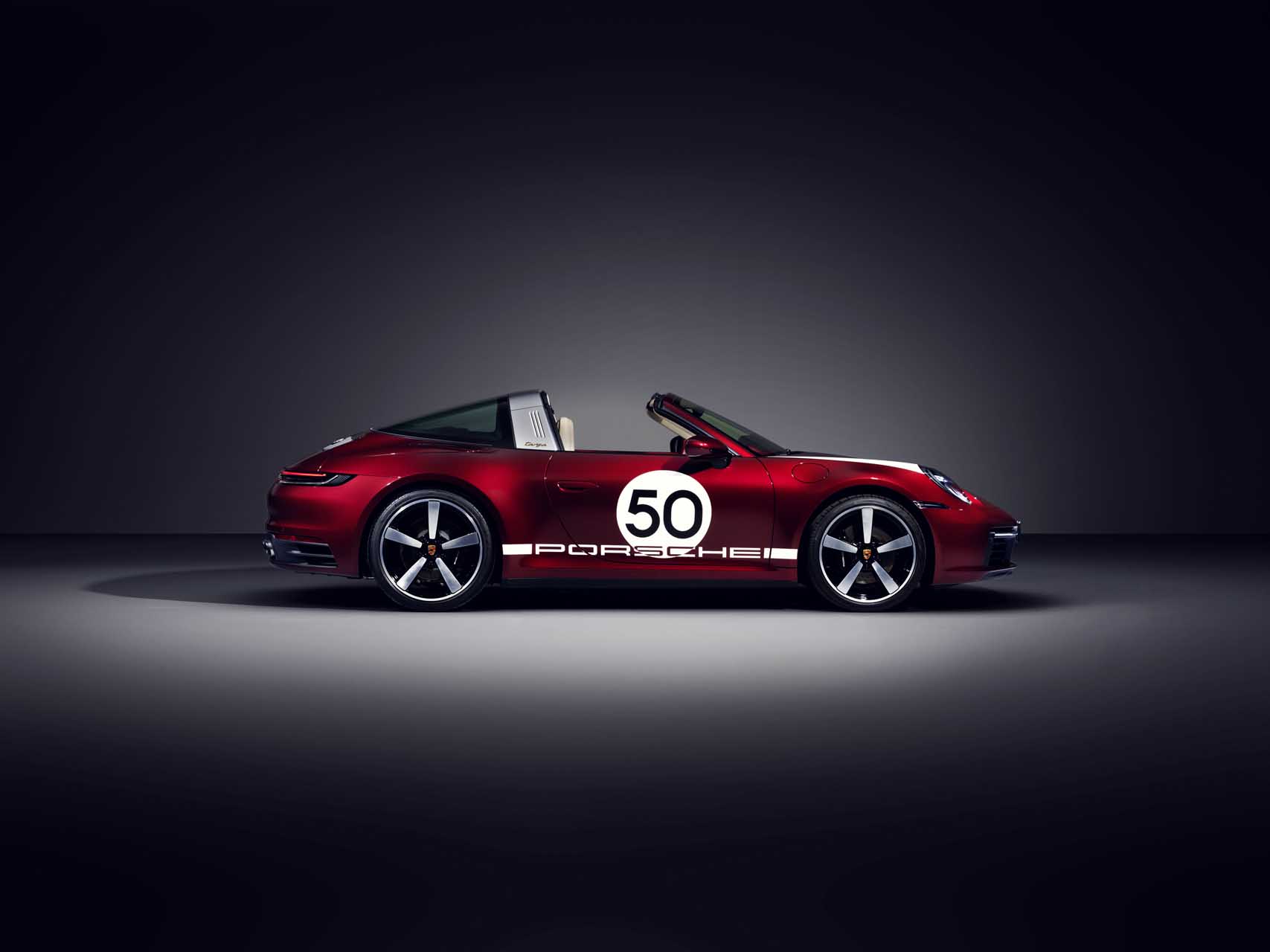
Porsche isn’t done adding new variants to its 992-generation 911.
During its annual general meeting on Wednesday, where Porsche said it will continue to offer gas engines in all of its segments well into the next decade, the automaker also confirmed that two new 911 variants are on the way.
One will be a heritage-style model inspired by a 1970s-era 911. It will be developed by the Porsche Exclusive Manufaktur personalization department and offered in limited numbers.
Porsche said this model will be the third of four heritage-style special editions based on the 992-generation 911, as part of what’s known as the Heritage Design Strategy. The first was the 2021 911 Targa 4S Heritage Design, followed by the 2023 911 Sport Classic.
2023 Porsche 911 Sport Classic
The second new variant in the pipeline will be a new flagship model, which Porsche claims will “raise the bar even further” in the sports car segment. This flagship is likely to be the next-generation 911 GT2 RS, test mules of which have been spotted in public since mid-2024.
The previous GT2 RS produced 700 hp from a twin-turbocharged 3.8-liter flat-6. It remains unclear what Porsche has planned for the next generation, but rumors suggest power could be dialed up closer to 1,000 hp, possibly incorporating some form of electrification.
Porsche has not yet announced the timing for the release of these new models.
High-end versions of the 911 and other models are key to Porsche’s strategy for increasing profits without the need to significantly expand sales volumes. This approach is part of Road to 20, a strategy aimed at achieving operating profits of 20% or more in the long term, up from the current target of 15-17%.
The 2025 BMW iX continues to push the boundaries for electric vehicles with its striking design, improved range, and luxurious features. Improving on its predecessor, the updated model offers refined powertrain options and impressive efficiency improvements. With a maximum WLTP range of 701 kilometres, the iX xDrive60 boasts segment leading range with long-distance capability. BMW’s latest EfficientDynamics package enhances energy efficiency, ensuring the iX remains competitive in electric mobility.
The new BMW iX comes in three variants: the xDrive45, xDrive60, and the high-performance M70 xDrive. These models produce 300 kW (408 PS), 400 kW (544 PS), and 485 kW (659 PS), respectively. The M70 xDrive accelerates from 0 to 100 km/h in a blistering 3.8 seconds, making it the fastest iX ever produced. All models feature dual electric motors, providing all-wheel drive and improved traction.
The updated exterior design of the 2025 BMW iX highlights its modern, minimalist aesthetic. The signature kidney grille has been reimagined with a more intricate frame and optional Iconic Glow lighting. Adaptive LED headlights now feature vertical daytime running lights and dynamic turn indicators, enhancing road presence.
Customers can further personalise the iX with an optional M Sport Package, which adds aggressive styling elements and exclusive 22-inch alloy wheels. For the first time, BMW is offering 23-inch alloy wheels in the iX lineup. The expanded colour palette includes new options like Arctic Race Blue, Dune Grey, and Space Silver.
The 2025 BMW iX benefits from significant advancements in battery and charging technology. The xDrive45’s battery now offers 94.8 kWh capacity, a 30% increase, while the xDrive60 and M70 xDrive models provide over 109 kWh. With these improvements, the iX delivers up to 40% more range compared to previous models.
DC fast charging capabilities have also been enhanced, with the xDrive45 now supporting 175 kW and the other models capable of up to 195 kW. This enables the battery to charge from 10% to 80% in just 21 minutes. Additionally, BMW’s optimised charging software ensures efficient energy usage and faster charging times.
Inside, the 2025 BMW iX combines progressive design with cutting-edge technology. The cabin features premium materials, optional M multifunction seats, and a Sky Lounge panoramic roof. The BMW Operating System 8.5 powers the curved infotainment display, offering intuitive touch and voice controls. New digital services, including in-car gaming and video streaming, elevate the driving experience.
The M70 xDrive variant comes with exclusive interior upgrades, including an anthracite roof lining and customisable trim options. Advanced driver-assistance systems, such as the Autobahn Assistant and Park Assistant Professional, further enhance convenience and safety.
The 2025 BMW iX represents the future of BMW’s luxury electric vehicles, offering an strong combination of range, performance, and technology. With its redefined design, improved efficiency, and enhanced driving dynamics, the new iX will aim to lead the segment. This model reaffirms BMW’s commitment to pushing the boundaries of electric mobility, setting new benchmarks for performance and luxury.
Whether it’s casino games or sports betting, players have always looked at ways of giving themselves a perceived advantage.
For many players, this includes adhering to acts which align with their superstitions. Certain superstitions may just be individual traits, but others are more universally ingrained within the culture of a country itself.
With research from Dream Jackpot, we explore superstitious beliefs of gamblers from around the world, including a very strange Italian ritual.
Red Is Favored But 4 Is Feared In China
In Chinese culture, red is considered a lucky color, symbolizing prosperity and good fortune.
Many gamblers wear red clothing or accessories when visiting casinos, believing it will bring them success. Additionally, the number four is avoided at all costs, as its pronunciation in Mandarin and Cantonese is similar to the word for “death.” Many Chinese players refuse to sit at a table with the number four or place bets associated with it.
Americans Blow On Dice But Think 50-Dollar Bills Are Unlucky
One of the most famous gambling superstitions in the U.S. is blowing on dice before rolling them, a practice popularized by movies and casino lore. Players believe this brings good luck and improves their chances of rolling favorable numbers.
Another well-known superstition is avoiding $50 bills, which some gamblers believe bring bad luck. This stems from the historical rumor that mobsters used to place $50 bills in the pockets of those they eliminated.
Crossing Legs & Counting Money Is Avoided In Japan
Japanese gamblers adhere to certain superstitions to avoid bad luck. One common belief is that crossing one’s legs while gambling will “cross out” good luck, making it harder to win.
Another superstition discourages counting money while gambling, as it is thought to invite bad fortune and distract from the game at hand.
In Russia It’s Lucky To Sit Quietly Pre-Game
Russians have an interesting pre-gambling ritual: before heading to the casino, some gamblers sit down quietly for a moment to reflect, believing this brings good luck.
Conversely, whistling indoors is seen as bad luck, as it is thought to blow away one’s fortune. Many Russian gamblers avoid whistling in casinos to prevent any loss of potential winnings.
Touching a Hunchback Is Believed To Bring Good Luck To Italians
This is definitely the strangest superstition on this list! In Italy, touching a hunchback really is believed to bring good luck, a superstition that has extended into gambling culture. Some Italian gamblers seek out hunchbacked individuals before placing bets, hoping to absorb some of their luck.
Additionally, many Italian gamblers carry a cornicello, or horn-shaped amulet, to ward off bad luck and negative energy.
UK Players Keep Lucky Coins To Attract Fortune
British gamblers often carry a lucky coin in their pockets, believing it helps attract good fortune.
Another popular superstition is avoiding wearing new shoes to a casino, as new shoes are thought to bring bad luck and lead to losing streaks.
Why Superstitions & Rituals Are Important To Players?
Whether or not these superstitions hold any real power, they remain important to players who see them as a big part of their gambling personality. While luck is unpredictable, the rituals and beliefs of gamblers continue to shape the way people approach betting.
Do you have any gambling superstitions you swear by?
I’m sure you’ve had similar experiences I had whilst traveling. You’re in a certain place and a fellow traveler, or a local, tip you off on a little-known beach, bar or accommodation. Great travel tips from other travelers or locals always add something special to our travels. That was the inspiration for Travel Dudes.
I’m sure you’ve had similar experiences I had whilst traveling. You’re in a certain place and a fellow traveler, or a local, tip you off on a little-known beach, bar or accommodation. Great travel tips from other travelers or locals always add something special to our travels. That was the inspiration for Travel Dudes.
In 2012, the Bentley Continental GT debuted, and it was a new generation for the Continental GT platform. Building on the success of the first-generation Continental GT, this second iteration refined the formula and overall package.
At the heart of the Continental GT lies a 6.0-liter twin-turbocharged W12 engine, delivering an impressive 567 hp and 516 lb-ft of torque in its initial form. Paired with an all-wheel-drive system and a smooth 6-speed automatic transmission, the car ensured effortless acceleration and high-speed stability.
In 2013, Bentley introduced a 4.0-liter twin-turbo V8, offering 500 hp, a lighter overall weight, and improved fuel efficiency while still delivering thrilling performance. Over the years, more powerful variants followed, including the Continental GT Speed, the V8 S, and the ultimate Supersports model, pushing power figures as high as 700 hp.
On the outside, the second-generation Continental GT refined the design language of its predecessor. The body was sculpted with sharper lines and a more aggressive stance, featuring a prominent mesh grille, larger oval headlights with LED accents, and a more pronounced rear haunch to emphasize its grand touring capability.
The redesigned rear end featured a sleeker taillight design and a subtle integrated spoiler, helping to improve aerodynamics and high-speed stability.
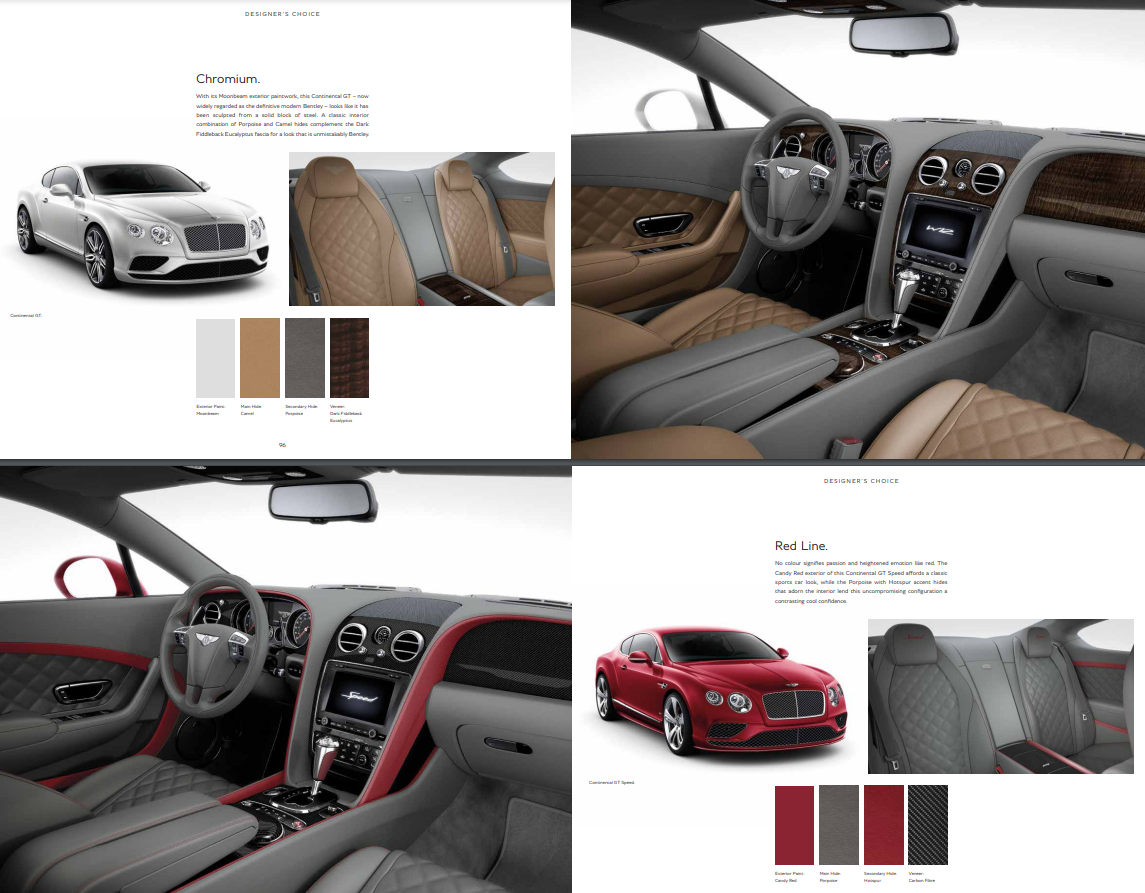
Inside, the Continental GT offered one of the most luxurious cabins in its class, combining hand-stitched leather, polished wood veneers, and precision metal detailing. Every aspect of the interior exuded craftsmanship, from the diamond-quilted seats to the customizable ambient lighting.
Bentley also integrated advanced infotainment and driver assistance features, including a touchscreen navigation system, premium Naim audio, and a fully digital instrument cluster in later model years.
Throughout its production run, the Bentley Continental GT Second Generation competed with some of the most prestigious grand tourers on the market, including the Aston Martin DB11, the Mercedes-AMG S63 Coupe, and the Ferrari California T. Despite the strong competition, the Continental GT distinguished itself with unmatched luxury, all-weather capability, and a perfect balance of power and refinement, solidifying its place as one of the most desirable grand tourers of its time.
Model Changes (Breakdown by Year)
2012 Bentley Continental GT
For the 2012 model year, Bentley introduced the second-generation Continental GT to the market.
The Continental GT W12 remained the flagship model, featuring a 6.0-liter twin-turbocharged W12 engine producing 567 hp and 516 lb-ft of torque, paired with a 6-speed automatic transmission and standard all-wheel drive.
Some of the notable options for the Continental GT included Mulliner Driving Specification, which added diamond-quilted leather seats, drilled alloy pedals, and unique 21-inch wheels. Buyers could also opt for adaptive cruise control, a rearview camera, ventilated and massaging seats, and a Naim for Bentley premium audio system for an enhanced listening experience. Additionally, a wide selection of bespoke interior trims, including various wood veneers, carbon fiber, and piano black finishes, allowed for nearly limitless personalization.
The starting price of the 2012 Bentley Continental GT was $189,900.
2013 Bentley Continental GT
For the 2013 model year, Bentley expanded the Continental GT lineup with two new variants. The Continental GT V8 made its debut, featuring a 4.0-liter twin-turbocharged V8 producing 500 hp and 487 lb-ft of torque. This new engine was paired with a more advanced 8-speed automatic transmission and retained the standard all-wheel-drive system, allowing improved fuel efficiency.
Alongside the V8 model, Bentley introduced the Continental GT Speed, a more powerful version of the W12 model aimed at performance enthusiasts. It came equipped with a 6.0-liter twin-turbocharged W12 engine, now tuned to deliver 616 hp and 590 lb-ft of torque.
This model also received an 8-speed automatic transmission, replacing the previous 6-speed, resulting in smoother power delivery and improved responsiveness. With its increased power and revised suspension setup, the GT Speed became the fastest production Bentley at the time.
For the 2013 model year, the Continental GT V8 started at $175,700, the Continental GT W12 had a base price of $189,900, and the Continental GT Speed started at $215,000. Convertible variants were also available, with the Continental GT V8 Convertible starting at $193,400, the Continental GT W12 Convertible at $212,800, and the Continental GT Speed Convertible at $238,700.
2014 Bentley Continental GT
For the 2014 model year, Bentley expanded the lineup with the introduction of the Continental GT V8 S, a more performance-focused version of the V8 model. It featured a 4.0-liter twin-turbocharged V8 producing 521 hp and 502 lb-ft of torque, along with more aggressive suspension tuning for sharper handling.
Meanwhile, the GT Speed remained unchanged as the previous year.
For the 2014 model year, the Continental GT V8 Coupe started at $177,500, while the V8 Convertible had a base price of $195,200. The Continental GT W12 Coupe was priced at $198,500, with the W12 Convertible starting at $218,500. The high-performance Continental GT Speed Coupe had a base price of $217,000, while the Speed Convertible started at $238,700.
2015 Bentley Continental GT
For the 2015 model year, Bentley introduced a mid-cycle refresh for the Continental GT lineup.
The exterior received minor styling updates, including revised bumpers, redesigned fenders with new vent styling, and additional interior customization options. Under the hood, the GT W12 saw a power increase from 567 hp to 582 hp, while the GT Speed was upgraded from 616 hp to 626 hp.
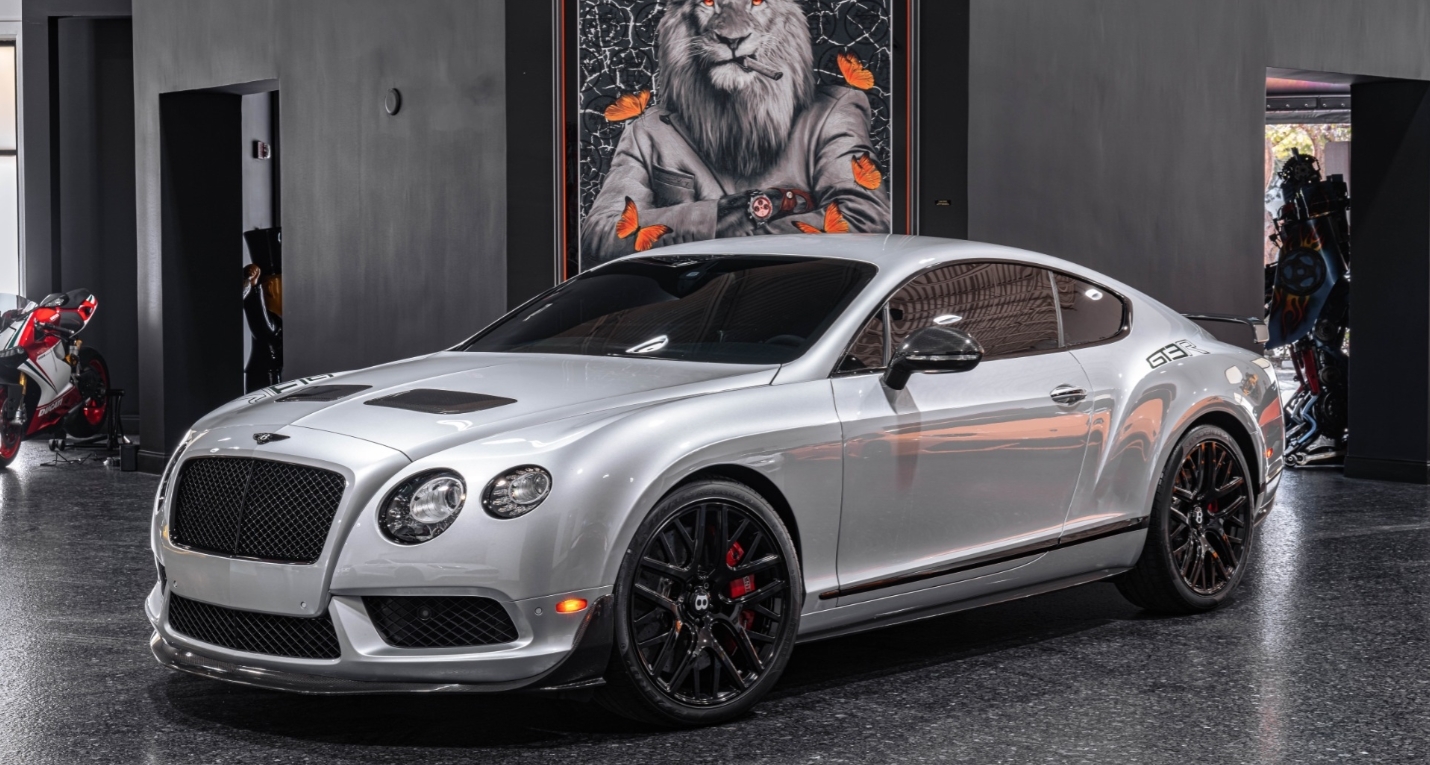
Bentley also introduced the Continental GT3-R, a limited-production, performance-focused variant inspired by Bentley’s GT3 race car. The GT3-R featured a 4.0-liter twin-turbo V8 producing 592 hp and 553 lb-ft of torque, making it one of the most powerful V8-powered Continental GT models. It was also significantly lighter than the standard GT, thanks to carbon fiber components, a rear seat delete, and titanium exhaust.
The GT3-R came exclusively with all-wheel drive and a shorter final drive ratio, resulting in sharper acceleration and improved handling. Limited to just 300 units worldwide, it remains one of the most collectible second-generation Continental GT models.
In the United States, the GT3-R was priced at $337,000, with deliveries beginning in the first quarter of 2015, with only 99 allocated to the U.S. market.
The 2015 Continental GT also offered new options, including revised seat stitching patterns, additional wood veneer choices, a redesigned steering wheel, and updated driver assistance features like blind-spot monitoring.
For the 2015 model year, the Continental GT V8 Coupe started at $187,900, while the V8 S Coupe had a base price of $202,000. The Continental GT W12 Coupe was priced at $198,500, and the Continental GT Speed Coupe started at $217,000. Convertible variants were also available, with the Continental GT V8 Convertible starting at $207,800, the V8 S Convertible at $221,400, the W12 Convertible at $228,400, and the GT Speed Convertible at $248,100.
2016 Bentley Continental GT
For the 2016 model year, the Bentley Continental GT remained largely unchanged, carrying over the updates from the 2015 mid-cycle refresh.
For the 2016 model year, the Continental GT V8 Coupe started at $198,500, while the V8 S Coupe had a base price of $202,000. The Continental GT W12 Coupe was priced at $218,400, and the Continental GT Speed Coupe started at $240,300. Convertible variants included the Continental GT V8 Convertible, which started at $221,125, the V8 S Convertible at $242,125, the W12 Convertible at $250,125, and the GT Speed Convertible at $263,400.
2017 Bentley Continental GT
For the 2017 model year, Bentley increased the power output of the Continental GT Speed, boosting its 6.0-liter twin-turbo W12 from 626 hp to 633 hp for even stronger performance.
Additionally, Bentley introduced the Continental Supersports, the most powerful version of the Continental GT to date. Equipped with a 6.0-liter twin-turbo W12 producing 700 hp and 750 lb-ft of torque, the Supersports featured carbon-ceramic brakes as standard and a revised all-wheel-drive system for improved handling and traction. This model marked the peak of the second-generation Continental GT.
For the 2017 model year, the Continental GT V8 Coupe started at $201,225, while the V8 S Coupe had a base price of $220,000. The Continental GT W12 Coupe was priced at $218,400, and the Continental GT Speed Coupe started at $240,300. Convertible variants included the Continental GT V8 Convertible, which started at $221,125, the V8 S Convertible at $242,125, the W12 Convertible at $250,125, and the GT Speed Convertible at $263,400. The high-performance Continental Supersports Coupe had a starting price of $298,000, while the Supersports Convertible was priced at $325,000.
2018 Bentley Continental GT
For the 2018 model year, Bentley marked the final production year of the second-generation Continental GT before the model underwent a full redesign for 2019.
As the last iteration of this generation, the Continental Supersports remained unchanged, continuing to offer its 700 hp W12 engine and high-performance upgrades.
Meanwhile, the Continental GT Speed retained 633 hp, maintaining its status as one of the most powerful grand tourers in Bentley’s lineup.
For the 2018 model year, the Continental GT V8 Convertible started at $218,400, while the V8 S Convertible had a base price of $242,125. The Continental GT W12 Convertible was priced at $241,425, and the GT Speed Convertible started at $322,600. The high-performance Continental Supersports Convertible also had a starting price of $322,600.
Bentley Continental GT Second-Generation Common Problems
While the Bentley Continental GT Second-Generation is fairly reliable, no vehicle is without its flaws. As with any high-end grand tourer, long-term ownership comes with certain maintenance concerns and potential reliability issues that buyers should be aware of. From electrical glitches to air suspension wear, understanding these common problems can help prospective owners make informed decisions and ensure proper upkeep of their Continental GT.
Keep in mind, that it is crucial to perform a Pre-Purchase Inspection (PPI) from an authorized dealer or experienced independent mechanic to reveal all issues.
Electrical System Failures: Problems with wiring looms can lead to various electrical malfunctions.
Air Suspension Issues: The air suspension system may experience wear, resulting in the front of the vehicle sitting lower than the rear, or producing knocking noises indicating potential failure.
Brake Light Failures: Owners have reported frequent brake light malfunctions, often necessitating the replacement of the entire unit.
Brake Hose Deterioration: Bentley recommends replacing brake hoses every five years to maintain optimal braking performance.
Power Window Failures: Issues with power windows, such as hissing sounds or operational failures, are common and may require motor or full unit replacements.
Transmission Concerns: While the eight-speed automatic transmission is generally reliable, the earlier six-speed units have been known to encounter issues, leading to costly repairs.
Routine Maintenance Complexity: The intricate design of the Continental GT can make routine maintenance challenging, often requiring specialized expertise and tools.
In November 2015, a recall was issued for 2012–2014 Bentley Continental GT models, along with certain 2012–2015 Continental GTC and 2012–2014 Flying Spur vehicles. The 12V battery cable connection at the front bulkhead (firewall) may be loose, which could cause overheating under high electrical load and potentially lead to an engine compartment fire. Bentley dealers replaced the battery-cable securing nut/bolt and tightened it to specification at no cost to owners.
2017 to 2018 Bentley Continental Supersports vehicles
Power Steering Cooler Hose Detachment (Recall No. 19V863000)
In January 2020, a recall was issued for 2017–2018 Bentley Continental Supersports models. The power-assisted steering (PAS) cooler pipe may be the wrong size, which can cause the hose to detach and leak power steering fluid. A fluid leak could result in loss of steering assistance and pose a fire hazard if the fluid contacts an ignition source, increasing the risk of a crash. Bentley dealers replaced the PAS cooler pipe with the correct-sized part free of charge.
2007 to 2011 Bentley Continental GT (Including Early Second-Gen Models) vehicles
In October 2013, a recall was issued for 2007–2011 Bentley Continental GT, GTC, and Flying Spur models equipped with optional carbon-ceramic brakes. The stainless-steel screws securing the brake rotors can corrode and fail after exposure to road salt, potentially reducing braking performance and increasing the risk of an accident. Bentley dealers replaced all the rotor mounting screws with an updated design at no charge.
Maintenance and Ownership Costs
The Bentley Continental GT is a dependable grand tourer with relatively low maintenance needs.
However, it is important to remember that regular maintenance and repairs will still be necessary, and the costs can vary depending on whether you take your car to a dealer or an independent mechanic.
1st YEAR / 10,000 MILES
2nd YEAR / 20,000 MILES
Services of the 10,000-mile check
Brake fluid flush and replacement
Engine and exhaust inspection
Cabin (pollen) filter replacement
Engine air filter replacement
Windshield wiper blade replacement (if necessary)
Onboard diagnostics scan and service indicator reset
Road test
3rd YEAR / 30,000 MILES
Services of 10,000-mile and 20,000-mile checks
Spark plug replacement
Transmission fluid level check
Belt and tensioner inspection
Brake system and flexible hoses inspection
Power steering fluid check and top-off
Suspension and steering linkage inspection
Road test
4th YEAR / 40,000 MILES
Services of 10,000-mile and 20,000-mile checks
Brake fluid flush and replacement
Engine coolant replacement
Tire sealant canister replacement (if equipped)
Comprehensive suspension and chassis inspection
Exhaust system inspection
5th YEAR / 50,000 MILES
Services of 10,000-mile check
Fuel filter replacement
Transmission and final drive fluid level check
Belt and hose inspection (replace as needed)
Full brake system evaluation
Engine and cooling system check
Road test
6th YEAR / 60,000 MILES
Services of 10,000-mile, 20,000-mile, and 30,000-mile checks
Spark plug replacement
Transmission fluid and filter replacement (recommended)
Power steering and differential fluid check
Brake hose and pipe inspection
Comprehensive vehicle diagnostic scan
Road test
8th YEAR / 80,000 MILES
Services of 10,000-mile, 20,000-mile, and 40,000-mile checks
Air and cabin filter replacements
Suspension and bushing inspection
Brake pad and rotor condition check
Coolant replacement
Brake fluid flush
10th YEAR / 100,000 MILES
Services of 10,000-mile, 20,000-mile, and 50,000-mile checks
Fuel filter replacement
Transmission fluid and differential oil change
Coolant flush
Exhaust and catalytic converter inspection
Full electrical system check
Here is a rough estimate of typical service costs associated with the Bentley Continental GT:
Oil Change – An oil and filter change for the Continental GT is recommended every 10,000 miles. At a Bentley dealership, this service typically costs around $600. Independent shops may offer the same service for approximately $300 to $500, depending on the region and the shop’s expertise.
Minor Service – A minor service includes an oil and filter change, replacement of pollen filters, wiper blades, key fob batteries, and a comprehensive vehicle inspection. At a Bentley dealership, the cost for this service is approximately $1,785. Independent repair shops may charge between $1,200 and $1,500 for similar services.
Major Service – Major services encompass all items in a minor service, plus additional tasks such as replacing air filters, spark plugs, brake fluid, and tire sealant. Dealerships typically charge around $4,385 for a major service. Independent shops may offer this service for approximately $3,500 to $4,000.
Tires – The Continental GT uses high-performance tires such as Pirelli P Zero tires, which can be expensive to replace. A set of four tires typically costs around $3,200 at a dealership. Independent tire shops may offer similar tires for approximately $2,400 to $2,800, depending on the brand and specifications.
Brakes – Replacing brake pads and rotors is a significant maintenance task. At a Bentley dealership, the cost for replacing all four brake pads and rotors can be around $1,300. Independent repair shops may perform the same service for approximately $1,000 to $1,200.
Clutch – The Bentley Continental GT features an automatic transmission; therefore, it does not have a traditional clutch that requires regular replacement.
Options List
When purchasing a Bentley Continental GT second-generation, selecting the right options can significantly enhance both the driving experience and resale value.
For those seeking enhanced driving dynamics, Bentley offered several performance-focused options. The Mulliner Driving Specification was a sought-after package, featuring diamond-quilted leather seats, drilled alloy pedals, and 21-inch Mulliner wheels for a more aggressive and refined look.
The Carbon Ceramic Brakes were an available upgrade, providing superior stopping power while reducing unsprung weight. Additionally, an adaptive air suspension system allowed drivers to adjust ride comfort and handling to suit different road conditions.
When it comes to the Continental GT’s interior, it is one of the most luxurious in its segment, and Bentley provided numerous bespoke customization options. Buyers could choose from premium leather in a variety of colors, hand-selected wood veneers, or even carbon fiber trim.
The Naim for Bentley premium audio system was a popular option, delivering exceptional sound quality with a 2,200-watt amplifier and 20 speakers. Heated, ventilated, and massaging seats were also available, adding to the long-distance comfort expected from a Bentley grand tourer.
Buyers could further personalize the Continental GT’s exterior with unique paint finishes, contrast stitching, and bespoke wheels. Bentley’s Extended Paint Range allowed customers to select from a vast palette of colors, including exclusive Mulliner bespoke shades. The Black Edition package, available on certain models, added gloss black trim, black wheels, and carbon-fiber accents.
To enhance daily usability, Bentley offered advanced technology and driver assistance features. Available options included adaptive cruise control, a rearview camera, and night vision assistance, improving safety and visibility in various driving conditions. The Bentley Rotating Display, introduced in later model years, provided a digital touchscreen that could flip to reveal classic analog gauges.
Bentley’s Mulliner division allowed for complete customization. Buyers could commission unique stitching patterns, personalized embroidery, custom veneers, and even one-of-a-kind paintwork. With the ability to tailor nearly every detail, Mulliner-built Continentals stand out as the most bespoke and valuable examples on the market.
2012 Bentley Continental GT options list
2013 Bentley Continental GT options list
2016 Bentley Continental GT options list
Key Options
Bentley Continental GT Second-Generation Price and Value
The Best Bentley Continental GT Second-Generation to Buy
When it comes to choosing the best Bentley Continental GT Second Generation, several key factors can influence your decision, including model year updates, available options, and overall condition of the vehicle.
For those wanting the best version of the second-generation Continental GT, the 2017 and 2018 model years are the top choices. By this time, Bentley had refined the platform with incremental performance improvements, updated interior technology, and enhanced driver assistance features.
However, the most desirable second-generation Continental GT is the 2015 Bentley Continental GT3-R. Inspired by Bentley’s GT3 race car, this limited-production model was lighter, more aggressive, and more track-focused than any other Continental GT of its era. With 592 hp from its twin-turbo V8, a rear seat delete for weight reduction, and better handling characteristics, the GT3-R is the most exclusive and performance-oriented version of the second-gen Continental GT, limited to just 300 units worldwide.
The 2017 Continental GT Speed received an increase in power to 633 hp, making it the fastest non-Supersports variant of the lineup. Meanwhile, the 2018 model year marked the final year of the second-generation Continental GT, making it a desirable option for buyers who want the most refined version before the full redesign in 2019. The Continental Supersports variant, available in 2017 and 2018, is another solid choice due to its 700 hp W12 engine, carbon-ceramic brakes, and subtle styling updates.
In terms of market stability, model years 2012 to 2018 should be safe if you find the right example.
In addition to model selection, the condition and mileage of the vehicle are critical factors when buying a Continental GT.
Vehicles that have been well-maintained with a complete service history and low mileage tend to retain their value better and offer fewer mechanical concerns.
It is important to research previous ownership records, inspect service history, and ensure that all major maintenance items have been addressed, particularly on earlier models that may require more attention to suspension, electronics, and drivetrain components.
Conclusion
In summary, with a starting price of around $90,000+ on the used market, the Bentley Continental GT second-generation remains a great choice for those wanting to be in a luxurious yet high-performance grand tourer. It offers a lot of power, and luxury, making it one of the most desirable choices for the money.
While alternatives such as the Aston Martin DB11, Mercedes-AMG S63 Coupe, and Ferrari California T exist, the Continental GT sets itself apart with its effortless power delivery, handcrafted interior, and signature all-wheel-drive capability, ensuring year-round usability.
For those looking for a highly capable grand tourer that blends British luxury with exceptional performance, the Bentley Continental GT Second Generation remains an outstanding choice. Whether prioritizing comfort, exclusivity, or dynamic driving, this Bentley continues to hold its appeal as an exciting luxury grand tourer.
Car Hacking Shortcuts
Look for models with the Mulliner Driving Specification for premium interior materials and better resale value
GT3-R models are future collectables
2017 to 2018 Continental GT Speed or Supersports are desirable
Prioritize well-maintained, low-mileage examples with full-service history to minimize costly repairs
The technical storage or access is strictly necessary for the legitimate purpose of enabling the use of a specific service explicitly requested by the subscriber or user, or for the sole purpose of carrying out the transmission of a communication over an electronic communications network.
Preferences
The technical storage or access is necessary for the legitimate purpose of storing preferences that are not requested by the subscriber or user.
Statistics
The technical storage or access that is used exclusively for statistical purposes.The technical storage or access that is used exclusively for anonymous statistical purposes. Without a subpoena, voluntary compliance on the part of your Internet Service Provider, or additional records from a third party, information stored or retrieved for this purpose alone cannot usually be used to identify you.
Marketing
The technical storage or access is required to create user profiles to send advertising, or to track the user on a website or across several websites for similar marketing purposes.


:max_bytes(150000):strip_icc()/TAL-header-lisa-vanderpump-at-vanderpump-cocktail-garden-VNDRPMPHTL0325-484c6e493afa4f17b4e6459c06af8d9b.jpg "Lisa Vanderpump Will Open Her First Hotel in Las Vegas in 2026")
:max_bytes(150000):strip_icc():format(jpeg)/TAL-header-lisa-vanderpump-at-vanderpump-cocktail-garden-VNDRPMPHTL0325-484c6e493afa4f17b4e6459c06af8d9b.jpg)