A lush frontage greets guests at this Beverly Hills home. Image: Jennifer Mann, The Luxury Level.
Christina Estrada — a brunette beauty — starred in the renowned Pirelli calendar and modelled for some of the biggest brands in the world. The actress Estrada — born in the United States — has resided in London since 1998. Estrada was the lone owner of a stunning property in Beverly Hills when her marriage to Saudi millionaire Sheikh Walid Juffali ended in divorce in 2016.
The supermodel is asking USD 26 million for the gorgeous mansion. According to the listing agent, Gary Gold, “This is the quintessential Beverly Hills estate located on the best block of the best street in the Flats. This is the type of home you see in a movie portraying the good life.”
Outdoor pool and jacuzzi. Image: Jennifer Mann, The Luxury Level.
Constructed in the 1930s, the estate has undergone extensive restoration, fusing the most recent in contemporary luxury with the priceless quality of a bygone period. The 9,000-square-foot home will be sold fully furnished, featuring five bedrooms, eight bathrooms and upscale contemporary conveniences.
The two-storey house has a striking exterior in the Italian style. The mansion’s columns, arches, wrought-iron accents and magnificent beamed ceilings all exhibit Old World design. Enter through the grand lobby — two stories high, with a hand-painted ceiling, an exquisite chandelier, coved archways, and twin staircases. The formal dining room can accommodate 12 people, and the chef’s kitchen has state-of-the-art appliances and a large butler’s pantry. With access to the yard for outside dining, a comfortable breakfast provides a more laid-back setting.
The main living room has a view of the outdoors. Image: Jennifer Mann, The Luxury Level.
The sizeable principal suite has a walk-in closet that might rival a supermodel’s closet, a lavishly furnished bathroom with marble accents, a glitzy mirrored powder room and large windows that let in abundant natural light. Three other bedrooms with bathrooms and traditional furnishings can be found upstairs. There is plenty of space for relaxing in the step-down living room with steel-case windows and the lovely great room with a cosy fireplace. Every room exhibits meticulous attention to detail and the stylish yet modest furnishings highlight the house’s classic beauty.
The gorgeous yard features a chic pool, well-kept lawns and towering hedges for plenty of seclusions — creating a resort-like ambience. Using LA’s consistently lovely weather, the den and family room blend indoor and outdoor living seamlessly, and many balconies provide pool views. The covered loggia is particularly beautiful, with elaborate columns and a curtained gazebo. Additional features include a separate guest house with two bedrooms and two bathrooms, a five-car garage and a library with built-in bookshelves.
Beautiful white master bathroom. Image: Jennifer Mann, The Luxury Level.
The estate is close to the Getty Museum, the Los Angeles Country Club, the upscale stores on Rodeo Drive and the music and entertainment venues of the Sunset Strip. It is situated right off the famed Sunset Blvd. The Flats — one of 90210’s most upscale areas — is well-known for its exquisite residences on spacious acres. Among the notable inhabitants of the zip code are Katy Perry, Adele, Taylor Swift, Jennifer Aniston, Jack Nicholson, and Ashton Kutcher.
The listing is held by Gary Gold at Forward One, source: soldbygold.net
For more on the latest in property reads, click here.
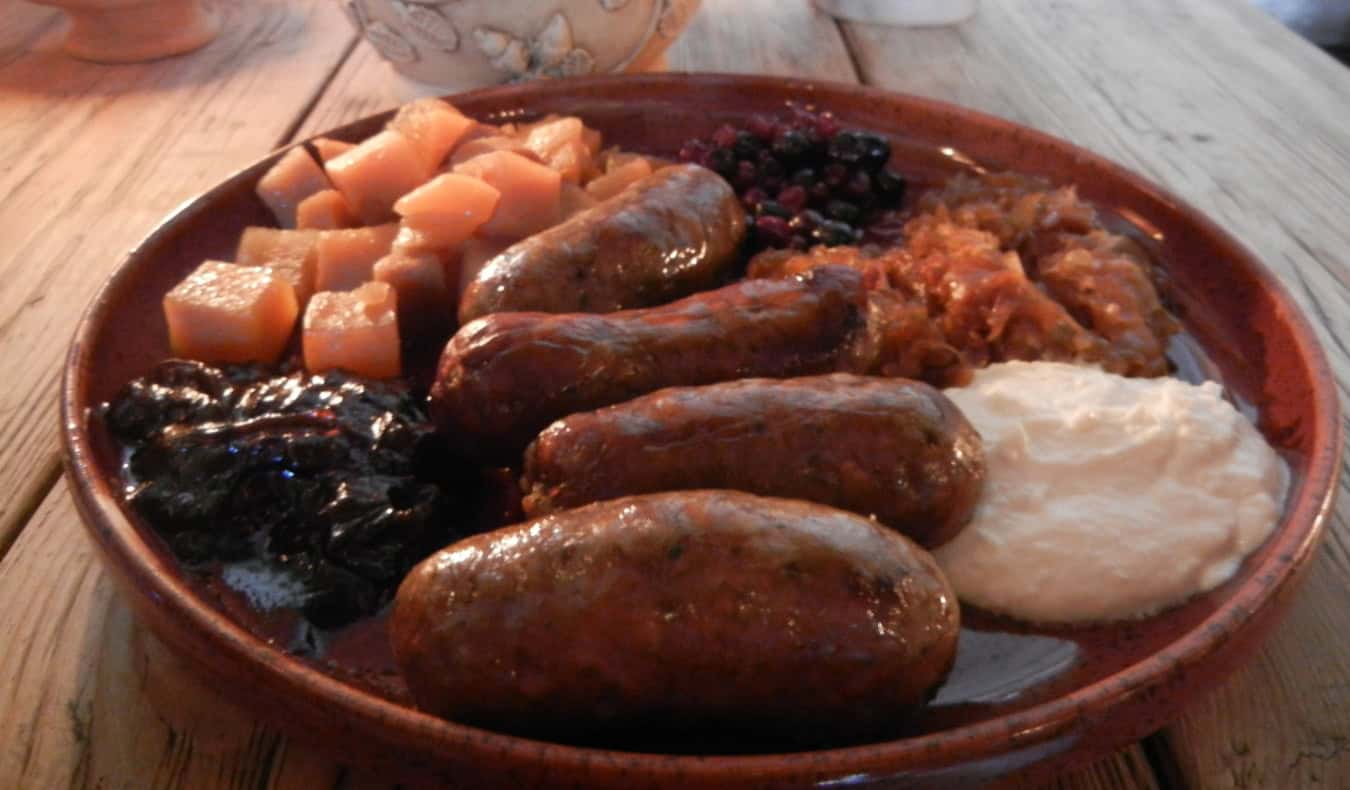
In fact, eating is one of my favorite activities, and also one of my favorite aspects of traveling.
Food is such an integral part of so many cultures that to skip out on meals when you travel is to miss out on a part of the travel experience.
I’m always disappointed when I meet travelers who cook all their meals in a hostel kitchen or spend so much of their time just getting food at grocery stores.
I mean, don’t get me wrong, grocery stores and markets teach you a lot about a place. And you don’t need to eat out for every meal.
But why come to Italy to cook pasta in your hostel? Or skip a sushi dinner in Japan or paella in Spain?
Of course, eating out all the time is expensive. Imagine if you ate out every day while at home — your food budget would be astronomical! And, when you are traveling long term (or just on a tight budget), you have to think about making your money last.
Additionally, many people have dietary concerns that prevent them from fully embracing new foods. And many travelers are vegan or vegetarian, as well, which might impact their options.
To make sure I can eat out without breaking the bank, I have had to learn how to balance eating 99% of my meals out while still finding a way to save money. Here’s how to eat out on a budget while you travel the world:
1. Follow the Five Block Rule
I live by what I call The Five Block Rule. I don’t eat within five blocks of a major tourist attraction or area. I simply walk in any direction and search for a place to eat when I hit five blocks. There’s an invisible line at this area: tourists don’t go past it. All of a sudden you notice that the crowds are gone, and that’s when you want to start looking.
Sure, you might find a good meal in a tourist area, but you’ll find a better, cheaper meal outside it. Go where the menus aren’t in multiple languages. Go to those little tiny hole in the wall places that you are unsure about. The meal might not knock your socks off each time but it will be a memorable and more local experience.
2. Use Local Knowledge
If you are unsure of where to eat (and don’t like the idea of randomly wandering into restaurants), try apps where locals post reviews. I use them often to find recommendations for food in the cities and towns I visit. You can also ask the tourist office or the staff at your hostel/hotel or taxi drivers, who tend to eat at cheaper food stalls. They will have good recommendations. After all, local workers aren’t going to eat in the tourist area!
My two favorite apps are Yelp and The Fork. For vegan and vegetarian recommendations, check out Happy Cow.
3. Ask The Right Question
Be sure to ask locals the question, “Where do you eat?” not “Where should I eat?” If you ask people the second question, most people will think to send you to the popular restaurants tourists visit because that will be what comes to mind. They’ll think, “Hmmm where do visitors go eat? What’s popular in town?”
However, by asking where they eat, you will get recommendations for more local restaurants because they will tell you all the hole in the wall spots they eat at on a day-to-day basis. Small word change, much better results.
4. Eat Street Food
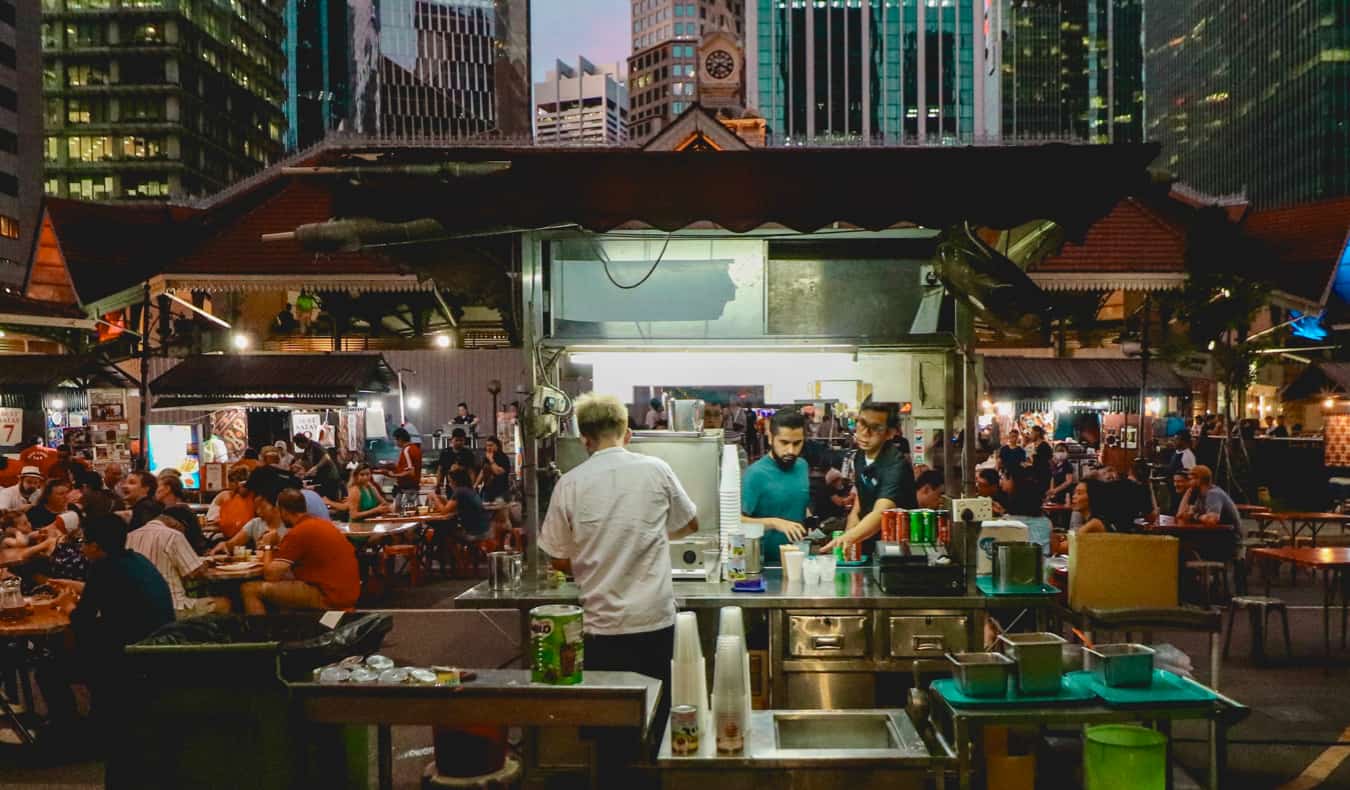
In most places around the world (and especially in Asia), the streets are lined with little food stalls and areas where food is cooked openly on the street. You grab a plate, sit down in a little plastic chair, and enjoy a delicious meal. Street food is some of the best food in the world. Meals at street stalls and vendors cost just a few dollars (if that) most of the time and are a great way to really experience the local cuisine.
While in Sweden, I lived off these types of vendors. In Amsterdam, FEBO and their croquettes kept my stomach full. In Costa Rica, the empanada seller filled me up for a dollar and I bought local food from vendors at markets for mere pennies in Madagascar.
Many places, like Thailand and Vietnam, for example, wouldn’t be the same if the street food disappeared. (And yes, it’s safe. The locals wouldn’t eat it otherwise.)
5. Eat Fast Food (Sometimes)
Fast food isn’t the best food, but it is another option if you want a cheap meal in inexpensive parts of the world. For as little as $5 USD (more in expensive countries like Norway, home of the $13 Whopper), you can get a filling (and hugely caloric) meal.
Sure, it’s not the greatest food, and I am going to skip the philosophical debate about traveling around the world only to eat McDonald’s to say that it’s cheap and just another way to help you rein in your spending.
6. Stick to Local Ingredients
When you’ve been traveling for a while, it’s only normal to crave a taste of home every now and then. That means that sure, sometimes I get sick of Greek food when I’ve been traveling there for a bit. Other times, I can’t eat any more Thai food and just want a burger. And that’s OK.
However, non-local food is almost always more expensive than local cuisine. For example, in Vietnam, a bowl of pho is less than a dollar, but a burger is about three times as much (or more!). Try to stick to the local cuisine as much as possible and also try to avoid any food that is imported as that will increase the price of your meal too!
7. Find the Lunch Specials
Many restaurants, especially in Europe, offer lunch specials, where items on the dinner menu are offered at a huge discount. You can get an amazing afternoon meal for a fraction of the cost you’d pay for the same meal in the evening.
I usually tend to eat my “nice” meal during lunch, because lunch specials and plates of the day are about 30–40% off what I might pay at dinner. The options will usually be more limited, but the savings more than justify it.
Sadly, there is no one website where you can find all the restaurants in the world that offer lunch specials. They vary from city to city and region to region. What you can do other than wander aimlessly around the city in hopes of finding a place (though I have done that) is to ask the tourist office or the staff at your hostel/hotel if they know where to find lunch specials. They are usually very aware of what places have specials.
8. Bring a Refillable Water Bottle
As you walk around and sightsee, you need to stay hydrated. But buying a bottle of water every day is not only environmentally wasteful, it also makes foolish budget travel sense. Carry a refillable bottle of water (with a filter) with you instead and just use the tap water. I suggest a Lifestraw bottle. It ensures your water is always clean and safe — even if the tap water isn’t.
9. Cook 50% of Your Meals
I don’t cook a lot on the road as I don’t like hostel kitchens. They never have everything I need, and I hate traveling with a portable kitchen so I can have all the ingredients I want. Yet when I am in one place for a while (or if I’m Couchsurfing), I cook a few meals.
Cooking is one of the best ways to keep your travel costs down, and supermarkets are also great places to go see what the local people eat. The only place where cooking your own meals isn’t the most economical option is Asia, where street food is usually cheaper.
As I mentioned, I’ll often go out for a nicer meal at lunch when I can find a good deal. That will usually mean for dinner I’ll be cooking my own food. That way, I’ll still get to try the local cuisine but I’ll also get to keep my budget intact. Double win!
10. Have a Picnic
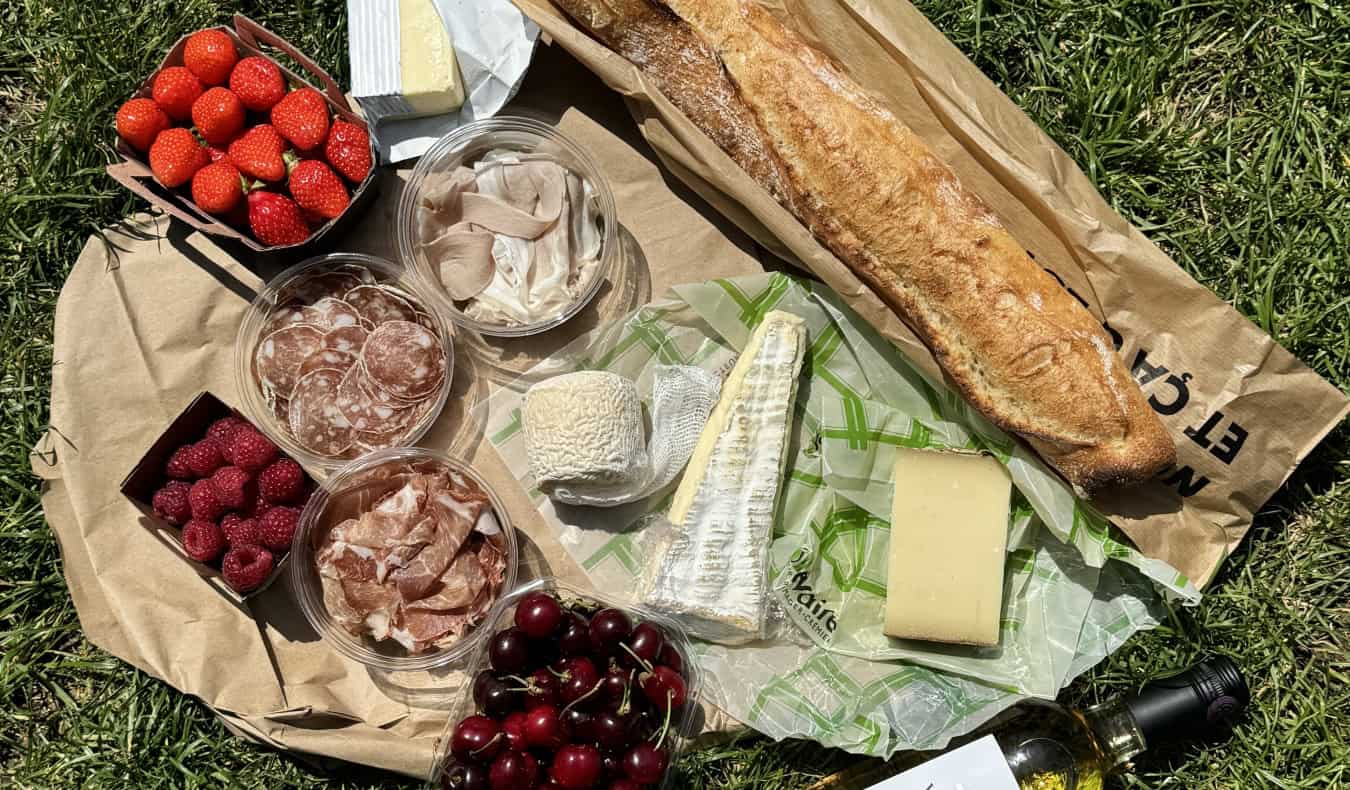
Another good option is to picnic. This is something I do a lot for lunch if I’m somewhere where the weather is nice. I usually head to a local food market, pick up a bunch of food, and go picnic in the park. Not only am I saving money (sandwiches aren’t expensive), but it affords me a good chance to watch the locals scurry about their daily lives.
If you’re staying at a hostel, this is a great ice-breaker for meeting new people. Just invite everyone along to join you and you’ll be making new friends in no time!
11. Use Tourism Cards
Most people think of tourist cards like the iAmsterdam card or the Oslo Pass as just a way to save money on transportation and attractions. But these cards also offer discounts at many restaurants. Typically, discounts are around 15–25%, but sometimes lunch specials can be up to 50% off.
Visit the local tourism office when you arrive and ask what food discounts are included. Chances are you’ll be able to save even more money if you just take the time to learn about the tourism pass. It’s a worthwhile investment!
12. Get Free Breakfast
If you can find hostels or hotels that include breakfast, you’ve already eliminated the cost of one meal. Plus, if you have a huge breakfast that fills you up for most of the day then you don’t need to eat as many meals out. Moreover, many hostels around the world also offer free dinners, free coffee and tea, and other food-related perks. Search them out to save money and lower your food costs.
13. Eat Where the Students Do
Where there are universities, there are students, and since students are usually broke, that means there are likely cheap places to eat nearby. Check Google Maps for local post-secondary institutions and see what you can find in the nearby area. Many bars in the area will likely have cheap drinks and happy hours too, so you can save even more.
Additionally, use Google to search for places. Type in “Student friendly restaurants in [X]” to get lots of suggestions on where to eat. You can also ask your hotel/hostel for information too.
14. Use Supermarket Deals
In many countries, supermarkets offer lunchtime specials for workers in the surrounding areas. These usually entail fresh sandwiches or some soup or salads. Additionally, many supermarkets also discount food that expires soon, including bread, baked goods, meat, and produce. For example, pre-made meals in Japan are often 50% off right before the grocery store closes because they can’t keep it overnight. Tight food laws in Scandinavia also means that food that has “expired” is discounted too. (And, since food, especially imported meats, are so expensive in those countries, most locals buy the “expired” food).
Buy groceries in the evening and you can likely find yourself some discounted (but still totally safe and edible) food.
***
I love a nice restaurant. I don’t mind paying money for a good meal with a nice glass of wine. But doing that EVERY meal is simply too expensive.
But, by using the tips above, I can afford to keep my costs down while still being able to afford a quality meal every so often.
And that’s what is really important — finding the right balance.
Because if you can manage to balance eating great food with saving money, both your wallet and your stomach will thank you.
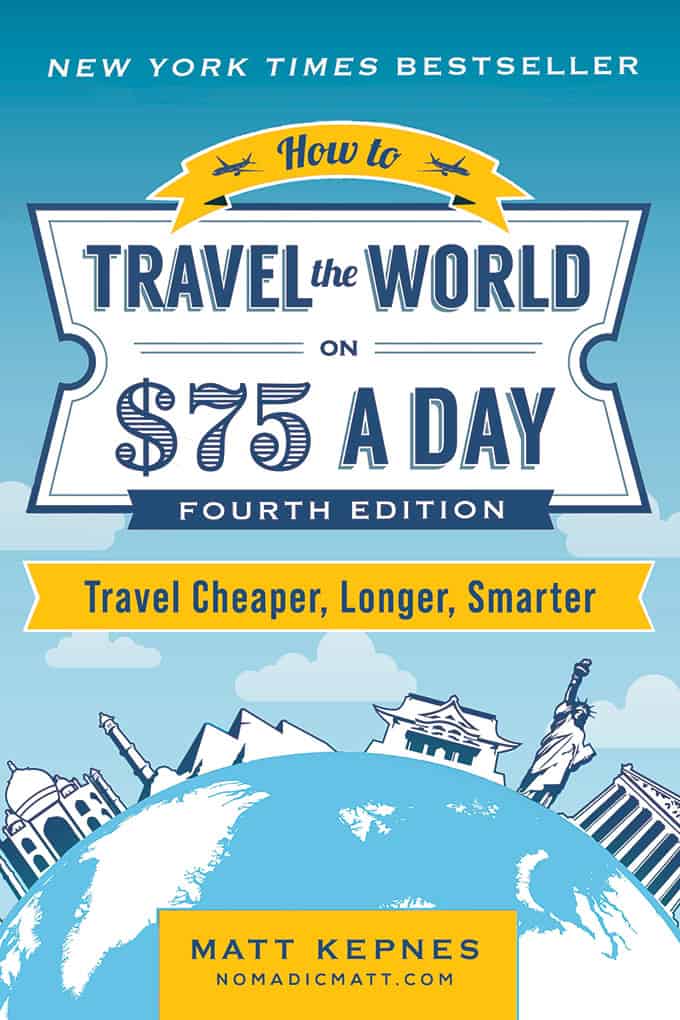
How to Travel the World on $75 a Day
My New York Times best-selling book to travel will teach you how to master the art of travel so that you’ll get off save money, always find deals, and have a deeper travel experience. It’s your A to Z planning guide that the BBC called the “bible for budget travelers.”
Book Your Flight Find a cheap flight by using Skyscanner. It’s my favorite search engine because it searches websites and airlines around the globe so you always know no stone is being left unturned.
Book Your Accommodation You can book your hostel with Hostelworld. If you want to stay somewhere other than a hostel, use Booking.com as it consistently returns the cheapest rates for guesthouses and hotels.
Don’t Forget Travel Insurance Travel insurance will protect you against illness, injury, theft, and cancellations. It’s comprehensive protection in case anything goes wrong. I never go on a trip without it as I’ve had to use it many times in the past. My favorite companies that offer the best service and value are:
Want to Travel for Free? Travel credit cards allow you to earn points that can be redeemed for free flights and accommodation — all without any extra spending. Check out my guide to picking the right card and my current favorites to get started and see the latest best deals.
Need a Rental Car? Discover Cars is a budget-friendly international car rental website. No matter where you’re headed, they’ll be able to find the best — and cheapest — rental for your trip!
Need Help Finding Activities for Your Trip? Get Your Guide is a huge online marketplace where you can find cool walking tours, fun excursions, skip-the-line tickets, private guides, and more.
Ready to Book Your Trip? Check out my resource page for the best companies to use when you travel. I list all the ones I use when I travel. They are the best in class and you can’t go wrong using them on your trip.
The 97th Academy Awards took place on 2 March 2025, at Los Angeles’ Dolby Theatre. The film Anora emerged as the evening’s biggest winner, securing five Oscars — including Best Picture, Best Director, Best Original Screenplay, Best Editing and Best Actress for Mikey Madison. The night was filled with memorable moments, but also sparked lively debates and controversies over the winners. From Adrien Brody’s long-overdue win to Zoe Saldana’s triumph amid film controversies alongside Kieran Culkin and Mikey Madison securing their first-ever Academy Awards, the 2025 Oscars proved to be a night of surprises and discussions about the evolving nature of cinema. Here is the list of winners and the conversation (or controversies) surrounding their win.
Best Actor in a Leading Role
The Winner: Adrien Brody
The Conversation:
Heading into the Oscars, there was already debate over whether Timothée Chalamet would take home the award for his portrayal of a young Bob Dylan in A Complete Unknown. In recent years, the Academy has shown a strong affinity for historical biopics of pop-culture icons — think Rami Malek as Freddie Mercury in Bohemian Rhapsody and Austin Butler as Elvis Presley in Elvis. This trend has raised questions about whether young, serious actors need to embody yet another legendary figure to earn recognition. Yet despite Chalamet’s SAG Awards win, Brody had already swept the Golden Globes, the BAFTAs and the Critics Choice Awards for his haunting portrayal of a Hungarian-Jewish Holocaust survivor in The Brutalist. His Oscars victory further cements what many critics had predicted — that this was a long-overdue moment for the actor, whose last significant run on the awards circuit was more than two decades ago.
One potential obstacle in Brody’s campaign was The Brutalist’s controversial use of AI to refine the cast’s Hungarian accents. While some critics raised ethical concerns, outlets like The Hollywood Reporter dismissed it as a non-issue, likening it to standard sound-mixing techniques used in post-production. On a more personal note, Brody’s acceptance speech also became a talking point. Reports surfaced of his casual demeanor — including spitting out his chewing gum just before taking the stage — while others speculated about the Academy’s shifting sentiments toward him in the post-#MeToo era, given his past relationship with Harvey Weinstein’s ex-wife. Regardless of the chatter, Brody’s win serves as a reminder of his undeniable talent, marking a triumphant return to Hollywood’s center stage.
Best Actor in a Supporting Role
The Winner: Kieran Culkin
TheConversation:
Heading into the Oscars, Kieran Culkin was the undeniable frontrunner for Best Supporting Actor. With wins at the Golden Globes, SAG Awards, BAFTAs and Critics Choice Awards, there was little doubt that the Academy would follow suit. Unlike other major categories that saw heated debates, Culkin’s victory felt like a foregone conclusion. His performance as the offbeat, sharp-witted Benji Kaplan in A Real Pain — Jesse Eisenberg’s Sundance darling — was widely praised as a scene-stealing triumph. Critics lauded his ability to balance the film’s introspective themes of grief and family with effortless comedic timing, making him a standout in the awards conversation from the start.
A Real Pain itself made a significant impact at Sundance, with IndieWire reporting that it dominated journalist surveys across multiple categories — a feat rarely seen in recent festival history. However, despite its critical acclaim, the film only secured two Oscar nominations: Best Supporting Actor and Best Original Screenplay. Many believed it was unfairly overlooked for Best Picture. This win marks Culkin’s first Oscar nomination and victory, but his talent has long been recognised on the television front, particularly with his Emmy-winning performance in Succession. Once primarily known as Macaulay Culkin’s younger brother, Kieran has now firmly established himself as a leading force in the dramedy genre, with this award serving as a defining moment in his career. His Oscars triumph also plays into a classic awards-season narrative — an overdue recognition of raw talent in a deeply human, emotionally resonant film. While A Real Pain may not have received the widespread nominations some expected, Culkin’s win ensures the film’s legacy within this year’s awards cycle.
Best Actress in a Leading Role
The Winner: Mikey Madison
The Conversation:
This year’s Best Actress race was one of the most unpredictable, with momentum shifting repeatedly between Hollywood veteran Demi Moore (The Substance) and rising star Mikey Madison (Anora). At the start of awards season, Madison appeared to have the edge, riding high on Anora’s Palme d’Or win at Cannes. But as the campaign heated up, Moore’s victories at the Golden Globes and SAG Awards reshaped the narrative, positioning her as the frontrunner heading into the Oscars. Moore’s performance as Elisabeth Sparkle — a fading celebrity desperate to maintain her youth — resonated deeply with critics and audiences alike. The Substance, — beyond its grotesque body horror — served as a searing critique of Hollywood’s treatment of older actresses. A win for Moore would have been poetic: not only had she delivered one of the most daring performances of her career, but she was also enjoying a long-overdue comeback. Given the film’s strong box office performance and awards circuit dominance, her victory seemed increasingly inevitable.
That’s why Madison’s ultimate win came as both a shock and a statement. As the lead in Anora, she carried the film with remarkable depth and nuance, proving she was more than just an indie darling — she was a star in the making. Her BAFTA win over Moore was an early sign that the race was not locked and some speculated that Anora’s Best Picture momentum could further boost her chances. Still, many in the industry expected the Academy to side with the veteran over the ingénue. Madison’s triumph defied those expectations, cementing her as one of Hollywood’s most exciting new talents.
Brazilian actress Fernanda Torres (I’m Still Here) was also considered a dark horse in the race. The film’s political-historical subject matter fit the Oscars’ traditional “prestige drama” mould — especially compared to Moore’s gory body horror — but her chances were undercut by Moore’s awards season sweep. More significantly, Torres faced controversy when an old comedy sketch featuring her in blackface resurfaced. While she issued a public apology, the scandal cast a shadow over her campaign, particularly in a year when the Academy was already grappling with backlash over Karla Sofía Gascón’s resurfaced racist tweets. In the end, Madison’s win signals a shift in the Academy’s preferences. While Moore’s transformative performance and industry narrative made her a compelling choice, the Oscars ultimately favoured fresh talent over a legacy comeback.
Best Actress in a Supporting Role
The Winner: Zoe Saldana
The Conversation:
Zoe Saldana’s win for Emilia Perez was solidified after a powerful speech at the Golden Globes, setting the stage for a promising Oscars campaign. However, the road to the Oscars was far from smooth, with Emilia Perez‘s season marred by scandal and controversy. The film’s central focus on trans issues became even more complicated when co-star Karla Sofia Gascon’s resurfaced controversial tweets cast a shadow over the campaign.
Despite the film’s focus on trans issues, a notable point of contention was how none of the Emilia Perez winners, including Saldana, addressed the significance of the film’s subject matter in their speeches — unlike the cast of Anora, who made a point to highlight sex workers’ rights. This stark contrast added fuel to the fire of growing backlash against Emilia Perez. Many critics have labelled the film as “overrated” and felt it was not authentically representative of trans or Mexican people. Directed by French filmmaker Jacques Audiard, some fans even considered this an inherent misstep, arguing that the film’s outsider perspective did not do justice to the issues it aimed to address. Adding to the film’s controversy were interviews in which Audiard admitted to not fully researching Mexican culture, while Gascon struggled with mastering the Mexican accent, a detail many felt was crucial to her portrayal.
The film’s setting was also questioned, as it was not shot in Mexico, further alienating critics. Meanwhile, the film’s musical numbers were widely mocked online, compounding the negative reception. Through it all, Saldana managed to maintain a strong presence in the race, distancing herself from Gascon’s controversy. This strategy helped propel her through the awards circuit, as she triumphed at Critics Choice, BAFTA and the SAG Awards — leaving little doubt that she would secure an Oscar win. However, her victory did not come without scrutiny. Saldana’s role in Emilia Perez was often debated due to the actress’s screen time, which some felt placed her more as a co-lead than a true supporting player. This raised the question of category fraud, a point that was first brought up during the Golden Globes. While Saldana and Gascon were both prominent figures in the film, many argued that their roles shared equal weight in the narrative, blurring the line between lead and supporting.
This debate is not unique to Saldana’s case. Other films this season — such as Wicked and A Real Pain —also featured co-leads who were submitted in supporting categories. The Oscars’ practice of submitting actors in categories with more competition can be a strategic move to increase chances of winning. In Saldana’s case, it seems like a tactical decision by the Emilia Perez team to push for at least one major win after the controversy surrounding Gascon and the film. While Saldana faced some criticism for taking a role that may have better suited a true supporting player, much of this critique is tied to the way the Oscars’ voting system operates. Films often submit actors in categories where they believe they have the best chance, sometimes leading to split votes and less-than-ideal outcomes. This is evident in the 1992 Oscars, when both Geena Davis and Susan Sarandon were nominated for Thelma & Louise, but neither took home the award. Despite the controversy and critiques, Saldana’s victory was solidified by her strong showing in the awards circuit, making her the clear front-runner for Best Supporting Actress.
Best Picture
The Winner: Anora
The Conversation:
Anora emerged victorious despite fierce competition from The Brutalist and Conclave. All three films had garnered critical acclaim ahead of the awards season, with standout performances from Mikey Madison, Adrien Brody and Ralph Fiennes making the race particularly close. Prior to the awards season, all three films had been critically lauded, but Anora gained notable traction due to its director’s vision and the impressive performance of Mikey Madison, whose win at the BAFTAs solidified her as a key contender. With nominations in all five major industry groups — the Producers Guild of America, Directors Guild of America, Writers Guild of America, and the BAFTAs — Anora seemed poised for success. Its strong showing in these categories made it a serious contender for Best Picture, backed by the palpable momentum surrounding its critical reception and Madison’s award wins.
As for The Brutalist, its position was largely driven by Adrien Brody’s performance and the direction of Brady Corbet. Both Anora and The Brutalist garnered nominations in the Best Director category, which tends to bolster their standing in the Best Picture race. In contrast, Conclave —though a formidable contender — lacked a Best Director nomination, which arguably hindered its standing in this key category. However, Conclave had its own strengths — particularly in its ensemble cast — which was awarded Best Ensemble at both the SAG Awards and Critics’ Choice, raising its profile significantly despite missing out on the Best Director category.
As described by APNews, Anora securing the Best Picture Oscar at the 97th Academy Awards marks a significant shift towards independent and arthouse cinema. The film’s success reflects the Academy’s evolving tastes, with younger members favouring bold narratives. Anora is noted as the most sexually explicit film to win Best Picture, highlighting changing industry norms. By shining a spotlight on the role of sex workers without necessarily glamorising it (though some may disagree with this sentiment), Anora was successful in tapping into the cultural zeitgeist — exploring sexual relationships in a way that viewers saw as groundbreaking. The film dives into issues of consent, power dynamics and the nuances of intimate relationships, often focusing on young characters navigating their sexual identities. This raw portrayal of sexuality — often absent or heavily censored in mainstream cinema — caught the attention of younger viewers who felt it reflected their own struggles with sexuality, identity and autonomy.
Best Director
The Winner: Sean Baker
TheConversation:
Sean Baker’s exceptional direction of Anora earned him the Academy Award for Best Director in 2025, capping off a remarkable awards season. His achievements included securing both the Directors Guild of America (DGA) and Producers Guild of America (PGA) awards for Best Director and Best Producer, respectively, underscoring his industry-wide acclaim. Baker’s adept storytelling and nuanced portrayal of complex characters resonated with both critics and audiences, solidifying his status as a leading filmmaker.
Historically, the alignment of Best Director and Best Picture awards has been a strong indicator of a film’s overall impact and excellence. Baker’s dual victories not only affirmed his directorial prowess but also bolstered Anora‘s standing as a cinematic masterpiece. This synergy between director and film has been a hallmark of many acclaimed productions, reinforcing the interconnectedness of storytelling and direction in achieving artistic recognition. Baker’s win also marked a significant milestone in Oscar history. He became the first individual to receive four Academy Awards for a single film, tying the record for the most Oscars won in one night, previously held by Walt Disney. This achievement highlighted Baker’s exceptional talent and the film’s profound impact on the industry.
Best OriginalScreenplay
The Winner: Anora
The Conversation:
Anora took home the Oscar for Best Original Screenplay, confirming its dominance throughout awards season. The film had already secured a significant win at the Writers Guild of America (WGA) Awards, which pointed to its strong chance in this category. Anora’s win solidified its status as the frontrunner, especially given its impressive track record in other key awards. The screenplay, praised for its bold and inventive approach, was seen as one of the most impactful of the year, and its success at the WGA set the stage for the Oscar win. Historically, Best Original Screenplay often aligns with Best Picture and Best Director, and since Anora had swept those major categories, the screenplay award was seen as a natural progression. The only notable exception to this momentum came at the BAFTAs, where Anora was passed over. However, the BAFTAs have rarely aligned with the Oscars in this category, making their choice less predictive.
Some speculated that Eisenberg’s high profile might give A Real Pain an edge in the race, but Anora’s momentum ultimately proved insurmountable. With Kieran Culkin already established as a shoo-in for Best Supporting Actor, A Real Pain lacked the broader awards circuit success needed to make a strong case in the screenplay category. Despite its strong writing, it could not compete with Anora’s sweeping victories across the board.
Best Foreign Film
The Winner: I’m Still Here
The Conversation:
This year’s race for Best Foreign Film took an unexpected turn, with I’m Still Here emerging as the front-runner after a turbulent awards season. While Emilia Perez was initially considered the favourite for the Oscar, its recent controversies regarding the film’s portrayal of Mexican culture and the backlash surrounding director Jacques Audiard’s approach to the material left the Academy searching for a safer choice. Enter I’m Still Here, which has steadily risen to the top, buoyed by the real-life comeback story of Fernanda Torres, whose heartfelt performance in the film captivated audiences and critics alike.
For Brazil, I’m Still Here represents a milestone, as a win would mark the first-ever Oscar for the country in this category. Brazil has firmly rallied behind the film, which not only gained widespread support for its artistic merit but also became a symbol of resilience in the face of adversity. However, it was Emilia Perez’s fall from grace that undoubtedly opened the door for I’m Still Here to seize the title, making the film’s victory a bittersweet one, given its own critical acclaim. Torres’ performance garnered her a fair share of nominations and wins throughout the awards season, underscoring her talent and the film’s broad appeal.
Despite the hurdles, I’m Still Here has remained strong throughout the awards circuit, securing nominations at the Critics Choice Awards and the BAFTAs. While it did not clinch the wins at these shows, the nominations themselves were a positive indicator of its potential come Oscar time. It’s noteworthy that I’m Still Here, alongside Emilia Perez, is now part of a broader conversation in which foreign-language films are increasingly competing not only for Best Foreign Film but also for Best Picture, a shift that has been more evident in recent years. Films like Bong Joon-ho’s Parasite and the two foreign-language Best Picture nominees in 2023 — Anatomy of a Fall and The Zone of Interest — have paved the way for greater recognition of international cinema in mainstream categories. I’m Still Here and Emilia Perez‘s critical reception is a testament to the growing internationalisation of the Oscars.
Best Documentary
The Winner: No Other Land
The Conversation:
The documentary No Other Land by Basel Adra, Hamdan Ballal, Yuval Abraham and Rachel Szor in their directorial debut is not only a significant win for the 2024 Best Documentary category, but it also stands as a groundbreaking exploration of the ongoing issues surrounding apartheid and displacement against the Palestinian people. Directed with a bold vision and an empathetic lens, the documentary has become a powerful testament to the resilience of the Palestinians, tackling sensitive and divisive themes while offering hope for solidarity in the most unlikely places. The documentary delves into the lives of both Israeli and Palestinian individuals who, despite the political and historical barriers between them, come together to create a shared narrative of unity. The film’s central focus is on how these two communities, often framed as enemies, work towards mutual understanding, challenging the boundaries set by decades of conflict. No Other Land offers an unprecedented look at the human side of a long-standing geopolitical struggle.
Given the current state of apartheid and the escalating tension in the occupied West Bank and Gaza, No Other Land comes at a time when the need for a more compassionate dialogue is greater than ever. It provides a rare moment of hope for audiences, suggesting that change — though difficult and slow — is possible when human connections are prioritised over political differences. The film’s ability to balance its portrayal of harsh realities with a hopeful vision for the future is one of the many reasons it has been widely celebrated. It is not just a documentary but a call to action, encouraging both Israelis and Palestinians to find common ground despite the hardships they face. No Other Land’s win is an acknowledgment of the power of storytelling to break down walls and to shift public perception. Its triumph at the Oscars marks a pivotal moment in both the world of documentary filmmaking and the ongoing conversation about peace and reconciliation in the Middle East.
For more on the latest in celebrity and culture reads, click here.
Indy Autonomous Challenge (IAC) and Politecnico di Milano have set a new ‘Autonomous World Speed Record’ in the Maserati MC20.
The modified MC20 coupe reached a top speed of 197.7 mph on the 2.8-mile runway at the Kennedy Space Centre without a driver on board. It surpassed the previous record of 192.8 mph set by the IAC in an AV-21 racecar.
The MC20 was driven by AI driver software developed by PoliMOVE-MSU – part of the performance division of AIDA (Artificial Intelligence Driving Autonomous of Politecnico di Milano).
“These world speed records are much more than just a showcase of future technology; we are pushing AI-driver software and robotics hardware to the absolute edge. Doing so with a streetcar is helping transition the learnings of autonomous racing to enable safe, secure, sustainable, high-speed autonomous mobility on highways”, said Paul Mitchell, CEO of Indy Autonomous Challenge and Aidoptation BV.
Once the record-breaking test was completed, a Maserati MC20 Cielo convertible joined the convoy of the 1000 Miglia Experience Florida. This vehicle from the Politecnico di Milano, was also part of the 1000 Miglia race in 2023, where it covered approximately 60 km in autonomous mode across Italy.
Tripadvisor named West Palm Beach, Florida, the No. 1 trending U.S. destination.
The city has an international airport, historic towns, and a small-town feel.
While there’s no beach, travelers can pop over to the nearby Palm Beach.
What comes to mind when you think of Florida may be beaches and theme parks, but Tripadvisor’s top trending destination in the U.S. this year has neither. Even so, there’s a lot to love about West Palm Beach—as a resident since 2012, I would know.
This city on the rise has undergone dramatic changes in recent years. For example, we finally got a long-overdue waterfront restaurant in Lamarina. It is a relatively small city with the feel and appeal of a much larger one, so Tripadvisor’s recognition comes as no surprise to me.
With a bustling downtown core surrounded by historic neighborhoods, an international airport, and ritzy Palm Beach (where, yes, there’s a beach) just across the Intracoastal Waterway, there’s a lot to do, see, and eat in West Palm Beach.
If you’re visiting for the first time, West Palm Beach Food Tours is a great way to explore local neighborhoods while indulging in our deliciously diverse food scene, and a sunset or sightseeing sail aboard the Hakuna Matata will give you the lay of the land in a fun and scenic way. I also highly recommend a meal at Tropical Smokehouse to try our unique Floribbean take on BBQ.
Of course, seeing yourself around the city works, too. Let’s say you arrive by Brightline on a Saturday morning—you’re in the perfect position to walk due east down Clematis Street toward the waterfront, where you’ll find the West Palm Beach GreenMarket, an award-winning 130-vendor market that takes place October through May.
Or maybe you want to wander south to CityPlace, a lifestyle destination with a regular docket of events plus shopping, dining, and good vibes. It’s in the midst of a total transformation; two new towers will be constructed soon and an Eataly is expected to open fall 2025.
Also set to transform the West Palm Beach scene this year is Nora, a $1 billion district aiming to exhibit adaptive reuse at its finest. From the same team that redeveloped Miami’s Wynwood neighborhood, Nora spans 156,000 square feet of restaurants, retail, office space, public parks, and (rumor has it) even a private club and speakeasy.
The mixed-use district is rising from the footprint of a once-derelict stretch of railroad warehouses; shining stars will include everything from Solidcore to local chain Celis Juice Bar to Northeast favorites like H&H Bagels and Sunday Motor Company out of Madison, New Jersey.
As for me? You may find me at any of these places on any given day, but my weekly rotation centers around lattes and vegan donuts at Composition Coffee, weekend breakfasts with friends at Howley’s, and literally anything on chef Clay Conley’s menu at Grato.
Jeep will unveil a third-generation Compass in the spring
The new Compass is designed around the STLA Medium platform
Multiple powertrain types are planned, including plug-in hybrid and fully electric options
A new Jeep Compass will be unveiled this spring and, depending on the market, will offer the choice of hybrid, plug-in hybrid, and electric powertrains.
The reveal will take place at a location in Europe, Jeep announced on Tuesday, with sales in that region expected to start later this year.
Jeep announced last fall that sales in other markets, including North America, will start in 2026, though preparations for the production of the new Compass at Jeep parent company Stellantis’ Brampton Assembly Plant in Canada were paused last month. The pause was due to Jeep reevaluating the vehicle’s powertrain strategy for North America, though it isn’t clear whether this will result in a delay of the sales launch here.
Production of the new Compass will also take place at a Stellantis plant in Melfi, Italy, which Jeep, in its Tuesday announcement, said remains on track to start this year.
Teaser for redesigned Jeep Compass debuting spring 2025
The new Compass, which represents the third generation of the nameplate, will ride on Stellantis’ STLA Medium platform designed for compact cars. Jeep said there will be e-Hybrid, e-Hybrid plug-in, and fully electric options. Drive will be to the front wheels as standard, though some models will come with all-wheel drive, either as standard or available.
Fellow Stellantis brand Opel last year unveiled a redesigned Grandland compact crossover based on the STLA Medium platform, a vehicle that offers gas, plug-in hybrid, and electric powertrains. In the electric version, the biggest battery has a capacity of 98 kWh, and the same may be true for the electric Compass.
The current Compass has been on sale since the 2017 model year and is the third top-selling vehicle at Jeep, behind the Wrangler and the leading Grand Cherokee. Despite its age, Compass sales in the U.S. grew 16% last year to reach 111,697 units.
Stretched design delivers more space for third-row passengers over regular Escalade IQ
Production starts in the summer and pricing is confirmed to start at $132,695, including destination
Cadillac on Tuesday unveiled the stretched version of its Escalade IQ electric full-size SUV.
The newcomer is known as the Escalade IQL, and this extended model has a starting price of $132,695, which includes a $2,290 destination charge. The price is less than $3,000 more than the regular Escalade IQ, which debuted as a 2025 model.
Production of the Escalade IQL is set to begin this summer at General Motors’ Factory Zero plant in Detroit, with deliveries for the 2026 model year expected to follow shortly after. Buyers will be able to choose from Luxury, Sport, Premium Luxury, and Premium Sport trims, though Cadillac has yet to reveal the full feature list and pricing details for these variants.
The 2026 Escalade IQL distinguishes itself with a stretched tail, eliminating the sloping roofline seen in the standard Escalade IQ. This change, along with a redesigned C-pillar, brings its styling closer to the gas-powered Escalade, which was recently updated for 2025. While it may lack the dramatic profile of the standard model, the trade-off is enhanced third-row passenger comfort and increased cargo capacity.
2026 Cadillac Escalade IQL
The IQL rides on massive 24-inch wheels with 35-inch tires, ensuring a commanding road presence. Inside, the model offers seating for up to seven passengers. Third-row occupants benefit from an additional four inches of legroom (36.7 inches total) and an extra inch of headroom (38.2 inches). The front trunk, or “frunk,” retains its 12.2-cubic-foot storage capacity.
For those prioritizing luxury, the optional Executive Second Row Package replaces the second-row bench with two individual seats featuring 14-way power adjustments, heating, ventilation, and massage functions. The package also adds dual 12.6-inch entertainment monitors and a center console for added convenience.
2026 Cadillac Escalade IQL
All Escalade IQLs share the same electric powertrain with the regular model. A large 205-kwh battery supports DC fast charging, adding 116 miles of range in just 10 minutes. While Cadillac has yet to release an official range estimate for the IQL, the regular Escalade IQ can travel up to 460 miles on a full charge.
The electric drivetrain includes a dual-motor all-wheel-drive system producing a maximum 750 hp in Velocity Max mode. This setup enables the Escalade IQL to sprint from 0-60 mph in an estimated 4.7 seconds. Additionally, the SUV offers a maximum towing capacity of 7,500 pounds.
2026 Cadillac Escalade IQL
Inside the cabin, the Escalade IQL boasts an impressive 55.0-inch-wide digital display. This includes a 35.0-inch combination of a digital instrument cluster and central touchscreen, plus a 20.0-inch passenger screen. A fourth screen—an 11.0-inch touchscreen on the center console—manages climate controls and vehicle settings.
A 21-speaker AKG sound system with Dolby Atmos comes standard, while an upgraded 38-speaker setup is available. Opting for the Executive Second Row Package brings the total speaker count to an astounding 42, ensuring an unmatched in-cabin audio experience. Other standard features include Super Cruise, a voice assistant, and bidirectional charging.
Mercedes is putting the 2025 GLC EQ through intensive winter testing in northern Sweden, ensuring flawless all-wheel-drive performance and optimal efficiency. This electric SUV is built on the MB.EA platform, featuring twin PSM motors for maximum traction. Engineers are refining power distribution and braking performance, ensuring stability even on ice. The rear motor, adapted from the CLA EQ, has been upgraded for higher torque and output, while the front motor remains at 80 kW (109 PS). Combined, the GLC EQ delivers 360 kW (489 PS), with estimates suggesting a rear motor output of at least 250 kW (340 PS).
Mercedes has focused on optimising efficiency with a 94.5 kWh battery, using silicon-enhanced anodes for higher energy density. The multi-source heat pump improves thermal management, drawing heat from ambient air, drivetrain, and air conditioning. This allows the GLC EQ to maintain cabin warmth at -20°C while ensuring DC fast charging beyond 320 kW. The braking system has also been reworked, integrating brake boost, ABS, and ESP in a compact module. Engineers promise consistent pedal feel even under high braking loads, preventing fade on steep descents.
Testing on snow-covered inclines proves Mercedes’ intelligent traction control. With maximum regenerative braking engaged, the GLC EQ slows confidently even on low-friction surfaces. Engineers have fine-tuned ESP, ABS, and rear-wheel steering, ensuring precise handling on ice. The rear-axle steering provides a 4.5-degree adjustment, enhancing cornering stability on slippery roads. Meanwhile, the Disconnect Unit (DCU) manages the front motor engagement, prioritising rear-wheel drive in Comfort mode. In Sport mode, power is split 33:66, optimising traction for dynamic driving.
Mercedes’ AWD calibration is evident in its off-road performance. The GLC EQ climbs snow-covered inclines effortlessly, maintaining grip on icy paths. Even when stopped mid-slope, the electric torque vectoring ensures smooth take-offs without wheel spin. The All-Terrain mode balances power distribution 50:50, maximising stability on treacherous surfaces. According to lead engineer Peter Kolb, the new GLC EQ will surpass its predecessor in traction, control, and efficiency. We’ll see the final results when it launches next spring 2025.
Halcyon Gallery’s audacious new exhibition dubbed “Sacred & Profane” offers a contemporary reimagining of religious iconography. Situated at 148 New Bond Street, the exhibition will feature a dynamic range of works by renowned artists including Mitch Griffiths, Andy Warhol, David LaChapelle, Robert Montgomery and emerging talents such as Graceland London and Dominic Harris.
For centuries, religious art has played a central role in society, conveying moral narratives and spiritual messages through paintings and sculptures. “Sacred & Profane” revisits these time-honoured traditions, blending the sacred and the secular to explore how ancient symbols and religious themes can be reinterpreted to address the pressing issues of today. The result is a collection that not only invites reflection on spirituality but also challenges our perceptions of culture, faith and contemporary life.
At the heart of the exhibition is Mitch Griffiths’ dramatic oil painting Shrine (2022), which presents a modern-day Madonna crowned with a drone, symbolising the impact of unmanned warfare in the digital age. Griffiths’ work — which draws inspiration from the Baroque tradition of Caravaggio — takes a bold step by tackling issues such as social media’s dangers, environmental threats and consumerism through the lens of religious art.
In the lower gallery, the exhibition brings together powerful works by David LaChapelle and Graceland London, as well as a haunting photograph of Warhol taken by LaChapelle in 1986. Warhol’s iconic silkscreens of skulls are juxtaposed with LaChapelle’s surreal depictions of celebrity fame, and mortality, while Graceland London’s pieces bridge the legacy of Pop art with Christian iconography, further exploring the intersection between the sacred and the profane.
Santiago Montoya’s vibrant murals offer a unique political dimension to the exhibition, with his use of banknotes from around the world to create art that speaks to issues of national identity, power and politics. Meanwhile, Robert Montgomery’s conceptual sculptures — which take inspiration from church altarpieces — blend the sacred with poetic verse, offering a renewal of the spiritual through contemporary language.
Spanish artist Pedro Paricio reinterprets works by “Old Masters”, blending classical motifs with his kaleidoscopic, dynamic style. His vibrant canvases invite a fresh look at traditional religious themes, set against a backdrop of modern artistic innovation. Digital artist Dominic Harris — returning to Halcyon with his immersive interactive environments — uses technology to create pieces that engage directly with art history, offering a contemporary take on timeless themes such as birth, life and death.
Kate Brown — creative director at Halcyon — reflects on the significance of the exhibition stating, “At Halcyon, we represent artists whose work interacts with art history in incredibly nuanced and powerful ways, both in homage to the past and as a way to highlight what is distinctive about the contemporary period. In directly addressing our time, their work is incredibly poignant for a modern audience.”
“Sacred & Profane” made its debut to the public on 27 February at Halcyon, 148 New Bond Street. The exhibition promises to be an unmissable exploration of how artists continue to push the boundaries of religious art, making it relevant to today’s world.
For more information, visit www.halcyongallery.com.
For more on the latest in culture and art reads, click here.
Planning a trip to Europe with your motorhome, campervan or caravan? Want to use campsites and save money on travel outside of peak season? Or want to know that you’re staying at a high-quality campsite? Then ACSI membership might be perfect for you. Here’s a review of ACSI, the options and which might be best for you.
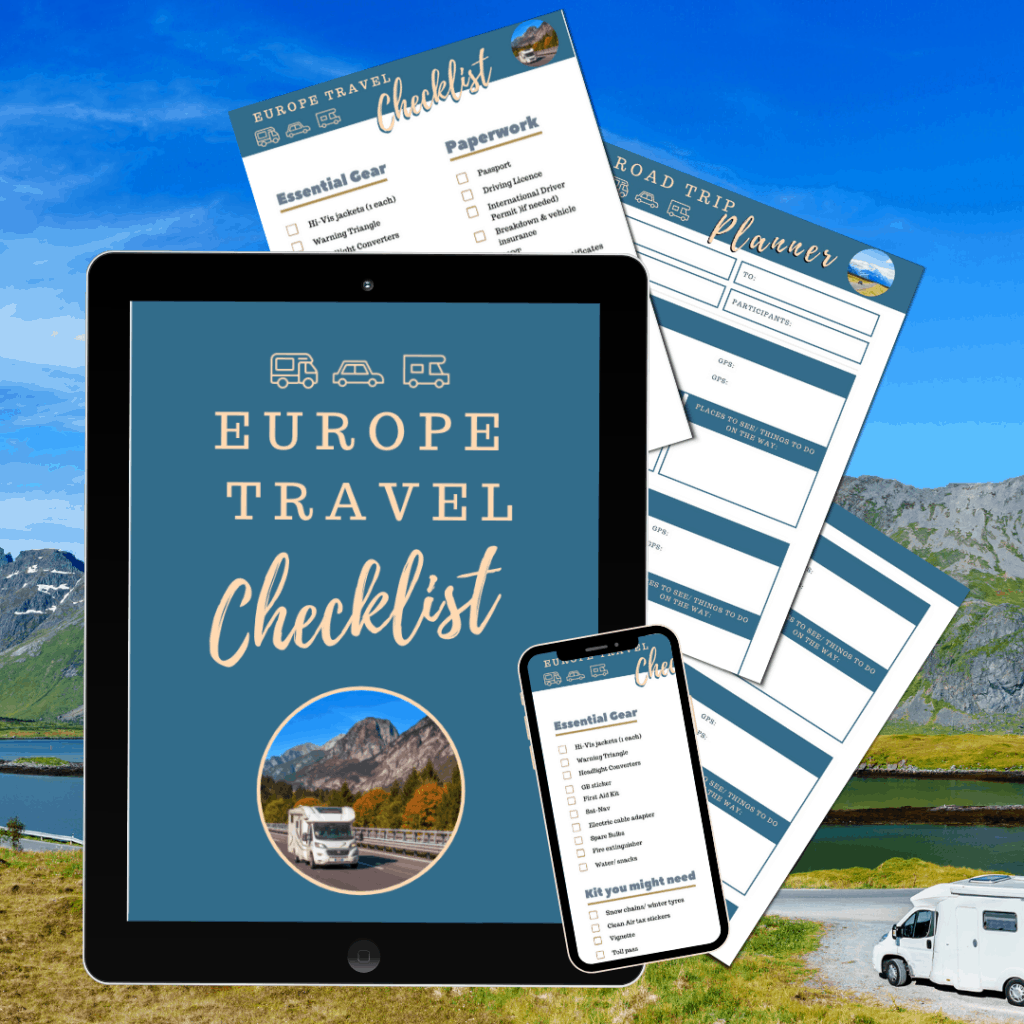
Don’t forget to grab your FREE Europe travel checklist below to make sure you have everything you need.
*We work hard to make this the best motorhome travel blog and road trip website possible, full of helpful content for you. The website is supported by our readers, so if you buy through links on this site we may earn a commission- at no extra cost to you. All opinions remain our own.
If you find this post useful, you can also treat us to a coffee – we promise to enjoy it while creating more useful content like this- we might even indulge in a biscuit (or two!)
Who are ACSI?
ACSI is a company which works alongside a network of thousands of campsites across Europe (including the UK).
It is a Dutch company which was founded in 1965 and wanted to make things easier for people enjoying Europe road trips by bringing campsites in multiple countries together to offer discounts. Now, there are around 10,000 campsites in the guide- and more are being added regularly!
What does ACSI stand for?
Great question! They don’t even have it on their website anymore- they just use ACSI. After much digging, I believe it stands for Auto Camper Service International.
Want to head to Europe with your motorhome?
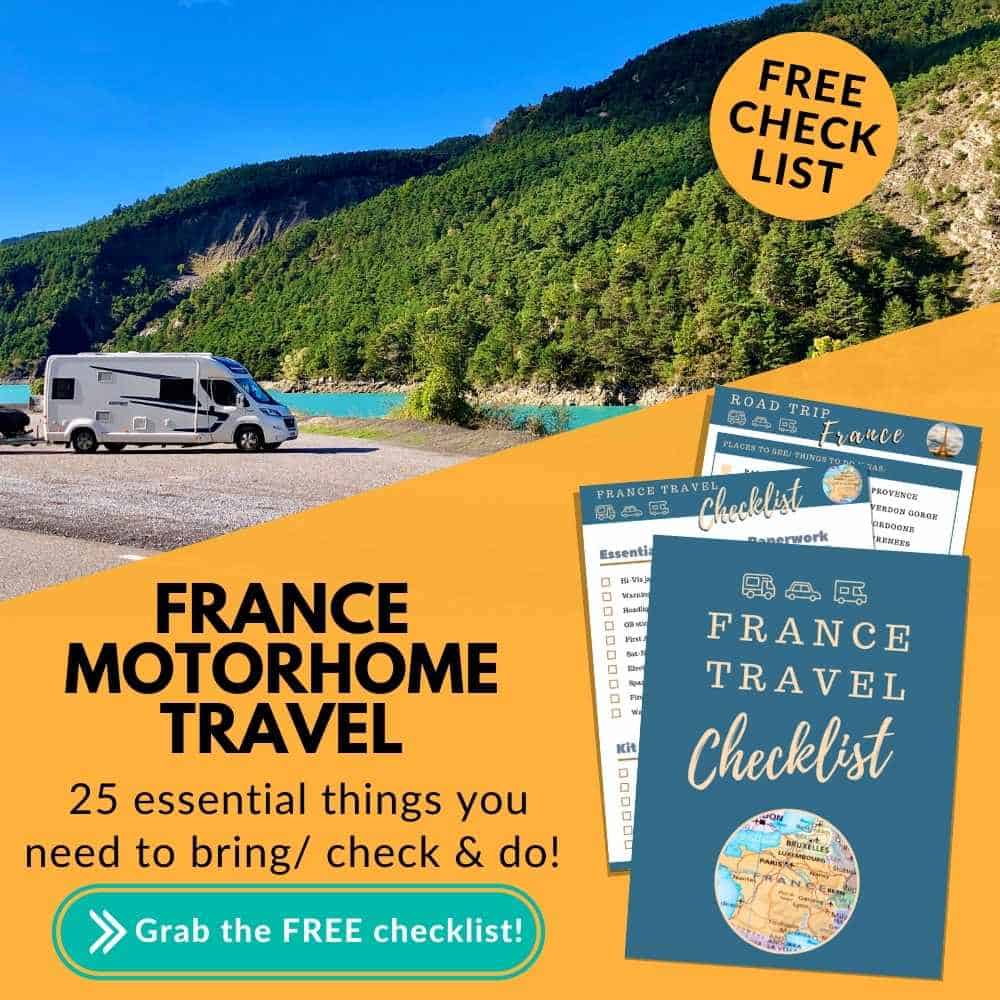
Grab your FREE (printable) checklist and discover 25 things you NEED to take with you when you travel in Europe. Make your life easier today.
ACSI Membership- the options
Ok, honest talk time. USING the ACSI services is easy-peasy (we’ll get to that next) but BUYING the card can be a pain in the backside.
Their website is a little confusing and it can be tough to know which option you need. They have several things which all sounds reeeeeallly similar.
So let me try to break it down for you.
ACSI Eurocampings
Eurocampings is a collection of campsites (over 9000!) which have been inspected by ACSI yearly, meaning that you get a really high quality of campsite.
These can include campsites by the sea or a major attraction, dog-friendly campsites, sites with kids clubs and pools or smaller campsites where you can enjoy some well-earned peace.
You don’t get any discount on the campsites, but you do have peace of mind knowing your holiday is somewhere which has been inspected and is well looked after.
The campsites are easy to find and most can be booked online. In fact, the easiest way to find them is using the Campsites Europe App.
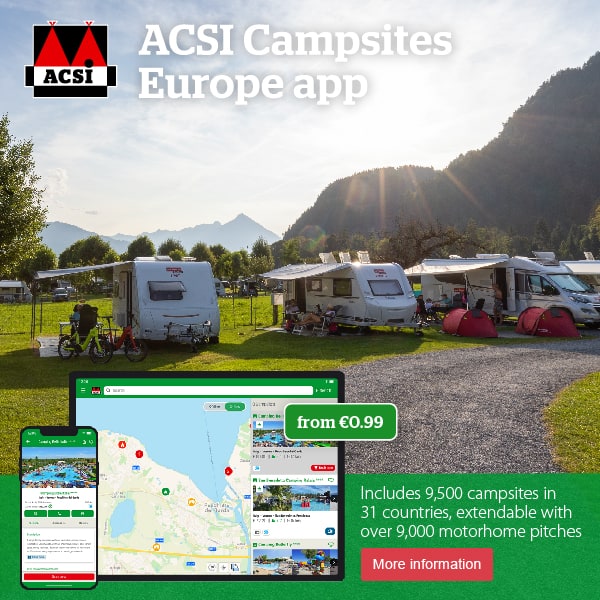
ACSI Campsites Europe App- the easy to use version of Eurocampings
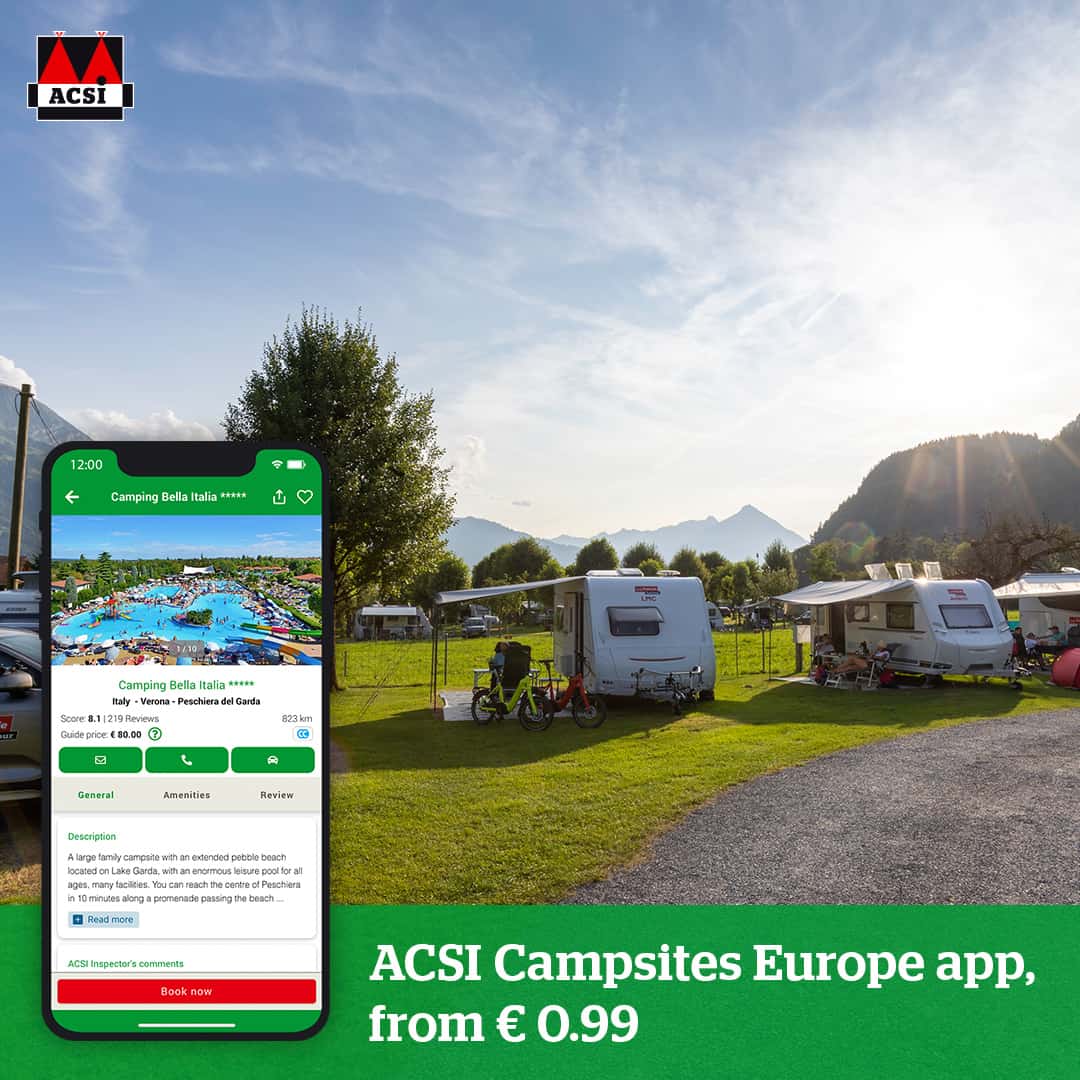
Campsites Europe App
This app lists all the campsites in their Eurocampings scheme.
They also list plenty of the nicer aires too (they call them ‘motorhome pitches’, which makes things a little easier when you just want somewhere safe to stay overnight without worrying about it.
Not sure what an ‘aire’ is? Here’s a complete guide to Aires in France and Europe
There are some handy filters which make it easy to find the right place to stay and more and more campsites have made it possible for you to use the app to book your pitch directly. If they can’t, the app has the phone number so you can call them. (Don’t forget, you can’t book aires in advance, only campsites.)
You can also make a list of campsites/ pitches you like the look of and save them to favourites so you can easily find them again later. Even better, once you’ve downloaded the information, you can also use the app offline.
ACSI Campsites Europe App review
I actually find it easier to find quality places to stay overnight, instead of Park4night, because I know they’ve been inspected and approved. I also like how you can filter the services for the aires, to show ones where you can get drinking water or empty waste.
RECOMMENDED: For everyone who wants to find and use high-quality campsites and approved parking spots (aires) at any time during the year.
TOP TIP: Be sure to download only the regions/ countries you need on your phone/ device in order to save space. The files can be pretty large as there’s so much information on them.
CampingCard ACSI
If you own a motorhome, caravan or campervan, and are able to travel outside of peak season, this is probably the option you want.
The ACSI Camping Card is a guidebook/ app and a discount card, which a discount of up to 60% in early and low season at around 3,000 campsites across the UK & Europe. It’s a great alternative to free motorhome parking and overnight stopovers in Europe.
You use the guide to find campsites where you can stay for as little as 12€/ night and the card ensures you’ll pay less than the campsites lowest advertised rate.
When you buy the CampingCard ACSI guide, you can use the card at all participating campsites when travelling outside of peak times. For a small additional fee, you can also get access to the CampingCard ACSI app, which is simple to use whilst you’re already on the road. But you still need to show the card at the campsite in order to get a discount.
And no- it’s not the same thing as the Camping Card International, which is a similar scheme but a lot more expensive
ACSI camping card fee- what does it cost?
There are a couple of purchase options:
CampingCard ACSI Digital – €19.95 (non members) & €18.95 (members)
NOTE: The CampingCard ACSI runs from January- December. The one for the new year comes out around October time, but if you’re travelling in November or December through into January, you’ll need to buy both the current year and the following year, so make sure you purchase the correct one(s) for your trip.
They also have an option to purchase a motorhome pack, which includes the campsites which allow a discount PLUS aires and pitches just for motorhomes/ campervans for around 32.95€. This is great, but for some reason the guide is only available in German, French or Dutch. It’s easy enough to use in any language (and the app makes it super easy), but something to be aware of. So far, we’ve just used the ‘normal’ CampingCard option and it’s been great.
Where can I buy the ACSI Camping card membership?
The best place to buy the CampingCard ACSI is here.
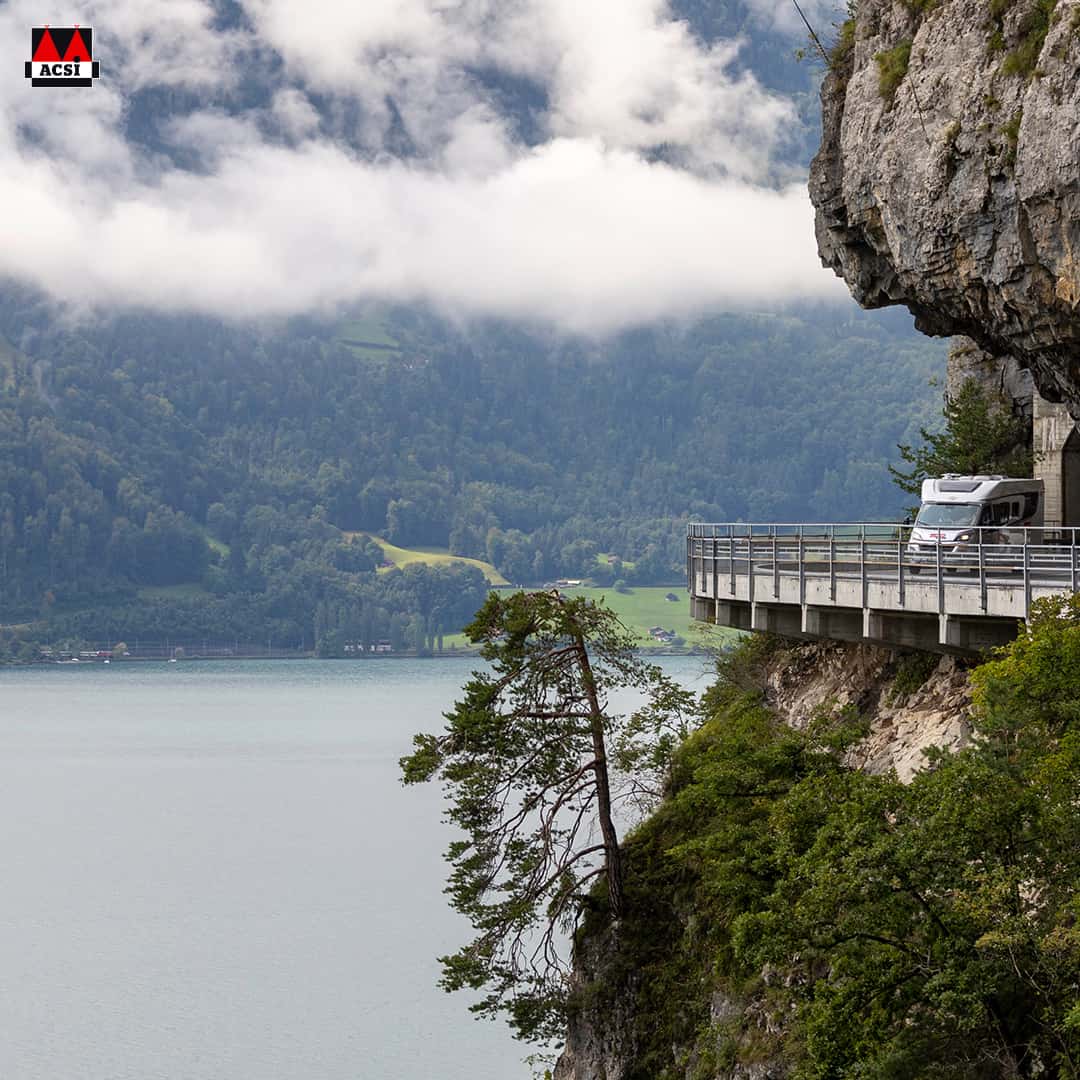
Motorhoming in the Swiss region of Berner Oberland
How to use the CampingCard ACSI
The CampingCard ACSI is very simple to use- you need to take it with you on your trip and show it on arrival at the reception of your campsite. You’ll then be given the discount.
Only one person in the vehicle needs to be a member. You must have a card valid for the year you are in.
How to use the ACSI CampingCard App
The app is also really straightforward to use- you open it and either search around your location or search around your planned destination. You can click on the icons and read more about the campsite and the facilities.
TOP TIP: You need to download the correct areas in order to use the app offline. Try to do this BEFORE you leave otherwise it will chew up a lot of your data. (Learn more about getting internet in your camper here)
Where have we used our ACSI CampingCard?
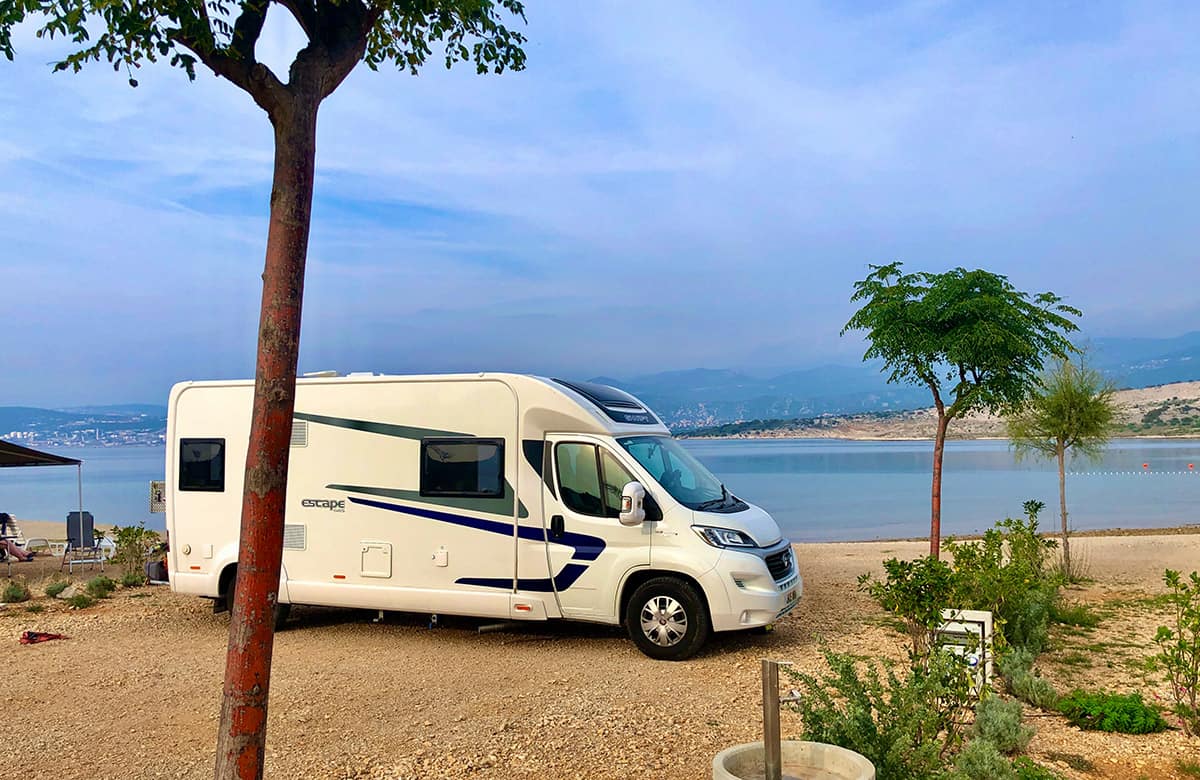
We used our ACSI Camping Card at Lake Bled
Whilst touring in our motorhome, we’ve used our ACSI card all over the place.
ACSI Review- what are the benefits of Camping Card?
There are some HUGE benefits to purchasing the CampingCard ACSI for anyone who enjoys travelling to Europe and plans to use campsites, even if it’s just occasionally. Heck, you can save more than the cost of membership in just 2 nights!
Let’s take our motorhome tour of France as an example.
Usually, we prefer to use French aires as much as possible, or we love to wild camp in France away from everyone.
But there have been several places where we’ve struggled to find a wild camping spot, or an aire- especially on the French Riviera. In those instances, we used an ACSI campsite and saved about €10 each night! That adds up to a lot of savings over the duration of a motorhome trip.
Another thing we like is that, unlike with other motorhome clubs, you can still use the campsites even if you aren’t a member- you’d just pay full price. So we can arrange to meet friends or family at a certain campsite without issue.
Planning a trip to France with your motorhome or camper?
Motorhoming in France free Checklist
When can you use ACSI CampingCard?
There are some small differences on when sites will accept the ACSI card (it’s clearly marked in the guide for each place) but, generally speaking, many campsites will accept CampingCard ACSI most of the year and even as far into the summer as the beginning of July.
The peak season times where it is NOT accepted generally include Easter (and the week either side of it if the schools in Europe are off), and the month of August. Some bank holiday weekends are also excluded.
ACSI Great Little Campsites (with app)
Bear with me, because there’s more! ACSI also have a website and app called ‘Great Little Campsites’.
This is a collection of over 2000 small campsites and motorhome pitches around the UK and Europe. Facilities vary, from rustic to those with swimming pools! This is a great compromise if you want to get away from noisy and overcrowded campsites but still want the security of a site instead of an aire in Europe (or even motorhome wild camping!)
You can get access to the app for just 3€ for the year here (but remember, not all these small campsites will accept the ACSI discount CampingCard.
ACSI Club ID card
And then, there’s the ACSI Club ID- which is NOT the same thing as a CampingCard membership. The Club ID allows you to get discounts on items in the ACSI shop, plus some discounts on days out and camping equipment.
One of the big advantages of an ACSI Club ID card is that you can keep your passport safely tucked away: almost 8,800 ACSI campsites accept the card in place of your ID, so you don’t need to hand over your passport on check-in. It also insures you for 3rd party liability.
The Club ID costs 5.95€/ year (2025 price) and you can buy it here
Planning to take your motorhome to Europe?
Suncamp
And lastly, there’s Suncamp, where you can book camping and motorhome holidays which are family-orientated, staying at locations with kids clubs and many facilities to give them an amazing holiday. We’ve never used these, but you’ll see that option on the ACSI website if you’re interested.
Do you have to book ACSI campsites in advance?
ACSI have a wide range of campsites. If you’re planning to visit in peak season, and want somewhere near the beach or with specific facilities then yes, it’s well worth booking as far in advance as you can.
With the Camping Card, the whole point of the scheme is to encourage camping outside of high season and peak times. Therefore, by definition, it shouldn’t be too busy. I think nearly every ACSI site we’ve used, we’ve just turned up- which is good, because we rarely plan our motorhome trips too far in advance!
ACSI membership review- is it worth it?
If you’re going to be travelling around Europe and using campsites, then yes- absolutely!
There are pros and cons to all the schemes. If you enjoy staying at high quality campsites, then Eurocampings and the ACSI Campsites Europe app is well worth the money.
For the camping card, if you can ONLY travel during school holidays/ peak season than no, it’s not right for you. But for most other people, it’s well worth it.
A couple of things to note:
many campsites close at end of September/ October and don’t re-open until March. If you’re only using your motorhome in winter, or going motorhome skiing, then ACSI might not be right for you either (although there are a few campsites which stay open all year).
If you’re enjoying solo vanlife, then you might find ACSI discounts aren’t worth it (as most of them have a set price based on two adults).
If you’re travelling November/ December, bear in mind you’ll need to buy the next year to start 01 January. So you might not get full benefit.
But, overall, we think ACSI is well worth the investment.
The technical storage or access is strictly necessary for the legitimate purpose of enabling the use of a specific service explicitly requested by the subscriber or user, or for the sole purpose of carrying out the transmission of a communication over an electronic communications network.
Preferences
The technical storage or access is necessary for the legitimate purpose of storing preferences that are not requested by the subscriber or user.
Statistics
The technical storage or access that is used exclusively for statistical purposes.The technical storage or access that is used exclusively for anonymous statistical purposes. Without a subpoena, voluntary compliance on the part of your Internet Service Provider, or additional records from a third party, information stored or retrieved for this purpose alone cannot usually be used to identify you.
Marketing
The technical storage or access is required to create user profiles to send advertising, or to track the user on a website or across several websites for similar marketing purposes.










:max_bytes(150000):strip_icc()/TAL-west-palm-beach-the-square-TRENDYFLCITY0325-d2193e0c9680423a92b663cb68f111a3.jpg "West Palm Beach, Florida, Was Just Named the Top Trending Destination in the U.S.")
:max_bytes(150000):strip_icc():format(jpeg)/TAL-west-palm-beach-the-square-TRENDYFLCITY0325-d2193e0c9680423a92b663cb68f111a3.jpg)