Home Blog Page 158

Motorhoming & Campervanning in Spain- The Ultimate Guide in 2025

0


Planning to tour Spain with a motorhome or campervan? There are some essential things you need to know before your trip, including important paperwork and kit to bring with you. Here’s everything you need to know about campervanning or motorhoming in Spain.

Don’t forget to grab your FREE motorhoming in Europe checklist below to help you stay organised and remember everything you need.

*We work hard to make this the best motorhome travel blog and road trip website possible, full of helpful content for you. The website is supported by our readers, so if you buy through links on this site we may earn a commission- at no extra cost to you. All opinions remain our own.

If you find this post useful, you can also treat us to a coffee – we promise to enjoy it while creating more useful content like this- we might even indulge in a biscuit (or two!)


Motorhoming in Spain- why you should go!

When you think of Spain, many people think of overcrowded beaches in Benidorm, drunken teenagers and possibly Sangria. But, I promise you, there is much more to Spain than the Costa del Sol, especially if you’re travelling and touring in a motorhome or camper.

The landscape changes from the rugged north, with mountains and scenic views to rival anywhere else in Europe, to the desert and arid areas, to the sparkling azure blue of the Mediterranean. There is history and culture everywhere you look, as well as friendly and welcoming people, delicious food and SUNSHINE- even in winter.

Planning to take your motorhome to Europe?
Europe Motorhome travel checklist- FREE

Campervanning in Spain- Where to go

When planning a motorhome tour of Spain, the first thing you need to do is to figure out where you’re going (and how long you have for your road trip!)

If you’re driving from the UK to Spain (we’ll cover that shortly), you need to allow the time it will take to drive through France to Spain (and back again!) Of course, if you only have a week for your holiday, travelling from the UK and back leaves only a few days to explore the country, and the further south you go, the less exploring time you have.

On the other hand, if you have 10-14 days or longer, you can get a lot further south, certainly as far as Costa Blanca or Andalucia and possibly even get to enjoy motorhoming in Portugal if you’re happy to drive every day.


When to go motorhome touring in Spain

Touring Spain in Winter

In our opinion, southern Spain is the perfect European winter destination. It’s warm for one thing, and there’s nothing like a little sunshine to chase away those winter blues. It’s one of the warmest places in Europe in February– average temperatures in Malaga are 18°c (but only 12°c in Madrid- that extra bit south does make a big difference)

In the past, Spain has been VERY crowded during the winter months, especially in the south. Many Northern Europeans (like us Brits!) head to that area to get some winter sunshine.

However, now that BREXIT has happened and rules have changed (more on that later too!), you might find things a little quieter, certainly with British vans.

READ MORE: Discover the best & warmest places to enjoy winter in Spain

Northern Spain is mountainous and you can expect snow during winter- and it will be cold, even on a sunny day (just like in the Alps or any other mountain range.) If you’re planning to stay to the north, you’ll need to bring warm clothing.

Spain Motorhome Touring in Summer

Of course, Spain is a classic summer destination, and it can be CROWDED, especially at the UNESCO world heritage sites in Spain and on the beaches. For us, we find it too hot during high summer, especially as we travel with a dog and keeping a dog cool on a road trip is never easy (especially when they’re a cocker spaniel who doesn’t understand the meaning of the word ‘chill’…!)

If you are going to be travelling to Spain during summer, we highly recommend you have an awning- you’ll definitely need the shade and protection from the sun. You’ll probably also want some form of air conditioning or at least a fan in your camper- temperatures can get up to 40+°c
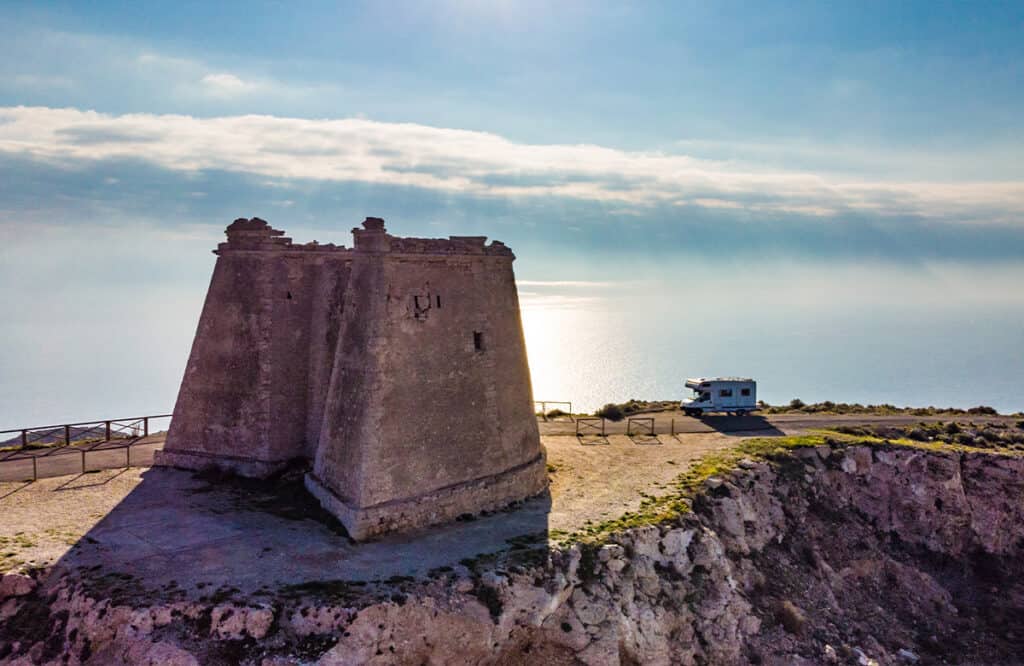
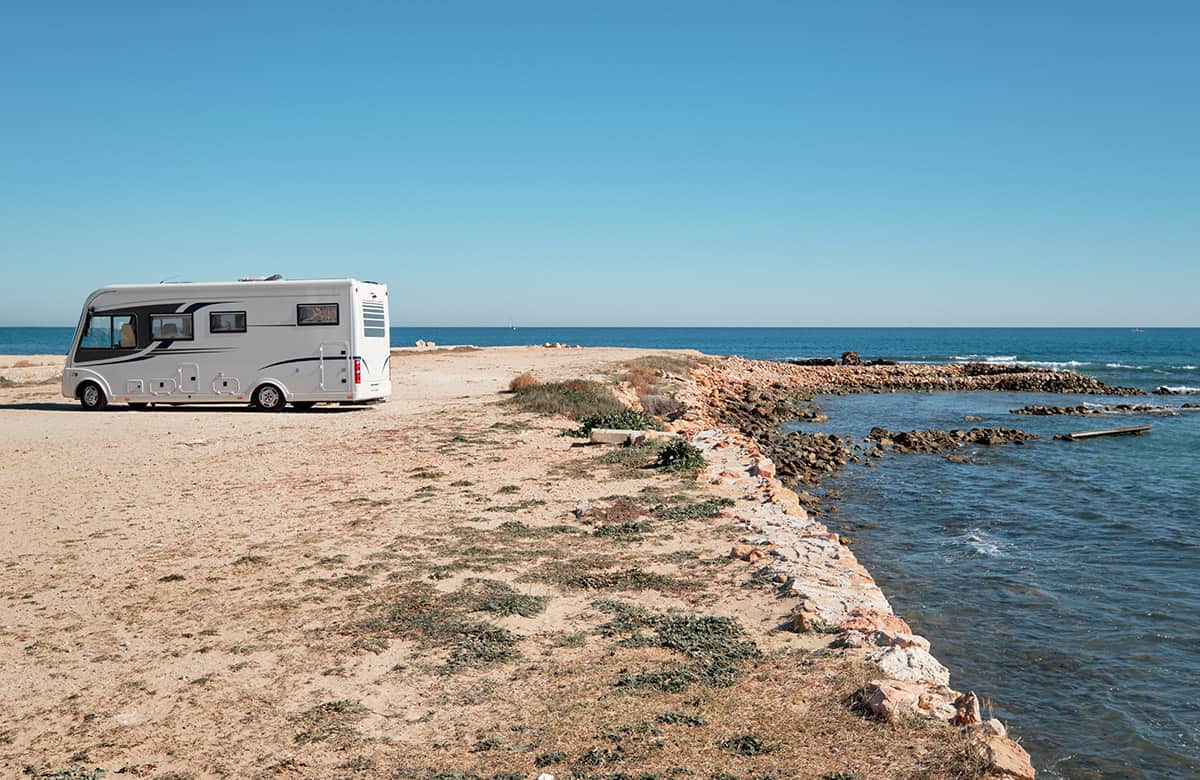
Motorhoming in Spain motorhome at Mesa Roldan tower Cabo de Gata Nijar Natural Park in Almeria province Andalusia Spain
Motorhoming in Spain- motorhome at Mesa Roldan tower Cabo de Gata Nijar Natural Park in Almeria, Andalusia Spain

Road tripping Spain in Spring and Autumn

The best times to visit are probably the shoulder seasons of Spring and Autumn. Temperatures are still warm enough to enjoy the beaches and swimming in the sea, but there are much fewer tourists and you will be able to find motorhome parking without booking in advance.

TOP TIP: If you are travelling outside of peak season, definitely get an ACSI CampingCard– you’ll save a fortune on campsites all over Europe, including Spain


Planning a driving route from UK to Spain

For some reason, driving from the UK to Spain seems to confuse people.

Perhaps it’s because there are several options, or perhaps because there’s a mountain range in the way, but it’s something which gets asked over and over again in Facebook groups and forums (feel free to join our motorhoming Facebook group here)

Ferry or driving from UK to Spain?

The first question to ask yourself if whether you want to drive from the UK through France and down to Spain, or whether you want to take a ferry direct from the UK and sail around the coast and down to northern Spain.

Generally, taking a ferry from the UK to Spain is much more expensive than driving through France (depending on time of year and type of cabin).

New to motorhome or camper travel in Europe? You might find these posts helpful:
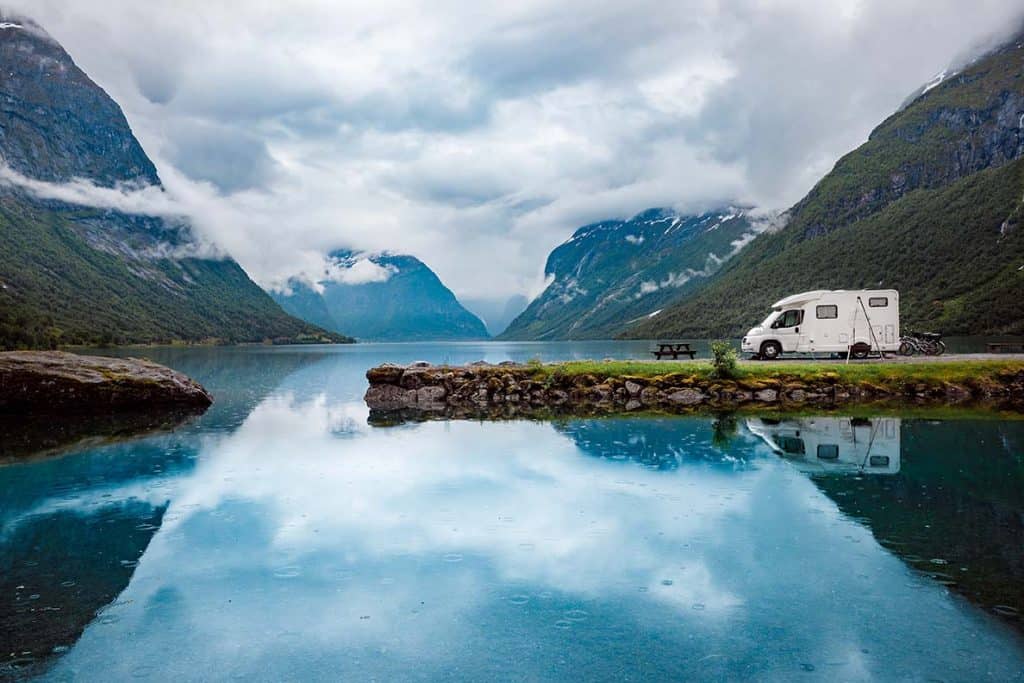
Tour Europe in a Motorhome; Motorhome Europe Travel
How to tour Europe in a Motorhome- step-by-step
Beginners RV trip planner
How to plan EPIC motorhome trips
Free motorhome parking and overnight stopovers in Europe for motorhomes and campervans
How to find Free motorhome parking and overnight stopovers in Europe for motorhomes and campervans
10 essential tips for campervan and motorhome life. Whether you're plan a road trip or full-time van living, these hacks and ideas with help.
Essential kit for Motorhoming in Europe (with free checklist)

See all our Europe motorhoming posts here

NEED GEAR? If you need any kit or essentials for motorhoming in Europe, here’s what we recommend and where to find it

Ferry with a motorhome direct to Spain

You can travel with Brittany Ferries from Portsmouth or Plymouth and go to either Santander or Bilbao (both on the north coast of Spain)

A one-way trip takes about 24 hours and booking a cabin is recommended. They also have dog kennels onboard but you CANNOT keep your dog in the ferry cabin with you (like you can from Portsmouth to Caen).

The biggest consideration to this ferry (apart from the cost), is the weather. You will be crossing the notorious Bay of Biscay- and it can get ROUGH. Even in the middle of summer. As someone who gets seasick (hilarious considering I’m ex-Navy and lived on boats for 15 years), I avoid this crossing and prefer to drive from the UK through France to Spain, but it’s entirely up to you.

Driving through France to Spain

If you decide that you want to drive your motorhome or camper down to Spain, you first need to decide if you’re going to take the ferry or tunnel from UK to France (there are pros and cons to both).

Then you have two main routes through France to Spain. Each route takes about a day to drive, so take this into account when planning your Spanish road trip itinerary.

Route 1 is via Tours, Bordeaux and down the Atlantic coast on the N10 until you cross the border between Biarritz and San Sebastian. You can join this route easily if you decide to come over on a ferry to Caen, Le Havre, Dieppe or Cherbourg.

This is our favourite route for a France road trip as you pass some incredible places (including some of the most historic places in France!)

Route 2 is straight south from Calais, skirting around Paris and then down to Clermont Ferrard and Perpignan on the A75 (which is largely free from tolls). The huge highlight from this route is crossing the Millau Viaduct in your motorhome or camper- it’s well worth the experience.

Of course, you can always drive down one route and back up another!
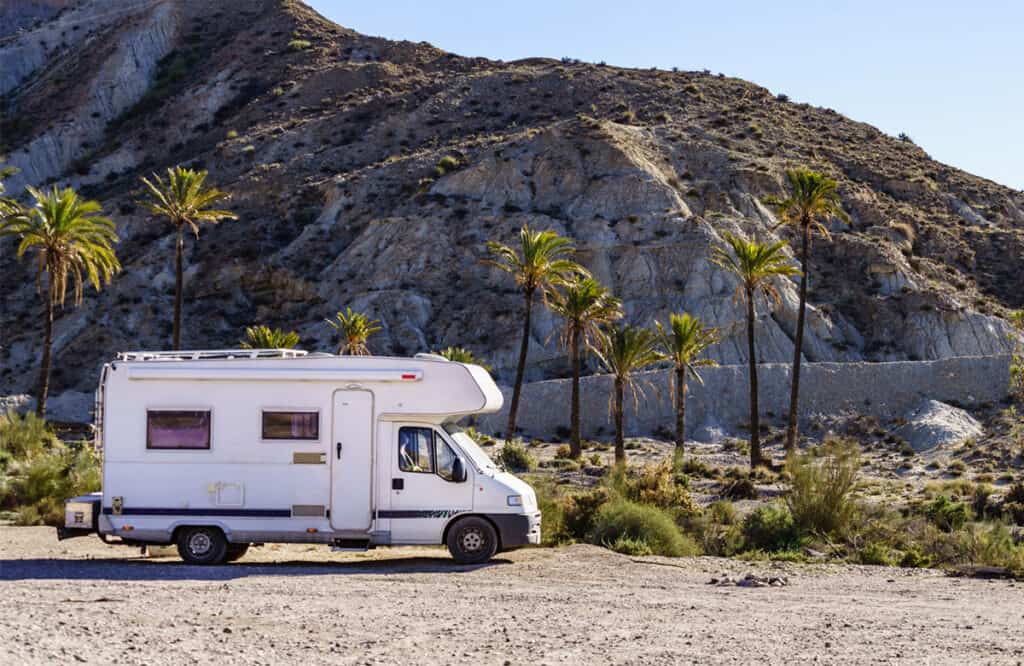
Motorhome touring in Spain in the Sierra Alhamilla mountains

Can I drive to Spain in the Winter?

Yep. I know there are those HUGE mountains called the Pyrenees, but the routes are all open, unless you happen to be really unlucky and hit it in the middle of a snowstorm (do check the weather forecast before travelling.)

If this happens, then we recommend stopping for the night somewhere safe (the beauty of travelling in a motorhome) and then continuing on when the snow has stopped and the roads have been cleared. Don’t forget you will need snow chains and make sure you have fitted all-weather tyres.


Hiring a motorhome or camper to tour Spain

If you don’t have your own vehicle, you can easily fly into Spain and hire one. Just make sure to ask how to get from the airport to the rental agency- not all of them are at the airport itself and you might need to book a taxi.

Don’t forget, it is YOUR responsibility to make sure the vehicle has the required safety equipment. The on-the-spot fines apply to you as the driver, not the company. Check in advance with the company what kit they will provide with the vehicle and what you will need to bring.

Take a list of what is legally required with you and check it off one by one as you are given the handover. Do not drive until you are happy you comply with the local laws.

Make sure you have proof that you can take the vehicle across a border into another country if that’s what you’re planning to do. Read the article below for other things to check as well before you agree to hire.


Daytime Motorhome Parking in Spain

You can park a motorhome during the day anywhere parking is allowed (as long as there are no signs banning motorhome parking) and as long as you aren’t overhanging a space or blocking the road.

Many places have a sign saying NO motorhome overnight parking, but you are fine to park during the day. You can pull over into a rest stop and eat and drink within your vehicle, but setting up a table and chairs next to the road is not allowed.

Nor is getting out the awning and putting up your TV aerial. (Yes, you will see other people do it- some areas are stricter than others. If everyone else is, feel free to join them but remember you may be asked to move on.) Remember, this is for daytime parking for motorhomes- let’s move on to overnight parking…


Campervanning in Spain- motorhome overnight parking

As with most countries in Europe, you have four options when it comes to where to park your motorhome or camper overnight:

  • Motorhome campsites
  • Approved motorhome overnight parking places/ aires
  • Free approved overnight parking spots/ schemes
  • Motorhome wild camping spots

Sadly, Spain is getting tougher about free overnight motorhome parking spots and many places now ban them completely. Legally, you’re only allowed to stay on approved overnight motorhome spaces or campsites. Wild camping is not allowed in any of the Spanish National Parks.
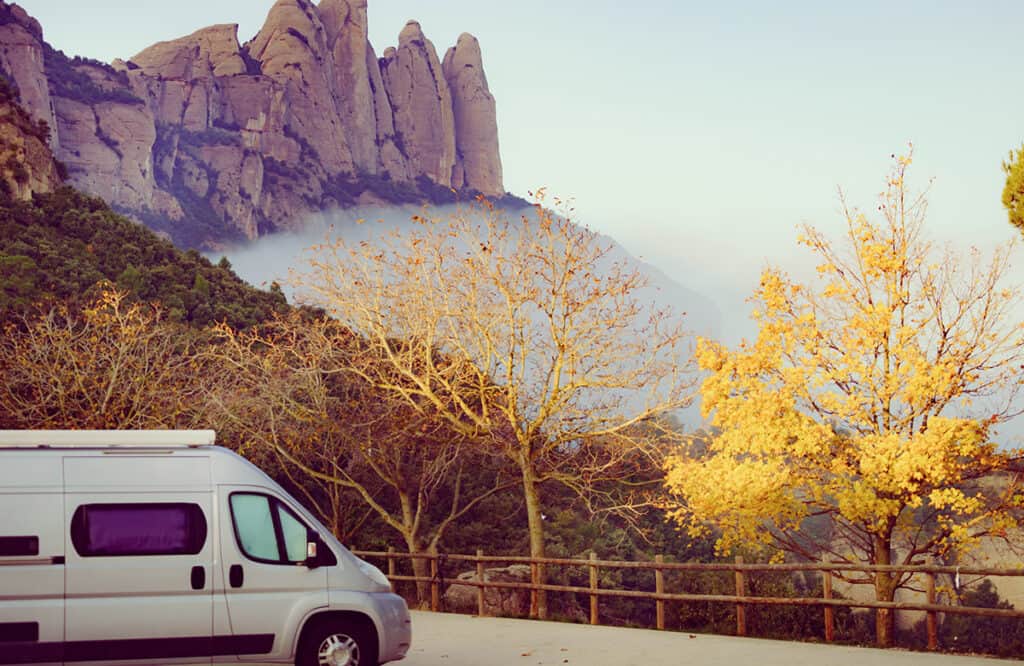
Campervanning in Spain- Catalonia

Motorhome campsites in Spain

It’s easy to find motorhome campsites in Spain and they’re much like campsites anywhere else in Europe. Some are rustic and have basic facilities, while others are designed for long-term visitors and have entertainment, clubs, pools and bars! Expect to show your passport or identification on arrival and many places require you to leave one passport behind the reception.

If you’re travelling out of high season and are planning to use campsites, we highly recommend buying an ACSI CampingCard membership, but be aware that many campsites either shut during the winter or are booked up entirely months in advance, so you may wish to book one too. Also, many campsites put ACSI users on ‘lesser’ pitches (either bad view or no electric or drainage). You can ask for a different pitch, but will usually need to pay a supplement which wipes out the ACSI discount!

At some campsites, you will need to pay extra for shower or electric usage. Be warned- the hot water in the shower is on a timer- usually between 3-5 minutes per token. Water is regulated in much of the country, especially in the south, and many sites provide de-salinated water instead of potable.

We recommend you don’t drink this water and also clean out your motorhome freshwater tank thoroughly before refilling it to get rid of the particles found in de-salinated water.

TOP TIP: If you’re planning to stay in one area for a long time (30+ days), negotiate a special rate with the campsite directly. Most of them have some sort of discount- some are as little as £10/ day, including electric.


Motorhome Aires in Spain

Aires are just approved motorhome overnight parking places- often provided and maintained by the local commune. If you’ve been motorhoming in Italy, you might surprised to learn that aires are called Aires in Spain, just like in France (they’re called Sostas in Italy).

There aren’t quite as many aires in Spain as in France and they’re often a little more out of the way, but the network is still very useful and easy to use.

READ MORE: Learn how we find and use aires and approved free overnight motorhome stopovers across Europe

You cannot book motorhome aires in advance- it’s first-come, first-served, so if you’re visiting at peak times you might feel happier booking a campsite so you’re assured of somewhere to stay.

A good tip is to try and arrive AT your destination just before lunchtime. Many people move on after. a lazy morning, and stop en-route, so you have the best chance of finding a spot around this time, but that’s when the day is at its hottest, so be careful.

It’s always worth investing in a book of aires, as well as an online app- just in case you find yourself without internet in your motorhome (or without a wifi signal). Of course, the downside with any book is that it goes out of date, but don’t worry if it’s only a year or two out- most information about aires won’t change too much.


Wild camping in a motorhome in Spain

Like much of Europe, wild camping in Spain for motorhomes and campers is ‘tolerated’ in many places but not strictly legal and it’s certainly not a right. Many people seem to think they can turn up and park wherever they want, but this is not the case.

Motorhome wild camping guides for the UK & Europe
Motorhome wild parking guide

In practicality, you’ll find that the further from civilisation and the beach you are, the better your chances of finding a quiet, free overnight parking spot will be. If in doubt, you can always ask at the tourist office or town hall- many places are happy to allow you in their car park for the night.

However, with a little common sense and staying within the restrictions, it’s often possible to stay off-grid with your motorhome or campervan.

  • Don’t try and wild camp on the coast unless you’re somewhere REALLY remote (more likely to be allowed in the North and centre of Spain)
  • Don’t try and wild camp in busy/ popular areas- like the Costa del Sol- unless you’re visiting in the lowest of low season. Anywhere near the beach will be tough all year.
  • Get the permission of the landowner if possible

READ MORE: There are some basic rules to follow whilst motorhome wild camping – here’s everything you need to know to stay safe and find free spots.


Can you wild camp with a motorhome in the Spanish National Parks?

No- wild camping is not permitted in any of Spain’s National Parks.


Other Motorhome stopovers in Spain

If you’d like to avoid campsites and aires, but don’t want to risk staying off-grid, there is a scheme which connects business owners to people motorhoming or campervanning in Spain, called Espana Discovery.

You can buy an annual guide for just 27€ (in 2023) and it gives you access to over 200 businesses which allow motorhomes to park up overnight in exchange for buying a meal in their restaurant or a few bottles of wine at the vineyard. Some spots are even right on the beach!


Motorhoming in Spain- what gear do you need to carry?

Just like motorhoming in France, there are certain things you MUST carry with you in your motorhome or campervan whilst touring in Spain.

Don’t forget, if you are driving through France to get to Spain, you need all the kit required by France as well as the kit for that country.

Grab your FREE France travel checklist so you remember it all!

Planning a trip to France with your motorhome or camper?
Motorhoming in France free Checklist

Things you need to drive in Spain- safety gear

These are the things you MUST have with you when you’re motorhome or campervan touring in Spain.

  • Hi-vis reflective jackets – not as strict as in France, but you must wear them on the side of the road or hard shoulder or risk being fined.
  • Warning triangle
  • V16 Beacon – the replacement of the red warning triangle to the V-16 beacon from 1 JAN 2026 BUT since the start of 2023 the use of V-16 emergency warning beacons on vehicles in Spain has been approved by Spain’s traffic authority.
  • Headlight beam converters– must be fitted before you drive in Europe. Some vehicle allow you to adjust the beam automatically so you won’t need these.
  • UK sticker attached to the back of vehicle or reg plates (and trailer if you have one)
  • A spare wheel (and tools to change it!), or a tyre repair kit.
  • If you wear glasses you MUST carry a spare pair!
  • If you’re towing with your motorhome or campervan in Spain and the overall train length is 12m or more you must have at least one yellow reflector on the rear, sized 130cm x 25cm (or two sized 50cm x 25cm).
  • Red/ white warning board sign – for bike racks or anything overhanging the end of the motorhome or campervan. Lines must point into the middle of the road.

TOP TIP: Buy these essentials for driving in Spain in advance. One of the cheapest places is on Amazon. If you wait until you’re at the ferry/ tunnel, you could spend THREE times as much!


Road trip accessories you MIGHT need when campervanning in Spain

The following kit are things you might need to carry in your car, motorhome, caravan or campervan, depending on when you are planning your road trip in Spain.

  • If you are travelling between 15 October and 15 April and driving near the mountains, you will need to have winter/ all- season tyres and carry snow chains. Make sure you check them in advance! If you’re not sure, read THIS
  • First aid kit – not compulsory in Spain (unlike many countries in Europe) but worth carrying. Find out what we carry in our European first aid kit here
  • Spare bulbs for all lights in the vehicle
  • Torch
  • Fire extinguisher
  • Road Trip snacks and water- just in case!

Motorhomes or campers with a total train length of over 12m

If you’re travelling in Spain and your outfit exceeds 12m, you need to have marker boards fitted to the back of your vehicle. You can either have two small boards or one large board but they must be placed at the back of the outfit between 50cm and 150cm off the ground.

Your marker board must:

  • be yellow in the centre with a red outline
  • be made out of aluminium
  • be manufactured to ECE70 standard

What documents do you need to drive in Spain?

If you’re driving in Spain, you need to carry the following documents:

  • Passport (or identity card)
  • Driving licence (check it is in date!)
  • Motorhome Insurance documents- check you are covered for driving in Europe
  • Breakdown cover
  • Vehicle V5 logbook (which must show your correct address)
  • Vehicle must be legally taxed and MOT’d
  • Trailer certification
  • International Driving Permit if required
  • Personal travel insurance

Do I need a green card to drive in Spain?

Most UK vehicles do not need a green card to drive in Spain. You may need one if you are towing a trailer- please check with your insurer to be safe.

Do I need an international driving permit to drive in Spain?

Most UK citizens do not need an IDP to drive in Spain, as long as you have a card driving licence issued in the UK (in date, of course!)

You might need one if you have:

  • a paper driving licence only
  • a licence issued in Gibraltar, Guernsey, Jersey or the Isle of Man

(If you do need an IDP, here’s an in-depth guide on how to get an International Driving Permit and which one(s) you need from a UK post office.

Motorhoming in Spain- tips for touring Spain in a Motorhome
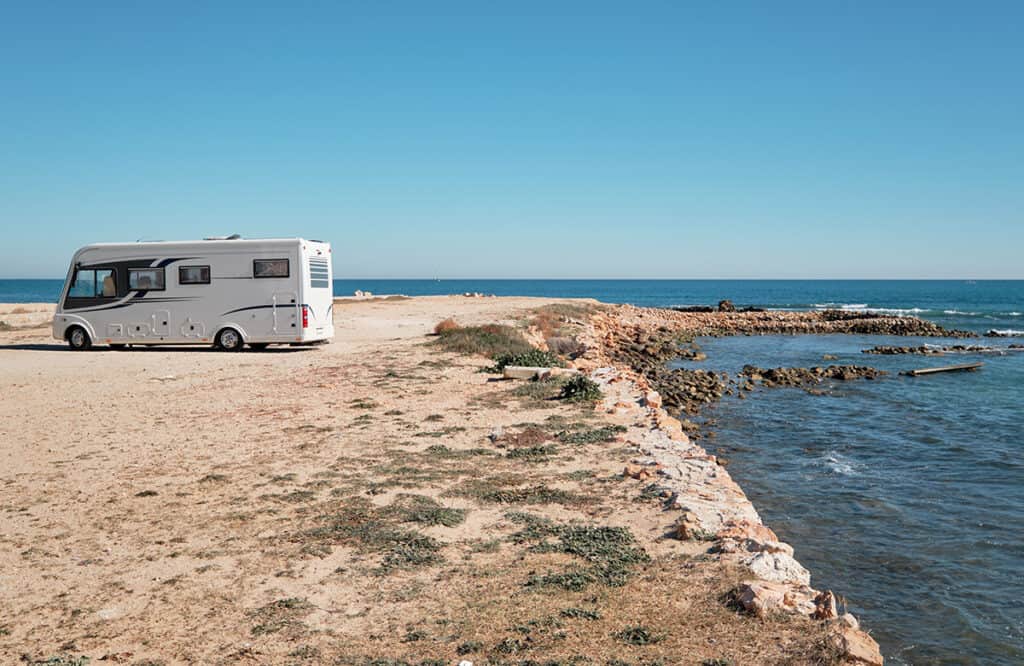
Motorhoming in Spain- parked near Torrevieja, Alicante – Costa-Brava

Motorhome touring in Spain- Other useful things you might need

We’ve been touring Europe in our motorhome for several years. We’ve tried all sorts of kit- some useful, some not so much.

Here is a list of things we highly recommend when motorhoming in Spain, but which are NOT essential:

road trip journal logbook

Driving tips for Spain

Ok, let’s deal with the basic rules and some tips for motorhoming and road tripping in Spain:

  • Spain drives on the right
  • Seatbelts are compulsory
  • Driving in flip-flops or open-backed shoes is illegal
  • Speeds are in km/h, not mph (you might want to change the setting on your sat-nav)
  • You cannot touch a screen while driving (television, video, DVD etc.) This also includes a motorhome sat-nav- program it before you leave and don’t touch it unless you’re parked up safely.
  • You need lights on in the tunnels (there are signs to remind you)
  • Road surfaces are generally pretty good and, unlike France, they try to avoid 10,0000000 road works on a bank holiday weekend.
  • On hills, use the crawler lanes to get out of the way of faster-moving traffic.
  • Avoid cities if you’re driving in a motorhome- many of them are too crowded and the streets are just not cut out for large vehicles. Park outside and use public transport to get in.
  • Yellow diamond signs mean you have priority. Diamonds with a black line through mean you no longer have priority ( this is usually on roundabouts.)
  • Trams always have priority everywhere- keep eyes in the back of your head if you’re driving near a tram network.
  • If you are driving in the mountains, you MUST sound your horn before a blind bend, but it’s illegal to use a horn in built-up areas.
  • You may carry a load, such as bikes on a rack, extending by up to 10% of the length of the vehicle to the rear. The load must be indicated by a board/ panel with diagonal red and white stripes
  • The use of winter tyres in Spain is regional. Look out for traffic signs indicating that winter tyres or snow chains are compulsory where you are.
  • IMPORTANT: Drivers do NOT have to stop at a zebra crossing for pedestrians IF there are no lights. So don’t walk out into the road thinking traffic will stop for you.
  • Some places have flashing amber lights before a normal traffic light. If you are travelling at or below the speed limit, the red traffic light will change in your favour. If not, the light will remain on red to slow you down!
  • In some places, to turn left across a dual carriageway you need to pull-in on the right and wait until it is clear in both directions.
  • If you are overtaking a cyclist or a group of cyclists, you must leave at least 1.5m of clearance, and also reduce speed by 20kmh (WHY Spain, WHY?) You are allowed to cross a white line to overtake a cyclist AS LONG AS nothing (not even another cyclist) is coming the other way.

Roads in Spain

The Spanish road network is pretty good and has a mixture of paid and free roads.

  • ‘Peaje’ or ‘AP’ is a toll road. Autopistas are marked red on the map and they will have the letter ‘P’ next to the number
  • Toll-free motorways are marked with the letter ‘A’ and are marked blue on the map
  • Main routes /dual carriageways (green on the map)
  • An “autovía” is like a motorway, except that bicycles and agricultural vehicles can use it.

Restricted driving days in Spain

Spain has certain days when driving is restricted. You can find out more about them here

Restricted Zones in Spain

Some of the bigger cities in Spain have environmental zones which only residents are allowed to drive in. These zones are indicated with ‘Area de prioridad residencial‘ and are banned to anyone without a permit (or special exemption.)


Toll roads in Spain

If you choose to use the Autopista toll roads while motorhoming in Spain, here are some tips for you:

  • The weight of your motorhome no longer matters- all motorhomes are charged the same.
  • Just like other tolls in Europe, you’ll usually get a ticket when you enter the toll route, then have to pay when you exit at either a manned or automatic toll booth. Occasionally, some sections of road have a fixed fee, so you pay when you enter.
  • Tolls can be paid for in cash (Euros) or cards at selected booths. American Express is rarely accepted but UK credit or debit cards should work (but not always, so carry cash to be safe!)
  • Alternatively, get a toll pass/ payment tag so you can use the ‘Telepeaje’, ‘VIA-T’ or ‘T’ lanes. We use e-Movis and it’s well worth it- especially on busy days where you can drive right on by the queues.

Bizarrely, some toll roads in Spain are being ‘demoted’ to free routes, but are still marked as AP on the map. This site has more information about tolls in Spain and what you might expect to pay on the various Autopistas.

Planning to take your motorhome to Europe?

Europe Motorhome travel checklist- FREE

Speed Limits in Spain (unless otherwise signed!)

Cars and vehicles under 3.5 tonnes:

  • 120 km/h (74mph) on motorways/ autovias and many dual carriageways
  • 90 km/h (56 mph) on secondary roads (out of town)- can increase to 110km/h to overtake
  • 50km/h (31 mph)- on roads with two or more lanes in the same direction
  • 30 km/h (19 mph) on roads with one lane in each direction
  • 20km/h on small lanes where road & pavement are the same level

Motorhomes and Campervans weighing over 3.5 tonnes:

  • motorways 90 km/h (55 mph)
  • major out-of-town roads 80 km/h (50 mph)
  • minor out-of-town roads 70 km/h (43 mph)
  • urban areas- 50 km/h (31 mph)
  • 25km/h in signposted residential zones

Motorhomes with trailers or caravans (over 750kg)

  • motorways 80 km/h (50 mph)
  • major out-of-town roads 80 km/h (50 mph)
  • minor out-of-town roads 70 km/h (44 mph)
  • built-up areas- 50 km/h (31 mph)

Speed Cameras in Spain

Many roads have automatic speed cameras on in Spain and they’re quite happy to send tourists a fine through the mail.

You might also find random traffic lights, which turn to red in the middle of nowhere if you’re speeding and make you wait for a couple of minutes before turning to green so you can move off again. These are surprisingly effective!
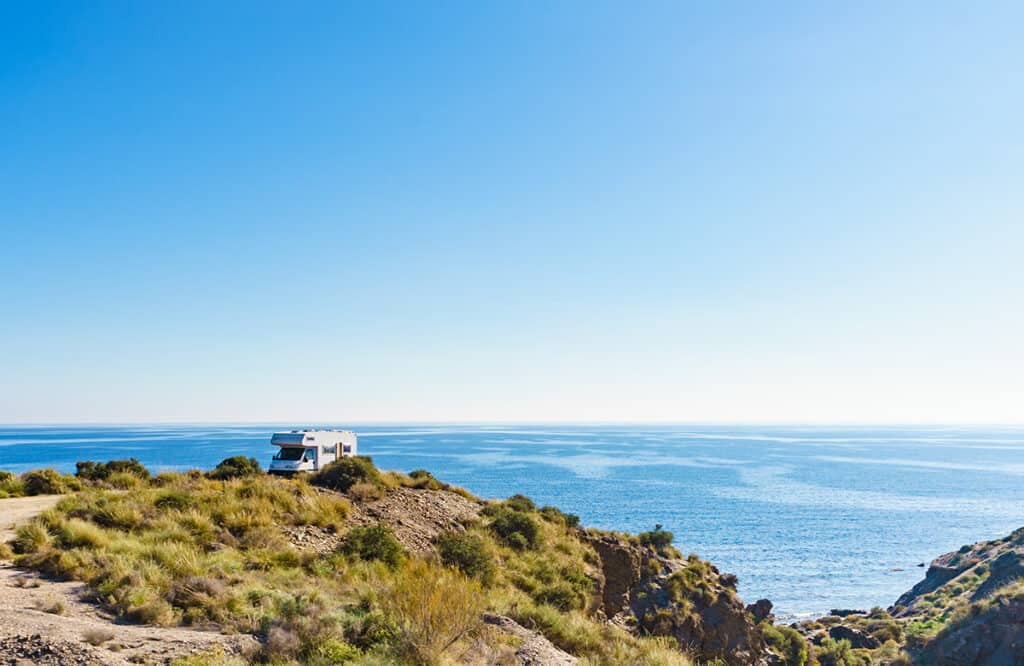

Motorhome touring in Spain- Cabezo Negro

Driving in Spain- what to do in the event of a road traffic accident

You should have a European Claim Form provided by your insurer before you leave. In the event of an accident, all parties complete and sign the form at the scene and then send a copy to your insurer for assessment.

What to do at the scene:

  • Stop your vehicle immediately but safely- out of the flow of traffic if possible.
  • If a vehicle is blocking the road, use hazard lights and put the red warning triangle 30 metres from the scene to warn approaching traffic
  • Exchange your details with the other involved parties. Be sure to get:
    • Name and address of all the people involved in the accident
    • Vehicle registration numbers of all parties
    • Insurance company details of all parties
    • Take photos of damage using a camera, GoPro or phone

For more details, read our step-by-step guide on dealing with a road traffic accident in Europe


Other essential tips for campervanning in Spain

Petrol and Diesel

Petrol and diesel are widely available. Many fuel stations are 24h on the main roads and are self-service with card machines.

LPG Gas

If you have refillable gas bottles in your motorhome, you can find LPG pretty easily while touring around Spain. Spain uses the Euroconnector adapter.

NOTE: Gas bottles can be tough to get- and it’s forbidden to fill foreign gas cylinders. Don’t forget you will need to bring a different nozzle to connect the Spanish gas bottle fitting to your UK system. If you’re not sure what we mean, read more about getting gas in Europe:

READ MORE: How we find motorhome LPG or bottles while touring Europe


Motorhome Service Points in Spain

You will find some petrol stations with additional facilities for motorhomes, like waste disposal, water (NOT always drinkable!) and washdown areas.

Campervanning in Spain- security

We highly recommend paying extra attention to your motorhome security when travelling in Spain.

You might even wish to fit an extra camper habitation door lock and never leave your vehicle unattended in an unsecure area.


Touring Spain with a dog

Spain surprised us with their attitude towards dogs. They’re not often allowed on public transport, even with a muzzle, which made visiting places difficult. (PLEASE do not leave a pet in a van or car while you go sightseeing, especially on a hot day.)

Now that BREXIT has happened and the UK pet passport scheme is no longer valid, you will need to get an Animal Health Certificate before you leave the UK.

READ MORE: How to get a UK Animal Health Certificate after BREXIT

You will need to get a worming treatment done by a registered vet before you leave Spain, or between 24 hours and 5 days before re-entering the UK.
Sandflies, fleas and ticks are common in Spain, so get a collar or treatment which protects against these.


More useful things to know when motorhoming in Spain


Emergency Numbers:
112 will get you everything

Language– There are several local variations of Spanish. Castilian is most common, but there is also Basque, Catalan and some smaller dialects. English usually spoken in campsites and in tourist areas, but not often elsewhere

Currency– Euro

Cards– most major credit and debit cards are accepted. American Express is only taken in large stores (not at tolls and often not at fuel stations)

Timezone– GMT+1 (or one hour ahead in BST)

Mobile Phone and Internet – It’s usually possible to use your UK phone and data in Spain, but do check with your provider about any charges you might incur. Alternatively, 1p Mobile SIM cards are widely available and a cheap option for phone calls.

Tipping– Service is usually included in a restaurant, but do check. It’s common to tip other services, like taxi drivers

Shops– Food prices are pretty inexpensive. Many shops close on Sundays. Bigger supermarkets may be open, but will close at lunchtime. If bakeries open on Sundays, they are often closed on Mondays instead. Many shops and businesses also shut for a long lunch (between 12-2pm) and some will not open on Wednesday afternoons.


DISCLAIMER: This post was last updated in October 2021. We try to keep it as up to date as possible, but cannot be held responsible for any changes made to the law since the last update. If you do find any discrepancies, please do let us know. Thanks.
Planning to tour Spain with a motorhome or campervan? There are some essential things you need to know before your trip, including important paperwork and kit to bring with you. Here's everything you need to know about campervanning or motorhoming in Spain.

Last update on 2025-02-28 / Affiliate links / Images from Amazon Product Advertising API

Sharing is caring!


Source link

My 6 Step Guide to Planning a Trip in 2025

0


Nomadic Matt posing for a photo in historic Prague, Czechia

Backpacking Europe is one of my favorite things to do as a traveler. There isn’t a year I don’t criss-cross the continent (except 2020 when no one was crossing Europe).

During the summer, hostels burst with life, the Mediterranean sparkles, streets fill with people drinking wine and enjoying the day, and the late night setting sun leads to long wondrous days. Winter brings Christmas markets, skiing, fewer crowds, and lower prices! And Spring and Fall bring the right mix of people, temperatures, and prices that make these two my favorite seasons to travel Europe.

Since starting this website in 2008, I’ve written a lot of posts on Europe. I visit Europe multiple times a year, have been all over the continent, lived there on multiple occasions, and I have even run tours there.

With so much content on the blog, I wanted to create a resource page that will help you plan your backpacking trip to Europe with ease. That way you don’t miss anything! In this post, you’ll find all my best resources on planning a backpacking or budget trip to Europe, including destination guides, transportation tips, accommodation information, ways to meet people, and so much more!

So, without further ado, here’s everything you could ever want to know about backpacking Europe:


Step 1: Plan Your Backpacking Europe Trip

Nomadic Matt walking towards a castle in the Loire Valley, FranceNomadic Matt walking towards a castle in the Loire Valley, France
How to Plan a Trip: A Month-By-Month Guide – This post breaks down the planning process by month, making it super easy to plan your trip to Europe. Just follow the steps and you’ll be on your way!

How Not to Feel Overwhelmed While Planning – Planning the perfect trip to Europe can be daunting and overwhelming. I’ve been there and I understand, but I can tell you from years of experience that the more you plan your trip, the more anxiety you will face.

How to Save for Your Trip – Is money stopping you from taking the trip of your dreams? Here is my list of easy ways to cut down on your daily expenses so you can save money to backpack Europe.

How to Find a Cheap Flight – Getting to Europe can be half the challenge. Luckily, there are a ton of flight deals to the continent now if you know when and how to look for them. This article will show you how to always get a cheap flight to Europe.

How to Earn Points for Free Flights and Hotel Stays – Free travel is my favorite kind of travel! This post shows you eight strategies I use to get over a million frequent flier points. These will get you out of your house faster, cheaper, and in comfort!

How to (Legally) Stay in Europe for More Than 90 Days – Every year, thousands of travelers wonder how they can stay in Europe for more than 90 days, which is the limit in the Schengen Zone. The good news is that there are a few different ways to stay. In this post, I share what you can do to stay legally beyond 90 days and on the continent in general.

How to Avoid Paying Bank Fees – You should never have to pay any bank fees while you are accessing your money in Europe! Here is my advice on how to avoid bank fees as your backpacking Europe.

Is Europe Safe to Visit? – Here is how to ensure you stay safe while traveling across the continent.
 

Step 2: Get Your Gear for Backpacking Europe

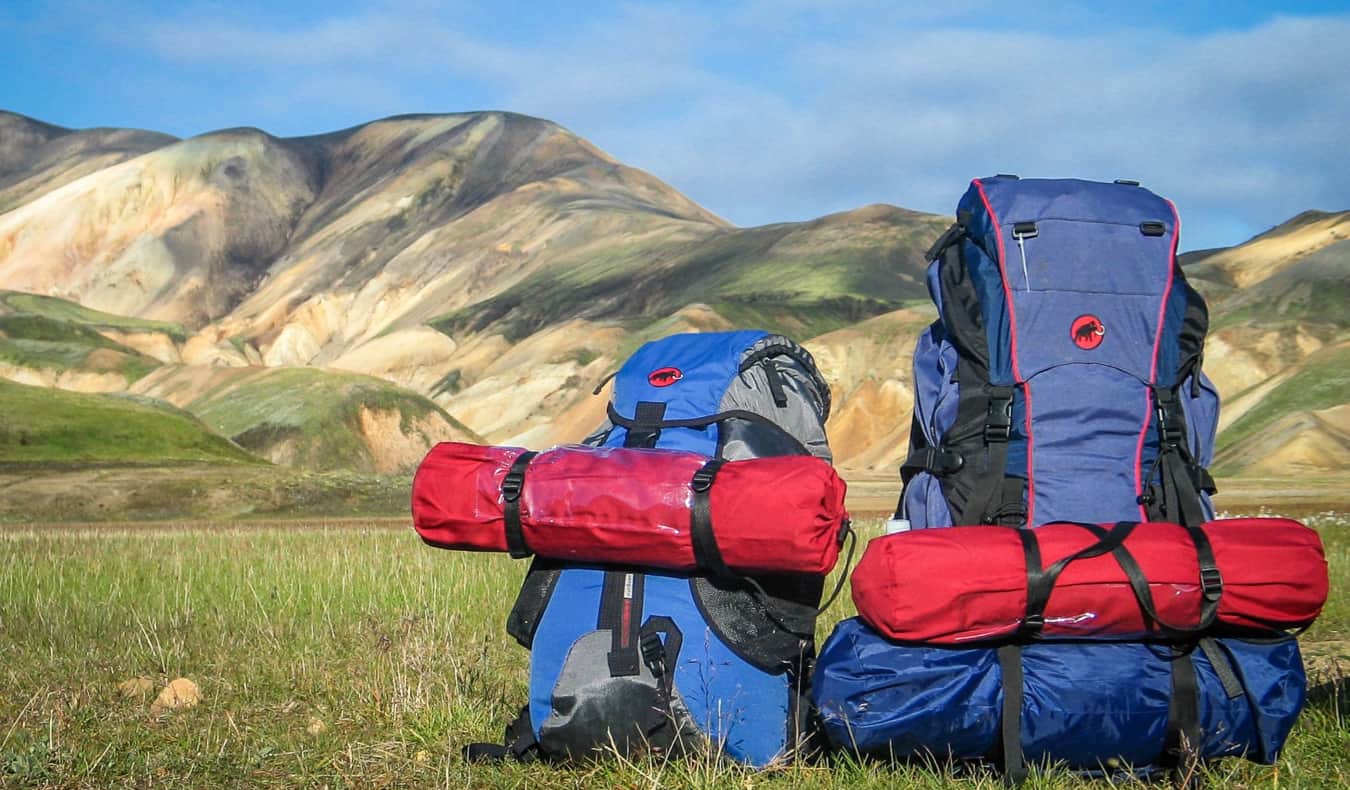
A bunch of hiking gear in an empty fieldA bunch of hiking gear in an empty field
How to Pick the Best Backpack – It’s important to pick a quality backpack for your trip since it’s going to get beaten up as you travel! This guide to choosing the right travel backpack will help you determine the best pack for your trip.

What to Pack for Your Trip – What should you pack on your trip? Well, there is no one right answer, but this list will give you a good place to start. It’s what I take on my trips with me (though you’ll need to make some seasonal variations, I’m sure!).

The Ultimate Packing List for Female Travelers – In this post, Kristin Addis shares her packing insights for women, so that you can travel just about anywhere without spending a fortune on gear.

How to Buy Good Travel Insurance – Travel insurance is one of the most important things you’ll need for your trip. You wouldn’t have a car without car insurance or a home without home insurance, and you can’t have a trip without travel insurance!

The Best eSIM for Traveling Europe – Having access to mobile data while you travel can not only keep you safe if there is an emergency, but it ensures you can book accommodation, flights, and activities on the go. This post breaks down the best eSIMs for travelers in Europe, helping you stay connected on a budget.

Are These The Best Clothes for Travelers? – Unbound Merino make durable, stylish, and affordable travel clothes. I bring them with me every time I visit Europe. In this post, I explain why I think you should check them out for your next trip.
 

Step 3: How to Get Amazing Accommodation in Europe

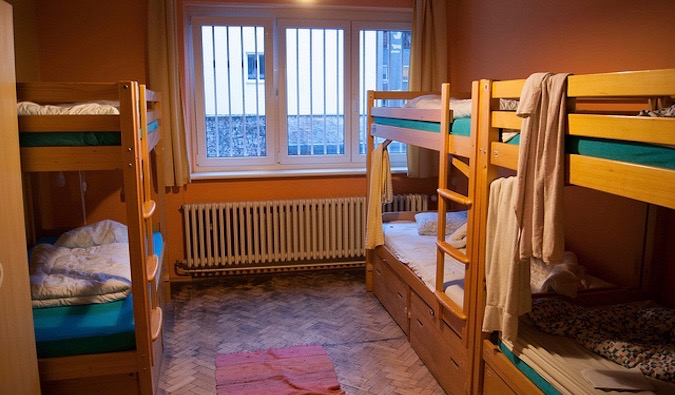
A set of bunk beds in a hostel dorm roomA set of bunk beds in a hostel dorm room
How to Find Cheap Accommodation – If you are looking to stay somewhere besides a hotel or a hostel, this article lists all the types of places where you can rest your head in Europe — from couches to farms and even monasteries!

How to Find a Good Hostel – This article features my best tips on how to find an affordable, clean, and fun hostel where you can meet a lot of amazing people.

The Best Hostels in Europe – This is a list of European hostels that I would definitely use again if I have the chance. Hope this helps with your next European backpacking adventure!

How to Become a Housesitter – This is a how-to guide to house-sitting, a wonderful opportunity that allows you to stay in a location rent free in exchange for watching someone’s house.

The Best Website for House Swaps: My HomeExchange Review – HomeExchange is a network that facilitates swapping homes with another person or family. It’s an amazing platform if you want to deepen your travels, connect with locals, and save money.

For more budget accommodation suggestions, check out my hostel hub page. It has all my favorite hostels around Europe!

If you’d rather stay in hotels, this page has all my favorite hotels in Europe.

And, to find out where to stay in each city, visit my list of the best neighborhoods in Europe!
 

Step 4: Get Around Europe on the Cheap

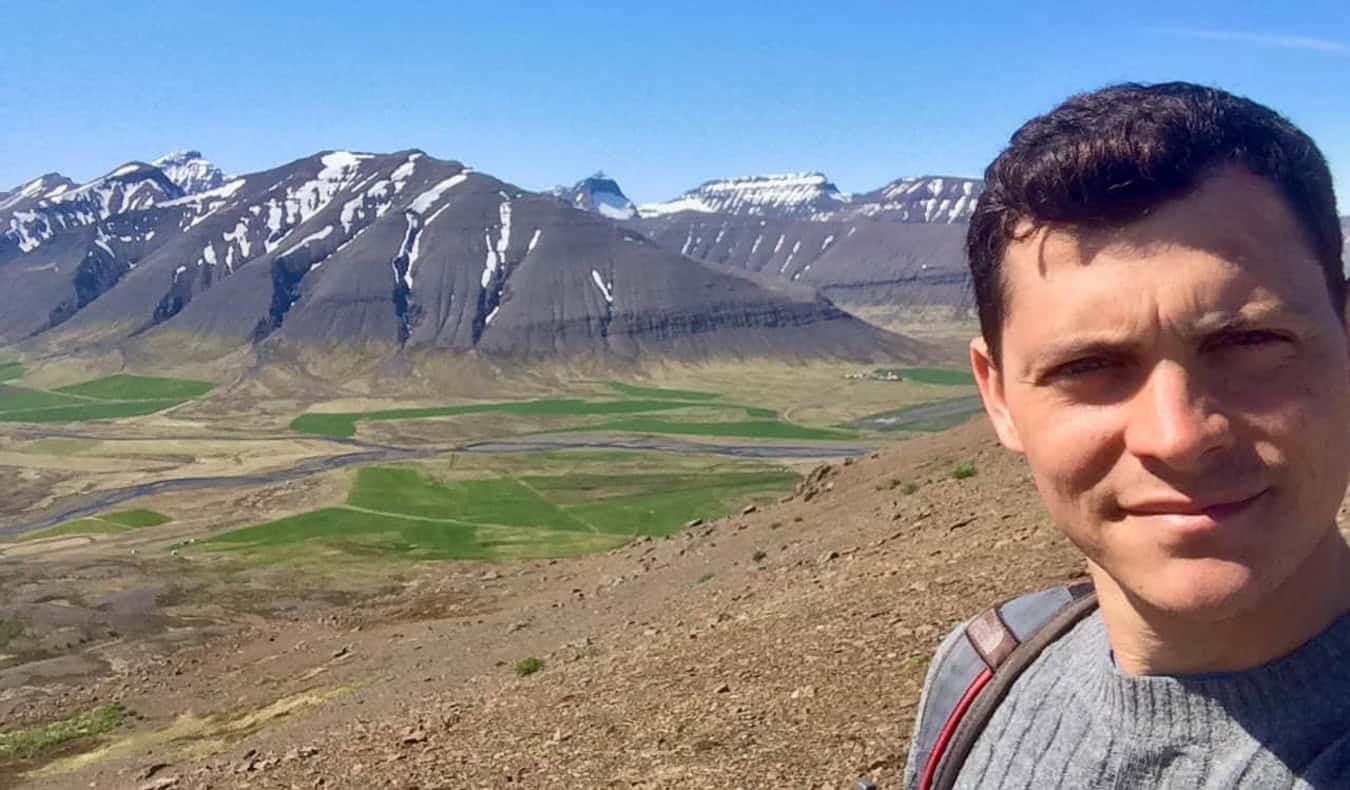
Nomadic Matt hiking in Iceland while hitchhiking aroundNomadic Matt hiking in Iceland while hitchhiking around
7 Cheap Ways to Travel Across Europe – Traveling around Europe can still be fairly expensive. Here are seven ways to backpack Europe without breaking the bank.

The Ultimate Guide to Saving Money with Eurail Passes – Everyone traveling to Europe wonders if they will save money by buying a rail pass or if it’s cheaper to buy tickets as they go. This detailed post outlines everything you need to know about buying a rail pass!

If you’re planning to take the train but don’t want to use the Eurail Pass, check out Trainline. It’s the website I use to find routes and buy train tickets when I travel Europe. it’s super easy to use!

Europe is also an amazing destination for road trips. Countries like Iceland, Scotland, Ireland, Portugal, and Norway are all amazing places to explore by vehicle.

If you’re planning to drive around Europe, use Discover Cars to find the best rental prices. They search rental companies big and small to find you the best deals.

You can use the widget below to get a quote. It’s fast and free:


Step 5: Save Money While Backpacking Europe

a bunch of colorful Euro billsa bunch of colorful Euro bills
Prices vary wildly in Europe. That means that how you save money in one country might not apply in a neighboring destination. To ensure you don’t break the bank during your trip, here are a few posts that can help keep your budget in tact:

How to Save Money on Food – While traveling Europe, food often becomes a major expense. Here are some tips for saving money on food so you still can afford a nice meal out every now and then.

How to Use the Sharing Economy to Save Money – The rise of the sharing economy has made backpacking Europe so much easier and cheaper. This post lists all my favorite ridesharing, house sharing, local meeting websites so you can get off the tourist trail and experience day-to-day life with locals!

61 Tips to Make You the Savviest Traveler – These 61 travel tips will help you become an expert traveler who gets around Europe cheaper, better, longer, and smarter!

14 Major Travel Scams to Avoid – Losing money to a preventable travel scam sucks. Learn what scams to look out for in Europe and save yourself a potential headache!
 

Step 6: Find Out What to See and Do in Europe

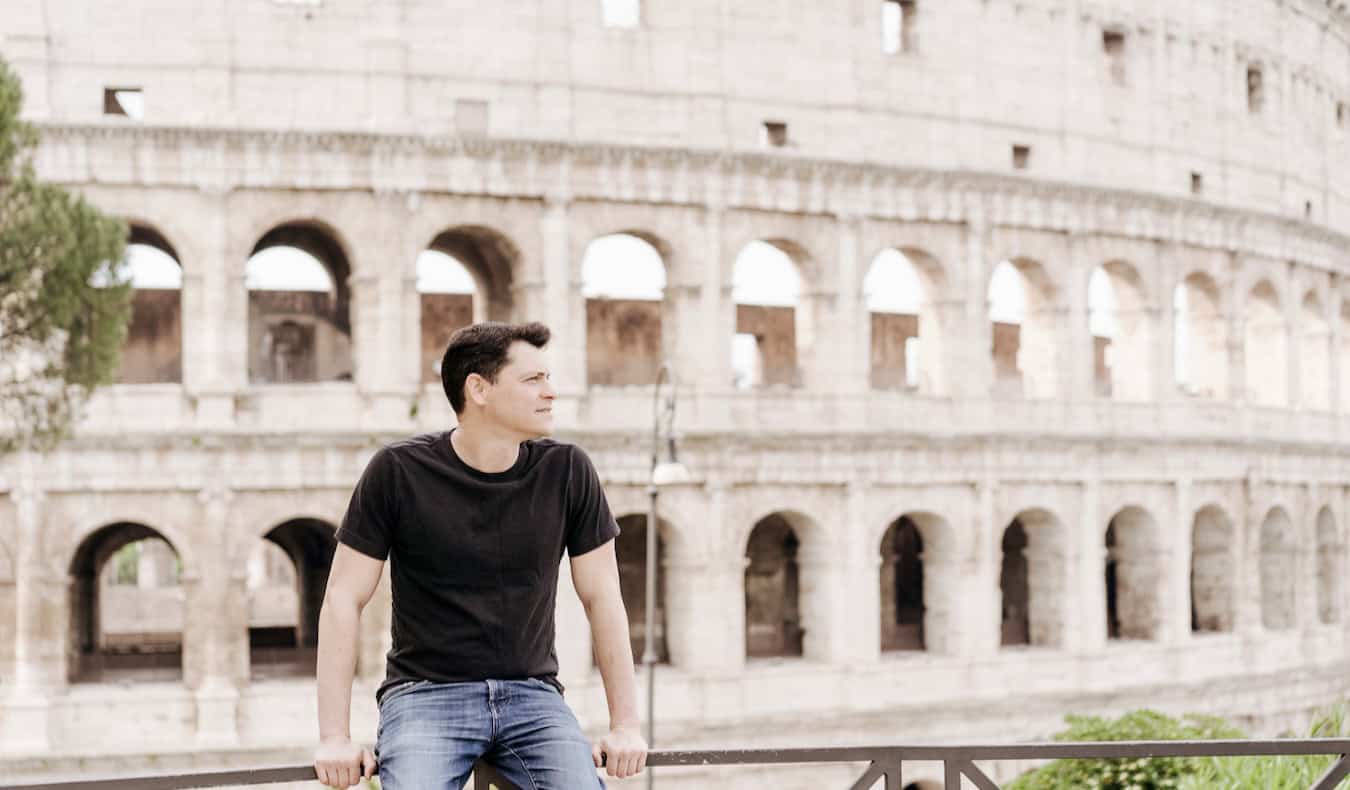
Nomadic Matt posing for a photo near the massive and ancient Roman Colosseum in Rome, ItalyNomadic Matt posing for a photo near the massive and ancient Roman Colosseum in Rome, Italy
What do you do while backpacking Europe? LOTS! Here are all my comprehensive budget travel guides for destinations around Europe with tips and advice on things to do and see, ways to save money, and typical costs for each of them. You’ll find country-specific tips as well as a host of cities listed as well.

Additionally, here are a few of my favorite companies in Europe. These are the comoanies I use when I’m looking for things to do, food tours, walking tours, and more!

Walks – Walks offers in-depth history, food, and cultural tours in cities around the world (especially Europe). Its small-group tours offer exclusive behind-the-scenes access other companies can’t get and use really incredible and knowledgeable guides. I can’t recommend them enough.

Devour – Devour has all kinds of amazing food tours around Europe. If you’re a foodie who wants to learn more about the history and culture behind each dish, these tours are the best on the continent. I take them every chance I get.

GetYourGuide – Get Your Guide is a huge online marketplace for tours and excursions. The site has tons of tour options in cities all around the world, including cooking classes, walking tours, street art lessons, and more! It’s a good resource to search for specific tours in any destination.

For a complete overview of Europe in one easy-to-read post, you can check out this free guide. It covers all the basics, including ways to save money, things to see and do, when to go, and more!

***

This massive resource list will help you plan your trip to Europe in an easy-to-follow, step-by-step pattern so you won’t get lost, overspend, or stress out about your upcoming dream trip. Europe is one of my favorite regions of the world (which is why I spend so much time there). There’s so much variety in food, culture, and language, as well as so much history. I love the continent and hope you use these tips to plan your ultimate backpacking adventure in Europe!


Get Your In-Depth Budget Guide to Europe!

Get Your In-Depth Budget Guide to Europe!Get Your In-Depth Budget Guide to Europe!

My detailed 200+ page guidebook is made for budget travelers like you! It cuts out the fluff found in other guides and gets straight to the practical information you need to travel while in Europe. It has suggested itineraries, budgets, ways to save money, on and off the beaten path things to see and do, non-touristy restaurants, markets, bars, safety tips, and much more! Click here to learn more and get your copy today.

Book Your Trip to Europe: Logistical Tips and Tricks

Book Your Flight
Use Skyscanner to find a cheap flight. They are my favorite search engine because they search websites and airlines around the globe so you always know no stone is left unturned!

Book Your Accommodation
You can book your hostel with Hostelworld as they have the biggest inventory and best deals. If you want to stay somewhere other than a hostel, use Booking.com as they consistently return the cheapest rates for guesthouses and cheap hotels.

For suggestions on where to stay during your trip, here are my favorite hostels in Europe!

Don’t Forget Travel Insurance
Travel insurance will protect you against illness, injury, theft, and cancellations. It’s comprehensive protection in case anything goes wrong. I never go on a trip without it as I’ve had to use it many times in the past. My favorite companies that offer the best service and value are:

Looking for the Best Companies to Save Money With?
Check out my resource page for the best companies to use when you travel. I list all the ones I use to save money when I’m on the road. They will save you money when you travel too.

Want More Information on Europe?
Be sure to visit my robust destination guide to Europe for even more planning tips!


Source link

Aquitalia 68 Legend for Charter in Singapore

0


Legend, a customised Aquitalia 68 FB, is available for charter in Singapore through Zenith Yacht Charters, having been customised and brought to Southeast Asia through the shipyard’s dealer, Raffles Yacht.

Built by Yihong Yachts in Xiamen, China, Legend is the first Aquitalia 68 model to feature an interior by Pulina Exclusive Interiors, the Pisa-based studio founded by Alessandro Pulina with an Asia office in Shanghai.

“The Aquitalia 68 FB is a high-end line yacht with dynamic design, extraordinary craftsmanship, excellent quality and high-end configuration,” Raffles Yacht stated.

One of Aquitalia’s best-selling models, the Aquitalia 68 FB is a 68ft flybridge motoryacht with an expansive 20ft beam. The pet-friendly Legend offers large entertaining spaces in the aft cockpit, flybridge and saloon, making it ideal for hosting exclusive parties for families, friends and business partners.

The huge sunbeds on the large flybridge offer relaxed lounging areas with panoramic view of the surroundings, while the foredeck also has sun loungers and plenty of seating.

Inside, the spacious saloon has a TV and sound system, and is ideal for meetings, product launches and intimate celebrations. The yacht also has a full galley with fridge and oven, a barbecue, plus three cabins and three bathrooms on the lower deck.

Water toys include a paddleboard, kayak and floaties, while options include a jetski, hoverboard and Seabobs. Each charter includes a private two-way limousine transfer and a dedicated butler(s) “to ensure guests experience the best hospitality that Legend offers”.

Legend arrived in Singapore last year, ahead of its regional premiere at the 2024 Singapore Yachting Festival in ONE°15 Marina Sentosa Cove. This year, the yacht will again participate at the Singapore Yachting Festival from April 10-13 and will be berthed at J02, offering late-afternoon cruises for clients and prospects each day.

For charter enquiries, WhatsApp +65 9887-7761 or email info@zenithyachtcharters.com.sg

zenithyachtcharters.com.sg/yachts/my-legend/

rafflesyacht.com.sg    
aquitaliayachts.com

This article was first seen on yachtstyle.co.

For more on the latest in luxury yachting reads, click here.


Source link

Golf With Trump, Coaching For The Elite — Who Is Karina Safarova?

0


As a sought-after celebrity coach and visionary leader, Karina Safarova has guided high-net-worth individuals, A-list actors and influential public figures while pioneering her life-changing coaching programs. She has worked with top entrepreneurs, and even plays golf with Trump on the same course at his golf club. In this interview, Karina shares her insights on success, reveals the breakthrough methods that have changed thousands of lives, and uncovers the secret to achieving harmony between the body, mind, and soul.

Karina, your journey is an inspiration to many. How did you end up in the U.S., and what was the turning point in your career?

I lived and studied in London for ten years and began building my career there. However, when my father fell ill, I returned to Ukraine to be by his side. Sadly, he passed away just two weeks before the war began. I came to America to start a new chapter, with a heart full of love and a deep desire to embrace this new journey. When I saw my career flourishing and realized I was in high demand, I made the decision to stay in America permanently.

You coach celebrities — what is your number one rule when working with high achievers? What sets them apart from the rest?

They are no different from my regular clients and students. Everyone wants to be younger, healthier, happier, and live a life without stress. I create a personalized program and develop an individual protocol for each client, but the key to success is the connection — a long-lasting, healthy partnership built on trust. What I appreciate most is that each of them is authentic with me. Even the most powerful and successful individuals open up, showing their true selves—sometimes even their vulnerability.

Your philosophy is about transforming lives through awareness and love. How did you develop these principles, and what are the most powerful techniques you use?

I studied neurophysiology in London and have spent many years researching holistic health. I know that the body, mind, and soul function in perfect harmony when properly aligned.

I use my signature “Christmas Method” to bring excitement into life and help people live with fulfillment. Another powerful approach is “Surrender Therapy,” which is a total breakthrough— transforming people physically, emotionally, spiritually, and mentally.

All my programs are rooted in my passion for holistic health, preventive medicine, and alternative healing. These transformational journeys shift beliefs, mindsets, and attitudes while introducing new, healthy habits. It’s like a 12-step program—creating immediate belief system changes. I also use my “Reboot Programs” to help individuals rediscover and redesign their lives. Reinvention is always possible.

Setting new trends, creating life-changing wellness protocols, curating holistic retreats, and biohacking both the body and mind—this is my passion and my purpose.

Every guest on my podcast is more than just a person—they are outstanding individuals: celebrities, thought leaders, visionaries. I learn from each of them, and every conversation is unique and captivating.

My podcast has featured stars like Tim Storey and Bill Walsh, along with renowned doctors and experts, ensuring that my listeners not only enjoy the episodes but also gain maximum value.

This year, even more exciting guests are lined up! I’m receiving numerous invitations and proposals, and I’m truly thrilled that my audience eagerly anticipates each new episode.

You’ve met President Donald Trump in person. What was that experience like? What key leadership qualities did you see in him?

I was lucky not only to meet and talk with him but also to play golf on the same course! I was nervous when I picked up the club (laughs). He was incredibly warm, joking around, and asking me about my journey from Ukraine to America. I even gave him my book.

I was truly amazed by his depth, sense of humor, and energy. He is superhuman — a man who works nonstop, fueled by adrenaline and recharges on the golf course. For him, golf is not just a way to unwind but a source of pure enjoyment and celebration. He jokes a lot, listens to Broadway music, and simply can’t imagine his life without golf.

In one of your interviews, you were called “the voice of the future”. Do you feel you have a mission? if so, what is it?

My mission is to awaken thousands of people and help them see life from a new perspective. Welcome to my world — no excuses!

I spread the message of mindfulness and awareness, advocate for a healthy lifestyle, and introduce new trends like plant-based sober dinners and tea ceremonies. I teach people how to live without stimulants, drugs, or alcohol.

As a powerful motivator, my goal is to show that every person is a creator and that the universe is abundant. I work extensively with limiting beliefs, proving—through my own journey—that it’s never too late to start over and build a successful career in a new country, just as I did when I came to America.

I have never felt as impactful and valuable as I do now. And I have never been this happy!

The importance of having a purpose in life. I started writing this book before the war began, sharing raw and honest details of my life in London — the emotional and physical toll of displacement, fear, and loss — while highlighting my resilience and determination to rebuild amidst the chaos.

I provide mastery tools, exercises, and guidance on how to rebuild, redesign, and reinvent yourself. This book is not just a personal journey of survival but a testament to the strength of the human spirit and the transformative power of hope — making it a true self-help guide for everyone.

If you could give one piece of advice to someone looking to radically change their life, what would it be?

Master yourself first. Success isn’t something you chase — it’s something you create by becoming stronger, wiser, and more disciplined. Work on your mindset, build good habits, and never stop learning.

Life is about making high-quality decisions and choosing growth every day. Real change doesn’t happen overnight, but if you commit to daily self-improvement, your life will transform in ways you never imagined.

Your clients range from business moguls to celebrities. What do they all have in common? What fears or barriers do they struggle to overcome?

Strangely enough, the most powerful, wealthy, and influential individuals are often the most vulnerable. At the end of the day, we are all human. Billionaires have one major challenge—an overwhelming amount of stress, anxiety, and overthinking.

I have developed my own methodology and techniques to help people overcome these struggles. I know how to destress the mind and body. One A-list Hollywood actor from Netflix reached out to me after rehab, and I helped him battle his addictions and build a new version of himself. Now, whenever I see him on Netflix, I feel proud of the work we did together.

With women, my focus is on confidence, personal branding, and teaching them how to show up as the best version of themselves. But ultimately, everyone wants the same thing—to be happy, to live a fulfilling life, and to have a true sense of purpose.

You live between two cultures — Ukrainian and American. How does that influence your approach to work and life?

Having lived in London for many years, I developed a European mindset, but my heart remains deeply connected to my home country. In Miami, we have a strong Ukrainian community, and I even attend a Ukrainian church here.

Ukrainians are among the warmest and most united people in the world. I am proud to be Ukrainian, and this cultural background has shaped my resilience, adaptability, and deep connection with people.

What is your morning routine? How does a woman who inspires thousands start her day?

I have my own system for setting the tone of the day. I wake up early and begin with red light therapy, meditation, yoga, and time by the ocean. I only drink water with lemon until midday — never coffee.

Mornings are sacred to me. I never schedule clients or sessions in the morning. This is my time for meditation, reflection, and setting the right energy for the day.

If you could give just one piece of advice to someone looking to radically change their life, what would it be?

If you want to radically change your life, start by mastering yourself. Success isn’t something you chase — it’s something you create by becoming stronger, wiser, and more disciplined. Self-discipline and consistency are the keys.

Work on your mindset, build good habits, and never stop learning. Life is about making healthy choices and high-quality decisions. Pay attention to your strengths and weaknesses, understand people, learn to bring value, and move with intention. The more self-aware and focused you are, the more control you’ll have over your future.

Real change doesn’t happen overnight, but if you commit to growth every single day, your life will transform in ways you never imagined.

What are your biggest ambitions for the next five years? What’s the next challenge you want to conquer?

I want to be a global voice and awaken more people. I am honored to be part of a major upcoming project — a FAST Self-Help Channel launching in the USA — where I will contribute my expertise in wellness and personal growth.

Additionally, I have partnered with Botanika Life, a leading plant-based wellness company, as their Wellness Consultant. My role includes:

  • Developing wellness protocols
  • Representing the brand at longevity health conferences and expos
  • Educating customers on holistic health solutions
  • Creating specialized programs that integrate wellness and business strategies

I am also thrilled to be involved in new projects with industry leaders such as Tim Storey, Bill Walsh, and Eric Stoller, bringing my signature coaching methodologies to a broader audience.

With my extensive experience in wellness, life coaching, business mentorship, and personal branding, I am committed to creating transformative coaching programs and holistic wellness solutions that truly make a difference. I’m excited to continue leveraging my expertise in the USA — helping individuals and businesses thrive, making a positive impact on society and the economy, and speaking on the world’s biggest stages.

Looking back, what was the most defining moment in your life that shaped your success?

Challenges. Failures. I have always been mission-driven since childhood. For me, happiness is progress. Every day, I grow wiser, stronger, and more knowledgeable. But through it all, I have never lost my feminine softness, warmth, love, and light — my divine feminine energy.

I am always deeply aware and conscious, and everything I do comes from a place of love and gratitude. I spread nothing but love, vitality, and a message of mindfulness. I am honored to be a role model for thousands of people around the world, showing them what is possible. My world is a world of no excuses.

Many people say you look like Melania Trump. What do you think about this comparison?

Yes, everyone tells me that we look very alike. And honestly, it’s true — but the resemblance isn’t just physical. We are both sophisticated, elegant, and classy. Melania is a woman in every sense of the word — remarkable and exceptional. She is not just a president’s wife; she is highly educated, humble, and has walked a long path in America, overcoming the challenges of immigration with grace — just like me.

Finally, if you could have a conversation with your 20-year-old self, what would you tell her?

I would use my Surrender Therapy. Make your body your best friend. Protect your energy —don’t spread yourself too thin, and never settle for anything less than what truly aligns with you. Set healthy boundaries. Don’t be desperate.

Take better care of your health, because your body and mind are the foundation of everything. Invest in health and education, not in fancy vacations and designer purses. Don’t waste time worrying about small things — most of what upsets you now won’t even matter in the future.

Trust in God. Surrender to the flow of life and embrace everything with faith and acceptance. The more you let go of fear, the more beautifully everything will unfold. And yes, always remember — God has the best plan for you.

For more on Karina Safarova, head to the link below: www.instagram.com/karinasafarovacoaching
https://www.lifemakeover.live

For more on the latest in business and profile reads, click here.


Source link

Best Amazon Deals on Samsonite, Travelpro, and More Luggage

0


Before you start putting together travel outfits for your upcoming vacation, you need to make sure you have sturdy luggage to carry your stuff in. If your suitcase could use an upgrade, you’re in luck because Amazon’s travel hub has lots of travel bags on sale — and many of the luggage deals come approved by flight attendants and pilots. 

As professional travelers, pilots and flight attendants have an eye for high-quality and sturdy luggage. Right now, you can get the hardside suitcases, carry-on luggage, travel backpacks, and other bags that the pros swear by for up to 65 percent off. Did we mention that popular brands like Samsonite, Travelpro, and SwissGear are included?  

Shop Luggage Deals at Amazon

Rockland Upright Luggage Set

Amazon


Rockland’s two-piece luggage set has received more than 34,000 five-star ratings, including from a flight attendant who praised how the “larger carry-on bag fits everything I need for a week or more.” The set comes with an upright soft-side suitcase and a smaller tote bag that you can store under your seat. It’s available in several bold colors and patterns bold enough to help you spot your luggage in the overhead bin or carousel. 

Travelpro Rollaboard Upright Luggage

Amazon


Travelpro’s luggage has become a flight attendant-loved brand for its quality construction, which has also gotten shoppers’ attention. It’s made from a polyester material that’s water-repellent to help protect your belongings and is expandable up to an additional two inches to fit even more of your vacation outfits. The interior is so spacious one shopper was able to fit two four-piece kayak paddles wrapped in clothes.

SwissGear 1900 Scansmart Laptop Backpack

Amazon


It’s easy to see why flight attendants and pilots love this travel backpack. It has a compartment that can fit laptops up to 17 inches and features RFID-blocking technology to keep your data and personal information safe. One Amazon shopper snagged the bag after seeing a flight attendant friend with it, while an Air Force pilot claimed the backpack can withstand “harsh travel conditions” including being stuffed in the back of buses and thrown under piles of other bags. 

Travelpro Maxlite 5 Upright 2 Carry-on Luggage

Amazon


Amazon shoppers praise the lightweight feel and long-lasting build of this carry-on, with one happy shopper owning their previous bag for more than 20 years. You can choose from two sizes and 11 colors, including bold shades like bright blue, light pink, and lavender, to make spotting your bag easy. 

Amazon Basics Hardside Checked Luggage

Amazon


Amazon’s checked luggage comes with a sleek design that shoppers say looks identical to a high-end brand, but costs a fraction of the price. Additionally, it comes with four double-spinner wheels that a flight attendant praised, saying, “My arms and back feel absolutely zero stress. It feels like it’s floating.” They noted that “it still feels weightless” even with a smaller bag on top.

Travelpro Maxlite 5 Carry-on Weekender

Amazon


Carry-on-only travelers will appreciate the spacious build of this weekender bag that includes a separate pocket for storing shoes. Plus, one shopper was able to fit two medium-sized packing cubes filled with five tops, a dress, a jacket, three pairs of capris, and a pair of pants as well as a laptop, Kindle, iPad, and four spiral notebooks in the main compartment and “still had room to spare.”

SwissGear 8018 Hardside Luggage Set

Amazon


Right now, you can score this set of SwissGear luggage on sale for less than $300, and it’s not often the travel gear goes on sale. It comes with three suitcases, including a carry-on, one medium suitcase, and a large suitcase. Each has an expandable design, offering an additional two inches of space for souvenirs that are much larger than refrigerator magnets. 

Travelpro Maxlite Air Hardside Carry-on

Amazon


One Amazon shopper  couldn’t help but call this luggage the “best carry-on that I have ever purchased in my life.” They loved that even when full, it’s still lightweight enough to fit over their head, and that it’s durable. Made from a light polycarbonate material, it can withstand scratches and bumps of all kinds — the cobblestone streets of France don’t stand a chance against this bag.

Samsonite Freeform Hardside Carry-On

Amazon


This carry-on continues to be the best overall piece of luggage we’ve tested, and the Amazon reviews further back up our claims. It’s built with a TSA-approved lock to keep your belongings secure, and can fit a week’s worth of clothes and still fit in the overhead compartment, according to a traveler who took 53 flights in 2024.

Travelpro Tourlite Softside Underseat Carry-on

Amazon


This underseat carry-on is a flight attendant’s favorite for its lightweight feel and ability to fit everything they need. One Amazon shopper even pointed out how well it navigates across a variety of terrains. After a seven-week trip abroad, the carry-on was able to withstand rolling through airports, on stairs, onto subways, a ferry, and across rough pavement. It also helps that the bag comes with water and stain-resistant materials to keep it looking new.

SwissGear 7895 Rolling Garment Bag

Amazon


Whether you’re going on a business trip that requires formal attire or a destination wedding, this SwissGear bag can help keep your clothes wrinkle free. The bag comes with notable features like a full garment bag with hooks to hang your dress or suit, in addition to four compartments to store all your essentials. It’s no wonder SwissGear is a pilot-loved brand,

Matein Travel Laptop Backpack

Amazon


More than 10,000 of these travel backpacks have been purchased this month — and we understand why. The design comes with numerous pockets for storing all of your travel essentials, and it has a built-in USB port on the side so you can juice up your phone on the go. One pilot considers it his “go-to” bag and was able to fit a 15-inch laptop, a charger, an Xbox controller, a mouse and pad, an 11- inch iPad, plus two headset cases, and a small lunch box.

Coolife Underseat Carry-on

Amazon


This underseat carry-on lets you avoid having to check your bag, even on those small airplanes.  According to a flight attendant, it fits right under the seat like a personal item. The inside can fit enough clothes for a weekend trip and even has a pocket to slip your laptop inside.

Love a great deal? Sign up for our T+L Recommends newsletter and we’ll send you our favorite travel products each week.


Source link

Bugatti Tourbillon ‘Sportive’ spec revealed in new leaked images

0


As you may have heard by now, the Bugatti Tourbillon is being offered in four standard specs. So far, we’ve seen the ‘Signature‘ and ‘Classique‘ options. Today, we will take a look at what the ‘Sportive’ spec has to offer.

Bugatti Tourbillon configurator-Sportive-3

As the name suggests, the Sportive spec adds a sporty look to the Tourbillon. It has a two-tone exterior; however, unlike the previous two configurations, this one has a horizontal split. The lower sections are finished in exposed carbon with a matte finish on the rest of the car. The wheels are similar to those offered with the ‘Equipe Pur Sang’ package and have striking blue accents.

Bugatti Tourbillon configurator-Sportive-1

The ‘Sportive’ option comes with an all-black interior. You get single-tone Alcantara upholstery all around with blue embroidery. There’s matching leather covering the dashboard and piano black trim on the centre console.

Bugatti Tourbillon configurator-Sportive-2

The Bugatti Tourbillon is powered by a new naturally aspirated 8.3-liter V16 engine paired with three electric motors. It has a combined output of 1800 hp. The engine is paired with an 8-speed dual-clutch, allowing the hypercar to sprint from 0 to 62 mph in 2.0 seconds. The Tourbillon can reach 248 mph from a standstill in under 25 seconds!

Source: @bugattitourbillon.registry


Source link

2025 Polaris Slingshot 10 marks a decade of unbridled fun

0


Polaris is celebrating a decade of its Slingshot three-wheeler with a special edition dubbed the Slingshot 10, which the company revealed on Thursday.

Based on the updated 2025 Slingshot—unveiled in January with a refreshed front-end design and greater model differentiation—the Slingshot 10 is the most premium version yet.

Built on the range-topping Slingshot R, the special edition features the 204-hp 2.0-liter 4-cylinder engine that powers all Slingshots. Buyers can choose between a manual transmission or an automatic with paddle shifters.

Exclusive to the Slingshot 10 is a striking Radiant Red Pearl paint job—a tribute to the original Slingshot Red from its 2015 debut—complemented by black metallic paint with white and teal accents. Unique 10th anniversary graphics and badging adorn the hood, rear fin, and wheels.

2025 Polaris Slingshot 10

2025 Polaris Slingshot 10

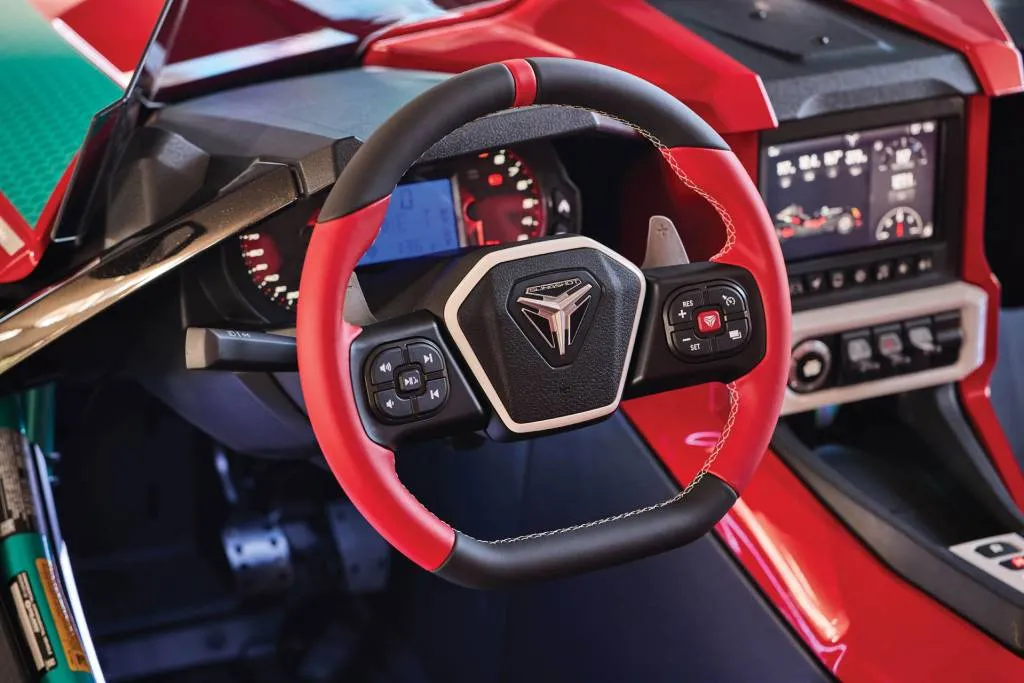
Inside, the special touches continue with a color-matched steering wheel, instrument cluster, and glove box, along with custom-stitched seats. The top-of-the-line Stage 3 Max Rockford Fosgate sound system includes integrated headrest speakers and 8.0-inch side panel speakers.

Additional tech features include heated and cooled seats with custom 10th-anniversary stitching, a 7.0-inch touchscreen with Apple CarPlay support, and an ambient lighting system that allows drivers to customize colors, patterns, and effects that sync with music.

Priced from $38,999, the Slingshot 10 is now shipping to dealers in restricted quantities.


Source link

Aston Martin sheds 5% of staff as losses rise

0


  • Aston Martin’s pre-tax losses rose by 48.7% to $322 million in 2024
  • The automaker is cutting 170 staff, representing about 5% of its workforce
  • Aston Martin’s CEO expects a turnaround in 2025

Aston Martin has faced bankruptcy seven times in its 112-year history, and in its current form, the company remains far from financially stable.

On Thursday, the automaker reported its financial results for 2024, revealing that pre-tax losses rose by 48.7% to 255.5 million British pounds (approximately $322.7 million), while net debt increased by 43% to 1.16 billion British pounds ($1.46 billion).

Deliveries totaled 6,030 units, down about 9% from 6,620 units in 2023.

The results aren’t entirely unexpected, given that Aston Martin has launched several new models over the past 18 months, including the Vantage, DB12, and Vanquish sports cars, as well as an updated DBX707 SUV. The company is also preparing to launch the Valhalla plug-in hybrid supercar in the second half of 2025.

Aston Martin Valhalla

Aston Martin Valhalla

With these new models, CEO Adrian Hallmark expects Aston Martin to achieve full-year pre-tax profits in 2025 and generate positive free cash flow starting in the second half of the year.

However, Hallmark isn’t relying solely on new models to improve financial performance. He also announced that 170 jobs—approximately 5% of Aston Martin’s total workforce—will be cut, a move expected to save the company around 25 million British pounds ($31.5 million) annually.

Additionally, earlier this month, Hallmark stated that Aston Martin would significantly scale back its original plans for electric vehicles. The company had previously intended to introduce multiple EVs this decade, starting with a model in 2026. That first EV has now been pushed back to late in the decade, with no additional EVs expected until sometime next decade.

To further boost revenue, Aston Martin plans to expand its personalization options, offering premium upgrades such as titanium exhaust systems, carbon-fiber wheels, and high-end audio systems. The company will also adopt a more frequent update strategy, introducing additional variants and enhancements throughout a model’s lifecycle rather than waiting until the end of its production run for a refresh.


Source link

The Best Times of the Year to Go on Safari in Kenya

0


We present a guide to the best times of the year to go on safari in Kenya, helping you choose the perfect season for your adventure.

If you’re wondering when to plan your trip to Kenya, the dry season from mid-December to mid-March is your best bet. This is peak season, so expect a lively atmosphere!

However, if you want to avoid the crowds and save a bit of cash, consider visiting between June and October. The temperatures are pleasant, and the chances of rain are pretty low, making it a fantastic time to explore.

Just keep in mind that during the rainy season, especially from April to May, things can get a bit tricky. Heavy rain can make some roads impassable, and wildlife tends to seek shelter, so you might miss out on some safari sightings. Aside from those rainy months, the Kenyan coast is a year-round vacation spot just waiting for you to enjoy!!

Of course, the ideal time for your adventure can shift depending on what you want to do and see, so let’s dive into some details to help you plan.

Get ready to plan your dream safari with Gotukio!

Make the whole process super easy and transparent. No more waiting around for quotes or responses — just a few clicks and you’re on your way!

➡ Pick your destinations, travel dates, budget, and who’s coming along.
➡ The smart algorithm will whip up an itinerary just for you.
➡ Feel free to tweak the lodges, activities, and transportation options until everything feels just right.
➡ And when you’re happy with your plans, you can book everything online in a snap!

So go ahead, start your adventure with Gotukio and make those safari dreams a reality!

BOOK HERE

Here’s an overview:

A safari in Kenya with a view from a safari vehicle of grass, a dirt road, and a rainbow.
Safari in Kenya.

When’s the Best Time for Safaris in Kenya?

If you’re itching to see some wildlife action, the months from December to February are fantastic.

You’ll find animals congregating around waterholes in the national parks, making it a prime time for snapping stunning photos. Parks like Masai Mara, Tsavo, and Amboseli are must-visits!

If you want to dodge the crowds, consider going from June to September or October. The weather will be a bit cooler, but you’ll still enjoy plenty of sunshine. Plus, this is when you can witness the legendary wildebeest migration from the Serengeti to the Masai Mara—an experience you won’t want to miss! Picture thousands of wildebeests, zebras, and gazelles all on the move. It’s nature at its most breathtaking!

So let’s take a closer look at this…

Peak Season (July to October): The Great Migration

The most popular time to visit Kenya is during the Great Migration, when millions of wildebeest, hundreds of thousands of zebras and gazelles, and other herbivores cross from Tanzania’s Serengeti into Kenya’s Maasai Mara. Among them, you’ll find scavengers and predators, too.

This is one of the best reasons to visit Kenya.

This trek is fraught with danger for the migrating animals, having to cross rivers with crocodiles, stay safe from predators, and keep up the sheer stamina required to complete the crossing. All of these make the Great Migration one of the world’s most profound experiences to witness.

This natural phenomenon, typically peaking between July and October, attracts a considerable number of visitors eager to see river crossings and predators in action.

Remember, though, that the migration can be unpredictable, as nature plays by its own rules. Timing is everything.

Best Parks to Visit:

Related read: A Guide to Visiting Lake Nakuru National Park in Kenya

Pros

  • Unparalleled wildlife viewing.
  • Dry weather makes roads accessible and wildlife easier to spot due to sparser vegetation. This can also bring more animals to watering holes.
  • High concentration of big cats and other predators.

Cons

  • Higher prices for accommodations and tours.
  • Popular parks, especially the Maasai Mara, can be crowded.
Wildebeest and zebras near a watering hole in the Masai Mara
The Great Migration in the Maasai Mara.

Best Time for the Masai Mara

If the Masai Mara isn’t on your bucket list, it should be!

This reserve is one of the highlights of any Kenyan adventure. Outdoor enthusiasts and budding photographers will find themselves in paradise here, especially between June and October when wildlife is abundant.

Best Times to Visit the Masai Mara

High Season: January, July, August, September, October, December

What to Expect: Get ready for a bustling vibe! The great migration takes center stage from July to September, attracting crowds eager to witness this incredible spectacle. Just a heads up—prices are at their highest during this time, so it’s wise to book early if you’re planning to visit.

Medium Season: February, May, June, November

What to Expect: This is what I like to call the “secret season.” You’ll find fewer tourists around, which means better prices and more personalized service. Sure, there might be a few rain showers, but don’t worry—they usually don’t last long and won’t put a damper on your adventures.

Low Season: April, May

What to Expect: This is the major rainy season, and you can expect some serious downpours. Rivers might overflow, making some areas a bit tricky to navigate. Plus, many lodges close for renovations in May. However, if you’re up for a little adventure and don’t mind the wet weather, you’ll find some incredible deals and a quieter experience. Just be prepared with your rain gear and an open mind!

Overall, each season has its perks, so choose what suits your travel style best and get ready for an unforgettable experience in the Masai Mara!

Get ready for close encounters with elephants, buffalo, and more!

Climate Masai Mara, Kenya.

Green Season (November to May): Lush Landscapes and Smaller Crowds

This period brings Kenya’s two rainy seasons: the short rains (November to December) and the long rains (March to May).

While heavy rains in April and May can make some areas difficult to access, the green season brings rich landscapes, dramatic skies, and newborn animals—always a special sighting.

The air smells like rain almost all the time and you’re likely to have the place almost to yourself, as this time of the year is for the true adventurer.

Best Parks to Visit:

Related read: A Guide to Visiting Tsavo National Park in Kenya

Pros

  • Lower prices and fewer tourists.
  • Verdant scenery, perfect for photographers.
  • Plenty of birdwatching opportunities as migratory species arrive.

Cons

  • Some roads and areas may become impassable due to heavy rains.
  • Wildlife can be harder to spot with thick vegetation.
A cheetah lying on green grass in the Masai Mara
A cheetah on green grass in Kenya.

Shoulder Seasons (January to March and June): A Balanced Safari Experience

For those looking to enjoy good wildlife sightings without the peak-season crowds, Kenya’s shoulder seasons offer a perfect balance. January to March sees warm, dry weather, making it an excellent time for game viewing, while June marks the start of the dry season when animals gather around water sources.

Best Parks to Visit:

  • Laikipia Plateau—Ol Pejeta Conservancy: A great alternative to the Maasai Mara with diverse wildlife.
  • Meru National Park: Less crowded and a blend of rivers, grasslands, and wildlife.
  • Nairobi National Park: For a quick safari experience near the capital.

Pros

  • Fewer tourists compared to the high season.
  • Good wildlife viewing conditions.
  • Ideal time for photographers, with clear skies and golden light.

Cons

  • Some unpredictability in wildlife movements before the migration.
A view of Nairobi and the park from Nairobi National Park
Nairobi National Park.

Why Consider a Shoulder Season Safari?

If you’re looking for a quieter, more budget-friendly safari while still experiencing incredible wildlife, the shoulder season could be your best bet.

Going on safari during the shoulder season has some fantastic perks! First off, you’ll encounter fewer crowds in popular parks like the Serengeti and Maasai Mara, giving you a more personal connection with nature. With less hustle and bustle, you’ll have unobstructed views of wildlife—perfect for photography and soaking in the tranquility.

Another major plus is the affordability. Prices for lodges and tours drop during this time, allowing you to enjoy a luxurious experience without straining your budget. This means you can extend your trip or splurge on special activities without feeling guilty.

Wildlife viewing is also unique during these months. For instance, from April to June in East Africa, the rains bring lush landscapes that attract herbivores and their newborns. Animals gather around dwindling water sources as birthing season kicks off, leading to thrilling predator interactions.

Lastly, the weather is usually milder compared to peak seasons—making it much more comfortable for those who aren’t fans of extreme heat or heavy rain.

Understanding Kenya’s Climate

Kenya has a warm climate year-round, which makes deciding when to go a little easier. However, keep in mind that temperatures can vary depending on where you are.

The country is divided into two main climate zones instead of the typical four seasons. The coastal areas, like Mombasa, are usually hotter than the highlands.

Let’s take a closer look at the different regions.

In the Highlands

If you’re heading to the interior, expect the warmest days from January to March, with temperatures hitting around 27°C (about 81°F) under the sun.

During the dry season in July and August, it cools down to around 22°C (72°F). Nights can get a bit chilly, dropping to around 13°C (55°F)—a refreshing break from the heat!

The highlands also have their rainy seasons, which last from late March to May and late October to December. But don’t let that scare you off! The rain usually falls in the afternoons or evenings, so you can still enjoy your days, and honestly, there’s something cozy about drifting off to sleep to the sound of rain.

Climate Highlands of Kenya.

On the Coast

Now, if you’re dreaming of beach vibes, the coast delivers with a steady 28°C (82°F) during July and August and even warmer at 33°C (91°F) in our winter months. The water temperature is just right for swimming—hovering between 26-29°C (79-84°F). Sounds like paradise, right?

Rainfall is minimal in January and February, while the heavier rains hit during the “big” rainy season from April to May and the “small” rainy season from October to November.

Climate Coastal Region of Kenya.

Best Time to Explore Nairobi

Nairobi is a vibrant city that’s worth a visit any time of year.

The temperatures are usually a comfortable 22°C to 27°C (72°F to 81°F), making it perfect for exploring.

Best Times to Visit Nairobi

High Season: January, July, August, September, October, December

What to Expect: Get ready for a bustling Nairobi! During these months, you’ll find more tourists around, thanks to popular holidays. This means prices can be a bit higher, but the vibrant atmosphere makes it worth it. Just be prepared for some crowds!

Medium Season: February, May, June, November

What to Expect: This is what I like to call the “secret season.” You’ll enjoy fewer crowds and better prices, plus the service tends to be top-notch. Sure, you might encounter a little rain, but it usually doesn’t spoil your day. Just keep your eyes peeled; the lush vegetation can make spotting animals a bit trickier.

Low Season: April, May

What to Expect: These months mark the main rainy season, but don’t worry—Nairobi isn’t prone to major flooding since there aren’t any big rivers around. If you’re looking to snag a great deal on a trip to Lake Nakuru, this is your time! Just a heads-up: it’s best to steer clear of Easter, as prices can spike then.

Overall, each season has its charm, so choose what fits your travel style best!

Whether you’re hiking in the lush Karura Forest, visiting the elephant orphanage, or just soaking up the lively atmosphere downtown, Nairobi has a charm all its own.

Climate Nairobi, Kenya.

Best Time for Mombasa and Diani Beach

For beach lovers and underwater safaris, Mombasa and Diani Beach are best enjoyed from December to March and June to October. You’ll feel the refreshing trade winds as you dive, surf, or simply relax on the gorgeous sandy shores.

Best Times to Visit Diani Beach

High Season: January, April, May, December

What to Expect: Get ready for some lively vibes! These months are bustling with holidaymakers, which means more people on the beach and a bit of a hike in prices. If you love a vibrant atmosphere, this is your time!

Medium Season: February, May, November

What to Expect: Here’s where it gets interesting! You’ll find fewer crowds and more wallet-friendly prices. It’s a sweet spot to enjoy the beauty of Diani without feeling like you’re in a packed concert.

Low Season: June, July, August, September, October

What to Expect: If you’re looking for deals, this is your jackpot! Prices drop, and the beaches are much quieter. Just a heads up, though—these months can bring some rain and cooler temperatures, especially between June and October. But hey, a little rain never hurt anyone, right? Plus, you might just have the beach all to yourself!

Whether you’re seeking adventure or just want to unwind, Diani Beach is a must-visit when the weather is at its finest.

Climate Mombasa, Kenya.
Dromedar on the beach in Mombasa, Kenya.

Why You Should Book Your Safari on Gotukio!

Convenience
You can easily create your own itinerary and book it online! Say goodbye to waiting around for replies.

Quality
Craft a one-of-a-kind experience with the handpicked partners, guaranteeing you an unforgettable adventure.

Transparency
Get a clear breakdown of your entire itinerary so you know exactly what to expect.

BOOK HERE

Best time for…

Diving

Kenya is so much more than just its incredible wildlife and national parks!

The stunning coastal region, especially around Mombasa, is an absolute gem for diving and snorkeling.

If you’re itching to explore the vibrant underwater world, I highly recommend visiting between December and March or June to October. Picture this: the warm trade winds kissing your face as you lounge on the beach, ready to dive into the dazzling colors of the Indian Ocean.

Surfing

Now, if you’re a surf enthusiast, Kenya has some of the most breathtaking surf spots you could dream of!

Whether you’re hitting the waves on the Manda Peninsula, in Malindi, or at Watamu Bay, you’re in for a treat.

The months of May to June are particularly perfect for surfing, with lovely water temperatures and waves that can reach two meters high and stretch out to 150 meters. It’s a surfer’s paradise, whether you’re just starting out or you’ve been riding the waves for years.

Planning your trip to Kenya can be a breeze if you consider the timing. Each season offers its own unique experiences, and I promise, no matter when you go, you’re bound to create unforgettable memories.

Kenya offers fantastic safari experiences year-round, and the best time to visit depends on what you’re looking for. Whether you want the drama of the Great Migration, the lush beauty of the green season, or the balanced experience of the shoulder seasons, there’s an ideal time for every traveler.

By planning wisely, you can make the most of your Kenyan safari adventure.


Source link

Is your vehicle SAFE? Essential Motorhome checks you need

0


Planning a motorhome trip? Before you leave, make sure your vehicle is safe with these essential motorhome checks.

*We work hard to make this the best motorhome travel blog and road trip website possible, full of helpful content for you. The website is supported by our readers, so if you buy through links on this site we may earn a commission- at no extra cost to you. All opinions remain our own.

If you find this post useful, you can also treat us to a coffee – we promise to enjoy it while creating more useful content like this- we might even indulge in a biscuit (or two!)


Essential Motorhome Checks before a Road trip

If you’re a new motorhome owner, it can be daunting to know what you need to do before each road trip. 

Much as I would love to, I can’t give a specific list of pre-trip and departure checks for every single possible vehicle you might be doing a road trip in- not least because I don’t know that much about vehicles!! 🙂 

So this post is a general checklist of things I look at before big Motorhome road trips. Whether you’re travelling by Motorhome, Campervan, caravan or car, the checklist will be roughly similar.

Of course, if you are hiring your motorhome, you won’t have to worry about it at this stage. HOWEVER, the information is worth a quick read through, so that you know what to look for when you pick the hire vehicle up. For everyone else, let’s dive in.

Here is a list of essential things we check on our Motorhome before our Road trips:

  • If the vehicle hasn’t been started for a while, start the engine and give it a run, just to be sure!
  • BRAKES. Check your brakes and brake fluid. Please. Halfords do a free brake check and after our horrible experience of driving down a mountain in Switzerland without any brakes, we check ours regularly!
  • Tyre tread. Our tyres are currently ok on our Motorhome- but we’re about to do a HUGE trip over 6 weeks (Helllllooooo, Norway) and so we’ve chosen to replace them before we go. If your tread is very low and you’re about to set off around Europe, consider doing the same. If you’re going for a couple of weeks and your tread is ok, you should be fine until you get back. If you’re not sure, ask your local garage.
  • IMPORTANT- motorhome approved tyres are NOT the same as normal car tyres, even if the sizes are the same. On our first motorhome, we had three tyres split at the seams because standard car tyres had been put on before we bought it… and we didn’t know enough to check. If in doubt, ask your garage to confirm you have the right tyres fitted.
  • Tyre Pressure
  • Windscreen. Check for chips, cracks or other imperfections. You may be covered by insurance in Europe, but if it cracks completely, it’s going to eat into your holiday time. Better to get it sorted now and not have to worry about it.
  • Lights. Make sure all your lights, indicators etc are working. It’s scary how many motorhomes and caravans we’ve seen with indicators or brake lights which aren’t working correctly. Don’t give the European police an easy reason to fine you. (And those fines are on the spot!)
  • Washer fluid
  • Oil
  • Water levels in radiator if you have an older motorhome/ campervan.
  • Adblue
  • Battery- if you are in any doubt about the starter battery or domestic battery (or any other battery you may have), get it checked and replace if necessary
  • Check awning
  • Check hydraulic legs if you have them
  • Make sure all interior lights work- replace bulbs as necessary and consider carrying a couple for spares
  • Check batteries in smoke alarms and CO2 detectors- after our motorhome caught fire we are insistent on these things
  • Switch on interior electronics and ensure everything is working
  • GB Sticker- make sure you have a sticker fixed to the rear of your vehicle.
  • Headlamp adjustments- because the English drive on the other side of the road to the rest of Europe, our headlights point the wrong way. You need to attach headlight stickers in order to comply with EU law.

Do your Essential Motorhome maintenance BEFORE your holiday

One of my biggest motorhome tips for beginners is: if you have jobs which you KNOW need doing, like a faulty shower/ toilet/ tap, you will find it much easier to fix it in the UK than trying to find parts in Europe. The hose sizes we use here in the UK are not the same as the rest of Europe, and it’s a lot easier to find your local motorhome/ caravan shop and ask for what you need than it is trying to do it in sign language in another country!

Having said that, the Europeans love motorhomes/ caravans and there are shops and suppliers all over the place. Should the worst happen and you need to fix something urgently (like, say… you rip the tap off your freshwater tank and lose all your water!), then you can usually find something to help fix the problem until you return to the UK, even if it’s not the perfect solution. So don’t worry too much about damaging your vehicle whilst overseas. (We’ll cover insurance on a day very soon!)


Other things to check on a motorhome: Trailer or bike rack

If you have a trailer/ bike rack, make sure you give that some attention too.

  • Check to ensure bolts haven’t worked loose on bike rack
  • Check towbar and all electrics
  • Check straps for fraying
  • Check tread on trailer tyres
  • Grease wheel bearings in trailer
  • Check brakes if it’s a braked trailer
  • Look over covers (we use covers on our motorbikes) to check for rips/ holes/ damage
  • MAKE SURE YOU HAVE A PROPER NUMBER PLATE and a GB sticker for trailer.
  • Check fixings on roof boxes/ external luggage carriers to ensure they are still properly fitted.

ESSENTIAL MOTORHOME CHECKS- TASK LIST:

  • Complete your list of vehicle checks
  • Book in any MOTs, tyre checks, battery checks etc.
  • Check any trailers/ bike racks/ exterior luggage holders

We hope you found this useful. If you did, feel free to share it on social media so others can find it too.

Last update on 2025-02-27 / Affiliate links / Images from Amazon Product Advertising API

Sharing is caring!


Source link