Home Blog Page 162

F1 should consider a V-10 on sustainable fuel

0


Mohammed Ben Sulayem, the president of the FIA, motorsport’s governing body, took to social media last week to propose exploring a variety of technologies for the future of Formula 1 and specifically mentioned the possibility of V-10 engines running on sustainable fuel.

“We should consider a range of directions, including the roaring sound of the V-10 running on sustainable fuel,” Ben Sulayem said. “Whichever direction is chosen, we must support the teams and manufacturers in ensuring cost control on R&D expenditure.”

His comments followed the F1 75 launch event in London on Feb. 18, a special gathering celebrating the sport’s 75th anniversary while also presenting the drivers and cars for the upcoming 2025 season. The event sparked discussions about F1’s long-term vision, Ben Sulayem said in his post.

Interestingly, his comments align with remarks from F1 CEO Stefano Domenicali, who has previously expressed interest in exploring alternative solutions to the current hybrid power units.

Mohammed Ben Sulayem

Mohammed Ben Sulayem

F1 is already set to introduce sustainable fuel starting in 2026, coinciding with a new era of turbocharged 1.6-liter V-6 hybrid power units. The new engines will be simplified with the removal of the MGU-H (which recovers exhaust energy), while the MGU-K (which recovers energy under braking) will remain, delivering up to 469 hp, compared to today’s 160 hp. Despite these changes, total power output will still exceed 1,000 hp, with improved fuel efficiency reducing race consumption from 220 pounds to 154 pounds.

While current F1 cars are among the fastest in history, some fans and stakeholders argue they lack the sound and visceral excitement of previous V-8, V-10, and V-12 engines. V-10 engines were permitted from 1989 to 2005, with most teams running 3.0-liter V-10s in the final decade.

Given the impending arrival of the new era, even if approved, a return of V-10 engines in F1 would likely be several years—if not a decade—away at the earliest.


Source link

2025 Ferrari 12Cilindri Spider Review: Open-Top V12 Perfection

0


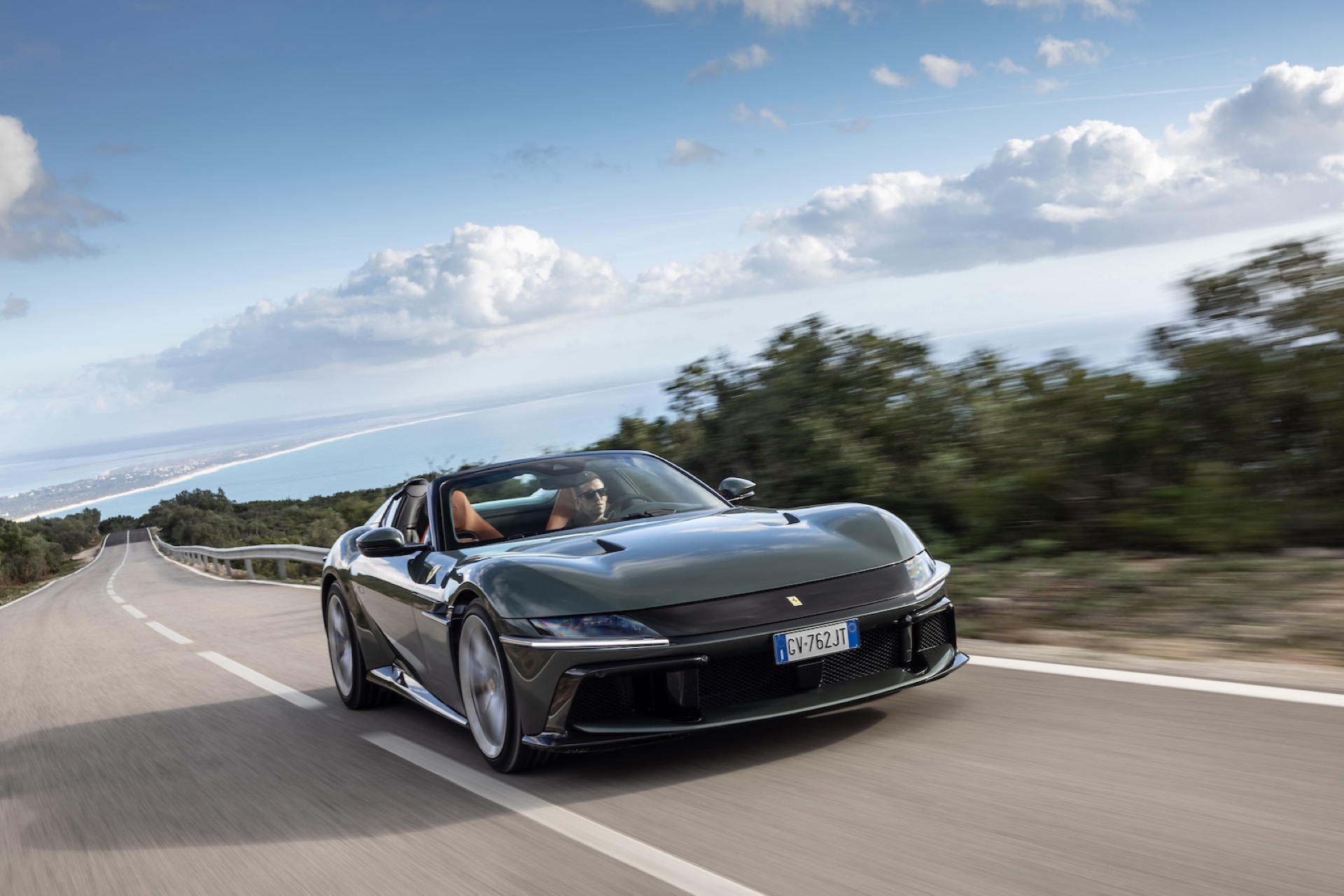
Ferrari takes open-top driving to another level with the 12Cilindri Spider, the convertible version of its latest V12 masterpiece. This pure driver’s machine delivers unfiltered performance, a high-revving naturally aspirated engine, and an exotic soundtrack that makes every journey unforgettable. Ferrari refuses to follow the hybrid trend, instead focusing on raw power and dynamic agility. The Spider’s striking black front grille, inspired by the 1964 Ferrari 365 GTB, adds a touch of retro mystique to its modern aerodynamic design.

At 4.73 metres long, the 12Cilindri Spider remains true to Ferrari’s front-engine GT philosophy. The hardtop roof, chosen for its acoustic and thermal advantages, operates in 14 seconds at speeds up to 45 km/h. To minimise extra weight, Ferrari integrated an aluminium rollover bar, though the Spider still weighs 40 kg more than the coupé. The rear winglets remain flush with the bodywork until needed for increased aerodynamic stability. Boot space is reduced from 280 to 200 litres, a small compromise for open-air performance.

Under the bonnet lies Ferrari’s last great naturally aspirated V12, a 6.5-litre masterpiece producing 830 PS at 9,250 rpm and 678 Nm at 7,250 rpm. The titanium valvetrain allows lightning-fast revs, delivering instant throttle response. Paired with an eight-speed dual-clutch gearbox, the 12Cilindri Spider launches with ferocious urgency while maintaining GT refinement. Ferrari has increased chassis stiffness by 15% compared to the 812 Superfast, ensuring a balanced mix of performance and comfort.

Inside, Ferrari offers two seat options—comfortable sports seats or track-focused carbon fibre shells. The driver is greeted by a three-screen digital cockpit with 15.6-inch, 10.25-inch, and 8.8-inch displays. The interface requires some adaptation, and Ferrari’s touch-sensitive steering wheel controls remain a point of contention. Unlike most modern luxury cars, the 12Cilindri Spider lacks a built-in navigation system, relying instead on Apple CarPlay and Android Auto.

The driving experience is what truly sets the 12Cilindri Spider apart. Its naturally aspirated V12 delivers a relentless wave of power, pulling hard from low revs and screaming to the 9,500 rpm redline. Ferrari’s semi-active Magnaride suspension provides enough compliance for long journeys, making this a true grand tourer. While the gearbox excels in aggressive driving, it could be smoother in relaxed cruising. The 12Cilindri Spider remains playful, with mild understeer in tighter corners, but dial up the pace, and Ferrari’s electronic wizardry keeps the rear in check.

Priced at €400,000, the Ferrari 12Cilindri Spider offers a driving experience unlike anything else in 2025. It stays true to Ferrari’s heritage, blending power, passion, and open-top exhilaration in a package that purists will treasure.


Source link

Here’s how in-wheel motors could cut EV cost, boost range 20%

0


  • In-wheel motor maker Elaphe doesn’t see issues with durability or unsprung mass
  • “Vehicle-level” integration of tech could bring 20% cheaper vehicles, 20% efficiency boost
  • Elaphe is targeting 95% efficiency on a battery-to-wheel basis by 2030

If you took a quick look at the display stand for Slovenia’s Elaphe Propulsion Technologies at CES 2025 last month, you might have walked away with the message that the supplier of in-wheel motors has moved on from Aptera, Lightyear, and Lordstown and is pitching its tech to cars that are fast, exotic, and expensive. 

That much is true—in the short term. Long-term, Elaphe has a grander global vision than just fitting into the performance picture. 

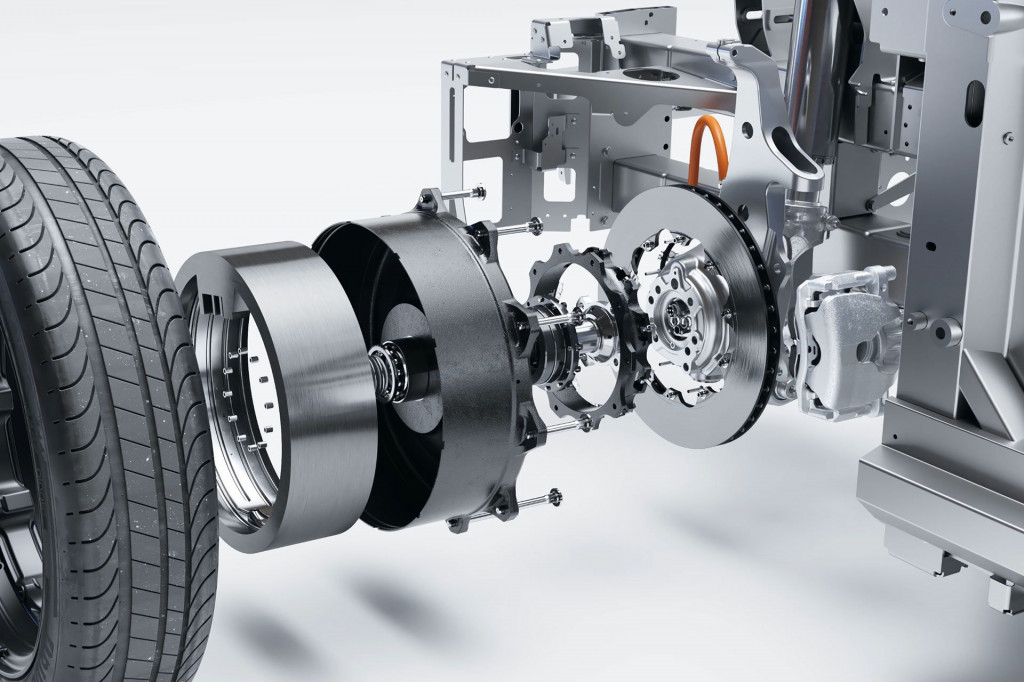
In the meantime, it sees performance vehicles as the perfect venue for showing tech-savvy car buyers what in-wheel motors can do. At CES, Elaphe revealed a revised in-wheel motor design, called Sonic 1, that’s compatible with larger, track-ready brakes and high-performance vehicles. 

In a rear-engine, rear-wheel-drive model, for instance, it could deliver “something extra,” as brand and marketing architect Iztok Franko put it, at the front wheels without redoing the architecture of the vehicle—as part of a hybrid performance upgrade. 

Elaphe Sonic 1 in-wheel motor for performance cars. - CES 2025

Elaphe Sonic 1 in-wheel motor for performance cars. – CES 2025

The Sonic 1 motors themselves, which it teases are likely to arrive in a production vehicle in 2026, can make up to 268 hp and 737 lb-ft each in their default form—designed to fit a 21-inch front wheel, as shown. And to take it to a scorching extreme, they’re being developed to fit up to 24-inch wheels, as Elaphe and its stand partner Italdesign teased in an updated Quintessenza supertruck concept, offering a hypothetical combined max of 1,600 kw (nearly 2,150 hp).

“So now we remove the obstacle of reengineering the whole vehicle, it’s easy to integrate, and you can upgrade the performance and upgrade the control of the car,” said Franko.

Italdesign Quintessenza concept

Italdesign Quintessenza concept

In-wheel tech promises simplicity, efficiency

If you compare it to an e-axle with an inboard motor, there are no additional mechanical losses, because it’s only one rotating part per motor. There are no additional bearings, gears, or added constant velocity joints, either. 

It’s a good start to thinking about what in-wheel tech can do, and why it’s been popular for some vehicle types, like very large trucks and buses. But it’s only scratching the surface for what Elaphe and the few other companies see as a bright future applying the tech to passenger vehicles.

Green Car Reports caught up with Elaphe chief technology officer Gorazd Gotovac at CES about how its technology is evolving and found a company that sees in-wheel tech as a key part in the long-term future of the car.

Gotovac emphasized to Green Car Reports that over many years and iterations, the company has worked to fine-tune the design through inverter control and management of second-order effects in the physics of the magnetic field. Partly through that it’s achieved a 10% efficiency boost versus the previous generation of its motors, from fourth to its current fifth generation.

Elaphe in-wheel motor for Lightyear 0

Elaphe in-wheel motor for Lightyear 0

By the time Elaphe gets to production in high volume, which it sees as around 2030, it’s targeting a 95% efficiency, on a battery-to-wheel basis, based on highway driving.

Its design uses permanent magnets, but Gotovac says that the company has already confirmed that by 2030 it will be able to bypass the use of heavy rare-earth materials, keeping to lighter rare-earths instead and reducing the environmental footprint. 

“We believe that once in-wheel motors are adopted there will also be versions without permanent magnets on the low end of the market,” he added. “But it will bring some weight penalty.”

Unsprung mass isn’t such a big deal

In-wheel motors increase the amount of unsprung mass (all the mass not supported by the suspension), which auto engineers and insiders routinely claim makes ride and handling much harder to tune and complicates safety. 

It’s simply not as significant of an issue as some vehicle engineers paint it to be, according to CTO Gotovac. That’s because wheels and tires, in combination, are quite heavy; add an in-wheel motor and you’re not at all doubling or tripling the weight, he explained to Green Car Reports. You’re boosting it by about 30% when figuring in the brakes and all the ancillary pieces. Factor in items that are redundant for in-wheel motors and the gain in unsprung mass can be as little as 35 pounds per wheel versus an inboard motor setup.

And adding in-wheel motors at the front wheels is an easier way to add hybrid propulsion while maintaining safety, argued Gotovac. “If you have a car which has been engineered and crash-tested and you want to hybridize it, you have to redo all the crash-testing,” he said. “But if you put in-wheel motors in, you don’t have to redo all the crash-testing, because actually the structure in front, it will be the same…and if you’ve done the engineering right the wheels are just going to hold onto the rest of the structure.”

Elaphe’s units are designed to survive minor collisions, and it means that the body doesn’t need a crash structure designed around incompressible powertrain pieces.

Lordstown Endurance

Lordstown Endurance

Durability work already done on in-wheel motors?

What makes in-wheel motors fundamentally different than existing inboard motors is that the motor’s rotor spins directly with the wheel and its stator acts as the hub. Because of this, they’re subject to higher levels of vibration and road shocks, but Elaphe’s Gotovac insists that durability is no longer a concern. In recent years it has pushed its full validation cycle for the vehicle lifetime of its motors out to 300,000 miles, from the previous 150,000 miles. 

Lordstown Motors would have provided that real-world evidence of durability for Elaphe, in its Ohio-built Lordstown Endurance electric pickup, using U.S.-built motors from the Slovenian company—if it weren’t for Lordstown’s demise in June 2023. 

As Gotovac emphasized, the design of the motor that Elaphe still follows was fully validated in the Endurance, but it was a different application as Elaphe itself didn’t have anything to do with the inverters, which allow a finer level of motor control. In a drive of the Lordstown Endurance, Green Car Reports didn’t have any issue with motor response, ride, or handling of the electric truck. 

2023 Lordstown Endurance

2023 Lordstown Endurance

One of Ford’s top EV executives, Darren Palmer, told Green Car Reports in 2021 that it nixed in-wheel motors as a possibility in the F-150 Lightning electric truck over concerns about durability. And Aptera dropped in-wheel motors for its production-bound three-wheeler in what appeared to be an issue not with any of those concerns but with cost.  

At present, there are some, but relatively few, examples of mainstream models that offer these motor types. China’s Dongfeng, in 2023, claimed to be building the world’s first passenger car with in-wheel motors—powering the rear wheels in that case, supplied by Protean Electric. 

In the meantime, in-wheel motors continue to look like the future, albeit a future without any significant present-day commitment—and plenty of false starts. Perhaps backing up Elaphe’s claims that they’re the best solution for the future, Hyundai and Toyota have continued to develop their own in-wheel motors, or at least remain involved in their development. 

Lightyear with Elaphe motors

Lightyear with Elaphe motors

In-wheel motors remain mass-market-bound

As Elaphe’s Gotovac explained to Green Car Reports at CES, the company sees niche high-performance applications like Sonic 1 as an important step in getting the word out about in-wheel motor technology and how it can perform to extremes. But it has bigger-picture ambitions at the affordable end of the market. 

This is the fifth generation of Elaphe’s motors and it’s been simultaneously working toward higher power density and better performance while also keeping an eye on how the tech can truly be applied to the mass market. 

Gotovac said that while selling automakers on the idea of in-wheel motors for mass-market EVs has proven challenging, the technology can potentially pay much greater dividends. 

“We are able to develop this power-dense design that we have into something that is cost-effective for a car that doesn’t have to be as powerful,” he explained. “If you’re using less material to get more power out of it, and if you’re not using exotic materials, then your potential for cost is better than the previous generation.”

Aptera with Elaphe motors

Aptera with Elaphe motors

In-wheel motor potential: Ride, handling, identity

Elaphe’s Sonic 1 motor system is designed to use an inverter from its official partner McLaren Applied Technologies, with software developed with that firm—and the key to some of those special control strategies is the software. 

But Elaphe emphasizes that the potential for in-wheel motor tech rests on much more than power delivery. Once you have it at each wheel, all sorts of opportunities arise for the motors to take an active role in: ride, handling, stability control, and even communication to the driver. 

Aptera with Elaphe motors

Aptera with Elaphe motors

Fundamentally, one of the key advantages of Elaphe’s in-wheel motor technology amounts to this, Gotovac explained: It’s capable of blipping torque delivery—up to its peak torque delivery—almost instantaneously, more precisely than an automaker could with brakes, and in a more extreme way than automakers would ever dare with an inboard motor because of driveshafts and CV joints. 

Allowing roll control to be handled by the in-wheel motor system, Gotovac says, would allow automakers to eliminate physical roll bars and their constraints. If you have a motor at each corner, coordinated by a central computer, it’s like having “just one brake in the middle…you feel very safe when you get on ice,” Gotovac explained, or the motors can squeeze at varying levels with just the right timing so as to provide roll control. 

Elaphe is currently working toward a very quick 10-kHz modulation cycle and a reaction time of just 4 milliseconds for full torque delivery of its motors. It takes the quickest inboard motor systems 20 times as long to respond, Gotovac claimed, and even then they won’t be able to provide close to full torque. “So that means we really can control with very high bandwidth, a lot of force,” he said, inserting with a smirk: “So we can get very interesting effects.”

Those effects can be quite subtle, he says—like engineering some vibration or tonality back into the driving experience. “We can generate vibration so that you can get a feeling in the car which is engineered but still authentic,” he said, or have the motors generate safety alerts, play songs, or emulate combustion engines—serving a purpose not unlike what Stellantis has engineered for the Dodge Charger Daytona EV.

All of those are things you can’t do with an inboard-motor EV because there are too many other factors with the driveshafts and suspension, and concerns over durability or the harmonics of the gear system. 

2024 Dodge Charger Daytona

2024 Dodge Charger Daytona

The future: EVs built on platforms for in-wheel motors

None of this tech will be fully realized, Gotovac admits, until we get a new kind of EV, conceived from the start for in-wheel motors. Enabling their potential is a “vehicle-level issue,” he says, and in-wheel motors will only make the vehicle much more efficient if it’s engineered from the ground up for the tech.

If automakers are up for playing this long game with Elaphe, it believes it can lower overall vehicle cost by 20% and boost range and efficiency by 20%—including whole-vehicle design, aerodynamics, chassis controls, and the weight of the car. “That’s where the big potential lies,” Gotovac said.

No major automaker has signed up yet. And what exactly keeps automakers from committing to in-wheel motors on big, mass-market, affordable EV projects sounds like a classic chicken-or-egg dilemma. 

Rivian and Volkswagen Group electrical architecture and software stack

Rivian and Volkswagen Group electrical architecture and software stack

Getting to the 20% efficiency boost requires a big investment and commitment that goes beyond the supplier, lamented Gotovac, including an electrical architecture intended to accommodate it. “On the component level we can demonstrate a little bit of efficiency improvement, but not enough for them to make a $5 billion investment,” he added, summing up the predicament.

Gotovac asked rhetorically: “What is the step in between that gets them to believe in this system, so that they engineer that new platform? That’s the thing…”

It’s what drew my attention back to the Sonic 1 motor unit on the pedestal, ready in the meantime to create an Italian exotic that, perhaps, the tech-savvy will recognize for all its firsts. 


Source link

Come See Me on Book Tour!

0


 Nomadic Matt's new budget travel book in front of a book shelf
I’m going on a book tour! My next book, How to Travel the World on $75 a Day, is coming out on March 25th and I’m going on a book tour to talk about it and the current state of travel!

This is my first book tour in six years and I’m very excited to get out there and talk about how travel has changed as well as hang out with readers of this site!

The last edition of my book came out in 2017 and, since then, a lot has changed. COVID forever changed the travel industry. A lot of companies/hotels/hostels closed during the pandemic while old methods of saving money became obsolete and new methods came into being.

And, since 2017, prices have gone up. A lot. Not only because of natural inflation but because of the post-COVID inflation boom. (As you’ve probably noticed, it’s not as cheap to travel as it was back in 2017!)

Since travel has changed so much, I wanted the new book to reflect the current conditions we travelers face when it comes to planning a trip, saving money, and navigating regions around the world. The book is focused on long-term travelers, but it’s also just for anyone who just wants to save money when they travel. The tips and tricks can be applied to any trip of any length.

So, come meet me on book tour and learn how to travel smarter for less this year!

Here are my tour dates and how to sign up:

March 26th: New York City – The Strand, 7pm. Sign up here!
March 28th: Chicago – Barbara’s, 6pm. Sign up here!
April 1st: Austin – Location and time TBD.
April 3: San Diego – Warwick’s, 7:30pm. Sign up here!
April 8: San Francisco – Book Passage, 5:30pm. Sign up here!
April 10th: Los Angeles – Location and time TBD.
April 16: Portland – Powell’s, 7pm. Sign up here!

Note: I’m working on adding a few more locations to the tour! I’ll add new destinations as they come.

You’ll be able to get the book at any tour stop but, if I’m not coming to your city and you still want the book, you can order the books from these fine establishments:

***

If you live in any of the cities above, I hope you’ll make out out to an event! And, if you’re not in any of those cities, please consider pre-ordering a copy. Pre-orders determine the print run of the book and how many copies local bookstores buy. The stronger the pre-sale orders, the more likely they are to stock the book so please order the book in advance!

I’m really excited about this new edition of the book and I can’t wait to talk about it with you!

Book Your Trip: Logistical Tips and Tricks

Book Your Flight
Find a cheap flight by using Skyscanner. It’s my favorite search engine because it searches websites and airlines around the globe so you always know no stone is being left unturned.

Book Your Accommodation
You can book your hostel with Hostelworld. If you want to stay somewhere other than a hostel, use Booking.com as it consistently returns the cheapest rates for guesthouses and hotels.

Don’t Forget Travel Insurance
Travel insurance will protect you against illness, injury, theft, and cancellations. It’s comprehensive protection in case anything goes wrong. I never go on a trip without it as I’ve had to use it many times in the past. My favorite companies that offer the best service and value are:

Want to Travel for Free?
Travel credit cards allow you to earn points that can be redeemed for free flights and accommodation — all without any extra spending. Check out my guide to picking the right card and my current favorites to get started and see the latest best deals.

Need a Rental Car?
Discover Cars is a budget-friendly international car rental website. No matter where you’re headed, they’ll be able to find the best — and cheapest — rental for your trip!

Need Help Finding Activities for Your Trip?
Get Your Guide is a huge online marketplace where you can find cool walking tours, fun excursions, skip-the-line tickets, private guides, and more.

Ready to Book Your Trip?
Check out my resource page for the best companies to use when you travel. I list all the ones I use when I travel. They are the best in class and you can’t go wrong using them on your trip.


Source link

How to report road traffic offences on the MyJPJ app

0


How to report road traffic offences on the MyJPJ app

The road transport department (JPJ) provides members of the public with an avenue for conducting a numerous types of transactions with the department through the MyJPJ mobile application, and one service provided is the means of reporting road traffic offences found to have been committed by other road users. Now, the department has offered a reminder of the steps for submitting a report.

To make a report on the MyJPJ mobile app, users are to take the following steps:

  • Click on the e-Aduan @ JPJ link
  • Select “Jenis Kesalahan Lalu Lintas” (Select type of road traffic offence)
  • Fill in “Maklumat Kesalahan Lalu Lintas” (Details of road traffic offence)
  • Click “Hantar” (Send)
  • Click “Ya” (Yes) for confirmation
  • Finally, the screen will note “Aduan Telah Berjaya Dihantar” (Your complaint has been successfully submitted)

How to report road traffic offences on the MyJPJ app

Road traffic offences which can be reported include:

  • Failing to obey traffic lights
  • Driving on the emergency lane, where prohibited
  • Overtaking, and blocking other road users from overtaking
  • Overtaking on the left
  • Overtaking on solid double lines
  • Using a mobile device while driving
  • Use of fancy (non-compliant) number plates
  • Non-compliant window tint
  • Failing to wear seatbelts or helmets

For queries regarding the MyJPJ app, users may call 03-27242522, and the MyJPJ mobile app can be downloaded from Google Play, the Apple App Store or the Huawei AppGallery.

Looking to sell your car? Sell it with Carro.


Source link

These Brand-new Overwater Bungalows in Florida Are Floating Off the Coast of Key Largo

0


  • This Florida micro-resort is a collection of three bungalows floating off the coast of Key Largo.
  • You can only get to Ombi via boat transfer—and you can paddleboard, kayak, or jump into the ocean right from your front porch.
  • These bungalows are the perfect place for spotting bottlenose dolphins.

A new floating resort is making waves in the Florida Keys. Ombi is a brand-new collection of three bungalows floating off the coast of Key Largo.

Guests take a boat transfer from Key Largo to their chosen bungalow, each of which include amenities like complimentary Wi-Fi, a welcome basket with wine and chocolates, snorkel gear, kayaks, and paddleboards. Each space has natural wood floors and paneling, floor-to-ceiling windows, walk-in showers, and a front porch from which you can jump into the ocean.

Looking into a bungalow’s bed and deck table.

Josh Adams/Courtesy of Ombi


Guests can take out a paddle board or kayak.

Burlap & Blossom/Courtesy of Ombi


Bask in the sound of lapping waves from the king-size bed, or laze in a hammock overlooking the water. If you get lucky, you might just enjoy the welcome wine and chocolates while watching bottlenose dolphins splash by at golden hour.

Scenic view from inside the bungalows.

Josh Adams/Courtesy of Ombi


Speaking of dolphins, they’re also frequently joined by other Florida Keys aquatic life like parrotfish, snapper, grunts, and eagle rays. You’ll also find West Indian manatee and green turtles swimming in the vicinity. Because of the abundant wildlife, Ombi founder Tim Jensen ensured each bungalow is constructed with low-impact materials and waste-reduction systems to be respectful, sustainable neighbors to the surrounding environment.

Aerial view of an overwater bungalow deck.

Courtesy of Ombi


Ombi stays start at $850 per night for those willing to bring their own food and drinks. But those splurging on a Premium Bungalow Retreat (from $1,150 per night) or a Luxury Bungalow Retreat (from $1,450 per night) won’t have to worry about bringing their own snacks.

The Premium Bungalow Retreat package includes a refrigerator stocked with a variety of non-alcoholic beverages and local liquor (plus an upgraded welcome basket with Champagne). The package also includes a gourmet dinner for two delivered right to your floating villa.

The Luxury Bungalow Retreat includes all the amenities of the Premium package as well as a morning breakfast delivery for two, waived cleaning costs, and complimentary VIP boat transfer with drinks served on board.

Just don’t forget to summon the boat in time for check-out—no matter how tempting it may be to channel your inner Jimmy Buffett and plant roots in the Florida Keys.


Source link

Rigorous Resurgence – Malaysian Property Outlook 2025

0


Improved economic conditions, optimistic market mood and government financial schemes have helped to put the prime residential segment on the uptick.

CloutHaus Residences KLCC by TA Global Berhad. Image: TA Global Berhad.

With 61.8 percent of all real estate transactions in the country, Malaysia’s residential subsector continued to hold a dominant position. Compared to 183,525 transactions worth MYR73.14 billion 9M2023 (i.e. in the first 9 months), 192,484 transactions totalling MYR78.17 billion were reported in the first nine months of 2024. This observation indicated a 4.9 percent increase in sales volume and a 6.9 percent increase in sales value year over year (y-o-y).

The Malaysian House Price Index (MHPI) — which increased by just 2.7 percent year over year to 223.1 points in 9M2024 (9M2023: 217.3 points) — shows that house price expansion is moderating. Despite persistent home demand, the index fell 2.4 percent quarterly (3Q2024: 220.2 points vs. 2Q2024: 225.7 points).

As of 3Q2024, the total number of completed residential units offered nationally was 236,899, representing a 4.8 percent year-over-year decrease (3Q2023: 248,952 units). During the study period, property overhang significantly improved, as evidenced by the 11.2 percent decrease in unsold completed properties to 42,126 units in 3Q2024 (3Q2023: 47,463 units).

With the help of focused government measures and steady economic conditions, the residential market is seeing a resurgence, especially in the high-rise sector. Programs for affordable housing and creative construction meet the changing market demands and buyer preferences.

Supply of High-End High Rise Residential

As of 2024(p), 82,679 upscale condominiums and homes were available in specific Kuala Lumpur neighborhoods. Four projects were finished in the second half of 2024, adding 1,167 units to the total stock. By 1H2025, an additional 3,625 units from several ongoing developments will be completed.

CloutHaus Residences KLCC

CloutHaus Residences KLCC by TA Global Berhad is a posh freehold mixed-use complex with two towers on Jalan P. Ramlee next to the famous Petronas Twin Towers and Suria KLCC. Tower 2 has 615 serviced apartments, while Tower 1 has 242 private homes and 548 hotel rooms under the Paradox KLCC brand, Malaysia’s first Paradox Hotel. High-end features like a fitness centre, rooftop lounge, co-working spaces, and an infinity pool are all part of the development.

CloutHaus Residences KLCC

CloutHaus is dedicated to sustainability and plans to obtain GreenRE Provisional Certification by implementing eco-friendly features such as automatic parking, siphonic rainwater systems, and pneumatic waste collection.

Hanaz units KLCC

The 45-storey Hanaz Suites KLCC by Exsim Development Sdn Bhd complex, near Kuala Lumpur’s leading business and entertainment areas, has 270 serviced apartments ranging from 327 to 657 square feet in addition to office units. The amenities include a rooftop party area, meeting rooms, and a pool with a Sakura theme. The development — which Mana Mana Hospitality runs — offers both city dwellers and investors enticing rental return alternatives, such as a guaranteed 6 percent yearly return or a 4 percent annual return with an 80/20 profit-sharing plan.

Pavilion Square

With its prime location on Jalan Raja Chulan, Pavilion Square by Pavilion Group redefines luxury living in Kuala Lumpur and provides convenient access to Bukit Bintang. In addition to office suites, this 67-storey mixed-use complex has 960 studios and three-bedroom suites. The building has more than 70,000 square feet of facilities, such as a 118-meter rooftop infinity pool, a Sky Deck with breathtaking views of the metropolitan skyline, and the highest gym in the city on Level 63A. Residents enjoy easy access to key transportation networks, including the Bukit Bintang MRT station, Monorail, and surrounding highways, and an elevated bridge that connects directly to Pavilion Bukit Bintang, improving convenience and connectivity.

Lofthill Residence

The Armani Group’s Lofthill Residence, with its contemporary style, outstanding convenience, and unhindered views of the Kuala Lumpur skyline, redefines urban life. The Raja Uda MRT station is conveniently close by, and Kampung Baru is close to critical medical facilities, including Hospital Kuala Lumpur and Institut Jantung Negara, as well as the serene Taman Tasik Titiwangsa. There are 653 serviced apartments in this 51-storey building, ranging in size from 610 to 1,917 square feet. Lofthill Residence, which sets a new standard for contemporary urban living and targets first-time homebuyers and investors, features first-rate amenities like fitness centres, co-working spaces, and landscaped gardens.

Skyline Embassy

The 1,296 units of Skyline Embassy (previously Agile Embassy Garden) — built by TSLAW Land Sdn Bhd — are situated in the prominent Embassy Row of Ampang Hilir and range in size from 521 square foot apartments to 976 square foot dual-key homes. With amenities including a Sky Terrace, Sky Jacuzzi, and Sky Infinity Pool on the rooftop, the development offers stunning views of the Kuala Lumpur cityscape. It presents a compelling financial opportunity for homeowners and investors, promising substantial rental yields and possible capital growth.

Southpoint Residences, Midvalley City

The last residential development in Mid Valley City, Southpoint Residences by Tan & Tan Developments, provides unmatched connectivity with quick access to major roads, highways, bus routes, and train stations. Thanks to its integration with The Gardens Mall and Mid Valley Megamall, it offers easy access to food options, entertainment, and shopping. It is a 59-storey mixed-use Menara Southpoint complex component with 22 levels of serviced apartments and 27 floors of office space. With built-up areas ranging from 1,119 to 6,878 square feet, Southpoint Residences’ 172 units of roomy serviced apartments, designed with a Built-To-Sell concept, are ideal for families and professionals. World-class facilities — such as a fitness centre, pool, and landscaped gardens — are included in the development.

Demand for Luxury Homes in Kuala Lumpur

Due to improved economic conditions, optimistic market mood, and government efforts like the Malaysia Premium Visa scheme (PVIP) and Malaysia My Second Home (MM2H) scheme, Kuala Lumpur’s prime residential segment has recovered since the COVID19 pandemic. Depending on the visa level (Silver, Gold, or Platinum), applicants must buy a residential property for between MYR600,000 and MYR2 million under the updated MM2H standards. This condition may deter potential candidates from renting a property, even though it improves the upscale residential market. Sales of stratified high-rise residential buildings, such as apartments, condominiums, and serviced apartments, increased by 12.2 percent and 25.2 percent, respectively, in the first nine months of 2024.

In the first half of 2024, 941 units valued at MYR1.86 billion were transacted in the high-end residential market, including high-rise buildings in Kuala Lumpur City Centre that cost MYR1 million or more. This is an increase compared to the 591 units for MYR1.14 billion that were transferred in 2H2023. Although the average transaction price for upscale condominiums and serviced flats in the examined localities increased by 0.4 percent in 2H2024 compared to the previous six months, the average remained unchanged.

Meanwhile, take-up rates for a few recently introduced and ongoing projects have been encouraging, ranging from 30 percent to 50 percent. Lofthill Residence and Skyline Embassy are two examples of developments that have performed well. Furthermore, several soft-launched schemes have shown positive booking numbers, indicating robust market demand.

Market Outlook

In 2025, Malaysia’s residential real estate market is expected to rise steadily thanks to the country’s post-pandemic recovery and government programs that encourage homeownership and solve affordability issues. Since May 2023, Bank Negara Malaysia (BNM) has kept the Overnight Policy Rate (OPR) at 3.00 percent, fostering stability for borrowers and real estate investors. First-time homebuyers now have assurance thanks to this stable rate, which has increased demand for residential real estate. The Housing Credit Guarantee Scheme (SJKP) — which the government implemented in Budget 2025 — supports middle-class homeownership by providing tax exemption of up to MYR5,000 for first-time homebuyers who purchase houses priced between MYR500,000 and MYR750,000. By 2027, 8,000 affordable dwelling units will be constructed in the Federal Territories as part of the Residensi Madani plan and the MADANI Economy framework. These houses — which range in price from MYR150,000 to MYR200,000 — are aimed at the B40 income bracket and address housing affordability in Kuala Lumpur.

Creative campaigns from the corporate sector are complementing these initiatives. In addition to offering superior interest rates for environmentally friendly homes, Maybank’s Green Home Financing program provides 95 percent + 5 percent financing for certified green properties, including up-front expenses like insurance, legal fees, and stamp duty. Developers like Sunway Property have launched packages like “Dream Home Dream Phone,” which feature improved after-sales services like Handyman services under the Sunway Property+ (SP+) program, MOT subsidies, free kitchen cabinetry, and waivers of legal fees. Similarly, Sime Darby Property’s “The Perfect 10” campaign offers alluring benefits across several developments in desirable areas, such as cash prizes, early bird privileges, free MOT, stamp duty, and a free 12-month maintenance cost.

Kuala Lumpur’s premium residential market is anticipated to be steady in the future, growing gradually in line with the Asia-Pacific real estate market’s overall durability. The city offers investment prospects for residents and foreigners, with property rates among the cheapest in Asia. As buyer and investor preferences change, road and rail infrastructure improvements encourage suburban townships and transit-oriented developments (TOD) near important transit lines.

However, global inflationary pressures, geopolitical unrest, and economic instability continue to pose difficulties and might stifle market optimism and broader recovery initiatives. Despite these uncertainties, Malaysia’s strategic location, cultural diversity, and support for government policies strengthen its real estate appeal, setting the market for resilience and long-term growth.

Knight Frank Property Hub Managing Director, Enoch Khoo

Enoch Kooh, Knight Frank

“As of the second half of 2024, several key trends shaped by economic conditions, changing buyer preferences, and technological advancements have influenced the Malaysian residential property market. There are four notable trends: (1) Growing preference for larger residential units after the COVID-19 pandemic as buyers prioritise homes accommodating remote work, homeschooling, and leisure activities; (2) The Rise of Suburban and Secondary Cities means remote/hybrid work arrangements are on the uptick, causing buyers to move from crowded urban centres to suburban districts or secondary cities. Most notably, Johor Bahru, Penang and Ipoh are witnessing increased interest due to their lower property prices and easily accessible high-tech transport networks; (3) Developments in the influx of data centres and industrial integration are creating more job opportunities, which inadvertently drive housing demand in nearby areas such as Cyberjaya and Iskandar Malaysia; (4) Foreign Buyer Interest is another trend where the Malaysian government’s initiatives to attract foreign investment (e.g., Malaysia My Second Home program), has caused renewed interest from foreign buyers in specific high-end residential markets.”

For more property reads, click here.


Source link

Mini delays plan to build electric Cooper, Aceman at UK plant

0


Mini has delayed plans to build the electric version of its latest Cooper, as well as the electric-only Aceman subcompact crossover, at its plant in Oxford, U.K.

Under the original plans announced in 2023, production of the two electric vehicles was scheduled to begin at the plant in 2026, running alongside production of the gas-powered Cooper.

This delay means the electric models likely won’t reach the U.S. anytime soon, as both are currently built exclusively in China and would face steep tariffs if imported.

The news of the delay was first reported by Autocar on Feb. 21 and has since been confirmed by Mini. In a statement, the automaker cited “multiple uncertainties facing the automotive industry” as the reason for the delay and said it was currently “reviewing the timing” for the start of EV production at the Oxford plant.

Mini Hardtop production at plant in Oxford, U.K.

Mini Hardtop production at plant in Oxford, U.K.

Mini had committed to investing 600 million British pounds (approximately $757 million) in upgrades to the plant to support EV production. Some of that investment is still moving forward, including the construction of a new logistics facility.

The plant employs around 4,000 staff and has the capacity to produce up to 200,000 vehicles annually. It was originally slated to transition to EV-only production by the early 2030s, when Mini is slated to cease selling gas cars. However, with EV demand slowing considerably over the past year—and even declining in some markets—Mini, like many other automakers that previously committed to EV-only lineups, may end up reversing that plan and keeping gas engines available well into the next decade.


Source link

Kuala Lumpur’s Business Power Players and Rising Stars

0


Kuala Lumpur’s business and luxury landscape is undergoing a remarkable transformation, driven by a dynamic blend of emerging entrepreneurs and established industry giants. From pioneering ventures in finance and fashion to innovative startups in beauty and gastronomy, these Kuala Lumpur-based companies are not only reshaping the city’s economy — they are positioning it at the forefront of regional markets. These power players and rising stars are setting new standards, disrupting industries, and spearheading trends that ripple far beyond Malaysia’s borders. Be it building homegrown empires or game-changers that are challenging the status quo with fresh, ground-up initiatives, their influence is unmistakable.

As Kuala Lumpur’s business ecosystem evolves, a surge of innovation is emerging across key sectors — finance, food, fashion, and beauty. With both established financial institutions and bold new startups, these companies are reshaping the city’s economic landscape and reinforcing Malaysia’s growing global prominence.

Beauty/Wellness

Dr Nazri Mocktar’s Wellness Ventures

According to projections, the global wellness industry is estimated to reach USD 1.5 trillion by 2025 while the global skincare market is expected to grow by USD 189.3 billion, driven by increasing consumer demand for innovative and effective skincare solutions. A pioneer in this space is Dr Nazri Mokhtar — a notable figure in Malaysia’s luxury beauty and wellness industry, particularly in the field of functional medicine. His role as the chief medical doctor at Bangsar’s Nara Clinic has shaped the local wellness industry and made Nara Clinic a high-end destination for socialites and discerning clients seeking advanced, holistic treatments. As a pioneer in oxygen bath therapy and homeopathic wellness, Dr Nazri takes a functional medicine approach, focusing on treating root causes rather than just symptoms. His expertise extends to autoimmune diseases, making him a sought-after practitioner for those looking for long-term, integrative health solutions. His clientele includes high-profile figures who trust him for both medical and aesthetic treatments.

In the broader luxury men’s wellness space, Apollo Men’s Wellness in Starhill Gallery is defining a new era of high-end self-care for men. These establishments cater to an elite clientele with bespoke treatments that go beyond traditional grooming, offering specialised wellness solutions tailored for modern, high-performing men. This sector is experiencing a boom in Malaysia, particularly in KL’s affluent circles, as more individuals seek personalised, science-backed treatments that blend luxury with longevity. Figures like Dr Nazri Mokhtar are leading this evolution, positioning Malaysia as a growing hub for functional and aesthetic wellness. The demand for luxury wellness treatments in KL is mirrored globally, with markets such as the US and Europe also witnessing a surge in functional wellness. Malaysia — with its strategic geographical location and relatively untapped wellness potential — is now being recognised as a hub for the wellness tourism sector, attracting high-net-worth individuals from around the world.

Read More: 8 Malaysian Beauty Brands Creating Local and Global Buzz

Lee Tim Koh’s Paloma Skincare

Southeast Asia is rich in traditional ingredients and medicinal practices, offering a wealth of revitalising and soothing elements that are often overlooked by the dominant Western and East Asian beauty brands currently controlling the market. While the adoption of Asian and South Asian wellness practices by Western beauty brands has been ongoing for some time, the limited coverage has left room for local brands to reclaim Asia as the birthplace of holistic wellness. Enter Paloma Skincare. Southeast Asia’s skincare market is set to grow at a compound annual growth rate (CAGR) of 6.9 percent, and Paloma’s positioning of itself as a local luxury skincare brand is a response to this surge in demand.

Paloma Skincare is a Malaysian skincare brand co-founded by model, influencer and entrepreneur Koh Li Tim — aiming to showcase Southeast Asia’s rich biodiversity through nature-focused products. The brand emphasises the use of local superfoods and adaptogens — such as herbs and fruits native to the region — to create effective skincare solutions. Their flagship product — the “24/7 Repair Serum” — combines ingredients like Vitamin C, Vitamin E, and fermented rice extract to rejuvenate dull skin.

Koh Li Tim is also a director at Environment Design Consultants (EDC International), a firm renowned for designing luxury hotel interiors — including the Park Hyatt in Ho Chi Minh City, Avani by Anantara in Bangkok, and Anantara Desaru Coast Resort & Villas in Johor. His father, Vincent Koh, established and leads EDC International, instilling a design philosophy that balances aesthetics with a comprehensive design experience. Drawing from his background in automotive design and his family’s design legacy, Koh Li Tim brings a unique perspective to both his architectural projects and Paloma Skincare. His personal experiences with traditional Chinese medicine — influenced by his grandmother’s herbal remedies — inspire Paloma’s mission to integrate Southeast Asian superfoods into modern skincare. Through Paloma Skincare, Koh Li Tim aims to elevate regional ingredients and traditional practices to the global stage, offering products that are both culturally rich and scientifically formulated.​

Travel/Hospitality

YTL Hotels

The Malaysian luxury hospitality market is experiencing rapid growth, with projections showing a 5.2 percent annual increase in luxury travel spend globally, reinforcing YTL’s strategic positioning. YTL Hotels, part of the YTL Corporation, has been a defining force in Malaysia’s luxury hospitality sector, setting the benchmark for refined hospitality with properties such as The Majestic Hotel Kuala Lumpur and Pangkor Laut Resort. Unlike international franchises, YTL has successfully cultivated a distinctly Malaysian luxury experience while expanding globally. Its portfolio includes exclusive resorts in the UK, Japan, and France, proving that Malaysian hospitality can compete at the highest levels of the luxury market. With ongoing expansions and a commitment to sustainable tourism, YTL Hotels remains a dominant player in high-end travel.

The RuMa Hotel and Residences

The RuMa Hotel — part of the Zubair Group’s portfolio — is taking Kuala Lumpur’s luxury tourism to new heights. Since its inception, the RuMa Hotel has attracted the attention of both local and international investors, thanks to its unique offering that blends local luxury with modern sophistication. As part of the Zubair Group’s luxury portfolio, The RuMa represents a strategic move to capture the high-end segment of the city’s fast-growing tourism and business sectors. From a business perspective, the success of The RuMa can be attributed to its ability to cater to multiple market segments with finesse. The property not only serves as a luxury hotel for short-term guests but also integrates residential offerings with its premium serviced residences. This dual approach allows the brand to target both transient visitors and long-term residents, making it a versatile addition to Kuala Lumpur’s competitive luxury real estate market. By offering this combination of hotel services and long-term accommodation, The RuMa diversifies its revenue streams, ensuring a sustainable business model that appeals to a wider audience.

The hotel has strategically positioned itself as more than just a place to stay — it has become an exclusive lifestyle brand. Its high-end dining concepts — including the celebrated ATAS restaurant — are central to its identity, attracting the luxury-focused clientele that KL’s business district thrives on. The focus on sophisticated culinary experiences and curated events not only enhances the hotel’s profile but also contributes significantly to its revenue generation. For The RuMa, food and beverage offerings are not just a service; they are part of the hotel’s branding strategy to attract top-tier clientele, including business moguls, high-net-worth individuals, and diplomats, who seek more than just a hotel room — they want an experience. As global business and tourism in Kuala Lumpur continue to grow, properties like The RuMa are positioned to thrive in an increasingly competitive international market, helping position Malaysia as a desirable destination for high-net-worth individuals from around the globe. This expansion contributes not only to Malaysia’s global brand equity but also to the growth of the tourism sector, which contributed approximately MYR 80 billion (USD 18.9 billion) to Malaysia’s GDP in 2022, according to the Tourism, Arts and Culture Ministry.

TRX City Sdn Bhd

The Exchange TRX is more than just a luxury retail and lifestyle destination — it is a strategic pillar in Kuala Lumpur’s evolution into a global financial hub. As part of the larger Tun Razak Exchange (TRX) development, which aims to position Malaysia as a premier financial centre, The Exchange TRX brings together high-end retail, fine dining, and experiential luxury in a way that redefines the city’s commercial landscape. The development’s strategic location and world-class amenities help it align KL with other major retail destinations like Singapore’s Orchard Road and Tokyo’s Ginza district. TRX is also contributing to Malaysia’s economic growth by attracting foreign direct investment (FDI). In 2023, the Malaysian retail sector saw an increase in FDI, largely driven by the strategic positioning of developments like TRX. The complex’s impact on local employment and its contribution to the national GDP reinforces the role of luxury retail in Malaysia’s economic strategy.

With over 400 international brands, including first-to-market luxury labels and flagship stores, The Exchange TRX sets a new benchmark for retail in Malaysia, aligning Kuala Lumpur with major global shopping destinations. The integration of the 10-acre TRX City Park into the development further elevates its appeal, merging urban sophistication with nature to offer a dynamic environment for high-net-worth individuals, corporate executives, and international visitors. The Exchange TRX is a case study in how luxury retail developments can serve as economic catalysts. Its presence strengthens Malaysia’s position as a prime destination for global investors, attracting major luxury brands that are keen to capitalise on the spending power of both local elites and international visitors. This, in turn, fuels job creation and economic activity across the retail, hospitality, and service sectors.

Fashion

Alia Bastamam

Alia Bastamam stands as a defining figure in Malaysia’s luxury fashion scene, making her an essential inclusion amongst KL’s power players. Since launching her eponymous brand in 2010, she has successfully navigated the industry with a focus on made-to-measure designs, evolving into a powerhouse of luxury ready-to-wear, particularly in resort-centric fashion. Her ability to merge femininity, strength, and sensuality in her designs has cemented her reputation among Malaysia’s elite, with her pieces becoming synonymous with merging local traditional silhouettes with an ease of modern glamour.

Beyond aesthetics, Alia Bastamam’s brand exemplifies the business acumen required to thrive in Malaysia’s competitive luxury landscape. Winning “Designer of the Year” at KL Fashion Week in 2017 and securing “Decade of Excellence” and “Brand of the Year” at the inaugural KL Fashion Awards in 2021 showcases her brand’s longevity and sustained influence. With the introduction of ALIA B. — a more accessible yet equally refined extension of her brand — she demonstrates a keen awareness of market segmentation, ensuring her influence extends across different luxury consumer tiers.

Her success story reflects Kuala Lumpur’s growing prominence as a hub for high-end fashion, proving that homegrown brands can command regional and international attention. By maintaining a sharp eye on fine quality, staying attuned to evolving fashion trends, and prioritising design longevity, Alia Bastamam continues to shape Malaysia’s luxury landscape. The ASEAN luxury fashion market — worth approximately USD 19.5 billion in 2023 — continues to grow, and Alia Bastamam’s consistent positioning in this space helps cement Malaysia’s status as a rising fashion capital in Southeast Asia. According to a 2023 report from the Fashion and Textile Association of Malaysia (FTAM), the Malaysian fashion industry is expected to grow by 10 percent annually, contributing over MYR 5 billion (USD 1.2 billion) to the national economy by 2025. This growth is driven by both local designers like Bastamam.

Gastronomy

Dewakan

Malaysia’s culinary landscape is also undergoing a shift, with local chefs and restaurateurs redefining global perceptions of Malaysian food. Dewakan — led by Chef Darren Teoh — has been a trailblazer in this movement, earning recognition on Asia’s 50 Best Restaurants list. As Malaysia’s first fine-dining restaurant to focus exclusively on indigenous ingredients, Dewakan is not only attracting global gastronomes but also influencing the international food sector. The global food industry is worth USD 5.6 trillion, and Malaysia’s evolving gastronomic offerings are positioning the country as a competitive player in the high-end dining sector. Dewakan stands out for its commitment to using locally sourced, sustainable ingredients, many of which are sourced from Malaysia’s rich biodiversity. This dedication to preserving Malaysia’s culinary heritage while pushing the boundaries of fine dining has earned Dewakan not only accolades from local critics but recognition from global culinary authorities.

In 2023, Dewakan’s inclusion on the prestigious list for the third consecutive year cemented its status as a key player in the global gastronomic scene. The restaurant’s menu — which blends traditional Malaysian flavours with modern techniques — offers a unique dining experience that continues to attract international visitors. As the first fine-dining establishment in Malaysia to focus exclusively on indigenous ingredients, Dewakan is pioneering a movement that celebrates the country’s rich culinary history while elevating Malaysian cuisine to a new level of international acclaim.

The Bao Guys (TBG)

On a more accessible level, The Bao Guys (TBG) has revolutionised Malaysia’s fast food scene, turning the humble bao into a gourmet experience. What started as a bold idea from three law graduates during the COVID-19 Malaysian Movement Control Order (MCO) quickly grew into one of the country’s most talked-about fast food bao chains. With a vision to reshape the global fast food scene, TBG opened its first brick-and-mortar store in SS2 in under six months, a testament to the entrepreneurial spirit driving the brand’s success.

Specialising in premium, grab-and-go bao offerings that cater to a diverse range of tastes, The Bao Guys is more than just fast food — it is a cultural revolution, modernising a traditional food staple and tailoring it for today’s ever-evolving palates. Their menu — a curated fusion of flavours from around the world — aims to make the bao the go-to fast food across Malaysia and, eventually, the world. With plans for expansion into high-traffic locations and key Southeast Asian cities, TBG is on a fast track to global recognition. The brand also intends to break into untapped regions in Malaysia, including Terengganu, Perlis, and Kelantan, where competitors are absent, allowing TBG to introduce its offering to new audiences. The brand’s commitment to expansion is further demonstrated by its efforts to establish a presence in East Malaysia, an area largely untouched by competitors.

For more on the latest in business reads, click here.


Source link

For Sale: This 991 GT2 RS Porsche has MORE Than a GT2 RS’s List Price in Sonderwunch Options…

0


This Sonderwunsch treated GT2 RS is an ultra-exclusive take on the 2019 Porsche 911 GT2 RS. With an original MSRP of $588,115, this bespoke 911 boasts over $252,000 in custom options, making it one of the most personalised examples of the model ever built. Featuring a striking paint-to-sample Albert Blue exterior with tinted blue carbon fibre accents, this GT2 RS tasteful, yet striking. With just 526 miles on the odometer, it remains in pristine condition as part of the Todd Blue LAPIS Collection.

Under the rear deck, the GT2 RS is powered by a 3.8-litre twin-turbo flat-six, producing 700 horsepower. Mated to a seven-speed PDK gearbox, it rockets from 0-60 mph in just 2.8 seconds, with a top speed of 211 mph. This particular example is equipped with the Weissach Package, shaving off 40 pounds thanks to its carbon fibre roof, anti-roll bars, and magnesium wheels.

The Albert Blue paintwork pays homage to Porsche’s classic 1970s colour palette, further enhanced by custom blue-tinted carbon fibre accents—a rare specification believed to be applied to only three examples worldwide. The car also features the Light Design package, front-axle lift system, and Porsche Dynamic Light System. The staggered wheels have been finished in matching Albert Blue.

Inside, luxury meets motorsport performance with a fully bespoke Yachting Blue leather interior, complemented by Chalk contrast stitching/piping and Graphite Madraskaro plaid seat inserts.

The carbon fibre bucket seats, illuminated door sills, and black-dial Sport Chrono Package enhance its appeal. Every detail has been meticulously curated, from the Yachting Blue Alcantara headliner to the custom floormats, making this cabin one of the most finely detailed in any GT2 RS.

Stored in a climate-controlled environment and meticulously maintained, this Sonderwunsch GT2 RS must be the most spectacular to have been built. It is available in an RM Sotheby’s auctions.


Source link